

A camper van is a sealed box. Six adults breathing, a kettle boiling, wet hiking gear steaming on the floor overnight, and every molecule of that moisture stays inside with you. The fix is a hole in the roof with a fan in it, and picking the wrong one leaves you with a rattling single-speed exhaust or a 14×14 lid that physically will not drop into your roof cavity.
After six weeks of reading spec sheets, wiring diagrams and owner threads on r/VanLife and r/CamperVans, the best roof vent fans for camper vans come down to three things: reversible airflow, a real rain strategy, and an opening size that matches your roof cut-out. Our pick for 2026 is the MAXXAIR MaxxFan Deluxe 00-07500K, which combines the fan, the vent and a built-in rain cover in one 14×14 unit you can run in a downpour or while driving.
Twelve fans made the cut below, spanning roughly 3.6 watts to 60 watts of draw and from a 6 inch round bathroom vent to a 934 CFM powered-lid model. We have grouped them so you can skip straight to the tier that fits your build, and every section tells you who should walk away. If you are still planning the interior, our inline duct fan guide covers the ducted options that share the same 12V circuit.
Table of Contents
Top 3 Roof Vent Fans For Camper Vans (October 2026)

MAXXAIR MaxxFan Deluxe 00-07500K
- All-in-one vent fan and rain cover
- 10-speed reversible with thermostat
- Remote control
- 14x14 opening

MAXXAIR MaxxFan Plus 00-04500K
- Rain sensor auto-closes the lid
- 10-speed intake and exhaust
- Circulates with lid closed
- 28W on 12V

RVLOVENT 14 Inch 10-Speed Reversible
- 1000 CFM max airflow
- 45 dB noise level
- Manual crank lift
- 14x14 opening
The MaxxFan Deluxe wins because it is the only fan here that lets you forget about weather entirely. The MaxxFan Plus is the pick when you want the roof to close itself without asking. The RVLOVENT is the one to buy when airflow per dollar matters more than a remote control.
Best Roof Vent Fans for Camper Vans at a Glance
| Product | Specifications | Action |
|---|---|---|
| MAXXAIR MaxxFan Deluxe 00-07500K |
|
Check Latest Price |
| MAXXAIR MaxxFan Plus 00-04500K |
|
Check Latest Price |
| RVLOVENT 14 Inch 10-Speed Reversible |
|
Check Latest Price |
 Ventline Ventadome CW001 Ventline Ventadome CW001 |
|
Check Latest Price |
 Caqeg 14 Inch Universal White Vent Caqeg 14 Inch Universal White Vent |
|
Check Latest Price |
 Starvent A021C-V3 Six-Speed Starvent A021C-V3 Six-Speed |
|
Check Latest Price |
 MAXXAIR MaxxFan Deluxe 00-06401K MAXXAIR MaxxFan Deluxe 00-06401K |
|
Check Latest Price |
 HENG’S INDUSTRIES 71112A HENG’S INDUSTRIES 71112A |
|
Check Latest Price |
 F36AR 14×14 LED Ambiance Fan F36AR 14×14 LED Ambiance Fan |
|
Check Latest Price |
 F36AR-Voice-Led Brushless Fan F36AR-Voice-Led Brushless Fan |
|
Check Latest Price |
 Kohree KR5312 Kohree KR5312 |
|
Check Latest Price |
 Ventline VP543 6 Inch Round Vent Ventline VP543 6 Inch Round Vent |
|
Check Latest Price |
Two numbers decide most of these purchases: the rough opening dimension and the airflow figure in CFM. Every fan here fits the standard 14×14 opening except the Ventadome at 14.25 inch, the HENG’S at 14.5 inch and the 6 inch Ventline, so measure before you commit.
1. MAXXAIR MaxxFan Deluxe 00-07500K – All-In-One Vent With Built-In Rain Cover
MAXXAIR Maxxfan Deluxe Vent, Fan and Vent Cover All in One – Powerful 10-Speed Reversible Fan with Thermostat, Built-in Rain Cover, Remote Control, Intake & Exhaust Fan, Smoke (00-07500K)
12V
10-speed reversible
60 watts
14x14 opening
Remote and thermostat
Measures 12.75 x 14.76 x 5.23 inch
Pros
- Vent
- fan and rain cover in one unit
- 10-speed reversible airflow with thermostat
- Runs in rain or while driving
- Tool-free removable insect screen
- Fits all standard 14x14 roof openings
Cons
- Highest power draw in this list at 60W
- Audible on lower speeds for some owners
- Professional install advised on older roof openings
This is the fan most van builders end up with, and the reason is simple: nothing else on this list removes the mental load of checking the weather. The dome is part of the fan assembly, so when it rains you switch the unit to exhaust and keep moving air with the lid closed.
It runs 10 speeds in both directions with a thermostat and a remote, and reviewers single out the tool-free insect screen as the part they clean most often. Install dimensions sit at 12.75 inch deep by 14.76 inch wide by 5.23 inch high, which is a low profile that clears a bed or overhead cabinet.
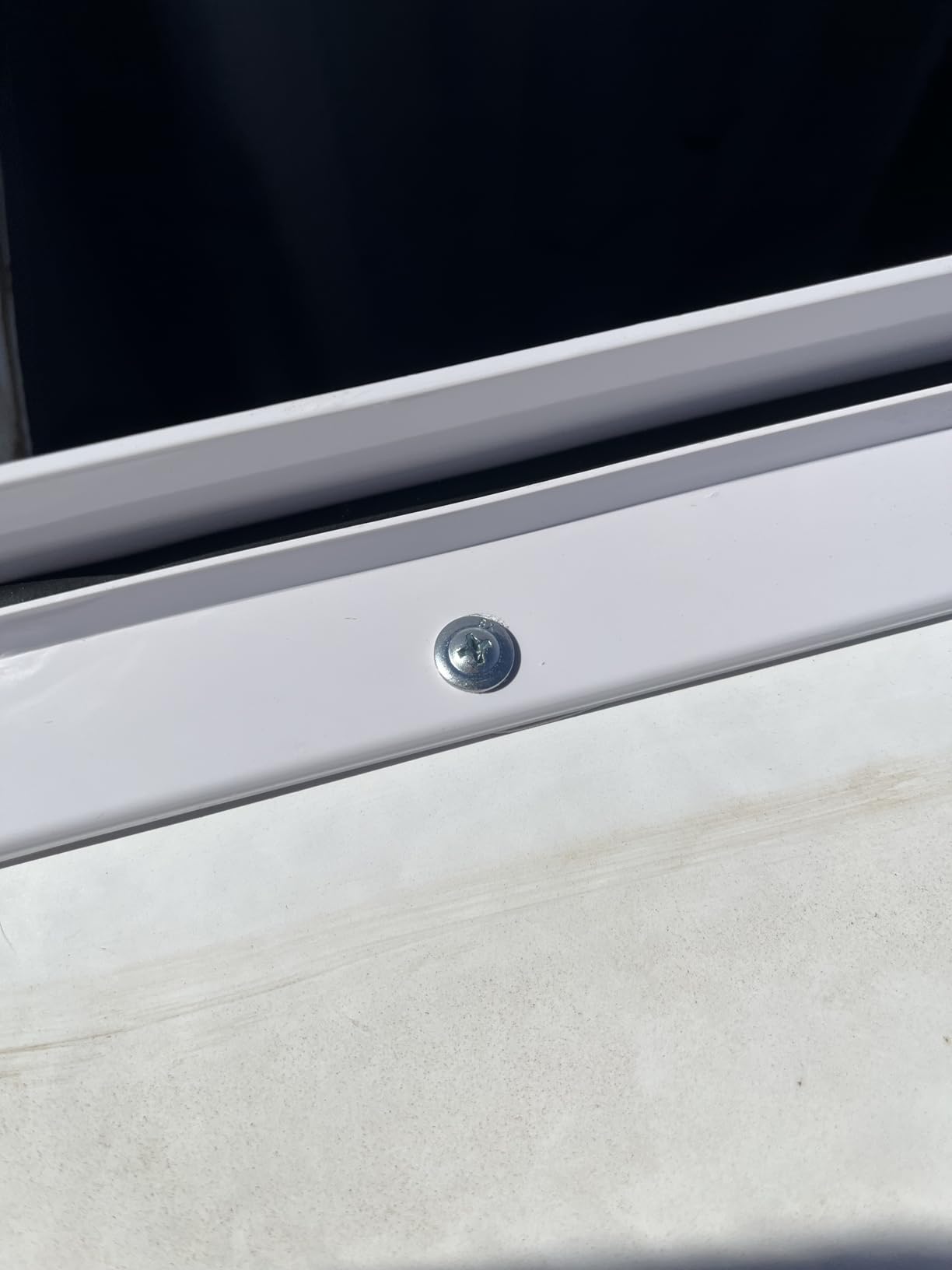
Our reservation is the 60 watt rating, the highest figure in this roundup. Run it on speed five with a window cracked rather than speed ten all night, and it stays sensible on a 200Ah leisure battery. It also carries a 2-year limited warranty with a lifetime limited warranty on the lid, which matters when a failure means cutting into a headliner.
Buy it if you want one unit that handles rain, driving and overnight condensation. Skip it if your battery budget is tight or your roof opening is not a clean 14×14.
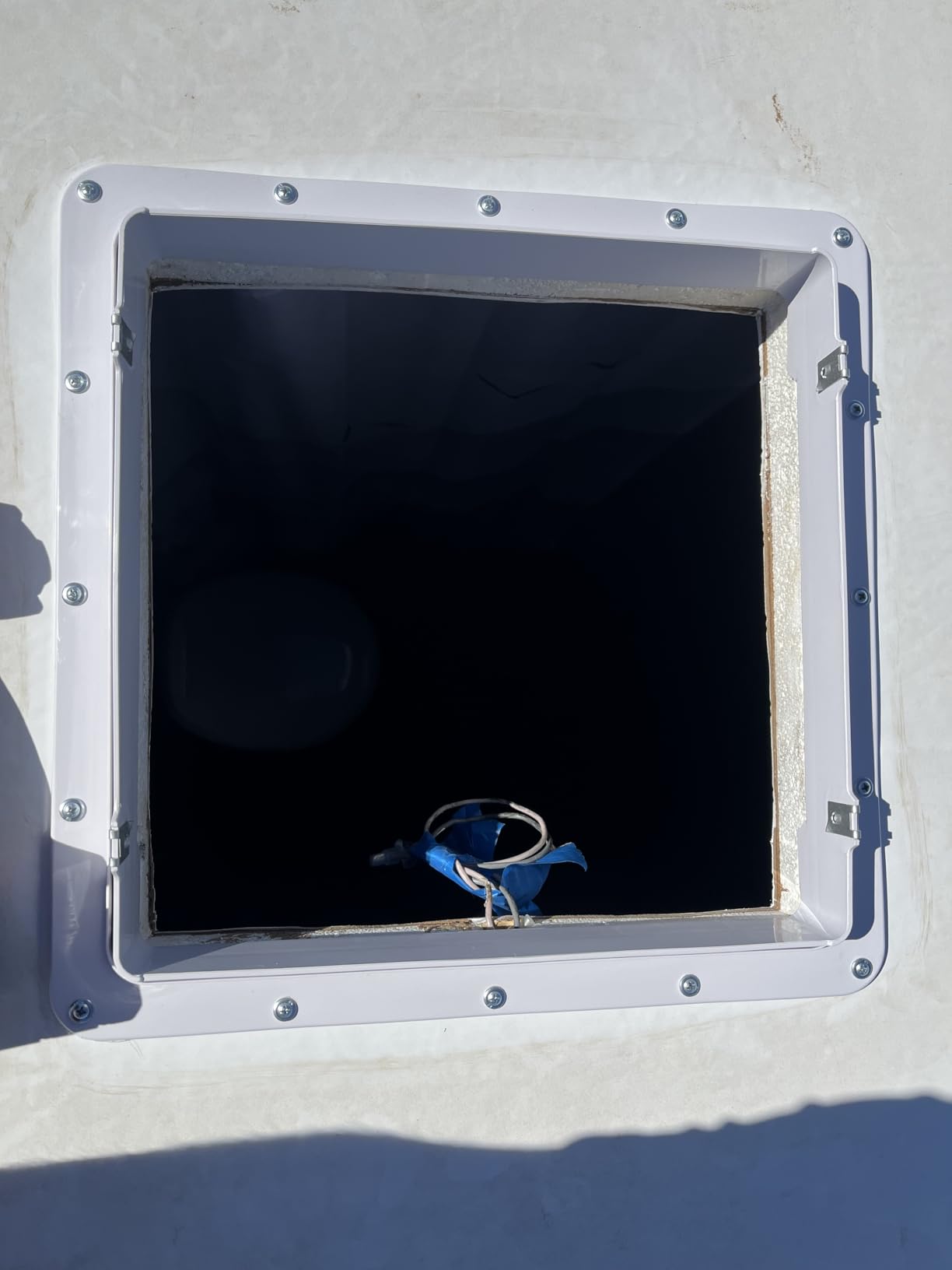
What you get for the money?
The all-in-one design matters more than it sounds. With separate vent and separate rain cover, you end up with a stack of moving parts and a second warranty to track. Here one part number covers the fan, the lid and the screen.
The thermostat is the feature that quietly reduces power draw. Set a target interior temperature and the fan cycles instead of running flat out, which on a cold night is the difference between a 60 watt appliance and a 20 watt one.
Where it falls short?
Some owners report it is not fully silent on the lower settings, which surprises people expecting a bedroom-grade appliance. The 60 watt ceiling also means it is the wrong choice for a small solar-only build.
Owners of older or non-standard roof openings are advised to have installation handled professionally, because the 14×14 fit is tight and the roof deck thickness varies. Measure twice and check your roof build-up before ordering.
2. MAXXAIR MaxxFan Plus 00-04500K – Rain Sensor And Ceiling-Fan Circulation
MAXXAIR Maxxfan Plus High Powered 10-Speed RV Intake and Exhaust Fan – Manual or Remote Control Electric Opening, Easy Ceiling Controls, Rain Sensor with Automatic Lid Closure, Smoke (00-04500K)
12V DC
10-speed reversible
28 watts
Rain sensor
5.2 pound unit
18.88 x 17.75 x 10 inch
Pros
- Rain sensor closes the lid automatically
- Runs the fan with the lid shut for circulation
- Waterproof molded mounting tabs
- Remote or manual opening models
- 10 speeds both directions
Cons
- FANMATE rain cover sold separately
- Ceiling control unit adds install footprint
- Costs more than entry-level 12V vents
This is the version for anyone who leaves the van parked in the rain and does not want to climb outside. The rain sensor detects moisture and closes the lid on its own, and owners rate the strong airflow at every speed as the standout quality.
The genuinely useful feature is ceiling-fan mode. With the lid shut, the fan keeps circulating interior air, so you get condensation control without losing the weather seal. That is the configuration we would run overnight on a van with a cassette toilet.
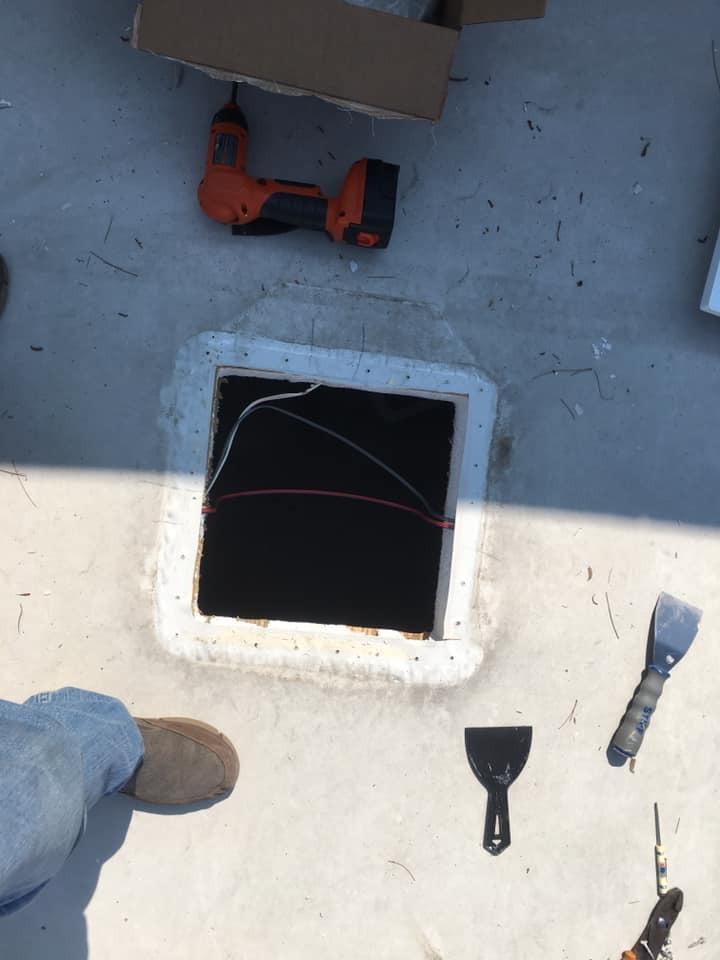
At 28 watts it also draws less than half what the MaxxFan Deluxe uses, and the 5.2 pound unit is lighter to handle on a ladder. A 2-year limited warranty is included, and the waterproof molded tabs make the install less fussy than sealant-only fittings.
Two things to know before you buy. The FANMATE vent cover is not included, and you need it if you want the sealed running mode. The ceiling-mounted control unit also adds to the drilling and wiring compared with a remote-only setup.
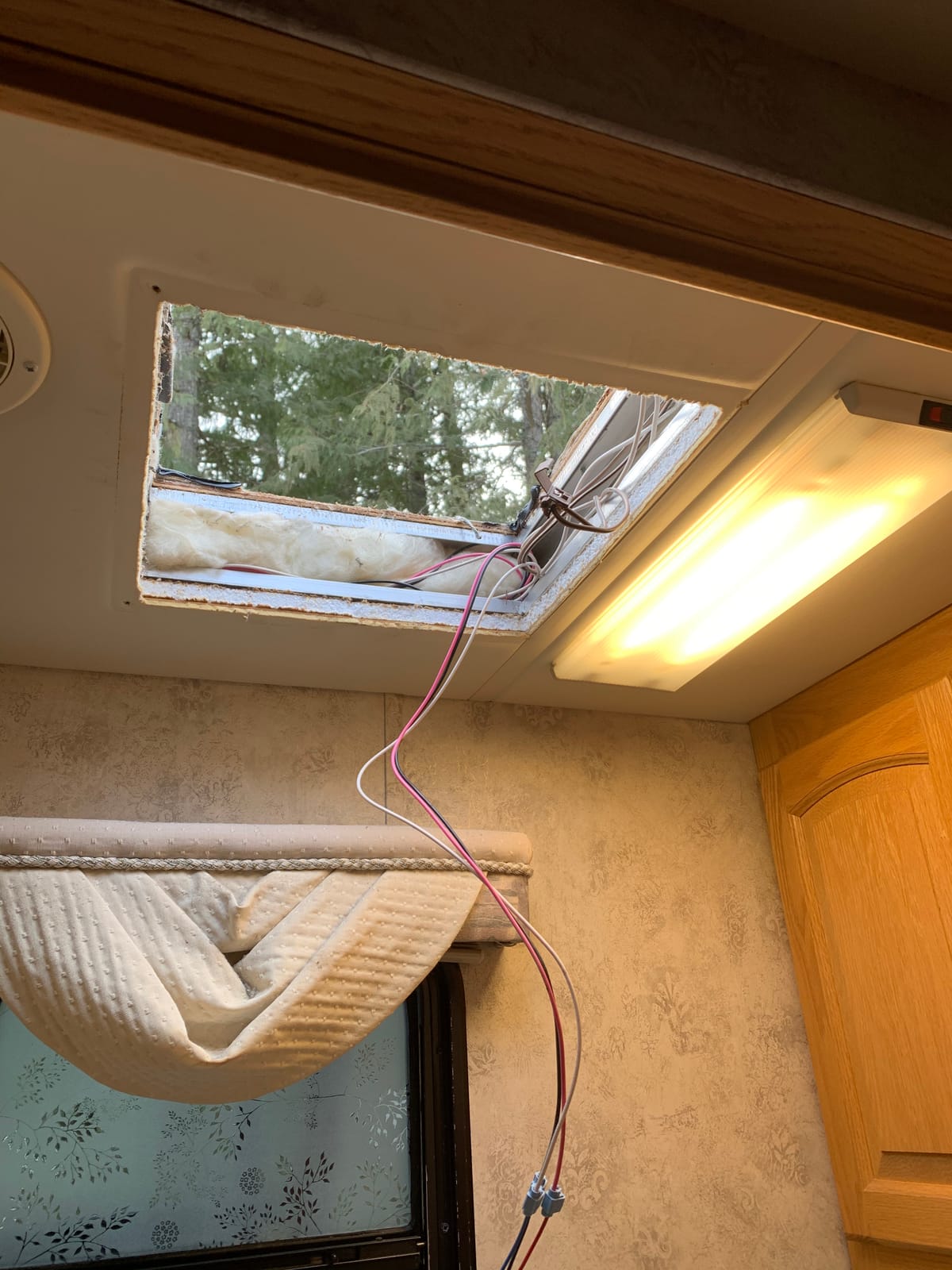
When the rain sensor earns its place?
Parking at a trailhead with rain forecast for the afternoon is where this unit separates itself. You set it to intake or exhaust and leave. The sensor closes the lid, the fan can keep circulating, and nothing is left open on the roof.
Owners also like that it works with the lid closed for pure circulation, which is the mode you want in cold weather when exhausting would chill the whole van.
Where it falls short?
The separately sold cover is the biggest hidden cost. Budget for the FANMATE if you plan to run the fan in wet conditions, which is most of the year in many climates.
The ceiling control footprint means more interior work than a remote-only unit, so plan the cable run before you close up the headliner. It is also priced well above the generic 12V vents, so value buyers should look at number three.
3. RVLOVENT 14 Inch 10-Speed Reversible – Best Value Manual-Lift Fan
RVLOVENT 12V RV Roof Fan Vent 14” 10 Speed Reversible Manual Lift (NO REMOTE)
12V DC
10-speed reversible
1000 CFM max
45 dB
16 x 16 x 14 inch
Manual crank lift
Pros
- 1000 CFM max airflow figure
- 45 dB rated noise level
- Quiet on low and medium speeds
- Spare fuses and extra screen frame included
- UV-resistant polycarbonate cover
Cons
- Manual lift means climbing the roof to open
- Slowest workflow on removing old lap sealant
- Noisier on the highest setting
- Interior garnish may need trimming on sloped roofs
This is the fan that replaces a noisy factory vent without emptying a savings account. Owners describe it as a genuine upgrade on airflow and quietness, and the 45 dB rating puts it below most of what you hear from a plastic RV fan.
Reversible intake and exhaust across 10 speeds means you can pull cooking smoke and moisture out in summer and draw cool air in at night. The UV-resistant polycarbonate cover is a sensible detail on a roof that bakes for hours.
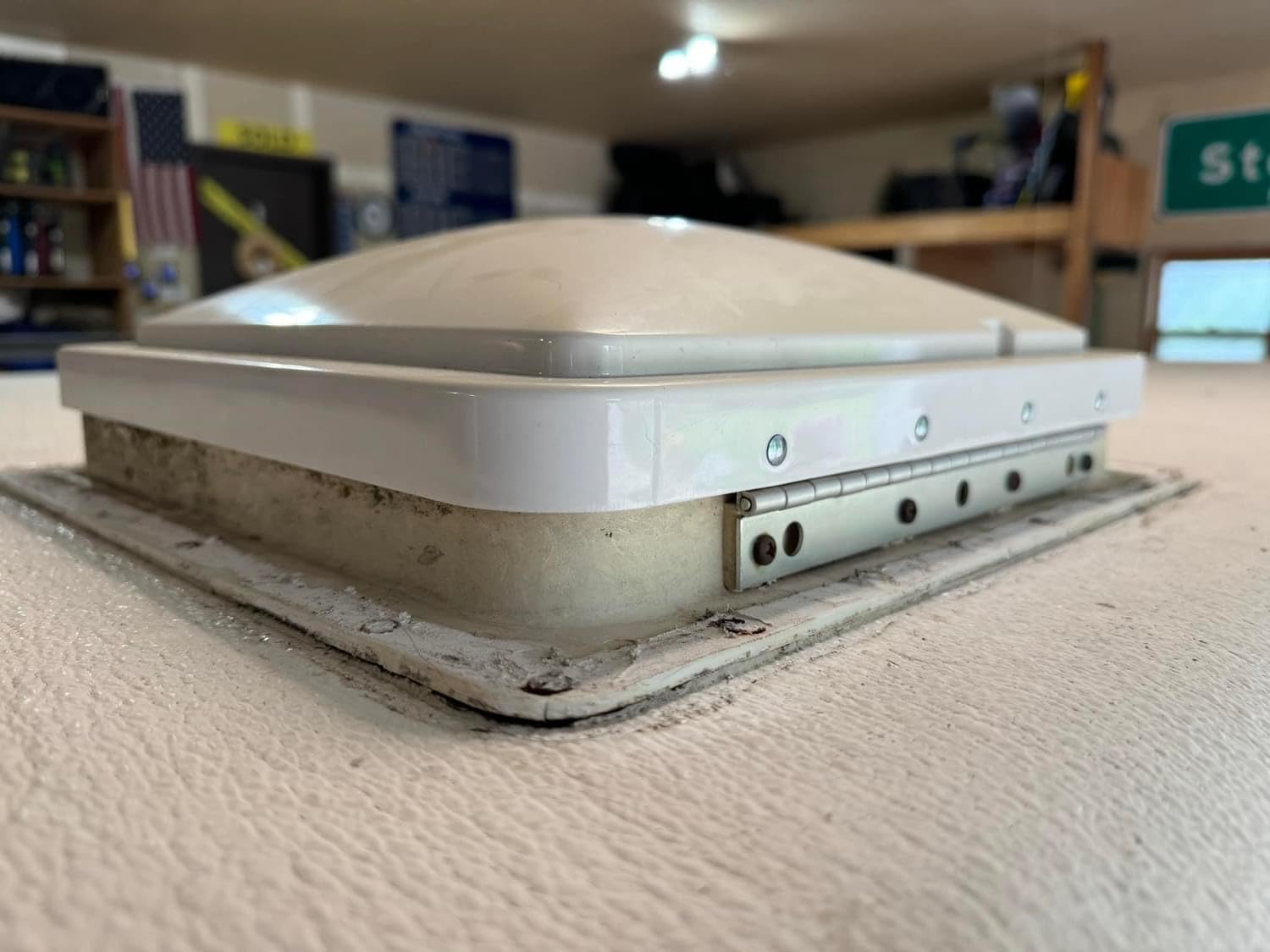
The box contents matter here. You get a built-in fuse, spare 5A slow fuses, an extra screen frame, screws and the white interior garnish, which are exactly the things budget vents tend to leave out.
The trade is the manual crank lift. There is no electric opening and no remote, so opening the lid means reaching the roof, which matters most when the van is parked in the sun or in the rain.
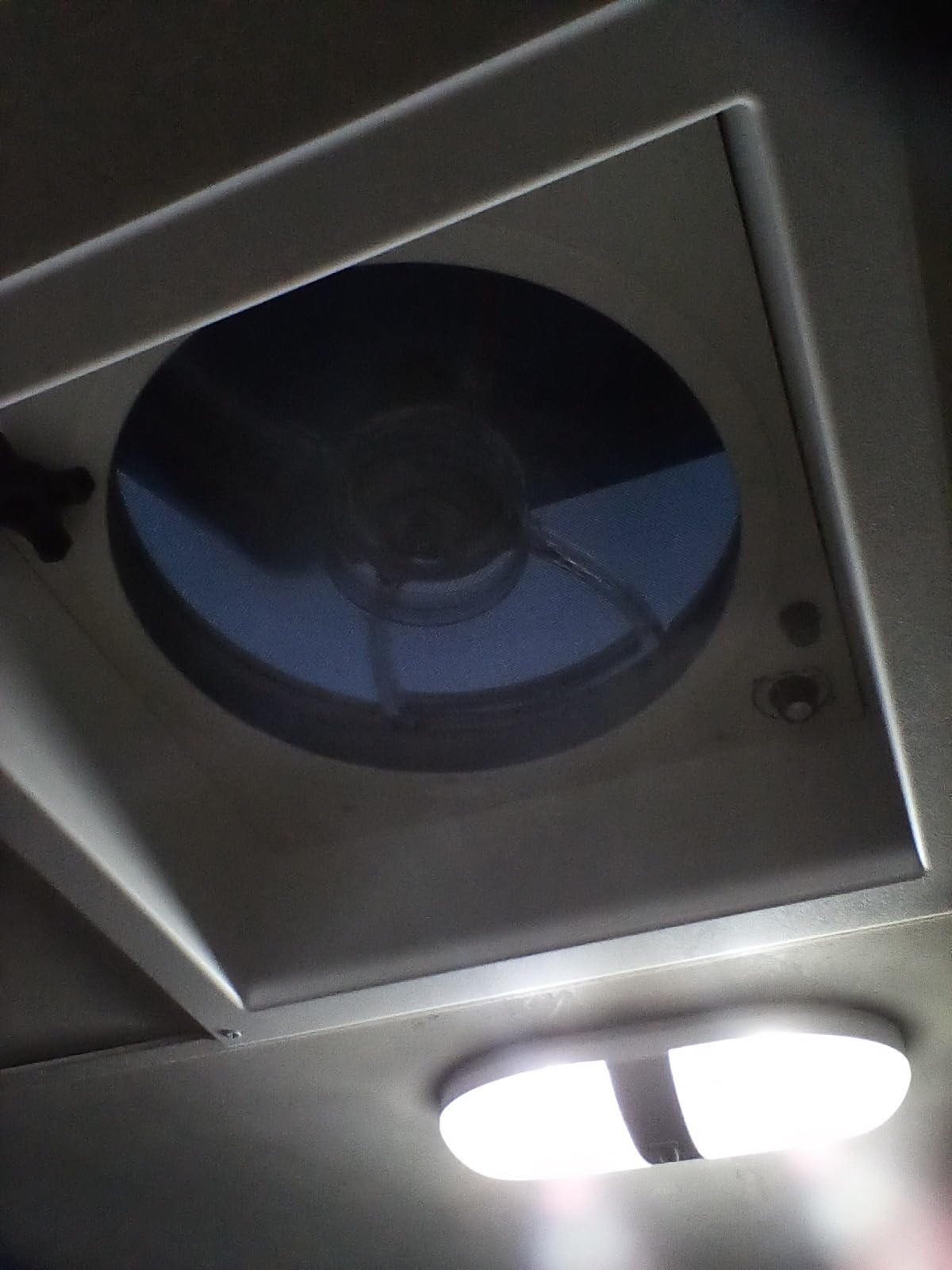
What airflow actually buys you?
The 1000 CFM max figure is the highest published number in this roundup, and it is the reason this unit clears a wet sleeping platform quickly. Reversing to intake lets you pull cool night air through an open slider while pushing warm air out through the roof.
At 18 watts the running cost is modest, which makes this a good match for a van with limited solar and a modest leisure battery.
Where it falls short?
Removing an existing factory vent and stripping decades of lap sealant is genuinely slow work, and that labor is where most of the real cost sits. Budget an afternoon you do not have to cut a new hole.
Reviewers also note that the interior garnish often needs trimming on a van with a curved or sloped roof, and the top speed is audibly louder than the low settings. If you need automatic opening, move up to the MaxxFan Plus.
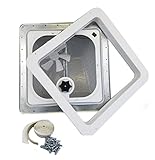
4. Ventline Ventadome CW001 – Lowest Power Draw For Battery Builds
Ventline RV Roof Vent White w/ 12 Volt Fan, Putty & Screws¡
12V DC
3.6 watts
6 plastic blades
14.25 inch rough opening
6 pounds
Push button control
Pros
- 3.6W draw suits battery-only boondocking
- Putty tape screws and garnish ring in the box
- Clean white wedge lid suits most interiors
- Complete vent and fan replacement unit
Cons
- Single speed and exhaust only
- Galvanized flange is sharp during install
- 14.25 inch rough opening is not standard 14x14
At 3.6 watts this is the least power-hungry complete vent in the roundup, and that single number decides the recommendation for a van running on a small leisure battery with no solar. Run it all night and the maths is not close to the 60 watt premium options.
Buyers like that the box includes the things you actually need: putty tape, screws and a 1.75 inch garnish ring. That turns a hardware-store trip into a single afternoon job.
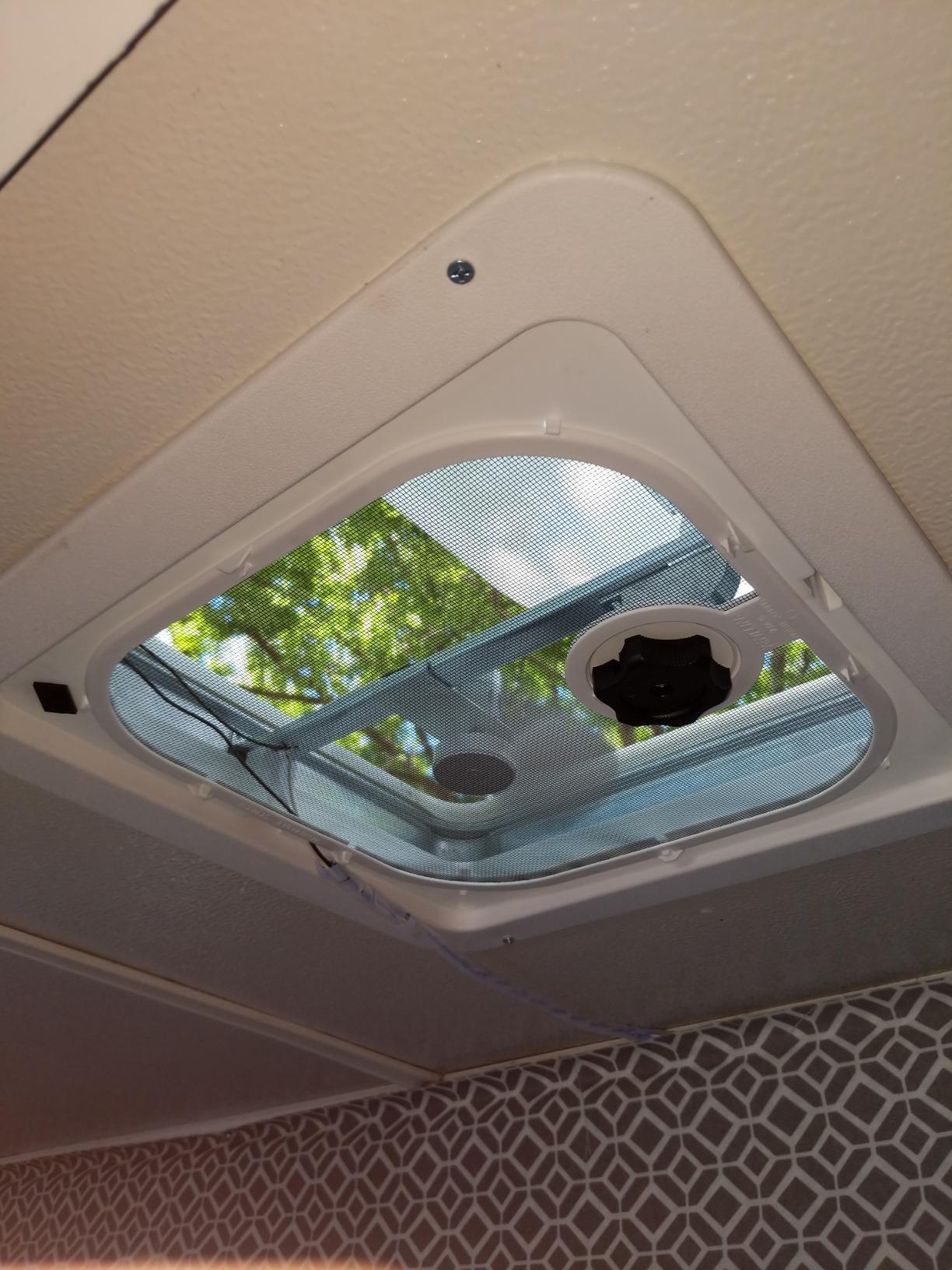
The white plastic wedge lid is a neutral look inside most vans, and the 6 pound unit is easy to hold overhead on a ladder. It is a straight swap for a standard vent rather than an upgrade project.
Two limits are worth stating plainly. It is single speed and exhaust only, so there is no reverse mode for drawing cool air in at night. And the rough opening is 14.25 inch square, not the standard 14×14, so confirm your existing cut-out before ordering.

When the low draw matters more than control?
On a 100Ah battery a 3.6 watt load running eight hours costs a little over 2Ah. Do the same figure on a 60 watt fan and you have spent about 40Ah, which is a large slice of a weekend of boondocking.
If your electrical build is marginal, this is the vent that lets you keep ventilation without adding solar first. It is also a sensible second vent in a long van where airflow beats speed.
Where it falls short?
Single-speed exhaust-only means you are moving air one way at one volume. On a hot day with the van closed up, that will not clear a full cabin as quickly as a reversible fan.
The galvanized mounting flange is sharp, and installers flag it as an injury risk during fitting. Gloves are not optional here. Nothing else on this list gives you less control for less power.
5. Caqeg 14 Inch Universal White Vent – Reversible Airflow On A Budget
14″ RV Roof Vent for Camper Trailer Universal White Lid Roof Vent with 12V RV Vent Fan 6″ Blades White lid Inner for Garnish Ring
12V
6 inch blades
24 watts
Reversible airflow
4.4 pounds
Fits 14x14 openings
Pros
- Reversible fan removes odors both ways
- Runs with the lid closed in rain or driving
- Simple 2-wire install with printed instructions
- Garnish ring and screws included
- Runs on roofs 1-1/4 to 2-1/4 inch thick
Cons
- Thin plastic and acrylic can crack during install
- Single speed only
- Limited fit range for thicker roof decks
If reversible airflow at a budget price is your priority, this is the unit. It pulls air in or pushes it out, and it keeps moving air with the lid closed, so it works in rain and while driving without any separate cover.
Owners report a clean fit into standard 14×14 openings and straightforward installation, which is largely down to the two-wire design and printed instructions. At 4.4 pounds it is one of the lighter units here.
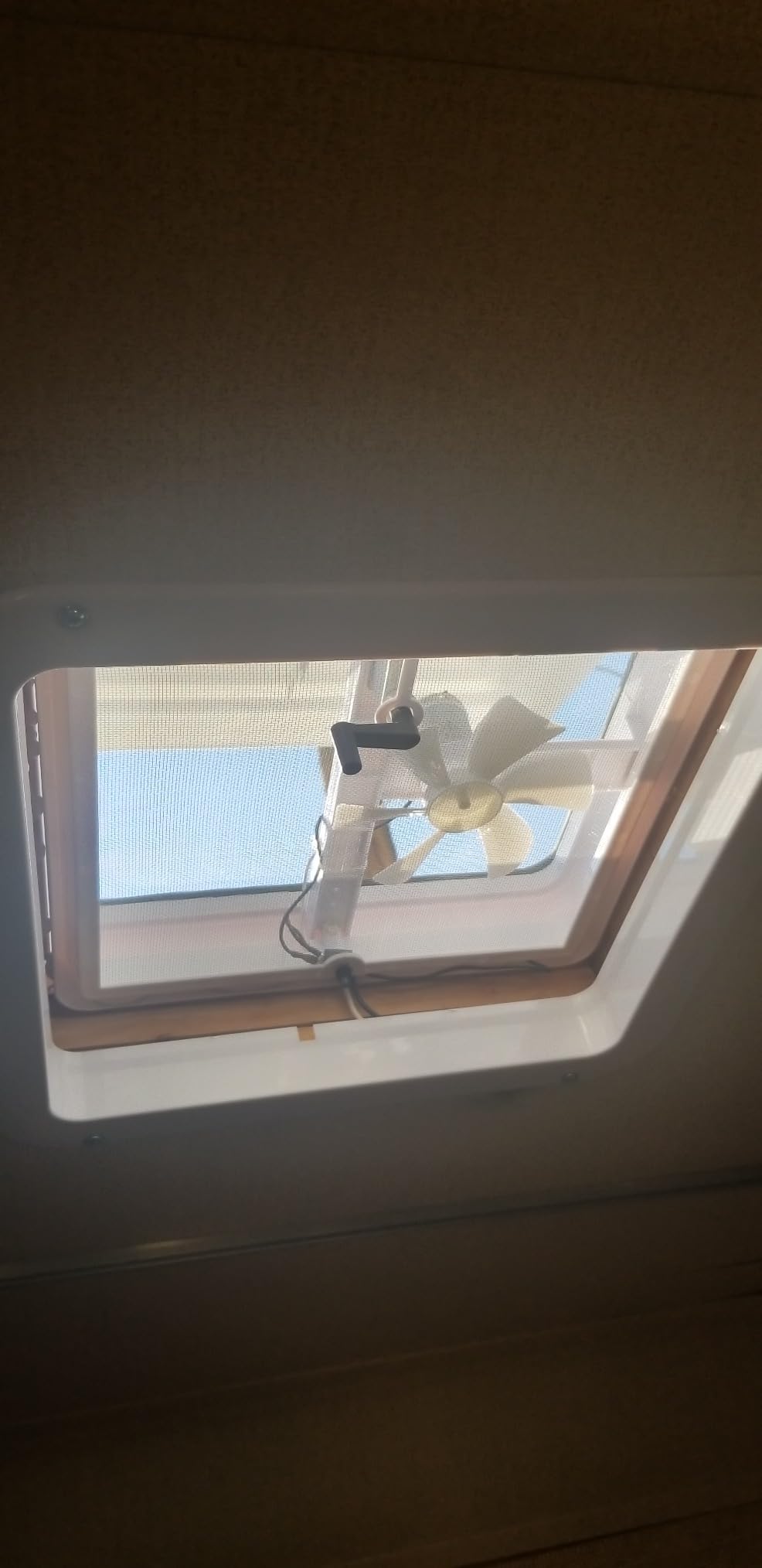
The practical constraint is roof thickness. It fits decks from 1-1/4 inch to 2-1/4 inch, which covers most van builds with a thin aluminium or steel sandwich panel plus a liner. A thicker structural roof with added insulation falls outside that range.
Six inch blades moving 24 watts will not match a 14 inch blade for volume, so treat it as a capable exhaust rather than a whole-cabin air mover.
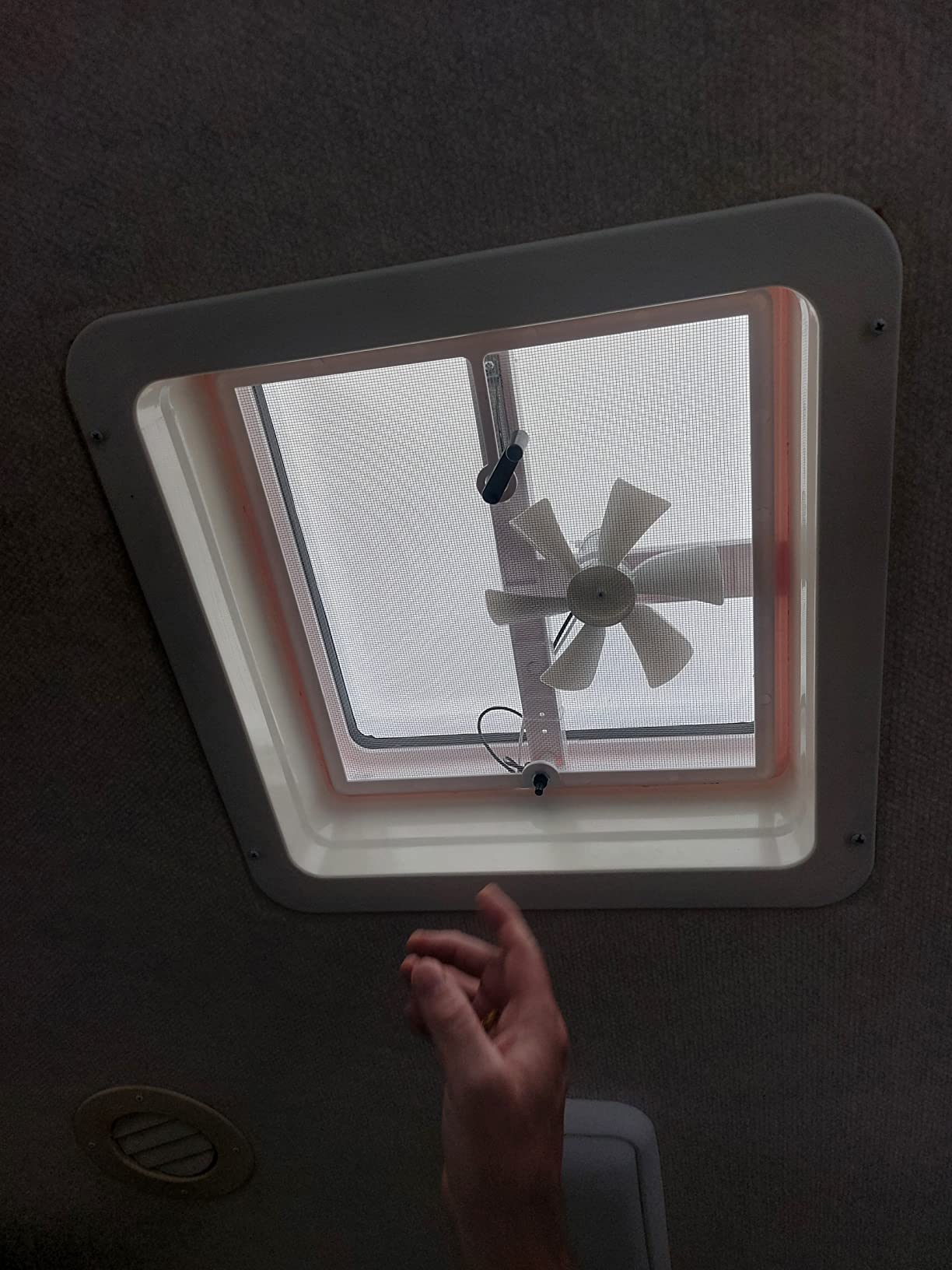
Who should buy this?
Buy it if you are replacing an existing vent, you want intake and exhaust in one unit, and you want to be able to leave it running in bad weather. It also suits a second vent position where a larger fan will not fit.
Reviewers like that it clears cooking smells and bathroom moisture without any fuss. Reversing to intake overnight in summer is the feature most owners end up using most.
Where it falls short?
The thin plastic and acrylic construction is the recurring complaint, with reports of cracking during installation if the flange is over-tightened. Support the frame evenly and do not clamp it hard.
It is also single speed, so you get no fine control over noise in a sleeping area. And you need to measure your roof thickness before ordering rather than after.
6. Starvent A021C-V3 Six-Speed – Quiet On The Three Lowest Settings
Starvent RV Roof Vent Fan 6-Speed-Reversible White
12V
6 reversible speeds
59.5 dB rated
17 plastic blades
22.2 watt-hours
Fits 14x14 openings
Pros
- Very quiet on the three lowest settings
- Reversible rotation for intake or exhaust
- Works as a ceiling fan with the lid closed
- Manual lid independent of the fan control
- Transparent blades admit soft daylight
Cons
- Some reports of cracked frames and hinge leaks
- Occasional early electrical failure
- Louder and rattling on top speeds
- Crank handle sits awkwardly near side walls
This is the fan we would put directly above a bed. Owners consistently rate the three lowest settings as near-silent, and the fan ramps up and down gradually so there is no jolt of noise when it starts or stops.
Six speeds with reversible blade rotation covers intake and exhaust, and the lid can run closed for pure circulation. The lid also operates independently of the fan control, so you can ventilate without running the motor.
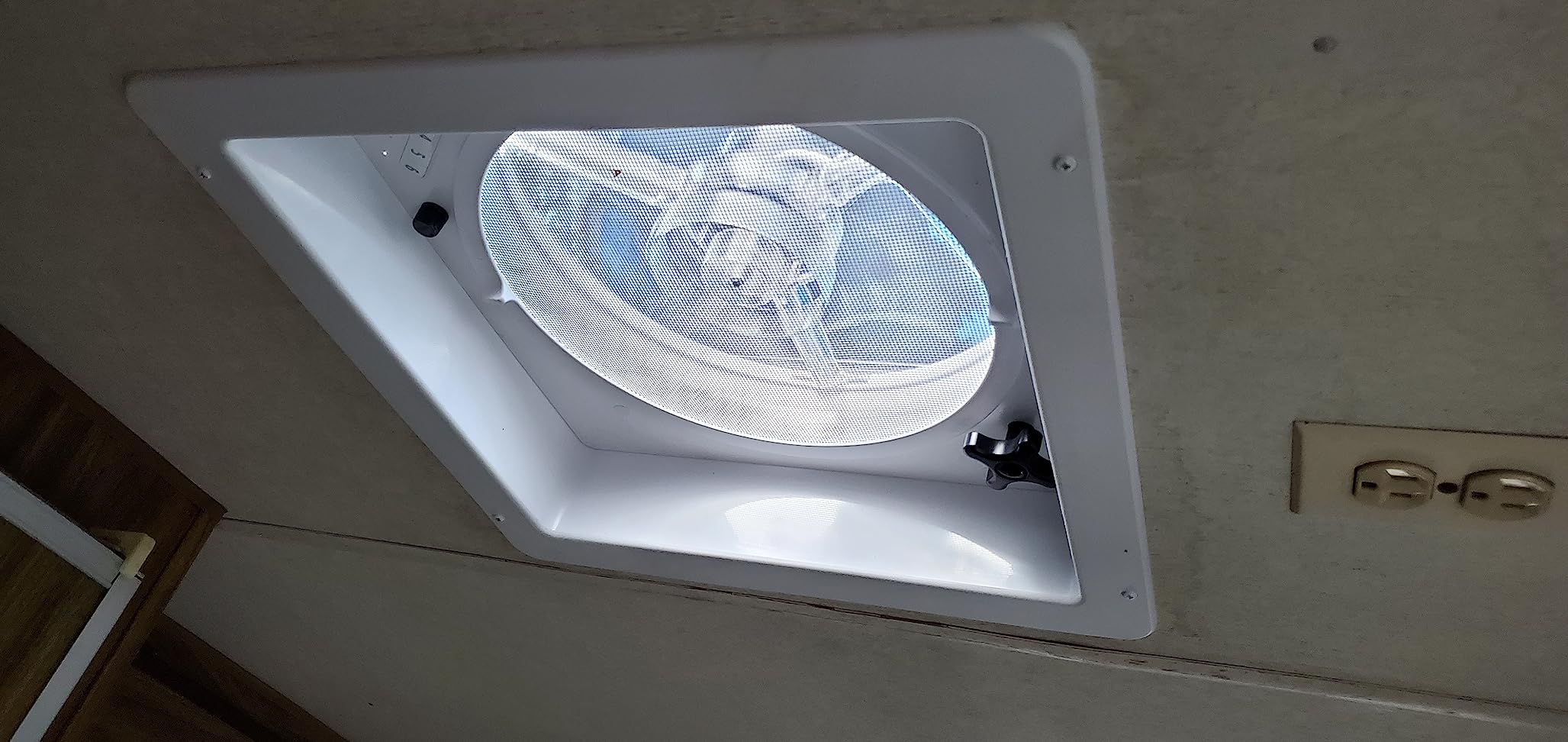
Compatibility is broad. It fits standard 14×14 ceiling openings and roofs from 1.16 inch to 5.5 inch thick, which is one of the widest ranges here and covers a heavily insulated build.
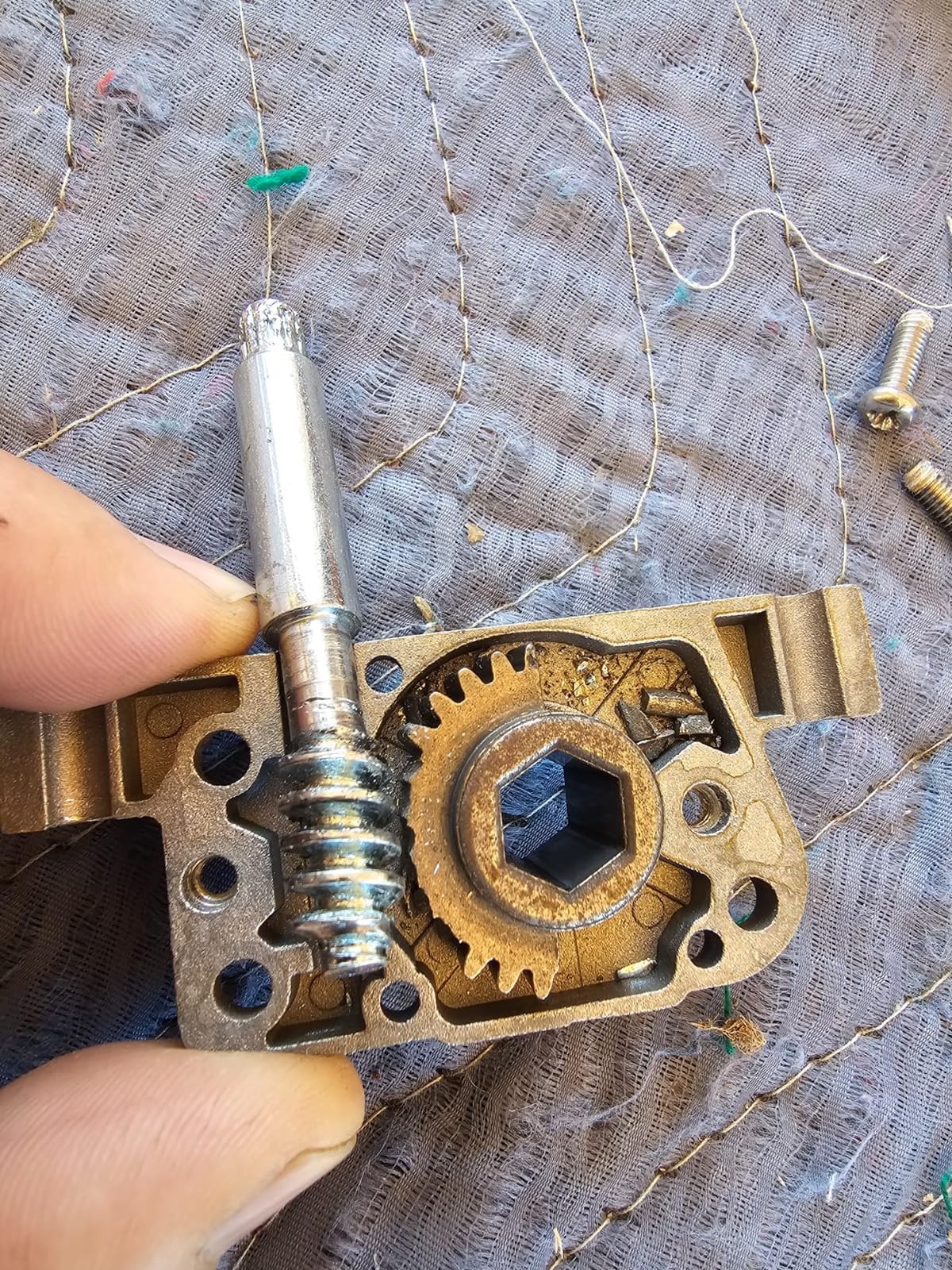
The durability feedback is the part to weigh. A minority of owners report cracked frames or hinges leading to roof leaks within a season, and a few report early electrical failure. Seal carefully regardless of brand, and test the hinge movement after the first few heat cycles.
How quiet is quiet?
The 59.5 dB rating is the headline figure, but owners point out the low settings are the ones that matter at 3am. On the three lowest speeds this becomes a background hum you stop hearing, which is what you want directly over a head.
Speed six is audibly louder and the lid can rattle as it closes, so for overnight use set it low and let the reversible direction do the work rather than the RPM.
Where it falls short?
The crank handle placement near the side walls is awkward in a tight install, and if you plan to run the fan in rain you may need bracket modifications for a separate rain cover.
Given the reports of cracked hinges and leaks, we would not hang a van roof on this unit alone without a careful seal. If durability worries you more than speed range, the MaxxFan Deluxe carries a lifetime limited warranty on its lid.
7. MAXXAIR MaxxFan Deluxe 00-06401K – 900 CFM Exhaust-Only Four-Speed
MAXXAIR Maxxfan Deluxe Vent, Fan and Vent Cover All in One – Powerful 4-Speed Fan, Built-in Rain Cover, Exhaust Air Only, Fits 14″” x14 Roof Openings, Smoke (00-06401K)
12V DC
4 speeds
900 CFM
12 watts
59 dB
9.8 pounds
Fits roofs 1-1/8 to 6-1/2 inch
Pros
- Published 900 CFM airflow figure
- Low 12W draw and quiet on lower speeds
- Stays fully open in heavy rain
- Fits very thick roof decks
- Flush keypad for speed and on-off
Cons
- Exhaust only with manual lid and no remote
- Recurring reports of motor failure after months
- Fitting is a full DIY roof job
- Screen fasteners easy to reach from outside
The 00-06401K is the MaxxFan for builds where roof thickness is the deciding factor. It fits decks from 1-1/8 inch all the way to 6-1/2 inch, which covers a high-roof Sprinter conversion with a thick insulation build.
It publishes a 900 CFM figure with a 12 inch diameter, 10-blade fan, which is real airflow rather than marketing. At 12 watts it is also the most efficient of the three MaxxFan models here, and owners in van conversions praise the rain-proof lid.
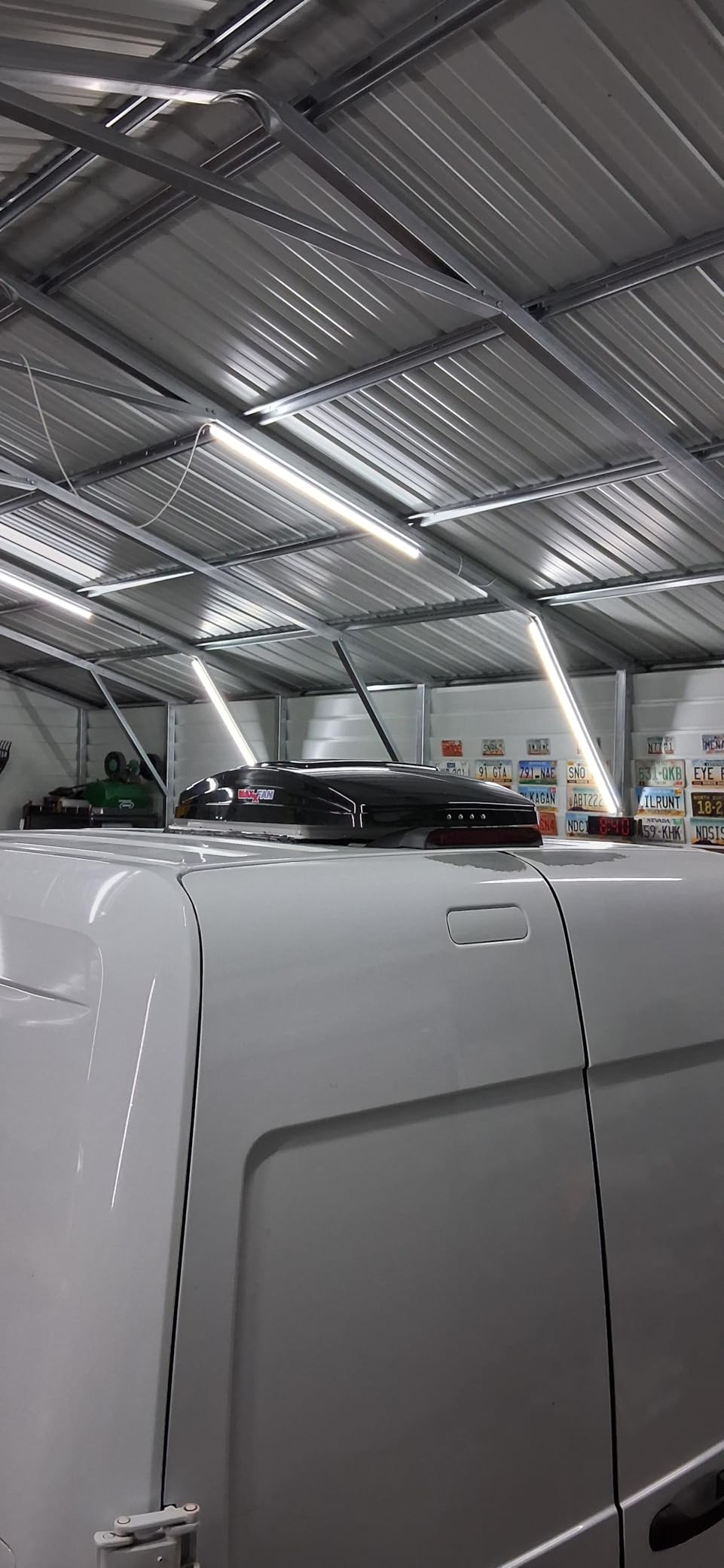
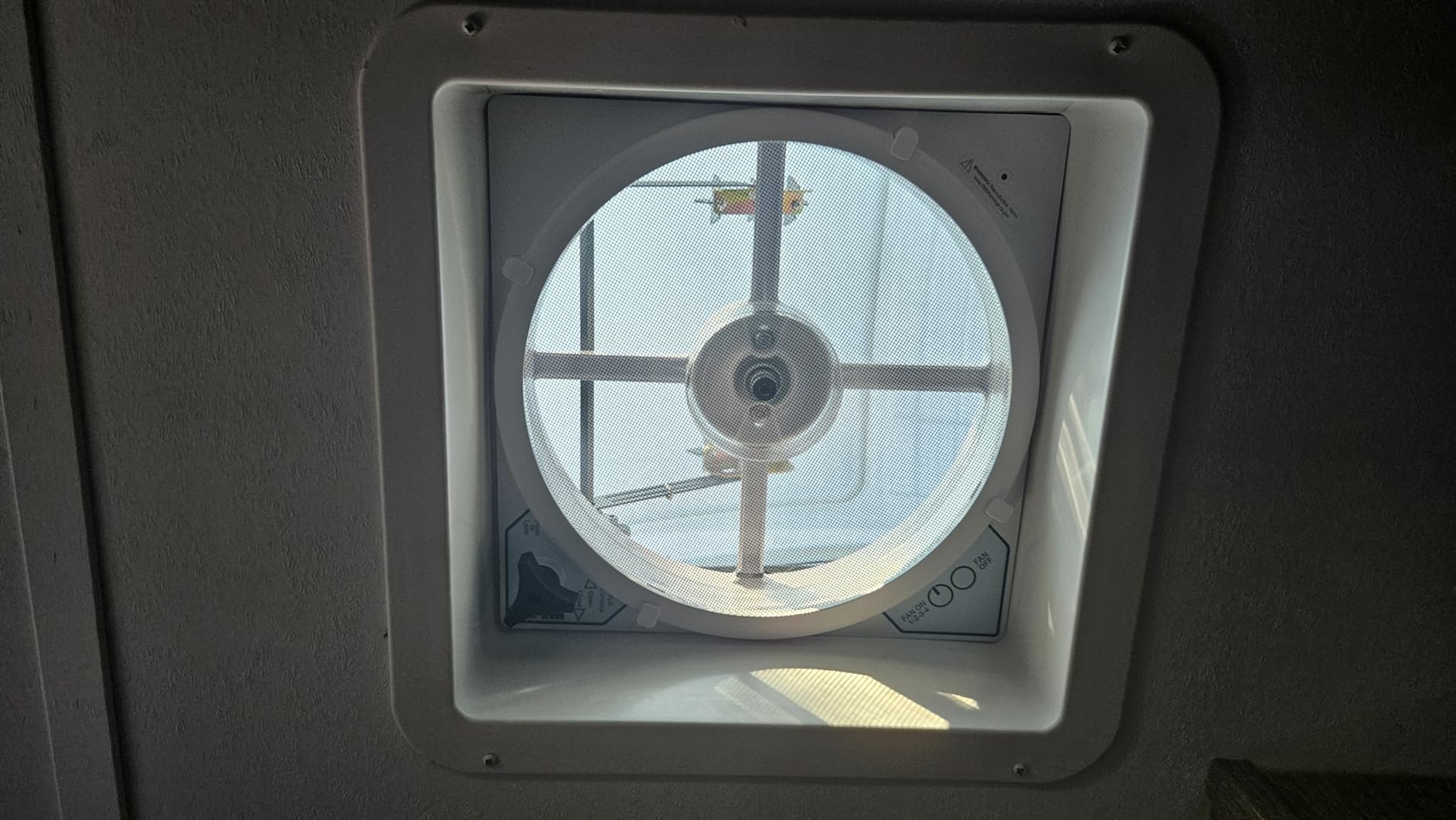
The flush-mounted keypad gives on-off and speed without any wiring through the ceiling to a remote receiver, which simplifies the install considerably in a van where headliner depth is tight.
Two honest warnings. It is exhaust only with manual lid opening, so there is no intake mode for cooling off at night. And a recurring theme in lower ratings is motor or bearing failure after several months of continuous use, so run it on lower speeds rather than pinned at maximum.
Where this model fits that others do not?
If your roof sandwich panel plus insulation plus liner stack exceeds anything near 2 inches, most of the plastic budget vents become a problem. The 6-1/2 inch ceiling here is the answer to that problem.
It is also the pick if you want a simple, wired-in keypad rather than a remote. Fewer failure points and no receiver module hidden above a headliner.
Where it falls short?
Manual lid opening means climbing outside to ventilate, and exhaust-only airflow gives you no way to pull cool night air in. For most van sleepers that is the deal-breaker that points to the reversible models instead.
Installing it is a genuine roof job with no tool-free path. The bug screen uses standard screws and is easy to remove from outside, which some owners see as a security point and others do not.
8. HENG’S INDUSTRIES 71112A – Complete Replacement Vent At 4 Watts
HENG’S INDUSTRIES 14″ RV Roof Vent 12 Volt Powered Fan with WHITE Wedge Style Lid – 1” Garnish Ring | 71112A
12V
1 speed
4 watts
3 plastic blades
Rough cut-out 14.5 inch
Alloy steel flange
Pros
- Very low 4W draw for a full vent
- 1 inch inner garnish ring included
- Crank handle lid with mesh screen
- White wedge lid suits most interiors
- Simple complete replacement unit
Cons
- No mounting hardware included
- Sharp metal flanges during install
- Single speed and exhaust only
This is the simplest complete replacement in the roundup, and at 4 watts it costs almost nothing to run. Owners cite the low cost, the crank-handle operation and the included garnish ring as the reasons to buy it.
It is a 14-1/2 inch rough cut-out with a 16-1/2 inch exterior flange, so this one needs accurate measuring rather than assuming a standard 14×14 hole. A tape measure and a template save an afternoon.
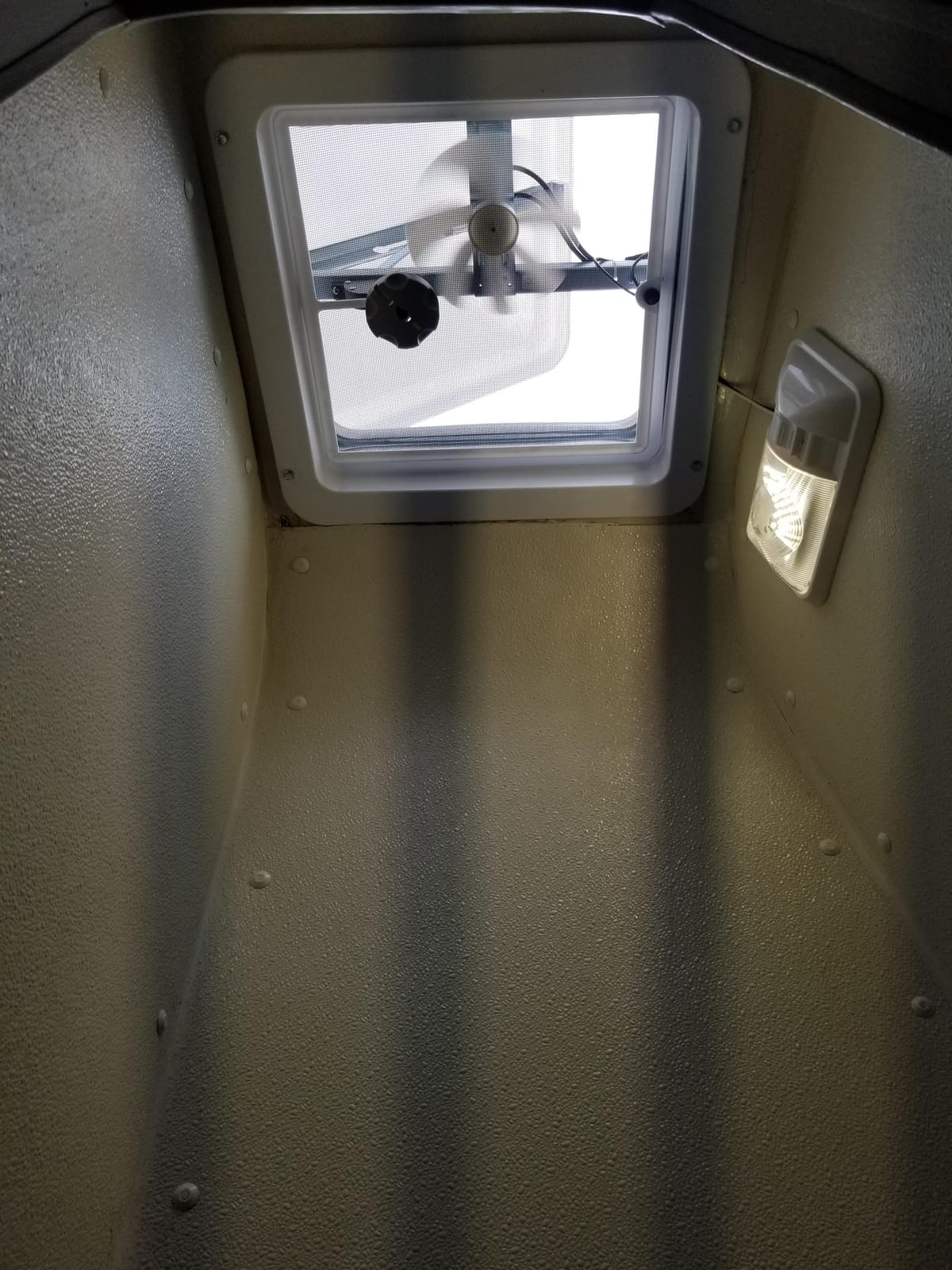
The 5.5mm x 2.1mm coaxial power connector means you can unplug the fan without touching the wiring, which is convenient for storage in winter and for running the fan only when the alternator is charging.
Three things to sort before you order. Mounting hardware is not included, so supply caulk, putty and screws. The alloy steel flanges are sharp and need gloves. And it is single speed, exhaust only, with no remote.

The case for the simplest option
Not every van needs a thermostat, a rain sensor and a remote. If your roof has a failed factory vent and you want airflow and an insect screen at a low purchase price and a near-zero running cost, this does the job.
Buyers like the white wedge lid as a neutral interior finish. The 3-blade fan is small in diameter, so it moves less air than a 14 inch blade, and airflow is the trade you make.
Where it falls short?
Nothing about this unit is premium. Single speed, no reverse, no electric opening, and you supply the fasteners. Installers also warn that the metal flanges are sharp enough to cut hands.
If you want anything more than set-and-forget exhaust, step up to the RVLOVENT at number three. It stays cheap but adds 10 reversible speeds and a spare hardware kit.
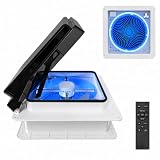
9. F36AR 14×14 LED Ambiance – 25 dB Brushless Fan With Lighting
RV Roof Vent Fan 14×14 with 4 Color LED Ambiance Light, Reversible Airflow, Ultra-Quiet 12V (24V Max) Vent Fan with Remote & Rain Sensor
12V up to 24V max
Brushless motor at 25 dB
674 CFM
4 speeds
7 blades
18 x 18 x 8 inch
Pros
- Brushless motor rated at 25 dB or lower
- 674 CFM with reversible intake and exhaust
- Four color LED ambience lighting
- Remote control with rain sensor
- Three year manufacturer warranty
Cons
- Rain sensor closes lid without shutting fan off
- Sparse installation and operating instructions
- Short 3 inch trim flange may need a taller 5 inch part
- Stated 400x400mm opening may not match actual cut-out
A brushless motor rated at 25 dB or lower makes this the quietest fan we could verify, and quiet is the first thing most buyers mention. The four speed settings step through 3W, 10W, 20W and 40W, so low-speed overnight running costs very little.
The 674 CFM airflow is respectable and reversible for intake and exhaust. The adjustable lid angle lets you aim airflow forward over a bed platform, which is a small feature that matters on a long-wheelbase layout.
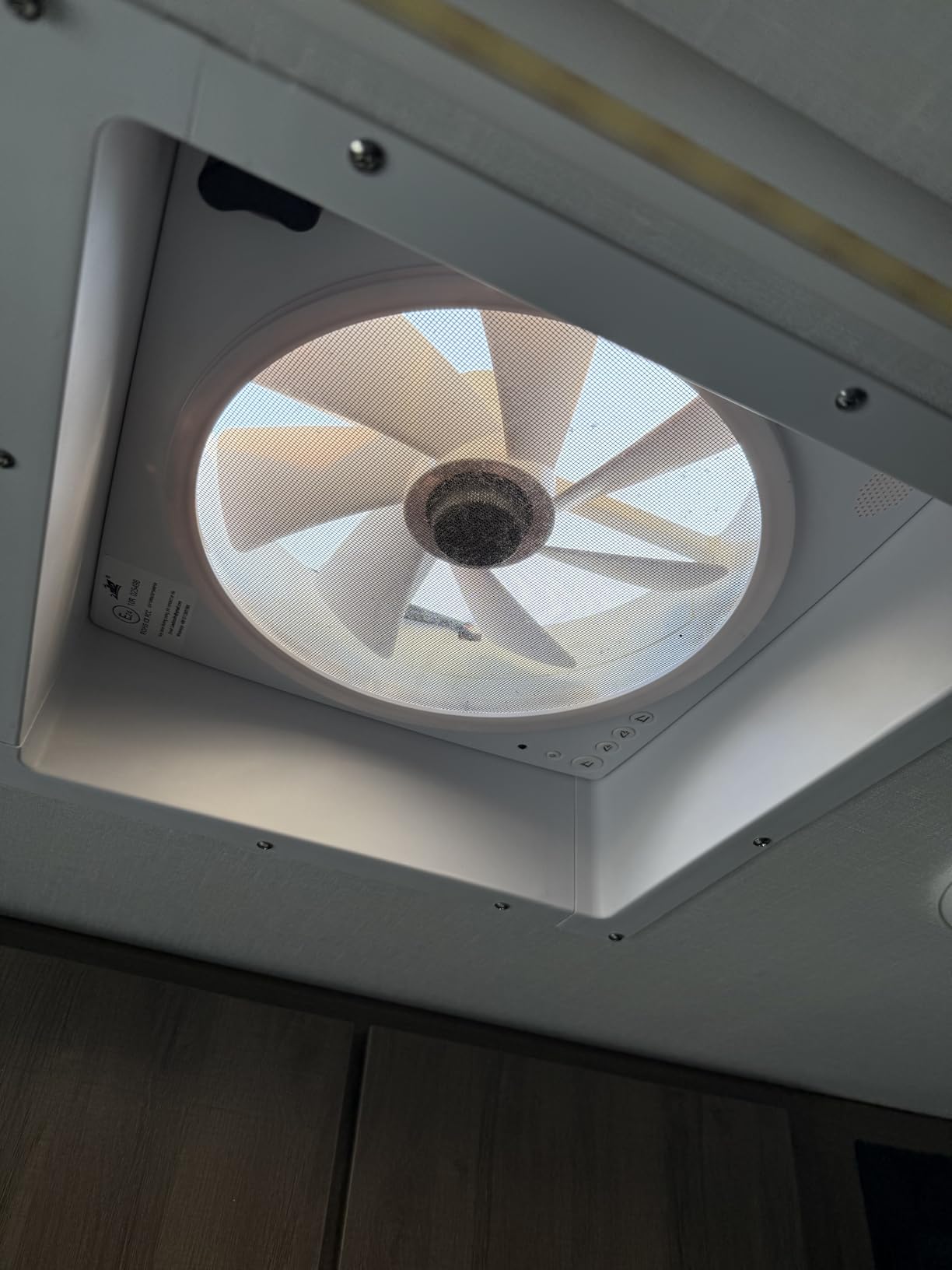
Four LED colors, yellow, rose pink, blue and white, turn the vent into a night light. Owners report that many install two units for that reason alone, using one at the front and one over the bed.
One safety point deserves emphasis. The rain sensor closes the lid but does not switch the fan off, and owners flag that as a concern. If you park in sustained rain often, this is worth knowing before you buy.
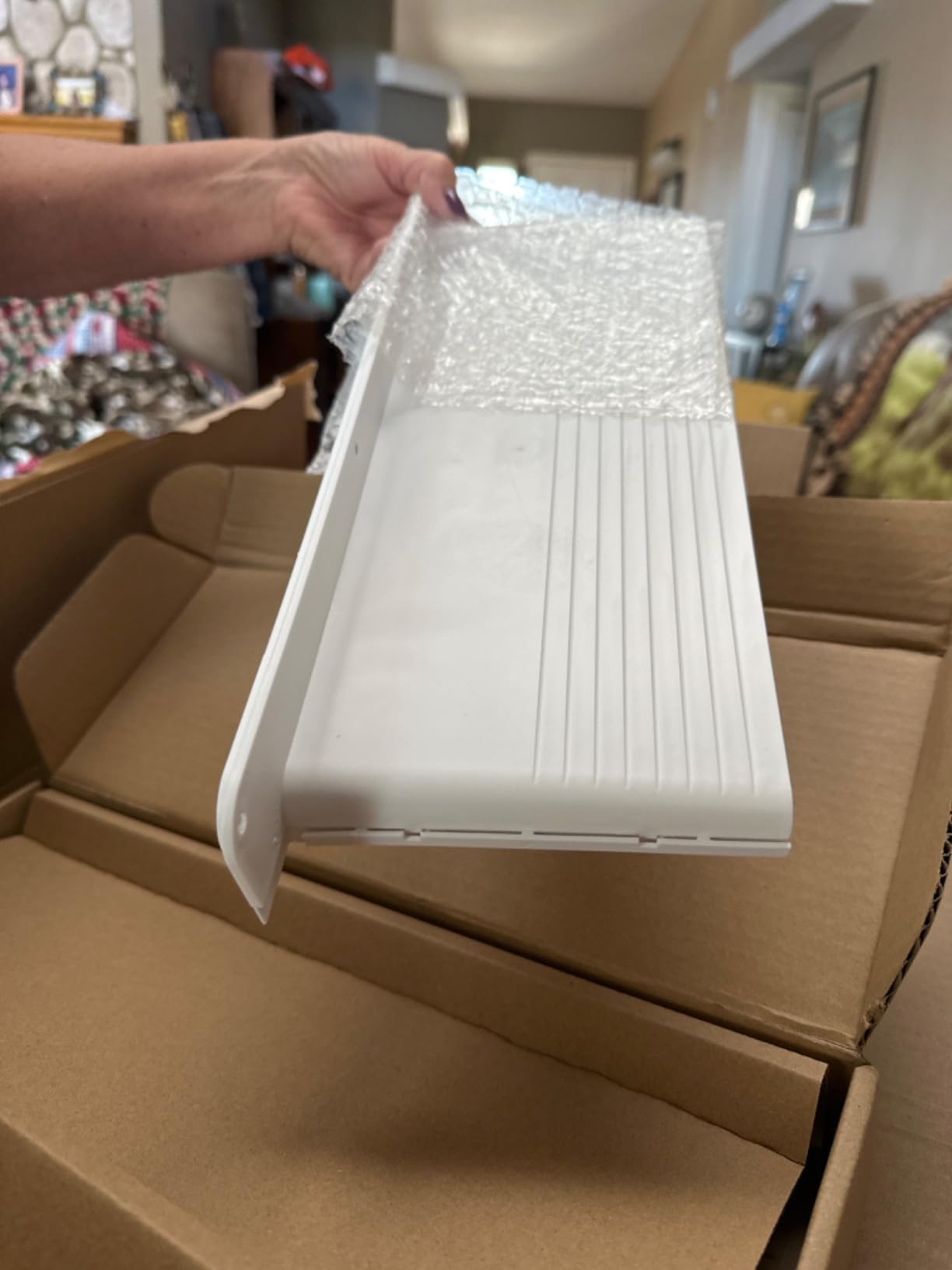
Quiet, brushless and light features
A brushless DC motor has no brushes to wear, which is where long-term reliability usually goes wrong. Combined with a 3-year manufacturer warranty and lifetime repair support, this is a reasonable pick for a van you will keep.
The lighting is genuinely useful rather than decorative. Amber or red tones are far easier on the eyes at 4am than a white ceiling light, and it frees you from carrying a headlamp to the bed.
Where it falls short?
Instructions are sparse, so budget time to work out the wiring and the lid adjustment yourself. The 3 inch interior trim flange is short on some ceiling depths, and a taller 5 inch flange may need ordering separately.
European buyers report that the actual opening can differ from the stated 400x400mm, so measure rather than assume. And the rain sensor behaviour described above means it is not fully hands-off in a storm.
10. F36AR-Voice-Led – Brushless Fan With Voice Control And Timer
Heavy Duty 14″ RV Roof Vent Fan, Whisper-Quiet Voice Control, Colorful LED
12V
Brushless motor
4 speeds
25 watts
16.5 x 16.5 x 7 inch
12 pounds
2 year warranty
Pros
- Brushless motor stays near-silent at higher speeds
- Voice control readiness alongside the included remote
- Four lighting colors with amber and red modes
- Rain sensor with adjustable lid angle
- 1 to 8 hour timer auto shutoff
- Reinforced 1mm thicker housing and lid
Cons
- Highest power draw of the smart-control options
- Voice setup adds a pairing step at install
- Fits 14 inch opening only
If you already run a smart-home setup in the van, this is the fan to build around. Voice control readiness means you can tie the fan into an assistant alongside the remote, and the 1 to 8 hour timer covers the common case of airing out the van before you go to bed.
The brushless motor is what buyers single out. Owners describe it as near-silent even at the higher settings, which is unusual for a fan with four speeds and a motorised lid.
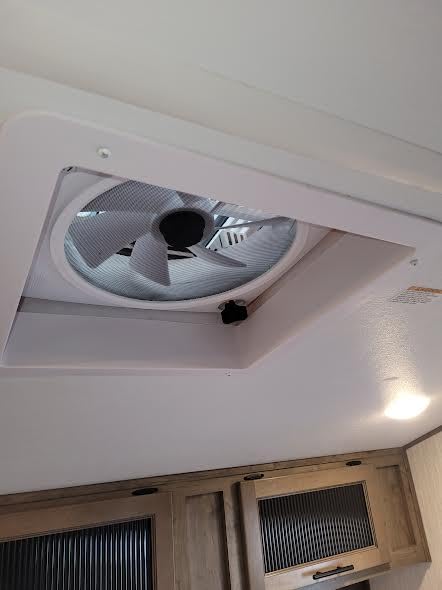
The adjustable lid opening angle from 0 to 50 degrees lets you direct air rather than just move it, and the reversible intake and exhaust modes handle both summer and winter. Four lighting colours include amber and red night-vision modes.
It is also physically heavier than most plastic alternatives, which reads as durability rather than a problem. At 12 pounds you feel the quality when you carry it up a ladder.
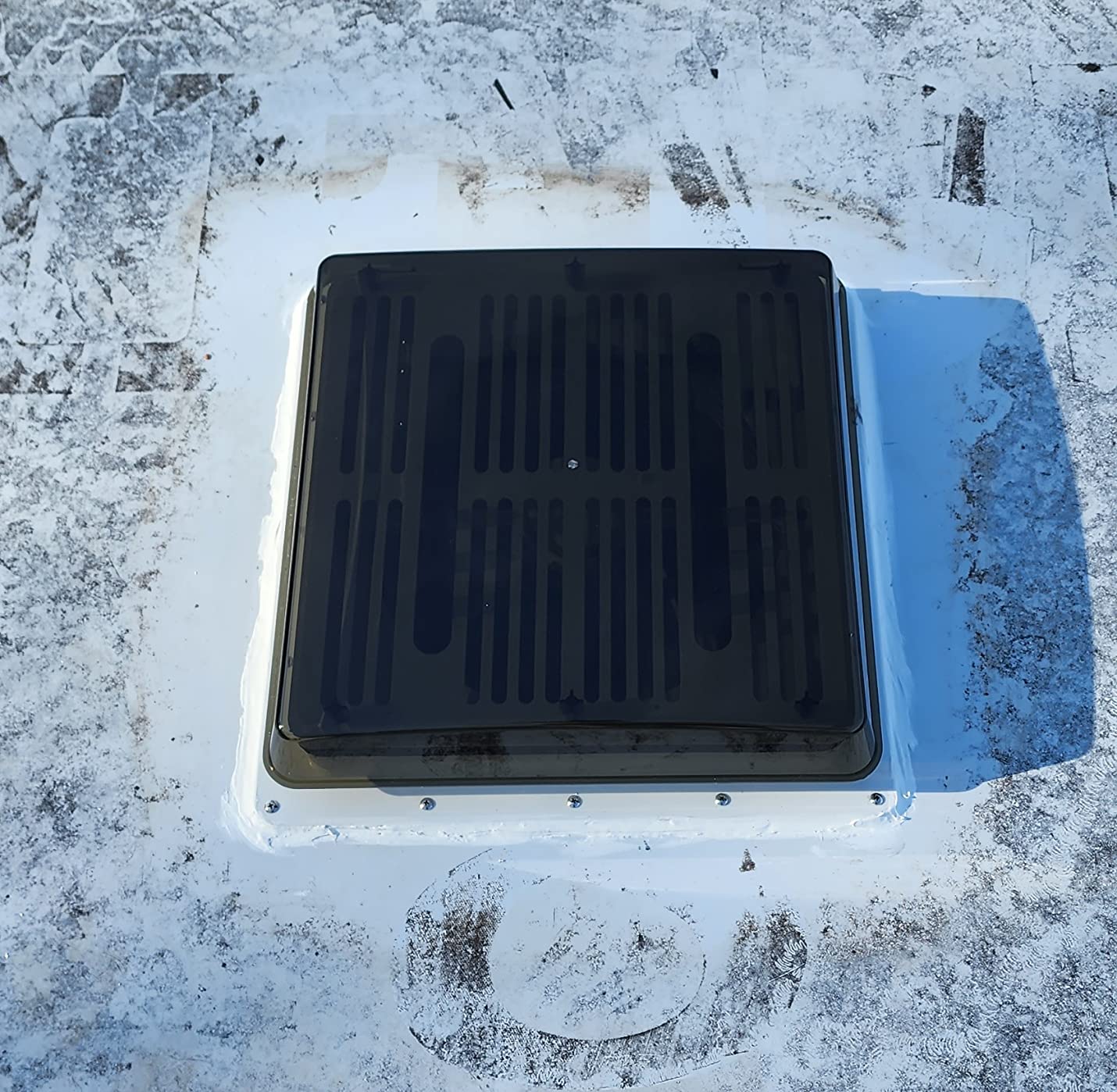
Why the timer and voice pairing matter?
Automation is the real win here. Set the timer for two hours after dinner and the cooking steam clears without you thinking about it. Pair it with a voice assistant and you can change speed from bed without reaching for a remote.
A 2-year full warranty covers the housing and lid, and the reinforced 1mm thicker ABS and polycarbonate parts are the fix for the cracking complaints that plague lighter plastic vents.
Where it falls short?
At 25 watts it draws more than the budget units, so it is a poor match for a battery-only build without solar. If your electrical system is marginal, look at the 3.6 watt Ventadome instead.
Voice pairing is one more setup step, and it fits a 14 inch roof opening only. Measure first, and test the remote signal from the bed before you close the walls.
11. Kohree KR5312 – 934 CFM With A Built-In Temperature Sensor
Kohree 14″ RV Vent Fan, 12V for Camper Vent, Green
12V
Brushless DC motor
934 CFM
10 speeds
25 watts
50 dB
11 pounds
Pros
- Published 934 CFM airflow across 10 speeds
- Motorised powered-lift lid
- Automatic on above 78.8F
- Remote with LCD for direction and speed
- Sealing tape and screws included
Cons
- Reports of blade cracking within several months
- Lid can vibrate in windy conditions
- Audible beep on every setting change
- Lid actuator is a single metal bar on plastic
The Kohree pairs the second-highest published airflow figure in this roundup with the most hands-off control logic. A built-in temperature sensor switches the fan on above 78.8F, so in hot weather it starts working before you think about it.
The motorised powered-lift lid opens and closes on the remote, and the same remote has an LCD screen for airflow direction, speed and lid height. Reversible intake and exhaust plus a removable mosquito-proof screen complete the feature set.
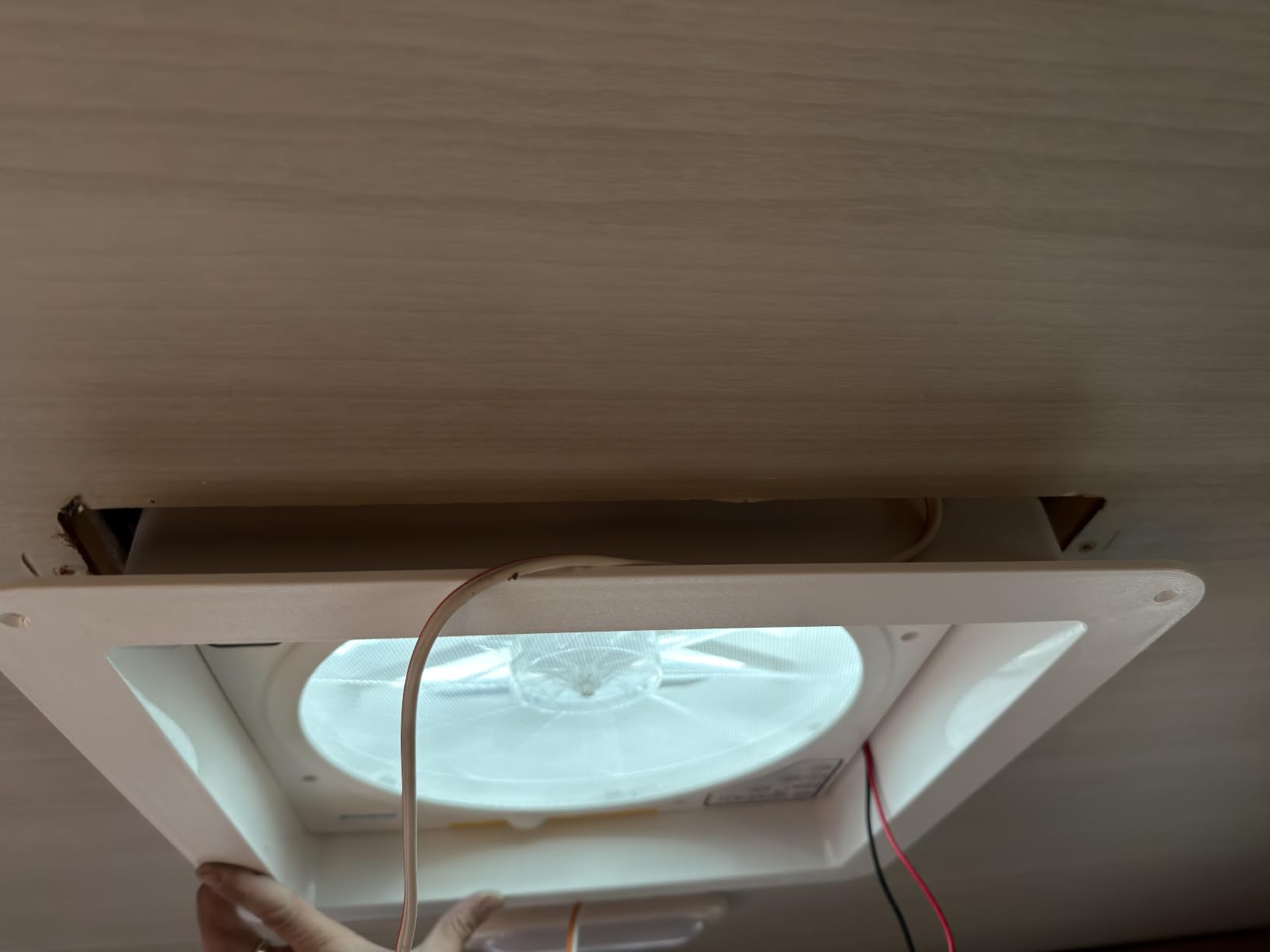
Sealing tape and screws are in the box, which removes the most common reason a budget install fails. It fits standard 14×14 roof openings, so it drops into the common van cut-out without templating.
The beep on every setting change is the sleeper complaint to know about. If the van is your bedroom, an audible confirmation tone is not a feature. A minority of owners also report blade cracking within several months and lid vibration in high wind.
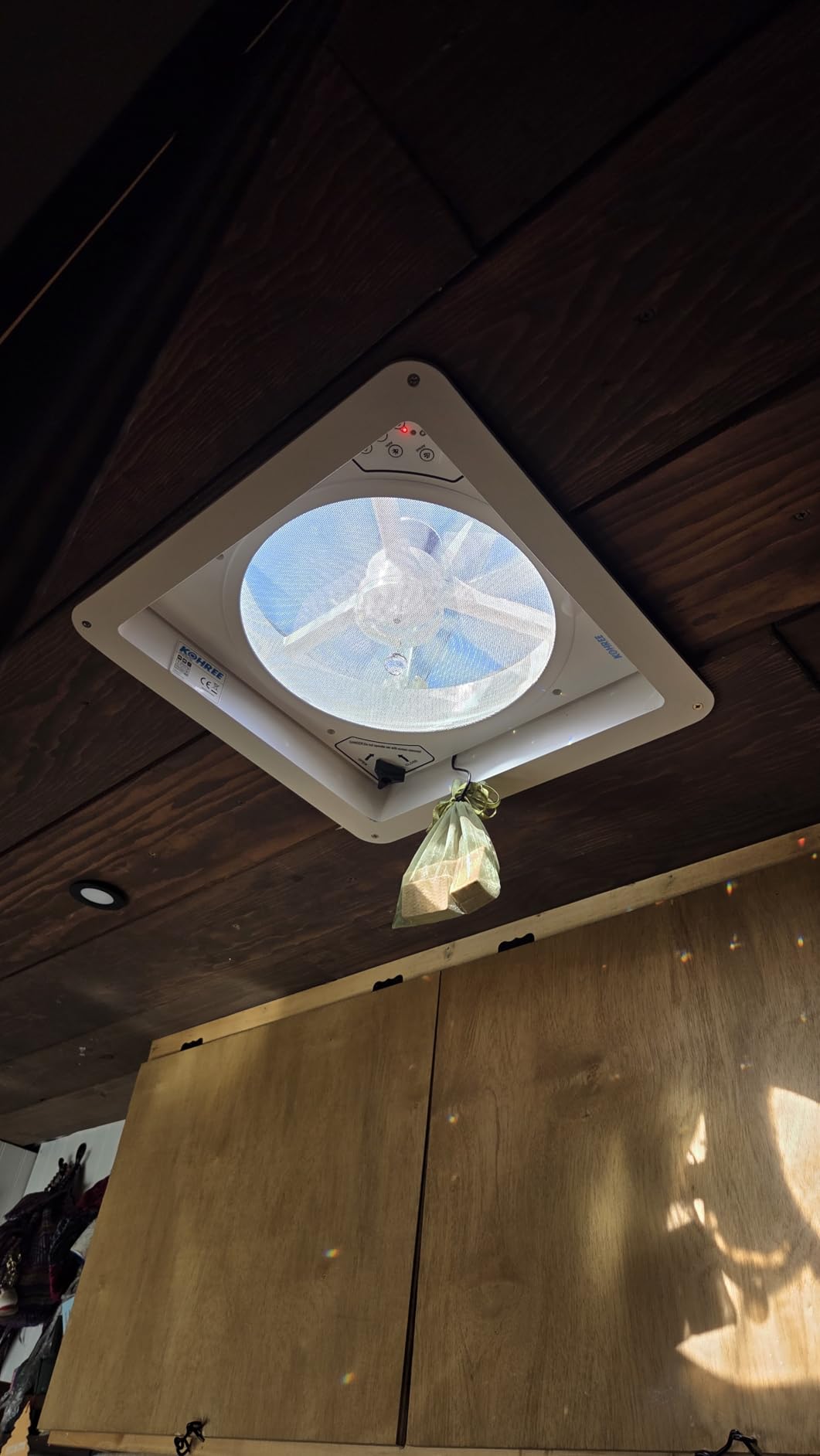
Automation versus control
Automatic temperature switching is the reason to pick this. On a hot afternoon parked in sun, a fan that turns itself on at 78.8F keeps the interior manageable without a phone in your hand.
At 934 CFM across 10 speeds, the low settings give you genuine airflow control, and reversible operation lets you draw cool evening air in once the outside temperature drops.
Where it falls short?
The lid actuator is a single metal bar working against a plastic lid, which is consistent with the vibration reports. In strong wind it is not quiet, and owners who camp in exposed sites mention it first.
Those same reports about blade cracking within months are worth weighing on a roof where a leak means pulling a headliner. If long-term durability is your priority, the MaxxFan Deluxe’s lifetime limited lid warranty is the stronger position.
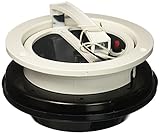
12. Ventline VP543 6 Inch Round – For Small And Non-Standard Openings
Ventline/Dex VP543 6″ 12V Powered Round Vent
12V
Bladeless round fan
15 watts
2 power levels
1.7 pounds
8 x 8 x 5.8 inch
Pros
- Compact 6 inch footprint for tight ceiling openings
- Integrated insect screen mesh
- Quieter than the factory vent it replaces
- Can stay open while driving and does not leak in rain
- Light 1.7 pound unit is simple to wire
Cons
- Does not include new screws or instructions
- Push-up handle feels delicate
- Some reports of early motor failure
This one solves a problem the square vents cannot. If you have a 6 inch round opening in a bathroom pod or over a cassette toilet, none of the 14×14 units will fit, and cutting a bigger hole next to a shower is not a weekend you want.
Buyers use it as a direct replacement for 6 inch round Airstream and small RV vents and report accurate fit, quiet running and a quick install. The integrated mesh screen means no separate insect screen to lose.
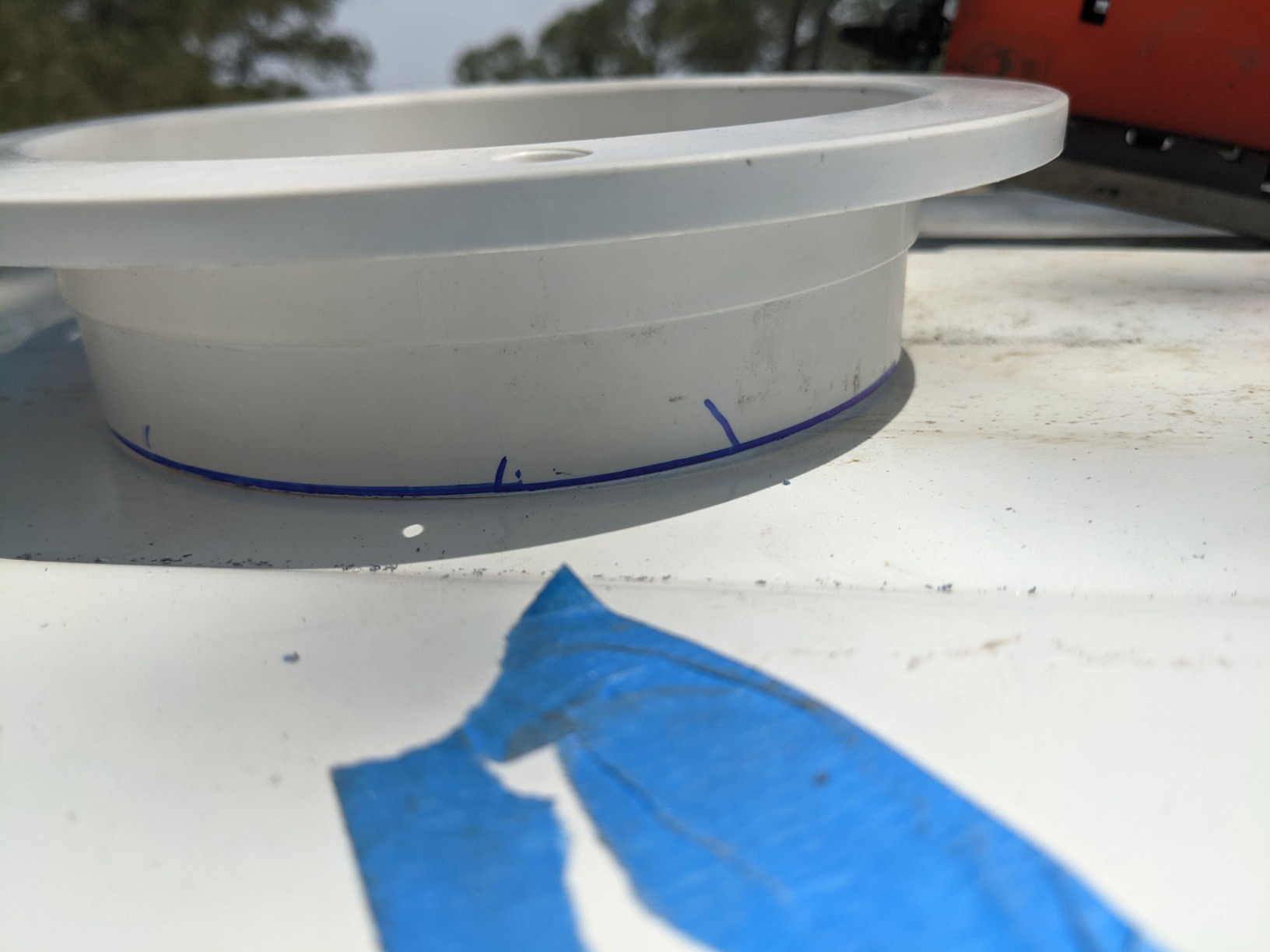
At 1.7 pounds it is the easiest unit here to hold overhead and wire, and it has two power levels rather than one. A full warranty is included.
The opening itself is the constraint: maximum 6.25 inch width by 8.4 inch height. That rules it out for a main living-area vent, where you want moving a lot of air through a much larger opening.
Where a 6 inch vent is the right answer?
Bathroom pods, wet rooms and cassette toilet zones are the classic use. These are small, enclosed and generate the kind of odour and damp that a square living-area fan is simply too big to serve.
It can stay open while driving and does not leak in rain, which owners appreciate in trailers where you are parked and moving with the vents up.
Where it falls short?
No screws and no instructions are included, so bring your own hardware and plan the wiring in advance. The push-up handle also feels delicate and needs steady pressure to open fully.
There are also reports of the motor failing within a couple of months. For a main living-space vent, step up to one of the 14×14 reversible units instead.
MaxxAir Alternatives Worth Considering
This is the most-asked question in van forums, and the honest answer is that four of the twelve fans here are genuine alternatives rather than compromises. If you want the MaxxFan feature set without the MaxxFan name, start here.
For airflow per dollar: the RVLOVENT 14 Inch 10-Speed publishes 1000 CFM, has 10 reversible speeds, a 45 dB rating and includes spare fuses and an extra screen frame. You give up the remote and the automatic lid.
For quietness: the F36AR 14×14 LED Ambiance uses a brushless motor rated at 25 dB or lower, which is the lowest verified figure in this roundup. You give up the MaxxFan warranty story, and its rain sensor closes the lid without cutting the fan.
For automation: the Kohree KR5312 does the most by itself. A 934 CFM airflow figure, 10 speeds, a motorised powered-lift lid, an automatic rain sensor and a temperature sensor that switches on above 78.8F. A few owners report blade cracking within months, so seal carefully.
For thin budgets: the Ventline Ventadome CW001 runs at 3.6 watts and arrives with putty tape, screws and a garnish ring. Single speed and exhaust only, but almost nothing to argue with on running cost.
What none of the alternatives replicate is the 2-year limited warranty with a lifetime limited warranty on the lid that Maxxair attaches to the Deluxe. That matters more than spec sheets when a failure means opening a headliner.
How To Choose A Roof Vent Fan For Your Van?
Measure the roof cut-out before anything else
Tape-measure the existing opening from flange to flange in both directions, then measure your roof thickness from the interior liner to the outer skin. Nearly every disappointment we found traces back to one of those two numbers.
The common van standard is a 14×14 inch rough opening. Three products here deviate: the Ventadome CW001 needs 14.25 inch, the HENG’S 71112A needs 14-1/2 inch, and the Ventline VP543 is a 6 inch round unit. If you have no opening at all, you are cutting a 14×14 hole and adding trim to get there.
Roof thickness matters too. The caqeg universal vent fits 1-1/4 inch to 2-1/4 inch, while the MAXXAIR MaxxFan Deluxe 00-06401K spans 1-1/8 inch to 6-1/2 inch and the Starvent A021C-V3 spans 1.16 inch to 5.5 inch. A heavily insulated high-roof conversion wants the wider range.
One more consideration before cutting: what else is up there. Our roof rack guide covers load and placement, and the same clearance logic applies to vents. A vent that sits under a rack or a roof cargo carrier cannot open fully.
Size airflow to the van, not the marketing
CFM means cubic feet per minute, and it is the only figure worth comparing across brands. In this roundup published figures run from 674 CFM on the F36AR LED model, through 900 CFM on the MaxxFan Deluxe 00-06401K and 934 CFM on the Kohree, up to 1000 CFM on the RVLOVENT.
For a standard high-roof van, anything above 600 CFM will clear a sleeping platform and remove cooking moisture quickly. If you run a cassette toilet in a pod behind a partition, high airflow matters more than anywhere else in the vehicle.
Watch for products with no published figure at all. Several budget units here make no CFM claim, and that silence usually means a smaller blade diameter. You can still see it in the spec: six inch blades will not move what a 14 inch blade moves.
Choose reversible airflow unless you have a reason not to
Reversible means the same fan pulls air out in summer and pushes it in at night, which lets you cool the van by drawing cool air through an open slider while pushing warm air out through the roof. Intake-only vents give you no way to do that.
Exhaust-only is acceptable in two situations. First, if your van has a roof air conditioner or another intake, the roof fan only needs to exhaust. Second, if you want the absolute lowest power draw and are happy with single-direction air movement.
Two more modes worth knowing. Ceiling-fan mode circulates interior air with the lid closed, which is the best overnight condensation control. And a fan that runs with the lid closed can be used while driving or in rain without a separate cover.
Work out the battery cost before you buy
Power draw is listed in watts, and the arithmetic is simple enough to do on the back of an envelope. A watt divided by 12 volts gives you amps, and amps multiplied by hours gives amp-hours.
At 3.6 watts the Ventadome CW001 runs about 0.3A. Over eight hours that is roughly 2.4Ah from a 100Ah battery, which is nothing. The 60 watt MaxxFan Deluxe is about 5A, so eight hours costs around 40Ah. That is the difference between a comfortable night and watching the water level drop.
The brushless options split the difference usefully. The F36AR LED model steps through 3W, 10W, 20W and 40W, so overnight running at the lowest setting is a small draw with real airflow behind it.
Whatever you choose, run the fan off a fused 12V circuit with a switch you can reach from the bed, and put a voltage regulator between the leisure battery and a MaxxFan Deluxe. Owners on r/VanLife report that fluctuating battery voltage damages the electronics on that unit, and the regulator is inexpensive insurance.
Decide how automatic you want it to be
There are four levels of automation, and each costs money and complexity. Manual crank means climbing the roof. A remote gives you control from inside. A rain sensor closes the lid when moisture lands. A thermostat or temperature sensor decides when the fan runs on its own.
The MaxxFan Plus 00-04500K gives you a rain sensor and remote. The Kohree KR5312 adds a temperature sensor that switches on above 78.8F. The MaxxFan Deluxe 00-07500K pairs a thermostat with a remote and simply solves rain by never needing an open lid.
Skip automation if you are wired to your van permanently and control everything from a panel. Pay for it if you want the vent to behave sensibly while you are asleep or away from the van.
Check noise and rain sealing against your sleeping position
If the vent sits above a bed, low-speed noise decides whether you like it. Look for a published dB figure rather than a description: the RVLOVENT is rated at 45 dB, the F36AR brushless models claim 25 dB or lower, and the Starvent sits at 59.5 dB on its higher settings.
For rain, the cleanest solution is a fan with a built-in cover that runs closed. The MaxxFan Deluxe 00-07500K does exactly that. The next best is a rain sensor that closes the lid automatically, which the MaxxFan Plus and Kohree provide.
Whatever the brand, the seal is your job. Use putty tape under the flange, silicone over the top, and check the flange sits flat on the roof rather than bridging a curve. Most leaks we found in reviews trace back to installation, not to the vent itself.
Plan the install honestly
Replacing an existing vent is an afternoon job once the sealant is off. Cutting a new opening is a different project: mark the template, drill starter holes inside the corners, cut with a jigsaw, deburr, and treat every exposed metal edge before it goes in.
Run the wire before you close the headliner, fuse the circuit, and test the fan on shore power first. Fit the interior garnish last, once you know the unit is sealed and running. If you are adding roof gear later, our ceiling fan lighting guide covers the ambient lighting side of a van interior.
Budget gloves for any vent with a galvanised or alloy steel flange. Several products here flag sharp flanges as an injury risk, and a cut hand mid-install is a bad way to lose a weekend.
Frequently Asked Questions
What is the best fan for a camper van roof?
The MAXXAIR MaxxFan Deluxe 00-07500K is the best overall roof vent fan for camper vans because the fan, vent and rain cover are one unit, so it runs in rain and while driving. It gives you 10 reversible speeds, a thermostat, remote control and a fit for standard 14×14 roof openings.
What are some good alternatives to MaxxAir fans for van roofs?
The strongest alternatives are the RVLOVENT 14 Inch 10-Speed for airflow value, the F36AR 14×14 LED Ambiance fan for a brushless motor rated at 25 dB or lower, the Kohree KR5312 for 934 CFM with a built-in temperature sensor, and the Ventline Ventadome CW001 for a 3.6 watt draw on battery-only builds. All four use standard 12V power.
What size roof vent does my van need?
Most camper vans use a 14×14 inch rough roof opening, and most 10-speed reversible fans are built for it. Measure your existing opening in both directions before ordering. Three units deviate: the Ventadome CW001 needs 14.25 inch, the HENG’S 71112A needs 14-1/2 inch, and the Ventline VP543 is a 6 inch round vent for bathroom or toilet pods.
How much power does a camper van roof vent fan use?
Draw ranges from 3.6 watts on the Ventline Ventadome CW001 to 60 watts on the MAXXAIR MaxxFan Deluxe 00-07500K. Divide watts by 12 volts for amps, then multiply by hours. Running the 3.6 watt unit for eight hours costs about 2.4Ah, while the 60 watt fan costs roughly 40Ah from a 100Ah battery.
Do I need a roof vent in my camper van?
Yes if you sleep, cook or live in the van. A sealed van traps moisture from breathing, cooking and wet gear, which leads to condensation and mold behind wall panels. A roof vent is the practical way to expel that air and cut interior humidity overnight. It also clears cooking odors, toilet smells and pet heat.
Which Roof Vent Fan Fits Your Build?
For most van builds in 2026, the best roof vent fans for camper vans resolve to one short decision. If your roof has a clean 14×14 opening and you want weather-proof airflow without thinking about it, the MAXXAIR MaxxFan Deluxe 00-07500K is the answer, and it is our pick above.
Pick the RVLOVENT 14 Inch 10-Speed if airflow and reversibility matter more than a remote. Pick the Ventline Ventadome CW001 if your battery budget is the limiting factor at 3.6 watts. Pick the F36AR 14×14 LED Ambiance fan if silence above a bed is the priority, and the Ventline VP543 if you need a 6 inch round vent for a bathroom pod.
Whichever you choose, measure the rough opening, confirm the roof thickness fits, run a fused circuit and use a voltage regulator on any MaxxFan Deluxe install.