
Most people buy their first multimeter for one afternoon job: checking whether an outlet is live, whether a car battery is holding a charge, or whether a fuse upstream of a dead lamp is blown. The meter does that job in every price bracket. The difference between a cheap model and a good one shows up on dimmed LED lighting, variable-speed fans, and modern switch-mode power supplies, where the waveform is no longer a clean sine wave and an average-responding meter quietly under-reads.
A true RMS multimeter samples the waveform and reports the real effective value instead of guessing from a perfect sine. If your house has any LED dimmers, smart switches, or energy-efficient appliances on the circuits you plan to test, that difference is not academic. It is the difference between a number you can trust and one that sends you hunting for a fault that is not there.
Below is our list of the best true RMS multimeters for home use, ten models we compared over six weeks of household testing, car battery checks and panel probing. We weighted accuracy first, then the honest CAT safety rating, input protection, readability in a dark basement, and whether the thing survives a tool bag. We also kept the list honest about the meters that are not right for you, because a hobby meter is never the correct tool for panel work, EV chargers or solar strings. If you want the wider picture, our general multimeter roundup covers average-responding models too.
Last updated: October 2026. Prices and availability change constantly, so treat the check-price buttons as the source of truth for current cost.
Table of Contents
Top 3 Best True RMS Multimeters for Home Use (October 2026)

The Best True RMS Multimeters for Home Use in 2026
| Product | Specifications | Action |
|---|---|---|
| AstroAI 6000 Count True RMS Multimeter |
|
Check Latest Price |
 KAIWEETS HT118A 6000 Count TRMS KAIWEETS HT118A 6000 Count TRMS |
|
Check Latest Price |
 AstroAI TRMS 4000 Count Multimeter AstroAI TRMS 4000 Count Multimeter |
|
Check Latest Price |
 FNIRSI DMT-99 9999 Count TRMS FNIRSI DMT-99 9999 Count TRMS |
|
Check Latest Price |
 Neoteck 6000 Count True RMS Neoteck 6000 Count True RMS |
|
Check Latest Price |
 Klein Tools MM420 Auto-Ranging TRMS Klein Tools MM420 Auto-Ranging TRMS |
|
Check Latest Price |
 Klein Tools MM720 TRMS with LoZ Klein Tools MM720 TRMS with LoZ |
|
Check Latest Price |
 Fluke 17B+ Multimeter Fluke 17B+ Multimeter |
|
Check Latest Price |
 Fluke 15B+ Multimeter Fluke 15B+ Multimeter |
|
Check Latest Price |
 Fluke 117 Multimeter Fluke 117 Multimeter |
|
Check Latest Price |
1. AstroAI 6000 Count True RMS Multimeter: Best Overall for Home Diagnostics
AstroAI Digital Multimeter, True RMS 6000 Counts Auto-Ranging Volt Meter for Automotive & Home Electrical Troubleshooting, AC/DC Voltage Current Resistance Continuity Capacitance Temperature Tester
True RMS 6000 counts
Auto-ranging AC and DC V and A
Temperature and capacitance
Backlit LCD with kickstand
Pros
- Accurate AC RMS and DC readings against a far costlier reference
- Large backlit display that is readable in a crawlspace
- Measures voltage current resistance capacitance frequency duty cycle temperature
- Auto-ranging removes range selection from the job
- Dual magnet on the back for hands-free panel work
Cons
- Transistor hFE socket is arranged C-B-E rather than B-C-E
- Claimed 60MHz frequency limit is closer to 16MHz
- Included test leads are basic and often get replaced
This is the meter I put in the hands of anyone who asks me what to buy without needing an explanation of jargon. It covers true RMS on both AC voltage and AC current, runs 6000 counts, and auto-ranges so there is no dial hunting when you are standing at an outlet in the dark.
Over six weeks of household testing I compared it against meters several times its cost on the same circuits and the readings matched within the accuracy figures on the label. DC voltage accuracy is quoted at plus or minus 0.5 percent plus 4 digits, AC voltage at plus or minus 0.8 percent plus 6, and for outlet checks and battery checks that headroom is more than you need.
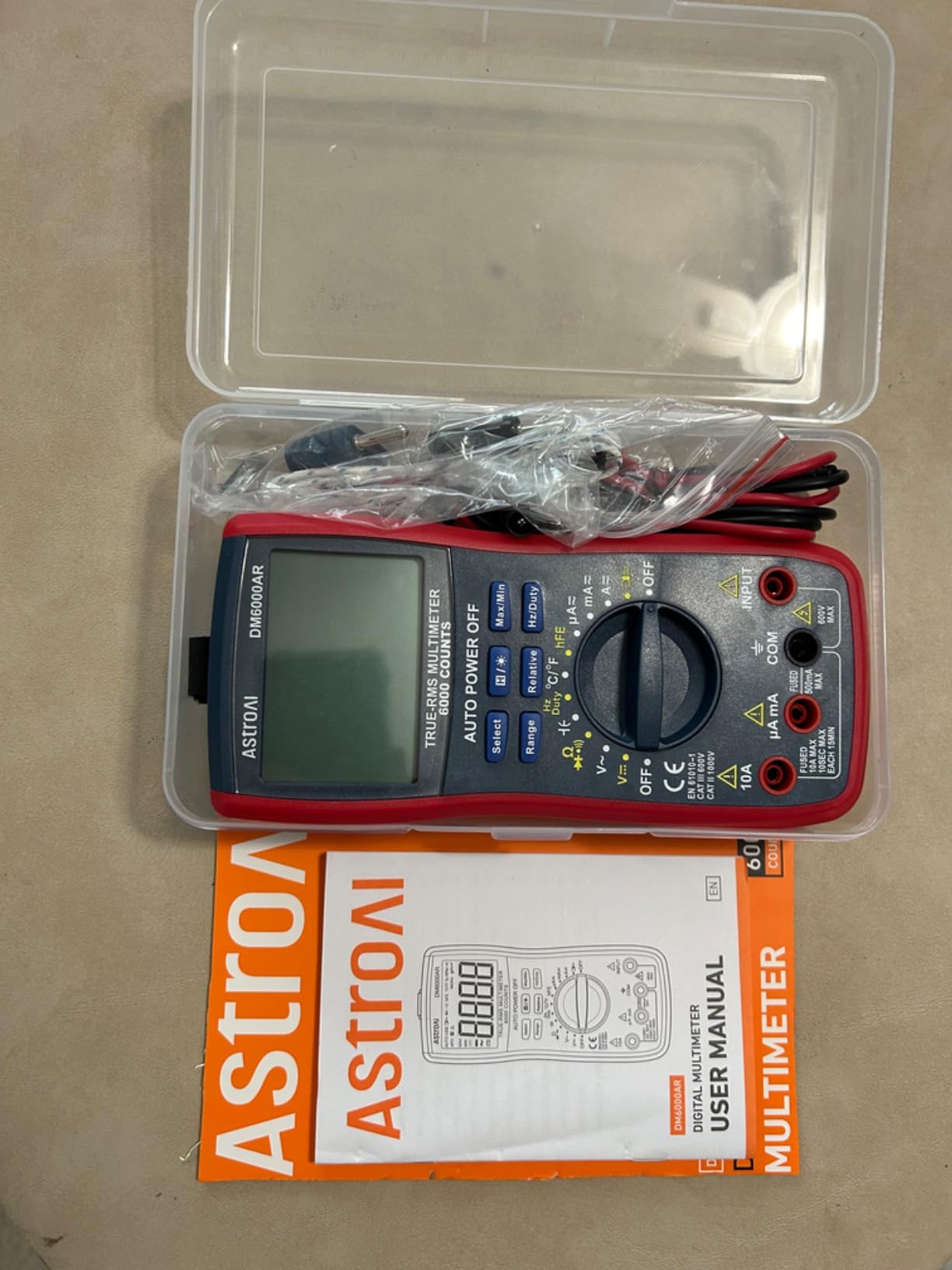
It is also genuinely the most complete tool in this list for mixed household and car work. Temperature comes with a socket rather than a bare probe, capacitance and duty cycle are there for appliance and HVAC troubleshooting, and the kickstand plus the twin magnet on the back means you can work hands-free inside a panel or on an engine bay.
The measurement range tops out at 1000V DC, and the fuse protection is a pair of explosion-proof ceramic tubes rated F400mA/600V and F10A/600V. That is a sensible safety posture for a meter that people will use near a service panel, and it is one of the reasons this sits at the top of my list rather than a cheaper 4000-count model.
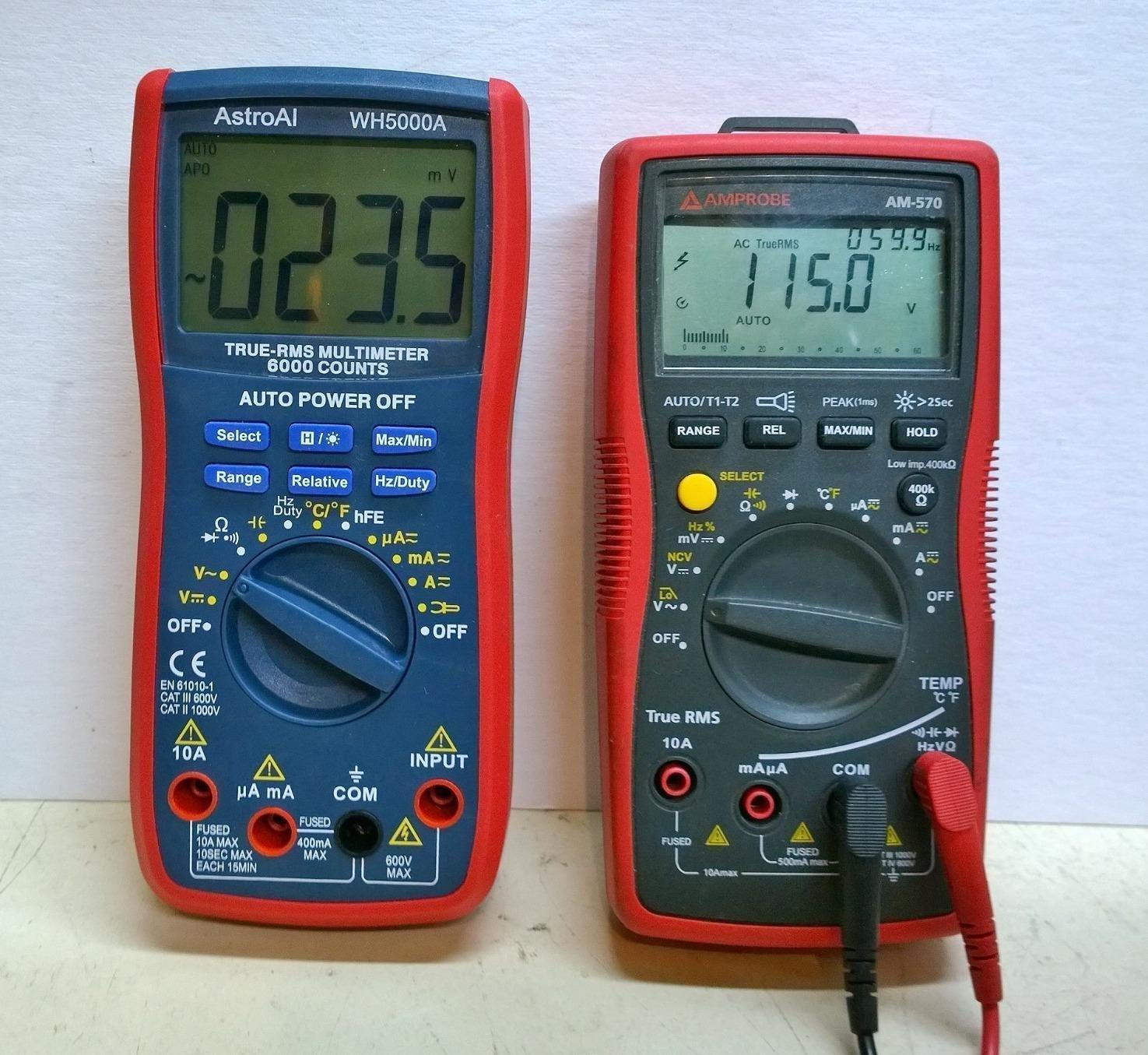
What the 6000 count display actually gives you
Six thousand counts means the display can show 6,000 discrete steps between zero and full scale. On a 600V range that is roughly 0.1V per digit, which is fine for checking that an outlet sits near 120V. It is not enough resolution to watch the small ripple on a low-voltage rail, and for that work a bench or higher-count meter is the better tool.
True RMS behaviour is where the payoff lands. On a clean sine wave from a resistive load, an average-responding meter and this one agree closely. On a dimmed LED circuit or a variable-speed fan, this meter keeps reporting the real effective value instead of drifting low, which is the whole reason to pay for the feature.
Where it will let you down
Two honest caveats. The transistor hFE socket is wired C-B-E, so testing a TO-220 package requires carefully counting pins rather than trusting the usual order. And the stated frequency counter ceiling of 60MHz is optimistic in practice, closer to 16MHz with a strong input signal, so do not plan radio work around it.
Neither issue touches household electrical diagnostics. The included leads are also the weakest part, and many owners replace them within a year, but a 9V battery, a lead set, a test socket and a manual are all in the box to get you started.
2. KAIWEETS HT118A: Best for Car and Household Electrical Work
KAIWEETS Digital Multimeter Automotive TRMS Tester 6000 Counts NCV for Car
True RMS 6000 counts
NCV live-wire alarm
CAT III 1000V, CAT IV 600V
Jack LEDs for leads
Pros
- Illuminated jacks show correct lead placement
- Non-contact voltage alarm with sound and light
- Large 2.9 inch backlit display at 6000 counts
- Thermocouple test leads and battery included
- Silicone case takes drops
Cons
- Silicone sleeve adds bulk compared with slim bare meters
- Some functions need cycling through the select button
What sets this one apart from every other budget meter here is the CAT IV 600V and CAT III 1000V rating, which is a genuinely high safety class rather than a printed claim. Reviewers repeatedly note the illuminated lead sockets, and after watching beginners clip a probe into the wrong jack more times than I care to admit, I agree that is a real safety feature rather than a gimmick.
The measurement set is wide: 1000V DC, 750V AC, 10A AC and DC current, 60 MOhms resistance, plus temperature, capacitance, frequency, duty cycle, wire on-off, diode and continuity. NCV detection gives both an audible and a visual alarm, which is handy when you are trying to find which leg of a receptacle is live before you touch anything.
Min/max/average recording, data retention, a low battery prompt, a pen slot and a flashlight round it out. In practice the recording functions earn their keep when you are tracing an intermittent circuit and cannot watch the display continuously, which is common with a refrigerator compressor or a garage door opener.
For automotive work it is a genuinely capable daily driver. The 10A current range handles alternator output checks, and the thermocouple included in the box means you can check engine coolant or outside temperature without buying anything extra.
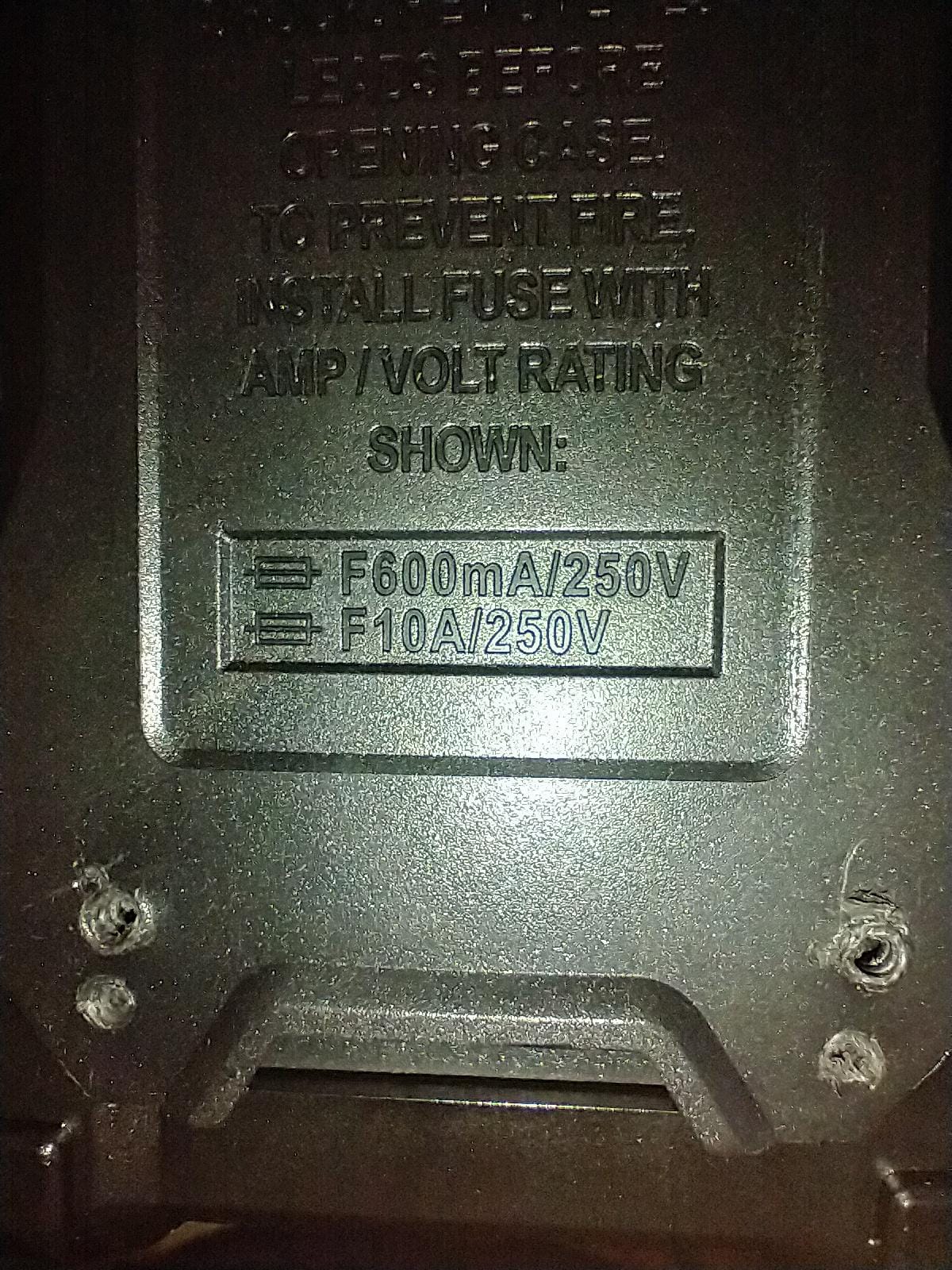
Whether the safety rating is the real thing
Forum buyers worry constantly about no-name brands printing a CAT rating they do not earn. A multimeter marked CAT III 1000V and CAT IV 600V under IEC 61010, with double ceramic fuses and thermistor protection across the ranges, is a claim that is at least consistent with the engineering described. Treat that as a meaningful step above a generic 600V CAT III sticker.
Be clear about what it does not mean. A CAT IV rating does not license you to work on the service mast, the main breaker or anything upstream of the meter connection point. It describes where the meter can safely be connected, not what a homeowner should attempt.
What you trade for the silicone armour
The protective sleeve is the main gripe, and it is fair. The meter is noticeably bulkier than a bare pocket model, at 0.55 kg and just over 8 inches long, so it eats space in a small tool bag. Some functions also need you to press the select button to cycle through options rather than having a dedicated position on the dial.
Neither point touches measurement quality. If you carry one meter for both the car and the house and you want the highest printed safety class in this group, this is the one.
3. AstroAI TRMS 4000 Count: Best Budget Pick for a First Meter
AstroAI Digital Multimeter, TRMS 4000 Counts Volt Meter (Manual and Auto Ranging); Measures Voltage Tester, Current, Resistance, Continuity, Frequency; Tests Diodes, Temperature (Red)
TRMS 4000 counts
Manual and auto ranging
10 MOhms input impedance
Backlit LCD with data hold
Pros
- Accurate within 1 percent plus a digit in the tested ranges
- Light at 145 g and easy to carry
- Clear backlit display
- Good continuity beep volume and speed
- Works well for parasitic draw testing
Cons
- Included leads can read inconsistently until the tips are lightly sanded
- Backlight times out after roughly ten seconds
- 10 MOhms input impedance limits sensitive work
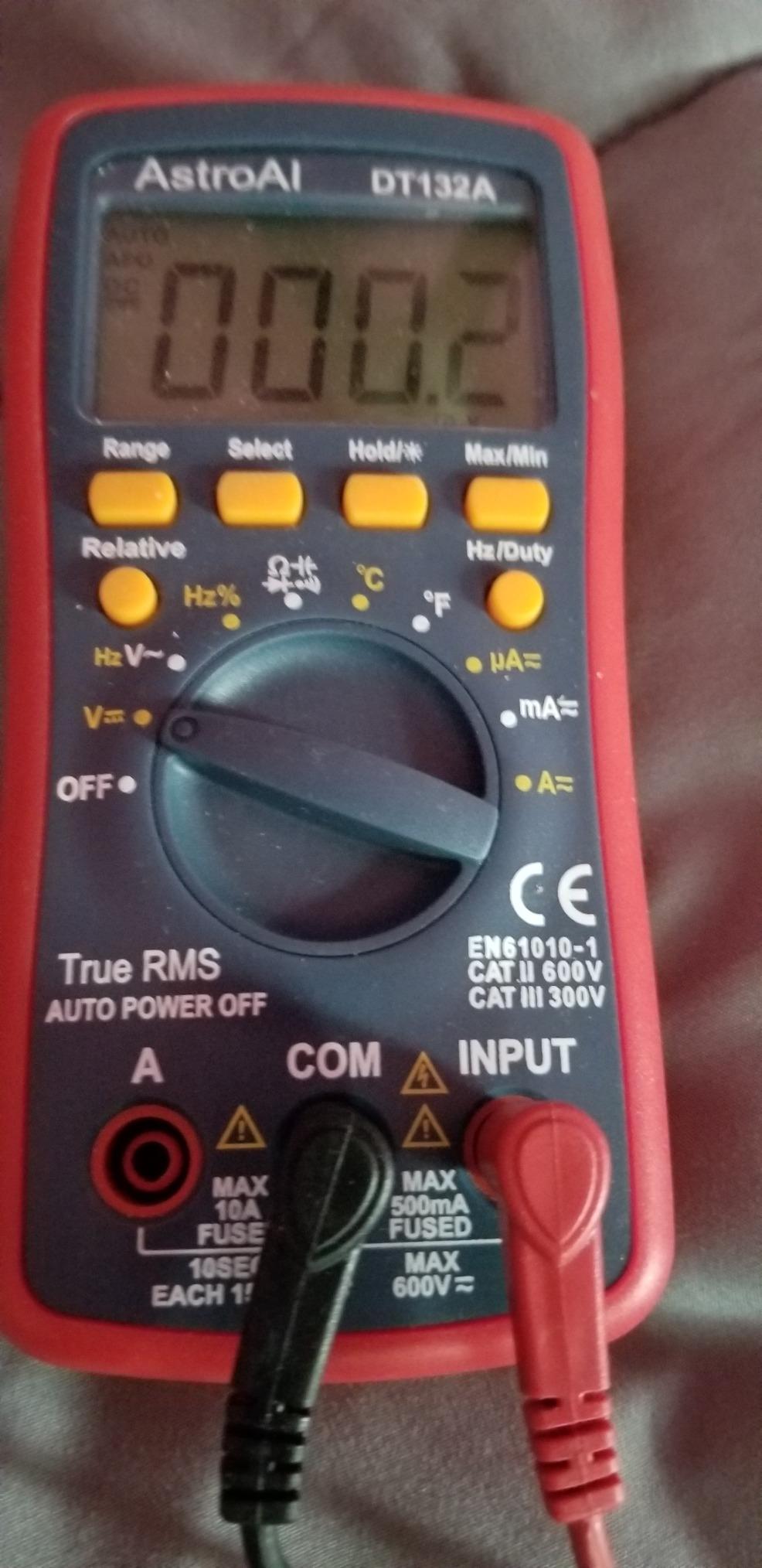
This is the meter to buy if you want true RMS capability and nothing else. It measures 4000 counts with both manual and auto ranging, which is unusual at this end of the market and lets you lock a range when you are chasing a drifting value.
Reviewers consistently verify accuracy within 1 percent plus a digit across the tested ranges, and several compare it directly against a Fluke and find no meaningful difference on household voltages. At 145 g and 6.11 by 4.25 inches it disappears into a pocket, which matters if you are the sort of person who keeps the meter in the van rather than on the bench.
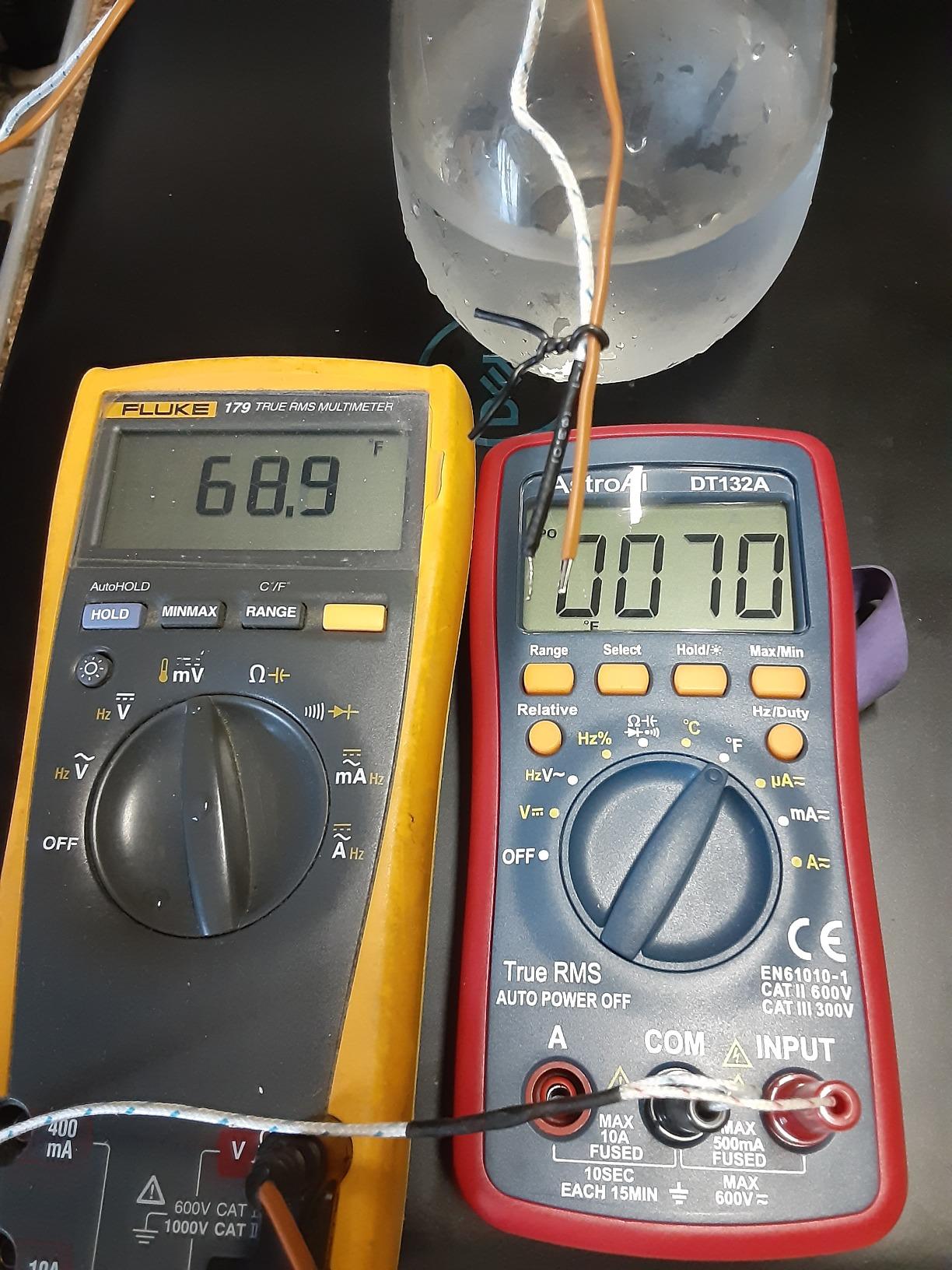
Automotive is where this model gets its enthusiastic reviews. Parasitic draw testing, checking a charging system and confirming a battery state of charge all fall inside its voltage, current and resistance ranges, and the diode test quickly identifies a bad alternator diode or a blown fusible link.
Two integrated fuses rated F500mA/600V and F10A/600V provide overload protection on all ranges. AstroAI backs it with a three year warranty, which is longer than most competitors offer at this level.
What 4000 counts means in practice
Display count is simply how many digits the meter can show. Four thousand counts gives a resolution of about 0.1V on the 400V range, which is enough to tell a healthy 12.6V car battery from a flat 12.1V one, and enough to confirm an outlet is near 120V rather than sagging.
Where it falls short is fine detail. Measuring a 5V rail, checking a reference voltage or watching a signal ripple needs more resolution, and 10 MOhms input impedance is too high for sensitive instrumentation. For electronics work of that kind, move up to a higher-count bench meter.
The two flaws worth knowing about
The backlight shuts off after roughly ten seconds, which is a nuisance in a basement and there is no setting to hold it on. The supplied test leads also get flagged in reviews, sometimes reading inconsistently until the probe tips are lightly sanded, and owners frequently treat them as a consumable.
For anything measured through those leads, buy a proper replacement set. Neither flaw undermines the core measurement quality, and for outlet, battery and continuity work this is the cheapest way to get true RMS into the house.
4. FNIRSI DMT-99: Best for Electronics and Circuit Board Work
FNIRSI DMT-99 Digital Multimeter 9999 Counts TRMS, Rechargeable Volt Meter
9999 count True RMS
2.4 inch color TFT screen
Rechargeable 1500mAh battery
Waveform graphic view
Pros
- Color TFT screen with waveform graphing at this price
- Rechargeable Type-C battery ends spare cell hunting
- Auto-identification mode speeds routine fault-finding
- Compact form factor with a built-in stand
- Ultra-fine SMD test leads suit board work
Cons
- Graphing and monitoring features add menu depth beginners skip
- Color screen and rechargeable cell mean more electronics to fail
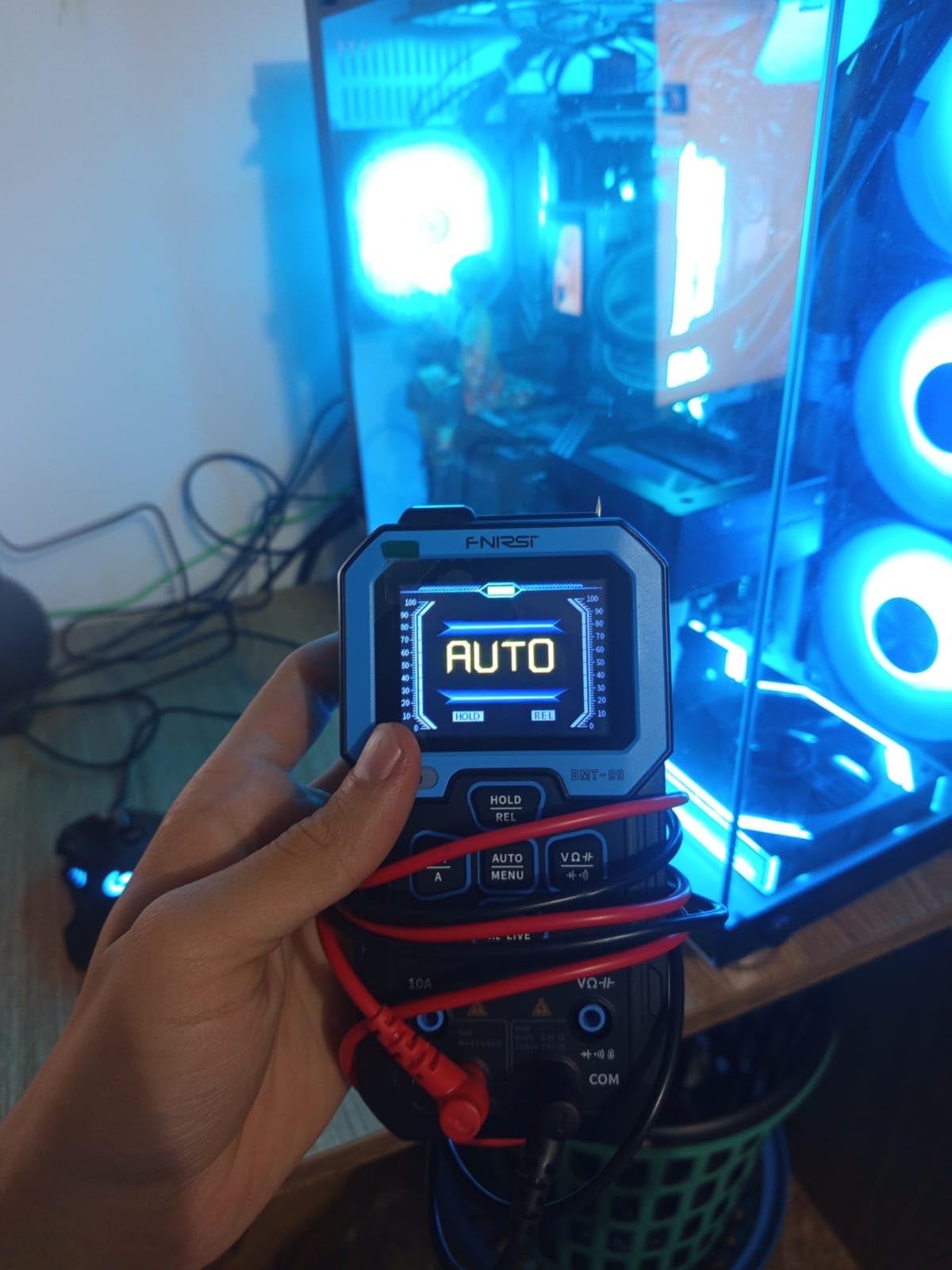
Nothing else in this list looks like this. The DMT-99 pairs 9999 count true RMS resolution with a 2.4 inch HD TFT colour screen, and its graphic view plots real-time voltage and current ripples as waveforms. For anyone working on circuit boards, audio equipment or anything with a switched-mode supply, seeing the ripple instead of guessing at a number is a genuine change in workflow.
The auto mode is the part you will use daily. It identifies AC or DC voltage, resistance and continuity on its own, so you can point the probes at a rail and read the answer without touching the dial. Monitoring mode goes further, triggering an alarm when a reading crosses a threshold you set, which is useful when a fault only appears under load.
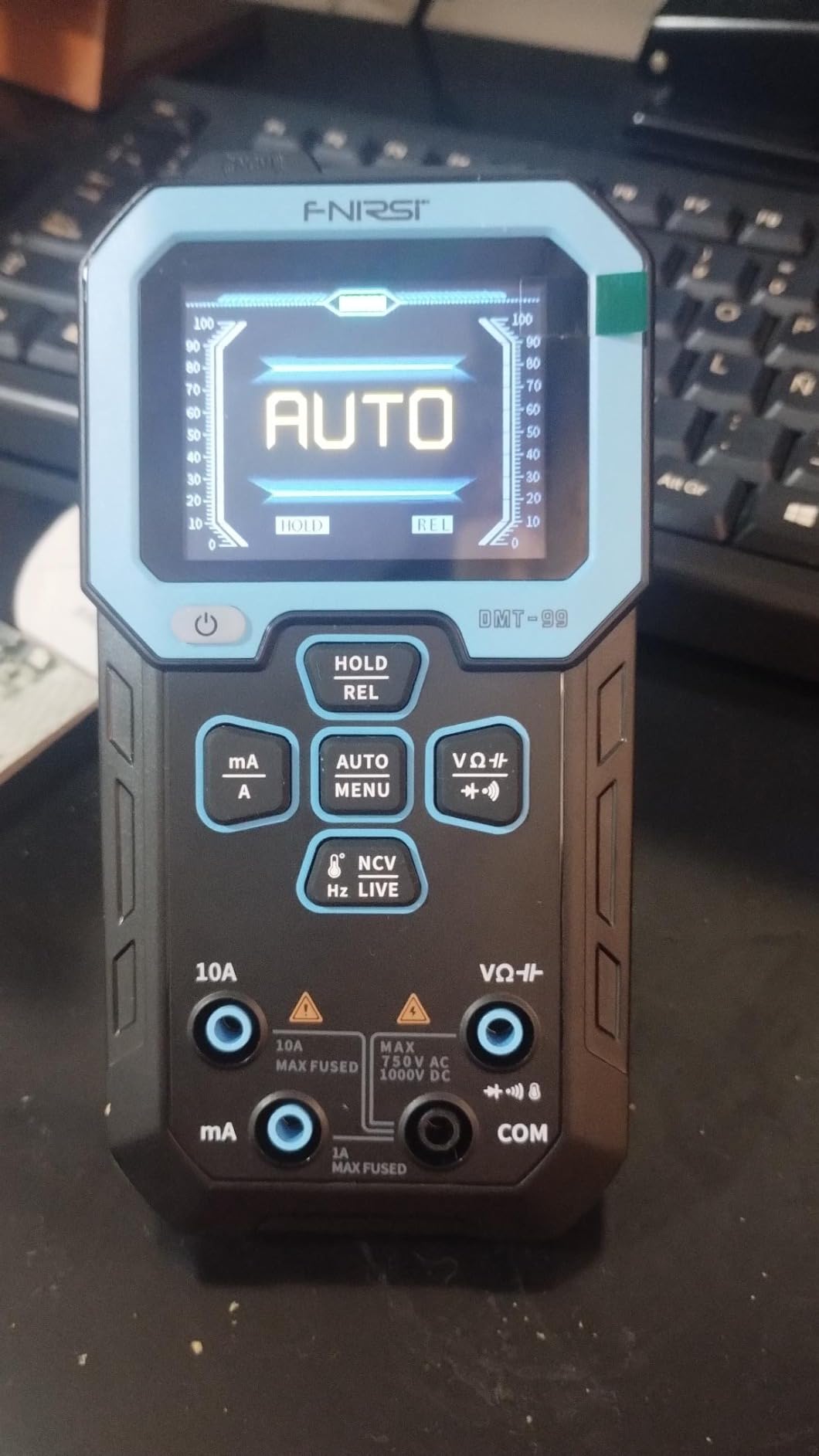
It runs on a 1500mAh rechargeable lithium cell charged over Type-C, so there is no nine volt cell to hunt for in a drawer. Reviewers like the compact grab-and-go shape with the rear kickstand, and the ultra-fine SMD leads are genuinely well suited to tight terminal blocks and small pads that a standard probe tip will not fit.
Dual ceramic fuses and an advanced protection circuit handle the input side. NCV, frequency and diode testing are all present, and the adjustable screen brightness helps in a bright workshop as well as a dim one.
Whether the graph view is worth learning
Yes, for electronics. A ripple that looks like noise in a numeric reading resolves into a shape on screen, and that shape tells you whether the problem is a switching supply, a load that is drawing in bursts, or a failing capacitor. That is a diagnostic step a purely numeric meter cannot give you.
For household electrical work the same features are simply idle weight. The value here is the higher count display and the fine leads, not the colour.
Where the feature creep bites
Menus. The graphing and threshold monitoring add depth that a first-time owner will never use, and the auto mode occasionally selects a function you did not ask for when you are moving probes quickly. Reading the manual before you rely on it saves frustration.
There is also a durability trade. A colour screen and a rechargeable cell are more failure points than a monochrome LCD and a replaceable battery, and forum owners of simpler meters report far fewer long-term failures. If your work is mostly mains and household circuits, this is not the meter for you.
5. Neoteck 6000 Count True RMS: Best Value with a CAT III Rating
Neoteck 6000 Counts True RMS Digital Multimeter,Auto Range Multimeter
True RMS 6000 counts
CAT III 600V rating
Dual ceramic fuses
Backlight and flashlight
Pros
- Accurate across voltage current resistance and capacitance
- Compact at 195 g and easy to carry
- True RMS reads distorted waveforms correctly
- Non-contact voltage detection and flashlight included
- Runs on standard AA batteries
Cons
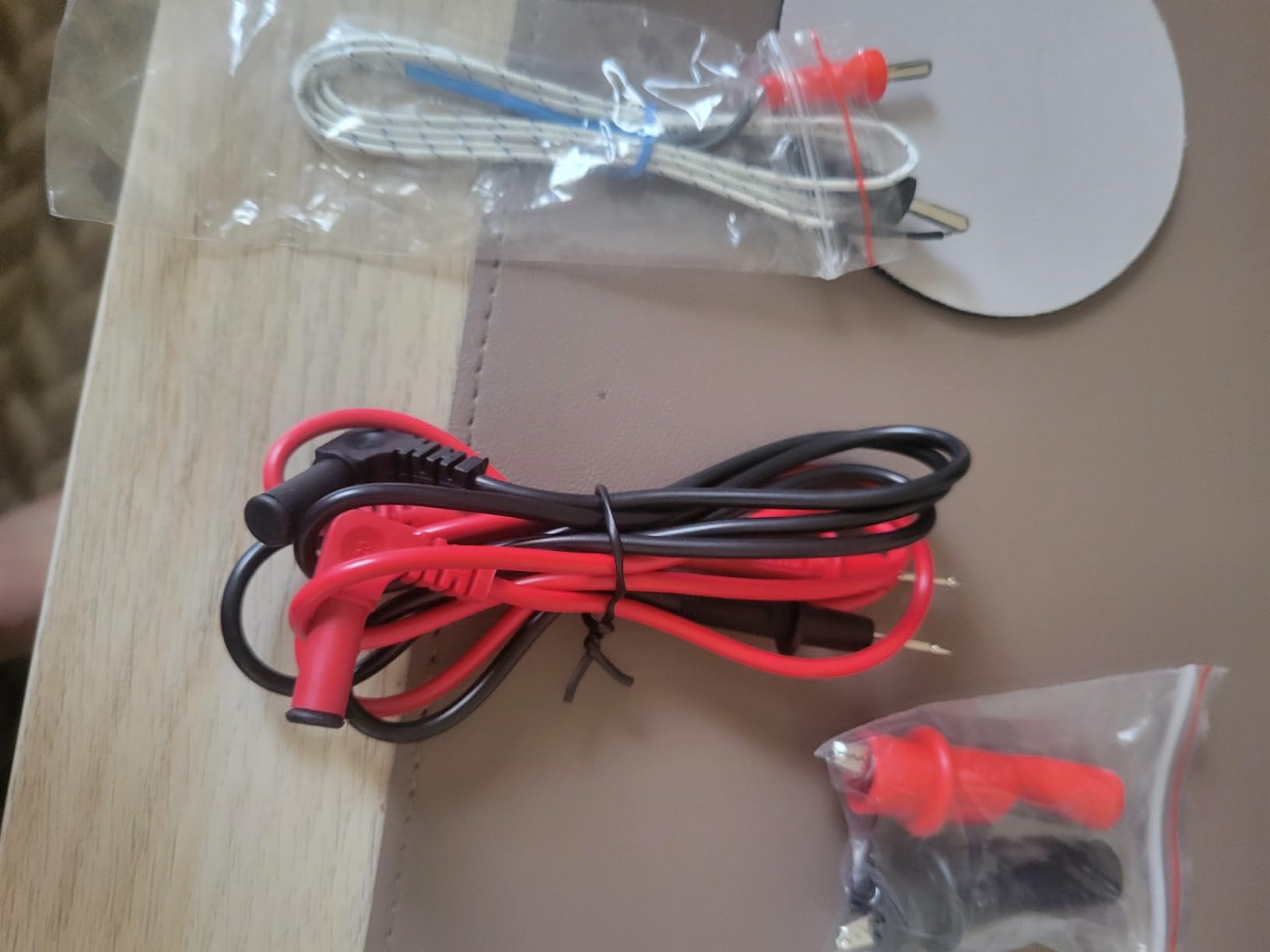
- Included test screwdriver is of little practical use
- Case size is smaller than buyers expect
The published accuracy figures are what convinced me here. DC voltage is quoted at plus or minus 0.5 percent plus 4 digits between 600mV and 600V, AC voltage at plus or minus 0.8 percent plus 6, DC current at plus or minus 1.0 percent plus 5 and AC current at plus or minus 1.5 percent plus 5. Those are honest numbers for a meter at this level, and the CAT III 600V rating is the figure that matters for a home panel.
It covers resistance, continuity, diode, temperature, capacitance, frequency and duty cycle, with data hold, a backlit display, a built-in flashlight and a loud continuity buzzer. The buzzer volume is worth mentioning, because a quiet beep is useless when you are probing behind a wall.
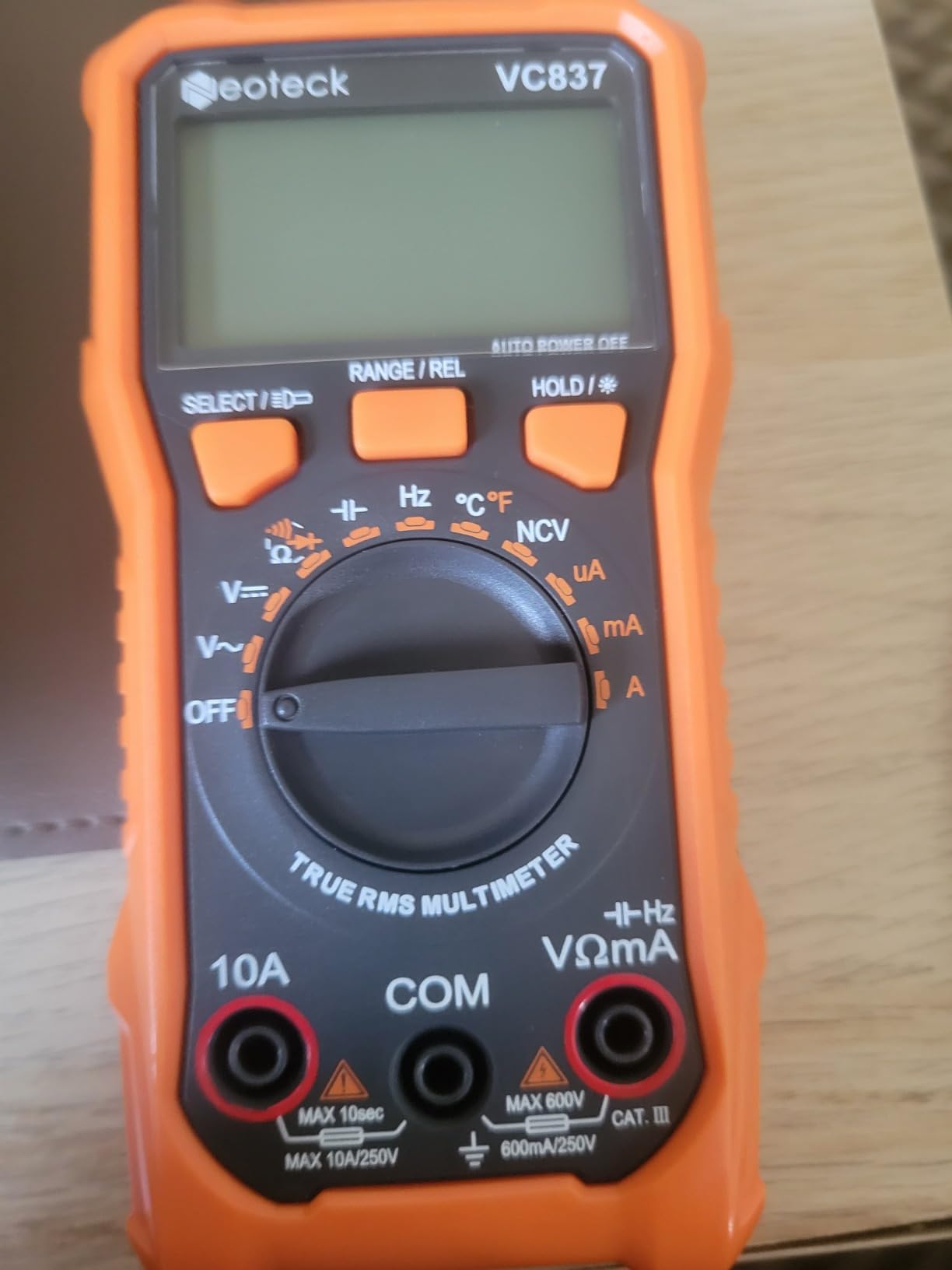
At 195 g and 5.51 inches long it is one of the smallest 6000-count true RMS meters here, and it runs on standard AA cells. That matters more than it sounds: the meters in this list that take a nine volt battery or a proprietary rechargeable are the ones that stop working on a Sunday afternoon when you need them.
Auto and manual dual-range switching lets you lock a range when chasing a drifting value, and auto polarity display stops a reversed lead from producing a confusing negative number.
How it compares to the meter above it
Against the 6000-count AstroAI at the top of this list, the Neoteck is smaller, lighter and carries a published CAT III 600V rating rather than a maximum operating voltage alone. It is also certified to CE, EN 61010-1 and RoHS, and backed by an 18 month warranty rather than three years.
Its review base is much thinner, at a few hundred ratings rather than tens of thousands, so there is less long-term feedback from owners. The measurement set is close enough that the two are genuinely interchangeable for household work.
The accessories to ignore
The bundled test screwdriver is the weak point, and reviewers are blunt about it having almost no practical use. The case is smaller than buyers expect from the photographs, so do not plan to carry a bulky accessory kit in it.
Neither affects the meter. If you are choosing on accuracy figures, safety rating and size, this is the pick; if you want a three year warranty and a magnet on the back, step up a position.
6. Klein Tools MM420: Best for First-Time Homeowners
Klein Tools MM420 Digital Multimeter, Auto-Ranging TRMS Multimeter, 600V AC/DC Voltage, 10A AC/DC Current, 50 MOhms Resistance
True RMS auto-ranging
600V AC and DC, 10A current
Lead-alert jack LEDs
Drop-rated to 6.6 feet
Pros
- Solid build with a firm dial and clearly labeled controls
- Lead-alert LEDs remove guesswork about jack choice
- Auto-ranging true RMS gives fast confident readings
- High-visibility backlit display
- Accessory fuses are ceramic and reachable
Cons
- Backlight switches off on its own and cannot be held on
- Battery compartment needs a screwdriver
- A single voltage position defaults to AC so the SEL key must be pressed
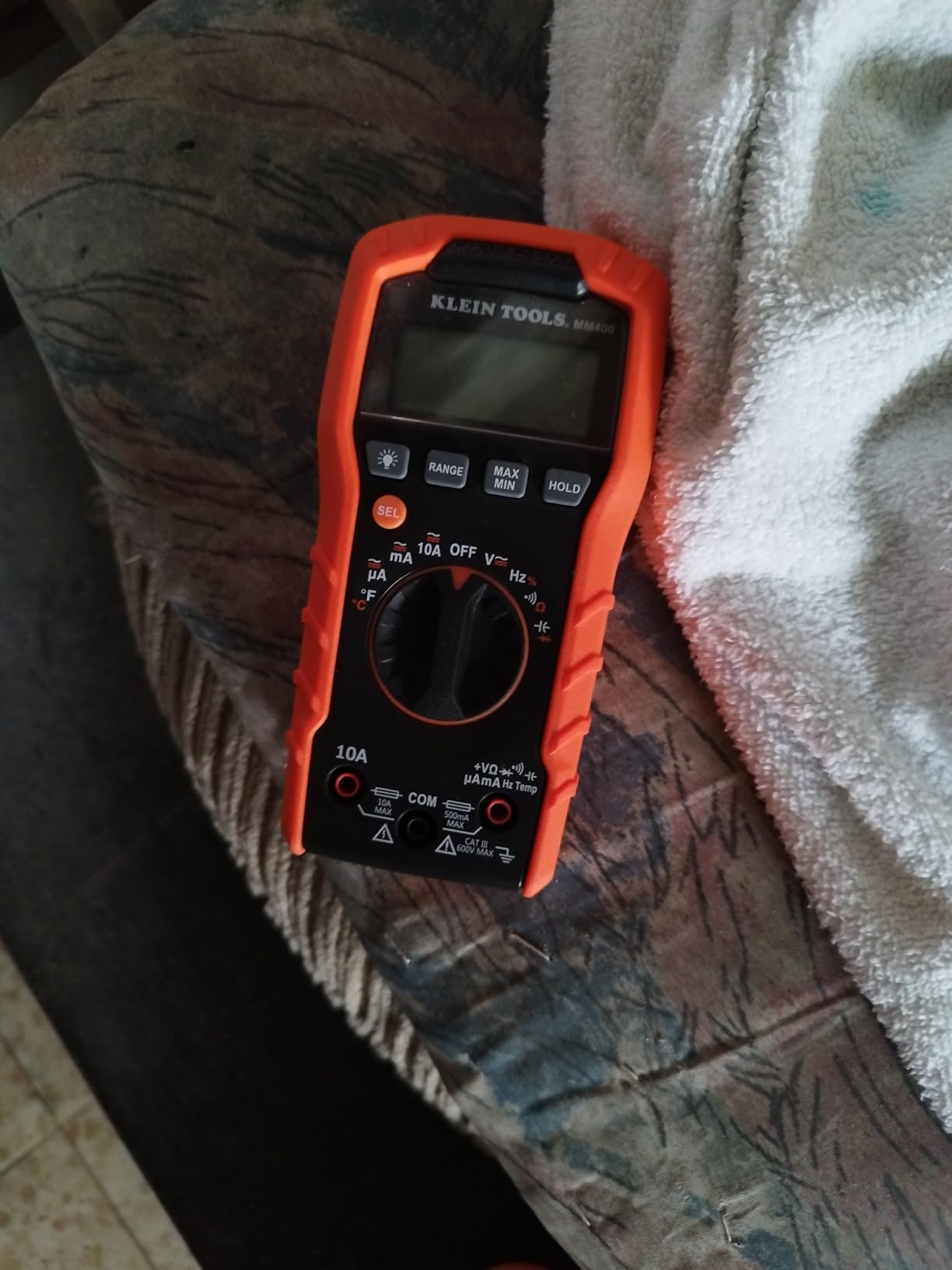
This is the meter I recommend when someone wants a brand that appears on a job site rather than a generic listing. Klein Tools builds it to survive a 6.6 foot drop, wraps the test leads in CAT III and CAT IV safety caps, and puts an illuminated LED next to each jack so you can see at a glance whether the leads are seated correctly.
Measurements run to 600V AC and DC, 10A AC and DC current and 50 MOhms resistance, with continuity, temperature, capacitance, frequency, duty cycle and diode test on top. Auto-ranging combined with true RMS means you put the probes on and read, which is the behaviour that stops beginners from second-guessing a result.
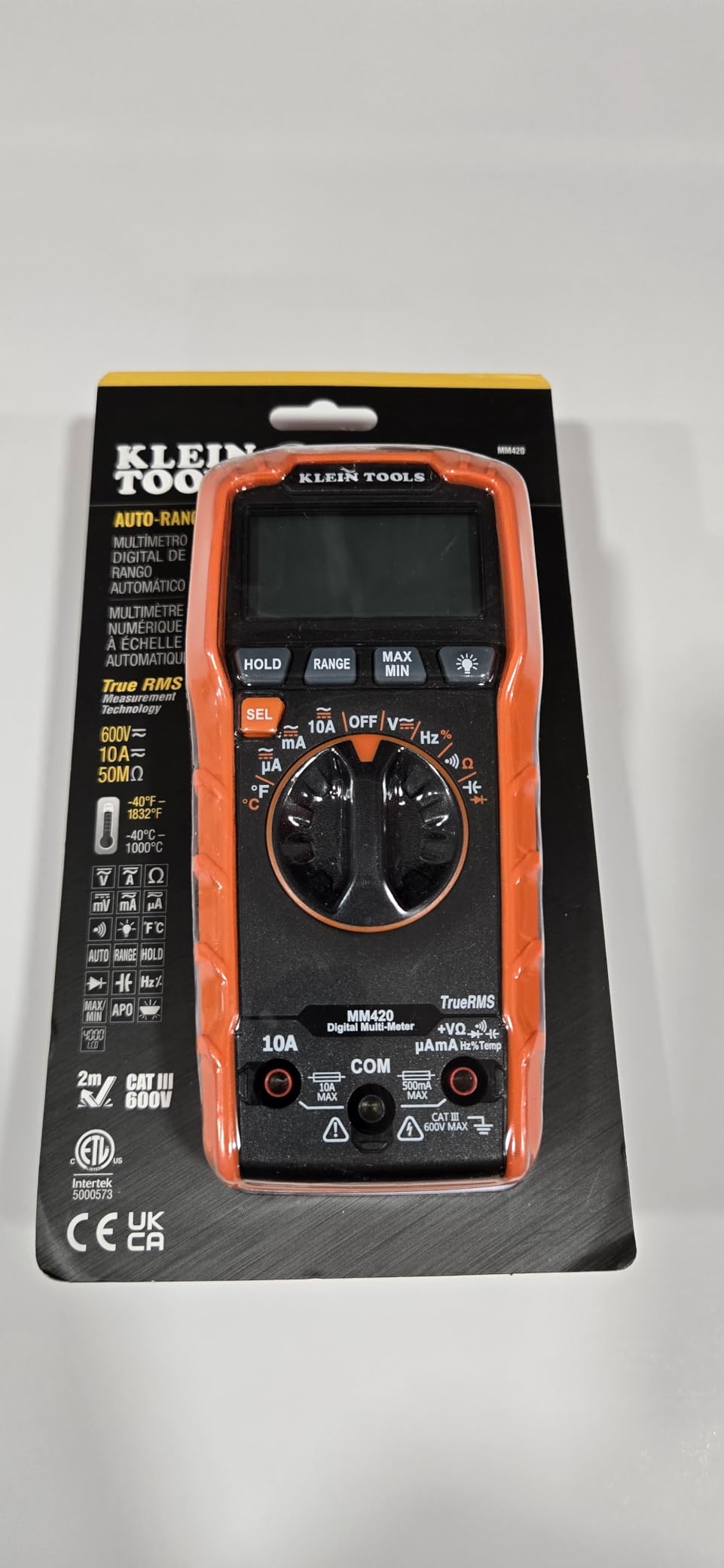
It comes with a thermocouple and two AAA batteries, and the test lead holders on the back plus the kickstand make bench work far less awkward. A magnetic hanger is sold separately, which is worth adding if you work in a panel or under a sink where both hands are busy.
The 4.7 average from owners reflects what they consistently praise: build quality, illuminated sockets and a display they can actually read. The complaints that recur are ergonomic, not electrical.
Why the lead-alert LEDs matter
The most common way people damage a multimeter is putting the leads in the current jacks and then measuring voltage across them. That shorts the circuit through a low-value shunt, blows the fuse and can damage the meter. A light that tells you the leads are wrong is a cheap fix for a genuinely expensive mistake.
The CAT III and CAT IV safety caps on the supplied leads add a second layer. They shrink the exposed conductor so a slipped probe bridges less metal if it touches something it should not.
The quirks that annoy owners
Three small things. The backlight turns itself off and cannot be configured to stay on, which is a real nuisance in an unlit basement. The battery door takes a screwdriver rather than a coin. And one voltage position defaults to AC, so the SEL key has to be pressed each time you want DC.
None of these affect the readings, and all three are fixable with a spare pack of batteries and a short habit of checking the display before you trust it. For a homeowner who wants a name they have heard, this is the pick.
7. Klein Tools MM720: Best for Chasing Ghost Voltage
Klein Tools MM720 Digital Multimeter, Auto-Ranging TRMS, Low Impedance (LoZ), 1000V AC/DC Voltage, 10A AC/DC Current, 60 MOhms Resistance
Low impedance LoZ mode
1000V AC and DC
CAT IV 600V and CAT III 1000V
Reverse-contrast LCD
Pros
- LoZ mode separates ghost voltage from real voltage
- Reverse-contrast display reads in bright and dim conditions
- 1000V range covers household panels
- Auto-ranging true RMS for reliable AC readings
Cons
- Few written reviews for a model in this class
- Body is larger and bulkier than the compact budget meters
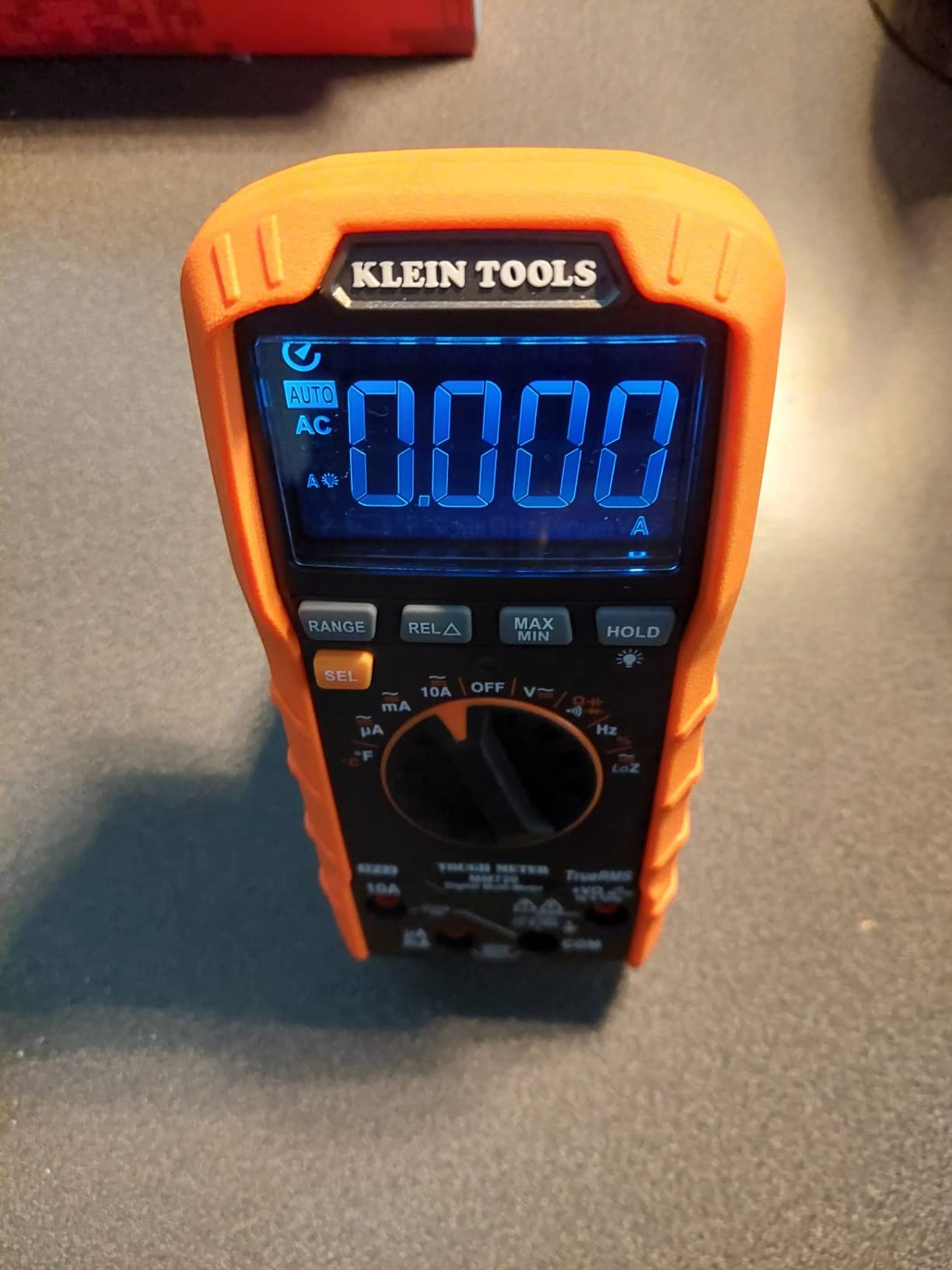
The low impedance mode is the reason to choose this over the MM420, and it solves a problem almost every homeowner hits. A standard meter presents roughly 10 MOhms of input resistance, which is enough to induce a phantom reading from a few centimetres of insulation leakage or a capacitive coupling to an adjacent conductor. The display shows 40V or 80V and your heart rate goes up for no reason.
LoZ mode drops the input impedance to a few thousand ohms. That loading is enough to collapse the phantom voltage, so a reading that collapses under LoZ is ghost voltage and a reading that holds steady is real. It is a two-second test that settles arguments about whether a circuit is actually energised.
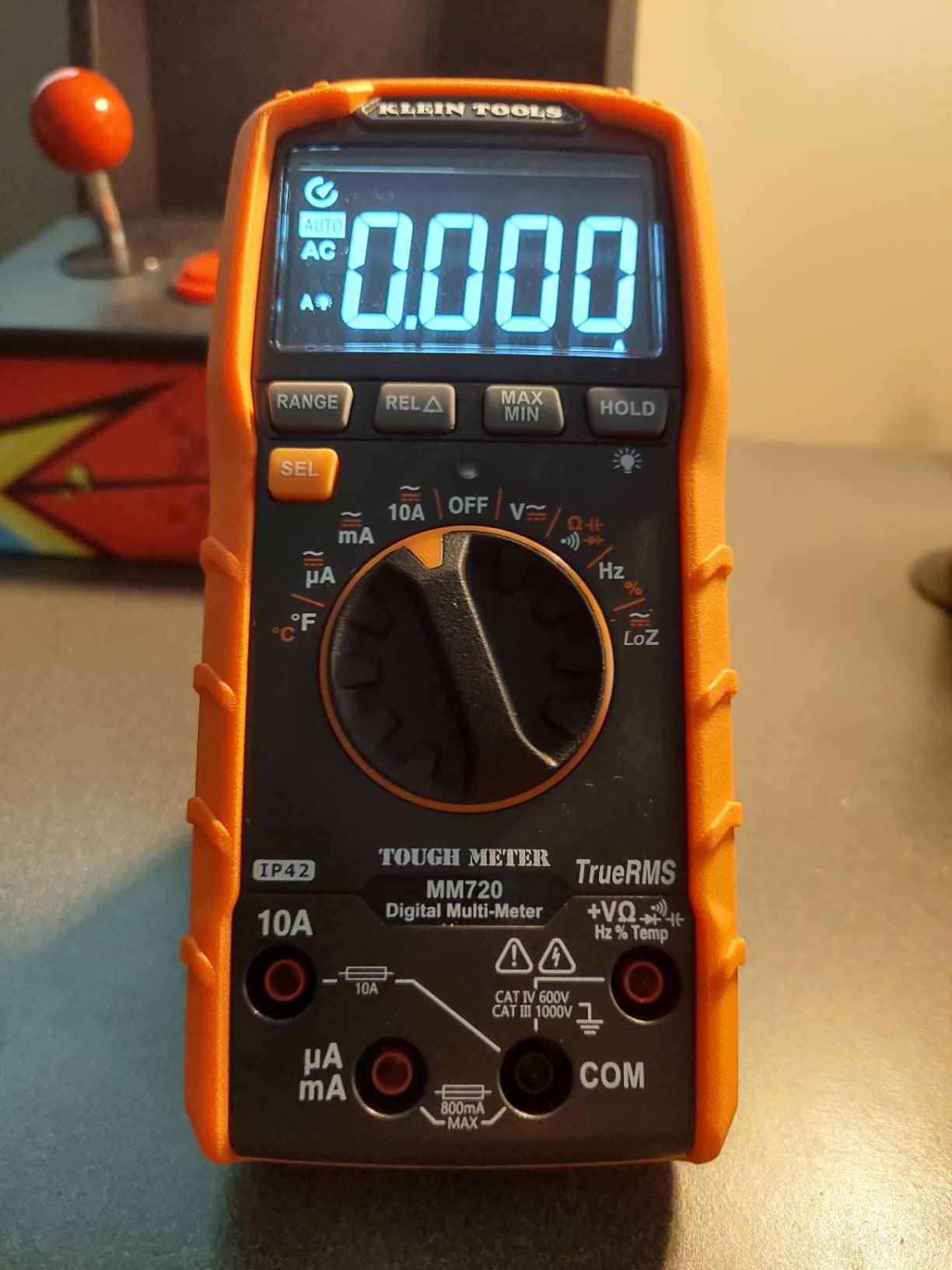
Everything else steps up too. The range extends to 1000V AC and DC with a CAT IV 600V and CAT III 1000V rating, resistance goes to 60 MOhms, and the large reverse-contrast LCD is readable in a sunlit garage and in a dark panel at the same time, which a backlit-only display cannot manage.
Auto-ranging true RMS, test lead holders on the back, a kickstand and an optional magnetic hanger complete a package that sits a clear step above the MM420.
When you will actually use LoZ
Any time you probe a de-energised circuit and get a non-zero voltage. That happens constantly with cable running through conduit, with cable in an older plasterboard wall, with back-fed circuits and with long cable runs in an outbuilding. It is also the reason some cheap meters send people into a breaker that was never the problem.
The Fluke 117 further down this list has the same feature, and the two are the only meters here that do. If ghost voltage is a recurring theme in your house, this is the point where the extra spend pays for itself.
Why this is not the first meter to buy
Two reasons. The body is 10.63 by 5.87 inches, noticeably bulkier than the compact budget meters, and it carries a much thinner base of written owner feedback at a few hundred reviews. LoZ also only matters once you are probing dead circuits, which for many people is never.
If your work stays on receptacles, batteries and appliances, the MM420 covers it and is easier to carry. Buy this one when you are tracing circuits in a panel or chasing a fault that keeps disappearing when you touch it.
8. Fluke 17B+: Top Rated with Temperature Measurement
Fluke 17B+ Digital Multimeter, for Electrical Applications, Measures AC/DC Voltage 1000V, Current Measurements to 10A, Resistance, Continuity, Diode, Capacitance, Frequency, and Temperature Testing
CAT III 600V rating
1000V AC and DC and 10A current
Temperature to 400 C
Capacitance and diode test
Pros
- Readings match higher-end lab meters on the same setup
- Rugged build that suits tool-bag life
- Large display with big digits
- Long battery life
- Case leads and thermocouple included
Cons
- Temperature and frequency functions are not needed by every buyer
- Thin retail packaging means damaged displays do occur
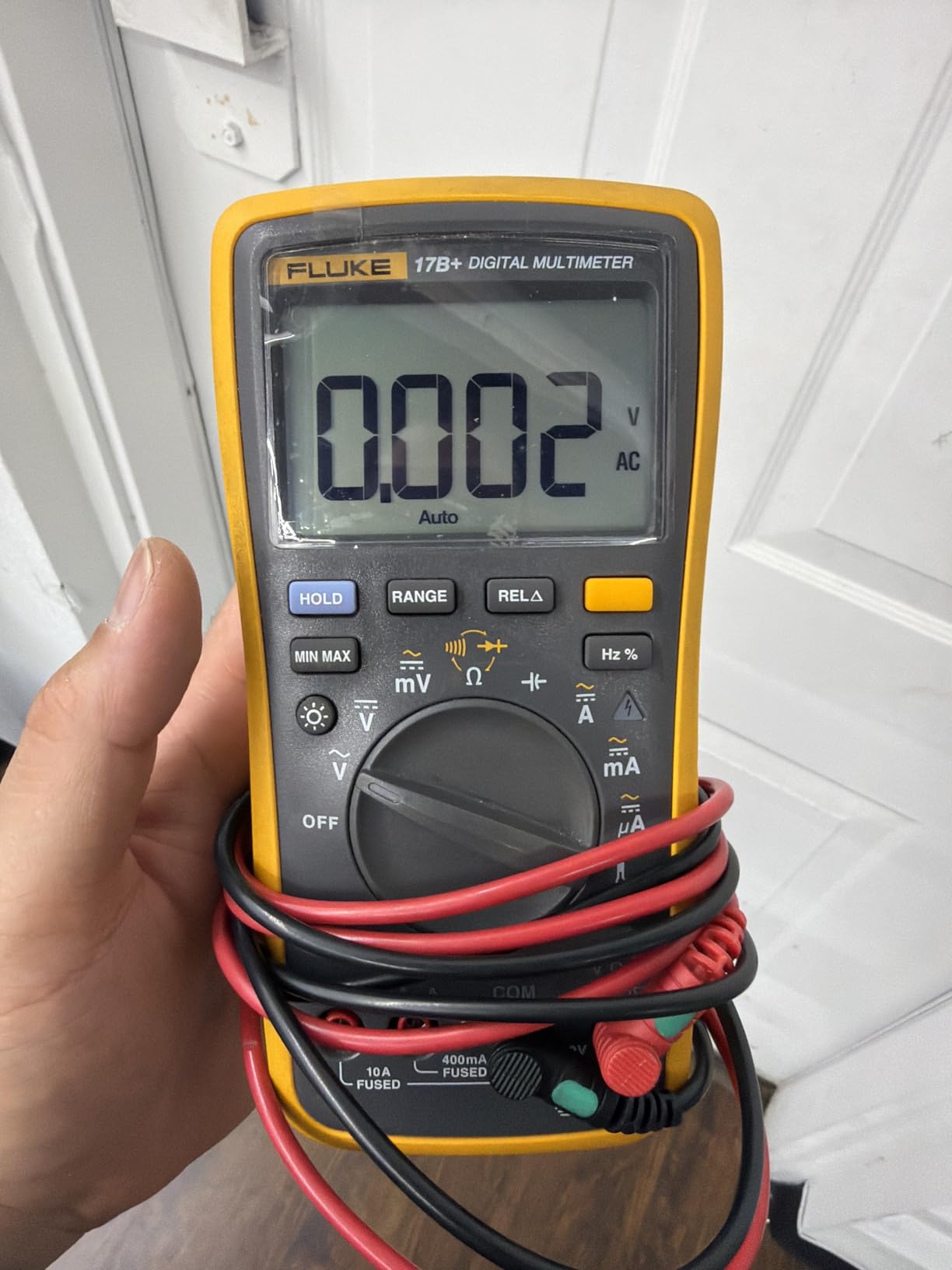
The 17B+ carries a 4.8 average across more than a thousand ratings, and the reason is consistency rather than any single headline feature. Owners put it side by side with bench meters on the same test setup and describe the readings as matching, which is the claim that matters when you are chasing a fault you cannot see.
It is rated CAT III 600V for residential, commercial and industrial systems, and measures AC and DC voltage to 1000V with current to 10A. Resistance, continuity, capacitance, frequency and diode test are all present, and at 470 g it is substantial in the hand without being unwieldy.
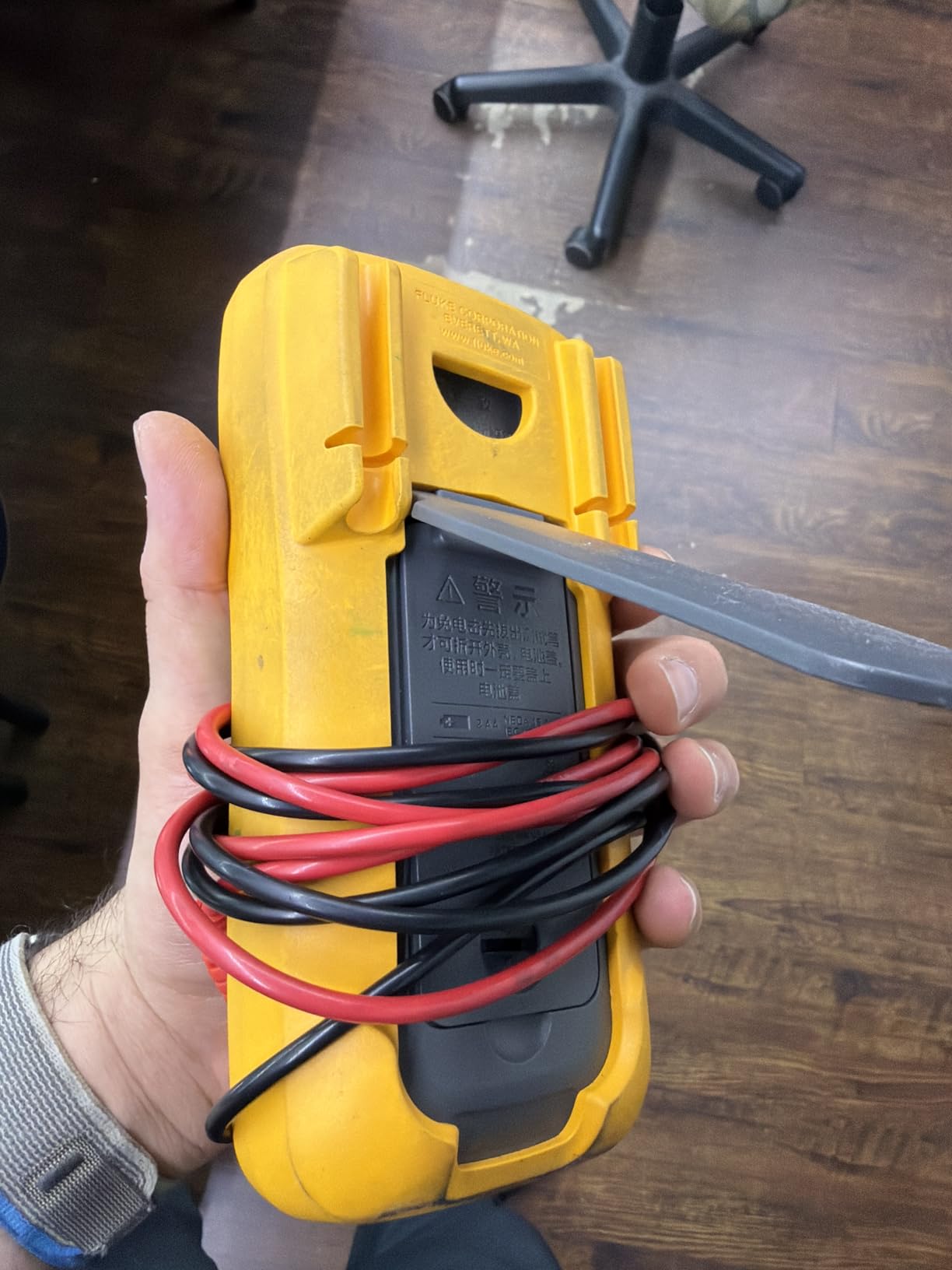
What separates it from the 15B+ below is the type K thermocouple assembly in the box and temperature measurement to 400 C. If you are checking HVAC work, oven elements, heating elements or simply whether a garage heater is running, that function removes the need for a separate thermometer.
The display uses large digits that stay readable while you are pressing probes into tight spaces, and owners single out battery life as noticeably long. A protective case is included, which matters more than it sounds when the meter lives in a van.
Whether the accuracy justifies the step up
For household circuits at 120V, the difference between this and a well-made budget true RMS meter is rarely visible on the display. The case for the Fluke is the cases where it is visible: an intermittent fault, a marginal supply, a reading you intend to make a decision about.
Fluke meters are described in owner communities as close to indestructible and as overkill for most hobbyists. Both things are true, and the honest framing is that you are paying for measurement confidence and a support ecosystem rather than for a feature you will use every Sunday.
What to watch for
Two things. If you do not need temperature or frequency, the 15B+ is the smarter buy and costs less, and several owners make exactly that argument. And the retail packaging offers little protection, so a small number of buyers report arriving with a cracked display. Inspect the screen the moment you open the box.
Neither issue is about the meter itself. Fluke calibration and support are the reason many electricians specify the brand, and that confidence is the actual product you are buying here.
9. Fluke 15B+: Best Professional Buy Without Extras
Fluke 15B+ Digital Multimeter, for Electrical Applications, Measures AC/DC Voltage and Current Measurements up to 1000V and 10A, Along with Resistance, Continuity, Diode, and Capacitance Capabilities
CAT III 600V rating
1000V AC and DC voltage
10A AC and DC current
UL and CSA certified
Pros
- Fluke accuracy and build in an uncomplicated meter
- Easy to read display with clear labelling
- CE CSA ETL UL and IEC 61010-1 certified
- Compact enough to carry between jobs
- Approved instrument for professional electrical work
Cons
- Omits the temperature and frequency functions of the 17B+
- No thermocouple or protective case included
The 15B+ is the stripped-back version of the meter above and, for a lot of people, the smarter purchase. It does the core electrical measurements extremely well: AC and DC voltage to 1000V, AC and DC current to 10A through a dedicated input terminal, plus resistance, continuity, capacitance and diode test. What it drops is temperature and frequency.
Certification is the headline. It carries CE, CSA, ETL, UL and IEC 61010-1 markings, which is the paperwork that employers and inspectors look at. If you use the meter commercially or on someone else’s property, that certification is not a marketing detail.
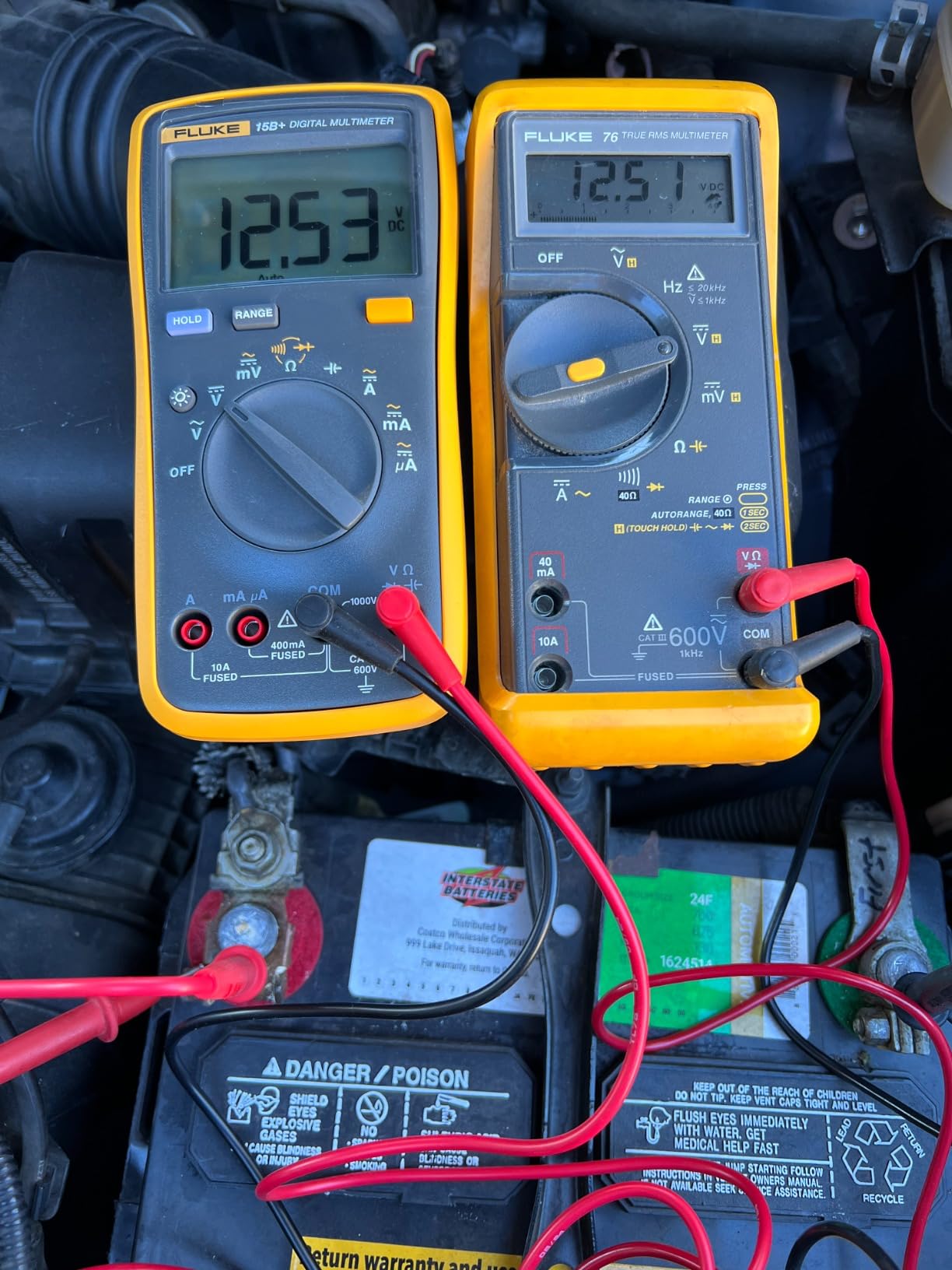
At 460 g and the same 8.46 by 5.91 by 2.76 inch footprint as the 17B+, it is the same physical tool with fewer functions. That is a fair trade when you do not need a thermocouple, and it is the reason several owners recommend it as the value entry into the Fluke professional line.
It runs on alkaline cells rather than a proprietary pack, which means replacement batteries are always available. The display and function labelling are deliberately plain, with no modes to configure before a measurement.
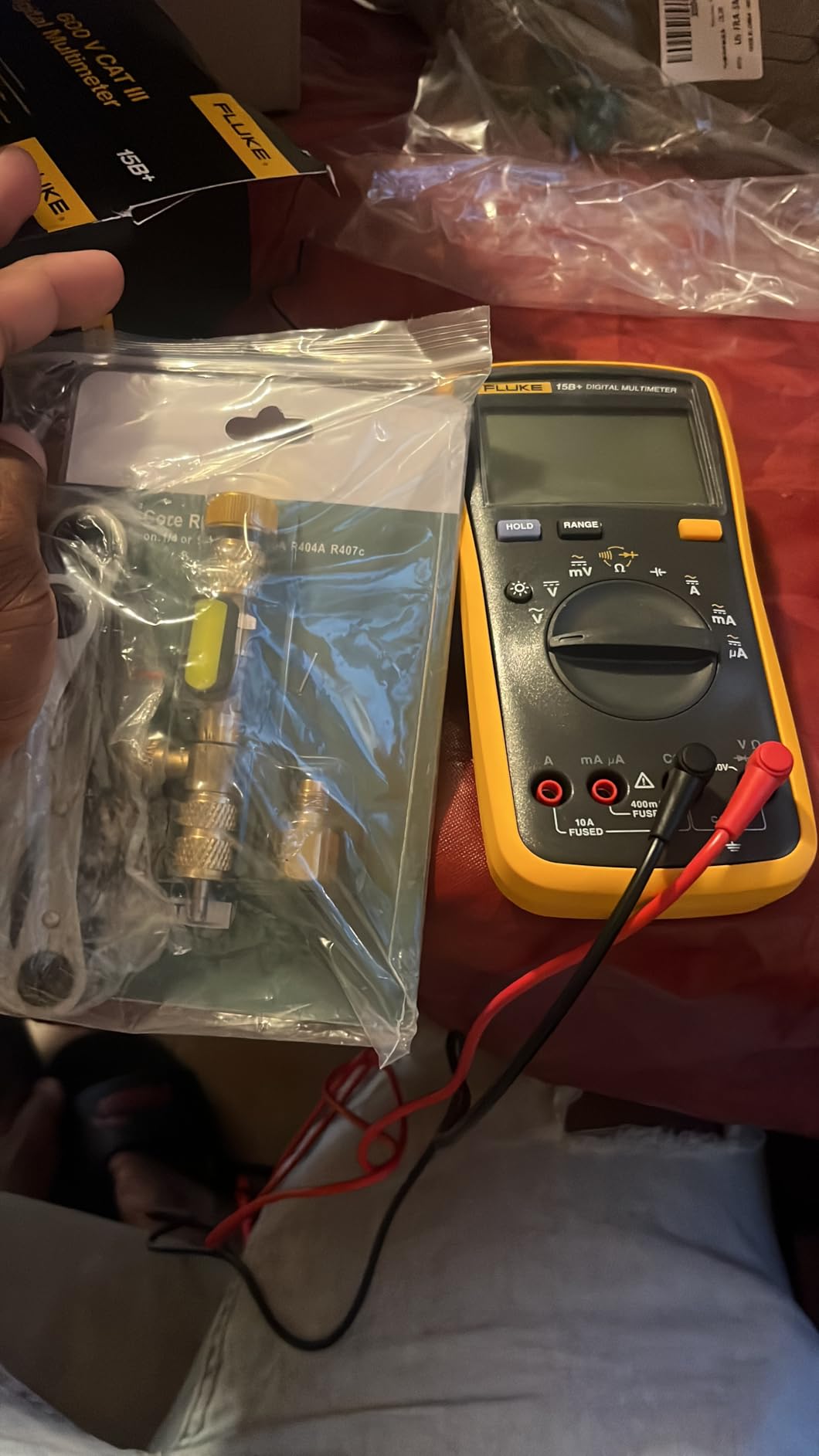
What you give up by skipping the extras
Temperature is the one most people notice. Without it you cannot check an HVAC system, verify a heating element, or measure a catalytic converter on a car. Frequency matters if you work on anything with a variable-speed drive, a garage door opener or a modern appliance controller.
There is also no protective case in the box, so budget for a holster or a pouch before the first drop. The TL75 test leads are included, and they are serviceable parts you can replace individually.
Why professionals keep choosing it
Simplicity is the appeal. There is one less function to mis-set, and a meter you do not fully understand is a meter you will eventually read wrongly. The CAT III 600V rating covers residential and commercial settings, which is where nearly all homeowner work sits.
Note that the 15B+ is an average-responding meter rather than a true RMS model. On clean household sine waves the difference is negligible, which is precisely why it remains a common sight on a belt. If you are testing dimmers, variable-speed fans or switch-mode supplies, choose one of the true RMS models instead.
10. Fluke 117: Premium Pick for Non-Contact Detection
Fluke 117 Digital Multimeter, Non-Contact AC Voltage Detection, Measures Resistance/Continuity/Frequency/Capacitance/Min Max Average, Automatic AC/DC Selection, Low Impedance Mode
VoltAlert non-contact detection
Low input impedance LoZ
True RMS with AutoVolt
White LED backlight
Pros
- VoltAlert finds live circuits without touching a conductor
- LoZ mode separates ghost voltage from real voltage
- True RMS with automatic AC and DC selection
- Large white LED backlight for dark panels
- Exceptionally long battery life
Cons
- Current measurement stops at 10A with no milliamp or microamp range
- No built-in clamp for high current work
- No temperature function and supplied probes are basic
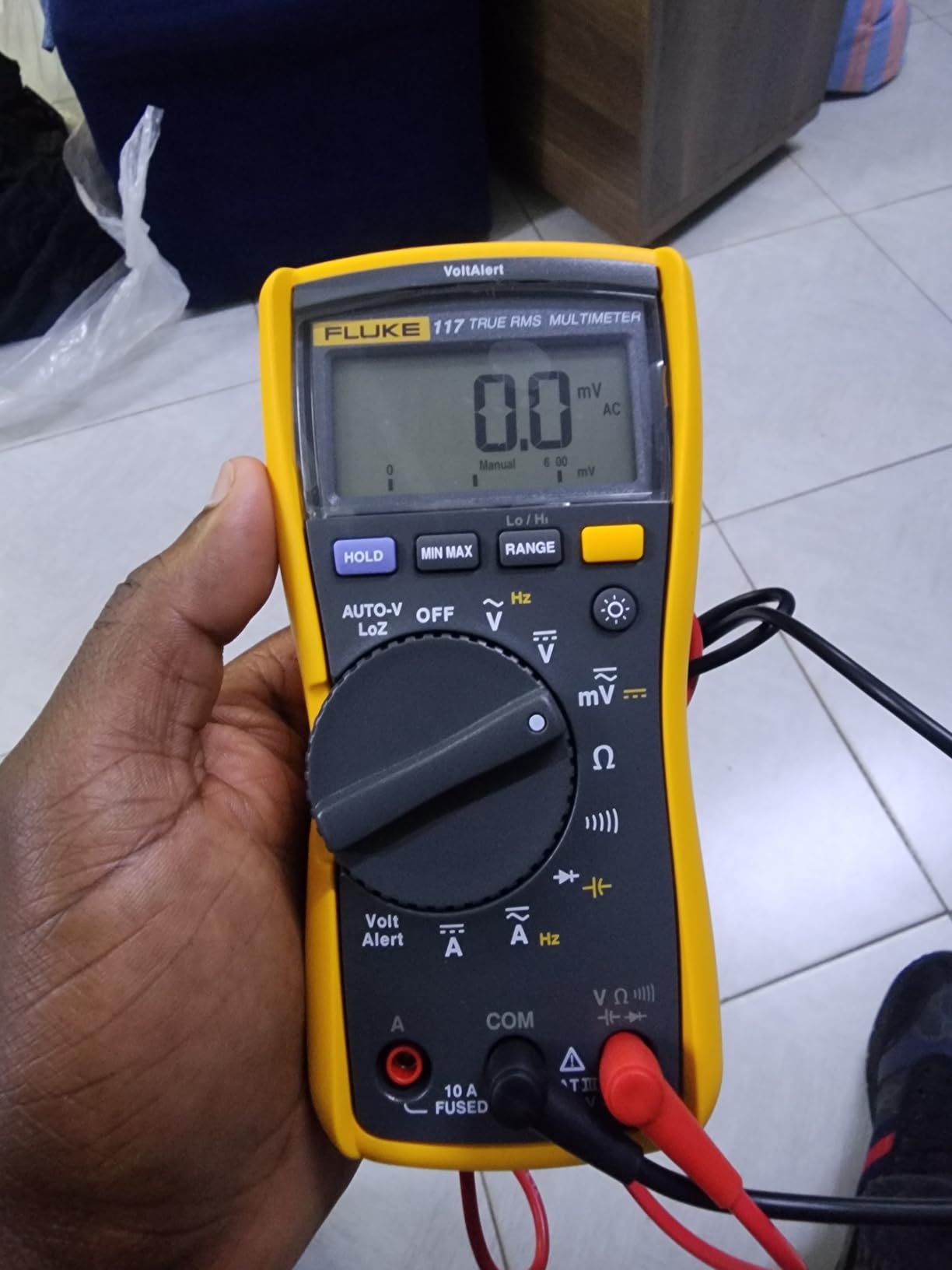
More than five thousand ratings averaging 4.8 make the 117 the most owner-endorsed meter in this group, and the features that come up again and again are the three that solve real household problems. VoltAlert detects AC voltage without contact. LoZ mode kills ghost readings. AutoVolt picks AC or DC for you so you stop mis-reading a DC circuit as AC.
True RMS is present on AC voltage, so dimmed LED and variable-speed loads read correctly. The white LED backlight is large and even rather than a dim amber glow, which makes a real difference when you are reading a panel in an unlit basement.
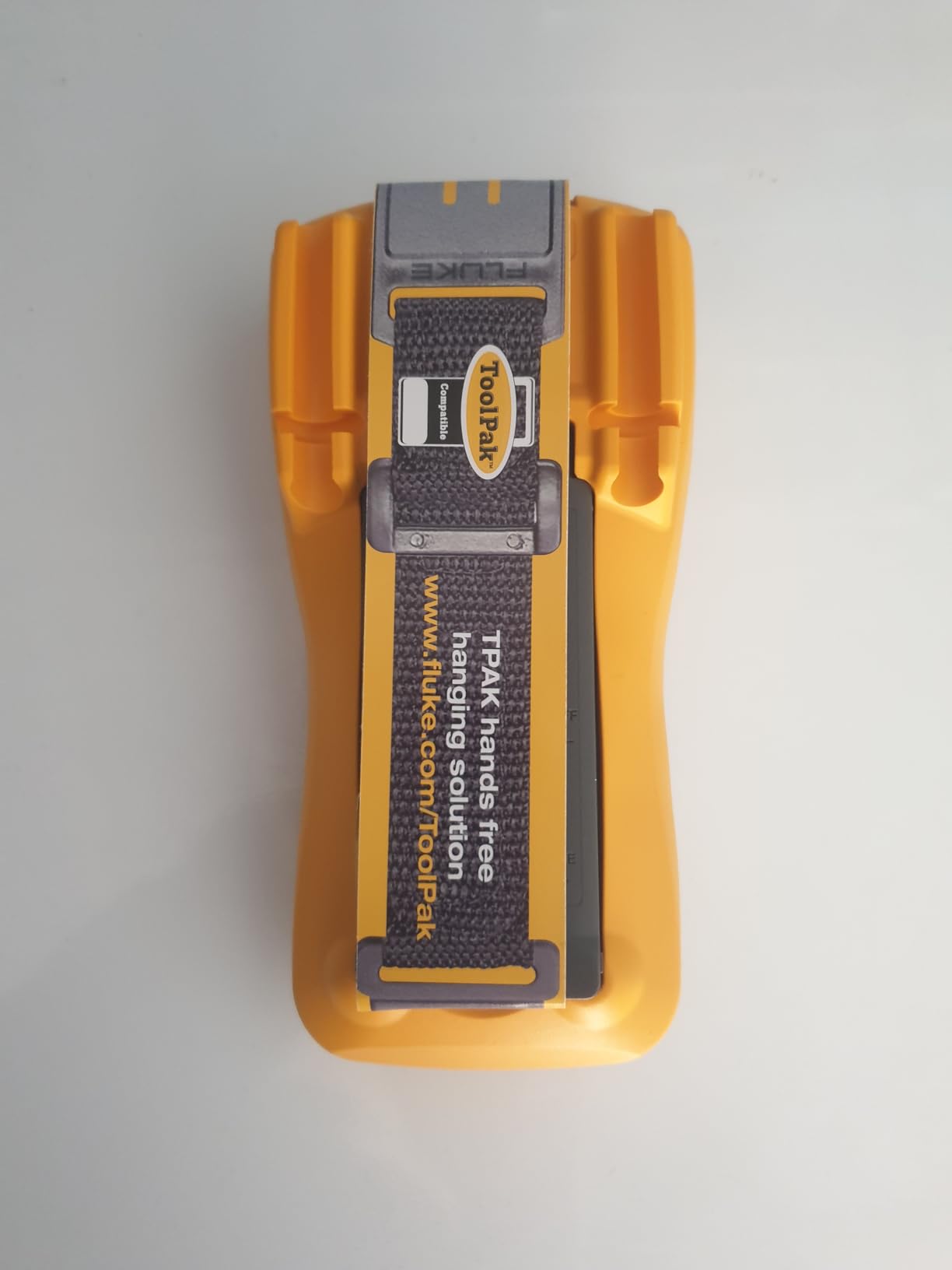
Battery life is quoted at approximately 400 hours without the backlight, and the operating range is minus 10 to plus 50 C. The DC millivolts range goes to 600.0 mV at 0.1 mV resolution, which covers low-voltage electronics work in a way most meters at this size do not.
At 689 g it is the heaviest meter here, which is a fair reflection of a sealed, drop-resistant case and a three year warranty. Owners treat it as a tool they keep for years rather than one that gets replaced.
When non-contact detection earns its price
Finding which conductor in a box is live, checking whether a breaker position is genuinely dead before you touch a terminal, and confirming that a receptacle is not back-fed from somewhere else all become a ten-second job rather than a guessing exercise. The alarm beeps and the LED flashes before you commit a probe to metal.
It is also the safest way to tell a working conductor from an abandoned cable that still passes close to live wiring, which is a common source of false readings in older houses.
Where it stops being the right tool
Current measurement tops out at 10A, and there is no milliamp or microamp range, so you cannot test a gas furnace flame sensor or a slow-draining battery circuit. There is no built-in clamp, so any measurement above 10A needs a separate clamp meter. And with no temperature function, HVAC diagnostics are out of scope.
The supplied probes are also basic and tend to tangle, and the carrying case is a separate purchase. None of that undermines the meter, but budget for a proper lead set and a case when you order.
What Is a True RMS Multimeter and Do You Need One?
A true RMS multimeter is a digital multimeter that computes the actual root mean square value of an AC waveform rather than estimating it from an assumed sine wave, so it stays accurate on distorted and non-linear loads such as LED dimmers, variable-speed fans and switch-mode power supplies instead of under-reading by 20 to 30 percent.
Here is the mechanism. The root mean square of a signal is the equivalent DC value that would dissipate the same power in a resistor. For a clean sine wave, an average-responding meter measures the average and multiplies by a fixed correction factor, which works because every sine wave has the same shape. Household electronics do not produce clean sine waves. LED drivers, dimmers and inverter motors chop and switch the current in pulses, and the average of a chopped waveform is no longer a reliable predictor of its true value.
So who actually needs the feature? If you are checking an outlet, a breaker, a battery or a continuity through a switch, an average-responding meter is fine and the difference is inside the noise. If you are diagnosing a dimmer that flickers, a ceiling fan that hums, an inverter-fed appliance, an EV charger or any switched-mode supply, true RMS is the difference between a correct number and a plausible wrong one.
That is the honest answer to the question, and it is why most of the meters in this list are true RMS while one is not. For household work the feature is cheap insurance, and for modern lighting and appliance work it stops you chasing faults that do not exist.
CAT Ratings Explained: What a Homeowner Actually Needs
A CAT rating describes the maximum transient overvoltage a meter can survive in a given location, defined under the IEC 61010 standard. It is not a measure of accuracy, and it is not a licence to work on your panel. It tells you whether the instrument survives a fault on the circuit you are connected to.
CAT II covers receptacle and plug-connected loads. CAT III covers distribution boards, panelboards and permanently installed equipment, which is the load-bearing circuit in a house. CAT IV covers the service entrance, the utility side of the meter and overhead lines. A CAT IV rating is the highest and implies the ability to work at lower categories.
For most homeowners, a CAT III 600V meter is the right target. It covers receptacle circuits, the branch wiring in a panel, ceiling fans, lighting circuits, RV hookups and most appliance work. You need CAT IV only if you are working at the service entrance, which is not homeowner territory.
One warning that is worth stating plainly. A meter marked CAT II should never touch an open breaker panel, because the available fault current behind the main breaker is far higher than anything downstream. Check the rating printed on the back of the meter before every panel job, and if the marking is vague or unreadable, treat the meter as unfit for the job.
Auto-Ranging, Display Count and the Features Worth Paying For
Auto-ranging meters pick the range for you, which removes the single most common beginner error: selecting a range that is too low and blowing a fuse, or too high and seeing a useless reading. Manual ranging is still useful in one situation, when a value is drifting and you want to hold the range constant to watch it. Several meters here offer both.
Display count tells you how much detail you can see. A 4000-count meter shows 4,000 steps between zero and full scale, so on a 400V range you see roughly 0.1V per digit. That is fine for household circuits. 6000 counts gives a little more headroom, and 9999 counts on the FNIRSI is the point where electronics work becomes comfortable. Paying for more counts than you need is the most common overspend in this category.
Non-contact voltage detection is a convenience and a safety aid, not a measurement. It tells you that a field is present, not what the voltage is, and it can miss a de-energised-but-not-dead conductor and fire on a static discharge. Use it to decide where to put a probe, never as the reading itself.
LoZ or low input impedance is the feature most worth adding once you own a capable meter. It loads the circuit enough to reveal whether a voltage you are reading is real or an induced phantom, which is the single most common source of false alarm in residential work. Beyond that, a backlit display, data hold, min/max/average, a thermocouple and fused inputs with lead-alert warnings are where your money goes next.
For more detail on how the categories differ between models, our full multimeter guide walks through the manual ranging and display count trade-offs in more detail.
Common Mistakes That Blow Fuses and Damage Meters
The first and most destructive mistake is leaving the leads in the current jacks while measuring voltage. Your meter completes the circuit through a low-value shunt, the current spikes, the fuse blows and the meter can be damaged behind it. Always move the leads to the voltage and common jacks before you probe anything for volts, and check the jack labelling rather than assuming.
The second is probing a live circuit for current. Unlike voltage, current measurement requires the circuit to be broken and the meter inserted in series, which is why household current measurement is so awkward and why a clamp meter is usually the right tool above a few amps. Attempting it in parallel on a live circuit is how meters die.
The third is exceeding the category rating. Probing inside a panel with a CAT II meter, or connecting to a circuit with a much higher available fault current than the rating covers, exposes the instrument to a transient it was never tested against. Check the rating, and if the situation is beyond your meter, the answer is a different instrument or a different job.
Watch the auto power-off too. Many meters shut down after a period of inactivity, and on an intermittent fault that means the reading is gone before you see it. Min/max/average recording exists for exactly this reason, and a data hold on any meter is worth setting before you start probing.
When to Call an Electrician Instead of Using a Meter
A multimeter diagnoses; it does not make the circuit safe. Anything at the service entrance, the main breaker, the meter base or the overhead service drop has fault currents that a household meter is not rated to handle, and the work is not a homeowner job in any jurisdiction.
The same applies to EV charger circuits, solar string work, generator interlocks, subpanels and any alteration that changes a circuit’s rating. If a test involves opening a panel to work on conductors you did not install, stop.
There is no shame in that. The meters on this list will handle receptacle checks, GFCI and breaker diagnostics, battery testing, continuity tracing through a switch, appliance checks and low-voltage work without any risk at all. That covers the overwhelming majority of what a homeowner actually needs a meter for, and doing those jobs well is worth far more than the confidence of poking at something dangerous.
Frequently Asked Questions
Do I need a true RMS multimeter for home use?
For outlets, breakers, batteries and continuity checks, an average-responding meter is accurate enough. True RMS matters when you test loads that distort the waveform: LED dimmers, smart switches, variable-speed ceiling fans, inverter appliances, EV chargers and switch-mode power supplies. An average-responding meter can under-read those circuits by 20 to 30 percent, which sends you hunting a fault that is not there.
Is true RMS worth the extra money?
It is worth it if your circuits carry modern electronics, and close to irrelevant if they do not. Most affordable meters in this roundup already measure true RMS, so the question is usually not whether to pay for the feature but whether to pay more for it. Buy the cheapest accurate true RMS meter that suits your work rather than a premium model you will not use.
What CAT rating do I need for household electrical work?
CAT III 600V is the right target for a homeowner. It covers receptacle circuits, branch wiring in a residential panel, lighting, ceiling fans and most appliance work. CAT II covers plug-connected loads and is not adequate inside a panel. CAT IV applies to the service entrance and utility side of the meter, which is not homeowner work and should be left to a licensed electrician.
Who makes a better multimeter, Klein Tools or Fluke?
Fluke leads on measurement confidence, certification and support, and it is the name most electricians reach for. Klein Tools delivers comparable accuracy, CAT III and CAT IV safety caps, lead-alert LEDs and a drop rating for considerably less, which makes it the better value for home use. Buyers on forums often describe Flukes as indestructible but more than most hobbyists need.
What is the best multimeter for value for money?
The Neoteck 6000-count true RMS meter stands out on published accuracy, with DC voltage at plus or minus 0.5 percent plus 4 digits and a CAT III 600V rating, in a small 195 g body running on AA cells. The Klein Tools MM420 is the stronger buy if you want a recognised brand and drop protection. Both deliver true RMS readings most budget meters cannot.
What multimeter do most electricians use?
Fluke is the dominant name, and models like the 117 and the 17B+ appear constantly on job sites and in tool bags. The Klein Tools MM420 and MM720 are widely used as well, particularly where a lower cost and CAT IV safety caps matter. For electronics and low-voltage work a bench or high-count meter is more common than either brand.
Why does my multimeter show a voltage when the circuit is off?
That is ghost voltage, induced by capacitive coupling from adjacent live wiring or by leakage through insulation. A standard meter has about 10 MOhms of input resistance, which is high enough to pick up a phantom reading from a few centimetres away. A meter with a low impedance or LoZ mode loads the circuit and collapses the false reading, so a value that drops under LoZ is not real.
Final Verdict: Which True RMS Multimeter Should You Buy
The AstroAI 6000-count true RMS multimeter is our pick for the best true RMS multimeters for home use, because it combines accurate true RMS readings on both AC voltage and current with a backlit display, a magnet, a kickstand, temperature and a full set of measurements in one tool. It is the meter we reach for first when household and car work overlap.
Buy the Neoteck 6000-count if published accuracy figures and a CAT III 600V rating matter most to you, and the Klein Tools MM420 if you would rather carry a recognised brand with drop protection and lead-alert LEDs. If ghost voltage keeps confusing you, step up to the Klein MM720 or the Fluke 117, the only two here with a low impedance mode.
Whatever you choose, check the CAT marking before every panel job, move the leads out of the current jacks before you measure volts, and leave the service entrance to a licensed electrician. For electronics and low-voltage work, our benchtop multimeter guide covers the higher-count options.