
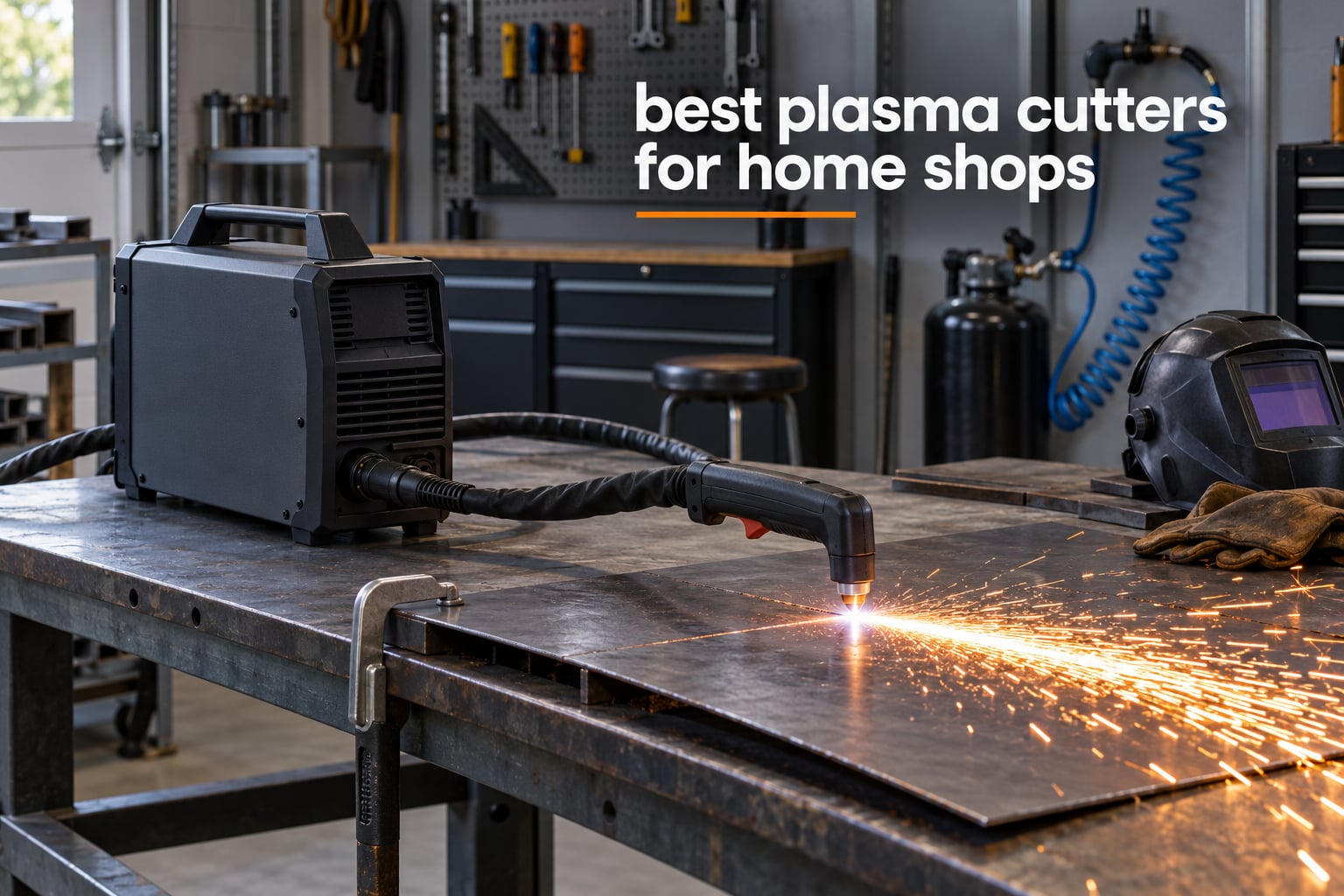
A plasma cutter uses a superheated ionized gas stream, usually compressed air, to melt and blow metal away. It cuts ferrous plate and tubing far faster than a cutting wheel, leaves a narrow kerf, and puts a light bevel on the edge that a welder can walk right into. For a home shop, that combination is the difference between a garage hobby and actual fabrication capability.
The machines that make the most sense for home use cluster in the 40 to 55 amp range with a non-touch pilot arc and automatic 110V/220V switching. Below 40 amps you spend your afternoon fighting the machine on 1/4 inch plate. Above 60 amps you are buying capability you will not use for signs, brackets, gate parts, and sheet metal art. Every machine below was judged on clean cut capacity at a stated voltage, pilot arc type, air requirements, and the durability complaints that show up after a year of use.
We compared twelve cutters that cover the full home-shop range, from a low-cost 50 amp contact-start box to a 60 amp continuous pilot arc machine with a three-year warranty. Where the listing data gives a clean cut figure at 220V and a separate maximum cut figure, both are stated, because those two numbers are not the same thing and buying on the wrong one is the most common mistake we see. If you are also shopping adjacent tools, our guides to sod cutters and fly cutters cover the other side of the shop.
One note before we start. We built this list from manufacturer specifications and thousands of owner reviews, not from a single afternoon of cutting. The spec numbers are the manufacturers’, the strengths and gripes are what buyers report in reviews, and the forum consensus we leaned on comes from r/metalworking, r/fabrication, Home Shop Machinist, and The H.A.M.B. Where those sources disagree with a product listing, we say so.
Table of Contents
Top 3 Best Plasma Cutters for Home Shops in 2026
The LOTOS LTP5505D takes the top spot because it pairs a non-touch pilot arc with automatic voltage switching and holds a 4.4 average across more owner reviews than any other machine here. The ARCCAPTAIN CUT50 is the most proven seller in the category, and the S7 50A is the cheapest honest way to get a genuine dual-voltage machine on your bench.

LOTOS LTP5505D 55A Pilot Arc
- Non-touch pilot arc
- Dual voltage 110V/220V auto-sensing
- 5/8 inch clean cut
- Rust removal mode
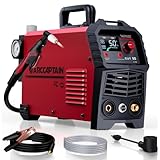
ARCCAPTAIN CUT50 50A
- 1/2 inch clean cut at 220V
- 2T/4T trigger modes
- Adjustable post-flow cooling
- LED display with error codes

S7 50A Dual Voltage Cutter
- 50A dual voltage 110V/220V
- PT31 contact torch
- LED amperage display
- Post-flow air cooling
All 12 Plasma Cutters Compared in 2026
Every machine below runs on shop air, none includes a compressor, and every one except the S7 uses a pilot arc of some kind. Read the voltage column first. A 50 amp machine on 110V is a different tool than the same machine on 220V, and manufacturers quote clean cut numbers for both.
| Product | Specifications | Action |
|---|---|---|
| LOTOS LTP5505D 55A Pilot Arc |
|
Check Latest Price |
| ARCCAPTAIN CUT50 50A |
|
Check Latest Price |
| S7 50A Dual Voltage Cutter |
|
Check Latest Price |
 bestarc BTC500DP 50A Pilot Arc bestarc BTC500DP 50A Pilot Arc |
|
Check Latest Price |
 TOOLIOM CUT-50 PRO TOOLIOM CUT-50 PRO |
|
Check Latest Price |
 YESWELDER CUT-60DS 60A YESWELDER CUT-60DS 60A |
|
Check Latest Price |
 PRIMEWELD CUT50D 50A PRIMEWELD CUT50D 50A |
|
Check Latest Price |
 ARCCAPTAIN CUT55 Pro ARCCAPTAIN CUT55 Pro |
|
Check Latest Price |
 PRIMEWELD CUT60 60A PRIMEWELD CUT60 60A |
|
Check Latest Price |
 SILATU STC550P 55A SILATU STC550P 55A |
|
Check Latest Price |
 Reboot RBC6000D 60A Reboot RBC6000D 60A |
|
Check Latest Price |
 GZ GUOZHI CUT-50 50A GZ GUOZHI CUT-50 50A |
|
Check Latest Price |
1. LOTOS LTP5505D – 55A Pilot Arc Machine With Rust Removal Mode
LOTOS LTP5505D 55A Pilot Arc Plasma Cutter with Rust Removal Mode
55A output
Dual voltage 110V/220V
Non-touch pilot arc
5/8 in clean cut
16 pounds
Pros
- Non-touch pilot arc starts without touching the work
- Consumables last longer than on contact-start torches
- Cuts rusty
- painted and expanded metal without stuttering
- 5/8 inch clean cut rating
Cons
- Ground lead is much shorter than the torch lead
- Air fittings ship loose and need PTFE tape
- Consumable tips and electrodes wear fairly quickly
The LTP5505D has been sold since 2011 and has accumulated more owner reviews than any other machine on this list, which tells you something about how many home shops have run one. At 55 amps with automatic 110V/220V sensing, it covers the range most home fabricators actually work in: sheet metal art, brackets, gate and trailer parts, and repair cutting on heavier mild steel.
The non-touch pilot arc is the feature that matters most. You bring the torch near the material and fire without striking the electrode against the workpiece, which means rusty and painted metal is no longer a problem and the electrode wears more slowly. Lotos added a rust removal mode that runs the arc at lower intensity to clean scale off a surface before you cut it.
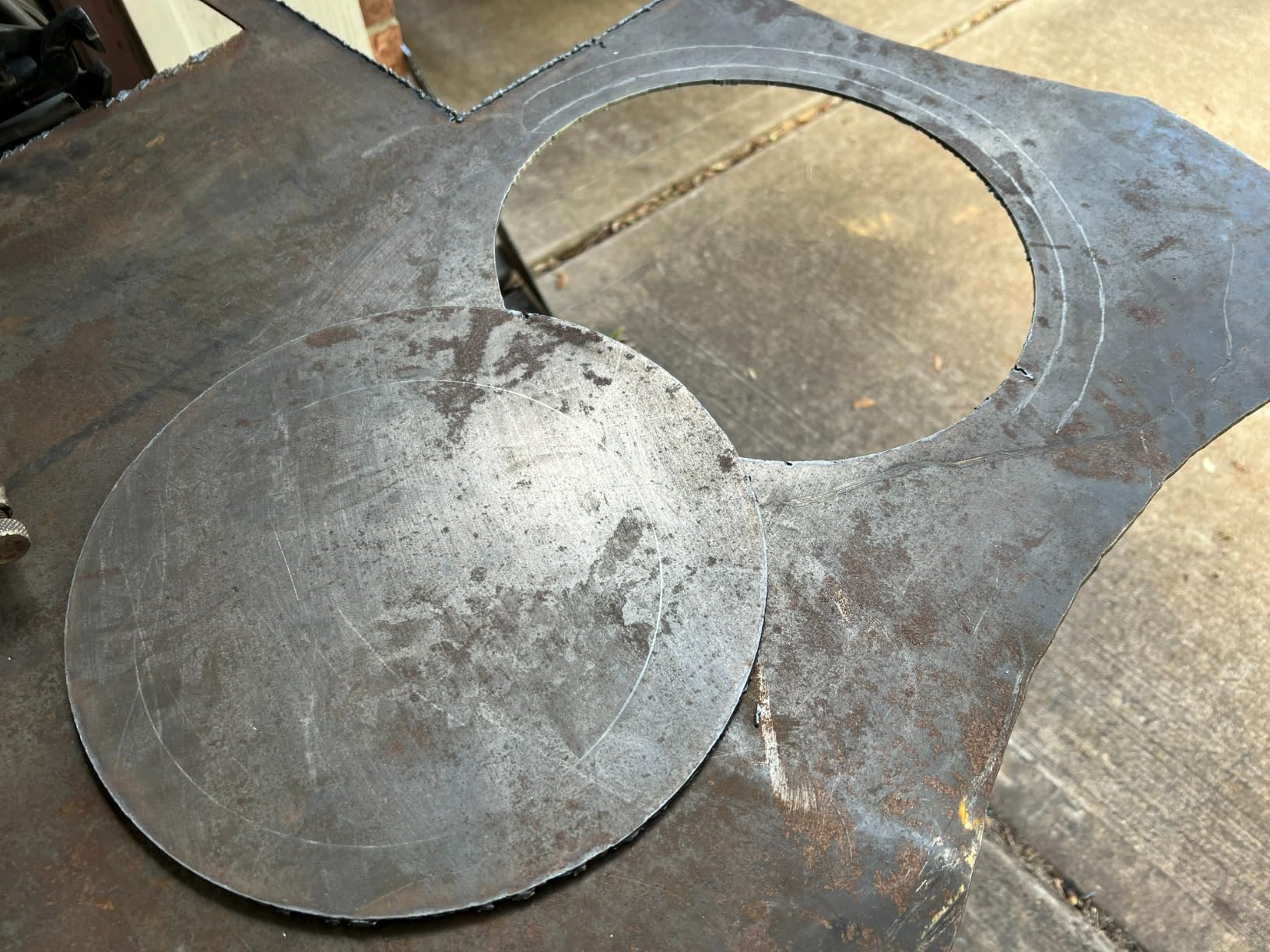
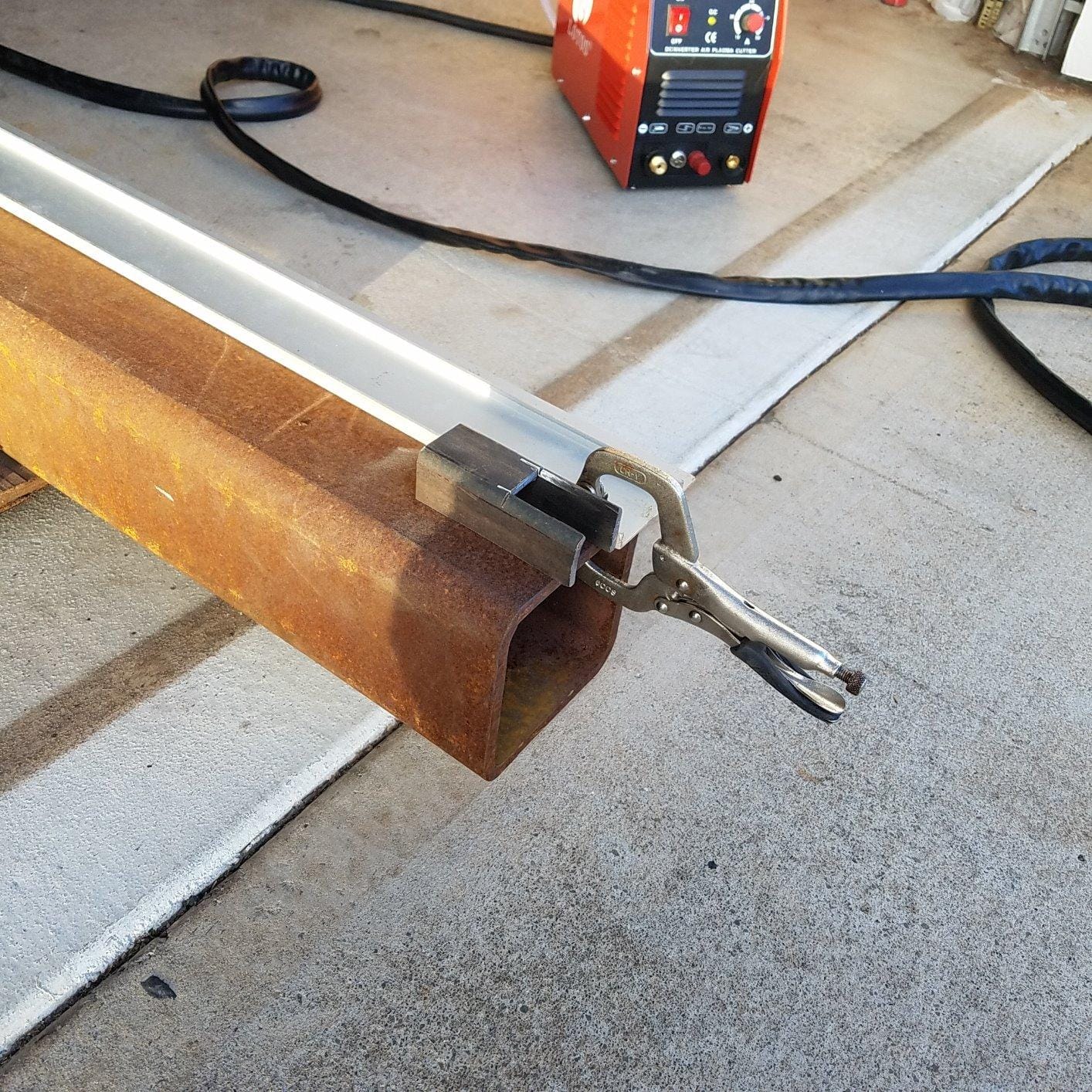
Clean cut capacity is rated at 5/8 inch, which is a real number in the sense that it is achievable with clean air and a slow travel speed. r/fabrication owners running 50 amp class machines report that 3/8 inch steel cuts like butter and that 1/2 inch takes slowing down, and that pattern holds for this machine. r/metalworking owners put the ceiling the same way: 50 amps with clean air reaches 1/2 inch mild steel and severs 5/8 inch.
The front-mounted air regulator with a pre-fitted quarter-inch Type-D plug means setup is short. Screw the hose in, set the pressure, attach the ground clamp, and cut. The regulator, filter, and fittings on these import machines are the weak point, and owners do report needing PTFE tape on the connections out of the box, which is a five-minute fix rather than a defect.
What you get and what you give up
Long-term owners report continued service after years of occasional use, with a handful of unit failures handled through customer support. The ground cable is the most repeated complaint. It is much shorter than the torch lead and does not lock positively, so plan your work layout around where the machine sits rather than dragging the clamp around the shop.
The included air hose is thinner than commercial-grade machines would use, and consumable tips wear relatively quickly. If you are doing daily production work rather than weekend projects, the faster consumable cycle is the part of the ownership cost you should budget for. Our pipe cutter guide covers the complementary tool for round stock.
Who should buy it
Buy the LTP5505D if your work is a mix of thin art and 1/4 to 1/2 inch plate, and you want a machine that will start on dirty material without thinking about it. The dual-voltage sensing also means one machine covers a garage bench and a shop with a 220V outlet.
Skip it if you need a published duty cycle figure for sustained production, or if you cut mostly stainless and aluminum where a dedicated TIG machine would give you a better edge finish. For mild steel, plate, and structural work in a home shop, it is the most complete single purchase here.
2. ARCCAPTAIN CUT50 – Best-Selling 50A With An LED Setup Screen
ARCCAPTAIN 50A Plasma Cutter Machine, 110V/220V Dual Voltage, 2/3″ Max Cut
50A IGBT
1/2 in clean cut at 220V
2T/4T modes
Post-flow 5-15s
13 pounds
Pros
- Best-selling listing in the plasma cutting category
- LED screen and error codes simplify setup
- Pre-installed metal-cased air filter with quick-connect
- Only 13 lb and includes a shoulder strap
- Handles garage fabrication and vehicle repair work
Cons
- Cut finish on thin material is only fair with supplied nozzles
- Some users report arc that starts and stops repeatedly
- No laminated amperage and PSI reference chart
The CUT50 is the number one listing in the Plasma Cutting Equipment category, and the review volume explains why. It is a straightforward 50 amp IGBT machine rated for 1/2 inch clean cuts on steel, aluminum, and copper, with the air filter already installed behind a quarter-inch quick-connect.
That pre-installed filter is the quiet hero. On this machine you bolt the hose to a fitting and turn a knob. There is no threading a regulator into a case, no hunting for a filter, and no wondering whether the moisture separator is in the right place. For a first plasma cutter, that removes about fifteen minutes of setup guesswork and most of the places a beginner makes a mistake.
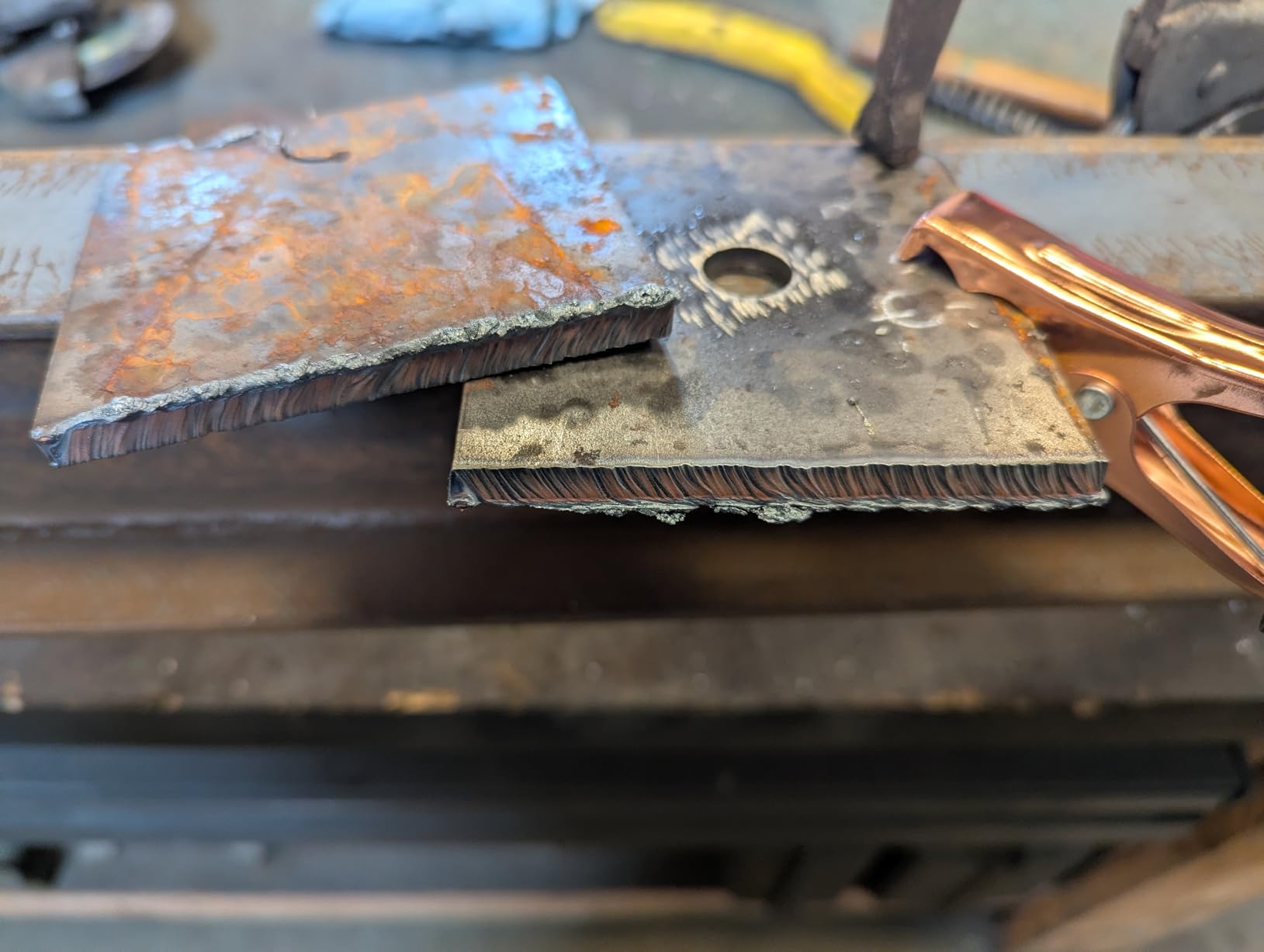
Arccaptain quotes cutting capacity of 12mm at 35 amps on 110V and 55 PSI, and 18mm at 50 amps on 220V and 75 PSI. Notice the voltage split. On a 120V circuit you are working with roughly half the output, and the machine still gets 1/2 inch of usable capacity. On 220V it has considerably more headroom for 1/2 inch work and can sever past that.
The LED display shows voltage, current, and error codes, which turns troubleshooting from guesswork into reading a number. If the arc will not strike, the code tells you whether it is an air pressure problem or an overheat condition. Several owners mention the display as the reason the machine felt approachable on day one.
Where the CUT50 falls short
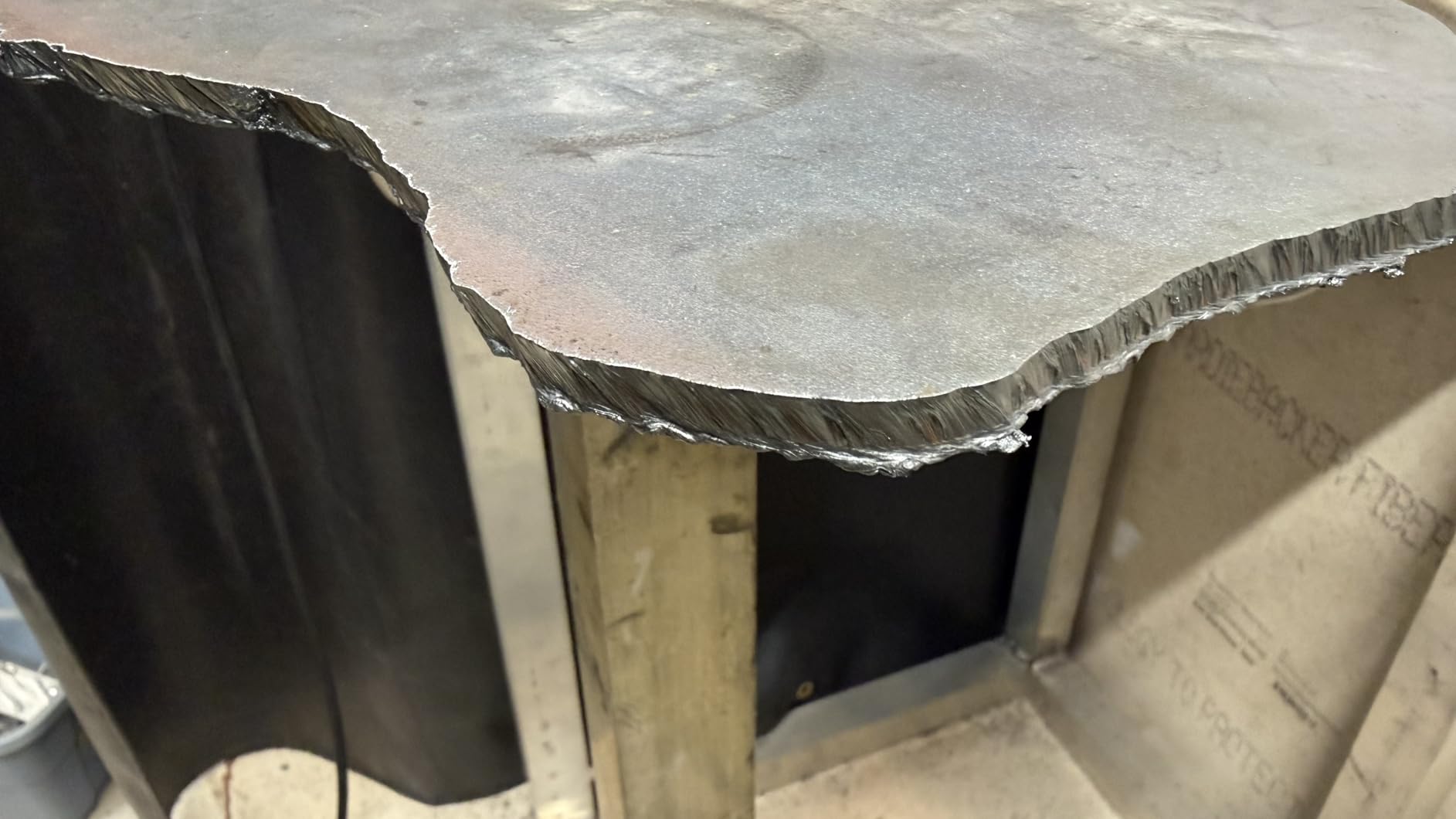
The finish on thin material is only fair with the supplied nozzles. If you are cutting 16 gauge or 18 gauge sheet for signs or art, buy a finer nozzle set rather than judging the machine. A small number of owners also report an arc that starts and stops repeatedly, which usually points to air pressure or a loose fitting rather than the power source.
The air hose connection is a hard fitting that a few buyers replace immediately, and there is no laminated amperage and PSI reference card in the box. Write the numbers down when you get it running. Our rebar cutter roundup covers the other long-stock cutting problem most home shops hit.
Who should buy it
The CUT50 fits a fabricator who cuts 1/4 and 1/2 inch mild steel, wants to move the machine between the garage and a job site without loading a truck, and appreciates having error codes instead of guesswork. At 13 pounds with a shoulder strap it is one of the easiest to carry all day.
It is not the pick for someone cutting continuously for hours, since the class sits below the 60 percent duty cycle machines here, or for a shop that mostly cuts rusted structural material, where a non-touch pilot arc is a better match. For general home-shop plate and sheet work on a reasonable budget, it is the safest purchase in this group.
3. S7 50A Dual Voltage Cutter – The Lowest-Cost Way Into Plasma
50A Plasma Cutter with LED Display, Dual Voltage 110V/220V, Clean Metal Cutting up to 1/2″ Steel, Easy Setup PT31 Torch, Lightweight for DIY & Home Workshops
50A output
110V/220V dual voltage
PT31 contact torch
LED display
18.5 pounds
Pros
- Lowest entry point to a genuine dual-voltage 50A machine
- LED display makes amperage settings visible
- Post-flow air and after-run fan help machine longevity
- External air regulator is easy to service
- Cuts roughly 1/2 inch steel on 220V and 3/8 inch on 110V
Cons
- Contact-start torch needs a clean strike point on rusty metal
- Ground lead is only about 3 feet long
- Air fitting connections can leak and need taping
The S7 is the straightforward end of the line: a 50 amp dual-voltage machine with a PT31 contact torch, a digital display for amperage, and post-flow air adjustment. It has been available since 2018, and buyers report four-plus years of continuous service from units they bought early.
What you are buying here is the power source and the chassis, and it does both jobs. Owners cut clean work in 1/4 inch steel and rusty car parts without drama, and the machine runs on 110V or 220V through the same outlet path. At 18.5 pounds it is heavier than the two machines above it but still a one-person carry.
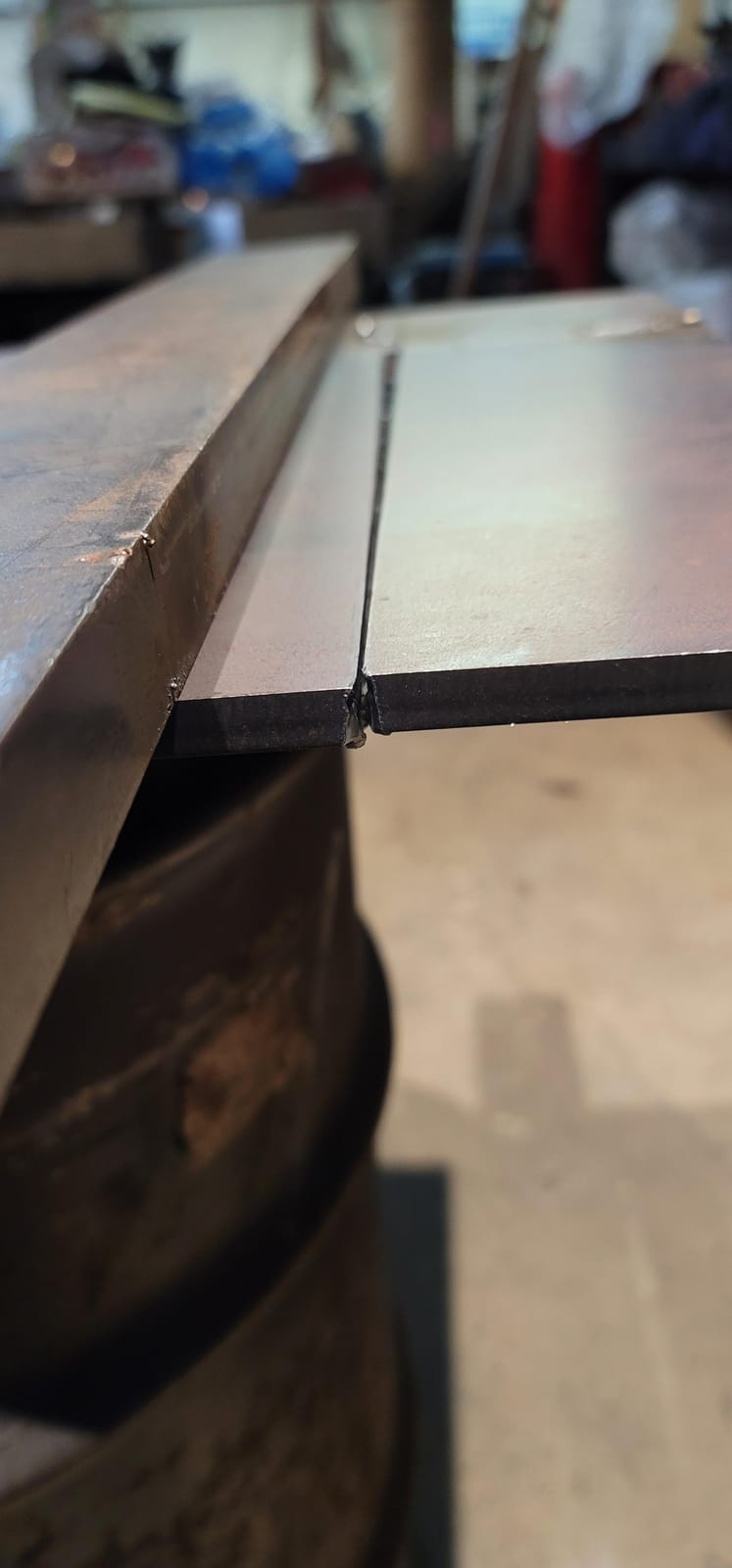
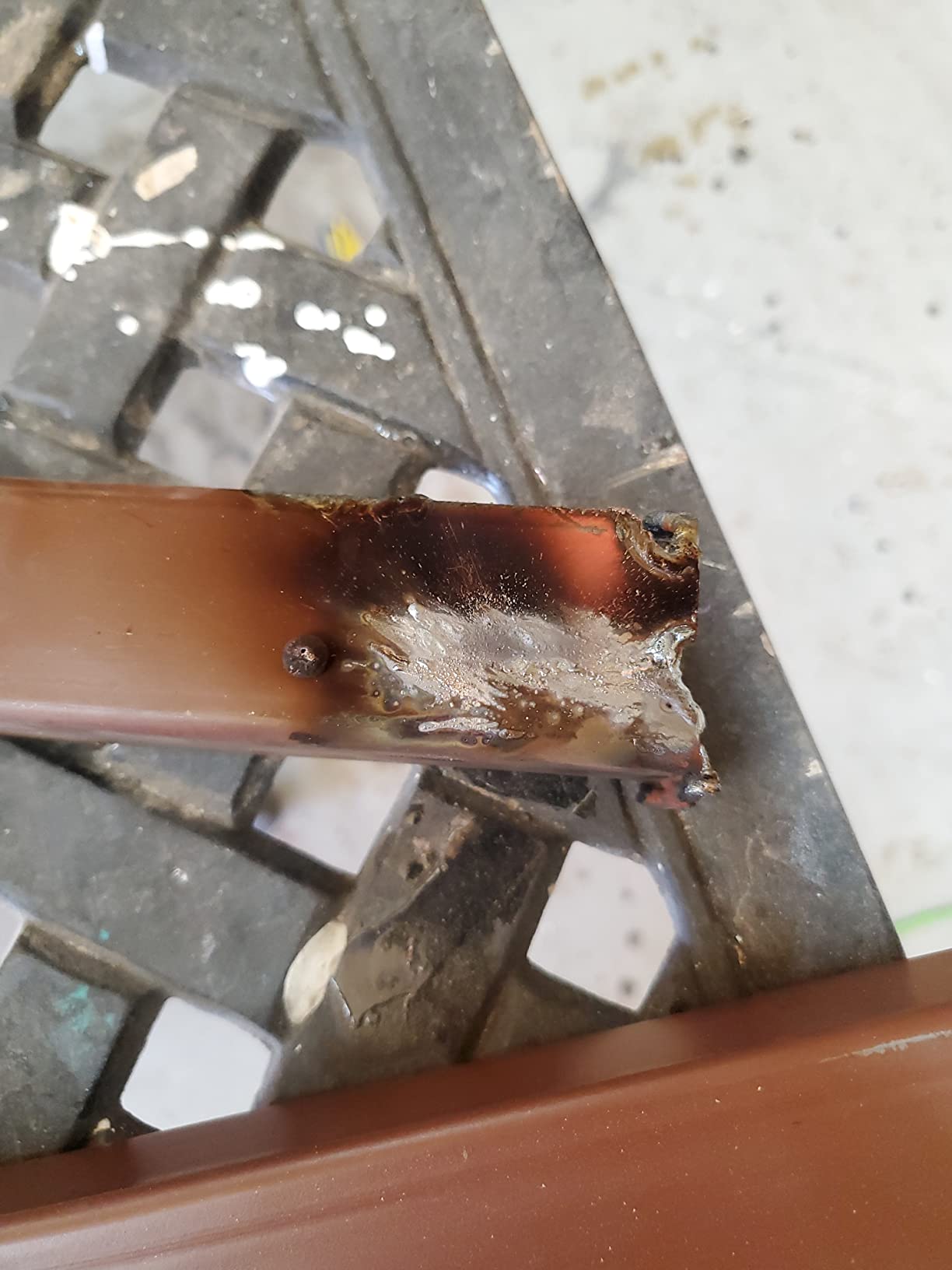
The contact start is the real tradeoff. A PT31 torch has you touch the electrode to the workpiece to fire, which is fine on clean mild steel and annoying on heavy rust. Owners who cut a lot of scaled material wire-brush the strike point first, and that habit is worth building from the start because it also extends electrode life.
The external air regulator is a genuine advantage over built-in versions. You can swap or service it without opening the case, and the plumbing stays outside where leaks are visible. Post-flow air and the after-run fan are both adjustable, which matters more than most spec sheets admit because post-flow is what keeps the electrode from eroding during the pause between cuts.
The honest limitations
The ground lead is about three feet, which is short enough that you will plan your cuts around it. Some units arrive with the output contact not connected, so check the ground clamp and torch wiring before your first cut. A minority of reviews report thick-plate performance falling short of the advertised 1/2 inch capacity, which is the usual clean cut versus maximum cut confusion rather than a fault.
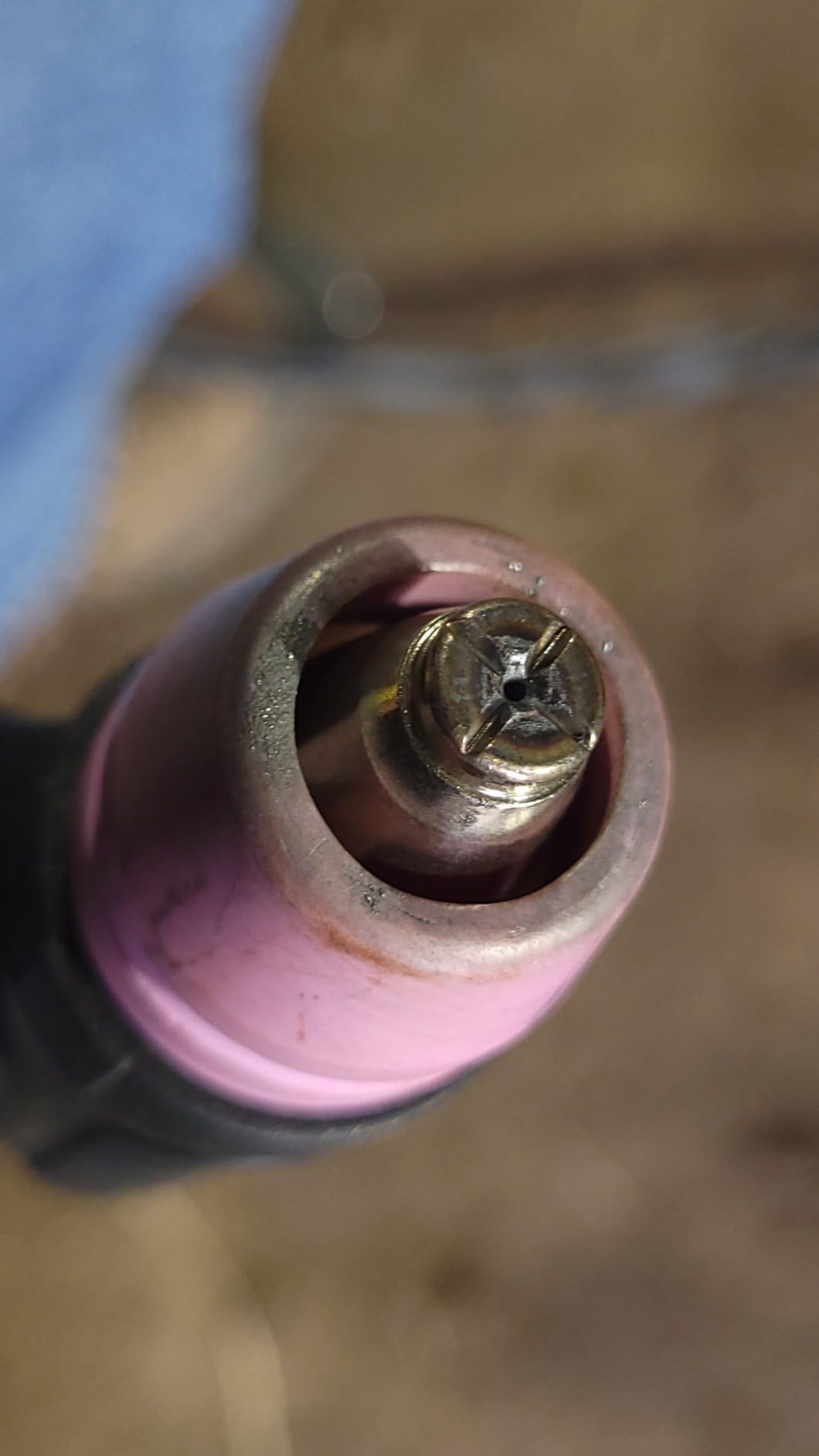
Because the torch is a standard PT31, the consumables are cheap and widely available, and that is a genuine long-term advantage. Anyone selling a set for a different torch will not fit it, so buy PT31 consumables and nothing else for this machine.
Who should buy it
Buy the S7 if your work is mostly clean mild steel, your material budget is tight, and you want a real dual-voltage 50 amp machine rather than a toy. Owners doing farm maintenance, auto repair, and general garage work report it handles those jobs well.
Look elsewhere if you cut rusted and painted material daily, or if a machine that will run for hours matters to you. For a first plasma cutter on a limited budget, the value here is difficult to argue with, and the PT31 consumable ecosystem means running costs stay low for years.
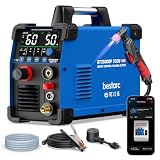
4. bestarc BTC500DP – Pilot Arc Plus App Control In One Box
Bestarc Plasma Cutter Machine, Pilot Arc, 50A IGBT 110V 220V Dual Voltage
50A IGBT
12000 watts
Non-touch pilot arc
App control to 98 ft
15.2 pounds
Pros
- True non-touch pilot arc starts on rusted and painted stock
- App control adjusts current and modes from your phone
- Built-in air sensor and metal filter help consumables last
- Large LED display of air pressure and current
Cons
- Ground lead and some wiring are thinner than ideal
- Supplied poly air line swells with use
- Needs roughly 4 cfm of air for best results
The BTC500DP is a 50 amp IGBT machine rated at 12000 watts with a built-in regulator, an air pressure sensor, and a metal air filter behind a quarter-inch quick-connect. Owners report replacing a twenty-year-old commercial unit with it, which tells you how capable the class has become.
Cutting capacity is listed at 1/2 inch at 35 amps on 110V and 50 PSI, and 2/3 inch at 50 amps on 220V and 65 PSI. The non-touch pilot arc has an adjustable duration up to 15 seconds, which means you can extend the arc time to get through scale and paint, or shorten it to protect the electrode on clean work.
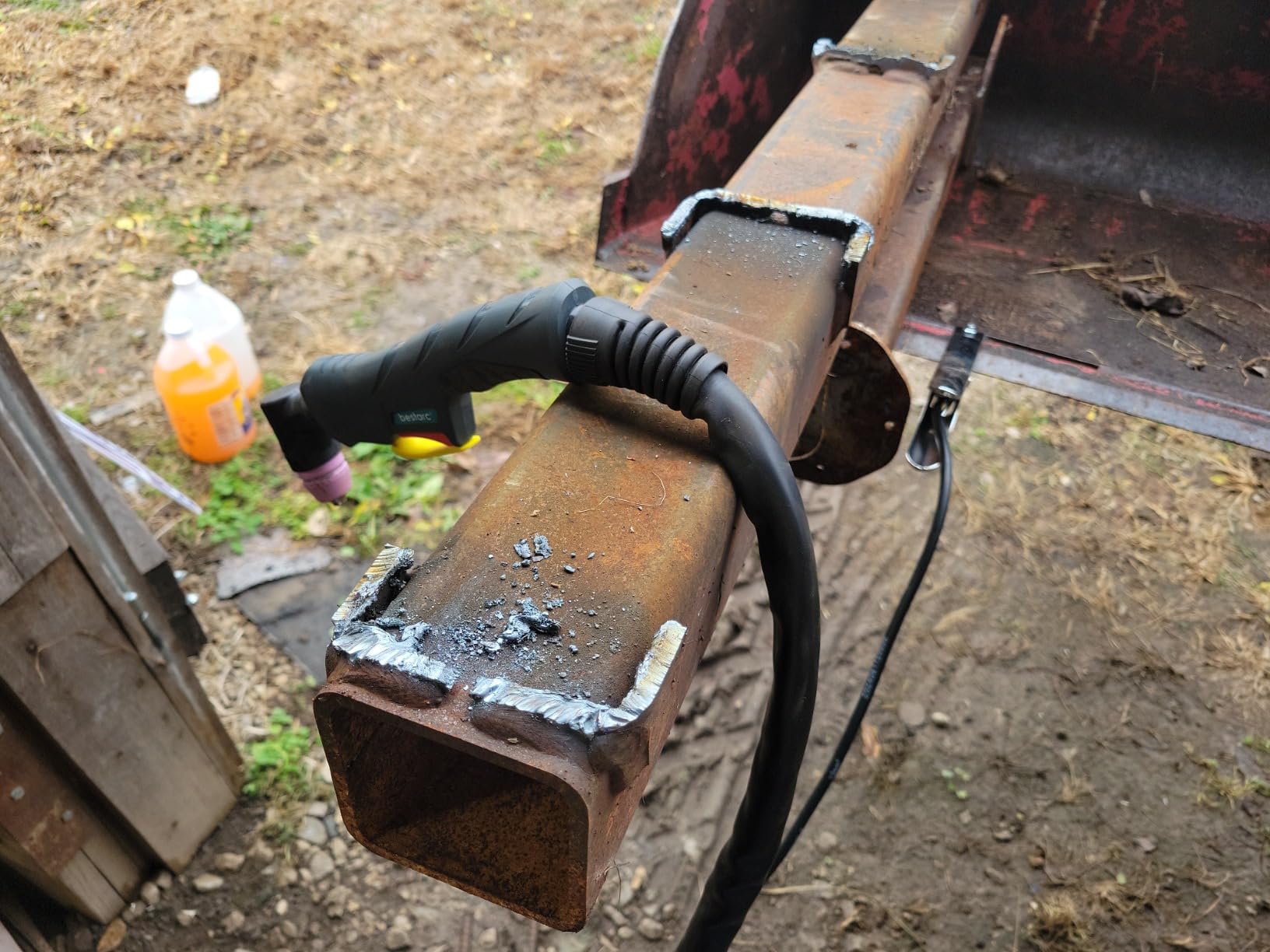
The app control is the feature that separates this from the other 50 amp machines here. You can set current, switch between 2T and 4T modes, and check status from up to 98 feet away on your phone. If you ever want to mount a torch on a simple carriage or work at the far end of a large plate, that is genuinely useful rather than a gimmick.
The built-in air sensor is the part that pays for itself quietly. The LED display shows air pressure in real time, so when the arc starts misfiring you look at the number instead of guessing. r/metalworking owners repeatedly identify clean, dry air as the single biggest factor in how long consumables last, and a sensor is the fastest way to know whether your setup is delivering it.
Setup demands and drawbacks
This machine needs roughly 4 cfm of compressed air or more for the best results, and a 15-amp circuit will trip during sustained cutting. Owners running it on a 20-amp circuit report no problems. Plan the electrical service before you plan the cuts.
The ground lead and some of the internal wiring are thinner than you would choose, and the supplied poly air line is reported to swell with use. Punching holes in thick plate is also harder than with an oxy-fuel torch, which is true of every plasma machine in this list and worth remembering if hole-punching is a regular part of your work.
Who should buy it
The bestarc makes sense for a home shop that cuts rusted, painted, or coated material and wants a non-touch arc plus visible air pressure feedback. It is also the pick if the idea of tuning settings from your phone appeals to you and you already have a compressor that can keep up.
It is not the right choice for someone who cannot provide at least 4 cfm of air, or for a first machine where the app adds a layer you do not need. With good air and a 20-amp circuit, though, owners consistently rate it above machines that cost several times more.
5. TOOLIOM CUT-50 PRO – Straightforward Non-Touch Cutting
TOOLIOM 50A Non-Touch Pilot Arc Plasma Cutter, Dual Voltage 110/220V
20-50A output
AG60 non-touch torch
5/8 in clean cut at 220V
Digital display
Pros
- Non-touch pilot arc cuts electrode burn and extends consumable life
- Cuts stainless
- alloy steel
- mild steel
- copper and aluminum
- Connects to 110V or 220V outlets without tools
- Digital screen shows air pressure and current in real time
Cons
- Listed weight of 21.6 lb conflicts with 13.23 lb in feature copy
- Heavy cutting needs a compressor at 50-65 PSI
- Pilot torch consumables add to running cost
The CUT-50 PRO covers 20 to 50 amps with an AG60 non-touch pilot arc torch. That torch is the same family used by two higher-ranked machines in this list, so the consumables are shared and widely stocked, which is a real convenience if you ever end up running more than one machine.
Cutting specs are stated for both voltages: an ideal clean cut of 1/4 inch at 110V and 5/8 inch at 220V, with maximum capacity of 1/2 inch at 110V and 3/4 inch at 220V. The 220V clean cut figure is genuinely good for a machine in this class, and the gap between clean and maximum is exactly what you would expect.
Air pressure tops out at 50 PSI on 110V and 65 PSI on 220V, with post-flow cooling adjustable from 5 to 20 seconds. That post-flow range is wider than most machines here offer, and post-flow is what cools the electrode and nozzle after the arc stops. Too little and consumables pit; too much and you are just wasting compressed air.
The digital screen shows air pressure, voltage, and current as you work, which makes the 20 to 50 amp adjustment range easy to learn. Owners with longer-term hobbyist use report general satisfaction, and the 4.1 average reflects a larger share of one-star reviews than the machines above it, mostly around setup friction and air leaks on arrival.
What to expect day to day
Air fittings can need tightening or taping after the first use, which is a normal five-minute fix for this class. Heavy cutting needs a capable compressor at 50 to 65 PSI, and if your machine is a small shop compressor you will feel the difference between a light cut and a sustained one.
The pilot arc torch consumables are a real ongoing cost, and the AG60 set is a good deal more expensive than a PT31 set. That is the trade for the non-touch arc. The weight listing on this product is also inconsistent, with 21.6 pounds in the specification block against 13.23 pounds in the feature copy, so plan on the heavier figure when you decide where it lives in the shop.
Who should buy it
The CUT-50 PRO fits a first-time plasma cutter owner who wants a non-touch arc and clear parameter readouts without a learning curve. It handles stainless, aluminum, and copper as well as mild steel, which widens what you can do beyond a welder-and-grinder setup.
Pass on it if consumable cost per hour is your main concern, or if you cut thick material continuously. For a mixed-material home shop working at a moderate pace, the torch advantage and the 5/8 inch 220V clean cut rating make it a sensible middle pick.
6. YESWELDER CUT-60DS – Non-HF Blow-Back Start For Electronics-Heavy Shops
YESWELDER 60A Non-HF Plasma Cutter, Non-Torch Pilot Arc, 110/220V
60A output
Non-HF blow-back start
IPT40 pilot torch
5/8 in clean cut at 220V
Pros
- Non-high-frequency start is gentler on nearby electronics
- 60A output cuts deeper than any 50A machine here
- IPT40 non-touch torch handles rough and painted surfaces
- Digital display shows air pressure and current
Cons
- IPT40 consumables add cost as they wear
- Shorter duty cycle on 110V limits sustained thick work
- Digital interface takes time for first-time plasma users
This is the machine to look at if your garage has a CNC table, a sound system, a computer, or any other electronics near the cutting area. The CUT-60DS uses a non-high-frequency blow-back pilot arc start rather than an HF start, which owners consistently highlight as the safer choice in a room full of sensitive gear.
It also puts out 60 amps, more than any 50 amp machine here, with 9840 watts of peak output power. The cutting figures are 5/16 inch ideal clean cut at 110V and 5/8 inch at 220V, with maximum capacity of 1/2 inch at 110V and 63/64 inch at 220V.
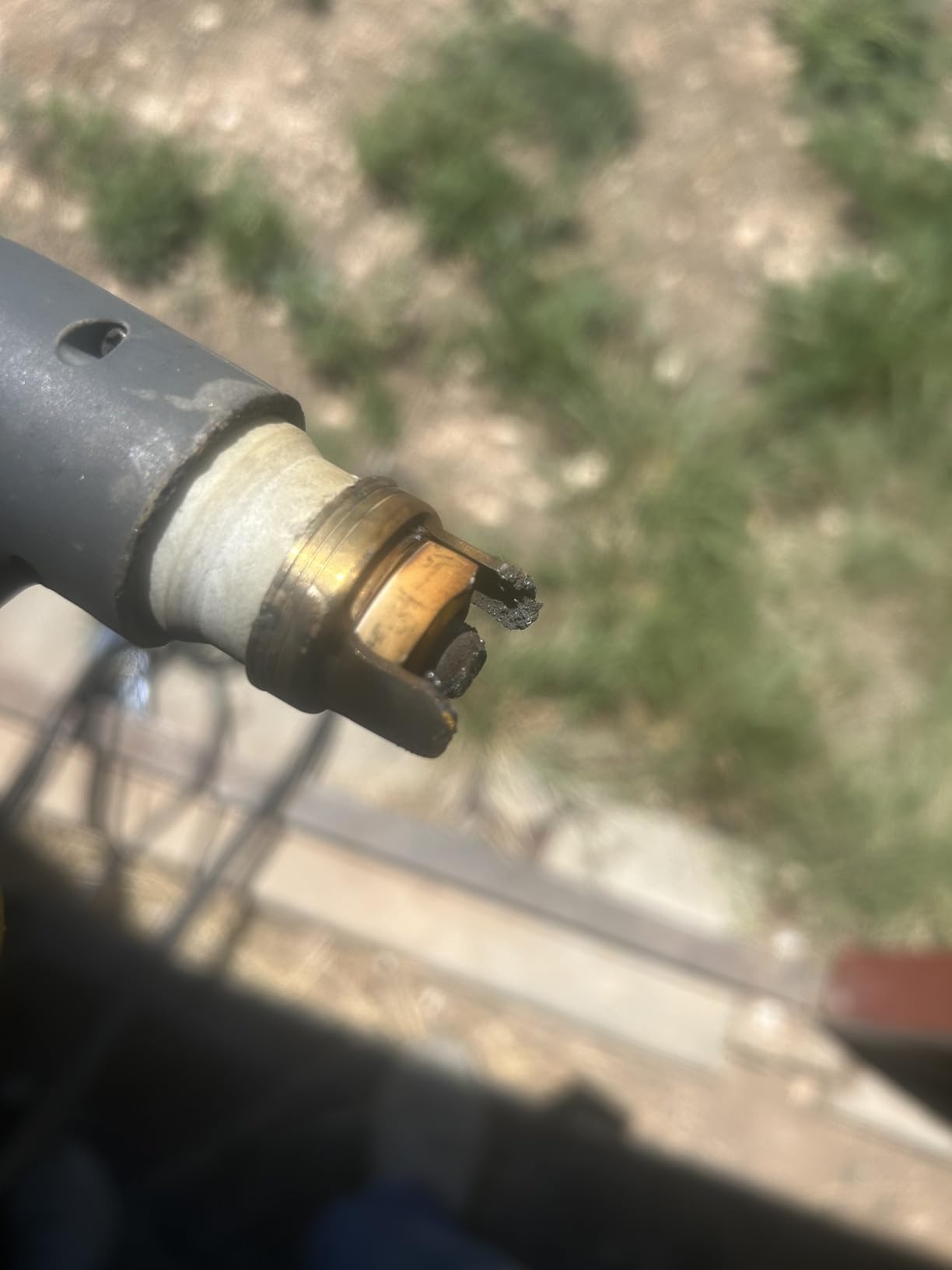
The IPT40 torch is a non-touch pilot arc design, so it starts through rust and paint without striking the workpiece. The rear-mounted air filter and digital display of air pressure, voltage, current, and error codes mean the machine tells you what is wrong rather than leaving you to deduce it. That combination of a rear filter and a readable display is what makes the setup repeatable.
PT, 2T, and 4T trigger functions are all available, with post-flow adjustable from 5 to 20 seconds. If you later move to a CNC table, the 4T mode is what lets an external controller hold the arc open during rapid moves. The IP21 water rating and overload and overheat protection are appropriate for a working shop.
Where the 60 amp class costs you
Consumables for the IPT40 torch are more expensive than PT31 sets, and that cost repeats on every torch change. The 110V duty cycle is shorter, which limits sustained thick-metal work on a household circuit, so plan to run this one on 220V if you are buying it for plate.
The digital interface has a learning curve if you have never used plasma, and post-flow needs tuning to avoid excess consumable wear out of the box. Both are one-time setup issues rather than ongoing faults, and reviewers generally consider the non-HF start plus the extra amperage worth the trade.
Who should buy it
Buy the CUT-60DS if electronics interference is a live concern in your shop, or if you have moved past 1/2 inch plate and want more depth. Owners doing pre-weld preparation, auto repair, and art fabrication rate it well once paired with a proper compressor.
It is not the pick for someone on a strict consumable budget, or for a garage where the only power available is a single 120V outlet. With a 220V circuit and dry air, it is a serious machine for a serious home shop.
7. PRIMEWELD CUT50D – 50A With The Service People Actually Talk About
PrimeWeld 50A Air Inverter Plasma Cutter, Portable Plasma Cutting Machine, Premium and Rugged Plasma Cutter Kit, Automatic Dual Voltage 110V/220V AC with Plasma Torch, 1/2″ Clean Cut, CUT50D
50A output
Automatic 110V/220V
AG60 non-touch torch
1/2 in clean cut
Pre-plumbed air fitting
Pros
- Cuts up to 1/2 inch cold-rolled steel cleanly even on 120V
- After-sales support answers quickly and covers return shipping
- Plumbing is pre-assembled with a brass quick-connect
- Accessory quality beats peers in this class
- Quiet operation and smooth control knob
Cons
- Instruction manual is widely described as poor
- Power cord is quite short and may require an adapter
- Some units shipped with internal and external air leaks
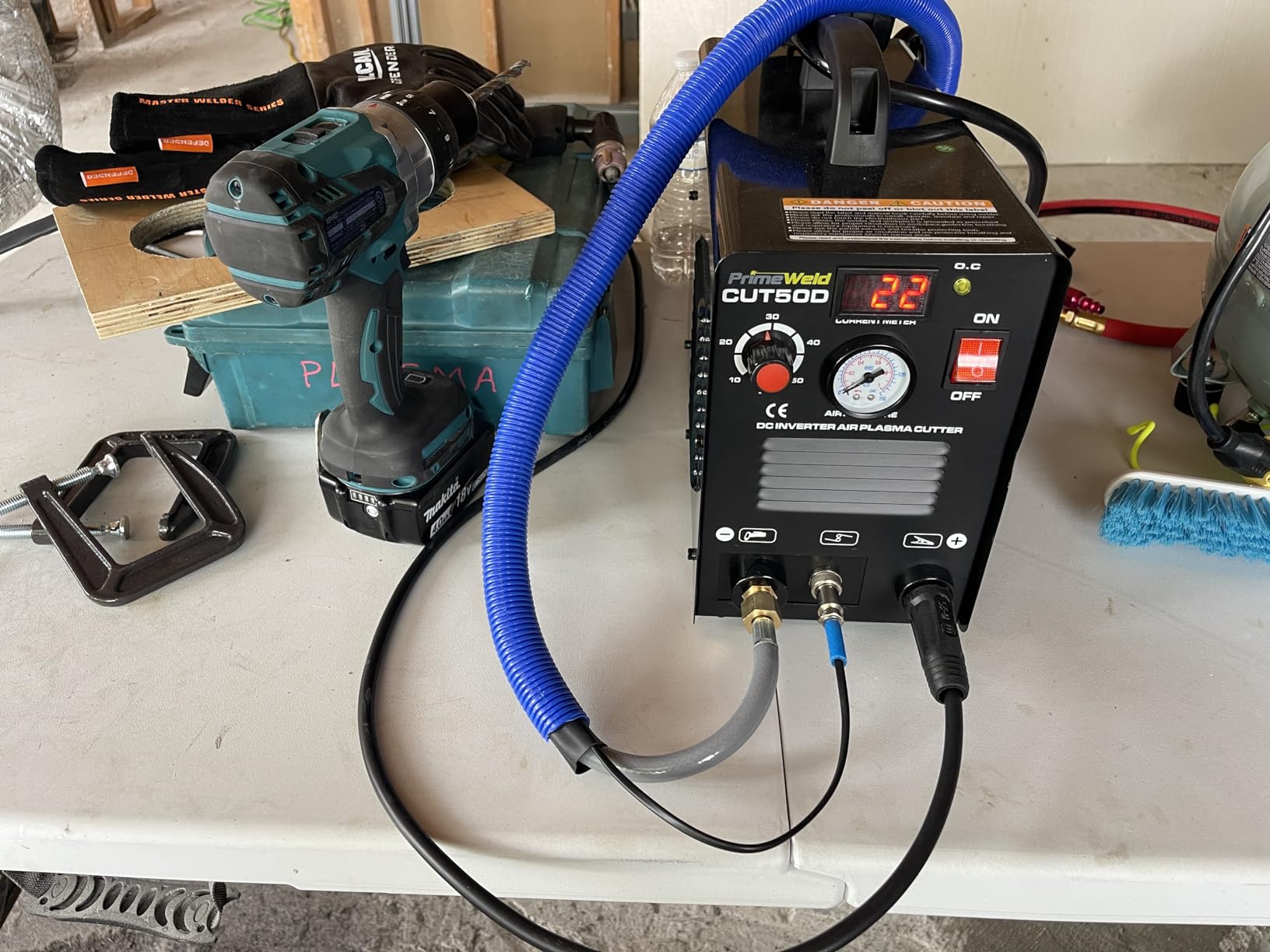
The CUT50D holds a 4.7 average, and the reason is not the cutting performance. It is the service. Buyers describe PrimeWeld answering questions within an hour and covering return shipping for warranty repairs, which is not a small thing when you are buying an imported machine with a limited parts ecosystem.
The machine itself is a 50 amp air inverter with a 1/2 inch clean cut rating, an AG60 non-touch torch with a trigger guard, and automatic dual-voltage 110V/220V operation. Owners report cutting up to 1/2 inch cold-rolled steel quickly and cleanly, including on 120V, which is unusual at this output level.
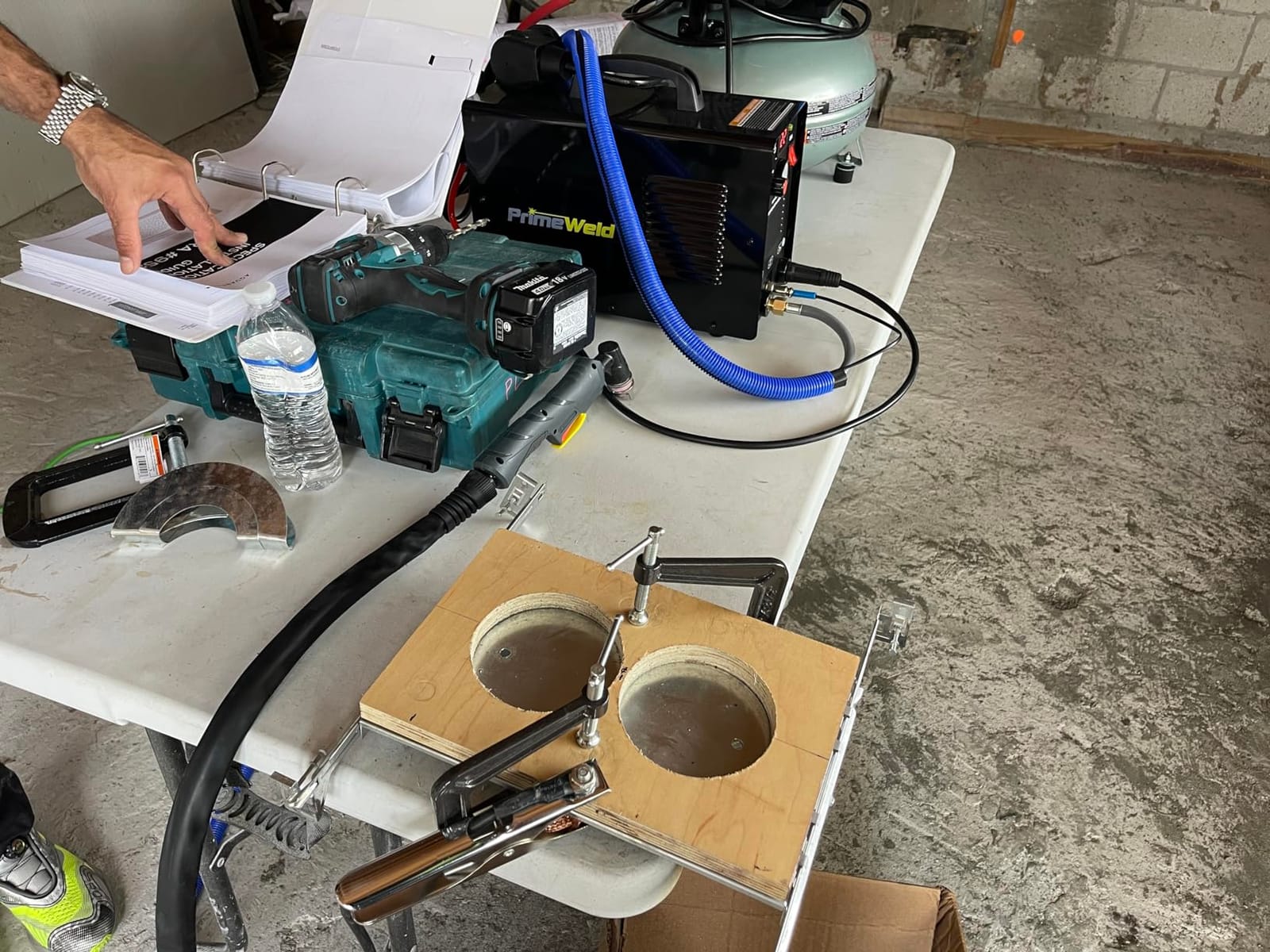
The rear panel comes pre-assembled with a brass quick-connect air fitting, and the kit includes a pre-installed 220V power cord plus a 220V-to-120V adapter. That detail saves the single most common frustration in this category, which is discovering you need a part you do not have before you can make your first cut.
Accessory quality is a genuine strength here. Owners comment on the torch, ground clamp, and hoses being better made than comparable kits, and the machine is described as quiet with a smooth control knob. For a home shop in a residential garage, lower noise is a real benefit when the machine shares a wall with a workspace.
The documentation problem
The instruction manual is widely described as poor, and that is the one consistent complaint across otherwise strong reviews. Budget an evening with community walkthrough videos before your first cut, and write your amperage and PSI settings down on a card taped to the machine.
The power cord is short and may need the adapter, and some units shipped with both internal and external air leaks that need addressing before first use. Replacement torches do not always match original performance, so if you buy a spare, check it on scrap material before you depend on it.
Who should buy it
Buy the CUT50D if you want the most proven support experience in this group, especially if you are new to plasma and expect to have setup questions. Quiet operation makes it a good fit for a residential garage where noise carries through the house.
Pass on it if you are comfortable learning from forum posts and community videos, because the machine itself performs like the other 50 amp units here. The difference is what happens when something goes wrong, and for most home shops that difference is worth paying for.
8. ARCCAPTAIN CUT55 Pro – 55A With App Control And A 3-Year Warranty
ARCCAPTAIN iControl CUT55 Pro Plasma Cutter Machine, 55Amp, 120V/240V
55A output
1/2 in quality cut, 3/4 in max
App control to 10 m
3-year warranty
Pros
- Cuts 1/2 inch quality and 3/4 inch maximum
- Pilot arc starts on dirty
- rusty or coated steel without contact
- App control adjusts parameters from up to 10 meters away
- Pre-installed regulator and filter get you cutting in about a minute
Cons
- App-only adjustments are awkward without a phone
- Post-blow time scales automatically with amperage instead of manual setting
- Small display and controls are fiddly with gloves on
The CUT55 Pro is Arccaptain’s step up from the CUT50, adding an MCU digital control upgrade, a 55 amp output, and a three-year warranty with ANSI certification. Quality cut capacity is rated at 12mm, or 1/2 inch, with a 20mm, or 3/4 inch, maximum.
The pilot arc is high frequency non-touch, so it starts on dirty, rusty, or coated steel without the operator touching the workpiece. Combined with pre-installed air regulation and filtering, reviewers describe it as one of the easier 55 amp machines to get running, which matches what the packaging implies.
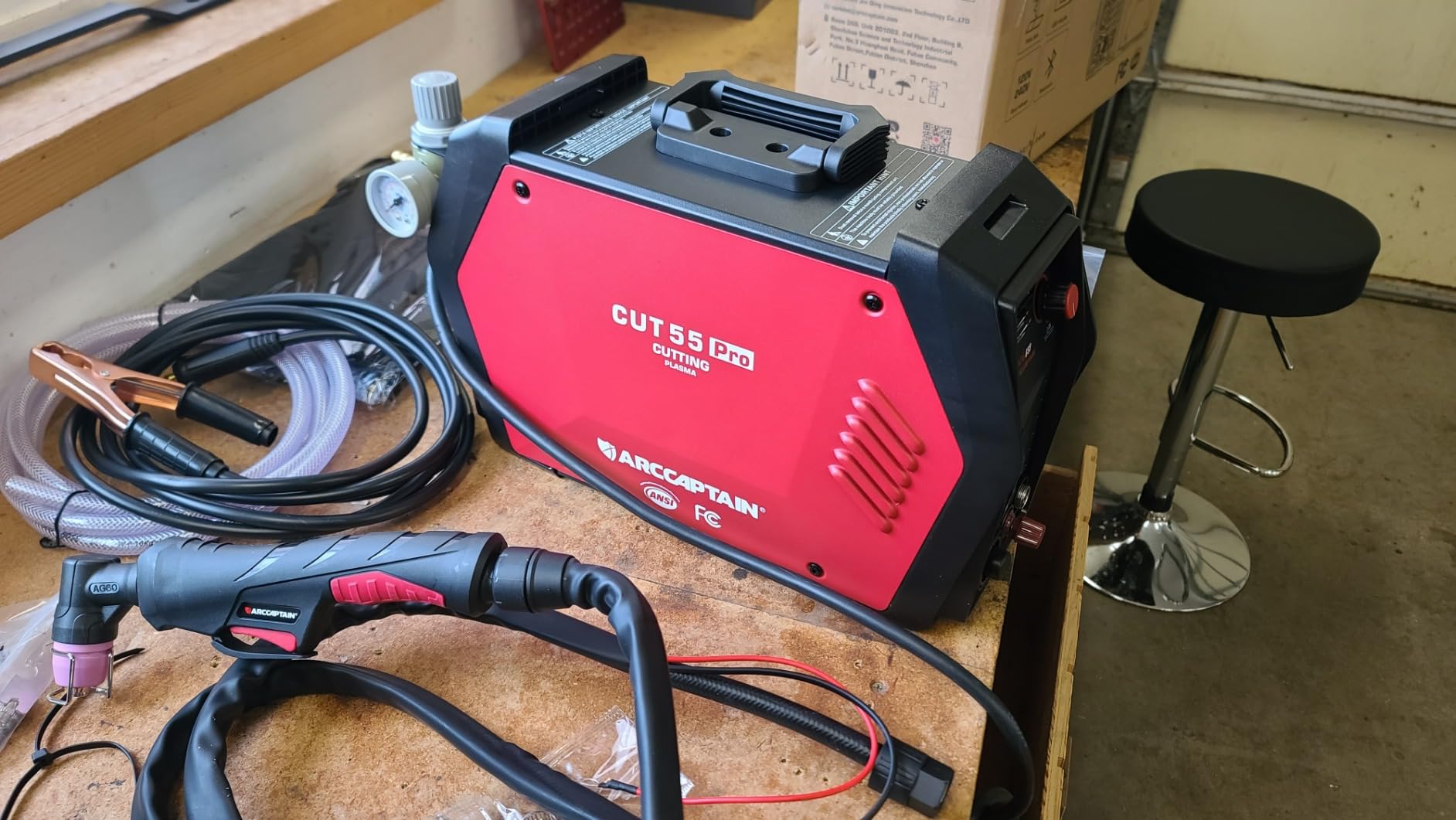
App control reaches about 10 meters, so you can adjust current and monitor status from across the shop. That is a shorter range than the bestarc’s app but plenty for a garage, and it is genuinely useful when the machine is across the table from where you are standing. The 2T/4T modes with intelligent post-blow scaling set post-flow time from the cutting current automatically.
Smart fan cooling is claimed to cut noise significantly, which matters in a residential shop. The three-year warranty is the longest in this group and is backed by the same brand that makes the category’s best seller, so parts and support are the most established option here.
What the automation costs you
App-only adjustments are not ideal when your phone is not within reach, and post-blow time is tied to amperage rather than set by hand, which removes a tuning option some operators want. The display and controls are small and can be fiddly to operate with gloves on, so if you work in cold weather, plan on taking them off for a settings change.
It also needs a capable air supply for sustained higher-amp cutting. A 55 amp machine asking for 220V power and steady dry air is a commitment to the setup, not just the tool. The 19.46 pound listed weight and the included 10 foot torch, air hose, and earth clamp make it a garage-resident machine rather than a carry-it-anywhere one.
Who should buy it
The CUT55 Pro fits a home shop that has outgrown a 50 amp machine, wants a long warranty, and likes adjusting settings from a phone. The 1/2 inch quality cut with 3/4 inch maximum gives headroom for gate and trailer work.
It is not the choice for someone who wants manual control of post-flow, or for a bench-only setup with a small compressor. With a 220V circuit and a compressor that keeps up, it is a well-warranted machine with modern conveniences that do not get in the way.
9. PRIMEWELD CUT60 – 60A Continuous Pilot Arc For Production Work
PRIMEWELD CUT60 60Amp Non-Touch Pilot Arc PT60 Torch Plasma Cutter 110V/220V Dual Voltage 3 Year Warranty
60A output
Continuous pilot arc
60 percent duty cycle
PT60 Euro torch
3-year warranty
Pros
- Continuous pilot arc cuts expanded
- rusted and painted metal
- 60 percent duty cycle at 60 amps supports sustained work
- PT60 torch with Euro central connection is serviceable
- Three-year warranty with US-based support
- Highest average rating of the twelve machines here
Cons
- Costs far more than the 50 amp class machines
- Blow-back start is less smooth than HF pilot arc designs
- Dual voltage needs the included adapter for 120V use
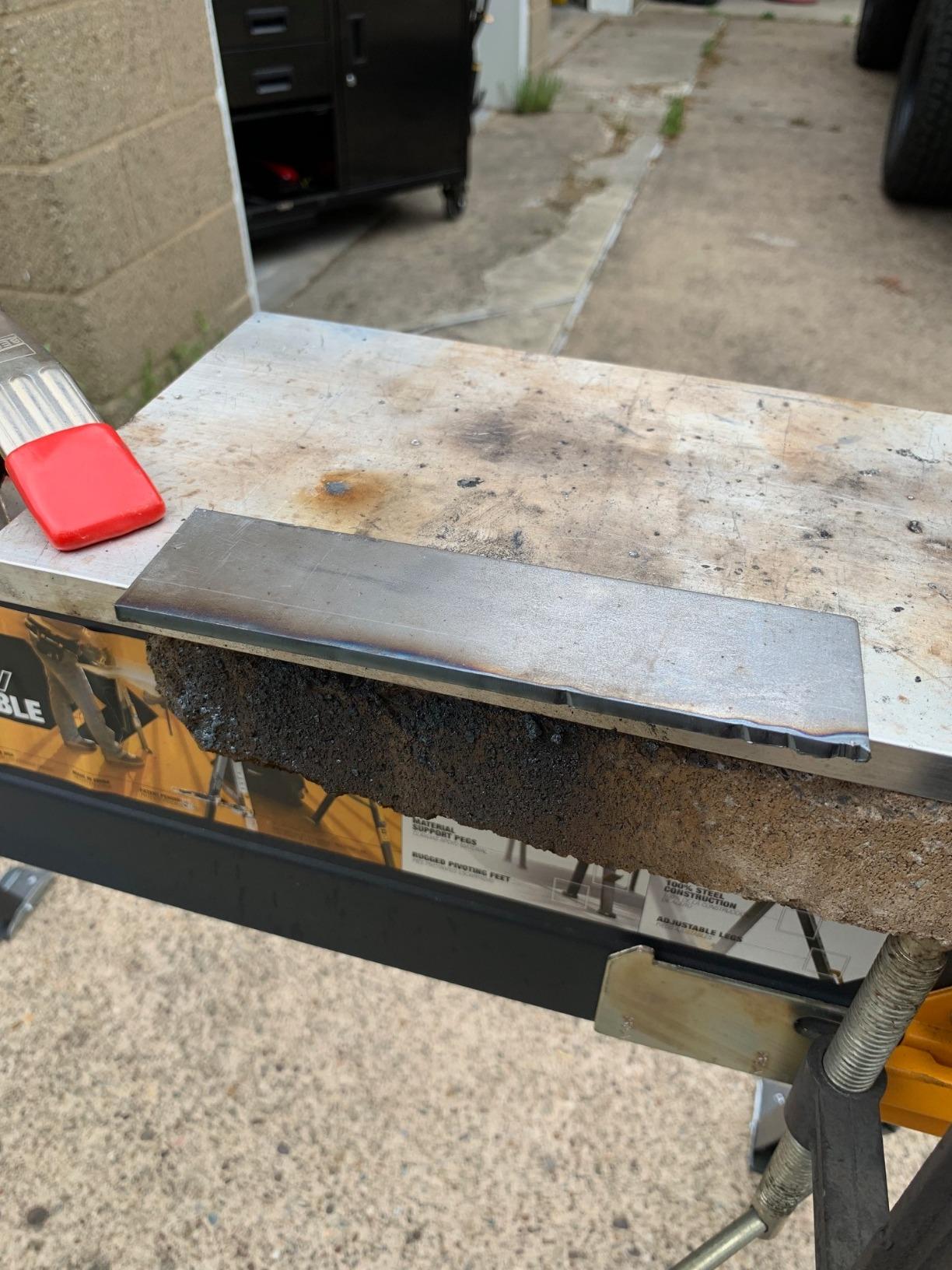
The CUT60 carries the highest average rating in this roundup, 4.8 across 486 reviews with 86 percent five-star ratings. It is a 60 amp non-touch pilot arc machine with a 60 percent duty cycle at full output, and that duty cycle figure is the reason it is worth stepping up a class for.
Every other 50 amp machine here is built for intermittent work. A 60 percent duty cycle means roughly three minutes of cutting per ten, which is the difference between a machine you step away from and one you keep your hands on. Owners describe it as a step-up machine for serious home shops and small fabricators.
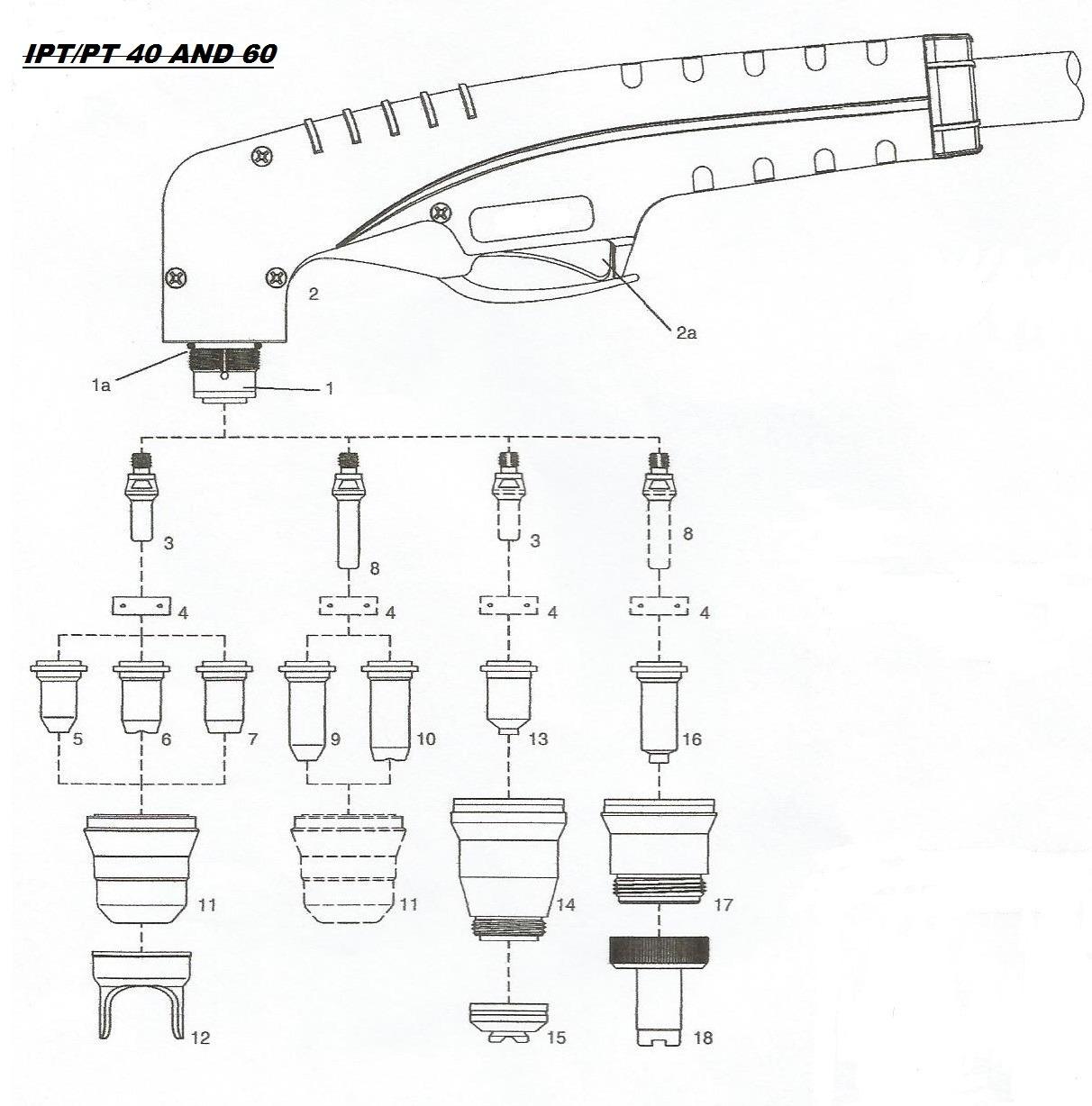
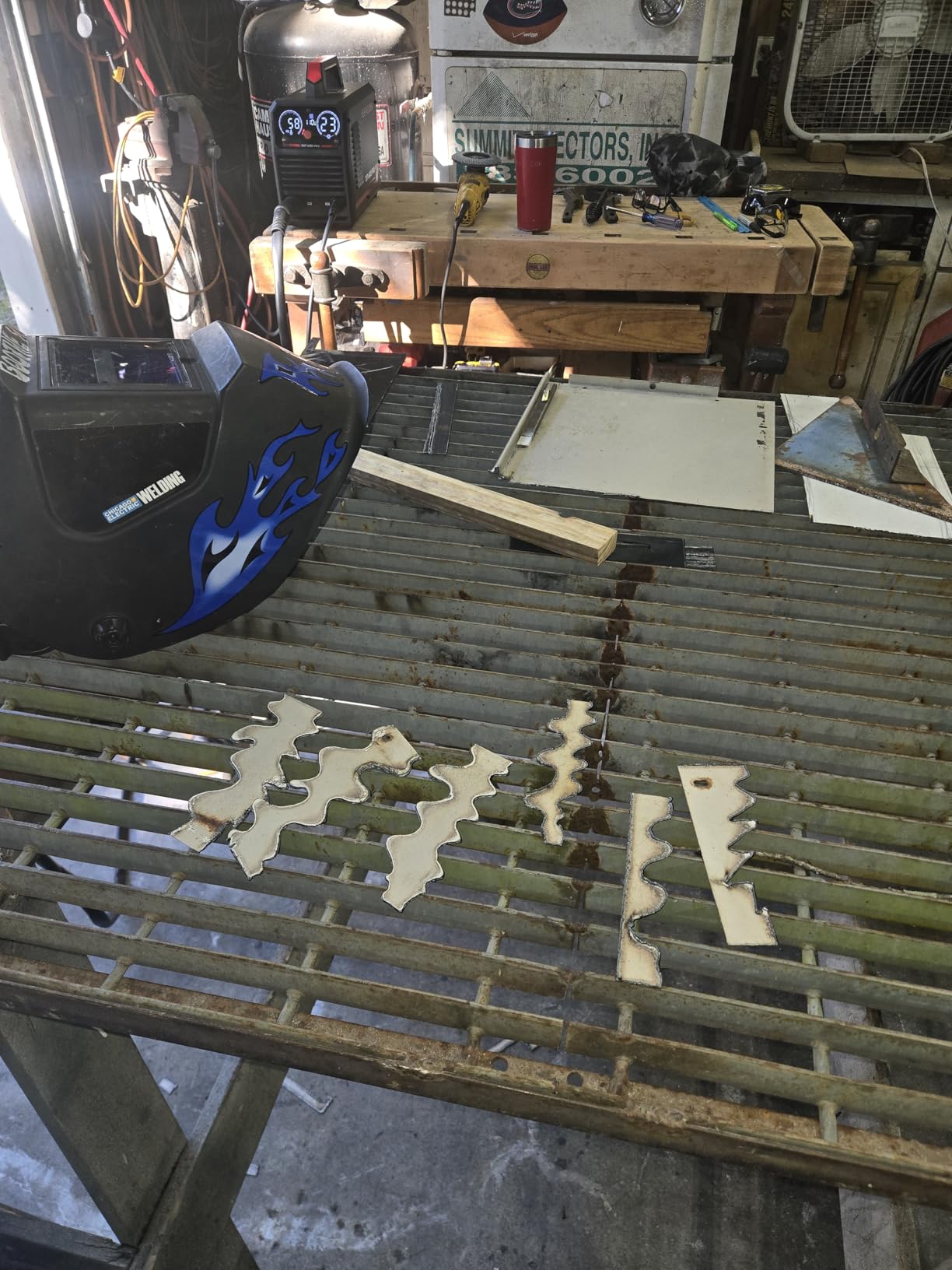
The continuous pilot arc is what separates it from the rest. A continuous arc stays live as you move the torch over the material, which is exactly what grid-style and expanded metal need, because that material is mostly holes and thin webs that the arc would otherwise extinguish on. Owners use it on expanded, rusted, and painted stock without contact.
The PT60 torch uses a Euro central connection, which is a serviceable design and easier to find parts for than a proprietary fitting. Blow-back start technology is used rather than high frequency, so it also plays well next to electronics. The three-year warranty is backed by US-based support, matching the service reputation of the smaller PrimeWeld model.
The price-class reality
This machine sits well above the 50 amp class in cost, and that is the main reservation owners raise. You are paying for the duty cycle, the continuous arc, and the warranty, and the argument only works if you actually cut that many hours.
Blow-back start is less smooth than a high-frequency pilot arc design on some materials, so the first cut of a session can take a moment to settle. For 120V operation the included adapter is required. Neither issue is significant, but both are worth knowing before the first afternoon of work.
Who should buy it
Buy the CUT60 if you cut expanded or grid metal, do production work, or want a machine that will not disappoint as your shop grows. Continuous pilot arc and a 60 percent duty cycle handle the work that makes cheaper machines struggle.
Skip it if your cutting is weekend art and sheet metal projects on 1/8 and 1/4 inch material. A 50 amp machine does that fine and leaves money in the budget for consumables. For a working home shop that has outgrown intermittent-duty machines, this is the top-rated choice in the group.
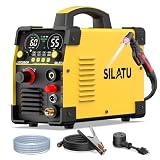
10. SILATU STC550P – 55A Class In The Lightest Package
SILATU 55A Plasma Cutter, Non-Touch Pilot Arc, 110V/220V, 2/3″ Max Cut
55A IGBT
60 percent duty cycle
Non-touch pilot arc
12.57 pounds
Air pressure sensor
Pros
- 55 amp class in the lightest package at 12.57 pounds
- Non-touch pilot arc starts through rust
- paint and uneven surfaces
- Adjustable pilot arc duration trades arc time against consumable wear
- Built-in air sensor and rear filter reduce moisture-related failures
- Digital screen shows air pressure
- current and error codes
Cons
- Air hose is only about 3.3 feet
- Less established brand with a one-year warranty
- Requires an external air compressor that is not included
The STC550P puts a 55 amp IGBT inverter in a 12.57 pound case with a 60 percent duty cycle, which makes it the lightest machine at that output in this group. For a home shop where the machine moves between a bench, a garage door, and a job site, that number matters more than it sounds.
Cutting capacity is listed as a recommended maximum of 1/2 inch at 40 amps and 60 PSI on 110V, and 2/3 inch at 55 amps and 70 PSI on 220V. Recommended air is 70 PSI with 250 L/min of flow, and the machine is rated for 110V/220V dual voltage operation.
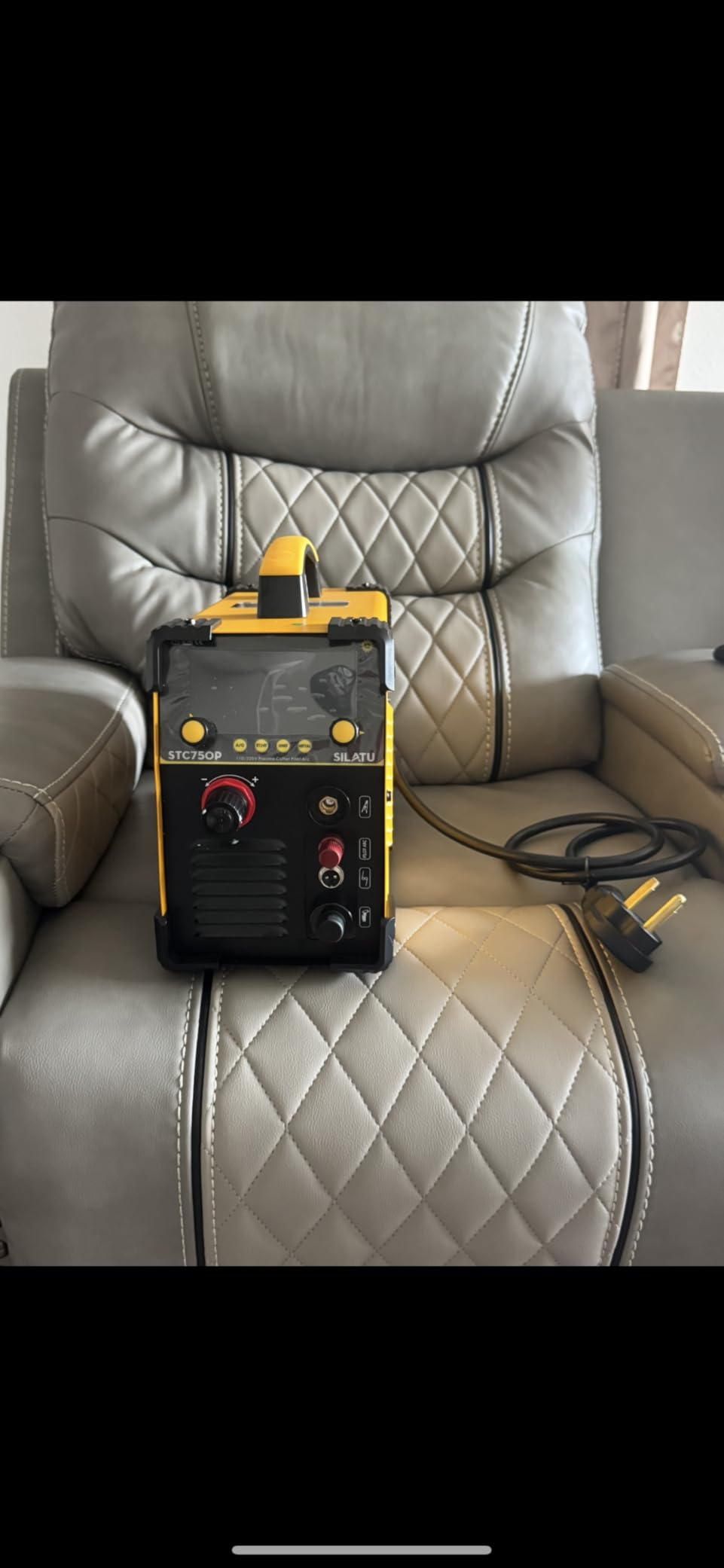
The adjustable pilot arc duration is the feature owners single out. By extending or shortening the arc time you decide how hard the machine works to break through scale, and on a long rusty plate that setting saves both time and consumables. Combined with the built-in air pressure sensor and rear filter, it gives you the two controls that most affect electrode life.
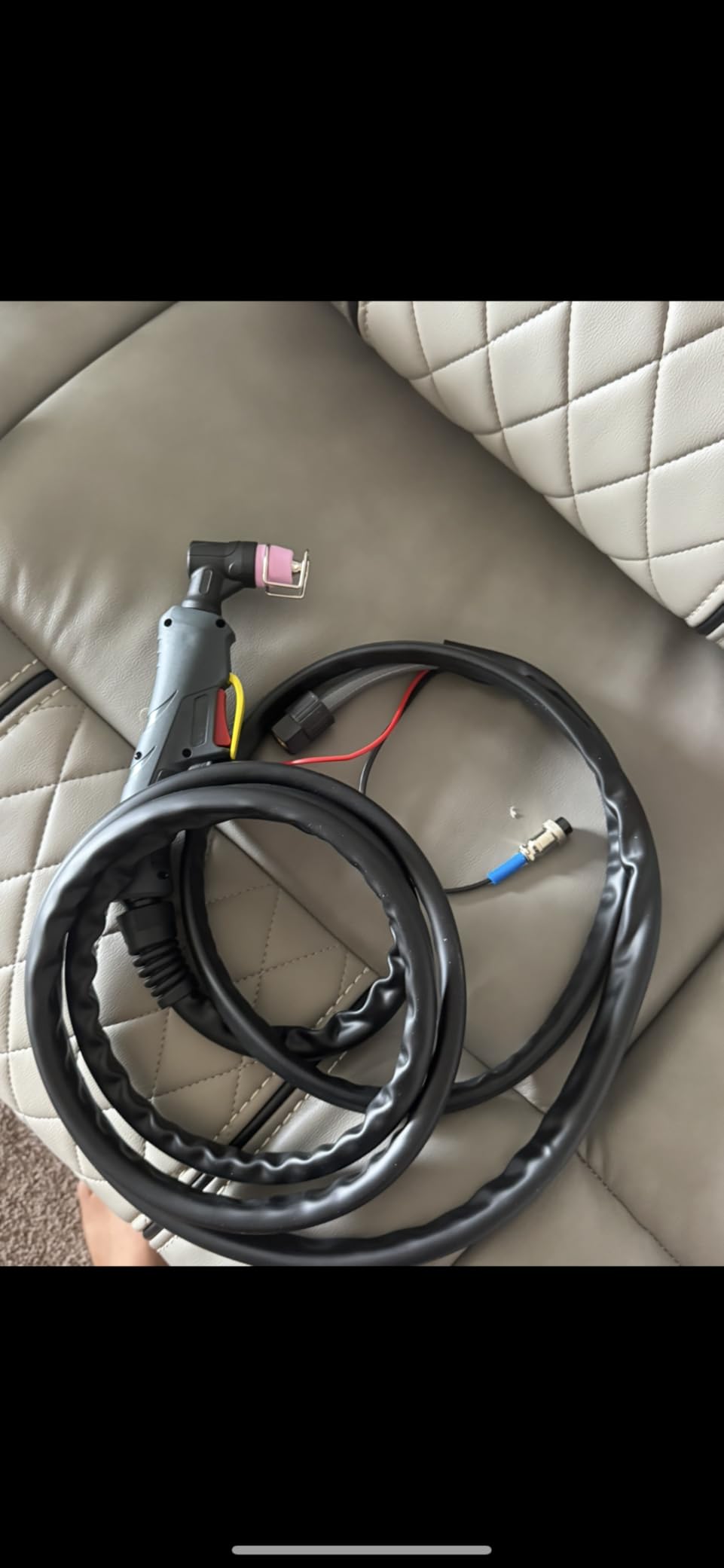
PT, 2T, 4T, and pilot arc functions are all available, with post-time adjustable from 3 to 15 seconds, and the digital screen reports air pressure, voltage, current, and error codes. The kit includes a 10 foot AG60P torch, a 10 foot ground clamp, a voltage adapter, and a user manual.
What the light weight costs you
The air hose is about 3.3 feet, the shortest in this group, so you plan your cut path around the machine position or plan to add a longer hose. A one-year warranty is shorter than the three-year coverage on the PrimeWeld and Arccaptain models, and the brand has a smaller review base, so long-term durability is less well documented.
Post-flow and pilot arc settings need manual tuning rather than being automated, and no compressor is included. Owners with 263 reviews report 55 amp class capability at a cost normally seen on 50 amp machines, which is a real value, but the newness of the listing is the risk.
Who should buy it
The STC550P fits a fabricator who needs 55 amp capability and has to carry the machine regularly, and who wants direct control over pilot arc time. The air sensor readout is useful for anyone still learning what their compressor delivers under load.
Choose a more established brand if warranty length matters to you or if you want a longer air hose out of the box. For weight, port capability, and cutting class per dollar, nothing else in this group is lighter.
11. Reboot RBC6000D – 60A Built Around A 240V Circuit
Reboot 60A Plasma Cutter Dual Voltage 120V/240V, 1/2″ Clean Cut IGBT Inverter, Portable Metal Cutting Machine with Torch & Tips – RBC6000D 2025 Upgraded (Pre-Installed Air Regulator)
60A output
120V/240V auto-detect
1/2 in at 120V, 5/8 in at 240V
IGBT inverter
Pros
- Publishes breaker guidance for both 120V and 240V
- Fast and clean on 1/4 to 5/8 inch steel from a 240V circuit
- Light 14.22 lb body is easy to move
- Clear amperage and PSI guidance for first-time users
- Extra cutting tips included for learning
Cons
- Touch-arc start struggles to initiate on thicker or rusty metal
- Tip roller guide is reported to loosen and lose position
- 120V operation trips household breakers above roughly 18 amps
The RBC6000D does something most machines in this category do not: it publishes its electrical requirements. The listing recommends a 50 amp breaker at 120V and a 40 amp breaker at 240V, along with 90 PSI and 60 L/min of air or above. That single line answers the question that trips up most first-time buyers.
It outputs 60 amps with dual voltage auto-detection, delivering 10 to 35 amps at 120V and 30 to 60 amps at 240V. Cutting capacity is 1/2 inch steel at 120V and 35 amps, and 5/8 inch at 240V and 60 amps, with an IGBT inverter underneath.
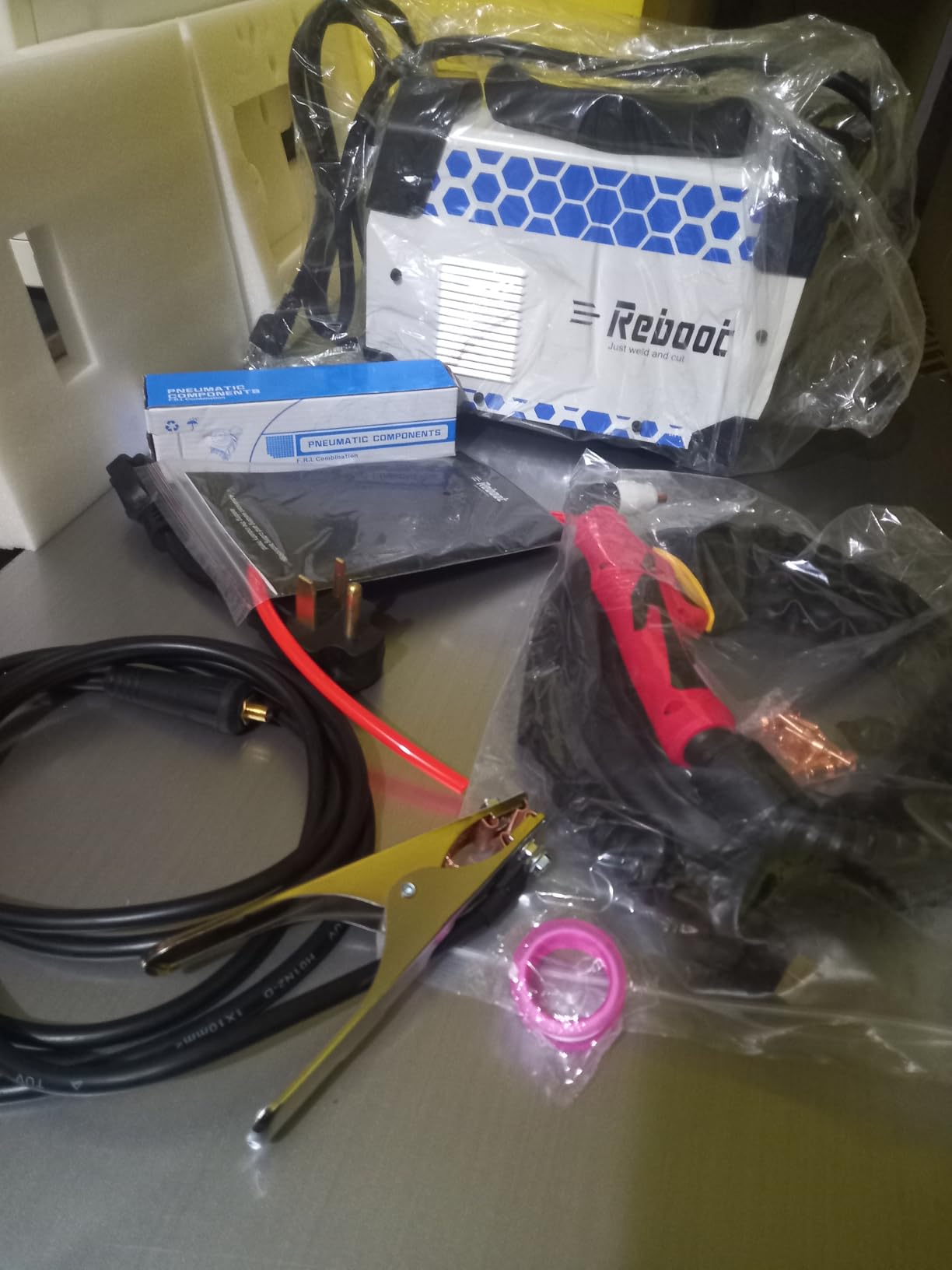
Reviews split sharply by voltage, and the pattern is consistent. Run it from a 240V circuit and owners call it fast and easy, cutting 1/4 to 5/8 inch steel quickly and cleanly once amperage is set. Run it from 120V and breakers trip above roughly 18 amps of output, which is a limit of the household circuit rather than the machine.
The amateur-friendly side is real. Controls are described as intuitive, amperage adjustment is straightforward, and clear PSI guidance is printed on the machine, which is exactly what a first-time owner needs. Extra cutting tips are included, which matters because you will burn through the supplied set while learning amperage and pierce settings.
The touch start and the support reality
This is a touch-arc, not a pilot-arc, design. That means the torch has to make contact to fire, and several reviews describe it sticking or struggling to initiate on thicker or rusty material. Wire-brushing the strike point before cutting, the same habit PT31 users build, solves most of it.
The tip roller guide is reported to loosen and fail to hold position, and multiple reviews report unit failures with warranty handling described as costly and difficult to navigate. Those two points are why this machine sits below the PrimeWeld CUT60 despite the higher output.
Who should buy it
Buy the RBC6000D if you already have a 240V circuit and want 60 amp output at a low cost with clear setup guidance. It is a good match for someone who has read the breaker and compressor requirements and knows they can meet them.
Pass on it if you only have a 120V outlet, if you cut rusty material routinely and want a non-touch arc, or if warranty service matters to you. The 240V performance is where the value is, and it is real.
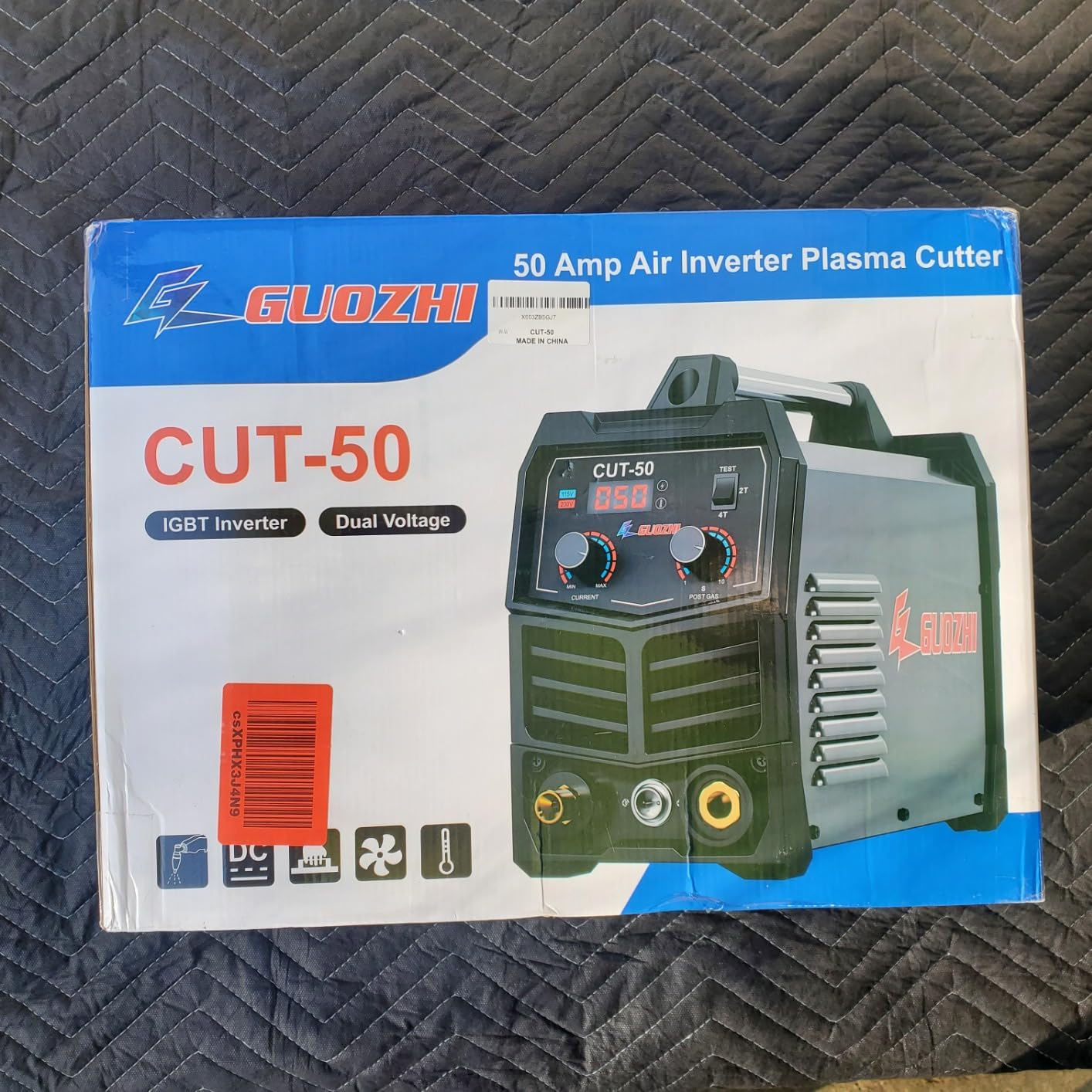
12. GZ GUOZHI CUT-50 – Pilot Arc Rated For Cold Garages
GZ GUOZHI Plasma Cutter, 50 Amp Air Inverter Plasma Cut, 110V/220V Dual Voltage Digital Display IGBT Inverter Plasma Cutting Machine with 2T/4T/TEST Function
50A output
60 percent duty cycle
Rated to minus 20C
2T/4T/TEST display
D-type air plug
Pros
- Rated to operate down to minus 20 degrees Celsius
- Pilot arc cuts rough
- painted and rusty surfaces with minimal slag
- D-type industrial air plug sets up in about a minute
- Digital display includes a TEST function for practice
- 60 percent duty cycle at 50 amps
Cons
- Listed weight of 19.31 lb conflicts with 13 lb in feature copy
- Only a one-year manufacturer warranty
- Consumable supply for the bundled torch may be limited
The CUT-50 is a 50 amp IGBT machine with a 60 percent duty cycle, and the specification that sets it apart is the operating temperature. It is rated to work down to minus 20 degrees Celsius, which matters if your shop is an unheated garage, a basement, or a detached outbuilding in a climate with real winters.
Maximum cutting thickness is listed as 1/4 inch at 35 amps on 110V and 50 PSI, and 3/4 inch at 50 amps on 220V and 65 PSI. The 110V figure is a 12mm capacity and the 220V figure is 20mm, so the voltage split is doing a lot of work in that spec sheet.
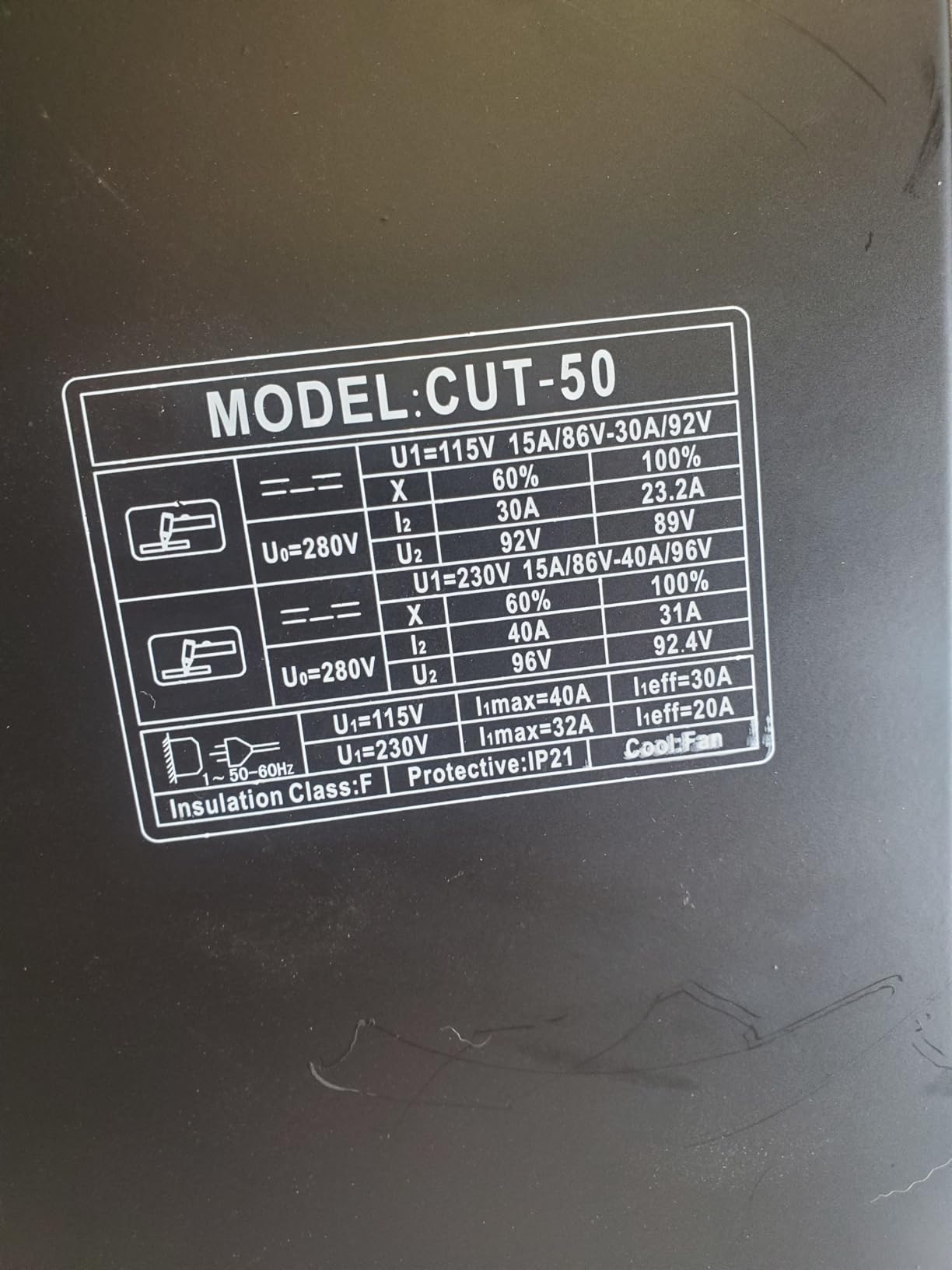
The pilot arc cuts through rough, painted, and rusty surfaces with minimal slag, which owners consistently mention as the feature that makes it feel capable at this output level. Setup is fast because of the quarter-inch industrial D-type air plug, which is the same fitting style used on the Lotos and Arccaptain machines, so a lot of shop air setups will connect to it directly.
The digital display handles 2T, 4T, and a TEST function. That test mode is genuinely useful for a first machine because it fires the arc without a full cut, which lets you set air pressure and confirm the torch works before you position a plate. Overheating and over-current protection are built in.
Where the specification is thinner
The listed weight of 19.31 pounds conflicts with the 13 pounds stated in the feature copy, and there is a one-year manufacturer warranty, which is shorter than several machines here. Consumable supply for the bundled cutting gun head may be limited, so confirm what replacement torches and electrodes are available before committing to it.
The 4.2 average and a 12 percent one-star share reflect more mixed experiences than the category leaders, with setup learning and consumable availability coming up most often. That is the normal profile for a first plasma cutter, and it is manageable if you budget time for the first session rather than expecting to be cutting within ten minutes of opening the box.
Who should buy it
Buy the CUT-50 if your shop is unheated, or if you want a pilot arc and a 60 percent duty cycle without stepping up to 60 amps. The industrial D-type plug and the TEST function make it friendly to a first-time owner.
Consider a machine with a longer warranty if support matters more to you than cold-weather capability. For a home shop in a temperate climate doing mixed fabrication on a 220V circuit, it is a capable 50 amp machine at a modest outlay.
How To Choose A Plasma Cutter For A Home Shop
The right question is not which machine is strongest, it is what thickest material you actually cut and how often. If your work is 16 gauge to 1/8 inch sheet for signs and art, a 50 amp machine is more than enough and you will be limited by your ability to hold a straight line, not by the machine. If you cut 1/2 inch plate for brackets, gates, and trailer parts, target 55 to 60 amps.
Every machine in this list is rated for dual voltage, and that single fact changes what you can do. A 50 amp machine produces roughly half its rated output on 110V, so its 220V clean cut figure is the number that matters for plate work. If your shop has no 220V outlet, budget for one before buying, because running a 50 amp machine on a household circuit leads to tripped breakers and throttled output.
Amps and thickness for common home-shop materials
The rule of thumb that matches owner reports across r/metalworking is simple. 40 amps handles up to roughly 3/8 inch plate, 50 amps reaches 1/2 inch mild steel with clean air, and 60 amps severs past that into the range where oxy-fuel used to be the only option.
30 to 40 amps: 1/16 to 1/8 inch mild steel, sheet metal art, thin aluminum
50 amps: 1/8 to 1/4 inch clean, 1/2 inch mild steel with clean dry air at 220V
55 to 60 amps: 1/4 to 1/2 inch clean, up to 5/8 inch severance on mild steel
Beyond 3/4 inch: step up to an 80 amp machine or reach for oxy-fuel
Clean cut and maximum cut are different measurements and manufacturers state them separately. Clean cut is the thickness at which the kerf is narrow and the edge is tight enough to weld or finish. Maximum cut is the point where metal is still being removed, with heavy dross and a wide, uneven kerf. The Lotos is rated 5/8 inch clean, the YESWELDER is rated 5/8 inch clean at 220V and nearly an inch maximum, and the GZ GUOZHI is rated 3/4 inch maximum at 220V. Buying on the maximum number is the most common mistake in this category.
Pilot arc types, and why the start method matters
A contact-start torch has you touch the electrode to the workpiece to fire. It is simple, cheap, and consumables for it cost the least. It is also harder to use on rust and paint, and it wears the electrode faster at the strike point. Three machines here use this approach, including the S7 and the Reboot.
A non-touch pilot arc fires without contact, which improves both rusty-stock cutting and consumable life. Five machines here do it this way, including the Lotos, the TOOLIOM, the bestarc, the SILATU, and the PrimeWeld CUT60. A high frequency start is the most reliable way to fire but can create electrical noise, which is a reported problem near CNC tables and sensitive controls.
A non-HF blow-back start is the compromise, and two machines here use it, the YESWELDER and the PrimeWeld CUT60. Owners highlight it as safer around electronics in a home shop. If your garage holds a CNC table, a computer, or audio equipment, a non-HF machine removes a class of problems before they start.
Duty cycle, air, and consumables
Duty cycle is how long the machine cuts before it needs to cool, expressed as a percentage at rated output. Most 50 amp machines in this category are intermittent duty, which is fine for weekend work. Three machines here publish 60 percent duty cycle, the TOOLIOM, the SILATU, and the GZ GUOZHI, and the PrimeWeld CUT60 publishes 60 percent at a full 60 amps, which is the number that matters if you cut for hours.
Consumables are torch-specific and not interchangeable. A set bought for an AG60 torch will not fit an IPT40 or a PT60 torch, and Home Shop Machinist owners make the point bluntly: unless your unit came with a different torch, the consumables you bought will not work. Before buying, find the torch type and confirm replacement sets are available. PT31 sets cost the least, AG60 and AG60P sets sit in the middle, and IPT40 and PT60 sets are the most expensive. Our rotary cutter guide covers the other common home-shop cutting job.
Home Shop Setup Checklist: Breaker, Cord, Compressor And Safety
This is the part that decides whether you like the machine. A plasma cutter is a plasma arc, a compressed air jet, and a power source, and if the air or the circuit is wrong, the machine will feel terrible no matter what the listing says. Work through this list before the first cut.
Breaker and circuit. The Reboot publishes the clearest guidance here, recommending a 50 amp breaker at 120V and a 40 amp breaker at 240V. Other machines in this class are frequently sold with a 50 amp plug even though they rarely draw more than about 30 amps, which is where the confusion starts. r/fabrication and r/metalworking owners consistently report tripping breakers on 15 and 20 amp circuits during sustained cutting, so give these machines a 20 amp circuit at minimum at 120V and a dedicated 240V circuit at 220V.
Extension cords. If you must use an extension cord, gauge matters more than length. A 10 AWG cord on a 120V circuit and a 8 AWG cord on a 240V circuit are the safe choices, and a long thin cord on a 50 amp machine is one of the most common reasons output disappoints. Several owners report the machine throttling hard on 120V, and a cord is often the hidden cause.
Compressor. Air is the other half of the equation. Most machines here want 50 to 70 PSI with around 4 cfm of flow, and the Reboot specifies 90 PSI and 60 L/min or above. Owners on r/Welding and r/metalworking repeatedly identify insufficient airflow as the cause of erratic arcs, misfires, and rapid consumable burnout. If your compressor cannot deliver 4 cfm, the arc will suffer before the machine does.
Moisture control. Add a dryer or moisture trap before the machine, not after. Owners on weldingweb report that adding moisture control to a compressor directly extended consumable life, and the machines with built-in air filters and pressure sensors, including the bestarc, the ARCCAPTAIN models, and the SILATU, handle this better than those without. If yours has no filter, buy an inline trap and a roll of PTFE tape.
Ground clamp, PPE, and ventilation. A secure ground connection is not optional. Owners on r/metalworking and garage forums describe arc wander and failed cuts that come down to a loose clamp, and the Lotos ground lead is specifically noted as short, so plan your clamp position. For safety, a welding helmet with the correct shade lens is required, plus gloves, a leather jacket, and ventilation. Cut metal fume is a real exposure in an enclosed garage, and opening a door or running a fan matters more than most buyers expect.
Frequently Asked Questions
How many amps is a good plasma cutter?
For most home shops, 40 to 55 amps is the useful range. 30 to 40 amps covers 1/16 to 1/8 inch sheet and light art work. A 50 amp machine handles 1/4 inch cleanly and reaches about 1/2 inch mild steel with clean, dry air on 220V. Step up to 55 or 60 amps when you are cutting 1/2 inch plate regularly or doing production work, and look for a published duty cycle at that output.
How thick of metal can a 40 amp plasma cutter cut?
A 40 amp machine is generally good for up to about 3/8 inch mild steel, which is the thickness r/metalworking owners describe as the practical limit for most home-shop work when it is paired with a high-CFM compressor and clean air. It cuts 1/8 to 1/4 inch material comfortably and is a poor choice if you regularly work in 1/2 inch plate or thicker.
What size breaker do I need for a 50 amp plasma cutter?
Give a 50 amp class machine a 20 amp circuit at minimum on 120V, and a dedicated 240V circuit for sustained work. Machines are often sold with a 50 amp plug even though they rarely draw more than about 30 amps, which is where confusion starts. The Reboot RBC6000D publishes the clearest guidance, recommending a 50 amp breaker at 120V and a 40 amp breaker at 240V.
What is a good air compressor for a plasma cutter?
Look for roughly 4 cfm of free air delivery at 50 to 70 PSI, with more flow for sustained higher-amp cutting. The Reboot specifies 90 PSI and 60 L/min or above, and owners report that machines stalling, misfiring, or burning through consumables are almost always starved of air rather than faulty. Add a moisture trap or dryer ahead of the machine to protect electrodes.
What is a high frequency plasma cutter?
A high frequency start uses a high-voltage, low-current pulse to ionize the air gap and fire the pilot arc without touching the workpiece. It starts reliably and quickly, which is why several machines here use it. The drawback is electrical noise, which can interfere with CNC tables and nearby controls, so a non-HF blow-back start is the safer choice in an electronics-heavy home shop.
Conclusion
The best plasma cutters for home shops in 2026 come down to what you cut and how often. For general fabrication on mixed material, the Lotos LTP5505D is the pick, with a non-touch pilot arc, automatic voltage switching, and the deepest owner review base in the group. If you want the most proven machine at the most common output level, the ARCCAPTAIN CUT50 leads its category on sales and holds a 4.5 average.
Buy the S7 when the budget is the deciding factor, the YESWELDER CUT-60DS when electronics interference is a real concern in your garage, and the PrimeWeld CUT60 when you have outgrown intermittent work and want a 60 percent duty cycle with a three-year warranty. Whatever you choose, budget the compressor, a moisture trap, a 20 amp or 240V circuit, and a stock of the correct torch consumables before the first cut.