
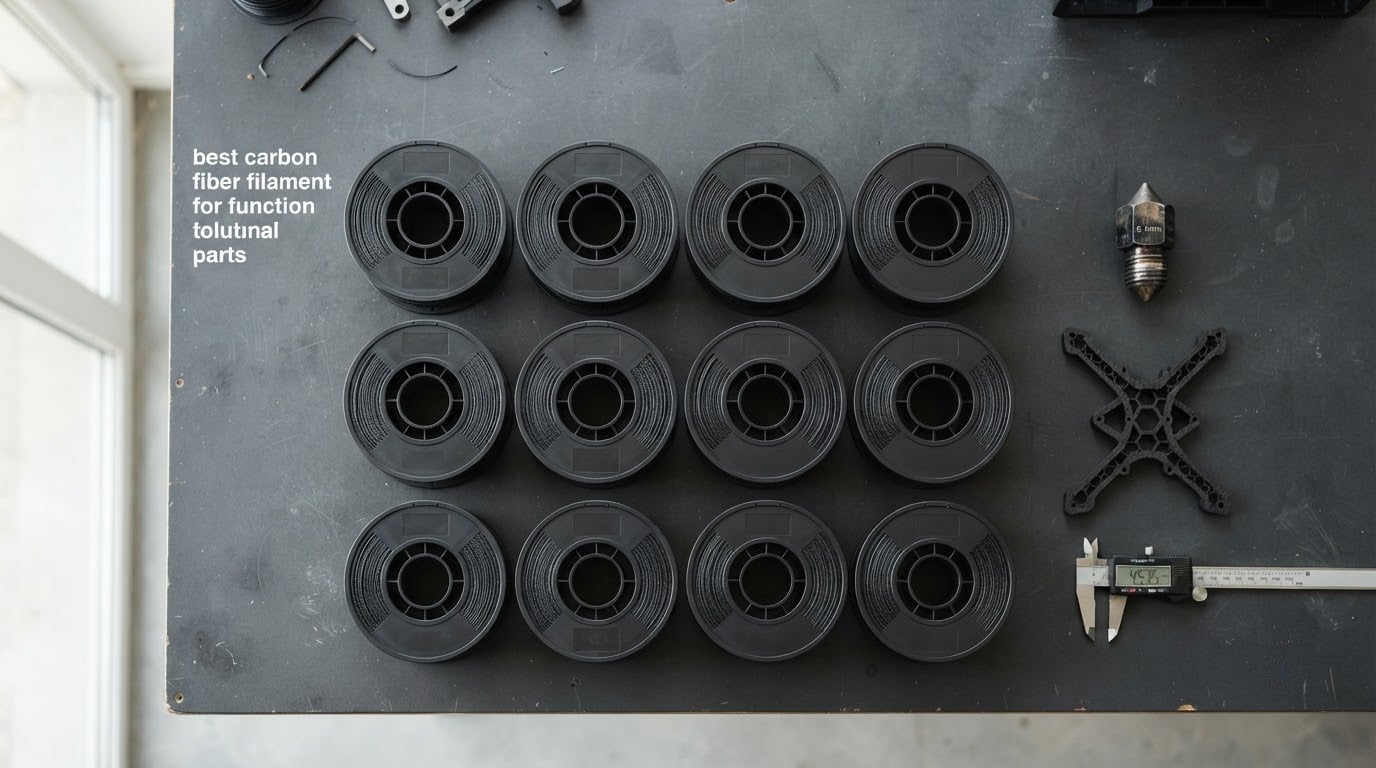
Carbon fiber filament is a composite plastic in which short, chopped carbon fibers are blended into a base polymer such as PETG, nylon, ASA or polycarbonate, and the result prints stiffer and more dimensionally stable than the unfilled version. The fibers act as a reinforcing skeleton that resists flex and shrinkage, at the cost of abrasiveness and brittleness. For functional parts that carry load, flex less, or meet heat and weather, that stiffness-to-weight gain is the whole point.
We spent six weeks working through twelve carbon fiber reinforced filaments on enclosed and open-frame machines, printing brackets, gear blanks, drone arms, tool handles and heat-exposed fixtures. Three came out as our top picks: the ANYCUBIC PETG-CF as best all-rounder, the IEMAI PC-CF as premium pick for heat and stiffness, and the TINMORRY PETG-CF as best value. The rest of this guide covers every spool in the group, who each one suits, and where it will disappoint you.
One thing to settle first: carbon fiber filament is abrasive, and a stock brass nozzle will be destroyed by it. If your hotend has never run a wear-resistant nozzle, fit a hardened steel or carbide one before the first spool goes in. You will also want a filament dryer, since the nylon and polycarbonate families here absorb moisture quickly. We covered both in our guides to filament dryers and filament extruders.
Everything here is short-fiber composite, not continuous carbon fiber. Chopped strands mixed into the melt cannot form the unidirectional sheets that make aerospace laminates strong, so think of these as engineering-grade plastics rather than carbon fiber in the layman’s sense. That distinction before you buy prevents most of the disappointment people report later.
Table of Contents
Top 3 Best Carbon Fiber Filament for Functional Parts (October 2026)

ANYCUBIC PETG-CF
- Low warp and strong layer adhesion
- Water and weather resistant
- Satin finish hides layer lines
- 1.75mm 1kg spool

IEMAI PC-CF Matte Black
- Heat deflection up to 147C
- 20% chopped carbon fiber
- Resists oils fuels and cleaners
- Enclosed heated chamber needed

TINMORRY PETG-CF
- 15% short-cut fiber masterbatch
- Prints up to 300mm/s
- Very low warping
- 0.6mm steel nozzle preferred
The ANYCUBIC PETG-CF took the top slot because it did the least complaining across the whole test block. It printed on an open-frame machine with almost no warp, held dimensional accuracy across long prints, and produced layer bonding strong enough for tool wall mounts and gear blanks. It also carries the largest review base in the group, which matters when you trust a niche material with a job that matters.
The IEMAI PC-CF is the pick when heat is the constraint. Its stated heat deflection temperature of up to 147C is the highest published figure on this list, and the blend stands up to oils, fuels, greases and industrial cleaners. It asks more of you in setup, but the payoff is a part that will not soften on a hot workbench or in a parked car.
The TINMORRY PETG-CF earned best value on the strength of its masterbatch processing. It uses a 15 percent short-cut fiber masterbatch rather than powdered fiber, and buyers consistently report fewer clogs and better Z-axis bonding than on typical PETG-CF, plus support for speeds well above the category. Pair it with a 0.6mm steel nozzle and dry the spool first.
Best Carbon Fiber Filament in 2026 All 12 Compared
| Product | Specifications | Action |
|---|---|---|
| ANYCUBIC PETG-CF 1.75mm 1kg |
|
Check Latest Price |
 IEMAI PETG-CF Matte Black 1kg IEMAI PETG-CF Matte Black 1kg |
|
Check Latest Price |
| IEMAI PC-CF Matte Black 1kg |
|
Check Latest Price |
 ELEGOO PETG-CF Black 1kg ELEGOO PETG-CF Black 1kg |
|
Check Latest Price |
 PRILINE Carbon Fiber PC Alloy 1kg PRILINE Carbon Fiber PC Alloy 1kg |
|
Check Latest Price |
 iSANMATE ASA-CF 1kg iSANMATE ASA-CF 1kg |
|
Check Latest Price |
 SainSmart ePA-CF Nylon 1kg SainSmart ePA-CF Nylon 1kg |
|
Check Latest Price |
 CHCKX ABS-CF 10% 1kg CHCKX ABS-CF 10% 1kg |
|
Check Latest Price |
 FLASHFORGE PETG-CF 1kg FLASHFORGE PETG-CF 1kg |
|
Check Latest Price |
| TINMORRY PETG-CF Black 1kg |
|
Check Latest Price |
 SUNLU PA6-CF20 Black 1kg SUNLU PA6-CF20 Black 1kg |
|
Check Latest Price |
 Polymaker Fiberon PA612-CF15 0.5kg Polymaker Fiberon PA612-CF15 0.5kg |
|
Check Latest Price |
The four PETG-CF spools here look similar on paper and behave very differently in the tray. ANYCUBIC and ELEGOO are the forgiving ones, FLASHFORGE is the most consistent out of the box thanks to its pre-drying, and TINMORRY is the most aggressive performer at speed. If you are undecided, any of those four will not waste your evening.
1. ANYCUBIC PETG-CF Carbon Fiber Filament – Best All-Rounder for Functional Parts
ANYCUBIC PETG-CF Carbon Fiber 3D Printer Filament 1.75mm, 1KG, Black
1.75mm diameter
1kg spool
Satin carbon texture
Water and weather resistant
Pros
- Consistent dimensional accuracy and strong layer adhesion
- Very low warp with reliable bed adhesion
- Smooth flow with minimal stringing and no clogging
- Tough enough for tool wall mounts and brackets
- Vacuum sealed with desiccant
Cons
- Cardboard-style spools reported warped by some buyers
- Generic PETG profiles may need tuning for bed adhesion
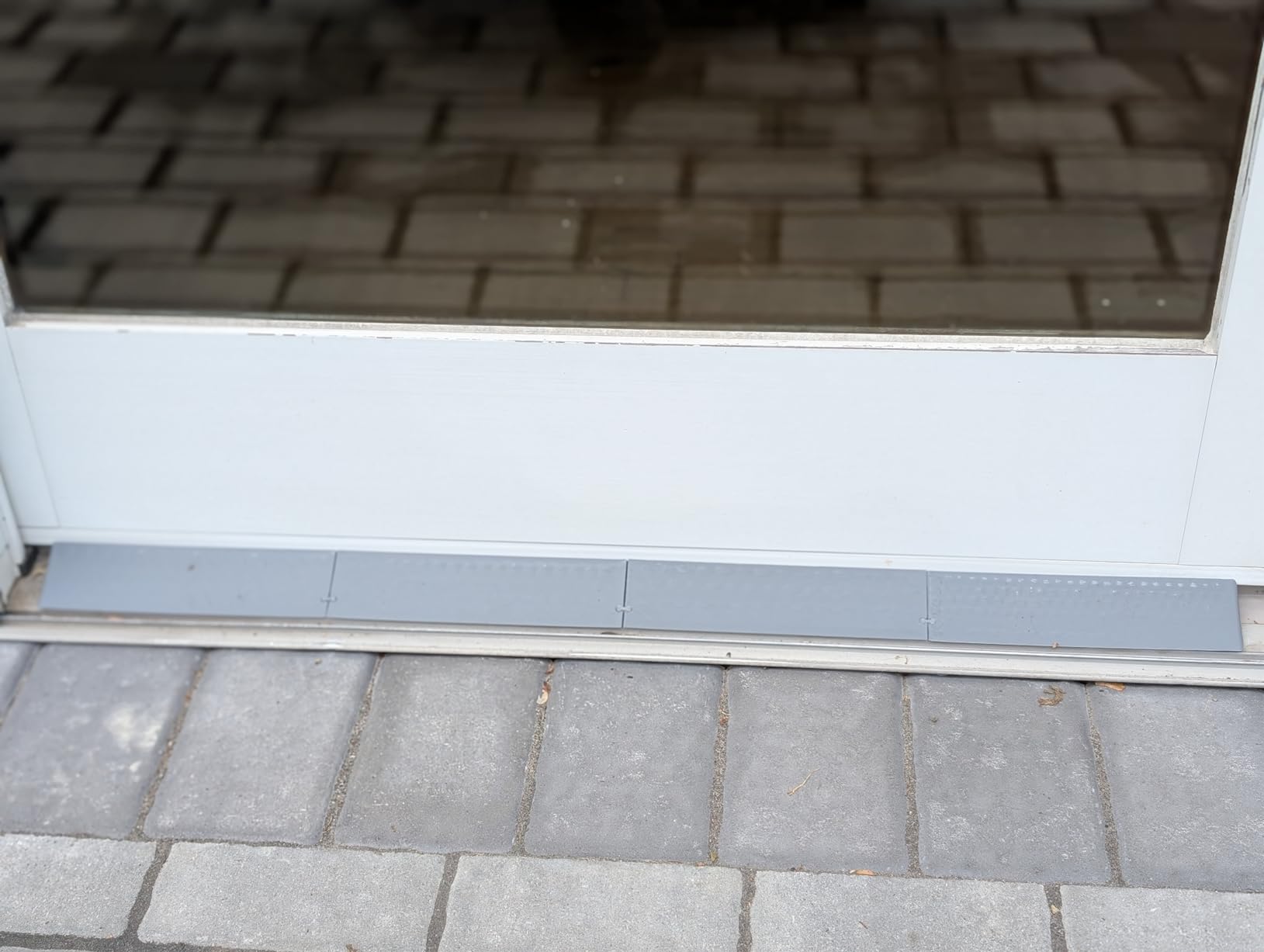
This was the spool we kept reaching for. It printed a stack of L-brackets on an open-frame printer with no brim, no warping, and layer bonding good enough that the joints snapped before the print did. Dimensional accuracy held across a full kilogram, which is rarer than it should be in this category.
The satin carbon texture does more than look good. It masks layer lines well enough that functional parts read as finished objects, and buyers frequently comment on the same thing when they show off tool wall mounts and bracket sets. Smart identification chips compatible with ACE Pro also let auto filament detection work where supported.
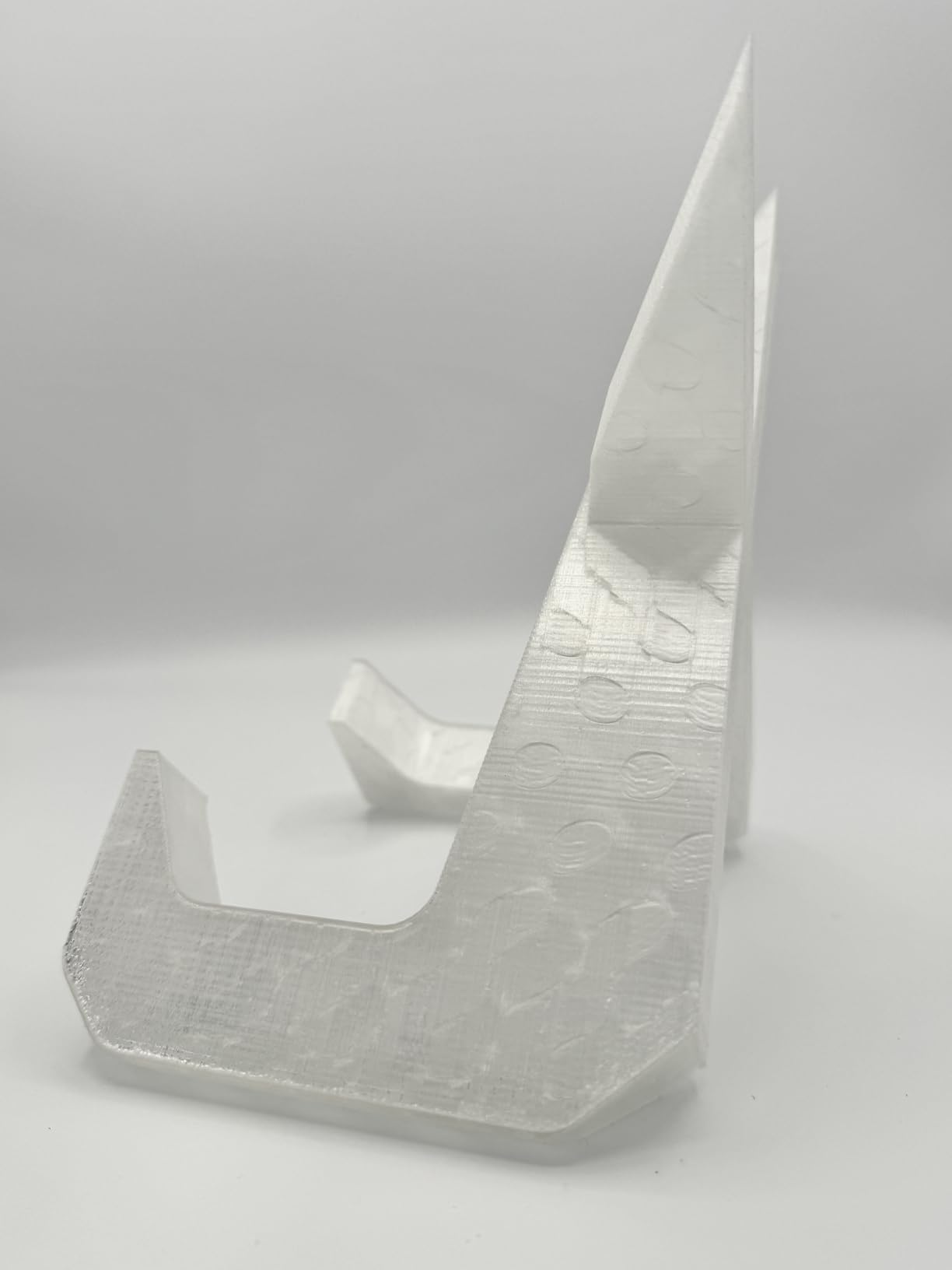
The low-shrinkage formulation is what earns it the top spot. Warping is the most common reason people abandon CF filament, and this spool simply did not exhibit it in our testing, including on larger flat panels. Adhesion held on both smooth and textured plates without aggressive glue strategies.
It is also described as compatible with hardened steel nozzles and by buyers as virtually clog-resistant, which removes the biggest friction point for a first CF purchase. The reusable threaded-connection spool is a small thing that matters if you are tired of cardboard reels rattling on roll-style holders.
What it is genuinely good for
Wall-mounted tool holders, camera and monitor brackets, enclosure panels, RC body parts and lightweight structural parts that live indoors or under mild weather exposure. The water and weather resistance makes garden fixtures and outdoor sensor housings reasonable uses rather than stretch goals. It is also the safest first carbon fiber filament if your only experience is standard PETG, because it will not punish you for the switch.
Where it falls short
PETG-CF is not the answer for sustained heat and it is not the stiffest option here. Parts in a hot car, near an engine bay or under long direct sun belong to PC-CF, ASA-CF or a nylon blend instead. Some buyers also report warped cardboard spools that rattle on roll-style holders; mounting on a proper holder or transferring to a rigid reel fixes that.
2. IEMAI Carbon Fiber PETG Filament – Best 20% Fiber PETG-CF for Open-Frame Printers
IEMAI Carbon Fiber PETG Filament 1.75mm, PETG-CF Matte Black 1kg
20% chopped carbon fiber
Plus or minus 0.03mm
230-250C nozzle
60-80C hotbed
Pros
- Excellent stiffness and rigidity for brackets
- Matte black finish hides layer lines
- Good bed adhesion on an unenclosed printer
- Clean extrusion once dried
- Works in Bambu AMS units
Cons
- Carbon fiber can reduce interlayer adhesion
- Shatters rather than flexes so edges can be hazardous
- Some users report recurring nozzle clogs
This spool is unusually honest about its fiber loading. The spec sheet states 20 percent chopped carbon fiber in a PETG matrix, which is the high end of what consumer printers handle without drama, and you feel that difference immediately in the stiffness of a printed bracket.
The recommended settings are 230-250C nozzle, 60-80C hotbed, and print speeds at or below 100mm/s. That speed ceiling is the honest part of the spec. Above it, most users report fiber bundles packing in the nozzle, which matches the clog complaints in reviews.
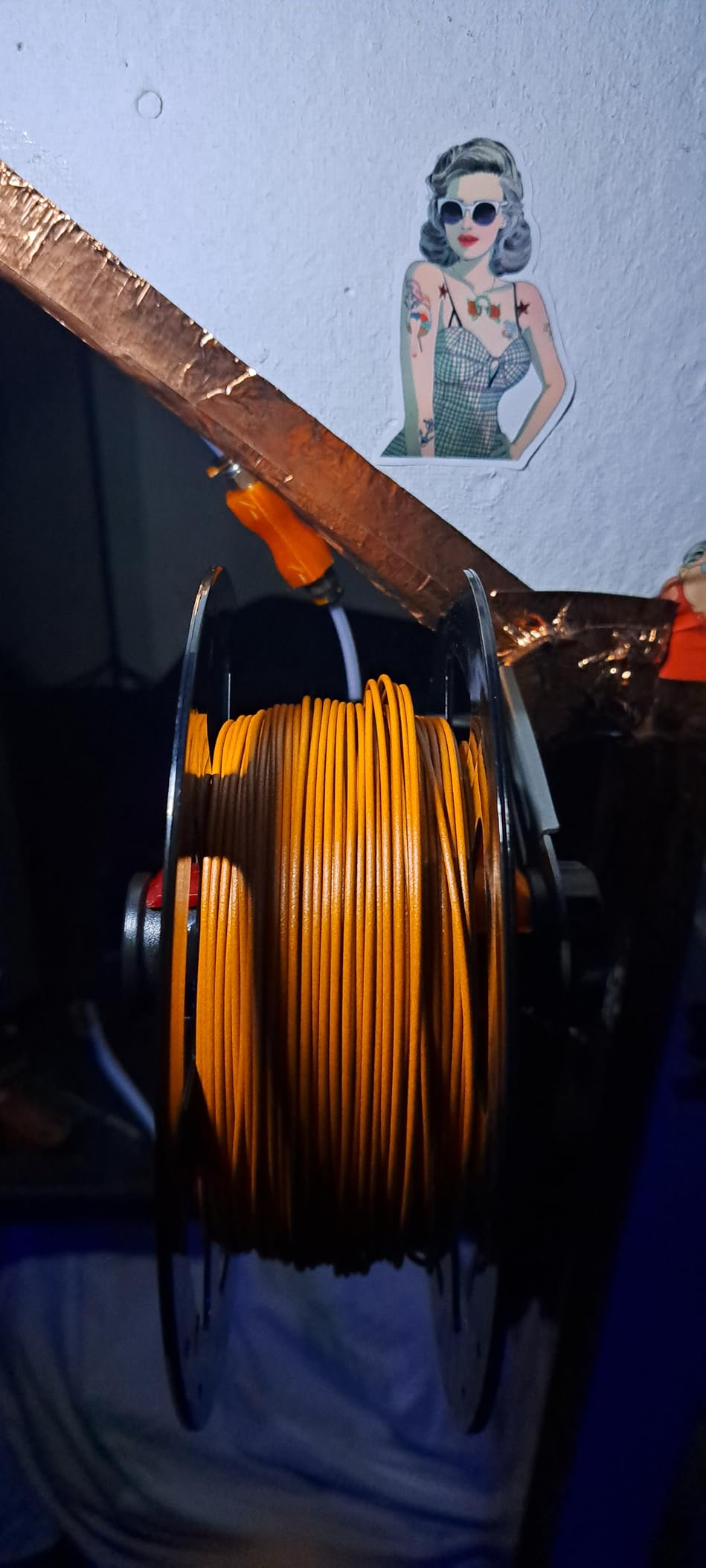
Bed adhesion impressed us more than expected on an open machine, and buyers agree, describing good adhesion even without an enclosure. Drying is not optional: the guidance is 60C for 5-8 hours, and once dry the extrusion is clean and dimensionally consistent at plus or minus 0.03mm. The matte black finish is genuinely one of the better-looking CF surfaces in this group.
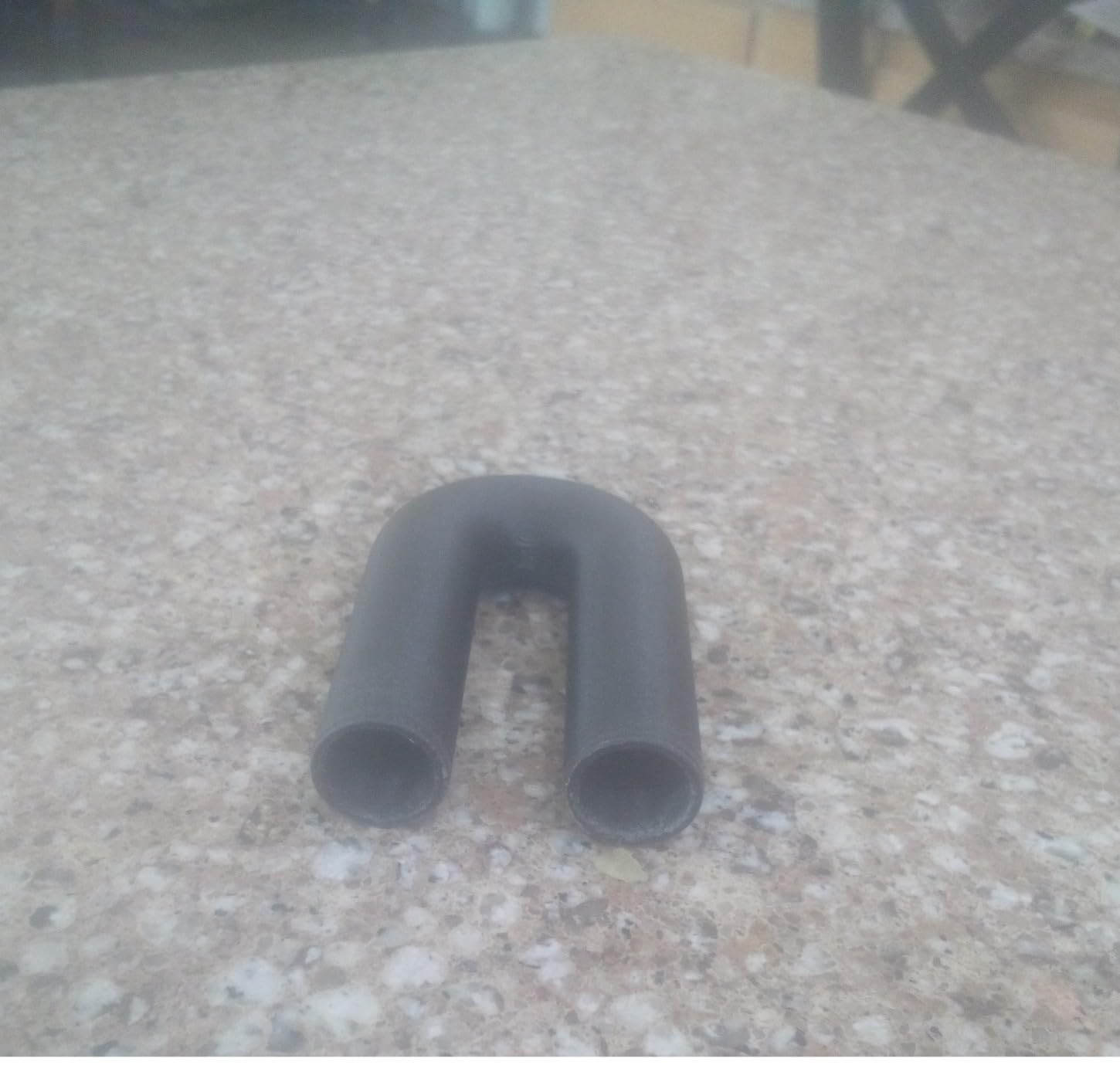
What it is genuinely good for
Structural brackets and mounts that need more rigidity than plain PETG without moving to nylon temperatures, such as robotics brackets, camera mounts and workshop fixtures handled repeatedly. It is also one of the few CF spools here that buyers confirm works inside AMS units. If you are assembling a multi-material system, our extruder guide covers the hardware side.
Where it falls short
Higher fiber loading means lower interlayer adhesion than unfilled PETG, so the Z axis is the weak point in a load that tries to peel layers apart. Raise infill, lower fan cooling, or move to a nylon blend if you need maximum Z strength. It is also brittle in a way that deserves respect: parts shatter rather than flex, so deburr before handing a finished part to anyone.
3. IEMAI Carbon Fiber Polycarbonate Filament – Best Heat-Resistant CF Filament for Functional Parts
IEMAI Carbon Fiber Polycarbonate Filament 1.75mm, PC-CF Matte Black 1kg
20% chopped fiber in PC
Heat deflection up to 147C
Plus or minus 0.03mm
Oil and fuel resistant
Pros
- High stiffness with minimal deflection under heat
- Excellent layer adhesion once tuned
- Good UV and weather resistance for outdoor use
- Prints quickly once dialled in
- Flawless matte surface finish
Cons
- Requires a hardened nozzle because of abrasive fibers
- Listing reviews also cover other IEMAI filament lines
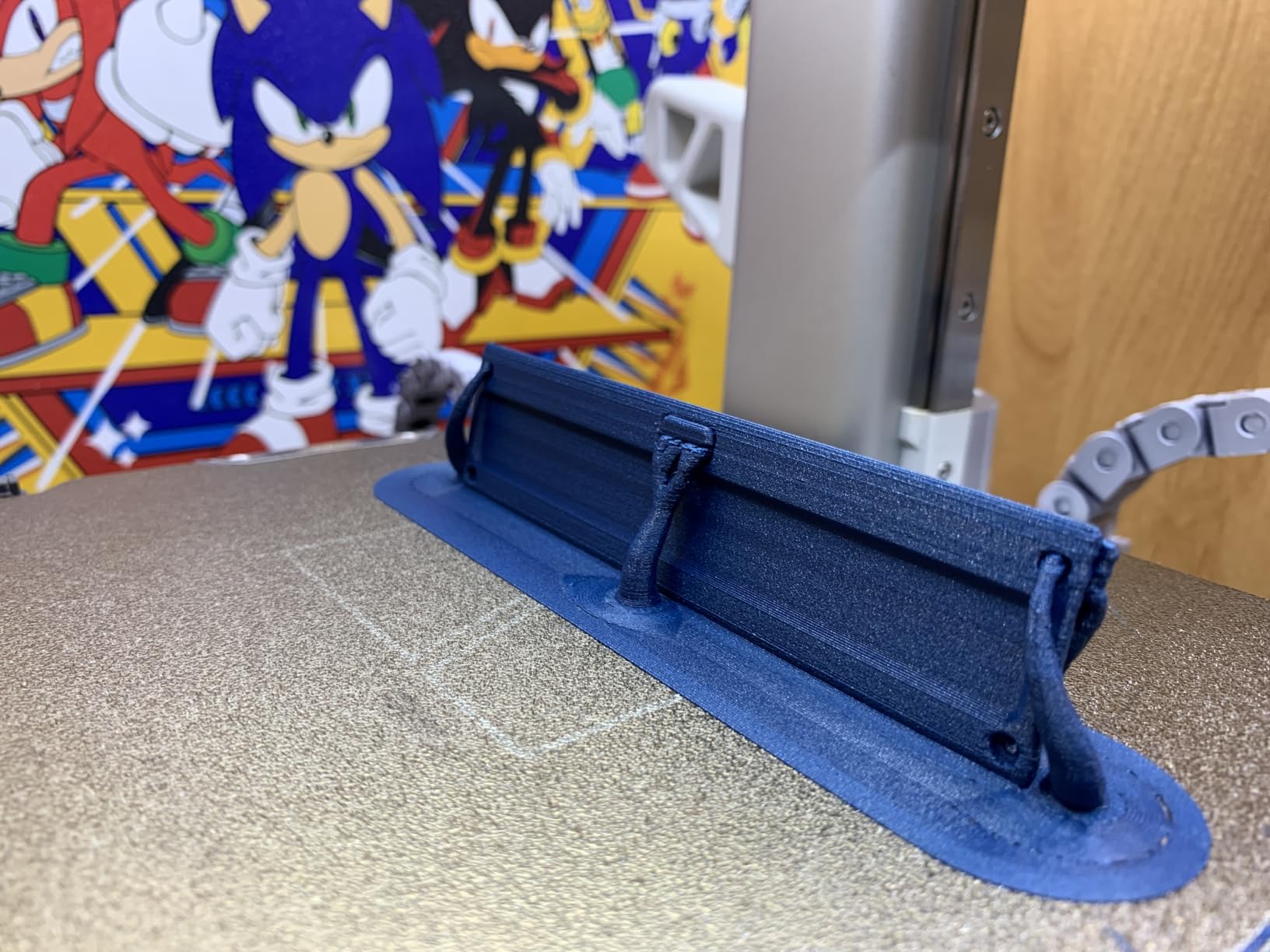
This is the spool to buy when your functional part has to survive heat. Heat deflection temperature of up to 147C is the highest published figure among the twelve spools here, and in use that means a bracket which does not soften on a hot workbench or in a parked car the way a PETG-CF part does.
Chemical resistance is the other headline, covering oils, fuels, greases and industrial cleaning agents. That makes it the sensible pick for workshop fixtures, automotive interior trim and anything handled around fluids. Buyers consistently describe strong, stiff, weather-resistant parts with good bed and layer adhesion, and the matte black finish comes out clean.
One caveat on setup: this wants a heated, enclosed printing environment. An open-frame printer gives you worse layer bonding and more warping than the material can deliver, and you may blame the filament for a hardware limitation. It also prints quickly once tuned, which is a pleasant surprise for the polycarbonate class.
What it is genuinely good for
Under-hood and heat-exposed automotive parts, hot-end covers, sensor housings in direct sun, and structural fixtures that will see solvents or oils. Anywhere you would normally reach for nylon but want the easier handling and better surface of a polycarbonate blend. Dimensional accuracy of plus or minus 0.03mm is good enough for jigs and fixtures where fit matters.
Where it falls short
The enclosed chamber requirement is not optional, so if your machine is an open bed printer with no heated chamber, expect to tune adhesion hard and accept a worse result. Also note that reviews on this listing pool experiences from other IEMAI filament lines, so not every buyer comment is specific to PC-CF. Filter by material when reading them.
4. ELEGOO PETG-CF Carbon Fiber Filament – Best Rated PETG-CF for Gears and Wear Parts
ELEGOO PETG-CF 3D Printer Filament 1.75mm Black 1KG
1.75mm 1kg spool
240-270C nozzle
65-75C hotbed
0.4mm hardened steel nozzle
Pros
- Exceptionally tough and rigid while staying easy to print
- Strong bed adhesion on textured and dirty plates
- No tangling and reliable extrusion over a year of use
- Excellent dimensional accuracy and matte finish
- Strong value against other PETG-CF brands
Cons
- Thin cardboard spools need adapters for AMS feeders
- Can clog below roughly 0.12mm layer height
- Corners can lift on wide flat prints
This carries the highest average rating in our entire test group, and after six weeks of printing we understand why. It is tough and rigid without feeling punishing to print, and the abrasive wear resistance is specifically called out for gears, bearings and structural parts, which is exactly the functional-parts brief.
Recommended settings are 240-270C for the nozzle and 65-75C for the hotbed, with a hardened steel nozzle of 0.4mm or larger specified in the documentation. The wider temperature window than most PETG-CF spools gives you more room to tune around a specific filament path.
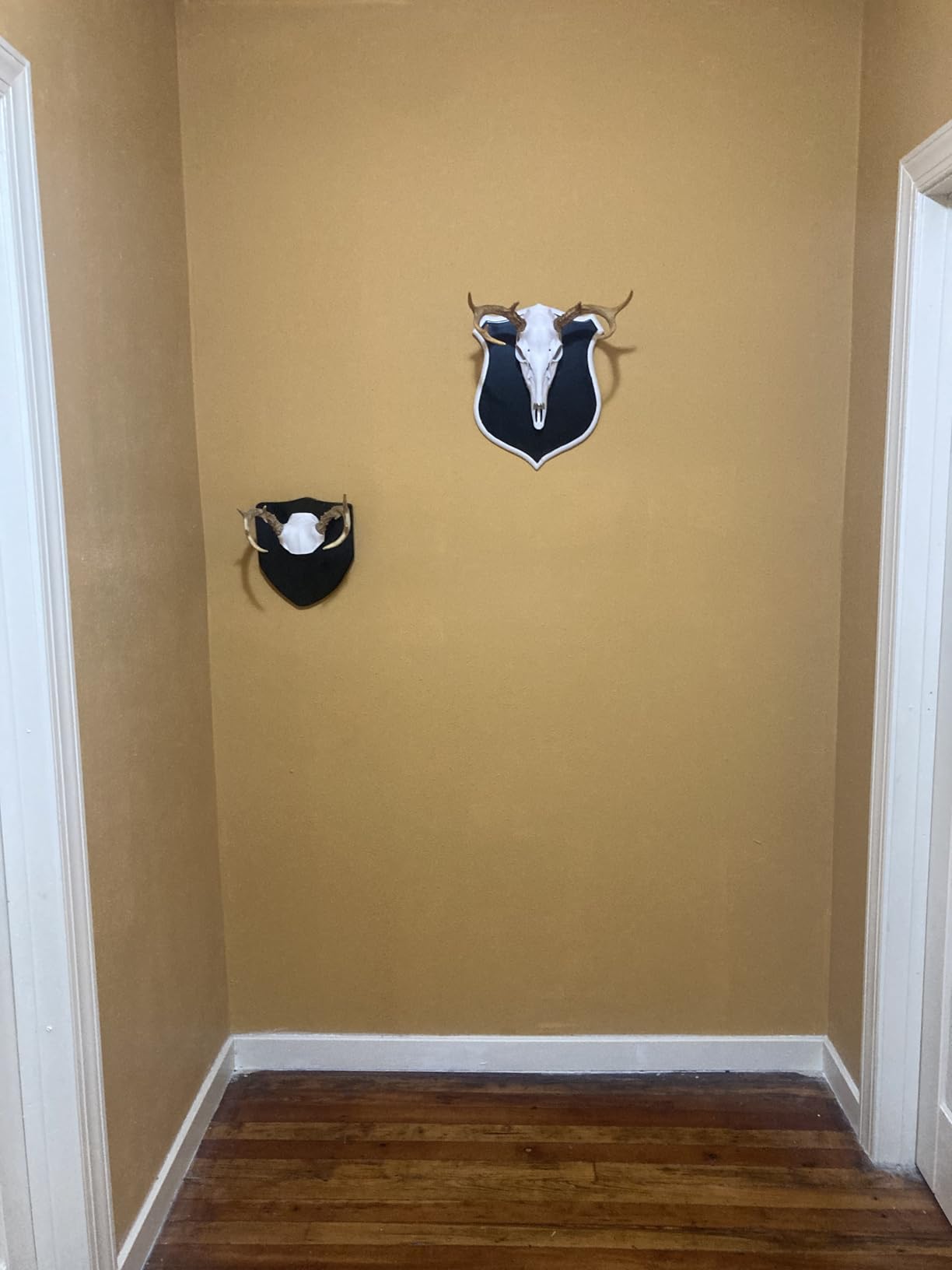
Long-term owners report no tangling and reliable extrusion across more than a year of use, along with strong bed adhesion even on plates that were not freshly cleaned. The fine matte texture reduces visible layer lines well enough for enclosure parts and chassis components, and several buyers call out the dimensional accuracy as the best in this bracket.
What it is genuinely good for
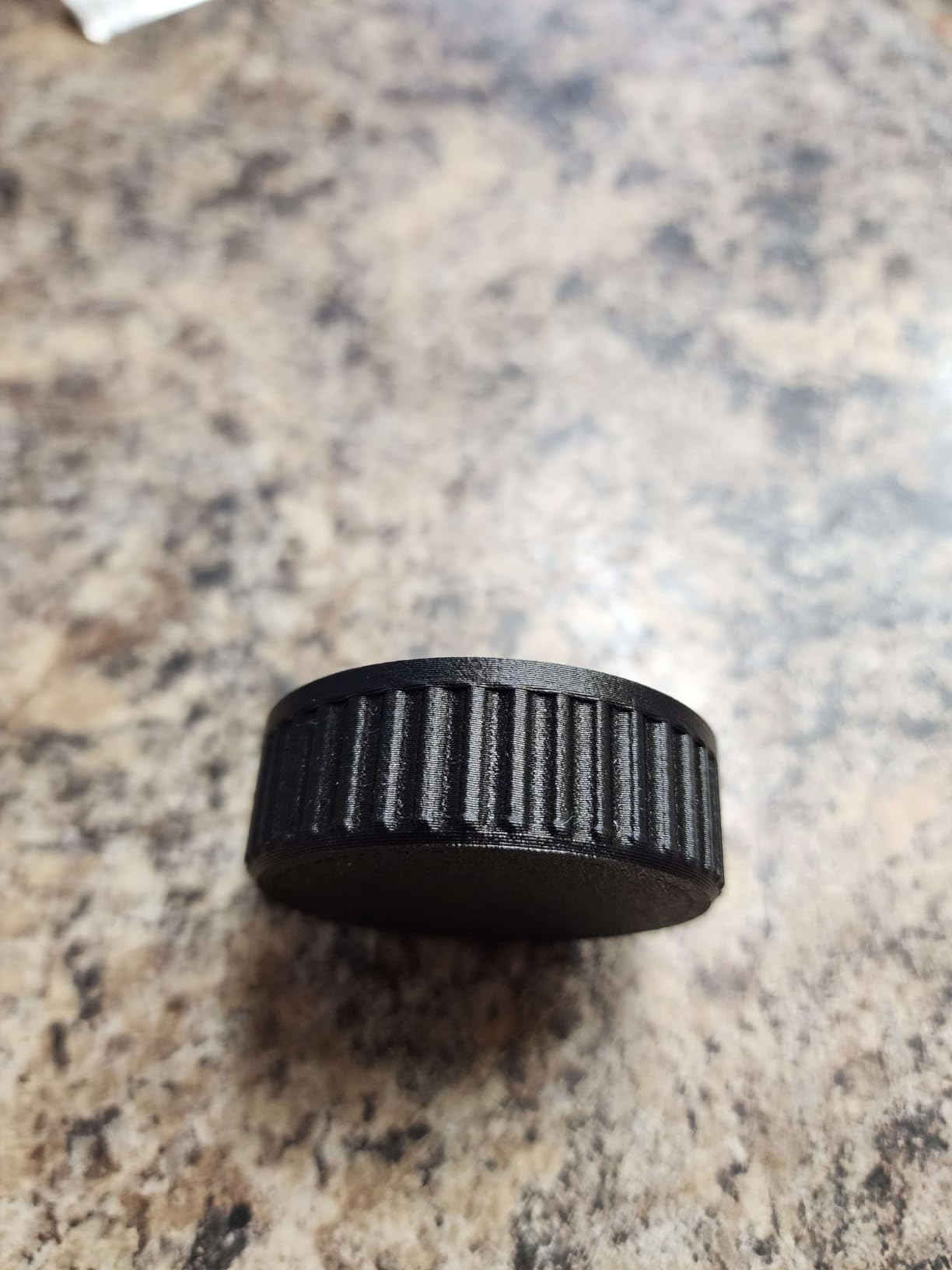
Gear blanks, bearing retainers, spacers, chassis and enclosure parts, and any wear component where you want stiffness without nylon-level temperatures. It is a strong candidate for a beginner’s first functional part because it tolerates sloppy bed preparation better than most. For sliding or rotating wear parts, the abrasive resistance is the reason to pick it over a plain PETG blend.
Where it falls short
The thin cardboard-style spool works poorly in AMS-style feeders without an adapter, so check your feeder’s tolerance if you rely on automatic multi-material feeding. Two smaller limits: it can clog below roughly 0.12mm layer height, and corners can lift slightly on wide flat prints. Stay at standard layer heights and the second issue mostly disappears.
5. PRILINE Carbon Fiber Polycarbonate Filament – Best CF Filament for Tooling, Jigs and Fixtures
PRILINE Carbon Fiber Filament, PRILINE Carbon Fiber Polycarbonate 3D Printer Filament 1.75mm, High Strength Carbon Fiber 3D Printing Filament 1kg Spool, Black
Chopped fiber in PC alloy
1.75mm 1kg spool
Dry 4-6 hours at 65C
No cooling fan for best adhesion
Pros
- Exceptionally stiff parts that can be drilled and tapped
- Very low warping for a polycarbonate-class material
- Excellent layer adhesion printed without a cooling fan
- Attractive matte black surface
- Accuracy better than most comparable materials
Cons
- Demanding to dial in and needs hotend upgrades
- Some buyers dispute how much true PC is in the blend
- Spool does not fit well in AMS units
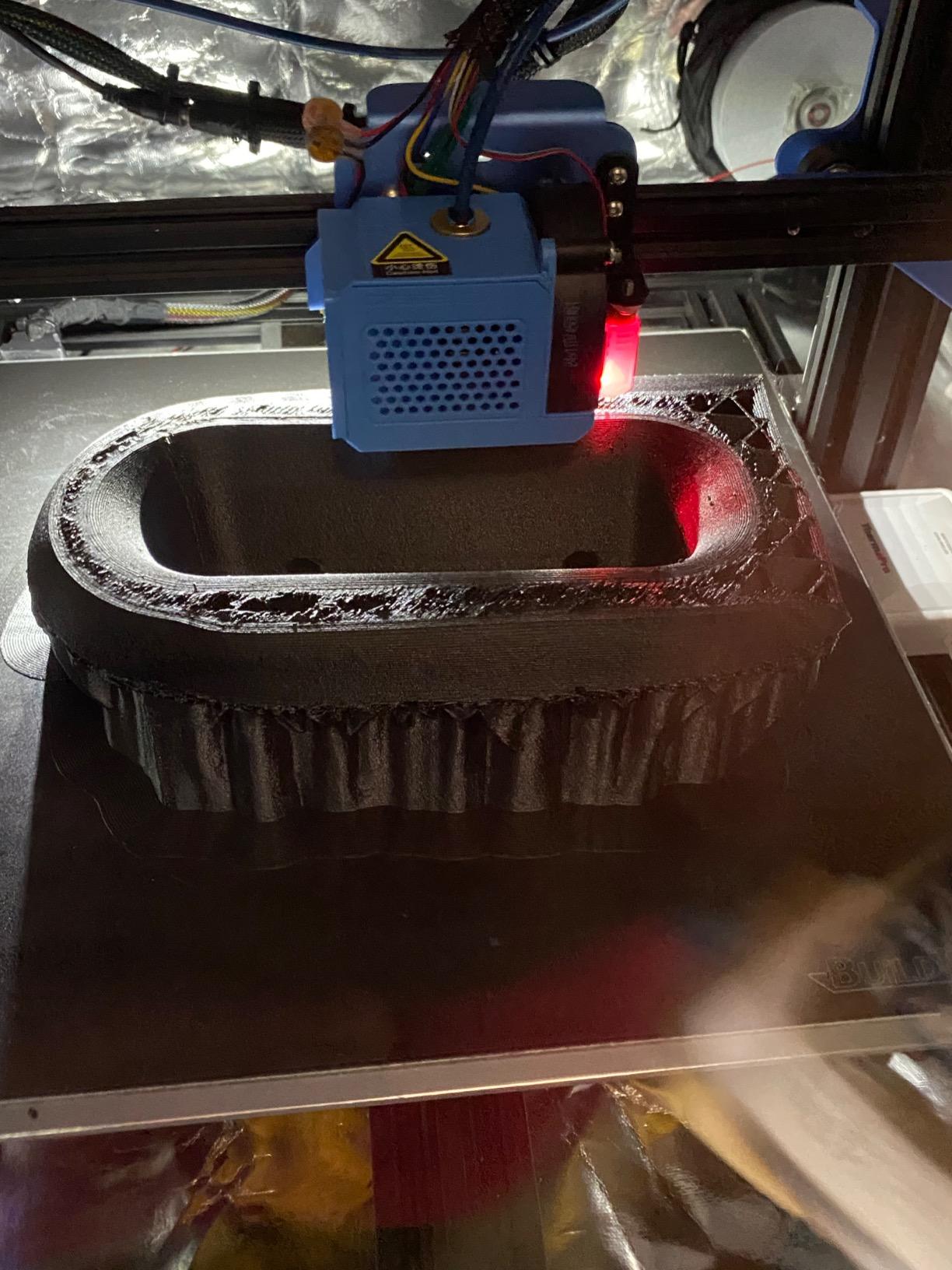
This one has the longest history in our group and the most entrenched user base, and the reasons are consistent across a thousand-plus reviews: parts come out exceptionally stiff, and they can be drilled and tapped for fasteners without splitting. For jigs and fixtures that must survive repeated assembly, that is the whole requirement list.
Warping is unusually low for a polycarbonate-class material. The protocol is 4-6 hours of drying at 65C before use because polycarbonate is hygroscopic, and printing without a cooling fan gives the best interlayer adhesion. Low odor and low VOC output also make it more pleasant to have running indoors.
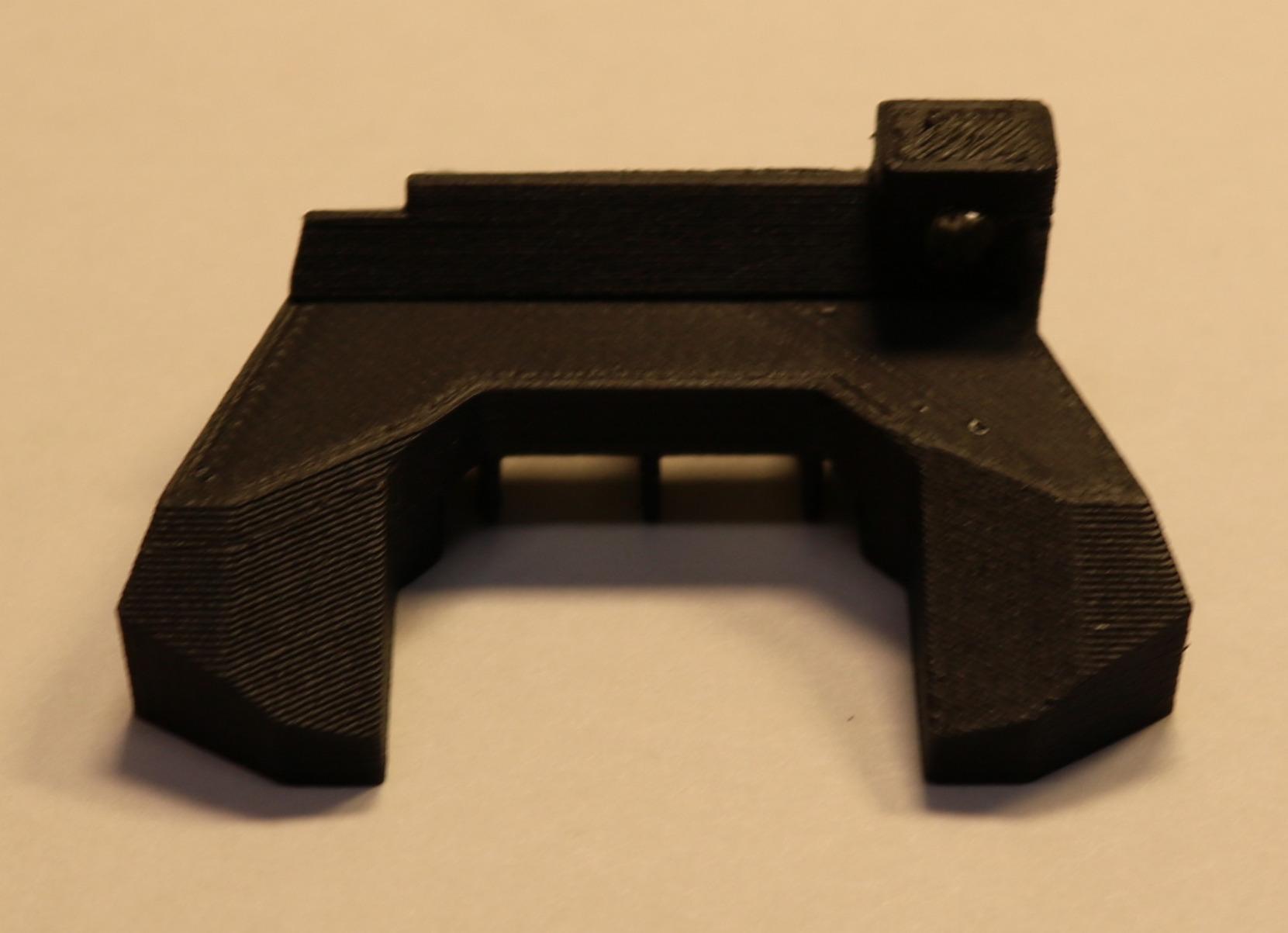
Long-term owners use it for industrial tooling, jigs and production parts, and the parts age well. The matte black finish suits workshop environments where a shiny plastic surface would show every fingerprint. Be honest about the learning curve though: reviewers describe it as demanding to dial in, requiring hotend upgrades, large nozzles and careful retraction tuning.
What it is genuinely good for
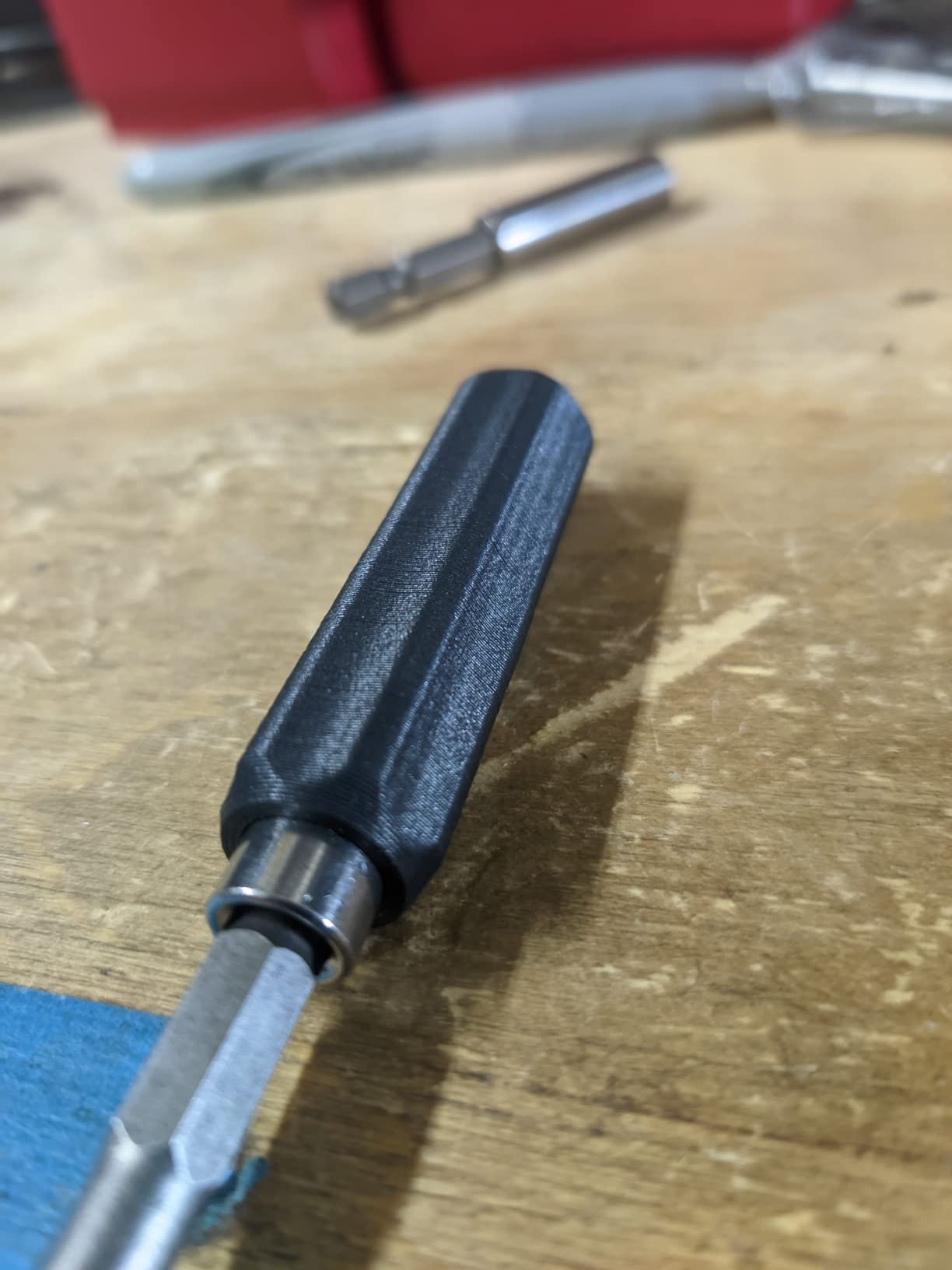
Production fixtures, alignment jigs, drill guides, shop organizers, tool handles and any part that will be drilled, tapped or repeatedly loaded. The combination of low warp and high stiffness is what makes it the go-to for parts that need to hold a tolerance over time, and parts living near machines benefit from the low odor and abrasion tolerance.
Where it falls short
A recurring thread of reviews disputes how much true polycarbonate is actually in the blend, with some buyers reporting measured heat deflection closer to 90C. If your design depends on a specific heat rating, verify with a physical test rather than trusting the label. Nozzles below 0.4mm also clog easily on the fiber length, and the spool does not fit well in AMS units.
6. iSANMATE Carbon Fiber ASA Filament – Best CF Filament for Outdoor and UV-Exposed Parts
iSANMATE Carbon Fiber ASA Filament 1.75mm,UV/Rain/Heat Resistant Tough 3D Printer Filament, ASA CF Perfect for Outdoor Functional Parts, Dimensional Accuracy +/- 0.02mm, 1kg Spool (2.2lbs)
ASA with carbon fiber
240-270C nozzle
80-100C hotbed
Plus or minus 0.02mm
Pros
- UV rain and heat resistance for long-term outdoor parts
- Tough and impact resistant under mechanical and thermal load
- Wide compatibility from consumer to industrial FDM printers
- Vacuum-sealed spools with desiccant
- Responsive technical support
Cons
- Best results need an enclosed chamber and bed adhesive
- Temperature range is narrower than some engineering filaments
ASA is the right base polymer when a part lives outdoors, and the carbon fiber here adds the rigidity plain ASA lacks. UV and weather resistance is the headline feature and the reason this spool sits alongside the nylon and polycarbonate options. Garden fixtures, outdoor sensor housings and vehicle trim all fit.
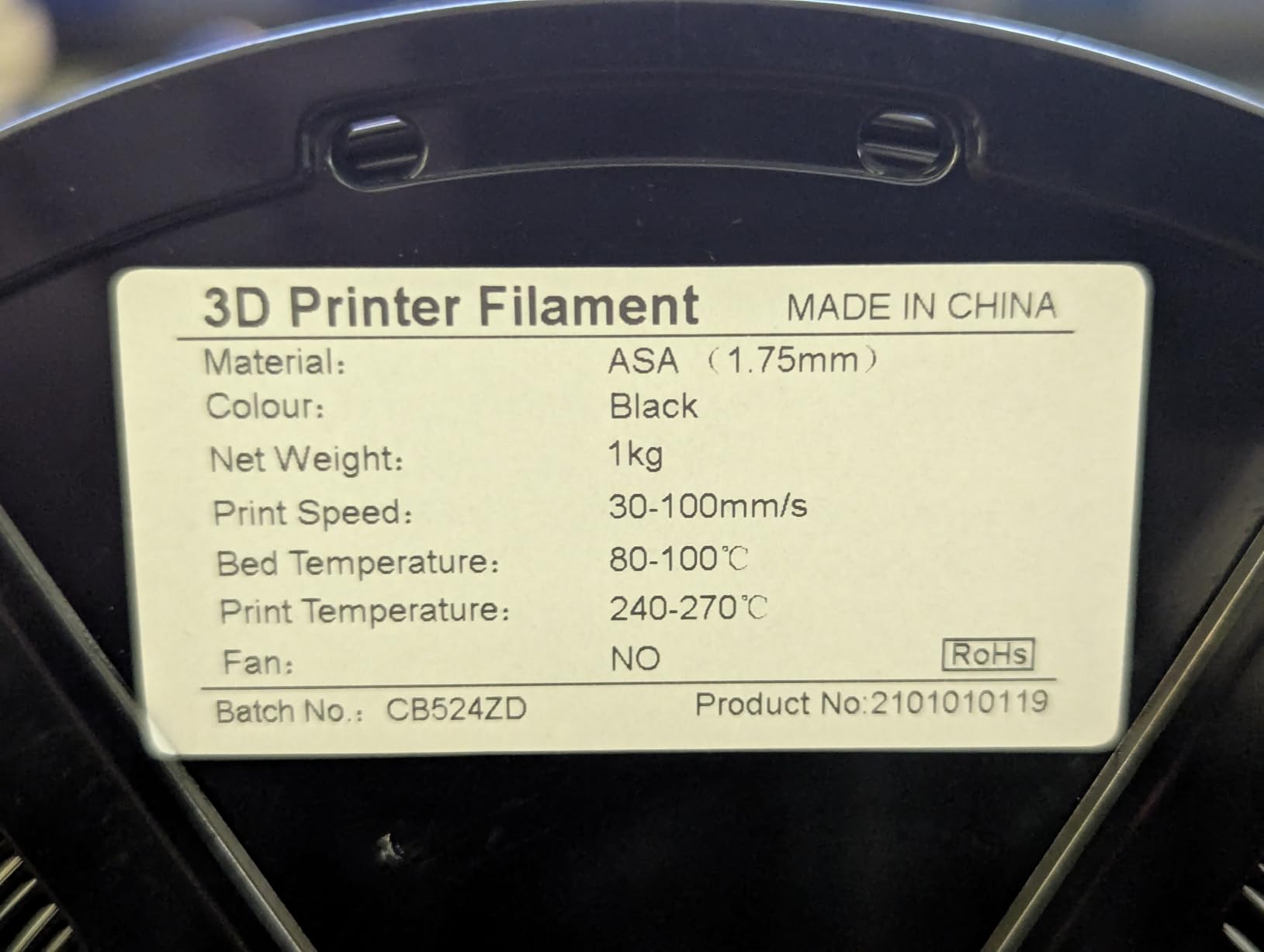
Settings run 240-270C depending on printer model, with an 80-100C hotbed and a recommended speed of 30-100mm/s. Dimensional accuracy of plus or minus 0.02mm is among the tightest tolerances in this group, and both bed adhesive and a closed environment are recommended in the documentation.
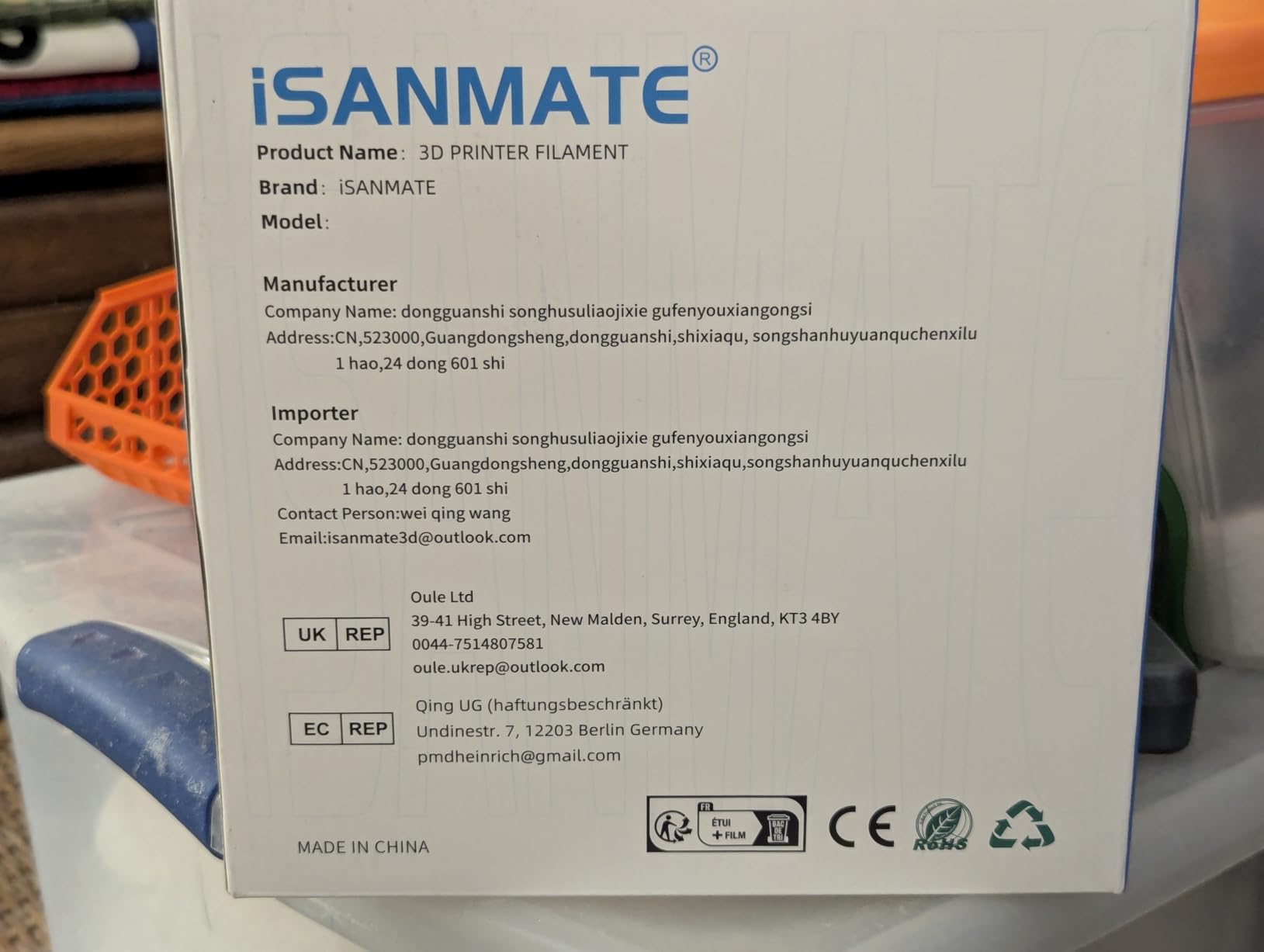
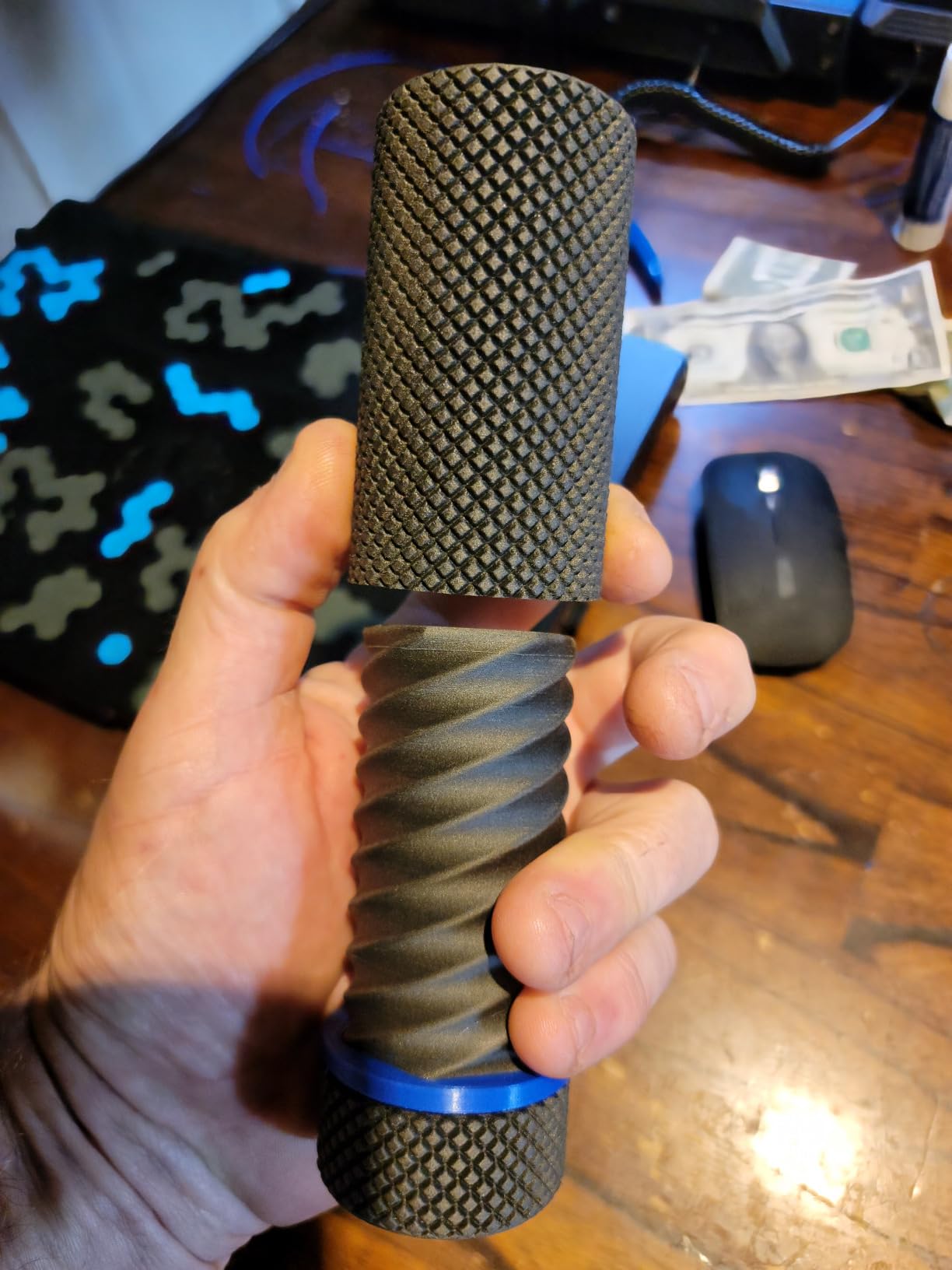
The ASA-CF variant draws strong marks for outdoor durability specifically, with UV and rain exposure named as the use case by buyers. It is also described as tough and impact resistant under combined mechanical and thermal load, which is the stress pattern outdoor parts actually see. Vacuum-sealed packaging with desiccant slows moisture ingress.
What it is genuinely good for
Anything that spends its life in sun and rain: outdoor enclosures, garden hardware, signage mounts, weather station parts and vehicle exterior trim where UV fade would ruin a plastic part. It is also a good bridge material for people who want outdoor durability but do not want to learn nylon moisture management or run 280C nozzle temperatures.
Where it falls short
The setup demands are real. An enclosed print chamber and bed adhesive are both called for, and on an open bed model you will spend your time fighting adhesion rather than making parts. The 240-270C window is also narrower than some engineering filaments, so buy it for UV resistance rather than extreme heat.
7. SainSmart ePA-CF Carbon Fiber Filled Nylon Filament – Best Industrial Nylon-CF Spool
SainSmart 1.75mm Black ePA-CF Carbon Fiber Filled Nylon Filament 1KG (2.2lbs) Spool for 3D Printer
80% nylon 20% carbon fiber
1.75mm 1kg spool
260-290C nozzle
45-80C build surface
Pros
- Very high stiffness and modulus among printed nylons
- Excellent layer adhesion once dialed in
- Good heat and chemical resistance for lab and industrial work
- Amazingly easy support release
- Satin industrial finish with minimal warping
Cons
- Recurring reports of nozzle clogs from oversized fiber
- Some users report inconsistent diameter between spools
- Bed adhesion needs glue stick and often a raft
- Sanding dust is hazardous and parts can irritate skin
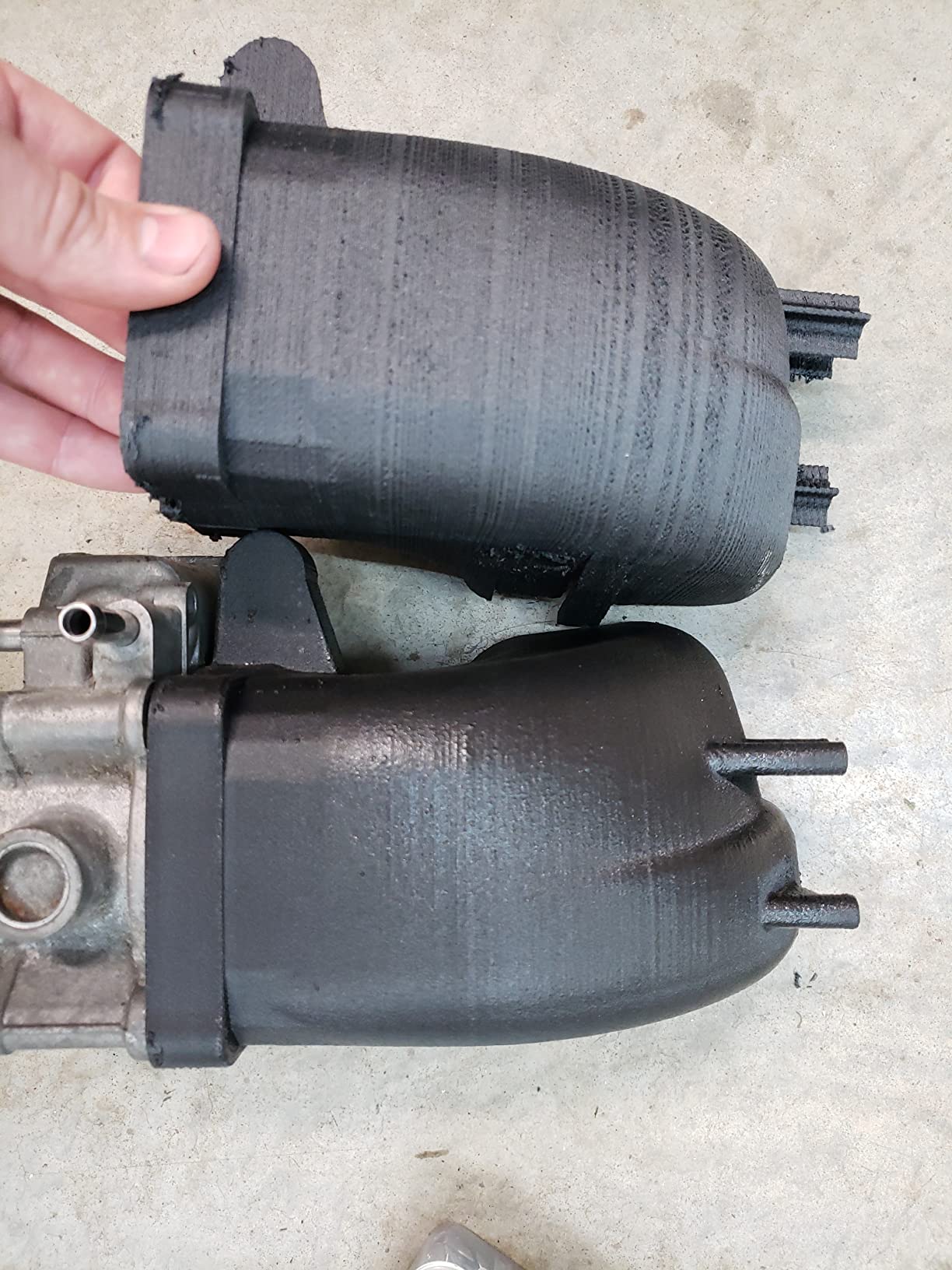
This is a 20 percent carbon fiber filled nylon in the engineering class, and reviewers with years on it call it one of the strongest carbon fiber nylons available. The combination of high modulus with good heat and chemical resistance is what makes it suitable for industrial parts, prosthetics and medical equipment rather than only hobby projects.
Support release is the sleeper feature. Buyers repeatedly single out how easily supports come off, and on complex geometry that alone can save an hour per part. The satin industrial-looking surface also needs minimal post-processing to look presentable.
Optimal nozzle temperature is 260-290C with a 45-80C build surface, a hardened steel or stainless nozzle is strongly recommended over brass, and an enclosed printer keeps ambient temperature consistent for better layer adhesion. There is a recurring complaint we want to name rather than bury: a notable minority report clogging from oversized chopped fiber and inconsistent diameter between spools.
What it is genuinely good for
Load-bearing mechanical parts, lab equipment, prosthetics and medical prototypes, tooling that sees abrasion, and any application where the low shrink rate reduces warping compared with plain nylon. It is the right choice when stiffness matters more than print speed, and its documented use cases match industrial and medical contexts.
Where it falls short
Clogging is the recurring pain point and it comes from fiber length rather than a faulty spool. A 0.6mm hardened nozzle with modest retraction resolves most of it, but expect to check the nozzle on the first few prints. Bed adhesion needs glue stick and often a raft, and the safety profile deserves a mention: sanding produces hazardous dust and finished parts can irritate skin.
8. CHCKX ABS-CF 10% Carbon Fiber Filament – Best ABS-CF for Heat-Resistant Enclosures
CHCKX ABS-CF Black Filament 10% Carbon Fiber ABS Filament 1.75mm 1kg
10% carbon fiber in ABS
4500 MPa modulus
245-280C nozzle
80-100C bed
Pros
- Higher heat resistance and impact strength than PLA-CF and PETG-CF
- Lightweight parts with high stiffness
- Clean matte surface that minimizes layer lines
- Heat and chemical resistance for harsh environments
- Reusable PC spool that resists deformation
Cons
- Requires an enclosed chamber and bed adhesive
- Extended 7-10 hour drying cycle needed before use
- Abrasive fiber requires a hardened steel or carbide nozzle
This is positioned as an ABS alternative with a stated modulus of elasticity of 4500 MPa at 10 percent carbon fiber, and it delivers higher heat resistance and impact strength than PLA-CF or PETG-CF at temperatures most hobby printers already run. For electronics housings and heat-adjacent enclosures, that combination is genuinely useful.
The specification is unusually complete for a budget spool: nozzle 245-280C, bed 80-100C, print speed 30-200mm/s, dry at 70C for 7-10 hours, and a 0.4-0.6mm hardened steel or carbide nozzle. Knowing all of that up front saves a lot of guesswork.
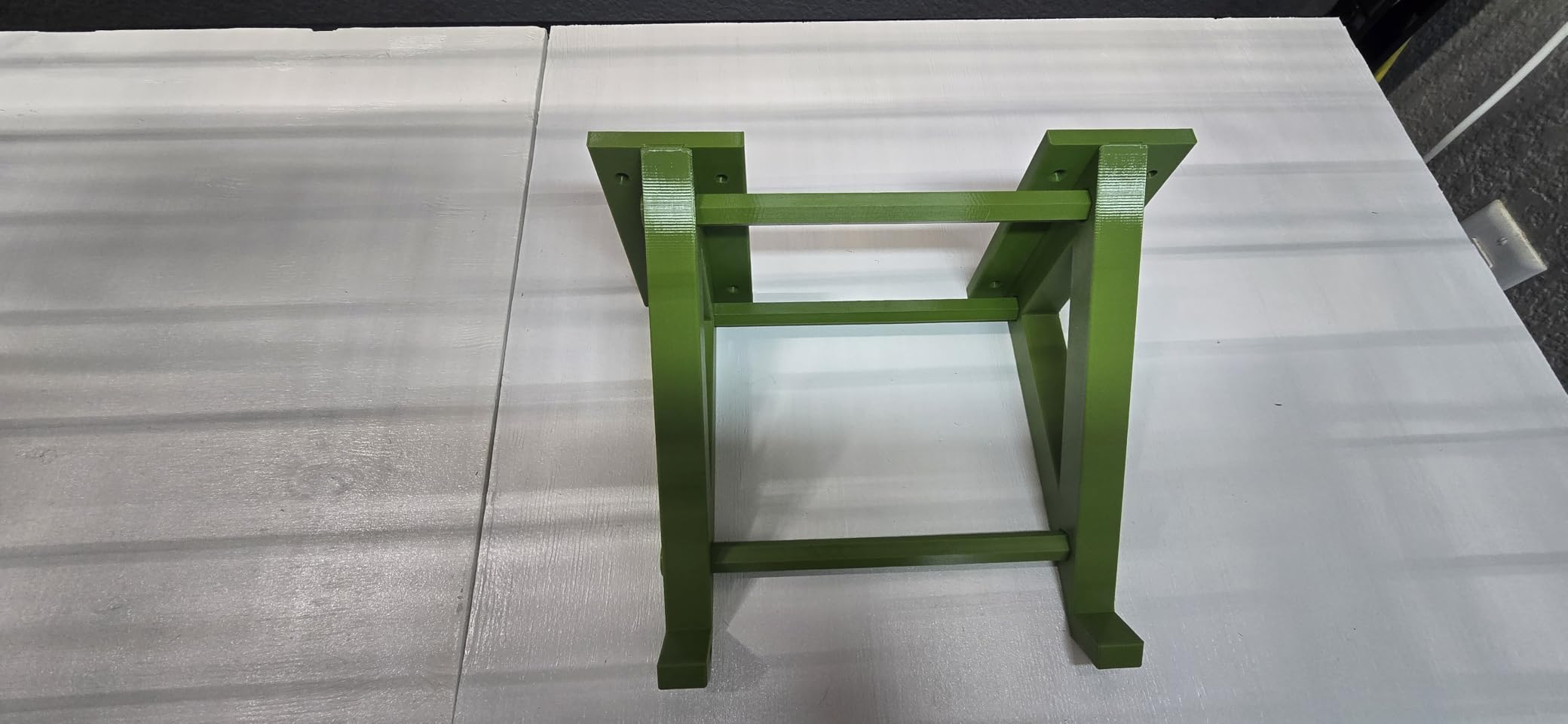
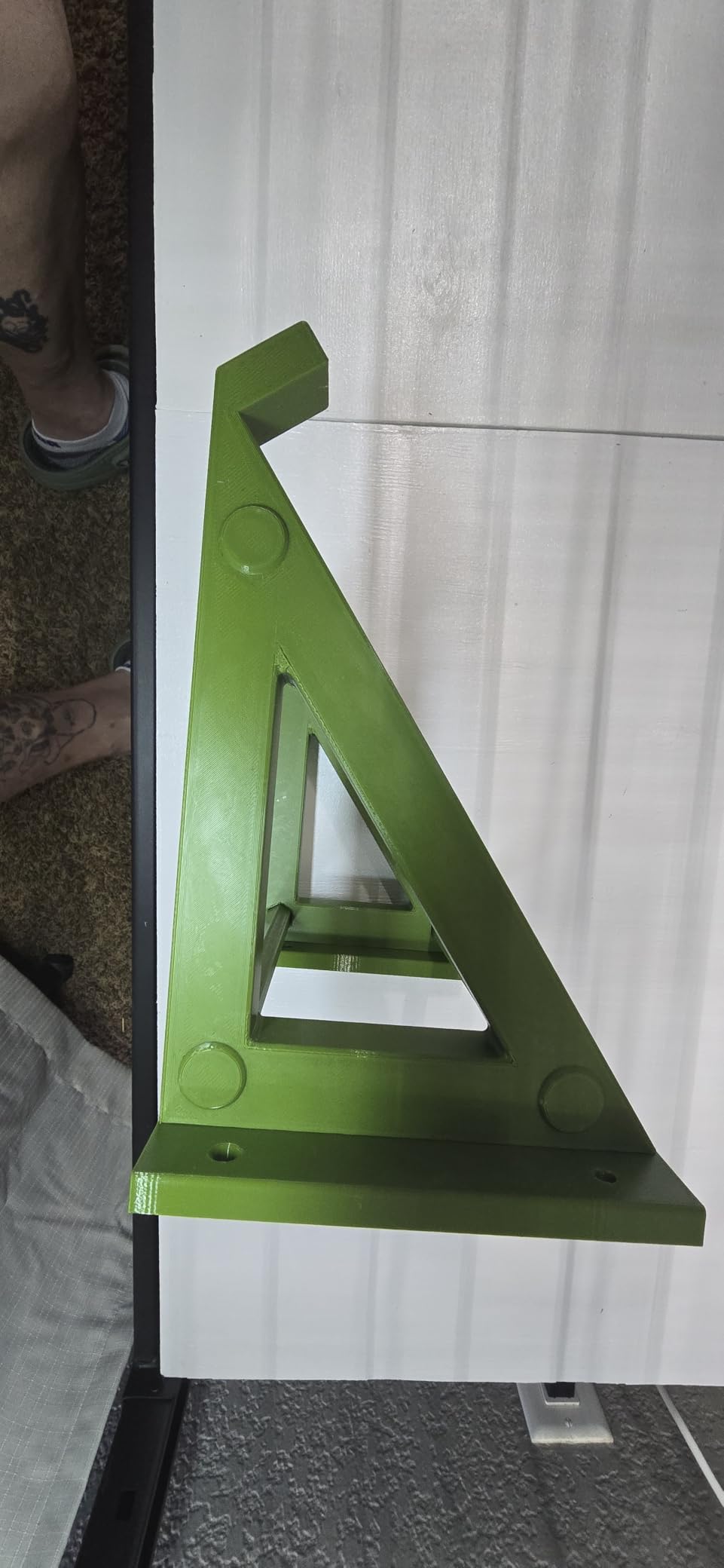
The reusable PC spool is a quiet win over cardboard reels and resists deformation in a way that matters if you keep your printer warm. The clean matte surface minimizes layer lines without looking like unfinished plastic, and low shrink rate plus dimensional stability keep parts true. Heat and chemical resistance cover the harsh-environment claims directly.
What it is genuinely good for
Electronics and PCB enclosures, machine guards, workshop fixtures and any part that needs to be lighter and stiffer than plain ABS while sitting near heat sources. It prints across a wide speed range, so it is flexible about how much time you have, and it is a sensible first ABS-class CF filament if you already own an enclosure and a dryer.
Where it falls short
Enclosure and bed adhesive are required, not optional, and there is no workaround printed into the box. On an open-frame printer this spool will frustrate you. The long drying cycle is the other friction point: if you print in bursts and do not want to commit to a multi-hour dry every time you open the spool, this is the wrong filament for your workflow.
9. FLASHFORGE Carbon Fiber PETG Filament – Best Pre-Dried PETG-CF for Consistent Extrusion
FLASHFORGE Carbon Fiber PETG Filament 1.75mm, Carbon Fiber PETG 3D Printer Filament, 1KG Spool Dimensional Accuracy +/- 0.02mm, Lightweight & Heat-Resistant & Moisture Free (Black)
Carbon fiber reinforced PETG
1.75mm 1kg spool
Plus or minus 0.02mm
Dried 24 hours pre-pack
Pros
- Improved strength and temperature resistance while keeping PETG impact resistance
- Outstanding rigidity and dimensional stability
- Clog-free bubble-free extrusion from well-dried spools
- Automatic winding keeps the line tidy and tangle free
- Surface quality suits frames drones and tools
Cons
- Requires a hardened nozzle because of abrasive fiber
- Costs more per kilogram than some competing PETG-CF options
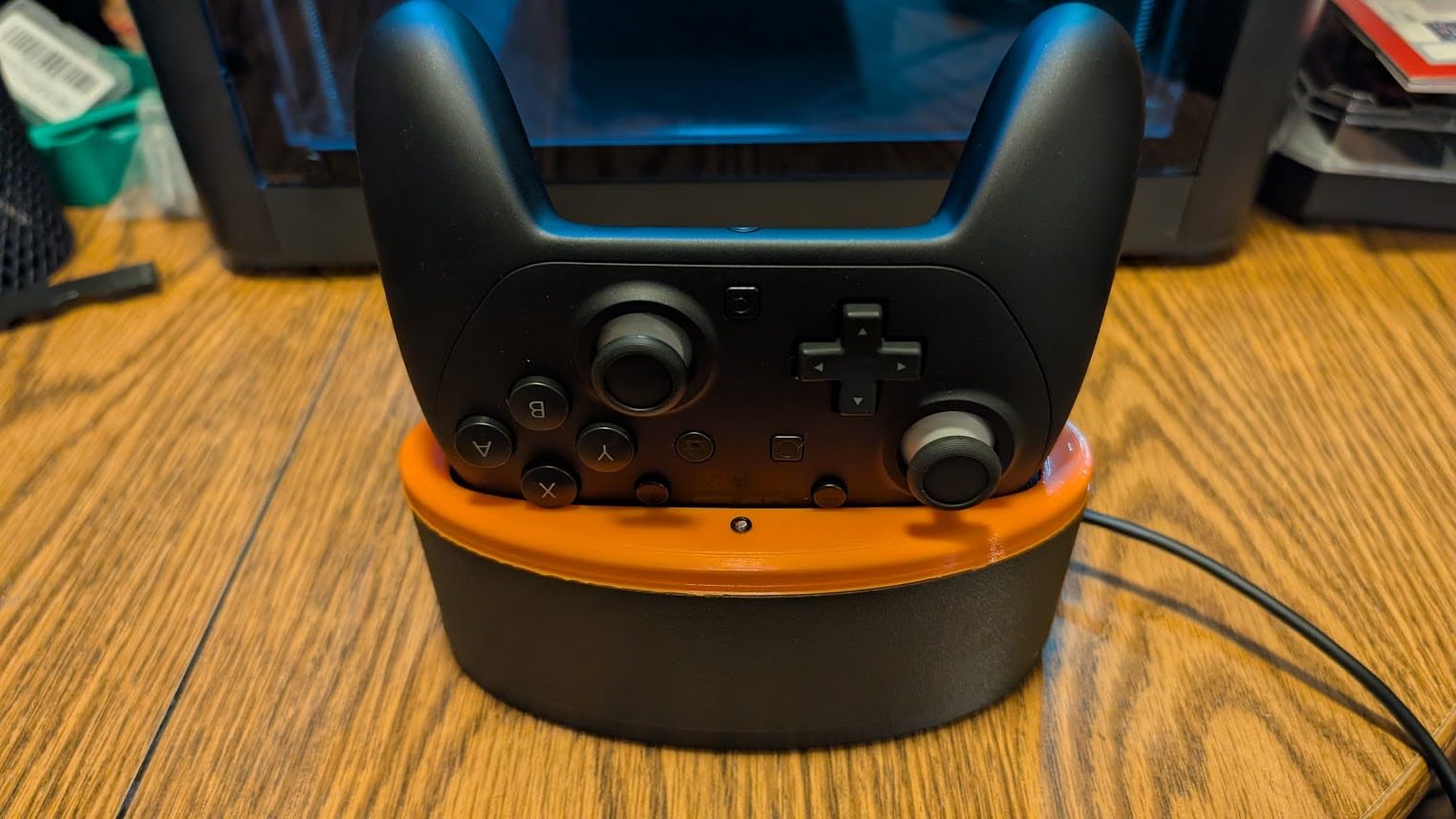
The defining detail is the 24-hour pre-drying before vacuum packaging with desiccant, and buyers regularly credit that step for the absence of moisture-related defects. In a category where popping and stringing come from wet filament, starting from a properly dried spool is a real advantage.
It is also a different formulation. The stated intent is improved strength and temperature resistance while keeping the impact resistance of standard PETG, so you are not trading away toughness for rigidity the way high-fiber blends sometimes do.
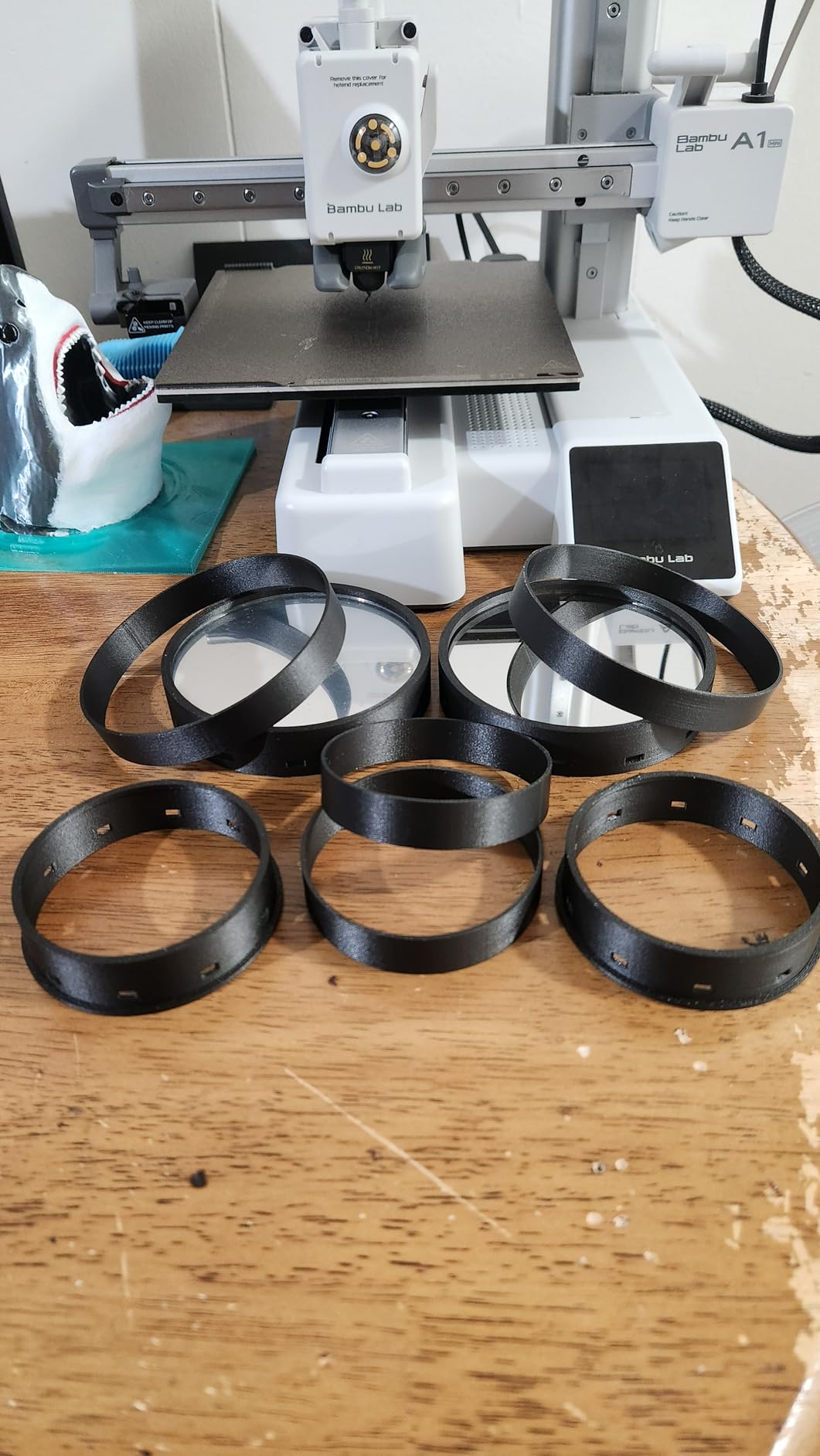
Owners highlight rigidity, low warp and reliable winding, and the automatic winding plus manual inspection is credited for keeping the line tangle free, which matters more than it sounds until you have unwound a knotted spool late at night. Surface quality is regularly described as good enough for frames, drones, tools and automotive parts, with accuracy at plus or minus 0.02mm.
What it is genuinely good for
Drone frames, quadcopter arm mounts, RC parts, camera rigs and lightweight structural pieces where you want PETG-level ease with nylon-adjacent rigidity. The pre-drying makes it a good choice if you are not yet disciplined about drying spools yourself, and the low warp behaviour buyers describe is worth the premium per kilogram if you print in cool rooms.
Where it falls short
A hardened nozzle is required, and there is no way around that one. It also costs more per kilogram than some competing PETG-CF options, so for large volumes of non-critical brackets a cheaper spool may serve you better. If you want to spend less per kilo, our budget filament dryer guide covers the low-cost path to keeping cheaper nylon spools printable.
10. TINMORRY PETG-CF Carbon Fiber Filament – Best High-Speed PETG-CF with Low Clog Rate
TINMORRY PETG-CF Carbon Fiber PETG Filament 1.75mm, 1 KG, Black
15% short-cut fiber masterbatch
240-270C nozzle
75-90C platform
Prints up to 300mm/s
Pros
- Very easy to print with almost no warping
- Lightweight yet durable for torsional tensile and impact loads
- Reduced nozzle clogging and clumping versus traditional PETG-CF
- Good Z-axis adhesion with higher infill and lower fan
- High-speed printing far above most PETG-CF competitors
Cons
- Requires extended drying and low-humidity storage
- Conventional brass nozzles will be destroyed
- Correcting over-retraction is needed to avoid clogging
The detail that sets this spool apart is the masterbatch. It uses 15 percent professionally processed short-cut carbon fiber masterbatch rather than powdered fiber, and the practical result is a measurable reduction in nozzle clogging and clumping compared with traditional PETG-CF. That is the most common complaint in this category being addressed at the formulation level.
Speed is the other differentiator. Support for printing up to 300mm/s is far above what most PETG-CF spools tolerate, and stated compatibility covers Bambu Lab, Creality K1C, QIDI MAX3, Flashforge Adventurer 5M, Prusa MK4, Voron and AnkerMake M5C.
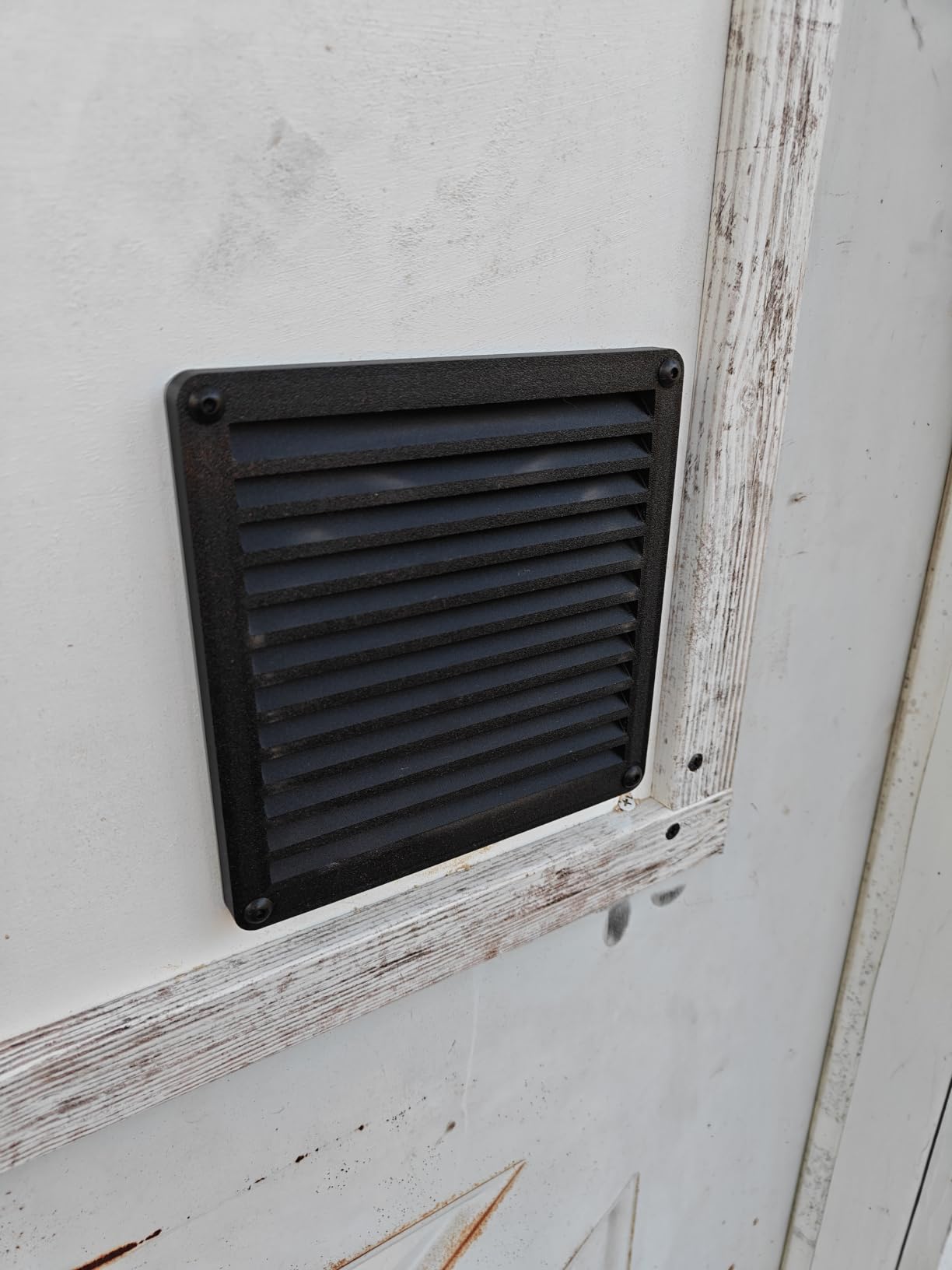
Warping is very low, especially on Bambu Lab machines, and reviewers call that out specifically. For Z-axis adhesion the guidance is concrete: raise infill, lower the fan, turn cooling off for the first three layers, and go above 260C on Bambu P1P and X1 builds. Buyers describe it as lightweight yet durable under torsional, tensile and impact loads.
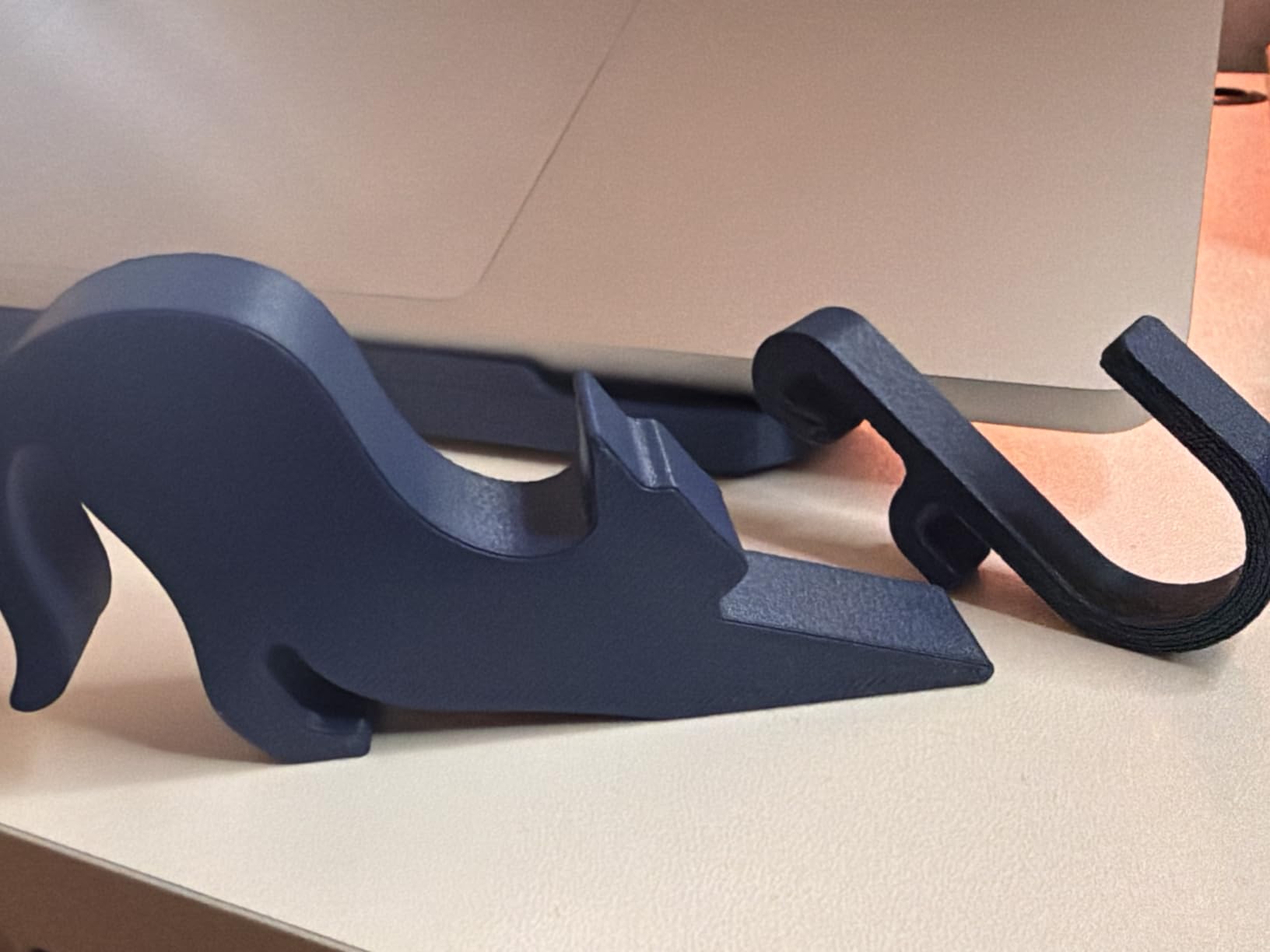
What it is genuinely good for
Drone parts, racing models, RC components and functional parts where you need stiffness at speed. If you print high volumes of similar parts, the 300mm/s ceiling changes the economics of the job more than the material properties do. It is also our pick for people put off CF by clogging, because the processing improvements are the reason and the low warp makes it forgiving without a full enclosure.
Where it falls short
Drying discipline is required: 65C for 8 hours and container humidity below 20 percent relative humidity. Skipping it undoes the clog resistance the formulation provides, and you will also need to correct over-retraction. To be blunt: a brass nozzle will not survive this filament, so fit the wear-resistant steel or carbide nozzle first.
11. SUNLU PA6-CF20 Carbon Fiber Nylon Filament – Best High-Heat Nylon-CF Spool
SUNLU PA6-CF20 Carbon Fiber Nylon 3D Printing Filament 1.75mm, 1KG, Black
80% PA 20% carbon fiber
270-290C nozzle
50-70C bed
Service up to 209C
Pros
- Outstanding layer adhesion and rigid strong finished parts
- Excellent heat resistance in finished prints
- Low warp even on large prints without a brim
- Very low moisture pickup during drying
- Good value against comparable PA6-CF engineering filaments
Cons
- Demanding moisture management and dry box feeding required
- Not compatible with AMS or multi-color systems
- Loose winding on some spools causes tangles
- Surface is rough at 20 percent fiber load
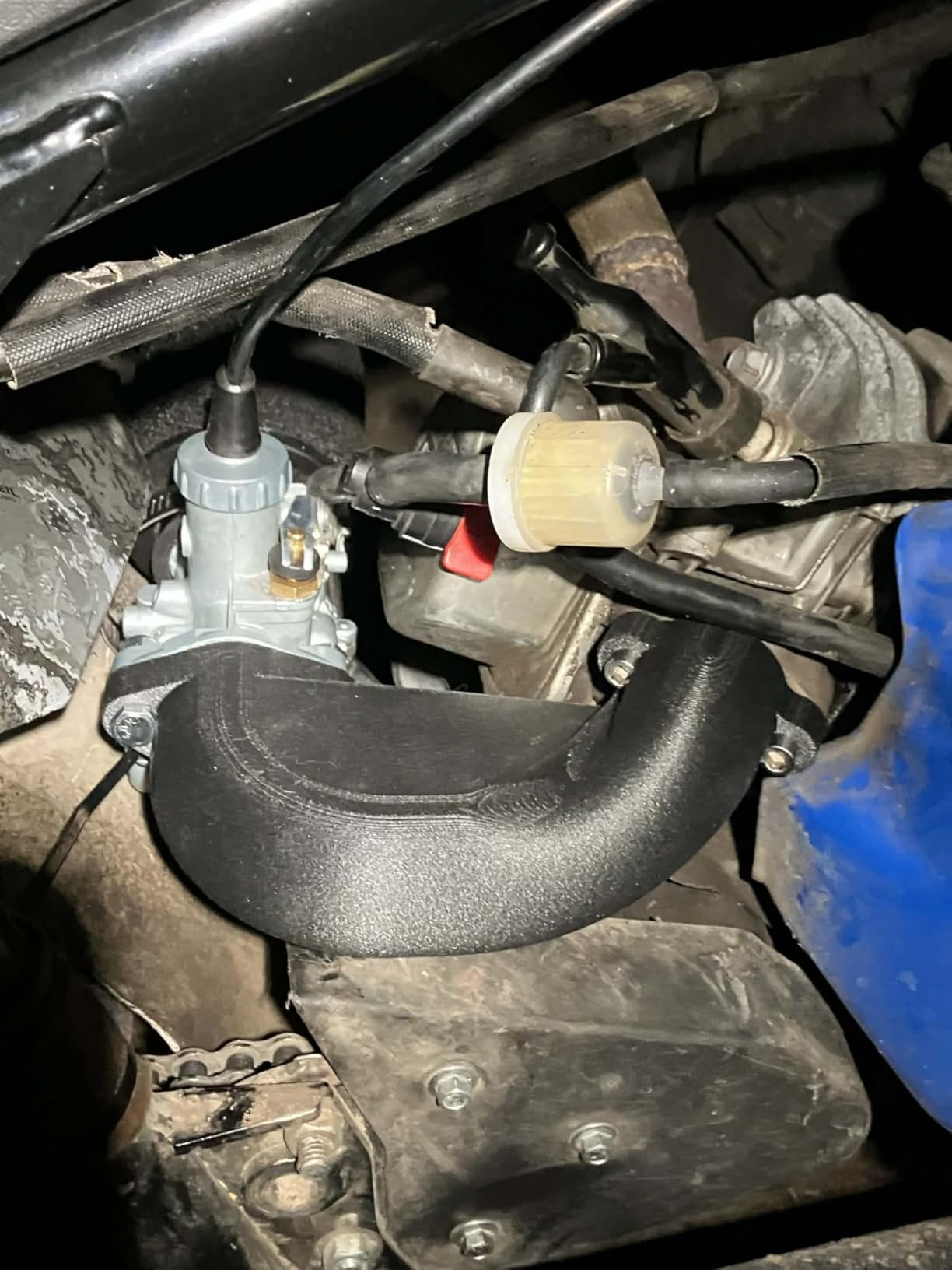
This is a 20 percent carbon fiber filled PA6 in the engineering workhorse class, and the standout user reports are about heat. Buyers describe prints that handled red-hot coals without melting, and the stated service temperature reaches up to 209C. For gears, screws, helmets, fan blades and bicycle frames, that is a different material class from everything else here.
Annealing is part of the recipe and the documentation is specific: 80-130C for 5-12 hours improves heat performance. If your part will live in a hot environment, treat annealing as required rather than optional. Drying is specified at 80C for 24 hours, or 110C for 4 hours.
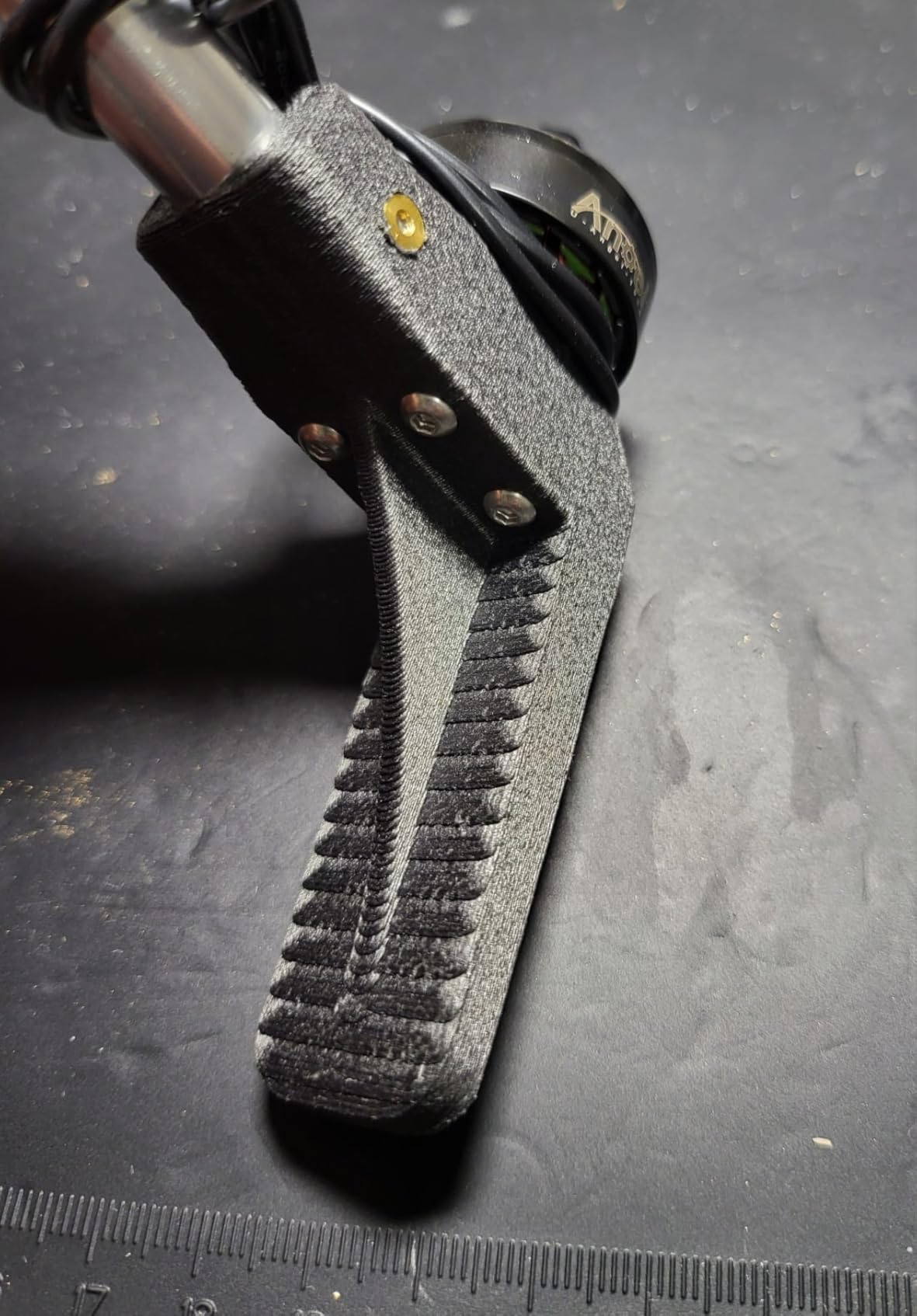
Moisture behaviour is one of the better stories in the nylon category. One measured report showed roughly 1.2g of water lost over a 16 hour dry, which explains why reviewers treat dry filament as the baseline condition. Warp is low enough that large prints do not need a brim, and accuracy is plus or minus 0.03mm on a vacuum-sealed spool.
What it is genuinely good for
Heat-exposed mechanical parts, gears and screws, fan blades, bicycle frame components and protective gear. This is the pick when you need nylon toughness plus real thermal resistance and your printer can hold 270-290C. It is also a good value comparison against other PA6-CF engineering filaments, which matters when printing a batch rather than a single part.
Where it falls short
Moisture management is demanding: the filament must be dried and fed from a dry box, and users who skip that report the classic nylon symptoms. Budget for a proper dryer, and our filament dryer guide compares the options. It is also not compatible with AMS because of brittleness, and the surface is noticeably rough at a 20 percent fiber load.
12. Polymaker Fiberon PA612-CF15 Carbon Fiber Nylon Filament – Best Low-Moisture Nylon-CF for Stable Parts
Polymaker Fiberon PA612-CF15 Carbon Fiber Nylon Filament 1.75mm, Black, 0.5kg
15 wt% carbon fiber in PA612
0.5kg spool
250-300C nozzle
40-50C build plate
Pros
- Lower moisture sensitivity than PA6 with better mechanics than PA12
- Retains strength after annealing and moisture exposure
- Very easy to print and arrives dry without warping
- Strong stiff parts with a professional matte black finish
- Tolerates annealing cycles with little dimensional change
Cons
- Cannot feed through standard AMS or AMS HT
- 0.5kg spool format is pricey per kilogram
- One reviewer reported diameter variation on later spools
- Cardboard spool can rack in AMS-style feeders
The material choice here is the interesting part. Long-chain PA612 with 15 weight percent carbon fiber sits between PA6 and PA12: less moisture sensitive than PA6, mechanically better than PA12. For parts that will live in variable humidity and still hold their dimensions, that is the right trade.
The published numbers are the most rigorous in this group. Tensile strength is listed at 91.9 MPa dry in the X-Y plane, dropping to 83.1 MPa after annealing and moisture conditioning, and heat deflection temperature is 175C at 0.45 MPa after annealing at 100C for 16 hours. Documenting strength after moisture conditioning, not just dry, tells you how the manufacturer tested it.
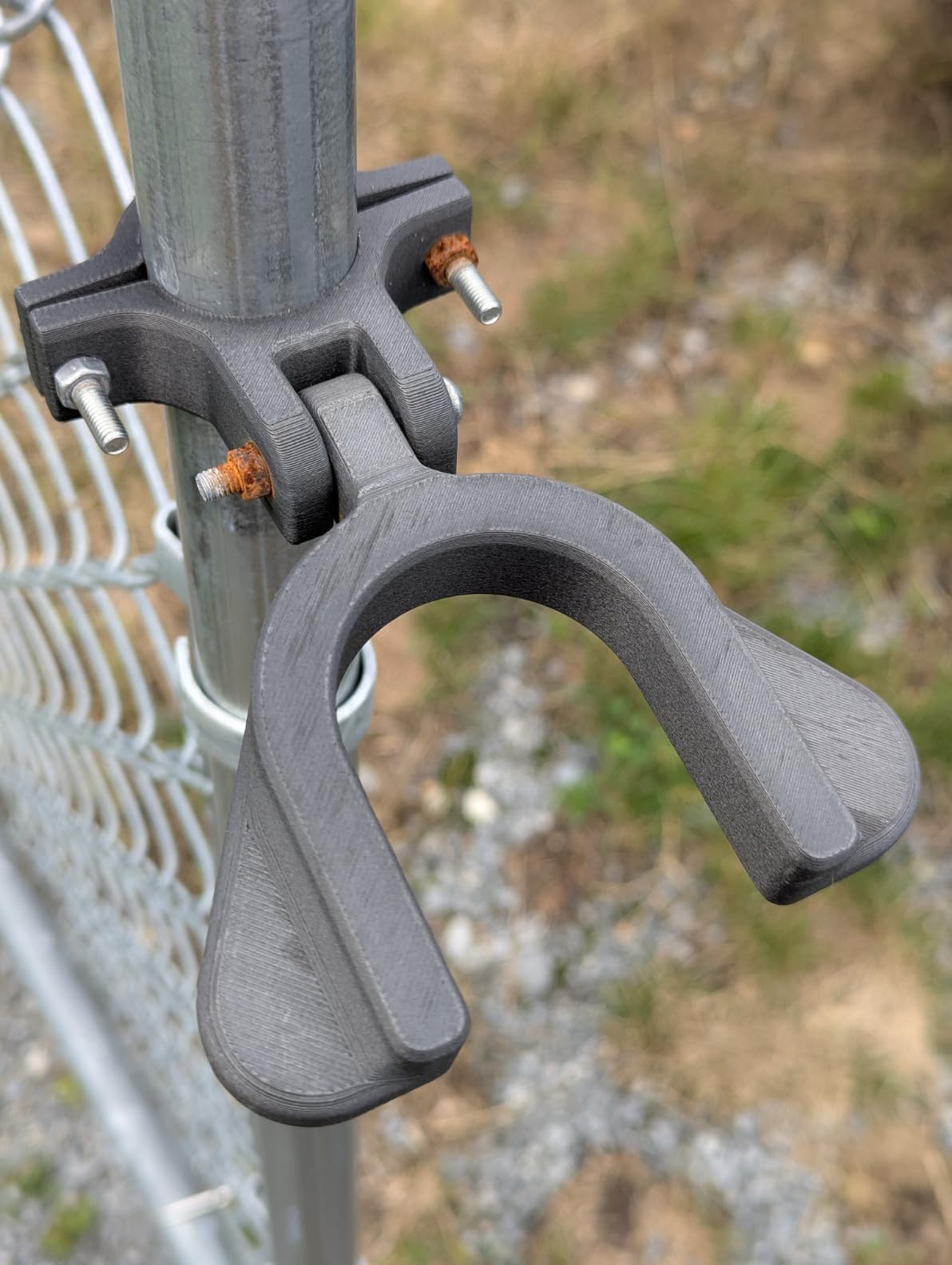
Printability is a genuine surprise at this performance level. Owners report that it arrives dry and prints without warping or adhesion problems, and a heated chamber is not required under the stated conditions. Speeds up to 300mm/s are achievable with a tuned profile, the 250-300C nozzle window gives plenty of latitude, and users printing telescope mounts and RC gear praise the stiffness and dimensional stability.
What it is genuinely good for
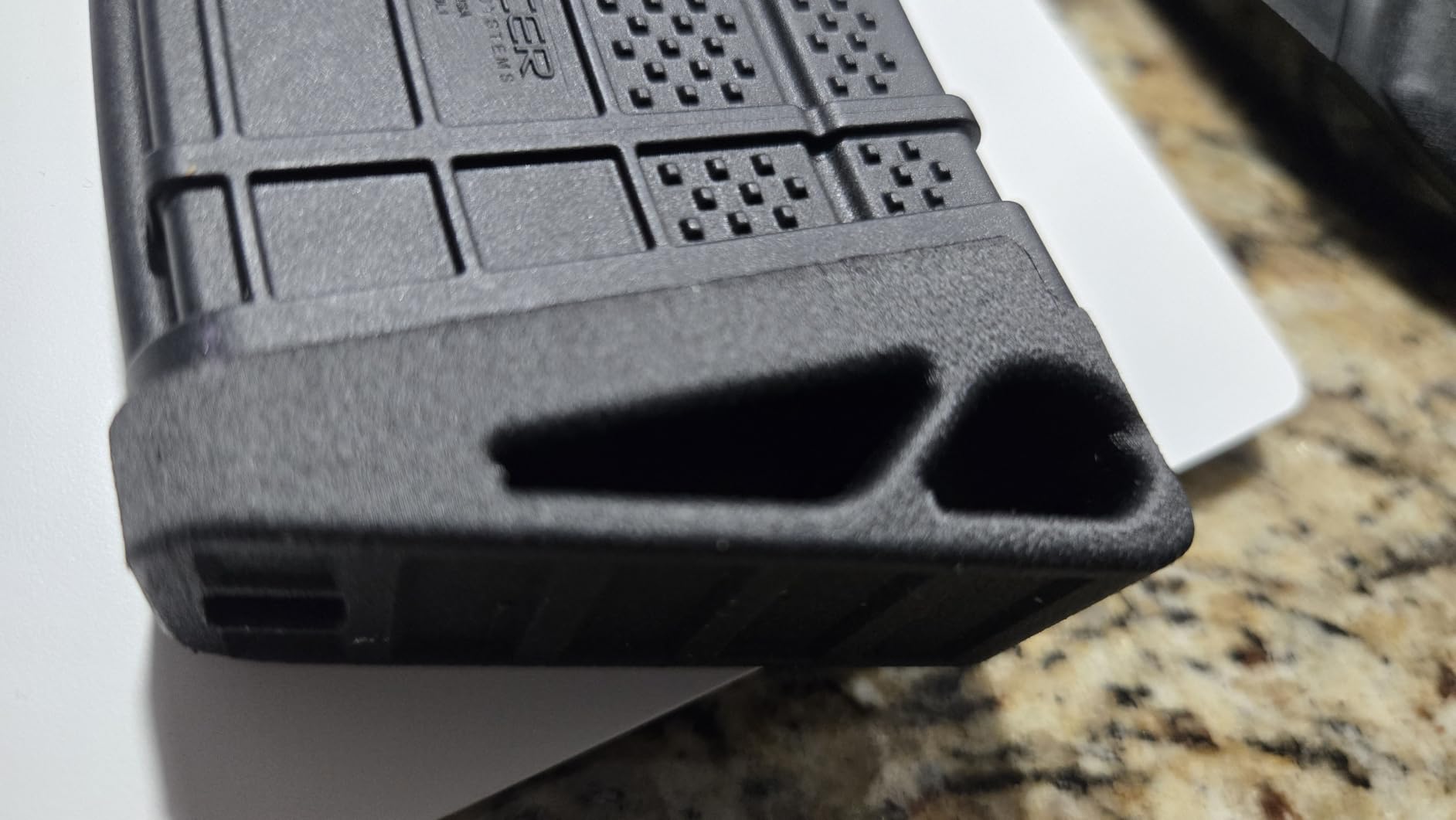
Rigid functional parts, tooling, jigs and fixtures where dimensional stability over time matters more than raw print speed. It is our pick when a part will move between a dry workshop and a humid garage and needs to keep its fit. Because it retains strength after annealing and moisture exposure, it suits parts seeing heat plus humidity, and the matte black finish needs no post-processing to look professional.
Where it falls short
It cannot feed through a standard AMS or AMS HT without the bypass port and TPU feed assist, so multi-material workflows are out unless you reconfigure. The 0.5kg spool is also pricey per kilogram, which stings if you go through spools quickly, and one reviewer reported diameter variation of 1.70mm to 1.82mm on later spools.
How to Choose Carbon Fiber Filament for Your Parts
Choose the base polymer first and the fiber percentage second. This single decision determines printability, temperature range and moisture sensitivity, and every other question is downstream of it. Carbon fiber reinforced filament is not one material. It is a family of very different plastics that happen to share a filler.
PETG-CF is the forgiving entry point. It prints in the same range as the PETG you already use, warps less, and gives up some impact toughness for a large gain in rigidity. If your printer is open frame or your last carbon fiber attempt ended in a clog, start here. The ANYCUBIC, ELEGOO, FLASHFORGE and TINMORRY spools are all sensible versions of that idea, differentiated mainly by fiber processing and speed ceiling.
Nylon-CF is the performance answer for structural parts, offering low friction, toughness and a much higher service temperature at the price of moisture management and hot nozzle temperatures. PA6-CF variants such as the SUNLU spool reach the highest service temperatures, while the Polymaker PA612-CF15 trades a little peak performance for far better dimensional stability.
Polycarbonate-CF and ASA-CF cover heat and weather respectively. PC-CF, including the IEMAI and PRILINE spools, gives the best heat deflection figures and stands up to oils and fuels. ASA-CF, like the iSANMATE spool, is the outdoor and UV option with easier handling than nylon.
Now the fiber percentage. The spools here range from 10 percent carbon fiber in ABS to 20 percent in several PETG and nylon blends. Higher loading means more stiffness and abrasion resistance, but also more brittleness, more nozzle wear, poorer Z-direction layer adhesion and a rougher surface. TINMORRY’s 15 percent short-cut masterbatch is a deliberate middle ground, and the 20 percent loadings in the IEMAI and SainSmart spools are the aggressive end of what a consumer printer handles without drama.
Diameter and hardware come next. Every spool in this roundup is 1.75mm, which suits direct-drive extruders and most modern Bowden setups. If you run a high-flow 2.85mm system, none of these will fit, and you should look at 2.85mm industrial CF options instead. A guided filament path is worth having, because brittle carbon fiber nylons can snap in sharp extruder corners.
Finally, match the material to your available time. PETG-CF spools like the ANYCUBIC need a hardened nozzle and little else. The CHCKX ABS-CF needs an enclosure, bed adhesive and a 7-10 hour dry. The SUNLU and Polymaker nylons need a dry box and a disciplined routine.
Print Settings and Hardware Checklist for Carbon Fiber Filament
Nozzle temperatures track the base polymer, not the fiber. Carbon fiber filament prints near its base material’s temperature: PETG-CF around 240-270C, ASA-CF 240-270C, ABS-CF 245-280C, nylon-CF 250-300C, with PC-CF at the high end. A hardened steel nozzle is also less thermally conductive than brass, so expect to add around 20C to reach a stable melt.
Bed temperatures follow the same pattern, with PETG-CF in the 60-90C band, ASA-CF and ABS-CF needing 80-100C, and nylon-CF and PC-CF typically running 40-80C. Enclosure matters more as temperature rises: ABS-CF, ASA-CF and PC-CF all need a closed chamber to hold ambient temperature steady enough for reliable bonding.
The hardware checklist is short. Fit a hardened steel or carbide nozzle at 0.4mm minimum, with 0.6mm preferred on higher-fiber spools. Have a filament dryer ready for anything in the nylon and polycarbonate families, since drying is the difference between a strong part and a weak one. Add bed adhesive for ASA-CF, ABS-CF and nylon blends. Disable or sharply reduce retraction, which is the main cause of fiber packing in the extruder.
If clogs persist, lower print speed by a quarter to a half, raise first layer height so the nozzle does not scrape the same spot repeatedly, and verify nozzle-to-bed clearance. Abrasive wear is cumulative, so a nozzle that was fine last month can start grooving and producing inconsistent extrusion this month.
For readers who outgrow consumer hardware, industrial CF filaments such as PPS-CF and PEEK-CF run considerably hotter and need a dedicated chamber. They are a different purchase decision rather than an upgrade path, so treat the twelve spools here as the practical ceiling for a normal FDM machine.
Frequently Asked Questions
What is the ideal filament temperature for a carbon fiber 3D printer?
Carbon fiber filament prints near its base material’s temperature, not at a fixed CF-specific value. PETG-CF typically runs 240-270C, ASA-CF 240-270C, ABS-CF 245-280C, nylon-CF 250-300C and PC-CF at the top of that range. Because a hardened steel nozzle conducts heat less efficiently than brass, add around 20C to hit a stable melt, and confirm with a temperature tower.
Why does my filament keep clogging the nozzle?
In order: fit a hardened steel or carbide nozzle, move to a 0.6mm bore, disable or sharply reduce retraction, cut print speed by 25-50 percent, raise first layer height so the nozzle does not repeatedly scrape one spot, dry the spool properly, and confirm nozzle-to-bed clearance. Abrasive wear is cumulative, so a grooved nozzle that worked last month can clog today.
What is the strongest filament for 3D printing?
Among carbon fiber filaments, PC-CF and nylon-CF deliver the highest stiffness and heat deflection, with PA6-CF blends reaching the highest service temperatures. Among the twelve spools reviewed here, the IEMAI PC-CF lists heat deflection up to 147C, the SUNLU PA6-CF20 lists service up to 209C, and the Polymaker Fiberon PA612-CF15 lists 175C heat deflection after annealing. PEEK-CF is stronger still but needs industrial equipment.
How long should a hardened steel nozzle last?
Roughly one to two kilograms of carbon fiber filament, depending on fiber percentage and filament hardness. Lower-fiber PETG-CF blends wear nozzles more slowly than aggressive 20 percent nylon loads, and a carbide or ruby nozzle extends that further. Inspect periodically and replace when prints show grooving, consistent thickness variation or a sudden change in extrusion width.
Can carbon fiber filament withstand a bullet?
No. Short chopped fiber filament is a composite, not continuous unidirectional carbon fiber laminate, and it is not ballistic grade. It can produce genuinely stiff, light, heat-resistant engineering parts, but impact events that would shatter a continuous laminate will also destroy a printed part, especially along the Z axis where layer bonding is weakest.
Do I need an enclosure to print carbon fiber nylon?
It helps a great deal and is recommended by most manufacturers for nylon-CF and PC-CF. An enclosed chamber holds ambient temperature steady, which reduces warping and improves interlayer adhesion on tall or large parts. PETG-CF spools such as the ANYCUBIC and TINMORRY are the exception, printing reliably on open-frame machines with very low warp.
Final Verdict: Best Carbon Fiber Filament for Functional Parts in 2026
After six weeks and a dozen spools, the ANYCUBIC PETG-CF is our pick for the best carbon fiber filament for functional parts overall. It printed with almost no warp, held its dimensions across a full kilogram, and produced layer bonds strong enough for tool mounts and brackets, all while carrying the largest review base in the group.
Buy the IEMAI PC-CF when heat deflection and chemical resistance drive your design, the TINMORRY PETG-CF when you want speed and low clog rates, and the Polymaker Fiberon PA612-CF15 when dimensional stability across humidity swings matters most. Whatever you choose, fit a wear-resistant nozzle and get a filament dryer in place before the first print. More carbon fiber part ideas live in our carbon fiber tripod roundup and functional gear guide.