
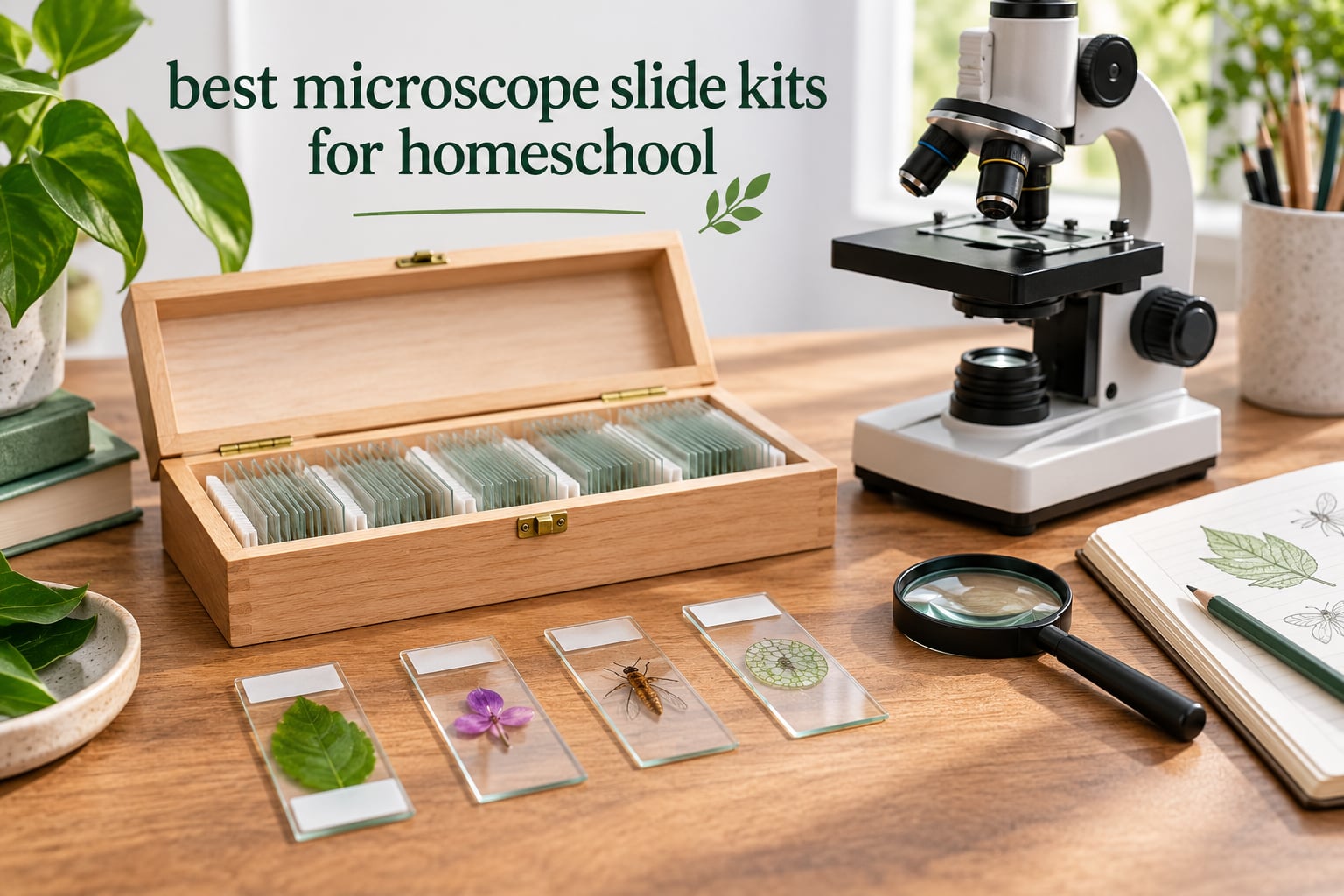
If you have been searching for the best microscope slide kits for homeschool science and finding yourself stuck, you are not alone. Slide kits get lumped together with microscope accessories and blank slide boxes in every store listing, and it takes an afternoon of reading to work out which ones actually teach something. We pulled ten of the most-reviewed sets on the market, read the manufacturer specs end to end, and compared what a family really gets on the slide.
Two different products get sold under the same name, and sorting them out is the first thing worth doing. A prepared slide set arrives finished: a thin specimen is permanently mounted under a coverslip, labeled, and ready to put on the stage. A slide-making kit is the opposite. It ships with blank slides, coverslips, stains and sometimes a shrimp hatchery so your child mounts the specimen. Prepared sets teach anatomy and classification. Slide-making kits teach technique. Most homeschool families end up wanting one of each eventually, and buying both on day one is how kits end up unused in a closet.
About our method: we compared the ten sets below on slide count, slide material, storage, labeling, specimen coverage, and whether the set works with a compound or a stereo microscope. We read the ratings and written reviews closely, and where a reviewer reported a real problem with a box clasp or a slide arriving empty, we passed that on. We did not bench-test every slide under glass ourselves, so treat the spec details here as the accurate manufacturer data and the commentary as our read of thousands of buyer reviews. Last updated in October 2026.
Table of Contents
Top 3 Best Microscope Slide Kits for Homeschool in 2026
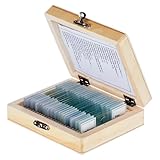
Three sets cover most families. The AmScope PS25 is the one we come back to for a reason: real optical glass, cedar oil mounting, a fitted wooden case, and the deepest review history of any kit in this guide. The LAKWAR 120 is the step up when you want standard-size glass and a much larger catalogue of specimens. The DIY-SCIENCE 48 is the value pick, and it is the one that survives a five-year-old.
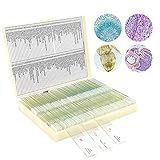
LAKWAR 120 Slide Set
- 120 glass slides
- Standard 1 by 3 inch size
- Labeled with reference list
Best Microscope Slide Kits for Homeschool at a Glance in 2026
Every set below appears in this table and again in the individual reviews. The fastest way to read it is to sort by slide material first, because glass and plastic behave very differently under a scope.
| Product | Specifications | Action |
|---|---|---|
| AmScope PS25 25-Slide Glass Set |
|
Check Latest Price |
| DIY-SCIENCE 48 Plastic Slide Set |
|
Check Latest Price |
 Jiusion 60 Plastic Slide Set Jiusion 60 Plastic Slide Set |
|
Check Latest Price |
| LAKWAR 120 Glass Slide Set |
|
Check Latest Price |
 AmScope PS100A 100-Slide Glass Set AmScope PS100A 100-Slide Glass Set |
|
Check Latest Price |
 USCAMEL 100 Glass Slide Set USCAMEL 100 Glass Slide Set |
|
Check Latest Price |
 DIY-SCIENCE Apologia 16-Slide Set DIY-SCIENCE Apologia 16-Slide Set |
|
Check Latest Price |
 PROLEE 200 Glass Slide Pack PROLEE 200 Glass Slide Pack |
|
Check Latest Price |
 BoliOptics 25 Human Biology Set BoliOptics 25 Human Biology Set |
|
Check Latest Price |
 DIY-SCIENCE 60 Lab-Grade Set DIY-SCIENCE 60 Lab-Grade Set |
|
Check Latest Price |
1. AmScope PS25: The Best All-Round Prepared Slide Kit for Homeschool
AmScope PS25 Prepared Microscope Slide Set for Basic Biological Science Education, 25 Slides, Includes Fitted Wooden Case Brown
25 glass slides
Cedar wood oil
Fitted wooden case
Labeled specimens
Pros
- Professional preparation quality
- Plant insect and animal tissue range
- Optical glass for clear viewing
- Durable fitted wooden case
- Long service life across school years
Cons
- Slides sit tightly in the case
- Occasional smudges out of the box
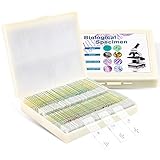
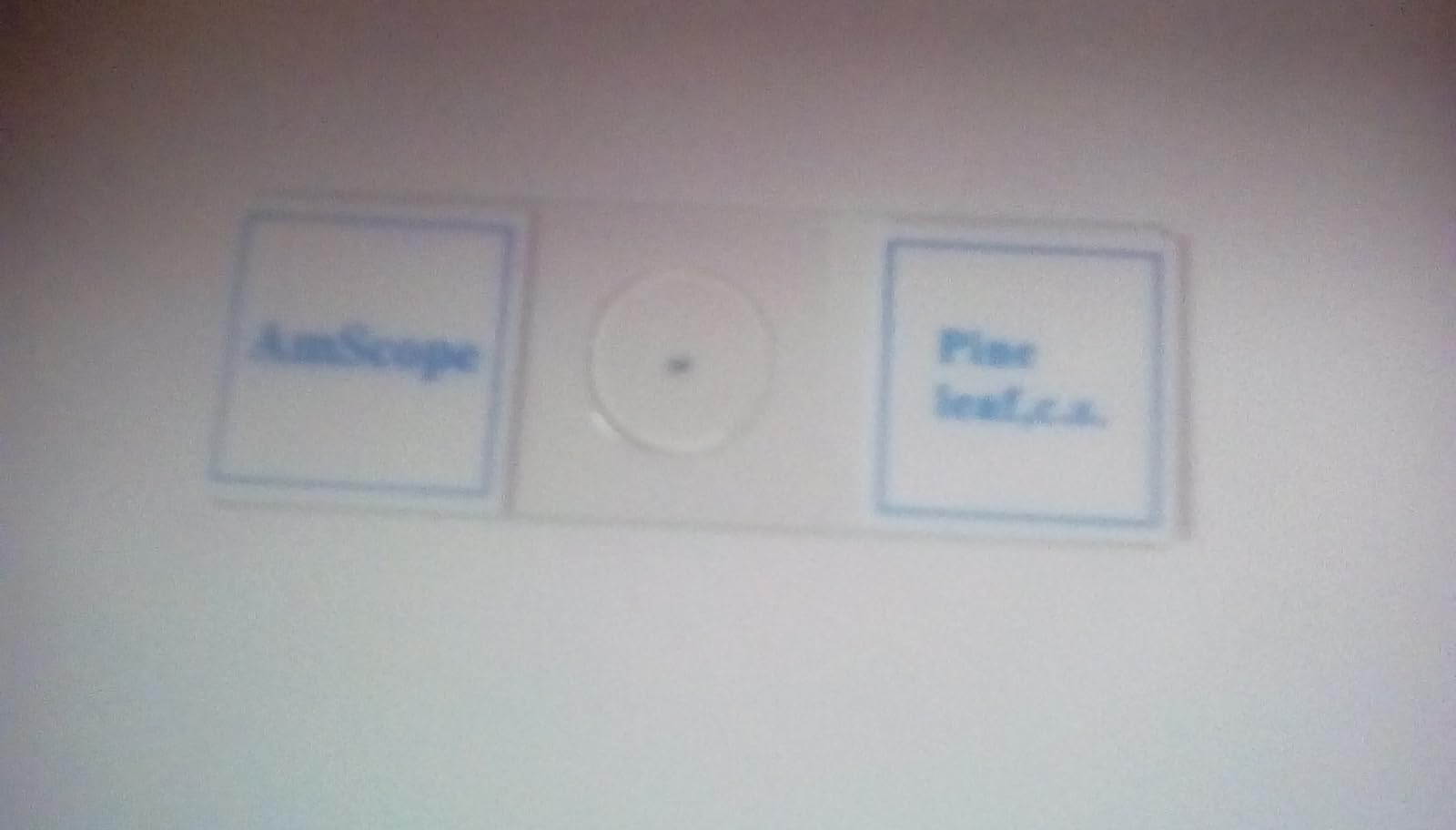
The PS25 is twenty-five optical glass slides covering plants, insects and animal tissues, preserved in cedar wood oil and sealed under coverslips, and it is the pick we recommend to a family buying their first serious set. Every slide carries a printed specimen identification, so nobody is guessing at what the fuzzy purple thing on the stage is.
What separates it from the cheaper plastic sets is the mounting. Cedar wood oil has been the standard fixative for school and lab slides for a very long time, and it holds tissue sections flat and thin enough to actually resolve at 400x. That matters most on the animal tissue slides, where a plastic set tends to show you a colored blob and this one shows you structure.
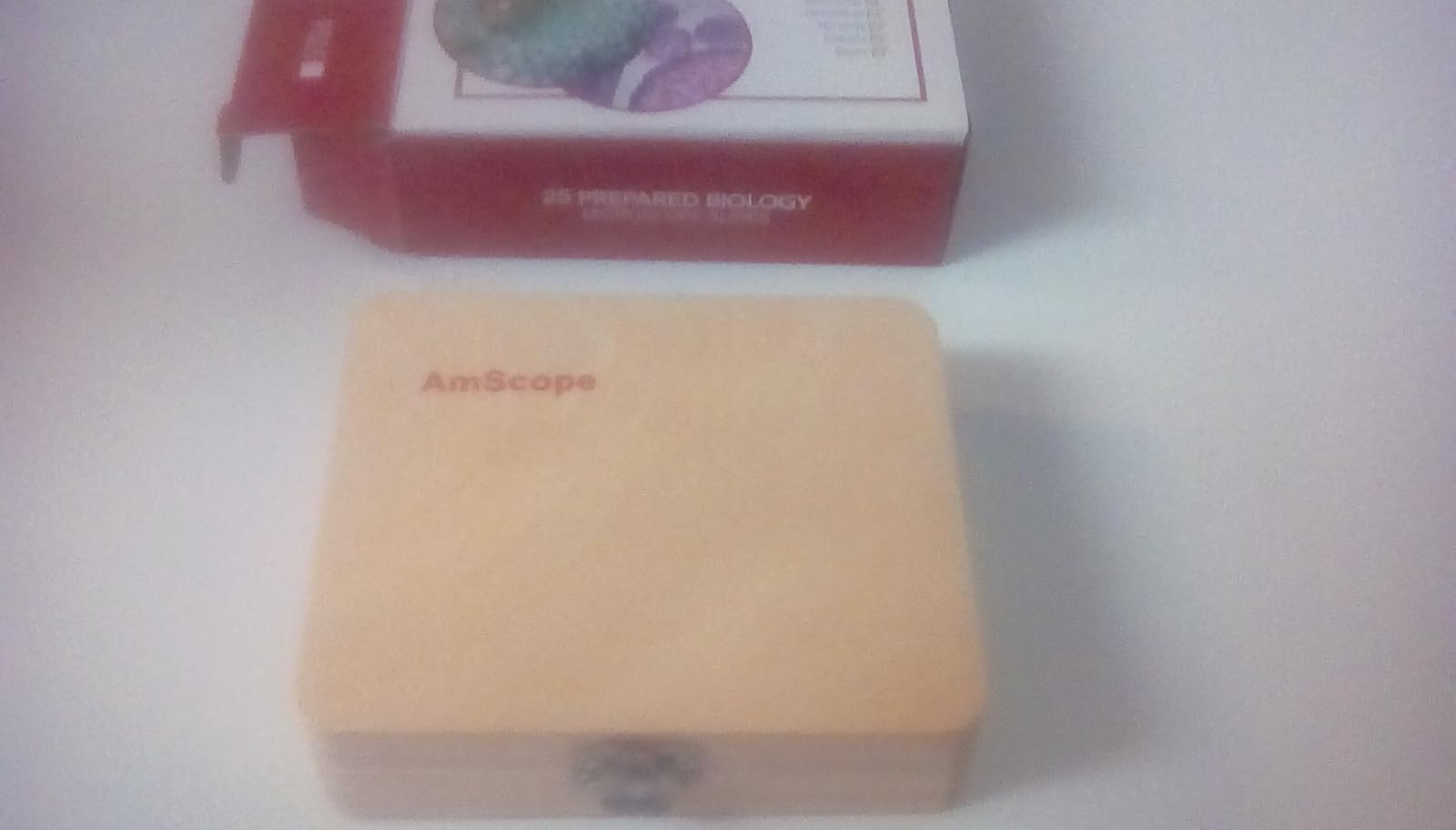
The fitted cedar case is the other half of the value. A wooden case with a shaped interior means a missing slide is obvious at a glance, which is exactly what you want when two kids share a microscope and a set gets passed around. Reviewers who bought this set years ago describe it still working for older children, which tells you the mounting medium does not cloud the way some cheaper slides do.
Twenty-five slides is not a large number, and that is the honest limitation. It covers a full year of weekly microscopy comfortably, but it repeats once you start a second child, a botany unit, and a human anatomy unit in the same term. If breadth matters more to you than build quality, the 100-slide sets further down handle that instead.
How the PS25 holds up with multiple children
Because the slides are permanently sealed, nothing about them wears out from handling. The only wear point is the glass itself, and the recurring complaint among buyers is that the slides sit very tight in the fitted slots, so a careless grab can nick an edge. Our advice is to teach the hand-off habit early: lift slides by the edges with two fingers, never slide them sideways out of the case.
A second real-world note from buyers: a few slides arrive with fingerprints on the coverslip. It takes a lens cloth and ten seconds to fix, and it is worth doing before the first lesson so a child does not learn to ignore smudgy images.
Who should skip the PS25
Skip it if you have children under about seven who will be the primary users. Real glass at that age means broken slides and sharp fragments, and the plastic sets on this list do the same job without the risk. It is also the wrong call if you want a specific narrow topic, because a general biology set only touches human anatomy in passing.
And skip it if you already own a slide-making kit. The PS25 assumes you do not need to practise mounting technique, so pairing it with a preparation kit right away is money better spent a year apart.
2. DIY-SCIENCE 48 Prepared Slides: The Budget Pick Set for Young Learners
48 Prepared Microscope Slides Set of Animals Insects Plants Flowers, Biological Learning Resource Specimens for Kids Beginner Classroom Basic Science Education
48 plastic slides
Animal insect plant flower
Smooth child-safe edges
Color-coded
Pros
- Child-safe plastic with smooth edges
- Good spread of animals insects plants and flowers
- Color-coded and labeled for sorting
- Handles drops and rough use
- Low entry cost for a first set
Cons
- Lower optical clarity than glass
- Flimsy cardboard storage box
- Some specimens sit too small or thick
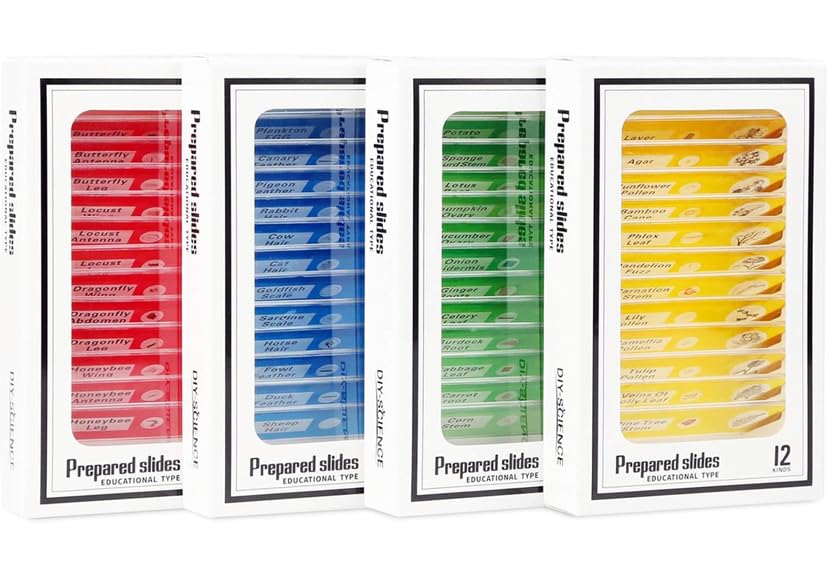
This 48-slide plastic set covering animals, insects, plants and flowers is the best value microscope slide kit for a family with a first-grader through fourth-grader on the scope, and it is the one we hand to a child without hesitation. The edges are smooth with no sharp corners, and the slides are pre-cleaned and non-toxic.
Color-coding is the quiet feature parents notice first. Each specimen group is on a different colored label, so a seven-year-old can sort the slides back into the right category without being told. That turns tidiness into a sorting game, which is honestly better science practice than being nagged.
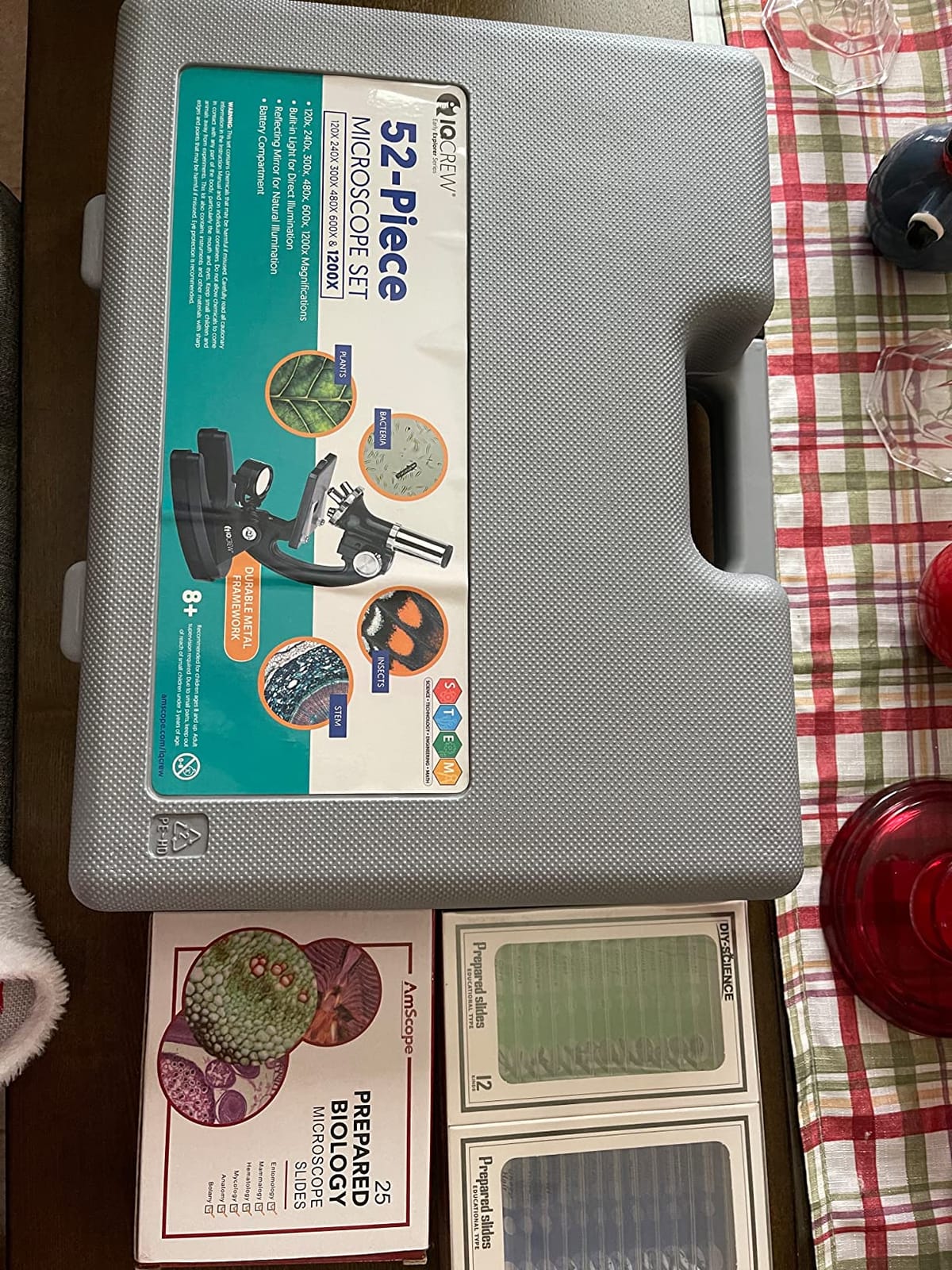
Optically, plastic gives you a softer image than glass. Reviewers describe it as clear enough for a beginner to see plant cells, insect parts and general tissue structure, but noticeably dimmer and softer-edged at high magnification than an optical glass slide. For early skill building that is a fair trade, and it is the reason these sets pair well with a pocket or stereo microscope where light is already weaker.
The real weakness is the box. Buyers repeatedly describe the cardboard storage box as flimsy and quick to tear, and it does not survive a school year of being carried between rooms. Buy an index card file or a small lidded craft box the same day and transfer the slides out of the original packaging.
What a plastic set can and cannot show you
Expect to identify whole small specimens and tissue types. Do not expect to resolve individual cell organelles or mitosis stages clearly. If your curriculum year is focused on cell biology, plant cell structure or human tissue detail, this is not the set for that, and a glass set in the same price bracket will serve better.
For a general nature and biology unit with a young child, it is more than enough. A lot of homeschool families keep this one on the shelf permanently as the knock-about set and add a glass set later for the serious microscope work.
When to choose glass instead
Move up to glass when the child can handle a slide by the edges without being reminded, or when the microscope has a mechanical stage and real objective lenses. Until then, plastic costs you very little in learning and saves you the broken-glass conversation entirely.
It is also worth pairing with a co-op consideration. Forty-eight slides is a workable number to divide across a small group where the microscope is the shared bottleneck and slides change hands every few minutes.
3. Jiusion 60 Prepared Slides: The Highest Slide Count for a Tight Budget
Jiusion 60Pcs Prepared Microscope Slides Specimen Set for Stereo Microscope
60 plastic slides
Five color-coded boxes
60mm by 21mm size
Pre-cleaned
Pros
- Sixty slides at a low entry cost
- Five color-coded boxes aid sorting
- Good spread of plant insect and animal specimens
- Pre-cleaned with smooth edges
- Labeled and moisture proof
Cons
- Non-standard slide size
- Plastic limits optical quality
- May not fit every microscope stage
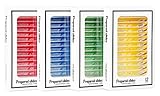
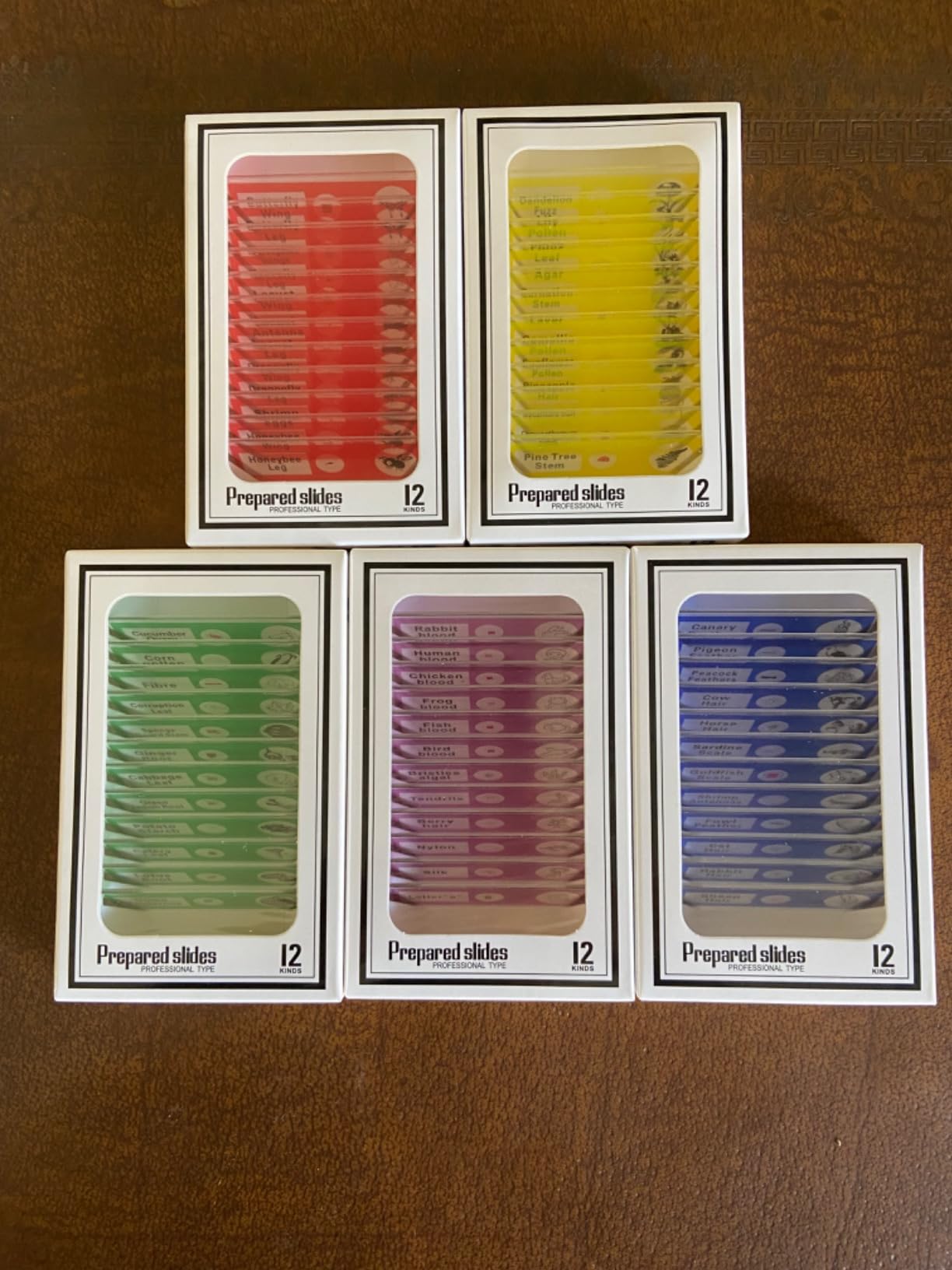
Sixty plastic slides in five color-coded boxes of twelve is the pick if your main goal is to put a large number of labeled specimens in front of a child for the least money. Specimens span plant, insect and animal material, and the slides come pre-cleaned and labeled.
Five separate boxes is genuinely useful in a way a single tray is not. You can hand one box to each kid at a co-op table, or keep a box per subject: plants, insects, animals, tissue, and the remainder. It also makes it obvious when a slide has gone missing, because you can count twelve.
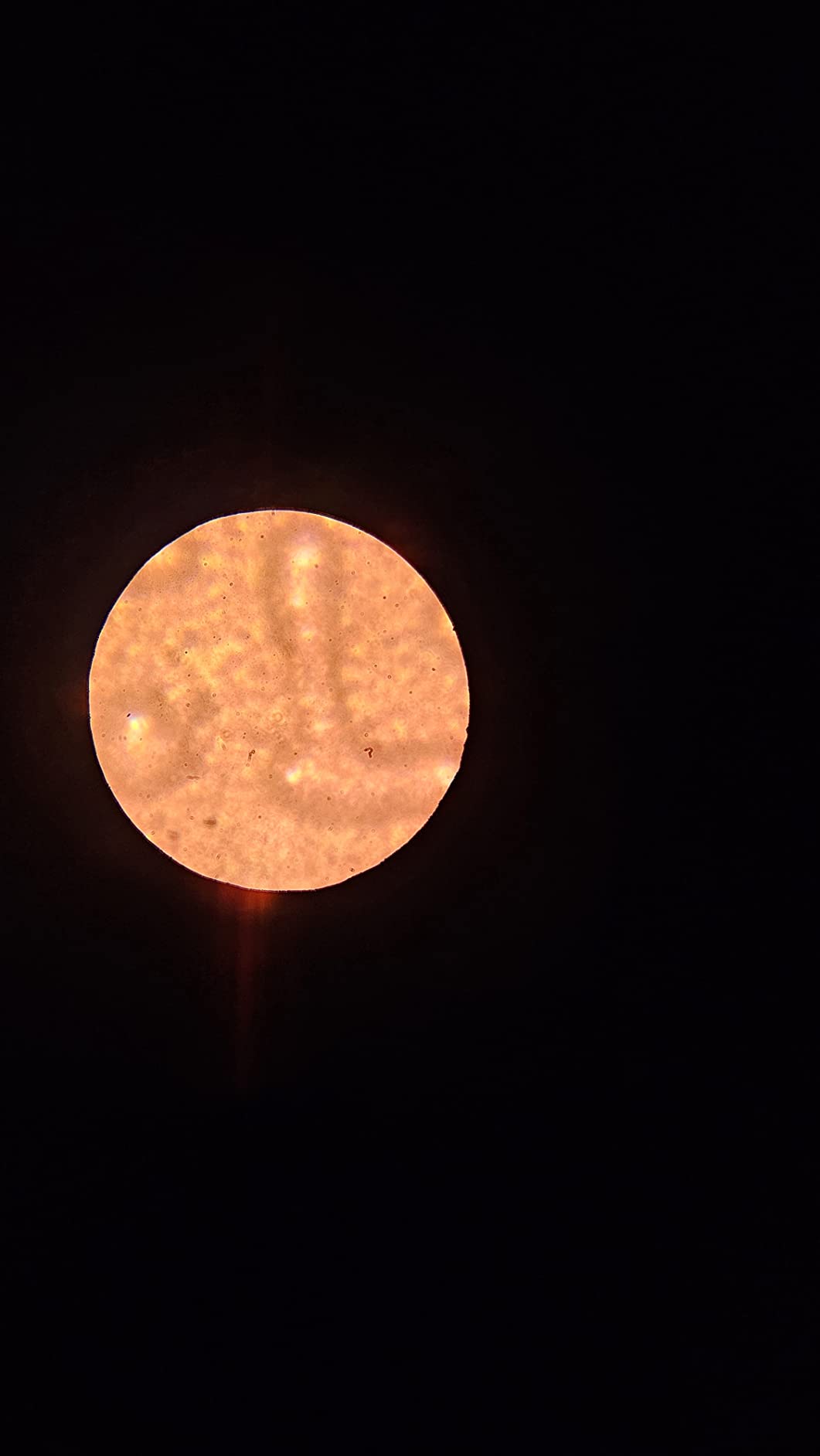
The thing to check before you commit is size. Each slide measures 60mm by 21mm, which is smaller than the standard 1 by 3 inch slide that virtually every microscope stage is built to hold. Buyers report that they fit many home scopes and slide holders, but that some stages and clips will not take them. If your microscope has spring-loaded stage clips sized for standard slides, the short slides can ride up and out of focus.
Material is high-transparency plastic, which keeps the set safe for children and keeps the optical quality at the softer end. This is a volume set rather than a detail set, and the way to use it is breadth: many specimens, moderate magnification, quick comparisons between samples.
Is more slides actually better for a homeschool family?
Not always, and this set is a good example of why. Sixty slides of general plant, insect and animal material will run out its novelty in about six weeks for an enthusiastic eight-year-old. What sustains interest is variety of type, not raw count, and a 25-slide set that includes tissue and cells can teach more than 60 slides of the same three categories.
The right way to think about slide count is against microscope time. One child at one microscope gets through maybe two or three slides an hour, so sixty slides is roughly a month of dedicated sessions. What you need is enough slides that you are not repeating within the same week, not enough to fill a cabinet.
Who this set suits best
It suits a co-op group, a family with several children at different ages, or a family that wants to cover a lot of ground without buying a big glass set. Pair it with a single higher-quality glass set for the cell work and you have both breadth and depth for less than the price of one large glass collection.
It is the wrong set if you already own any slide set at all. Duplicating sixty general specimens is the classic version of the fragmented-kit problem that forum buyers complain about, and it leaves you with more of the same instead of more of something new.
4. LAKWAR 120 Glass Slides: The Best Premium Glass Set for Standard Scopes
120 Microscope Slides with Specimens for Kids: Prepared Slides for Science
120 glass slides
Standard 1 by 3 inch
Optical glass
Labeled with list
Pros
- Largest standard-size glass collection here
- Standard 1 by 3 inch slides fit most stages
- High optical clarity
- Every slide labeled with a reference list
- Suitable for extended study
Cons
- Large set to buy upfront
- Heavier to handle
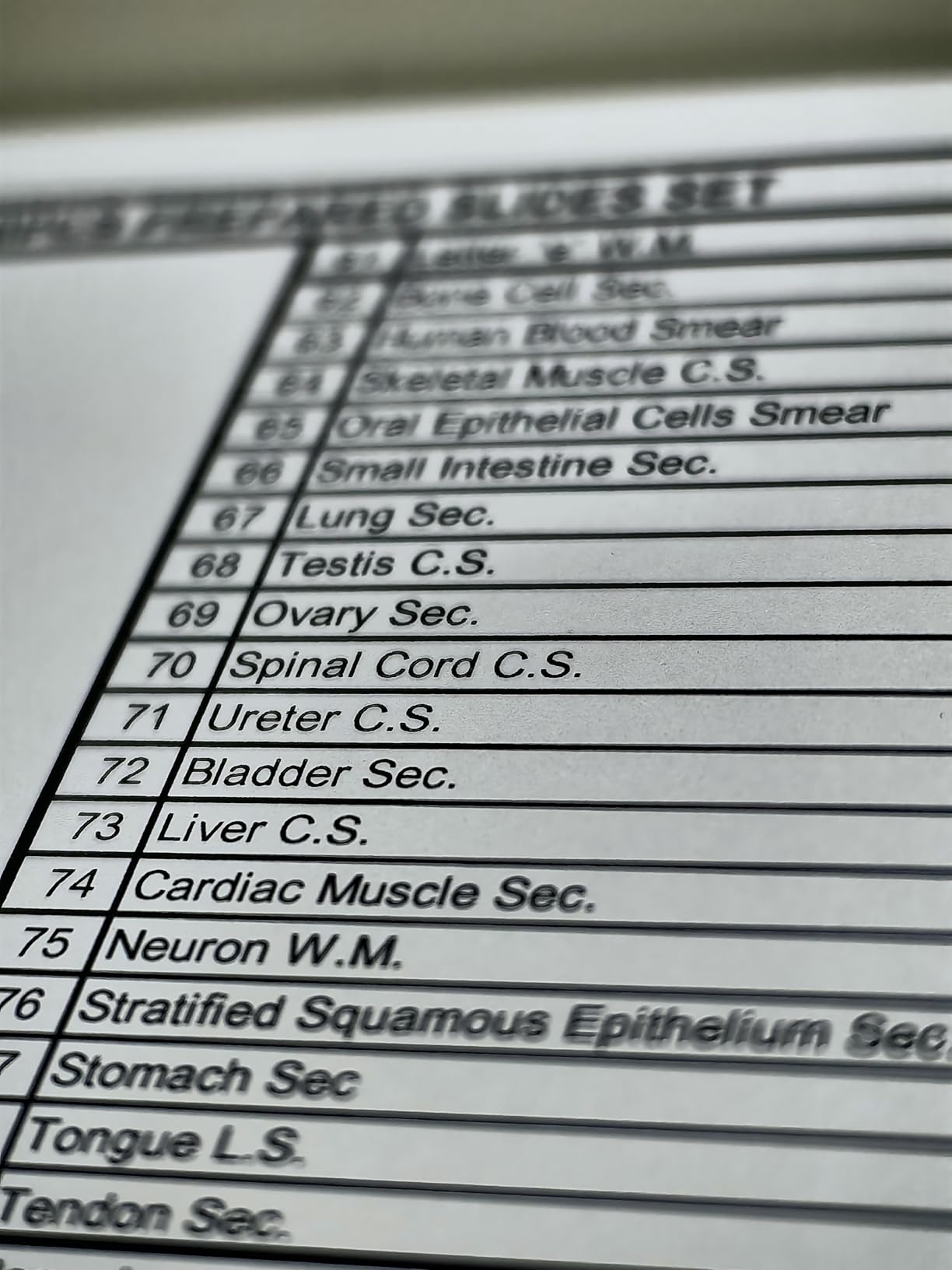
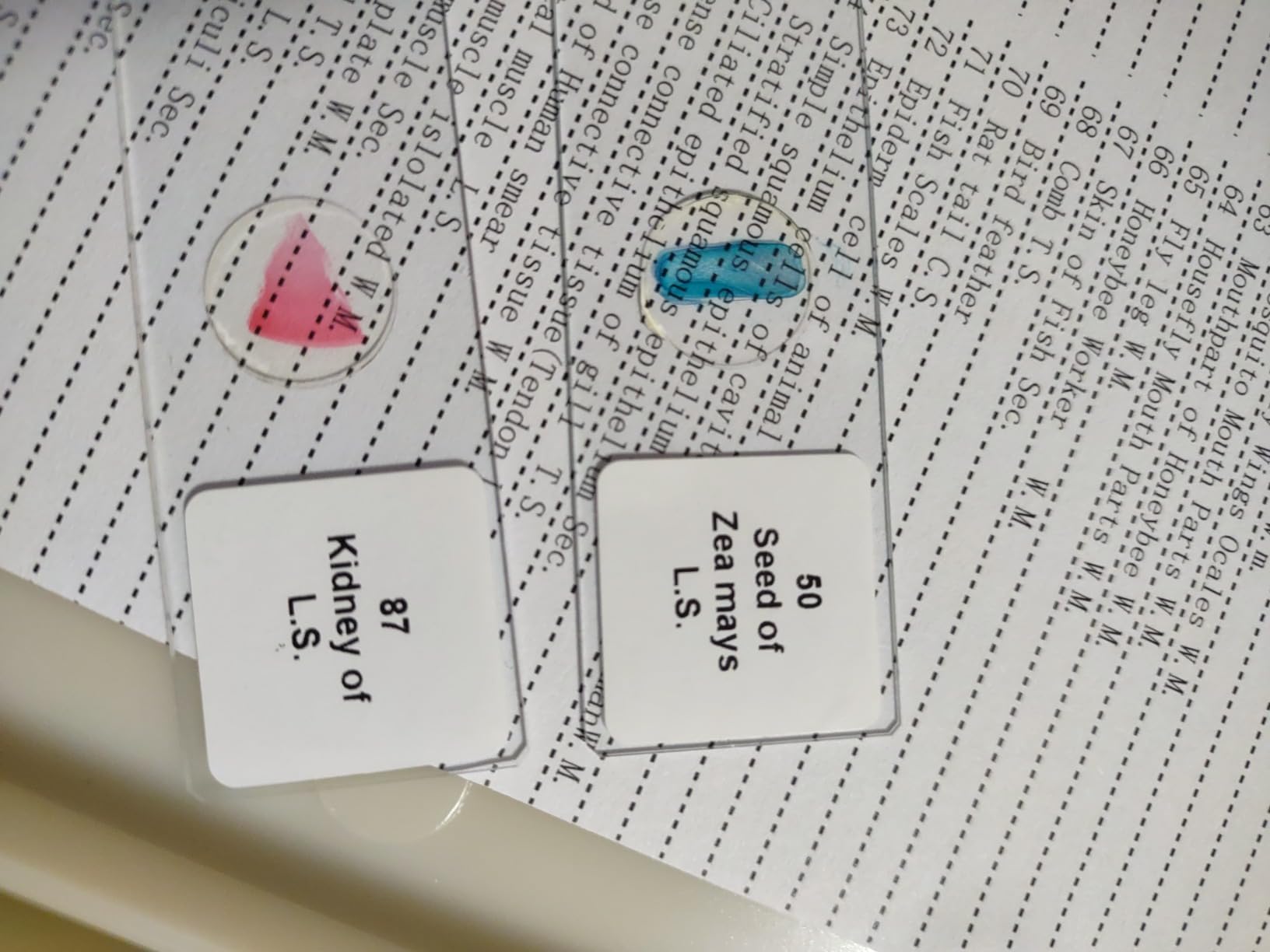
The LAKWAR set is 120 prepared optical glass slides at the standard 1 by 3 inch size, and it is our pick when you want one purchase to cover several school years of general biology, zoology and botany without worrying about fit. Every slide is labeled and a printed list of the full contents is included.
Standard sizing is the detail that makes this set easier to live with than the larger-budget alternatives. Slides sit flat under mechanical stage clips, sit in the spring holders that come with student microscopes, and fit the specimen slides in a camera adapter. Nothing about it fights your equipment.

Optical glass, not plastic, means the image holds together at 400x and beyond. For a family moving into a middle school biology course where you are expected to distinguish between tissue types and plant structures, that difference in sharpness is the whole reason to spend more here.
One tradeoff we want to flag plainly: a 120-slide glass collection is a significant purchase to make before you know how much your child will use. That is defensible if you buy it once and keep it for a decade, which the review history suggests families do. It is harder to justify if your child is still at the stage of pointing at things and asking what they are.
How to get the most out of a 120-slide set
Sort them into categories the week they arrive, using the included list as your map. A simple index card file with one card per slide number lets a child find slide 47 without flipping through glass. With a set this size, retrieval speed is the difference between a child using it and a child losing interest.
Work through one category at a time rather than sliding randomly. Finish plants, draw what you see in a science journal next to the printed name, then move on. Twelve weeks of one session a week is a full term of genuine observation practice, which is far more valuable than twenty minutes of random browsing.
Is a 120-slide set overkill for one homeschooler?
For a single child doing a standard year of biology, yes, it is more than you will use in year one. For a family with two or more children at different ages, or a co-op leader, no. One set of standard-size glass slides can serve three children across three years, and that changes the arithmetic entirely.
If you do want to save money, the AmScope PS100A covers a similar ground with a fitted wooden case, and it is the pick if storage matters more than slide count to you.
5. AmScope PS100A: The Best Glass Set for a Fitted Case and Long-Term Storage
AmScope PS100A Prepared Microscope Slide Set, 100 Slides Set A
100 glass slides
Set A mix
Cedar wood oil
Fitted wooden case
Pros
- Professional-grade glass slides
- Cedar oil preservation supports longevity
- Sturdy fitted wooden case
- Comprehensive specimen variety
- Labeled for identification
Cons
- Heavy at 1.9 pounds
- Costs more than most plastic sets
- Overkill for a first microscope
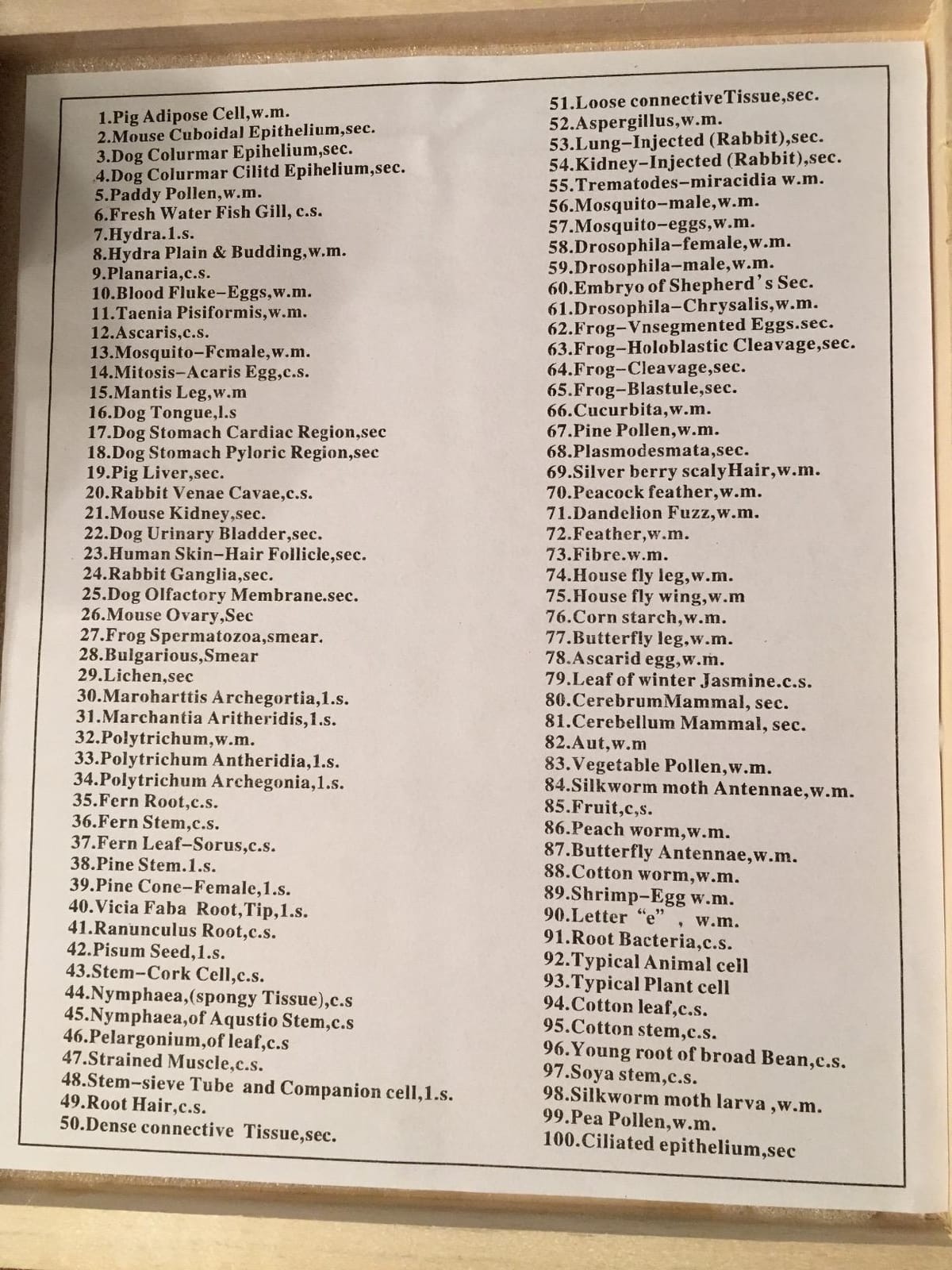
The PS100A is 100 prepared glass slides, Set A, preserved in cedar wood oil with coverslips, and it is the recommendation for a family that wants one complete set stored properly rather than spread across the house. It comes with a fitted wooden case with a shaped interior for every slide.
AmScope makes several sizes in this line and the Set A designation is worth understanding. These are the general biological science slides: plants, insects, animal tissues, and a spread of material intended to sample a whole year of basic biology rather than to drill one discipline. If you want a second set later, ask for a different Set letter rather than rebuying the same one.
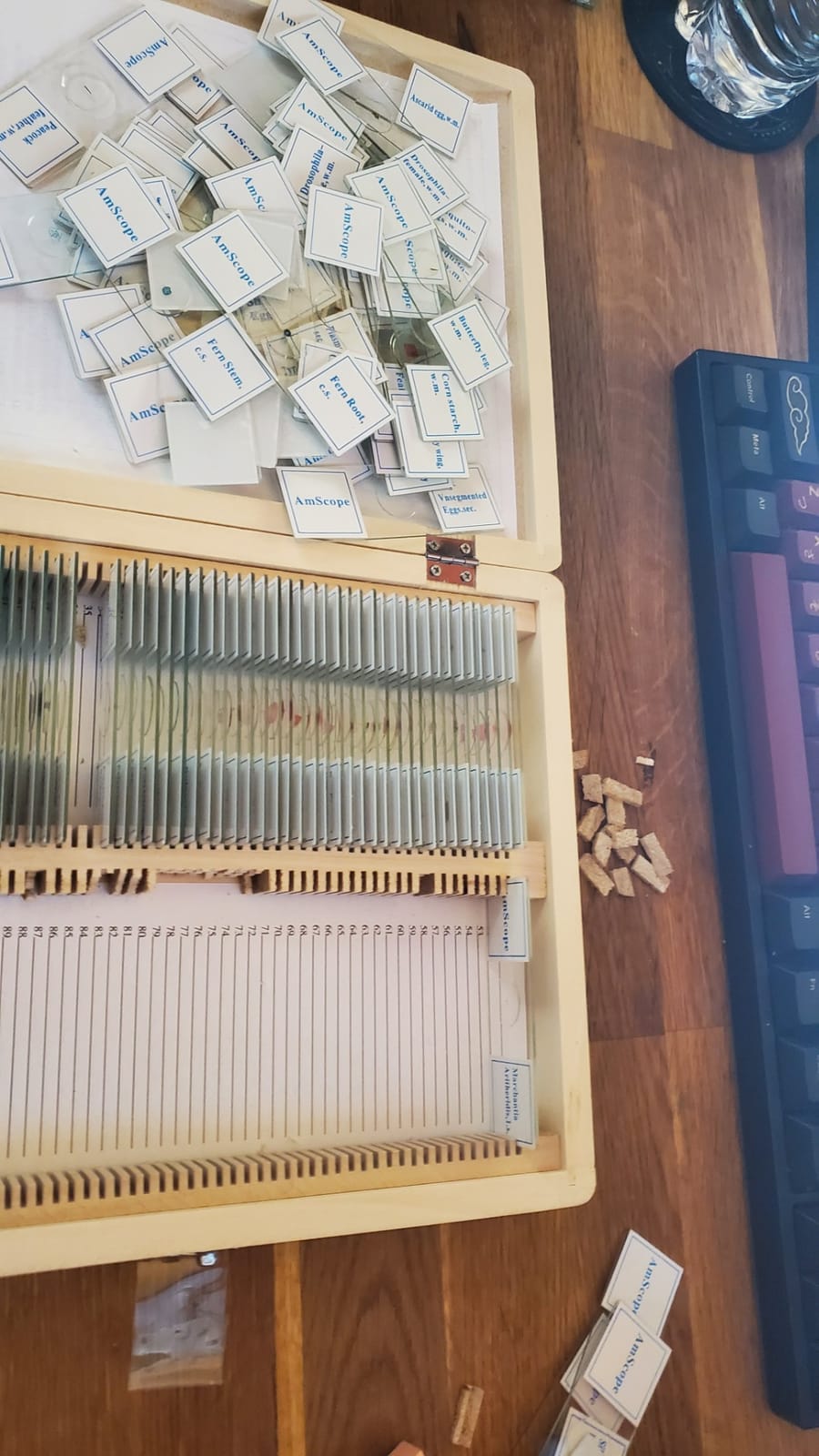
Preservation is the same cedar oil approach as the PS25, which means the same long service life. Reviewers describe these as professional-grade slides that hold up to repeated use, and the sealed mounting means there is nothing to prepare, nothing to stain, and no liquid to spill.
Weight is the real practical issue. At 1.9 pounds with the case, this is not a kit to hand to a six-year-old to carry to the table. It is a shelf set that an adult loads and unloads, which is exactly what makes it good for a shared family microscope where one person controls the slides.
How the wooden case changes daily use
A fitted case does two useful things. It keeps dust off the coverslips, which matters more than most people expect because a smudged coverslip is the most common reason a slide looks blurry. And it makes an inventory check instant, so when you are setting up for a co-op class you can see at a glance that you have all hundred.
The trade is that wooden cases can splinter if dropped, and forum reviewers have flagged this as a reason some families prefer plastic cases with young children. Keep the case on a shelf rather than in a backpack, and you avoid the issue entirely.
Is 100 slides better than 25 for a beginner?
For a first microscope, no. A beginner gets more out of twenty-five slides examined slowly than a hundred slides skimmed. The 100-slide sets make sense when you are covering a full scope and sequence in one year, when multiple children will work through the same case, or when you want the storage solved once and never again.
The 25-slide PS25 remains our overall recommendation. This is the deliberate upgrade for a family that has already used a smaller set and knows what they are missing.
6. USCAMEL 100 Glass Slides: The Best Set for Cell Biology and Mitosis
100 Prepared Microscope Slides with Specimens for Kids Adults – Bacterium, Fungus, Human Tissues, Mitosis, Plants, Insects, Animals Cells Samples for Biological Science Lab, School Students
100 glass slides
Mitosis and meiosis stages
Human tissues
Catalog guide
Pros
- Includes cell division stages other sets omit
- Human tissue coverage
- Glass slides with good optical quality
- Printed reference catalog included
- Suitable across education levels
Cons
- Some slides reported empty or defective
- Occasional smudging
- Box clasp is hard to open
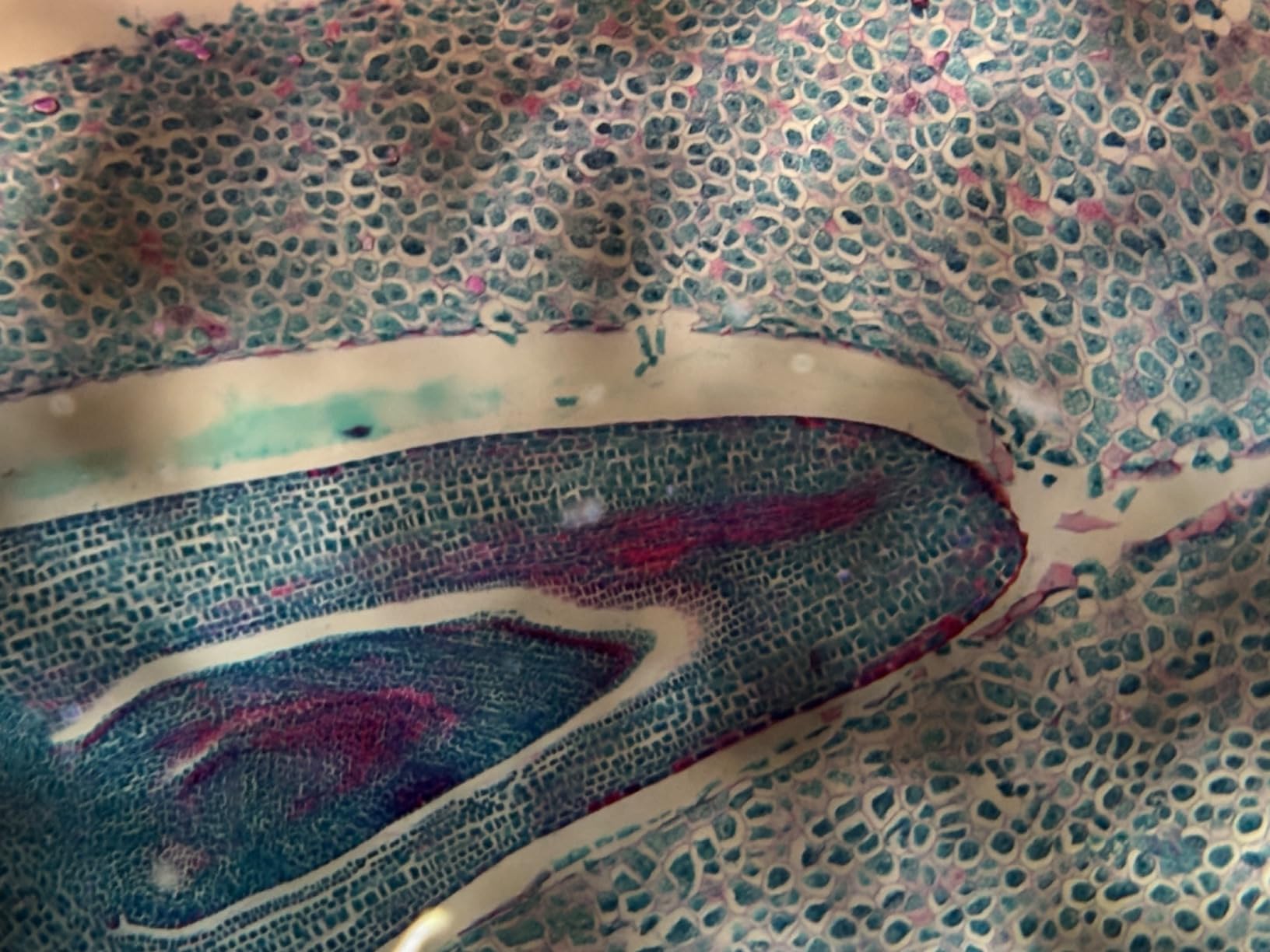
The USCAMEL set is 100 prepared glass slides covering bacterium, fungus, human tissues, mitosis, plants, insects and animal cells, and it is the one to buy when a cell biology unit is coming up. It is the only set in this roundup that explicitly includes mitotic and meiotic cell division stages.
That single feature changes what the set can be used for. A general biology set shows you what a cell looks like. A set with division stages lets you follow a cell through prophase, metaphase, anaphase and telophase, which is the actual lesson in a middle school or high school biology course. Nothing else here covers that.
Human tissue coverage is the other reason families pick this one. Combined with the bacterium and fungus slides, it gives a microbiology angle that most general sets skip, and the manufacturer describes it as usable from elementary through university level, which in practice means it does not go stale as the child advances.
Quality control is the honest weak point in buyer reports. Some reviewers mention slides arriving empty or defective, and occasional smudging on arrival. The count that matters is: check the slides against the included catalog the day the box opens, so any gaps are caught immediately rather than discovered mid-lesson.
The box clasp problem and how to avoid it
Several buyers report that the box clasp is difficult to open and suggest a screwdriver. That is a real annoyance and a genuine safety consideration if a child tries to force it. The practical fix is to open it once with a tool, then keep the set in a lidded container or a slide box and leave the original clasp alone.
Because this is a 100-slide set, storage is the deciding factor. Plan where it lives before you buy, because a glass set that lives on a shelf in a labeled box will still be in perfect order in three years and one that lives in a cupboard will too, but only if it is closed.
Who should buy this set and who should not
Buy it if a cell biology or human anatomy unit is on the calendar, if you are an adult hobbyist who wants to teach your own children, or if you want one set that grows with a child from elementary through high school. The forum complaint that prepared slide kits are fragmented, with some human tissue here and a blood smear from another seller, is exactly the problem this set is built to solve.
Skip it if you are still choosing your first microscope. The cell division slides need a scope that resolves detail properly, and on a cheap plastic-bodied kids microscope the difference between a good slide and a great slide is invisible.
7. DIY-SCIENCE 16-Slide Apologia Set: The Best Match for Apologia Biology Families
DIY-SCIENCE Prepared Microscope Slides Set for Apologia Biology, Pack of 16pcs Specimens Specifically for Biology Course (Apologia Slides)
16 glass slides
Matched to Apologia Biology
Rounded corners
Optical glass
Pros
- Built around one specific curriculum
- Optical glass with good clarity
- Well labeled and organized
- Sturdy plastic storage case
- Moisture-resistant packaging
Cons
- Only 16 slides
- Reports of missing or broken slides on arrival
- Narrow to a single course
This is a 16-slide optical glass set built specifically around the Apologia Biology course, and it is the pick for a family running that curriculum who wants slides that line up with the lessons instead of a general grab bag. The glass slides have rounded corners for safety.
Curriculum alignment is the entire value proposition. When a set is matched to a course, you can open the box during the cell lesson and know you have the slide the lesson expects. That saves you the most costly kind of time, which is the kind spent searching for a missing specimen an hour before science block.
Sixteen slides is genuinely small, and we would not oversell it. It works as a companion set that follows the syllabus rather than as a library a child can browse. If your child moves off that curriculum, the set loses most of its advantage.
What the packaging does well
The slides ship in moisture-resistant anti-fall packaging and a sturdy plastic storage case, which matters more than it sounds for a glass product. A slide that arrives cracked teaches nothing, and the rounded corners reduce the worst of a drop. Inspect the case on arrival anyway, because buyers have reported slides missing or damaged in the box.
Because the set is small, the storage problem solves itself. Sixteen slides fit in a single compartment drawer, and a child old enough for Apologia Biology is old enough to handle a slide by the edges with a reminder.
How to pair this with a general set
The strongest combination we can suggest is this set alongside one broad glass set such as the AmScope PS25 or the LAKWAR 120. The curriculum-matched slides handle the specific lessons; the general set supplies the extra material for independent exploration, science journaling and any topic the syllabus touches only briefly.
Families not using Apologia should skip this entirely and spend the same money on a general set instead. Sixteen slides matched to someone else scope and sequence is a poor buy, however good the glass is.
8. PROLEE 200 Glass Slides: The Best Set for Raw Specimen Variety
Prolee 200 Packs Microscope Slides, 100 Plants & 100 Animal Tissues Includes Labels and Case for Biological Science Education
200 glass slides
100 plant and 100 animal
Standard size
Rounded edges
Pros
- Largest prepared collection in this guide
- Balanced plant and animal coverage
- Standard 1 by 3 inch slides
- Multi-layer protective packaging
- Labels and specimen lists included
Cons
- Heavy at 3.63 pounds
- Costs more than most sets
- Overkill for basic homeschool use
The PROLEE pack is 200 prepared glass slides split into 100 plant and 100 animal specimens, and it is our pick when the question is simply how much distinct material you can get through one door. The slides are standard 1 by 3 inch with rounded edges, and specimen lists and labels are included.
The plant and animal split is deliberate and useful. A balanced set means a botany unit and a zoology unit can run in parallel without one starving the other, which is a real scheduling problem in a homeschool year where science topics tend to land in the same term.
Packaging is where this set stands out. Buyers single out the multi-layer protective construction, and for a 200-piece glass product that is not a minor feature. Large glass sets arriving damaged is a common complaint across this category, and this one appears to avoid it.
Is 200 slides too many for one family?
For a single child across a single year, yes, and we would not pretend otherwise. Two hundred slides at 1 inch by 3 inches is a serious volume, and without a system for finding and recording them, a set this size becomes a drawer of identical-looking glass that nobody opens again.
Where it earns its size is a shared resource. Two or three children at different ages, a co-op with more than one microscope on the table, or a parent who intends to keep it for a decade. The rounded edges also make it a more defensible choice than sharp-edged glass when a younger child is in the room.
How to avoid the drawer problem
Set up a slide index the day it arrives. Print the specimen list, cut it into strips, and file one strip in a labeled envelope per subject. Then set a rule that a child views no more than three new slides per session and draws one of them. That single rule is the difference between 200 slides being a resource and being clutter.
At 3.63 pounds the set is heavy to lift, so plan a shelf rather than a lap. If you want a large glass set that is easier to move around, the LAKWAR 120 covers the same ground at a lighter weight.
9. BoliOptics 25 Human Biology Slides: The Best Focused Set for Anatomy and Medical Interest
BoliOptics 25 Prepared Microscope Slides Human Biology Specimen Set Human Anatomy Organ Tissue Cells for Students Hobbyists Beginners Kids Homeschool Medical School, SL39901005
25 glass slides
Human organ tissue
Optical glass with coverslips
Labeled
Pros
- Focused entirely on human biology
- Quality optical glass slides
- Suitable for medical and biology students
- Labeled specimens
- Manufacturer satisfaction guarantee
Cons
- Only 25 slides
- No plant insect or general science material
- Fewer buyer reviews than the leaders
The BoliOptics set is 25 prepared optical glass slides dedicated to human anatomy, organ tissue and cells, and it is the pick when a child has a specific fascination with the body or a parent wants tissue slides without buying a full general biology set. The slides come labeled with coverslips already sealed.
Narrow focus is the feature. A general set gives you maybe a handful of human tissue slides among a hundred others. This set gives you twenty-five of them, which means an anatomy unit can run for weeks without running out of specimens or repeating the same tissue.
Because the set is human biology only, it makes an excellent second set rather than a first one. Pair it with a general set such as the AmScope PS25 and you have a full year of material between them, with the anatomy side covered properly.
Where this set earns its place in a homeschool year
Human anatomy sits naturally in a middle school physical science or biology unit, and it is one of the topics where a microscope genuinely changes understanding. A slide of heart muscle or lung tissue under 400x looks nothing like a textbook diagram, and that gap between picture and reality is where curiosity actually starts.
It also serves an adult who wants to study alongside their children. Several people in the microscopy forums describe buying comprehensive human tissue sets as an adult hobby and then teaching from them, and a 25-slide focused set is a manageable way to begin that.
Who should skip it
Skip it for a general science year. There are no plant slides, no insect slides, and nothing in the way of microorganisms, so a child who is working through a standard elementary science curriculum will exhaust it in a few sessions and have nothing for the other eight months.
Also weigh the small review base honestly. Seventy-seven reviews is a thin pool of evidence compared with the thousands behind the leaders in this roundup, so treat this as a well-targeted specialty purchase rather than a safe default.
10. DIY-SCIENCE 60 Lab-Grade Slides: The Best Set for Co-Ops and Classrooms
Microscope Slides with Specimens for Kids, 60 Lab-Grade Prepared Microscope Slides, Animal/Plant/Microbe/Tissue Samples, STEM Biology Kit for Homeschool, Classroom Labs & Science Education
60 lab-grade glass slides
Color-coded by course
Chart guide included
NGSS aligned
Pros
- Lab-grade glass at a mid-range set size
- Color-coded labels grouped by course
- Identification chart guide included
- Compatible with compound stereo digital and pocket scopes
- 120-day refund window
Cons
- Newer set with a smaller review base
- Costs more than basic plastic sets
This 60-slide lab-grade glass set covers plant, animal, insect, bacteria, algae, microbe, fungi, mammal and human tissue, and cell specimens, and it is the pick for a co-op leader, a classroom, or a family that wants one well-organized set that works with whatever microscope is on the table.
Color-coded labels grouped by course are the standout feature. Instead of sorting by brand or by box, slides are grouped so you can pull a whole topic at a time, and the included identification chart gives you the specimen name beside the image, which speeds up a lesson enormously when a parent is not a biologist.
It is also the most flexible set on compatibility. The manufacturer lists compound microscopes, stereo microscopes, USB digital microscopes and kids microscopes as compatible, which is unusual and genuinely useful when equipment varies between a home table and a co-op room.
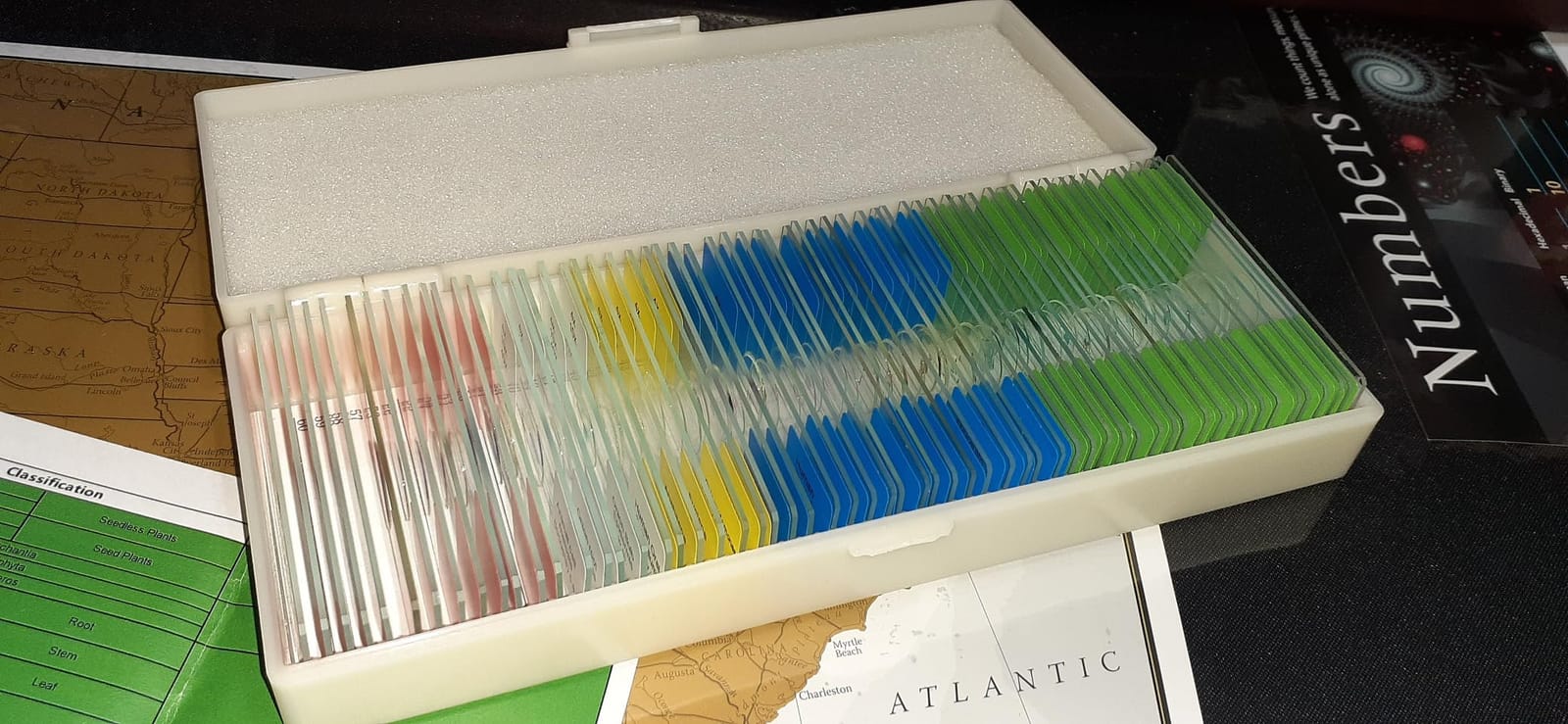
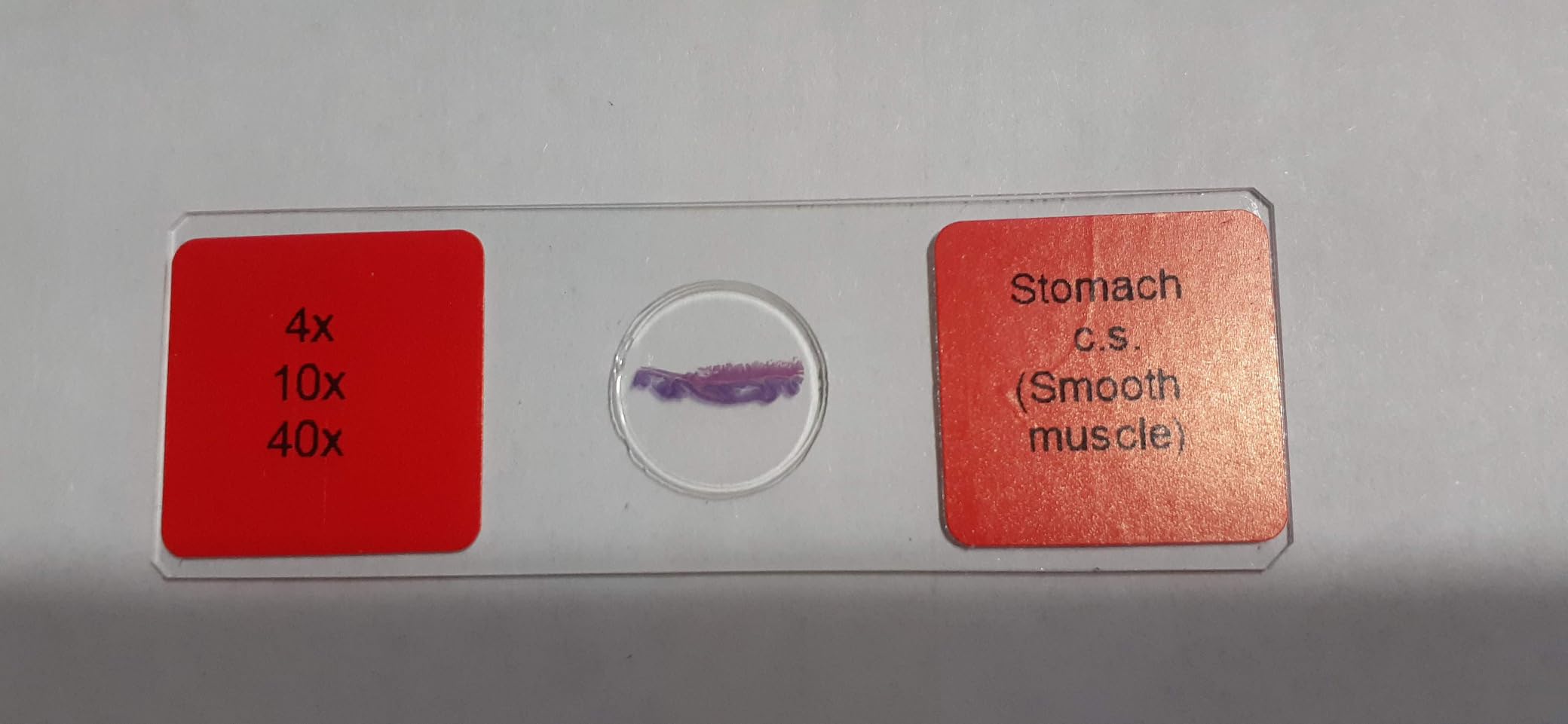
Sixty slides is a well-judged number for a shared resource. It is enough to rotate through a full term of weekly classes without repeating, light enough for an adult to load onto a stage, and small enough that a co-op of six to eight students can work through it in a term with everyone seeing every specimen.
The microbiology coverage is broader than anything else here, spanning bacteria, algae, microbe and fungi alongside the standard plant and animal material. For a unit on microbes or on classification kingdoms, that is the difference between covering the topic and skirting it.
Why this is built for shared use
Three details matter in a group setting and this set has all of them. The color coding lets a leader hand a group the same topic at the same time. The identification chart means an assistant who has never held a scope can still name what is on the screen. And a 120-day refund window gives a co-op treasurer room to resolve a problem after the fact rather than at the meeting.
For a co-op, the practical guidance is one set per two or three microscopes rather than one per child. Slides are not the bottleneck, microscope time is, so it makes more sense to have two or three sets going and rotate the groups than to buy for everyone.
Who should buy this one
Buy it if you are teaching a class, running a co-op table, or want a single set that covers microbiology as well as plants and animals. It is also a strong middle choice for a homeschool family between the plastic beginner sets and the large glass collections.
Be aware of the small review base. Sixty-five reviews is the smallest pool behind any set in this roundup, so while the rating is the highest here, we would treat the first few months of feedback as still accumulating. The stated NGSS alignment for K-12 makes it easy to line up with a published science standard rather than inventing your own sequence.
How to Choose a Microscope Slide Kit for Your Homeschool
The decision narrows to four questions: what material, how many, which specimens, and what microscope. Answer those and the kit picks itself. Everything below is the reasoning behind each answer, including the trade-offs we would accept and the ones we would not.
Glass or plastic slides: which material fits your child
Glass gives you sharper, brighter images and holds up to decades of handling. Plastic is safer for small children, cannot shatter, and costs less, but the image is softer and the slides can scratch over time, which is the specific complaint forum buyers raise about plastic sets.
Our rule is age-based. Under about seven, plastic every time. Between seven and eleven, plastic for the general set and glass for anything they handle under supervision. Twelve and up, glass, because at that point the difference in image quality is the difference between seeing cell structure and seeing a colored shape.
One practical note: optical quality and slide size are independent. A glass slide in a non-standard size can fit your scope worse than a plastic one in the standard size, so check the stage before you commit to either.
Prepared slide sets vs slide-making kits
Prepared sets are finished specimens, sealed and labeled, ready to view. Slide-making kits contain blank slides, coverslips, stains, tools and often a brine shrimp hatchery so your child mounts their own samples. They teach different things and the confusion between them is the single most common source of disappointment in this category.
Buy prepared slides if you want to cover anatomy, classification and tissue structure. Buy a slide-making kit if the goal is technique: pipetting, flattening a specimen, applying a coverslip at the correct angle, staining, and learning why a slide fogs or how air bubbles ruin an image. Many families find the making kit is the more valuable of the two, because technique transfers to everything afterwards.
A sensible order is prepared first, making kit second. Once a child knows what a good prepared slide looks like, they can work out what went wrong with their own.
How many slides you actually need for a full year
For one child, one microscope, one session a week, 25 to 40 slides is a comfortable year. A child looks at two or three slides per session and redraws one of them, which is 30 to 40 slides for the year including repeats.
For two or more children at different ages, one large set serves everyone in turn. For a co-op, plan two or three sets per table rather than one per student, because microscope time rather than slides is what limits how many students you can serve in an hour.
More slides is not automatically better. A hundred general slides with no indexing system becomes a drawer nobody opens, while twenty-five well-chosen slides get examined properly. Breadth of specimen type beats raw count every time.
Matching a slide kit to a compound or stereo microscope
Prepared tissue and cell slides need transmitted light, which means a compound microscope. A stereo microscope shines light from above and is built for opaque, three-dimensional objects, so it will not show you a mounted tissue section properly. A stereo scope is the right tool for insects, feathers, fabric, crystals, a leaf in three dimensions, and anything dissectable.
The best microscope for most homeschool families is a compound scope with mechanical stage clips and achromatic objectives, because that is what prepared slides are made for. Higher magnification does not matter as much as stage control, which is why many families find a mid-priced compound scope more useful than a cheap one with a large printed magnification number.
A stereo microscope changes the calculation. If your scope is a stereo model, prioritize insect and whole-specimen slides and skip the cell biology sets entirely, because you will not resolve what they contain.
Storing and labeling slides so the kit survives multiple school years
Prepared slides are effectively permanent, so storage is the only thing that determines whether you still have a full set in five years. Store them in the fitted case or a closed rigid box, on a shelf rather than in a bag, away from direct sunlight and heat.
Label as you go. A simple index of one card per slide number, filed in a sleeve with the set, turns a hundred anonymous glass rectangles into a searchable library and makes a missing slide obvious. Label the case itself with your family name and the year you started, which matters more than it sounds when a set passes to a co-op library or a second child.
Keep a separate plastic set as the throwaway set for wet mounts and self-collected samples. Mixing self-made wet slides into a prepared glass set is the fastest way to get mounting medium on slides that were supposed to stay clean.
Safety and handling with young children
Glass slides break into fragments sharp enough to cut. The simple rule that resolves most of this is to use plastic slides until a child is consistently careful, and to never let a child under seven handle a glass slide unsupervised.
Human tissue, blood and histology slides raise a different question. They are professionally fixed and sealed, and general handling at a home table is not a hazard, but the honest advice is to keep them for older children and to wash hands after handling. Skip any slide set that is not clearly sealed under a coverslip.
For stains and dyes in a slide-making kit, expect mess rather than danger. Work on a tray, keep staining bottles away from small children, and treat any cleanup as a supervised activity in itself. Wooden cases can splinter if dropped, so keep them on a shelf rather than in a school bag.
Matching kits to a homeschool biology curriculum
Start from your scope and sequence rather than from a kit. Look at the units you will actually teach this year and write down the specimen types they name: cells, plant structures, insects, human organs, microorganisms, cell division.
Then match by coverage. A curriculum that spends a term on cell biology needs a set with mitosis and meiosis stages, which almost no general kit includes. A curriculum with a human anatomy unit needs tissue slides, not a general set where anatomy is three slides out of a hundred. A botany-led year wants plant material, and the plant-heavy sets exist for exactly that reason.
Where a curriculum-matched set exists, it is worth the smaller size because it removes the searching. Where it does not, a broad set plus a specific second set for the weak topic serves most families better than any single kit. If your course comes with a microscope bundle, check what slides it already includes before buying, since many bundles ship a small plastic set that is fine to start with and worth replacing later.
For families sharing slides with a wider group, a note on presentation: if you are also building a visual science program, our picks for home slide projectors and slide projectors with audio cover the display side, and co-ops running earth science alongside biology will find our slide hammer set guide useful for rock splitting specimens.
Frequently Asked Questions
What are the best prepared microscope slides for kids?
The best prepared microscope slides for kids depend on age and budget. For an all-round glass set the AmScope PS25 leads our list, with 25 optical glass slides, cedar wood oil mounting and a fitted wooden case. For young children the DIY-SCIENCE 48 plastic set is safer and color-coded, and for cell biology the USCAMEL 100-slide set is the only one here that includes mitosis and meiosis stages. For a co-op or classroom the DIY-SCIENCE 60 lab-grade set is color-coded by course and works with compound, stereo, digital and pocket microscopes.
What is the best microscope for homeschooling?
For most homeschool families a compound light microscope with mechanical stage clips and achromat objectives is the best choice, because prepared tissue and cell slides need transmitted light to be seen properly. A stereo microscope suits opaque objects such as insects, feathers and dissectable specimens but will not show a mounted tissue section. Many parents on microscopy forums report seeing paramecium, rotifers, amoeba and blood cells clearly on an inexpensive compound scope, so magnification numbers matter less than stage control and optical quality.
What is the best microscope for school use?
A school-use microscope should have a mechanical stage, a built-in LED light source and at least three objective lenses, since those determine whether prepared slides sit flat and stay in focus. Buying a scope bundled with prepared and blank slides is often more economical than assembling parts separately. Whatever scope you choose, pair it with a general prepared set such as the AmScope PS25 so there is something to look at on day one.
What can I use instead of microscope slides?
Several options work instead of prepared slides. A slide-making kit gives you blank slides, coverslips, stains and tools to mount your own specimens. A stereo or pocket microscope lets you examine transparent or small objects directly with no slide at all, which is why families report them as a genuinely useful alternative. A USB digital microscope or a phone camera adapter removes the need for glass entirely, and self-collected pond water in a petri dish gives you live moving specimens that no prepared slide can match.
Are glass or plastic microscope slides better for kids?
Glass gives sharper and brighter images and lasts for decades, while plastic will not shatter and is safer for children under about seven but produces a softer image and can scratch over time. Our rule is plastic under seven, plastic for general work and glass under supervision from seven to eleven, and glass from twelve upward. Slide size matters independently of material, so confirm the dimensions fit your microscope stage before buying.
How many microscope slides do I need for homeschool?
For one child with one microscope and one session a week, 25 to 40 slides covers a full year comfortably, since a child typically views two or three per session and redraws one. Two or more children at different ages can share a single larger set, and a co-op should plan two or three sets per table rather than one per student. A hundred slides is only useful if you build an index so the set can be searched and rotated.
Are prepared microscope slides safe for young children?
Properly prepared slides are sealed under a coverslip with mounting medium, so they are stable to handle, but glass edges are the main risk for young children and we recommend plastic until a child is consistently careful. Human tissue and blood slides are best reserved for older children, with hand washing afterwards. Avoid any slide that is not clearly sealed, and supervise closely when a wooden storage case is used, since dropped cases can splinter.
Our Verdict: The Microscope Slide Kits We Would Buy First
If we were choosing one set for a family starting out, we would buy the AmScope PS25. Twenty-five optical glass slides, cedar oil mounting, labeled specimens and a fitted wooden case, backed by the largest review history in this guide, is the combination we trust most to survive a decade of use by more than one child.
Add the DIY-SCIENCE 48 plastic set as a safe, cheap companion for younger children, and add the USCAMEL 100-slide set only when a cell biology or human anatomy unit actually comes up. Families running Apologia Biology should take the curriculum-matched 16-slide set instead of a general one. Co-op leaders should start with the DIY-SCIENCE 60 lab-grade set, where the color coding by course does more work than any amount of extra slide count.
Pick from these ten based on the age of the child and the units on your calendar, and you will avoid the fragmented buying pattern that leads families to own some of this and some of that. Updated in October 2026.