
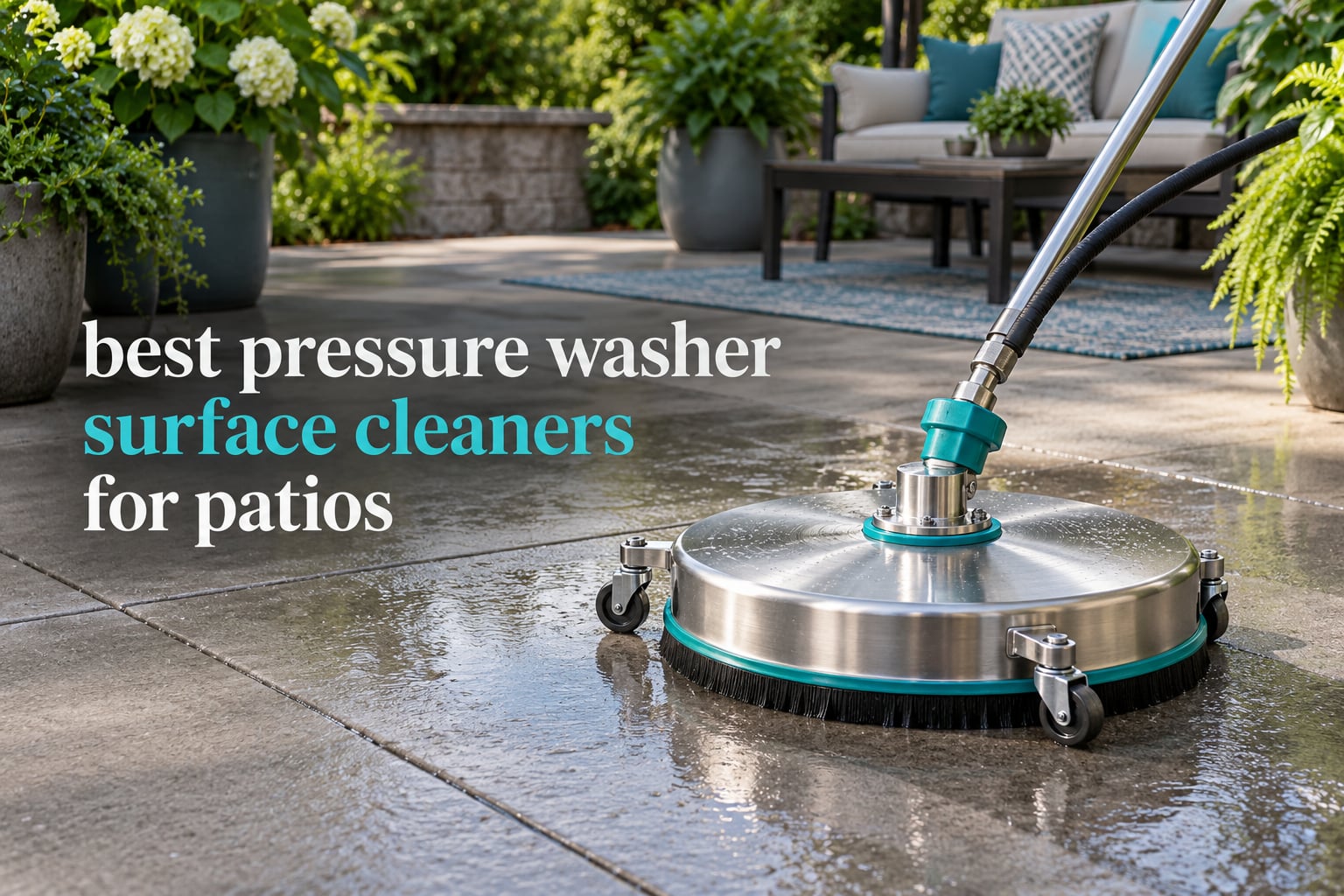
A pressure washer surface cleaner is a round, hooded attachment that bolts onto your wand at the 1/4-inch quick-connect and spins two angled jets inside a fixed-height shroud. On a patio it lays down an even, stripe-free path instead of the narrow band a lance leaves behind, and the skirt keeps the overspray contained.
That fixed height is the whole point. Hand washing a patio means holding a trigger at a constant angle for an hour, and the second you tire the stripes show. A surface cleaner is worth it for that reason alone on any flat surface over roughly 100 square feet.
On the pressure question, for a standard concrete or paver patio you want roughly 2,000 to 3,000 PSI and at least 2 GPM of flow. Past 3,000 PSI you risk etching new mortar joints, washing the joint sand out of pavers, or stripping a sealer, and on wood decking you should stay far lower.
We spent time with all ten attachments below, read the spec sheets rather than the marketing copy, and weighed each one against patio surfaces specifically instead of driveways. Every pick has a stated PSI range, a flow rating where the manufacturer publishes one, and a real note about what it cannot do. Specs and listings were checked in October 2026.
Table of Contents
Top 3 Pressure Washer Surface Cleaners (October 2026)

Karcher 15 inch Surface Cleaner
- 15 inch path
- 3200 PSI max
- 2.7 GPM
- sealed bearing
- 90 day warranty

GreenWorks 15 inch Surface Cleaner
- 15 inch path
- 3100 PSI max
- 3.1 GPM
- wand included
- 3 year warranty

Biswing 18 inch Surface Cleaner
- 18 inch path
- up to 4000 PSI
- 3.7 GPM
- stainless and brass
- two wands
Quick Comparison of Every Cleaner in This Roundup
All ten are rotary surface cleaners, so each spins jets at a fixed height. Read the flow rate column carefully before you buy. Width is how fast you cover ground, not how hard the water hits.
| Product | Specifications | Action |
|---|---|---|
| Karcher 15 inch Surface Cleaner |
|
Check Latest Price |
| GreenWorks 15 inch Surface Cleaner |
|
Check Latest Price |
 LidoDola 14 inch Surface Cleaner LidoDola 14 inch Surface Cleaner |
|
Check Latest Price |
| Biswing 18 inch Surface Cleaner |
|
Check Latest Price |
 Westinghouse 16.5 inch Surface Cleaner Westinghouse 16.5 inch Surface Cleaner |
|
Check Latest Price |
 JANZ 17 inch Surface Cleaner JANZ 17 inch Surface Cleaner |
|
Check Latest Price |
 Tool Daily 18 inch Surface Cleaner Tool Daily 18 inch Surface Cleaner |
|
Check Latest Price |
 Hourleey 14 inch Surface Cleaner Hourleey 14 inch Surface Cleaner |
|
Check Latest Price |
 MEKOH 20 inch Surface Cleaner MEKOH 20 inch Surface Cleaner |
|
Check Latest Price |
 MEKOH 16.5 inch Surface Cleaner MEKOH 16.5 inch Surface Cleaner |
|
Check Latest Price |
1. Karcher 15 inch Surface Cleaner, Best Overall for a Patio
Kärcher Pressure Washer 15″ Surface Cleaner Suitable for 2600 to 3200 PSI
15 inch path
Max 3200 PSI
2.7 GPM
3.8 lb
Sealed metal bearing
Pros
- Fixed nozzle height removes zebra striping
- Splash skirt keeps you and nearby plants dry
- Sealed bearing and brass fittings outlast sleeve-style designs
- Works on concrete
- brick
- stucco and composite decking
- Lightest stainless option at 3.8 lb
Cons
- Plastic retaining nuts need periodic re-tightening
- Plastic housing can creep out of alignment on long jobs
- Cannot reach the strip beside walls and posts
This is the one I keep coming back to for patios. At 4.6 stars across more than 13,000 reviews it has the deepest owner history in the group, and that history is specific: people describe finishing a driveway in roughly half the time they used to with a wand, and not seeing a single stripe at the end.
The build details matter more than the marketing does. It uses a sealed metal bearing rather than the sleeve-and-washer arrangement common on cheaper heads, and the fittings are brass and stainless. Those two choices are why it is still turning smoothly after a season of use.
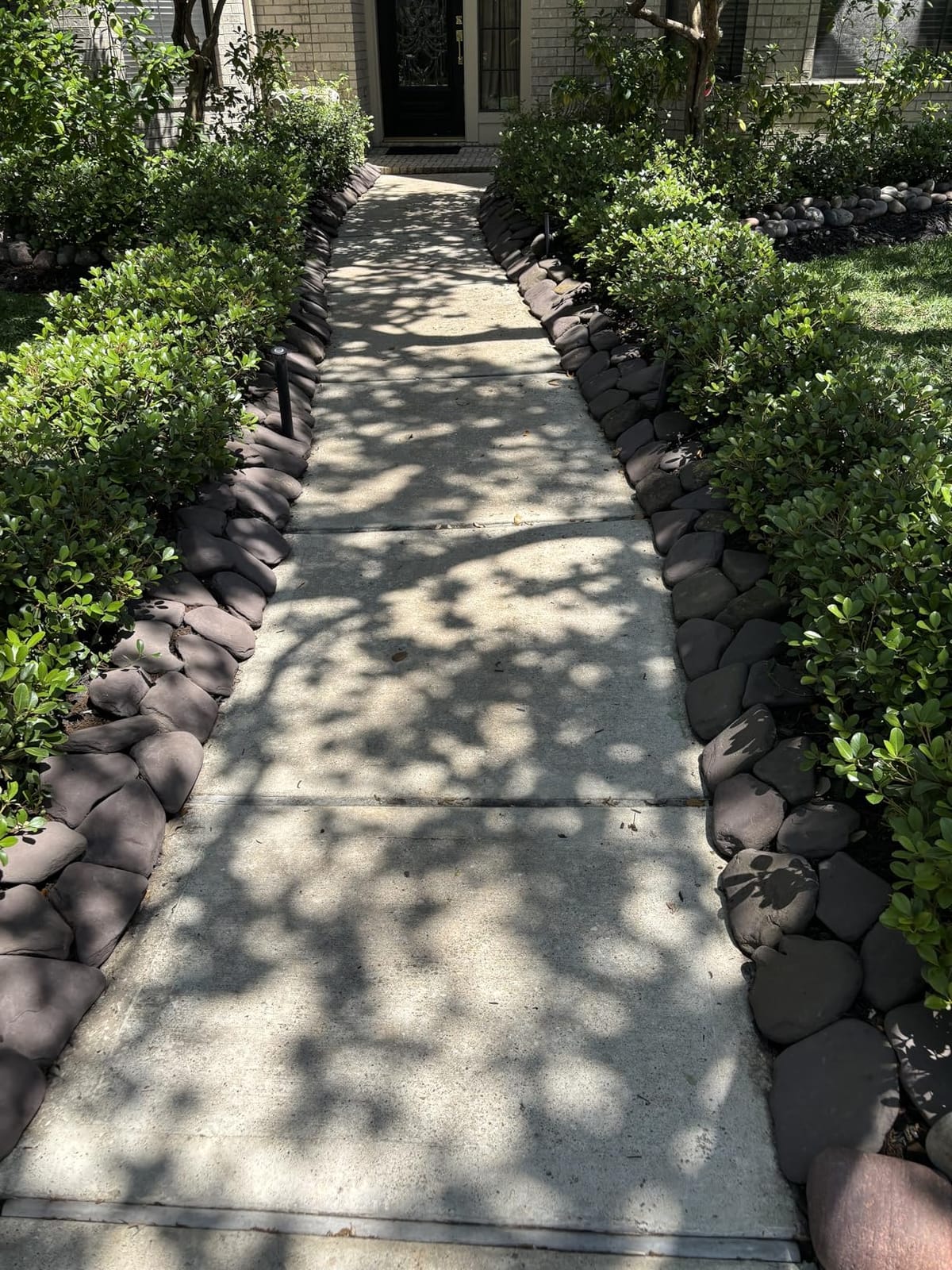
Owners are consistent about two maintenance items. The plastic nuts that hold the rotating assembly can loosen over time and need a check every few jobs, and the plastic housing has been reported to slowly rotate out of alignment during long sessions. Neither is a deal breaker, but both are worth a glance before you start.
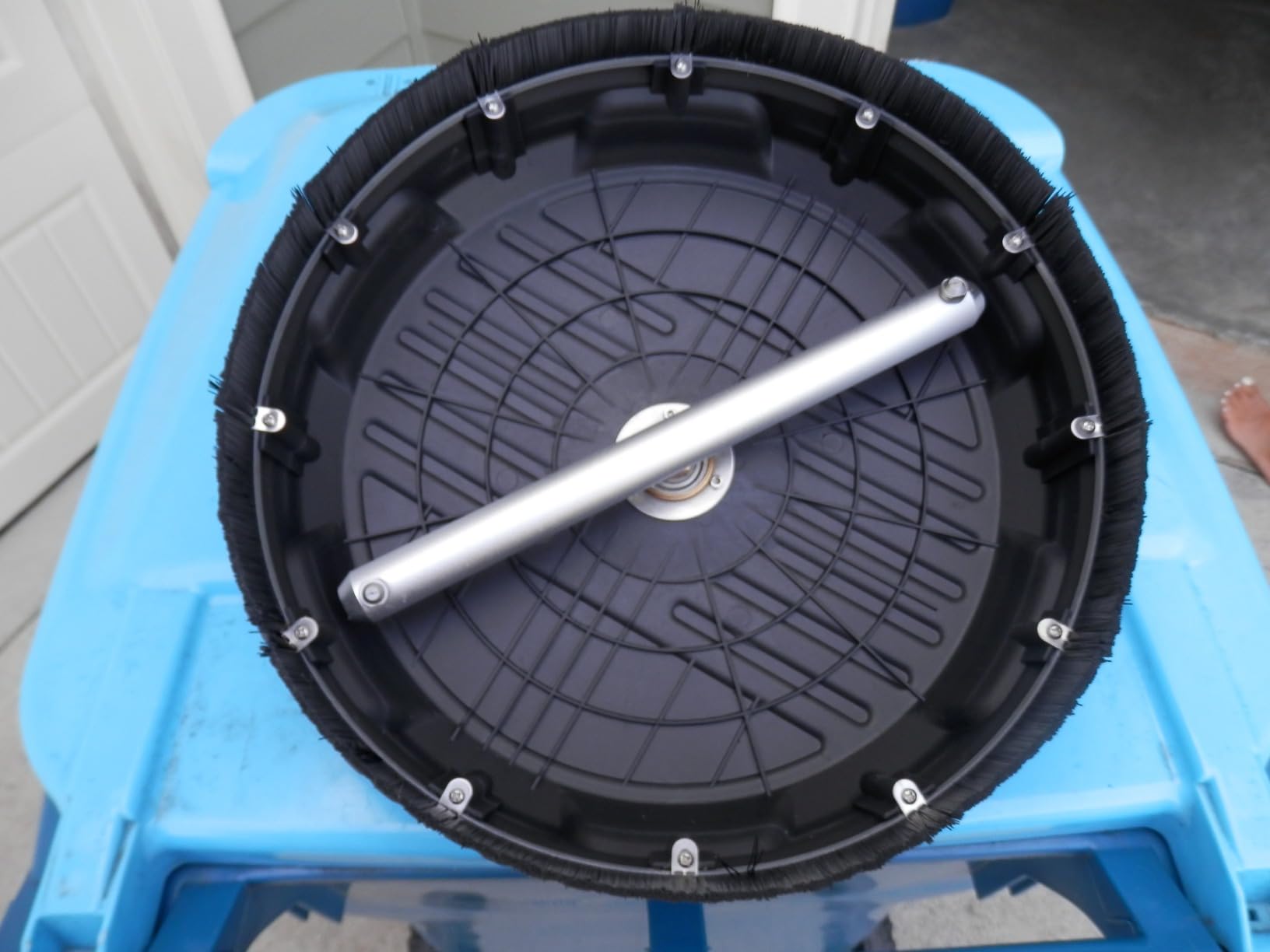
One number to keep in mind: the advertised 15 inch deck gives you a closer to 12 inch working path from the spray bar. You also need a separate wand pass for the last half inch beside a wall or a post, because the skirt physically cannot get there.
What you should know before you buy it?
The 2.7 GPM ceiling is the real limit. Paired with a washer in the 2,600 to 3,200 PSI band, the results are excellent. Hooked to a small 1,800 PSI electric unit, reviewers report noticeably weaker performance, so pair it with a mid-output machine.
Who it suits and who it does not?
It suits a homeowner with a mid-grade gas washer and a concrete or paver patio who wants a reliable, light head with a name brand behind it. It does not suit someone restoring a badly neglected surface in one afternoon, since the fixed-height spray is a finishing and maintenance tool.
2. GreenWorks 15 inch Surface Cleaner, Best Value
GreenWorks 5210902 15″ Extension Included Surface Cleaner, Green
15 inch path
Max 3100 PSI
3.1 GPM
5.4 lb
3 year warranty
Pros
- Largest flow rating in the roundup at 3.1 GPM
- Three year warranty is the longest here
- Extension wand included in the box
- Quarter inch quick connect fits most washers straight out of the box
Cons
- Lowest star rating here at 4.3
- Around 7 percent one-star feedback on durability and fit
- Included wand is only 12 inch
- which means bending for taller users
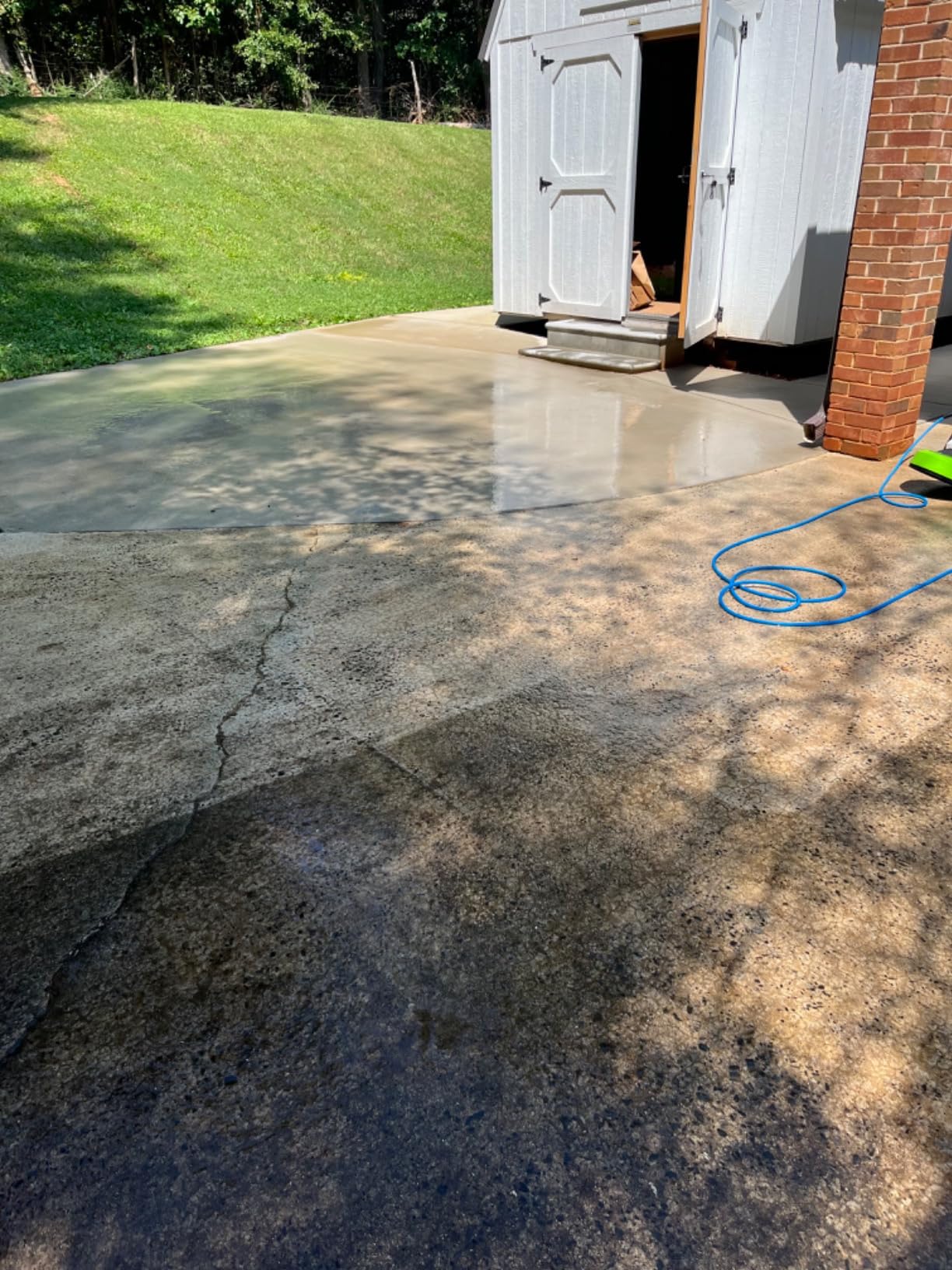
Flow rate is what makes a surface cleaner work on a patio, and this one publishes the best number in the group. At 3.1 GPM it moves a lot of water across a 15 inch path, which is exactly what you want for rinsing loosened grime off joint lines rather than just moving dirt around.
The warranty is the sleeper feature. Three years from the manufacturer beats the 90 day consumer warranty on the Karcher and the 180 day limited warranty on the Westinghouse, and for an attachment that lives in a damp shed that difference adds up.
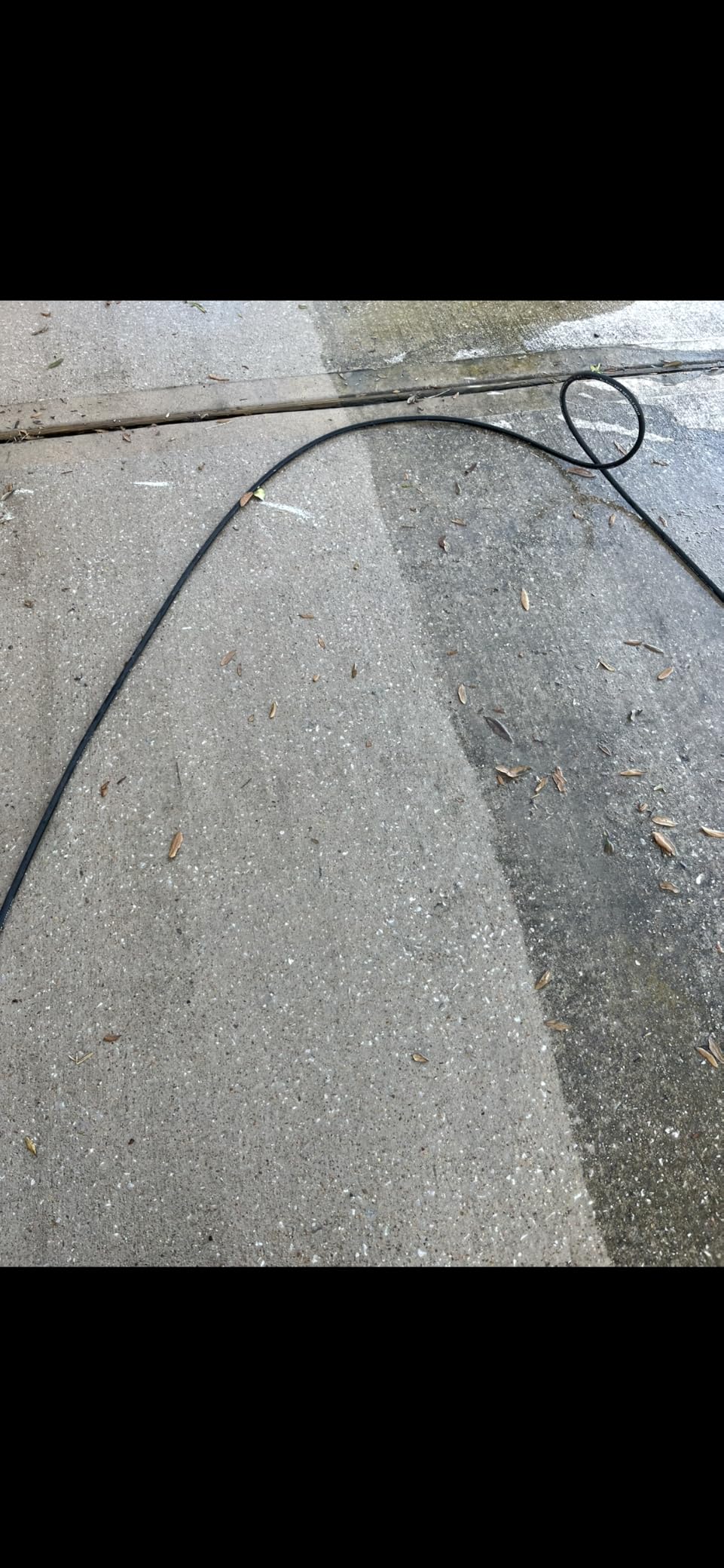
The 4.3 star average is the weakest here, and roughly 7 percent of reviews are one star. Those complaints cluster around durability and fitment on a minority of units, so if you are hard on your tools, budget for a bearing swap or pick a stainless alternative.
The included wand is 12 inch, which is fine for a seated patio job and punishing on a large one if you are tall. Adding a longer wand later is easy, but plan for it if back strain is already familiar.
What you should know before you buy it?
It suits gas and electric machines comfortably, which is unusual for a head this size. At 3100 PSI and 3.1 GPM it has room to breathe, and you do not have to hunt for a high-output machine to make it perform.
Who it suits and who it does not?
It suits a first-time buyer who wants the longest warranty and the best flow figure in the group without stepping up to a heavy stainless head. It does not suit someone who cares about the feel of the housing as much as the numbers.
3. LidoDola 14 inch Surface Cleaner, Best for Small Patios
LidoDola 14” Pressure Washer Surface Cleaner, Power Washer Accessory
14 inch path
4000 PSI max
Stainless steel body
3.5 kg
Four wheels
Pros
- Weighted stainless base resists lifting under pressure
- Four wheels glide with little effort on flat concrete
- Accepts 2000 to 4000 PSI from gas or electric machines
- Accessory bundle includes wands
- nozzles
- O-rings and an inlet filter
- Fourteen inches is easy to maneuver between planters and steps
Cons
- Listed weight of 3.5 kg is heavier than most 14 inch heads
- Splash skirt still cannot reach corners or steps
- Edges need a separate wand pass
Fourteen inches sounds modest next to the 18 and 20 inch heads here, and that is exactly why I like it for patios. A 20 inch footprint is awkward when a patio is broken up by a step, a planter, or a post in the middle, and this one threads through those gaps without rearranging your whole afternoon.
The build is better than the size suggests. Stainless steel body, a heavy duty bearing, and a weighted base that does not lift when the jets spin up. Across nearly 5,000 reviews the value consensus is consistent: people coming from cheap plastic heads see the difference on the first patio.
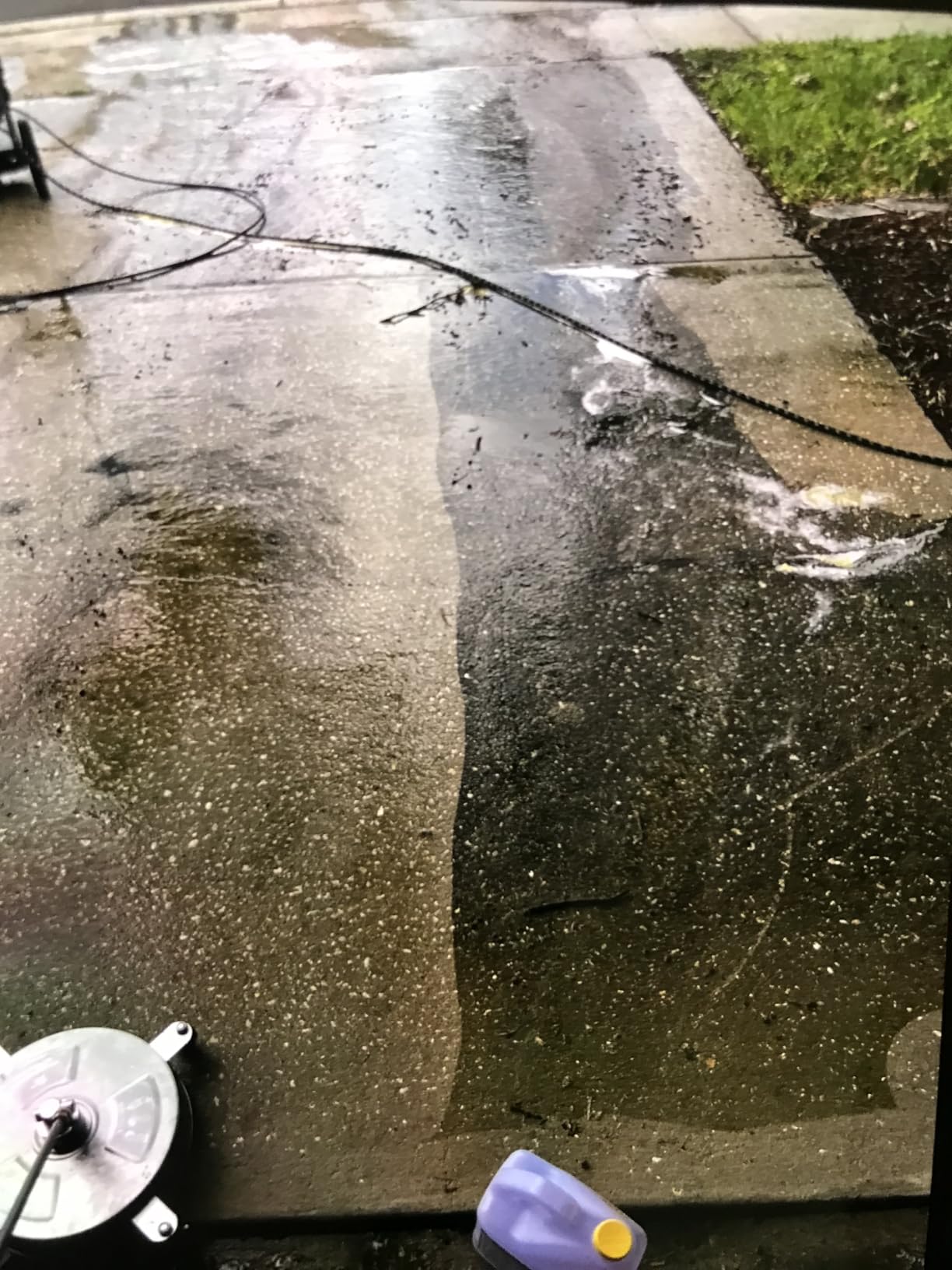
The accessory bundle is unusually generous. Two extension wands, two replacement nozzles, two O-rings, an inlet filter, thread seal tape and a nozzle cleaning tool, so the two things that usually need ordering after delivery are already in the box.
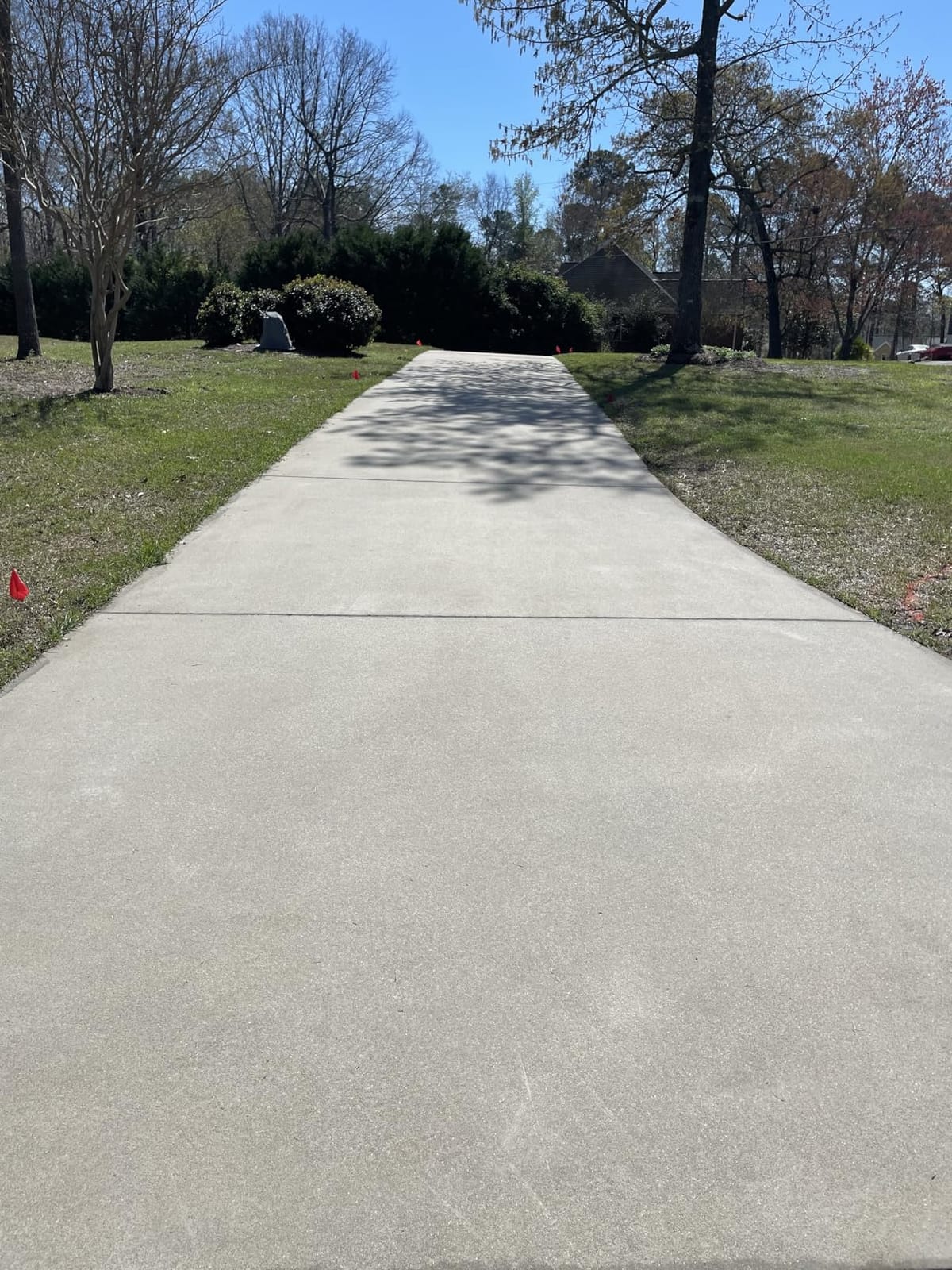
The one complaint that repeats is about the perimeter, and it applies to every head in this roundup. Edges, corners and the base of steps still get finished with a spray wand.
What you should know before you buy it?
Rated for 2000 to 4000 PSI across gas and electric machines, which makes it one of the few heads here that works well on an electric washer without an apology. The anti-clog inlet filter is worth keeping clean if you have grit between the pavers.
Who it suits and who it does not?
It suits anyone cleaning a patio that is small, oddly shaped, or crowded by furniture and planting. It does not suit a long straight driveway where a wider head would cover ground faster.
4. Biswing 18 inch Surface Cleaner, Best for Large Patios
Biswing 18″ Pressure Washer Surface Cleaner with 4 Wheels, Stainless Steel Power Washer Accessory for Driveways Sidewalks Patios Cleaning, 1/4″ Quick Connector, 2 Extension Wand Attachments, 4000 PSI
18 inch path
Rated up to 4000 PSI
3.7 GPM
6.6 lb
Two 17 inch wands
Pros
- Stainless steel and brass throughout resists corrosion
- Two 17 inch wands take a lot of the bend out of a long job
- Built in inlet filter blocks impurity blockages
- Reduces cleaning time by up to 60 percent against a plain spray nozzle
- Handles up to 3.7 GPM of flow
Cons
- Splits pressure and flow across two nozzles so heavy restoration still needs a turbo tip
- Fine thread connector may need a separate quarter inch adapter
- Best as a maintenance tool rather than a one-time deep clean
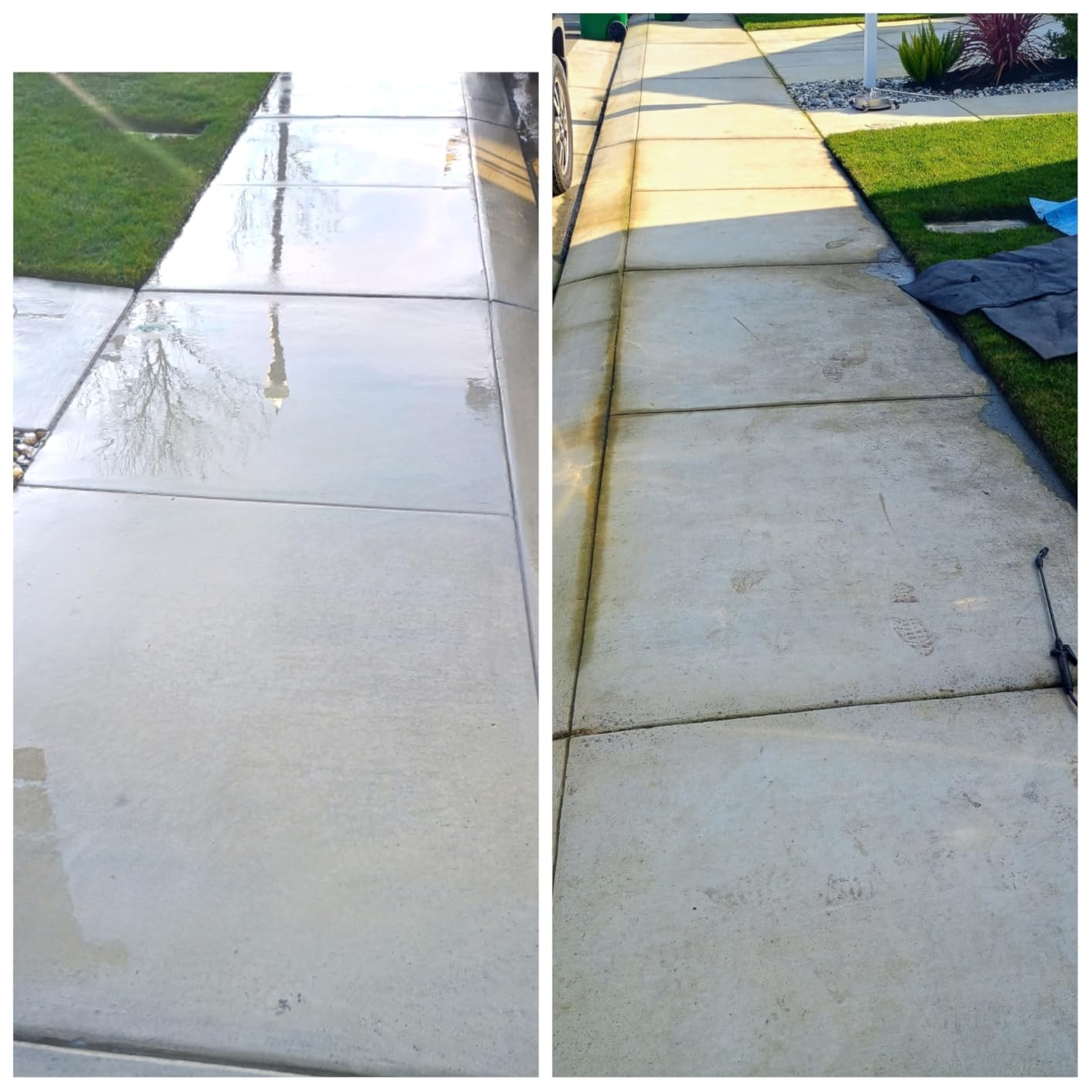
This is the pick for a big open patio. An 18 inch commercial grade path with 3.7 GPM of flow capacity is built for volume, and owners with large flat areas describe turning multi-hour jobs into two.
The two 17 inch extension wands matter more than they sound. On a wide patio you walk a lot of ground, and the extra reach takes real pressure off the lower back compared with working off the gun alone.
Understand what a surface cleaner is not. It divides your machine’s pressure and flow between two spinning nozzles, which is why the result is even and why a stubborn spot still wants a turbo nozzle. Treat it as a maintenance and finishing head for a surface that is already reasonably clean.
One practical warning: the fine thread quick plug does not suit every pressure washer gun, and the manufacturer tells you to buy an adapter coupler separately if it does not thread in cleanly.
What you should know before you buy it?
Results improve noticeably with a high-flow gas machine. On a low-output washer an 18 inch head can feel slower than a smaller one, because width is not power. Check your GPM before you commit to this size.
Who it suits and who it does not?
It suits someone with a large patio, a pool deck, or a long driveway and a gas washer with real flow behind it. It does not suit a small patio, where the extra weight and width cost you maneuverability you will never recover.
5. Westinghouse 16.5 inch Surface Cleaner, Best for High Pressure Machines
Westinghouse Universal 16.5” Pressure Washer Surface Cleaner Attachment – Stainless Steel – 4400 Max PSI, 1/4” Connector – for Gas and Electric Pressure Washers
16.5 inch path
4400 PSI max
Stainless steel body
Four casters
180 day warranty
Pros
- Highest rating in the roundup at 4.7 stars with 82 percent five-star feedback
- Stainless steel body resists corrosion and still looks new after long jobs
- Large sealed center bearing does not leak
- Four casters and a perimeter brush skirt contain spray well
- Headroom to 4400 PSI for higher output machines
Cons
- Noticeably weaker results on a washer around 2200 PSI
- Skirt cannot reach within an inch of walls and edges
- Faint streaking if passes are not overlapped or moved slowly
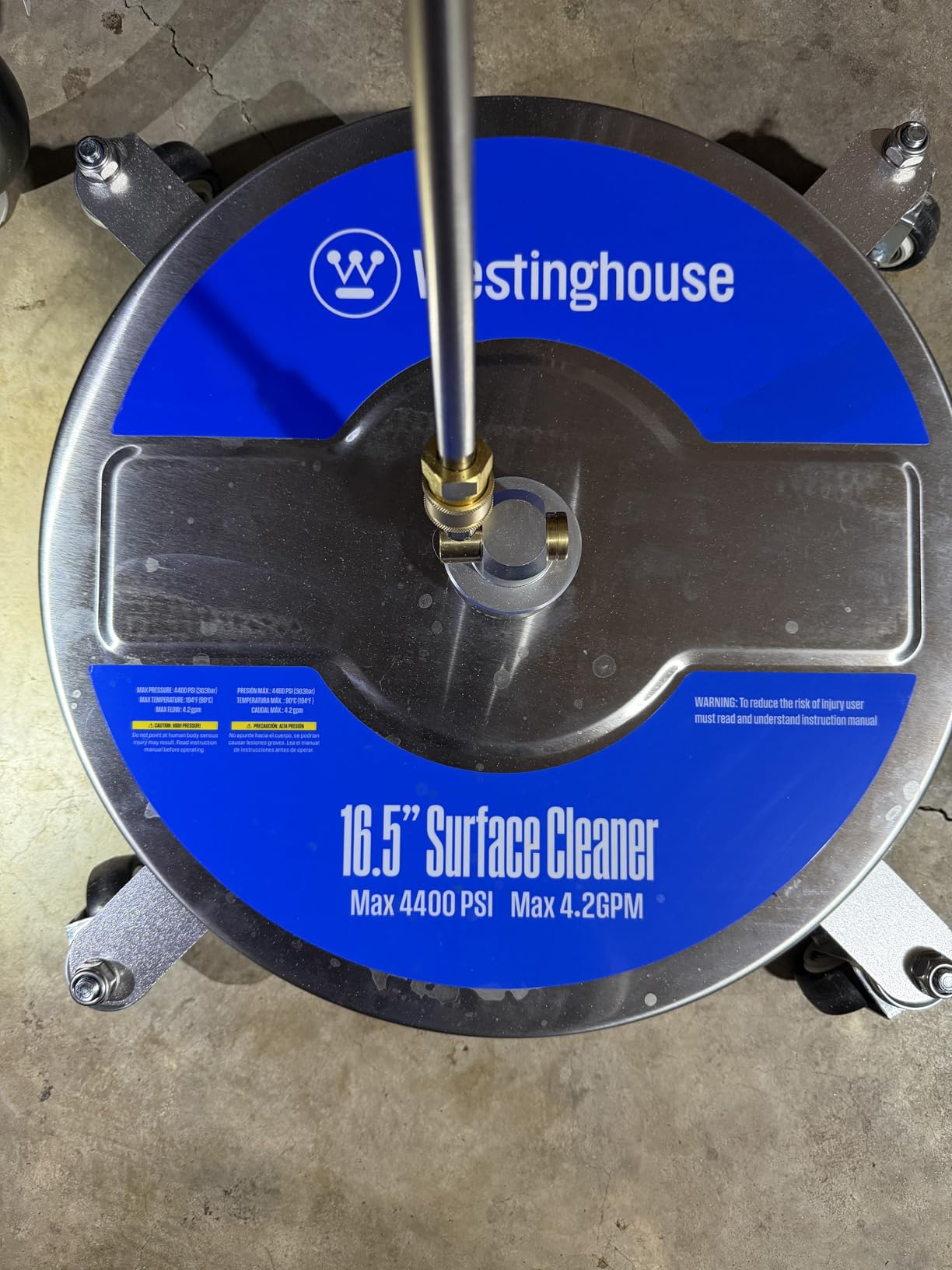
The 4.7 star average is the highest here, with 82 percent of reviews at five stars. Owners upgrading from plastic heads point at the same three things: the stainless body, the casters that roll smoothly over broom finish concrete, and the sealed center bearing.
The 4400 PSI ceiling is the differentiator. Every other stainless head here tops out at 4000 PSI, which means this one has headroom if you upgrade your washer later without buying a new attachment.
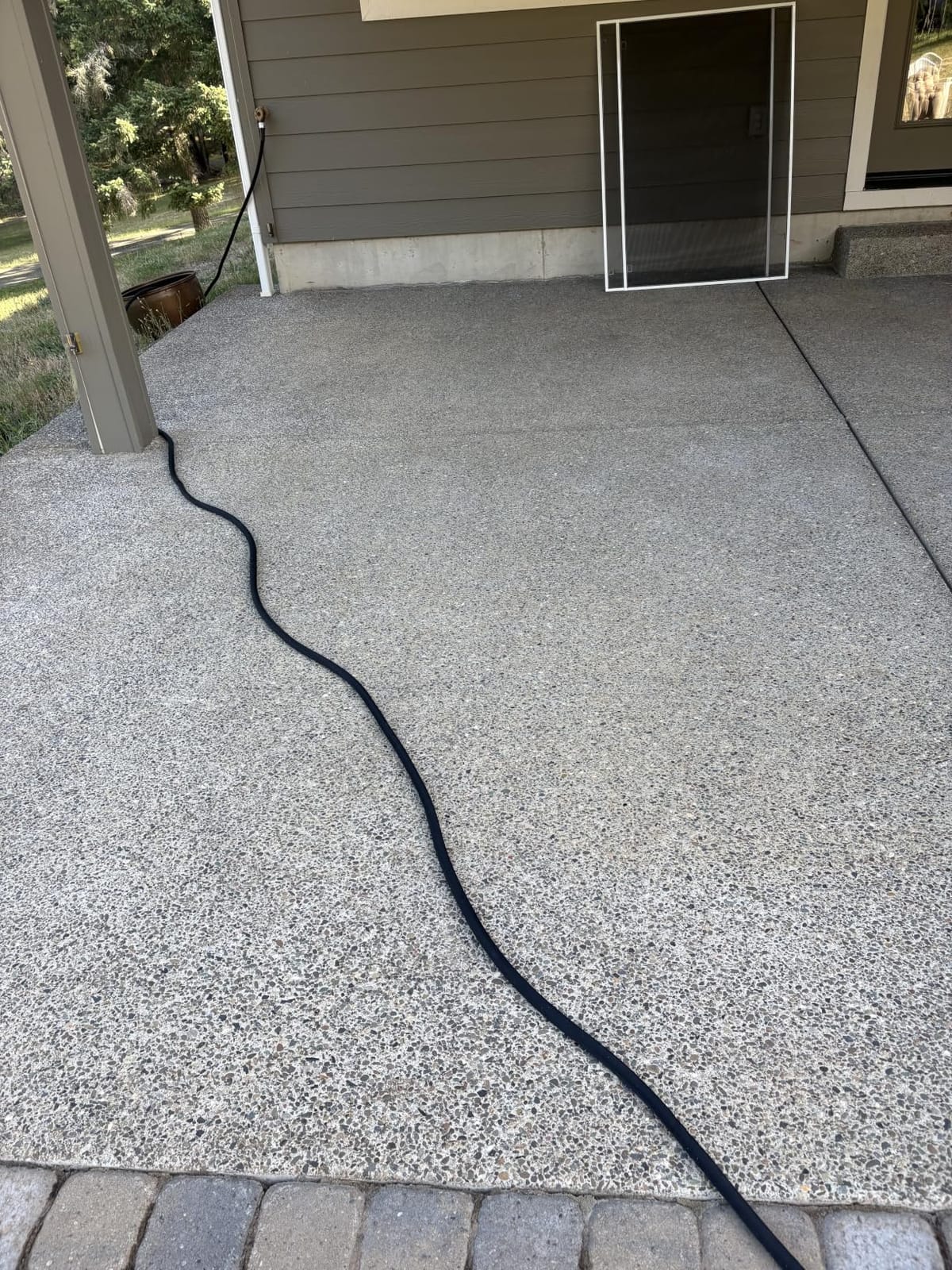
Machine pairing matters more here than anywhere else in the list. Owners on roughly 2200 to 2700 PSI report weaker results, while those at 3200 PSI and up describe uniformly even passes. Do not buy this for a small electric machine.
The perimeter brush skirt does a better job of holding spray back than a plain rubber flap, which matters on a patio bordered by windows, cars, or a neighbor’s fence.
What you should know before you buy it?
The 180 day limited warranty is longer than the 90 day on the Karcher and shorter than the three years on the GreenWorks. It comes from a century-old American brand, and the warranty length is the one thing worth reading closely on the listing.
Who it suits and who it does not?
It suits an owner with a gas washer at 3200 PSI or above who wants the best-rated head in the group and a stainless body that survives storage. It does not suit an electric washer owner, where the flow figure works against it.
6. JANZ 17 inch Surface Cleaner, Best for Gas Pressure Washers
JANZ 17” Pressure Washer Surface Cleaner
17 inch path
4000 PSI max
3.7 GPM
4.51 kg
Stainless steel body
Pros
- Seventeen inch path with dual spinning jets cleans up to six times faster than a spray nozzle
- Heavy enough that it does not rise under pressure
- Four universal wheels and good nozzle height clearance are gentle on concrete
- Works well on both 3200 to 3400 PSI and 4 GPM machines
- Accessory kit includes wands
- spare nozzles
- zero-degree tips
- O-rings and a nozzle cleaner
Cons
- Does not lift paint
- rust stains or heavy organic growth on its own
- Loosened debris still has to be rinsed with a spray wand
- A few units arrived with jets blocked by machining chaff
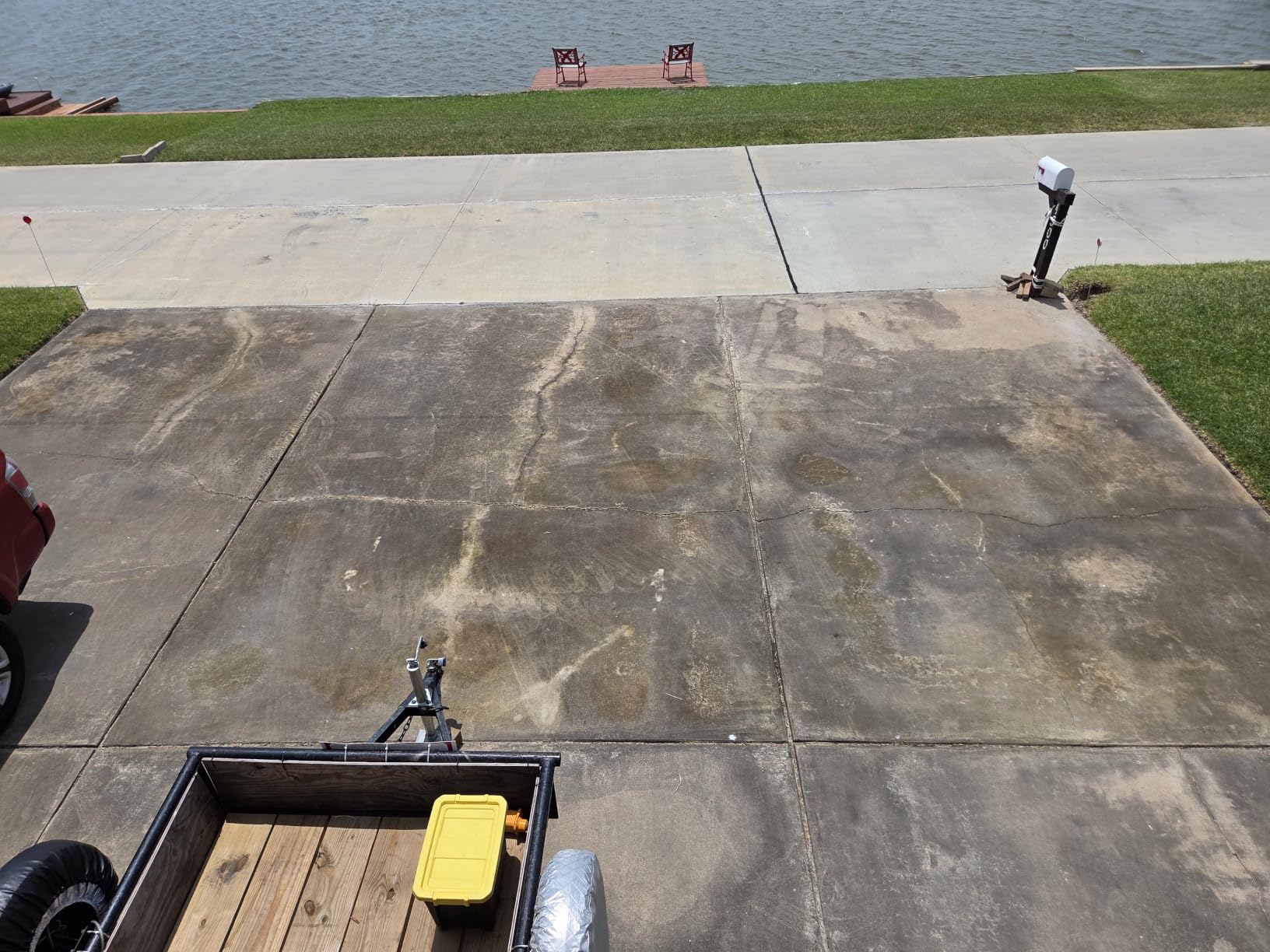
This head sits in the sweet spot of the roundup. Seventeen inches is wide enough to be efficient on an open patio, and 4000 PSI with 3.7 GPM of flow capacity covers everything from a mid gas washer up to a 4 GPM machine without a fight.
Owners often compare it favorably to units sold at big box home improvement stores, on performance rather than on the label. The nozzle height clearance is the detail that earns that comparison, because a taller skirt keeps the jets off the slab and reduces the chance of marking the surface.
There is one genuine ambiguity in the listing you should know about. The feature list says it works with gas and electric machines rated 2000 to 4000 PSI and 1.8 to 3.7 GPM, while the review summary repeatedly states it should not be used with electric washers. Treat the machine range as the spec and electric as untested.
Checked the jets out of the box. A few units arrive with openings blocked by metal chaff from machining, which is easy to clear with the included cleaning tool but worth doing before the first pass.
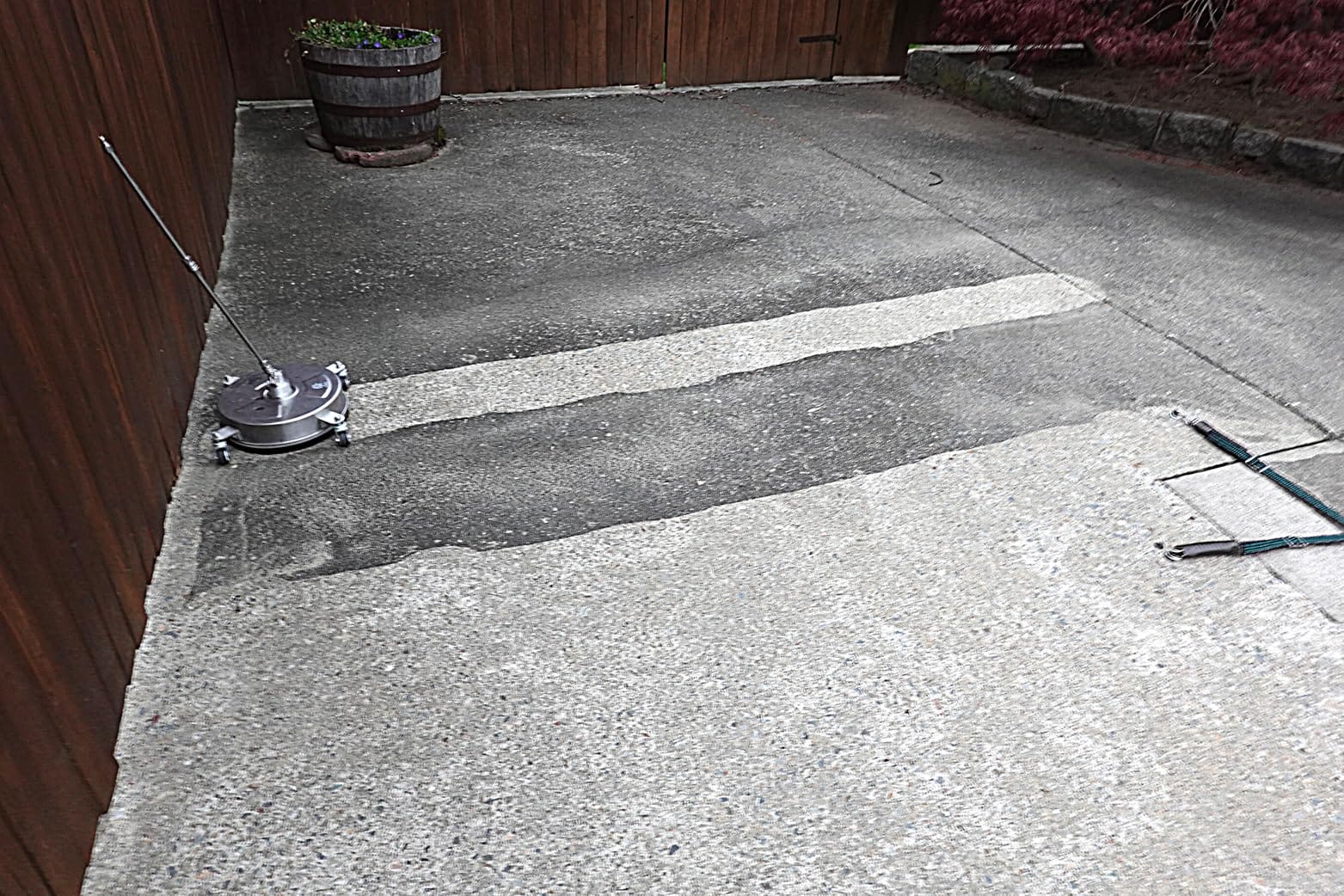
What you should know before you buy it?
It cannot do chemical work on its own. Paint, rust staining, and organic growth need a pre-treatment, and everything it loosens still has to be rinsed away with a standard spray wand afterwards.
Who it suits and who it does not?
It suits a gas washer owner with a mid to large patio who wants a gentle, even clean without risking etched concrete. It does not suit anyone hoping one attachment will handle a heavily soiled or newly stained patio.
7. Tool Daily 18 inch Surface Cleaner, Best for Splash Control
Tool Daily 18 Inch Surface Cleaner for Pressure Washer with 4 Wheels
18 inch path
3600 PSI max
8.2 lb
Four swivel wheels
Bristle skirt
Pros
- Flexible bristle skirt protects nearby surfaces and stops splash coming back at you
- Four 360 degree wheels glide easily and cut fatigue
- Threaded 17.5 inch wands connect securely to prevent leaks and joint spinning
- Cleaning needles included for clearing sand from the nozzles
- Consistent streak free results on concrete
- patios and sidewalks
Cons
- Heaviest unit here at 8.2 lb
- which tires you on long jobs
- Nozzles clog with sand so an inline filter is worth adding
- Cannot clean the strip right against a wall
Patios are the one place a splash skirt matters more than a driveway. When you are working next to a window, a screen door, or a garden bed, water coming back at you is the difference between a pleasant afternoon and a wet one. This head uses a flexible bristle skirt rather than a plain flap, and that is the reason to pick it.
The threaded wand connections are also a step up. Two 17.5 inch wands that screw together rather than push together are less likely to leak or spin at the joint halfway through a patio.
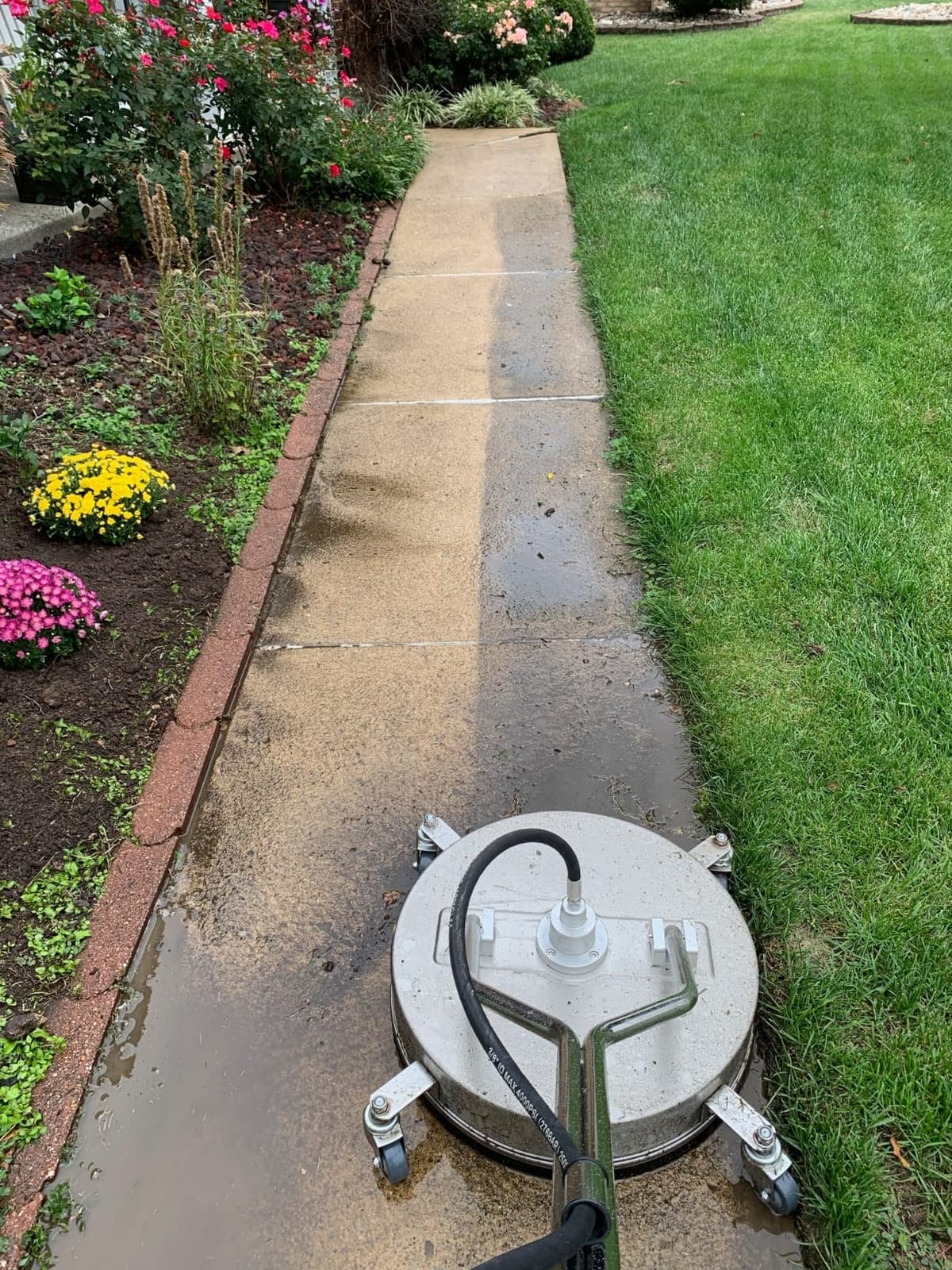
The trade-off is weight, and it is a real one at 8.2 lb. On a large flat area that is manageable with the wheels, but on a patio broken up by steps and posts you will be lifting this thing repeatedly.
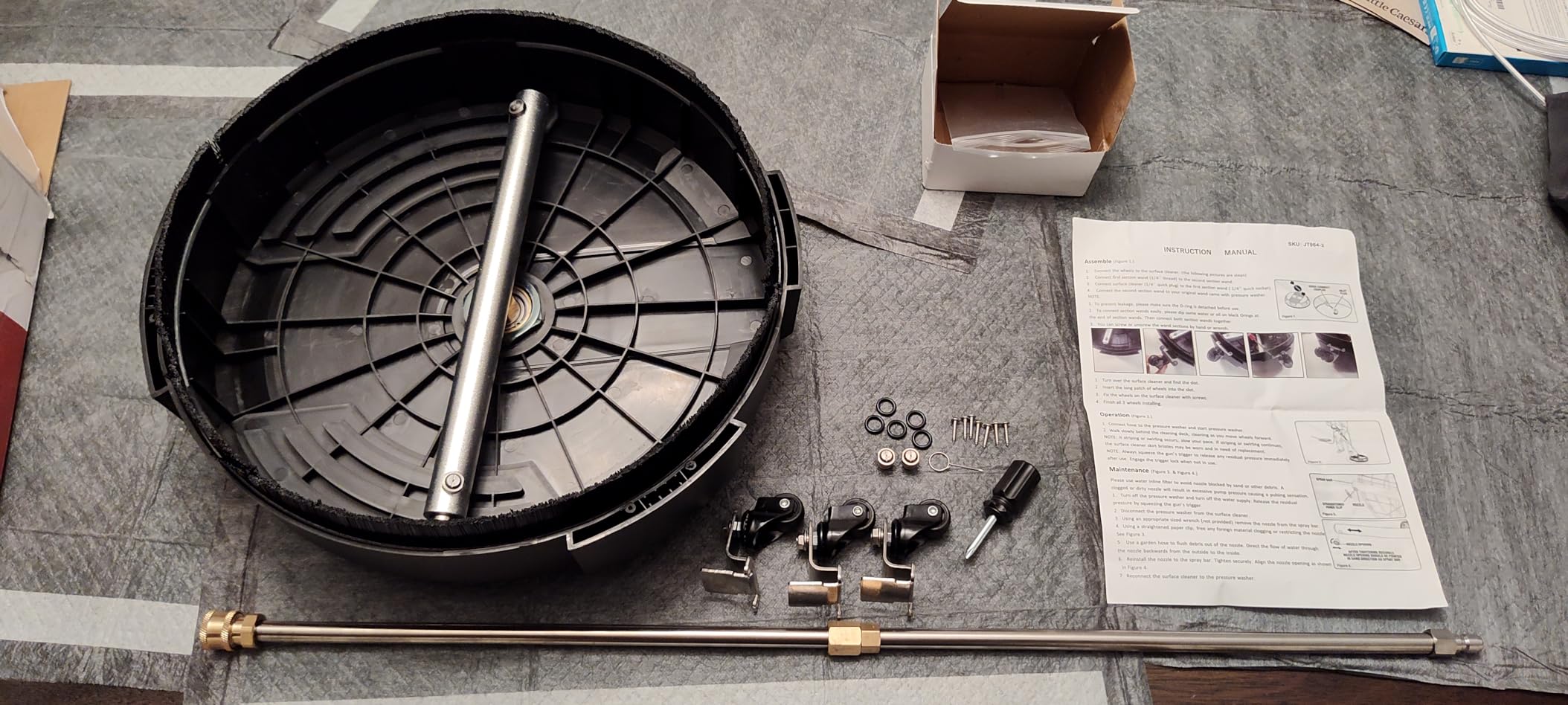
Keep an inline water filter on the inlet if your pavers have sand between them. Reviewers flag nozzle clogging with sand often enough to plan for it, and the included cleaning needles clear the jets when it happens.
What you should know before you buy it?
At 3600 PSI this suits mid to high gas washers. Pair it with a low-output electric machine and the 18 inch path will feel slow rather than powerful, because width is coverage, not pressure.
Who it suits and who it does not?
It suits someone cleaning a patio bordered by windows, doors, cars, or delicate planting who is willing to accept extra weight for a drier working environment. It does not suit a small patio or anyone who struggles with heavy tools.
8. Hourleey 14 inch Surface Cleaner, Budget Pick
Hourleey 14″ Pressure Washer Surface Cleaner, Stainless Steel Surface Cleaner with 4 Wheels for Concrete, Patio, Sidewalk, Deck, Pathway 1/4″ Quick Connector, 2 Extension Wand, 4000 PSI
14 inch path
2000 to 4000 PSI range
3.41 kg
Ball bearing casters
Pros
- Lowest cost in the roundup and still a stainless steel body
- Ball bearing casters roll very easily and reduce fatigue
- Owners report a two-car driveway and sidewalk done in about 20 minutes
- No stripes or streaks on even finishes
- Attaches and detaches quickly for storage
Cons
- Narrowest head here so large patios need more passes
- Weak on low pressure machines with some buyers seeing swirl marks at 2500 PSI
- Loosened dirt still needs rinsing with a wide-angle tip
This is the cheapest stainless steel head in the group and it does not behave like a cheap one. Across 1,709 reviews the praise is consistent: smooth ball bearing casters, no striping on a clean surface, and dramatic time savings on flat concrete.
The manufacturer recommends a washer of 2500 PSI or above, and reviewers back that up. At 1800 to 2500 PSI some buyers saw swirl marks on a dirty surface, which tells you the head is fine but the machine is underpowered for it.
Technique matters more here than with the wider heads. Owners get the best result working on the pull stroke, where the spinning jets trail behind the head rather than driving into the dirt ahead of it.
As always, the head loosens dirt rather than removing it. A wide-angle spray tip finishes the rinse, and the strips next to walls and inside corners need a wand.
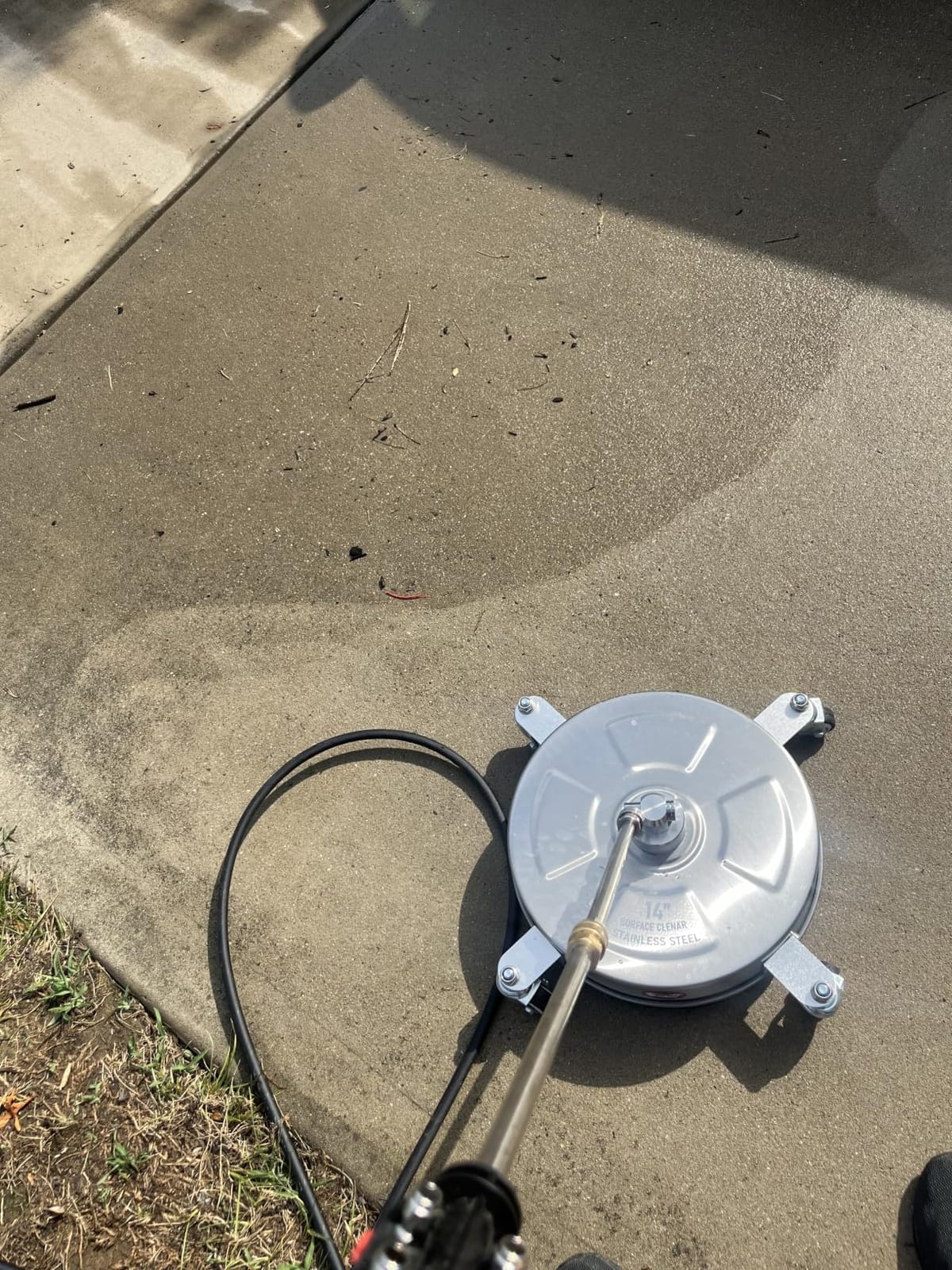
What you should know before you buy it?
At 14 inches measured wheel to wheel, this is the narrowest option here. That is a feature on a small patio and a drawback on anything long, because you will make roughly a third more passes than with an 18 inch head.
Who it suits and who it does not?
It suits a first-time owner who wants a stainless head with a working bearing at the lowest entry point, and who has a washer of 2500 PSI or better. It does not suit someone with a small electric machine or a very large patio.
9. MEKOH 20 inch Surface Cleaner, Widest Cleaning Path
MEKOH 20” Heavy-Duty Pressure Washer Surface Cleaner with Wheels, 4500PSI
20 inch path
4500 PSI max
4 GPM
7.86 kg
Two adjustable handles
Pros
- Widest cleaning path in the roundup at 20 inches
- Two angle-adjustable handles let you push it with both hands
- Changeable nozzles switch between power washing and soft washing
- Solid brass fittings and a fully sealed bearing
- Handles up to 4500 PSI and 4 GPM and works with cold
- hot or soap water
Cons
- Heaviest unit here at 7.86 kg
- Sold as an attachment only with no pressure washer included
- Large footprint will not maneuver in tight corners
Twenty inches and 4 GPM of flow capacity is the largest combination in this roundup, and the twin angle-adjustable handles are what make it usable. You push it two-handed, which takes a lot of the load off your shoulders over a long patio.
The changeable nozzles are the feature nobody advertises properly. Switch the jet pattern and you can move from a power washing pattern to a soft washing pattern, which is how you use detergent without shredding a sealed surface. It also runs with cold, hot, or soapy water.
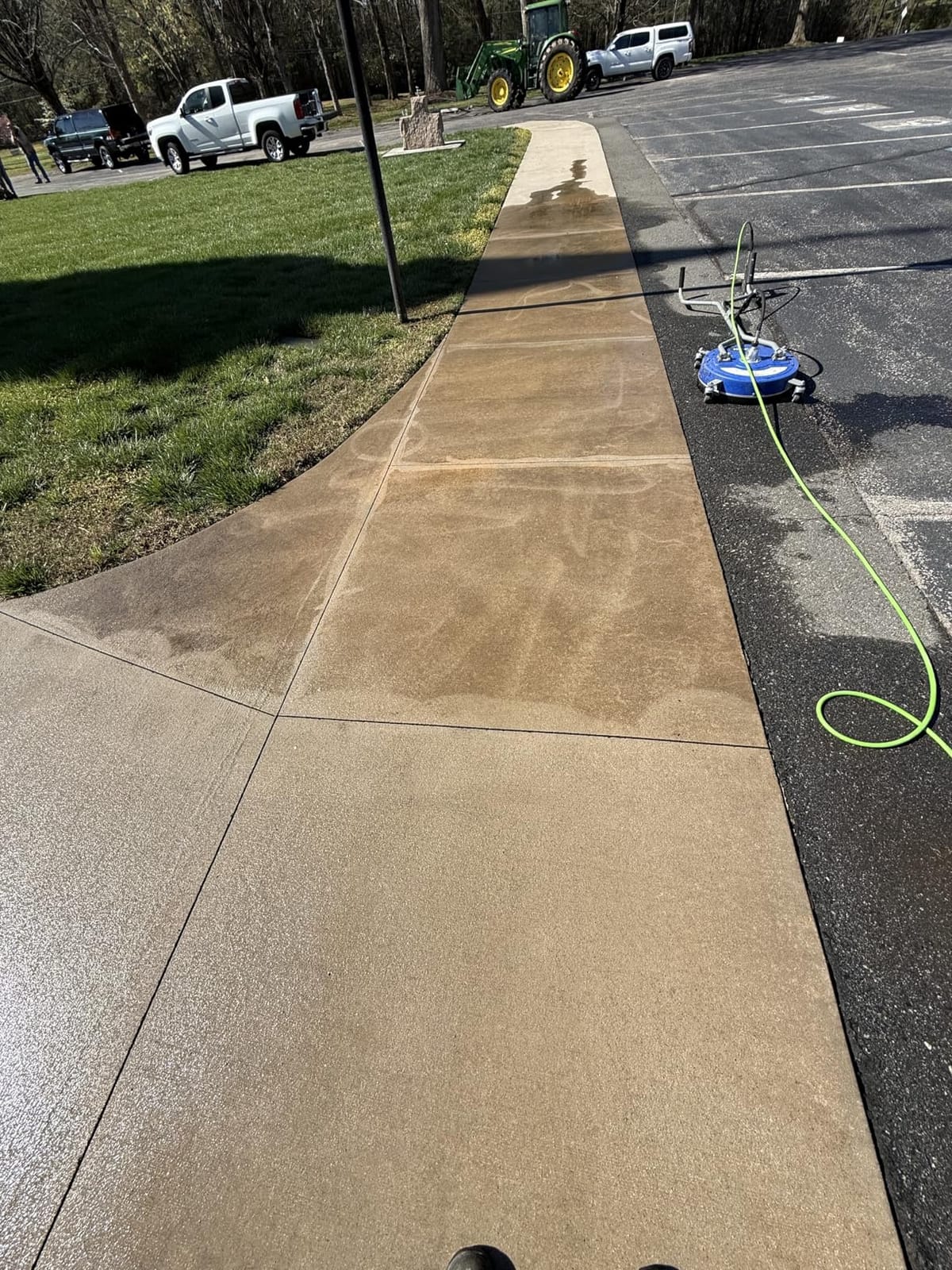
Be clear about what this is. It is an attachment, sold without a pressure washer, and at 7.86 kg it is the heaviest unit here. The wide wheels handle the weight well on open concrete, but this is not the tool for a patio full of steps.
The housing is a lightweight polypropylene rather than solid stainless, which is how the maker keeps the weight manageable at this size. Expect it to feel lighter in the hand and less rigid in a long service life.
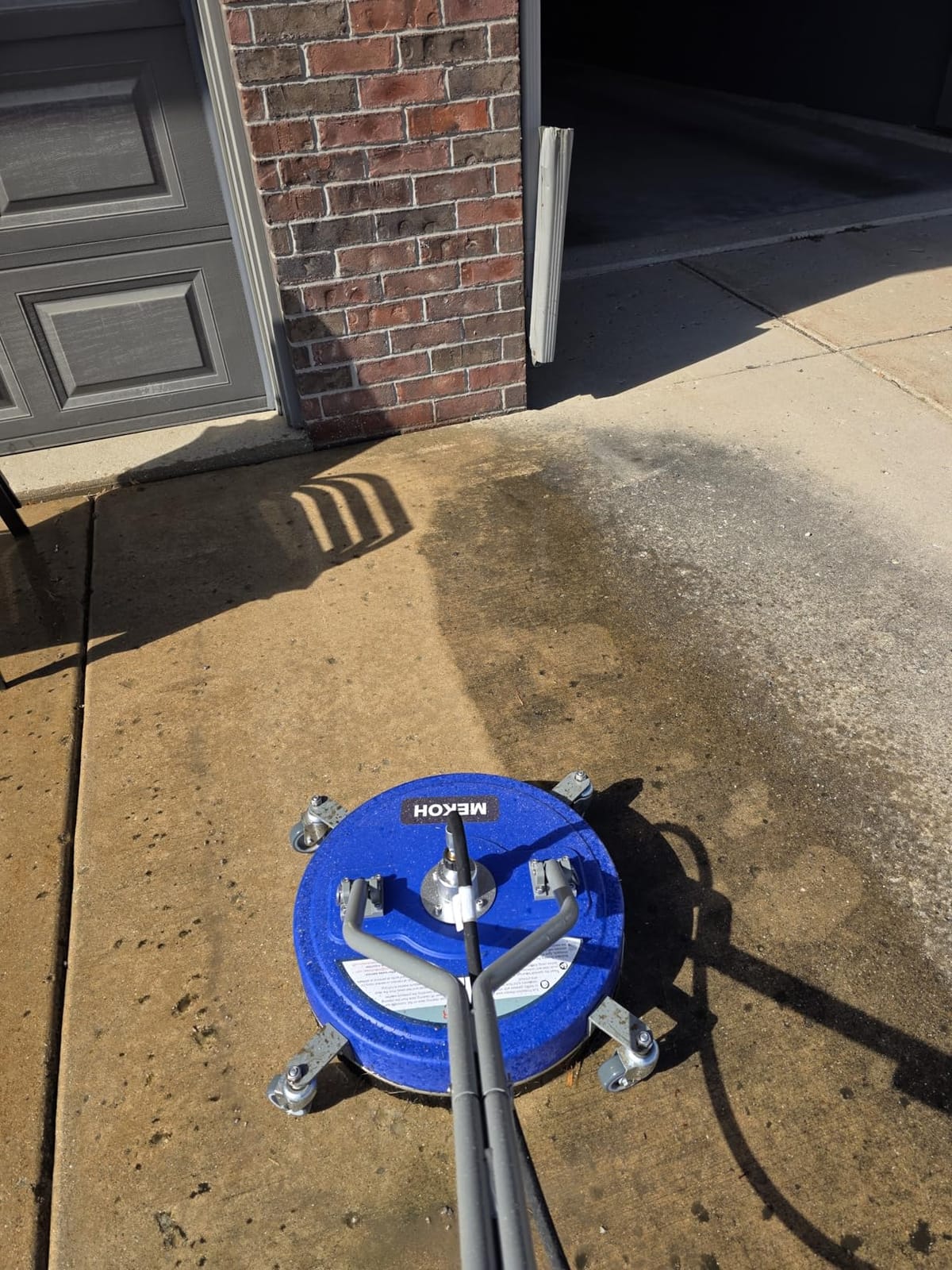
What you should know before you buy it?
It needs a washer at 2000 PSI or more and 2 GPM or more to do anything meaningful. Match it to a serious gas machine and it will be the fastest tool on this list for a large patio.
Who it suits and who it does not?
It suits someone cleaning very large flat areas, including commercial patios and pool decks, who already owns a capable machine. It does not suit a compact patio, an electric washer, or anyone who needs to get into corners.
10. MEKOH 16.5 inch Surface Cleaner, Best for Electric Pressure Washers
MEKOH 16.5” 4-Wheel Lightweight Pressure Washer Surface Cleaner, 3600PSI
16.5 inch path
2300 to 3600 PSI range
3 GPM
6 lb
Quick-detaching
Pros
- Six pound body is easy to lift
- move and store
- Universal quarter inch quick connect fits most major brands in seconds
- Splash resistant skirt traps muddy water so shoes stay clean
- Stainless steel spinning bars and jets resist corrosion
- Housing tested to survive more than 20 drops
Cons
- Extension wand shown in the product images is not included
- Lightweight housing raises durability doubts for long term owners
- Results fall off noticeably below 3000 PSI
Six pounds is the lightest head in this roundup that still has stainless spinning bars, and that is what makes it the pick for an electric washer. Lifting a wet 16.5 inch attachment onto a 2,000 to 3,000 PSI electric machine matters when you are moving it between patio sections.
The stated working range of 2300 to 3600 PSI covers most electric washers at the top of their spec, and the universal quick connect means it will bolt on in seconds without hunting for an adapter.
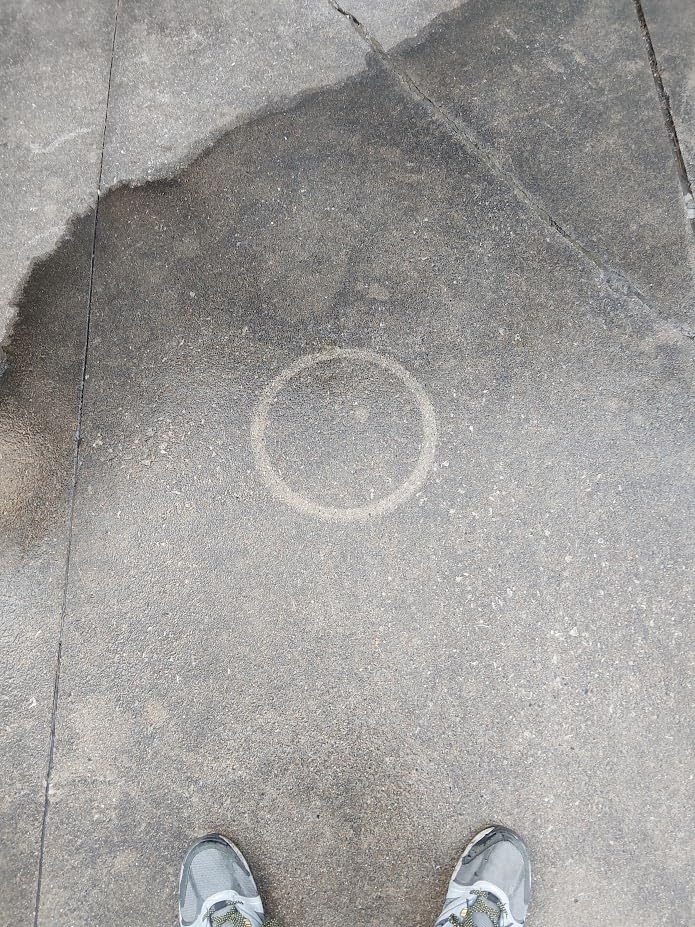
Two things to verify before you order. The extension wand shown in the product photographs is not in the box, so plan to buy one. And the splash skirt here is described as splash resistant rather than splash free, which is a fair expectation but not a guarantee you stay dry.
Performance still depends on your machine. Reviewers are direct that results are noticeably better at 3000 PSI and above, and weaker below that, so pair it with the strongest electric unit you can justify.
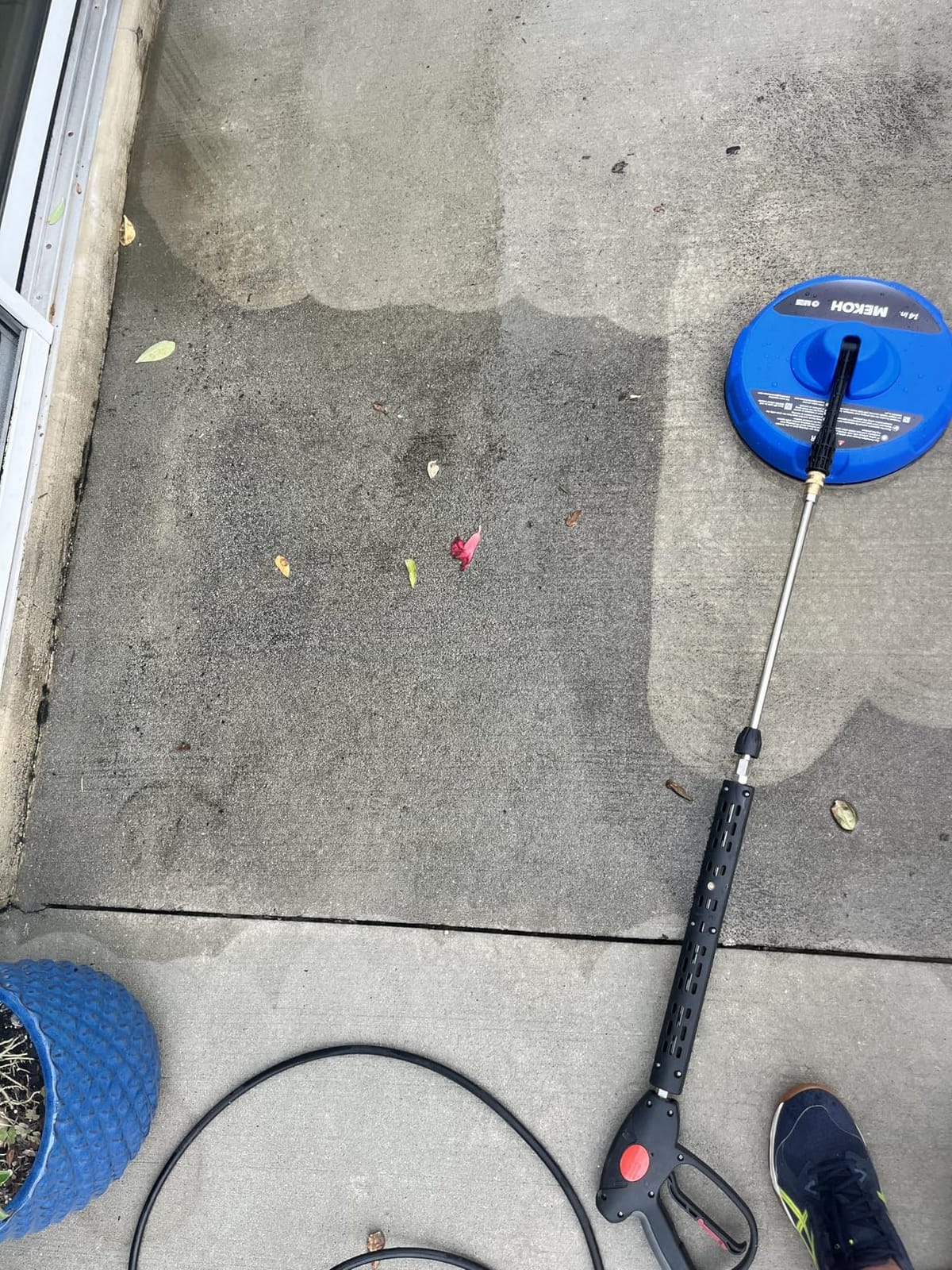
What you should know before you buy it?
Dual spinning jets give a streakless finish on concrete, patios, pavers, pool decks, and garage floors. For extremely tough spots the maker points you to a turbo nozzle, which is the same pattern the whole roundup follows.
Who it suits and who it does not?
It suits an electric washer owner with a small to mid-size patio who wants a head they can lift without thinking about it. It does not suit someone planning heavy-duty restoration or a very large open patio.
How to Choose a Surface Cleaner for a Patio?
Start with flow, not pressure. Every head here spins two jets, which splits your machine’s output in half, so the number that decides whether a patio gets clean is GPM. A 15 inch head on a washer pushing 3 GPM outpaces a 20 inch head on a machine pushing 2.
The washer to cleaner matching that follows is the shortcut most buyers skip:
Electric, 1800 to 2000 PSI, about 1.7 to 2 GPM: 12 to 14 inch heads only. Anything wider will feel slow and can mark a dirty surface.
Electric, 2000 to 3000 PSI, about 2 to 3 GPM: 14 to 16.5 inch. The MEKOH 16.5 and the LidoDola 14 both sit here.
Mid gas, 2600 to 3200 PSI, about 2.5 to 3.1 GPM: 15 to 16.5 inch. This is where the Karcher and the GreenWorks land.
High gas, 3200 to 4000 PSI, about 3.5 to 4 GPM: 17 to 20 inch. The Biswing, JANZ, and MEKOH 20 are built for this band.
Commercial gas, above 4000 PSI: 18 to 21 inch stainless heads, paired with an inline filter and a plan for the edges.
One warning about the word universal. It almost always refers to the 1/4-inch quick-connect fitting, not to the PSI range, the flow rate, or whether the machine is gas or electric. Before you buy any head on this list, check that its minimum PSI sits at or below your washer’s rated output and that its flow ceiling is at or above your GPM.
Housing material is the durability call. Solid stainless with a sealed bearing is what you want if the head lives in a shed and gets used two or three times a year. Polypropylene is lighter and easier on your back, which matters on a big patio, at the cost of long-term rigidity. Housing alone does not determine quality; the bearing does. If you also work on interior surfaces, our picks for the best granite surface plates follow the same spec-first logic.
Splash control deserves more attention than most roundups give it. A bristle skirt such as the one on the Tool Daily head holds water back better than a rubber flap, and on a patio bordered by windows or planting that is the difference between a clean job and a wet one. If your machine has low flow and the head is not wheeled, expect your feet to get wet. That is the trade-off of a hover-style head, not a fault.
Finally, warranty and parts. Accessory warranties run short. The GreenWorks carries three years, the Westinghouse 180 days, and the Karcher 90 days as a consumer warranty. Check that replacement nozzles, O-rings, and an inlet filter are included, because those are the parts that fail first.
Which Patio Surfaces Can Take a Surface Cleaner Safely?
The surface matters as much as the machine. Test a hidden corner first on anything finished, then follow these limits:
Standard concrete slab: safe up to about 3000 PSI, and a surface cleaner is the best tool for it.
Concrete pavers: stay at or below 3000 PSI, especially with new or unsealed mortar joints. High pressure erodes joint sand and can etch the paver face.
Stamped or textured concrete: safe, but the pattern traps dirt. Expect to need two passes and a follow-up rinse.
Sealed concrete: the safest surface for a surface cleaner. Pressure alone will not remove a failing sealer, and the even path prevents uneven stripping.
Natural stone: caution. Travertine, limestone, and sandstone can etch at high pressure and at wrong angles. Start low and test.
Wood decking: use low pressure and the softest pattern you have. Several experienced users in pressure washing forums warn explicitly against running a rotary surface cleaner over decking, because the rotating jets can gouge soft grain.
How to Clean a Patio with a Surface Cleaner?
Sweep first. Remove leaves, grit, and topsoil with a broom or blower. Grit under the wheels is what scratches concrete and clogs nozzles.
Pre-treat with chemical. Apply a patio-appropriate cleaner to the surface. Pressure does not remove black algae or organic staining on its own.
Let it dwell. Give the chemical time to work, following the label, before you put water on it.
Wet the surface down. A pre-wetted slab keeps the cleaner hovering on a film of water rather than grinding into a dry surface, which is where swirl marks come from.
Work in slow, overlapping passes. Overlap each pass by about a third and keep moving. Standing still is what leaves stripes.
Finish the edges with a turbo nozzle. A surface cleaner cannot reach corners, the base of steps, or strips beside walls. Plan a wand pass for those.
Rinse and dry. Rinse loosened debris away with a spray tip or a surface cleaner pass, then let the patio dry before replacing furniture.
Detergent and Dwell Time Do the Real Work
Every head in this roundup is mechanical. It loosens dirt and gives you an even finish, but regulars in pressure washing forums are blunt about the rest: black stains on pavers need a chemical, not more pressure. The consistent recommendation is a solution built around a hydroxide-based degreaser or a metasilicate product, with dwell time honoured before any water goes on.
Two cautions. Sodium hypochlorite, the active ingredient in most patio bleach products, should never be mixed with acids or ammonia, and it can damage plant life and metal fixtures if it is allowed to dry on them. On natural stone, especially, an oxygenated cleaner is the safer choice because it will not etch.
How long does a surface cleaner take on a patio? Owners describe a two-car driveway and sidewalk finished in about 20 minutes, and 6,000 square feet of concrete in roughly seven hours with the Hourleey head. A 400 square foot patio is well under an hour of cleaning time once the chemical has dwelled.
Fixing Streaks and Uneven Results
If the finish looks striped or patchy, work through this list in order:
Overlap each pass by about a third. Parallel but non-overlapping passes leave visible lines.
Slow down. Moving too fast is the most common cause of uneven results on an otherwise clean patio.
Check the nozzle height. A skirt bent out of shape puts one jet closer to the slab than the other.
Wet the surface first, and keep it wet through the pass.
Confirm the jets are actually spinning. A blocked nozzle throws a hard stripe instead of a fan.
Storage, Maintenance and Rent or Buy
Clear the nozzles after every use. Sand and dried detergent are the two things that turn a spinning jet into a blocked one, and most bundles here include a cleaning needle for exactly this.
Loosen nothing and grease nothing, but do tighten the plastic retaining nuts on the plastic-bodied heads a couple of times a season. Before cold weather, drain the attachment and disconnect the hose so nothing freezes inside the swivel joint, which is the usual leak point on these heads.
Renting makes sense for a single patio job if a rental shop near you carries heads in the 14 to 18 inch range. The economics favour buying once you own a washer and expect more than one job, and the time savings are the same either way: a patio that takes 90 minutes with a wand regularly comes down closer to 30 minutes with a head.
If you also need detergent recommendations or want to see how we approach buying decisions on other gear, we keep buying guides on ultrasonic cleaners and on home appliance upgrades like the best washer dryer combos, all written with the same spec-first method.
Frequently Asked Questions
What is a surface cleaner for a pressure washer?
It is a round, hooded attachment that connects to your wand at the 1/4-inch quick-connect and spins two angled jets inside a fixed-height shroud. On a patio it applies an even, stripe-free cleaning path across 10 to 24 inches per pass, and the skirt contains overspray that a lance would spray everywhere.
How big of a pressure washer do you need to run a surface cleaner?
Match the head to your flow rate more than your PSI. An electric washer at 1800 to 2000 PSI and about 2 GPM handles a 12 to 14 inch head well. Mid gas washers at 2600 to 3200 PSI suit 15 to 16.5 inch heads, and gas washers above 3200 PSI with 3.5 to 4 GPM support 17 to 20 inch commercial heads.
Can I use a surface cleaner with an electric pressure washer?
Yes, if the head is sized for your flow. Electric machines produce less water per minute, so choose 12 to 16.5 inches rather than 18 or 20. The LidoDola 14 and the MEKOH 16.5 both publish ranges that suit typical 2000 to 3000 PSI electric machines. Results get weaker below 2500 PSI on most heads.
Will any surface cleaner fit my pressure washer?
Only if the fitting matches and the ratings match. Most use a 1/4-inch quick-connect plug, and some use a fine thread that needs an adapter. Universal means the connector fits, not that the PSI range, GPM ceiling, or gas versus electric suitability is covered. Check the minimum PSI and flow ceiling against your washer specification.
Do pressure washer surface cleaners actually work?
Yes for even cleaning and big time savings on flat concrete and pavers, and no for removing stains on their own. The rotating jets at a fixed height are what eliminate striping and cut patio cleaning time roughly in half. Organic staining such as black algae needs a chemical pre-treatment and dwell time, and corners and edges always need a separate wand pass.
Is a pressure washer surface cleaner worth it on a patio?
For a flat patio over roughly 100 square feet, yes, mainly because of consistency. The fixed nozzle height removes the streaking that comes from hand washing, the shroud contains overspray near windows and planting, and a 400 square foot patio takes well under an hour of cleaning time once the chemical has dwelled. Rent one first if you only have a single job ahead.
Conclusion
For most patios, the Karcher 15 inch surface cleaner is the pick. It has the deepest owner history here, a sealed bearing, a light 3.8 lb body, and a splash skirt that keeps you dry while the fixed nozzle height removes striping.
Pick the GreenWorks 15 inch for the best flow figure and the longest warranty. Pick the Biswing 18 inch for a large open patio with a real gas washer behind it. Pick the Westinghouse 16.5 inch if you are at 3200 PSI or above and want stainless with headroom. Pick the LidoDola 14 inch for a small or awkward patio, the JANZ 17 inch for mid to high gas machines, the Tool Daily 18 inch when splash matters most, the Hourleey 14 inch on a tight budget, the MEKOH 20 inch for very large areas, and the MEKOH 16.5 inch for an electric washer.
Whichever one you choose, check the PSI range against your machine before you buy, keep a chemical in the plan for staining, and plan a wand pass for the edges. That is the whole method, and it works every time.