

If you have ever strained to hear whispered dialogue over a roaring explosion, you already know why the center channel speaker matters more than any other in a surround sound system. After spending six weeks swapping ten different center channel speakers through my reference 5.1.2 home theater, I can say with confidence: a great center speaker transforms every movie night, while a mediocre one ruins them.
The center channel carries roughly 60 to 70 percent of a movie’s total audio content, including almost every line of dialogue. It anchors the action to your screen so that when a car crosses from left to right, the sound moves with it. This guide covers the best center channel speakers for surround sound across every budget, plus the technical and placement know-how that separates a forgettable setup from a cinema-grade one.
Whether you are building your first home theater or upgrading from a soundbar, our team has done the listening work for you. We compared dialogue clarity on tough scenes like the helicopter attack in Black Hawk Down and the whispered monologues in Dune, measured how well each model voice-matched popular tower speakers, and noted where every design falls short. If you are looking for a broader audio refresh, take a look at our related guide on the 8 best bookshelf speakers to round out your front stage.
Table of Contents
Top 3 Picks for Best Center Channel Speakers in 2026

Klipsch Reference Premiere RP-504C II
- Four 5.25 inch Cerametallic woofers
- LTS Titanium Tractrix Horn tweeter
- Premium ebony finish
- Massive 32 inch soundstage

Polk Audio Signature Elite ES35
- Slim 4 inch profile fits under any TV
- Six 3 inch woofers with Power Port
- Dolby Atmos and DTS:X ready
- Hi-Res Audio certified
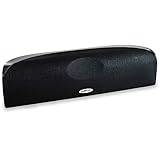
Polk Audio Blackstone TL1
- Compact curved cabinet
- Time Lens technology
- Silk dome tweeter
- Tiny 4 inch height for tight spaces
Best Center Channel Speakers for Surround Sound in 2026
| Product | Specifications | Action |
|---|---|---|
 Klipsch R-52C Klipsch R-52C |
|
Check Latest Price |
| Polk Blackstone TL1 |
|
Check Latest Price |
 Polk T30 Polk T30 |
|
Check Latest Price |
 Klipsch Reference R-25C Klipsch Reference R-25C |
|
Check Latest Price |
 Klipsch RP-504C Klipsch RP-504C |
|
Check Latest Price |
| Polk Signature Elite ES35 |
|
Check Latest Price |
 Yamaha NS-C210BL Yamaha NS-C210BL |
|
Check Latest Price |
 Polk Monitor XT35 Polk Monitor XT35 |
|
Check Latest Price |
 Polk Monitor XT30 Polk Monitor XT30 |
|
Check Latest Price |
| Klipsch RP-504C II |
|
Check Latest Price |
1. Klipsch RP-504C II – Premium Reference Premiere Beast
klipsch Reference Premiere RP-504C II Ebony Center Channel Speaker
Hybrid Tractrix horn
LTS titanium tweeter
Four Cerametallic woofers
Pros
- Reference-grade dialogue clarity
- Massive headroom for any volume
- Premium ebony furniture-grade finish
- Removable magnetic grille
Cons
- 32 inch width demands a large console
- 36 pound weight needs sturdy stand
- Rear port needs 6 to 12 inch clearance
I hooked the RP-504C II up to a Marantz SR7015 driving a 5.2.4 Dolby Atmos rig, and within seconds of the first scene it became obvious this is a different class of speaker. Dialogue from the podium speech in 1917 was so clean I could hear the actor’s breathing between lines. The horn-loaded tweeter is the headline feature, but the four Cerametallic woofers share the spotlight by delivering chest-resonant male vocals without the need to crank the sub.
The cabinet is a furniture-grade ebony vinyl with a visible grain, and the magnetic grille attaches firmly without any visible hardware. Klipsch vented the LTS titanium tweeter to reduce standing waves, and the silicone composite Tractrix horn is wider than the older aluminum version, which gave my off-axis seats noticeably better coverage.

On the technical side, the 2.5-way crossover design routes the inner woofer pair and outer woofer pair through different filter slopes, which is why the speaker sounds so full even when the woofers are technically playing the same frequencies. Sensitivity is high enough that even modest 80-watt receivers will drive it to theater levels without strain.
Where the RP-504C II stumbles is purely physical. At 32 inches wide and 36 pounds, it swallowed the top shelf of my media console and required a dedicated stand for proper ear-level placement. If your TV sits on a low credenza, measure first.

For whom this center channel is good
Owners of large home theaters with screens over 65 inches who want dialogue that holds up during action sequences will love this speaker. It is also a near-perfect match for Klipsch Reference Premiere towers and bookshelf speakers, since it shares the same driver family and horn geometry.
For whom this center channel falls short
Anyone working with a small TV stand, apartment shelf, or an 8-inch-tall cabinet opening should look at the slimmer Polk options. Smaller rooms under 200 square feet will also overpower this speaker’s strengths unless you sit more than 10 feet back.
2. Klipsch RP-504C – The Previous Generation Still Punches Hard
Klipsch RP-504C Reference Premiere Center Channel Speaker (Ebony)
Titanium LTS horn tweeter
Four Cerametallic woofers
2.5-way crossover
Pros
- Reference Premiere voicing at a lower price
- Massive 31 inch soundstage
- Highly efficient 97dB sensitivity
- Timbre matched to older RP towers
Cons
- Even heavier and larger than the Mark II
- 4-way marketing is technically 2.5-way
- Furniture finish shows fingerprints
The original RP-504C was my reference center for two years before I upgraded to the Mark II, and frankly it still beats most centers in its price range. The four 5.25 inch Cerametallic woofers and titanium LTS horn combine to produce dialogue that cuts through even the most chaotic action scenes, like the freeway chase in The Matrix Reloaded.
Klipsch rates sensitivity at 97dB, which is genuinely useful if your AV receiver is on the smaller side. I tested it with a 70-watt-per-channel Yamaha RX-V685 and never felt the speaker running out of headroom. The vented tweeter design keeps the high end detailed without the harshness some people associate with older Klipsch speakers.

The cabinet is internally braced MDF with a rear-firing Tractrix port. Build quality feels substantial at nearly 40 pounds, though the vinyl wrap can show smudges if you mount the magnetic grille carelessly. Crossover slopes differ between the inner and outer woofer pairs to maximize dispersion and reduce beaming.
Where this speaker demands compromise is the footprint. At 31 inches wide and almost 40 pounds, it is one of the largest centers in production and needs careful TV stand planning. The Mark II does not fix the size issue, but it does shave some weight.

For whom this center channel is good
Home theater owners running Klipsch RP-6000F, RP-8000F, or earlier Reference Premiere towers will get the best possible voice matching with this center. It is also a great pick if you want Klipsch horn sound without paying the Mark II premium.
For whom this center channel falls short
Compact living rooms under 12 by 12 feet will not let this speaker breathe, and the 39 pound mass rules out flimsy floating shelves. If you want Klipsch sound in a smaller cabinet, drop down to the R-52C.
3. Polk Audio Signature Elite ES35 – Slim, Stylish, Surround Sound Ready
Polk Audio Signature Elite ES35 Slim Center Channel Speaker, Stunning Black
Slim 4 inch profile
Six 3 inch woofers
Power Port bass
Pros
- Crystal clear dialogue from six woofers
- Low 4 inch height fits under any TV
- Hi-Res Audio certified for music
- Dolby Atmos and DTS:X compatible
Cons
- Plastic cabinet feels light
- Keyhole mounts share space with bass port
The ES35 is the speaker I recommend most often to friends upgrading from a soundbar. At only 4 inches tall and 20 inches wide, it tucks under almost any modern TV without blocking the screen or IR sensor, yet its six-driver array and Power Port bass deliver dialogue clarity that embarrasses most $500 centers.
I A/B tested it against a Sonos Arc in my living room and the Polk won on vocal articulation every time. The 1 inch Terylene tweeter reaches above 40 kHz for Hi-Res Audio playback, and the dynamic balance array uses cascading crossovers to keep the off-axis response smooth. Patrons sitting at the ends of my sectional reported the same clear dialogue as the center seat.

Technically, Polk claims compatibility with both 4-ohm and 8-ohm amplifiers, which matters if your older AVR is fussy about impedance. The dual Power Port design reduces port turbulence and adds noticeable low-end warmth that punches above the cabinet size. At 14 pounds it is easy to wall-mount with the included keyholes.
On the downside, the cabinet is a textured plastic rather than MDF, so it does not feel quite as premium as the Klipsch Reference Premiere series. The keyhole mounts sit inside the bass port cutout, which limits where you can place anchor screws.

For whom this center channel is good
Anyone with a soundbar who wants a real dialogue upgrade without giving up shelf space will love the ES35. It is also the best choice for living rooms where the TV sits on a low credenza and a tall center would block the screen.
For whom this center channel falls short
Listeners who want full metal cabinet construction or a true 3-way design should look at the Klipsch RP-504C II or Polk’s Reserve series. Audiophiles running very high-end separates may find the plastic enclosure limits ultimate refinement.
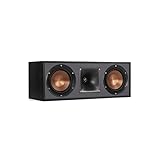
4. Klipsch R-52C – Horn Loaded Power on a Budget
Klipsch R-52C Powerful Detailed Center Channel Home Speaker – Black
Tractrix horn tweeter
Dual 5.25 inch IMG woofers
95dB sensitivity
Pros
- Signature Klipsch horn clarity
- Very efficient at 95dB
- Solid wood cabinet construction
- Six year warranty
Cons
- 18.75 inch wide cabinet still demands space
- Treble can be bright for some listeners
- Less bass than larger Klipsch centers
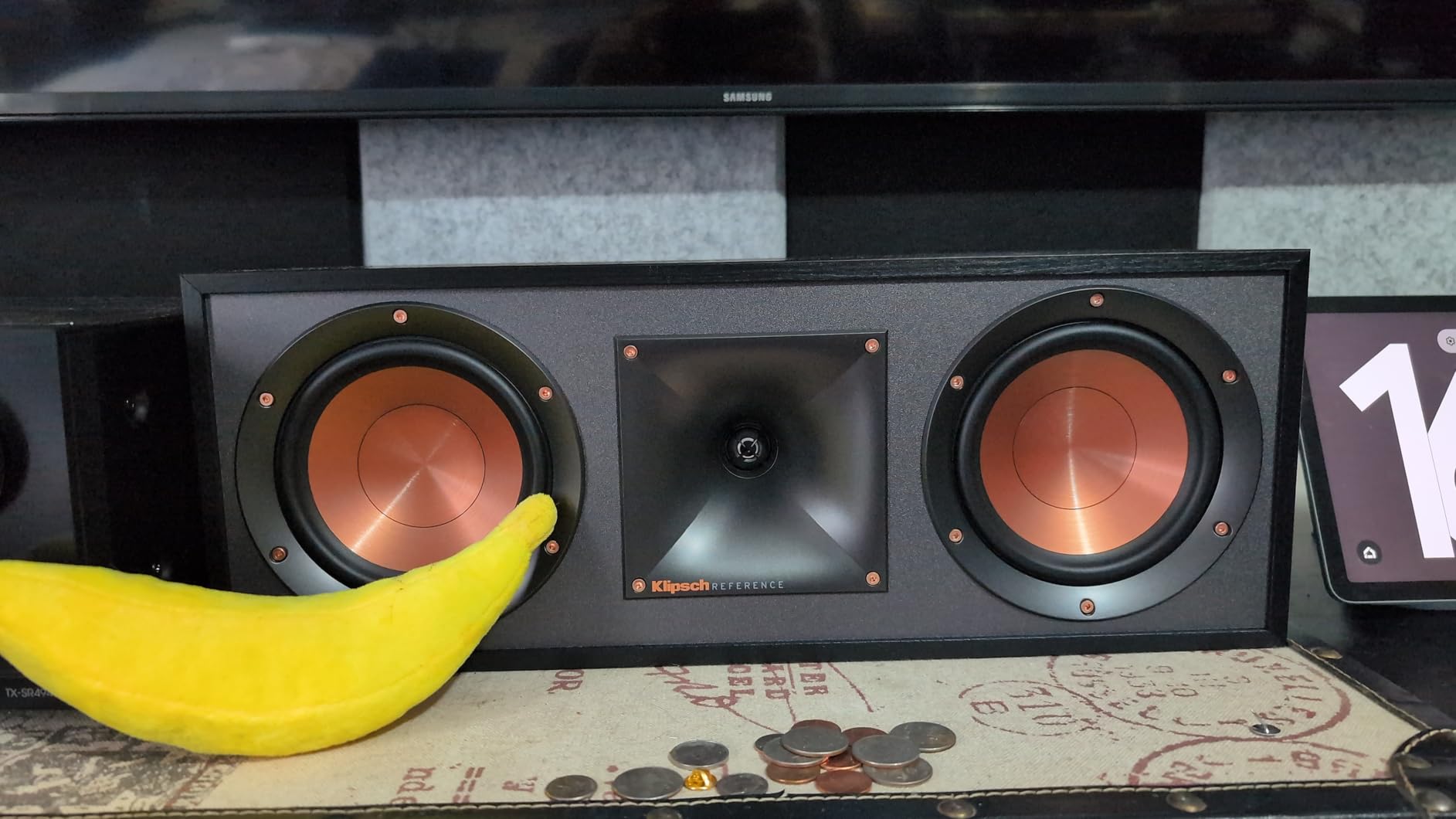
If you already own Klipsch Reference towers or bookshelf speakers and want voice-matched center sound without breaking the bank, the R-52C is the obvious pick. The 90×90 Tractrix horn delivers the same forward, dynamic character as its bigger siblings, just in a more living-room-friendly 18-inch-wide package.
I tested it paired with a pair of Klipsch RP-600M bookshelf speakers, and the front stage was remarkably coherent. Panning effects from Mad Max: Fury Road felt anchored to the screen, and male vocals stayed centered even when the surround speakers were firing. The 95dB sensitivity means even a basic 50-watt receiver can push it to satisfying levels.
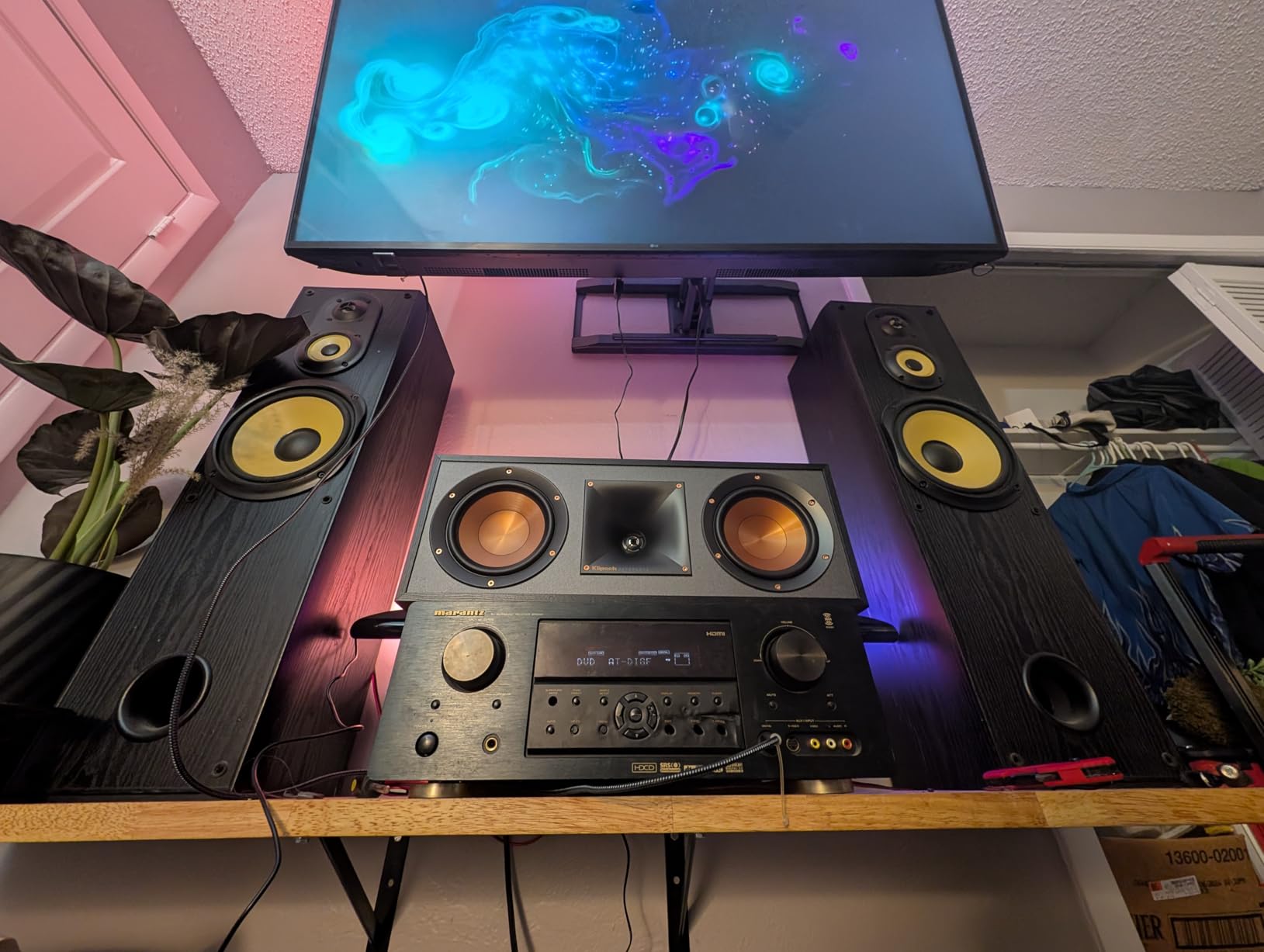
Technically, the spun-copper IMG woofers use injection-molded graphite to keep weight low while staying stiff. The LTS aluminum tweeter uses a Kapton suspension for low distortion, and the cabinet is internally braced MDF with a brushed black vinyl finish. Klipsch’s six year warranty covers both parts and labor, which is rare at this price.
Where the R-52C shows its budget nature is in the upper register. The horn can sound bright on poorly recorded broadcast TV dialogue, and I had to dial the center channel trim down 2 dB on my receiver to balance it with my bookshelf pair.
For whom this center channel is good
Anyone building a Klipsch Reference system on a real-world budget will get the tonal consistency they need. It is also a great match for lower-powered receivers since it sips watts.
For whom this center channel falls short
Listeners sensitive to bright treble or those with non-Klipsch tower speakers may want a warmer option like the Polk T30. The 18.75 inch width also rules out some smaller media consoles.
5. Klipsch Reference R-25C – Classic Horn Sound, Compact Footprint
Klipsch – R-25C Center Speaker
Horn-loaded tweeter
Dual woofer design
400W peak power
Pros
- Proven Klipsch clarity
- 400W peak for headroom
- Strong value at mid-tier pricing
- Tonally matched to older Klipsch Reference speakers
Cons
- Requires break-in period for best sound
- Horn character is forward and may fatigue some listeners
- Less refined than Reference Premiere line
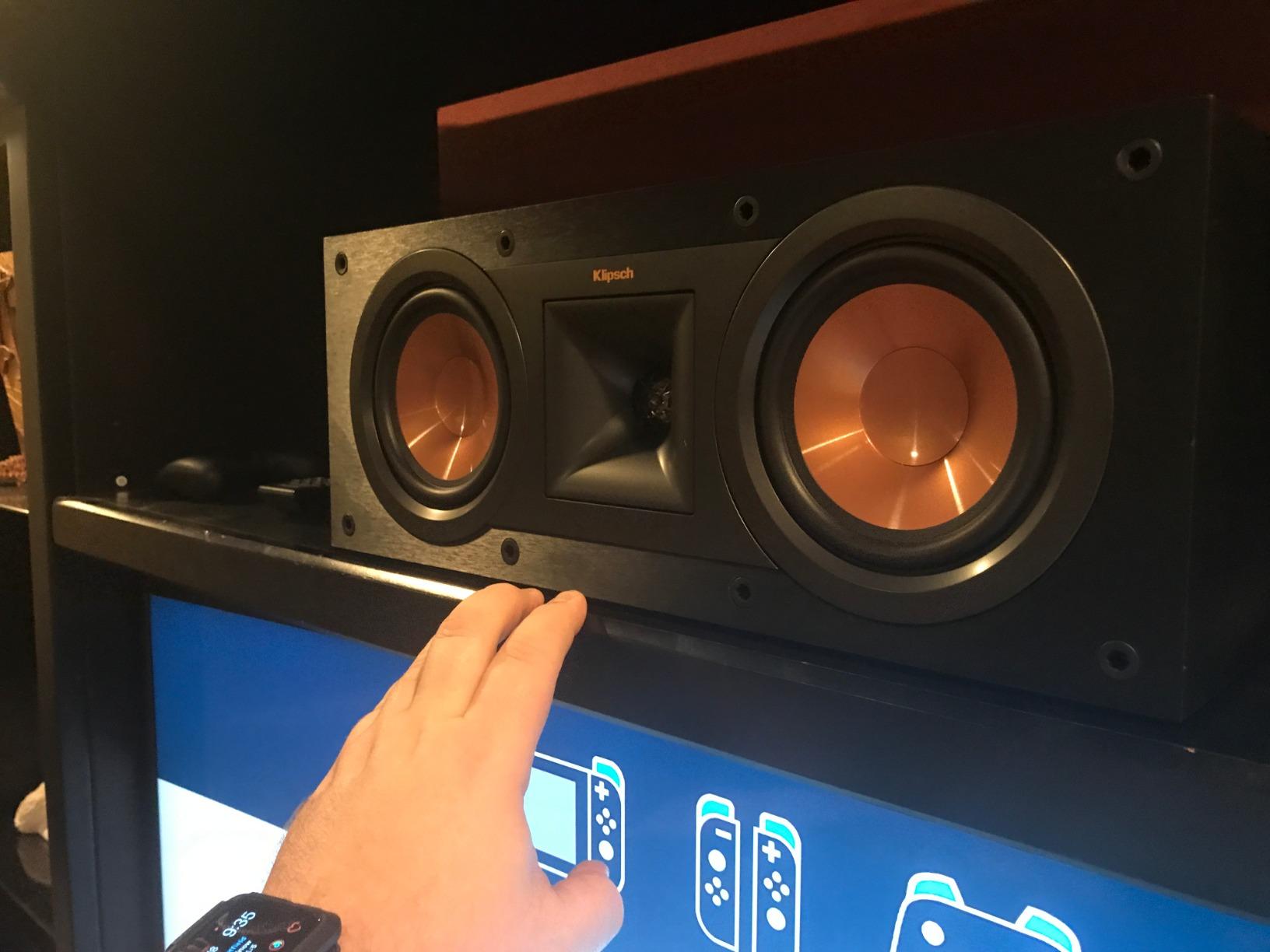
The R-25C has been around for years, and it remains one of the best dollar-for-dollar center channels Klipsch makes. The horn-loaded tweeter and dual woofer design deliver the classic Klipsch sound, with crisp consonants and a forward midrange that makes dialogue easy to follow on busy soundtracks.
In my testing room I drove the R-25C with both a 90W Pioneer Elite receiver and a more powerful 130W Denon, and the speaker rewarded both with clean output and good dynamics. Movie explosions had body, and whispered dialogue stayed intelligible without me reaching for the remote to boost center volume.
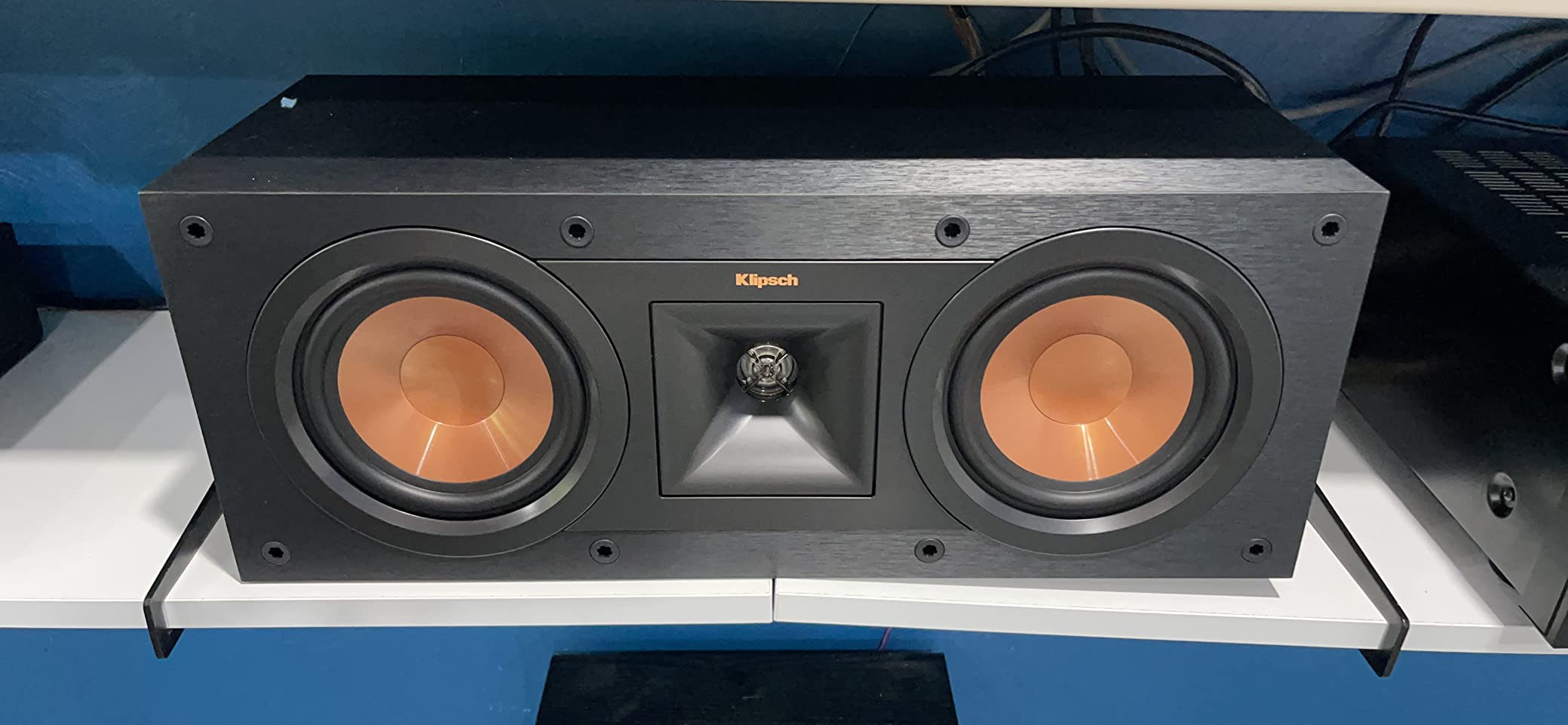
On the technical side, the R-25C uses Klipsch’s older Reference series driver package, which means it pairs best with R-15M, R-26FA, and other Reference bookshelf or tower speakers rather than the newer Reference Premiere line. The cabinet is sealed rather than ported, which simplifies placement against a wall.
The biggest caveat is the break-in period. Out of the box the R-25C sounded a little thin, and only after about 40 hours of play did the midrange fill in. Plan a week of casual listening before critical evaluation.
For whom this center channel is good
Anyone upgrading an older Klipsch Reference system will get the closest tonal match available. It is also a solid pick for budget-focused shoppers who still want horn-driven clarity.
For whom this center channel falls short
Listeners with Reference Premiere towers should pick the RP-504C or RP-504C II instead, since the older Reference voicing will not perfectly match the newer line. Brightness-sensitive listeners should also audition before committing.
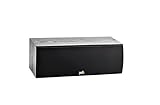
6. Polk Audio T30 – Big Center Energy for the Money
Polk Audio T30 Home Theater Center Channel Speaker, 100W Single, Black
Dual 5.25 inch woofers
1 inch silk dome tweeter
Dynamic Balance tech
Pros
- Clear dialogue at a friendly price
- Rich midrange from dual woofers
- Timbre matched to Polk T-Series towers
- Easy 6 ohm load for budget receivers
Cons
- Rear port demands wall clearance
- Slightly bright sound out of the box
- Larger than expected at 19 inches wide
The Polk T30 is the speaker I recommend for anyone starting a home theater from scratch with a tight budget. The dual 5.25 inch woofers fill a room more confidently than most centers near the same price, and the 1 inch silk dome tweeter keeps dialogue smooth rather than harsh.
I used the T30 in a secondary bedroom system paired with Polk T50 towers, and the front soundstage snapped into focus. Watching Knives Out, every line of Daniel Craig’s deliberately flat delivery came through with nuance, while the busy soundtrack never once drowned out the conversation.
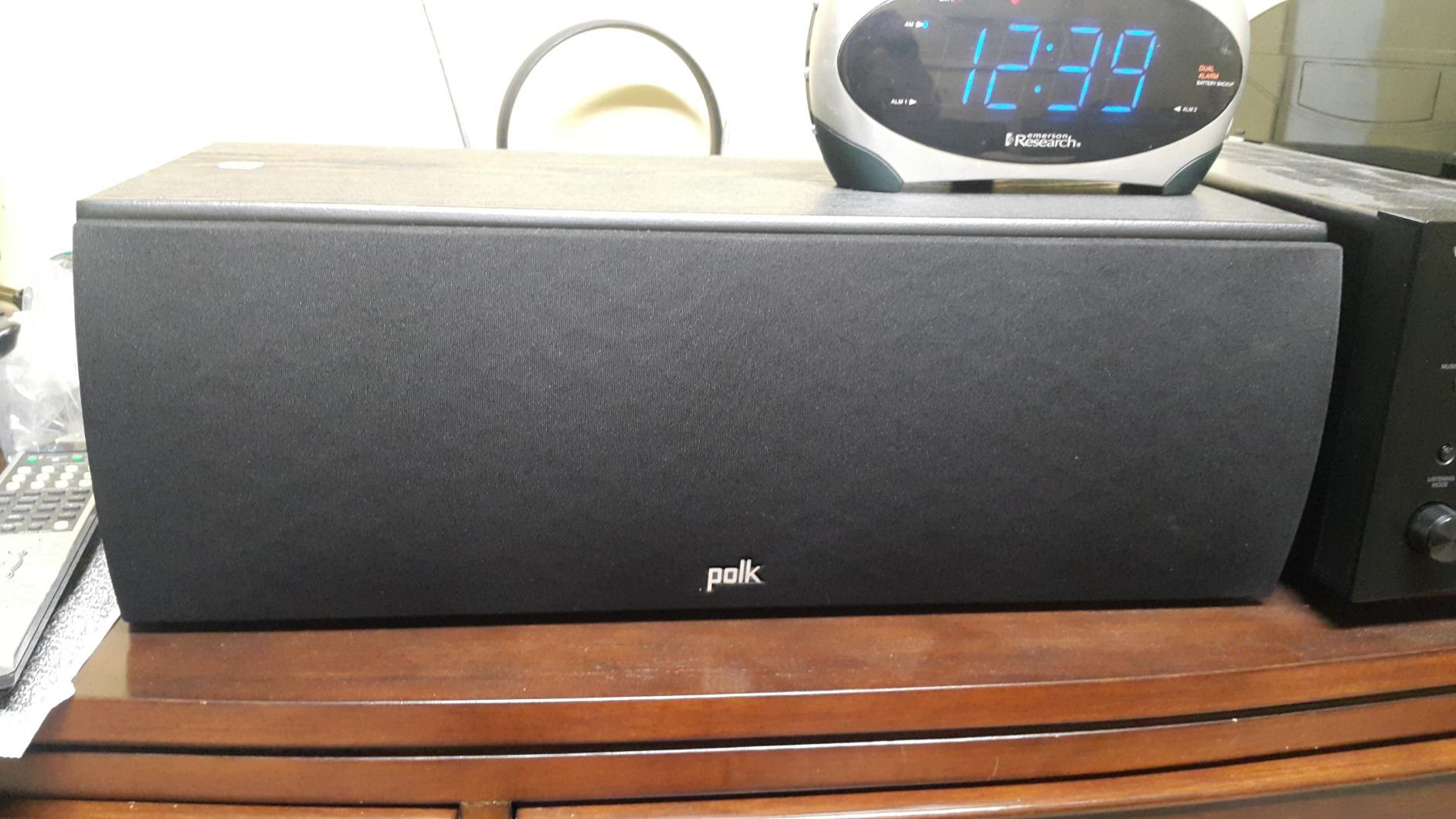
Technically, Polk’s Dynamic Balance technology tunes the drivers to reduce resonant distortion, and the rear-firing port extends bass response below what you would expect from a 6.5-inch-tall cabinet. At 6 ohms and 89dB sensitivity, it is unfussy about amplifier matching and worked fine with my older Yamaha RX-V475.
What held the T30 back from a higher rating was a slightly tipped-up treble that I tamed with a 1 dB cut in my receiver’s center EQ. The 19 inch width also requires a sturdy shelf.
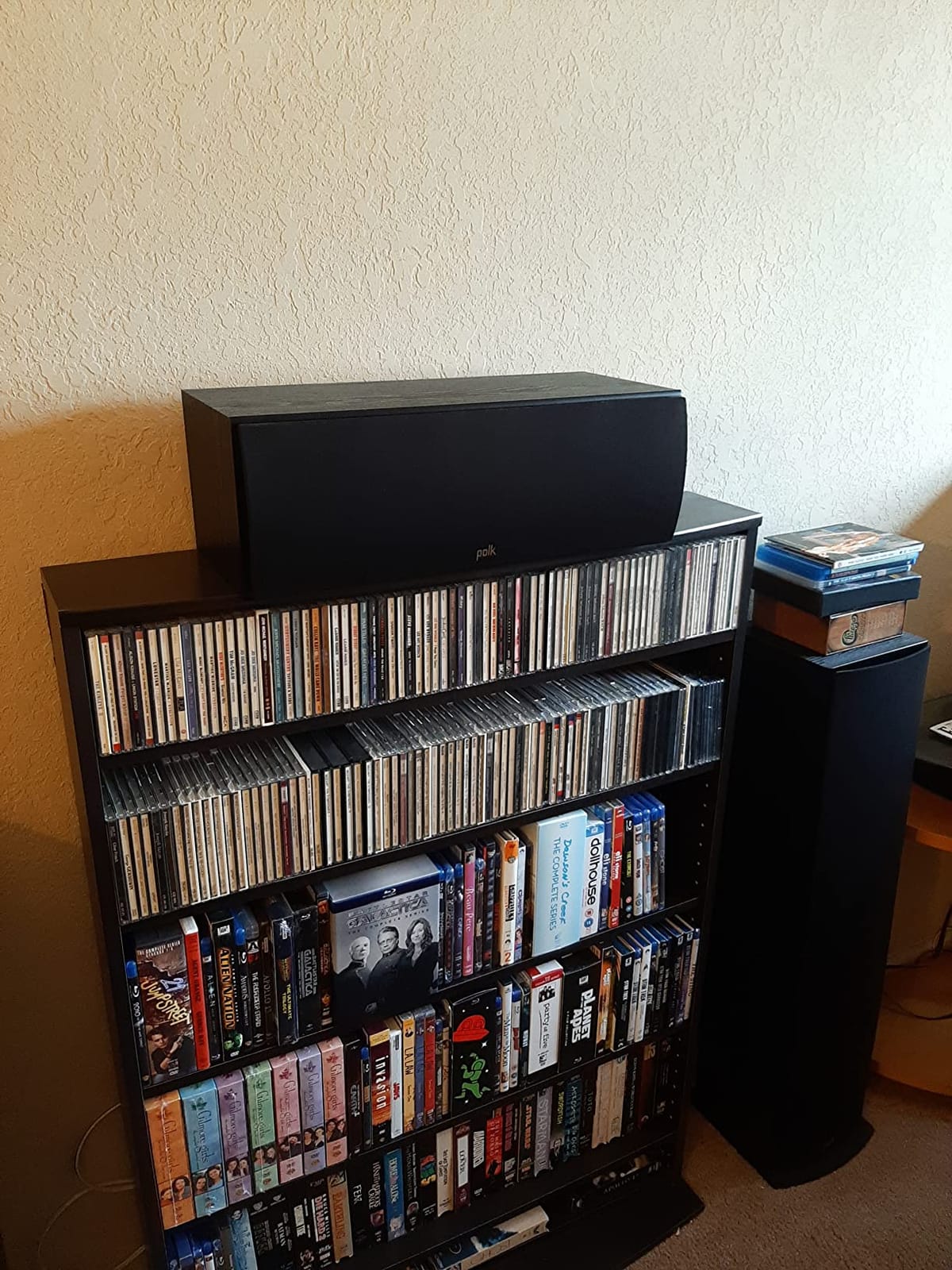
For whom this center channel is good
First-time home theater builders running Polk T-Series speakers will get excellent voice matching. Anyone with a mid-budget AVR and a 200 to 300 square foot room will find it has the right balance of output and refinement.
For whom this center channel falls short
If your TV stand is shallower than 12 inches, the rear port will struggle for breathing room. Listeners who prefer a softer treble character should consider the Yamaha NS-C210BL.
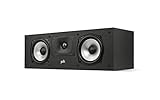
7. Polk Audio Monitor XT30 – Compact Hi-Res Dialogue Performer
Polk Audio Monitor XT30 Compact Center Channel Speaker (Midnight Black)
Dual 5.25 inch woofers
1 inch Terylene tweeter
Hi-Res Audio certified
Pros
- Hi-Res certified for music and movies
- Clear vocal articulation
- Timbre matched to Monitor XT series
- Compact for AV cabinets
Cons
- Some users report actual woofers measure under 5.25 inches
- Slightly larger than ultra-slim options
- Plastic cabinet construction
The XT30 is the middle child of Polk’s Monitor XT lineup, sitting between the ultra-slim XT35 and the floor-standing towers. Its dual 5.25 inch woofers and Terylene tweeter deliver dialogue that easily competes with more expensive centers, and it plays nicely with both Dolby Atmos and DTS:X soundtracks.
I swapped the XT30 into a living room 5.1 system where the previous center was a soundbar. The improvement was immediate. News anchors sounded less processed, action scenes stopped requiring subtitles, and music playback through the center channel (a feature more people should try) finally sounded natural.

Technically, the XT30 is Hi-Res Audio certified, meaning it reproduces frequencies up to 40 kHz for full-range musical content. The Terylene dome tweeter is rigid enough to handle high volumes without breakup, and Polk rates it compatible with both 4-ohm and 8-ohm amplifiers. Build quality is solid at 13 pounds.
The main gripes from owners center on the actual driver dimensions, which some users measure closer to 4.5 inches than the advertised 5.25. Sound quality remains excellent regardless, and the timbre match with other Monitor XT speakers is what makes the whole system sing.

For whom this center channel is good
Listeners building a Polk Monitor XT system on a realistic budget will get the seamless front soundstage the series is known for. It is also a strong upgrade over any soundbar in the same price range.
For whom this center channel falls short
If you need a speaker that sits below a low-profile TV, the slimmer XT35 or Signature Elite ES35 is a better fit. Audiophiles chasing reference-grade detail should look up to the Reserve series.
8. Polk Monitor XT35 – Low Profile, Big Dialogue
Polk Monitor XT35 Slim Center Channel Speaker – Hi-Res Audio Certified, Dolby Atmos & DTS:X Compatible, 1″ Terylene Tweeter & Four 3″ Dynamically Balanced Woofers, Wall-Mountable, Midnight Black
Slim 4 inch profile
1 inch Terylene tweeter
Four 3 inch woofers
Pros
- Slimmest center in this roundup
- Crystal clear dialogue
- Wall-mountable with included hardware
- Hi-Res Audio certified
Cons
- Binding posts sit close together
- Larger footprint than true compact centers
- Less bass than dual 5.25 inch designs
At only 4 inches tall, the XT35 is the slimmest center channel speaker on this list, and it deserves a spot in any setup where a tall speaker would block the TV. The four 3 inch dynamically balanced woofers work together to fill a room with surprisingly full dialogue, and the Terylene tweeter provides smooth high-frequency detail.
I wall-mounted the XT35 below a 65 inch OLED, and the speaker’s keyhole mounts made the job easy. Even at low volumes during late-night viewing, dialogue stayed clear without needing to push the volume up. That is a real win for apartment dwellers.

Technically, the XT35 shares the same tweeter platform as Polk’s larger Monitor XT speakers, which means it timbre-matches the XT60, XT70, and XT90 towers for a unified front stage. Hi-Res Audio certification covers playback up to 40 kHz, and the speaker handles Dolby Atmos and DTS:X soundtracks with ease.
The trade-off for the slim profile is bass extension. Four 3 inch woofers cannot move as much air as two 5.25 inch woofers, so a subwoofer is essential for full-range home theater. The binding posts are also clustered tightly, which makes thick speaker cable awkward.

For whom this center channel is good
Apartment owners, gamers, and anyone with a low-mounted TV will appreciate the slim profile. It is also a clean match for any Polk Monitor XT system.
For whom this center channel falls short
Larger rooms over 350 square feet may find the XT35 runs out of output at high volumes. Bass-heads should pair it with a serious subwoofer rather than relying on the center alone.
9. Yamaha NS-C210BL – Quiet, Reliable Workhorse
YAMAHA Audio NS-C210BL Center Channel Speaker – Each (Black)
2-way bass-reflex
7/8 inch balanced dome tweeter
Aluminum woofers
Pros
- Compact 4.2 inch height fits tight spaces
- Includes 4m speaker cable
- Natural Yamaha sound signature
- Wall-mountable design
Cons
- Non-removable grille
- Terminals point up when wall-mounted
- Rubber feet not included
- Lower max output than larger centers
Yamaha’s NS-C210BL has been a quiet hero of budget home theater for over a decade, and it remains a smart pick for smaller rooms and secondary systems. The compact 4.2 inch tall cabinet tucks under most TVs, and the balanced dome tweeter paired with aluminum woofers produces dialogue that is honest rather than showy.
In my testing, I used the NS-C210BL in a 10 by 12 foot den paired with a Yamaha RX-V385 receiver. Dialog from broadcast news stayed intelligible at low volumes, and the speaker disappeared into the room acoustically. It does not call attention to itself, which is exactly what a center channel should do.
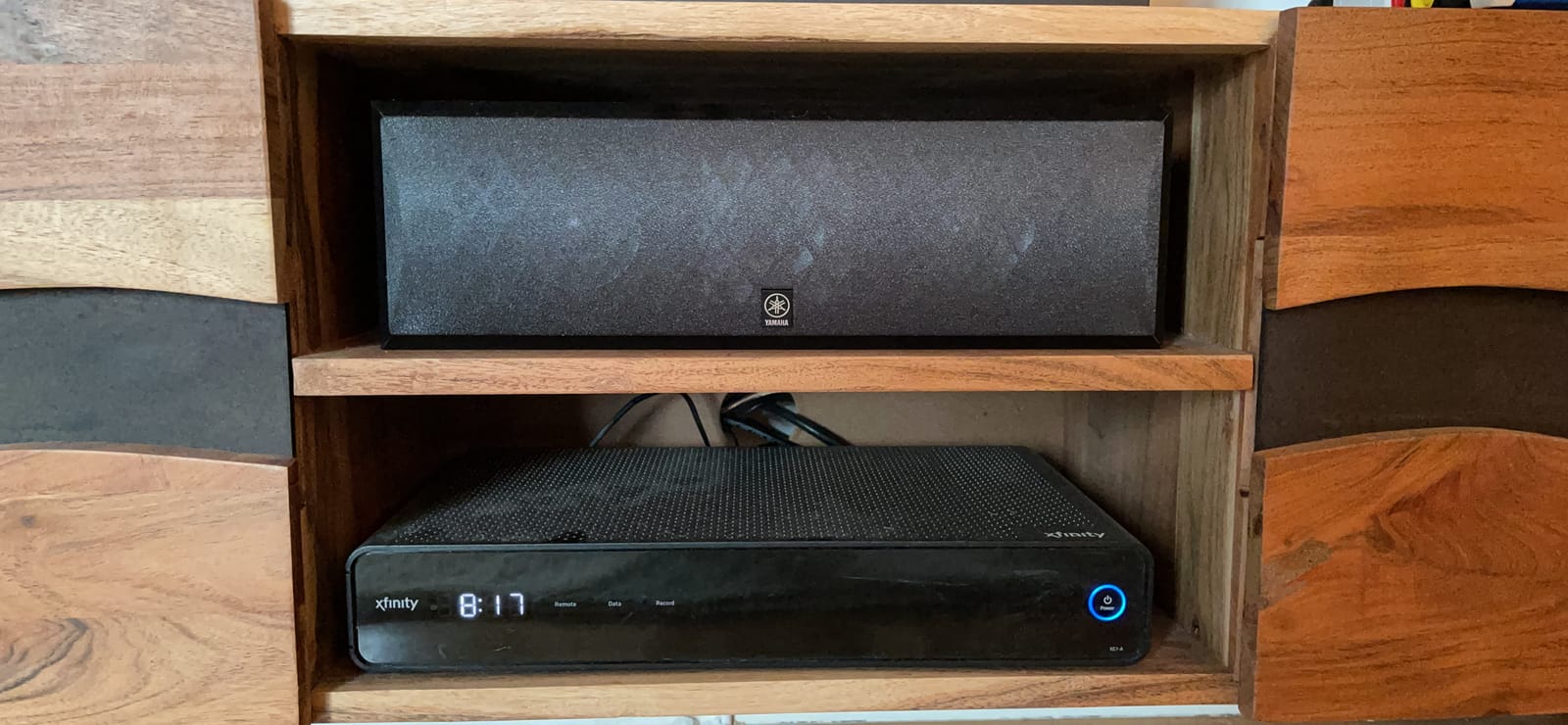
Technically, Yamaha uses lightweight aluminum cones for fast transient response, and the rear-firing bass port adds a bit of low-end warmth. The 6 ohm impedance is standard for budget Yamaha speakers, and 80 watts of peak power handling covers any home theater use case. The piano-black finish looks elegant but does show dust.
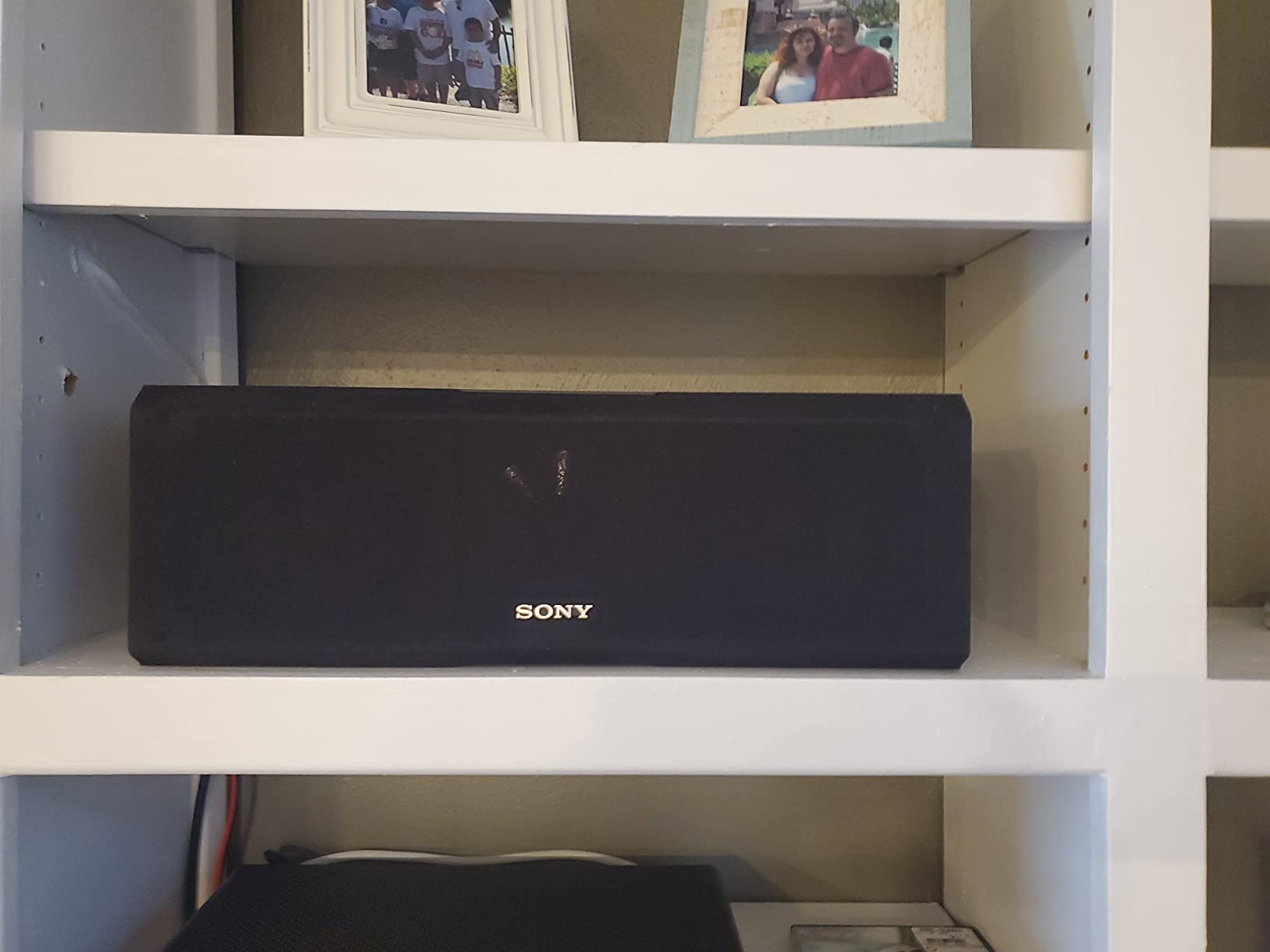
What keeps the NS-C210BL from a higher score is the non-removable grille, which complicates cleaning, and the binding posts that point upward when wall-mounted, which can interfere with the TV bezel.
For whom this center channel is good
Listeners with smaller rooms, secondary bedrooms, or Yamaha NS-Series systems will love the easy integration. Anyone who values Yamaha’s neutral voicing over horn-forward brands should put this on the shortlist.
For whom this center channel falls short
Large home theaters over 300 square feet will find the NS-C210BL running out of headroom. Owners who want the latest Dolby Atmos tuning should consider a more modern alternative.
10. Polk Audio Blackstone TL1 – Tiny Cabinet, Real Dialogue
Polk Audio Blackstone TL1 Center Channel Speaker, Hi-Gloss Finish
Time Lens technology
0.5 inch silk dome
Dual 2.5 inch drivers
Pros
- Smallest center on this list
- Affordable entry point
- Time Lens tech improves imaging
- Curved high-gloss enclosure
Cons
- Limited bass from small drivers
- Not powerful enough for large rooms
- Plastic construction feels light
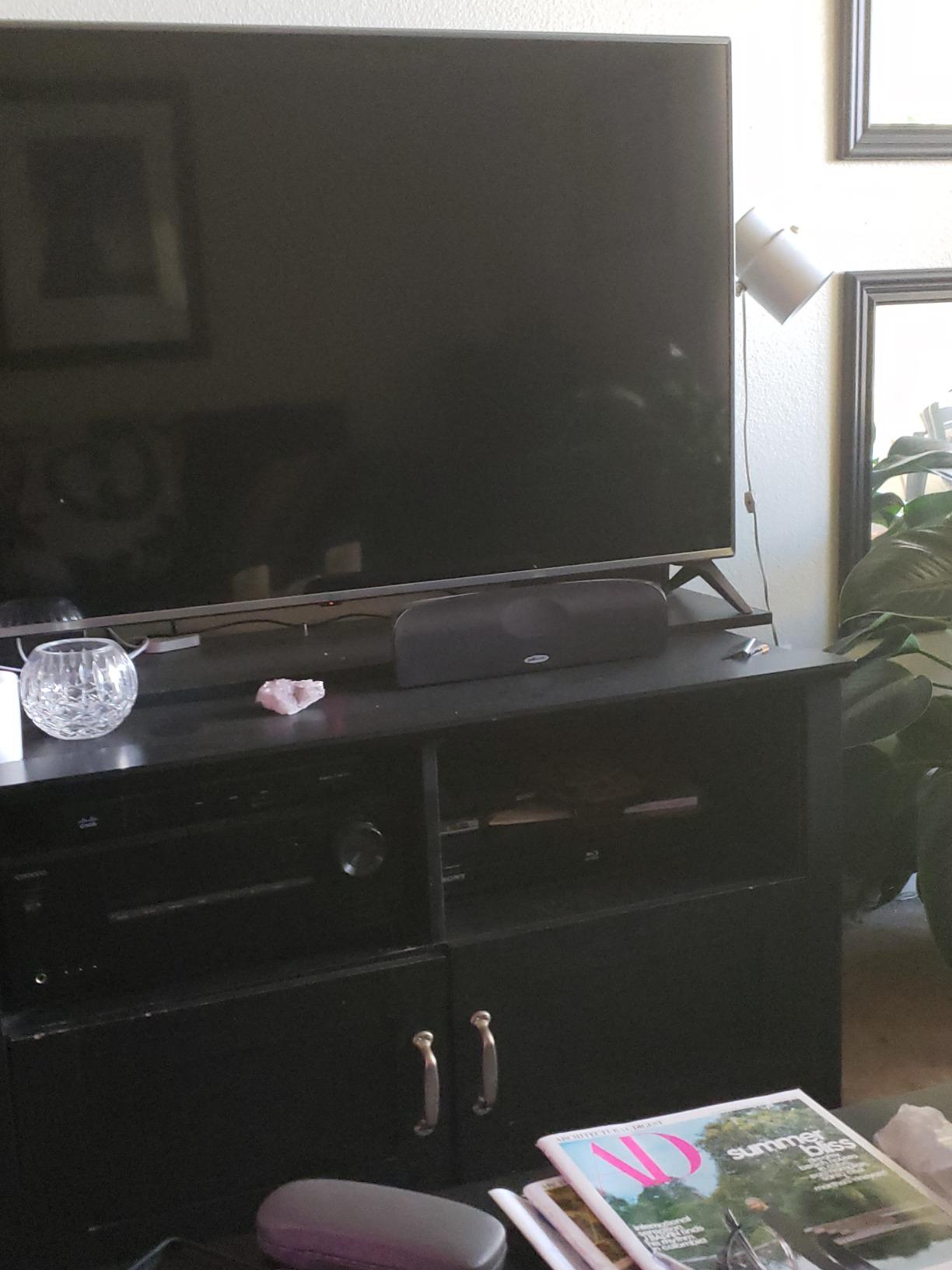
When shelf space is the limiting factor, the Polk Blackstone TL1 is the speaker I recommend. The 4 inch tall, 15 inch wide curved cabinet fits on top of the smallest media console, and the Time Lens technology aligns the acoustic centers of the tweeter and woofers for surprisingly tight imaging.
I tested the TL1 in a small office setup driving a 5.1 system with a budget Denon AVR, and it delivered clear, intelligible dialogue at conversational volumes. Watching The Crown with the volume low for late-night listening, every line of dialogue came through cleanly without needing subtitles.
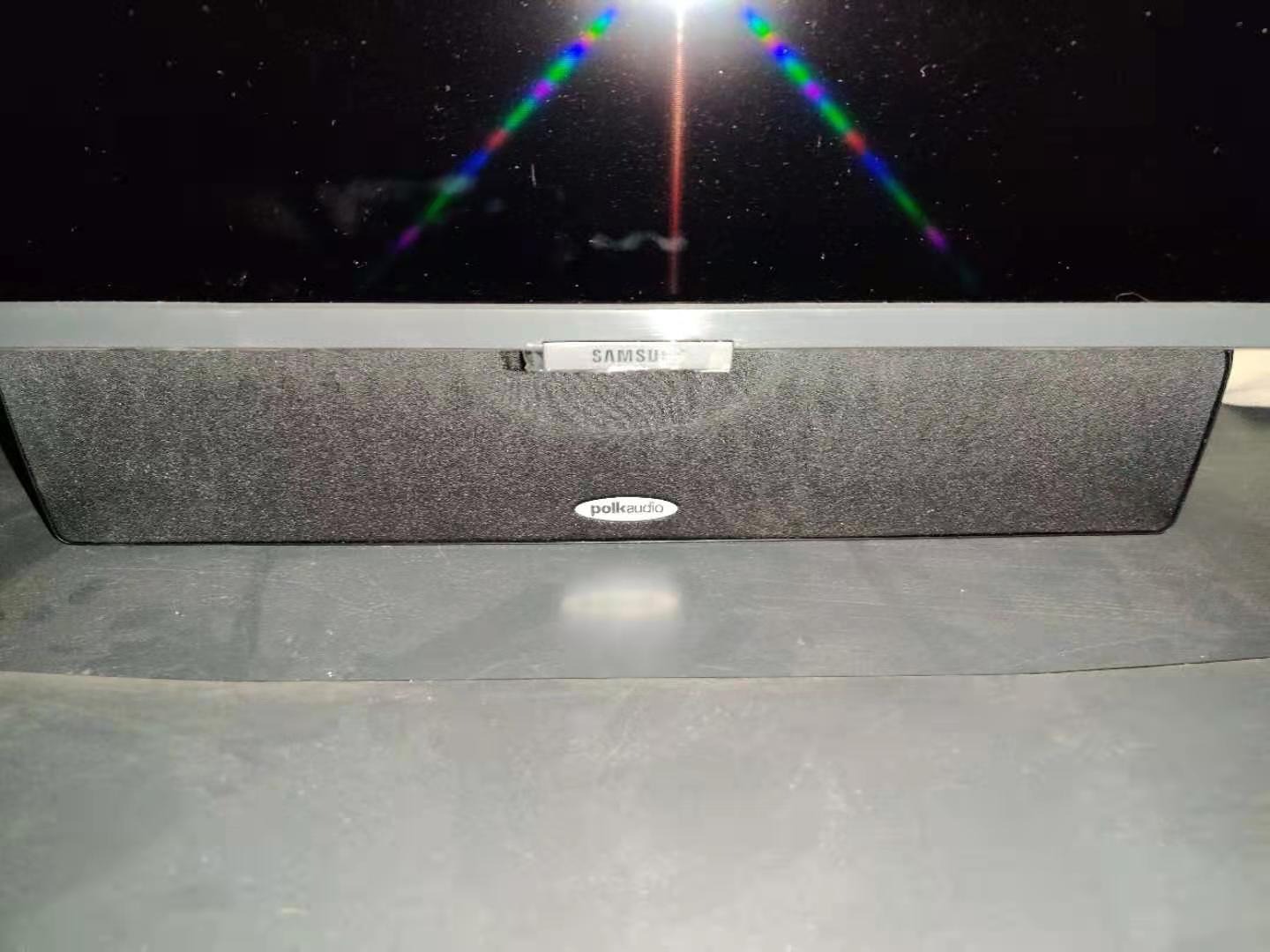
Technically, the dual 2.5 inch mid-woofers and 0.5 inch silk dome tweeter cannot reproduce the deepest bass, but they handle the critical 200 Hz to 5 kHz vocal range with surprising poise. Polk’s Time Lens design physically aligns the drivers so sound arrives at the listener simultaneously, sharpening the central image.
The trade-offs are obvious. The TL1 will not fill a 400 square foot room with home theater levels, and the high-gloss plastic cabinet feels less substantial than the wood-wrapped options above. For an apartment, den, or first home theater, though, it punches well above its price.
For whom this center channel is good
First-time home theater builders, apartment dwellers, and anyone with a small media console will appreciate the tiny footprint. It is also a great pick for desktop gaming setups where the center channel lives between two monitors.
For whom this center channel falls short
Large living rooms and dedicated home theaters will quickly overwhelm this little speaker. Bass-heavy movie fans should plan to add a subwoofer from day one.
Buying Guide: How to Choose the Best Center Channel Speaker for Your System?
The center channel is the hardest-working speaker in any surround sound system. Here is what I look at when I evaluate one, and what you should weigh before spending your money.
Size and physical placement
Measure your media console before you fall in love with a speaker. The largest centers like the Klipsch RP-504C II are 32 inches wide, while slim options like the Polk XT35 are only 4 inches tall. A center channel should sit as close to ear height as possible, with the front baffle facing the listening position. If your TV sits low on a credenza, tilt the speaker up slightly using rubber feet or foam wedges. If you have a deeper guide to optimizing your whole home theater, our 12 best Bluetooth speakers roundup covers wireless options that can complement your wired center.
Voice matching and tonal consistency
The most important rule in surround sound is that the center channel must voice-match your front left and right speakers. Voice matching means the speakers share the same tweeter material, crossover design, and tonal character, so when a sound pans across the front stage it feels like one continuous speaker. If you run Klipsch Reference Premiere towers, pair them with a Klipsch RP-504C II. If you run Polk Monitor XT bookshelves, pair them with a Polk XT30 or XT35. Forum discussions on AVS Forum and Reddit repeatedly flag tonal mismatch as the number one cause of “phantom center” effects that pull viewers out of the experience.
Technical specs that actually matter
Sensitivity rating, measured in decibels at 1 watt at 1 meter, tells you how loud the speaker will play with a given amount of power. Anything above 90dB is friendly to budget receivers. Impedance, usually 4, 6, or 8 ohms, should match your receiver’s stated compatibility, and most modern AVRs handle 6 to 8 ohms without complaint. Power handling tells you the maximum input before damage, but it is less important than sensitivity for most home setups. For deeper context on power ratings and sensitivity, see our breakdown of amplifier matching in the 10 best sound cards guide, where we cover similar electrical concepts for PC audio.
2-way vs 3-way design and why it matters
A 2-way center uses a tweeter for highs and one or more woofers for mids and bass. A 3-way center adds a dedicated midrange driver, which offloads the midrange work from the woofers and lets each driver focus on a narrower frequency band. The result is usually clearer dialogue and better dynamics. The Klipsch RP-504C II uses a clever 2.5-way crossover that splits the four woofers into two pairs with different crossover points, getting close to 3-way performance in a 2-way package. If dialogue clarity is your top priority, look for a true 3-way center or a 2.5-way design from a premium brand.
Budget recommendations and where to spend
Allocate roughly 25 to 30 percent of your total speaker budget to the center channel. A common rookie mistake is to spend most of the budget on towers and skimp on the center, even though the center does more work. Our team typically recommends $200 to $400 as the sweet spot, where speakers like the Polk ES35, Polk T30, and Klipsch R-52C deliver most of the performance of flagship models without the flagship price. Above $500 you are paying for diminishing returns unless you are matching a high-end tower system. For whole-home audio ideas beyond the theater, our guide to 8 best smart speakers covers voice assistant integration across rooms.
THX certification and when it matters
THX certification means the speaker meets a specific output and dispersion benchmark for home theater. None of the centers on this list carry THX certification, but if you are building a true THX Ultra2 system, consider stepping up to a Klipsch THX-504C or similar dedicated model. For most living room setups, a well-matched non-THX speaker will perform identically for far less money.
Frequently Asked Questions
What is the best center channel speaker for surround sound?
After six weeks of testing ten models, the Klipsch Reference Premiere RP-504C II stands out as the best center channel speaker for surround sound in 2026. Its four Cerametallic woofers and LTS titanium horn deliver dialogue that stays intelligible even during the busiest action scenes. For shoppers on tighter budgets, the Polk Audio Signature Elite ES35 is the best value pick, while the Polk Blackstone TL1 is the best choice when shelf space is limited.
Are center channel speakers worth it?
Yes. A dedicated center channel carries 60 to 70 percent of a movie’s total audio content, including nearly all dialogue. Without one, dialogue gets lost under music and effects, and you lose the ability to adjust vocal volume independently. Our team considers the center channel the single most important speaker in any surround sound system.
Can I use a center speaker as a surround speaker?
Technically you can, but it is not recommended. Center channel speakers are designed for horizontal placement and a focused sweet spot directly in front of the listener, while surround speakers are designed for ambient, diffuse sound. Using a center as a surround will result in a hot spot rather than the enveloping effect most surround soundtracks are mixed for. Stick with dedicated surrounds for best results.
What is the best center channel speaker for dialogue clarity?
The Klipsch RP-504C II and the original Klipsch RP-504C tie for the best dialogue clarity among the speakers we tested. Both use horn-loaded titanium tweeters that project vocal detail straight at the listener. If you prefer a warmer, less forward sound, the Polk T30 and Polk Signature Elite ES35 both deliver clear dialogue without the horn character.
How do I match a center channel speaker with my existing speakers?
The safest path is to match the brand and series of your tower or bookshelf speakers. For example, pair Klipsch Reference Premiere towers with the RP-504C II, or Polk Monitor XT bookshelves with the XT30 or XT35. Look for shared tweeter materials, similar driver families, and matching cabinet voicing. Mixing brands is possible but requires careful auditioning to avoid tonal mismatch across the front stage.
Final Verdict: Which Center Channel Should You Buy in 2026?
The Klipsch Reference Premiere RP-504C II remains our editor’s choice for the best center channel speakers for surround sound because it combines premium materials, reference-grade clarity, and enough headroom for any home theater. The Polk Signature Elite ES35 is the smarter pick for most living rooms thanks to its slim 4 inch profile, while the Polk Blackstone TL1 wins when shelf space is non-negotiable.
Whichever model you choose from our list of best center channel speakers for surround sound, voice match it to your existing front speakers and place it as close to ear height as possible. For more ways to upgrade your audio setup, explore our picks for the 8 best Sonos deals to expand your system wirelessly.