
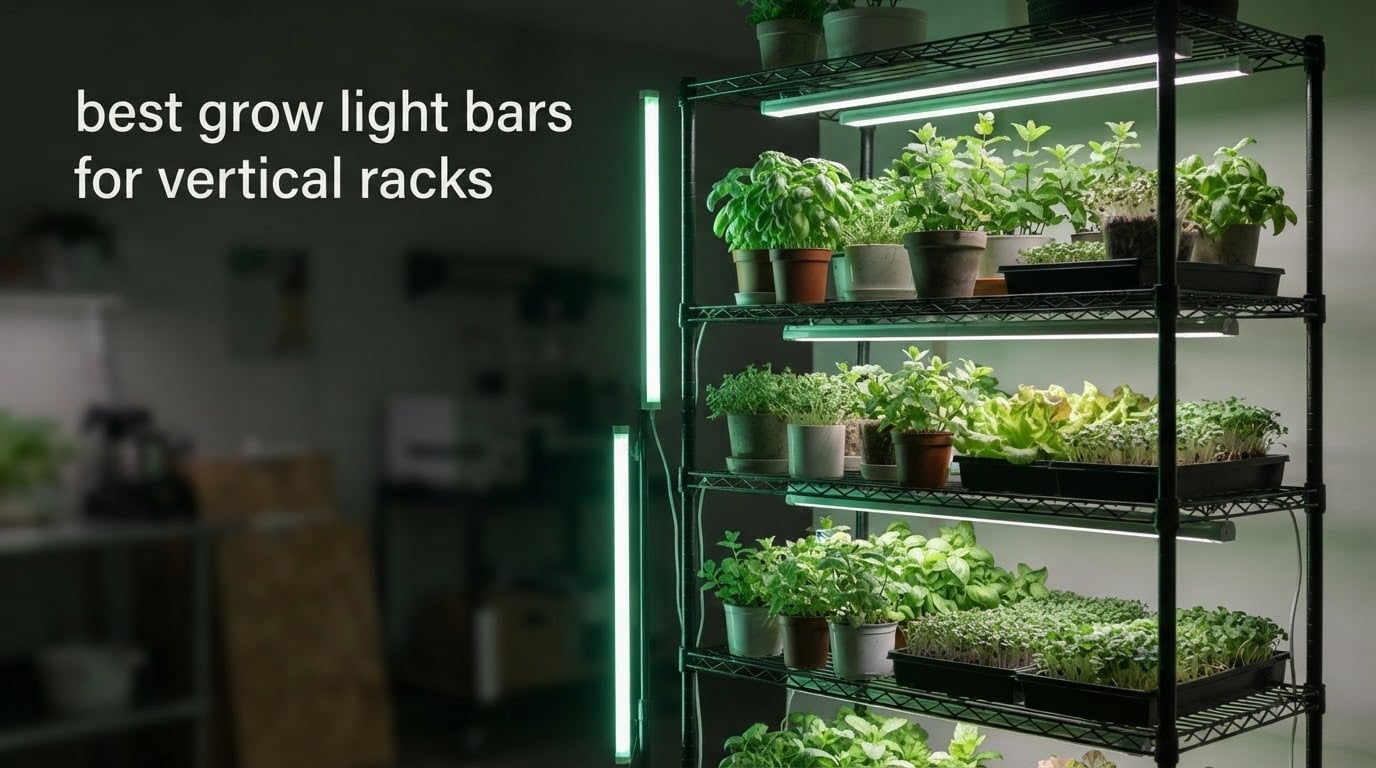
A rack changes everything about grow lighting. On an open bench, one fixture can wash light across the whole canopy from above, but the tier below it sits in permanent shade and stretches for the window. That is why the best grow light bars for vertical racks are chosen for slimness, mounting options and linkability first, and raw brightness second. A bar that hangs 1 inch from a wire shelf and throws light down at 45 degrees does more for a four-tier rack than a bright square panel you cannot fit between the tiers.
We went through the specs and the review histories for ten bars that fit the rack form factor, then ranked them on the details that decide whether a setup works: bar length against shelf width, whether they link together, how they mount to wire or wood, what the warranty actually covers and what owners report after weeks of use. Our top three are the Barrina T8 6-Pack as the best overall, the Barrina T10 Vertical as the best stand-alone pick, and the Wiaxulay 3-Bar set as the best value. Each of those solves a different rack problem, and we explain which one fits yours below.
The rest of this guide covers the remaining seven bars in the same order, including two that mount sideways along the rack frame instead of above the canopy. After the reviews, we break down how much light a vertical rack actually needs, how to mount bars on wire, wood and metal shelving, how to keep an enclosed rack from cooking, and how to choose between a linkable strip set and a freestanding column light.
If you are still deciding on hardware rather than lighting, start with our plant grow rack roundup and our grow light shelf picks, since bar length and rack spacing have to agree before any light gets hung.
Table of Contents
Top 3 Best Grow Light Bars For Vertical Racks (October 2026)

Barrina T8 4FT 42W 6-Pack
- Six linkable 42W bars
- 4000 lumens per bar
- Aluminium housing with reflector
- Links up to 6 bars in series

Barrina T10 Vertical 4FT 42W
- Upright T10 side lighting
- 660nm red chips with CRI 88
- Tripod stand plus hanging clips
- Converts to horizontal rack mounting

Wiaxulay 3-Bar 16 Inch Strip Set
- Three 16 inch bars on one cord
- 6000K plus 660nm beads
- 6 12 and 16H memory timer
- Five brightness levels
Best Grow Light Bars for Vertical Racks in 2026
| Product | Specifications | Action |
|---|---|---|
| Barrina T8 Grow Light 4FT 42W Full Spectrum 6-Pack |
|
Check Latest Price |
| Barrina T10 Vertical Grow Light 4FT 42W |
|
Check Latest Price |
 SDOVUERC 16 Inch 6-Bar Grow Light Strips SDOVUERC 16 Inch 6-Bar Grow Light Strips |
|
Check Latest Price |
 Maygrove T5 2FT 15W Red-Enhanced 4-Pack Maygrove T5 2FT 15W Red-Enhanced 4-Pack |
|
Check Latest Price |
 SpeePlant Vertical Grow Light 11W T5 SpeePlant Vertical Grow Light 11W T5 |
|
Check Latest Price |
 VIVOSUN LumaRay 4-Bar Side Lighting Set VIVOSUN LumaRay 4-Bar Side Lighting Set |
|
Check Latest Price |
 GLOWRIUM 60 Inch Standing Grow Light GLOWRIUM 60 Inch Standing Grow Light |
|
Check Latest Price |
 Uocub 65 Inch 48W Vertical Grow Light Uocub 65 Inch 48W Vertical Grow Light |
|
Check Latest Price |
 RWNTAO LED Grow Light Strips 3-Head 2-Pack RWNTAO LED Grow Light Strips 3-Head 2-Pack |
|
Check Latest Price |
| Wiaxulay 3-Bar 16 Inch Grow Light Set |
|
Check Latest Price |
1. Barrina T8 Grow Light 4FT 42W Full Spectrum 6-Pack
Barrina T8 Grow Light, 4FT 42W Full Spectrum LED Plant Light Strip, 6 Packs
42W per bar, 4000 lumens
Six bars link in series
120V corded, 47in long
Clips, tapes, ties included
Pros
- Largest review base of any bar here at 13k+ ratings
- Linkable up to six bars on one circuit
- Aluminium housing and reflector cut waste heat
- Hardware kit covers wire and wood shelves
- Warm 2900K tone suits a lived-in room
Cons
- Second-gen connectors do not fit older Barrina GM Series cords
- Bar format needs mounting hardware rather than standing alone
This is the bar we keep coming back to for multi-tier racks. Six 4-foot strips at 42W each give you enough length to cover two tiers from one pack, and the male-female connectors let you run them in series up to six units, which is exactly the range a four-tier shelving unit needs. The included kit is unusually complete: three switched power cords, five 48-inch connecting cords, twelve pieces of tape, twenty-four clips and twenty-four cable ties.
Warm 2900K light is the quiet advantage here. Most rack lights are cold blue-white, which makes an indoor room look clinical after a few hours. This one reads closer to household lighting, so if the rack lives in a kitchen corner or a home office you actually sit in, you will not be squinting at it every evening.
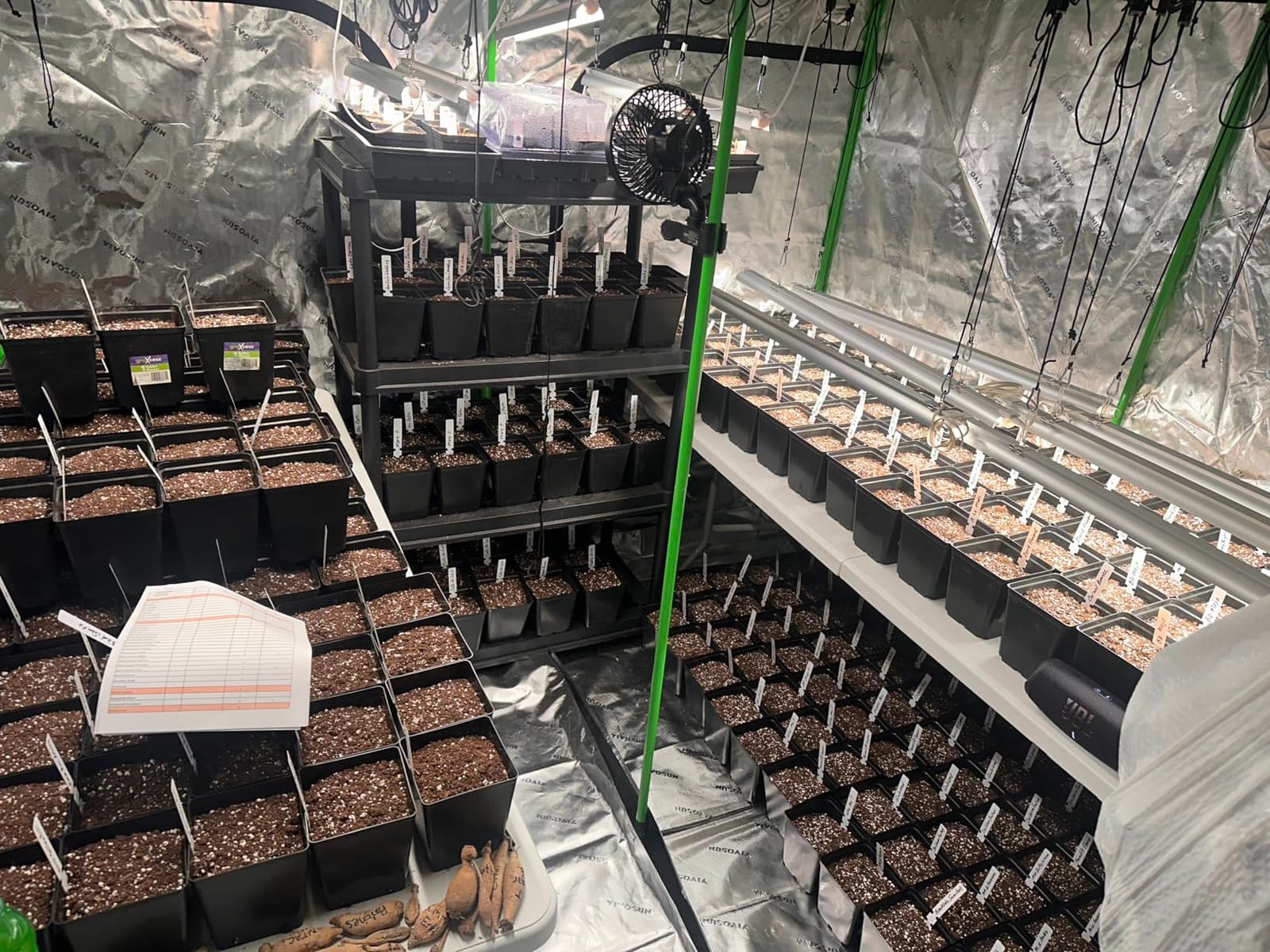
The aluminium housing with an integrated reflector is what keeps this much light manageable in a stacked setup. Heat moves along the metal instead of pooling under the shelf, which matters when the tier below is only 12 inches away. Owners on r/IndoorGarden repeatedly point to the T8 as the standard answer for shelves with low clearance, and the volume of real installs behind it is why it sits at the top of our list.
The one incompatibility to know about is the connector. These use the newer male-female design, so if you already own older Barrina GM Series cords, they will not connect. Everything shipped in the box is designed for this pack, so a fresh install is not affected.
What to check before you buy?
Confirm your shelf width first. A 4-foot bar on a 36-inch shelf overhangs slightly, which is fine if the ends land on the shelf frame, but it wastes light if the bar hangs past the tier into open air. On a 48-inch shelf, two bars per tier from this pack is a clean fit.
Then plan the current. Six bars at 42W is 252W on a 120V circuit, and the three switched cords mean you can put two tiers on one cord and three on another. If your rack is wired through a single outlet strip, check the load rating before you commit.
Where it falls short?
There is no timer in the box. That matters more than it sounds, because a rack with four tiers of timers to remember at 6am is a setup you will stop trusting within a month. A single plug-in mechanical timer solves it for almost nothing.
The lights are also not water resistant, which the spec sheet states plainly. That is fine indoors and fine under cover in a greenhouse, but do not put them in an unclosed rack in the rain.
2. Barrina T10 Vertical Grow Light 4FT 42W
Barrina T10 Vertical Grow Light, 4FT 42W, Full Spectrum, High PPFD
42W T10 with 660nm red chips
CRI 88
48in tall, 2.6 pounds
Tool-free setup
Pros
- Side lighting reaches lower leaves overhead bars miss
- 660nm red chips carry plants past vegetative stage
- CRI 88 makes plant colour readable
- Doubles as horizontal rack mount
- Hangs or stands with included clips
Cons
- No built-in timer
- tripod screw joint can strip
- Tripod legs can shift on hard floors
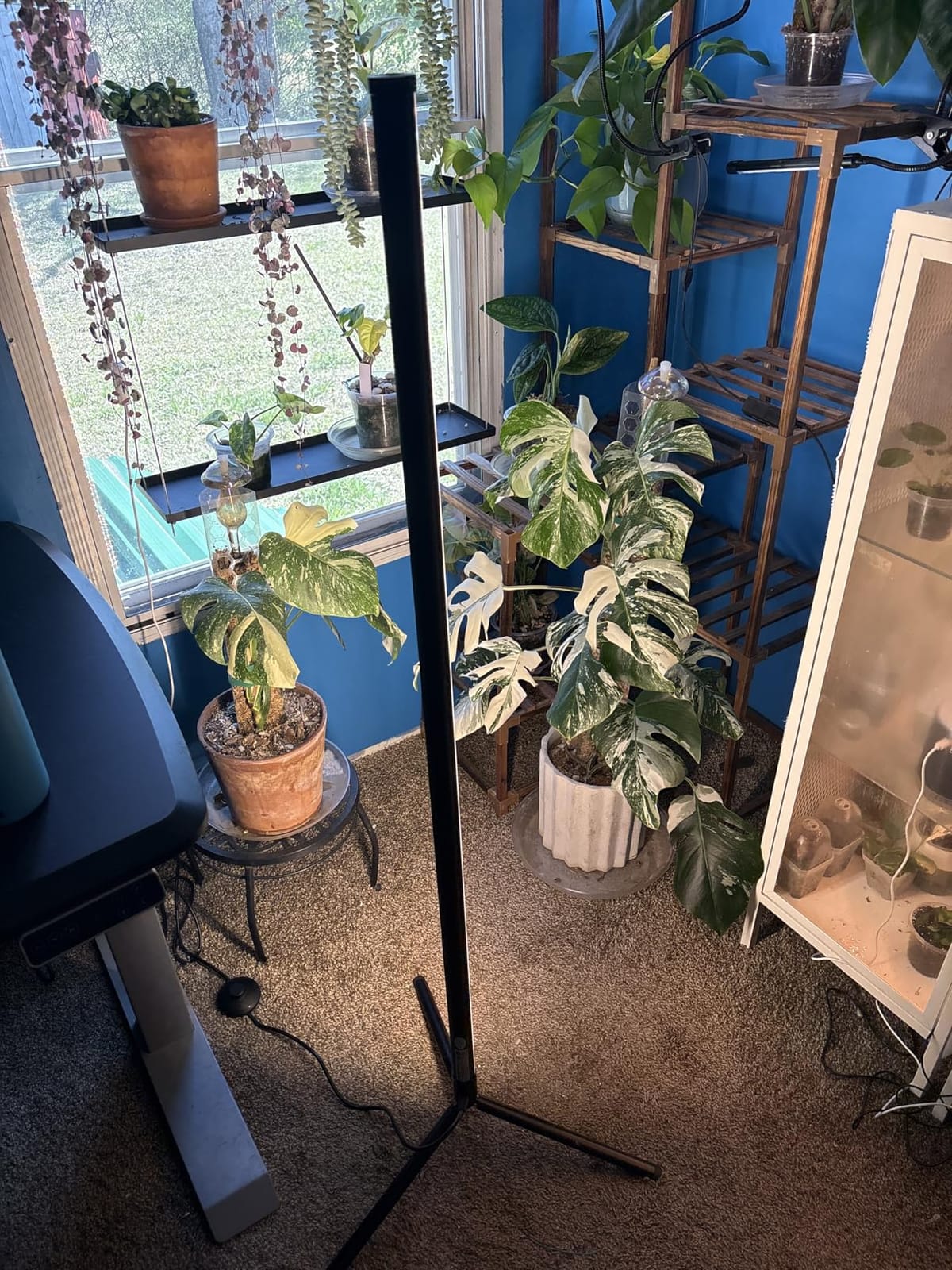
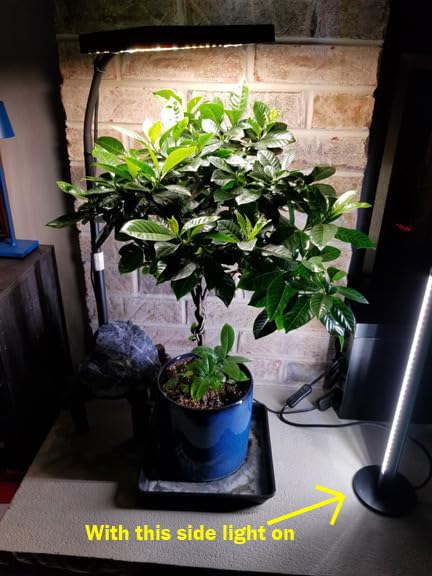
Everything about this fixture is built around one idea: light should come from the side, not from above. A 4-foot upright column standing beside a shelf throws light horizontally into the canopy, which is the only way to reach the shaded inner leaves of a dense plant that has filled its tier.
Owners report exactly the result the design predicts. People growing monstera, fiddle-leaf fig and conifers through winter describe strong new leaf growth once the column is placed at canopy height, and the 660nm red chips mean the same fixture carries a plant into flowering rather than only vegetative growth.
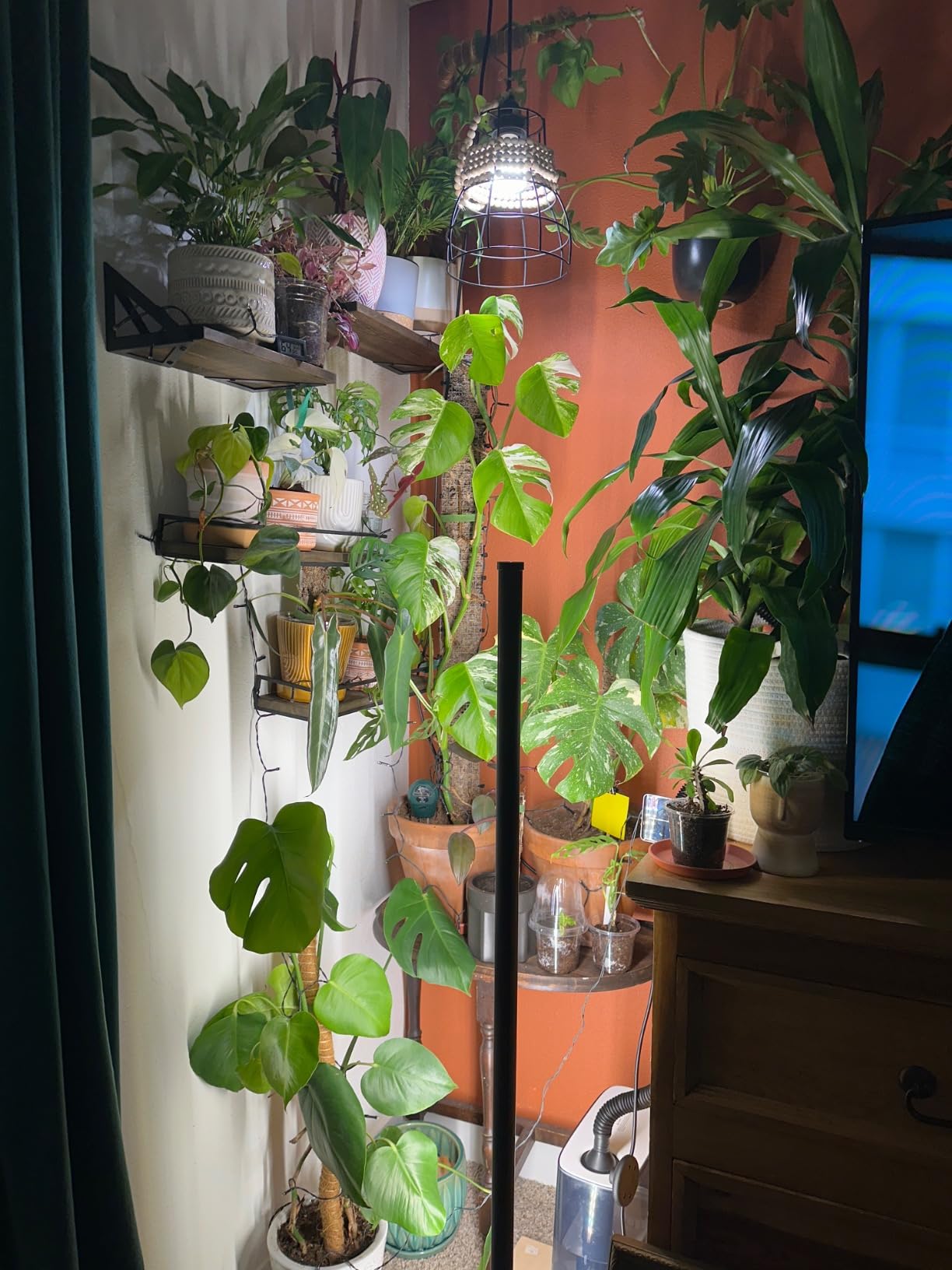
It is also unusually flexible for a vertical light. It ships with a tripod base for freestanding use, plus hanging clips and a hex wrench, so you can convert it to a horizontal bar clipped under a shelf rail when the rack layout changes. Assembly takes about five minutes with no tools beyond the included wrench.
The 48-inch height and 2.6-pound weight make it easy to reposition between tiers, and the slim 6.5-inch base footprint means it fits beside a rack without eating floor space. For a mixed rack of herbs and aquarium plants emersed on top, that flexibility is the deciding factor.
What to check before you buy?
Look at your floor clearance. A column this tall wants 48 inches of vertical room, and if the rack sits under a low shelf or a cabinet you may be hanging it rather than standing it. That is fine, but plan the clips before the box arrives.
Check what sits next to it. A vertical column pointed into a neighbouring rack would light that tier too, which sounds helpful until the two plants want different schedules. Point it at one shelf and keep the row controller separate.
Where it falls short?
The missing timer is the most common complaint in reviews. Nothing is built in, so you need a plug-in timer if you want a consistent photoperiod, and this is worth doing on day one rather than after a few missed nights.
The tripod base is the second weak point. Owners report the screw joint can strip or leave the column leaning slightly, and the legs can shift on hard floors. Tighten it fully before positioning, and move it away from foot traffic.
3. SDOVUERC 16 Inch 6-Bar Grow Light Strips
SDOVUERC 16” 6 Bars Grow Light Strips for Indoor Shelves Plants Growing.
Six 16in bars, 36W total
360 LEDs, 380-800nm
95in power cord
FCC CE and ROHS
Pros
- Six bars sized to span a whole shelf tier
- 95 inch cord lets one strip serve separated shelves
- Three mounting methods cover wire and solid shelves
- Circular memory timer at 6 12 and 18H
- Runs bright without getting hot
Cons
- Output is heavily blue-biased
- Some users find intensity light for dense seedlings
- 16 inch bars are short for wider shelves
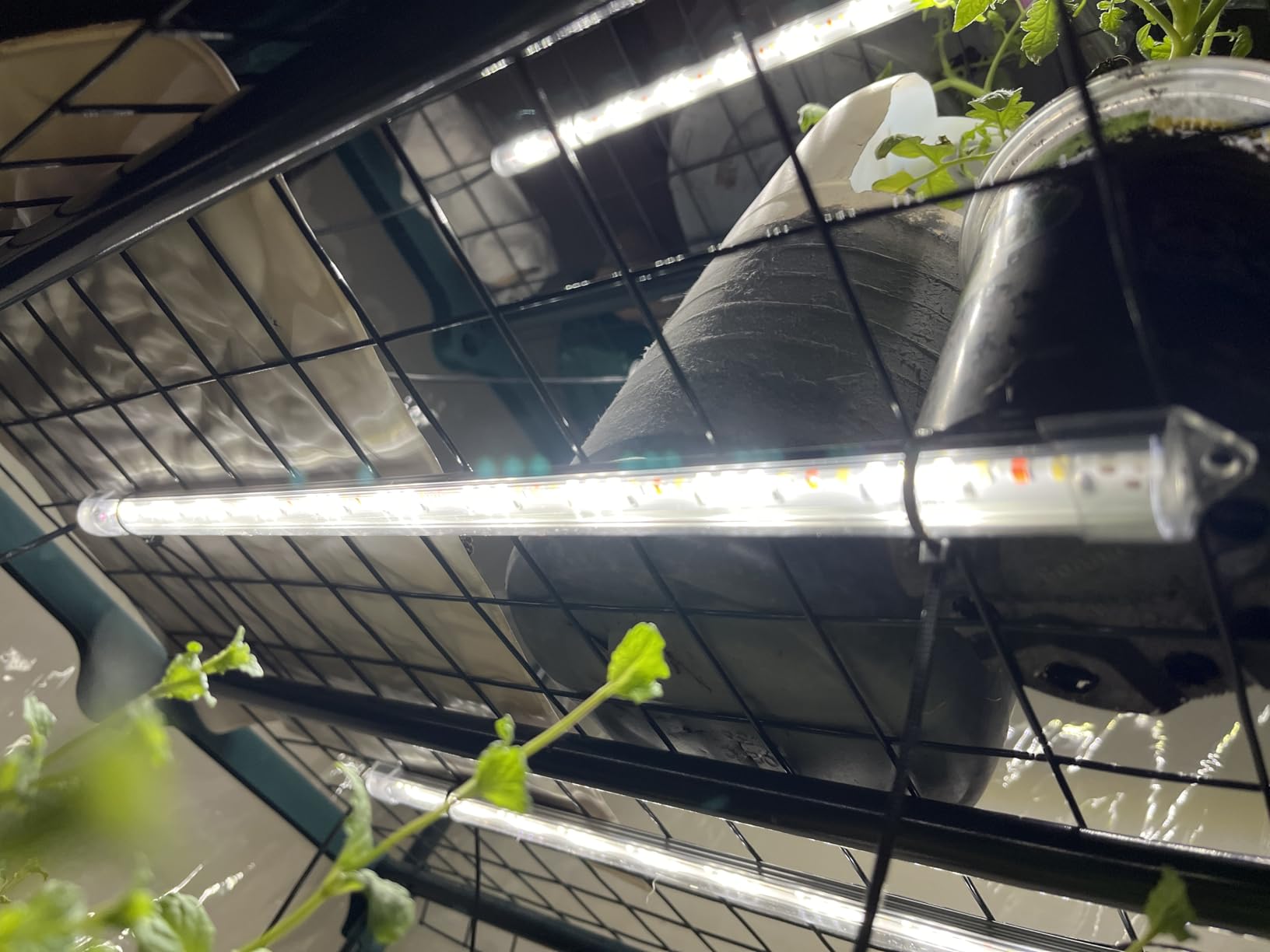
This is the set to look at when your rack is standard wire shelving and you do not want to drill anything. The box includes screws, double-sided tape and six lashing ties, which covers every shelf type we ran into, and the 95-inch cord is long enough that a single strip can reach from one tier to a separated shelf without a second outlet.
Six 16-inch bars give you the pieces to build a full tier: two bars across the front, two along the middle, two at the back, or any arrangement that matches your shelf footprint. Each bar draws from one 12V adapter, so the whole set is a single plug.
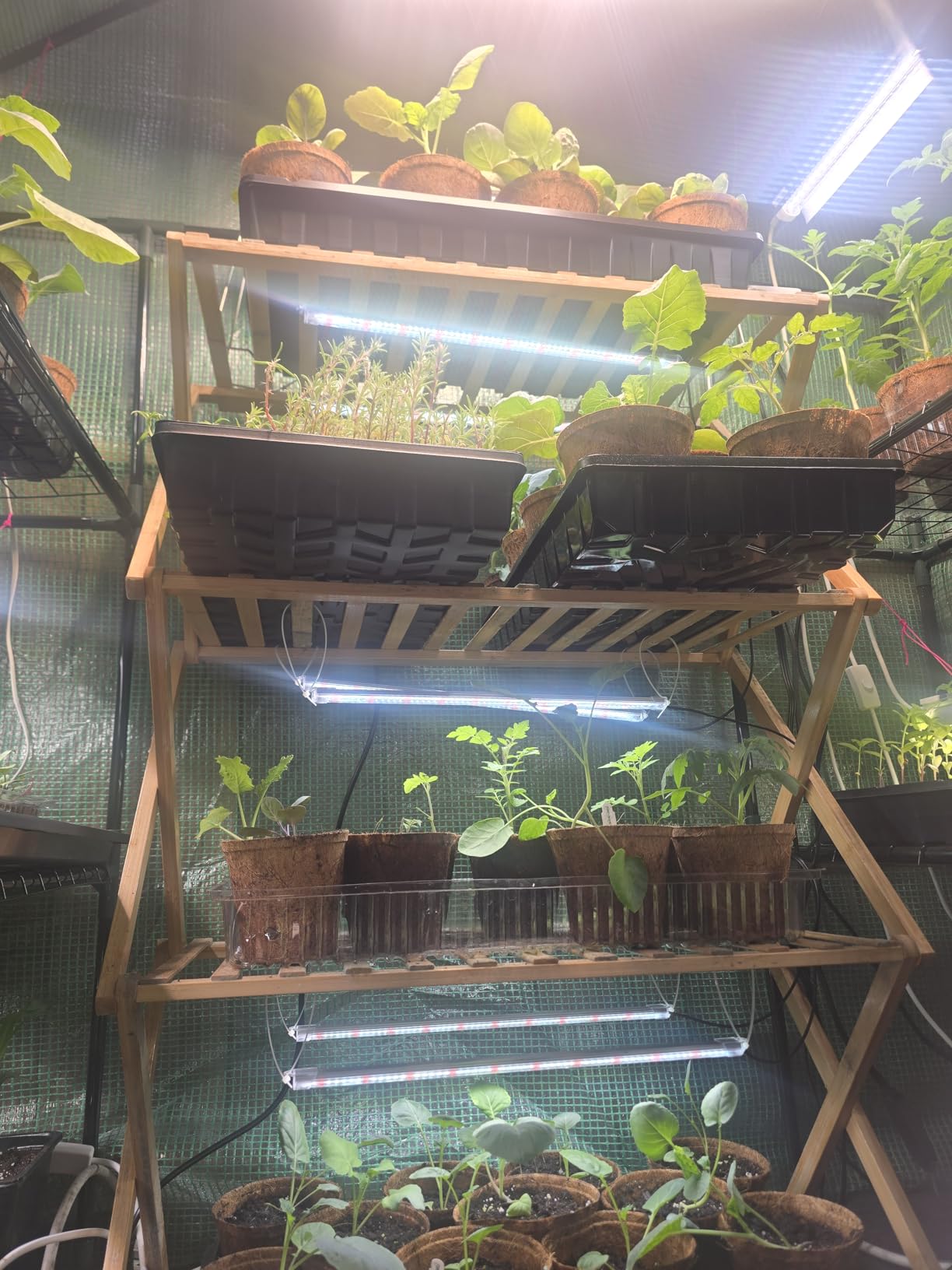
The circular memory timer with 6, 12 and 18 hour settings is the feature that saves the most hassle. Once you choose a photoperiod it holds that cycle without a reset, which is exactly what you want on a rack running unattended during the day.
Reviewers like it for filling dark corners of multi-tier shelves and orchid racks, and the mix of warm white, cool white and 660nm red across 360 LEDs gives you more colour variety than the cheapest strips manage. It also stays dimmable, which matters under a domed propagation lid.
What to check before you buy?
Measure your shelf width before counting on six bars covering it. Sixteen inches is a short bar. On a 48-inch tier you are looking at three bars per row, so the set suits a narrower rack or a two-row layout rather than one sweeping row.
Decide where the adapter sits. One adapter feeding six bars means the wiring has to run through the shelf, and the plastic bar housings are light enough to need a tie-down rather than a screw on every unit.
Where it falls short?
The colour is the complaint you will hear most. Buyers consistently describe the light as heavily blue-biased with no softer warm-white option, so it reads cool in a living space and looks less natural under a shelf full of foliage.
Intensity is the other limit. For dense seedlings it can fall short, and fruiting plants will want more than this set delivers. It is a strong fit for herbs, microgreens, nursery stock and shelf plants, less so for tomatoes or peppers.
4. Maygrove T5 2FT 15W Red-Enhanced 4-Pack
Maygrove T5 Grow Lights for Indoor Plants 2FT, Red-Enhanced Full Spectrum 5000K Grow Light, 60W(4 x 15W), Grow Light Strips for Seed Starting, Greenhouse, High PPFD, Linkable, Black, 4-Pack
15W per 2FT strip, 60W pack
CRI 98 with 660nm red
IP63 rated
20,000 hour LED life
Pros
- Highest colour rendering in this roundup at CRI 98
- Deep red 660nm chips support flowering stages
- Linkable bars with a 29.5 inch cord
- Each bar has its own on/off switch
- IP63 suits greenhouse and humid rooms
Cons
- Limited per-bar dimming and zone control
- 2FT length needs several units for a wide shelf
The distinguishing spec on this set is colour rendering. A CRI of 98 means you can look at a leaf and judge its true colour, so early yellowing or chlorosis shows up before it is obvious under a cooler lamp. For a rack running herbs and ornamentals side by side, that is a practical advantage rather than a novelty.
The spectrum pairs 660nm deep red LEDs with 5000K white, which puts this bar closer to a flowering-capable fixture than most budget strips. Each of the four 2-foot strips runs 15W, so the pack draws 60W while putting out 240 LEDs of light across four tiers.
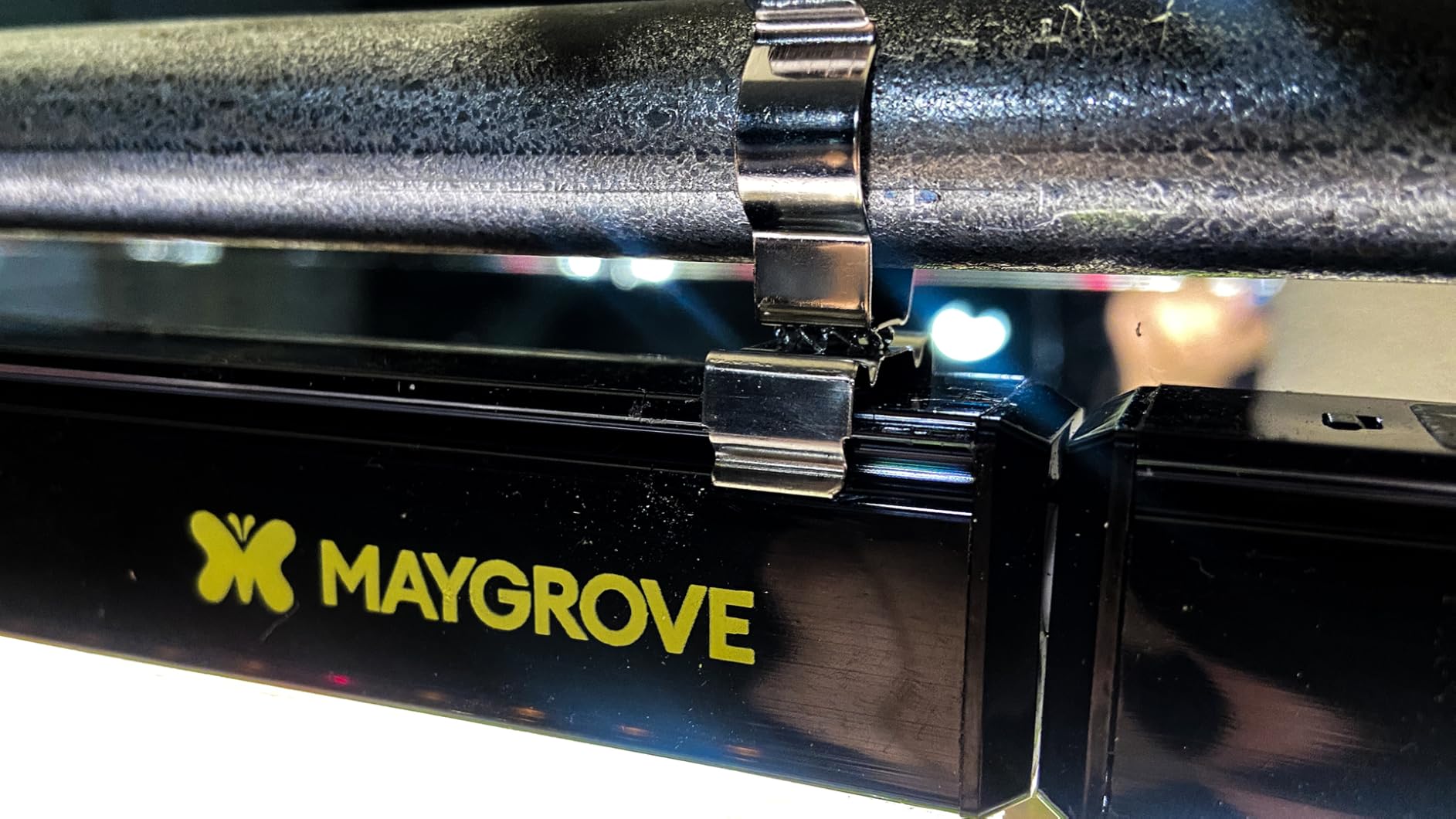
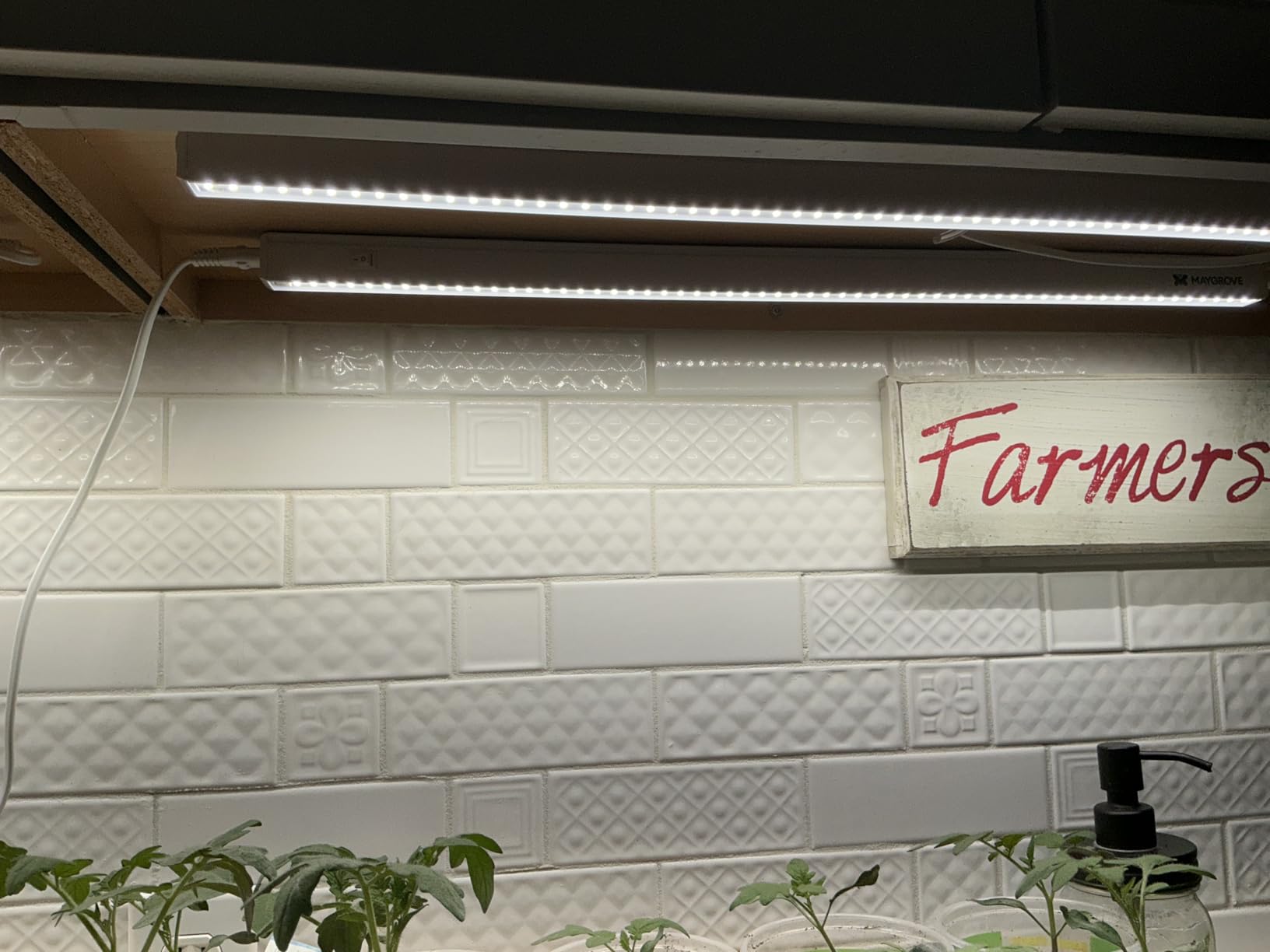
Each bar has its own on/off switch even when the bars are linked, and the 29.5-inch connecting cord is enough to run one bar per tier in sequence. The mounting kit includes quick clips suited to shelf frames and rack rails, which is where most multi-tier setups start.
IP63 moisture protection is the spec that separates it from the rest of the field here. That rating covers dust and light spray, which is enough for a greenhouse bench or a humid propagation area where an indoor-rated strip would be a poor long-term choice.
What to check before you buy?
Check the shelf width against the 2-foot bar. Two-foot strips are the compact option, so a 48-inch tier needs two per row or a deliberate overlap. Overlapping the ends slightly is usually better than a gap.
Also check that your tier height allows for hanging clearance. At 15W you can mount these closer to the canopy than a 42W bar, which is useful on lower tiers where headroom is tight.
Where it falls short?
Individual dimming is limited compared with multi-zone setups. You get per-bar on/off, not per-bar brightness, so two tiers with different plant stages cannot be balanced as precisely as they could with a dimmable controller.
The review base is also the thinnest here at 180 ratings, which means the long-term failure record is less well documented than for the heavily reviewed strips below. The warranty is two years, which is reasonable but not the longest in this group.
5. SpeePlant Vertical Grow Light 11W T5 72 LED
Speeplant Vertical Grow Light, 72 LEDs Full Spectrum Bar, 5000K, T5, 11W
11W with 72 LEDs at 5000K
17in wide area
Tool-free metal base
Compact footprint
Pros
- Upright side light reaches foliage overhead bars miss
- Very low 11W draw for a small setup or shelf
- Wide coverage for tall houseplants and bonsai
- Tool-free setup with non-slip base
Cons
- 11W is modest beside full-size bar fixtures
- Single fixed size with no height adjustment
- No timer or dimming listed
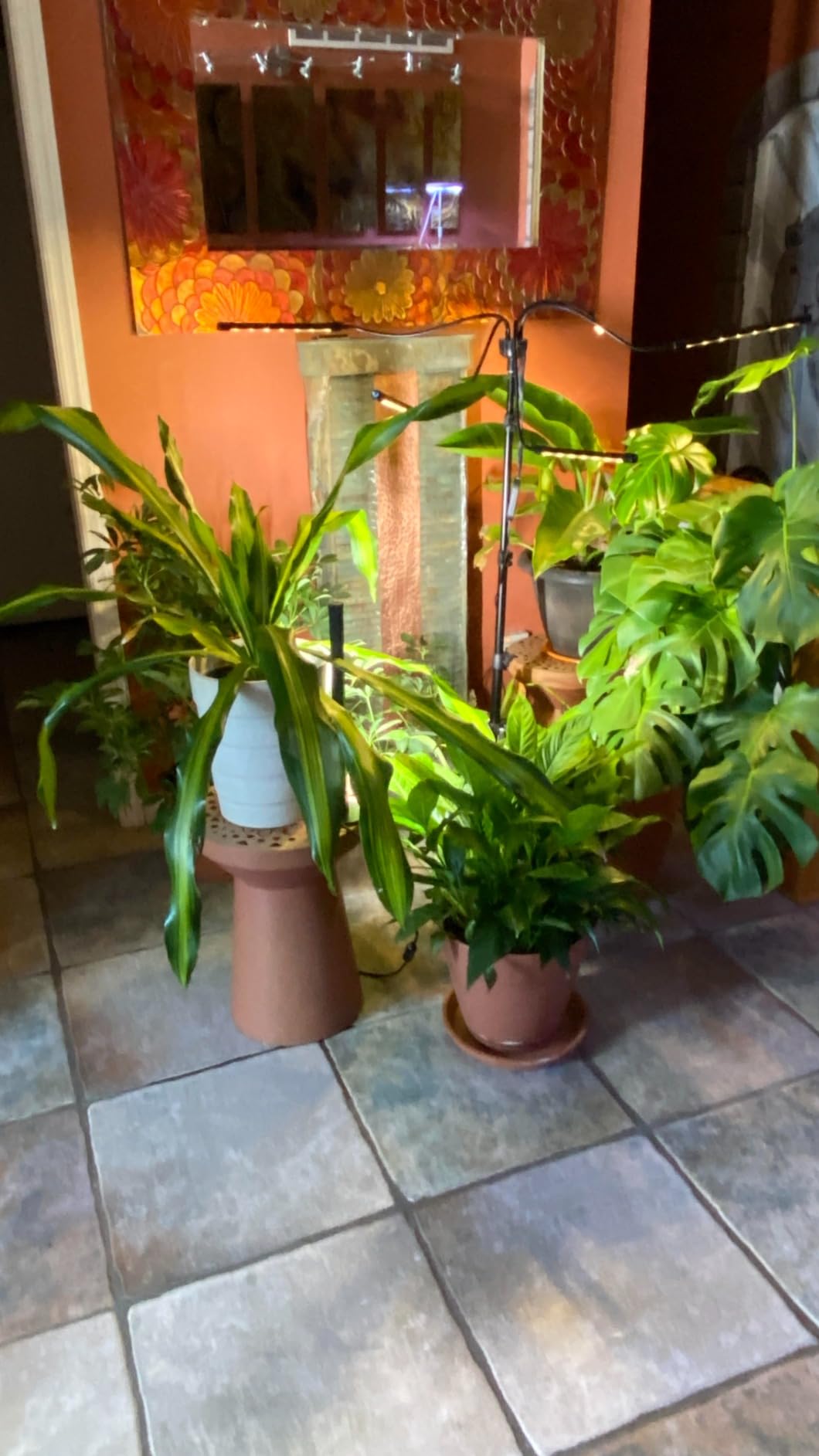
This is the smallest and cheapest way to add side light to a single shelf or a desk. At 11W with 72 LEDs in a 5000K full spectrum, it is not going to run a fruiting crop, but for a houseplant shelf, a bonsai bench or a propagation corner it delivers light to the parts of the plant an overhead bar never reaches.
The form factor is the point. A 1.4-foot standing column with a wide illumination area throws light horizontally across a shelf, and the non-slip metal base keeps it stable on a desk or a shelf without any mounting hardware at all.
Assembly is tool-free. The package includes the base, a hex wrench and a manual, and the whole thing is built for a spot-and-go setup in a room where you do not want to run cable to an upper shelf.
Reviewers tend to frame the appeal around the freestanding side-light shape rather than output strength, and at 11W the running cost is negligible even on a timer running eighteen hours a day. That makes it a sensible first light for one tier while you decide whether a full rack is worth building out.
What to check before you buy?
Be realistic about the tier size. A single column covers roughly one shelf width, so on a wide rack you would need several. That works for a three-tier shelf but gets cluttered on a six-tier unit.
Check your control situation. There is no timer or dimming listed, so plan on a plug-in timer and a fixed intensity. Young seedlings under this light should start at a greater distance than a full bar would need.
Where it falls short?
Eleven watts is the limit, and it is a real one. Once a plant fills its shelf and reaches toward the light, this fixture will not keep pace. It is a support light, not a primary light.
There is also only one size option at 1.4FT, with no height adjustment. On a tall plant you are limited to moving the whole base rather than repositioning the light.
6. VIVOSUN LumaRay LED Grow Light Bars 4-Bar Side Lighting Set
VIVOSUN LumaRay LED Grow Light Bars 16”(4-Bar) Full Spectrum Side Lighting
Four 16in bars, 50W total
60 percent red, 600-700nm
RJ11 daisy chain ports
Magnetic clamps
Pros
- Side mounting reaches lower canopy foliage
- Red-enhanced spectrum supports flowering and fruiting
- Dims 0-100 percent and schedules through the Vivosun app
- Magnetic clamps make installation quick
- Prism lens reduces glare
Cons
- App control needs a separate E42A or E25 controller
- Lowest five-star share in this roundup with mixed output feedback
This is the only set in the group with a route into scheduled, phone-controlled dimming, and for a six or eight-tier rack that is worth planning around. Through the Vivosun SGS system, using an E42A or E25 controller sold separately, you get dimming from 0 to 100 percent plus scheduling without walking to each tier.
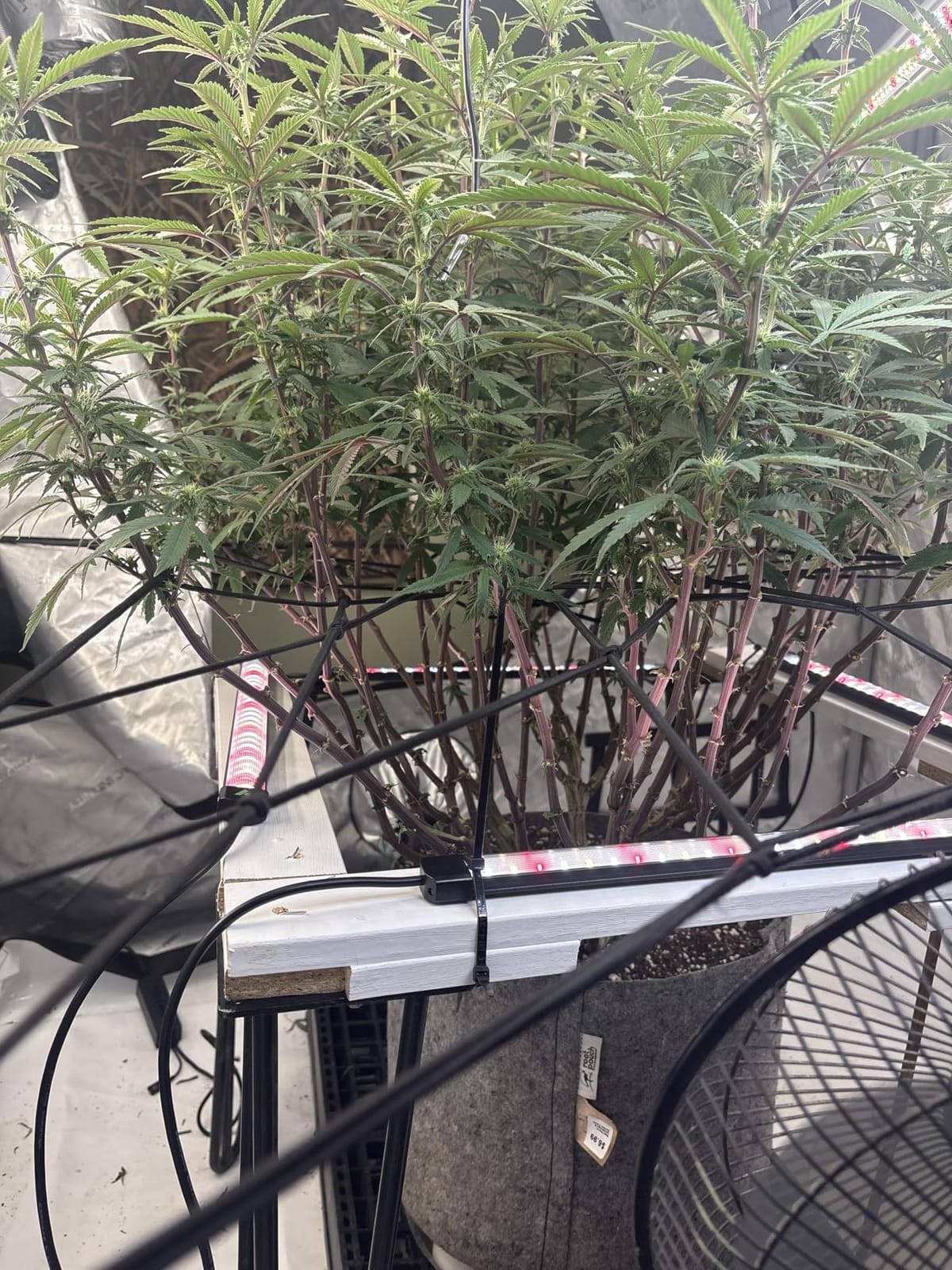
The physical design is closer to supplemental lighting than a main bar. Each of the four units is about 16 inches, and the set is meant to clip along the side of a rack or hang from tent poles, reaching the lower and outer foliage that an overhead fixture leaves dark. The magnetic clamps make that repositioning quick when plants grow.
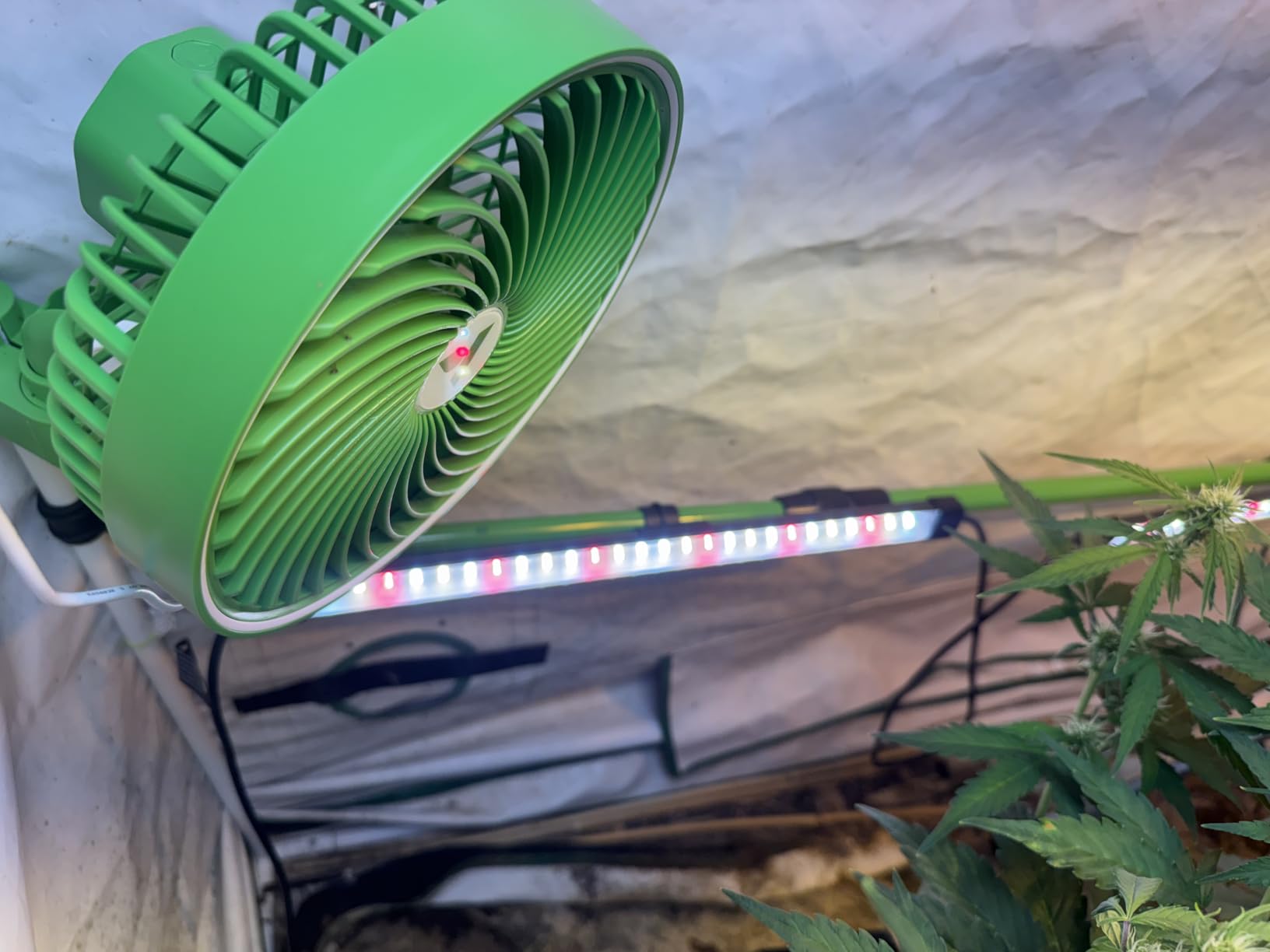
Spectrum content leans red at 60 percent between 600 and 700nm, which is what you want once a plant is past vegetative growth and moving toward flowering or fruiting. The prism-designed optical lens spreads that light while cutting glare, and a gallium nitride power supply keeps the driver cooler than older designs.
RJ11 daisy chain ports let the bars link to other Vivosun grow lights, which is what makes this workable as part of a mixed rack rather than a standalone tier. Pack sizes are offered in 4, 8 and 16 units so the tier count can grow with the rack.
What to check before you buy?
Budget for the controller. The smart features are an add-on, and without an E42A or E25 controller you have four well-made side bars with manual switching and no dimming. Decide up front whether you are buying the bars or the system.
Also confirm the mounting style fits. Magnetic clamps and pole mounts suit racks with a metal frame, and the specs list pole and wall mounting rather than a full shelf hardware kit.
Where it falls short?
Rating feedback is the most mixed in this roundup. It sits at 4.4 across 179 ratings with the smallest five-star share of the ten, and the recurring theme is that output is lighter than some buyers expected for the price of the set.
It is also supplemental by design. If a tier has no overhead light at all, four short side bars will not deliver a full canopy PPFD on their own.
7. GLOWRIUM 60 Inch Standing Grow Light
GLOWRIUM 60in Standing Grow Light, Vertical Grow Lights for Indoor Plants
Adjustable 16 to 60 inches
36W with up to 256 LEDs
24V low voltage, ETL driver
50,000 hour chip life
Pros
- 120-degree side illumination covers leaves top-down lights miss
- One unit covers seedlings through mature plants
- Base removes so it can hang on a rack
- Rotatable base aims light without moving it
- Aluminium housing and certified isolated driver
Cons
- Remote included but no separate dimmer or timer listed
- Vertical column eats floor or shelf height
The four-tube column here adjusts from 16 to 60 inches, and that range is the reason it earns a place on a variable rack. One fixture can start at seedling height on a propagation shelf and grow to full height beside a mature plant, without buying a second light for the other stage.
The chip mix is thorough: up to 256 LEDs including 460nm, 660nm, 3000K and 6500K, with CRI above 90 and infinite dimming across seedling, growth and flowering modes. That means a rack with a propagation tier and a fruiting tier can share one product with different settings rather than two mismatched fixtures.
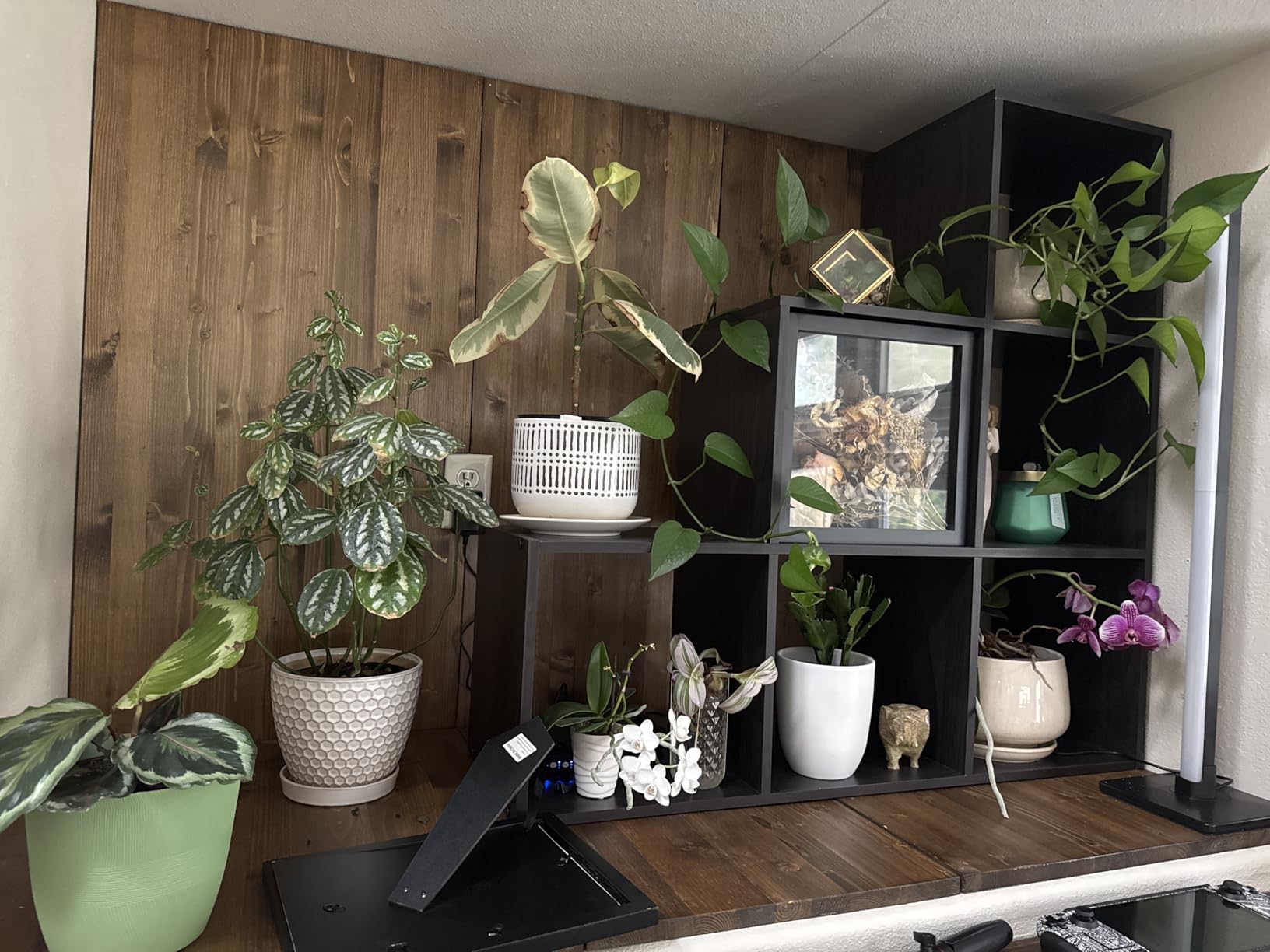
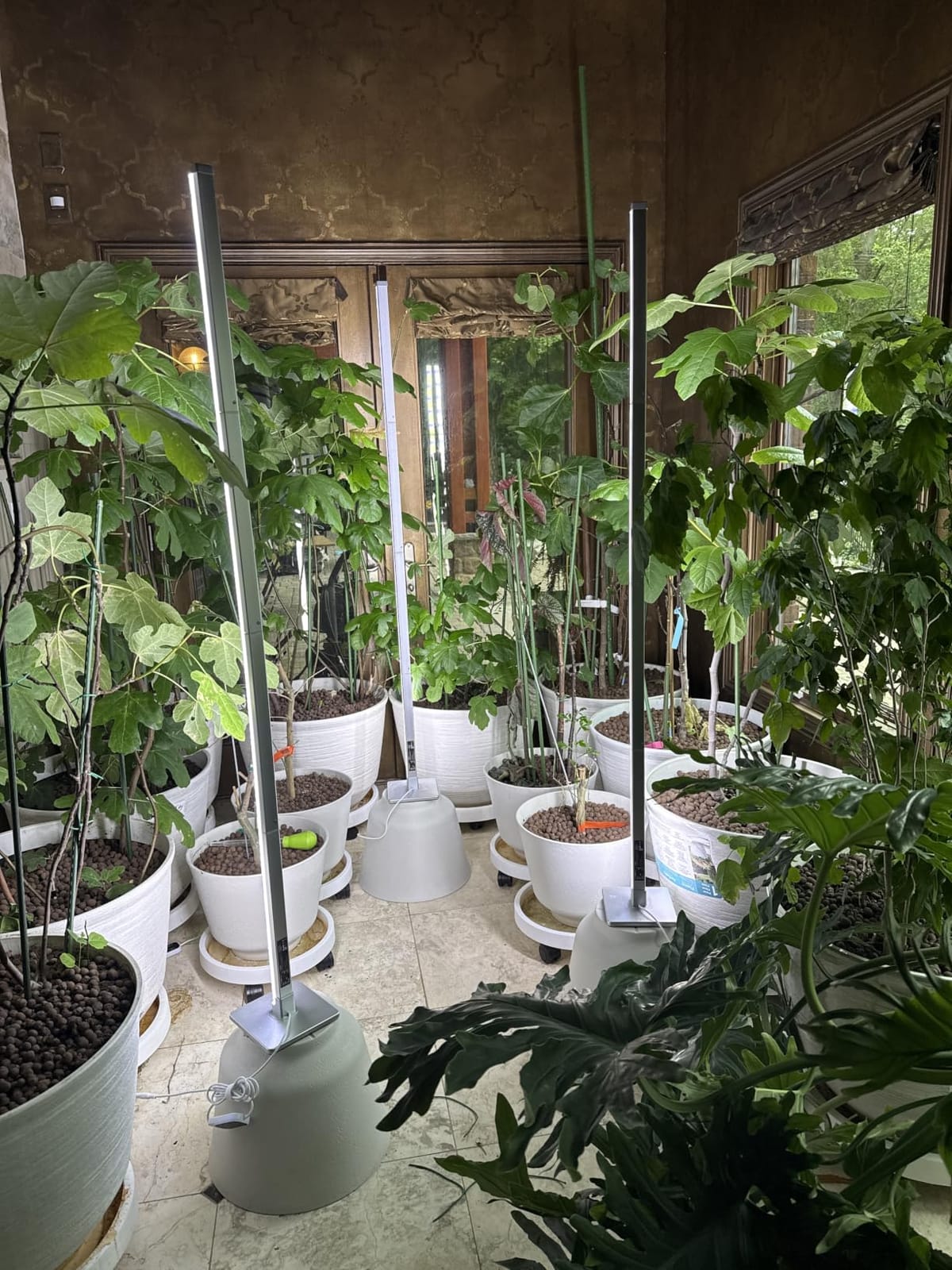
Two details make it rack-friendly. The base unscrews so the column can hang from a plant rack, and the rotatable base lets you redirect the 120-degree beam without lifting or repositioning the whole unit. That solves the awkward problem of light pointing at the side wall instead of the plants.
It runs on 24V low voltage with an ETL certified isolated driver, and the aluminium housing is rated for up to 50,000 hours of LED chip life. For a unit that may stay lit eighteen hours a day, that efficiency and lifespan matter more than the headline wattage.
What to check before you buy?
Measure the vertical space. At 60 inches tall this is a floor-standing unit unless you remove the base and hang it, and a rack in a closet with a low ceiling will not accept it at full height.
Check the controls. There is a remote and an auto timer with 3H, 9H, 12H and 16H settings, and dimming is described as infinite, but confirm whether the timer sits on the unit or the remote before you plan your control layout.
Where it falls short?
The warranty is one year, the shortest in this group. For a fixture with a 50,000-hour chip rating that feels thin, and it is worth weighing against the two-year and longer coverage on the strip sets.
The vertical column form also takes up real space. On a tight rack the footprint competes with the plants themselves, so measure before ordering rather than after.
8. Uocub 65 Inch 48W Vertical Grow Light
65Inch Vertical Grow Lights for Indoor Plants: 48W, 6000K, 336 LEDs Full Spectrum LED Standing Plant Lights with Timer and 10 Level Dimmable Plant Growing Lamp for Greenhouse
48W with 336 LEDs
Adjustable 18 to 65 inches
10 dimming levels, 4H 8H 12H timer
Weighted padded base
Pros
- Light runs the full vertical length so upper plants do not shade lower ones
- 10 brightness levels plus a cord auto timer
- Narrow profile fits tight corners
- Weighted base is stable and padded against floor scratches
- Mounts vertically or hangs with the included kit
Cons
- Timer can behave inconsistently and need manual switching
- Octagonal base is wide enough to limit placement
- Remote and cord brightness levels do not always match
Sixty-five inches of light in a 48W column is the tallest unit here, and that height is what makes it useful beside a floor-standing fiddle-leaf fig or a large plant that has outgrown its shelf. Because the light runs along the full length rather than from a single point, the upper leaves stop shading the lower ones.
The four-stage modular design adjusts from 18 to 65 inches without tools, and the LED distribution is unusually complete: 48 deep-red 660nm chips, 96 daylight 6000K and 192 warm 3000K, giving a CRI of 96 across the full spectrum. That spread is what lets it cover propagation through to fruiting stages on one setting range.
We rated it 4.4 across 144 ratings. Owners with large plants in small homes point to the narrow profile and the vertical coverage as the reasons it works, and the review history is most critical of the timer rather than the light itself.
What to check before you buy?
Check the base width. The octagonal base is wide enough to matter in a tight corner, and it is padded against floor scratches, which tells you the design assumes it will sit on finished flooring. If you need it in a tight spot, measure the footprint before ordering.
Test the timer before you rely on it. This is the main reported weak point, so pick the closest setting on day one and check it after a few cycles rather than assuming it will hold.
Where it falls short?
The timer is the recurring complaint. Owners report inconsistent behaviour and needing to switch it back on manually, and remote brightness levels sometimes do not match what the cord controller shows, which makes a repeatable schedule harder to keep.
The warranty is one year, and the light is not waterproof, so it belongs indoors or under cover rather than in an open greenhouse position.
9. RWNTAO LED Grow Light Strips 3-Head 2-Pack
LED Grow Light Strips, Grow Lights for Indoor Plants Full Spectrum 3000K, Plant Light Bar with 3/9/12H Timer, 10 Dimmable Levels for Seedling Succulent,Best Match for Plant Shelf(3 Head×2 Pack)
156 LEDs across 3 heads, two packs
380-800nm full spectrum
Cycle timer at 3 9 and 12 hours
71 inch power cord
Pros
- Slim 8.66 inch bars tuck under a shelf with no headroom loss
- Four mounting options including magnets
- Cycle memory timer at 3 9 and 12H
- 10 dimmable levels with three switch modes
- 71 inch cord reaches several tiers
- Aluminium housing runs cool
Cons
- Short bar length limits coverage on wider shelves
- Warmer 3500K output is weaker for flowering stages
At 8.66 inches long and 0.55 inches wide, these are the slimmest bars in the group, and that width is why they fit under a shelf with almost no clearance to spare. On a dense rack where every inch of vertical space matters, that alone can decide the purchase.
The set gives you 156 LEDs across three heads with two packs available, each covering 380nm to 800nm. Ten dimmable levels let you dial back for germination and raise later, and three switch modes let you run head A only, head B only, or both, so a single tray and a mature plant can share a bar at different intensities.
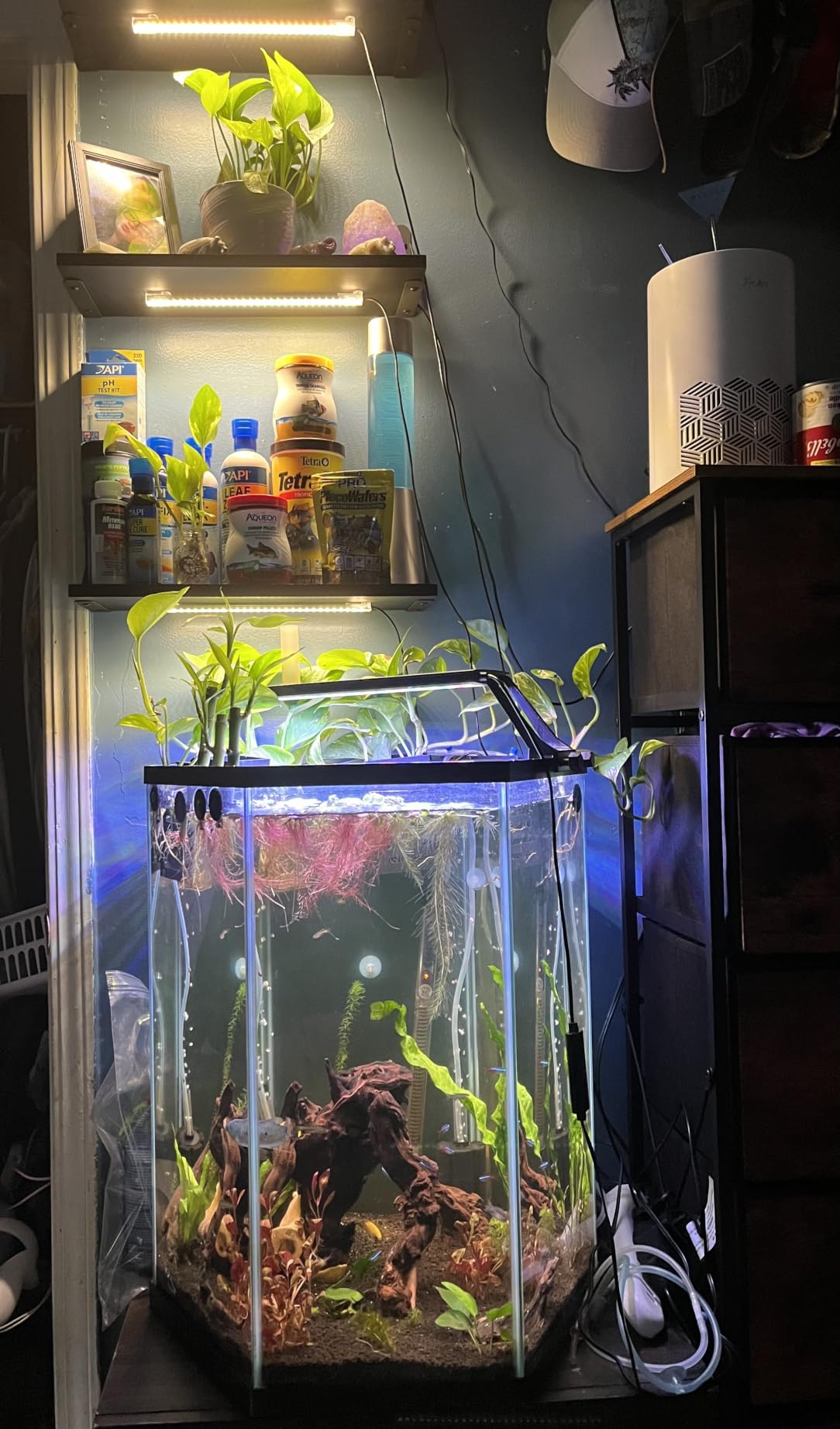
Mounting options are the strongest part of the package: screws, ties, double-sided tape and magnets. The magnet option means you can move a light from shelf to shelf as plants move, which is rare at this size and very useful when reworking a rack layout.
The 71-inch cord is long enough to reach across several shelf tiers, and the cycle memory timer at 3, 9 and 12 hours holds a schedule without a reset. Reviewers consistently use it for seedlings and succulents on plant shelves, and the aluminium housing keeps heat low enough to run close to the canopy.
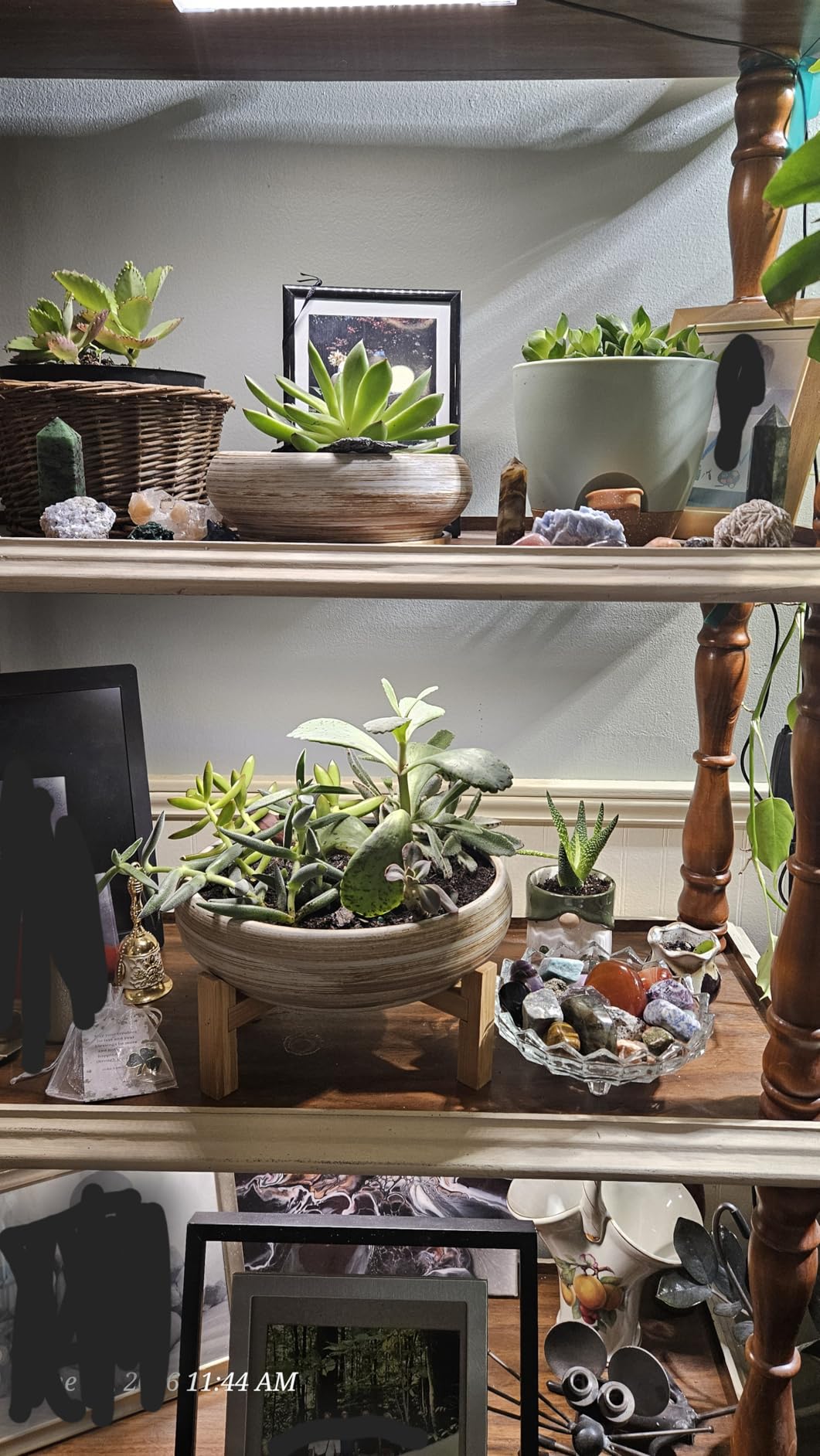
What to check before you buy?
Measure your shelf width honestly. An 8.66-inch bar covers a tray or a small grouping, not a full tier. If you have a 36-inch shelf, plan on a row of these rather than one bar across it, and count how many tiers that means.
Check your photoperiod needs against the timer options. The 3, 9 and 12 hour settings cover propagation and leafy greens well, but a fruiting crop usually wants a 14 to 16 hour day, which means an external timer or a different fixture.
Where it falls short?
Bar length is the honest limitation, and buyers mention it directly. These are the shortest lights in the roundup, so coverage on a wide shelf takes several units rather than one.
The 3000K warm-leaning output, with 26 x 3500K LEDs per bar, is also weaker for light-hungry flowering stages. For seedlings, cuttings and succulents the trade is easy. For tomatoes and peppers, plan on a second, stronger fixture.
10. Wiaxulay 3-Bar 16 Inch Grow Light Set
Wiaxulay LED Plant Grow Light Strips, 6000K White Grow Lights for Indoor Plants Full Spectrum, 3 Bars/16 in Grow Lamp with 6/12/16 Hrs Timer, 5 Brightness for Green House, Hydroponics, Seed Starting
Three 16 inch bars at 15W total
60 beads per strip, 180 LEDs
6000K white plus 660nm beads
Memory timer at 6 12 and 16 hours
Pros
- Bars separate along one cord to cover multiple tiers
- Memory timer at 6 12 and 16H needs no daily switching
- Mounts under shelves for DIY plant-stand builds
- Five brightness levels reduce seedling scorch risk
- Stays cool and will not warp propagation lids
- Many bar counts and pack sizes to match a rack
Cons
- Bars are somewhat flimsy in their holders
- Individual durability varies with some units failing early
- 16 inch length is short against some competing strips
This set carries 1914 ratings, and the reason it works is straightforward: three 16-inch bars on one cord is the pattern most people need to light a DIY plant shelf tier by tier, and you can slide the bars apart along the cable to match whatever spacing your shelf uses.
The spectrum pairs 6000K white with 660nm beads across 380nm to 800nm, giving you a cool daylight output plus the deep red that supports flowering. Five brightness levels are the useful part, because starting seedlings at full strength on a strip this close to the tray is the easiest way to scorch them.
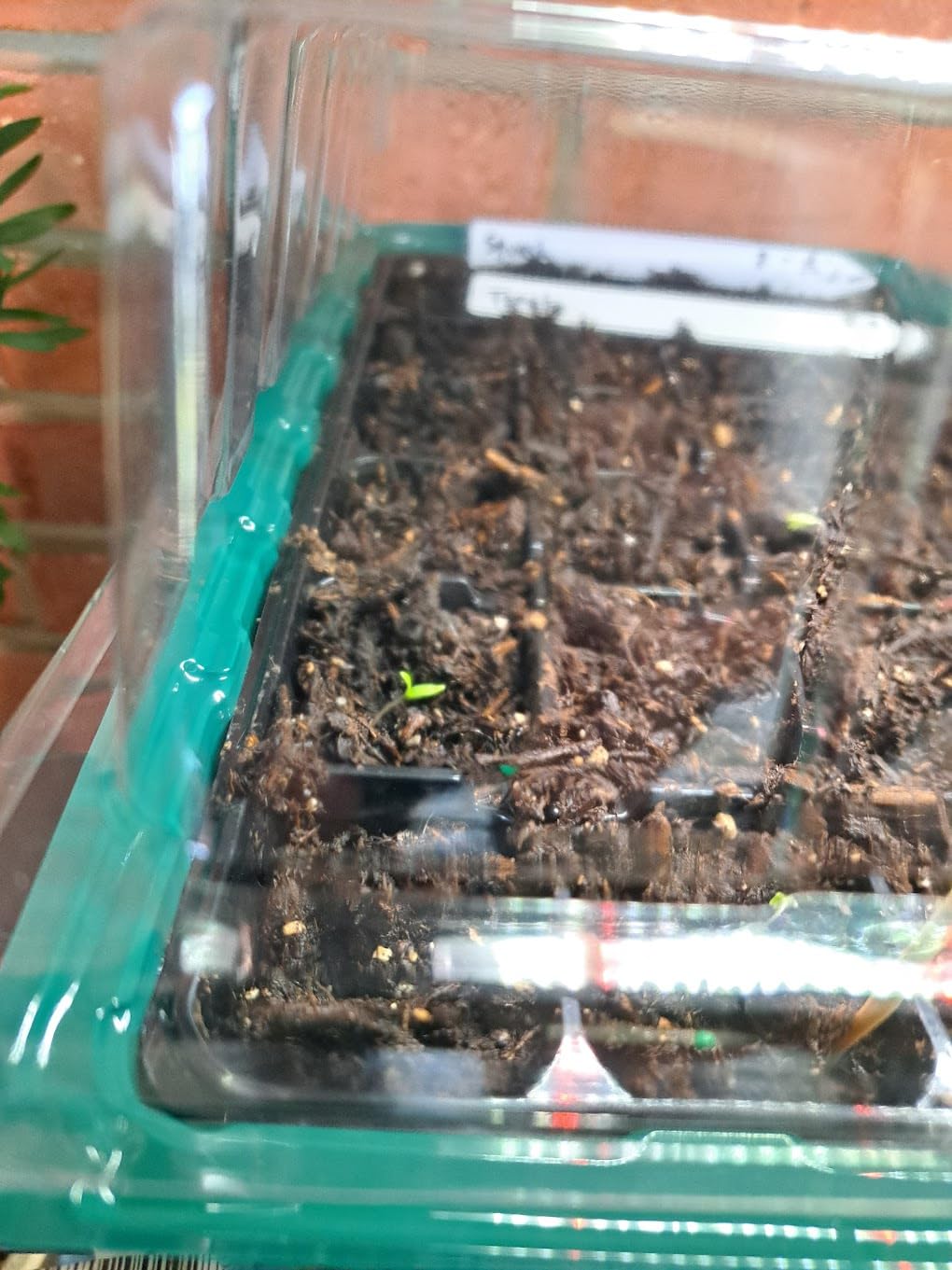
The 6, 12 and 16 hour memory timer covers almost every photoperiod a home grower uses, and once set it does not need resetting. Reviewers also note the strips stay cool to the touch, which matters if you are running them under a propagation lid where heat builds fast.
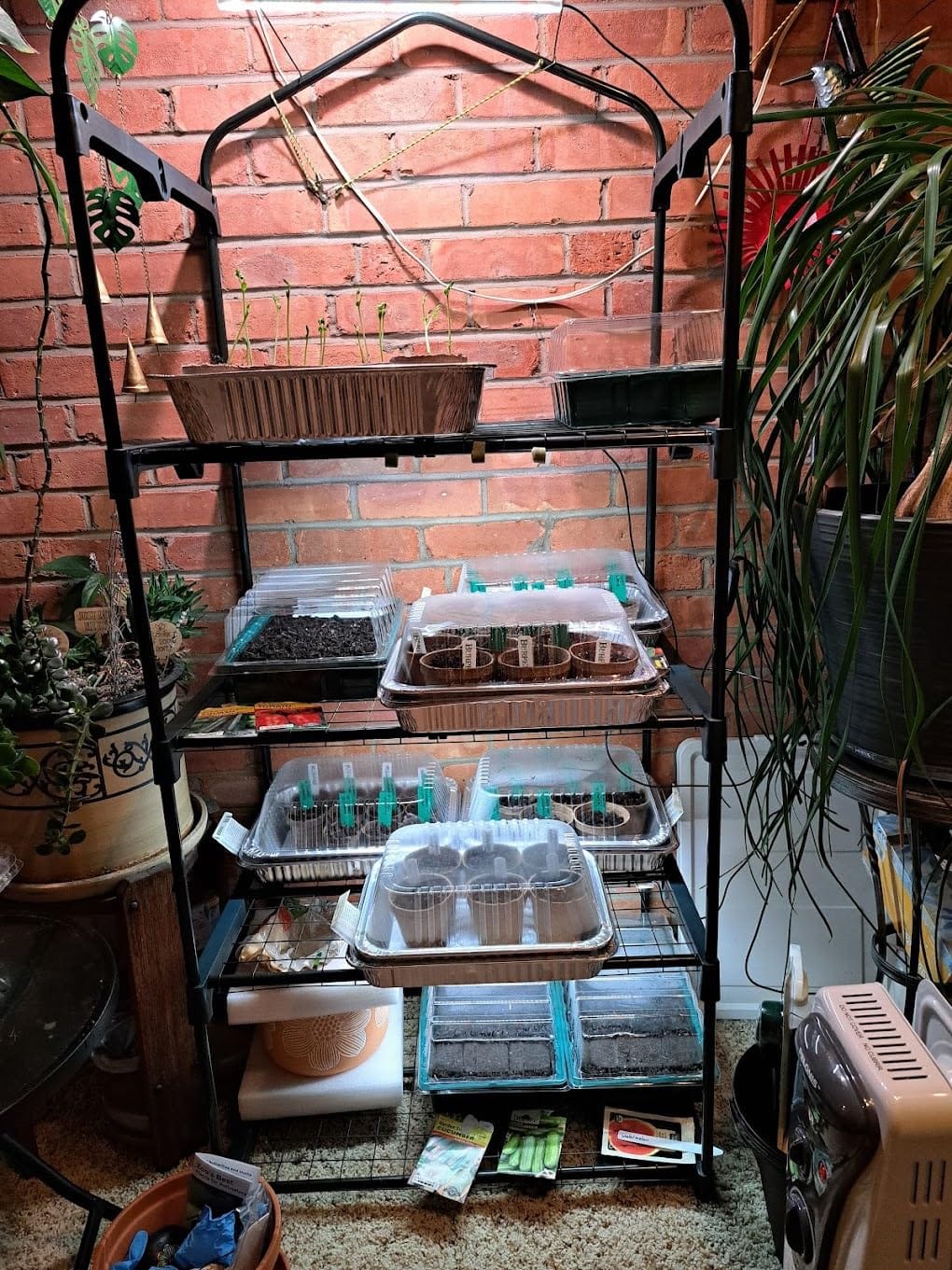
Variants run from 2 bars to 6 bars and single or twin packs, so a rack can start with one tier and expand. The included screws, zip ties and double-sided tape cover both wire and solid shelving, and the same people who mounted bars to a rack rail with zip ties on forums are the ones buying this tier by tier.
What to check before you buy?
Check bar length against your shelf, and keep the 16-inch figure in view when comparing against longer strips. On a wide shelf, two or three of these per row is normal, and the sliding cord makes that easy to arrange.
Check the holder fit. Reviewers mention that a bar can sit loosely in its holder, so secure each strip with a tie or a dab of tape rather than relying on friction alone.
Where it falls short?
Build quality is the main complaint. Strips are described as somewhat flimsy, and some owners report individual units failing after several weeks, so expect to replace a bar now and then on a large rack. That is the trade for the price and the review volume.
There is no dimmer or app control beyond the five preset levels and three switching functions. If you want scheduled dimming by zone, this is not that product.
How Much Light a Vertical Rack Needs?
Start with the crop stage, not the shelf size. Propagation and seedlings do well at roughly 100 to 200 micromoles per square metre per second at the leaf surface, leafy greens and herbs sit around 200 to 300, and fruiting crops such as tomatoes and peppers want 400 or more. A rack that mixes seedlings on top and tomatoes below needs dimming or separate fixtures, because one setting cannot serve both.
Lumens are not the number to shop by. A lumen measures total visible light, including wavelengths plants cannot use, which is why two products with the same lumen rating can deliver very different growing results. PPFD is the figure that matters, and most bars in this roundup do not publish it, so compare wattage per square foot of shelf as the practical proxy.
A usable working figure for a home rack is 20 to 30 watts of LED per square foot of growing area per tier. Below that, expect healthy seedlings and greens but thin growth on anything demanding. Above it you are usually buying heat you do not need in a closed cabinet.
For timing, most growers run 16 hours on and 8 hours off for leafy greens, microgreens and herbs, and 14 to 16 hours for fruiting plants. Seedlings do fine on the shorter photoperiod, and photoperiod matters more than most buyers expect because it drives flowering in some crops.
Before you commit to a full rack, our vertical grow tower roundup covers the tower-style alternative, and our LED light bar picks go deeper on bar-only setups outside the rack format.
Mounting Bars on Wire, Wood and Metal Shelving
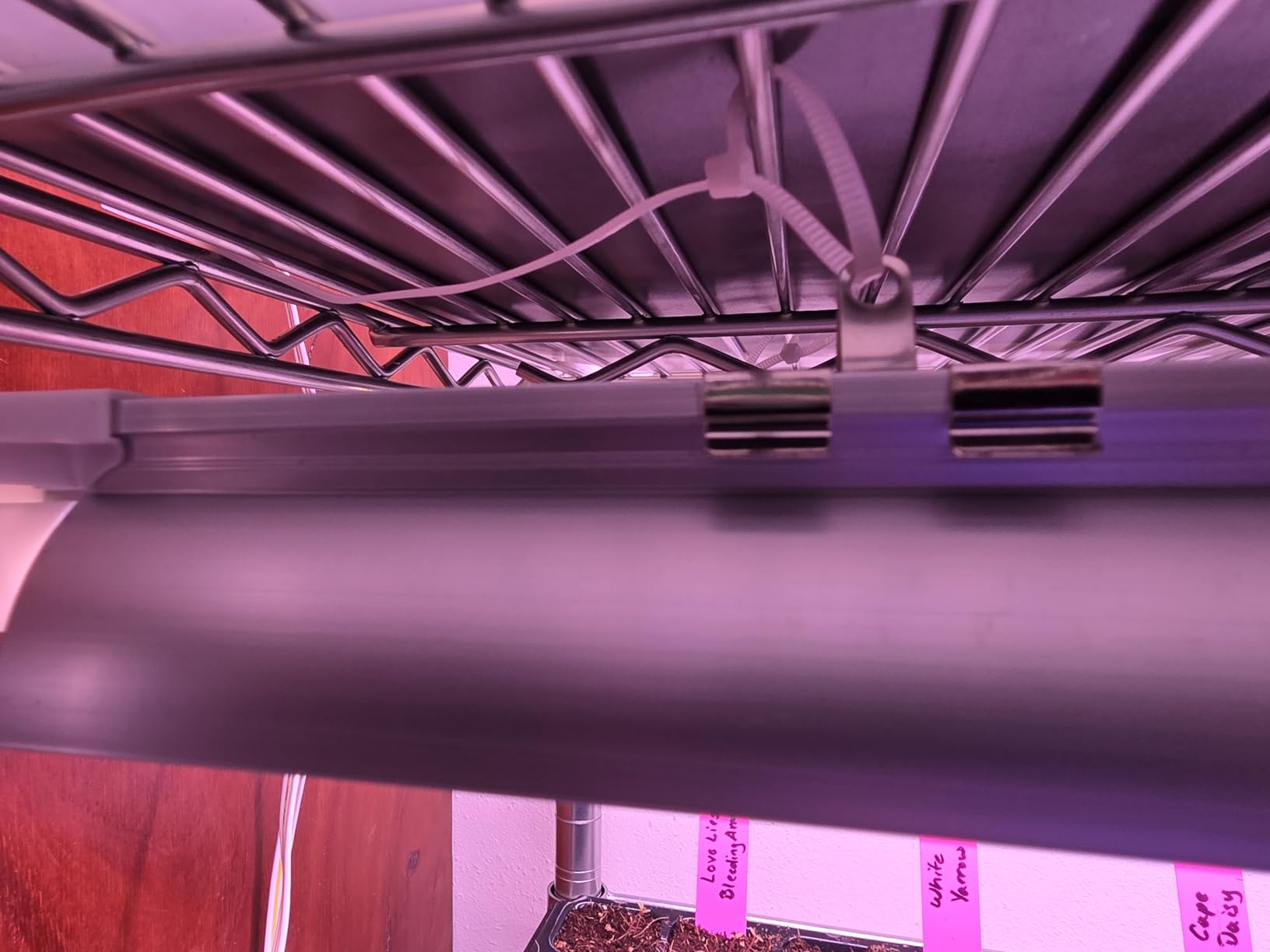
Wire shelving is the most common rack type and the easiest case, because almost every bar here ships with clips, zip ties or cable ties. Loop the tie around the shelf frame or the support rail, seat the bar and trim the excess. Several owners on r/IndoorGarden describe zip-tying light cords to shelf rails as their cable management fix, and it holds better than adhesive on a painted wire frame.
Wood shelving works with screws or tape. If you plan to move the bars often, use removable screws or a magnetic mount rather than permanent fixings, and check that the underside of the shelf is flat enough for the bar housing to sit flat. A bowed or slatted shelf leaves the bar hanging at an angle, and angled bars throw light at the shelf above.
Metal racks suit every method in this group, including the magnets on the slim RWNTAO strips and the magnetic clamps on the VIVOSUN LumaRay bars. Magnet mounts depend on the gauge of your steel, so test one before mounting an entire tier.
Hanging height matters more than any spec sheet. Give seedlings 8 to 12 inches, vegetative plants 12 to 18 inches, and fruiting crops 18 to 24 inches. Higher than that and PPFD drops off fast, lower and you risk heat stress, which is the main reason to keep a vertical rack well ventilated.
If the rack is tall enough to need a ladder or step stool, our grow light stand roundup covers freestanding arrangements that remove the climbing from the equation entirely.
Managing Heat in Enclosed Racks
Heat is the failure mode nobody plans for. Each tier adds a fixture and the cumulative heat has nowhere to go, so the top tier runs warm and the bottom tier sits in a pocket of trapped air. The first fix is spacing tiers as far apart as the plants allow, rather than packing them shelf-tight.
Second, use dimming as heat control. Every fixture in this group with brightness levels lets you run seedlings at half output instead of full, which drops heat and the electrical draw at the same time. Run the light fewer hours rather than at lower brightness when you can, since hours and intensity are not interchangeable for growth.
Third, keep drivers and power supplies outside the rack if your model allows it. Products built on an adapter, like the SDOVUERC strips, let you place the power brick on a shelf outside the cabinet, and the driver stays cooler with air around it.
Passive cooling housings help as well. Both Barrina sets and the Maygrove strips use aluminium bodies that move heat along the metal instead of radiating it downward onto the tier below, which is why we rank them well in closed setups.
Finally, give the rack an air path. A single quiet fan pulling air across the lowest tier does more than any single product change, and on tall enclosed cabinets a slot cut at the top or bottom keeps the loop moving.
How to Choose the Right Bar for Your Rack?
Match bar length to shelf width before anything else. A 4-foot bar suits a 48-inch shelf in one row, a 16-inch strip suits a 36-inch shelf in two or three rows, and an 8.66-inch bar suits a single tray or a 12-inch shelf. Overlapping the ends of two bars beats leaving a dark gap in the middle of a tier.
Then decide between linkable strips and freestanding columns. Linkable bars, such as the Barrina T8 pack or the Maygrove T5s, give you one power circuit per tier group and the cleanest cable routing on a rack. Columns, such as the Barrina T10, GLOWRIUM or Uocub, light the canopy from the side and cover tall plants an overhead bar misses, but they occupy floor or shelf space and usually need their own outlet.
Check the spectrum against your crops. Full spectrum 5000K white is a safe default for mixed plantings, red-enhanced options such as the Maygrove and VIVOSUN sets add the 660nm content that fruiting crops want, and a high CRI makes visual checks on plant health easier. Warm 2900K is easier to live with in an occupied room.
Look at mounting hardware against your actual shelves, and treat it as a requirement rather than a bonus. A set that ships tape, ties and screws will mount to anything. A set that ships only pole mounts needs a metal frame to work with.
Check warranty length as a tiebreaker. Two years is the common figure here, and one year on a column light that runs 18 hours a day is worth weighing against a longer warranty on a strip set.
Finally, consider what you will control. Built-in memory timers cover most home setups and cost nothing extra. App-based scheduling, as on the VIVOSUN LumaRay set, matters when you have more tiers than you can reach by hand, but it requires a separate controller.
Frequently Asked Questions
What is the best vertical grow light for indoor vertical gardens?
The Barrina T8 4FT 42W 6-Pack is the strongest all-round choice because six linkable 4-foot bars cover multiple tiers from one pack, with 4000 lumens per bar, an aluminium housing and mounting clips and ties included. For a single tier or a mixed collection, the Barrina T10 Vertical 4FT 42W is a better fit because it lights the canopy from the side and can stand or hang.
Are vertical grow lights effective?
Yes, when each tier has its own fixture. Vertical racks stack growing area in a fixed footprint, but the tier above shades the tier below, so untiered lighting leaves only the top layer usable. Slim bars mounted under each shelf, or columns placed beside each tier, restore even light so lower plants stay compact instead of stretching for the window.
Is 10,000 lumens too bright for seedlings?
It can be, because intensity at the leaf depends on distance as much as on total lumens. Start seedlings at 8 to 12 inches from the light or use a dimmer, since most bars here offer 5 to 10 brightness levels. Lumens are also a poor measure because they include wavelengths plants cannot use; compare PPFD or watts per square foot of shelf instead.
What is the best plant light for shelves?
For shelves, the best plant lights are slim linkable strips with clips or ties for the shelf frame. The Barrina T8 pack covers wide tiers, the SDOVUERC 6-bar set suits narrow wire shelving with tape and tie mounting, and the RWNTAO strips fit under low-clearance shelves with their 0.55-inch profile. Add a memory timer so the schedule holds without daily switching.
Can you chain grow light bars together for a multi-shelf rack?
Yes, but the chain limit is brand-specific. The Barrina T8 pack links up to six bars in series, the Maygrove T5 set links through 29.5-inch connecting cords with a switch on each bar, and the VIVOSUN LumaRay bars use RJ11 ports that also connect to other Vivosun lights. Mixed brands will not connect to each other, so plan one brand per rack when chaining.
Final Verdict
The Barrina T8 4FT 42W 6-Pack takes our Editor’s Choice for the best grow light bars for vertical racks because it solves the two problems that decide most rack purchases at once: enough bar length to cover tiers, and connectors that link six units into one clean run. Nothing else in this roundup combines a 13k+ rating history with six linkable 4-foot bars in a single pack.
Pick the Barrina T10 Vertical when your rack holds tall or shaded plants that an overhead bar cannot reach, the Wiaxulay 3-Bar set when you are lighting DIY shelves tier by tier on a tight budget, and the Maygrove T5s when flowering crops and colour checks matter more than raw output. Whatever you choose, measure your shelf width and tier spacing first, then buy for the lowest tier rather than the top one.