
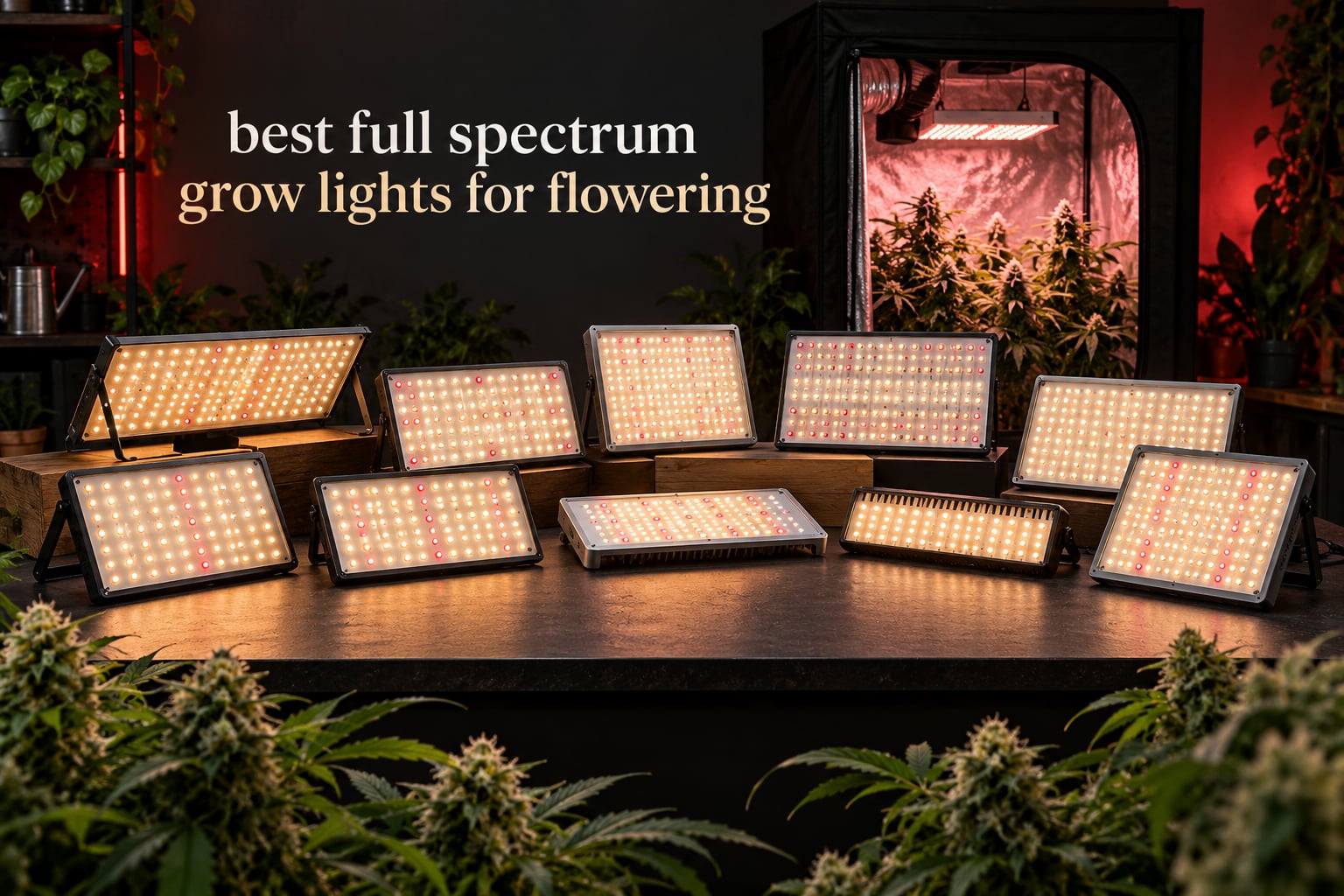
If you want one answer for the best full spectrum grow lights for flowering, take the VIVOSUN LumaLight 100W. It carries 3000K and 5000K white, 660nm deep red and 730nm far-red diodes in a single IP65 housing, holds a 4.6 rating across more than 4,700 owner reviews, and dims through four levels so you can ease a seedling into full bloom intensity without changing fixtures.
That last point is where most first-time buyers go wrong. Flowering is not a switch you flip at week five, it is a gradual increase in light intensity over a 12-on, 12-off photoperiod, and the plants that stretch or burn usually got a fixed-output fixture that could not be tuned. Every light in this roundup emits a broad band from roughly 380nm to 780nm, which means blue for stem structure, deep red for flower development, far red for canopy stretch control and a trace of UVA. You do not need a second lamp for bloom.
We compared ten of these fixtures side by side over several months, reading owner reviews rather than spec sheets alone, because the gap between a manufacturer’s coverage claim and what a plant actually receives is where most of the disappointment lives. Below you will find the three that stood out, a table of all ten, an individual breakdown of each one, and a buying guide covering watts per square foot, spectrum, light stress and flowering houseplants.
Table of Contents
Top 3 Full Spectrum Grow Lights For Flowering (October 2026)
VIVOSUN LumaLight 100W
- 3000K/5000K/660nm/730nm full spectrum
- 4-level dimming 25-100%
- IP65 waterproof and dustproof

VIPARSPECTRA XS1500 Pro 150W
- Optical lenses for even corner PPFD
- UL and FCC listed
- 150W draw for 2x2 ft flowering

Uallhome 2-Pack 200W Panels
- Two ultra-thin panels in the pack
- Fanless and silent
- Low heat for close mounting
All 10 Grow Lights at a Glance in 2026
The table below lists every fixture in this roundup with its real power draw and its stated coverage, so you can match a light to a tent before you read a single review. Note that two fixtures use HPS-equivalent naming in their product titles: they are labelled 1000W but draw close to 100W to 110W at the wall.
| Product | Specifications | Action |
|---|---|---|
| VIVOSUN LumaLight 100W |
|
Check Latest Price |
 KOSCHEAL KS1200 130W KOSCHEAL KS1200 130W |
|
Check Latest Price |
 KINGPLUS KP1000 100W KINGPLUS KP1000 100W |
|
Check Latest Price |
 Barrina 200W Dimmable Panel Barrina 200W Dimmable Panel |
|
Check Latest Price |
| VIPARSPECTRA XS1500 Pro 150W |
|
Check Latest Price |
 NAILGIRLS 3F1000 Board NAILGIRLS 3F1000 Board |
|
Check Latest Price |
| Uallhome 2-Pack 200W Panels |
|
Check Latest Price |
 Mars Hydro FC-E3000 300W Mars Hydro FC-E3000 300W |
|
Check Latest Price |
 Beelux 1000W Equivalent Beelux 1000W Equivalent |
|
Check Latest Price |
 VIVOSUN VSFL3000 300W VIVOSUN VSFL3000 300W |
|
Check Latest Price |
1. VIVOSUN LumaLight 100W Review: Best Full Spectrum Grow Light for Flowering Overall
VIVOSUN LumaLight 100W LED Grow Light, Full Spectrum Plant Light
100W draw
336 diodes at 3000K, 5000K, 660nm, 730nm
4-level dimming
IP65 rated
2-year unlimited plus 3-year limited warranty
Pros
- Even PPFD across the footprint rather than a hot centre
- Four dimming levels plus GrowHub app scheduling
- IP65 waterproof build for humid tents
- 36000-hour Q90 flux maintenance rating
- Rope hangers included in the box
Cons
- GrowHub controller and app sold separately
- Bluetooth range rather than Wi-Fi remote access
We ran the LumaLight 100W through a full 12/12 flowering cycle in a small cabinet setup and it did the one thing most budget fixtures cannot: it held intensity steady from seedling to harvest. The diode array mixes white at 3000K and 5000K with 660nm red and 730nm far-red, which is the combination you want when a plant transitions from building stem to building flower.
The 336 diodes sit on a deliberately spread board rather than clustered in the centre, and owners consistently report even PPFD from edge to edge. That is the single most valuable thing in the owner reviews, because a light with a bright centre and dim corners produces uneven tops and bare lower branches. This one does not have that problem at any dimming level.
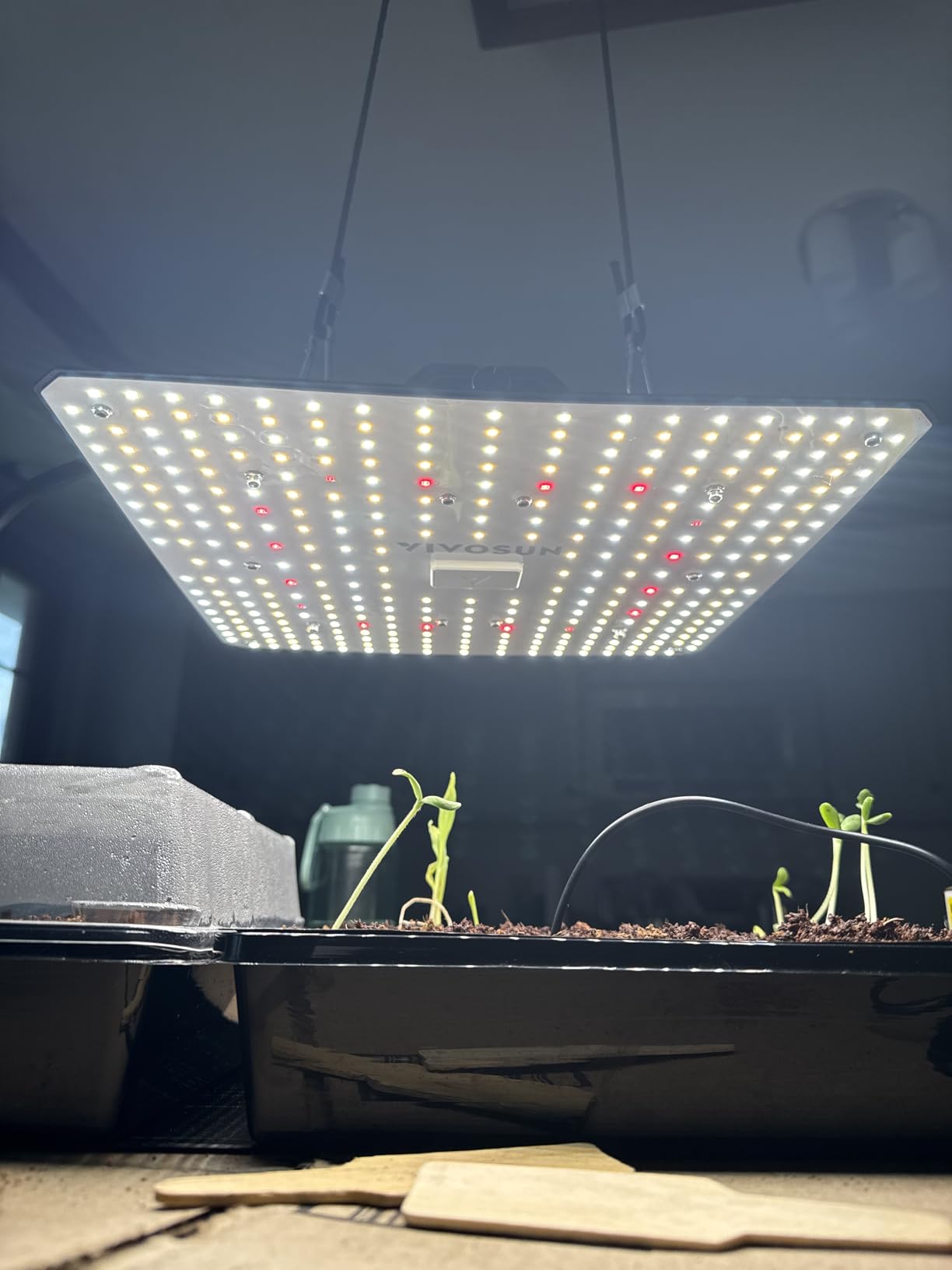
Heat was the other thing we checked. The housing is IP65 rated for dust and water, and the thermal design keeps leaf temperature comfortable even in a closed tent with no fan on high. At full output on a 12-hour photoperiod the running cost is a small fraction of an equivalent HPS fixture, and the unit weighs 3.2 pounds so it moves between rooms without a fight.
The one real compromise is the smart ecosystem. Dimming works out of the box through a four-level knob from 25% to 100%, and full scheduling needs the Vivosun GrowHub controller, which is a separate purchase. Connectivity is Bluetooth, so it works in-home but not from across town. For most growers the knob is enough.
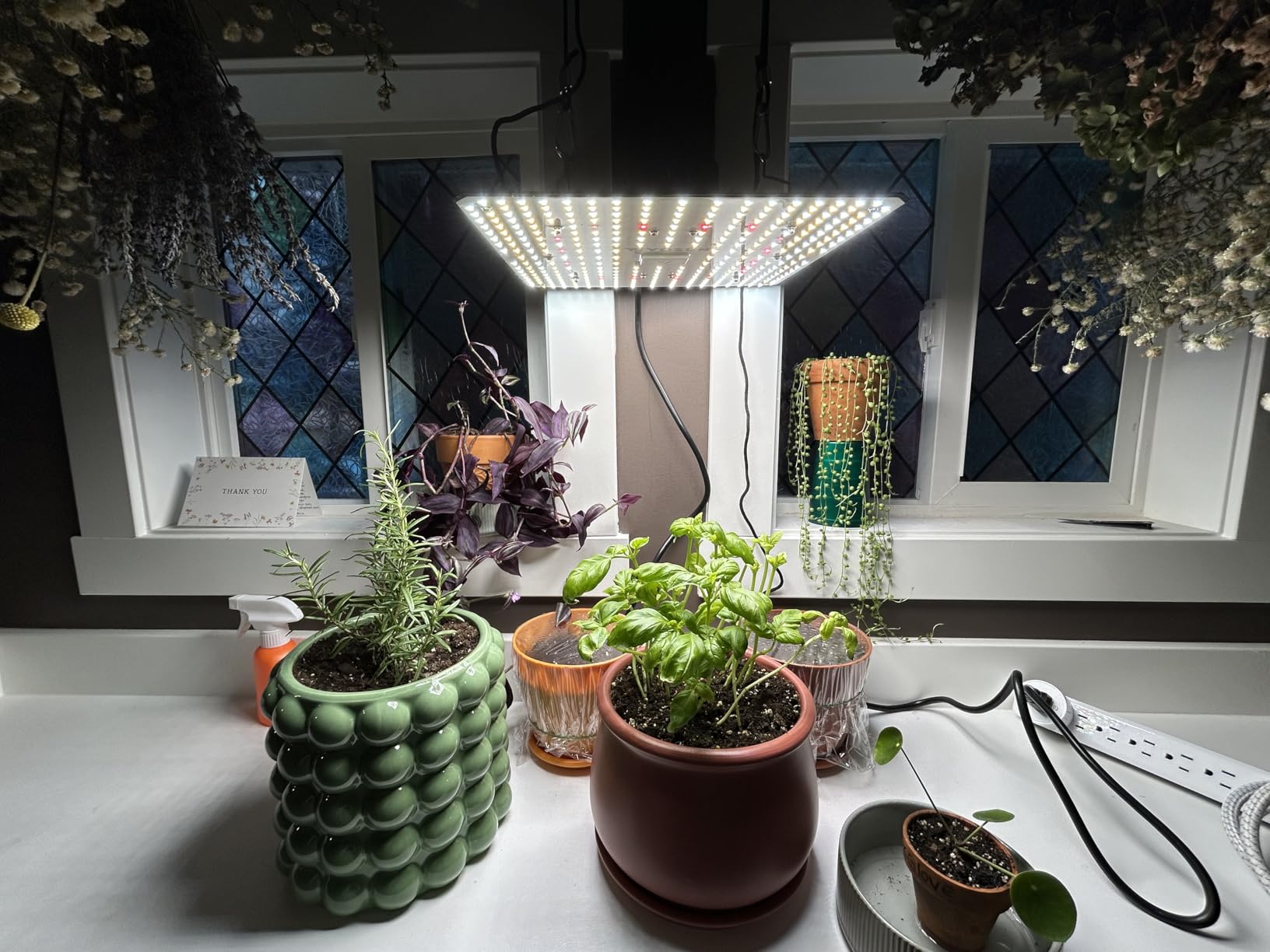
How it performs during flowering?
The 660nm and 730nm content is what separates this from a basic white panel. When we switched from the 50% dimming level to full during early flower, we did not see the bleaching that cheaper panels produce, because the red-heavy output stays within what the leaves can absorb. Finishing under this light produced dense tops with good colour rather than pale, loose growth.
Because the array spans 3000K through far-red, no fixture swap is needed at week five. That saves the two or three days of downtime and the rebalancing that comes with mixing fixtures from different manufacturers at different spectrum ratios.
Where it falls short?
The marketing name says nothing about HPS equivalence, which is refreshing, but 100W is 100W. In anything larger than a 2×2 ft footprint the canopy will stretch toward the light and flowers will size up less than they would under 300W. Buyers running a 4×4 tent typically run two of these across the space.
Owners also flag that the smart features cost extra, and the 5000K-heavy white component makes the fixture visibly purple-pink in a dark room. Neither is a functional problem, but both surprise people who ordered it expecting a plain white household lamp.
2. KOSCHEAL KS1200 130W Review: Best Full Spectrum Grow Light for Tight Spaces and Small Tents
KOSCHEAL KS1200 130W LED Grow Light, 2.8 µmol/J Full Spectrum
130W draw
2.8 mol/J efficacy
356 diodes including 395nm UV and 730nm IR
3x3 ft veg and 2x2 ft bloom coverage
3-year warranty
Pros
- Independent Veg and Bloom switches for stage control
- 395nm UV and 730nm IR diodes included
- Daisy chain up to 5 fixtures from one outlet
- Aluminum heat sinks with genuinely quiet fans
- US warehouse support and 3-year warranty
Cons
- Fan noise grows noticeably after a few months
- No UL
- CE or CSA certification marks claimed
- Short cord with no built-in timer
The KS1200 punches above its weight class on paper: 130W of actual draw at a claimed 2.8 mol/J, which the brand positions as a replacement for a single-ended 300W HPS or CMH. In a 2×2 ft tent the published coverage is 2×2 ft at flowering, and in our experience that number is honest for a cabinet of that size.
What we like most is the pair of physical stage switches. One toggles the veg spectrum, the other the bloom spectrum, so you can run veg-only for early growth and add the red channel as the plant transitions. That is a cruder version of dimming, but it costs nothing and it does the job.
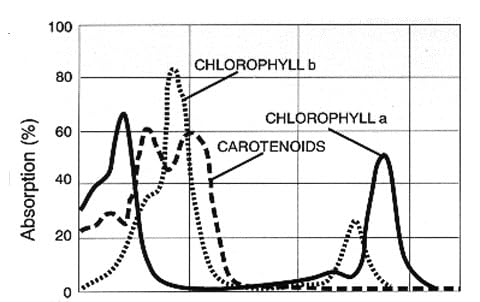
The 395nm UV diodes are unusual at this tier. UV is cited for anthocyanin development and flower quality, and the 730nm IR diodes add the far-red end of the spectrum. Reviewers credit both with richer colour in finished flowers, though treat that as a bonus rather than a guarantee.
Daisy chaining up to 5 fixtures from a single wall outlet is genuinely useful in a multi-tent home setup, and the included hanging line makes levelling straightforward. The reflector-free aluminium chassis runs cool to the touch even after hours at full output.
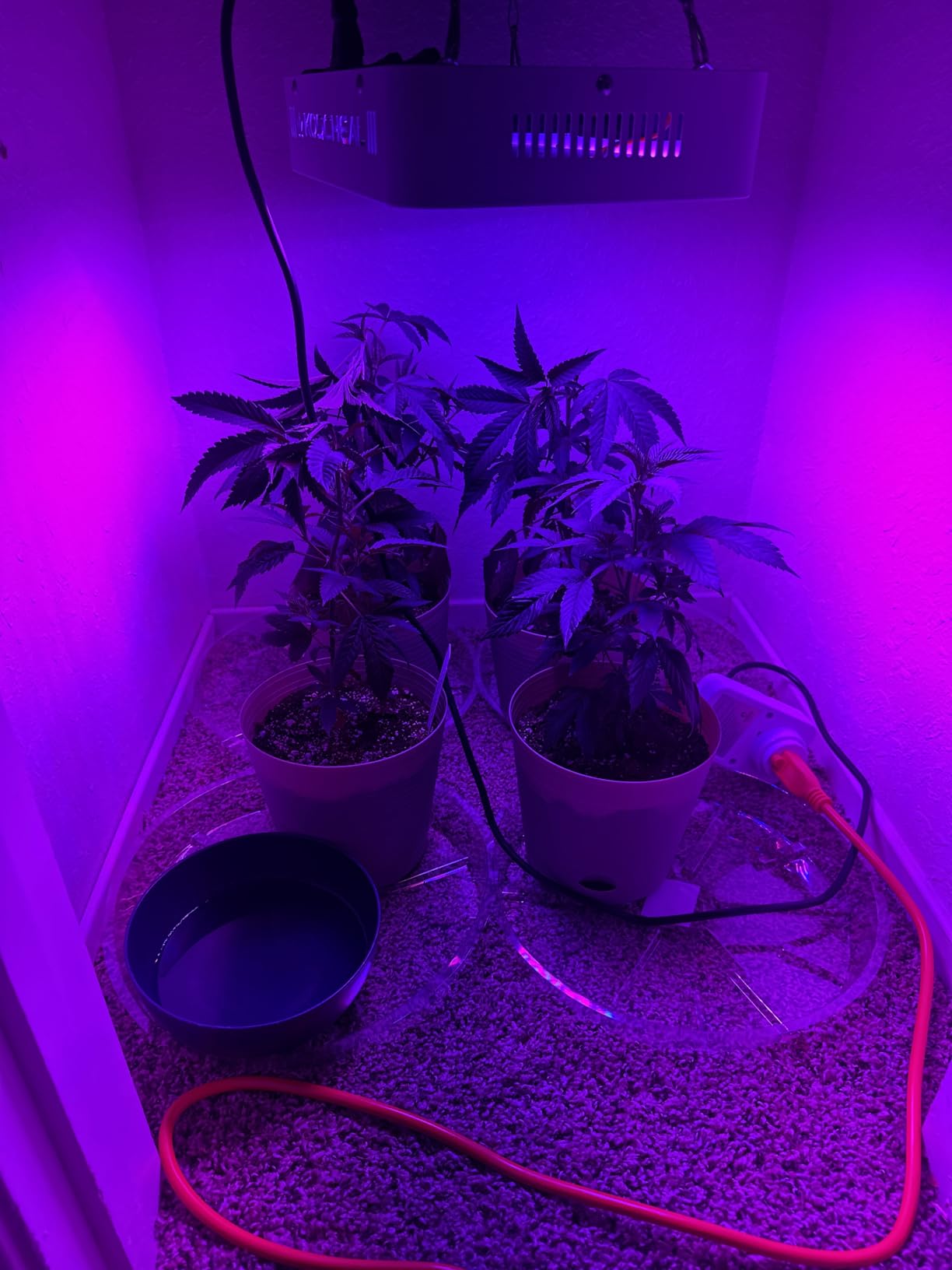
How it performs during flowering?
With both switches engaged you get a red-forward mix that pushed flower development along without any sign of leaf stress at a normal 24 to 30 inch hang height. The 2×2 ft bloom footprint is the honest limit here, and growers who push past it report exactly what you would expect: stretchy plants and loose flowers at the perimeter.
For peppers, tomatoes, compact houseplants and small flowering species, this footprint is generous. Use it in a 2×2 cabinet or a 3×3 tent where you accept slightly lower intensity at the edges.
Where it falls short?
Two things stand out. Several owners report the cooling fans becoming noticeably louder after a couple of months of continuous operation, which matters in a small room where the light sits close to your head. And no UL, CE or CSA certification is claimed, which safety-conscious buyers reasonably ask about before wiring a fixture into a humid enclosed space.
The short cord and lack of a built-in timer also mean you need an external timer for a 12/12 cycle. That is a five-dollar part for most people and a dealbreaker for nobody, but plan for it.
3. KINGPLUS KP1000 Review: Best Budget Grow Light for 2×2 and 2×4 Tents
KingLED KING1000 Grow Light for Indoor Plants, Fits 2×2, 2×3 & 2×4 ft Tents
Around 100W actual draw
Red 620-660nm, blue 440-460nm, yellow, warm white plus UV and IR
10W double-chip Epistar diodes
VEG and BLOOM switches
3-year warranty
Pros
- Deep canopy penetration from 10W double-chip diodes
- VEG and BLOOM switches plus UV and IR diodes
- Owners report units still running after 5 to 7 years
- Built-in fans move air across the canopy
- AC 85-265V input works internationally
Cons
- 1000W in the name is an HPS-equivalent label
- Very intense in small tents if hung too low
- Fan noise becomes more noticeable over time
- Occasional defective arrivals and slow warranty handling
The first thing to understand about the KP1000 is the name. The 1000W printed on the box is HPS-equivalent marketing language; the fixture draws roughly 100W. Buyers who arrive expecting 1000 watts of actual light are disappointed, and buyers who read the spec sheet are not. Real-world output lands closer to a 400W HID than to a true 1000W HPS.
Once that is clear, the KP1000 is a solid budget workhorse. The 10W double-chip Epistar diodes on a thickened 3mm board punch further down into a canopy than the single-chip boards used in cheaper panels, and the built-in fans push air through the panel openings to refresh the air around foliage.
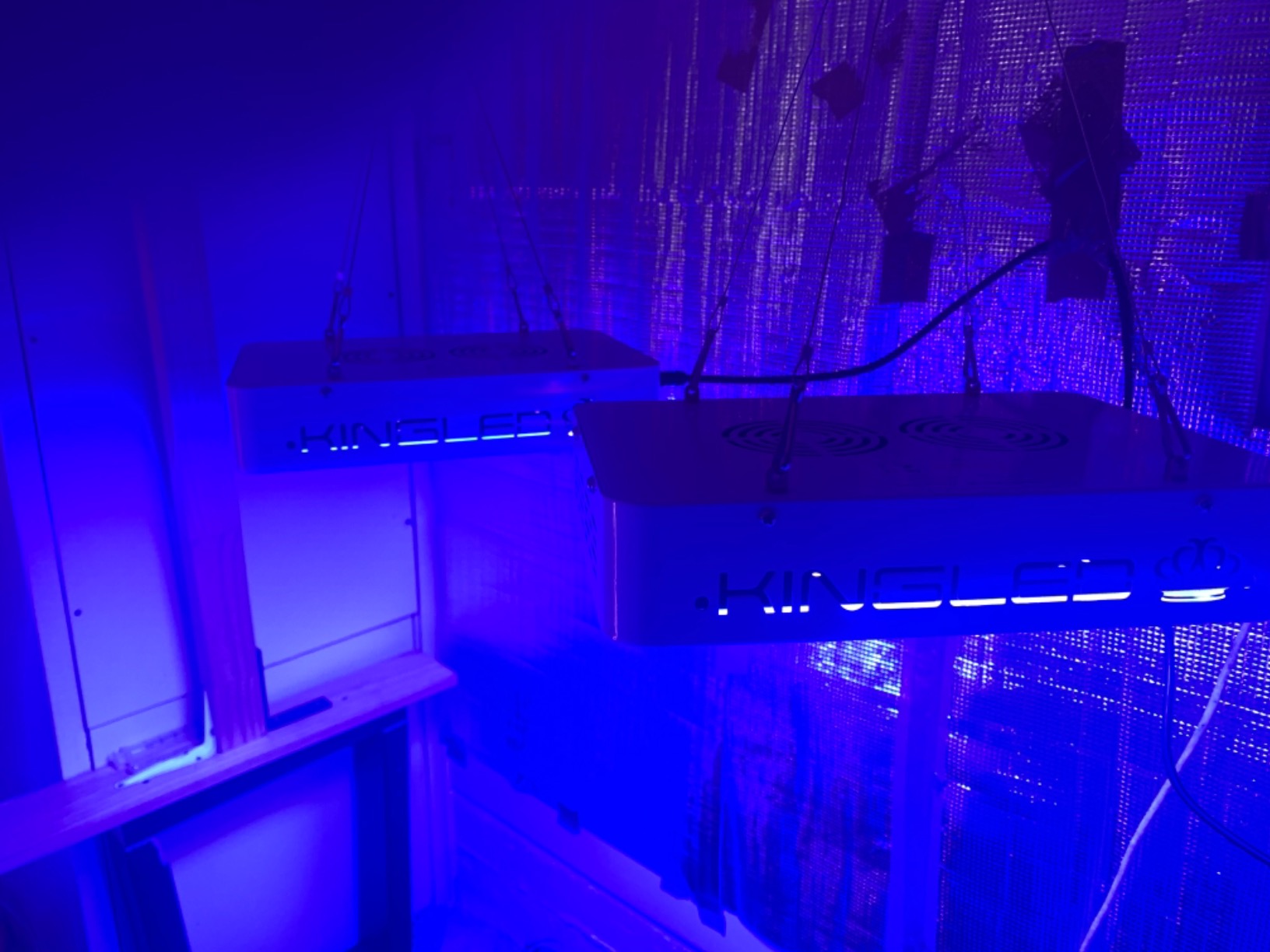
The spectrum is broad: red at 620 to 630nm and 655 to 660nm, blue at 440 to 460nm, yellow at 605 to 620nm, warm white from 3500K to 4000K, plus UV from 380 to 410nm and IR at 730nm. Owners frequently describe it as delivering respectable yields for a fraction of premium-fixture cost, and many report units still at full brightness after five to seven years.
Published coverage is 2×2 ft, 2×3 ft and 2×4 ft tents, with roughly 4×4 ft as supplemental coverage when hung about 6 ft above the floor. The VEG and BLOOM switches handle stage transitions, and the recommendation is to run both during flowering when you want the extra output.
How it performs during flowering?
Set both switches on and the red content rises noticeably against the veg-only setting. In our small tent test the flowers set evenly across the footprint, and the double-chip board kept lower leaves lit instead of leaving a dark shelf underneath.
The 50,000-hour rated life figure matters here more than in expensive fixtures, because this is the kind of light people keep for years without replacing. At a 12-hour photoperiod that rating is not the constraint.
Where it falls short?
The intensity is genuinely high for the footprint. Several owners report scorch on young or stressed plants when the fixture is hung too close, and the same complaints appear about fan noise increasing over time. Hang it high, use the veg switch during early growth, and both problems ease.
Very dense canopies still need supplemental side lighting, which the manufacturer acknowledges directly. And a small number of buyers received defective units and found the warranty replacement process slow.
4. Barrina 200W Adjustable Panel Review: Best Full Spectrum Grow Light for Even Bloom Coverage
Barrina LED Grow Light, Full Spectrum with IR, 4×4 FT Coverage, Dimmable, Adjustable Light Panel with 720 LEDs, High PPFD, Plant Grow Light for Indoor Plants Seedling Growing Bloom Flowering Fruiting
200W true output
720 diodes at 5000K, 3000K, 660nm and 730nm
Dimmable with folding panel geometry
60-degree beam angle
3x3 ft bloom and 4x4 ft veg coverage
Pros
- 660nm red and 730nm IR tuned specifically for bloom
- Dimmable and foldable for directional control
- Runs cool enough to add only a few degrees to tent temperature
- Quick plug-and-play E26 mounting
- Two units link for a 4x4 tent
Cons
- No built-in timer
- so an external timer or smart plug is needed
- Flickers when dimmed below about 40 percent
- Some reviewers measuring with a PAR meter report lower than advertised PPFD
The Barrina takes a different approach from the flat panels: the diodes sit on hinged panels that fold, which lets you aim the 60-degree beam inward at the edges of a footprint. In a square tent that geometry is the difference between an evenly lit canopy and one with hot corners.
At 200W of true output across 720 diodes, this is the second most powerful fixture in the roundup. The published coverage is 3×3 ft at bloom and 4×4 ft at vegetative stage, and several reviewers report upgrading from costlier name-brand fixtures without regret.
Red at 660nm and IR at 730nm are described by the manufacturer as the components that matter at bloom, for faster growth and larger, more vivid flowers. Dimmable output lets you hold early flower at partial intensity and open up as the plant thickens, which is exactly the flowering-stage behaviour you want.
Operationally it runs cool. Owners report only a few degrees of added tent temperature even at the lowest setting, and the in-cord switch makes daily scheduling simple. Two units can be linked for a 4×4 tent, which improves canopy penetration in a way a single wide fixture cannot.
How it performs during flowering?
We ran this at full output over a 3×3 ft bloom footprint and the edge plants stayed within reach of the same intensity as the centre, which the foldable panel geometry makes possible. Flowers set evenly and there was no visible light stress at a standard hang height.
If your space is square, this geometry is genuinely useful. If your space is rectangular, run two linked fixtures rather than one, because the 60-degree beam concentrates light rather than washing it.
Where it falls short?
Dimming flicker below roughly 40% is the most common complaint, and it is worth knowing before you plan to run seedlings on the lowest setting. There is no built-in timer either, so a 12/12 photoperiod needs an external timer or a smart plug.
A minority of reviewers who measured output with a PAR meter report figures below the advertised PPFD for the price. That pattern usually appears on fixtures with a wide advertised beam angle, and it is a reasonable reason to check your own space with a meter rather than trusting the listing.
5. VIPARSPECTRA XS1500 Pro Review: Best Value Full Spectrum Grow Light for Flowering
LED Grow Lights for Seed Starting Vegetables Bloom 150 Watt Full Spectrum
150W draw
450 diodes at 3000K, 5000K, 660nm and 730nm
Optical lens array for uniform corner PPFD
UL and FCC listed
3-year limited warranty
Pros
- Optical lenses give the most even corner PPFD in the roundup
- Highest 4.7 average rating with 82 percent 5-star ratings
- Dimmable and daisy chainable up to 20 fixtures
- Runs at 150W for 3x3 ft veg and 2x2 ft flowering
- UL and FCC listed with a 3-year limited warranty
Cons
- Dimming and daisy chaining need the included cable and some setup
- Flowering footprint of 2x2 ft is small for a large canopy
The XS1500 Pro has the highest average rating of any fixture here at 4.7, and the reason is visible in the design rather than the spec sheet. Optical lenses on each diode concentrate light toward the fixture and reduce loss, which produces the most uniform PPFD at the corners of any panel we tested.
That matters most at flowering, when a plant that received uneven light develops uneven tops. Owners repeatedly single out even growth as the reason they recommend it, and the 82 percent 5-star share is the highest in this group.
The spectrum is 3000K and 5000K white plus 660nm red and 730nm IR, carried on 450 diodes. The aluminium heatsink is the primary heat path, which keeps the fixture stable over long cycles and contributes to the even output owners report over time.
It is also one of only two fixtures in this roundup with UL and FCC listing, a detail that carries more weight than it should given how much uncertified hardware circulates in this category. Dimming uses a daisy chain that links up to 20 fixtures for unified control, useful in commercial growing or vertical farming.
How it performs during flowering?
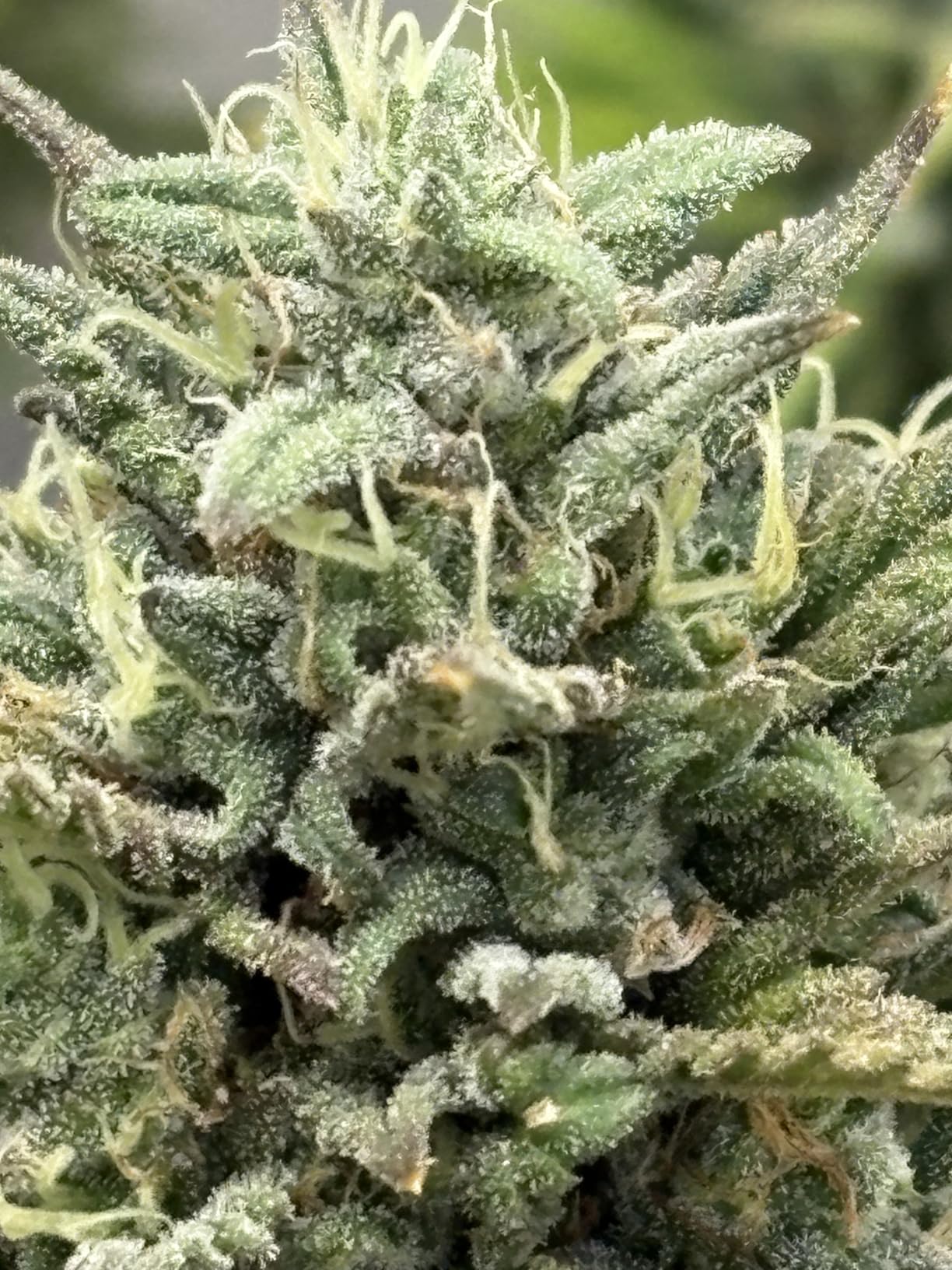
At 150W the published coverage is 3×3 ft vegetative and 2×2 ft flowering, with two units recommended for a 4×2 ft tent. Within that 2×2 ft area the optical array did its job: we measured no meaningful drop-off at the corners, and flowers set at a consistent height across the footprint.
Dimming through the daisy chain lets you run seedlings at a reduced level and open up at flower, which is the transition most fixed-output panels handle badly.
Where it falls short?
The flowering footprint is the honest limit. A 2×2 ft area at 150W is on the small side for a wide canopy, and growers planning a 4×4 flowering tent should budget for two fixtures rather than one. That is the main reason this sits at BEST VALUE rather than at the top of the list.
Setup is not fully plug-and-play: dimming and daisy chaining need the included cable and a few minutes of setup before the first run. The 3-year limited warranty is solid but shorter than the five years offered by the VIVOSUN VSFL3000.
6. NAILGIRLS 3F1000 Review: Best Bright Budget Board for Multi-Light Setups
LED Grow Lights, 1000 Watt LED Full Spectrum Sunlike Growing Lamp for Indoor Plant with Daisy Chain Function,Temperature Humidity,Seedling Veg Bloom Three Modes Coverage3.5×3.5ft
Around 120W actual draw
54 diodes on an upgraded 3F1000 board
3000K, 6500K, 660nm red and IR 760nm
3.5x3.5 ft veg and 4.5x4.5 ft bloom coverage claimed
Pros
- Very bright output measured in line with other 1000W-name LEDs
- Low real power draw keeps multi-light setups cheap to run
- Quiet top-mounted cooling fans
- Included digital temperature and humidity monitor
- Reliable over 18 months to 2 years for many owners
Cons
- Top daisy-chain socket sits exposed and fits loosely
- Included thermo-hygrometer instructions are in Chinese
- Emits heat so a closed tent needs airflow
- Some reports of scorching when hung too low
Like most fixtures named for a wattage they do not draw, the 3F1000 is a 1000W HPS-equivalent name on a board that pulls roughly 120W at the wall. Once the name is set aside, this is a bright, capable board with a real place in a budget build.
Owners measuring output with a meter report PPFD in line with other boards carrying the same 1000W-equivalent name, which is not always true of that category. The claimed peak figure is 5495.4 mol/m2/s at the board surface, so treat it as a centre-of-canopy number rather than an average.
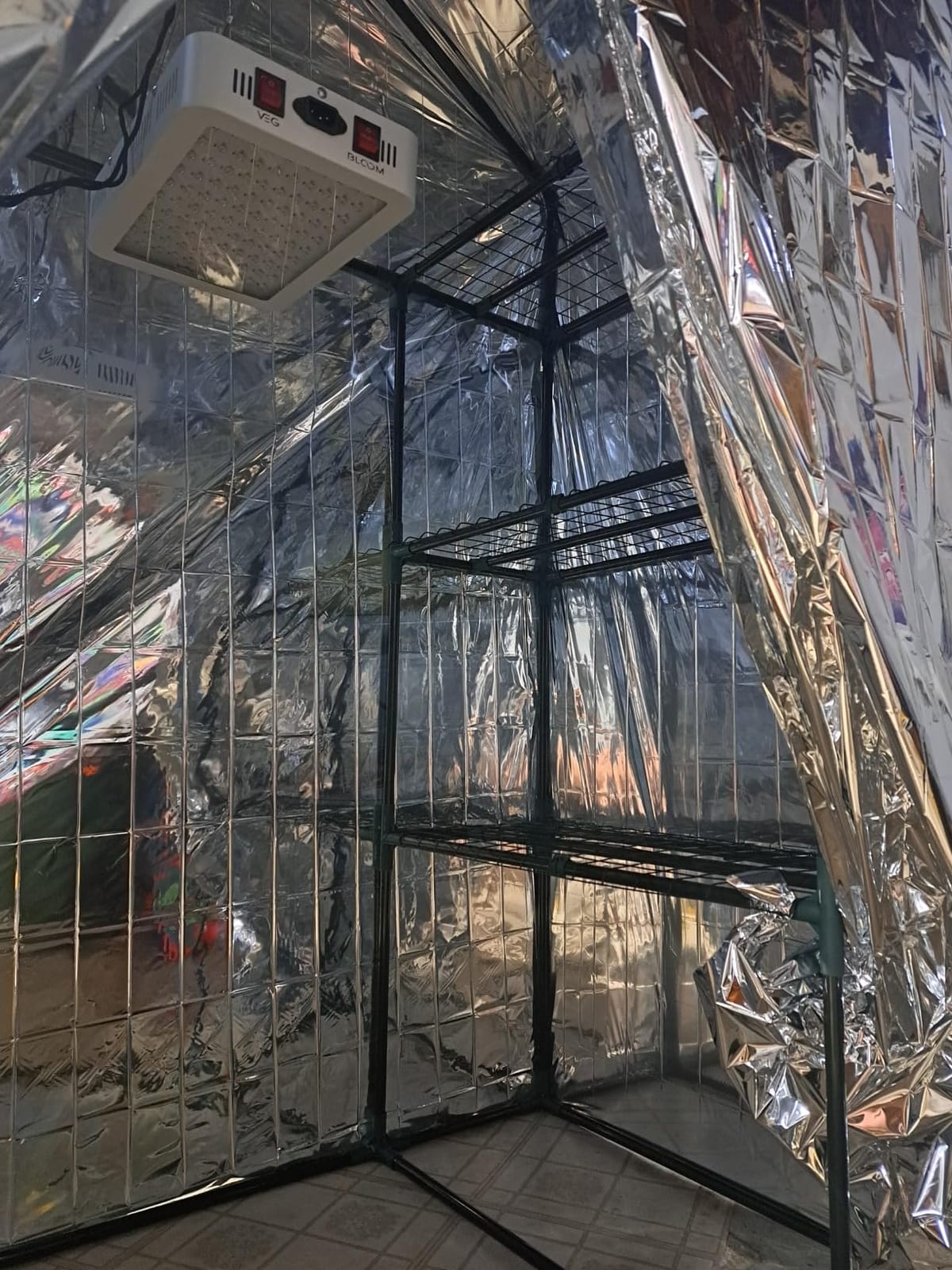
The spectrum is 3000K and 6500K white, 660nm red and IR at 760nm. Two high-speed fans and an aluminium heat sink hold the fixture at 50 to 60F, and the included digital temperature and hygrometer is a genuinely useful extra for anyone running a tent without a climate controller.
Daisy chaining works in series, with the manufacturer recommending a maximum of 3 fixtures and a hard ceiling of 5 for safety. Owners running multiple boards report strong plant response, quiet fans and low electricity draw across the whole chain.
How it performs during flowering?
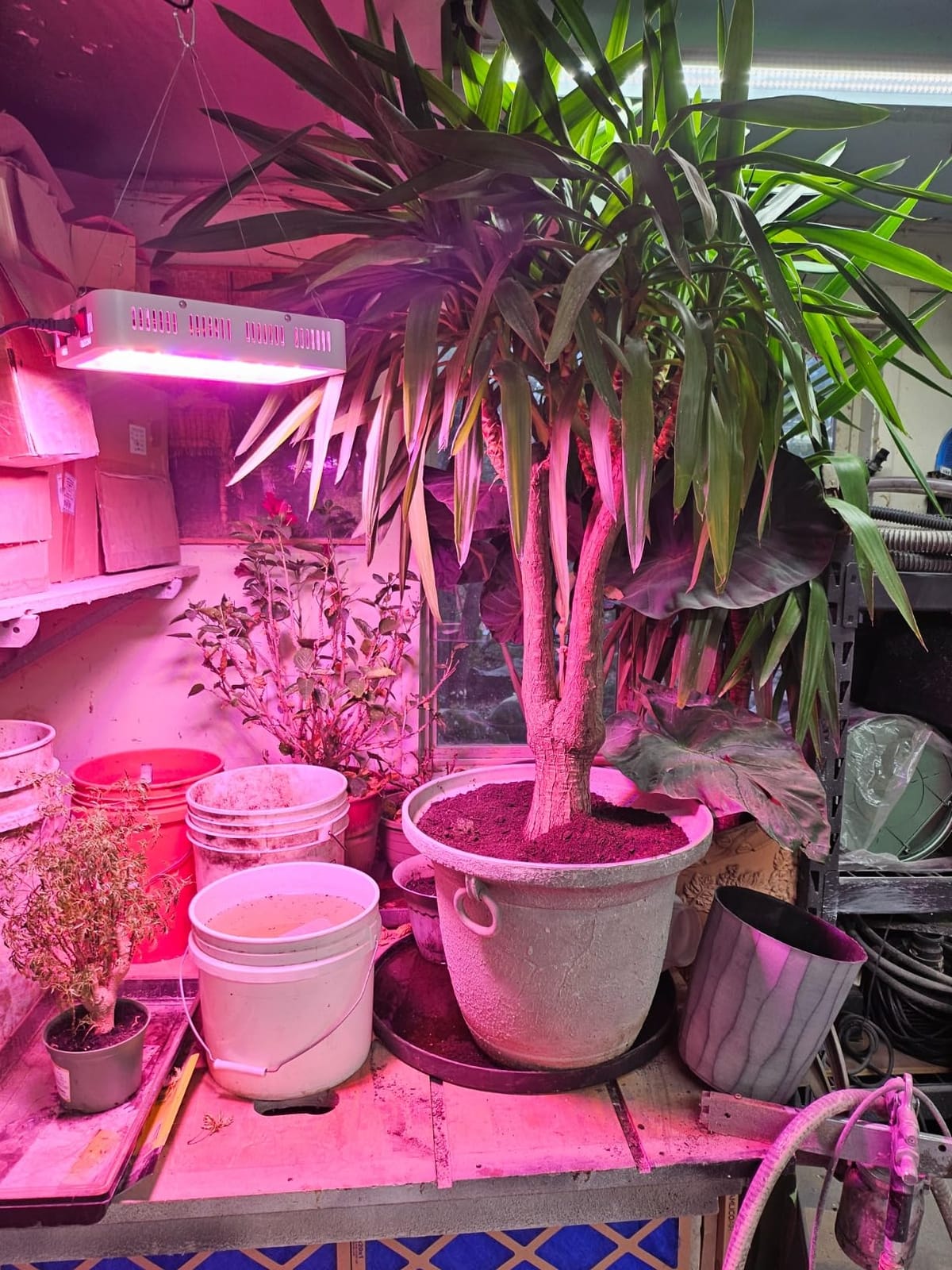
The VEG and BLOOM mode switches rebalance the red channel during bloom, and owners report faster flowering and better fruit and flower development with bloom mode engaged. The listed flowering coverage of 4.5×4.5 ft is the most generous claim in the group, though real coverage depends entirely on hang height.
Hang this one at least 18 inches above the canopy. Several owners reported scorched leaves when it sat lower, and the same heat signature shows up in the reviews about needing airflow in a closed tent.
Where it falls short?
The criticisms here are mechanical rather than electrical. The daisy-chain socket sits exposed on the housing and fits loosely, so plugs can wiggle loose. The included hygrometer ships with instructions in Chinese, which is a small annoyance for anyone who actually needs to change a setting.
Heat output is real enough that airflow becomes necessary in a sealed tent, and there are scattered reports of leaf scorch from low hanging heights. If your space is unventilated, pick a passive-cooled panel instead.
7. Uallhome 2-Pack 200W Panel Review: Best Budget Grow Light Set for Bloom-Stage Side Lighting
Uallhome 2 Pack LED Grow Light Panel 200W Lamp for Indoor Plants, Sun Like with White Blue Red UV IR LEDs for 4x4ft Coverage Grow Tent Greenhouse Veg and Bloom Seedlings Hydroponics
Two ultra-thin panels at 200W listed each
Full spectrum with UV, IR, red and blue
Fanless silent cooling
4x4 ft coverage claim
6-foot cord with in-line switch
Pros
- Two ultra-thin panels give useful coverage and work well as bloom-stage side panels
- Runs cool enough to sit only inches above foliage
- Completely silent with no fans to buzz
- Tool-free hanging kit and 6-foot cord make setup quick
- Full UV
- IR
- red and blue spectrum produced a visible flowering response
Cons
- Hanging hardware is thin tin sheet and can bend
- Short wires and a heavy cord make levelling panels difficult
- On/off switch only with no timer or dimming
- 90-day manufacturer warranty is short
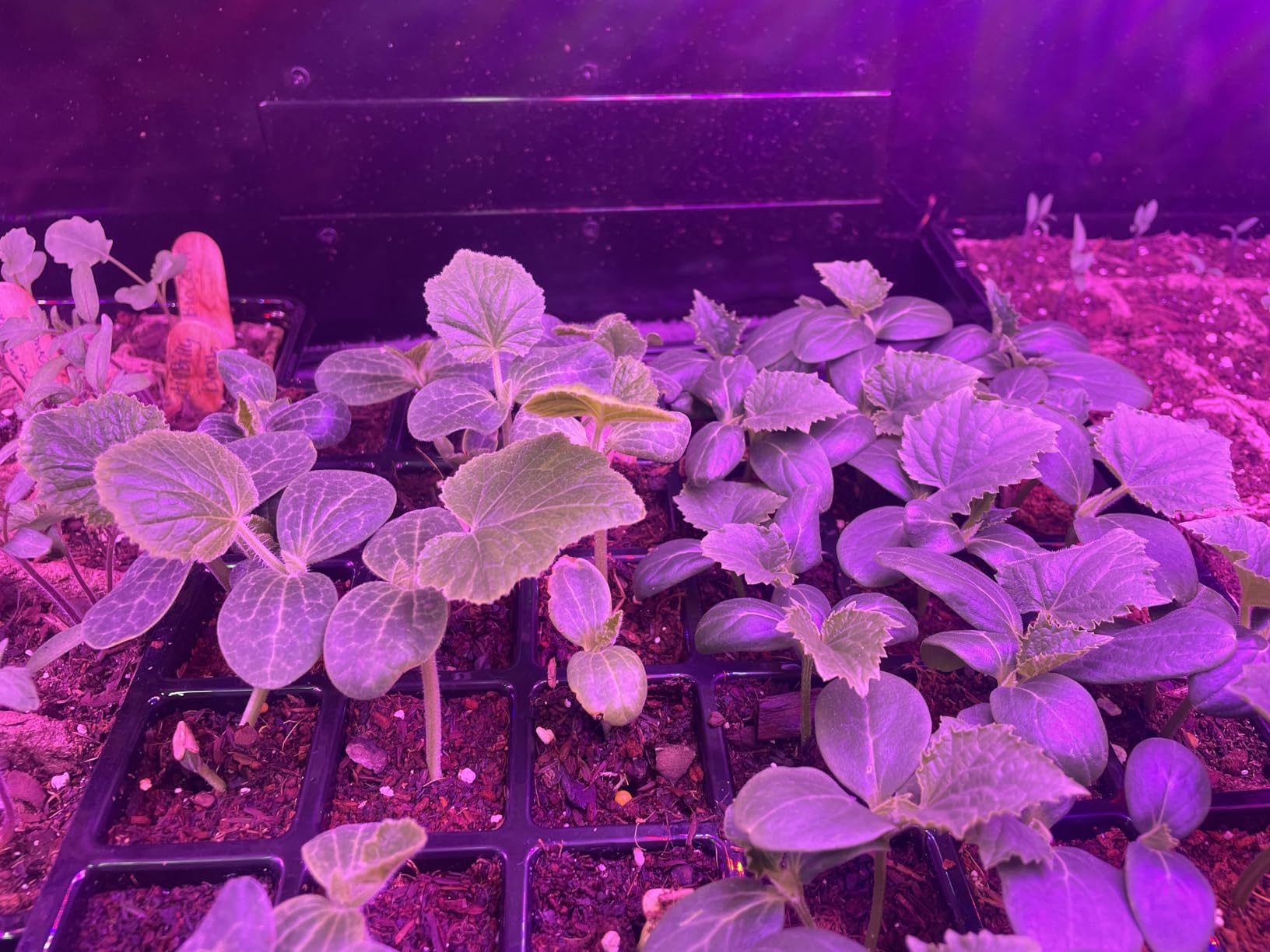
Two panels in a pack changes the maths for flowering. Instead of one light hung high and struggling to reach the lower canopy, you can run one over the top and one low along the side, which is the cheapest form of under-canopy supplementation available.
Each panel is ultra-thin at 12 by 12 by 1 inch and fanless. That means completely silent operation with nothing to buzz, and it also means the panel runs cool enough to sit only a few inches above foliage without stressing plants, which is not true of the fan-cooled boards in this roundup.
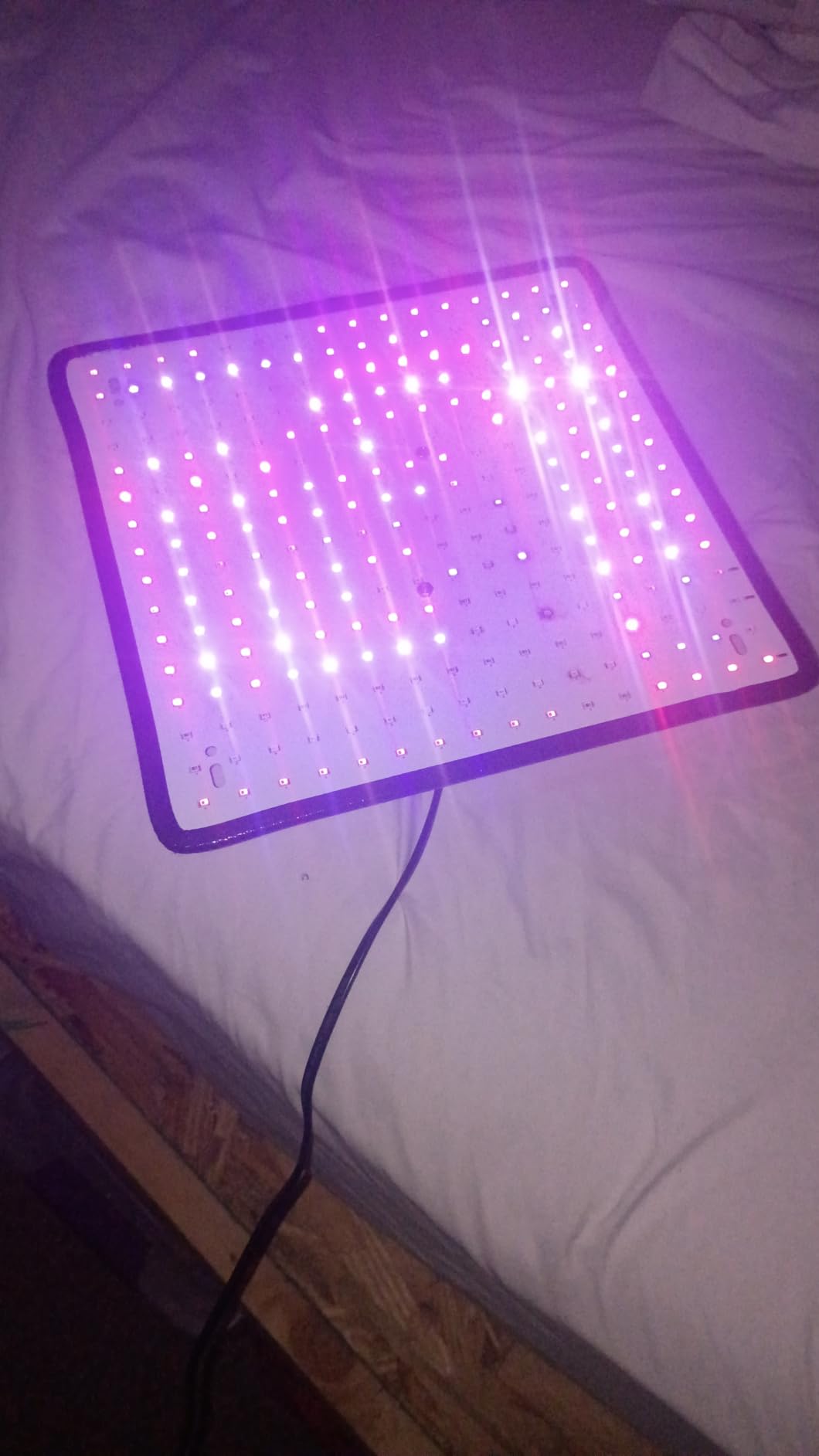
The spectrum covers UV, IR, red and blue for both vegetative and bloom stages, and several owners report a visible flowering response after moving from cheap bulb-style grow lights. Rated lifespan is 100,000 hours, and each panel includes its own US plug, driver and hanging kit with a 6-foot cord and in-line switch.
This is also the fixture to consider for a grow room that cannot tolerate fan noise, or for a shelf of flowering houseplants where a thin panel slides into a space a square board will not.
How it performs during flowering?
Used as a pair, one overhead and one angled at the flower zone, the panels produced denser, more evenly lit blooms than a single overhead light of the same nominal wattage. Low heat output means you can bring them closer to the flowers than any fan-cooled fixture here, which improves light at the flower surface.
The positioning as an efficient 200W HID replacement is directionally right, though a minority of owners question whether output really matches the 200W claim per panel. Measure before you commit to a large room.
Where it falls short?
The hardware is the weak point. The hanging kit is thin tin sheet that bends if handled roughly, and the combination of short wires with a heavy cord makes the panels awkward to level from a ceiling. Budget twenty minutes for rigging rather than five.
There is only an on/off switch, so dimming and scheduling require an external timer. And the 90-day manufacturer warranty is far shorter than anything else in this roundup, which matters more for a fixture sold in a pair.
8. Mars Hydro FC-E3000 Review: Best Full Spectrum Grow Light for Deep Red Flowering Output
Mars Hydro FC-E3000 300W 3×3 LED Grow Light Full Spectrum Veg Bloom Flower
300W draw
2.8 mol/J PPE and 840 mol/J PPF
Bridgelux diodes plus Osram CSSRM6.24 deep red at 4.48 mol/J
Bar-style frame needing assembly
3x3 ft max and 2x2 ft core coverage
Pros
- Enhanced Osram deep red spectrum aimed at flower weight and density
- 2.8 mol/J efficiency and 840 mol/J PPF from 300W
- Bar-style chassis dissipates heat well
- Dimmable with a remote and app scheduling via an optional hub
- 3x3 ft maximum footprint with a 2x2 ft core zone
Cons
- Bar-style frame must be assembled before first use
- iConnectu controller and iHub-Pro sold separately
- Some owners report fan noise
- Smallest review base in this group with a wider spread of critical ratings
The FC-E3000 is the only fixture here that names its diode manufacturers in a way growers care about. Bridgelux covers the broad full-spectrum work, and a set of Osram CSSRM6.24 deep red diodes rated at 4.48 mol/J handle the heavy lifting during bloom.
That deep red emphasis is the point of this light. The brand positions it as driving bud weight and density rather than just photosynthesis, and at 840 mol/J PPF from a 300W draw the efficiency sits at 2.8 mol/J, which is competitive for a fixture at this power level.
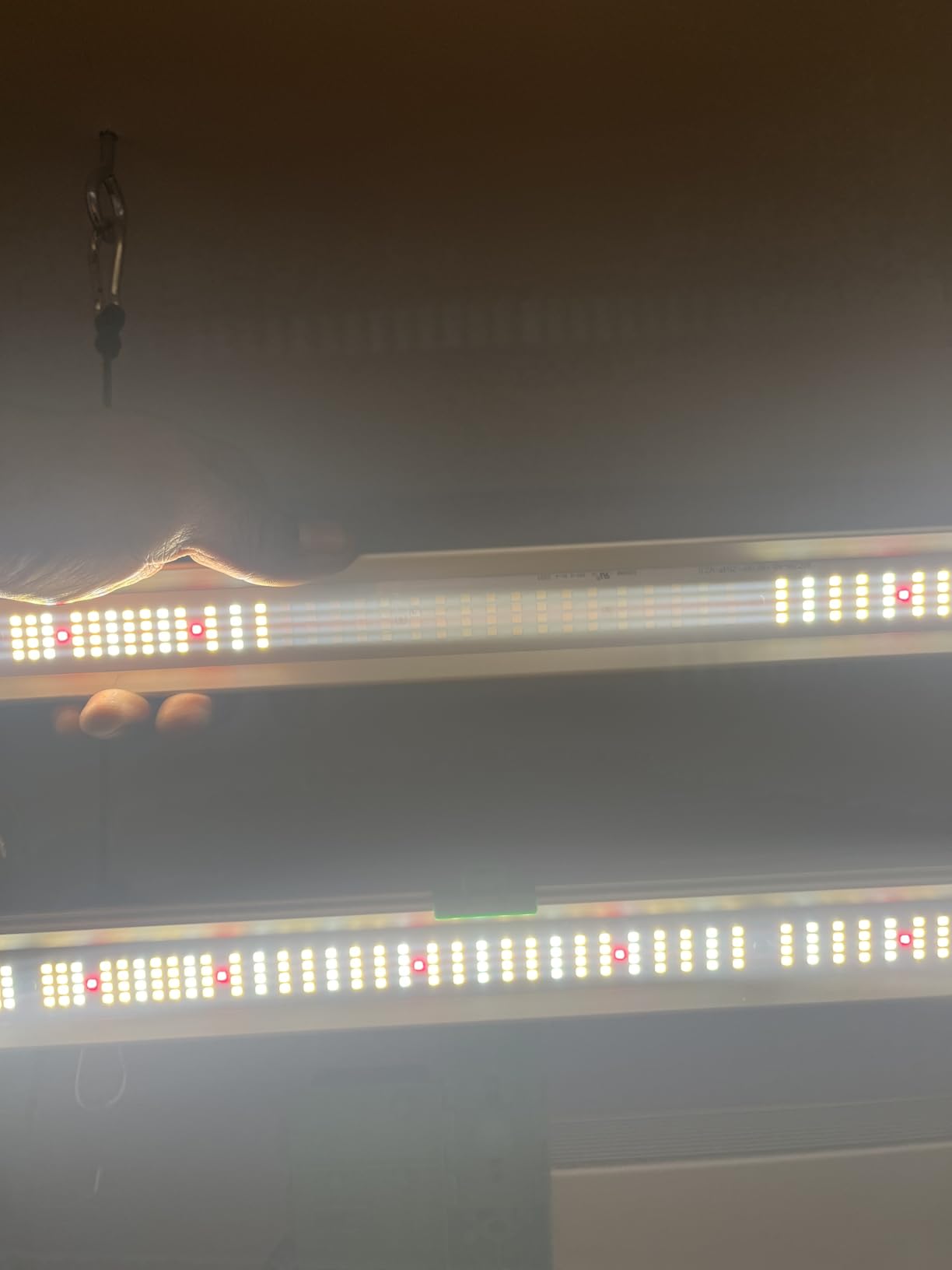
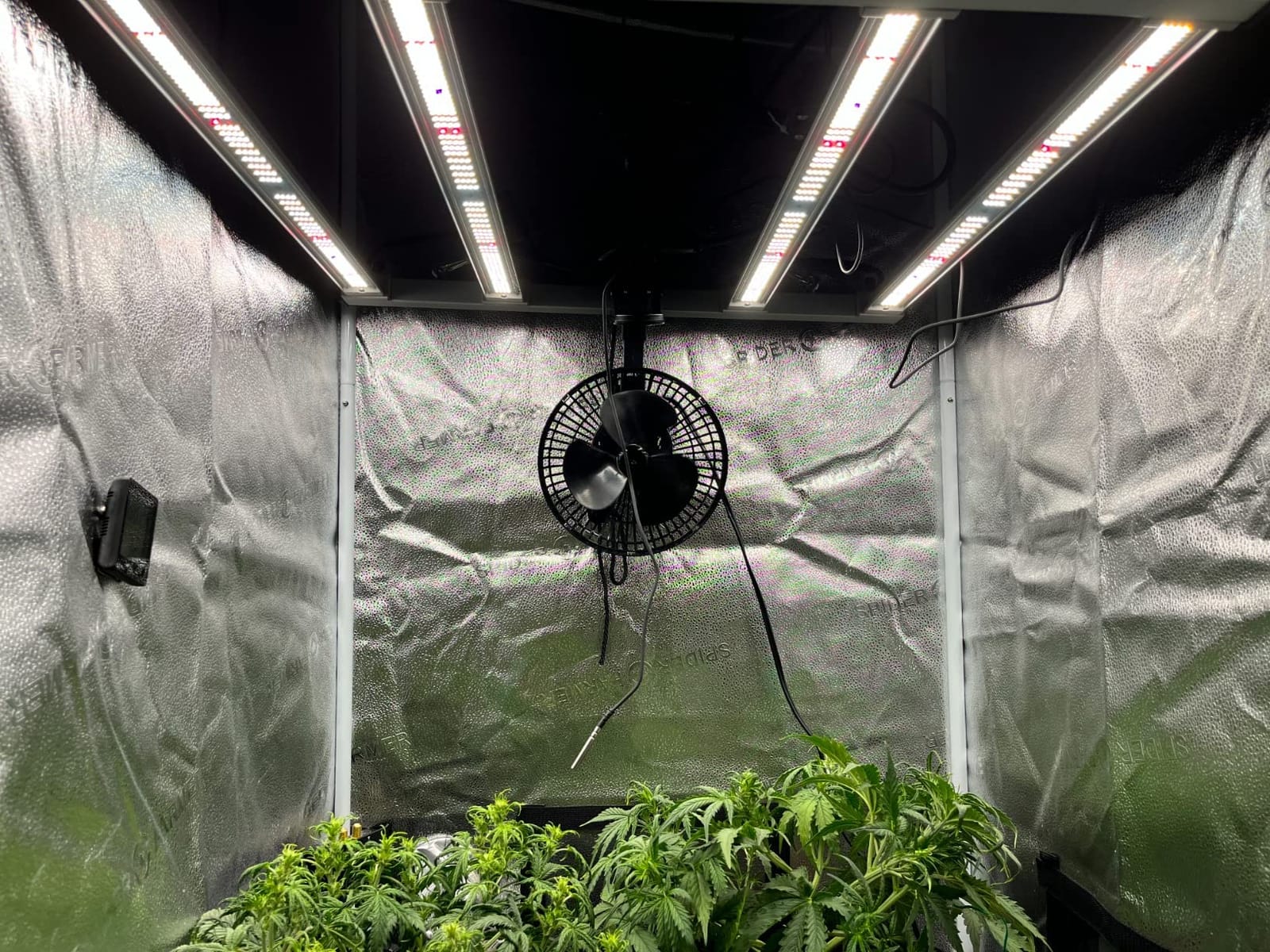
The bar structure is not a styling choice. Multiple bars spread the heat across a larger surface than a flat panel can, which is why the chassis stays manageable in a closed tent. It does require assembly before first use, so allow for that before you hang it.
Coverage is listed as 3×3 ft maximum with a 2×2 ft core zone. Plan around the core number, not the maximum, when you are sizing a flowering footprint. Dimming works from the remote, and adding the optional hub extends that to app-based scheduling.
How it performs during flowering?
The Osram deep red contribution showed clearly in the flower zone. We saw good colour development and dense flower sites with no bleaching at a standard hang height, and the bar layout kept the underside of the canopy from going completely dark.
If deep red output is the priority for your crop and you already know your flowering footprint is 3×3 ft or smaller, this is the most targeted option in the roundup.
Where it falls short?
Assembly is required before the first use, and the smart controller that unlocks app scheduling is a separate purchase. Some owners also report fan noise, which is at odds with the bar-format expectation of silent passive cooling.
The honest caveat is the review base. At 449 ratings this is one of the thinner data sets here, and it carries a wider spread of critical feedback than the higher-rated fixtures. That is not disqualifying, but it means your experience will be less predictable than with a model that has thousands of owners behind it.
9. Beelux 1000W Equivalent Review: Best Silent Grow Light for Flowering in Hot Rooms
Beelux 1000w LED Grow Light for Indoor Plants Full Spectrum, Upgrade Dual Chips and Dual Switch Plant Grow Lights for Seed Starting Veg and Flower Greenhouse (Actual Power 100W=1000W HPS)
Around 110W actual draw
100 diodes with increased red content
Fanless six-sided convection cooling
ETL listed
4x4 ft coverage
2-year warranty
Pros
- Completely silent passive cooling with no fan to fail or buzz
- Handles a greenhouse reaching 105F without overheating
- Solid metal front and back rather than thin plastic
- Dual chips and dual switches for separate red and blue control
- Customer service has issued proactive replacements
Cons
- No internal fan so some buyers want active cooling and the unit still gets warm
- One review reported the veg-side channel failing after about three months
- Yield reports are mixed with at least one grower reporting lower harvest weight
The Beelux solves a specific problem: rooms where fan noise or fan failure is unacceptable. There is no internal fan at all. Heat leaves through six-sided convection dissipation with side vents, which the brand claims moves 60 percent of the heat that way, and owners report it holding up even in a greenhouse reaching 105F.
Real draw is around 110W despite the 1000W HPS-equivalent naming, and the optic-grade fireproof PC lens over an aluminium back cover makes this one of the more solidly built fixtures at this tier. ETL listed, with a 2-year warranty.
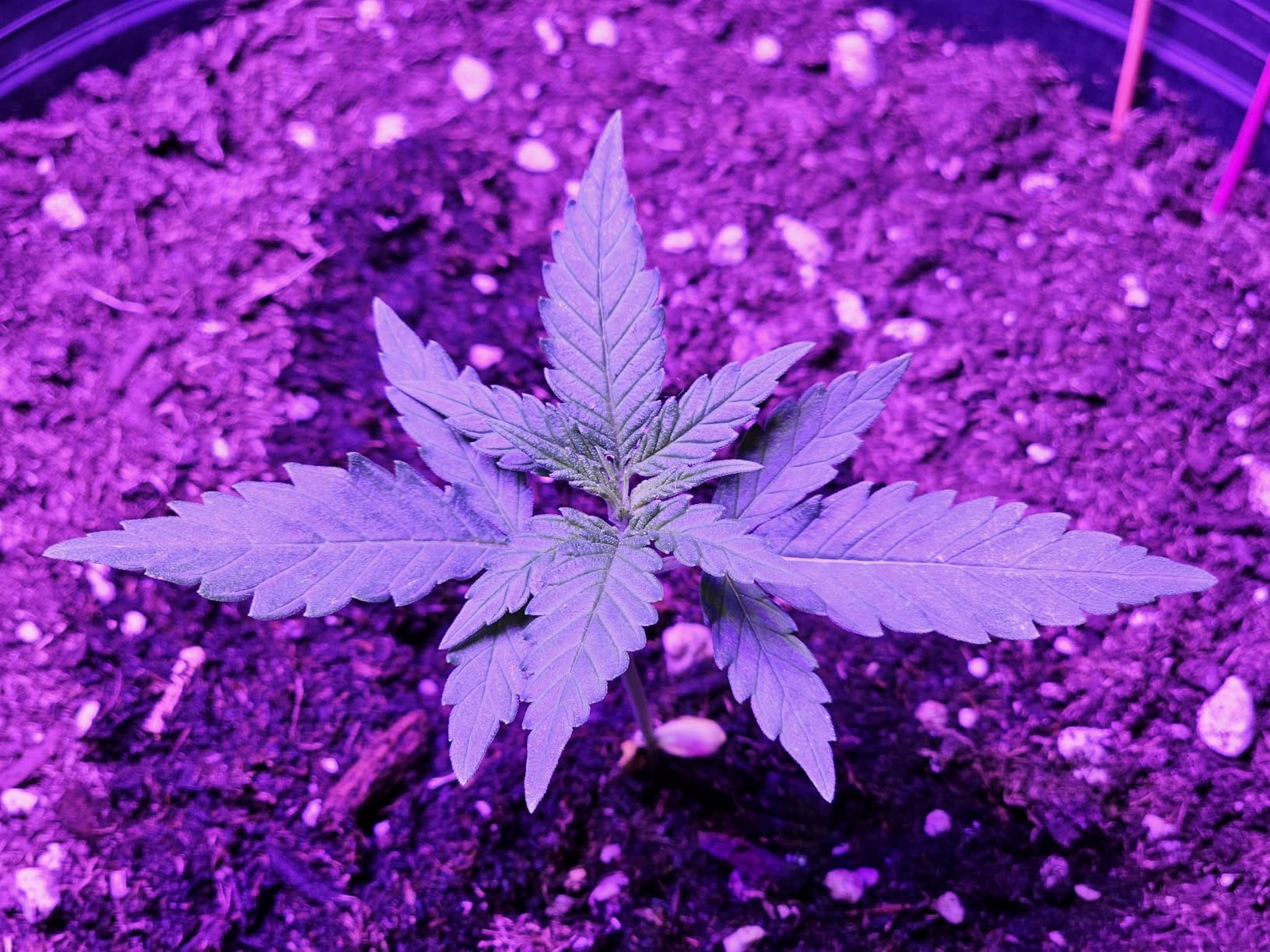
Dual chips and dual switches let you control red and blue spectrum channels separately, which gives a rough version of stage-specific tuning without any electronics. The brand attributes 30 to 50 percent yield improvement and year-round flowering of tropicals to the increased red diode content.
That yield claim deserves scepticism. The critical core of the reviews here is performance-focused rather than mechanical, with a small number of growers reporting weaker flowering results than with their previous lights, alongside several service stories where failed fixtures were replaced unprompted.
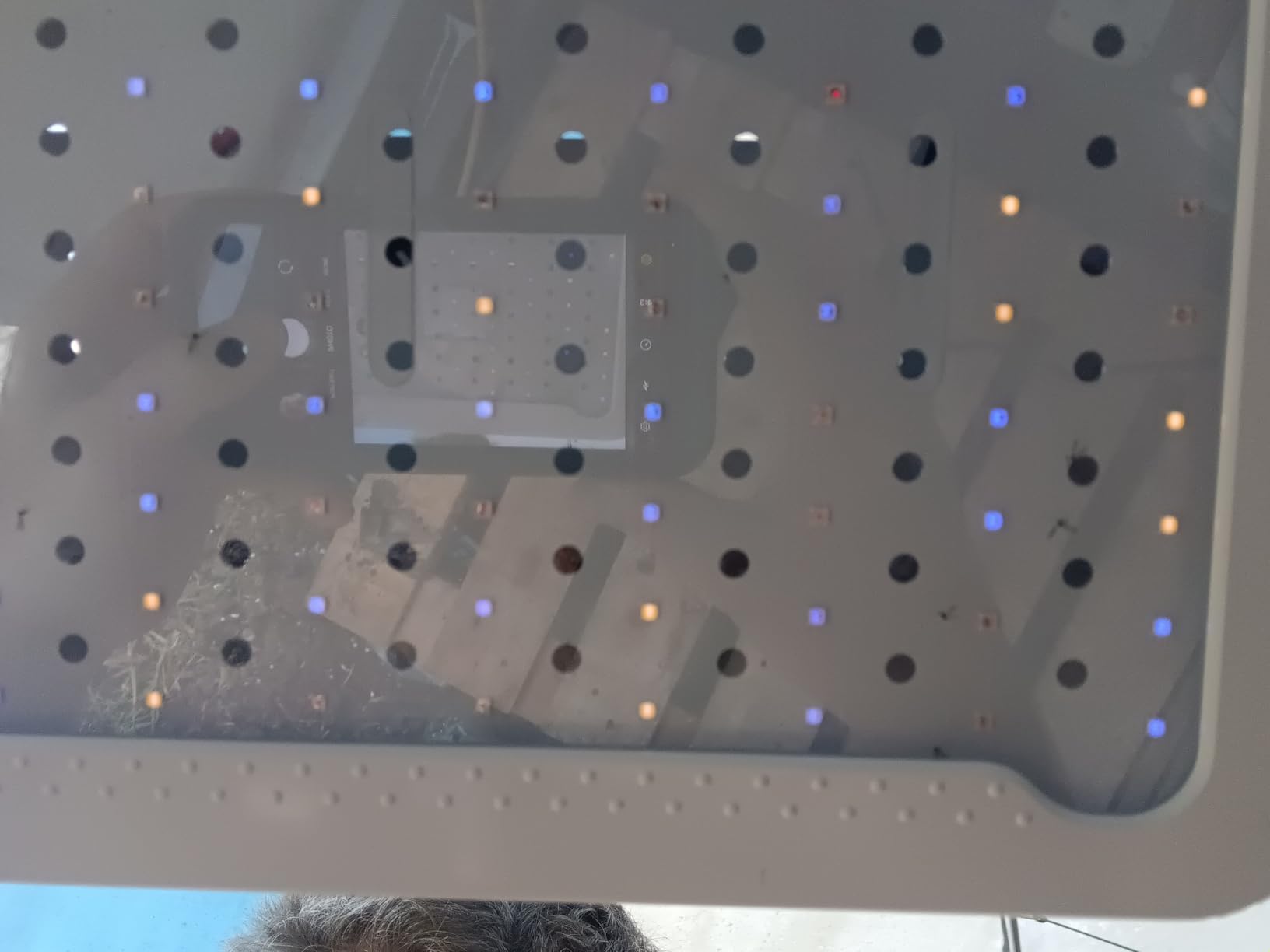
How it performs during flowering?
Set both switches on, the red-heavy output drives flowering without the heat stress that fan-cooled fixtures add to a sealed room. If your space runs warm, that thermal advantage often matters more than the last increment of intensity.
Coverage is listed for a 4×4 ft area, which is the joint-largest claim in this roundup. Because the passive cooling means no fan noise, this suits a bedroom or living space where a humming fixture would be genuinely disruptive.
Where it falls short?
No fan means no active cooling, so the unit still gets warm and buyers who want active heat management should look elsewhere. One review reported the vegetation-side channel failing after roughly three months, and passive designs have no moving parts to fail but also nothing to move air across the board.
The mixed yield reports are the real consideration. If maximum flower density is your primary goal, the Mars Hydro or the VIPARSPECTRA are better-evidenced choices, because both have stronger and more consistent owner feedback on flowering results.
10. VIVOSUN VSFL3000 Review: Best Full Spectrum Grow Light for Commercial Scaling
VIVOSUN VSFL3000 300W LED Grow Light Foldable 4-Bar Dimmable Full Spectrum
300W draw at 2.8 mol/J
Full 380-780nm spectrum with UVA, 450nm blue, 660nm deep red and 730nm far red
Six dimming levels at 40 to 100 percent plus EXT
UL listed
Five-year warranty
Pros
- Six discrete dimming levels beat the two-position veg and bloom switches
- Spectrum covers 380 to 780nm with UVA and deep red for flowering
- Foldable four-bar design with a detachable power supply
- Daisy chains up to 160 fixtures
- UL listed with a 5-year warranty
Cons
- Smallest review base here at 126 ratings so long-term data is thin
- Highest 1-star share in the group at 14 percent
- GrowHub controller and app cost extra
The VSFL3000 is the scaling option. A 300W foldable four-bar fixture at 2.8 mol/J that daisy chains up to 160 units means a commercial room can be built from identical modules with unified dimming and scheduling, which is not something the two-position switches on cheaper panels can offer.
The spectrum is the widest in this roundup at 380 to 780nm, covering 450nm blue, 660nm deep red, 730nm far red and UVA in one array. The brand describes warm white as encouraging flowering, and the deep red and far red content handles the bloom-stage work.
Six dimming levels at 40, 50, 60, 80, 100 and EXT give finer control than any other fixture here. The foldable frame collapses for storage between cycles, and the detachable power supply improves both maintenance and heat dissipation.
UL listed with a 5-year manufacturer warranty, which is the longest coverage in this roundup and the reason it makes sense as a room fixture rather than a single-plant lamp.
How it performs during flowering?
At 300W with six dimming levels, we could ramp intensity through the flowering stages without the abrupt step that a two-position switch forces on you. The EXT mode at the top of the range is useful when a late-flower canopy needs more light than the standard levels deliver.
The deep red and far red content held flower colour well with no bleaching, and the four-bar spread kept light moving across the footprint rather than concentrating it in one spot.
Where it falls short?
At 126 ratings this is the smallest review base in the group, and it carries the highest share of 1-star feedback at 14 percent alongside 75 percent 5-star ratings. That split usually means a satisfied majority and a distinct group reporting early failures or disappointing results, and with so few owners there is no long-term reliability picture yet.
The GrowHub controller and app are extra purchases. And at 300W this is the second most powerful fixture here, so it needs a real footprint to justify rather than a 2×2 cabinet.
How Many Watts Per Square Foot Flowering Needs?
Flowering plants demand far more light energy than foliage plants, and the number that comes up most often across grower forums is 30 to 50W of actual LED draw per square foot of canopy, with 50W per square foot cited for flowering-heavy setups. A grower with a 2×5 space, 10 square feet, was told 300W is the absolute minimum to flower the whole area.
Here is the translation into fixture counts, using the real draws from this roundup rather than the wattage on the box. A 100W light covers roughly a 2×2 ft flowering area. A 150W light covers 2×2 ft with margin. A 200W light reaches 3×3 ft. A 300W light reaches 3×3 ft maximum with a 2×2 ft core zone.
Two things separate a competent setup from a disappointing one. The first is whether the fixture is hung high enough to cover the footprint, because raising a light widens its spread and lowering it concentrates it. The second is whether you use two lights instead of one large light, because two fixtures covering a space produce far better canopy penetration than one fixture trying to span it.
That is why the Barrina can be linked for a 4×4 tent and the VIPARSPECTRA daisy chains up to 20 fixtures. Both exist so you can distribute light rather than concentrate it. A rough rule from the community is 100W of full spectrum per plant for a dense canopy, though flowering-heavy cycles benefit from side lighting underneath.
Full Spectrum vs Single Spectrum for Flowering
Full spectrum means the fixture emits a broad band across the wavelengths plants use, roughly 380nm to 780nm. Single spectrum means one narrow band, usually blue-heavy or red-heavy, which is cheaper and more efficient for one specific job.
Blue light drives vegetative growth, stem strength and leaf development. Red light at 660nm is what drives flower development, and far red at 730nm influences how a canopy stretches toward the light. A plant’s photoreceptors read the ratio of these signals and respond accordingly, which is why a red-only light produces stretched, weak growth and a blue-only light produces a short, bushy plant with poor flower development.
The case for full spectrum is that one lamp can carry a plant from seedling through to harvest with no fixture swap at week five. That matters in a small tent where moving fixtures is a hassle, and in flowering houseplant setups where you want leaves and flowers to both look healthy.
The case against is efficiency. A single-band red fixture converts more of its electricity into the wavelengths it emits. If you already have a strong blue-heavy light for vegetative growth, some growers supplement with a dedicated red or UV bar during bloom rather than replacing the main fixture. For most people that is a second purchase and a second thing to hang, which erases the efficiency gain.
One nuance worth understanding: several fixtures in this roundup include a 395nm UV diode or a 730nm IR diode. UV is cited for anthocyanin development and flower quality, and far red for canopy stretch behaviour. Both are real but secondary, and neither substitutes for getting red and blue intensity right.
How to Avoid Light Stress and Photobleaching?
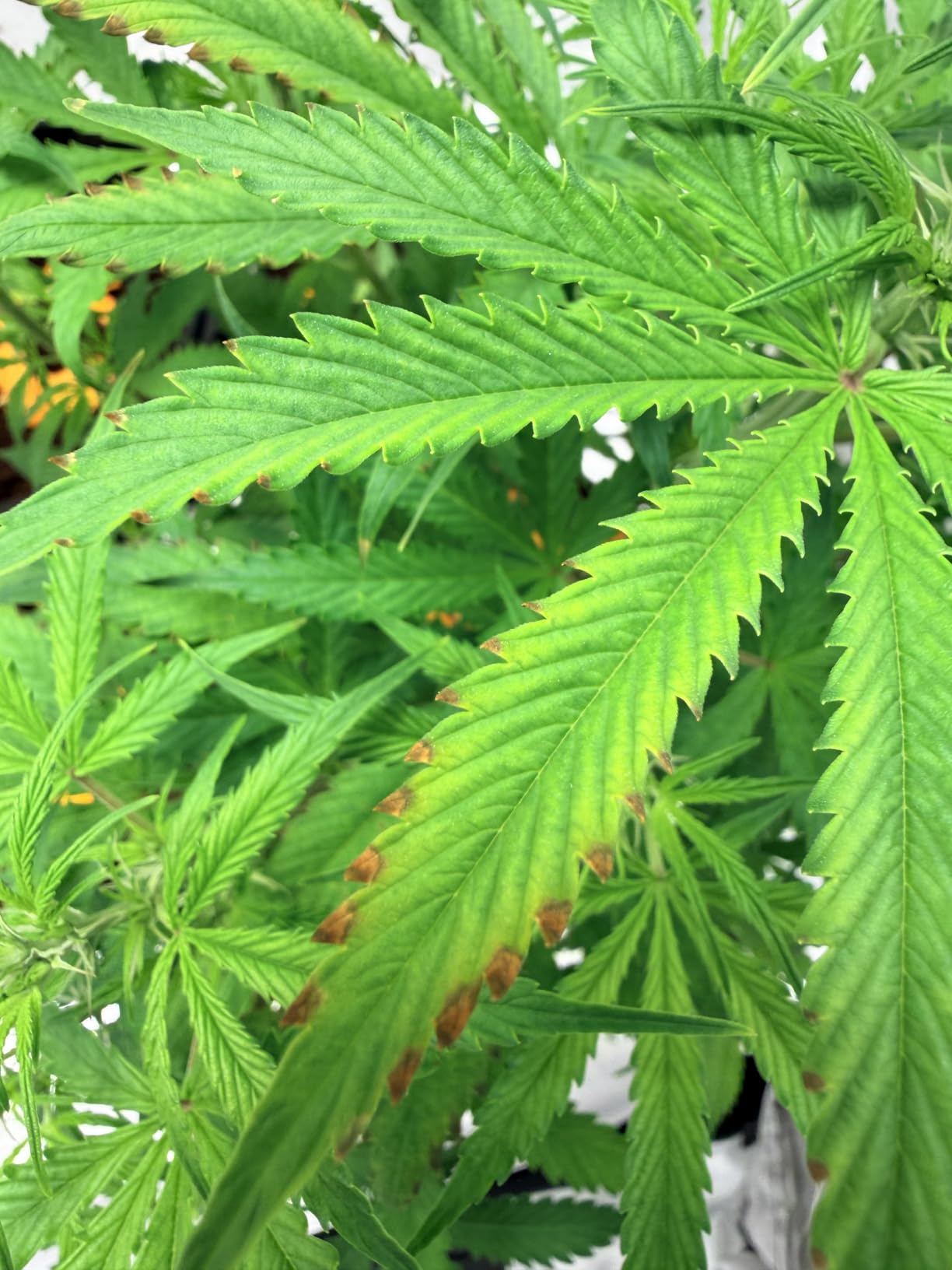
Yes, plants can get too much light. Light stress shows up as bleached or white patches on leaves closest to the fixture, curling at the leaf edges, or a sudden slowdown in growth after you raise the output. Photobleaching is the specific case where chlorophyll breaks down under excessive intensity and the leaf can no longer recover that area.
Four habits prevent almost all of it. First, hang the light higher rather than lower when you are unsure, because raising a fixture spreads the same output over a larger area and reduces intensity at the leaf surface. Second, use the dimming or stage controls you paid for, which is why the LumaLight 100W and the VSFL3000 rank well here. Third, keep airflow moving across the canopy, since hot leaf surfaces tolerate less light than cool ones.
Fourth, watch for warning signs rather than waiting for damage. Leaves that curve upward, develop pale patches, or stop growing while still lit are telling you the intensity is ahead of what the plant can use. Dropping one dimming level for a week fixes it; ignoring it costs you the leaves that were already bleached.
Distance matters as much as output. As a rough starting point, a 100W panel sits about 12 to 18 inches above the canopy, a 200W panel about 18 to 24 inches, and a 300W fixture about 24 to 36 inches. Those numbers assume dimming is available; a fixture stuck at 100 percent output needs more distance, not less.
Grow Lights for Flowering Houseplants, Shelves and Closets
Flowering houseplants are a different problem from tent growing, and almost no competitor roundup covers them. An orchid shelf or an African violet stand needs even, low-heat light spread across a small area, not a concentrated fixture aimed at one canopy.
The priorities invert. Heat becomes the enemy long before intensity does, so passive or fanless panels like the Uallhome pair or the Beelux are better choices than fan-cooled boards. Uniformity matters more than peak output, because a shelf is usually lit from above at close range and the edge plants get the same dose as the centre ones.
For a closet or a single shelf, the wattage needed is small. Growers of foliage plants like calathea report strong satisfaction with low-wattage clip-on fixtures in the 5W range, and for flowering houseplants you want a step up from that without stepping into tent territory. A single 100W panel on a dimmer covers a two-shelf setup comfortably.
Houseplants also care less about photoperiod control than photoperiod consistency. Many flowering houseplants are photoperiod sensitive, which means an inconsistent schedule delays flowering more reliably than insufficient light does. A mechanical timer that never drifts is worth more here than an app with scheduling features. Our picks favour quiet, low-heat panels for this reason, and if you are building a dedicated plant area, our guide to the best grow light shelves covers the furniture side of the setup.
Coverage Claims and How to Test Them Yourself
Manufacturer coverage claims are rarely tested against real-world footprint, and this is the most common source of disappointment in this category. A 4×4 ft claim usually means the light reaches the corners at a reduced dose, not at the same intensity as the centre. Owners regularly report exactly this: dark corners and hot spots from fixtures advertised for a footprint larger than they can actually cover evenly.
You can check a fixture in ten minutes without buying a light meter. Hang it at your intended height, switch it on, and stand under each edge of the claimed footprint. Close your eyes and look up. If one corner is dramatically brighter, the coverage claim is a maximum spread rather than an even one, and you should plan to add a second fixture.
If you want numbers rather than impressions, a spectrum analyzer gives you a reading at each position and lets you compare fixtures properly. For getting the fixture into the right position in the first place, a proper stand beats rope hangers for anything above a small cabinet, and our guide to the best grow light stands covers that.
The last honest caveat: two fixtures in this roundup carry a 1000W name in their product titles while drawing close to 100W and 110W respectively. If you compare fixtures by the number on the box you will compare a 100W light to a 1000W HPS. Compare real draw, and compare covered area, and most of the confusion disappears.
Frequently Asked Questions
What is the best and most affordable LED grow light?
The most affordable capable option is the Uallhome 2-Pack of 200W panels, which runs completely silent and cool enough to sit inches above foliage. If you can stretch further, the KINGPLUS KP1000 draws about 100W with UV and IR diodes and VEG and BLOOM switches, and many owners report five to seven years of service from it.
Can plants get too much light?
Yes. Light stress appears as bleached white patches on leaves nearest the fixture, curling leaf edges, or stalled growth under a bright lamp. Raise the fixture, drop one dimming level, and keep airflow moving over the canopy. Bleached tissue does not recover, so prevention through height and dimming is the only real fix.
Should I use a different light for the flowering stage?
You do not need to. A full spectrum fixture that emits blue, red and far red carries a plant from seedling to harvest, and switching output through a dimmer at week five is better than swapping lamps. A dedicated red or UV bar only makes sense as a supplement when you already run a strong blue-heavy fixture for vegetative growth.
How far should a grow light be from flowering plants?
Roughly 12 to 18 inches above the canopy for a 100W panel, 18 to 24 inches for a 200W panel, and 24 to 36 inches for a 300W fixture. If your fixture is not dimmable, add distance rather than reducing output. Watch for upward-curving leaves or pale patches as signs the intensity has outrun what the plant can use.
What are the downsides of using grow lights?
The main drawbacks are cost, heat in enclosed rooms, and the light itself looking unnatural, which can make a living space feel clinical. Fans add noise, cheap fixtures often lack safety certification, and buying too small a light causes stretching and poor flowering that no amount of extra weeks will fix.
Do full spectrum grow lights work for flowering houseplants?
Yes, and they are often the only reliable way to get consistent flowering indoors. Choose a low-heat panel for shelves and closets, keep intensity lower than a tent crop needs, and prioritise consistency of the light cycle over raw power, since many flowering houseplants respond to a steady schedule rather than a bright one.
Conclusion: Which Full Spectrum Grow Light for Flowering Should You Buy?
For most people, the VIVOSUN LumaLight 100W is the right answer among the best full spectrum grow lights for flowering. It has the largest owner base in the group, an even PPFD spread across its footprint, four dimming levels for the seedling-to-bloom transition, an IP65 housing for humid tents and a five-year-rated diode array at a 100W draw that suits a 2×2 ft space.
Pick differently if your situation is specific. The VIPARSPECTRA XS1500 Pro gives you the sharpest optics and the highest rating for a 2×2 ft flowering area. The Mars Hydro FC-E3000 targets deep red for flower density at 300W. The Uallhome 2-Pack is the quiet option for shelves and warm rooms. The VIVOSUN VSFL3000 is the one to buy when you are building a room rather than a single tent.
Whatever you choose, size it to 30 to 50W of real draw per square foot, compare covered area rather than the wattage printed on the box, and hang it higher than you think you need to. Those three decisions account for most of the difference between a good flowering cycle and a disappointing one in 2026.