
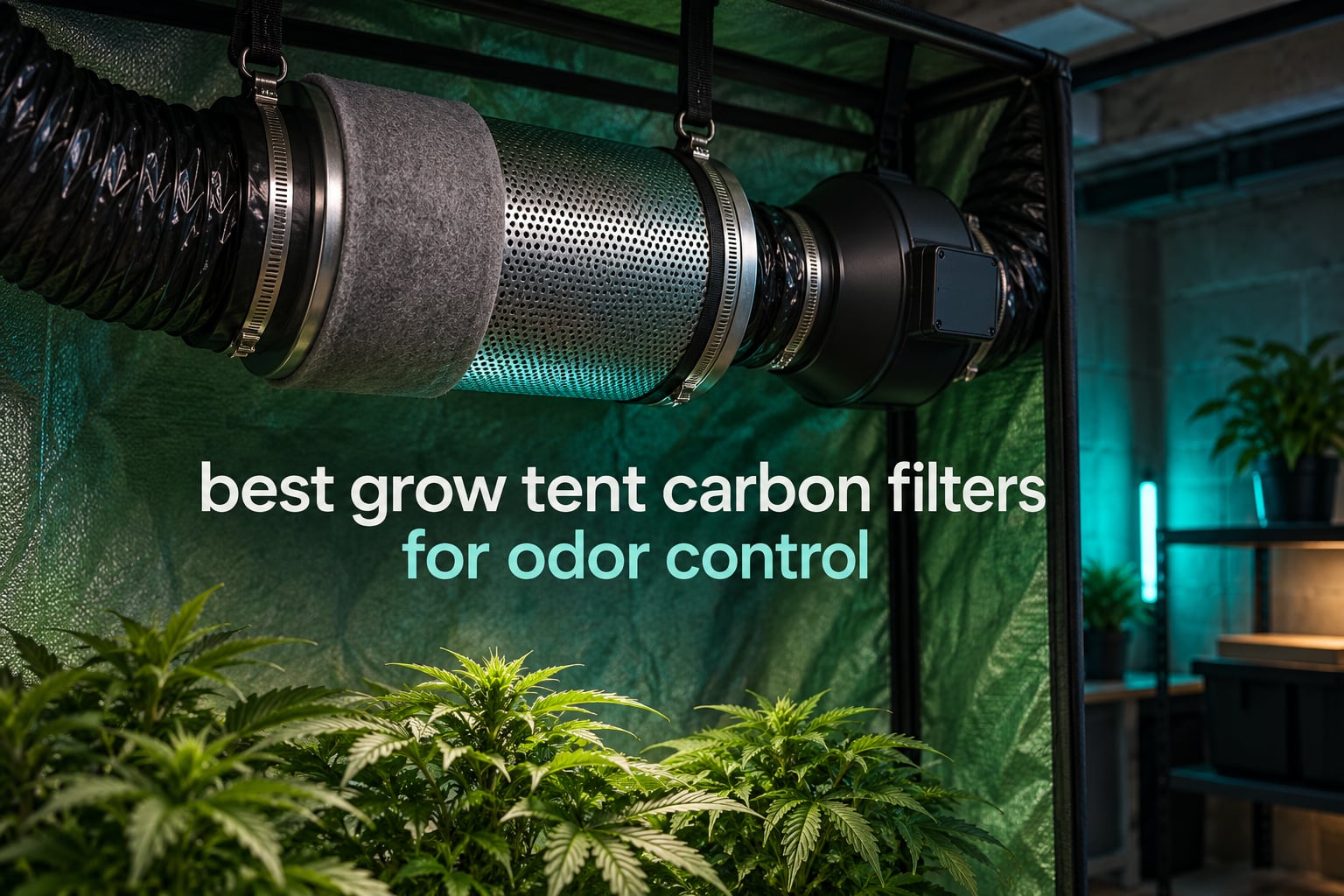
Odor is the one problem in indoor growing that cannot be solved with more light or better nutrients. A tent can have a flawless environment and still lose the argument with a neighbour in 2026, because the smell that soaks into carpet and drywall during flowering does not come back out. A grow tent carbon filter is the piece of hardware that sits between your inline exhaust fan and the outside world, and picking the right one is less about brand than about matching carbon bed size to the air volume you are actually moving.
We spent weeks working through twelve of the most-reviewed carbon filters on the market, from 4 inch inline units for micro tents up to an 8 inch canister rated for 930 CFM. Everything below is written from the manufacturer specifications and the thousands of owner reviews behind each listing, plus the sizing logic that decides whether a filter works or merely sits there.
If you already run a separate grow room setup, our grow room carbon filter guide covers the fixed-room side of the same problem. This roundup is scoped to tents, where duct diameter and air exchange rate drive every decision.
Table of Contents
Top 3 Best Grow Tent Carbon Filters (October 2026)

AC Infinity 6 Inch Carbon Filter
- 410 CFM airflow
- 38mm RC412 bed
- Australian virgin charcoal at 1200+ IAV
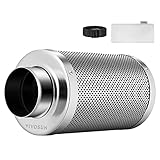
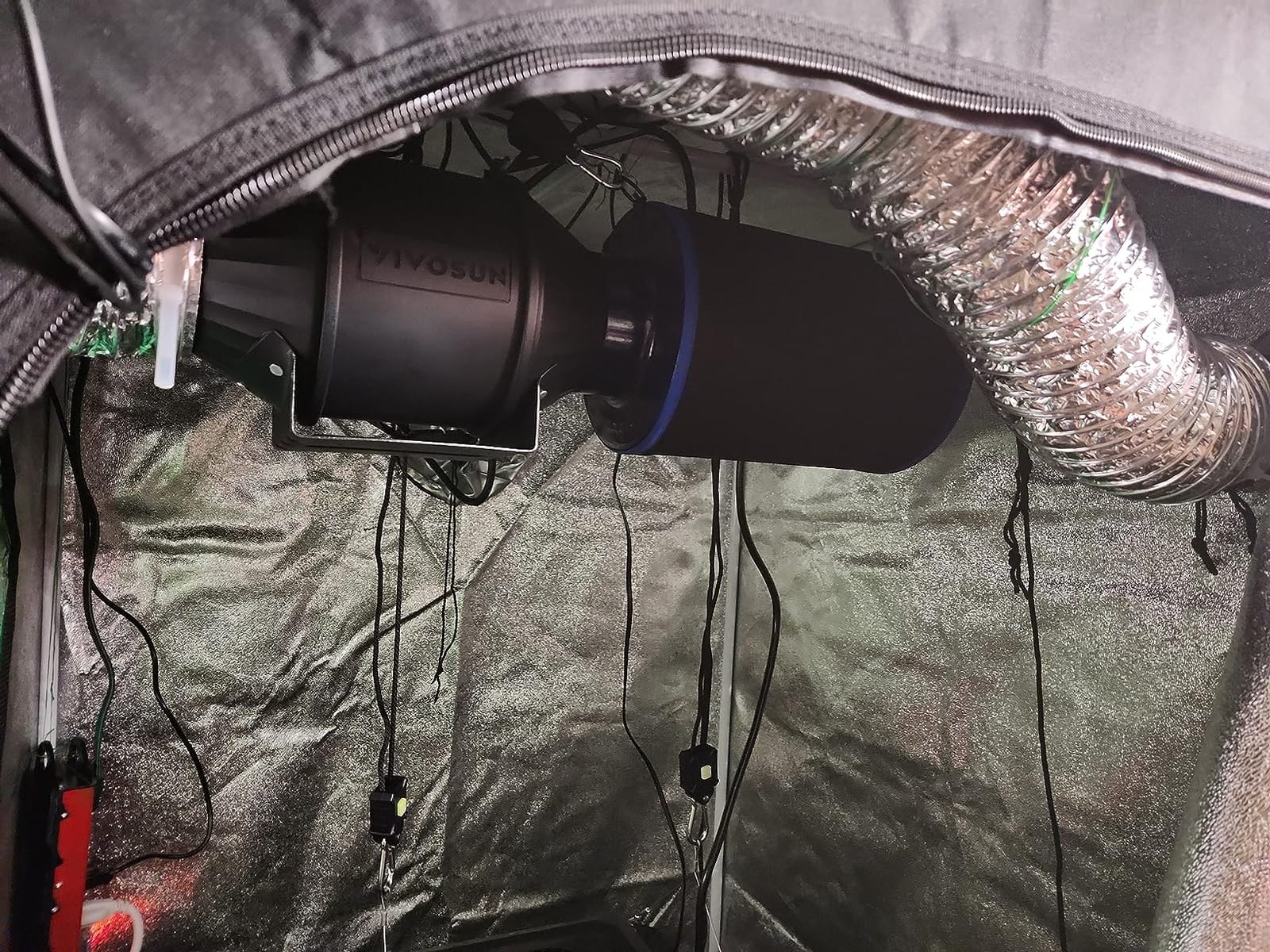
VIVOSUN 4 Inch Carbon Filter
- 223 CFM airflow
- Reversible flange and base
- Washable pre-filter included
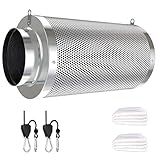
vanleno 4 Inch Carbon Filter
- 210 CFM airflow
- Two pre-filters in the box
- Stainless steel flanges
Those three cover the most common setups on the market. The AC Infinity 6 inch is the default choice for 4×4 tents and anything larger, the VIVOSUN 4 inch is the value pick for small tents, and the vanleno 4 inch ships with enough hardware to get a micro grow running in one sitting.
How a Grow Tent Carbon Filter Works?
An activated carbon filter is a metal canister packed with charcoal that has been treated to open up millions of microscopic pores. Odour-carrying molecules stick to the surface of that carbon as air is drawn through the bed by your inline duct fan, which is adsorption rather than filtration: the molecules are held on the surface instead of being strained out of the air.
Three numbers tell you most of what you need to know about a filter. The carbon bed thickness tells you how much surface area is available, and 38mm is the common baseline here while 46mm is treated as a premium step up. The iodine adsorption value, or IAV, measures how much the carbon can hold, with 1200+ IAV Australian virgin charcoal at the top of this group and 1050+ IAV a step below. The airflow rating in CFM tells you how much air the filter passes before back pressure builds up.
The sizing rule is simple: match the filter CFM to your fan CFM, and go one size larger if you are unsure. Growers on r/microgrowery repeatedly describe oversizing the filter and controlling airflow at the fan instead, which keeps the carbon from being pushed past its capacity while still clearing the tent.
A fabric pre-filter sleeve sits on the outside of every good filter. It catches dust, pollen and trichome debris so the carbon pores stay open, and the manufacturers here recommend replacing it every 3 to 6 months. Skip that and you get a choked bed that restricts airflow, which shows up as heat and humidity problems inside the tent long before you notice the smell returning.
The last piece is negative pressure. The tent should pull slightly inward so that air leaks out through the filtered exhaust rather than seeping out of the zipper seams. Get that right and a modest filter handles a surprisingly large tent; get it wrong and even an oversized filter will not stop odour escaping at the seams.
All 12 Filters Compared in 2026
| Product | Specifications | Action |
|---|---|---|
| AC Infinity 6 Inch Air Carbon Filter |
|
Check Latest Price |
| VIVOSUN 4 Inch Carbon Filter and Pre-Filter |
|
Check Latest Price |
| vanleno 4 Inch Carbon Filter |
|
Check Latest Price |
 VIVOSUN 6 Inch Pro Carbon Filter VIVOSUN 6 Inch Pro Carbon Filter |
|
Check Latest Price |
 iPower GLFILT6M 6 Inch Carbon Filter iPower GLFILT6M 6 Inch Carbon Filter |
|
Check Latest Price |
 AC Infinity Refillable Carbon Filter Kit 4 Inch AC Infinity Refillable Carbon Filter Kit 4 Inch |
|
Check Latest Price |
 Spider Farmer 6 Inch Carbon Filter Spider Farmer 6 Inch Carbon Filter |
|
Check Latest Price |
 MELONFARM 4 Inch Air Carbon Filter MELONFARM 4 Inch Air Carbon Filter |
|
Check Latest Price |
 HYDROWE 4 Inch Air Carbon Filter HYDROWE 4 Inch Air Carbon Filter |
|
Check Latest Price |
 AC Infinity Air Carbon Filter XL 8 Inch AC Infinity Air Carbon Filter XL 8 Inch |
|
Check Latest Price |
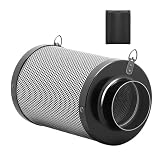 iPower 4 Inch Air Carbon Filter iPower 4 Inch Air Carbon Filter |
|
Check Latest Price |
 Atomic Innovations Air Duct Screen and Carbon Filter Atomic Innovations Air Duct Screen and Carbon Filter |
|
Check Latest Price |
1. AC Infinity 6 Inch Air Carbon Filter: the Best Grow Tent Carbon Filter Overall
AC Infinity Air Carbon Filter 6″ with Premium Australian Virgin Charcoal
6 inch duct opening
16 inch body length
410 CFM airflow
38mm RC412 carbon bed
1200+ IAV
Pros
- Premium Australian virgin charcoal at 1200+ IAV
- 410 CFM clears a 4x4 tent without choking airflow
- Powder-coated gunmetal finish resists rust in humid tents
- Includes two straps two rope clips and two pre-filters
Cons
- Bulky body needs real space inside or above the tent
- Carbon bed can lose effectiveness sooner in heavy flowering
This is the filter we keep coming back to because the specification sheet is the strongest in the group without any single number being extreme. A 410 CFM rating sits comfortably above a 4×4 tent requirement, the 38mm RC412 bed at 1200+ IAV is the same carbon used in the refillable kit, and the powder-coated gunmetal shell has a practical advantage over bare steel in a tent that runs humid.
It arrives with two straps, two rope clips and two pre-filter sleeves, which is more hardware than most competitors include and saves a second trip to the parts drawer on install day.
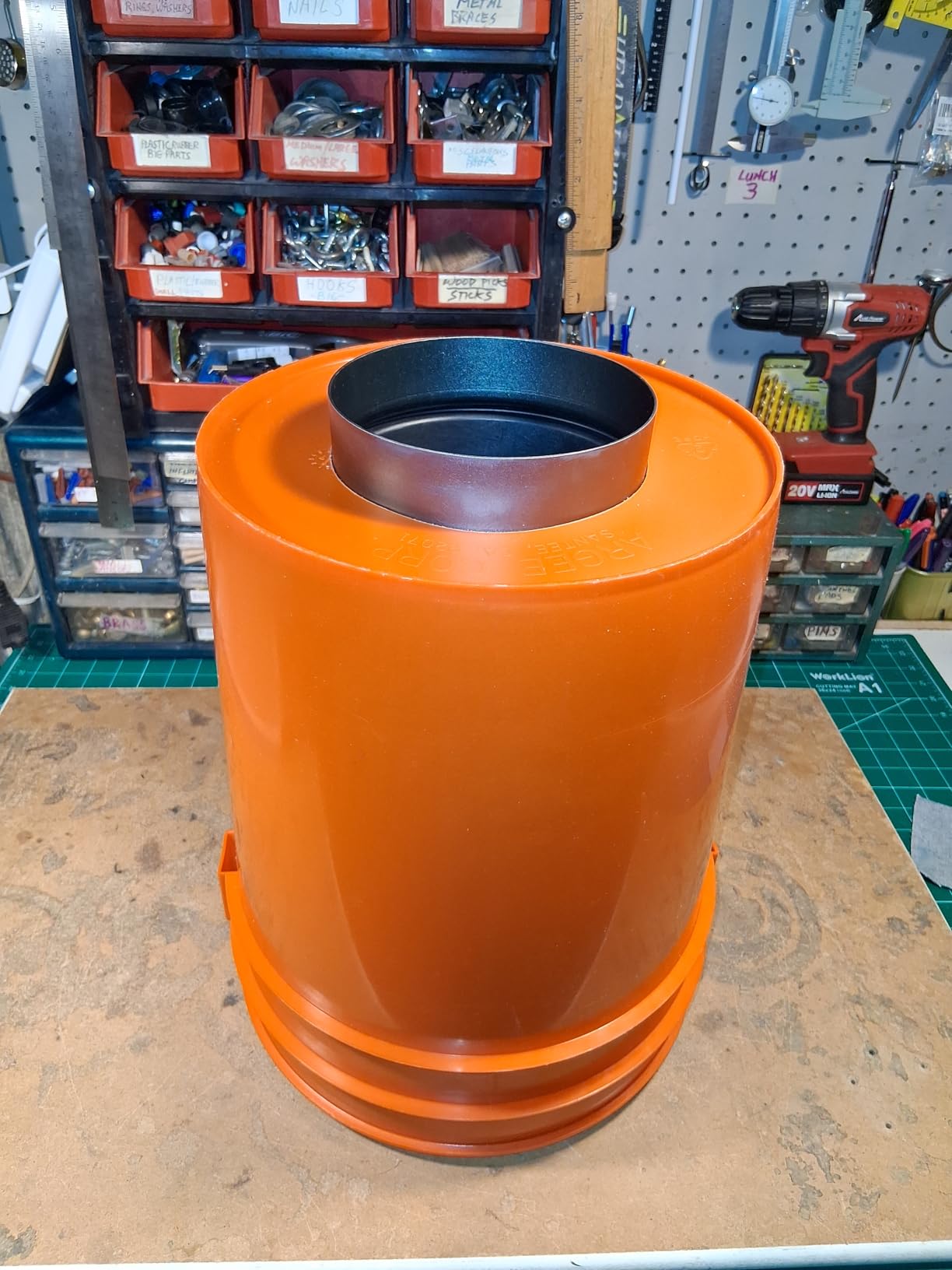
What stands out in the owner reviews is how rarely the filter gets blamed. With 10258 ratings averaging 4.8 out of 5, the complaints cluster around physical size and, for a minority of users, carbon that gave up sooner than expected in heavy-use setups. Even those users tend to describe the odour control itself as strong until it tapered.
It is also the most repurposed unit in the group. Owners mention using it for welding fumes, lacquer and general workshop air quality, which says something about how much headroom the carbon has before it saturates.
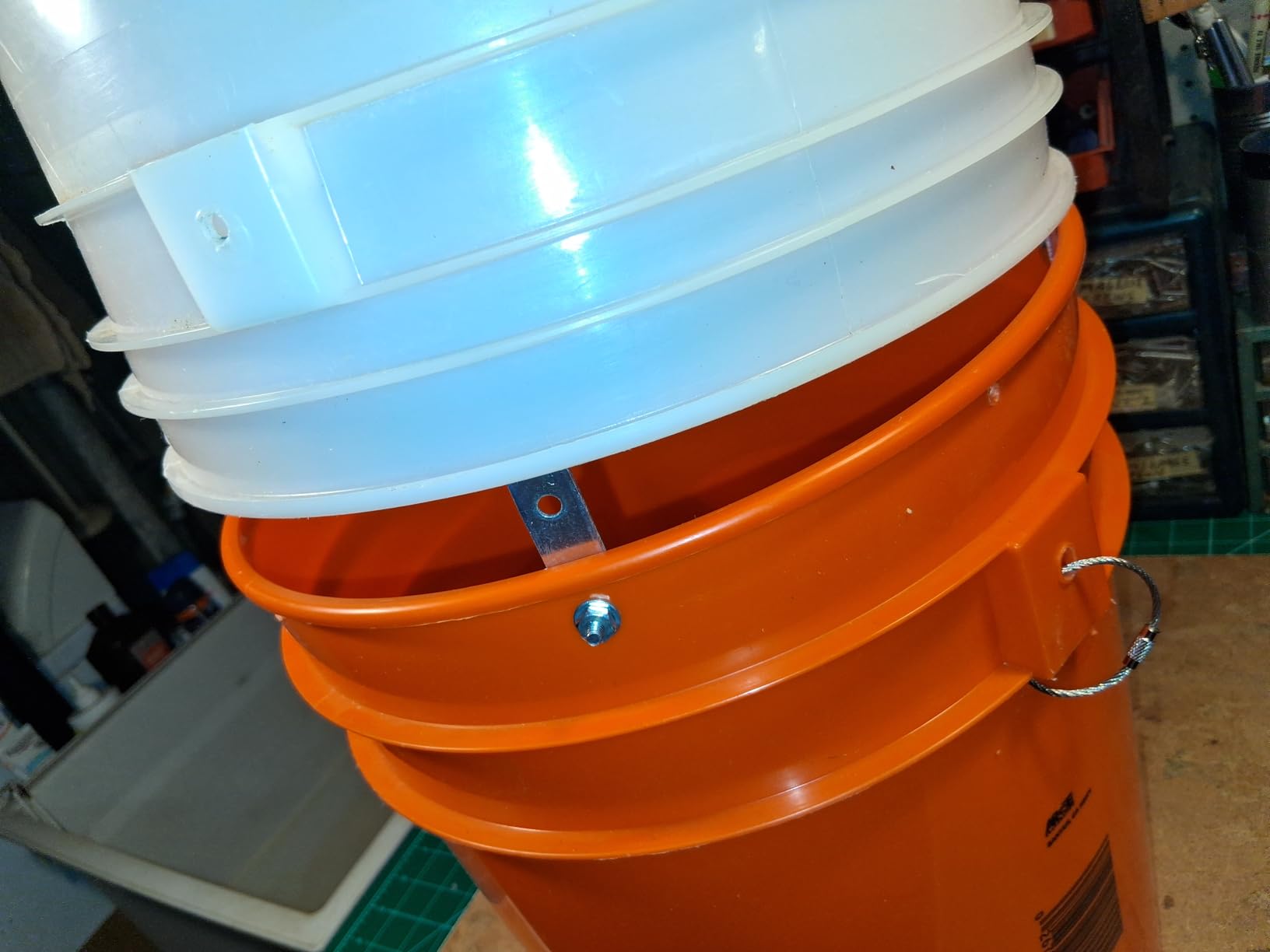
Will it fit your tent and fan?
The 16 inch body is longer than the 4 inch canisters on this list, so measure the vertical run above your tent before ordering. Mounted vertically with a 6 inch inline fan it clears the ceiling of most 4×4 and 5×5 tents without pushing the fan into an awkward position.
If you run two tents from one room, the 410 CFM rating handles a single 4×4 comfortably and a 2×4 plus a 2×2 with the controller turned down.
Where it falls short?
This is a sealed canister, so when the carbon is spent the whole unit goes in the bin. Growers running multiple cycles a year should weigh that against the refillable kit below.
The 410 CFM rating is also optimistic in the way all filter ratings are, since it is measured with no fan pushing against it. Once you clamp ducting on both ends the real number drops, which is another argument for oversizing when your tent is at the top of the range.
2. VIVOSUN 4 Inch Carbon Filter and Pre-Filter: Best Value Pick
VIVOSUN 4″ Carbon Filter & Pre-Filter 223 CFM for Inline Fan, Silver
4 inch duct opening
11.8 inch length
223 CFM airflow
38mm RC412 carbon bed
1200+ IAV
Pros
- 223 CFM suits 2x4 and 4x4 tents
- Rversible flange doubles usable carbon life
- Washable pre-filter cloth ships in the box
- Over 10000 owner ratings
Cons
- Not refillable so the canister is discarded when spent
- Carbon load is light compared with premium brands
The 4 inch workhorse of the hobby. At 223 CFM it clears a 2×4 tent with room to spare and handles a 4×4 if the fan is on a controller, and the round-hole galvanized mesh keeps airflow up despite a full 38mm bed.
The reversible flange and base are the detail that separates it from cheaper 4 inch filters. Remove the flange, flip the canister, and you get a second year of carbon from the same body instead of throwing it away at the first sign of breakthrough.
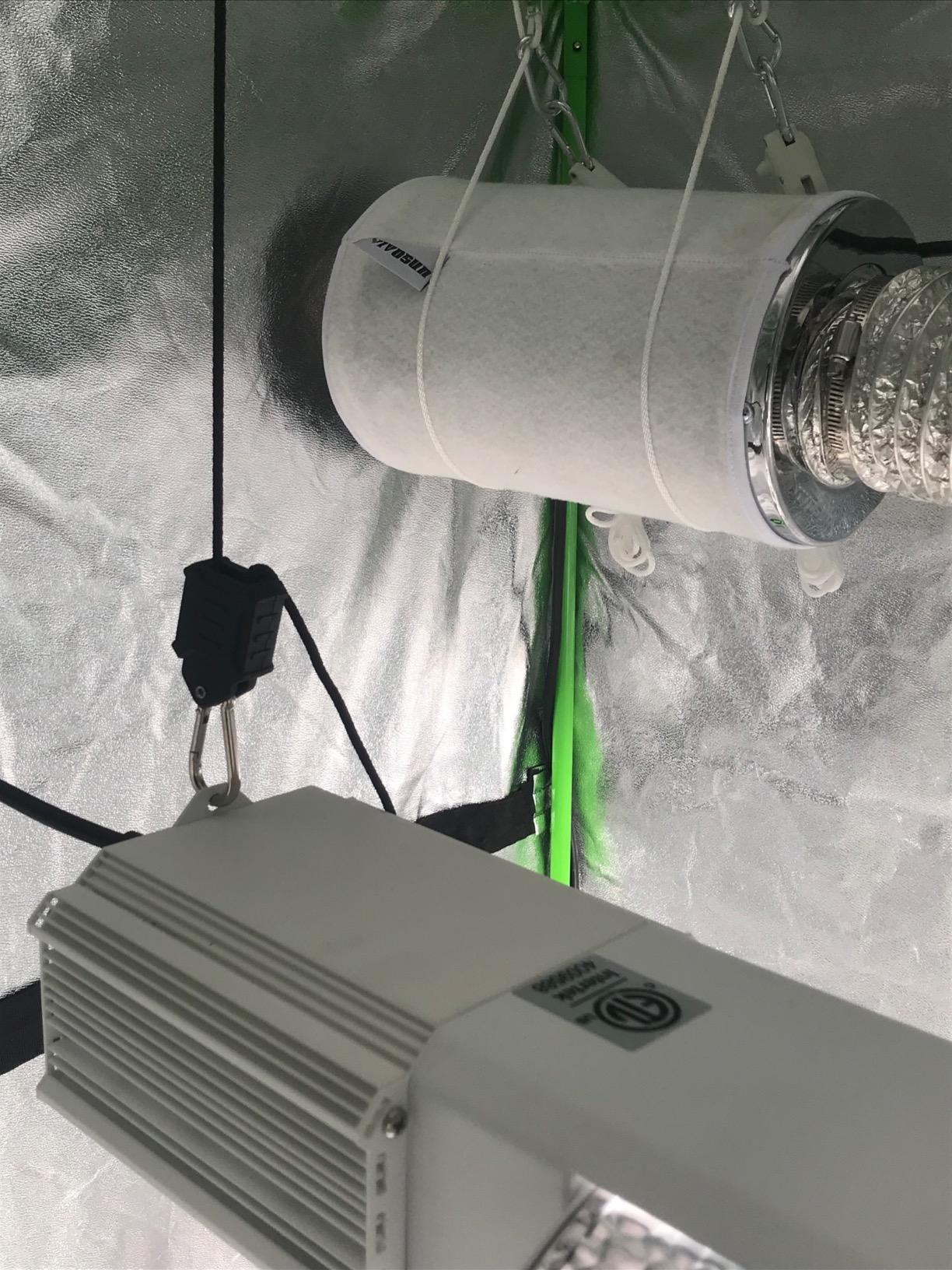
At 10082 ratings and a 4.6 average, this is one of the most reviewed inline filters available, and the pattern in the reviews is consistent: easy tent assembly, steady odour reduction, and a wish that the carbon lasted longer between swaps.
The RC 412 Australian virgin charcoal at 1200+ IAV is the same grade used in the premium 6 inch units, so the odour chemistry here is not a step down. The detachable pre-filter cloth blocks 99% of particles and detaches for washing rather than replacement.
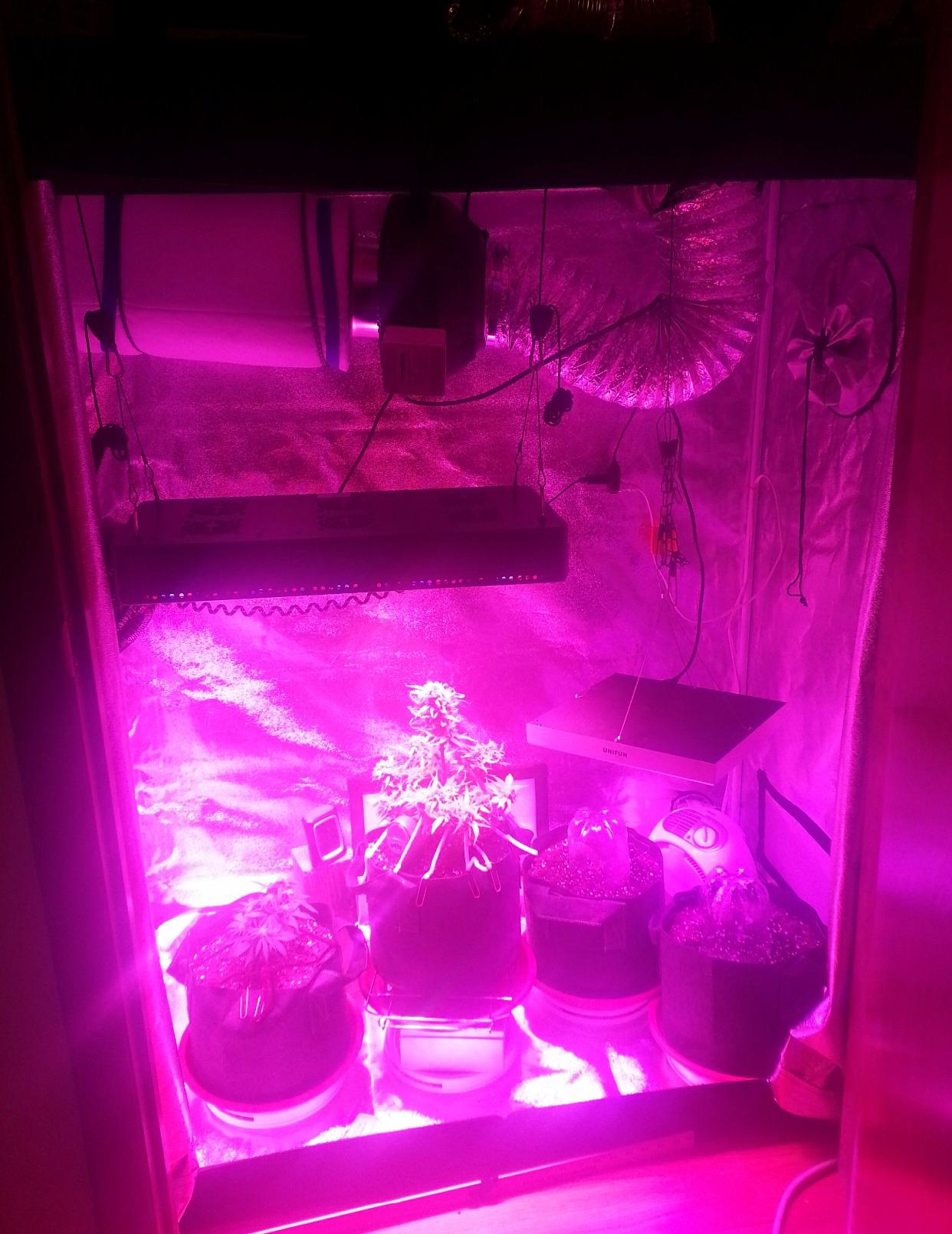
Is the light carbon load a problem?
For a 2×4 or 2×2 tent with a 4 inch fan, no. The filter is matched to the fan rather than to the whole room, and at typical 4 inch fan speeds the carbon bed is not being pushed hard enough to matter.
The question worth asking is whether your odour problem is neighbours or neighbours of neighbours. In a shared-wall apartment the honest answer is that a bigger filter buys you time before replacement, not a permanent answer.
Where it falls short?
When the carbon is exhausted the entire canister is discarded. For a grower running four cycles a year that adds up, and it is the main reason the refillable design exists.
Some owners also report odour control fading sooner than the manufacturer suggests, particularly in humid tents at peak flowering, which is a function of moisture loading the carbon rather than a fault in the unit.
3. vanleno 4 Inch Carbon Filter: Most Versatile for Small Tents
vanleno 4inch Carbon Filter Odor Control with Australia Virgin Charcoal Two Prefilter 1 Pair Rope Hanger Included for Inline Duct Fan, Grow Tent, Hydroponics, Odor Scrubber
4 inch flange ducting
12 inch body length
210 CFM airflow
1200+ IAV Australian carbon
Pros
- Two pre-filters included rather than one
- Stainless steel flanges feel solid for the price
- Rope hangers included for immediate mounting
Cons
- Fixed non-reversible canister shortens usable life
- Less carbon than premium brands
If you are building a 2×2 or 2×4 tent from scratch, the practical question is not carbon quality but whether everything you need is in the box. This one ships with two pre-filters, a pair of rope hangers and stainless steel flanges, which covers the full install without a parts run.
The carbon is 1200+ IAV Australian activated carbon at 210 CFM through a 4 inch flange, and the 12 inch body is compact enough to hang in the corner of a small tent without stealing growing space.
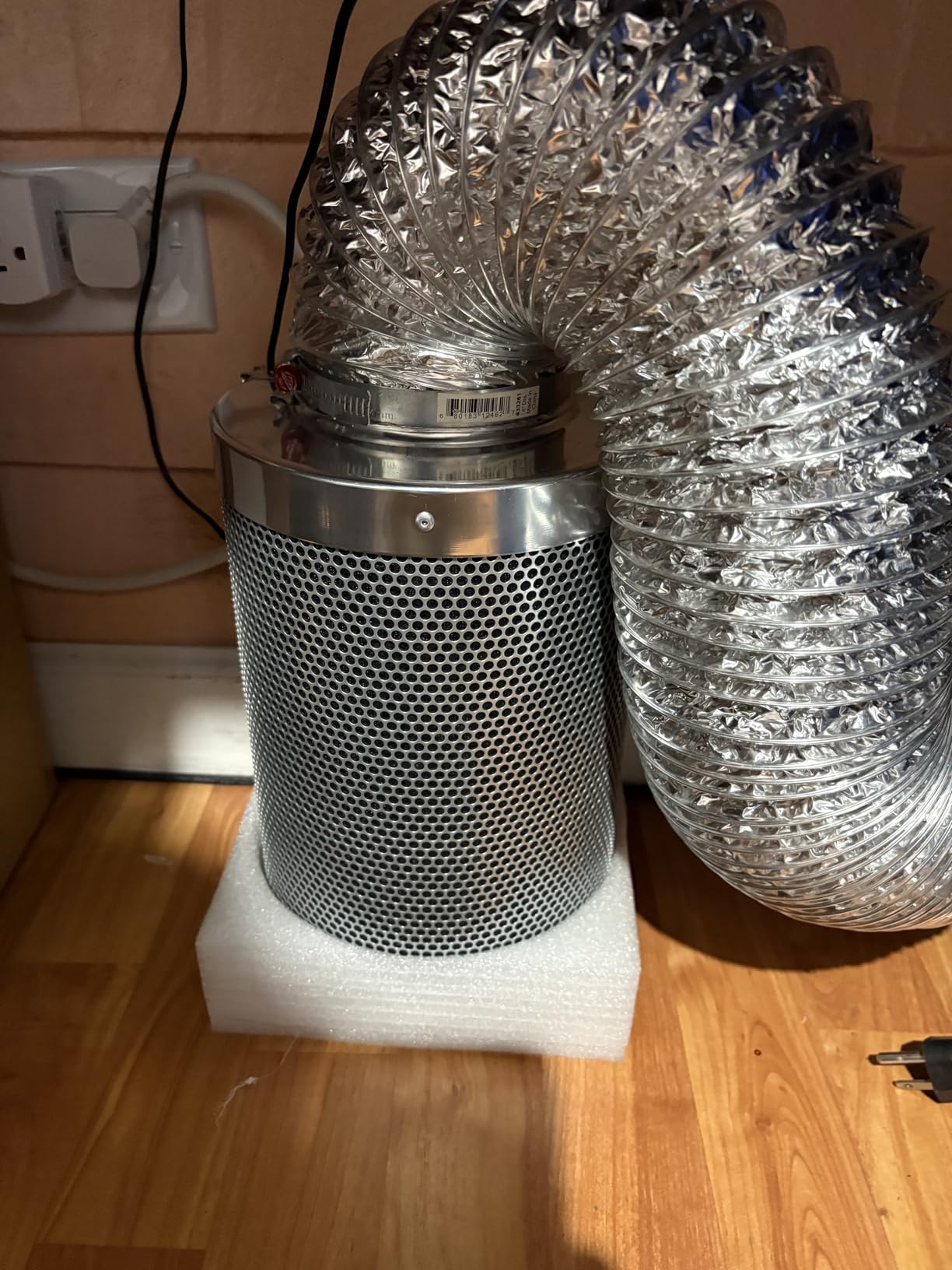
Owners frequently compare this unit to name-brand filters on the same 4 inch spec and find it broadly equivalent for standard setups. The 4.6 average across 2927 ratings backs that up, and the lighter review history means fewer long-term data points than the VIVOSUN above.
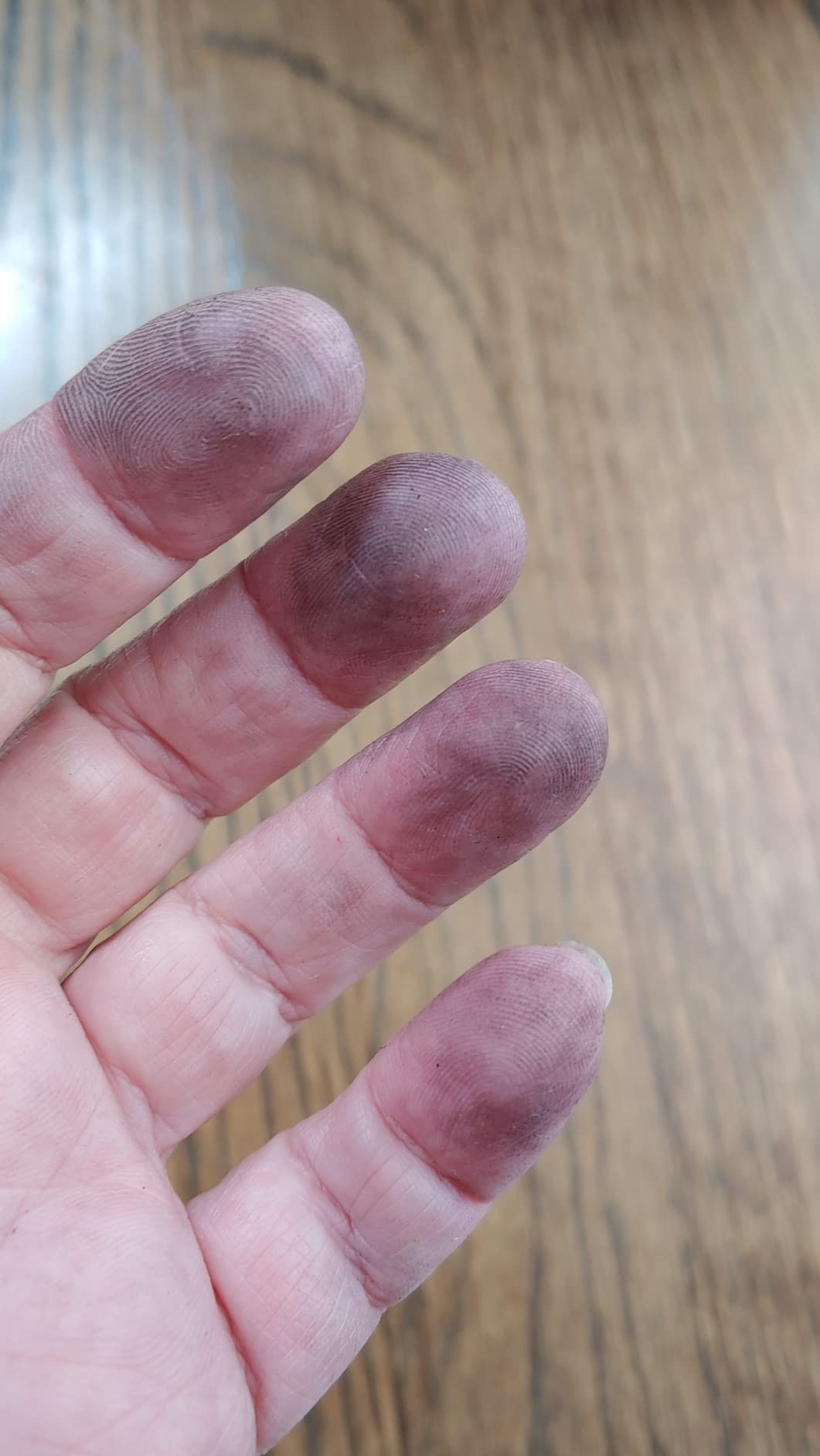
The recurring minor complaint is carbon dust inside the canister after a full grow, which is normal for loose activated carbon and worth handling with gloves when you open it.
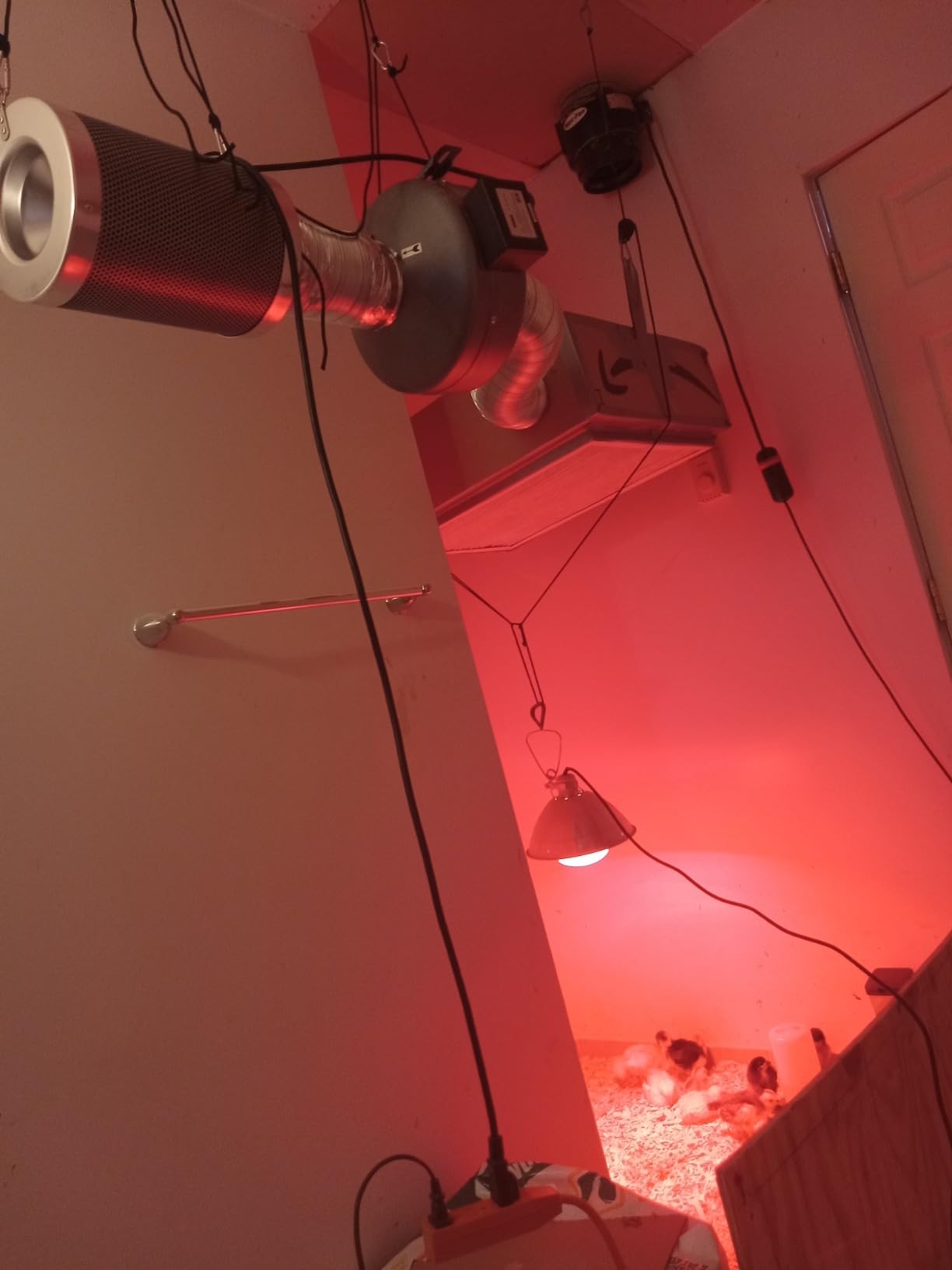
Is two pre-filters enough for a full cycle?
For a single micro tent with a modest fan, yes. Pre-filter sleeves are cheap and replaceable, and starting with two means you have a spare before you need one rather than after.
If you plan to run this unit past one cycle, budget for replacing the pre-filter cloth rather than washing it, because coated cloth that has loaded with dust loses airflow fast.
Where it falls short?
The canister is fixed, so there is no reversing trick to extend life. Once the odour returns you replace the whole unit.
At 210 CFM it has less headroom than several rivals at the same diameter, so it is a poor match for a 4×4 tent running an open exhaust.
4. VIVOSUN 6 Inch Pro Carbon Filter: Best for 4×4 Tents
VIVOSUN 6″ Pro Carbon Filter & Pre-Filter 455 CFM for Inline Fan, Black
6 inch duct opening
16 inch body length
455 CFM airflow
38mm RC412 carbon bed
Pros
- 455 CFM is the highest rating among the 6 inch units here
- Hexagonal mesh keeps open area high through a dense bed
- Rope hangers and ring anchors make hanging quick
Cons
- Non-refillable canister design
- Bulkier and heavier than 4 inch filters
The number that matters here is 455 CFM. It is the highest airflow rating in this roundup among the 6 inch units, and for a 4×4 tent running at full fan speed it is the difference between a filter that keeps up and one that becomes the restriction in your system.
The hexagonal hole design in the dual-sided galvanized steel mesh is the reason that rating is achievable through a full 38mm bed, rather than in spite of it.
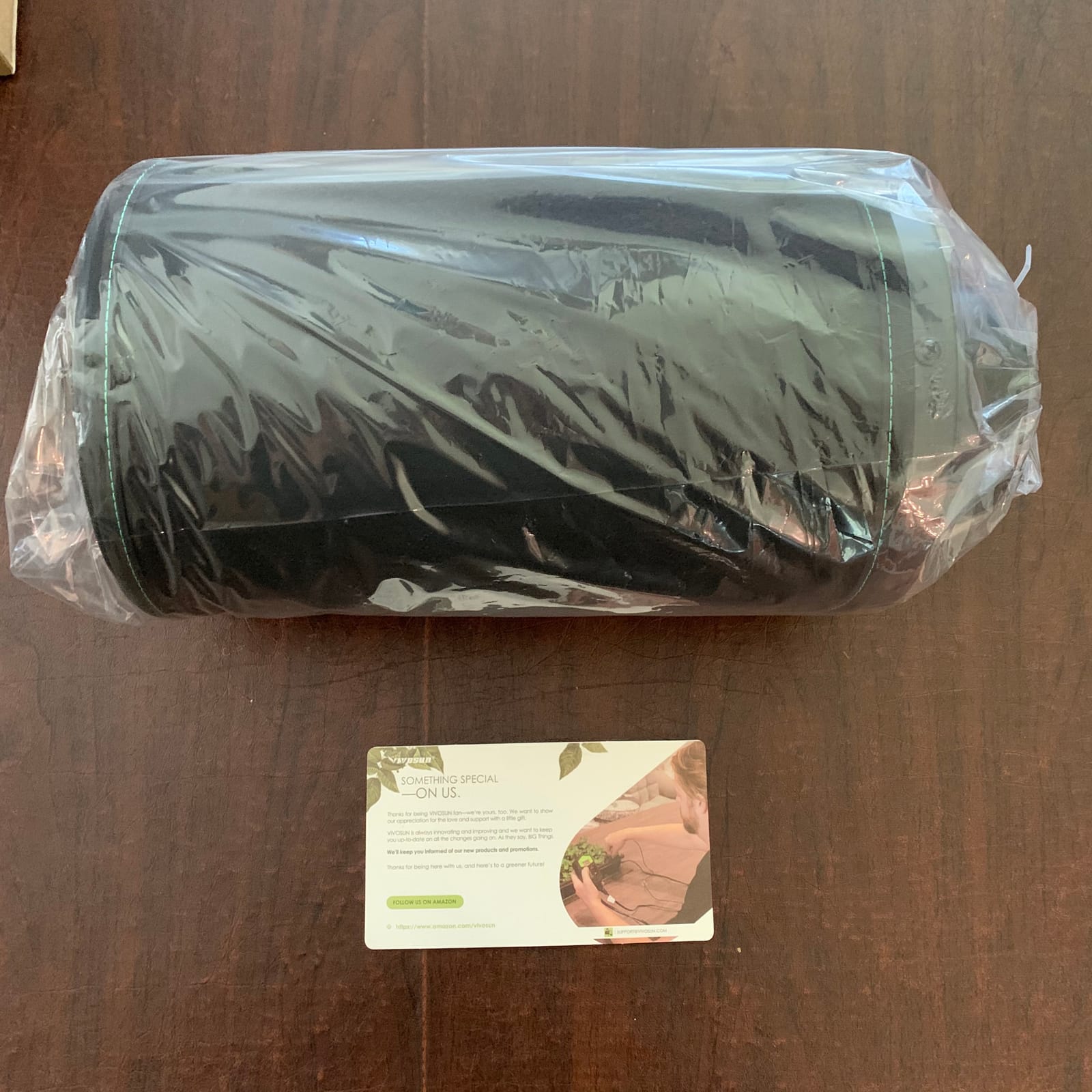
Owners running 6 inch inline setups report reliable odour control and appreciate how quickly the ring anchors and rope hangers get the canister into position. A number of them also use the filter for 3D printer emissions, which points to a carbon bed with real spare capacity.
Like the smaller VIVOSUN, the flange and base reverse so you can flip the canister for a second pass through the bed. That single design decision is worth more over a few years than most spec-sheet upgrades.
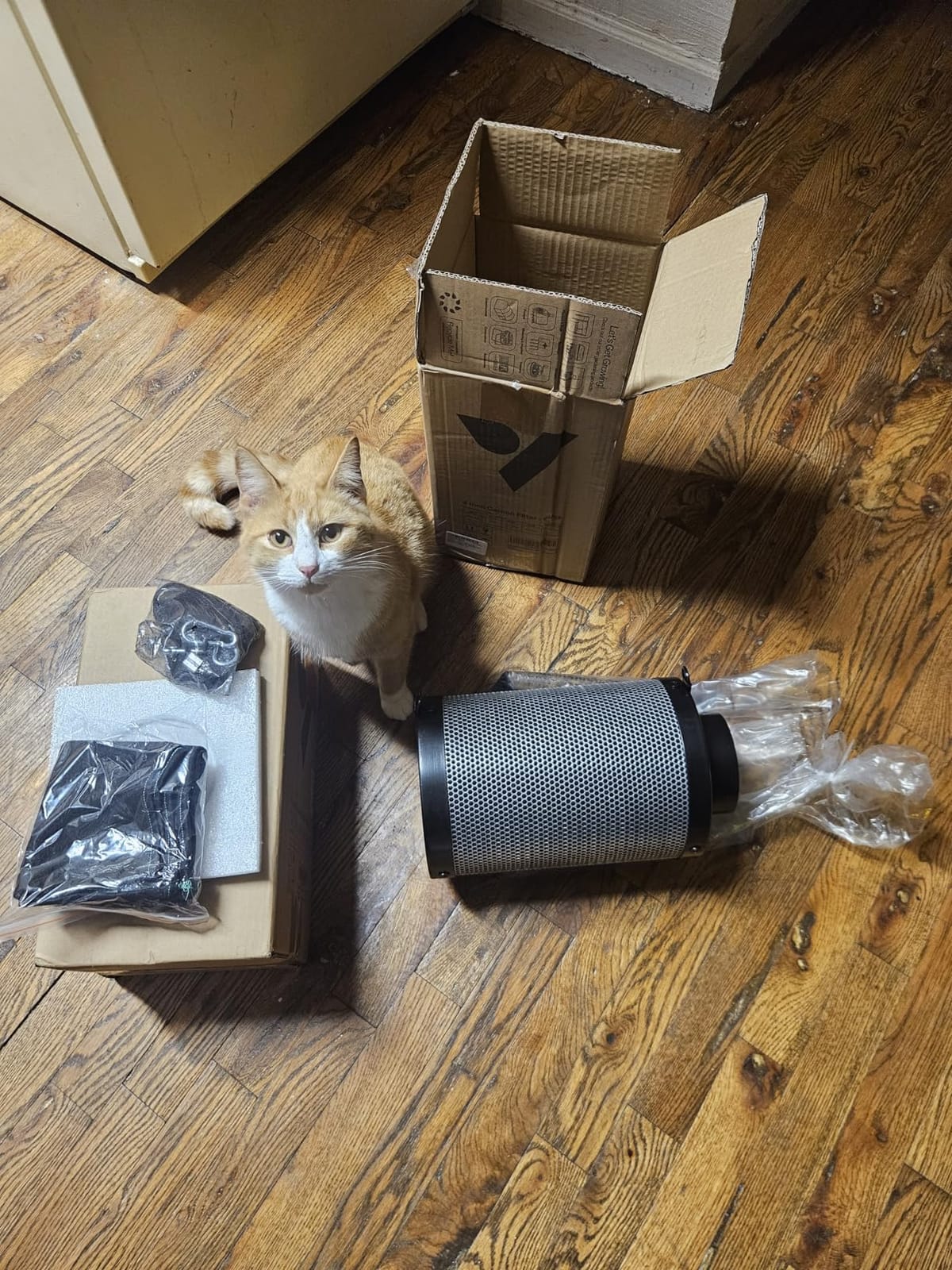
Do you need 6 inch or would 4 inch do?
For a 2×4 or smaller tent, a 4 inch filter and fan is the right pairing and this one is simply too much hardware. For a 4×4 tent with a 6 inch fan already in the duct, matching diameters removes the reducer adapters that cost you airflow.
The practical rule is flange diameter first, CFM second. Buy the filter that matches your ducting, then confirm the rating clears your fan.
Where it falls short?
It is the bulkiest option at the 6 inch level, weighing in heavier than the 4 inch units, which matters in a tent where every vertical inch counts.
Owner commentary on drawbacks is limited, so if noise or weight is your deciding factor you will find more detail on the fan side of the system than the filter side.
5. iPower GLFILT6M 6 Inch Carbon Filter: Best Reversible 6 Inch Filter
iPower GLFILT6M 6 Inch Air Carbon Filter Indoor Plants Grow Tent Odor Control Scrubber with Australia Activated C for Inline Fan, Reversible Flange, Prefilter Included, 6″
6 inch duct opening
16 inch flange ducting
400 CFM airflow
1050+ IAV RC412 carbon
Pros
- Reversible flange and base double the usable carbon life
- Usable as an intake or exhaust filter
- One year manufacturer warranty
Cons
- Aluminum canister can shed loose carbon dust
- Short accessory list compared with rivals
This is the 6 inch unit to buy if reversing the canister matters more to you than raw airflow. The flange and bottom both release, so flipping the body gives you a fresh face of 1050+ IAV Australian RC412 carbon without opening the housing.
At 400 CFM it sits just under the VIVOSUN Pro on airflow but above everything at the 4 inch level, and it works equally well on the intake or the exhaust side of the tent.
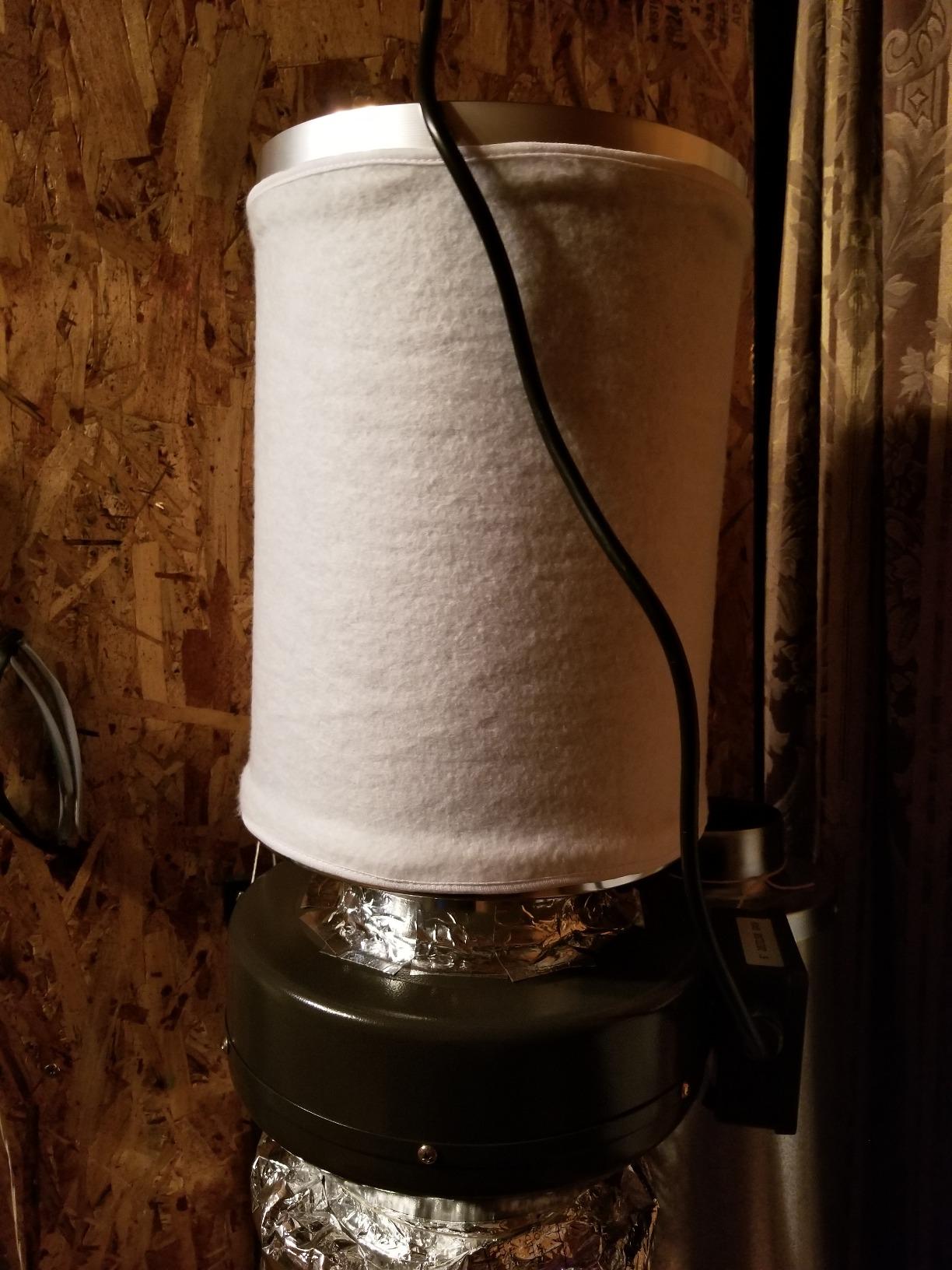
Owners report solid odour control for grow tents and for general indoor air use, and the 4.5 average across 1386 ratings reflects a unit that does its job without drama. The one-year warranty is worth noting since not every filter in this price bracket carries one.
The manufacturer recommends replacing the pre-filter every 6 months, which matches what most growers do in practice regardless of what the packaging claims.
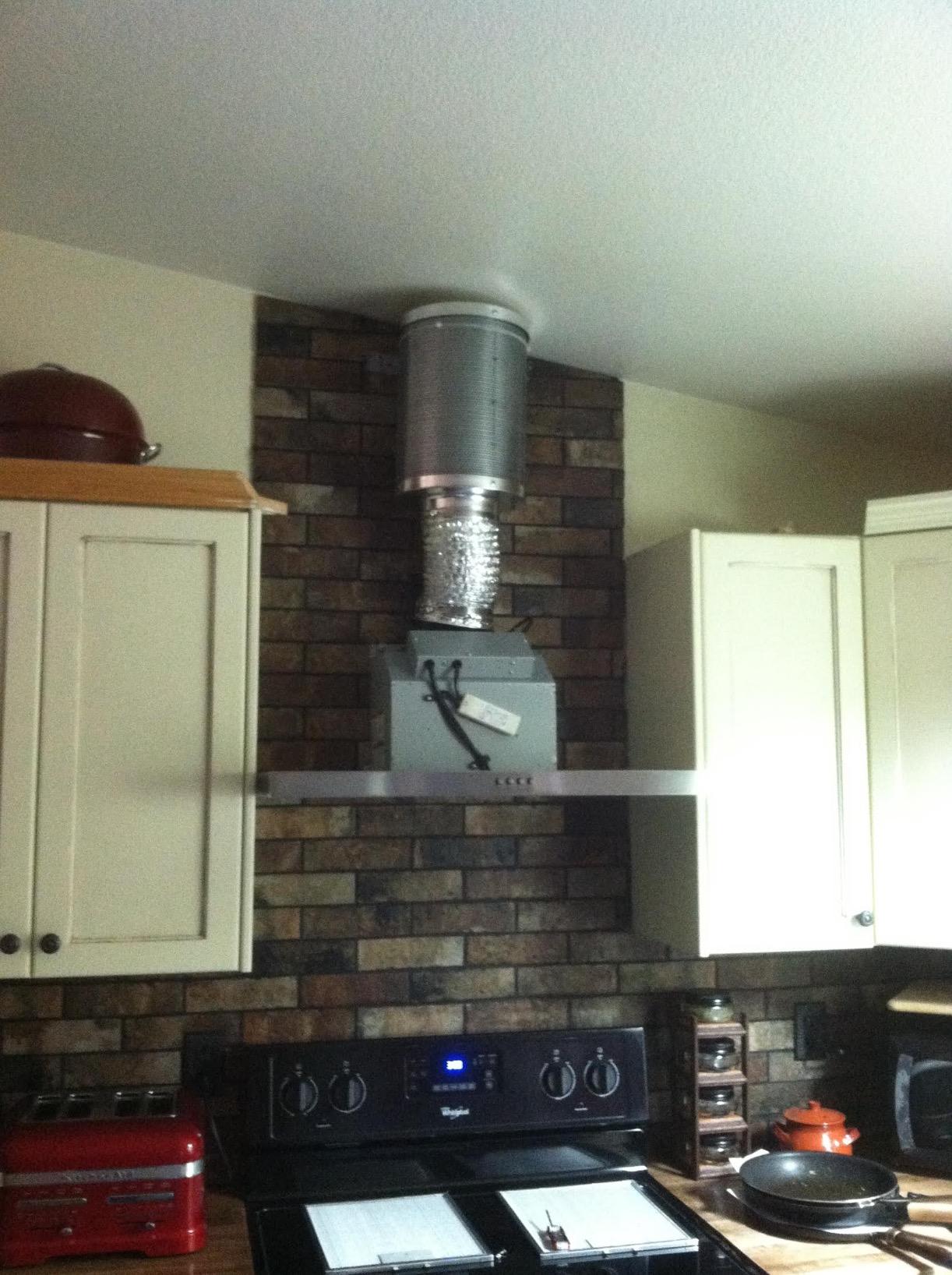
Is reversing actually worth planning for?
Yes, because it is free capacity. A carbon bed that has loaded from one direction still has usable surface area at the far end, and growers who flip at the first sign of breakthrough routinely get a second full cycle from the same canister.
The practical trick is to mark the housing with tape when you install it so you know which end was facing the fan six months later.
Where it falls short?
Carbon dust in the canister is the most common complaint, and it will spread if the unit is handled roughly or shaken while installing.
The accessory list is thinner than some rivals, so budget for straps if your tent frame has no hanging point directly above the exhaust port.
6. AC Infinity Refillable Carbon Filter Kit 4 Inch: Best for Multi-Cycle Growers
AC Infinity Refillable Carbon Filter Kit 4” with Activated Carbon Refill
4 inch refillable chamber
Includes refill plus funnel and scoop
Twist-off flanges
Dual-layer coated steel mesh
Pros
- Refillable carbon cuts replacement cost and waste over many cycles
- Funnel and scoop make servicing tool-free
- Lab-tested odor control without carbon compression
Cons
- Higher upfront cost than disposable filters
- Refilling loose carbon is inherently messy
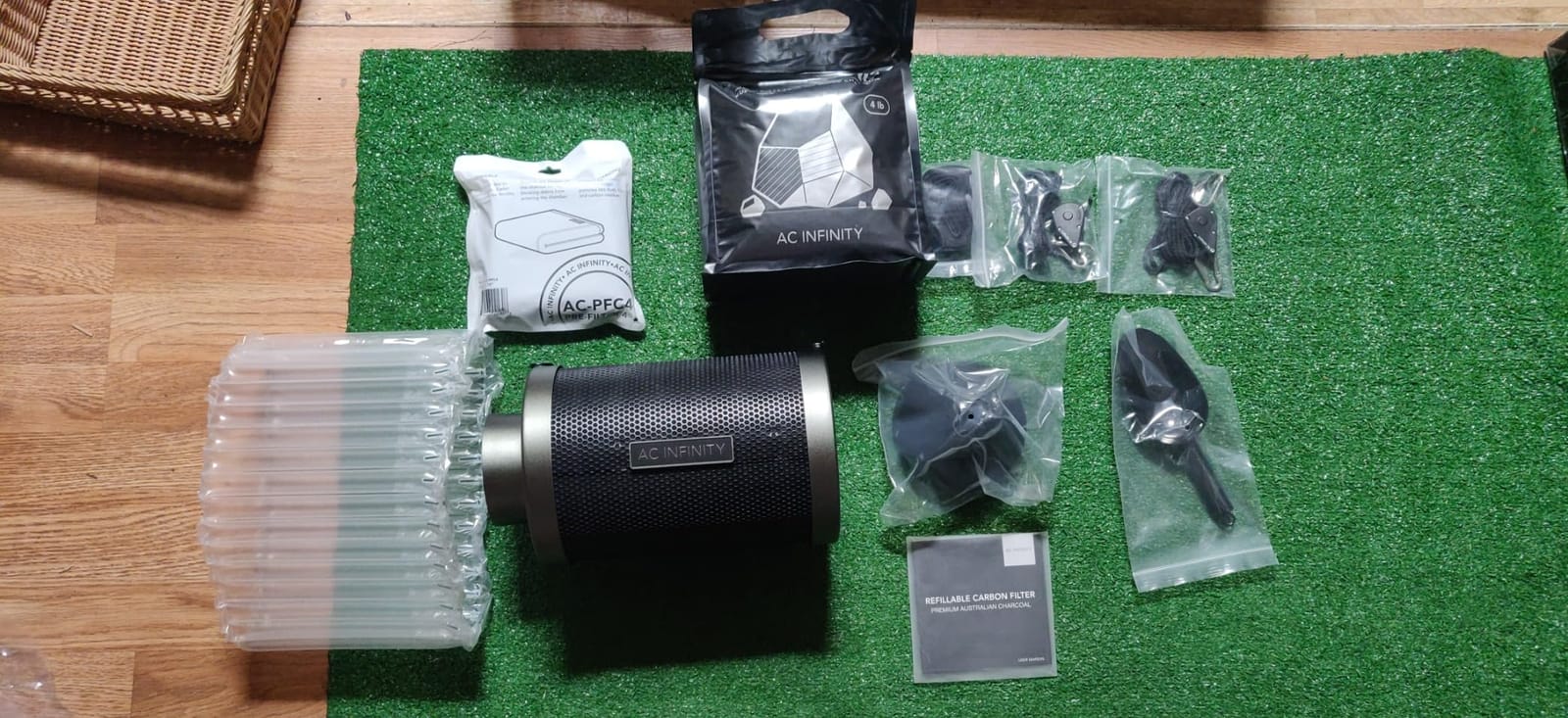
This is the only refillable design in the roundup, and it changes the economics for anyone running more than a couple of cycles a year. Instead of discarding a canister, you twist off the flanges and pour in a refill using the included funnel and scoop.
The included refill is rated to match the filtration capacity of two standard 4 inch carbon filters. That is the number to compare against a disposable alternative when you work out cost across a year.
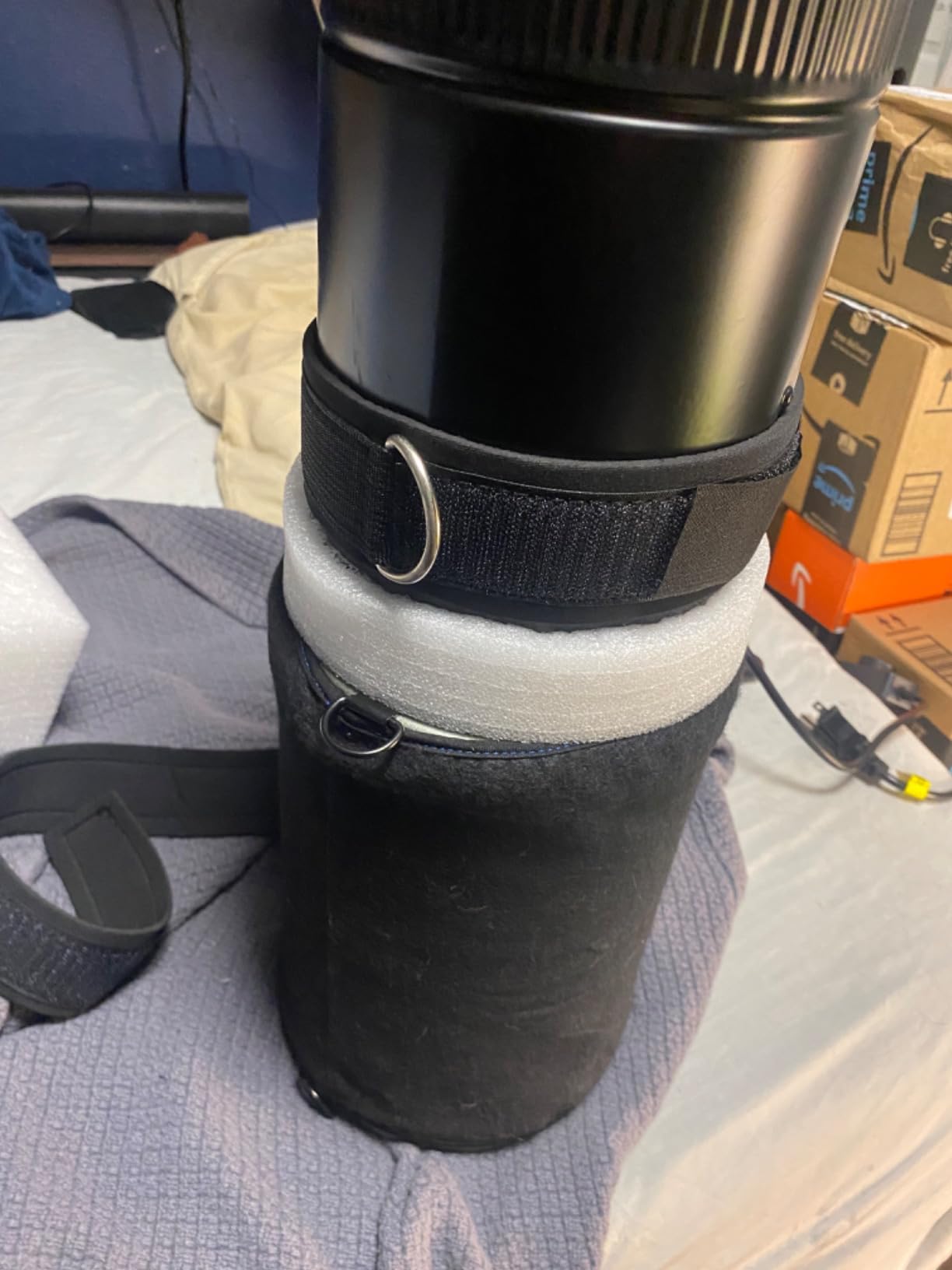
Owners endorse the refillable design on two fronts: odour control that holds through late flower, and a refill process that takes minutes rather than an afternoon. Several note that it outperforms cheaper disposable brands across multiple grow cycles, which is the whole argument for the design.
The chamber is described as lab-tested to block odours as effectively as standard filters with no compression required, and the dual-layered steel mesh carries a protective coating for high humidity in grow tents.
Is refillable always the cheaper option?
Only across enough cycles. If you grow one tent once a year, the upfront cost never gets recovered. If you run four or more cycles, or a filter shared across several tents, the math tips quickly in favour of refills.
Availability is also worth checking against your own schedule. Refill sleeves are the part you reorder, and a refill you cannot get before flowering starts is a refill that arrives at the wrong time.
Where it falls short?
The upfront cost is higher than any disposable canister on this list, which is a hard barrier for a first-time micro grow.
Refilling means handling loose activated carbon, and while the funnel keeps most of it in the chamber, expect to clean up dust afterwards.
7. Spider Farmer 6 Inch Carbon Filter: Best for Tool-Free Installation
Spider Farmer 6 Inch Carbon Filter for Grow Tent Odor Control
6 inch duct opening
Premium RC 412 Australian virgin charcoal
Washable removable pre-filter
Aluminum flanges with straps
Pros
- Connects to a standard inline fan without tools
- Two straps included for hanging
- Washable pre-filter extends service life
Cons
- Carbon bed is smaller than higher-priced models
- Non-refillable canister
This one sells on installation simplicity. It connects to a ventilation system without specialised tools, and the two included straps mean you can hang it and run ducting in a single pass rather than hunting for hardware.
The pre-filter cloth is both removable and washable, which is the cheapest way to keep airflow up over a full cycle without buying replacement sleeves.
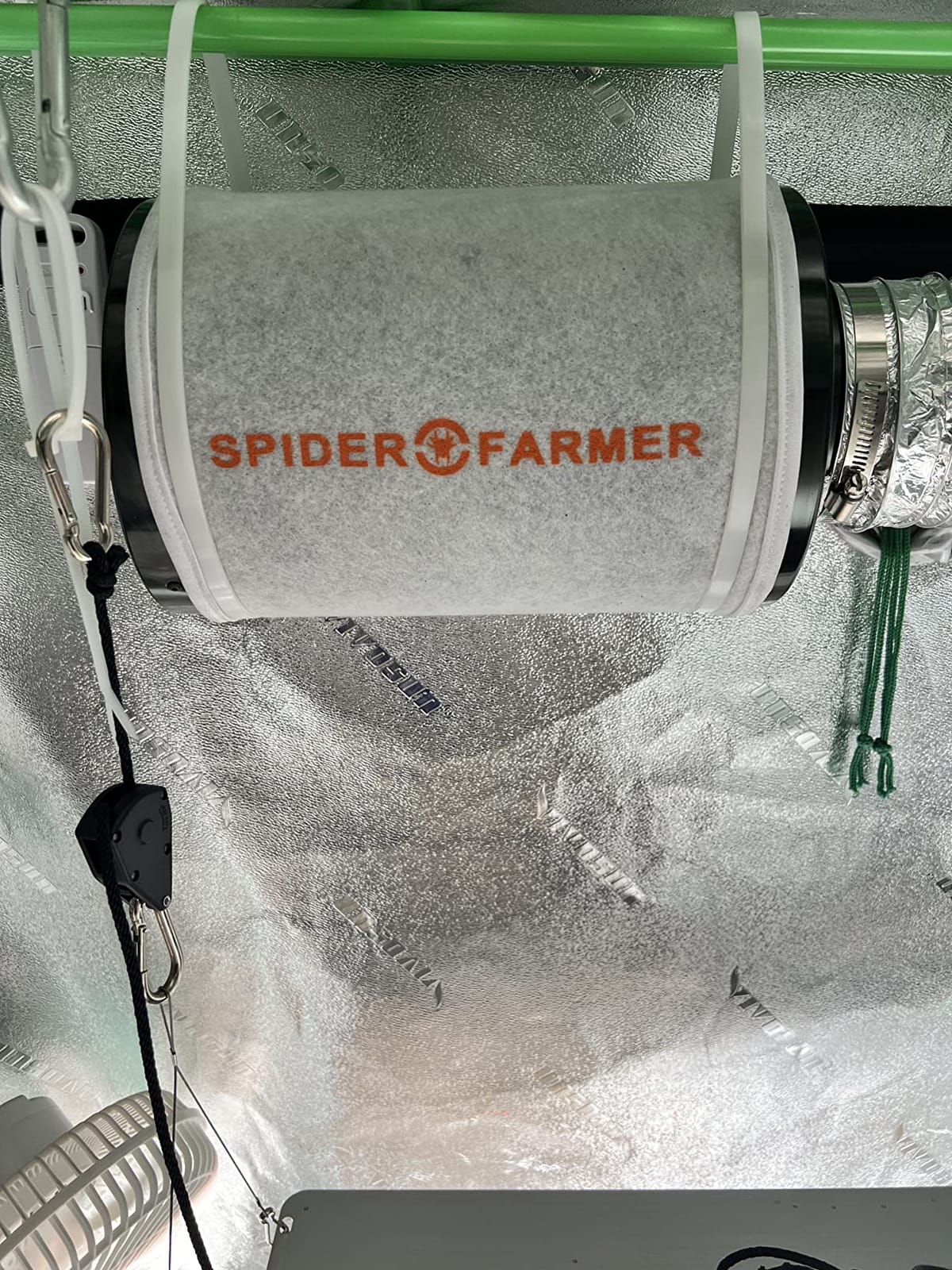
Reviews describe odour control as adequate for standard tent setups with clear praise for the washable pre-filter and the galvanized steel body. The 4.4 average is a little below the leaders, and a segment of owners reports breakthrough earlier than expected in heavy flowering.
That earlier breakthrough tracks with the carbon bed being smaller than the premium units, so it holds up best where the fan is not running wide open against it.
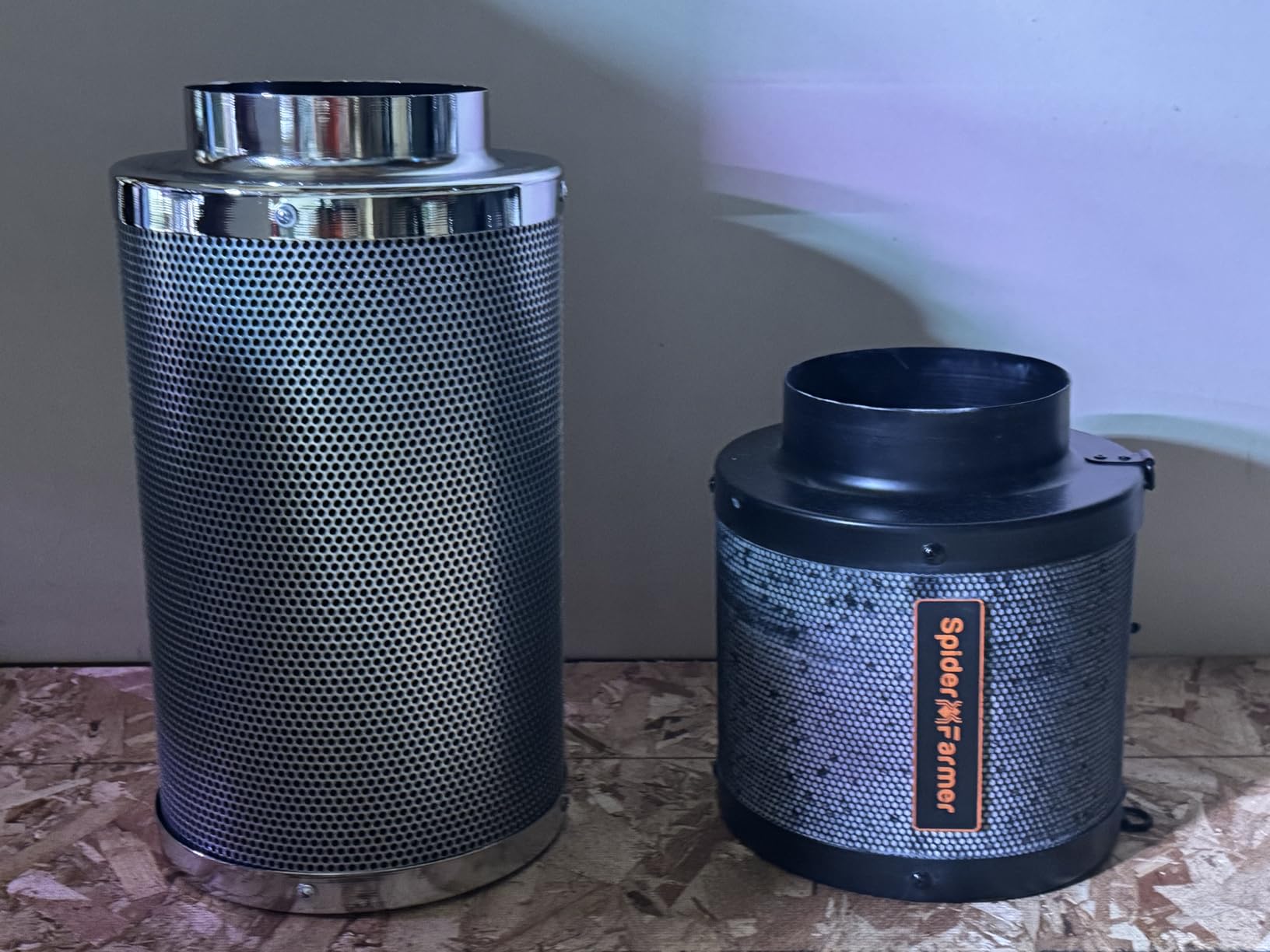
How does it compare with an AC Infinity at the same size?
Both use RC 412 Australian virgin charcoal, so the carbon grade is comparable. The difference is bed volume and the 6 inch airflow headroom, where the AC Infinity unit rated 410 CFM pulls ahead.
If your tent is 4×4 or smaller and you value a fast install over maximum headroom, this is a reasonable trade.
Where it falls short?
The smaller carbon bed is the honest limitation here, and it shows up as shorter intervals between replacements during peak flowering.
Like most in this bracket the canister is sealed, so there is no refill path and no reversal.
8. MELONFARM 4 Inch Air Carbon Filter: Best Rigid Flange Seal
MELONFARM 4 Inch Air Carbon Filter Smelliness Control with Australia Virgin Charcoal, Odor Removal Carbon Filter for Grow Tent, Inline Fan, Hydroponics, Pre-Filter Included, Insulated Flange 4″ x 11″
4 inch flange ducting
11 inch body length
254 CFM airflow
38mm charcoal bed
1050+ IAV
Pros
- 254 CFM is the highest 4 inch airflow rating in this group
- Fixed non-removable flange resists carbon leakage
- Hexagonal mesh keeps open area high
Cons
- Fixed flange cannot be reversed to extend carbon life
- Only one pre-filter included
The flange design is the reason to pick this one. The 4 inch flange and bottom are welded rather than removable, and buyers describe that rigidity as the thing that keeps carbon from leaking at the joints during handling.
At 254 CFM it has the highest airflow rating among the 4 inch filters here, achieved through a hexagonal steel mesh design that increases open area across the full 38mm bed.
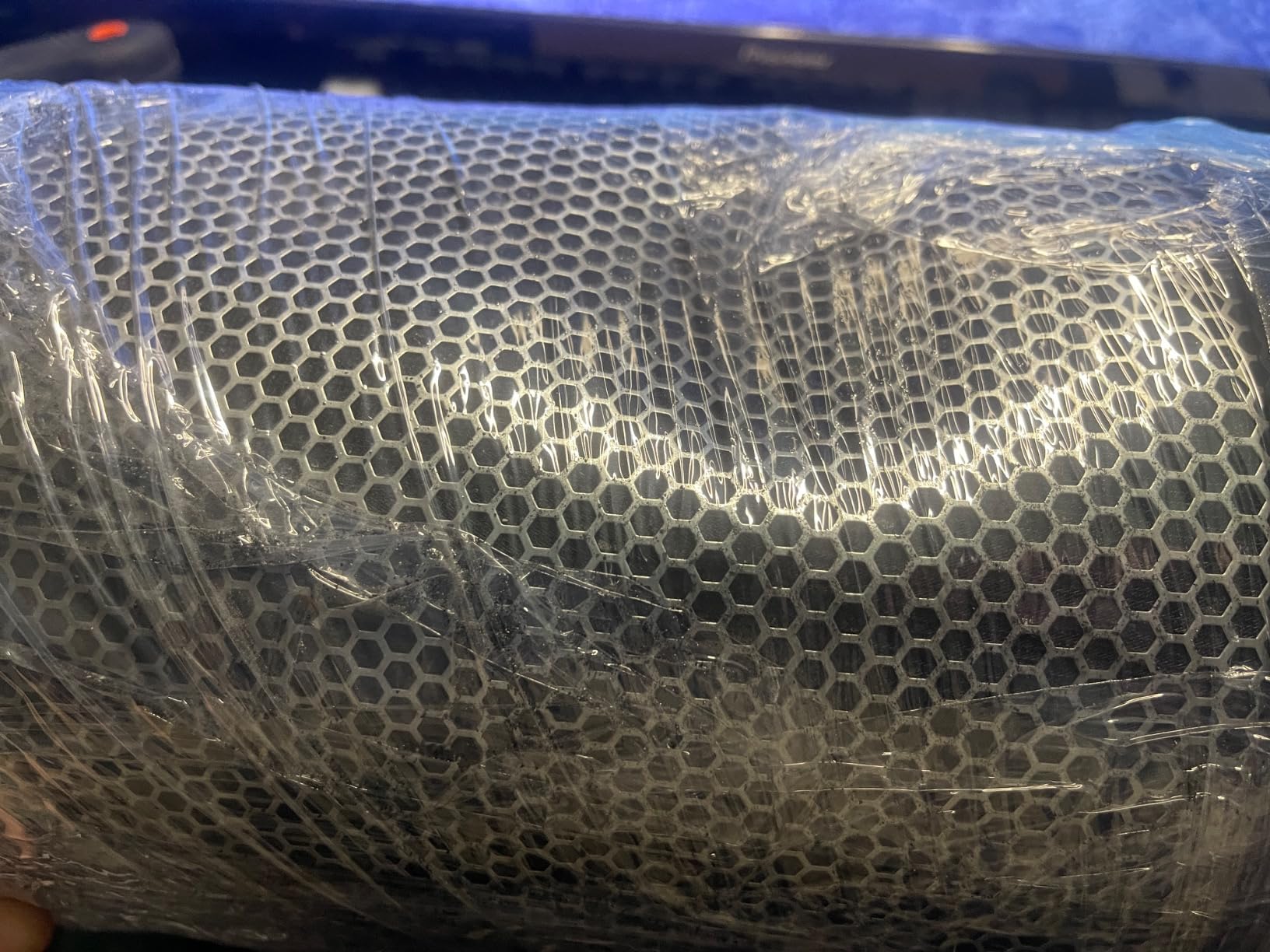
Buyers report good odour control and easy ducting installation, with the fixed flange singled out for solidity. The 4.5 average over 346 ratings is a strong showing for a smaller-reviewed product.
At 1050+ IAV the charcoal sits a step below the 1200+ IAV Australian virgin charcoal used by the AC Infinity and VIVOSUN units, and that difference shows up as a slightly shorter interval before you notice odour returning.
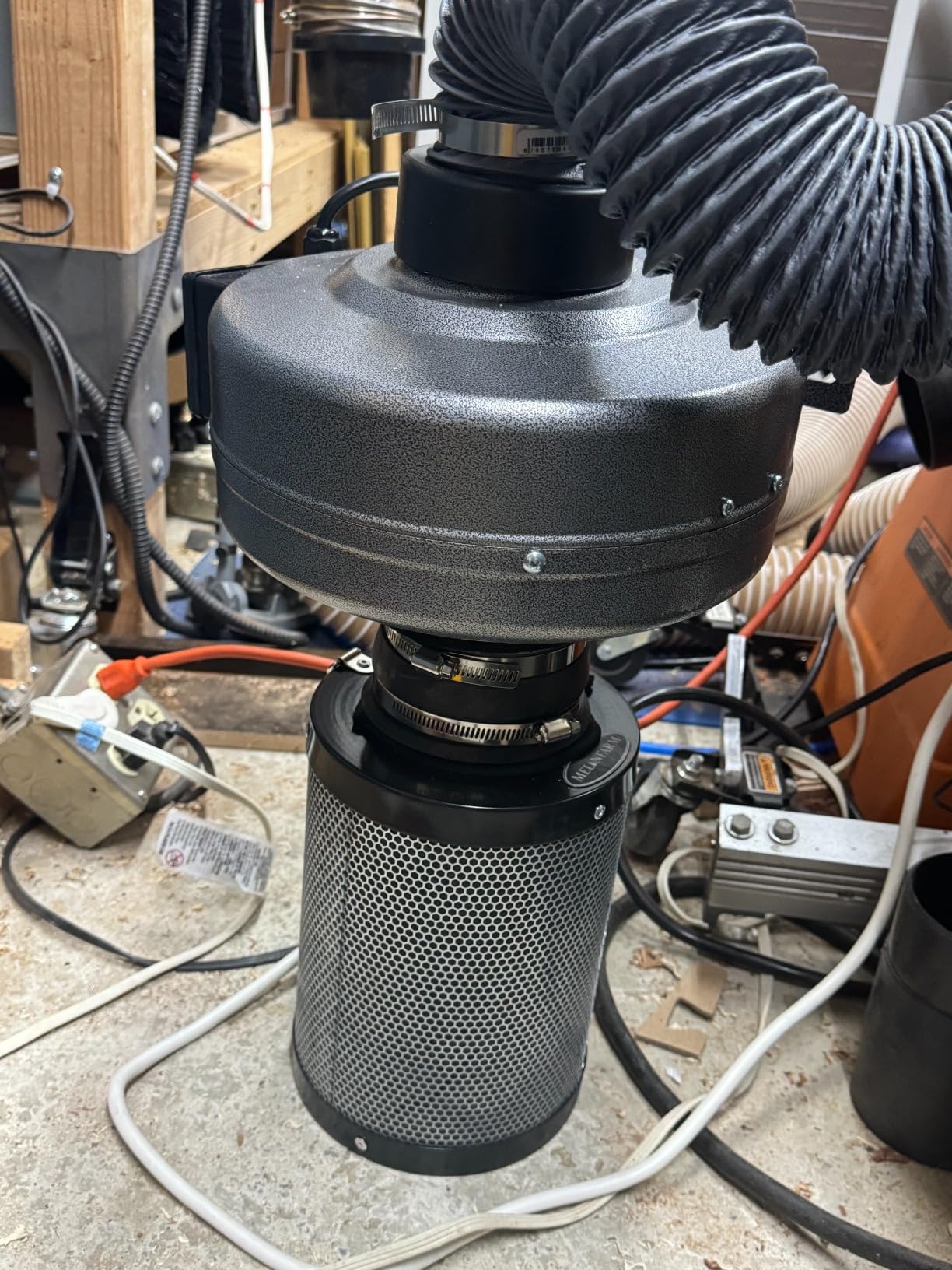
Does a fixed flange actually prevent leaks?
It eliminates one leak path rather than all of them. A removable flange has two mating surfaces that can separate, and a fixed one does not, which is why it stays airtight through repeated install and removal.
It does nothing about the duct joints on either side of the filter, which is where most real bypass problems occur.
Where it falls short?
Because the flange is fixed, you cannot reverse the canister. You give up the free second pass that reversible designs provide.
Only one pre-filter cloth is included, so plan a replacement within the first few months rather than assuming a spare is in the box.
9. HYDROWE 4 Inch Air Carbon Filter: Best Entry-Level 4 Inch Setup
HYDROWE Air Carbon Filter 4 Inch ,Smellines Control Removes 3X More Odors Contaminants. Australian Virgin Charcoal, Carbon Filter for Grow Tent, Hydroponics, Pre-Filter Included (4inch)
4 inch duct opening
11.8 inch body length
Imported Australian activated carbon
Cone-shaped internal base
Pros
- Imported Australian carbon at a low entry price
- Galvanized steel mesh with steel flanges
- Cone-shaped base supports even airflow
Cons
- Some owners report odour breakthrough during late flower
- Consistency varies between individual units
The cone-shaped internal base is the detail most specifications sheets skip. It keeps air moving through the bed evenly rather than channelling it, and combined with galvanized steel mesh and steel flanges it gives a solid body for an entry-level build.
The carbon is imported Australian activated carbon, though the listing does not state an IAV figure or a bed thickness in millimetres, so you are buying on construction rather than on a published adsorption number.
Many owners see it as a capable alternative to premium brands for the money, and the 4.5 average across 346 ratings reflects that. A minority report it failing to hold back odour through mid-to-late flower, particularly with very pungent strains.
That pattern is consistent with a lighter carbon load, and it is worth being clear that this unit is at the bottom of the range for heavy flowering rather than the safest choice for a shared-wall apartment.
Should you pair it with an intake filter?
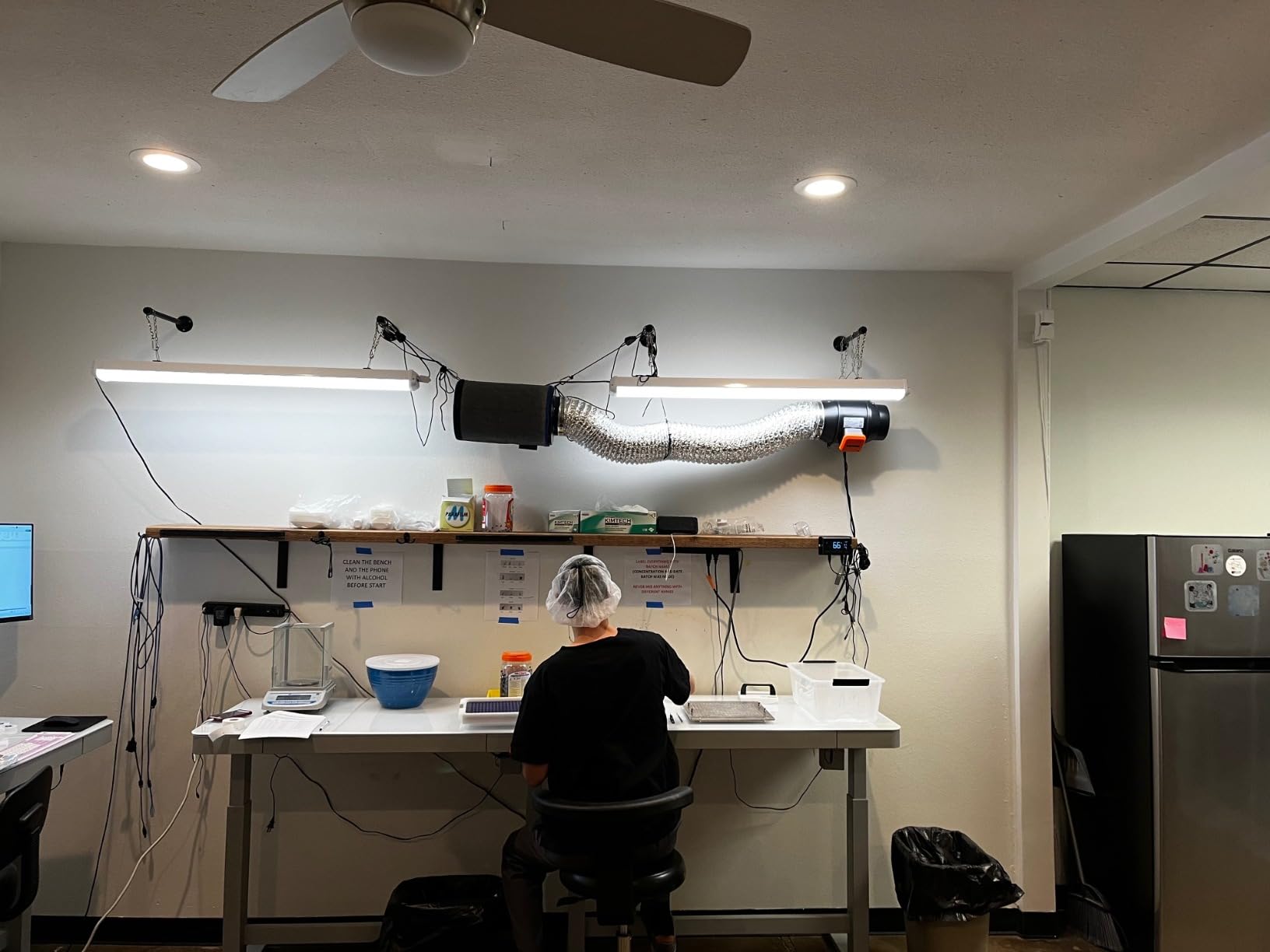
That is the more sensible configuration question for this unit. Running it on the exhaust while a separate intake filter handles the incoming air is the standard two-filter setup, and it keeps the exhaust-side carbon working against the full odour load.
If you only run one filter, put it on the exhaust. Pulling in unfiltered air and pushing it through the bed wastes capacity on outside air.
Where it falls short?
Breakthrough during late flower is the reported weakness, and it lands hardest on growers with pungent varieties.
Because no IAV or bed thickness is published, you cannot compare it against the other 4 inch units on carbon capacity, only on construction.
10. AC Infinity Air Carbon Filter XL 8 Inch: Best for Large Grow Rooms
AC Infinity Air Carbon Filter XL 8″, w/ Premium Australian Virgin Charcoal
8 inch duct opening
23 inch body length
930 CFM airflow
38mm RC412 carbon bed
1200+ IAV
Pros
- 930 CFM handles large tents and fixed grow rooms
- Extra-large carbon bed extends service life
- Also reduces inline fan noise
- Rope hangers and two prefilter cloths included
Cons
- Large and heavy for a small tent
- Not refillable so the canister is discarded
This is the only filter in the roundup that can serve a full size tent or a fixed grow room on its own. At 930 CFM and 23 inches long with an 8 inch duct opening, it is built for volume rather than for a single small tent.
The 38mm RC412 bed at 1200+ IAV matches the smaller AC Infinity 6 inch in carbon quality, but there is simply much more of it, and the manufacturer describes the extra-large bed as the reason for the longer lifespan rating.
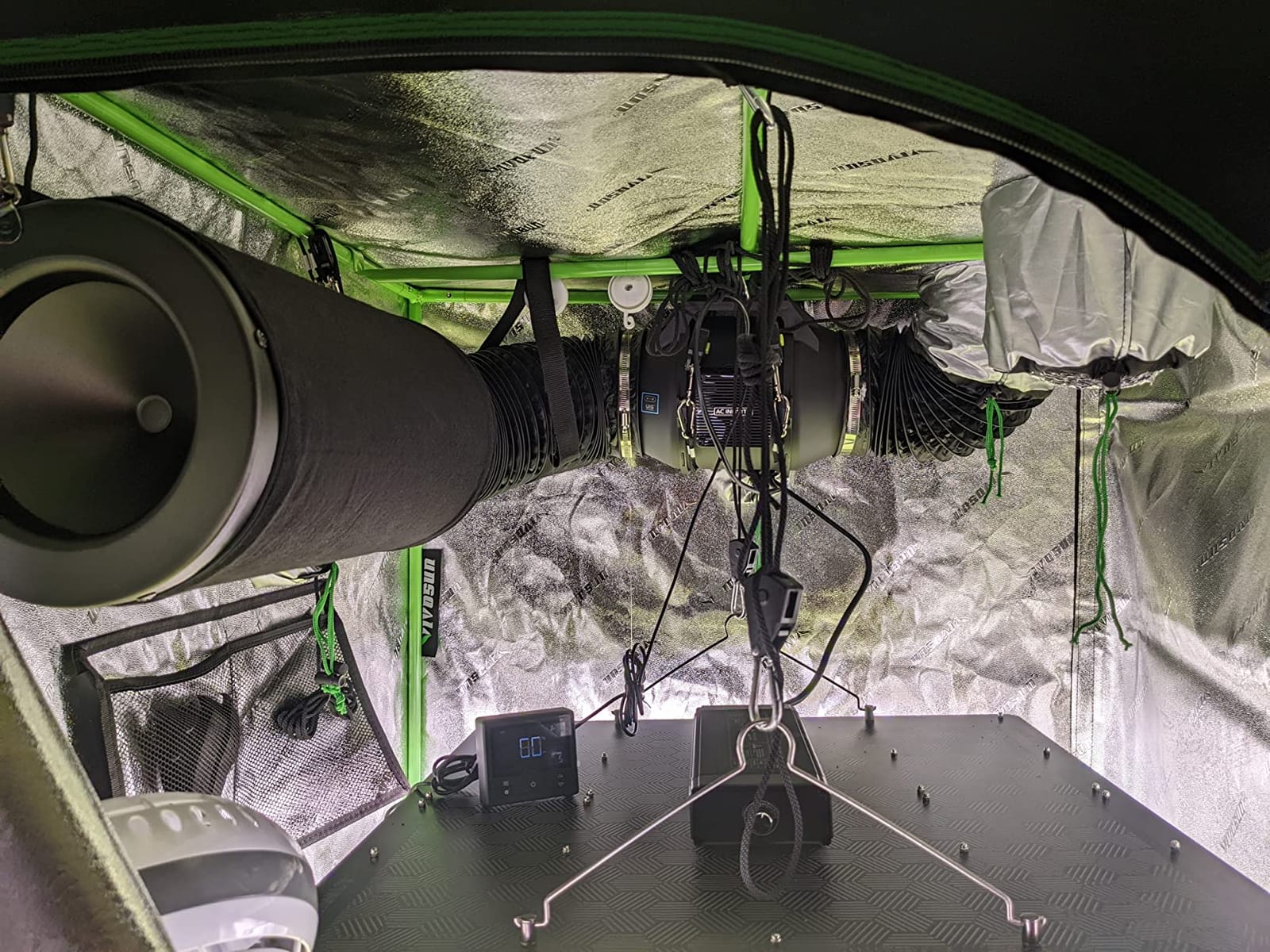
Owners running large tents report complete odour removal and an unexpected benefit: the body also muffles inline fan noise. At 4.3 across 313 ratings it scores lowest of the AC Infinity units here, and the reviews suggest that is about fit rather than function.
Aluminum flanges with stainless steel mesh and two prefilter cloths plus rope hangers are included, which is a complete install for an 8 inch duct.
Is an 8 inch filter overkill for a tent?
For a 2×2 to 4×4 tent, yes, and it will add back pressure against a small fan. For a 5×5 and larger, or for a room-based setup serving multiple tents, the 930 CFM rating is what makes it viable.
It also works in reverse for people who deliberately oversize the filter and run the fan slower, since the larger bed stays on the efficient side of its curve at lower speeds.
Where it falls short?
It is heavy and bulky for a small tent, both in terms of the space it takes and the load it puts on your frame or hanging point.
The canister is not refillable, so an expensive unit still ends up in the bin at the end of its life.
11. iPower 4 Inch Air Carbon Filter: Best for 2×2 and 2×4 Tents
iPower 4 Inch Air Carbon Filter, with Australia Virgin Charcoal for Inline Fan, Hydroponics, Grow Tent, Prefilter Included, Reversible Flange 4″ x 12″, Black
4 inch flange ducting
12 inch body length
200 CFM airflow
38mm charcoal bed
1050+ IAV
Pros
- Strong odor removal for a small footprint
- Reversible flange and base extend usable life
- Machine-washable pre-filter cloth included
Cons
- Flange can be too stiff for a standard hose clamp
- Can shed loose carbon if shaken
For a micro tent this does exactly what it needs to. The 38mm Australian virgin charcoal bed at 1050+ IAV is the same construction used in larger iPower units, and the reversible flange and base give you a second pass through the bed at no extra cost.
At 200 CFM it matches a small 4 inch inline fan rather than a 4×4 tent, which is the correct pairing for a 2×2 or 2×4 setup.
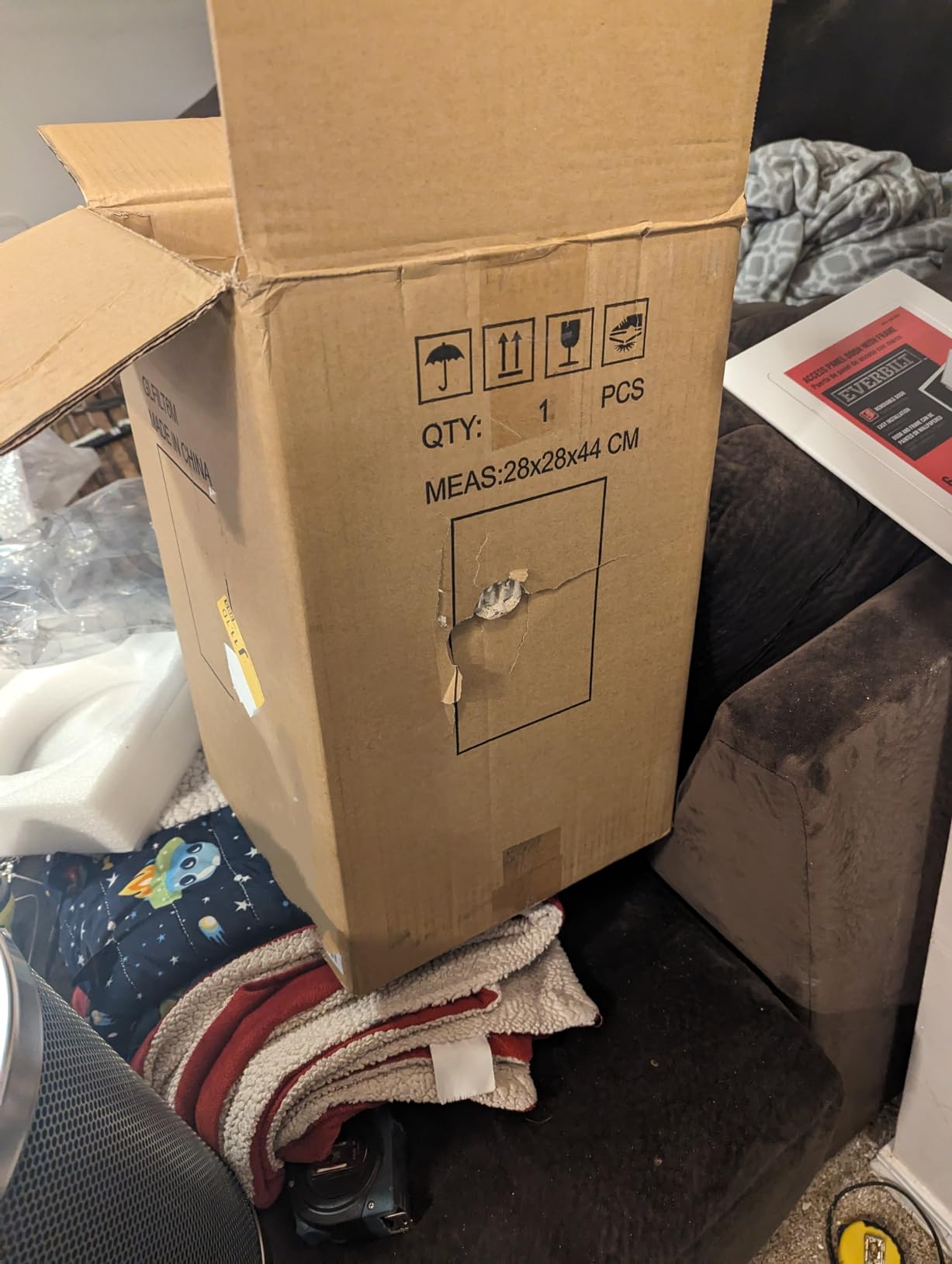
Owners frequently praise the low cost alongside surprisingly good odour control, and a number report multi-year service life with the flip. The 4.4 average across 245 ratings reflects a unit that overdelivers on value rather than on capacity.
The pre-filter cloth is machine washable, which is the cheapest maintenance strategy available and keeps dust off the carbon surface across a full cycle.
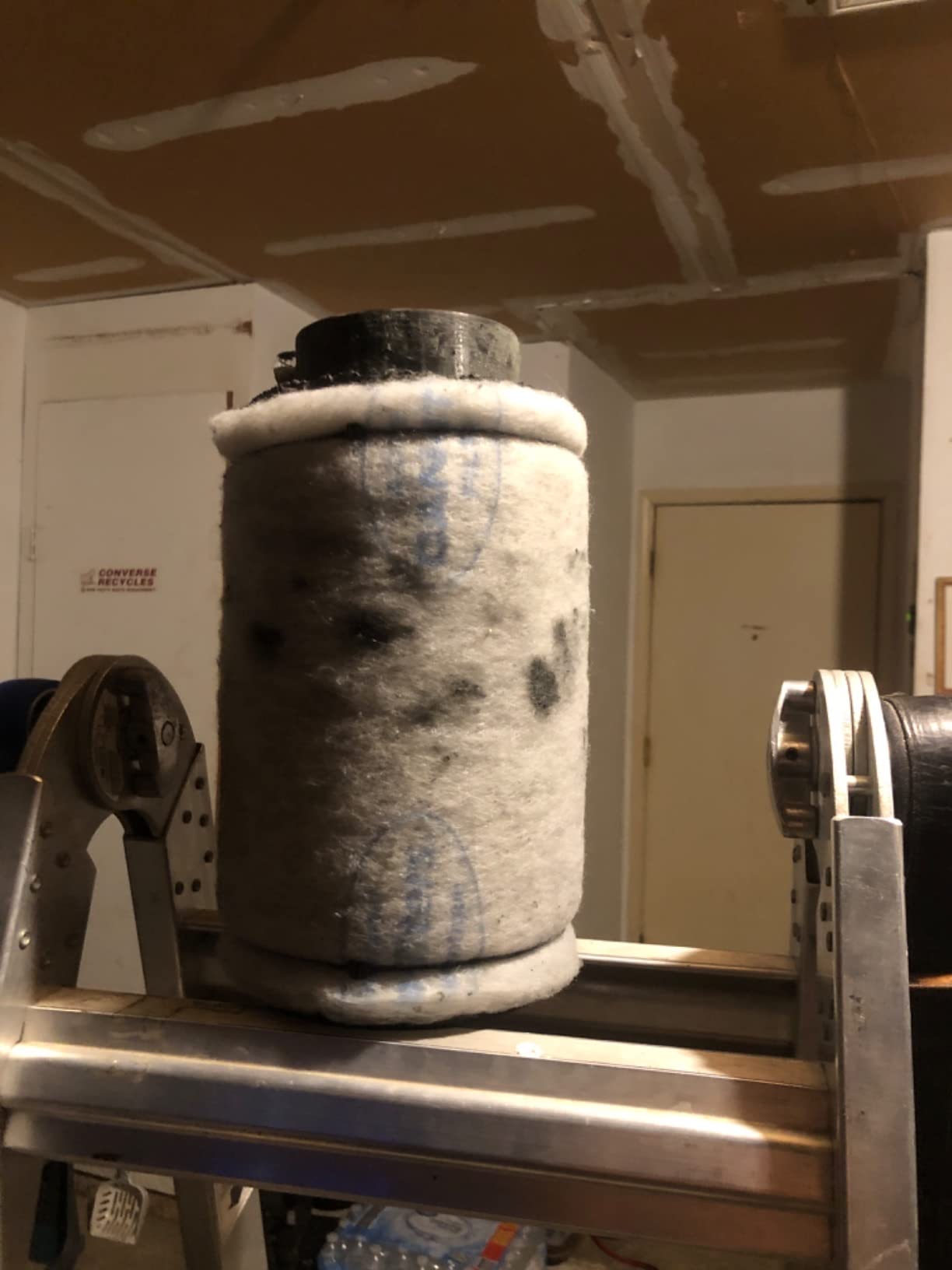
Is 200 CFM enough for a 4×4 tent?
It is enough for a 4×4 running at reduced fan speed on a controller, and not enough for a 4×4 running wide open. Because the filter rating is measured without fan back pressure, the real number under load is lower still.
If you are uncertain, buy the next size up. The cost difference between a 4 inch and a 6 inch filter is small compared with replacing a filter mid-cycle.
Where it falls short?
The flange is reported as stiff, which can make a standard hose clamp awkward to seat. A wider clamp or a short length of duct between filter and fan solves it.
Handling it roughly can shake loose carbon out of the canister, so lift it rather than carry it by the flange.
12. Atomic Innovations Air Duct Screen and Carbon Filter: Best as an Intake Screen
Air Duct Screen and Carbon Filter for 4 inch Air Ducts, Vents, Grow tents, or fresh air intakes; Pre-filtration for light duty odors and dust; Atomic Innovations
4 inch duct fit
1.3 inch depth
MERV 4 carbon layer
ASA polymer frame
Made in USA
Pros
- Adds a carbon stage to intake vents cheaply
- Fiber screen blocks insects and debris
- Low back pressure with a dual-layer design
Cons
- MERV 4 media handles only light odor loads
- Shallow body saturates quickly under heavy odor
This is not a primary scrubber and it should not be sold as one. It is a 4 inch duct screen with a carbon-impregnated polyester layer rated around MERV 4, and the carbon is there for light duty odour reduction rather than heavy grow-room load.
What it does well is sit in an intake vent. The fiber screen layer stops insects and debris entering the duct, and at 1.3 inches deep it adds almost no back pressure to your intake airflow.
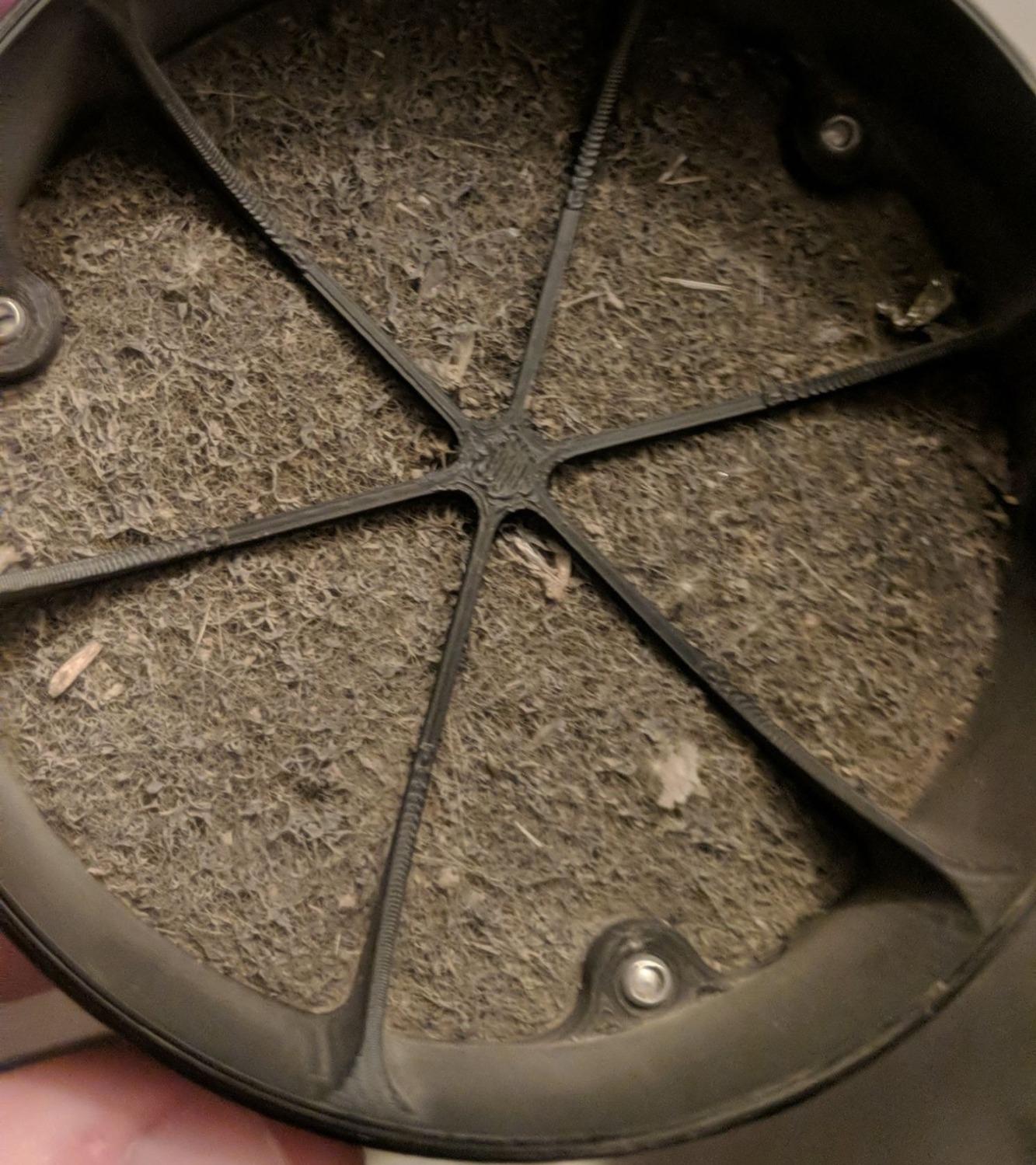
Buyers use it as a pre-screen and light carbon stage on intake vents and duct runs, praising durability and the fact that airflow stays open. At 667 ratings and a 4.4 average, it is a well-regarded accessory rather than a contender in the main category.
Made in USA with a rigid weather-resistant ASA polymer frame, it is a durable part that tolerates the damp intake side of a tent better than a fabric sleeve.
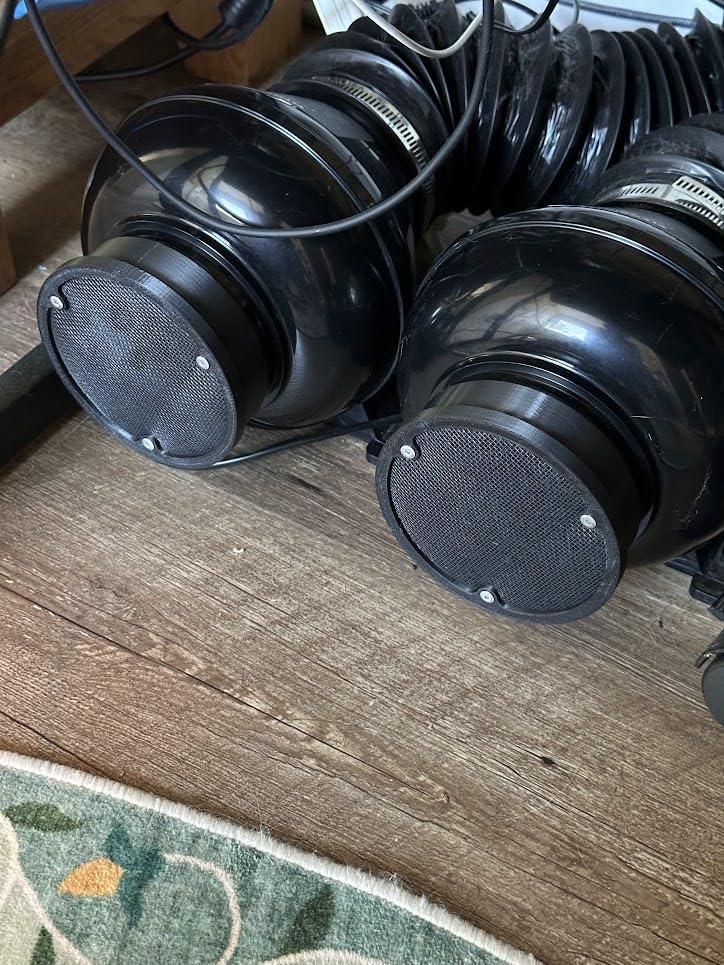
Where should this actually be used?
On the intake. That is the position where a low back pressure screen earns its place, catching insects and dust before air enters the tent, while adding a modest carbon stage for street odours entering the room.
On the exhaust it will saturate well before the flowering cycle ends, because the full odour load of the tent passes through it.
Where it falls short?
MERV 4 media is particle-oriented with light odour capability. It will not hold back a flowering tent and pretending otherwise is the main disappointment owners report.
The shallow body means frequent replacement in any position where real odour is present.
How to Size Your Filter for Tent Size and Fan CFM?
Work outward from the tent volume. Multiply length by width by height in feet to get the cubic footage, then size the filter so its rated CFM clears the air exchange your tent needs, not the total volume. A common working target is enough filtered airflow to move the tent volume every two to three minutes during peak flowering, which is where odour generation is highest.
As a rough guide, a 2×2 tent needs about 150 to 250 CFM, a 2×4 needs 200 to 300 CFM, a 4×4 needs 400 to 500 CFM, and a 5×5 or larger tent should move to 600 CFM and up. In flange terms that means 4 inch for the smallest tents, 6 inch for 4×4 and 5×5 setups, and 8 inch for anything serving a full room.
Match flange diameter to your ducting before you match anything else, because a 6 inch filter clamped onto 4 inch ducting needs a reducer and the reducer costs you airflow at exactly the point where you cannot afford it.
Then apply the oversizing rule: buy the filter one size above your fan CFM and control the volume with the fan. A r/GrowBuddy user running a much larger filter than their fan confirms the technique works, and it buys you headroom when flowering odour peaks.
Once the hardware is right, the setup decides whether it works. Clamp every joint, keep the run short, and confirm the tent sits under slight negative pressure by holding a smoke pen or a strip of tissue near the zipper seams.
Carbon Filter vs HEPA Filter vs Air Purifier
Carbon and HEPA do different jobs and neither substitutes for the other. Carbon adsorbs gas-phase molecules, which is what odour is. A HEPA filter captures particles, which is what dust and pollen are, and it does essentially nothing for smell.
An air purifier is a recirculating HEPA unit for the room around your tent, and it cannot clean the air inside a sealed tent because it never touches it. It helps your hallway, not your canopy. For the room itself, our picks on carbon monoxide detectors cover the other indoor air safety check worth pairing with a filtered exhaust.
This is where the disadvantages of an activated carbon filter come from. A carbon bed cannot remove humidity or heat, it does not filter particles on its own beyond what the pre-filter catches, and it loses adsorption capacity permanently once saturated, which is why replacement is unavoidable.
If you are supplementing a tent exhaust with CO2 enrichment or mushroom bags, the filter handles the odour while the purifier handles the room. If CO2 enrichment is in play, a sensor is a far better use of the budget than another filter.
Installation and Maintenance Schedule
Mount the filter so it pulls rather than pushes when you can, which is what most growers do by hanging the canister and letting the fan draw through it. Whether air is pushed or pulled changes the pressure relationship at the duct, and pulling keeps the fan downstream of any leak so the negative pressure holds.
Clamp every joint and keep the filter hard-mounted to the fan with no flexible hose between them if your setup allows. Growers on r/microgrowery recommend taping the filter directly to the exhaust fan specifically to eliminate the bypass leak that flexible ducting creates.
Run an intake filter on the other side of the tent with a matching duct diameter, otherwise you are pulling unfiltered air into the tent and pushing a larger load through the exhaust filter than it was sized for.
For maintenance, check the pre-filter monthly and wash or replace it every 3 to 6 months depending on how dusty the intake is. Replace the whole carbon bed when odour returns, typically between 12 and 24 months in a normal tent, or sooner if you run high humidity or multiple cycles back to back.
Why Odor Still Escapes Your Tent?
The most common complaint from growers is odour that is still detectable outside the tent despite a premium filter installed, and the cause is almost never filter capacity. It is nearly always a leak path or a sizing mismatch.
Loose duct joints are the first thing to check. A filter rated at 410 CFM loses effectiveness quickly when air finds a gap around a clamp and bypasses the carbon entirely, so walk the entire duct run and re-tighten every connection while the fan is running.
Lost negative pressure is the second. If the tent is not pulling inward, air escapes through the seams and zipper ports no filter can control. Test with tissue at the seams and confirm the intake is open.
An undersized filter is the third. A 4 inch filter rated at 200 CFM cannot scrub a 4×4 tent running wide open, and the fix is a larger filter or a lower fan speed rather than a second filter on the intake.
Finally, a saturated carbon bed restricts airflow as well as odour control, which raises heat and humidity inside the tent. If your tent is running hot and humid with no other explanation, replace the pre-filter first and then the carbon.
Frequently Asked Questions
Can you clean a Vivosun carbon filter?
You can clean the washable pre-filter cloth by machine washing it, but the carbon bed itself cannot be cleaned. Activated carbon adsorbs molecules onto its surface permanently, so rinsing or shaking it does not reset the surface area. Once odour returns, the canister has to be reversed if the flange allows it, or replaced entirely.
How long does a grow tent carbon filter last?
A quality carbon filter typically lasts 12 to 24 months of normal use. High humidity, peak flowering odour and a neglected pre-filter can cut that to a single grow cycle. Replace the pre-filter sleeve every 3 to 6 months, and plan a carbon replacement when you first notice odour returning through the exhaust.
Should the carbon filter go before or after the inline fan?
Most growers mount the filter so the fan pulls through it, which keeps the fan downstream of any leak and preserves negative pressure inside the tent. Mounting the filter on the intake side instead works too, and a two-filter setup with matched diameters on both intake and exhaust handles the heaviest odour loads.
Is a carbon filter enough on its own for a grow tent?
A correctly sized carbon filter on the exhaust is the single most important piece of odor control. You also want an intake filter of the same duct diameter so the tent pulls in filtered air and stays under slight negative pressure. A room air purifier helps the space around the tent but cannot clean the air inside a sealed tent.
What are the disadvantages of an activated carbon filter?
Carbon cannot remove humidity or heat, and it captures particles only to the extent the outer pre-filter catches them. The adsorption surface saturates permanently, so there is no cleaning path and replacement is unavoidable. A saturated bed also restricts airflow, which can raise heat and humidity inside the tent.
Do you just need an exhaust fan with a carbon filter?
An inline exhaust fan with a correctly sized carbon filter handles the tent itself. Add a matching intake filter on the opposite wall to keep air exchange balanced and negative pressure steady. For CO2 enrichment or mushroom bags, the filter addresses odour while a CO2 sensor handles the gas level, which is more useful than a second filter.
Are 6 inch or 8 inch carbon filters better than 4 inch?
Larger does not mean better, it means matched. A 4 inch filter rated around 200 to 255 CFM is right for a 2×2 or 2×4 tent, a 6 inch filter around 400 to 455 CFM suits a 4×4, and an 8 inch filter at 930 CFM is built for 5×5 tents and full rooms. Buy the diameter that matches your ducting and the CFM that clears your fan.
Why can I still smell my plants outside the tent?
In most cases the filter is not the problem. Check for loose duct joints that let air bypass the carbon, confirm the tent is under slight negative pressure by testing at the seams with tissue, and make sure the filter CFM matches or exceeds your fan CFM. A saturated bed that has lost its pre-filter will also break down before the manufacturer life estimate.
The Best Grow Tent Carbon Filters in 2026: Final Word
For a 4×4 tent or anything close to it, the AC Infinity 6 inch at 410 CFM is the pick, with RC412 Australian virgin charcoal at 1200+ IAV in a 38mm bed and hardware included for a full install. For a 2×2 or 2×4 setup, the VIVOSUN 4 inch gives you a reversible flange and a washable pre-filter at the lowest cost per cycle, and the vanleno 4 inch is the pick when you want two pre-filters and hangers in the box on day one.
Growers running four or more cycles a year should look at the AC Infinity refillable kit instead, because the included refill matches the capacity of two disposable canisters and the cost works out over time. Anyone moving beyond a single tent should step up to the 8 inch XL at 930 CFM rather than trying to stretch a small filter over a large room.
Whichever one you choose, match the flange diameter to your ducting, keep filter CFM at or above fan CFM, and spend as much attention on clamps and negative pressure as on the canister itself. Odour that escapes is nearly always a leak, not a shortfall in carbon.
If you are also upgrading the rest of the room setup, our picks on carbon steel woks follow the same principle: match the tool to the job and the maintenance schedule, and it keeps working for years.