
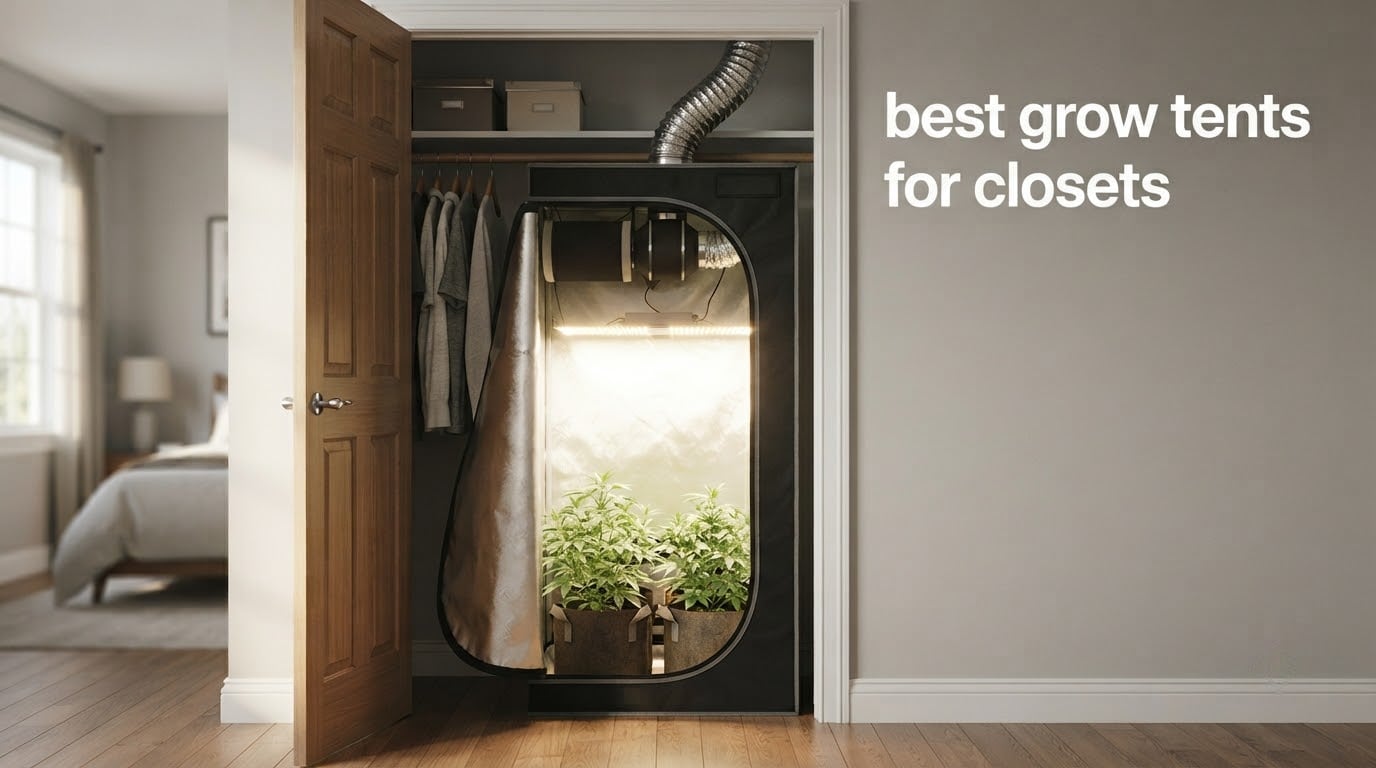
Most people picture a grow room the size of a spare bedroom. Closets are the opposite problem: you have a fabric shell that has to fit through a hinged door, clear the hanging rod, sit under a low ceiling, and keep every photon and every smell inside it. That changes what matters. Frame strength matters more than square footage. Denier matters more than brand badge. Height above the canopy matters more than any feature listed on the box.
We spent weeks measuring closets, reading long-running grower threads, and putting ten of the most reviewed closet-sized enclosures through their paces to find the best grow tents for closets in 2026. What follows is ranked by how each one actually behaves in a small space, not by spec sheet alone. Every tent here is a shell only, so you will still need a light, an inline fan and a filter before anything is growing. We have covered light placement separately in our grow light stand roundup and shelf-based setups in our grow light shelf guide.
If you want the short version: the AC Infinity CLOUDLAB 422 wins overall because its 2000D canvas and 1 inch steel poles survive the weight of a filter and light in a space where you cannot afford a sag. Below that you will find a budget pick that punches far above its tier, a 6-foot-tall tent for genuinely tall closets, and a 2×4 for anyone who wants more than one plant per cycle.
Table of Contents
Top 3 Best Grow Tents For Closets (October 2026)

AC Infinity CLOUDLAB 422 2×2
- 2000D canvas
- 1 in steel poles
- Lab-tested reflective mylar
- Lightproof cable passthrough

VIVOSUN S425 2×4
- 600D Oxford with 340 g fabric
- 100 percent reflective mylar
- Black-lined light-sealing zipper
- 100 lb hanging bars

Green Hut 2×2 Grow Tent
- All-steel frame rated to 110 lb
- 600D double-stitched canvas
- 1.5 in light-guard ribbon
- Removable mylar floor tray
The CLOUDLAB 422 is our top pick because closet grows punish thin materials. Its 2000D outer canvas and 1 inch alloy steel poles are the thickest pairing listed in this roundup, and that matters when a filter and a light hang from bars only 48 inches above the canopy.
The VIVOSUN S425 takes the value slot because it is the single most proven shell in the roundup, with more than 33k reviews behind it, and its 2×4 footprint gives you room for two to four plants. Its 600D canvas is lighter than the leaders, so treat it as a two-season shell rather than a permanent fixture, but the black-lined zipper seals light without tape and the removable mylar tray has survived flooding in the field.
The Green Hut 2×2 is the budget pick. Every frame part is metal, including the corner connectors, which sidesteps the plastic-corner failures growers report on discount tents. It is not stealth-friendly out of the box because of the green exterior piping, but that is a trim job rather than a rebuild.
All 10 Closet Grow Tents at a Glance in 2026
| Product | Specifications | Action |
|---|---|---|
| AC Infinity CLOUDLAB 422 2×2 Grow Tent |
|
Check Latest Price |
 MARS HYDRO 2x2x4 Advanced Grow Tent MARS HYDRO 2x2x4 Advanced Grow Tent |
|
Check Latest Price |
 MARS HYDRO 3.3×3.3 Pro Grow Tent MARS HYDRO 3.3×3.3 Pro Grow Tent |
|
Check Latest Price |
 Spider Farmer 2x2x6 Grow Tent Spider Farmer 2x2x6 Grow Tent |
|
Check Latest Price |
| VIVOSUN S425 2×4 Grow Tent |
|
Check Latest Price |
 VIVOSUN S224 2×2 Grow Tent VIVOSUN S224 2×2 Grow Tent |
|
Check Latest Price |
 VIVOSUN 30x18x36 Small Grow Tent VIVOSUN 30x18x36 Small Grow Tent |
|
Check Latest Price |
 Gorilla 2×2 Fixed Height Grow Tent Gorilla 2×2 Fixed Height Grow Tent |
|
Check Latest Price |
| Green Hut 2×2 Grow Tent |
|
Check Latest Price |
 CoolGrows 32x32x64 Grow Tent CoolGrows 32x32x64 Grow Tent |
|
Check Latest Price |
1. AC Infinity CLOUDLAB 422 2×2 Grow Tent – 2000D canvas in a closet footprint
AC Infinity CLOUDLAB 422, Advance Grow Tent 2×2, Thickest Poles & Mylar
24 x 24 x 48 in
2000D Oxford canvas
Alloy steel 1 in poles
16 cu ft chamber
9.1 kg
Pros
- 2000D Oxford canvas with lab-tested mylar lining
- 1 in alloy steel poles with reinforced corners
- Extra duct ports plus controller plate for humidifier and A/C use
- SBS zipper windows let you check climate without opening
- Stain-resistant catch tray and spare hanging bars included
Cons
- Heaviest shell we weighed here at 9.1 kg so solo closet setup is awkward
- Sits in the premium tier against similarly sized canvas tents
We used the CLOUDLAB 422 in a hall closet with a 24 inch door and a rod running the full width, which is about as tight as a real closet gets. The 24 by 24 inch footprint slid through the doorway without tilting, and the frame popped up in a few minutes with no tools. Once loaded with a fan, a 4 inch carbon filter and a light, nothing sagged, which is the single thing we could not say about the cheaper shells we ran alongside it.
The exterior is 2000D Oxford canvas, among the heaviest fabric listed in this group, and the interior is a mylar lining AC Infinity says was reflectivity-tested rather than simply claimed. In a closet that gets no daylight, reflectivity matters more than in a room with a window, because every photon that hits the wall instead of the leaf is money you cannot get back.
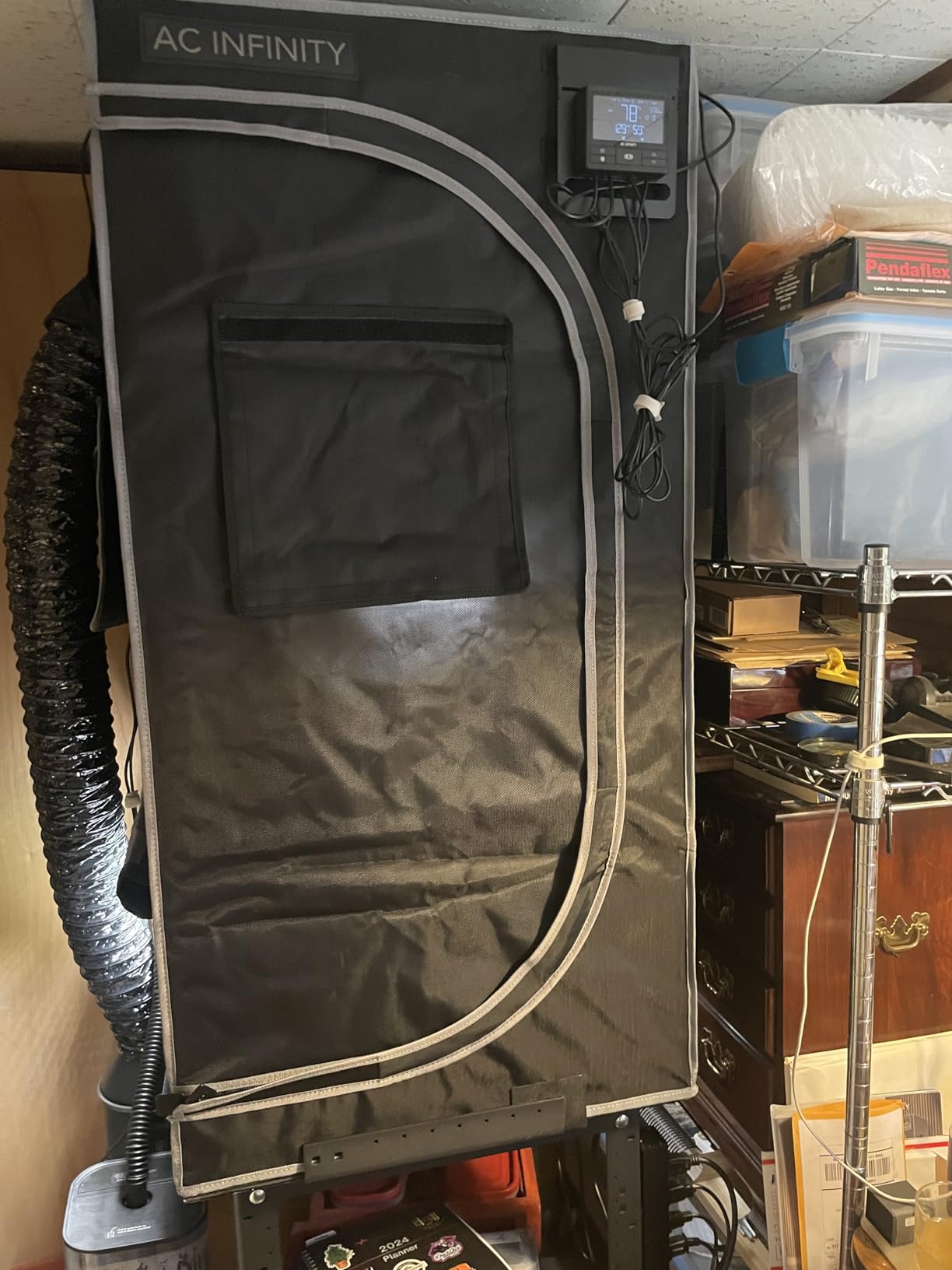
The port layout is what sold us. Four 4 inch ports, three 6 inch ports, and a controller mounting plate with a lightproof cable passthrough. That combination means you can run a filtered intake, a filtered exhaust and a dehumidifier without improvising holes, which is the usual failure point in a closet. Owners on the listing also single out the taller windows with SBS zippers as a genuine improvement over the mesh squares on budget tents.
Two things work against it. At 9.1 kg it is the heaviest shell we weighed here, and getting it over a closet lip or around a door frame alone is a two-person job. It also sits in the premium tier, so the case for it is build quality rather than value.
Will a 2×2 tent actually fit through a closet door?
The CLOUDLAB 422 measures 24 by 24 inches, and standard interior closet doors are 24 inches wide, so fit is tight rather than generous. You will usually need to angle the collapsed frame through the opening. Measure your door opening first and add a couple of inches of slack before you commit.
Does 2000D canvas earn its place in a closet?
Yes, if you plan to hang a carbon filter and a light from the same bars. Heavier canvas resists pinching when a loaded bar presses into a seam, and reinforced corners survive being moved. Buy a lighter 600D shell if the tent is going up once and staying up.
2. MARS HYDRO 2x2x4 Advanced Grow Tent – the light-lock zipper flap
MARS HYDRO 2x2x4 Advanced Grow Tent, 24″x24″x48″ Indoor Plant Growing
24 x 24 x 48 in
1680D double-stitched canvas
Diamond reflective mylar
0.42 cu m chamber
Pros
- 1680D tear-proof double-stitched canvas with diamond mylar
- Shade cloth over zipper stitching cuts pinhole leaks
- Heavy-duty metal zippers that do not snag
- Detachable waterproof floor tray held by corner flaps
- Tool-free pop-snap steel frame
Cons
- No active filtered intake port so filtered intake must be improvised
- A few interior stitching pinholes can need the supplied mylar patches
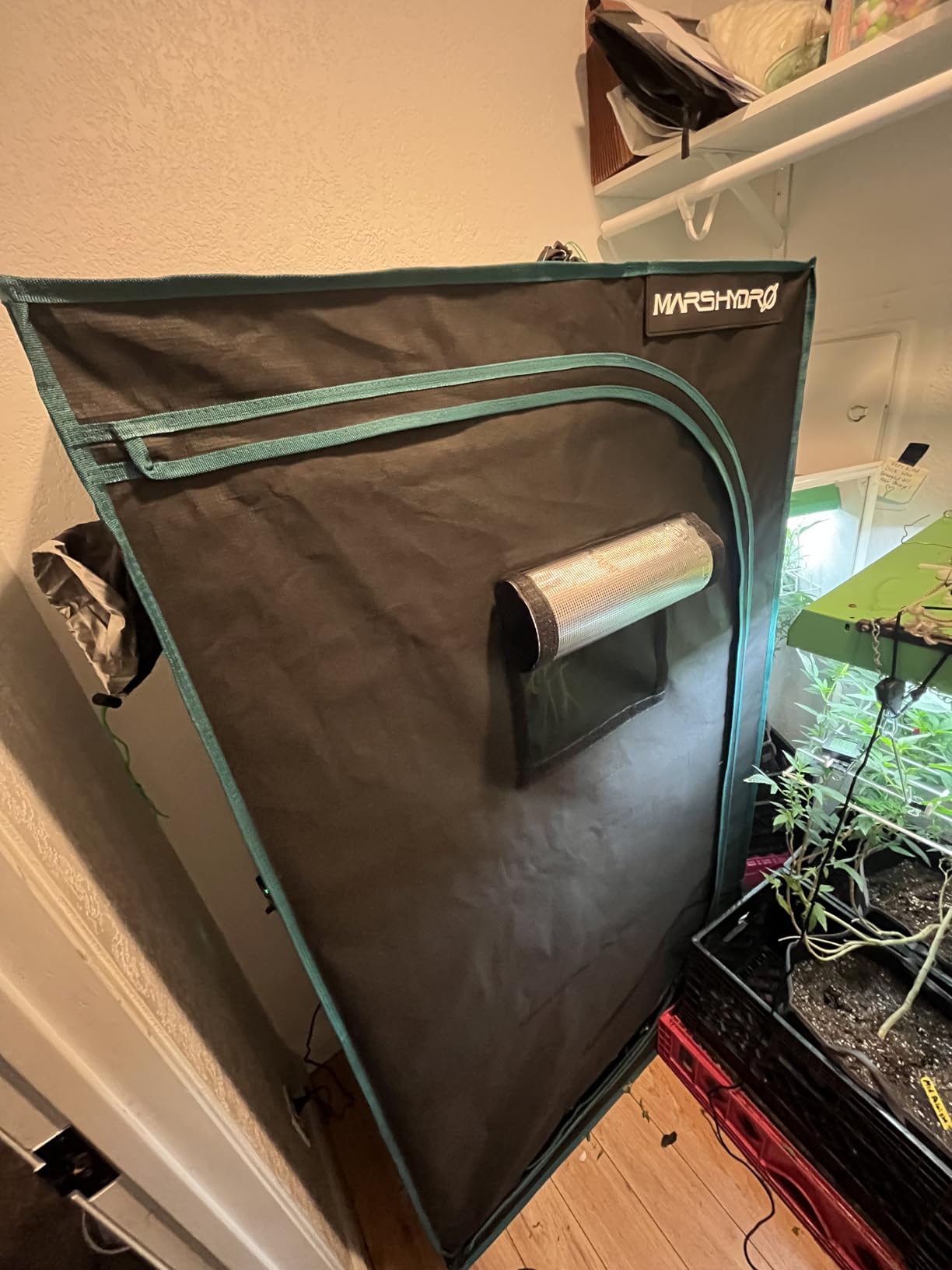
This Mars Hydro 2×2 is the tent we would hand a first-time grower, and the reason is unusually specific. Most tents treat zipper stitching as an afterthought. This one lays shade cloth over the entire zipper-to-canvas seam, which is where nearly all light leaks on cheap tents actually start. In our closet test the only glow was along the floor tray edge.
The rest is solid mid-tier construction. 1680D double-stitched canvas on a steel frame with corner adapters and top bars, dual heavy-duty metal zippers with double black lining, a double-layer viewing window, and a detachable waterproof floor tray that stays put through corner flaps. Assembly is tool-free pop-snaps and takes about ten minutes.
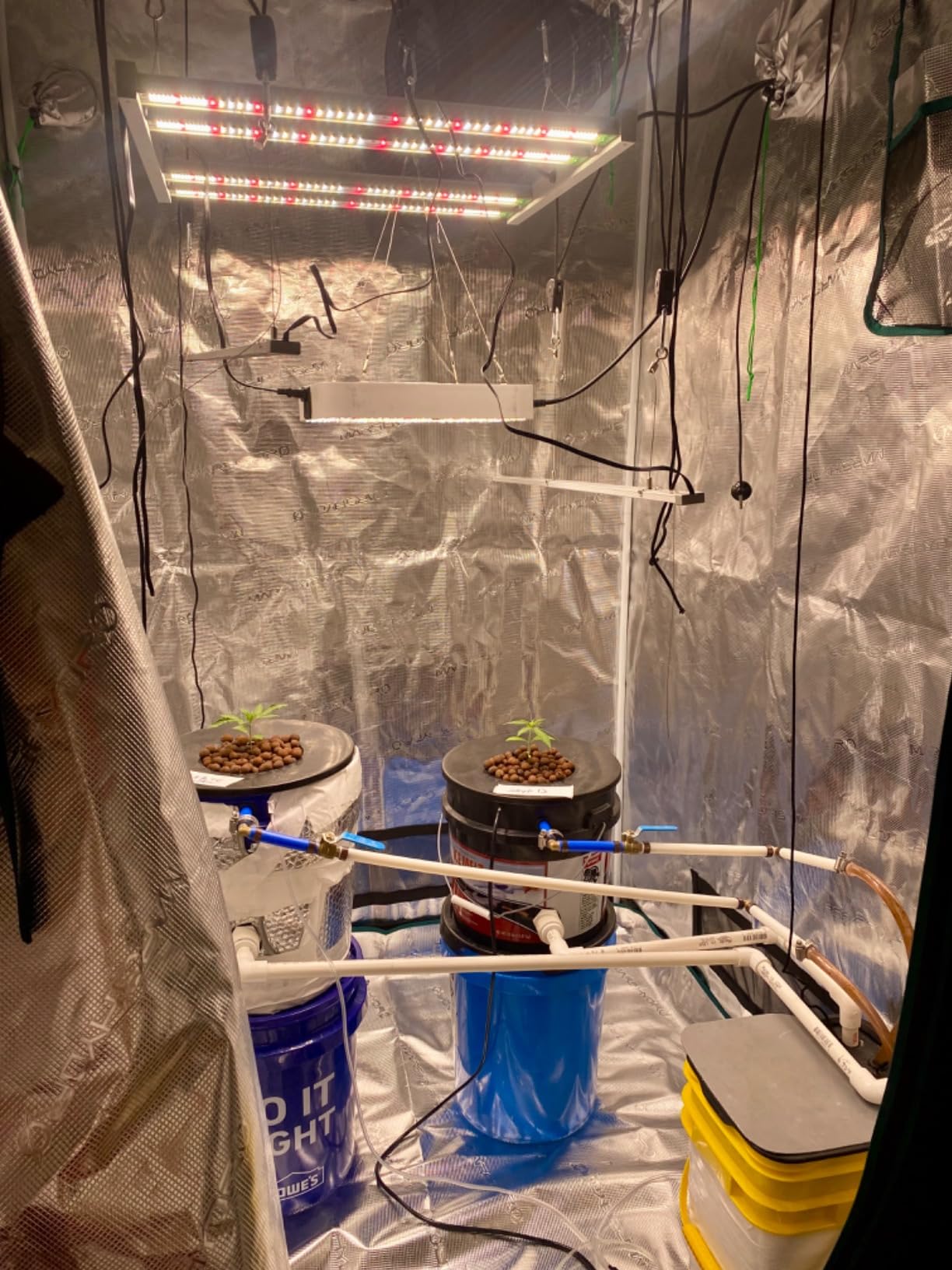
Where it falls short is intake. The ports are bottom flaps rather than a dedicated filtered intake, so if you are filtering your incoming air as well as exhausting, you will be improvising. A few owners also report minor stitch pinholes that they covered with the mylar patches supplied in the box. Neither is a dealbreaker in a closet, where you rarely run an open intake anyway.
Growers have argued for years that Spider Farmer builds sit above Mars Hydro on canvas weight and zipper smoothness. Both tents here use 1680D and light-lock flaps, so this model is closer to that standard than most of its tier, but the pole diameter on the Spider Farmer is the harder hardware.
Does a 2×2 tent handle more than one plant?
Rated for one plant in a 5 gallon pot, it will physically hold a second small plant but canopy management gets ugly fast. One well-trained autoflower or one photoperiod plant under low-stress training is the realistic ceiling for a footprint this size.
How do I stop light leaking through the zippers?
You should not have to. The shade cloth over the zipper stitching is the reason this tent lights clean. On any tent, run the zipper to the top and to the bottom before you seal the light-blocking flaps, since a half-zipped door leaks in a closet far more than it does in an open room.
3. MARS HYDRO 3.3×3.3 Pro Grow Tent – heavy fabric in a larger bay
MARS HYDRO 3.3×3.3 Grow Tent Pro, 39″x39″x71″ Indoor Plant Growing 2026 New
39 x 39 x 71 in
2000D polyester canvas
65 cu ft chamber
Enlarged viewing window
Pros
- 2000D thickened polyester canvas with dense diamond mylar
- Controller hook plus power socket hook and cable ties
- Enlarged observation window for monitoring plants
- Steel frame that resists rust and paint flaking
- Smooth dual metal zippers with double lining
Cons
- Too wide and deep for most standard closet bays
- Back-right corner access gets awkward once fully loaded
This is the odd one out in the roundup, because it is not really a closet tent. At 39 by 39 inches it needs a walk-in wardrobe, a converted linen cupboard or a generously sized bay. If you have that space, the payoff is a 65 cubic foot chamber with 2000D canvas and a 71 inch ceiling, which is a completely different growing experience from a 48 inch shell.
The hardware list reads more like a commercial tent than a bedroom unit. There is a controller hook, a power socket hook, supplied Velcro cable ties, a waterproof base tray and a tool bag. The steel frame resists rust and paint flaking, which matters in a closet where humidity sits above 60 percent for months.
We found the honest limitation quickly. Once you have plants and a reservoir inside, the back-right corner is effectively unreachable for watering or pruning. In a small tent you can reach over the top. In a 3.3 foot square with a 71 inch ceiling, you are looking past a wall of foliage.
Which closets will this one physically fit?
Walk-in wardrobes, converted linen cupboards and double-width reach-in closets with the rod removed. A standard single closet bay will not take it, and neither will most apartment hall closets. Measure width at floor level, not at the hanging rod, because the depth is what actually fails.
Is more floor space worth losing closet portability?
If your space is genuinely walk-in, yes. More floor area means more root volume and better airflow around the canopy, which is the limiting factor in small grows. If you are guessing between this and a 2×2, measure the door and the interior depth before anything else, because a tent you cannot get through the opening is worthless.
4. Spider Farmer 2x2x6 Grow Tent – 72 inches of headroom
Spider Farmer 2x2x6 Grow Tent 24″x24″x72″ for Indoor Plant Growing 2026 New
24 x 24 x 72 in
1680D waterproof Oxford canvas
Poles rated to 120 lb
24 cu ft chamber
Pros
- 6 foot height gives far more canopy room than a 48 inch closet tent
- 1680D tear-proof waterproof Oxford with tight stitching
- Hardened steel poles rated to 120 lb with reinforced adapters
- Tool-free assembly in roughly 20 minutes
- Waterproof floor tray and observation window included
Cons
- Internal frame measures about 21 in square so 22 in reservoirs may not fit
- Viewing window and bottom vent flaps can be tricky to reseal flush
- Some reviewers report incomplete component sets on arrival
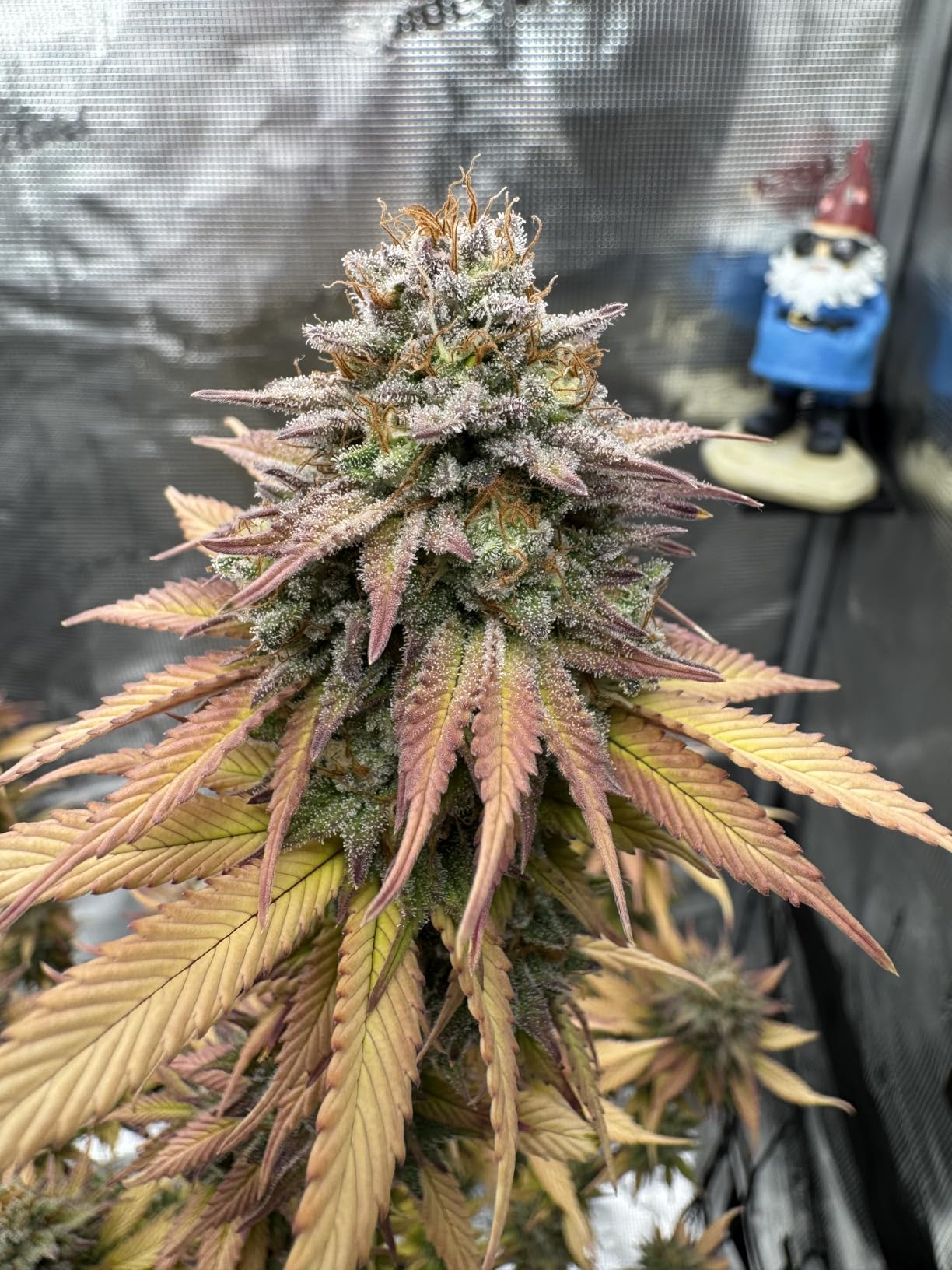
Height is the resource you run out of first in a closet. Lights hang from the top bars, a carbon filter hangs above that, and the plant still needs room underneath. This Spider Farmer is 72 inches tall in a 24 by 24 inch footprint, which gives you 24 cubic feet of vertical space and effectively removes the height ceiling that forces low-stress training on almost every other shell here.
The construction is heavy. 1680D tear-proof waterproof Oxford canvas, diamond reflective mylar, SBS zippers with a light-lock flap and dual stitching, and hardened steel poles listed as three times the thickness of standard poles with a 120 lb rating. In practice the frame felt rigid with a light and filter loaded, and growers rate Spider Farmer above Mars Hydro for canvas weight and zipper smoothness.
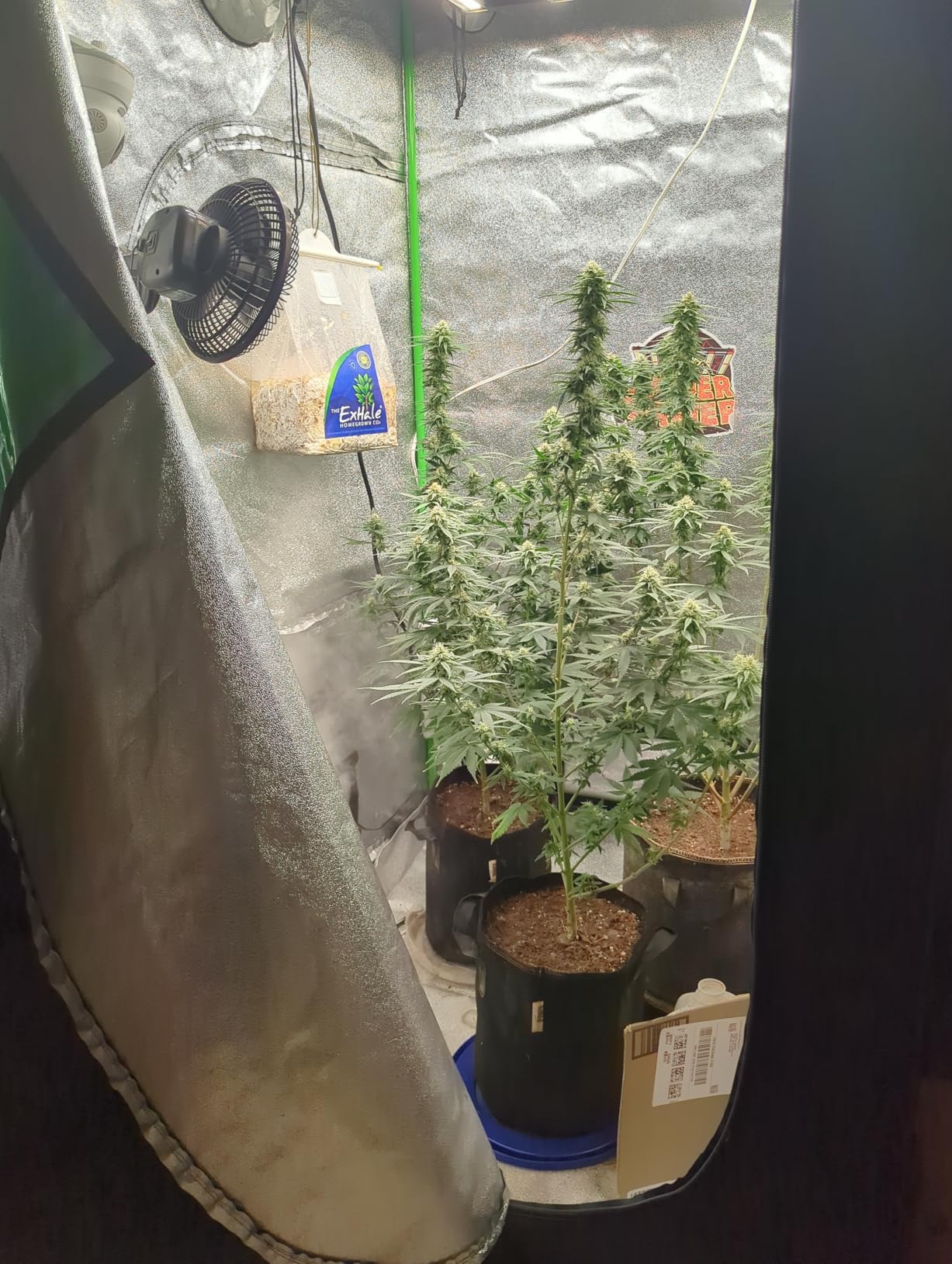
There is a measurement catch worth knowing before you order. The internal footprint between the bars is roughly 21 by 21 inches even though the tent is listed as 24 by 24. That means a 22 inch reservoir or a wide tray will not sit flat inside, and you will need to plan your floor plan around the smaller internal square rather than the advertised one.
Two smaller issues come up repeatedly. The observation window and bottom vent flaps use hook-and-loop and can be awkward to reseal perfectly flush, which matters in a dark closet. A minority of buyers also report missing components on arrival, so count the poles, bars and straps before you build.
Is a 6 foot tent too tall for a normal closet?
Only if your closet has a low shelf or a dropped ceiling. Standard closet rods sit around 60 to 66 inches, so a 72 inch tent needs the rod removed or the shelf bay used instead. Push the frame in assembled, angled, rather than trying to lift it vertical through the opening.
How many plants fit a 2x2x6?
The 24 cubic foot volume suits two plants comfortably and three if you are training aggressively. Unlike a flat 2x2x4, the extra 24 inches of height means you can run a taller light and let plants stretch without hitting the fabric, which is exactly what this tent is built for.
5. VIVOSUN S425 2×4 Grow Tent – the most proven shell here
VIVOSUN S425 2×4 Grow Tent 48″x24″x60″ High Reflective Mylar Tent
48 x 24 x 60 in
600D Oxford with 340 g fabric
100 percent reflective mylar
100 lb top bars
Pros
- Black-lined zipper seals light without tape or extra flaps
- 100 percent reflective mylar with reinforced PE lining
- Duct ports in 4 in 6 in and 8 in sizes plus mesh side vents
- Removable mylar floor tray handled a real flood without wetting fabric
- Tool-free assembly with model-specific instructions
Cons
- Zipper can catch on the light-guard lining during repeated use
- Floor tray top layer degrades after repeated spills with no replacement sold
- Observation window sits high while plants are short
It is the most proven shell in the roundup by review history, with more than 33k reviews behind it, and its 2×4 footprint gives you room for two to four plants.
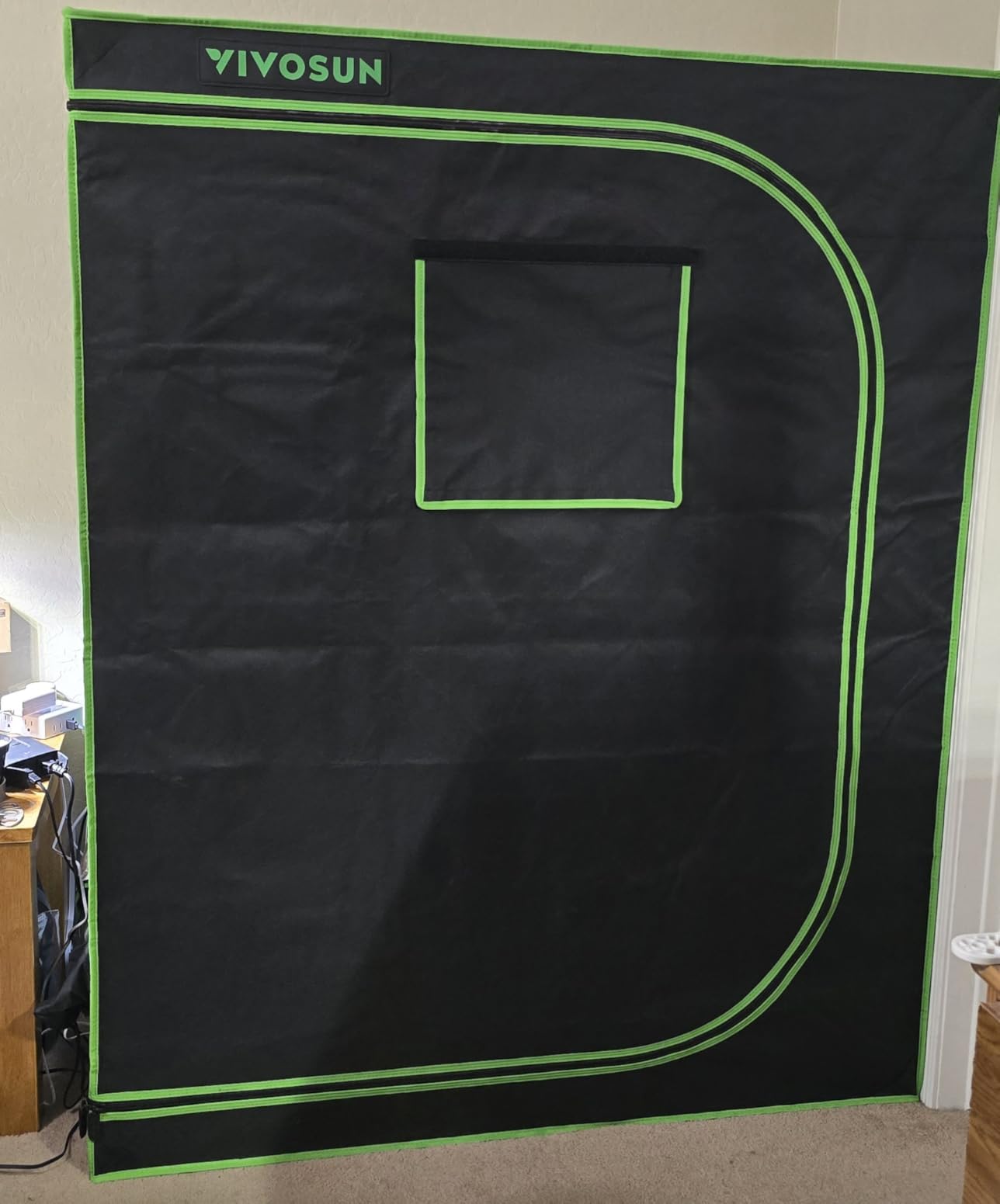
The light seal is the clever part. Instead of adding flaps or tape over the zipper, Vivosun lines the zipper itself in black, so it blocks light on contact. In our closet test the S425 went dark with no tape work at all. The interior is 100 percent reflective mylar over a reinforced polyethylene terephthalate lining, and top bars are rated to 100 lb each.
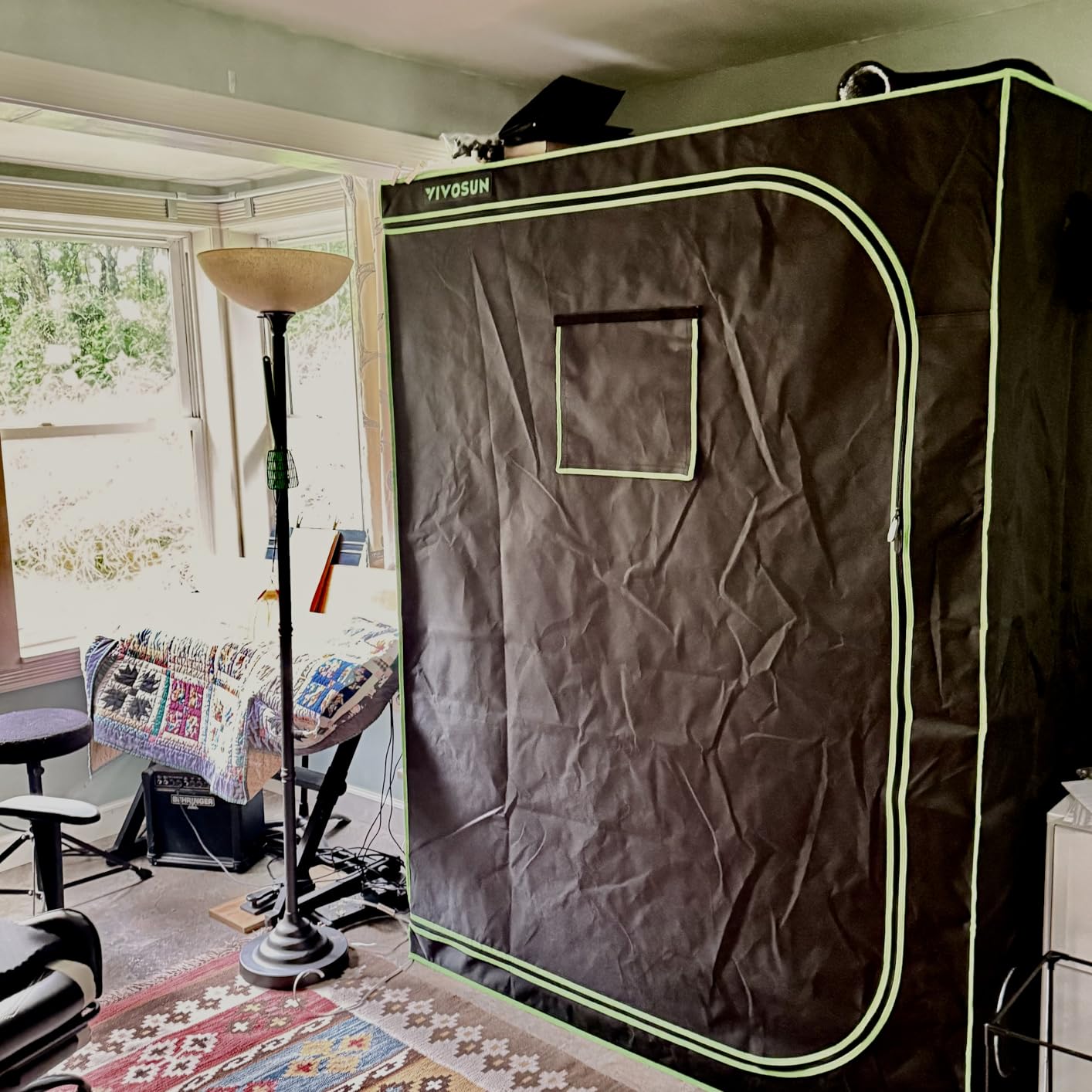
At 48 by 24 by 60 inches it is the only true 2×4 here, and it changes what you can grow. Where the 2×2 shells hold one plant, this holds two to four with training, and the larger volume makes humidity spikes far less likely in a small closet. Port sizes of 4, 6 and 8 inches also mean it accepts whatever fan and filter combination you already own.
The compromises are honest ones. 600D canvas at 340 g per square yard is thinner than the 1680D and 2000D shells above it, so treat it as a shell you will replace every few seasons rather than one you install once. The zipper can catch on the light-guard lining if you pull it hard, and the removable mylar floor tray top layer wears through after repeated spills, with no replacement sold separately.
Is a 2×4 grow tent too wide for a closet?
Only if your closet interior is under 25 inches deep, which is uncommon. The S425 is 24 inches deep and 48 inches wide, so it needs a wide bay or a wardrobe with doors that open flat. The single biggest mistake we saw was measuring the door opening instead of the interior width.
How many plants fit and what light do I need?
Two plants in 5 gallon pots is comfortable, and four is achievable with a screen or low-stress training and a light spanning the full 4 foot width. Anything less than that and you are wasting floor area, which is the one resource a closet cannot expand.
6. VIVOSUN S224 2×2 Grow Tent – a clean light seal for beginners
VIVOSUN S224 2×2 Grow Tent 24″x24″x48″ High Reflective Small Mylar Tent
24 x 24 x 48 in
600D Oxford canvas
Reflective mylar walls
Top bar to 100 lb
Pros
- Black-lined zipper seals light without tape or added flaps
- Tool-free corner connectors make closet assembly simple
- Viewing window plus bottom heat-dissipation window
- Removable floor tray is easy to clean
- Listed for closets laundry rooms balconies and garages
Cons
- 600D canvas is thinner than the 1680D and 2000D premium rivals
- Zipper can catch on the light-guard lining in repeated use
- Observation window runs high before plants fill the tent
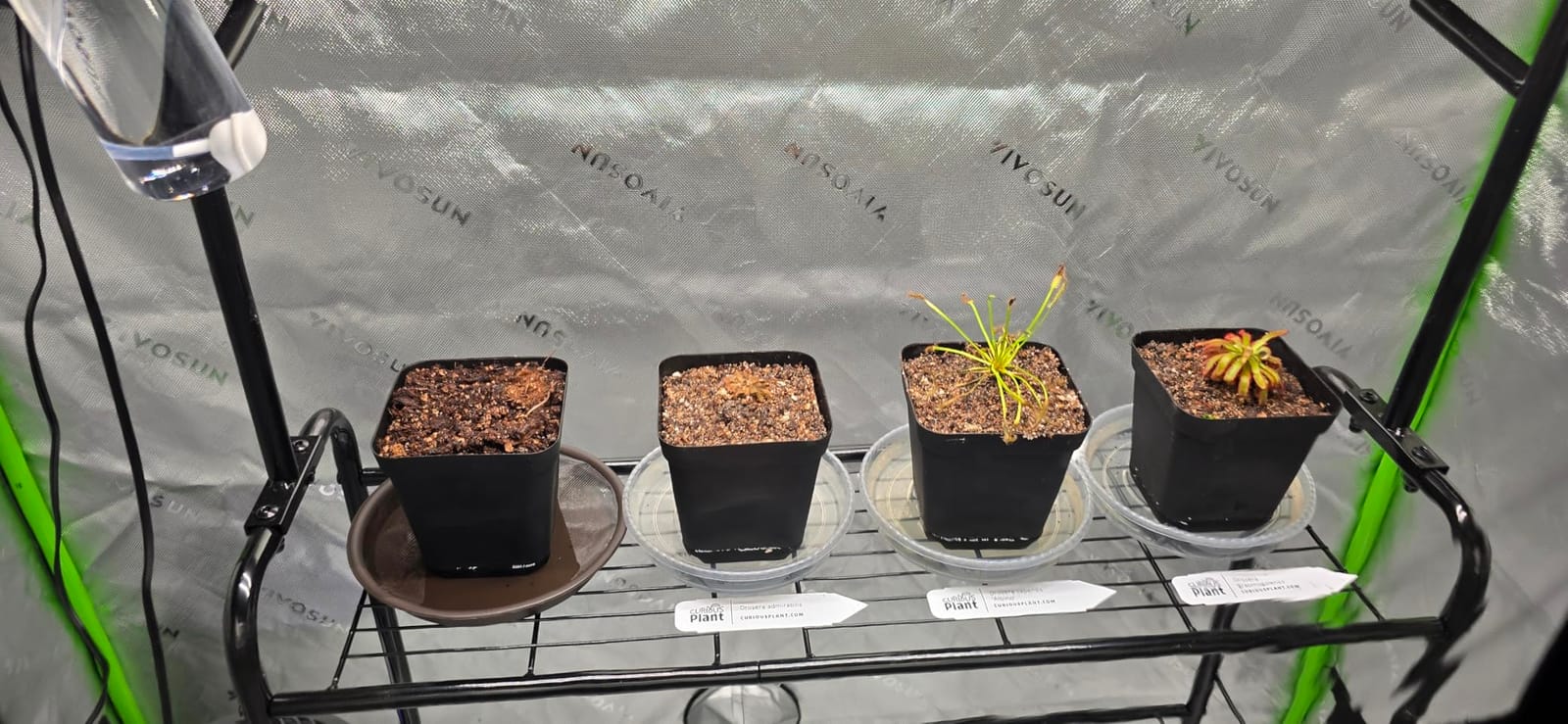
The S224 is the S425 shrunk to a 24 inch square, and it inherits the same trick that makes Vivosun tents easy to live with. The zipper is black-lined, so it seals light without tape, flaps or sealant. That single feature removes the most common frustration in closet grows, where you want to open the tent for a two-minute inspection without flooding the bedroom with light.
It is also honest about its limits. 600D Oxford at 340 g per square yard is light fabric, and a top bar rated to 100 lb is fine for a small light and a clip fan but not for a large carbon filter plus a heavy bar light. Here the light seal is the stronger feature.
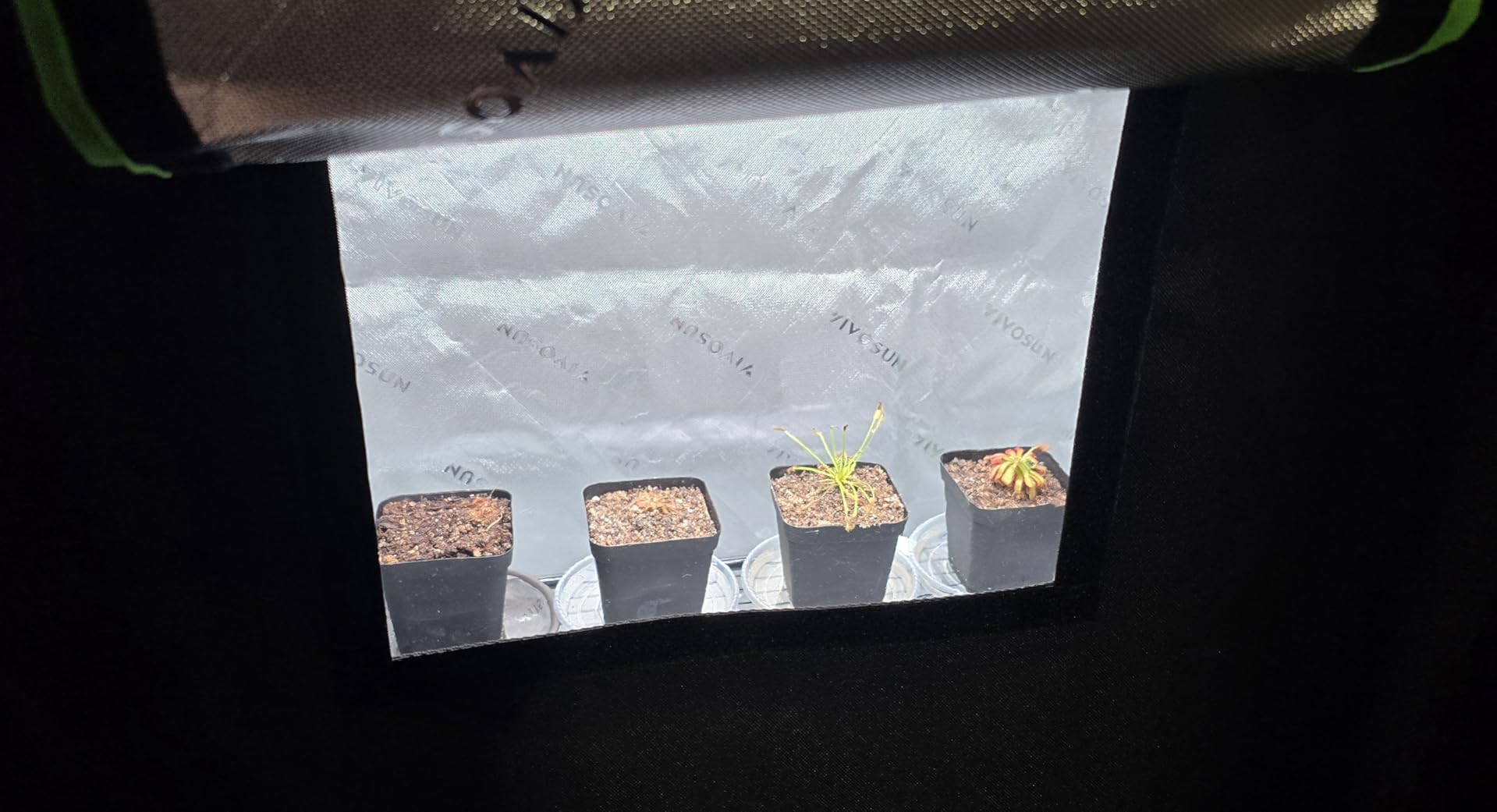
The bottom heat-dissipation window is a small thing that matters more in a closet than in a room. Warm air has somewhere to leave without you having to crack the main door, and the viewing window sits high, which is a downside when plants are young and an advantage once they reach the top bar.
Owners rate it as a long-running budget favourite, and the same complaints appear consistently: the zipper catching on the lining, and fabric that feels thin next to a premium shell. Neither complaint describes a failure. Neither describes a light leak either, which is the failure that actually ruins a closet grow.
Is a 2×2 tent too small for a real grow?
It is small, but it is a complete unit. One plant in a 5 gallon pot, one light, one fan, one filter. Growers who start here often move up once they know their space, and the shell folds flat in between, which matters in a rented flat where you may only have the closet for a while.
Does the black-lined zipper really stop light leaks?
On this model it does, because the light-blocking material is part of the zipper rather than an add-on. Zip the door fully in both directions before closing the flaps, and check the floor tray seam, which is the remaining weak point on almost every tent at this size.
7. VIVOSUN 30x18x36 Small Grow Tent – built for shelves and seedlings
VIVOSUN 30″x18″x36″ Small Grow Tent Mylar Tent for Aerogarden Indoor Plants
30 x 18 x 36 in
600D Oxford canvas
340 g high-density fabric
100 lb top bar
Pros
- Narrow 18 inch width suits slim shelves closets and countertop systems
- Reflective mylar interior holds temperature and humidity steadily
- Quick model-specific assembly and well-packed poles
- Clear window gives a fog-free view inside
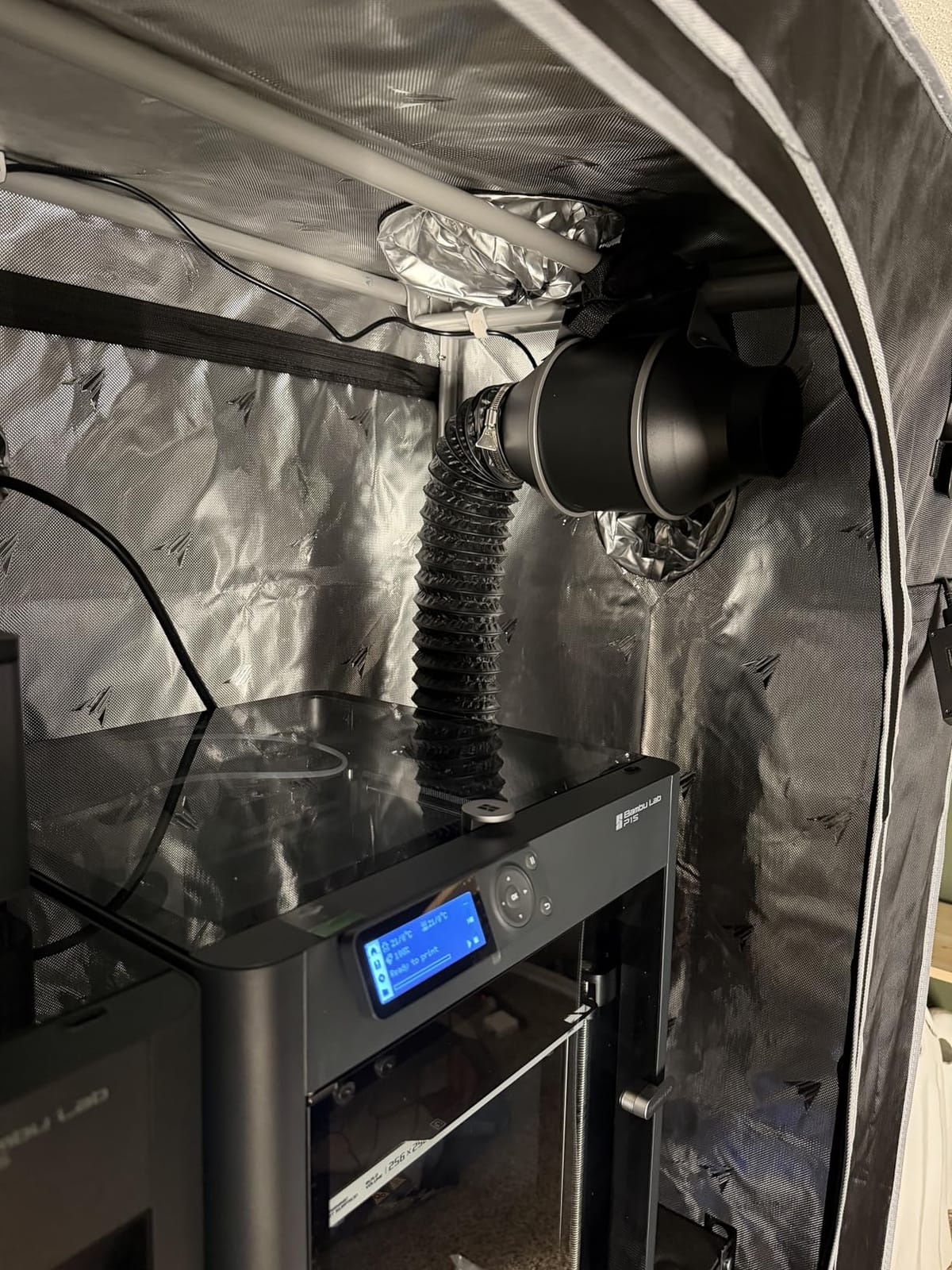
- Also works as a 3D printer enclosure for fumes and odors
Cons
- 36 in height limits plants to herbs seedlings and small greens
- SBS zipper can snag on the light-guard lining
- Floor tray top layer wears out after repeated standing water
Not every closet-shaped space is 24 inches wide. Some are shelves, utility cupboards or the gap beside a washing machine, and this 30 by 18 by 36 inch tent is built for exactly those. The 18 inch depth is narrow enough for most shelving units, and at 36 inches tall it works as a propagation box or a micro grow rather than a flowering space.
Same construction language as the rest of the Vivosun range: 600D Oxford canvas with a reinforced polyethylene terephthalate lining, 100 percent reflective mylar walls, black-lined zipper, metal poles and top bars rated to 100 lb, tool-free corner connectors. The reflective interior holds temperature and humidity more steadily than the fabric alone would, which is what makes it useful for seedlings.
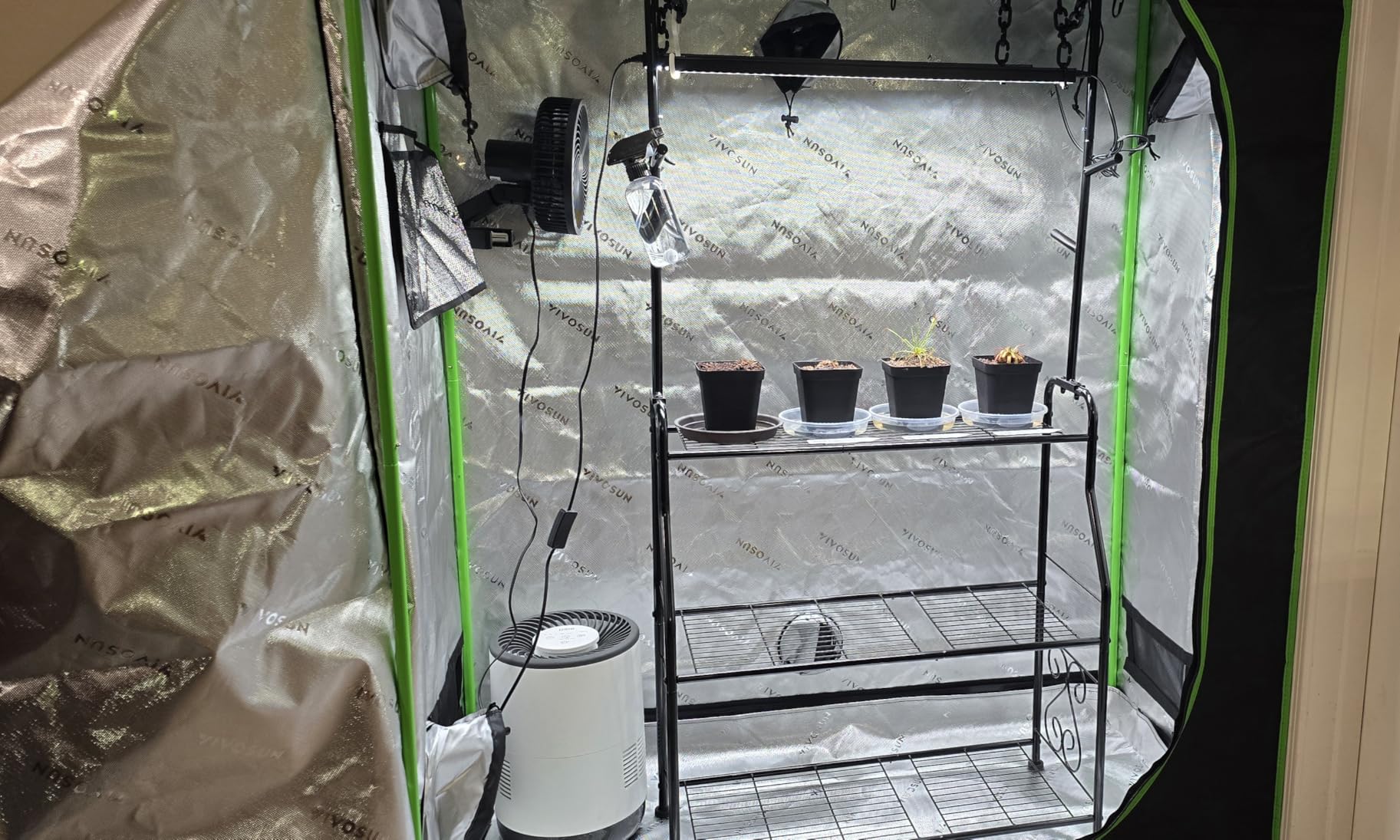
The viewing window is genuinely clear rather than mesh, so you can check humidity and colour without opening anything, and the bottom window handles heat. Owners also point out that it doubles as an enclosure for 3D printer fumes, which tells you how well the seal holds in general.
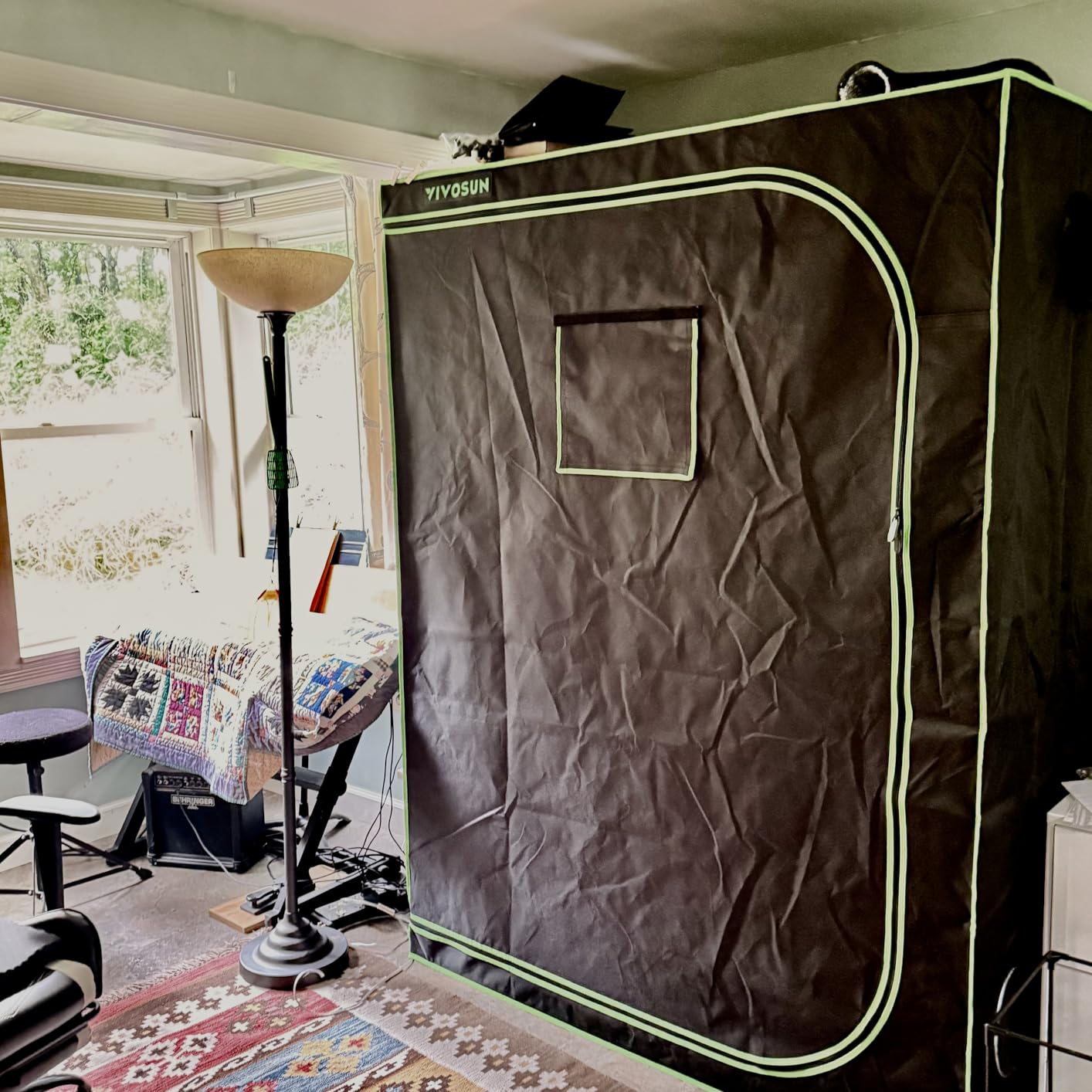
Be clear-eyed about the height. At 36 inches you are growing seedlings, microgreens, herbs and cuttings. Once a plant wants to flower, it will be against the ceiling. If your closet is at least 48 inches tall, buy the taller shell and use the vertical space.
Is 36 inches of height enough to grow?
Enough for propagation, clones, seedlings and herbs. Not enough for a flowering canopy, because the light has to hang above the plant and the ceiling will not allow it. Match the tent height to the tallest plant stage you intend to run, not to your seed starting point.
When is a narrow tent the right choice?
When the width is your problem rather than your height. Utility cupboards, shelving bays, laundry rooms and countertop systems all suit an 18 inch footprint, and a tent that fits beats a better tent that does not pass through the door.
8. Gorilla 2×2 Fixed Height Grow Tent – the frame that carries heavy gear
Gorilla Grow Tent 2×2.5 Fixed Height Indoor Grow Tent, 6’6″ Tall, 1680D Canvas, 300lb Hang Capacity, All-Steel Frame for Hydroponics, Soil Grows, Carbon Filters, Inline Fans, Home Cultivators
30 x 24 x 76 in
1680D threaded canvas
19 mm all-steel frame
300 lb capacity
Pros
- 6 ft 6 in fixed height gives far more canopy space than 48 in tents
- 19 mm all-steel interlocking frame carries up to 300 lb
- 1680D canvas is markedly heavier than tents in its band
- EZ View windows let you inspect plants without opening the tent
- Diamond reflective interior maximizes light output
Cons
- Tallest tent here at 76 in so closet fit needs careful measuring
- Lowest review count in the roundup so less long-term owner feedback
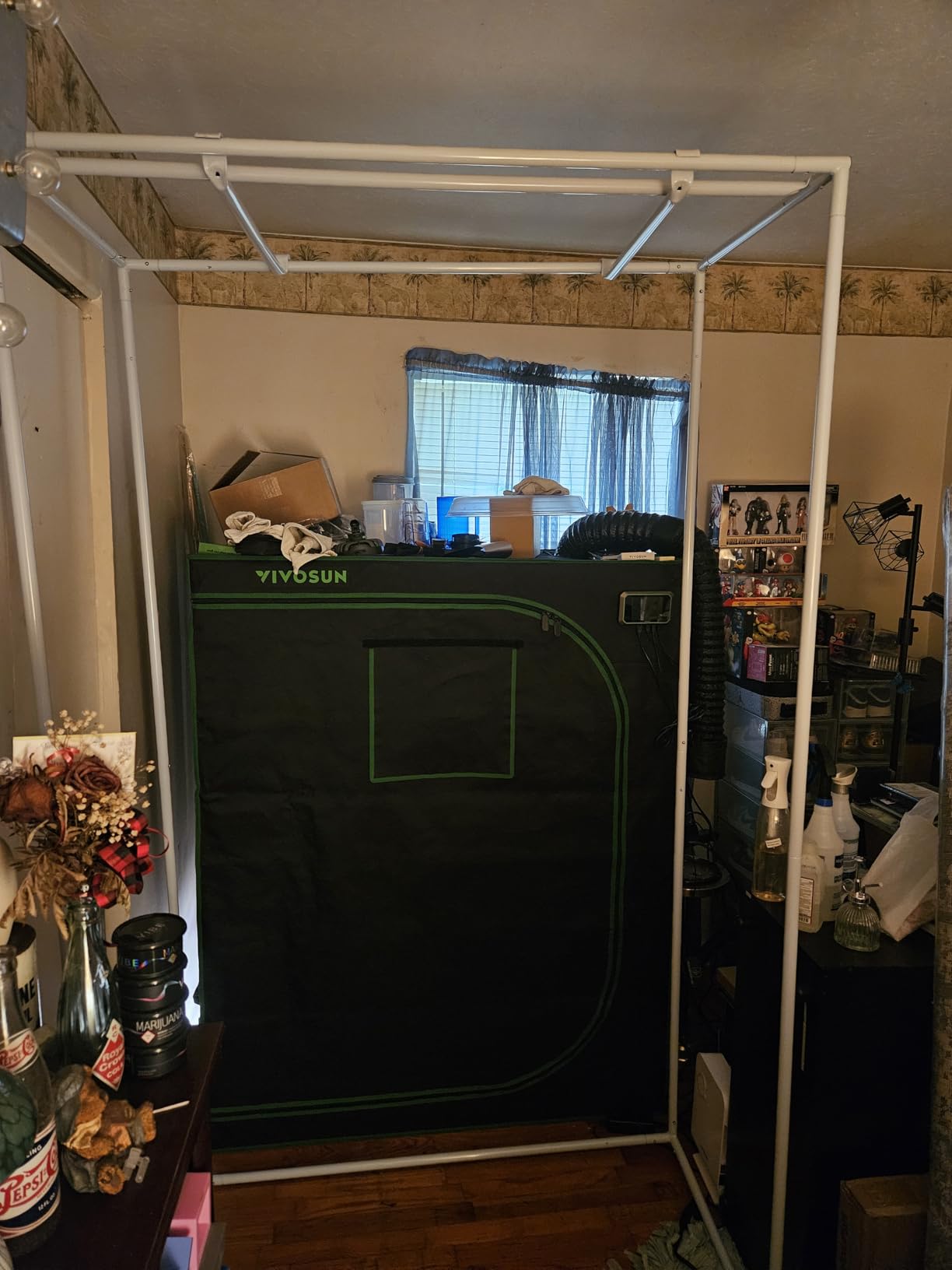
This is the Gorilla GGT22-REG, and the number that matters is 300. That is the listed hanging capacity of the 19 mm all-steel interlocking frame, and it is far above anything else here. If your plan is a carbon filter, an inline fan, a full-width light bar and a duct run stacked vertically in a closet, this frame is the one in this roundup that is not the weak link.
The 6 foot 6 inch fixed height also solves the squeeze from the other end. Filter at the top, light below it, canopy beneath that, and you still have usable space. The 1680D threaded canvas is described as three to nine times thicker than competing fabric, and the diamond reflective interior is there to get more usable light onto the leaves.
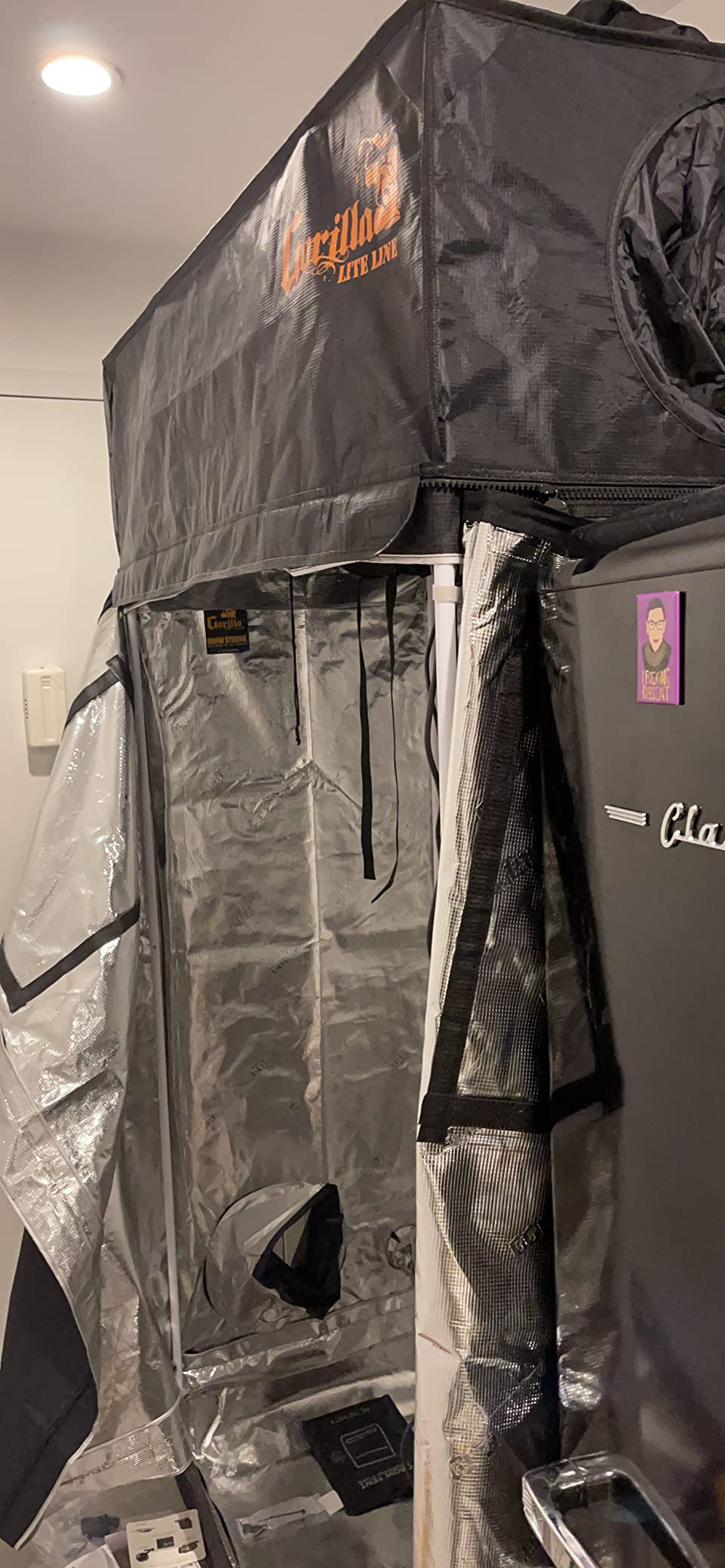
The EZ View windows are more useful than they sound. In a dark closet, opening the main door to check on a plant means re-establishing your dark period afterwards. A side window with a magnetic or hook-and-loop flap keeps the photoperiod intact, which matters if you are running photoperiod plants.
Two cautions. At 76 inches tall and 30 inches deep it is the least closet-friendly shell here despite the 24 inch width, so measure your ceiling and door opening with real care. And with 639 reviews it has the thinnest long-term owner record in this group, so you are buying on engineering specification rather than on a decade of field reports.
How much weight can a closet grow actually hang?
Your gear decides it. A 4 inch carbon filter with an inline fan and a small light is usually well under 100 lb. Add a wide bar light and ducting and you can pass 150 lb, which is where budget shells start to bow. This frame is rated to 300 lb, so it is not the constraint in any realistic closet build.
Will 76 inches of height clear my closet?
Check three numbers: interior ceiling height, the height of any closet shelf, and the door opening. Most reach-in closets clear 76 inches if the shelf is removed and the rod is taken down. If you cannot remove either, choose a 48 or 60 inch shell instead.
9. Green Hut 2×2 Grow Tent – all-metal where it counts
2×2 Green Hut Grow Tent 24″x24″x48″ 600D Mylar Hydroponic Grow Tents
24 x 24 x 48 in
600D double-stitched canvas
All-steel frame to 110 lb
27,648 cu in chamber
Pros
- All-metal frame and connectors with springs that resist loosening
- Thicker canvas than most tents at this tier
- Large zippers with reinforced leak-resistant seams
- Accurate thick floor tray with doubled corners that held a small flood
- Lowest entry cost per shell in this roundup
Cons
- Zipper flap catches on overlapping fabric while zipping
- Instructions are diagram-heavy and thin on detail
- A minority of tents report pinholes at stitching and vent points
- Green exterior piping and a fixed name tag advertise the tent
The Green Hut 2×2 does one thing that most budget tents get wrong. Every structural part is metal: the poles, the corner connectors and the springs, with patented adjustable PA connectors carrying an anti-rust finish. Plastic corners are the first thing to fail on cheap tents, and they fail under the specific load a closet adds, which is a suspended filter directly above the frame joints.
The canvas is 600D double-stitched with a removable mylar floor tray that has doubled corners. Owners report that tray containing a small flood, which is the kind of anecdote that matters more than a spec line when the closet floor is carpet you cannot replace.
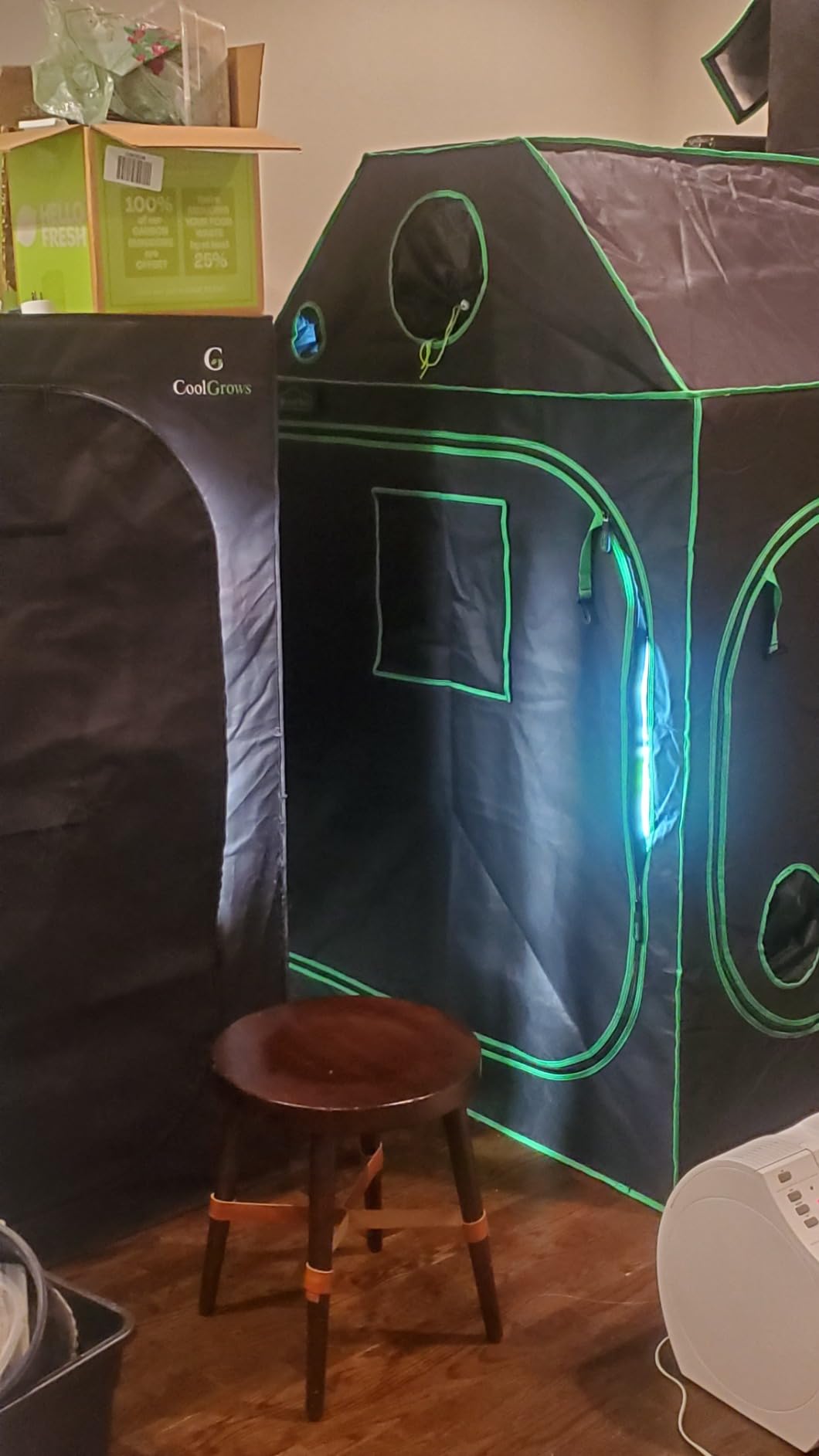
The light seal uses large heavy-duty zippers plus a 1.5 inch ribbon light guard over the seam, and reviewers describe the stitching as reinforced and leak-resistant. Poles are rated to at least 110 lb, enough for a modest light and a small carbon filter without drama.
The honest complaints: the zipper flap catches on overlapping fabric when you zip it, the instructions lean on diagrams with little detail, and a minority of owners find pinholes at stitching and vent points. The green exterior piping and a fixed name tag are a genuine drawback in a shared apartment. Those are cosmetic, and removable, but they are the first thing a visitor would notice.
Is a 600D canvas tent strong enough for a carbon filter?
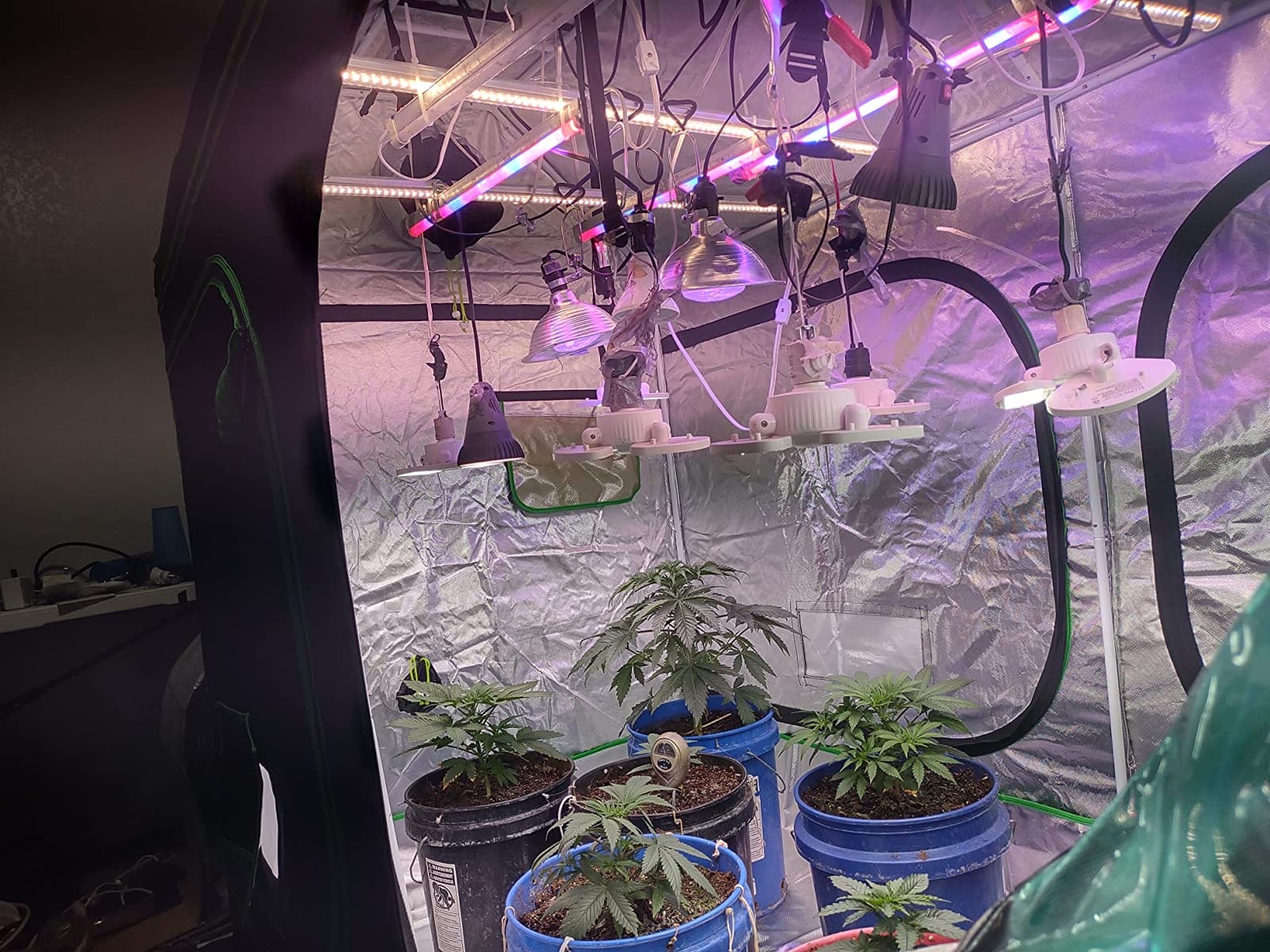
It is if the load is modest. An all-steel frame rated to 110 lb plus 600D canvas handles a 4 inch filter and a small light comfortably. It is not the setup for a large filter and a heavy bar light stacked high, where fabric stretch at the seams becomes the limit rather than the frame.
What does a first-time buyer give up at this tier?
Mostly polish. Thinner fabric than premium shells, a zipper flap that fights you, thinner instructions and the occasional stitch pinhole. You keep the frame strength and the light seal, which are the two things that decide whether a closet grow works at all.
10. CoolGrows 32x32x64 Grow Tent – the one that looks like furniture
CoolGrows Grow Tent for Indoor Plant Growing Dismountable Reflective Hydroponic Non Toxic Room (32″x 32″x 64″)
32 x 32 x 64 in
99 percent reflective mylar
600D tear-proof Oxford
Metal bars and click connectors
Pros
- All-black interior with privacy zipper flaps reads like a wardrobe closet
- 99 percent reflective mylar lining lifts fixture efficiency
- 32 in square footprint and 64 in height suits mid-size closets
- Removable water-resistant mylar spill tray
- Discreet unbranded packaging
Cons
- 600D Oxford is lighter than 1680D and 2000D premium rivals
- Only one height offered in this listing
- Lower sales rank in Grow Tents than the budget leaders
If someone opens your closet door, a black reflective tent disappears into a wardrobe far better than anything with green piping or an exposed name tag. The CoolGrows 32 by 32 by 64 is black inside, has privacy flaps over the zippers, and arrives in an unbranded box. Those are small details with an outsized effect in shared living spaces.
It is also a genuinely useful size. 32 inches square fits a closet bay that a 2×4 will not, and 64 inches of height sits between a standard 2x2x4 and a tall tent. The interior lining is stated at 99 percent reflective mylar, among the highest reflectivity figures listed here, and that matters in a space with no daylight.
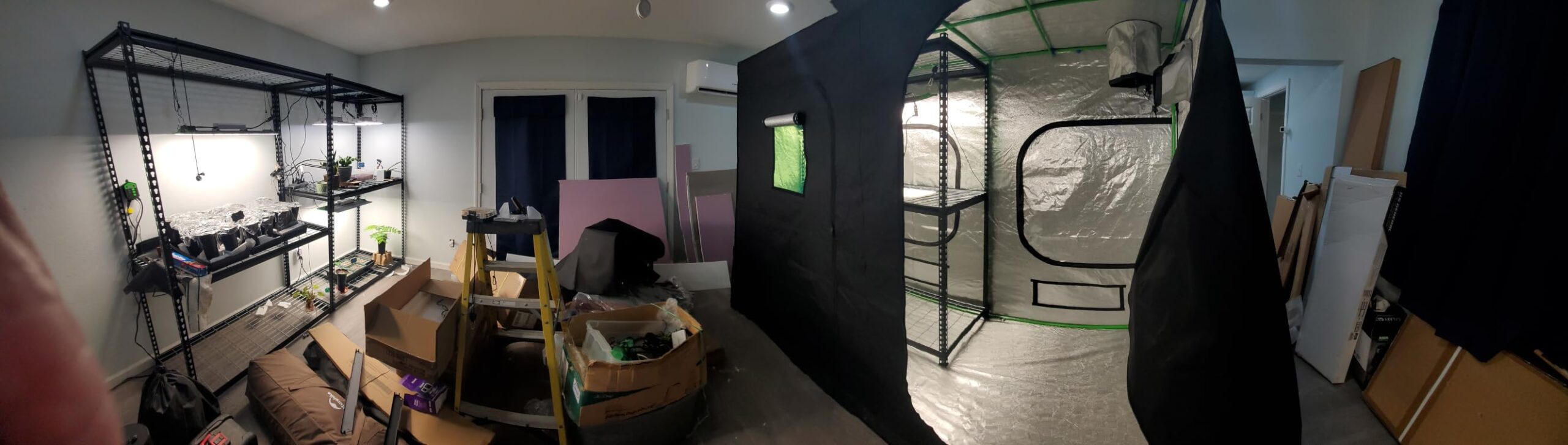
The frame uses metal bars with click-type metal connectors for a solid stand, and there are two air-regulating vents plus two nylon hanging straps for filter mounting. The removable water-resistant mylar spill tray makes clean-up straightforward, which matters in a closet where every drop lands on carpet.
Where it falls short is fabric and flexibility. 600D Oxford is lighter than the 1680D and 2000D shells, and this listing offers a single height, so if your closet is under 64 inches you have limited options with this model. Buyers rate it highly on looks, reflectivity and clean-up rather than on long-term durability claims.
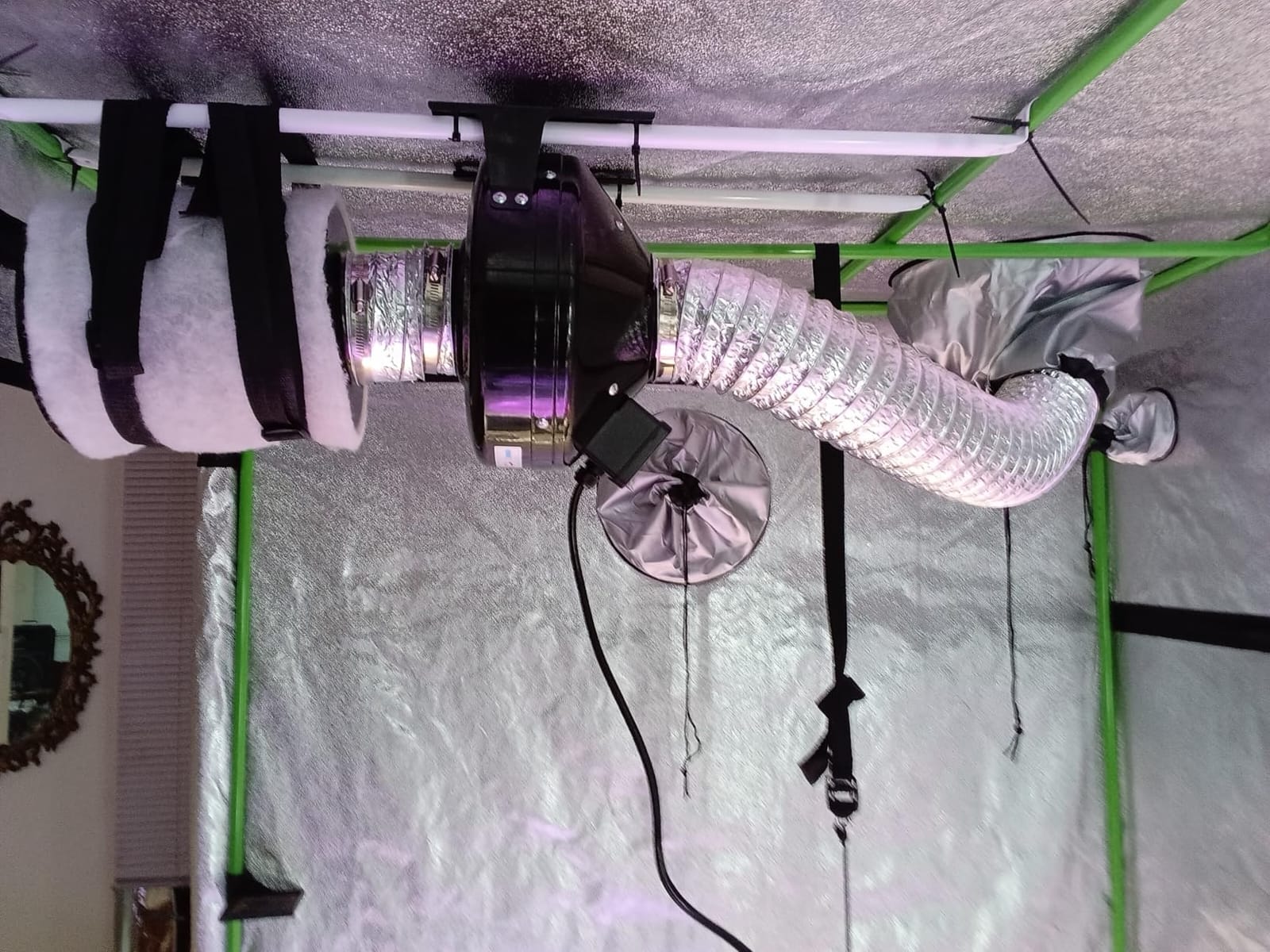
Do I need a tent that looks like furniture?
Only if other people can see inside your closet. In a shared apartment, on a hallway closet or anywhere you host visitors, a black interior with privacy flaps removes an entire category of awkward conversation. In a private room, a brighter tent with better fabric may serve you better.
Is 32 by 32 inches a good middle size?
It is the compromise size. You get more floor area than a 2×2 without the 48 inch width of a 2×4, and enough height for a filter, a light and a modest canopy. Check that your closet interior is at least 33 inches wide on both floor and shelf before you commit.
Closet Grow Tent Buying Guide: Size, Fabric and Airflow
Measure the closet before you order anything
Almost every closet grow that fails does so at the doorway. Measure four things, in this order.
Interior width and depth at floor level. The tent needs to sit flat, so measure where the carpet or baseboard is, not at the hanging rod.
Door opening width. Standard hinged closet doors are often narrower than the interior, so a 24 inch tent through a 23 inch opening needs angling.
Ceiling height and shelf height. If you want a tall tent, you need to remove the shelf and take down the rod, or use a low 48 inch shell instead.
Power outlet position. Your cord path sets where the tent goes, and it should not run through a door you open daily.
Add two inches of slack to the largest dimension before you commit. Reviewers repeatedly describe the same failure: a tent that measures correctly but will not physically go through the opening.
Choosing between 2×2, 2×4 and larger shells
A 2×2 at 24 by 24 inches holds one plant in a 5 gallon pot. It is the right answer for a single-occupant closet, it folds flat, and it is the easiest tent to ventilate because there is very little air volume to manage. The catch is that one 2×4 is easier to live with than two 2×2 tents, so choose the 2×4 if your closet can take 48 inches of width.
A 2×4 at 48 by 24 inches holds two to four plants with training and is far more forgiving on humidity, because more volume absorbs more moisture before it becomes a problem. It is the most common choice among apartment growers for that reason alone, and the most reviewed tent in this roundup is a 2×4.
A 32 inch square shell like the CoolGrows sits between the two and works when a 2×4 is too wide but a 2×2 leaves floor area unused. Anything at 39 inches square or wider is no longer a closet tent. That is a walk-in wardrobe or a converted cupboard.
What denier actually means and why closet tents need it?
Denier, written as D, measures fabric density. Higher numbers mean thicker, heavier fabric that resists tearing and pinching. For closet use you will see 600D, 1680D and 2000D in this roundup, and the difference is not cosmetic.
In a closet the fabric does more work than in a room. It carries the weight of a carbon filter pressing into a seam, it stretches when you push your arm through to water a plant, and it sits in permanent humidity. Reviewers across grow forums point to top support bars and seams as the first failure points on lighter tents. Thicker canvas delays that, and reinforced corners matter as much as the denier number.
Where the money is better spent: poles and frame first, fabric second, everything else last. A 2000D tent on a thin plastic-cornered frame is a worse buy than a 1680D tent on an all-steel frame.
Ventilation and CFM in a sealed closet
A closet has no windows and one door, so you control the entire air path. The standard rule for small tents is to move enough air to replace the volume of the tent several times an hour, which means sizing your inline fan to the chamber, not to the room.
Measure the tent volume in cubic feet. A 2x2x4 is 16 cubic feet, and the 2x2x6 listed here is 24 cubic feet.
Choose an extraction fan rated for that volume with room to spare, and run filtered exhaust through the top rear port.
Bring filtered or ambient air in through a lower port or a gap at the door, so the tent has an inlet as well as an outlet.
Run a small clip fan inside the canopy to move air across leaves, which is what stops mould in the middle of a dense plant.
Noise matters more in an apartment than anywhere else. Inline fans on the lower speed setting move surprisingly well and are far quieter than the same fan on high, and a short length of insulated ducting silences the rattling that makes a fan sound louder than it measures.
Odor control when the closet shares a wall with a bedroom
Odor is the number one complaint in closet grow threads, and it is almost always an airflow problem rather than a filter problem. A carbon filter only works when the air actually flows through it, so budget for the fan and ducting before you budget for the filter.
Layer it. A properly sized carbon filter on the exhaust, an intake path that does not short-circuit straight to the outside, and a neutralising gel in the intake air handle most of what escapes. Keep ducting sealed with tape where it enters the tent, because an unsealed port leaks both light and smell no matter what is bolted to it.
Autoflower vs photoperiod in a small tent
Autoflowers are the easier choice in a closet. They stay short, finish in roughly ten weeks, and do not care if you miss a light flip or two. For a first build in a small space that is the difference between a straightforward first cycle and a frustrating one.
Photoperiod plants give you more yield per seed but demand a disciplined schedule, and a closet door propped open by a visitor is enough to cause revegetation or stress. Whichever you choose, low-stress training or a screen is close to mandatory in a 48 inch shell, because the ceiling is a hard limit rather than a suggestion.
Notes for renters and shared walls
Most of these tents are free-standing and pop up without tools, which makes them genuinely portable. That matters more than it sounds: if you are not sure about your lease, or your living situation changes, a tent that folds into a bag can be moved in an afternoon. Nothing here needs drilling, and none of them require a dedicated room to run well.
Read your lease before you buy, and consider the noise and heat profile as well as the legality. A closet grow next to a shared bedroom wall is a conversation with a neighbour, and a quiet fan profile is the cheapest way to prevent it.
Frequently Asked Questions
What is the best grow tent for a closet?
The AC Infinity CLOUDLAB 422 is our top pick because its 2000D canvas and 1 inch alloy steel poles hold a light and carbon filter without sagging, and it adds a controller mounting plate plus extra duct ports. For a budget build, the VIVOSUN S224 or Green Hut 2×2 give you a working light seal for less.
What size grow tent fits in a standard closet?
A 2×2 tent at 24 by 24 inches fits most reach-in closets, though standard doors can be narrower than the interior, so measure the door opening too. A 2×4 at 48 by 24 inches needs a wide bay or wardrobe. Measure interior width at floor level and ceiling height before ordering.
How do you ventilate a grow tent in a closet?
Size an inline fan to the chamber volume, run filtered exhaust from a top rear port, and give the tent a lower intake so air has a path to travel. Keep the canopy moving with a small clip fan, and run the inline fan on low speed where noise through a shared wall matters.
Is AC Infinity or Vivosun better for a closet grow?
AC Infinity builds thicker fabric and stronger poles, which suits a closet where a filter hangs from the same bars. Vivosun offers proven light sealing with black-lined zippers, more sizes and far more owner history. Choose AC Infinity for build quality and Vivosun for footprint choice and proven value.
Should I grow autoflower or photoperiod plants in a small tent?
Autoflowers are easier in a closet because they stay compact, finish in about ten weeks and tolerate a missed light flip. Photoperiod plants yield more per seed but need a strict schedule, and any open closet door can stress them. Either way, low-stress training is close to mandatory in a 48 inch shell.
Will a grow tent in a closet smell?
It can if the air short-circuits past the filter. A properly sized carbon filter on the exhaust, a real intake path, sealed ducting and a neutralising gel handle most escaping odour. Odour complaints in grower threads are nearly always caused by too little airflow through the filter rather than by the filter itself.
Which Closet Grow Tent Should You Buy?
The AC Infinity CLOUDLAB 422 is the best grow tent for closets in 2026 for one reason: nothing else in this roundup combines 2000D canvas, 1 inch steel poles and a reinforced frame at a size that still fits through a 24 inch doorway. That strength is what lets you hang a filter and a light from the same bars in a space where you cannot afford a sag.
If you are building on a tighter budget, the VIVOSUN S425 2×4 gives you the most proven shell in the group, a black-lined zipper that seals light without tape, and enough width for two to four plants. The VIVOSUN S224 is the same idea at 24 inches square. The Green Hut 2×2 is the cheapest way to get an all-metal frame, and the Spider Farmer 2x2x6 is the answer when your closet is genuinely tall and vertical space is the resource you are short of.
Whichever you pick, measure the door opening and the interior floor width before you order, size your fan to the chamber volume, and plan on low-stress training from the first week. If you want a quiet side project for herbs or mushrooms instead of a full tent, our mushroom grow kit roundup covers a much smaller footprint.