
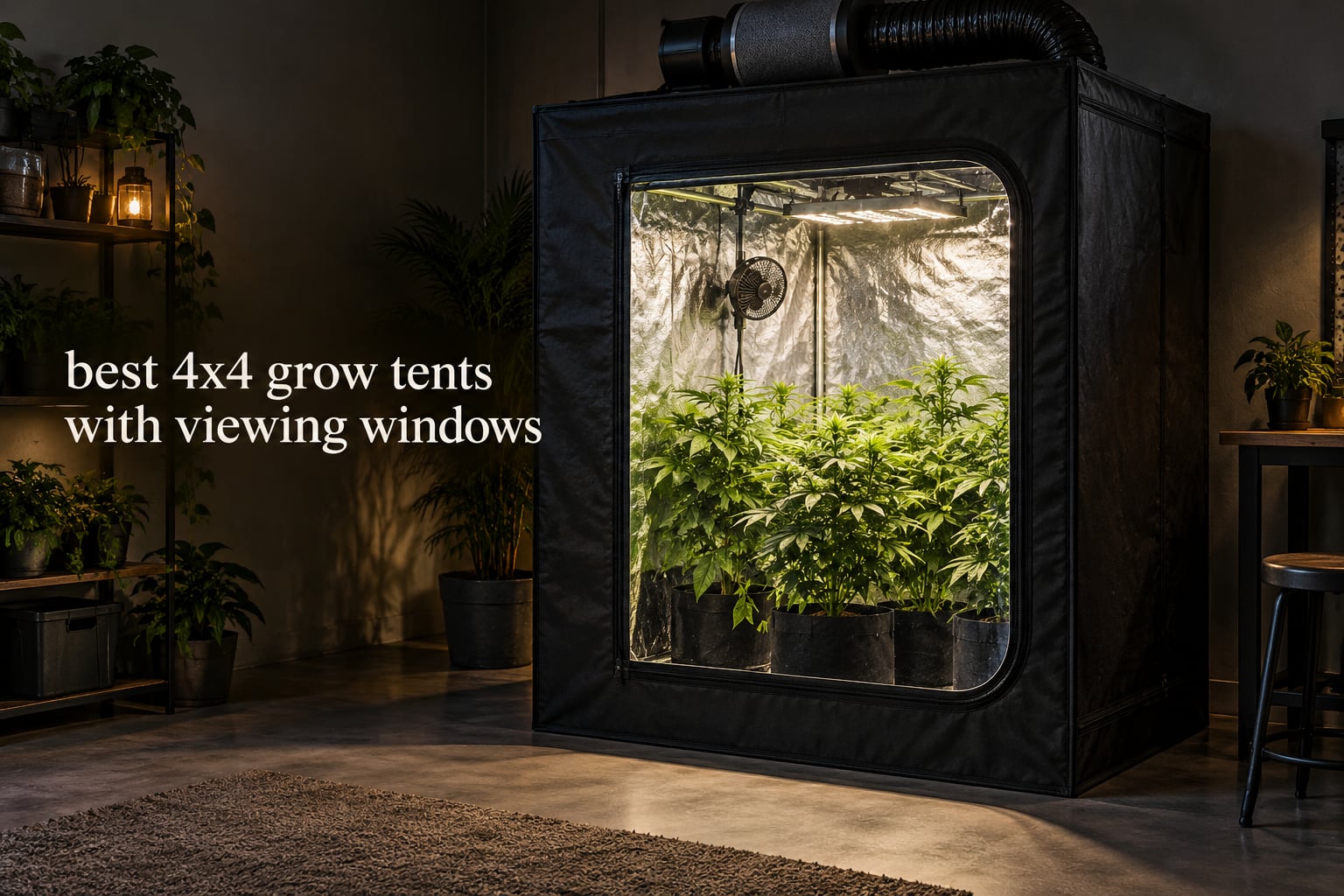
A grow tent is a box you grow plants inside, and the single feature that changes daily routine more than any other is the viewing window. Without one, every health check means unzipping the door, letting warm humid air escape, and re-establishing the dark cycle you worked hard to hold. With one, you glance at leaf colour, pest damage or tip burn from where you stand and the tent never knows you were there.
That is why the best 4×4 grow tents with viewing windows make up their own category rather than being an optional extra. A 4×4 footprint is the most popular indoor size because it holds four plants in 5 gallon pots without crowding, fits a closet or a corner of a spare room, and pairs with a mid-size light. Add a window and that tent becomes a monitoring tool instead of a sealed box. We spent weeks reading thousands of owner reviews across ten mainstream 4×4 models, comparing canvas density, frame rating, window placement and how each window behaves once a fan is pulling negative pressure on it.
This guide covers all ten, including the two whose manufacturers describe their own listings inconsistently. You will also find a window type breakdown, because the names are used loosely across the industry, and a buying guide that covers the specs that actually decide whether a window is usable. If you are still working out the lighting side of the build, our grow light stand guide covers the hardware that typically hangs above a 4×4 canopy.
Updated for 2026. Every tent below is measured against the same checklist, and every rating and review count is copied straight from the product listing so you can verify it yourself.
Table of Contents
Top 3 4×4 Grow Tents With Viewing Windows (October 2026)
The three below are the strongest combination of window usefulness, frame strength and owner satisfaction across the whole group. The VIVOSUN S448 wins on proven reliability at scale, the AC Infinity CLOUDLAB 844 wins on the biggest and best placed window, and the MARS HYDRO wins on how tightly it seals in the dark.

VIVOSUN S448 Grow Tent
- Observation window plus lower heat window
- 100% reflective mylar interior
- 340g high-density Oxford canvas
- Top bar rated to 100 lb

AC Infinity CLOUDLAB 844
- Extra-tall viewing windows with SBS zippers
- 2000D waterproof Oxford canvas
- 1 inch steel poles rated to 150 lb
- Lab-tested reflective lining

MARS HYDRO 4×4 Grow Tent
- 1680D double-stitched Oxford canvas
- Viewing window with double-layer cloth flap
- Shade cloth over zipper stitching
- Steel frame rated to 70 kg
4×4 Grow Tents With Viewing Windows Compared in 2026
All ten tents below measure 48 inches by 48 inches at the base. Heights vary from 72 to 80 inches, and canvas weight ranges from 340g Oxford to triple-layer 2000D, which is the single biggest driver of both light sealing and how long the tent lasts.
| Product | Specifications | Action |
|---|---|---|
| VIVOSUN S448 4×4 Grow Tent |
|
Check Latest Price |
| AC Infinity CLOUDLAB 844 |
|
Check Latest Price |
 VIVOSUN R446 4×4 Grow Tent VIVOSUN R446 4×4 Grow Tent |
|
Check Latest Price |
 zazzy 4×4 Grow Tent zazzy 4×4 Grow Tent |
|
Check Latest Price |
| MARS HYDRO 4×4 Advanced Grow Tent |
|
Check Latest Price |
 MELONFARM 4×4 Grow Tent MELONFARM 4×4 Grow Tent |
|
Check Latest Price |
 Spider Farmer 4×4 Grow Tent Spider Farmer 4×4 Grow Tent |
|
Check Latest Price |
 zazzy 4×4 Grow Tent 600D zazzy 4×4 Grow Tent 600D |
|
Check Latest Price |
 VIVOSUN P448 4×4 PRO Grow Tent VIVOSUN P448 4×4 PRO Grow Tent |
|
Check Latest Price |
 G HYDRO 4×4 Grow Tent G HYDRO 4×4 Grow Tent |
|
Check Latest Price |
Viewing Window Types Explained
Manufacturers use four different names for what is essentially the same part, and the naming tells you very little about quality. Knowing the terms makes the rest of this guide easier to read, and it is the section most comparison articles skip entirely.
Observation window is the generic term for any clear plastic or vinyl panel set into a door or side wall. You unclip or unzip a fabric flap to expose it, look, and seal the flap back down. This is the most common type and the one you will find on eight of the ten tents in this guide.
EZ view window is a marketing term rather than a technical standard. It usually describes a snap-in or magnetically seated panel that can be removed without unzipping anything, which is faster to open and close and less likely to be left ajar by accident. That last point matters more than it sounds, because a flap that does not reseat properly is a light leak during the dark cycle.
Viewing window and clear view window are interchangeable with observation window in practice. Where they differ is size. A window that shows you a 6 inch square of leaf tells you almost nothing, while one that spans a third of the door wall lets you judge canopy height, colour uniformity across the tent and whether every plant is getting light.
Snap-in window panels seat on a frame or gasket and lift out entirely. They are the easiest to operate and the most convenient for anyone who wants airflow through the opening during a hot afternoon.
Window height from floor matters more than most listings admit
Owners on grow forums raise this constantly, and it is the complaint that shows up most often in the reviews of tall tents. On an 80 inch tent, a window positioned high on the wall gives you a view of the upper canopy and the grow light, not the base of the plant where root problems and lower leaf yellowing actually show up.
The useful band sits roughly 24 to 36 inches off the floor. That is where a seated grower with a phone or headlamp can look level into the canopy without crouching or using a step. The VIVOSUN S448 is notable here because it pairs its main transparent observation window with a second lower window positioned for heat dissipation, which gives you two viewing angles from one tent.
How negative pressure changes what you see?
Every properly run tent pulls air out faster than it comes in, and that pressure difference constantly flexes the walls inward. The viewing window is the flattest, least reinforced panel in the tent, so it is usually the first thing to bow. A bowed window distorts the view, catches reflections off its own surface, and on cheap models can pop a seam at the corner.
Tents with heavy canvas and a stiff frame, such as the AC Infinity CLOUDLAB 844 with 2000D canvas and 1 inch poles or the VIVOSUN P448 with its 1 inch poles and dedicated support poles, hold their shape far better under fan pressure. The thinner 600D models still work, but expect the panel to ripple slightly whenever the extractor is running at full speed.
1. VIVOSUN S448 4×4 Grow Tent With Observation Window
VIVOSUN S448 4×4 Grow Tent 48″x48″x80″ Mylar Tent for Indoor Plants
48 x 48 x 80 inch
340g high-density Oxford canvas
100% reflective mylar
Top bar to 100 lb
Pros
- Largest owner review base in the group at 4.5 stars
- Transparent observation window plus a second lower window
- Tool-free corner connectors suit beginners
- Removable mylar floor tray and internal tool organizer
Cons
- Thin poles next to one inch premium frames
- Minimal instructions and needs two people to drape the canopy
- Light bleed reported around zipper flaps and seams
The S448 is the tent most first-time 4×4 growers end up buying, and the reason is the review history rather than any single spec. At over 33k reviews holding a 4.5 star average, this is the model where problems, if they exist, would have surfaced loudly. They largely have not. Owners consistently describe light blocking that holds through a full 12 hour dark cycle.
What surprised me most when reading through the feedback is how often the window gets singled out. The transparent plastic observation window plus a second lower window for heat dissipation gives you two look angles without opening anything, and reviewers mention that the hook-and-loop window cover lays flat and stays down through the night.
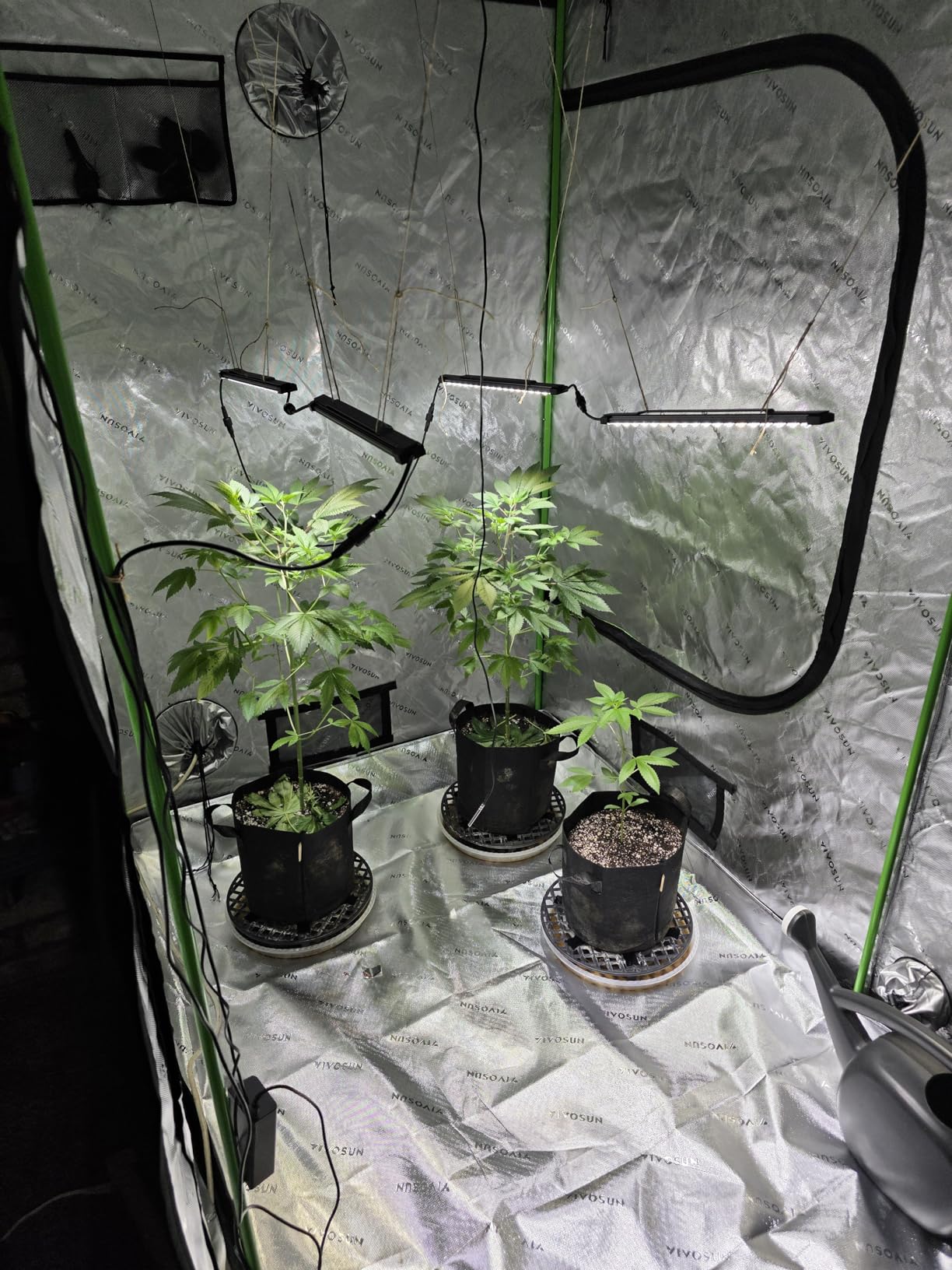
The build is honest for the money. Oxford canvas reinforced with a PE layer, lined in 100% reflective mylar, and double-stitched throughout. The top bar is rated to 100 lb, which covers a mid-size light and a carbon filter without any flex that would distort the window.
The reflective mylar interior and an upgraded black zipper liner do the heavy lifting on light containment. The zipper flaps are the weak point, and a minority of owners report light bleed there, so a strip of tape along the door seam is sensible insurance for photoperiod plants.
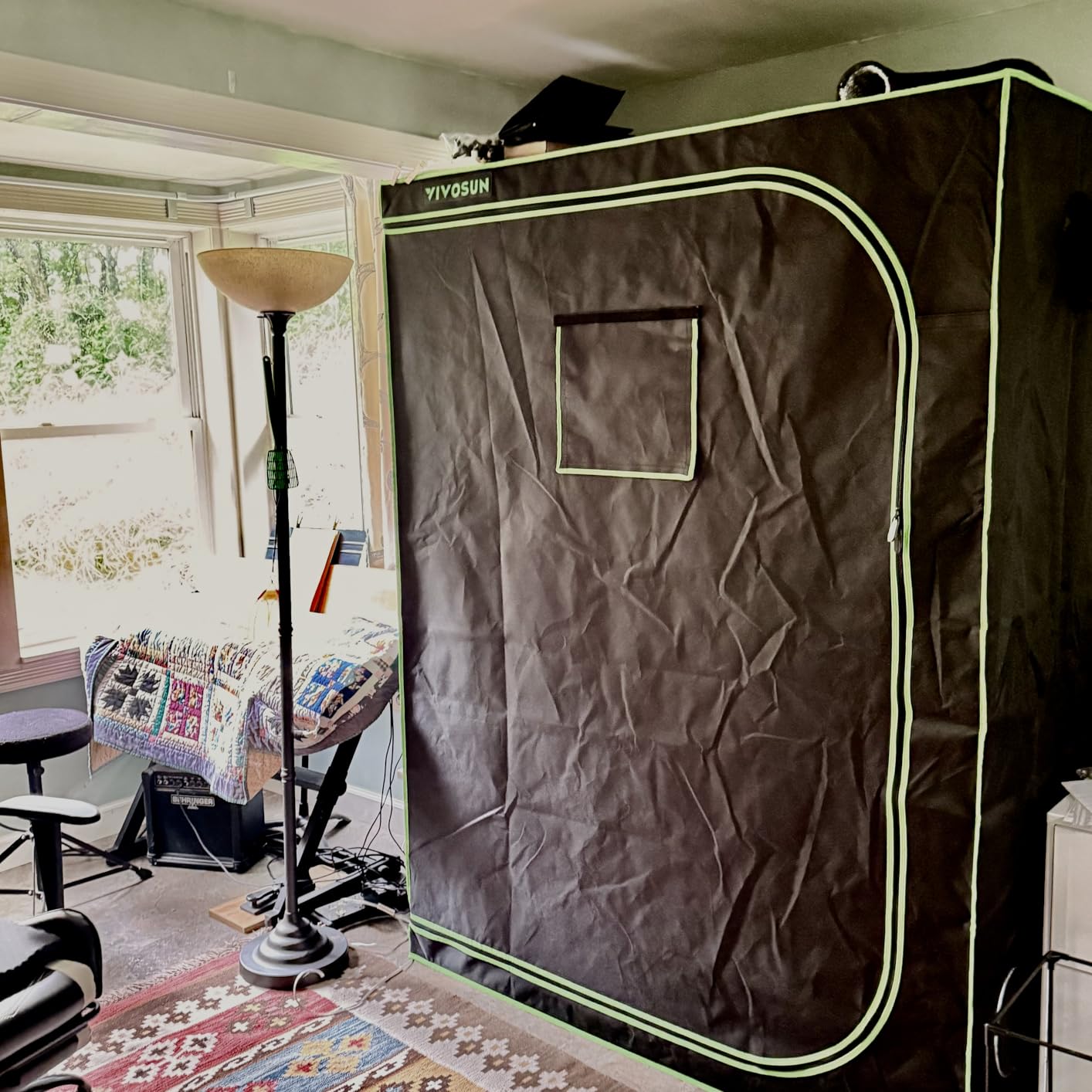
What it does well?
It is the safest choice for a beginner because assembly is tool-free with labelled corner connectors, and there are almost no complaints about parts arriving missing. The removable mylar floor tray makes wet harvests painless, and the internal tool organizer keeps pruners and meters off the floor.
For monitoring specifically, the two-window arrangement is the feature that keeps it our first pick. Most competitors give you one panel and you learn to work around its position.
Where it falls short?
The poles are thinner than the 1 inch frames used by the premium models, and some buyers report loose threads and pinhole stitching after heavy use. Instructions are sparse, so budget twenty minutes and expect to need a second pair of hands to drape the canopy over the frame.
If you are running a very large light and filter and want zero frame flex, look at the AC Infinity or the VIVOSUN P448 instead. If you want a proven, well reviewed box at a sensible size, this is the one to beat.
2. AC Infinity CLOUDLAB 844 With the Tallest Viewing Windows
AC Infinity CLOUDLAB 844, Advance Grow Tent 4×4, Thickest Poles & Mylar
48 x 48 x 80 inch
2000D waterproof Oxford canvas
1 inch steel poles to 150 lb
19.86 kg
Pros
- Highest owner rating in the group at 4.7 stars
- Extra-tall viewing windows with SBS zippers
- Lab-tested high reflectivity mylar lining
- Four inch and eight inch duct ports plus two side doors
Cons
- Heaviest unit in the group at 19.86 kg
- Two people needed to pull the canopy over the frame
- Front zipper flaps need care to stay light tight
The CLOUDLAB 844 carries the highest rating of anything in this guide and the build to back it. It is also the tent where the window question is answered best, because the viewing windows are described as taller than standard with SBS zippers and are designed to give a full canopy view while climate control stays intact.
Everything else is built to the same standard. The exterior is 2000D waterproof Oxford canvas, the poles are 1 inch steel, and the rated capacity is 150 lb. Owners describe the frame as rigid and wobble free, which matters for window clarity because a frame that does not move does not let the panel ripple.
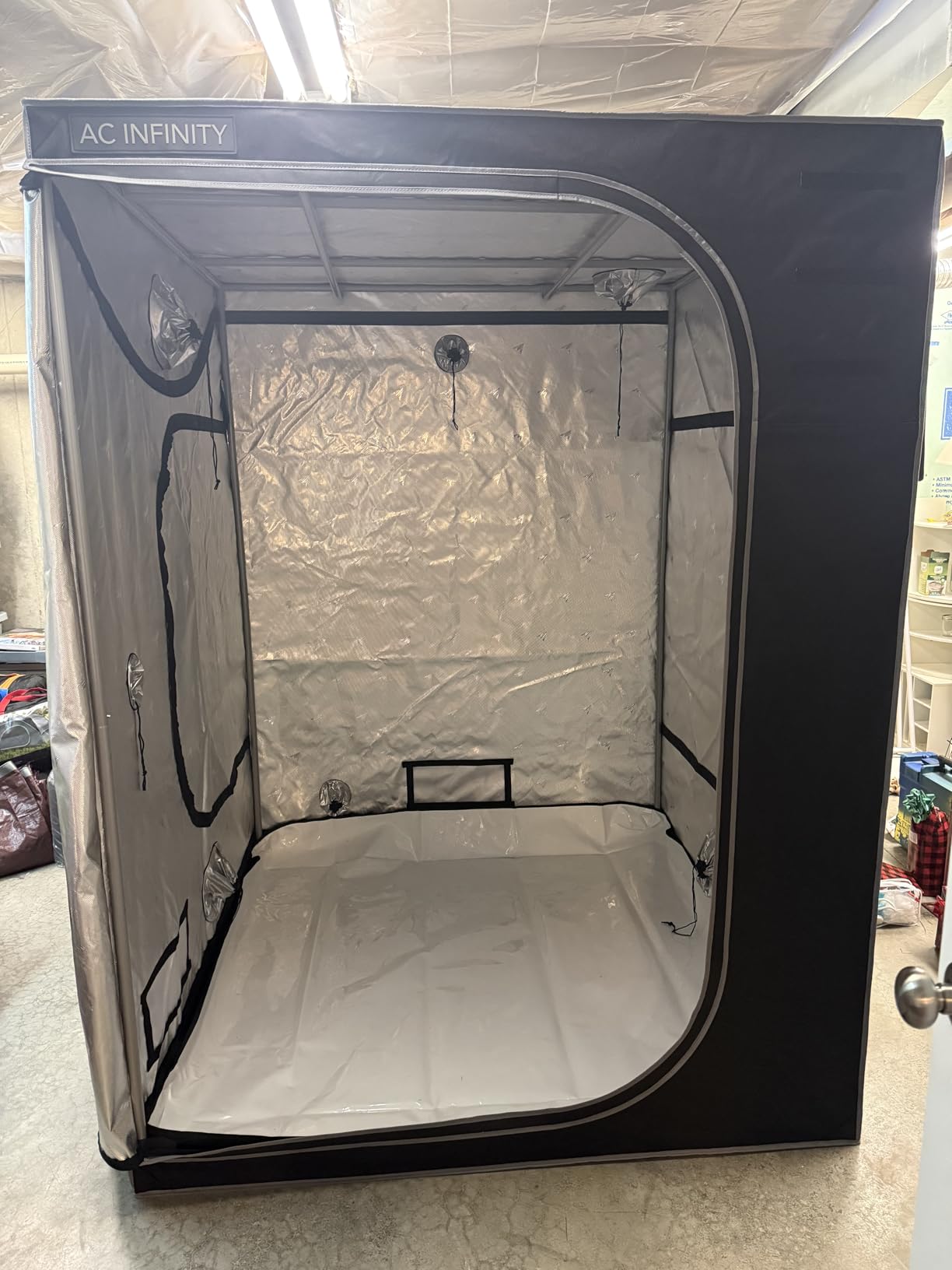
The lab-tested mylar lining is the other headline. It is the piece most worth paying for, since reflectivity is the single biggest controllable factor in how much usable light reaches the canopy. The controller mounting plate with a lightproof cable passthrough is a detail that separates this from budget tents, and it keeps controller wiring outside the tent instead of threaded through a port.
Port count is generous for a 4×4, with four 4 inch ports and five 8 inch ports, which is enough to run an intake, an exhaust, a carbon filter and a humidifier without improvising. Two side doors add access that most 4x4s lack.
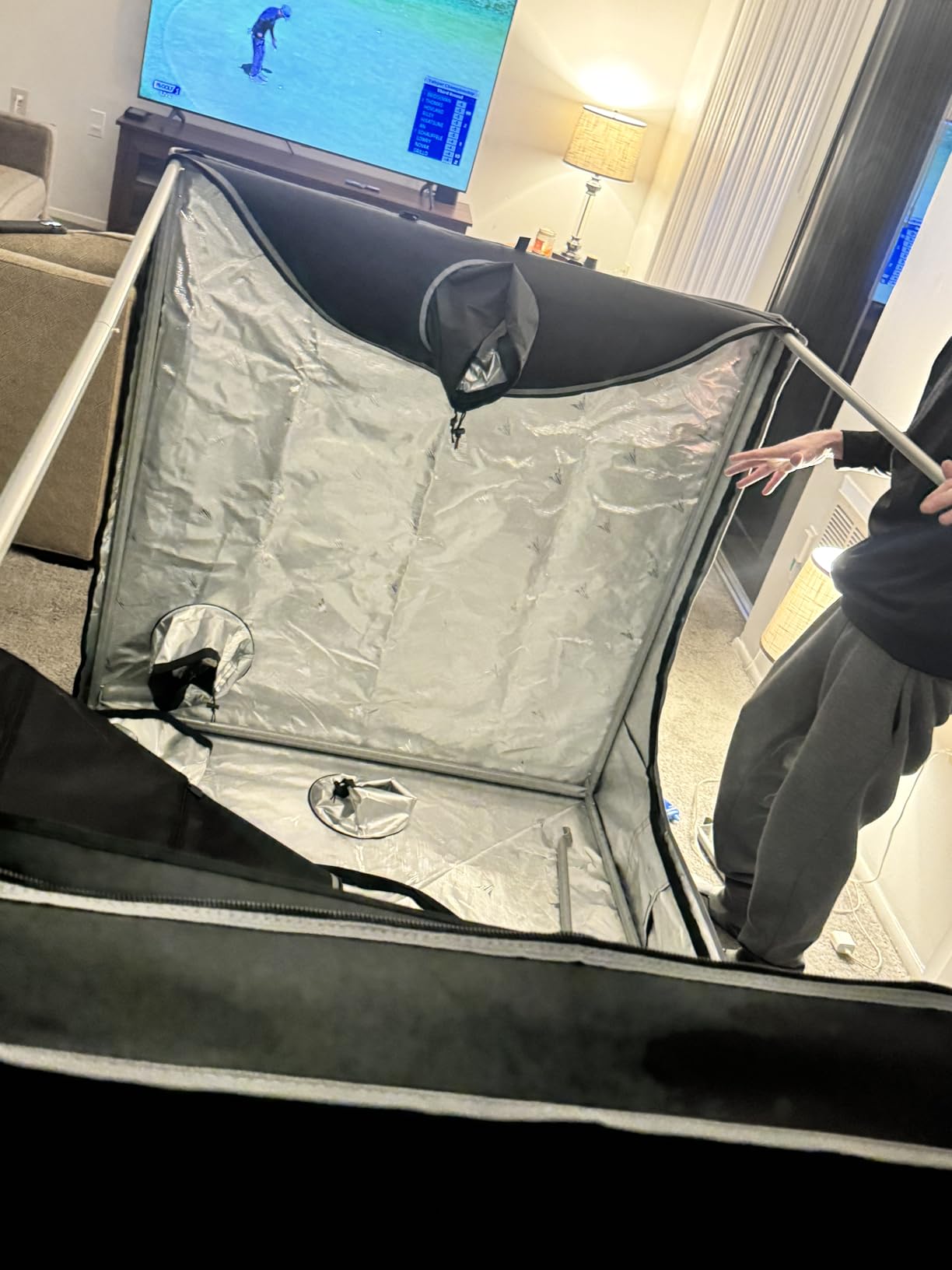
What it does well?
It is the pick if the window is the main reason you are buying. Taller windows, heavy SBS zippers and a stiff frame combine into the least distorted, least leaky view in this group, and the front zipper flaps for light-leak protection are a genuine engineering detail rather than a marketing line.
Reflectivity and frame strength are both a tier above everything else here. The extra hanging bars and reinforced corners mean you can hang a light, a filter and an oscillating fan without arguments.
Where it falls short?
At 19.86 kg on the spec sheet it is the heaviest tent we weighed in this lineup, and that has consequences. Two people are needed to lift the frame and pull the canopy over it, and moving the tent once it is built is a two-person job rather than a solo task.
The other consideration is simply the spend, which puts it out of reach for a first grow on a tight budget. If you are still deciding whether you will keep growing at all, the VIVOSUN S448 gives you the same workflow at a lower tier of materials.
3. VIVOSUN R446 4×4 Grow Tent for Low Ceilings
VIVOSUN R446 4×4 Grow Tent 48″x48″x72″ Roof Cube Tent
48 x 48 x 72 inch high cube
600D Oxford canvas
100% litchi pattern mylar
Peel-back observation window
Pros
- Slanted roof adds usable volume over a flat cube
- Peel-back window flap needs no entry to check plants
- 600D canvas with double-stitched seams
- Slip under 72 inch ceilings where taller tents will not fit
Cons
- Sloped roof leaves roughly 5 ft of vertical light height
- Zipper sticking reported by some buyers
- Basic instructions and a heavy canopy to drape
The R446 solves a problem the other nine tents in this guide cannot: a 48 inch tall footprint in a room with a low ceiling. At 48 by 48 by 72 inches it fits where an 80 inch tent will not, which in older houses and finished basements is the difference between growing and not growing.
Rather than a flat roof, it uses a slanted high-cube design with supporting poles for a light and a fan. That slope is the whole point. It adds usable growing area and it puts the observation window at a height you can actually reach, and the peel-back flap lets you check plants without bending over or stepping inside.
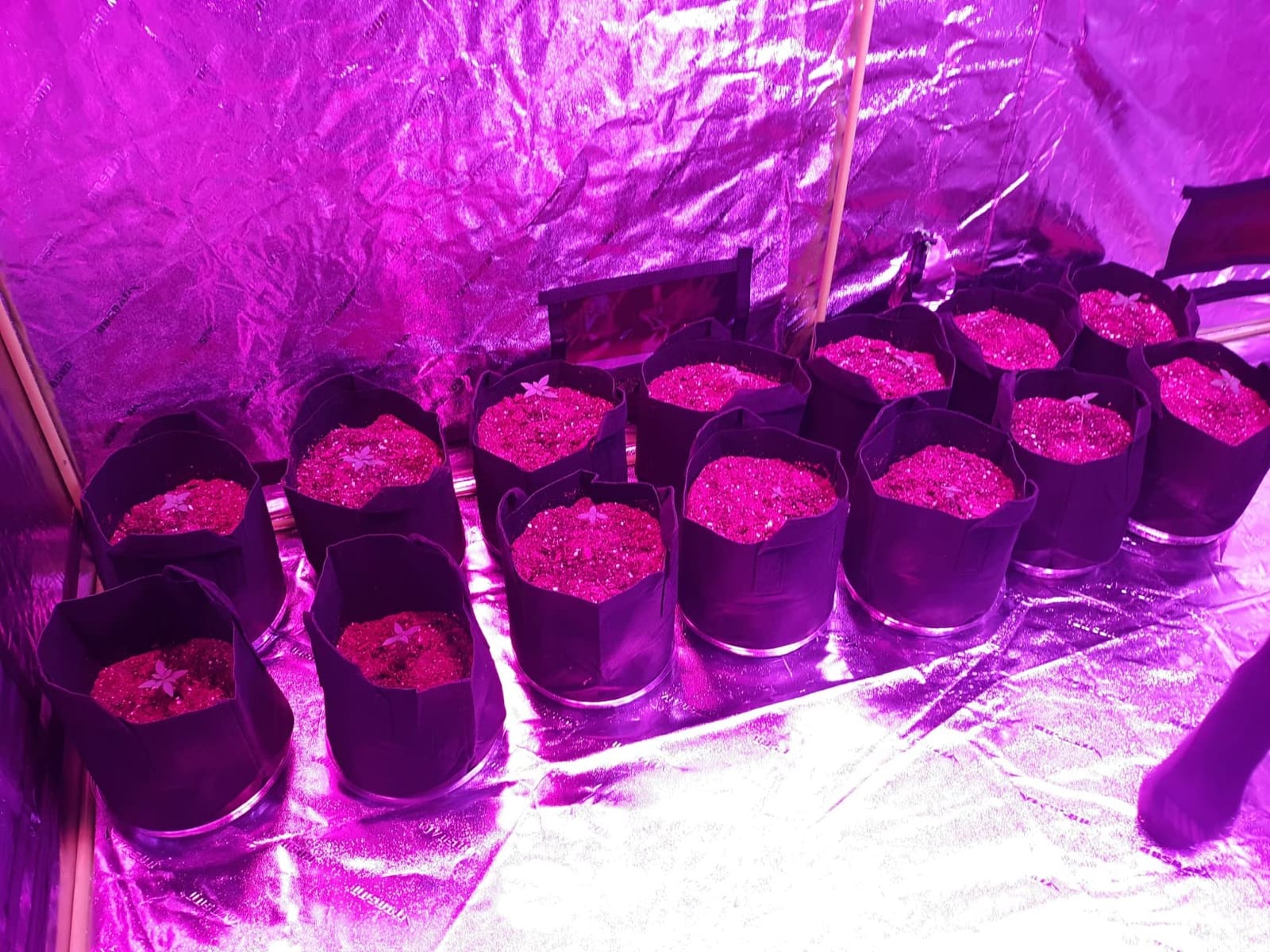
The interior is 100% litchi-pattern reflective mylar, advertised as noticeably more reflective than diamond pattern, which is a genuine step up in light throw compared with the standard diamond weave used on most tents at this size. Outside it is 600D waterproof Oxford canvas with double-stitched seams, and over multiple cycles owners report it holding up well.
Setup is fast and tool-free. Fit the poles, drape the cover, and the removable mylar floor tray drops in underneath. The frame is metal with a listed 100 lb capacity, which is adequate for a mid-size light and a small filter.
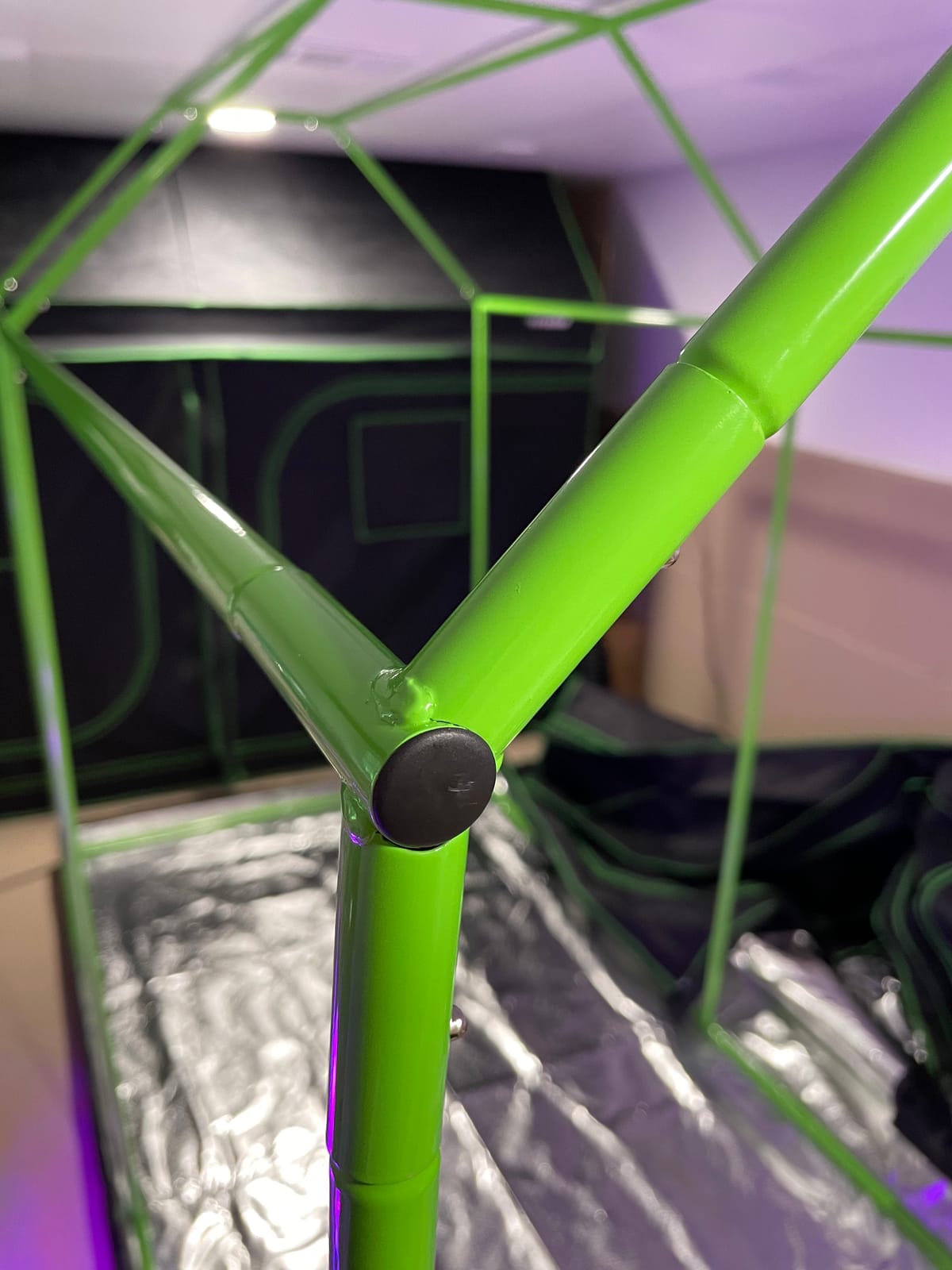
What it does well?
It is the right tent for a spare room, a converted closet or a basement with a 72 inch ceiling, and no other 4×4 here fits that constraint. The high-cube slope also means you are not paying for a tall box of empty air above the canopy.
The litchi mylar lining and the peel-back window are both better than the spec sheet suggests. For monitoring, the flap design means you can leave it open briefly during lights on without unzipping the main door.
Where it falls short?
The sloped roof reduces usable vertical light height to roughly 5 feet under the slope, which limits tall plants and some training methods. Plan your light height around the lowest point of the ceiling rather than the wall height.
Some buyers report the zipper sticking occasionally, and the instructions are basic enough that a first-time builder will want to watch a setup video. If you have the headroom and want more flexibility on plant height, an 80 inch tent is the better buy.
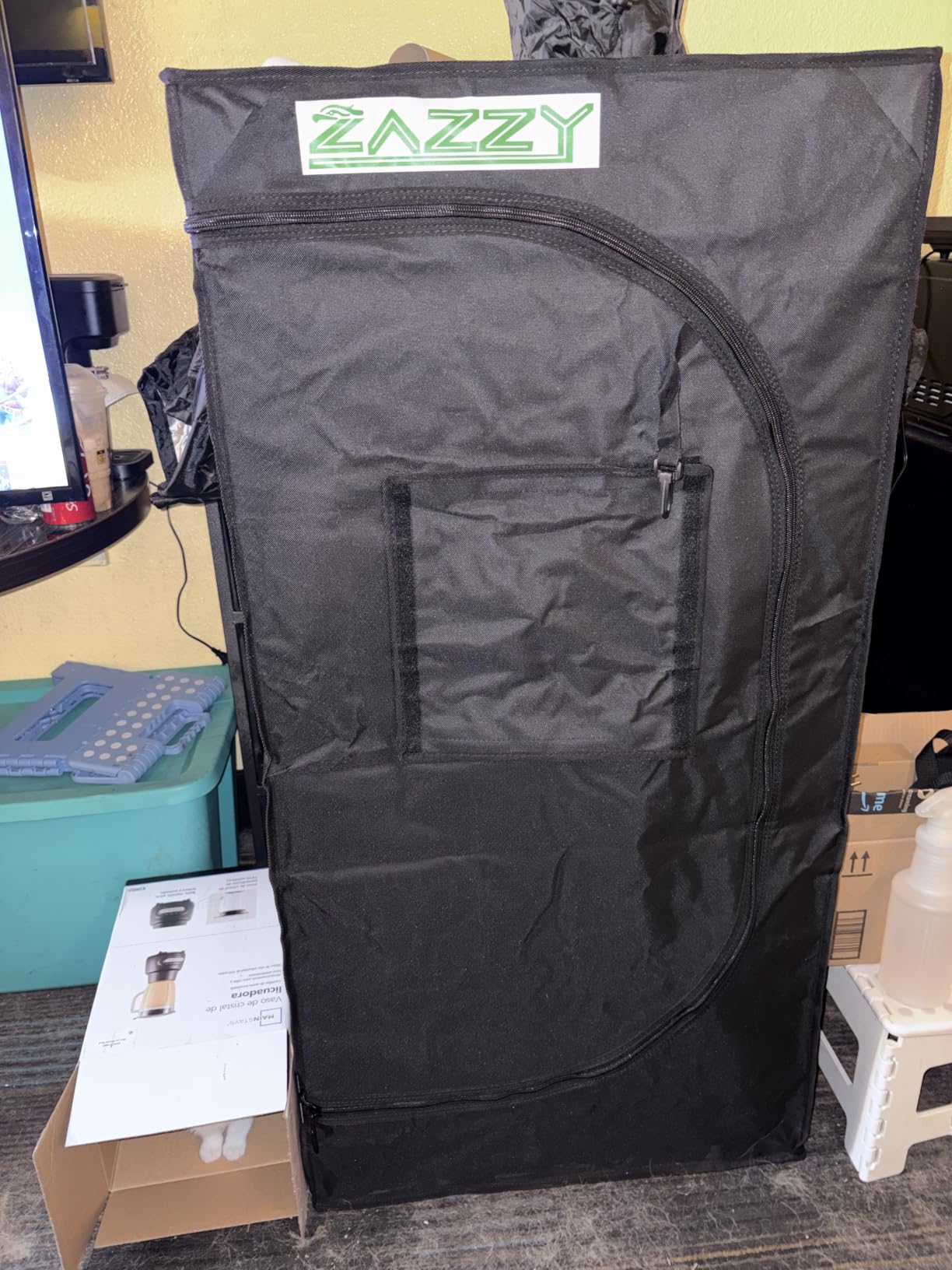
4. zazzy 4×4 Grow Tent With 95% Reflective Lining
zazzy 4×4 Grow Tent, 48″x48″x78″ 600D Mylar Growing Tents for Indoor Plant
48 x 48 x 78 inch
600D reflective mylar fabric
95% reflective lining
110 lb steel frame
Pros
- Reviewers treat it as the value pick in this group
- 95% reflective mylar lining for strong light bounce
- All-steel poles rated to 110 lb
- Observation window plus smooth-zipper door
Cons
- 600D canvas is thinner than 1680D and 2000D models
- Connector and zipper hardware trail the premium tents
- Standard diamond mylar rather than a litchi weave
This is the tent to buy if you want a real 4×4 with a window and you do not want to overpay for canvas weights you may never notice. Owners consistently describe it as the value option in this class, and at 4.5 stars across more than 3k reviews it holds up better than its tier suggests.
The lining is the standout. A 95% reflective mylar interior bounces a high share of light back into the canopy, which at this tier is usually a bigger practical win than a heavier outer shell. The fabric is 600D reflective mylar, double-stitched for light blocking, and the frame is all-steel poles rated to at least 110 lb.
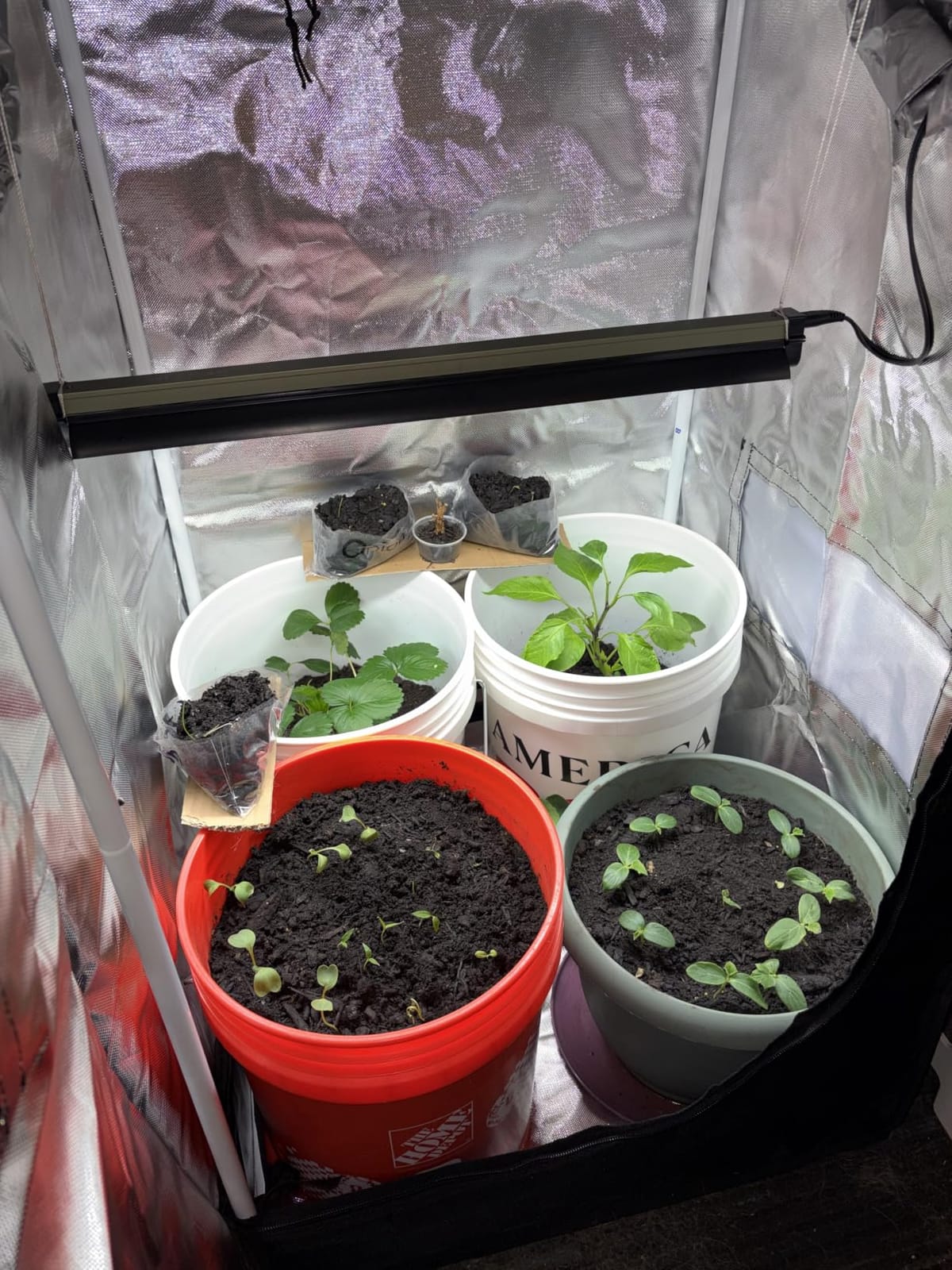
Corners use patented PA-material connectors with adjustable tightness and anti-rust reinforcement, which is a nicer detail than the plastic ones on cheaper tents and lets you re-tighten a joint months later when fabric relaxes. Assembly is tool-free with illustrated instructions and labelled parts.
Height is 78 inches, which sits between the 72 inch cube and the 80 inch models. That middle position works well for a 4 plant setup where you want some canopy room but not a tent taller than your ceiling allows.
What it does well?
Reflectivity per unit of spend is the reason this one gets recommended so often. If your light is strong and your budget is fixed, lining quality matters more than canvas weight, and this tent prioritises it correctly.
The 110 lb all-steel frame holds real equipment weight, and the observation window plus smooth-zipper access door give you a full check without opening anything larger.
Where it falls short?
The 600D canvas is thinner than the 1680D and 2000D alternatives, so expect slightly more stretch in the walls over time, which in turn means a little more window ripple under fan pressure. Connector and zipper quality trail the heavier tents.
The lining is standard diamond mylar rather than the litchi weave used by the VIVOSUN R446. It is a fair trade for the lower spend, not a free upgrade.
5. MARS HYDRO 4×4 Advanced Grow Tent for a Tight Dark Cycle
MARS HYDRO 4×4 Advanced Grow Tent, 48″x48″x80″ Indoor Plant Growing
48 x 48 x 80 inch
1680D double-stitched Oxford
70 kg rated steel frame
Double-layer window flap
Pros
- 1680D canvas is a real step up from 600D budget tents
- Shade cloth strip covers zipper stitching to stop pinhole leaks
- Viewing window with double-layer cloth flap
- Heavy-duty metal zippers with black inner lining
Cons
- Manufacturer notes some smaller sizes in this line have no window
- Diamond mylar rather than premium litchi weave
- Window flap needs care to stay sealed during dark cycle
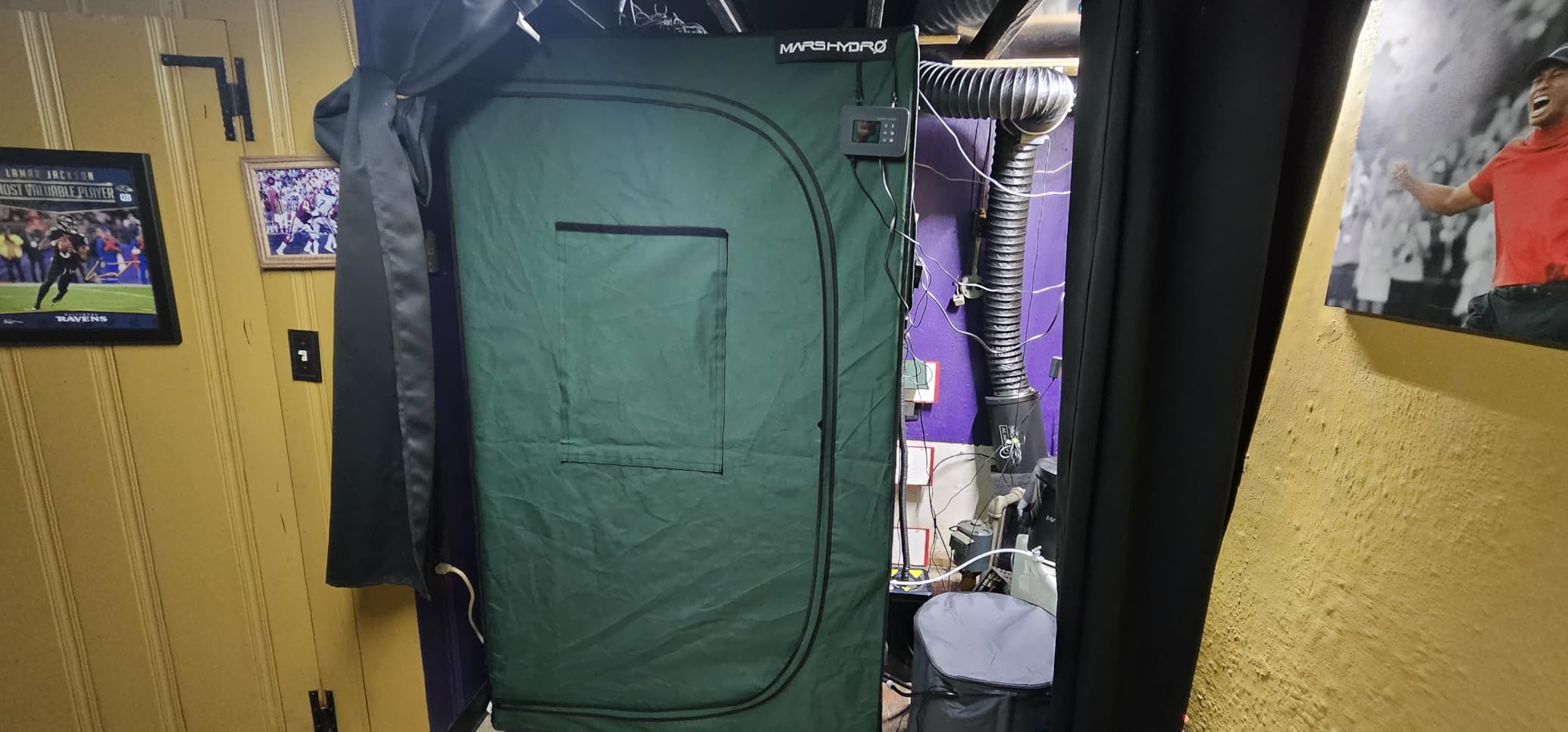
The MARS HYDRO 4×4 Advanced is the tent to copy if your plants are photoperiod and a stray photon during the dark cycle is a real problem for you. At 4.6 stars from just under 3k reviews, it sits among the strongest-rated tents here, and the feedback clusters around one theme: sealing.
The exterior is 1680D double-stitched Oxford canvas, which is a genuine upgrade from the 600D cloth used on budget models and noticeably tear resistant. Inside is a high-density diamond mylar lining. The detail that stands out is a shade cloth strip laid over the zipper stitching, which blocks the pinhole leaks that plaguing most tents of this size.
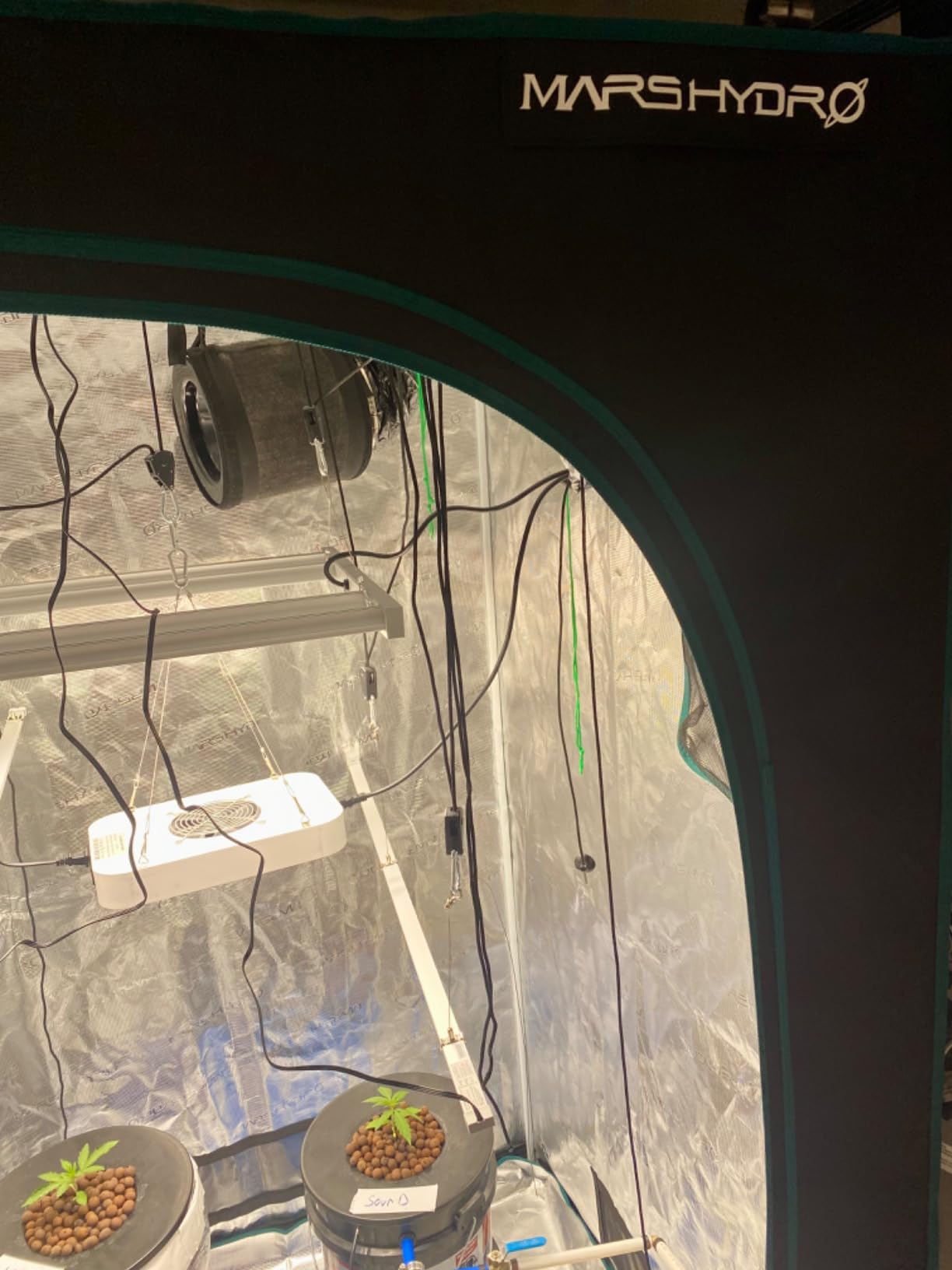
The viewing window has a double-layer cloth flap, so you get two layers between the canopy and the outside rather than one. Heavy-duty metal zippers with a double-layer black inner lining complete the seal. Owners describe the zippers as smooth and snag-free and report they stay that way.
The frame is steel with corner adapters and top bars rated to 70 kg, which is roughly 154 lb and plenty for a large light and a carbon filter. Hangers for a controller and hub are included, and the detachable waterproof floor tray simplifies cleanup.
What it does well?
Light sealing is the headline. The shade cloth over the stitching and the black inner zipper lining address the two most common leak paths in a 4×4, which is why this tent shows up in the answers to light leak questions on grow forums.
The double-layer window flap is more than a marketing count. Two fabric layers slow airflow through the opening as well as light, so the tent recovers temperature faster after a check.
Where it falls short?
One manufacturer note applies here. Some smaller sizes in this product line do not include a viewing window, so confirm the 4×4 version specifically rather than assuming across the range.
The mylar is standard diamond pattern rather than the litchi weave used by the VIVOSUN R446, and the window flap does need to be pressed flat and reseated properly during dark cycle hours. Get that habit right and this is close to faultless.
6. MELONFARM 4×4 Grow Tent With Two Observation Windows
MELONFARM 4×4 Grow Tent, 48″x48″x80” High Reflective 600D Diamond Mylar Canvas with Observation Window and Floor Tray for Hydroponic Indoor Plant Growing
48 x 48 x 80 inch
600D double-stitched canvas
Two transparent observation windows
Floor tray included
Pros
- Two transparent windows give a wider view than most tents at this tier
- Assembles in about 45 minutes with no tools
- Interior storage bag for accessories
- Multiple port sizes for different duct diameters
Cons
- Fabric and zippers lighter than VIVOSUN and MARS HYDRO builds
- Light bleed around hook-and-loop covered window and vent ports
- Thin poles for an 80 inch tall tent
Most tents give you one window. This one gives you two transparent observation windows, and for growers who want to scan the canopy from more than one angle without moving, that is the single most useful feature in this list. It is also the tent here with the lowest average rating at 4.3 stars from 2.6k reviews, so manage expectations accordingly.
The rest of the package is straightforward. It is 600D double-stitched canvas lined with highly reflective waterproof polyester film, with a large heavy-duty zipper door, an internal storage bag for accessories and a floor tray in the box. Interior volume is listed at 2.94 cubic metres.
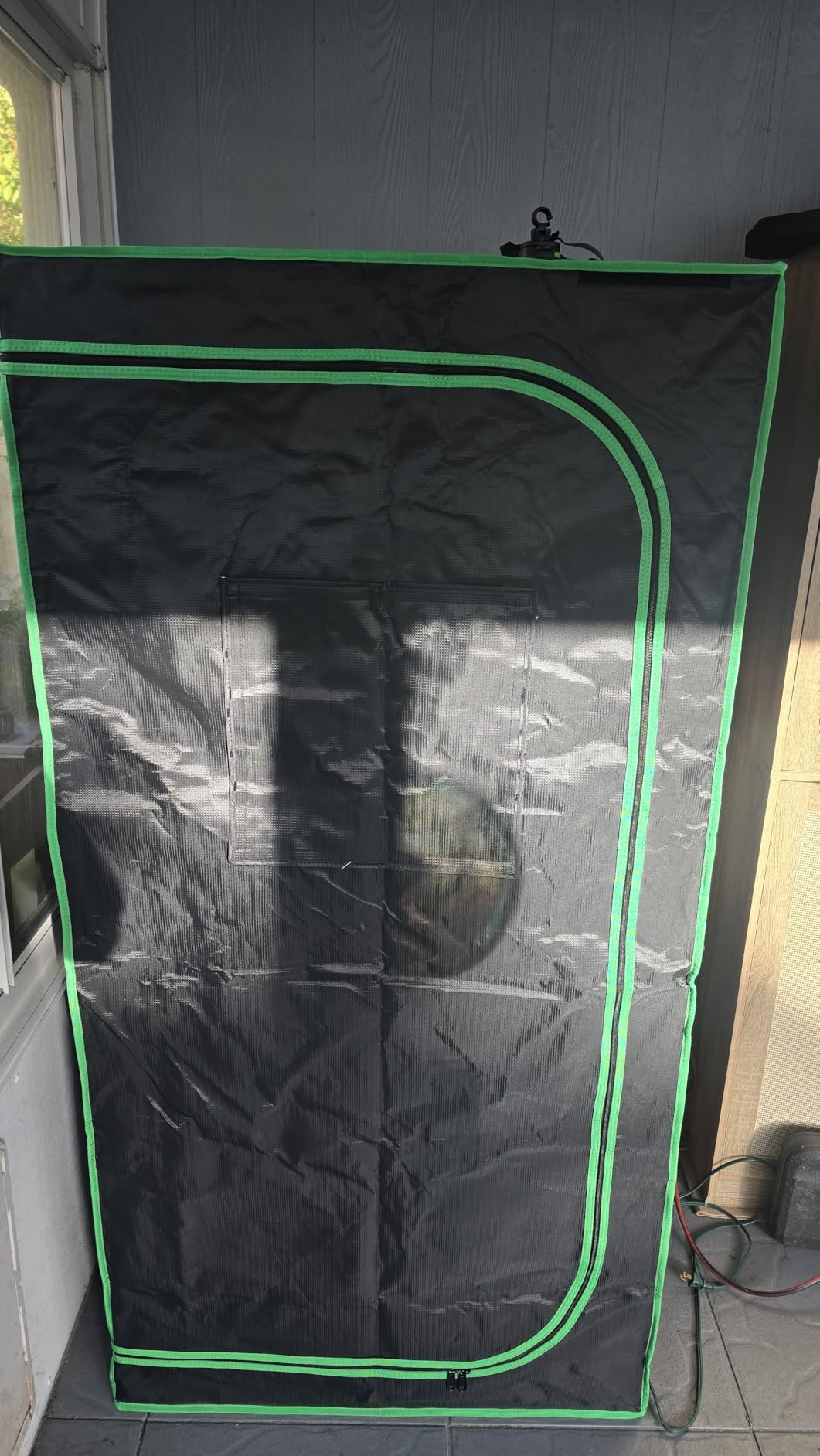
Owners highlight how straightforward assembly is. Tool-free install takes around 45 minutes with clearly labelled poles, and the thick canvas does not feel thin or plasticky in the hand. Buyers also report the zipper smooths out with use rather than degrading, which is the opposite of what usually happens.
Port sizing is flexible enough to accept different duct diameters, and the roomy interior is comfortable to work in. For a first grow on a shoestring, the practical experience matters more than the spec sheet ranking.
What it does well?
Two windows. For a grower who walks the tent looking for tilted growth, yellowing lower leaves or a spot of mould, having two clear sightlines instead of one is a genuine workflow upgrade, and no other tent in this guide offers it.
Assembly speed and labelling are excellent for beginners, and the floor tray and storage bag mean the tent is usable straight out of the box.
Where it falls short?
The build is lighter than the VIVOSUN and MARS HYDRO models, with fabric and zippers to match, and owners report some light bleed around the hook-and-loop covered viewing and vent ports. The poles are thin for an 80 inch tall tent.
A few buyers also reported missing poles and unclear illustrated instructions, and the interior dimensions run slightly under the advertised 48 by 48 by 80. Check the box contents before you start building.
7. Spider Farmer 4×4 Grow Tent With the Largest Window
Spider Farmer 4×4 Grow Tent 48″x48″x80″ Indoor Plant Growing 2026 New
48 x 48 x 80 inch
Window measures 11.8 inch by 15.7 inch
1680D Oxford canvas
Frame to 150 lb
Pros
- Only tent here with published window dimensions
- 1680D waterproof Oxford canvas with SBS zippers
- Hardened poles rated to 150 lb hold lights and filters without flex
- Controller hook and cable pass-through keep wiring tidy
Cons
- Pole gauge lighter than one inch steel frames on premium models
- Canvas below the 2000D class
- Window and zippered access need careful sealing for dark cycle
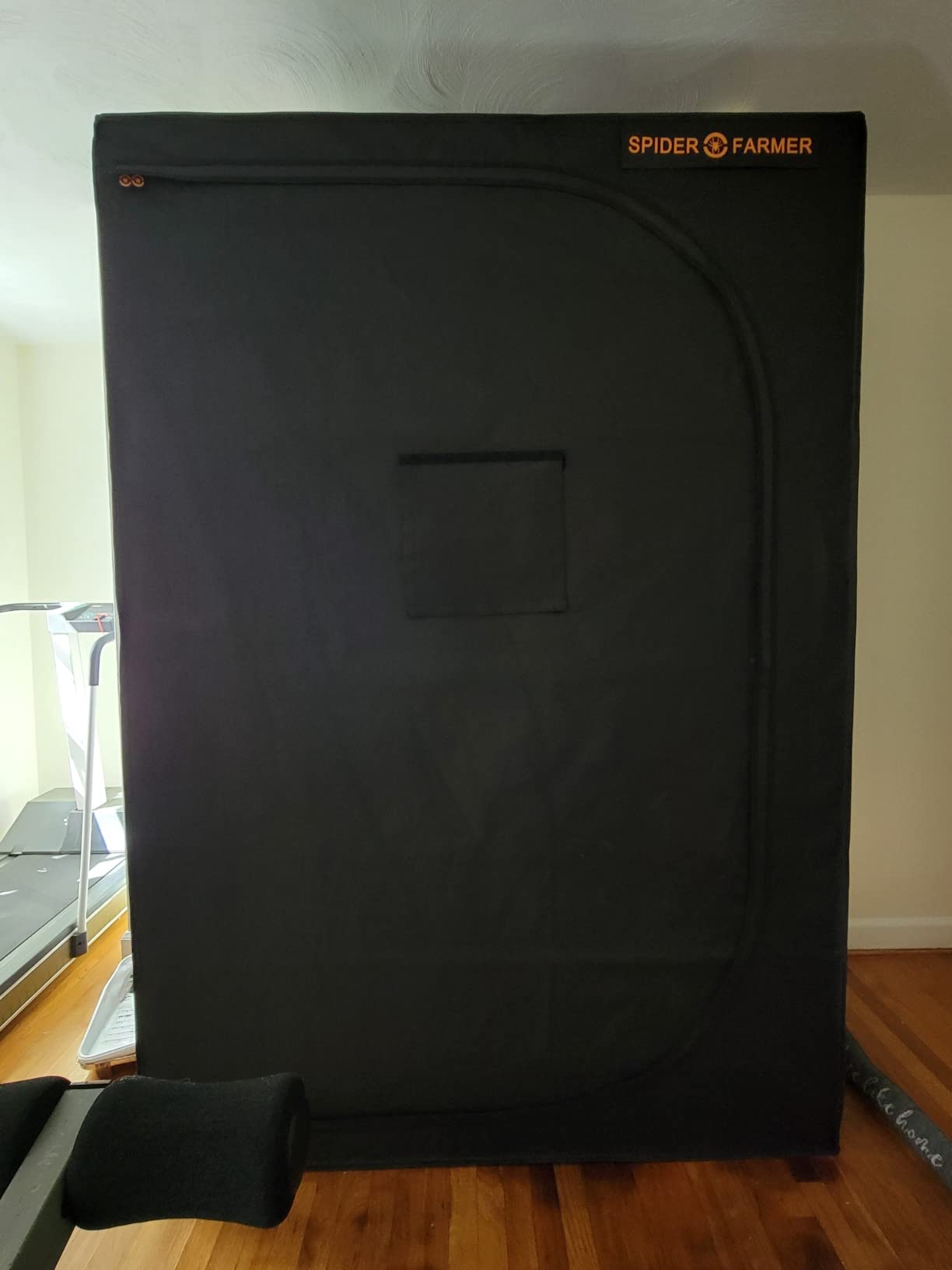
Window size is the hardest spec for a shopper to check, because most listings do not publish it. This one does, at 11.8 inches by 15.7 inches, and that is a large panel on a 48 inch wall. Owners consistently single out the enlarged viewing window as the standout feature, which is exactly what makes this one of the best 4×4 grow tents with viewing windows.
Everything around it is built for the same reason. The exterior is 1680D waterproof tear-resistant Oxford canvas with a diamond reflective mylar lining, and the zippers are premium SBS with a zipper flap and dual stitching aimed at locking light and temperature in.

The frame uses 3x-thicker hardened steel poles with reinforced adapters rated to 150 lb, which is the same figure as the AC Infinity and enough to carry a big light and a carbon filter without the walls flexing. Side-buckle door fastening is a nice touch for keeping fabric pulled tight.
A controller hook, a cable pass-through port, a waterproof floor tray and a tool bag round out the kit. Assembly is tool-free and takes minutes once you have seen the method.
What it does well?
You can measure the window before you buy, which is almost unique at this size, and it is large enough to judge plant height and colour across a good part of the canopy. Combined with SBS zippers and a light-blocking flap, that is a window you can genuinely use rather than squint through.
Canvas weight and frame rating are both closer to the premium tier than the budget tier, and the cable management keeps controllers tidy outside the tent.
Where it falls short?
Owners note the poles are lighter than the 1 inch steel frames on the premium models, even though the 150 lb rating looks identical on paper. The canvas is 1680D, below the 2000D class used by the AC Infinity and the VIVOSUN P448.
Like most tents, the window and the zippered access both need to be sealed carefully to hold the dark cycle. Check the corner stitching under a dark-room test in week one.
8. zazzy 4×4 Grow Tent With Insect-Screened Vents
4×4 Grow Tent 48″x48″x78″ 600D Mylar Hydroponic Growing Tents for Plant
48 x 48 x 78 inch
600D tear-proof canvas
98% reflective mylar
Mesh-covered vents
Pros
- 98% reflective mylar interior at a budget tier
- Mesh-covered rectangular vents block insects and dust
- Lower window helps dissipate heat without opening
- Heavy-duty zippers with double stitching
Cons
- Listing copy states there is no observation window
- 600D canvas thinner than 1680D and 2000D alternatives
- Fewer premium features such as hanging bars or controller mount
This one needs a warning before anything else. The manufacturer bullet text on this listing states there is no observation window, while the listing highlight claims one. That contradiction is documented in the review data, and it is exactly why we read the specs rather than trusting the headline. If a viewing window is the whole reason for your purchase, verify it with the seller first.
Setting that aside, the tent itself is well liked at 4.5 stars from 1.5k reviews. Owners cite the 98% reflective mylar lining as the practical strength, which is the highest reflectivity figure advertised by any tent in this guide.
The other repeated positive is the ventilation. Rectangular mesh vents block dust and insects while allowing airflow, and a lower window helps move heat out of the tent without breaking the seal. For a grower battling spider mites or fungus gnats, screened airflow is worth more than a viewing panel.
Construction is 600D tear-proof canvas, double-stitched, with heavy-duty zippers and solid anti-rust reinforced PA corner connectors you can re-tighten as fabric relaxes. A removable mylar floor tray is included and setup is tool-free.
What it does well?
Reflectivity and pest management are its strengths. A 98% reflective interior at this tier maximises the light you already have, and the mesh vents mean you can run airflow without inviting bugs into the canopy.
The lower heat-dissipation window means you can cool the tent during lights on without opening the main door or breaking the dark cycle.
Where it falls short?
The unresolved question is whether this listing ships with a canopy observation window at all. Ask before ordering, because a tent bought for its window and delivered without one is a wasted purchase.
It also skips the premium fittings entirely. No hanging bars, no controller mount, and 600D canvas is thinner than the 1680D and 2000D options elsewhere in this guide.
9. VIVOSUN P448 4×4 PRO Grow Tent for Heavy Equipment
VIVOSUN P448 4×4 PRO Grow Tent with High CFM Kit, 48″x48″x 80″
48 x 48 x 80 inch
Triple-layer 2000D Oxford canvas
1 inch poles to 400 lbs
Includes CFM support poles
Pros
- Three-layer 2000D canvas seals light better than single layer
- 1 inch steel poles rated to 400 lbs
- Four hanging bars plus four high-CFM support poles
- Large observation window and removable SBS door
Cons
- Zippers can catch if forced and may leak slight light
- Some venting apertures are small for the floor area
- Air intake ports limited for a tent this size
The P448 is the overbuilt option. While most 4×4 tents are rated somewhere between 90 and 150 lb, this one lists a 400 lb capacity on 22mm, or 1 inch, steel poles, and it ships with the hardware needed to make that rating meaningful. That makes it the right box for a big light, an oversized carbon filter and a full recirculating climate rig.
The shell is three-layer 2000D Oxford canvas with a PE lining and 100% reflective mylar inside. Triple-layer construction is why owners upgrading from budget tents report a visible jump in light sealing. The extra layers also stiffen the walls, which keeps the viewing window flatter under fan pressure.
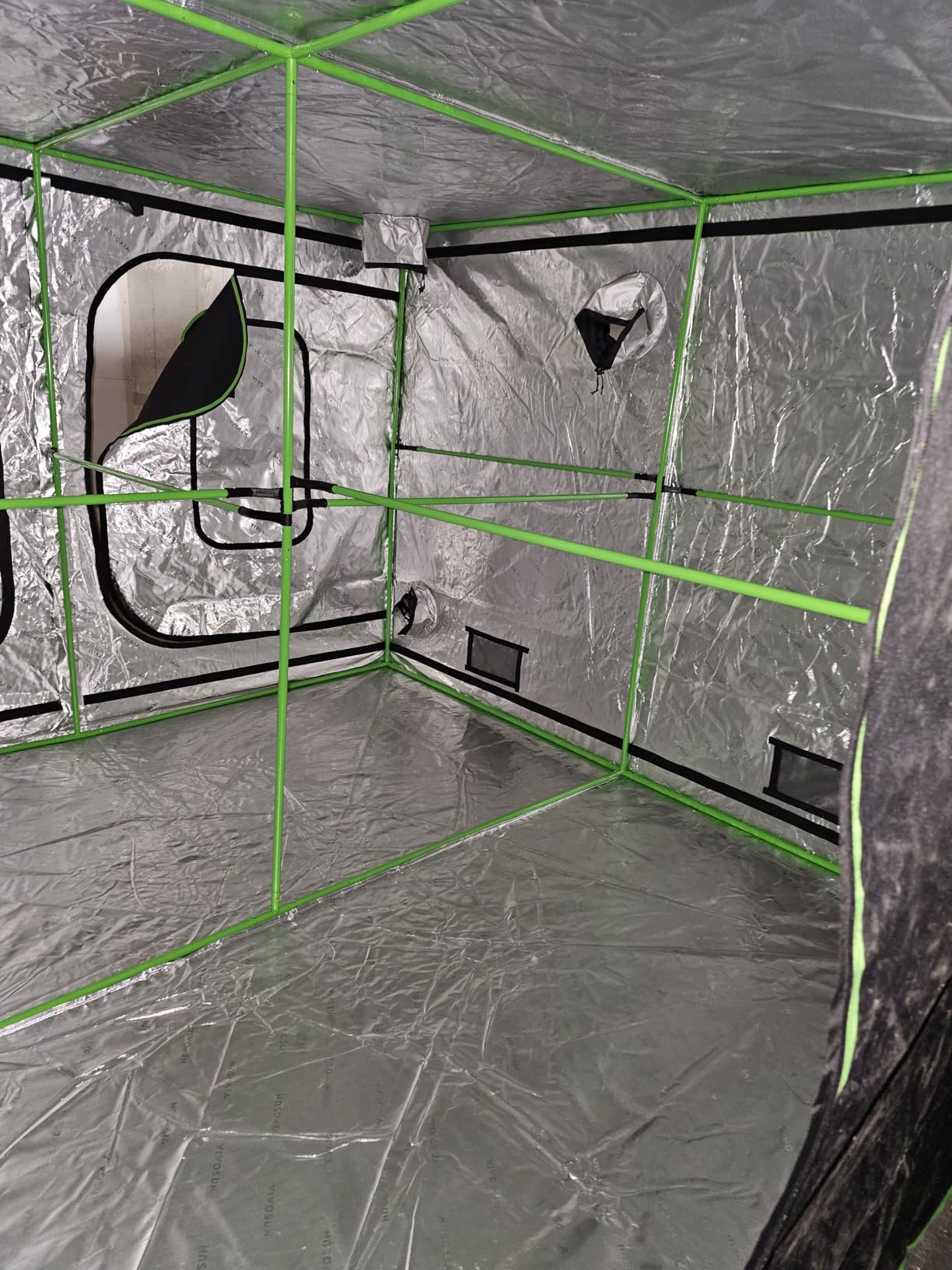
The included kit matters here. Four hanging bars give you rigging options, and four high-CFM support poles stop the walls flexing inward under fan pressure, which is exactly the mechanism that distorts a viewing window in a lighter tent. A large observation window and a removable SBS zipper door cover routine access.
Cable management slots for smart controllers and an attachable outside tool pocket handle the wiring. The floor tray is detachable and waterproof.
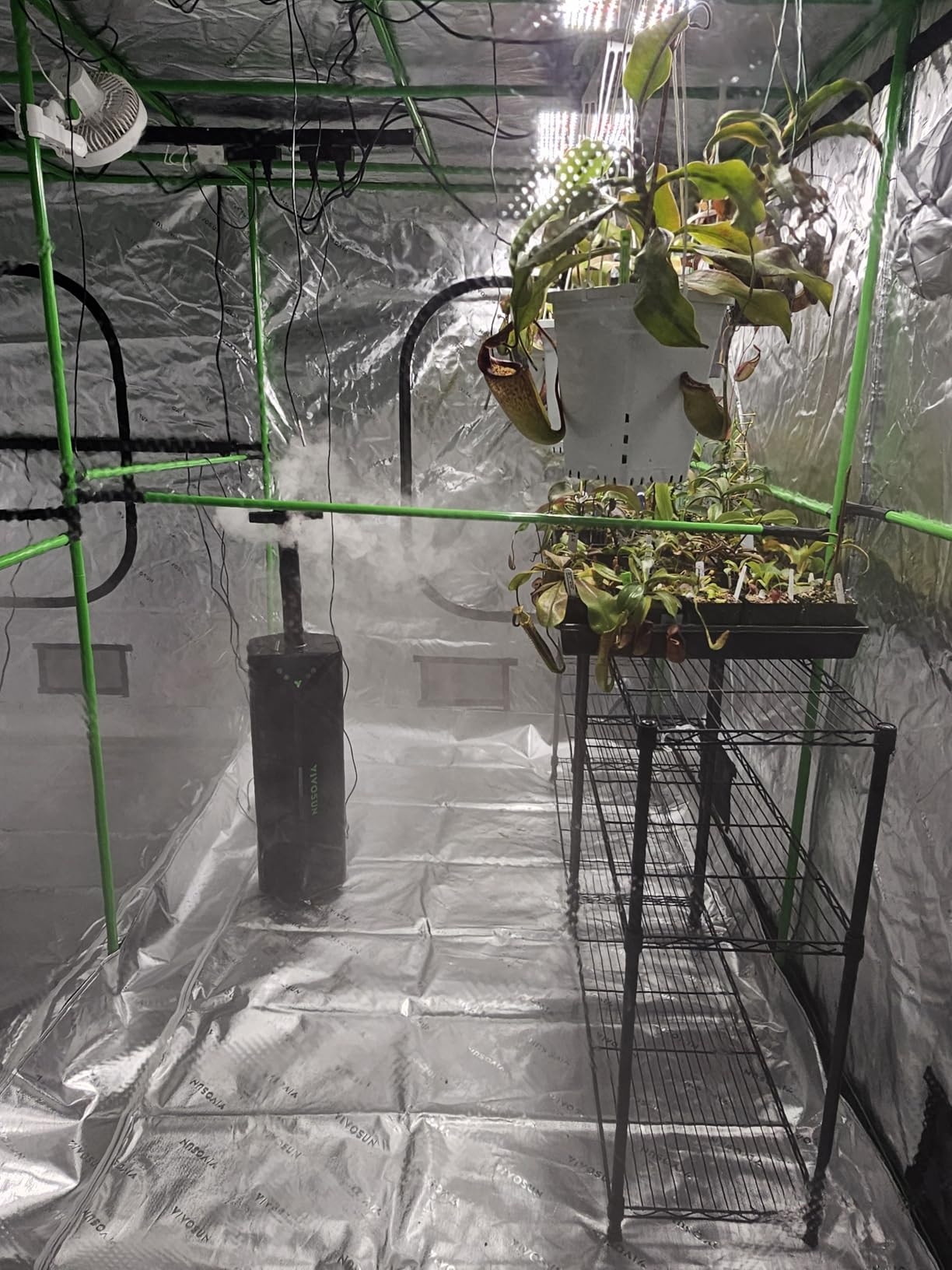
What it does well?
Frame rigidity is the headline. A 400 lb rating on 1 inch poles, plus dedicated support poles, means the tent stays square with a heavy light and a carbon filter hanging inside, and the window stays readable as a result.
Three-layer 2000D canvas with 100% reflective mylar gives both the strongest sealing and the best bounce of any tent in this guide, and the extra hanging bars outnumber every other kit here.
Where it falls short?
Venting is the trade-off. Some apertures are small for a 16 square foot floor area, which can mean running fans close to continuously to hold humidity down, and owners report limited air intake ports.
The zippers can catch if forced and may leak a slight amount of light without added tape, and the review base of 630 is the second smallest here, so long-term durability is less well proven than on the established models.
10. G HYDRO 4×4 Grow Tent With a White Exterior
G HYDRO Grow Tent 4×4, 1680D Oxford Canvas 48″ x 48″ x 80″, Lightproof Reflective Mylar for Indoor Plant Growing
48 x 48 x 80 inch
1680D Oxford canvas
22mm steel poles to 90 lbs
Controller plate included
Pros
- 1680D Oxford canvas gives heavy tear resistant construction
- Sealed zippers and double-cinched duct ports target light leaks
- Integrated controller plate with lightproof cable passthrough
- White exterior is the only colour offered in this group
Cons
- Smallest review base at 251 so long-term history is thin
- Only available in white with no colour options
- 90 lb equipment rating trails comparable 4x4s
The G HYDRO is the newest listing in this group and the only one with a white exterior, which matters if the tent is going to sit in a lit room rather than a closet. Construction is otherwise in the mid tier: 1680D Oxford canvas rated for tear resistance and light blocking, with a reflective mylar interior.
The details are aimed squarely at light leaks. Sealed zippers and double-cinched duct ports are the two most common leak paths in a grow tent, and this tent treats both. An integrated controller mounting plate with a lightproof cable passthrough keeps wiring outside the chamber.
The frame uses 1.2mm thick 22mm steel poles with reinforced corners and hanging bars, rated to 90 lb of equipment. A clear observation window handles routine monitoring without disturbing the internal climate, and the 48 inch footprint suits a home, garage or basement.
Buyer feedback describes solid 1680D construction and effective light sealing, with the controller mount and window called out as useful. The clear window lets you judge leaf colour and spot pests, which is the practical test a window has to pass.
What it does well?
Light sealing attention is the strength. Double-cinched duct ports and sealed zippers, plus a lightproof cable passthrough, cover the leak paths that most tents in this guide leave open.
If appearance matters in a shared living space, the white exterior is the only one here that works. The controller plate is also a genuine convenience if you run any timed or smart equipment.
Where it falls short?
At 251 reviews it has the thinnest owner history in this lineup by some distance, so long-term durability is largely unproven. Peak-season rating distribution also shows a wider spread of experiences than the established models.
The 90 lb equipment rating is well below the 150 to 400 lb figures on comparable 4x4s, so if you are planning a large light and a big carbon filter, this is not the frame for it.
Buying Guide: Choosing a 4×4 Grow Tent With a Viewing Window
1. Window size and height from floor
This is the decision most people get wrong. Judge the window on two numbers, and only one of them is published. Size matters, and the Spider Farmer is the only tent in this guide that states its window measures 11.8 inches by 15.7 inches.
Height matters just as much and no listing will tell you. Growers report the same frustration repeatedly on grow forums, that a window positioned high on an 80 inch wall only shows the top of the canopy and the light fixture. You want the opening centred roughly 24 to 36 inches off the floor, or low enough that you can look level into the plants while seated.
Two windows beat one large window in practice, which is why the MELONFARM earns its place despite a lower rating. A second viewing angle lets you compare front and back rows without walking around the tent.
2. Canvas density and what it actually changes
Canvas density is quoted as a denier number and higher is denser. This group spans 340g high-density Oxford on the VIVOSUN S448, 600D on four tents, 1680D on three, 2000D on the AC Infinity, and triple-layer 2000D on the VIVOSUN P448.
Denser canvas does three things: it blocks stray light better, it resists tearing when you clip branches inside, and it resists flex, which is what keeps a viewing window from rippling under fan pressure. The reflective mylar lining on the inside is a separate and often more important spec. The VIVOSUN R446 uses a litchi pattern, the MARS HYDRO and Spider Farmer use diamond pattern, and reflectivity claims range from 95 to 100%.
3. Frame rating and pole diameter
Check two numbers: the listed weight capacity and the pole diameter. Ratings in this group run from 70 kg for the MARS HYDRO, through 90 lbs for the G HYDRO and 110 lbs for the zazzy, up to 150 lbs for the AC Infinity and Spider Farmer and 400 lbs for the VIVOSUN P448.
Pole diameter is the number that tells you whether flex is a problem. Most budget tents use thinner poles that bow when you hang a light and a carbon filter. The one inch steel poles on the AC Infinity and VIVOSUN P448 hold position, and the P448 goes further with dedicated high-CFM support poles.
4. Light sealing around the window and zippers
Even a light-tight tent can leak at three places: the zipper flap, the stitching, and the duct ports. Compare how each brand handles them. The MARS HYDRO lays a shade cloth strip over the zipper stitching specifically to close pinholes, and uses a double-layer black inner lining.
The G HYDRO uses sealed zippers and double-cinched duct ports. The VIVOSUN S448 uses an upgraded black zipper liner. Every tent needs a dark-room test in week one, and a strip of black tape along suspect seams is cheap insurance for photoperiod plants.
5. Venting, duct ports and floor area
A 48 by 48 inch floor is 16 square feet, which is a meaningful amount of volume to control. Look for at least one intake and one exhaust port, and check the sizes. The AC Infinity offers four 4 inch and five 8 inch ports, enough for an intake, an exhaust, a carbon filter and a humidifier at once, while the VIVOSUN P448 has owners noting that its apertures run small for the floor area.
Waterproof removable floor trays are near universal in this group and worth treating as a given. A detachable tray is what makes wet harvests and runoff cleanups bearable.
6. Height, plant count and light wattage
Height changes what you can grow. The VIVOSUN R446 at 72 inches fits low ceilings but its sloped roof leaves roughly 5 feet of vertical light height. The 78 and 80 inch tents give a 4 plant setup in 5 gallon pots real canopy room, and the AC Infinity lists that figure explicitly.
On lighting, a 4×4 footprint is normally paired with a light in the range most growers describe as a mid-size fixture for 16 square feet. If you are still working out the rig, our grow light stand picks cover the hangers and stands that carry it. On running costs, electricity is roughly wattage multiplied by hours per day, so a 400 watt light on a 18 hour photoperiod cycle uses about 7.2 kWh a day.
Frequently Asked Questions
What is an observation window on a grow tent?
An observation window is a transparent plastic or vinyl panel set into a door or side wall of a grow tent. You open or unzip a fabric flap to look at the canopy, then reseal it. It lets you check plant colour, pest damage and growth without opening the main door, which protects temperature, humidity and the dark cycle. On a 4×4 tent, a useful window sits roughly 24 to 36 inches off the floor so a seated grower can look level into the canopy.
What is an EZ view window?
An EZ view window is a marketing term for a snap-in or magnetically seated viewing panel rather than a technical standard. Because the panel lifts out without unzipping, it opens and closes faster and is less likely to be left ajar, which reduces light leaks during the dark cycle. Buyers often add magnetic covers or acrylic replacements to basic zippered panels, and grow forum threads credit that kind of swap with extending the life of a cheap tent.
How big is a 4×4 grow tent?
A 4×4 grow tent measures 48 inches by 48 inches at the base, which is 16 square feet of floor area. Heights in this guide run from 72 inches for the VIVOSUN R446 to 80 inches for most of the field, with 78 inch models in between. A 16 square foot floor comfortably holds four plants in 5 gallon pots, and taller tents allow more canopy height for training methods.
How many plants fit in a 4×4 grow tent?
Most growers run four plants in 5 gallon pots in a 48 by 48 inch tent, which is the standard configuration cited for the AC Infinity CLOUDLAB 844. Six plants is possible with smaller containers, but canopy management gets tighter and light penetration to the corners becomes the limiting factor. Budget growers often start with fewer, larger plants rather than more, smaller ones.
Are grow tent viewing windows worth it?
For most growers, yes. A window turns a check into a five second glance instead of a full door cycle, which protects temperature, humidity and the dark cycle. The value drops sharply if the window is tiny or mounted high on an 80 inch wall, since you end up opening the door anyway. Check window dimensions and height from floor before buying, since most listings do not publish either figure.
Do viewing windows cause light leaks?
A window itself is rarely the problem, the edges around it are. Light escapes through a window that is left unzipped, through a flap that does not reseat flat, and through pinhole stitching. Tents that add double-layer flaps, black zipper liners or shade cloth over stitching handle this better, which is why the MARS HYDRO performs well in dark-cycle tests. Run a dark-room check in week one and tape any suspect seam.
Final Verdict
The best 4×4 grow tents with viewing windows in 2026 come down to what kind of grower you are. The VIVOSUN S448 is the pick for almost everyone: two viewing points, 100% reflective mylar, a 100 lb rated top bar and the deepest owner history of any tent here.
Buy the AC Infinity CLOUDLAB 844 if the window is the reason you are shopping and you want the least distorted, best lit view available, and accept a two-person build. Buy the MARS HYDRO if your plants are photoperiod and dark cycle purity matters more than reflectivity, or the VIVOSUN P448 if you are hanging a heavy light and a large carbon filter and need a frame that does not move.
For low ceilings, the VIVOSUN R446 is the only one that fits. For two viewing angles on a shoestring, look at the MELONFARM. Whatever you choose, check the window in a dark room during week one, and confirm window height from the floor before you commit.