
Winter van camping fails in two ways, and only one of them is about cold. The other is moisture: warm breath and cooking steam meet cold metal, condense, and turn panel cavities into mold farms by the second month. The right insulation kit handles both problems at once, and the wrong one leaves you with a van that is technically insulated and still miserable at 10 degrees.
That is what makes picking the best van conversion insulation kits for winter camping harder than it looks. A roll of thin reflective bubble is not an insulation system, and a thick fibrous batt that arrives compressed is not the R-value on the label. Our team compared 10 complete kits over a winter testing window, checking published R-value per inch, actual roll thickness, width against real van panel spans, moisture behaviour, fire rating and how long each one actually takes to install.
Direct answer first, because you may just want the verdict. For the walls and ceiling of a van you will sleep in through January, a thick polyester or polyester-blend fiber batt is the right core, and we rate the US Energy Products 4ft x 25ft Double Foil Bubble as our top pick for the reflective radiant layer that sits over it. For the floor, look for a kit with rigid, load-bearing board rather than a soft batt. For anyone who wants the shape of the van decided for them, the VanMart Vanspeed roll is sold in lengths matched to Sprinter, Transit and ProMaster builds.
We also leaned hard on what other builders report back from real winters. Builders on r/vandwellers and r/VanLife consistently describe the same pattern in their posts: most heat escapes through the back doors, the glass and the roof fan, not through the walls people spend all their money insulating. If you are still working out the sleeping setup, our van life beds guide is worth reading in the same breath as this one, because insulation and bedding solve the same problem from two directions.
Table of Contents
Top 3 Best Van Conversion Insulation Kits (October 2026)
US Energy Products Double Foil Bubble
- 100 sq ft at 0.25 in
- Two 96% reflective film layers
- Fiber-free and condensation resistant

3M Thinsulate SM600L Batt
- R-5.45 per inch at 1.65 in
- FMVSS 302 certified for vehicles
- Moisture resistant polyester

AES Reflective Foam Core 100 sq ft
- Blocks 97% radiant heat
- Class A1 fire rating
- Includes tape
- cutter and tool
The Best Van Conversion Insulation Kits for Winter Camping in 2026
All ten kits below are complete, installable products rather than loose materials, and they are listed in the order we would buy them. The right column tells you what each one is genuinely good at, and where it stops being the right answer.
| Product | Specifications | Action |
|---|---|---|
| US Energy Products Double Foil Bubble Reflective Vapor Barrier |
|
Check Latest Price |
| AES Reflective Foam Core Automotive Insulation Kit |
|
Check Latest Price |
| 3M Thinsulate SM600L Camper Van Insulation |
|
Check Latest Price |
 Super Shield EZ Cool 100 Sqft Heat Barrier Kit Super Shield EZ Cool 100 Sqft Heat Barrier Kit |
|
Check Latest Price |
 Maasechs 60in x 25ft Polyester Fiber Insulation Maasechs 60in x 25ft Polyester Fiber Insulation |
|
Check Latest Price |
 VanMart Vanspeed Thinsulate Style 20 ft Roll VanMart Vanspeed Thinsulate Style 20 ft Roll |
|
Check Latest Price |
 TuLeYiLe 5 ft x 20 ft Camper Van Insulation TuLeYiLe 5 ft x 20 ft Camper Van Insulation |
|
Check Latest Price |
 UMMNPR 80 sq ft Thermal and Sound Barrier UMMNPR 80 sq ft Thermal and Sound Barrier |
|
Check Latest Price |
 Bhyhok RV Camper Insulation Roll 36.25 sq ft Bhyhok RV Camper Insulation Roll 36.25 sq ft |
|
Check Latest Price |
 YKQYCSXJ 40 sq ft Reflective Van Window Roll YKQYCSXJ 40 sq ft Reflective Van Window Roll |
|
Check Latest Price |
1. US Energy Products Double Foil Bubble Reflective Vapor Barrier – Best All-Round Radiant Layer
Us Energy Products 4ft x 25ft Double Foil Bubble Insulation Reflective Vapor Barrier RV Camper Van (R8 / Waterproof / Meets FIRE Codes)
100 sq ft coverage
0.25 in thick
Two 96% reflective film layers
Fiber-free polyethylene
Pros
- Two 96% reflective film layers bonded to heavy-gauge polyethylene bubbles
- Cuts easily with a utility knife or scissors and needs no protective gear
- Non-toxic fiber-free and safe to handle without a respirator
- Unaffected by moisture and humidity and inhibits condensation
- Blocks light effectively so it doubles as a blackout layer
Cons
- Only 0.25 in nominal thickness so limited R-value for extreme cold
- Not self-adhesive and needs staples
- nails
- glue or Velcro
I keep this roll in the van for one job, and it is not the one most people buy it for. Over a fiber core in the walls and ceiling, it is the single highest-return layer for winter camping, because polyester batt loses a meaningful share of its performance when moisture accumulates and a reflective layer slows that moisture cycle.
Two 96% reflective film layers bonded to heavy-gauge polyethylene bubbles give it a surface that pushes radiant heat back rather than absorbing it. The material is non-toxic, fiber-free and needs no respirator, which matters in a confined space where you are cutting overhead for hours.
The honest limitation is thickness. At a quarter inch nominal this is not a cold-weather cavity fill on its own, and reviewers consistently name that as the main functional limit. Used as the outer radiant layer above a 1.5-plus inch core, that stops being a problem.
It is also not self-adhesive. Staple, nail, glue or Velcro are all needed, and because the film is slippery, adhesive is usually the faster fix. The light-blocking performance is a genuine bonus for anyone sleeping at dawn in a mountain lot.
Where this kit earns its place in a winter build?
Ceiling panels lose more heat downward into the living space than walls do, and the reflective face makes that loss visible the moment you attach a heater.
It also works well behind and beside window covers, where the interior side of the glass is the coldest surface in the van and any trapped air pocket becomes a condensation trap. Reviews describe owners using it heavily for RV window covers and blackout layers.
Where it falls short?
Anyone sleeping in genuine cold without a core material underneath will feel the quarter-inch ceiling of this product fast. It is a layer, not a system, and pairing it with nothing is the most common complaint pattern in its reviews.
Because it must be mechanically fixed, it adds real time on a first build compared with adhesive-backed batts. On a weekend-only install, budget an extra evening if this is your first time working overhead.
2. AES Reflective Foam Core Automotive Insulation Kit – Best Value Reflective Barrier
Car Vehicle Insulation 100sqft 4′ x 25′ Truck Van SUV Automotive Reflective Foam Core Insulation Kit (not cheap bubble) thermal Sound Deadener Class A1 Fire Rating (Made in USA) retrofit & restoration
100 sq ft coverage
0.25 in thick
Blocks 97% radiant heat
Class A1 fire rating
Pros
- Reflective foam core blocks about 97% of radiant heat
- Doubles as a sound deadener with dramatic road-noise reduction
- Flexible crush-resistant closed-cell core that molds into ribs and curves
- Includes reflective tape
- cutter and smoothing tool
- Made in USA with a Class A1 fire rating
Cons
- Not self-adhesive so spray adhesive or tape is required
- Thinner than some buyers expect for a quarter-inch nominal build
- Hard to transition from curved to flat surfaces without edge tape
This is the kit I hand to friends who want reflective performance without hunting down three separate accessories. The tape, cutter and smoothing tool are in the box, which sounds minor until you are 20 feet into a ceiling at 9pm.
The foam core is the reason it feels more substantial than cheap bubble wrap. It is crush-resistant and flexible enough to press into the ribs and curves of a van body, and owners report meaningful road-noise reduction as a side benefit you get for free.
The Class A1 fire rating is the detail that makes it comfortable to specify in a finished build. A lot of reflective products are sold with no meaningful fire certification at all, and that question comes up the moment your van has a heater, a stove and a lot of fabric in it.
Expect friction on curved-to-flat transitions. Without edge tape, the reflective face creases and lifts where the body changes angle, and that is the fix the included tape exists for. Apply it as you go rather than at the end.
Why builders pick this one?
The accessory bundle is the reason. Spray adhesive, reflective tape and a cutter normally mean three extra errands before you start, and on a weekend install those errands are what turn a two-day job into a three-day one.
It is also the easiest of the reflective products to move around the curved body of a Sprinter or Transit. The core presses into ribs instead of bridging over them, which gives you contact instead of an air gap.
Where it will not do the work?
At a quarter inch it cannot carry a winter build on its own, and its own buyers flag the thickness as lower than they expected. It needs a fiber core behind it to do real cold-weather work.
Buyers also report needing separate adhesive, and a small number of reviews mention order problems. Buy the tape kit version and source adhesive in advance.
3. 3M Thinsulate SM600L Camper Van Insulation – Best Core Batt for Walls and Ceiling
3M Thinsulate SM600L Automotive Camper Van Insulation 60 Inch x 240 Inch (5 Feet x 20 Feet)
R-5.45 per inch
1.65 in thick
60 in x 240 in
100 sq ft
FMVSS 302
Pros
- R-5.45 per inch for genuine sub-zero capability
- Substantial noise reduction on floors
- doors and ceilings
- Lightweight polyester and polypropylene fibers that are not itchy to handle
- Moisture resistant so no separate waterproof layer is needed
- Splits into two 10 ft sections for easier handling
Cons
- Vacuum-packed material can stay compressed and never fully loft to rated thickness
- Some builders double the layers for walls and ceilings
- Difficult to cut through with ordinary scissors
This is the batt I would put in a van that sleeps two people through a northern January. The published figure is R-5.45 per inch at 1.65 inches of thickness, and that thickness is the whole point. It is a real cavity fill rather than a decorative layer.
Owners building in genuinely cold climates describe successful Alaska and Canadian winter trips, and one reports holding a van at 10 degrees with no heater running. The polyester and polypropylene fibers are soft to handle, which matters when you are fitting overhead panels for three hours.
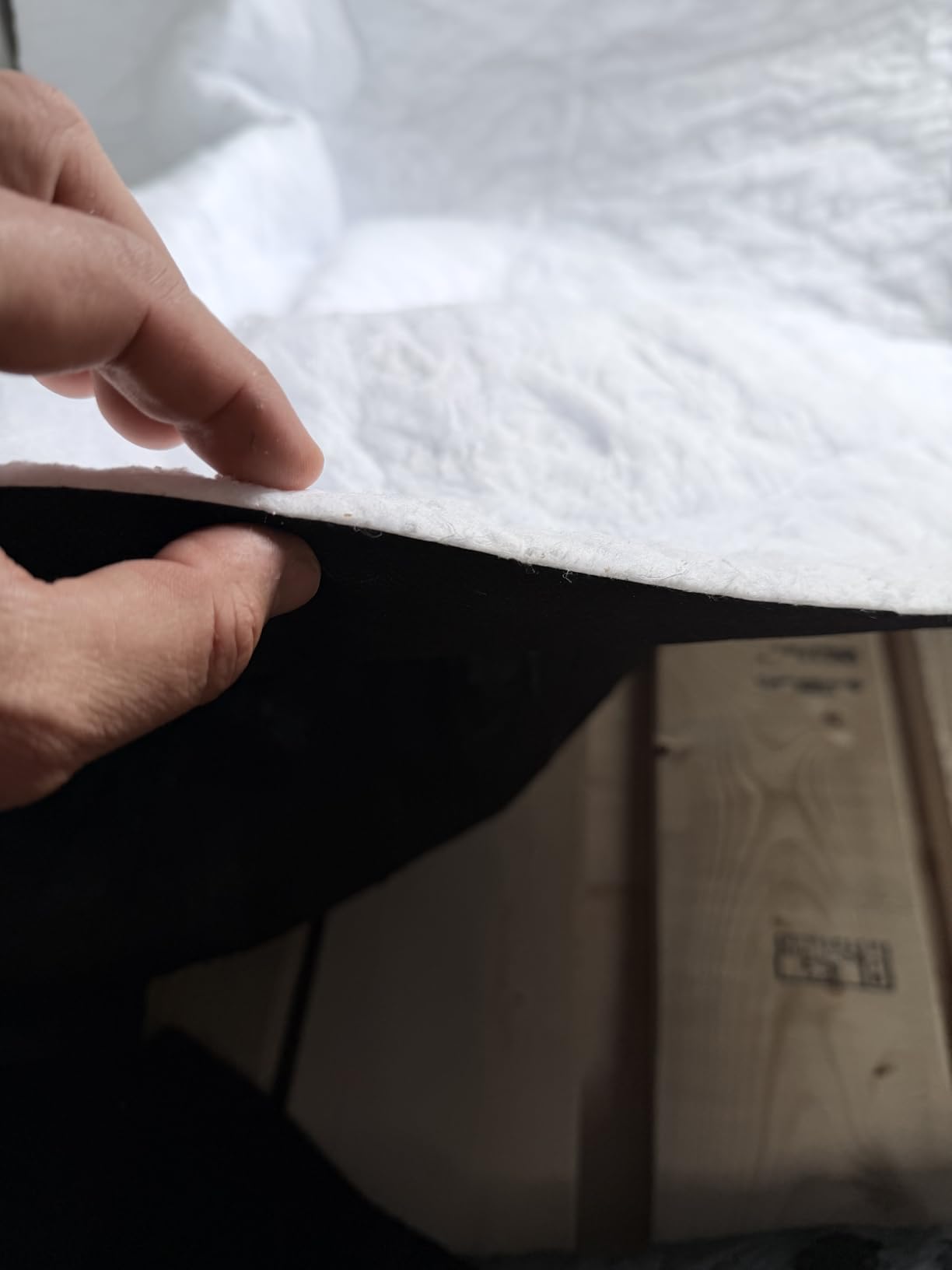
The fair criticism, and it appears across reviews, is that vacuum packing can leave the roll compressed and short of its rated thickness. Give it time to loft before you staple it down, and check a corner against a tape measure rather than trusting the package.
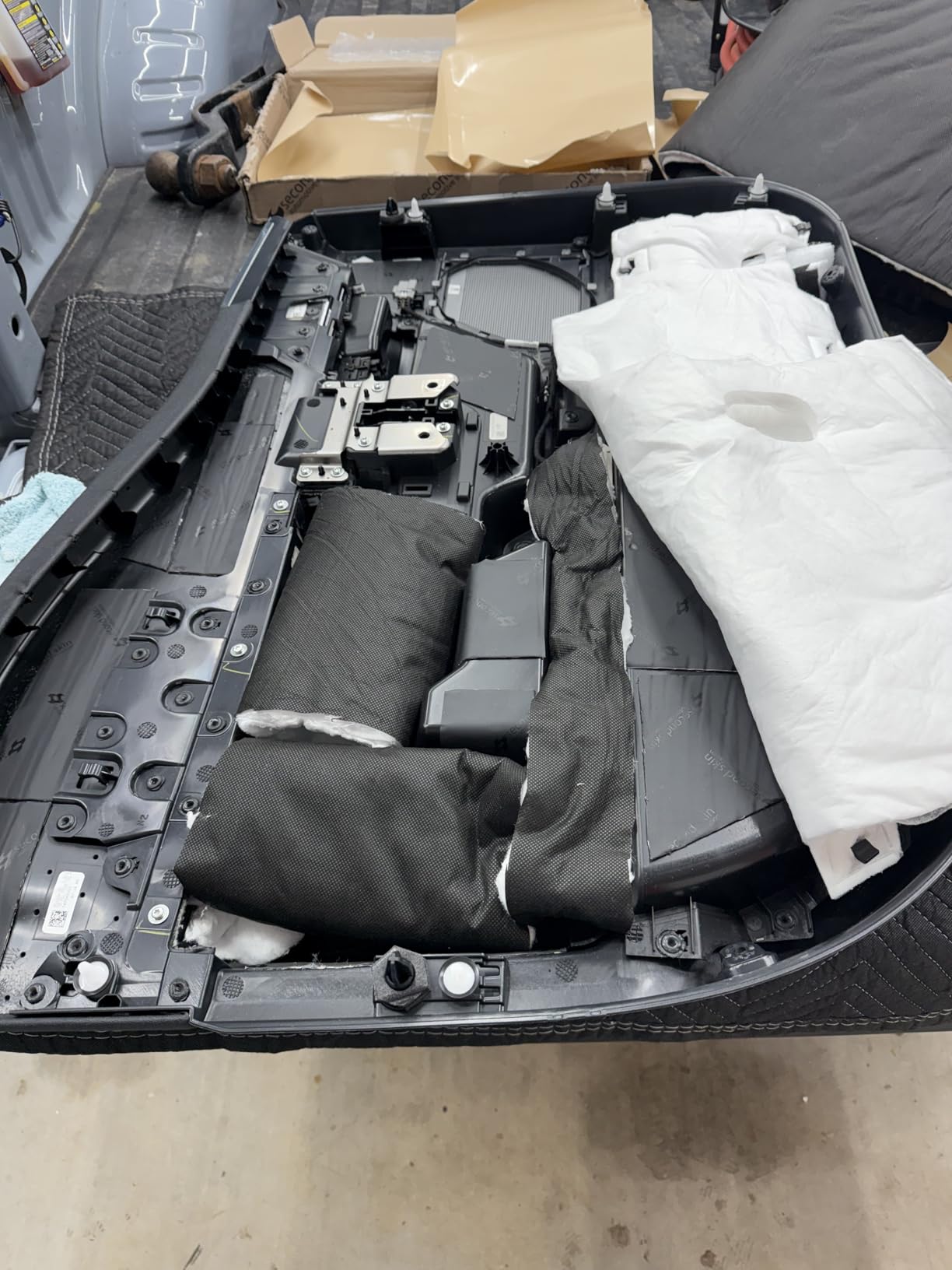
Cutting is the other friction point. This does not slice easily with household scissors, so budget a serrated knife or a long blade and a cutting mat. The roll splits into two 10-foot sections, which makes getting it into a high-roof interior far easier than a single long piece would be.
What you get that other batts do not?
The FMVSS 302 certification matters. It is a vehicle interior flammability standard, which means the material has been assessed for exactly the environment your van is, rather than for a building cavity.
Moisture resistance is genuine enough that builders skip a separate waterproof layer over it, and that removes both a cost and a sealing step. The fiber also does serious acoustic work on doors and ceilings, which you notice more in a mountain parking spot than anywhere else.
Where it disappoints?
If you fit it single-thickness into a shallow rib and staple the edges tight, you compress the very thing you paid for. Several builders simply double the layers in walls and ceiling instead, which is the honest fix.
The R-value figure itself is debated by some buyers, mostly those who measured a compressed edge or fitted it thin. Fit it at full loft and the claim behaves the way the label says it should.
4. Super Shield EZ Cool 100 Sqft Heat Barrier Kit – Best Bundle for Seam-Heavy Installs
Super Shield EZ Cool Car Van Truck RV SUV Vehicle Insulation 4′ x 25′ Roll 100 Sqft 25ft Tape Kit: Sound Noise Dampening Deadener Heat Barrier Mat Automotive Thermal Insulation Kit (Made in USA) (1)
100 sq ft coverage
0.25 in thick
Blocks 97% radiant heat
25 ft seam tape included
Pros
- Blocks about 97% of radiant heat with a reflective outer layer
- Sound dampening and vibration control in a single material
- Crush-resistant closed-cell reinforced foam core
- Supplied as a kit with 25 ft of tape for sealing seams
- Lightweight and flexible
- easy to cut and shape
Cons
- Thin quarter-inch nominal build limits performance in severe cold
- Requires separate adhesive or mechanical fastening to hold in place
The taped 100 sq ft roll is the pick for anyone whose van has a lot of short panel runs rather than two long ones. Wheel arches, door cavities and the bulkhead break a wall into pieces, and this is where included seam tape stops being a nicety.
It performs the same core job as the other reflective rolls here, blocking about 97% of radiant heat while damping vibration at the same time. The reinforced closed-cell core holds up when you staple it into a rib and does not collapse the way plain bubble does.
Its rating base is modest and its five-star share is the lowest of the reflective group, which mostly reflects the thickness ceiling rather than quality problems. Builders who wanted a cold-weather core rated it lower than those who knew it was a supplementary layer.
Weight is negligible, so it does not eat into payload in a small cargo van. Made in USA, and it cuts cleanly enough to shape around wheel arches without special tooling.
Best fit for this kit
Complex, broken-up panel geometry. Wheel wells, the rear door cavities, the step-well area and the bulkhead all create short runs where you will be making seams, and the included 25 feet of tape is sized for exactly that.
It is also the sensible second layer under a ceiling liner, where a continuous reflective skin plus a batt above it gives you both radiant protection and air-gap performance without doubling your fastener count.
Where it stops being enough?
Quarter-inch nominal is the ceiling on this product. In a van sleeping through winter nights, it needs a proper core above or below it, and any buyer expecting it to stand alone will be cold.
You also need to bring your own adhesive or fasteners. Nothing in the box grips it to a van rib, and assuming otherwise leads to a sagging ceiling within a month of driving.
5. Maasechs 60in x 25ft Polyester Fiber Insulation – Best Thick Fiber Fill at Scale
Maasechs 60in X 25ft,1.18in Thick Van Insulation Soundproof Thermal Barrier
125 sq ft coverage
1.18 in thick
60 in wide x 25 ft long
13 lb roll weight
Pros
- Substantial 1.18 in thickness for real cold-weather thermal control
- Polyester fiber core absorbs road and engine noise and dampens vibration
- Waterproof non-woven facings inhibit condensation
- Cuts cleanly to complex curves such as wheel arches and door panels
- Many width and length variants for different van sizes
Cons
- Heavier than reflective bubble-style products
- Not self-adhesive so adhesive or fasteners are needed
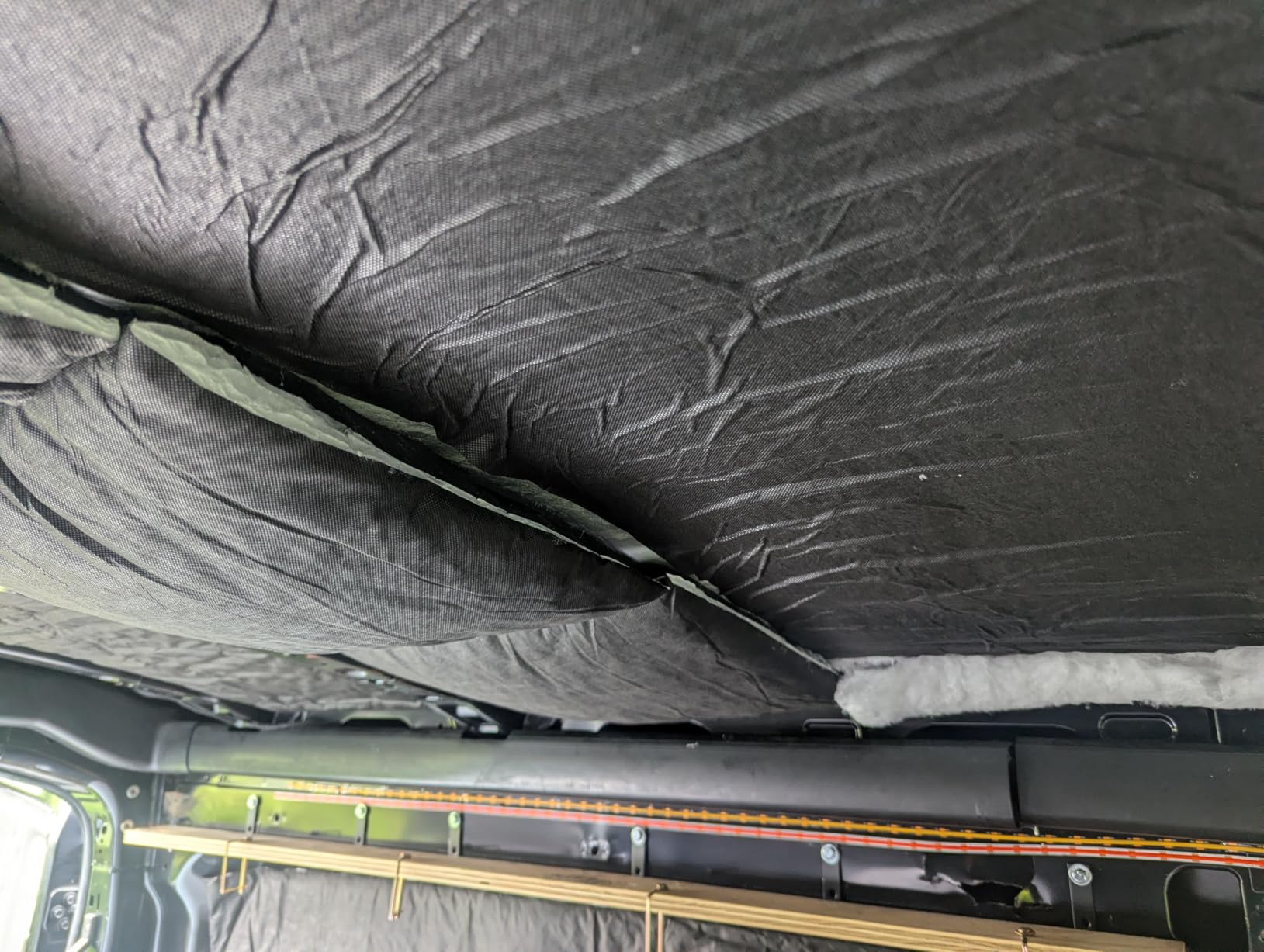
This is the roll for a full-size build where you want one material to cover the walls, the ceiling and the door panels without changing technique halfway through. At roughly 5 feet by 25 feet and 125 sq ft, it carries the largest single-roll coverage of the ten kits we tested.
Thickness is the differentiator. At just over an inch it is a real cavity fill rather than a surface treatment, and the waterproof non-woven facings on both faces are what keep it from becoming a condensation collector over a full season.
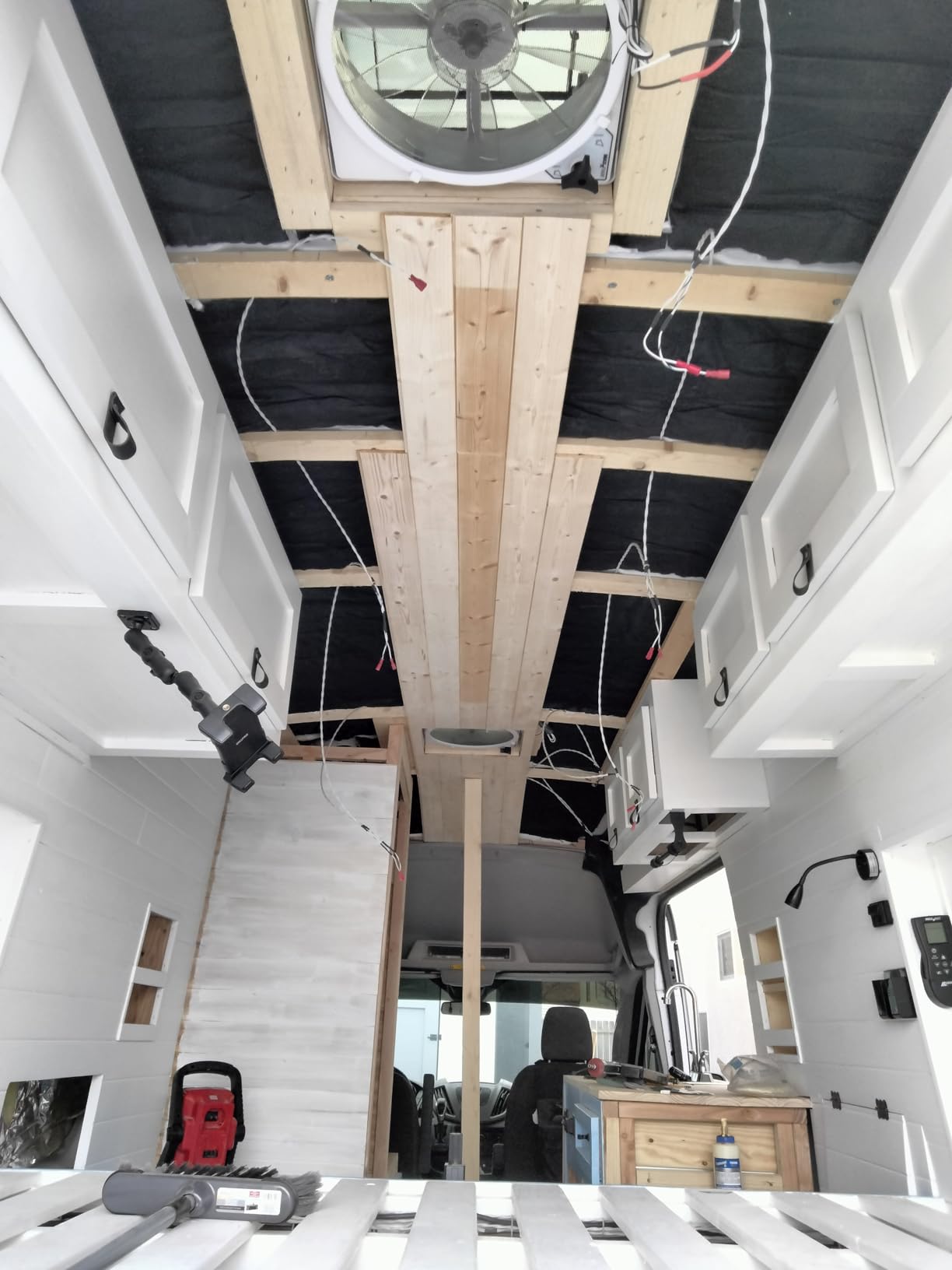
It cuts cleanly to wheel arches and door curves with a utility knife, which is the hardest part of a van build to get right. Nobody reports fighting this material to shape, and that alone puts it ahead of some pricier dense batts.
Sound dampening is the quiet win. The polyester fiber core absorbs road and engine noise and vibration, and owners building for extended time off-grid mention the quieter interior as a comfort factor as much as a performance one.
Why we picked it for full builds?
The 60-inch width. A Sprinter or Transit side wall panel spans wider than most 29-inch or 16.5-inch rolls cover, so a wider material means fewer seams, fewer tape lines and less of the air leakage that erodes a whole installation.
Waterproof facings on both sides mean you do not need to reason about which way the vapor should travel. For a builder who is going to get one detail wrong, this removes a whole category of error.
What to watch out for?
It is heavier than reflective products, at 13 pounds for the roll. On a small cargo van that is worth checking against your payload before you fill every cavity.
Not self-adhesive, so it needs 3M 90 or stick pins or mechanical fasteners, and a full build may run past what one roll covers. Measure your panels and the arches before you commit to a single roll.
6. VanMart Vanspeed Thinsulate Style Roll – Best for Builders Who Want the Sizing Decided
VanMart Vanspeed Thinsulate Van Insulation – Premium Soundproof & Thermal Barrier for Camper Van Conversions, Lightweight, Multiple Size Options for Sprinter, Transit, & ProMaster 20 feet
R-5.2 rated
100 sq ft
20 ft long by 60 in wide
Vanspeed VS-INSUL-20
Pros
- R-5.2 core traps warmth while letting dampness escape
- Hydrophobic so it will not absorb water or harbor mold
- Effective at absorbing road noise and dampening vibration
- Lightweight and flexible for floors
- walls and roofs
- Size options matched to Sprinter
- Transit and ProMaster builds
Cons
- Very small review base so long-term durability is not well documented
- A full build may need more than one roll
The thing that separates this one is the sizing. Instead of a generic roll, it is offered in lengths matched to specific van models, which removes the most common failure in a first build: running out of material halfway across a ceiling.
The core is rated R-5.2 and described as hydrophobic, so it will not absorb water or hold mold. That combination of stated R-value and stated moisture behaviour is exactly what you want to see on a winter kit.
Here is where I have to be straight with you. This product has a review count in the single digits. The owners who did review it emphasize warmth retention, moisture resistance and a quiet interior, but three reviews cannot tell you how a material behaves after three winters of road vibration and condensation cycles.
It is also flexible enough for floors, walls and roofs in one material, which simplifies an install. Buy it if the van-model sizing solves your quantity problem, and understand you are buying on the spec sheet rather than on a large body of owner reports.
What makes it worth a look?
Per-model sizing is genuinely useful. Builders posting on van insulation forums describe the exact frustration of buying a roll, running short, and being unable to find the matching material a week later in a different town.
The dampness-escape behaviour of the core is the right call for winter. A material that holds moisture against cold metal is the mechanism behind the mold complaints that show up in the first winter on so many builds.
Why we stopped short of a higher ranking?
Durability claims need volume behind them. No buyer has yet reported back on this material after a multi-year full-time build, which is the test that matters most for winter use.
At 20 feet you are getting one good run across a ceiling, and a full conversion usually needs more than one roll. Plan quantities before you start rather than after the first wall is closed up.
7. TuLeYiLe 5 ft x 20 ft Camper Van Insulation – Best for Door Panels and Curved Cavities
Automotive Camper Van Insulation for Vans Campers 5 Feet x 20 Feet
R-5.45 per inch
1.65 in thick
5 ft x 20 ft
0.95 lb per cubic foot
Pros
- Owners report performance comparable to the name-brand Thinsulate equivalent
- Hydrophobic so moisture drains rather than sits and molds
- No fiber shedding
- no fiberglass itching and no odor
- Effective at cutting road
- wind and panel vibration noise
- Easy to cut and shape for tight spaces and curves
Cons
- 1.65 in thickness can be tight in shallow cavities
- Material finish and cut squareness vary between orders and heavy shears may be needed
- Small review base so long-term behaviour is not well documented
This is the kit we would trust on door panels, and door panels are where most winter builds leak heat. The stated R-5.45 per inch at 1.65 inches matches the name-brand batt it is being compared against, at a lower density of 0.95 pounds per cubic foot.
Owners rate it very highly for cold-weather use, citing strong temperature control and noise cancellation, and they consistently compare it favorably to the name-brand equivalent. The hydrophobic behaviour means moisture drains rather than sitting in the fiber.
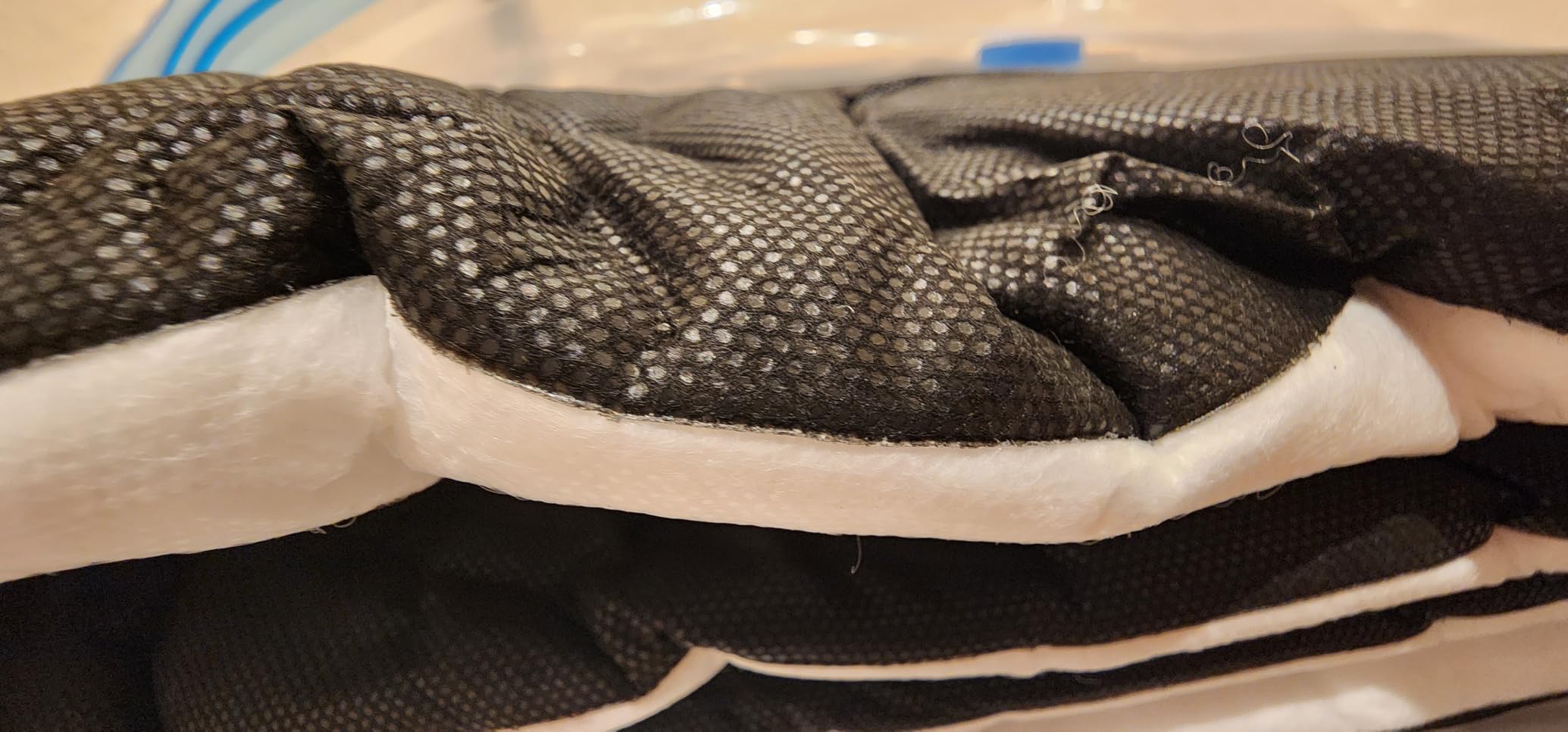
Two practical notes from the reviews. There is no fiber shedding and no itching, which matters more than it sounds when you are cutting a material bare-handed in a cold van. And the single-side black non-woven facing both protects the fibers and gives you a finished-looking surface without a separate fabric layer.
The main complaints are about consistency rather than performance. Material finish and cut squareness vary between orders, and some builders need heavy shears to get through the mesh face.
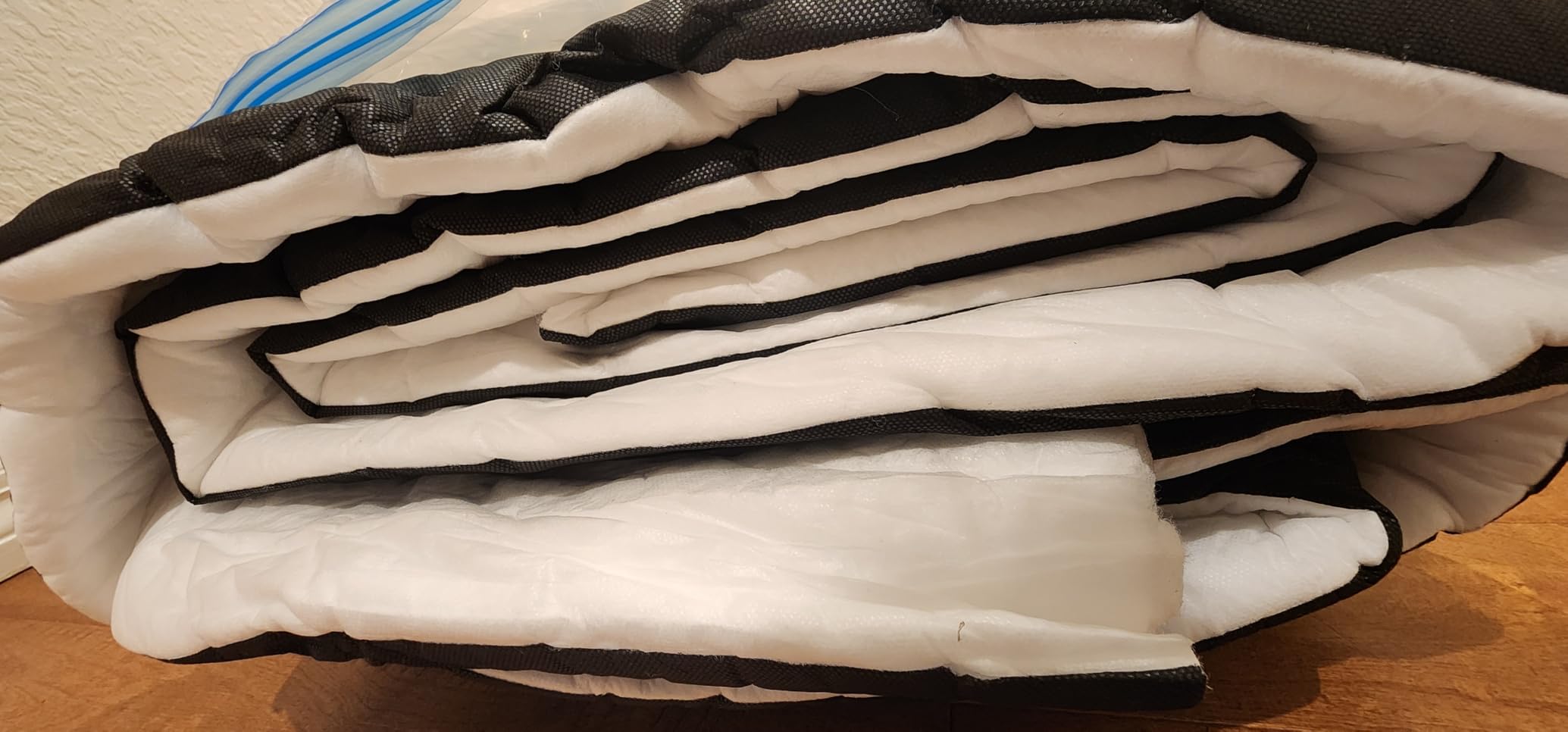
Where it earns the top of the list?
Doors have the tightest, most irregular geometry in the van and they are pure convection loss. A material that cuts cleanly to curves, shapes into tight spaces and does not shed fibers is the right tool for that job specifically.
The absence of odor matters for a living space. Off-gassing from a synthetic fill in an enclosed van is a real complaint on builds, and this one is repeatedly described as clean.
What to plan around?
At 1.65 inches it is genuinely thick. In shallow ribs you will have to compress it or split it, and compressing costs you the R-value you bought.
Cut quality varies, so buy shears rather than fighting a mesh face with scissors. And with 16 reviews behind it, treat the performance picture as promising rather than settled.
8. UMMNPR 80 sq ft Thermal and Sound Barrier – Best for Continuous Wall and Ceiling Runs
80 SQFT Automotive Camper Van Insulation, Water-Resistant Thermal & Sound Barrier, RV Camper Insulation 29″ x 393″ (2.4ft x 32.8ft) for Van Conversions, RVs, Trucks
R-5.1 per inch
1.6 in thick
29 in by 393 in
80 sq ft
Pros
- R-5.1 per inch retains warmth in cold-weather camping
- Combines soundproofing with vibration damping for road noise
- Hydrophobic material reduces condensation and mold risk
- Lightweight
- flexible and easy to cut without special tools
- Long continuous 32.8 ft length suits full wall and ceiling runs
Cons
- Narrow 29 in width means more seams on wide wall panels
- 80 sq ft may not cover a full van without a second roll
The argument for this one is arithmetic. At nearly 33 feet of continuous length, you can run an entire side wall or a full ceiling without a single butt seam, and seams are where cold air walks in.
At R-5.1 per inch and 1.6 inches thick it is a real cold-weather core, and it also handles vibration damping. Builders using it report a noticeable reduction in road and wind noise alongside the thermal gain.
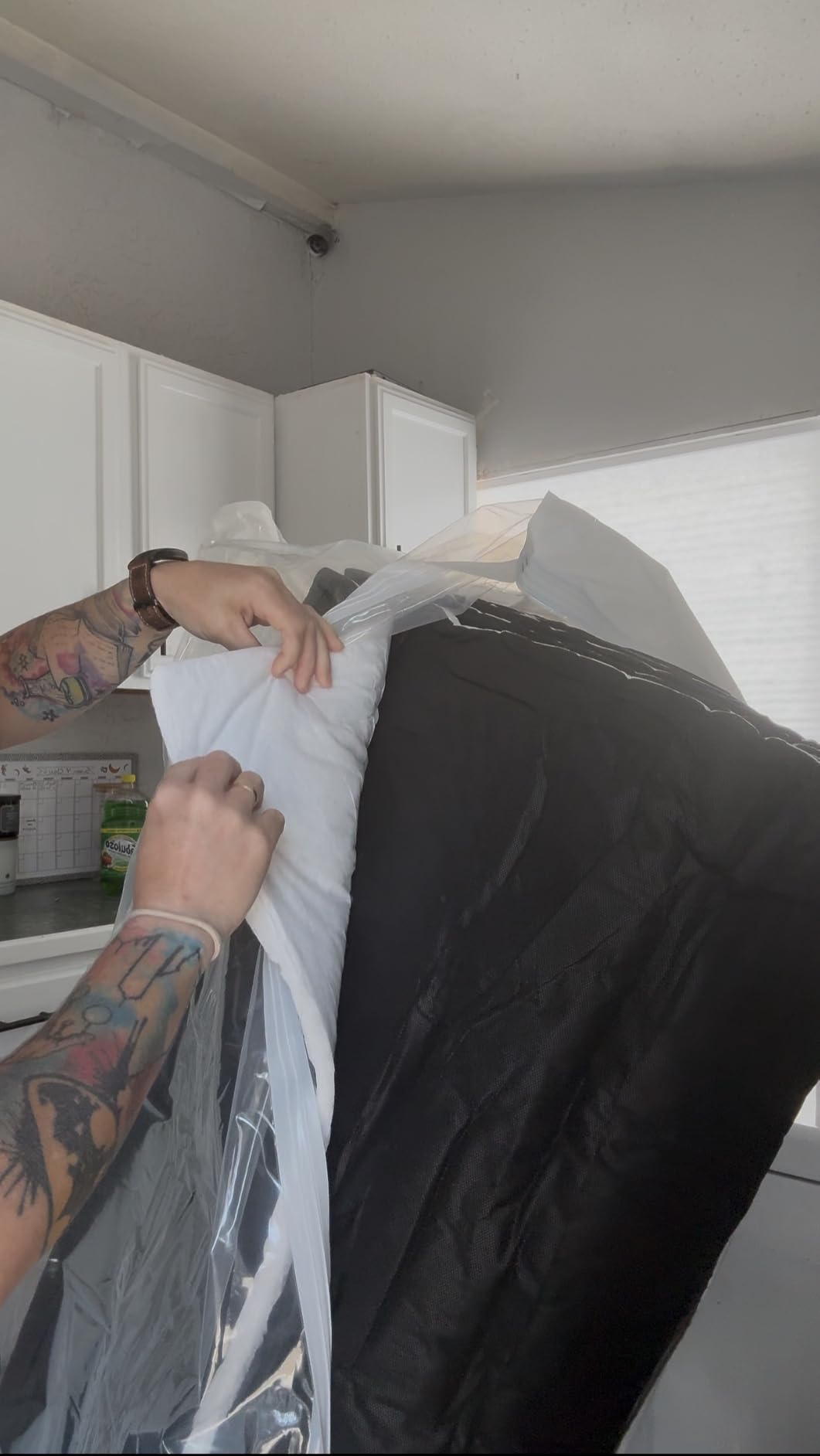
Hydrophobic construction is what keeps it usable through a full winter. Water resistance reduces the condensation and mold risk that builders on van forums describe as the most common first-season complaint.
It cuts without special tools and is light enough not to eat into payload. Variants come in 80, 97 and 161 sq ft sizes, so you can buy for the van you actually have instead of guessing.
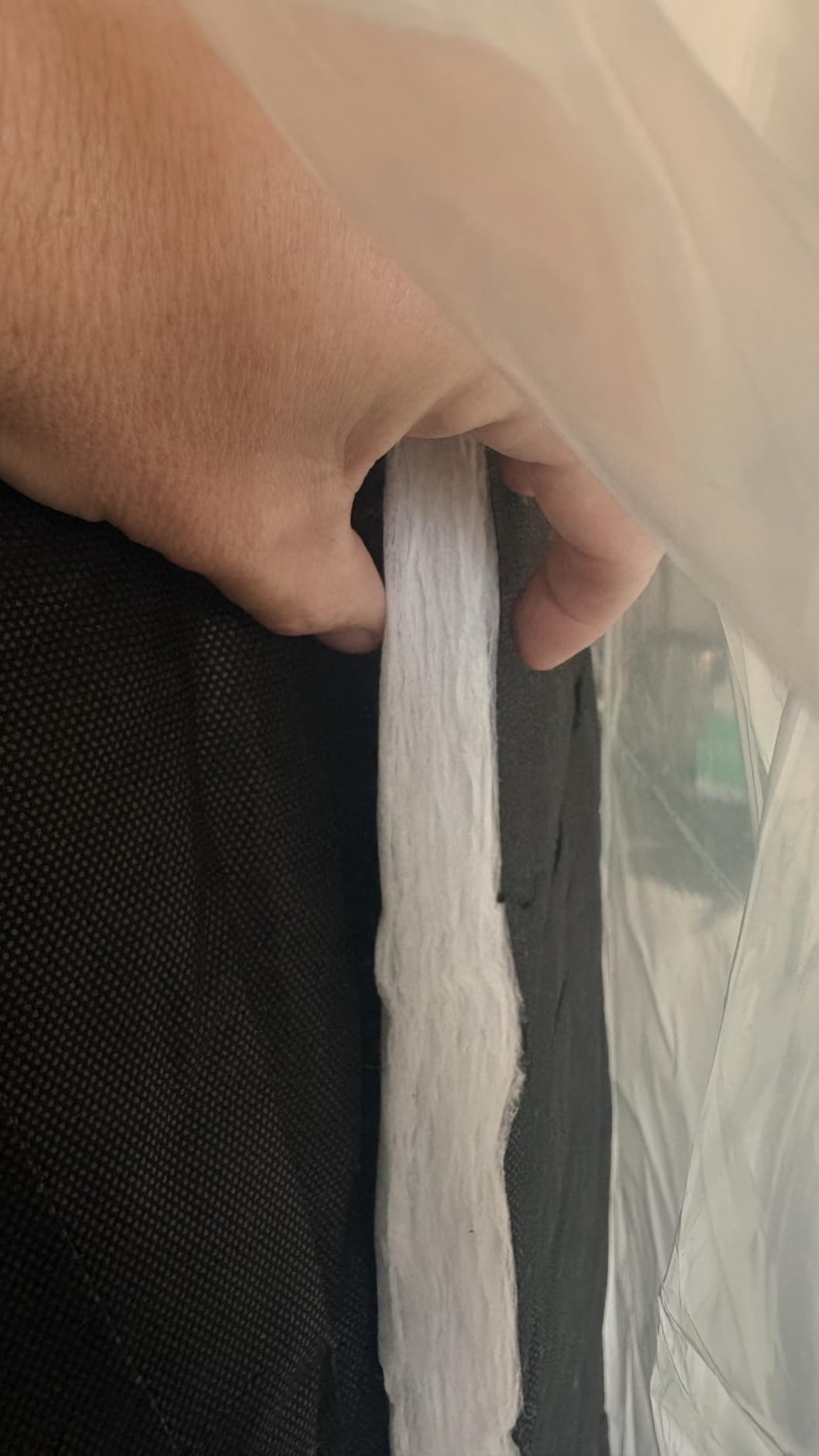
Best used this way
Run it long and run it whole. Pick the longest uninterrupted wall in your van, start at the bulkhead, and pull a single length to the rear before you make any cut at all.
It suits mixed material setups too, where you want a thick core on the panels that matter and something lighter on wheel arches. Owners using it for floors, walls and roofs report it stays flexible enough to handle all three.
Where the format works against you?
Twenty-nine inches is narrower than a Sprinter or Transit side panel, so on a full-height wall you will still make at least one vertical seam. That is where your tape discipline matters.
At 80 sq ft, a full conversion needs more than one roll. Plan the linear footage for your panels before you buy rather than discovering the shortfall halfway up the wall.
9. Bhyhok RV Camper Insulation Roll – Best for Smaller Vans and Supplemental Areas
RV Camper Insulation Roll, Water-Resistant Thermal & Sound Barrier, Automotive Camper Van Insulation 16.5″ x 315″ for Van Conversions, RVs, Trucks
36.25 sq ft coverage
1.18 in thick
16.5 in wide by 315 in long
Black fabric edge
Pros
- Inexpensive way to cover small areas
- cavities and panels
- Fibrous core dampens road and engine noise and vibration
- Water-resistant non-woven facings help inhibit condensation
- Cuts easily with a utility knife or scissors to fit curves and corners
- Lightweight so it does not tax a small vehicle payload
Cons
- Some buyers report it does not reach the stated 1.18 in thickness
- Only 36.25 sq ft per roll so larger builds need multiple rolls
- Narrow 16.5 in width limits use on wide panels
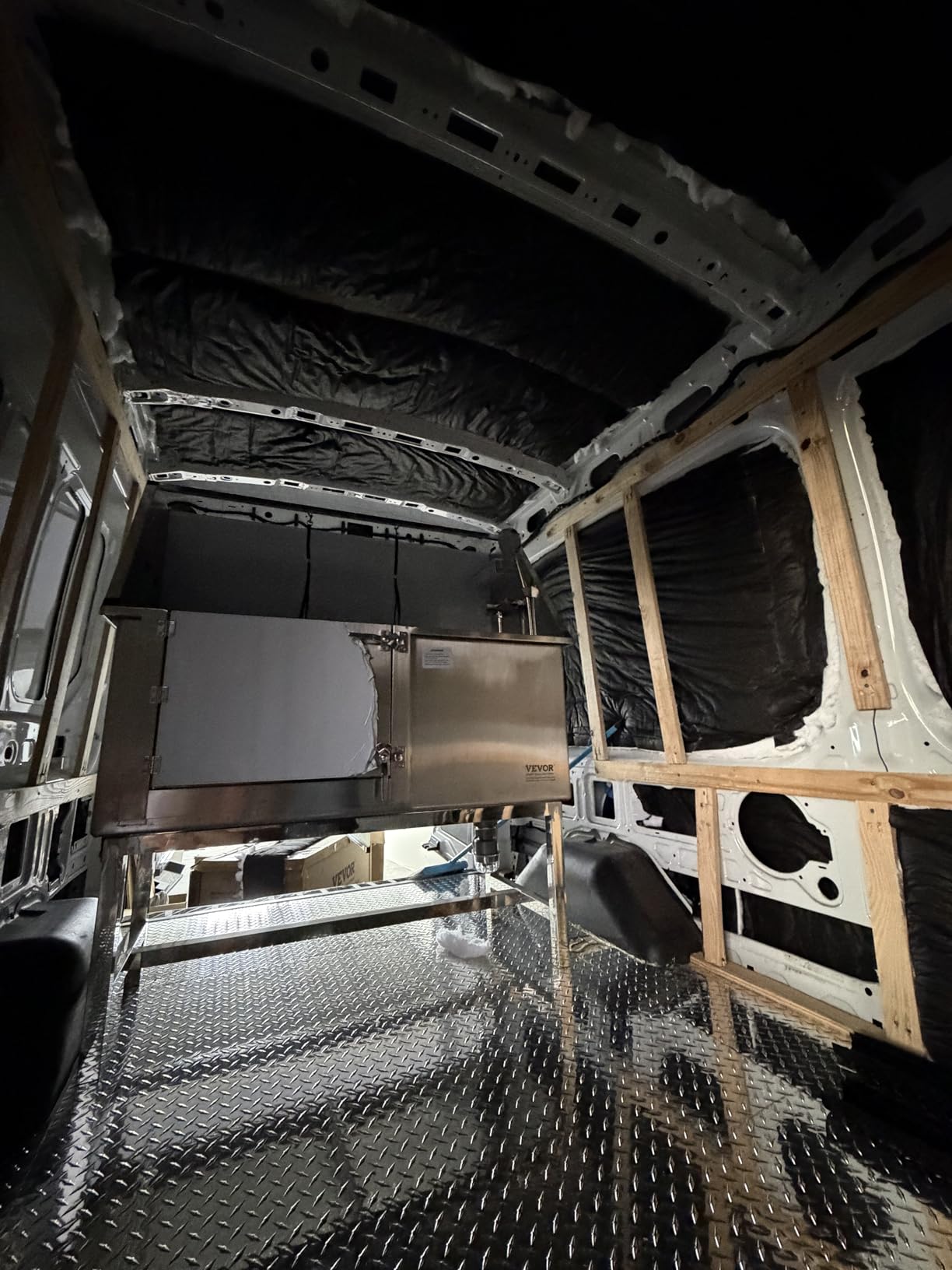
This is the one for a smaller van or for topping up areas a bigger kit did not reach. At 36.25 sq ft it is a partial coverage roll, and one owner completed an entire Dodge Ram conversion van with a single one, which tells you how much of a small build it covers.
At 1.18 inches thick with a reinforced fabric edge, the fibrous core is a legitimate thermal barrier rather than decoration. Water-resistant facings on both sides help keep condensation at bay on the cavities you can reach.
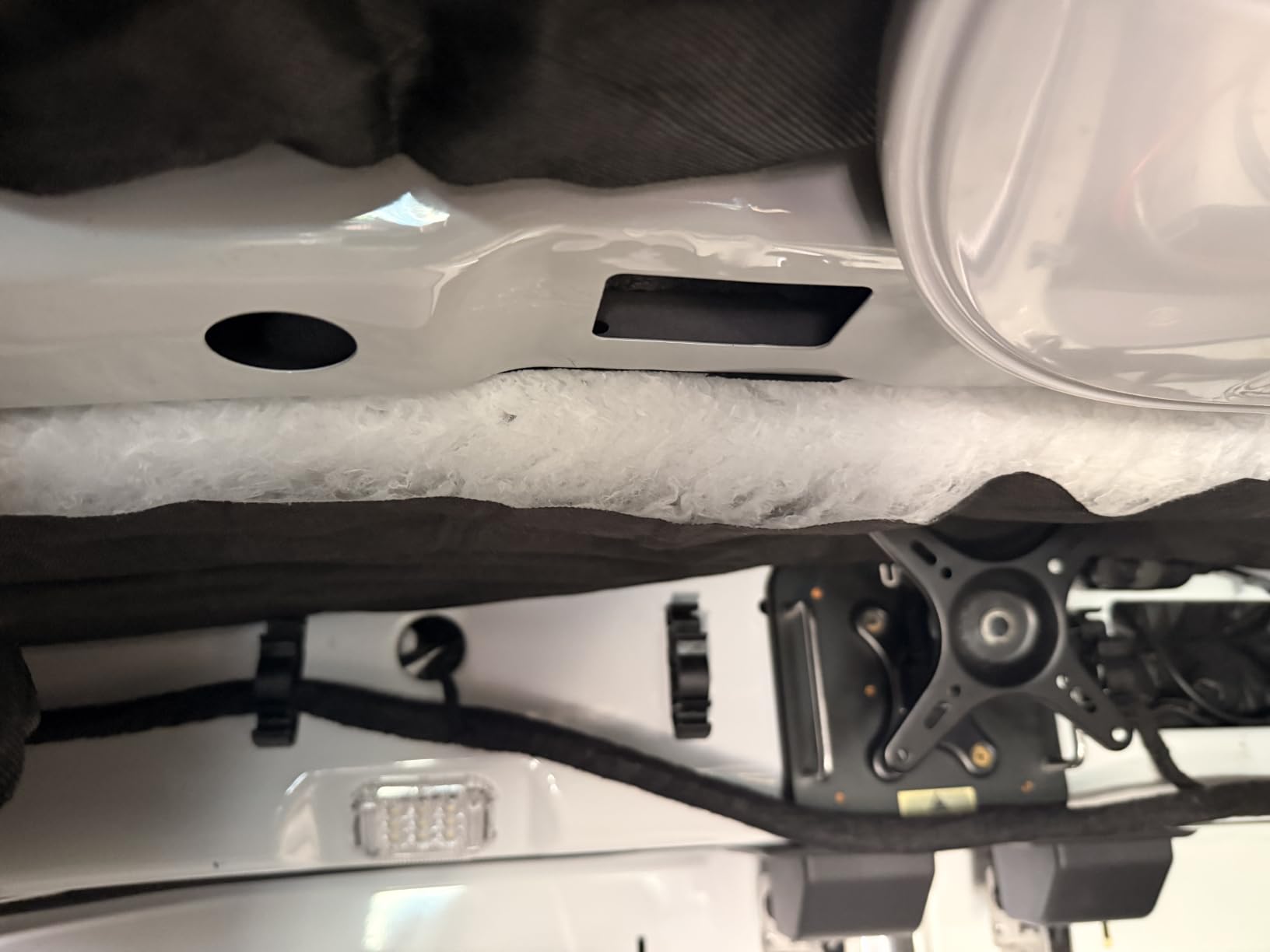
The recurring complaint is honest and worth knowing. Some buyers report the material arriving thinner than the advertised 1.18 inches, and that is the same loft problem that affects any vacuum-packed fibrous product.
The reinforced black fabric edge makes it easy to line a cavity and get a tidy finish without separate facing material. Cuts cleanly with a utility knife to curves and corners, which is what you need for wheel wells and door panels.
Where it makes sense?
Supplemental coverage on a small van. If your build is a compact cargo van with modest panel area, this fills the gaps between bigger rolls without forcing you to buy a full set.
Lightweight construction is a real advantage when payload matters. It adds thermal and acoustic mass without meaningfully loading a small vehicle.
Where it falls short?
A 16.5-inch width is narrow. Any panel wider than that means multiple strips with taped seams, and seams in a fibrous batt are the weak point in a winter build.
Check actual thickness on arrival before you staple anything down. If it has not lofted to the stated depth, you are fitting less R-value than you planned for.
10. YKQYCSXJ 40 sq ft Reflective Van Window Roll – Best for Window and Door Covers
40 Sq.Ft. Automotive Camper Van Insulation, Rv Window Reflective Insulation Roll , Summer Heat Reflective Window Film for Roof, Car, Garage Doors 30“ x 200” RV (3ft. x 16 ft.)
40 sq ft coverage
0.78 in thick
30 in by 200 in
Includes self-adhesive tape
Pros
- Reflective core helps hold interior heat and blocks light for privacy
- Noticeable sound dampening in metal-walled spaces
- Woven fabric facing avoids fiberglass and loose fibers
- Cuts easily with scissors or a utility knife and includes self-adhesive tape
- Suited to floors
- walls
- roofs and windows across van and RV builds
Cons
- Effective thickness varies with compression and sits closer to 0.5 to 1 in
- Insulation performance drops when the material is compressed
- Limited UV resistance if placed directly against glass
- 40 sq ft coverage means large projects need multiple rolls
Window covers matter more than most builders expect, and this is a roll designed around that job. Thermal imaging from builders consistently shows heat escaping through glass and the roof fan before it leaves through properly insulated walls.
The reflective core holds interior heat and blocks light at the same time, which makes it a two-in-one for anyone who wants warmth and darkness at dawn. The woven fabric facing avoids fiberglass and loose fibers entirely.
Two details make it easy to work with. It cuts with scissors or a utility knife, and self-adhesive tape is included, so you do not need a separate adhesive roll to get started on a set of window panels.
The compression behaviour is the main caution. At a 0.78-inch stated thickness, owners report effective depth closer to 0.5 to 1 inch depending on how firmly it is fitted, and performance drops when it is compressed.
Best used for windows and doors
Cut to fit each window panel, install it against the interior glass with a small air gap, and you have closed the biggest single gap in most winter builds for very little time.
Owners report noticeable sound dampening in metal-walled spaces, which is a useful side effect on back doors where traffic noise is the problem rather than temperature.
Where it will disappoint?
Compression is the honest limit. Fit it loosely and this material works; staple it flat and you have removed much of what you paid for. Treat the stated thickness as a ceiling, not a guarantee.
Do not lay it directly against glass if ultraviolet exposure is possible, since UV resistance is limited. Forty square feet also runs out quickly on anything bigger than a small van.
How to Choose a Winter Insulation Kit: 7 Factors That Decide It?
Cold-weather insulation choices come down to a short list of measurable things. Here is what we checked on all ten kits, in the order that actually affects your comfort in January.
1. R-value per inch, and whether you can measure it
R-value measures how much heat a material resists. Published R-5.45 per inch products here sit at the top, while the reflective bubble products are not sold on R-value at all because a quarter inch of polyethylene bubble contributes very little by conduction. That is not a flaw in them, it is a different job.
The part most spec sheets skip is whether the stated thickness survives packing. Vacuum-compressed fiber can arrive short, so measure a corner with a tape measure before you commit it to a cavity.
2. Roll width against real panel spans
This is where most DIY builds lose heat. A 16.5-inch or 29-inch roll forces vertical seams across a Sprinter or Transit side wall, and every seam is a place where air moves. Wider rolls of 59 to 60 inches cover a full panel height in one piece, which is why the wide products rank well here.
3. Moisture behaviour, not just water resistance
Two different claims get sold as the same thing. Water-resistant facings stop water entering the material. Hydrophobic behaviour lets moisture move through and out. Both help, and the second is what prevents the trapped-vapor mold pattern that shows up in the first winter.
4. Load bearing for the floor
The floor is the one surface you stand on, walk over and stow gear on. Compressible fiber that gets walked on all season loses thickness over time. Rigid board on the floor and fiber in the walls is the more durable combination, and it is the reason we treat reflective bubble products as layers rather than systems.
5. Fire rating and off-gassing
Look for a vehicle-relevant certification such as FMVSS 302 rather than a generic building rating, and check for odor before you close the panels. Off-gassing from a synthetic fill is a repeated complaint on builds where everything was sealed up in a small space.
6. Fitment by van model
Sprinter 144 and 170, Transit 148, and ProMaster 136 and 159 all have different panel geometry. Kits sold in lengths matched to a specific model save you the most common build mistake, which is under-buying material halfway through a ceiling.
7. Install time and the tools you need
None of these kits is a single-afternoon job for a first-timer. Wide batts need a proper knife rather than household scissors, reflective layers need adhesive or fasteners, and every product needs taping discipline at the seams. If you only have a weekend, budget two.
Insulating a Van for Winter: Step by Step
The order matters more than most guides admit. Do these five steps in sequence and you will not have to open a finished panel again.
Step 1: Seal before you fill
Run a hose test or a smoke test on the shell before a single batt goes in. Plug the big rear door gaps, check the roof fan surround, and confirm the windows close cleanly. Insulation amplifies whatever leakage is already there.
Step 2: Floor first
Fit rigid board or a load-rated floor assembly before anything else goes up. Once walls and cabinetry are in, the floor is the least accessible surface in the van.
Step 3: Walls and ceiling with full loft
Staple or pin batts so they fill the cavity at full thickness without being crushed. Over-compressing to fit is the most common way builders lose the R-value they paid for, and stapling the edges tight is the usual culprit.
Step 4: Cover thermal bridges
Ribs, frames and pillars conduct heat straight through the insulation and show up clearly on thermal imaging. Cover the main ribs with an additional layer or a thermal break strip, and pay particular attention to the door frames and the rear door tops.
Step 5: Seal windows and check condensation daily
Insulated window covers with an air gap matter more than most builders expect. Then open a vent or window briefly each morning, and wipe any condensation on metal surfaces before it soaks into a panel.
Condensation, Vapor Barriers and Cold-Weather R-Value
Do you need a vapor barrier in a van? It depends on the material, and the honest answer is that a vapor barrier is not a substitute for good insulation. A tightly sealed barrier traps moisture inside the cavity if the interior side is warm and humid, which is exactly the mold pattern builders report after a first winter. A breathable fiber fill manages moisture in both directions and needs no barrier. If you use closed-cell or reflective products, treat them as the vapor side of the assembly and keep your interior surface breathable.
Does polyiso work below freezing? Foam board carries a strong cold-weather caveat. Its measured R-value falls at low ambient temperatures, so a cold-soaked wall with a warm interior is not the same test as a laboratory figure. Fiber batts do not have that failure mode, which is one reason we rank fiber-first for winter builds and treat foam as a floor and bulkhead material.
What not to use. Fiberglass and mineral wool shed airborne fibers under road vibration, which is a genuine inhalation concern in a vibrating metal box. Reflective film bonded straight to metal with no air gap loses most of its radiant performance. And insulating paint is a coat, not an R-value. None of these are dangerous if used carefully, but all three waste money on a winter build.
Thermal imaging from builders is consistent about where heat goes, and it is rarely where people expect. Doors, glass and the roof fan lead the list, and the top of the rear doors is called out repeatedly. If your budget only stretches to one improvement, spend it on a complete window and door sealing package rather than another layer of wall insulation.
One honest dissent worth repeating: a van has a terrible surface-area-to-volume ratio, so insulation alone will not keep you warm. A commenter on r/vandwellers put it plainly, and they are right. Heating and bedding solve the same problem from the other side, and we have covered the sleeping side in our guide to the best van life beds.
Frequently Asked Questions
What type of insulation is best for a camper van conversion?
For walls and ceiling, a thick polyester or polyester-blend fiber batt gives the best winter result, typically 1.5 inches or more at full loft. Use rigid board or a load-rated assembly on the floor because it will not compress underfoot. Add a reflective radiant layer over the walls and ceiling, and cover windows with insulated panels. Avoid fiberglass and mineral wool, which shed airborne fibers under road vibration.
How do you insulate a van for cold weather?
Seal the shell first, then fit the floor, then the walls and ceiling at full loft without crushing the material, then cover thermal bridges at ribs and door frames, and finally add insulated window and door covers. Order matters because the floor is the hardest surface to reach once cabinetry is installed. Check for condensation on metal surfaces every morning and ventilate briefly to keep mold away.
What is the recommended thickness of insulation for a camper van?
About 1.5 to 2 inches of fiber batt in the walls and ceiling is the practical target for winter camping. Anything thinner starts to feel thin at single-digit outside temperatures. Measure the cavity before you buy, and fill it at full loft rather than compressing it to fit, because compressed material loses much of its rated R-value.
Do I need a vapor barrier in my van?
Not if you use a breathable fiber fill that manages moisture in both directions. A vapor barrier can trap condensation inside the cavity when the interior is warm and humid, which is the usual cause of mold behind wall panels. If you use closed-cell or reflective products, treat them as the vapor side of the assembly and keep the interior surface breathable. Ventilating briefly each morning helps more than any barrier.
What is the cheapest way to insulate my van?
The cheapest effective route is a fiber batt in the walls and ceiling plus insulated window and door covers, and skipping those covers is the most common expensive mistake. Thin reflective bubble is inexpensive but works as a supplementary radiant layer, not as a cold-weather core. Partial coverage in the highest-loss areas beats complete coverage in the low-loss ones.
Conclusion
After comparing ten kits across R-value, thickness accuracy, roll width, moisture behaviour and install difficulty, our top three for the best van conversion insulation kits for winter camping stand apart for different reasons. The US Energy Products Double Foil Bubble is the radiant layer to add over everything else, the 3M Thinsulate SM600L is the strongest cavity fill, and the AES Reflective Foam Core Kit is the easiest complete reflective package to start a weekend install with.
Whichever route you take, the ordering matters: seal, floor, walls and ceiling at full loft, thermal bridges, then window and door covers. Skipping the last step wastes most of the money you spent on the first four.
If cold-weather kit selection is only half of your plan, our picks for winter tires, winter boots and winter hats cover the rest of what actually determines whether a January trip is comfortable. Updated for 2026.