
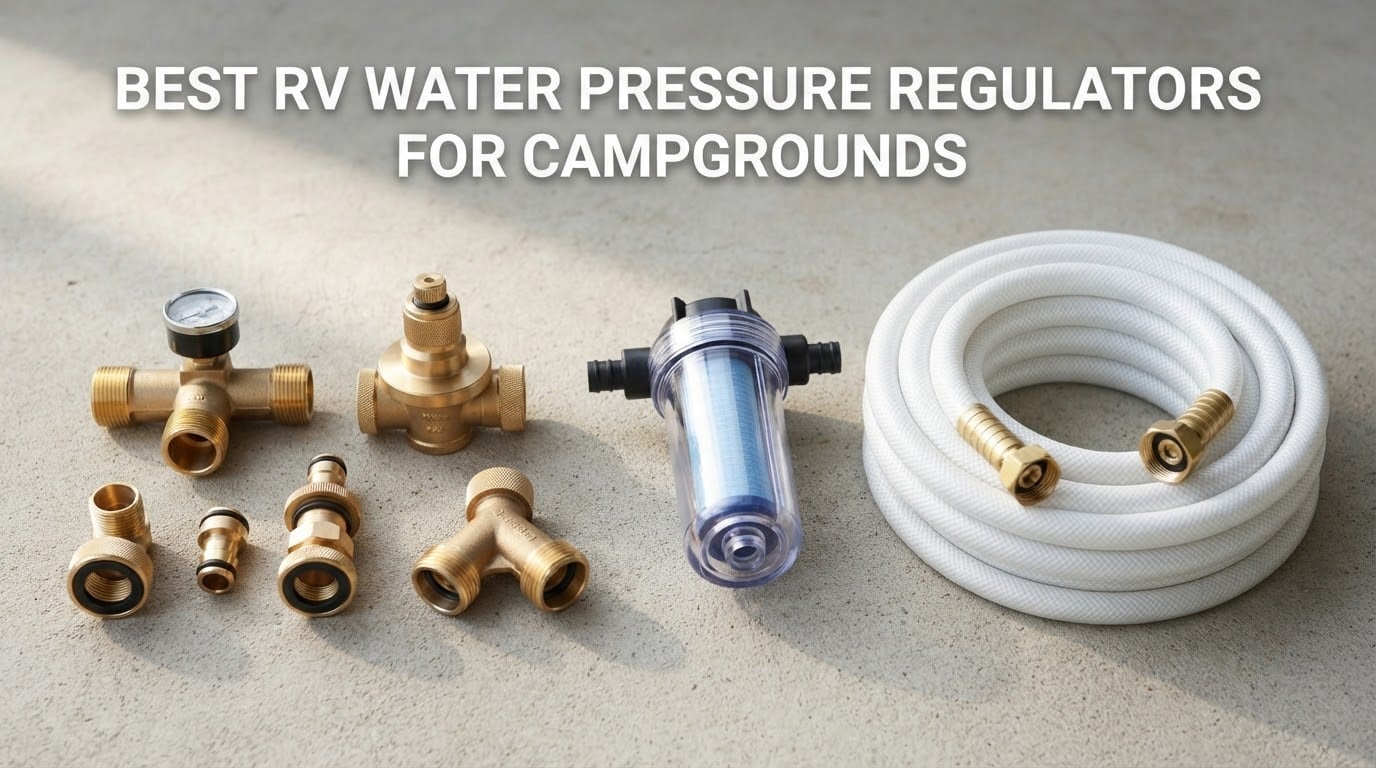
A campground water pedestal is the one connection on your rig that somebody else controls. Nobody regulates the pressure at that spigot, and RV owners who hook up with a gauge in hand regularly measure somewhere between 110 and 120 PSI coming out of the pedestal valve. Your plumbing is not built for that.
The failure is rarely dramatic. You get a crimped PEX connector that seeps at the crimp, a plastic elbow behind a cabinet that weeps onto a floor, or a washing machine inlet that fails while you are two hundred miles from home. A regulator between the spigot and your fresh water inlet caps that incoming pressure at a safe range, and it is the cheapest insurance in RVing.
We spent weeks comparing the best RV water pressure regulators for campgrounds that are on the market right now, weighing certification markings, adjustment range, gauge type, flow behaviour and the failure patterns owners actually report. Twelve made the list, and every one of them carries a verifiable lead-free claim. Here is how they stack up before we walk through them one at a time.
If you are still building out the water side of your rig, our guide to the best RV water filters covers the cartridge side of the same hookup, and the order of those two components matters more than most people expect.
Table of Contents
Top 3 Best Rv Water Pressure Regulators (October 2026)

Camco 40055 Brass Regulator
- Fixed 40-50 PSI
- Brass body with 125 PSI inlet rating
- NSF/ANSI 372 and CSA lead-free
- 3/4 inch garden hose thread

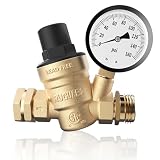
Renator M11-0660R Adjustable
- Adjustable to 160 PSI
- Factory preset at 45 PSI
- Liquid-filled steel gauge
- Inlet screen filter
RVGUARD Adjustable Regulator
- CSA approved to NSF/ANSI 61 and 372
- Adjustable with screwdriver
- Factory setting 45 PSI
- Inlet screen included
Quick Comparison of the Best RV Water Pressure Regulators for Campgrounds in 2026
| Product | Specifications | Action |
|---|---|---|
| Camco 40055 Brass Regulator |
|
Check Latest Price |
| Renator M11-0660R Adjustable |
|
Check Latest Price |
| RVGUARD Adjustable Regulator |
|
Check Latest Price |
 Camco 40064 With Gauge Camco 40064 With Gauge |
|
Check Latest Price |
 Hourleey Adjustable With Gauge Hourleey Adjustable With Gauge |
|
Check Latest Price |
 RVGUARD Knob Adjustable RVGUARD Knob Adjustable |
|
Check Latest Price |
 Valterra Hi-Flow Regulator Valterra Hi-Flow Regulator |
|
Check Latest Price |
 Hourleey Fixed 40-50 PSI Hourleey Fixed 40-50 PSI |
|
Check Latest Price |
 Valterra Fixed 40-50 PSI Valterra Fixed 40-50 PSI |
|
Check Latest Price |
 STMOUTUO Adjustable Regulator STMOUTUO Adjustable Regulator |
|
Check Latest Price |
 Boltigen Handwheel Regulator Boltigen Handwheel Regulator |
|
Check Latest Price |
 MEASUREMAN Fully Lead-Free MEASUREMAN Fully Lead-Free |
|
Check Latest Price |
1. Camco 40055 Brass Regulator – the fixed unit most rigs run for years
Camco Brass Marine/RV Water Pressure Regulator – Drinking Water Safe
Fixed 40-50 PSI
Brass body
NSF/ANSI 372 and CSA
Max inlet 125 PSI
Pros
- Holds 40-50 PSI no matter what the pedestal delivers
- Brass body rated for 125 PSI maximum incoming pressure
- Lead-free certified to NSF/ANSI 372 and CSA
- Drops onto any 3/4 inch garden hose thread
- Fixed design has nothing to drift out of spec
Cons
- Fixed setting cannot be raised for appliances
- No gauge to confirm actual outlet pressure
- Will not mate with non-US thread standards
The Camco 40055 is the regulator I keep a spare of in the wet bay, and it is the first thing I hand a new owner who just blew a fitting. It is a brass barrel that clamps output between 40 and 50 PSI regardless of what comes off the pedestal, with a listed maximum incoming pressure of 125 PSI.
What makes it the default answer here is scale of proof. At over 23,000 ratings it has a review history most competitors in this category can only dream about, and the pattern in those reviews is remarkably consistent: it installs in a couple of minutes, it holds, and it keeps doing it season after season.
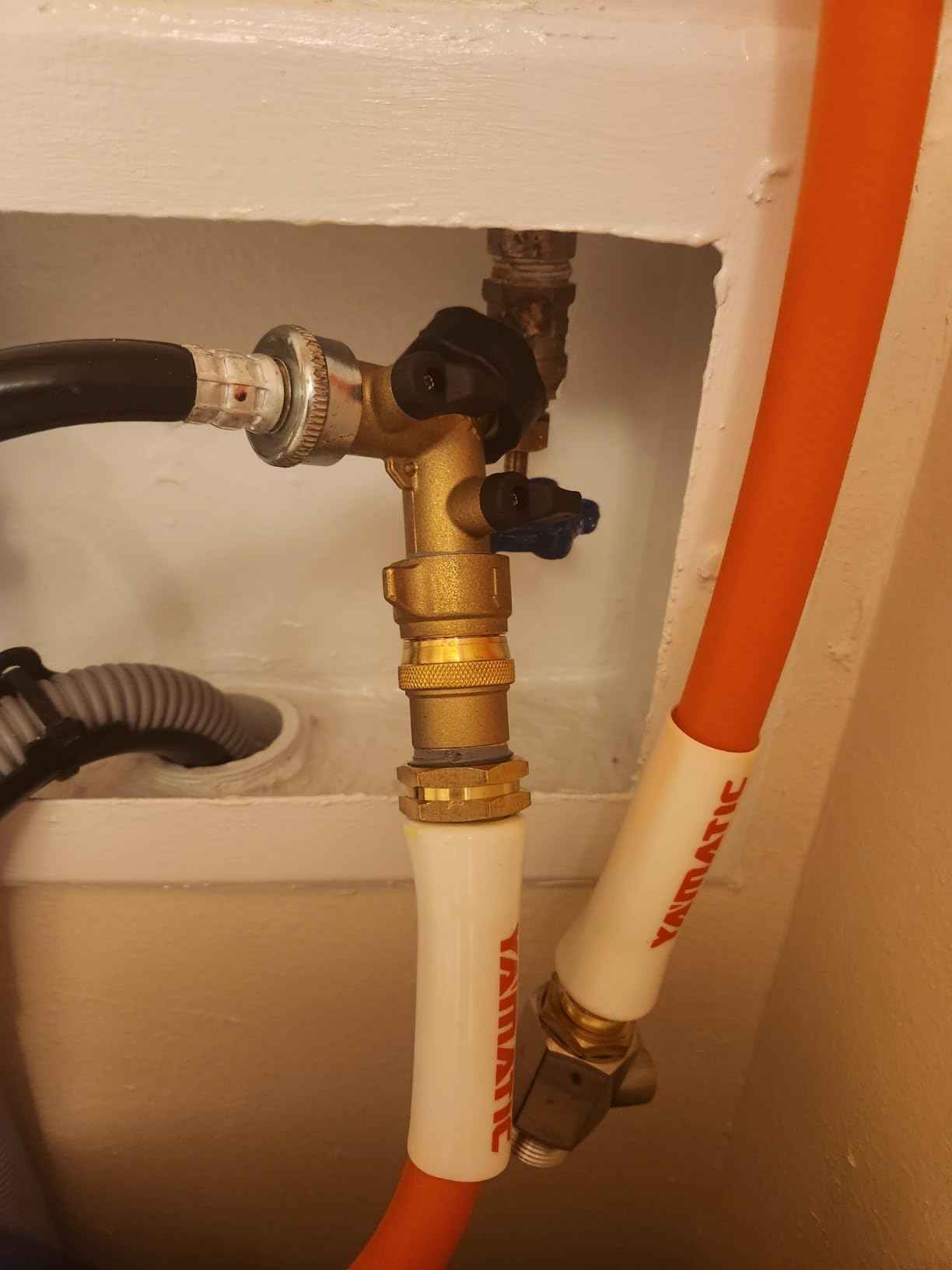
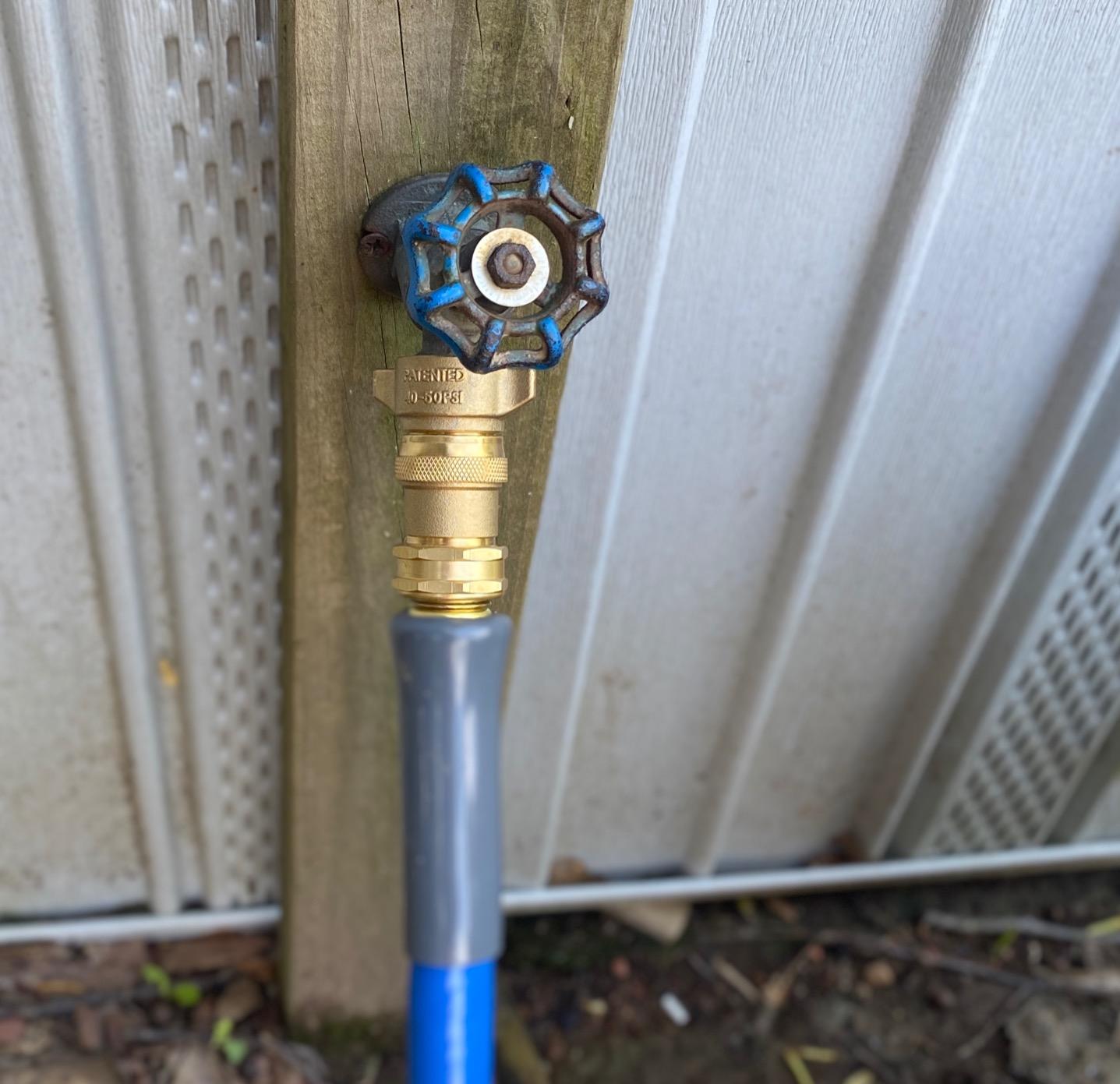
The body is machined brass rather than a plastic composite, which matters in a wet bay where things get knocked around during a freeze. Both connections are 3/4 inch, with a female iron pipe inlet and a 3/4 inch garden hose thread outlet, so it sits at the head of the pedestal with the hose on the downstream side.
The certification line is the part that should make you feel good. The listing states NSF/ANSI 372 and CSA compliance, which is a verifiable third-party standard rather than a printed claim on a box, and the valve is listed as a pressure relief valve rated to 50 PSI maximum output.
Who this regulator suits?
This is the right pick for the majority of campers. If you shower, run the sink and flush the toilet one at a time, and never run a washing machine and a shower simultaneously, a fixed 40-50 PSI barrel does the whole job and never needs thinking about.
It is also the regulator to buy if you want one thing that works and want it to be the same thing most parks and neighbouring rigs are running. Reviewers describe RV parks that post a requirement at check-in for exactly this kind of barrel.
Who should skip it?
Owners of older rigs with marginal plumbing should look at the Valterra fixed model instead, which is explicitly marketed for older RV plumbing at the same 40-50 PSI band but carries a lighter, smaller body.
If you run a washing machine on the same hookup and need more than 50 PSI to fill it in reasonable time, or you want to see the outlet pressure at a glance, this barrel gives you neither. Pair it with an inline gauge if you want verification.
2. Renator M11-0660R – adjustable control with a real liquid-filled gauge
Renator RV Water Pressure Regulator for RV Camper. Brass Lead-free Adjustable Water Pressure Regulator with Gauge for Camper Travel Trailer, Reducer Valve W Filter. M11-0660R.
Adjustable to 160 PSI
Preset 45 PSI
Liquid-filled steel gauge
Inlet screen
Pros
- Factory preset at 45 PSI with adjustment when you need it
- Stainless steel liquid-filled gauge that resists fogging and shock
- Brass body with an inlet screen that catches debris
- Lead content under 0.13 percent
- Storage box included for the wet bay
Cons
- Gauge calibration drifts over time
- Manufactured in China despite domestic packaging cues
- May need a rubber washer to get a clean seal
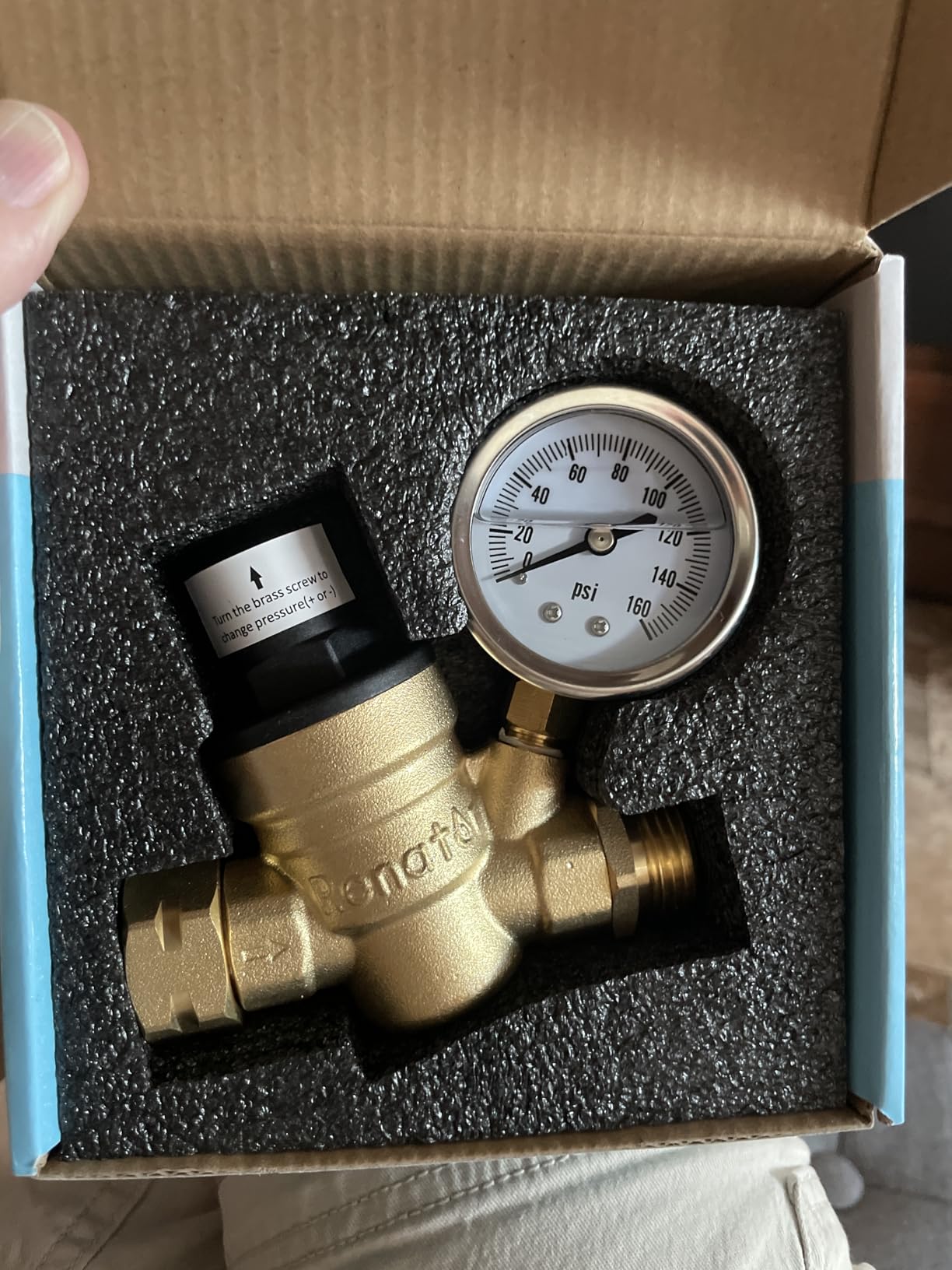
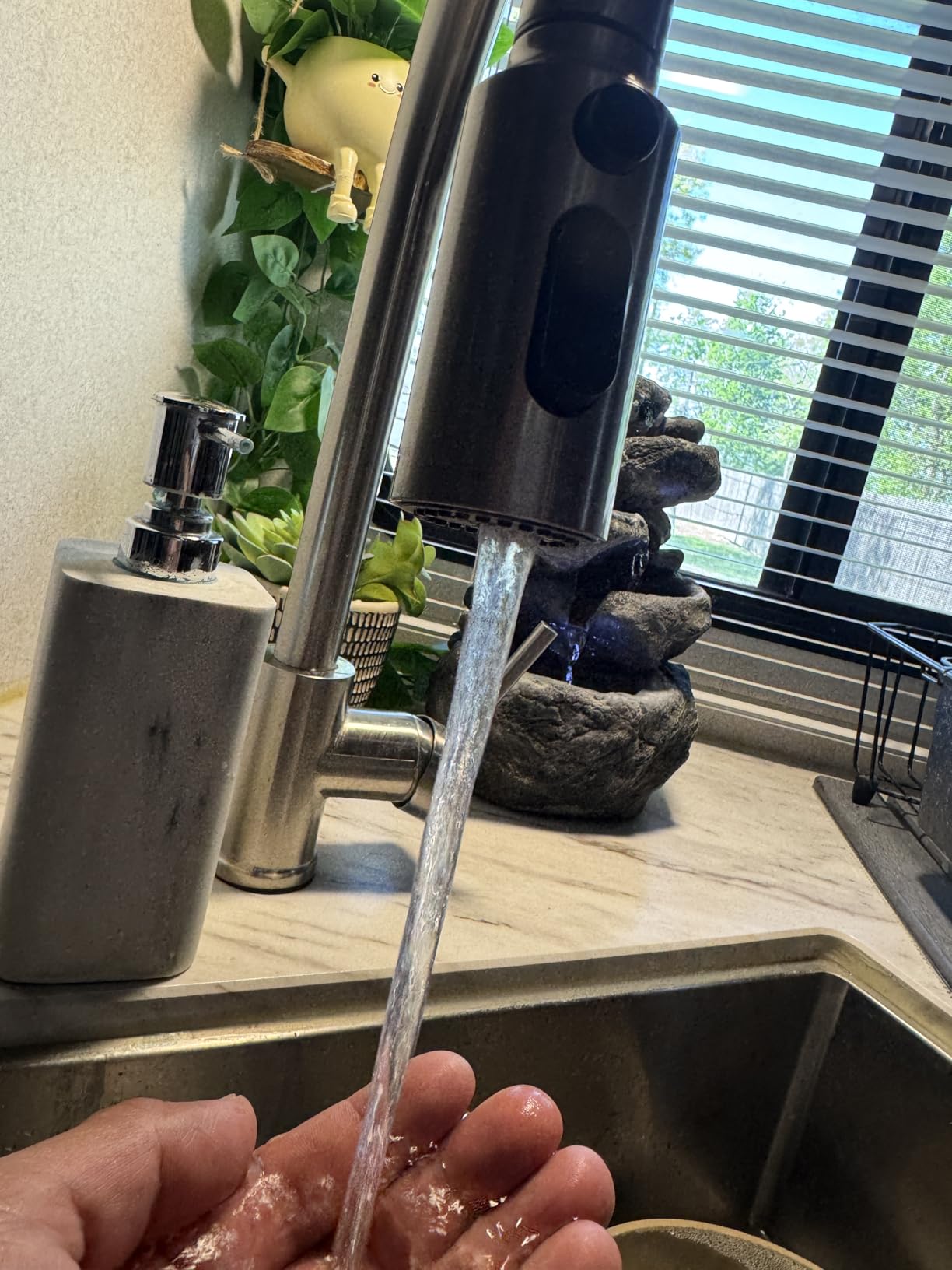
The Renator M11-0660R is the adjustable unit I recommend to anyone who wants a dial they can actually trust and a knob to change their mind with. It arrives preset at 45 PSI and adjusts up to 160 PSI through the valve body, with a stainless steel liquid-filled gauge on the outlet side.
That liquid fill is not a gimmick. Reviewers repeatedly describe dry gauges fogging, cracking or sticking at zero after a single cold night, and the fill slows that failure mode considerably. This is one of the few adjustable regulators in the group where the gauge is called out as stainless steel rather than a plastic lens in a cheap housing.
Renator also publishes a venting procedure for oil bubbles that show up in the gauge after a temperature swing, which tells you they expect the gauge to be serviced rather than discarded. That kind of documentation is a small signal and a useful one.
One thing to know before you buy: the 160 PSI figure is the dial scale and the adjustment ceiling, not a safe setting for your plumbing. The regulator is meant to sit at 45 PSI or thereabouts. Owners who read the dial range as permission routinely run well past what crimped fittings want to see.
Who this regulator suits?
Buy this one if you hook up to a lot of different parks and want to tune the outlet for each one. Some pedestals are weak and some are fierce, and an adjustable unit lets you back down when a neighbouring rig is running a washer on the same main.
It also suits anyone who wants to confirm with their eyes that the regulator is doing its job. Between the liquid-filled gauge and the inlet screen, this is one of the most self-verifying adjustables on the list.
Who should skip it?
If you want a set-it-and-forget-it part with zero moving controls, the fixed Camco barrel is the better buy and costs less to replace if a park loses it. A knob that can be turned by an overenthusiastic campsite neighbour is also a knob that can be turned by mistake.
Theft is worth factoring in if you leave the regulator on the pedestal overnight. Fixed brass barrels are less attractive targets than an adjustable unit with a visible gauge on it.
3. RVGUARD ARGWPR001 – certified adjustable with the cleanest paperwork
RVGUARD RV Water Pressure Regulator Valve, CSA Approved, Lead-Free Brass
CSA approved
Lead-free brass under 0.13 percent
Adjustable to 45 PSI
Inlet screen
Pros
- CSA approved to both NSF/ANSI 61 and 372 standards
- Lead-free brass with under 0.13 percent lead content
- Factory setting at 45 PSI with screwdriver adjustment
- Inlet screen filter included in the box
- Solid brass casting with hot-casting process construction
Cons
- Adjustment requires a flat screwdriver rather than a bare hand
- Gauge guard is thin plastic on some models
- Needs a readjustment after big temperature swings
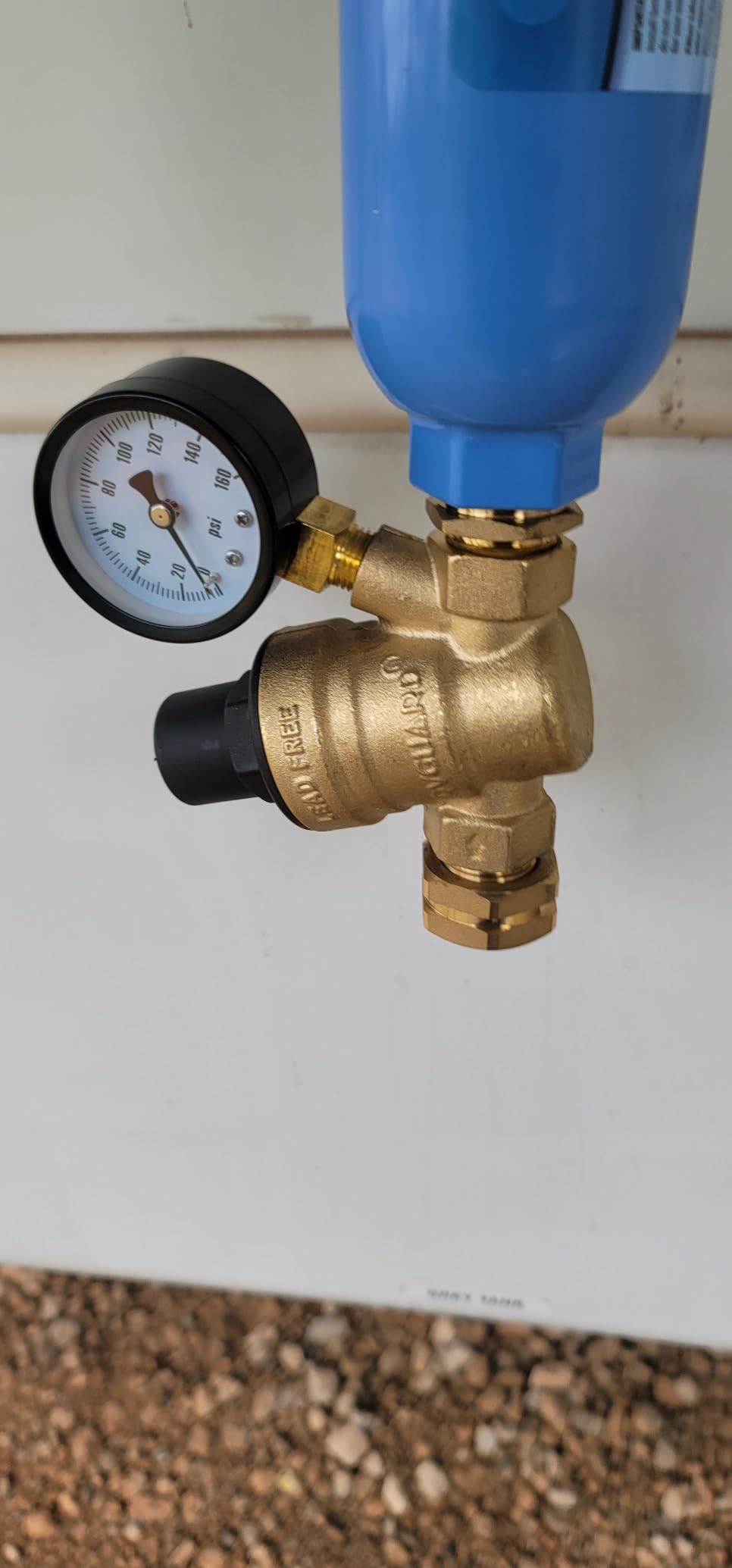
The RVGUARD ARGWPR001 carries the certification claim I trust most in this whole group. The listing states CSA approval covering NSF/ANSI 61 and NSF/ANSI 372, and pairs that with an explicit lead content figure under 0.13 percent. In a category full of units that simply say lead-free and stop there, naming the certifying body is a real differentiator.
Mechanically it is a familiar design: brass body, factory set at 45 PSI, screwdriver adjustment at the collar, inlet screen included, 3/4 inch garden hose thread at both ends. Nothing exotic, which is exactly why it works.
At over 13,000 ratings it has the third largest review history here, and the reported flow behaviour is better than small fixed barrels. Owners running two showers or a family of four on one hookup tend to leave the flow complaints to the smaller preset units.
The honest complaint in the reviews is the screwdriver. It takes a flat blade at the adjustment collar, which means a tool in your pocket every time you want to change the setting. If that bothers you, the knob-adjustable version further down the list does the same job with bare hands.
Who this regulator suits?
This is the pick for anyone who cares about certification paperwork, buys on published standards, and wants proof the water they are drinking is coming through a compliant valve. RV parks that post a lead-free requirement at check-in are the scenario this unit is built for.
It also suits owners who want a spare that matches a rig already set up on adjustable regulation, since the factory setting lands in the same place most manufacturers recommend.
Who should skip it?
Skip it if adjusting pressure in the rain with one hand and a flashlight is something you want to avoid. The handwheel and knob designs need no tools at all and are otherwise equivalent in construction.
A few owners report the pressure dropping toward zero in warm weather, which usually points at thermal expansion in the line rather than a failed valve. Still, if temperature-sensitive behaviour would bother you, the fixed barrels have no moving adjustment to drift.
4. Camco 40064 – a fixed barrel with a color-coded gauge on the outlet
Camco Brass Water Pressure Regulator with Gauge- Helps Protect RV Plumbing and Hoses from High-Pressure City Water – Easy Read Gauge (40064)
Preset 40-50 PSI
Color-coded gauge
CSA lead-free to NSF/ANSI 372
Max inlet 125 PSI
Pros
- Built-in gauge shows outlet pressure at a glance
- Color-coded dial is readable without reading fine print
- Compact at 2.4 by 4.1 by 5.8 inches
- CSA lead-free certified to NSF/ANSI 372
- Handles up to 125 PSI incoming pressure
Cons
- Fixed 40-50 PSI range with no adjustment
- Gauge has no numerical markings and reads roughly
- Plastic gauge lens cracks if knocked
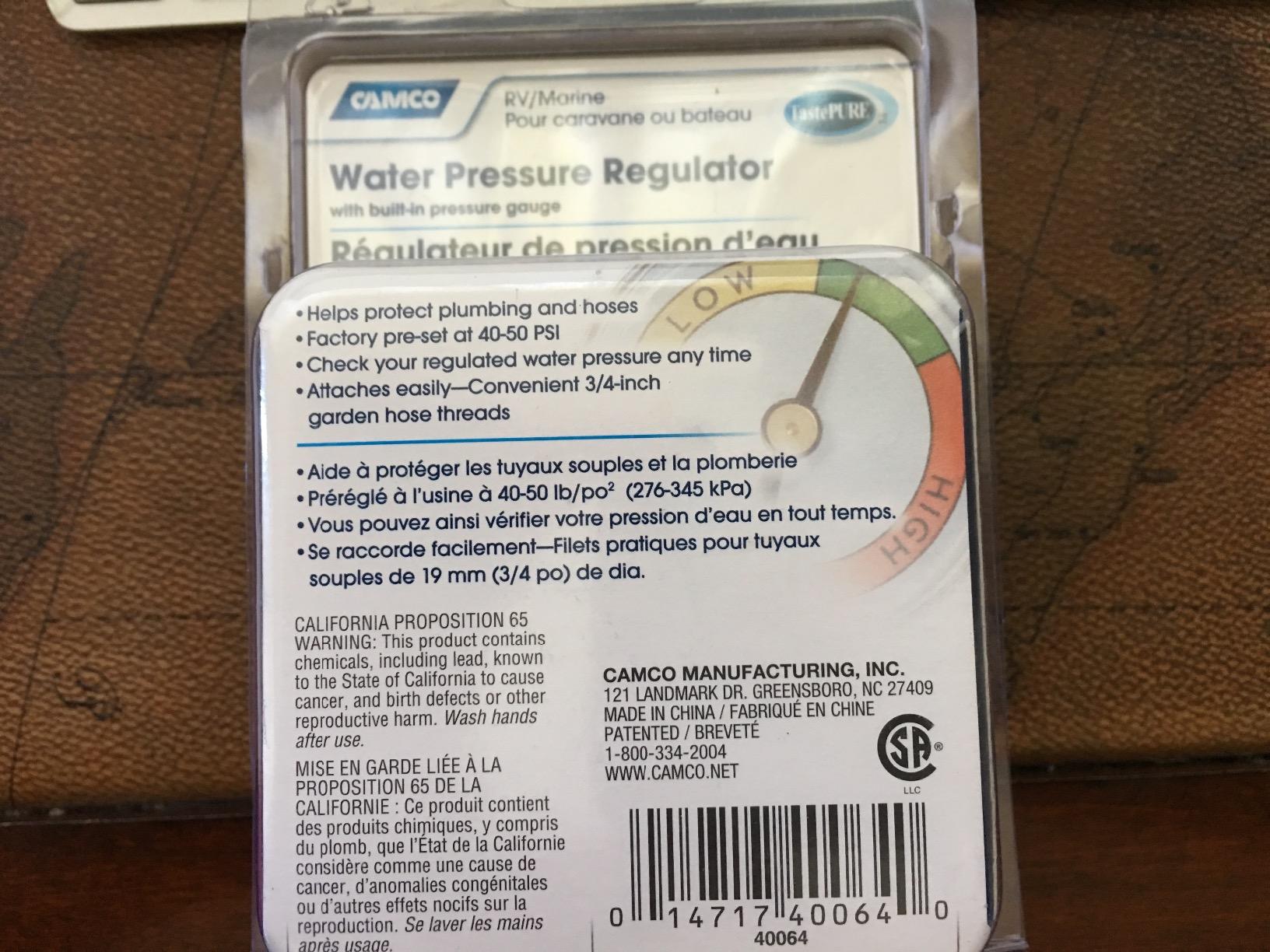
The Camco 40064 solves the problem the plain 40055 barrel cannot: you get a gauge without giving up the fixed, drift-free design. It sits at 40-50 PSI like the standard barrel, with a color-coded dial on the outlet so you can confirm at a glance that the valve is doing its job.
That visibility is genuinely useful when you are troubleshooting. A regulator that reads in the safe band and a regulator that has failed internally look identical from the outside until you have a dial in front of you.
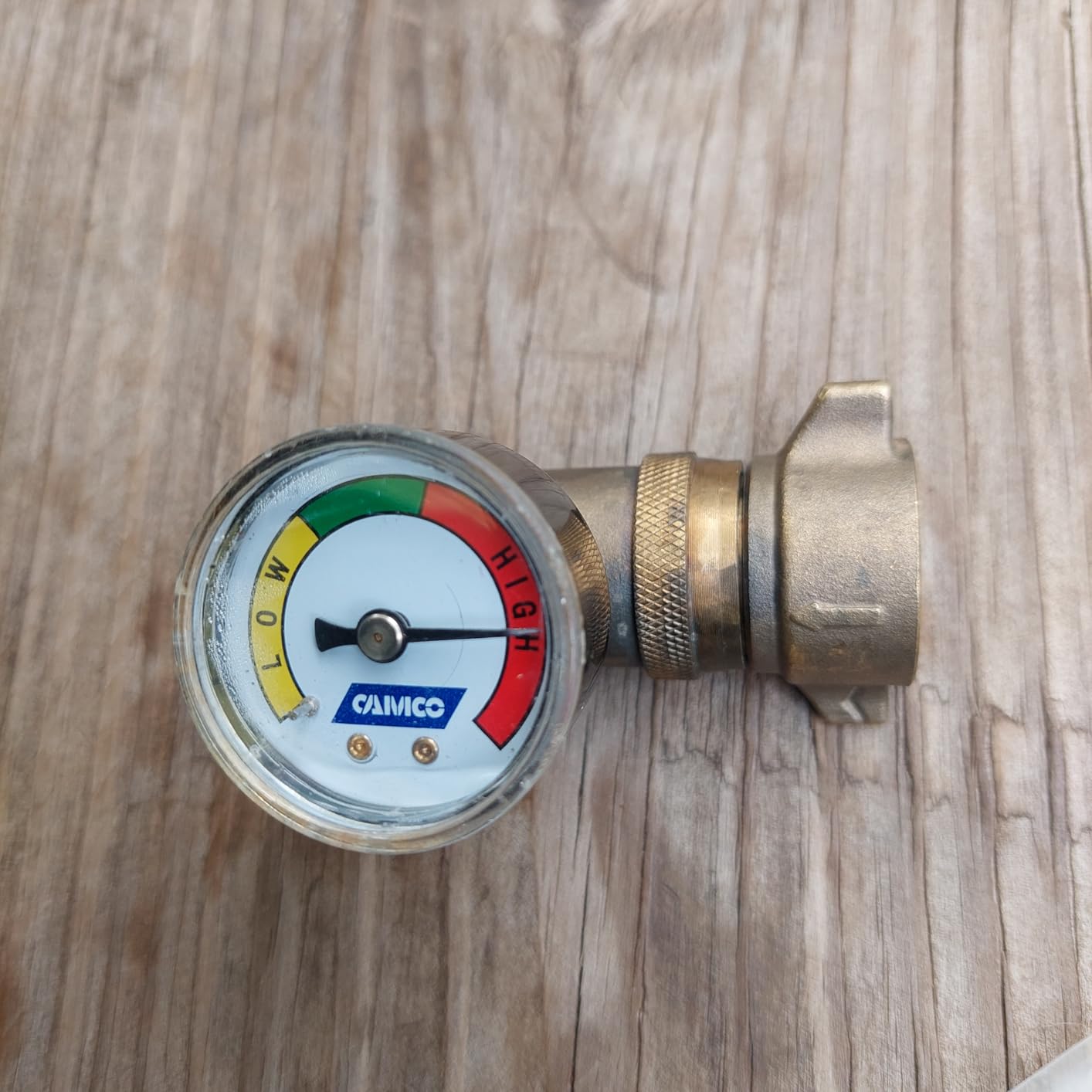
It handles up to 125 PSI of incoming pressure, so a demanding pedestal is covered, and the brass body carries CSA lead-free certification to NSF/ANSI 372. The tabbed collar on the inlet end is what makes it a one-hand install.
The tradeoff is that the dial is a colored band rather than a numbered scale, so it tells you safe or not safe rather than 43 PSI or 47 PSI. Some owners report readings that top out low. If you want a precise number, a numbered adjustable dial is the better buy.
Who this regulator suits?
New owners who want a visible confirmation that pressure is safe, without carrying a tool to adjust anything. It is also a good choice for a rig that lives at one park where you already know the pedestal is aggressive.
Owners with limited vision or who do not want to squint at fine print get the most from the color coding here. It is among the easiest gauges in the group to read at arm’s length.
Who should skip it?
Skip it if you need a precise outlet number, or if your plumbing wants more than 50 PSI for appliance work. There is no adjustment path at all with this barrel.
One owner concern worth naming is theft: the tabbed collar that makes installation easy also makes it easy to unthread, so this unit is worth taking with you when you break camp.
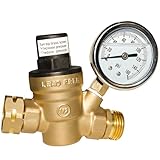
5. Hourleey LCG35QSADZ – adjustable with a gauge at the budget end
Hourleey Water Pressure Regulator Valve, RV Brass with Gauge and Inlet Screened Filter for Camper Trailer
Adjustable 0-160 PSI
Oil-filled gauge
Inlet screened filter
Lead-free brass
Pros
- Adjustable across a 0-160 PSI range with an oil-filled gauge
- Inlet screened filter catches grit at the spigot
- Lead-free brass body with under 0.13 percent lead
- Screw adjustment is simple once you find the feel
Cons
- Gauge reads approximately rather than precisely
- O-ring seal needs care and will leak if overtightened
- Some models will not adjust above the factory preset
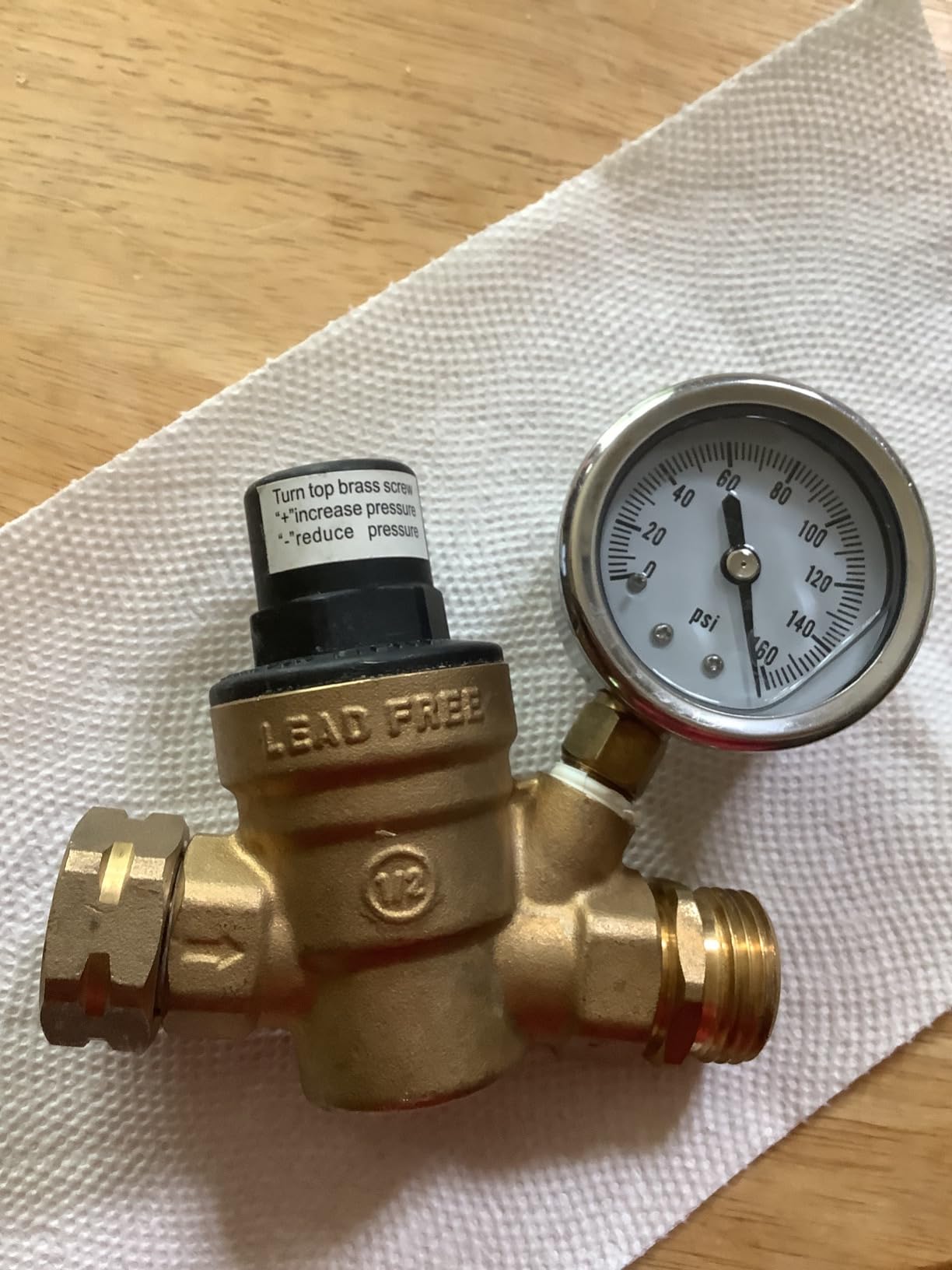
The Hourleey LCG35QSADZ is how you get an adjustable regulator with a real oil-filled gauge without paying an adjustable price. The body is lead-free brass, the adjustment runs across a 0-160 PSI range, and an inlet screened filter is fitted at the upstream end.
The filter matters more than it sounds. Campground spigots are notorious for rust scale and sediment, and that debris goes straight into your regulator valve seat and your fresh water tank if you do not catch it somewhere first. Catching it at the inlet is the right place.
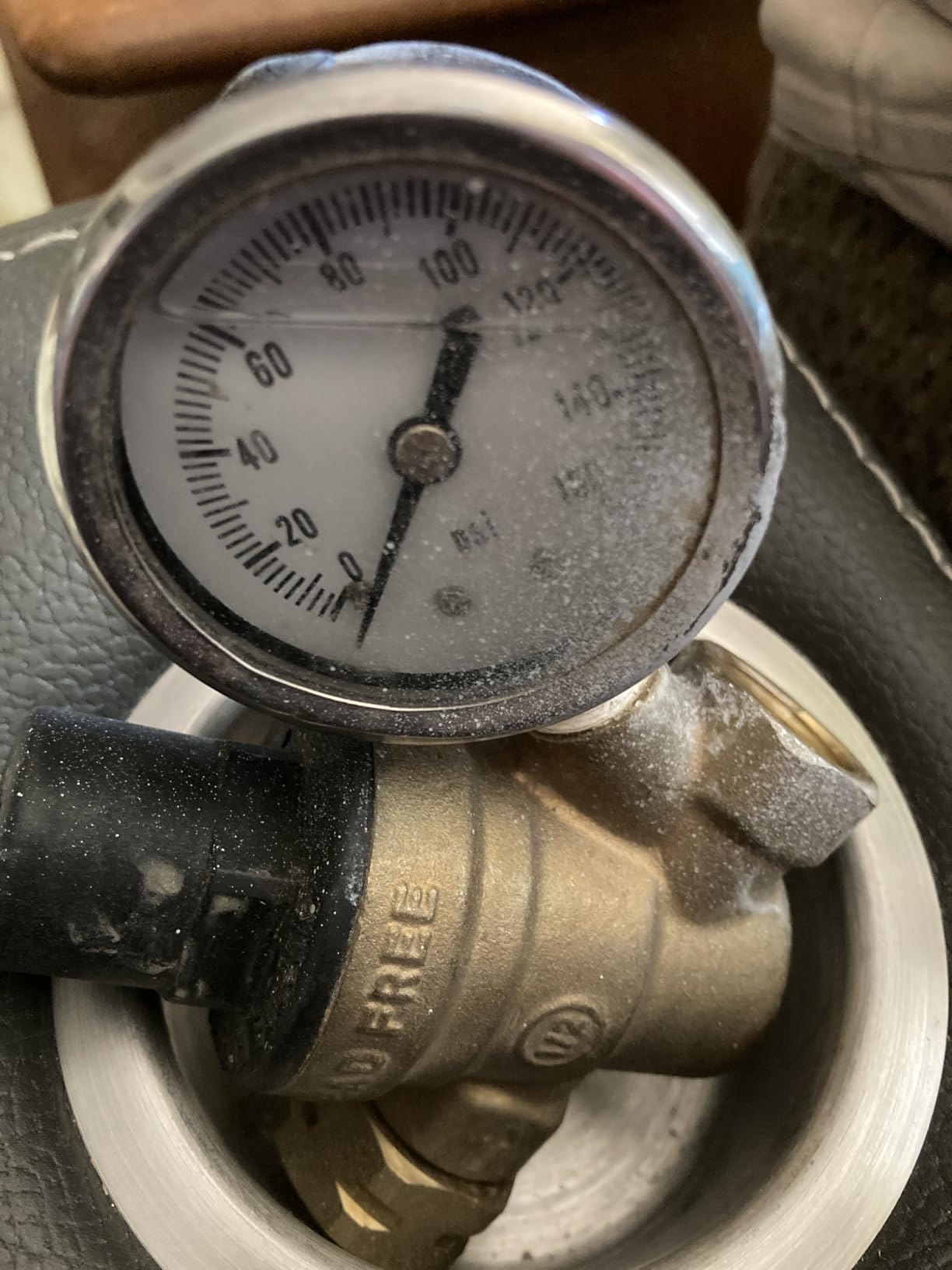
This model comes in both handwheel and screwdriver-adjustable variants under the same name, so check which one you are actually ordering before you order it. Owners who received a screwdriver version report that the adjustment thread is not linear and takes practice to find the right setting.
Lead-free status is stated to the NSF standard, which is a real standard, though the listing is less specific than RVGUARD or Camco about which clause applies. If you need named certification for a park requirement, verify the marking on the unit itself.
Who this regulator suits?
A camper who wants a gauge and adjustment but does not want to spend heavily. It is a sensible first regulator for a newer camper on a tight budget who still wants to see pressure at the outlet.
It also makes sense as a second regulator for a two-rig household, where one adjustable unit gets shared between vehicles instead of buying two of everything.
Who should skip it?
If precision matters to you, the gauge on this unit is more of an indicator than an instrument. Owners who calibrate against a known reference report meaningful deviation at both ends of the scale.
There are also reports of units arriving leaking from the box. Check the seal with a paper towel test before you trust it at a pedestal, and do not overtighten the housing while chasing the leak.
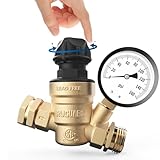
6. RVGUARD RGWPR-H – the same certified valve with a bare-hand knob
RVGUARD RV Water Pressure Regulator Valve With Adjustable Knob
Tool-free knob
Factory preset 45 PSI
CSA approved
Inlet screen included
Pros
- Hand knob adjusts without any tool
- Same CSA approval to NSF/ANSI 61 and 372
- Factory setting at 45 PSI out of the box
- Inlet screen filter included
- Brass body built with hot-casting process
Cons
- Newer design with a shorter review history
- Gauge oil leakage reported on some units
- Adjustment setting may not hold steady under pressure
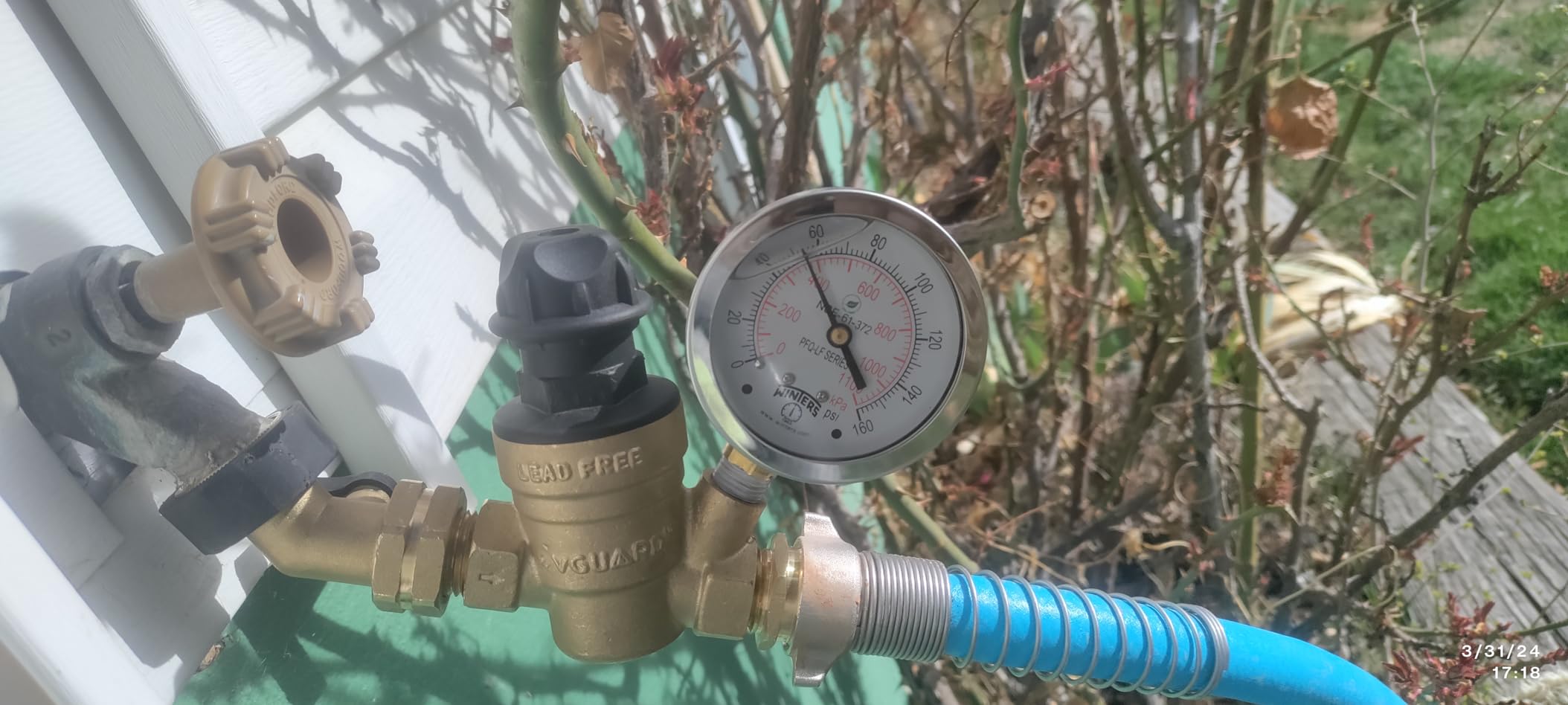
Take the RVGUARD ARGWPR001 design and swap the screwdriver collar for a hand knob, and you get the RGWPR-H. Same CSA approval covering NSF/ANSI 61 and 372, same lead-free brass under 0.13 percent lead, same factory setting at 45 PSI, same inlet screen filter.
The practical difference is that you can change the outlet pressure in the rain at a pedestal with one hand and no flashlight in your teeth. For a lot of campers that single feature is worth more than anything else on the spec sheet.
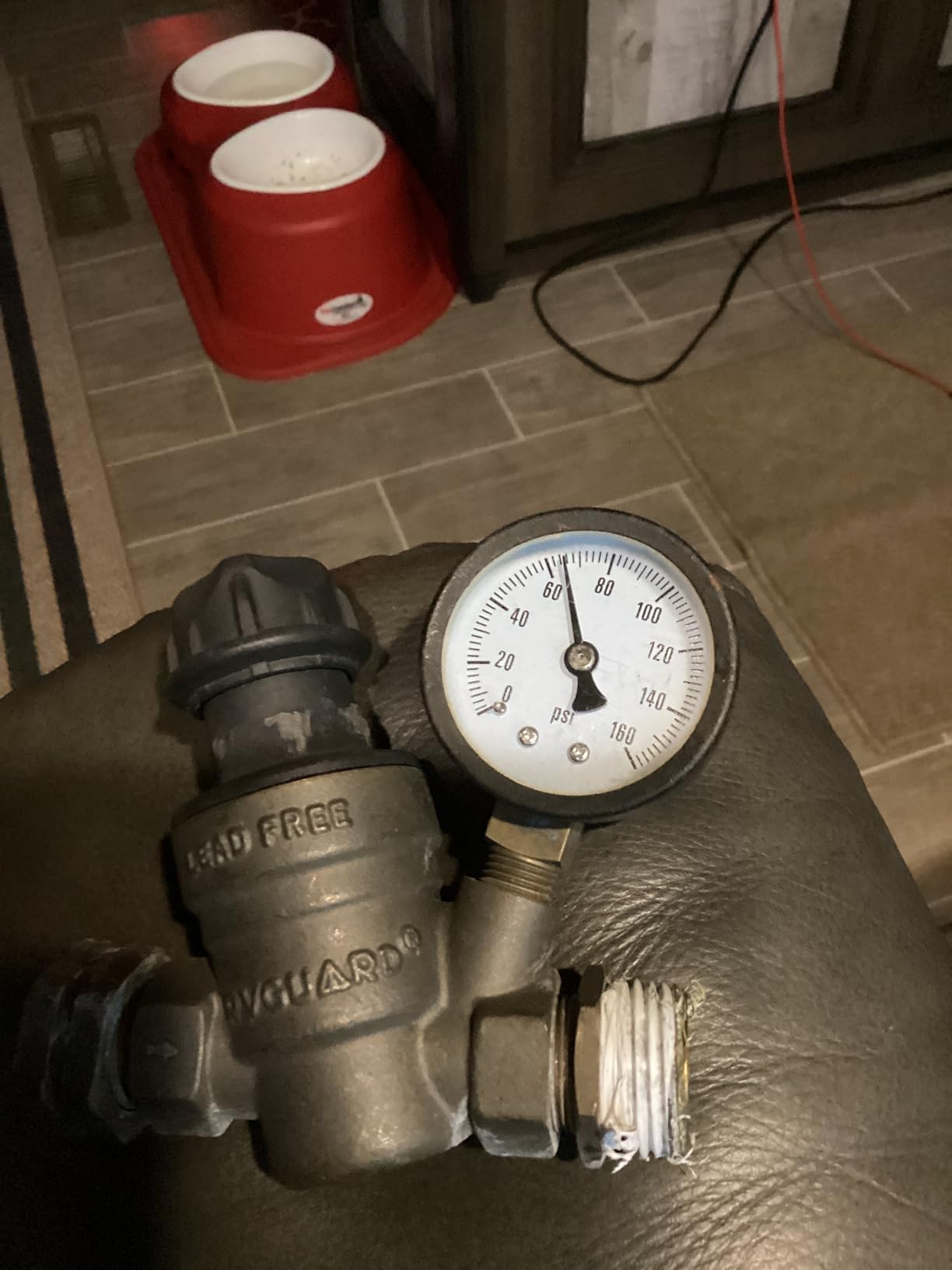
It measures 6.7 by 5.7 by 2.16 inches, which makes it a slightly larger package than the screwdriver version but still perfectly stowable in a wet bay compartment. The gauge is easy to read and the outlet is a 3/4 inch female garden hose thread.
Be aware this is the newer of the two RVGUARD models, so its review history is much shorter than the screwdriver version. The early reports concentrate on gauge oil seepage and an adjustment that does not always hold steady under sustained pressure.
Who this regulator suits?
Anyone who adjusts pressure more than once a season, and anyone who does not want to carry a screwdriver to the pedestal. The knob adjustment is the reason this design has become a common choice among adjustable owners at campgrounds.
It also pairs well with the RVGUARD screwdriver model if you want one on the road and one in storage, since the certification and factory setting are identical.
Who should skip it?
Skip it if you want the deepest review history on an adjustable unit. The older RVGUARD design has more than seven times the ratings and a much longer track record of reported behaviour.
Also consider skipping it if you leave valuable gear at the site overnight, since a visible knob on a pedestal is an invitation. And note the outlet is listed at a 45 PSI maximum, which is exactly where you want it.
7. Valterra A01-1122VP – hi-flow design for newer rigs that can take 50-55 PSI
Valterra RV Hi-Flow Water Regulator, Lead-Free Brass Hi-Flow Water Regulator for Camper, Trailer, RV Plumbing System, 50-55 psi
Hi-flow 50-55 PSI
Lead-free brass
Screened washer
No gauge
Pros
- Hi-flow internals hold better pressure than small barrels
- Lead-free rust-resistant brass body
- Screened washer traps debris at the inlet
- Passes pressure through untouched below 50 PSI
- Compact body at just over half a pound
Cons
- Marked 50-55 PSI
- which is too high for older plumbing
- No gauge means no verification of outlet pressure
- Screened washer needs periodic cleaning
The Valterra A01-1122VP is the answer for a weak shower. Where standard 40-50 PSI barrels throttle flow to satisfy the lowest common denominator, this hi-flow design regulates to 50-55 PSI and simply passes pressure through when the inlet is already below 50 PSI.
That last part is the real trick. Most regulators reduce whatever comes off the spigot down to their set band, which means a park delivering 35 PSI gets turned into 40 PSI that the regulator cannot physically deliver. This one gets out of the way.
Construction is lead-free brass with rust resistance, and the debris protection comes from a screened washer rather than a separate filter housing. The body weighs about 7.4 ounces and measures 1.55 by 0.62 by 0.31 inches, so it is among the smallest pieces in this roundup.
There is no gauge on this unit. If verification matters to you, pair it with an inline gauge downstream, or pick an adjustable unit with a dial built in.
Who this regulator suits?
Newer RVs with plumbing in good condition where higher flow is wanted. Families running multiple showers on one hookup, or campers who have already documented that a small fixed barrel turns their shower into a trickle.
It also suits anyone camped at parks with weak municipal pressure, since it will not make a low-pressure supply any lower.
Who should skip it?
The listing itself warns against older RVs, and that warning is worth taking seriously. 50-55 PSI is more than a decade-old plumbing stack wants to see, especially where the crimp joints are still original equipment.
Skip it if you need to know what pressure is actually reaching your inlet. Without a gauge you are trusting the valve rather than measuring it, which is a reasonable trade for most people but not for everyone.
8. Hourleey RV-REG – the simplest fixed barrel that still filters debris
Hourleey Brass RV Water Pressure Regulator, Water Regulator for RV Camper with Filter Screen, Protector for Campers, Travel Trailers, RV Plumbing System, 40-50 PSI
Fixed 40-50 PSI
Brass body
Stainless filter screen
CSA low lead certified
Pros
- Delivers core 40-50 PSI protection at the lowest entry point
- Brass construction resists pressure and corrosion
- Stainless steel filter screen included
- CSA low lead content certified
- One year manufacturer warranty
Cons
- No gauge and no adjustment at all
- Very small and easy to lose or leave behind
- Basic feature set with nothing extra
The Hourleey RV-REG does one job: it clamps your incoming pressure to a fixed 40-50 PSI and it does it in brass. That is the entire value proposition, and at a 4.7 rating across more than 1,600 reviews it is clearly a job it performs.
It includes a stainless steel filter screen, which separates it from the bare minimum fixed barrels. That screen catches the scale that comes off older campground plumbing before it reaches the valve seat and, downstream, your fresh water tank.
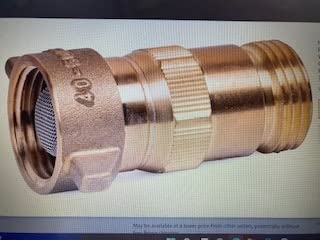
Lead-free status is certified to CSA low lead content standards, and the brass is described as high pressure resistant. It fits 3/4 inch hose threads, so it is a direct drop-in between a standard campground hose and a standard RV inlet.
There is a one year manufacturer warranty on this one, which is more than many competitors in this category offer. The listing also notes one-pack and two-pack formats along with a with-gauge variant if you want to read the outlet.
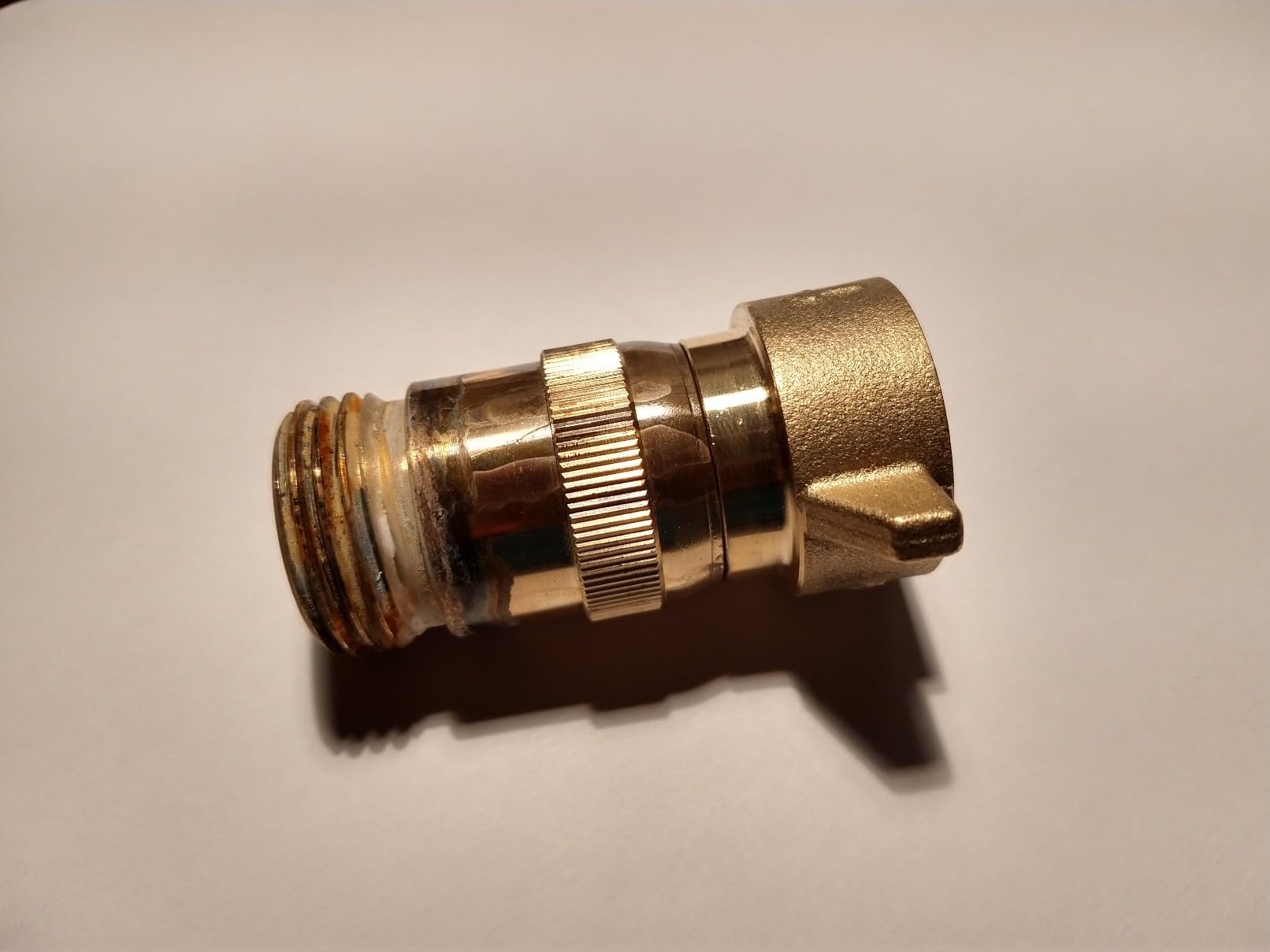
Who this regulator suits?
Campers who want protection without features, and anyone who needs a second or third regulator for a boat, a fifth wheel or a rental unit. Buying these in multiples is the normal way this model gets used.
It is also a sensible wet-bay spare. It weighs 150 grams and measures under an inch per side, so it disappears into a compartment and does not rattle around.
Who should skip it?
Skip it if you want to see what the pressure actually is. There is no gauge and no adjustment, so a unit that has drifted out of spec looks exactly like a unit that is working.
Also skip it if flow is your concern. Owners on RV forums report small barrel-style regulators running at roughly 2 GPM and drifting lower over time, and this barrel sits firmly in that category.
9. Valterra A01-1120 – the compact fixed barrel aimed at older rigs
Valterra RV Water Regulator, Lead-Free Brass Water Regulator for Camper, Trailer, RV Plumbing System, 40-50 psi
Fixed 40-50 PSI
Lead-free brass
5.6 ounce body
Older RV friendly
Pros
- Regulates to a fixed 40-50 PSI suitable for older plumbing
- Lead-free brass with rust resistance
- Very small at 0.46 by 0.31 by 0.31 inches
- Long-term durability reported by long-term owners
Cons
- No pressure gauge included
- Fixed pressure with no adjustment path
- Basic feature set only
The Valterra A01-1120 is the older-rig answer. It regulates at a fixed 40-50 PSI, which is the band most RV manufacturers published for plumbing built before the last decade, and it is explicitly marketed as ideal for older RVs.
Where the Valterra hi-flow unit pushes to 50-55 PSI, this one deliberately stays low. For a rig with original crimped connections and an aging ABS manifold, that restraint is the feature.
The brass body is lead-free and rust resistant, and the listing states it meets federal and state drinking water fixture laws. At 5.6 ounces and well under half an inch on each dimension it is among the most compact regulators in this roundup, which matters in a cramped wet bay.
Long-term owners on RV forums describe rebuilding this unit rather than discarding it, which is a good sign for serviceability as much as for durability. Replaceable internals and a body that does not corrode are what make that possible.
Who this regulator suits?
Owners of rigs from earlier eras, especially fifth wheels and older motorhomes with original plumbing. Keeping outlet pressure in the 40-50 PSI band is the conservative and correct call there.
It also suits anyone who wants the smallest possible regulator and does not care about a gauge. Nothing else in this list takes less space in a storage compartment.
Who should skip it?
Skip it if your rig is new enough to handle 50-55 PSI and you want the better flow. Pairing this with the Valterra hi-flow model gives you both options in the same brand family.
Skip it if you want to verify pressure yourself. There is no gauge, and a fixed barrel that has quietly failed to regulate is impossible to detect from the outside.
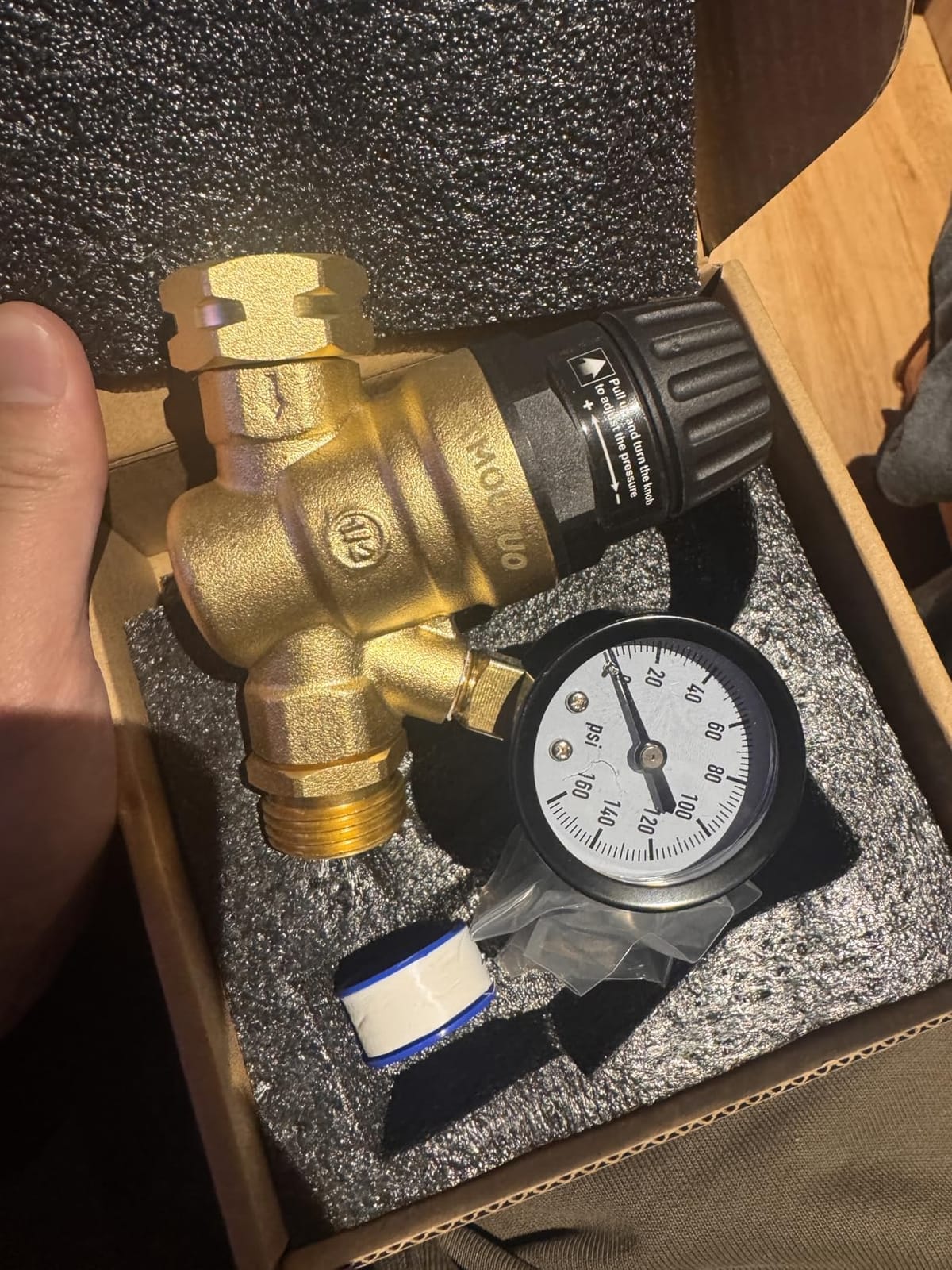
10. STMOUTUO MT-PRV01 – adjustable with spare filters in the box
STMOUTUO RV Water Pressure Regulator Valve for Camper. Lead-Free Brass.
Pull-and-turn knob
Preset 45 PSI
0-160 PSI gauge
Spare filters included
Pros
- Pull-and-turn knob needs no tools
- Factory preset at 45 PSI and easy to turn down
- Box includes two spare inlet filter cartridges plus Teflon tape
- Lead-free brass compliant with NSF/ANSI 372
- Readable 0-160 PSI gauge
Cons
- Only drops about 20 PSI below inlet pressure
- Some reports of early failure after light use
- Gauge can take on water in heavy rain
The STMOUTUO MT-PRV01 comes with two spare inlet filter cartridges and a roll of Teflon tape in the box, which is among the most complete consumables packages in this roundup. Nobody else here hands you spare cartridges for the part that actually clogs.
The valve itself is a pull-and-turn knob design preset at 45 PSI, with a 0-160 PSI gauge and a lead-free brass body made with heat-casting technology. Certification is stated as compliant with the current NSF/ANSI/CAN 372 standard, which is a named third-party reference rather than a box claim.
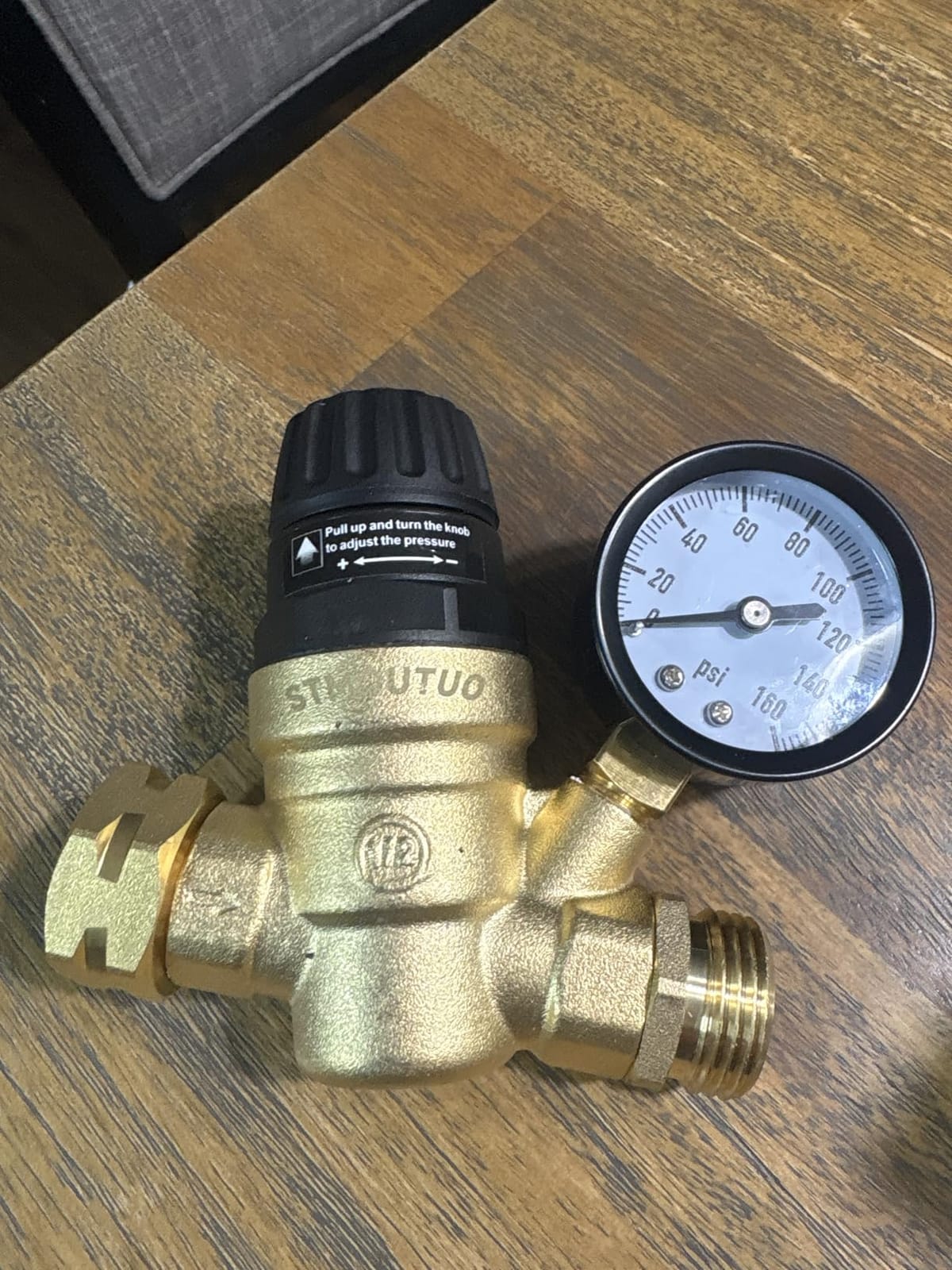
Understand the adjustment limit before you order. The listing states it can drop a maximum of 20 PSI below incoming pressure, which sounds generous until you remember campground pedestals measured by owners in the 110-120 PSI range.
A 20 PSI drop is not enough on its own at a high-pressure park. This regulator is a fine companion to a fixed barrel ahead of it, or a good choice at parks with moderate municipal pressure. On its own at an aggressive pedestal, it needs help.
Who this regulator suits?
Campers at parks with moderate water pressure who want tool-free adjustment and a gauge, and who appreciate not having to order replacement inlet screens separately. The consumables bundle genuinely adds up over several seasons.
It also works well as a second-stage regulator behind a fixed barrel, where the fixed unit takes the surge and this one fine-tunes the outlet.
Who should skip it?
Skip it as your only regulator at a high-pressure park. A 20 PSI reduction from 115 PSI is not the 45 PSI your plumbing needs, and owners who learn this the hard way report it as the unit doing nothing.
Durability reports are mixed, with several mentioning failure after light use. For a part you depend on every single night, a longer review history carries real weight.
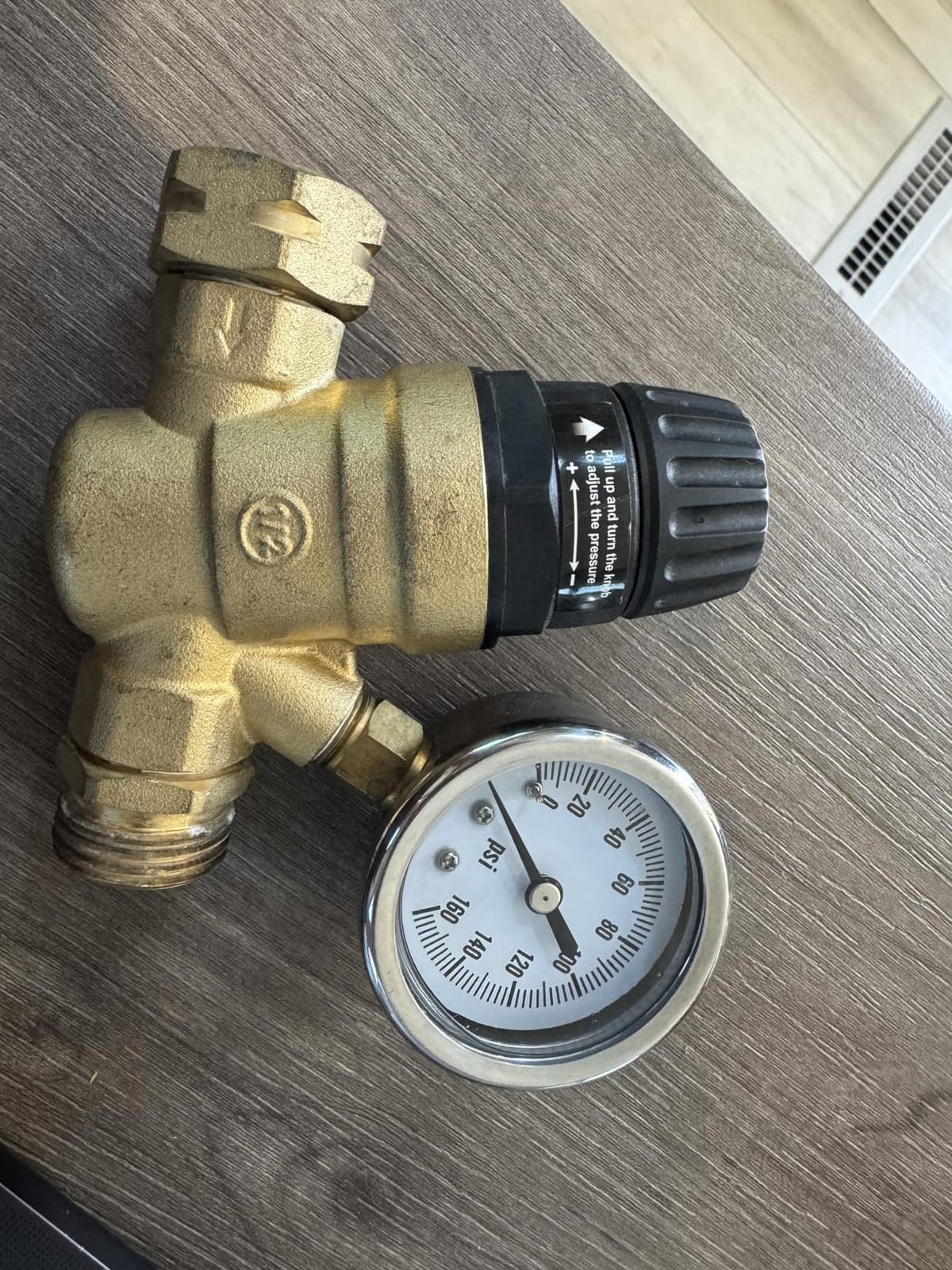
11. Boltigen AH45 – handwheel adjustment with genuine C46500 brass
Boltigen RV Water Pressure Regulator with Gauge Lead-Free Brass Knob Adjustable Water Pressure Reducer Valve, for Camper Travel Trailer RV Drinking Water Pressure Adjust, Protecting Plumbing System
Handwheel adjustment
Preset 45 PSI
C46500 brass
NSF/ANSI 372 compliant
Pros
- Tool-free handwheel adjusts to higher settings cleanly
- Useful when a rig needs 60 PSI or above for appliances
- C46500 lead-free brass with under 0.13 percent lead
- Box includes two inlet screens and sealing tape
- Easy to read gauge
Cons
- Gauge oil leakage reported after about a season
- Setting may not hold steady under sustained pressure
- Shorter review history than established brands
The Boltigen AH45 is the unit to consider if your rig genuinely needs more than 50 PSI. Most of this roundup is built around the 40-50 PSI camp, but a washing machine, a dishwasher or a longer hose run can justify working up toward 60.
It uses a tool-free handwheel rather than a knob you pull, adjusts up to 160 PSI, and comes factory set at 45 PSI. The body is C46500 lead-free brass built with a hot casting process, meeting NSF/ANSI 372 with lead content under 0.13 percent.
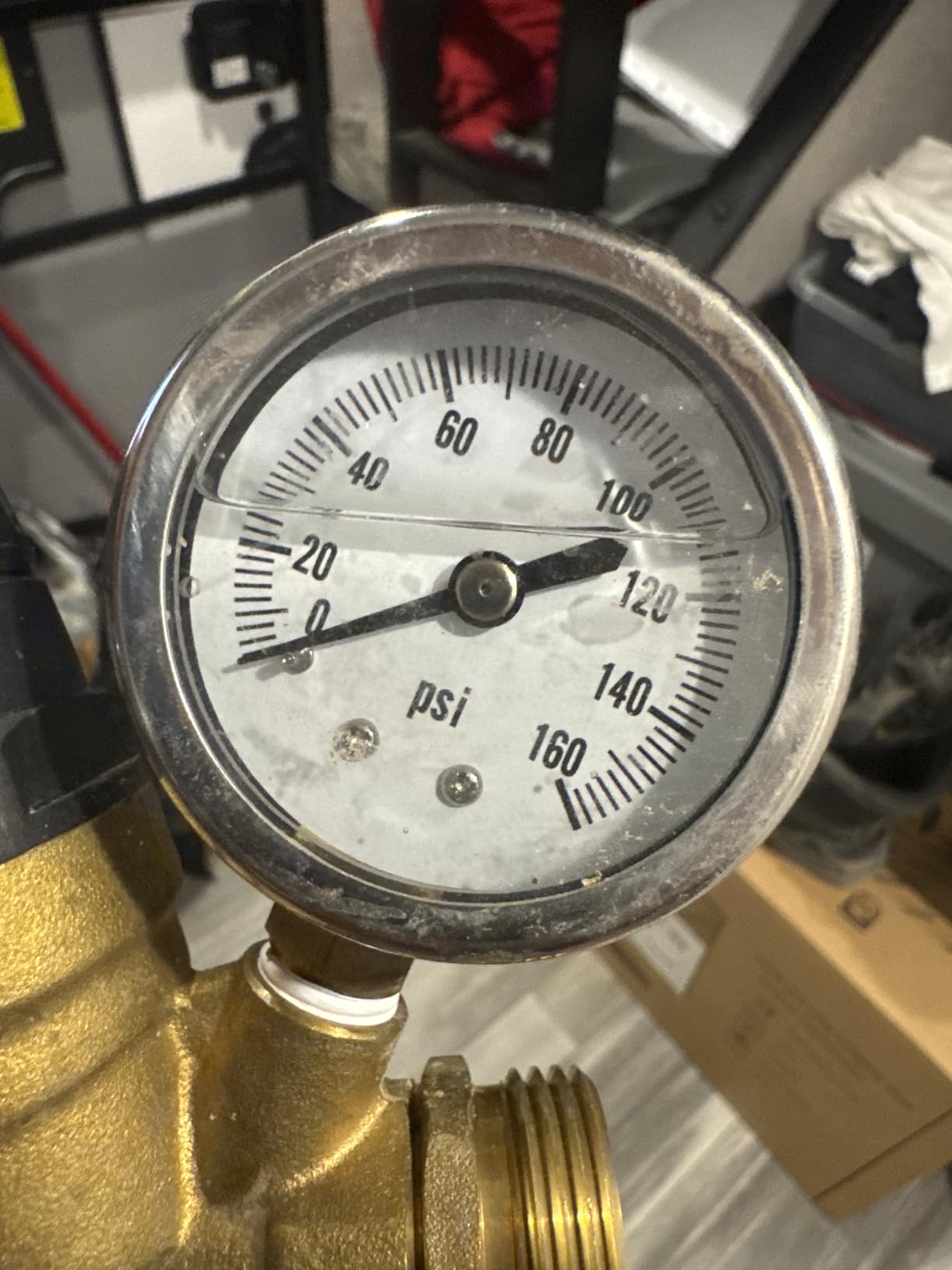
Two inlet screened filters and thread sealing tape come in the box, and the connections are a 3/4 inch hose female inlet to a 3/4 inch hose male outlet on National Hose threads, which lines up with standard RV plumbing.
The recurring complaint is a season of service. Owners mention gauge oil leakage and a pressure setting that wanders after extended use. That is a manageable pattern if you check the gauge each season, but it is not nothing.
Who this regulator suits?
Owners running appliances that need more than 50 PSI and who understand that a regulator set above 50 needs to be set deliberately, not by accident. The handwheel gives finer control than a screwdriver collar at those higher pressures.
It also suits anyone who wants named alloy certification. C46500 is a specific lead-free brass grade, which is a more precise claim than lead-free brass generally.
Who should skip it?
Skip it if 45 PSI is all your rig needs. Running a shower and a sink at 60 PSI puts more stress on every crimped fitting for no practical benefit, and most RV manufacturers publish lower guidance.
Skip it if you want a long record of reported durability. Under 700 reviews is thin ground for a part that protects the whole rig, and the season-long gauge leak pattern shows up more than once.
12. MEASUREMAN MA102 – a fully lead-free system with a glycerin gauge
MEASUREMAN Adjustable Lead-Free Brass RV Water Pressure Regulator with 160 PSI Liquid-Filled Gauge, Inlet Screened Filter, and Portable Bag for Camper, Trailer, Garden, and Plumbing Systems
2 inch glycerin gauge
0-160 PSI with limit pin
AB 1953 compliant
Stainless steel case
Pros
- Lead-free across brass
- copper
- solder and the gauge itself
- 2 inch glycerin-filled stainless steel gauge with a limit pin
- 304 stainless steel gauge case with a polycarbonate lens
- Adjustable handle plus included Teflon tape
- Portable canvas bag for storage
Cons
- Heaviest unit here at 1.9 pounds
- Larger and bulkier in a wet bay
- Shortest review history of the twelve
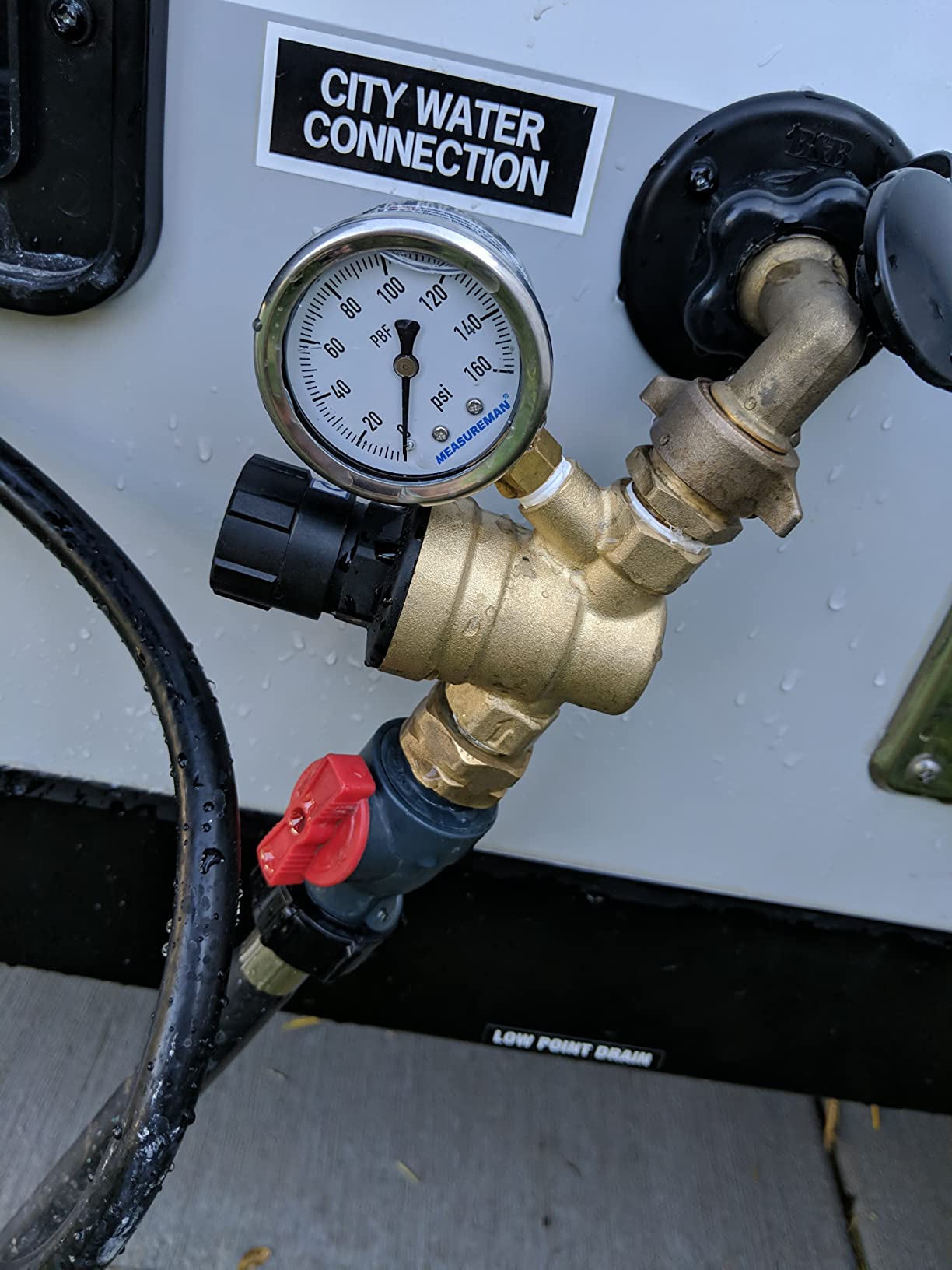
The MEASUREMAN MA102 is the most thoroughly lead-free product in this roundup. Not just a lead-free brass body, but lead-free copper, lead-free solder and a lead-free gauge, assembled in a two-piece sealed structure with copper tube connections between the sections.
That design matters for a specific reason: dissimilar metals touching in water is what causes galvanic corrosion and the slow weeping at a fitting. A sealed copper path removes that risk, and it is why this unit is built the way it is.
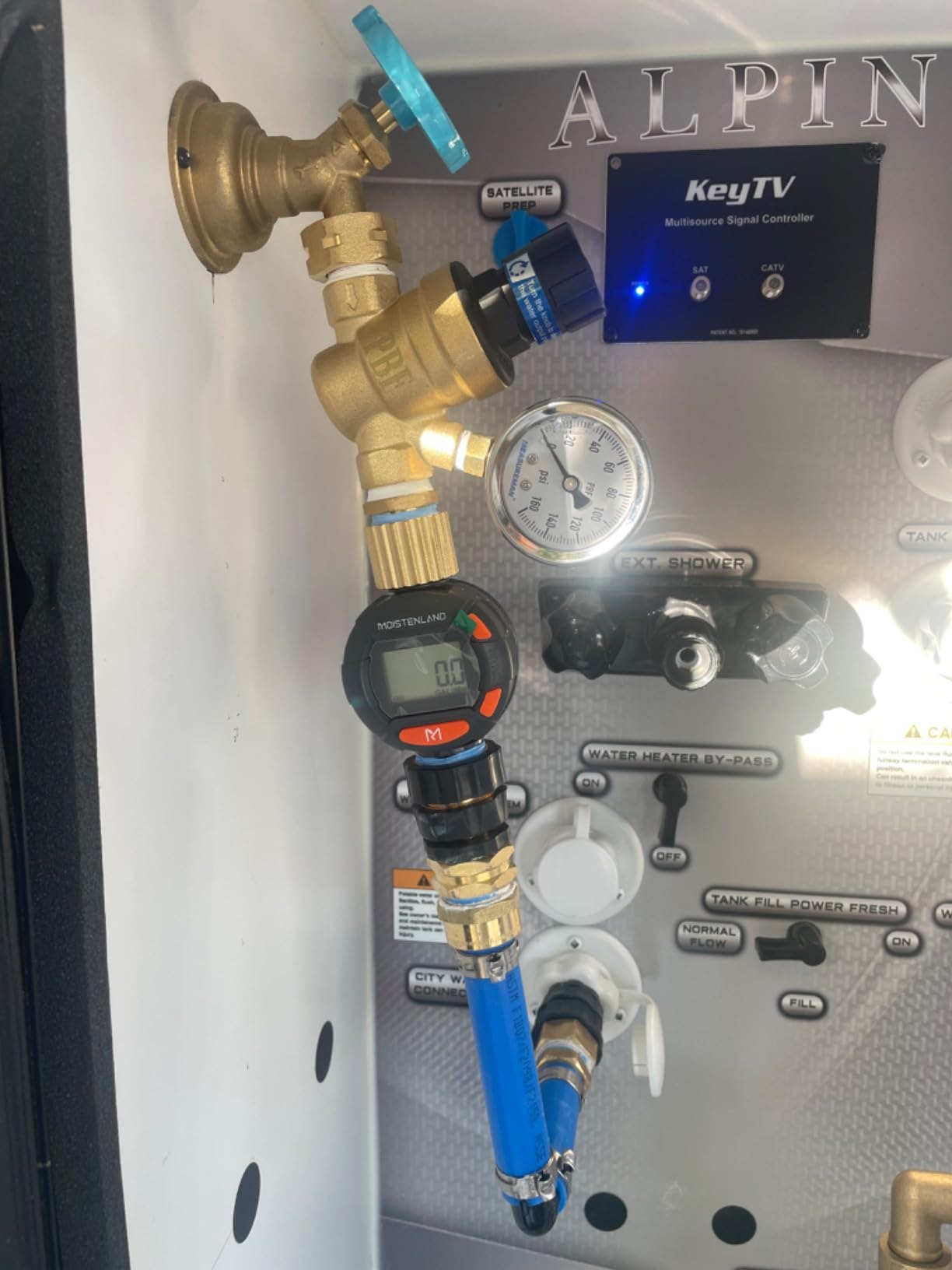
The gauge is the standout. A 2 inch glycerin-filled dial in a 304 stainless steel case with a polycarbonate lens, reading 0-160 PSI with a limit pin that physically stops the needle at your set pressure. That pin is a genuinely useful feature, because a needle that cannot travel past the setting cannot be misread.
Compliance is stated to California AB 1953 and the Safe Drinking Water Act, which is the strictest lead-free framework in use in the US. A canvas storage bag is included, which is a nice touch for a wet bay.
Who this regulator suits?
Owners who want the highest certification standard available and can justify the weight. If you are building a fresh water system where every downstream component matters, this is the most defensible choice on paper.
The glycerin gauge and the limit pin also suit anyone who reads pressure properly rather than glancing at a colored band, and it doubles as a general purpose gauge for the rig.
Who should skip it?
Skip it if space is tight. At 1.9 pounds and 7 by 3 by 7 inches it is by far the bulkiest regulator here, and it needs a proper compartment rather than a clip.
Skip it if you want a deep review history. With the smallest rating count in the group, you are relying on build specification rather than on thousands of owners reporting how it held up.
What PSI should an RV water pressure regulator be set at?
Set your regulator between 45 and 50 PSI, and never above 60. Most RV manufacturers publish a 40-60 PSI safe working range for RV plumbing, and 45 sits in the middle of it with room for error. If your rig has older plumbing, aim for the lower end. Read the gauge with no taps running, then again with a tap open.
That second reading matters more than most people realize. Static pressure is what you see with everything closed. Flowing pressure is what the gauge shows while water is actually moving, and it typically reads lower because of friction loss through the hose and the lines of the rig itself.
So if your regulator reads 48 PSI with nothing running and 31 PSI at the shower head, the regulator is doing its job and the limitation is somewhere else. If it reads 48 static and 45 flowing, your plumbing is in good shape.
Pressure creep is the failure mode to watch for
Shut the campground valve off, leave the regulator connected, and watch the dial for a few minutes. A healthy regulator holds or falls. One that climbs is leaking internally past the seat, and at that point the device meant to protect your plumbing is the thing stressing it.
Cheap fixed barrels are the usual culprits here. If you see creep, replace rather than adjust, and check that the unit is seated on a clean flat spigot with the washer intact.
The 160 PSI on the dial is not a target
Several regulators in this roundup advertise adjustability up to 160 PSI. That is the scale of the gauge and the ceiling of the adjustment thread. It is not permission to run your RV at 160. Every listing in this group that advertises 160 PSI also leaves the factory setting at 45 PSI for a reason.
If you blow out water lines, the number that matters is also 45 PSI or below, and lower for older rigs. Blow-down procedures that push a full line of air through the plumbing have nothing to do with inlet pressure from a pedestal.
How to hook up a regulator at a campground pedestal in 6 steps?
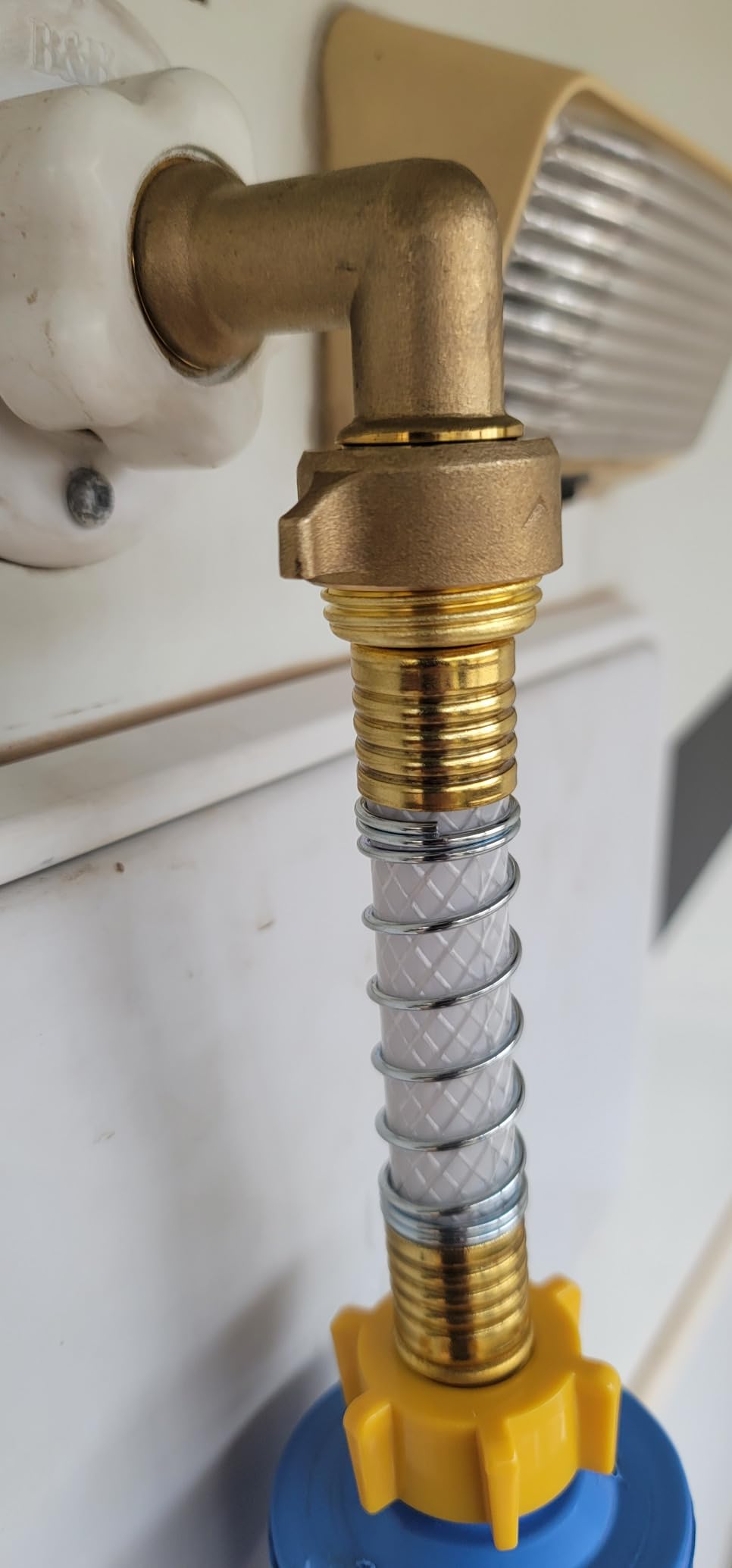
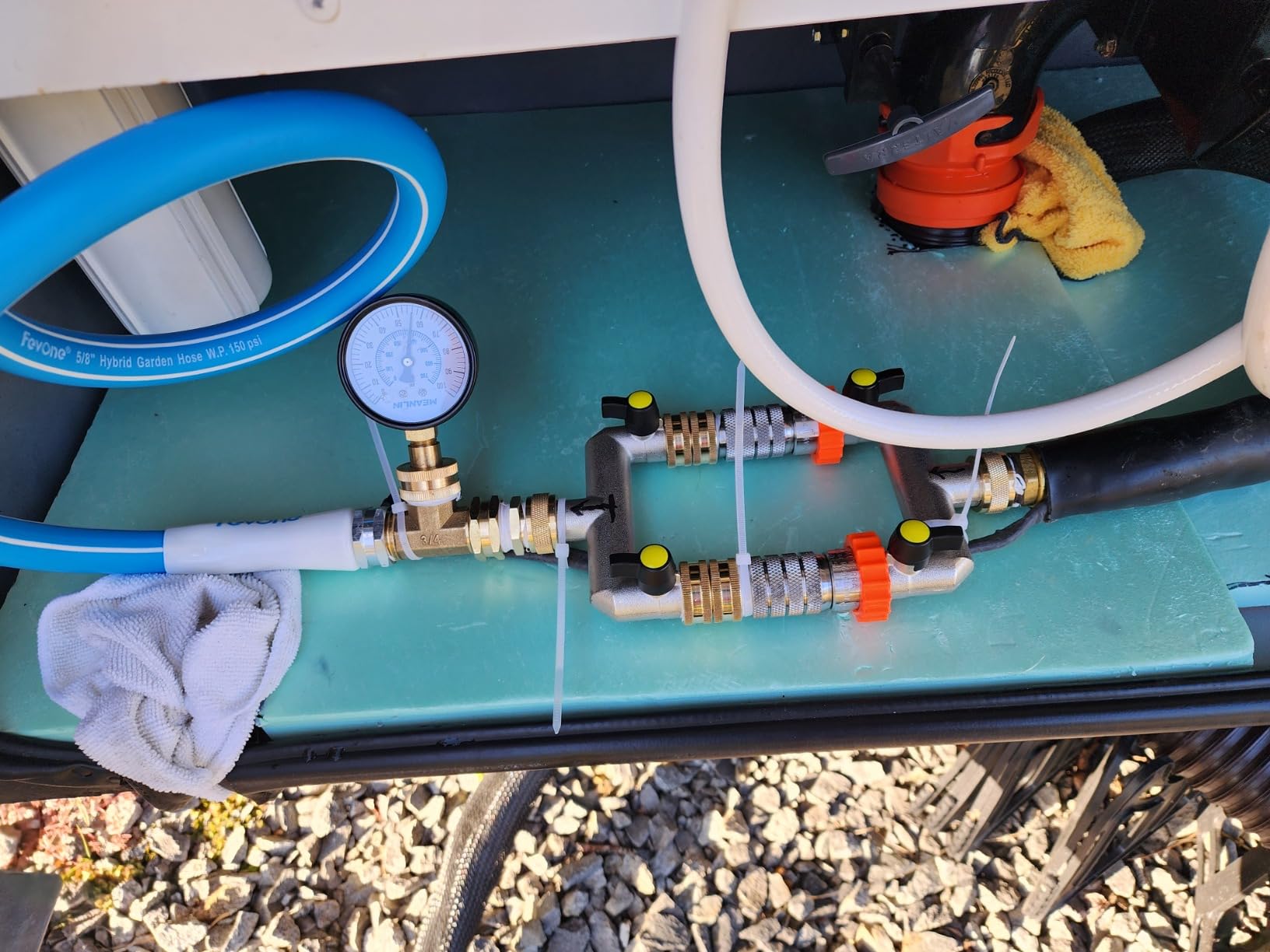
Order matters more than most guides admit, and the correct sequence at a pedestal is regulator first, then filter, then hose to the rig. Putting the filter ahead of the regulator means you push every particle of grit through the regulator valve seat, which is exactly where you do not want wear.
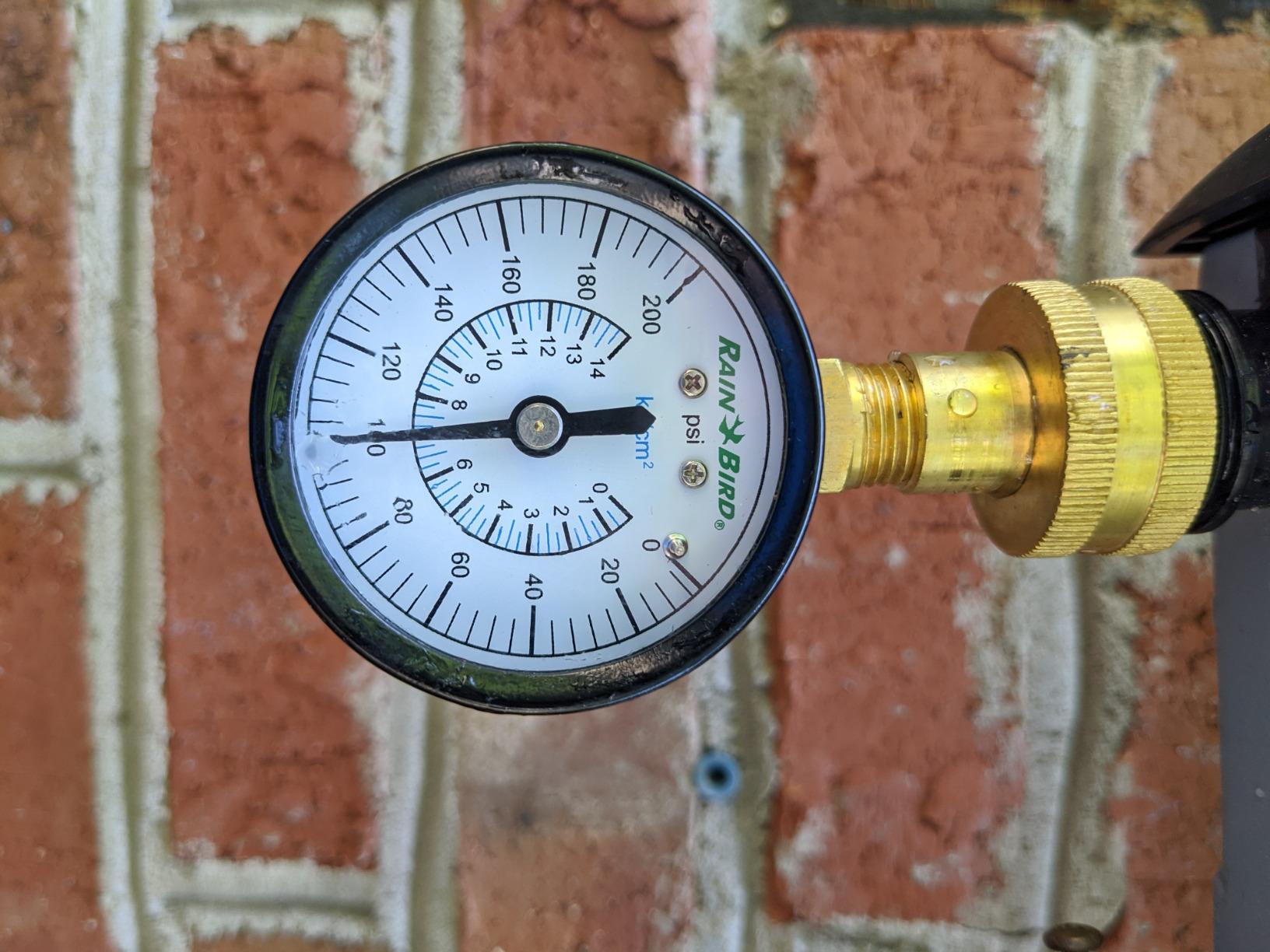
Before you touch anything, run a pressure check at the pedestal with your own gauge. Connect briefly, open the spigot, read the pressure, and shut it down. If you see 110 or 120 PSI, you know your regulator is not optional at this site. This takes two minutes and it tells you more than any spec sheet.
Inspect the pedestal spigot and the hose end for a flat or missing rubber washer. A missing washer is the most common cause of dripping at the threads, not a failed regulator.
Connect your regulator directly to the spigot and hand tighten. If it is a hose-thread connection, snug it down and check for weeping before going further.
Attach your water filter to the regulator outlet, so debris is caught after regulation but before it reaches the valve seat and your tank.
Connect your fresh water hose to the filter outlet and run it to the RV inlet.
Open the pedestal valve slowly, then open a cold tap inside the rig to purge air until water runs steady, and close the tap.
Read the regulator gauge, adjust to 45 PSI if it is an adjustable model, and confirm no leaks at any joint before you walk away.
On theft, the common forum advice is simple: take the regulator with you when you break camp, or run a stainless locking cable through it and the pedestal post. Brass is a known target, and a replacement at 5 a.m. is a miserable start to a travel day.
Our guide to the best RV water filters covers the cartridge choices that slot in at step three.
Why your RV shower went weak after adding a regulator?
A weak shower after adding a regulator is almost never a pressure problem. It is a flow restriction, and the regulator is the most likely place to look first. Small barrel-style fixed regulators sit at roughly 2 GPM according to owners who have measured them, and that number drifts downward as the valve wears.
Run these checks in order. First, compare the gauge reading with the shower running and with it off. If the difference is large, your plumbing is fine and the restriction is upstream of the gauge.
Second, check the inlet screen on the regulator. Campground scale clogs it, and a clogged screen will starve the whole rig including the cold and hot at the shower.
Third, check your filter. A cartridge past its capacity cuts flow hard, and many campers discover this at the same moment they start blaming a brand new regulator.
Fourth, check the hose. A kinked or flattened garden hose, or a 100 foot run through gravel, will take more pressure than any regulator and read as low pressure on the outlet dial.
Fifth, check the valve seat and washer. A partially closed spigot valve or a hose washer that has flattened into an oval reduces flow without any leak to show for it.
If all five check out and you still have a trickle, you are looking at a regulator whose internal bore is simply too small, and the fix is a hi-flow design or a booster. Our picks for both are covered in the guides to the best water pressure booster pumps and the best booster systems. If the same internal-standard question applies to breathing gear, our picks for the best scuba regulators cover it in detail.
How to read lead-free certification claims before you buy?
Lead-free brass in this category means one of four different things, and only two of them are verified by a named third party. Sorting out which is which is the single most useful thing you can do before ordering.
NSF/ANSI 372 is the current standard for lead content in plumbing products, and the useful detail is the 0.13 percent threshold. A compliant valve carries under that figure by weight. Camco 40055, Camco 40064 and the RVGUARD models all name this standard on their listings.
NSF/ANSI 61 covers the health effects of materials in contact with drinking water, including migration testing. It is a different question from lead content, and a valve can hold one without the other. RVGUARD names both.
CSA certification is a third-party testing body verifying a claim against a published standard. Where a listing says CSA lead-free certified, someone independent checked the claim. That is stronger evidence than a printed box claim.
A bare lead-free brass statement with no standard named is the weakest tier. Valterra states compliance with federal and state drinking water fixture laws, which is a legal statement rather than a tested certification. It is not wrong, it is just less verifiable.
One more thing worth knowing: many of the adjustables in this category share factories and produce physically similar castings under different brand names. We are not going to pretend the hardware is entirely different, because in several cases it is not. What separates them meaningfully is the certification paperwork, the warranty, and whether the brand answers the phone when a gauge fails.
Frequently Asked Questions
Do I really need a water pressure regulator for my RV?
Yes, if you ever connect to city water at a campground or RV park. Nobody regulates the pressure at a pedestal, and RV owners regularly measure 110-120 PSI at the spigot while RV plumbing is built for 40-60 PSI. A regulator is the cheapest protection you can buy. If you run only from a full fresh water tank on your 12-volt pump, you do not strictly need one.
What PSI should I set my RV water pressure regulator at?
Set it between 45 and 50 PSI, and never above 60. Aim closer to 40-50 PSI if your rig has older plumbing. Read the gauge with no taps running, then read it again with a tap open. A large drop between those two readings means your plumbing is fine and something upstream is restricting flow.
Does the regulator go before or after the water filter?
The regulator goes first, directly on the campground spigot, then the filter, then the hose to the rig. This sequence keeps grit out of the regulator valve seat and out of your fresh water tank. Running the filter ahead of the regulator forces debris through the most sensitive moving parts in the setup.
Who makes the best RV water pressure regulator?
For a fixed preset barrel with the deepest proven record, the Camco 40055 is the strongest all-round choice. For adjustability with a trustworthy liquid-filled gauge, the Renator M11-0660R is the best balance. For the cleanest certification paperwork on an adjustable unit, the RVGUARD models name both NSF/ANSI 61 and 372 under CSA approval.
Should I buy an adjustable regulator or a fixed barrel?
Buy a fixed barrel if you run one shower, one sink or one appliance at a time and want nothing that can be misadjusted. Buy an adjustable unit if you move between parks with different pressure, run a washing machine, or want to see the outlet reading. Fixed barrels cost less, drift less and are harder for someone else to change by mistake.
How do I know if my RV water pressure regulator is bad?
Shut off the campground valve and watch the gauge. If the needle climbs, the valve is leaking internally past its seat. Other signs include dripping at the hose threads from a missing or flattened washer, a gauge that fogs, sticks at zero or cracks after a freeze, and noticeably weak flow at every fixture in the rig.
Why is my RV water pressure low?
Common causes are a clogged inlet screen on the regulator, a spent water filter cartridge, a kinked or overlong garden hose, a partially closed spigot valve, and a flattened hose washer. Small fixed barrel regulators also restrict flow on their own, typically to around 2 GPM. Test by reading the gauge with a tap closed and then with a tap open.
Do RV water pressure regulators freeze and break?
The valve body usually survives a freeze, but the gauge does not. Owners report dials that fog, stick at zero or crack in a single cold night, and the gauge typically fails long before the valve does. If you leave a regulator in a wet bay over winter, remove it, dry it, and store it inside where it will not freeze.
Bottom Line: the best RV water pressure regulators for campgrounds in 2026
The Camco 40055 is our pick as the best RV water pressure regulator for campgrounds because it does the one thing that matters without a dial to misread or a knob to turn wrong. More than 23,000 ratings describe the same result: 40-50 PSI out, every time, for years.
Take the Renator M11-0660R if you want a liquid-filled gauge and the option to tune for a weak park. Take the RVGUARD ARGWPR001 if certification paperwork on NSF/ANSI 61 and 372 matters to you, and the knob-adjustable RVGUARD if you would rather not carry a screwdriver to the pedestal.
Whichever you pick, check the pedestal pressure with your own gauge before you hook up, set it at 45 PSI, and run the regulator first, filter second, hose third.
If you also track how a regulator’s internal standards compare to other pressure-control gear, our guides to the best nitrogen regulators cover the same principles in a different fluid.