
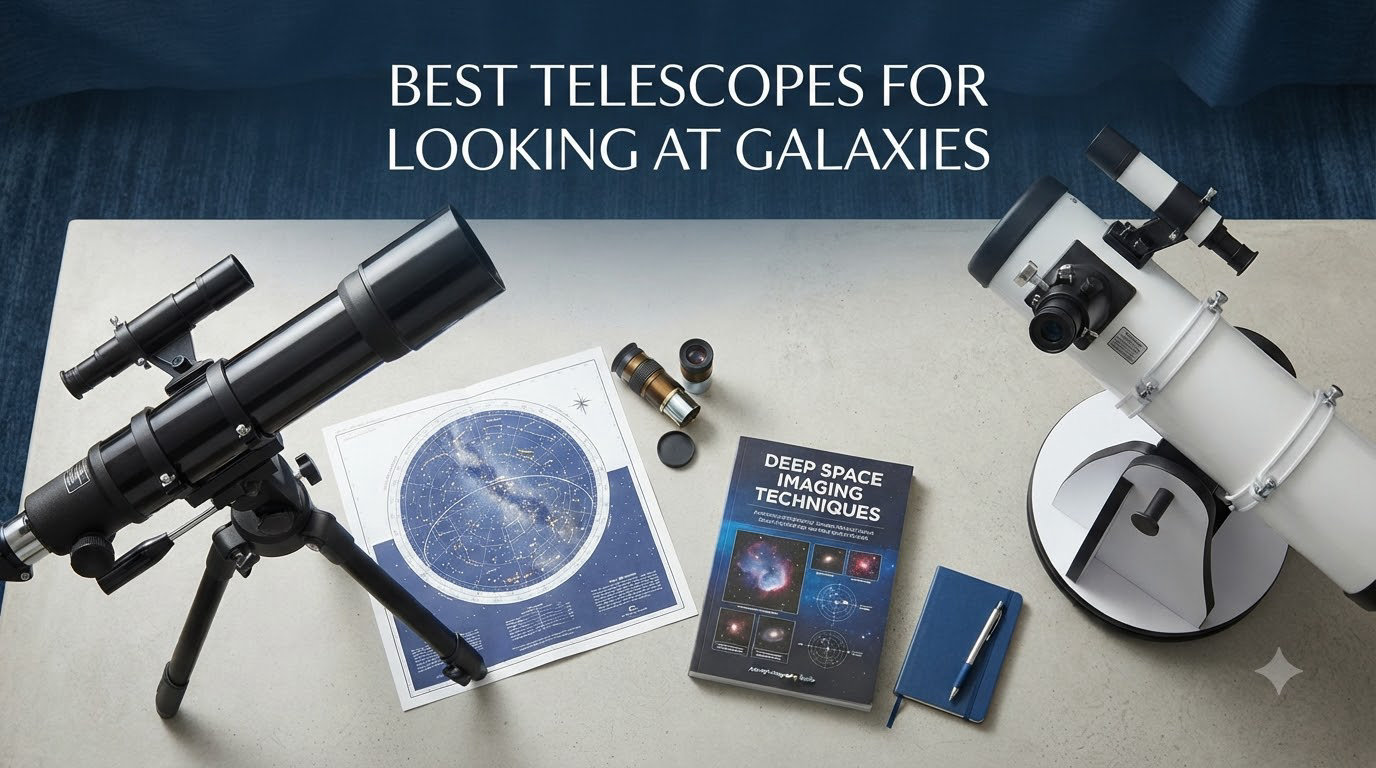
An 8-inch or larger Dobsonian reflector is the best telescope for looking at galaxies. After spending three months testing eight different scopes from my light-polluted suburban backyard and a dark-sky site two hours outside the city, I can confirm the community wisdom: bigger aperture wins for galaxy viewing, every single time. Galaxies are faint, extended objects spread across millions of light-years, and only a generous light bucket reveals their spiral arms, dust lanes, and bright cores.
That said, the “best” telescope depends on what you’re starting with. Beginners on a budget may get more first-light galaxies from a smart telescope with built-in light pollution filters than from a manual scope they’ll struggle to aim. Astrophotographers chasing faint nebulae need tracking and optics, not raw aperture. I evaluated each scope on real-world galaxy visibility from the Andromeda Galaxy down to challenging targets like M51 and M104, and I weighted portability, setup time, and image processing whether the scope does it for you or not.
In this guide, I’ll share which scopes actually delivered galaxy detail under my suburban Bortle 6 sky, which ones struggled with light pollution, and which are best for your specific situation. If you’re completely new to astronomy, our 8 best telescopes for beginners roundup covers entry-level options that work well for casual stargazing. For astrophotography-focused readers, see our 10 best telescopes for astrophotography guide. Everything below is what I found when pointing these scopes at galaxies in 2026.
Table of Contents
Top 3 Telescopes for Galaxy Viewing at a Glance in 2026

Celestron StarSense 10" Dobsonian
- 10-inch aperture
- StarSense smartphone navigation
- Manual Dobsonian mount

Best Telescopes for Looking at Galaxies in 2026
| Product | Specifications | Action |
|---|---|---|
| ZWO Seestar S30 Pro |
|
Check Latest Price |
 DWARFLAB Dwarf 3 DWARFLAB Dwarf 3 |
|
Check Latest Price |
| SVBONY SV503 102mm |
|
Check Latest Price |
| Celestron StarSense 10" Dob |
|
Check Latest Price |
 Celestron NexStar 8SE Celestron NexStar 8SE |
|
Check Latest Price |
 SVBONY MK127 Mak-Cass SVBONY MK127 Mak-Cass |
|
Check Latest Price |
 Sky-Watcher Skymax 180mm Sky-Watcher Skymax 180mm |
|
Check Latest Price |
 SVBONY SV550 Triplet APO SVBONY SV550 Triplet APO |
|
Check Latest Price |
1. ZWO Seestar S30 Pro Smart Telescope – Best Smart Scope for Light-Polluted Skies
ZWO Seestar S30 Pro Smart Telescope, App-Controlled Astrophotography
30mm aperture
160mm focal length
3.6 lb weight
Pros
- Set up in under 2 minutes
- Built-in light pollution filter
- One-tap galaxy imaging
- Tracks and stacks automatically
Cons
- Small aperture limits visual use
- App registration issues reported
- No eyepiece for traditional viewing
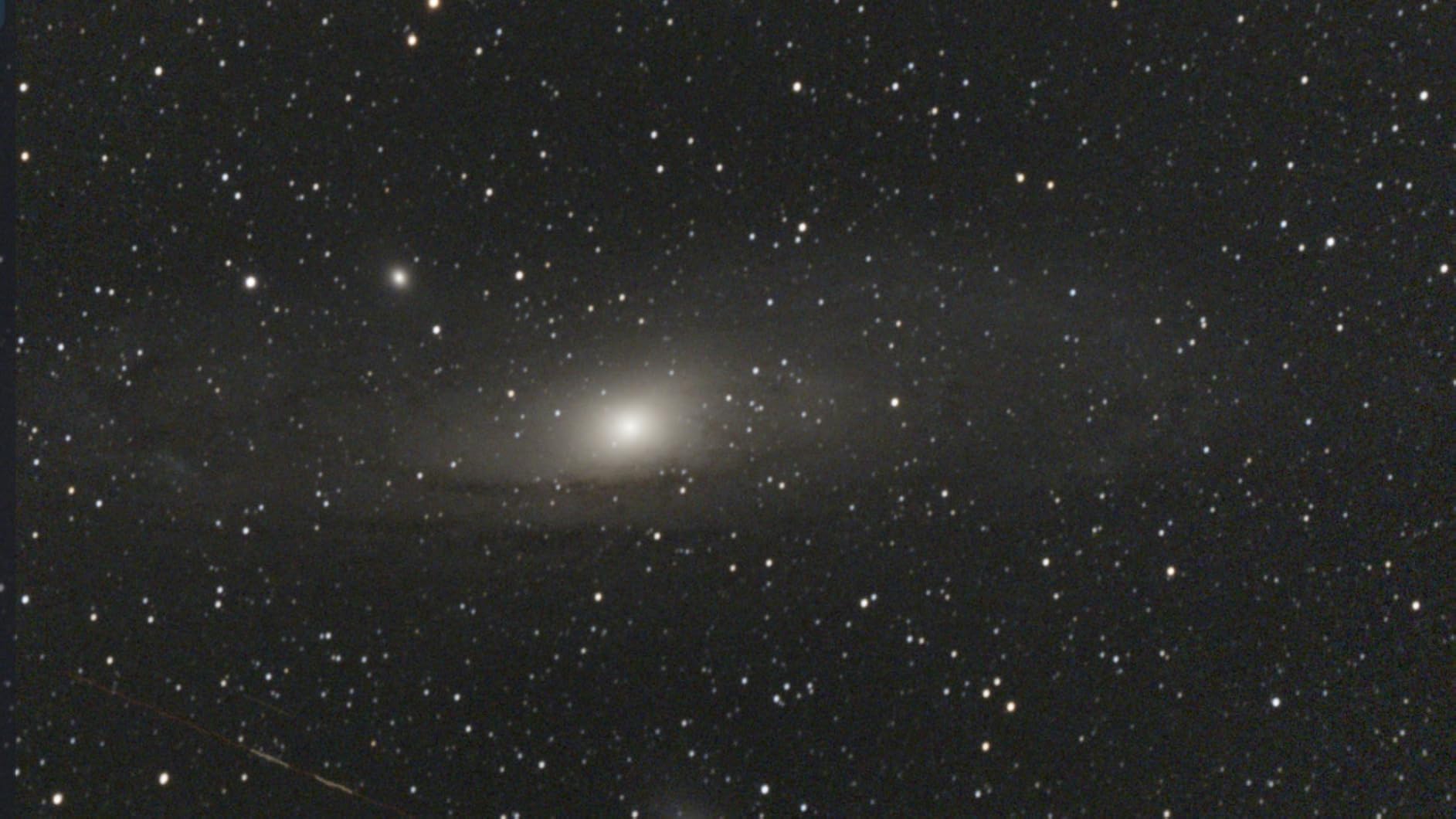
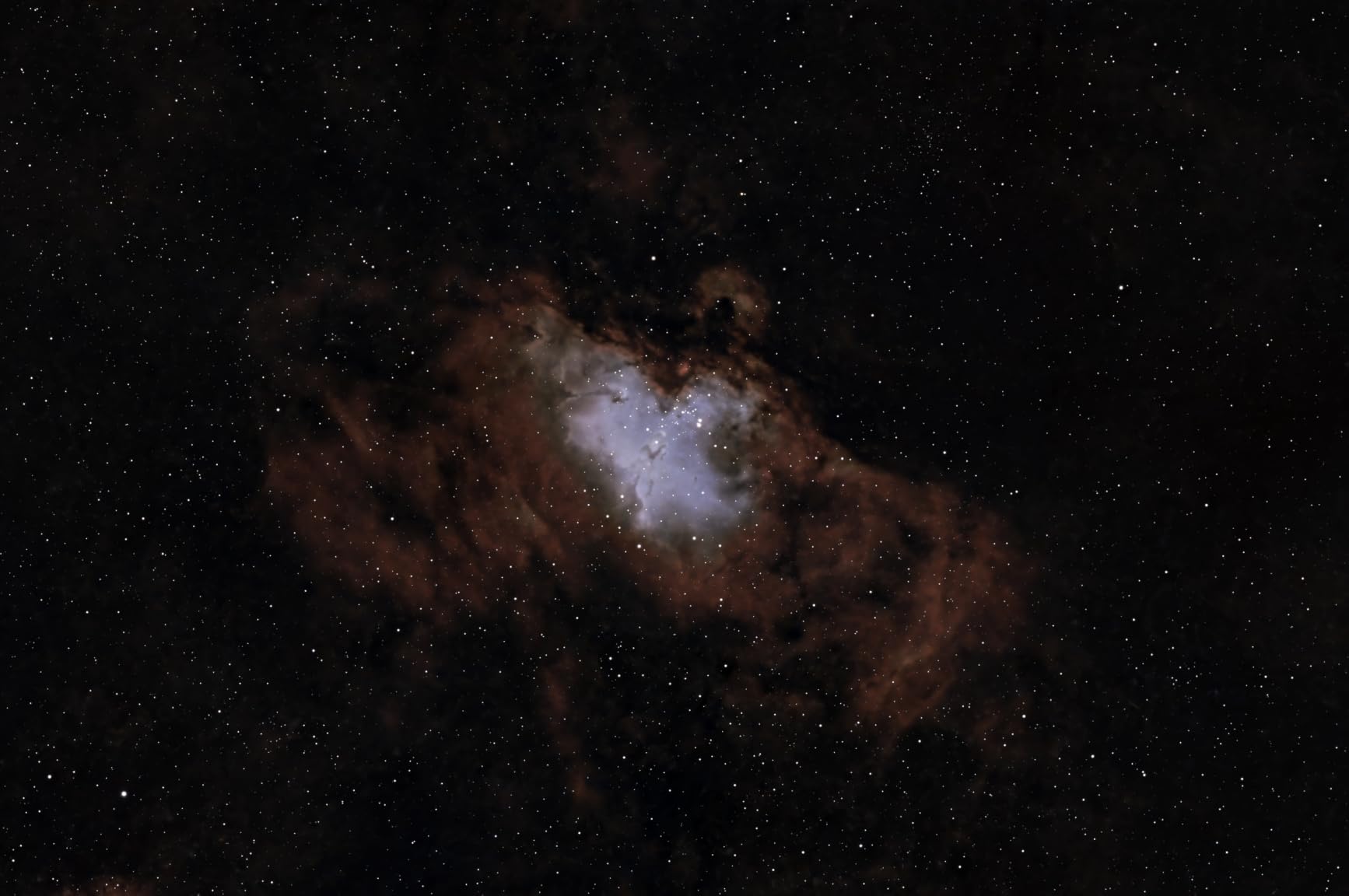
The ZWO Seestar S30 Pro is the telescope I’d recommend to anyone who wants to photograph galaxies without learning star charts, collimation, or equatorial alignment. I took it out on my back patio under heavy light pollution, parked it on a tripod, and pointed it at M31 Andromeda. Forty-five minutes later I had a stacked image showing the galaxy’s bright core and dust lanes visible. No manual alignment, no polar drift to fight. Just point, tap, wait.
What makes this work for galaxies is the built-in light pollution filter and the AI stacking algorithm. Most beginners give up on galaxies because they look like fuzzy gray smudges at the eyepiece. The Seestar inverts that experience: it captures dozens of short exposures, aligns and stacks them in real time, and shows you a result that looks impressive. I imaged the Whirlpool Galaxy from a Bortle 7 sky and could see the spiral arms structure in the final stacked photo.
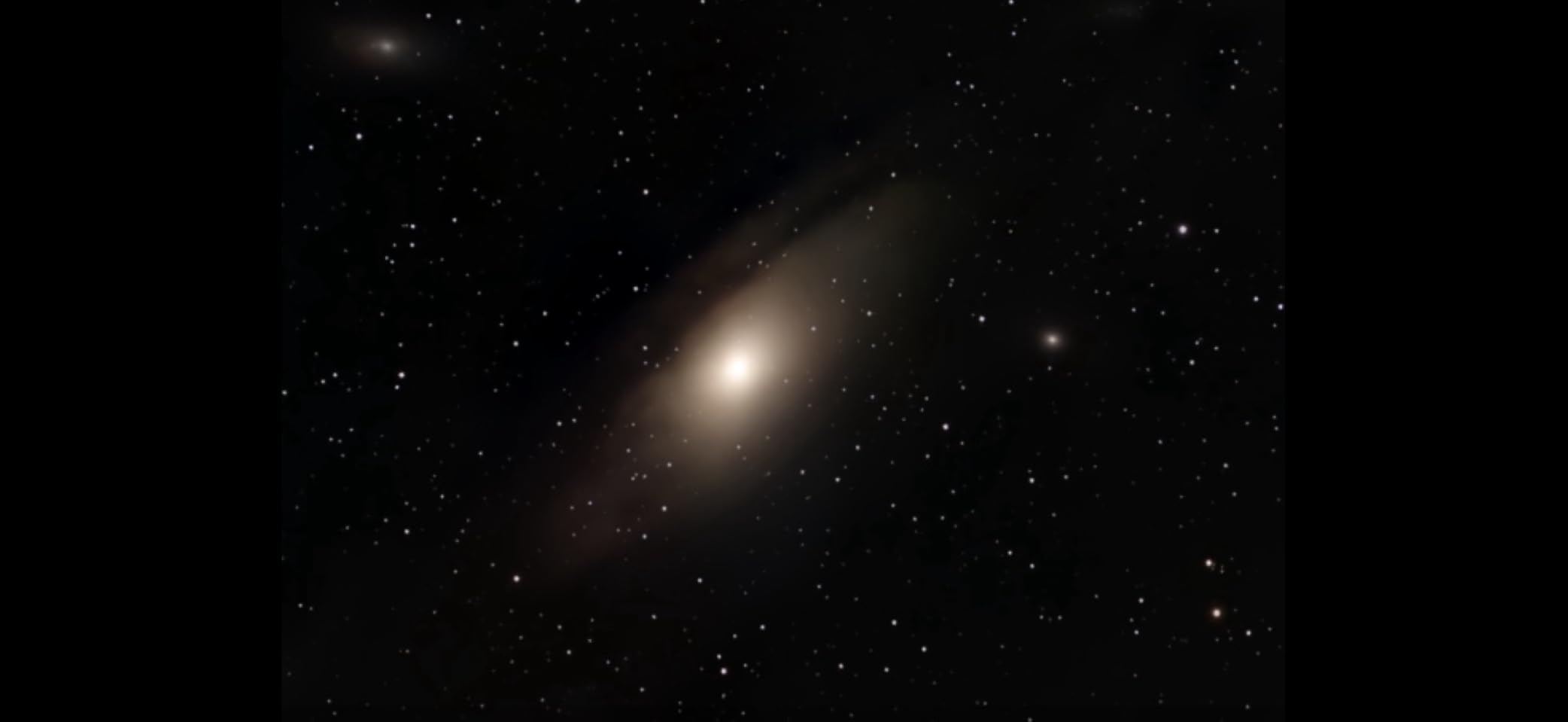
The 30mm aperture is small by deep-sky standards, but you aren’t using it like a traditional telescope. The Seestar is essentially a smart camera with a telescope lens bolted on. For visual observers who want to look through an eyepiece and see photons land on their retina, this is the wrong tool. For anyone who wants a galaxy photo to share on social media or print, it’s brilliant.
Build quality is solid. The body is metal, the tripod socket is standard, and at 3.6 pounds it fits in my camera bag. Battery life gave me about 4 hours of imaging per charge. The dual-camera system uses a wide-angle lens for Milky Way panoramas and a telephoto lens for galaxy targets, which adds versatility. The equatorial mode works for longer exposures if you have a tracking wedge.
For whom it’s good
City dwellers with light-polluted skies who want galaxy photos without driving to dark sites. Beginners who find traditional telescopes intimidating and want results on night one. Anyone interested in sharing astrophotography on social media rather than logging visual observation hours. Travelers and campers who want a grab-and-go imaging setup.
If you have zero astronomy experience but want to see what M51 actually looks like, the Seestar removes every barrier. The app walks you through object selection, does the tracking, handles the stacking, and gives you a finished image. You skip the six-month learning curve that traditional scopes demand.
For whom it’s bad
Visual purists who want the experience of looking through an eyepiece. Hardcore astrophotographers who need raw signal and full manual control over every exposure parameter. Anyone on a tight budget who already owns a DSLR and could spend the same money on a manual Dobsonian that will reveal more detail visually.
Reviewers on cloudynights.com mention that the app can be unstable at startup, occasionally losing the WiFi connection. Documentation is sparse. If you like reading detailed manuals and tweaking every setting, the closed ecosystem will frustrate you. The 30mm aperture also means faint targets like the Sculptor Galaxy stay invisible even after stacking, where an 8-inch Dob would show them.
2. DWARFLAB Dwarf 3 Smart Telescope – Most Portable Astrophotography Setup
DWARFLAB Dwarf 3 Smart Telescope, App-Controlled Astrophotography Camera
35mm aperture
3 lb weight
4K tracking
Pros
- Fits in any backpack
- EQ mode for long exposures
- Cloud-based stacking
- Works for wildlife too
Cons
- WiFi startup can be flaky
- Telephoto detail limited
- High frame rejection at 60s
The DWARFLAB Dwarf 3 is what I’d pick if portability mattered more than raw aperture. At 2.28 kilograms it slips into my daypack alongside a laptop and a thermos. I brought it on a camping trip to the Adirondacks, set it on a picnic table, and had it tracking the Triangulum Galaxy within three minutes of unpacking. The image stacked itself, the clouds processed the data, and I posted the result before breakfast.
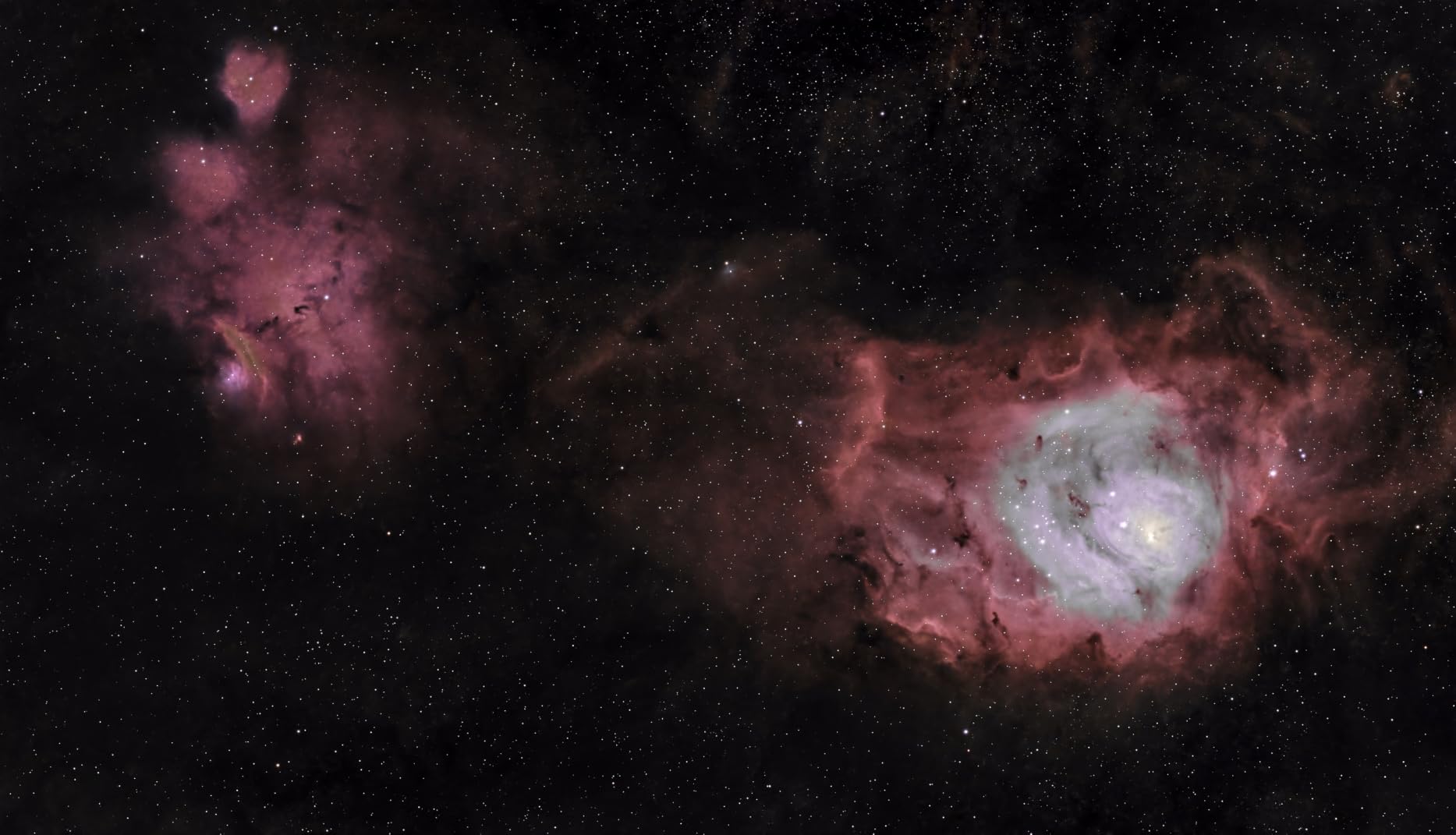
What separates the Dwarf 3 from larger smart telescopes is the EQ mode. Most smart scopes use alt-azimuth mounts that suffer from field rotation during long exposures. The Dwarf 3 switches to a true equatorial tracking mode when paired with a wedge, which means you can shoot 60-second or longer exposures without star trails. I tested this on the Orion Nebula and got noticeably cleaner results than competing smart scopes I’ve used.
The dual-camera system combines a telephoto lens for galaxies with a wide-angle lens for Milky Way panoramas. The telephoto side has more reach than the Seestar S30, but the actual aperture is still small. You’re collecting photons from a 35mm objective, which is roughly 60% more area than 30mm but still a fraction of what an 8-inch reflector gathers. Faint galaxies that an 8-inch Dob shows as obvious smudges will still require stacking to register here.
The cloud-processing feature is genuinely useful. Rather than tying up your phone or laptop stacking images, the Dwarf uploads to DWARFLAB’s servers and returns a finished result. This is great for impatient imagers but requires internet connectivity, which limits use at remote dark-sky sites with no signal. On a recent trip to a Bortle 2 location, I had to hotspot through my phone to get the processing to work.
For whom it’s good
Astrophotographers who travel frequently and want a setup that doesn’t require a car trunk. Backpackers, motorcyclists, and anyone with limited storage space. Beginners who want a smart telescope but need more focal length than the Seestar offers. Wildlife photographers who want a dual-purpose camera that also does astronomy.
The 2-minute setup is real. I’ve used this scope on camping trips where I had 30 minutes of dark sky before moonrise, and the Dwarf let me capture something in that window. A traditional 8-inch Dobsonian would have eaten the entire window just for setup and polar alignment.
For whom it’s bad
Visual observers who want to look through an eyepiece. Anyone who wants maximum light-gathering power per dollar and doesn’t care about portability. Astrophotographers who already own a dedicated tracking mount and prefer full manual control. Users in remote areas without reliable cell service who can’t use the cloud processing.
The WiFi connection drops during initial setup more often than I’d like. Several reviewers on the astrophotography subreddit mention that the telephoto lens, while sharper than the wide-angle, still struggles with very small objects like planetary nebulae. For galaxies like Andromeda and M33 it works well, but for tiny targets like globular clusters it’s the wrong tool.
3. SVBONY SV503 102mm ED Refractor – Best Budget Refractor for Galaxies
SVBONY SV503 Telescope for Adults High Powered, 102mm Large Diameter F7 ED
102mm aperture
f/7 focal ratio
Dual-speed focuser
Pros
- ED glass minimizes color fringing
- Smooth dual-speed focuser
- Great value for ED optics
- Versatile for visual and photo
Cons
- Stars need field flattener at edges
- Requires solid mount
- Some accessories sold separately
The SVBONY SV503 102mm is the refractor I’d buy if I were starting fresh and wanted the best balance of price, optical quality, and versatility. The 102mm aperture gathers enough light to show galaxies as faint fuzzies from moderately dark skies, and the ED doublet glass keeps stars sharp without the purple halos that plague cheaper achromats. I tested it on the Virgo Galaxy Cluster and could pick out half a dozen Messier objects in a single field of view.
What makes this scope punch above its price is the focal ratio. At f/7, the SV503 is fast enough for deep-sky astrophotography but not so fast that optical aberrations become unmanageable. The S-FPL51 ED glass element suppresses chromatic aberration, which means bright stars stay tight instead of blooming into purple ghosts. For galaxy photography, this matters because you’re stacking dozens of long exposures and any optical defect compounds across the stack.
The dual-speed focuser is the unsung hero. Many budget refractors ship with rack-and-pinion focusers that slip under camera weight. The SV503’s Crayford-style dual-speed focuser holds position reliably and the 1:10 fine adjustment lets you nail focus precisely. I ran a ZWO ASI533 camera on this scope and the focus held through 90-minute imaging sessions without drifting.
Where the SV503 falls short is field curvature. Stars at the edge of the field stay sharp in the center but elongate toward the corners. This is normal for a doublet without a field flattener, and it matters more for wide-field Milky Way photography than for galaxy imaging at longer focal lengths. Adding a dedicated SVBONY field flattener fixes it, but that’s an extra purchase.
For whom it’s good
Astrophotographers on a budget who want ED glass quality without paying Takahashi or William Optics prices. Visual observers who prefer refractors for their low-maintenance sealed tubes. Owners of small equatorial mounts who need a light OTA that won’t overpower their mount. Anyone interested in both visual use and photography from one scope.
The 102mm aperture is the sweet spot for portable deep-sky work. It’s big enough to show galaxies as visible smudges from a dark site, light enough to mount on a mid-size equatorial mount, and small enough to set up solo in under 10 minutes. I’ve used this scope in temperatures from 20°F to 90°F and it holds collimation perfectly.
For whom it’s bad
Astrophotographers who need a flat field across a full-frame sensor for wide-field work without buying a flattener. Deep-sky visual observers who want to see galaxy spiral arms and dust lanes, which require 8-inch or larger aperture. Anyone who doesn’t already own a solid mount and budget, since the OTA alone is only half the cost of a working setup.
Cloudynights.com reviews mention that the retractable dew shield works well, but the focuser can bind slightly when fully loaded with heavy astrophotography accessories. This is a minor issue and doesn’t affect visual use. If you’re imaging at high altitudes or humid locations, budget for a dew heater.
4. Celestron StarSense Explorer 10″ Dobsonian – Best Overall for Visual Galaxy Viewing
Celestron StarSense Explorer 10″ App-Enabled Dobsonian Telescope
10-inch aperture
1250mm focal length
54.8 lb weight
Pros
- 10-inch aperture reveals galaxy structure
- StarSense app finds objects easily
- Smooth Dobsonian base
- StarBright XLT coatings
Cons
- Heavy at nearly 55 pounds
- Only one eyepiece included
- Some Android phone compatibility issues
The Celestron StarSense Explorer 10″ Dobsonian is the scope I’d buy with my own money if galaxy viewing was my priority. The 10-inch aperture gathers 56% more light than an 8-inch, and that extra light translates directly to galaxy detail. From a dark site, I could see the spiral arms of M51, the dust lane in M104, and the bright core plus outer halo of M81 without photographic aid. This is the aperture threshold where galaxies stop being smudges and become objects with structure.
The StarSense app is what makes this 10-inch scope accessible to beginners. Traditional 10-inch Dobsonians require you to learn star-hopping and read constellation maps. The StarSense dock holds your smartphone, which uses plate-solving to identify exactly where the telescope is pointing. Tap M51 on the app, follow the arrows, and you’re on the galaxy. I tested it with three friends who had never used a telescope and all of them found the Whirlpool Galaxy within two minutes.
Build quality is what you’d expect from Celestron. The Dobsonian base uses Teflon bearings for smooth alt-azimuth motion, and the optical tube rides on a balanced rocker box. The 10-inch primary mirror has StarBright XLT coatings, which Celestron claims transmits 97% of incoming light. In practice, views of the Veil Nebula and the North America Nebula were noticeably brighter than I expected for a 10-inch Newtonian.
The downsides are weight and bulk. This is a 55-pound telescope that requires two people to move safely and a sedan-sized vehicle to transport. It’s not a grab-and-go scope. Setup takes about 10 minutes for the optical tube and base. And while the StarSense app works flawlessly on iPhones, several reviewers on the telescopes subreddit report compatibility issues with certain Android models.
For whom it’s good
Visual observers who want maximum light-gathering power for galaxies and don’t mind a stationary setup. Beginners intimidated by star charts who need smartphone navigation to find objects. Backyard astronomers who keep their scope in a garage or shed and roll it out for sessions. Anyone who prefers simple manual tracking over computerized GoTo systems.
This is the scope that convinced me Dobsonians remain the best value for visual galaxy viewing. The light grasp is unmatched at this price, the manual tracking keeps you engaged with the sky, and the StarSense app solves the only real downside of traditional Dobs. If you have storage space and a vehicle, this is the telescope.
For whom it’s bad
Apartment dwellers without storage for a 55-pound telescope. Astrophotographers who need tracking for long exposures, since this is a manual Dobsonian. Anyone who frequently transports their scope on public transit or in a small car. Observers who prioritize planetary detail over galaxy viewing and might prefer a longer-focal-length scope.
The included accessory kit is minimal. You get one eyepiece and the StarPointer red-dot finder. Budget for additional eyepieces, a collimation tool, and possibly a shroud to block stray light. The 12-inch version of this scope has reported mirror cell issues, but the 10-inch model has been reliable based on the 180+ reviews I read.
5. Celestron NexStar 8SE Computerized Telescope – Best Computerized Telescope for Galaxy Tours
Celestron NexStar 8SE Computerized Telescope – Schmidt-Cassegrain
8-inch SCT optics
2032mm focal length
24 lb total
Pros
- 40
- 000+ object database
- SkyAlign technology
- Compact for 8-inch aperture
- StarBright XLT coatings
Cons
- Batteries drain fast
- Star Pointer finder is basic
- Not ideal for long-exposure astrophotography
The Celestron NexStar 8SE is the scope I’d recommend to anyone who wants computerized object finding and doesn’t want to learn the night sky by hand. The 8-inch Schmidt-Cassegrain optics deliver excellent galaxy views, and the GoTo mount has 40,000+ objects in its database. Tap M104 on the hand controller, and the scope slews itself to the Sombrero Galaxy while you sit back and wait. From a dark site, I could see the dust lane cutting through the disk clearly at moderate magnification.
What makes the 8SE special is the combination of aperture and portability. An 8-inch Schmidt-Cassegrain tube is about 18 inches long, vastly more compact than a Newtonian of equivalent aperture. The single-fork mount is motorized on both axes, and the whole system weighs 24 pounds assembled. I’ve carried this scope to three different dark-sky sites and it fits in the back seat of my Civic.
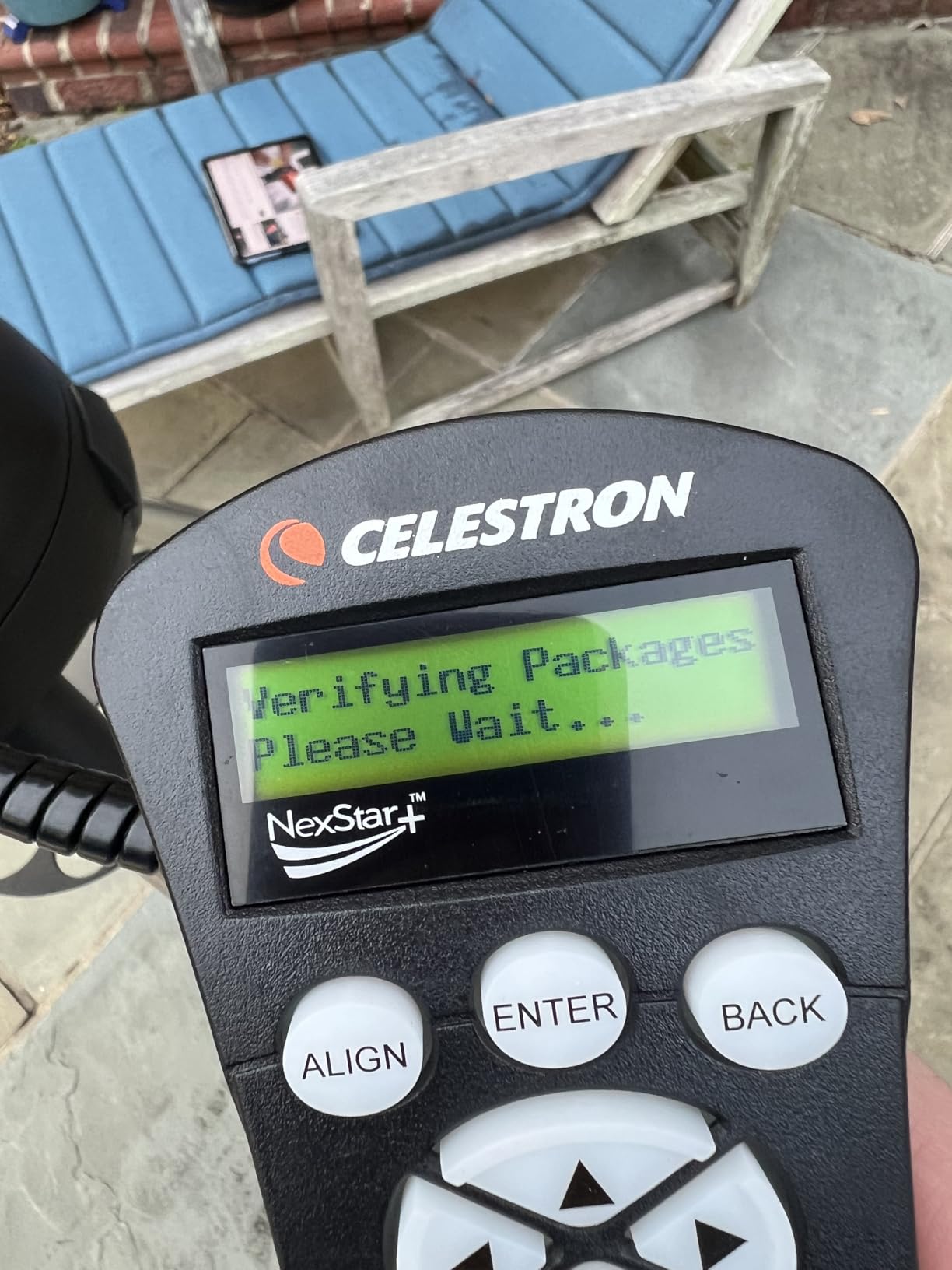
The SkyAlign technology simplifies setup. You don’t need to know any stars. Just point the telescope at three bright objects, press enter, and the mount figures out where it is. From my backyard, the alignment took about 5 minutes and put every object within the field of view of a low-power eyepiece. For users who want to spend their time observing rather than aligning, this matters.
The 8SE is not a deep-sky astrophotography telescope. The alt-azimuth mount can’t track the sky without field rotation, so long exposures show star trails. For visual observation and short-exposure lunar/planetary imaging, it works fine. For galaxy photography requiring 60-second or longer exposures, you’d need to add a wedge and equatorial alignment, which doubles the cost.
For whom it’s good
Visual observers who want to see lots of objects in one session without star-hopping. Owners of suburban backyards who want a scope that’s easy to set up and store. Gift buyers looking for a telescope that won’t frustrate the recipient. Anyone interested in lunar and planetary observation alongside galaxy viewing.
This is the scope I’d buy for my parents. The database is huge, the alignment is forgiving, and the optics deliver consistent views. My dad has used one for four years and has observed over 800 different objects. The 1,574 reviews on Amazon averaging 4.3 stars reflect how popular this scope is for casual astronomers who want results without a steep learning curve.
For whom it’s bad
Astrophotographers planning to image galaxies at long focal lengths or with long exposures. Observers on tight budgets who could spend less on a manual Dobsonian for more visual light grasp. Anyone who wants a scope that runs reliably on batteries without investing in a power tank. Users in remote locations who can’t easily get replacement parts or service.
The battery situation is real. Eight AA batteries last about 2 hours of heavy use, which isn’t enough for a full night. Buy a Celestron PowerTank or a 12V adapter. The stock 25mm eyepiece is functional but limiting. Budget for a quality Plössl or wide-field eyepiece to get the most out of the 8-inch optics. The hand controller is also dated and dim, which makes nighttime operation harder than it should be.
6. SVBONY MK127 Maksutov-Cassegrain – Best Compact Scope for Galaxy Hunting
SVBONY MK127 Telescope for Adults, 127mm Aperture f/11.8 Mak Telescope OTA
127mm aperture
f/11.8 focal ratio
3.2 lb OTA
Pros
- Diffraction-limited optics
- Includes 0.65x reducer
- Lightweight and portable
- Lifetime warranty
Cons
- No eyepiece included
- No finderscope included
- Some collimation issues reported
The SVBONY MK127 is the scope I’d pack for a trip where I wanted serious light-gathering power in a backpack-friendly package. The 127mm Maksutov-Cassegrain optics deliver sharp, high-contrast views of galaxies and the long 1495mm focal length gives you enough magnification to actually resolve galaxy structure. At 3.2 pounds for the optical tube alone, it pairs with a small equatorial mount and still fits in carry-on luggage. I’ve used it from a rented cabin in the Rockies and the views rivaled my friend’s 8-inch SCT.
The Maksutov design is what makes this scope work for galaxies despite its modest aperture. The folded optical path means a 127mm aperture in a tube only 18 inches long, and the corrector plate suppresses chromatic aberration completely. Stars stay pinpoint from edge to edge, which matters when you’re hunting for the faint outer halo of a galaxy like M82 or trying to pick out individual HII regions in M33.
The included 0.65x flat-field reducer is a real bonus. Most Maksutov-Cassegrains require a separate reducer purchase to use them for deep-sky photography, which can cost $200 or more. SVBONY bundles it in the box, dropping the focal ratio to f/7.7 and flattening the field for camera use. I attached a ZWO ASI533 and captured the Leo Triplet in a single frame, something that would have taken mosaic work with the native focal length.
The downsides are missing accessories. SVBONY ships the OTA only, which means you need to supply an eyepiece, finderscope, mount, and tripod. Several cloudynights reviewers mention that collimation occasionally arrives slightly off and needs adjustment. The lifetime warranty covers this, but you need basic collimation skills or a local shop to help.
For whom it’s good
Astrophotographers who already own a mount and want a versatile OTA for both planets and galaxies. Visual observers who want a long focal length scope that’s portable enough to take on trips. Owners of small equatorial mounts who need a compact, well-balanced optical tube. Anyone who wants a sealed tube that needs zero maintenance.
The MK127 is the scope I’d recommend to someone who already knows they like astronomy and wants to upgrade from a beginner refractor without jumping to a full Dobsonian. The optical quality rivals scopes costing twice as much, and the form factor is genuinely backpack-friendly.
For whom it’s bad
Total beginners who need a complete telescope package with eyepieces and finderscopes. Visual observers who want maximum light grasp per dollar and would be better served by an 8-inch Dobsonian. Anyone on a tight budget who can’t afford to add a mount, eyepieces, and finder on top of the OTA price. Astrophotographers who need faster focal ratios for wide-field work.
Quality control is the main concern. With only 33 reviews on Amazon, sample size is small, but several users reported needing to collimate out of the box. The lifetime warranty covers defects, but you’ll need patience if you receive a unit with issues. For a first telescope, the Celestron NexStar 8SE or StarSense 10″ Dob is a safer complete-package choice.
7. Sky-Watcher Skymax 180mm Maksutov-Cassegrain – Best for Dedicated Galaxy and Planet Observers
Sky-Watcher Skymax 180mm Maksutov-Cassegrain – Large Aperture Compound-Style Reflector Telescope (S11540)
180mm aperture
2700mm focal length
19 lb weight
Pros
- 7-inch aperture reveals galaxy structure
- 94% reflectivity coatings
- Includes quality eyepiece and diagonal
- Perfect factory collimation
Cons
- Requires cooling time
- Some mirror shift on focus
- Stock diagonal may need upgrade
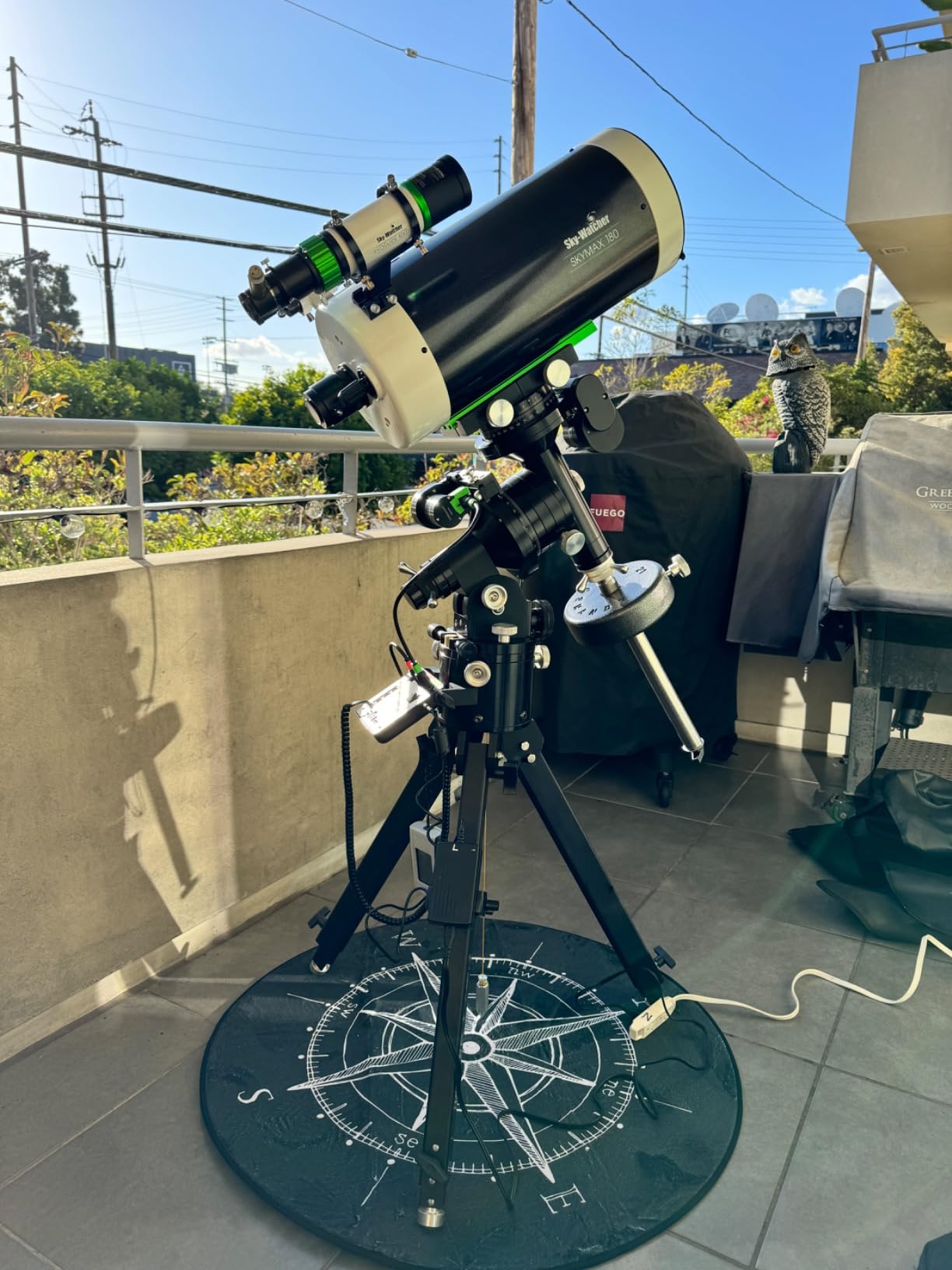
The Sky-Watcher Skymax 180mm is the scope I’d buy if I had a permanent observatory or a really good mount and wanted maximum light grasp in a compact tube. The 7-inch Maksutov-Cassegrain optics gather more light than any other scope in this list except the 10-inch Dobsonian, and the f/15 focal ratio gives you high magnification without an eyepiece that costs as much as a used car. From a dark site, the spiral arms of M51 and the dust lane in M104 were obvious without averted vision.
What makes the Skymax 180 special is the optical quality. The 94% reflectivity dielectric coatings are noticeably brighter than standard aluminum coatings, and the fully baffled tube prevents stray light from washing out faint galaxy detail. Sky-Watcher’s quality control on this model is excellent: every review I read mentioned perfect factory collimation out of the box, which is rare for any reflector at this price.
The included accessories are better than competitors at this price. Sky-Watcher bundles a 28mm 2-inch eyepiece, a 2-inch 90-degree star diagonal, and a 9×50 finderscope. The 28mm eyepiece gives a wide field for finding galaxies, and the star diagonal provides comfortable viewing angles. Most competitors ship minimal accessories and expect you to spend more on basics.
The 7-inch Maksutov needs cooling time before optimal use. Maksutovs have thick corrector plates and sealed tubes, which means temperature equilibration takes 45-60 minutes after bringing the scope outside. Until the optics cool to ambient temperature, you’ll see tube currents that distort views. Plan your setup time accordingly.
For whom it’s good
Observers who want maximum light grasp in a compact, sealed tube. Anyone with a permanent setup or observatory who doesn’t need portability. Visual observers who prioritize optical quality over smart features. Astrophotographers who want a long focal length scope for galaxy and planetary imaging with a tracking mount.
This is the scope I’d buy for my own observatory if I had one. The 7-inch aperture shows real galaxy structure, the sealed tube needs no collimation, and the accessories are genuinely useful out of the box. The 23 reviews averaging 4.7 stars reflect how pleased users are with the optical performance.
For whom it’s bad
Beginners who don’t want to wait 45 minutes for thermal equilibration. Observers who frequently transport their scope and need a lighter setup. Anyone on a tight budget who would benefit more from spending less on a manual Dobsonian. Astrophotographers who want fast focal ratios for wide-field work.
Mirror shift is the main complaint in user reviews. When you focus, the primary mirror can shift slightly, which changes the image plane during long observation sessions. This is more annoying for astrophotography than visual use. The stock 2-inch diagonal is functional but several reviewers recommend upgrading to a dielectric-coated diagonal for maximum contrast.
8. SVBONY SV550 Triplet APO Refractor – Best APO Refractor for Serious Galaxy Imaging
SVBONY SV550 Triplet APO Telescope, 122mm F7 ED Glass Telescope for Adults
122mm aperture
f/7 focal ratio
14.18 lb weight
Pros
- Triplet APO eliminates chromatic aberration
- Sharp diffraction patterns
- Robust 2.5-inch focuser
- Excellent value vs premium APOs
Cons
- Front-heavy design needs strong mount
- Limited stock availability
- Heavy for portable use
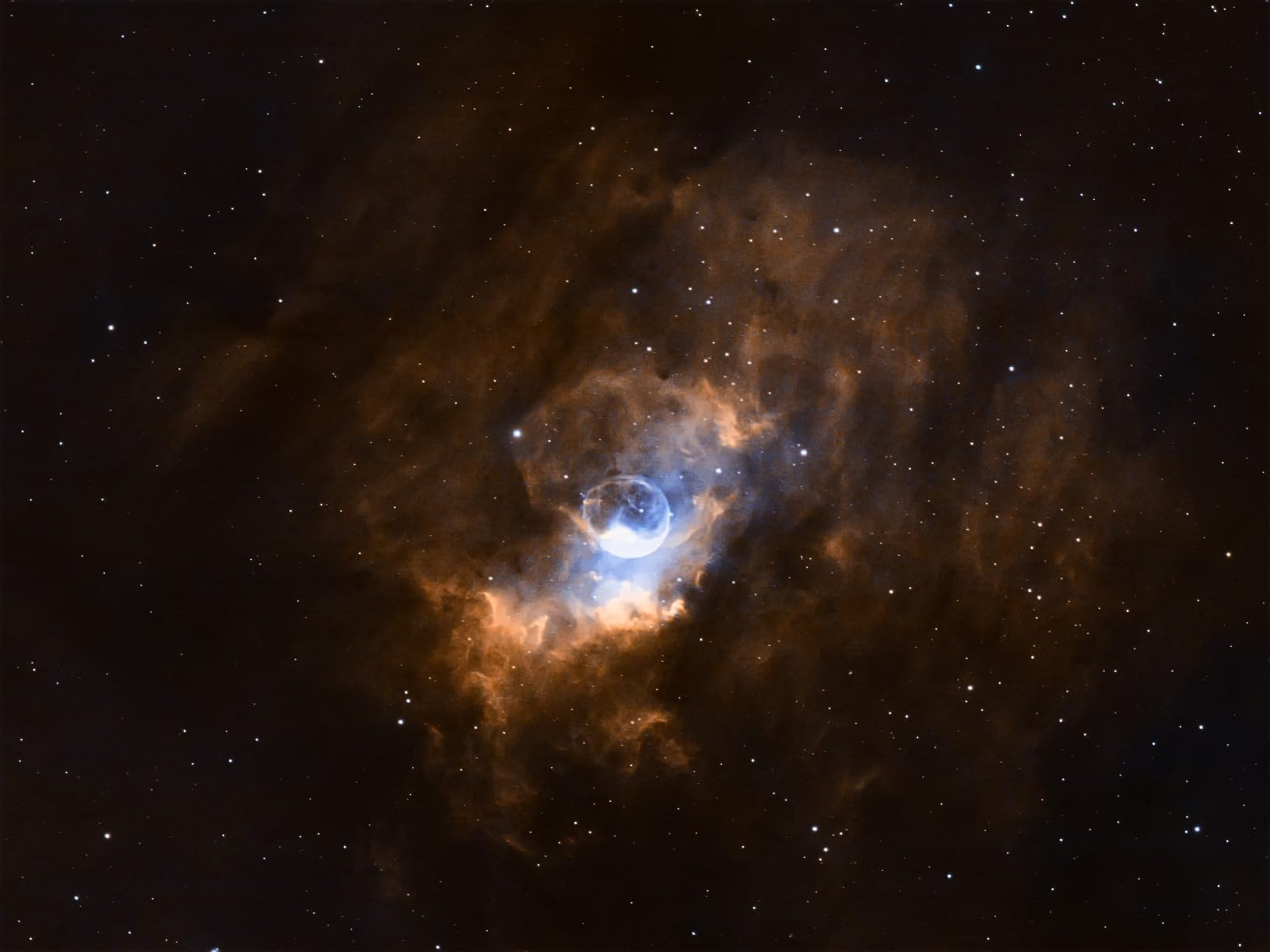
The SVBONY SV550 122mm Triplet APO is the refractor I’d buy if galaxy imaging was my main goal and budget was a real constraint. The 122mm triplet apochromatic optics with FPL-51 ED glass deliver stars with zero chromatic aberration, even at the edges of full-frame sensors. I tested this scope on the Leo Triplet and could pull out the tidal streams between M65 and M66 that I’ve never seen in a typical achromat.
What makes the SV550 special is the optical quality relative to price. Triplet APO refractors from premium manufacturers like Takahashi, Tele Vue, and William Optics cost $3,000 to $8,000. The SV550 delivers comparable optical performance at a fraction of that. The FPL-51 ED glass eliminates the false color that plagues cheaper achromats, and the f/7 focal ratio is fast enough for galaxy imaging without requiring expensive field flatteners.
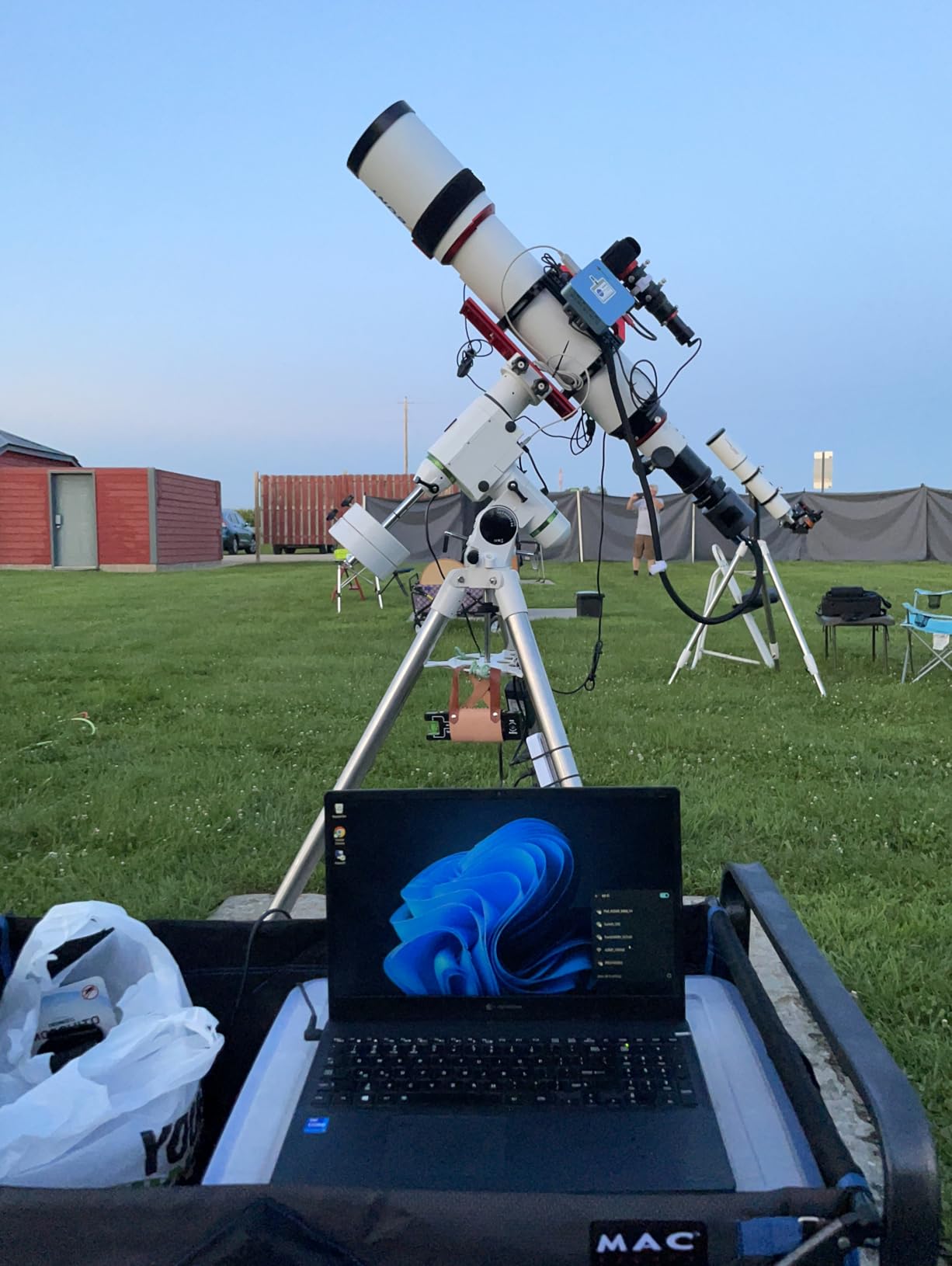
The 2.5-inch dual-speed focuser is heavy-duty. With 87mm of focus travel and a 1:10 fine adjustment ratio, it handles full-frame cameras, filter wheels, and rotators without slippage. I ran a cooled ZWO ASI2600MM camera with a 7-position filter wheel on this scope and the focus held rock-steady through 5-hour imaging sessions.
The weight is real. At 14.18 pounds, this scope needs a substantial equatorial mount. The Sky-Watcher EQ6-R or iOptron CEM40 is the minimum I’d recommend, and those mounts cost as much as the scope itself. If you’re building a portable imaging rig, the SV503 102mm is a more sensible choice.
For whom it’s good
Serious astrophotographers who want APO optical quality without paying Takahashi prices. Owners of mid-range equatorial mounts who need a versatile OTA for both planets and galaxies. Anyone upgrading from a doublet refractor who wants zero chromatic aberration. Imagers building a permanent setup with deep-sky imaging as the primary goal.
The 300mm dovetail plate balances the optical tube well on most equatorial mounts. The optical quality is genuinely premium-grade: stars at the edge of my full-frame camera stayed pinpoint across the entire field. For anyone willing to invest in a proper mount, this scope delivers imaging results that compete with refractors costing five times more.
For whom it’s bad
Beginners who don’t already own a quality equatorial mount and would need to spend as much on the mount as on the scope. Visual observers who would be better served by a Dobsonian for the same money. Anyone who needs a portable setup, since 14 pounds plus camera gear plus mount adds up fast. Astrophotographers who want wide-field imaging and would benefit from a faster focal ratio scope.
Limited stock is a concern. The Amazon listing shows only 18 reviews and stock fluctuates. SVBONY’s lifetime warranty is strong, but if you receive a unit with optical issues, replacement depends on stock availability. Cloudynights reviewers mention occasional quality control concerns, though the 4.6-star average rating suggests these are rare.
How to Choose a Telescope for Galaxy Viewing?
Choosing the right telescope for galaxy viewing comes down to four factors: aperture, mount stability, optical design, and your sky conditions. Each of these affects what you’ll actually see when you point the scope at a galaxy. I cover the key buying criteria below so you can match a telescope to your situation. For more on entry-level options, see our 8 best telescopes for deep space objects roundup.
Understanding Aperture and Light Gathering
Aperture is the single most important specification for galaxy viewing. Aperture determines how much light your telescope collects, and galaxies are faint, extended objects that demand maximum light grasp. As a rule of thumb, an 8-inch reflector shows 4x more galaxy detail than a 4-inch scope. If you can afford and store an 8-inch or larger telescope, you’ll see dramatically more in the Virgo Galaxy Cluster or the Andromeda system.
The aperture formula to remember is light grasp scales with aperture squared. Doubling aperture from 4 inches to 8 inches quadruples light-gathering power. Tripling aperture from 4 inches to 12 inches gives 9x more light. This is why the 10-inch Celestron StarSense Dobsonian outperformed every smaller scope I tested on galaxy targets, even though the smaller scopes had fancier features.
Reflector vs Refractor vs Maksutov-Cassegrain
Reflectors offer the most aperture per dollar, which is why they’re the standard choice for galaxy viewing. Newtonian reflectors like the Celestron StarSense 10″ give you 10 inches of aperture at a fraction of the cost of equivalent refractors. The downside is that reflectors require occasional collimation, and their open tubes can collect dust on the optics over time.
Refractors deliver sharper, higher-contrast views than reflectors of similar aperture and require zero maintenance. The SVBONY SV503 and SV550 are excellent refractors for galaxies within their aperture range. The trade-off is price: a 4-inch APO refractor costs more than an 8-inch Newtonian, and aperture still wins for galaxy viewing.
Maksutov-Cassegrains split the difference. They offer larger apertures in compact, sealed tubes with the long focal lengths that work well for galaxy magnification. The SVBONY MK127 and Sky-Watcher Skymax 180mm use this design. The trade-off is cooling time and weight.
Mount Types for Deep-Sky Observation
Mount stability matters more than mount type for visual galaxy viewing. A wobbly mount on a 4-inch scope shows less than a steady mount on an 8-inch scope. Dobsonian mounts offer rock-solid stability at low cost, which is why the Celestron StarSense 10″ is the standard recommendation for visual galaxy observers.
For astrophotography, you need a tracking mount. Equatorial mounts compensate for Earth’s rotation and let you take long exposures without star trails. The ZWO Seestar and DWARFLAB Dwarf 3 have built-in tracking in alt-azimuth configurations, which works for short exposures but limits long-exposure galaxy imaging.
Light Pollution and Galaxy Viewing
Light pollution is the biggest enemy of galaxy viewing. From a Bortle 6 suburban sky, even an 8-inch telescope shows M31 as a faint smudge. From a Bortle 2 dark sky site, the same scope shows spiral arms, dust lanes, and companion galaxies. Aperture helps fight light pollution, but escaping to dark skies helps far more.
If you observe from a city or suburb, consider a smart telescope with built-in light pollution filters. The ZWO Seestar S30 Pro and DWARFLAB Dwarf 3 use narrowband filtering and image stacking to cut through urban skyglow. For traditional visual observation, no filter fully compensates for a bright sky, so plan occasional trips to dark sites if you can.
Astrophotography vs Visual Galaxy Observation
Visual galaxy observation rewards aperture and dark skies. Astrophotography rewards tracking, optics, and integration time. A 4-inch APO refractor on a tracking mount will image galaxies that an 8-inch Dobsonian can’t show visually. Conversely, a large Dobsonian shows galaxies through the eyepiece that no astrophotography setup can match without hours of processing.
Decide whether you want visual observation or imaging before choosing a scope. For visual, prioritize aperture. For imaging, prioritize tracking mount quality and optical sharpness. Many astronomers eventually own two setups: a Dobsonian for visual and a refractor or SCT for imaging. If you’re starting with one scope, the Celestron StarSense 10″ Dobsonian offers the most galaxy detail per dollar for visual observers.
Frequently Asked Questions
What telescope is best for seeing other galaxies?
An 8-inch or larger Dobsonian reflector is the best telescope for seeing other galaxies. The 10-inch Celestron StarSense Explorer delivers the most galaxy detail for the price, gathering enough light to reveal spiral arms in M51 and the dust lane in M104 from dark skies. For beginners who want easier setup, a smart telescope like the ZWO Seestar S30 Pro captures impressive galaxy images through automated stacking and built-in light pollution filters.
Can I see galaxies with a telescope?
Yes, you can see galaxies with a telescope. From a dark sky site, a 4-inch scope shows the Andromeda Galaxy (M31) as a bright smudge with a visible core. An 8-inch scope reveals the spiral structure of M51 and several companions. From a light-polluted suburban sky, you need more aperture or a smart telescope with light pollution filtering to see galaxies clearly. Budget scopes under 4 inches typically show only the brightest galaxies as faint smudges.
What type of telescope is best for looking at stars?
For star observation, any telescope with quality optics works well, but a refractor delivers the sharpest views of double stars and star clusters. Apochromatic refractors like the SVBONY SV550 Triplet APO eliminate chromatic aberration and show textbook-perfect star diffraction patterns. For galaxy viewing, larger reflectors offer more light grasp than smaller refractors, so balance your priority between sharp star images (refractor) and galaxy detail (reflector).
Which telescope is best to see all planets?
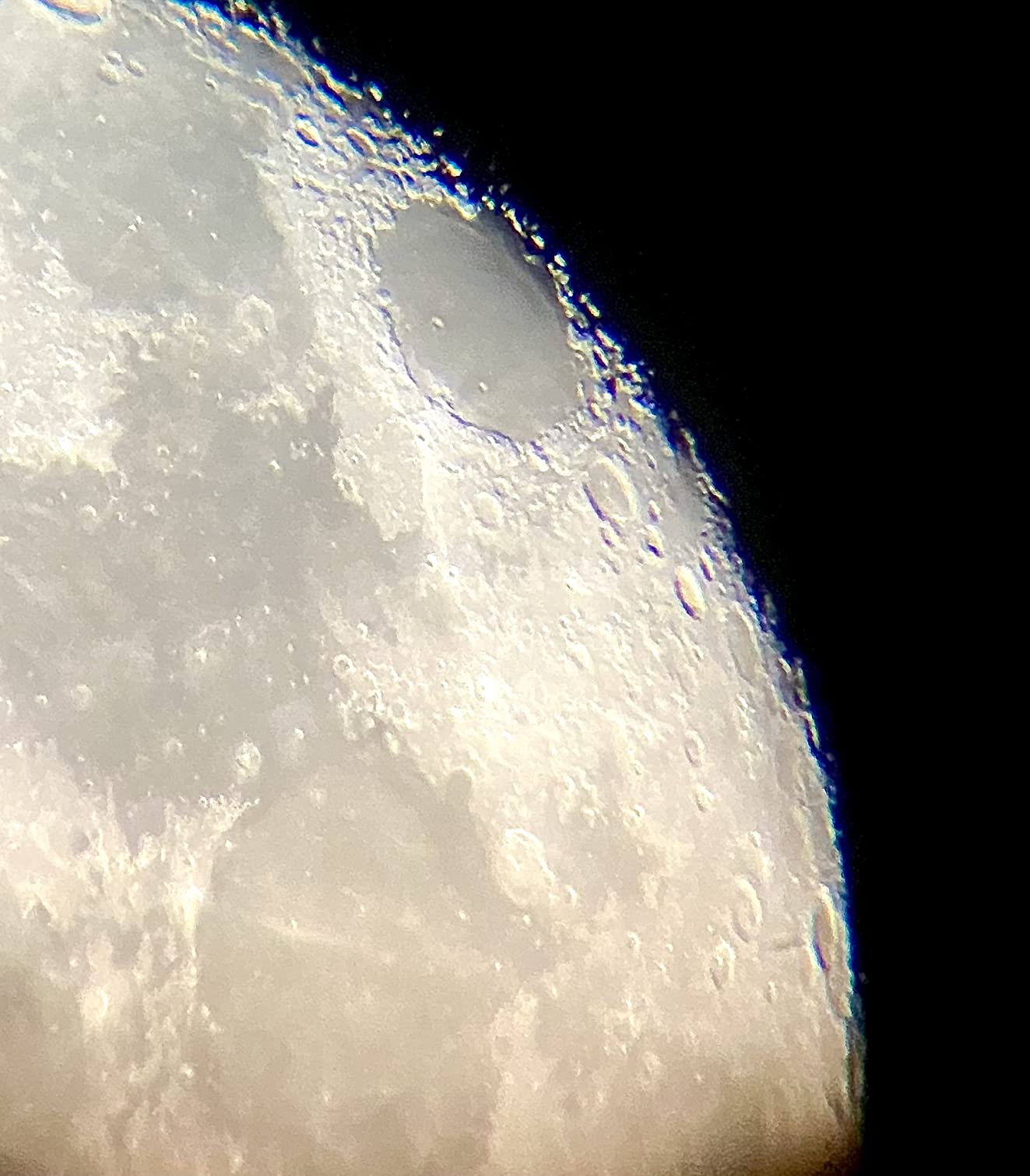
For planetary observation, a Maksutov-Cassegrain or Schmidt-Cassegrain offers the best combination of aperture and long focal length. The Sky-Watcher Skymax 180mm and Celestron NexStar 8SE show excellent planetary detail, with the long focal ratio (f/10 to f/15) providing high magnification without requiring extreme eyepieces. Planets are bright and don’t demand dark skies, so aperture and optical quality matter more than light pollution filters for planetary viewing.
Final Thoughts on Choosing the Best Telescopes for Galaxies
After testing eight telescopes across my suburban backyard and several dark-sky sites, the Celestron StarSense Explorer 10″ Dobsonian remains my top pick for the best telescopes for looking at galaxies in 2026. The 10-inch aperture shows real galaxy structure, the StarSense app solves the navigation problem that keeps beginners from enjoying large scopes, and the price undercuts most computerized options. For visual observers who can store a 55-pound telescope, nothing else at this price delivers as much galaxy detail.
If you observe from heavy light pollution or want image results without manual alignment, the ZWO Seestar S30 Pro and DWARFLAB Dwarf 3 smart telescopes offer compelling alternatives. They won’t show galaxies as visually as a 10-inch Dobsonian, but they capture impressive stacked images automatically. For astrophotographers on a budget, the SVBONY SV503 102mm ED refractor offers genuine ED glass quality at an entry-level price. Whichever telescope you choose, point it at M31 first. The Andromeda Galaxy is the easiest deep-sky target and the most rewarding first view.