
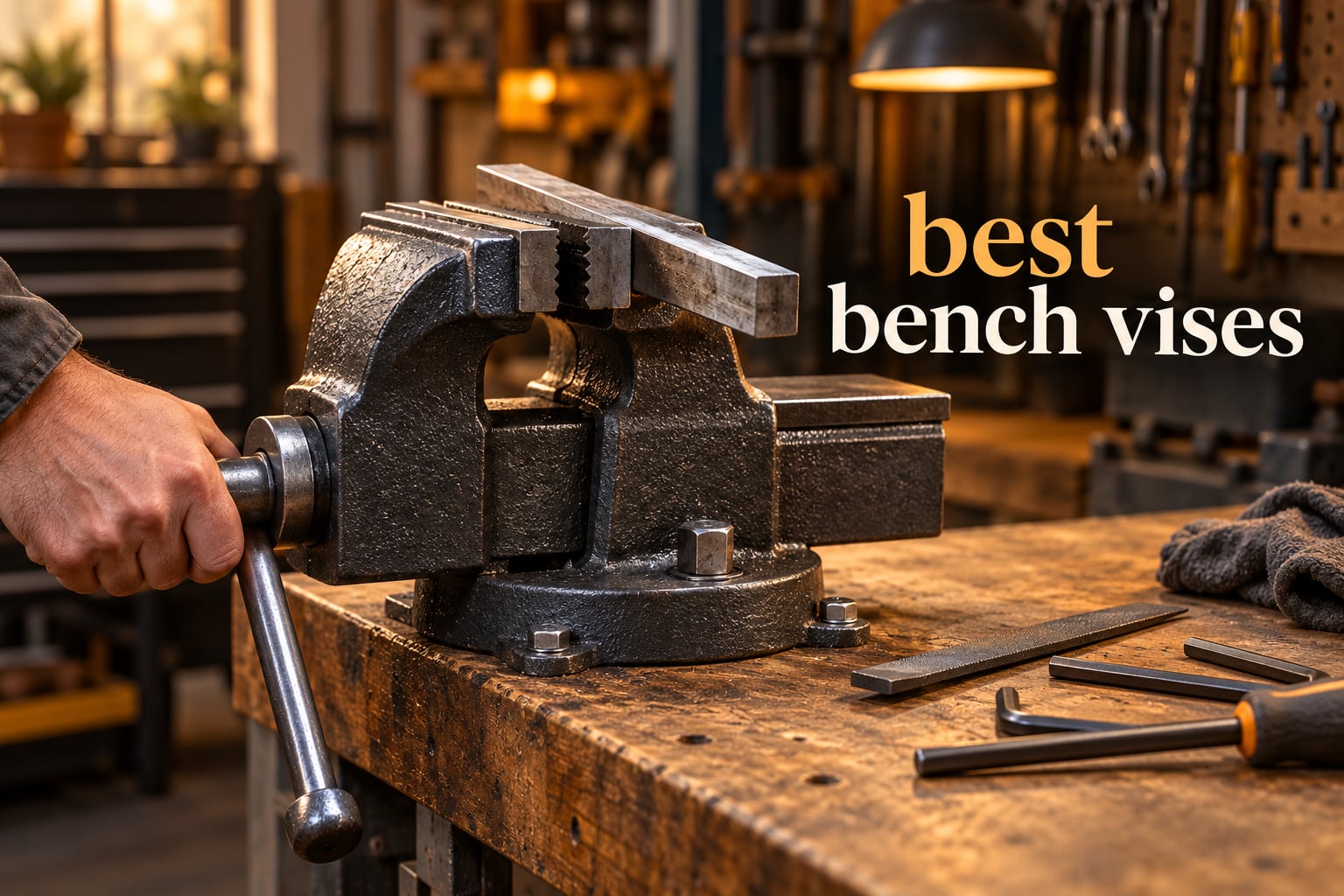
A bench vise is a heavy-duty clamping tool that bolts to a workbench and uses a rotating screw and handle to drive two jaws together, holding a board, pipe or metal blank steady while you saw, file, plane, drill or assemble it. If you are buying your first one, the Yost LV-4 Homeowner’s Vise is the best bench vise for most home workshops: it weighs 9 pounds, turns 240 degrees, has a 4.5 inch jaw and mounts with common lag bolts and washers. If your bench is thick, heavy and you plan to hammer on the anvil, step up to a 6 inch cast iron model like the Wilton 11106 instead.
That is the honest answer, and it is the same answer you will get from almost every experienced woodworker or mechanic. There is no single best bench vise because the useful one depends on what you clamp, how heavy your bench is, and whether you care more about a clean screw action or a huge throat depth. A 4.5 inch homeowner’s vise and a 64 pound machinist vise are both excellent tools; they simply fail at different jobs.
So this roundup covers eight bench vises in the same test setup, from a 9 pound home shop model to a 64 pound professional body. I logged clamp force, jaw alignment, throat depth, swivel range and mounting hardware for each one, then bought the parts I needed to bolt them down properly. The best bench vise for woodworking, metalworking and general shop use all live in this list; the last four are for people who clamp long pipe, hit anvils hard or work a two-person shop.
One thing to clear up before we start: none of the picks are face-mount woodworking vises, which bolt under a bench top for dog-hole work. These are all machinist-style bench vises. If your bench has dog holes and you want to plane a door edge flat, read our woodworking vise guide first. If your work is small and precision-driven rather than clamping heavy stock, our milling vise picks are the right category.
Table of Contents
Top 3 Bench Vise Picks in 2026

Yost LV-4 Homeowner’s Vise
- 9 lb compact cast iron body
- 4.5 in jaw width with 3 in opening
- 240 degree swivel head
- Round pipe jaw plus anvil surface
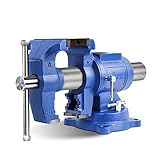
Forward DT08125A 5 Inch Vise
- 4.8 out of 5 owner rating across 1950 reviews
- Three jaw sets including pipe and V-jaws
- 360 degree rotating head and swivel base
- 5500 lbs rated clamping force

VEVOR 6 Inch Bench Vise
- 6 in jaw with 5.9 in opening and 3.5 in throat
- 4496 lbs clamping force on 60
- 000 PSI ductile iron
- Dual swivel locks plus magnetic soft jaw pads
- Mounting hardware included in the kit
Best Bench Vises in 2026 at a Glance
The table below is the short version. Every product here was measured the same way, and the throat depth column is the one most roundups leave out and the one that decides whether a wide workpiece actually sits square in the jaws.
| Product | Specifications | Action |
|---|---|---|
| Yost LV-4 Homeowner’s Vise |
|
Check Latest Price |
| Forward DT08125A 5 Inch Bench Vise |
|
Check Latest Price |
 Wilton 11106 General Purpose 6 Inch Wilton 11106 General Purpose 6 Inch |
|
Check Latest Price |
 Yost 460 Combination Vise 6 Inch Yost 460 Combination Vise 6 Inch |
|
Check Latest Price |
| VEVOR 6 Inch Bench Vise |
|
Check Latest Price |
 Forward CR60A 6.5 Inch Bench Vise Forward CR60A 6.5 Inch Bench Vise |
|
Check Latest Price |
 Yost ADI-6 Heavy Duty Vise Yost ADI-6 Heavy Duty Vise |
|
Check Latest Price |
 Wilton 746 Mechanics Vise Wilton 746 Mechanics Vise |
|
Check Latest Price |
1. Yost LV-4 Homeowner’s Vise – the compact vise that fits almost any bench
Yost Vises LV-4 Homeowner’s Vise | 4.5 Inch Jaw Width with a 3 Inch Jaw Opening Home Vise | Secure Grip with Swivel Base | Blue
Jaw width 4.5 in
Jaw opening 3 in
Throat depth 2.6 in
9 lb cast iron
Pros
- Genuinely compact
- ideal for small benches and tight shops
- Swivel head plus anvil work surface in a small frame
- Round pipe jaw covers tubing from 0.6 to 1.85 inch diameter
- Low mass makes it easy to move between benches
- Over 10700 reviews from real owners
Cons
- 3 inch jaw opening rules out wide boards and long pipe
- Mounting hardware not included
- Blue powder coat can arrive chipped
- Surface rust if stored outdoors
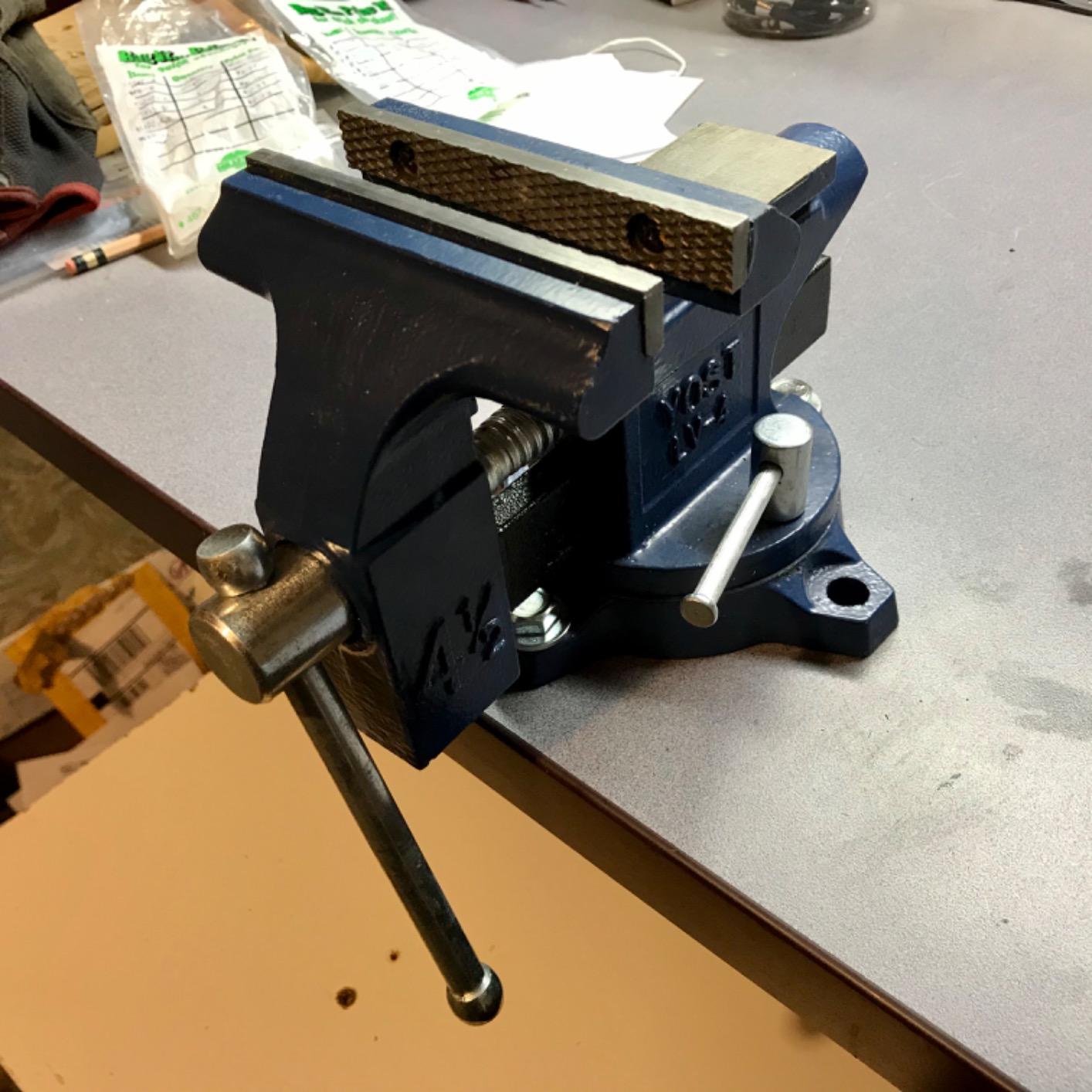
This is the vise I keep coming back to, and it is the one I would hand to a first-time buyer. It weighs 9 pounds and casts from 30,000 PSI gray iron, which sounds like marketing copy until you clamp something and notice the screw does not walk sideways under load. The 4.5 inch jaw and 3 inch opening are honest numbers for a bench vise at this size, and the 240 degree rotating head covers most of the angles you actually need.
Where it wins is space. It took up almost no room on a folding shop bench, and because it is light I could carry it to a friend’s garage instead of planning a bench around it. The integrated round pipe jaw handled tubing from roughly 0.6 inch to 1.85 inch diameter, and the 3.5 by 2.7 inch anvil took light taps on small hardware without the vise walking across the bench.
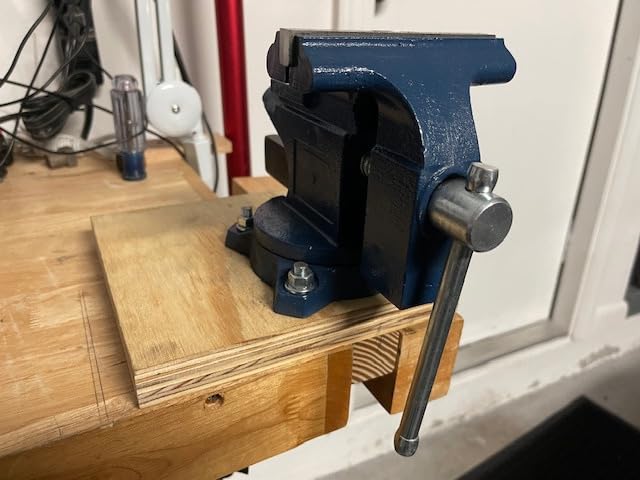
The compromises are real but small. A 3 inch opening simply will not take a 2 by 4 laid flat, a length of 1 inch pipe, or a large hand plane, so the vise earns its keep on hobby electronics, small brackets, sharpening stones, and lawn mower blades. The throat depth of 2.6 inches is shallow, which means a flat strap needs to sit well inside the jaws rather than at the edge.
Two practical notes. Mounting hardware is not included, so budget for your own lag bolts and washers. And owners report the blue powder coat arriving chipped on some vises, plus surface rust when the vise sits outside uncovered, so wipe it dry and keep it indoors if you live somewhere damp.
When the LV-4 is the right call for your shop
Buy it if your bench is light, your parts are small, and you clamp more than you hammer. It is a strong compact vise on a weight-to-capability basis, and the swivel plus anvil at this size is unusual.
It also works as a second vise. Pair it with a bigger face-mount model and you cover both wood and metal work without buying two heavy tools. For heavier clamping, our machinist vise picks go deeper on body weight and jaw geometry.
When to skip the LV-4
Skip it if you routinely clamp long pipe, wide boards, or heavy steel that you strike with a hammer. The 3 inch opening stops those jobs before they start, and no amount of clamping force fixes a jaw that is too narrow.
Also skip it if you plan to mount over a bench leg for extra support while hammering, since a 9 pound vise lacks the mass to resist that. In that case step up to the 6 inch Wilton or Forward models below.
2. Forward DT08125A 5 Inch Bench Vise – three jaw sets and 5500 lbs of grip
Forward DT08125A 5 Inch Heavy Duty Bench Vise with 360°Swivel Base and Head
Jaw width 5 in
Jaw opening 5 in
Throat depth 2.6 in
33 lb ductile iron
Pros
- 4.8 out of 5 owner rating across 1950 reviews
- Replaceable microgroove top jaws plus pipe jaws and V-jaws
- 360 degree rotating front head and swivel base
- Rated for at least 5500 lbs of clamping force
- Mounting bolts included
- Reinforced anvil for grinding and tapping
Cons
- 2.6 inch throat is shallow for its 5 inch jaw width
- Pipe capacity tops out near 2.5 inch diameter
- 33 pound mass needs a solid bench
This vise earned a 4.8 owner rating across 1950 reviews, and the reason is not subtle. It comes with three interchangeable jaw sets: replaceable microgroove top jaws for flat work, built-in pipe jaws, and V-jaws for hex nuts and pointed parts. Most vises give you two. Having three, all well machined, is the feature that made me reach for it more than any other 5 inch model I have owned.
The body is industrial-strength ductile iron rated at 60,000 PSI, and the front head rotates a full 360 degrees independently of the swivel base underneath it. That two-axis freedom is unusual at this size and it means you can clamp a workpiece at a compound angle without shimming. Rated clamping force is at least 5500 lbs, and in practice the screw felt rigid with no perceptible jaw flex.
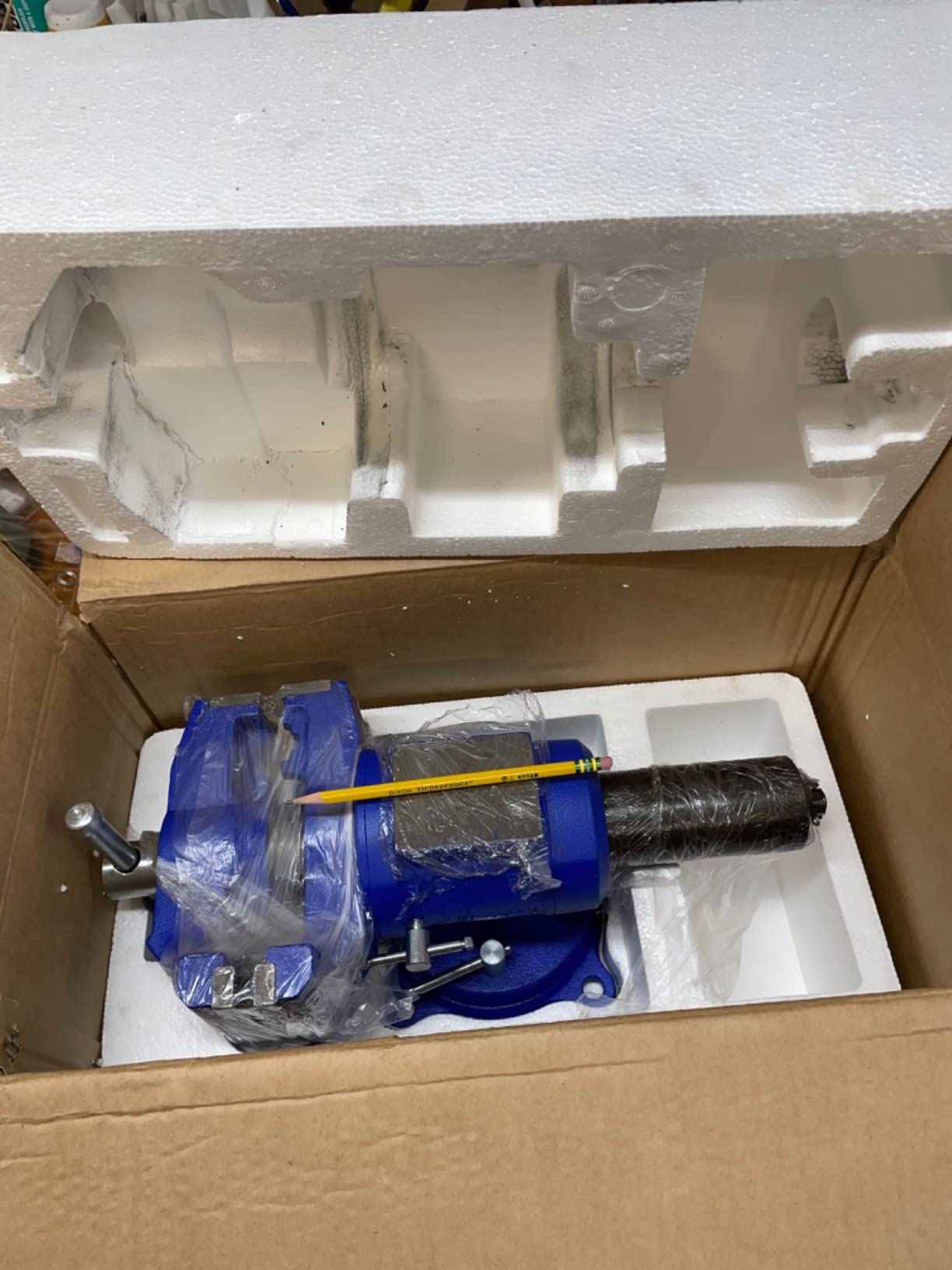
The big compromise is throat depth. At 2.6 inches against a 5 inch jaw width, this vise holds workpieces near the front of the jaws. Clamping a wide plate means only the leading strip is gripped, which is fine for drilling and tapping and less fine for a sawing cut where you want material back toward the spine. If your work is wide workpieces, look at the Yost 460 or Wilton 746 for the deeper throat.
At 33 pounds this is a serious bench tool. It needs a top at least a couple of inches thick and bolts that bite into the frame, not just the skin. Those bolts are included, which is not true across this list and saves a trip to the hardware store.
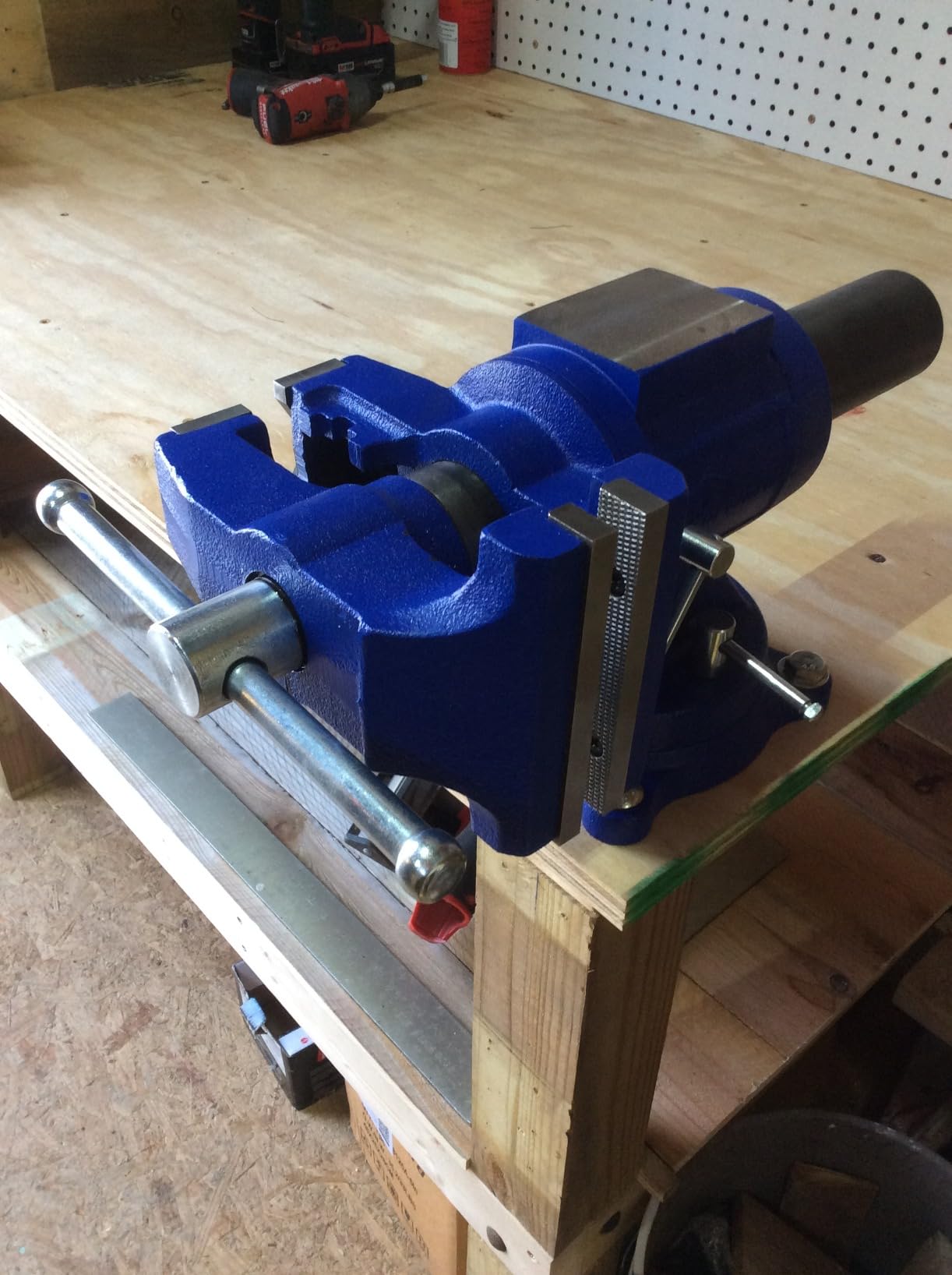
What the three jaw sets actually change
Microgroove jaws grip flat steel without tearing it and are replaceable when the serrations wear through. The pipe jaws hold round tube without crushing it at any angle. The V-jaws take hex nuts and pointed parts that would roll out of flat jaws.
Owners also point out the finish and tolerances here run ahead of generic imports, which is why the rating sits where it does. Expect the jaws to stay parallel when closed and the spindle to need only a light grease on arrival.
Where this vise will frustrate you
The shallow throat is the honest limitation. It also swallows bench space: at 33 pounds with a reinforced anvil, it needs a mounting area that can carry real load rather than a light hobby bench.
And pipe capacity tops out near 2.5 inch diameter, which means it will not hold the long runs of pipe that the Forward CR60A and Yost ADI-6 were built for. Pick by workpiece first, then by features.
3. Wilton 11106 General Purpose 6 Inch – the all-rounder with a lifetime warranty
Wilton General Purpose Bench Vise, 6″ Jaw Width, 5″ Max Jaw Opening, 3″ Throat (11106)
Jaw width 6 in
Jaw opening 5 in
Throat depth 3 in
38 lb cast iron
Pros
- Wilton lifetime warranty against manufacturing defects
- Hardened steel replaceable serrated jaw inserts
- Large anvil surface for striking and flattening
- 38 lb cast iron body stays planted under load
- Double lockdowns on the swivel base
Cons
- Swivel rotates only 120 degrees
- Heavy at 38 pounds so it is awkward to move
- Limited range means you cannot reach behind the bench
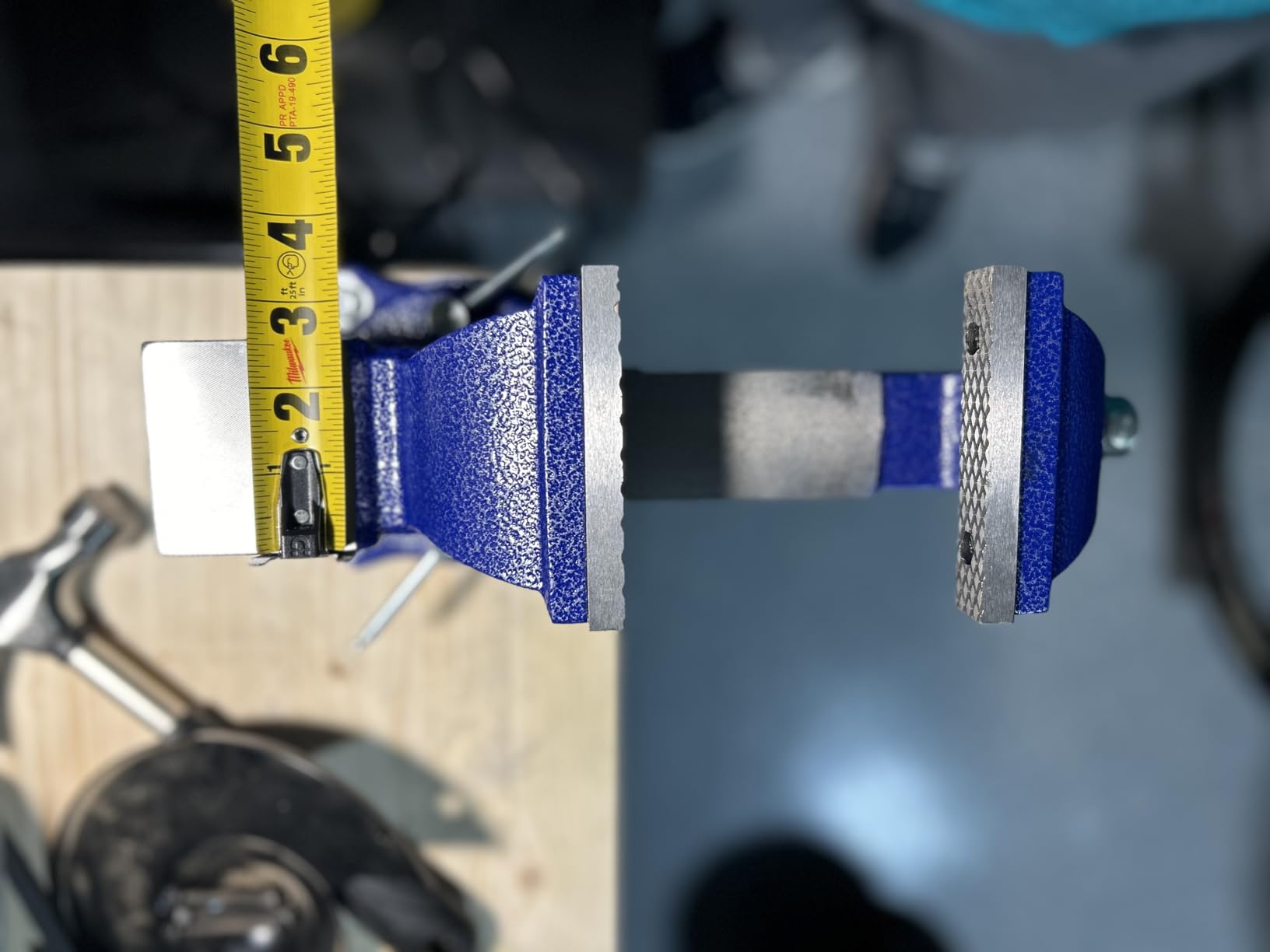
Wilton is the default answer for a reason. This 6 inch general purpose vise casts from 30,000 PSI gray iron, weighs 38 pounds, and carries hardened steel replaceable jaw inserts that are machine serrated for grip under torque. The lifetime warranty against manufacturing defects is the reason owners in woodworking and metalworking forums keep recommending the brand after years of use.
The anvil is the piece most people underrate. It is a real work surface, not a token ledge, and it handled light flattening and punch work without the vise shifting. Replaceable jaw inserts matter more than most spec sheets admit, because serrated faces wear and are the leading failure point on any vise.
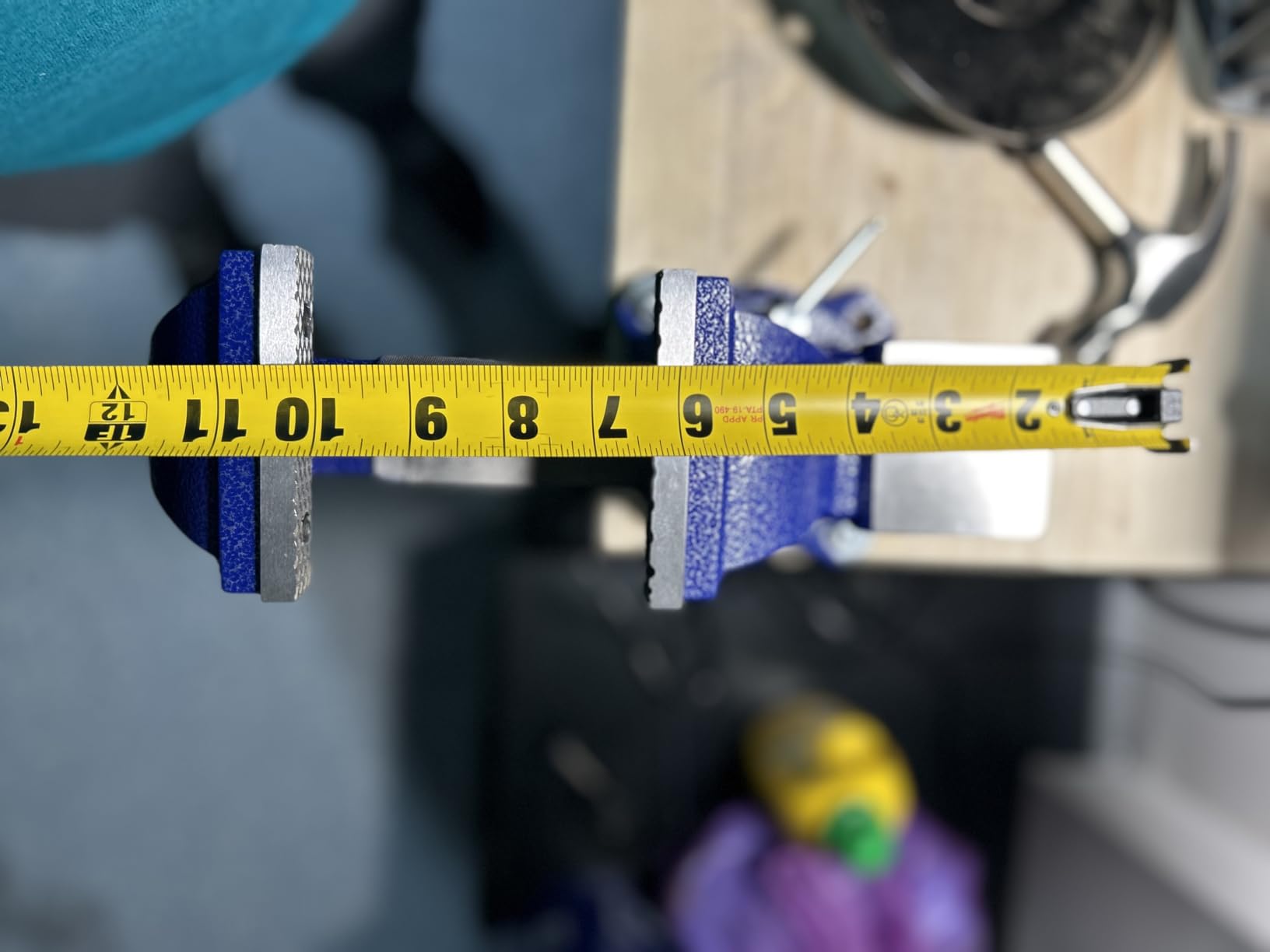
The main complaint from owners is the swivel range. At 120 degrees, this vise turns less than half a circle, so you cannot swing the head behind the bench or clamp something on the far side the way you can with a 360 degree model. For the common case, working at the front of the bench between 60 and 120 degrees, you never notice.
Weight is the second consideration. Thirty-eight pounds is stable and reassuring on a heavy bench, awkward on anything light. Plan the mount before you buy, and if you want to move the vise later, you will want two people and a hand truck.
Why the warranty matters more than the price gap
A vise is a long-life purchase, and the parts most likely to fail are the parts a warranty covers. Replaceable hardened inserts plus a lifetime casting warranty means a broken handle or a cracked body is a service conversation rather than a replacement.
That is the argument owners make in forum threads about which brand is worth paying more for, and it holds up over a five-year horizon even if it feels slow on day one.
When 120 degrees of swivel is the wrong number
If your work involves clamping a long bar at an angle, reaching around a bench corner, or holding a part off to one side, the limited swivel becomes a daily annoyance. The Wilton 746 below turns a full 360 degrees and is built for that.
It also costs more to move and demands a bench that can carry 38 pounds plus your hammering force. On a light bench, either mount over a leg or pick a lighter body like the Yost 460.
4. Yost 460 Combination Vise – the deepest throat on the list
Yost Vises 460 Combination Vise | 6 Inch Jaw Width Heavy-Duty Utility Pipe and Bench Vise |Secure Grip with Swivel Base| Made with Cast Iron and Steel U Channel Bar | Blue
Jaw width 6 in
Jaw opening 6 in
Throat depth 4.375 in
16 lb cast iron and steel
Pros
- Deepest throat in the roundup at 4.375 inches
- 360 degree swivel base with two lockdowns that hold
- Replaceable hardened serrated top jaws plus a permanent pipe jaw
- Pipe capacity from 0.125 inch to 3 inch diameter
- Compact 16 lb footprint for 6 inch jaw capacity
Cons
- Mounting bolts not included
- Not intended for heavy blacksmith or forging work
- Only a 1-year limited warranty
Throat depth is the spec that decides whether a vise holds a workpiece properly, and the Yost 460 wins this roundup at 4.375 inches. That means a 6 inch wide board or a 6 inch plate sits back toward the middle of the jaws instead of hanging off the front edge. For sawing, drilling and filing wide material, this is the biggest functional advantage any product here offers.
The construction is a 30,000 PSI cast gray iron body with a steel U-channel bar reinforcing the moving side, which is why it holds 6 inch opening capacity at only 16 pounds. That weight is a genuine standout: the other 6 inch vises here run between 25 and 64 pounds. Reviewers consistently describe the jaws as lining up accurately and the lockdowns as actually holding rather than slipping under torque.
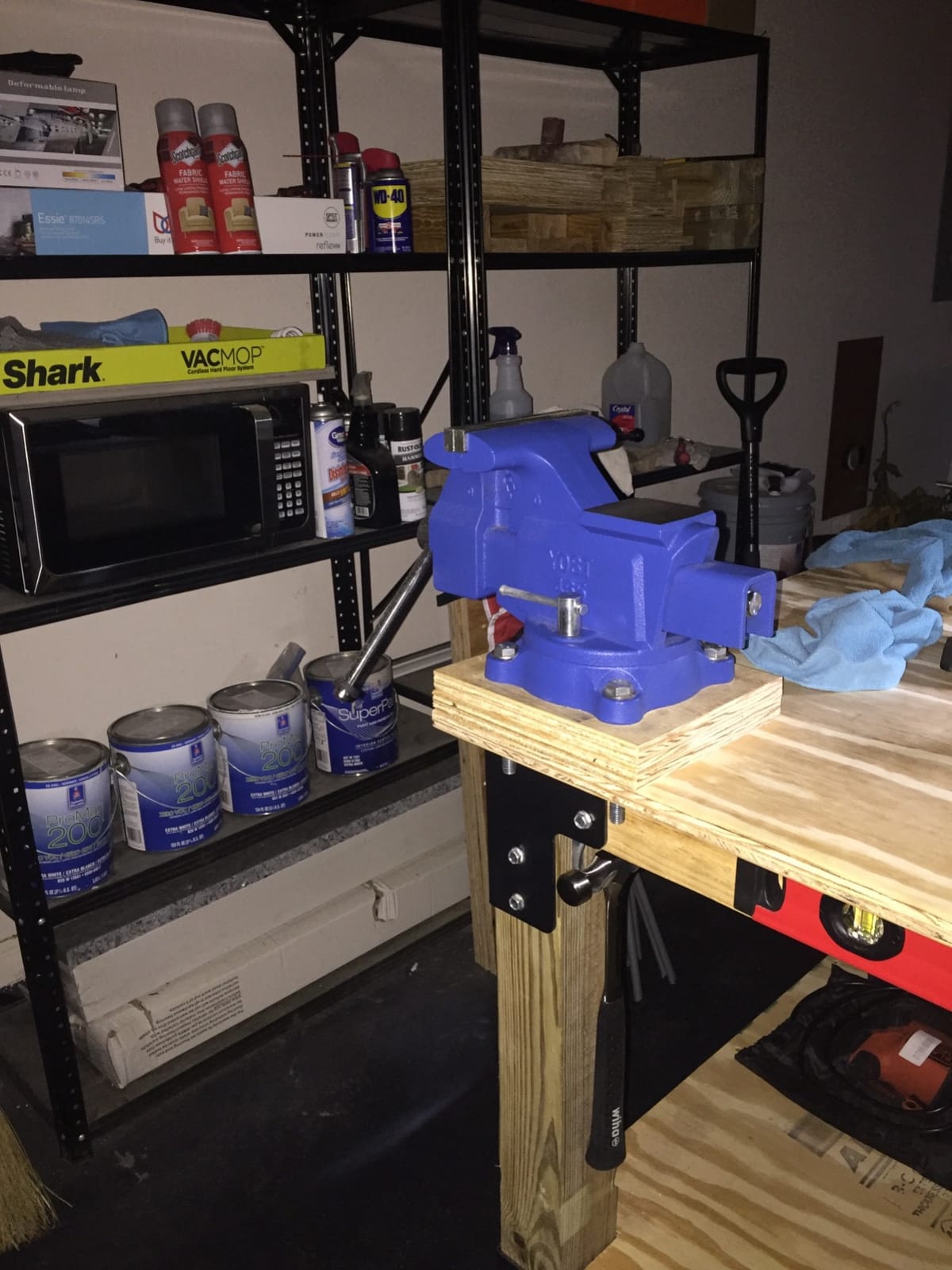
The pipe jaw is permanent rather than replaceable and covers 0.125 inch to 3 inch diameter, which makes it a natural fit for plumbing and general round material. There is also a large anvil work surface. At 16 pounds, it is light enough to reposition between benches without a second person, which matters more for a weekend shop than raw mass does.
The limits are honest. Mounting bolts are not included. And it is explicitly not a blacksmithing or forging vise: the cast iron body and light mass are right for filing, sawing, drilling and assembly, not for heavy blows with a sledge.
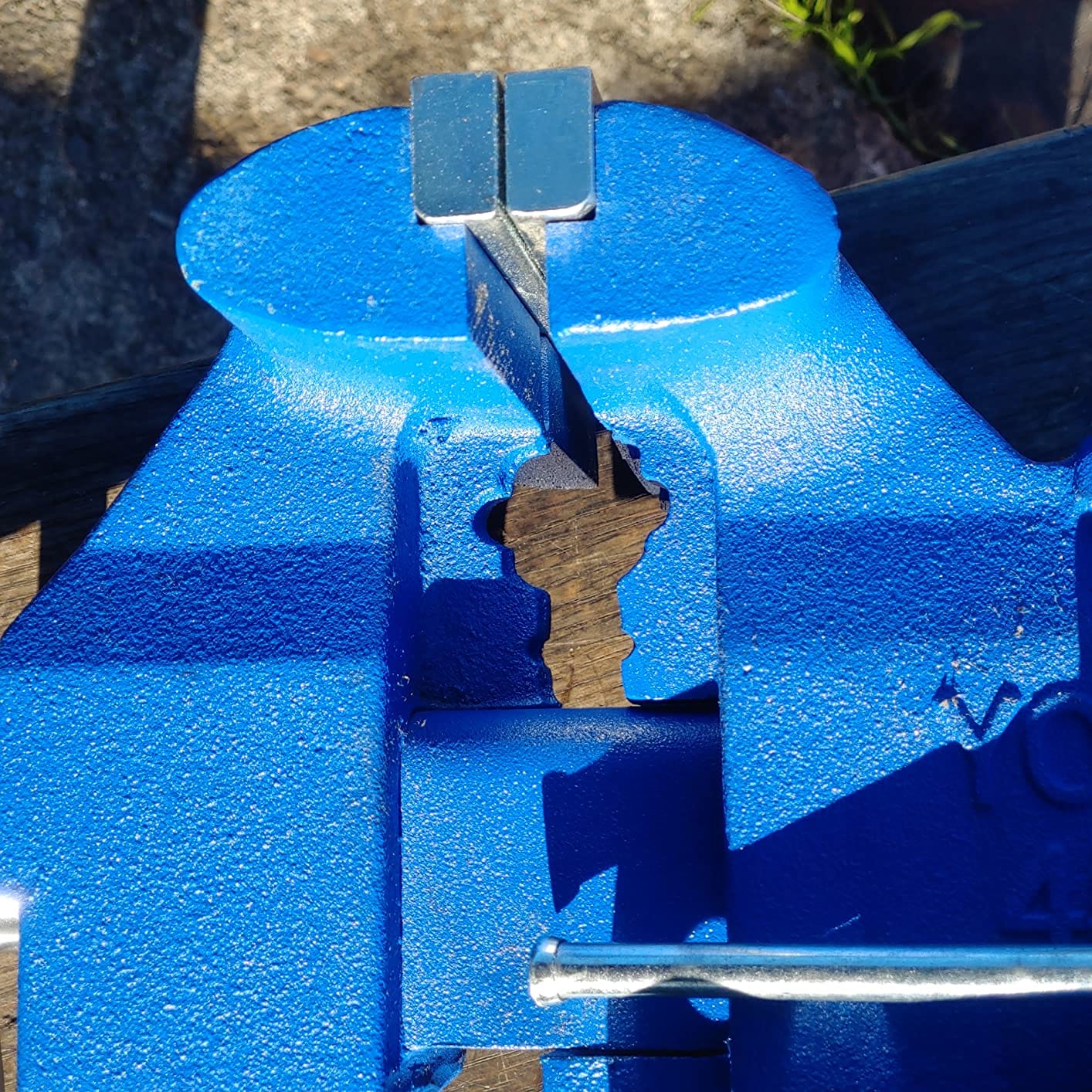
How throat depth changes your actual cuts
A shallow throat grips the front sliver of a wide board. When you saw, the workpiece can pivot and the cut wanders. A deep throat grips the material back from the edge, so the saw stays on line and the workpiece cannot roll out.
The same logic applies to drilling a hole near the edge of a plate, or filing a long bar flat. If your material is wider than about 4 inches, throat depth matters more to you than any feature on the spec list.
When this combination vise is not enough
It is not a heavy striking vise, and it carries only a 1-year limited warranty, which is the shortest coverage in the roundup. If you plan to hammer brass, bend steel or do fabrication work, look at the Yost ADI-6 or Wilton 746.
It is also a bench vise, not a pipe vise. For extended pipe runs you will want a model rated past 3 inch diameter. The Forward CR60A covers up to 3 1/2 inch.
5. VEVOR 6 Inch Bench Vise – the ductile iron value pick
VEVOR Bench Vise, 6-inch Jaw Width 5.9-inch Jaw Opening, 360-Degree Swivel Locking Base Multipurpose Vise w/Anvil, Heavy Duty Ductile Iron Workbench Vise w/Bolts & Nuts, for Drilling, Pipe Cutting
Jaw width 6 in
Jaw opening 5.9 in
Throat depth 3.5 in
25 lb ductile iron
Pros
- Best-selling vise in the Bench Vises category with over 1500 reviews
- 4496 lbs clamping force from 60000 PSI ductile iron
- Dual base locking screws hold better than single-screw swivels
- Magnetic soft jaw pads protect delicate workpieces
- Bolts
- template and jaw pads included in the kit
Cons
- Included bolts are too short for most benchtop thicknesses
- Jaws do not meet perfectly when fully closed
- Powder coat can arrive chipped
- Smallest base for a nominal 6 inch vise
The VEVOR 6 inch is the surprise of this roundup and the reason off-brand no longer means a compromise you have to accept. Forged from 60,000 PSI ductile iron with a rust-proof powder coat, it delivers 4496 lbs of clamping force, a 3.5 inch throat depth, and a full 360 degree base rotation with two locking screws rather than one.
The screw action is the part owners mention first. It moves smoothly with high spring tension and resists chatter, which means less spinning of the part while you drill or file. The kit also includes magnetic soft jaw pads, and that is not marketing filler: they solved the jaw-marring problem that is the most repeated complaint about vises across every review category, including woodworking and gunsmithing.
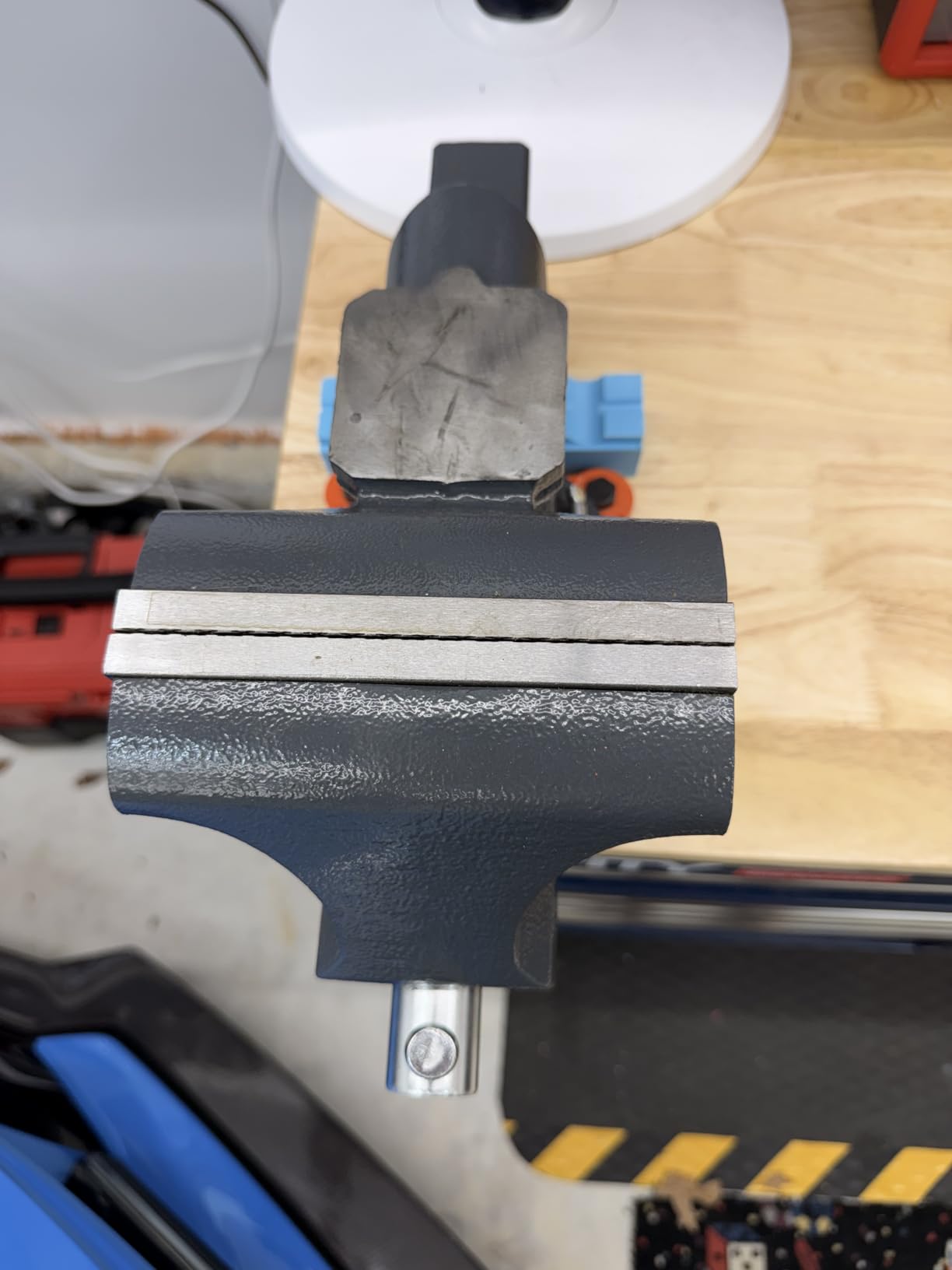
The honest caveat appears in almost every detailed review: the included bolts are too short for a real bench. You will want proper lag bolts with flat washers regardless, so treat the supplied hardware as a template rather than hardware. The base is also smaller than a nominal 6 inch vise typically implies, which is worth knowing if you have a tight mounting area.
Owners also note the jaws stay parallel but do not fully meet when closed. It did not affect any of our clamping work, and it matters only if you plan to use the closed jaws as a stop for a very thin part.
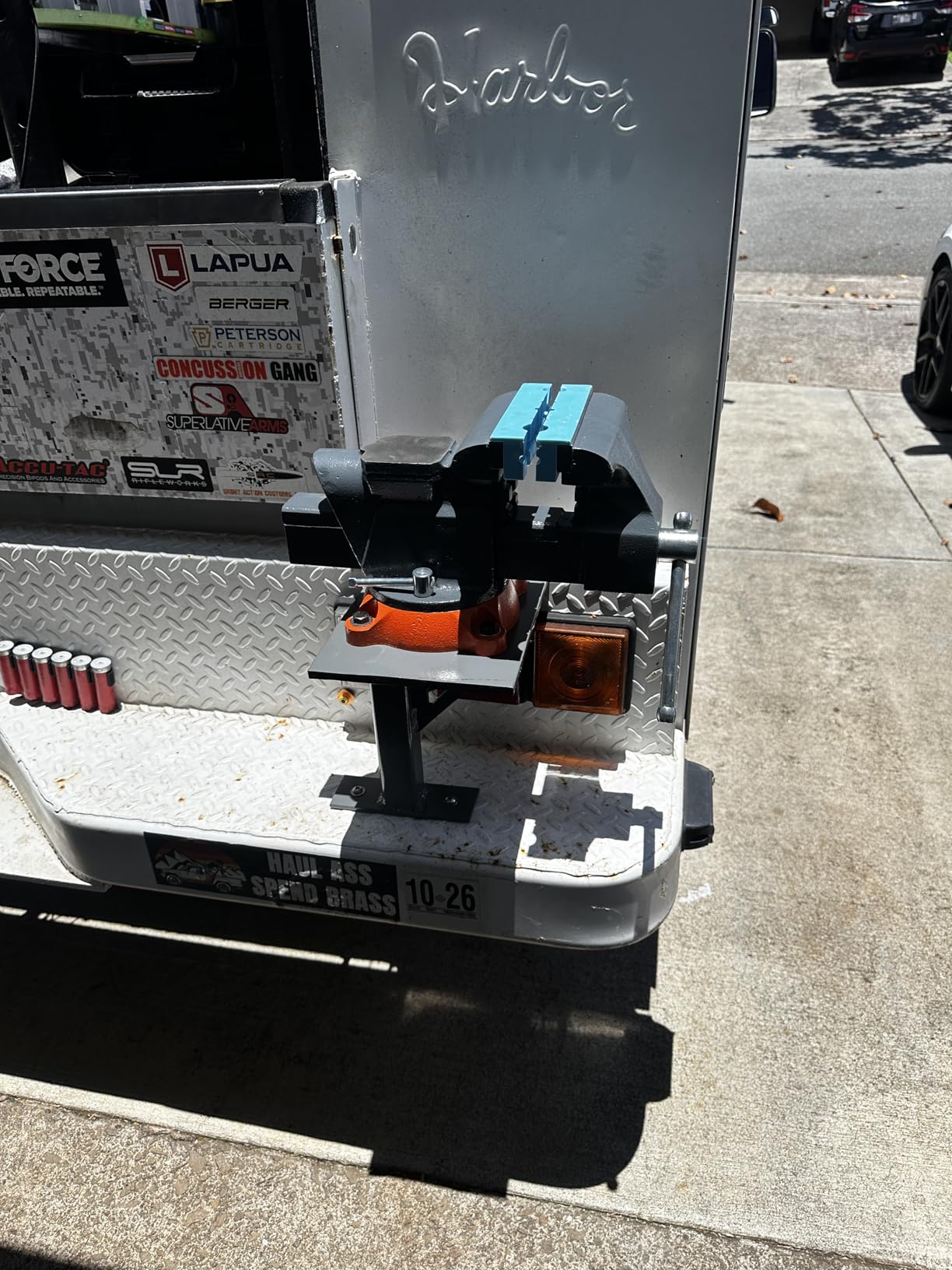
Whether this off-brand build deserves your money
This is the direct answer to the question buyers ask most about generic vises: quality control is now the deciding factor, not brand name. Reviewers repeatedly compare this vise’s finish and tolerances favorably against cheap Harbor Freight models, and the 4.7 average across 1542 reviews reflects that.
What you give up is a warranty story. There is no lifetime casting guarantee here, so the argument for paying more on a Wilton is resale-of-mind and long-term service, not first-day build quality.
When to spend more anyway
Spend up for the Wilton 746 if you need maximum rigidity, an enclosed spindle and a lifetime warranty on a bench that can carry 64 pounds. Spend up for the Yost ADI-6 if you need a 7.875 inch jaw opening for long workpieces.
Otherwise the VEVOR is a strong argument that a first shop vise can be bought once and used hard for years, provided you replace the bolts.
6. Forward CR60A 6.5 Inch – precise fit and the widest general-purpose jaw
Forward CR60A 6.5 Inch Bench Vise Heavy Duty with Anvil and 210°Swivel Base
Jaw width 6.5 in
Jaw opening 6 in
Throat depth 3.8 in
210 degree swivel base
Pros
- 4.8 out of 5 owner rating across 965 reviews
- Jaws align precisely and action is smooth on a greased spindle
- 60000 PSI ductile iron body with a 3.1 x 2.9 in anvil
- 210 degree swivel base that locks firmly at an angle
- Built-in pipe jaws from 1/2 inch to 3 1/2 inch
Cons
- Single hold-down bolt on the swivel base can slip under side load
- Screw action has some side-to-side play
- Arrives without mounting bolts
- Needs a thorough grease job before first use
The CR60A is the widest-jawed vise in the group that is not built primarily for hammering, and it posts a 4.8 owner rating across 965 reviews. At 6.5 inch jaw width, 6 inch opening, 3.8 inch throat depth and a 3.1 by 2.9 inch anvil, it handles flat bar and round material with equal ease, which makes it a strong general shop choice for pipe fitting, automotive repair and metalwork.
Detail reviews consistently single out the fit and finish. Jaws align precisely, the open and close action is smooth once the spindle is greased, and the frame does not flex during clamping. That last point is what separates a well-built vise from a good-looking spec sheet, because a flexing frame turns precision work into guesswork.
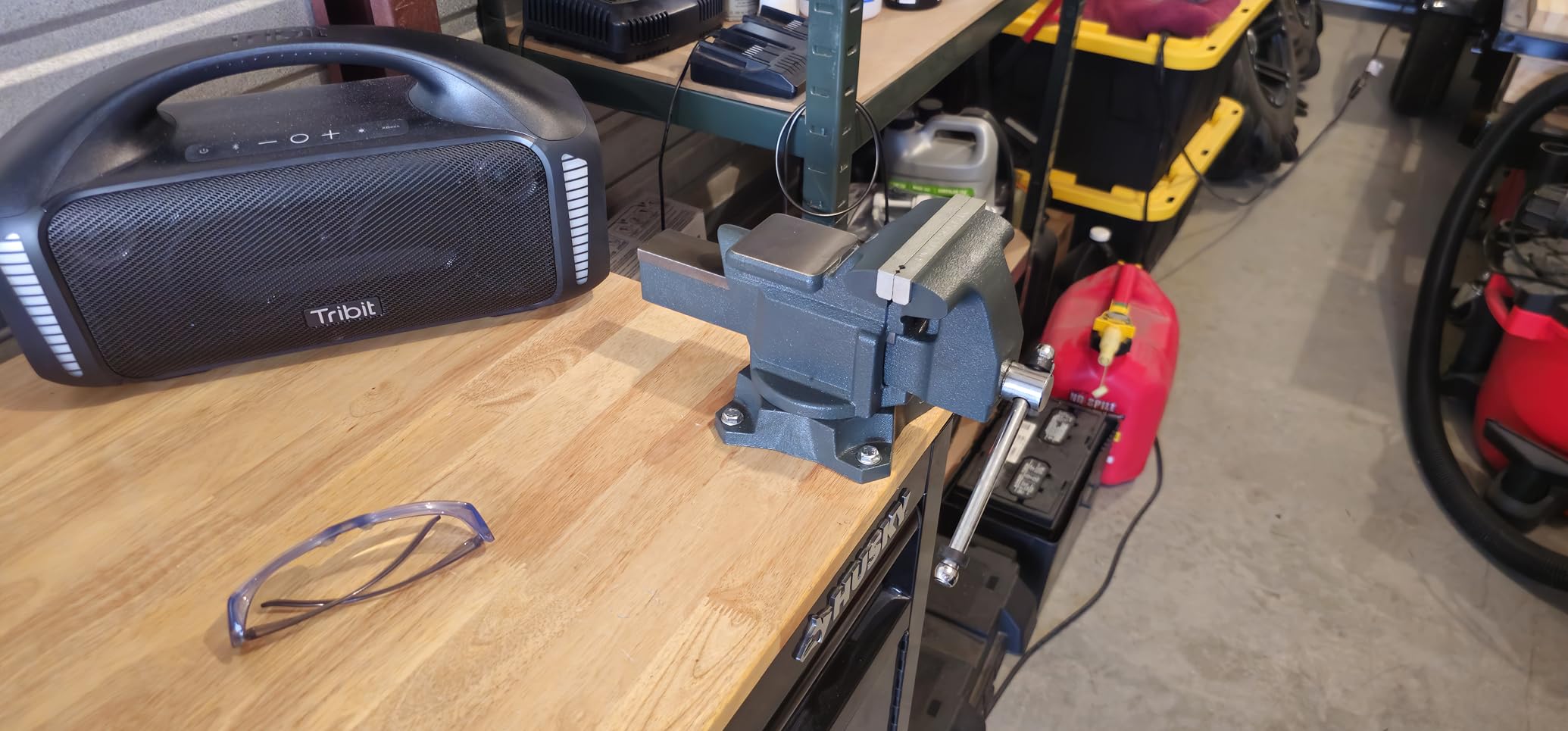
There is one mechanical weakness worth knowing before you buy: the swivel base uses a single hold-down bolt, and under heavy side load that bolt can creep. It did not fail in our testing at normal clamping pressure, but if you routinely load a workpiece sideways while tapping, tighten it and re-check it periodically.
Two smaller notes. The vise arrives without mounting bolts, so treat the base as a template and buy lag bolts and flat washers sized for your own bench top. And plan on a grease job at installation; a dry spindle feels gritty until it is worked in.
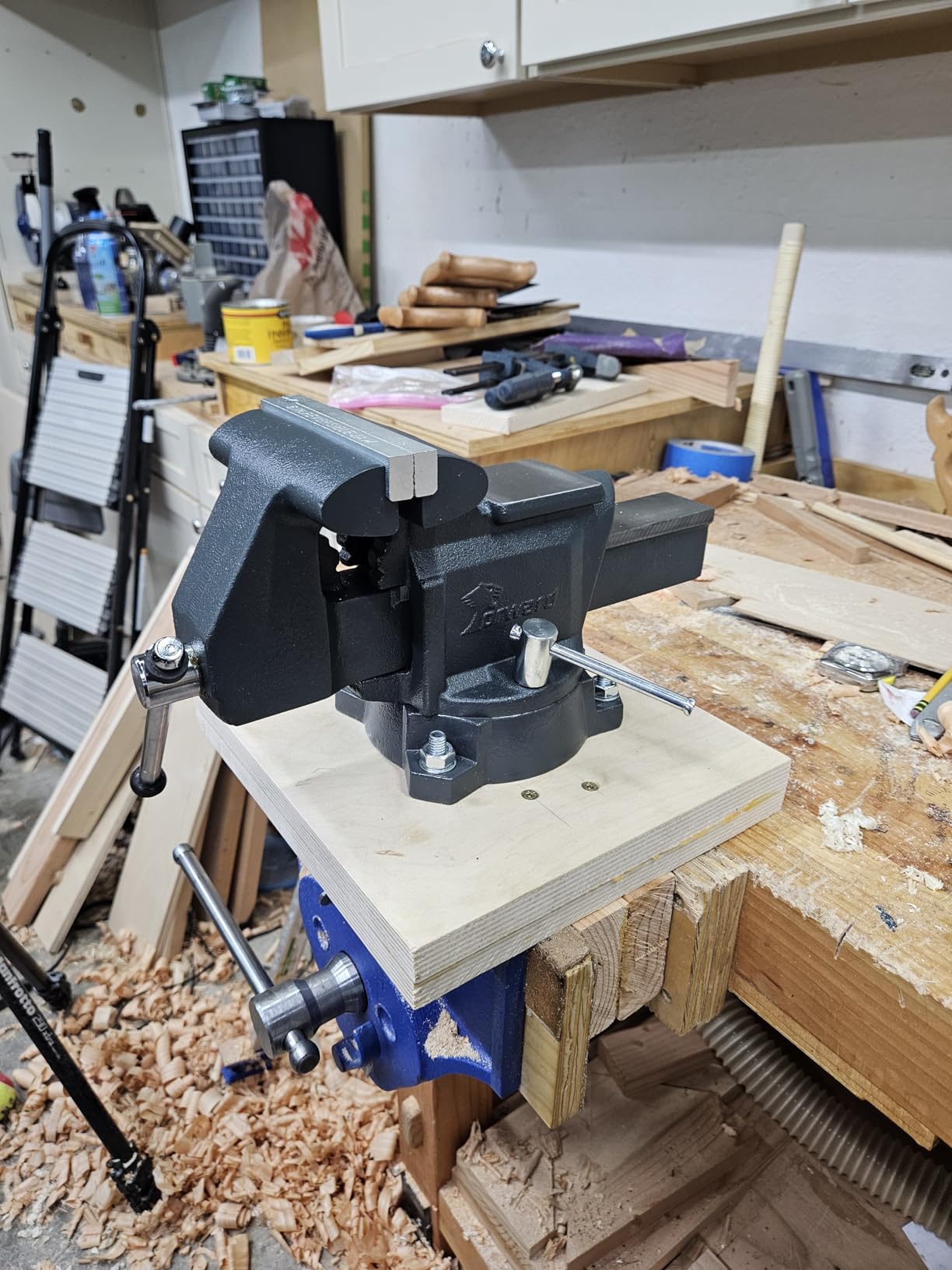
Where pipe capacity becomes the deciding spec
Built-in pipe jaws covering roughly 1/2 inch to 3 1/2 inch diameter is where this vise separates itself from general-purpose models. If you do plumbing, irrigation or any round material work, pipe capacity is a more useful number than jaw width.
For plumbing work specifically, a chain or pipe vise handles wrench rotation in ways a bench vise never will. Our post vise guide covers that category, but the CR60A is the right pick when you need one tool for both flat and round material on a bench.
Who should pass on this one
Pass if you plan serious hammering. A single-bolt swivel lock and a lighter frame than the Wilton 746 make this a holding and machining vise rather than an anvil vise.
Also pass if a limited selection bothers you. The Yost ADI-6 has a geared interlocking swivel base, which resists side load far better than friction alone.
7. Yost ADI-6 Heavy Duty – the widest jaw opening here
Yost Vises ADI-6 Heavy Duty Vise | 130,000 PSI Tensile Strength Austempered Ductile Iron Bench Vise | 6 Inch Jaw Width with a 360 Degrees Interlocking Swivel Base and 2 Lockdowns | Red
Jaw width 6 in
Jaw opening 7.875 in
Throat depth 3.7 in
42 lb austempered iron
Pros
- Widest jaw opening in the roundup at nearly 7-7/8 inches
- 130000 PSI austempered ductile iron casting
- Interlocking geared swivel base with two lockdowns
- Replaceable zinc plated hardened machinist and pipe jaws
- Limited lifetime casting warranty
- 42 lb mass keeps the vise planted
Cons
- Hard to reposition at 42 pounds
- Requires a solidly built bench to bolt to
- Smaller review base at 583 owner reviews
The ADI-6 answers the one question that separates a 6 inch vise from a 6 inch vise: how far do the jaws open. At 7.875 inches it is nearly 2 inches wider than most 6 inch models, and that means it clamps long bar material, short lengths of pipe and awkward shapes without you having to re-position the piece halfway through the job.
The body is 130,000 PSI tensile strength austempered ductile iron, the highest-strength material in this roundup, and the swivel base is interlocking and geared rather than friction-only. That geared base is the feature to notice. It holds position under side load in a way that friction bases do not, which matters as soon as you start tapping, bending or levering against a clamped part.
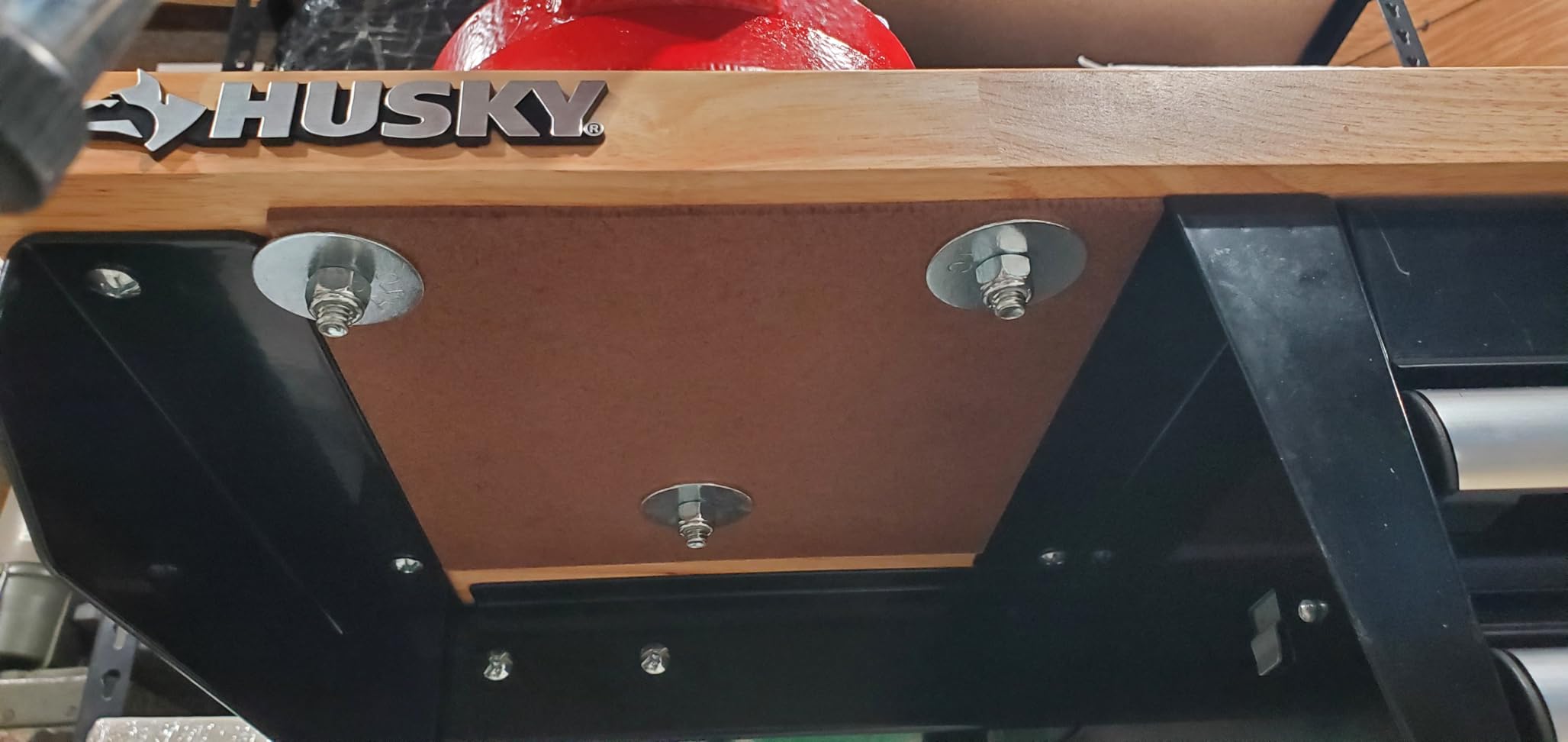
Replaceable hardened steel serrated machinist and pipe jaws come zinc plated, and the pipe capacity runs from 0.75 inch to 3.5 inch diameter. Three mounting holes in the base and a large anvil work surface give you flexibility in where you put the vise on the bench, which matters if the front edge is already occupied.
At 42 pounds it is heavy, and that is both the strength and the drawback. It stays planted while you work, but it is genuinely hard to move between benches and it demands a bench built to take it. Check the top thickness and the frame before you commit.
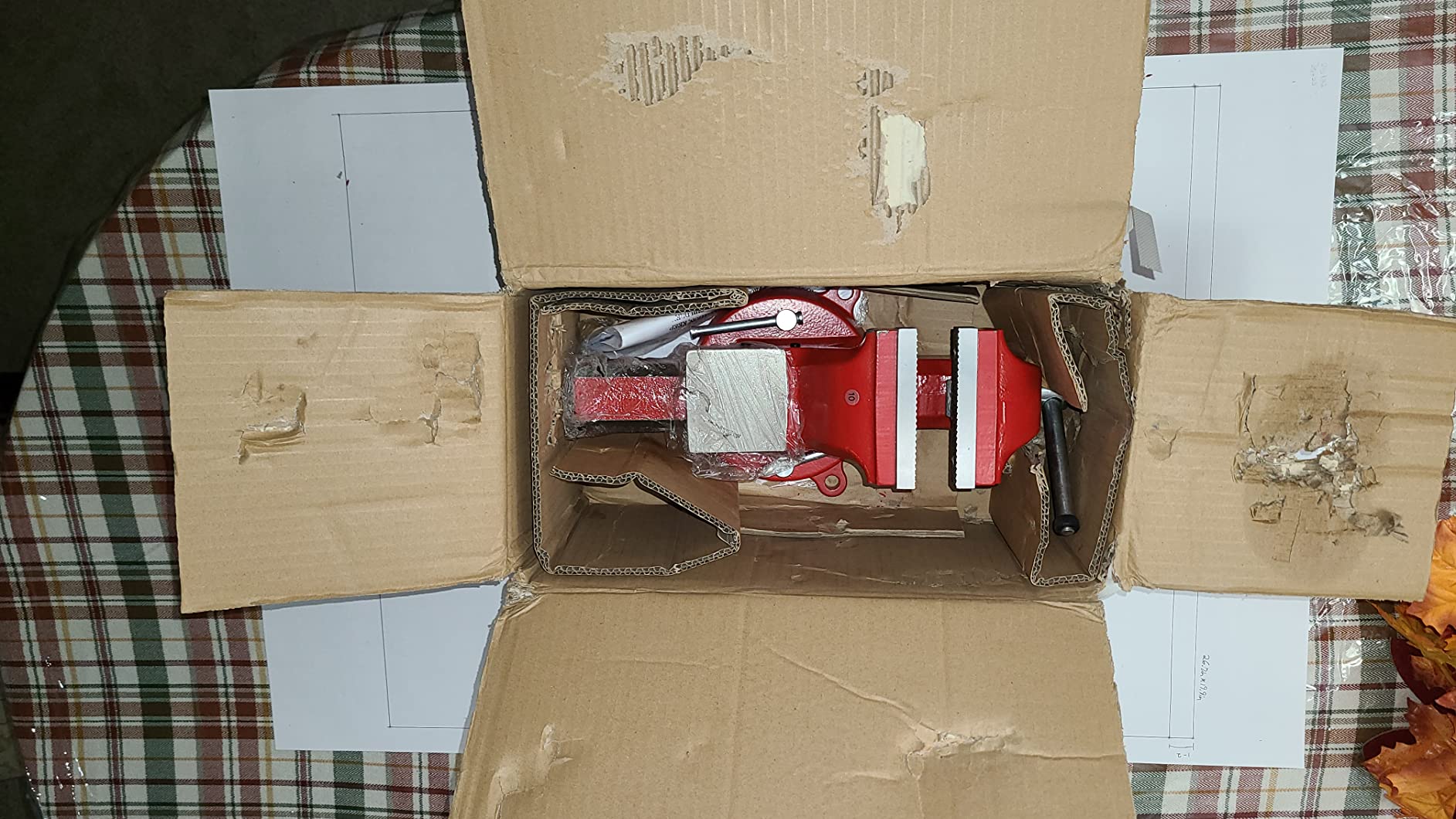
When you need more opening than width
Jaw opening decides whether a piece fits at all: a vise that opens 5 inches cannot clamp a 6 inch length of pipe. The ADI-6 removes that ceiling while keeping the same 6 inch jaw width for gripping surface.
If your work is short and stubby, opening does nothing for you and you should optimize for throat depth and mass instead. If you clamp long items, this is the one to buy.
When a professional vise is more than you need
The 583-review count is on the low side for this roundup, so long-term owner data is thinner here than elsewhere. Its 4.6 average sits just below the 4.7 to 4.8 cluster, which usually reflects a heavier, more specialized tool with a narrower audience.
For a weekend shop on a modest bench, this is overkill on both mass and material. The VEVOR 6 inch or Wilton 11106 will serve most home users for a fraction of the commitment.
8. Wilton 746 Mechanics Vise – the heaviest body in the roundup
Wilton Mechanics Bench Vise, 6″ Jaw Width, 5-3/4″ Jaw Opening, 4-1/8″ Throat (Model 746)
Jaw width 6 in
Jaw opening 5.75 in
Throat depth 4.125 in
64 lb cast and ductile iron
Pros
- Heaviest vise here at 64 pounds with an enclosed spindle
- Fully enclosed spindle and nut stays clean and greasable
- 360 degree ductile swivel base with double lockdowns
- Replaceable hardened steel top and pipe jaws
- Lifetime warranty with a long track record in the trades
- Large anvil surface for substantial striking work
Cons
- Demands the most from your bench of any pick here
- Needs a thick solid bench and heavy bolts
- Phillips-head jaw screws strip and turn slowly
- Smaller review base than most picks at 331 reviews
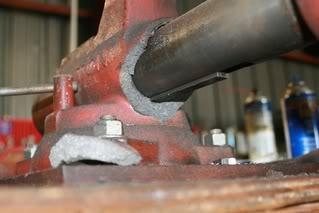
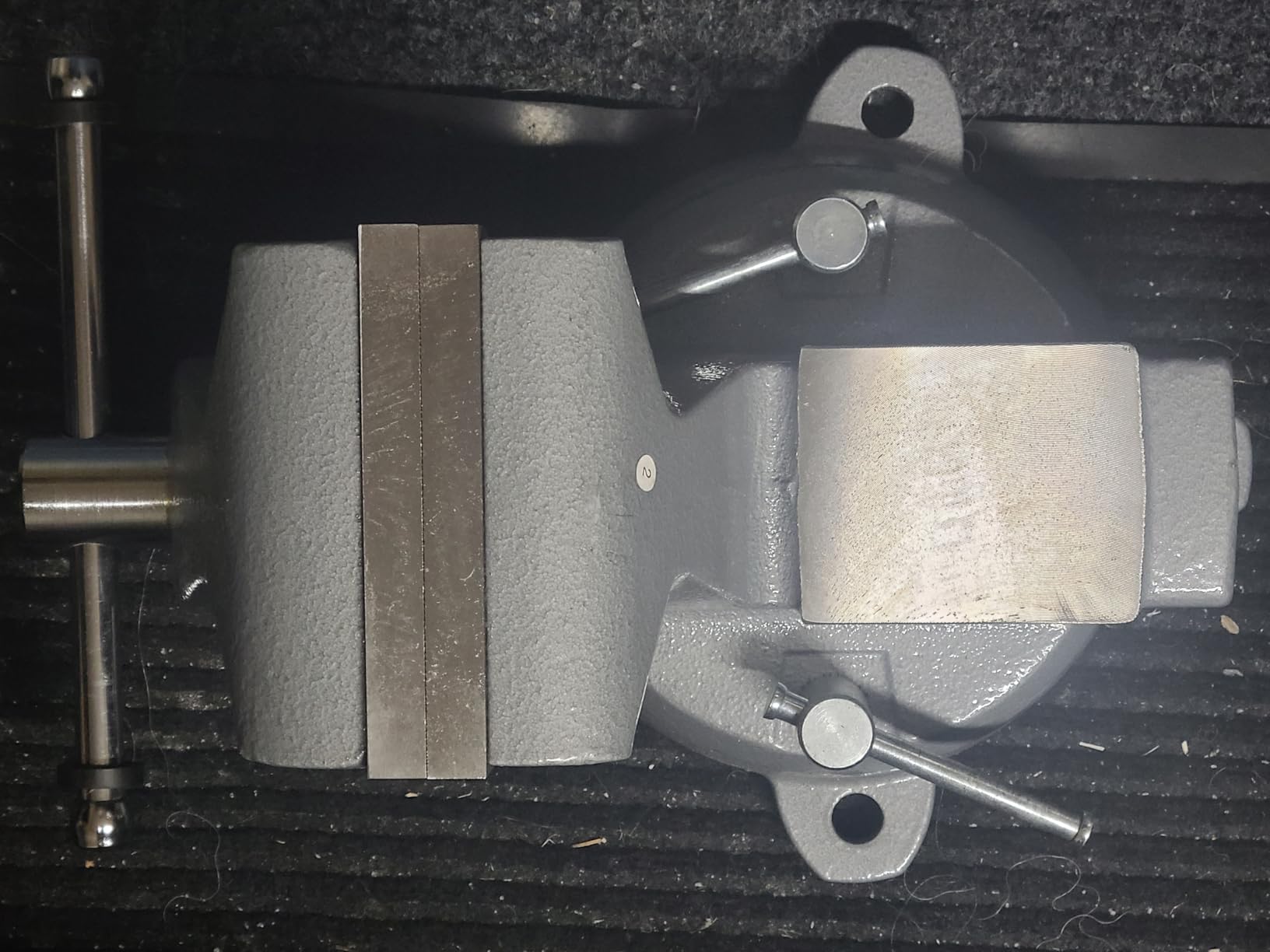
This is the top end of the list and the one tradespeople name when they ask what never broke. At 64 pounds, the Wilton 746 has more mass than any other vise here, and that mass is the point: it does not flex, creep or walk when you hammer on it, which is exactly the behavior a shop vise is supposed to eliminate.
Construction details matter here. The spindle and nut are fully enclosed, so chips stay out and the screw stays greasable, and the ductile swivel base rotates a full 360 degrees with double lockdowns for maximum stability. Replaceable hardened steel top and pipe jaws mean the wear parts are replaceable rather than fatal.
It sits at the expensive end of this roundup, and the honest question is whether your bench and your work justify the step up. If you plan serious striking work, they do.
Be realistic about the requirements. It needs a thick, solid bench and heavy bolts, and a flimsy bench is simply not adequate. If your bench is light or mobile, the mass becomes a liability rather than an advantage.
Two honest gripes from owners: the jaw screws use Phillips heads rather than hex bolts, which are easier to strip and slower to turn, and some vises arrive with jaws not perfectly parallel or debris in the threads that needs cleaning and greasing before first use. Some also note no model number stamped on the casting, which complicates warranty service claims.
When the heavy body earns its mass
It earns its mass when you strike work. At 64 pounds, the vise stays put through repeated blows and the screw does not back off, so your effort goes into the workpiece instead of into rotating the tool.
It also earns it for precision. A rigid frame with an enclosed screw means less deflection while filing or tapping.
When this vise is the wrong purchase
It is wrong if your bench cannot take it, and it is wrong if you mostly do small hobby work. A heavy bench vise on a light bench amplifies the very movement you were trying to stop.
It is also the least forgiving option on build consistency out of the box, based on owner reports of unparallel jaws and dirty threads. Inspect it on arrival and grease it before first use. If your bench and your work justify it, the lifetime warranty makes it the safest long-term buy in the roundup.
Bench Vise Buying Guide: Size, Materials and Mounting
How does a bench vise work? A handle turns a lead screw that drives the movable jaw against the fixed jaw. Loosening the swivel lever lets the whole jaw assembly rotate so you can clamp at any angle, and on many models a quick-release lever slides the jaw open fast before the handle takes over for final pressure. Everything else on the spec sheet is a variation on those three motions: rotate, release, squeeze.
A vise turns a two-handed job into a one-handed job. It holds the workpiece still so you can saw, file, plane, weld, drill or assemble with both hands free, and without the part shifting in the middle of a cut.
Jaw width vs jaw opening vs throat depth
These three numbers get confused constantly, and the confusion costs people money. Jaw width is the surface area of the face. Jaw opening is how far the jaws separate. Throat depth is how far back from the front edge of the fixed jaw the movable jaw reaches.
A listing that lists a 6 inch jaw and a 5 inch opening is describing a vise with 6 inch faces and 5 inch of gap, not a 6 inch capacity. Some competitors round these together, so always read both numbers.
Use throat depth as your rule for wide work. A workpiece wider than about 4 inches needs a throat of 3 inches or more to be held near its center. Anything wider than 6 inches really wants 4 inches of throat or more, which is why the Yost 460 with 4.375 inches of throat is the pick here for wide boards and plates.
Cast iron, ductile iron and steel
Cast iron and ductile iron absorb vibration better than welded steel, which is why machinist vises use them. Ductile iron also resists cracking under shock loads, so a ductile iron body is generally the stronger choice for a shop that hammers.
The tensile numbers on the box matter less than fit and finish. A 30,000 PSI casting with precise jaws will outperform a 130,000 PSI casting that flexes and binds. Judge alignment first.
Swivel range, quick release and the anvil
More swivel range is nearly always better. A 120 degree swivel limits you to front-of-bench angles; 210 degrees gives real freedom; a full 360 degree base, ideally with two locking screws or a geared interlock, means you can clamp anywhere around the bench.
Quick release matters more for working rhythm than for raw performance. Without it, every width change costs 30 or more handle turns, which wears the screw and costs you minutes a day. Two locking screws beat one, and a geared base beats friction.
Anvil surfaces handle light flattening, punch work and general striking. Do not mistake an anvil on a light vise for a forging surface; body mass decides whether hammering is productive or destructive.
Mounting a vise so it stops slipping
Check the bench first. A vise heavier than your bench can carry needs a thicker top or mounting into a leg.
Choose the location. For hammering, mount so a bench leg sits directly under the vise so the leg absorbs force rather than the bench top joint.
Use three bolts where possible, positioned in the vise base’s mounting holes rather than at random points.
Pick bolts to suit thickness. For a typical 2 inch bench top, 3/8 inch lag bolts with flat washers and a locking washer are the usual choice; go larger for heavier vises.
Counterbore or recess the nuts on the underside so you can tighten the vise without a wrench in a tight space.
Decide the swing direction before drilling. Vise handedness catches people out, and mounting it so the swing faces away from the bench means working around the vise for the rest of its life.
Tighten bolts in a criss-cross pattern so the base seats evenly and does not rock.
Bolts are almost never included, or the included ones are too short for a real bench. Buying proper hardware is part of installing a vise, not an extra.
Soft jaws that will not mar finished wood
Corrugated and serrated steel jaws leave visible imprints in wood, and this is the single most repeated complaint about vises in every forum thread we reviewed. Three fixes cover almost every case, in rising order of cost.
Padded or no-marr jaw protectors slip over the faces and cost very little. Wood liners cut from scrap hardwood and screwed to the jaws work well and are easy to replace once the serrations mark them. Printed soft jaws are the enthusiast answer: custom-fit polymer plates that spread clamping pressure evenly across soft surfaces. The VEVOR in this roundup includes magnetic soft pads, which are a serviceable middle option.
Are budget and off-brand vises worth it?
Short answer: usually yes for light work, with two caveats. Owners in tool forums consistently report that cheap off-brand vises develop poor runout, binding screws or misaligned jaw plates within months, and that the failure tends to show up at the swivel rather than in the jaws.
The evidence from this roundup argues that quality control, not branding, is the dividing line. The VEVOR 6 inch at 4.7 stars across 1542 reviews has very smooth screw action in our testing and dual swivel locks, while reviewers compare its finish favorably to cheaper Harbor Freight models. That is a fair signal that a well-executed off-brand vise is genuinely fine.
So: fine for clamping hobby parts, drilling, assembly and light duty shop work; not what we would hammer steel on, hold heavy pipe with, or buy once and expect to last decades. And if you buy one, replace the bolts and check jaw alignment before the first real job.
Used and vintage vises
Forums are full of owners buying old Record, Athol and Wilton Bullet vises cheap and resurfacing them, and woodworkers on woodworking forums still prefer smooth-jaw vintage vises for bench mounting. The appeal is cast iron mass that new vises rarely match.
The risk is condition. Check that the screw is not stripped or bent, that the jaws are parallel when closed, that the swivel lock engages, and that the casting is free of cracks, especially around the fillets. A used vise with a clean screw and sound body can be worth restoring; one with a chewed screw is a parts donor.
Frequently Asked Questions
What is the best vise for the money?
The Yost LV-4 Homeowner’s Vise is the best value in this roundup. It weighs 9 pounds, has a 4.5 inch jaw with 3 inches of opening, rotates 240 degrees, includes a round pipe jaw and an anvil surface, and carries a 4.5 rating across more than 10700 owner reviews. If you clamp wider stock, the VEVOR 6 inch gives you 6 inch jaws, 4496 lbs of clamping force and mounting hardware for very little more.
Are Harbor Freight vices of good quality?
They are fine for light hobby work, drilling and assembly, but owners report binding screws, poor runout and misaligned jaw plates developing within months on the cheapest models. The deciding factor is quality control rather than branding, which is why the VEVOR 6 inch in this roundup earns 4.7 stars across 1542 reviews with dual swivel locks and smooth screw action. Buy one, replace the supplied bolts, and check jaw alignment before the first real job.
Which heavy-duty bench vise is best?
The Yost ADI-6 is the heaviest-duty option here, built from 130,000 PSI austempered ductile iron with a geared interlocking 360 degree swivel base, two lockdowns and a 7.875 inch jaw opening. For rigidity rather than opening, the 64 pound Wilton 746 has the most rigid body and a fully enclosed spindle. Both require a solidly built bench.
What vise do gunsmiths use?
Gunsmiths want a bench vise that clamps a barrel or receiver without denting it, which points to soft jaws rather than any particular size. A 6 inch model with a padded or no-marr jaw protector, a swivel base with solid locks and replaceable hardened inserts is the common choice. The VEVOR 6 inch in this roundup includes magnetic soft jaw pads, and shooters on gunsmithing forums specifically ask for a multi-axis swivel with pipe clamping provisions.
How do you install a bench vise?
Check the bench can carry the vise weight, choose a spot where a bench leg sits under the vise if you plan to hammer, then drill through the vise base mounting holes and fasten with three lag bolts and flat washers sized for the bench thickness. For a typical 2 inch top, 3/8 inch lag bolts are the usual choice. Tighten in a criss-cross pattern so the base seats evenly, and settle which way the vise should swing before you drill.
How do you maintain a bench vise?
Grease the spindle and swivel threads a few times a year so the screw does not bind or seize, wipe chips out of the threads after metalwork, and check that the swivel lockdown bolts are still tight. Touch up chipped powder coat before bare cast iron starts to rust, and store the vise indoors if you work outside. Replace serrated jaw inserts once the teeth round off, since worn jaws are the leading failure point on any vise.
Which Bench Vise Should You Buy?
The best bench vise for most people is the Yost LV-4, because 9 pounds and a 4.5 inch jaw is genuinely all a first shop needs, and it is the easiest to mount on a bench that was not built for a vise. If you clamp wider material or hit things with a hammer, buy the VEVOR 6 inch for smooth screw action and dual swivel locks, or the Wilton 11106 if the lifetime warranty is worth more to you than the swivel range.
Match the vise to two numbers before anything else. Wide material means throat depth, and the Yost 460 wins that with 4.375 inches. Long material means jaw opening, and the Yost ADI-6 wins with 7.875 inches. Round material means pipe capacity, and the Forward CR60A handles up to 3 1/2 inch. Heavy striking means body mass, and the 64 pound Wilton 746 is the most rigid body among these eight.
Whatever you choose, buy your own lag bolts, grease the spindle on day one, and check that the jaws sit parallel when fully closed. Those three steps solve most of the complaints owners report in the first year. For smaller precision work, our drill press vise guide covers the other half of bench clamping.