
Whether you are just looking at the Moon or trying to build a two-hour exposure of a nebula, the mount decides what happens next. The best telescope mounts fall into three very different families, and picking the wrong one means either paying for capability you will never use or watching a wobbly view ruin a good night. Our team compared nine mounts across visual observing, portable tracking and fixed-observatory imaging, reading the spec sheets against what buyers report after months of use.
Here is the short version: if you are new to the hobby and your goal is seeing planets and clusters, an alt-azimuth head with slow-motion controls is all you need. If you want long-exposure photographs, you need an equatorial mount that tracks at the sidereal rate, and the decision becomes about payload and guiding. If you want to carry a camera rig to a dark site, weight matters more than anything on the spec sheet.
One quick note before the list: a mount is only half a system. A tripod, a counterweight bar, a guide scope and the adapters between them add up fast, and several of the picks below solve that problem by including the whole thing in one box. We flag which ones do. If you are still choosing optics, our telescope eyepiece guide covers the other half of the optical train.
We ranked these nine mounts on measured payload, real head weight, rating and review volume, how complete the box is, and how well each one fits a stated use case. Every specification quoted below comes from the manufacturer data, and every owner-experience detail comes from verified buyer reviews rather than from marketing copy.
Table of Contents
Top 3 Best Telescope Mounts 2026
These three cover the widest range of real use cases, from a first alt-azimuth head to a portable GoTo system. The Celestron tripod takes the top slot because it has the largest verified owner base in the group and holds steady for its class.

Celestron Alt-Az Tripod
- 7.8 lb grab-and-go head
- 11 lb weight limit
- Two-axis slow-motion controls

SVBONY SV225 Alt-Az Head
- CNC hollow aluminum at 2.34 kg
- 10 kg rated load
- Fine adjustment levers
All 9 Telescope Mounts at a Glance
This table lists every mount in the roundup with its mount type, the load it is rated for and the job it does best. Payload figures are the manufacturer ratings; the real usable imaging load is usually lower, which the buying guide explains in detail.
| Product | Specifications | Action |
|---|---|---|
| Celestron Heavy-Duty Alt-Az Tripod |
|
Check Latest Price |
| SVBONY SV225 Alt-Az Mount |
|
Check Latest Price |
| Sky-Watcher AZ-GTi GoTo Mount |
|
Check Latest Price |
 iOptron SkyGuider Pro iOptron SkyGuider Pro |
|
Check Latest Price |
 Sky-Watcher Star Adventurer GTi Kit Sky-Watcher Star Adventurer GTi Kit |
|
Check Latest Price |
 Explore Scientific iEXOS-100 Explore Scientific iEXOS-100 |
|
Check Latest Price |
 Celestron CG-4 Manual EQ Mount Celestron CG-4 Manual EQ Mount |
|
Check Latest Price |
 Celestron Advanced VX Celestron Advanced VX |
|
Check Latest Price |
 Sky-Watcher EQ6-R Pro Sky-Watcher EQ6-R Pro |
|
Check Latest Price |
1. Celestron Heavy-Duty Alt-Azimuth Tripod: The Steady Grab-and-Go Standard
Celestron Heavy-Duty Alt-Azimuth Tripod for Spotting Scopes & Telescopes
Weight 7.8 lb
11 lb weight limit
Max height 45 inches
1/4-20 plate with balance slot
Pros
- Stable for its class with slow-motion controls on both axes
- Light at 7.8 lb for genuine grab-and-go use
- Simple to figure out with no instructions needed
- Holds small and mid-size tubes plus long telephotos
Cons
- Short coarse altitude travel with a 45 inch maximum height
- Hollow aluminum legs and tray feel light
- No bubble level and plastic leg tips
This is the mount I recommend to anyone who asks where to start, and it is the most thoroughly reviewed product in this roundup at 1123 reviews. Two-section aluminum legs, a metal accessory tray and slow-motion controls on both altitude and azimuth give you a platform that reacts to a nudge rather than bouncing. Reviewers repeatedly describe it as rock-solid for the price class and genuinely easy to set up cold in a dark field.
The 1/4-20 mounting plate has a slot cut into it, so you can slide the optics forward or aft to balance the load. That single feature is what keeps a cheap tripod feeling controlled, because an unbalanced tube makes every manual motion feel abrupt.
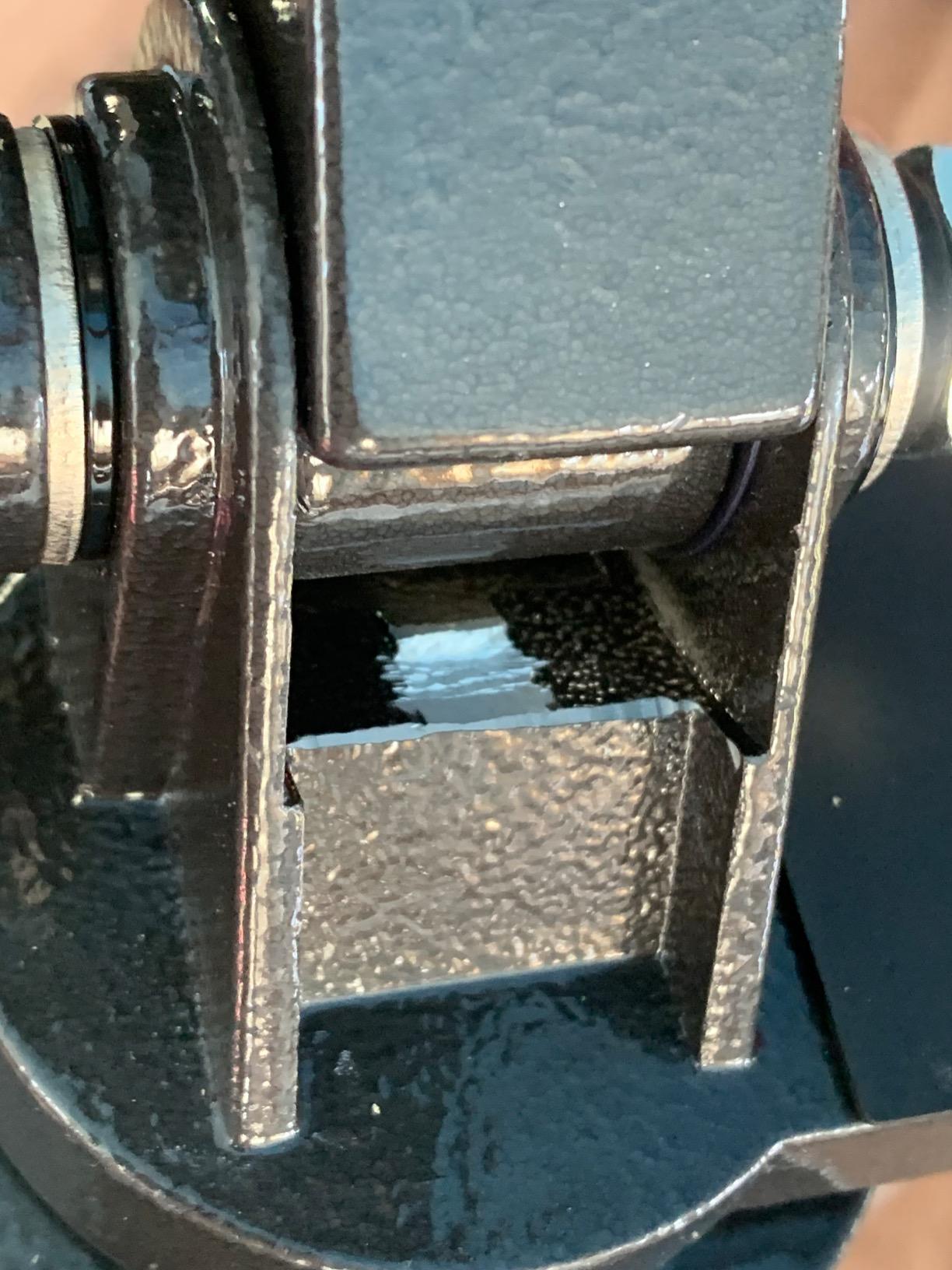
The two slow-motion handles are the reason this mount works for planetary work. Jupiter drifts noticeably in a few minutes, and fine adjustment on both axes lets you follow it without disturbing the eyepiece. Buyers pair it with compact Maksutov-Cassegrains, small refractors and spotting scopes, and the motion is described as smooth for a hand-guided platform.
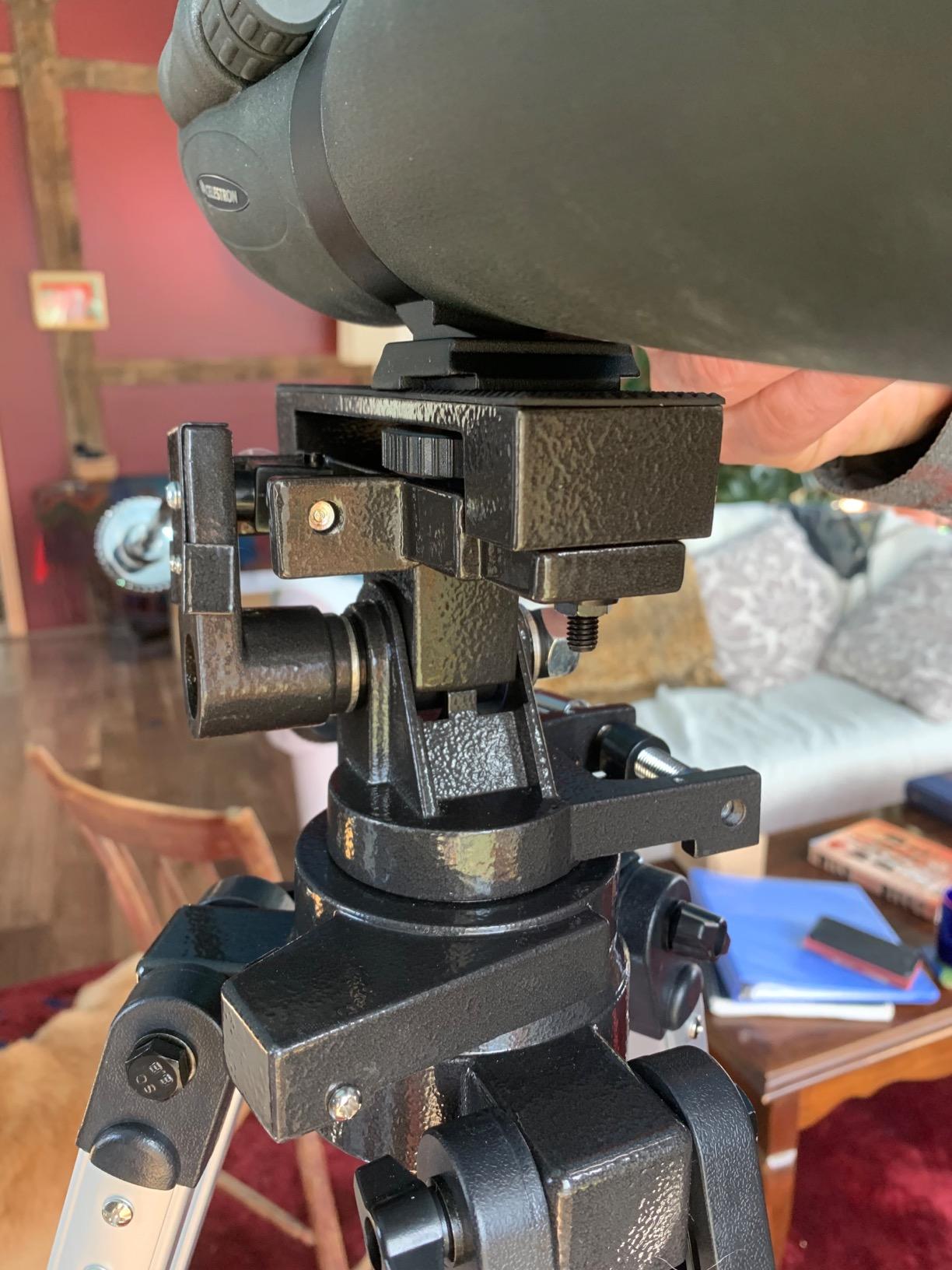
What it will not do is hold a long tube near the zenith. The maximum height of 45 inches is the limiting factor, and a 90-degree star diagonal is the standard fix. The other recurring complaint is build feel: the hollow legs and accessory tray read as thin next to the machined head, and there is no bubble level to help you set the legs evenly.
What you get for the effort
Setup takes a couple of minutes with no instructions, which makes it straightforward to move between the back garden and a field. At 7.8 lb it is one of the lighter complete mounts in the group, so a single person can carry it plus a small optical tube.
Buyers also use it for spotting scopes, binoculars and cameras, and the 11 lb weight limit covers a camera with a telephoto lens. A two-year limited warranty and US-based support add a little confidence for first-time buyers.
Who should pass on it
Skip this if you plan to mount an 8-inch or larger long-tube Newtonian, because the altitude travel and the height limit will fight you. It is also the wrong tool for any long-exposure work: there is no tracking motor and no way to add tracking without replacing the head.
If your interest is astrophotography at all, look at the trackers in this list instead. This mount is built to show you things, not to record them.
2. SVBONY SV225 Alt-Azimuth Mount: Best Rated Head in the Group
SVBONY SV225 Alt-Azimuth Mount, Load-Bearing 10kg, Adjustable Angle Mount
Head weight 2.34 kg
10 kg rated load
7-8 kg maker recommendation
CNC hollow structure
Pros
- Highest average rating in this roundup with 78 percent five-star reviews
- CNC-machined hollow structure keeps the head light without losing rigidity
- Variable-speed slow motion and fine adjustment levers on both axes
- Levers and dovetail lock knobs included in the box
Cons
- Maker recommends staying at 7-8 kg rather than the advertised 10 kg
- Fine adjustment lever has play by design
- Most variants are a head only with no tripod
The SV225 is a machined alt-azimuth head rather than a tripod, and that is the point. At 2.34 kg it bolts to whatever base you already own, which makes it a sensible upgrade path for anyone whose first mount was a shaky alt-az head with plastic fittings. It carries the highest average rating of anything in this roundup, with 78 percent of 149 reviews at five stars.
The hollow CNC structure is the reason it weighs so little. Rather than milling solid blocks and hollowing them afterwards, the design uses a hollow frame that keeps the load paths where they need to be. Reviewers note that it stays rigid at 7 to 8 kg despite the low mass.
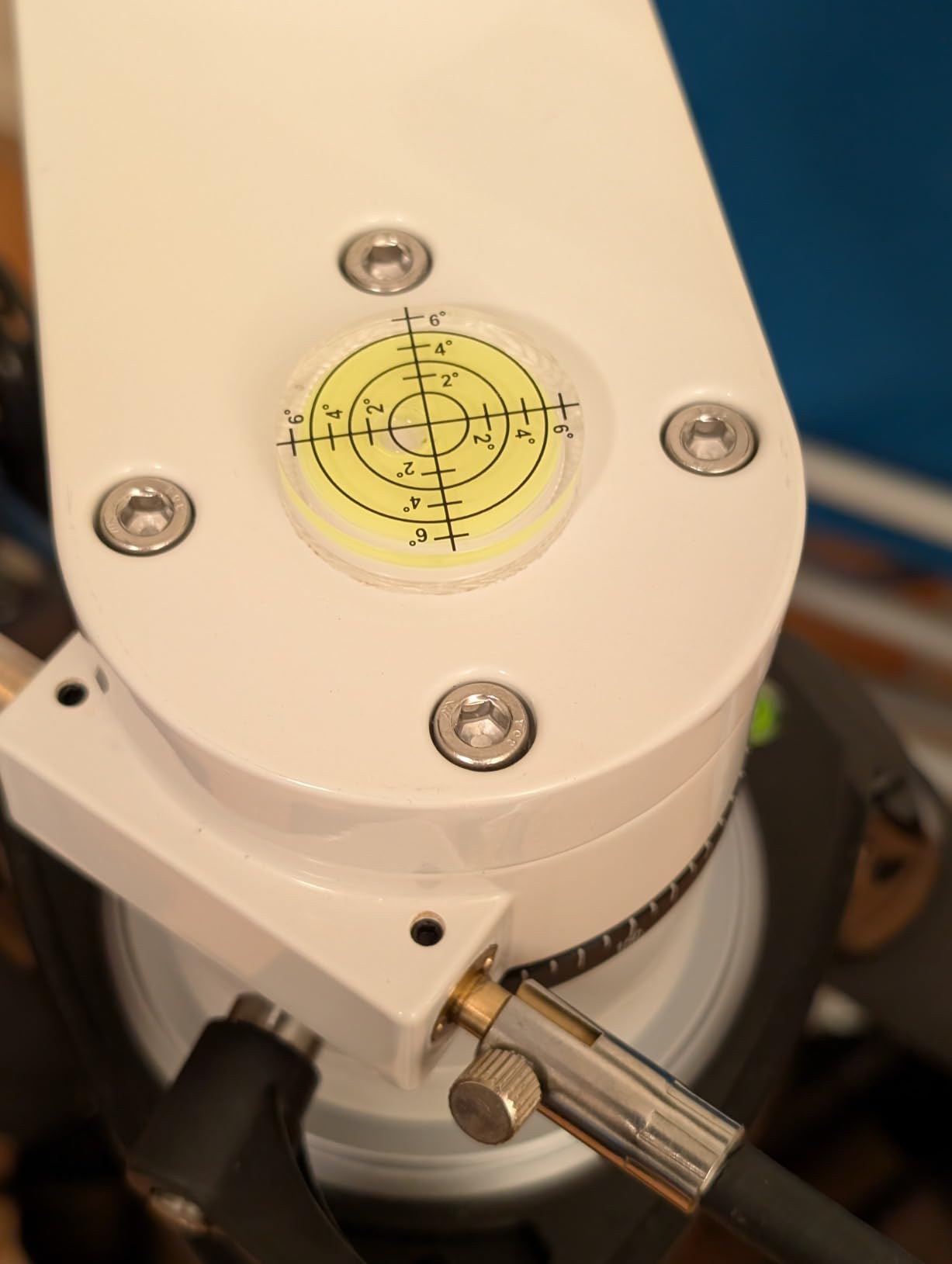
Both axes carry variable-speed slow motion plus separate fine adjustment levers, so you can acquire a target quickly and then creep onto it. One recurring reviewer observation is that the lever has a little play, and the manufacturer’s own explanation is that a lever with zero play would feel heavy. It is a design trade, not a defect.
The honest limit is the payload figure. The head is rated at 10 kg, but the maker explicitly recommends staying at 7 to 8 kg for stability, and using only the fine lever when the load is heavy. That is the same 50 to 70 percent thinking that applies to any equatorial mount, applied here by the manufacturer.
How it handles real optics
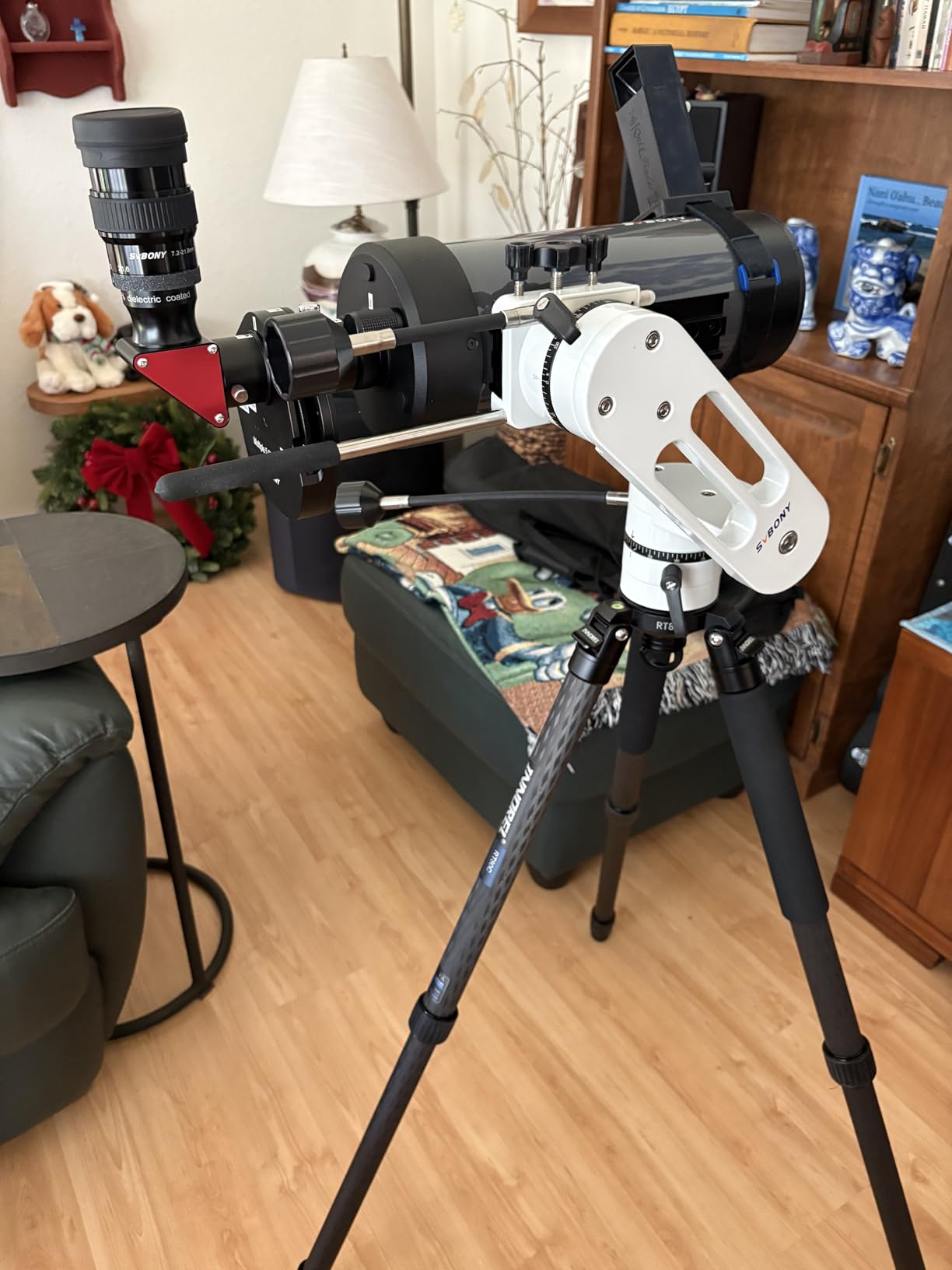
At 7 to 8 kg of working load it covers mid-size Newtonians, tabletop Dobsonians and camera setups, which is where the smoothness of the slow motion really shows. Planetary tracking on the Moon and the inner planets is where the variable-speed controls earn their keep.
The box includes two fine-tuning levers, two dovetail lock knobs, three locking screws, an Allen wrench and a metal handle, plus an English manual. Multiple variants exist, including a Mini version and bundles that add a tripod, so check what is included before assuming you need a base.
Who should pass on it
Do not buy this as your first mount unless you already have a solid tripod. In most variants you get a head only, and a machined head on a flimsy base gives you none of the stability the machining was for.
There is also no motorized tracking, so like the Celestron tripod it is an observing tool rather than a photography tool. Warranty coverage is one year, with no stated US-based support, which is shorter than the two years on several mounts here.
3. Sky-Watcher AZ-GTi: The Portable GoTo System That Does Not Need a Hand Controller
Sky-Watcher Sky-Watcher AZ-GTI – Portable Computerized GoTo Alt-Az Mount for On-The-Go Astronomy – WiFi Enabled App Controlled – Time-Lapse and Panorama Photography Capable (S21110)
System weight 8.6 lb
11 lb payload
WiFi app controlled
Dual encoders for Freedom Find
Pros
- Genuinely portable at 8.6 lb including the tripod and pier extension
- WiFi app control removes the need for a hand controller or cable
- Dual encoders allow manual slewing without losing alignment
- 11 lb payload covers most tubes and most DSLRs
Cons
- Alt-az tracking suits visual work and short exposures rather than deep-sky imaging
- Needs a phone or tablet rather than a standalone controller
- Battery operation is limited compared with mounts that accept a power bank
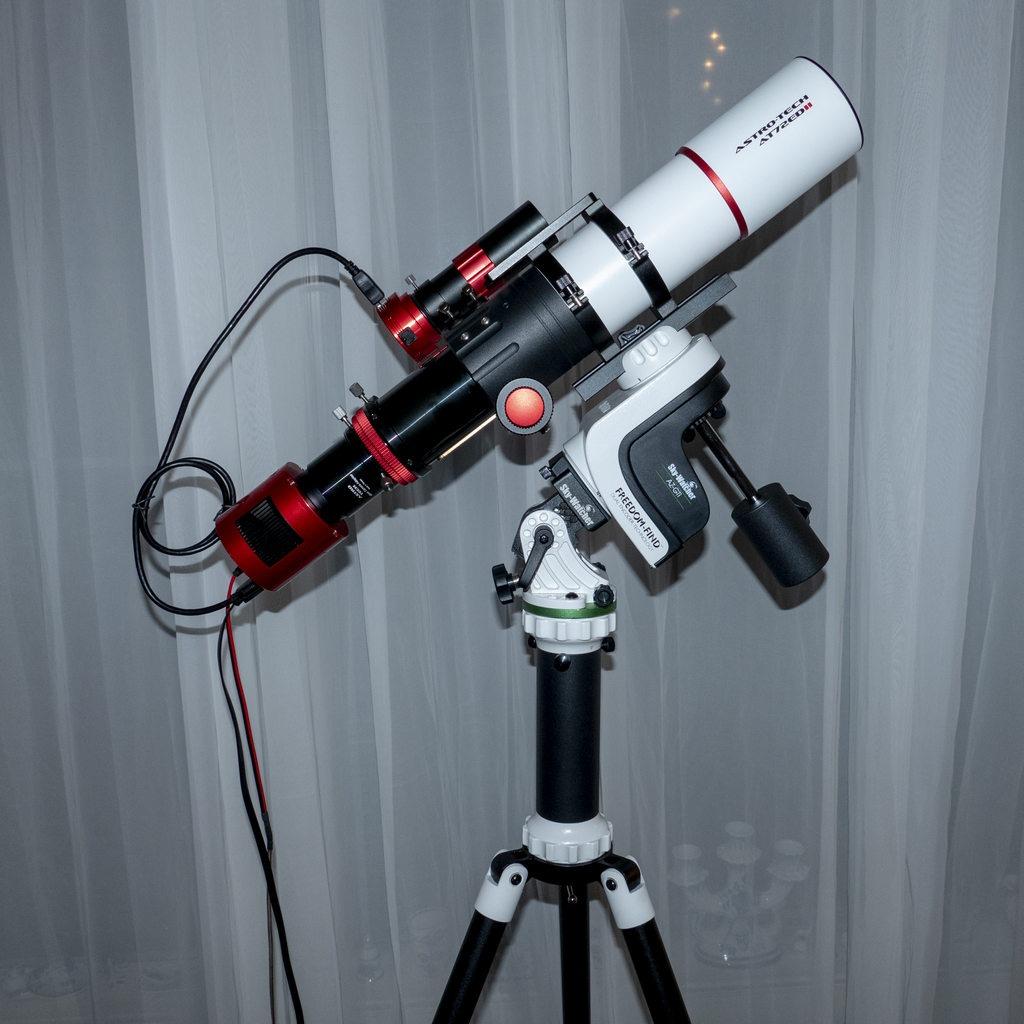
The AZ-GTi is the pick if you want a complete GoTo system you can load into a car in one go. At 8.6 lb the package includes the mount head, an adjustable tripod and a pier extension that takes the head from 28 to 53 inches, so nothing else needs buying before the first session.
Control runs over a proprietary WiFi signal to a phone or tablet using the SynScan Pro app. There is no hand controller in the box, which some people love and others find irritating, particularly on a cold night when gloves are on. If you prefer physical buttons, this is not the mount for you.
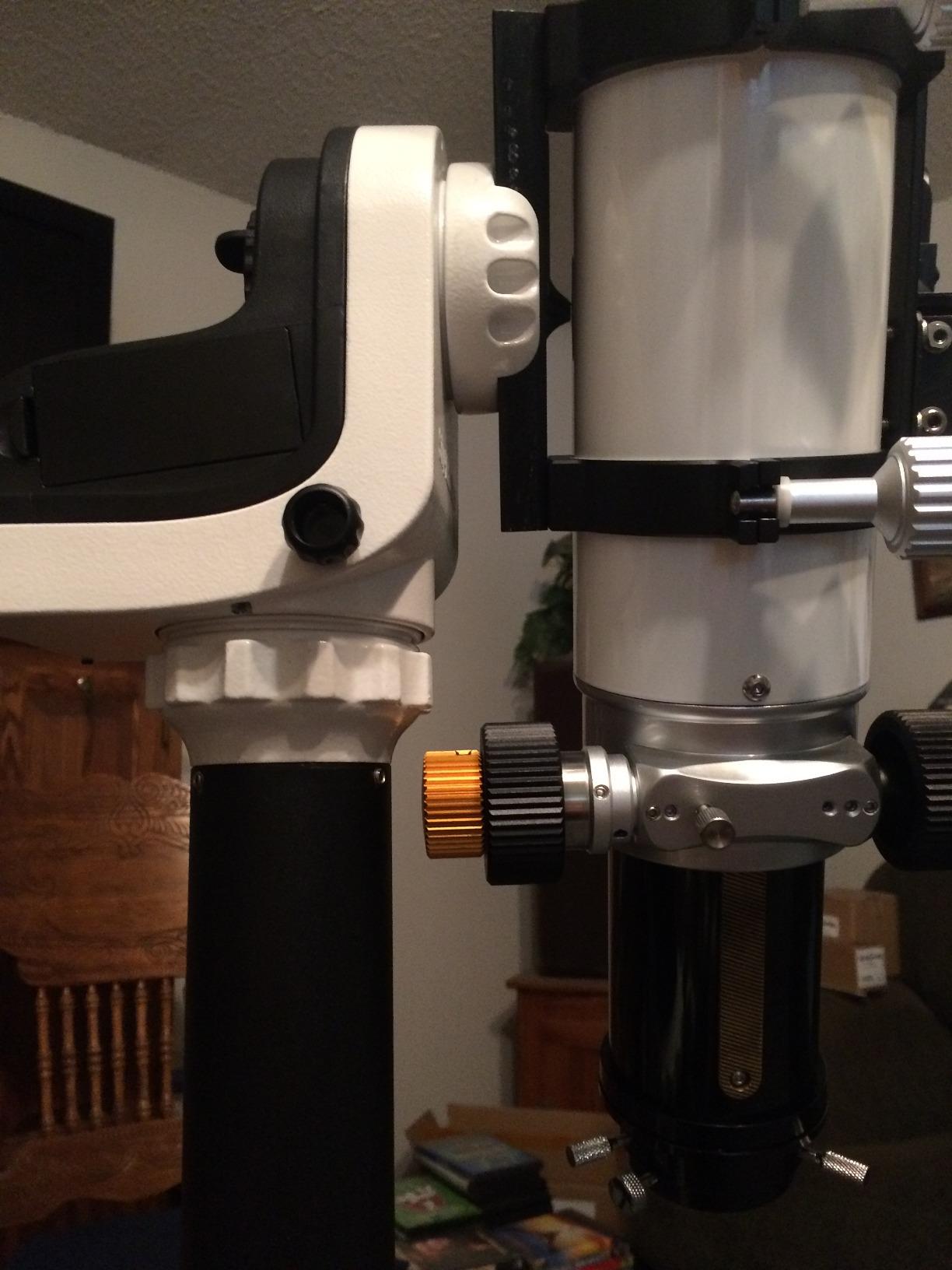
The feature I would point to first is the Freedom Find dual-encoder system. When you nudge the telescope by hand to fix the framing, the encoders record the move and the mount does not lose its alignment. On a conventional GoTo mount that nudge means re-synchronising, and it is a common reason people give up on computerized pointing.
Internally it uses brass and aluminum gearing, which reviewers describe as smooth and quiet for motorized tracking, and the built-in SNAP port with SynScan Pro handles automated time-lapse and panorama sequences without a separate trigger cable.
What it is good at
Pointing at hundreds of faint targets from a list, rather than sweeping and hoping, is the whole value proposition. With 11 lb of payload it carries most telescope tubes and most DSLR bodies, and for visual observing and lunar work the alt-az tracking is more than enough.
Power comes from an AA battery compartment or a 12V input, so you can run it off a power bank when you are away from a car. The two-year warranty is solid, and the app workflow supports both Apple and Android devices.
Who should pass on it
Pass if deep-sky long exposures are the goal. Alt-azimuth tracking rotates the field during an exposure, so anything past a short time-lapse starts to show field rotation at the frame edges. There is no equatorial tracking mode on this head.
Also pass if you like physical controls or want to observe without a phone. Some reviewers note an app learning curve at the start, and battery-only operation is more limited than mounts designed around an external power source.
4. iOptron SkyGuider Pro: The Tracker That Disappears Into a Camera Bag
iOptron SkyGuider Pro Camera Mount Full Package
Head weight 2.2 lb
11 lb balanced payload
20 hours internal battery
AccuAlign polar scope
Pros
- Head weighs 2.2 lb and fits in a camera bag
- Integrated AccuAlign illuminated polar scope simplifies alignment
- Up to 20 hours of internal battery at 20 degrees C
- Owners report pin-sharp 2-3 minute subframes with 300-500mm lenses
Cons
- No GoTo and single-axis tracking only
- Polar scope often arrives out of collimation and the hex key is not included
- Counterweight bar is short for DSLR plus telephoto combinations
At 2.2 lb for the head, the SkyGuider Pro is the smallest complete tracking solution here, and 196 reviews at 4.5 stars with 78 percent five-star ratings gives it one of the strongest owner records in the group. It is a star tracker, not a telescope mount: it tracks a camera on one axis and points nothing at the sky on its own.
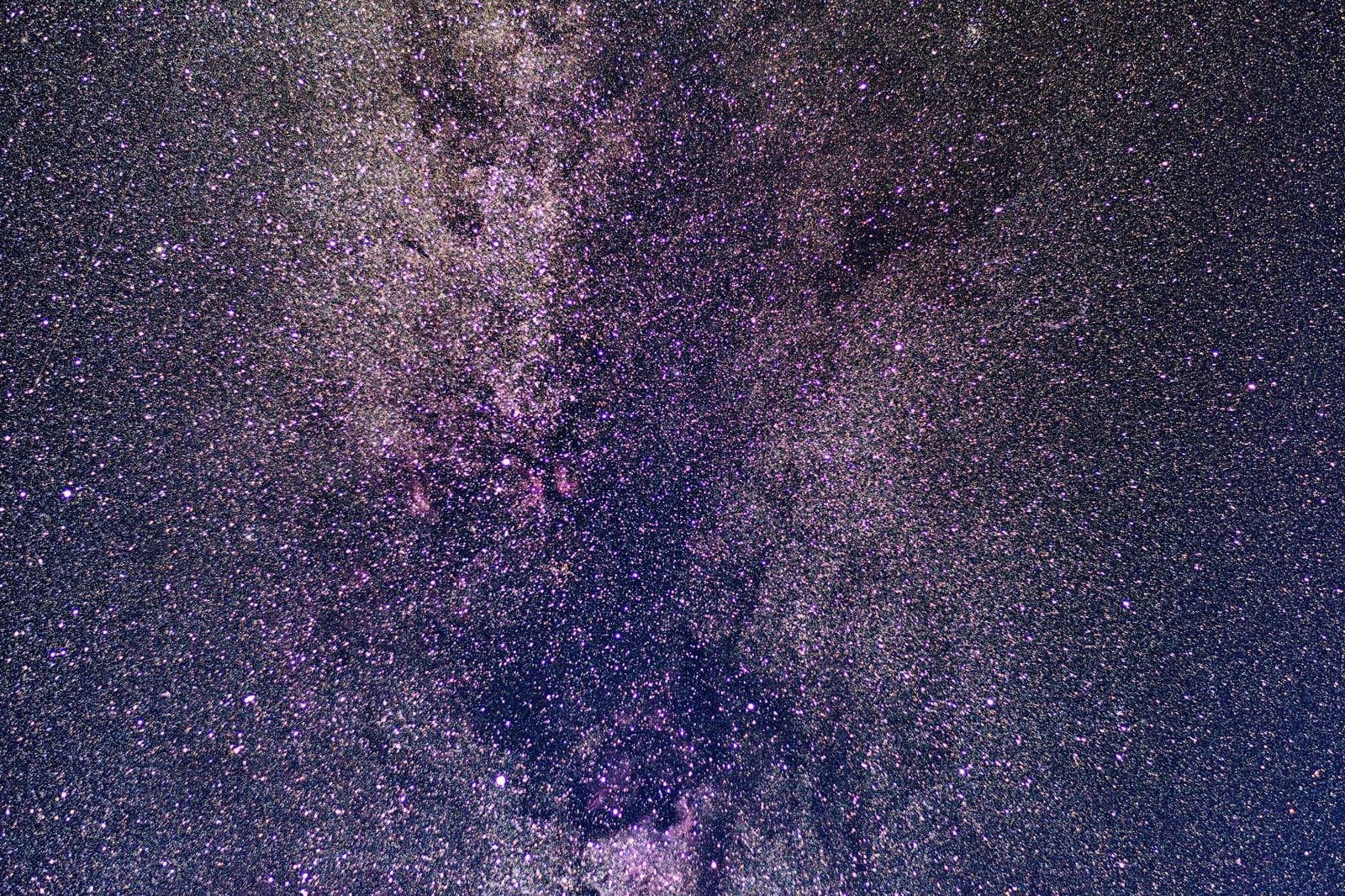
That single-axis design is why it is so light and why it works so well. With a 300mm to 500mm lens on a mirrorless body or a full-size DSLR, owners consistently report 2 to 3 minute subframes that stay sharp once the mount is polar aligned and balanced. Wide-field Milky Way and nightscape work is its natural territory.
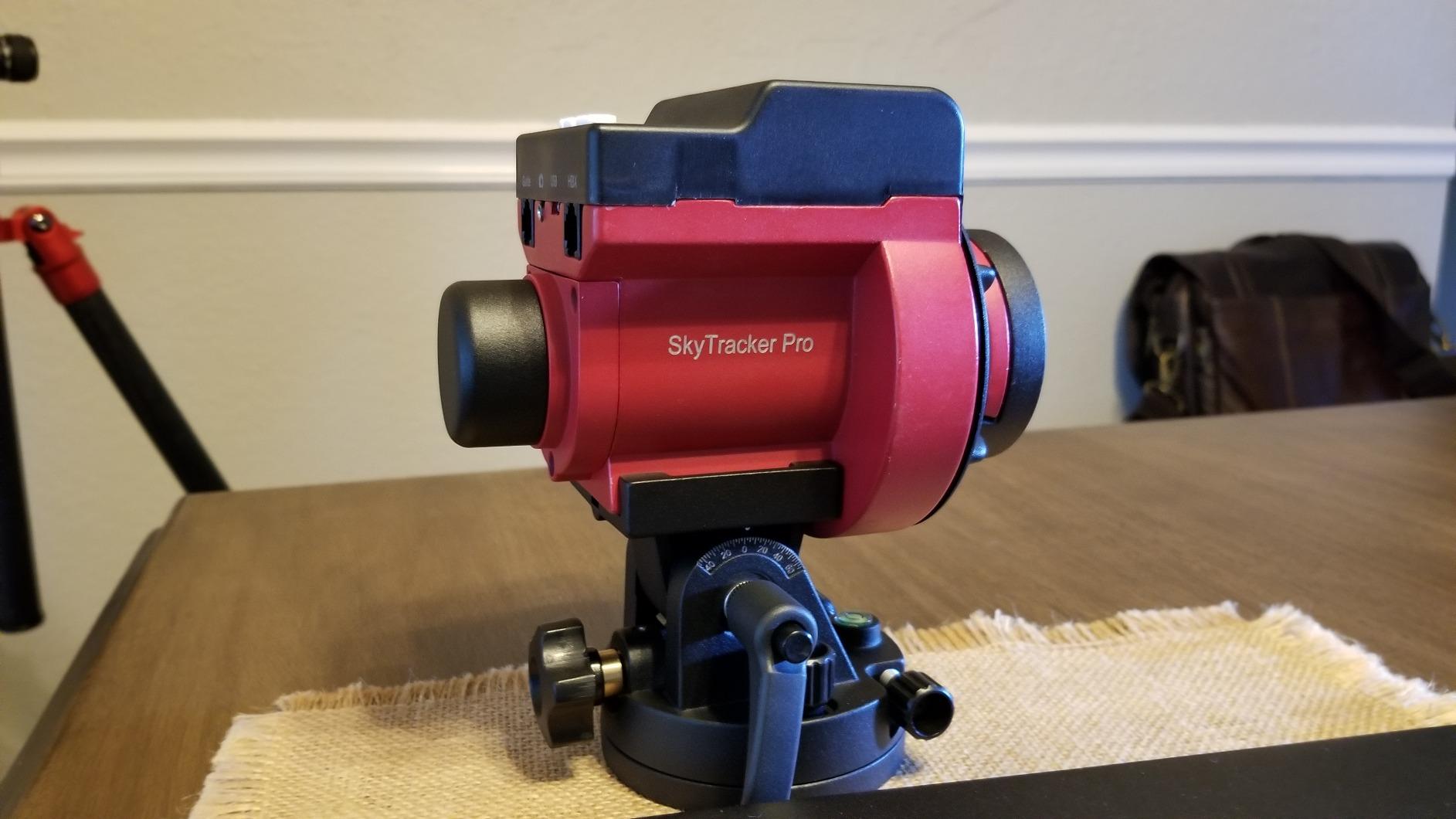
The integrated AccuAlign dark field illuminated polar scope is the feature that makes it approachable. Rather than buying a separate alignment tool, you look through a lit reticle in the RA axis and adjust the base until the pole star sits centred. The base handles latitudes from minus 30 to 65 degrees with plus or minus 5 degrees of azimuth.
Power comes from an internal rechargeable battery rated at up to 20 hours of operation at 20 degrees C, which comfortably covers a full imaging night without a cable. Siderial, lunar and solar rates plus half sidereal are available, along with an autoguide port and a camera cable release port.
The things that trip people up
Balance is the first hurdle. The full package includes a counterweight shaft and weight, and the head carries up to 11 lb when balanced, but the included 8-inch bar is short for a DSLR with a long telephoto. Extensions exist but are hard to source, so check the bar length against your kit before you commit.
The second is the polar scope. Owners frequently report that it arrives out of collimation, and the 1.5mm hex key needed to adjust it is not in the box. A loose eyepiece that shifts the reticle is another recurring note. Neither is fatal, both are annoying on a first night.
Who should pass on it
Pass if you want to point a telescope at objects automatically, because there is no GoTo and only right-ascension tracking. Finding targets is a manual affair, which is fine if you already know where Vega is and pointless if you do not.
Also pass if you want to mount a long optical tube. This is a camera mount, and it is not designed to carry a telescope. You will also need to source a sturdy tripod separately, and there are isolated reports of a faulty USB cable or battery stopping tracking mid-session.
5. Sky-Watcher Star Adventurer GTi Kit: Everything in One Box
Sky Watcher Sky-Watcher Star Adventurer GTI Mount Kit with Counterweight, CW bar, Tripod, and Pier Extension – Full GoTo EQ Tracking Mount for Portable and Lightweight Astrophotography
Full kit weight 26 lb
GoTo equatorial tracking
Illuminated polar scope
Built-in WiFi
Pros
- Head with illuminated polar scope and counterweight bar plus 5 lb weight and tripod and pier extension all in one box
- GoTo equatorial tracking through WiFi rather than single-axis only
- Carries an actual telescope tube rather than only a camera
- Two-year limited warranty
Cons
- At 26 lb the package is heavy for a portable class
- App control only with no standalone hand controller
- Single 5 lb counterweight may not balance heavier imaging trains
This is the only product in the roundup that arrives as a GoTo equatorial system with a counterweight bar and weight already in the box. The package contains the Star Adventurer GTi head, a counterweight bar with a 5 lb weight, the tripod and a pier extension, plus a built-in illuminated polar scope and built-in WiFi. Nothing else is needed to start, which is why it stands out for buyers who hate assembling a system from four boxes.
Functionally it bridges the gap between a camera tracker and a desktop equatorial mount. Unlike the SkyGuider Pro, it can carry an actual telescope tube, and unlike the AZ-GTi, it tracks equatorially. For a small refractor on nightscapes, or for a beginner learning polar alignment, that combination is unusually useful.
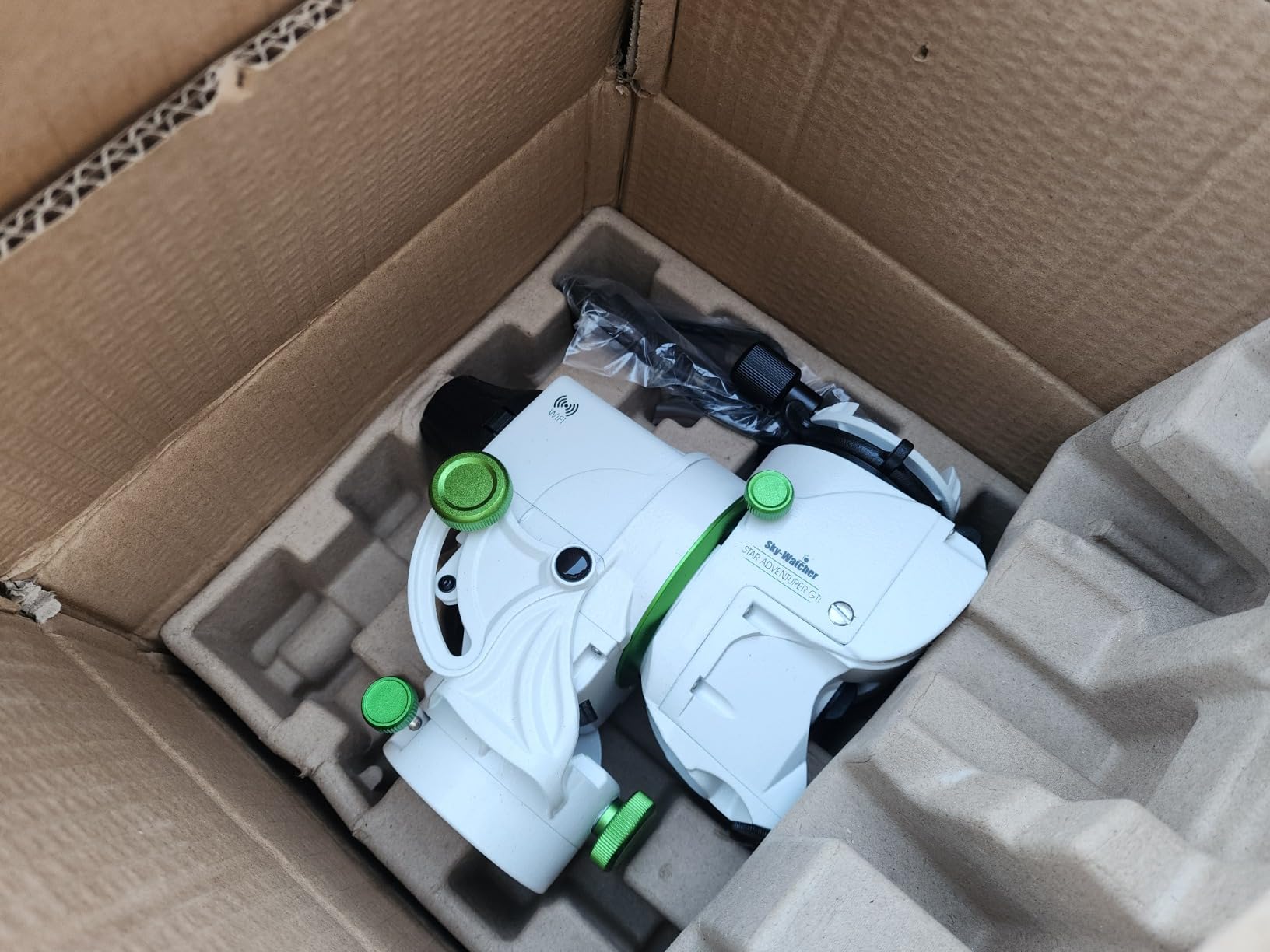
Control is via built-in WiFi and a phone app, with no hand controller included, and multiple tracking rates are available alongside the GoTo database. The illuminated polar scope is a meaningful upgrade over a bare sight hole because it works without a torch and without guessing at the pole star in a light-polluted sky.
With 111 reviews at 4.5 stars and 72 percent five-star ratings, the owner feedback is strongly positive on completeness. Buyers consistently point to the counterweight, tripod and pier extension being included as the reason the kit works straight out of the box.
Where the weight goes
The awkward number here is 26 lb for the complete package. For a class marketed on portability that is the central compromise, and it is the most common reservation in reviews. If you are driving to a site rather than walking twenty minutes from a car, it is a manageable load split between two people.
The single 5 lb counterweight is the other constraint. It balances a modest telescope plus a light camera, but heavier imaging trains need a second weight or a different bar, and those are separate purchases.
Who should pass on it
Pass if you need to carry a mount up a hill alone, or if you need payload for a large reflector. The capacity is modest next to a full-size German equatorial, and the included counterweight set is the limit rather than the head.
Pass as well if you want physical controls on a cold night. The head runs from an app over WiFi, and cold fingers plus a phone screen is a combination many observers avoid.
6. Explore Scientific iEXOS-100: A Complete Equatorial System to Start With
iEXOS-100-2 PMC-Eight Equatorial Tracker System Tripod and Mount for Astrophotography with WiFi and Bluetooth Compatible
System weight 10.1 lb
PMC-Eight eight-CPU controller
WiFi and Bluetooth
Pros
- Complete equatorial system with the tripod included in the box
- PMC-Eight controller uses eight independent processors for fast GoTo
- Clutched dual-axis worm gears with belt drives make balancing straightforward
- Polar sight hole through the RA axis removes the need for a separate scope
Cons
- Lowest average rating in this roundup with a 13 percent one-star share
- Low payload ceiling for astrophotography
- Gears tend to bind and are a common reason owners upgrade
The iEXOS-100 is the entry point into a full equatorial system, and the complete package weighs 10.1 lb including the tripod. That combination, GoTo equatorial tracking plus a base, in one box, is the reason it is here despite carrying the lowest average rating in the roundup at 3.9 stars.
The PMC-Eight control system is the differentiator. Rather than one processor handling every function, eight operate independently on defined tasks, which the manufacturer credits for response speed and timing accuracy. In practice reviewers describe GoTo as fast and the app workflow through ExploreStars as straightforward on Apple, Android and Windows tablets.
Mechanically it uses clutched dual-axis worm gears driven by quiet precision stepper motors on belts. The clutches are the practical win for a beginner, because you can unlock an axis, swing the telescope freely to balance it, then lock it up without disturbing the rest of the setup.
Alignment is handled by a sight hole through the RA axis plus fine altitude control, so there is no polar scope to buy and no collimation to check. That is a genuine saving for a first equatorial mount, and it also means the mount is ready to use in a few minutes.
Where it runs out
Payload is the ceiling. The rating is low for astrophotography, roughly an 8-inch-class reflector at most, so a camera with a short lens and a light scope is the realistic load. Beyond that you are fighting gearing rather than gathering photons.
Gears binding is the most common complaint in reviews, and it is also the most common reason owners move up to an EQ6-class mount. On Stargazers Lounge, where this price tier is discussed constantly, the recurring argument is that an EQ5-class mount is enough for a DSLR and a lens, which is broadly where this sits.
Who should pass on it
Pass if your images need to be sharp at long focal lengths or with a heavy camera train, because the payload ceiling and the gearing do not support that. The 13 percent one-star share in the reviews points to quality control issues that will not affect every owner but do affect a noticeable minority.
Pass as well if you plan to run advanced third-party control software. Support and documentation for some control packages are thin, which matters if you want ASCOM-driven automation rather than a phone app.
7. Celestron CG-4 Manual German Equatorial: The Steel-Tripod Visual Upgrade
Celestron CG-4 Manual German Equatorial Mount with Steel Tripod
Payload 20 lb
System weight 12.5 lb
1.75 inch steel tripod legs
Manual slow motion on both axes
Pros
- Stainless steel tripod legs are noticeably steadier than aluminum at this tier
- 20 lb payload covers mid-size Newtonians and small SCTs
- Manual slow-motion controls on both axes allow genuine hand tracking
- Whole system at 12.5 lb stays portable to dark sites
Cons
- No GoTo and no motorized tracking of any kind
- Polar alignment is manual with no integrated polar scope
- One-year limited warranty
The CG-4 is the mount for someone who has outgrown a Dobsonian and wants to track by hand. It is a manual German equatorial with slow-motion controls on both axes, and its 93 reviews come with one of the smallest one-star shares in the roundup at 3 percent, with 72 percent five-star ratings, which tells you how few buyers regret it.
The decisive feature is the tripod. Stainless steel legs of 1.75 inch diameter feel completely different from the hollow aluminum used on cheaper mounts, and the reduction in vibration is the reason reviewers single it out. The system weighs 12.5 lb in total, which still fits in one car boot with room to spare.
Payload is 20 lb, which covers mid-size Newtonians and small Schmidt-Cassegrains comfortably. The latitude setting is adjustable and the head accepts a motor drive later, so this is a genuine step-up path rather than a dead end. If you learn to love polar tracking without electronics, adding a drive is a straightforward upgrade.
Slow motion on both axes means you can follow a drifting object with one hand on each control. For visual observing this is genuinely sufficient, and many buyers note that the manual control gives a more direct connection to the sky than a hand controller ever does.
When manual tracking makes sense
If your observing is visual, pointing is manual and polar alignment is a five-minute evening routine, then hand tracking with slow-motion cables is a perfectly good answer. It is quiet, it has no electronics to fail, and it leaves you with a mount you understand rather than one you are guessing about.
The tripod adjusts between 33 and 47 inches, so seated observing and standing observing both work. Steel construction also means it tolerates being carried between sessions without the wobble that creeps into cheaper three-legged bases over time.
Who should pass on it
Pass if you want GoTo pointing. Finding objects is entirely manual, and with a long tube at high power that becomes the limiting factor long before tracking does. There is also no integrated polar scope, so alignment means using a compass and an angle, or an external tool.
Pass for astrophotography. A manual mount cannot hold a frame still, and the one-year warranty is the shortest alongside the SV225. If you want pictures, choose one of the trackers above.
8. Celestron Advanced VX: The Reference Mid-Tier Computerized Equatorial
Celestron Advanced VX Computerized German Equatorial Mount – 30lb Payload
Payload 30 lb
Kit weight 47 lb
2 inch steel tripod legs
NexStar+ with 40k plus objects
Pros
- 30 lb payload handles 8-10 inch Newtonians and 8 inch SCTs for imaging
- 2 inch stainless steel tripod legs stay steady at high magnification
- NexStar+ controller lists 40k plus objects with several alignment procedures
- Sidereal
- solar and lunar rates plus EQ North and EQ South modes
Cons
- 47 lb kit weight is hard to move to a remote dark-sky site
- Imaging still needs a separate autoguider or guiding camera
- One-year limited warranty for this price bracket
The Advanced VX is the mount most owners here describe as the step up from visual work into real astrophotography, and at 144 reviews it is one of the most-reviewed computerized German equatorials in the roundup. It has long been a reference mid-tier head, and the reason is a combination of a 30 lb payload and a genuinely stiff base.
Those 2 inch stainless steel tripod legs are the part that matters. Vibration is what ruins a long exposure, and a heavy steel base is what lets a mid-class head produce frames sharp enough to stack. The dual saddle plate accepts CG-5, CGE-style and Vixen-format dovetails, so most optical tubes fit without adapters.
Pointing runs through the NexStar+ hand control with a database of more than 40,000 objects and several alignment procedures, including All-Star Polar Alignment, which can get you close without a polar scope. Tracking rates cover sidereal, solar and lunar, and EQ North and EQ South modes cover both hemispheres.
Latitude adjustment spans 7 to 77 degrees, which is wider than most competing heads, so the mount is usable almost anywhere without a wedge. Power comes from a DC supply, and the mount accepts telescopes up to the full 30 lb rating.
What 30 lb of payload really buys
In practice 30 lb covers an 8 to 10 inch Newtonian or an 8 inch Schmidt-Cassegrin for imaging, plus a camera, filter wheel and guide scope. That is the point where stacked deep-sky frames start to look smooth rather than noisy from tracking error alone.
The accepted wisdom from imaging forums is that a 30 lb rated head behaves like a 15 to 20 lb imaging platform, which is why experienced imagers fill it to roughly half to two thirds. Staying inside that leaves enough torque margin for guiding corrections in wind.
Who should pass on it
Pass if you need to move it. The total kit weight is 47 lb, and the review consensus is universal: this is a backyard, garage or observatory mount rather than something you carry to a remote site. Two people and a car is the realistic transport plan.
Pass if you expect plug-and-play imaging. A separate autoguider or guiding camera is still needed for the best results, and the PWI software and ASCOM driver setup carry a real learning curve. The one-year warranty is also short at this level.
9. Sky-Watcher EQ6-R Pro: The Heavy-Duty Equatorial for Large Optics
Sky-Watcher EQ6-R – Fully Computerized GoTo German Equatorial Telescope Mount – Belt-driven, Motorized, Computerized Hand Controller with 42,900+ Celestial Object Database
Payload 44 lb
Head weight 44 lb
Belt-driven stepper motors
Illuminated polar finderscope
Pros
- 44 lb payload handles large Newtonians
- refractors and full imaging rigs
- Belt-driven steppers give quiet slewing with virtually no backlash
- Owners report sub-arcsecond guiding with EQMOD and PHD
- Built-in encoders accept uploaded PPEC correction data
Cons
- Over 75 lb assembled makes it a car mount rather than a portable one
- Arrives in two boxes and some buyers report receiving only the tripod carton
- Factory grease causes bearing stiction that must be cleaned to fix
The EQ6-R Pro is the consensus pick in this class, and on r/telescopes it is the mount that comes up constantly when people ask what to buy for serious mid-tier imaging. It handles everything short of the very heaviest observatory tubes, and at 44 lb of payload it carries a heavier imaging train than anything else in the group without argument.
The drive is what separates it. Belt-driven stepper motors on both axes produce slewing that reviewers describe as whisper quiet and, more importantly, remove the backlash that worm gear mounts show after a direction reversal. Owners using EQMOD and PHD report sub-arcsecond guiding results, which is the number that decides final image quality.

Built-in encoders in each axis mean you can upload PPEC periodic error correction data, and the result is repeatable tracking across sessions rather than a random good night. The illuminated polar finderscope is built in, and the SynScan hand controller carries a database of more than 42,000 objects.
Connectivity covers the modern workflow: an ST-4 autoguide port and USB for software control. The saddle accepts both D-style and V-style dovetails, the latitude range is 5 to 65 degrees, and the tripod uses 2 inch legs. A two-year warranty is included.
The setup work nobody mentions
There is a well-documented first-session task: factory grease on the bearings causes stiction that has to be cleaned off and the axes re-lubricated before the mount performs as designed. Owners who skip this report a mount that feels notchy and does not guide as well as it should.
It is a two-hour job for most people, and doing it voids the warranty, so weigh that against the mount. Two other standard fixes: bring a proper 13V power supply, because sagging voltage causes GoTo stalls, and expect the hand controller screen to misbehave in very cold temperatures.
Who should pass on it
Pass unless you have a fixed site. The head alone weighs 44 lb and the assembled system exceeds 75 lb, which makes this a two-person, in-the-car mount. If you need to travel to dark skies, a lighter head or a tracker is the right direction.
Pass if you want a first mount on a tripod you already own, and be aware the system arrives in two boxes. Some buyers report receiving only the tripod carton, so check the contents on arrival. The awkward altitude adjustment screws at the base are a common irritation during polar alignment.
How to Read a Payload Rating Without Overloading Your Mount
Payload ratings are the most misunderstood number in this entire hobby, and the confusion shows up constantly in forum threads. Three different figures get called payload, and only one of them describes what you can actually put on the mount.
Rated payload is the manufacturer’s maximum instrument load. It assumes a perfectly balanced rig, a stiff base and a calm night. It is a laboratory ceiling, not a working figure.
Recommended imaging load is the number experienced imagers actually use, and it sits at roughly 50 to 70 percent of the rating. On a 44 lb head that means imaging with 22 to 30 lb, not 44 lb. The margin is what the mount needs to make guiding corrections without stalling.
Counterweight capacity is a separate limit entirely. On a German equatorial, “44 lb payload” never means 44 lb of telescope plus 44 lb of counterweights. The counterweight bar carries the imbalance, and over-loading it strains the drive and ruins tracking even when the total weight is within the rating.
Balancing is the other half. An unbalanced mount can be within its payload rating and still produce unusable tracking, because every motor command has to overcome a constant off-axis torque. Balance the tube in both axes before you blame the mount for image quality problems.
One community data point worth keeping in mind comes from a Cloudy Nights discussion, where an owner running an iOptron CEM40 noted that the mount guides well enough for the telescopes within its capacity, so plan on roughly 2 arcsec rather than assuming perfection. That is the general lesson: guiding, not raw payload, determines the final result.
Polar Alignment, Autoguiding and the Mistakes That Ruin Tracking
Polar alignment is the step beginners put off, and it is the step that matters most for an equatorial mount. Get it roughly right and one motor tracks the star all night. Skip it and even a heavy mount produces soft, trailed frames.
The method depends on the mount. A built-in illuminated polar finder or sight hole through the RA axis, as on the Star Adventurer GTi and the iEXOS-100, takes a couple of minutes and needs no extra equipment. A higher-end head with a plate-solved alignment routine can find the pole electronically. A manual German equatorial needs an external polar scope, a compass or a phone app, and a bright marker on the mount so you can set the altitude angle precisely.
Autoguiding is the second layer. A guide camera watches a star, measures drift and sends correction pulses to the mount, which cleans up the residual error that mechanical polar alignment cannot. An ST-4 port, listed on the EQ6-R among the technical details, is the traditional route; modern setups increasingly use the same port through a USB adapter and a stacking application.
Do not skip alignment because the mount has encoders. Encoders help with repeatability and pointing, not with polar error. The SkyGuider Pro is a good example of a mount where a well-aligned single-axis tracker produces sharp 2 to 3 minute subframes, while a poorly aligned one of any type does not.
Field rotation is worth repeating for alt-az owners. It is not a defect and no amount of guiding removes it, because it is a geometry problem: the mount must move on two axes to follow a star, and the frame turns as a result. If you want to photograph at all, an equatorial tracking mode is the requirement, not an upgrade.
Portability, GoTo Control and the Real Cost of a Complete System
Weight is the constraint that decides more purchases than payload does. Read the head weight and the total system weight separately, because they are rarely the same number. The Advanced VX has a 30 lb payload and a 47 lb total kit, while the SVBONY head weighs 2.34 kg and needs a base you already own.
A rough rule from our own sessions: from case to first exposure takes about five minutes for an alt-az GoTo, about fifteen for a tracker with a phone-based alignment, and thirty to forty-five for a German equatorial that needs counterweights, a polar scope and a guiding setup. Budget your time accordingly, because setup fatigue is what ruins observing nights more often than gear does.
GoTo control splits into two camps. Hand controllers are physical, work in gloves and never need charging. App control over WiFi or Bluetooth is lighter to carry, enables automated sequences like the SNAP-driven panoramas on the AZ-GTi, and depends on a charged phone in cold conditions. There is no right answer, but the Sky-Watcher GTi and AZ-GTi both lean entirely toward the app, and the EQ6-R and Advanced VX both include a physical hand control.
If your observing also involves pointing a screen or a projector at the right angle, the adjustment hardware problem is smaller than it looks. Our projector ceiling mount picks cover the light-payload end of that, where the adjustment range matters more than the head weight.
Finally, the cost of a system is never just the head. A tracker like the SkyGuider Pro needs a sturdy tripod, an optional longer counterweight bar and a spare battery. A German equatorial needs a counterweight bar, two or three counterweights, a guide scope or guiding camera, and adapters between the dovetail formats. That is why the Star Adventurer GTi kit and the iEXOS-100, which arrive complete, are easier to start with than a cheaper head-only purchase.
Fixed indoor rigs follow the same logic from the other direction. If your gear never leaves a room and the wall carries the load, you are choosing hardware for a permanent install, and our TV wall mount roundup works through the capacity and adjustment decisions that a permanent mount forces on you. Outdoors the load moves and nothing is fixed, which is exactly why payload and weight decide everything in this guide.
The sequencing question comes up constantly: should you buy the mount or the telescope first? If you already own a telescope, buy the mount that matches it and its dovetail. If you own neither, decide your use case first, because a visual alt-az setup and a tracking imaging rig share almost no hardware.
Frequently Asked Questions
What are the two main types of telescope mounts?
The two main types of telescope mounts are alt-azimuth and equatorial. An alt-azimuth mount moves horizontally and vertically and needs no alignment. An equatorial mount has one axis tilted to your latitude so a single motor can track a star all night with no field rotation. Harmonic drive mounts are a modern equatorial variant, usually with hybrid alt-az and equatorial modes.
What is the difference between an AZ mount and an EQ mount?
An AZ mount swings horizontally and vertically, which is intuitive and needs no polar alignment, but the field of view rotates while it tracks so long exposures show field rotation. An EQ mount is tilted so one axis matches Earth’s rotation, letting a single motor hold a target with a fixed field of view. AZ suits visual observing, EQ suits long-exposure astrophotography.
Do I need an equatorial mount?
Only if you plan long-exposure astrophotography. Visual observing, lunar and planetary work, and time-lapse or panorama sequences can all be handled by an alt-azimuth mount such as the Celestron heavy-duty tripod or the Sky-Watcher AZ-GTi. If you only ever look through an eyepiece, an equatorial mount adds setup time and polar alignment for no benefit.
How much payload capacity do I need?
Plan to use no more than 50 to 70 percent of the rated payload for imaging, because a mount needs that margin to make guiding corrections. Add the weight of your camera, guide scope, adapters and rings to the optical tube, and remember that counterweight capacity is a separate limit from instrument payload. Balancing the rig in both axes matters as much as the total weight.
Can I use an alt-azimuth mount for astrophotography?
For short exposures, yes. For long deep-sky exposures, no. An alt-azimuth mount must move on both axes to follow a star, which rotates the camera frame during the exposure and stretches stars near the edges. That field rotation cannot be guided out. Short time-lapse and panorama sequences work well, and hybrid harmonic drive mounts give you both modes from one head.
Are harmonic drive mounts better than worm gear mounts?
They are lighter for the payload they carry, quieter in motion and have almost no backlash, which is why they guide well without heavy counterweighting. Worm gear belt-driven mounts such as the Sky-Watcher EQ6-R Pro cost less per unit of payload, tolerate more abuse and have a long service history. Budget aside, the deciding factors are the weight you can carry and the payload you actually need.
Conclusion: Where to Start With the Best Telescope Mounts
For a first mount and visual observing, start with the Celestron heavy-duty alt-azimuth tripod. It is our editor’s choice because 1123 verified reviews describe a stable, quick-to-set platform, and nothing else in this roundup has that much owner evidence behind it. If you want a smoother machined head and already own a tripod, the SVBONY SV225 is the upgrade step.
For portable GoTo pointing, the Sky-Watcher AZ-GTi gives you a complete 8.6 lb system with dual encoders and WiFi control. For portable astrophotography, the iOptron SkyGuider Pro is the one to beat at 2.2 lb, and the Star Adventurer GTi kit is the version that can carry a telescope tube instead of just a camera.
For imaging, work up the payload ladder: the Explore Scientific iEXOS-100 for a first complete equatorial system, the Celestron Advanced VX for serious mid-tier work, and the Sky-Watcher EQ6-R Pro when you need 44 lb and sub-arcsecond guiding. The Celestron CG-4 sits beside that ladder as the manual route for visual observers who want to learn polar tracking without electronics.
Whatever you choose, check the use case before you check the rating. The best telescope mounts for one person are the wrong choice for another, and the honest difference between them is weight, payload and how much setup you actually want to do on a cold night.