
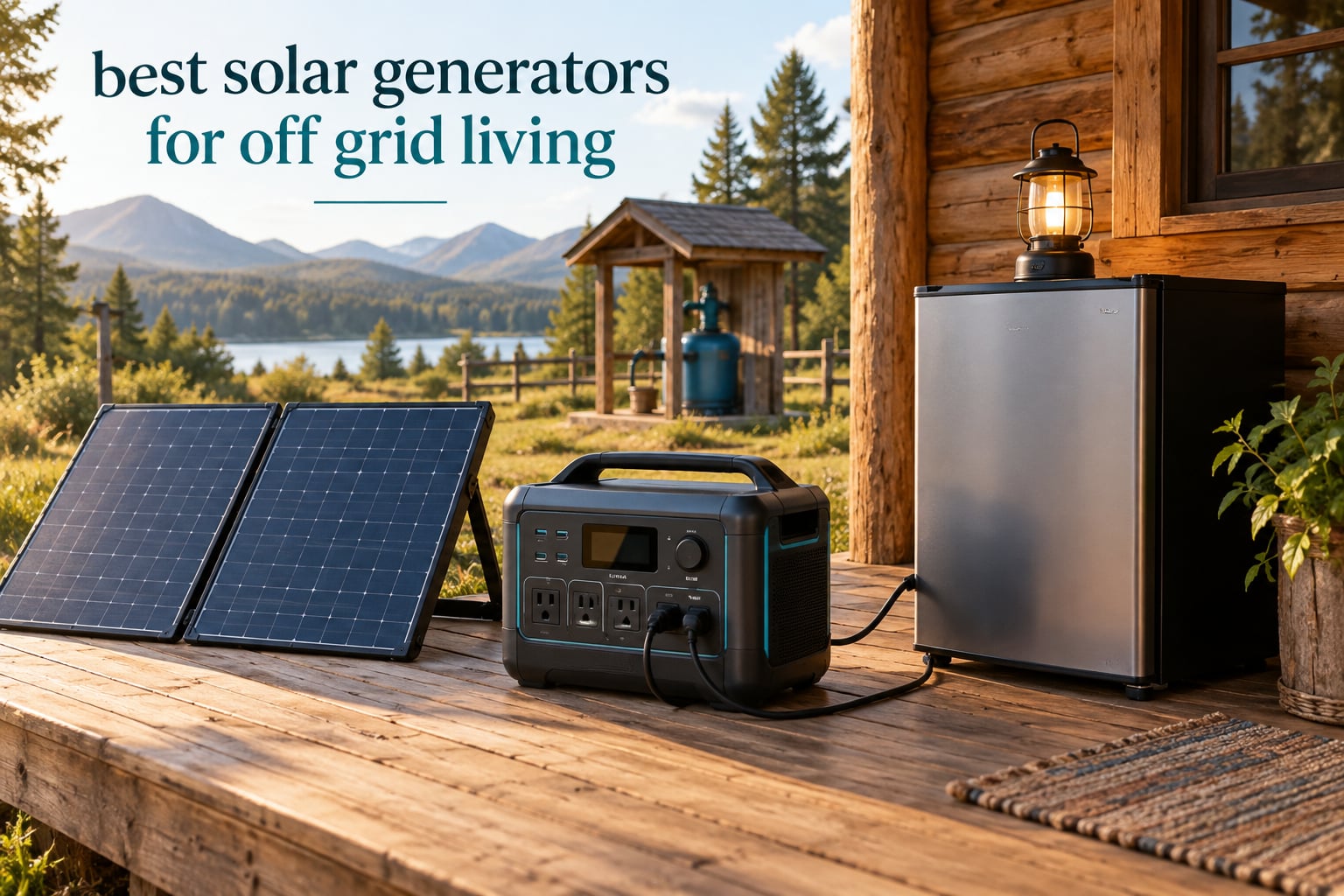
There is no fuel tank in a solar generator. What people call a solar generator is a portable power station: a rechargeable LiFePO4 battery, an inverter that turns stored DC into household AC, and a set of solar panels that refill it. That distinction matters for off-grid living, because the station can only hand you the energy it has already collected.
For full-time or weekend use away from the grid, the single strongest all-round choice in our roundup is the BLUETTI Elite 200 V2, a 2073.6Wh station with 2600W of continuous output, power lifting to 3900W, and two 200W panels in the box. If your heaviest load is a well pump, a water heater or a shop saw, skip to the EcoFlow DELTA Pro 3, which is the only unit here with true 120V/240V split-phase output. Everything else falls into the same pattern: capacity in watt-hours, output in watts, and solar input wattage to match.
We compared 12 stations for the best solar generators for off-grid living, ranking them on usable capacity, continuous and surge output, solar input, expandability and warranty support rather than on headline wattage. We only considered LiFePO4 chemistry, and we excluded units without a clear path to run more than a fridge and some lights. If you want the wider category first, our general solar generator roundup covers camping and backup use too.
The honest framing: a portable power station is not a generator. It cannot make power on demand, it cannot make power at night, and it cannot make power in a week of solid cloud unless you have banked enough capacity to ride it out. For a weekend cabin, a refrigerator, lights, a laptop and a 12V water pump, one of these is genuinely enough. For a full-time homestead running electric heat, a well pump and a workshop, you are looking at a wired inverter and battery bank instead, and we explain where that line sits below.
Table of Contents
Top 3 Best Solar Generators for Off-Grid Living (October 2026)

The BLUETTI Elite 200 V2 takes the top slot because it arrives complete: battery, two 200W panels, cables and a five-year warranty, with 6000+ rated cycles and the highest review volume in this group. The Anker SOLIX C2000 Gen 2 is the smarter buy if you already own panels or want the lightest, smallest 2 kWh body on the market. The EcoFlow DELTA 3 Max is the one to pick if recharge speed is the problem you are trying to solve, since it goes from empty to 80% in just over an hour.
Quick Overview of All 12 Solar Generators in 2026
| Product | Specifications | Action |
|---|---|---|
| BLUETTI Elite 200 V2 |
|
Check Latest Price |
| Anker SOLIX C2000 Gen 2 |
|
Check Latest Price |
| EcoFlow DELTA 3 Max |
|
Check Latest Price |
 EcoFlow DELTA Pro 3 EcoFlow DELTA Pro 3 |
|
Check Latest Price |
 Jackery HomePower 3000 Jackery HomePower 3000 |
|
Check Latest Price |
 BLUETTI Elite 300 BLUETTI Elite 300 |
|
Check Latest Price |
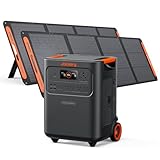 Jackery HomePower 3600 Plus Jackery HomePower 3600 Plus |
|
Check Latest Price |
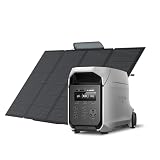 EcoFlow DELTA 3 Ultra Plus EcoFlow DELTA 3 Ultra Plus |
|
Check Latest Price |
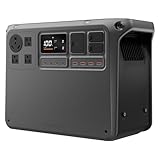 DJI Power 2000 DJI Power 2000 |
|
Check Latest Price |
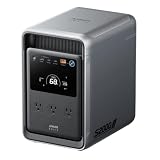 Anker SOLIX S2000 Anker SOLIX S2000 |
|
Check Latest Price |
 Jackery Explorer 2000 v2 Jackery Explorer 2000 v2 |
|
Check Latest Price |
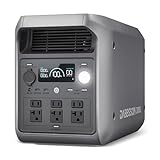 Dabbsson 2000L Dabbsson 2000L |
|
Check Latest Price |
Two things stand out from the full field. First, the split-phase capability in the list above is rare: only the EcoFlow DELTA Pro 3 and the Jackery HomePower 3600 Plus can handle 240V loads such as a whole-house pump or an electric water heater. Second, most of these stations arrive with either no panel or a panel far too small to matter, which is why the sizing math further down matters more than the sticker capacity.
1. BLUETTI Elite 200 V2 – Best Overall Daily Off-Grid Unit
BLUETTI Elite 200 V2 Solar Generator & 2x200W Solar Panel Included 2073.6Wh
2073.6Wh LiFePO4
2600W continuous, 3900W lifting
2x200W solar panels included
53.4 lb, 5 year warranty
Pros
- Comes with two 200W solar panels and all cables
- 6000+ rated cycles with a 17-year projected life
- 0-80% in about 50 minutes on AC
- Very low standby draw keeps idle losses near nothing
Cons
- Cannot be expanded with external battery modules
- Solar input capped at 1000W with a 60V MPPT ceiling
- Fewer 12V DC outputs and no 30A DC port
This is the station I would put in a weekend cabin without hesitating. The Elite 200 V2 stores 2073.6Wh of LiFePO4 capacity and delivers 2600W continuously, with power lifting that handles 3900W for a short burst. That is enough headroom to run a refrigerator, a freezer, a microwave and a coffee maker at the same time, which is the real test for off-grid living rather than any single headline number.
It also arrives genuinely complete. Two 200W panels are in the box, along with the AC cable, solar cable and a grounding screw. A full recharge from those two panels takes about 5.5 hours, and 0 to 80% on AC takes roughly 50 minutes. For a household that treats electricity like a utility, fast turnaround matters as much as raw size.
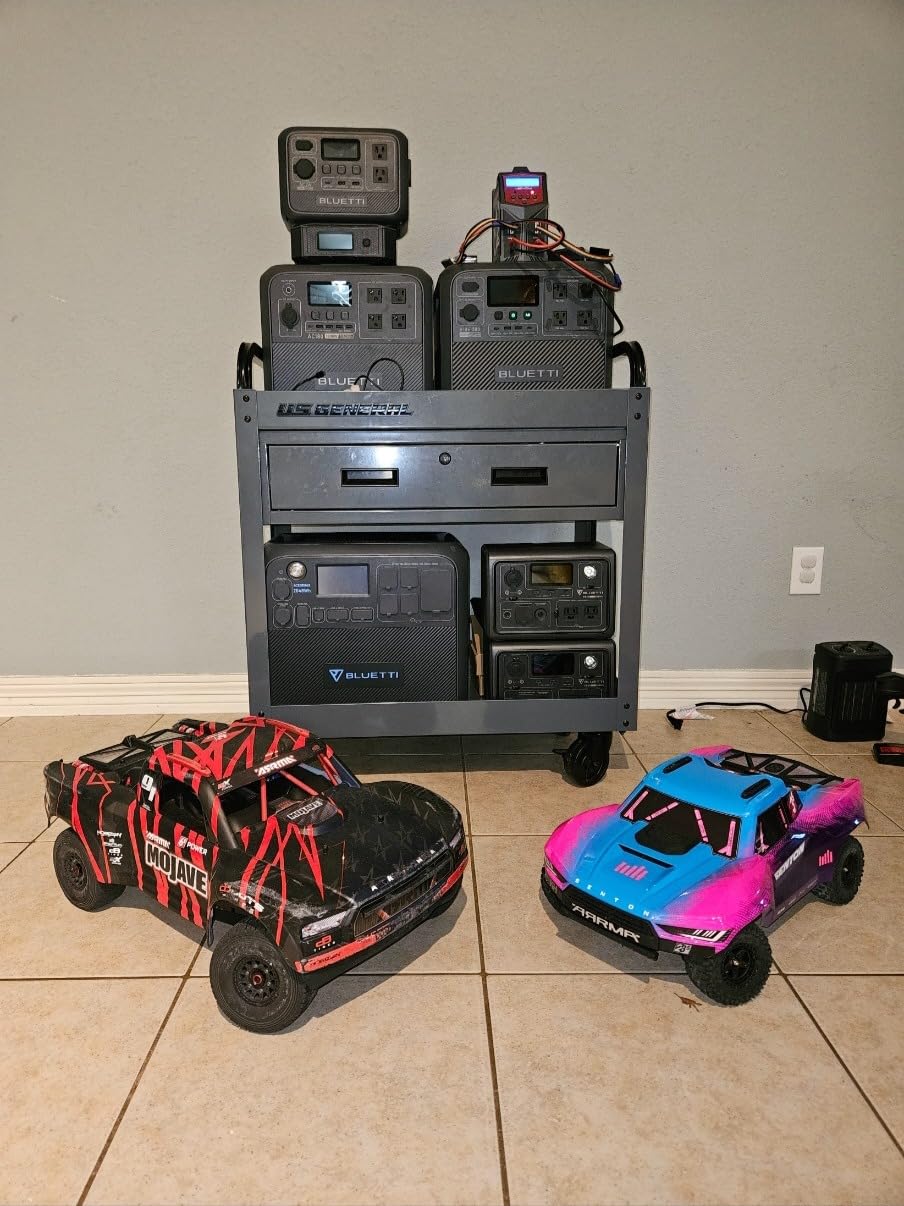
The battery itself is the strongest long-term story here. The cells are CNAS-certified automotive-grade LiFePO4 rated for 6000+ cycles, which BLUETTI projects at a 17-year lifespan. With 95%+ inverter efficiency and roughly 10W of standby draw, a fridge-free overnight costs almost nothing. Four AC outlets plus USB-C, USB-A and 12V ports means you can run up to nine devices together.
Two design decisions stop it from being perfect. It cannot be expanded with an external battery module, so 2073.6Wh is all you will ever have. Solar input is capped at 1000W and the MPPT controller tops out at 60V, which makes it harder to push a large array into the unit during a long cloudy stretch.
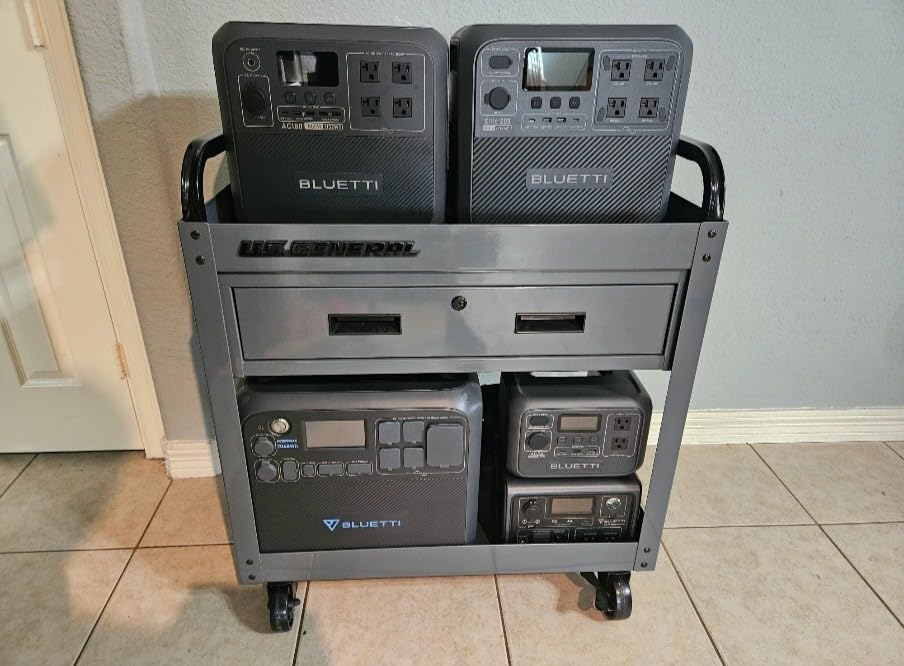
Is the Elite 200 V2 right for a refrigerator, lights and a laptop every day?
Yes, with room to spare. Owners describe treating it as a grab-and-go home backup unit with full-day fridge and freezer runtimes, and the included panels refill it the next morning. The one caveat is expansion: past roughly 2 kWh per day you need a second station rather than an add-on battery.
Where the Elite 200 V2 falls short for full-time off-grid use
It is a 120V-only machine. There is no 240V split-phase output, so a well pump above roughly half a horsepower, an electric water heater or a shop saw is out of reach no matter how the panels are sized. For a homestead rather than a cabin, that is the deciding limitation.
The port selection is also narrower than some rivals. There are fewer 12V DC outputs and no 30A DC port, and the companion app lags behind the hardware with no adjustable low AC charging rate or hard discharge limits.
2. Anker SOLIX C2000 Gen 2 – Best Value 2 kWh Station
Anker SOLIX C2000 Gen 2 Portable Power Station, 2,048Wh, 2,400W, Camping
2048Wh LiFePO4, expandable to 4kWh
2400W rated, 4000W peak
41.7 lb and 18.1 x 9.8 x 10.1 in
5 year warranty
Pros
- Lightest and most compact 2kWh body at 41.7 lb
- 9W standby draw gives up to 32 hours on a dual-door fridge
- Full recharge in 58 minutes on AC and solar together
- 800W alternator charging fills it in 3 hours from a vehicle
Cons
- Solar panel sold separately
- Requires the expansion battery to pass 2048Wh
- Only one power outlet listed in the specification data
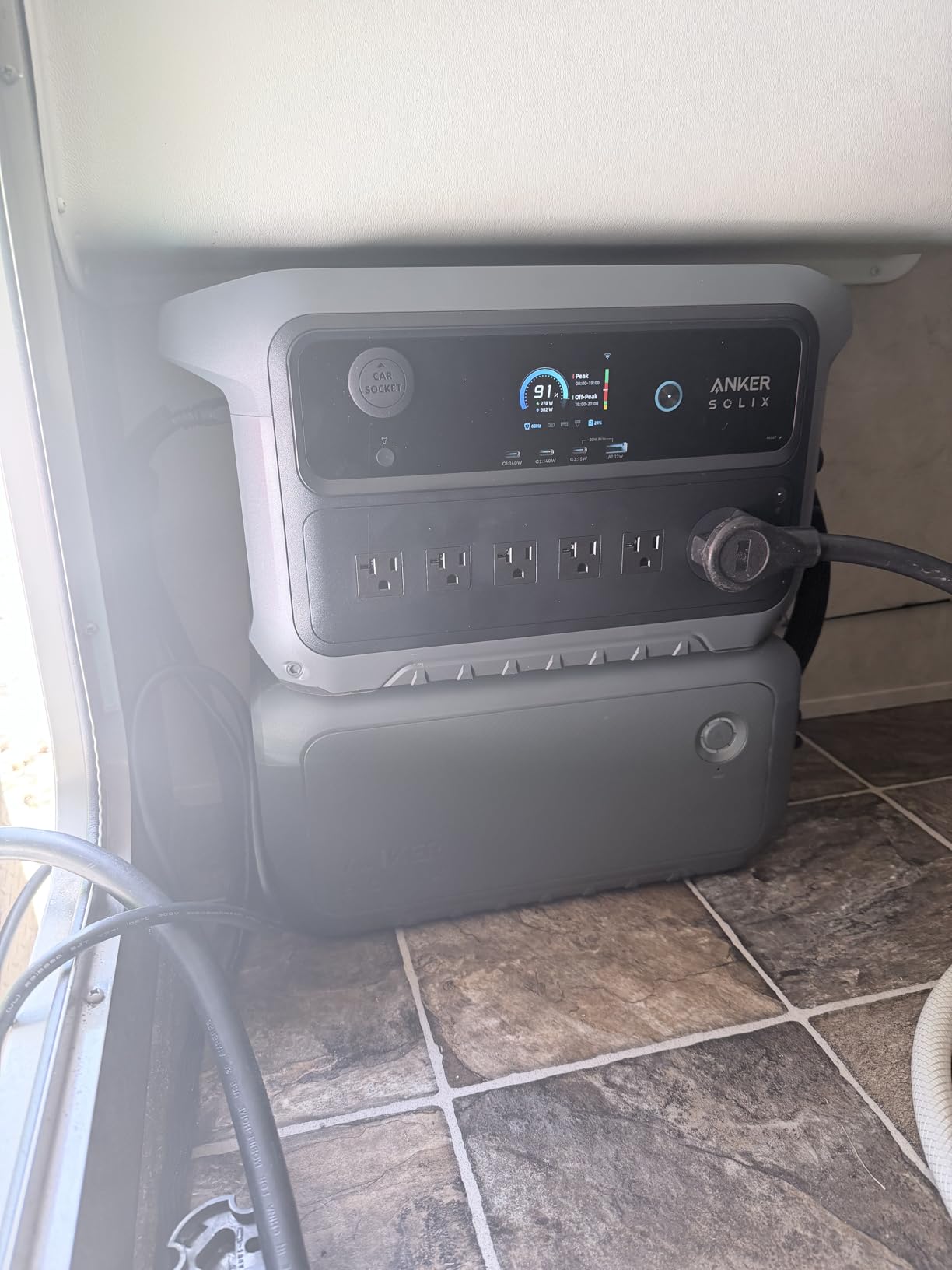
If you already have panels, or you plan to buy proper ones rather than rely on a bundled 200W sheet, the Anker SOLIX C2000 Gen 2 is the value pick of this roundup. It holds 2048Wh of LiFePO4, runs 2400W rated with a 4000W peak, and weighs 41.7 lb in a body measuring 18.1 by 9.8 by 10.1 inches. That is 25% lighter and 29% smaller than comparable machines, which matters when you are moving it between the shop and the porch.
Its efficiency is the headline. Standby consumption is just 9W, and the measured result is up to 32 hours of dual-door fridge runtime. Recharge is fast: 58 minutes to full using AC and solar together, or a full charge in 3 hours through the 800W alternator charging path, roughly eight times faster than a standard car socket.
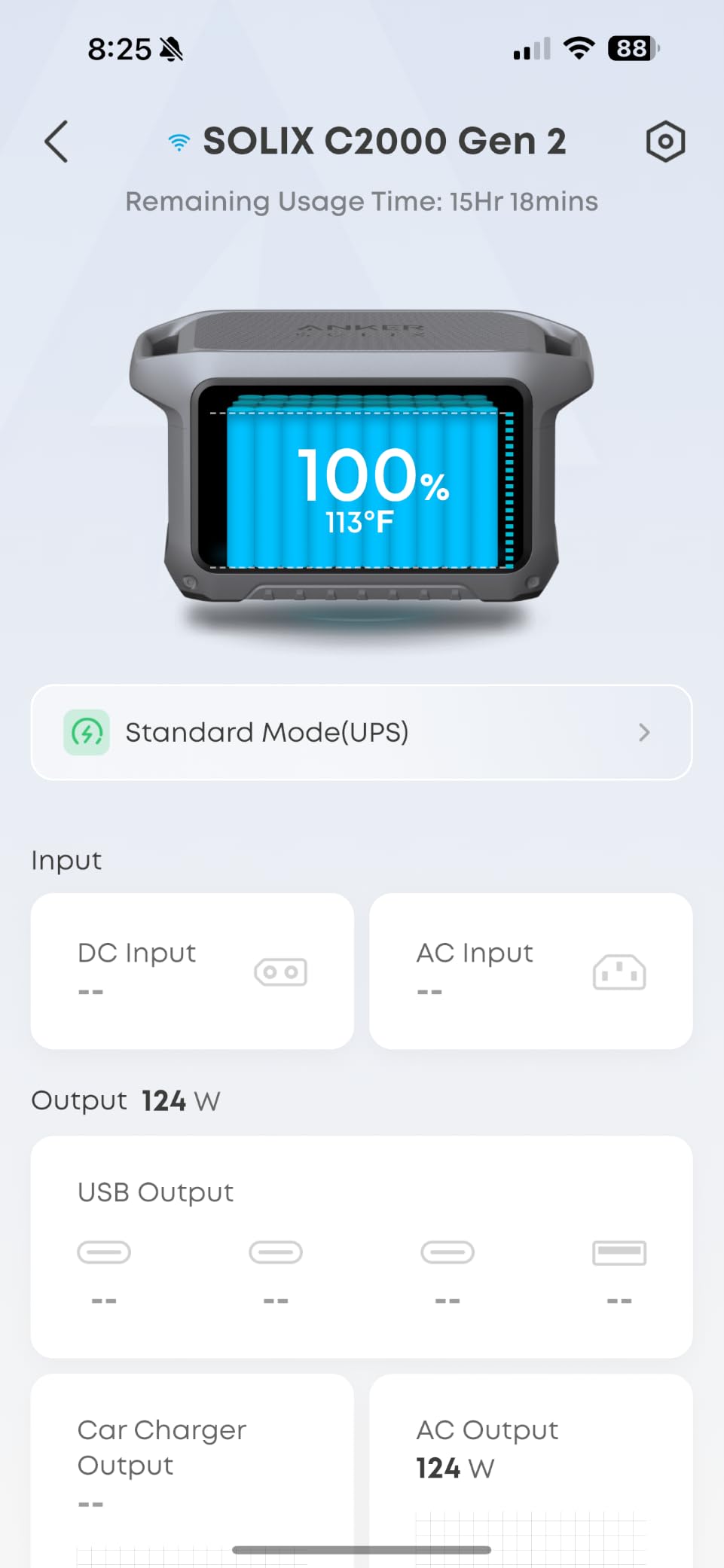
Expansion to 4kWh with a single add-on battery doubles your runtime to about 64 hours on a fridge, which is the difference between a weekend unit and something you could ride out a storm with. The 2400W ceiling is comfortable enough for most window air conditioners and small tools.
The catch is that the base configuration includes no solar panel at all. If you are starting from nothing, add that cost and time to your setup. The specification data also lists only a single power outlet despite the multi-port layout, which is a listing quirk rather than a hardware limit.
Will the C2000 Gen 2 run a fridge overnight without a wall outlet?
Yes, and then some. Roughly 9W of idle draw plus a fridge cycling all night leaves plenty of headroom in 2048Wh, and the measured figure is up to 32 hours on a dual-door fridge, or about 64 with the expansion battery. This is the configuration most weekend cabin owners describe on r/rvlife and r/overlanding threads: one fridge, some lights, a laptop and hand tools, sized between 2,000 and 5,000Wh.
Why this is not the right pick for a full-time homestead
It is 120V single-phase, so pumps, water heaters and 240V shop tools stay out of reach. The 2,048Wh base figure also cannot grow past 4kWh with a single expansion battery, which caps multi-day autonomy well below what a full-time residence needs.
And if you have no panels already, the missing bundled panel is a real gap for someone building an off-grid setup from zero. Everything else about the box is a genuine step up for the money.
3. EcoFlow DELTA 3 Max – Top Rated Fast-Charging Station
EF ECOFLOW DELTA 3 Max Portable Power Station, 2048Wh LFP Battery, 2400W
2048Wh LiFePO4
2400W rated, 3400W with X-Boost
0-80% in 1.13 hours
5 year service coverage
Pros
- Fastest recharge in this roundup at 0-80% in 1.13 hours
- 3400W X-Boost covers nearly all household appliances
- Under 10ms transfer keeps computers and medical devices running
- LiFePO4 chemistry built for 10 years of daily use
Cons
- Solar panel not included in the standard configuration
- 2400W is the real continuous rating
- 3400W requires X-Boost
- Tall 19.44 inch body needs vertical storage space
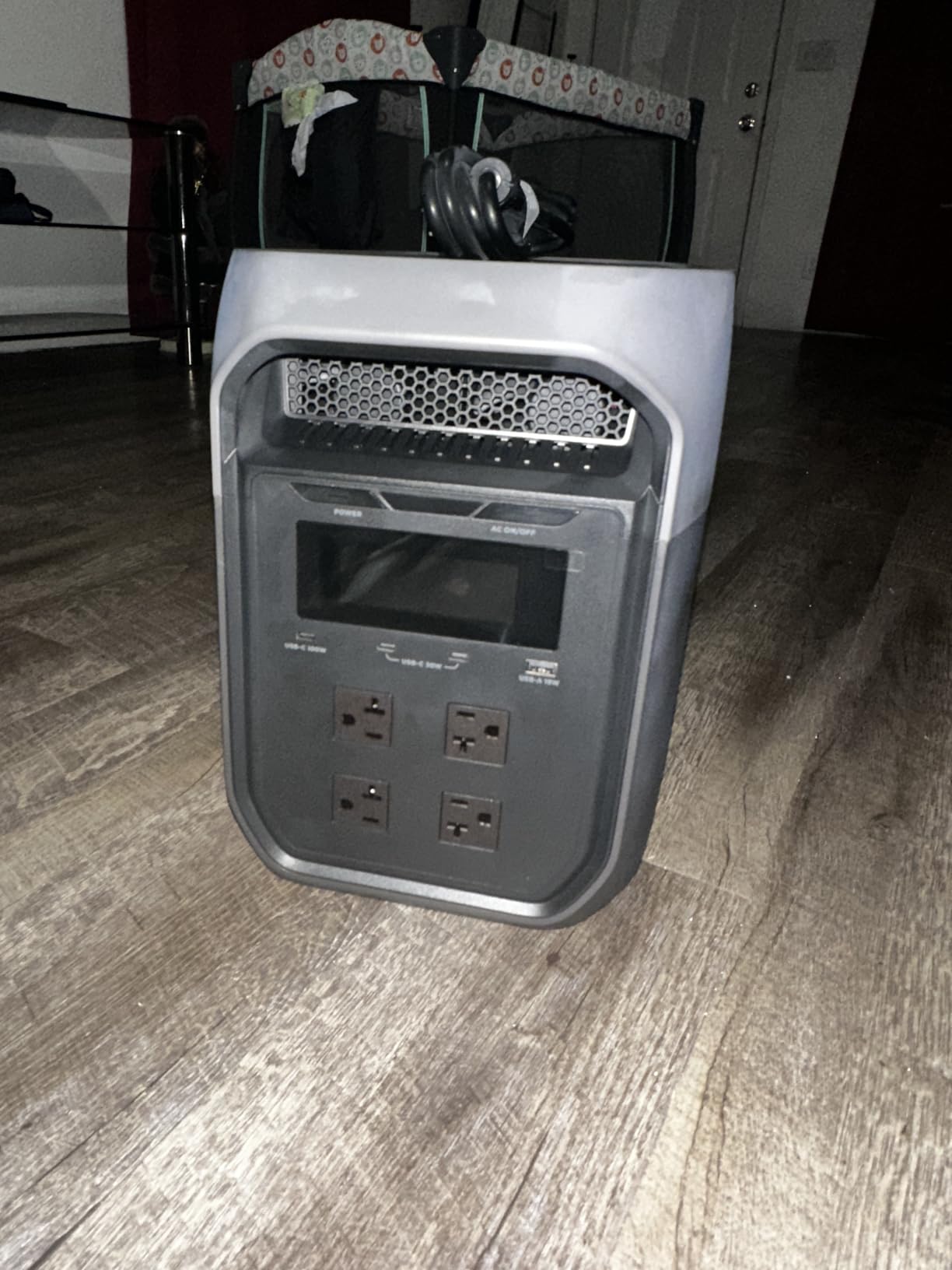
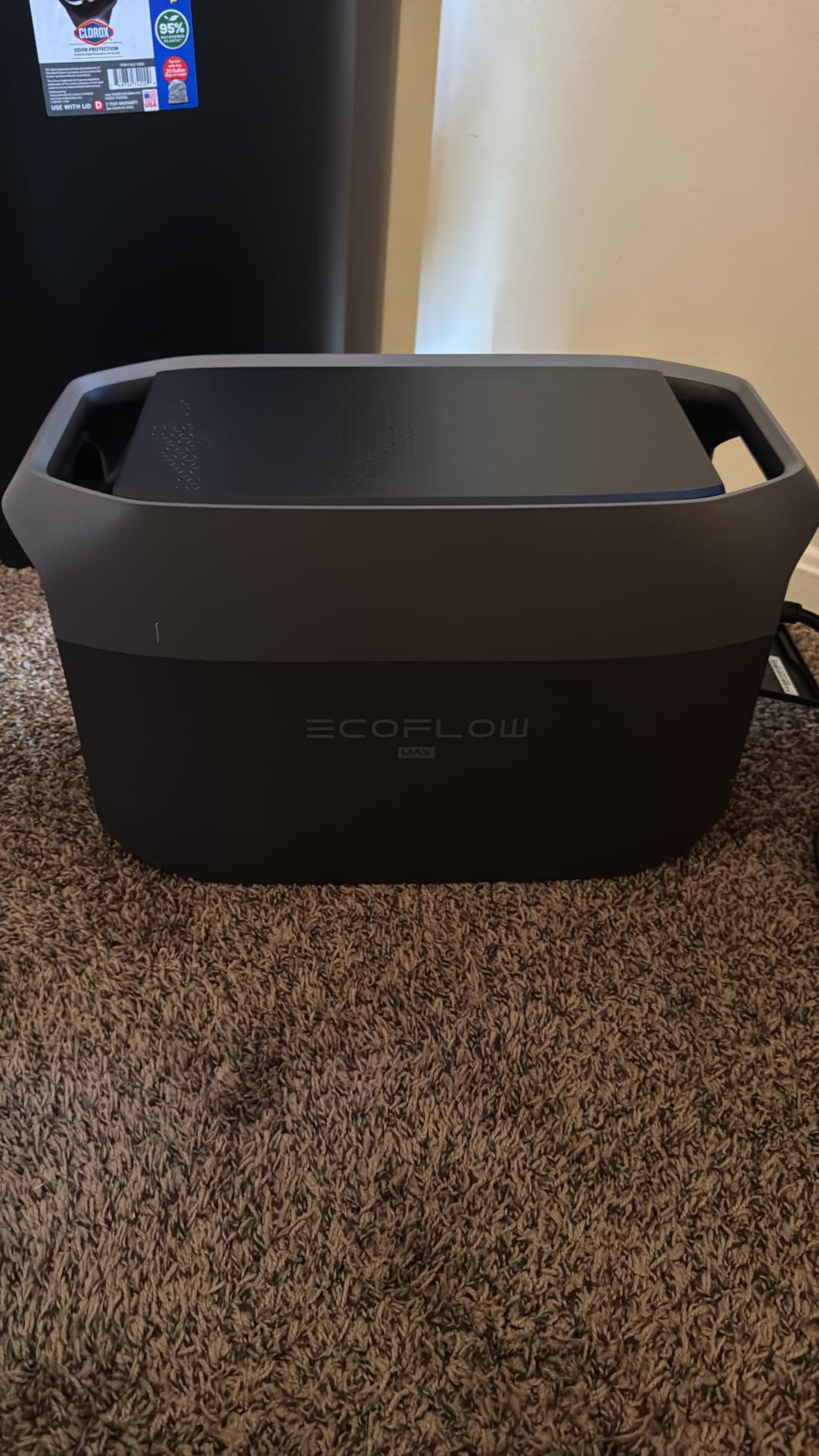
The DELTA 3 Max solves a different problem from the other 2 kWh machines here: how fast the bank refills. It goes from empty to 80% in 1.13 hours on AC, which means a morning of sun or an hour on a wall outlet restores a full day of off-grid consumption. For a household that cycles between solar and wall charging, that turnaround is worth more than a slightly larger battery would be.
Output is 2400W rated, rising to 3400W with X-Boost, and that covers refrigerators, microwaves and power tools. Transfer time is under 10ms, so computers, routers and medical devices ride through an outage without a manual switch. The battery is LiFePO4 engineered for a decade of daily cycling, backed by five-year service coverage.
The app is the other differentiator. You can schedule charging and discharging to shift consumption away from expensive periods, and monitor real-time draw, which is genuinely useful when you are trying to learn where your off-grid kWh actually goes.
Two practical notes. The rated continuous figure is 2400W; the 3400W number is an X-Boost assist, and compressor motors can trip it. The panel is a separate purchase in the standard configuration, and the 19.44-inch tall body takes more vertical space than the flatter 2 kWh units on this list.
Is a 1.13 hour recharge realistic when charging from solar?
That figure is for AC charging, so treat it as the best case from a wall outlet. On solar the refill rate is capped by your panel wattage, which is why panel sizing belongs in your decision from day one. Even so, a station that tops up this fast recovers from a bad day far faster than rivals needing three to four hours.
Where the DELTA 3 Max is the wrong choice
It is 120V only, and 2048Wh is not enough capacity for full-time off-grid living without a second battery. If your goal is a well pump, a water heater or multi-day autonomy, this is a backup unit rather than a primary one, and the missing bundled panel means it is not a complete off-the-shelf kit.
The tall chassis is also worth measuring before you commit, since off-grid installs usually end up in a closet or under a bench rather than on a workbench where you can stand it upright.
4. EcoFlow DELTA Pro 3 – Best for 240V Well Pumps and Whole-Home Loads
EF ECOFLOW DELTA Pro 3 Solar Generator 4096Wh with 2X400W Solar Panels
4096Wh LFP, expandable to 48kWh
4000W continuous 120V/240V split-phase
8000W starting power
115 lb, 2x400W panels
Pros
- True split-phase 120V/240V output for pumps and central loads
- 4096Wh expandable all the way to 48kWh
- Ten charging paths including EV charging pile and Smart Home Panel 2
- As quiet as 30 dB for indoor placement
Cons
- Very heavy at 115 lb
- Power station and the two 400W panels arrive in separate packages
- Largest footprint and cost in the 4kWh class
This is the unit that changes what is possible off-grid. The DELTA Pro 3 delivers 4000W of continuous output across a genuine 120V/240V split-phase arrangement, rising to 6000W with X-Boost and scalable to 12000W. That is the difference between a power station and household infrastructure: a 1 HP well pump, a 3-ton central air unit or an electric water heater becomes a load you can actually start.
Capacity is 4096Wh of LFP, expandable to 48kWh, which is two to four days of whole-home backup once you start adding expansion packs. Starting power of 8000W handles compressor loads without stalling. Two 400W solar panels are included in this configuration, and seven charging methods across 18 combinations cover AC wall, solar, a gas generator, an EV charging pile and the Smart Home Panel 2.
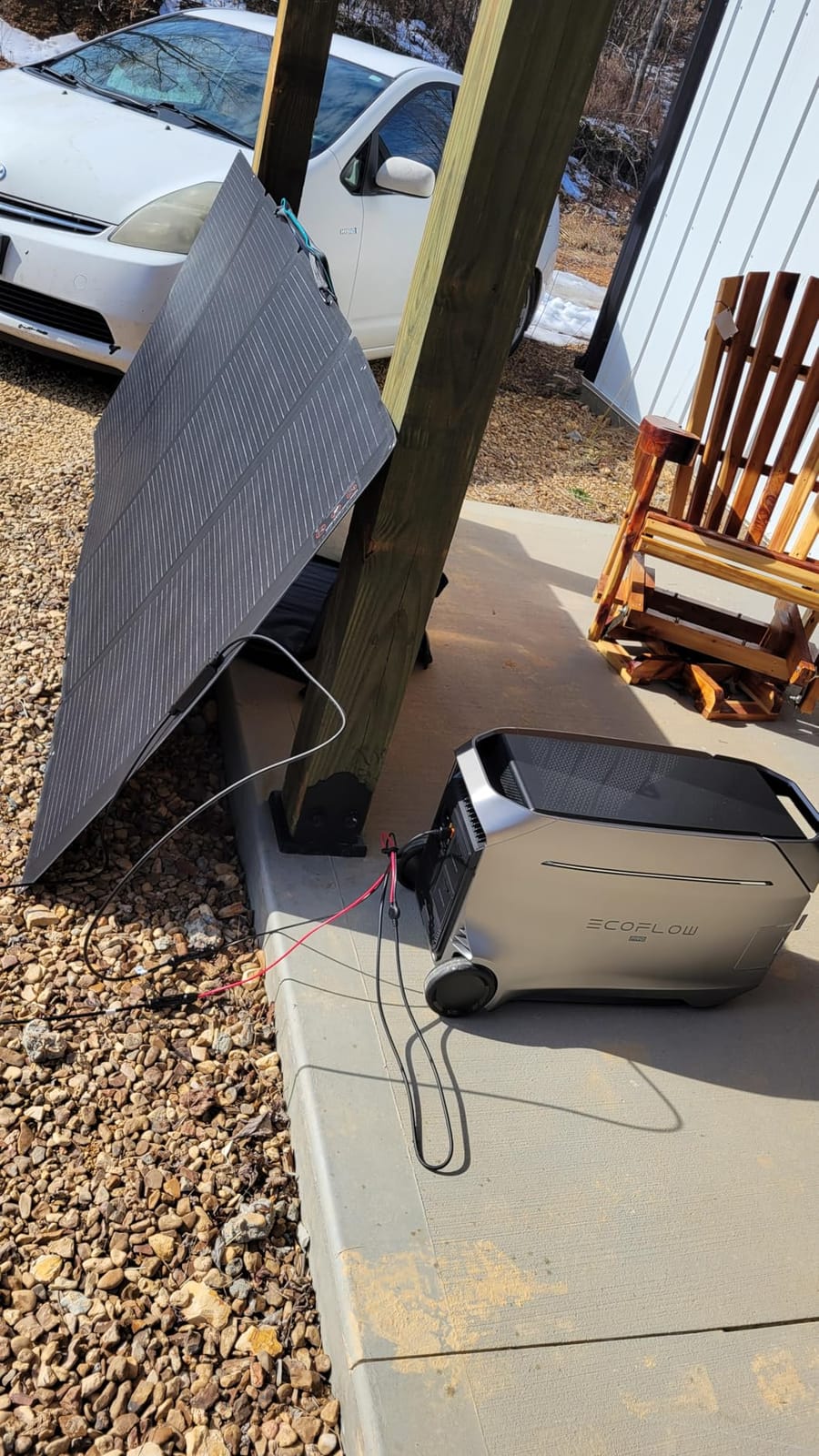
The 10ms UPS switchover keeps a NAS, a server or home entertainment running through an outage, and X-Quiet operation drops to 30 dB, quiet enough to sit beside a bed. The CTC battery pack carries an IP65 rating, and the warranty runs five years.
What you give up is portability. At 115 lb this is an installed appliance, not a grab-and-go box, so it needs a planned location and ideally a transfer switch and an electrician before it feeds a house. The power station and the two 400W panels also arrive in separate packages, which is an easy detail to miss.
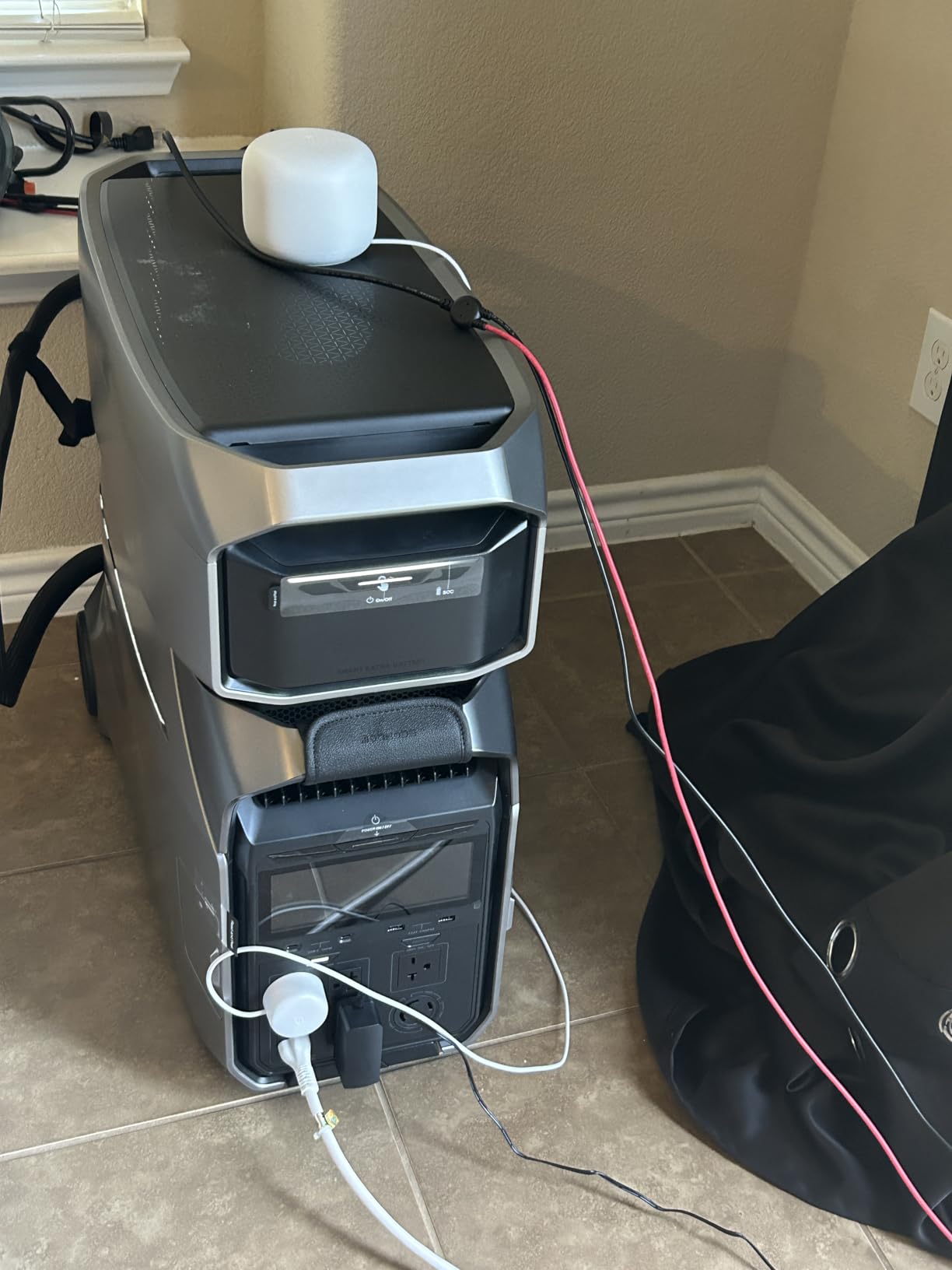
Do I need this if I have a well pump or electric heat?
Yes, and it is the only unit in this roundup that answers the question cleanly. A 120V station will trip or refuse a 1 HP pump no matter how many watt-hours you give it, because the inverter cannot make the voltage. Buying more capacity for a 120V-only machine does not fix that, and owners in off-grid communities pair large EcoFlow systems with a home integration panel for exactly this reason.
What are the real drawbacks for a small homestead?
At 115 lb and a tall 27.38-inch body, moving this is a two-person job with a dolly. Expansion to 48kWh also assumes a house designed around load management, not a cabin with a refrigerator and a couple of lamps.
Then there is the install. Feeding a house through a portable station means a transfer switch, a permit in most jurisdictions and a licensed electrician, so budget for that before you budget for panels. Our general guide to portable and standby generators covers the fuel-burning alternative if you need power on demand rather than stored power.
5. Jackery HomePower 3000 – Best for RV and Trailer Living
Jackery HomePower 3000 and 2x200W Solar Panels, 3072Wh, 3600W AC Output
3072Wh LiFePO4, 4000 cycles to 70%
3600W continuous, 7200W surge
UL-certified 20ms UPS
59.5 lb, 2x200W panels
Pros
- 3600W output with 7200W surge runs a household for up to 15 hours
- UL-certified 20ms UPS protects cameras and medical fridges
- Full recharge in 1.7 hours on hybrid AC plus DC
- Built-in cables and a TT-30 RV port for plug-and-play use
Cons
- Not expandable with additional battery packs
- About 59.5 lb
- so a wheel kit is advisable
- Two 200W panels need roughly 9 to 11 hours to reach 80%
RV and trailer owners get the most from the HomePower 3000 because of its port layout. There is a dedicated TT-30 RV outlet alongside four AC sockets, two 100W USB-C PD ports and USB-A, so the appliances you already own plug straight in without adapters. Capacity is 3072Wh with 3600W continuous output and 7200W surge, which is enough to run a camper air conditioner, a microwave and a 12V fridge at once.
The UPS is UL-certified at 20ms or less, which matters for the things that will not tolerate a hiccup: security cameras, pet feeders, a medical refrigerator in the house, an ongoing video call. Jackery reports up to 15 hours of household use or one to two days of refrigerator runtime on a single charge.
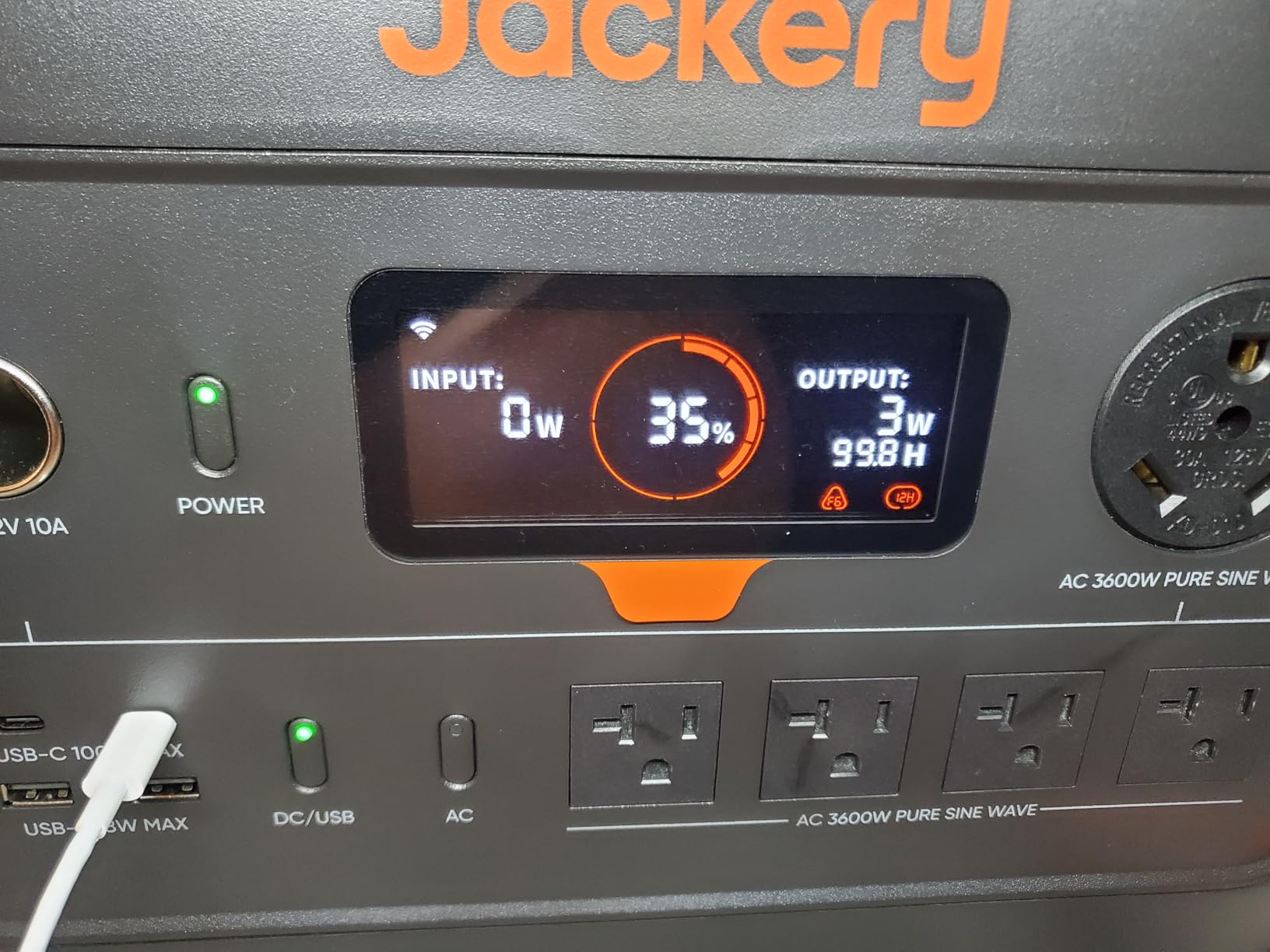
Recharging is quick on wall power: 0 to 100% in 1.7 hours with hybrid AC and DC, or 2.2 hours on AC alone. The ChargeShield 2.0 algorithms manage the LiFePO4 cells, which are rated for 4000 cycles while holding 70% capacity. CTB construction makes the box 47% smaller and 43% lighter than same-capacity rivals.
The limitations are real. It does not expand with additional battery packs, so 3072Wh is a hard ceiling. At roughly 59.5 lb you will want a wheel kit. And the two included 200W panels take around 9 to 11 hours to bring the station to 80%, so they are a trickle charger rather than a genuine recovery system.
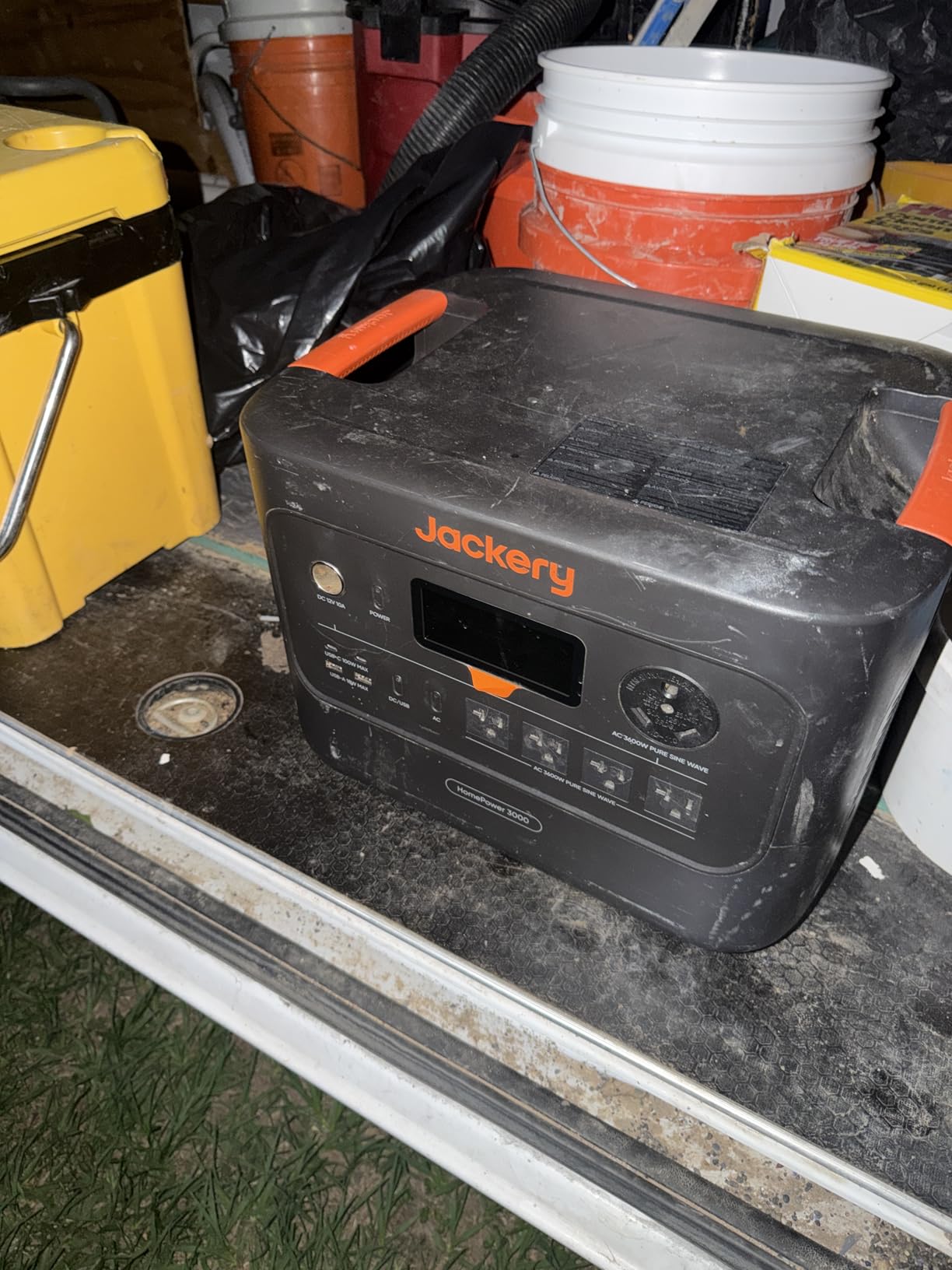
Is 3072Wh enough for full-time trailer living?
For a couple running a fridge, lighting, laptops and small appliances, yes, and owners report one to two days of refrigerator runtime per charge, refreshed in under two hours on AC. For a family running electric heat, a washer and a 13,500 BTU air conditioner hard, it is tight: the 3600W output will start those loads, but 3072Wh empties quickly and the unit cannot grow.
What should RV buyers watch out for?
Weight, mostly. At 59.5 lb plus panels, the total package is heavy to load into a truck bed, and the 16 by 13 by 20 inch body needs a real footprint in a storage bay.
Second, verify the UPS behaviour on the exact devices you care about. One owner reported that promised Alexa integration did not work and that support was hard to reach, so test your critical equipment before you rely on it during a storm.
6. BLUETTI Elite 300 – Best for the Smallest 3 kWh Footprint
BLUETTI Solar Generator Elite 300 with 350W Solar Panel Included, 3014.4Wh
3014.4Wh LiFePO4, 6000+ cycles
2400W continuous, 4800W surge
TT-30 RV outlet and 12V/30A DC port
58 lb, 350W panel included
Pros
- 3014Wh in the smallest 3kWh body available
- TT-30 RV outlet plus 12V/30A DC port removes adapter hunting
- Reaches 80% charge in 78 minutes
- 6000+ cycle LiFePO4 battery
Cons
- Solar panel arrives separately from the station
- 58 lb is heavy for a 3kWh unit
- 2400W output is modest for 3kWh of capacity
Capacity and footprint are usually a trade-off. The Elite 300 breaks it: 3014.4Wh packed into a 14.4 by 12 by 11.7 inch body, which Frost and Sullivan certified as the world’s smallest 3kWh portable power station. If your off-grid space is a closet or a cabinet rather than a garage, that physical size is the feature you are buying.
Output is 2400W continuous with 4800W surge, which covers refrigerators, routers, lighting, a television and a CPAP machine. Charge speed reaches 80% in 78 minutes, and the LiFePO4 battery is rated for 6000+ cycles, giving you roughly a 15-year calendar life at one cycle a day.
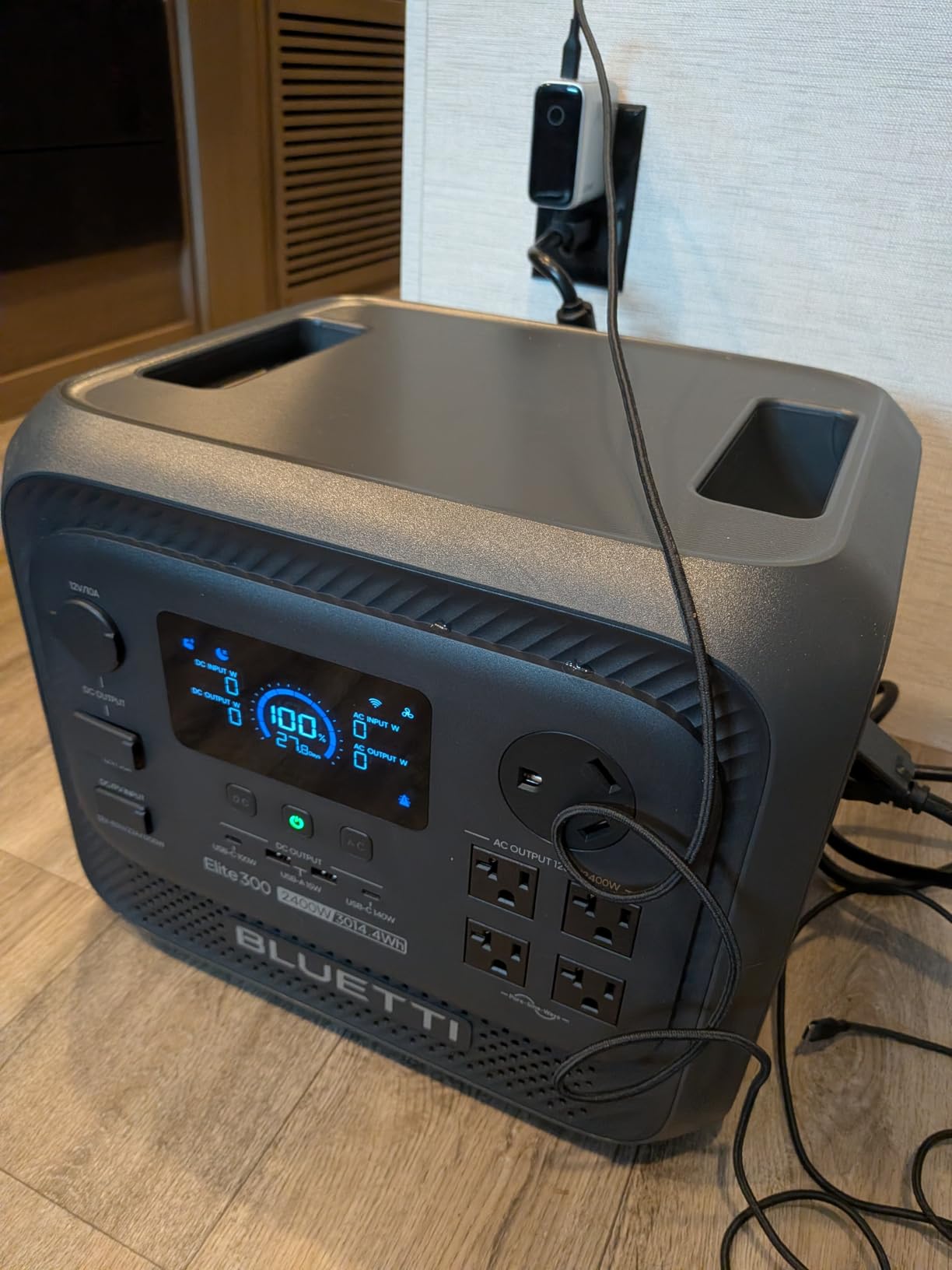
The port selection is unusually RV-native. A dedicated TT-30 outlet and a 12V/30A DC port let you run an RV fridge or a camper air conditioner without an adapter, which is a small detail that saves an evening of troubleshooting every single time.
What to know: the 350W panel in this kit recharges the station from empty in roughly 8 to 17 hours depending on conditions, so treat it as a maintenance charger. At 58 lb it is one of the heavier 3kWh bodies despite the compact dimensions, and 2400W of continuous output is on the low side for 3kWh of stored energy.
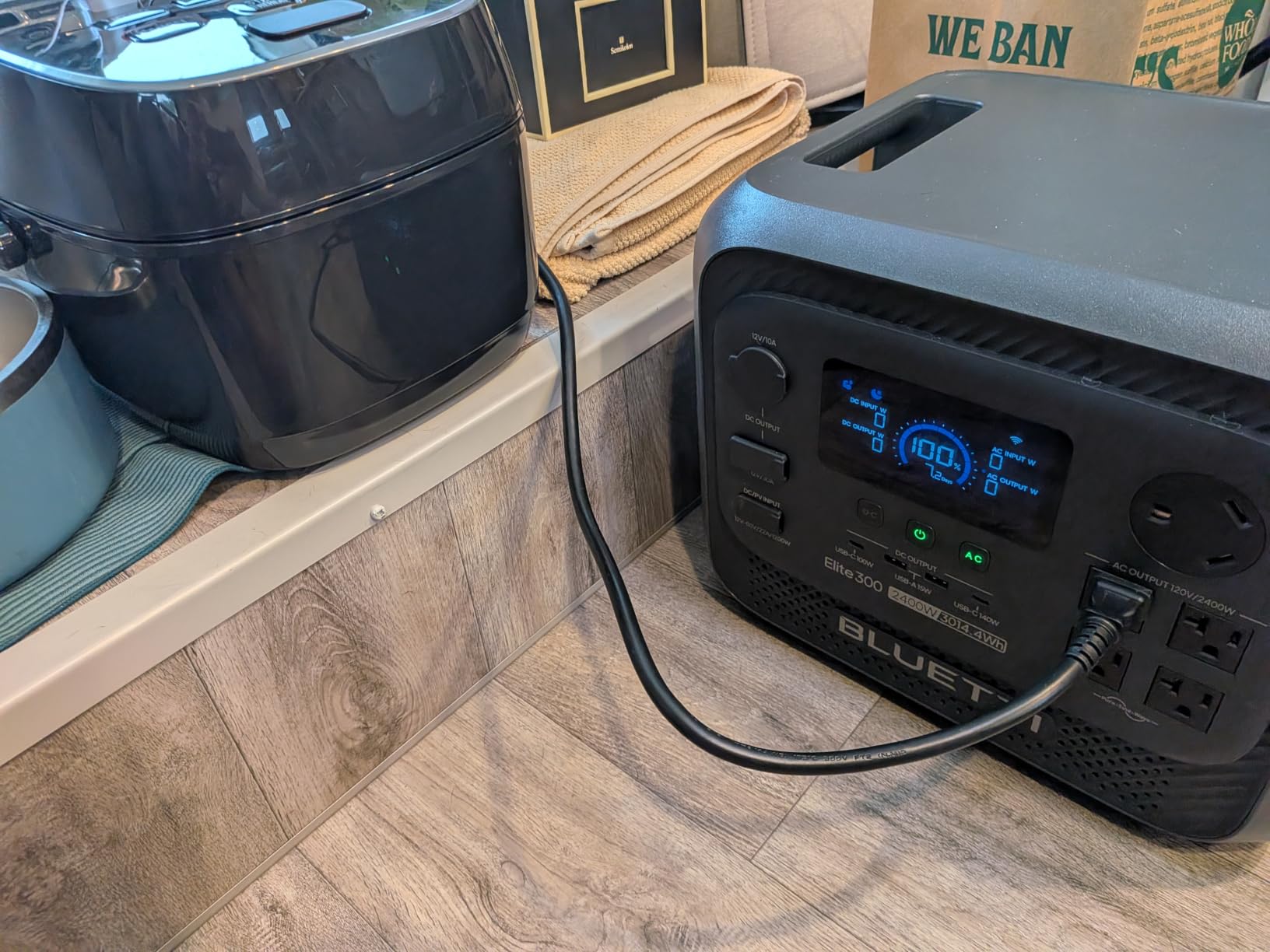
Does the Elite 300 hold a refrigerator and run a CPAP overnight?
Yes, comfortably. Those are the loads the 2400W continuous rating was designed around, and 3014Wh gives you multiple nights of runtime for a fridge alone while keeping a CPAP or router stable through an outage.
Where it falls short against a 3 kWh alternative
The 2400W ceiling is the weakest point. Other 3kWh machines in this roundup run 3600W continuously, a 50% difference that you will feel the first time a well pump or an electric heater shares the circuit.
And the bundled panel is small enough to be an afterthought. If your plan is full-time off-grid living, treat the 350W panel as a top-up and size your real array separately.
7. Jackery HomePower 3600 Plus – Best for Long-Term Expansion to 21 kWh
Jackery HomePower 3600 Plus & 2x200W Solar Panels, 3584Wh, 3600W AC Output
3584Wh LFP, expandable to 21kWh
3600W continuous, 7200W in parallel
120V and 240V dual voltage
77.2 lb, wheeled chassis
Pros
- 3600W output with 120V and 240V dual voltage in parallel for pumps and heaters
- Expands to 21kWh per unit or 43kWh across units
- Functions down to -4 degrees F with ceramic membrane cells
- Full recharge in 2 hours on hybrid AC plus DC
Cons
- Included SolarSaga panels deliver well below nameplate
- No 12V cigarette lighter outlet
- 77.2 lb is the heaviest station here
The HomePower 3600 Plus is the pick when you know your load will grow. It starts at 3584Wh of LFP and expands to 21kWh on a single unit, or 43kWh across multiple units, which Jackery rates as more than two weeks for a three-person household. It also runs 3600W continuously and 7200W in parallel, with dual voltage 120V and 240V output in parallel for pumps, heaters and dryers.
Cold-weather capability separates it from the field. The ceramic membrane cells were tested at 302 degrees F for thermal resistance, rated for 6000 cycles and a 10-year lifespan, and remain functional down to -4 degrees F. For full-time off-grid living in a cold climate, that specification is more valuable than another 500Wh.
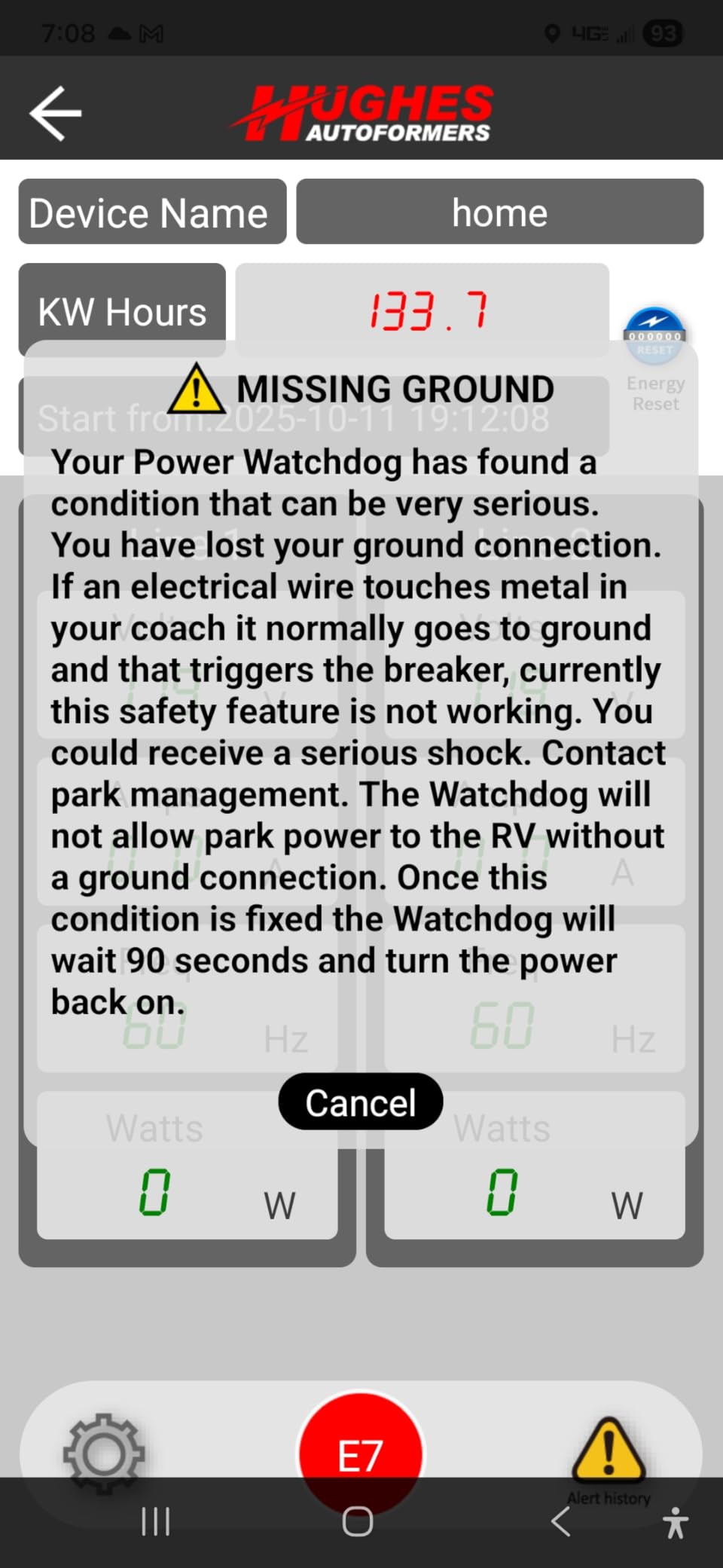
Recharging covers four routes: hybrid AC and DC in 2 hours, AC alone in 2.5 hours, solar in 4 hours, or a gas generator in 2.5 hours. The luggage-style chassis with heavy-duty wheels and a telescopic handle makes 77.2 lb manageable indoors, and it holds charge for months with no drain, which is useful for storm season.
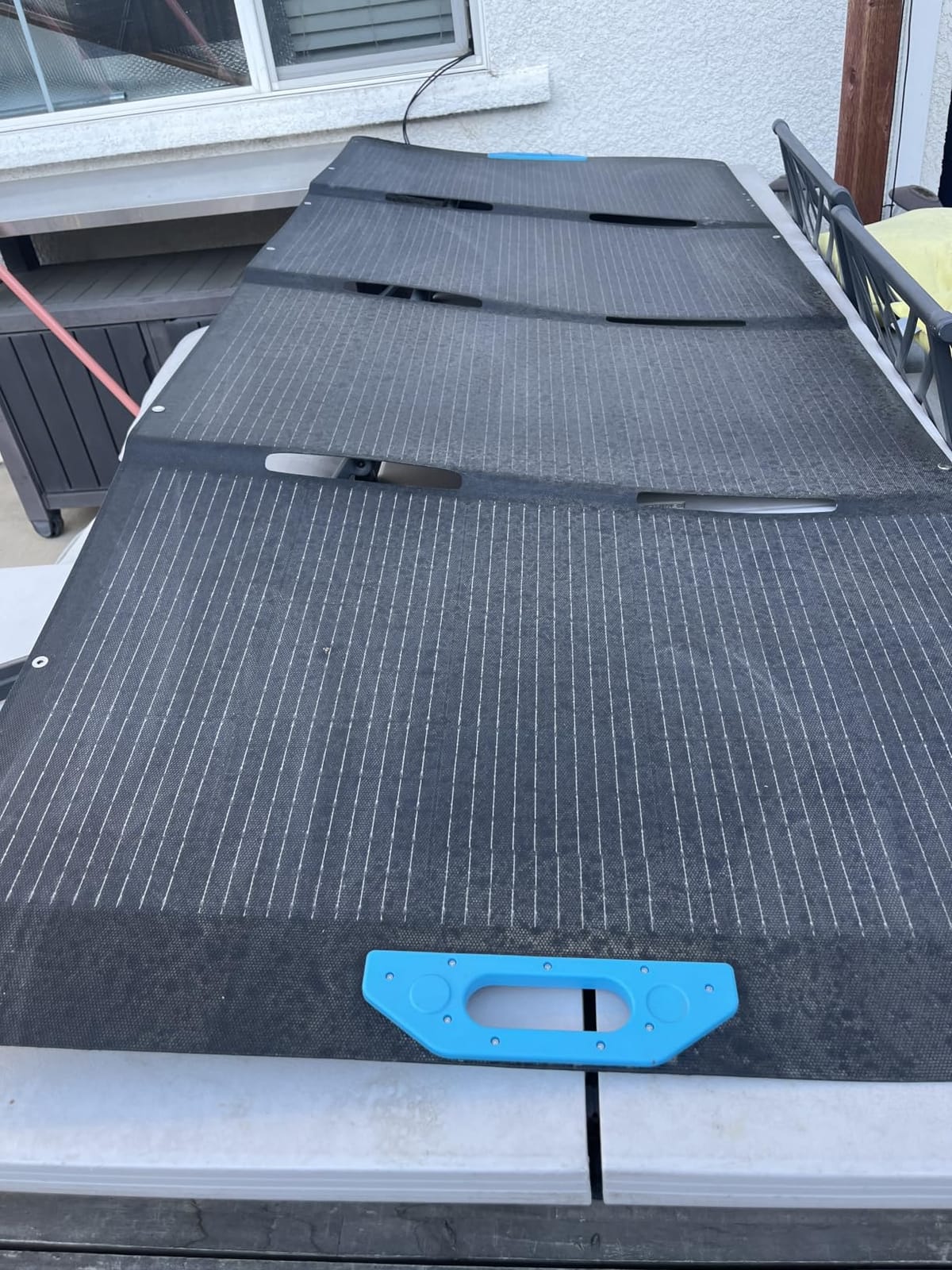
The honest weakness is the bundled solar. Reviewers report the included SolarSaga panels delivering roughly 100 to 150W each in real conditions rather than their nameplate, and sometimes deteriorating over time. There is also no 12V cigarette lighter outlet, and the vertical form is awkward to pack away.
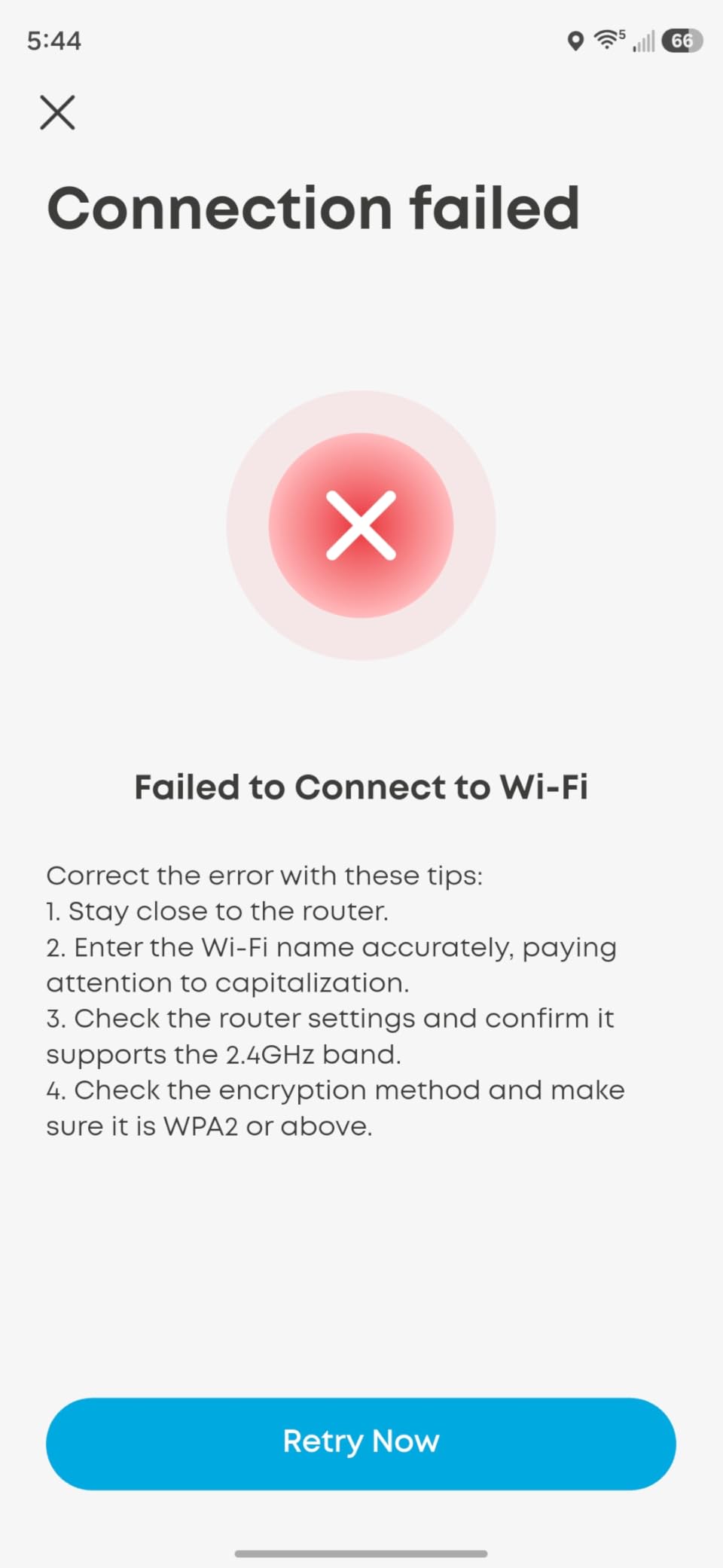
Can this run a pump or an electric heater, not just a fridge?
Yes. The 120V and 240V dual voltage output in parallel is the specific reason to buy this over a 3kWh 120V-only unit, and 3600W continuous is enough for a water heater or a 1 HP pump alongside smaller loads. Full-time RV and outage users report running a whole travel trailer, multiple freezers, networking and lighting for 24 to 48 hours on one charge.
What should buyers be careful about?
Do not count the two 200W panels toward your daily energy budget. Owners consistently measure their real output far below nameplate, so plan on buying a proper array of your own for off-grid living.
Also check the 77.2 lb weight against your floors, your vehicle payload and the route from the delivery point to its permanent home. At this size, where you put it matters as much as what it does.
8. EcoFlow DELTA 3 Ultra Plus – Best for Fast Recharging and 11 kWh Expansion
EF ECOFLOW 3072Wh Power Station DELTA 3 Ultra Plus with 400W Solar Panel
3072Wh LFP, expandable to 11kWh
3600W continuous, 7200W surge
Under 10ms automatic UPS
125 lb, 400W panel included
Pros
- 3600W continuous with 7200W surge handles heavy appliances and tools
- Expands from 3kWh to 11kWh for multi-day blackouts
- Six charging options including EV stations and generators
- 80% charge in under an hour with X-Stream
Cons
- 125 lb is among the largest units here
- Station and 400W panel arrive in separate packages
- Biggest footprint at 24.1 x 12.9 x 15.6 inches
The DELTA 3 Ultra Plus pairs the highest continuous output in the mid-size class with an expansion path to 11kWh. That combination suits an off-grid household that wants serious appliance support now and more capacity later. Continuous output is 3600W with 7200W surge, and X-Quiet 3.0 keeps the noise profile low enough for indoor placement.
Charging is where it leads. Six paths are supported, including a home outlet, solar, car chargers, EV charging stations, a conventional generator and the EcoFlow Smart Generator, and X-Stream fast charging reaches 80% in under an hour. UPS switchover happens automatically in under 10ms with no manual setup, protecting computers, routers and medical equipment.
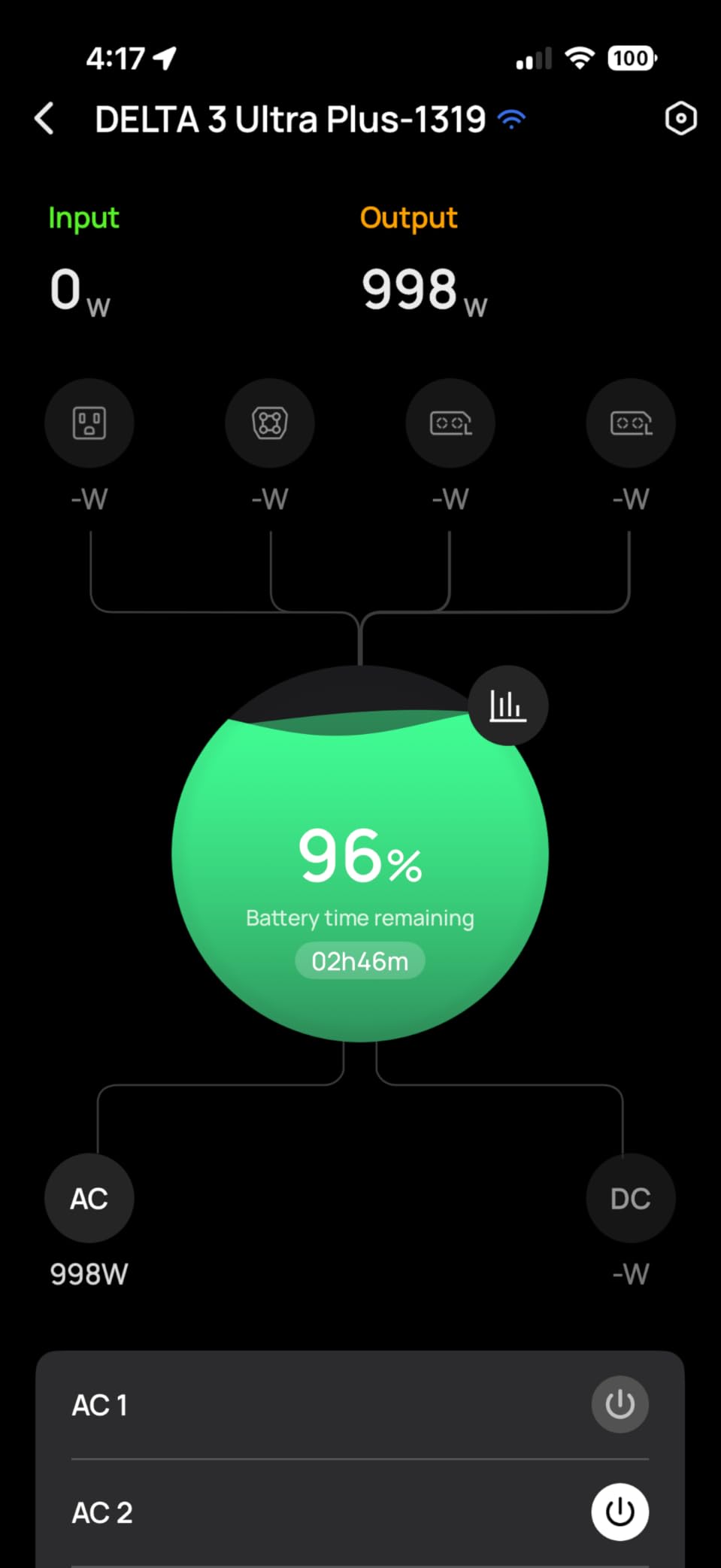
Storage is 3072Wh of LFP expandable to 11kWh, which is enough to cover multi-day blackouts and extended time away from the grid without buying a second station. A 400W solar panel is included in the bundle, and the warranty runs five years from the manufacturer.
The cost of all that is weight and volume. At 125 lb with a 24.1 by 12.9 by 15.6 inch body, this is a stationary system, and it is the largest footprint in the roundup. The station and the panel also arrive in separate packages.
Is 3600W enough for a microwave, tools and a fridge together?
That is exactly the load profile it was built for. A microwave, a power tool and a refrigerator cycling at the same time sits comfortably inside 3600W, and the 7200W surge covers compressor startup. This is the tier where a cabin stops being a lights-and-laptop setup and starts being a working home, though it remains 120V only.
Where the DELTA 3 Ultra Plus is overkill
For a weekend cabin or a backup-only role, 125 lb and a 24.1-inch-long body are a lot of furniture to move for capability you will not use. The 3kWh capacity also self-discharges faster than a smaller unit, so a seasonal property pays a price for owning more battery than it needs.
Measure your install space and check the delivery path before choosing it. If it fits and your load is real, the recharge speed and expansion ceiling make it one of the strongest mid-size options available.
9. DJI Power 2000 – Best for Quiet 3000W Output
DJI Power 2000 Portable Power Station, 2048Wh LFP Battery
2048Wh LFP battery
3000W stable continuous output
Recharges to 80% in 55 minutes
47.9 lb, 1 year warranty
Pros
- 3000W of steady output handles kettles
- cookers
- projectors and drills
- 80% recharge in about 55 minutes
- Operates as quietly as 30 dB for indoor and RV use
- Expands to 22.5kWh with add-on batteries
Cons
- MPPT and car charging modules are not built in
- Solar panel and car battery need a separate adapter
- Heaviest 2kWh class unit here at 47.9 lb
- One year manufacturer warranty
Coming from a drone and camera manufacturer, the DJI Power 2000 does something the other 2kWh units here mostly cannot: it puts out 3000W of genuinely stable continuous power from 2048Wh. Kettles, cookers, projectors, saws and impact drivers are all within reach, which puts the output-to-capacity ratio near the top of the class.
It is also the quietest option we recommend. At 30 dB it is usable inside a room, beside a bed or in an RV at night without the constant fan noise that spoils smaller inverters. Recharge to 80% takes about 55 minutes, and the 10ms UPS switchover keeps sensitive electronics running through an outage.
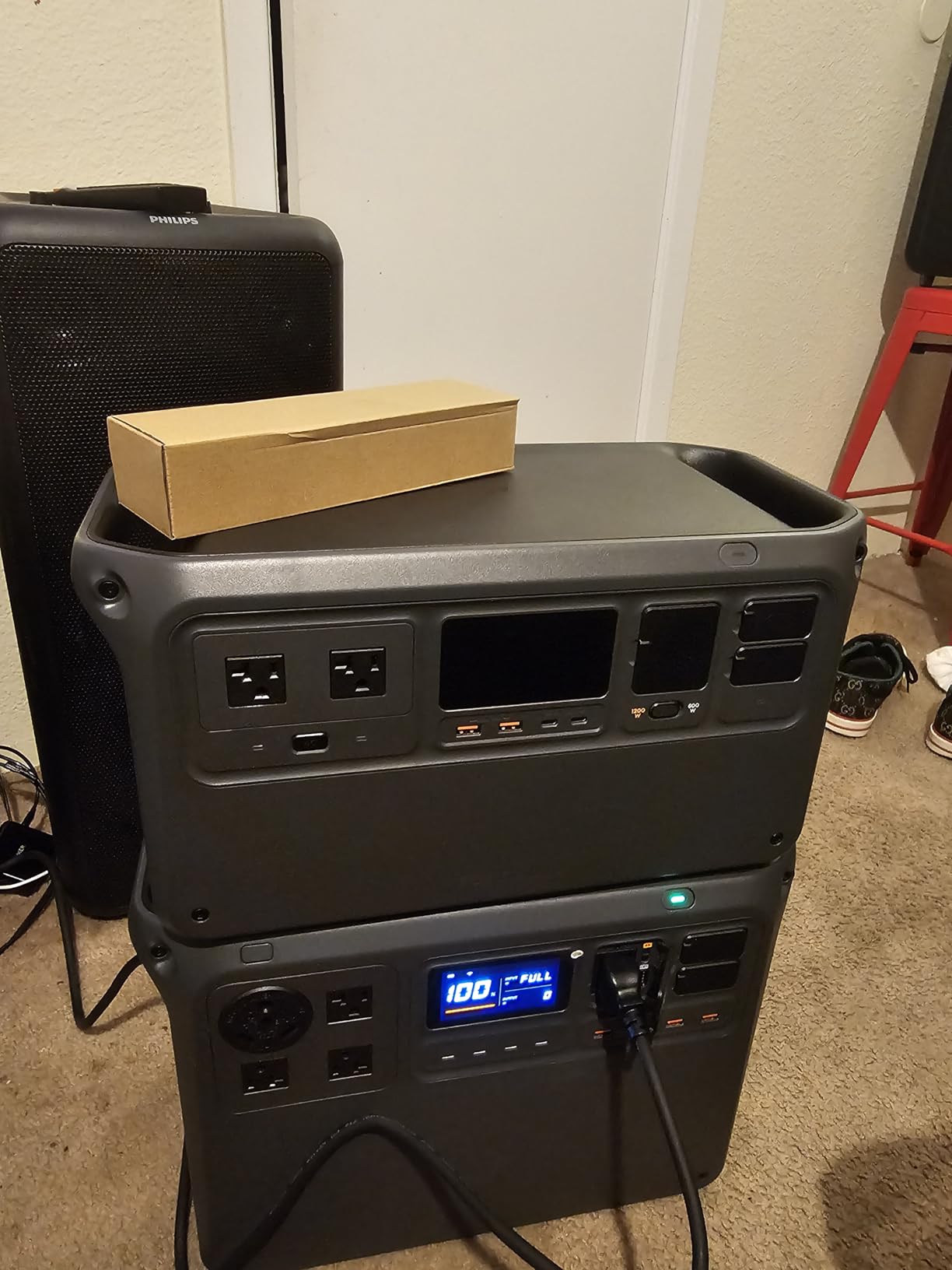
There are 15 ports including dual full SDC ports for group charging, and the expansion path runs to 22.5kWh with add-on batteries, enough for four to six days of home backup. A smart BMS, sub-nano coating and flame-retardant housing handle outdoor durability, and the DJI Home app gives wireless status and settings control.
The significant drawback is solar. The MPPT and car charging modules are not built in, so connecting a panel or a car battery requires a separate compatible adapter, which adds cost and a step to every setup. The one-year manufacturer warranty is also the shortest here, and 47.9 lb makes it the heaviest unit in the 2kWh class.
Does the DJI Power 2000 work for a cabin with a fridge, lights and a laptop?
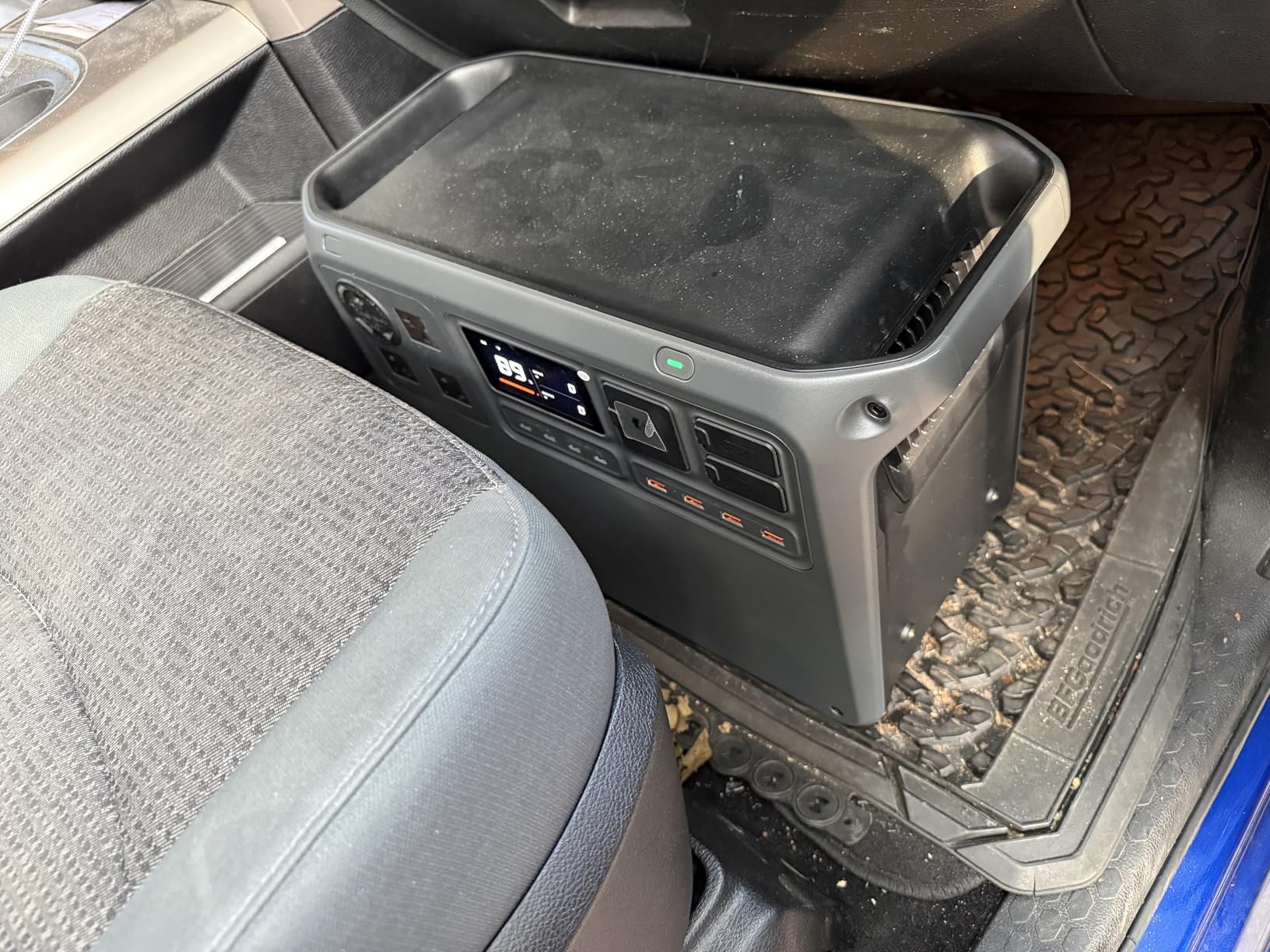
More than comfortably. Most owners treat it as a home backup unit that runs a refrigerator, lights, networking and small appliances for a full day on a single charge, and 3000W of headroom means you are never rationing outlets.
The 30 dB noise floor is what makes it distinctive. If your off-grid space is a bedroom, a studio or a sleeping area in a trailer, that is a real advantage over units that need their fans spinning.
Why off-grid buyers may want to look elsewhere
Solar is the sticking point. A separate adapter for every panel connection is friction you do not want when your entire energy model depends on daily recharging, and the 47.9 lb weight is significant if you plan to move it between the cabin and the house.
The one-year warranty is the other concern for a ten-year off-grid plan. If you intend to keep this for the life of a homestead, the five-year coverage on most rivals is worth the premium.
10. Anker SOLIX S2000 – Best for Compact UPS Backup
Anker SOLIX S2000 Portable Power Station, 2,010Wh, 1,500W
2010Wh LFP with 314Ah cells, 10,000 cycles
1500W continuous, 3000W peak
35.7 lb, 8 outlets
5 year warranty
Pros
- 314Ah LFP cells rated for 10000 cycles and a 15-year lifespan
- 6W idle draw gives about 35 hours on a refrigerator
- Compact 8.2 x 11.1 x 12.7 in body at 35.7 lb
- Under 10ms switchover with roughly 3W draw in UPS mode
Cons
- No 12V DC port on this configuration
- 1500W continuous is the lowest output in this roundup
- Cooling fan is noticeably loud during 1200W charging
- No dedicated carrying handle
The Anker SOLIX S2000 is a battery-first machine. The 314Ah LiFePO4 cells are rated for 10,000 cycles, which projects a 15-year lifespan, and that is the highest cycle rating in this roundup. At 2010Wh with a 6W idle draw, efficiency work delivers roughly 20% longer runtime than comparable 2kWh systems, with a measured 35 hours of refrigerator runtime.
Physical size is the other argument. The chassis is 8.2 by 11.1 by 12.7 inches and weighs 35.7 lb, 30% smaller and 25% lighter than the industry average for this class. Eight outlets are split between front and rear, so you can keep always-on loads such as a router separate from daily devices.
For a home office or a small cabin, the UPS behaviour is the reason to buy it. Switchover is under 10ms and idle draw in UPS mode is roughly 3W, so leaving it permanently switched on costs almost nothing while keeping computers, a NAS and a router alive through an outage.
The 1500W continuous output is the limit that defines it. That is the lowest ceiling in this roundup, and it means no large resistive loads and no heavy air conditioning. There is also no 12V DC port on this configuration, the cooling fan is loud during 1200W charging, and there is no dedicated carry handle.
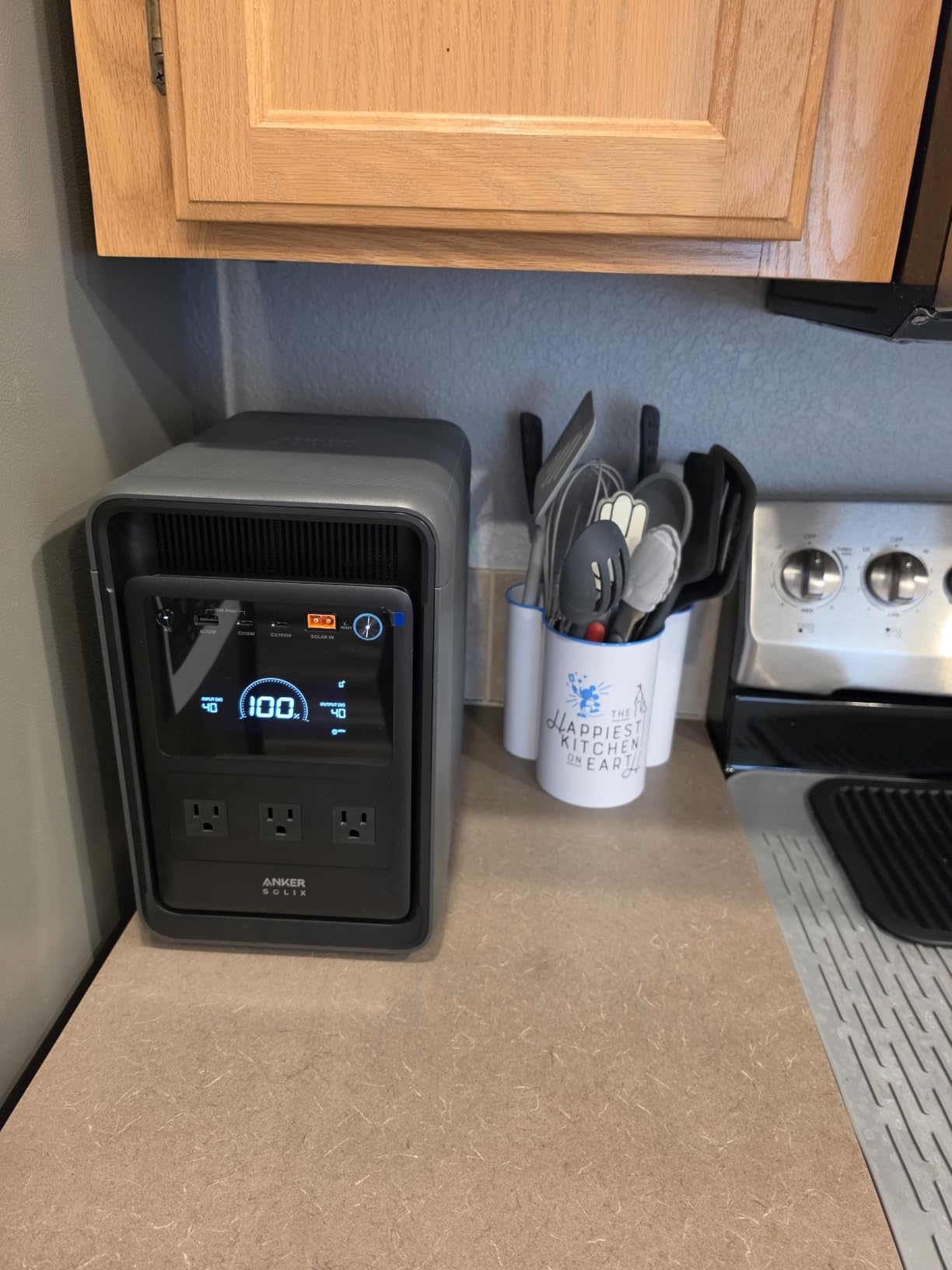
Is it the right choice as a permanent UPS for a home office?
It is one of the best. A 3W UPS-mode draw, sub-10ms transfer and 10,000-cycle cells make this a set-and-forget unit for a router, a switch, a NAS and a monitor. It also recharges by six routes, including AC plus solar, wall outlet, generator, panels, alternator charger and car outlet, with up to 400W of solar input.
Because it is LFP, leaving it plugged in and switched on is a reasonable long-term plan rather than a compromise.
When the S2000 is the wrong off-grid choice
It will not run a microwave, an electric kettle and a fridge at the same time, and it will not touch a pump or anything 240V. For off-grid living that means it works as a weekend and backup layer, not as your primary supply.
The missing 12V DC port also rules out direct 12V appliances, and the reported chemical odour during the first charge, plus the loud fan at high charging power, are worth factoring into where you install it indoors.
11. Jackery Explorer 2000 v2 – Best for Lightweight Portability
Jackery Explorer 2000 v2 and 2x200W Solar Panels, 2042Wh, 2200W AC Output
2042Wh LiFePO4
2200W AC output across 3 outlets
39.5 lb unit, 2x200W panels
5 year warranty
Pros
- Lightest 2kWh LFP body at 39.5 lb
- 41% lighter than conventional units
- 0-80% in 66 minutes on AC
- 20ms switching certified to UL1778 for UPS use
- Silent charging mode at 30 dB completes a full charge in 5 hours
Cons
- Solar input limited to 400W
- taking about 6 hours to refill
- L-shaped DC7909 plug must be swapped for the straight DC8020 plug for the included panels
- Package weighs 66.8 lb including the panels
- Only three AC outlets
The Explorer 2000 v2 is built on the Cell-to-Body design, which is why it weighs 39.5 lb while holding 2042Wh, 41% lighter and 34% smaller than conventional units of the same size. For an off-grid setup where you move the battery between the truck, the shed and the porch, that is a real working advantage rather than a spec-sheet number.
Output is 2200W across three AC outlets plus a 100W USB-C PD port for adapter-free laptop and phone charging. Recharge is quick, with 0 to 80% in 66 minutes on AC, or a full charge in 102 minutes once you enable Emergency Super Charging in the app. The silent charging mode runs at 30 dB and completes a full charge in 5 hours.
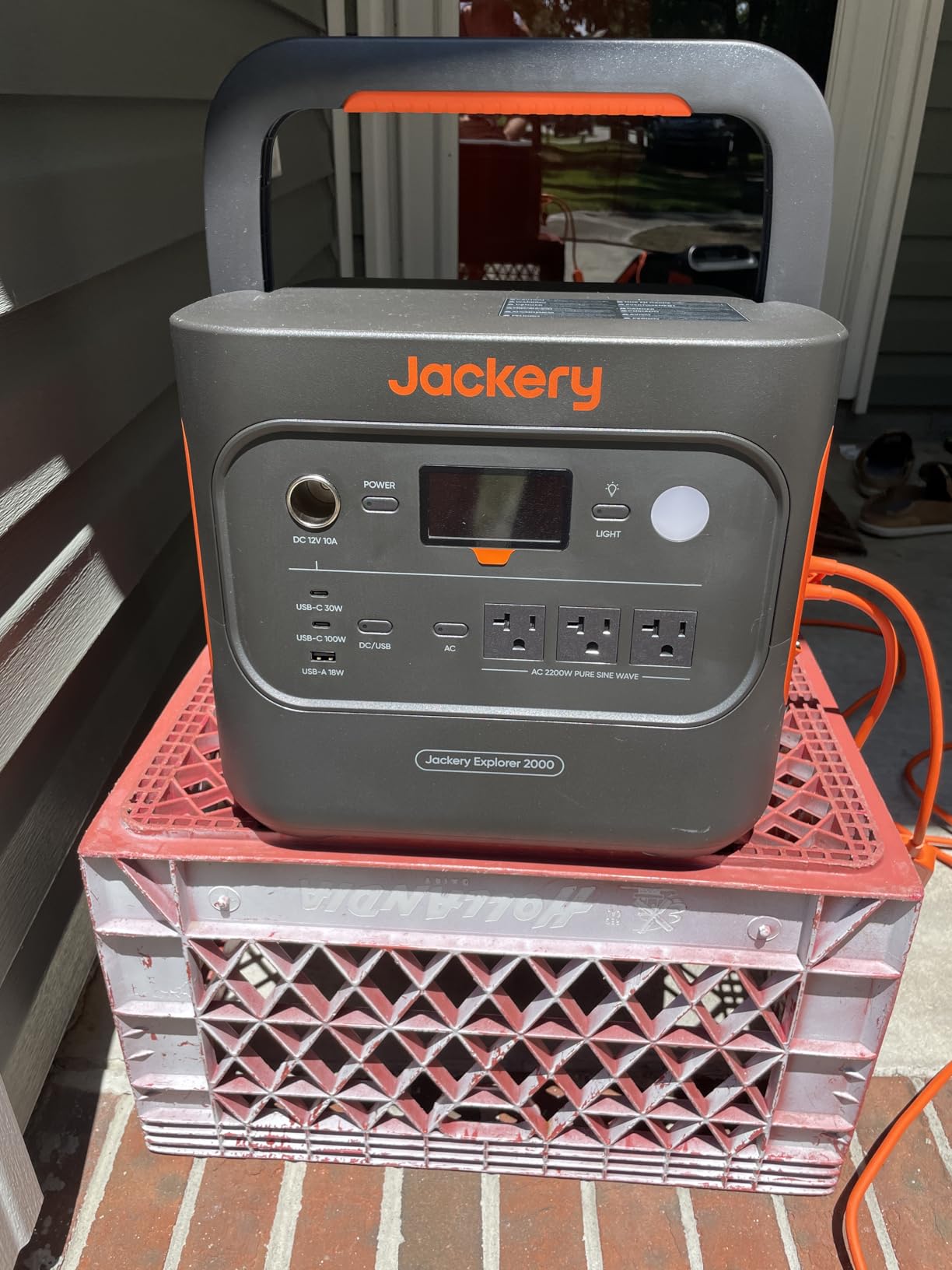
Switchover is 20ms and the unit is UL1778 test certified for uninterruptible power supplies, so it is a legitimate UPS replacement for a home office. The LiFePO4 battery is rated for up to 10 years of performance, and two 200W solar panels are included with a full solar charge in about 6 hours.
Two details will slow you down. Solar input is limited to 400W, which is the weakest recharge path for off-grid use in this roundup, and the included panels use a different connector from the port on the station, so the L-shaped DC7909 plug has to be removed and replaced with the straight DC8020 plug before the panels will work.
Will it keep a fridge, a router and lights running overnight?
Yes. The rated 72-hour runtime figure comes from low-draw loads, and in practice a standard refrigerator, a router and LED lighting will run comfortably through the night on 2042Wh, with plenty of margin in the morning.
The 2200W ceiling covers a coffee maker, a laptop charger, a router and a TV simultaneously, which covers the overwhelming majority of a cabin’s evening load.
Where portability stops helping
Weight only matters if you can also refill it. With a 400W solar input ceiling, the Explorer 2000 v2 takes roughly 6 hours of full sun to recover, so a battery you can carry is a battery you can recharge slowly.
Also note the packaged weight: 66.8 lb with both panels, which is the heaviest 2kWh package we measured. Plan where it lives before the delivery arrives, and check that DC7909 to DC8020 connector change on day one rather than the first cloudy afternoon.
12. Dabbsson 2000L – Best for Multi-Appliance Running
DABBSSON Portable Power Station 2000L, 2048Wh Semi-Solid LiFePO4 Battery, 2200W AC Output 6, 3300W Power Boost, 1 Hr Fast Charge, Solar Generator for Home Backup, Camping & RVs (Solar Panel Optional)
2048Wh semi-solid LiFePO4, 4000+ deep cycles
2200W continuous, 3300W power boost
Six AC outlets, 41 lb
3 year warranty plus 2 year extension
Pros
- Semi-solid LiFePO4 cells deliver roughly 1.3x the runtime of conventional 2048Wh stations
- Six AC outlets run more devices at once than any rival here
- Full AC recharge in about 1 hour
- 800W MPPT solar input plus 12V car charging
Cons
- App Wi-Fi pairing needs a 2.4 GHz network
- Charge and discharge limits in the app do not always hold
- Cooling fan cycles audibly at near-zero load
- Solar panel sold separately
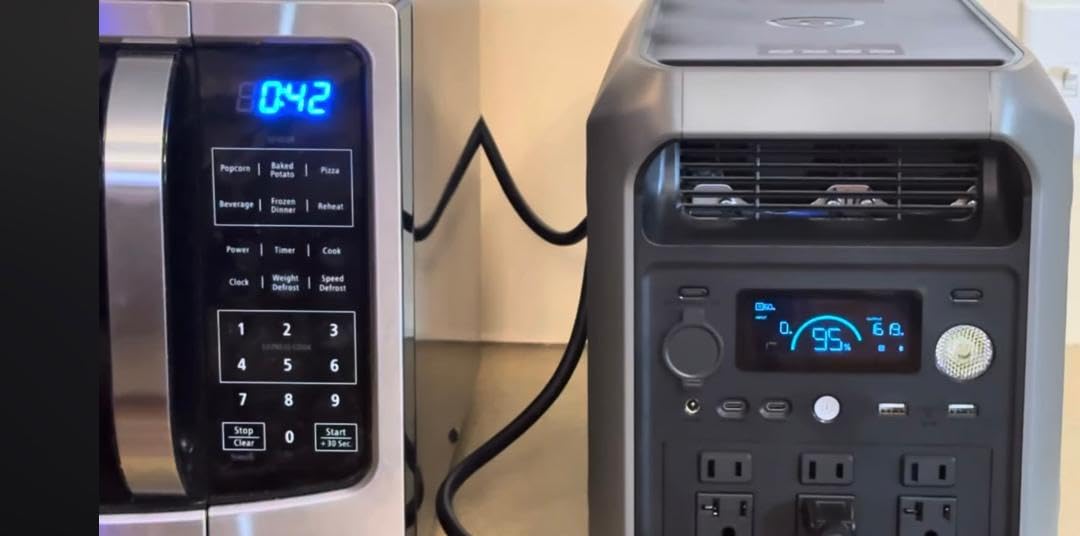
The Dabbsson 2000L is the pick if your problem is too many small appliances rather than one large one. Six AC outlets is the highest count in this roundup, and owners running multiple fridges report two freezers and two refrigerators for 7.5 hours and a single full-size refrigerator for over 20 hours on this station.
Its semi-solid LiFePO4 cells are rated for 4000+ deep cycles to 80% and deliver roughly 1.3x the runtime of conventional 2048Wh stations, according to owners who own dozens of power stations. Full AC recharge takes about an hour, with up to 800W of MPPT solar input and 12V car charging available through hybrid dual-input.
Output is 2200W continuous with a 3300W power boost and 4400W starting power, verified above 4000W peak under a kettle-and-toaster load. Under 15ms EPS switchover protects computers, NAS devices and routers, and the UL94-V0 flame-retardant housing carries full overcharge, overheat, short-circuit and voltage protection. The warranty is 3 years plus a 2-year extension.
The software is where it falls behind. App Wi-Fi pairing can be difficult and needs a 2.4 GHz network with Bluetooth as a fallback, and one reviewer reported charge and discharge limit settings that did not hold at the values set. The cooling fan also cycles audibly even at near-zero load, and the panel is a separate purchase.
Is it good for a homestead running several appliances at once?
For a household running a fridge, a freezer, a router and lights simultaneously, the six-outlet layout removes the constant swapping that trips people up on three-port units. 2048Wh of semi-solid capacity carries that load for most of a day.
Its 800W MPPT solar input is also one of the better recharge paths for a unit of this size, so a modest array keeps pace more convincingly than the 400W-ceiling alternatives.
What should buyers be cautious about?
App reliability. If remote monitoring and charge scheduling matter to you, test the pairing on your own router before you rely on it, and confirm your limits are holding after a few days of use.
It is also 120V only, so a well pump or water heater is out of reach, and the audible idle fan is worth weighing against the silent units on this list if the station will sit in a bedroom. The bundled-panel gap means budgeting for solar separately.
How to Size a Solar Generator for Off-Grid Living
Pick your daily energy budget first, then work backwards. A weekend cabin with a small refrigerator, LED lighting, a router, a laptop and a 12V pump typically consumes 3 to 6 kWh per day. A two-person full-time household running a refrigerator, lights, a coffee maker, a laptop and a washing machine a few times a week lands around 8 to 12 kWh. A family of four with electric heat, a well pump and a workshop can be north of 25 kWh, which is where portable power stations stop being realistic.
Multiply that daily figure by the days of autonomy you want. One clear day is 1.0, an overcast week in autumn is roughly 2.5, and a winter storm scenario deserves 3 to 4. A 2,048Wh station is one day of a 2 kWh daily load, three days of a 700Wh load, and nothing at all for a 10 kWh household. This is the single most common sizing error, and it is why owners on r/OffGrid and r/SolarDIY so often end up buying twice what they first thought they needed.
For runtime per appliance, divide the unit’s usable watt-hours (about 80 to 90% of nameplate) by the appliance’s average wattage. A 150W refrigerator cycling half the time averages 75W, so a 2,073Wh station at 90% usable delivers roughly 1865Wh, or about 24 hours. A 700W coffee maker used for six minutes a day costs about 116Wh a day, which is the worked example that changes how people think about these machines.
Now size the panels. A 400W panel realistically delivers 200 to 300W in average conditions, so two 400W panels on a clear day can push roughly 3 to 5 kWh into a bank. If your daily load is 6 kWh, you need closer to 1000W of panel input minimum, and 1500W or more if you want recovery after cloudy days. Every unit in this roundup except two accepts at least 400W, and we would treat anything below 1000W as a weekend-only constraint. The Jackery Explorer 2000 v2 at 400W is the clearest example of a station that is fast on AC and slow on sun.
Voltage decides the rest. If a 120V-only station covers your loads, you can pick on capacity and weight. If you have a 1 HP well pump, an electric water heater, a clothes dryer or a 240V shop tool, you need split-phase output, and that narrows this list to the EcoFlow DELTA Pro 3 and the Jackery HomePower 3600 Plus. No amount of extra watt-hours fixes a voltage mismatch.
Expansion matters for long-term plans. Stations that grow to 11, 21, 22.5 or even 48kWh let you start with a smaller bank and add capacity once your real consumption is measured rather than estimated. Stations fixed at 2,073Wh, 3,072Wh or 2,048Wh are cheaper to buy and cheaper to move, but they cap you permanently at one day of modest load.
Whole-home integration is where most DIY plans stall. Feeding a house through a portable station needs a transfer switch, and in most places a permit and a licensed electrician. That installation cost can exceed the price of the station itself, so price it in before you finalise a purchase. For comparison, our breakdown of function generators and inverter-type options covers when a wired inverter and battery bank makes more sense than a portable unit.
Know when to stop shopping. Above roughly 10kW of continuous output, or when you need serviceable capacity in the tens of kilowatt-hours, a wired off-grid inverter with a fixed battery bank is cheaper per kWh, easier to expand and serviceable by any electrician. Portable power stations earn their place as the weekend layer, the backup layer and the first stage of a staged build, not as a permanent substitute for residential infrastructure.
The honest downsides. You cannot make power on demand, so a long cloudy stretch is a real outage unless you have banked the capacity. Cold weather and low sun derate both panel output and battery performance, which is why the Jackery HomePower 3600 Plus’s -4 degrees F specification matters in northern climates. Bundled panels are almost always too small to refill the battery they ship with. Heavy units of 115 to 125 lb are installed rather than portable. App connectivity is inconsistent across brands, and support quality varies. And on forums like Electrician’s Talk and the DIY Solar Forum, the most common safety advice is consistent: lithium banks belong in a ventilated, non-combustible location away from sleeping spaces, not on a bedroom floor.
Against a propane generator, the economics flip depending on how you live. A fuel generator produces power on demand at a low purchase price and high running cost, and it is unbeatable in a week of cloud. A solar generator costs more up front, has no fuel logistics, is silent, and costs nothing per kilowatt-hour once the panels are paid for. For full-time off-grid living, the solar side wins over a decade; for storm-only backup in a grid-connected home, a fuel unit is usually the cheaper answer.
Frequently Asked Questions
What is the best solar generator for off-grid living?
For most off-grid setups the BLUETTI Elite 200 V2 is the best balance: 2073.6Wh of LiFePO4 capacity, 2600W continuous output with 3900W power lifting, two 200W solar panels included and a five-year warranty. If your heaviest load is 240V, such as a 1 HP well pump or an electric water heater, the EcoFlow DELTA Pro 3 is the only unit in our roundup with true 120V/240V split-phase output.
Can you live off the grid with a solar generator?
For a cabin running a refrigerator, lights, a router, a laptop and a small pump, yes. A 2,000 to 3,000Wh station with 1,000W or more of solar input covers that load daily. For full-time residential living with electric heat, a well pump and a workshop, no portable station is sufficient, and a wired off-grid inverter with a battery bank is the correct route.
How big of a solar generator do you need to run a house?
Work out your daily kilowatt-hour use first. A simple cabin consumes roughly 3 to 6 kWh a day, a two-person full-time home 8 to 12 kWh, and a family home with electric heat and a pump far more. Multiply that by two to four days of autonomy for cloudy weather, then choose continuous output above your largest single load, and at least 1,000W of solar input to refill it.
What type of generator is needed to live off-grid?
Two layers, usually. A portable power station handles the everyday load of lights, a refrigerator, a router and tools, and recharges from panels. A fuel generator covers what storage cannot, such as a heat pump, a well pump or a multi-day storm. Long-term owners on r/solar consistently describe the generator as backup for clearing snow rather than primary power.
Can a solar generator run a whole house?
Only with help. Running an entire house requires a transfer switch, a permit in most jurisdictions and a licensed electrician, plus enough capacity to carry the load through night. Among our picks the EcoFlow DELTA Pro 3 offers 120V/240V split-phase output and expands to 48kWh, and the Jackery HomePower 3600 Plus reaches 21kWh per unit with dual voltage output.
How long will a 2000 watt solar generator run a refrigerator?
A 2,048Wh station holds roughly 1,800 to 1,900 usable watt-hours after inverter losses. A typical 150W refrigerator cycling about half the time averages 75W, which gives around 24 hours. Measured figures from owners run higher on efficient models, with the Anker SOLIX S2000 rated at about 35 hours and the Anker SOLIX C2000 Gen 2 at up to 32 hours on a dual-door fridge.
What are the downsides of solar generators?
They store power rather than create it, so a long cloudy stretch means no output. Cold and low-sun conditions derate both panels and battery. Bundled panels are usually too small to refill the battery, heavy units above 100 lb are installed rather than portable, app connectivity varies between brands, and whole-home use adds a transfer switch and electrician to the cost.
Conclusion: Which Tier Fits Your Off-Grid Life
For a weekend cabin or a home office, the 2,048Wh class is the sweet spot, and the BLUETTI Elite 200 V2 is the pick because it ships with panels and carries the longest review history here. For a cabin that needs more room, the BLUETTI Elite 300 gives you 3,014Wh in the smallest body available. For 240V loads, a pump or an electric heater, you have two real choices: the EcoFlow DELTA Pro 3 for whole-home capacity, or the Jackery HomePower 3600 Plus for expandability to 21kWh and cold-weather capability.
One rule to size with: buy for your daily kilowatt-hours times your days of autonomy, then make sure your solar input is at least 1,000W. If your answer to either of those lands above 10kW, step up to a wired inverter and battery bank instead of a portable station, and compare against our broader generator roundup for the fuel-backed backup layer.