
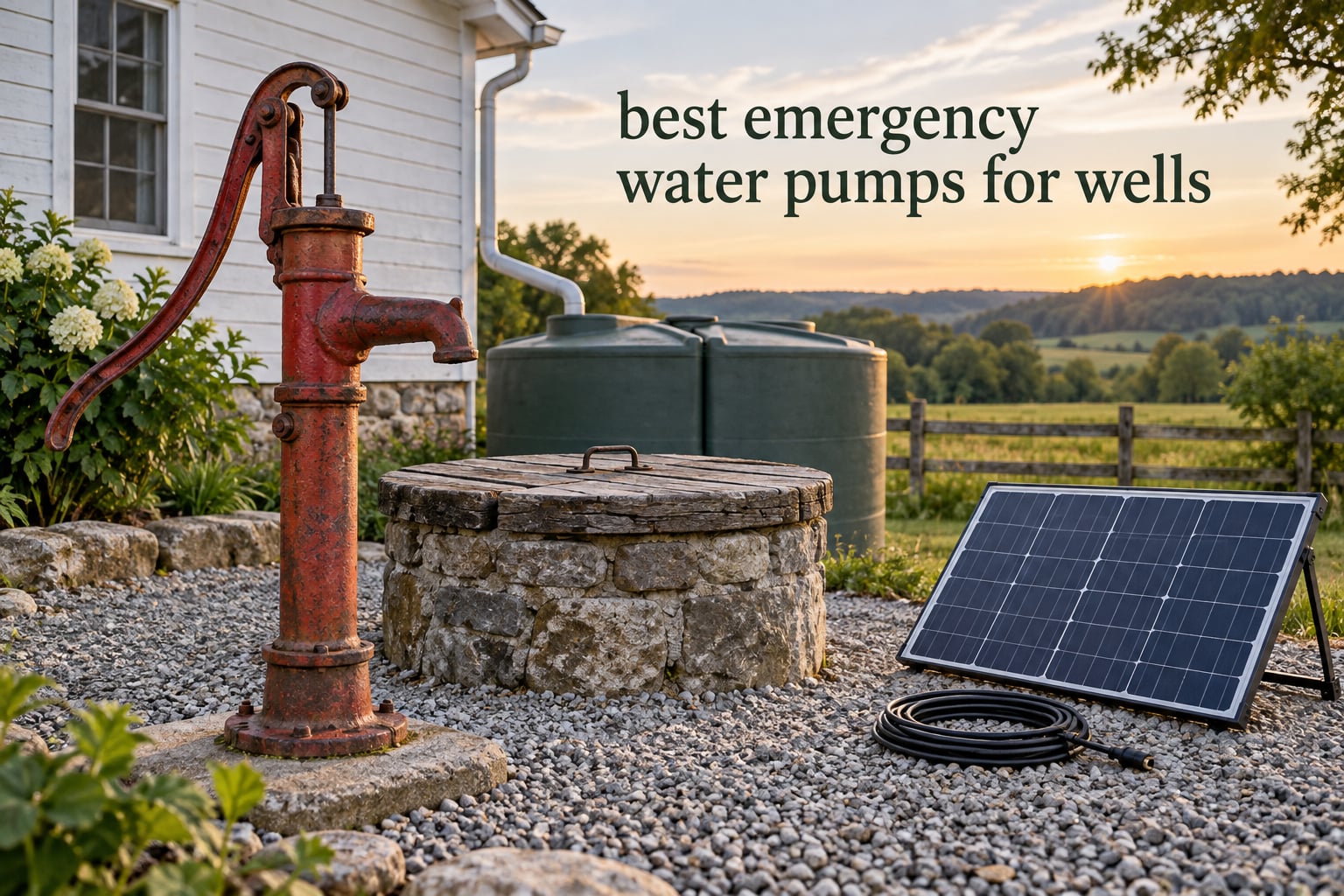
If your household water comes from a private well, a dead submersible pump or a week without grid power means no water at all. That is not a plumbing inconvenience, it is a problem with drinking, cooking, sanitation and flushing. The pump sitting at the bottom of your casing typically lasts 10 to 15 years, so every well owner eventually faces the same morning.
That is what this roundup of the best emergency water pumps for wells is built for. We compared ten backup options across manual hand pumps, 12V DC pumps, solar kits and replacement submersibles, and the single question that decides whether any of them works in your well is how deep your water sits. That depth is called the static water level, and it is the number to find before you buy anything.
We also updated this guide for 2026 because the emergency water category is quieter than the general well pump category, and most of what is sold under an emergency label is really a daily-use pump. Our picks below are organized by lift capability, not by brand prestige, so you can find the class that matches your well in seconds.
For the wider picture, our guides to the best water pumps overall and the best solar water pumps cover the non-emergency end of the market.
Table of Contents
Top 3 Picks for Emergency Water Pumps in 2026

Simmons 1160/PM500 Pitcher Pump
- Cast iron body
- 25 ft maximum lift
- Hand powered
- Needs no electricity

VEVOR 1 HP 115V Submersible
- 37 GPM flow
- 207 ft max head
- IP68 stainless steel
- Built-in check valve

VEVOR 25 ft Cast Iron Hand Pump
- Cast iron
- 25 ft maximum lift
- Hand powered
- No power required
The Simmons is our Editor’s Choice because it carries the deepest review history in the group at 999 ratings and a 4.4 average, which matters more for a pump you might use twice in a decade than for a gadget you use daily. The VEVOR submersible takes the Premium Pick slot for anyone whose well is deep enough that a 25 ft hand pump is useless. The budget hand pump is the cheapest honest way to prove a backup plan works before committing to an installation.
Best Emergency Water Pumps for Wells (October 2026)
Every pump below is listed with the specification that decides fit first. Read the lift rating before anything else, because a pump that cannot reach your water will not lift a drop no matter how well it is built.
| Product | Specifications | Action |
|---|---|---|
| Simmons 1160/PM500 Pitcher Pump |
|
Check Latest Price |
| VEVOR 1 HP 115V Submersible |
|
Check Latest Price |
| VEVOR 25 ft Cast Iron Hand Pump |
|
Check Latest Price |
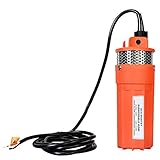 ECO-WORTHY 12V DC Submersible ECO-WORTHY 12V DC Submersible |
|
Check Latest Price |
 XtremepowerUS 25 ft Hand Pump XtremepowerUS 25 ft Hand Pump |
|
Check Latest Price |
 Locci Stainless Steel Hand Pump Locci Stainless Steel Hand Pump |
|
Check Latest Price |
 6699 SWP 300 Cast Iron Hand Pump 6699 SWP 300 Cast Iron Hand Pump |
|
Check Latest Price |
 Red Lion 1/2 HP 230V Submersible Red Lion 1/2 HP 230V Submersible |
|
Check Latest Price |
 ECO-WORTHY 100W Solar Pump Kit ECO-WORTHY 100W Solar Pump Kit |
|
Check Latest Price |
 WASSERMANN 1 HP 115V Submersible WASSERMANN 1 HP 115V Submersible |
|
Check Latest Price |
1. Simmons 1160/PM500 No.2 Pitcher Pump – Our Best Overall Emergency Pick
Simmons 1160/PM500 No.2 Pitcher Pump
Cast iron body
25 ft maximum lift
Hand powered
6.8 lb
Pros
- Close grain cast iron built for long service
- 999 ratings give the deepest review history in the group
- Installs on existing well pipe or a new well point
- Adjustable cap for a range of handle positions
Cons
- Leather cup and flapper seals can arrive dry and need soaking or a rebuild kit
- Loses prime without a shut-off valve close to the pump
- Some units arrive missing handle cotter pins
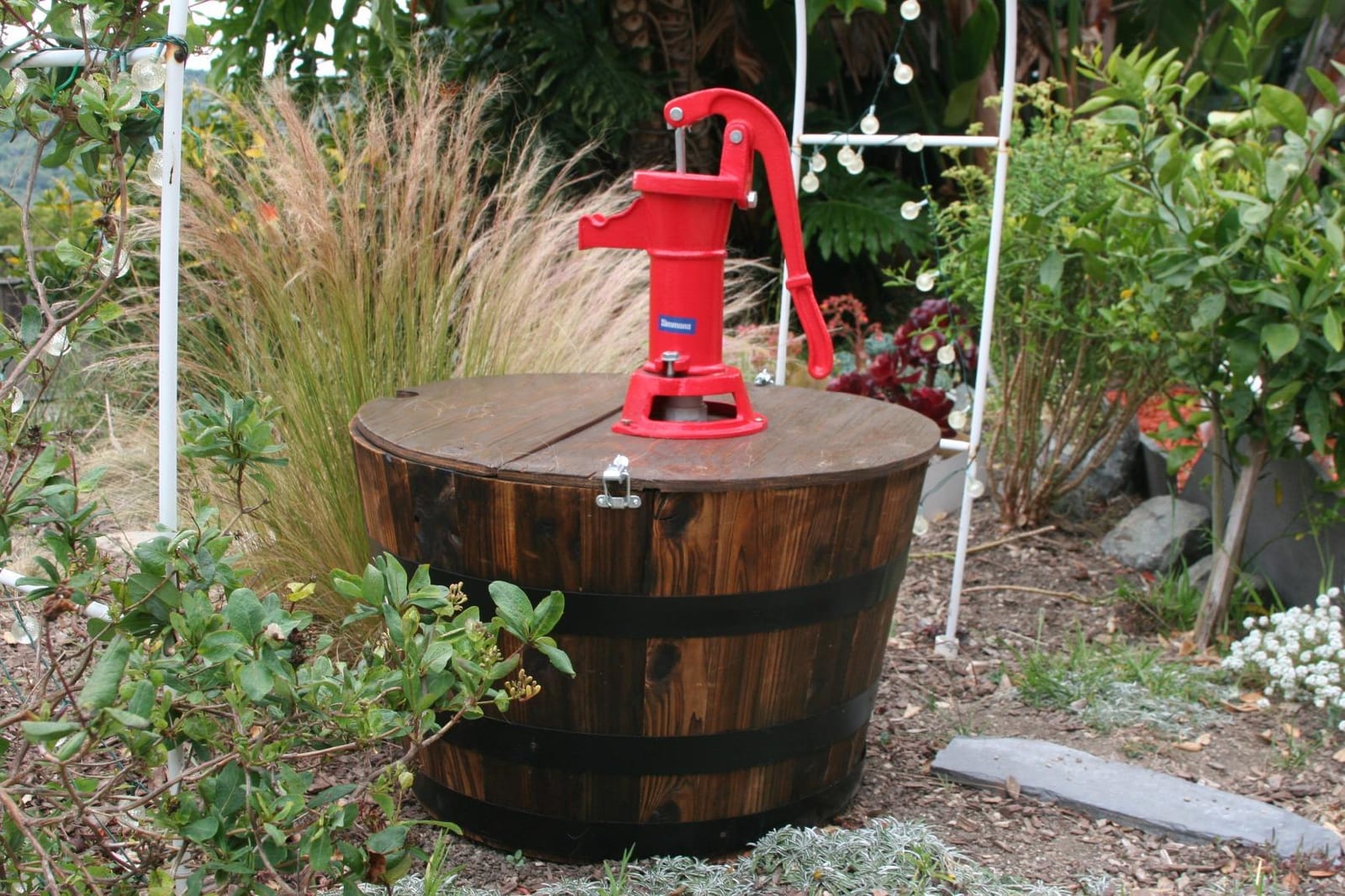
This is the pump most rural households end up owning, and the reason is unglamorous reliability rather than specification. Every part is close grain cast iron, the bolt lugs are reinforced, and the listing rates a 25 foot maximum lift and 10 gpm with a hand power source. At 6.8 pounds it is light enough to reposition alone when you need to service it.
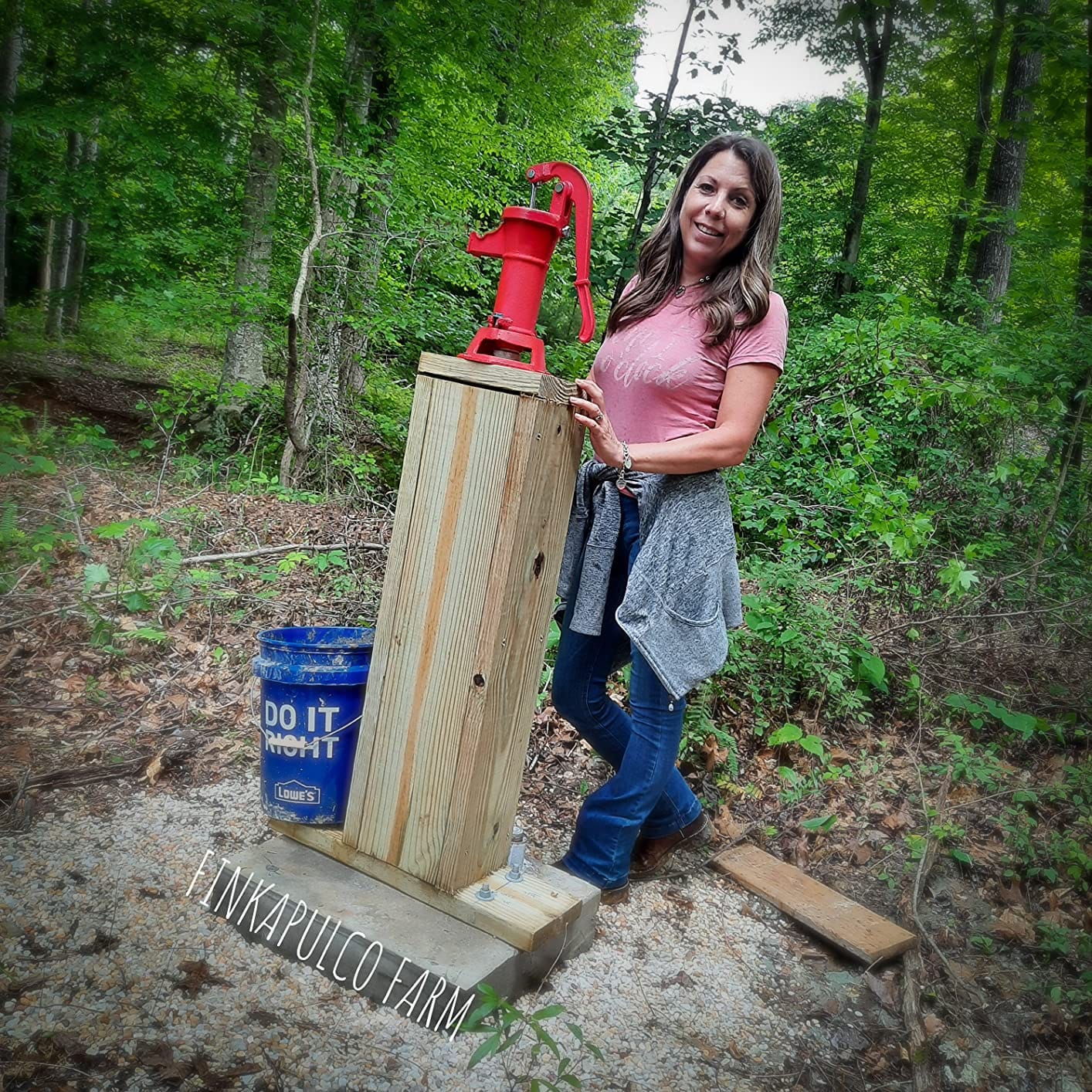
Owners overwhelmingly install it as a manual backup to an electric shallow well pump, and they describe installation on existing well pipe as straightforward. The cast iron finish also gives it a vintage look that plenty of people leave visible in the yard.
The caveat that comes up most is maintenance of the seals, and it is worth planning for. The leather cup and flapper seals dry out between uses, so they need soaking before a pump-down or replacement with a rebuild kit. This is not a defect, it is how leather works, but an emergency pump you have not touched in three years may need attention before it produces water.
A brass shut-off valve installed close to the pump solves the other recurring complaint. Without one, the pump can lose prime and you will be chasing the handle instead of the problem.
Owners also report occasional units arriving without cotter pins or with a top tension bolt that will not hold, so check the hardware before you put the pump underground. A small minority of reports, and easy to catch on day one.
Will this pump work on your well
It works if your static water level sits within 25 feet. Most dug wells, sand-point wells and shallow driven wells qualify, and a home on a 100 foot well does not. Check your well depth record or ask your contractor before buying.
Because it is hand powered, it works during any outage with no batteries, no generator and no fuel.
When a different pick makes more sense
Choose the VEVOR submersible instead if your well is deeper than 25 feet or you need household pressure restored rather than a container filled. A hand pump cannot serve a shower, and expecting one to is the most common disappointment in this category.
Seal maintenance is also a factor if you live somewhere the pump will sit unused for years. Learn the rebuild procedure before you need it.
2. VEVOR Deep Well Submersible Pump 1 HP 115V – Best for Deep Wells Needing Real Pressure
VEVOR Deep Well Submersible Pump 1 HP 115V/60Hz 37 GPM Flow 207 ft Head
1 HP 115V
37 GPM max flow
207 ft max head
Stainless steel
Pros
- Strong consistent pressure that trips a 60 psi regulator quickly
- Stainless steel body and copper motor run quietly
- Included 33 ft cord with marked install tape
- Owners report buying a second as a spare
Cons
- A minority of builds failed within days of operation
- The 33 ft cord is lightweight
- Needs a large generator or inverter to start at depth
This is the pick for a well deep enough that a hand pump is pointless, and for anyone who wants running water back rather than a bucket of water. Six thermoplastic impellers deliver a listed 37 gpm maximum flow and 207 ft of maximum head, and the 4 inch body fits 4 inch or larger casing with a 1-1/4 inch NPT discharge.
The build is the part we like. The frame, outlet and connecting components are rated IP68 stainless steel, the motor is copper with built-in overheat protection, and a check valve plus a stainless steel mesh inlet come already fitted.
Installation is where the review record is most enthusiastic. Owners mention the included 33 ft cord and the marked measuring tape making the job straightforward, and several are running the pump on an inverter with solar and batteries for exactly the backup use we are describing here.
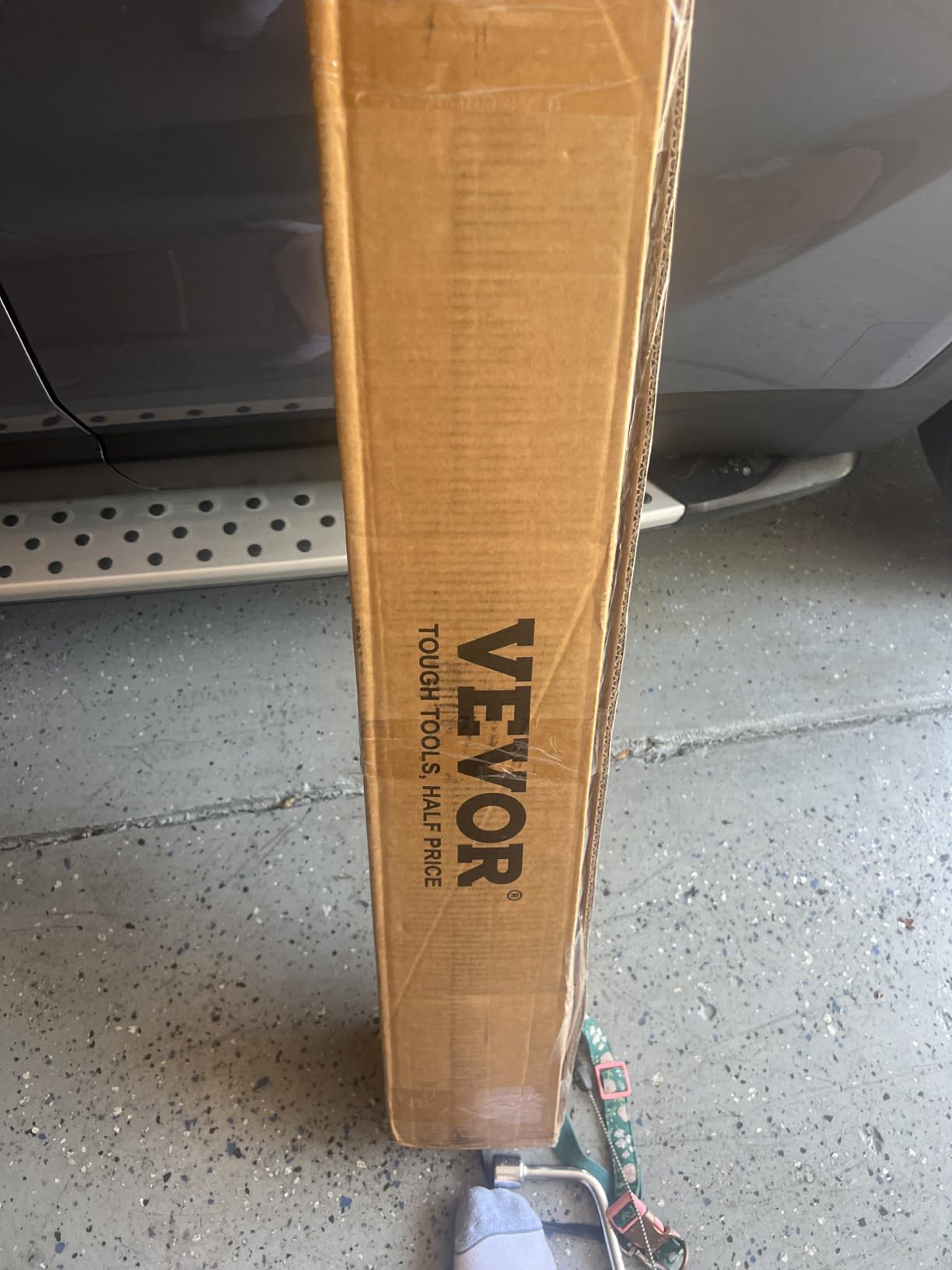
Two practical limits are worth planning around before you rely on this as an emergency unit. The 33 ft cord is on the light side for a pump that may sit far down a casing, and a 1 HP 115V pump pulling high startup wattage at depth needs either a large generator or a properly sized inverter and battery bank.
There is also a durability caveat. A minority of builds failed within days to a week of operation according to reviewers, and at least one return request went unanswered by support. Most buyers are satisfied and recommend it, and the pattern of buying a second as a spare is worth copying for an emergency-only role.
One rating of 4.5 across 485 reviews puts this at the top of the electric picks on rating, with enough volume behind it to trust.
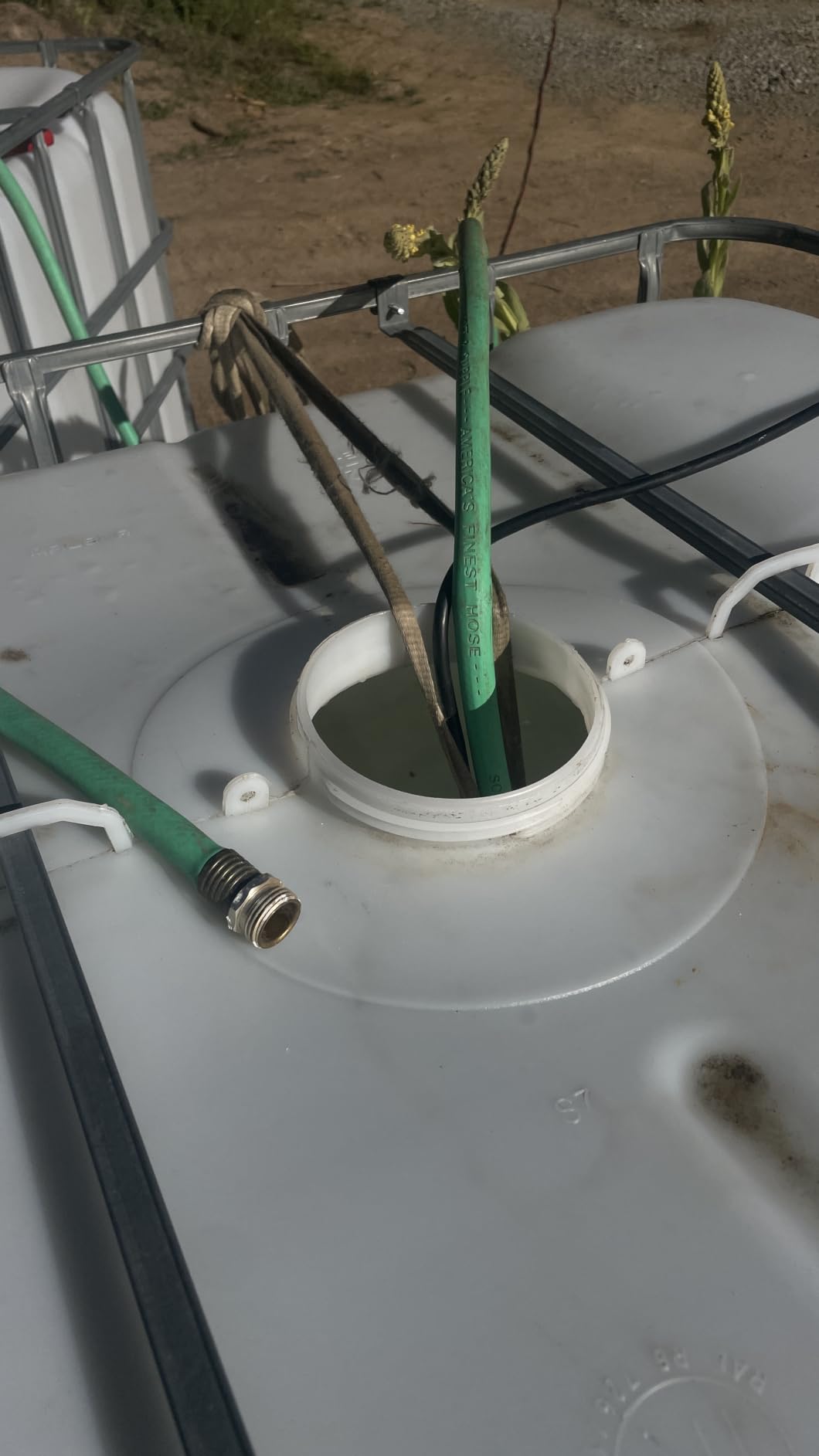
What you need before this pump runs
You need power delivery sized to the startup draw, a 4 inch or larger casing, and a control arrangement. This is a 115V unit, so a transfer switch or an inverter is on your list whether the outage comes from a storm or a pump failure.
Match it to the static water level. A pump rated for 207 ft of head is a poor match for a well where water sits at 30 feet, because oversized pumps cycle more often.
Where it falls short
It is a daily-use pump, not an emergency-only product, and it will not start without grid power or a generator. If your goal is water during a blackout with no fuel on hand, the 12V DC or hand options below serve you better.
Confirm the 33 ft cord reaches your pump setting before you order, since a longer cord is a cheap addition and a short one means pulling the pump back up.
3. VEVOR Well Hand Pitcher Pump 25 ft – Best Budget Way to Start
VEVOR Well Hand Pitcher Pump, 25 ft Maximum Lift, Antique Cast Iron Manual Hand Water Pump, NPT 1-1/4 in Connection, Easy Installation, Old Fashioned for Outdoor Garden, Pond, Backyard, Farm, Red
Cast iron
25 ft maximum lift
Hand powered
12.9 lb
Pros
- No electricity required so it works through any outage
- Coated cast iron handles rain snow and freezing
- Standard NPT 1-1/4 in connection installs in minutes
- Retro styling doubles as garden decor
Cons
- Manual effort is real work for every gallon
- 25 ft ceiling limits it to shallow wells and well points
This is the pump to buy first if you have never tested your backup plan. The body is cast iron with a rust-resistant coating and the thickened pipe is rated to take a hammer blow, which is the kind of detail that matters for something that will sit outdoors through a drought and an ice storm.
Buyers describe it as garden decoration and emergency hardware at once, which is a fair description of a red vintage pitcher pump mounted on a well point beside a fence. It lifts from depths up to 25 feet with no electricity at all.
Installation is the strongest part. A standard NPT 1-1/4 inch connection and a screwdriver are enough, and reviewers put it at two to three minutes. The handle is shaped to the palm curve and the spout carries a hook for hanging a bucket.
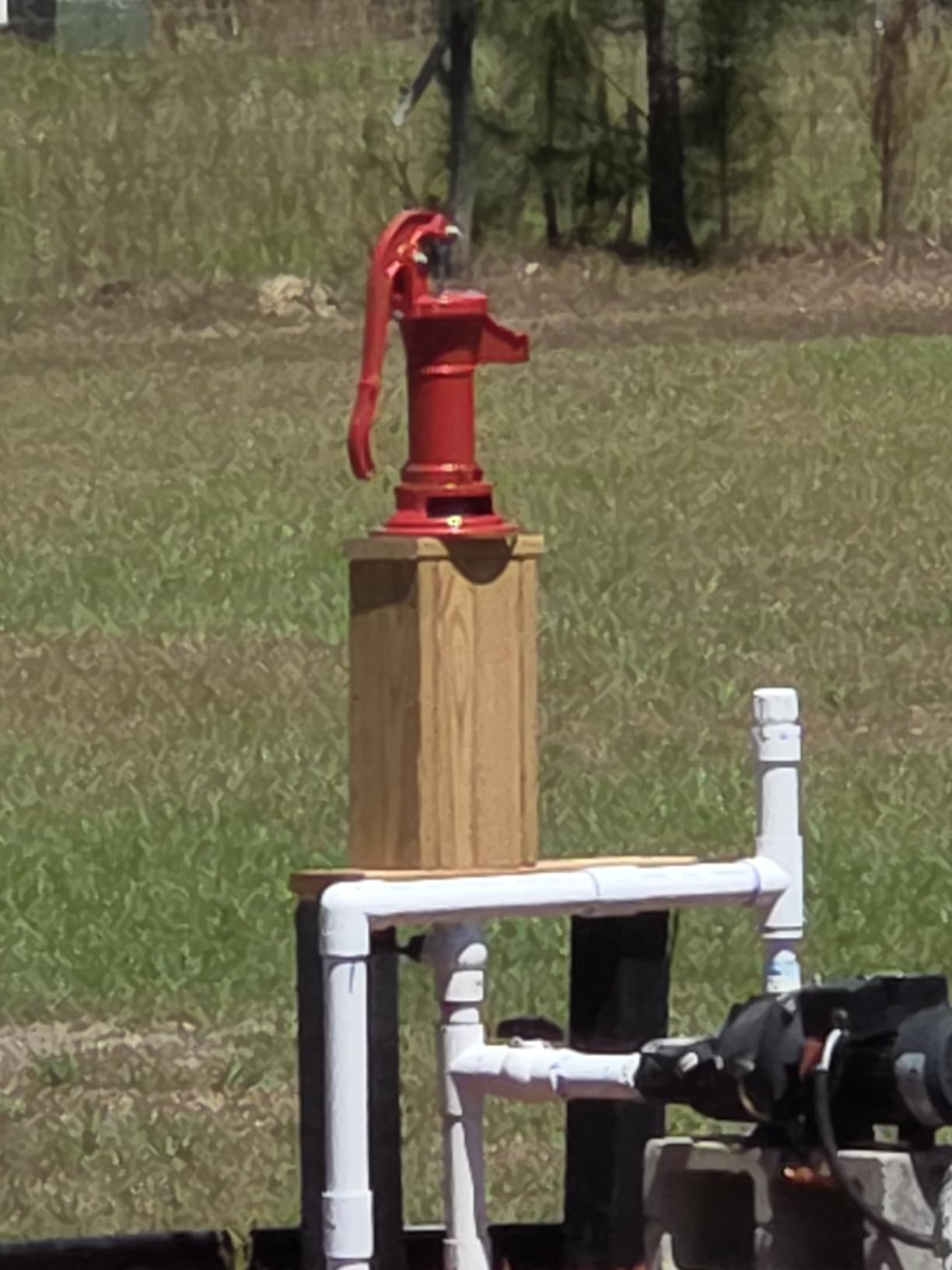
The limits are the ones inherent to any pitcher pump, and no amount of marketing changes them. Pumping is sustained physical effort for every gallon, and the 25 ft maximum lift confines it to shallow wells and well points.
Frame it correctly before you buy. This is a drinking, cooking, washing-up and garden watering source. It is not going to run a shower, and a household of four going through a normal day of indoor water use would exhaust anyone pumping by hand.
At 4.4 stars across 400 ratings it is well proven for what it does, and it ranks inside the Well Pumps category in the Tools and Home Improvement department on Amazon.
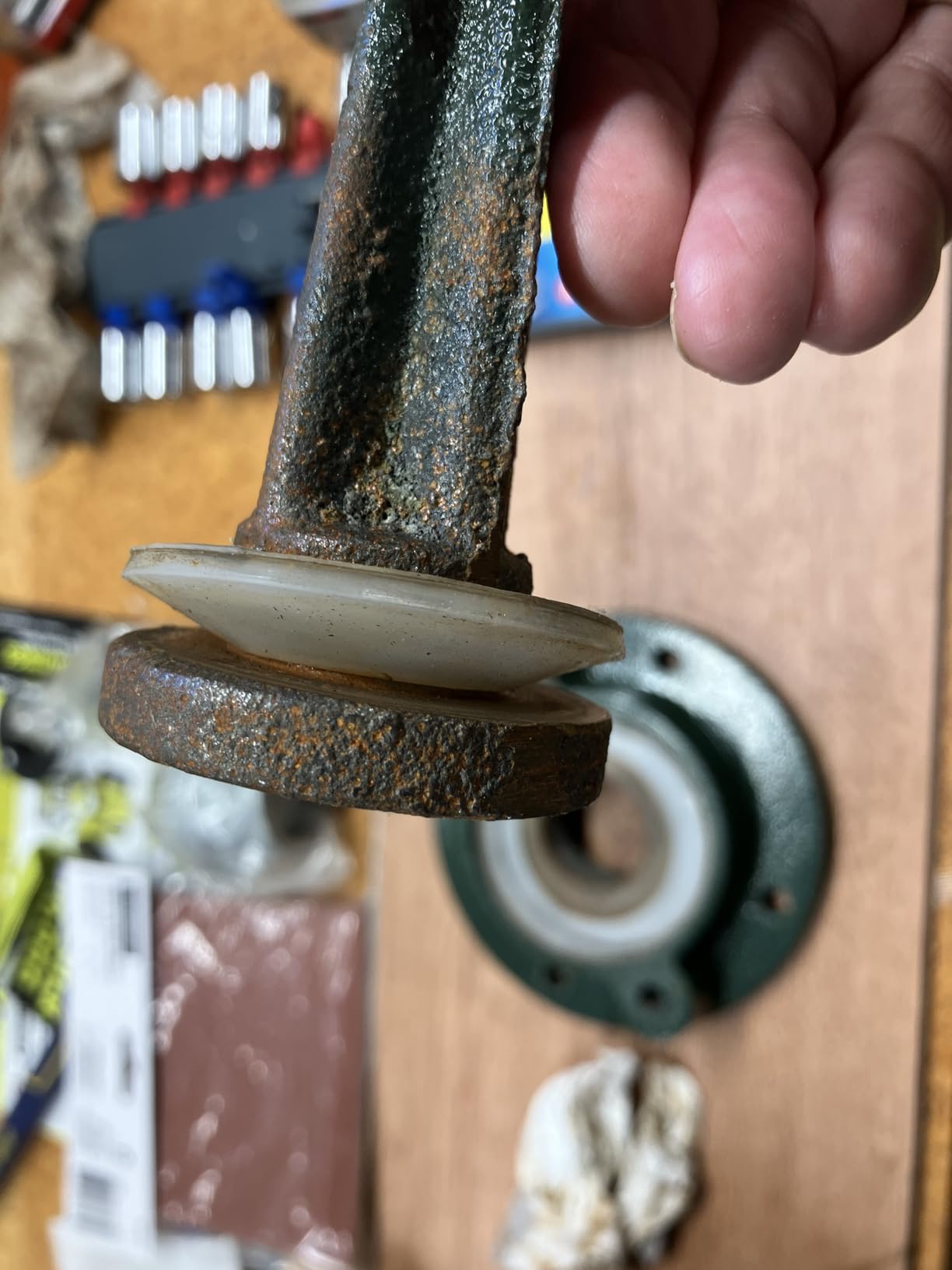
Is 25 feet enough for your well
It is enough for a sand point, a dug well or a shallow driven well where water sits near the surface. If your static water level is deeper than 25 feet, this pump will simply run dry, and no amount of priming will fix that.
Measure rather than guess. The static water level is the depth water rests at when the pump is off, and most well records include it.
When to buy something heavier
Move up if your well is deeper than 25 feet, if you need to fill a herd watering tank quickly, or if the effort of hand operation is going to defeat the purpose. The Locci and the SWP 300 are sturdier options in the same lift band.
It is also not the pump to buy for a freeze-prone location unless you plan to drain it, which we cover in the safety section below.
4. ECO-WORTHY 12V DC Submersible Pump – Best for Solar and Battery Backup
ECO-WORTHY 12V DC Submersible Well Water Pump with 10ft Cable, Water Flow 1.6GPM, Max Lift 100ft/30m, 96W Deep Well Pump for Irrigation, farm, ranch, home
12V DC 96W
1.6 GPM flow
100 ft rated lift
6.3 lb
Pros
- Runs from a 200W solar panel or a 12V battery
- Quiet linear layout without a noisy 90 degree kink
- Delivers over 100 psi about 6 ft above the water level
- Suits wells 4-1/8 inch or larger
Cons
- Thermal cutoff trips during long duty cycles
- Performance degrades after roughly 100-200 hours
- Flow drops noticeably beyond about 30 m of lift
This is the pump that turns a battery bank into household water. The DC motor runs directly from a 200W solar panel or a 12V battery, and the listing rates 1.6 gpm flow with a 100 ft lift. At 6.3 lb it is light enough to lower by hand with a rope.
Reviewers who bought it explicitly for catastrophic outage backup are the source of the most useful detail. Several point out the linear pump layout that avoids the noisy 90 degree kink found in cheaper imports, and one notes delivery of more than 100 psi about 6 ft above the water level.
It accepts tractor, lawn mower and car batteries as readily as a solar panel, and installation is a positive and negative connection plus the reserved rope lift hole. The manufacturer is explicit that you lift with the rope, not the wires.
Now the part that decides whether this is right for you, and it is a real constraint. The built-in thermal cutoff cuts out under sustained high pressure duty cycles, and reviewers report performance degrading after roughly 100 to 200 hours. Several owners describe pumps dying within weeks of continuous daily use.
Treat that as a specification, not a defect. This is a pump built for intermittent duty, and an emergency pump is intermittent duty by definition. If you intend to run it every day, choose a 230V submersible instead.
Two other fit notes. The body is too wide for some side-saddle casing fittings, and flow falls off noticeably past about 30 m of lift, so a 100 ft rating is a ceiling rather than a working depth.
What this pump is actually for
It is for filling a storage tank, a cistern or a herd watering tub from solar or a battery during an extended outage. Buyers describe the seller resolving defective pumps quickly, which is worth knowing if this is your only backup.
A 4.2 out of 5 average over 366 ratings reflects a well-liked product with a clearly drawn line between short bursts and long duty cycles.
When to pick a different option
Skip it if you need a full pressure system restored, if you need more than about 1.6 gpm, or if you expect to run it continuously. The thermal cutoff will end that experiment.
Also skip it if your casing has a tight side-saddle fitting. Measure the inside diameter of your well fittings before you order.
5. XtremepowerUS Antique Pitcher Hand Pump – Best Decorative Backup That Still Works
XtremepowerUS Well Hand Pitcher Antique Pitcher Manual Hand Pump Operated up to 25′ ft Max Lift Patio Water Well Fountain for Outdoor Garden, Pond, Backyard, Farm
Cast iron with coating
25 ft maximum lift
Hand powered
Manual
Pros
- Retro design works as an attractive garden feature
- No electricity so it is usable during an outage
- Coated cast iron holds up in rain snow heat and freezing
- NPT 1-1/4 inch connection installs in minutes
Cons
- Every gallon requires sustained physical effort
- 25 ft maximum lift limits it to shallow wells and well points
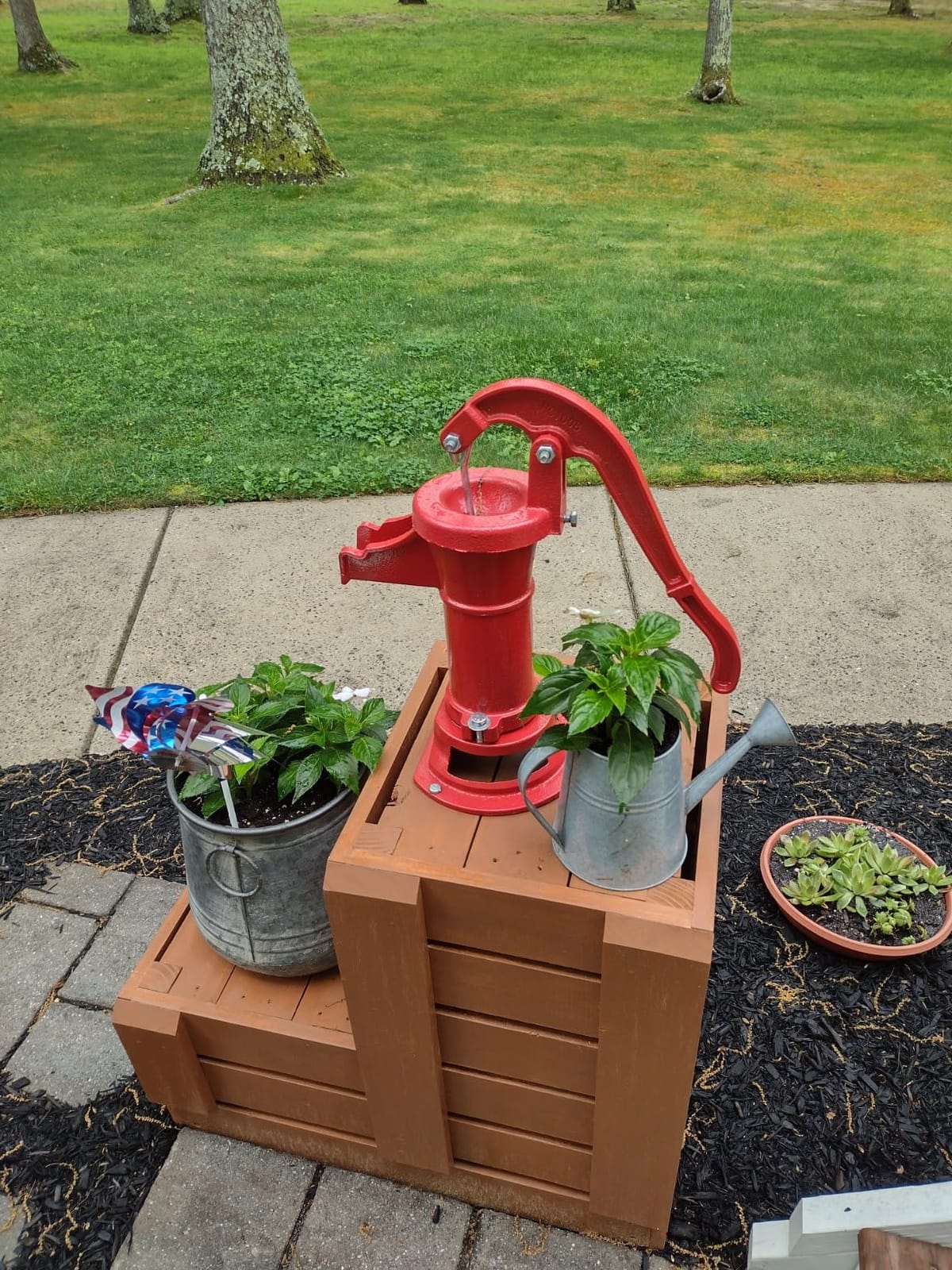
This sits in the same lift band as our budget pick and solves the same problem, with a different reason to own it. Buyers tend to frame it as a decorative pump for a garden, pond, campsite or yard that happens to also be usable when the power goes out.
The construction is cast iron with a rust-resistant coating, rated to lift up to 25 ft from a well point or shallow well, on a standard NPT 1-1/4 inch connection. Reviewers describe the install as a two minute job with a screwdriver.
Dimensions of roughly 9.5 by 8.5 by 19 inches give it a taller profile than some of the cast iron pitchers on this list, which matters if you are mounting it on a low well point or inside a pump house.
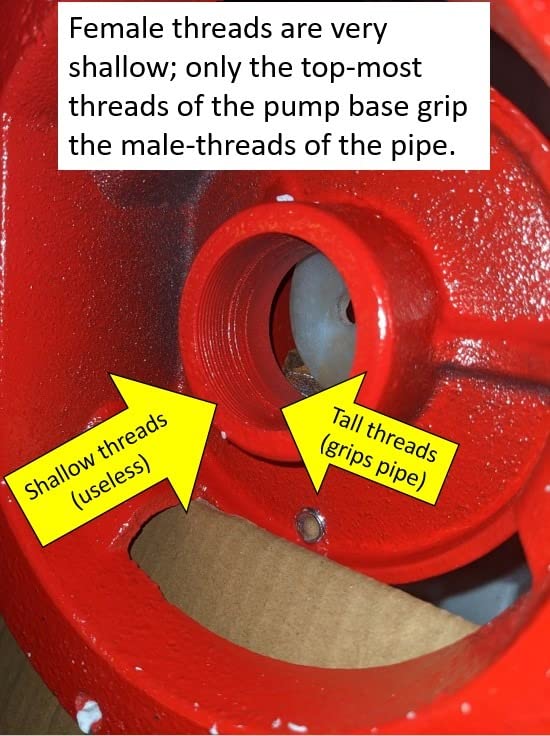
The trade-offs reported are the honest ones for a hand-operated pump. Sustained effort at the handle for every gallon, and a 25 ft maximum lift that confines it to shallow wells and well points. No reviewer describes a manufacturing problem, and the complaint pattern is entirely about physics.
That is a good sign for a product where the limitations are inherent rather than defects. A pump that does what a pitcher pump does, without surprises, is exactly what you want sitting idle in a yard for eight years.
The 4.2 average across 279 ratings is a shade below the other cast iron pitchers here, and reviews do not dwell on seal longevity, which is the main maintenance item on a pump of this style.
Pick this over the other 25 ft hand pumps if
You want a pump that looks intentional in a garden, and you are less concerned about spares availability than about finish. The coating is described as holding up across rain, snow, heat and freezing.
Plan on a separate seal maintenance habit, as with any leather-sealed hand pump of this type.
Where it will not go
It will not serve a deep well, and it will not provide pressure. If your goal during an outage is flushing a toilet and taking a shower, this is the wrong category and you need a generator, an inverter or a 230V replacement pump.
It is also the wrong tool for filling a herd watering tank. Every bucket is manual labor.
6. Locci Stainless Steel Hand Well Pump – Best Corrosion Resistance in a Shallow Well
Locci Stainless Steel Manual Hand Well Pump, Heavy Duty Deep Well Hand Pitcher Pump with Integrated Base Design, Corrosion-Resistant Water Pump for Farm, Garden, Homestead & Emergency Water Supply
Stainless steel
26 ft maximum lift
Hand powered
4 lb
Pros
- Stainless body resists rust in rain and sun
- Integrated base cuts wobble while pumping
- Spare leather bowls pads and fittings in the box
- Light at 4 lb and easy to move alone
Cons
- Manual effort limits realistic water volume
- 26 ft maximum lift restricts it to shallow wells and well points
Stainless steel is the material choice that shows up repeatedly in the buying criteria we found on well forums, and this is the only stainless hand pump in the group. At 4 pounds it is also the lightest, which matters if you are moving it around a pump house in the dark.
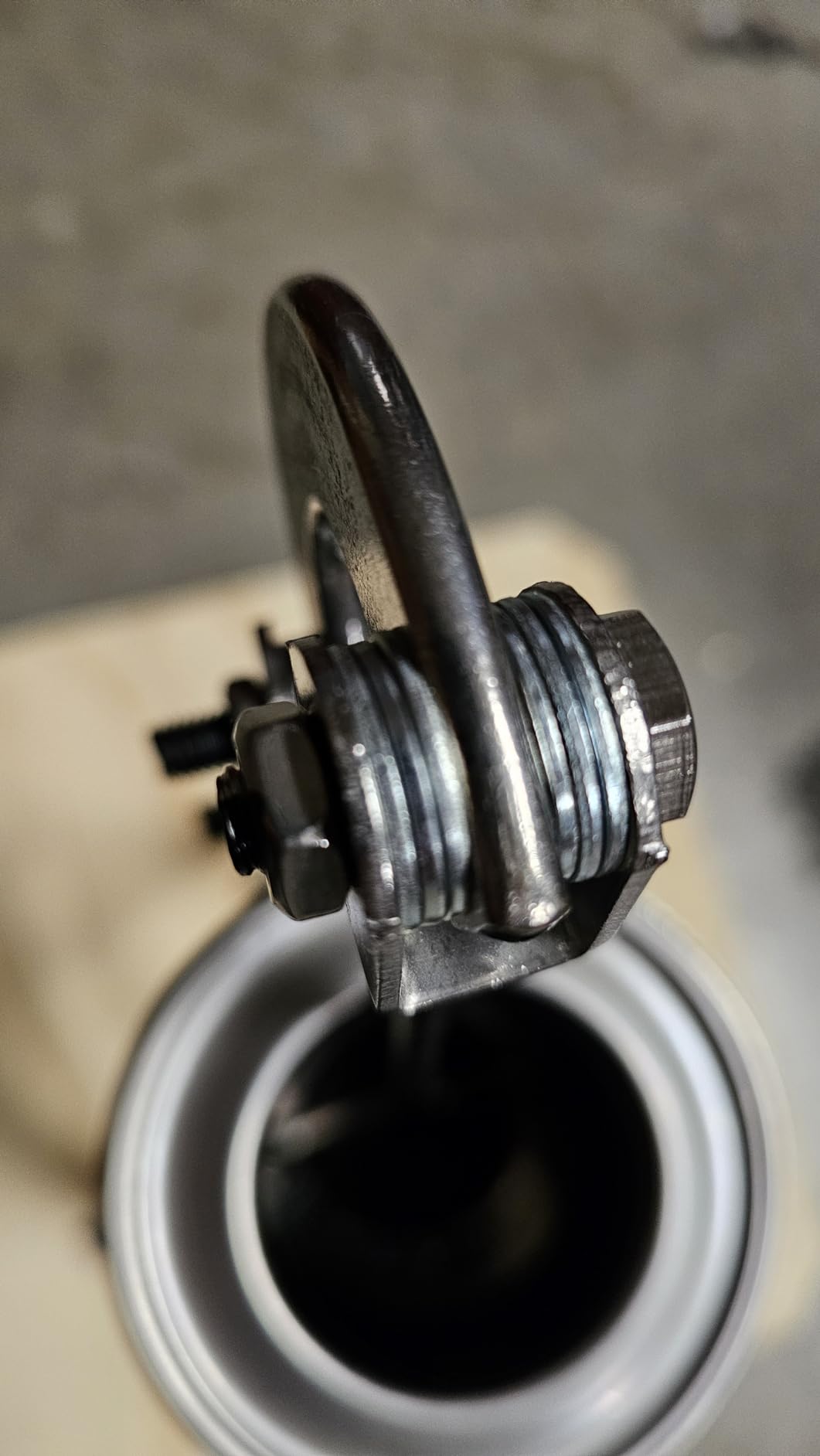
The listed maximum lift is 26 feet, marginally above the 25 ft ceiling on the cast iron pitchers here. The integrated base design is the engineering story owners repeat: instead of a multi-piece body that rocks on the well pipe, the base is reinforced as one unit and the movement while pumping is reduced.
Spares are the standout practical detail. The box includes five leather bowls, five sealing pads, three fixing screws, PTFE tape, a PVC adaptor and a conversion handle. For a pump you may not touch for a decade, having the consumable parts on the shelf matters more than it usually does.
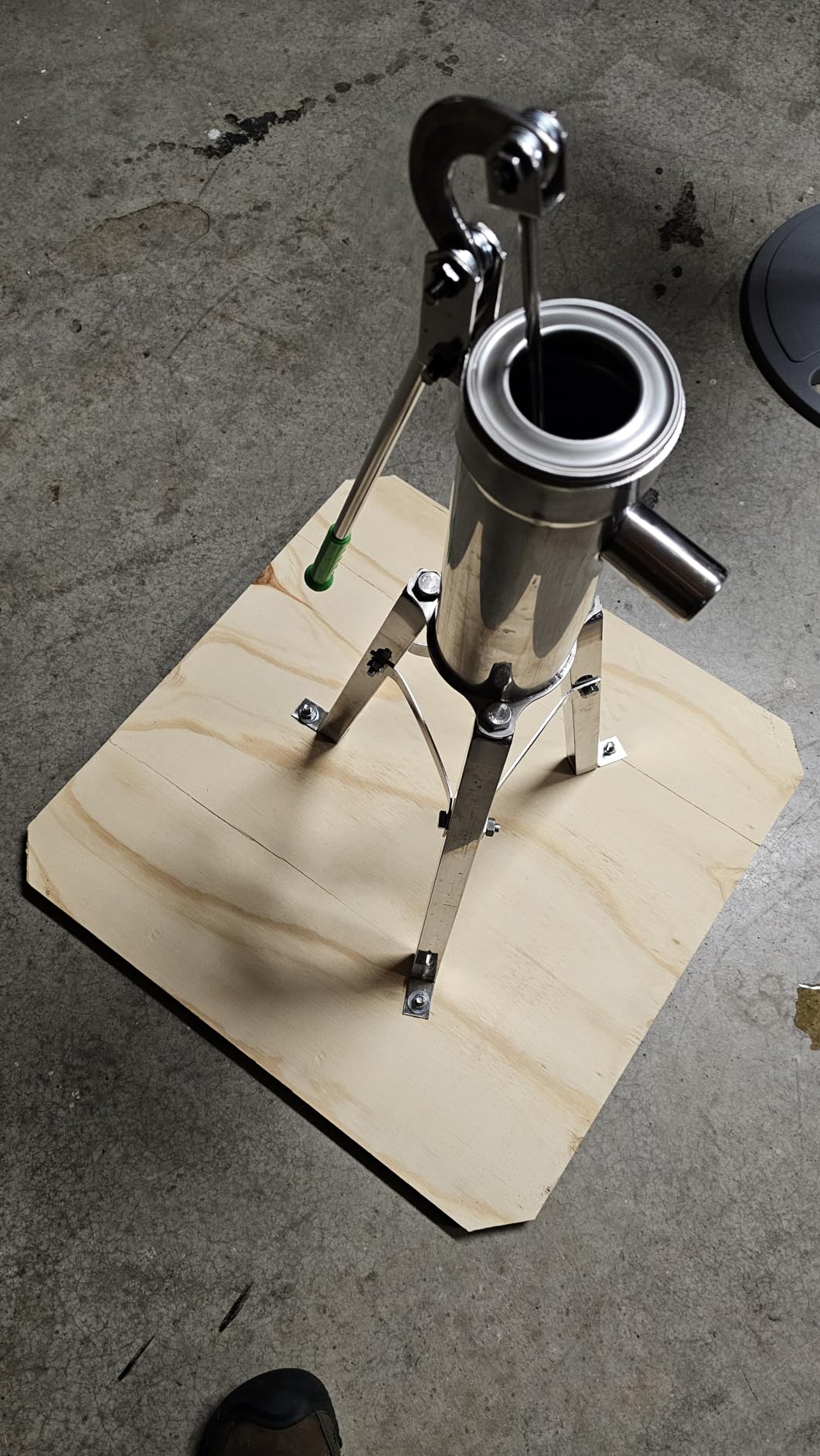
Owners describe straightforward installation and routine maintenance, and the stainless finish is credited with holding up in outdoor sun and rain over long service. That matters more in a coastal or humid well than the weight saving does.
Limitations again follow from the class rather than the build. The 4.1 average across 235 ratings is the lowest of the hand pumps here, and review content is thin on long-term durability, so we would treat this as the practical choice for a wet climate rather than the heirloom choice.
Users describe it as delivering water with no electricity for cabins, farms and emergency preparation, which is exactly the use we are covering, and nobody describes it doing more than a shallow well requires.
Why stainless is worth it
Cast iron pumps are protected by a coating that eventually fails. Stainless is not dependent on that coating staying intact, and in a well head exposed to weather year round, that is a real difference over a ten-year ownership.
The included spares remove the most common reason a hand pump fails on first use, which is a dry leather bowl.
When another pick is the better call
Choose a cast iron pitcher with a hook spout if you need a 300 GPH bucket fill, or a stainless submersible if your well is deeper than 26 feet. The 26 ft lift is the hard boundary on this pump.
For anything beyond drinking, cooking and washing up, look at the pressurized options instead.
7. 6699 SWP 300 Cast Iron Pitcher Pump – Best for Fast Bucket Filling
6699 Durable Cast Iron Pitcher Pump Antique Manual Hand Shake Suction Well Pump Water Transfer Pump 25ft Maximum Lift Easy Installation for Outdoor Garden Pond Backyards SWP 300 Black
Painted cast iron
25 ft lift
300 GPH rated
16 lb
Pros
- 300 GPH and 5 gpm ratings cover shallow well use quickly
- Mounting hardware and anchors included in the box
- Painted body resists rust and corrosion
- Hook groove holds a bucket securely
Cons
- Requires physical effort for every stroke
- Needs to be drained in winter to avoid freezing damage
Among the hand pumps, this one is specified most explicitly for throughput, with a listed 300 GPH rating, a 5 gpm flow figure and a 25 ft lift. That makes it the pick when your emergency is about filling containers rather than drawing drinking water, such as a garden watering tank or a pond during a dry spell.
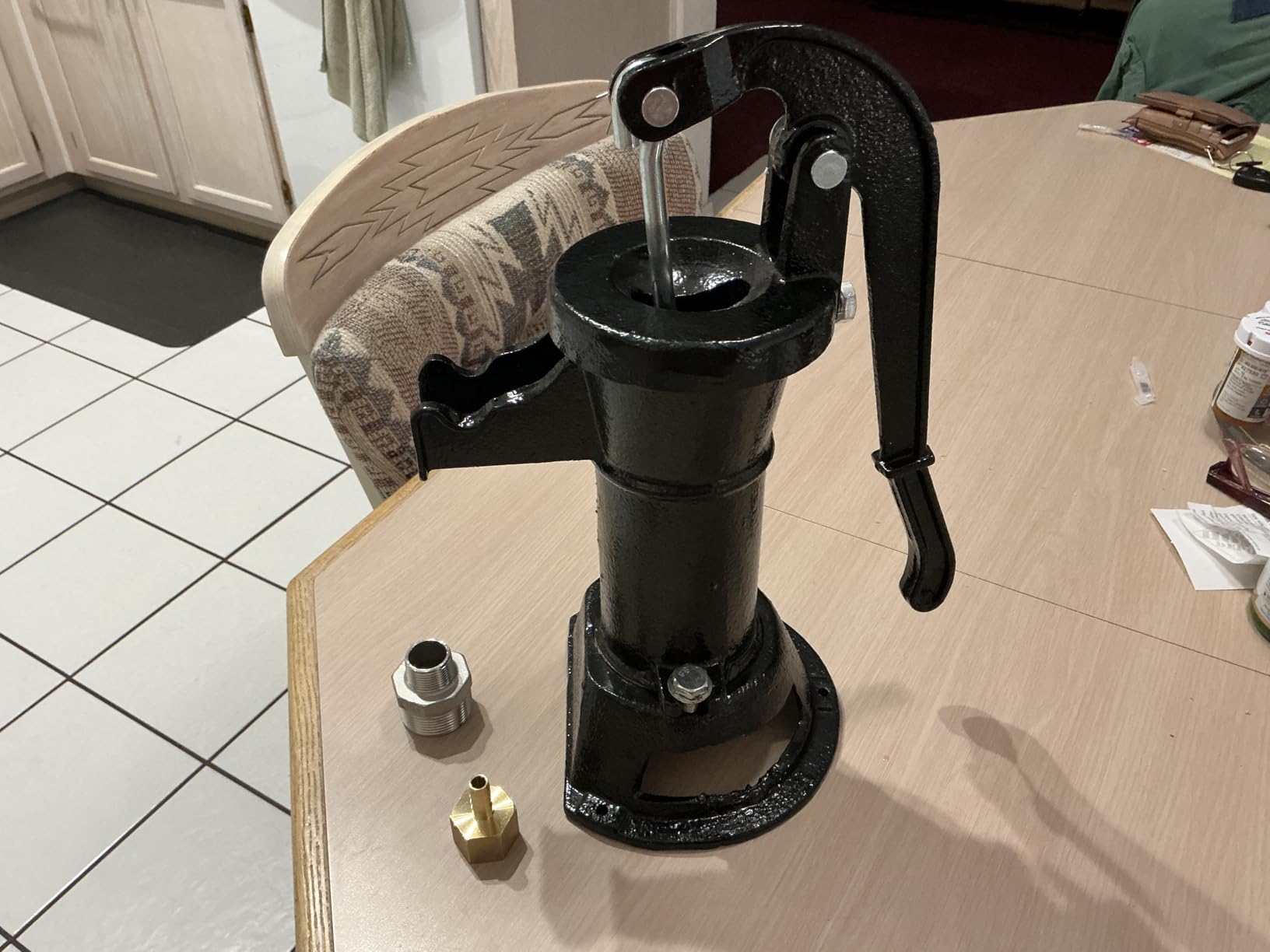
The 3 inch cylinder diameter is larger than most pitcher pumps, and that is where the flow rating comes from. At 16 pounds it is also among the heavier cast iron hand pumps in the group, which is a hint that there is more metal where it matters.
Owners like that the box includes the mounting hardware. Anchors, screws, nuts and bolts come with the pump, so you are not sourcing fasteners on the morning you discover your well has no water.
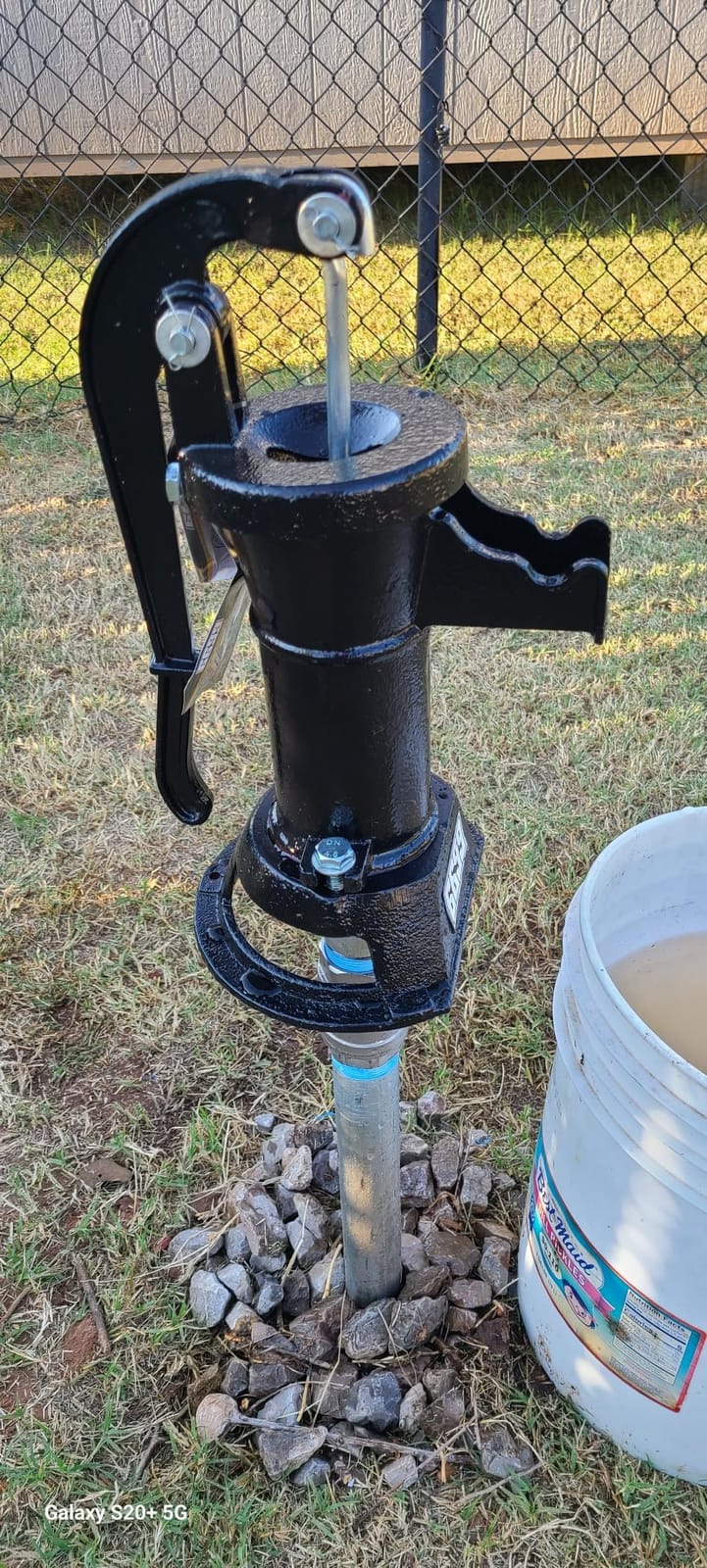
The reviews raise practical cautions rather than quality complaints. Every gallon costs physical effort, and the pump should be drained before winter to prevent freezing damage, which is a real risk for any pump left full above the frost line.
At 4.5 stars across 212 ratings it holds the highest rating of any hand pump on this list, and the negative feedback is entirely about the nature of hand operation rather than the build.
That rating comes from a smaller sample than the Simmons, so we treat it as encouraging rather than definitive. The 300 GPH figure is a manufacturer rating and real bucket filling is slower once you count the effort involved.
Is this the right hand pump for you
It is if the failure you are planning for involves filling containers, or if you want a cast iron pump that arrives with everything needed to bolt it down. The 25 ft lift still applies as a hard limit.
It is also a good choice for a garden or pond where the pump stays in use, since regular use keeps the seals conditioned.
When to choose something else
Choose a pressurized option if you need household pressure restored. Nothing in this class will refill a pressure tank, and a pump that cannot reach your water level is useless at any flow rating.
Plan the winter draining step into your routine if you are in a freezing climate, as owners specifically flag it.
8. Red Lion RL12G05-2W2V Submersible Well Pump – Best Potable-Certified Deep Replacement
Red Lion RL12G05-2W2V Submersible Well Pump, 1/2 HP, 2-Wire, 230V, 12 GPM
1/2 HP
12 GPM at 30 PSI
212 ft shut-off
230V 2-wire
Pros
- NSF ANSI 372 certified for potable water
- Delivers 12 GPM at 30 PSI at 40 ft depth
- Switch built into the pump so no control box is needed
- Waterproof wire splice kit and 48 inch lead included
Cons
- Two-wire version needs rewiring if a three-wire control box exists
- One owner reported failure after about two months
- Thin cardboard packaging can arrive battered
This is the pick for anyone whose answer to the emergency is a proper replacement submersible rather than a manual fallback. It is NSF/ANSI 372 certified for potable water, which matters when the water you are drinking comes straight off the pump with no treatment step.
The numbers are the ones to size against. A 3.9 inch diameter body fits 4 inch or larger driven wells, it delivers 12 gpm at 30 PSI at 40 ft of depth, and the shut-off rating is 212 ft. At 20 pounds it is a 1/2 HP unit with a 1-1/4 inch FNPT discharge, CSA and UL listed.
Owners report strong pressure even at roughly a 100 ft drop, and several say the pump moves water faster than the unit it replaced. A built-in check valve limits rapid cycling, which extends motor life and protects the pressure tank.
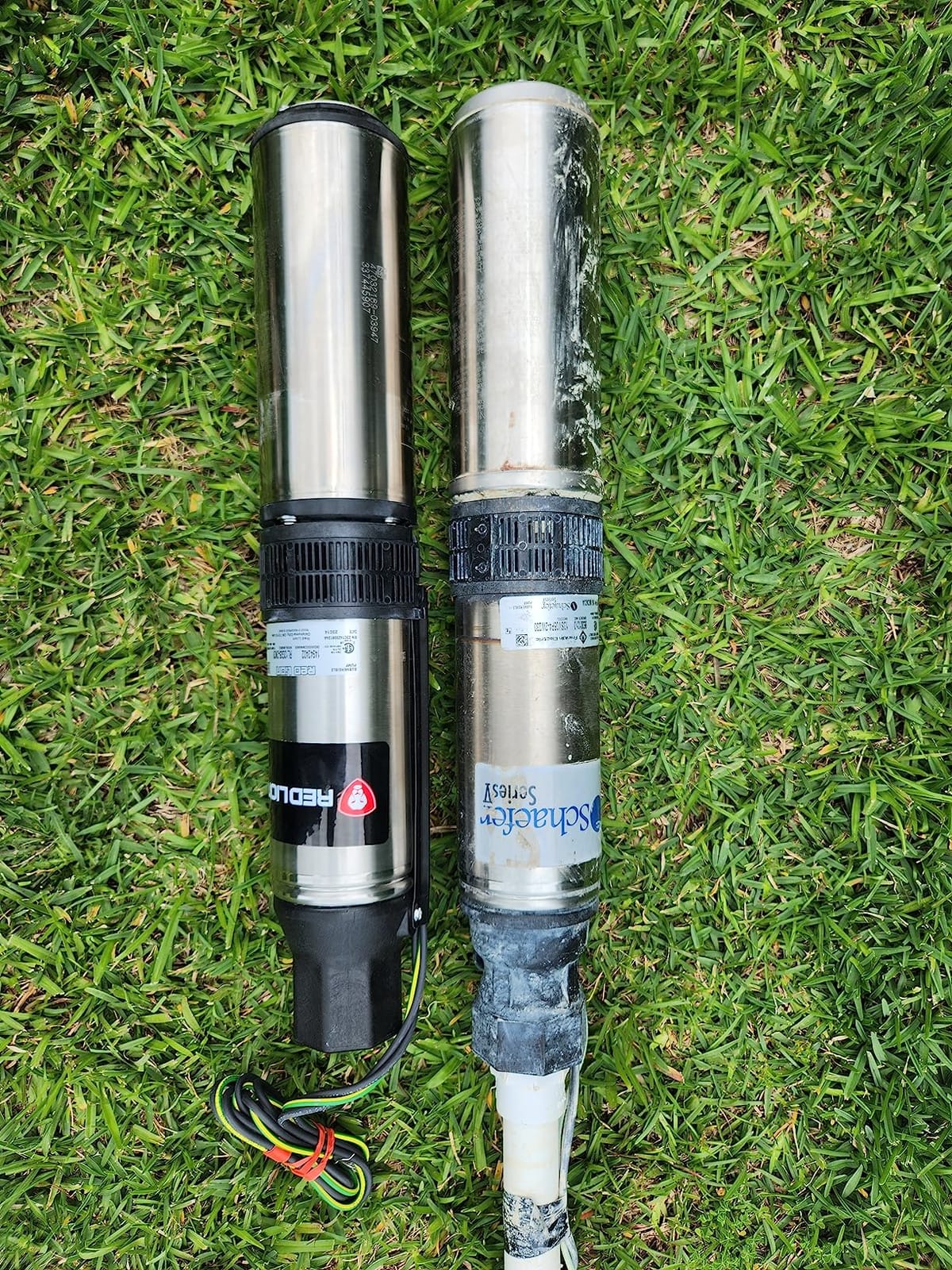
The wiring is the thing to get right. This is a 2-wire design with the switch built into the pump, so no external control box is required, but if your existing setup has a 3-wire control box you will need to rewire to install it. Confirm which you have before ordering.
Durability feedback is mostly positive, with one owner reporting premature failure after about two months and finding the warranty process impractical. The stated manufacturer warranty is three years, and the Franklin Electric parent-company warranty has been honored for buyers who ordered through Amazon.
Packaging is thin cardboard, so inspect the box on arrival. This is a 20 pound stainless and thermoplastic assembly and the carton is not built to take much abuse.
Why potable certification changes the decision
If the well supplies drinking water directly, NSF/ANSI 372 certification covers the lead content restrictions that apply to drinking water components. Not every pump in this roundup carries it, and that is a legitimate reason to choose this over a cheaper alternative.
The built-in check valve and suction screen also reduce cycling and keep debris out of the impellers, both of which protect the tank and the motor.
What to check before you install
Check 2-wire versus 3-wire in your existing control arrangement, check that your casing is 4 inch or larger, and check the discharge thread size against your existing plumbing. All three are cheap to verify and expensive to get wrong.
Match horsepower to static water level rather than buying the biggest unit available. An oversized pump cycles constantly and wears the pressure tank out faster.
9. ECO-WORTHY 100W Solar Well Pump Kit – Best Fully Off-Grid Setup
ECO-WORTHY Solar Well Pump Kit – 100W Solar Panel with 12V Deep Well Water Pump for Off-grid Living or Irrigation, Farm & Ranch-DELIVERY IN 2 PARCELS One
100W solar panel
12V pump
230 ft max lift
1.6 GPM
Pros
- Delivers water with no grid power and no fuel
- Panel and pump come as one kit
- Pairing with a 12V battery and controller steadies output
- Suits remote sites without long distance wiring
Cons
- Output drops sharply on cloudy days
- Panels are very sensitive to partial shading
- Arrives in two separate parcels
This is the kit to buy if your emergency scenario has no fuel and no grid. A 100W solar panel pairs with a 12V deep well pump rated for a 230 ft maximum lift and a 1.6 gpm maximum flow, and the whole thing works without a generator, a battery bank or any wiring run back to a building.
Buyers value the all-in-one nature of it. Sourcing a panel, a charge controller and a matching pump separately is where off-grid projects usually stall, and this arrives as one package.
The r/preppers planning we read treats solar plus a battery bank and an inverter as a distinct tier above a generator, and this kit is the entry point to that tier. A panel alone gives you daylight-only output, which is why the battery note below matters.
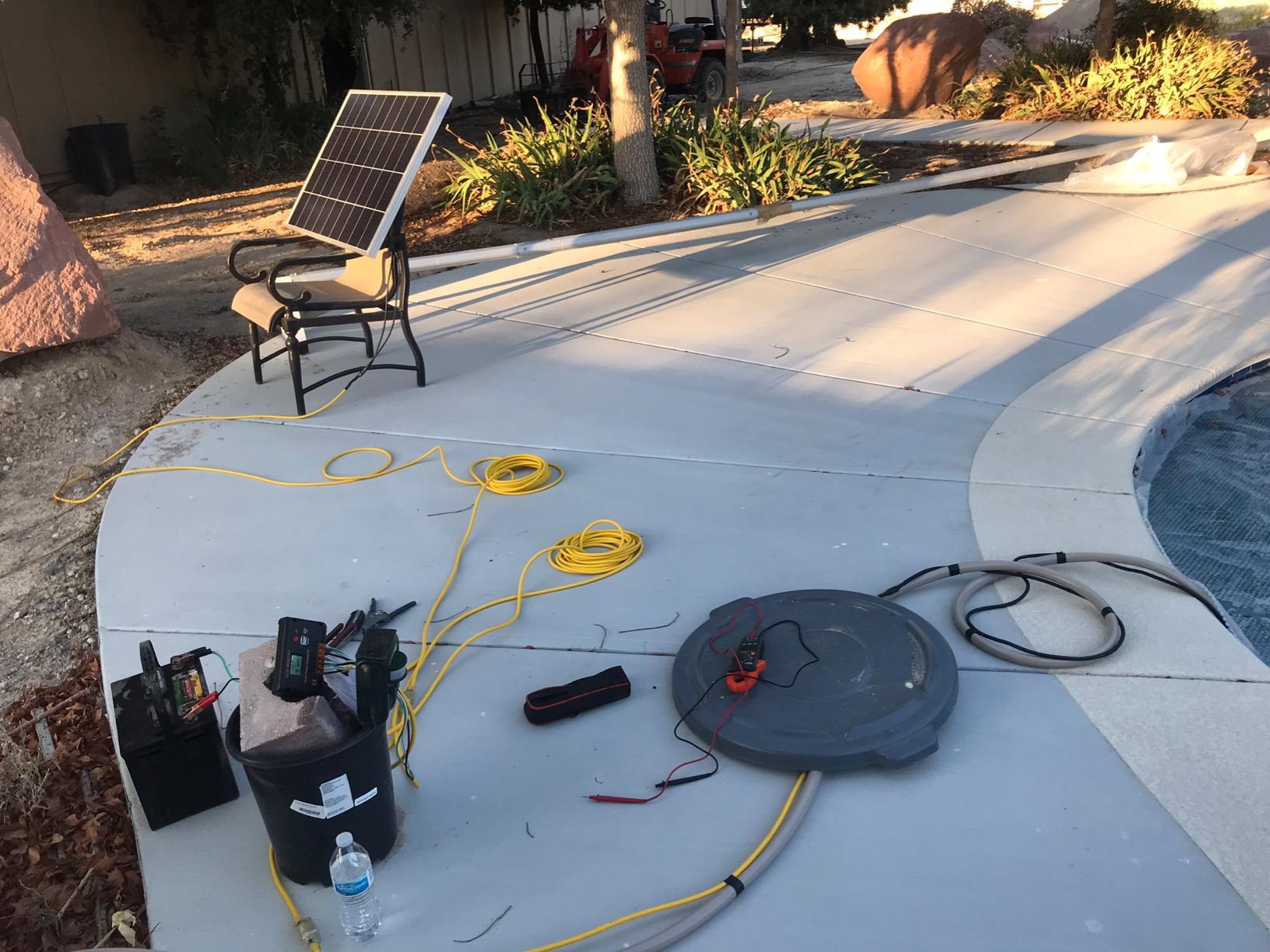
Output tracks light intensity directly and head inversely, and the manufacturer and owners both stress how sensitive the panel is. Even a small shadow can stop output entirely, so panel siting is not a detail you can defer until after mounting.
Panels also need regular cleaning to keep output up, and the kit arrives in two separate parcels, so allow for both if you are assembling a kit quickly.
Service terms are stated as five years on the solar panels and one year on the well pump, which tells you where the manufacturer expects failures to occur.
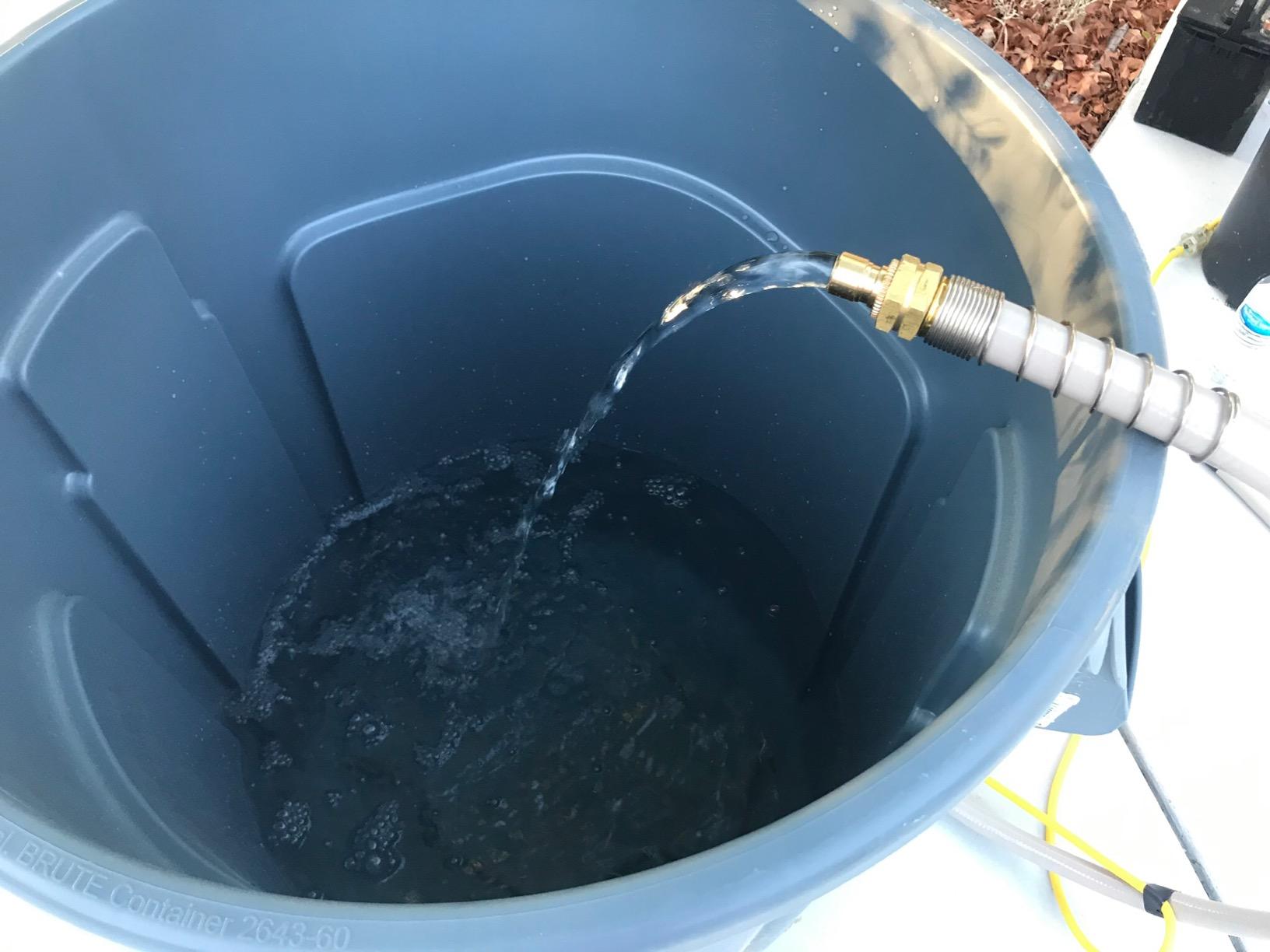
Solar alone or solar plus battery
Solar alone means water only while the sun is up, and less of it when clouds arrive. Pairing the pump with a 12V battery and a controller is the recommended configuration for steadier output, and it is the step that turns this from an irrigation tool into an emergency water source.
Size the battery bank for the number of outage days you want to cover. Our earlier section on the layered plan covers why a bank and an inverter are a separate tier.
When this is the wrong choice
Skip it if your well is shaded for part of the day, since output stops rather than merely dropping. Skip it if you need more than about 1.6 gpm, and skip it if you need household pressure, because this pump feeds a tank rather than pressurizing a house directly.
At 4.1 stars across 88 ratings this is the smallest review base in the group, so treat the specification sheet as more reliable than the rating.
10. WASSERMANN 4 Inch Deep Well Submersible Pump – Best Value 115V Replacement
WASSERMANN 4″ Deep Well Submersible Pump with 10FT Cable,1HP,115V/60HZ,34GPM,196FT Head,Stainless Steel Single-Phase Water Well Pump for Cities Farmland Irrigation and Home Use
1 HP 115V
34 GPM
196 ft max head
Stainless steel
Pros
- Strong pressure at 20-25 GPM in real use
- Runs quietly
- SS304 pump head and stainless body
- Control box built into the pump simplifies wiring
Cons
- Must be installed vertically and never run dry
- One owner saw surface rust within two weeks
This is the value pick among the 115V submersibles, and it covers the same depth band as the VEVOR at 196 ft of maximum head with a listed 34 gpm. The body is stainless steel with an SS304 pump head, and the outlet is 1-1/4 inch FNPT for 4 inch and larger casings.
Owners consistently report strong, quiet pumping and ample pressure for irrigation and household use. Several describe it as a better value than costlier name-brand pumps, which is a reasonable read of a 4.5 rating on this class of hardware.
Like the VEVOR, it is a 2-wire plus ground design with the control box built in, so there is no external control box to mount, wire or fail to corrosion.
Two conditions apply. The pump must be installed vertically and must never be run without water, both of which are installation discipline rather than product weakness. Run it dry and the seals are finished.
On materials, one owner reported visible surface rust only two weeks after installation despite the stainless steel construction. That is a single report against a much larger body of positive feedback, and we would treat it as a reason to inspect on arrival rather than a reason to skip the pump.
The stainless steel filtration mesh screens impurities, and the manufacturer suggests adding gauze in front of the inlet for sediment-heavy new wells, which is worth doing if your well is recently drilled.
How this compares to the VEVOR submersible
Both are 1 HP 115V units with a built-in control box, in the same head range, with a 1-1/4 inch discharge. The VEVOR carries a higher flow rating at 37 gpm and 207 ft, plus a longer review history at 485 ratings.
This one lists 34 gpm and 196 ft with 62 ratings, and it weighs 13.18 kg. If your well is deeper than 200 ft, neither is the right answer and you need a multi-stage pump sized for the job.
What to check before ordering
Check casing diameter, discharge thread size, and whether your wiring arrangement suits a 2-wire plus ground pump. Confirm the pump will sit fully submerged at your static water level with headroom above it.
If you need potable certification, this pump is not the pick. The Red Lion carries NSF/ANSI 372, and that distinction should decide the choice for drinking water.
How to Match a Pump to Your Well
Match the pump to your well by answering four questions in order, starting with the depth you cannot change. Every other decision is downstream of the first two.
What is your static water level
Static water level is the depth at which water sits in the well when the pump is off. It is the number that determines what any pump can lift, and a pump rated below it will simply run dry. Find it in your well construction record, or ask your well contractor, or measure it by lowering a weighted tape until you hear it touch water.
Add a margin for drought. Water tables fall, and a pump that barely reaches your current level will fail in the year you need it most.
What is your casing diameter
The casing is the pipe lining the well, and it limits what fits inside. A 4 inch casing is the standard for a household well, and it is the floor you should plan around. Our 12V DC pick at 4-1/8 inches will not pass some side-saddle fittings, so measure the inside diameter of your well fittings rather than assuming.
The 3.9 inch and 4 inch submersibles in this roundup are sized for 4 inch or larger casings, which covers the large majority of household wells.
Do you need a bucket or do you need pressure
This is the single biggest divider in the category, and it is where buyers waste money. A pitcher pump fills a container. A pressurized pump refills a pressure tank, which is the vessel that delivers water to your taps between pump cycles. Only a pressurized option can serve a shower, a washing machine or a flush.
Forum discussion on hand pumps consistently sets the expectation that one is not as convenient as running water, but is far better than nothing. That is the right frame. Use a hand pump for drinking, cooking, washing up and watering animals, and use a generator, an inverter or a replacement submersible for anything else.
How big an electric pump do you need
The common sizing rule is roughly 1 GPM per fixture, and a three or four bedroom home usually lands between 8 and 12 GPM. Match horsepower to static water level rather than buying the largest available unit, because an oversized pump cycles on and off constantly and wears out the pressure tank faster than the pump.
Our 1 HP units at 34 and 37 gpm sit above a typical household requirement, which is appropriate for irrigation, a farm or a well shared with a barn, and generous rather than minimal for a small home.
Jet, submersible or manual: which class do you need
A jet pump sits above ground and pulls water up by suction, which limits it to shallow wells where the water level is within about 25 feet. A submersible pump is lowered into the casing, pushes water up, and handles deep wells where suction is not physically possible. A manual hand pump occupies a third category entirely: no electricity, no motor, and a lift ceiling set by the pump mechanism.
For emergency duty, the manual category is the only one that works with zero power. That is its entire value proposition, and it is also why its lift ceiling is the specification to check first.
If your concern is pressure rather than power, our booster pump guide covers the other half of that problem.
Water Safety During and After an Outage
Restoring water is only half of an outage. What comes out of the tap afterward is the other half, and this is the part that most well guides skip.
If a pump fails catastrophically rather than simply stopping, treat the water as unsanitized until you have flushed the system and sanitized it, because a breach at the well head is a route for surface contamination. A power outage alone usually does not contaminate a sealed system, but letting a well sit unused for a long period with a low water table can draw surface water toward it.
Drain hand pumps before a hard freeze, including the SWP 300 where owners specifically flag it. A spout left full above the frost line can let the cast iron body split, which turns a one-week emergency into a one-season replacement.
Keep the well head protected during a prolonged outage so debris, animals and surface runoff stay out of the casing. If the well cover is missing when the power returns, that is the first thing to fix, not the pump.
For drinking water specifically, treat anything drawn from a well that has been idle or disturbed as untreated until you have run it through a proper sanitizer, and keep a reserve of known-safe water for drinking and cooking in the meantime.
The Checklist to Take to Your Well Contractor
Before you buy anything, get answers to these six questions. They come from the questions well owners most often ask for help with, and having them answered before you order prevents an installation visit that ends with a pump you cannot use.
What is my static water level, and what is my total dynamic lift including friction loss?
What is my casing diameter, and what is the inside diameter of my well fittings and side-saddle connections?
What does my drop pipe and wiring layout look like, and can a backup pump be plumbed in line without pulling the existing submersible?
What is my current pressure tank air pre-charge, and can a backup pump refill that tank?
How much water storage do I want to hold, and where does it go? A pressurized backup is only useful with a tank behind it.
Who installs it, and what does the labor involve?
That third question is the one that decides whether a hand pump is convenient or painful. The strongest consensus we found on well forums is that an inline-mounted pump switched by flipping a single valve is the ideal configuration, and that configuration is easiest to specify before a new pump goes in rather than after.
Frequently Asked Questions
How do I get water from my well without electricity?
Work down a layered plan rather than a single purchase. Start with stored drinking water, then add a generator on a transfer switch to run your existing submersible, then a solar panel with a battery bank and an inverter, then a 12V DC pump that runs from a battery or panel, then a hand pump plumbed in line with your submersible, and keep a bailer or well bucket as the last resort. The first four restore running water. The hand pump tier gives you drinking and cooking water with no power at all.
Can a hand pump work on a deep well?
Yes, but only with a pump built for that depth, and expect the price to climb sharply. Pitcher pumps cap out around 25 ft of lift, which covers sand points, dug wells and shallow driven wells. Cast iron hand pumps from brands like Lehman’s are suited to roughly 150 ft or less, while heavy-duty stainless units such as Bison and the Simple Pump reach 300 ft. Past 150 ft the installation cost rises sharply enough to change the calculation for most households.
How much water can a hand pump move per hour?
Far less than a household needs and enough for the essentials. Electric pumps are rated in gallons per minute because a motor delivers flow continuously. Hand pumps deliver gallons per hour and require effort for every gallon. Plan on hand pumps for drinking, cooking, washing up and livestock. Showers, laundry and toilet flushing need a generator, an inverter or a replacement submersible running against your pressure tank.
What size well pump do I need?
For a typical three or four bedroom household, 8 to 12 GPM covers normal demand using the common rule of roughly 1 GPM per fixture. Match horsepower to your static water level rather than buying the largest unit available, because an oversized pump cycles constantly and wears out the pressure tank faster. For emergency duty, size for the deepest static water level you might see in a drought, and confirm your casing diameter is 4 inch or larger before ordering.
Which brand of pump is best?
It depends on the category, so a single answer would mislead you. For a manual backup on a shallow well, the Simmons 1160/PM500 has the deepest review history at 999 ratings. For a deep well replacement, the Red Lion RL12G05 is NSF/ANSI 372 certified for potable water and reaches a 212 ft shut-off. For corrosion resistance in a wet climate, the Locci stainless hand pump is the pick. For a fully off-grid install, the ECO-WORTHY solar kit covers panel, pump and charge control in one package.
Conclusion: The Verdict on the Best Emergency Water Pumps for Wells
The Simmons 1160/PM500 is our pick for the best emergency water pumps for wells, because a 999-rating history on cast iron construction matters more to a pump that sits idle for a decade than a longer spec sheet does. If your static water level is deeper than 25 feet, the pitcher pumps on this list are the wrong category entirely, and you should be looking at the VEVOR or WASSERMANN submersibles, the Red Lion for potable certification, or the ECO-WORTHY solar and 12V options if you have no fuel.
The order of operations matters more than the purchase. Find your static water level, decide whether you need a container of water or household pressure, and get a hand pump plumbed in line with your existing submersible so switching over is a valve flip. Do that well before 2026 is the year you need it.