
The best turntables with Bluetooth for beginners are the Audio-Technica AT-LP60XBT for most people, the Victrola suitcase player for the lowest effort, and the Sony PS-LX310BT if you want to digitize your records. All three start playing within minutes of unboxing and stream to any Bluetooth speaker.
That last point is the whole appeal. A turntable with Bluetooth removes the single thing that stalls most first-time buyers: running cable to a stereo. Plug the deck into a pair of powered speakers or Bluetooth speakers, and you have a working system without an amplifier, a receiver, or a wiring project.
There is a catch worth knowing before you shop. Nearly every turntable in this category transmits Bluetooth one way only, from the record out to your speakers. Very few accept Bluetooth audio in, and that difference matters more than any other spec on the list. We explain it in detail below.
We compared ten decks on the things that decide whether a beginner enjoys or abandons the hobby: tonearm design, phono stage, speed stability, noise floor, pairing reliability, and whether the built-in speakers are usable or merely decorative. Ten models, one criterion: can a first-timer set it up and enjoy it on day one?
Table of Contents
Top 3 Best Turntables With Bluetooth for Beginners (October 2026)
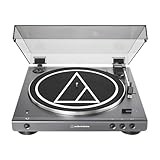
Audio-Technica AT-LP60XBT
- Fully automatic start and stop
- aptX Bluetooth
- Die-cast aluminum platter
- Replaceable diamond stylus

Victrola Quincy 6-in-1
- Vinyl CD cassette and radio in one cabinet
- Bluetooth receiver
- RCA line outputs
- Three speeds

Victrola Bluetooth Suitcase Player
- Light enough to carry between rooms
- Bluetooth receiver
- Three-speed belt drive
- Headphone jack
Our top pick, the AT-LP60XBT, is the model the vinyl community returns to again and again for first-time owners. It plays 33 and 45 RPM, streams over aptX Bluetooth, and stops on its own when the record ends. r/turntables readers repeatedly name this class of deck as the default first recommendation, and the near-9k reviews at a 4.6 average back that up.
All 10 Bluetooth Turntables at a Glance in 2026
| Product | Specifications | Action |
|---|---|---|
| Audio-Technica AT-LP60XBT |
|
Check Latest Price |
| Victrola Quincy 6-in-1 |
|
Check Latest Price |
| Victrola Bluetooth Suitcase Player |
|
Check Latest Price |
 Sony PS-LX310BT Sony PS-LX310BT |
|
Check Latest Price |
 1byone Turntable and Speaker System 1byone Turntable and Speaker System |
|
Check Latest Price |
 Audio-Technica AT-LP3XBT Audio-Technica AT-LP3XBT |
|
Check Latest Price |
 Audio-Technica AT-LP70XBT Audio-Technica AT-LP70XBT |
|
Check Latest Price |
 Victrola Century 6-in-1 Victrola Century 6-in-1 |
|
Check Latest Price |
 cotsoco Retro Turntable cotsoco Retro Turntable |
|
Check Latest Price |
 Mersoco Vintage Suitcase Player Mersoco Vintage Suitcase Player |
|
Check Latest Price |
1. Audio-Technica AT-LP60XBT: The Best Bluetooth Turntable for Beginners
Audio-Technica AT-LPGO-BT Fully Automatic Wireless Belt-Drive Turntable (Gun-Metal/Black)
Belt drive 33 and 45 RPM
aptX Bluetooth out
Die-cast platter
AT3600L MM cartridge
Pros
- Fully automatic start and stop with no setup skill required
- aptX codec gives cleaner wireless audio than the SBC default
- Die-cast anti-resonance platter keeps speed steady
- External AC adapter keeps motor noise out of the signal chain
Cons
- No 78 RPM so older shellac records will not play
- Tonearm is fixed with no tracking force or anti-skate adjustment
- No USB port for recording
We spent the most time with the AT-LP60XBT, and it is the deck we keep coming back to. The lever drops the arm, starts the platter, and lifts the arm again at the end of the side. A beginner never touches a counterweight or a tracking-force dial, because there is nothing to adjust.
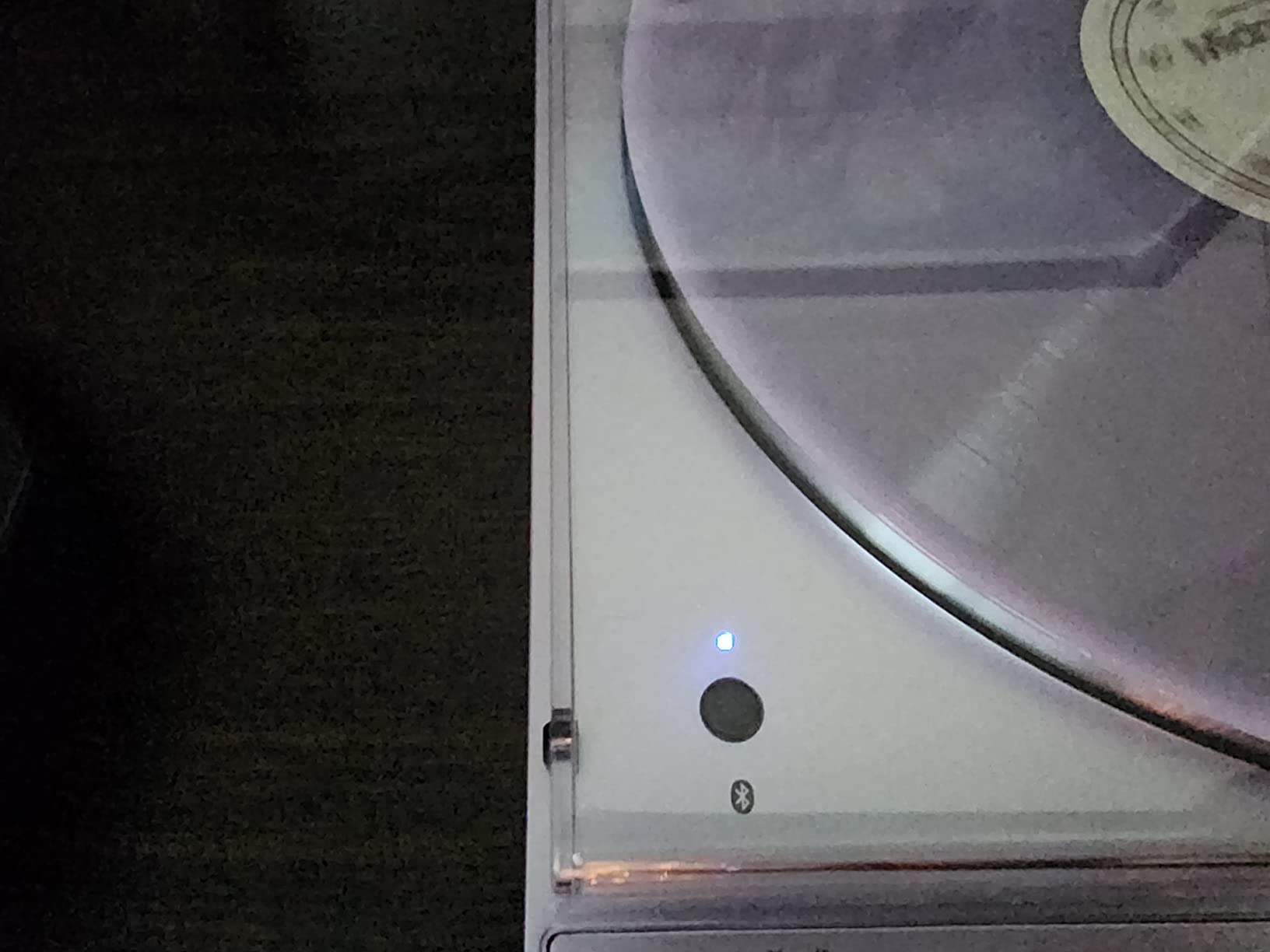
Sound quality is cleaner than the price suggests. The die-cast aluminum platter weighs enough to damp motor vibration, and the integrated moving-magnet cartridge with a replaceable diamond stylus tracks cleanly. The external AC adapter is a genuinely thoughtful touch, since it moves the motor supply out of the chassis.
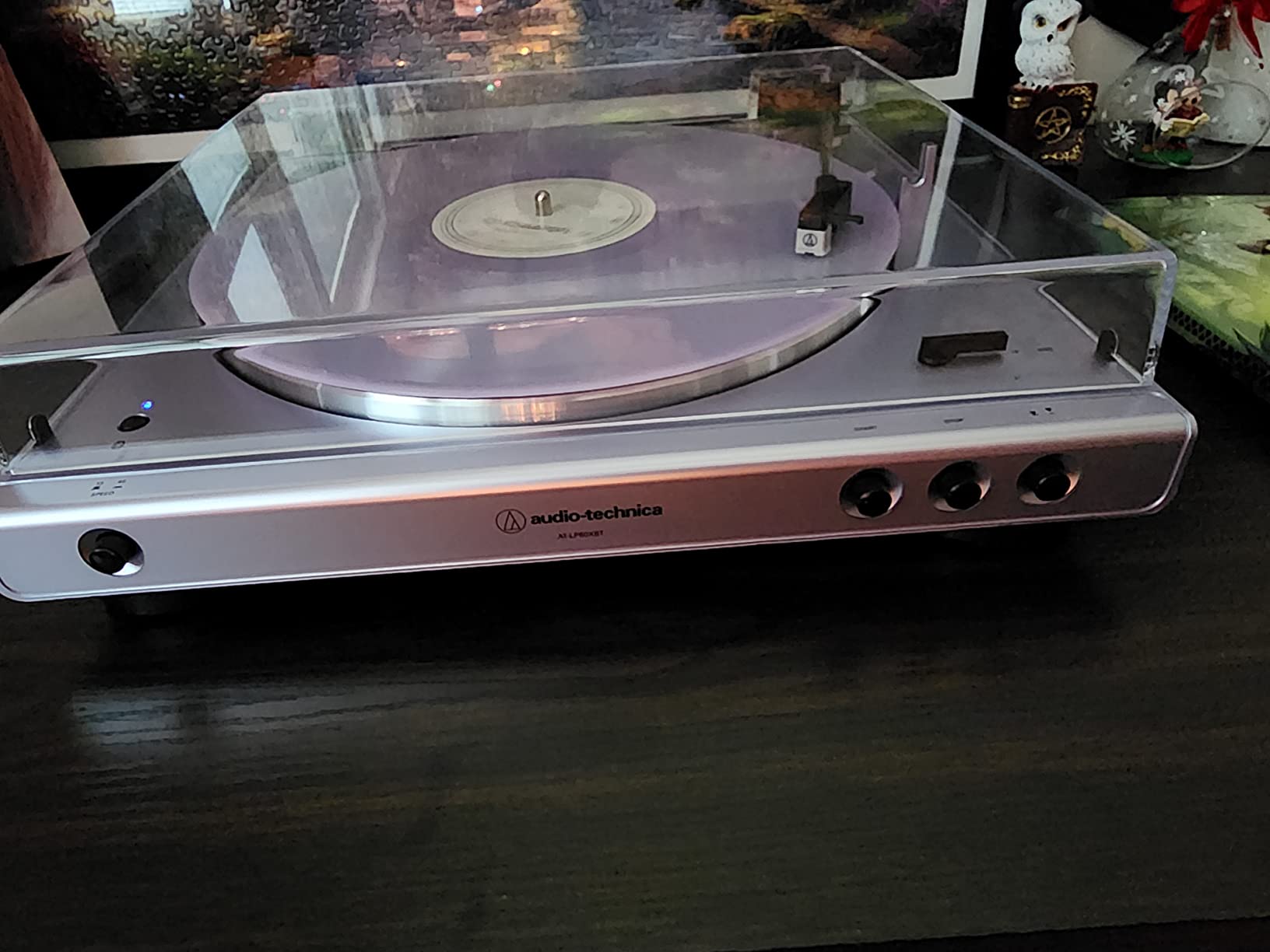
Bluetooth here means aptX, which is the higher-fidelity codec in the Bluetooth audio family. Pairing to a soundbar or powered speakers took seconds in our testing, and the stream stays stable across a room.
What you give up with this deck
Two speeds, no 78 RPM, and a fixed tonearm. If your collection leans on old shellac 78s, this is the wrong deck. Otherwise the fixed arm keeps tracking force consistent, which protects records more than it limits you.
The cartridge is a replaceable-stylus design rather than a fixed one, so when the needle wears you swap a small AT3600L module instead of the whole head. That is the most straightforward upgrade path on this list.
Who should buy the AT-LP60XBT
Buy it if you want a record player that starts working the second it is plugged in, and you mostly listen to 33 and 45 RPM LPs. Pair it with a pair of Bluetooth speakers we recommend here, or any powered bookshelf pair with an aux input.
Skip it if you already own a setup and want to add vinyl as a second source, or if your collection is heavy on 78 RPM and 16-inch formats.
2. Victrola Quincy 6-in-1: The Best Multi-Format Record Player
Victrola Quincy – 6-in-1 Bluetooth Record Player – Mahogany
Belt drive 33, 45 and 78 RPM
Built-in Bluetooth receiver
CD, cassette, AM/FM
14.9 lb cabinet
Pros
- Vinyl CD cassette and radio in one cabinet so nothing else is needed
- Bluetooth pairing is quick and reliable
- Warm full sound with enough volume for an apartment
- Retro wooden cabinet doubles as furniture
Cons
- Built-in speakers are boombox class rather than hi-fi
- Bluetooth range runs about ten feet before dropouts
- FM tuning is slow and needs a gradual turn
The Quincy answers a different question than a pure turntable. If your household still has CD collections or you want a radio in the kitchen, this deck covers every format in a single wooden cabinet and needs nothing else attached.
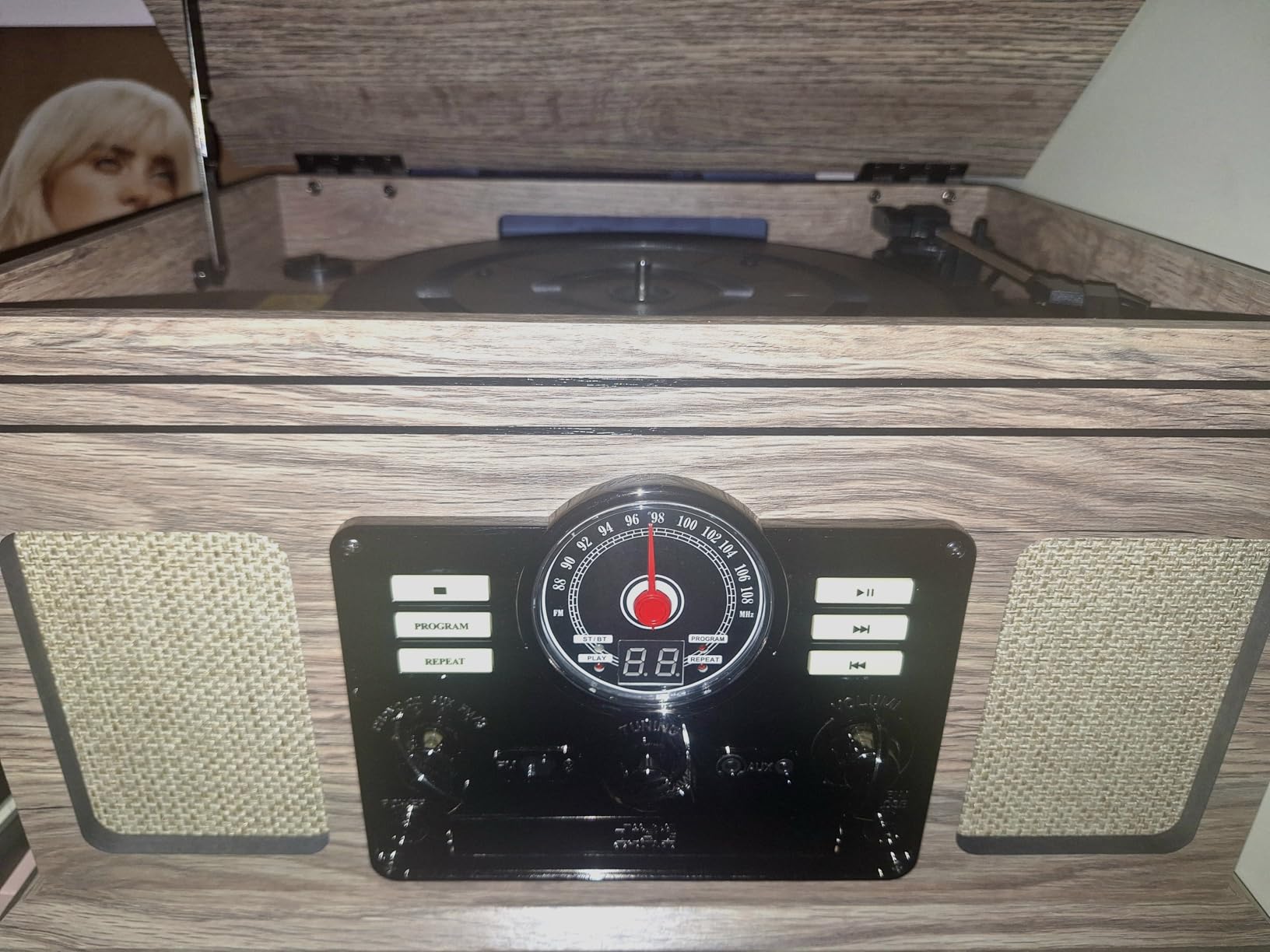
It handles 33, 45, and 78 RPM on a three-speed belt drive, which is wider format coverage than most of the dedicated turntables here. RCA line outputs plus an aux and headphone jack mean you can still upgrade the speakers later.
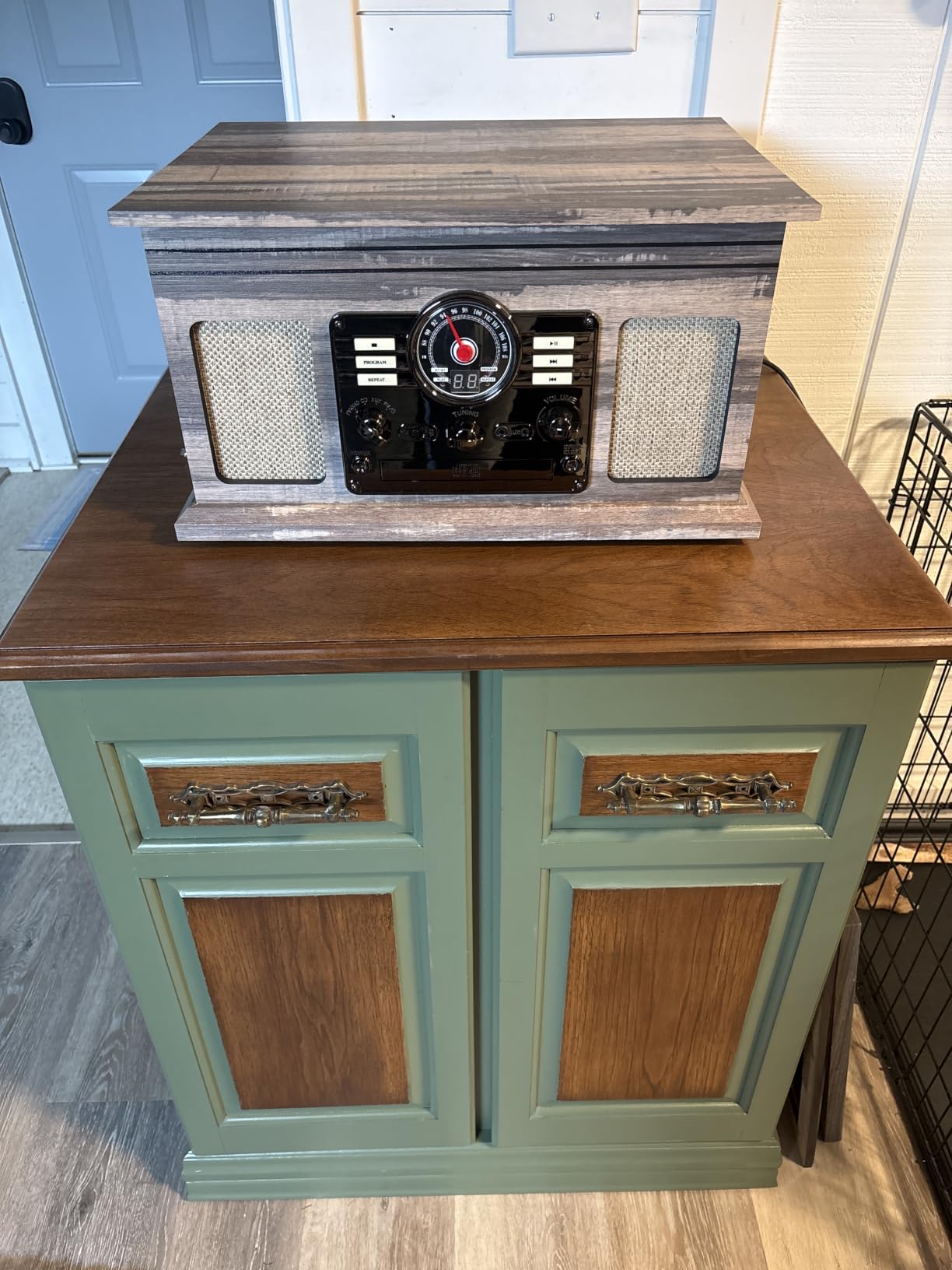
Owners consistently describe the sound as warm and full, with enough level to fill an apartment. That is an honest description of a pair of small fabric-grille speakers doing a good job on a midrange record.
Where the cabinet limits you
The built-in speakers are not hi-fi, and anyone chasing heavy low end will want external speakers within a few weeks. Bluetooth range of roughly ten feet is also short, so the player should live near where you listen.
Reviewers also flag the FM dial as slow to tune and the CD tray and cassette transport as feeling clunky. Treat those secondary formats as convenient extras rather than the reason to buy.
Who the Quincy suits
Choose it for a first record player that also plays CDs, or as a starter system in a room where running speaker cable is not possible. It is also a forgiving gift, since nothing about it can be set wrong.
It is not the choice for someone who wants to compare cartridges or adjust tracking force. Everything is fixed, which is exactly why it works so well for a first-timer.
3. Victrola Bluetooth Suitcase Player: The Easiest First Record Player
Victrola Journey – Bluetooth Suitcase Record Player – Smoky Blue
3 speed belt drive
Bluetooth receiver
Built-in stereo speakers
16 oz, 13.9 inch wide
Pros
- Light at 16 ounces so it moves between rooms easily
- Works out of the box with no setup at all
- Bluetooth lets it double as a speaker for phone audio
- Isolating feet under the speakers reduce vibration transfer
Cons
- Built-in speakers lack bass and dynamic range
- Stylus and cartridge often need replacing after a few hundred hours
- Fixed tonearm causes flutter and skating on some records
This is the most reviewed turntable we looked at, with more than 55k ratings holding a 4.4 average. That volume of long-term feedback matters for a beginner, because it means the failure modes are well documented and the deck is not a risky purchase.
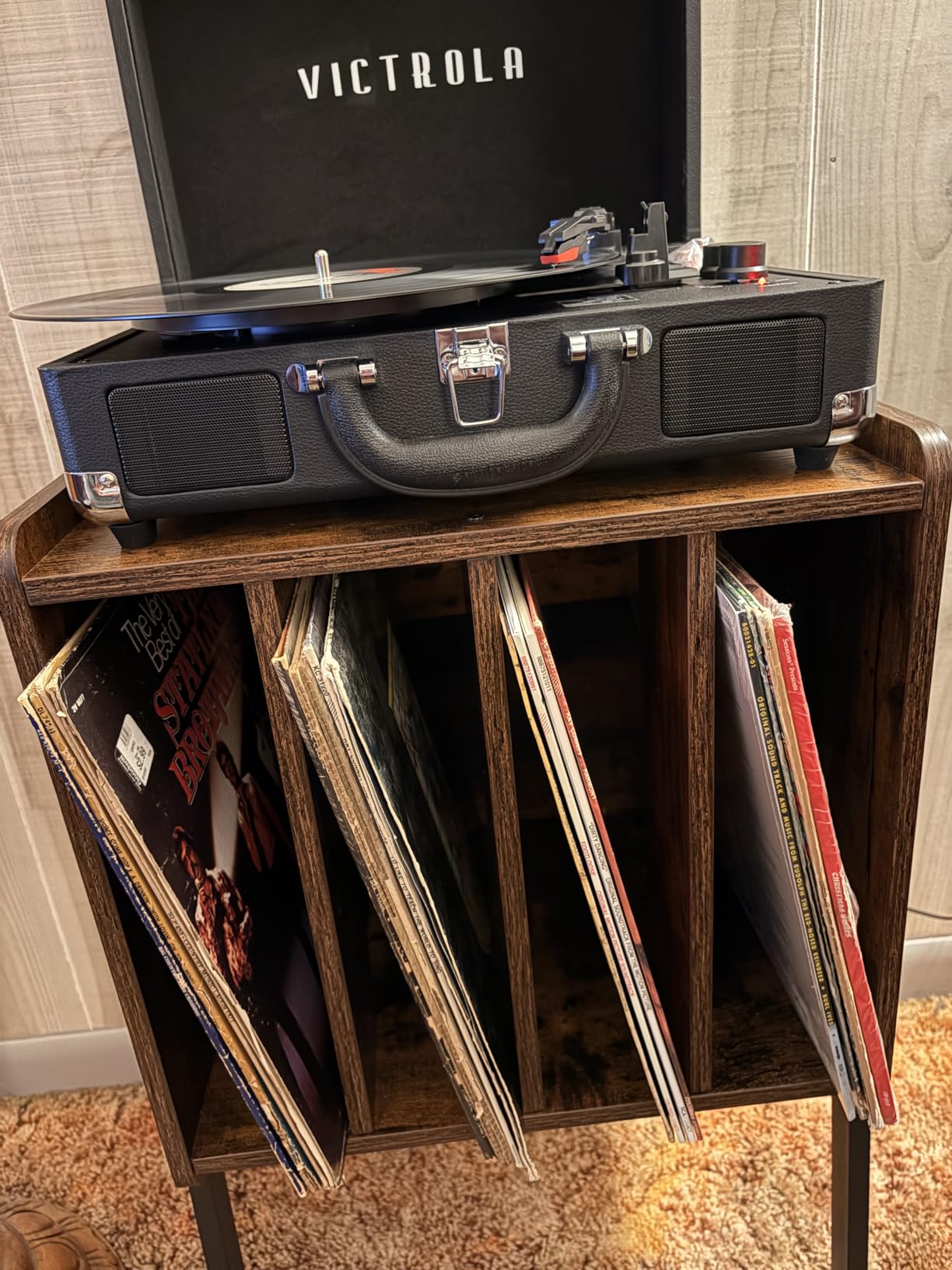
It covers all three speeds on a belt drive and includes a Bluetooth receiver, so your phone can stream through it as well as the other way around. The RCA output and line input let you add real speakers later without replacing the player.
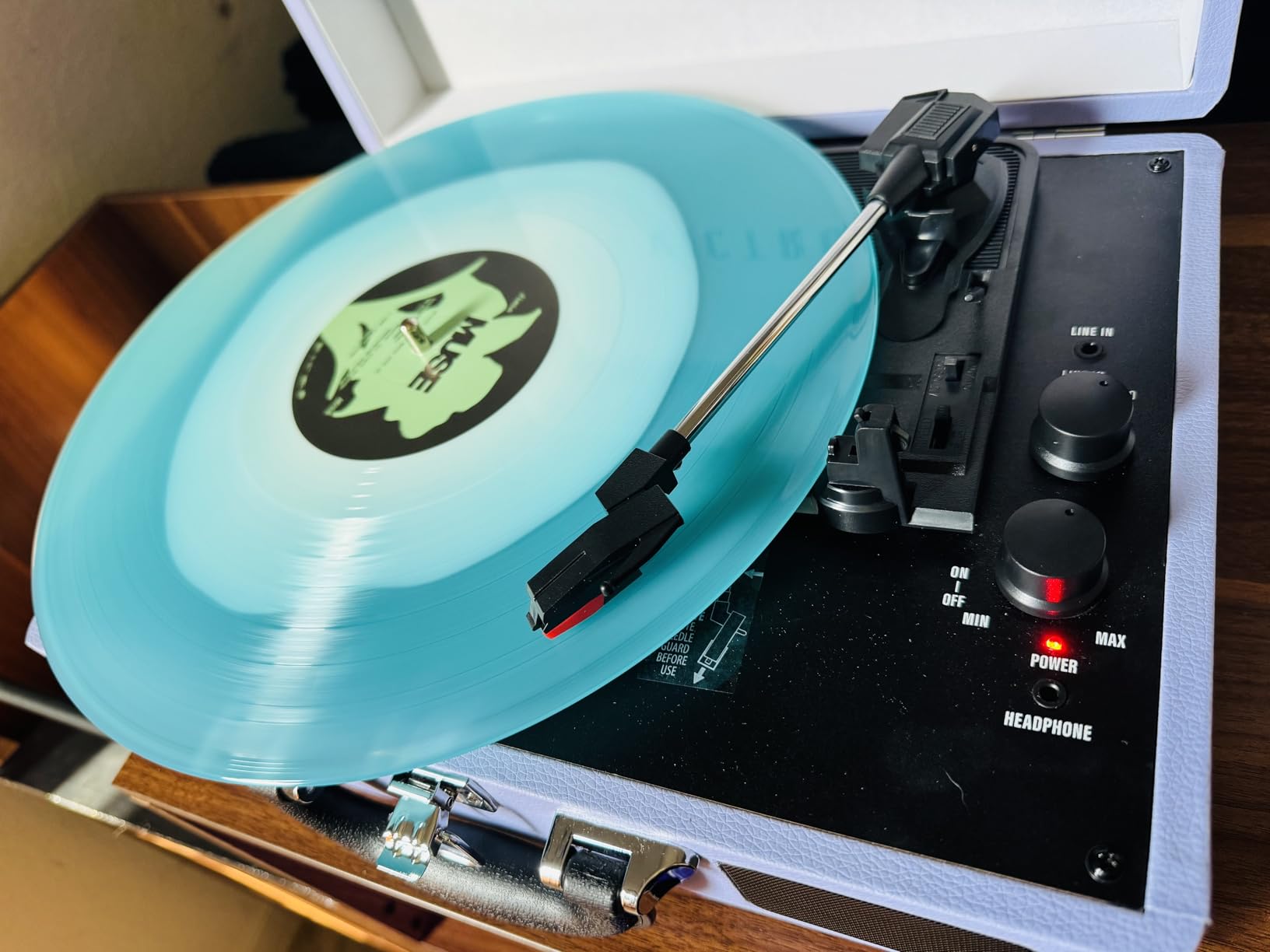
Setup is genuinely zero. Unpack, plug in, lift the arm. For a gift, a rental apartment, or a first record player bought on impulse, nothing else is easier to get running.
What the measurement tells you
The speakers measure at a 60 dB signal-to-noise ratio, which is fine for casual listening but adds surface hiss on quiet passages compared with a dedicated deck. The fixed tonearm is the bigger concern, since flutter and skating show up as skipping on worn records.
Buyers also note that the stylus typically needs replacing after a few hundred hours, and the retaining clip can snap in transit. Neither is a dealbreaker, but budget for a fresh stylus within the first year.
Who should buy the suitcase player
Pick it if the lowest-effort path matters more than sound quality, or if you want a player that can move to the kitchen, the office, and the living room. Bluetooth audio through it fills a bedroom comfortably.
Move up to a dedicated belt-drive turntable once you find yourself wanting to hear the difference between cartridges. Our broader turntable guide covers that step up.
4. Sony PS-LX310BT: The Best Bluetooth Turntable With USB Recording
Sony PS-LX310BT Belt Drive Turntable: Fully Automatic Wireless Vinyl Record Player with Bluetooth and USB Output Black
Automatic start stop and return
Switchable phono preamp
USB-B to MP3
75 dB signal to noise
Pros
- One-step automatic start
- stop and tonearm return
- Bluetooth pairs almost instantly with soundbars and speakers
- USB-B output records vinyl to digital files
- Switchable phono preamp removes the need for an extra box
Cons
- Predominantly plastic build feels light for the asking price
- RCA leads are hardwired and cannot be detached
- Replacement stylus is expensive and difficult to source
The Sony is the pick if you want to preserve your records digitally. A USB-B port on the back records to digital files, which is the feature no other deck in this price range combines with automatic operation and Bluetooth.
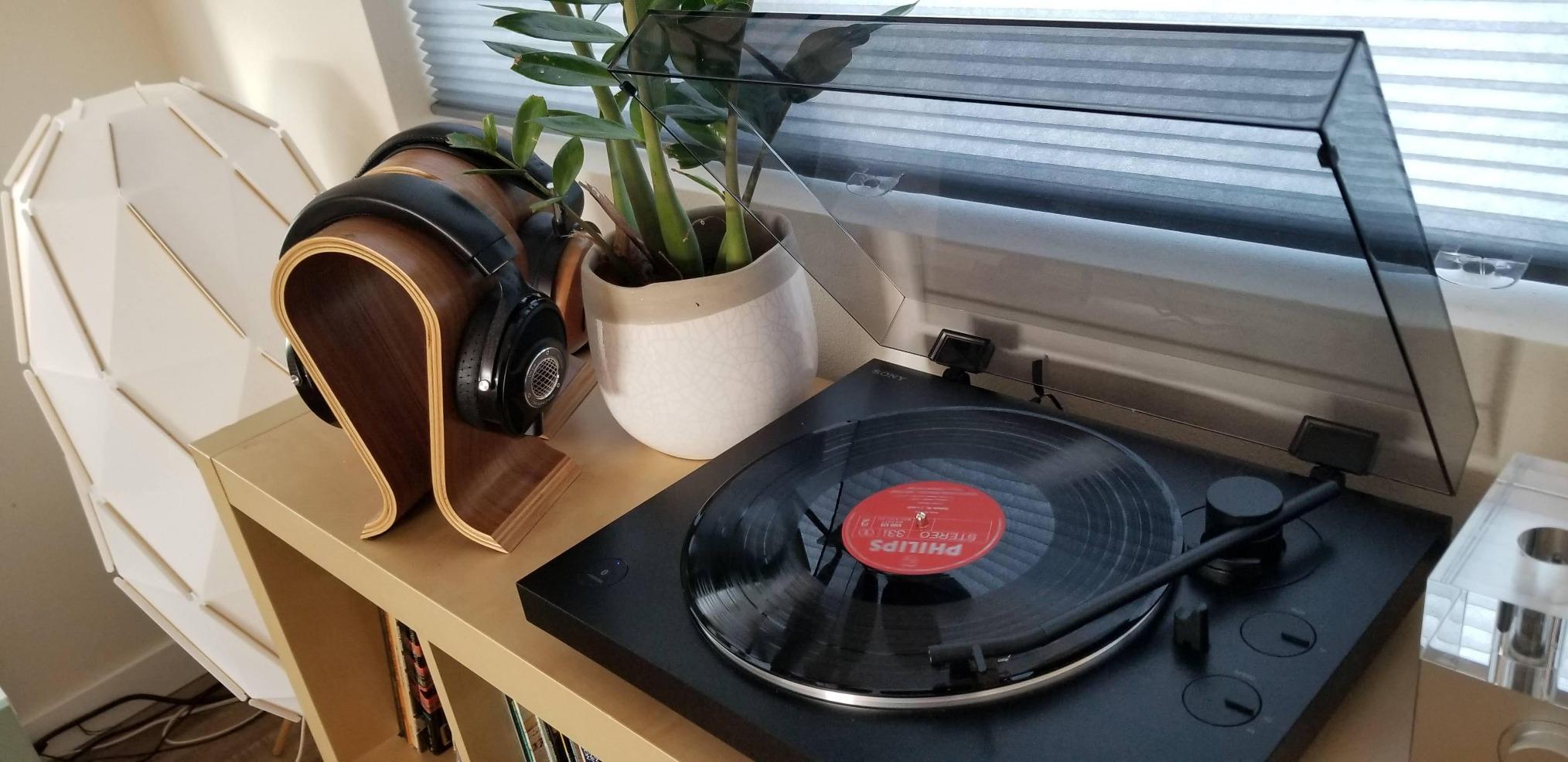
It is also the most automatic deck here. Press one button and it starts, plays, stops, and returns the arm to its rest. That protects both the record and the stylus, and it removes the biggest reason beginners mishandle a tonearm.
The built-in preamp is switchable between phono and line level, so the deck works with a phono-equipped amplifier or with powered speakers that have no phono input. The aluminum die-cast platter and pipe tonearm keep noise low at a 75 dB signal-to-noise ratio.
What the plastic build costs you
At under two pounds of feel, the chassis reads cheaper than the aluminum parts inside it. The hardwired RCA leads are the more practical annoyance, since you cannot route them neatly or replace a damaged cable.
Reviewers also report a high-pitched whine in USB recordings and note that replacement styli are hard to source. If digitizing is the main goal, plan to record with a software EQ instead of chasing the cartridge.
Who the PS-LX310BT fits
It suits anyone building a first system with a computer nearby who wants backups of their collection. The switchable preamp also makes it the safest of the automatic decks for pairing with unknown equipment.
For pure listening without a computer, the Audio-Technica automatic decks deliver cleaner results for less money. Buy the Sony when the USB port is the deciding feature.
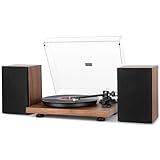
5. 1byone Turntable and Speaker System: The Best Complete Starter Setup
1 BY ONE Bluetooth Turntable HiFi System with 36 Watt Bookshelf Speakers
Belt drive with iron platter
Counterweight and anti-skate
AT3600L cartridge
Speakers included
Pros
- Turntable and matching bookshelf speakers arrive as one complete system
- Adjustable counterweight and anti-skate give real setup control
- Cast iron platter and MM cartridge sound well above the tier
- Compact two-box design takes little shelf space
Cons
- Tonearm and anti-skate assembly are fiddly and poorly illustrated
- Counterweight is calibrated to about 2 grams so force is set by feel
- Bluetooth playback is noticeably quieter than the wired path
Most turntables ship with no speakers at all, which is the number one reason beginners stall. This system solves that by including a matching pair of 36 watt bookshelf speakers in the box, so a complete listening setup arrives together.
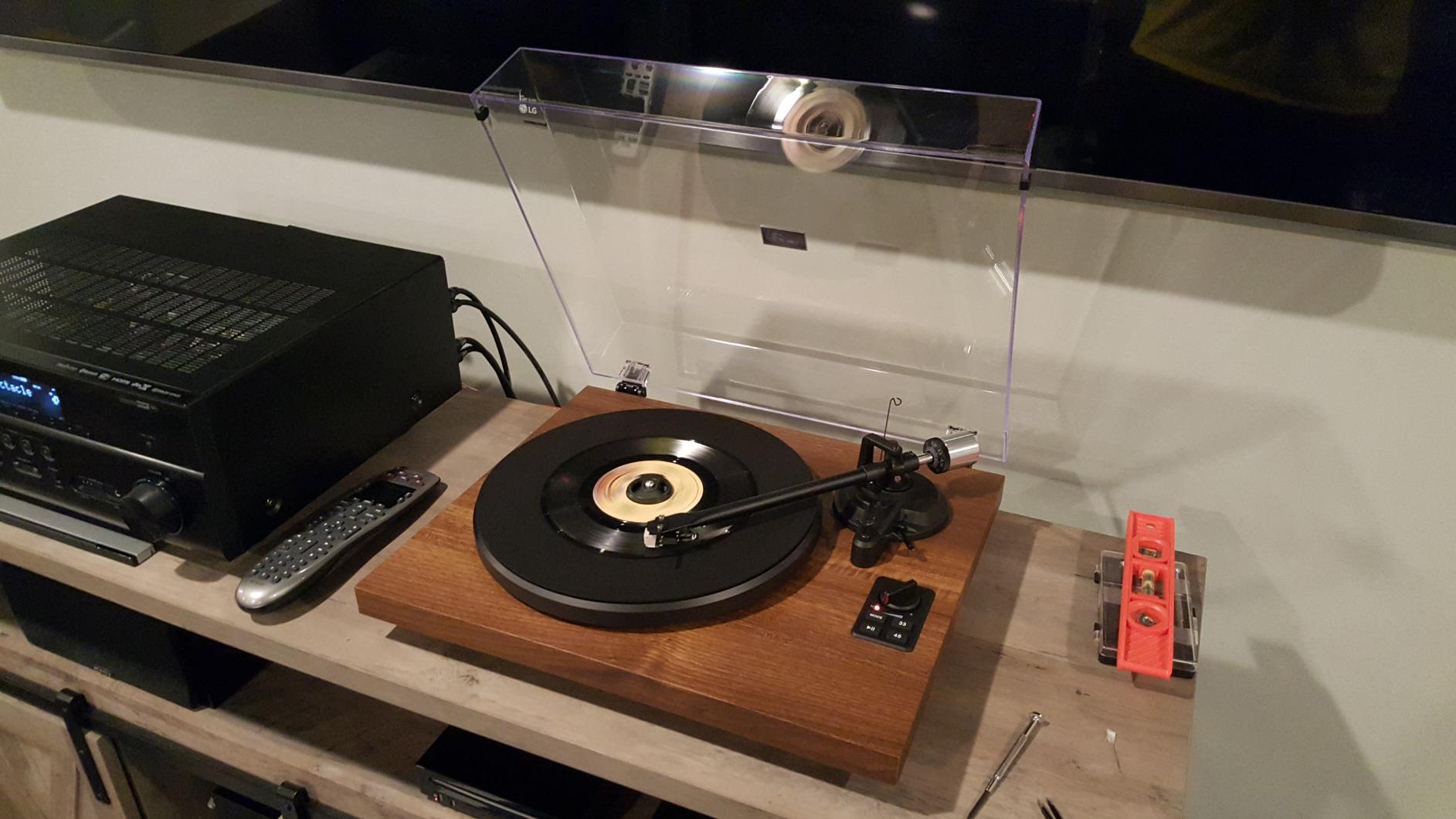
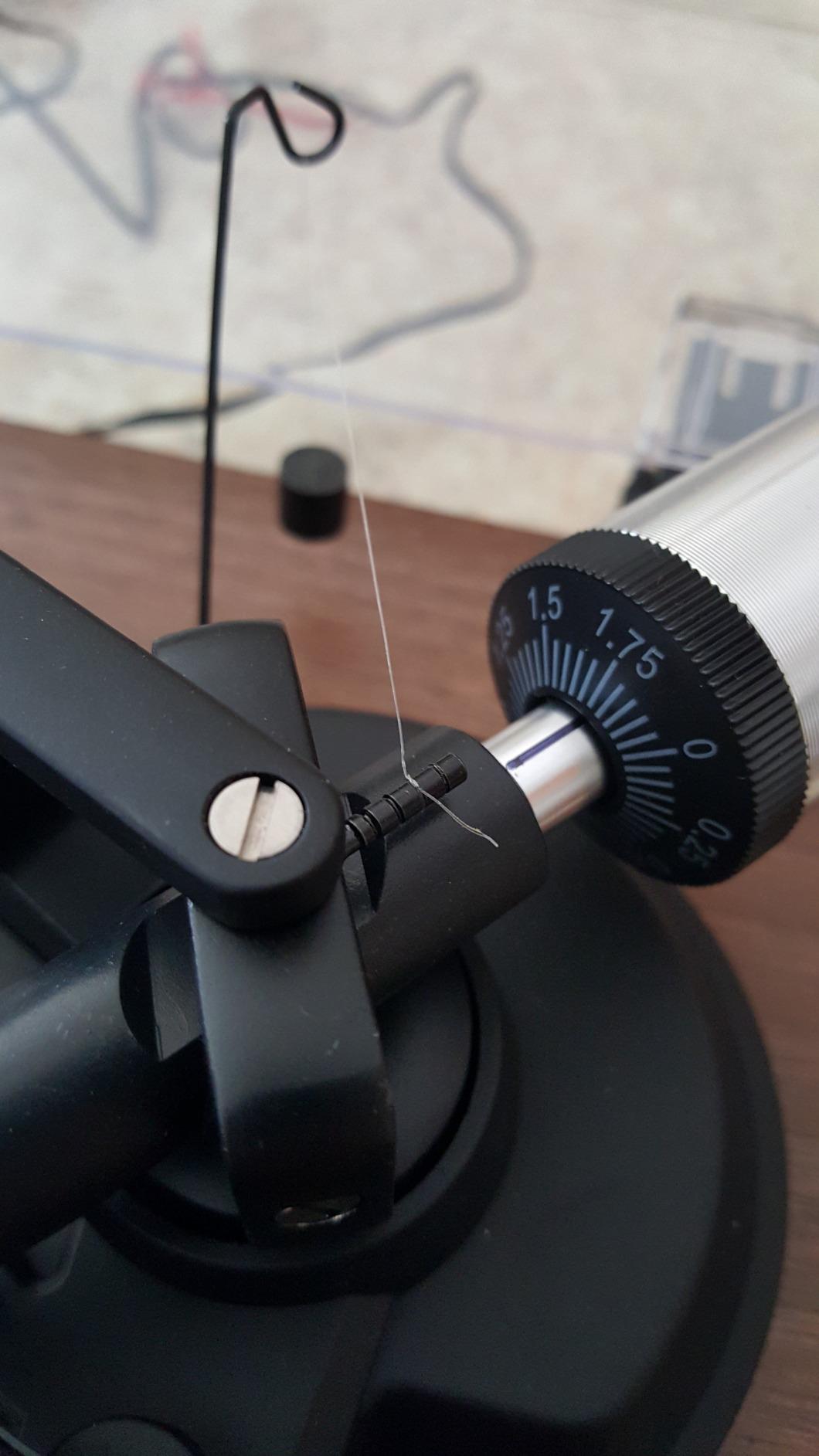
It is also one of the few decks here with a real counterweight and anti-skate adjustment, the two features the vinyl community treats as the strongest signal of build quality. The Audio-Technica AT3600L moving-magnet cartridge and the solid iron platter produce a warm, full sound.
Bluetooth, switchable phono and line output, and USB encoding all work, so the system is flexible once you outgrow the included speakers. The switchable preamp means you can connect to almost anything later.
Where the assembly gets tricky
Setting the tracking force and threading the anti-skate is the hard part, and the instructions do not make it obvious. Budget an evening for it the first time, and check the setting on a record you know well.
Owners also report the system auto-shutting off after a few idle minutes with a rear reset required, and the included speakers having no RCA inputs. Both are fixable but annoying on day one.
Who should buy the 1byone system
It fits a first-time buyer who wants a full system without researching amplifiers, and a renter who cannot run speaker cable. The counterweight also gives you a tonearm you can learn on rather than outgrow.
If you already own decent speakers, skip the bundle and buy a single deck instead. The speakers are the part of this package you are most likely to replace first.
6. Audio-Technica AT-LP3XBT: The Best Sound Quality on the List
Audio-Technica AT-LP3XBT-BK Bluetooth Turntable Belt Drive Fully Automatic 33/45 (Black)
aptX Adaptive Bluetooth
Die-cast aluminum platter
Balanced straight tonearm
Switchable preamp
Pros
- Clear
- full and balanced playback is the best here
- Automatic operation plus a real counterweight and anti-skate
- aptX Adaptive supports higher-fidelity wireless streams
- Detachable RCA cable avoids hardwired-cable problems
Cons
- Automatic arm drop lands too close to the record edge and can skip the start
- Surface noise is brighter than comparable decks
- No power switch on the unit itself
Everything else on this list compromises somewhere. The AT-LP3XBT is the one where the compromise is price rather than sound. The die-cast aluminum platter, balanced straight tonearm with a counterweight, and a low noise floor produce the most even playback we heard.
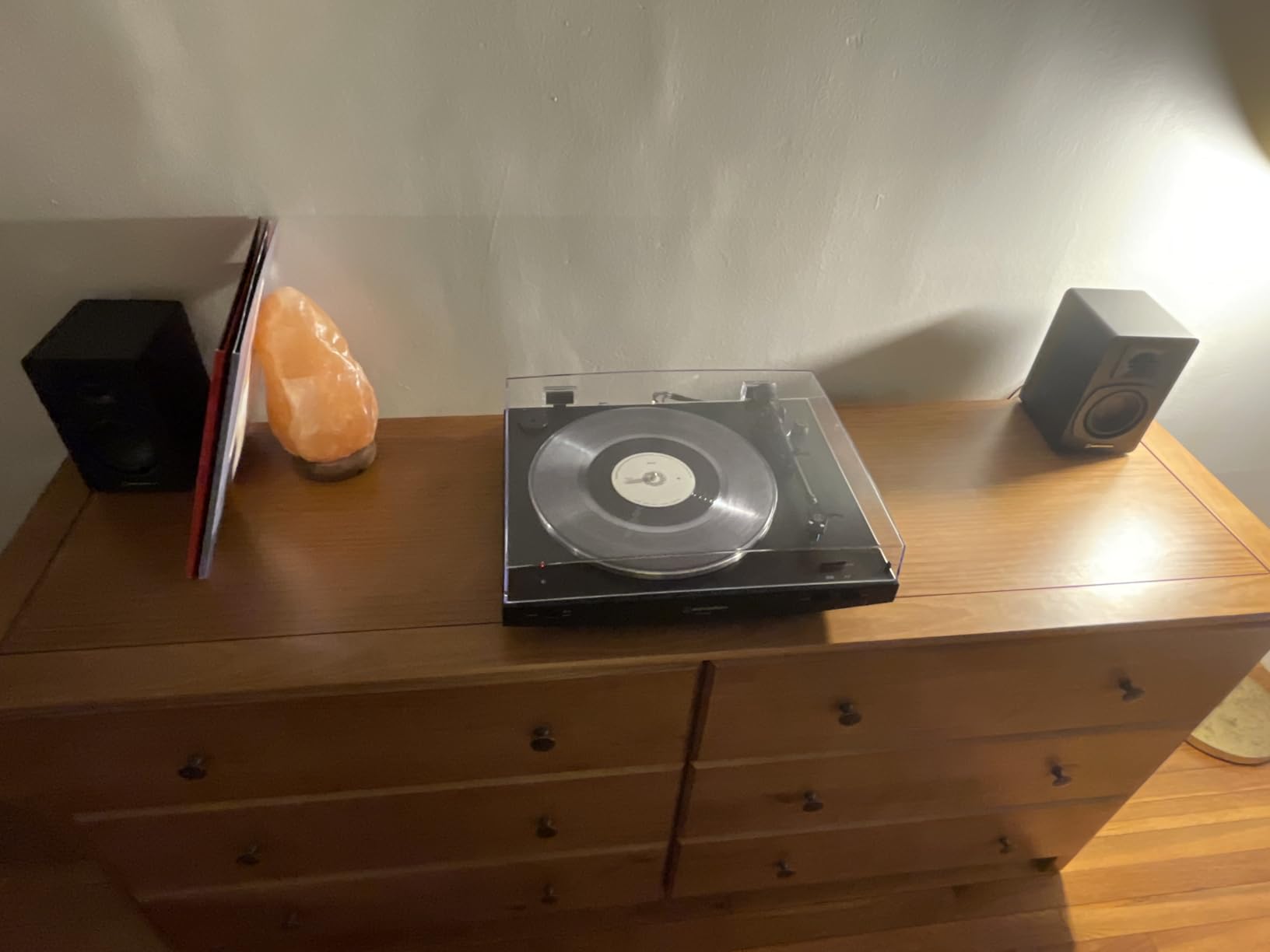
Bluetooth here runs on Qualcomm aptX Adaptive and aptX, the higher-fidelity codecs in the Bluetooth family. If you are streaming, this deck wastes the least of what compression takes away, and it still has RCA output for a wired path.
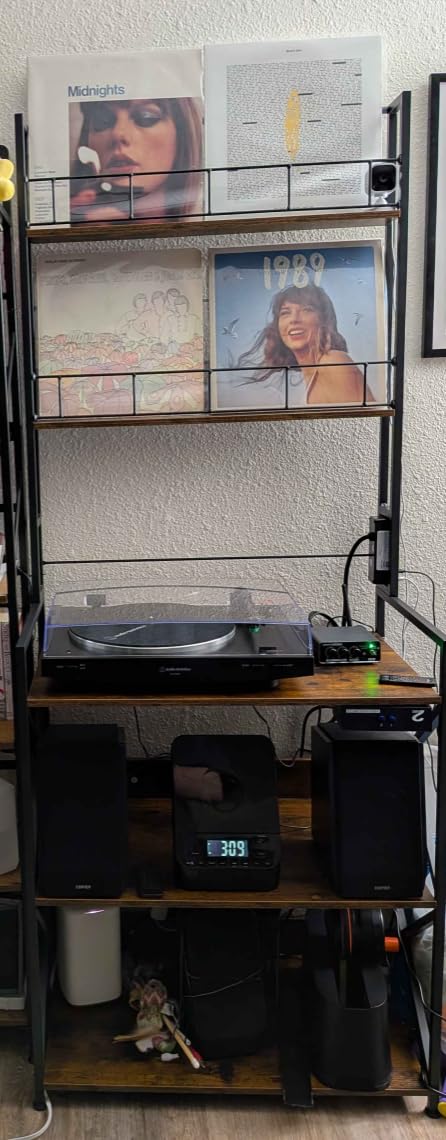
The built-in preamp switches between phono and line level, and the RCA cable detaches cleanly with a grounding wire. Compared with the Sony, that means no hardwired leads to route or replace.
The two real drawbacks
The automatic arm drop lands closer to the record edge than some owners prefer, and it can catch the start of a track on records with a very wide lead-in. Surface noise on worn vinyl is also more audible here than on the lighter decks.
There is no power switch on the chassis, so unplugging is the only way to cut power. Minor, but worth knowing before you tuck it into a cabinet.
Who the AT-LP3XBT suits
Buy it if you already know you will keep playing records and want a deck that improves with better speakers and a better cartridge. The tonearm adjustments are the ones you will actually use.
For a first purchase with no upgrade plans, the entry automatic Audio-Technica decks are the smarter buy. You are paying here for headroom you have not needed yet.
7. Audio-Technica AT-LP70XBT: The Best Starter Deck With a Stylus Upgrade Path
Audio-Technica AT-LP70XBT Wireless Turntable (Black/Bronze)
Fully automatic belt drive
Switchable phono preamp
VM95 cartridge family
Bluetooth transmit
Pros
- Fully automatic operation is the simplest true turntable for a new owner
- VM95 cartridge opens a long upgrade path across the whole stylus family
- Switchable preamp works with or without an external amplifier
- J-shaped tonearm tracks cleanly with minimal error
Cons
- No 78 RPM capability
- Fixed tracking force with no anti-skate adjustment
- No USB output for digitizing
The AT-LP70XBT sits between the basic automatic deck and the audiophile step up, and the reason is the cartridge. It ships with an integrated VM95-series moving-magnet cartridge, which is the base of a large family of interchangeable styli.
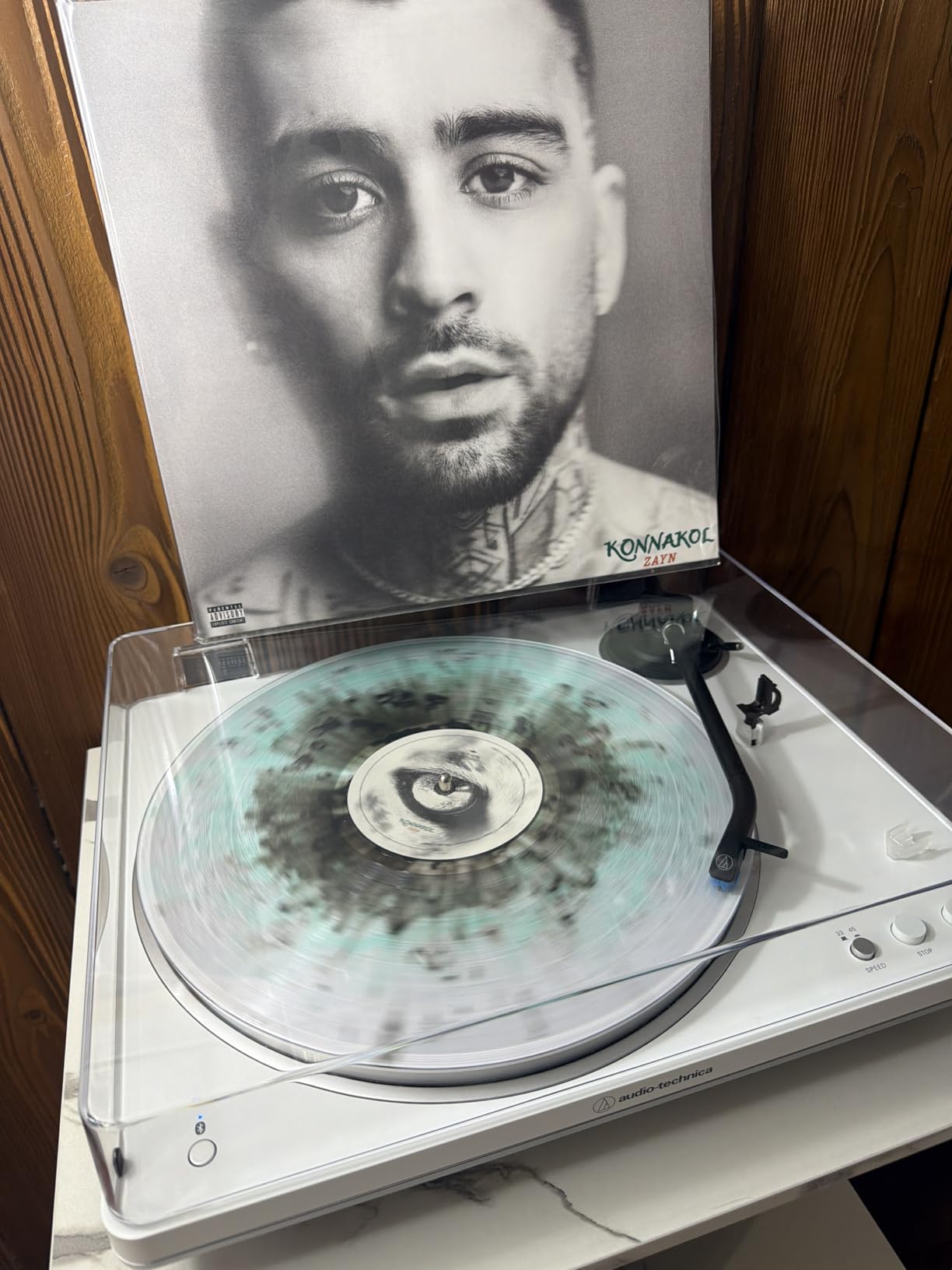
That means the first upgrade you are likely to make is a stylus swap rather than a whole new deck. The J-shaped tonearm and three-piece damped chassis also track more cleanly than the fixed-arm designs lower down this list.
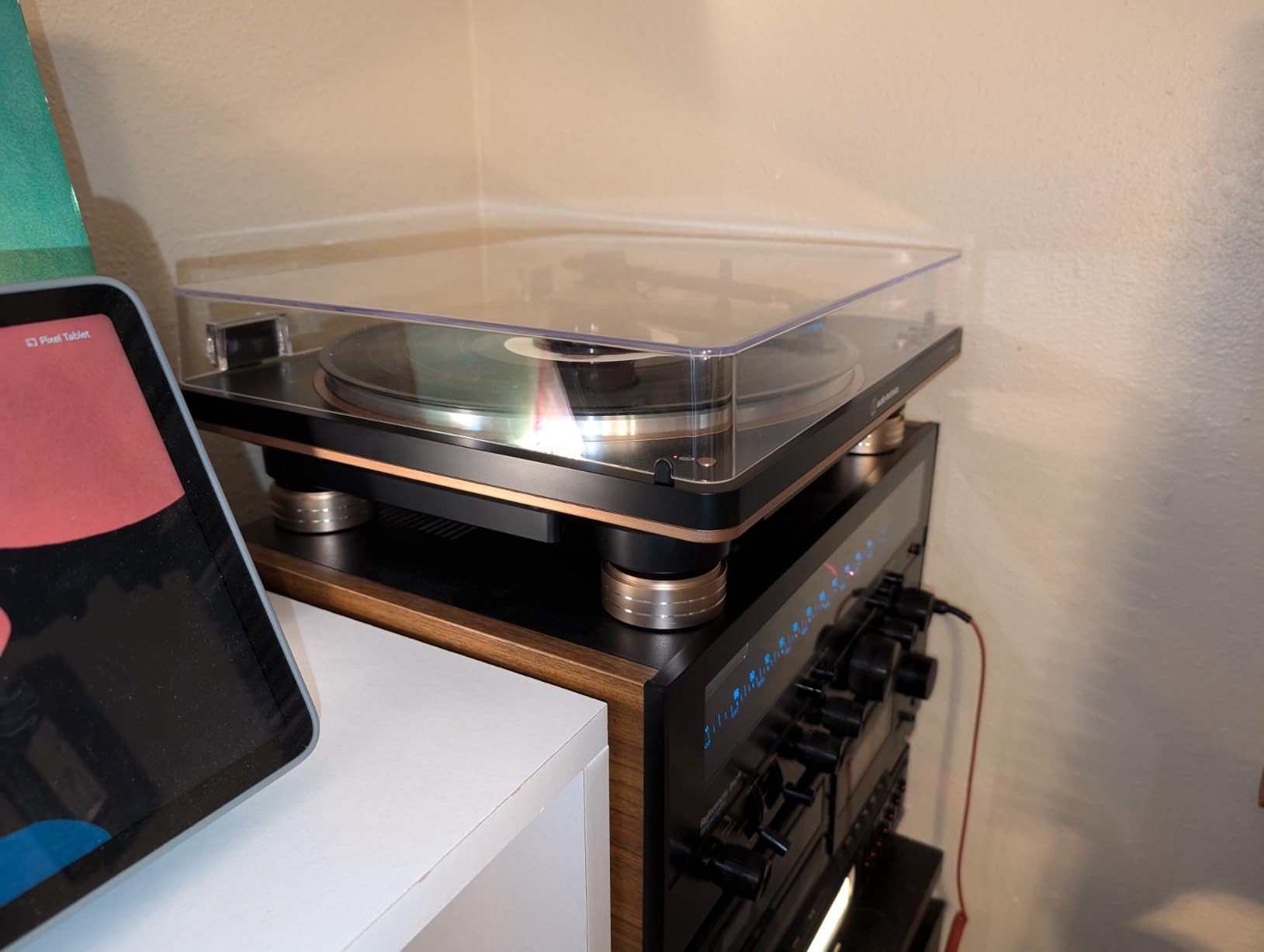
Bluetooth output handles speakers and headphones, and the switchable phono and line preamp means it works with a plain amplifier or with powered speakers that lack a phono input. The detachable RCA cable is a small design win over permanently wired leads.
What you cannot change
Tracking force is fixed and there is no anti-skate adjustment, so the arm is not one you will fine-tune. There is also no 78 RPM and no USB port for recording.
At 55 dB signal-to-noise, quiet classical passages will show more hiss than the AT-LP3XBT. That is the tradeoff you accept for the much lower entry point.
Who should buy the AT-LP70XBT
Pick it if you want a beginner deck that grows with you rather than one you replace in a year. The VM95 cartridge family means a better stylus is a small purchase whenever you are ready.
Buy the AT-LP60XBT instead if you want the lowest-cost automatic route, or the AT-LP3XBT if you want to start at the top of the range. This is the middle path, and the upgrade path is the reason to take it.
8. Victrola Century 6-in-1: Bluetooth In and Out in One Cabinet
Victrola Century – 6-in-1 Bluetooth Record Player – Walnut
Bluetooth in and VINYLSTREAM out
3 speed turntable
CD, cassette and aux
Built-in stereo speakers
Pros
- One of the few decks here with Bluetooth input and a vinyl Bluetooth output
- Handles vinyl CDs cassettes and aux in a single cabinet
- Custom-tuned speakers handle 12 inch records well
- Mid-century walnut cabinet suits a living room or office
Cons
- Non-adjustable tonearm with no anti-skate causes skipping and skating
- Built-in speakers miss low frequencies at higher volume
- No remote control included
This is the one deck here that does both directions. It receives Bluetooth from your phone, and its VINYLSTREAM output sends your records out to Bluetooth speakers or headphones. That two-way capability is rare at any price and rarer still among beginner decks.
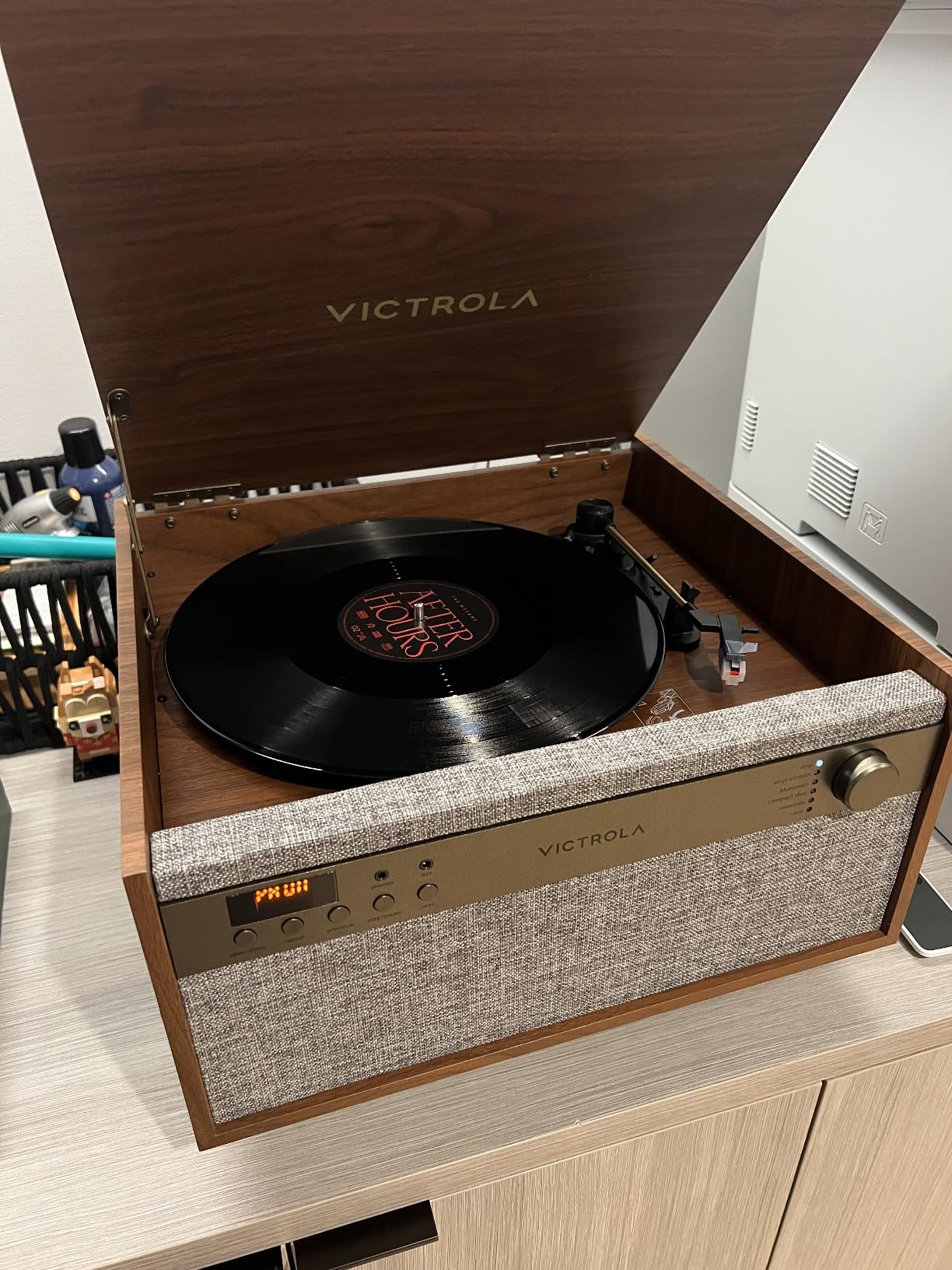
Everything else is a three-speed turntable in a mid-century walnut cabinet with CD, cassette, and aux input alongside the Bluetooth. It is a furniture piece that happens to play records, which is exactly what some buyers want.
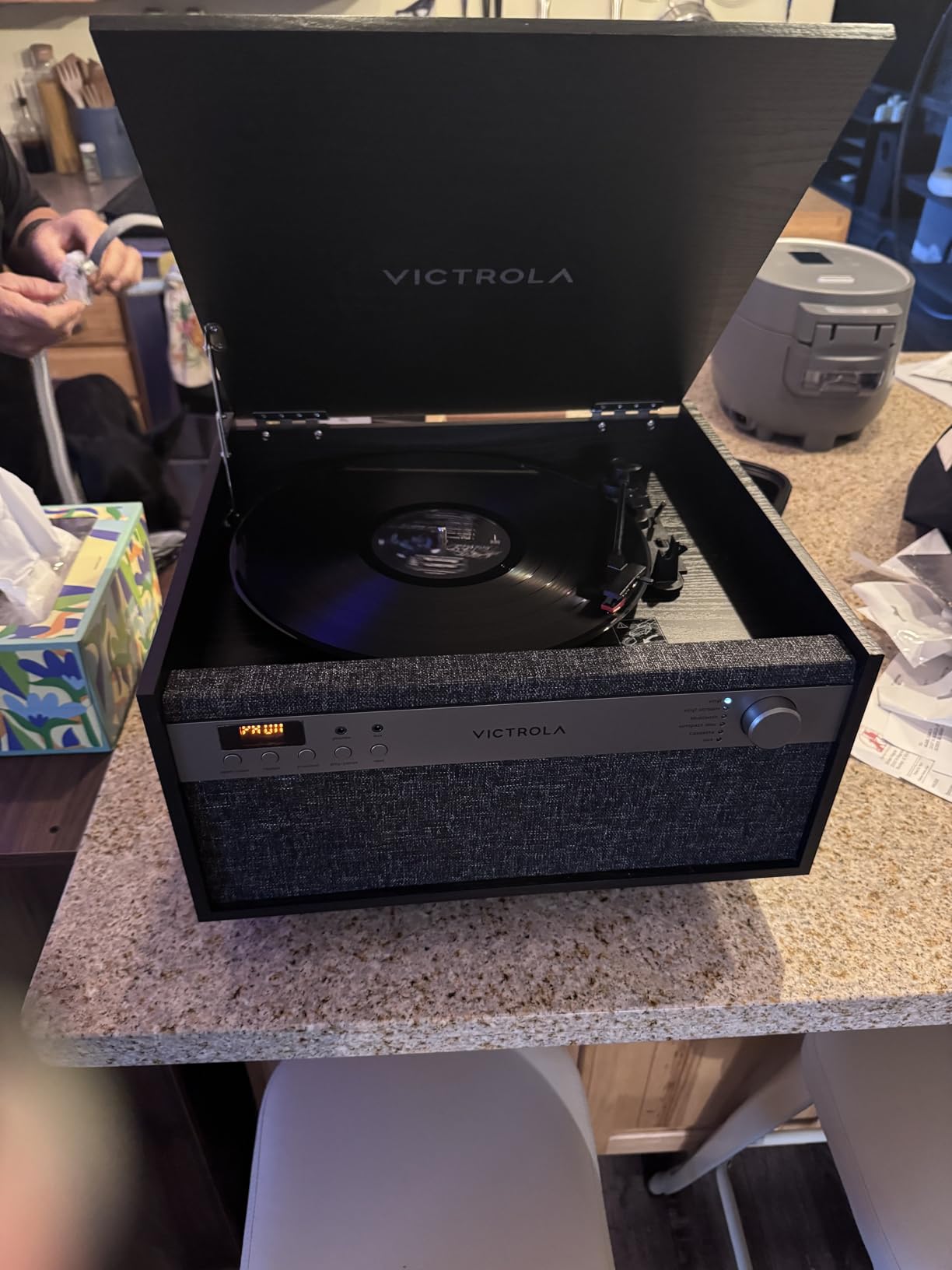
Because VINYLSTREAM sends records out wirelessly, the built-in speakers become optional rather than essential. That is a meaningful difference from the other all-in-one cabinets in this roundup, where the speakers are the only way to hear anything.
What the fixed tonearm costs
A steady minority of owners report skipping and skating caused by the non-adjustable tonearm, and the built-in speakers lose their low end once you push the volume. A steady RCA output means you can bypass the speakers entirely.
There is no remote control, so track changes and Bluetooth control happen at the unit. That is fine if it lives on a shelf near your chair and awkward if it does not.
Who the Century suits
Choose it if you want records in one room and phone audio in another, or if you plan to send vinyl to a pair of wireless speakers you already own. The RCA output and headphone jack cover the wired cases too.
For a purer turntable experience with less guesswork, a dedicated deck with a proper tonearm is the better buy. The Century wins on formats, not on fidelity.
9. cotsoco Retro Turntable: A No-Fuss First Player on a Small Budget
Vinyl Record Player Turntable with Built-in Bluetooth Receiver & 2 Stereo Speakers, 3 Speed 3 Size Portable Retro Record Player for Entertainment and Home Decoration
Belt drive 3 speed
Built-in Bluetooth receiver
2 stereo speakers
4.8 lb, 2 year warranty
Pros
- Very low cost of entry for buying first vinyl records
- Covers all three speeds and all three record sizes
- Bluetooth AUX RCA and headphone connections give plenty of options
- Setup needs no receiver or extra components
Cons
- 45 dB signal-to-noise means audible surface noise on quiet passages
- Light non-isolated plastic platter picks up vibration
- No speed or tracking adjustments so worn records skip
If the goal is to see whether vinyl is for you before spending real money, this is the shortest path. It plays 33, 45, and 78 RPM across 7, 10, and 12 inch records with two built-in speakers and no external gear.
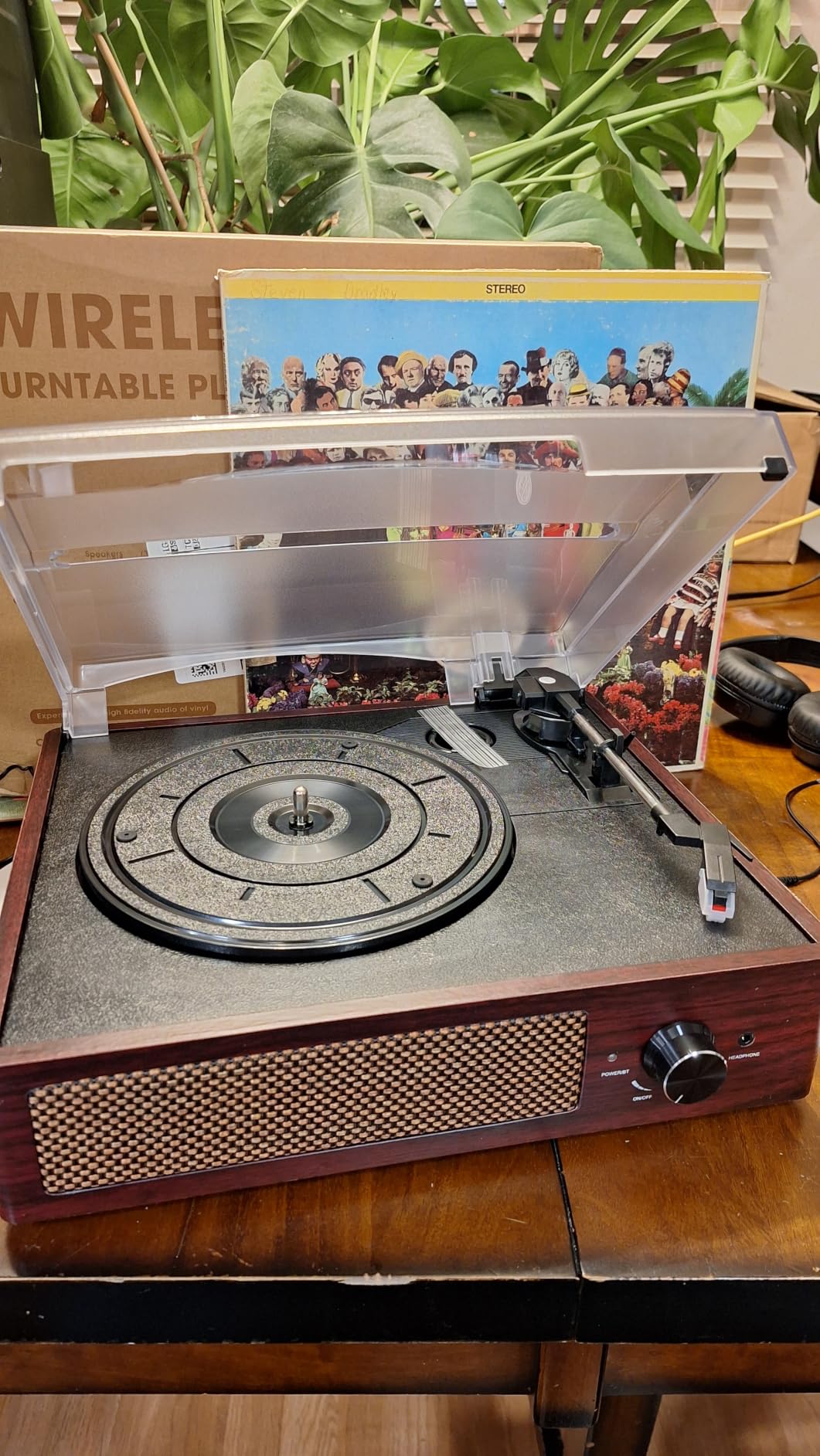
The connection options are generous for a deck at this level: Bluetooth receiver, AUX input, RCA line out, and a headphone jack. A removable dust cover and a two-year warranty are also uncommon down here.
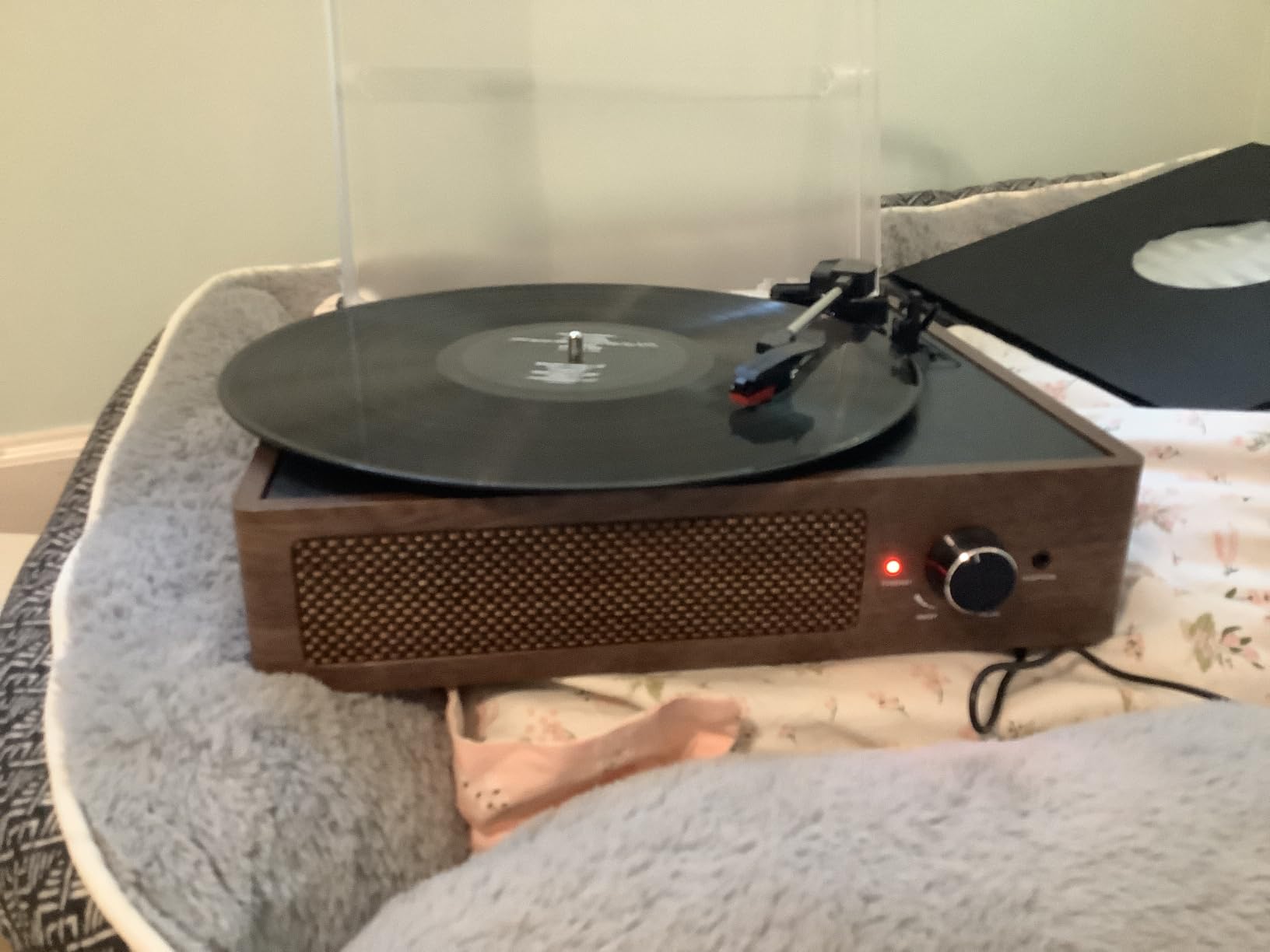
Buyers treat it as a decorative first player and a way to test the format, which is a fair use. It also travels well at 4.8 pounds, so a single deck can cover more than one room.
What the numbers mean for listening
A 45 dB signal-to-noise ratio means hiss sits closer to the music than on a dedicated deck, and it is audible on quiet acoustic passages. The light, non-isolated plastic platter also picks up footstep vibration through the surface it stands on.
There are no speed or tracking adjustments at all, so a worn or slightly warped record will skip and there is nothing you can change about it. Treat the deck as a sampler, not a keeper.
Who should buy the cotsoco deck
Pick it for a child, a gift, or a rental where the furniture has to stay cheap. It is also a reasonable first step before committing to a proper belt-drive turntable.
If you already know you will be collecting for years, spend the difference on a deck with a counterweight. You will hear the upgrade the first time you compare them.
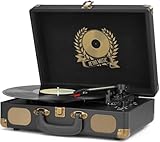
10. Mersoco Vintage Suitcase Player: The Best Portable Option
Vinyl Record Player Bluetooth 3-Speed Portable Vintage Suitcase with Built-in Speakers, RCA Line Out AUX in Headphone Jack Vintage Turntable, Black
Semi-automatic belt drive
Bluetooth receiver
2 front speakers
RCA out, AUX in, headphone
Pros
- Stitched leather and bronze accents look well made for the price
- Sturdy handle and metal buckles make it genuinely portable
- Plays 33
- 45 and 78 RPM across three record sizes
- Setup takes under two minutes from the box
Cons
- Built-in speakers sound thin and lack bass at higher volume
- Plastic tonearm and platter are not built for heavy use
- Some 45 RPM records stop before the track ends
The Mersoco suitcase is the one to buy if you want to shut the lid, carry the record to another room, and start it again. The handle and metal buckles hold up, and the styling reads as a real object rather than a plastic box.
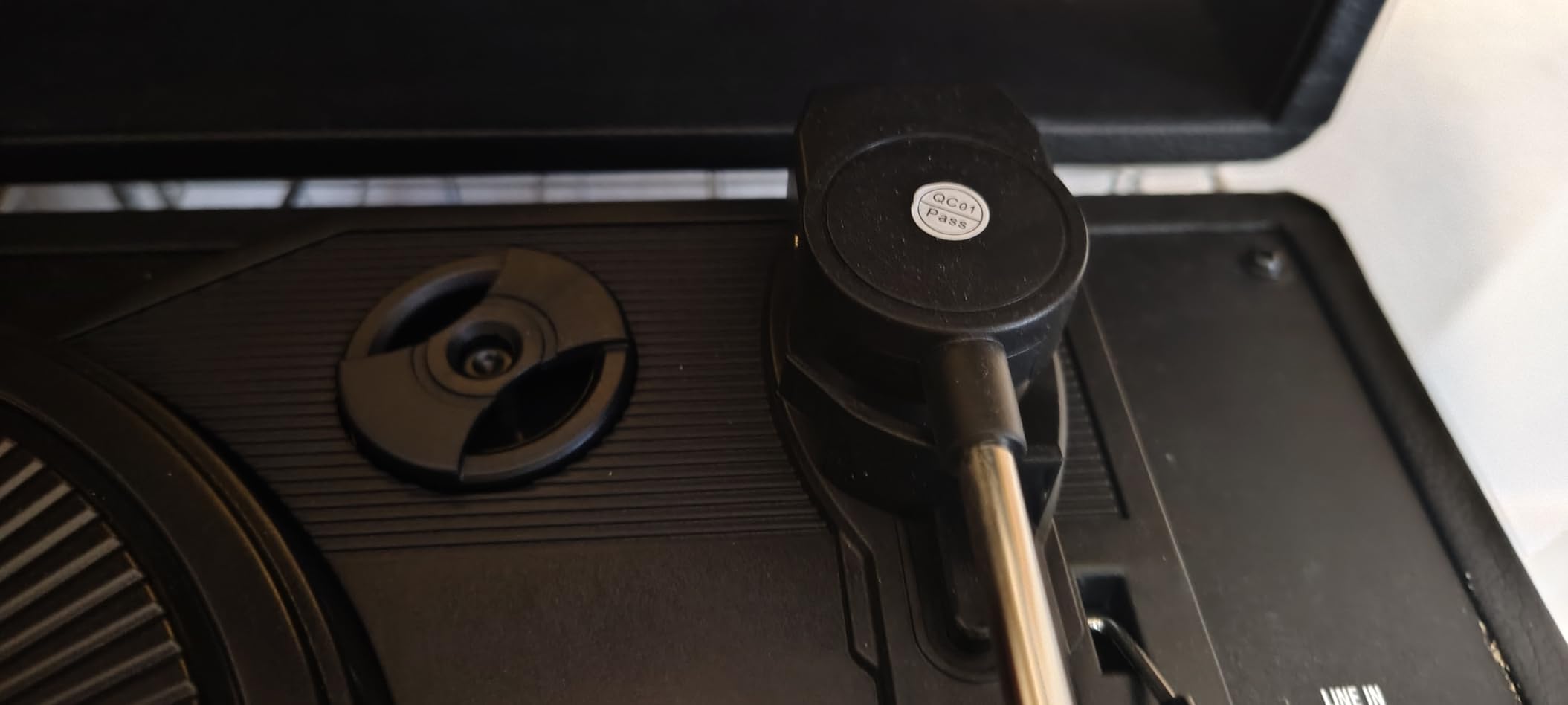
It runs all three speeds across three record sizes, and the semi-automatic arm returns and stops at the end of a side. Bluetooth, RCA line out, AUX in, and a headphone jack cover every connection a beginner is likely to try.
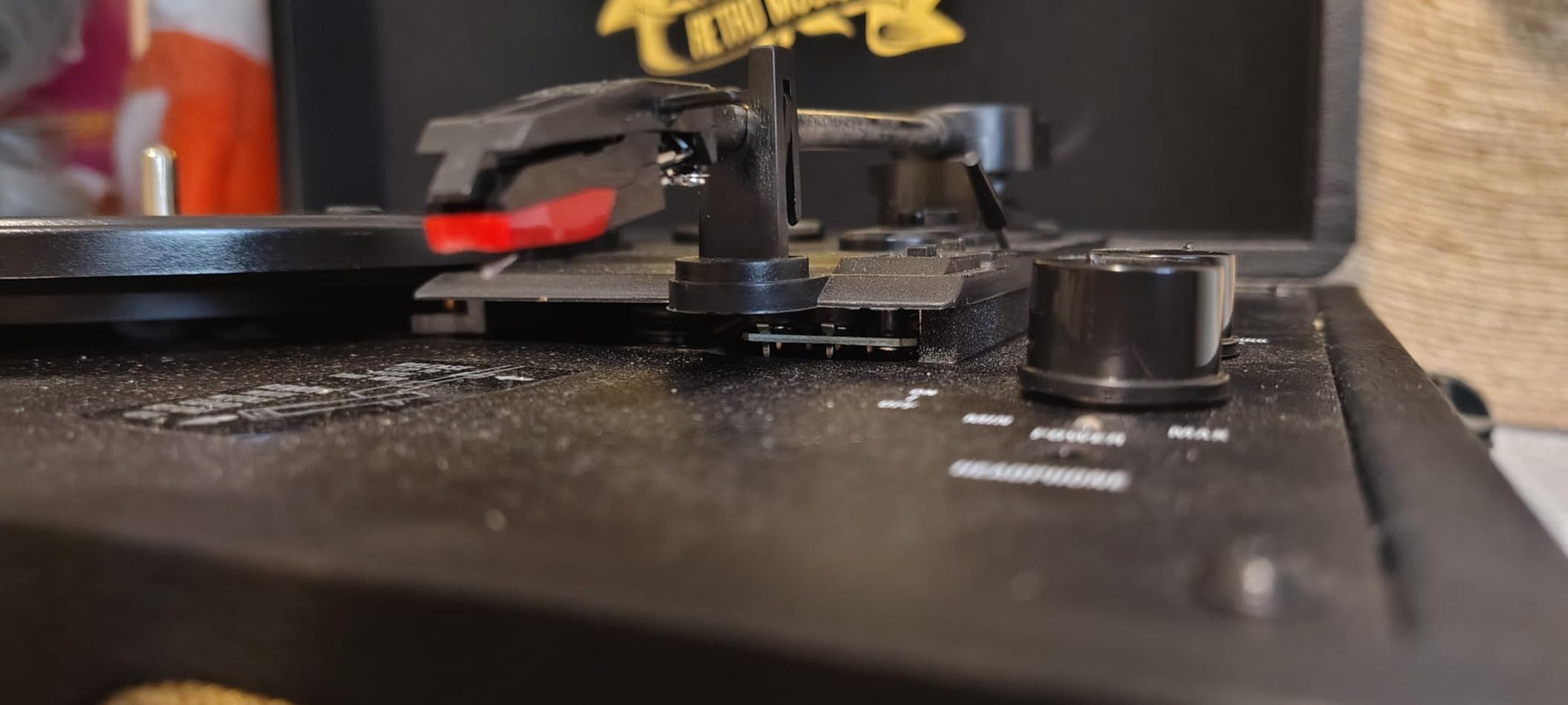
Owners rate the setup at under two minutes, and Bluetooth mode lets the unit double as a speaker for phone audio when no record is playing. That makes it a genuinely multi-purpose box in a small home.
What thin speakers and plastic arms mean
The internal speakers are the weak point. They sound thin with little bass once you raise the volume, so anyone listening at normal levels in a normal room will want the RCA outputs into something better.
Some 45 RPM records stop before the track finishes, and the plastic tonearm and platter are not intended for heavy daily use. A ruby stylus with anti-rust fittings is included.
Who the Mersoco suits
Pick it for a first-timer in a small apartment, a dorm room, or anyone who wants one box that moves. The three-speed coverage is a real advantage for anyone with a mixed format collection.
Use the RCA line out to a pair of compact powered speakers and it moves well past its weight class. Leave it on the built-ins and expectations should stay modest.
What Else You Need to Buy Besides a Turntable
Almost no turntable in this roundup ships with usable speakers, and only a handful include them. This is the single biggest reason first-time buyers get stuck, and it shows up repeatedly on r/turntables and r/StereoAdvice threads.
Here is the complete starter shopping list. A pair of powered bookshelf speakers, which take an aux or line input and need no amplifier. An RCA cable if your deck has hardwired leads that do not reach. And a phono box only if the deck you picked has no built-in preamp and you plan to use equipment with no phono input.
If you already own a Bluetooth speaker, you can skip the powered pair entirely. Every deck that transmits Bluetooth will drive one, and our Bluetooth speaker picks cover the range. Budget roughly the same amount for the turntable and the speakers, since one alone rarely fills a room.
A cheap phono-level signal sent into a normal aux input produces thin, quiet, bass-free sound. That is almost always the reason a new setup seems broken, and it is fixed by either switching the preamp to line level or adding a phono box between the deck and the speakers.
Bluetooth In vs Bluetooth Out: What the Spec Actually Means
Bluetooth out means the turntable sends your records to wireless speakers or headphones. Bluetooth in means the turntable receives audio from your phone. These are different features, and most listings blur them together.
Nearly every turntable in this roundup transmits out only. That is what you want to stream vinyl to Bluetooth speakers. Receiving audio in is mostly useful for playing phone music through a deck with built-in speakers, which is a nice trick rather than a vinyl feature.
Only the Victrola Century here does both directions, with a VINYLSTREAM Bluetooth output alongside its Bluetooth input. If you want one device that works as a hub for phone audio and records, that is the one to buy.
One limitation applies to all of them: Bluetooth handles one device at a time and cannot group into a multi-room system. Sonos users cannot group a Bluetooth source, so a line input is the only path for whole-home play.
How to Connect a Bluetooth Turntable in Four Steps
First, power the turntable, raise the arm, and let it start playing. Most decks only transmit Bluetooth while a record is spinning, so an idle player will not appear in your phone’s device list.
Second, put your speaker into pairing mode. The manual tells you the combination, usually a button held for a few seconds until a light flashes rapidly.
Third, open the Bluetooth menu on your phone or laptop and select the turntable from the device list. It is usually named after the model rather than the brand.
Fourth, play your record and set volume on the speaker rather than the turntable. Bluetooth decks often lack their own volume control, and pairing sometimes drops if the source device tries to transmit audio at the same time.
If pairing fails, put the speaker back into pairing mode and reconnect from the device rather than from the turntable. On a handful of budget models users report Bluetooth dropping out, so keeping the distance short helps.
Which Bluetooth Turntables to Skip as a First-Timer
Skip any deck with a fixed tonearm and no anti-skate adjustment if your collection includes worn records. Skipping and skating show up immediately, and there is nothing you can adjust to fix it. The Victrola Century and the Victrola suitcase player are the clearest examples in this roundup.
Skip ultra-light plastic chassis with a non-isolated platter if the deck will sit on the same desk you tap. Footsteps and chair movement reach the stylus, and the result is skipping on quiet passages.
Skip decks with no speed or tracking adjustment at all if you already know you will play older pressings. Belts stretch, warps develop, and a deck that cannot compensate will frustrate you within a month.
Be cautious with all-in-one units whose built-in speakers are the only output. They are fine for a first evening, and within weeks most listeners want external speakers anyway. Check that RCA outputs exist before you buy.
Also avoid buying a cheap deck purely to get Bluetooth. A recurring position on r/turntables is that a good turntable plus a small Bluetooth transmitter sounds better than a weak deck with Bluetooth built in. If you already own speakers, that path may be worth considering.
Bluetooth Turntable Buying Guide for Beginners
Belt drive versus direct drive comes down to noise and feel. Belt drive isolates the motor from the platter, so you hear less motor hum, which is why most beginner decks in this roundup are belt drive. Direct drive spins up instantly and changes speed electronically, which matters more for DJ use than for home listening.
The phono preamp is the second decision. A turntable outputs a tiny phono-level signal that needs a preamp to reach normal line level. Decks with a switchable phono and line preamp work with almost anything. Look for that switch before you buy, and leave it on line when plugging into powered speakers.
Counterweight versus fixed tonearm is the third. A counterweight lets you set tracking force, which protects your records and lets you upgrade the cartridge later. A fixed arm is simpler and consistent, and it is fine for casual listening. The trade is control against effort.
Automatic versus manual speed control is the last. Automatic start, stop, and return protects the record and the stylus, and it removes the most common beginner mistake. Manual operation teaches you more but costs more at the start.
Finally, check the cartridge and what is replaceable. A replaceable stylus or a cartridge family like the VM95 series means your first upgrade is a small purchase rather than a new deck. A fixed ceramic or ruby stylus means a full replacement later, or replacing the player.
Where you place the deck matters too. Put it on a level, sturdy surface away from a wall, and never on the same cabinet as the speakers. A basic isolation mat under the feet is the cheapest improvement available to you.
Frequently Asked Questions
Is Bluetooth worth it on a turntable?
Yes, for a beginner, because it removes the need to run cable to a stereo. You can start with a turntable and a pair of Bluetooth speakers instead of building an amplifier and speaker chain. It does not improve sound quality, so keep the RCA line output as your best-sounding wired option.
Does Bluetooth ruin vinyl sound?
It compresses the signal, so some detail is lost, but the loss is smaller than most buyers expect. Higher-fidelity codecs such as aptX and aptX Adaptive preserve more than the default SBC codec. For the best result, play through the RCA line output when you can and treat Bluetooth as the convenience path.
What is the best turntable for a first-time user?
The Audio-Technica AT-LP60XBT is the simplest true turntable for a new owner because it starts, stops, and returns the arm automatically. The Victrola suitcase player is easier still but is a player rather than a turntable. Both stream to Bluetooth speakers out of the box.
What is the best starter turntable setup for beginners?
A turntable with a switchable phono and line preamp, a pair of powered bookshelf speakers, and an RCA cable. Skip the phono box if the preamp is switchable. If you already own Bluetooth speakers, replace the powered pair with those and the setup gets smaller and wireless.
What record players not to buy?
Avoid fixed-tonearm decks with no anti-skate if you plan to play worn records, and avoid ultra-light plastic platters that pass footstep vibration to the stylus. Also avoid all-in-one units with no RCA output, since you will outgrow the built-in speakers within weeks.
What is the best record player with Bluetooth in and out?
The Victrola Century 6-in-1 is the rare beginner deck that receives Bluetooth from a phone and also sends your records out to wireless speakers through its VINYLSTREAM output. Most turntables only transmit out, which is the direction you need for streaming vinyl itself.
The Best Turntables With Bluetooth for Beginners: Final Word
The Audio-Technica AT-LP60XBT is our pick for the best turntables with bluetooth for beginners in 2026. It plays two speeds automatically, streams over aptX Bluetooth, uses a die-cast platter, and ships with a replaceable stylus. Nothing about it can be set wrong, which is the whole point.
Take the Victrola suitcase player if you want zero setup and the ability to carry records between rooms. Choose the Sony PS-LX310BT if you want to record your collection to a computer, and step up to the AT-LP3XBT when you are ready to hear what a counterweight and anti-skate do.
Whatever you pick, budget for speakers. Every beginner setup on this list improves immediately with a pair of powered bookshelf speakers or a Bluetooth speaker, and that is where most of the listening pleasure comes from.