
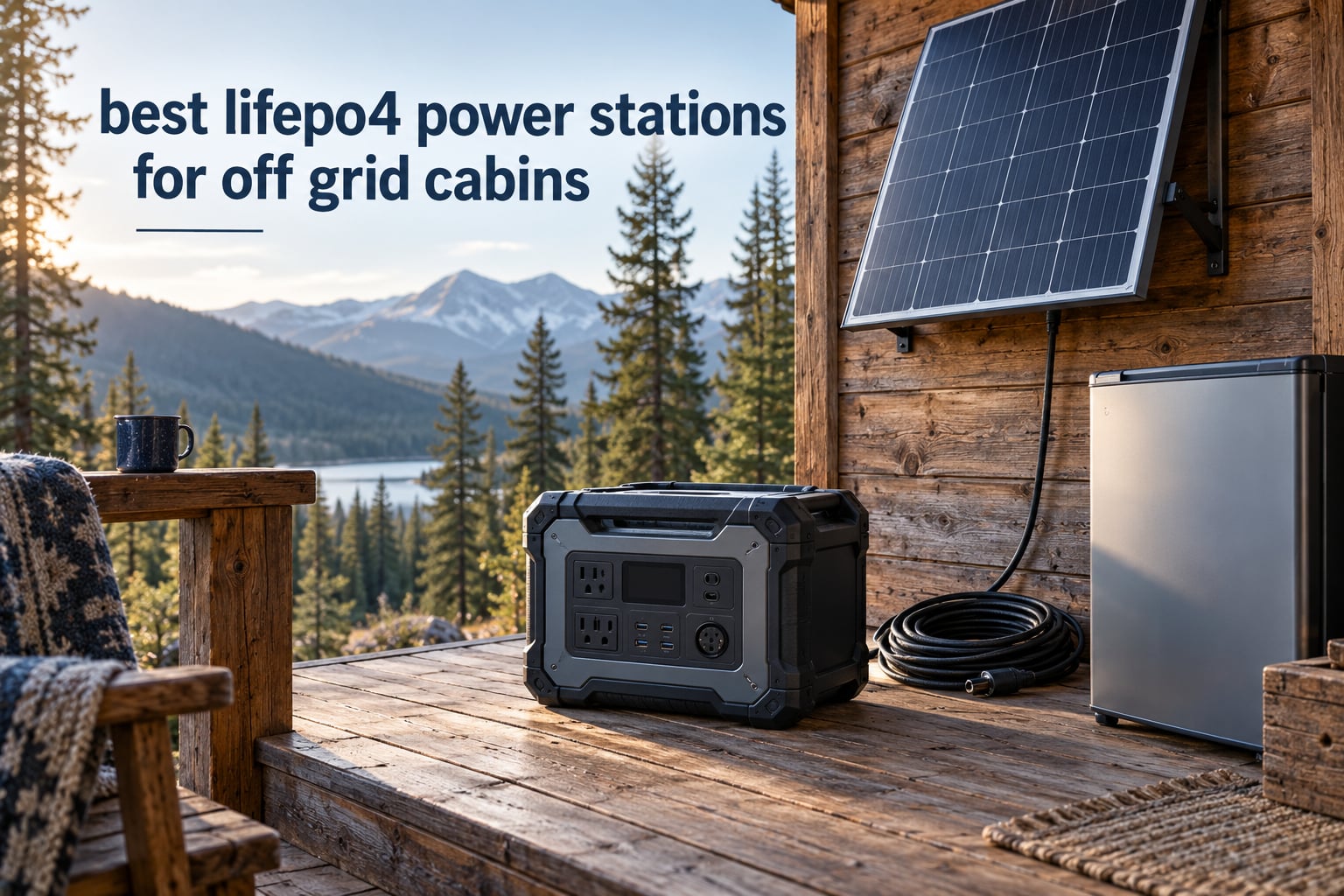
A cabin without a grid hookup runs on one question: how many watt-hours did you bring, and can your inverter start the compressor? Get that wrong and a freezer full of food thaws in a weekend. Get it right and the same box quietly runs a refrigerator, a router, LED lights and a well pump through a month-long storm.
That is why picking among the best LiFePO4 power stations for off grid cabins is not the same exercise as picking a camping generator. Camping gear is measured by how many devices it can charge at once. Cabin gear is measured by usable capacity, continuous inverter output, starting surge, and whether the battery survives an unheated January. If you want the broader picture of portable power first, our independent reviews of the best portable power stations cover the general category.
We compared twelve LiFePO4 power stations against a cabin load audit rather than a spec sheet, and grouped the results by the size of cabin they actually serve. The answer is rarely the biggest box on the page, and the units we recommend most often are not the ones with the highest headline wattage.
Table of Contents
Top 3 Best LiFePO4 Power Stations for Off-Grid Cabins (October 2026)
These three cover the widest range of real cabin situations, from a two-person retreat to a homestead that needs continuous output. Each one earns its place for a different reason.

BLUETTI AC180
- 1152Wh LiFePO4 battery
- 1800W continuous output
- 500W solar input
- 20 ms UPS switchover

Anker SOLIX C1000 Gen 2
- 1024Wh LiFePO4 battery
- 2000W continuous output
- 600W solar input
- 10 ms UPS switchover

EcoFlow Delta 3 Classic
- 1024Wh LiFePO4 battery
- 1800W continuous output
- 3600W surge
- sub-10ms UPS switchover
Best LiFePO4 Power Stations for Off-Grid Cabins in 2026
Here is every station in this roundup side by side. Capacity is the nameplate watt-hours, output is continuous inverter wattage, and the cabin note reflects the loads each one is realistically sized for.
| Product | Specifications | Action |
|---|---|---|
| BLUETTI AC180 |
|
Check Latest Price |
| Anker SOLIX C1000 Gen 2 |
|
Check Latest Price |
 BLUETTI Elite 100 V2 BLUETTI Elite 100 V2 |
|
Check Latest Price |
| EcoFlow Delta 3 Classic |
|
Check Latest Price |
 Anker SOLIX S2000 Anker SOLIX S2000 |
|
Check Latest Price |
 EcoFlow Delta 3 Max EcoFlow Delta 3 Max |
|
Check Latest Price |
 Jackery Explorer 2000 v2 Jackery Explorer 2000 v2 |
|
Check Latest Price |
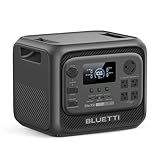 BLUETTI Elite 300 BLUETTI Elite 300 |
|
Check Latest Price |
 EcoFlow Delta 3 Ultra EcoFlow Delta 3 Ultra |
|
Check Latest Price |
 Pecron F3000LFP Pecron F3000LFP |
|
Check Latest Price |
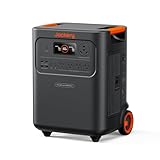 Jackery HomePower 3600 Plus Jackery HomePower 3600 Plus |
|
Check Latest Price |
 Anker SOLIX F3800 Plus Anker SOLIX F3800 Plus |
|
Check Latest Price |
1. BLUETTI AC180 – The Most Flexible Single Box for a Seasonal Cabin
BLUETTI Portable Power Station AC180, 1152Wh LiFePO4 Battery Backup w/ 2 1800W (2700W peak) AC Outlets, 0-80% in 45Min, Solar Generator for Camping, Off-grid, Power Outage
1152Wh LiFePO4
1800W continuous and 2700W peak
500W solar input
20 ms UPS
5-year warranty
Pros
- Full charge in about 1 hour at 1440W AC input
- Eleven outlets plus top wireless charging pad
- Clear LCD with app monitoring and control
- Charges from wall solar car or alternator
- Quiet enough to sleep beside
Cons
- Heavy at 37.4 lb
- Wireless charging pad often fails to charge
- High idle self-consumption cuts runtime on small loads
The AC180 is the station we keep coming back to because it is the rare unit that is neither too small to be useful nor too heavy to move alone. At 1152Wh it sits in that awkward middle where most camping roundups stop looking, and 1800W of continuous output is enough headroom to start a full-size refrigerator rather than a dodgy 12V portable cooler.
Owners consistently single out the charging speed. A full recharge in roughly one hour at 1440W AC input means you can recover from a storm overnight and be back to full before you leave for the grocery store in the morning. The 500W solar input is modest next to some rivals but refills the pack in roughly three hours of strong sun, which is enough to keep a weekend cabin off the wall entirely.
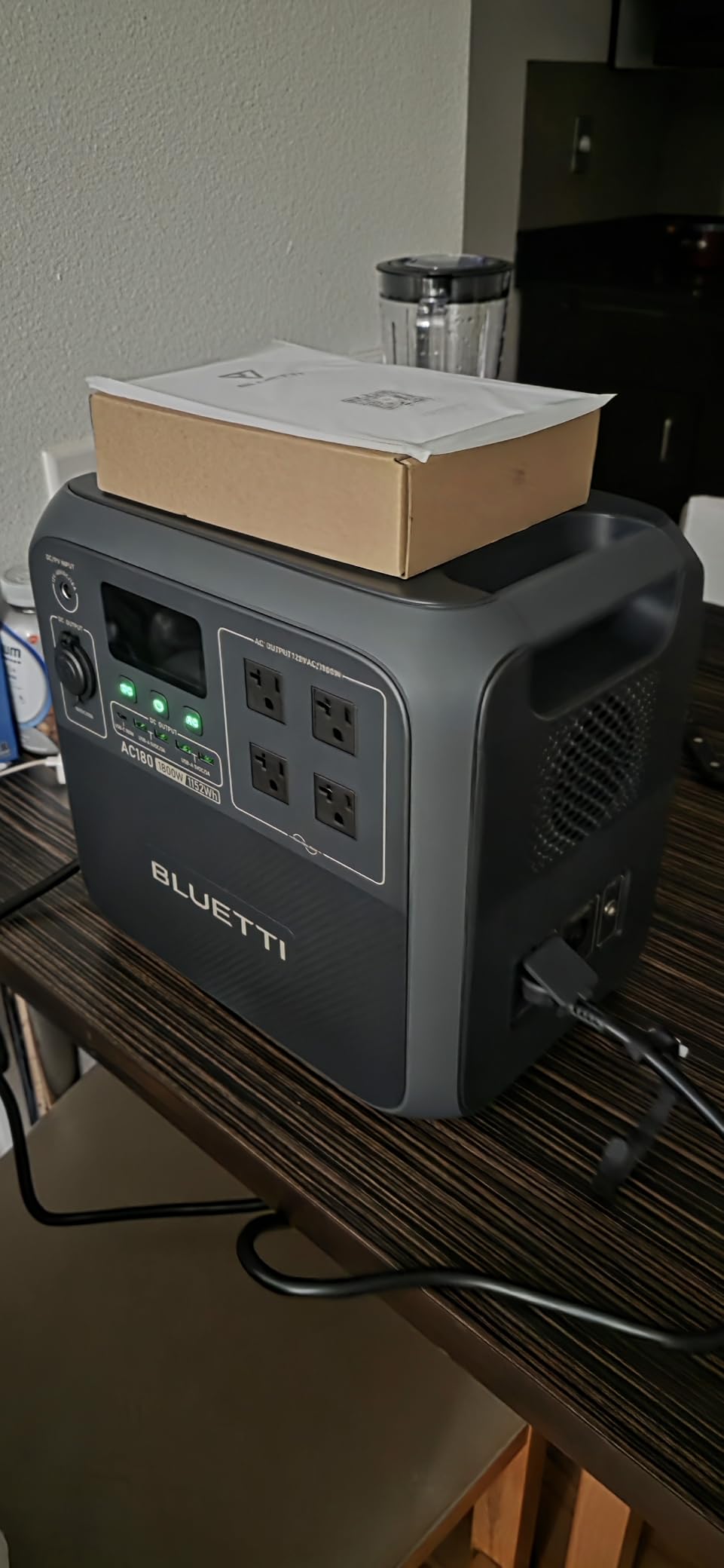
The 20 ms UPS switchover is the sleeper feature for cabins, because a 20 millisecond gap is short enough that a router, a desktop, or a freezer alarm panel never notices the outage. It also handles the 12V vehicle charging case nicely, which matters if you drive up in a truck and want to add charge on the way in.
Best Fit: A Two-Person Seasonal Cabin With a Full-Size Fridge
This is the unit we would put in a cabin that gets used most weekends and for a few weeks each year, with a compressor refrigerator, a router for remote work, LED lighting, and occasional power tools. The eleven-outlet layout means you are not constantly swapping adapters, and the BLUETTI app gives you charge limits and real-time draw on your phone.
The Catch: Weight, Idle Drain, and One Dead Feature
At 37.4 lb the AC180 is a two-person carry at best, so it wants a fixed spot rather than a moving lifestyle. Owners also report high idle self-consumption of roughly 15-20W, which quietly eats into runtime when you are only running a router and some lights overnight. The top wireless charging pad fails often enough that reviewers complain about it repeatedly, and a few early units needed a firmware update plus a full charge-and-discharge calibration before they performed as rated.
2. Anker SOLIX C1000 Gen 2 – Fastest Recharge and a 10 ms UPS
Anker SOLIX C1000 Gen 2 Portable Power Station
1024Wh LiFePO4
2000W continuous and 3000W peak
600W solar input
10 ms UPS
5-year warranty
Pros
- Full recharge in 49 minutes at 1600W
- Compact and light at 24.9 lb
- 10 ms UPS kept CPAP router and fridge running through a 5-hour outage
- 4000 cycles to 80% capacity retention
- Dependable Bluetooth app control
Cons
- No battery expansion on this generation
- Visible harmonic distortion driving a microwave
- Solar input slow with small 100W panels
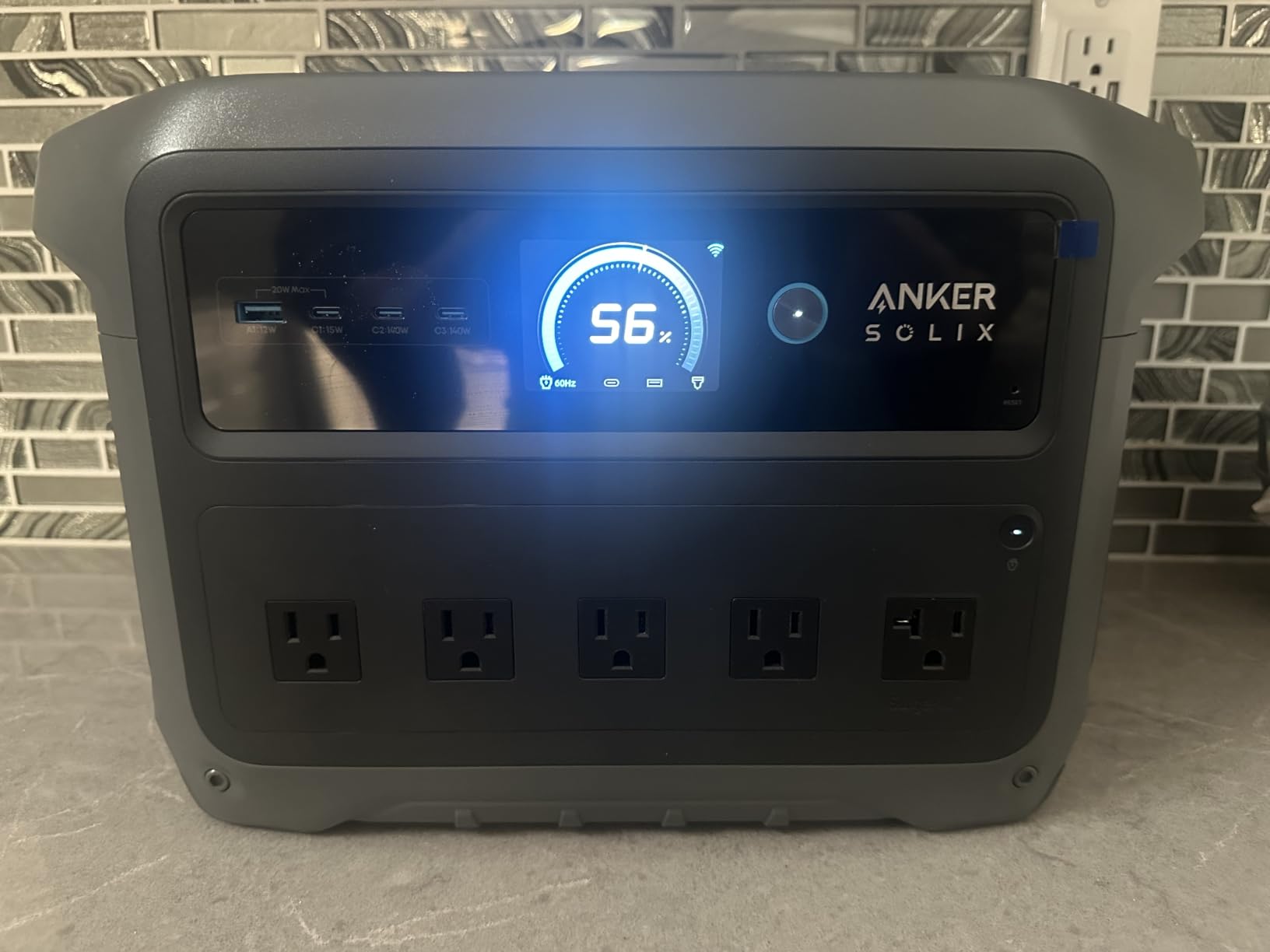
The C1000 Gen 2 is the most efficient use of space in this roundup, and its charging speed is hard to argue with. A full recharge in 49 minutes at 1600W AC input means a cabin owner can top up from empty to full during a single grocery run, which is a real advantage when the nearest supply stop is a 90-minute drive.
At roughly 24.9 lb it is the one 1kWh unit here you could genuinely move between the bedroom and the workshop alone. The 2000W continuous output also edges out most of the 1kWh class, which matters if you plan to run a small microwave or a power tool alongside the fridge.
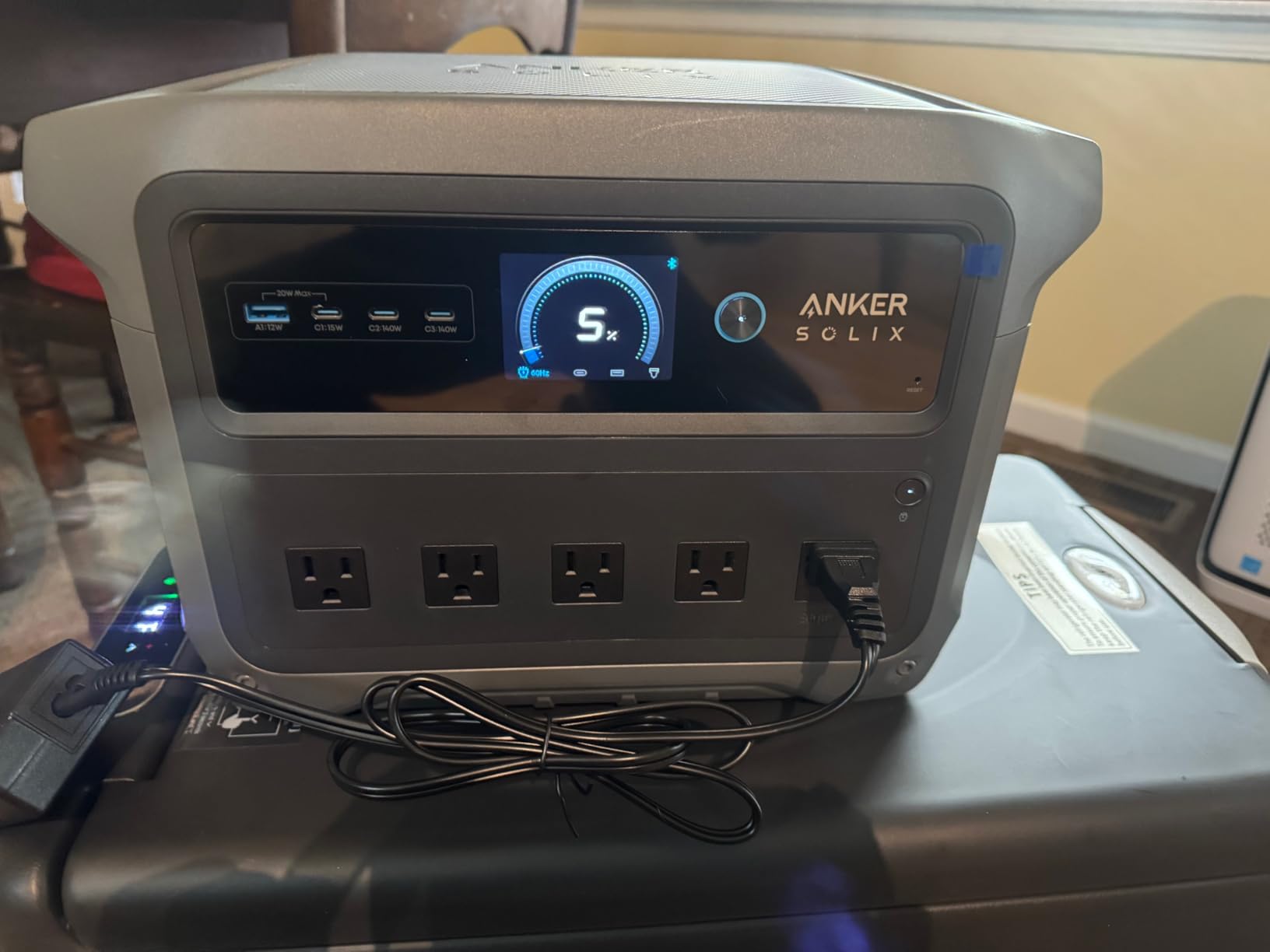
Reviewers with medical equipment are a recurring voice in the reviews for this model. Multiple owners report running a CPAP machine, routers, laptops, and a refrigerator straight through a five-hour outage on the 10 ms switchover, which is well inside the tolerance of sensitive electronics. The 4000-cycle rating to 80% retention is also the strongest published cycle figure among the sub-2kWh models here.
Best Fit: A Small Cabin Running Medical or Network Gear
If your critical loads are electronics rather than motors, this is the strongest pick in the roundup. The 600W solar input accepts a full-size rigid panel, and the 10 ms transfer is tight enough that nothing reboots. It is also the natural choice for a one-room cabin or a converted shed where floor space is tight.
The Catch: No Expansion Path
The Gen 2 dropped the expansion battery option, so 1024Wh is all you will ever have from this unit. That caps it at weekend and light seasonal use and rules it out for a well pump plus a refrigerator. Technically minded reviewers also measured visible harmonic distortion on the inverter under microwave load, and the solar input is disappointingly slow with small 100W folding panels.
3. EcoFlow Delta 3 Classic – The Cleanest-Looking 1kWh Option for Off-Grid Living
EF ECOFLOW Portable Power Station Delta 3 Classic, 1024Wh 1800W AC
1024Wh LiFePO4
1800W continuous and 3600W surge
Sub-10ms UPS
45 minute 0-80% charge
5-year warranty
Pros
- 0-80% AC charge in 45 minutes
- Bluetooth link never drops for van-life users
- Accepts low-wattage solar other units ignore
- Sub-10ms UPS keeps a fridge running
- Two top handles and non-skid feet
Cons
- Heavy at 26.7 lb for one person
- Not compatible with DELTA 2 or Delta 3 expansion batteries
- 12V vehicle charging tops out around 100W
The Delta 3 Classic is the unit EcoFlow built for people who are actually living off the grid rather than camping in it. The 1800W continuous output with 3600W surge gives real compressor headroom in a compact footprint, and the sub-10 ms switchover runs without any configuration, which matters when your UPS needs to work during a storm rather than after you set it up on a calm afternoon.
What separates it in practice is solar tolerance. Owners report that it accepts low-wattage output from small panels that other stations ignore, so a 100W panel still registers a useful charge on a bright day. For a cabin owner who can only mount two modest panels on a south-facing roof, that behavior is worth more than a headline input wattage number.
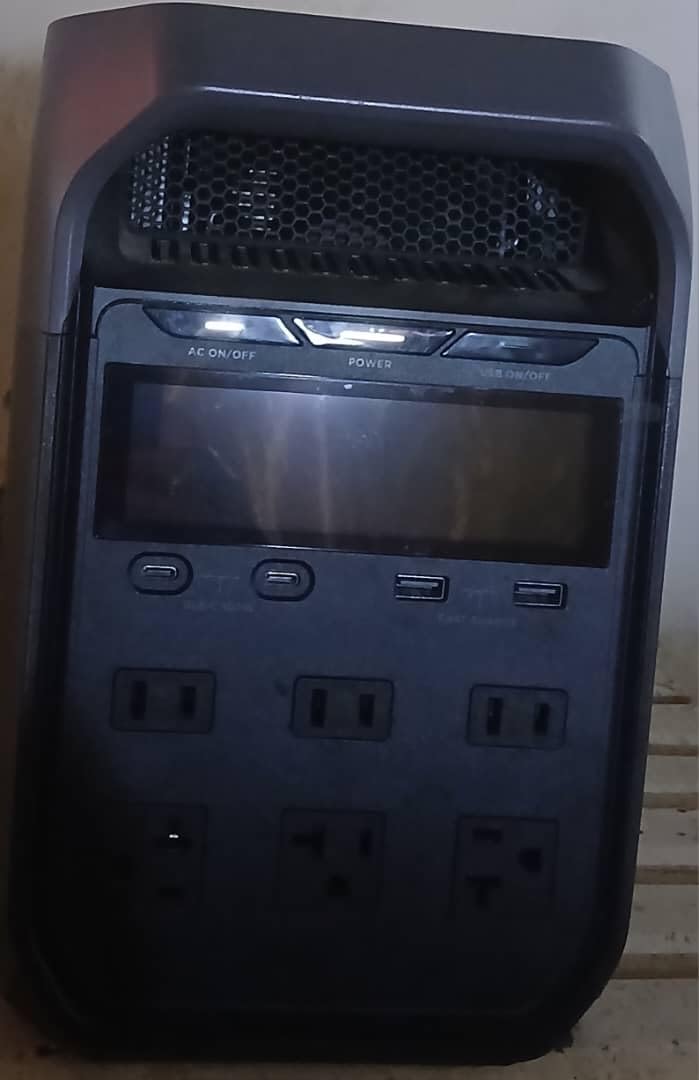
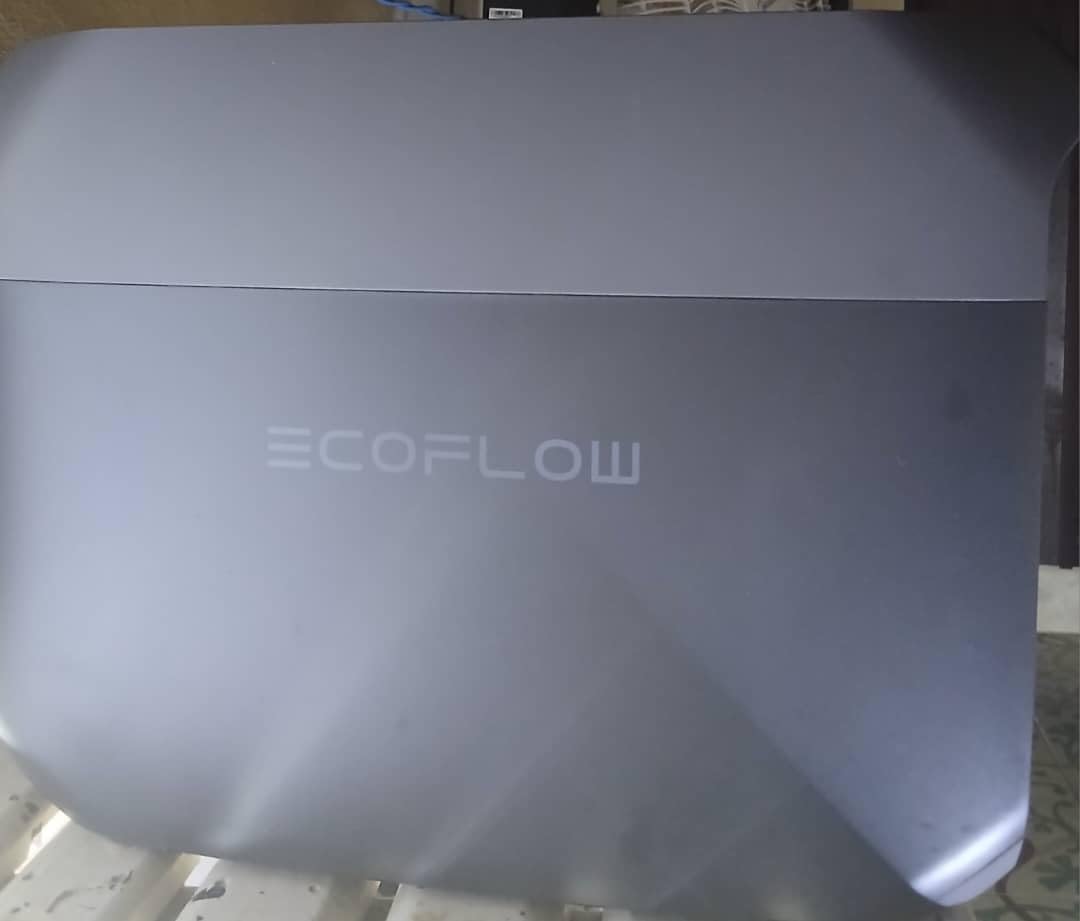
The 45-minute 0-80% AC charge and the 2.5-hour full solar recharge with a 500W panel mean a weekend trip can start with a full pack from almost nothing. LiFePO4 cells rated for 10+ years of daily use with EV-grade construction, plus a five-year manufacturer warranty, put it on equal footing with the BLUETTI and Anker options for a long-horizon install.
Best Fit: A Van, Small Cabin, or Backup Role Where Reliability of Bluetooth Matters
Van-life owners running this unit report that the Bluetooth connection never drops pairing, which is a small thing until you are three hours from cell service trying to change a setting. The clean physical design with two top handles and non-skid feet also survives the shuffle between a vehicle and a cabin floor better than most.
The Catch: Expansion Is Closed Off
Like the C1000 Gen 2, this model is not compatible with DELTA 2 or Delta 3 Series Smart Extra Batteries, so the 1024Wh ceiling is permanent. 12V vehicle charging caps out around 100W, which is too slow to top up meaningfully on a long drive. And a small number of reviews report units that arrived dead or pre-used from a third-party seller, so inspect on arrival.
4. BLUETTI Elite 100 V2 – The Quietest Option for a Sleeping Cabin
BLUETTI Elite 100 V2 Portable Power Station for Camping 1024Wh 1800W
1024Wh LiFePO4
1800W continuous and 3600W surge
30dB silent mode
25 lbs
4000+ cycles to 80%
Pros
- Lightest unit here at 25 lbs with a built-in handle
- 0-80% charge in about 45 minutes
- 30dB silent mode suits overnight running
- 100W USB-C outputs for laptops
- Bluetooth app works without cell service
Cons
- Exposed DC barrel ports are easy to short
- 12V car socket runs warm above about 12W
- Display inaccurate at very low wattages
If your cabin is a one-room space where the power station sits ten feet from your head, noise matters more than any spec. The Elite 100 V2 runs at 30dB in silent mode, which reviewers describe as quiet enough for a bedroom, and the 4000+ cycle rating to 80% capacity gives it one of the strongest published lifespans in the 1kWh class.
True pass-through charging is the feature owners appreciate most. Several report running a 12V portable fridge for 24 hours on a single charge while simultaneously topping the battery back up from solar, which is exactly the pass-through behavior a cabin needs when the sun comes out after a cloudy morning.
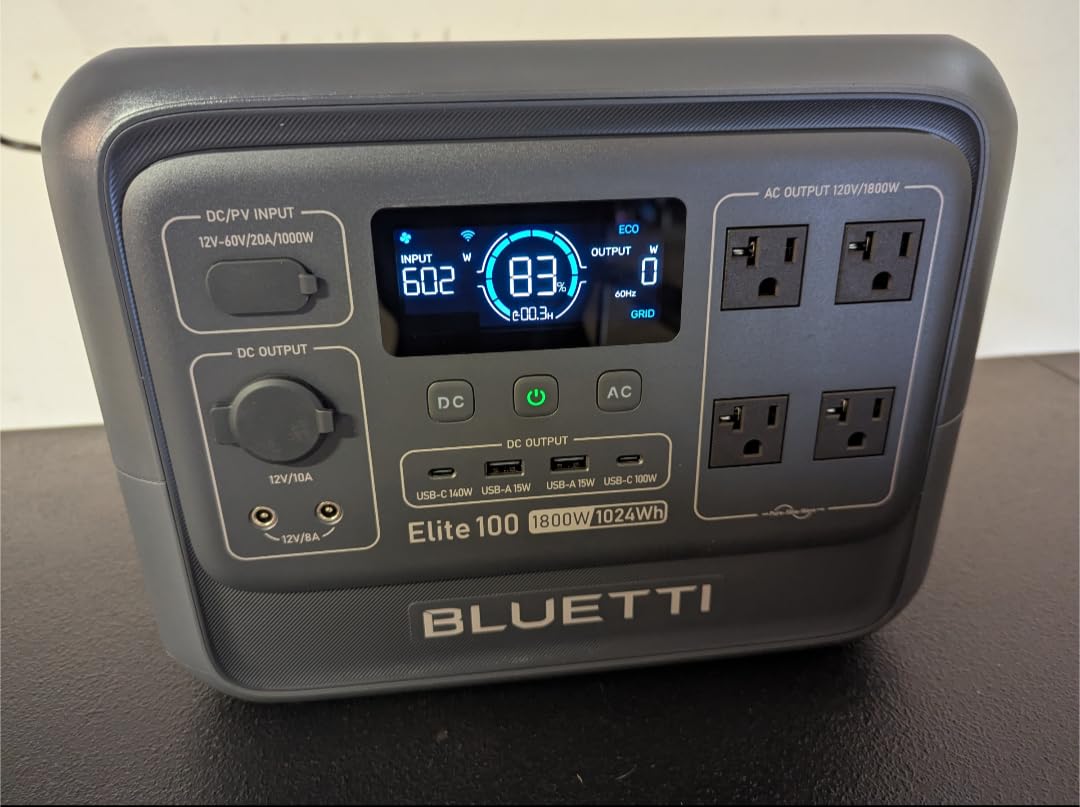
Wi-Fi and Bluetooth app control with over-the-air updates means you can check state of charge from inside the cabin without walking over to the unit. The 1200W TurboBoost charging hits 80% in roughly 45 minutes, and Power Lifting mode can push output to 2700W for resistive loads when you need it briefly.
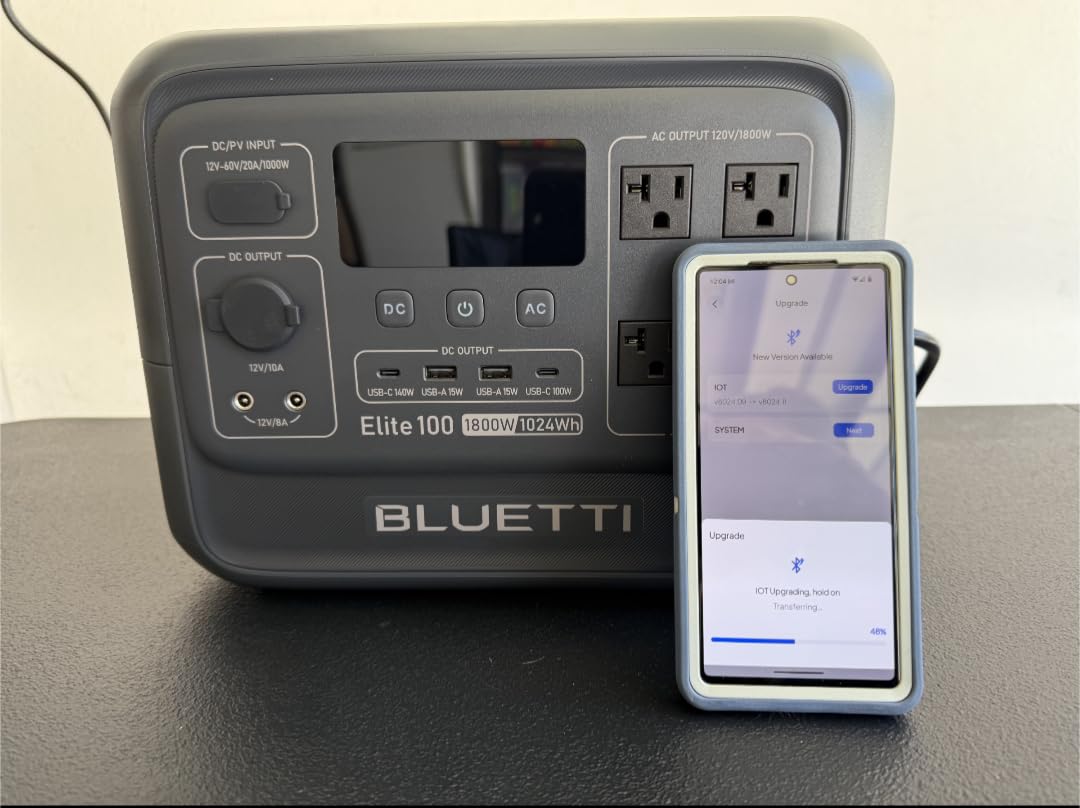
Best Fit: A Small Cabin or Studio Where Silence and Laptop Power Rule
The 100W USB-C outputs charge laptops without a brick, and 25 lb is light enough to reposition when you rearrange the room. This suits a solo writer’s cabin, a guest cabin, or a main cabin where the station lives in the bedroom and a 12V fridge runs in the kitchen. Bluetooth-only app control is a genuine advantage with no cell service.
The Catch: Physical Port Durability and Slow 12V Charging
The exposed DC barrel output sockets are easy to bridge with a connector, and the 12V car socket runs warm above roughly 12W of draw. Reviewers also flag that the display does not read very low wattage loads accurately, and slow 12V vehicle charging unless you add the optional BLUETTI charger.
5. Anker SOLIX S2000 – Measured 35-Hour Fridge Runtime for Backup Duty
Anker SOLIX S2000 Portable Power Station, 2,010Wh, 1,500W
2010Wh LFP battery
1500W continuous and 3000W peak
35-hour fridge runtime
6W idle draw
5-year warranty
Pros
- Verified 33-35 hour fridge runtime
- Lowest idle draw in UPS mode among these picks
- Front and rear AC outlets for always-on loads
- App charge limits and energy tracking graphs
- 30% smaller than the 2kWh class average
Cons
- Cooling fan droney while charging at full power
- No 12V DC port
- Strong burn-off smell on first charge
The S2000 is the pick if your cabin’s core job is keeping food cold through an outage. Owners ran a refrigerator for a measured 33 to 35 hours on one charge, which confirms the manufacturer claim rather than simply repeating it, and the 6W idle draw in UPS mode is the lowest standby consumption among the units in this roundup.
That efficiency matters more than raw capacity in a backup scenario. A 2010Wh pack drawing 6W idle loses far more overnight standing still than a similar unit drawing 15-20W, and the app’s adjustable charge and discharge limits let you set a floor that protects the battery during long stretches of low use.
Front and rear AC outlets are a small design decision with a real payoff. You can leave always-on loads like a chest freezer plugged in permanently and route intermittent tools to the front panel, which removes the friction of unplugging the fridge every time you need a saw. Adjustable AC input from 100W to 1600W also lets you charge from a small cabin circuit safely.
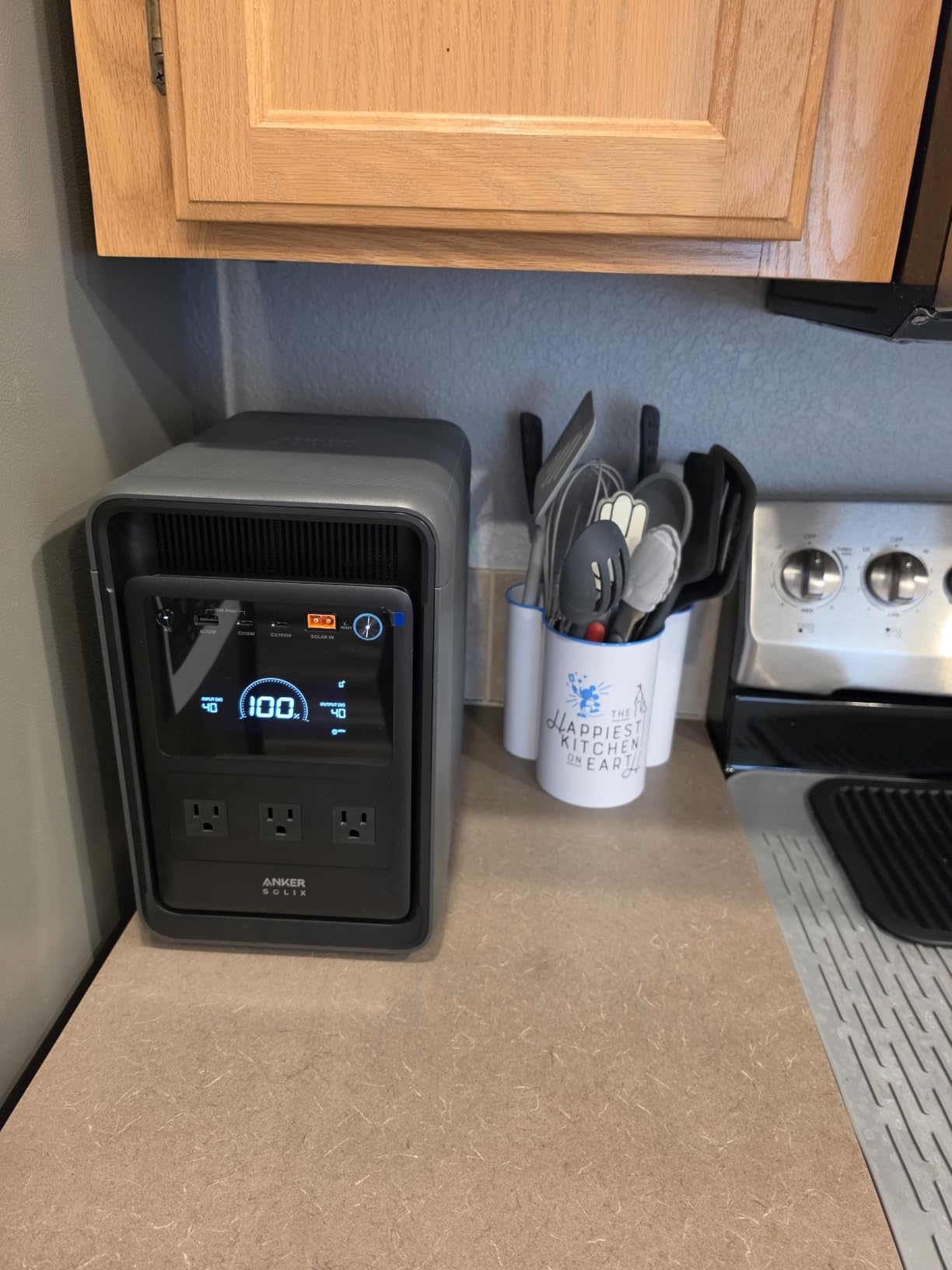
One owner reported keeping a network rack, a sump pump, and a chest freezer running together for 12 to 24 hours, which is close to a realistic weekend outage scenario. The 314Ah LFP cells, roughly 10,000 cycles, and a stated 15-year lifespan are the strongest longevity claims in this group.
Best Fit: Outage Backup Around a Refrigerator, Sump Pump, and Network Rack
Think of it as a 2kWh wall-replacement unit for the cabin’s essential circuits rather than a portable generator. The 1500W continuous output is modest, but for refrigeration, water pumping, and electronics it is generous, and the low idle draw makes it the efficient choice for long standby periods.
The Catch: No DC Port, Noisy Fan, and Modest Output
1500W continuous is the lowest continuous figure among the 2kWh-class stations here, which limits you on resistive loads and larger power tools. There is no 12V DC port at all, so direct 12V accessories need an adapter. Reviewers also flag a droningly loud cooling fan during full 1200W charging and a strong burn-off smell on the very first charge.
6. EcoFlow Delta 3 Max – Fastest Refill for a Full-Time Cabin
EF ECOFLOW DELTA 3 Max Portable Power Station, 2048Wh LFP Battery, 2400W
2048Wh LiFePO4
2400W continuous and 3400W X-Boost
0-80% in 1.13 hours
Sub-10ms UPS
5-year warranty
Pros
- 0-80% recharge in about 1.13 hours
- 3400W X-Boost handles most household appliances
- Sub-10ms transfer protects computers and medical devices
- LiFePO4 rated for 10 years of daily use
- Five-year service coverage
Cons
- Only 3 outlets listed in the spec data
- No individual owner review text available for this ASIN
- Higher cost than 1kWh-class alternatives
The Delta 3 Max is the unit to look at when recharge speed is the bottleneck. Going from zero to 80% in about 1.13 hours is the fastest AC turnaround in this roundup, which means a cabin with a weak solar array can still be fully recovered in a single evening from a wall outlet before you lock up and leave.
X-Boost lifts continuous output to 3400W, which is a meaningful jump over the rated 2400W for resistive loads like a space heater or an electric stove element. Ultra-quiet operation makes it viable indoors overnight, and the sub-10ms transfer time keeps computers and medical equipment running without a manual switchover.
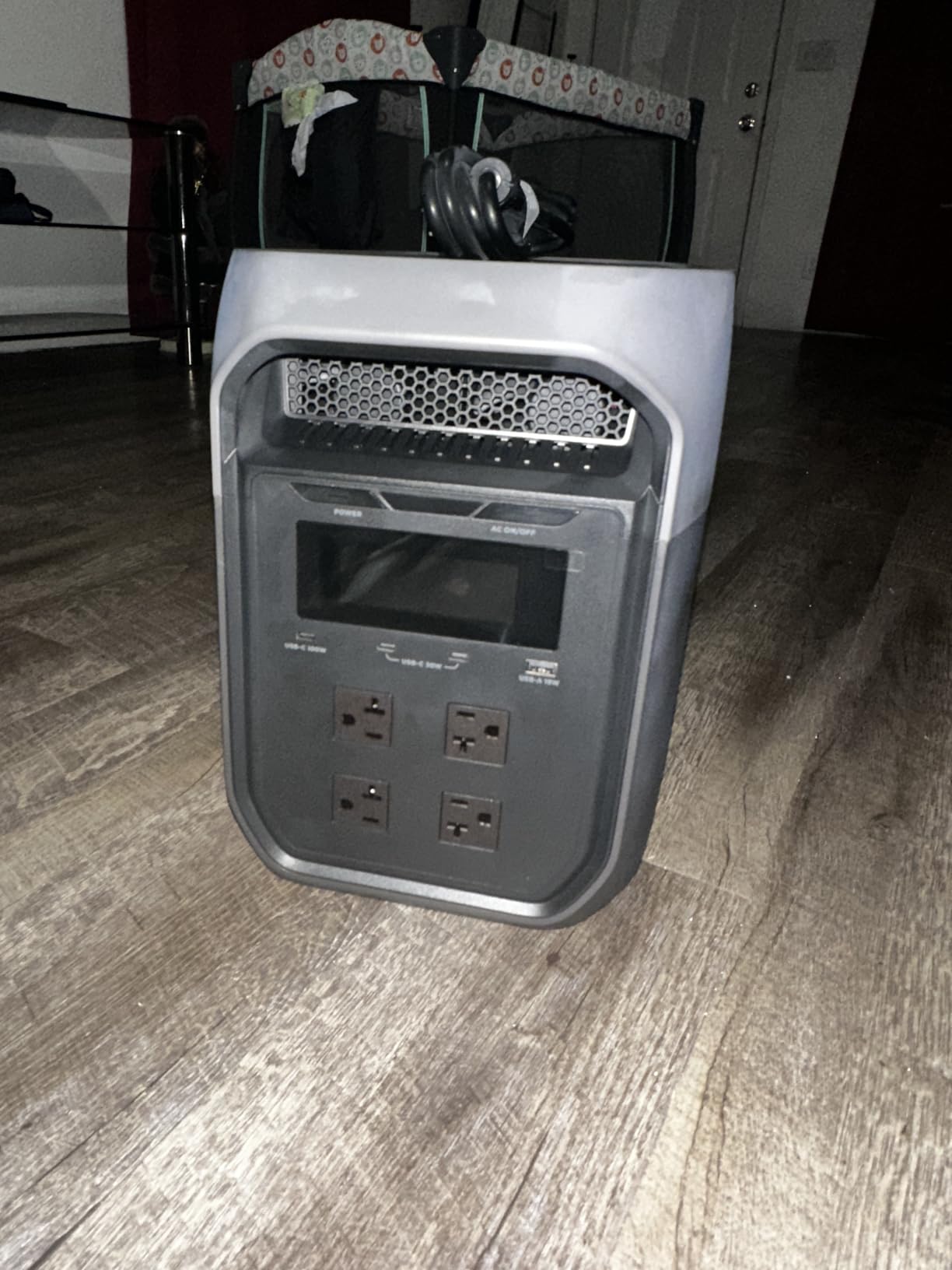
The battery is engineered for 10 years of daily use, backed by a five-year service term, and the aluminum and plastic chassis runs about 9.4 by 12 by 19.4 inches. That footprint is taller than most 2kWh units, so measure the wall space and the door before committing.
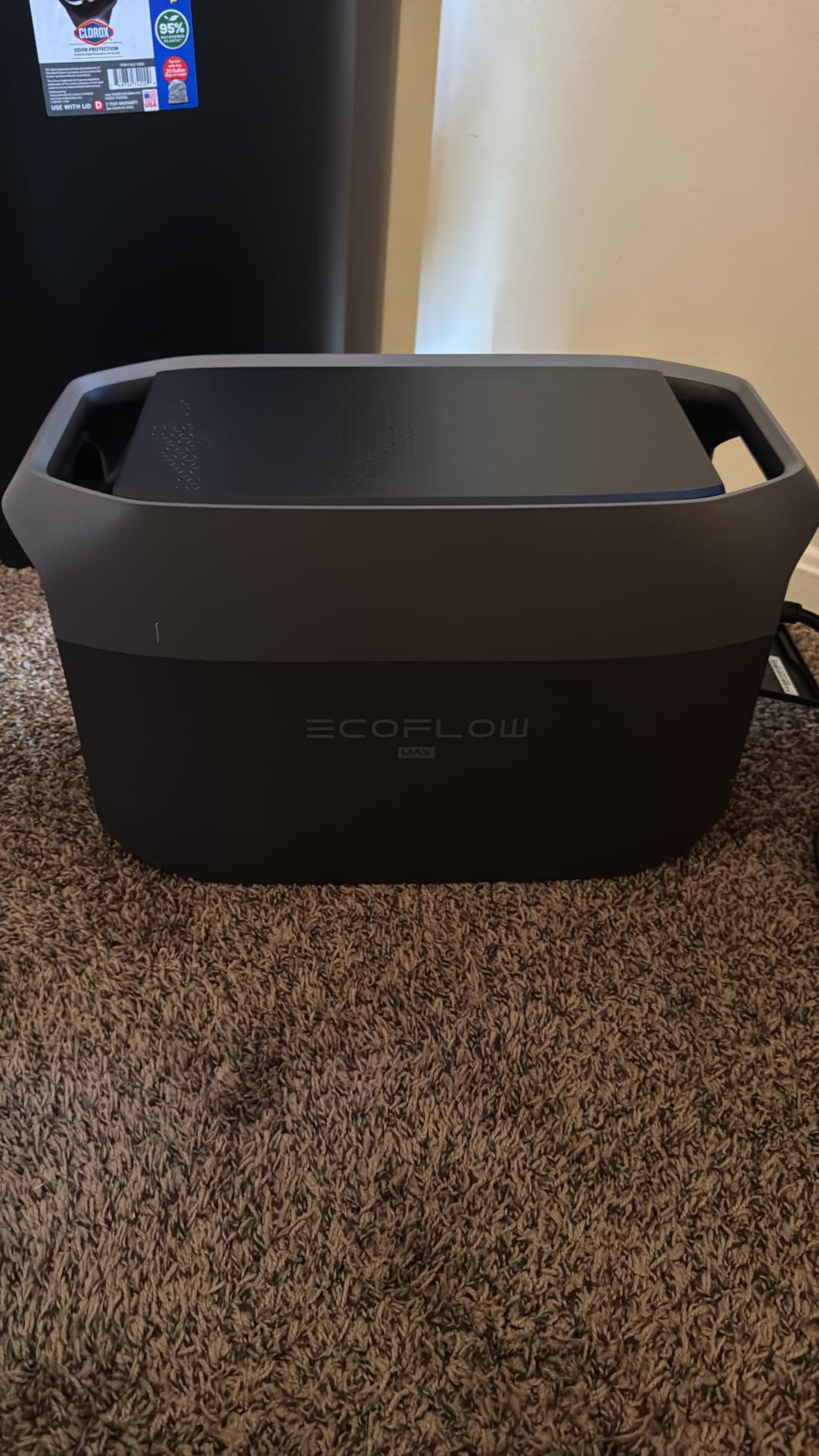
App scheduling to shift usage into cheaper tariff windows is a small feature that pays off if your backup plan also runs off a grid-tied property. The included AC cable is a heavy gauge, and the manual and warranty card are the only other items in the box, so plan on buying a solar cable separately.
Best Fit: A Full-Time Cabin Where Battery Recovery Time Is the Pain Point
Choose this when you are in a spot with unreliable solar, heavy shade, or snow cover for part of the year. The 2048Wh capacity and 3400W X-Boost headroom cover a family cabin with refrigeration, lighting, network gear, and occasional heating. It is also a strong whole-home backup unit for a smaller house.
The Catch: Few Outlets and Thin Owner Data
Only three power outlets are listed in the specification data, which is tight for a cabin running several loads at once and means you will want a power strip. No individual customer review text was available for this ASIN in our research, so owner consensus here is thinner than for the other picks. It is also the costliest of the 2kWh-class options in this group.
7. Jackery Explorer 2000 v2 – Lightest 2kWh Unit with a Certified UPS
Jackery Explorer 2000 v2 Portable Power Station, 2042Wh, 2200W AC Output
2042Wh LiFePO4
2200W AC output
0-80% in 66 minutes
UL1778 certified 20ms UPS
5-year warranty
Pros
- Lightest 2kWh-class unit at 39.5 lb
- 0-80% AC charge in 66 minutes
- Silent charging mode under 30dB
- 100W USB-C PD for laptops
- UL1778 certified uninterruptible power supply
Cons
- Lowest average rating among these picks
- Only 3 AC ports to plan around
- Solar panel sold separately
The Explorer 2000 v2 exists because carrying capacity is a real constraint in a cabin with a hundred steps and no ramp. At 39.5 lb it is the lightest 2kWh unit here despite the nominal capacity, a result of the CTB cell-to-body construction, and the 66-minute 0-80% charge keeps it competitive with much smaller units.
The UL1778 test certification for uninterruptible power supplies is the detail that matters most for a cabin. That certification means the UPS function was tested as a UPS rather than merely marketed as one, and the 20ms switching is short enough to keep a router, a desktop, or a network switch alive through a brief outage.
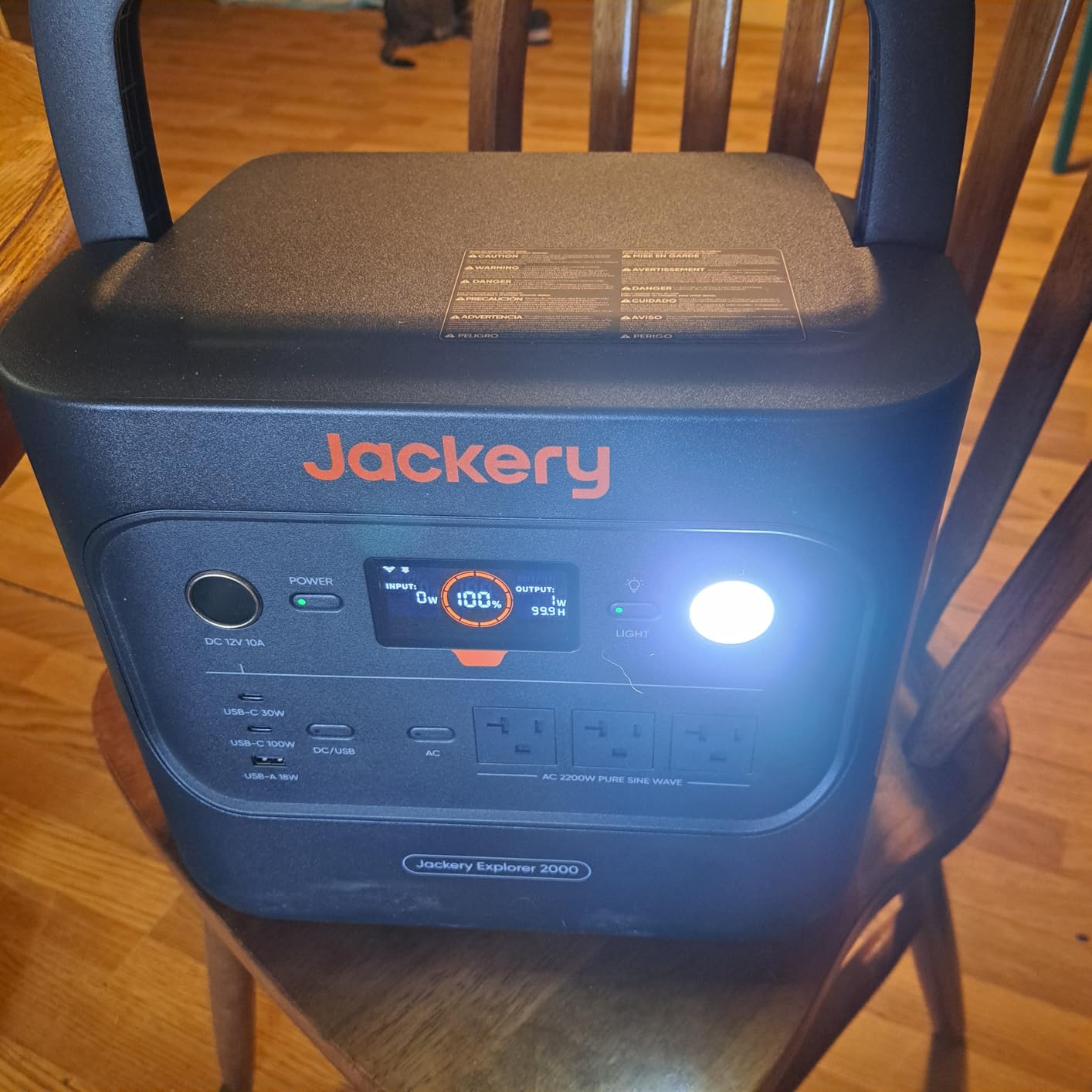
Silent charging mode runs under 30dB and completes a full charge in about five hours, which is the setting to use if the station lives in a bedroom or a loft. The 100W USB-C PD port charges laptops directly, and the battery is rated for up to 10 years of service.
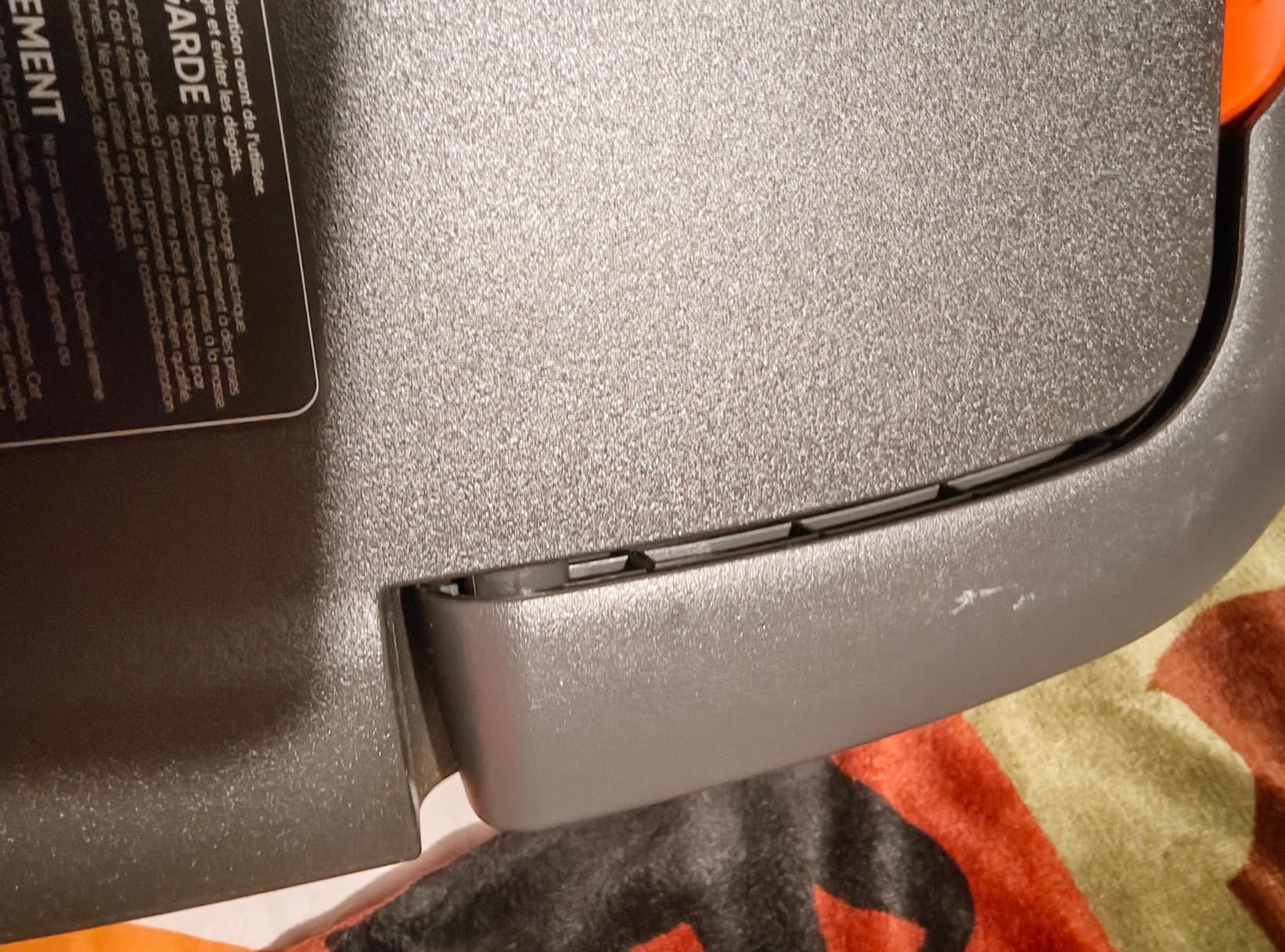
Solar charging in as few as six hours with 400W panels puts it in line with the BLUETTI AC180 on refill speed. The full charge via emergency super charging in the app takes about 102 minutes, which is a useful option if you want a full pack without watching a timer for two hours.
Best Fit: A Cabin Where Moving the Battery Is the Hardest Part
If your power station has to change rooms, go up stairs, or get carried to a workshop, the weight advantage over heavier 2kWh competitors is significant. It is also a solid pick for a cabin with a modest solar budget, since 400W of panels fills it in a normal day.
The Catch: The Softest Ratings in the Roundup
At a 4.4 average with an 8% one-star share, this unit has the widest spread of owner experiences here, which usually points to more variability in what arrives in the box. Only three AC ports means careful load planning, and the solar panel is not included.
8. BLUETTI Elite 300 – RV-Ready Ports and 30A DC Output
BLUETTI Elite 300 Portable Power Station for RV & Home Backup 3014.4Wh
3014Wh LiFePO4
2400W continuous and 4800W surge
TT-30 RV outlet
12V 30A DC
1200W solar input
Pros
- Narrowest 3kWh footprint
- goes through cabin doorways easily
- True 20A three-prong blade outlets
- TT-30 RV port and 12V 30A DC output
- 10ms UPS tested with a desktop
Cons
- No battery expansion beyond 3014Wh
- Solar input capped at 60V and 20A
- 58 lb with no wheels or telescoping handle
The Elite 300 solves a problem most 3kWh units create: bulk. Frost and Sullivan recognized it as the world’s smallest 3kWh portable power station, roughly 59% smaller than traditional units of that class, and owners confirm it fits through a cabin doorway that larger cabinets will not. For older cabins with narrow entries, that alone can settle the decision.
The output ports are unusually honest for a portable station. True 20A three-prong blade outlets accept real 20A plugs rather than the decorative 15A-compatible holes common on competitors, and the TT-30 RV outlet plus 12V at 30A DC output can run RV fridges, water pumps, and diesel heaters directly without an inverter round trip.
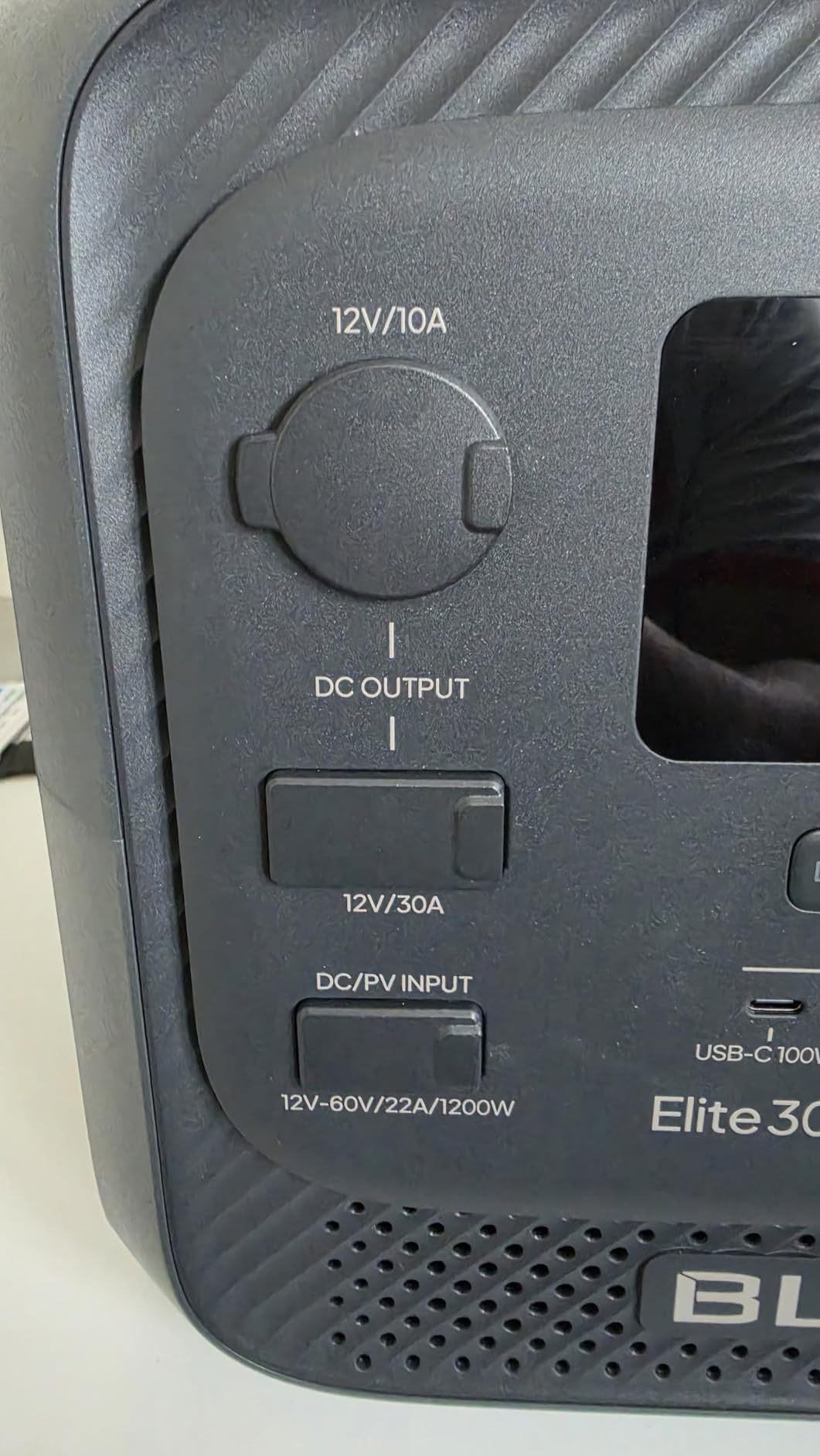
An owner verified a continuous 2400W load for 30 minutes with no trouble, and another tested the sub-10ms UPS with a desktop computer and found it flawless. The 0-80% charge in as little as 78 minutes and simultaneous AC plus DC charge and discharge make it quick to recover after bad weather.
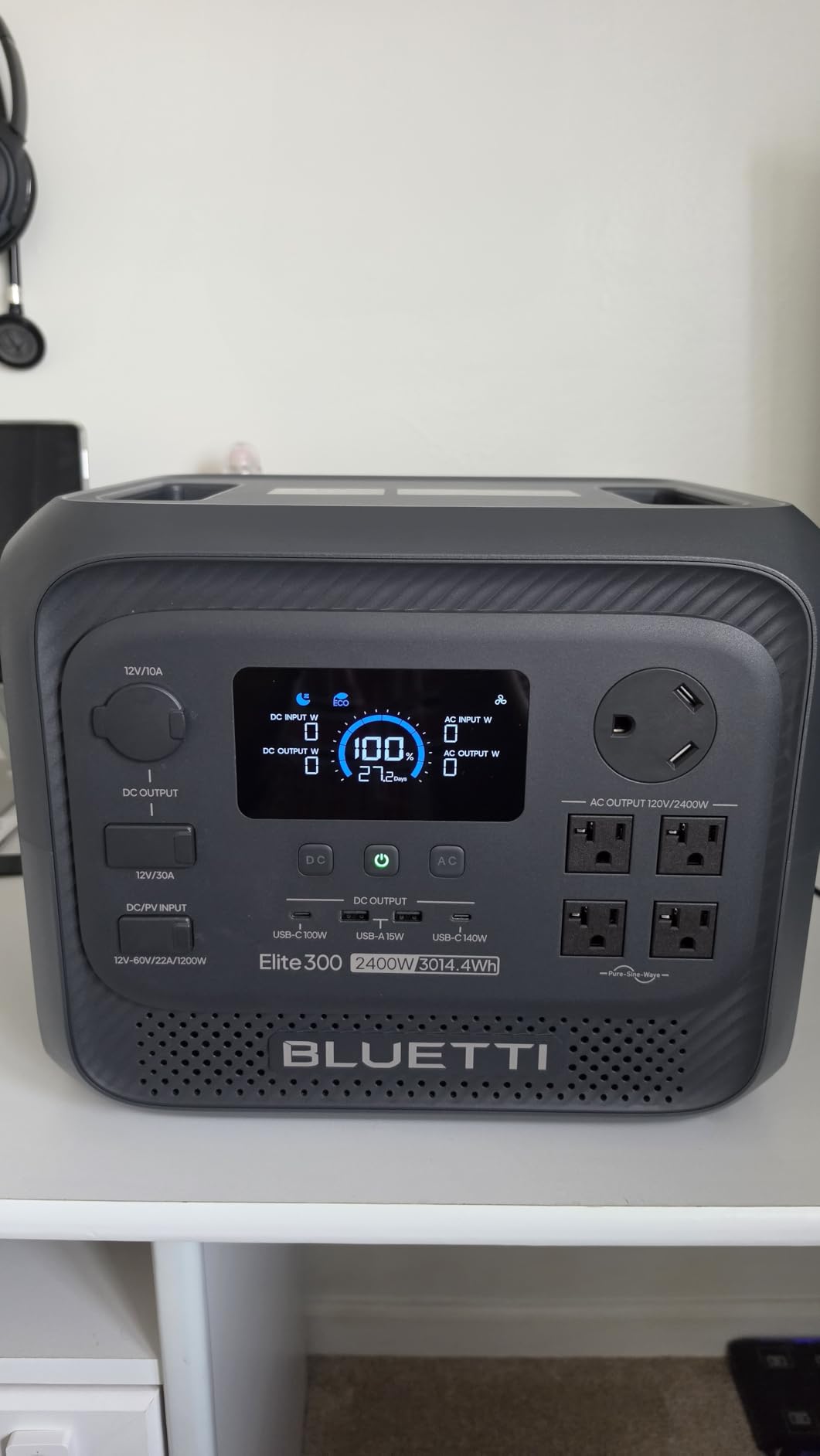
Round-trip throughput measured at roughly 77% in one owner test, which is a fair real-world efficiency figure and a good reason to size with the 75-85% usable capacity rule rather than the nameplate. The 314Ah LiFePO4 pack is rated for 6000+ cycles, and BLUETTI support is available 24/7.
Best Fit: A 3kWh Cabin Rig With RV or High-Current DC Loads
This is the pick when you want more than 2kWh without moving to a 77-lb cabinet, especially if you have a boat, a travel trailer, or a diesel heater on the property. The 30A DC output is a genuine advantage for anyone running 12V equipment at high current.
The Catch: No Expansion and a Real Solar Voltage Ceiling
Capacity is fixed at 3014Wh, which is limiting for anyone expecting to grow. The solar input is capped at 60V and 20A, and exceeding the open-circuit voltage limit can damage the MPPT and void the warranty, one reviewer reported learning the hard way. At 58 lb with no wheels or telescoping handle, it is a two-person move.
9. EcoFlow Delta 3 Ultra – Most Headroom for Well Pumps and Big Loads
EF ECOFLOW Delta 3 Ultra 3072Wh Power Station with XT60 Solar Cable
3072Wh LiFePO4
3600W continuous and 7200W surge
25dB under load
Sub-10ms automatic UPS
5-year warranty
Pros
- 3600W continuous output with 7200W surge
- 25dB operation under load for indoor use
- Automatic sub-10ms UPS needs no manual setup
- EV-grade CTC cell structure
- Four charging paths including smart generator
Cons
- Heaviest relative to capacity at 72.1 lb
- Only 3 outlets listed in the spec data
- No individual owner review text available
Everything hard to start, the Delta 3 Ultra will start. Its 3600W continuous output with 7200W surge is the widest margin over a refrigerator or pump compressor in this roundup, which makes it the safe choice for properties where a well pump, a water heater, or a dehumidifier cycles unpredictably.
The X-Quiet cooling design holds 25dB under load, the lowest published operating figure among these picks, and that matters for a station large enough to live in a main cabin rather than a closet. Automatic sub-10ms switchover requires no configuration, so backup protection works the moment it is plugged in.
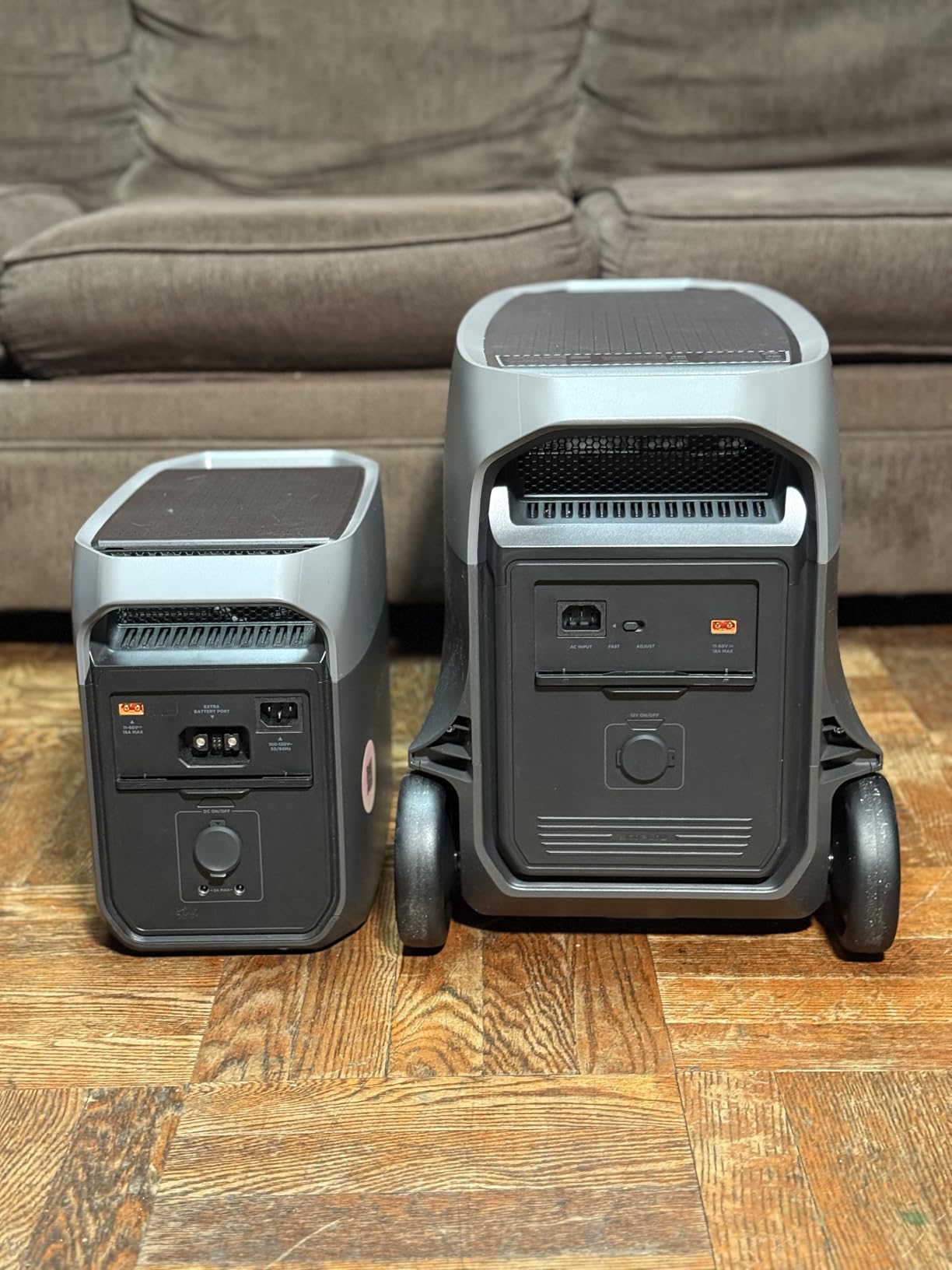
Four charging paths cover wall, solar, car input, and the EcoFlow Smart Generator, which gives a genuine fallback if a multi-day storm leaves the array dark. The 3072Wh LiFePO4 pack with EV-grade CTC structure and 24/7 battery protection is engineered for 10 years of daily use, and this configuration ships with an XT60 solar cable included.
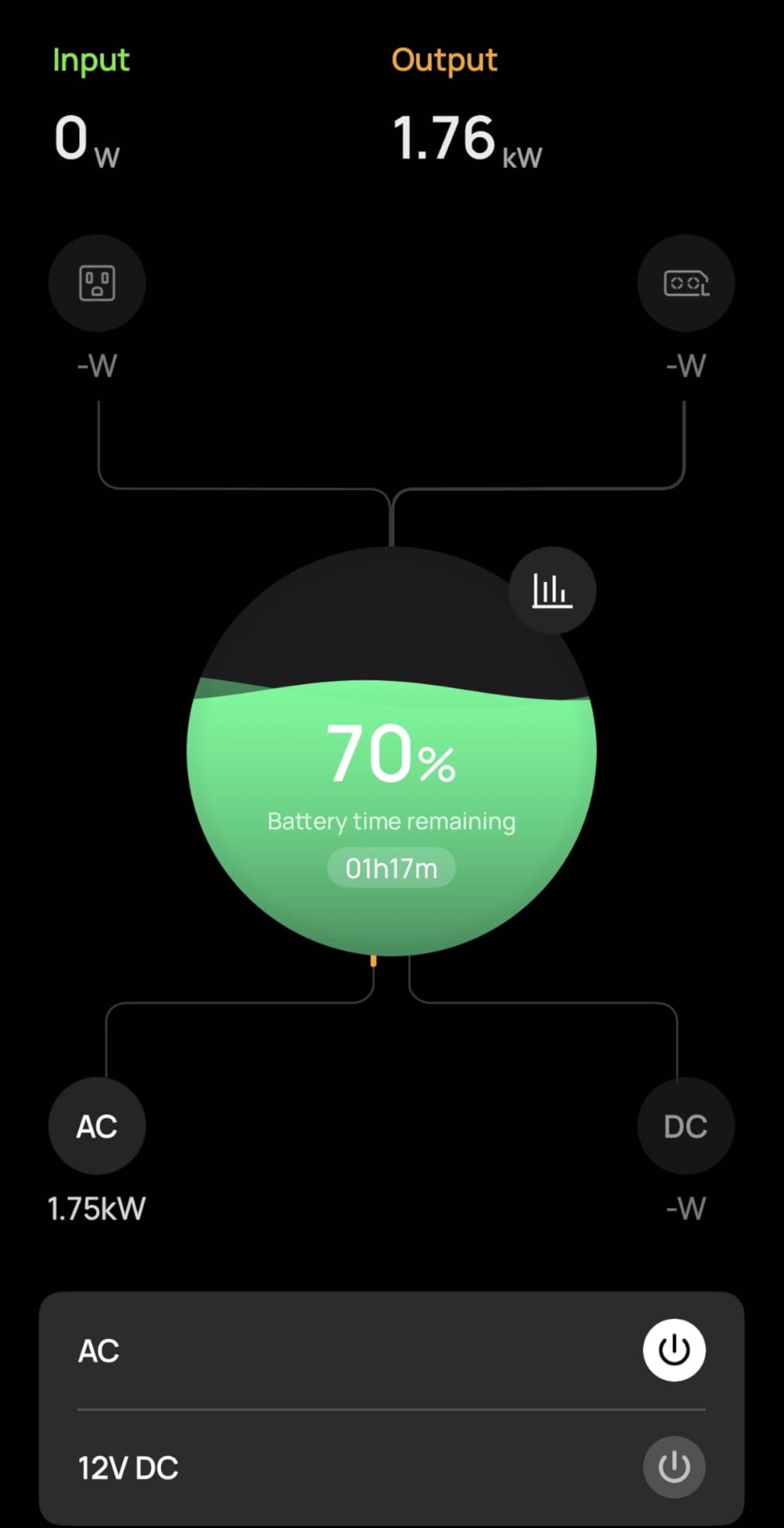
It is worth being blunt about the trade-off: at 72.1 lb and 24.6 by 12.9 by 15.6 inches, this is a stationary unit. It needs a planned floor location, a clear path, and ideally two people on the day it arrives.
Best Fit: A Full-Time Cabin With a Well Pump or Electric Water Heater
If your property has a submersible well pump, this is the inverter headroom you need without stepping up to a dual-cabinet system. The 3600W continuous figure also covers a microwave, a dehumidifier, and refrigeration running at the same time, which smaller units simply cannot do.
The Catch: Weight, Port Count, and Limited Owner Data
Only three outlets are listed in the specification data, which is a real constraint for a home backup application. No individual customer review text was available for this ASIN, so treat the consensus here as thinner than for the other picks. The 72.1 lb weight limits where you can put it.
10. Pecron F3000LFP – Expandable to 10,752Wh on a Smaller Budget
PECRON Portable Power Station F3000LFP, 3072Wh Solar Generator, 3600W LiFePO4 Battery Home Backup, Fast Charging Power Station Expand Capacity to 10752Wh, Solar Generators for Home Use, Camping, RV
3072Wh LiFePO4 expandable to 10752Wh
3600W pure sine wave
1600W solar input
13 ports
2+3 year warranty
Pros
- 3600W continuous output at a lower cost than comparable rivals
- Expandable to 10752Wh with extra batteries
- 0-100% AC recharge in about 2 hours
- 13 ports including 100W USB-C PD
- 8-20ms UPS switchover
Cons
- Lowest rating among these picks
- Smallest installed base of the group
- Expansion needs a separately sold cascade cable
- Rated for 220V AC output
The Pecron F3000LFP is the only station in this roundup that reaches a genuine whole-cabin energy reserve without doubling up, expanding from 3072Wh to 10752Wh with additional batteries. For a homestead that expects to grow, that ceiling matters more than any single spec number on the other picks.
Output is competitive. At 3600W continuous with pure sine wave output rated for refrigerators, air conditioners, and power tools, it matches the Delta 3 Ultra on watts while offering an expansion path that most of the field cannot match. The 1600W maximum solar input is the highest single-array figure here, with a 25-120V range.
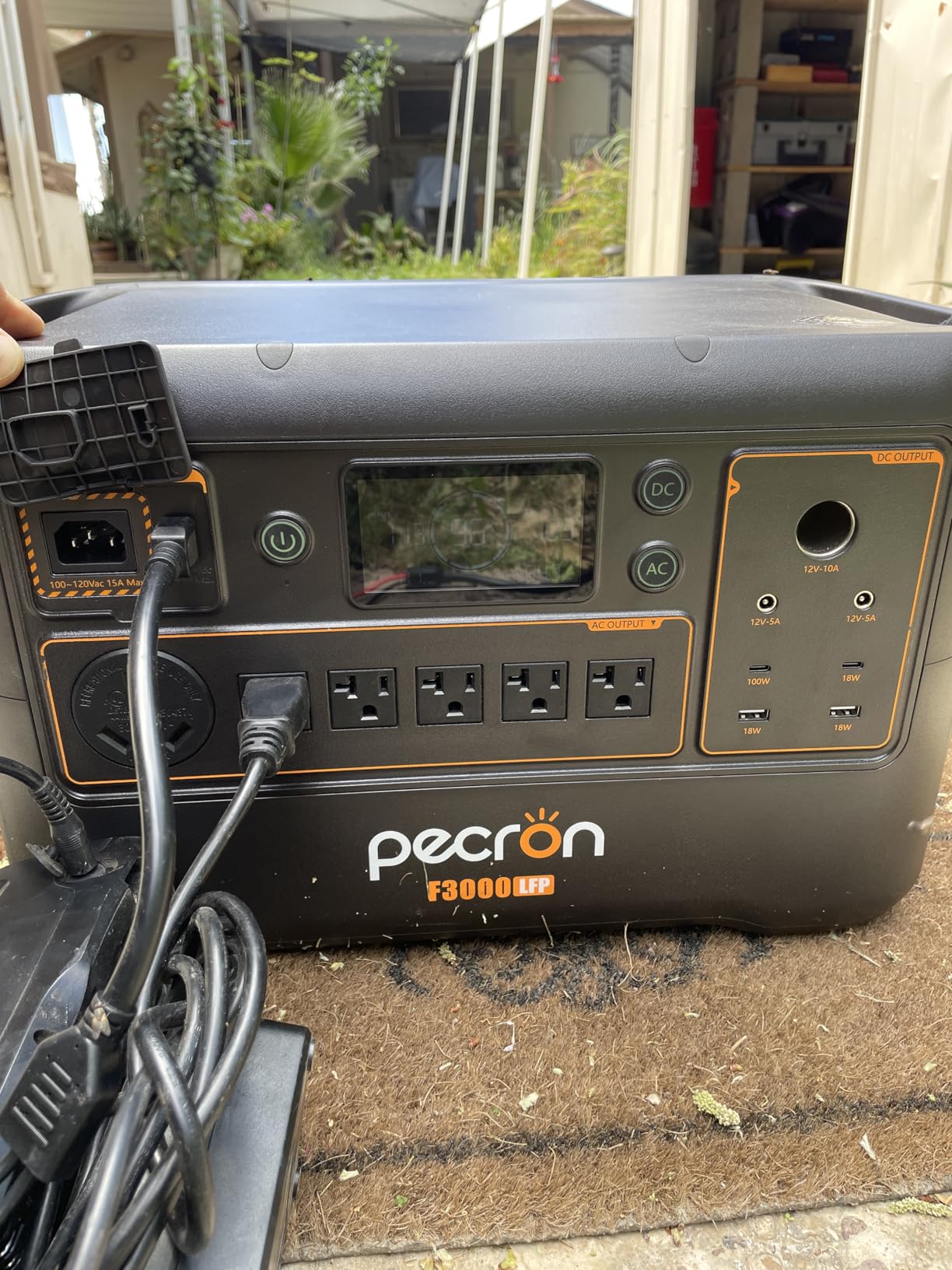
Charging is fast for a 3kWh cabinet, reaching full from empty in roughly two hours at 1800W AC input, and it supports AC, solar, and car charging simultaneously. Thirteen ports including two USB-C at 100W PD, two USB-A, a carport, and two DC outputs mean a whole cabin can charge from one box.
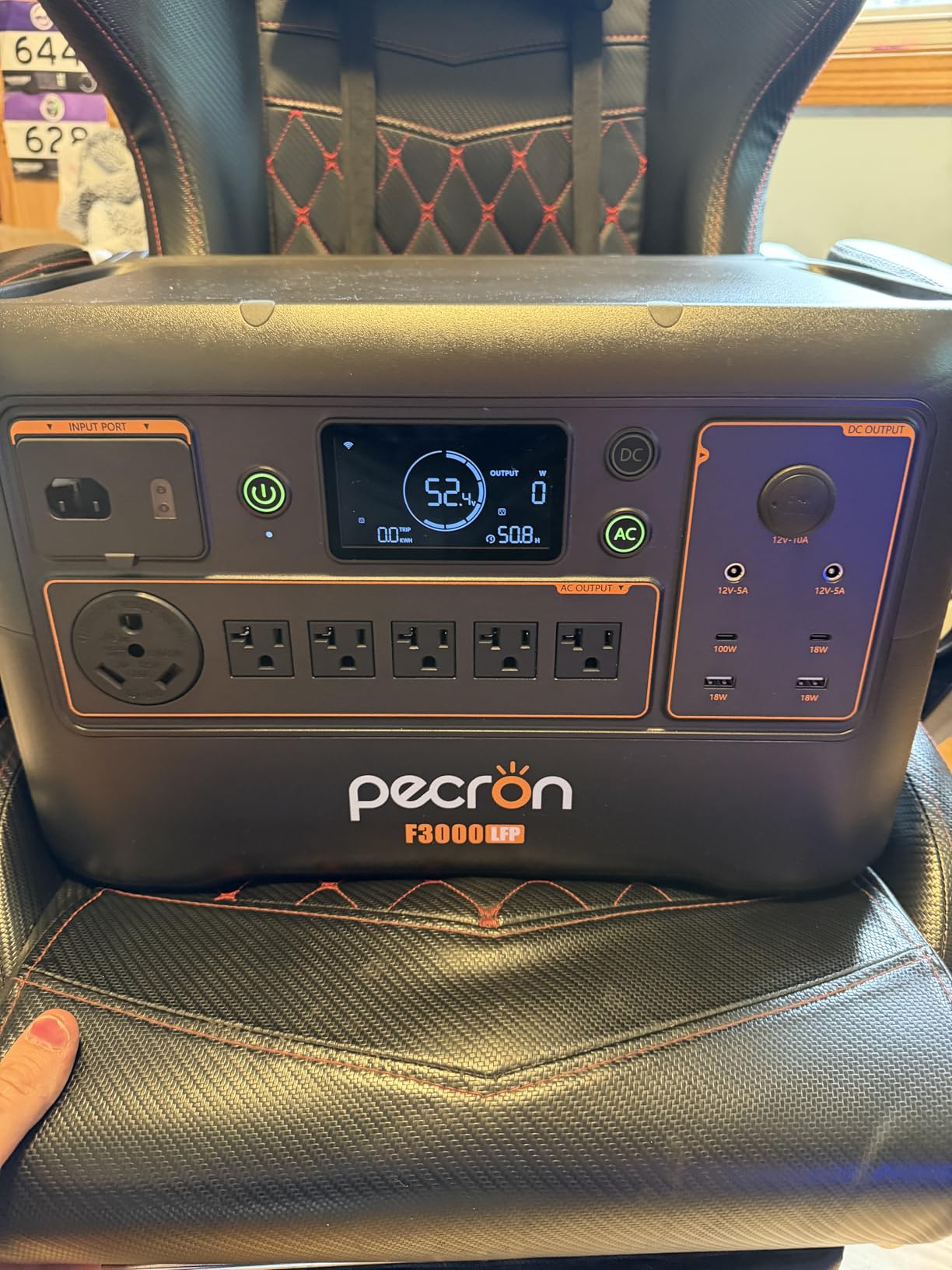
The UPS mode switches in 8-20ms, which covers computers and medical equipment. A 2+3 year warranty and 24/7 customer service is thinner than the five-year terms on the BLUETTI, EcoFlow, and Anker units, and that is the honest trade for the lower purchase outlay.
Best Fit: A Growing Homestead Where Capacity Will Increase Year Over Year
This is the pick if your energy needs will outgrow a fixed 3kWh in two or three years. The 1600W solar ceiling also means one strong array can refill it, and the 13-port layout suits a cabin with many small devices plus two or three large ones.
The Catch: Unknown Brand, Optional Cable, and a Voltage Question
With only 145 reviews, this is the least-proven unit here, and it carries the lowest average rating in the group at 4.5. Expansion requires the XT120-M cascade cable sold separately, which is an extra step and cost before you can grow. The specification data also rates it for 220V AC output, so verify that it matches your cabin’s wiring before planning around it.
11. Jackery HomePower 3600 Plus – Built for Deep Winter and Rolling Transport
Jackery HomePower 3600 Plus Power Station, 3584Wh, 3600W AC Output
3584Wh LFP expandable to 21kWh
3600W output and 7200W parallel
120V and 240V
6000 cycles
rated for -4F
Pros
- Rated to operate down to -4F blizzards
- 6000 cycles with a 10-year lifespan
- Wheels and telescoping handle for a 3.6kWh cabinet
- Expandable to 21kWh per unit
- 120V and 240V output for well pumps and dryers
Cons
- Heaviest unit here at 77.2 lb
- Charging capped by 15A 120V circuits
- Only 2 outlets listed in the spec data
Only one unit in this roundup publishes an explicit sub-zero operating rating, and it is the one that matters most for a cabin that freezes. The HomePower 3600 Plus is rated for -4F blizzards with 6000 cycles and a 10-year lifespan, backed by ceramic membrane cells tested at 302F for thermal runaway resistance. That combination of a stated cold rating and a stated hot rating is what you want in an unheated building.
The dual voltage output is the practical winner. Running 120V and 240V in parallel means a well pump, an electric water heater, or a clothes dryer can be powered from the same cabinet, and 3600W continuous output scales to 7200W with two units in parallel for larger properties.
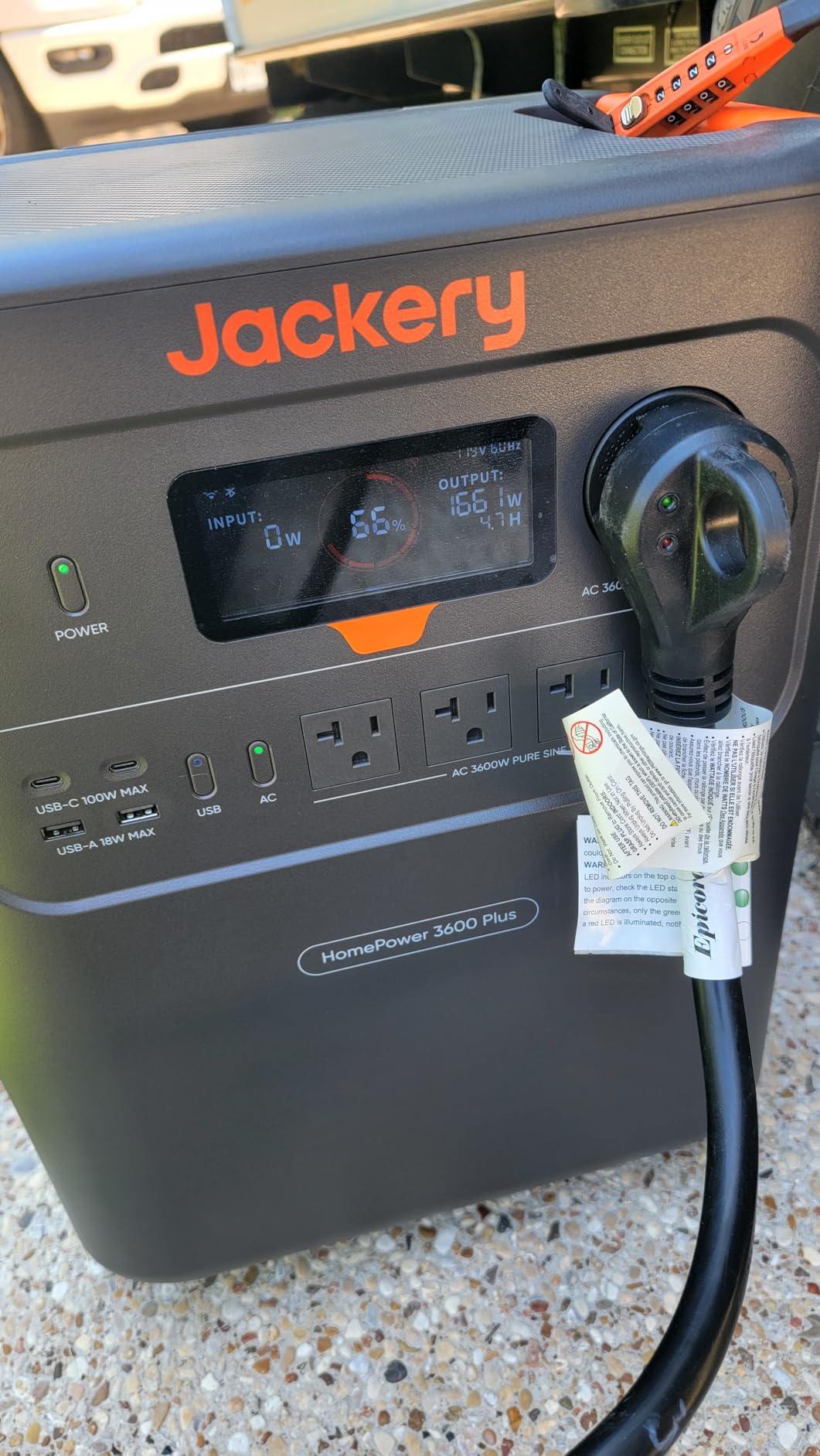
Luggage-style chassis with wheels and a telescoping handle is a meaningful change at this weight class, and long-term owners describe it as the quiet replacement for a gas generator. Multiple owners run medical equipment at home on it specifically because it produces no fumes indoors.
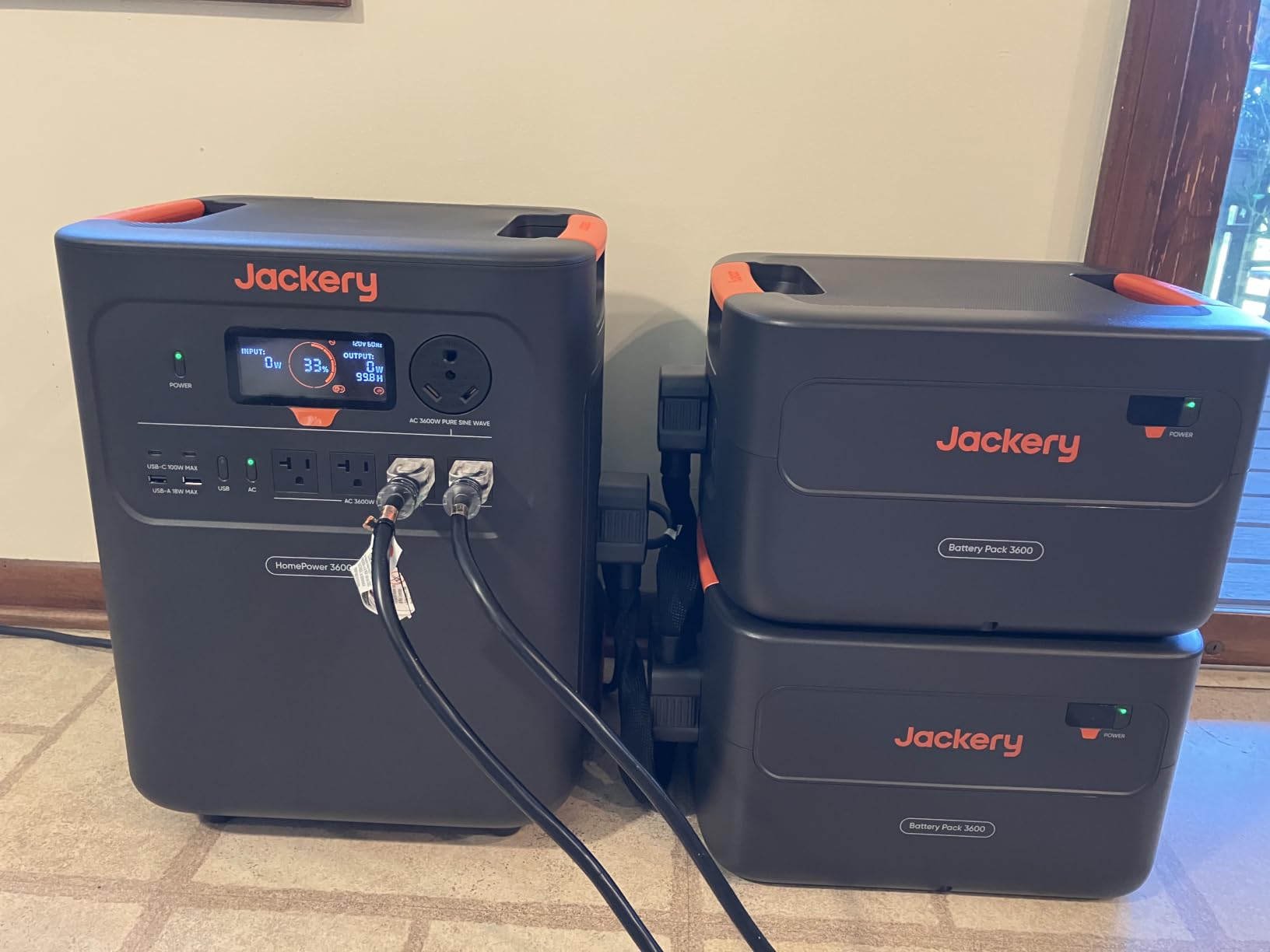
Recharge options are broad: full from empty in about two hours on hybrid AC plus DC, 2.5 hours on AC alone, 4 hours on solar, and 2.5 hours from a gas generator. One reviewer documented running an induction cooktop, a coffee maker, and a refrigerator for roughly half a day on a single charge, and another ran a steady 30A from a boat with an expansion battery attached.
Best Fit: A Northern Cabin, Full-Time Home, or RV With 240V Loads
If your cabin sees real winters or you need to run 240V equipment, this is the only pick here that addresses both directly. The 3584Wh capacity expands to 21kWh per unit and 43kWh across two, which is enough to ride out an extended outage without a generator. The rolling chassis means one person can reposition it.
The Catch: Heavy, Expensive, and Slow on Small Circuits
At 77.2 lb it is the heaviest unit in this roundup, and the telescoping handle helps but does not solve stairs. Charging is limited to about 15A on a 120V supply, so a small cabin circuit slows refill considerably. Only two outlets are listed in the specification data, and it is the most expensive unit we covered.
12. Anker SOLIX F3800 Plus – The Only True Whole-Home Configuration
Anker SOLIX F3800 Plus Power Station and Double Power Hub, 7,680Wh
7680Wh across two cabinets
12000W combined output
120V and 240V dual voltage
3200W solar input
5-year warranty
Pros
- 12000W combined output across two units
- 120V and 240V dual voltage for dryers and HVAC
- Expandable to 53.8kWh with additional batteries
- 3200W solar input plus 6000W generator bypass
- Outage-ready in 63 minutes on solar and generator
Cons
- Lowest rating in the roundup at 4.3
- Heaviest configuration at 135.6 lb
- Power station and power hub packaged separately
- Realistically needs two people and a ramp to move
Everything else in this roundup is a battery with an inverter attached. The F3800 Plus pair is a small whole-home system. Two cabinets give 7680Wh of storage and 12000W of combined AC output with 18000W surge, and the 120V and 240V dual-voltage support covers a dryer and HVAC, which no single portable station here can do.
It also scales past what any competitor offers. Starting at 7680Wh and expanding to 26.9kWh with six batteries or 53.8kWh with twelve gives multi-week off-grid capability, and the 3200W solar input with a 6000W generator bypass means you have a replenishment path even when the array is buried.
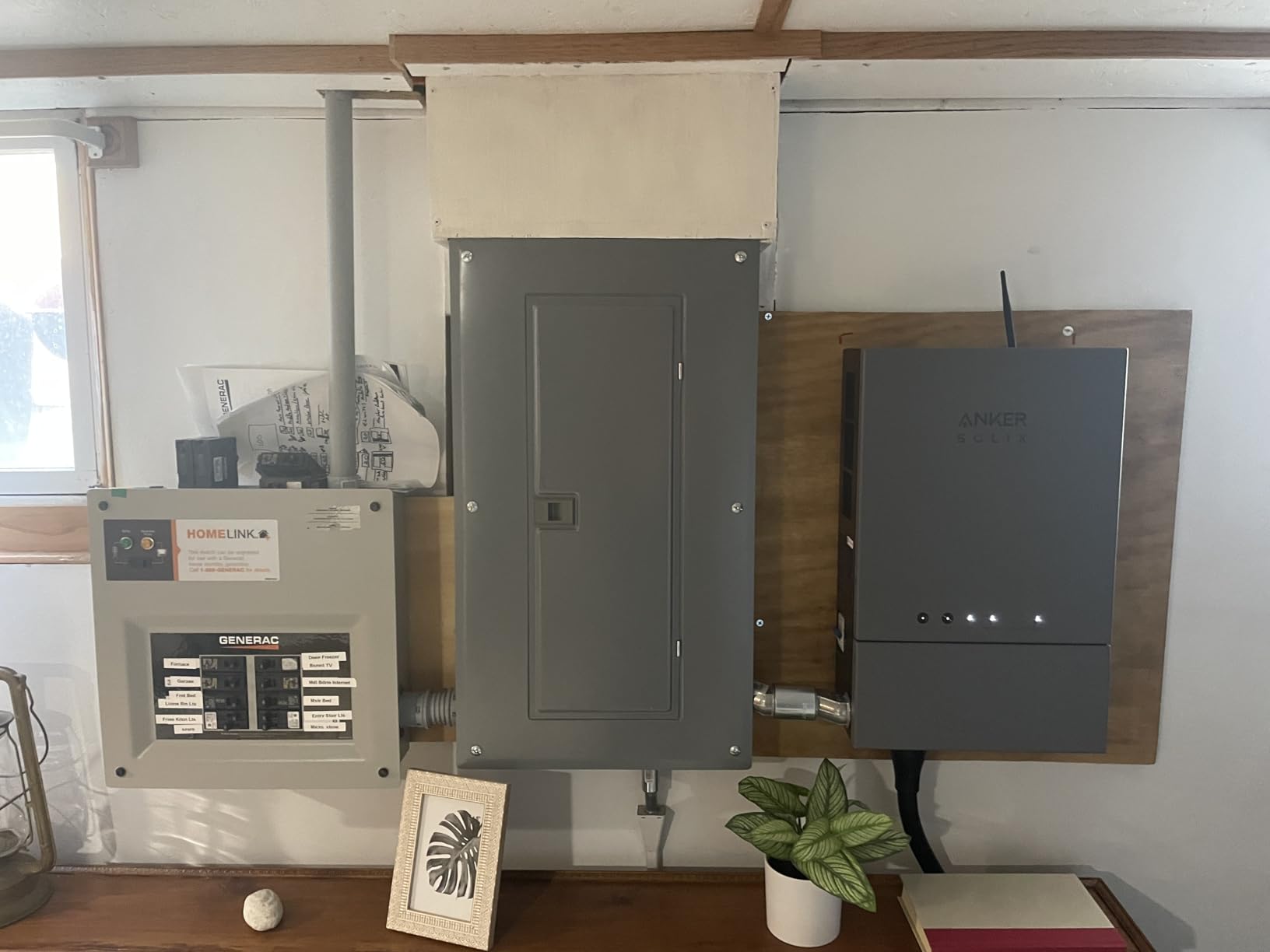
Recharge to outage-ready in 63 minutes using solar and a generator together. Each cabinet delivers 6000W, which is 58% more than other portable stations at comparable capacity, and the five-year warranty is backed by a stated 10-year InfiniPower lifespan on EV-grade LFP cells with smart temperature management.
Be realistic about logistics. At 135.6 lb across both cabinets, transport realistically needs two people and a vehicle or a ramp, and the power station and Double Power Hub are packaged separately, so the two halves may not turn up together. Check that the room can hold a 31.69 by 19.09 by 19.17 inch footprint before ordering.
Best Fit: A Full Homestead Replacing a Gas Generator Outright
Owners of a gas generator weighing a switch point here. It runs silently, indoors, with no fuel storage and no exhaust, and the dual voltage removes the usual limitation that forces you to choose between the well pump and the dryer. Expansion to 53.8kWh turns it into a seasonal off-grid supply.
The Catch: The Lowest Rating and the Heaviest Lift
At a 4.3 average with a 9% one-star share, this has the softest ratings in the roundup, and it is by far the largest outlay. The weight and the split shipment are practical headaches rather than flaws, but they are real when you first get the system set up. It is also the least relevant option if your cabin needs a few hundred watt-hours on a weekend.
Why LiFePO4 Is the Right Battery Chemistry for a Cabin
A cabin battery is cycled on the days you are there, and idle for weeks or months in between. That pattern is where chemistry matters most, and it is why every unit in this roundup uses lithium iron phosphate rather than the lithium NMC cells found in lighter camping gear.
Cycle life is the headline difference. LiFePO4 cells are commonly rated for 3000 or more charge cycles, while NMC packs typically manage 500 to 1000, and flooded lead-acid closer to 300 to 500. If you occupy a cabin 200 nights a year, a 3000-cycle pack has a realistic service life measured in decades, where a comparable NMC pack is a decade-long replacement item. Thermal stability is the second advantage: LiFePO4 tolerates heavy load and a hot attic far better, and Jackery’s ceramic membrane cells in the HomePower 3600 Plus were tested at 302F for thermal runaway resistance.
The trade-off is weight and cold. LiFePO4 stores less energy per pound than NMC, so a LiFePO4 pack of the same capacity is heavier, and NMC performs better when deeply cold. For a fixed installation where the battery is recharged most days and the mass is carried rarely, those compromises are usually worth accepting. If you want the cell-level detail, our guide to the best LiFePO4 batteries goes deeper on the chemistry itself.
How to Choose: Nine Specs That Matter for Cabin Use
Usable capacity, not nameplate. Expect 75-85% of the advertised watt-hours after inverter and battery management losses. Size against the usable figure, then add a 20-25% buffer.
Continuous inverter output. This is the ceiling for running appliances at the same time. 1800W handles a cabin; 2400W and up handles a family cabin with tools; 3600W and up handles a well pump plus a heater.
Surge wattage. Refrigerator compressors and well pumps draw several times their running wattage at startup. A unit with 1800W continuous and only 2700W peak is a different proposition from 2400W and 4800W.
Solar input wattage and voltage ceiling. Match the input to your array, and respect the open-circuit voltage limit. The BLUETTI Elite 300 caps at 60V and 20A, and exceeding it can damage the MPPT.
Expandability. Confirm whether the unit accepts expansion batteries, whether the cable is included, and whether the model generation is still supported. Several otherwise excellent units here have a permanent capacity ceiling.
UPS switchover time. Under 10ms covers sensitive electronics; 20ms still covers routers and fridges. Anything slower risks rebooting computers or medical equipment.
Port selection. Look for true 20A blade outlets, USB-C PD for laptops, a 12V car outlet for direct DC loads, and NEMA L14-30R or TT-30 if you have an RV or high-current appliances.
Cold-weather rating and charging cutoff. Confirm the minimum charging temperature and the low-temperature discharge behavior before committing to a northern site.
Warranty length and app dependence. Five years is the norm for the established brands here, against 2+3 years for Pecron. Also check whether critical settings can only be changed in the app, which is a problem when there is no signal.
Two more considerations matter more than any single spec for a fixed installation. Total system cost is what you actually spend: battery, panel array, solar cable, a proper charge controller path, and any electrical work. And sound matters more indoors than most buyers expect, so a station rated at 30dB or below can live in a bedroom while a loud one belongs in a garage.
How Many Solar Panels Do You Need for an Off-Grid Cabin?
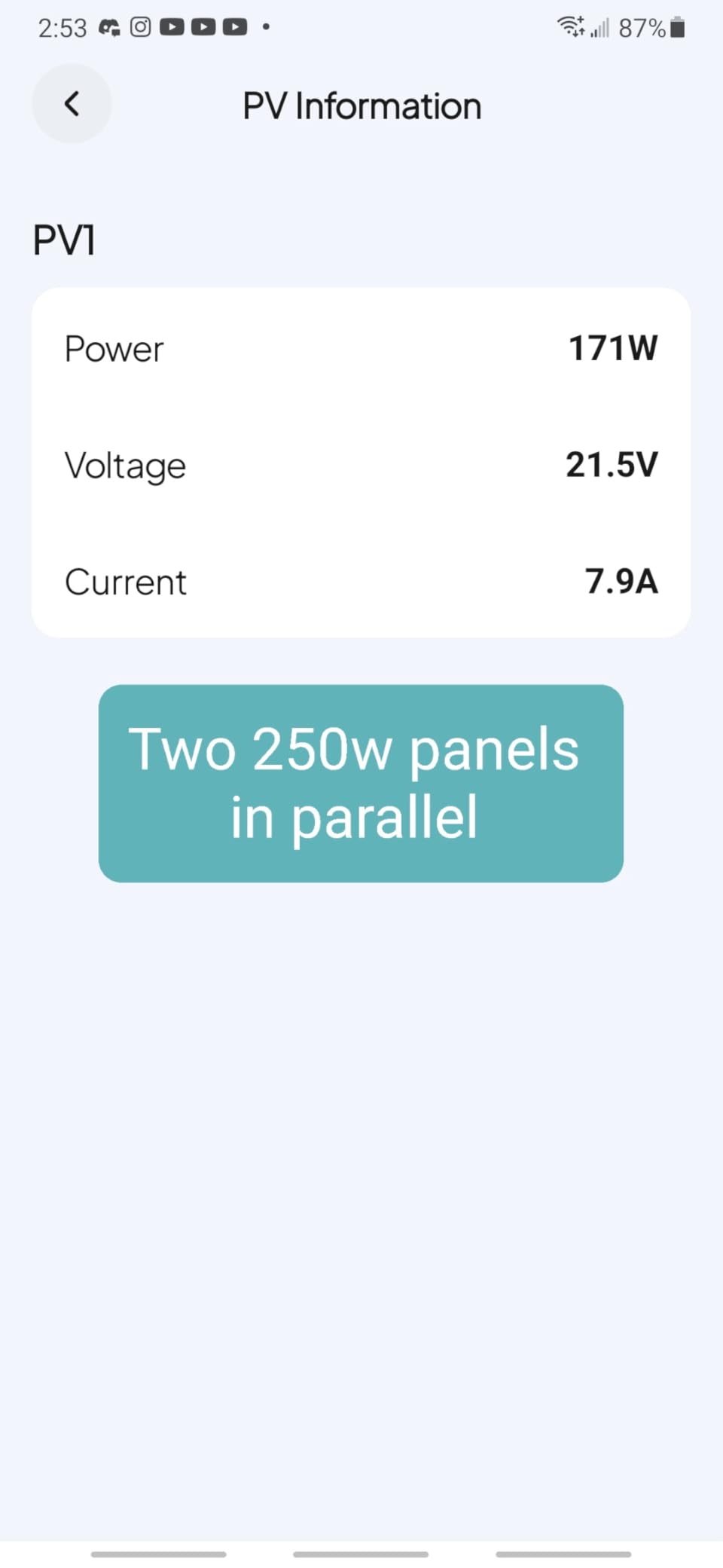
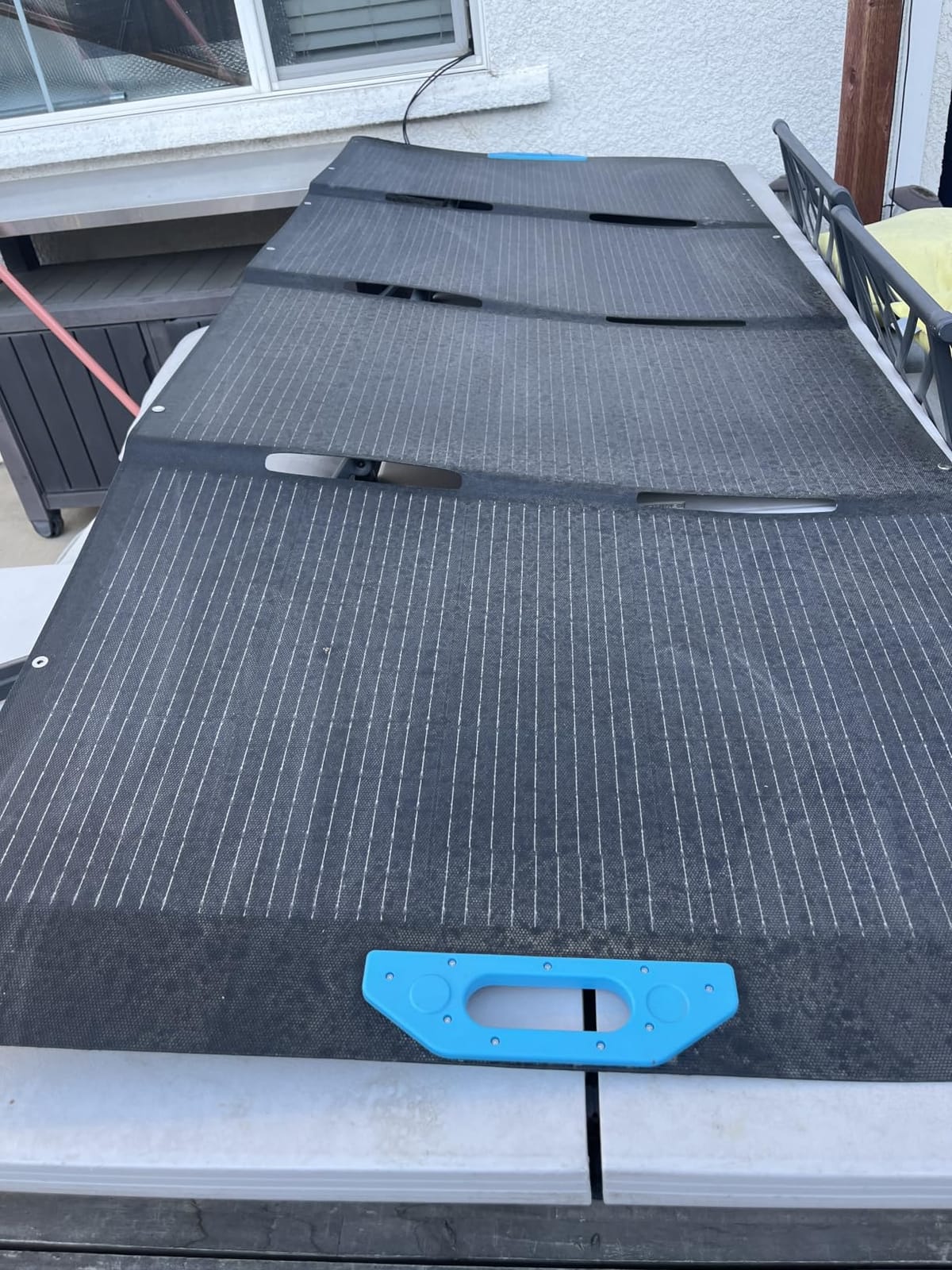
Rule of thumb: match your solar array wattage to roughly the station’s battery capacity in watt-hours, then add about 30% for real-world losses from angle, temperature, and dust. A 2000Wh station pairs well with 600-800W of panels. A 3000Wh station wants 900-1000W. The station’s maximum input wattage is the hard ceiling, and you cannot exceed it with a bigger array.
Panel type matters for a fixed cabin mount. Rigid glass panels hold a consistent output in heat and last far longer than folding portable panels, and they are the right choice permanently bolted to a south-facing roof or a ground rack. Folding panels make sense only if you will take them with you.
Wiring is where most mistakes happen. Two panels in series double the voltage, and if the total open-circuit voltage on a cold day exceeds the station’s limit you can damage the MPPT. Always check the open-circuit voltage rating, use the connector type the station actually accepts, and add a disconnecting combiner box so you can isolate the array safely for service.
For sizing help, compare against the independent reviews of the best portable power stations we use for panel pairing guidance, since solar input limits vary so much between models. And remember that winter output drops sharply in northern latitudes, so a cabin that must survive December on solar alone needs more array and more battery than one that closes up for the season.
Can a LiFePO4 Power Station Work in a Freezing Cabin?
Yes, with one important condition: you can discharge a LiFePO4 battery below freezing, but you cannot safely charge it. Most units refuse to accept solar or wall charging below roughly 32F This is a protective cutoff, not a defect.
The consequence for cabins is severe and rarely explained in roundups. A station sitting in an unheated cabin over winter will charge itself flat, sit below freezing for months, and then either refuse to come back to life or accept a partial charge, which permanently costs you capacity. Off-grid forum regulars raise this more than almost any other concern, and the consistent advice is that the unit must live in a heated space between occupancies, not merely be able to handle cold while you are there.
A few practical steps. Keep the station in a heated room or an insulated cabinet with a small thermostat-controlled heater, and bring it inside for the winter if the building is unheated. If your cabin is seasonal and the battery will sit idle, charge it to roughly 50% before closing up, because that is the storage level with the least long-term penalty. The Jackery HomePower 3600 Plus is the pick here if you cannot control the space temperature, since it is the only unit in this roundup with a published -4F operating rating.
One alternative worth knowing about is sodium-ion chemistry, which tolerates cold better than LiFePO4 at the cost of capacity and cycle life. For a cabin where the battery will sit unheated all winter regardless, the trade can be worth it. Otherwise, solve it with a heated storage location.
Portable Power Station vs a DIY 48V LiFePO4 Bank
Here is the tension that none of the roundups on this topic resolve. Off-grid forum regulars almost universally recommend a wired 48V system for a permanent cabin, because a DIY bank delivers more wattage and more usable watt-hours per dollar than any portable station. They are largely right, and a portable station is the wrong tool for a year-round homestead.
But the same forums recommend portable stations constantly, and for good reasons. A plug-and-play unit needs no permits, no electrician, no conduit runs, and no structural work. You can move it, reconfigure it, and take it with you when you sell the cabin. For a seasonal or weekend property that already has a generator for the heavy lifting, that flexibility outweighs the lower efficiency.
Concrete decision rule. Choose a portable station when you occupy the cabin fewer than about 150 nights a year, when the load list is refrigeration, lighting, network gear, and small tools, and when you want zero installation. Choose a DIY 48V LiFePO4 bank when you live there full-time, when you run a well pump continuously, when you want electric heat or an electric water heater, or when the system needs to outlast several portable stations. A rough crossover sits around 5kWh of daily consumption.
Where a portable station is simply the wrong tool, no matter the brand: continuous electric space heating, an electric vehicle charger, a sustained load above 3600W per cabinet, and any application that needs more than a few days of stored energy without a very large array. Those are the cases where the efficiency gap and the per-watt cost gap both punish you.
Frequently Asked Questions
What is the best solar generator for off-grid living?
For most cabins, the BLUETTI AC180 is the strongest single answer: 1152Wh, 1800W continuous output, 500W solar input, 20 ms UPS switchover, and a five-year warranty. Cabins with a well pump need 2400W or more continuous and should look at the EcoFlow Delta 3 Ultra or BLUETTI Elite 300 instead. Full-time homesteads should start at 7kWh.
How much battery capacity do I need to go off-grid?
Total your daily loads in watt-hours, divide by 0.8 for real-world inverter losses, and target a battery bank of about one third of that daily figure so it can refill in a day of good sun. A two-person seasonal cabin typically lands at 2-3kWh. A full-time cabin with a well pump needs 5-6kWh, and a homestead needs 10kWh or more.
What size power station runs a well pump and a refrigerator together?
You need at least 1800W continuous with 3000W or greater surge for a refrigerator alone, and 2400W continuous with 4800W surge to add a submersible well pump. Owners on off-grid forums converge on 4000W to 6000W of continuous inverter capacity when both are running. In this roundup that points to the EcoFlow Delta 3 Ultra or the Jackery HomePower 3600 Plus.
How long will a 2000 watt solar generator run a fridge?
A full-size compressor refrigerator averaging 100-150W and cycling about a third of the day draws roughly 1.0-1.3kWh per day. After inverter losses, a 2000Wh battery yields around 1600Wh usable, so expect roughly 24 to 36 hours. The Anker SOLIX S2000 carries a measured 35-hour fridge runtime for exactly this reason.
Do LiFePO4 batteries work in cold weather?
You can discharge a LiFePO4 battery below freezing, but you cannot safely charge it. Most units cut charging below about 32F, and the battery management system will not let current flow. A station left in an unheated cabin over winter can charge itself flat and then refuse to recover, so keep it in a heated space or bring it indoors between occupancies.
Is a portable power station enough to live off-grid?
A portable station is enough for a seasonal or weekend cabin running refrigeration, lighting, a router, and small tools. It is rarely enough for full-time living, where a well pump, water heater, or electric heat will outrun the capacity and the efficiency loss. Permanent cabins are better served by a wired 48V LiFePO4 bank, which delivers more usable watt-hours per dollar.
How many solar panels do I need for an off-grid cabin?
Match array wattage to roughly the battery capacity in watt-hours, then add about 30% for real-world losses. A 2000Wh station pairs with 600-800W of panels and a 3000Wh station with 900-1000W, without exceeding the station’s maximum solar input. Use rigid glass panels for a permanent mount and check the open-circuit voltage limit before wiring panels in series.
Final Verdict by Cabin Type
For a weekend cabin with no refrigeration, the Anker SOLIX C1000 Gen 2 at 1024Wh and 2000W is enough, and its 49-minute recharge means you never start a trip with a dead pack. For a seasonal cabin running a full-size refrigerator, the BLUETTI AC180 remains the best LiFePO4 power station for off grid cabins overall, because 1152Wh with 1800W continuous and a 20 ms UPS covers the realistic load list without becoming a burden to move.
For a quiet cabin where the station lives near where you sleep, the BLUETTI Elite 100 V2 at 30dB is the answer. For a full-time cabin with a well pump, move up to 2400W continuous and 4800W surge, which means the EcoFlow Delta 3 Ultra or the BLUETTI Elite 300. For a northern cabin that genuinely freezes, the Jackery HomePower 3600 Plus is the only pick here with a published -4F rating and 240V output.
And for anyone planning to grow capacity over the next few years, the Pecron F3000LFP is the only unit in this roundup that expands past 3kWh without buying a second cabinet, while the Anker SOLIX F3800 Plus pair is the straightforward answer to replacing a gas generator entirely. Whichever route you take, run your own load audit first, keep the battery above 32F when it is not being used, and size against usable watt-hours rather than the number on the front of the box.