
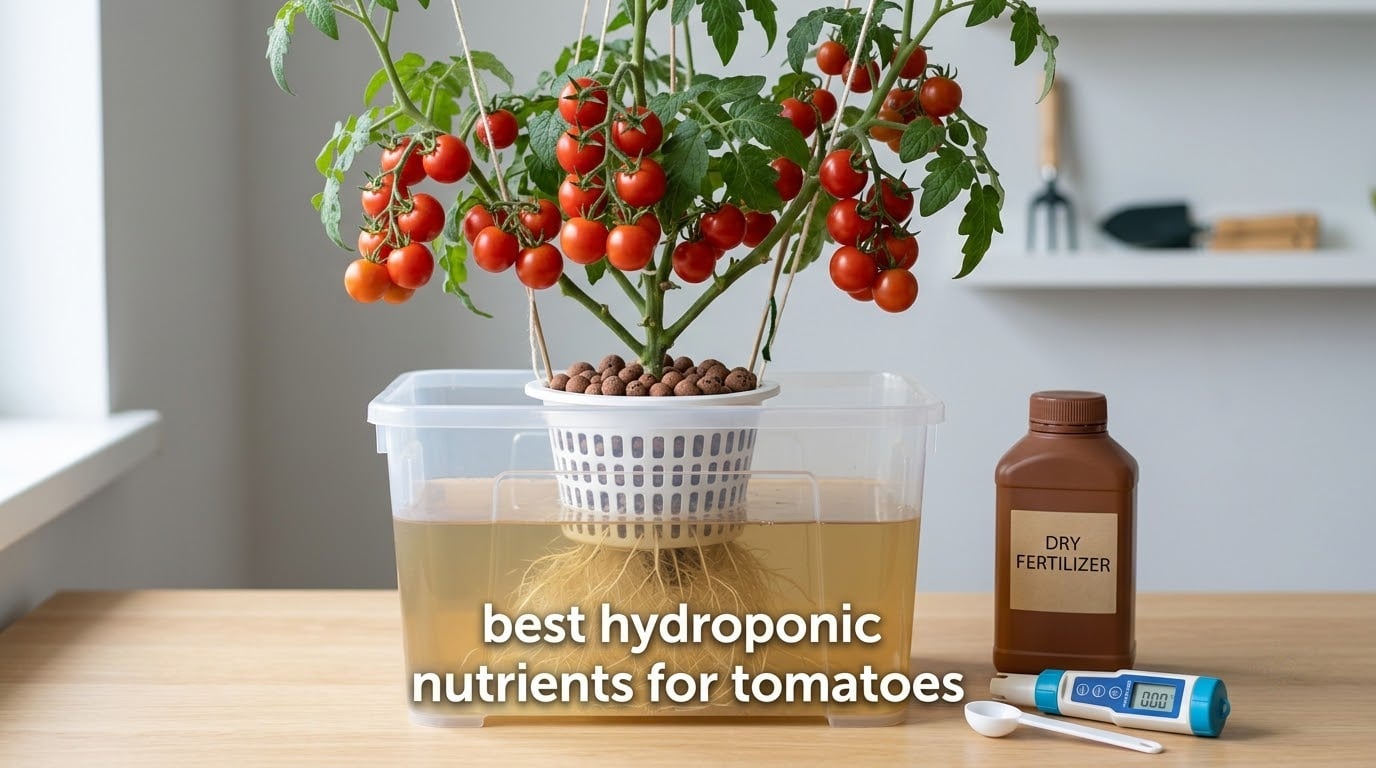
The best hydroponic nutrients for tomatoes are mineral formulas built around three things: enough potassium and calcium for fruit, chelated micronutrients that stay available at root-zone pH, and a strength you can actually measure. Our top pick is the MasterBlend 4-18-38 Complete Combo Kit, because it ships base nutrients, calcium nitrate and magnesium sulfate together in the correct 1:1:0.5 weight ratio, which removes a leading beginner error in a dry three-part feed.
Two numbers matter more than any brand. Hold your reservoir at pH 5.8-6.3, and target an EC of 2.0-2.5 mS/cm through fruiting. Get those right and almost any complete formula on our list will carry a tomato plant. Get them wrong and a good nutrient locks out within a week.
We spent six weeks cycling eight of the most-reviewed nutrients in this category through deep water culture, RDWC and Dutch bucket setups. What follows is what happened at the meter, including the products that needed a second bottle to finish the job. If you have not built a system yet, our guide to the best NFT hydroponic systems ranked covers the hardware side.
Table of Contents
Top 3 Hydroponic Nutrients For Tomatoes (October 2026)

MasterBlend 4-18-38 Combo Kit
- Three parts in the correct 1:1:0.5 ratio
- 100% water soluble powder
- Built for fruiting crops
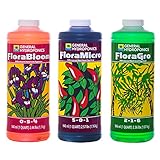
General Hydroponics Flora Series
- Three-part liquid system
- Stage-by-stage NPK control
- Mixes clear and holds pH

FoxFarm Grow Big Hydroponic
- 3-2-6 vegetative formula
- Liquid concentrate
- 2 to 3 tsp per gallon
All 8 Hydroponic Tomato Nutrient Picks at a Glance
| Product | Specifications | Action |
|---|---|---|
| MasterBlend 4-18-38 Complete Combo Kit |
|
Check Latest Price |
| General Hydroponics Flora Series 3-Part |
|
Check Latest Price |
| FoxFarm Grow Big Hydroponic 3-2-6 |
|
Check Latest Price |
 VIVOSUN Base A and B Bundle VIVOSUN Base A and B Bundle |
|
Check Latest Price |
 HiThrive Aeroponics and Hydroponic 4-3-6 HiThrive Aeroponics and Hydroponic 4-3-6 |
|
Check Latest Price |
 Humboldts Secret Base A and B 32 oz Set Humboldts Secret Base A and B 32 oz Set |
|
Check Latest Price |
 ENVY Plant Food A and B Quart Set ENVY Plant Food A and B Quart Set |
|
Check Latest Price |
 Greenway Biotech Tomato 4-18-38 Powder Greenway Biotech Tomato 4-18-38 Powder |
|
Check Latest Price |
1. MasterBlend 4-18-38 Complete Combo Kit: The Feed That Needs No Supplement Run
MASTERBLEND 4-18-38 Complete Combo Kit Fertilizer Bulk (2.5 Pound Kit)
Three-part dry kit
1:1:0.5 ratio by weight
100% water soluble
2.5 pound kit
Pros
- Base
- calcium nitrate and Epsom salt pre-proportioned in one kit
- High potassium and phosphorus matched to fruiting crops
- Dissolves fully with no residue in recirculating lines
- Deep review history across fruiting plants
Cons
- Requires weighing dry powder instead of pouring liquid
- Kit sizing suits a season rather than a trial run
This is the formula that comes up again and again when hydroponic tomato growers describe what finally worked. On r/Hydroponics, users running 4-18-38 report solid results on tomatoes and peppers alike, and that cross-crop reliability is part of why its review base has held up for years.
The kit works because the three components arrive already measured to the recipe. You get MasterBlend 4-18-38 base, calcium nitrate 15.5-0-0, and Epsom salt magnesium sulfate, packed in a 1 to 1 to 0.5 ratio by weight that mirrors the classic 12 g base, 12 g calcium nitrate, 6 g magnesium sulfate formula.
Everything is 100% water soluble, so it moves through drip lines and Dutch bucket feeds without clogging and does not cloud the reservoir the way some blended powders do. It also dissolves completely in an RDWC loop, which matters more than it sounds when your pump runs all day.
The label ratio is worth understanding before you dose. The bag states 4-18-38, while MasterBlend publishes a final solution strength near 5-12-25 once the calcium and magnesium parts are included. That gap is not a defect. It is why dosing the base part alone gives you a nitrogen-heavy feed with less potassium.
How to dose it without a guessing habit?
The community recipe circulating most often in grow forums is 2 g of 4-18-38 base, 1 g of Epsom salt, and 2 g of calcium nitrate per gallon. For a 20 gallon reservoir that is 40 g, 20 g and 40 g. Dissolve each component in its own jug of water before any of it touches the reservoir.
Where it frustrates growers?
Measurement discipline. Volumetric spoons are a repeated source of wrong solutions in this category, and a one-gram error across 20 gallons is trivial while a ten-gram error ruins a reservoir. There is also no stage adjustment built in, so you run one ratio from seedling to fruiting unless you deliberately drop nitrogen as flowers set.
2. General Hydroponics Flora Series: The Most Precise Stage Control Here
General Hydroponics Flora Series: FloraMicro, FloraBloom, FloraGro – 3-Part Hydroponic Nutrient System, 1 qt. Bottles
Three 1 qt bottles
Liquid concentrate
2:1:6 mixing ratio
96 fluid ounces total
Pros
- Real stage-by-stage control of nitrogen
- phosphorus and potassium
- Mixes clear with almost no residue and holds pH steadily
- One quart set stretches across multiple full grows
- Tight seals and clear measurement marks
Cons
- Higher upfront outlay per bottle than single-bottle feeds
- Some crops still need a separate CalMag addition
- Demands consistent EC and pH monitoring to work
Where the MasterBlend kit gives you one ratio for the whole run, the Flora Series splits nutrition across three bottles. FloraMicro supplies nitrogen, calcium and trace minerals, FloraGro adds nitrogen and potassium for structural growth, and FloraBloom handles phosphorus, potassium, magnesium and sulfur for flower and fruit development.
Reviewers describe the same things we saw. It mixes to a clear solution, holds pH without constant correction, and one quart set has carried growers through multiple complete grows. The published mixing ratio is 2 to 1 to 6 across FloraGro, FloraMicro and FloraBloom.
For tomatoes, the practical advantage is that you can lean on Micro through early flowering, add Gro for canopy, then shift toward Bloom as fruit sets. That raises potassium in the back half of the run without over-feeding nitrogen, which is the usual failure mode of a single-bloom-blend approach.
Use the chart ratio as a starting point and confirm with an EC meter. Tomato plants in a warm reservoir drink more than the feeding chart assumes once fruit load climbs.
Is stage control worth the outlay?
On a single tower or countertop unit, usually not. You would run the same feed all season and never tap the flexibility. Across a multi-plant RDWC or an outdoor Dutch bucket run where fruit load shifts week to week, the control pays back quickly.
What to watch for?
Never combine the concentrates before dilution, since phosphorus and calcium precipitate when they meet at high concentration. On RO water, some growers add a CalMag supplement on top because reverse osmosis strips the buffer hard tap water provides for free.
3. FoxFarm Grow Big Hydroponic: Best Value for the Vegetative Half
FoxFarm Grow Big Hydroponic Plant Food – 3-2-6 Liquid Plant Fertilizer for Lush Vegetative Growth in Hydroponic Systems – Liquid Concentrate with Earthworm Castings & Micronutrients – 1 Pint
3-2-6 liquid NPK
16 fluid ounces
2 to 3 tsp per gallon
Hydroponic specific
Pros
- Formulated for hydroponic systems rather than soil application
- Fast liquid uptake with no dissolution step
- Micronutrients plus earthworm castings for steady growth
- Clear general and heavy feeding rates
Cons
- Vegetative formula only
- so a bloom product is needed later
- Teaspoon dosing needs an EC or ppm meter to stay accurate
- Small 1 pint bottle
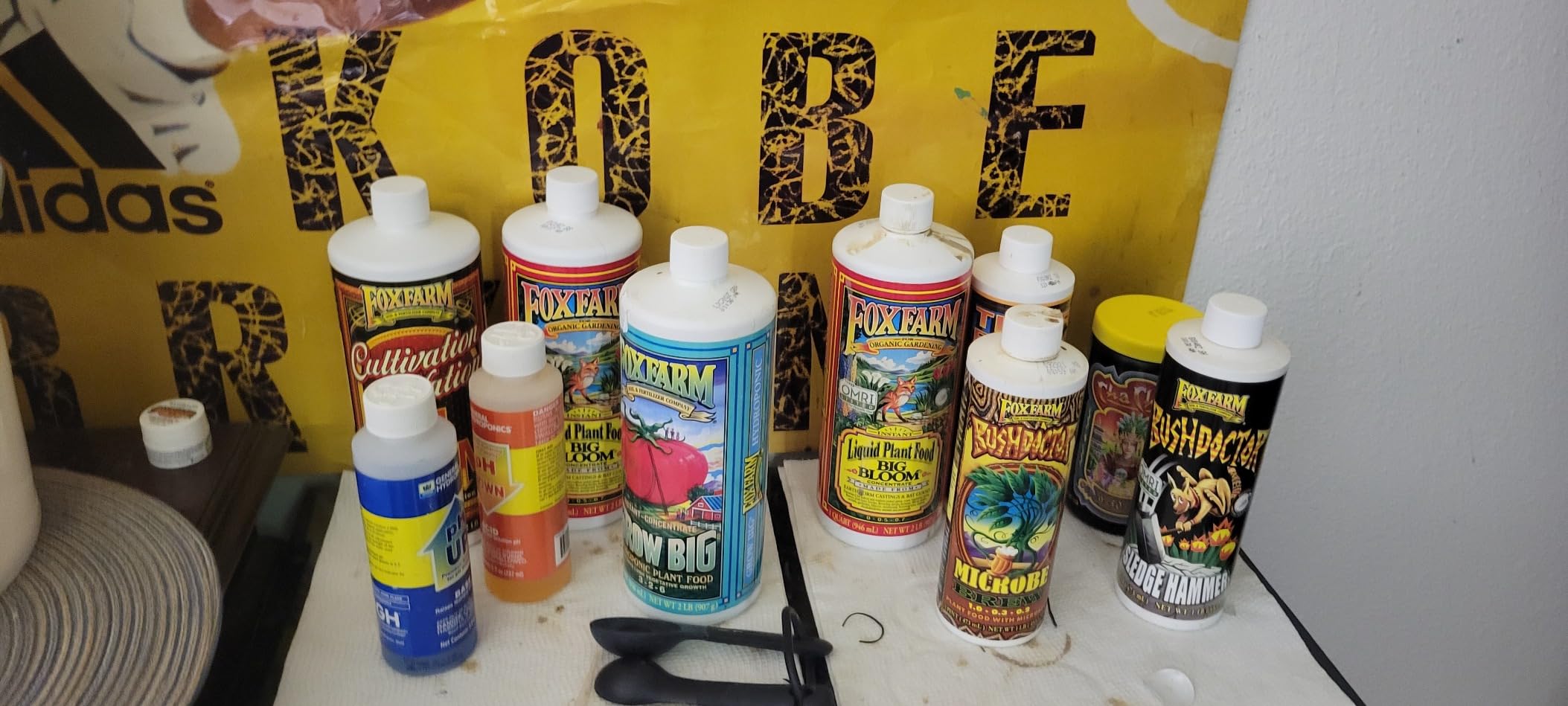
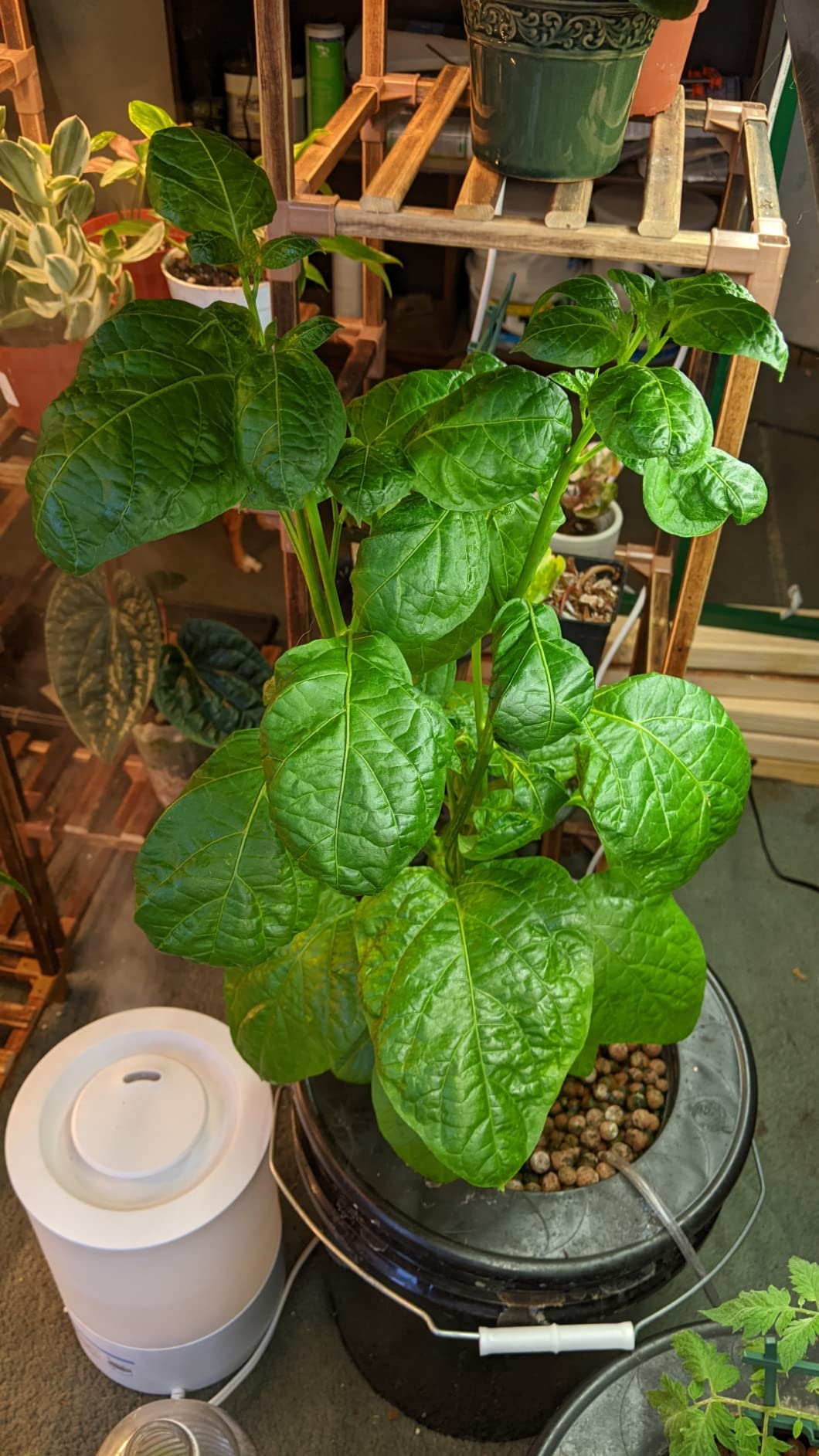
FoxFarm Grow Big Hydroponic is a 3-2-6 liquid concentrate made for water-based systems, which is not true of every green bottle in this category. Reviewers consistently report vigorous vegetative growth in hydro, with an obvious path to a bloom product around week 5.
Use it as the engine of the first half of the season. Run 2 teaspoons per gallon for general feeding or 3 for a heavier dose from transplant through early flowering, and verify the result with a conductivity or ppm meter. The modest phosphorus keeps flower development in your hands rather than the nutrient’s.
The earthworm castings support root-zone biology, and the liquid format removes the step most likely to go wrong in dry feeding. There is nothing to weigh, nothing to dissolve and no sediment to flush from a reservoir.
Switch to Tiger Bloom or Big Bloom at the first sign of flowering, around week 5 for most varieties. Growers who treat this as a full-season formula go wrong at exactly that transition.
Does the vegetative-only formula limit you?
It does if you run it alone. A 3-2-6 profile fed all season gives you plenty of leaf and modest fruit, and no extra solution fixes that because potassium and phosphorus are not in the bottle. Budget for a bloom product as part of owning this feed.
Measuring liquid concentrates accurately
A teaspoon is a volume, and volume dosing drifts with temperature and pour rate. Dose a measured milliliter amount into a jug of water first, then add the jug to the reservoir. That single habit removes most over-feeding complaints attached to this product.
4. VIVOSUN Base A and B Bundle: Best Fit for Small Systems
VIVOSUN Liquid Nutrients Base A & B Bundle, Set of 8oz
Two 8 oz bottles
Equal-parts A and B
16 fluid ounces total
Model NB-002J
Pros
- Equal-parts mixing with no schedule to plan
- Covers vegetative growth through flowering in one formula
- Works in soil
- hydroponics
- aquaponics and coco
- Scent-free concentrate that tolerates sitting unused
Cons
- 8 oz bottles run out fast on long grows
- A and B must be diluted separately and never combined concentrated
- Some buyers report smaller volumes than earlier packaging
This bundle is the least intimidating complete feed in our lineup. Equal parts of Base A and Base B at every watering is the whole routine. No stage chart, no ratio mathematics, no separate magnesium bottle. For a first recirculating tomato setup, that simplicity is worth more than incremental control.
Both parts are 100% water soluble and together supply nitrogen, phosphorus, potassium, calcium and magnesium plus micronutrients. The formula is said to stabilize solution pH, and our readings drifted far less than with unbuffered mixes.
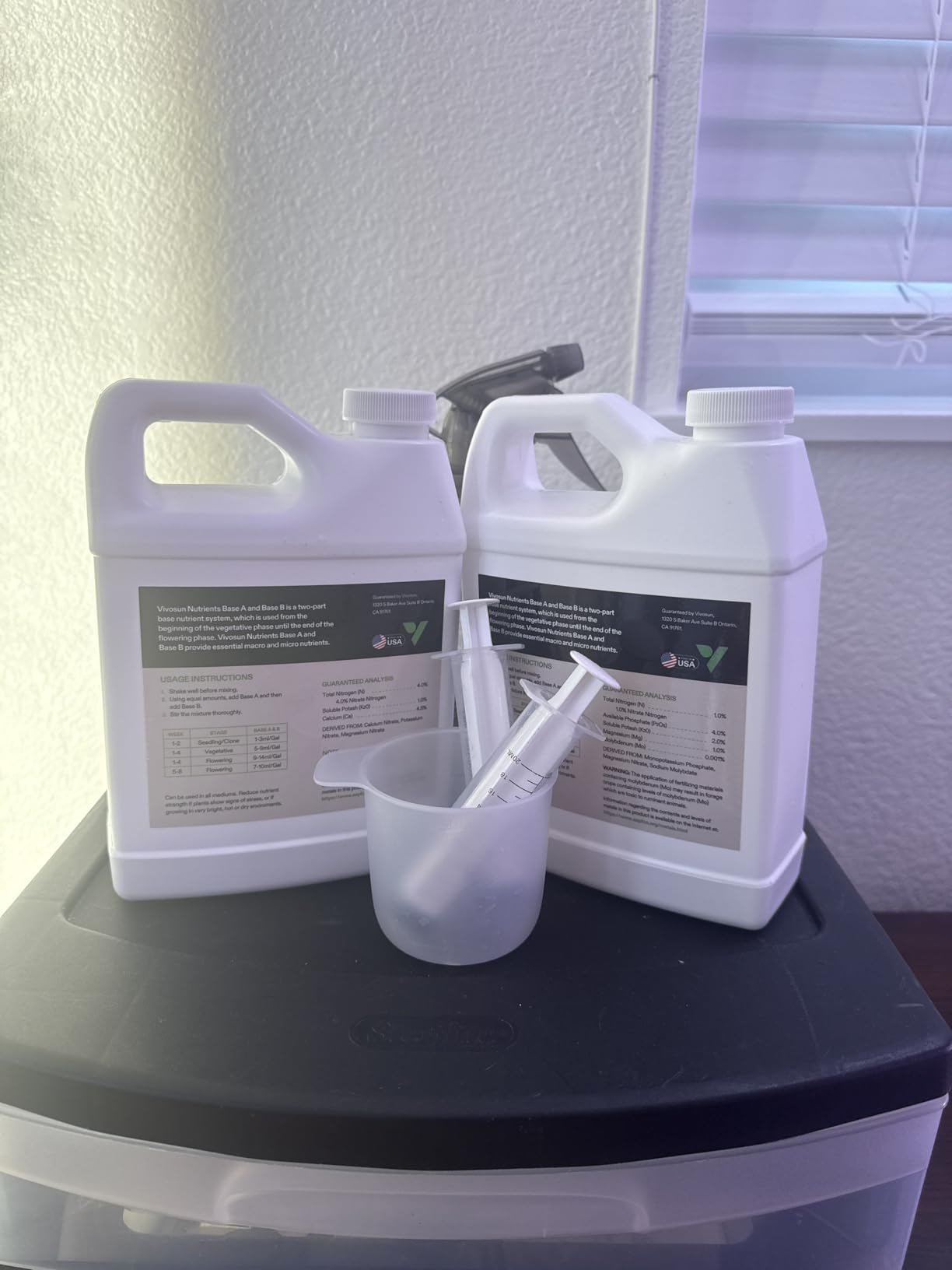
Compatibility is unusually broad. The same two bottles work in soil, hydroponics, aquaponics and coco coir, so it is a safe pick if you are not certain what your next system will be. Reviewers often mention stronger stems and fuller leaves within a week or two.
The dosing rule is absolute: dilute each part separately, then combine. Pouring A into B at concentrate strength creates an insoluble mess in the reservoir, and it is the one mistake that ends an otherwise good run.
Is 8 oz enough for a tomato plant?
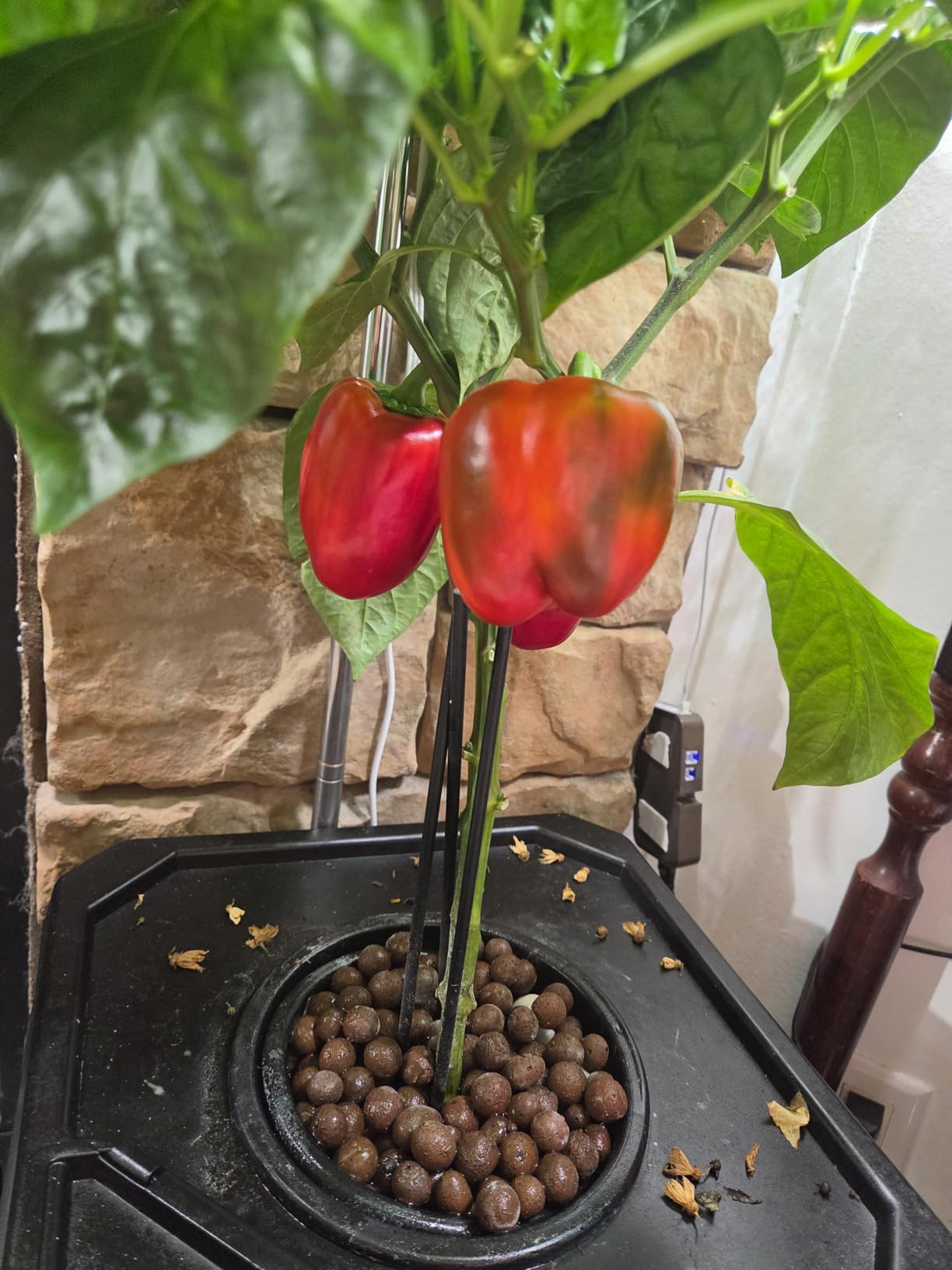
For one plant in a small tower, a set carries a full cycle with room to spare. For a multi-site RDWC running several fruiting tomatoes, plan to repurchase more than once. The bottles are compact rather than generous, and that is the recurring reservation in the reviews.
Syringe dosing versus pouring
The neck fits a syringe, and dosing by milliliters is more consistent than eyeballing a capful. Because the concentrate is odor-free and does not spoil quickly when partly used, small bottle size is an inconvenience rather than a waste problem.
5. HiThrive Aeroponics and Hydroponic 4-3-6: The One-Bottle Answer
Aeroponics & Hydroponic Fertilizer, 4-3-6 NPK Formula, 32oz
4-3-6 NPK liquid
32 fluid ounces
1 tsp per quart
Up to 96 feedings
Pros
- Single bottle covers the whole crop with no companion products
- Liquid that does not cloud or discolor the reservoir
- Simple one-teaspoon-per-quart dosing
- Long reported coverage per bottle
Cons
- Full label dose can be aggressive for sensitive plants
- No separate bloom-stage adjustment available
- Feeding interval guidance may lag fast-growing crops
Everything about this product is engineered for convenience. One 32 ounce bottle, a 4-3-6 NPK formula with essential micronutrients, and dosing at 5 ml or one teaspoon per quart of reservoir water. The maker states a 32 ounce bottle delivers up to 96 feedings.
It was the least fussy feed in the lineup for towers and countertop gardens. There is only one component, so there is no precipitation risk and no ordering rule to follow. Nutrient lockout through careless mixing is effectively impossible.
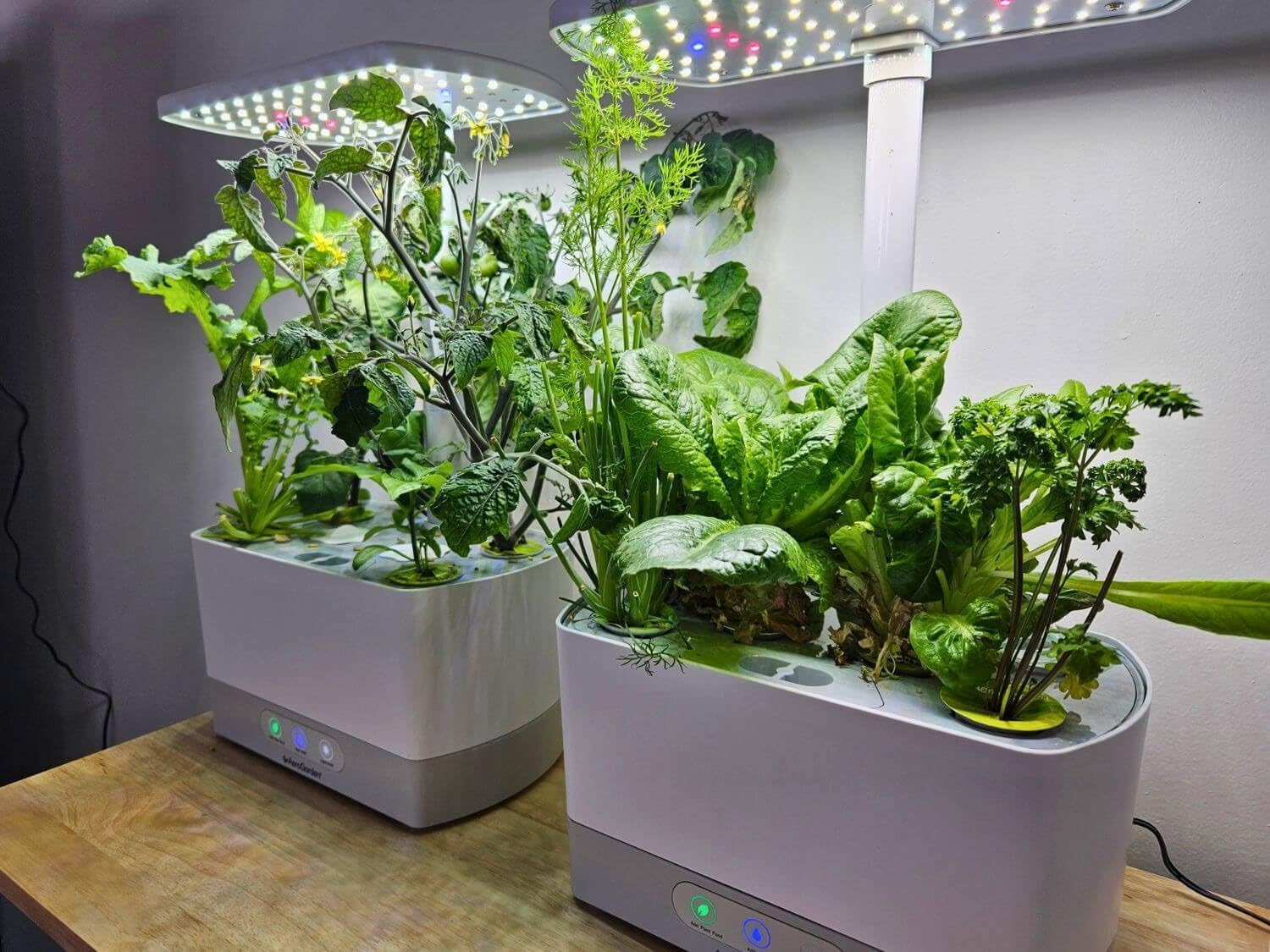
The 4-3-6 ratio sits between a vegetative blend and a bloom blend. Nitrogen drives green growth, phosphorus supports roots, and potassium handles stress resilience and fruit quality. For cherry varieties on a small system, that middle-ground profile holds up across the season.
Our one caution is strength. The full label dose is aggressive, and some reviews describe reduced rates working better on young or stressed plants. Start at half strength for the first week, confirm with an EC meter, then climb.
When one bottle is the right choice?
Choose it when you want a single purchase covering seedling to harvest without tracking a feeding chart, or when you are feeding a mixed planter alongside tomatoes where per-plant nutrition is impractical. It also suits anyone who abandoned a program after getting lost in ratios.
Where the missing bloom stage shows up?
If your priority is fruit size and sugar rather than a steady harvest of cherry types, a dedicated bloom supplement at flowering will outperform this. Some reviews report longer feeding intervals than our tomato plants wanted, a hint that the formula leans vegetative.
6. Humboldt’s Secret Base A and B: The Set You Feed Without Thinking
Humboldts Secret Base A & B Liquid Fertilizer, Hydroponic, 32 Ounce Set
Two 32 oz bottles
64 fluid ounces total
Equal-parts 1:1
Model 4316245515
Pros
- Equal parts at every watering with no schedule to remember
- Full-spectrum NPK with calcium and magnesium
- Mixes fast and clean without clogging lines
- Used by home growers and commercial cultivators alike
Cons
- Highest outlay of the two-part sets we tested
- One-size-fits-all nutrition rather than separate stage formulas
- Packaging design may differ from listing photos
Humboldt’s Secret carries the largest review base of the two-part liquid sets in our comparison, and the average sits a notch below the category leaders. The distribution explains that gap, with a wider spread of 3-star and 4-star feedback mostly around cost and generic nutrition.
The core proposition is reliability. Equal parts of A and B at every watering, full-spectrum nitrogen, phosphorus, potassium, calcium and magnesium, and a pH-balanced formula that mixes fast without leaving residue or clogging lines. Reviewers report visible results in roughly a week.
Compatibility is broad enough to cover DWC, aquaponics, coco coir, soil and raised beds. If your tomato run shares a room with a mixed garden, that flexibility saves you from maintaining two feeding programs.
Our reservoir readings held steady through a full run, and the absence of sediment meant no cleaning beyond the routine change. That quiet quality matters more than formula novelty once you are weeks into a season.
Is one-size-fits-all good enough for tomatoes?
For most home growers, yes. Tomato plants are heavy feeders but not so specialized that a complete two-part formula fails them. You give up the ability to shift potassium independently, and you remove the highest-risk variable in the process, which is human error in dosing.
Where it loses to cheaper options?
Cost is the honest drawback. This is the priciest two-part set in our lineup, and many 4-star reviews read the same way: it works, and it costs a lot. On a short season in a small system, the money goes further in a dry three-part kit.
7. ENVY Plant Food A and B: Strongest Calcium Play for RO Water
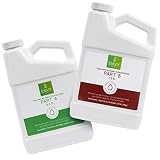
ENVY Hydroponic Plant Food A & B – Two-Part Liquid Nutrient for Indoor/Outdoor Plants – Soil, Coco, Hydroponics, DWC – Quart Set
Quart set 64 fl oz
Part A 6-0-5 and Part B 1-5-6
5 percent calcium in Part A
DTPA chelated iron
Pros
- Two-part system covers seedling stage through bloom
- High calcium content supports stems and structural growth
- DTPA chelated iron stays available in RO water
- Compatible with DWC
- NFT
- ebb and flow
- drip
- coco and soil
Cons
- Highly concentrated
- so dosing errors happen easily
- A and B must be used together with no flexibility
- Smaller review base than the better-known brands
ENVY’s differentiator is on the label if you know where to look. Part A is 6-0-5 and carries 5 percent calcium, while Part B is 1-5-6 supplying magnesium and the balance of the profile. Together they give a complete NPK with real calcium, the mineral most often short in tomato programs.
Part A also includes DTPA-chelated iron. That form stays available across a wider pH window than cheaper chelates, which matters if you feed with reverse osmosis water, since RO strips the calcium carbonate buffer that hard tap water provides.
We found it compatible with every system we tried, from DWC and NFT to ebb and flow and drip. Its 1-star rate is unusually low, and the recurring theme is complete two-part nutrition plus broad setup compatibility.
Because the formula is highly concentrated, small measurement errors translate into large swings. Dose into a jug of water first, stir, then add to the system. Verified EC readings after mixing keep this from becoming an expensive lesson.
Why blossom end rot growers should look here?
Blossom end rot is usually a transport and transpiration problem rather than a pure calcium shortage, so no feed prevents it alone. Still, a formula with genuine calcium built in gives you one fewer variable, and the chelated iron supports the flowering tissue that precedes fruit set.
Measurement precision is non-negotiable
This is the most concentrated set we tested, and every caution comes down to the same point. There is also no single-part flexibility: you use A and B together every watering, or you use neither.
8. Greenway Biotech Tomato 4-18-38 Powder: The Nightshade Specialist
Greenway Biotech, Inc. Tomato Fertilizer 4-18-38 Powder – Water Soluble with Chelated Micronutrients for Tomatoes Peppers Eggplant – Bigger Fruit Better Flavor – Hydroponics or Soil – 1 LB
4-18-38 dry powder
1 pound resealable bag
0.5 to 0.75 lb per 100 gallons
Chelated trace elements
Pros
- Built for nightshades with 38 percent potassium
- Chelated micronutrients effective across pH 4 to 9
- Dissolves cleanly with predictable EC and pH
- Clog-free in drip
- NFT
- DWC and Dutch buckets
Cons
- Base nutrient only
- so calcium nitrate and magnesium sulfate are separate purchases
- Very concentrated and easy to over-dose
- Not a stand-alone feed for a full cycle
Most 4-18-38 products are general vegetable formulas that happen to carry high potassium. This one is built for nightshades, with nitrogen deliberately held at 4 percent so the plant does not spend its energy on foliage instead of fruit. It also covers peppers, eggplants, potatoes and tomatillos.
Growers with nightshade experience report abundant fruit, even ripening and sweeter flavor. The technical sheet notes that chelated iron, manganese, zinc, copper, boron and molybdenum stay effective across a pH 4 to 9 range, which removes most lockout risk in a normal reservoir.
Hydroponic application rates run 0.5 to 0.75 lb per 100 gallons, with a soil and container rate of 1 to 2 teaspoons per gallon every 1 to 2 weeks. In our hands the powder dissolved completely and reservoir pH sat near 5.8 to 6.1 with RO water, needing little adjustment.
The product is independently tested for heavy metals and is CDFA registered, with a resealable stand-up bag that matters when you dose by scoop.
Why you need two more products to finish the job?
This is a base nutrient, not a complete feed. You add calcium nitrate and magnesium sulfate separately, meaning three products to buy, three to weigh and three chances to misdose. For a grow that is exclusively tomatoes and peppers, the specialization earns it. For a mixed system, it is overhead.
The over-dosing caution is real
Several reviewers damaged plants by applying far more than the label rate, and that caution shows up more here than on the other products we tested. Start at the low end of the hydroponic range, confirm EC after mixing, and resist pushing a concentrate this strong.
How to Choose: What Actually Matters in a Tomato Feed?
Ratio by stage. Tomatoes want nitrogen-heavy nutrition through canopy development and potassium-forward nutrition once flowers set. A single bloom formula wastes early growth on leaf, while a purely vegetative feed caps fruit size. Multi-part systems let you shift; single bottles ask you to compromise.
Calcium and magnesium. Both must be present in a usable form, and calcium must arrive separately from concentrated phosphate. Look for a formula where calcium is either included at a stated percentage or supplied as a matching component.
Chelated micronutrients. Iron, manganese, zinc, copper, boron and molybdenum in chelated form stay available across a wider pH band than raw mineral forms. This is the difference between a feed that works on your water source and one that does not.
Dry powder versus liquid. Dry wins on cost per gallon and mixing control, and it forces you to weigh. Liquid wins on convenience and dosing speed, and it costs more per season. Growers moving to bulk dry nutrients report better control and a steeper learning curve, which is an honest trade rather than a marketing claim.
System compatibility. Any complete feed works in DWC, RDWC, Kratky, NFT, Dutch buckets and countertop towers, but concentration matters more in recirculating systems where an error cycles through the whole loop. If you have not chosen hardware yet, our ranking of the best NFT hydroponic systems ranked covers the flow rates that affect nutrient delivery.
Water source. Reverse osmosis water is a clean blank slate with no calcium carbonate buffer and no magnesium at all. Hard tap water arrives pre-buffered and pre-mineralised, which changes how much supplemental calcium your formula needs.
How to Mix and Dose by Growth Stage?
Fill the reservoir with plain water first and take a baseline EC reading. That number is your anchor, because adding nutrients to an unmeasured reservoir is how solutions accidentally get double-strengthened.
Mix each component separately in its own container of water. Never combine concentrated phosphate formulas such as 4-18-38 with concentrated calcium nitrate, since the two precipitate into an insoluble sludge that clogs lines and removes nutrients from solution. Add each diluted component to the reservoir one at a time, circulating between pours.
For a dry three-part system, the widely used community starting point is 2 g of base, 1 g of Epsom salt and 2 g of calcium nitrate per gallon. Verify the resulting EC and treat the recipe as a starting point rather than a constant.
Seedling and propagation: EC 0.8 to 1.2 mS/cm, pH 5.8 to 6.2, with a weak solution until roots fill the medium.
Early vegetative growth: EC 1.6 to 2.0 mS/cm, where a nitrogen-forward component earns its place.
Flowering and first fruit set: EC 2.0 to 2.4 mS/cm, shifting toward the potassium side of the formula.
Fruiting and ripening: hold EC 2.0 to 2.5 mS/cm and do not chase a rising number as plants drink.
Change the reservoir every 7 to 14 days in a recirculating system and every 2 to 4 weeks in a Kratky setup. Top up with plain water between changes to hold EC steady, because a plant drinking from a reservoir drops EC only after the solution concentrates enough to resist further uptake.
Reading Deficiency and Over-Feeding Symptoms
Yellowing lower leaves on a fruiting tomato usually points at nitrogen or magnesium, both mobile and pulled from old growth first. Yellowing between the veins while leaf edges stay green is the classic magnesium signature. Browning at the blossom end of the fruit is calcium-related, and is far more often caused by low transpiration, poor airflow or unstable pH than by a shortage.
Leaf curl is where growers misdiagnose most often. Upward curling on the newest growth with darkened, crispy tips points at over-feeding or an EC spike. Upward curling with stunting and leaf drop, while newer leaves stay normal, points at a virus instead. Check your EC reading before changing anything, because a meter reading settles the argument faster than any symptom description.
Two habits prevent most of this. Recalibrate your pH pen monthly, since a drifting pen sends growers chasing deficiencies that do not exist. And take an EC reading before every adjustment, not after, so you know whether the solution or the instrument moved.
Frequently Asked Questions
What is the ideal pH for hydroponic tomatoes?
Tomatoes grow best between pH 5.8 and 6.3 in hydroponics. Below 5.5, iron, manganese and boron become poorly available and deficiency symptoms appear even when those minerals are present in the reservoir. Above 6.5, iron and manganese lock out first and phosphorus reacts with calcium to form insoluble sludge. Aim for the middle of the range and check pH weekly, since it drifts as plants drink.
What EC should I run for hydroponic tomatoes?
Target an EC of 2.0 to 2.5 mS/cm once tomatoes are flowering and setting fruit. Use a lower strength earlier: roughly 0.8 to 1.2 mS/cm at seedling stage and 1.6 to 2.0 mS/cm during early vegetative growth. Take a baseline reading of your water before adding nutrients, then build from there, because water source changes the starting point significantly.
How often should I change the nutrient solution for hydroponic tomatoes?
Change the reservoir every 7 to 14 days in a recirculating system such as DWC or RDWC, and every 2 to 4 weeks in a passive Kratky setup. Between changes, top up with plain water to hold EC steady, since tomato plants drink from the reservoir and the concentration creeps up as they do. Heavy fruit load in a warm reservoir shortens the interval.
Why are my hydroponic tomato leaves turning yellow?
Yellowing lower leaves on a fruiting tomato most often indicates nitrogen or magnesium deficiency, because both are mobile and get remobilised to new growth first. Yellowing between the veins with green edges is the classic magnesium signature. Confirm with an EC and pH reading before feeding more, since a drifting pH pen produces the same visual result as a genuine deficiency.
What causes blossom end rot in hydroponic tomatoes?
Blossom end rot is usually a transport problem rather than a calcium shortage. Calcium moves with water through transpiration, so low humidity, poor airflow, over-feeding or an unstable pH all interrupt delivery to the fruit. Keep solution pH between 5.8 and 6.3, run consistent airflow across the canopy and avoid letting the root zone dry out. A calcium supplement helps only once the transport issue is fixed.
Can I use the same nutrients for tomatoes at every growth stage?
A complete two-part formula such as FloraGro, FloraMicro and FloraBloom can handle an entire season on one recipe, though you lose the ability to raise potassium independently during fruiting. Single-bloom or single-vegetative bottles cannot do that. FoxFarm Grow Big Hydroponic at 3-2-6 is vegetative only and needs a bloom product around week 5, while a 4-18-38 dry formula already carries fruiting ratios.
The Bottom Line: Which Tomato Nutrient Should You Mix?
The MasterBlend 4-18-38 Complete Combo Kit is the best hydroponic nutrient for most tomato growers in 2026, because it removes the guesswork from a dry three-part feed and pairs with community dosing that scales to any reservoir size. Growers who want stage-by-stage control should run the General Hydroponics Flora Series instead, and anyone on reverse osmosis water will find the ENVY A and B set the better fit for iron and calcium availability.
Whichever feed you choose, hold pH at 5.8 to 6.3, target EC between 2.0 and 2.5 mS/cm through fruiting, dilute each component separately before combining, and change the reservoir every 7 to 14 days. Get those four habits right and the product choice matters far less than you would think.