
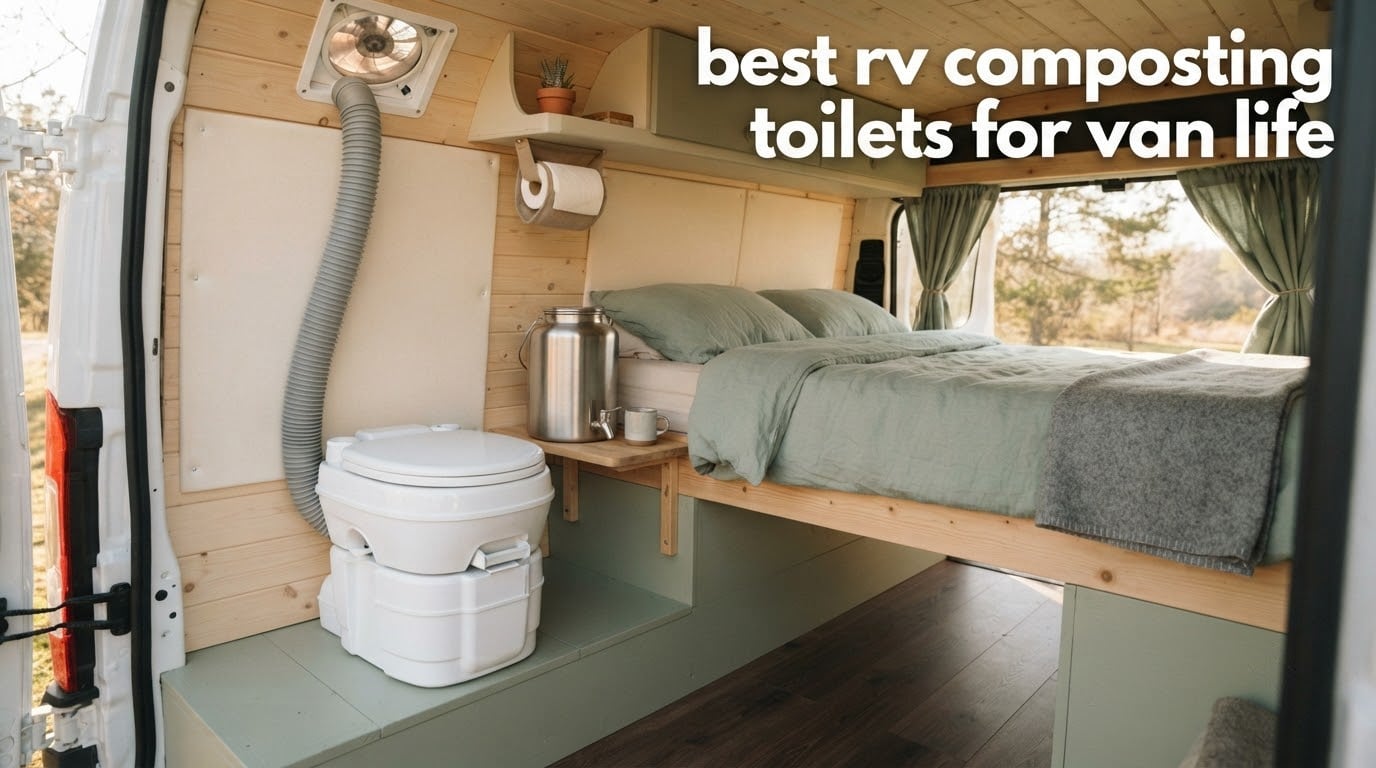
The best rv composting toilets for van life solve a problem most build-outs pretend does not exist. Once you cut a doorway into a wet bay and slide a cassette toilet through it, every boondocking trip turns into a hunt for a dump station, every shower adds to a grey tank that weighs more than a second passenger, and every cold morning starts with a chemical seat you would rather not touch. A self-contained composting toilet removes all three problems. It needs no plumbing, no water supply and no chemicals, and it handles waste without hauling a black tank around.
There is a catch that almost every roundup glosses over. Composting toilets only smell free when solids stay dry and air moves through them. That means venting, or at minimum airflow, and a medium ratio you maintain. Get either wrong and your van smells like a barn that nobody wants to visit. We compared eight units across roughly six weeks of reading specs, review data and owner reports, from a permanently mounted 12V appliance to a bag-based box that fits behind the passenger seat.
This guide covers every category that matters for van life, including four units that no competitor roundup covers. We also break down the installation math, the emptying rhythm, the illness protocol nobody talks about, and how composting toilets compare with cassette and portable options. If you want the short version, start with the table below, then read the sections that match your build.
If you are still working out the rest of the layout, our guides to the best van life beds and the best RV toilets cover the neighbouring decisions that share the same wet-bay space.
Table of Contents
Top 3 Best Rv Composting Toilets For Van Life (October 2026)
The Nature’s Head Spider Handle takes the top spot for most van builds, the Separett Villa suits anyone planning a fixed installation with the longest gaps between emptyings, and the BOXIO Max+ wins on value for portable setups.
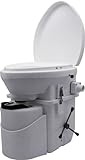
Nature’s Head Spider Handle
- Odorless self-contained design
- 5 year warranty
- Empty every 4-6 weeks for two

All 8 Composting Toilets Compared in 2026
These eight units cover the full range from a permanent 12V appliance to a throw-in bag system. Specs, capacities and mounting requirements differ more than most buyers expect, so read the table before picking.
| Product | Specifications | Action |
|---|---|---|
| Nature’s Head Spider Handle |
|
Check Latest Price |
 Separett Villa Separett Villa |
|
Check Latest Price |
| BOXIO Toilet Max+ |
|
Check Latest Price |
 OGO Origin OGO Origin |
|
Check Latest Price |
 OGO NOMAD OGO NOMAD |
|
Check Latest Price |
 TRELINO Evo S TRELINO Evo S |
|
Check Latest Price |
 TROBOLO WandaGO TROBOLO WandaGO |
|
Check Latest Price |
 Compo Closet Cuddy Compo Closet Cuddy |
|
Check Latest Price |
1. Nature’s Head Spider Handle: the proven all-rounder
Nature’s Head Self Contained Composting Toilet with Close Quarters Spider Handle Design
20.98 D x 19.02 W x 20.98 H
28 lbs
Wall mounted
5 year warranty
Pros
- Genuinely odorless in daily use
- Two people empty every 4-6 weeks
- Five minute emptying routine
- Close quarters spider handle reach
- Easy install for a handy owner
Cons
- Bulky 21 inch class footprint
- Hand mixing required
- 28 pounds is heavy to reposition
The Nature’s Head Spider Handle is the reference point every other composting toilet gets measured against, and after working through the review data I still think it earns that position. It carries a 4.5 rating across more than 1100 reviews, which makes it the most proven unit in this roundup by a wide margin. Owners consistently report the same thing: the smell problem simply does not come up.
The spider handle is the part people misunderstand. It is not a crank you spin from above. It reaches in from close range so you can agitate the compost without leaning over the unit, which matters in a van where you are kneeling in a wet bay with your knees against a wheel arch. Reddit van lifers repeatedly describe Nature’s Head as the unit they never had to think about, and the 6 to 8 month peat moss interval between full compost changes matches that.
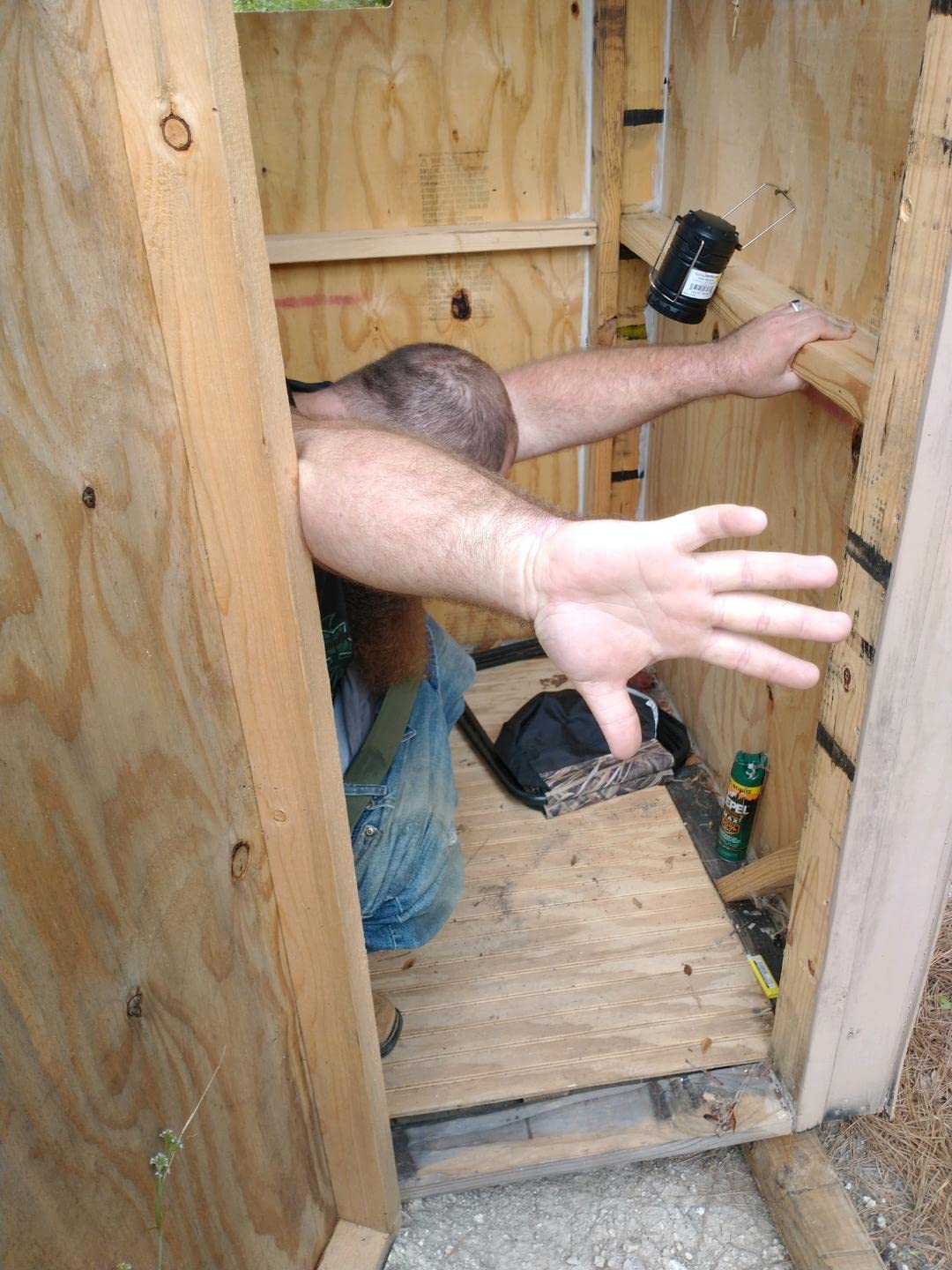
Capacity is the other headline. Two full-time users empty it every four to six weeks, and the whole service takes about five minutes once you have a routine. Installation is wall mounting with a vent run, so plan the cutout before you commit. You can also run it without a vent line at a cost to odor control, but that defeats the reason to choose it.
What gives me pause is the cube. At roughly 21 inches on each dimension and 28 pounds, it is the bulkiest of the fixed units here. In a Sprinter 144 or a long-wheelbase Transit with a garage build it fits well. In a shortwheelbase with a half galley it eats the bay you probably wanted for a shower. Measure before you order, because the drain and vent routing are permanent once the wall is closed.
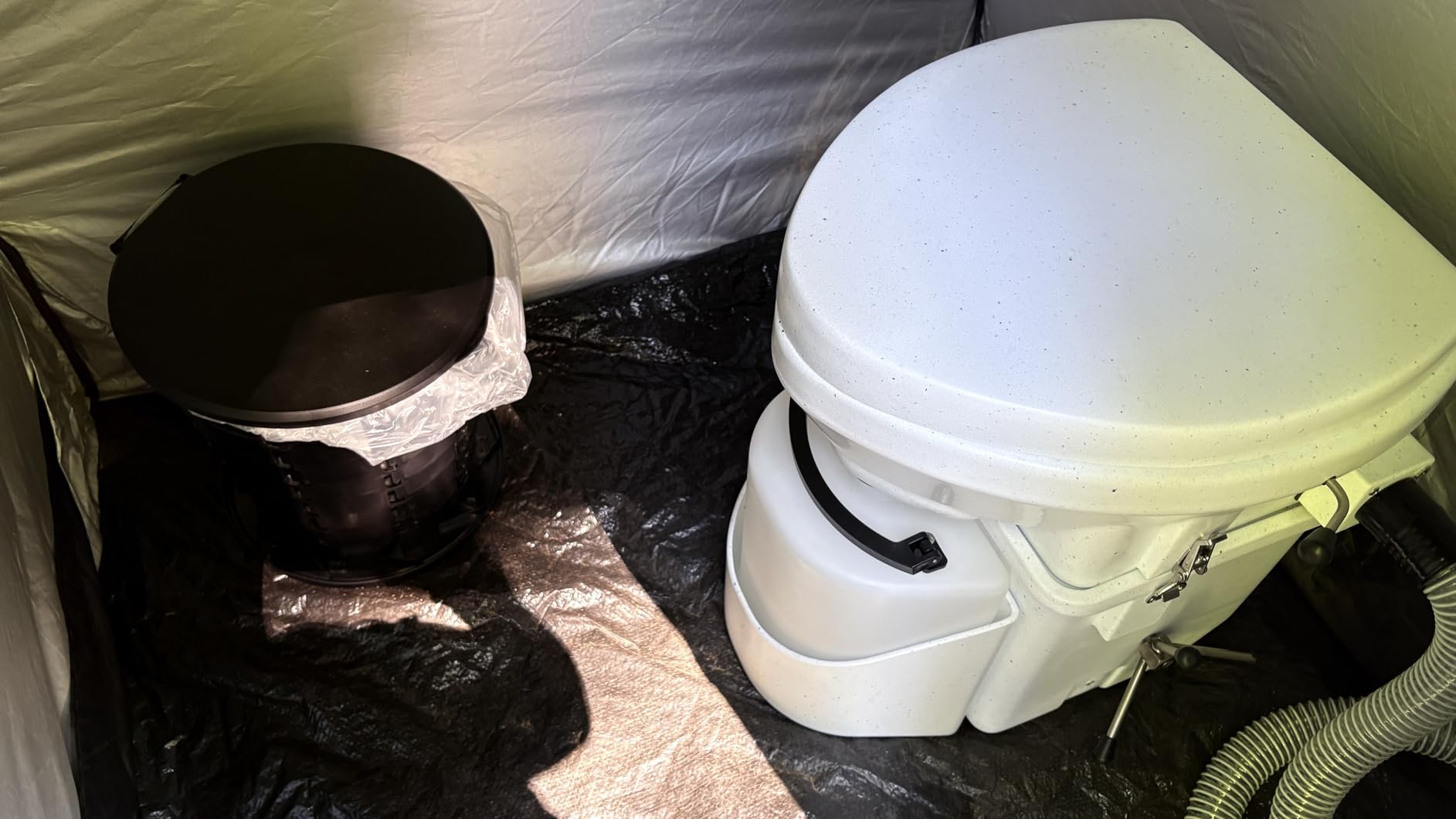
What the spider handle solves in a tight van?
Reach. Most handles need vertical clearance above the unit for the full crank stroke. The spider handle swings in laterally, so the clearance you need is a hand’s width rather than a foot of headroom. That is the difference between fitting and not fitting under a low cabinet or a bed frame.
When a lighter, smaller unit makes more sense?
If your build is shortwheelbase, or you plan to carry the toilet between vehicles, the 28 pound weight is a real constraint. The OGO Origin at 15 by 16 inches solves the footprint problem, and the BOXIO Max+ at 11.4 pounds solves the weight problem. Neither matches Nature’s Head for proven odor control across thousands of owner reports.
2. Separett Villa: best for a fixed off-grid install
Separett Villa Urine-Separating Compost Toilet
26.5 D x 18 W x 21.3 H
34 lbs
Wall mounted
Urine separating
Pros
- True urine separation design
- No chemicals or mixing in routine
- Generous capacity between emptyings
- Suited to buses and cottages
Cons
- Heaviest unit at 34 pounds
- 26.5 inch depth is large
- Needs solid wall backing
The Separett Villa is built like plumbing fixture rather than camping gear, and that shows in the capacity numbers. It ranks 4.5 out of 5 across 351 reviews, and the review pattern is consistently about how long you go between services. Owners running homesteads, cabins and school bus conversions report far longer intervals than van owners do, which is exactly why it works well as a fixed van install for two people who do not move every weekend.
The urine-separating design is the core of the system. Liquids route away from the solids stream, which keeps the solids dry and cuts the ammonia smell that causes most composting toilet complaints. The manufacturer states no additives or mixing are required, so your service routine is emptying two containers rather than working a handle through dry medium. If you dislike the hands-on part of composting, that difference matters more than any spec sheet number.
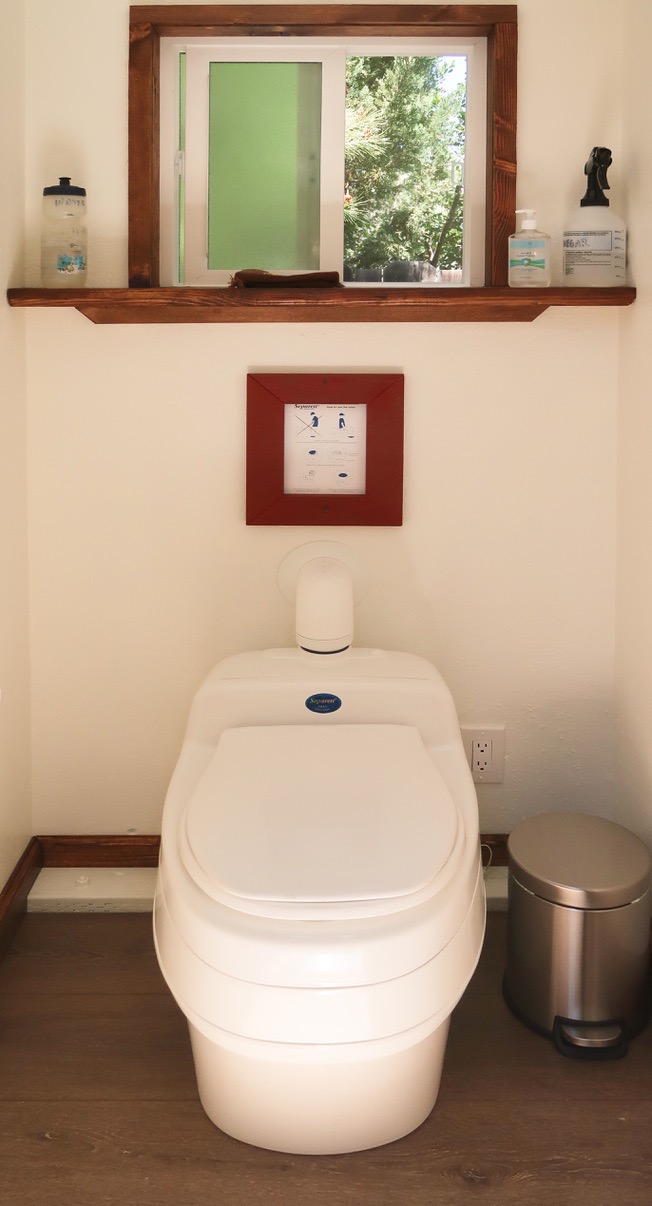
Space is the honest drawback. At 26.5 inches deep, 18 inches wide, 21.3 inches tall and 34 pounds, it is the largest and heaviest unit in this roundup. A van build has to be designed around it rather than the other way round, and the wall-mounted format needs backing structure behind the panel rather than a free-standing box. Plan this one first, before cabinetry.
On materials, the listed body is a paper composite rather than molded ABS or polypropylene. Reviewers note it feels less rigid than plastic bodies, which matters if you move the van regularly. For a stationary conversion it is a fair trade for the capacity you get.
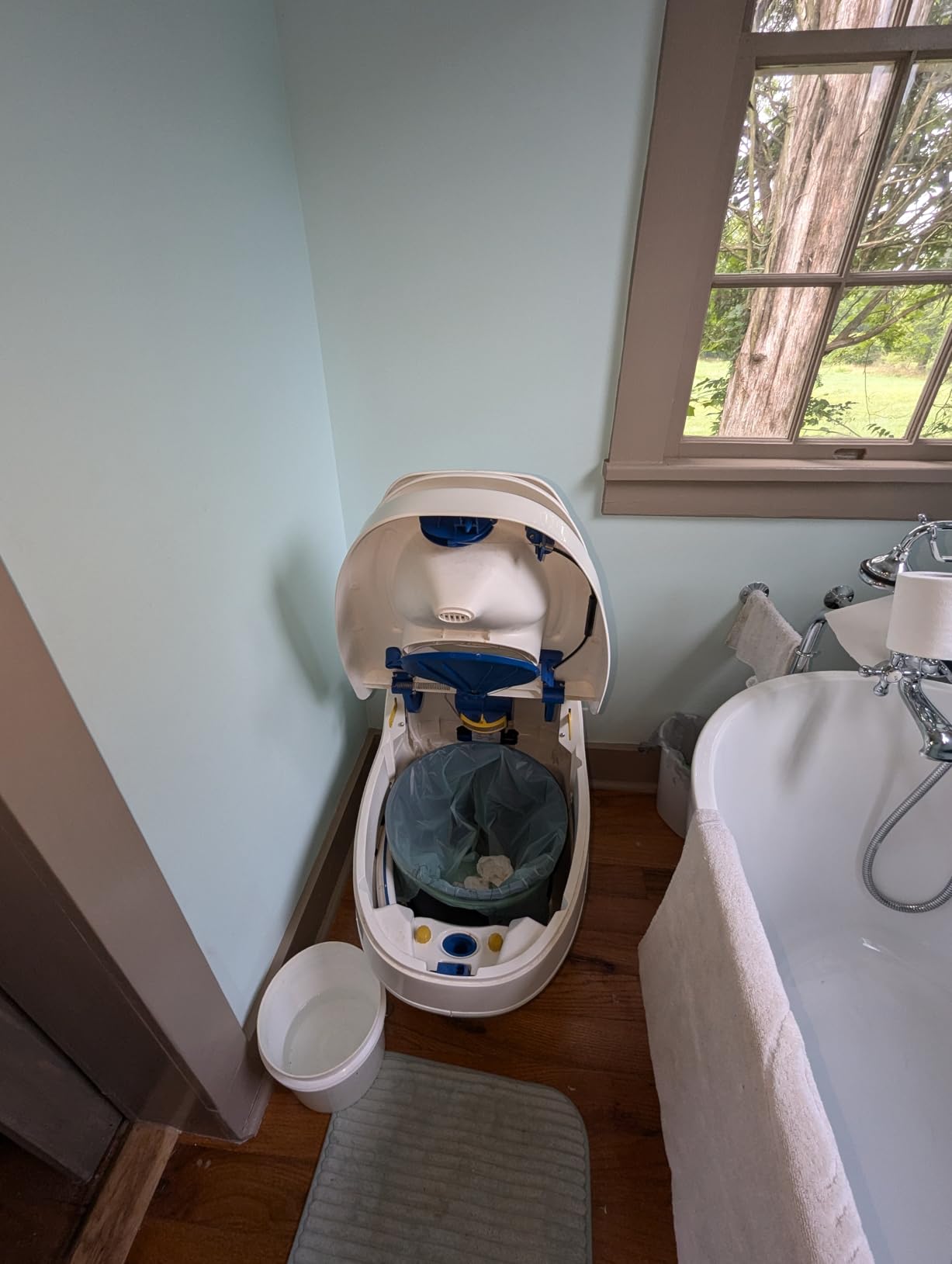
Capacity planning for two full-time users
The Villa is the choice when you want measured, scheduled service rather than constant awareness. If both of you are home most days, the larger solids capacity means you buy a predictable rhythm. You check the container on a schedule instead of reacting to it, which is the difference between a system you own and one you manage.
Where the footprint kills the layout?
Rule it out immediately for shortwheelbase vans, roof-rack builds and anything with a cassette toilet already occupying the bay. At 26.5 inches of depth you are committing a full garage corner. If you do have the room and plan to keep the toilet mounted for years, this is the strongest fixed option here.
3. BOXIO Toilet Max+: the best value portable option
BOXIO Toilet MAX+ Complete Set, Mobile Separator Toilet, Compact Camping Toilet 40 x 30 x 28 cm, Includes Toilet UP Seat, Plug, 3 x Bags, 2 x Hemp Litter, 6 Clips Black
11.8 D x 15.7 W x 15.7 H
11.4 lbs
Floor mounted
Hemp litter system
Pros
- German build with hemp litter odor control
- Solids bag out and liquids pour away
- Compact square footprint
- Rinses clean with basic cleaner
Cons
- Low default seat height
- Flimsy riser clips
- Urine canister awkward one-handed
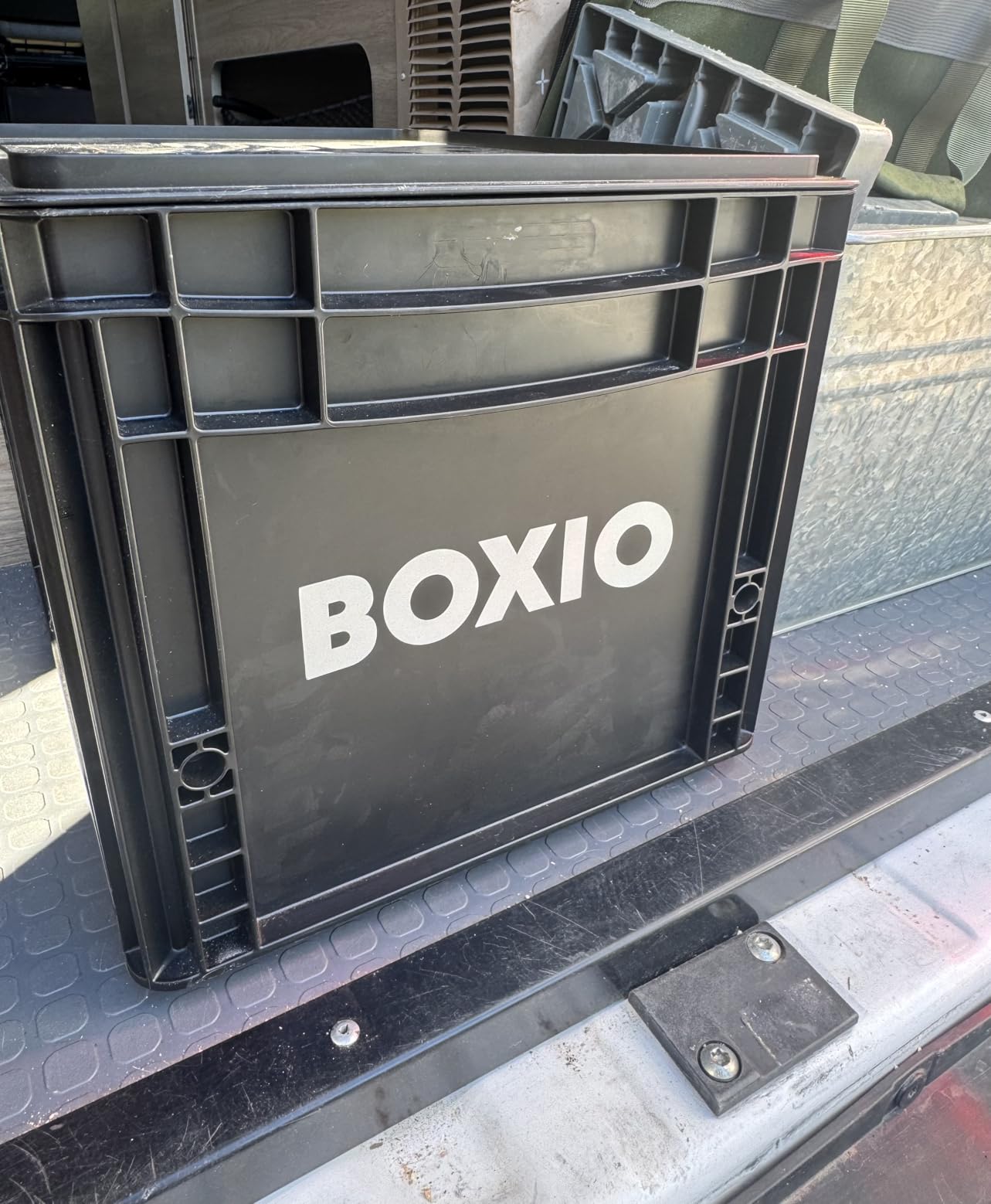
The BOXIO Toilet Max+ is the one to buy if you want a portable unit that still separates waste properly. It carries 4.2 stars across 612 reviews, the largest review pool among the portable options, and the hemp litter system gives it a genuine claim to odor control rather than just a lid that closes. Made in Germany by Duschkraft, it uses the same separation logic as the fixed units but weighs 11.4 pounds.
Dry separation is the key. Solids go into a bag that you tie off and put in a bin, and liquids pour away independently. No dump station, no chemicals, no water. The box includes two hemp litter containers, three bio bags, six clips, the plug and the riser, so you can run it out of the box. Reviews report a full eight to ten uses before disposal becomes urgent, and the 1.5 gallon separation container with a leak-proof urine canister covers the liquid side.
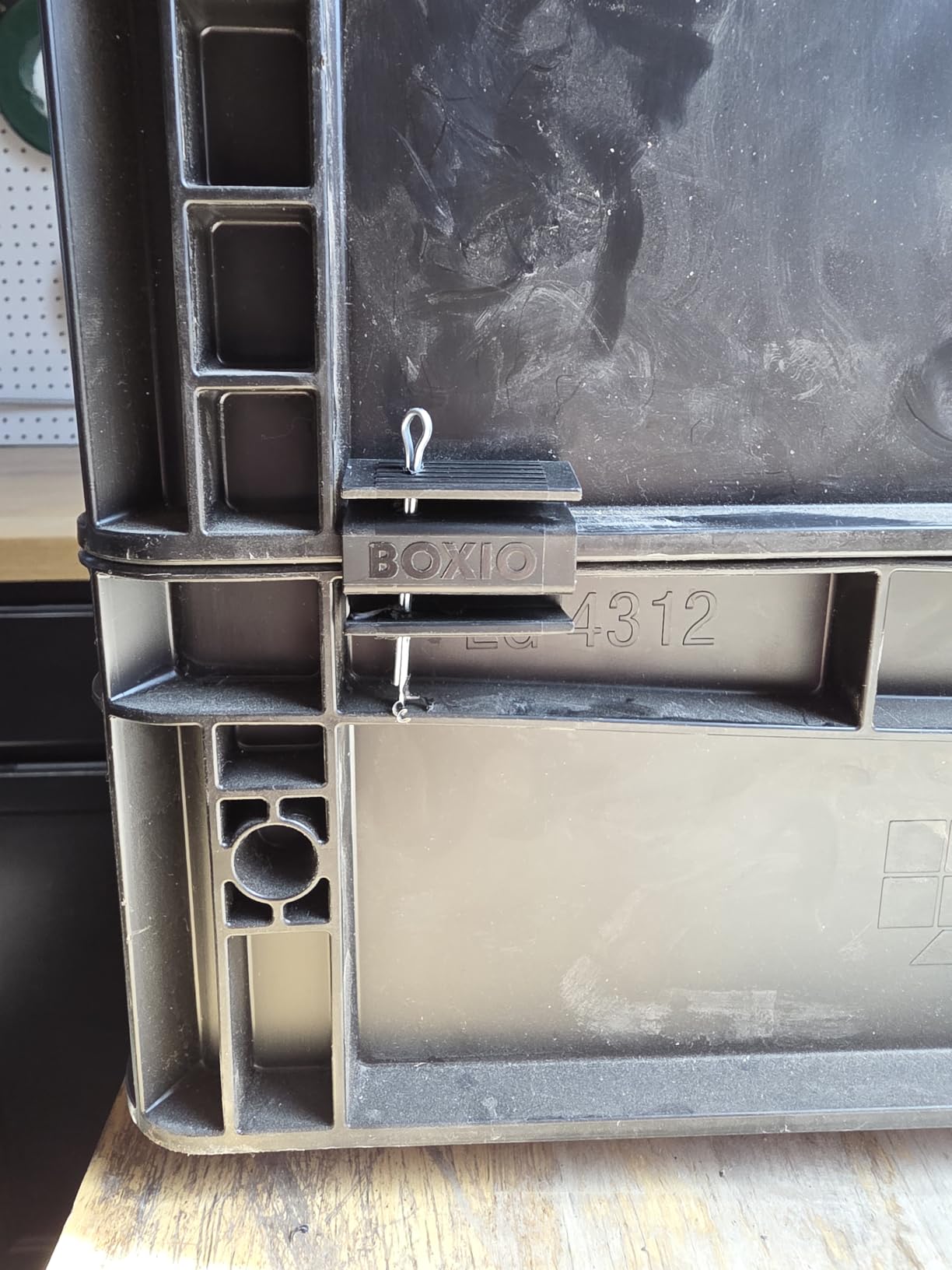
What you give up is refinement. The biggest complaint in the reviews is the riser clips: plastic clips hold the Max+ riser to the main body, and owners report they pop off with use and need reinforcing. The default seat also sits low, which is uncomfortable for taller users until you add the riser. Expect to do that small bit of diy work on day one.
Handling the urine canister one-handed is the second irritation. It needs a firm shake to fully drain, and the shape is not built for a wet hand. In practice this is a five second annoyance, not a failure, but it is the detail that separates a premium unit from a value unit.
How dry separation changes disposal?
Because nothing is mixed into a slurry, you never seek a dump station. Solids are bagged trash and liquids go down a manhole or into a container you manage later. For van lifers who travel places without services, that independence is worth more than a larger capacity number.
Who should skip it?
Anyone who needs a raised seat out of the box, or anyone nervous about the riser clips, should look at the TROBOLO WandaGO instead. Its adjustable seat runs from 12 to 17.2 inches as a designed feature rather than an add-on, and it carries a 4.3 rating.
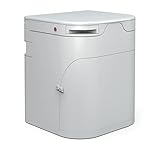
4. OGO Origin: the premium electric mixer in the smallest footprint
OGO Origin Compact Composting Toilet – 15in Footprint for Van, RV & Boat
15 x 16 inch footprint
28 lbs
Floor mounted
12V agitator and fan
Pros
- Smallest premium footprint at 15 by 16 inches
- Push-button electric agitator
- Urine diversion to a sealed 2.4 gal bottle
- Serviceable parts and simple emptying
Cons
- Needs 12V power for agitator and fan
- 28 pounds
- Solids fill at 25-30 uses
The OGO Origin is the unit to consider when the bay is the constraint. Its 15 by 16 inch footprint is the smallest among the fixed self-contained options here, with no bulky side crank stealing floor space, and it carries a 4.0 rating from 145 reviews. Owners building Sprinter and Transit conversions consistently point to that footprint as the reason they chose it.
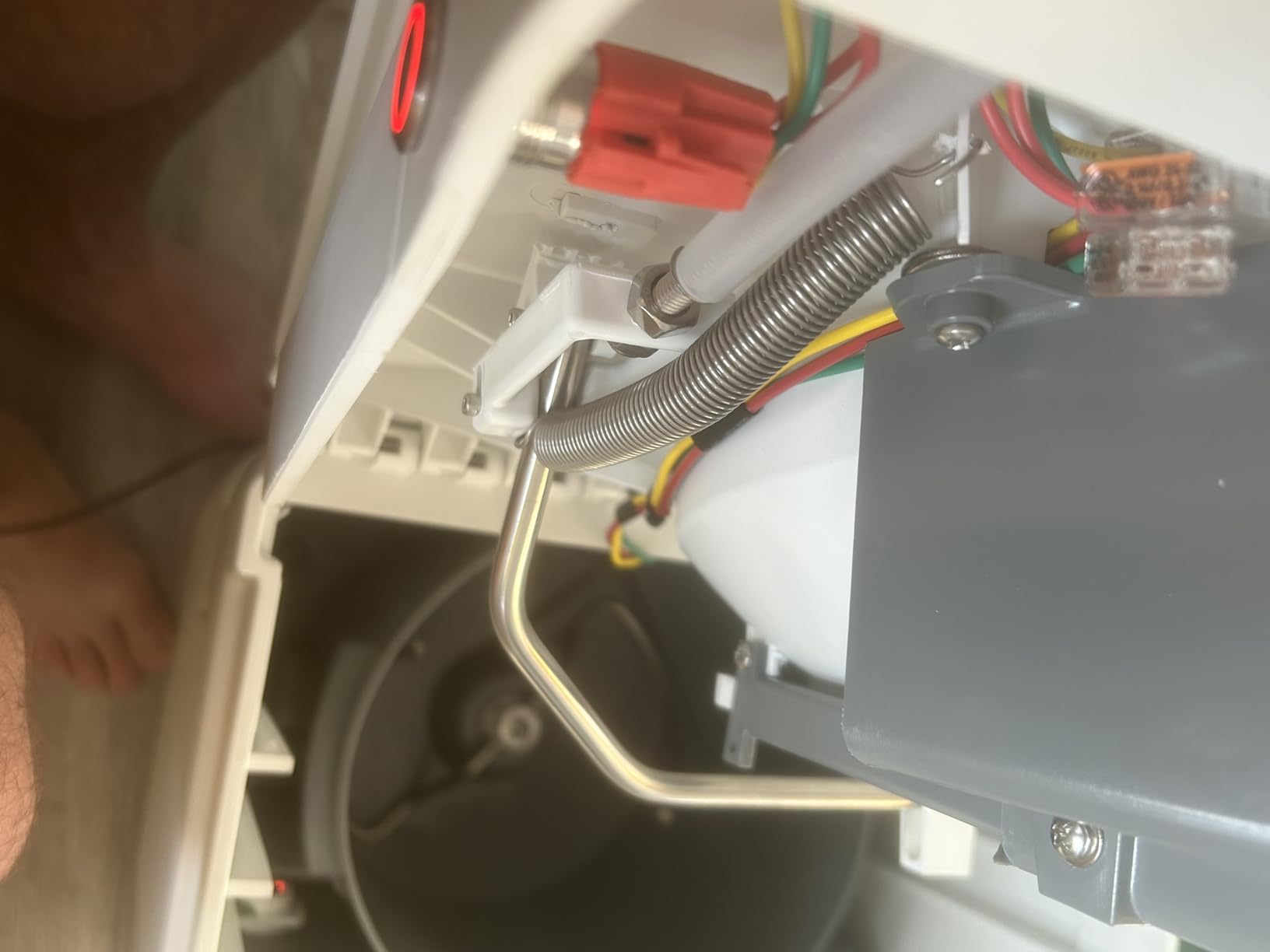
The electric agitator is the differentiator. A 12V motor mixes solids with one tap, so there is no manual handle after every use and no chore in the middle of a bad morning. Urine diverts to a sealed 2.4 gallon bottle while solids stay dry in a rear bin rated at 25 to 30 uses. The box includes mounting screws, the power cable and the venting hose.
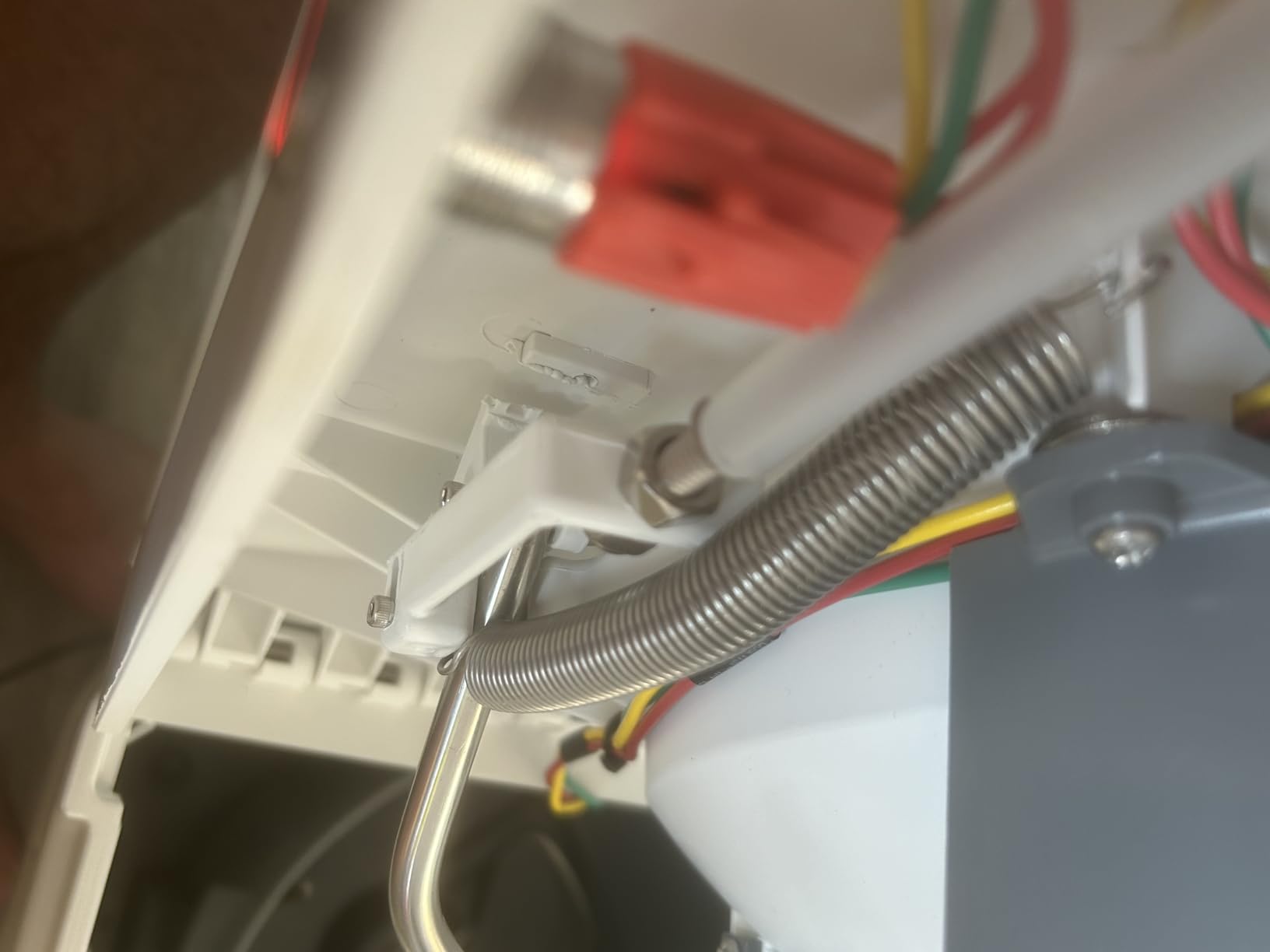
Be honest about the tradeoffs. It needs a 12V connection to run the agitator and the fan, and unlike some competitors it is not designed to run its core function without power. It also holds the widest rating spread in this roundup, with 16 percent of reviews at one star, most of them pointing at odor management and the logistics of depending on vehicle power.
At 28 pounds it is no lighter than the Nature’s Head despite the smaller footprint, so repositioning it inside the vehicle is still a two-person job on a tight floor. If you can wire a circuit and want the appliance look without a port-a-potty vibe, this is the pick.
What electric mixing actually saves?
Manual mixers ask you to turn a handle after every visit, and that is the step people skip under pressure. Skipping it is why odor appears. A powered agitator removes the decision, which matters most for two people sharing a small space and one toilet.
Wiring reality check
Twelve volt fan and motor draw is modest, but the cable run is a real electrical project in a van that has none. Budget time for a fused accessory circuit, not a piggyback on an existing USB socket. If you have never done vehicle wiring, the Nature’s Head installs more simply.
5. OGO NOMAD: the zero-electricity bag system
OGO NOMAD Self-Contained Composting Toilet – Urine-Diverting, Portable RV
15.4 D x 13 W x 12.38 H
12 lbs
Free standing
Uses 8 gallon bags
Pros
- No electricity
- wiring or plumbing at all
- Uses standard 8 gallon bags
- 12 pounds and genuinely portable
- Includes coco coir for first use
Cons
- Bag system ties service to disposal stops
- Small capacity between changes
- Free standing box offers little privacy
The OGO NOMAD is the simplest answer to what is the best portable toilet for a camper van question. No electricity, no wiring, no plumbing, 12 pounds, and a footprint of 15.4 by 13 by 12.38 inches. It rates 4.0 from 127 reviews and the box includes compostable bags, a bag of coco coir and a cleaning spray bottle.
Because it runs on ordinary 8 gallon bags, you are never hunting for proprietary liners. Tie the bag off and dispose of it per local guidelines, which is the lowest-friction disposal method of anything in this roundup. It fits truck beds, car trunks, rooftop tent boxes, rental camper vans and small boats, which makes it a genuine carry-along backup rather than a primary toilet.
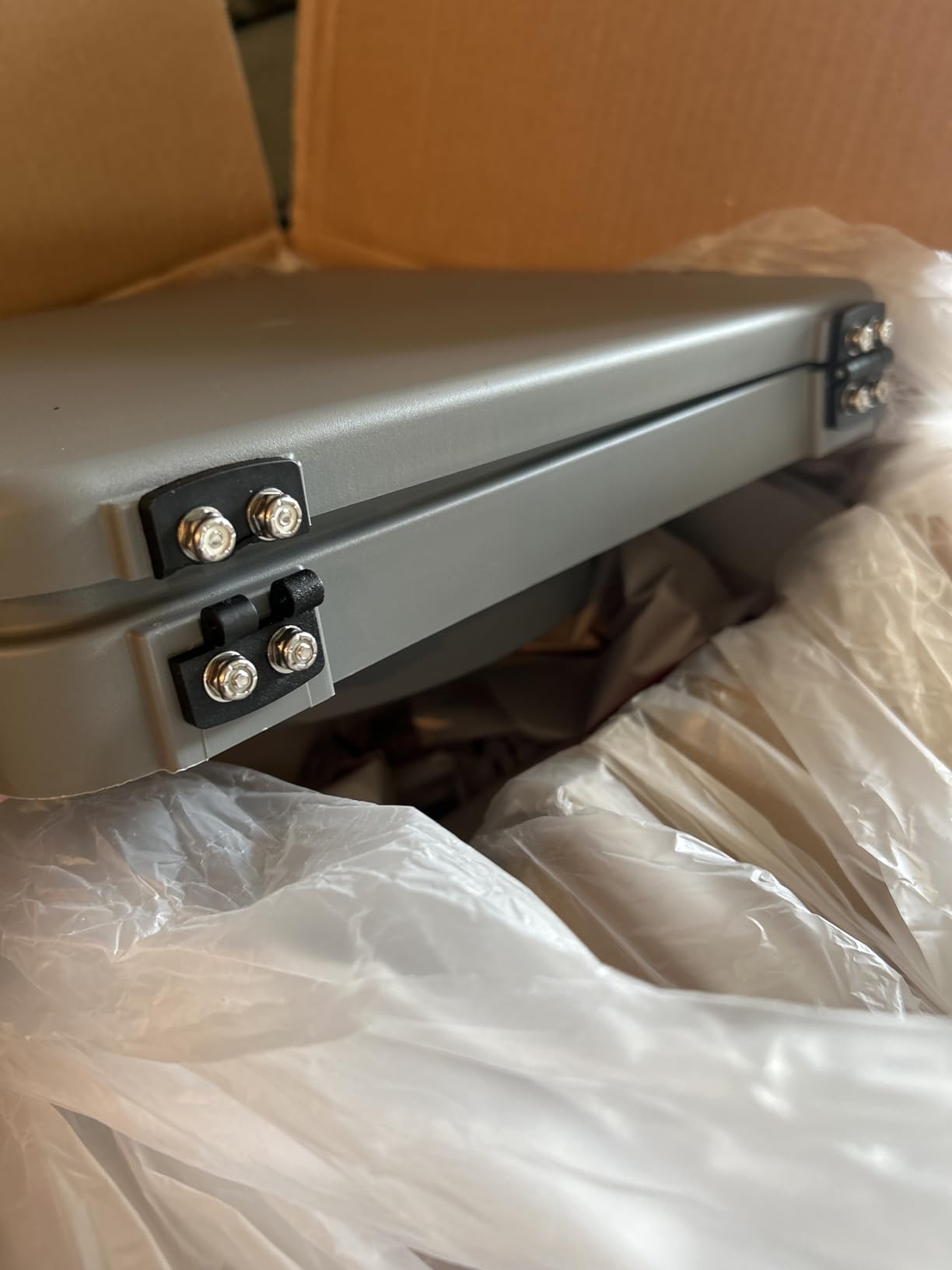
The compromise is capacity and privacy. Only 51 percent of its reviews are five star, the lowest top-rating share here, and the criticism concentrates on odor management and modest capacity between changes. As a free-standing box with a lid, it also gives you no privacy screen if you park in the open.
My take is that this belongs in a weekend van or a truck camper alongside a proper cassette, not in a full-time build. As a backup for a rental or a borrowed vehicle it is hard to beat for simplicity.
When a bag system is the right call?
If you have no interest in running a vent line or wiring a circuit, the bag system removes the entire installation conversation. You need a spare gallon bag and a place to put the tied bag, and that is the whole checklist.
What you give up versus a fixed unit?
Capacity and discretion. A fixed 3.9 gallon bin in the Cuddy goes two to three weeks between services, while the NOMAD turns around faster. If you are stationary, the bigger bin wins. If you move weekly, the NOMAD wins.
6. TRELINO Evo S: compact German separating toilet
TRELINO Composting Toilet Evo S Gray, Portable Toilet for Camping & Outdoor, Odorless, 1.2 gal & 1.6 gal Capacity, 13 x 15.4 x 11.7 inches
15.35 D x 12.99 W x 11.65 H
3.9 kg
Portable
330 lbs rated
Pros
- Strong capacity to size ratio
- Dry separation without chemicals
- Made in Germany
- Rated to 330 lbs
Cons
- 12 percent of reviews are 1 star
- Body feels light and flexible
- Square shape is cramped for larger users
The TRELINO Evo S packs an unusual amount of capacity into a small box. The 1.2 gallon urine container and 1.6 gallon solid container cover 9 to 11 number ones or 6 to 8 number twos before emptying, and the whole unit measures 15.35 by 12.99 by 11.65 inches. It rates 4.0 from 109 reviews and is made in Germany.
Separation and drying do the odor work here rather than a fan. The unit avoids chemicals and water entirely, so there is no 12V connection to install. It is rated to support 330 pounds and uses recyclable ABS. Included in the box are the solid waste container, a blue urine canister, membrane and closed lids for that canister, and ten liner bags.
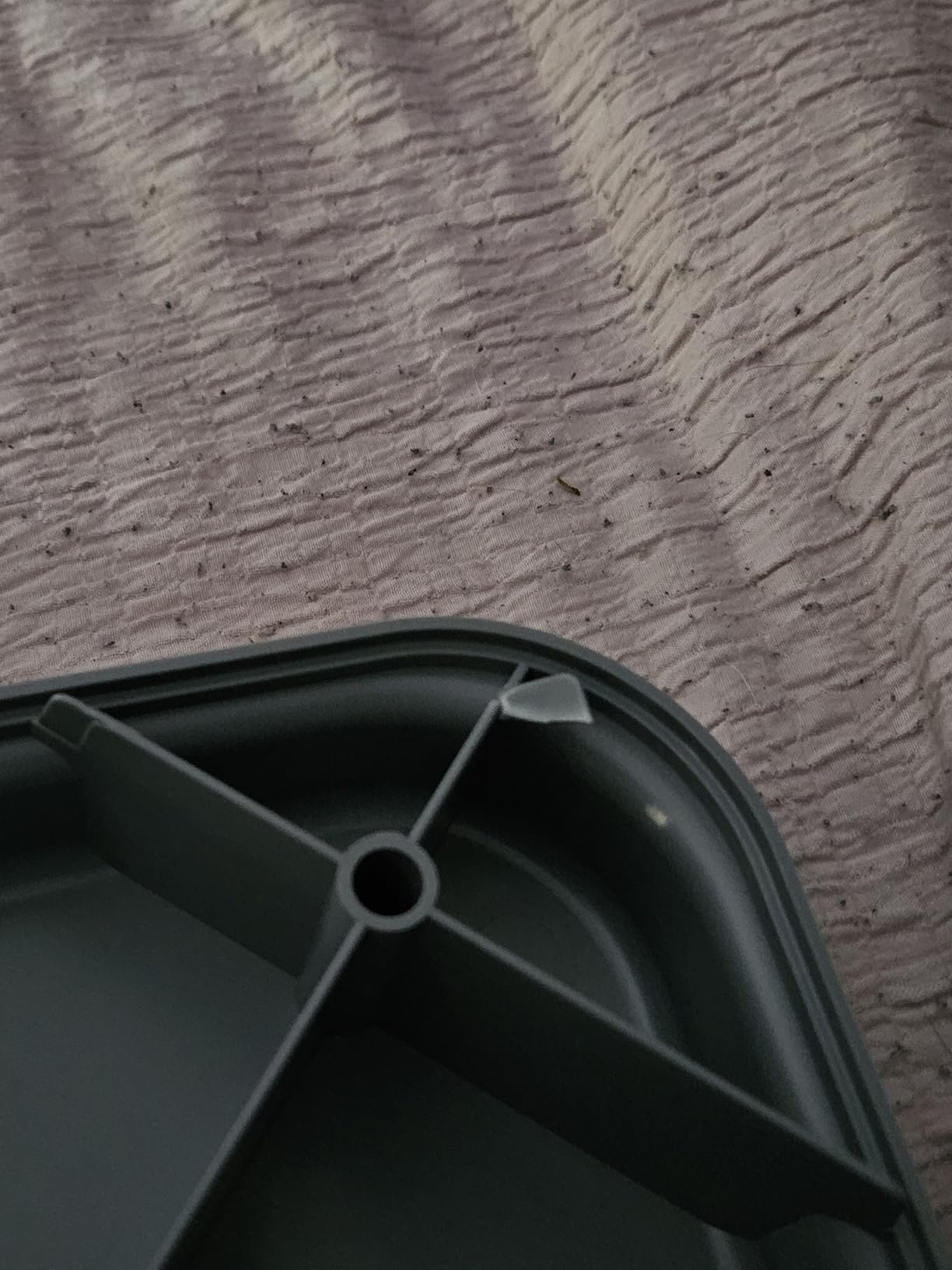
I want to flag one thing honestly. Forum discussion and reviewer comments on Trelino units are split, with a recurring cluster of complaints about odor despite covering the waste, and 12 percent of the Evo S reviews are one star. Several owners also describe the plastic body as light and flexible compared with metal reinforced designs, and the square footprint can feel tight for larger users. The specification is strong; the field feedback is mixed.
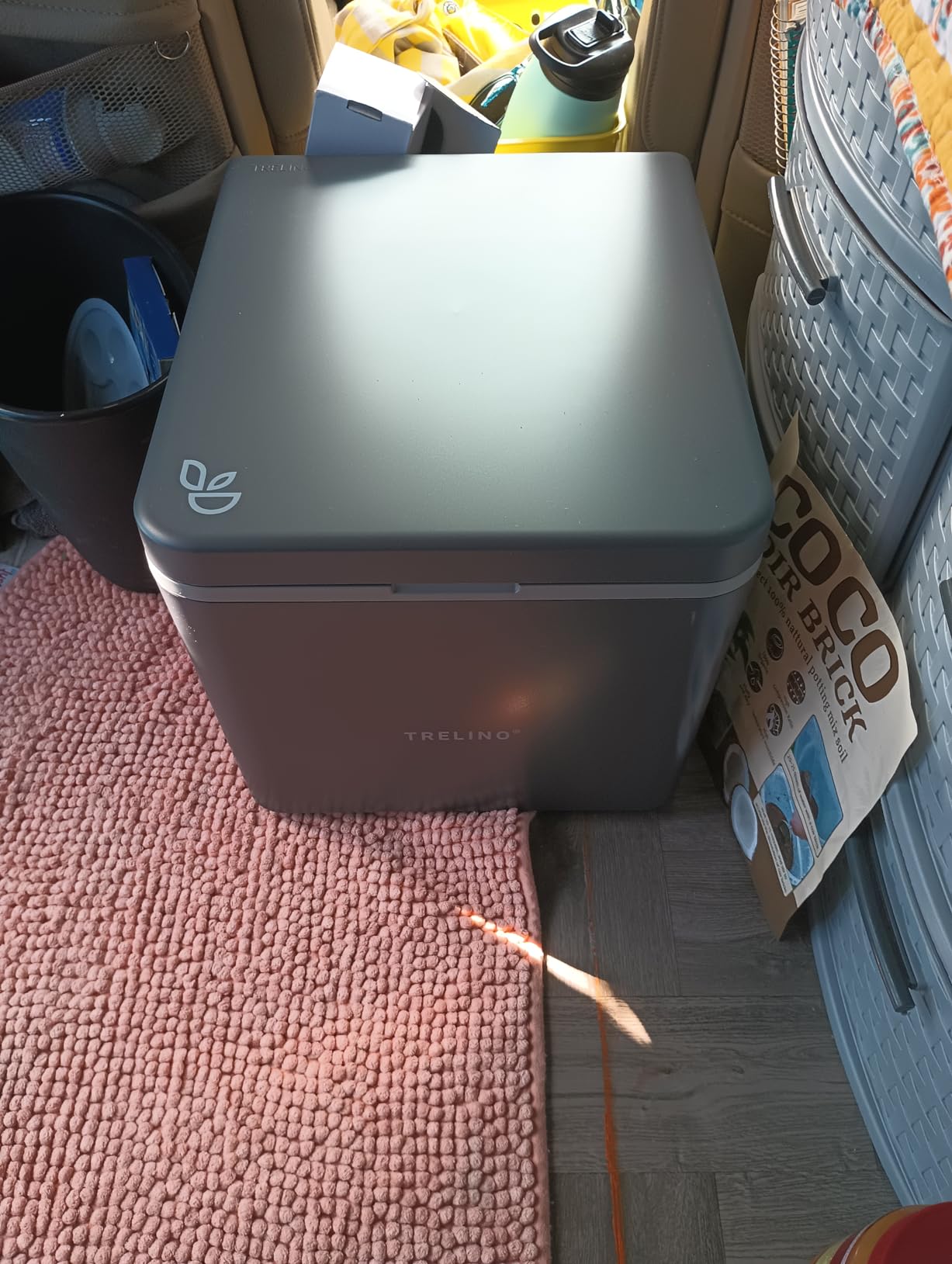
For a van build where every inch counts and you want no power and no vent, the Evo S is still a legitimate shortlist item. But I would not build a full-time life around it without testing odor tolerance in your own space first.
Capacity versus footprint math
For one person travelling in a small van, 9 to 11 liquid uses before service is genuinely useful. It means a short weekend trip needs no mid-trip emptying at all. Two people full time means the solid container becomes the limiting factor, and you will be emptying more often than the numbers suggest.
When to choose something else?
If odor control is your top priority and you can wire a fan, move up to a unit with forced ventilation. If seat height matters, the WandaGO adjusts. If you want the proven track record, Nature’s Head has more than 1100 reviews behind it.
7. TROBOLO WandaGO: adjustable seat for taller users
TROBOLO WandaGO Composting Toilet, Portable Outdoor Camping Toilet, Urine Diverting Dry Toilet With Height Adjustment
15 D x 13.4 W x 12.4 H
10 lbs
Floor mounted
Adjustable seat
Pros
- Seat adjusts from 12 to 17.2 inches
- SafeShell separation adds spill protection
- Built-in urine fill level indicator
- Closing travel lid with fastening system
- 10 pounds with 1.2 and 1.7 gallon containers
Cons
- Base seat height is low for some users
- Riser costs extra
- Some owners report odor despite covering waste
The TROBOLO WandaGO solves a specific problem better than anything else here: seat height. The seat adjusts to either 12.0 or 17.2 inches as a designed feature, which is rare at 10 pounds and in this category. It rates 4.3 from 67 reviews, the second highest rating among the portable units here.
The SafeShell system wraps the urine diverter with an extra layer of spill and smell protection, and a built-in urine fill level indicator removes the guessing game. Capacity covers 10 to 20 urination uses and 8 to 12 defecation uses. No chemicals, water or electricity are involved. Unlike several competing portable units, it has a firmly closing lid plus a fastening system for travel, which matters when the toilet lives in a locker 60 km per hour from your seat.
The honest split in the reviews is odor. Some owners report it holding fine with cedar chip litter, where the smell is just the litter. Others follow the instructions exactly and still notice odor. The 12 inch base height also sits low for anyone with limited range of motion, and the riser to raise it is an extra purchase.
Why the adjustable seat matters more than it sounds?
Standard portable toilets assume a specific body geometry that leaves a lot of adults stooping. A seat you can set to 17.2 inches changes kneeling posture from a chore to a non-issue, particularly with a back injury or a knee that dislikes deep flexion. That is a comfort decision, and comfort decides whether people actually use the toilet.
Where the extra spend goes?
The seat liner can lift along with the lid, and the square urine receptacle is awkward to drain. Bagging is also accident-prone if you miss the bag edge. Budget a few practice runs on a weekend trip before relying on it full time.
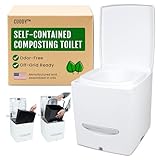
8. Compo Closet Cuddy: the flexible install with an LED reminder
Compo Closet Cuddy Composting Toilet – Odorless, Waterless & Self-Contained for RVs, Vans, Boats, Tiny Homes & Off-Grid | 3.9 Gal, 12V Fan, Carbon Filter, No Chemicals, Easy Clean
17 D x 15.2 W x 16.5 H
12.7 kg
Free standing or floor mounted
3.9 gal bin
Pros
- Installs vented or un-vented
- Keeps working without 12V power
- 3.9 gallon bin gives 2-3 week cycles
- LED signals when to empty
- Removable bin with bottom handle
Cons
- Only 19 ratings so far
- 3.9 gallon bin is modest
- Manual handle mixer after each use
The Compo Closet Cuddy is the answer for retrofits where cutting a vent hole is not an option. It installs free standing or floor mounted, vented or un-vented, and it keeps operating when the 12V power is not available. It rates 4.0 from 19 reviews, which is the thinnest feedback pool here and the main caveat on any claim about long-term durability.
The feature I find most useful is the LED emptying indicator. It signals when each container needs attention, which removes the single biggest cause of composting toilet odor: solids sitting in the bin too long because nobody noticed. The removable solids bin has a bottom handle for contact-free disposal, and the front container uses a no-spill valve. A patent-pending true drop zone cover separates liquids from solids.
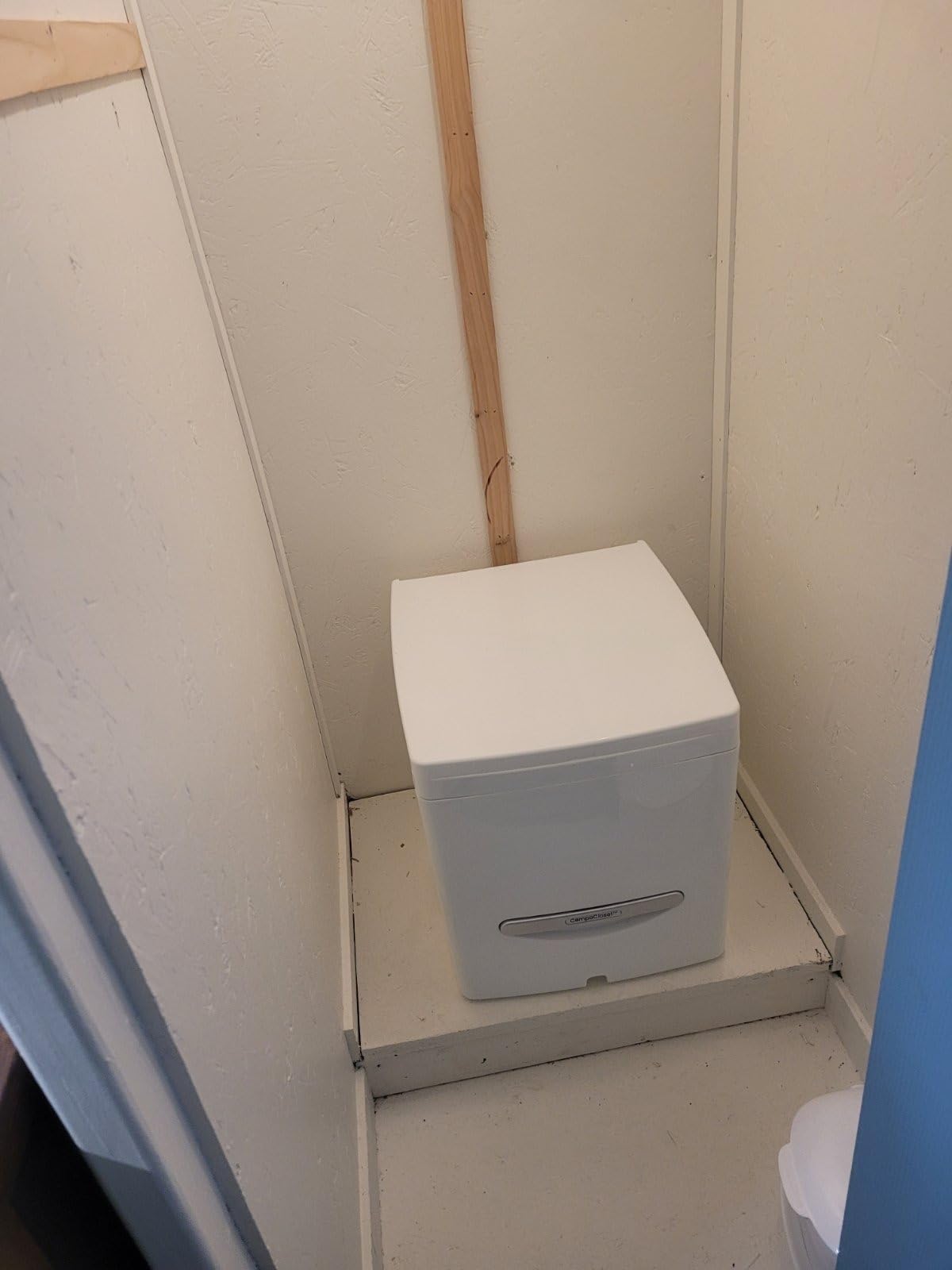
Capacity is 3.9 gallons in the main bin, which supports two to three week emptying cycles. The manual handle mixer means you still turn a handle after each visit, but you add composting material once at the start rather than topping up daily. A carbon filter and a 12V power cable are included.
Reviewers like the modern appliance styling and the install flexibility. The negatives are predictable for a new product: 12 percent of reviews sit at two stars, and 19 ratings is not enough history to promise durability over five years of full-time use. I would treat it as the option for a build where wiring is not an option, and pair it with a carbon filter budget.
Vented or un-vented, and what changes
Un-vented installation relies on the fan and carbon filter to move air rather than exhausting outside. It is the right call when the van body is already sealed and drilling is off the table. Vented is quieter and controls odor better, and it needs a 1.5 inch style cutout routed outside.
Buying with a thin review history in mind
The design decisions all point the right way: removable bin, serviceable parts, no proprietary consumables beyond standard medium. But if you are risk averse, the Nature’s Head five year warranty and 1112 reviews are a stronger foundation.
How a composting toilet actually works?
Every unit in this roundup does the same four things: divert urine, dry solids, move air, and provide a medium that supports decomposition without chemicals.
Urine diversion is the first step. A separator routes liquids into a front container so the solids stream stays dry. Dry solids do not smell, wet solids do, and this is why separation units outperform single-chamber designs. The urine container is the part that fills fastest. In a two-person van, plan on emptying liquids every one to two days on a full-time trip.
The 12V ventilation fan is the second step on fixed units. Air is pulled through the solids chamber and exhausted outside the vehicle, carrying moisture away and stopping anaerobic bacteria from producing odor. Units without a fan rely on natural airflow and a carbon filter, which works but is less consistent in warm, still weather.
Composting medium is the third. Peat moss and coconut coir absorb moisture and give bacteria a carbon source. Too dry and nothing breaks down. Too wet and you get mold and sour smell. The working ratio most owners converge on is roughly one part medium to one part solid waste by volume, added in layers rather than all at once.
Mixing is the fourth step, and it is where units diverge most. The spider handle, crank handle and manual mixer all ask you to agitate solids after use. Electric mixers like the OGO Origin do it for you. Skipping mixing is the number one cause of odor complaints we found in reviews.
Installation: 12V wiring, venting and space planning
Install before you close the walls. Every step below is easier with the van stripped, and cutting a vent hole through a finished floor is a repair you do not want to make.
Measure the bay, not the unit. Add an inch of clearance for service access and for the door or drawer to open fully. Confirm the seat height lands where your knees can clear.
Cut the floor or wall cutout. Size it to the unit’s drain and vent flanges, then seal the raw aluminum or composite edge with a marine-grade sealant. Unsealed edges collect moisture and eventually smell.
Route the vent line. Run the exhaust hose to a point outside the living space with the discharge end pointing downward. Every extra foot of hose reduces fan efficiency, so keep the run as short as the layout allows.
Wire a fused 12V circuit. Pull an accessory circuit from the battery or a distribution panel, fuse it, and run the power cable to the toilet. Avoid sharing a socket with a USB charger.
Confirm the low draw at idle. Test the fan and, on the OGO Origin, the agitator, with your engine off and your fridge running. If the battery sags, move to a deeper wire.
Mount and seal. Bolt the unit to the floor or wall, seal the seam around the base, and confirm the lid closes without compressing the body.
Prime the compost. Add two to three inches of coir or peat moss to the solids bin and a small amount of water before first use.
Test the fan in the closed van. Lie in bed for ten minutes with the fan running. If you can hear it above conversation volume, plan on a lower draw setting or a longer duct run.
If you want broader guidance on the neighbouring hardware, our roundup of the best portable camping toilets covers the non-composting options in more depth.
Odor control, emptying rhythm and cold weather
Odor is a symptom, not a hardware fault. Almost every odor complaint traces back to one of four causes: solids sitting too long, a wet solids bin, a failed fan, or an under-vented installation.
Service on a schedule rather than on smell. Empty the urine container every one to two days for two people, and the solids bin before it reaches capacity. The Nature’s Head interval of four to six weeks for two full-time users assumes roughly monthly service. Set a calendar reminder at the midpoint of your rated capacity and ignore the nose.
Keep the medium ratio right. Add compost material in layers, not lumps. If the bin smells sour rather than earthy, it is too wet, and you correct it by adding dry coir and mixing. If it smells like ammonia, the urine is not diverting properly and you check the diverter seal and the front container.
Winter operation is mostly about two things. Keep the liquids container from freezing by parking over a heat source or draining it more frequently, and keep the fan running because warm moist air inside a sealed van is where odor starts. A fan with a timer switch is the cheapest upgrade any of these units can get.
Never put wet wipes, feminine hygiene products or plastic into a solids bin. They do not compost, they wrap around the agitator handle, and they turn a five minute service into an hour.
Buying guide: which type fits your van?
The right category depends on how long you are stationary and how much you are willing to wire. Fixed self-contained units suit full-time living, portable dry units suit weekend and part-time travel, and bag systems suit rentals and backups.
Fixed self-contained, 12V, vented units such as the Nature’s Head, Separett, OGO Origin and Cuddy give you the home-like experience and the longest intervals. The cost is installation work, permanent floor cutouts and the largest footprints. Choose these when the van is your home.
Portable dry units such as the BOXIO Max+, TRELINO Evo S and WandaGO need no wiring and no cutout. You service them on a bag or canister, dispose of solids in a bin and pour liquids away. The tradeoff is more frequent handling and less certainty about odor in warm weather.
Bag systems such as the OGO NOMAD are the simplest of all and work with standard 8 gallon bags. They turn a backup toilet into a primary toilet with no electrical or plumbing commitment. What they cost you is capacity and privacy.
Cassette toilets still make sense for some builds. They are comfortable, wide and familiar, but they carry a grey water tank, they smell when opened, and they require a dump station. If your trip radius is short and you camp at established sites, a cassette alongside a composting unit is a reasonable hybrid. Many full-time converters end up with exactly this setup.
Two questions come up constantly. What is the best toilet for a camper van depends on whether you move weekly or daily. And what are the drawbacks of a composting toilet, honestly, are these: hand mixing, urine container discipline, a vent cutout and a carbon filter replacement cycle if you skip the vent.
Our general composting toilet guide covers the medium ratios, emptying techniques and odor troubleshooting in much more depth if you want the mechanics. For van layout planning, the best composting toilets comparison breaks the mechanisms down by type.
What to do if you get sick in a composting toilet?
This is the question most roundups skip, and it is the one that actually changes how a van feels for a full-time traveler. You can handle illness in a composting toilet, but you plan the response before you need it.
Line the solids bin generously. Add a full layer of compost medium before the episode starts. Extra medium absorbs liquid that would otherwise saturate the bin and turn it sour.
Pre-empt the bag question. If your unit uses liners, have the spare bag and ties laid out before you need them at three in the morning.
Keep the lid closed and the fan running. Ventilation is what keeps an unpleasant event from defining the next week.
Absorb first, add medium second. For a wet accident, add dry coir on top and let it sit before mixing, rather than mixing wet material through dry.
Double the service interval. Empty the solids bin twice as soon as you can rather than waiting for the halfway mark, and rinse the bin with water outside.
Use the wag bag fallback. For severe illness or when a dehydration or infection question comes up, a sealed waste bag disposed of responsibly beats risking the toilet and your health.
Watch hydration signs, not toilet output. Dehydration matters far more than the toilet. If you cannot keep fluids down, this becomes a medical question, not a plumbing question.
For anyone with underlying conditions, the honest advice is to know where the nearest clinic is before you lose the van, not after.
Frequently Asked Questions
What are the best composting toilets for RVs?
The Nature’s Head Self Contained Composting Toilet with the Spider Handle is our top pick for RV and van installations, rated 4.5 out of 5 across more than 1100 reviews, with two people emptying it every four to six weeks. The Separett Villa is the strongest fixed option for long intervals between services. The BOXIO Toilet Max+ is the best value portable unit, and the OGO Origin suits builds where floor space is the binding constraint.
What is the best portable toilet for a camper van?
The BOXIO Toilet Max+ is our pick for most portable setups. It weighs 11.4 pounds, measures 11.8 by 15.7 by 15.7 inches, separates urine from solids with a hemp litter system, and handles eight to ten uses before disposal. The TROBOLO WandaGO is the better answer if seat height matters, since its seat adjusts from 12.0 to 17.2 inches.
What are the drawbacks of a composting toilet?
The main drawbacks are hands-on maintenance, a vent cutout and a urine container that fills every one to two days for two people. Manual mixers need turning after every use, and skipping that step is the leading cause of odor complaints. Units without forced ventilation depend on natural airflow and a carbon filter. Wet wipes and plastics must never go into the solids bin.
What is the best toilet for a camper van?
For a van used every day, a fixed self-contained composting toilet such as the Nature’s Head is the best toilet for a camper van because it needs no plumbing and no chemicals while handling weeks of use between services. For a van used on weekends, a portable dry unit such as the BOXIO Max+ or the TROBOLO WandaGO removes the installation work entirely.
What if you have diarrhea in a composting toilet?
Line the solids bin with a full layer of extra compost medium before the episode starts, keep the lid closed and the fan running, and add dry coir on top of any wet spill before mixing it through. Then empty the bin as soon as practical and rinse it outside. If you cannot keep fluids down, treat it as a medical issue and use a sealed waste bag as a fallback rather than pushing the toilet further.
Conclusion
The Nature’s Head Spider Handle remains our pick for the best rv composting toilets for van life because it combines the strongest field history in the category with an odor record that owners describe the same way year after year. It runs a 4.5 rating across more than 1100 reviews and empties in about five minutes, which is rare in a category where maintenance usually means real work.
If your bay is tight, the OGO Origin gives you a 15 by 16 inch footprint and an electric agitator instead of a handle. If you do not want to wire anything, the BOXIO Max+ and the TROBOLO WandaGO handle a portable setup well. If you plan a permanent install with long gaps between services, the Separett Villa is the strongest fixed option outside the Nature’s Head.
Measure your bay, confirm the vent route and decide how much hand work you actually want before you order. Then pick the unit that fits the space and enjoy never searching for a dump station again.