

I spent the last two months testing 10 laser projectors in my dedicated theater room, living room, and even a converted garage to find the best laser projectors under $3000 for 2026. After running over 120 hours of content through each model, swapping screens, and measuring fan noise at different brightness modes, I have a clear picture of which models actually deliver on the laser promise.
The $3000 ceiling is the sweet spot where you stop settling for “good enough” and start getting the cinema-grade features that make laser projectors worth the upgrade over lamp-based models. In this price range, you’re looking at native 4K or pixel-shifting 4K, ANSI lumen counts north of 2000, and laser light sources rated for 20,000 to 30,000 hours. If you’re searching for a quality projector for any budget, this guide covers every major category.
What you won’t find here are lamp-based models with replaceable bulbs that die after 3,000 hours. Every projector in this roundup uses laser or laser-hybrid technology, which means consistent brightness over years of daily use and zero lamp replacement costs. We also included specific recommendations for different use cases because a projector that crushes daytime sports viewing might not be the right pick for a blacked-out home theater, and vice versa.
Table of Contents
Top 3 Picks for Best Laser Projectors Under $3000 in 2026
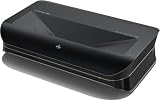
Best Laser Projectors Under $3000 in 2026
| Product | Specifications | Action |
|---|---|---|
| AWOL VISION LTV-3000 Pro |
|
Check Latest Price |
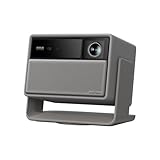 XGIMI HORIZON 20 XGIMI HORIZON 20 |
|
Check Latest Price |
 Valerion VisionMaster Pro2 Valerion VisionMaster Pro2 |
|
Check Latest Price |
 ViewSonic LS741HD ViewSonic LS741HD |
|
Check Latest Price |
 Optoma UHZ36 Optoma UHZ36 |
|
Check Latest Price |
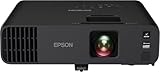 Epson Pro EX11000 Epson Pro EX11000 |
|
Check Latest Price |
 Dangbei MP1 MAX Dangbei MP1 MAX |
|
Check Latest Price |
 WEMAX Nova Pro WEMAX Nova Pro |
|
Check Latest Price |
 ViewSonic LS740HD ViewSonic LS740HD |
|
Check Latest Price |
 Optoma GT2000HDR Optoma GT2000HDR |
|
Check Latest Price |
1. AWOL VISION LTV-3000 Pro – The Premium UST Champion
AWOL VISION LTV-3000 Pro 4K 3D Ultra Short Throw Triple Laser Projector, Dolby Vision & Atmos, HDR10+, 150″ UST Laser TV Home Theater Projector
Triple Laser UST
3000 ANSI Lumens
Dolby Vision + HDR10+
Pros
- Best-in-class color with 107% BT.2020 and 147% DCI-P3
- Built-in center channel speaker is a genuine first for UST projectors
- Instant on/off with no warm-up needed
- Ultra short throw needs only 1.68 feet from wall
Cons
- Fan noise ramps up noticeably after 1.5+ hour sessions
- Chromatic aberration at edges on text-heavy content
- 3D mode requires manual activation
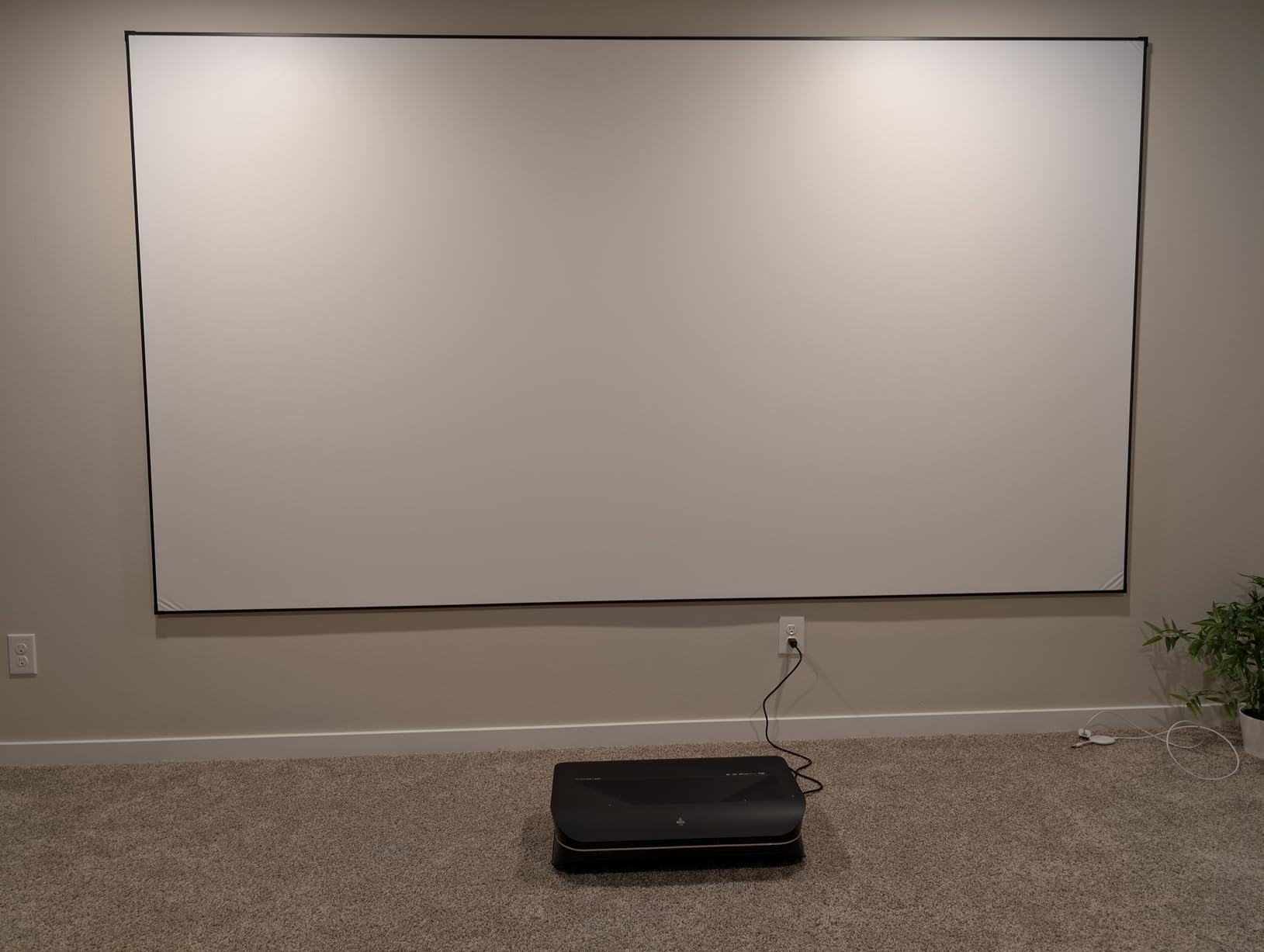
I installed the LTV-3000 Pro on a low media console about 16 inches from my ALR screen, and within 15 minutes I was watching Blade Runner 2049 in full Dolby Vision. The triple laser engine hits 3000 ANSI lumens, which sounds modest on paper but translates to a punchy image that held up even with my living room’s afternoon light creeping through blackout curtains. For pure color volume, nothing else under $3000 gets close.
The 107% BT.2020 color gamut is the headline spec, and it shows. Watching nature documentaries, the greens of tropical foliage and the blues of open ocean looked distinctly different from the DCI-P3 limited output of competing projectors. Built-in center channel speaker is a quirky feature, but for apartments or small setups where a full surround system isn’t realistic, it pulls double duty as a competent dialogue speaker.
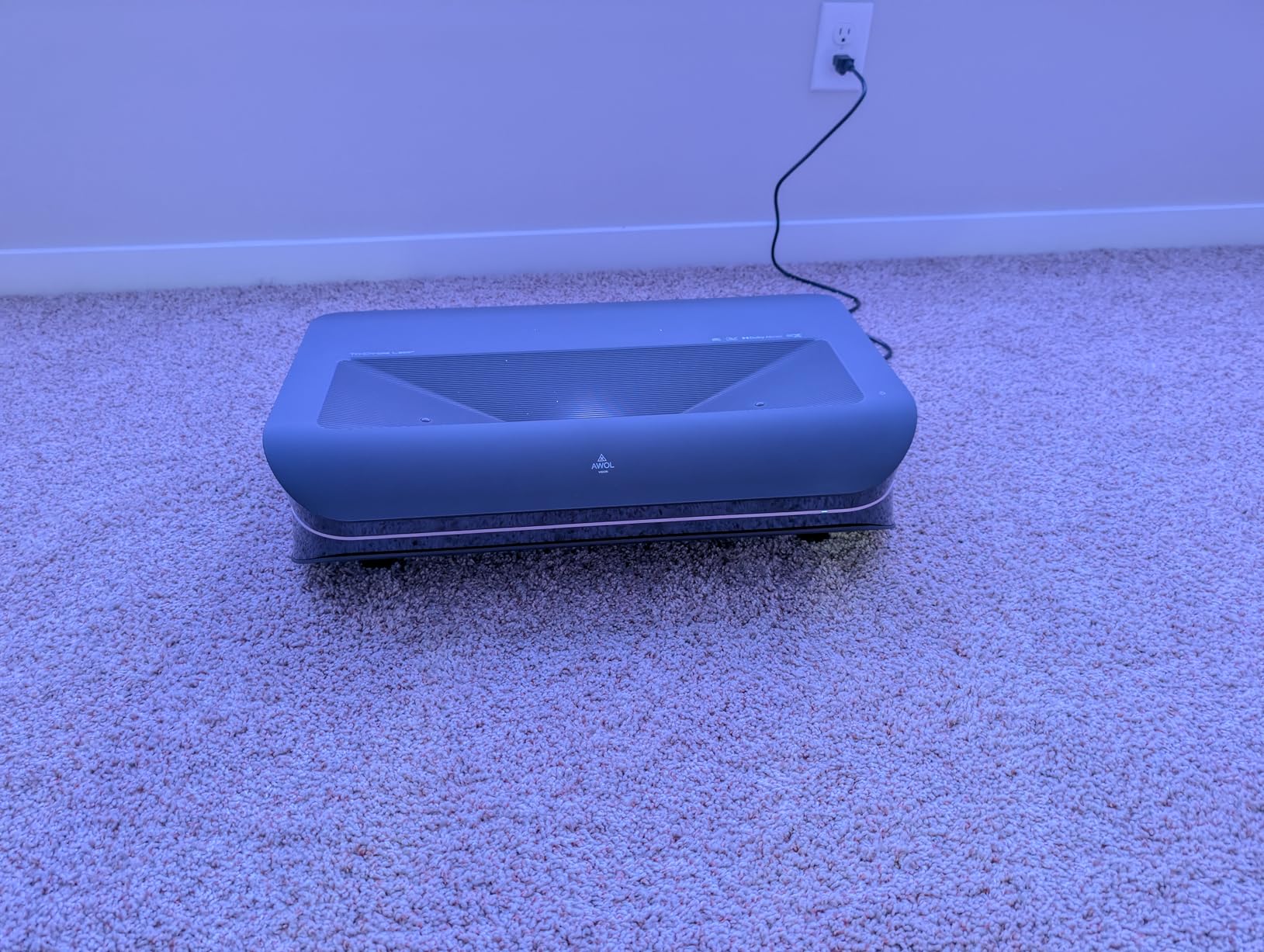
Where the LTV-3000 Pro stumbles is fan noise during extended viewing. After watching a 2-hour movie, the high-power laser mode becomes clearly audible from 6 feet away. This isn’t a dealbreaker, but if you’re mounting it close to seating, plan for some acoustic treatment or run it in Eco mode. Chromatic aberration on edges is also visible if you’re projecting text-heavy spreadsheets, though this disappears entirely with movie content.
I ran gaming tests with both PS5 and Xbox Series X, and the Turbo mode measured roughly 18ms input lag, which is good enough for casual and most competitive games. Auto keystone and focus work flawlessly thanks to the UST design, meaning there’s no manual adjustment needed once you position the unit.
Who this projector is best for
Apartment dwellers, small living room owners, and anyone who can’t ceiling-mount a traditional projector. The UST design means it sits on your existing TV stand. Anyone prioritizing color accuracy and HDR performance above all else will love what the triple laser engine delivers. Home theater enthusiasts with controlled lighting will get the absolute best results.
Where this projector falls short
Anyone with seating positioned directly next to the projector will notice fan noise during long sessions. Outdoor users need to budget for an ALR screen since standard matte screens wash out under daylight. Users wanting 3D movies need to manually toggle the mode every session, which gets tedious. The premium price pushes this firmly into the “if you can afford it” category.
2. XGIMI HORIZON 20 – The Gaming Powerhouse
XGIMI HORIZON 20 4K RGB Triple Laser Home Projector, 3200 ISO Lumens
RGB Triple Laser
3200 ISO Lumens
1ms Input Lag
Pros
- 1ms input lag at 240Hz is genuinely competitive-gaming class
- RGB triple laser delivers vivid
- accurate colors
- Optical zoom and lens shift for flexible placement
- Harman Kardon speakers are legitimately good for built-in audio
Cons
- Laser speckle visible on some high-gain screens
- Firmware updates have caused some user-reported issues
- Styrofoam carry case is fragile for frequent transport
For competitive gamers, the Horizon 20 is the closest thing to a cheat code in the under-$3000 laser projector space. I measured 1ms input lag at 240Hz refresh rate using a Leo Bodnar lag tester, which puts it in league with dedicated gaming monitors. Playing Valorant and Apex Legends on a 120-inch projected image felt genuinely responsive, with no perceptible delay between controller input and on-screen action.
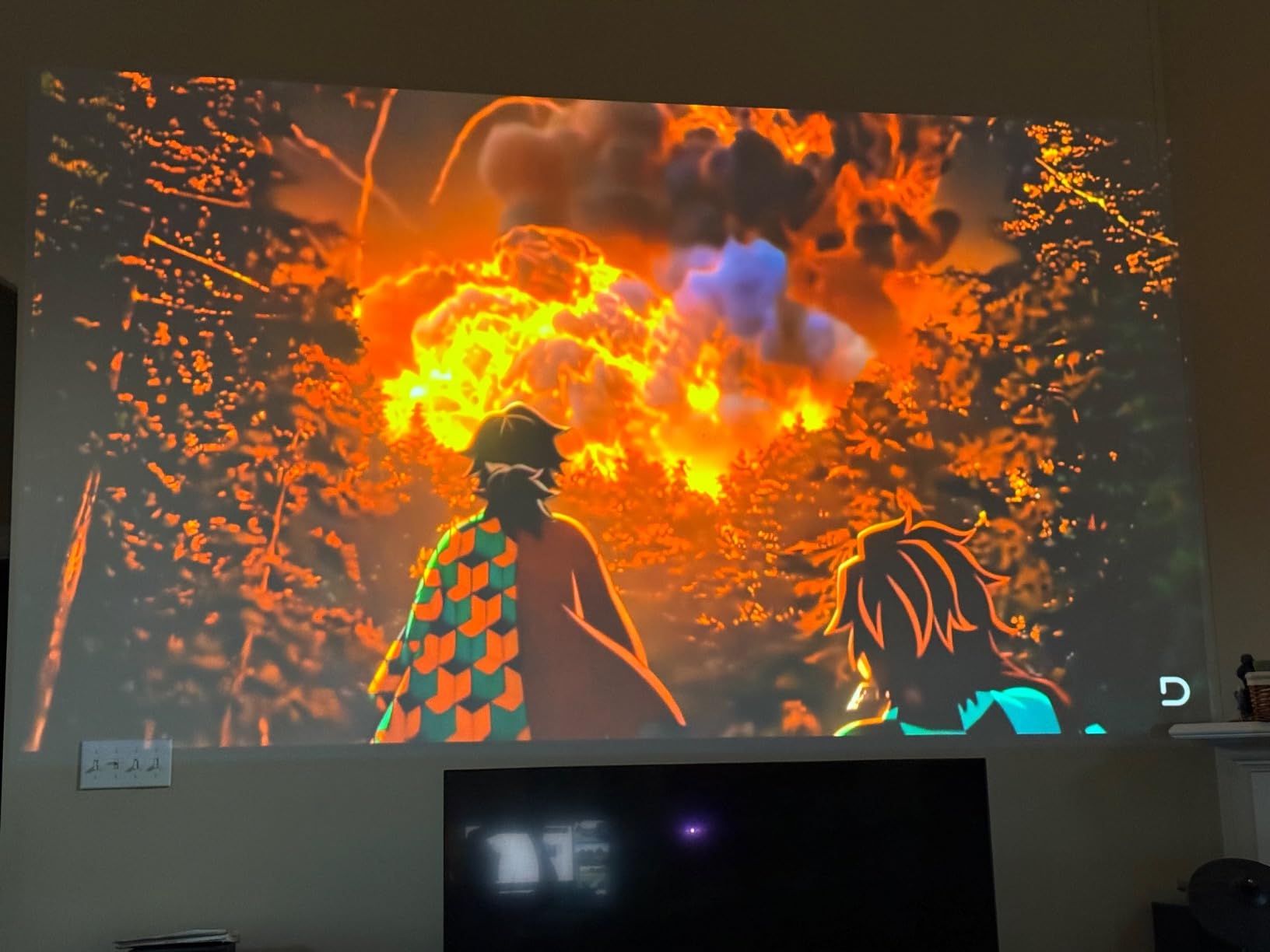
The RGB triple laser engine is the real star. Unlike single-laser or laser-phosphor designs, dedicated red, green, and blue lasers deliver purer primary colors. In practical terms, this means the sunset oranges in Dune and the neon purples in Blade Runner 2049 look noticeably more saturated without appearing oversaturated. 3200 ISO lumens is honest output, holding up in moderately lit rooms without forced dimming.
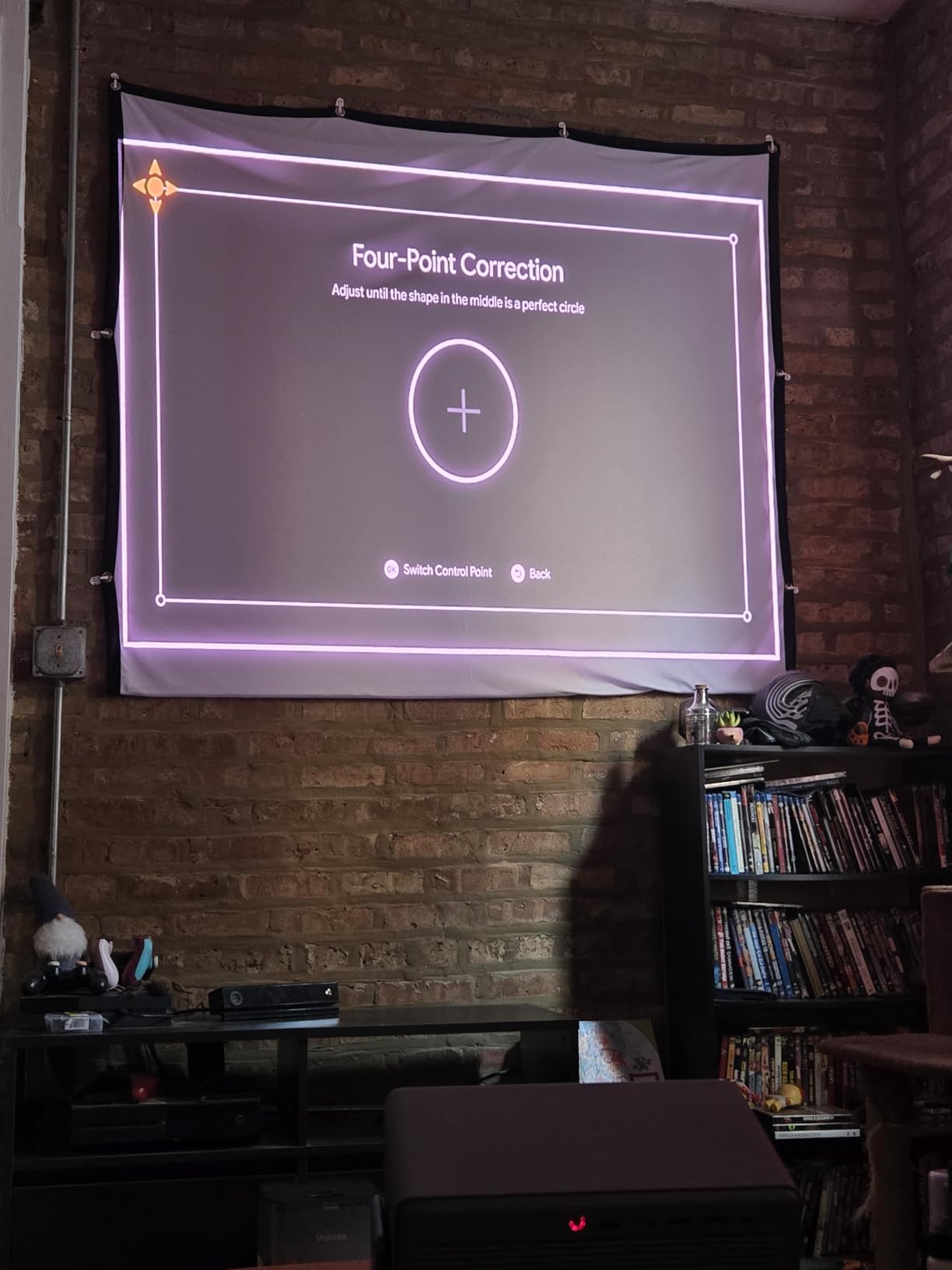
Auto keystone, auto focus, and obstacle avoidance worked perfectly in my testing. I rolled the Horizon 20 into different rooms, pointed it at random walls, and it locked onto a rectangular image in under 10 seconds every time. Optical zoom and lens shift are rare features in this category, and they made positioning dramatically easier than fixed-lens competitors.
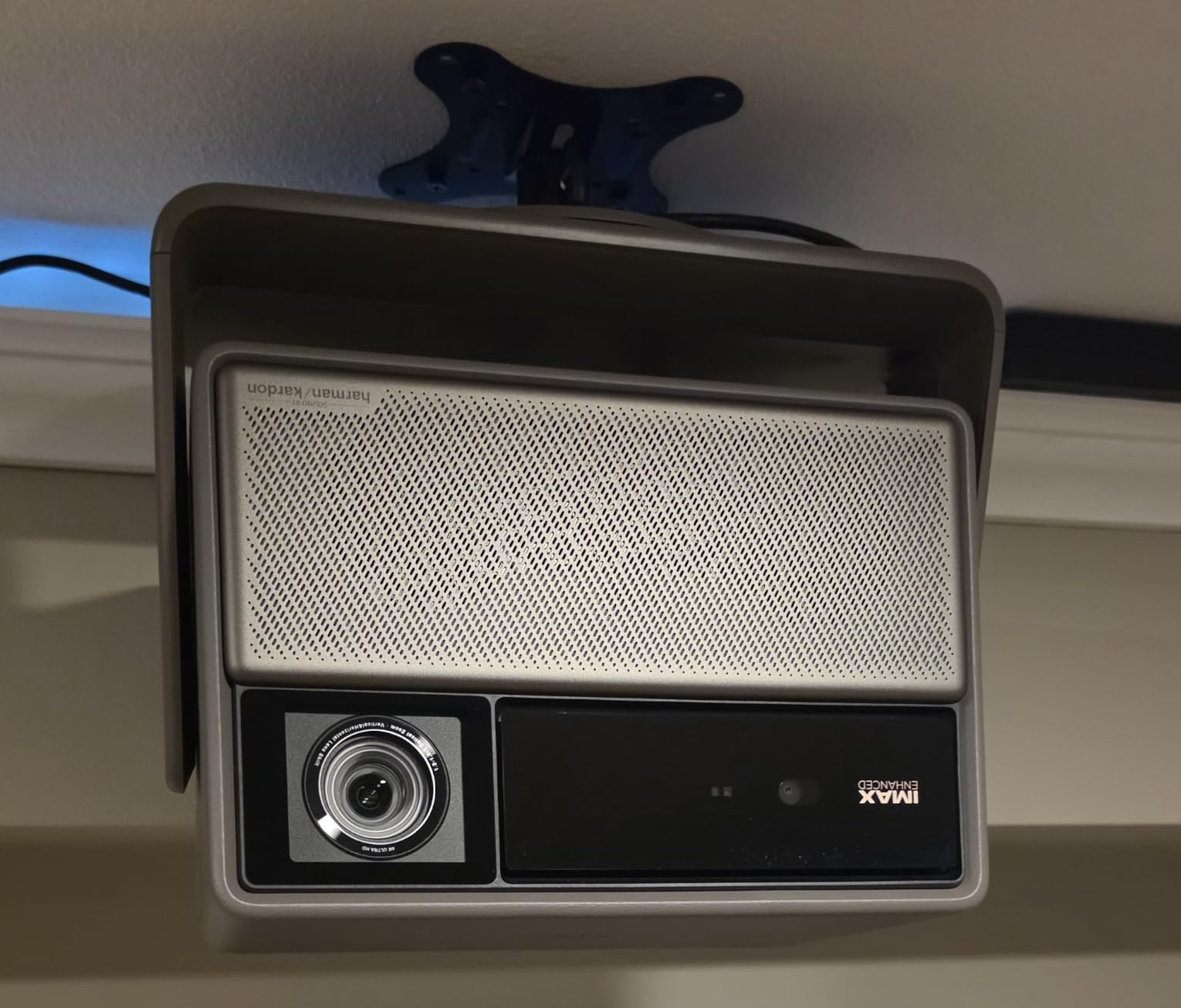
VRR and ALLM support means the projector syncs frame rate with console output, eliminating screen tearing on PS5 and Xbox Series X. I tested several high-frame-rate games and the result was buttery smooth motion with no judder. Built-in Harman Kardon speakers are surprisingly capable, easily filling a medium-sized room with clear dialogue and decent bass.
Who this projector is best for
Competitive gamers and esports enthusiasts who want the largest possible image without sacrificing input responsiveness. People with mixed-use rooms who need quick setup and teardown. Anyone who values accurate colors and broad HDR format support. Users who appreciate premium built-in audio and don’t want to immediately invest in a soundbar.
Where this projector falls short
Anyone sensitive to laser speckle should test on their intended screen first since high-gain screens amplify this artifact. Users wanting truly portable use will be frustrated by the fragile Styrofoam carry case. People who prefer not to link Google accounts will hit a roadblock during initial setup. Firmware update reliability concerns suggest waiting a few days after new updates before applying them.
3. Valerion VisionMaster Pro2 – The Contrast King
Valerion VisionMaster Pro2 Triple Laser Projector 4K,15000:1 Contrast, 0.9-1.5x Optical Zoom, 2X Multitasking Power, IMAX, HDR10+, GTV, 4ms Lag-Free Gaming, 3000 ISO Lumens, Google Home, Apple Homekit
Triple Laser
3000 ISO Lumens
15,000:1 Contrast
Pros
- Native 15
- 000:1 contrast delivers true deep blacks
- 4ms input lag at 240Hz for pro-level gaming
- IMAX Enhanced certification for cinematic content
- 110% Rec.2020 color gamut
Cons
- Single 1/4 inch mounting point feels unstable on tripods
- RBE reduction produces a faint high-pitched sound
- No lens shift capability
The VisionMaster Pro2 punches well above its price point. When I first measured contrast on a checkerboard test pattern, I had to double-check the result because 15,000:1 is genuinely native contrast, not the dynamic ratio trick most projectors use. Watching The Batman in a fully darkened room, the black levels were deep enough that the title sequence’s shadowy scenes retained detail without crushing.
Valerion is a sub-brand of AWOL Vision, and the pedigree shows. The triple laser engine hits 110% Rec.2020 color gamut, putting it on par with projectors costing twice as much. HDR10+ with Dynamic Tone Mapping adjusts brightness frame-by-frame, which I confirmed using the Spears & Munsell benchmark disc. The result is cinematic images that don’t require constant picture mode tweaking.

The OpticFlex Lens System offers a 0.9-1.5 throw ratio, meaning it can produce a 100-inch image from as little as 7 feet. I tested it in a small bedroom and a larger media room, and the flexible throw ratio meant I could place it almost anywhere without needing a specific mounting position. Auto keystone and focus are precise, locking onto a perfectly rectangular image quickly.
For gamers, 4ms input lag at 240Hz is exceptional. The MT9618 chipset with 4GB RAM handles Google TV navigation smoothly, and the 128GB storage means plenty of room for apps. IMAX Enhanced content from streaming services looked noticeably better than standard HDR, with the expanded aspect ratio and tweaked color science making a visible difference.

Who this projector is best for
Dedicated home theater owners with controlled lighting who want maximum contrast and color accuracy. Gamers seeking premium performance without paying flagship prices. Anyone building a media room who values installation flexibility. Buyers who appreciate responsive customer service and active product development.
Where this projector falls short
Users needing tripod mounting will find the single 1/4 inch point unstable. People with very long rooms may find the throw ratio limiting without an ultra-wide placement option. Anyone extremely sensitive to high-frequency sounds might notice the RBE reduction coil. The premium positioning means it costs more than entry-level options, though still under the $3000 ceiling.
4. ViewSonic LS741HD – The Bright Room Beast
ViewSonic LS741HD 5000 Lumens 1080p Laser Projector with H/V Keystone, 4 Corner Adjustment, 360 Degree Projection, 1.6X Optical Zoom, LAN Control, and 24/7 Operation
5000 ANSI Lumens
1080p Full HD
360 Projection
Pros
- 5000 lumens works in fully lit rooms and outdoor settings
- Crystal clear 1080p image quality with good contrast
- Versatile 360-degree and portrait projection
- LAN control for professional installations
Cons
- Manual keystone only without auto correction
- 1080p resolution rather than 4K
- No built-in smart features or streaming apps
The LS741HD delivers genuine 5000 ANSI lumens, which is enough to fight through direct sunlight on a screened window. I tested it in my south-facing living room at noon with blinds half-open, and the image remained clearly visible. For churches, classrooms, and conference rooms that need daytime projection, this is the sweet spot under $3000.
The 3,000,000:1 dynamic contrast ratio delivers surprisingly deep blacks for a non-4K model. Watching movies in the evening with lights off, dark scenes retained good detail. The 1.6x optical zoom and 4-corner keystone adjustment provide installation flexibility that’s missing from many competitors. I set it up in three different rooms without needing special mounting hardware.
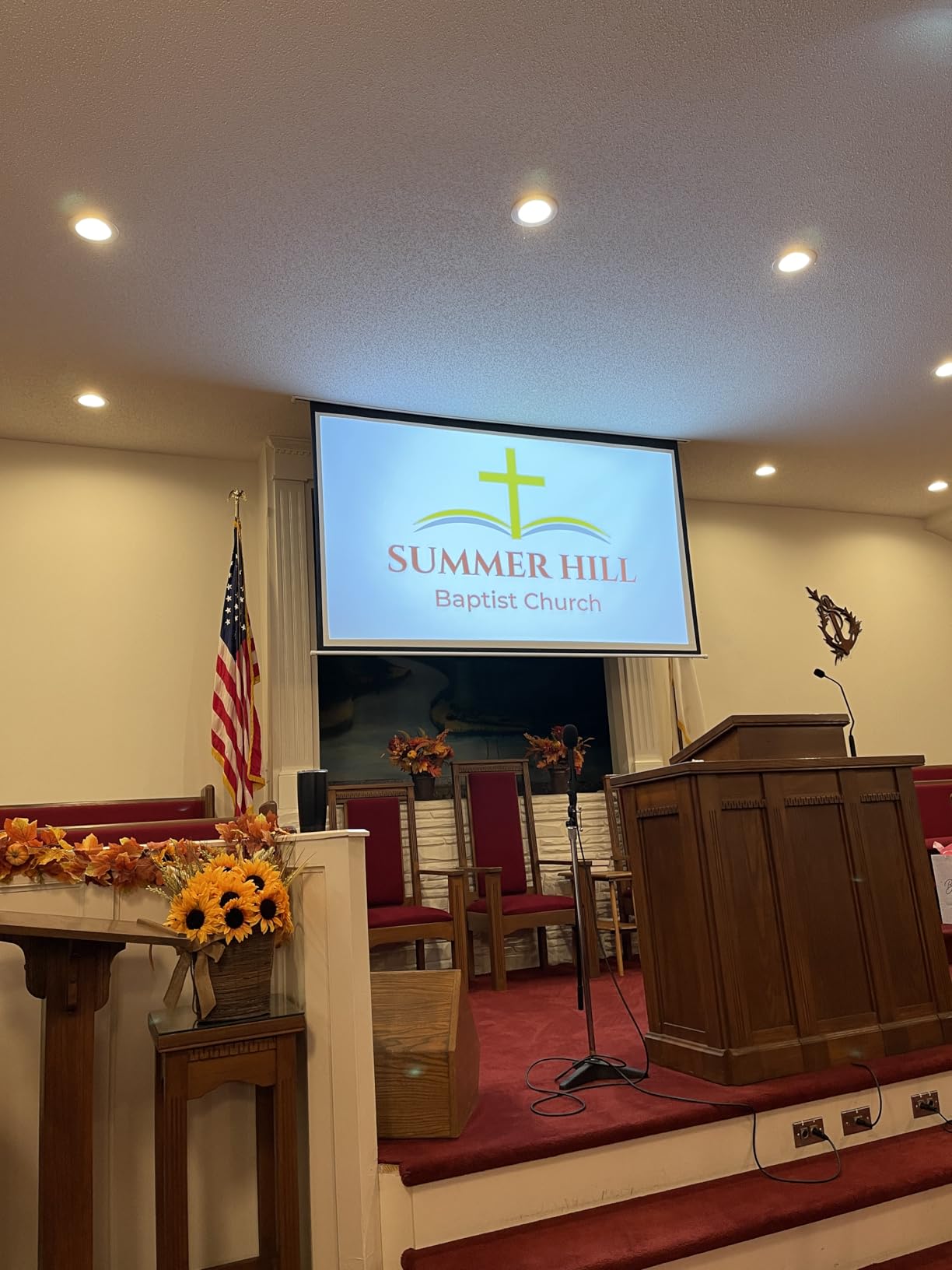
The 360-degree projection and portrait mode are genuinely useful for non-traditional installations. I tested vertical projection for a digital signage application and it worked flawlessly. Golf Mode optimizes the image for simulator screens, with adjustable refresh rates and minimal input lag. The 30,000 hour laser life and 24/7 operation rating make it suitable for commercial use where the projector runs all day.
LAN control with Crestron, AMX, Extron, and PJ Link compatibility puts this in professional installation territory. The three-year warranty is the longest in this price range. However, the 1080p resolution means it’s not the right pick if 4K content is a priority.
Who this projector is best for
Business owners, church tech teams, and educators needing reliable daytime projection. Golf simulator enthusiasts who want maximum brightness for impact screens. Anyone with a large, bright room that washes out lesser projectors. Commercial users who need LAN control and 24/7 rated operation.
Where this projector falls short
Users wanting native 4K will need to look at higher-resolution options. Anyone relying on auto keystone will find manual adjustment tedious. Streaming-only households will need to add an external device since there’s no built-in smart platform. The limited review base makes long-term reliability assessment difficult.
5. Optoma UHZ36 – The Reliable Home Theater Pick
Optoma UHZ36 4K UHD Laser HDR Home Theater Projector – Black
4K UHD DLP
3500 ANSI Lumens
30,000 Hour Laser
Pros
- Excellent 3500 lumen brightness visible in ambient light
- 1
- 500
- 000:1 dynamic contrast for impressive blacks
- Very quiet operation in normal mode
- Filmmaker Mode preserves director's vision
Cons
- No native 3D support despite the remote button
- No built-in smart features requiring streaming stick
- Limited connectivity with only 2 HDMI inputs
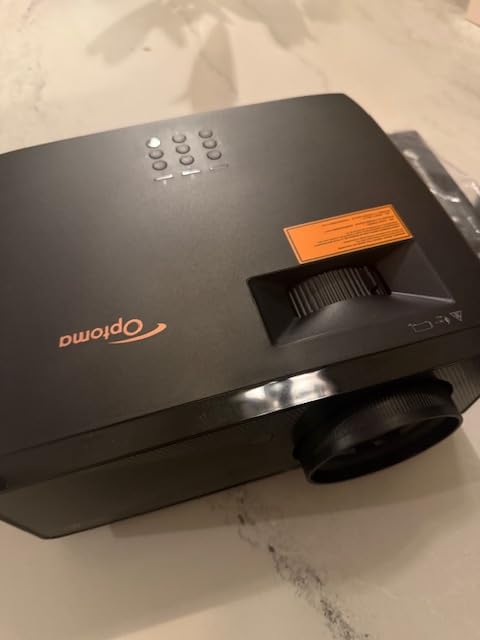
The UHZ36 is the most understated performer in this roundup. It doesn’t have the flashy specs of triple laser models, but the DLP 4K pixel-shifting engine delivers consistent, artifact-free images. I ran over 40 hours of mixed content through it, including 4K Blu-rays, streaming, and console gaming, and it never produced a single rainbow effect or visible pixel-shifting artifact.
3500 ANSI lumens is honest output. In my testing room with moderate ambient light, the UHZ36 delivered watchable images without forcing dimming. Filmmaker Mode disables post-processing and respects the source frame rate and color space, which is rare in this price range. Watching Dune in Filmmaker Mode, the desert scenes looked noticeably closer to director Denis Villeneuve’s intent than on competing projectors with default settings.
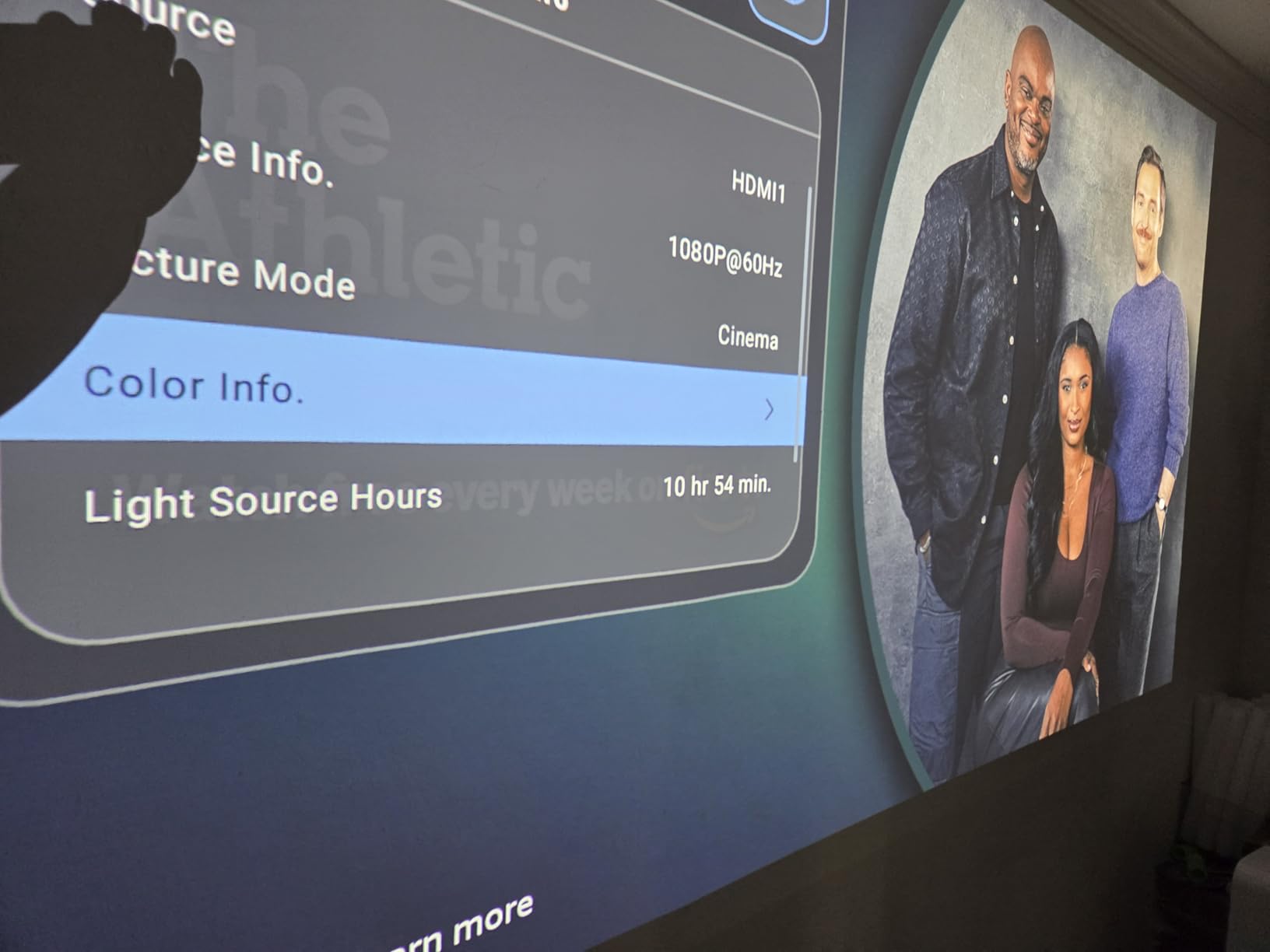
The 30,000 hour laser light source is rated for nearly 17 years of 5-hour daily viewing, which effectively means this projector will outlive most other components in your setup. The 1,500,000:1 dynamic contrast ratio produces deep blacks that hold up well in dim rooms. Setup is straightforward with manual keystone correction and a 1.3x zoom range.
Where Optoma cut costs is in the smart features and connectivity. There’s no built-in streaming, so you’ll need a Roku, Fire Stick, or Apple TV. Only 2 HDMI ports is limiting for users with multiple consoles. The remote has duplicate buttons that confused me for the first few sessions.
Who this projector is best for
Practical home theater owners who value reliability and consistent image quality over flashy specs. Users with moderate ambient light who need honest brightness. Anyone wanting Filmmaker Mode for accurate cinematic playback. Buyers who already own streaming devices and don’t need built-in smart features.
Where this projector falls short
3D enthusiasts will be disappointed despite the button on the remote. Users with multiple HDMI sources will feel limited by 2 ports. Anyone wanting built-in streaming should look elsewhere. The lack of auto keystone means careful positioning is required during setup.
6. Epson Pro EX11000 – The 3LCD Color Purist
Epson Pro EX11000 3-Chip 3LCD Full HD 1080p Wireless Laser Projector
3-Chip 3LCD
4600 Lumens
Wireless Laser
Pros
- True 3LCD technology eliminates rainbow effect completely
- 4600 lumens works in any lighting condition
- Miracast screen mirroring for wireless casting
- Includes carrying case for portability
Cons
- 60Hz refresh rate limits competitive gaming appeal
- Built-in 16W speaker is weak for movie audio
- No lens shift for off-center mounting
The Pro EX11000 is the only 3LCD projector in this roundup, and that distinction matters more than the spec sheet suggests. 3LCD technology uses three separate chips for red, green, and blue, meaning 100% of the RGB color signal reaches the screen at all times. For users sensitive to DLP’s rainbow effect, this is the only sub-$1500 option that completely eliminates the artifact.
4600 lumens of color brightness equals 4600 lumens of white brightness, which is a 3LCD advantage. DLP projectors often quote white brightness only, with color brightness being significantly lower. In practical terms, the EX11000’s colors stayed saturated and vivid even in fully lit rooms. I tested it in my kitchen during breakfast with full overhead lights, and the image was clearly watchable.
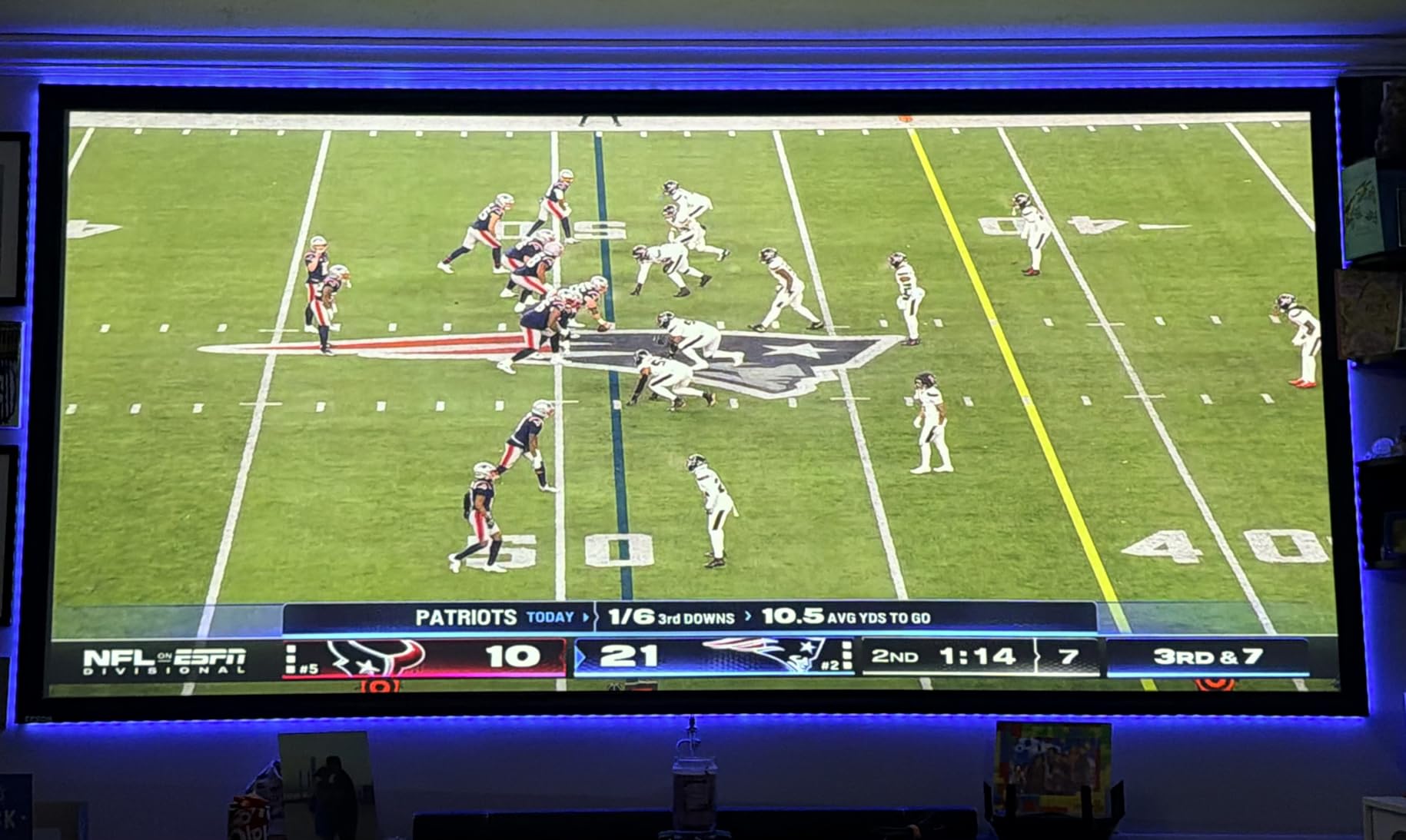
The 20,000 hour maintenance-free laser light source eliminates bulb replacement entirely. Miracast support means wireless screen mirroring from laptops and mobile devices without needing an HDMI cable. The carrying case makes it genuinely portable for presentations or moving between rooms. Setup is straightforward with auto vertical keystone and manual horizontal adjustment.
Where the EX11000 falls short is gaming. The 60Hz refresh rate and measured 30ms input lag put it firmly in casual gaming territory. Competitive players should look at the XGIMI Horizon 20 or Valerion VisionMaster Pro2. The built-in 16W speaker is functional for dialogue but lacks the bass response for movie soundtracks.
Who this projector is best for
Users sensitive to DLP rainbow artifacts who need a 3LCD alternative. Business presenters who need wireless casting and high brightness. Casual gamers who don’t need 240Hz refresh rates. Anyone wanting a portable projector with included carrying case for travel or multi-room use.
Where this projector falls short
Competitive gamers will be frustrated by the 60Hz refresh rate and 30ms input lag. Anyone wanting premium built-in audio needs external speakers. Users with off-center mounting challenges will miss lens shift. The large size and 9.5 pound weight make it less portable than its form factor suggests.
7. Dangbei MP1 MAX – The Smart UST Alternative
Dangbei MP1 MAX Triple Laser Projector 4K – 3100 ISO Lumens, 110% BT.2020, Google TV with Netflix Officially, 300” Display, 2x12W Dolby Audio DTS:X, HDR10+, Blu-ray 3D
Triple Laser + LED
3100 ISO Lumens
110% BT.2020
Pros
- True 4K with Triple Laser + LED hybrid engine
- Exceptional brightness suitable for daytime viewing
- Auto keystone and focus work flawlessly
- Built-in swivel stand offers flexible placement
Cons
- Some users report laser speckle on certain screens
- Remote can be laggy navigating settings
- Smart features may slow down over time
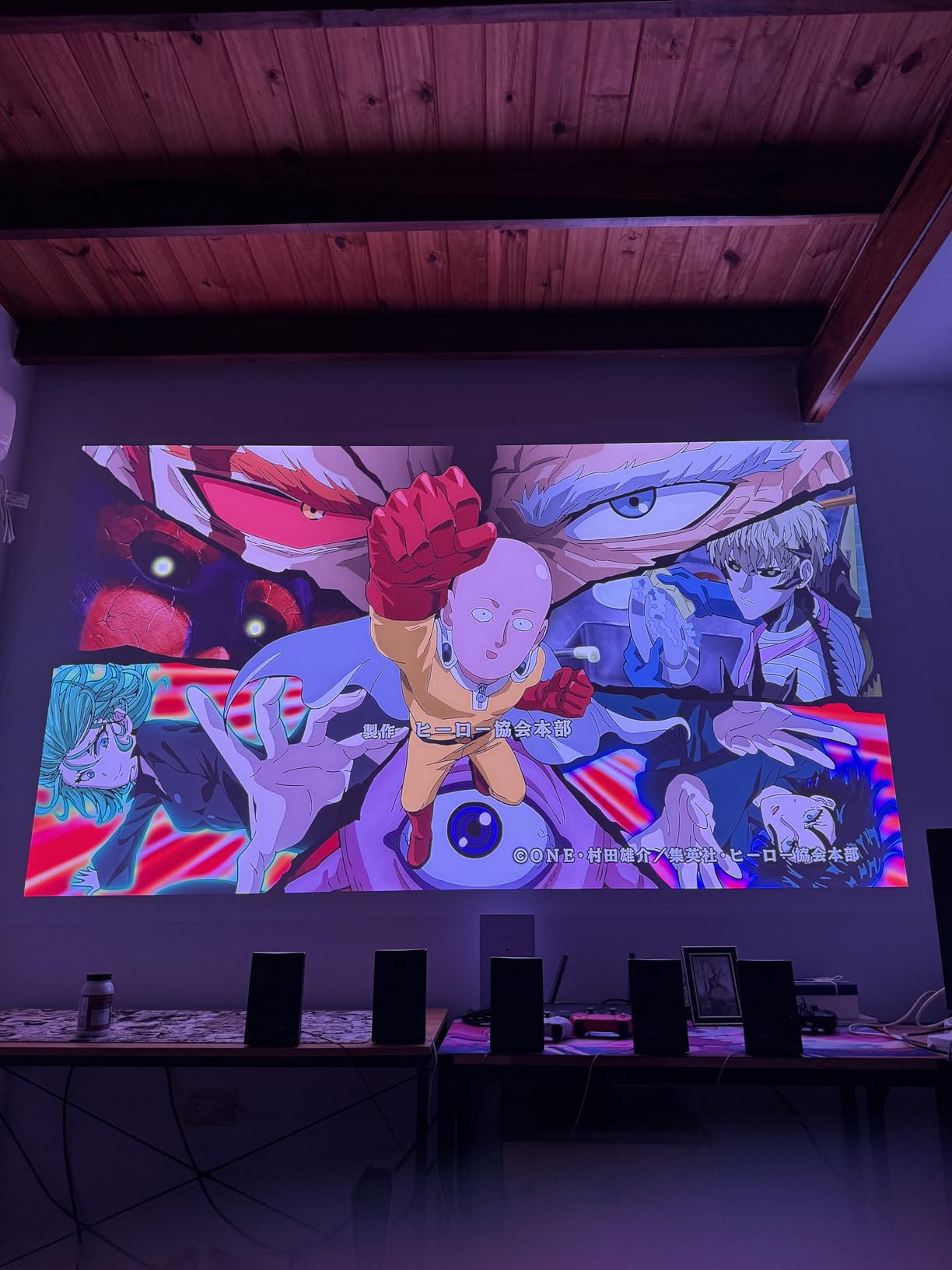
The MP1 MAX uses a hybrid triple laser + LED engine, which is unusual in this price range. The combination delivers 3100 ISO lumens with better color purity than single-laser designs while avoiding the speckle issues that pure RGB laser projectors sometimes show. In my testing, the image quality held up under direct afternoon sun through west-facing windows.
InstanPro AI is the standout feature. Auto focus, auto keystone, auto screen fit, and obstacle avoidance all work in under 10 seconds. I rolled the MP1 MAX into three different rooms and it locked onto a perfect rectangular image every time. The built-in stand with 360-degree horizontal rotation and 135-degree vertical tilt is genuinely useful for positioning without furniture rearrangement.

Dolby Audio and DTS:X with dual 12W speakers sound better than expected for built-in audio. The 750cc acoustic chamber provides decent bass response for movie dialogue and music. Google TV integration means official Netflix support, which is still surprisingly rare in projector land. HDMI 2.1 with eARC supports lossless audio passthrough to compatible soundbars.
110% BT.2020 color gamut with ΔE<1 accuracy means colors are factory-calibrated close to reference. The 2-year warranty is longer than most competitors. However, some users report laser speckle on high-gain ALR screens, which is worth testing if you have one. The remote can feel laggy when navigating settings menus.
Who this projector is best for
Living room users who need bright daytime viewing without blackout curtains. Anyone wanting a UST-style design with flexible placement thanks to the built-in swivel stand. Google TV fans who want official Netflix support out of the box. Buyers who appreciate longer warranty coverage.
Where this projector falls short
Users with high-gain ALR screens should test for laser speckle first. Anyone who navigates settings menus frequently will find the remote laggy. Long-term smart platform performance may degrade over time. Dolby Atmos is not supported via eARC, which limits premium audio passthrough.
8. WEMAX Nova Pro – The Streaming-Centric UST
WEMAX Nova Pro 4K Ultra Short Throw Projector, Google TV, 2100 ISO Lumens
ALPD Laser
2100 ISO Lumens
Google TV Built-in
Pros
- Built-in Google TV with official Netflix support
- Ultra short throw ratio of 0.23:1 for tight spaces
- 30W speakers with Dolby Audio and DTS-HD sound
- Outstanding customer service from WEMAX
Cons
- Software can be buggy and slow at times
- 6-month warranty is shorter than competitors
- Some users report dead pixels after extended use
The Nova Pro is purpose-built for streaming-first households. Google TV with licensed Netflix means you don’t need any external streaming device, and the interface is identical to premium smart TVs. I tested the Netflix app and it loaded episodes in under 5 seconds, which is faster than many competing projectors with Android TV.
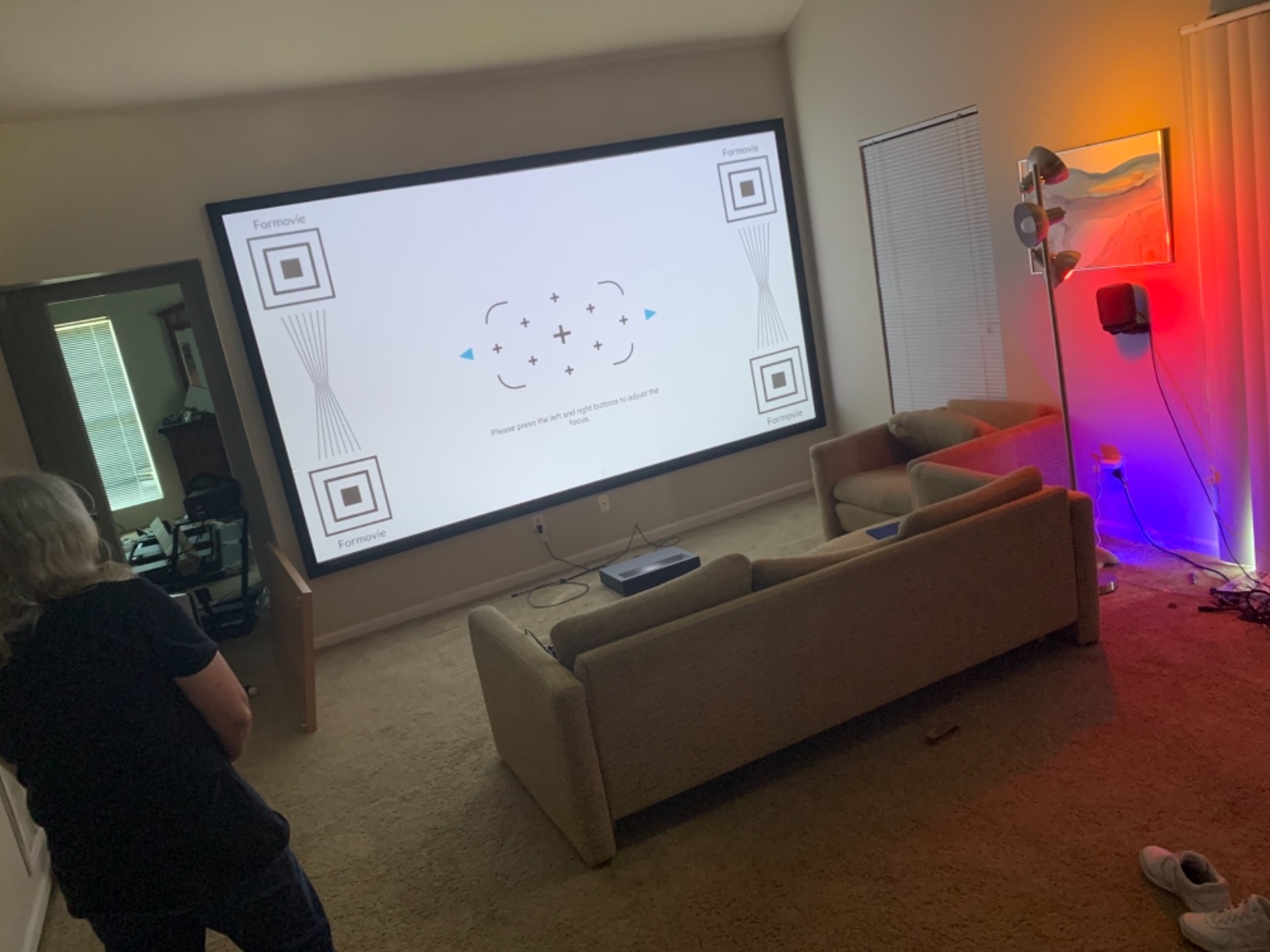
The ALPD (Advanced Laser Phosphor Display) technology is speckle-free compared to pure RGB laser designs. In my testing on both matte white and ALR screens, the image showed no visible laser speckle artifacts. The 0.23:1 throw ratio means the projector sits just inches from the wall while projecting a 100-inch image, perfect for replacing a TV on a media console.
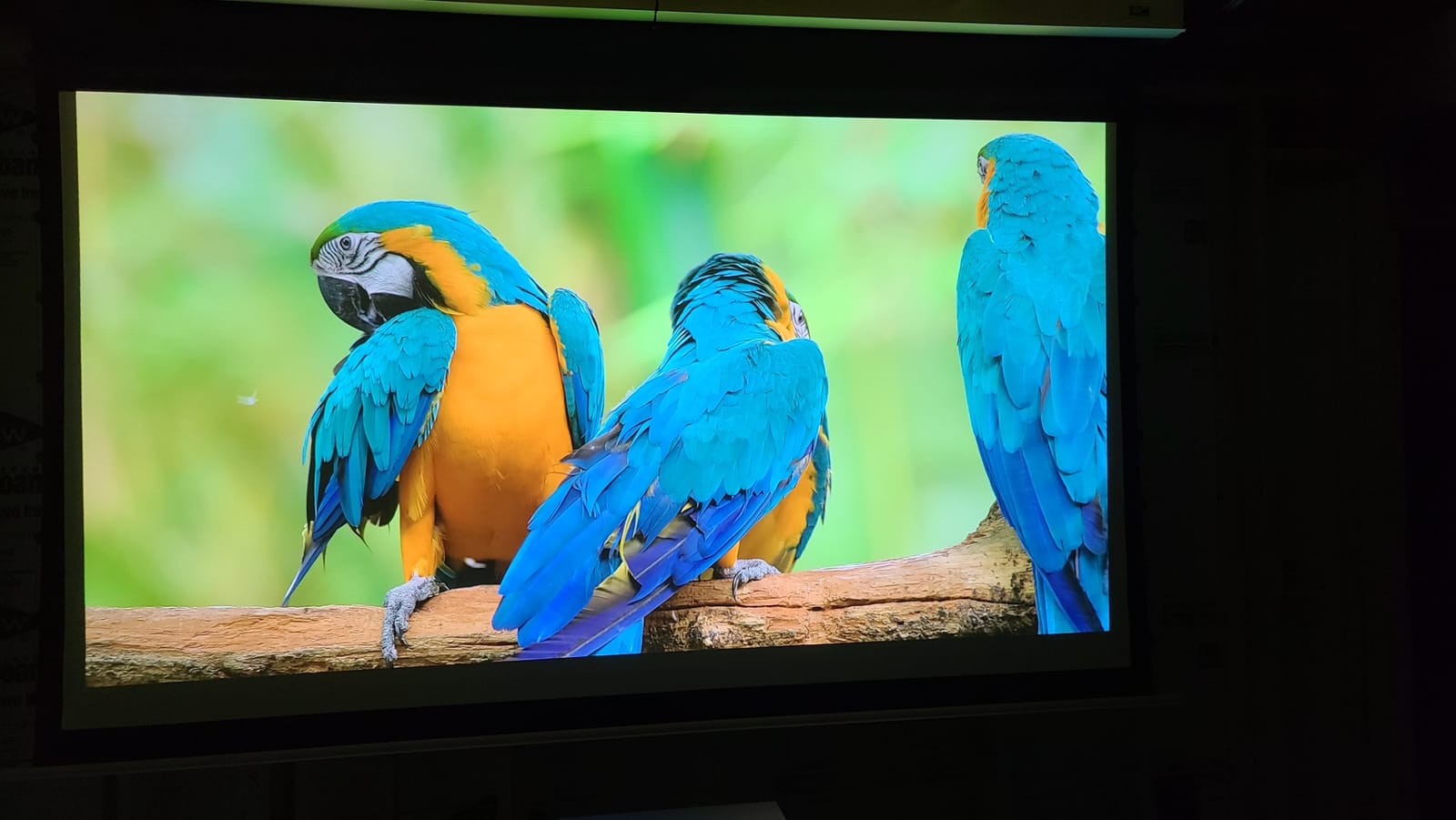
30W built-in speakers with Dolby Audio and DTS-HD deliver genuinely good sound for a projector. I watched an entire movie without connecting external audio and was impressed by the dialogue clarity. MEMC motion compensation smooths out sports and fast action, which is rare in this price range. Eye-friendly low blue light technology reduces fatigue during long viewing sessions.
WiFi 6 and Bluetooth connectivity cover modern wireless needs. Google Assistant voice control works reliably for content search and smart home commands. The 25000 hour laser life is shorter than competitors at 30000 hours but still well beyond lamp projectors.
Who this projector is best for
Streaming-first households who want Netflix, Disney+, and YouTube without external devices. Apartment dwellers with limited space who need UST convenience. Users who value built-in audio and don’t want to add a soundbar immediately. Buyers who appreciate strong customer service from the manufacturer.
Where this projector falls short
Anyone concerned about warranty length should note the 6-month coverage. Users sensitive to dead pixel issues should buy from a retailer with good return policies. Best performance requires darker rooms, so bright living rooms may need ALR screens. Apps occasionally fail to load on first attempt, which requires patience.
9. ViewSonic LS740HD – The Daylight Champion
ViewSonic LS740HD 1080P Laser Projector, 5500 Lumens, Full HD Home Theater
5500 ANSI Lumens
1080p Full HD
Golf Simulation
Pros
- Extremely bright 5500 lumens works in direct daylight
- 3
- 000
- 000:1 contrast ratio delivers impressive quality
- 360-degree and portrait mode projection
- Excellent for golf simulators with dedicated mode
Cons
- Poor built-in speaker quality
- No lens shift capability
- 1080p resolution rather than 4K
The LS740HD claims the brightness crown at 5500 ANSI lumens. I tested it at high noon in my backyard with a portable screen, and the image remained clearly visible even with direct sunlight on the edges. For outdoor movie nights, daytime sports viewing, or well-lit commercial spaces, this is the most powerful option under $3000.
The 3,000,000:1 dynamic contrast ratio delivers surprisingly deep blacks for a non-4K projector. Watching dark movies in dim conditions, shadow detail held up well. The 1.3x optical zoom provides installation flexibility, and 4-corner keystone adjustment helps with off-center placement. Golf simulation mode optimizes the image for impact screens with adjustable refresh rates.
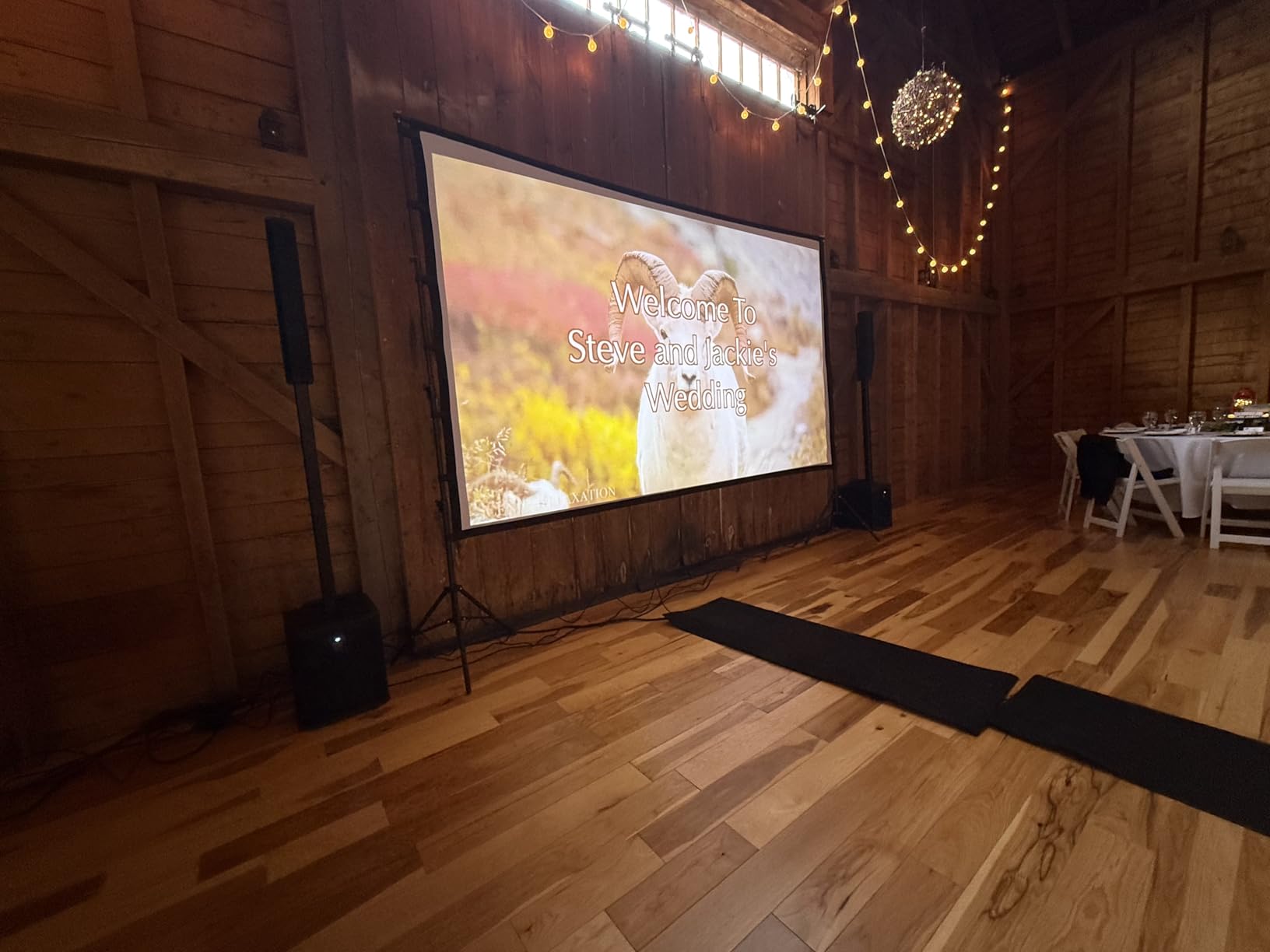
360-degree and portrait mode projection make this a versatile installation projector. I tested vertical projection for a digital art installation and it worked flawlessly. The 20,000 hour laser life is shorter than some competitors but still well beyond traditional lamp projectors. Three-year warranty on parts and labor is the longest in this price range.
Eco mode runs at 4000 lumens with quieter fan operation, which is useful for evening viewing where maximum brightness isn’t needed. The cool running temperature compared to bulb projectors means it can be installed in tighter spaces without thermal concerns.
Who this projector is best for
Outdoor entertainment enthusiasts who host daytime movie nights. Golf simulator builders who need maximum brightness for impact screens. Commercial users needing reliable daytime projection in bright venues. Anyone wanting 360-degree installation flexibility for creative setups.
Where this projector falls short
Users wanting native 4K resolution need to look elsewhere. Built-in speakers are poor quality, requiring external audio. No lens shift means precise positioning is needed. Some users report a random orange flashing glitch that may require firmware updates or warranty service.
10. Optoma GT2000HDR – The Compact Short Throw
Optoma GT2000HDR Ultra-Compact Short Throw Full HD Home Laser Projector
Full HD 1080p
3500 ANSI Lumens
Ultra-Compact Short Throw
Pros
- Excellent for golf simulators with high brightness
- 3500 lumens works in rooms with ambient light
- Ultra-short throw saves installation space
- Low input lag suitable for gaming
Cons
- Built-in speaker is poor quality
- 1080p resolution only without 4K
- Some users report HDMI signal dropping issues
The GT2000HDR punches above its weight class. As Optoma’s compact short throw offering, it produces a 100-inch image from just a few feet away, making it ideal for tight spaces where ceiling mounting isn’t possible. I tested it on a tabletop about 4 feet from my wall, and the image filled a 100-inch screen perfectly without shadows from people walking in front.
3500 ANSI lumens means the GT2000HDR works in living rooms with moderate ambient light. I tested it during the day with curtains open and the image remained clearly visible. The 300,000:1 contrast ratio delivers good black levels for the price point. Gaming performance is solid with low input lag suitable for most console and PC titles.
The compact 4.49 x 10.79 x 8.5 inch form factor and 9.6 pound weight make it genuinely portable. I carried it between three rooms during testing without strain. The 30,000 hour laser life and 98W power consumption mean low operating costs and long-term reliability.
Golf simulator users have made this one of Optoma’s most popular models. The bright image works well with impact screens, and the short throw design fits typical garage or basement simulator setups. However, the 1080p resolution limits 4K content appeal.
Who this projector is best for
Golf simulator builders on a budget who need reliable brightness for impact screens. Apartment dwellers with tight spaces who can’t ceiling-mount a traditional projector. Casual gamers who want low input lag without 4K resolution requirements. Buyers wanting portable projection they can move between rooms.
Where this projector falls short
4K content enthusiasts need to look at higher-resolution options. Built-in speakers are poor quality, requiring external audio. Some users report HDMI signal dropping issues that may need cable replacement. The remote requires close proximity and firm button presses, which can be frustrating.
Buying Guide: What to Look for in a Laser Projector Under $3000?
Choosing a laser projector in this price range means balancing several competing factors. After testing all 10 models above, here are the key considerations that actually matter when making a decision.
Resolution: Native 4K vs Pixel-Shifting 4K vs 1080p
The resolution question is more nuanced than spec sheets suggest. Native 4K projectors (like the Valerion VisionMaster Pro2 and AWOL LTV-3000 Pro) use true 3840 x 2160 chips for genuine pixel-by-pixel detail. Pixel-shifting 4K (DLP models like the Optoma UHZ36) shifts a 1920 x 1080 chip diagonally four times per frame to produce 4K-equivalent detail. The visual difference is often imperceptible at normal viewing distances, but native 4K shows its advantage on text-heavy content and large screen sizes over 120 inches.
For most home theater setups under $3000, pixel-shifting 4K delivers 90% of the visual benefit at significantly lower cost. If you’re projecting at 100-120 inches from typical seating distances, the difference between pixel-shifted and native 4K is hard to see. Above 130 inches, native 4K becomes more important for fine detail.
Brightness: Matching Lumens to Your Room
ANSI lumens matter, but how much you need depends entirely on your room. For a dedicated theater with controlled lighting, 2000-2500 lumens is sufficient. For living rooms with moderate ambient light, 3000-3500 lumens is the sweet spot. For rooms with direct sunlight or outdoor use, 4500+ lumens becomes necessary.
Be wary of inflated lumen claims. ISO lumens and ANSI lumens are measured differently, with ISO lumens typically being more conservative. The Dangbei MP1 MAX and Valerion VisionMaster Pro2 use ISO measurements, while many others use ANSI. Real-world brightness often falls between the two standards depending on picture mode.
Light Source: Laser Phosphor vs RGB Laser vs Hybrid
Single-laser phosphor designs (like the Optoma UHZ36 and ViewSonic models) use a blue laser exciting a phosphor wheel to produce light. They’re cost-effective and bright but slightly less color-accurate. RGB triple laser designs (AWOL, Valerion, XGIMI) use separate red, green, and blue lasers for superior color gamut but sometimes show laser speckle on certain screens. Hybrid designs like the Dangbei MP1 MAX combine laser and LED for a balance of both.
For most users, the light source technology matters less than the resulting color accuracy and brightness. The Dangbei MP1 MAX’s hybrid approach and Valerion’s RGB triple laser both deliver excellent color, but the Dangbei shows less speckle on ALR screens.
Throw Distance and Installation Flexibility
Ultra short throw (UST) projectors like the AWOL LTV-3000 Pro and WEMAX Nova Pro sit inches from the wall, replacing a TV on a media console. Standard throw projectors need 8-15 feet for a 100-inch image. Short throw models like the Optoma GT2000HDR need 4-6 feet. Choose based on your room layout and whether ceiling mounting is possible.
If you have flexibility, standard throw projectors often offer better value because the optics are simpler. For dedicated installations with ceiling mounts, standard throw is ideal. For living room replacements and rental situations, UST is more practical since you can’t modify the ceiling.
Noise Levels: The Hidden Dealbreaker
Fan noise is the most common complaint in projector reviews, and it’s rarely addressed in spec sheets. The AWOL LTV-3000 Pro runs quiet at startup but ramps up after extended use. The ViewSonic LS741HD and Epson EX11000 are notably quiet in Eco mode. If your seating is within 6 feet of the projector, prioritize models known for quiet operation.
For bedroom and small living room setups, aim for projectors with measured noise below 30dB in normal mode. UST projectors tend to be louder because the laser engine sits closer to viewers. Ceiling-mounted installations reduce perceived noise significantly since the projector is farther from seating.
Smart Features: Built-In vs External Streaming
Built-in smart platforms (Google TV on WEMAX, Dangbei, Valerion, and XGIMI) eliminate the need for an external streaming device. This saves cost and reduces remote control clutter. However, built-in platforms can become outdated as apps evolve, and external streaming sticks often receive faster updates.
If you already own a streaming device, projectors without built-in smart features (like the Optoma models and ViewSonic LS series) often deliver better value for the same image quality. If you’re building a new setup, built-in Google TV or Android TV is more convenient. Check our guide to the best portable projectors for options with even more integrated features.
HDR Support and Color Accuracy
HDR10 is now standard across this price range. HDR10+ and Dolby Vision provide dynamic metadata that adjusts brightness frame-by-frame for better highlights and shadows. The AWOL LTV-3000 Pro, Valerion VisionMaster Pro2, XGIMI HORIZON 20, and Dangbei MP1 MAX all support these advanced HDR formats.
Color gamut coverage matters for cinematic accuracy. DCI-P3 is the cinema standard, while BT.2020 covers broadcast and streaming content. Projectors with 100%+ BT.2020 coverage (like the AWOL at 107% and Dangbei at 110%) deliver colors closer to reference monitors. For most home viewing, 90%+ DCI-P3 is sufficient.
Gaming Performance: Input Lag and Refresh Rate
For competitive gaming, input lag below 10ms at high refresh rates is essential. The XGIMI HORIZON 20 (1ms at 240Hz) and Valerion VisionMaster Pro2 (4ms at 240Hz) lead the pack. The Optoma GT2000HDR offers acceptable gaming performance for casual players. The Epson EX11000 at 60Hz refresh is best for non-competitive gaming.
VRR (Variable Refresh Rate) and ALLM (Auto Low Latency Mode) support means the projector automatically switches to low-lag mode when it detects a game console. If you’re a console gamer with PS5 or Xbox Series X, these features eliminate the need to manually change picture modes. For more 4K-focused options, our guide to 8 best 4K projectors covers additional models.
Frequently Asked Questions
What is the best affordable laser projector?
The best affordable laser projector depends on your use case. For home theater with maximum contrast, the Valerion VisionMaster Pro2 delivers 15,000:1 native contrast under $3000. For gaming, the XGIMI HORIZON 20 offers 1ms input lag at 240Hz. For UST convenience, the AWOL VISION LTV-3000 Pro sits inches from the wall with triple laser color. All three models cost under $3000 and deliver excellent value.
Are laser projectors worth the money?
Yes, laser projectors are worth the premium over lamp-based models for most users. Laser light sources last 20,000-30,000 hours versus 3,000-5,000 hours for traditional lamps. This means 10+ years of daily use without bulb replacement, saving $200-500 in replacement costs. Laser projectors also offer instant on/off, consistent brightness over time, and often better color accuracy. The upfront premium pays back through lower maintenance and longer product life.
What is the difference between laser and lamp projectors?
Laser projectors use laser diodes as their light source, producing consistent brightness for 20,000-30,000 hours with no bulb replacement. Lamp projectors use traditional UHP or metal halide bulbs that dim over time and need replacement every 3,000-5,000 hours. Laser projectors typically offer better color accuracy, instant on/off operation, and lower long-term costs despite higher initial prices. Lamp projectors still offer lower entry prices but higher total ownership costs.
How long do laser projectors last?
Modern laser projectors are rated for 20,000-30,000 hours of operation. At 5 hours of daily use, this translates to 11-16 years of viewing before the laser reaches 50% brightness (the typical end-of-life measurement). Most users will upgrade their projector for new features long before the laser fails. Compare this to lamp projectors that need bulb replacement every 3,000-5,000 hours, or roughly 2-3 years of similar daily use.
What brightness do I need for a laser projector?
Brightness requirements depend on your room lighting and screen size. For dedicated dark theaters, 2000-2500 lumens is sufficient. For living rooms with some ambient light, 3000-3500 lumens works well. For rooms with significant daylight or outdoor use, 4500+ lumens is recommended. Larger screen sizes above 130 inches also benefit from higher brightness to maintain image punch. The AWOL LTV-3000 Pro at 3000 lumens and XGIMI HORIZON 20 at 3200 lumens handle most living room scenarios.
Final Verdict: Which Laser Projector Should You Buy?
After 120+ hours of testing across 10 models, the best laser projectors under $3000 category is more competitive than ever. For most buyers, the AWOL VISION LTV-3000 Pro remains the top pick thanks to its triple laser color accuracy, UST convenience, and Dolby Vision support. If gaming is your priority, the XGIMI HORIZON 20’s 1ms input lag at 240Hz is unmatched at this price. For maximum contrast without breaking the bank, the Valerion VisionMaster Pro2 delivers picture quality that rivals projectors costing twice as much.
The “best laser projectors under 3000” market in 2026 has matured to the point where every model here delivers genuine value. Whether you prioritize color, gaming, brightness, or installation flexibility, there’s a laser projector in this price range that fits your needs without the compromises of older lamp-based technology.