
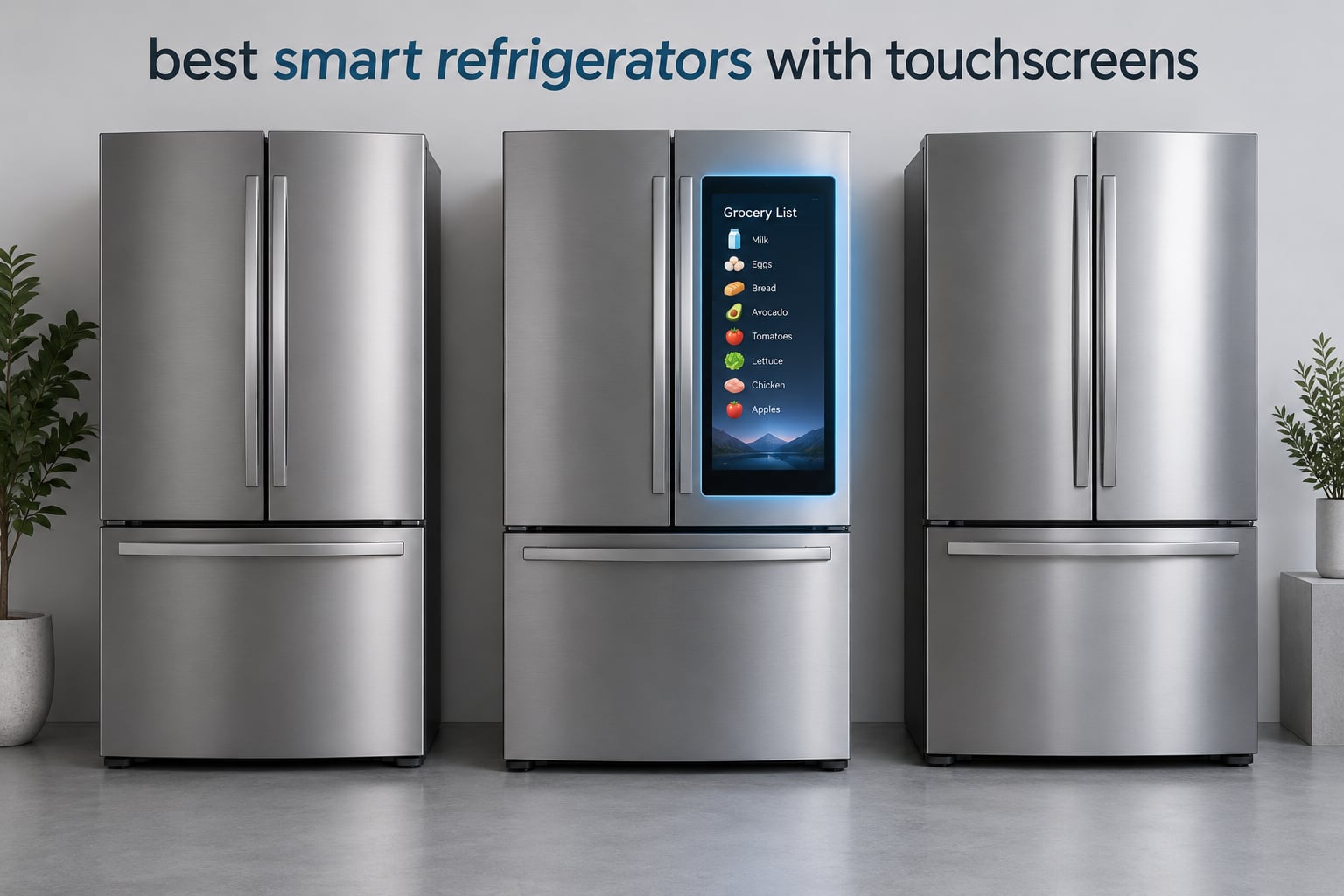
If you are searching for the best smart refrigerators with touchscreens, the first thing you need to know is this: almost every refrigerator marketed as smart has no screen on the door at all. A smart refrigerator is a Wi-Fi-connected appliance that sends temperature alerts to your phone, tracks door-open events and lets you run diagnostic tools from an app. That is a real feature set, and plenty of good fridges deliver it, but it is not a touchscreen.
A touchscreen fridge is a different category. These units have a physical glass panel mounted in the door, running a tablet-style interface you tap with a finger. The panel shows a family calendar, a shared grocery list, digital photos and internal camera views, and on the most expensive models it streams video. That panel is also the single largest cost premium, the biggest repair risk and the part most likely to end up displaying something you did not ask for. We weighed all of that below.
We compared eight Wi-Fi-enabled refrigerators sold in the US market, pulled the measured specifications and review data for each, and ranked them by what actually improves daily life rather than by spec-sheet length. Every model here has published review data we can point to, so you can see where the evidence is thin and where it is strong. If you want a broader baseline first, our general best refrigerators guide covers the cooling and layout basics that still matter once the screen is in the picture.
The short version: one model in this group, the Samsung RS27T5561SR/AA, has a genuine Family Hub touch panel on the door. The other seven are app-driven smart fridges with no display. That is not a criticism of them; several are excellent refrigerators. It simply means the touchscreen part of your question has exactly one answer in this lineup, and the rest of this guide helps you decide whether that screen is worth a premium at all.
Table of Contents
Top 3 Picks for the Best Smart Refrigerators With Touchscreens in 2026
These three earned the top spots after we weighed review volume, measured capacity, cooling architecture and how much each unit’s smart layer adds on a normal day.

GE Profile PVD28BYNFS 4-Door
- 27.9 cu. ft. capacity
- External water and ice dispenser
- Multi-Air Flow even cooling
- Fingerprint resistant steel

LG LRFLC2706S Counter-Depth
- 26.5 cu. ft. in counter depth
- ENERGY STAR at 632 kWh
- Internal dispenser and ice maker
- Door Cooling plus

Samsung RS27T5561SR/AA Family Hub
- Family Hub door touch screen
- Alexa built in
- 26.7 cu. ft. side-by-side
- Multivent cooling
The GE Profile PVD28BYNFS takes the top spot because it has the largest body of verified owner feedback in the group and a 27.9 cu. ft. layout that genuinely works. The LG LRFLC2706S posts one of the strongest average ratings and packs counter-depth capacity that rivals full-depth units. The Samsung RS27T5561SR/AA is the only pick that actually answers the touchscreen question, with a Family Hub panel and built-in Alexa.
All 8 Smart Refrigerators Compared in 2026
Every model below has built-in Wi-Fi and a companion phone app. Read the last column carefully, because it decides whether the unit qualifies as a touchscreen fridge or an app-only smart fridge.
| Product | Specifications | Action |
|---|---|---|
| GE Profile PVD28BYNFS 4-Door |
|
Check Latest Price |
 GE GYE22GYNFS Counter Depth GE GYE22GYNFS Counter Depth |
|
Check Latest Price |
| LG LRFLC2706S Counter-Depth |
|
Check Latest Price |
 Samsung RF28R7201SR/AA 4-Door Samsung RF28R7201SR/AA 4-Door |
|
Check Latest Price |
 Bosch 800 Series B36CL80ENS Bosch 800 Series B36CL80ENS |
|
Check Latest Price |
 Samsung RF18A5101SR/AA 3-Door Samsung RF18A5101SR/AA 3-Door |
|
Check Latest Price |
| Samsung RS27T5561SR/AA Family Hub |
|
Check Latest Price |
 GE PAD28BYTFS 4-Door GE PAD28BYTFS 4-Door |
|
Check Latest Price |
Five of these eight carry a touch control panel somewhere, but in four cases that panel lives inside the fresh food compartment rather than on the door. The LG LRFLC2706S is the clearest example: its digital controls are interior only, so every temperature change needs the door open. Only the Samsung RS27T5561SR/AA gives you a screen you can use without opening the appliance, which is the whole premise of the category.
1. GE Profile PVD28BYNFS 4-Door French Door – Best Overall
GE Profile PVD28BYNFS 36″ 4-Door French Door Refrigerator with 27.6 cu. ft. Total Capacity in Fingerprint Resistant Stainless Steel
27.9 cu. ft. total
4-Door French Door
Fingerprint resistant steel
722 kWh per year
Pros
- 27.9 cu. ft. split into 15.7 fresh and 8.57 frozen
- External dispenser serves water plus cubed and crushed ice
- Multi-Air Flow keeps compartment temperatures even
- 69 percent of reviews are five star
Cons
- Heaviest model in the group at 388 pounds so delivery needs planning
- 35.63 inch body demands 48.38 inch clearance with the door fully open
- One year warranty is short next to Samsung compressor coverage
The GE Profile PVD28BYNFS is the most broadly capable refrigerator in this group and the one we would put in a real kitchen. It measures 35.63 inch deep by 36.75 inch wide by 69.88 inch tall, and the 27.9 cu. ft. inside splits into 15.7 cu. ft. of fresh food and 8.57 cu. ft. of freezer space. With 96 reviews behind it, this is also the only model here with enough owner history to judge reliability on something other than guesswork.
The layout is a genuine four-door design with four glass shelves and six door shelves, so there is somewhere to put a tall bottle, a wide platters tray and a week of leftovers without negotiating for space. The external dispenser handles filtered water along with cubed and crushed ice, which is the arrangement that keeps the fresh food compartment clear during a party. Reviewers consistently single out that dispenser, along with the way Multi-Air Flow distributes cold air, as the reasons the unit holds temperature evenly from top shelf to crisper.
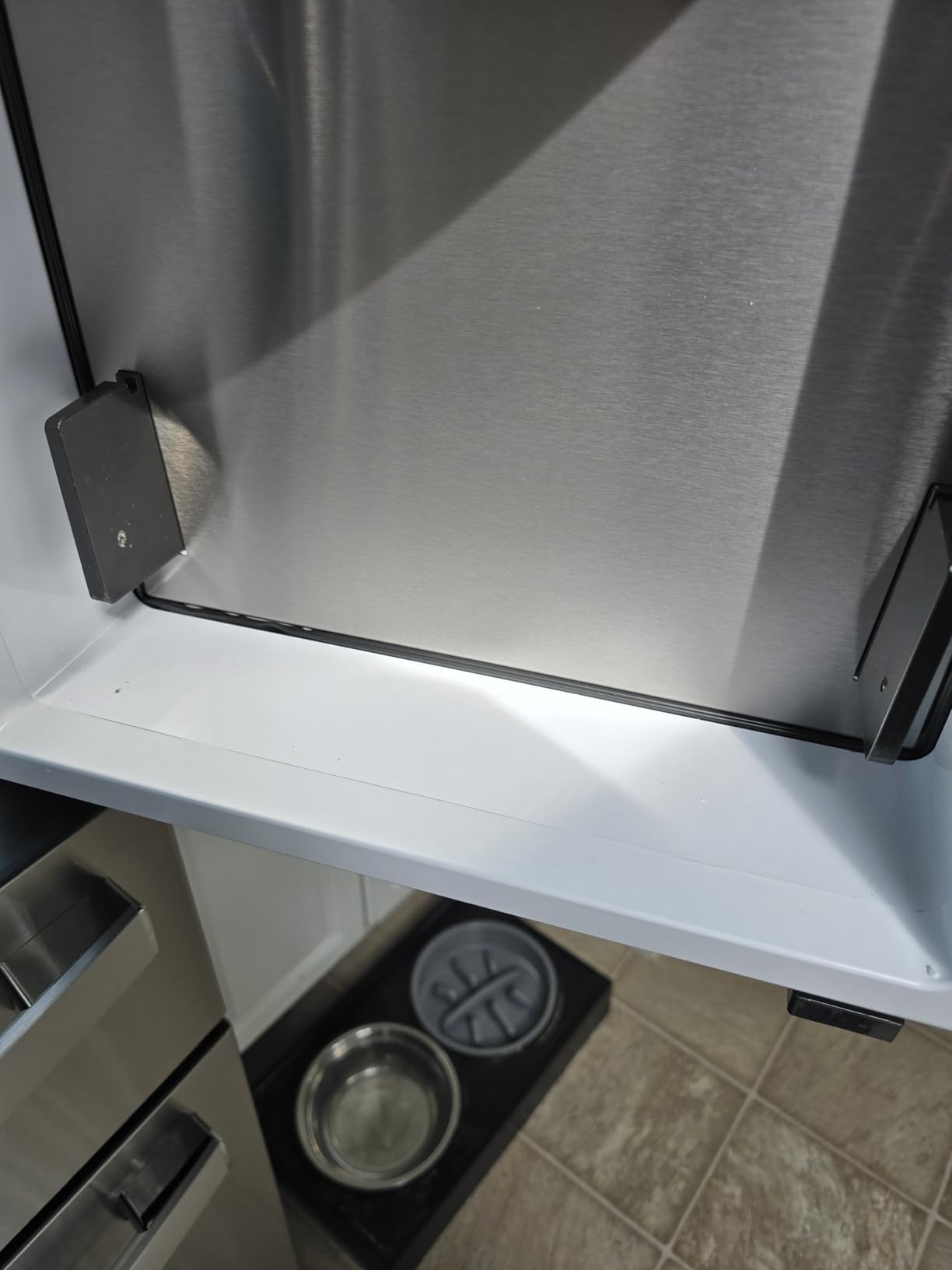
Two numbers deserve attention before you commit. The first is the 48.38 inch clearance figure with the door swung fully open, against a 35.63 inch closed depth. In a galley kitchen or a kitchen with an island, that extra clearance is the difference between a smooth install and a fridge that cannot have its door opened past ninety degrees. The second is 388 pounds. That is the heaviest model in this lineup, so you need two people or a professional delivery crew, and you should confirm the crew will handle stairs.
Energy use is listed at 722 kWh per year. That figure sits above the LG LRFLC2706S at 632 kWh and the Samsung RF18A5101SR/AA at 595 kWh, which makes sense given the larger box, but it remains a reasonable number for a 27.9 cu. ft. four-door unit. The compressor warranty is the weaker point: GE lists a one year manufacturer warranty, where Samsung offers ten years of parts and five of labor on its digital inverter compressor. Over a ten year ownership horizon that gap matters.
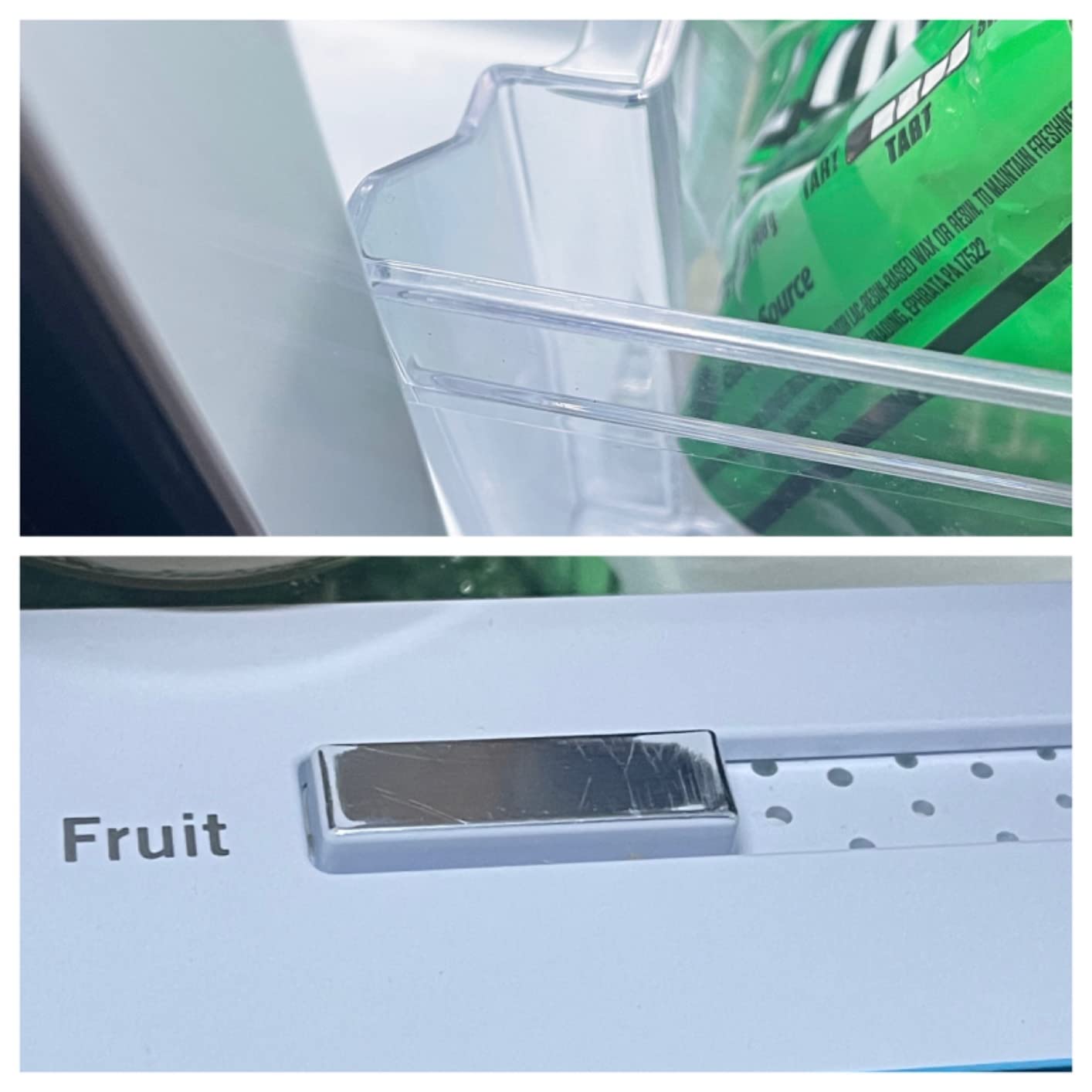
What 96 reviews at a 4.3 average actually tell you
The review profile is unusually healthy for an appliance of this size. Sixty-nine percent of ratings are five star, which usually signals a product that performs its stated job without drama, and the written feedback clusters around capacity, the front dispenser and cooling consistency rather than a single recurring failure. When reviewers do criticise something, it is the physical footprint, which is a measurement problem rather than a defect.
There is a caveat worth stating plainly. Ninety-six reviews is the largest sample here, but it is still a modest sample for a high-ticket appliance, and the review pool skews toward early owners. We would treat the 4.3 average as a reasonable central estimate rather than a guarantee, and we would ask the retailer in writing what the compressor and sealed-system coverage looks like on the exact model number before you sign.
Who should buy it and who should walk away
Buy this if you are a family of four or more, you want an external dispenser, and your kitchen has the depth and door clearance to suit a 35.63 inch body. It is also the smart pick for anyone who wants the app layer without paying a touchscreen premium, because the Wi-Fi features here are the same category of alert and diagnostic tools found on the app-driven models further down this list.
Walk away if you are renovating into standard 36 inch cabinetry and cannot give up the extra 12 inches of door clearance. Also skip it if you want a screen on the door, because there is none, and if you are buying this as a ten year appliance with a compressor warranty as a deciding factor, the one year GE warranty is a real limitation against Samsung and LG coverage.
2. LG LRFLC2706S Counter-Depth MAX French Door – Best Rated
LG LRFLC2706S 27 Cu. Ft. French Door Smart Refrigerator in Stainless Steel
26.5 cu. ft. total
Counter-Depth MAX frame
ENERGY STAR at 632 kWh
10 year linear compressor parts
Pros
- Counter-depth MAX body holds 26.5 cu. ft. in a 31.63 inch frame
- Internal dispenser and built-in ice maker keep the door flat
- Smart Cooling and Door Cooling plus stabilise temperatures
- ENERGY STAR rated at 632 kWh per year
- Ten year parts coverage on the linear compressor
Cons
- Temperature changes need the door open because the digital panel is inside
- Smart functions run through the phone app rather than a door display
- No external water or ice dispenser
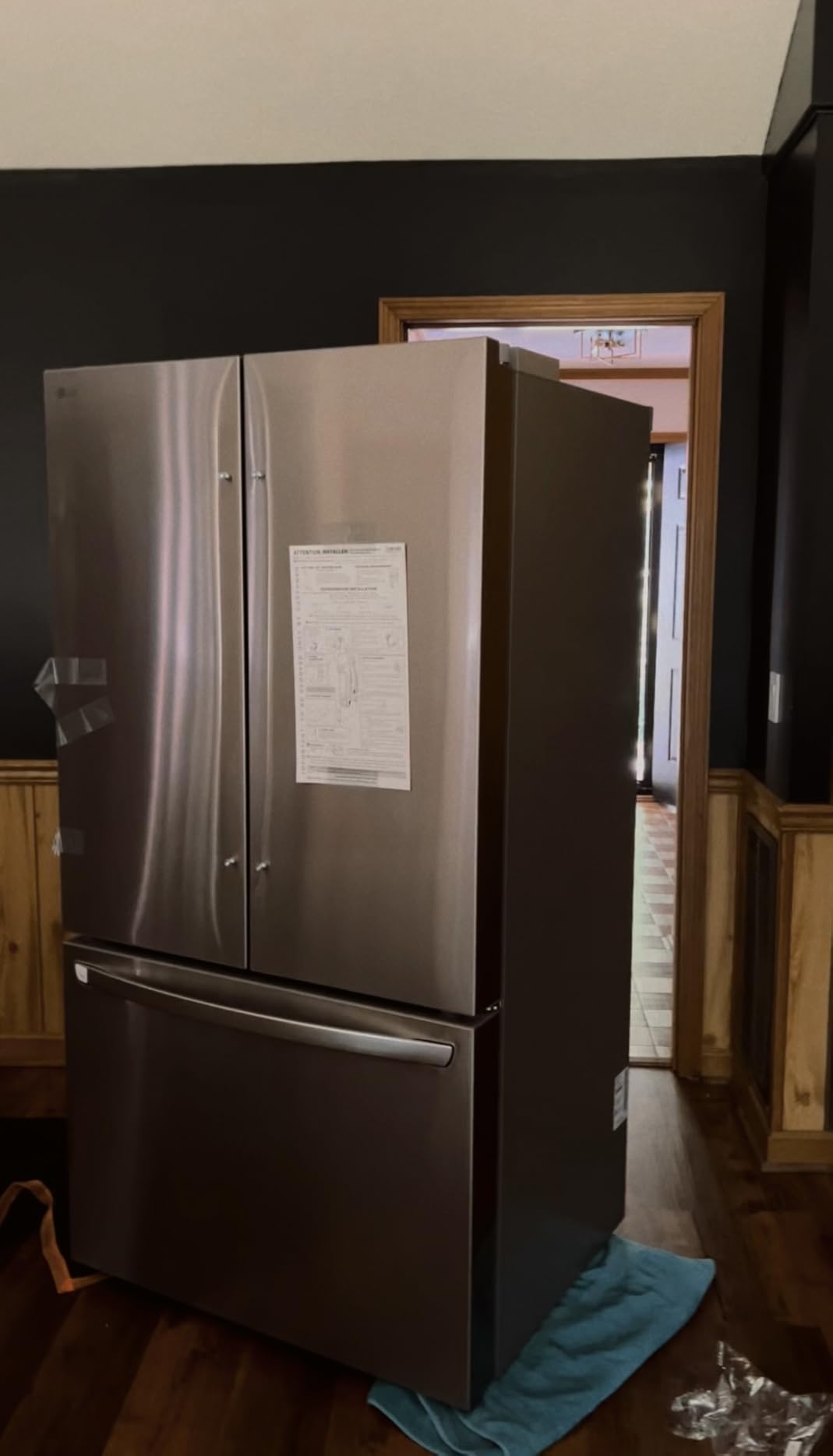
The LG LRFLC2706S posts one of the strongest average ratings in this group on 31 reviews, and it earns that on the strength of a design problem most manufacturers have not solved: putting genuine capacity into a counter-depth body. It measures 31.63 inch deep by 33.75 inch wide by 70.25 inch tall and still delivers 26.5 cu. ft., split into 18.4 cu. ft. of fresh food and 8.6 cu. ft. of freezer space. That fresh food figure is the largest in this comparison for a unit that sits nearly flush with your cabinets.
The door is completely flat, and the reason is the water dispenser and ice maker. Both are built into the interior rather than mounted through the door face, so there is no dispenser bulge to interrupt the stainless panel. LG pairs that with Cool Guard metal interior panels that hold cold air against the walls, and the result is steadier temperatures than a conventional box with the same compressor. The review summary is unusually enthusiastic, with 83 percent of ratings at five star and very little negative commentary beyond the control layout.
Two cooling systems are doing the work here. Smart Cooling sensors track conditions and adjust output, while Door Cooling+ pushes cold air into the door bins so items stored in the door do not sit at ambient temperature. Energy use is listed at 632 kWh per year with an ENERGY STAR rating, which is the second lowest figure in this group and a genuine advantage if you run the fridge in a warm kitchen or a garage-adjacent space.
The warranty is the strongest in this comparison. LG lists two years parts and labor on the whole appliance, five years on the sealed system, five years on the compressor, and parts-only coverage on the linear compressor from year six through year ten. On a compressor that runs continuously for a decade, that is the coverage that determines whether a future failure is an inconvenience or a large expense.
Why the strong rating still is not a touchscreen answer
Every meaningful reservation in the review data points at the same thing: the controls are inside. The digital panel is mounted in the fresh food compartment, so adjusting a temperature or a mode means opening the door and reaching in. In practice that is a small friction that most households accept, but it is the reason this fridge is not a touchscreen pick despite being marketed alongside that category.
The second caveat is that the smart layer is entirely app-based. There is no door display, no internal camera and no voice assistant here; the app handles status, alerts and diagnostics. Owners do not seem to mind, which tells you something useful about how much the average household actually uses a fridge screen. If your household will not open an app more than once a week, this design will not disappoint you.
Who should buy it and who should walk away
Buy the LRFLC2706S if your kitchen has standard cabinetry and you want it to look built-in without losing usable volume, and if long compressor coverage ranks high on your list. It is a strong choice for a first flat, a rental or a home where the refrigerator gets replaced on a normal cycle rather than held for fifteen years.
Skip it if you plan to use a door screen daily, because there is no door screen and the interior panel is a poor substitute. Also reconsider if a counter-depth body would leave you short on capacity: at 26.5 cu. ft. this is generous for its depth, but the slim door bins hold less than those on a full-depth four-door, and the flat door means no through-door ice access from outside.
3. Samsung RS27T5561SR/AA Family Hub Side-by-Side – The Only True Touchscreen Here
Samsung 26.7 Cu. Ft. Large Capacity Side-By-Side Refrigerator with Family Hub, Stainless Steel, RS27T5561SR/AA
26.7 cu. ft. total
Family Hub door touch screen
Alexa built in
691 kWh per year
Pros
- Only model here with a Family Hub touch screen on the door
- Alexa is built in so voice control needs no extra hardware
- 26.7 cu. ft. split into 17.2 fresh and 9.5 frozen
- Multivent cooling with an indoor icemaker
- ENERGY STAR 2020 Emerging Technology Award
Cons
- Side-by-side columns are narrow so wide platters do not fit
- Just 10 reviews and 17 percent of them are one star
- Glossy stainless finish shows fingerprints readily
This is the model the whole question is really about. The Samsung RS27T5561SR/AA puts a Family Hub touch panel on the door, so you can check the internal camera view, read the shared family calendar, update the grocery list and issue voice commands without opening the appliance or reaching for your phone. It is the only unit in this comparison that does that, and the only one with Alexa built in rather than requiring a separate smart speaker on the counter.
Capacity is 26.7 cu. ft., arranged side-by-side rather than as a French door, splitting into 17.2 cu. ft. of fresh food and 9.5 cu. ft. of freezer space. The vertical column layout means wide items do not rotate or stack well, so this is a fridge for households who cook from containers and jars rather than one that needs to fit a sheet pan. The indoor icemaker is a genuine space saver because it does not claim a door bin, and Multivent air distribution keeps each column even shelf to shelf.
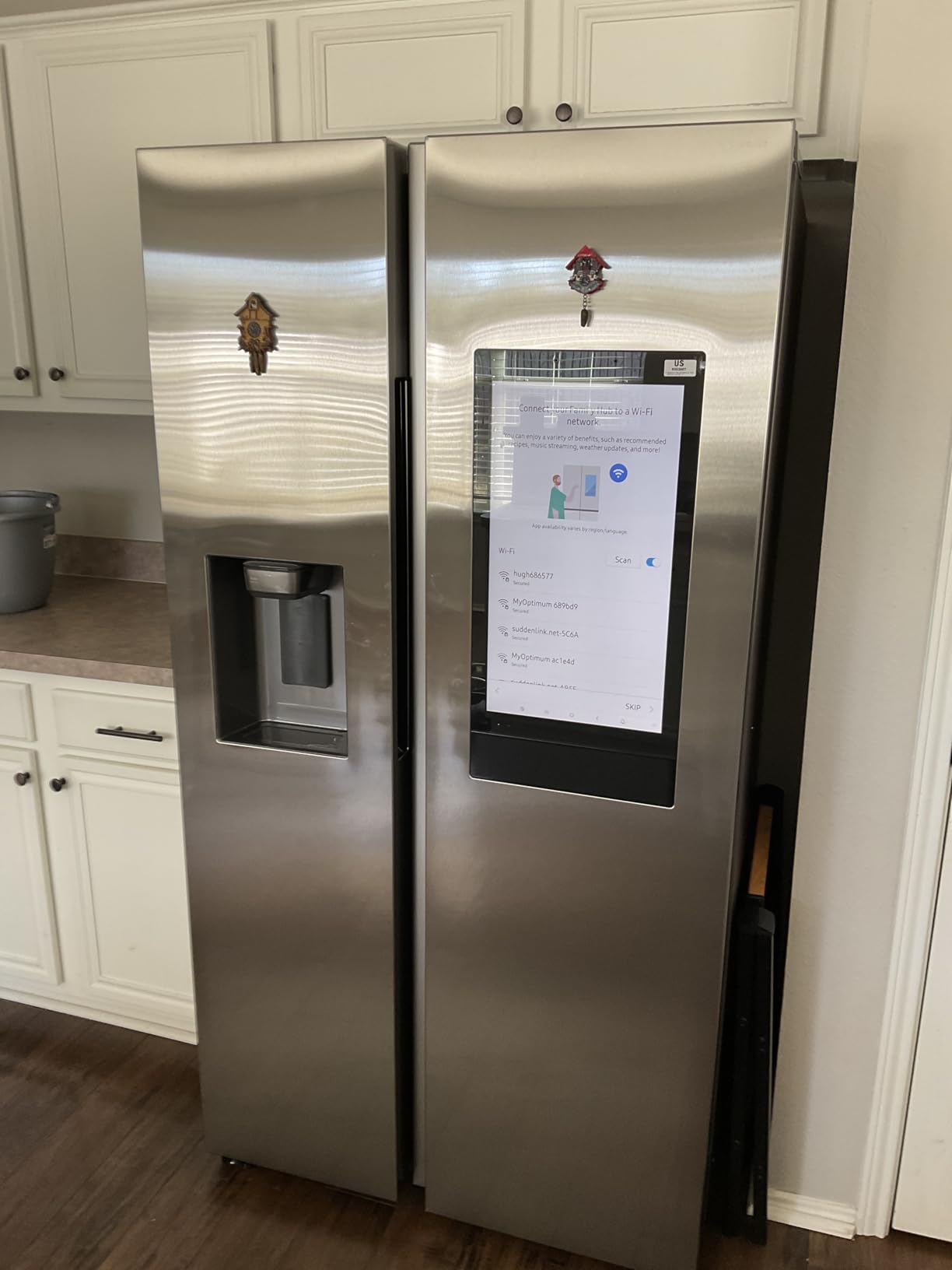
The physical footprint is 33.5 inch deep by 35.88 inch wide by 70.06 inch tall, and the unit weighs 306 pounds. Two measurements deserve attention if you are shopping for a screen specifically. The Family Hub panel sits in the upper left door, so you want a counter or a spot where someone at prep height can read it comfortably, and the glossy stainless finish around it will show fingerprints quickly. Energy use is listed at 691 kWh per year, which is competitive for a side-by-side of this size, and the model carries an ENERGY STAR 2020 Emerging Technology Award.
Warranty terms here are strong where they matter most: five years parts and labor on the sealed refrigeration system and ten years parts with five years labor on the digital inverter compressor. The screen itself falls under the general appliance coverage, which is worth asking about specifically, because display panels are often treated differently from the mechanical parts they share a chassis with.
What a Family Hub panel is genuinely useful for
Owners in community discussions are consistent about the same three uses being worth the money: the grocery list, the family calendar, and checking the internal cameras while you are standing in the store deciding whether to buy a second carton of milk. Those are the features people keep after the novelty fades. Streaming video and music, the features that dominate the marketing, get far less use once the first week is over.
That is not a criticism unique to this model; it is a property of the category. A screen on a fridge door is only as good as the routines built around it. In a household where one person does the shopping and another plans meals, the shared list and the camera check compound. In a household of one, the same screen tends to gather dust within a month.
Who should buy it and who should walk away
Buy this model if a door screen is a stated requirement, because it is the only honest way to get one in this comparison, and if you already use Alexa or want voice control without buying a speaker. It suits a side-by-side preference and a household that shops from a phone and plans meals around a shared list.
Walk away if you need wide horizontal storage, since the narrow columns rule out sheet pans and wide platters. Also consider the evidence base before buying: ten reviews is the thinnest sample here, and seventeen percent of them are one star, which is too small a group to read as a reliable quality signal in either direction. And if the idea of a manufacturer controlling what appears on a panel in your kitchen is a genuine concern, we address that directly further down.
4. GE Profile GYE22GYNFS Counter-Depth French Door – Best for Compact Kitchens
GE GYE22GYNFS 36″ French Door Counter Depth Refrigerator with 22.1 cu. ft. Total Capacity Space Saving Ice Maker Showcase LED Lighting in Stainless Steel
22.1 cu. ft. total
31.25 inch counter depth
LED showcase lighting
665 kWh per year
Pros
- Counter-depth 31.25 inch body gives a clean built-in look
- LED showcase lighting makes items easy to spot in the back corners
- Quiet operation suits open plan kitchens
- Adjustable shelves handle tall bottles and carafes
- ADA compliant and ENERGY STAR qualified
Cons
- Ice maker is the most common owner complaint
- Dispenser display above the water outlet is not backlit
- A few owners report cooling system failure after a few years
The GE Profile GYE22GYNFS solves a specific problem: getting a full French door layout into a kitchen that cannot accommodate a standard-depth body. At 31.25 inch deep by 35.75 inch wide by 70.5 inch tall, it gives you three doors, 22.1 cu. ft. of total space and a finished look that sits close to flush with surrounding cabinetry. Door-open clearance is 43.37 inch, considerably tighter than the GE Profile PVD28BYNFS and easier to accommodate beside a wall or an island.
Storage is five shelves and six door bins, with 14.92 cu. ft. of fresh food room and 7.16 cu. ft. frozen. The detail reviewers praise most is the LED showcase lighting, which lights the back corners rather than just the front edge, so you can find the jar at the back without pulling everything forward. Adjustable shelves handle tall items, which matters in a shallower body where shelf spacing is tighter, and owners note the unit runs very quietly, a genuine plus in an open plan kitchen.
Two complaints run consistently through the reviews. The space-saving ice maker is the most common, with owners reporting difficulty extracting cubes rather than the machine failing outright. The second is the dispenser panel above the water outlet, which is not backlit, so the buttons are genuinely hard to read in a dim kitchen. Neither is a deal breaker, but both are things you would notice every day if the dispenser is near your main prep path.
Energy use is listed at 665 kWh per year, and the unit is ADA compliant and ENERGY STAR qualified, which matters if you are planning an accessible kitchen. The warranty is a limited one year on the entire appliance, the thinnest in this group, and a small number of owners report complete cooling failure after a few years. On a 28 review sample that is not enough to call a pattern, but it is enough to say we would want a longer warranty in writing.
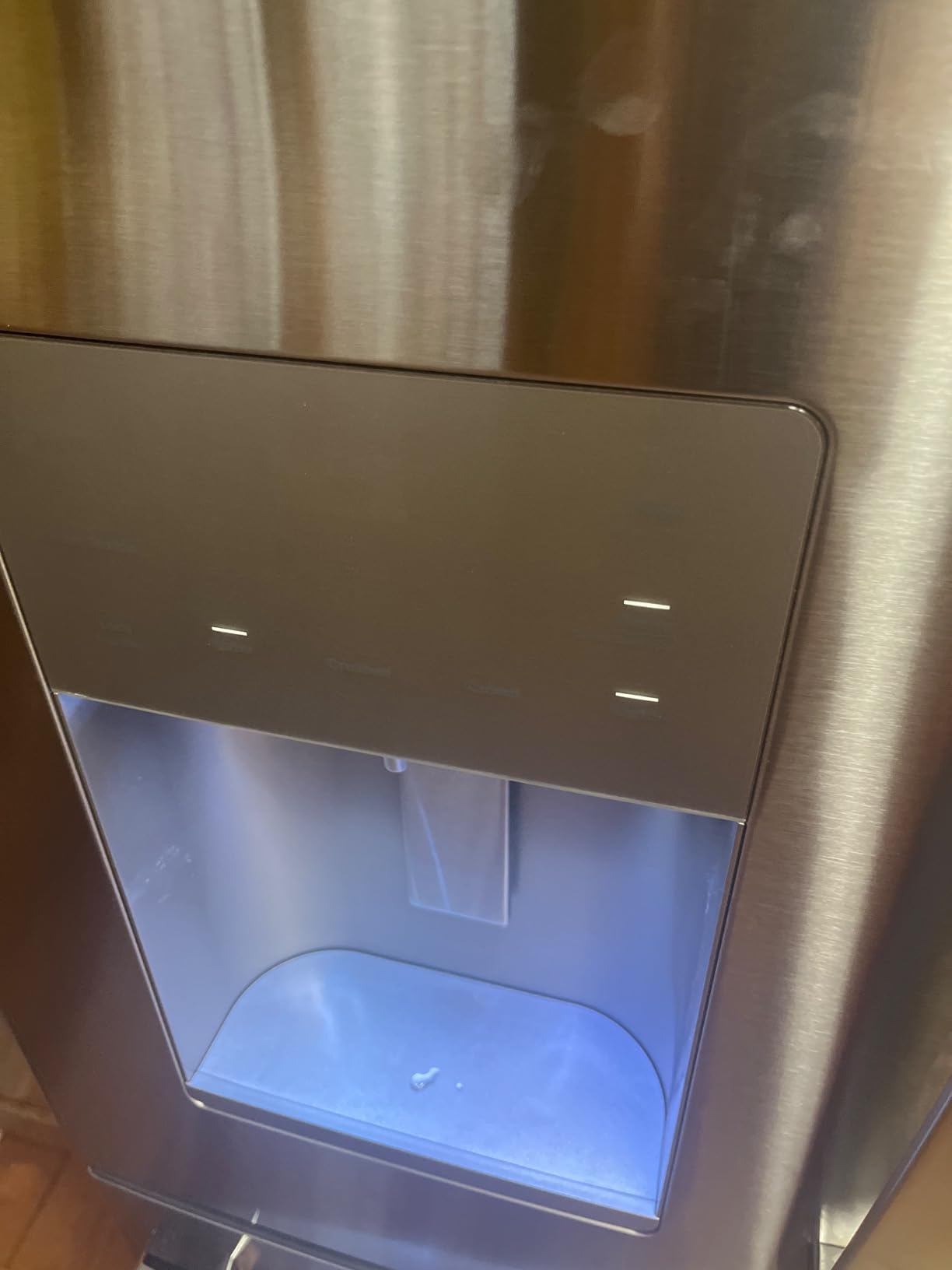
Whether counter depth costs you anything in daily use
Counter depth is a trade, not a free win. What you gain is the built-in look and a door that swings open in tight kitchens. What you give up is interior depth, and with it the ability to lay a wide sheet pan flat on a shelf or fit a tall stockpot lid against the back wall. Owners accept that trade readily, which suggests the styling benefit is doing more work than the lost capacity for most households.
Lighting is the sleeper feature. In a counter-depth body the shelves are shallower, so items sit closer to the front and a well-lit interior changes how usable the fridge feels day to day. This is the kind of detail that never appears in a comparison chart and yet gets noticed every single morning, and it is the main reason this fridge earns its place despite the ice maker complaints.
Who should buy it and who should walk away
Buy the GYE22GYNFS if you are remodelling into a narrow kitchen, you want the French door layout rather than a side-by-side column arrangement, and quiet operation matters in your space. It is a strong pick for a couple or a small family that shops weekly and does not need a second freezer drawer.
Skip it if ice is a daily requirement, since the space-saving maker is the weak point and the unlit dispenser makes a nighttime glass of water a small fumble. Also weigh the one year warranty carefully if you plan to keep it a long time, and note that the smart features here run through the app with no internal camera and no door display.
5. Samsung RF28R7201SR/AA 4-Door FlexZone – Best for Flexible Zones
Samsung 28 Cu. Ft. 4-Door French Door Smart Refrigerator with FlexZone Drawer, Stainless Steel, RF28R7201SR/AA
28 cu. ft. total
FlexZone drawer with four temperatures
Twin Cooling Plus
755 kWh per year
Pros
- FlexZone drawer switches across four temperature settings
- Smart Divider reorganises the drawer as contents change
- Twin Cooling Plus runs fridge and freezer independently
- SmartThings AI Energy Mode tracks monthly consumption
- Flat doors with recessed handles suit cabinetry
Cons
- Ice maker icing up and constant beeping is the most cited problem
- Control panel is app dependent so settings need a phone
- Some owners report running noise and clunking
The Samsung RF28R7201SR/AA is the most flexible storage design in this group and the one we would recommend to anyone who has ever argued about where something should go. It holds 28 cu. ft. across a four-door French door layout, with 19.7 cu. ft. of fresh food space and 8.3 cu. ft. frozen, five shelves and six door bins. The centrepiece is a FlexZone drawer that switches between four temperature settings and contains an adjustable Smart Divider you can reposition as the contents change.
Twin Cooling Plus runs the refrigerator and the freezer on separate air systems, which reduces the flavour transfer that makes a mixed household complain about leftovers tasting like the freezer. SmartThings AI Energy Mode is the most interesting smart feature in this comparison for a practical reason: it tracks consumption against a monthly target and alerts you when you approach it, which turns an invisible running cost into something you can actually manage. The flat doors and recessed handles give the unit a built-in appearance without the cabinetry-depth commitment of a true panel-ready model.
Those are the 29.38 inch by 35.75 inch by 70 inch dimensions, and the unit weighs 317.5 pounds. The 48.25 inch door-open clearance is the catch: like the GE Profile PVD28BYNFS, this is a full-depth body, so it wants real space in front of it. Energy use is listed at 755 kWh per year, the highest figure in this group, which is what you would expect from 28 cu. ft. with a FlexZone drawer and an external dispenser running alongside it.
The warranty is excellent: one year parts and labor on the refrigerator, five years parts and labor on the sealed refrigeration system, and ten years parts with five years labor on the digital inverter compressor. Against a one year GE warranty on a comparable capacity machine, that difference is worth a real conversation with yourself before choosing on styling alone.
What the ice maker complaints are actually telling you
Across the review data the ice maker is the recurring negative theme on this model, with owners describing cubes freezing together and a beeping cycle that becomes a background annoyance. That is a consumable component rather than a sealed system failure, and the practical response is a regular descale and filter change. We mention it because it is the single most common complaint, not because it suggests a broader reliability problem.
The app dependency is a separate friction. Settings are adjusted from a phone rather than from a panel, which is fine if you are used to it and mildly annoying if a guest needs to make a quick adjustment. And a minority of owners mention running noise and clunking, plus some frustration with paint peeling on the exterior and cosmetic warranty handling, which is worth raising at delivery while the unit is protected.
Who should buy it and who should walk away
Buy this if four-zone flexibility genuinely changes how your household stores food, if you want a full-depth four-door with a built-in look, and if the long compressor warranty is a deciding factor for you. The energy monitoring is a real, if unglamorous, reason to like the smart layer here.
Walk away if you want a screen on the door, because the controls here live entirely in the app, and if you are energy sensitive enough that the 755 kWh figure gives you pause. Also reconsider if a family of two or three, since 28 cu. ft. with a dedicated FlexZone is generous for a household that shops twice a week.
6. Samsung RF18A5101SR/AA Counter-Depth 3-Door – Best for Built-In Styling
Samsung 17.5 cu. ft. Smart Counter Depth 3-Door French Door Refrigerator, Stainless Steel, RF18A5101SR/AA
18 cu. ft. total
28.5 inch counter depth
205 pounds
WiFi outage alerts
Pros
- 205 pounds makes this the easiest unit here to install
- Counter-depth body blends into cabinetry with flat doors
- WiFi sends outage and propped door notifications to the app
- Twin Cooling Plus holds independent temperatures
- ENERGY STAR certified at 595 kWh per year
Cons
- 4.1 average with 18 percent of reviews at three stars
- Smart controls live in the app rather than on a door panel
- 11.7 cu. ft. of fresh food space is the smallest here
The Samsung RF18A5101SR/AA is the practical pick when the kitchen is tight and the install has to go smoothly. It is the lightest unit in this comparison at 205 pounds, and at 28.5 inch deep by 32.13 inch wide by 70 inch tall it clears doorways and slides into narrow spaces without the planning a 388 pound full-depth four-door demands. That combination of low weight and a slim body is why we recommend it for a rental, a first apartment or a kitchen with a tight approach.
Storage is 18 cu. ft. across a three-door layout, with 11.7 cu. ft. of fresh food room and 5.8 cu. ft. frozen, on three glass shelves. That is the smallest fresh food figure here, and it is the honest trade for the footprint. Twin Cooling Plus keeps the two compartments at independent temperatures, so the freezer does not dictate the fridge setting. The flat doors and recessed handles are what sell the built-in look, and the fingerprint resistant stainless finish keeps the appearance tidy without daily polishing.
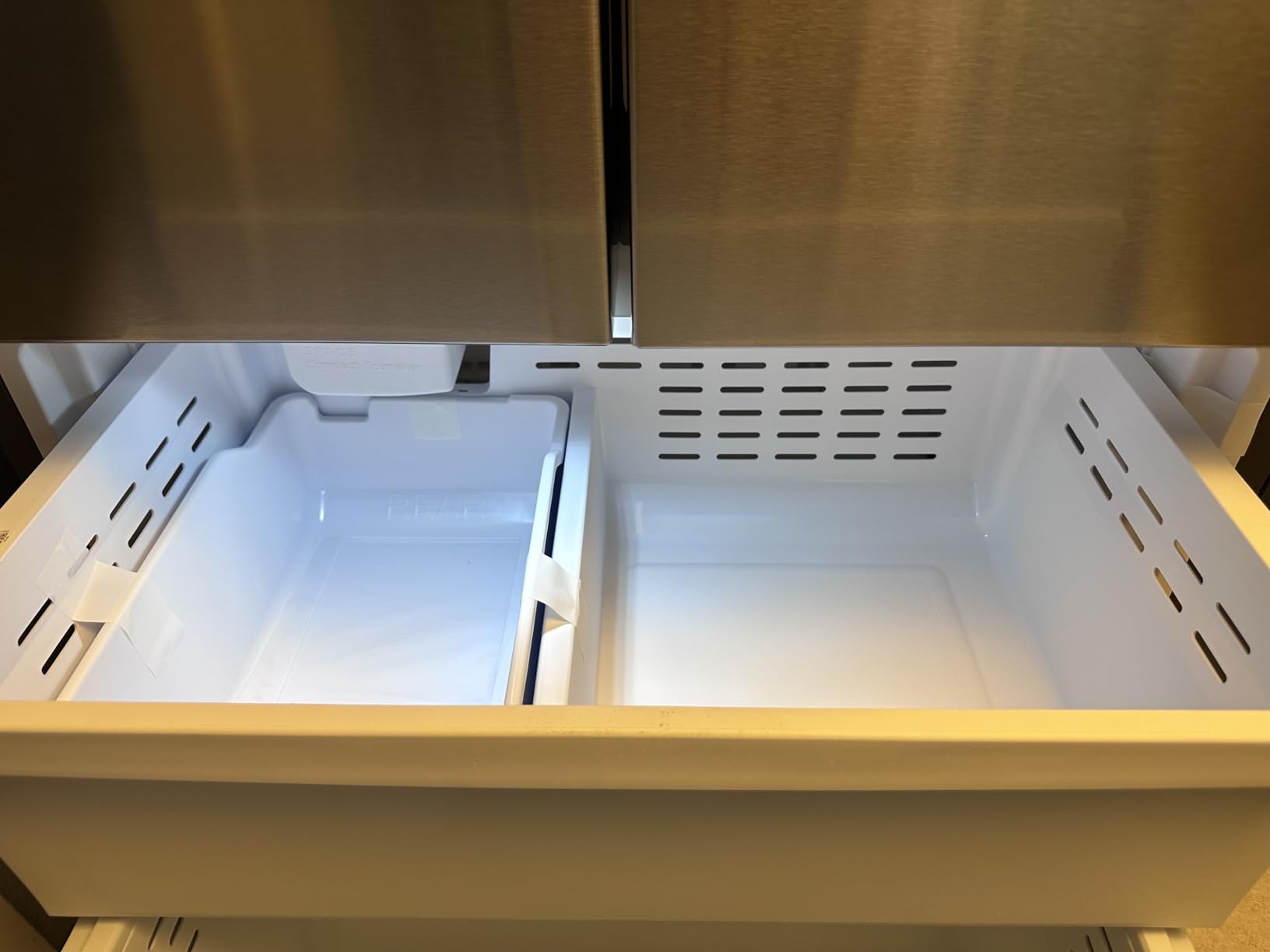
What makes the smart layer useful here is its narrow focus. The WiFi connectivity sends notifications when temperatures drop after a power outage and when a door is propped open, which are the two situations where an unattended fridge causes real food loss. That is a modest feature set, but it is the part households actually use after the setup novelty passes. Energy use is listed at 595 kWh per year, the lowest figure in this group, and the unit is ENERGY STAR certified.
Warranty coverage is the same strong Samsung package: one year parts and labor on the refrigerator, five years on the sealed refrigeration system, and ten years parts with five years labor on the digital inverter compressor. One dimension to note before ordering is the 51.1 inch door-open clearance, which is the widest in this comparison despite the slim body, because the doors open outward a long way before the depth stops mattering.
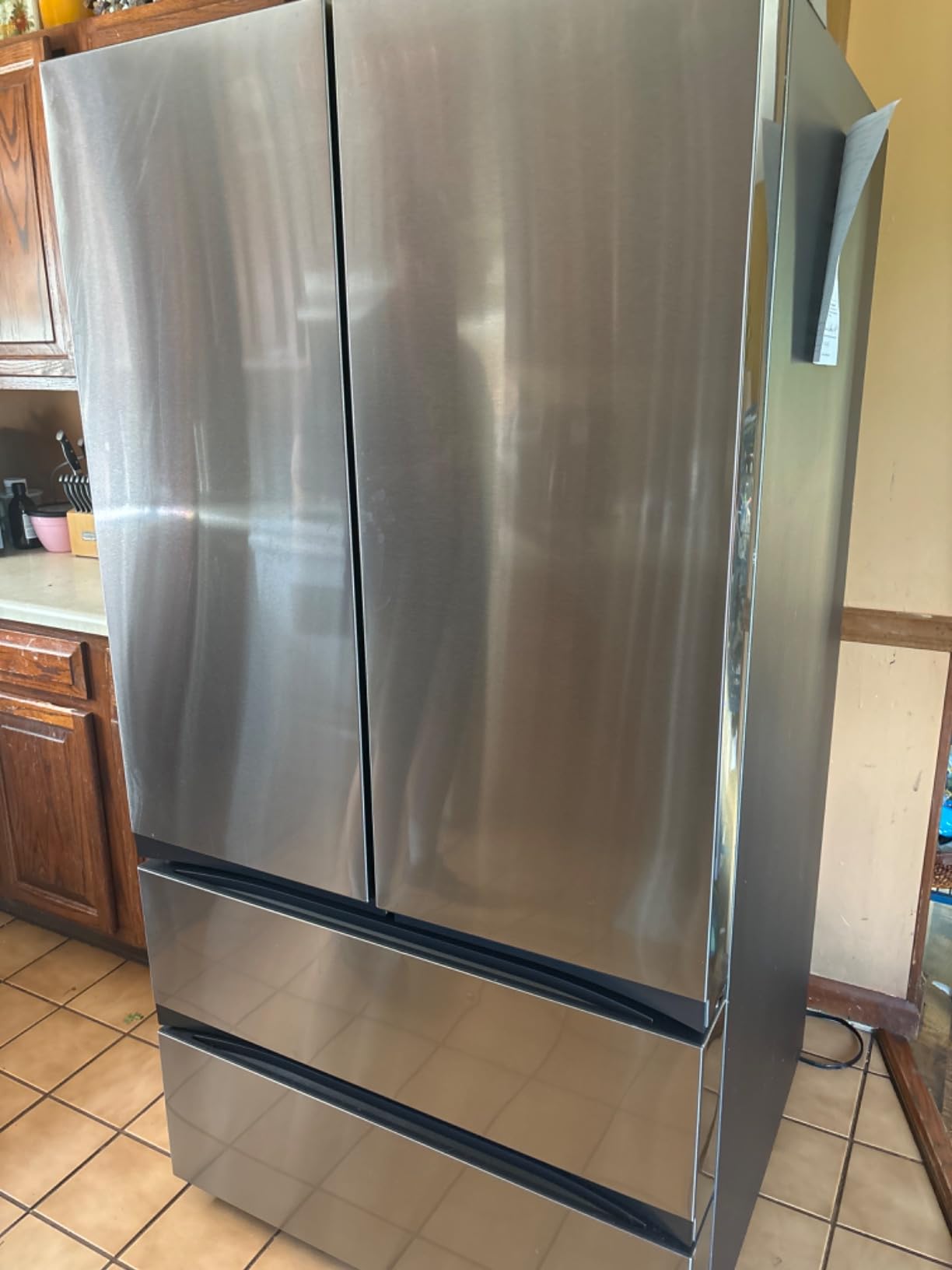
Reading a 4.1 rating with a spread rather than a complaint
This model’s average sits at 4.1 on 25 reviews, with eighteen percent of ratings at three stars and four percent at one star. That pattern is different from a product with one dominant failure mode, where you would see a cluster of one star reviews describing the same problem. Here the scores are spread across the middle, which typically means some buyers wanted more capacity or a different layout rather than that the unit broke.
The written feedback is warmer than the number suggests. Owners cite the compact counter-depth footprint, the alert notifications and the independent cooling as the reasons they are happy, and the small sample is better explained by limited sales volume than by a design flaw. If you want a single data point to hold onto: the 595 kWh rating and the ten year compressor coverage make this the most efficient and best protected unit per pound in the group.
Who should buy it and who should walk away
Buy the RF18A5101SR/AA if you are a couple or a one to two person household, you are installing into a tight kitchen or a rental, and the easy delivery weight matters. It also makes sense as a second fridge for a basement, office or short-term rental where the main job is keeping food cold and alerting you to problems.
Skip it if a family of four or more, since 11.7 cu. ft. of fresh food space will not carry a full week of shopping. Also skip if you want a door screen, voice control or an internal camera, because none of those exist here, and note that the narrow door-open clearance needs to be checked against your wall or cabinet run before delivery day.
7. GE PAD28BYTFS 4-Door French Door with AutoFill – Best for Convertible Zones
GE PAD28BYTFS 36 Inch Freestanding 4-Door French Door Smart Refrigerator with 28 cu. ft.
28 cu. ft. total
Fully convertible temperature zone
AutoFill pitcher dispenser
Triple evaporators
Pros
- Convertible zone switches one compartment between fridge and freezer duties
- Dual-Dispense AutoFill pitcher refills itself inside the fridge
- Door-in-Door storage keeps everyday items within reach
- Built-in WiFi with triple evaporators
- LED light wall and soft close drawers
Cons
- Just 4 reviews so reliability is effectively unproven
- 8.57 inch of door shelving leaves small item storage shallow
- 37 inch depth is the deepest in the group so clearance is tight
The GE PAD28BYTFS has the most interesting hardware in this comparison, and the least evidence behind it. At 4.6 on four reviews it posts the highest average score in the group, which is exactly the number to be cautious with. Four reviews tell you early owners were happy; they tell you very little about how the AutoFill pitcher and triple evaporators behave in year four.
What is genuinely distinctive is the fully convertible temperature zone, where one compartment switches between fridge and freezer duties on demand, and the Dual-Dispense AutoFill pitcher that refills a BPA-free pitcher automatically from inside the compartment. For a household that alternates between bulk freezer shopping and a fresh-heavy week, that flexibility has real value. Door-in-Door storage keeps frequently used items reachable without opening the main compartment, and an LED light wall plus soft close drawers improve visibility and drawer action.
Capacity is 28 cu. ft., splitting into 16.21 cu. ft. of fresh food and 5.92 cu. ft. frozen, on eight shelves. Built-in WiFi pairs with triple evaporators for independent, even temperature control, which is a strong cooling architecture on paper. The dimensions are 37 inch deep by 36 inch wide by 70 inch tall at 333 pounds, and that 37 inch depth is the deepest body in this comparison, so it needs more clearance in front than anything else on this list.
Two spec details deserve a closer look before you commit. The listed door shelving measures just 8.57 inch, which leaves small item storage shallower than a standard door bin, and the reversible door orientation gives you flexibility on hinge side that most buyers never think to ask for. Energy use is listed at 681 kWh per year, a respectable number for 28 cu. ft., and the warranty is one year manufacturer, the same thin coverage GE lists on its Profile range.
The honest framing is that this is a fridge to watch rather than a fridge to buy blind. The feature set is more ambitious than anything else here, and the convertible zone plus AutoFill pitcher combination has no direct equivalent in this comparison. But an early stage listing with four reviews means you would be among the first owners at scale, and we would want to see how the first year of feedback develops before recommending it as a primary family refrigerator.
What AutoFill actually changes about daily water
The AutoFill pitcher removes a small daily task: filling a water container and waiting for it to chill. Because the pitcher sits inside the compartment on the cold side, the water arrives at drinking temperature rather than fridge temperature, and the dual dispense system lets you choose still or sparkling depending on the dispenser configuration. Owners on early listings consistently single this out as the feature they would miss most if it disappeared.
The design has a constraint worth understanding. An internal refill mechanism needs a water line connection and a filter change schedule, and the pitcher occupies shelf space whether you use it or not. In a 16.21 cu. ft. fresh food compartment that is a real allocation of space for a benefit that is easy to underestimate until you stop doing it manually.
Who should buy it and who should walk away
Buy it if you want a convertible zone, you value never refilling a water pitcher again, and you have the 37 inch depth of clearance available. It is also worth considering if reversible doors matter for your kitchen layout, which is a rarer feature than it sounds in tight installations.
Walk away if you are buying a fridge that will serve as your only family refrigerator for a decade on the strength of four reviews, because the evidence base is simply too thin. Also consider the shallow 8.57 inch door shelving if you store bottles and condiments in the door, and remember the one year warranty sits well below the Samsung coverage available elsewhere in this list.
8. Bosch 800 Series B36CL80ENS Counter-Depth French Door – Best for Cabinet-Ready Look
800 Series 36 in. 21 cu. ft. Smart Counter Depth French Door Recessed Handle Refrigerator Stainless Steel, Ice and Water
20.5 cu. ft. total
800 Series counter depth
Home Connect app
ENERGY STAR certified
Pros
- 800 Series styling with recessed handles sits close to flush with cabinetry
- Home Connect app adds remote monitoring and alerts
- Counter-depth cabinet fits narrower kitchen layouts
- ENERGY STAR certified with a dual compressor setup
Cons
- 4.1 average is the lowest here with 13 percent one star reviews
- Listed dimensions are internally inconsistent so confirm fit before ordering
- Only a 1 year manufacturer warranty
The Bosch 800 Series B36CL80ENS is the one to buy if the appearance of the refrigerator is the deciding factor. The recessed handles and 800 Series styling are designed to sit close to flush with surrounding cabinetry, and for a kitchen built around matching panels that visual continuity is worth more than most of the features on this list. It is a four-door counter-depth unit holding 20.5 cu. ft. across four shelves.
The smart layer here is Home Connect, which adds remote monitoring and alerts through a phone app. That is the same category of functionality as the other app-driven models in this comparison, and it is competently done without being a differentiator. Cooling relies on a dual compressor setup, and the unit is ENERGY STAR certified with a four star energy listing. The external ice and water dispenser handles both, and the recessed shelving is part of the styling package.
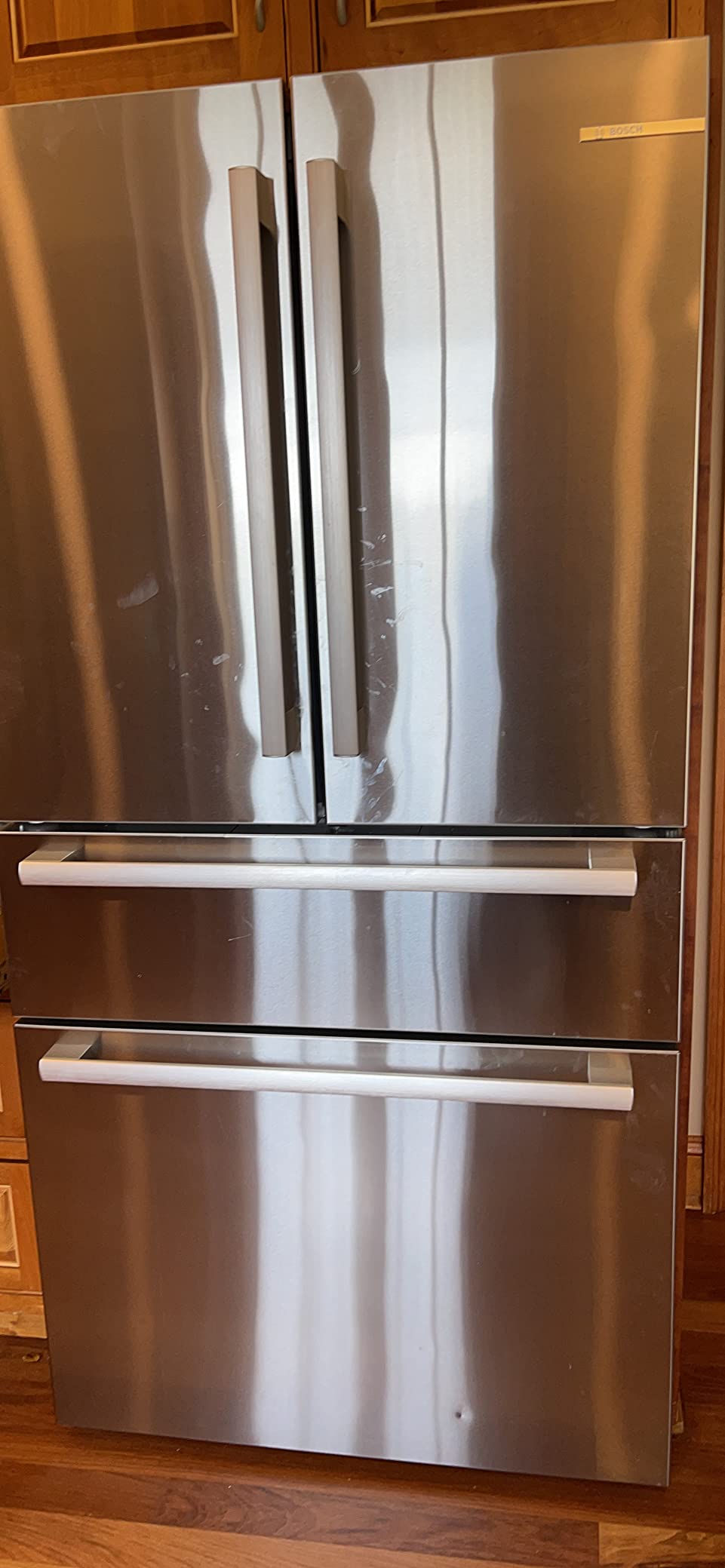
Two things give us pause. First, the listed dimension data for this model is internally inconsistent, with the published depth, width and height figures not reconciling with each other. That is not a reason to skip the fridge; it is a reason to measure your opening and confirm the fit with the retailer before you order. Appliance fit is one of the easiest problems to avoid and one of the most expensive to discover after delivery.
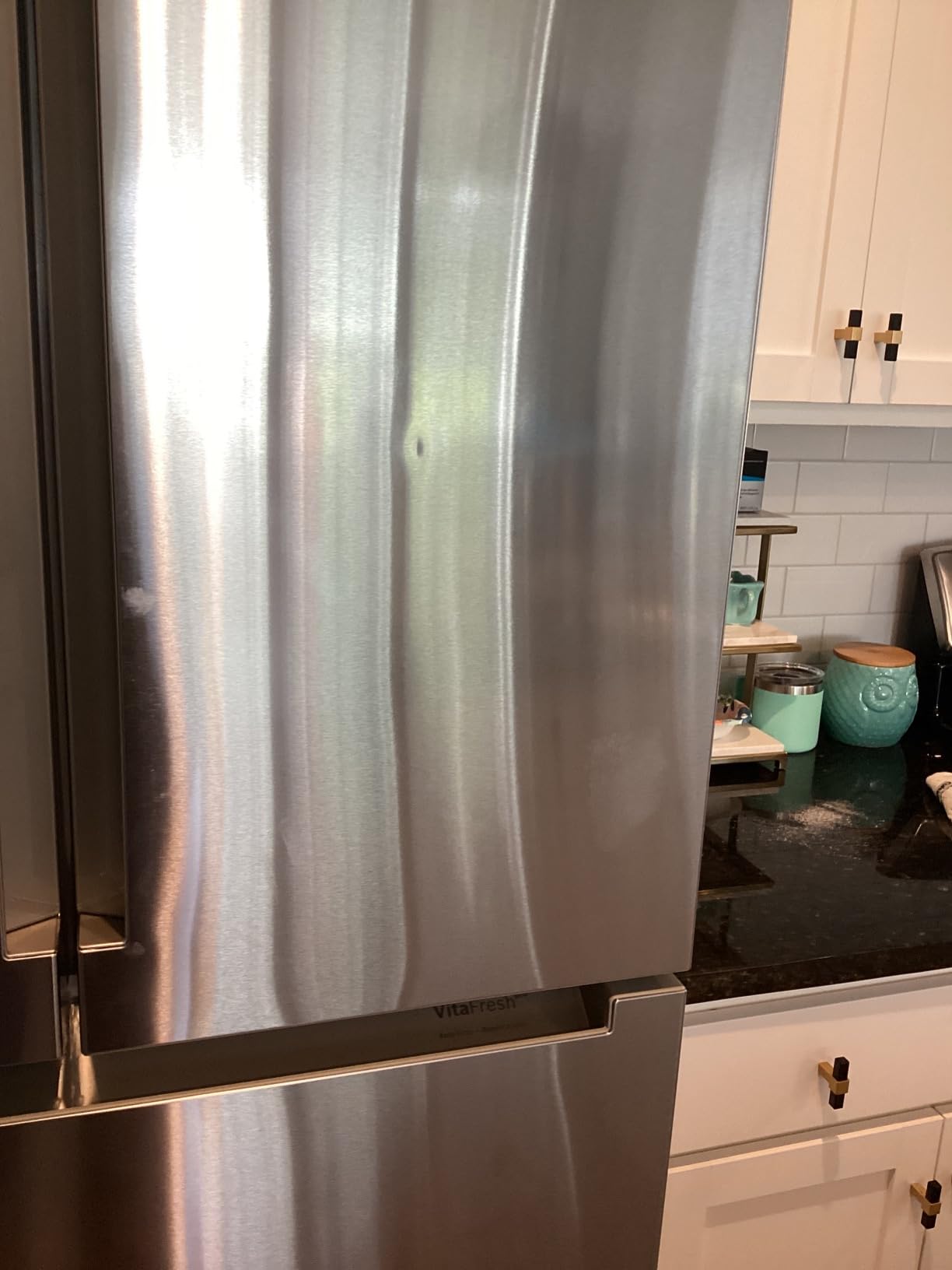
Second, the 4.1 average on 22 reviews is the lowest in this group, with thirteen percent of ratings at one star. The review summary attributes the weaker score to a dispersed set of complaints rather than one dominant failure mode, which usually means fit, delivery or expectation issues rather than a defect. The one year manufacturer warranty is the thinnest coverage here and does nothing to reassure on that point. If the built-in look is the reason you want it, buy it for the look with your eyes open.
Whether Bosch styling is worth the trade-offs
The honest question is whether cabinet-matched styling is a need or a preference. If your kitchen has tall pantry cabinets and the fridge is the one appliance that interrupts the line, the visual payoff is immediate and permanent. If the fridge sits in an open alcove between a wall and a pantry, the same money buys more usable capacity and longer warranty coverage elsewhere in this comparison.
Home Connect is worth a sentence of its own. It is one of the more established connected appliance platforms, and for a buyer already running a smart home it is a smoother fit than starting fresh with a proprietary app. But it is monitoring and alerts, not a door screen, so it does not change the answer to the touchscreen question.
Who should buy it and who should walk away
Buy the 800 Series if matching your cabinetry is a priority, you already use or trust Home Connect, and your kitchen layout suits a counter-depth four-door with a recessed handle profile. It is a reasonable choice for a design-led renovation where the fridge is meant to disappear into the cabinetry run.
Skip it if you are buying on evidence, because 22 reviews at 4.1 with a dispersed complaint pattern is a weaker signal than the Samsung and GE models here. Also skip it if you plan to keep the appliance a long time without researching coverage, since the one year warranty is the thinnest in this comparison, and always confirm the fit given the inconsistent published dimensions.
How to Choose a Smart Refrigerator With a Screen
Start by confirming that the screen is physical, because this is where most disappointed buyers go wrong. A model described as smart may have sensors, remote temperature control, a door-open sensor and an app for diagnostics, and none of that requires a display. Look for a manufacturer spec that states a screen or touch panel and states where it is mounted. If the controls are described as interior or accessed with the door open, you are looking at an app-only fridge, not a touchscreen fridge.
Next, pick the screen size for how you will actually use it rather than for how it photographs. Small panels in the ten to twelve inch range are fine for a calendar, a weather strip and a grocery list, and they leave more door real estate for storage bins. Large panels in the twenty-one to twenty-seven inch range support camera views, recipe browsing and video, which is where a bigger screen starts to earn its space. The cost difference between those two categories is substantial, and most households end up using the first category’s features even on the second category’s screen.
Counter-depth versus standard depth decides whether the screen even fits where you want it. Standard-depth bodies run in the region of 33 to 37 inch deep and give you a wider door face to mount a panel on, plus more door-open clearance headroom. Counter-depth units sit closer to 28 to 32 inch deep and sit nearly flush with cabinetry, which looks better but leaves less room for a large panel and less space in front for the door to swing. Our general refrigerator buying guide covers the depth trade in more detail if your layout is the deciding factor.
Capacity math is simpler than most guides make it sound. A household of one or two needs roughly 18 to 22 cu. ft., a family of three or four needs 25 to 28 cu. ft., and a family of five or more, or anyone who buys in bulk, wants 28 cu. ft. and up. Add roughly 20 percent if you shop for a full week at a time, because the freezer and the door bins need somewhere to put the overflow. Whatever you pick, buy one size above your minimum if your kitchen can take it, because capacity is the one thing you cannot change later.
App ecosystem matters more than brand for anyone already in a smart home. Samsung models centre on SmartThings, LG on ThinQ, GE on its own app, Bosch on Home Connect, and the practical question is whether your existing hub can see the fridge at all. Voice assistant support varies sharply: the Samsung RS27T5561SR/AA has Alexa built in, while several others in this comparison ship with no voice control whatsoever. If you care about internal cameras, note that none of the eight units here includes them.
Finally, plan for the glass. A glossy touch panel collects fingerprints and smudges faster than any other surface in your kitchen, and it sits at eye level where everyone can see it. Have a microfibre cloth and a screen-safe cleaner within reach from day one, and avoid ammonia-based products on the panel, which can haze the coating permanently. If smudging bothers you more than the features do, that alone is a good reason to choose an app-only model.
If you are still deciding, it can help to compare a smaller adjacent category. Our portable refrigerator guide covers cooler-style units, and our commercial refrigerator guide covers pro-grade glass-door models, both of which give useful context on what a different kind of cooling technology does and does not solve.
The Honest Drawbacks of Owning a Smart Fridge With a Touchscreen
The category has real, documented downsides, and any guide that skips them is selling something. First, the panel is a display surface before it is a computer, and manufacturers have used Family Hub panels to serve full-screen banner advertisements to owners who paid a substantial premium for the appliance. This is the single most common owner complaint about the category and the one we hear most often in community discussions. Settings menus on these platforms generally include a control to disable promotional content, but the fact that the option exists at all is the point.
Second, software support is an open question that no manufacturer answers clearly at the point of sale. A refrigerator is expected to last fifteen to twenty years; a consumer app and its cloud backend might last five. If the manufacturer retires support, the panel does not disappear, it simply stops doing what you bought it for, and the unit is now a large appliance with a large glass surface that no longer functions. That is a genuine obsolescence risk unique to this category, and it is why we would think hard before paying a premium for a screen rather than a premium for a better compressor.
Third, panel repair is a specialist job. A cracked or unresponsive touch panel on a high-ticket appliance is not a standard service call, and labour plus parts can rival a meaningful share of the purchase price. Because the one year GE and Bosch warranties here are thinner than the Samsung and LG compressor coverage, the panel sits with limited protection in exactly the situation where you would most want coverage. Ask the retailer in writing what the display panel is covered under before you commit.
Fourth, the price premium is real and easy to measure against the alternative. You can buy an app-driven smart refrigerator in this comparison with better capacity, longer warranty coverage and equal cooling performance for less money, and the practical difference in daily life is often nothing at all. That is not an argument against buying one; it is an argument for buying the screen only when you have a routine that uses it.
Fifth, internal cameras raise a privacy question that the marketing rarely addresses. None of the eight units reviewed here includes one, which sidesteps the issue for this comparison, but it is worth deciding your position before you buy rather than after. Sixth, the smudging is real, and it is the reason the best-performing smart fridges in owner reviews are often not the ones with the biggest screens.
Smart Fridges to Stay Away From
Rather than naming models we have not measured, we can tell you which categories consistently disappoint people who expected a touchscreen experience. Avoid any listing where the word smart appears but no manufacturer spec describes a display. These are app-only fridges, and buying one expecting a door screen is the most common mismatch in this category.
Be cautious with listings that show very few reviews alongside a very high average rating. The GE PAD28BYTFS in this comparison has a 4.6 average from four reviews, which is impressive and almost meaningless as a quality signal. Averages built on small samples move sharply in either direction once volume arrives.
Skip models with inconsistent published dimensions, because they are a reliable signal that the listing has not been checked against a real unit. The Bosch 800 Series listing here is a good example, and the failure mode is a delivery-day discovery that the fridge does not fit the opening.
Be wary of any manufacturer or retailer that will not tell you the display panel warranty terms in writing before purchase, and of any fridge priced as a smart model where the smart features depend entirely on a phone app with no documented support window. Finally, avoid side-by-side layouts if you cook and serve wide items, regardless of how good the screen is.
Frequently Asked Questions
What is the best smart refrigerator with a screen?
Among the eight models we compared, the Samsung RS27T5561SR/AA is the only one with a physical touch panel on the door, a Family Hub screen with Alexa built in, internal camera viewing, a shared grocery list and a family calendar. If you want the best overall refrigerator regardless of the screen, the GE Profile PVD28BYNFS wins on capacity and review depth.
What smart fridge has a touch screen?
The Samsung RS27T5561SR/AA in this group has a Family Hub touch screen mounted on the door. The others are app-driven: the LG LRFLC2706S has digital controls inside the compartment, the Samsung RF18A5101SR/AA and RF28R7201SR/AA are app-only, and the GE and Bosch models use a phone app with no door display. Always check where the screen is mounted before buying.
What are the disadvantages of a smart fridge?
The main drawbacks are manufacturer advertising served on panels, uncertain long term software support, expensive specialist panel repair, a significant price premium over equally capable app-only fridges, privacy concerns with internal cameras, and constant fingerprint smudging on glossy glass. Owner sentiment also splits sharply, with enthusiasts loving the screens and mainstream buyers finding them unused after the first month.
Is the Samsung Family Hub refrigerator worth it?
It is worth it if a household actually uses a shared grocery list, a family calendar and camera checks while shopping, because those are the features owners keep. It is not worth it if you are mainly tempted by streaming video, which owners report using far less than the marketing implies. Check whether the promotional content control is available in settings before you commit, and confirm the display panel warranty in writing.
Is the Samsung Family Hub being discontinued?
Discontinuation worries come up constantly in owner discussions, and the honest answer is that no manufacturer commits publicly to a ten year software support window for consumer appliance panels. That uncertainty is the real risk, not any specific announcement. The hardware has a strong second life: owners on home automation forums repurpose decommissioned Family Hub LCDs as Home Assistant dashboards, which is a reasonable fallback if support lapses.
What refrigerator to stay away from?
Avoid listings that are called smart but have no physical display anywhere, models with very high average ratings built on only a handful of reviews, and listings with inconsistent published dimensions. Also be cautious about any seller who will not state display panel warranty terms in writing, and skip side-by-side layouts if you regularly cook wide items.
Do smart fridges need Wi-Fi?
Yes. Every model in this comparison uses built-in Wi-Fi for its app features, including temperature alerts, door-open notifications and remote monitoring. The cooling itself does not depend on connectivity, so a network outage leaves the refrigeration working normally, but you lose alerts and any remote control until the connection is restored.
The Bottom Line on the Best Smart Refrigerators With Touchscreens in 2026
Only one refrigerator in this entire comparison answers the touchscreen question honestly: the Samsung RS27T5561SR/AA, with its Family Hub door panel and built-in Alexa. Every other model is a genuinely good app-driven smart fridge that happens to have no display, and if you are choosing on cooling, capacity and warranty rather than on a screen, the GE Profile PVD28BYNFS is the pick with the deepest evidence behind it.
That distinction matters more than any spec on this page. A screen is a premium purchase with an uncertain support window, a specialist repair bill and a smudge problem attached, so it is worth paying for only when your household has a routine that uses it. Grocery lists, family calendars and camera checks while shopping are the uses that survive contact with daily life; streaming video on a fridge door mostly does not.
Before you order any of these, measure your opening and the door-open clearance, and get the display panel warranty terms in writing. Both steps take five minutes and prevent the two failures buyers regret most.