
Westinghouse makes the best tri fuel generator for most homeowners, because the WGen9500TFc pairs the largest review base in this class with rated output on gasoline, propane and piped natural gas, remote start and a transfer-switch-ready outlet. Champion wins on quiet inverter power, and WEN wins on raw surge capacity.
A tri fuel generator is a portable generator that runs on gasoline, liquid propane and piped natural gas from one engine, which gives a homeowner three fuel options from a single machine during an outage. That matters more than it first sounds: gas stations run dry, propane refill kiosks close, and gas lines get shut off in a major storm. A tri fuel generator still runs on whatever is left, and once it is plumbed to a natural gas line it can keep going for as long as you keep paying the gas bill.
We compared nine tri fuel portable generators rated at 4.0 stars or better with a meaningful customer review history, ranking them on rated output per fuel, engine displacement, weight, outlet layout, safety electronics, warranty length and what actually ships in the box. Every figure in this guide comes from the manufacturer listing and aggregated customer reviews, not from our own laboratory bench, so you can trace each number back to the source.
One thing to clear up before we get into the picks: a tri fuel generator is not the same thing as a factory-installed standby unit. It is a portable machine that you can wire into your house permanently, and understanding that difference shapes every other decision on this page. If you are still narrowing the field, our guide to whole house standby generators covers the permanently installed route.
Table of Contents
Top 3 Best Tri Fuel Generators for Home Standby (October 2026)

Westinghouse WGen9500TFc
- 9500W running on gasoline
- 7500W on natural gas
- Remote start key fob
- Transfer switch ready outlet

DuroMax XP13000HXT
- 13000 starting watts
- 10500W running on gasoline
- Remote start
- CO Alert shutdown

Champion 11,000W Inverter
- Inverter clean power
- Remote start to 80 feet
- Both fuel hoses included
- 15 hour runtime
All 9 Tri Fuel Generators Side by Side in 2026
The table below ranks every model in this guide by how much usable power it delivers on each of the three fuels, since that gap is the single most misunderstood spec in this category. The Westinghouse WGen9500TFc is the one we lean toward for most homes.
| Product | Specifications | Action |
|---|---|---|
| Westinghouse WGen9500TFc |
|
Check Latest Price |
| DuroMax XP13000HXT |
|
Check Latest Price |
| Champion 11000W Tri Fuel Inverter |
|
Check Latest Price |
 Westinghouse iGen12000TFc Westinghouse iGen12000TFc |
|
Check Latest Price |
 Champion 12500W Tri Fuel Champion 12500W Tri Fuel |
|
Check Latest Price |
 GENMAX GM10500iETC GENMAX GM10500iETC |
|
Check Latest Price |
 DuroStar DS13000MXT DuroStar DS13000MXT |
|
Check Latest Price |
 WEN TF-1450X WEN TF-1450X |
|
Check Latest Price |
 Generac G0080631 Generac G0080631 |
|
Check Latest Price |
1. Westinghouse WGen9500TFc – Best All-Round Tri Fuel Generator
Westinghouse 12500 Peak Watt Tri-Fuel Home Backup Portable Generator, Remote Electric Start, Transfer Switch Ready, Gas, Propane, and Natural Gas Powered
9500W running gasoline
8500W propane
7500W natural gas
457cc OHV
215 pounds
Pros
- Rated output on all three fuels
- Remote start key fob with electric and recoil backup
- L14-30R transfer switch ready plus 14-50R RV outlet
- Cast iron cylinder sleeve and hour meter
- Comes with key fob battery charger oil and funnel
Cons
- Open frame design is louder than enclosed inverter models
- 215 pounds needs two people to move
- Natural gas output sits well below gasoline output
This is the model we keep coming back to, and the reason is not the spec sheet. It is that 1926 customer reviews at a 4.7 average with 86 percent five-star is by far the deepest field history in the tri fuel class, and the complaints in those reviews stay remarkably consistent.
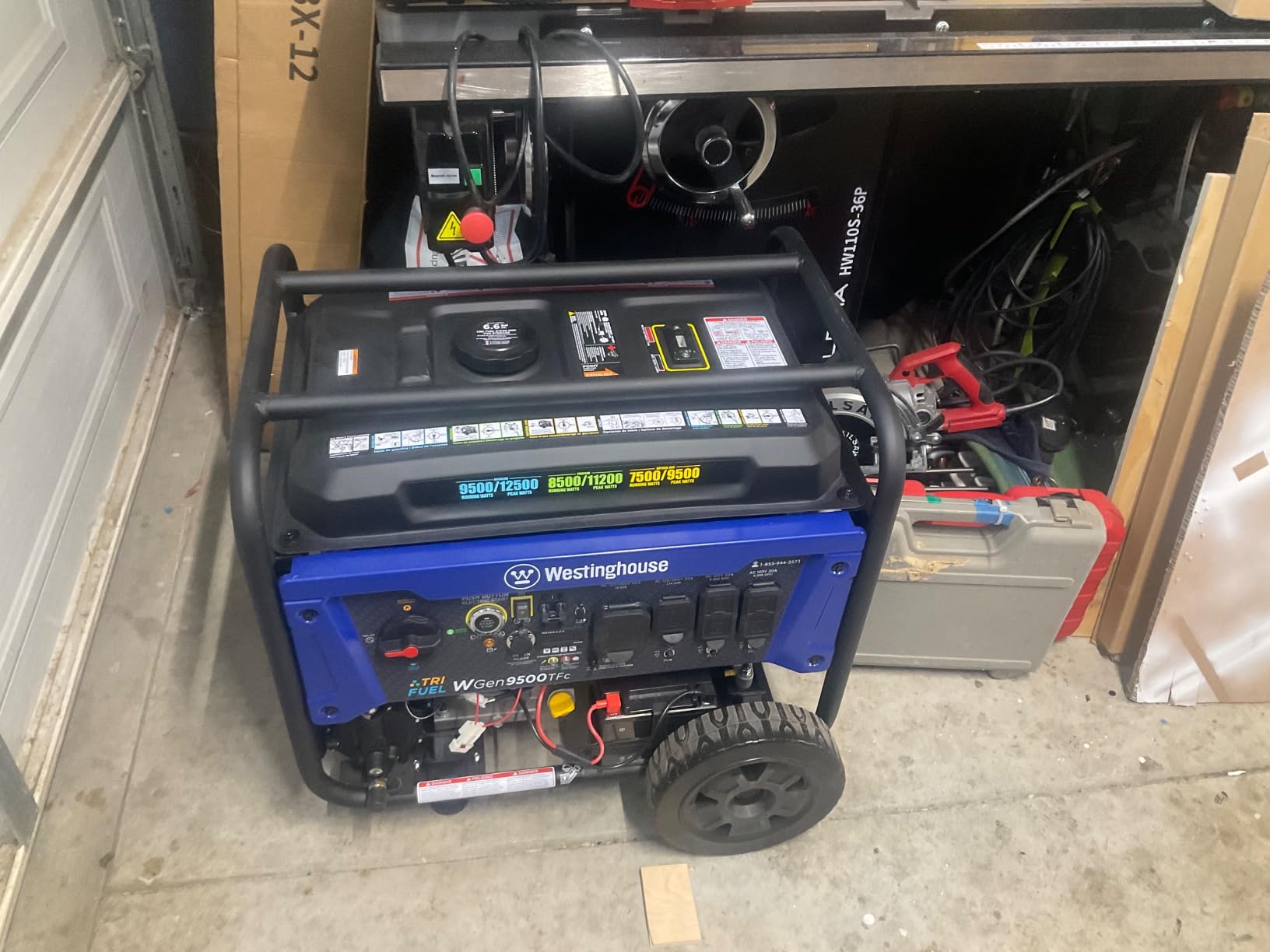
On gasoline you get 12500 peak watts and 9500 running watts. Moving the fuel selector to propane drops that to 11200 peak and 8500 running, and natural gas gives you 9500 peak and 7500 running watts. That natural gas figure is the number to plan around if you intend to live on the gas line, because 7500 running watts covers a refrigerator, a furnace, a few lights and a sump pump, but it will not carry central air.
The engine is a 457cc Westinghouse 4-stroke OHV with a cast iron cylinder sleeve, and the fuel tank holds 6.6 gallons for up to 12 hours of run time. Starting is electric with a remote key fob, and there is a recoil backup if the battery dies in storage. The output panel carries two GFCI 120V household receptacles, a transfer switch ready L14-30R and an RV-ready 14-50R, so a single machine covers both a permanently installed setup and a weekend at the campground.
Reviewers consistently name the fuel flexibility, the remote start and the ready-to-run package as the reasons they like it. The most repeated reservation is acoustic: an open frame machine at full household load is louder than most people expect when it is parked twenty feet from a bedroom window.
What you get running on natural gas all week
The gasoline number is the headline, but most of the long outage happens on natural gas. At 7500 running watts you have room for the refrigerator, the freezer, the furnace, internet and networking, lighting circuits, a sump pump and a couple of small household circuits at once.
What you give up is headroom. Central air, an electric water heater, a well pump and a clothes dryer together would exceed what natural gas mode delivers, so plan to sequence those loads rather than run them all at startup.
Where it falls short
At 215 pounds this is not a machine one person moves easily, and getting it onto a raised pad or into a shed is a genuine two-person job. Westinghouse support is also the most criticized in this group, so buy the three-year limited warranty for what it covers and keep your own maintenance log.
One accessory note worth checking before delivery day: the listed package includes a propane hose, but a natural gas quick-connect fitting is not in the box contents, so budget for that line and regulator separately if you plan to plumb it.
2. DuroMax XP13000HXT – Most Starting Watts With Remote Start
DuroMax XP13000HXT 13,000-Watt 500cc Tri Fuel Gas Propane Natural Gas Portable Generator with CO Alert, Black/Blue
13000 starting watts
10500W running gasoline
500cc OHV
240 pounds
8.3 gallon tank
Pros
- Highest starting wattage in the guide
- Front facing fuel selector switches fuels quickly
- Remote start plus push button electric start
- Transfer switch ready 50A outlet
- CO Alert automatic shutdown
Cons
- Heaviest open frame option at 240 pounds
- 8 hour runtime is short for its class
- Only a 3 year warranty
If your home has a well pump, a water heater and central air, starting watts decide whether the machine bogs down on the first compressor kick. The XP13000HXT leads this roundup with 13000 starting watts against 10500 running watts on gasoline, which is 24 percent surge headroom above the steady output.
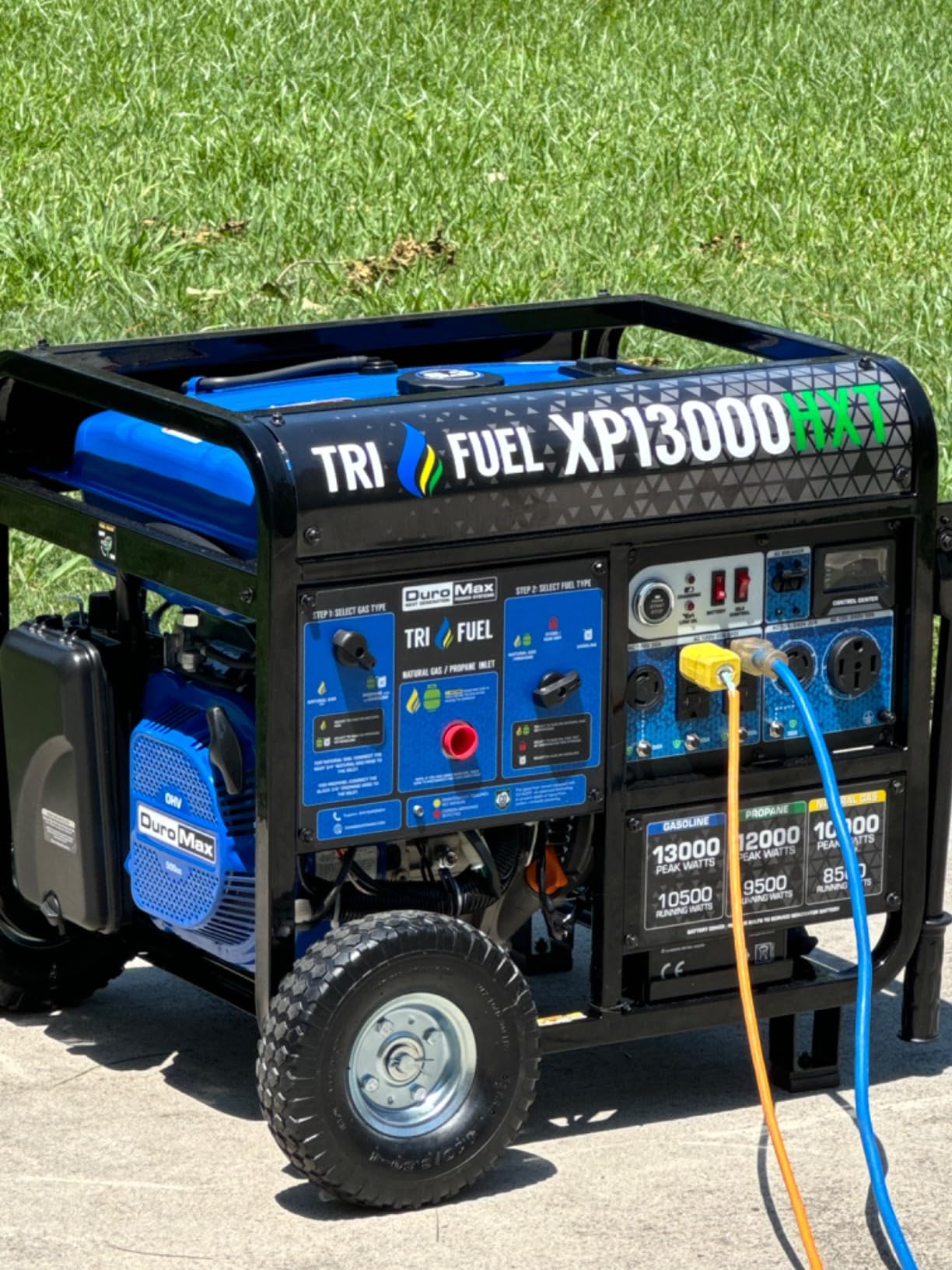
Switching fuels happens on a front-facing selector with a digital display next to it, which is a genuinely useful design decision. When the power is out and it is dark and raining, you are not reaching around the back of a 240-pound machine to find a valve. Push button and remote start both work reliably according to buyers, and CO Alert shuts the engine down if carbon monoxide climbs too high.
The fuel tank is 8.3 gallons with a stated runtime of 8 hours, which is the shortest in this lineup relative to the tank size. On natural gas the output figure is not published separately by the manufacturer, so treat gasoline and propane as the rated modes and confirm natural gas output with the manual before you size a load against it.
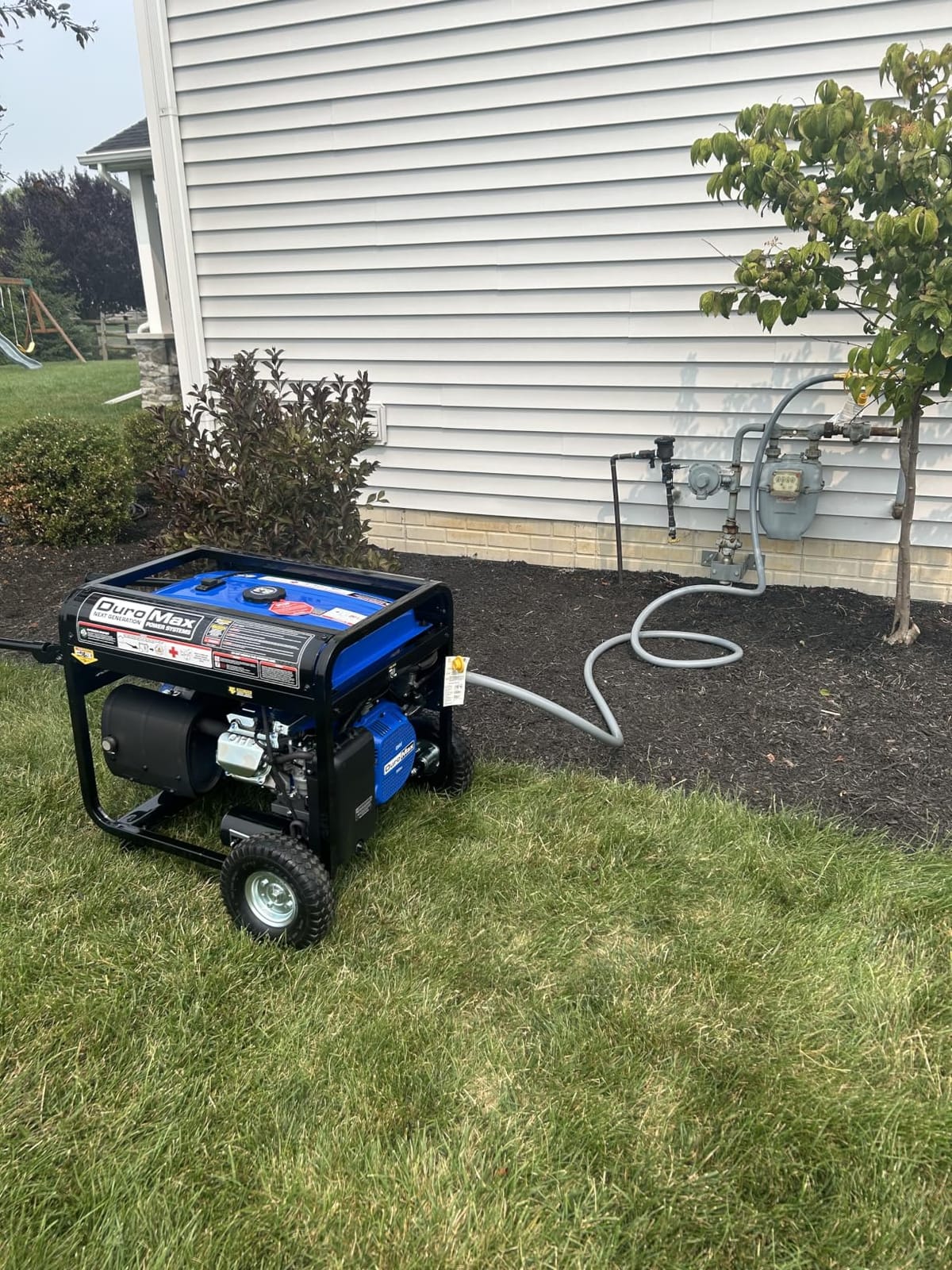
The box is unusually complete for a portable machine. You get a 15-foot 3/4-inch natural gas hose, a propane regulator, the remote control, a wheel and handle kit, an oil funnel and a full tool set, so there is no separate accessory purchase needed for a natural gas hookup.
How it handles motor starting loads
Surge headroom is the entire reason to buy this one. A sump pump, a well pump and a window air conditioner all draw a spike well above their running draw for the first second or two, and a machine with 24 percent surge margin absorbs that without the voltage dip that trips sensitive equipment.
Owners running full household loads on natural gas report steady behavior, and the 50A outlet means it can feed a properly sized transfer switch or interlocked breaker without a downgrade.
Where it falls short
Weight is the first practical problem. At 240 pounds this is one of the hardest machines here to reposition, and it is a two-person lift even with the wheel kit on level ground.
The second is sound. An open steel frame at 10500 running watts produces more noise than the enclosed inverter models in this guide, and buyers who care about a quiet residential street should read the quiet section before settling on raw power.
3. Champion 11,000-Watt Tri Fuel Inverter – Best Inverter Power
Champion 11,000-Watt Remote Start Tri Fuel Portable Inverter Generator
11000 starting watts
9000W running gasoline
7290W natural gas
Inverter output
212.3 pounds
Pros
- Inverter output keeps electronics stable at 60 Hz
- Exceptionally quiet at 9000 running watts
- LPG and natural gas hoses included in the box
- Remote start from up to 80 feet
- Easy oil changes and accessible air filter
Cons
- Standby mode capped at 24 hours
- No 2-wire start for automatic solar triggering
- No battery charging input for storage
- No cover included
This is the pick for anyone running computers, network gear, medical equipment or a home office through an outage, because inverter output holds frequency steady under load instead of letting voltage wander. Owners who bought it for that reason tend to keep it, and the build quality comments skew strongly positive.
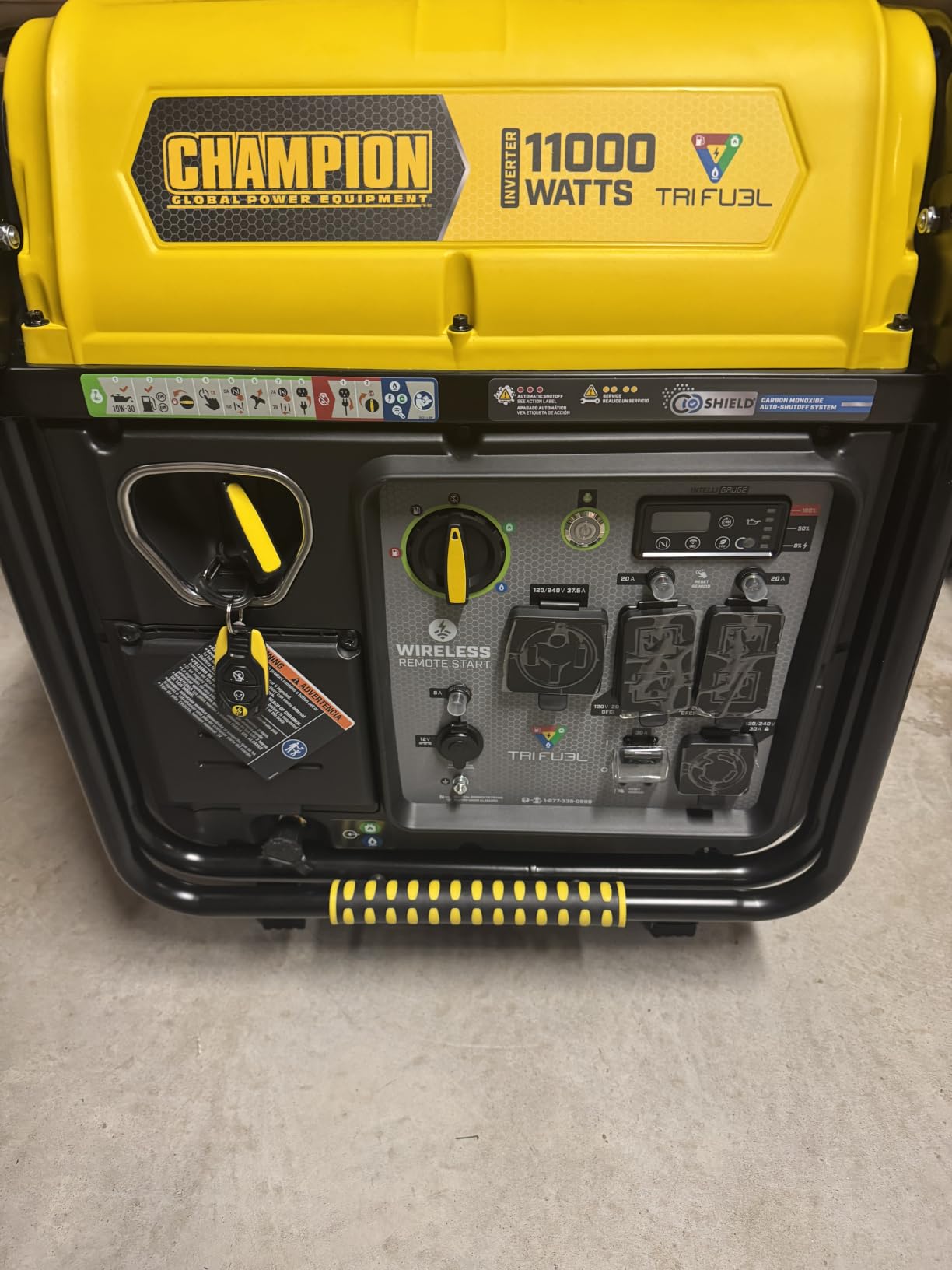
Interestingly, the starting wattage is 11000 on all three fuels while the running watts fall as you switch. Gasoline delivers 9000 running watts, propane 8100 and natural gas 7290, so the headline surge figure stays constant even as steady output steps down. That pattern is unusual in this category and worth understanding before you plan a load schedule.
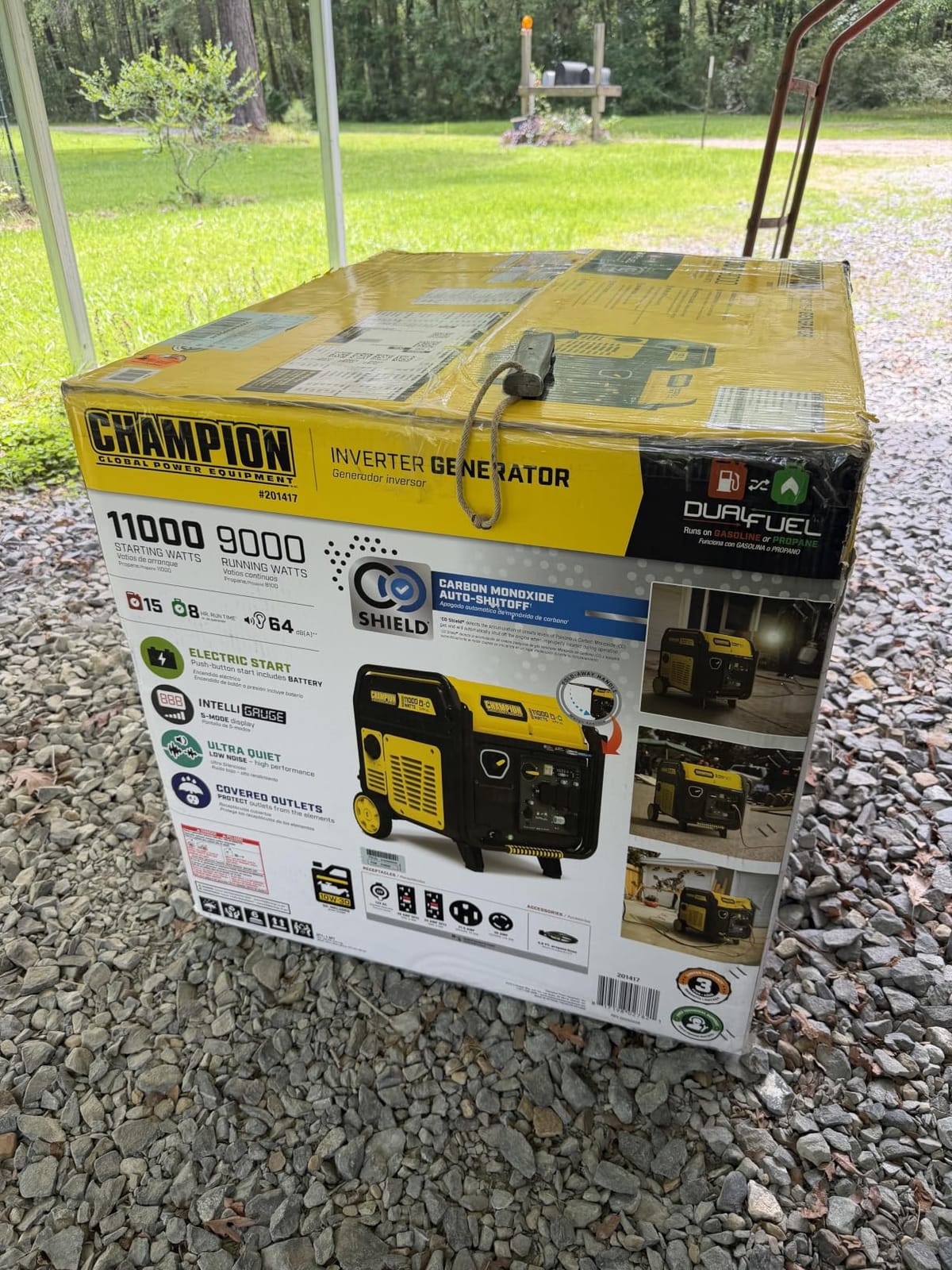
Runtime is 15 hours on a 6.08 gallon tank, and the outlet panel includes two 120V 20A GFCI duplex receptacles, a 120/240V 30A locking outlet, a 120/240V 37.5A outlet and a 12V automotive outlet. Remote start reaches 80 feet with the included key fob, and CO Shield handles automatic carbon monoxide shutdown.
Whether it is quiet enough for a residential lot
At 9000 running watts this is among the quietest machines capable of a permanent natural gas installation, and owners regularly report running an entire home including HVAC with headroom to spare. That combination of quiet and adequate output is why it works on a neighbor-adjacent property where an open frame unit would not.
The floating neutral configuration is straightforward to configure for interlock use on a home panel, which simplifies the electrical side of a standby-style install considerably.
Where it falls short
Standby mode is limited to 24 hours, so it cannot serve as a true continuous standby source in a long outage without a restart. There is also no 2-wire start, which rules out automatic starting from a solar inverter, and no battery charging input to keep the start battery alive during storage.
No cover is included, and the CO sensor is sensitive enough that owners report shutdowns when the machine is run inside an enclosed protective case. Leave it outdoors under open sky.
4. Westinghouse iGen12000TFc – Quietest and Lightest Inverter Tri Fuel Model
Westinghouse 12000 Peak Watt Tri-Fuel Portable Inverter Generator, Remote Start, Transfer Switch Ready, Gas/Propane/Natural Gas Powered, Low THD, Safe for Electronics, Parallel Capable, CO Sensor
9000W running gasoline
7200W natural gas
3 percent or less THD
As quiet as 64 dBA
191 pounds
Pros
- Enclosed inverter design as quiet as 64 dBA
- 3 percent or less THD protects electronics
- 19 hour runtime at 25 percent load
- Parallel ready to double output
- Lightest tri fuel model here at 191 pounds
Cons
- Only 3 total power outlets
- Real world propane runtime below the rated figure
- Start battery drains during long storage
- 68 reviews is a short field history
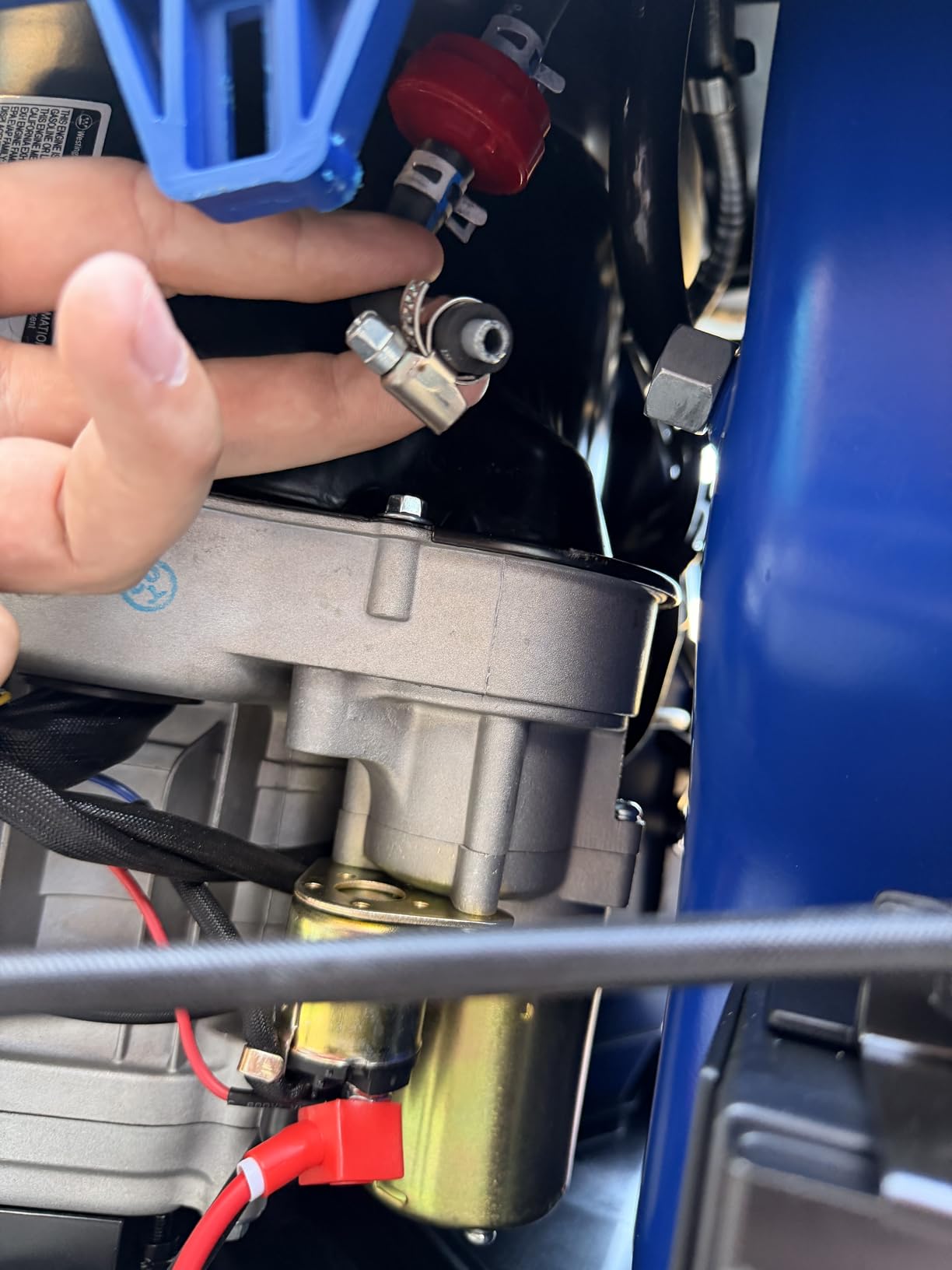
This is the quietest machine in the guide and the only enclosed tri fuel model, and it is the one we would put closest to the house. The fully enclosed inverter design with insulation and mufflers brings it to as low as 64 dBA with Eco Mode, which is close to a conversation rather than a generator.
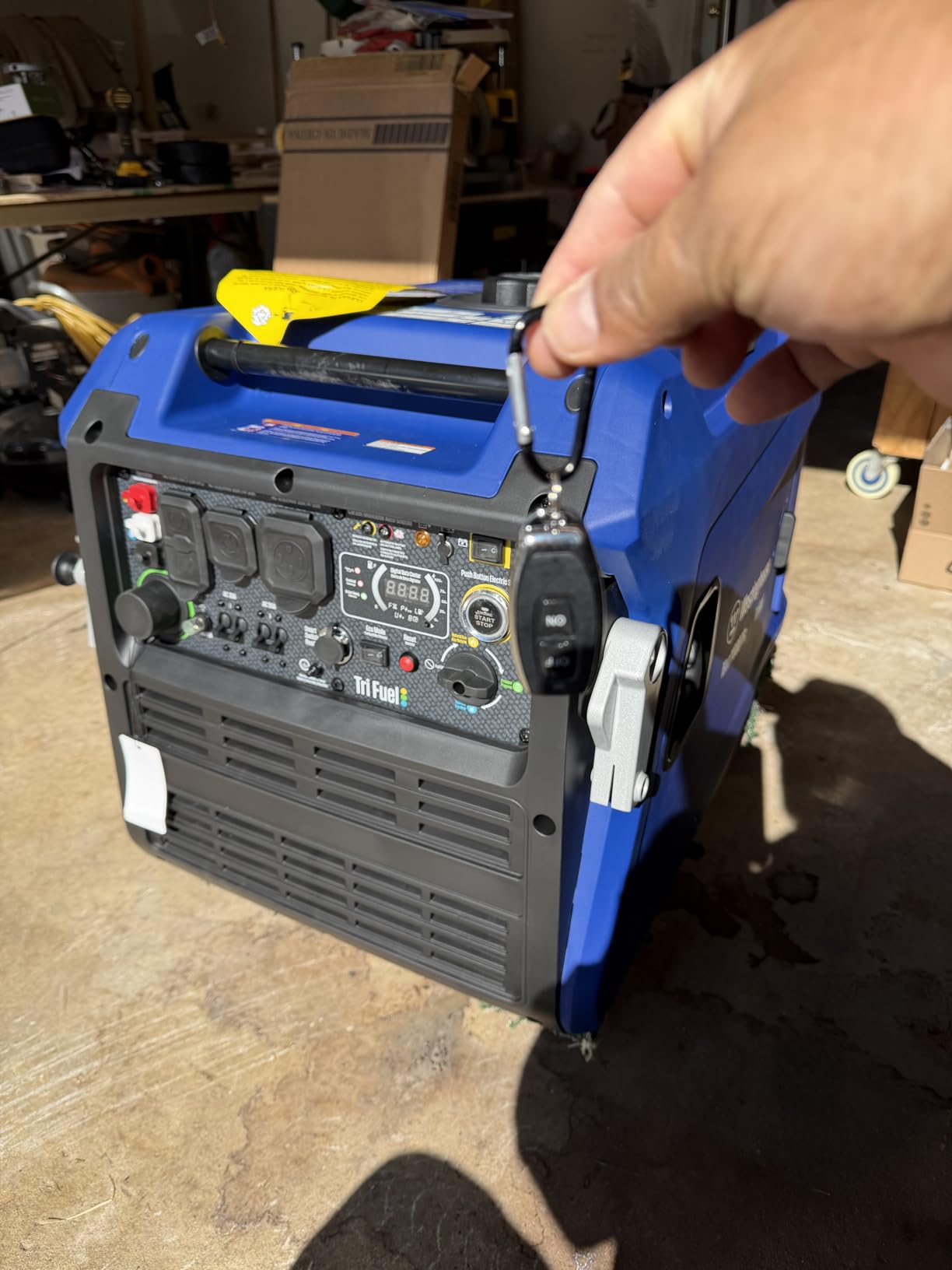
The fuel breakdown runs 12000 peak and 9000 running watts on gasoline, 11000 and 8100 on propane, and 9800 and 7200 on natural gas. Total harmonic distortion is 3 percent or less, which is the number that matters if a home office, a server rack or medical equipment is on the essential circuit list.
Runtime is 19 hours at 25 percent load on a 7.9 gallon tank, the longest rated figure in this group, and the LED data center shows fuel level, power output, remaining run time, voltage and lifetime hours. The outlet panel is deliberately small at three outlets: a 50A 14-50R, a 30A L14-30R and a GFCI duplex. Both large outlets are transfer switch or interlock ready.
Owners report handling three RV air conditioning units simultaneously, and the parallel-ready capability lets you double output by pairing it with a second identical machine. The 85 percent five-star share and a complete absence of one-star reviews is a good sign, though 68 reviews is a shorter history than the Westinghouse open frame model.
How close to a real standby unit does it get
With the 50A outlet, remote start and parallel capability, this is the closest any portable machine here comes to a permanently installed standby system. A verified homeowner setup on r/Generator runs an iGen12000 tri fuel inverter permanently on natural gas behind a 50A interlocked breaker and a 3-pole manual transfer switch, which is the mainstream homeowner version of a factory standby installation.
That same owner charges portable power stations from the generator-fed side using RV-style charging panels, adding a battery-backed layer that smooths the natural gas power derating.
Where it falls short
Three outlets is the fewest in this guide, so expect to run extension cords or a small distribution panel rather than plugging everything in directly. Owners also report real-world propane runtime measuring well below the rated figure under a light load.
Keep in mind that 7200 running watts on natural gas is the second-lowest figure in the lineup. The start battery also drains during extended storage even with every switch turned off, so plug in the battery charger between outages.
5. Champion 12,500-Watt Tri Fuel – Balanced Mid-Size Electric Start Model
Champion 12,500-Watt Electric Start Tri Fuel Home Backup Portable Generator
10000W running gasoline
9000W propane
8000W natural gas
500cc
231 pounds
Pros
- 10000 running watts on gasoline
- Intelligauge tracks voltage frequency and total hours
- LPG and natural gas hoses included
- Electric rocker start with battery in the box
- CO Shield carbon monoxide auto shutoff
Cons
- Open frame with only 4 power outlets
- 8 hour runtime despite a large tank
- Audible during operation
- Isolated build quality complaints on panel fasteners
This is the middle of the lineup and it does the middle job well. On gasoline it delivers 12500 starting and 10000 running watts, on propane 11250 and 9000, and on natural gas 10000 and 8000, which makes its 8000 watt natural gas figure one of the better endurance ratings in this guide.
The Intelligauge digital display tracks voltage, frequency, session run time and total run time, and that last number is more useful than it sounds. Total hours is what tells you when the oil change and the plug change are actually due, and most people who skip maintenance skip it because they have no idea how many hours the machine has accumulated.
Owners particularly value the natural gas option for permanent installations because it removes the gasoline can logistics before storm season. Setup is straightforward, roughly thirty minutes from box to first run, and both the LPG hose and the NG hose are in the box.
The fuel tank is 29.17 liters with a rated runtime of 8 hours, and the machine weighs 231 pounds. Electric start uses a rocker switch with the battery included, and CO Shield handles automatic shutdown. A wheel kit and oil funnel round out the package.
How it compares with the DuroMax on natural gas
The two models are close cousins in output, but the Champion holds 8000 running watts on natural gas with a clear manufacturer figure, while the DuroMax does not publish a separate natural gas rating. If you intend to size a load against the gas line, a documented figure is worth a lot.
Against a 200 amp service panel with an interlocked 50A breaker, either machine covers the essential circuits comfortably. The Champion adds the hour tracking and the lifetime technical support that the DuroMax warranty does not include.
Where it falls short
Only four power outlets on an open frame is the practical limit, and several owners rate it audible during operation even when they expected better. The 8 hour runtime against a 29.17 liter tank is a weaker ratio than the Champion inverter’s.
There are isolated build-quality reports worth knowing about: one owner had the operator panel detach during break-in because of loose 4mm fasteners, and another found a slightly bent lower frame tube near the wheel bracing. Check both before the first full load run.
6. GENMAX GM10500iETC – Cleanest Power with Sub 3% THD
GENMAX Tri Fuel Generator,10500-Watt 458cc Tri Fuel Gasoline Propane Natural Gas Portable 50A Generator with Remote Start,Ideal for Home backup power.
8500W running gasoline
6800W natural gas
THD below 3 percent
458cc
304 pounds
Pros
- Total harmonic distortion below 3 percent
- Floating neutral suits standby bonding
- 7 outlets including 50A and 30A
- ATS cable and remote start included
- Engine oil filter is unusual and protective
Cons
- Heaviest model here at 304 pounds
- 16 percent one-star reviews
- Listed warranty is only 1 year
- Customer support is online only with no local service
This is the most technically ambitious machine in the guide. Total harmonic distortion below 3 percent, a factory floating neutral configuration, an ATS cable for automatic transfer control and an engine oil filter all appear on a portable tri fuel generator, and most of them do not appear on anything else here.
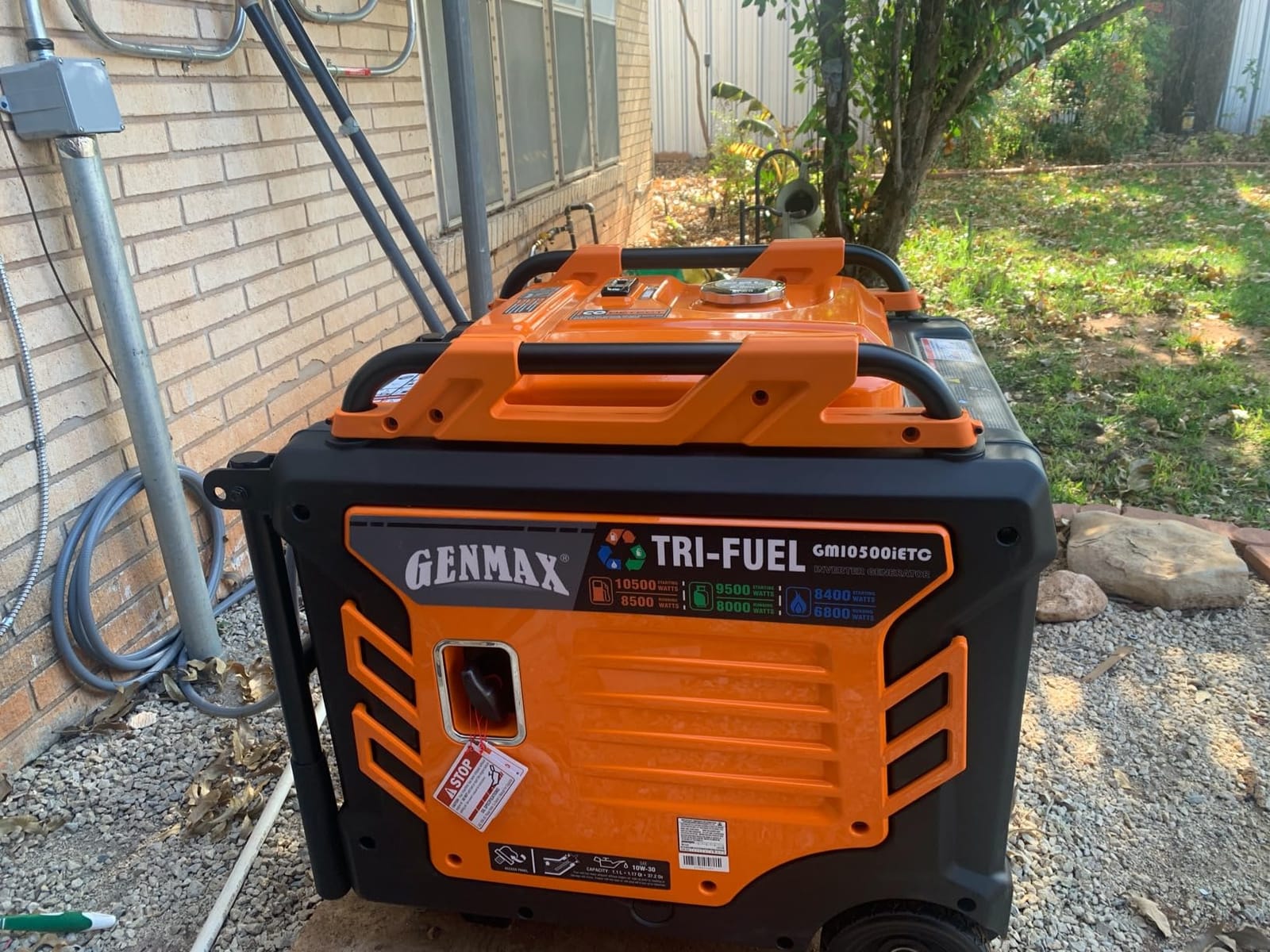
Output runs 10500 starting and 8500 watts on gasoline, 9500 and 8000 on LPG, and 8400 and 6800 on natural gas. The 6800 watt natural gas figure is the lowest of the group, so this one is best treated as a clean-power machine for a smaller essential load rather than a whole-home natural gas solution.
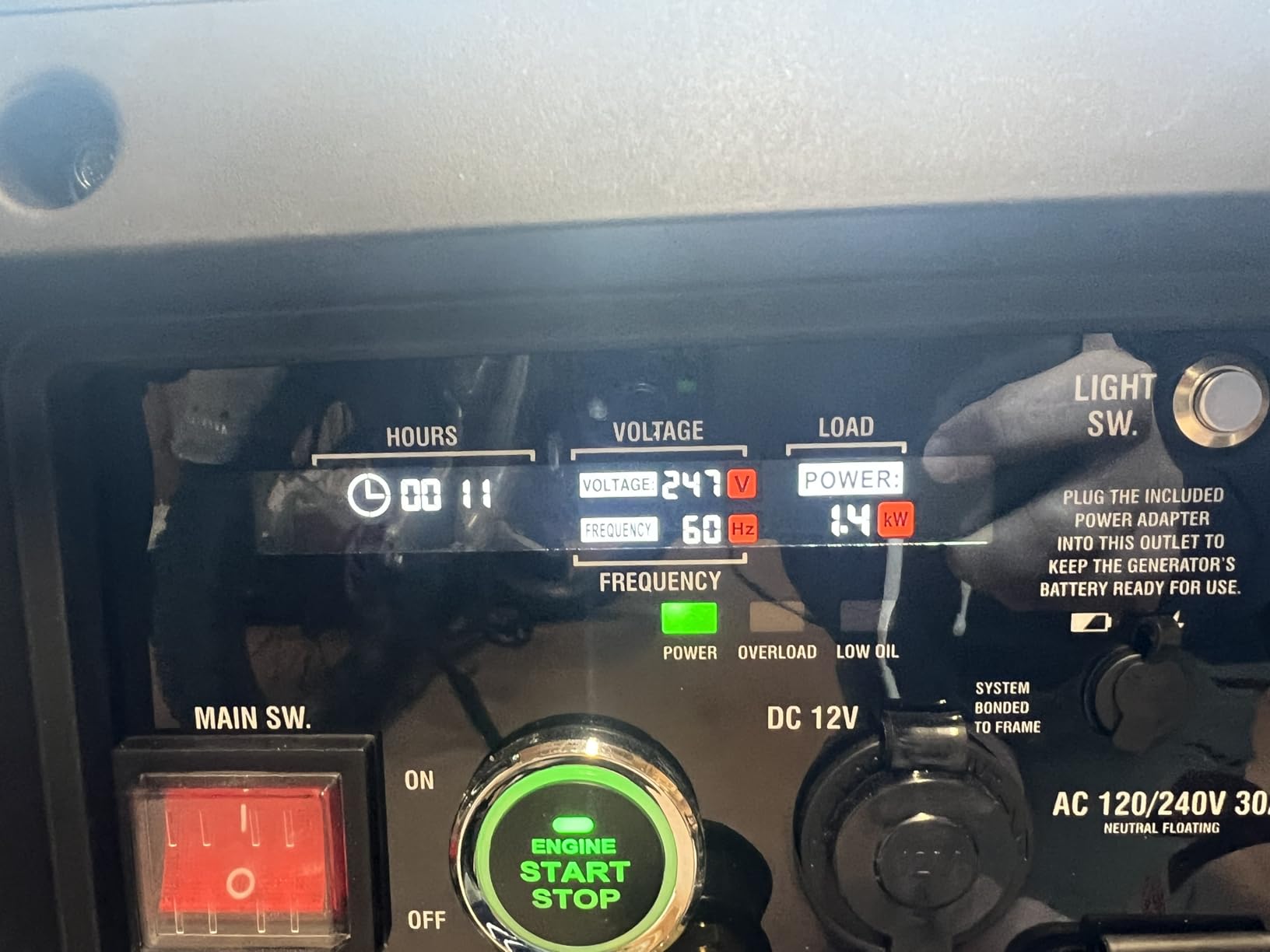
The outlet panel is the most complete in the guide at seven outlets: an L14-30R, a 14-50R, four 5-20R household circuits and a 12V DC cigarette lighter outlet. The protection suite covers overload, thermal, overvoltage, undervoltage, overcurrent, short circuit and overspeed faults, and the included rain cover, both fuel hoses and the NG quick connector make it ready for a permanent pad out of the box.
Enthusiastic owners describe it as quiet, feature-rich and strong enough to run a whole home including central air. The critical reviews concentrate on a 240V display that fluctuates between 120V and 240V, difficulty converting neutral bonding on some variants, and slow technical support.
Whether the sub 3% THD matters for your loads
Total harmonic distortion describes how far the output waveform departs from a clean sine wave. Computers, network switches, medical equipment and variable-speed drives are the loads that care, and anything under roughly 5 percent covers them comfortably.
The factory floating neutral is the other reason installers like this one. A floating neutral is what you want when the machine feeds a home panel through an interlock kit, because it avoids an unwanted neutral-ground bond that can create parallel neutral paths between the utility and the generator.
Where it falls short
At 304 pounds it is the heaviest machine in the guide by a wide margin, and repositioning it is a genuine chore. The air filter and hour meter are also awkward to access for routine service.
Two things give us pause on this one. The listed warranty is 1 year, and the 16 percent one-star share is the highest here, concentrated around display and support issues. Support is online only with no local service network, which matters a lot more when the machine is a permanent install than it does for a weekend job site unit.
7. DuroStar DS13000MXT – Lowest Cost Per Watt Tri Fuel Option
DuroStar DS13000MXT 13,000-Watt 500cc Tri Fuel Portable Generator – Gas, Propane & Natural Gas, Remote Electric Start, Whole Home Power Backup, Transfer Switch Ready, RV & Emergency Ready
13000 starting watts
10500W running gasoline
500cc OHV
13 hour runtime
Pros
- 13000 starting watts at the lowest cost per watt
- 13 hour runtime on an 8.3 gallon tank
- Tri fuel with a simple selection knob
- CO Alert shutdown and 50A transfer ready outlet
- Remote electric start with push button convenience
Cons
- 11 percent one-star reviews is the highest here
- Only 4 total power outlets
- Open steel frame is loud and exposed
- Warranty listed as 3 year with fewer specifics
On pure output per dollar this is the most capable machine in the guide, and on paper it matches the DuroMax XP13000HXT: 13000 starting watts, 10500 running watts on gasoline, a 500cc OHV engine and an 8.3 gallon tank.
Where it separates is runtime. The stated 13 hours on that tank is better than most of the group, which makes it a sensible choice for extended outages in a neighborhood where you would rather not make supply runs for fuel.
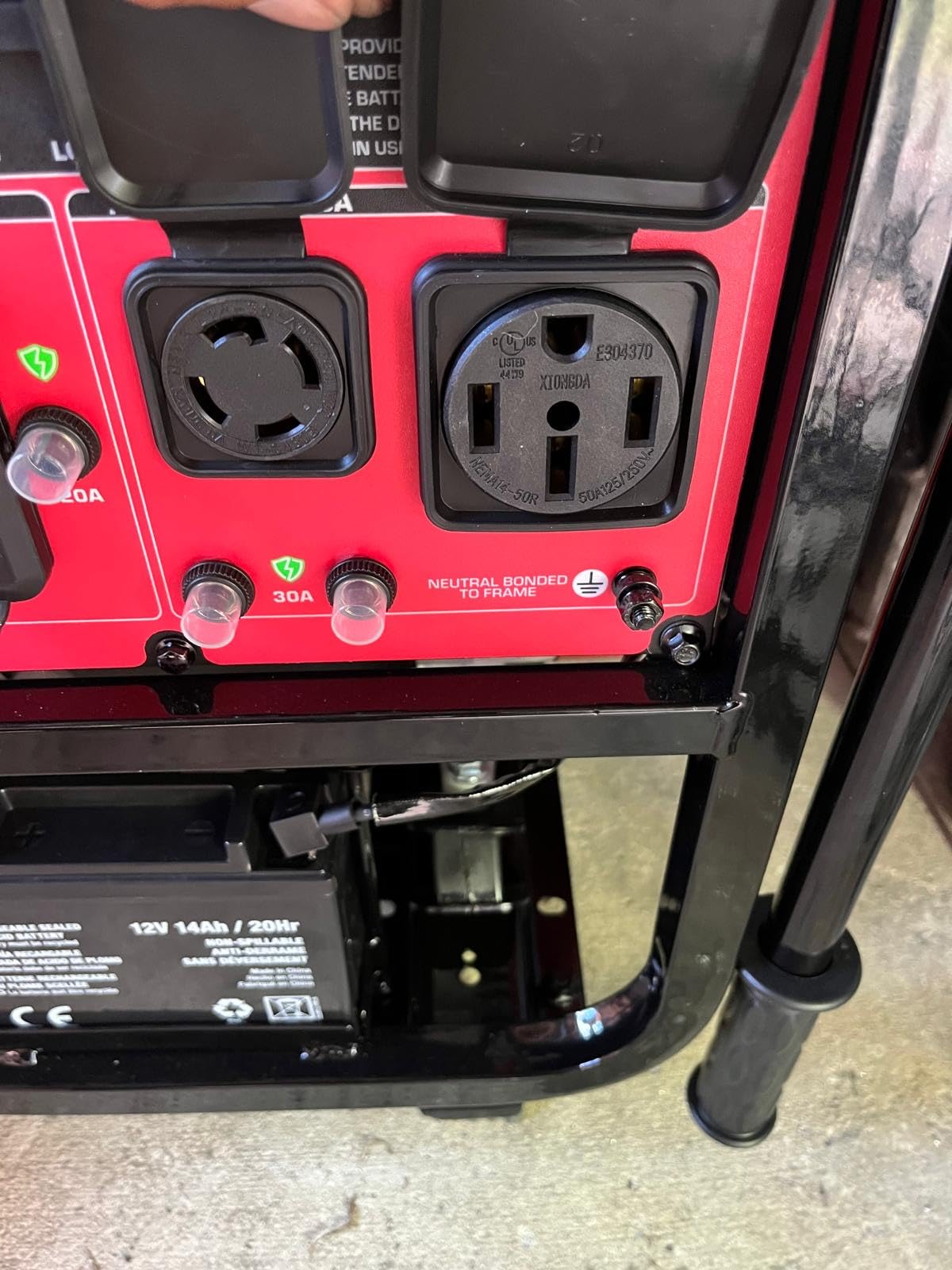
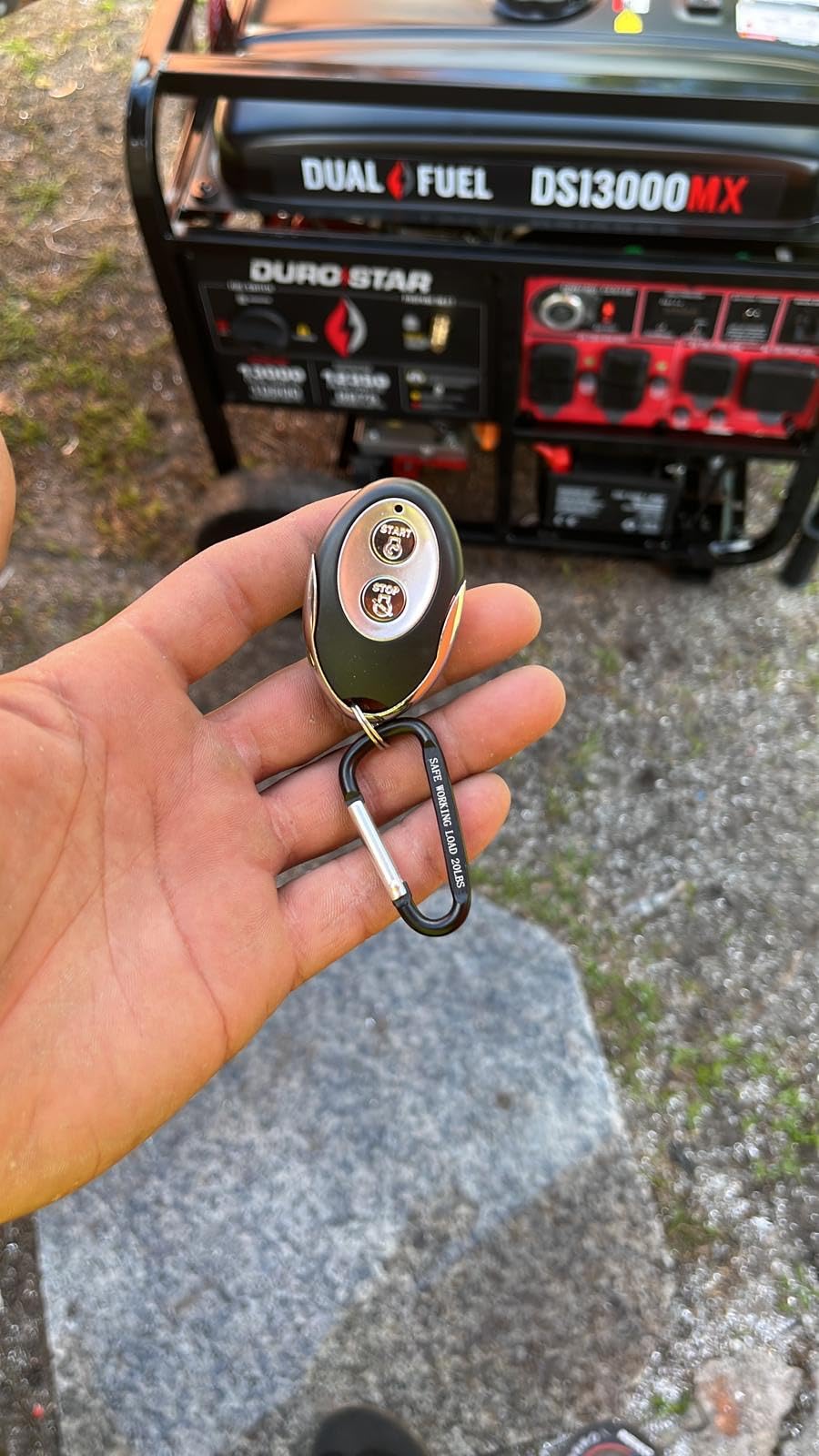
The fuel selection knob sits next to a push button start and a digital display, so switching between gasoline, propane and natural gas is quick. CO Alert handles automatic carbon monoxide shutdown and the 50A outlet makes it transfer switch ready. The box includes a 15-foot 3/4-inch natural gas hose, a propane regulator, a remote control, a wheel and handle kit, an oil funnel and a tool set.
The rating distribution here is unusually split: 76 percent five-star alongside an 11 percent one-star block. That pattern usually means a large group of very satisfied owners and a smaller group with real problems, and the small outlet count and open frame noise are what those critical reviews keep pointing at.
When the lower cost is worth the trade-offs
This model makes sense when the budget is the deciding factor and the machine will live on a pad behind the house rather than beside a bedroom. Four outlets is enough for a generator inlet feeding a transfer switch, since the home panel carries everything downstream of that point.
Weight is not stated in the listing, and at this engine size you should assume it is a two-person handling job like every other open frame machine in this class. Confirm the shipping weight before planning a move path into a shed.
Where it falls short
Four outlets is the fewest among the open frame options, and the steel frame is both louder and more exposed to weather than an enclosed inverter design. If the unit lives outside year-round, plan on a fitted cover.
The warranty is listed simply as 3 year with less detail than rivals provide. And an 11 percent one-star share means you should test the machine under a real load during the first month rather than assuming it works, because a failure discovered before storm season is an inconvenience and one discovered during an outage is not.
8. WEN TF-1450X – Highest Peak and Running Wattage
WEN 14,500-Watt 120V/240V Tri-Fuel Generator for Gas, Propane, and Natural Gas, Transfer-Switch Ready with Electric Start, Wheel Kit, and CO Watchdog (TF-1450X), Black & Red
11500W running gasoline
10300W propane
8750W natural gas
500cc OHV
7 outlets
Pros
- Highest gasoline running watts in the guide at 11500
- Outputs 120V and 240V for transfer switch use
- L14-30R and 14-50R transfer switch ready outlets
- Wheel kit oil LPG hose and NG quick connect included
- WEN Watchdog CO shutdown
Cons
- Noticeably noisier than inverter tri fuel models
- 23 reviews is a small field history
- Not a low THD inverter
- 50A output only
If the single number that matters to you is how much steady power comes out of the engine, this is the machine. It runs 11500 watts on gasoline with 14500 surge, 10300 on propane with 12500 surge, and 8750 on natural gas with 10500 surge, and the 8750 watt natural gas rating is the highest in the guide.
Operating at both 120V and 240V makes it directly transfer switch ready without a step-down transformer arrangement, and the outlet panel carries four 120V 5-20R receptacles, an L14-30R, a 14-50R and a 12V DC automotive outlet for seven in total. Starting is electric with a key on a 500cc 4-stroke OHV engine, and WEN Watchdog handles CO shutdown.
The 8.2 gallon tank gives up to 12 hours at half load. Importantly for a first run, the wheel kit, engine oil, a 6-foot LPG connection hose and a natural gas quick-connect adapter all come in the box, which is more than most rivals in this class manage.
Recent owners report it fired immediately on propane, assembled with the supplied tools and carried a whole-house load including central air and a garage at the same time. The recurring complaint is noise, and one reviewer also notes the 50A limit as a constraint on larger homes.
How the natural gas figure compares across the guide
This is the number that surprises people. When you switch a big tri fuel generator from gasoline to a natural gas line, output drops meaningfully, and how much depends on the model. The WEN gives up the least: from 11500 running watts on gasoline to 8750 on natural gas.
The DuroStar and Champion mid-size units land around 8000 on natural gas, the Westinghouse open frame gives you 7500, the iGen12000 inverter 7200, and the GENMAX 6800. If you plan to run a household entirely on natural gas, size against the gas figure, not the gasoline figure.
Where it falls short
It is a conventional open frame design rather than a low-THD inverter, so it is a poor match for a home office or medical equipment load. It is also noticeably louder than the inverter models in this guide.
The main caveat is history. With 23 customer reviews this listing is far newer than the established models here, so you have less long-term field data to lean on. Service it carefully, run it monthly, and you will likely outlast the question.
9. Generac G0080631 – Longest Warranty in the Lineup
Generac 12,500 Starting Watt Tri-Fuel Portable Generator, Electric Start
9500 running watts
12500 starting watts
500cc OHV
219 pounds
8 year warranty
Pros
- 8 year limited warranty is the longest coverage here
- 12500 starting watts gives 32 percent surge headroom
- AVR stabilizes output for motor loads
- COsense detection and automatic shutdown
- Natural gas conversion kit included
Cons
- Natural gas connection parts not supplied
- 3 total power outlets
- 47 reviews is the smallest review base
- 120V listed voltage and not a low THD inverter
The 8 year limited warranty is the reason this Generac sits in the guide. Every other machine here offers three years, and the GENMAX lists a single year.
Output is 9500 running watts and 12500 starting watts from a 500cc Generac OHV engine, and the manufacturer states that as 32 percent surge capacity above running output. Built-in automatic voltage regulation stabilizes the output for motor-driven tools, pumps and appliances, and COsense detects rising carbon monoxide and shuts the unit down before it reaches dangerous levels.
Runtime is 9.5 hours at 50 percent load on gasoline or 14 hours at 25 percent load, or effectively continuous once it is connected to a natural gas line. The 7.5 gallon tank, steel-tube cradle frame, 9.5-inch never-flat wheels and a folding handle at 219 pounds make it one of the more manageable open frame machines here relative to its output.
It is also compatible with Generac HomeLink manual transfer switches, which simplifies the electrical side if you already have one or plan to buy from that range.
What the warranty actually covers for a standby install
The maintenance schedule is spelled out clearly: first oil change at 20 hours, then every 100 hours. Keeping that record matters more here than anywhere else, because a long warranty is worthless without the maintenance history to back it up.
The engine oil, LP hose with regulator, 12V battery, wheel kit, battery charger cable and a natural gas conversion kit are all included, so the machine is usable on gasoline or propane from the box.
Where it falls short
The natural gas connection parts are not supplied and installation requires a certified plumber, so budget the plumbing separately.
The most important negative theme is after-sales support. A detailed owner account describes a carburetor governor spring failure after roughly 2.2 hours of running, followed by support offering only local service numbers with no part numbers and no response. Three total power outlets is among the fewest here, the listed 120V voltage means it is not a low-THD inverter choice, and the 47-review base is the smallest in the lineup, so there is little field history to cross-check against.
How to Choose a Tri Fuel Generator for Home Standby
Why per-fuel derating is the number that matters
Almost every tri fuel generator is rated separately on each fuel, and the difference is large enough to change which loads you can run. On the Westinghouse WGen9500TFc, gasoline gives 9500 running watts and natural gas gives 7500, a 21 percent drop. On the Champion inverter, 9000 running watts becomes 7290 on natural gas.
The reason is energy density. Gasoline carries the most energy per unit of volume, propane is next and natural gas is the most voluminous and the least energetic of the three. One engine of a given displacement therefore produces its peak number on gasoline and steps down from there. Plan your household load against the natural gas figure, not the headline gasoline figure, because the natural gas is the fuel that will still be flowing on day three.
Sizing a tri fuel generator with an appliance list
Start by listing what you intend to run, not what you own. Then split each item into running watts and starting watts. Motors such as a sump pump, a well pump, a refrigerator compressor and central air draw a spike for the first second or two that is typically three to five times the steady draw, and your generator must absorb that spike without the voltage collapsing.
Add up the running watts for the loads you will run simultaneously, then add the single largest starting surge rather than the sum of every surge, because motors rarely all kick at the same instant. Match the running total against the natural gas figure and the surge total against the starting figure.
A working example for a typical family home on essential circuits: refrigerator around 150 running watts, freezer around 200, gas furnace around 400, internet and networking around 150, lighting around 300, a sump pump around 400 and a well pump around 1000. That totals roughly 2600 running watts. Add the well pump surge and you are looking at a requirement in the 5000 to 6000 watt range on natural gas, which puts this entire 9,000 watt class of machine comfortably in the right territory.
If you intend to run central air conditioning, add roughly 3000 to 5000 running watts for a typical residential system with a 9000 to 12000 watt surge, and that is where the natural gas derating starts to bite. On a smaller unit you may need to sequence the compressor with everything else off at startup. Sensitive electronics such as a home theatre system or a network rack should stay on an inverter unit’s clean output rather than an open frame machine.
Transfer switch versus interlock kit
You cannot legally or safely feed your home panel with extension cords, and backfeeding a panel through a dryer or range outlet is the mechanism behind a large share of home electrocutions in outage situations. There are two approved routes.
A manual transfer switch is a physical device with a handle that you throw to swap between utility and generator power. It is straightforward to explain, easy to test and works with almost any generator that has the right outlet. An interlock kit is a different approach: a bracket and a mechanical interlock installed at your main breaker so the main breaker physically cannot be turned on while the generator breaker is on.
An interlock kit costs less and takes less wall space, but it is a one-operator device, meaning somebody has to go outside and turn the generator breaker on after every outage. A transfer switch with a 50A exterior inlet is the more comfortable permanent setup and is the configuration that most permanently installed portable units in this guide end up using.
Either way, match the switch to the generator outlet you have. A machine with an L14-30R and a NEMA 14-50R on the panel gives you flexibility, and the Westinghouse, Champion and GENMAX options here carry both large outlets.
Plumbing the natural gas line
This is where first-time buyers get surprised, because the generator is only part of the cost of a natural gas tri fuel install. A proper job runs black iron pipe from an existing gas line to a regulator at the generator pad, with the run sized to the generator’s BTU input.
A licensed gas fitter, not your electrician, should do the piping work and the regulator, and in many jurisdictions the utility company needs to sign off on the connection and inspect the work. A flexible appliance connector is used for the final short run to the generator inlet, and that connector plus its quick disconnect is frequently sold separately from the generator even when the manufacturer lists a natural gas hose in the box.
On several models here the natural gas quick-connect adapter is included, and on others it is not. The Generac ships a conversion kit but the connection parts still need to be sourced, and the Champion inverter’s natural gas hose lacks a quick connect on the supply side. Confirm the fitting before you schedule the gas fitter, because a day of delay waiting on a part is a common complaint.
Forum installers report that the natural gas line, the regulator, the fitter and the utility inspection add hundreds of dollars and weeks of lead time on top of the generator. That is the number to plan for, and it is the reason many owners decide the fuel flexibility of tri fuel is not worth it once natural gas is already plumbed to the house.
Safety rules that are not optional
Run any generator outdoors, always, at least 20 feet from the house, with doors and windows closed. Carbon monoxide is odorless and kills without warning, and a CO sensor on the machine is a backup to that rule rather than a replacement for it.
Never refuel a hot engine. Let it cool first, because the vapor from a hot generator and an open fuel container is a fire waiting for an ignition source. Keep the machine away from dry vegetation, and never operate it in a garage, basement, crawl space or enclosed porch, even with the door wide open.
Never backfeed a panel. Use a transfer switch or an interlock kit, and confirm the setup with a licensed electrician. Test the whole configuration under a real load before storm season rather than during the first hour of an actual outage, when discovery is the most expensive possible time.
Monthly exercise and maintenance schedule
A standby install that has not run in nine months is a standby install you do not know anything about. Run yours for 30 minutes a month with a real load attached, and watch the hour meter.
Change the oil at the interval your manual specifies, which on the Generac here is the first change at 20 hours and every 100 hours after that. Check the air filter, check the spark plug, run fuel stabilizer through the system if the machine will sit for months, and keep a written log. The Champion Intelligauge display tracks total hours for exactly this reason, and the digital hour meter on the Westinghouse and Champion models does the same job more cheaply.
Storage matters at this weight class. Keep the unit on a stable pad at a consistent temperature, run the fuel tank nearly dry or add stabilizer before a long storage period, and connect the battery charger if the machine has one, because several models here drain the start battery even with every switch off.
When dual fuel is the smarter choice
Tri fuel is not automatically the right answer. If your natural gas line already reaches the installation point, a dual fuel unit running on propane with a properly sized cylinder is a fraction of the install cost and one less gas line to maintain. r/Generator buyers describe tri fuel as not a necessity once natural gas is plumbed and the generator is permanently installed, and for a lot of homeowners that is accurate.
Conversely, if you have no gas line and no realistic path to running one, a dual fuel unit is the more honest purchase and the money you saved goes into the transfer switch and the electrical work, which is where the real quality difference shows up anyway. Buyers on a tight budget who want the tri fuel flexibility should look at the DuroStar DS13000MXT, which delivers the fuel capability at the lowest cost per watt in this guide.
Frequently Asked Questions
Who makes the best tri-fuel generator?
Westinghouse leads most tri fuel generator comparisons because the WGen9500TFc combines the largest review base in the category with rated output on gasoline, propane and natural gas, remote start and a transfer switch ready outlet. Champion is the pick for quiet inverter power, WEN for the highest peak and running wattage, and Generac for the longest warranty.
What is the most reliable standby home generator?
Reliability comes down to engine pedigree and build markers more than the badge on the housing. Look for a cast iron cylinder sleeve, copper windings, a documented warranty length and a large enough review base to reveal early failures. In this roundup the Westinghouse WGen9500TFc leads on review depth, and the Champion models pair a 3 year warranty with lifetime technical support.
What is the best standby generator for a whole house?
For whole-home power a 12,000 to 14,000 watt class tri fuel generator is the right size, because central air, an electric water heater and a well pump together will overwhelm anything smaller. For essential circuits only, a 9,000 watt inverter unit such as the Westinghouse iGen12000TFc runs a typical household load at 7,200 running watts on natural gas. Size every scenario against the natural gas rating, not the gasoline rating.
What generators are better than Generac?
Westinghouse, DuroMax, Champion, WEN and DuroStar all offer credible tri fuel alternatives, and several exceed the Generac on output per dollar and on fuel capability. The Generac’s genuine advantage here is its 8 year limited warranty, the longest in this roundup, while the Westinghouse leads on review depth and the Champion leads on quiet inverter operation.
Which generator is better, DuroMax or Champion?
The DuroMax XP13000HXT leads on starting watts at 13,000 against the Champion’s 11,000 to 12,500, while the Champion holds a documented 8,000 running watts on natural gas and includes both fuel hoses plus a digital hour meter and lifetime technical support. DuroMax owners generally cite raw power and remote start, Champion owners cite clean inverter power, quiet running and build quality.
Conclusion
The Westinghouse WGen9500TFc is our pick for the best tri fuel generator for home standby use in 2026, and the reason is the combination of a 4.7 rating across 1926 customer reviews, rated output on all three fuels, remote start and a transfer switch ready outlet on the same panel. Nothing else in this guide matches that depth of field history.
Buy the DuroMax XP13000HXT if starting watts are the deciding factor and you need 13,000 to absorb motor spikes. Buy the Champion 11,000-Watt inverter if noise and clean power matter more than open frame simplicity, and the Westinghouse iGen12000TFc if you want the quietest and lightest option with parallel capability. Go with the WEN TF-1450X for the most running watts available, and with the Generac if an 8 year warranty is worth more to you than a bigger review base.
Whatever you choose, size the install against the natural gas rating, budget the transfer switch or interlock separately, and plan on a licensed gas fitter for the line. Our broader picks for home equipment cover the rest of the household backup picture.