
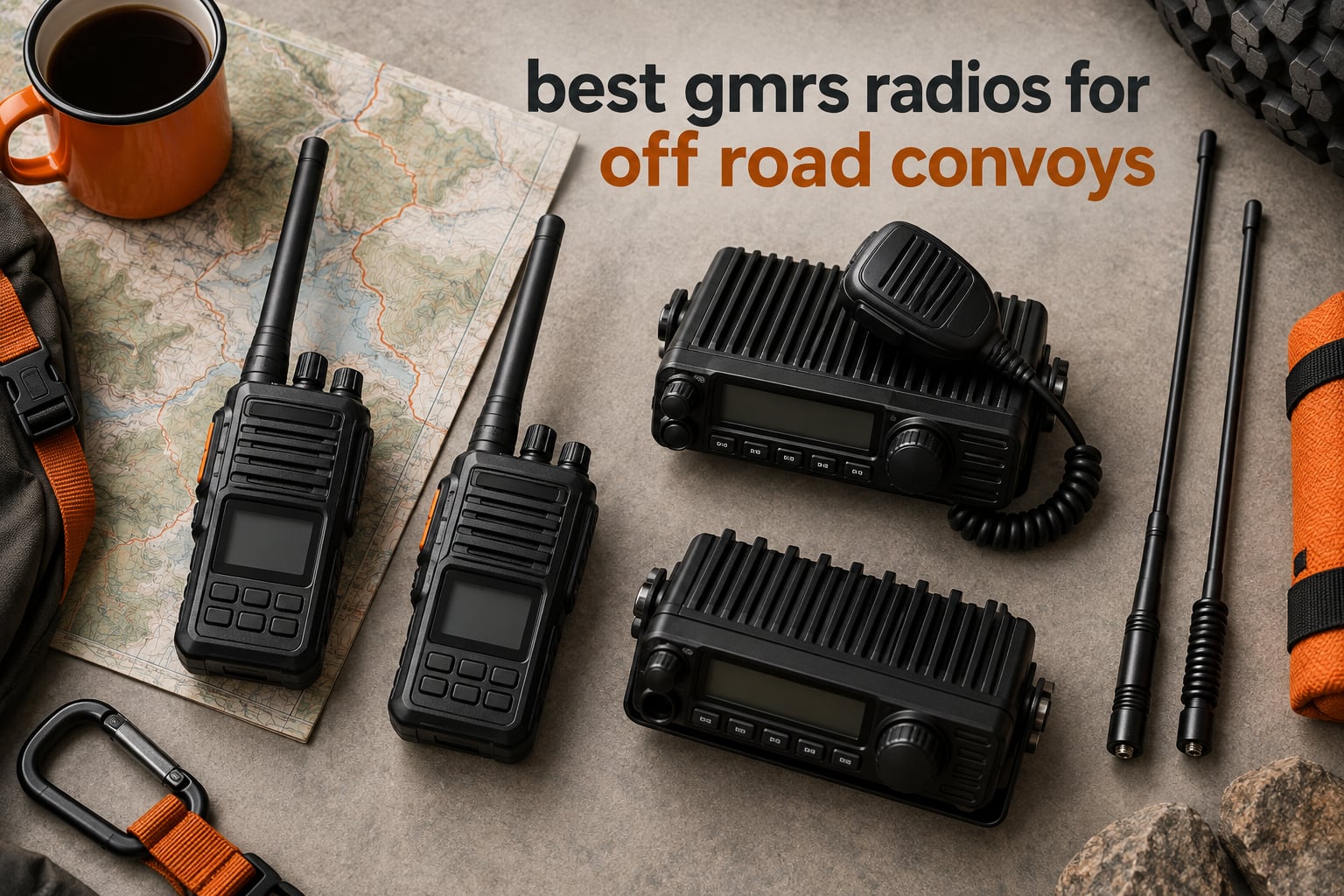
The best GMRS radios for off road convoys are 15W to 50W vehicle-mounted mobiles with a rooftop quarter-wave antenna, paired with waterproof handhelds for spotters, passengers, and camp. One FCC license covers your whole group for ten years, and every brand on this list talks to every other on the same channel and tone code.
Trail communication fails in a predictable way. The group agrees on a channel at the trailhead, everybody fits a radio, and then the second Wrangler rounds a bend in a canyon and vanishes. The radios are usually fine. The install, the antenna height, and the missing plan for what happens when the group splits are what fail.
So this list covers the full convoy stack, not just the loudest mobile. We compared ten radios across the categories a rolling group actually needs: the mobile in each cab, the handheld a spotter carries on foot, the radio for an open-cab Jeep or a UTV where dust and water are constant, and the two-pack that fills out a second vehicle. Every pick below is described by its real convoy job rather than by a marketing range claim, because a 36-mile number printed on a box has never once carried a group through a rock section.
We built this around the way off-road groups actually communicate: a fixed channel and tone, a shared call sign, a check-in cadence, and a rule for what the sweep rider does when the group strings out. If you want the general-purpose version of the same advice for handheld-first buyers, our broader GMRS radio guide covers the entry tiers in more depth.
Table of Contents
Top 3 Picks for GMRS Convoy Comms in 2026

Midland MXT575 50W MicroMobile
- 50W legal maximum
- Mic-only control scheme
- 15 channels plus 8 repeaters
- NOAA weather alerts

Midland MXT275 15W MicroMobile
- 15W output
- Control mic hides the box
- 8 repeater channels
- 142 privacy codes

BTECH GMRS-50V2 50W Mobile
- 50W output
- 256 customizable channels
- Quad watch
- Repeater compatible
The 10 Best GMRS Radios for Off Road Convoys at a Glance
One row per radio, ordered by the job it does in a rolling group. Power is the headline number, but the install type and waterproofing columns decide which radio belongs in which vehicle.
| Product | Specifications | Action |
|---|---|---|
| Midland MXT575 50W MicroMobile |
|
Check Latest Price |
| Midland MXT275 15W MicroMobile |
|
Check Latest Price |
| BTECH GMRS-50V2 50W Mobile |
|
Check Latest Price |
 Radioddity DB40-G 40W Radioddity DB40-G 40W |
|
Check Latest Price |
 Radioddity DB20-G 20W Radioddity DB20-G 20W |
|
Check Latest Price |
 Retevis RA86 Retevis RA86 |
|
Check Latest Price |
 Retevis Ailunce HA1G Retevis Ailunce HA1G |
|
Check Latest Price |
 Retevis RB48PLUS Retevis RB48PLUS |
|
Check Latest Price |
 BAOFENG GM-15 Pro two-pack BAOFENG GM-15 Pro two-pack |
|
Check Latest Price |
 Midland GXT1000VP4 two-pack Midland GXT1000VP4 two-pack |
|
Check Latest Price |
1. Midland MXT575 50W MicroMobile: full legal power with nothing in the cab
Midland MXT575 50W MicroMobile GMRS Two-Way Radio
50W output
15 channels plus 8 repeater channels
3.8 pounds
Not water resistant
1 year warranty
Pros
- Every control lives on the microphone so the radio body hides out of sight
- Full legal 50 watts covers the widest open terrain
- 8 repeater channels for groups near local infrastructure
- NOAA weather scan and alert
- Magnet mount with cable and USB-C charging
Cons
- Not water resistant so it needs a protected cabin mount
- Only 15 channels limits large group channel plans
- 50W draw is heavier on a stock electrical system
This is the radio we would put in the lead vehicle. Every function lives on the microphone, so the box itself can sit under a seat, inside a console, or behind a trim panel, and the only thing the driver sees is a mic clipped to the dash or a roll bar.
Output is the full legal 50 watts, and the channel plan covers 15 high-power channels plus 8 repeater channels. There are 142 privacy codes, a backlit display, and NOAA weather scan with alerts, which matters more than most buyers expect when a storm cell crosses a ridge line at four in the afternoon.
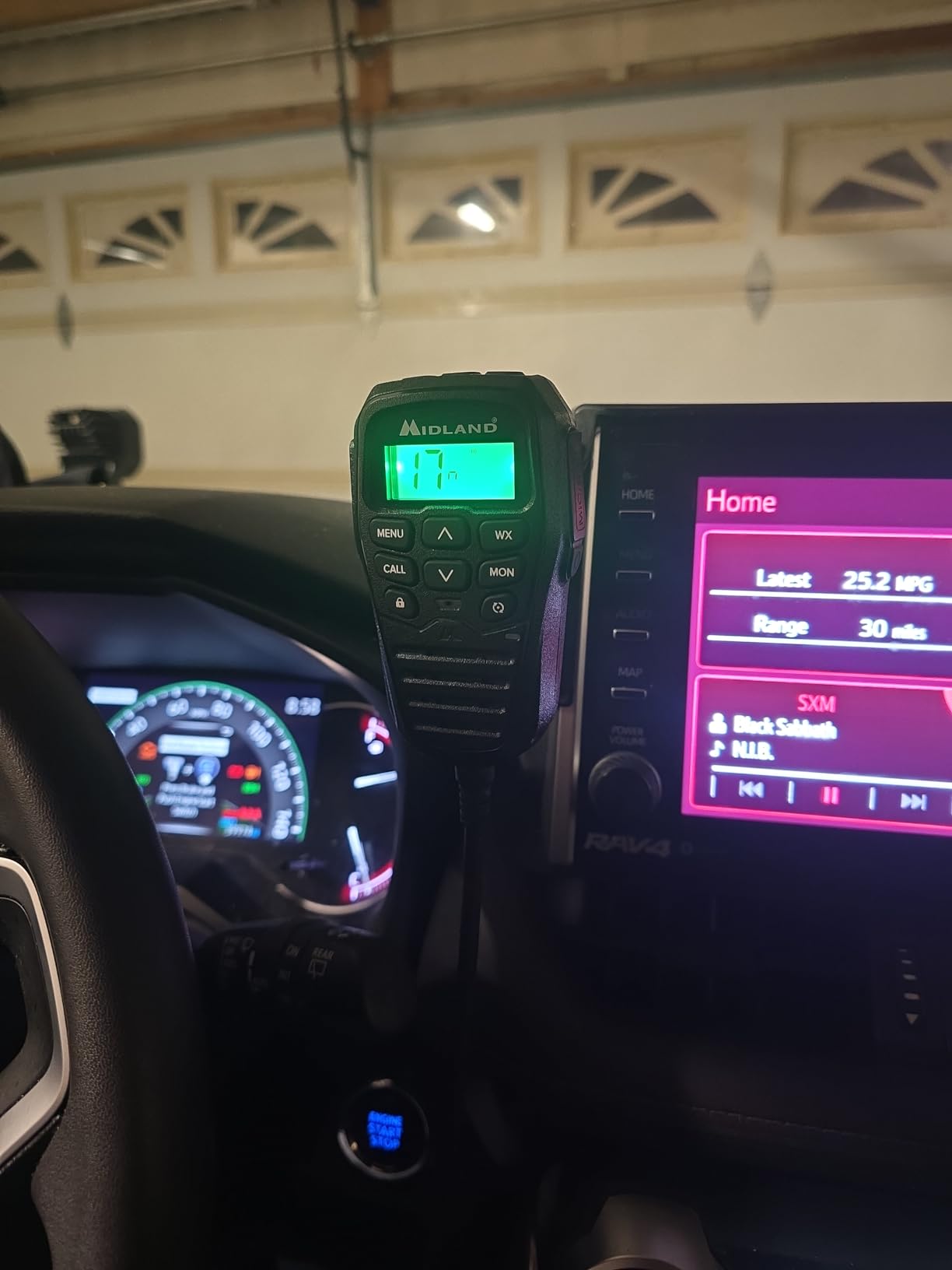
Owners consistently single out the control scheme rather than the power. In a vehicle with a cage, a passenger, and a lot of noise, having volume, channel, and power on the mic instead of behind a menu is the difference between a usable radio and an ignored one.
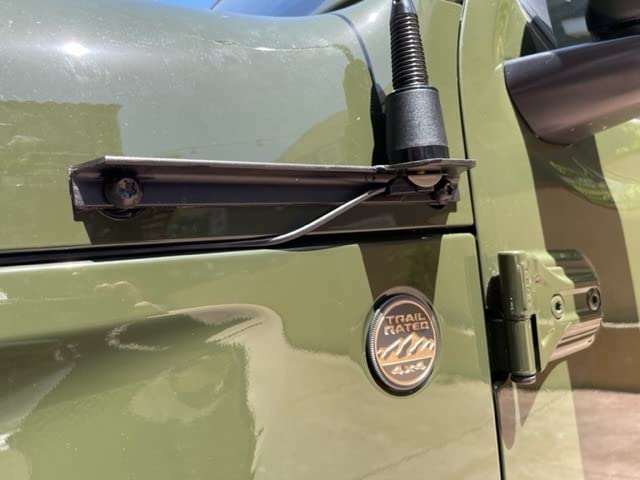
The magnet mount and cable that come with it are genuinely useful for a first weekend. They also encourage the single most common trail mistake, which is putting the antenna on a trunk lid or hood where the ground plane is wrong and the height is low. Buy a proper quarter-wave and mount it high before the group relies on this radio for a long section.
Who the MXT575 suits
This is the right radio for a group running long, fast, open sections where the sweep rider needs to reach the tail vehicle, and for anyone who wants the maximum legal power without building a dedicated electrical system for it.
It also suits groups that value clean installs. Nothing has to be visible, nothing has to be reached by hand to change channels, and the microphone can live anywhere the driver can see it.
Who the MXT575 does not suit
It is not a water-resistant radio, so it cannot live on a UTV rail, a roll bar in a wet climate, or anywhere a creek crossing can reach it. Groups running open-cab rigs through water should put a sealed handheld in those vehicles instead.
With 15 channels, it is also a tight fit for a very large group that wants a different channel per vehicle pair, and the 50 watt draw asks more of a factory wiring run than a 15 watt micro-mobile does.
2. Midland MXT275 15W MicroMobile: the radio most convoys end up running
Midland MXT275 15W MicroMobile GMRS Two-Way Radio
15W output
15 channels plus 8 repeater channels
12V DC
Not water resistant
1 year warranty
Pros
- Integrated control mic lets the body hide under a seat or in a console
- 8 repeater channels for local repeater infrastructure
- Direct 12V DC vehicle power suits a clean install
Cons
- Not water resistant for exposed mounting
- 15 channels constrains larger group channel schemes
- Antenna is not included so range depends heavily on what you fit
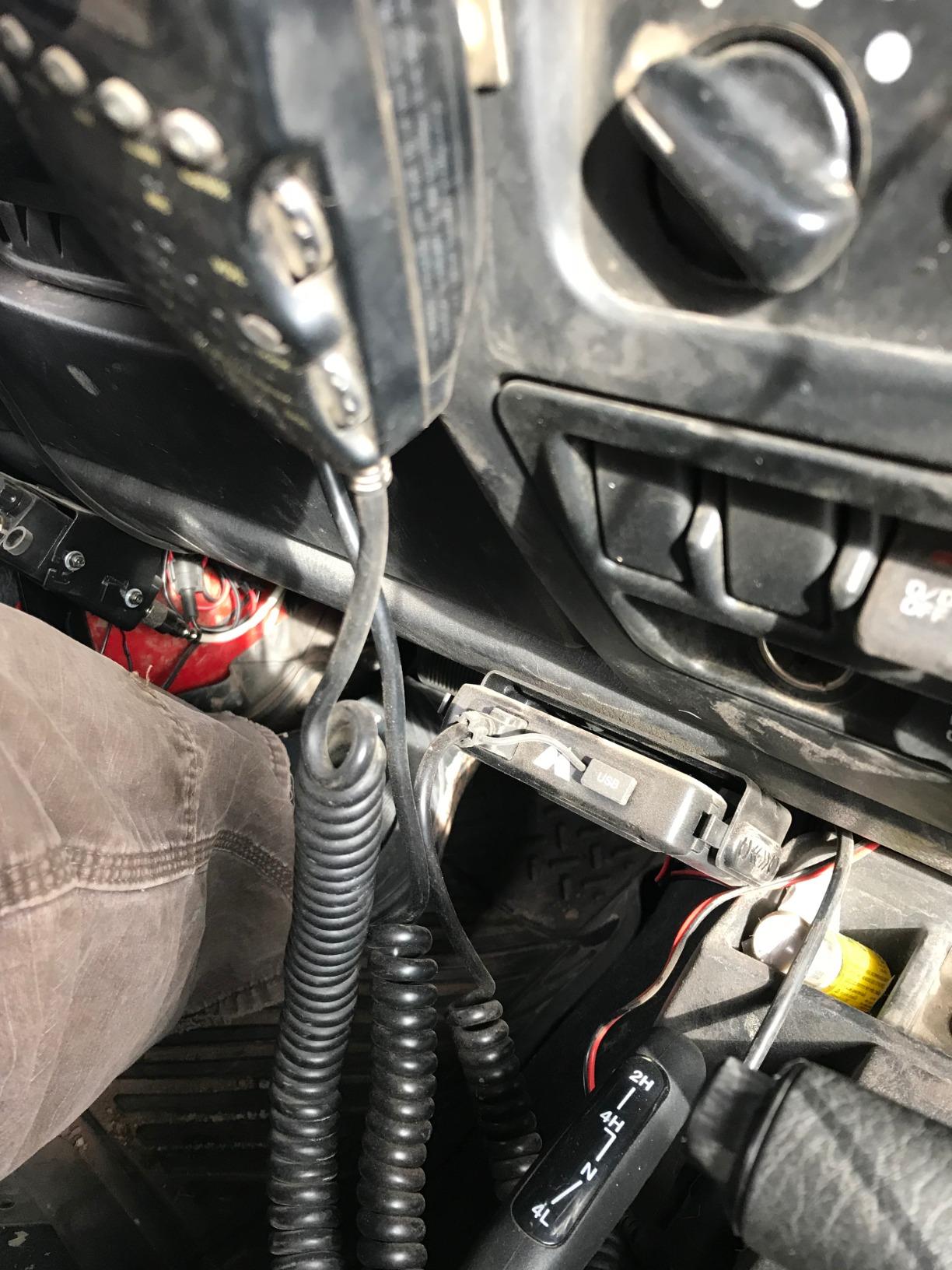
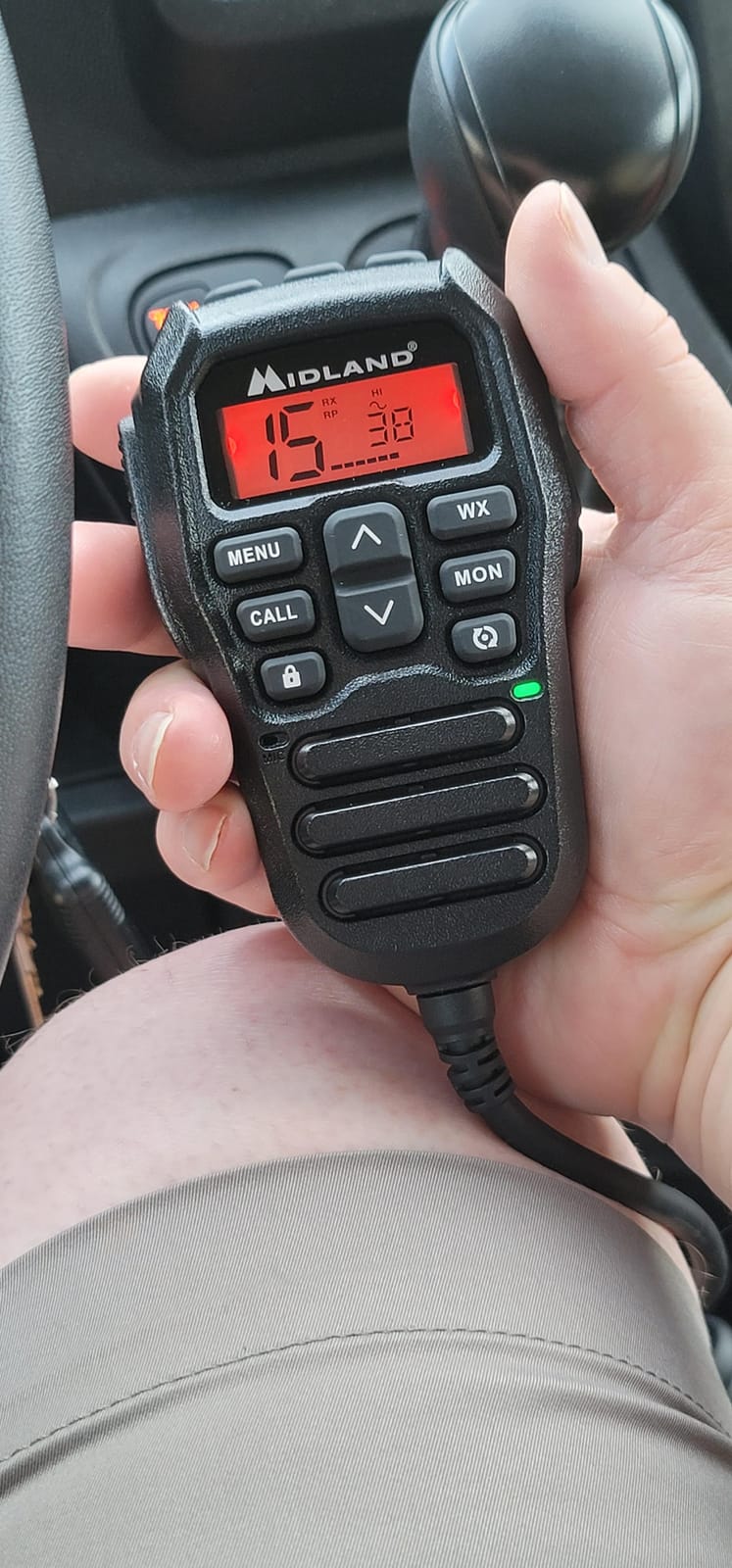
If a club ordered the same mobile for every vehicle in the fleet, this is usually the one. It carries 1,823 ratings at a 4.6 average, and 81 percent of those reviews are five-star, which makes it the most proven micro-mobile install in this list.
The spec sheet is close to the MXT575: an integrated control microphone, 15 high-power channels, 8 repeater channels, 142 privacy codes, and NOAA weather scan with alert. Power is 15 watts instead of 50, which on most trails is indistinguishable once the antenna is mounted properly.
That last point is worth repeating. The gap between 15 watts with a rooftop quarter-wave and 50 watts with a magnet stuck to a hood is much smaller than the spec sheets suggest, because antenna height and ground plane dominate once you are past the first hundred yards of line of sight.
The body measures 1 inch deep by 5 inches wide by 5.25 inches tall, which makes hiding it genuinely easy. The radio ships with a one-year warranty and draws straight from 12V DC, so a fused accessory circuit or an existing accessory bus is all the install requires.
Who the MXT275 suits
It suits the majority of groups, because 15 watts covers most trail distances at a fraction of the electrical demand of a 50 watt radio. Wooded routes, canyon sections, and moderate spacing are exactly where this radio performs.
It also suits anyone who wants the cleanest possible cab. Same mic-only control scheme as the flagship, so the install looks like a factory accessory rather than a piece of amateur equipment bolted to the dash.
Who the MXT275 does not suit
It will not carry a convoy across a long open basin where the group can spread past a few miles, and the lack of any water-resistance rating rules out an exposed mount on a side-by-side or an open-cab rig.
The antenna is not included, and groups that buy this radio without budgeting for a tuned antenna are the ones that end up disappointed. Plan for that cost in the group buy, not as an afterthought.
3. BTECH GMRS-50V2 50W Mobile: the repeater network and channel-room workhorse
BTECH GMRS-50V2 50W 256 Fully Customizable Channels Mobile GMRS Two-Way Radio. Repeater Compatible, Dual Band Scanning (VHF/UHF), FM, & NOAA Weather Broadcast Receiver
50W output
256 customizable channels
IP54 water resistant
13.8V DC 20A peak
2.3 pounds
Pros
- True 50W output with repeater support for long-range use
- 256 fully customizable channels give far more room for convoy and repeater layouts
- Quad watch monitors four channels at once
- Mounting bracket
- screws
- fuse and mic all in the box
Cons
- Antenna is not included and must be tuned to protect the radio
- Needs a real 13.8V 20A supply so a cigarette lighter outlet will not do
- Lowest average rating among the picks at 4.1
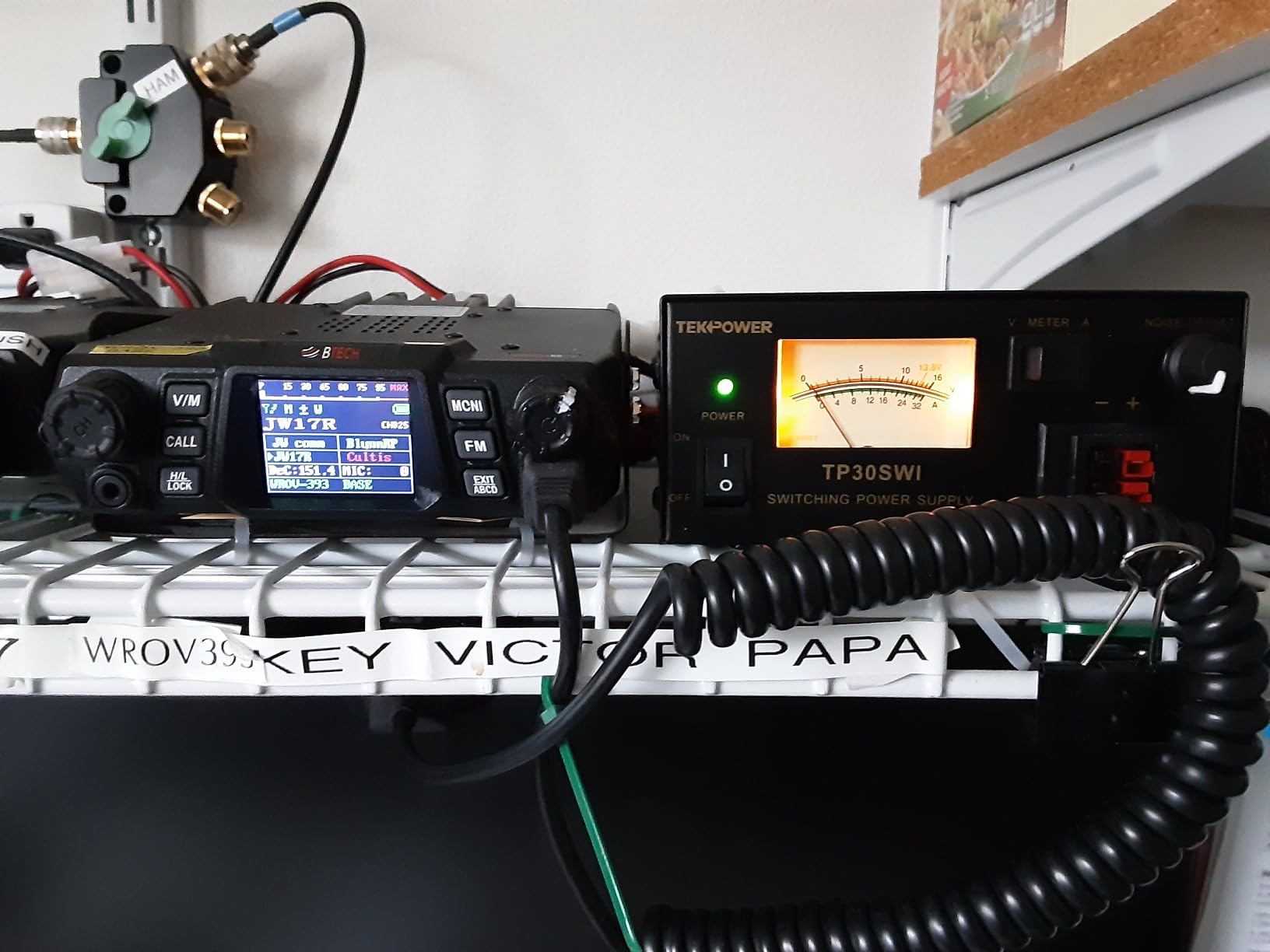
Where the Midland micro-mobiles give you a fixed GMRS channel set, this radio opens the whole thing up. There are 256 fully customizable channels plus 30 modifiable GMRS channels, and quad watch lets you hold four channels at the same time.
That combination is why it is the pick for groups that work near repeater infrastructure. A sweep rider can park on the convoy channel while a second display and dual watch keep an eye on the repeater pair and a spare, without swapping menus every time the group moves.
The receive side is unusually good for a mobile. It covers VHF and UHF wideband receive, FM broadcast, and NOAA weather broadcasts, so the same box that carries the convoy can monitor a local repeater net or catch a weather alert when a cell moves in.
It also carries a published water-resistance rating of IP54, and the box includes a bracket, screws, a fuse, a hand mic, and an RJ45-to-K1 audio cable. One year of warranty runs through the manufacturer.
Who the BTECH GMRS-50V2 suits
It suits a group that talks on repeaters, lives near mountain infrastructure, or wants a channel plan that can change per trip without a laptop. The 256-channel memory and computer programming make that realistic.
It also suits a build that already has a proper electrical system. Fifty watts at 13.8 volts with a 20 amp peak capability is comfortable on a rig with a fused accessory circuit and a second battery, and uncomfortable on one without.
Who the BTECH GMRS-50V2 does not suit
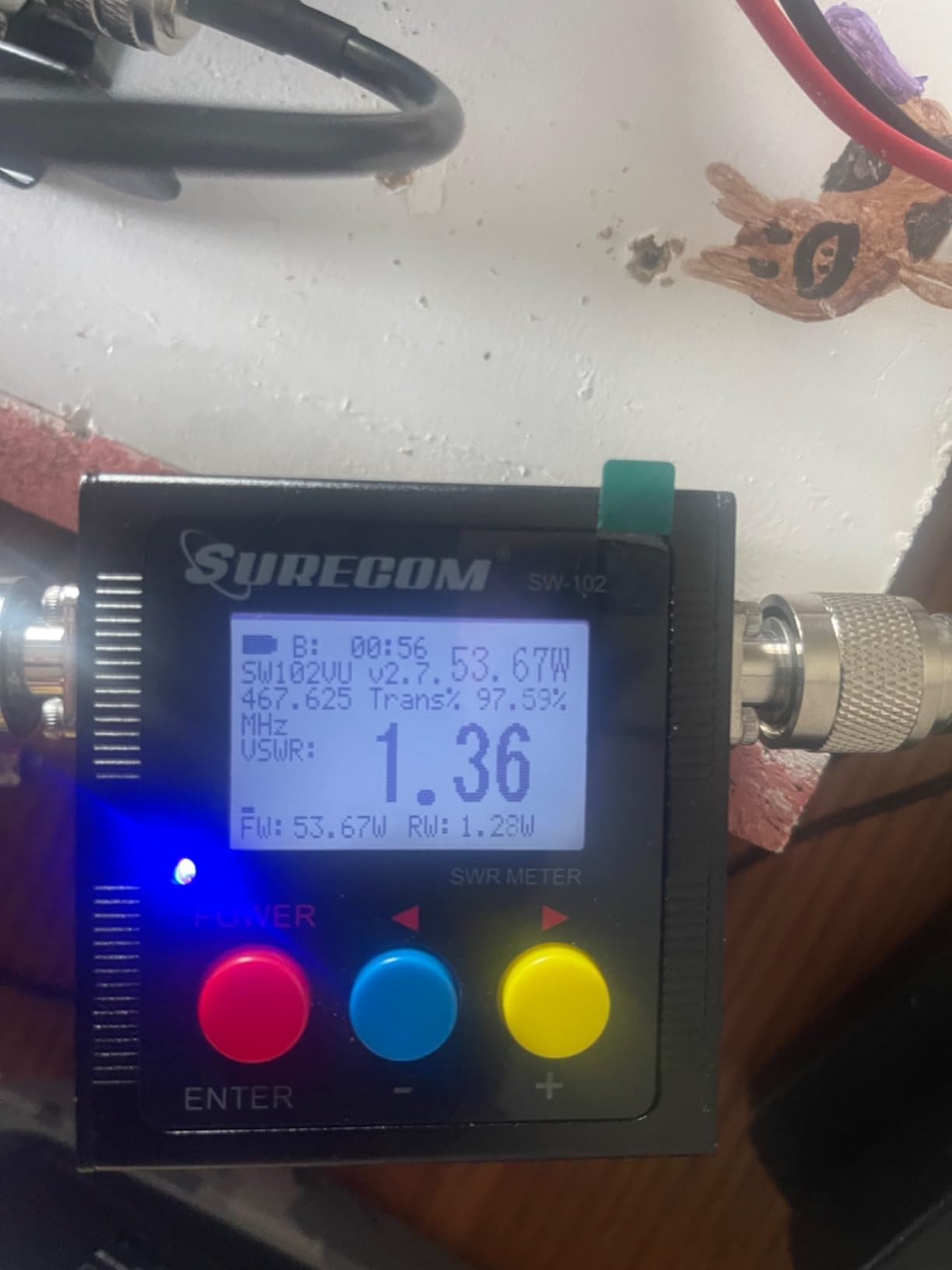
It does not suit a first-time builder looking for a weekend install. The manufacturer is explicit that a cigarette lighter outlet is not recommended and that a tuned 50-ohm antenna at SWR 1.5:1 or below is required, and the antenna is not in the box.
The 4.1 average across 376 ratings is the lowest among the picks here, with 14 percent one-star reviews, and the complaints cluster around exactly those two things: power supply and antenna expectations that were not clear at purchase.
4. Radioddity DB40-G 40W: built for a sweep rider watching two channels at once
Radioddity DB40-G GMRS Mobile Radio 40W, Dual Display, 199 Channels
Up to 40W output
199 channels with 169 modifiable
Dual display and dual watch
13.8V DC
18 month warranty
Pros
- Streamlined GMRS menu with 11 options instead of a 45-item generic list
- Users report repeater contacts well beyond the stated range with a decent antenna
- Stays warm rather than hot in continuous use
- Dual display plus dual watch keeps a second channel visible
- Works with CHIRP once band settings are sorted
Cons
- Factory manual is poor and bundled programming software is difficult
- Some radios have a faint low-contrast display in daylight
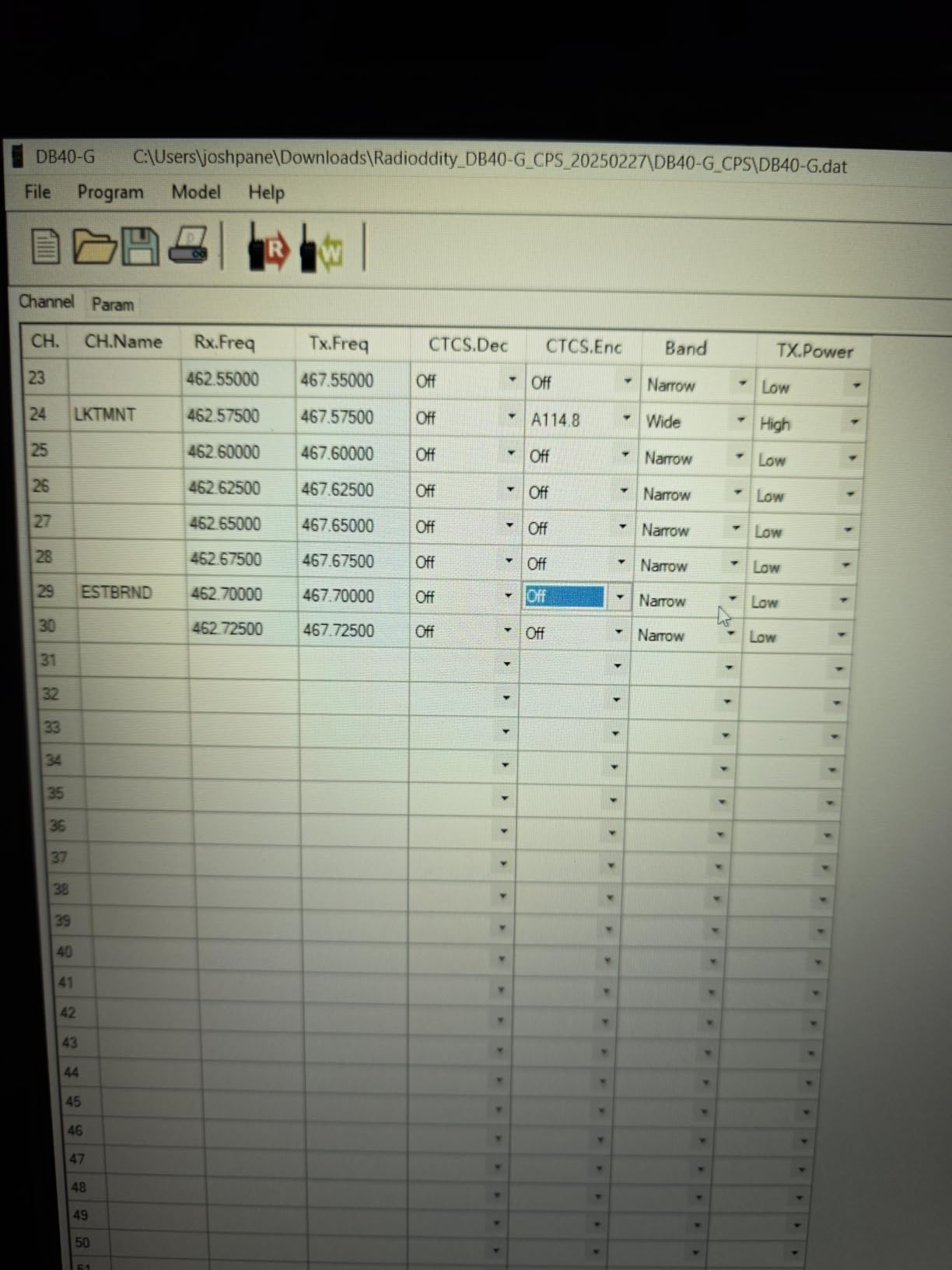
- Channel 23 arrives programmed with the wrong factory frequency
- No 12V cigarette lighter adapter included
The DB40-G is the radio to put in the sweep rider vehicle, or in the passenger seat of the lead truck when that person is also calling turns. Dual display and dual watch is the headline feature, and for convoy work it is more useful than raw wattage.
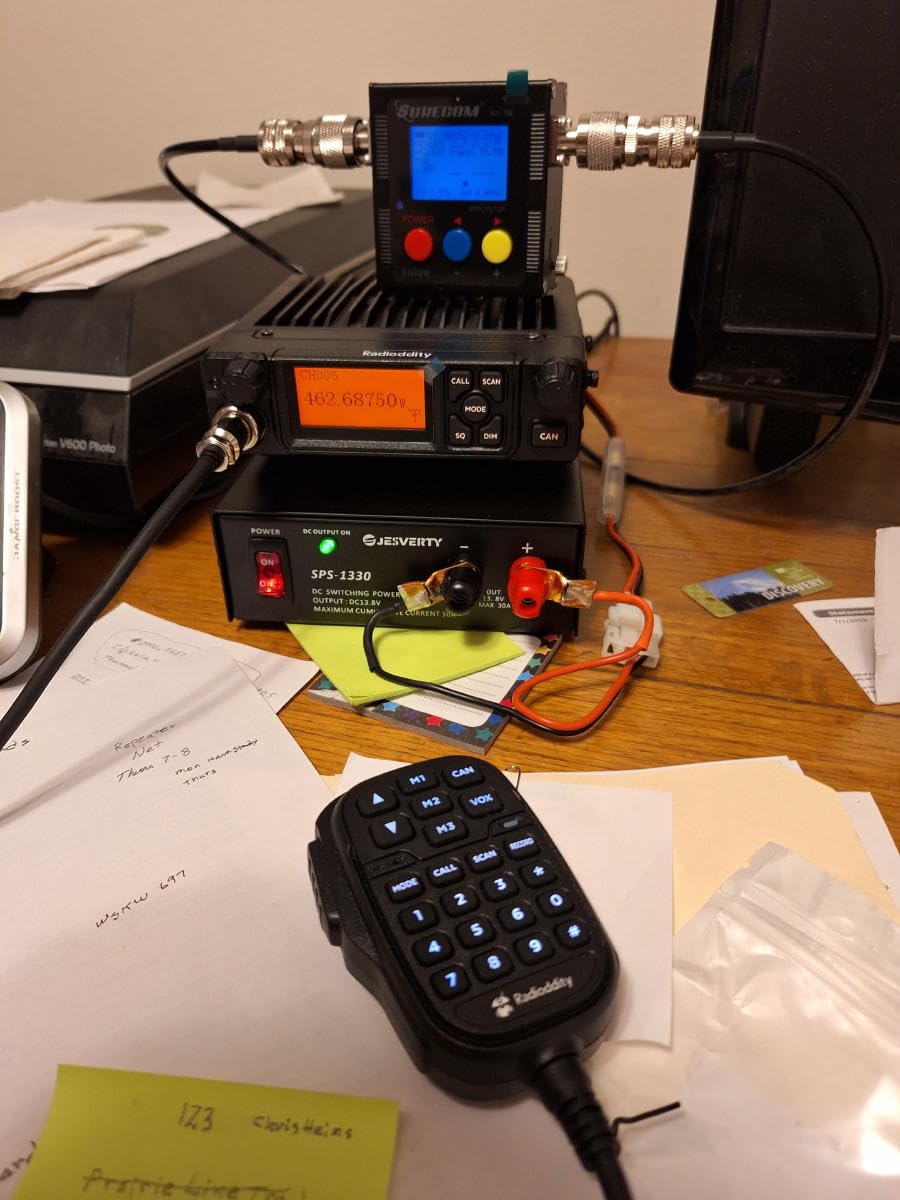
Output runs up to 40 watts, and the channel plan is 199 total with 169 fully customizable plus repeater channels, each with selectable CTCSS and DCS codes. It carries an FCC ID of 2AN62-DB40G and an 18 month warranty.
Owners with a reasonable antenna report far longer results than the printed figure suggests, including repeater contacts at 60 to 90 miles. That is not a promise; it is what users measure when the antenna is mounted well and the path between repeater and radio is genuinely open.
One owner also notes the unit stays only warm rather than hot in continuous use even at high power, which matters on a long day of transmitting. UHF receive-only lets you monitor a local repeater net without a second radio.
Who the DB40-G suits
It suits the person whose job is coordination rather than driving. A dual display means the convoy channel and a monitoring channel can sit side by side, and the display always shows what is actually active.
It also suits groups that want a simple menu. Eleven GMRS-focused options are a genuine relief compared with the generic 45-item menus on many programmable radios, where a group can lose an afternoon to channel editing.
Who the DB40-G does not suit
It does not suit anyone who wants to install it in ten minutes with a plug. There is no cigarette lighter adapter in the box, so you need a hardwired 13.8V run, and the FCC ID and 18 month warranty are the only paperwork you get for it.
Documentation is the weak point. The factory manual is poor, the bundled programming software is awkward, and some models arrive with a low-contrast display that is hard to read in daylight, plus a factory-programming error on channel 23.
5. Radioddity DB20-G 20W: the default first mobile for most groups
Radioddity DB20-G GMRS Mobile Radio 20W, Long Range, 500 Channels
20W output
500 programmable channels
9 repeater channels
12V adapter included
IP44
Pros
- Compact enough to move between a base station and a vehicle
- Users report clean simplex contacts at 7 miles and repeaters 25 to 30 miles away
- 9 extra customizable repeater channels reduce reprogramming
- Does not run hot in continuous operation
- Includes a 12V cigarette lighter adapter
Cons
- Radioddity programming software is cumbersome and CHIRP support has been finicky
- Supplied manual is hard to interpret
- GMRS channels 8 to 14 are receive-only under factory programming
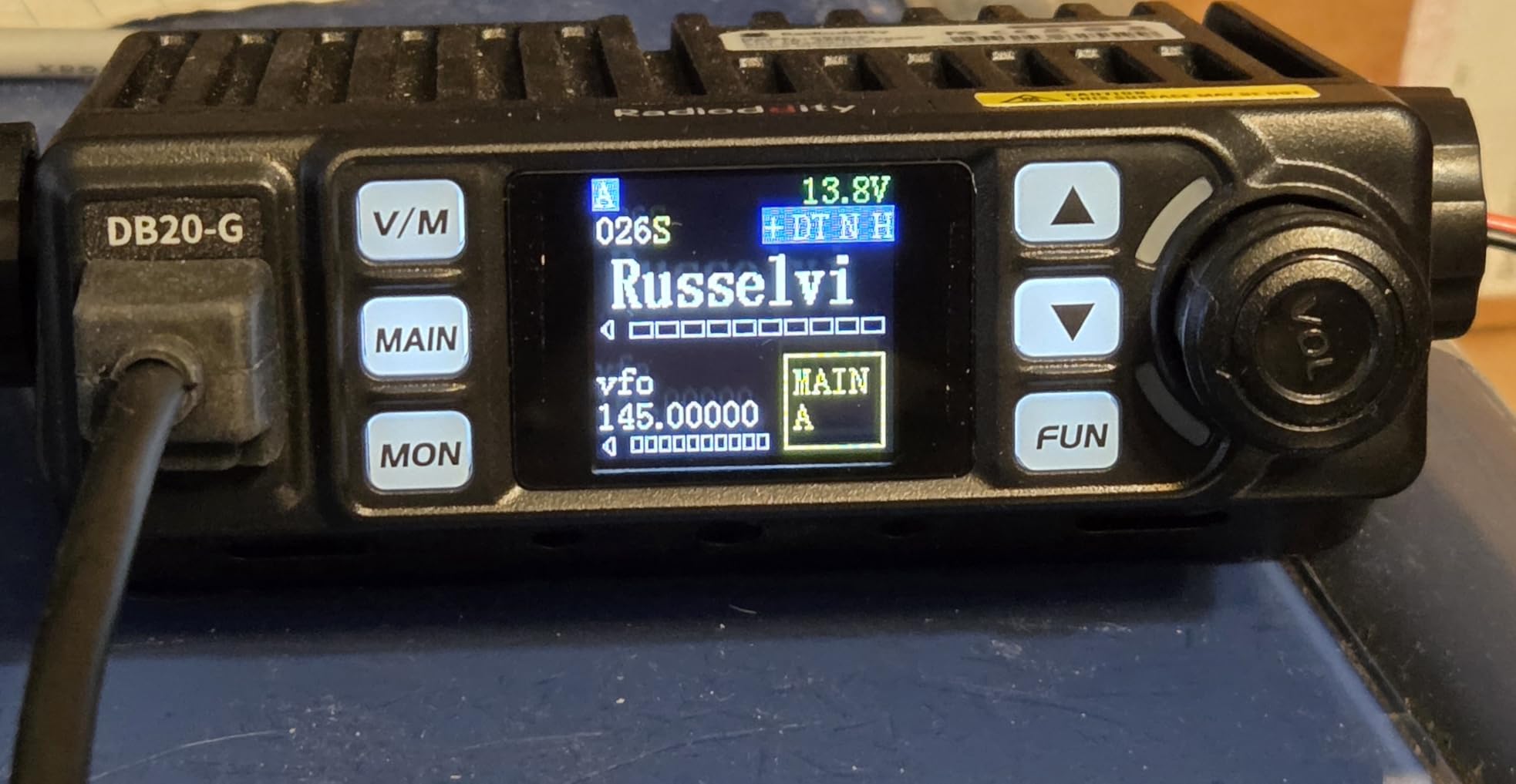
The most common answer in GMRS recommendation threads is the DB20-G, and the owner base backs that up with 715 ratings at 4.5. It weighs 0.45 kg, measures 4.5 by 5 by 2 inches, and you can carry it from the truck to the camp table in one hand.
It offers 500 programmable channels, 9 customizable GMRS repeater channels, 1,075 privacy codes, VOX, and digital noise reduction. Nine repeater slots is generous for a radio this size, and it means a group can keep a few different local networks loaded rather than reprogramming between trails.
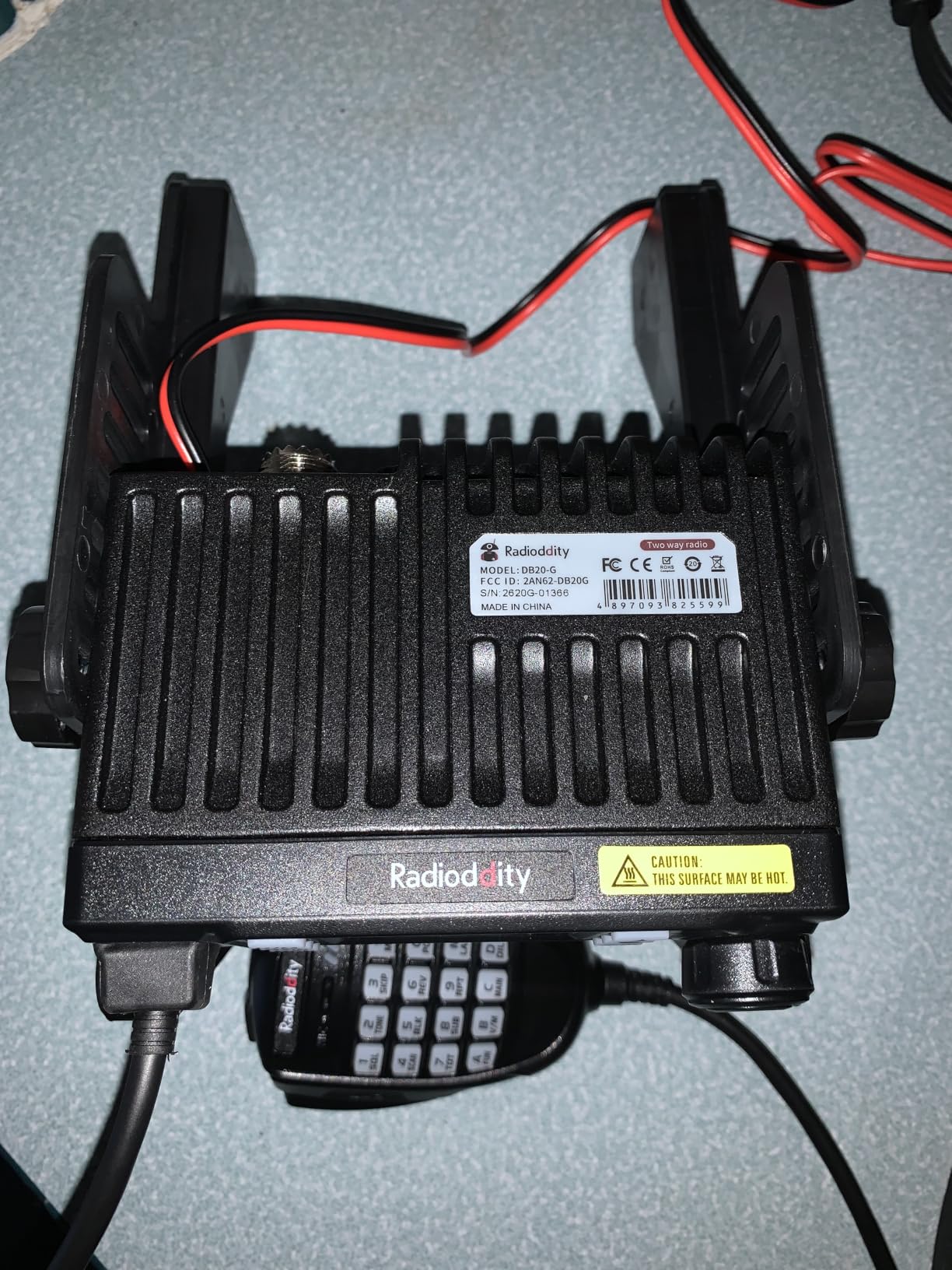
Users measure 16 to 19 watts of actual output on the high-power channels, which is a narrower gap from the 20 watt claim than some competitors manage. The radio is rated water resistant at IP44, and it does not run hot in continuous operation.
The 12V car charger in the box matters more than it sounds. It means a first install can happen in a parking lot with no wiring, which is exactly how most groups get started and exactly how they end up with bad antenna placement they never revisit.
Who the DB20-G suits
It suits a group buying its first set of mobiles, or a club standardizing on one model so that programming and channel plans match across every vehicle. The size makes it easy to hand to a spotter or carry to camp.
It also suits a group whose terrain does not demand 50 watts. Users regularly reach repeaters 25 to 30 miles away and hold clean simplex contacts at 7 miles, which covers a lot of trail.
Who the DB20-G does not suit
It does not suit anyone who wants to expand the channel plan far. Five hundred channels sounds generous, but the GMRS band is what it is, and channels 8 through 14 arrive receive-only under factory programming, which surprises people.
Software is the real complaint. Radioddity’s own programming utility is cumbersome, CHIRP support has historically been finicky, and the manual is hard to read, so budget an evening for setup rather than assuming it is plug and play.
6. Retevis RA86: everything you need for a same-day install, including the antenna
Retevis RA86 GMRS Mobile Radio, GMRS Radio with Gain Antenna
22 GMRS plus 8 repeater channels
Bundled 6.5 inch gain antenna
Built-in dual speakers
600 g
2 year body warranty
Pros
- Ships with a gain magnetic-mount antenna and 5m cable
- Selectable dual speakers cut through engine and road noise
- Cigarette lighter plug means an immediate install with no wiring
- Compact body stows easily in a small cab
- CHIRP support added through a firmware update
Cons
- Stated 5 mile range is well below the 20 to 50 mile claims of the other mobiles
- Only 30 channels with 8 repeater slots
- Not water resistant
- Smallest review base among these picks at 137 ratings
Most mobile radios come without an antenna, which means the real cost of a convoy build is discovered after the purchase. The RA86 solves that: it comes with a 6.5 inch magnetic-mount gain antenna and a 5 meter coax run.
That single inclusion changes the math for a group starting from nothing. A cigarette lighter plug is in the box as well, so the radio is running before the group leaves the driveway, which is the difference between a plan on paper and a working net on the trail.
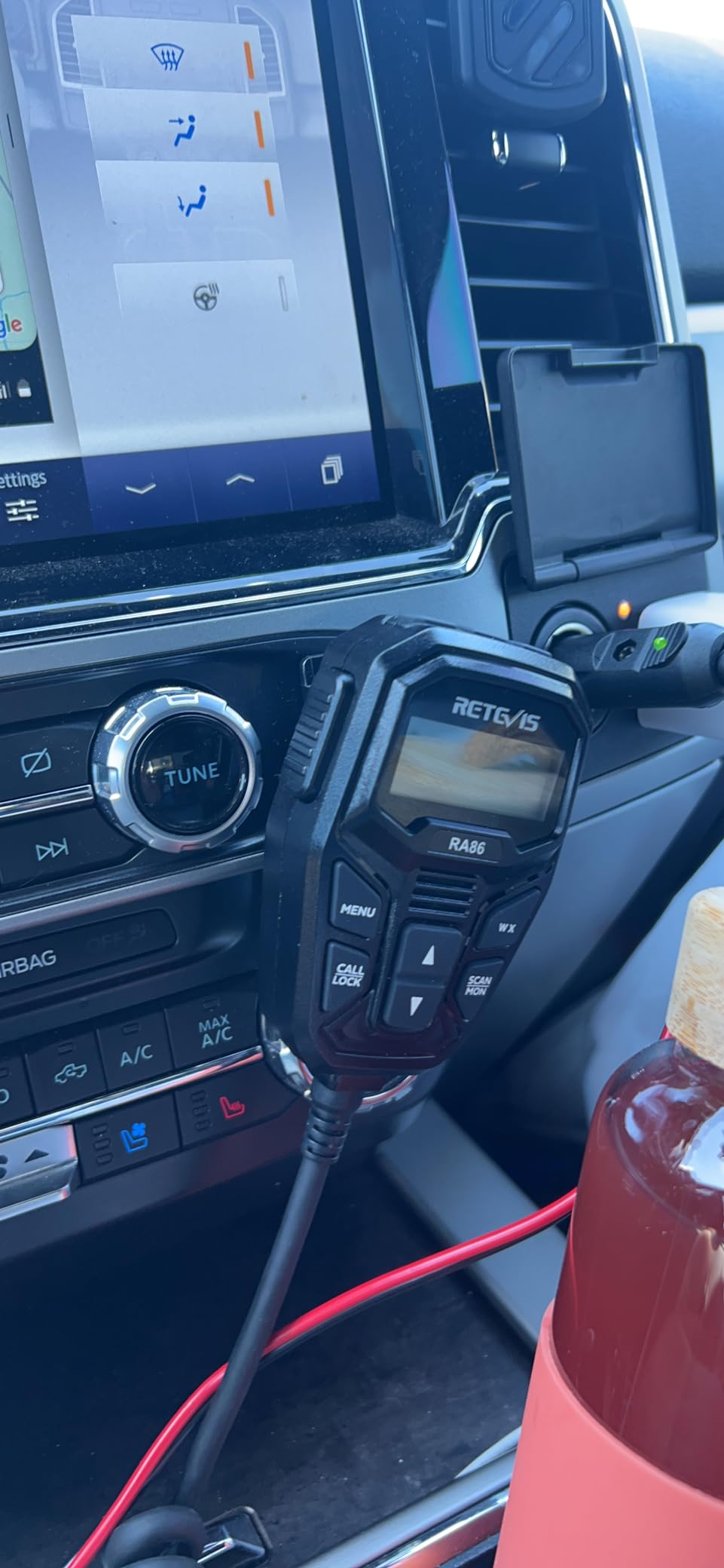
The other feature that matters specifically for a moving convoy is built-in dual speakers, selectable from the menu. In a rig with a cage, a hardtop, and an engine at idle, having a speaker option that pushes through that noise is worth more than a couple of extra channels.
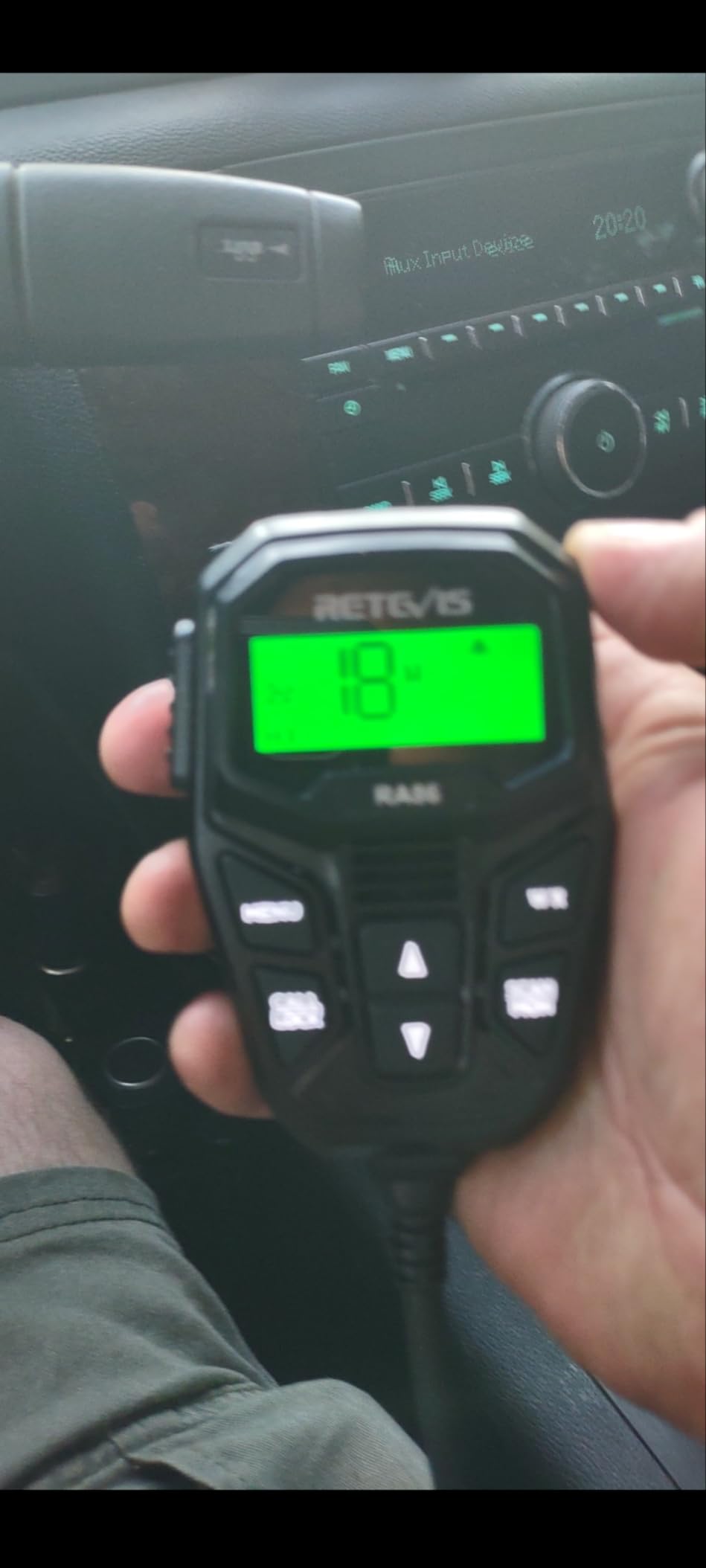
It covers 22 GMRS channels plus 8 repeater channels, carries NOAA weather scan across 10 weather channels, and adds adjustable mic gain and screen brightness. Operating temperature is rated from minus 30 to 55 degrees Celsius, which covers most year-round driving.
Who the RA86 suits
It suits a group that wants a working install this weekend with no parts hunt, and it suits a club buying several identical radios where the bundled antenna and cable go straight onto each roll bar.
It also suits noisy vehicles. The dual speaker selection was clearly designed for engine compartments and open cabs where a single small speaker gets buried.
Who the RA86 does not suit
It does not suit a group that needs to hold a long open crossing. The stated range is 5 miles, well below the 20 to 50 mile claims of the higher-wattage mobiles, and 30 channels is a tight plan for a big group.
It is not water resistant, and with 137 ratings it has the thinnest owner base here, so there is less long-term field history to lean on than the Midland or Radioddity options offer.
7. Retevis Ailunce HA1G: the handheld to hand the spotter
Retevis Ailunce HA1G GMRS Handheld Radio, GMRS Radio with IP67 Speaker Mic
IP67 waterproof
2800mAh battery with 20 hour life
1.77 inch color screen
256 channels
2 year body warranty
Pros
- IP67 waterproof rating makes it the natural choice for rain
- wading and trail dust
- 2800mAh battery gives roughly 20 hours for a full convoy day
- Shoulder speaker mic allows hands-free transmit on a strap
- Large color screen readable day or night
- CHIRP and VFO support for flexible channel management
Cons
- 4.2 average with 64 percent five-star ratings
- 5 mile stated range is short for wide-open separation
- Speaker mic adds bulk on a chest pack or harness
The spotter walking twenty feet ahead of the lead vehicle in a creek bed is the hardest radio job in a convoy, and the HA1G is built for it. IP67 waterproofing is the number that matters on a trail where a ford is inevitable.
Battery life is 2800mAh for roughly 20 hours of use on a 7.4 volt pack, which covers a long driving day with charge to spare. Charging is USB Type-C, so a power bank in the truck can top it up between sections.
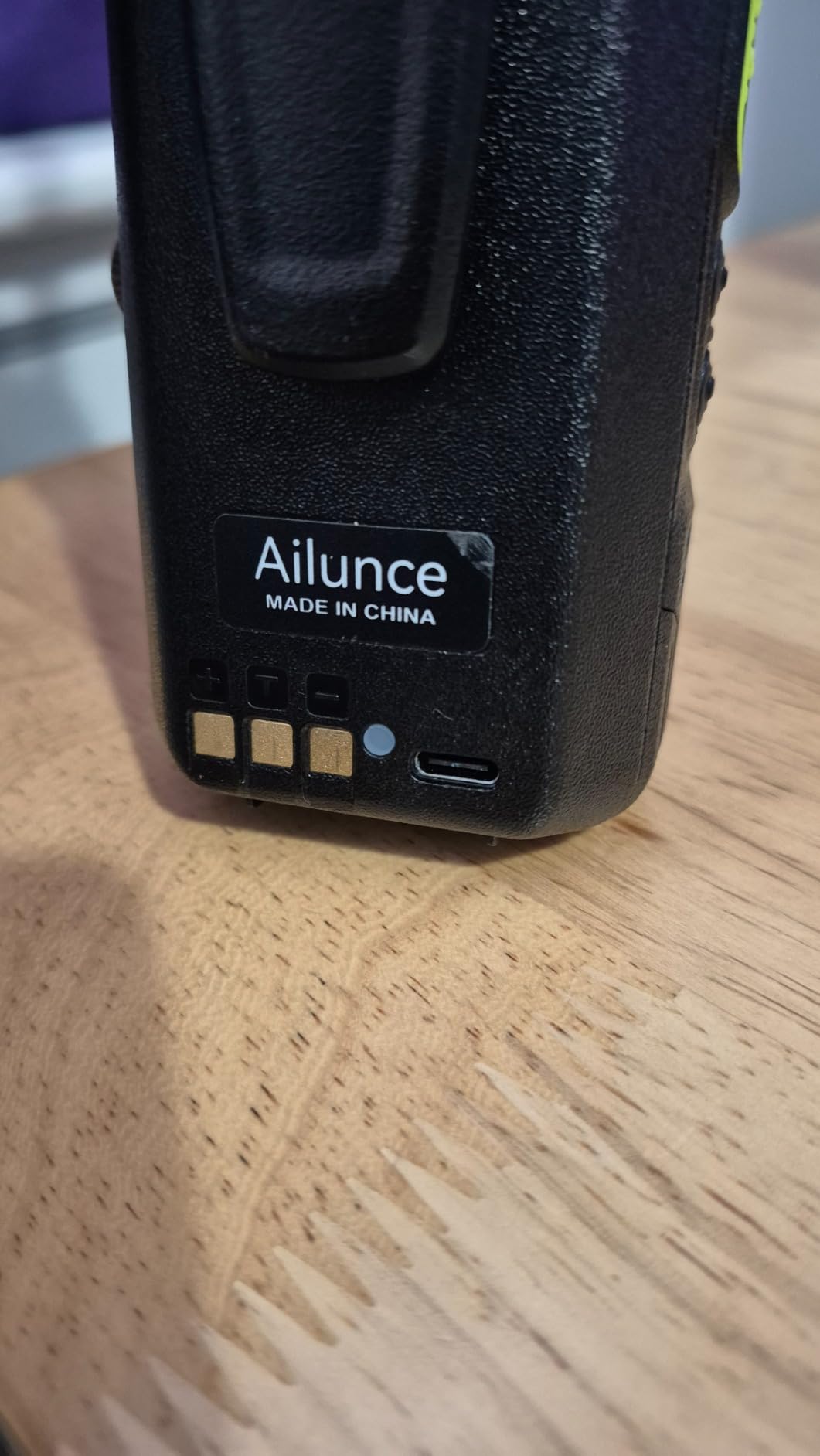
The shoulder speaker mic is the feature that changes how a spotter actually works. With a 360 degree rotating metal clip, the radio can transmit hands-free while the operator is using both hands on a rock or guiding a driver, which is precisely what the role requires.
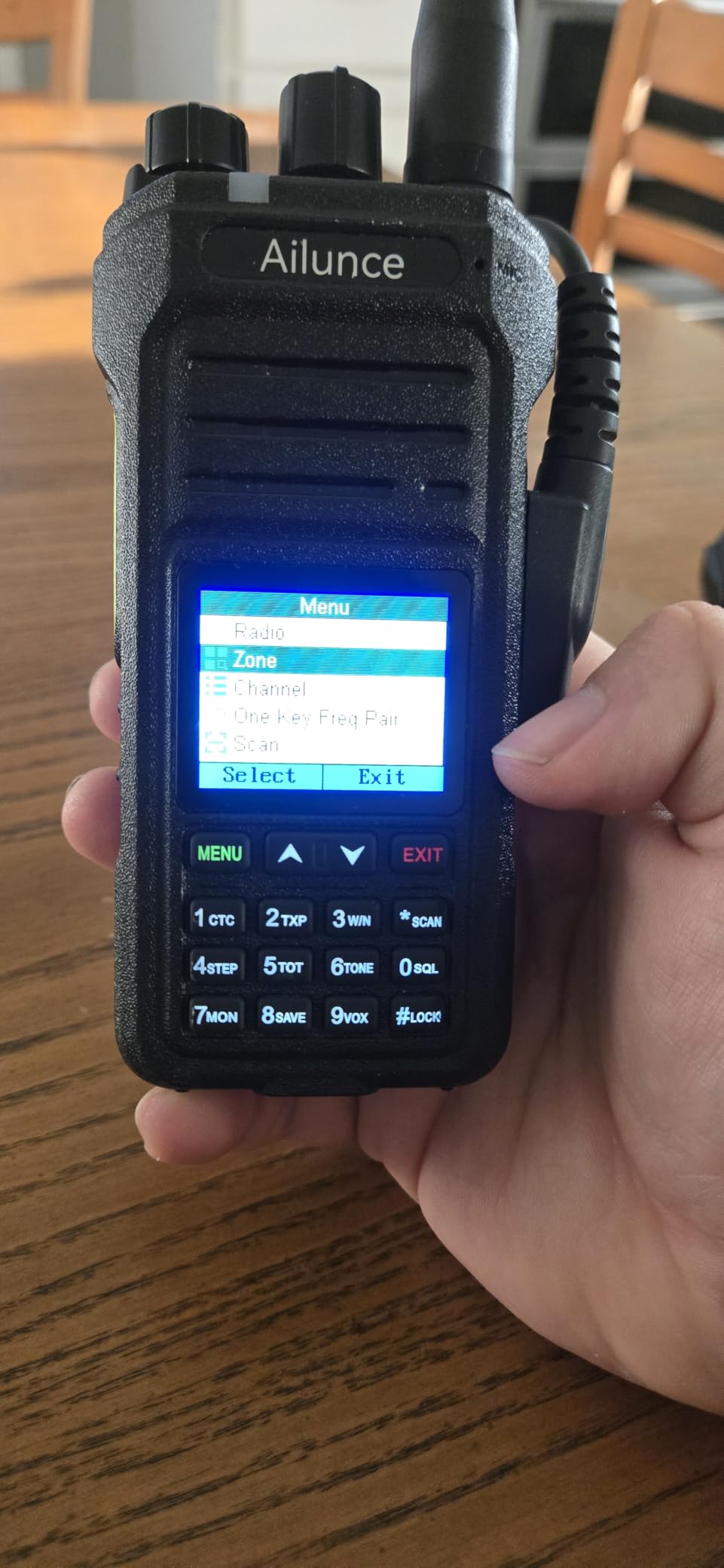
The 1.77 inch color backlit screen with adjustable brightness is easy to read in glare and in a dark cab, and 12 NOAA weather channels, an emergency alarm with siren and flashing lights, squelch, and mic gain controls round out a package built for a noisy environment.
Who the HA1G suits
It suits spotters, sweep riders on foot, and anyone riding in an open vehicle where spray and dust are constant. It is the radio we would issue to the person walking ahead of the group.
It also suits a passenger who wants to help read the map without holding a PTT. The shoulder mic handles the transmit side, and 256 channels plus CHIRP support mean the handheld can mirror the mobile’s plan exactly.
Who the HA1G does not suit
It does not suit someone who needs the handheld to carry a group across open desert. The stated range is 5 miles, and the 4.2 average with 64 percent five-star ratings is the most muted owner response among these picks.
The speaker mic, which is the reason to buy it, is also the reason it is bulky on a chest pack or a harness mount. Test the clip arrangement on your actual gear before committing.
8. Retevis RB48PLUS: the throw-it-in-the-dust two-pack
Retevis RB48PLUS GMRS Walkie Talkies Long Range,IP67 Waterproof 2 Way Radio
IP67 waterproof and dustproof
2000mAh with 18 hour use
8 repeater channels
5 year body warranty
Two-pack with docks
Pros
- Dual large PTT buttons are easy to hit with gloves on
- Button lock stops accidental channel changes on rough terrain
- Vibration and ring alerts so calls are not missed while moving
- Two complete charging docks in the kit
Cons
- 3 mile stated range suits a spotter rather than long separation
- 2000mAh batteries give 18 hours rather than 20
- Only 30 channels with 8 repeater slots
This two-pack is the durability answer. It is IP67 waterproof, dustproof to 0.1 micron, built from PC and TPE, and rated to survive a 2 meter drop, which describes a UTV or a tube-door Wrangler far better than any spec on a dash-mounted mobile.
The FCC ID is 2A3OORB48P, and the warranty is five years on the radio body. That matters for gear that gets dropped, scuffed, and rained on every single weekend.
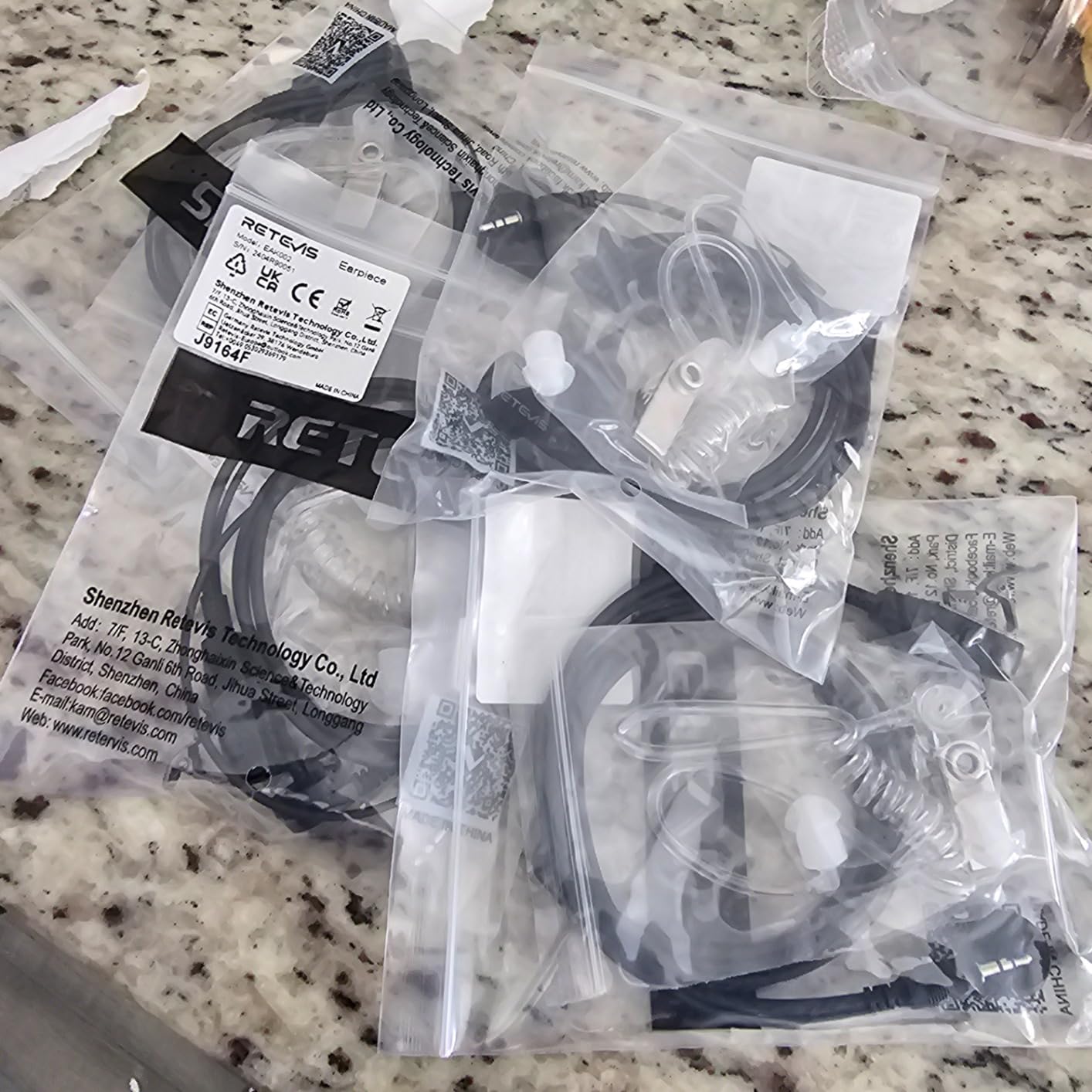
Ergonomics were clearly considered for gloved hands. There are dual large PTT buttons, a button lock that prevents accidental channel changes when the radio is jolted, and both vibration and ring alerts, so a call is noticed whether the radio is on a belt or buried in a pack.
Batteries are 2000mAh, giving 18 hours of use and 100 hours of standby per radio. The kit includes belt clips, two charging docks, lanyards, and Type-C cables, so both radios can be on charge overnight at camp.
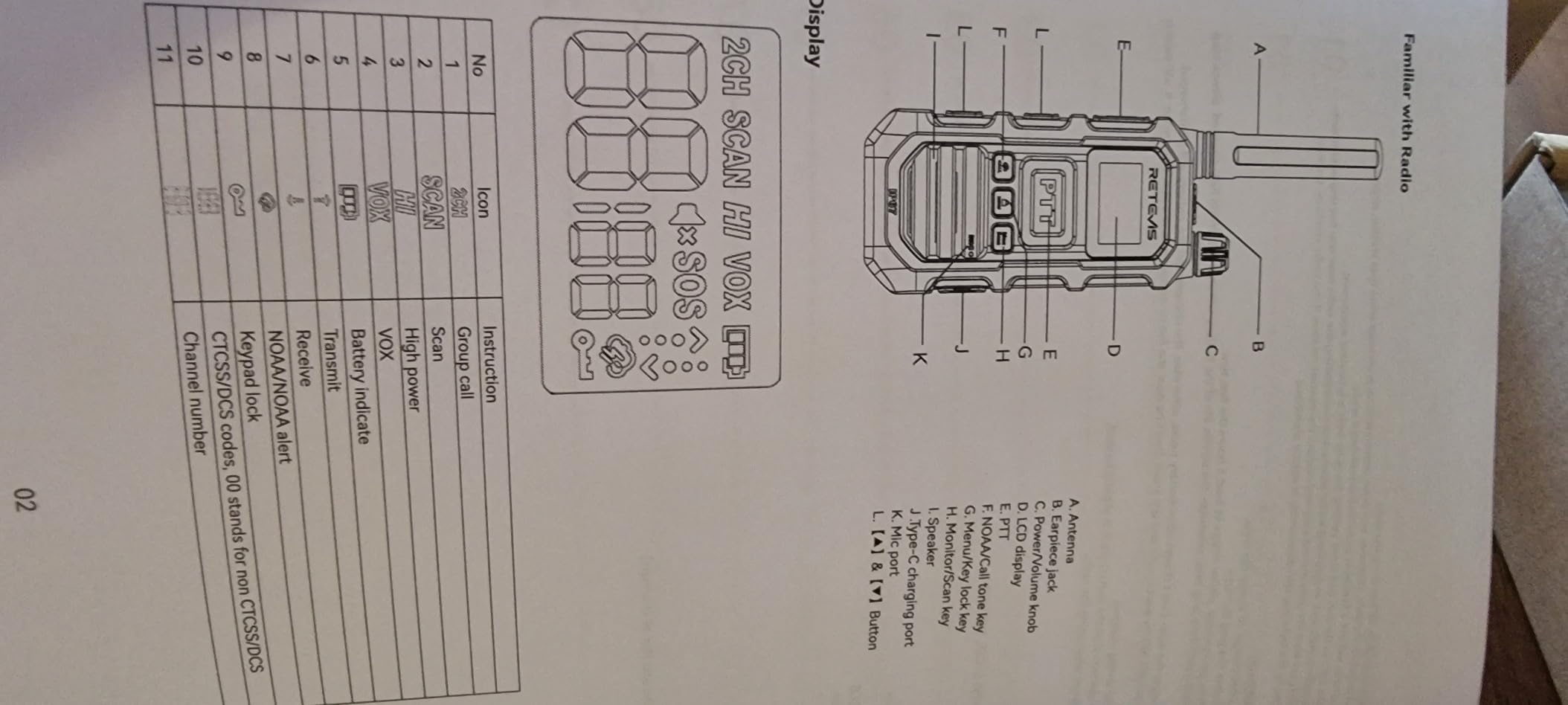
Who the RB48PLUS suits
It suits UTV, side-by-side, and open-cab Jeep groups where the radio lives in a glove box or on a harness and gets sandblasted for eight hours at a time. Nothing else here carries an IP67 and drop rating together.
It also suits a group that wants a spare for every vehicle without a big purchase. Two radios, two docks, and a five-year warranty is the cleanest way to cover a second and third position in each cab.
Who the RB48PLUS does not suit
It does not suit the person expected to be the long-range element of the group. The stated range is 3 miles, which is a spotter and camp radius, and 30 channels with 8 repeater slots is a simple plan.
Battery life is 18 hours against 20 for the HA1G, and with 224 ratings there is less long-term history than the Midland two-pack carries, so buy for the physical specs rather than the review volume.
9. BAOFENG GM-15 Pro two-pack: fill the extra positions cheaply
BAOFENG GMRS Radio Handheld Long Range GM-15 Pro 8W Walkie Talkie with Earpiece NOAA Weather Receiver Rechargeable GMRS Repeater Two Way Radio with USB-C Charger for Hunting Survival Gear,2Pack
8W handheld
250 memory channels
1500mAh with 24 hour life
11 NOAA channels
Two-pack with earpieces
Pros
- Two complete units in the box for the lowest cost per radio
- 250 memory channels plus 24 extra customizable repeater channels
- 24 hour stated battery life
- USB-C charging from a power bank or vehicle
- VFO mode adds VHF and UHF receive for monitoring repeaters
Cons
- Not water resistant
- Stated range falls from 4 to 5 miles open to 2 to 3 in the city
- Tall 10.6 inch body is bulky for a chest pack
- Basic 1500mAh batteries in this variant
Convoy budgets fall apart on the third and fourth radio, the one in the middle vehicle that nobody thought about. This two-pack is the cheapest way to cover those positions, with two complete radios, earpieces, and USB-C charging in the box.
The channel flexibility is unusual for a budget handheld. There are 250 memory channels, 30 preloaded including 22 GMRS and 8 repeater channels, and 24 additional customizable repeater channels, plus 154 privacy codes split across 50 CTCSS and 104 DCS.
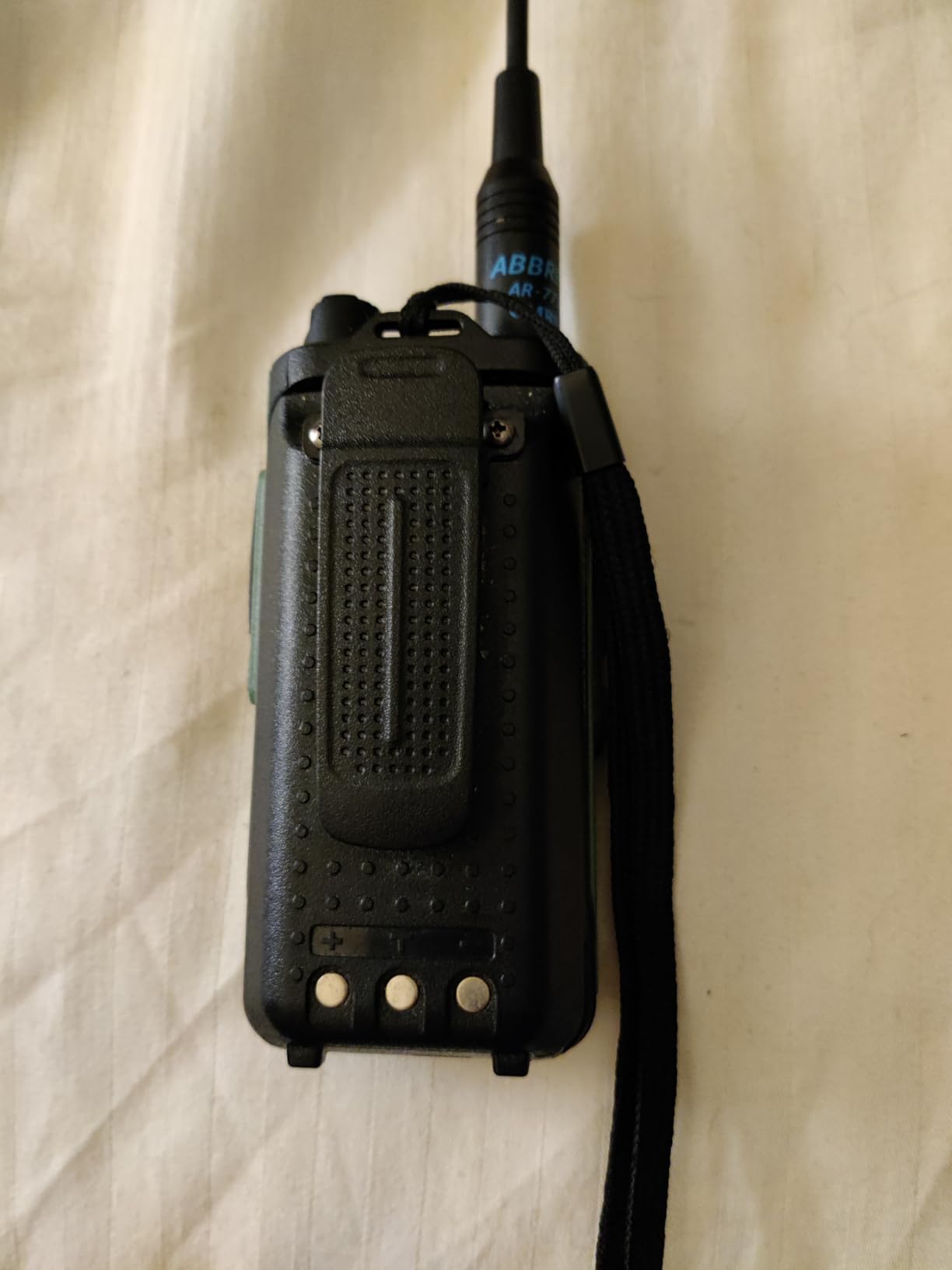
Output is 8W, which is more than a typical license-free handheld, and the receive side covers 11 NOAA weather channels plus VHF and UHF in CH and VFO modes. That means a spotter can park on the convoy channel and still monitor a local repeater.
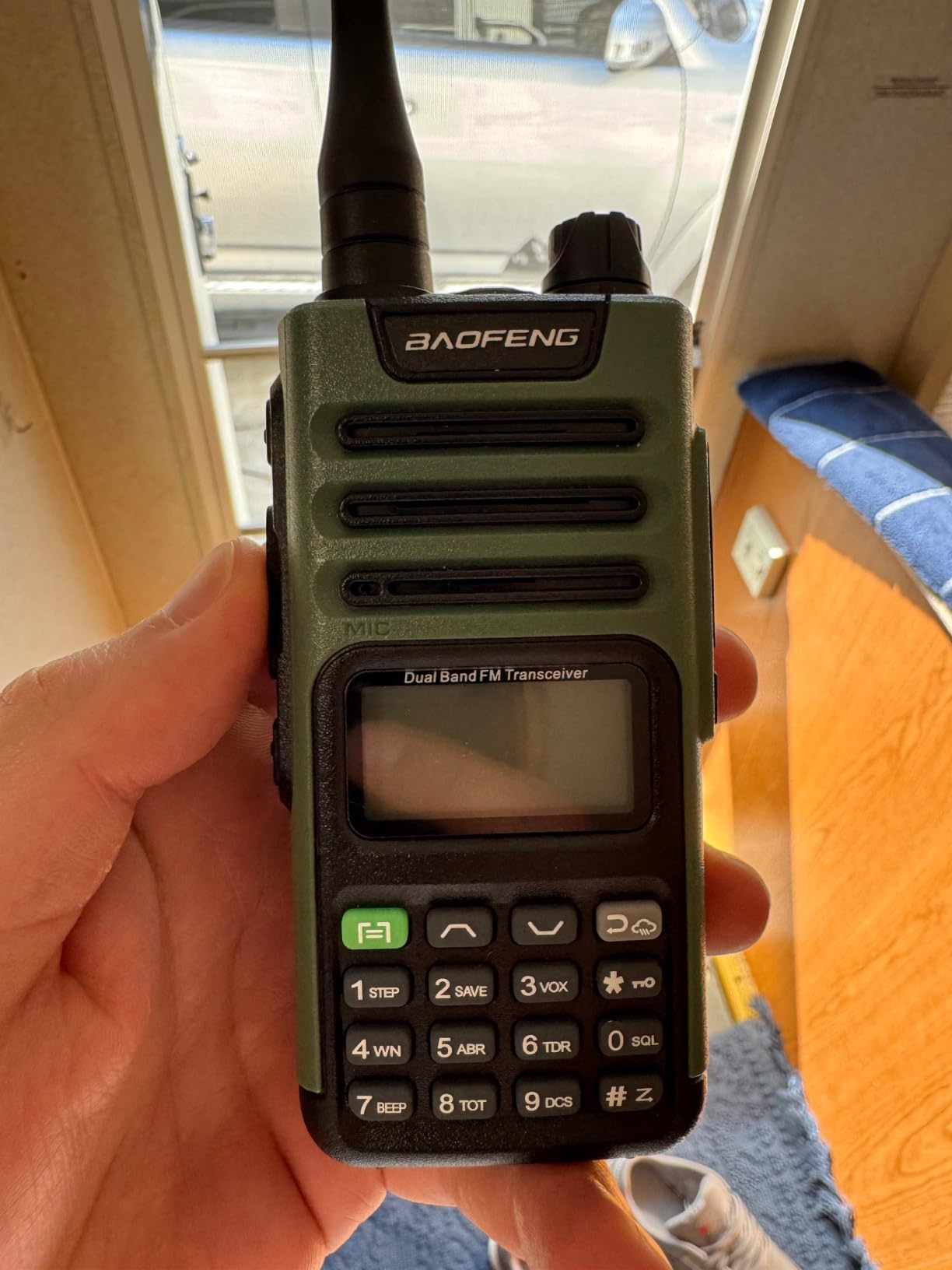
Battery is 1500mAh with a stated 24 hour life, and a 2100mAh variant is also offered if you want more runtime. The FCC ID is 2AJGM-GM15PRO, and the listed accessories include an SOS alarm, flashlight, VOX hands-free, battery saver, and keypad lock.
Who the GM-15 Pro suits
It suits a group that wants full radio coverage in every vehicle plus camp, without stretching the budget across six purchases. Two radios per box means a second passenger in each cab can be covered.
It also suits anyone who wants to experiment with channels. 250 memory channels and 24 extra repeater slots is more channel room than several radios on this list offer.
Who the GM-15 Pro does not suit
It does not suit wet-weather or open-cab use. There is no water resistance rating, and the tall 10.6 inch body is genuinely awkward on a chest pack or harness mount.
Real range drops fast with terrain: owners cite 4 to 5 miles open, 3 to 4 in forest, and only 2 to 3 in a built-up area. Treat it as a close-support handheld, not the radio that carries the group.
10. Midland GXT1000VP4 two-pack: the most proven handheld for a passenger seat
Midland GXT1000VP4 GMRS Two-Way Radios with Headsets, Black, 2 Pack
50 channels with 142 privacy codes
JIS4 water resistant
Headsets included
3 year parts and labor warranty
Two-pack with desktop charger
Pros
- Review volume of 13204 ratings documents long-term reliability
- Headset microphones included for hands-free convoy driving
- Dual power lets you drop in AA cells when rechargeable packs run low
- 50 channels and 142 privacy codes handle larger group plans
- JIS4 water resistance and a 3 year parts and labor warranty
Cons
- JIS4 water resistance is below the IP67 rating of the newer Retevis handhelds
- Fixed 50 channel layout is less flexible than a 250 or 500 channel radio
- Rechargeable NiMH packs give roughly 11 hours
The most thoroughly documented product in this list is this one, by a wide margin. Nothing else here has two decades of owner reports behind it.
The reason it earns a place in a convoy kit is the included headsets. Two radio bodies, rechargeable batteries, a desktop charger, and headset microphones come in the box, which makes hands-free driving in a passenger seat possible on the first trip.
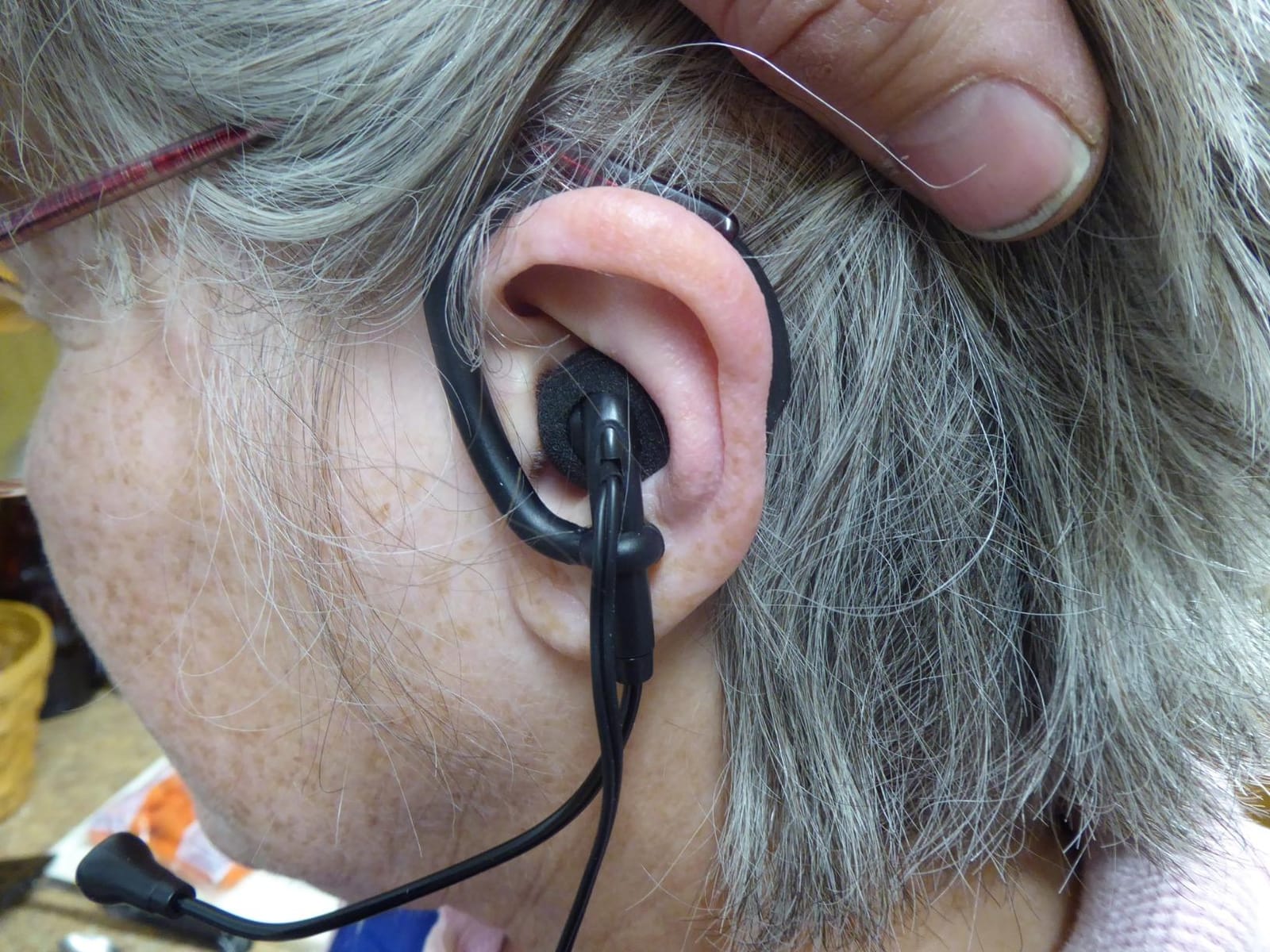
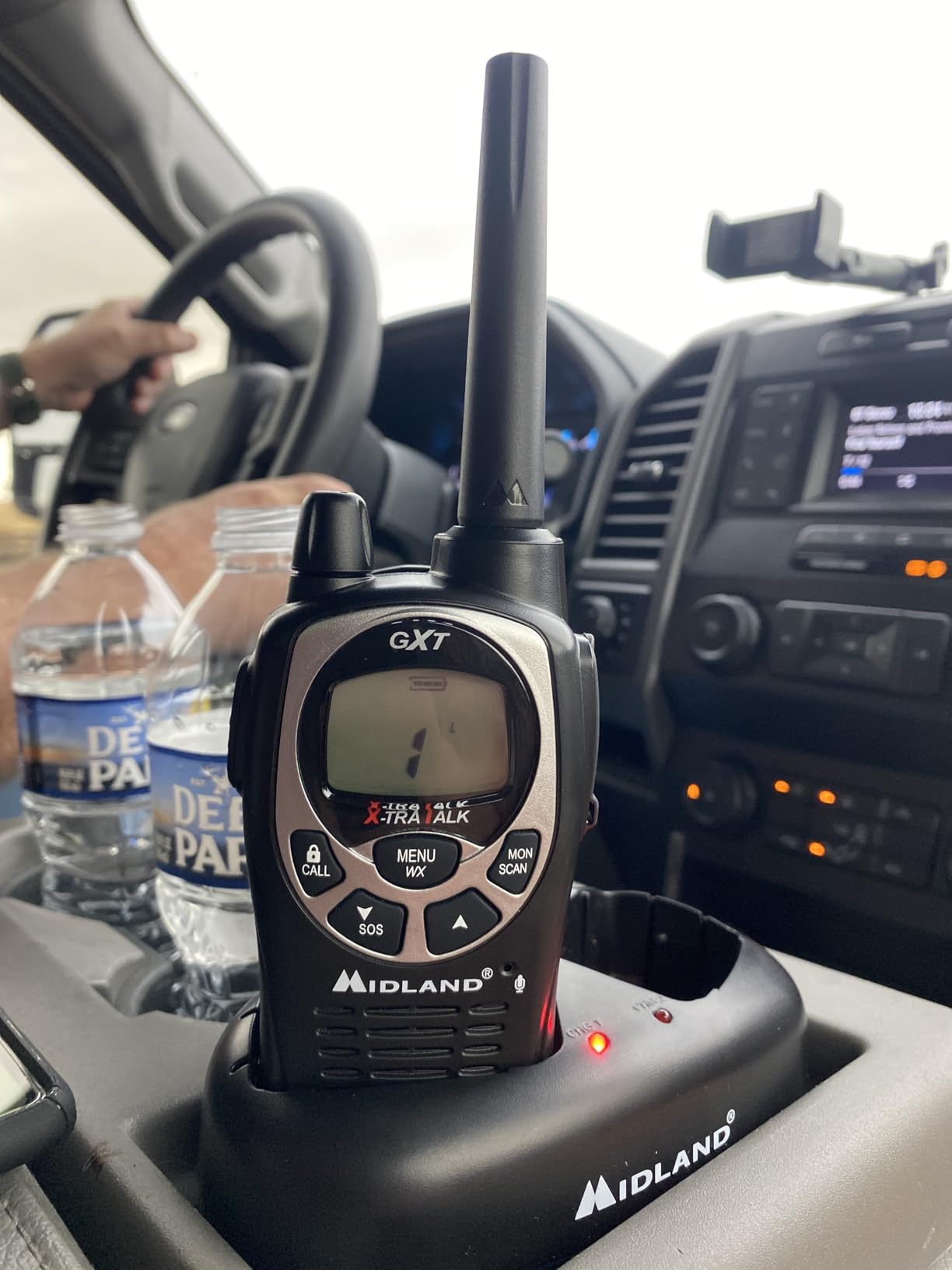
Spec-wise it is 50 channels with 142 privacy codes, NOAA weather scan with a severe weather alert, VOX hands-free including whisper operation, and a 10 call tone selection. Water resistance is JIS4, and the warranty is 3 years parts and 3 years labor.
Dual power is the practical feature for a long day: rechargeable NiMH packs give about 10.94 hours, and the radios take AA cells when those run down. Each unit is 4.8 ounces and measures 7.9 inches tall.
Who the GXT1000VP4 suits
It suits a group that values proven reliability over features, and it suits a passenger working the map who wants to talk without taking a hand off the wheel. The headset is the reason it is on this list rather than a generic budget set.
It also suits anyone planning ahead. Dual power, a 3 year warranty, and a documented service life mean fewer surprises on a multi-day trip where a dead radio ends the net.
Who the GXT1000VP4 does not suit
It does not suit a wet-weather or dust-exposed role. JIS4 is a spray rating, well below the IP67 sealed standard of the newer Retevis handhelds on this list, and it will not survive a creek crossing.
The 50 channel layout is fixed, which is fine for a convoy and wrong for anyone who wants a complex per-vehicle channel plan, and the 36 mile stated range via Xtreme Range technology is a marketing figure, not a trail measurement.
How to Build a Convoy GMRS Setup
Radios are the easy part. What actually keeps a convoy together is an agreement made before anyone turns the key, and five decisions cover it.
1. Pick a channel. There is no off-roaders-only channel in GMRS. Groups converge on the same 22 simplex channels and the 8 repeater pairs, and channel 8 through 14 on some radios arrive receive-only under factory programming. Agree on one simplex channel, verify that every radio in the group can transmit on it, and write it on a card that goes in every glove box.
2. Pick a tone code. Tone codes stop your conversation from opening the squelch of strangers sharing the channel. Pick one CTCSS or DCS value and put it in the same place as the channel. Groups that skip this step spend the trip talking over each other with passing traffic.
3. Assign a group call sign. Every transmission should end with it, and vehicles should add their own number: Trail Six, Trail Six Two. On a long day with eight vehicles, a call sign saves about a minute per call in confusion.
4. Set a check-in cadence. Tell the group that the sweep rider reports at the top of every gear change, at every junction, and immediately after any section where someone was out of contact. The rule should be simple enough to remember while concentrating on a rock step.
5. Agree what happens when the group splits. Decide the losing-comms rule in advance. A common one: if a vehicle drops out, the vehicle ahead stops at the next safe spot and waits rather than continuing, so the gap never becomes a mile. This is the single most useful paragraph in the whole setup and the one most groups never write down.
On spacing, the 3-3-3 rule circulates in off-road groups as a planning heuristic: the third vehicle in a line can end up roughly three times further from the point of visual contact than the first, so as the string stretches, keep the tail vehicle within radio contact of the one in front of it rather than assuming the lead vehicle is your only reference point.
If you want the wider off-road kit sorted at the same time, our off-road win guide covers the recovery gear that usually matters on the same sections where the radio work is hardest.
Convoy Kit Math: How Many Radios a Group Needs
One radio per vehicle is the minimum, and for most trail groups it is not enough. A workable plan gives every cab a mobile plus one handheld, and adds a second handheld wherever someone rides outside the cab.
For a two-vehicle group, four radios is the working minimum: a mobile in each cab plus a handheld for the passenger. That is the smallest configuration where the spotter role exists at all.
For a four-vehicle group, count six radios as the floor: four mobiles, two handhelds, and one dedicated handheld carried by the person walking ahead. Add another handheld if a spotter works the front and a sweep rider works the tail.
For a six-vehicle group, the pattern scales to six mobiles and four handhelds, with two spares at the base camp vehicle. Keep spares charged and on the group channel, because a dead handheld at the far end of a string is the failure nobody can work around.
Buy as a group and standardise on one mobile model and one handheld model wherever you can. Matching radios mean matching channel plans, a shared programming file, and one support question instead of six different ones.
Realistic Convoy Range by Terrain
Stated mileage on a radio box is a laboratory number with no relationship to a rock section. Treat these as planning ranges for a handheld and a properly mounted mobile, not as guarantees.
Urban and built-up terrain is the hardest case, where buildings and vehicle traffic produce a rough path and reflective surfaces. Handhelds often manage only a fraction of a mile; a mobile with a rooftop antenna can hold a few miles across open industrial ground.
Wooded trail is the realistic average for most off-road groups, because trees absorb UHF and the ground rolls. Handhelds stay useful inside a vehicle, a mobile with a roof-mounted quarter-wave holds several miles through moderate timber, and anything beyond that is a line of sight problem rather than a power problem.
Open flat terrain is where power finally shows up. A 15 watt mobile with a good rooftop antenna and a 50 watt mobile can both work several miles, and the 50 watt radio pulls ahead mainly in poor ground and broken brush rather than in clean open air.
A ridgeline crossing is the real test. Line of sight decides everything, and once a bend puts metal or timber between the antennas, no legal amount of transmit power substitutes for antenna height. This is the section where groups that agreed on a losing-comms rule recover in minutes instead of an hour.
Repeater coverage changes the equation entirely, because an elevated station retransmits what it hears. Groups near working repeater infrastructure regularly report contacts the printed range would suggest are impossible, and that is why the radios on this list with repeater channel support are worth the extra setup.
Antenna: Where the Range Actually Comes From
The most repeated piece of advice across GMRS forums is that watts do not move the horizon, antenna height does. A 15 watt radio with a well mounted quarter-wave routinely outperforms a 50 watt radio feeding a magnet stuck to a trunk lid, so spend antenna money before wattage money.
Mount in this order. First choice is the centre of the roof, which gives the highest clear ground plane and the best all-round pattern. Second is a high cowl or a roll bar. Third is a trunk lid or hood, and only as a last resort, because the metal underneath is usually the worst available ground plane and the height is low.
On grounding: you do not run a separate ground cable. What mobile antennas actually need is a ground plane, which is simply the metal body of the vehicle working as a counterpoise. A roof mount gets a large flat panel above it, which is the best case. A trunk or hood mount gets an angled, interrupted surface, which is the worst.
On length: a quarter-wave at the GMRS band is roughly 18 inches. That figure assumes a proper ground plane, and a longer or shorter element tuned for free space will be badly off once the vehicle body is part of the system. Buy an antenna sold for 462 to 467 MHz rather than a generic whip of unknown length.
Before the trip, test the range the group will actually have. Run the convoy in a line with the sweep rider at the back, stop at each planned waypoint, and have the tail vehicle report audio quality and signal strength. Do it in the same terrain and at the same time of day you will run in, because band conditions change.
Run the coax away from the engine harness and away from any LED or accessory wiring, and secure it so it cannot chafe against a door edge. The most common trailered failure is not a bad radio, it is an antenna cable pinched at the tailgate.
Repeaters, Split Tone, and the FCC License
Simplex means the vehicles talk to each other directly. A repeater sits on a hill, listens to the group, and retransmits it, which is the only mechanism in GMRS that reaches past line of sight. Eight repeater channel pairs are standard, labeled as repeater inputs in the 15R to 22R style.
Split tone is the detail that catches people. A repeater transmits on a different tone than it receives on, so a radio without split-tone support can hear the repeater but cannot key up through it, or the reverse. If your local network runs split tone, a radio without it is effectively locked out, and that is worth checking before you buy rather than after.
Interoperability is the good news. Every GMRS radio on this list talks to every other one on the same channel and tone code, regardless of brand. A Retevis handheld, a Midland mobile, and a Radioddity mobile will all hear each other on channel 16 with the same tone.
One caveat is FRS overlap. Channels 1 through 7 and 15 through 22 are shared with the license-free Family Radio Service, so on a popular channel you may hear families on walkie-talkies. A tone code is what separates you, which is another reason step two in the setup matters.
The licence itself is simple. A single FCC GMRS license covers you and your immediate family for ten years, there is no written exam, and the fee is a single flat charge set by the FCC that is the same for everyone. That is the entire reason GMRS is the default trail radio.
Used commercial radios are a different matter. Kenwood TK-8180 and similar Part 90 gear is legal to own and draws buyers because the units are inexpensive, but transmitting on GMRS frequencies is not legal, and converted units will not repeat for you or work on a GMRS repeater network. We left them out of this list on purpose.
Installing a Mobile Radio in Your Rig
Power first, because it is the step that decides whether the radio is reliable at hour ten of a driving day. A 15 watt micro-mobile on a fused accessory circuit is a clean job. A 50 watt radio needs a real 13.8 volt supply capable of 20 amps peak, and a cigarette lighter socket is not it.
Always fuse the positive lead within a few inches of the battery, even if you are tapping an existing accessory circuit that already has a fuse. Route the cable away from the exhaust manifold and away from any wire loom that moves with the suspension.
Engine noise is the most common in-cab complaint, and it is not a radio fault. It is alternator whine and mechanical noise arriving through the speaker while the radio is trying to copy a weak signal. Keep the radio body as far forward as possible, put the microphone speaker toward the driver, and turn up the noise reduction before you blame the radio.
For a full day of running with a 50 watt radio, plan a second battery or a deep-cycle auxiliary. Alternator output alone may not keep up with a 50 watt draw plus headlights plus a winch, and a group that finds this out on a remote section discovers it with a dead truck.
Mount the control mic where the driver can reach it without looking away from the trail. That is the whole ergonomic argument for a mic-only radio, and it is why we rank the MXT575 and MXT275 so highly despite the gap in power between them.
What We Skipped and Why
Midland MXT500: the same mic-only control idea as the two micro-mobiles in this list, but the model is an older generation with a smaller channel plan and a 15 watt ceiling. For most groups the MXT275 covers the same role with far better owner documentation behind it.
Radioddity DB25-G: this shares an FCC grant with the DB20-G, so the step up in naming does not buy meaningfully different RF performance. Buy the DB20-G and put the difference into an antenna.
Wouxun KG-1000G: regularly recommended in GMRS communities for repeater flexibility, and a fine radio, but the manufacturer explicitly notes the price point is above what some buyers want to spend. It competes directly with the BTECH GMRS-50V2 on this list at a different cost level.
Generic 8 watt handhelds without a water rating: they appear constantly in recommendation threads, and they fail in exactly the conditions a convoy creates. Dust, rain, and a drop onto a rock do not care how many channels a radio has.
Converted Part 90 commercial radios: popular in forums, widely discussed, and not legal to transmit on GMRS. We will not put one in a group kit that depends on a working net.
Frequently Asked Questions
What is the best GMRS radio for off-roading?
A 15W to 50W vehicle-mounted mobile with a rooftop quarter-wave antenna covers most trail work. Add IP67 handhelds for spotters, passengers, and camp, and you have a complete convoy kit. Antenna height matters far more than extra watts once you are past the first stretch of line of sight.
What is the 3-3-3 rule for radios?
It is a convoy spacing rule of thumb used in off-road groups: the third vehicle in a line can end up roughly three times further from the point of visual contact than the first. It is a planning heuristic, not a measurement. Use it to decide spacing and stopping points, and always keep the tail vehicle within radio contact of the vehicle in front of it.
What GMRS channel do off-roaders use?
There is no off-road-only channel. Groups converge on the same 22 simplex channels and 8 repeater pairs that everyone else uses, and channel 8 through 14 can arrive receive-only on some radios under factory programming. Agree on one simplex channel, confirm every radio transmits on it, and add a CTCSS or DCS tone code to keep other traffic out.
How far will a 50 watt GMRS radio range?
On open flat ground with a properly mounted rooftop antenna, a 50 watt mobile can hold contact several miles out. In wooded terrain expect a much shorter working distance, and in a canyon or behind a ridgeline, antenna height and line of sight decide the outcome. Stated mileages on packaging are laboratory figures and should not drive your planning.
Where is the best place to mount a GMRS antenna?
The centre of the roof is the best spot, because it gives the highest height and the largest flat metal ground plane. A high cowl or roll bar is the second choice. A trunk lid or hood mount is a last resort, because the angled metal under it is a poor ground plane and the height is low.
Do I need to ground my GMRS antenna?
You do not run a separate ground cable. Mobile antennas need a ground plane, which is the metal body of the vehicle acting as a counterpoise. A roof mount sits above a large flat panel, which is the best case. This is also why the roof beats the hood even when both antennas are identical.
Can different brands of GMRS radios talk to each other?
Yes. Every GMRS radio transmits and receives to the same Part 95E standard, so a Midland mobile, a Radioddity mobile, and a Retevis handheld all hear each other on the same channel and tone code. Mixing brands is not a problem. Differing channel labels and default menus are the actual annoyance, so agree on frequency and tone before the trip rather than relying on channel numbers.
How many GMRS radios does a convoy need?
One radio per vehicle is the minimum. A workable plan gives every cab a mobile plus a handheld, and adds a handheld for the spotter walking ahead and a sweep rider at the tail. That is four radios for a two-vehicle group, six for four vehicles, and about ten for six vehicles including spares at the base camp vehicle.
Is 50 watts worth it over 15 or 20 watts?
Only if your antenna is already mounted well. On open terrain with a rooftop quarter-wave, 15 watts often holds contact nearly as well as 50. In poor ground, heavy brush, or a long broken section, the extra power helps. If you are still using a magnet on a trunk lid, more watts will not fix the problem and a better antenna will.
Bottom Line: the Convoy Kit to Build in 2026
The best GMRS radios for off road convoys come down to a matched set, not a single winner. Put a Midland MXT575 in the lead vehicle for full legal power and a clean mic-only install, a Midland MXT275 in every other cab because it is the most proven installation available, and hand an IP67 handheld to everyone who rides outside one.
Budget the antennas before you budget the radios, write the channel, tone, call sign, and losing-comms rule on a card for every glove box, and test the full string in the terrain you will actually run. Our off-road RC guide covers the rest of the gear that has to survive the same trail, and the broader GMRS radio roundup goes deeper on handheld-only setups.