
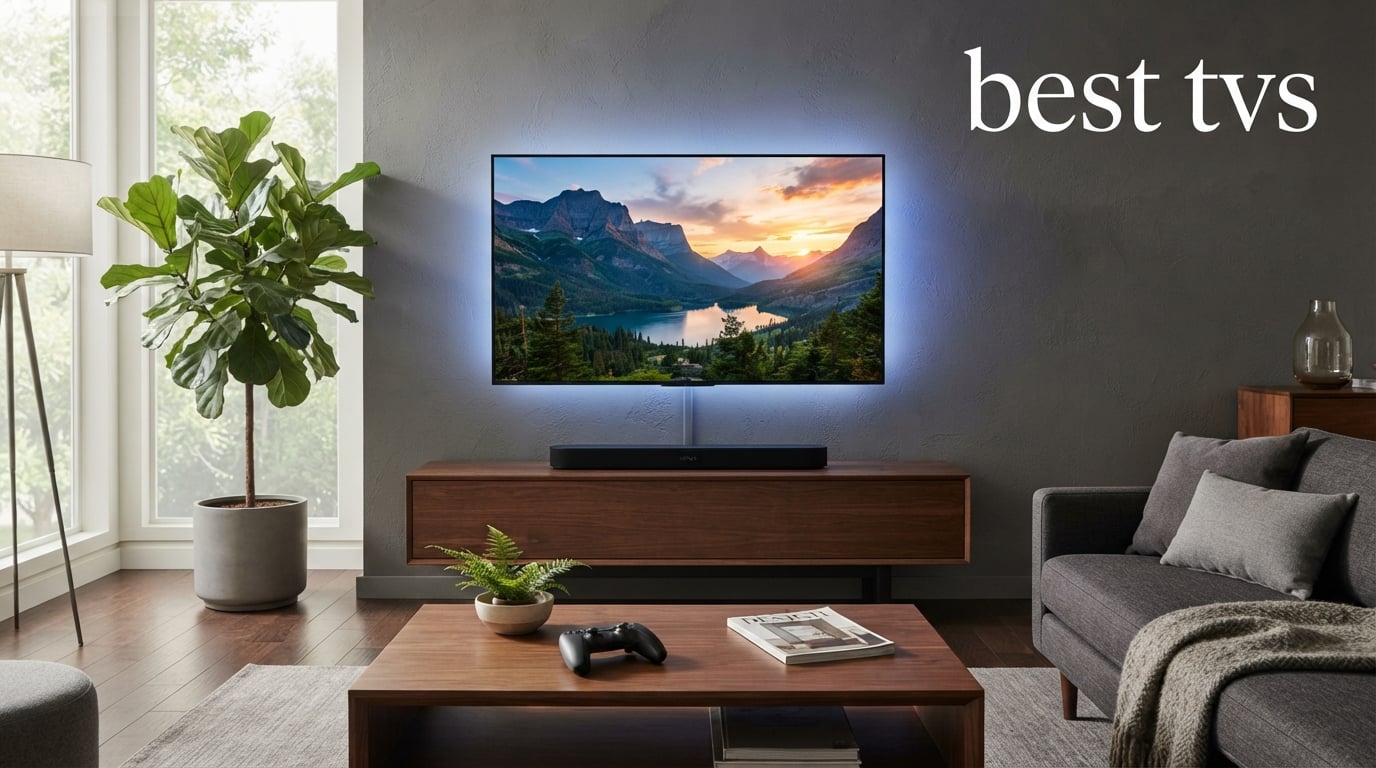
The best TVs in 2026 split into two easy choices: an OLED TV for inky black movie scenes and near-instant pixel response, or a Mini-LED TV for a bright living room and high-refresh gaming. My first all-round recommendation is the LG C5 OLED evo because its supplied specification set combines 4K OLED, Dolby Vision, four HDMI 2.1 inputs, VRR, and a 144Hz ceiling in one 65-inch screen.
This guide covers ten real, currently listed models from 43 to 65 inches. I compared their published display type, HDR formats, refresh rate, sound, connections, smart platform, and buyer-review patterns rather than repeating vague claims; a 60Hz LED Fire TV serves a different household than a 144Hz OLED.
There is no single best TV for every room. If you already know you want a 65-inch Samsung, our focused guide to best Samsung TVs for 65-inch rooms narrows that branch, while shoppers who want a new screen around a console can also review gaming bundles with TVs before choosing inputs and screen size.
Table of Contents
The three clearest TV choices are OLED for movies, Mini-LED for bright rooms, and an entry 4K set for simple streaming (September 2026)
Choose the LG C5 when black-level detail, Dolby Vision, and full HDMI 2.1 connectivity matter most. Choose the TCL QM6K when you want a QD-Mini LED panel, 144Hz motion, and an Onkyo 2.1 speaker system; choose the Insignia F50 when a compact Fire TV interface and straightforward 4K HDR are the priority.
The best TVs in 2026 range from simple 43-inch 4K screens to 65-inch OLED and Mini-LED sets.
The comparison below places every reviewed TV in one scan-friendly list. Read the short feature labels as a starting point, then use the detailed sections to match panel technology, room conditions, gaming requirements, and streaming habits to your home.
| Product | Specifications | Action |
|---|---|---|
 LG C5 OLED evo 65-inch LG C5 OLED evo 65-inch |
|
Check Latest Price |
 TCL QM6K 55-inch TCL QM6K 55-inch |
|
Check Latest Price |
 Samsung S90F OLED 65-inch Samsung S90F OLED 65-inch |
|
Check Latest Price |
 Roku Select QLED 55-inch Roku Select QLED 55-inch |
|
Check Latest Price |
 TCL T7 QLED 55-inch TCL T7 QLED 55-inch |
|
Check Latest Price |
 Hisense A7 50-inch Hisense A7 50-inch |
|
Check Latest Price |
 Samsung U8000H 65-inch Samsung U8000H 65-inch |
|
Check Latest Price |
 Toshiba C350 43-inch Toshiba C350 43-inch |
|
Check Latest Price |
 Sony BRAVIA 2 II 43-inch Sony BRAVIA 2 II 43-inch |
|
Check Latest Price |
 Insignia F50 43-inch Insignia F50 43-inch |
|
Check Latest Price |
1. LG C5 OLED evo is the best all-round TV for dark-room movies and serious gaming.
LG 65-Inch OLED evo AI 4K C5 Series Smart TV (OLED65C5PUA, 2025)
65-inch OLED evo
144Hz and 0.1ms response
Dolby Vision and Atmos
Pros
- Self-lit OLED pixels
- Four HDMI 2.1 inputs
- VRR and FreeSync
- Filmmaker Mode
Cons
- OLED needs sensible static-image habits
- Not Smart Home Compatible
The C5 earns the lead spot because the listed OLED evo panel uses 8.3 million self-lit pixels, giving each pixel its own light control instead of relying on a shared backlight. I would choose this model for a movie-first room where shadow detail and black letterbox bars matter as much as highlight detail.
Its Alpha 9 AI Processor Gen8 handles AI Super Upscaling 4K, while Dolby Vision, HDR10, HLG, and Filmmaker Mode cover the formats and viewing mode most film fans will seek. The listing also specifies Dolby Atmos, a 2.2-channel system, and WOW Orchestra compatibility for an LG soundbar setup.
Gaming is unusually complete here: four HDMI 2.1 inputs, NVIDIA G-Sync, AMD FreeSync Premium, VRR, a stated 0.1ms response time, and refresh support up to 144Hz. The 1,402-review sample has a 4.5 average, with feedback particularly positive about OLED picture quality and gaming performance.
A dark movie room is where the LG C5 makes the strongest case.
OLED’s self-lit-pixel design is the practical reason to pick it over a conventional LED screen for lights-off viewing. Bright objects can sit beside deep blacks without the backlight halo that can occur around high-contrast objects on a backlit display.
I would start with Filmmaker Mode for movies, then decide whether its image suits your room before changing picture controls. Dolby Vision support is a meaningful advantage for viewers whose streaming services and discs use that format.
Competitive console and PC players are who should prioritize the LG C5.
A 120Hz or 144Hz-capable source can make motion feel more immediate than a 60Hz screen, and VRR can reduce visible tearing when frame output changes. Four HDMI 2.1 ports also reduce the need to unplug a console when adding another high-bandwidth device.
OLED burn-in remains a reasonable ownership question for people who display fixed HUDs, news tickers, or dashboards for long stretches. I would vary static content, use the panel’s normal protection routines, and choose a Mini-LED alternative if that pattern describes most hours on the TV.
2. TCL QM6K is the best Mini-LED choice for fast games, sports, and brighter shared rooms.
TCL 55 Inch Class QM6K Series | Mini LED QLED 4K HDR | 55QM6K, Latest Model | 120HZ-144HZ High Brightness Smart Google TV Dolby Atmos Onkyo Audio | Voice Remote Alexa Gaming Streaming Television
55-inch QD-Mini LED
144Hz native refresh
Onkyo 2.1 with Atmos
Pros
- 144Hz VRR gaming
- Dolby Vision and HDR10+
- Onkyo 2.1 audio
- Four HDMI 2.1 inputs
Cons
- Listed as edge LED backlight
- Not Smart Home Compatible
The TCL QM6K is the clearest pick for viewers who want Mini-LED and Quantum Dot technology without leaving gaming performance behind. Its supplied specification sheet lists a 144Hz native refresh rate, Dolby Vision, HDR10+, HLG, Google TV, and four HDMI 2.1 connections.
TCL calls the display QD-Mini LED and pairs it with its Halo Control System, which the listing says is intended to improve contrast and reduce blooming. That makes this a sensible alternative when a room has more daylight than an OLED-centric cinema room.
Sound deserves special attention because this TV includes an Onkyo 2.1 speaker system with a built-in subwoofer, Dolby Atmos, DTS:X, and IMAX Enhanced support. Among 1,796 reviews, the 4.4 average and comments on smooth motion, picture quality, and Google TV point to a well-rounded living-room screen.
A bright family room is where the TCL QM6K has its clearest advantage.
Mini-LED is still a backlit technology, but its small LED light sources can give the set more light output potential than an OLED-oriented choice in a sunlit room. Quantum Dot color is designed to maintain a wider, more vivid color presentation alongside that brightness.
Do not confuse the QM6K with nearby TCL names such as the T7; the QM6K is the model in this list with QD-Mini LED, Halo Control, and the stated Onkyo 2.1 setup. That distinction is more useful than choosing by a series label alone.
A 144Hz gaming setup is the deciding use case for the TCL QM6K.
Game Accelerator 240, AMD FreeSync, and VRR give PC and console users tools that a conventional 60Hz TV does not offer. I would connect the high-refresh device through HDMI 2.1 and confirm its output setting in both the source and TV menus.
The listing identifies this as an edge LED backlight rather than a full-array design, so I would not treat it as interchangeable with every Mini-LED TV. It is still a feature-rich choice when refresh rate, HDR compatibility, and stronger built-in sound all matter together.
3. Samsung S90F is the premium OLED pick for 65-inch streaming and high-refresh motion.
Samsung 65-Inch Class OLED S90F 4K Smart TV (2025 Model) NQ4 AI Gen3 Processor Upscaling Pro HDR +, Motion Xcelerator 144Hz, Vision Alexa Built-in
65-inch 4K OLED
144Hz Motion Xcelerator
NQ4 AI Gen3 processor
Pros
- OLED contrast
- 144Hz motion
- AI Upscaling Pro
- Four HDMI inputs
Cons
- HDR10+ rather than Dolby Vision
- Not Smart Home Compatible
Samsung’s S90F is a 65-inch OLED with a stated 144Hz refresh rate, four HDMI inputs, Tizen, and the NQ4 AI Gen3 Processor. I would put it on a short list for someone who wants an OLED screen, Samsung’s interface, and processor-led 4K upscaling in the same set.
The processor is listed with 128 neural networks, and Samsung positions it for AI-enhanced picture and sound. Its HDR support is HDR10+, while audio includes Dolby Atmos and 2.1-channel 40W speakers.
The supplied review data shows a 4.4 average from 515 reviews, with 77 percent of ratings at five stars. That is useful sentiment rather than a substitute for your own source-device check, especially if Dolby Vision is a format you expect to use.
A Samsung-first streaming setup is the natural fit for the S90F.
Tizen and Samsung Vision AI make the S90F the Samsung-platform alternative to webOS on the LG C5 and Google TV on the TCL models. I would choose the interface you will actually use daily, since app search, profiles, and settings affect every viewing session.
Its 4K AI Upscaling is relevant for cable channels, older streaming programs, and other non-4K sources. Upscaling cannot create native 4K detail, but good processing can make lower-resolution material look more refined on a large screen.
A Dolby Vision library is the reason to compare the S90F with the LG C5 first.
The S90F’s stated HDR format is HDR10+, whereas the LG C5 specifically lists Dolby Vision, HDR10, and HLG. This is not a general verdict on either display; it is a format-compatibility question worth matching to the services and discs you use.
For fast sports and games, Motion Xcelerator 144Hz makes the Samsung capable on paper of handling high-refresh content. I would still use the appropriate game picture mode when playing, because aggressive motion processing can add a look that players may not want.
4. Roku Select Series QLED is the easiest 55-inch choice for uncomplicated streaming and private listening.
Roku 55-Inch Select Series Smart TV 2026-4K (2160p) QLED TV TV
55-inch 4K QLED
Roku OS and voice remote
Bluetooth Headphone Mode
Pros
- Simple Roku interface
- QLED color
- Bluetooth headphone mode
- Three HDMI ports
Cons
- 60Hz refresh rate
- No Dolby Vision or Atmos
The Roku Select Series is a 55-inch 4K QLED TV built around the familiar Roku OS rather than an advanced gaming panel. I would direct it toward a household that wants fast access to apps, voice search, free channels, and a screen that is less complicated to operate.
Its supplied details include HDR10, HDR10+, HLG, three HDMI ports, Ethernet, Wi-Fi, Bluetooth, Apple AirPlay, Miracast, and Dolby Audio through 20W speakers. Roku Smart Picture optimization is also part of the listed feature set.
It has the highest rating in this group at 4.6 from 545 reviews, and the review notes praise setup, streaming, and picture quality. The tradeoff is clear: this is a 60Hz TV, so it should not be the first stop for demanding high-frame-rate gaming.
A simple streaming household is the right audience for Roku Select Series QLED.
Roku OS is the selling point when you prefer an app-forward home screen and straightforward voice search over a deeply customized TV interface. The listed 500-plus free TV channels add another option for viewers who want live and on-demand programming without changing devices.
Bluetooth Headphone Mode is particularly useful when one person wants to watch late at night without filling the room with sound. That practical feature can matter more than a modest difference in picture processing for an apartment or shared home.
A 60Hz screen is the limit buyers need to accept before choosing this Roku.
Game Mode and VRR are listed, but the native refresh rate remains 60Hz. I would consider it appropriate for casual console play and streaming, not as the primary display for a player who expects 120Hz or 144Hz output.
The TV does not list Dolby Vision or Dolby Atmos, so HDR and audio expectations should stay aligned with HDR10-family support and Dolby Audio. A separate audio system remains an option for anyone seeking a larger sound field.
5. TCL T7 is the QLED option for viewers who want 120Hz motion without stepping up to Mini-LED.
TCL 55″ T7 4K QLED Google TV with 144Hz Gaming (55T7)
55-inch 4K QLED
120Hz panel refresh
Dolby Vision and Google TV
Pros
- 120Hz panel
- QLED color
- Dolby Vision
- Four HDMI inputs
Cons
- No Mini-LED backlight
- Not Smart Home Compatible
The TCL T7 makes sense for the buyer who wants a QLED TV with a 120Hz panel refresh rate and Google TV. Its technical details name the TCL AIPQ Pro Processor, HDR PRO+ with Dolby Vision and HDR10+, Dolby Atmos, and four HDMI inputs including one with eARC.
Quantum Dot technology is listed as covering nearly the entire DCI-P3 color space, which is the color-focused appeal of this QLED model. Motion Rate 480 with MEMC Frame Insertion is another stated feature for viewers who regularly watch sports and other fast action.
The customer-review record is 4.4 from 582 ratings, with 77 percent at five stars. I see the T7 as a clear middle route: more motion capability than the 60Hz Roku, Hisense, Toshiba, Sony, or Insignia models here, but a different display approach than the QM6K’s QD-Mini LED.
A sports-heavy schedule is a strong reason to choose the TCL T7.
A true 120Hz panel gives motion processing more room to work with than a 60Hz panel. Motion interpolation is personal, though, so I would begin at a lower setting for films and raise it only when live sports or fast video needs more smoothing.
QLED refers to Quantum Dot color, not a guarantee of the same backlight behavior as Mini-LED. That is why this choice is for a color-rich, high-refresh 4K experience rather than an assumption that it duplicates the QM6K’s contrast system.
A multi-device media rack is why the TCL T7’s inputs are useful.
Four HDMI inputs give a console, streaming box, disc player, and sound system more room to coexist. The eARC connection is the port to reserve for a compatible soundbar or receiver when you want TV apps to send audio back through one cable.
Google TV, built-in Chromecast, Apple AirPlay 2, Alexa, and Google Assistant give this model several ways to discover and cast content. I would choose it over a proprietary interface if Google’s recommendations and account integration are already familiar in your household.
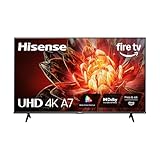
6. Hisense A7 Series is the Dolby Vision entry pick for a compact 50-inch Fire TV setup.
Hisense 50″ Class A7 Series (50A7NF) 4K UHD Smart Fire TV, Voice Remote with Alexa, Wide Color Gamut, HDR10+, Dolby Vision, Dolby Atmos, Game Mode, ALLM, Stream Live TV Without Cable
50-inch 4K LED
Dolby Vision and Atmos
Fire TV with VRR
Pros
- Dolby Vision support
- Wide Color Gamut
- VRR and ALLM
- Three HDMI inputs
Cons
- 60Hz refresh rate
- Basic LED backlight
The Hisense A7 Series has a compact 50-inch footprint and covers more HDR formats than many basic LED models: Dolby Vision, HDR10, HDR10+, and HLG are all specified. I would select it for a smaller room where Fire TV, broad HDR compatibility, and a manageable screen size outweigh a need for a 120Hz panel.
Its 4K LED display uses a Wide Color Gamut, while the 4K AI Upscaler is designed to improve lower-resolution material. The feature list also includes Dolby Atmos, DTS:X virtual surround, a 16W 2.0-channel speaker system, and one eARC-capable HDMI among three inputs.
The rating is 4.4 from 1,372 reviews, and supplied buyer insights call out the wide color gamut and Dolby Vision/Atmos support. This is a practical features-first LED smart TV, but its 60Hz specification makes the performance boundary plain.
A smaller HDR streaming room is where the Hisense A7 Series fits best.
Dolby Vision and HDR10+ are both on the published format list, which gives this set broad compatibility with HDR content. Wide Color Gamut can also help HDR programming look more saturated and varied than a basic SDR presentation.
At 50 inches, it occupies the middle ground between the 43-inch compact options and the 55- and 65-inch living-room screens. I would measure wall width and seating distance before assuming a larger size is better for the room.
A casual gamer can use the Hisense A7, but a 60Hz ceiling remains the constraint.
Game Mode Plus, VRR, and ALLM are meaningful additions because the TV can switch to a game-oriented mode and adapt to changing frame rate within its supported range. They do not turn a 60Hz panel into a 120Hz display.
The basic LED backlight is another reason to set expectations correctly against OLED and Mini-LED models. Pick the A7 for its HDR format support and Fire TV convenience, not for the deepest black levels in a dark cinema room.
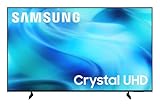
7. Samsung U8000H is the straightforward 65-inch LED choice for broad streaming access.
Samsung 65-Inch Class Crystal UHD U8000H Series Samsung Vision AI Smart TV (2026 Model, 65U8000H) Processor 4K, Endless Free Content, Motion Xcelerator, Color Booster, Alexa Built-in
65-inch 4K LED
Crystal Processor 4K
Tizen with free streaming
Pros
- Large 65-inch screen
- 4K upscaling
- HDR10+
- Samsung TV Plus
Cons
- 60Hz refresh rate
- LED backlight
The Samsung U8000H puts a 65-inch 4K LED screen, Tizen, Crystal Processor 4K, and HDR10+ in a straightforward package. I would consider it for viewers who want a large Samsung display for streaming and everyday TV rather than a specialist OLED or high-refresh gaming screen.
Its listed Color Booster and 4K Upscaling focus on color presentation and non-4K sources, while Motion Xcelerator is Samsung’s motion feature. The TV has three HDMI ports, two USB ports, Bluetooth 5.3, and Samsung TV Plus with more than 2,700 free streaming options according to the supplied listing.
It holds a 4.4 average from 280 reviews, with 76 percent of its ratings at five stars. That is a smaller review sample than some models here, so I would treat it as one useful signal alongside the exact features you need.
A 65-inch Samsung streaming screen is the direct reason to choose the U8000H.
Size often changes immersion more than a minor feature difference, provided your seating position leaves enough room for comfortable viewing. A 65-inch set is a natural living-room size when the wall and viewing distance support it.
Tizen and Samsung TV Plus make this model suitable for viewers who want a built-in selection of apps and free streaming choices. For more model-specific context, see our guide to best Samsung TVs for 65-inch rooms.
A 60Hz everyday screen is what the Samsung U8000H is built to be.
Motion Xcelerator may help with day-to-day movement, but the published panel refresh rate is 60Hz. Players who prioritize 120Hz or 144Hz should compare the TCL QM6K, TCL T7, LG C5, or Samsung S90F instead.
This is an LED TV, not an OLED or Mini-LED set, so the core appeal is screen size, familiar platform features, and upscaling rather than the advanced contrast behavior of the higher-tier panel types. That clearer expectation makes the selection easier.
8. Toshiba C350 is the compact Fire TV pick for Dolby Vision, casual games, and sports mode.
TOSHIBA 43″ Class C350 Series LED 4K UHD Smart Fire TV, Voice Remote with Alexa, Free & Live TV
43-inch 4K LED
Dolby Vision and Atmos
Fire TV with ALLM
Pros
- Dolby Vision
- AI 4K Upscaler
- VRR and ALLM
- Sports Mode
Cons
- 60Hz refresh rate
- Compact 43-inch size
The Toshiba C350 is a 43-inch 4K LED Fire TV with a notably full feature list for a compact screen. The REGZA Engine ZR, AI 4K Upscaler, Dolby Vision, Dolby Atmos, Super Contrast Booster, and Sports Mode make it a capable option for a bedroom, office, or smaller living space.
Its technical details list Ultimate Motion with Motion Rate 120, plus Game Mode with ALLM and VRR. Those features help it adapt to casual games and live action, though the panel’s stated refresh rate is still 60Hz.
Buyer data shows a 4.3 rating from 4,020 reviews, a broad sample compared with several newer models in the roundup. I would see that volume as useful proof that many buyers have lived with the Fire TV interface and this compact size, while still checking your preferred apps.
A bedroom or office is where the Toshiba C350’s 43-inch size works best.
A smaller TV can make placement simpler on a desk, dresser, or narrow wall and can feel more comfortable at shorter seating distances. The 43-inch C350 is not trying to replace a wall-filling cinema screen; it is designed for a more contained space.
Fire TV keeps apps, live TV, and Alexa voice control in one familiar interface. Apple AirPlay support is also listed, giving Apple-device households another way to put content on the screen.
A casual console setup can benefit from the Toshiba C350’s Game Mode.
ALLM lets a compatible source request a game-oriented low-latency setting, while VRR can align screen refresh with variable game output when supported. These are useful conveniences, not a substitute for the sustained high refresh of a 120Hz or 144Hz panel.
Dolby Vision and Dolby Atmos make it stronger for HDR streaming than an HDR10-only compact screen. I would reserve a separate sound system for viewers who want room-filling audio from action films or stadium broadcasts.
9. Sony BRAVIA 2 II is the compact Google TV pick for PlayStation 5 features and processing.
Sony 43 Inch BRAVIA 2 II LED 4K HDR Smart Google TV (K-43S20M2)
43-inch 4K LED
PlayStation 5 features
Google TV and Motionflow
Pros
- PS5 Auto HDR mapping
- 4K Processor X1
- Google TV
- Four HDMI inputs
Cons
- 60Hz refresh rate
- HDR10 and HLG listed
The Sony BRAVIA 2 II is the most PlayStation-specific compact choice in this group. Its 43-inch 4K LED screen combines the 4K Processor X1, 4K X-Reality PRO, Triluminos Pro, Motionflow XR 240, and Sony’s listed Auto HDR Tone Mapping and Auto Genre Picture Mode for PlayStation 5.
Google TV, Apple AirPlay 2, Google Cast, and the Sony Pictures CORE app make this a broad streaming screen as well. The specifications list four HDMI inputs, DTS Digital Surround, Dolby Atmos, HDR10, and HLG.
This Sony has a 4.3 rating from 592 reviews, with 73 percent at five stars. I would choose it when processing, Google TV, and a PlayStation 5-aware feature set matter more than a high-refresh panel.
A PlayStation 5 in a small room is the best reason to pick the BRAVIA 2 II.
Auto HDR Tone Mapping and Auto Genre Picture Mode are specifically listed as PlayStation 5 features, making setup more tailored than on a generic compact TV. The Game Menu gives another direct path to game-related settings.
Its 60Hz panel places a firm ceiling on frame-rate output, so competitive players seeking 120Hz or 144Hz should not mistake PlayStation-oriented features for a high-refresh display. I would choose the Sony for convenient PS5 integration and video processing, not for esports-style performance.
A viewer who trusts Sony’s picture processing is the right BRAVIA 2 II buyer.
The 4K Processor X1 and 4K X-Reality PRO are intended to improve the presentation of material below native 4K. Triluminos Pro is Sony’s color technology listed on this model, while Motionflow XR 240 addresses perceived movement.
Google TV is helpful if you want content recommendations and casting tied to a Google account. Four HDMI inputs are generous for a 43-inch model and leave room for a console, sound system, and additional sources.
10. Insignia F50 is the basic 43-inch 4K Fire TV for uncomplicated everyday viewing.
INSIGNIA 43″ Class F50 Series LED 4K UHD Smart Fire TV, Voice Remote with Alexa, Stream Live TV Without Cable
43-inch 4K LED
HDR10 and Fire TV
Alexa remote with eARC
Pros
- 4K HDR picture
- Fire TV interface
- Alexa voice remote
- HDMI eARC
Cons
- 60Hz refresh rate
- No Dolby Vision or Atmos
The Insignia F50 is the uncomplicated 43-inch choice in this guide: 4K UHD LED, HDR10, Fire TV, an Alexa voice remote, and DTS Virtual-X Sound. I would pick it for a secondary room where reliable app access and 4K resolution matter more than panel technology or high-end gaming specifications.
The supplied technical sheet lists three HDMI ports, one USB port, Bluetooth, Wi-Fi, Ethernet, and HDMI eARC. It also reports a maximum display brightness of 375 nit, which gives a concrete reference point but should not be compared casually with measurements from unrelated test methods.
This TV has a 4.4 average across 10,574 reviews, the largest review count in the list. Review insights emphasize value, Fire TV integration, and ease of use, all fitting a straightforward everyday screen.
A secondary room is where the Insignia F50 is most at home.
A 43-inch 4K TV is practical for a guest room, kitchen-adjacent area, office, or smaller bedroom where a large panel would overwhelm the space. Fire TV places streaming apps and live content on the main interface, with Alexa voice search available from the included remote.
Parental controls, Apple AirPlay support, and wall-mount compatibility add useful household flexibility. Its VESA pattern is listed as 200 by 300 mm, so match any mount to that specification before installation.
An HDR10-only setup is the tradeoff buyers should understand before selecting the F50.
The F50 lists HDR10 but not Dolby Vision or Dolby Atmos, and its backlight is basic LED rather than QLED, Mini-LED, or OLED. Those omissions are expected for this kind of screen, but they matter if your priority is the widest HDR compatibility or a cinema-led setup.
The 60Hz panel also makes it a casual gaming option rather than a high-refresh pick. HDMI eARC can still send audio to a compatible soundbar, which is the simplest upgrade path if the built-in DTS Virtual-X presentation is not enough for your room.
The right TV choice starts with your room, content, panel type, and source devices.
Forum discussions show the same sticking points again and again: OLED burn-in, confusing model names, daylight performance, and whether HDMI 2.1 actually matters. The quickest way to reduce the noise is to decide how and where the screen will be used before comparing brand labels.
OLED is best for pixel-level blacks, while Mini-LED is best when room light is a bigger concern.
OLED pixels emit their own light, so they can switch off individually for deep blacks and high contrast in a dark room. The LG C5 and Samsung S90F are the OLED options in this guide, and both add 144Hz capability for responsive gaming.
Mini-LED TVs use a backlight made of smaller LEDs, often combined with local dimming to control light in zones. The TCL QM6K uses QD-Mini LED and Quantum Dot technology, making it the strongest fit here for a bright shared room that also needs high-refresh gaming features.
QLED describes a Quantum Dot color layer and does not by itself tell you the exact backlight design. The TCL T7 and Roku Select Series use QLED approaches; compare their 120Hz and 60Hz refresh rates respectively rather than assuming the name determines motion performance.
A 120Hz or 144Hz panel is worth seeking when your console or PC can output high frame rates.
Refresh rate is the number of screen updates per second. A 120Hz or 144Hz TV can present more frames than a 60Hz TV when the source and connection support it, which matters most in racing, sports, shooters, and fast camera movement.
For gaming, look for HDMI 2.1, VRR, and ALLM as a group. HDMI 2.1 supplies bandwidth for high-refresh 4K modes on compatible devices, VRR can reduce tearing when output varies, and ALLM can switch the TV toward a lower-latency game setting.
The LG C5 has four HDMI 2.1 inputs plus G-Sync, FreeSync Premium, and VRR. The TCL QM6K lists four HDMI 2.1 inputs, 144Hz VRR, Game Accelerator 240, and AMD FreeSync; the TCL T7 lists a 120Hz panel and four HDMI inputs, one with eARC.
A TV size should follow seating distance and wall space rather than a larger-is-always-better rule.
First measure the usable wall or furniture width, then measure the main viewing distance. A 43-inch set such as the Toshiba C350, Sony BRAVIA 2 II, or Insignia F50 works well where space is constrained, while the 55-inch Roku, TCL QM6K, and TCL T7 make more sense in a conventional living area.
The 65-inch LG C5, Samsung S90F, and Samsung U8000H suit viewers who want a larger image and have adequate seating distance. Before mounting, also check the listed VESA pattern, overall width, and whether cables need room behind the panel.
Screen size does not compensate for a poor viewing angle or direct window reflections. Sit in the actual seat, consider where daylight lands during your usual viewing hours, and choose panel technology around that reality.
HDR format support and sound connections should match the content and audio gear you already use.
HDR improves the range between dark and bright parts of an image when both the program and screen support it. Dolby Vision, HDR10+, HDR10, and HLG are formats to look for; the LG C5 lists Dolby Vision, while the Samsung S90F lists HDR10+, and the TCL QM6K lists both Dolby Vision and HDR10+.
Built-in sound varies greatly. The TCL QM6K lists Onkyo 2.1 audio with a built-in subwoofer, while the LG C5 has 2.2-channel sound with Dolby Atmos and WOW Orchestra, but a dedicated speaker setup remains the better route for large rooms and cinematic impact.
eARC is the connection to seek when sending TV-app audio to a compatible soundbar or receiver. If audio is part of your decision, see our picks to pair with a quality soundbar, then check that the TV model you select has eARC.
OLED ownership is straightforward when static images are not left on screen for long, repeated stretches.
Burn-in concerns are most relevant for repeated static logos, HUDs, tickers, and desktop elements. For varied movies, shows, and normal mixed gaming, use the TV’s regular panel-care features, avoid leaving paused content up for extended periods, and do not treat maximum brightness as a permanent setting.
Choose Mini-LED or LED if the screen will spend many hours as a static dashboard, channel display, or fixed-interface monitor. That is not a claim that OLED should be avoided; it is a sensible match between display technology and use pattern.
Community advice also points out that model-year changes can be smaller than the headline suggests. Focus on the measurable compatibility you need—panel type, size, refresh rate, HDR formats, ports, and operating system—then use our current Samsung TV deals and TV deals and discounts pages when you are ready to compare availability.
FAQs
Which TV is best to buy in 2026?
The LG C5 OLED evo is the best all-round pick in this list because it combines a 65-inch OLED evo screen, Dolby Vision, four HDMI 2.1 inputs, VRR, and refresh support up to 144Hz. Choose the TCL QM6K instead if a QD-Mini LED panel, 144Hz gaming, Google TV, and stronger built-in 2.1 audio suit your room better.
What TV technology is coming in 2026?
The major technologies represented here are self-lit OLED pixels, Mini-LED backlights with local light control, and Quantum Dot color layers. OLED is the leading fit for pixel-level blacks in dark rooms, while QD-Mini LED is a strong option for bright rooms and high-refresh gaming. Match the technology to light conditions and static-image use rather than treating one label as best for every home.
What to look for in a TV in 2026?
Start with screen size and room light, then choose OLED, Mini-LED, QLED, or basic LED. Check 4K resolution, HDR formats, the smart platform, HDMI ports, eARC, and refresh rate. Gamers should also look for HDMI 2.1, VRR, ALLM, and a 120Hz or 144Hz panel when their source supports those features.
What TV has the best picture in 2026?
For the models covered here, the LG C5 OLED evo has the strongest picture-focused specification set: self-lit OLED pixels, Dolby Vision, Filmmaker Mode, and the Alpha 9 AI Processor Gen8. The Samsung S90F is another 65-inch OLED option, while the TCL QM6K is the better fit when you want QD-Mini LED contrast and a brighter-room approach.
The LG C5, TCL QM6K, and Samsung S90F are the clearest best TV picks for different rooms.
Pick the LG C5 when OLED blacks, Dolby Vision, and high-refresh gaming are central to your decision. Pick the TCL QM6K when you need QD-Mini LED, 144Hz VRR, Google TV, and a more substantial listed speaker system; pick the Samsung S90F when a 65-inch Samsung OLED with Tizen and AI upscaling is your preference.
The remaining models are not afterthoughts: they solve smaller-room, Fire TV, QLED color, PlayStation 5, and simple streaming needs. Use the comparison above to identify the feature that changes your daily viewing, then check the relevant product card for the current listing details before choosing one of the best TVs for 2026.