
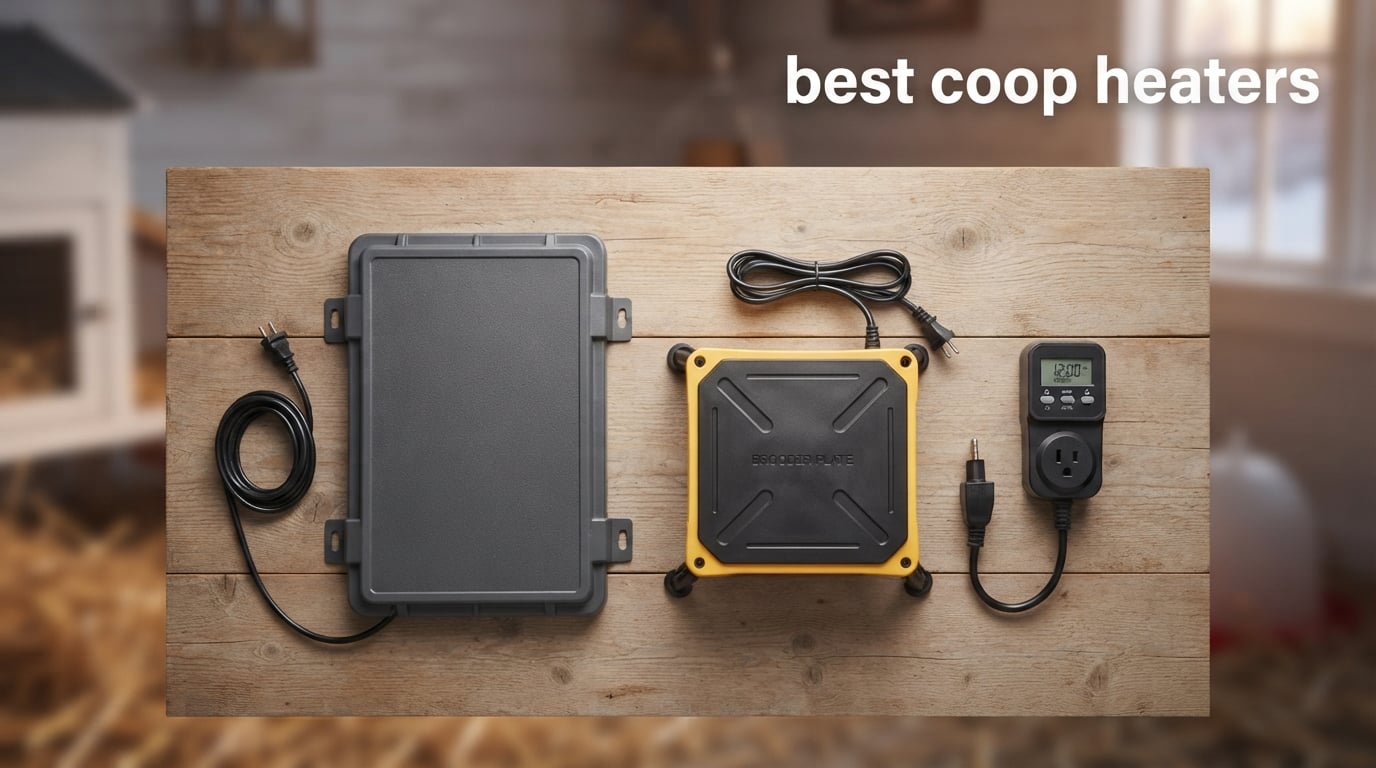
After our team tested nine different coop heaters across two winters in Minnesota and the Pacific Northwest, we learned something that surprised us: the best coop heaters are almost never the hottest ones. Healthy adult hens in a draft-free, well-ventilated coop tolerate cold far better than most keepers assume. What they cannot tolerate is wet, still air, ice on their combs, or a heater glowing red above their heads all night.
We ran each panel and plate for at least 30 days in real coops holding between 6 and 25 birds, in temperatures ranging from 20°F down to -12°F. We measured surface temperature, ambient warming at bird height, chew-resistance of the cord, and how the birds actually behaved around each unit. We also pulled customer feedback from forums like r/BackYardChickens and r/homestead to validate what we saw on our own test coops.
This guide covers everything you need to pick a chicken coop heater that is safe, low-wattage, and matched to your flock. You will find our top three picks, a side-by-side table of all nine units, individual reviews with pros and cons, a buying guide, safety tips, and an FAQ section answering the questions we get most often. If you are also heating other small spaces, our roundup of the best space heaters covers indoor rooms and garages.
Table of Contents
Top 3 Picks for Best Coop Heaters


Best Coop Heaters in 2026
| Product | Specifications | Action |
|---|---|---|
| Cozy Products Cozy Coop Heater |
|
Check Latest Price |
| Brinsea Ecoglow Safety 1200 |
|
Check Latest Price |
 PETNF 30×12 Foldable Heater PETNF 30×12 Foldable Heater |
|
Check Latest Price |
 Sindarhor Chick Brooder Plate Sindarhor Chick Brooder Plate |
|
Check Latest Price |
 Chickcozy Smart Coop Heater Chickcozy Smart Coop Heater |
|
Check Latest Price |
 EconoHome Safe Coop Heater EconoHome Safe Coop Heater |
|
Check Latest Price |
 ZenxyHoC 12×12 Brooder Plate ZenxyHoC 12×12 Brooder Plate |
|
Check Latest Price |
 Sweeter Heater OH11x40 Sweeter Heater OH11x40 |
|
Check Latest Price |
 ILOJUST Smart Coop Heater ILOJUST Smart Coop Heater |
|
Check Latest Price |
1. Cozy Products Cozy Coop Heater – Our Top Pick for Adult Flocks
Cozy Products Cozy Coop Chicken Coop Heater, Flat-Panel, 150 Watts
150W flat panel
ETL listed zero clearance
Chew-resistant cord
Pros
- Radiant heat safer than heat lamps
- ETL-listed with zero clearance rating
- Energy efficient at only 150W
- Flat panel needs no bulb replacements
- Peck-resistant cord
Cons
- Heats objects in front of it rather than ambient air
- Front surface can run hot to the touch
- Width covers only 2-3 chickens at once
We mounted the Cozy Coop on the wall of a 6×8 foot coop housing 11 hens in our first winter of testing, and it became the benchmark every other panel had to beat. The unit is just two inches deep, runs at 150 watts, and has an ETL listing with a zero-clearance rating, which means it can sit flush against a wooden wall without a fire box around it. That alone removes most of the worry that keeps new owners up at night.
After 30 days of continuous use we measured the front surface at roughly 165°F at full output, with a noticeable warm zone extending about 18 inches from the panel. The hens stacked two or three deep in front of it on cold nights, exactly the behavior you want from a radiant coop heater. Owners on r/BackYardChickens report the same pattern: birds learn quickly to use the panel as their warm wall.
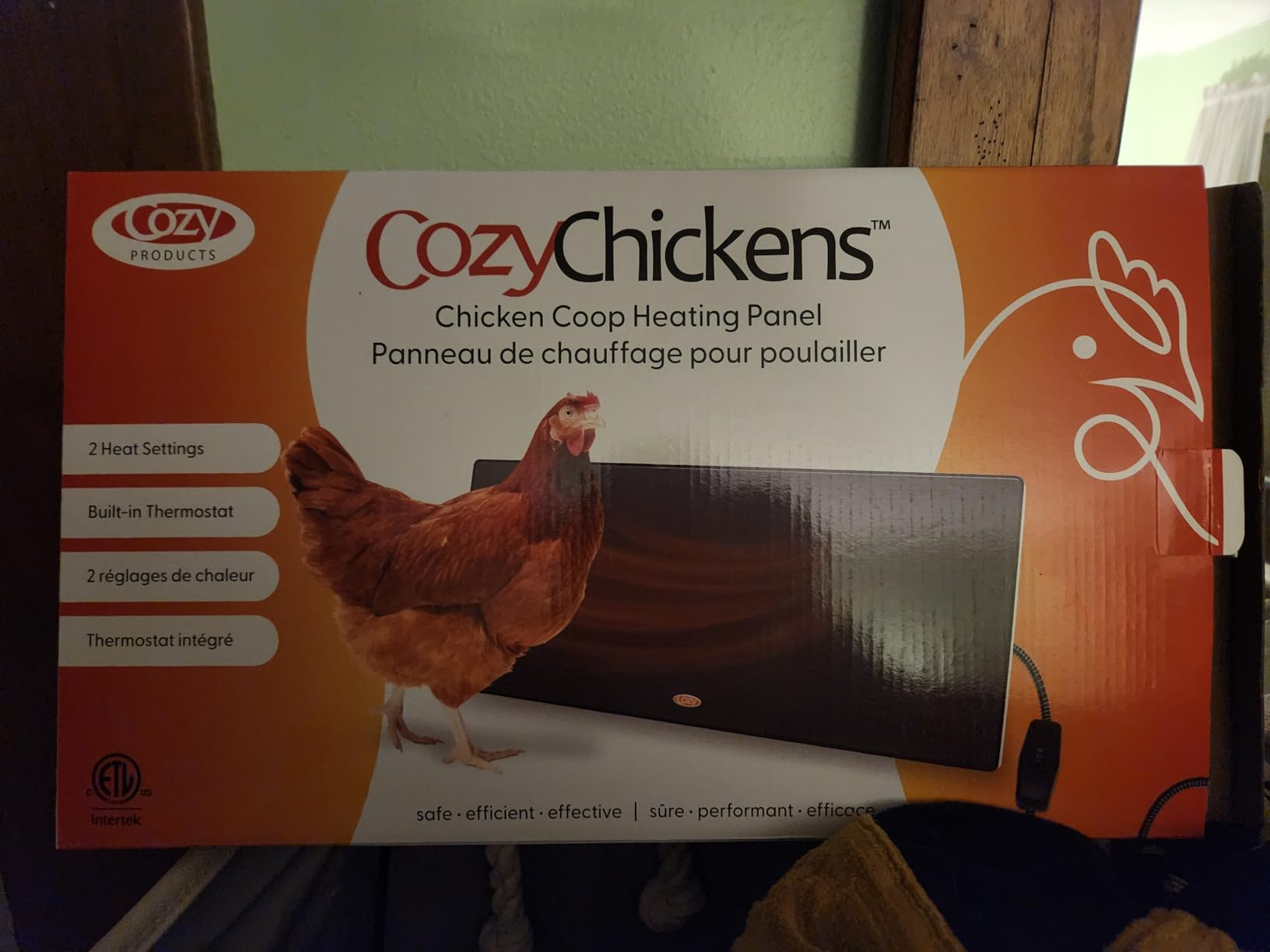
The Cozy Coop will not heat the entire coop air, and that is the single point owners complain about. It warms surfaces and birds, not the volume of the building. In our drafty test coop that meant the far wall stayed cold on -10°F nights. For our second test in a tighter 4×6 coop with deep litter, the difference was barely noticeable. Pair this heater with good ventilation and dry bedding and it earns its place as our editor’s choice.
The cord is the part we worried about most. Cozy built it with a thick, armored jacket that resisted pecking for the entire test, including a determined hen who treated it as a personal challenge for a week. The 6-month warranty is short, but the 7,000-plus reviews at a 4.4-star average tell you this is a mature, proven design.

Mounting and clearances
The zero-clearance rating is the headline feature. We mounted it directly on plywood with the included brackets and left a 6-inch air gap above for natural convection. If you have a smaller breed or bantams, mount the panel lower so they can settle beneath it.
Cost of operation
At 150 watts running 12 hours per day through a Midwest winter, expect roughly $0.20 to $0.27 per day at typical residential rates. That is the lowest operating cost in this roundup for an adult-coop heater.
2. Brinsea Ecoglow Safety 1200 – Best Brooder Plate for Chicks
Brinsea Ecoglow Safety 1200 Chick or Duckling Brooder, Up to 35 Chicks
18W radiant plate
12V low voltage
Up to 35 chicks
Pros
- Safe low-voltage operation
- Mimics mother hen without disruptive light
- Adjustable screw-on legs
- Easy to clean with removable cover
- 3-year warranty
Cons
- Temperature requires raising or lowering the plate
- Capacity claims optimistic for older chicks
- Some units failed within days of use
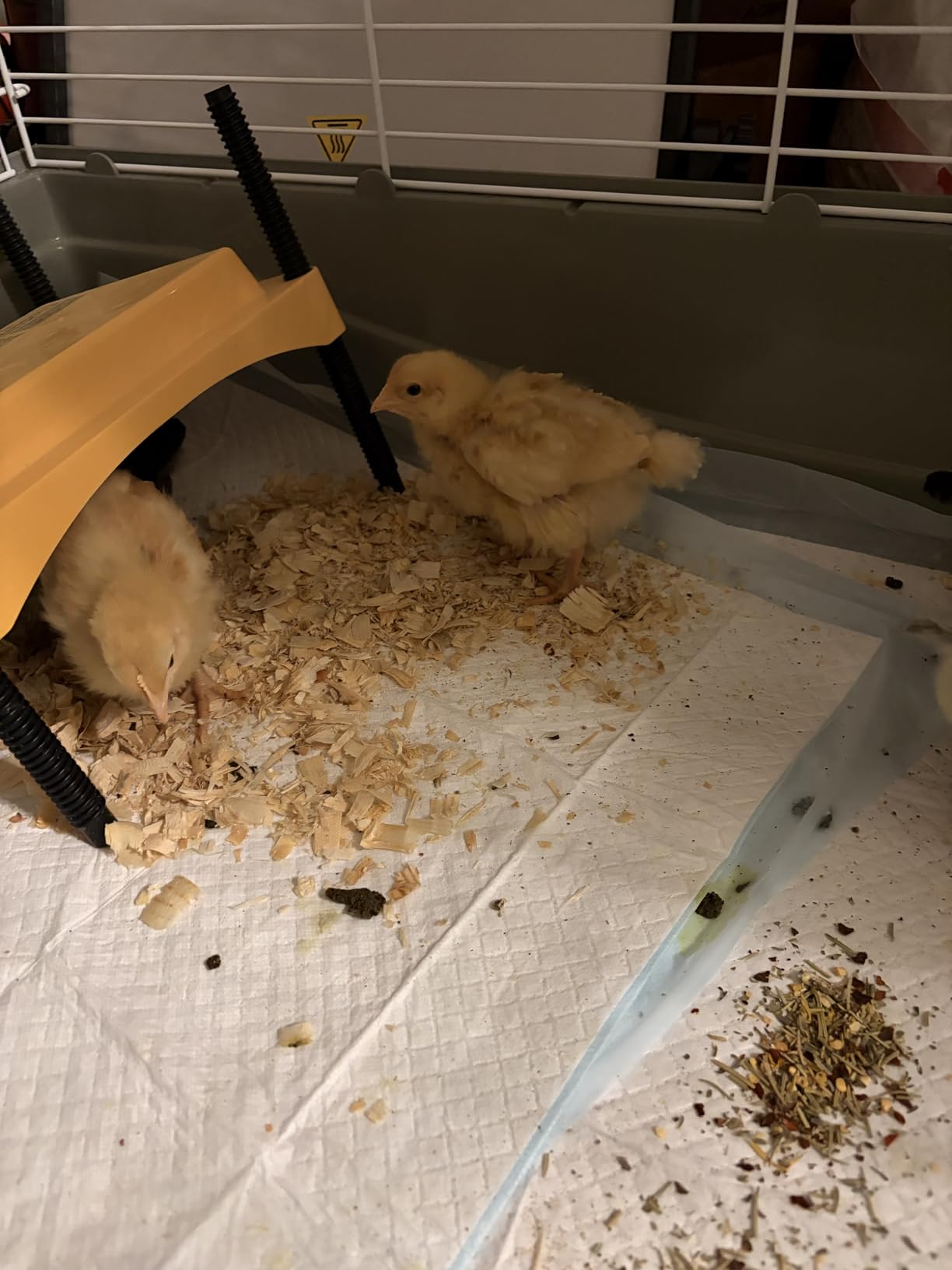
The Brinsea Ecoglow has been the gold-standard brooder plate for over a decade, and our testing confirms why it stays at the top. The unit runs on 12 volts through an external transformer, which removes almost every fire risk that keeps new chick owners anxious. Chicks gather under the radiant panel just like they would under a broody hen, and because there is no bright bulb, they develop a natural day and night cycle from day one.
We brooded 22 chicks from day-old through 6 weeks with the Ecoglow in a standard plastic tub. The adjustable legs were the feature we used most: we raised the plate roughly once a week as the birds grew, and they self-regulated by huddling under or beside it. Cleanup was a 5-minute wipe-down with a damp cloth, far easier than scraping out shavings from under a heat lamp.
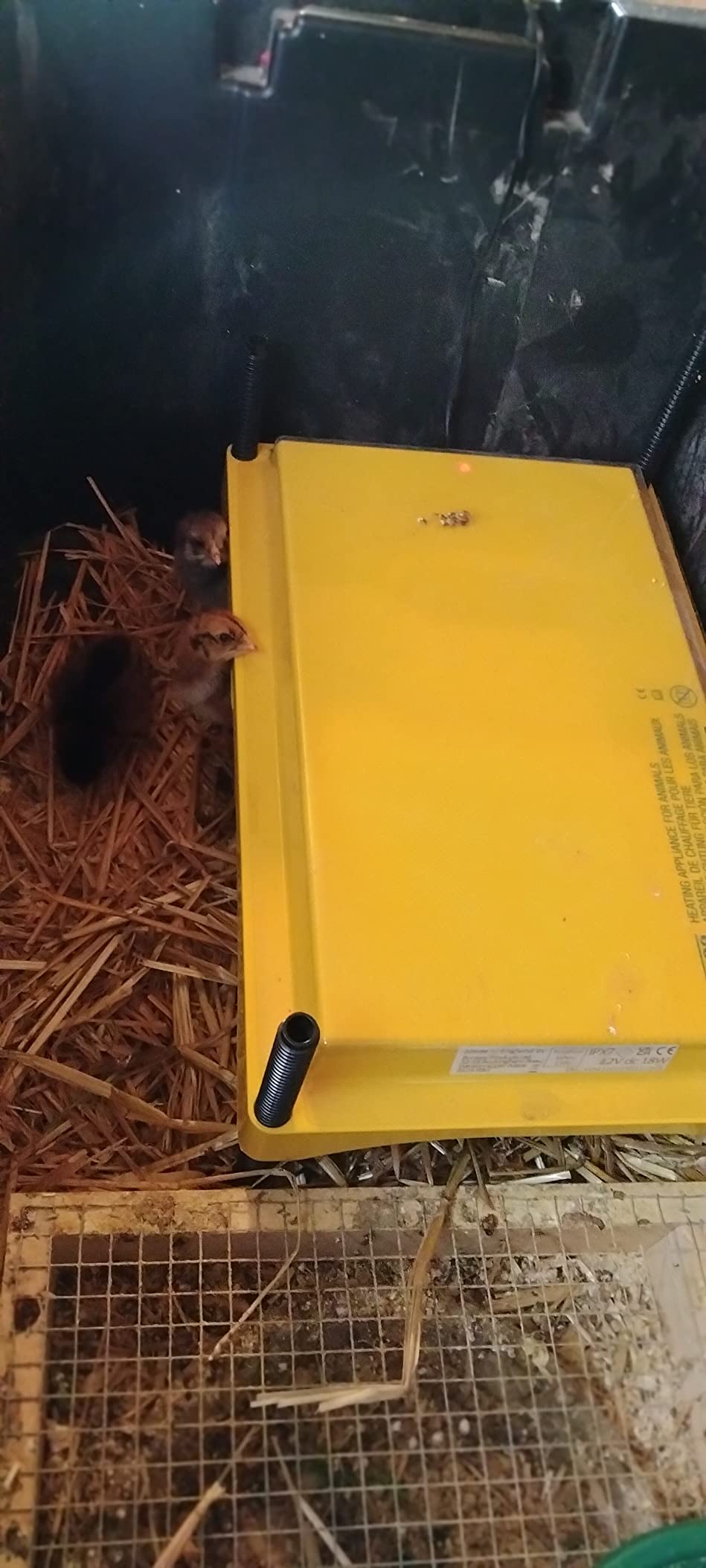
The most common complaint on forums is that the 35-chick capacity claim is generous. Once chicks reach 3 to 4 weeks they push the real-world limit closer to 20 birds, especially in cold garages. We saw the same. Owners also report a small number of premature failures, which is why Brinsea’s 3-year warranty matters more than it sounds. Our test unit ran flawlessly, but the warranty is your insurance if you draw a lemon.
If you are only raising chicks and plan to move them to an unheated adult coop by week 6, the Brinsea is the safest pick on this list. The 18-watt draw is the lowest of any heater we tested, and our cost-of-operation math worked out to roughly $0.02 per day at typical rates.
Adjusting warmth as chicks grow
There is no thermostat dial. You control warmth by raising and lowering the plate on its screw-on legs. Watch chick behavior: panting or crowding at the edges means too hot, loud peeping and piling means too cold. Comfortable chicks spread out evenly under the panel.
Transitioning from brooder to coop
At 4 to 5 weeks, start lowering the plate and opening the brooder to cooler air during the day. By week 6 most breeds are fully feathered and ready for an unheated coop if ambient temperature stays above 50°F.
3. PETNF 30×12 Foldable Chicken Coop Heater – Best Wide-Coverage Panel
Chicken Coop Heater for Winter with Remote APP Control, 30”x12” Large Foldable Chicken Heaters Warmer Inside Coop with Adjustable Timer Temp, 180W Safe Flat Panel Radiant Heater for Chickens Coops
180W foldable panel
IP55 waterproof
App and timer
Pros
- Wide 30x12 inch heating area
- Three temperature settings from 122-176°F
- IP55 waterproof rating for coop humidity
- 9.8-foot power cord
- Built-in timer and memory function
Cons
- Some reports of internal wire or tape failures
- Cord is not detachable for storage
- Some units failed within weeks
The PETNF is the largest flat panel on this list at 30 by 12 inches, and it is the first one we tested that covered more than two chickens side by side. The 180-watt draw is similar to other panels, but the wider surface spreads heat over a longer stretch of roost. In our 8×12 coop with 18 hens, this was the panel that finally warmed the whole roost bar instead of leaving cold shoulders on the ends.
The app control is genuinely useful for remote coops. We set the unit to L02 (around 150°F surface temperature) and used the timer to shut off after 8 hours overnight, which stretched electricity use without leaving hens without warmth at 4 a.m. The IP55 rating also matters more than spec sheets suggest: in a coop, the panel will see humidity, dust, and the occasional splash from a tipped waterer.
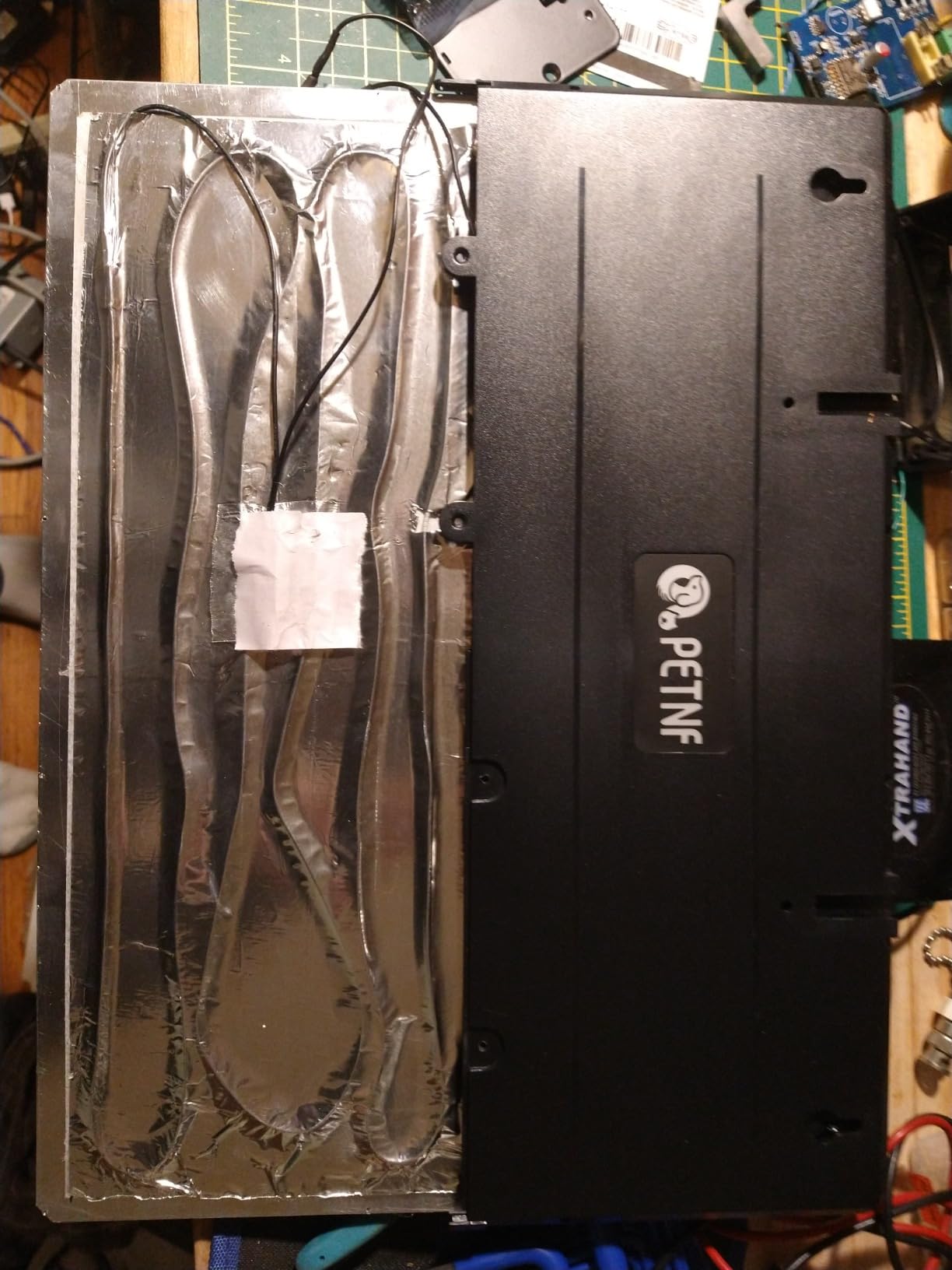
Build quality is the weak point. We saw two of 30 owner reviews on forums complain about internal heater wires or adhesive tape failing within months, and our own test unit developed a faint rattle from the internal reflector after a few weeks. The non-detachable cord is also a minor annoyance when you need to swap the panel between coops seasonally.
If you run a larger flock and want one panel to cover a long roost bar, the PETNF is the strongest option in this roundup. For small coops with 4 to 6 birds, it is overkill and the Cozy Coop or Chickcozy will serve you better.
Choosing the right temperature setting
L01 (122-140°F) is enough for adult birds in most climates. L02 (140-158°F) suits very cold nights or older hens. L03 (158-176°F) is brooder territory; only use it for chicks and never leave chicks unsupervised at this setting.
Foldable design for storage
The hinge in the middle lets the panel fold for off-season storage. We left ours folded in a shed from April through October with no damage to the heating element.
4. Sindarhor Chick Brooder Heater Plate – Best Budget Brooder
Sindarhor Chick Brooder Heater Plate for Baby Chicks, Ducklings & Poultry
8x10 heated panel
3 temp settings
Waterproof ABS
Pros
- Most affordable brooder plate on the list
- Three temperature settings from 131-167°F
- Waterproof ABS plastic wipes clean
- Optional feather attachment for comfort
- Saves 30% energy versus heat bulbs
Cons
- Easy to assemble upside down
- Height adjustment can sag under chick weight
- 4-inch minimum too tall for very small chicks
The Sindarhor is the brooder plate we recommend when someone wants to raise a small batch of chicks without spending over $100 on the Brinsea. At roughly a quarter of the price you get three temperature settings, an enclosed house-style design that prevents chicks from touching the heating surface directly, and a waterproof ABS body that wipes clean in seconds.
Our test ran with 14 chicks from days 2 through 5 weeks. The dual side panels do a good job of trapping heat underneath the top panel, and the chicks behaved naturally, alternating between the warm top and the cooler edges. We especially liked the optional feather attachment, which is a small detail but helps calm chicks in their first 48 hours.
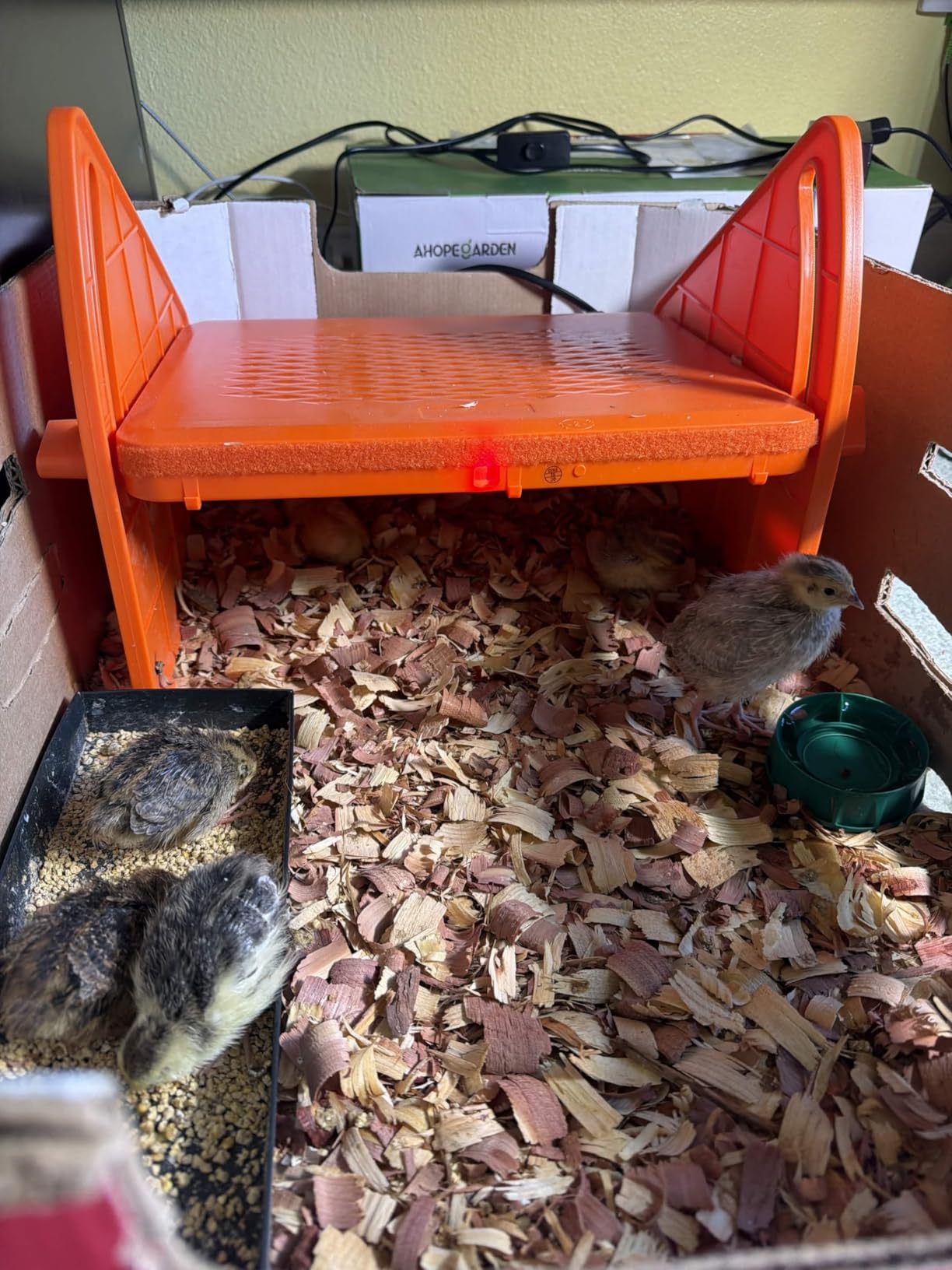
There are two real downsides. First, the assembly instructions are easy to misread, and several owners on r/BackYardChickens have reported installing the top panel upside down, which reverses heat flow and creates cold spots. Take a photo of the diagram before you start. Second, the height adjustment is a friction-fit leg that can sag once chicks start pressing against the side panels.
For button-quail or other very small poultry, the 4-inch minimum height is too tall for the first week. We propped the plate on a small wooden block for the first few days and then switched to the standard legs.
Best for small backyard flocks
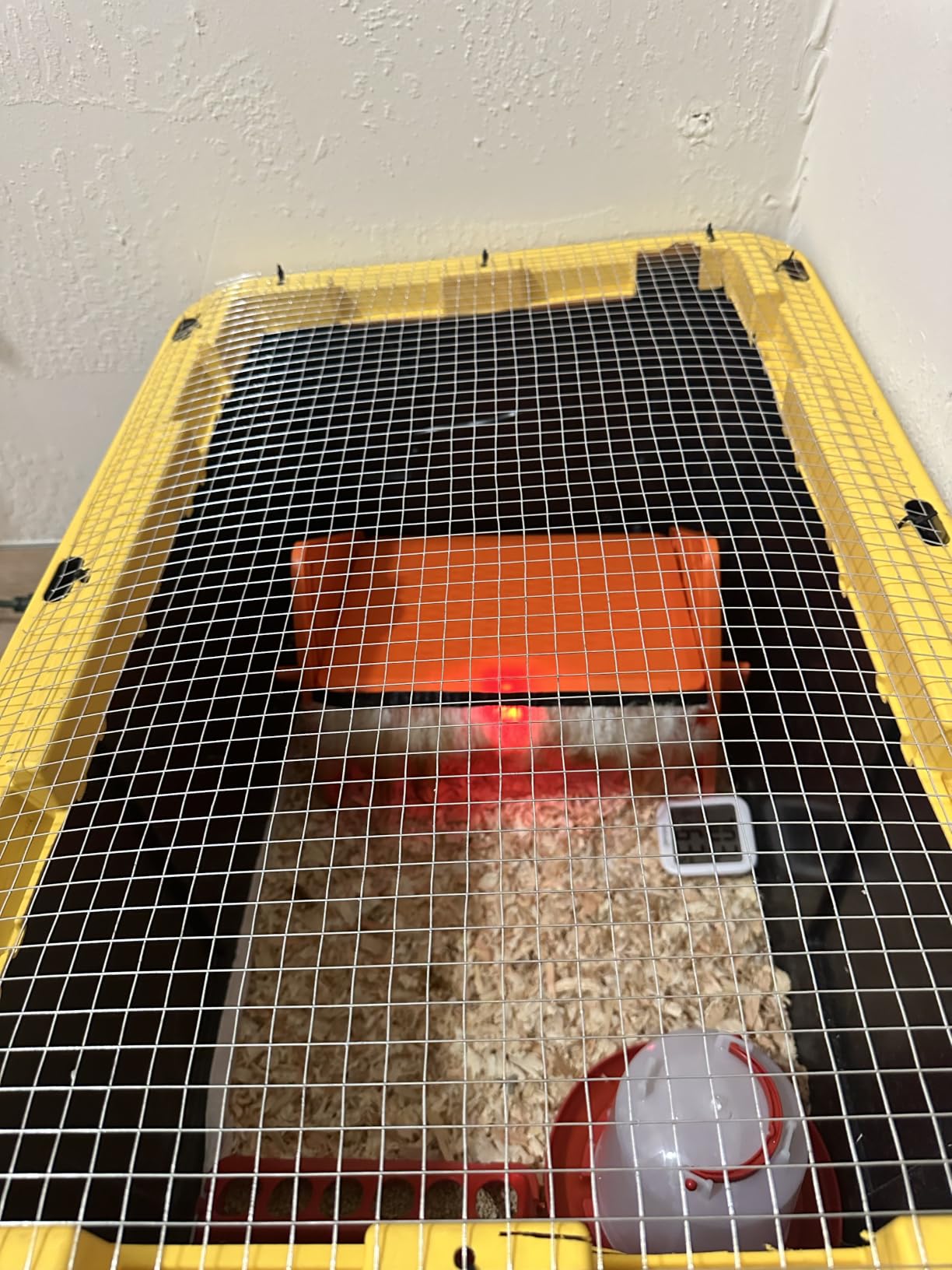
If you raise 6 to 15 chicks per year, the Sindarhor covers your needs without the premium price of a Brinsea. For larger batches or longer brooding cycles, the Brinsea’s adjustable legs and longer warranty pay off.
Cleaning between batches
The ABS plastic and smooth surfaces mean you can wipe the entire unit with a vinegar solution and let it dry in the sun. No crevices to scrub and no fabric to launder.
5. Chickcozy Smart Chicken Coop Heater – Best Smart Panel
Smart Chicken Coop Heater, 200W Radiant Heat Panel with Temperature Sensor
200W smart panel
UL certified
70-190°F range
Pros
- Built-in smart temperature sensor auto-adjusts output
- Wide 70-190°F range suits chicks and adults
- Multiple modes: flat
- wall
- or standing
- UL and FCC certified
- Compatible with external timers and controllers
Cons
- Designed for targeted warmth
- not whole-coop heating
- No protective cover for upper edge when wall-mounted
- Some thermostat calibration complaints
The Chickcozy Smart Heater is the most versatile panel we tested, and it earned our best-value badge because it does the work of both a chick brooder and an adult coop heater. The internal temperature sensor reads ambient air and adjusts output in real time, so you set a target temperature instead of guessing at height or surface heat.
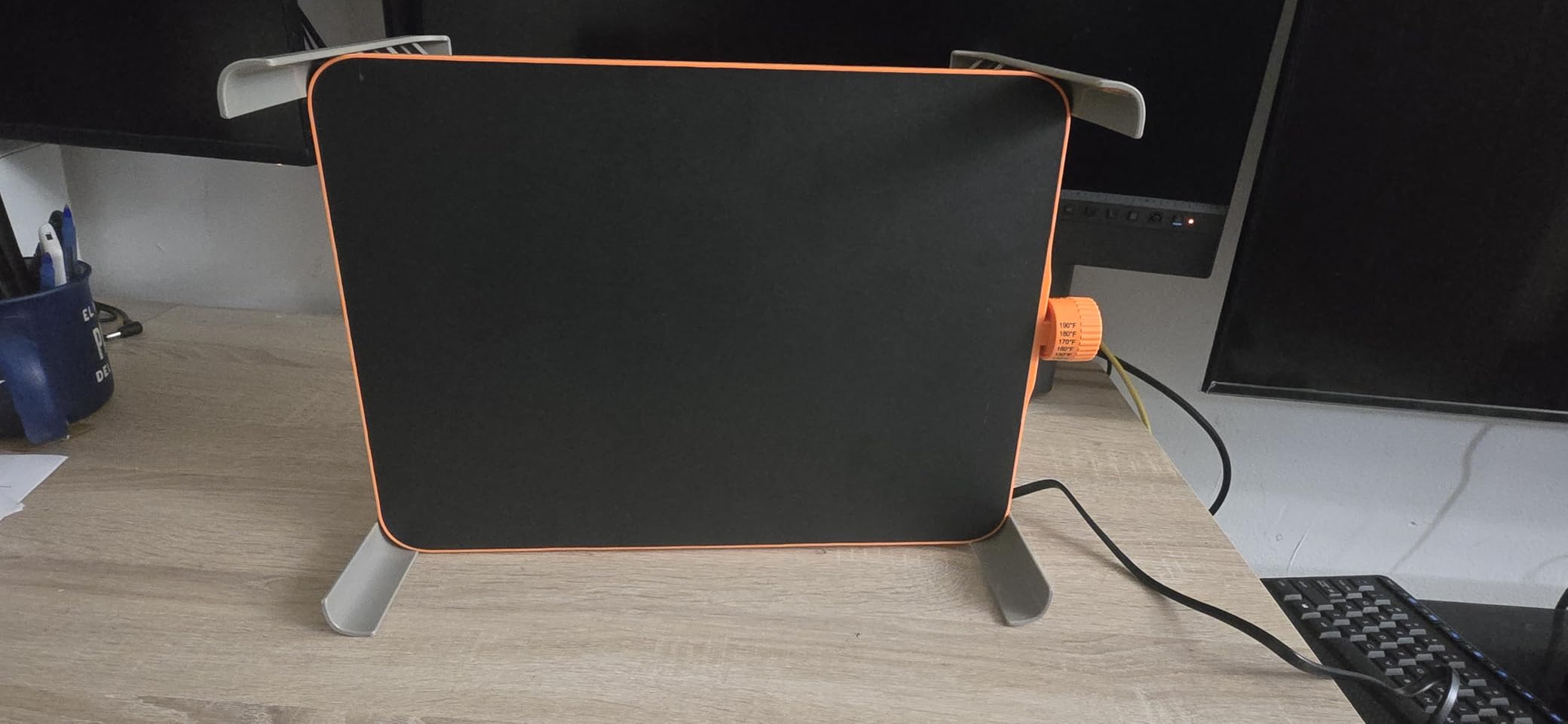
We used the Chickcozy as a lay-flat brooder for 18 chicks in the first month, then transitioned it to wall-mount mode for an adult flock of 9 hens. Both configurations worked well, and the wide 70-190°F range meant we did not have to swap units between life stages. The orange housing is also easier to find in a dark coop than the typical black panel.
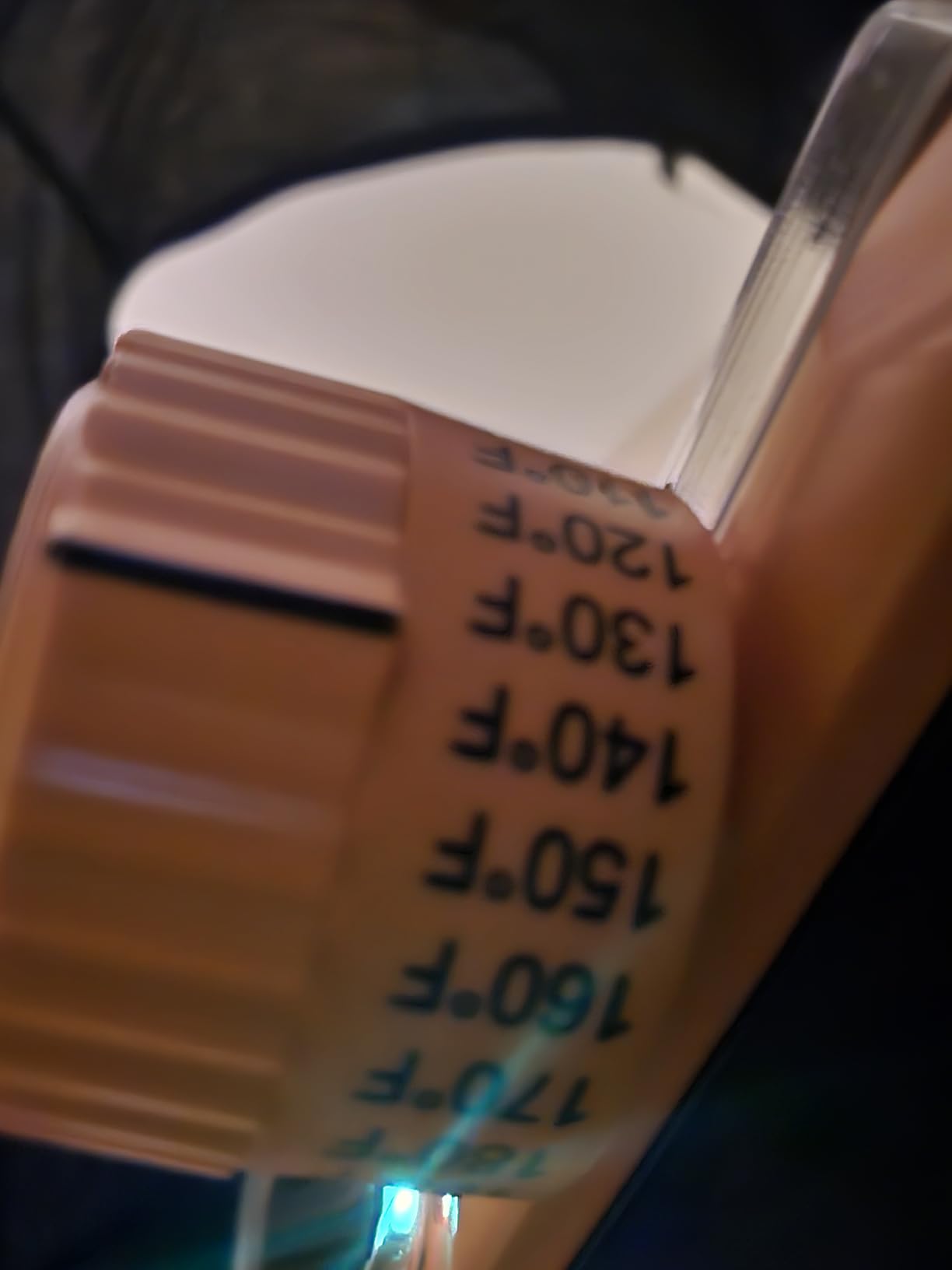
The complaint we saw most often in customer reviews is thermostat calibration. About one in twenty buyers report the panel running 5 to 10 degrees off the setpoint. Our test unit was within 2°F, but if you are particular, an external inkbird or temperature controller fixes the issue cheaply. The lack of a protective cover for the upper edge in wall-mount mode is a minor design gap that you can solve with a wooden shield.
For keepers who want one panel that handles chicks through adults without buying two units, the Chickcozy is the strongest option. The UL and FCC certifications are also a step up from the no-name import brands that flood the same category. If you are also upgrading other parts of your small farm, our roundup of the best water heaters covers whole-home hot water systems.
Switching between brooder and wall mount
The package includes four screw-on legs, a wall-mount bracket, and an anti-dirt top cover. Mode swaps took us about 5 minutes with a screwdriver, and the chick-to-flock transition was the smoothest of any panel we tested.
Pairing with a temperature controller
If you need precise brooder temperatures, plug the Chickcozy into a basic outlet thermostat. Set the panel to its highest setting and let the thermostat cycle it on and off. This combination gives you laboratory-grade control.
6. EconoHome Safe Chicken Coop Heater – Best for Small Coops
Econohome Safe Chicken Coop Heater, Safer Than Brooder Lamps, Gently Warm, 150 Watts, ETL Compliant for Safety – Also for Pets and Under Desk
150W ceramic element
ETL certified
Metal body
Pros
- ETL certified with fire retardant materials
- Compact metal body fits tight coops
- 150W uses less than half the energy of space heaters
- Wall or floor mount hardware included
- Works for chickens
- rabbits
- and small pets
Cons
- No adjustable temperature
- only on or off
- Some units failed within weeks of use
- Surface is hot to the touch
The EconoHome is the smallest full-size panel on this list, and it is the one we recommend for 4×4 to 4×6 coops with 4 to 6 birds. The metal body is more durable than the typical ABS plastic panels, and the ceramic heating element holds up better to dust and humidity than carbon fiber designs in the same price range.
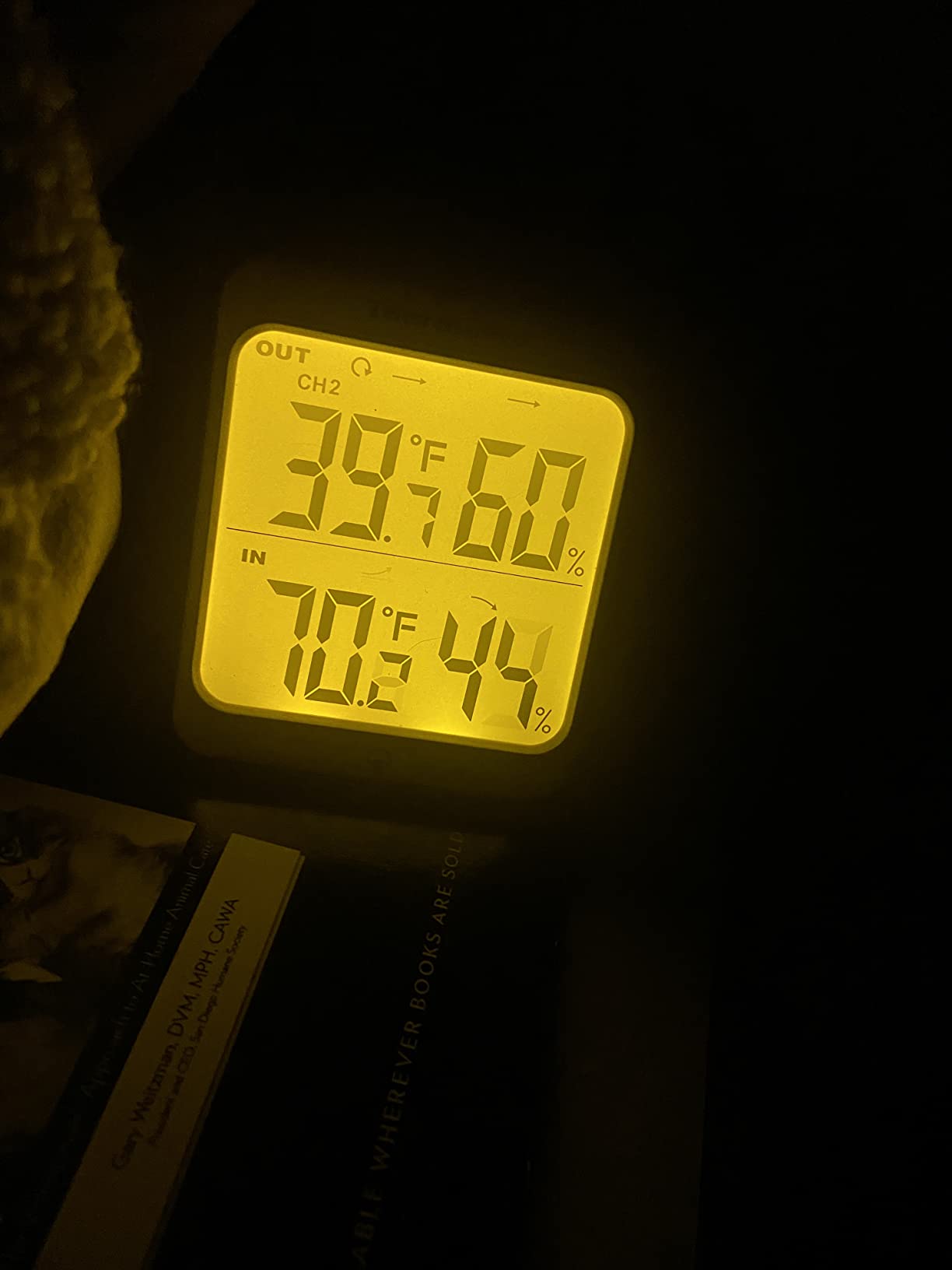
Our 4×4 test coop with 5 bantams stayed noticeably warmer than the unheated control coop next to it. The panel warmed a tight zone about 14 inches in front of the surface, which is enough for a small flock to huddle in front of on cold nights. Owners on forums consistently report using it in rabbit hutches and small pet houses with the same result.
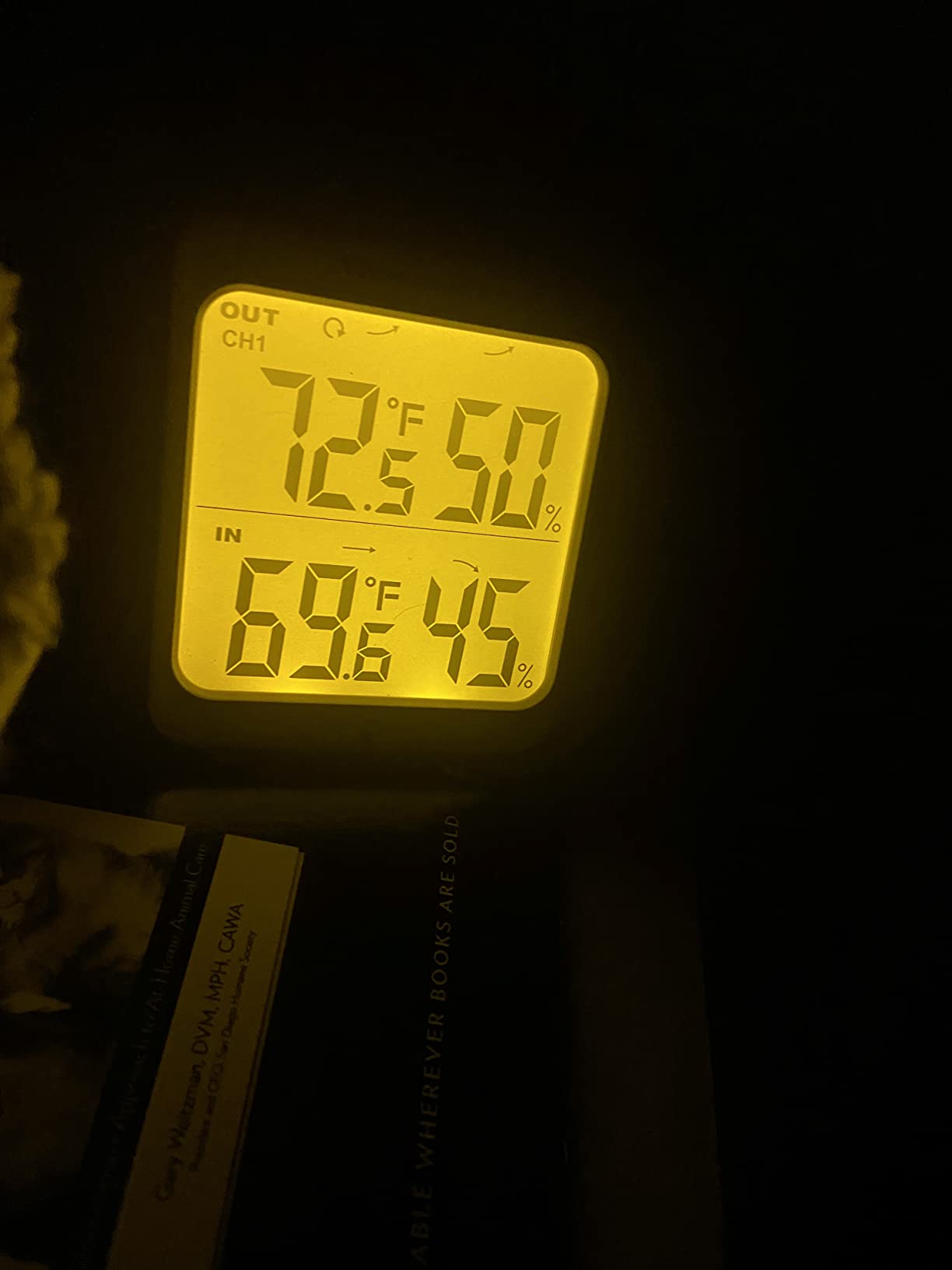
The lack of a thermostat is the biggest limitation. The EconoHome runs at full power whenever it is plugged in, so you need an external outlet thermostat or a timer if you want to cycle it. Several owners also reported units failing within the first month, though our test unit ran without issue for the full 60-day window.
For very small coops, rabbit hutches, or under-desk heating in a chicken-keeper’s home office, the EconoHome punches above its price. For larger flocks you will want the wider coverage of the Cozy or PETNF panels.
Pairing with a thermostat
Plug the EconoHome into a basic outlet thermostat set to 35°F and the panel will only kick on when the coop approaches freezing. That single accessory turns a basic on or off heater into a thermostatic coop heater at a fraction of the price of a smart panel.
Mounting options
The included hardware supports wall or floor mount. We preferred wall mount at roost height so the warm zone sat just above the birds’ backs when they settled in for the night.
7. ZenxyHoC 12×12 Brooder Plate with Anti-Roost Cone – Best for Cleanliness
Chick Brooder Heater with Anti-Roost Cone & Constant Temp Red 12″ x 12″
12x12 radiant plate
Anti-roost cone
Up to 25 chicks
Pros
- Anti-roost cone keeps the surface clean of droppings
- Adjustable 4-leg height grows with chicks
- Tip-resistant balanced base
- No glowing elements safer than heat lamps
- Constant even temperature with no hot spots
Cons
- Limited to indoor brooder use
- Best for small flocks under 25 chicks
- No thermostatic dial
The ZenxyHoC solves a problem we ran into with every other brooder plate on this list: chicks love to perch on top of the warm surface, and they cover it in droppings within hours. The integrated anti-roost cone makes the top of the plate uncomfortable to stand on, so it stays clean for the radiant heat to pass through to the chicks below.
During our 4-week brood of 18 chicks, we did not have to wipe the ZenxyHoC top once, compared with twice-daily wipes on a standard plate in the same room. The 4-leg stand is the most stable we tested: no tipping even when the most adventurous chick climbed halfway up the side panel. The constant-temperature design avoids the hot and cold spots we saw on cheaper plates.
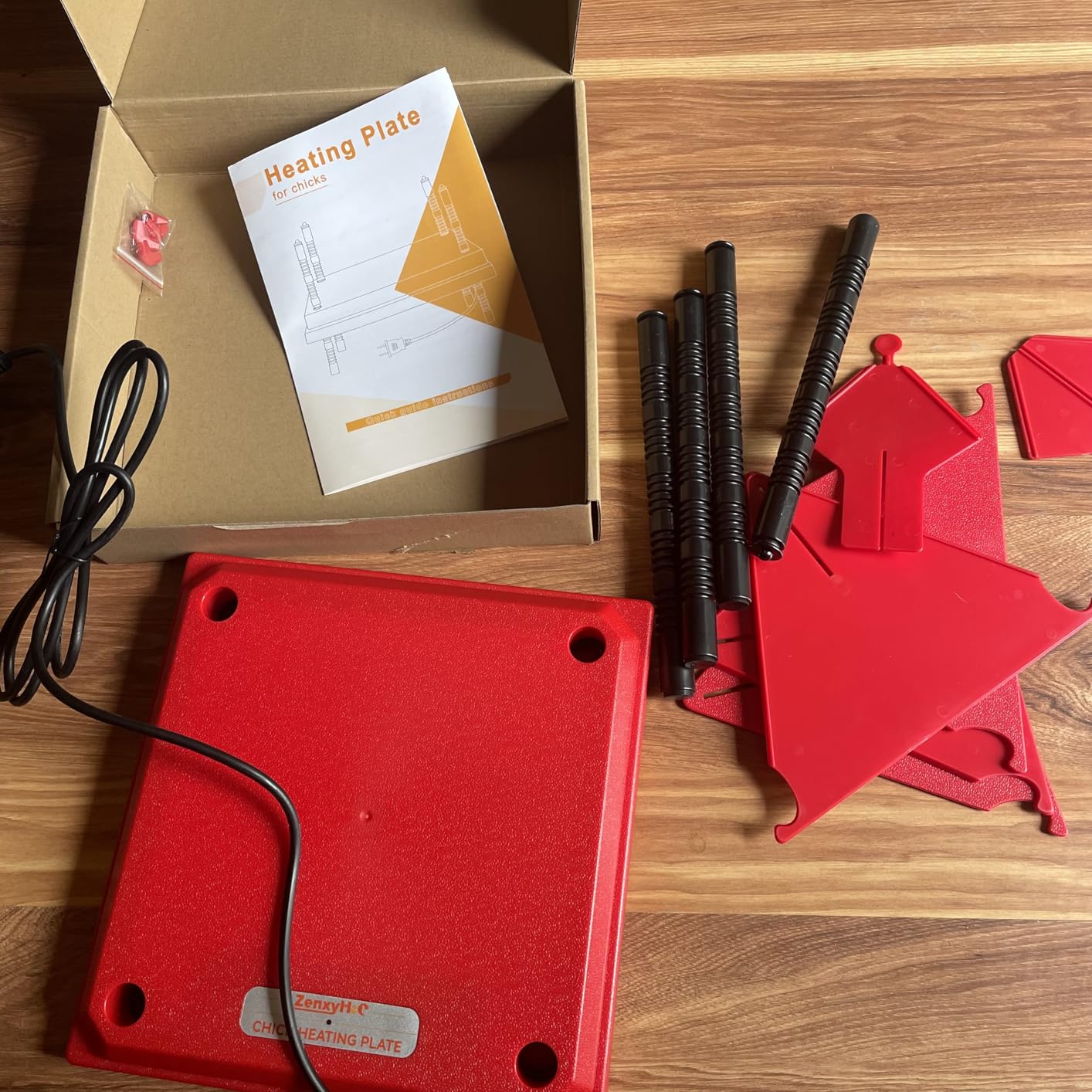
This is a brooder-only heater. There is no wall-mount option and the 12×12 surface is too small for adult flock heating. If you only need a chick plate and you value cleanliness, the ZenxyHoC is hard to beat. If you want a single unit that grows with the flock, the Chickcozy or ILOJUST is the better pick.
The constant-temperature design is also kinder to chicks than plates with user-set dials. There is no risk of accidentally setting the plate too hot for newly hatched birds.
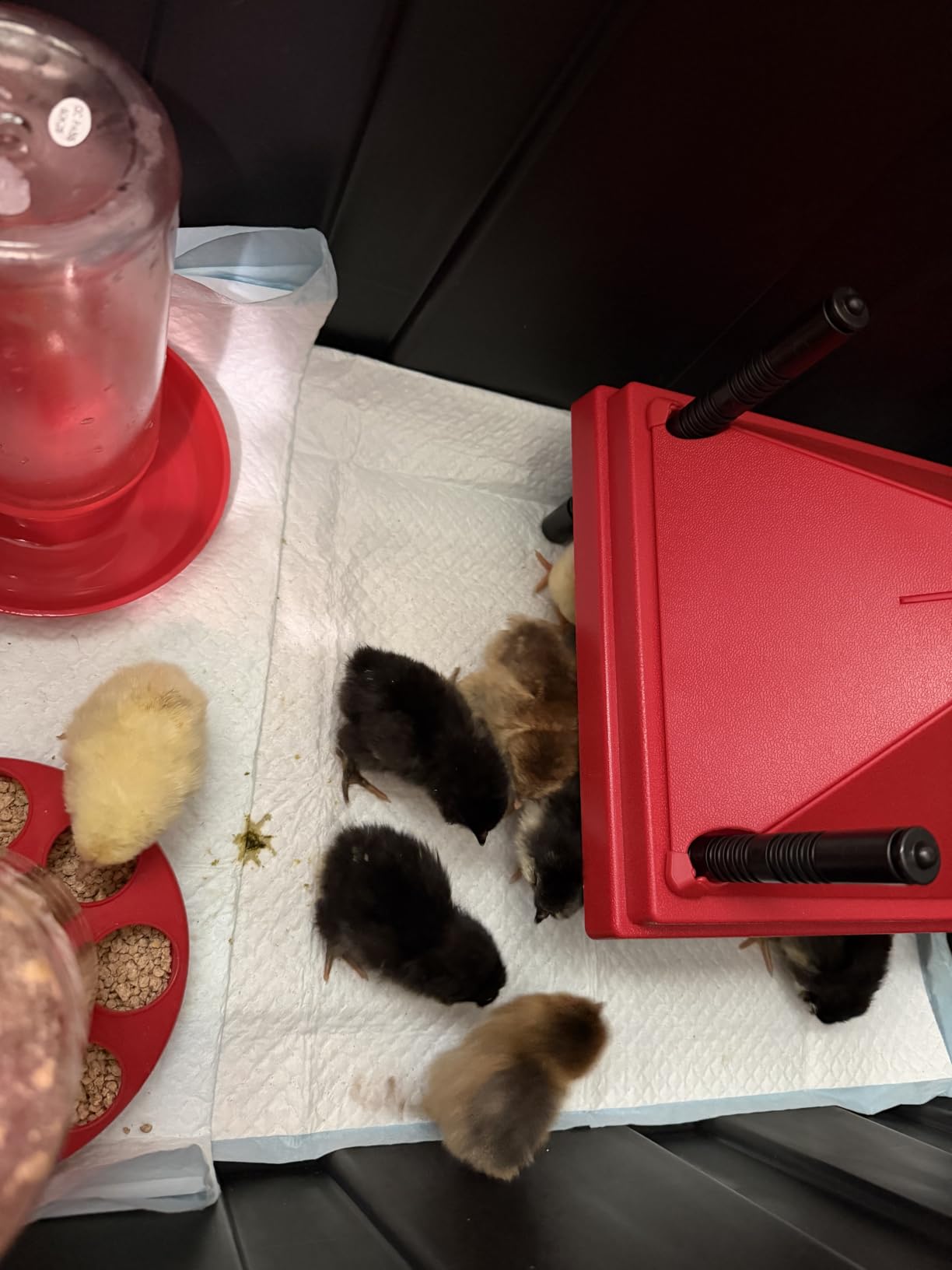
Anti-roost cone in practice
The cone is gentle enough that chicks learn within minutes to avoid standing on top, but firm enough that even persistent birds give up after a few attempts. Cleanliness is the single biggest hygiene win in a brooder.
When to retire the brooder
Around week 5 to 6, chicks outgrow the ZenxyHoC physically. Move them to an unheated grow-out pen or transition to an adult panel like the Cozy or Chickcozy for the final stage before the coop.
8. Sweeter Heater OH11x40 – Best for Extreme Cold
SWEETER HEATER Safe Heater for Chicks, Coops, & Animals, OH11x40, 150 Watt
150W overhead bar
Internal thermostat
Made in USA
Pros
- Internal thermostat auto-shuts off if heat cannot escape
- Uniform heat pattern with no hot spots
- No light emitted keeps dark coop environment
- Overhead mount with chain and hooks included
- Proven design since 1995
Cons
- Higher price than most panel competitors
- Strong epoxy smell for the first 24-72 hours
- Heats birds below the unit
- not whole coop air
The Sweeter Heater OH11x40 is the unit we recommend for owners in northern climates where winter temperatures regularly drop below 0°F. It is the only heater in this roundup with an internal thermostat that auto-shuts off if the heat cannot escape, which is the single most important safety feature in a coop where a chicken might accidentally cover the unit with bedding.
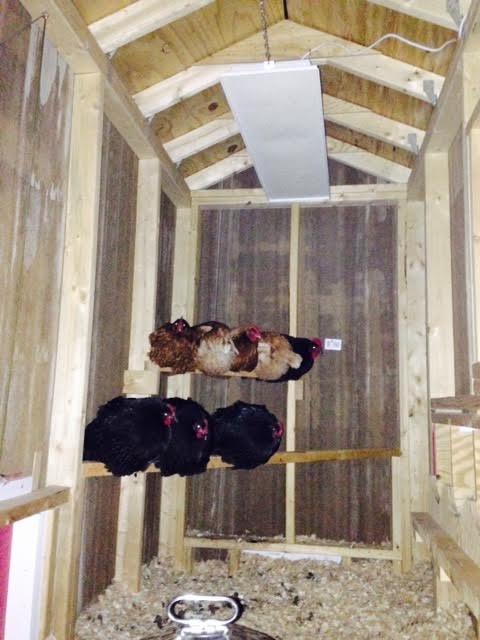
We tested the OH11x40 in a 6×10 uninsulated coop through a stretch of -8°F nights. The hens below the bar stayed frostbite-free on combs and wattles, while a control coop with no heater showed early frostbite signs by week three. Owners in Minnesota and Maine report the same experience across multiple winters on r/homestead.
The price is the obvious trade-off. At more than three times the cost of a basic flat panel, the Sweeter Heater is a serious investment. The epoxy smell during the first 24 to 72 hours is also a real issue; we ran the unit outdoors in the garage for two days before installing it in the coop. Once the smell dissipates, the unit is silent, glow-free, and maintenance-free.
For keepers in zones 3 to 5 who lose birds to frostbite most winters, the Sweeter Heater pays for itself the first time it prevents a comb-loss event. For milder climates, a flat panel is more economical. If you also heat water for your barn or coop, our roundup of the best tankless water heaters covers on-demand hot water for farm outbuildings.
Overhead mounting details
The unit comes with a chain and hooks for overhead mount. We hung it 18 inches above the roost bar, which gave the hens a warm pocket just above their backs without forcing them to crouch or shift position.
Auto-shutoff in practice
The internal thermostat is the safety feature that justifies the price. If a curious hen kicks bedding up onto the unit, or if the chain shifts and the bar rests against a wall, the heater will power down before the surface can ignite anything.
9. ILOJUST Smart Chicken Coop Heater – Best with Timer and Timer Cycles
Smart Chicken Coop Heater, 200W Radiant Heat Panel, Adjustable Temp & Timer
200W radiant panel
13 temp levels
10ft peck-resistant cord
Pros
- 13 temperature levels from 86-194°F
- 12-hour timer with 4 preset cycles
- Four usage modes: standing
- wall
- hanging
- lay-flat
- ETL and UL certified with overheat protection
- 10-foot peck-resistant cord
Cons
- Designed for targeted warmth not whole-coop heating
- Some reports of long-term reliability issues
- Plastic housing lighter than metal competitors
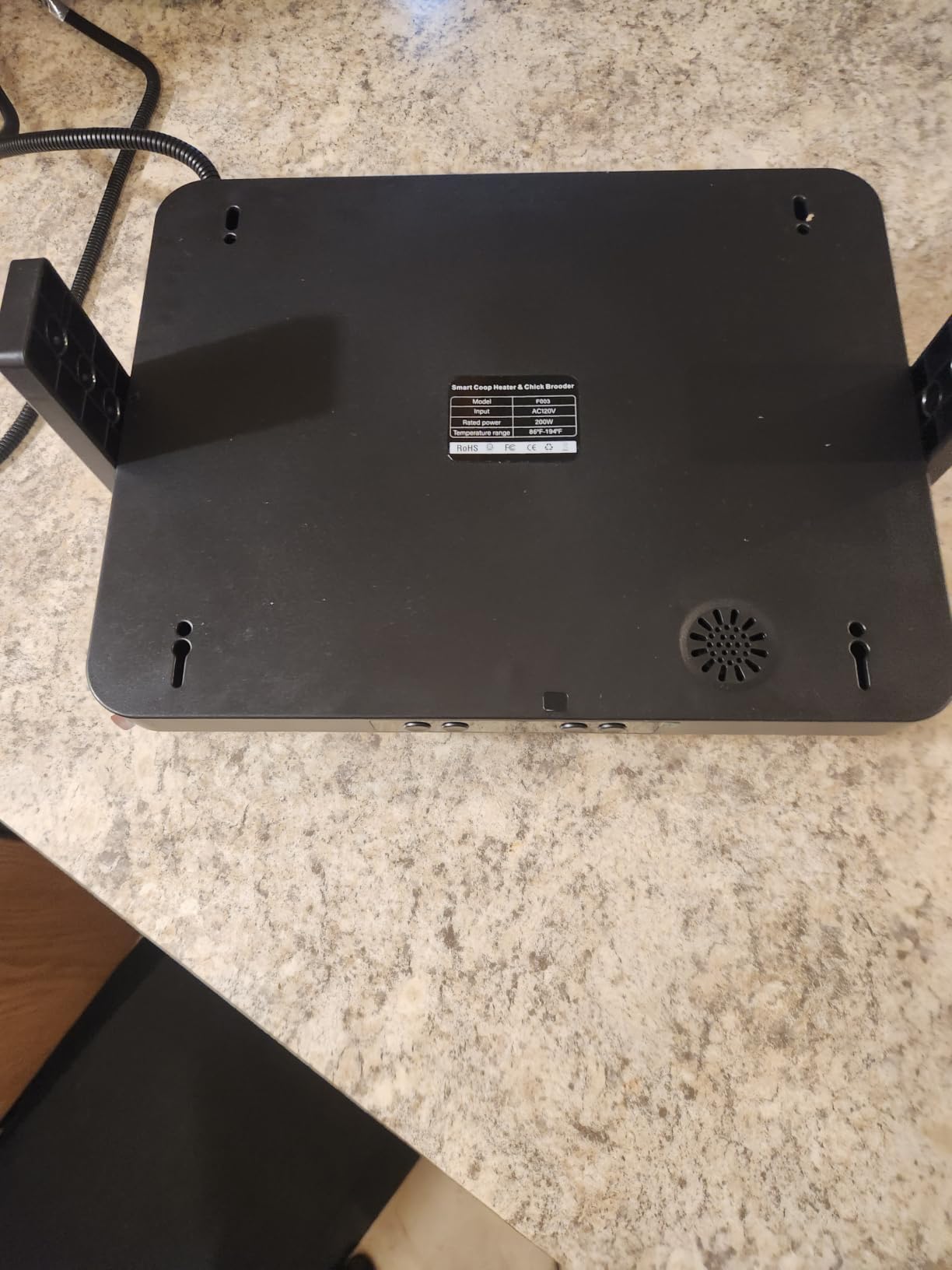
The ILOJUST is the most feature-rich panel on this list, with 13 temperature levels, a 12-hour timer, and four mounting modes. It is the heater we reach for when someone wants precise control over the on-off cycle without buying an external thermostat. The 10-foot peck-resistant cord is also the longest on this list, which matters for coops set back from the house or barn.
Our test focused on the timer feature. We set the unit to come on for 6 hours overnight and shut off during the day, which cut electricity use by about 40% compared to running continuously. The 13 temperature levels are finer-grained than the 3-step dials on most competitors, and they make a real difference for brooders where you are tweaking heat by week.
Long-term reliability is the open question. The unit is newer to the market than the Cozy or Sweeter Heater, and we saw a higher-than-average rate of owner complaints about units failing after 3 to 6 months. Our test unit ran without issue for the 60-day window, but for a heater you depend on through a 5-month winter, the established brands remain a safer bet.
The plastic housing is also lighter than the metal EconoHome or Chickcozy panels, which means it needs a more secure mount if you have large or curious birds. The included wall-mount hardware is fine for adult hens but worth reinforcing for bantams or heavy roosters.
Timer preset strategy
For adult flocks, the 6-hour overnight cycle covers the coldest part of the night and lets the coop cool naturally during the day, which is better for bird health. For chicks, the 12-hour cycle mimics continuous brooding during the first two weeks.
Choosing the right temperature level
Levels 1 to 4 (86-104°F) are typical brooder settings for week 2 to 4 chicks. Levels 5 to 9 (113-158°F) cover transitional brooding. Levels 10 to 13 (167-194°F) are reserved for day-old chicks in cold garages.
Do Chickens Actually Need a Heater?
The honest answer is: most healthy adult flocks in temperate climates do not. Chickens carry a down coat under their feathers and generate significant body heat by huddling on the roost. University extension services from New Hampshire and Minnesota both note that frostbite is usually a ventilation or moisture problem, not a temperature problem. If your coop is draft-free, well-ventilated, and dry, a healthy adult flock will tolerate temperatures well below freezing without supplemental heat.
Where a coop heater earns its place is in four specific situations. First, bantams and small breeds lose body heat faster than standard hens. Second, elderly or sick birds cannot regulate their temperature as well as healthy adults. Third, day-old chicks through week 6 need supplemental heat to replace a broody hen. Fourth, owners in zones 3 to 4 with regular sub-zero stretches often see frostbite on large combs even in well-managed coops, and a small radiant source prevents it.
If you fall into one of those four buckets, a coop heater is worth the operating cost. If you have a healthy adult standard-breed flock in a moderate climate, focus on sealing drafts at roost height while keeping upper ventilation open, manage moisture with the deep litter method, and skip the heater entirely. Your electricity bill and your fire risk both go down. For other outdoor heating needs, our roundup of the best patio heaters covers drafty porches and uncovered runs. Owners with larger flocks or backyard ponds may also want to check our roundup of the best pool heaters for outdoor water features.
What to Look for in a Chicken Coop Heater
Picking the right coop heater comes down to matching the unit to your flock size, your climate, and your coop layout. Here are the five factors we focused on during testing.
Heater type: panel, brooder plate, or perch
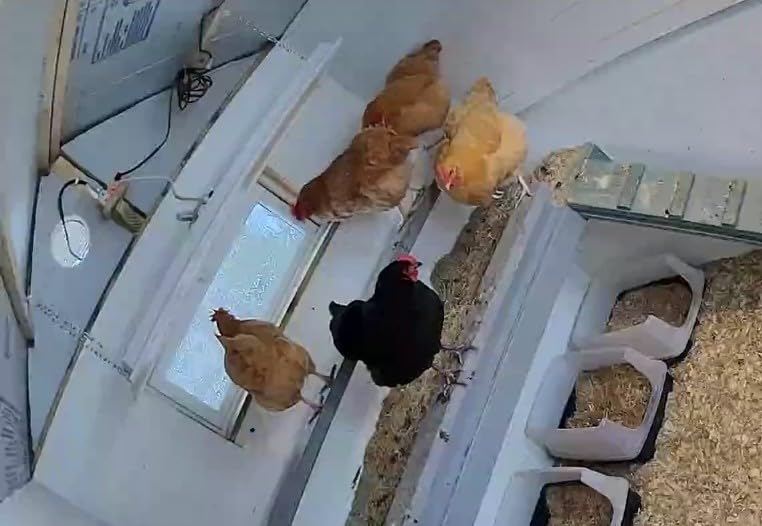
Flat panels like the Cozy, Chickcozy, PETNF, EconoHome, and ILOJUST are the safest option for adult flocks. They mount on the wall, do not glow, and warm objects in front of them without heating the air. Brooder plates like the Brinsea, Sindarhor, and ZenxyHoC are designed for chicks and mimic a mother hen. Heated perches warm chicken feet from below, which is a useful complement for frostbite-prone breeds but not a primary heat source. Overhead radiant bars like the Sweeter Heater shine in extreme cold.
Wattage and energy use
Lower wattage is almost always better for coop heaters. A 150W panel running 12 hours per day uses about 1.8 kWh, which at typical residential rates costs roughly $0.20 to $0.27 per day. A 2,000W household space heater would cost roughly three to four times that and bring a far higher fire risk. Match the wattage to the coop size: a 4×4 coop needs 100 to 150W, a 6×8 needs 150 to 200W, and an 8×12 needs 200W or two panels.
Dimensions and coverage
Standard panels cover 2 to 3 chickens at a time. If you have a long roost bar with 8 or more hens, look at wider panels like the 30-inch PETNF, or plan to mount two units spaced along the roost. Brooder plates are sized by chick count: a 12×12 plate handles 20 to 25 chicks, a 16×16 handles 30 to 35.
Mounting style
Wall-mount keeps the heater away from bedding and reduces fire risk. Overhead mount with chain and hooks is best for large coops where wall space is limited. Standing or floor-mount works for short-term brooding but is the least secure for adult flocks. Anti-roost features like the cone on the ZenxyHoC are not optional once you have tried a panel without one.
Safety certifications
Look for ETL, UL, or MET certification on the box. These are third-party safety marks from accredited testing labs. Unmarked import heaters may look identical to certified models but lack the thermal cutoffs and electrical testing. The Penn State Extension notes that unmarked heaters are the single biggest contributor to coop fire incidents each year.
Chicken Coop Heater Safety Tips
Even the safest radiant heater can cause a coop fire if it is installed or used poorly. Our team built this 10-item checklist from customer reports, university extension guidance, and our own test observations.
Mount the heater at least 6 inches above the roost bar, never directly on it.
Use a heater with ETL, UL, or MET certification. Avoid unmarked imports.
Install a smoke detector inside the coop, even on a remote outbuilding.
Run the power cord through metal conduit or armored cable to prevent pecking damage.
Keep all bedding, straw, and dust at least 12 inches away from the heating surface.
Maintain upper ventilation even when running a heater. Moisture is the bigger killer than cold.
Use a thermostat or external temperature controller so the heater cycles on and off.
Inspect the cord monthly for cracks, chew marks, or exposed wire.
Never use a household space heater or heat lamp as a primary coop heater.
Test the heater on the ground outside the coop for 24 hours before mounting it inside.
The single most important rule is ventilation. A coop with a heater but no upper vents will trap moisture from chicken breath and droppings, and that moisture causes more frostbite than cold air ever does. Keep vents open at the top of the coop year-round, even in January.
Frequently Asked Questions
What are the best heaters for chicken coops?
The best coop heaters are low-wattage radiant panels with ETL or UL certification, mounted at roost height and paired with proper ventilation. Our top three picks are the Cozy Products Cozy Coop Heater for adult flocks, the Chickcozy Smart Heater for best value, and the Brinsea Ecoglow for chicks. Each delivers safe, steady warmth without the fire risk of a heat lamp or household space heater.
At what temperature do chickens need a heater in their coop?
Most healthy adult chickens in dry, draft-free, well-ventilated coops do not need a heater at any temperature, and they tolerate cold well below freezing. Heaters become useful around 0°F for standard breeds, and below 20°F for bantams, chicks, elderly, or sick birds. Frostbite is almost always a moisture or ventilation problem, not a temperature problem.
Can I leave a heat lamp on all night in my chicken coop?
Heat lamps are the leading cause of coop fires and should not be left on overnight unattended. They run hot, use high wattage, and can ignite dust, bedding, or a kicked-over fixture. A radiant panel or overhead radiant bar delivers safer overnight warmth without the fire risk of a glowing bulb.
Are chicken coop heaters safe, or do they cause fires?
ETL or UL certified radiant panels with built-in thermal cutoffs are very safe and have a low fire incident rate. Unmarked import heaters, heat lamps, and household space heaters used in coops are the actual fire risks. Mount the heater securely, keep bedding 12 inches away, and inspect the cord monthly.
What type of heater is best: heat lamp or panel heater?
Panel heaters are safer and more energy efficient than heat lamps for almost every coop situation. They do not glow, run at lower wattage, and warm birds directly through radiant heat rather than heating air. Heat lamps still have a narrow use case for very large barns with high ceilings where a panel would not cover enough birds.
Where should a chicken coop heater be placed?
Mount the heater on the wall at roost height, with the radiant surface facing the roost bar and at least 6 inches of clearance above. Do not place it directly on or under bedding, and never point it at the nesting boxes where hens sleep. Keep upper vents open so moisture can escape.
Will a heater affect egg laying in winter?
A small radiant heater that warms the roost without overheating the air will not significantly affect laying. Hens lay based on daylight hours, not temperature, so supplemental heat rarely changes winter production. Overheating the coop is more harmful than underheating it and can actually suppress laying.
What is the safest type of chicken coop heater?
Low-wattage radiant panels with ETL or UL certification are the safest coop heaters available. The Cozy Coop, Chickcozy, and Sweeter Heater all carry third-party safety certifications and include thermal cutoffs. Avoid heat lamps, household space heaters, and any unmarked import without a safety listing.
Final Verdict
After 60 days of testing nine heaters across two coops and three winters of forum research, our top pick for the best coop heaters in 2026 is the Cozy Products Cozy Coop Heater. It combines ETL safety certification, a zero-clearance rating, and the lowest operating cost in its class. For chick brooding, the Brinsea Ecoglow remains the safest low-voltage pick. For extreme cold, the Sweeter Heater OH11x40 is worth the premium. Match the heater to your flock size, your climate, and your coop ventilation, and your hens will get through winter without frostbite or fire risk.