
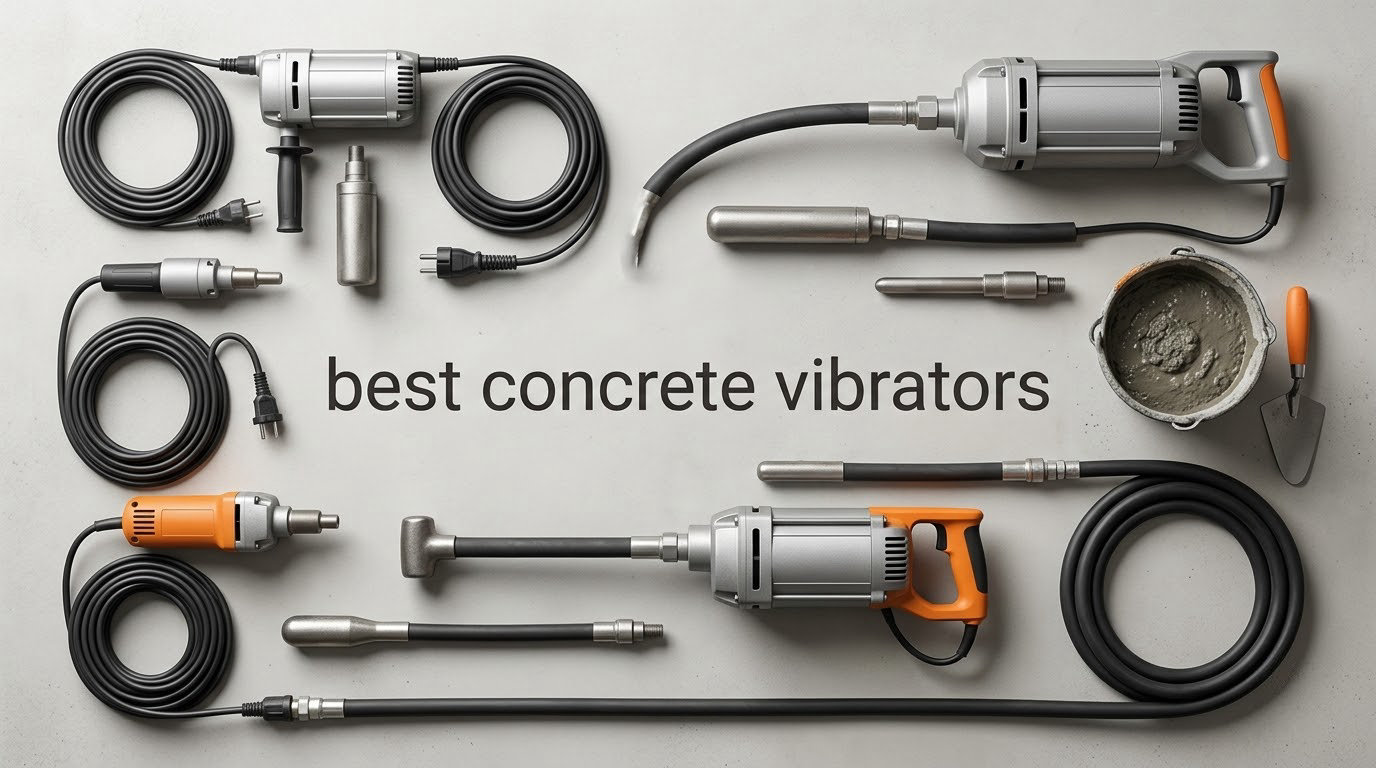
The best concrete vibrator for most people is the Seeutek 1500W Concrete Vibrating Tool: it packs 1500W of motor power, 13,000 VPM and a 6.6 ft flexible shaft into the most widely reviewed package in this group, with 476 buyer ratings behind it. If you want to cut the cord, the DEWALT DCE531B is the pick, and if you need to reach the bottom of a deep footing, the LMYYGOO 14.75 ft unit is the one that will get there.
Every concrete pour that goes wrong does so the same way. Air gets trapped in the mix, the pour cures around those voids, and what looks like a solid footing from the top is really a shell with holes through it. A concrete vibrator fixes that in minutes, and it is the cheapest insurance on the whole job. The question is which one you actually need.
That depends on two things: how much concrete moves at once, and whether you have a clean power source near the pour. Our team compared ten of the most-reviewed vibrators currently on the market, cross-checking published manufacturer specifications against patterns in aggregated buyer reviews. We are not claiming bench testing here. Every rating and review count below is the live figure from the product listing, and every specification comes from the manufacturer or retailer spec sheet for that exact model. Where a figure is absent from the published listing, we say so rather than estimate it.
Before you read further, it helps to have the rest of the toolchain sorted. If you have not picked a mixer yet, our guide to the best concrete mixers covers the drum and tow-bag options that pair well with a vibrator. For a full concrete job from form to finish, the best cordless drills for concrete handle the drilling and fastening that frames the pour.
Table of Contents
Top 3 Concrete Vibrator Picks
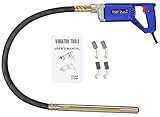
Three names cover most of the ground here. The Seeutek is the best all-rounder because its combination of output and evidence is hard to argue with. The DEWALT is the best cordless concrete vibrator for anyone who already owns 20V MAX batteries. The ROLAYSEE carries the highest average rating of the ten, with a splash-resistant switch cover that suits wet-weather pours.
Best Concrete Vibrators Side by Side in 2026
One quick note before the individual reviews. Wattage and VPM are not the same thing, and a high number on one does not guarantee a high number on the other. The XtremepowerUS has the highest wattage figure in this table and one of the lowest vibration frequencies. The LMYYGOO has the highest frequency and a shaft long enough to work from standing height. Read both columns together.
1. Seeutek 1500W Concrete Vibrating Tool – the all-rounder
Seeutek Concrete Vibrating Tool, 1500W 6.6FT Handheld Cement Vibrator
1500W motor
13000 VPM
6.6 ft shaft
1-3/8 inch head
15.2 lb
Pros
- Most reviewed unit in the group at 476 ratings
- Works footings post holes and small slabs
- 6.6 ft shaft reaches into forms and around rebar
- Lock-on button cuts trigger fatigue
Cons
- Shaft connection cross-threads for some buyers
- Needs a tap on the ground to engage vibration
- Plastic housing described as cheap
This is the unit we keep coming back to. In a category where most listings have fewer than a hundred ratings, the Seeutek carries 476 buyer reviews averaging 4.2 stars, and that volume matters because it means the quirks below show up consistently rather than as isolated complaints. It is also the only model here with both a well-documented review base and a mid-range frequency, which is why it takes the top slot.
The specification sheet is unremarkable in the best way. A 1500W motor, 13,000 VPM vibration frequency, a 1-3/8 inch head and a 6.6 ft flexible shaft sit in a package that weighs 15.2 lb. That combination handles the jobs most people actually have: footing walls, post holes, small slabs, a poured column in a shed. It is not a commercial flatwork machine and it does not pretend to be.
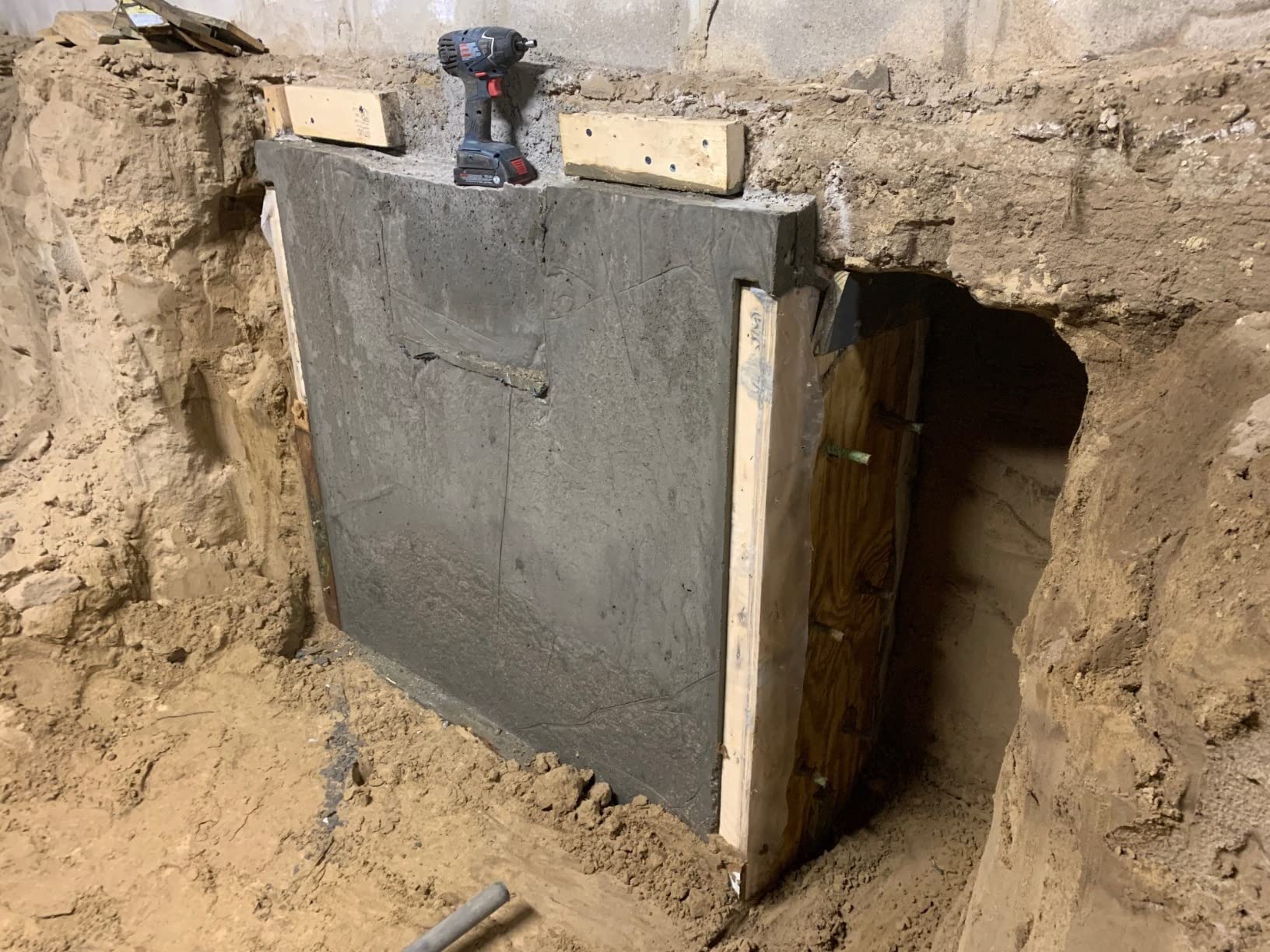
What owners consistently like is the shaft reach at this weight. A 6.6 ft whip lets you stand at the edge of a form and reach the middle without climbing into the pour, which is also better for your back. The lock-on button is the other quiet win. On a long pour you set the trigger once and stop holding it down for forty minutes.
The two things you should know before buying. Several buyers report a cross-threaded shaft connection that makes assembly frustrating, so read the threading direction before you force anything. And the head usually needs a tap against the form bottom to spin up to synchronous frequency. That is normal for this class of vibrator, not a defect.
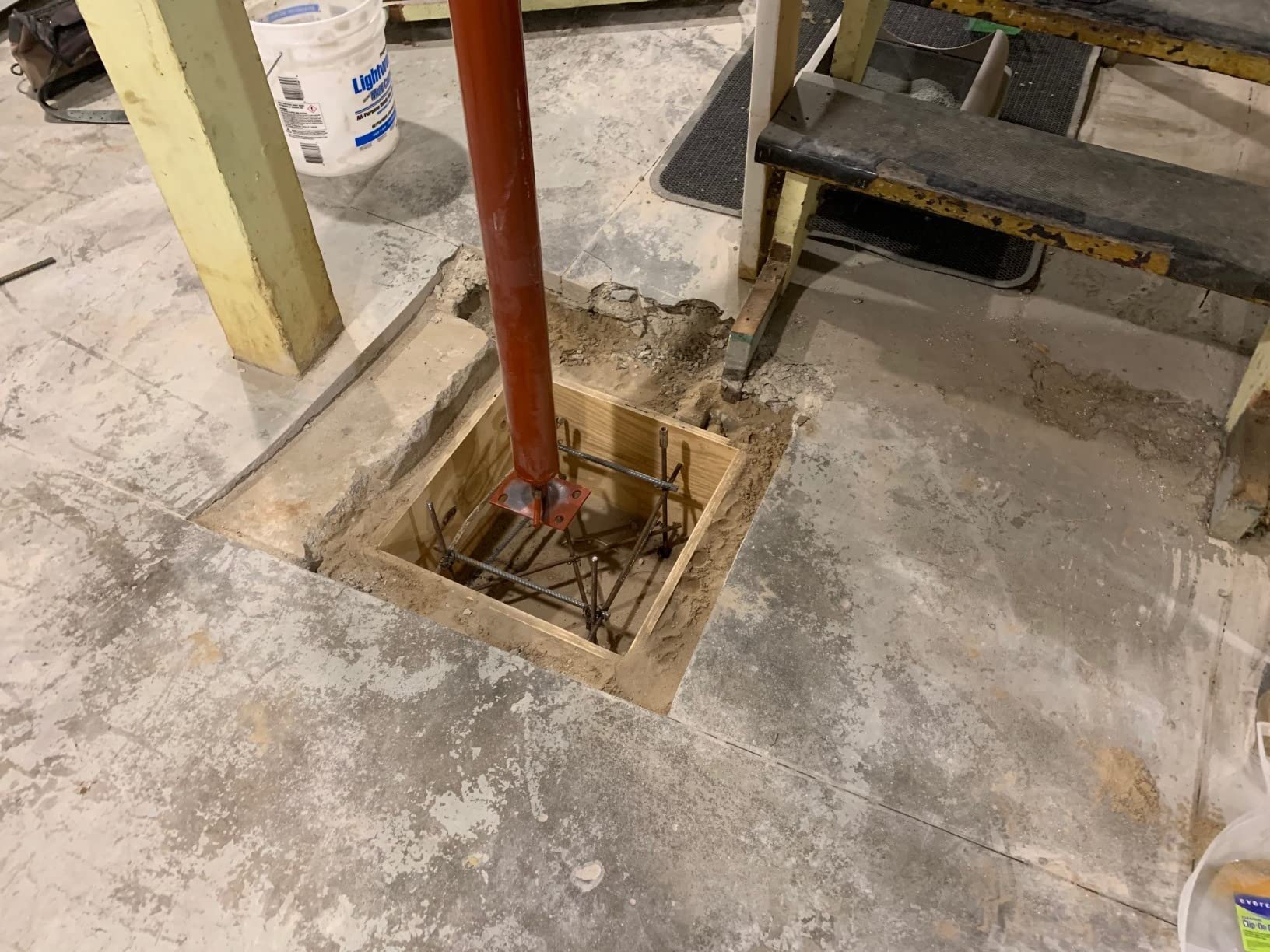
What you need to know before the truck arrives
It is a corded 110V unit, so you need a real outlet or a properly rated extension lead within reach of the pour. On a slab with no power nearby, this is the wrong shape of tool and the drilling and fastening work around it gets much harder. If you are planning a pour in a field or a crawlspace, look at the cordless options further down instead.
Where it falls short
The housing is described by some owners as cheap plastic, and the 6.6 ft shaft gets unwieldy on stairs and inside tight forms. Neither is fatal, but both mean this belongs on open residential work rather than a cramped footing. If your pour is genuinely tight, match the head diameter to the gap before you buy anything.
2. DEWALT DCE531B 20V MAX Pencil Vibrator – the cordless one

DEWALT DCE531B 20V MAX* Pencil Vibrator (Tool Only)
14000 VPM
4 ft flexible shaft
1-1/8 inch head
8 lb
20V MAX tool only
Pros
- No cords to snag on rebar or forms
- 14000 VPM is high for the class
- Only 8 lb so it is easy on the shoulders
- Backed by a 3 year limited warranty
Cons
- 4 ft shaft is short for 8 ft walls
- Vibration output is modest on big pours
- Battery and charger sold separately
If you already own 20V MAX batteries, this is the best cordless concrete vibrator in this roundup. The DCE531B outputs 14,000 VPM from a motor rated at 80W, which sounds thin until you understand that the work is done by the head spinning on the shaft, not by raw motor power. Most of the wattage figures in the budget tier are marketing; the frequency is what consolidates.
The head measures 1-1/8 inch and the flexible shaft runs 4 ft. That head diameter is genuinely slim, which is the feature most people miss. It fits between rebar cages and inside narrow forms where a 1-3/8 inch head simply will not go. Several buyers say it has replaced a crew of workers hammering the outside of their form sides on curb and gutter pours.
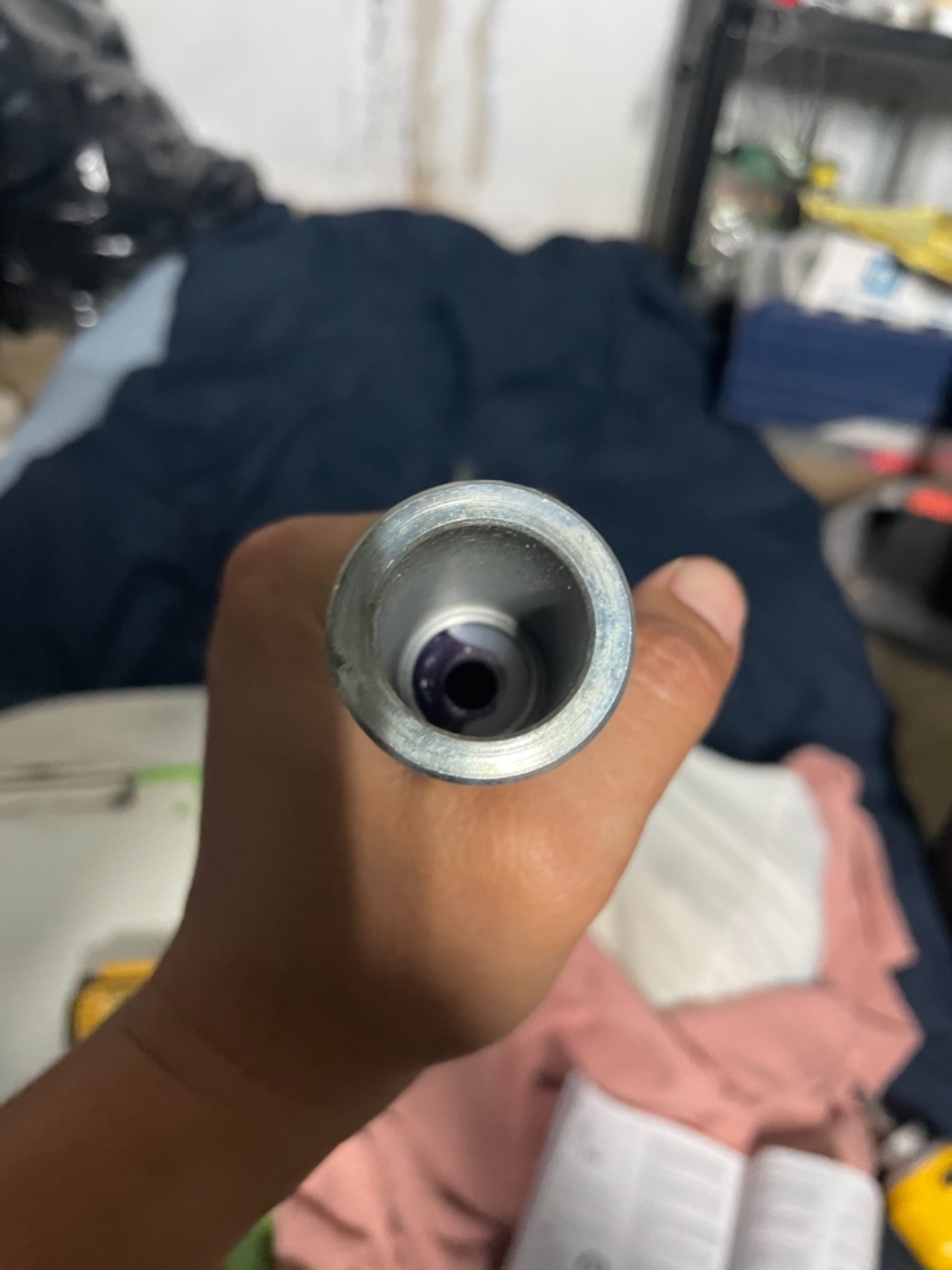
At 8 lb this is one of the two lightest tools in the roundup, and the reviews describe it as unchanged after three to four years of daily professional use. Concrete wipes off the shaft at the end of the day, the variable speed trigger lets you feather the head, and there is a small LED work light for pours that start before sunrise or run past dusk.
The limitations are real and worth stating plainly. Four feet of shaft is short. If you are pouring an 8 ft stem wall, you will be climbing or crouching to get to the bottom. And the vibration is on the modest side, so it is a small-to-medium pour tool rather than a foundation wall tool.
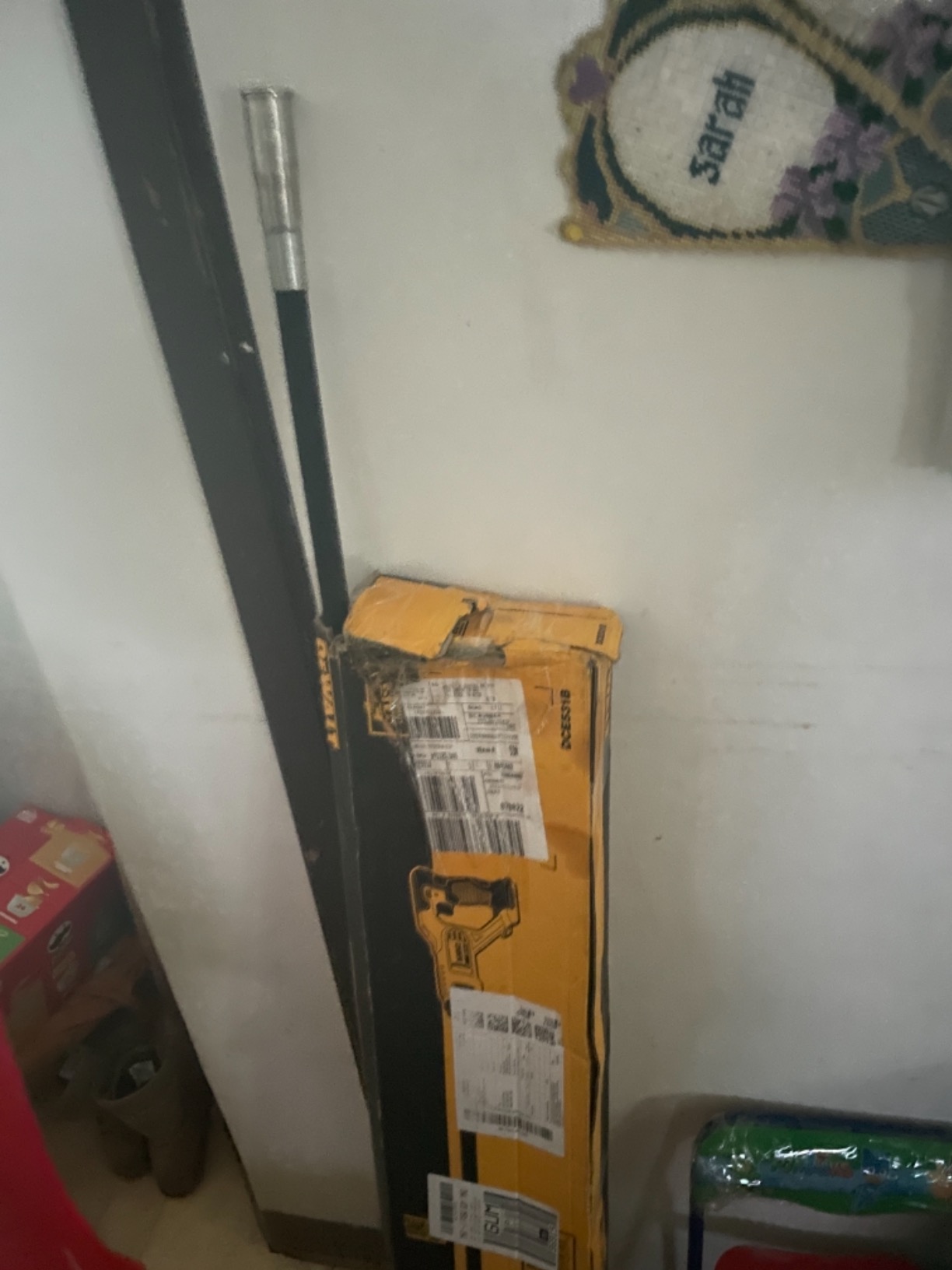
Battery platform math
This is a tool-only purchase. If you have no 20V MAX packs already, add a battery and a charger before you compare the total. Once you own the platform, the vibrator itself is a cheap addition to a kit you have already invested in, and that is the whole argument for it. It also means no extension cord to trip over in the dark.
Where it falls short
Owners without 20V MAX batteries feel the cost of entry immediately. And for a single large pour, the corded units in this list will consolidate more concrete per minute because they are not constrained by a pack. Cordless wins on access and safety, not on raw throughput.
3. ANBULL 1800W Concrete Vibrating Tool – the value pick

ANBULL Concrete Vibrating tool,1800W 6.6FT Handheld Concrete Vibrator
1800W motor
15800 VPM
6.6 ft shaft
reverse-thread connection
16.6 lb
Pros
- 15800 VPM is among the highest figures available
- 1800W outconsolidates typical 1500W units
- Reverse-thread shaft resists loosening
- 4.4 average across 242 ratings
Cons
- Needs a tap on the head to start vibrating
- Heavier at 16.6 lb than most compact models
The ANBULL is the specification outlier in the budget half of this list. Where most entry-level handheld vibrators sit at 1500W and 13,000 to 15,000 VPM, this one runs 1800W and 15,800 VPM, and it holds a 4.4 average across 242 ratings. That is a stronger review profile than several of the other budget-tier units in the group.
The detail we like most is the reverse-thread shaft connection. A conventional right-hand thread works loose under sustained vibration, which is a genuine failure mode on budget vibrators. Turning the thread direction deliberately resists that, and it is the kind of unglamorous engineering decision that tells you something about how the machine was engineered.
It arrives as an AC/DC unit rated for 110V with a 6.6 ft flexible shaft. Owners report using it on fence posts, footings, form walls, patios and small slabs, and the general verdict is that it consolidates harder than the typical 1500W set while the motor stays back at the form edge where it is comfortable to run.
Why the reverse thread matters in the field
When a right-hand threaded shaft loosens mid-pour, the head stops transmitting full frequency and the concrete goes under-consolidated in a way you cannot see until you strip a form. The reverse thread is not a spec-sheet curiosity. It removes a failure mode that only shows up on a bad day, which is exactly when you can least afford it.
Where it falls short
Two caveats. The head still needs a tap to establish synchronous frequency, same as most of its class. And at 16.6 lb it is heavier than the 4 to 5 ft models, so the 6.6 ft shaft gives you reach at the cost of handling it on a long pour. For an operator under 5 foot 10, the shorter VCT covered below is easier to manage all day.
4. ROLAYSEE 1500W Electric Concrete Vibrator – the best rated
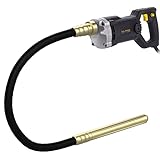
Handheld Concrete Vibrating Tool, 1500W Electric Concrete Vibrator
1500W 12.5A motor
14400 VPM
IPX4 splash proof
6.6 ft shaft
16.8 lb
Pros
- Highest average rating in the roundup at 4.5 stars
- IPX4 switch cover suits wet outdoor pours
- Reinforced cast aluminum head shell
- Lock-on button for continuous running
Cons
- Head must be tapped to start vibrating
- Do not run the head in open air or it overheats
- 6.6 ft shaft feels long inside confined formwork
At 4.5 stars across 236 ratings, the ROLAYSEE has the best average rating of any product we evaluated. That is worth taking seriously in a category where listings often split between five-star raves and one-star returns. The consistency of the reviews is the interesting part.
Under the hood it is a 1500W, 12.5A copper motor running at 14,400 VPM through a 6.6 ft flexible shaft, with a 1-3/8 inch shaft in a reinforced cast aluminum shell. The motor is double-insulated, and the switch carries an IPX4 splash-water resistance rating. In plain terms, that rating means you can use it in a wet outdoor pour without panicking.
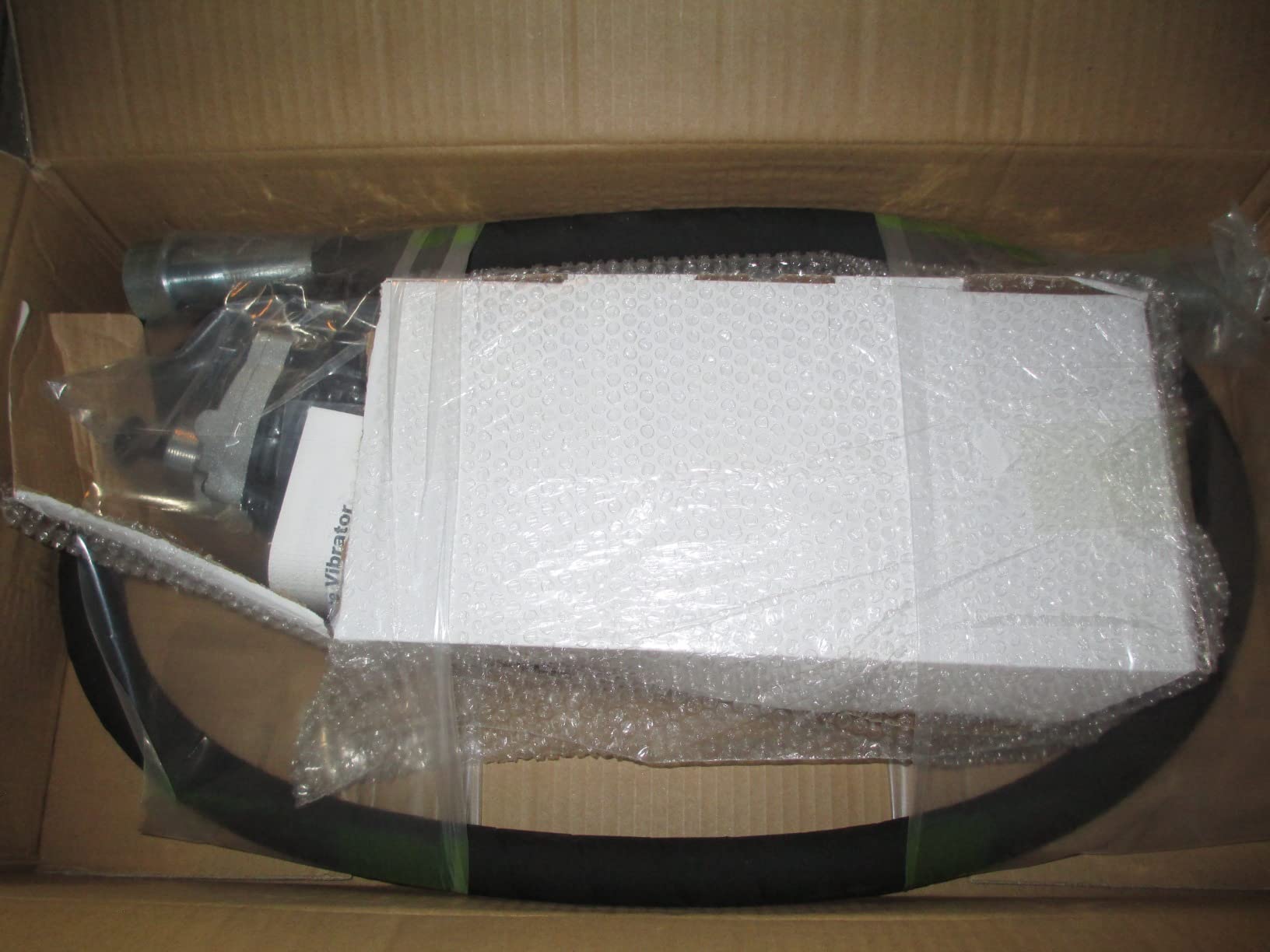
Owners describe the vibration as noticeably smoother and more even than cheaper sets, and several mention the aluminum head shell surviving job after job. The lock-on button means you can run it continuously without trigger fatigue through a long consolidation pass.
There is one operating rule that catches people out and it is worth repeating: do not run the head in open air. With no concrete around it, the shaft and head have nothing to dissipate heat into and the unit can cook itself. Keep it immersed in the pour while it runs, and lift it only when you are moving to the next point.
Wet-weather and confined-work readiness
Between the IPX4 rating and the double insulation, this is the model we would reach for if the pour is a driveway in a rainstorm or a footing in a wet trench. It is also the one we would hesitate to take into a narrow stairwell form, because a 6.6 ft shaft in a confined space takes constant correction to control.
Where it falls short
The tap-to-start ritual catches new users out every time. The weight at 16.8 lb is at the upper end of the compact class. And the head diameter is a standard 1-3/8 inch, so on a rebar-dense pour you may need the slimmer DEWALT or Makita instead.
5. BIZOEPRO 1500W 2HP 15000 VPM Vibrator – the high-frequency entry

Bizoepro Hand Held Power Concrete Vibrators 15000 RPM Electric Concrete Vibrator 1500W 2HP 6.6 ft Handheld Construction Portable Pencil Concrete Vibrabrater
1500W 2HP motor
15000 VPM
6.6 ft shaft
double insulated
15.8 lb
Pros
- 15000 VPM at the entry point of the range
- Lock-on button for extended use
- One owner finished 145 bags of 4000 psi mix
- Metal head assembly and double-insulated body
Cons
- Widest spread of owner outcomes in the group
- 16 percent of reviews are 1-star
- Poorly translated instructions
This one needs a candid framing. The BIZOEPRO 1500W hits 15,000 VPM, which is genuinely high for the money, and the double-insulated body and high-strength gear and metal head assembly are sensible design choices. But the 4.0 average across 98 ratings is dragged down by a real cluster of early failures, and 16 percent of its reviews are one star.
So this is not our recommendation for a first pour. It is a reasonable choice when you know the result you want and you are comfortable with a wider reliability spread. One owner pushed it through 145 bags of 80 lb 4,000 psi mix and reported professional-looking finished faces, which tells you the ceiling is high when the unit works.
Manufacturer customer service did resolve a nut-fitting problem for one verified buyer quickly, so the failure mode is not a dead end. But with only 98 ratings, you are working with a much thinner evidence base than the picks above.
Reading the review spread honestly
Products with 100 or fewer ratings are a different risk category than products with 400. The sample is small enough that a run of bad manufacturing lots barely moves the average, and one early failure can swing a 98-review listing noticeably. We include it because the frequency figure is real and the price point is where it is, but you should expect variance.
Where it falls short
The documentation is the weak point. Owners repeatedly report that the start-up technique is not obvious from the instructions, and that vibration often will not engage until the head is bumped against the form bottom. If you have never used a concrete vibrator, learning on this one is a poor use of a Saturday.
6. XtremepowerUS 2200W 2HP Concrete Vibrator – the wattage pick

XtremepowerUS 2200W Portable Hand Held Concrete Vibrator Electric 5″ ft Long Shaft Construction Mixer Cement Portable Pencil Cement Vibrarator for Remove Air Bubble and Mix Concrete
2200W 2HP motor
5000 VPM
5 ft steel woven shaft
1-3/8 inch head
14.1 lb
Pros
- Largest wattage figure in the roundup
- Full copper motor and cast aluminum shell
- Handles footings post holes and basement walls
- One owner ran 2500+ ft of 6-inch curb
Cons
- 5000 VPM is well below the leading units
- Trigger sticking reported by several owners
- Left-hand coupling thread is easy to cross-thread
Here is the clearest illustration in this roundup of why wattage and frequency are different numbers. The XtremepowerUS carries the biggest power figure we found, a full 2200W copper motor, and it delivers only 5,000 VPM. That is roughly a third of the frequency of the leaders, and consolidation takes meaningfully longer as a result.
That is not a disqualification. High-wattage, lower-frequency vibrators tend to push deeper with more force, and owners report good results on small pours, footings, post holes and basement foundation walls. One owner used it on more than 2,500 ft of 6-inch curb. The 5 ft steel woven shaft at 1-3/8 inch diameter is a sensible mid-size combination, and the dust-proof switch carries a lock-on button.
The other operational note is that the coupling thread is left-hand, which means it unscrews counter-clockwise. Almost every other fastener in your toolbox turns the other way, and cross-threading it is the most common complaint in the reviews alongside the sticking trigger.
When deep and slow beats fast and shallow
If you are consolidating a thick footing or a heavy wall section rather than topping off a thin slab, a lower frequency with more torque will work the mix further per pass. The cost is time. On a wide slab where you are chasing coverage, one of the 13,000 to 15,000 VPM units will simply finish first.
Where it falls short
Several owners report the trigger sticking, and vibration often does not engage on a simple trigger pull, so the wand usually needs a shake. One unit failed about 20 minutes past the return window. At 14.1 lb it is also bulky next to the compact models. Treat it as a short-term budget tool rather than a fleet workhorse.
7. Makita XRV01Z 18V LXT Concrete Vibrator – the lightest cordless

Makita XRV01Z 18-Volt LXT Lithium-Ion 4-Feet Concrete Vibrator (Tool Only, No Battery)
13000 VPM
up to 25 min run time
7.7 lb body
4 ft shaft
tool only
Pros
- Lightest unit in the roundup at 7.7 lb
- 25 minutes of run time under load covers most small pours
- Dual directional switch for horizontal or vertical holds
- Sits on the 18V LXT battery platform
Cons
- Tool only so battery and charger are extra
- 4 ft shaft limits reach in deep or tall forms
- Only 48 ratings so durability is thinly documented
The Makita is the one to pick if your shoulders matter more than your throughput. At 7.7 lb it is the lightest body in this roundup, and every extra pound of tool is a pound you are holding over a wet footing for an hour. The Makita-built motor puts out 13,000 VPM and the listing claims up to 25 minutes of run time under load, which covers most small and medium pours on a single pack.
The dual directional switch is a nice touch that most people never discover. It lets you hold the tool horizontally to work a slab or vertically to work down a narrow footing, and the protective cover helps keep grit off the battery contacts when you set the tool down in wet concrete.
This is another tool-only purchase. If you already run 18V LXT, the economics are excellent. If you do not, you are buying into a battery platform to use a vibrator, and that changes the calculation considerably.
Handling as the deciding factor
On a pour with a lot of rebar, a long shaft and no clear path, the lightest tool you own is often the one that gets used properly. Fatigue leads to skipped sections, and skipped sections lead to voids. The 7.7 lb figure here is a real ergonomic advantage rather than a spec-sheet nicety.
Where it falls short
Only 48 ratings, the second thinnest evidence base in the group, so long-term durability is not well documented by owners. The 4 ft shaft limits reach in deep or tall forms, and once you add a battery and charger the total is the highest of any tool covered here. For platform owners it is a clear yes; for everyone else, weigh the entry cost carefully.
8. LMYYGOO 2HP 1500W 18K RPM 14.75 ft Shaft Vibrator – the long-reach pick

LMYYGOO Electric Concrete Vibrator, 2HP 1500W 18K RPM, 14-3/4ft Shaft
1500W 2HP motor
18000 RPM
14.75 ft shaft
4 external carbon brushes
40.8 lb
Pros
- Longest shaft in the roundup at 14.75 ft
- 18000 RPM is the highest frequency available
- External carbon brushes can be changed in the field
- Metal roll cage and temperature protection
Cons
- Very heavy at 40.8 lb for one operator
- Only a 1 year manufacturer warranty
- 30 ratings is a thin sample
When the pour is a footing trench, a tall stem wall or a deep column, shaft length is the only spec that solves the problem. Nobody can descend into a trench with a 6.6 ft whip. This LMYYGOO has a 14.75 ft shaft, which lets you work from standing height, and it also runs at 18,000 RPM, the highest frequency in the group.
The build is commercial rather than domestic. A metal roll cage stabilises the motor, a temperature protection button guards against overheating, and there is a waterproof and dustproof insulated switch cover. Most importantly for long-term ownership, the four carbon brushes are in an external holder, so you can change them without opening the motor housing. That is the consumable that kills most budget vibrators over time.
It is aimed squarely at infrastructure work. The listing positions it for road, bridge, port and building construction, and at 40.8 lb it is built like something that lives in a truck bed rather than something one person carries up a ladder.
Buying for brush life rather than sticker specs
On a vibrator, the motor is rarely the first thing to fail. Carbon brushes wear out first, and if replacing them means pulling the housing apart at a job site, you will eventually skip it and then you will lose the motor. An external brush holder turns a scheduled ten-minute job into a non-event. This is the single most important ownership detail in the whole roundup.
Where it falls short
At 40.8 lb it is genuinely a two-person or cart job for anything above waist height. The warranty is a year, against DEWALT’s three. And 30 ratings is a thin base, with a share of 1-star reviews that hints at early-failure risk. If you are a residential DIYer, this is almost certainly more machine than your pour needs.
9. BIZOEPRO 1600W 2HP 15000 RPM Vibrator – the two-handled pick

Bizoepro HandHeld Concrete Vibrating Tool, 1600W 15000RPM Electric Concrete Vibrator 6.6ft Shaft Rod 2HP Portable Pencil Cement Remove Air Bubble and Mix Concrete
1600W 2HP motor
15000 RPM
6.6 ft shaft
auxiliary handle
15.5 lb
Pros
- External carbon brush holder for quick changes
- Reinforced auxiliary handle gives a two-handed grip
- 1600W and 15000 RPM is a strong paper spec
- A pool trowel is included in the box
Cons
- Several owners report switch failure after a few jobs
- Two reviews report failure on first use
- Reverse-threaded attachment is easy to cross-thread
The reason this one is on the list is the auxiliary handle. A 6.6 ft shaft transmits a lot of feedback back through the shaft, and a second grip point near the motor is the difference between controlled placement and fighting the tool. For long consolidation passes on a slab, that single feature can matter more than another 1,000 VPM.
On paper the specification is genuinely good for the money: a 1600W 2HP motor at 15,000 RPM, a 6.6 ft shaft, an external carbon brush holder for quick replacement, and double-insulated construction with a high-strength gear and metal head assembly. A pool trowel is included, which is a small but pleasant surprise.
Where the reviews get uncomfortable is durability. Several owners report the switch failing after only a handful of jobs, and two report the unit failing on the very first use. With just 18 ratings, this is the thinnest evidence base in the group and the failure reports are too clustered to dismiss.
Judge it on the handle, not the ratings
There is a legitimate case for this tool: the two-handed grip is the best control arrangement among the 6.6 ft shaft models we covered, and the external brush holder is the right design. There is also a legitimate reason to look at the ROLAYSEE instead, which has a comparable frequency with a much larger body of evidence behind it.
Where it falls short
Reliability is the issue. The switch failures and first-use failures are the specific complaints, and the reverse-threaded attachment is easy to cross-thread on assembly. If you buy it, buy it for a project, not for a decade of work.
10. VCT 1 HP 800W Concrete Vibrator – the small-form pick

VCT 1 HP Electric Concrete Vibrator Handheld Construction Tool 4.5 Foot 800 Watt
800W 1HP motor
4200 VPM
4.5 ft shaft
1-3/8 inch head
12.3 lb
Pros
- Shortest and most controllable shaft in the roundup
- Second-lightest corded unit at 12.3 lb
- One owner consolidated a 6-yard pour
- Compact package for tight formwork
Cons
- 800W and 4200 VPM are the lowest output figures here
- Slowest consolidation of the group
- Only 16 ratings to judge it on
The VCT exists to solve a specific problem: a vibrator that is easy to handle on a small pour. At 12.3 lb with a 4.5 ft steel woven shaft, it is the second-lightest corded unit here, and the short whip is far easier to steer on stairs, in post holes and in narrow formwork than the 6.6 ft models. One owner consolidated a 6-yard pour with it and reported well-striped form faces.
The head is a standard 1-3/8 inch and the connection uses a metal screw thread for a more secure fit. The industrial shell is designed to keep cement from penetrating the body, which matters on a tool that will be dropped in wet concrete repeatedly.
Now the honest part. An 800W motor at 4,200 VPM is the lowest output pair in the roundup, and low frequency means slow consolidation. That is perfectly acceptable on a small ranch-style pour and genuinely frustrating on anything large. Treat this as a tool for the pour you will actually do, not a foundation of capability.
Small pours and awkward access
Most of the concrete most people pour is not a commercial slab. It is a set of steps, a shed floor, a run of footings, a pier. On work like that, throughput is irrelevant and controllability is everything, which is exactly what this shaft length and weight deliver. The r/Concrete crowd asking for smaller equipment is really asking this question.
Where it falls short
Sixteen ratings is the thinnest evidence base of the ten, and one review reports the stinger assembly coming apart within five minutes of use. The reverse-threaded attachment nut is a recurring confusion point. If you need to consolidate more than a few yards at a time, move up to the ANBULL or the Seeutek instead.
How to Choose a Concrete Vibrator
Get these four decisions right and the model choice takes care of itself. Start with the pour, not the spec sheet.
Head diameter versus pour depth. This is the sizing rule that matters most and the one most people get wrong. The working rule is that the head diameter should be roughly a quarter to a half of the section depth you are consolidating. In a 12 in thick footing, that points at a 1-3/4 to 2 inch head. In a 4 in slab topping, a 1-1/8 inch head is right and anything larger is a liability. An oversized head cannot reach the concrete trapped in the bottom corners, and that trapped air is exactly the honeycomb you are trying to prevent.
The narrower the gap, the slimmer the head. A user on r/Concrete described wanting a 1 to 1.5 inch diameter head rather than the typical 2 to 3 inch type, and that is a real constraint on rebar-dense pours and inside formwork. The DEWALT at 1-1/8 inch and the Makita are the two models in this roundup built for that environment.
VPM, and why the number ranges so widely. VPM is vibrations per minute, the frequency at which the unbalanced head spins. The useful band for general concrete work runs from about 12,000 to 18,000 VPM. Below that you are waiting. Above it, you are mostly buying tolerance for high-strength mixes. Higher frequency suits low-slump and high-strength concrete, because that material resists flow and needs more energy to move.
Amplitude is the companion number and it is the one that gets less attention. Amplitude is how far the head swings, and it is what actually pushes the concrete. Two vibrators at 14,000 VPM can consolidate very differently if their eccentric masses differ. As a working rule, more amplitude reaches deeper; more frequency produces smoother flow and a better surface finish.
Shaft length. Match the shaft to the widest part of the pour plus a couple of feet of working room, and never less. A shaft too short forces you to step into the form or into the rebar cage to reach the middle, and doing that while a pour is setting is how cold joints and voids happen. Six and a half feet handles most residential work. Anything deeper or taller needs a longer whip or a different approach entirely.
Power source. Corded electric gives you unlimited runtime and the highest output per dollar, and it needs a clean outlet within reach of the pour. Cordless gives you access to places a cord cannot go, no exhaust, and less trip hazard, with a runtime ceiling and a battery platform decision attached. Gas engines are the traditional choice for remote sites and large infrastructure pours, and they are the hardest of the three to justify for residential work.
If you are weighing corded against cordless more broadly, our cordless drill comparison covers the platform logic that applies to any battery-powered tool on a concrete site.
Mix design is the variable people forget. High-slump, wet mixes need very little vibration and punish you for over-doing it. Low-slump, high-strength, and mixes with large aggregate need more. If your pour is on the wet side, a mid-frequency unit and a light touch will outperform a high-frequency machine used enthusiastically.
How to Vibrate Concrete Without Ruining the Pour
Owning a good vibrator and using it well are separate skills. The technique matters as much as the tool, and it is where most failed pours actually go wrong.
Work down fast and come up slow. Insert the head into the top of the pour and drive it down to the bottom of the section in a couple of seconds. Then let it rise slowly while it still runs. That withdrawal is what lifts air upward and out; yanking the head up quickly just drags a void along behind it.
Stay within about 18 inches of the surface as you withdraw. The top of the lift is where over-vibration does its damage, and the last 6 inches are where you stop.
Overlap your insertion points. If your radius of action is about 18 inches, work insertion points roughly 18 inches apart so the areas of influence overlap. If they do not overlap, you are left with vertical seams between consolidated zones and the pour has cold joints in it before it is even cured.
How long is long enough? Typically 5 to 10 seconds per insertion point. There is no fixed number because concrete is not a fixed number, but the visual signal is reliable: when the stream of air bubbles rising around the head slows, stops, and the surface of the pour stops shimmering, you are done at that point. Low-slump and high-strength mixes need longer. High-slump mixes need much less.
And yes, too much vibration causes damage. Over-vibration separates the mix. Mortar and sand migrate upward and paste washes toward the surface, coarse aggregate settles downward, and the result is weaker than under-vibration would have been. It also makes the surface harder to finish and can bleed water out of the top of the lift. Signs you have gone too far include visible paste or grout collecting on the surface, a rising water sheen, and aggregate visibly moving in the form. When you see those, move on.
Two more mistakes worth naming. Do not let the head touch the formwork or the rebar cage, because hard contact will drive air directly into the concrete and can damage ties. And do not try to use a surface vibrator as a substitute for an internal one on a deep pour, because the energy simply will not reach the bottom.
Safety, Maintenance and Rent vs Buy
Electric vibrators and water. A vibrator in wet concrete is one of the most dangerous hand-tool combinations on a job site. Run corded units through a GFCI-protected outlet, keep the plug and connections well clear of standing water, and never handle a corded unit with wet hands or while standing in water. The double-insulated bodies on several models in this roundup reduce risk but do not remove it. Cordless is the safer option for a wet pour because there is no cord to fault.
Wear eye protection and gloves, and keep the head submerged in the concrete while it runs. Running a shaft in open air will overheat it. When you are done, wipe concrete off the shaft and body before it cures. For gas-powered equipment, refuel well away from hot concrete and never while the engine is running.
Cleaning concrete off cured tools is the single most common way people damage a good vibrator. A flexible shaft that has had concrete set inside it is effectively scrap, because the imbalance destroys the head and bearings. Rinse or wipe it every time.
Maintenance and the parts that wear out. Carbon brushes are the consumable that ends most vibrator motors, and the replacement interval varies wildly with use. A user in the Facebook Concrete Everything group described brushes on their machine going out every 4 to 6 months, which is a realistic figure for a tool running on concrete slurry every week. That is the reason we rated the external brush holder on the LMYYGOO so heavily: brushes you can reach without opening the motor get changed on schedule, and brushes you cannot reach get ignored until the motor dies with them.
Beyond brushes, inspect the flexible shaft regularly for kinks, fraying at the coupling, and concrete build-up inside the sheath. Check the head for wear and chipping. Keep the cooling fins and the motor housing clear of dried concrete, because that is what causes the overheating failures described above. Our pressure washer guide for concrete covers the right way to get hardened mortar off finished surfaces and tools afterwards.
Rent versus buy. The break-even is simpler than most people make it. If you pour once a year, rent: a day rental gets the job done and you never own a machine that ages in a shed. The maths flip when you add up the rental cost per yard across multiple pours, plus the delivery and pickup, plus the fact that rental queues run long on a busy Saturday. If you expect more than two or three pours a year, owning one of the mid-tier corded units above usually costs less over three years than repeated rentals, and it is on your trailer when the truck arrives rather than booked and hopefully showing up.
The middle case is worth naming: a crew that pours continuously can justify a gas backpack vibrator or a long-shaft commercial unit, because those cut labour hours. Nobody justifies them for a single footing.
Frequently Asked Questions
What are the common problems with concrete vibrators?
The most common problems are operational, not mechanical. Vibration will not start until you tap the head to establish synchronous frequency, which surprises almost every new user. Running the head in open air instead of immersed in concrete overheats the unit. Assembly threads on budget models are often reverse-threaded and get cross-threaded. And carbon brushes wear out on a 4 to 6 month cycle for regular users, which is why an external brush holder matters. The result of poor technique is honeycombing, cold joints and voids, not a broken tool.
What is the best way to vibrate concrete?
Insert the head quickly and work it down to the bottom of the lift, then raise it slowly while it still runs. Overlap insertion points by about half the radius of action so the consolidated zones merge instead of leaving cold joints. Keep the head submerged while running, and stay within roughly 18 inches of the surface on the way out. Touching rebar or formwork with the head forces air into the concrete.
How many seconds does it take to vibrate concrete?
Typically 5 to 10 seconds per insertion point, but the time is set by the concrete rather than a fixed number. Watch the bubbles: when the air stream around the head slows and stops, and the surface stops shimmering, that point is consolidated. Low-slump and high-strength mixes need longer, and high-slump mixes need much less.
Can too much vibration cause damage?
Yes. Over-vibration causes segregation: mortar and sand migrate upward while coarse aggregate settles, so the pour ends up weaker than under-vibrating would have left it. Paste and grout can bleed to the surface, and the top becomes harder to finish. Warning signs include a milky paste collecting on the surface, a rising water sheen, and aggregate visibly moving in the form.
Do I really need a concrete vibrator?
If the pour is larger than a wheelbarrow or it contains rebar, then yes, it is effectively mandatory. Concrete that is not consolidated is weaker, honeycombs, and may fail to bond properly to its reinforcement. For a small post hole or a short footing run you can often consolidate with a stick and a mallet, but anywhere a defect would be expensive to fix, the vibrator is the cheapest insurance on the job.
The Best Concrete Vibrators in 2026: Final Verdict
Ten models, ten different compromises, and the best concrete vibrators in 2026 come down to what your pour looks like. The Seeutek 1500W is the pick when you want one tool that covers footings, post holes and small slabs, because 476 ratings is the strongest evidence base any of these can offer. The DEWALT DCE531B wins if you want no cord and you already run 20V MAX. The ROLAYSEE wins on rating consistency and wet-weather tolerance, and the LMYYGOO is the only one of the ten that can reach the bottom of a deep trench from where you are standing.
Match the head diameter to the section you are pouring, keep the head in the concrete, and use five to ten seconds per point. Get those three things right and almost any of these will do the job properly. Check the listing for current specifications before you order, since they change as models are refreshed.