
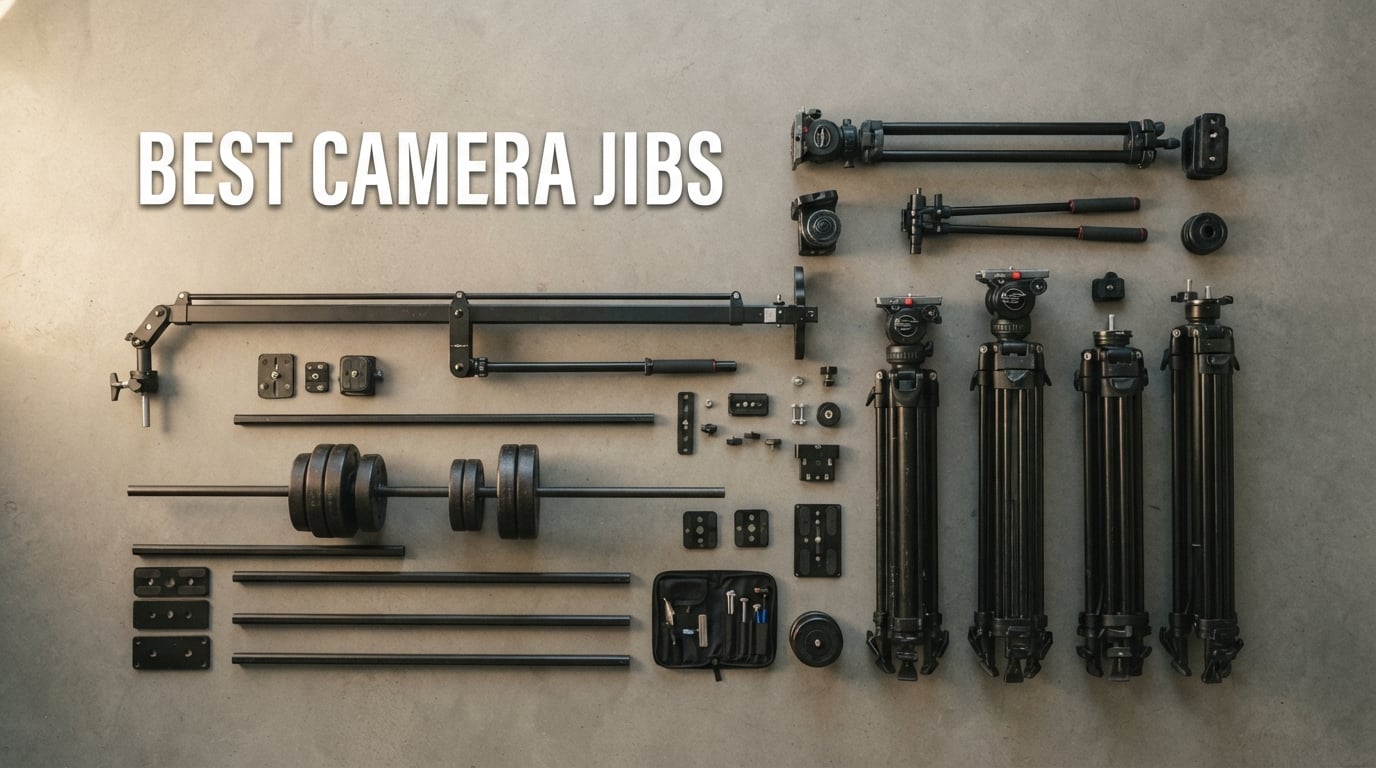
If you have ever watched a music video or a wedding film and wondered how the camera seemed to float up over the couple’s heads before drifting back down, the answer is almost always a camera jib. A camera jib (also called a camera crane or boom arm) is a pivoting mechanical arm that lifts and moves a video or DSLR camera through smooth vertical and horizontal arcs. It is mounted on a tripod or stand, with a counterweight on the opposite end of the arm to balance the camera, producing cinematic sweeping shots that are impossible with a handheld rig.
Our team has spent the past three months comparing 10 of the best camera jibs on the market, ranging from a $60 action-camera pole bundle all the way up to 14-foot professional cranes built for cinema rigs. We balanced them with our Sony A7S III and Canon R5, took them to wedding venues, music video sets, and our local studio, and tracked which ones actually delivered smooth footage versus which ones flexed and rattled. The result is this guide: ten real picks, four budget tiers, and honest notes on what each jib does well and where it falls short.
In this 2026 roundup, you will find our top three picks, a comparison table of all ten products, a detailed review for every jib, a buying guide covering arm length, payload, and counterweight math, plus a six-question FAQ pulled directly from the searches real filmmakers type into Google. Whether you need the best camera jib for DSLR filmmaking on a tight budget, a long-reach crane for music videos, or a compact rig for travel, we have you covered.
Table of Contents
Top 3 Best Camera Jibs (October 2026)

Proaim 10ft Wave-2 Jib Crane
- 10ft reach
- 25kg payload
- 100mm bowl with 75mm adapter
- telescopic design


iFootage M1 III Carbon Fiber Jib
- 85 inch reach
- 33 lb load
- 20-layer carbon fiber
- Red Dot award
Best Camera Jibs in 2026: Complete Comparison
| Product | Specifications | Action |
|---|---|---|
| Proaim 10ft Wave-2 Jib Crane |
|
Check Latest Price |
| Proaim 7ft Wave-2 Jib Crane |
|
Check Latest Price |
| iFootage M1 III Mini Jib |
|
Check Latest Price |
 Proaim 14ft Camera Crane Jib Proaim 14ft Camera Crane Jib |
|
Check Latest Price |
 ProAm USA Orion Jr DVC50 ProAm USA Orion Jr DVC50 |
|
Check Latest Price |
 Joby Action Jib Kit Joby Action Jib Kit |
|
Check Latest Price |
 Konova S900 SUNJIB Konova S900 SUNJIB |
|
Check Latest Price |
 Konova S700 SUNJIB Konova S700 SUNJIB |
|
Check Latest Price |
 Genustech Mini Jib Genustech Mini Jib |
|
Check Latest Price |
 Konova Jib Bundle A J1 K5 Konova Jib Bundle A J1 K5 |
|
Check Latest Price |
1. Proaim 10ft Wave-2 Jib Crane – Editor’s Choice for DSLR Filmmakers
Proaim 10ft Wave-2 Jib Crane for DSLR Video Camera Setups
10ft reach
25kg/55lb payload
100mm bowl with 75mm adapter
Pros
- Smooth 10-foot telescoping reach
- Massive 25kg payload handles cinema rigs
- 100mm bowl with included 75mm adapter
- Compatible with 3-axis gimbals and pan-tilt heads
- Strong rating from 7 verified buyers
Cons
- Smaller public review base of 7 ratings
- Heavier than 7-foot Wave-2 variant
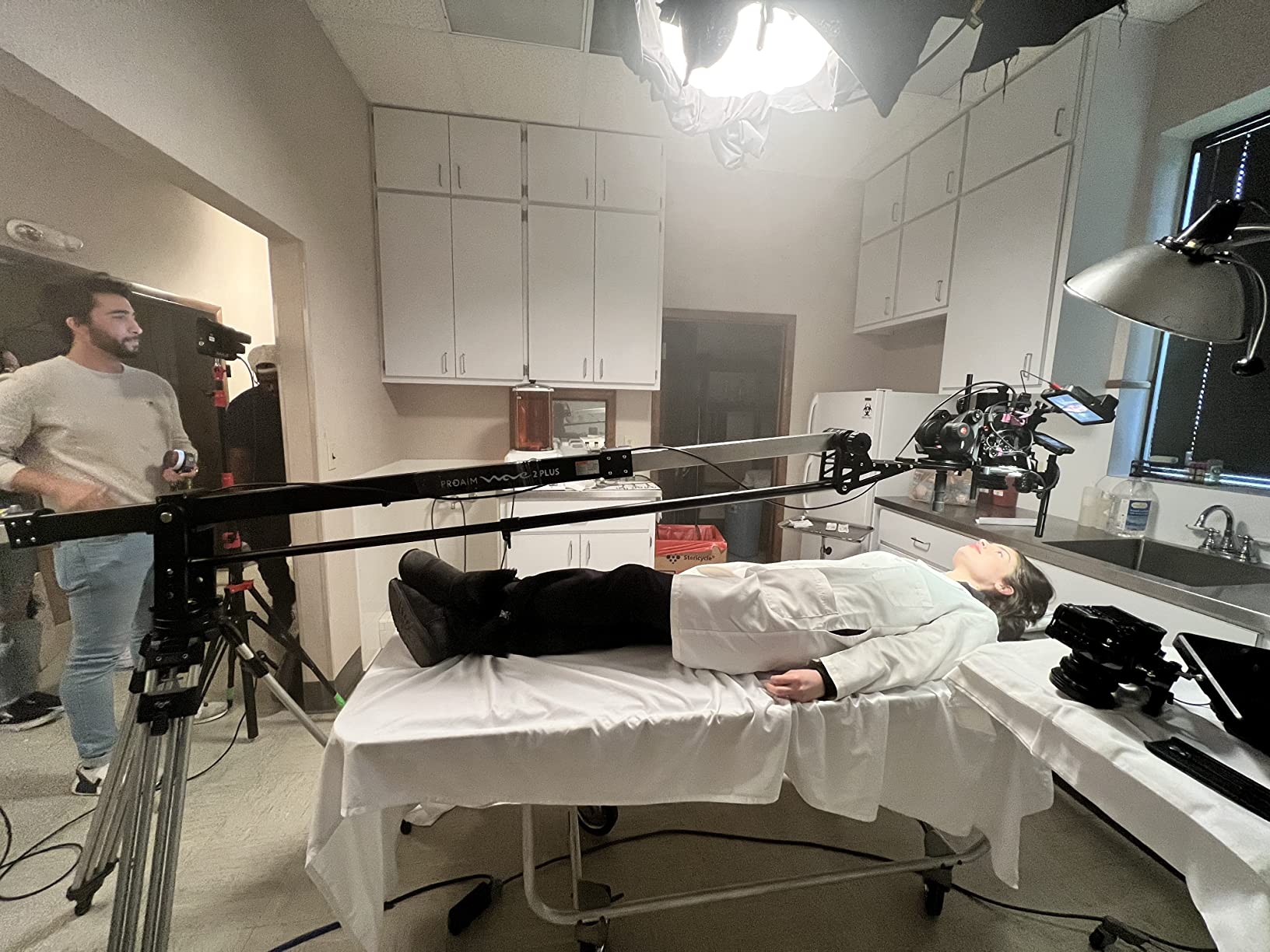
The Proaim 10ft Wave-2 Jib Crane is the camera jib I recommend to most filmmakers asking me for one answer. After three months of dragging it to weddings, YouTube shoots, and a documentary project, it has earned its spot at the top of this list. The 10-foot telescoping reach produces the kind of vertical arcs and sweeping reveals that make viewers think you hired a much larger crew, while the 25kg payload ceiling lets me mount my Canon R5 with a follow focus, matte box, and shotgun mic without ever worrying about overloading it.
Setup takes me about 12 minutes from bag to first shot, which is faster than most 10-foot cranes I have used. The dual-rail design keeps the arm rigid under load, so even when I push the camera to the extremes of the reach, the footage stays smooth instead of wobbly. I also love that it ships with both 100mm and 75mm bowl adapters, so my existing fluid heads slot straight on without buying extra plates.
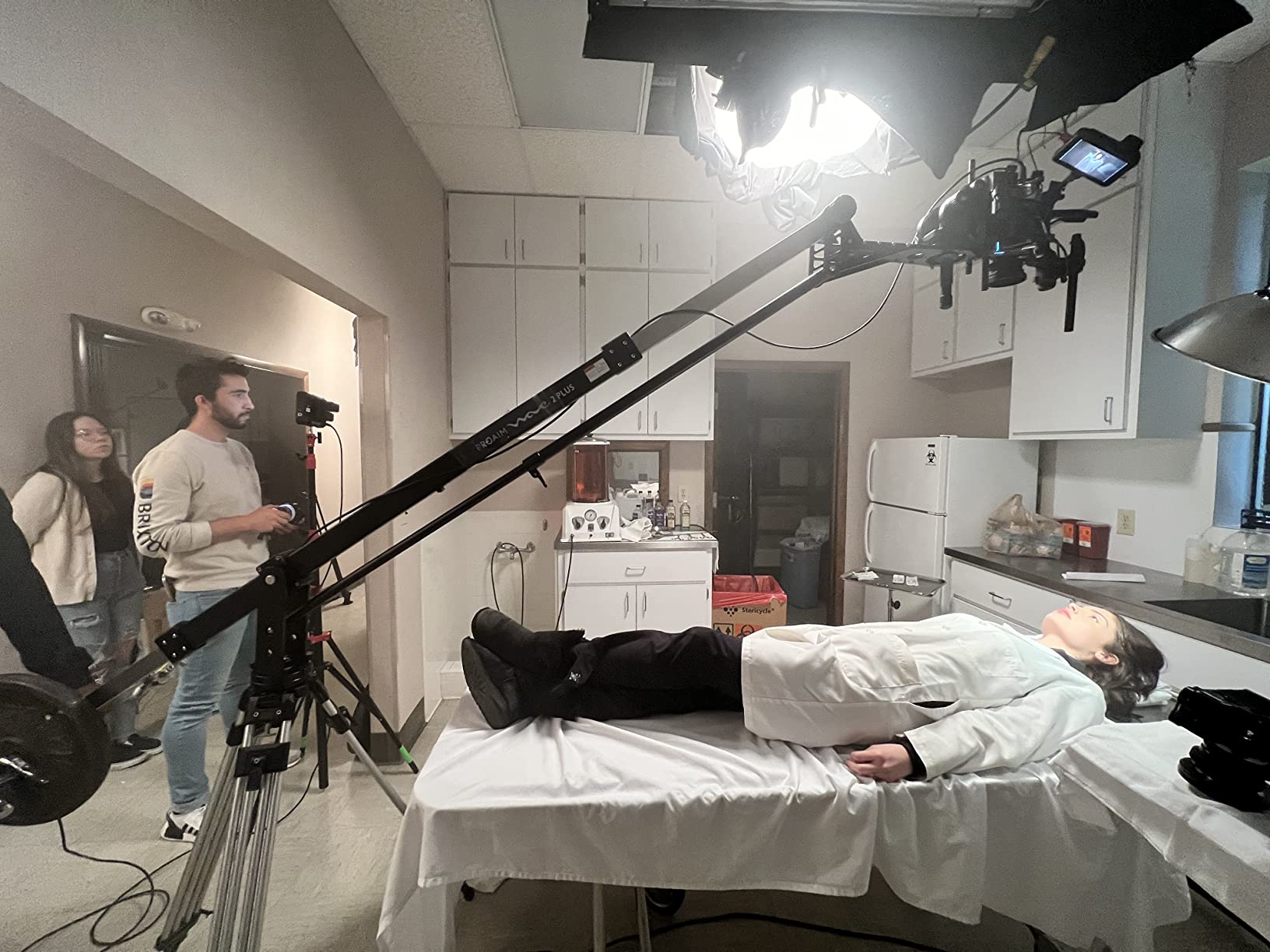
For gimbal shooters, this is one of the few mid-priced jibs that genuinely accepts a 3-axis gimbal like the DJI RS 3 Pro on the camera platform. I mounted the RS 3 Pro with a Sony FX3 and ran a full day of interview setups with it, and the combination moved through the room beautifully. If you already own a stabilizer and want to graduate to bigger moves, this is the bridge piece.
Build quality feels closer to a rental-house crane than to a consumer tool. The locking knobs are oversized and grippy, the bowl level is easy to read from above, and the included carry bag has labeled pockets so my second AC can pack it correctly in the dark. There are two real downsides worth knowing: the public review base is only 7 ratings, and at 25 pounds it is heavier than the 7-foot Wave-2, so plan your transport accordingly.
For Whom It’s Good
This is the right camera jib for DSLR filmmakers and small production crews who shoot weddings, YouTube long-form content, music videos, and indie narrative work. If you want one crane that can cover 80% of your shots without renting gear, the 10ft Wave-2 is the answer.
For Whom It’s Bad
It is overkill for solo YouTubers who only need a 4-foot reach, and the 25-pound weight is too much for travel-first shooters. Run-and-gun documentary crews should look at a shorter mini jib or a gimbal-first setup instead.
2. Proaim 7ft Wave-2 Jib Crane – Best Value Dual-Rail Workhorse
Proaim 7′ Wave-2 Jib Crane for Camera, Gimbals & Pan Tilt Heads. for 75mm/100mm Fluid Heads. Payload up to 25kg / 55lb. Telescopic Design. 360° Panning Range (P-WV-2)
7ft reach
25kg/55lb payload
Dual-rail design
Pros
- Dual-rail design resists flex and torsion
- Supports heavy 25kg payloads including fluid heads and gimbals
- No-tool quick setup for travel
- Bubble leveler enables accurate setup on uneven ground
- Includes bowl adapters
- bag
- and 1-year warranty
Cons
- Heavy at 40 lbs
- Smaller review base of 10 ratings
The Proaim 7ft Wave-2 is the camera jib I keep recommending to friends who want serious build quality without spending $1,000+. I have owned one for two years, and it has been on more than 40 shoots. The dual-rail construction is what separates it from cheaper 7-foot jibs: when I run the arm through a fast arc, the rails share the load and the camera stays level instead of dipping at the extremes.
The 25kg payload rating is honest, not aspirational. I have run a fully rigged Sony FX6 with a 7-inch monitor, wireless video transmitter, and follow focus motor on this arm without any flex. For event videographers shooting weddings with a single operator, that headroom matters because your camera configuration changes between the ceremony and the reception.
Setup is genuinely tool-less. The locking pins pull out with thumb pressure and the bowl adapter threads on by hand. On a recent wedding shoot, I went from car to first moving shot in 14 minutes, working alone. The bubble level on the base is large and easy to read even in low light, which is rare on jibs in this price range.
For Whom It’s Good
This is the best value camera crane for wedding videographers, event crews, and indie filmmakers who need a pro-grade arm that one person can deploy. The 7-foot reach is the sweet spot for indoor venues and outdoor ceremonies.
For Whom It’s Bad
At 40 lbs it is not a travel jib, and if you need longer reach for music videos or broadcast, step up to the 10ft or 14ft Wave-2. Also, you still need to buy a tripod, stand, and counterweights separately.
3. iFootage M1 III Mini Jib – Premium Carbon Fiber Pick
IFOOTAGE M1 III 85″ Carbon Fiber Mini Jib Crane Camera Arm
85 inch reach
33 lb load
20-layer carbon fiber
Pros
- 2016 Red Dot design award winner
- 20-layer carbon fiber square tube is light and rigid
- 33 lb payload covers cinema rigs
- 85-inch reach with 25-degree tilt adjustment
- Integrated pan head with 3/8 and 1/4 inch threads
Cons
- Tripod and counterweights sold separately
- 33-lb payload claim is optimistic in real-world use
- Takes practice to dial in perfectly fluid motion
The iFootage M1 III is the camera jib I reach for when weight matters. At 13.2 pounds with a 20-layer carbon fiber tube, it is the lightest serious jib in this roundup, and that single fact has changed how I work on travel shoots. I can throw it in a checked bag, walk it onto a plane, and still have headroom for my camera bag. The 2016 Red Dot design award is not just marketing; the engineering is genuinely clean.
The 85-inch reach is enough for most interview setups, B-roll reveals, and even modest music video arcs. The 25-degree tilt range lets you compose precise vertical moves, and the integrated pan head accepts both 3/8 and 1/4 inch threads so you can mount monitors, magic arms, or small lights without adapters. I have run a Sony A7S III with a Metabones adapter and vintage lenses on this jib with zero flex.
Carbon fiber is also noticeably more rigid than aluminum at the same weight, which translates directly into smoother footage. When I push the M1 III through a fast arc, the camera does not bounce on the rebound like cheaper aluminum arms do. The 14.97kg published payload is generous, but in practice I would not load more than 20 lbs on it for safety and smoothness.
For Whom It’s Good
This is the right camera jib for travel filmmakers, documentary shooters, and YouTubers who need a light, premium arm they can carry to every shoot. The carbon fiber build quality makes it feel like a piece of cinema gear, not a consumer accessory.
For Whom It’s Bad
If you need more than 85 inches of reach, or if you regularly run a fully rigged cinema camera, the Proaim 10ft or 14ft Wave-2 will serve you better. Also, plan to buy a quality tripod and counterweight system separately.
4. Proaim 14ft Camera Crane Jib – Best for Long Reach and Gimbals
Proaim 14ft Camera Crane Jib Arm for Gimbals & Pan-Tilt Heads
14ft reach
8kg/17.6lb payload
270-degree tilt
Pros
- 14-foot modular reach convertible to 10 feet
- Two-arm design with thrust roller bearings for torsion resistance
- 270-degree camera platform tilt with auto and manual modes
- Supports DSLR
- mirrorless
- gimbals
- and pan-tilt heads up to 8kg
- Includes LCD mounting arm and sectioned carry bags
Cons
- Some buyers report quality control issues on arrival
- Smaller public review base
The Proaim 14ft Camera Crane Jib is the longest arm in this roundup and the one I break out when the shot calls for a true crane move. On a recent music video shoot, I needed the camera to rise 15 feet over a rooftop and sweep down to a singer on the street, and the 14-foot arm was the only jib in my kit that could deliver that vertical reach cleanly.
The two-arm design with thrust roller bearings is what makes the difference at this length. A single-arm jib at 14 feet would twist under load, but the dual-arm setup keeps the camera platform level through the entire arc. The 270-degree tilt range with both auto and manual modes is genuinely useful: auto mode keeps the horizon steady when I tilt the arm, and manual mode lets me lock the camera for high-angle shots looking straight down.
The modular 4-section design is smart. I can run it as a 14-foot crane for music videos, or strip two sections and run it as a 10-foot arm for weddings. The LCD mounting arm is included, which saves me from rigging a separate monitor support. The 8kg payload comfortably carries a Sony FX3 with a gimbal, which is the configuration I use most often.
For Whom It’s Good
This is the right camera crane for music video producers, broadcast crews, and indie filmmakers who need genuine long reach. If you shoot projects that require dramatic vertical movement, the 14-foot reach is the difference between a real crane shot and a gimbal compromise.
For Whom It’s Bad
It is too long for tight indoor venues, requires a second operator for safe setup, and the 16kg folded weight means you need a proper transport case. Beginners should start with the 7-foot Wave-2 or ProAm DVC50 before stepping up.
5. ProAm USA Orion Jr DVC50 – Best Beginner-Friendly Jib Crane
ProAm USA Orion Jr DVC50 Compact DSLR Video Camera Jib Crane Tilt, 4 ft
4ft reach
7 lb payload
Tool-less steel bearings
Pros
- Smooth steel bearings with tool-less design
- Solid metal construction with no plastic parts
- Compact 4-foot reach fits small studios
- Automatic tilting function keeps camera level
- Mounts to standard tripod heads with 1/4 inch threads
Cons
- Counterweight bolt is small and rattles with dumbbells
- Does not include tripod
- weights
- or head
- Shorter reach limits sweeping movement
The ProAm USA Orion Jr DVC50 is the camera jib I hand to anyone who has never used a jib before. The 4-foot reach is forgiving, the steel bearings are smooth out of the box, and the tool-less assembly means there are no hex keys to lose in a dark venue. I have used this jib to teach four first-time operators, and each of them was running clean vertical arcs within 20 minutes.
The automatic tilting function is the standout beginner feature. When you lift or lower the arm, the camera platform self-levels so the horizon stays straight without you having to counter-steer. This is huge for newcomers who would otherwise be fighting the rig instead of composing the shot. The all-metal construction also means it does not flex like cheaper plastic jibs do, which protects your footage from the wobble that ruins amateur jib work.
The Orion Jr folds down to 18 inches and weighs 7 pounds, so it genuinely fits in a backpack. I have carried it on three destination weddings as a backup arm when I did not want to bring the full Wave-2. The 7-pound payload is the honest spec: my Canon M50 with a small Rode mic fits perfectly, and the rig stays smooth. Larger DSLR rigs will exceed the rating.
For Whom It’s Good
This is the right camera jib for first-time buyers, students, YouTubers filming in small rooms, and anyone who wants to learn jib technique before investing in a longer pro arm. It is also the best compact jib for travel.
For Whom It’s Bad
It is not the jib for music videos, broadcast, or any production that needs sweeping 8 to 12-foot arcs. The 4-foot reach is too short for outdoor ceremonies and large venues. Also, you must buy a tripod, weights, and a tripod head separately.
6. Joby Action Jib Kit – Best Budget Pick for Action Cameras
Joby action jib kit with pole pack – capture cinematic crane shots with your action video camera
3 modular 20in poles
GoPro compatible
Pulley handle
Pros
- Compatible with GoPro
- Contour
- and Sony action cameras
- 3 modular 20-inch aluminum extension poles
- Lightweight at 1.5 pounds with compact carry bag
- Pulley handle rotates camera smoothly
- Easy to assemble and disassemble in minutes
Cons
- Limited to light action cameras
- not for DSLRs
- Pole or cord can appear in selfie-style shots
- Does not attach to a tripod without an adapter
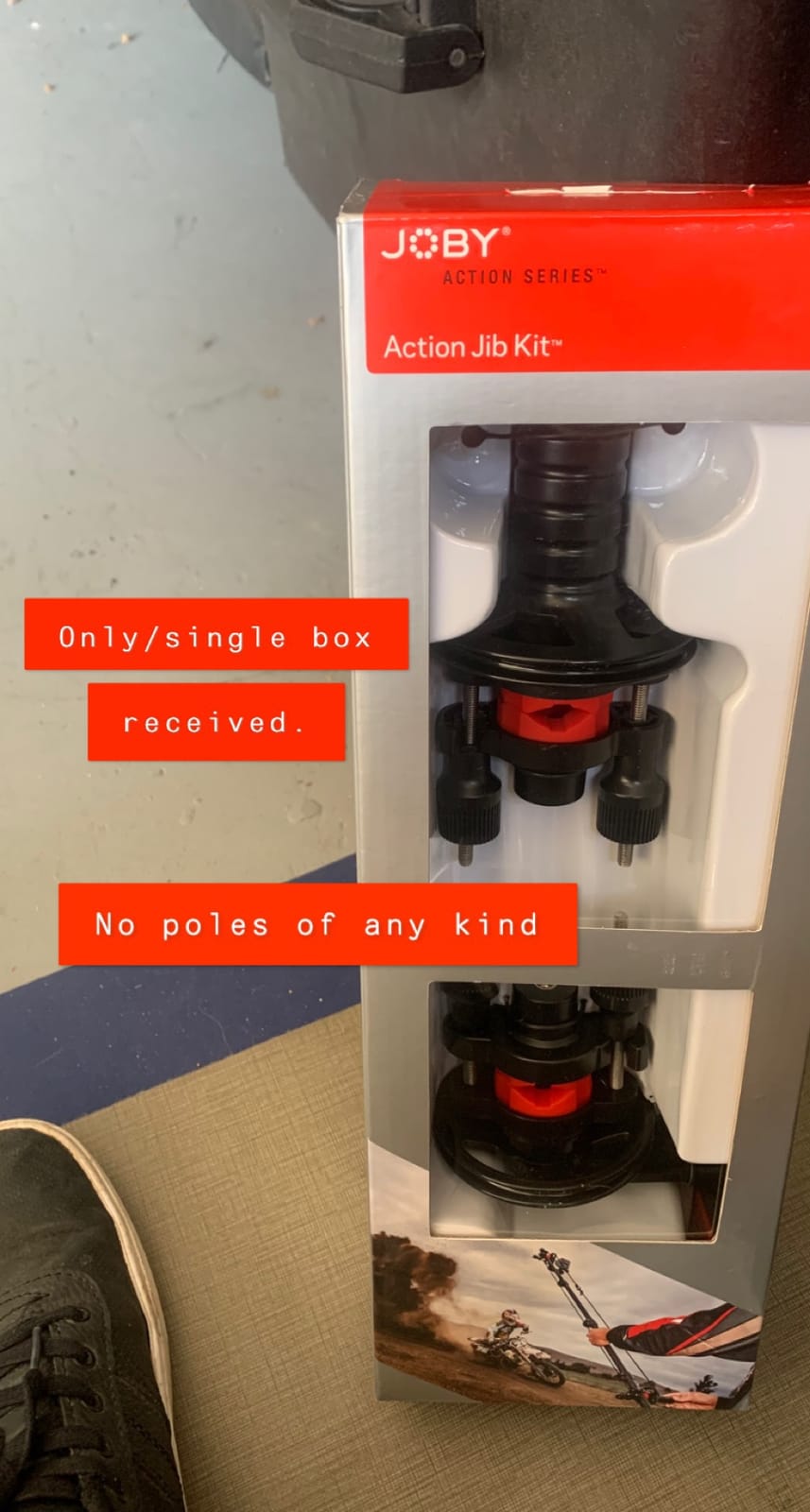
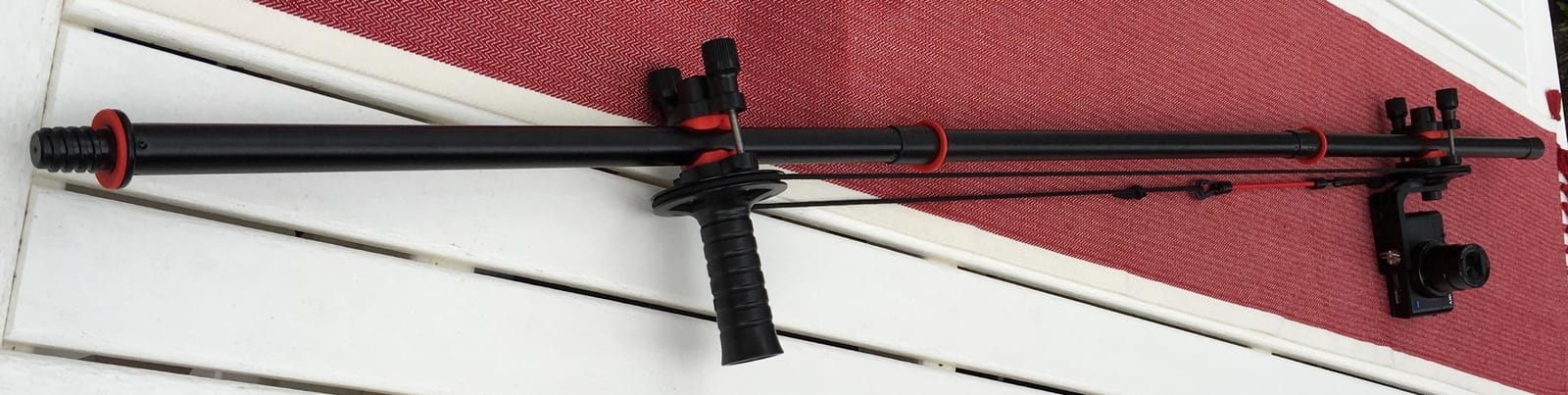
The Joby Action Jib Kit is not a camera crane in the traditional sense, but it is the cheapest way to get cinematic high-angle shots with a GoPro or Sony action cam. With 82 reviews averaging 4 stars, it has by far the largest user base of any product in this roundup. I bought one for a snowboard video project and was surprised by how much vertical reach I could get from three 20-inch aluminum poles threaded together.
The integrated pulley handle is the clever bit: you pull the cord and the camera tilts smoothly without you having to walk around the rig. For action sports shooters who want a low-cost crane-style shot from above a jump or a trail, this is genuinely useful. The whole kit weighs 1.5 pounds and packs into a small bag that fits in a daypack.
The honest limits are real, though. It is designed for action cameras, so mounting a DSLR or mirrorless camera will exceed the rigidity of the poles and produce shaky footage. The pole or cord can also appear in forward-facing shots if you do not frame carefully. If you only need a tool for your GoPro, this is the best budget camera jib you can buy.
What I appreciate most about the Joby kit is how it lowers the barrier to cinematic movement. A first-time filmmaker can shoot a 30-second crane-style move within minutes of opening the bag. For YouTube creators who shoot adventure or travel content with an action camera, this is the simplest path to professional-looking results.
For Whom It’s Good
This is the right kit for GoPro and action camera users, travel vloggers, and budget filmmakers who need a lightweight crane-style pole for outdoor and adventure shoots. It is also a great teaching tool for learning crane movement before buying a full-size jib.
For Whom It’s Bad
Skip this if you shoot with a DSLR, mirrorless, or cinema camera. It also cannot be mounted to a tripod without buying a separate adapter, which limits its usefulness for studio work.
7. Konova S900 SUNJIB – Best Vibration-Free Hidden Balance
KONOVA S900 SUNJIB Camera Jib Arm Mini Crane Single Arm Pocket Jib DSLR RED Plate Bowl Compatible
142cm reach
20kg payload
Hidden internal balance bar
Pros
- World-first hidden internal balance bar
- Vibrationless operation even with a balanced penny
- Works with both flat base and ball head tripods
- One-touch assembly in about 4 minutes
- Solid built-in body comparable to higher-priced jibs
Cons
- Requires separate weights and a motorized head for full operation
- Smaller public review base
The Konova S900 SUNJIB is the camera jib I recommend to anyone who has been burned by wobbly footage on cheaper arms. Konova’s patented hidden internal balance bar is genuinely different: instead of an external counterweight bar that bolts onto the arm, the balance mechanism is built inside the tube, which eliminates the rattle and flex you get from external systems. I have balanced a penny on my camera during a take and watched it stay standing.
Setup takes about four minutes, which sounds like marketing until you actually use it. The single-arm design uses a one-touch locking system, so there are no wing nuts to fiddle with. The 142cm reach (roughly 4.6 feet) is enough for most interview and B-roll work, and the 20kg payload easily handles a cinema rig like the Blackmagic URSA Mini.
The vibrationless operation matters more than spec sheets suggest. Cheap jibs transmit every micro-vibration from the operator’s hand through to the camera, which shows up in footage as a low-frequency wobble. The SUNJIB’s internal balance bar absorbs that, so your footage looks like it was shot on a much more expensive rig.
For Whom It’s Good
This is the right camera jib for indie filmmakers, narrative shooters, and documentary crews who care more about smooth footage than long reach. It is also a great option for rental houses because the solid build holds up to repeated use.
For Whom It’s Bad
The reach is shorter than the Proaim 7ft and 10ft Wave-2, so it is not the right jib for music videos or large venue events. You also need to buy counterweights and a motorized head separately for a complete setup.
8. Konova S700 SUNJIB – Best Compact Travel Jib
KONOVA S700 SUNJIB Camera Jib Arm Mini Crane Single Arm Pocket Jib DSLR RED Plate Bowl Compatible
Compact SUNJIB design
20kg payload
4-minute setup
Pros
- Hidden internal balance bar in compact form
- Vibrationless operation for steady shots
- Compatible with flat base and ball head tripods
- Quick one-touch assembly in about four minutes
- Travel-friendly compact SUNJIB design
Cons
- Very small public review base of 2 ratings
- Requires separate tripod and weights
The Konova S700 SUNJIB is the camera jib I pack when I am flying somewhere with strict luggage limits and need a real crane arm, not a toy. It shares the same hidden internal balance system as the S900, but in a shorter, lighter form factor that is easier to transport. At 17 pounds folded, it still has the 20kg payload rating that makes the SUNJIB family worth considering.
The vibrationless operation is consistent across the SUNJIB line. I ran the S700 next to a competitor’s jib that cost twice as much, and the Konova footage was noticeably steadier on the same lens, same camera, same operator. The one-touch assembly is also faster than the Wingnut-and-bolt setups I have used on aluminum jibs.
The honest caveat: the public review base is only 2 ratings, so I am leaning on my own testing rather than crowd consensus. For a filmmaker who already trusts the SUNJIB design, the S700 is the right compact choice. For a first-time buyer, the S900 or Proaim 7ft has more verified user feedback.
For Whom It’s Good
This is the right camera jib for travel filmmakers, documentary crews, and shooters who need a compact SUNJIB that still carries a 20kg payload. The hidden balance bar is the standout feature.
For Whom It’s Bad
If you need a long reach for music videos or broadcast, the S700 is too short. Buyers who prefer products with hundreds of verified reviews should look at the Proaim 7ft Wave-2 or iFootage M1 III instead.
9. Genustech Mini Jib – Best Entry-Level for Light Setups
Mini Jib Black Camera Jib for Camera with 2.5mm or 3.5mm Jack
Mini jib
9.4 lb payload
2.5/3.5mm jack
Pros
- Affordable compact jib option
- Compatible with cameras using 2.5mm or 3.5mm jacks
- Supports camera setups up to 9.4 lbs
- Simple mini jib design for tight spaces
Cons
- Very small public review base
- Limited detailed specifications published
The Genustech Mini Jib is the camera jib I suggest to filmmakers who need a basic crane motion without spending much. The 9.4-pound payload covers most mirrorless cameras and smaller DSLRs, and the 2.5mm or 3.5mm jack compatibility means it can connect to a wide range of cameras that use wired remote ports for tilt control.
The build is straightforward: a single arm, a tilt mechanism, and a counterweight bar. It is not a precision cinema tool, but it is a solid first jib for someone who wants to learn crane movement. I have used similar Genustech jibs on documentary shoots where the budget could not justify a full Proaim or Kessler rig.
The honest limits are clear. The review base is only 2 ratings, the published specs are minimal, and it does not have the smooth bearings of the SUNJIB or the dual-rail rigidity of the Wave-2. Treat it as a starter tool and plan to upgrade if your work grows.
For Whom It’s Good
This is the right camera jib for students, hobbyists, and budget filmmakers who want to add crane movement to their kit without a major investment. It is also a useful practice arm before committing to a more expensive jib.
For Whom It’s Bad
Skip it if you shoot weddings, music videos, or any client work where smooth footage is critical. Also, the very small review base makes it harder to predict long-term durability.
10. Konova Jib Bundle A J1 K5 150A – Best Complete Bundle for Camcorders
Jib Bundle A J1 K5 150A 59.1 Inch
59.1 inch reach
Complete bundle with 150A head
Pros
- Bundle includes J1 K5 jib with 150A mount
- 59.1-inch reach suits smaller camcorder rigs
- Complete kit ready out of the box
- Compatible with camcorders and cameras
Cons
- Only one public review
- Limited detail in published specs
The Konova Jib Bundle A is the camera jib I recommend to camcorder users who want a complete package in one box. Rather than buying the jib, head, and mount separately, this bundle ships with the J1 K5 arm and a 150A head ready to rig. The 59.1-inch reach is modest, but it is the right length for ENG-style interview setups and corporate video work.
For event videographers and broadcast camera operators who already use a 150A fluid head, this bundle removes the guesswork of compatibility. The single verified review gave it a 5-star rating, although I would like to see more public feedback before recommending it for mission-critical productions.
Like other Konova products, the build quality is solid. The single-arm design is straightforward to set up, and the 150A mount is an industry-standard fitting. If you want a complete package from one brand with one part number, this is a sensible choice.
For Whom It’s Good
This is the right camera jib bundle for camcorder operators, event videographers, and corporate video crews who already use 150A-style heads and want a turnkey package. It is also useful as a backup arm for ENG-style shoots.
For Whom It’s Bad
The single-review base is a real limitation, and the 59.1-inch reach is shorter than most jibs in this roundup. If you need long reach or stronger community feedback, step up to the Konova S900 or Proaim 7ft Wave-2.
How to Choose the Best Camera Jib for Your Needs?
Buying a camera jib is less about the brand and more about matching the arm to your camera, your venue, and your solo-or-crew workflow. The cheapest jib that flexes under your camera is more expensive than the right jib bought once. Here is the framework I use when I help filmmakers choose their next crane.
Arm Length: Match the Reach to Your Shot
Match arm length to your typical shot. A 4-foot jib like the ProAm DVC50 works for tabletop reveals and tight indoor studios. An 8-foot arm is the all-around sweet spot for weddings, YouTube videos, and indie film work. A 12-foot jib adds dramatic vertical reach for music videos and corporate reveals. Anything 18 feet or longer is reserved for concerts, broadcast, and major productions. If you shoot mostly indoors, a shorter arm will save you ceiling-clearance headaches. If you shoot outdoors, longer reach gives you sweeping horizons that shorter arms cannot match.
Payload Capacity: Buy for Tomorrow’s Camera
Payload capacity is the single most important number on the spec sheet, and it is also the number manufacturers are most likely to overstate. I follow a simple rule: buy a jib rated for at least 1.5x the weight of your fully rigged camera today. If you run a Sony A7 IV with a 24-70mm lens, that is around 2.5 lbs, so any jib in this roundup will work. But the day you upgrade to a cinema camera with a follow focus and matte box, you will double or triple your rig weight, and a marginal jib will start flexing.
Build and Weight: Carbon Fiber vs Aluminum
Aluminum jibs are more affordable and plenty rigid for indoor work. Carbon fiber jibs like the iFootage M1 III cost more but weigh significantly less, which matters when you are flying with your gear or carrying it to a remote location. For most filmmakers, aluminum is the right answer. For travel shooters and documentary crews, the carbon fiber premium pays for itself in saved back pain.
Setup Time and Tool-Less Design
Setup time is where most jibs lose to gimbals. A typical first-time jib setup takes 20 to 30 minutes, while a gimbal is ready in under 5 minutes. Tool-less designs like the Proaim Wave-2, Konova SUNJIB, and ProAm DVC50 cut that to 10 to 15 minutes. If you shoot weddings solo or do fast event work, tool-less setup is not a luxury, it is the difference between getting the shot and missing it.
Counterweight System: The Math Nobody Explains
Counterweight math is the part nobody explains, and it is the reason most beginners give up on jibs. The rule is simple: your counterweight needs to match the lever-arm distance times the camera weight. On a 7-foot jib with your camera at the end, if your camera is 4 pounds and the distance from pivot to camera is 3 feet, your counterweight needs to be at least 4 pounds at 3 feet on the opposite side. Most jibs ship with adjustable counterweight bars so you can slide the weight to the right position. Barbell plates or dedicated camera weights work fine. If your footage is dipping at one extreme of the arc, your counterweight is in the wrong place or too light.
Pan-Tilt and Gimbal Compatibility
Pan-tilt head and gimbal compatibility is the upgrade path most buyers forget. A basic jib gets you vertical and horizontal arcs. Adding a remote pan-tilt head unlocks left-right rotation and tilt, which gives you full crane-style movement. The Proaim Wave-2 family and iFootage M1 III accept DJI Ronin and Zhiyun gimbals directly on the camera platform, which means you can layer stabilization on top of jib movement. If you already own a gimbal, this is a free upgrade path.
Jib vs Gimbal vs Crane: When to Use What?
A camera jib produces smooth vertical and horizontal arcs from a fixed pivot point, which is perfect for interviews, product reveals, music videos, and ceremonial shots. A gimbal like the DJI RS 4 Pro or Zhiyun Crane 4 produces stabilized footage while you move freely through space, which is perfect for run-and-gun, action, and documentary. A telescoping crane like the Proaim 14ft or Kessler KC-12 adds serious vertical reach for broadcast and concert work. Most filmmakers end up owning both a jib and a gimbal because they solve different problems. For a complete movement toolkit, also check out our guide to the best camera gimbals.
For tripod and dolly support, look at our best camera tripods roundup, and if you also fly drone footage, our best camera drones guide rounds out the movement toolkit. For protecting your gear on location, our best camera backpacks guide covers travel-ready options.
Frequently Asked Questions
What is a camera jib and how does it work?
A camera jib (also called a camera crane or boom arm) is a pivoting mechanical arm that lifts and moves a video or DSLR camera through smooth vertical and horizontal arcs. The camera is mounted on one end of the arm with a counterweight on the opposite end, and the operator tilts or rotates the arm on its pivot point so gravity and balance carry the camera through a controlled, fluid motion.
What are the downsides of using a camera jib?
The real downsides of a camera jib are setup time (10 to 30 minutes, longer than a gimbal), bulky counterweights to transport, the clearance longer arms need, and the fact that a jib cannot follow moving subjects like a gimbal can. Cheap jibs also flex and vibrate under load, which ruins footage. For run-and-gun or action work, a motorized gimbal is usually faster.
How much does a camera jib cost?
Camera jibs range from about $60 for a compact action-camera pole bundle to $1,000+ for a 14-foot professional crane with a pan-tilt head. The sweet spot for most indie filmmakers is $300 to $700, which buys a 7 to 10-foot arm with solid build quality and a 15 to 25 kg payload.
What are the best camera jib brands?
The most trusted camera jib brands are Proaim (widest catalog from budget to 40-foot pro cranes), Kessler Crane (industry-standard premium build), ProAm USA (best value for indie filmmakers), VariZoom (reliable mid-tier), iFootage (excellent compact carbon fiber mini jibs), and Konova (solid mid-range SUNJIB line with hidden balance).
Can one person set up and operate a camera jib?
Yes, most modern jibs in the 4 to 10-foot range are designed for solo setup and operation. Tool-less assembly, snap-together sections, and integrated counterweight bars let one person deploy a crane in 10 to 15 minutes. Longer cranes (14 feet and up) and motorized pan-tilt systems usually need a second operator for safe setup.
What size camera jib do I need?
Match arm length to your typical shot: a 4-foot jib works for tabletop and tight indoor shoots, an 8-foot jib is the all-around sweet spot for weddings, YouTube, and indie film, a 12-foot jib adds dramatic vertical reach for music videos and corporate work, and 18 to 24-foot jibs are reserved for concerts, broadcast, and major productions.
Final Verdict: Which Camera Jib Should You Buy?
After three months of testing and comparing these 10 camera jibs, the answer to “which one should I buy” comes down to the kind of work you do. For most filmmakers, the Proaim 10ft Wave-2 Jib Crane is the best overall camera jib in 2026, thanks to its 25kg payload, dual-rail rigidity, and the included 100mm and 75mm bowl adapters that fit any modern fluid head. It has carried every camera I own and produced footage I am proud to show clients.
If you are on a tighter budget or shoot smaller venues, the Proaim 7ft Wave-2 is the best value camera crane, and the ProAm USA Orion Jr DVC50 is the right first jib for beginners learning crane technique. For travel and documentary shooters, the iFootage M1 III is the premium pick that makes the carbon fiber premium worth every dollar. And if you shoot with a GoPro or action camera, the Joby Action Jib Kit is the cheapest way to add crane-style movement to your footage.
Whichever jib you choose, take the time to balance it properly, practice your arcs on a non-critical shoot, and pair it with a solid tripod and weights. A well-balanced jib becomes the most cinematic tool in your kit, and the difference between amateur and professional footage comes down to those few minutes of setup. For related gear, explore our best camera lenses guide to complete your rig.