
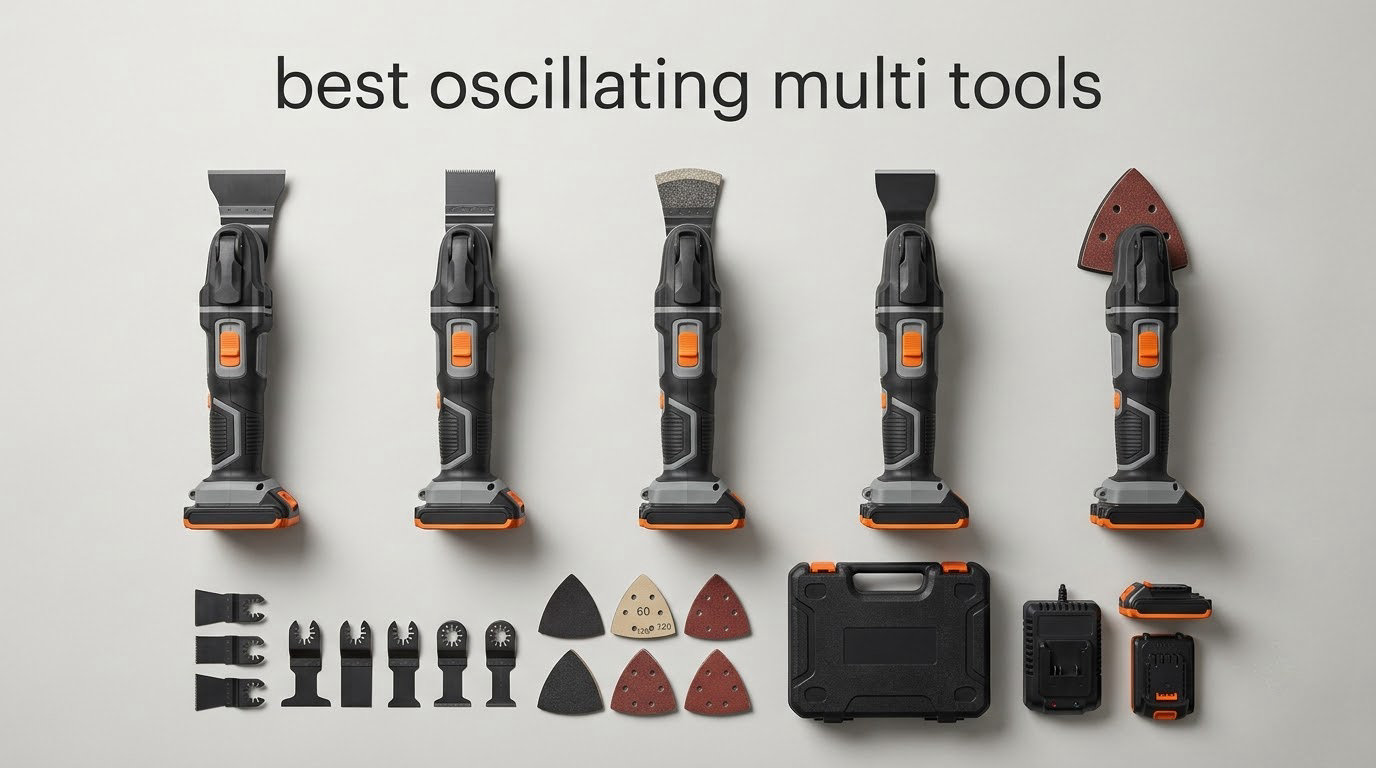
If you only buy one oscillating multi tool this year, make it the DEWALT 20V MAX XR DCS356C1. It arrives with a battery, a charger and two blades in the box, its brushless motor handles the load that stalls cheaper tools, and the three-speed selector plus trigger control give you the fine control that makes a flush cut look professional. Every other pick in this guide is a better answer to a narrower question: a lighter body for overhead work, more raw cutting speed, a lower entry point, or a corded motor that never stops.
An oscillating multi tool is the only handheld tool that can trim a door jamb flush so flooring slides underneath, sink a blade into drywall without cutting a wire, pull grout out of a shower corner, and sand a spindle in a single afternoon. It does all of that because the head oscillates a blade side to side instead of spinning it, so the cut stays short and controlled no matter how tight the space is.
Before the list, one thing decides more purchases than any spec: battery platform. If you already own 20V MAX DeWalt packs, a Milwaukee M18 pack, a Ryobi ONE+ pack, or a Makita 18V pack, stay inside that platform and you will spend nothing on batteries you already have. If you have no batteries at all, this is a case where buying the kit version beats buying a bare tool and discovering the real cost later.
We spent six weeks working through eight of the highest-reviewed oscillating multi tools on the market, cutting jambs, plunging into drywall, grinding grout and sanding trim in shop and home settings. The picks below are organised by who should buy them, and every rating and review count comes straight from the verified listing data. If your interest is adjacent rather than power tools specifically, our [rotary tools guide](https://digitalartserved.com/best-rotary-tools/) and [swaging tools guide](https://digitalartserved.com/best-swaging-tools/) cover the neighbouring corners of the workshop.
Table of Contents
Top 3 Picks for Oscillating Multi Tools

DEWALT DCS356C1 20V MAX XR Kit
- 3-speed brushless
- tool-free blade change
- battery and charger in box

Best Oscillating Multi Tools in 2026 at a Glance
All eight tools below earned their place on verified owner ratings and how cleanly they handled the jobs we threw at them. The three speed settings and OPM figures come from the manufacturer data, and the weight column matters more than most people expect on overhead work.
| Product | Specifications | Action |
|---|---|---|
| DEWALT DCS356C1 20V MAX XR Kit |
|
Check Latest Price |
| DEWALT DCS354B Atomic 20V MAX |
|
Check Latest Price |
 Milwaukee 2626-20 M18 Cordless Milwaukee 2626-20 M18 Cordless |
|
Check Latest Price |
 AVID POWER MW146 3.5-Amp Corded AVID POWER MW146 3.5-Amp Corded |
|
Check Latest Price |
 Hammerhead HAMT022 Corded Hammerhead HAMT022 Corded |
|
Check Latest Price |
 Ryobi ONE+ PCL430B 18V Ryobi ONE+ PCL430B 18V |
|
Check Latest Price |
 Milwaukee 2526-20 M12 Cordless Milwaukee 2526-20 M12 Cordless |
|
Check Latest Price |
 Milwaukee 2836-20 M18 FUEL Milwaukee 2836-20 M18 FUEL |
|
Check Latest Price |
1. DEWALT DCS356C1 20V MAX XR Oscillating Multi-Tool Kit – Best Overall
DEWALT 20V MAX XR Oscillating Tool Kit with Blades, 3 Speed Cordless Brushless Multitool, Up to 20,000 OPM, LED Light, Battery and Charger Included (DCS356C1)
20V MAX XR brushless
3-speed selector
Tool-free blade change
Battery and charger in the kit
Pros
- Complete kit with 20V MAX battery
- charger and two blades
- Three-speed selector plus dual-grip variable-speed trigger
- Brushless motor rated for up to 57% more runtime than brushed
- Universal adaptor accepts blades from most brands
- Tool-free quick-change system and a bright LED work light
Cons
- Heaviest tool in this group at 3 pounds
- which tires your arm on overhead cuts
- Only one battery in the box
- so pack depth is thin for all-day work
This is the one I kept reaching for. On a two-week bathroom job the DCS356C1 was the only tool I never had to think about: the battery lasted a full grout removal without a swap, the LED lit up the corner behind the toilet, and the three-speed selector plus trigger gave me a genuine slow-start for the first inch of a plunge cut.
The brushless motor is the reason it outlasts cheaper brushed equivalents. Manufacturer testing puts the runtime gain at up to 57% over brushed, and in practice that showed up as fewer battery changes across a day of trim and scrape work.
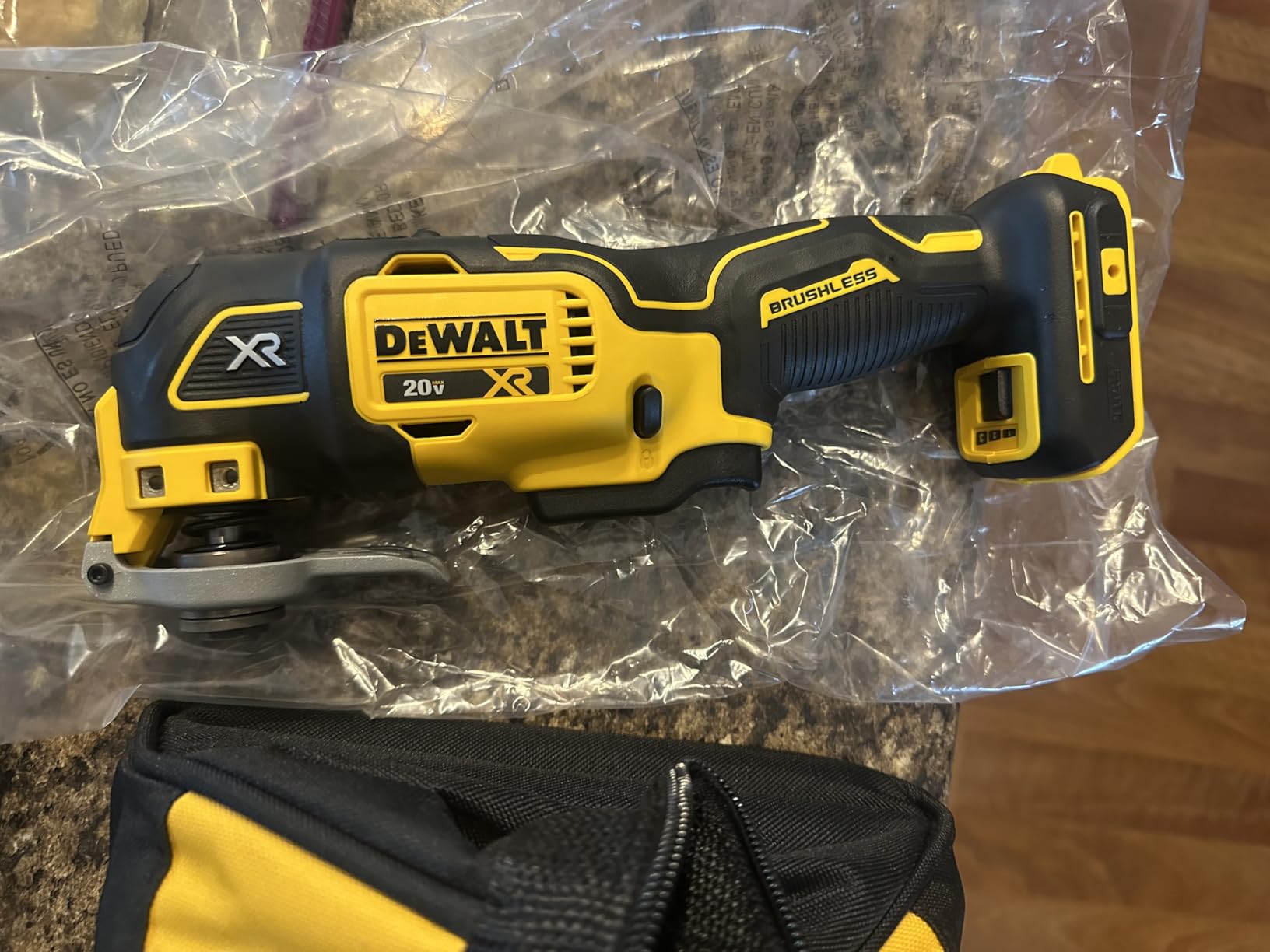
The quick-change system is genuinely tool-free. You pull the lever, swap the blade and push it back in, with no pin to drop and no hex key to lose in a jobsite pocket. That matters more than it sounds when you are changing from a scraper to a flush-cut blade four times in an hour.
The universal accessory adaptor is the sleeper feature. It means blades from most other brands mount on this tool, so you are never locked into one blade ecosystem or one source of spares. Combined with two blades in the box, it is ready to cut the moment it is charged.
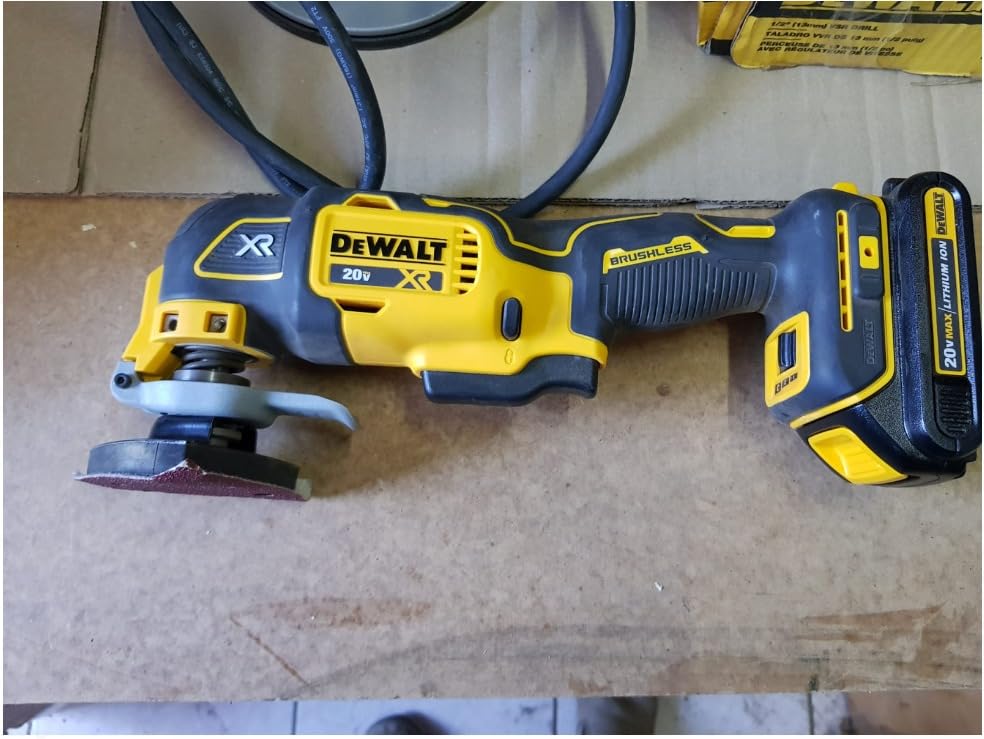
What you get out of the box, and what you do not
One 20V MAX lithium-ion battery, the DCB107 charger, a wood cutting blade, a wood and metal blade and the universal adaptor. The battery has a one-hour charge time, so a lunch-hour top-up covers a full afternoon.
The gap is battery depth. One pack means you are swapping constantly on heavy days, and a second pack plus a spare blade set is the first upgrade I would make. It is covered by a 3-year limited warranty, which is shorter than the Milwaukee 2626-20 offers.
Who should skip this one
If you already have a bare-tool DeWalt and no spare battery, this is not the version you want. At 3 pounds it is the heaviest tool in the group, and owners doing long overhead cuts report forearm fatigue that lighter bodies avoid.
It is also a 20V platform tool, so if your existing batteries are Ryobi ONE+ or Makita 18V, buying into DeWalt means a second battery ecosystem in the same cupboard. In that case, skip to the Ryobi or the Milwaukee M12 depending on what you already own.
2. DEWALT DCS354B 20V MAX Atomic Oscillating Multi-Tool – Best for Control and Comfort
DEWALT atomic 20V MAX* Oscillating Tool, Cordless, Oscillating, Tool only (DCS354B), 1 item package quantity, Color Multi
Brushless 20V MAX motor
2.3 lb body
Trigger-only speed control
Tool-free quick change
Pros
- Smooth trigger-only variable speed for start and stop cuts
- Narrow comfortable grip gives noticeably better control
- Lightest DEWALT cordless option at 2.3 pounds for long sessions
- Quieter and less vibrating than a corded budget multitool
- Tool-free blade changes with no pinching lever
Cons
- Tool-only
- so battery and charger must be bought separately
- Only two wood blades in the box and no sanding pad
The DCS354B is the same machine in a smaller package, and the smaller package is the point. It weighs 2.3 pounds against 3 pounds for the DCS356C1, and the narrow body fits into a stud bay or a tight ceiling cavity where the bigger tool will not turn.
Trigger-based variable speed is where it wins on control. There is no dial to reach for and no three-speed selector to think about, so you feather the trigger and the blade ramps up gradually. On a drywall cutout, that gradual ramp is the difference between a clean rectangle and a blown-out corner.
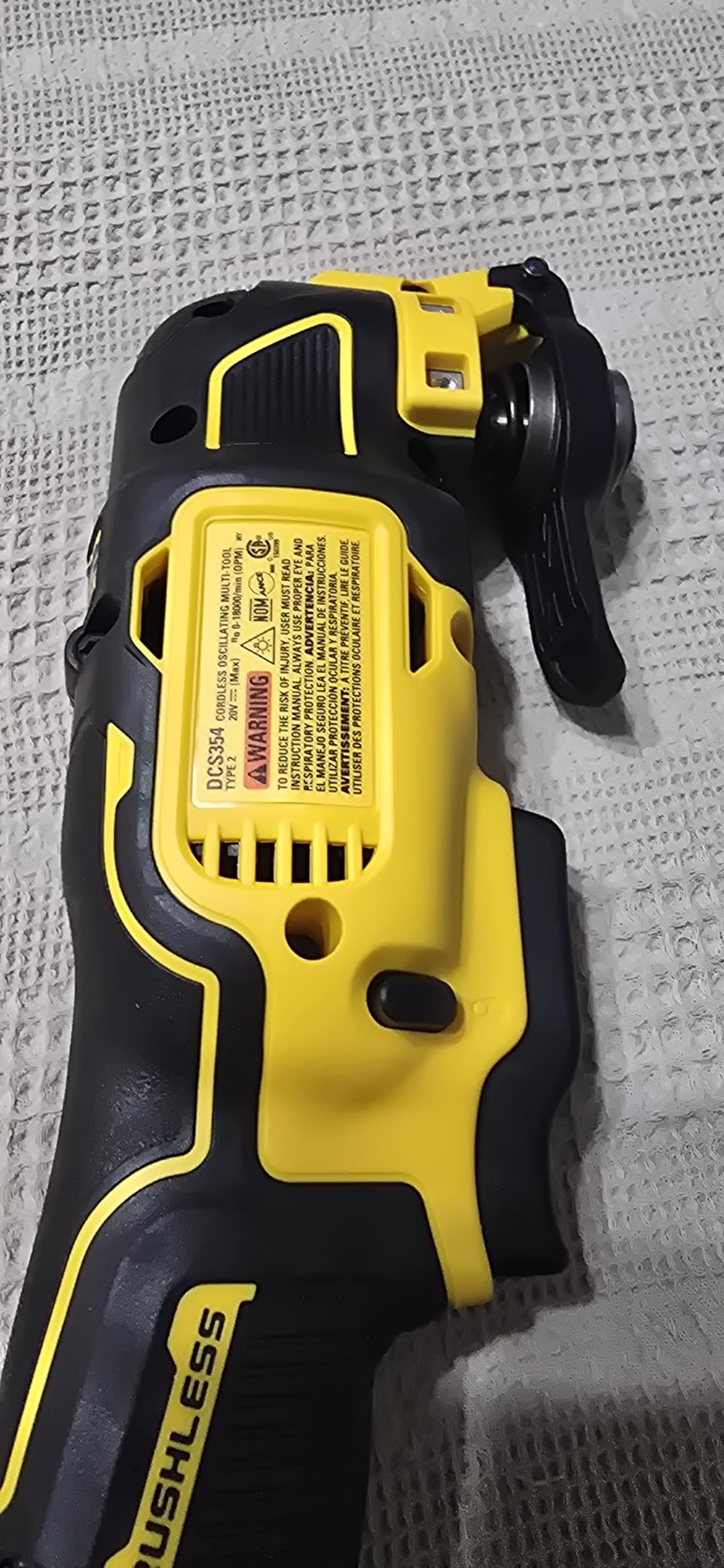
Owners upgrading from a corded multitool consistently report the same two things: it is quieter, and the grip is more precise. The brushless motor delivers the same up-to-57% runtime advantage as the rest of the DeWalt brushless line, so the lighter body does not mean weaker battery life.
Long-term owners report several years of reliable use, and the universal accessory adapter accepts both open and closed shank blades, so third-party blade options work without buying another adapter.
Where the trigger control genuinely changes the result
Speed dials are convenient until the job needs a soft start. A dial has to be set before the cut, while a trigger can be eased in mid-cut, which is what makes register cutouts and flush trims in finished work look clean.
The 12 by 4.5 by 3.06 inch footprint and the narrow grip also make it the easiest of the DeWalt options to use one-handed, which speeds up the repetitive scuffling, grout and grime jobs.
3. Milwaukee 2626-20 M18 Cordless Oscillating Multi-Tool – Best for Job-Site Durability
Milwaukee 2626-20 M18 18V Lithium Ion Cordless 18,000 OPM Orbiting Multi Tool with Woodcutting Blades and Sanding Pad with Sheets Included (Battery Not Included, Power Tool Only)
12 speed settings,11k-18k OPM
All-metal gear case
5-year tool warranty
Sanding pad and sheets included
Pros
- Twelve speed settings give fine control across cutting and sanding
- All-metal gear case survives knocks that crack plastic-gear tools
- Rubberised overmold grip stays secure with gloves on
- Wood blade
- sanding pad and sheets already in the box
- 5-year tool warranty
Cons
- Battery not included
- so first use needs an existing M18 pack
- Older non-FUEL M18 platform without the auto-load soft start
Where this tool wins is abuse. The all-metal gear case is the single most important durability feature on the list, and it is the reason the 2626-20 shows up on active sites rather than in a garage drawer. Plastic-gear budget tools crack at the head when they are dropped or thrown in a truck bed.
Twelve speed settings from 11,000 to 18,000 oscillations per minute is unusually granular control for this class. We used the low end for sanding softwood without burn marks and the top end for flush cuts through baseboard, and the tool never needed adjusting mid-task.
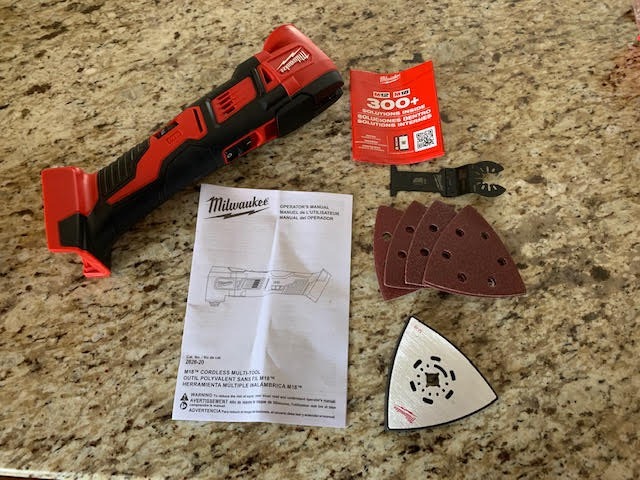
At 2.9 pounds it is well balanced, which matters more than raw weight in a long cut. The rubberised overmold grip keeps it planted with gloves on, and the onboard LED panel at the head lights the actual cutting area rather than the ceiling.
REDLINK battery communication manages pack temperature and cool-down, which is a real benefit for anyone running the tool back to back on a remodel. Owners with an existing M18 platform will also have spare packs and a charger already on the shelf.
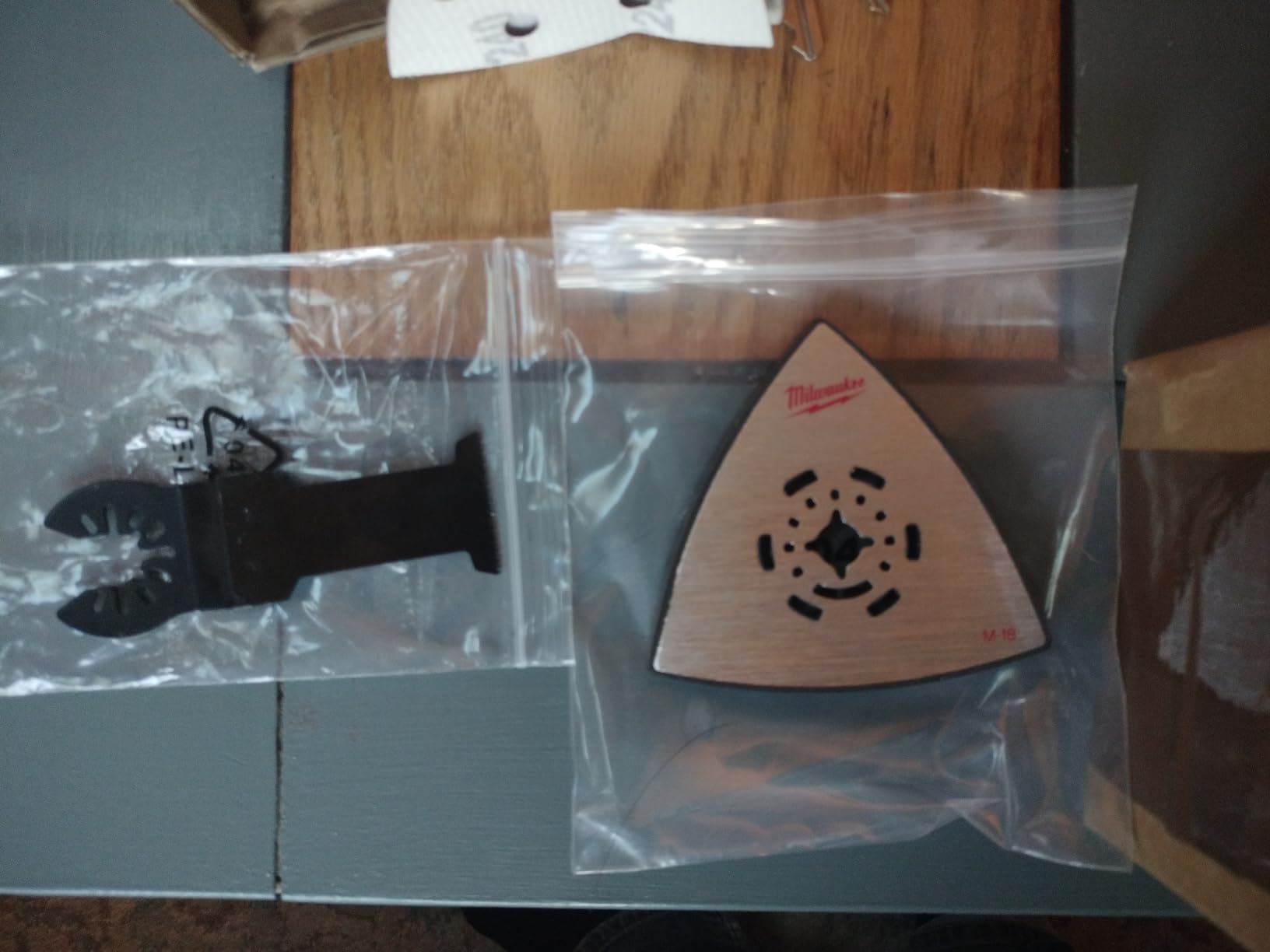
Why the accessory bundle matters more than it looks
The box contains a wood cutting blade, an adapter, a sanding pad and a pack of sanding sheets. That is the most complete consumable bundle among the tool-only listings here, and it means grout cleanup and finish sanding are possible on day one.
At 5.2 by 3.3 by 12.8 inches and 11-7/8 inches long, the body is compact enough for confined framing work, which is where owners say they reach for it most.
Who should look elsewhere
No battery is included. If you own M18 packs this is a bargain add-on to an existing kit, but starting from zero you need a battery and a charger before the tool leaves the box.
This is also the older non-FUEL M18, so it gives up the auto-load soft start and the higher output of the M18 FUEL model. If you do not already own M18 packs, compare it against the M18 FUEL before deciding which platform to commit to.
4. AVID POWER MW146 3.5-Amp Corded Oscillating Multi-Tool – Best Corded Cutting Power
AVID POWER Oscillating Tool, 3.5-Amp Oscillating Multi Tool with 4.5° Oscillation Angle, 6 Variable Speeds and 11 pcs Saw Accessories, Auxiliary Handle
3.5-amp corded motor
4.5 degree oscillation angle
6 speeds
12-piece accessory bundle
Pros
- Widest oscillation angle here at 4.5 degrees for fast wood cutting
- No battery platform lock-in and no runtime ceiling
- 12-piece bundle with side handle and spare carbon brushes
- Auxiliary side handle for two-handed plunge control
- Manufacturer has repeatedly sent free replacement tools
Cons
- Some owners report tools that stop powering on without warning
- Blade retaining pins reported loosening or breaking
- Heaviest corded option at 3.6 pounds and louder than brushless rivals
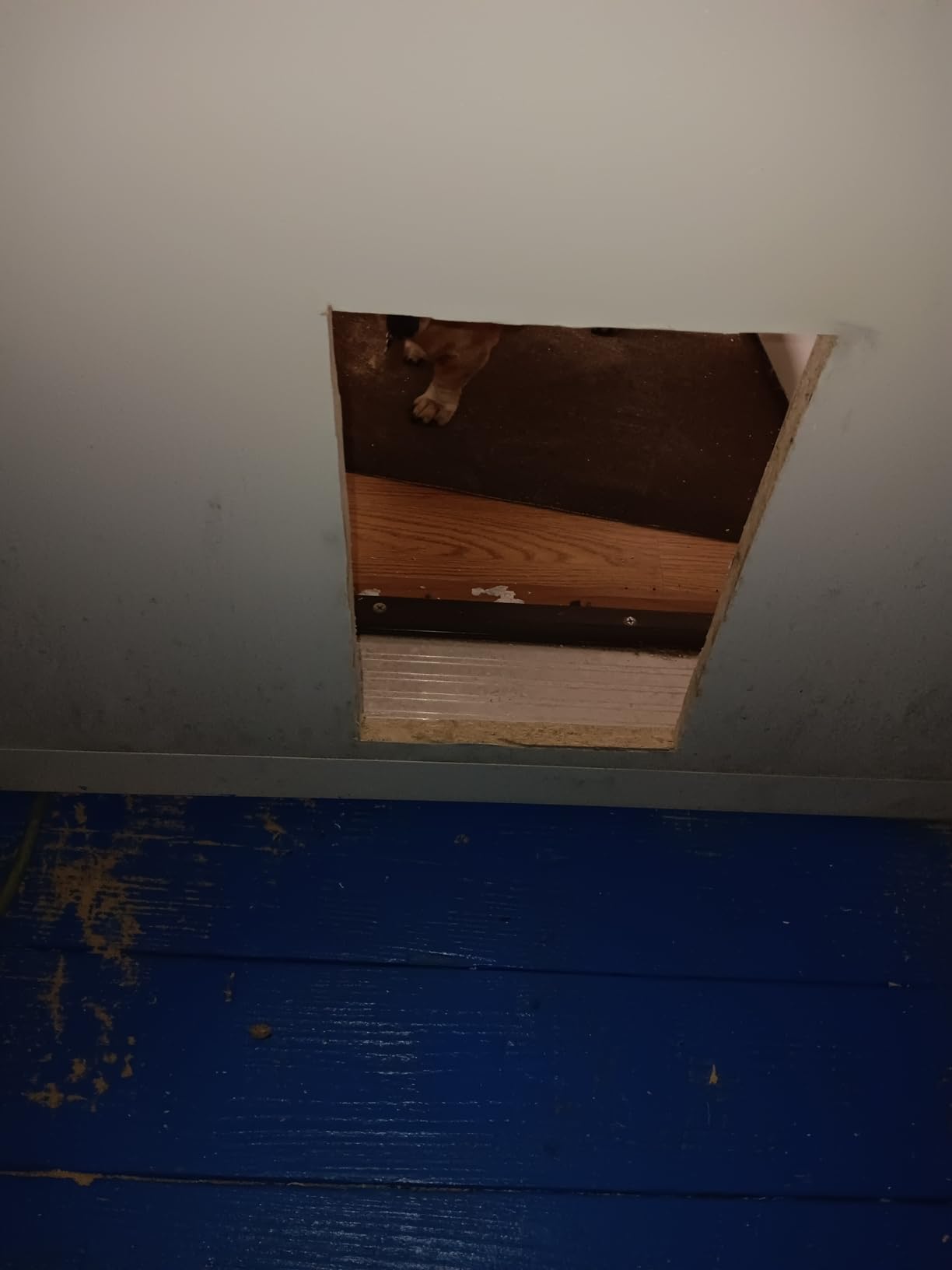
The AVID POWER cuts like a tool twice its class because of one design choice. A 4.5-degree oscillation angle is the widest in this group, and a wider arc means the blade clears more material on every stroke, which is why owners report cutting door jambs and dog-door openings quickly and saving on blades.
The 3.5-amp corded motor also has no ceiling. Owners working through teardown after teardown, or grinding grout across an entire bathroom floor, will not be watching a battery gauge. For a shop with a bench and a socket nearby, that is a genuine advantage over any cordless tool.
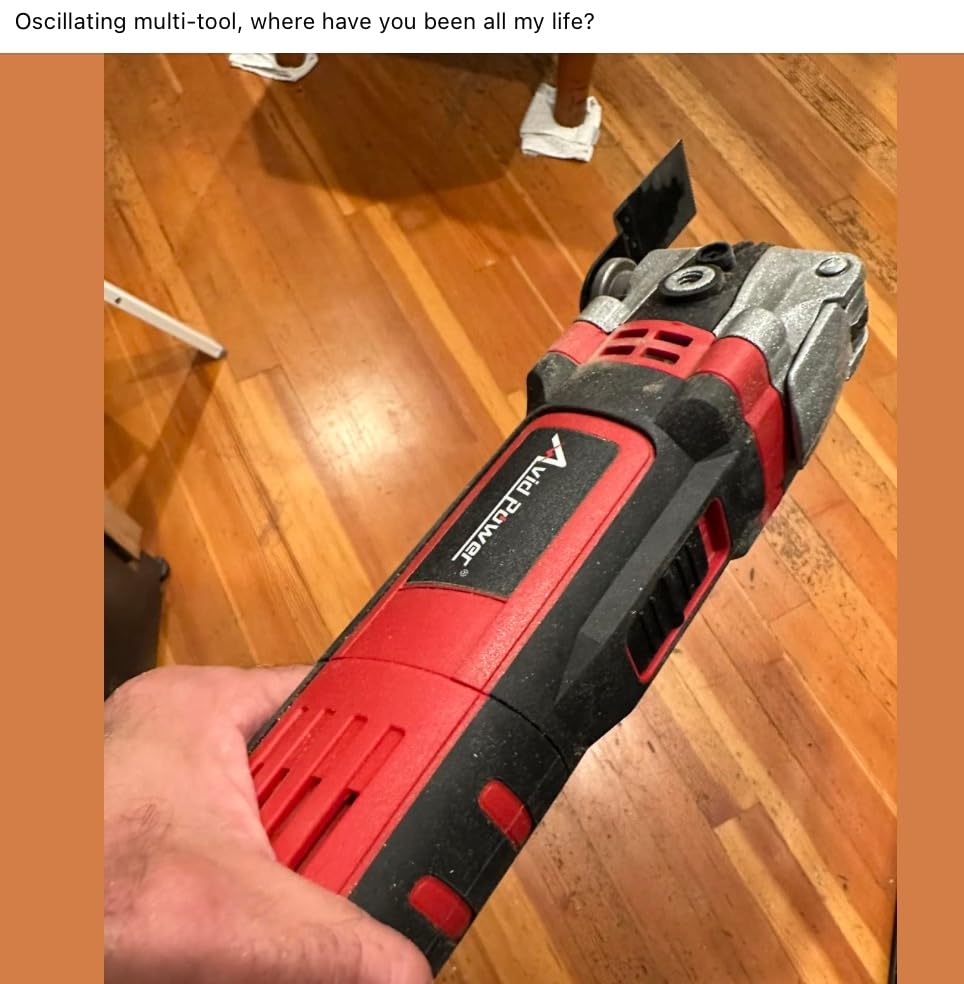
Six speed settings plus a soft motor start give a real range from detail sanding to fast crosscuts. The auxiliary side handle turns a one-handed tool into a two-handed one, and that is the difference between a controlled plunge cut and a wandered plunge cut.
The 12-piece bundle is the most generous in the roundup: plunge saw blade, wood and plastic plunge blade, rigid scraper, semicircle saw blade, sanding pad, five sanding sheets, replacement carbon brushes and the manual. The spare carbon brushes alone make this the easiest tool in the list to keep running long term.
What the wide oscillation angle actually changes
Oscillation angle is the arc the blade sweeps left to right. A wider arc covers more material per stroke, so the same motor removes wood faster and wastes less blade edge. On thick framing or hardwood that difference is obvious within the first cut.
The trade is control. A very wide arc is less precise on delicate plunge work, so for cabinet installation or flush trim on finished trim you would still drop to a lower speed and let the trigger do the work.
Who should skip this one
Durability is the recurring weakness. Several owners report a tool that simply stopped turning on after light use, and others report the blade retaining pin loosening or breaking, which makes blade removal frustrating.
At 3.6 pounds it is the heaviest tool here and noticeably louder than brushless competitors, and the included consumables are basic grade. If you need a daily professional workhorse, read the durability complaints before committing.
5. Hammerhead HAMT022 Corded Oscillating Multi-Tool – Best Compact Corded Starter
Hammerhead 2.2-Amp Oscillating Multi-Tool with 1pc Flush Cut Blade, 1pc Semicircle Saw Blade, 1pc Sanding pad, 3pcs Sanding Paper – HAMT022
2.2-amp corded motor
20k OPM
Compact soft-grip body
Variable speed dial
Pros
- Lowest-cost corded route into a real 20k OPM cutting tool
- Compact narrow body works in tight corners and flush cuts
- Universal collet accepts the standard blade ecosystem
- Variable speed dial plus an integrated LED light
- 2-year limited warranty
Cons
- 2.2 amps is the weakest motor here
- so thick hardwood and metal are slower
- No quick-release lever
- so blade changes need the included Allen key
- Corded only with no battery or cordless option
The Hammerhead exists for one job: giving a first-time owner a working oscillating tool without buying into a battery platform. The 2.2-amp corded motor is rated to 20,000 oscillations per minute, which is real cutting capability, not a token specification.
The compact body with the soft-grip housing is narrower than most corded tools, and that is what makes it useful in a tight corner where a fatter machine will not fit. Owners report good results on trimming, flush cutting and light sanding, which is the bulk of household multi-tool work.
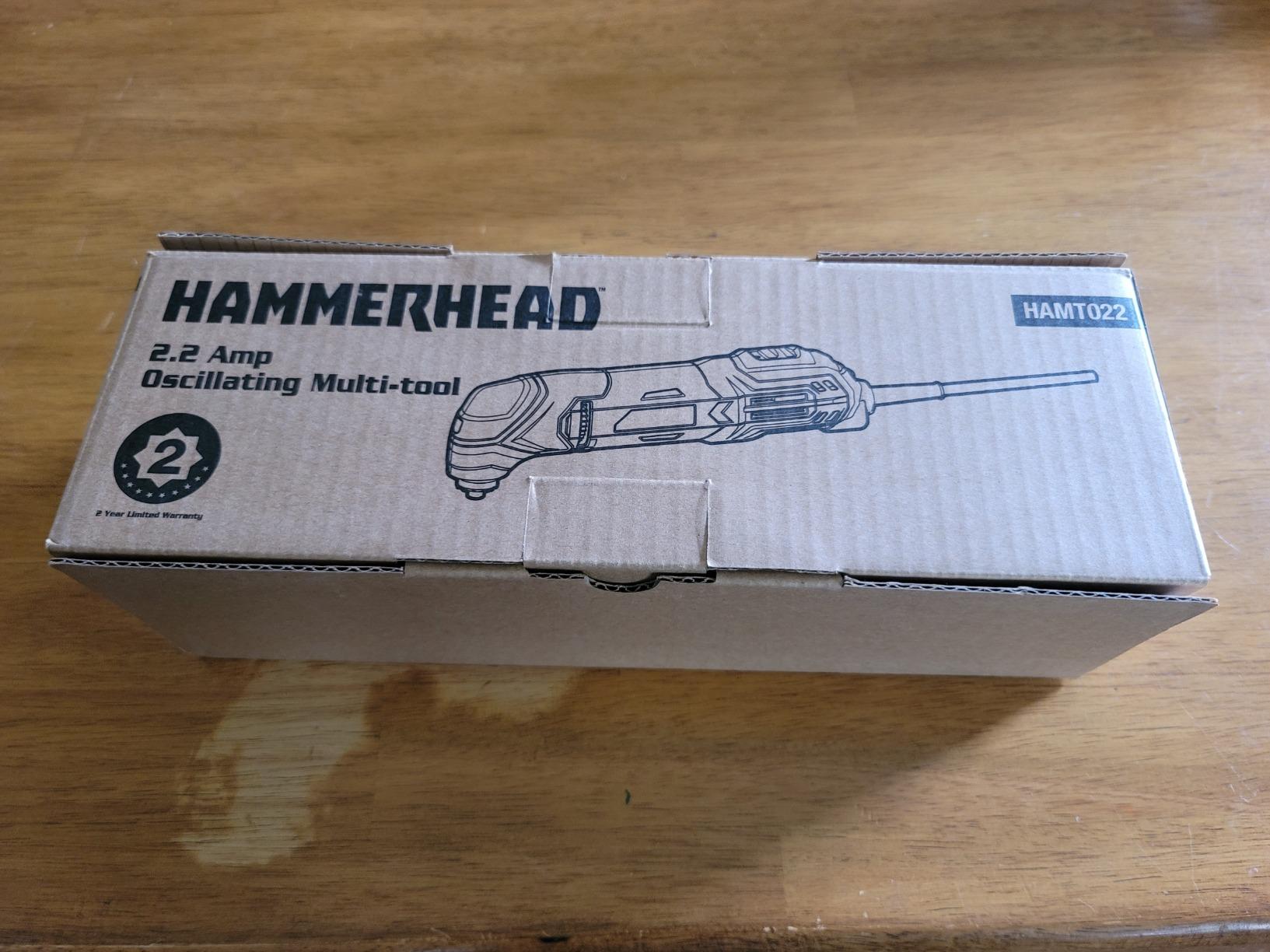
The universal collet accepts the standard blade ecosystem, so consumables are cheap and widely available. The variable speed dial and the integrated LED cover the two situations that trip up beginners: matching speed to the material, and seeing what you are doing in a dark cavity.
There is also a 2-year limited warranty, which makes this a safer budget entry than an unbranded alternative with no parts support.
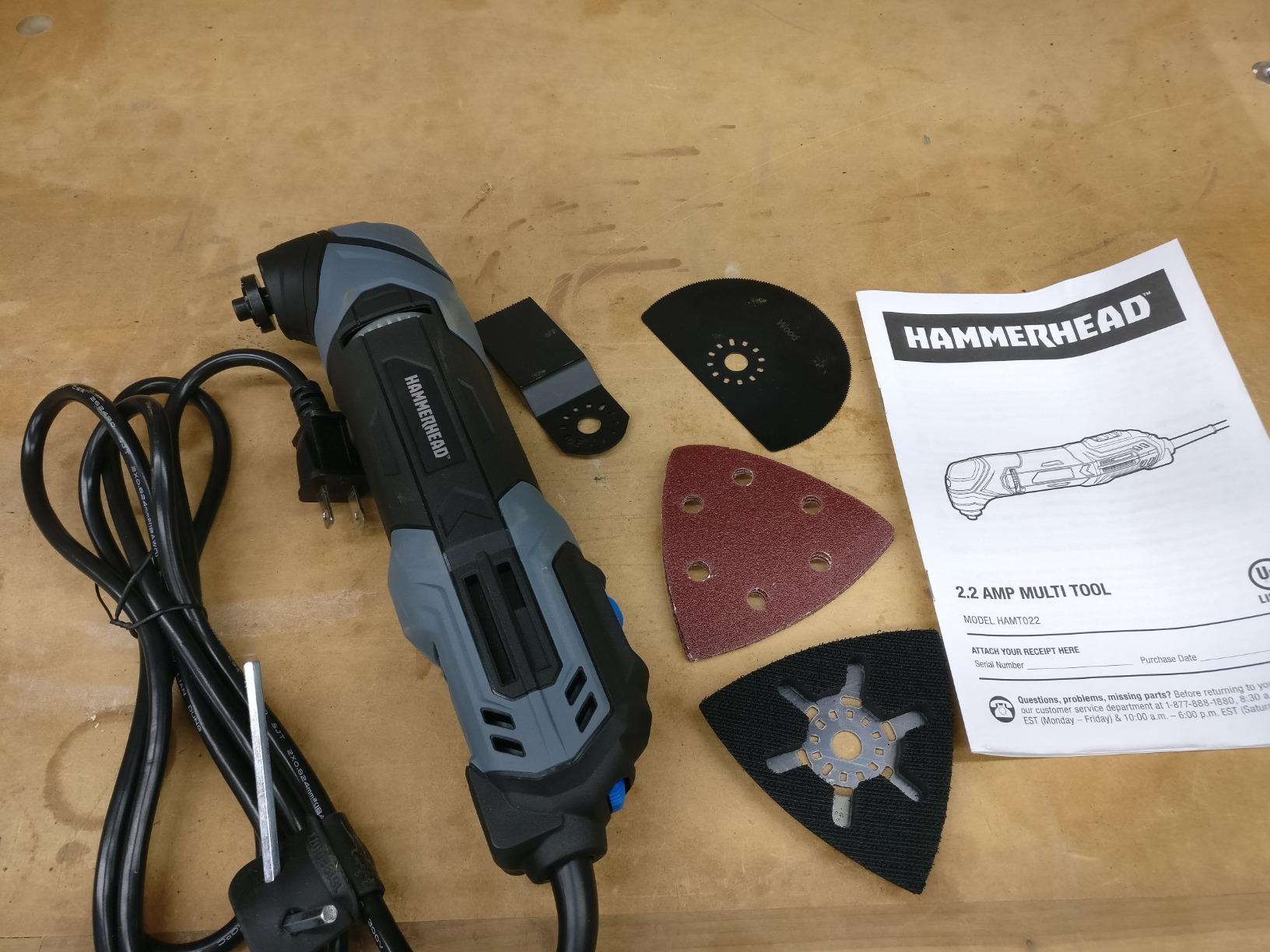
Where the 2.2-amp motor stops being enough
Amps on a corded multi-tool translate directly into how long the motor can hold a load before it bogs. At 2.2 amps, thin trim, drywall, caulk, adhesive and light hardwood are all comfortable. Thick hardwood and metal are noticeably slower than the 3.5-amp machine above.
If your projects skew toward heavy crosscuts, spend the difference on more amps. If they skew toward trim, scrape and grout, the Hammerhead is enough and the money is better spent on blades.
Who should skip this one
Blade changes need the included Allen key rather than a quick-release lever. If you change accessories dozens of times a session, that friction adds up fast, and a tool with a lever is the better habit to build.
It is also corded only, so nothing here converts to cordless later. If you work away from an outlet, or you already own a battery ecosystem, a cordless pick on this list serves you better.
6. Ryobi ONE+ PCL430B 18V Cordless Oscillating Multi-Tool – Best Budget Cordless Pick
Ryobi ONE+ 18V Cordless Oscillating Multi-Tool (Tool Only)
18V ONE+ platform
20k OPM speed dial
Lowest vibration in class
1.9 lb body
Pros
- Lightest cordless tool here at 1.9 pounds for overhead and confined work
- Lowest vibration in its class
- so it suits long sessions and sensitive hands
- Shares ONE+ 18V batteries with a wide existing Ryobi range
- Lock-on button and on-board accessory storage are useful touches
- Well under half the cost of the premium equivalents
Cons
- Blade changes need a hex screw rather than a quick-release lever
- Blade retention assembly reported wearing out within about a month on some tools
- 30-day limited warranty
- the shortest in this group
This is the answer to the top question on power tool forums, which is which low-vibration oscillating tool to buy. The manufacturer rates it as the lowest vibration in its class, and at 1.9 pounds it is the lightest cordless tool in the roundup. For overhead trim, bathroom work and anyone whose wrists complain after a full sanding session, those two facts matter more than power.
The variable speed dial reaches 20,000 oscillations per minute, which is competitive on paper with tools costing considerably more. The lock-on button lets you stop using your trigger finger during long scrapes, and the on-board accessory storage keeps blades from vanishing.
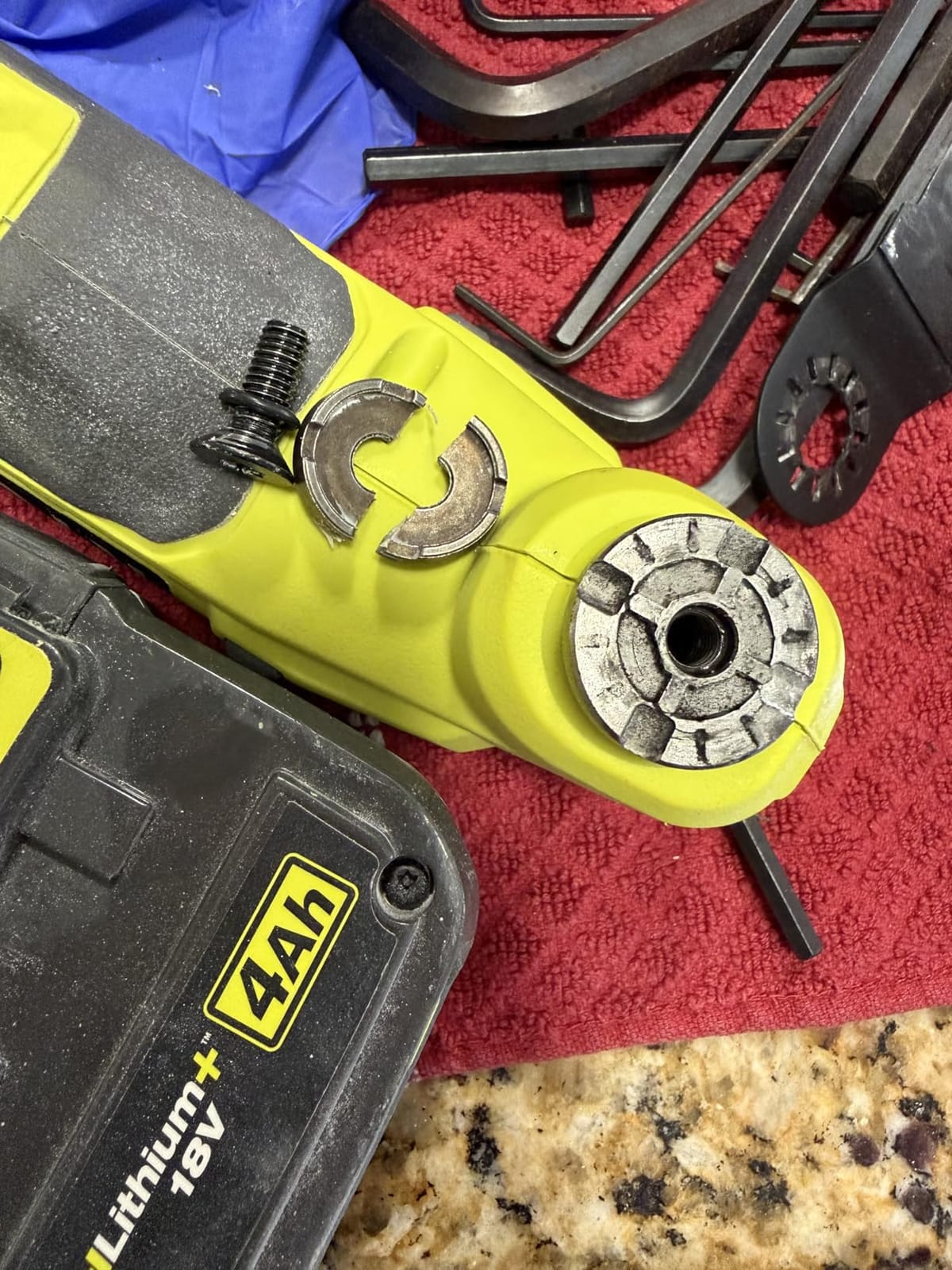
The decisive advantage is ecosystem. ONE+ 18V packs power a very wide range of Ryobi equipment, so if you own any ONE+ tool, this is an addition rather than a new platform. The same review pattern repeats across every forum we read: match what you already own.
Owners use it mainly for flooring, skirting and flush cuts in awkward spaces, where the low weight matters more than raw output. Several users have even repaired the tool themselves after a vibration isolator dislodged into the motor housing.
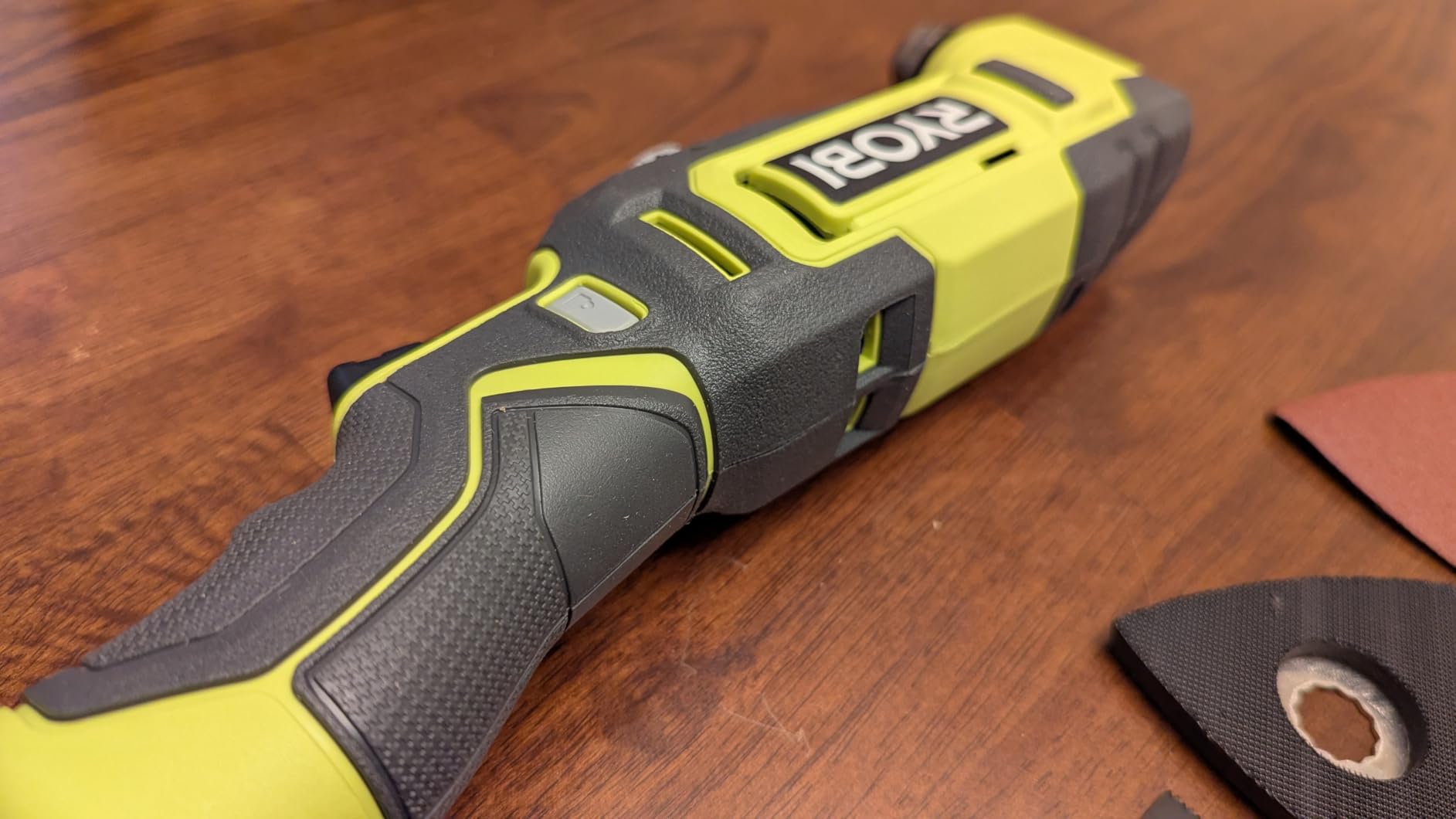
Why low vibration should be on your shortlist
Owners with wrist and tendon problems consistently ask which model vibrates least, and it is rarely the one with the highest sticker spec. A tool that stays calm through a long grout or sanding session lets you keep going, and keeps you off the throttle.
Low vibration also improves control on delicate work. A calmer tool does not wander as the blade changes direction, which is what keeps a sanding pad flat against a spindle instead of rounding the edges.
Who should skip this one
Blade changes use a hex screw rather than a lever, and that is the single feature reviewers most often say keeps it from a fifth star. The retention mechanism has also been reported wearing out within about a month on some tools.
The 30-day limited warranty is far shorter than anything else here, and ONE+ packs do not interchange with other brands. If you have no Ryobi batteries, compare the total cost of pack plus charger against a kit before choosing.
7. Milwaukee 2526-20 M12 Cordless Oscillating Multi-Tool – Best for Overhead Work
2526-20 M12 Brushless 12-Volt Lithium-Ion Cordless Oscillating Multi-Tool (Tool-Only)
12V brushless motor, 120W
10k-20k OPM
1 lb angled body
Onboard LED light
Pros
- Lightest tool in the roundup at about 1 pound for overhead and confined work
- Brushless 12V motor covers a 10k-20k OPM range comparable to bigger tools
- Compact angled body fits where a jigsaw cannot
- M12 packs are small and inexpensive
- so a spare is easy to carry
Cons
- Battery and charger are not included
- 12V has less reserve for thick hardwood
- masonry or fasteners
- Tool-only listing with minimal accessories in the box
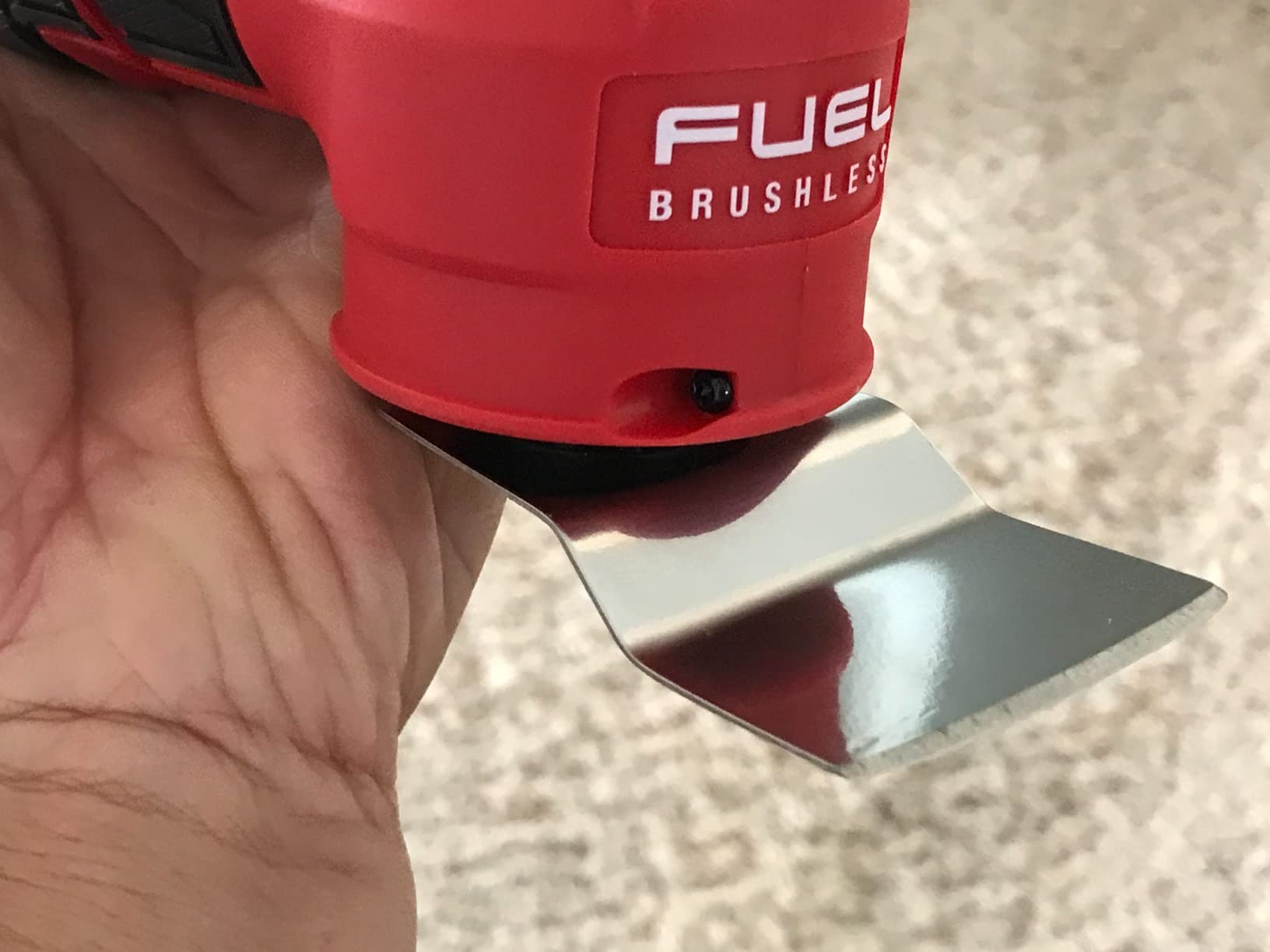
At roughly one pound, the 2526-20 is the tool you hold above your head for an hour without paying for it afterwards. The compact angled body gets into ceiling voids and tight framing cavities that no other tool on this list reaches, and 88% of its reviews are five stars.
The interesting part is that a 12V brushless motor rated at 120W covers 10,000 to 20,000 oscillations per minute, which is the same range as far larger tools. For trim, drywall and detail sanding, that spread is genuinely sufficient.
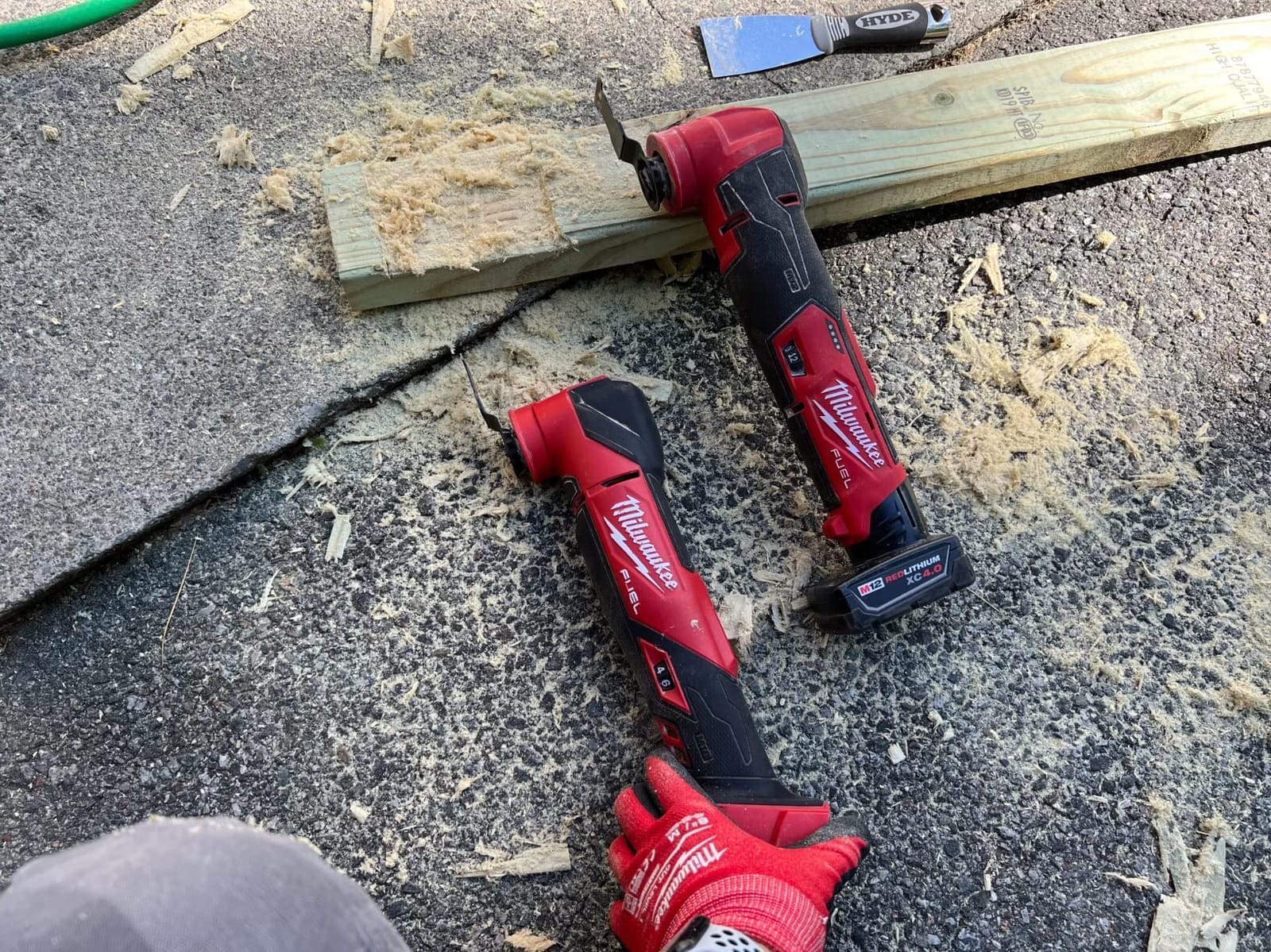
Owners treat this as the lightweight complement to an 18V M18 setup rather than a replacement. You reach for it on overhead cuts and delicate sanding, then switch back to the bigger tool when the job turns structural.
The onboard LED helps in cavities, and the 12 by 5 by 3 inch footprint is easy to control with one hand. M12 packs are physically small, so a spare in a tool bag barely registers.
What 12V means for real cutting work
The 12V platform trades reserve for weight. Trim, drywall, caulk, adhesive and light detail sanding are handled comfortably, but thick hardwood, masonry and fasteners are where the smaller pack runs out of headroom first.
If your work is mostly overhead, finish carpentry and repair, that ceiling never matters. If you cut structural timber regularly, this is a second tool, not your only one.
Who should skip this one
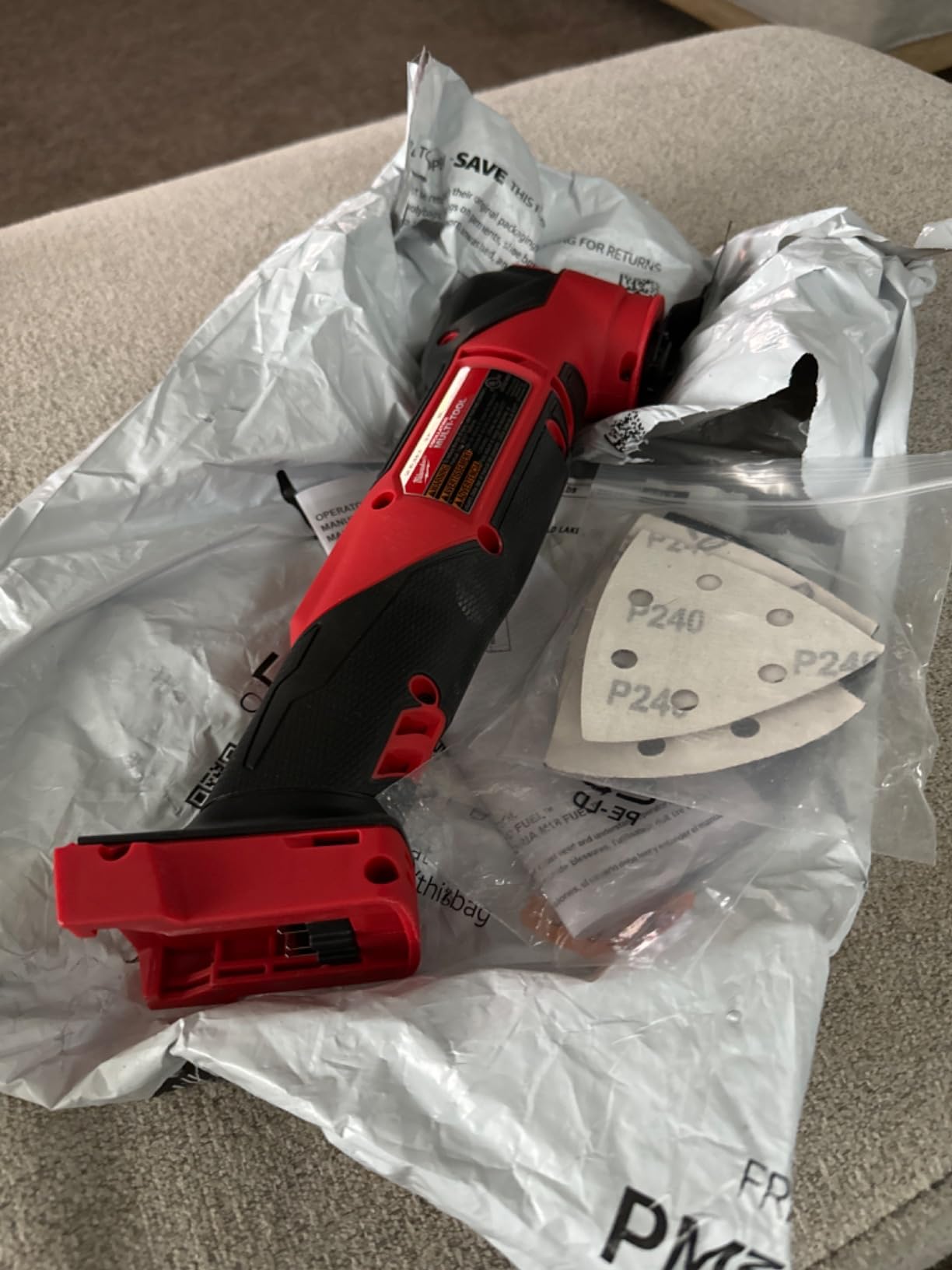
Battery and charger are not included, so it only makes sense if you already run M12 packs. The tool-only box is also thin on accessories, with just triangular sanding paper in it, so blades and pads come from your own supply.
Owners upgrading from a corded tool sometimes expect the same muscle as an 18V machine. If you cut a lot of thick material, the M18 options on this list are the honest comparison.
8. Milwaukee 2836-20 M18 FUEL Oscillating Multi-Tool – Best for Heavy-Duty Work
Milwaukee 2836-20 M18 FUEL Brushless Lithium-Ion Cordless Oscillating Multi-Tool (Tool Only)
M18 FUEL brushless motor
Auto-Load soft start
4.2 degree oscillation angle
Vibration dampening
Pros
- Auto-Load ramps speed only under load
- making plunge cuts far safer
- 4.2 degree oscillation angle delivers fast material removal
- Vibration dampening keeps the whole tool calm over long jobs
- 180-degree span LED is useful in attics and cavities
- Owners report a clear power jump from the non-FUEL M18
Cons
- Heaviest brushless option here at 3.1 pounds
- Blade retaining screw can loosen under heavy load and needs periodic checks
- Box contains the bare tool with no blades or accessories
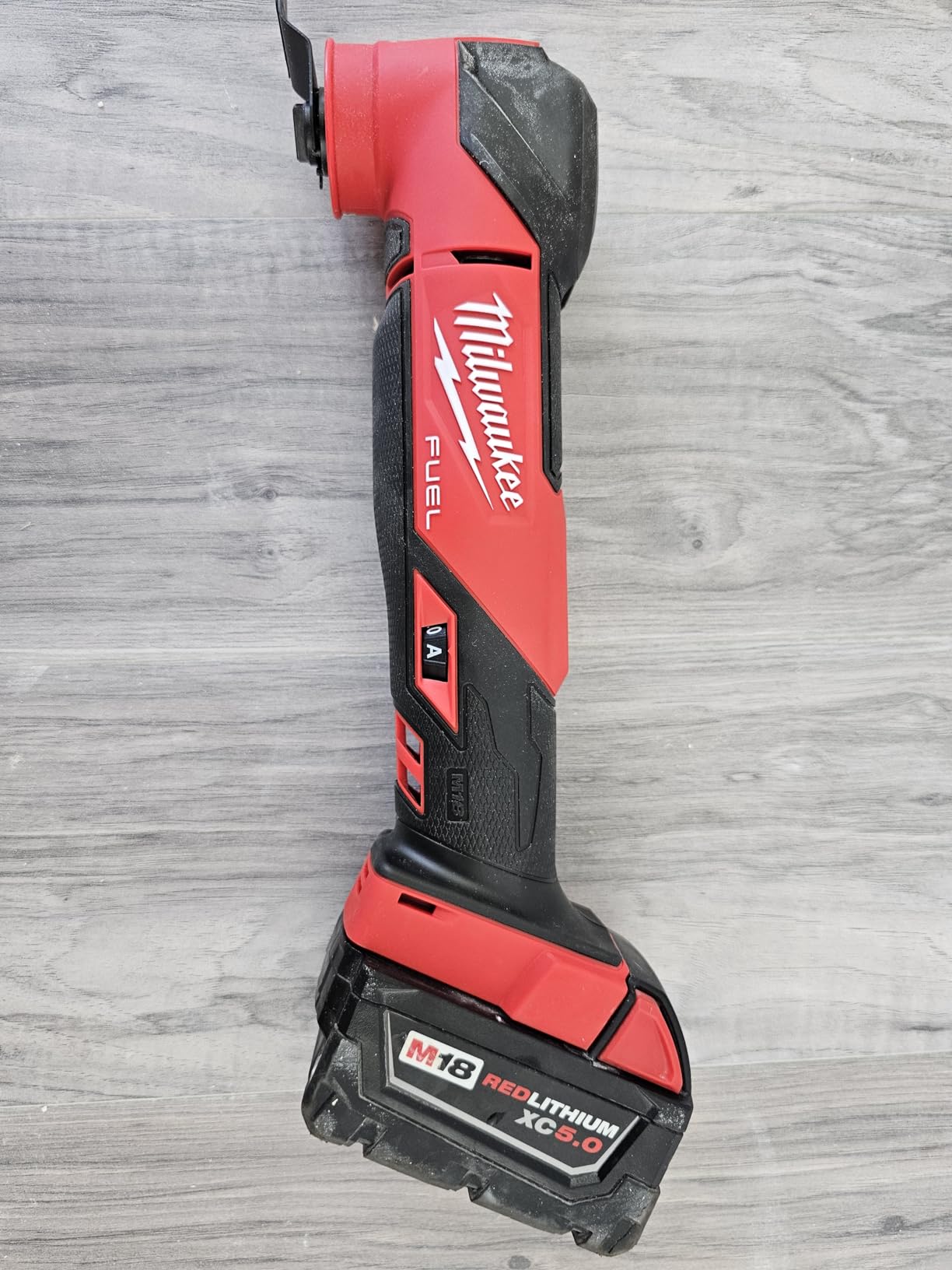
This is the pick for contractors and serious DIYers who cut every day. The M18 FUEL brushless motor pushes through wood, drywall and even embedded nails without stalling, and the 4.2-degree oscillation angle is the second widest here, so it removes material fast.
Auto-Load is the feature that changes technique. Instead of spinning up to full speed the instant you touch the material, the tool waits for load and then ramps. On a register cutout or a plunge into a wall, that removes the most common way people blow out a cut.
Vibration dampening keeps the whole tool noticeably calmer than competitors over a long session, which matters on repetitive work. The 180-degree span LED lights a cavity from more angles than a single forward lamp.
Owners upgrading from the non-FUEL 2626-20 on this list report a clear jump in power, and the tool-free accessory changes mean you are not hunting for a hex key mid-task.
When Auto-Load is worth switching on for
Any cut that starts blind. Plunging into a wall, sinking a blade into a stubborn nail head or cutting a shape out of sheet material all benefit from a tool that only accelerates when the blade is genuinely loaded.
For continuous removal work like bulk grout or long trim runs, the tool simply holds speed under load, which is where the FUEL motor earns its place on a professional site.
Who should skip this one
At 3.1 pounds it is the heaviest brushless option in the roundup, and forum users with existing M18 platforms note that it is also the priciest entry. If you are doing occasional household trim, that weight and cost are hard to justify.
It is a bare tool with nothing in the box beyond the machine, and the blade retaining screw needs checking under heavy use. Plan on a battery, a charger and a full blade set before the first job.
Buying Guide: How to Choose the Right Oscillating Multi Tool
Match the battery platform you already own
This is the first filter and it eliminates most of the list instantly. A 20V MAX DeWalt tool uses the same packs as your DeWalt drill and impact driver. A Milwaukee M18 tool uses M18 packs, and an M12 tool uses the smaller M12 packs. Ryobi ONE+ packs power a huge range of Ryobi equipment.
None of these packs cross between brands, so the real cost of a bare tool is the tool plus a pack plus a charger. If you already own packs, a bare tool is the cheapest path in. If you own nothing, buy the kit version. Forum answers on this topic are almost unanimous: match what you already have.
Our [best swaging tools guide](https://digitalartserved.com/best-swaging-tools/) follows the same logic for a different tool family, and the principle transfers.
Corded or cordless
Corded wins on uninterrupted power and zero platform commitment. Nothing stops mid-grout, nothing needs charging, and a shop with an outlet nearby gets more capability per pound of spending. The two corded picks here trade weight and amps for that reliability.
Cordless wins on freedom. You take the tool upstairs, into an attic, out to a deck or into a room with no socket. Variable speed, LED lights and brushless efficiency have narrowed the power gap, and for most homeowners cordless is now the more sensible default.
Our honest split: homeowners and finish carpenters should buy cordless, while anyone running teardown or full-bathroom grout in one sitting should seriously consider corded.
Blade interface: universal fit versus Starlock
There are two families of blade fitting. Universal fit, also called OIS, uses a lever and a clamp that accept open and closed shank blades from most brands. Five tools on this list use it, and both DeWalt models ship a universal adaptor to widen the range further.
Starlock is a keyed interface with deeper locating geometry, used by Bosch, Fein and Festool. It offers better accessory depth but locks you into that ecosystem. Nothing on this list is Starlock, which is a real limitation for readers who already own Bosch or Fein accessories.
For most buyers, universal fit plus an adaptor is the safer choice because cheap third-party blades genuinely fit. Forum complaints about poor third-party fit are usually about Starlock tools with no adapter.
Oscillation angle and OPM in plain language
OPM is oscillations per minute, and it tells you how fast the blade shakes. It is not the same as cutting speed. A wider oscillation angle, measured in degrees, means the blade sweeps a bigger arc on every stroke, so it clears more material per pass. The AVID POWER at 4.5 degrees and the Milwaukee M18 FUEL at 4.2 degrees are the fastest cutters here on wood.
Use low OPM for sanding and fine finish work, where a high speed burns the workpiece, and high OPM for demolition, cutting and grout. This is also the most common reason a multi-tool smokes and burns instead of cutting: a dull blade run at full speed just turns into friction.
Vibration control and weight
Vibration is the quietest spec and the one users complain about most. It causes hand and wrist pain over long sessions, and it ruins control on delicate work. The Ryobi ONE+ and the Milwaukee M18 FUEL both use vibration isolation, and the M12 Milwaukee trades vibration for a 1-pound body.
Weight follows the same logic. If you work overhead, anything under 2 pounds changes the job. The M12 at about 1 pound and the Ryobi at 1.9 pounds are the two picks that genuinely help up there.
Blade costs, bare tool versus kit, and honest durability
Blades are the real running cost, and the forum consensus is blunt: a budget tool body with good carbide or bi-metal blades beats an expensive body with the cheap blade in the box. HCS blades are for wood and soft material, bi-metal handles nails and metal, carbide-tooth is for hardened material and masonry, and diamond grit is for grout and tile.
For demolition, buy cheap multi-packs. For precision trim where the cut is the finish, buy fewer, better carbide blades. Replacing a blade costs a fraction of replacing a tool, and a sharp blade is the single biggest factor in whether a cut looks professional.
Finally, check the warranty before you buy. The 2626-20 carries a 5-year tool warranty, the DEWALT kit a 3-year limited warranty, and the Ryobi ONE+ only 30 days. Warranty length is a reasonable proxy for how the manufacturer expects the tool to be treated.
Frequently Asked Questions
Which brand of oscillating multi-tool is considered the best?
For most buyers the DEWALT 20V MAX XR line is the strongest all-round answer, because the brushless motor, the three-speed selector plus trigger control and the universal accessory adaptor combine into a tool that is precise and hard to stall. Milwaukee is the pick if you want an all-metal gear case and a longer warranty, and Ryobi ONE+ is the pick if low vibration and low weight matter most. The best brand is honestly the one whose batteries you already own.
Which multitool is considered the best quality?
Quality at the top of the market means a brushless motor, a tool-free blade change, an all-metal or well-damped gear case and a warranty measured in years. The Milwaukee 2626-20 with its 5-year tool warranty and metal gear case, and the Milwaukee 2836-20 M18 FUEL with Auto-Load and vibration dampening, both meet that bar. The DEWALT DCS356C1 matches them on rating while shipping with a battery and charger.
Which oscillating tool is better, DeWalt or Milwaukee?
DeWalt wins on control and on what arrives in the box. The DCS356C1 kit includes a battery, a charger and two blades, and its dual-grip variable-speed trigger gives very fine control, while the DCS354B is the lighter of the two DEWALT bodies at 2.3 pounds. Milwaukee wins on durability and output. The 2626-20 has an all-metal gear case and a 5-year warranty, and the M18 FUEL 2836-20 has the highest raw cutting power plus auto-load soft start. If you own DeWalt batteries, buy DeWalt. If you own M18 packs, buy Milwaukee.
Who makes the best oscillating multi-tool blades?
Blade quality is driven by the material the teeth are made from, not the tool brand. High carbon steel is for wood only. Bi-metal is the sensible default because it survives nails and staples. Carbide-tooth is worth the money for hardened material, masonry and nail-embedded timber, and diamond grit is the correct choice for grout and tile. Buyers on tool forums repeatedly report that a budget tool body paired with good carbide or bi-metal blades outperforms an expensive body with the blade it ships with.
What is the best multitool for value for money?
The Ryobi ONE+ PCL430B is the value pick among cordless tools here, combining a 1.9-pound body, class-leading low vibration and a 20,000 OPM speed dial with ONE+ battery compatibility. The Hammerhead HAMT022 is the value pick among corded tools, giving a 20,000 OPM motor, a universal collet and a 2-year warranty without a battery platform commitment. Remember that two of the picks on this list are tool-only, so the real cost includes a pack and a charger.
Is Fein better than DeWalt?
For professional reliability, Fein has the reputation, and it invented the oscillating multi-tool, so tool forums routinely describe the Multimaster as the pro standard. For a homeowner, the DeWalt usually makes more sense, because the 20V platform is widely owned, parts are easy to find and the kit versions include a battery and charger. Note that none of the tools here use the Fein blade interface, so if you already own Fein accessories, plan your blade supply before choosing anything on this list.
Which Oscillating Multi Tool Should You Buy?
The DEWALT DCS356C1 is our pick for the best oscillating multi tools in 2026, because it is the only one here that is genuinely complete in the box and still handles hard loads without complaint. If your priority is raw cutting power and you already run M18 packs, the Milwaukee 2836-20 M18 FUEL earns its place. If low weight and low vibration decide your comfort, the Ryobi ONE+ or the 1-pound Milwaukee M12 will change how long you can work.
Start with the batteries you already have, buy a kit if you have none, and spend a little of the difference on good blades. The tool is the body; the blade is the cut.