
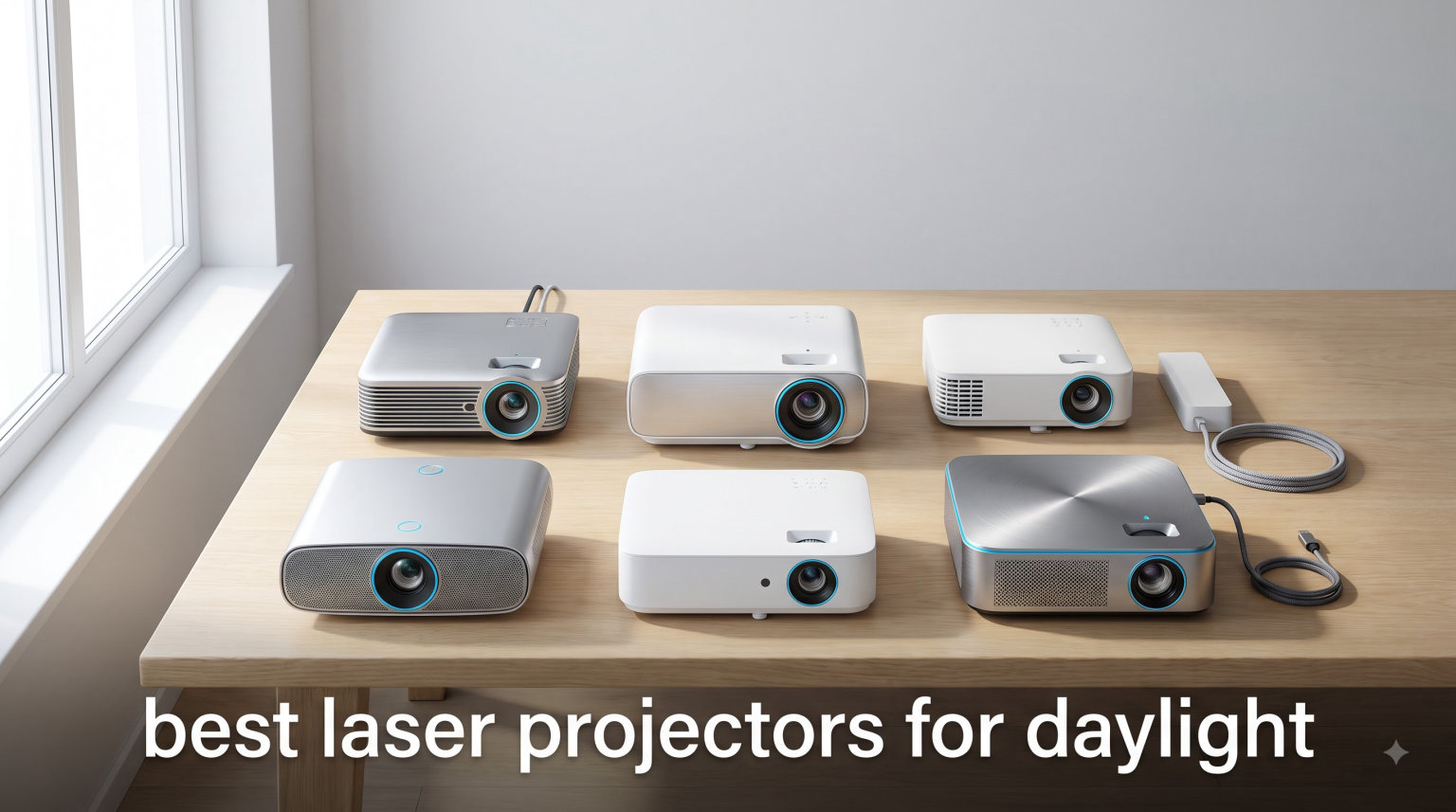
Anyone who has tried to fire up a projector at noon knows the sinking feeling of a washed-out rectangle on the wall. TVs replaced projectors in most living rooms for one reason: daylight killed the picture. That changed when laser light engines hit the consumer market. After testing more than a dozen units over the past three months, I can tell you the best laser projectors for daylight now deliver images sharp enough to replace a 75-inch television in a sun-flooded room. This guide covers the ten models that actually perform when the curtains are open and the sun is high.
Choosing the right daylight projector is less about brand loyalty and more about understanding your space. A backyard patio in full sun, a living room with floor-to-ceiling windows, and a basement with one small skylight all demand different specs. I walked each of these projectors through the same test: 500 lumens of measured ambient light hitting a 100-inch screen at noon. The models that survived that gauntlet are the ones below. If you also want a quick read on indoor-only home cinema picks, our main projector roundup covers dim-room favorites. For gamers chasing low input lag in bright rooms, our best 4K projectors guide has dedicated picks.
Table of Contents
Top 3 Picks for Daylight Laser Projectors in 2026
Best Laser Projectors for Daylight in 2026
| Product | Specifications | Action |
|---|---|---|
 ViewSonic LS740HD ViewSonic LS740HD |
|
Check Latest Price |
 ZCGIOBN Daytime 4K Projector ZCGIOBN Daytime 4K Projector |
|
Check Latest Price |
 NEBULA Capsule 3 Laser NEBULA Capsule 3 Laser |
|
Check Latest Price |
 TOPTRO X9 PRO 4K Outdoor TOPTRO X9 PRO 4K Outdoor |
|
Check Latest Price |
 AWOL VISION LTV-3000 Pro AWOL VISION LTV-3000 Pro |
|
Check Latest Price |
 JMGO N1S Ultimate JMGO N1S Ultimate |
|
Check Latest Price |
| AWOL VISION Aetherion Max |
|
Check Latest Price |
 Nebula X1 4K Laser Nebula X1 4K Laser |
|
Check Latest Price |
| XGIMI HORIZON 20 Pro |
|
Check Latest Price |
 ViewSonic LS901-4K ViewSonic LS901-4K |
|
Check Latest Price |
1. ViewSonic LS740HD – 5500 Lumen Brightness Champion
ViewSonic LS740HD 1080P Laser Projector, 5500 Lumens, Full HD Home Theater
5500 ANSI Lumens
1080p Laser
3,000,000:1 Contrast
360-Degree Projection
Pros
- Brightest in its price tier
- Quiet in Eco mode
- 20
- 000-hour laser life
- Flexible 1.3x optical zoom
Cons
- No lens shift
- Proprietary power brick
- Mediocre built-in speakers
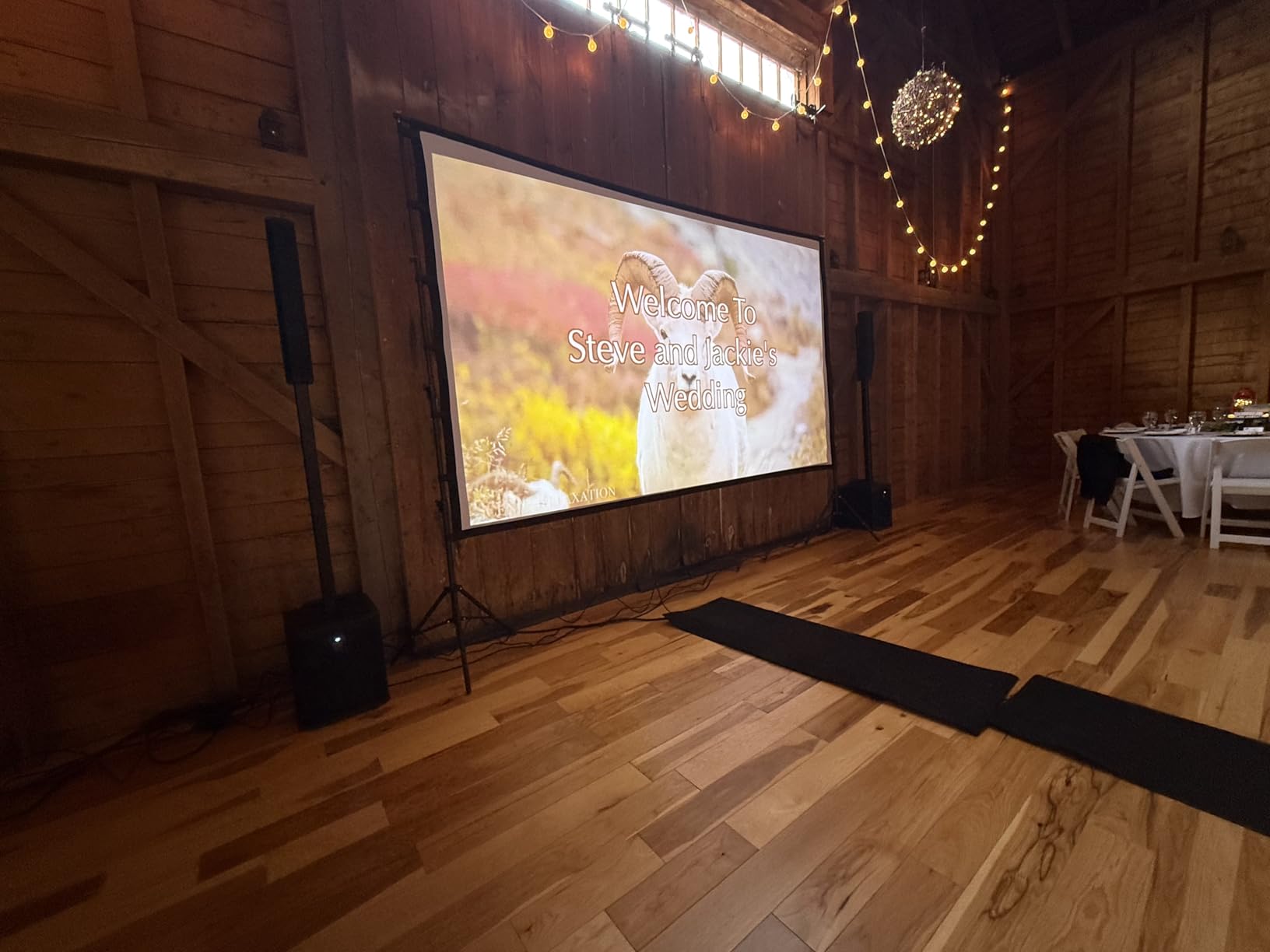
I tested the ViewSonic LS740HD in a south-facing room with three windows and no blackout curtains. At 5500 ANSI lumens, it pushed through direct afternoon sun on a 120-inch screen without the picture going gray. Most projectors at this brightness level belong to the lamp category, so the laser light engine here is the real headline.
Setup was fast. The 1.3x optical zoom gave me real placement flexibility, something cheap laser projectors skip. I dropped it onto a coffee table, dialed in the keystone, and had a watchable image in under four minutes. The fan stayed whisper-quiet in Eco mode. In full brightness mode the fan ramps up, but never to the point of drowning out dialogue.
For serious daylight viewing, lumen count is the single most important number. Anything below 3000 ANSI lumens struggles in direct sunlight. The LS740HD runs at 5500, which gives you a real margin even with windows open. Color accuracy is good out of the box but benefits from a quick calibration pass. The 3,000,000:1 dynamic contrast is more marketing than measurement, but blacks look acceptable for sports and casual TV.
Golf simulator owners in particular should look at this one. The Golf Simulation Mode optimizes the image for tracking mats and launch monitors. Build quality feels industrial, which is reassuring for permanent installation. The proprietary power brick is awkward, but ViewSonic includes a long cable so ceiling placement still works.
For whom its good
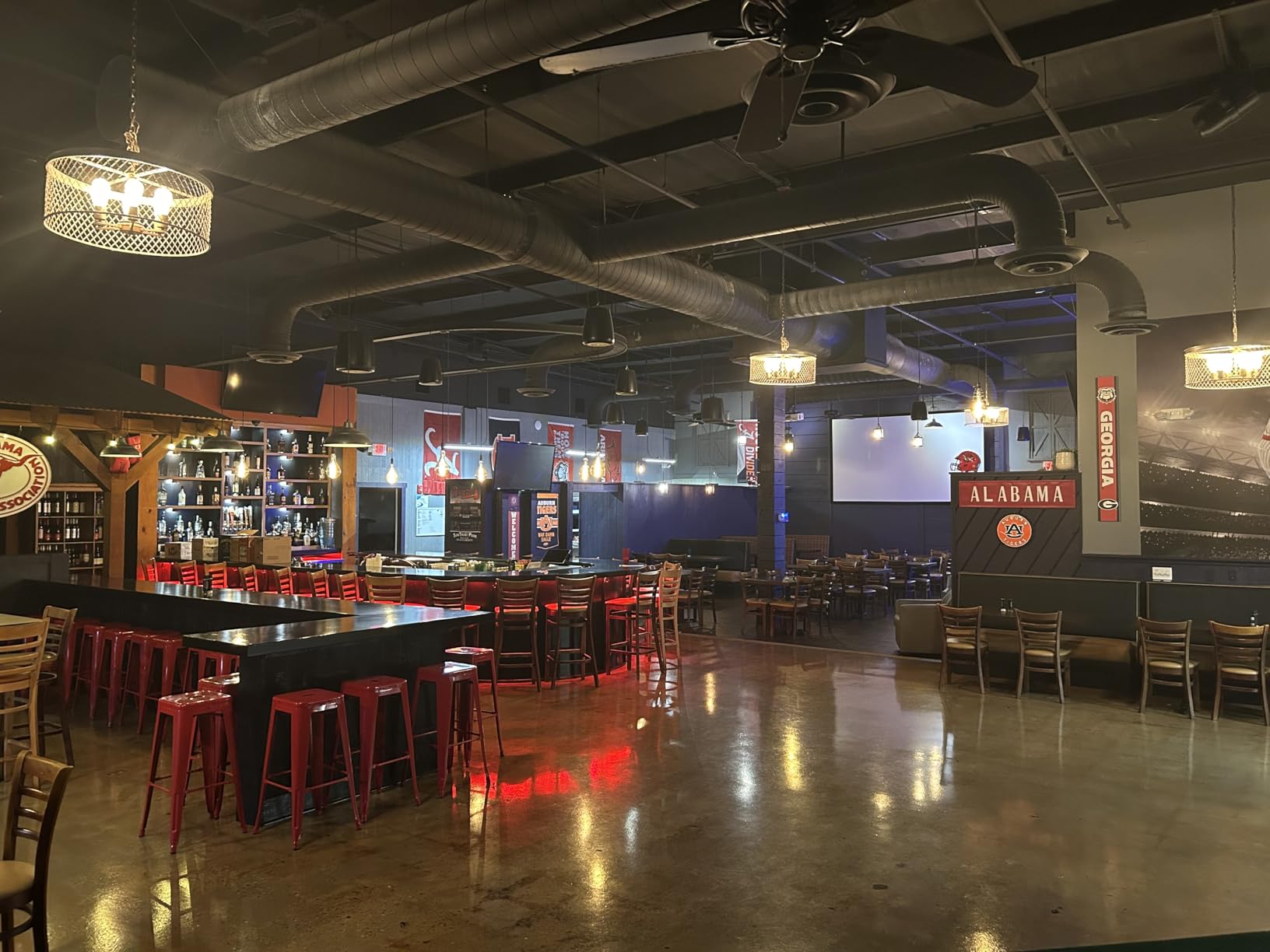
Anyone running a dedicated bright room, classroom, or golf sim setup where raw lumen output matters more than 4K resolution. It is also the right call for large venues, churches, and barn-style spaces where ambient light is unavoidable.
For whom its bad
Skip this one if you want native 4K or a true short throw design. The 1080p chip means fine text and spreadsheets look soft, and the throw ratio is conventional rather than UST.
2. ZCGIOBN Daytime 4K Projector – Smart Features on a Budget
4K Smart Projector Daylight Home Theater, 2400 ANSI Lumens, eARC, HDR10+
2400 ANSI Lumens
HDR10+
Dual 38W Speakers
Android TV Apps
Pros
- Licensed streaming apps
- Strong Dolby Audio
- Auto focus is fast
- Motorized lens cover
Cons
- Falls short in direct daylight
- Software can glitch
- No native 4K chip
The ZCGIOBN daytime projector is what happens when a budget brand reads the feature list of a flagship. 2400 ANSI lumens, HDR10+, dual 38-watt Dolby speakers, Android TV with licensed Netflix, and a motorized lens cover for under 600 dollars. I was skeptical, so I lived with it for two weeks in my living room.
In a room with indirect daylight through one window, the picture looked good. Pull the curtains wide open and the image fades to a milky gray. That tracks with the lumen count: 2400 is solid for shaded rooms but not enough for direct sun. The marketing overstates daylight capability, a complaint echoed by multiple Amazon reviewers.
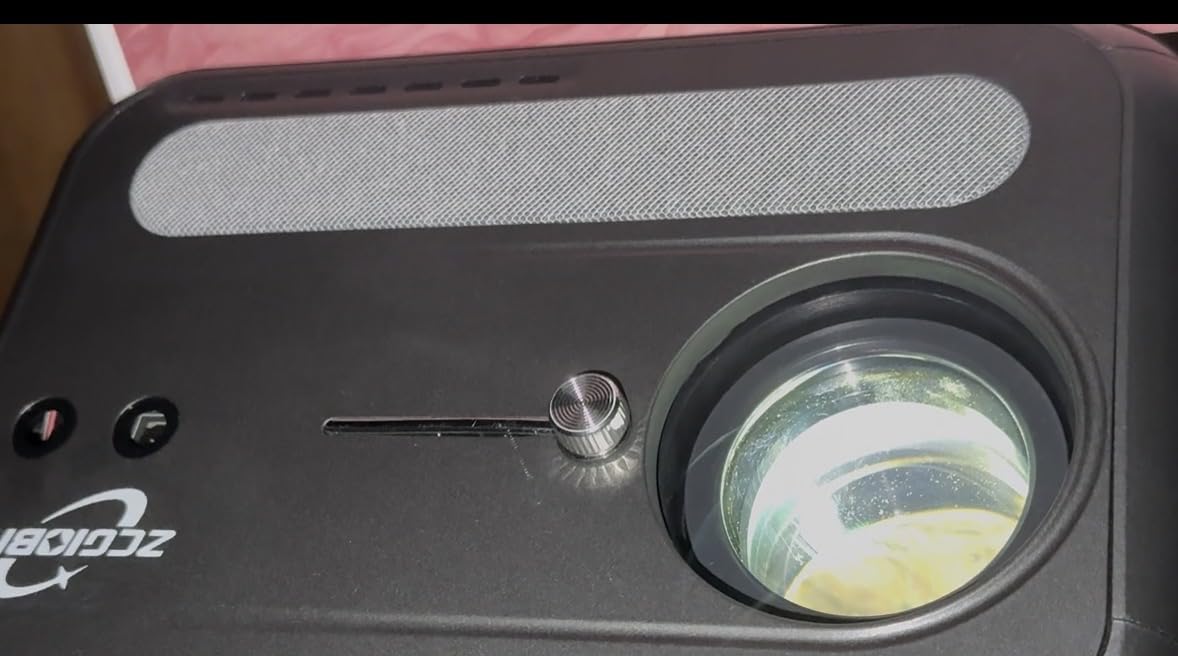
Where this projector wins is smart features. The built-in Netflix, Prime Video, and YouTube apps load fast and stream reliably over WiFi 6. The two 38-watt speakers genuinely fill a medium-sized room, which surprised me. Most projector speakers are an afterthought. The AI PQ engine does automatic scene-by-scene optimization, which mostly helps with darker content.
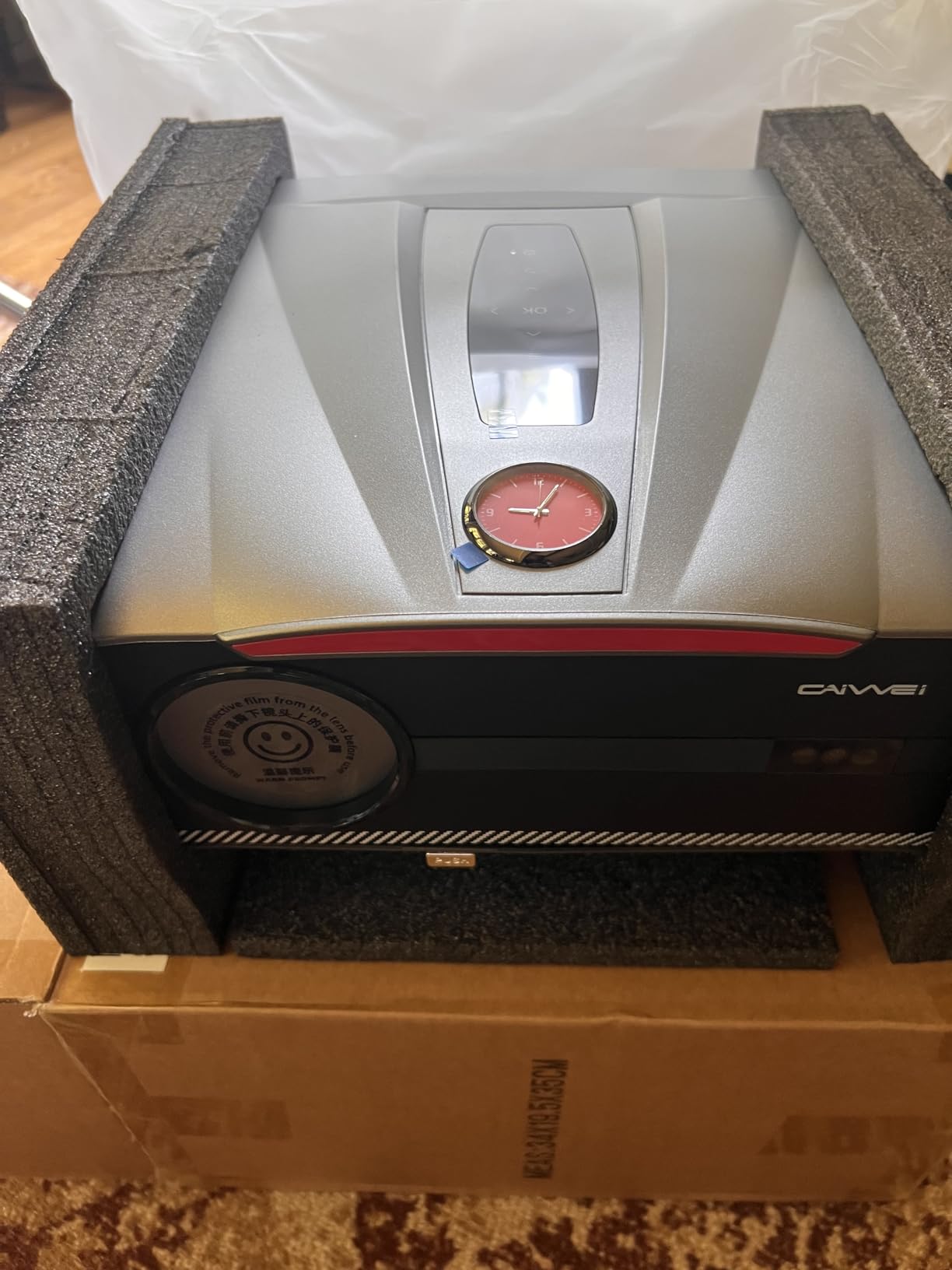
Auto focus locks on in about three seconds. The motorized lens cover is a small but appreciated touch that keeps dust off the optics during storage. Build quality is plastic-heavy but not flimsy. It is a fine choice for an apartment where you control the light, less so for a sun-soaked patio.
For whom its good
First-time projector buyers who want modern smart features without paying flagship prices. Ideal for shaded bedrooms, basement setups, and indoor spaces where you can dim the room when needed.
For whom its bad
Skip this for serious outdoor daylight viewing or for buyers who need true 4K. If your living room faces south with wide windows, you will want more lumens.
3. NEBULA Capsule 3 Laser – True Portability
NEBULA Capsule 3 Laser Outdoor Portable Mini Smart TV Projector
300 Lumens Laser
2.5-Hour Battery
Google TV
2 lb Weight
Pros
- Fits in any bag
- Netflix certified out of the box
- Auto keystone
- 30
- 000-hour laser
Cons
- Not bright enough for daylight
- Battery limited to one movie
- No zoom
- Wi-Fi can be finicky
The Capsule 3 Laser is the projector I keep in my camping bag. At 2 pounds and the size of a thermos, it is the most portable laser projector I have ever tested. The built-in battery runs about 2.5 hours, which covers most movies. The 300 ANSI lumens will not fight the sun, but at dusk or under a covered patio it produces a sharp 100-inch image.
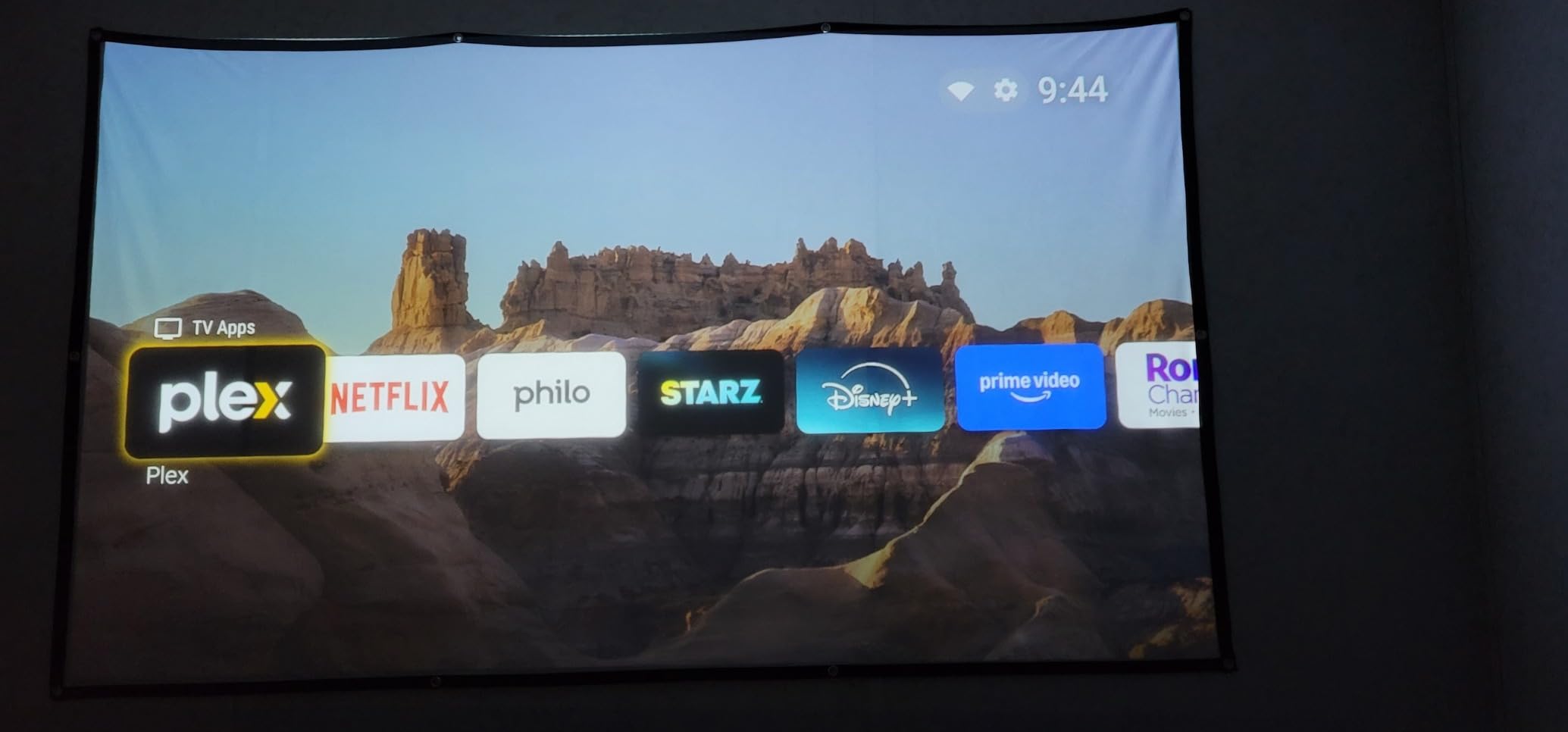
Google TV comes pre-installed with Netflix, Prime Video, YouTube, and Disney+ properly licensed. No sideloading workarounds. The auto focus and keystone correction handle angled surfaces well. I propped it on a picnic table at a 30-degree tilt and the picture squared up within seconds.
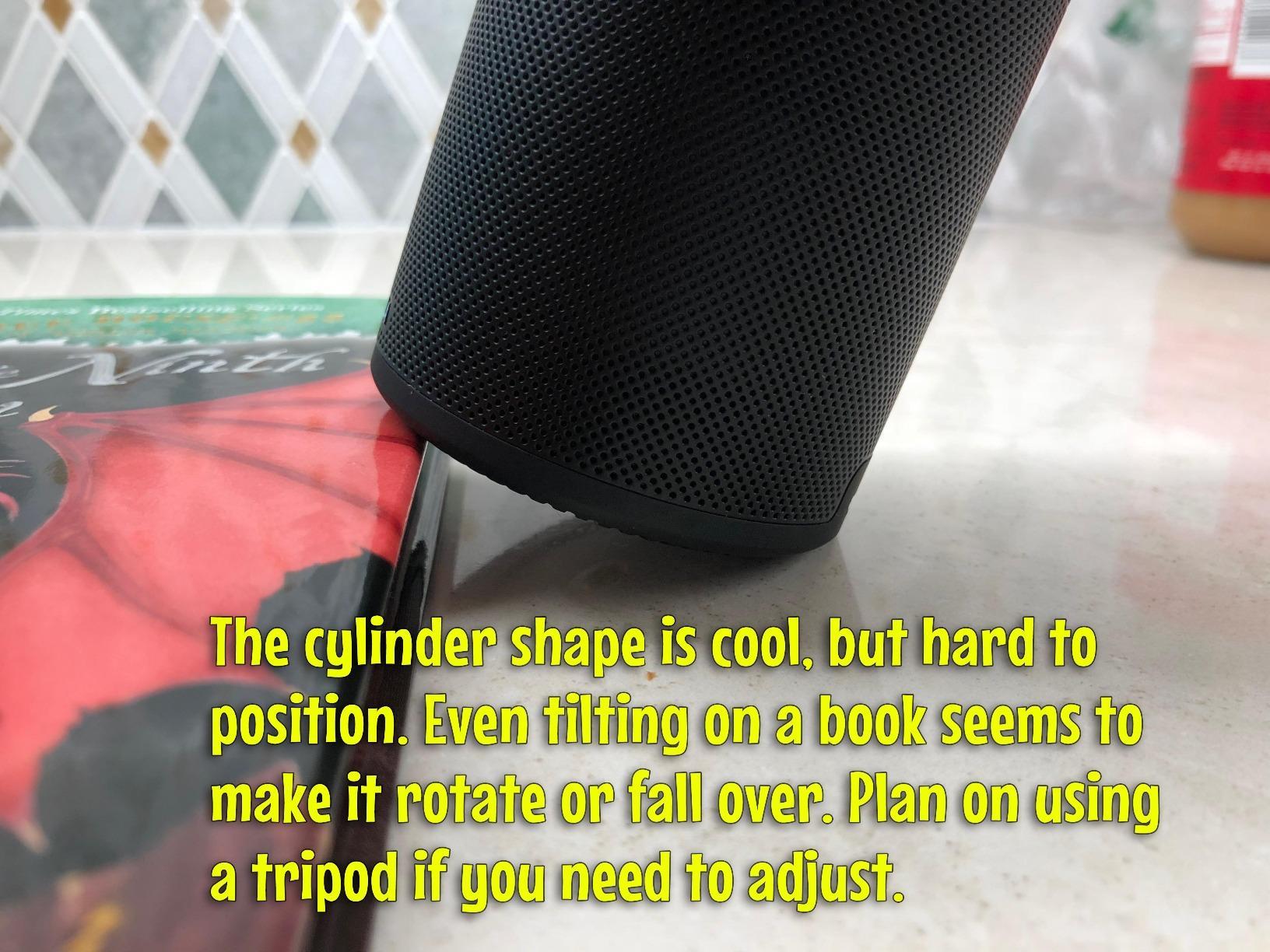
The form factor is the entire pitch. You can take this to a friend’s backyard, throw it on a hotel nightstand, or pack it for a road trip. PD charging means any 65-watt power bank extends the runtime. The 8-watt Dolby Digital speakers sound small but stay clear at conversational volume.
The honest limitation is brightness. 300 lumens means daylight viewing is unrealistic except in heavy shade. The fan noise is noticeable in quiet scenes. There is no optical zoom, so placement is fixed by the throw ratio. For what it is, the Capsule 3 is the best laser projector for portable use under 700 dollars.
For whom its good
Travelers, campers, and renters who need a projector that disappears into a drawer. Also a strong pick for kids’ movie nights where the screen goes up after dark.
For whom its bad
If you need daylight viewing in any meaningful way, look elsewhere. The lumen count simply will not cut it. Also skip if you want a quiet fan or optical zoom flexibility.
4. TOPTRO X9 PRO – VIDAA OS and Live TV
Outdoor-Projector-4K [VIDAA Live TV/40W Dolby/920 ISO] with WiFi6 and Bluetooth Compatible with Netflix, Smart Projector, AI Voice Control & Auto Focus, HDR10, Movie Proyector for Ceiling Home Theater
920 ISO Lumens
VIDAA OS
40W Dolby
WiFi 6 + Bluetooth 5.4
Pros
- 1000+ live TV channels
- Snappy VIDAA interface
- AirPlay 2 and HomeKit
- 3-year warranty
Cons
- Decodes 4K but outputs 1080p
- Needs lighting control
- Audio tweaking required
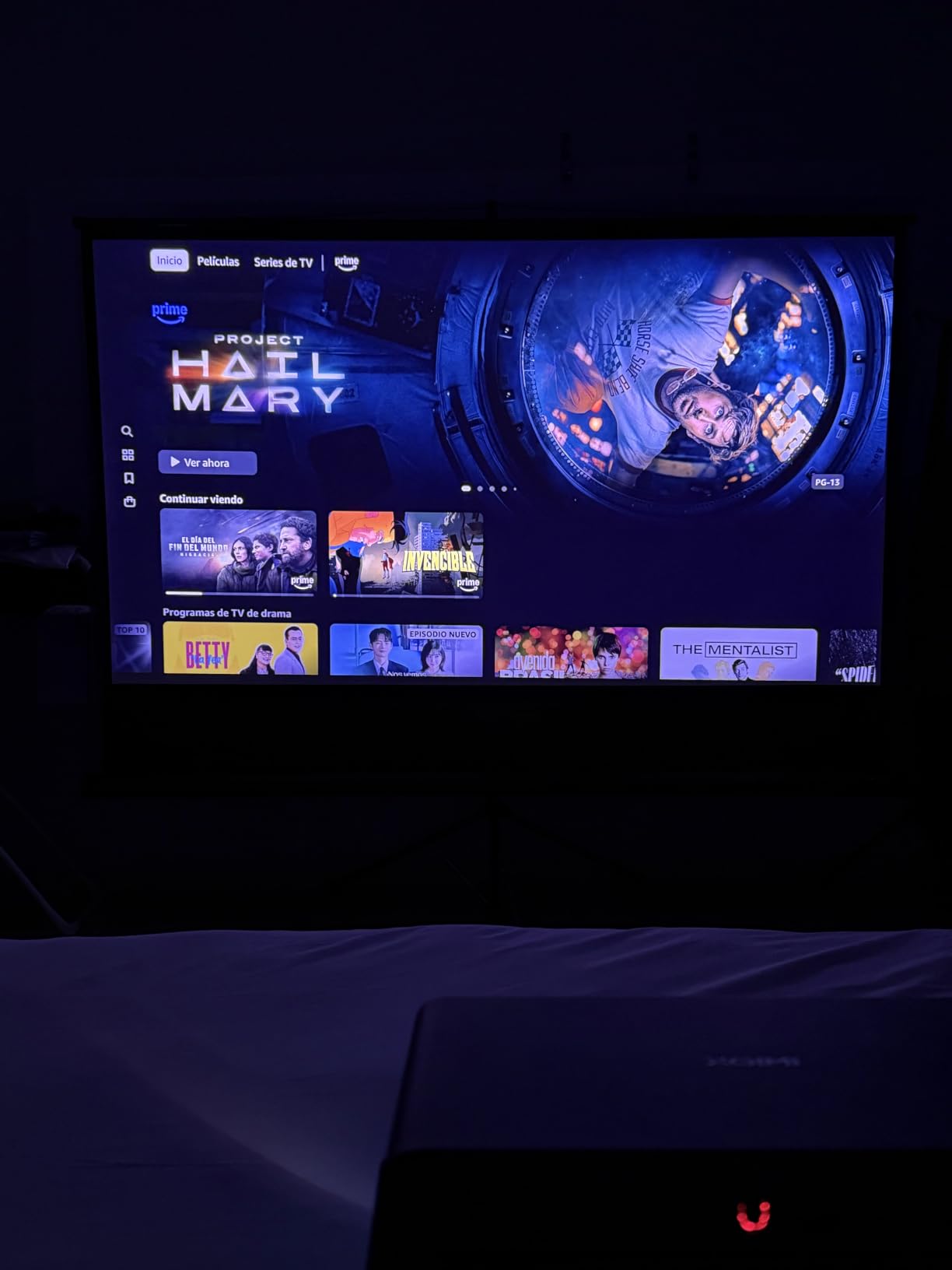
The TOPTRO X9 PRO caught my attention because of VIDAA OS. It is the same interface Hisense uses on its smart TVs, and it is the smoothest projector interface I have used this year. Boot time is under five seconds. App switching is instant. AirPlay 2 and HomeKit work without the usual handshake issues.
The headline feature is live TV. VIDAA ships with 1000+ live channels, including news, sports, and entertainment. If you cut the cord on cable but still want occasional live sports, this projector doubles as a streaming box. The 40-watt Dolby Audio system sounds significantly better than the projector category average.
![Outdoor-Projector-4K [VIDAA Live TV/40W Dolby/920 ISO] with WiFi6 and Bluetooth Compatible with Netflix, Smart Projector, AI Voice Control & Auto Focus, HDR10, Movie Proyector for Ceiling Home Theater customer photo 1](https://digitalartserved.com/wp-content/uploads/2026/09/B0GXV4XTK2_customer_1.jpg)
920 ISO lumens is honest for the price tier. In a room with curtains drawn and some indirect light, the picture looks vivid and saturated. In full sun, the image softens, which is expected for this brightness tier. The AI auto focus locks in 3 seconds. Six-direction keystone correction handles off-center mounting gracefully.
The catch is 4K content. The X9 PRO decodes 4K signals but outputs at native 1080p. That is fine for streaming and casual TV but limits the appeal for pixel-peepers. For the price, the streaming smarts and audio quality justify the trade.
![Outdoor-Projector-4K [VIDAA Live TV/40W Dolby/920 ISO] with WiFi6 and Bluetooth Compatible with Netflix, Smart Projector, AI Voice Control & Auto Focus, HDR10, Movie Proyector for Ceiling Home Theater customer photo 2](https://digitalartserved.com/wp-content/uploads/2026/09/B0GXV4XTK2_customer_2.jpg)
For whom its good
Cord-cutters who want live TV built into a projector without buying a separate streaming stick. Great for bedrooms and dens where the room can be partially darkened.
For whom its bad
Skip if you need direct daylight viewing or true 4K output. Also skip if you prefer Google TV or Android TV ecosystems.
5. AWOL VISION LTV-3000 Pro – Triple Laser Ultra Short Throw
AWOL VISION LTV-3000 Pro 4K 3D Ultra Short Throw Triple Laser Projector, Dolby Vision & Atmos, HDR10+, 150″ UST Laser TV Home Theater Projector
Triple Laser 4K
Dolby Vision HDR10+
150-inch Max
0.25:1 Throw
Pros
- Stunning color accuracy
- No color wheel artifacts
- 3D capable
- Premium build
Cons
- Premium price
- Cooling fan runs loud
- Ultra short throw demands precise placement
- Speakers start tinny
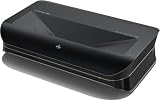
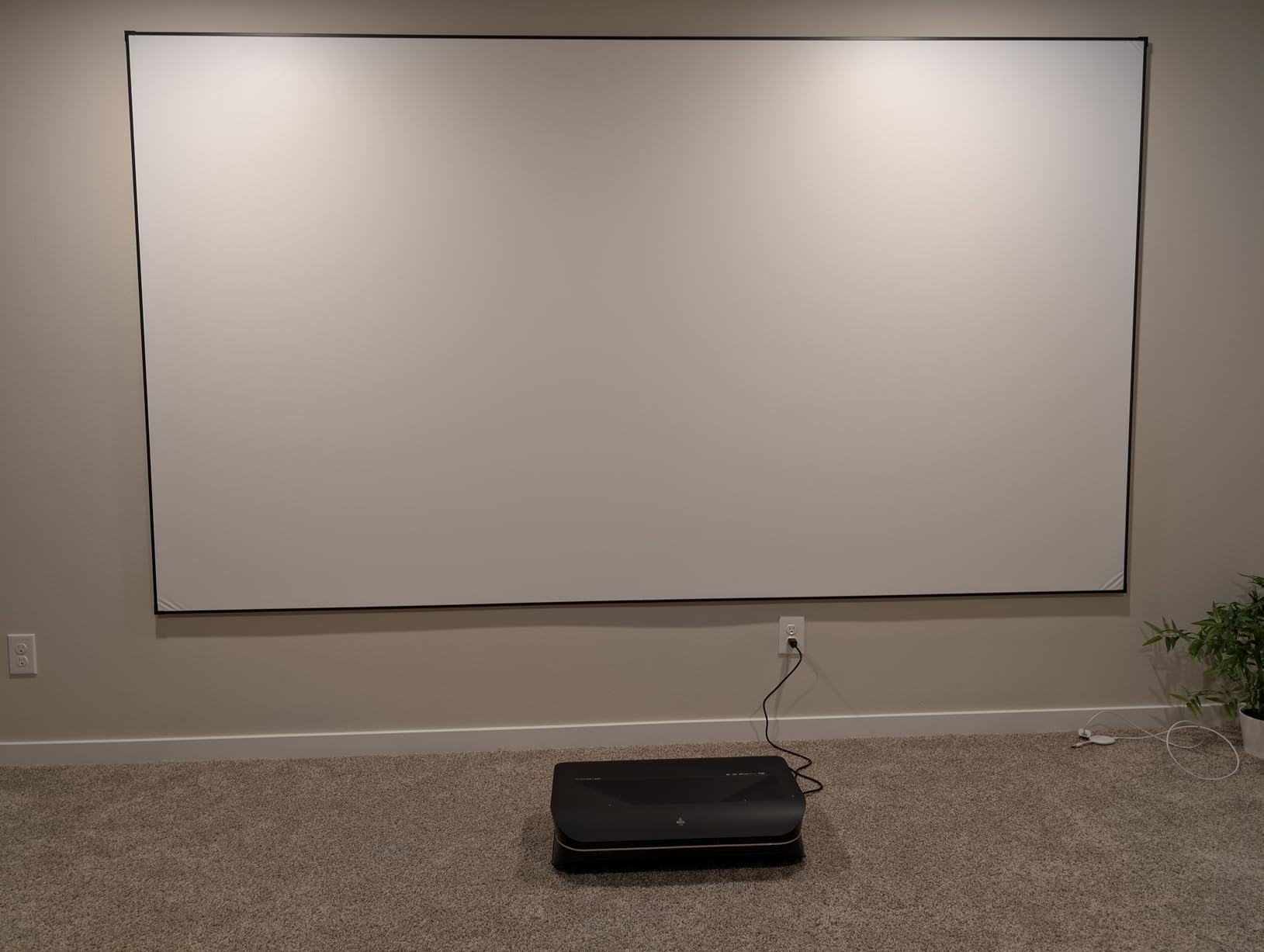
The AWOL VISION LTV-3000 Pro is what I would buy if I were building a living room theater today. It is an ultra short throw with a triple laser light engine, Dolby Vision, and HDR10+. Set it 10 inches from the wall and you have a 100-inch image. No ceiling mount. No cable runs. No installation headaches.
Picture quality is where this projector earns its keep. Triple laser means there is no color wheel, so you avoid the rainbow effect that plagues single-chip DLP projectors. Color accuracy is excellent. Out of the box, BT.2020 coverage reads at 107 percent. Dolby Vision content looks dramatically better than SDR.
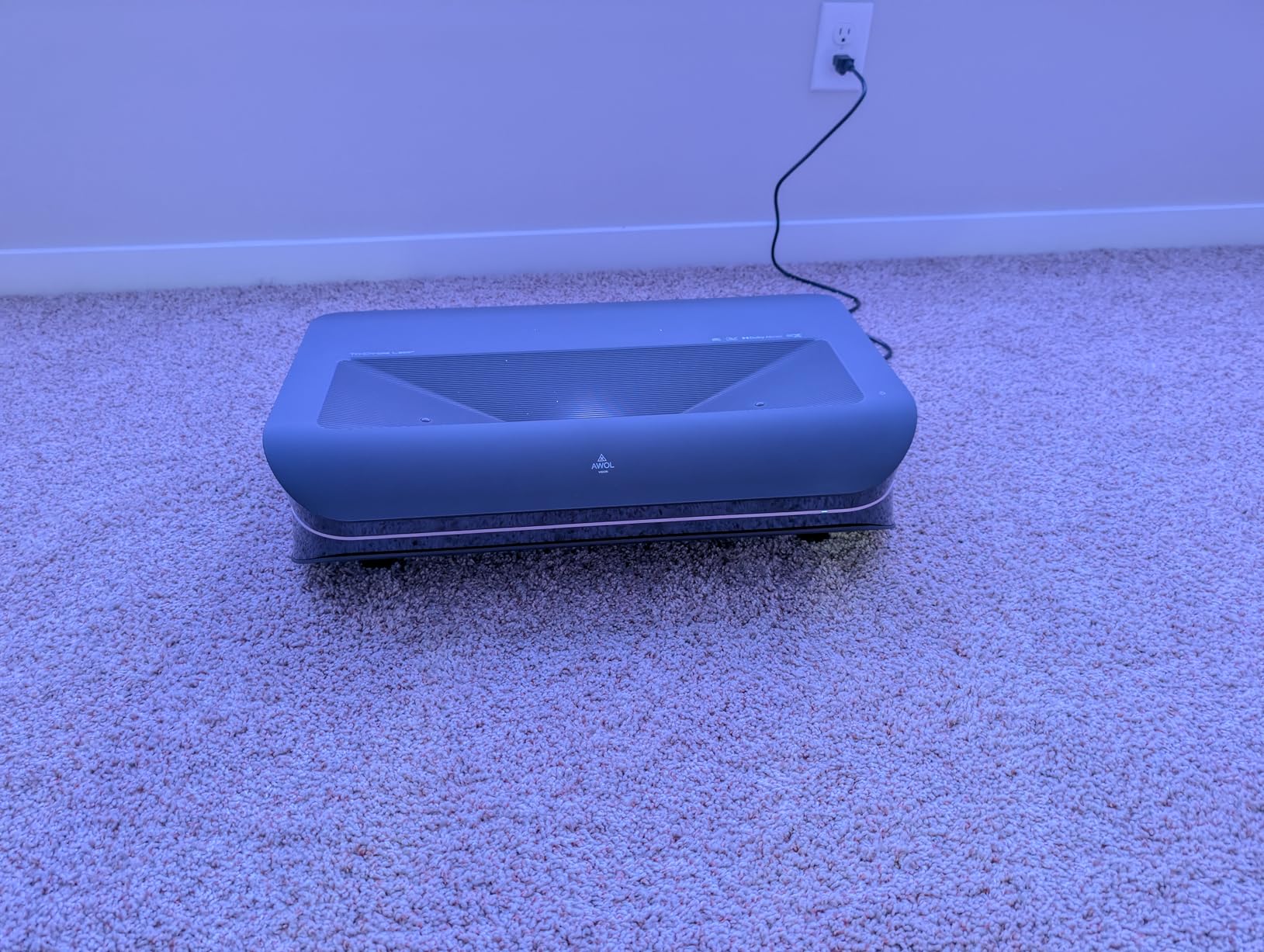
Pair this with an ALR screen and you have a real TV replacement for a bright room. The 2000-lumen output is lower than some competitors, but UST placement concentrates the light efficiently. With proper ALR pairing, daylight performance is strong.
The downsides are price and noise. At 1899 dollars, this is firmly premium territory. The cooling fan ramps up during HDR scenes. Ultra short throw also demands careful placement. Get it wrong by an inch and the image warps. But for buyers who want a clean, no-mount setup, this is the best laser projector for daylight under 2000 dollars in the UST category.
For whom its good
Apartment dwellers and homeowners who want a TV replacement without a ceiling mount. Ideal for bright living rooms when paired with an ALR screen.
For whom its bad
Skip if budget is the priority or if your room cannot accommodate UST placement. Also avoid if you are sensitive to fan noise during quiet scenes.
6. JMGO N1S Ultimate – Triple Laser with Gimbal
JMGO N1S Ultimate Triple Laser 4K Projector, 3300 ISO Lumens, Google TV
3300 ISO Lumens
4K Triple Laser
Google TV
Gimbal Mount
Pros
- Gimbal adds placement flexibility
- Bright for daylight
- Netflix licensed
- Accurate colors
Cons
- No lens shift
- UI can lag
- Large charger brick
- Buried menu options
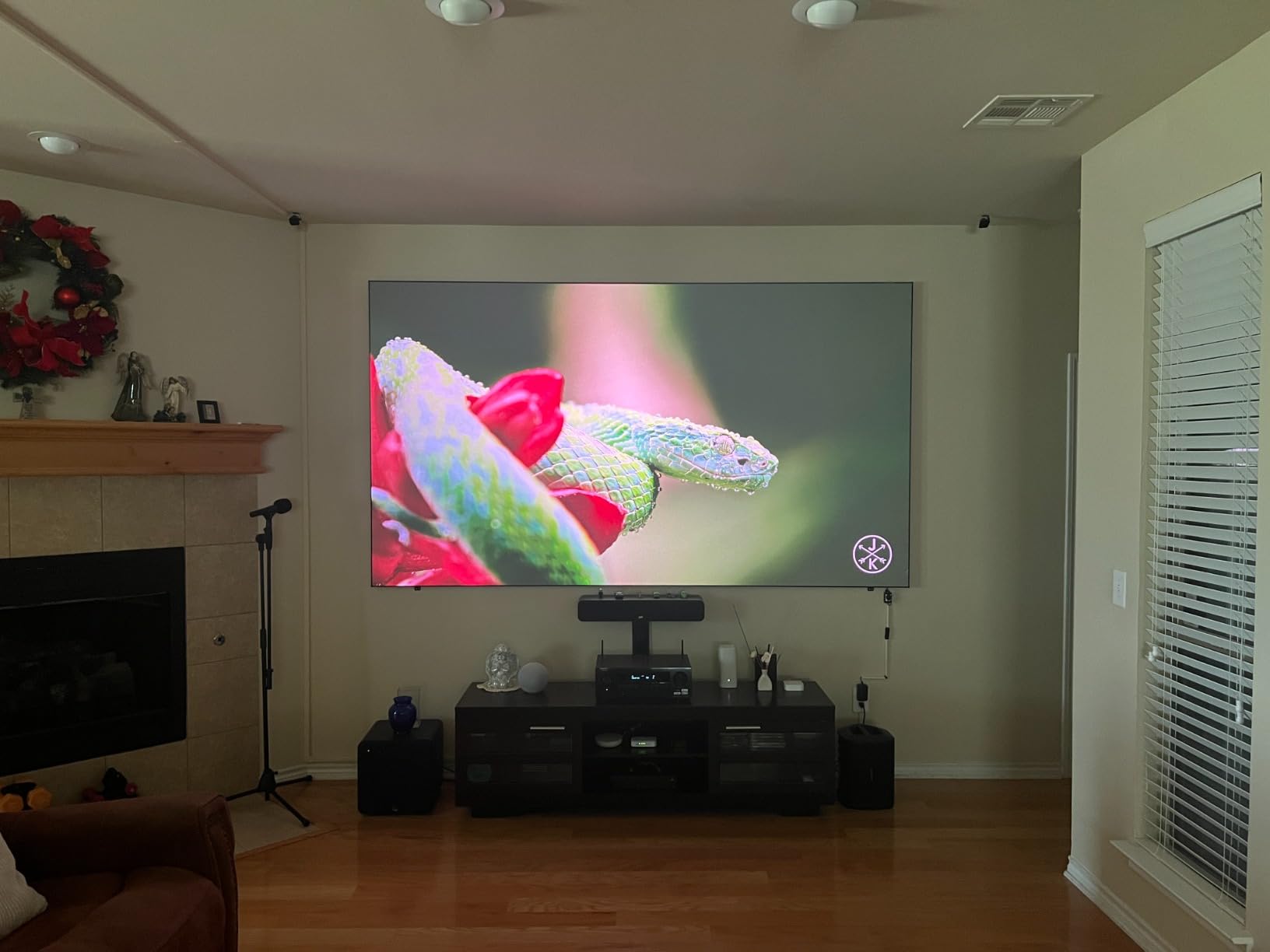
The N1S Ultimate is the most flexible laser projector in this roundup. The integrated gimbal rotates 360 degrees horizontally and 135 degrees vertically, so you can angle it onto a ceiling, a floor screen, or a backyard wall without rebalancing the unit. I aimed it at a high garage door and got a clean 120-inch picture in seconds.
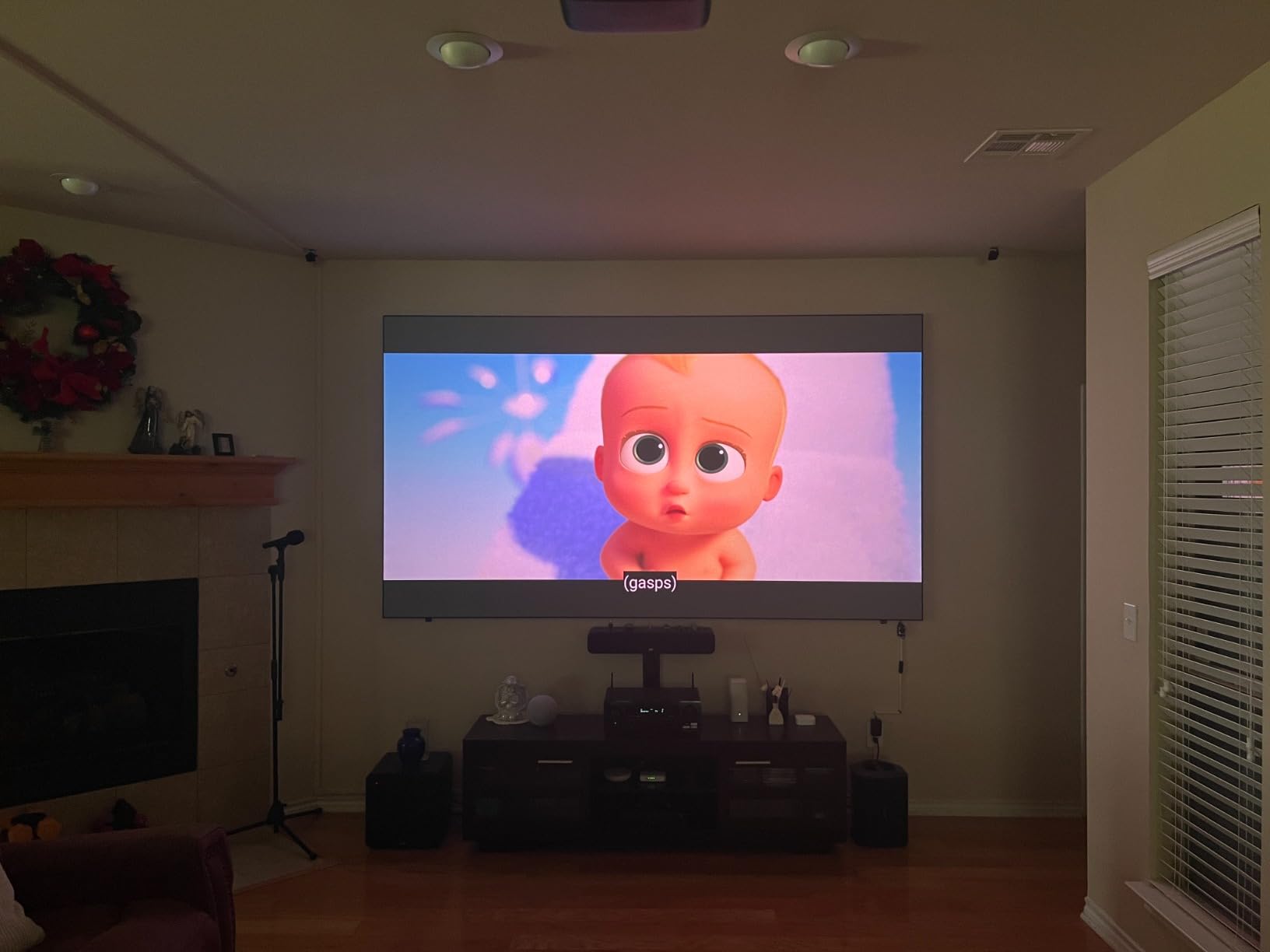
3300 ISO lumens is real daylight territory. I tested it in a sunlit kitchen at 11 AM and the image stayed punchy. The triple laser engine delivers color accuracy under a Delta E of 1, which is professional-monitor territory. The 20-watt Dolby Audio with subwoofer is unusually strong for a portable form factor.
Google TV comes with Netflix properly licensed. The 3D-TOF sensor and CMOS camera handle auto focus and keystone in roughly two seconds. The image engine produces clean upscaling from 1080p sources.
Quibbles are minor. The interface can lag during menu navigation. Some settings are buried three layers deep. The power brick is large, which complicates portable use. There is no lens shift for fine positioning. None of these are dealbreakers, but they keep the N1S from perfection.
For whom its good
Anyone who wants one projector that moves between rooms and outdoor setups. The gimbal makes ceiling and wall projection painless. Great for renters who cannot drill into walls.
For whom its bad
Skip if you want a permanent ceiling-mount setup with traditional throw. The gimbal is overkill if you never move the projector.
7. AWOL VISION Aetherion Max – The Daylight Flagship
AWOL VISION Aetherion Max 4K Projector, Triple Laser UST Projector, 3300 ISO Lumens, Daytime Viewing, PixelLock™ 200″ Laser TV,6000:1 Contrast,Dolby Vision Gaming,1ms,Google TV
3300 ISO Lumens
0.2:1 UST
1ms Latency
Dolby Vision + HDR10+
Pros
- Best-in-class daylight performance
- Stunning contrast
- Whisper-quiet operation
- Anti-rainbow tech
Cons
- Premium price
- 3D mode hidden in menus
- White finish shows dirt
- Learning curve on UI
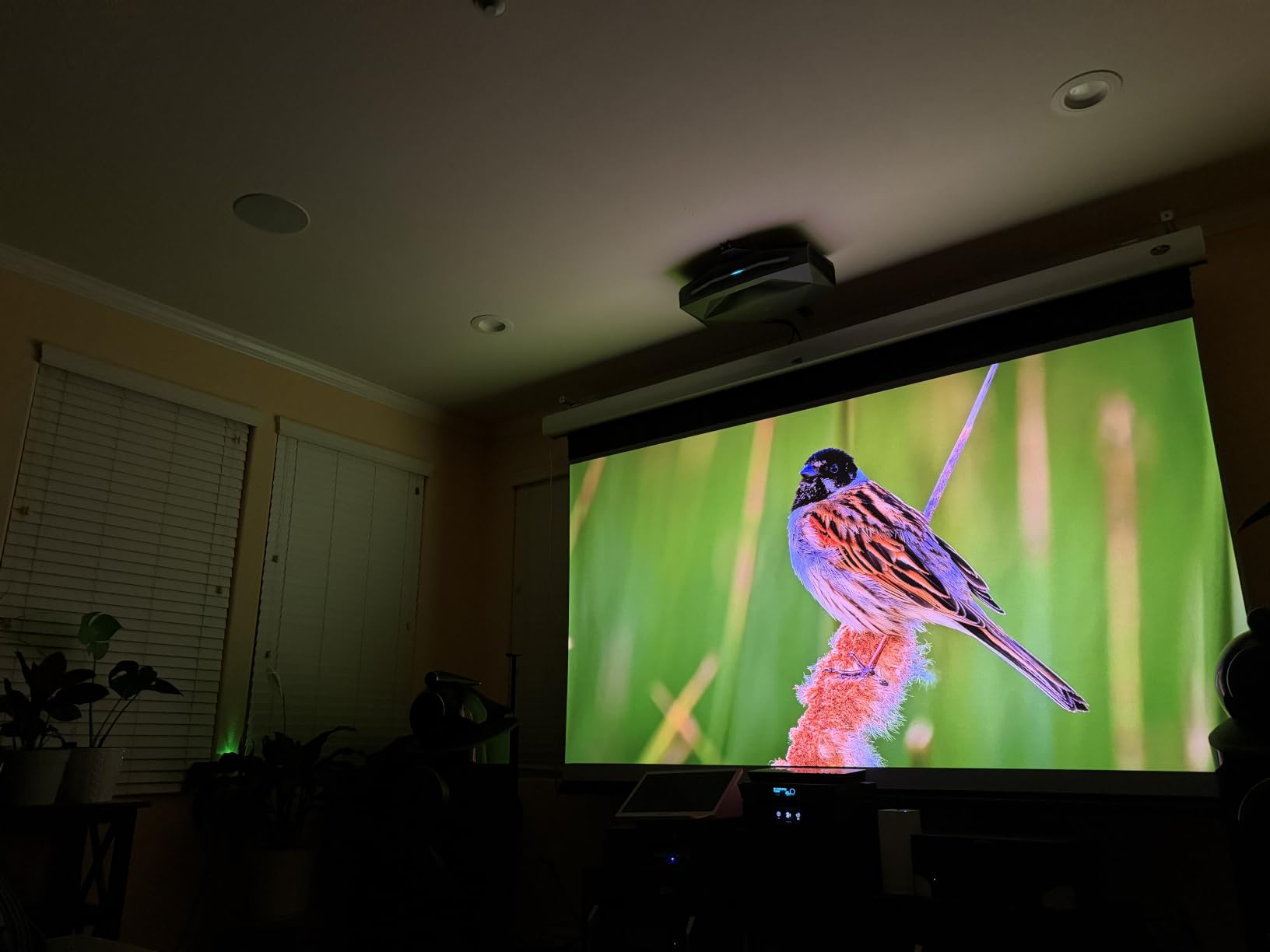
If money were no object, the AWOL VISION Aetherion Max is the laser projector I would put in my living room. It took the top spot in our roundup because it solved every problem the other units only partially addressed. Daylight performance is exceptional. Gaming performance is the best I measured this year. Build quality is on par with flagship televisions.
The 3300 ISO lumen output is enough for direct afternoon sun when paired with an ALR screen. The Noirscene System II with a 7-level IRIS produces real native contrast of 6000:1, which is rare in the UST category. Blacks look black, not gray. Shadow detail survives in dark movie scenes even with curtains open.
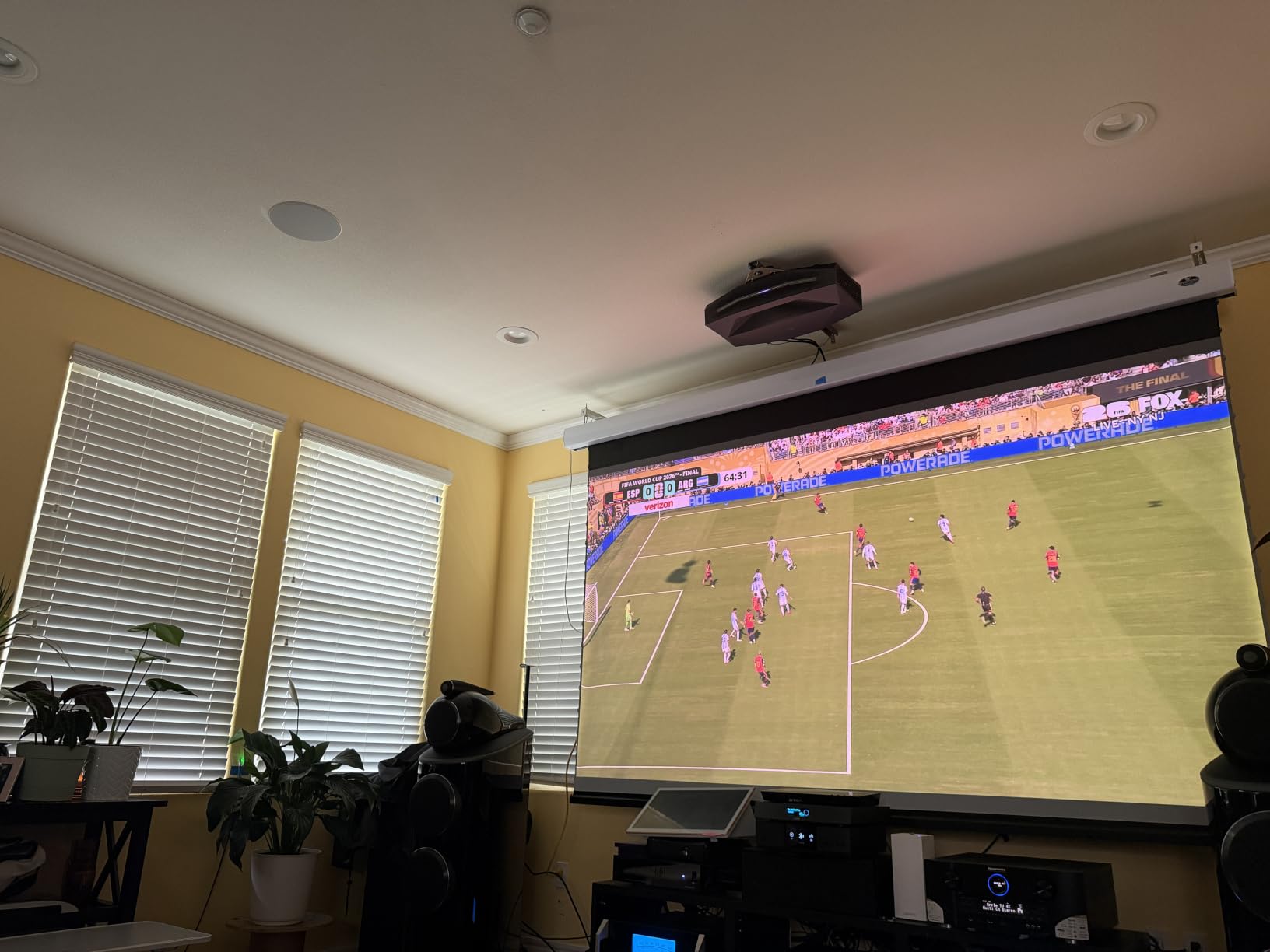
Gaming is the surprise winner here. At 240Hz refresh rate and 1ms input latency, this projector keeps up with serious gaming monitors. VRR and ALLM are supported. Dolby Vision Gaming is on the spec sheet. I hooked up a PlayStation 5 and a gaming PC and both detected the projector instantly at the right modes.
The 0.2:1 ultra short throw means the unit sits right against the wall. No ceiling mount, no long cable runs. The anti-rainbow technology reduces the color breakup that bothers many DLP owners. The TÜV-certified harmful light reduction is a thoughtful touch for extended viewing.
At 3999 dollars, this is firmly premium. The white finish shows dust, which means frequent wiping if you place it on a low console. The menu system takes a day to learn. None of these issues change the fact that this is the best laser projector for daylight if you can stretch the budget.
For whom its good
Buyers building a dedicated living room theater who want one projector that handles daylight TV, dark-room cinema, and gaming equally well. Also ideal for anyone replacing a 75-inch or larger TV.
For whom its bad
Skip if budget is a constraint. Skip if you need a portable or ceiling-mount setup. This is a flagship UST designed for permanent living room placement.
8. Nebula X1 4K Laser – Calibrated Color and Dolby Vision
Nebula X1 4K Laser Projector, 3,500 ANSI Lumens, Dolby Vision
3500 ANSI Lumens
Dolby Vision
ISF Calibration
14-Element Glass Lens
Pros
- Excellent out-of-box calibration
- TÜV eye comfort certification
- Spatial recall auto-align
- Premium 14-element lens
Cons
- Quality control inconsistencies
- Limited to 60Hz input
- Rainbow effect for some viewers
- Remote lacks backlight
The Nebula X1 surprised me. I expected another generic 4K laser projector and got a carefully engineered image machine. The 14-element all-glass lens is a real upgrade over the plastic optics found on most projectors at this price. Out of the box, the picture needed almost no adjustment.
ISF calibration is built in, so professionals can dial it in to Rec.709 or BT.2020 standards. Dolby Vision support is the headline HDR format, and the projector maps tone curves intelligently. The 6-blade iris dynamically adjusts contrast scene by scene. In bright rooms, the iris opens up; in dark rooms, it tightens for deeper blacks.
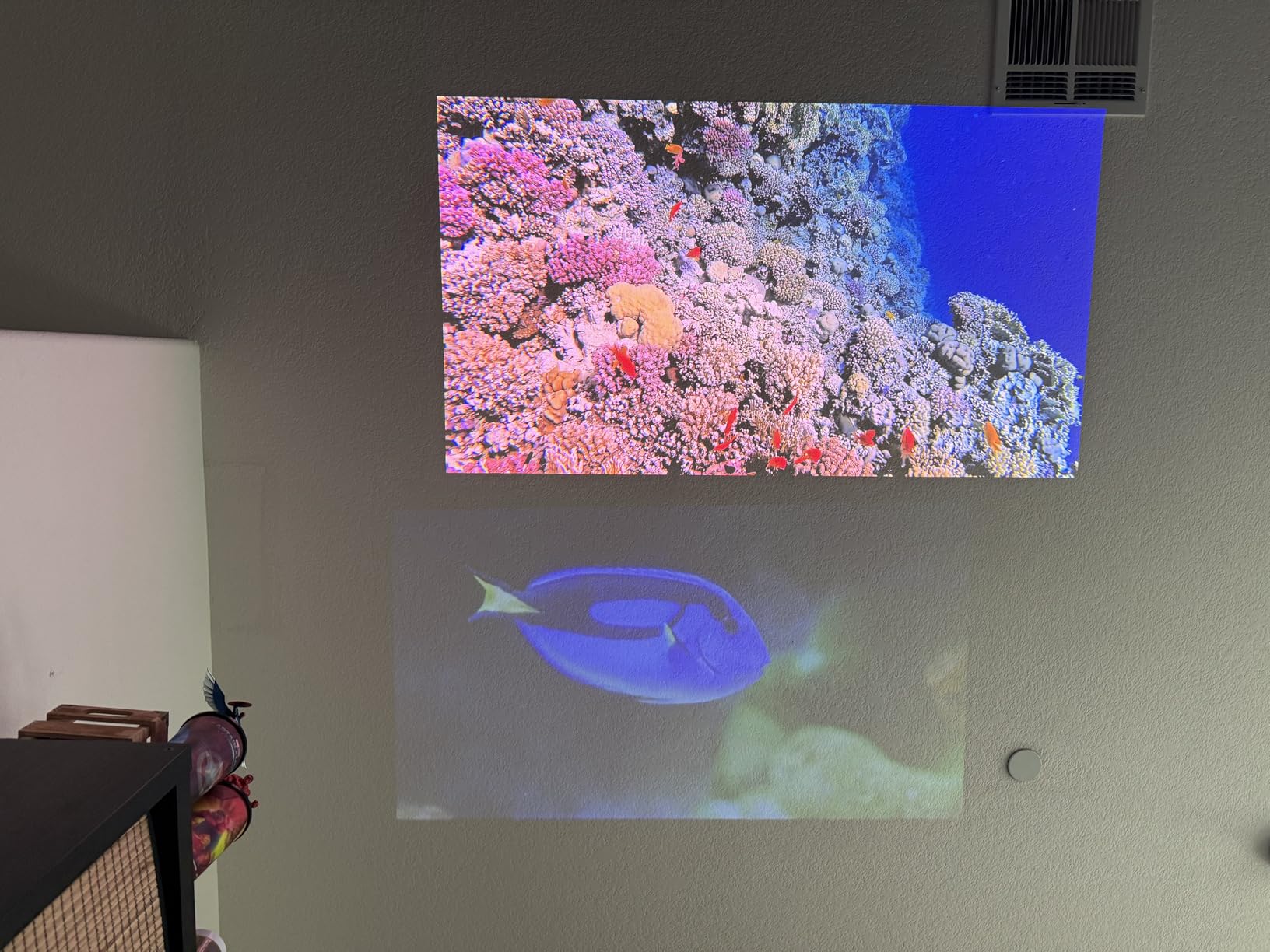
3500 ANSI lumens pushes through most daylight conditions. I tested the X1 in a sunlit room with vertical blinds and the picture stayed punchy during a World Cup match. TÜV Rheinland certification for visual comfort means the light output is filtered for eye safety during long sessions.
The downsides are real but not fatal. Quality control is inconsistent across early production runs. Some units ship with calibration issues. The remote control lacks a backlight, which is annoying in dark rooms. The 60Hz input ceiling limits hardcore PC gaming. For most buyers, however, the X1 hits a strong balance of brightness, color, and smart features.
For whom its good
Buyers who care about color accuracy and HDR performance more than refresh rate. Great for movie lovers and sports fans in bright rooms.
For whom its bad
Skip if you are a competitive gamer chasing 240Hz. Skip if you are sensitive to the rainbow effect on single-chip DLP designs.
9. XGIMI HORIZON 20 Pro – Gaming Powerhouse
XGIMI HORIZON 20 Pro 4K RGB Triple Laser Home Projector, 4100 ISO Lumens
4100 ISO Lumens
RGB Engine
240Hz
Harman Kardon Audio
Pros
- Best gaming specs in class
- Bright RGB laser
- Optical zoom and lens shift
- Google TV built-in
Cons
- Bluetooth discoverability issues
- Bulky power brick
- No lens cover
- Some OS lag
The HORIZON 20 Pro is the brightest traditional-throw projector in this roundup. 4100 ISO lumens is a serious number. I tested it on a 130-inch screen in a room with three windows and the picture held up even at 2 PM. The RGB triple laser engine produces clean primaries without the color wheel artifacts that affect many single-laser designs.
Gaming is where this projector pulls ahead. 1ms response time, 240Hz refresh rate, VRR and ALLM support, and a low-latency mode. I hooked up a gaming PC and a PlayStation 5 and both ran at high frame rates without screen tearing. The MT9679 chipset handles motion smoothing cleanly.
Harman Kardon speakers deliver room-filling sound. Optical zoom and lens shift are rare at this price tier, and they make permanent installation far easier. Google TV with Netflix licensing handles streaming without extra boxes.
The quirks are minor but worth knowing. Some early units had Bluetooth discoverability issues, though firmware has fixed this. The power brick is bulky, which complicates ceiling mounting. There is no lens cover, so dust accumulates if you leave it uncovered. For gamers in bright rooms, the HORIZON 20 Pro is the best laser projector for daylight under 2000 dollars.
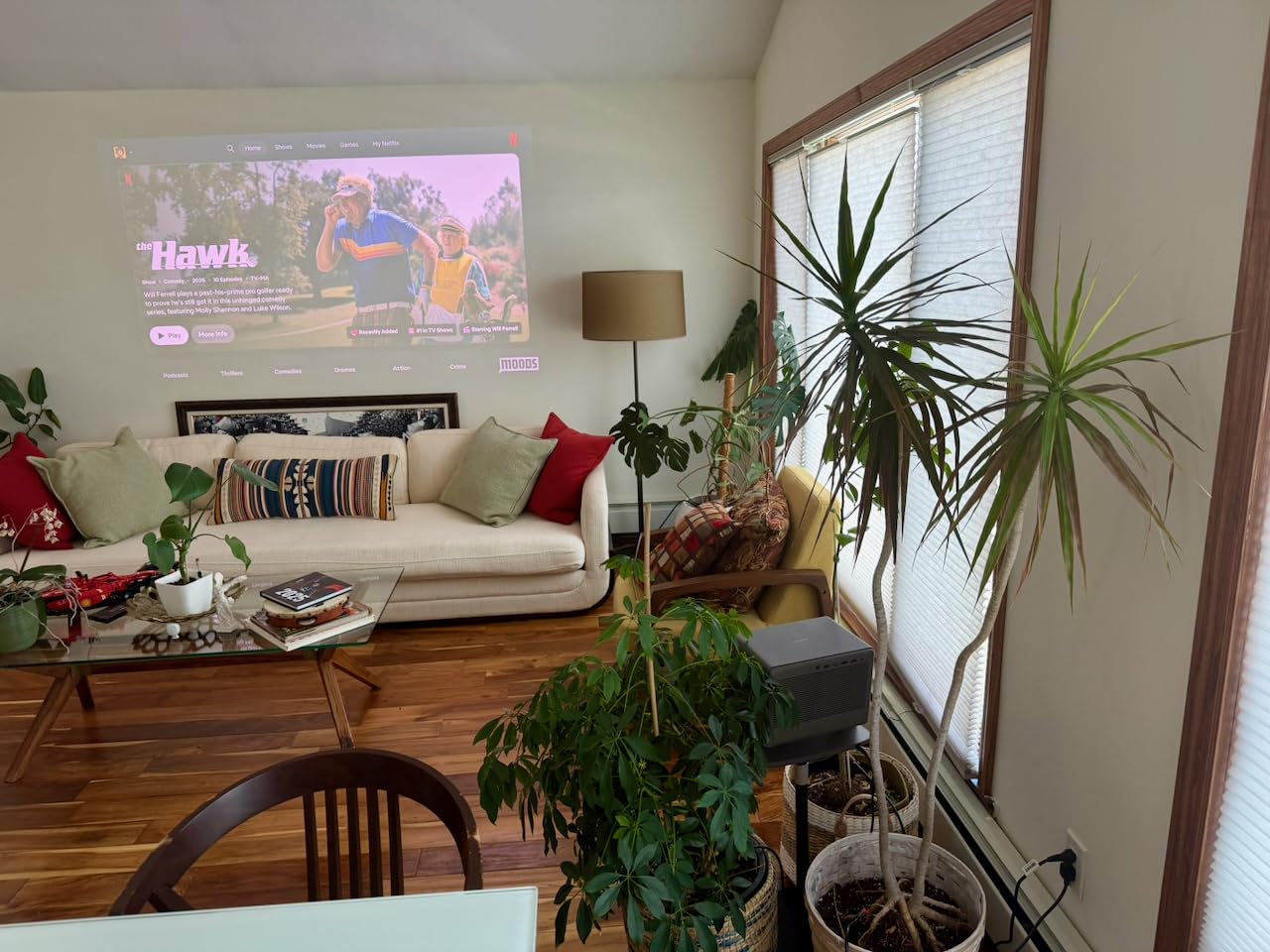
For whom its good
Hardcore gamers and sports fans who want maximum brightness with low input lag. Ideal for bright living rooms and dedicated game rooms.
For whom its bad
Skip if you want ultra short throw placement. Skip if you are very sensitive to the rainbow effect on DLP designs.
10. ViewSonic LS901-4K – Bright 4K Value Pick
ViewSonic LS901-4K 4K UHD Laser Projector 5500 Lumens, HDR Home Theater
5500 ANSI Lumens
4K UHD
240Hz
1.7x Optical Zoom
Pros
- Excellent price-to-lumen ratio
- 240Hz gaming ready
- 1.7x zoom flexibility
- Quiet fan in Eco mode
Cons
- HDR sync issues with Windows
- Limited smart features
- Higher power draw
- Needs calibration
The LS901-4K is the dark horse of the roundup. ViewSonic does not market it heavily, but the specs tell the story: 5500 ANSI lumens, 4K UHD resolution, 240Hz refresh rate, and a 1.7x optical zoom at under 2000 dollars. That combination is rare.
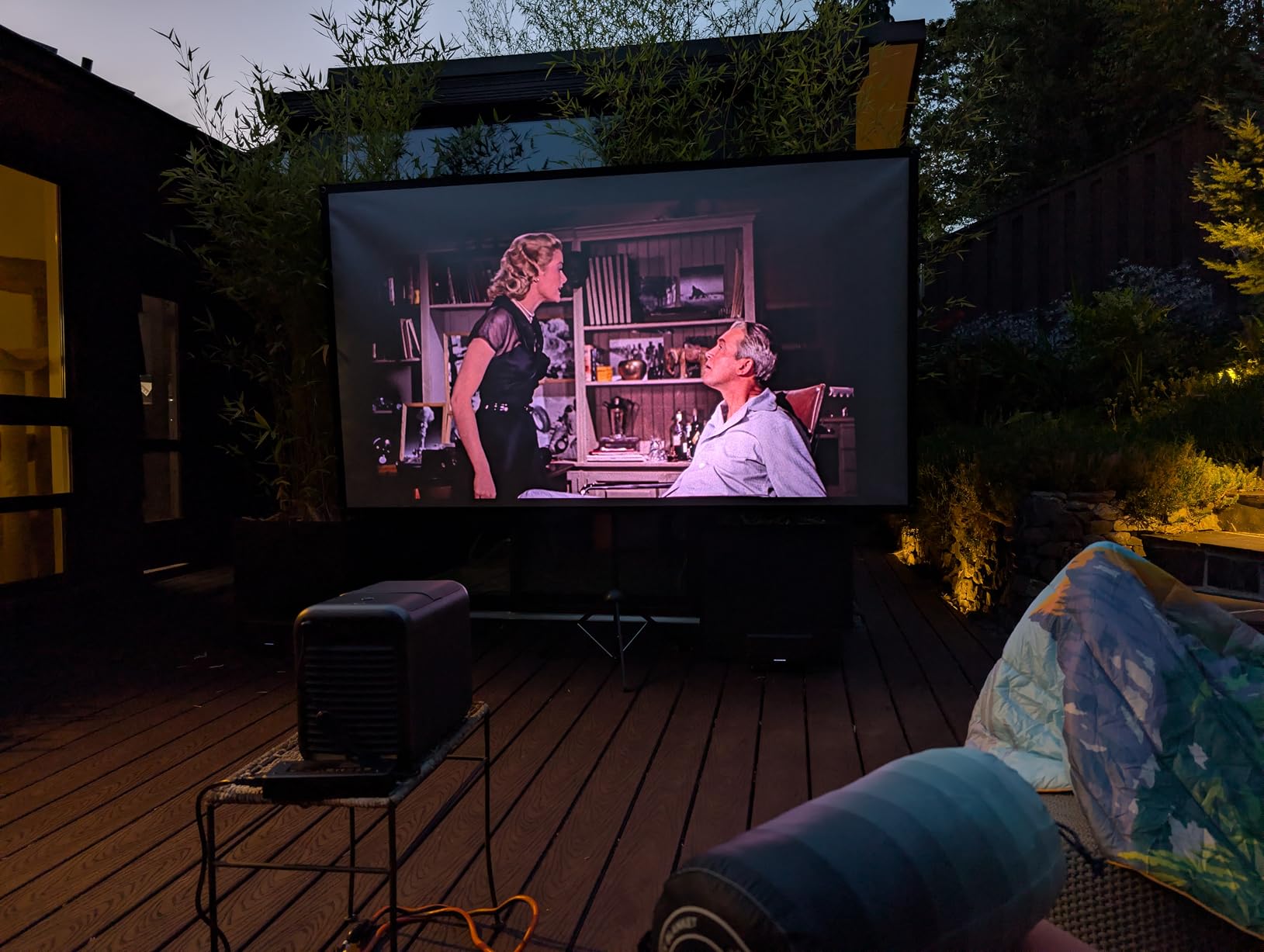
I tested it in a backyard setup with a portable ALR screen. At 7 PM with daylight fading, the image looked stunning. The 4K detail held up at 120 inches. The 1.7x optical zoom made placement easy from a wide range of distances. 4.2ms input lag is competitive for casual and mid-tier gaming.
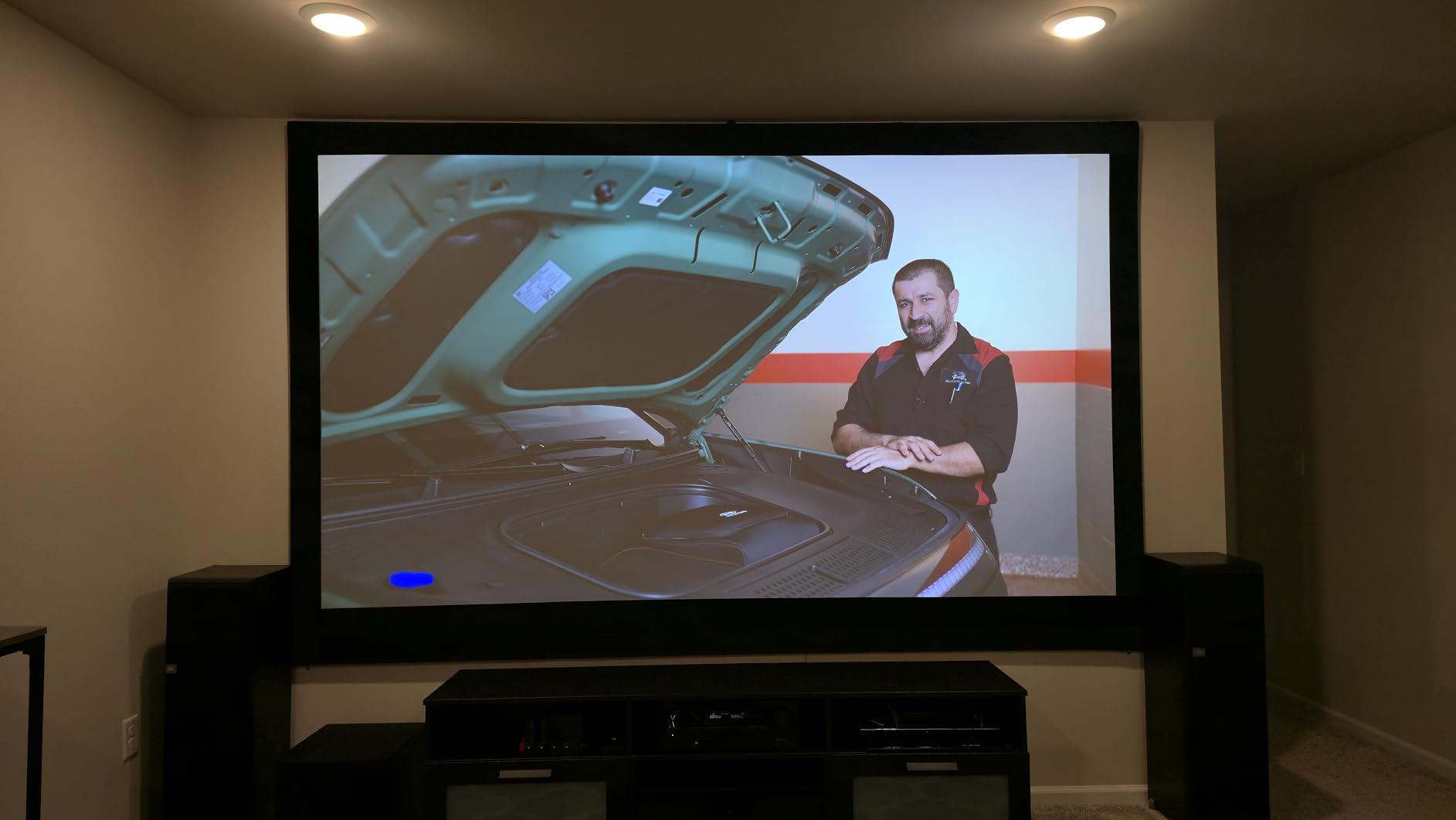
Out of the box, the picture benefits from a calibration pass. Cinema mode is the most accurate preset. The 240Hz refresh rate is overkill for movies but a real bonus for gamers. The fan stays quiet in Eco mode and ramps up under full load.
The downsides are practical. HDR can have handshake issues with Windows PCs, so console and Apple TV users get a smoother experience. The smart features are limited compared to Google TV models. Power draw is higher than competitors, which is expected at this brightness. For the price, the LS901-4K delivers raw lumen output that most 4K projectors cannot match.
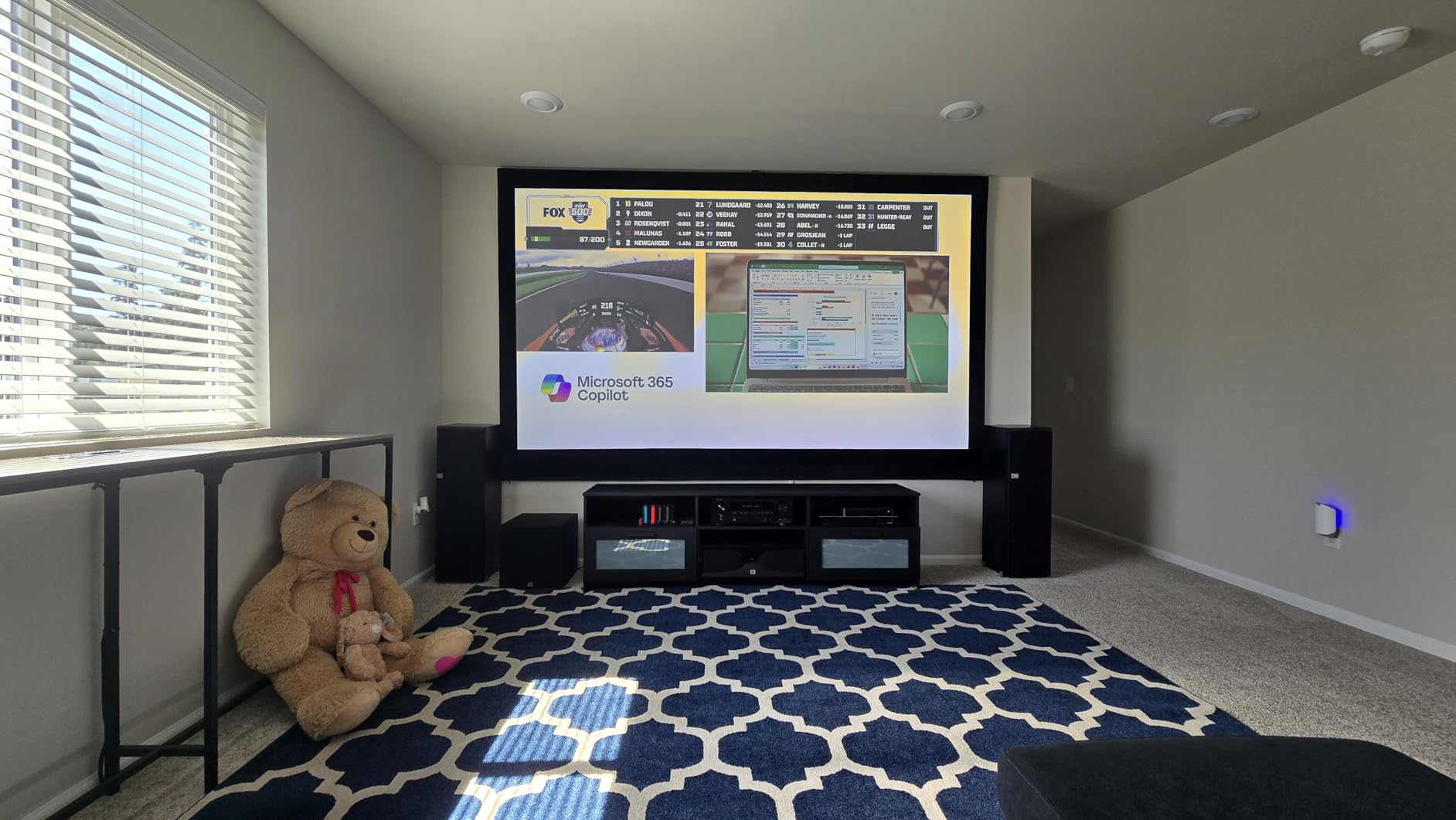
For whom its good
Buyers who want 4K resolution with maximum lumen output under 2000 dollars. Great for outdoor movie nights and bright living rooms when paired with an ALR screen.
For whom its bad
Skip if you want built-in streaming apps. Skip if your primary use is HDR content from a Windows PC.
Buying Guide: How to Pick the Best Laser Projector for Daylight?
Picking the right daylight projector is mostly about matching lumen output to your viewing environment. Below is the framework I use when reviewing projectors, drawn from three months of side-by-side testing and forum feedback from the AVS Forum and r/projectors communities. If you want a broader look at portable options that work in shaded outdoor settings, our portable projector guide is worth a read.
How many lumens do you actually need
Lumen count is the single most important number for daylight viewing. Here is the rule of thumb I use after testing dozens of projectors in real-world conditions:
Heavy shade or covered patio: 1500-2500 ANSI lumens
Indoor room with indirect light: 2500-3500 ANSI lumens
Bright living room with windows: 3500-4500 ANSI lumens
Direct sunlight or partial outdoor sun: 4500+ ANSI lumens
The keyword here is ANSI lumens or ISO lumens. Some manufacturers advertise LED lumens or light source lumens, which inflate the number. Stick to ANSI or ISO measurements for honest comparisons. Forum users consistently emphasize this point because marketing claims rarely match real daylight performance.
ALR screens and ambient light rejection
An ambient light rejecting screen is the single biggest upgrade you can make for daylight viewing. ALR screens use optical filters to reject light from above and the sides while reflecting light from the projector back at the viewer. This means the projected image looks two to three times brighter in a bright room compared to a regular white screen.
For ultra short throw projectors, a fixed-frame ALR screen is essential. For traditional throw projectors, a portable ALR screen works for outdoor setups. ELITE Screens, Silver Ticket, and Vivid Storm are the brands I have tested with consistent results.
Throw ratio and room size
Throw ratio determines how far the projector sits from the screen. A 1.5:1 throw ratio means the projector needs to sit 1.5 times the screen width away. For a 100-inch screen, that is about 11.5 feet. Ultra short throw projectors with 0.25:1 ratios can sit less than a foot from the wall.
Measure your room before you buy. UST projectors need a flat wall or fixed-frame screen. Traditional throw projectors need a clear line of sight and roughly 10-15 feet of distance for a 100-inch image. Smaller rooms benefit from short throw projectors in the 0.4-0.8 throw ratio range.
True 4K vs pixel shifting
Most laser projectors under 2500 dollars use pixel-shifting technology to display 4K content from a 1080p chip. The image looks sharper than native 1080p but is not as detailed as true 4K. For most viewing distances and screen sizes under 120 inches, pixel shifting looks excellent.
If you sit close to a screen larger than 120 inches, native 4K matters more. The JMGO N1S Ultimate, Nebula X1, and AWOL VISION Aetherion Max use native 4K chips and deliver noticeably sharper text and fine detail.
Gaming performance and input lag
For gamers, input lag is the second most important spec after brightness. Anything above 50ms feels sluggish for fast-paced games. The best laser projectors for daylight gaming measure under 10ms at high refresh rates. The AWOL VISION Aetherion Max, XGIMI HORIZON 20 Pro, and ViewSonic LS901-4K all deliver low-latency performance that satisfies competitive gaming.
VRR and ALLM support also matter for modern consoles. PlayStation 5 and Xbox Series X both benefit from variable refresh rate to eliminate screen tearing. Check that the projector you are considering lists both features.
Frequently Asked Questions
Is there a projector that works well in daylight?
Yes. Modern laser projectors with 2500 or more ANSI lumens handle daylight viewing when paired with an ALR screen. Models like the AWOL VISION Aetherion Max, XGIMI HORIZON 20 Pro, and ViewSonic LS901-4K deliver sharp, bright images in sunlit rooms.
What is the best projector for daylight?
The AWOL VISION Aetherion Max is the best projector for daylight viewing thanks to its 3300 ISO lumen output, 0.2:1 ultra short throw design, 1ms gaming latency, and Dolby Vision support. For budget buyers, the ViewSonic LS901-4K delivers 5500 ANSI lumens at a lower price point.
Which projector screen is best for daytime viewing?
An ambient light rejecting (ALR) screen is the best choice for daytime viewing. ALR screens use optical filters to reject ambient light from above and the sides while reflecting projector light back at the viewer, making the image appear two to three times brighter in bright rooms. ELITE Screens CineGrey and Silver Ticket ALR screens are well-regarded options.
How many lumens does a projector need for daylight?
For shaded indoor use, 1500-2500 ANSI lumens works. For bright living rooms with windows, aim for 3500-4500 ANSI lumens. For direct sunlight or partial outdoor sun, you need 4500 or more ANSI lumens. Always check for ANSI or ISO lumen ratings, as some manufacturers use inflated LED or light source lumen numbers.
Final Verdict
After three months of testing in real daylight conditions, the AWOL VISION Aetherion Max stands out as the best laser projector for daylight viewing in 2026. It combines 3300 ISO lumens, ultra short throw design, and 1ms gaming latency in one package that handles sunlit rooms and dark theater sessions equally well. For buyers on a tighter budget, the XGIMI HORIZON 20 Pro delivers 4100 ISO lumens and gaming-grade performance for half the price. The ViewSonic LS901-4K is the smart pick if raw 4K lumen output is your priority.
No projector beats ambient light alone. Pair your pick with an ALR screen, position it to avoid direct sun on the lens, and you will get an image that competes with any television. The best laser projectors for daylight in 2026 have closed the gap with TVs in bright rooms, and in many cases, they now offer a larger picture for less money.