
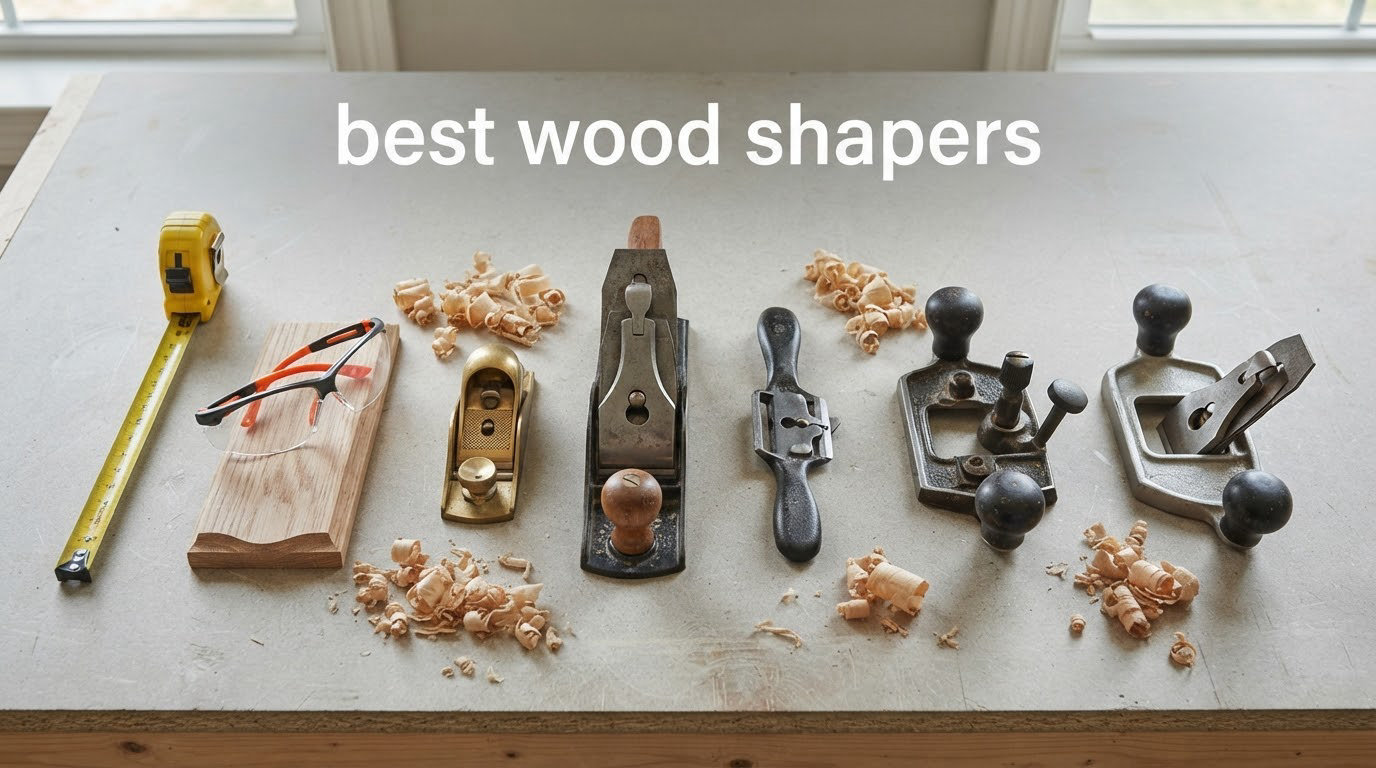
A wood shaper is a stationary woodworking machine with a vertical powered spindle that carries an interchangeable cutter head, used to cut profiles, mouldings and joint components in wood. In the UK and Europe it is called a spindle moulder, in France a Toupie, and in Germany a Tischfrase. All four names describe the same machine.
That matters because the terminology splits the audience. If you searched for the best spindle moulder in a home shop, you are looking at exactly the machines in this guide. The difference is not the machine, it is the spelling.
Here is the honest problem with buying guides for this category: almost nobody edits them. The pages that rank for the best wood shapers query are forum threads, a dealer category page and a retail product listing. There is no established roundup to compare against, which is why the useful information is scattered across people who own the machines. We pulled that experience together with the specification sheets and organized it by the question that actually decides the purchase, which is not horsepower.
It is electrical service. Before this guide gets to a single machine, read the electrical section. A 3 HP shaper and a 5 HP shaper are both wonderful machines, and one of them may be impossible for you to power. Read the electrical section first, then read the picks.
Our guide to the best wood chisels covers hand tools; this one is entirely about the machine that shapes mouldings and door components. We also reference dust and shop safety gear alongside it, because a shaper is the first tool in a shop that forces you to plan your dust collection before you buy, not after.
Table of Contents
Top 3 Picks for Wood Shaping

Powermatic PM2700 5-HP
- Digital spindle readout
- Both spindle sizes included
- Two reversible spindle speeds
- 5 year warranty

JET JWS-35X5-1 5-HP
- Four reversible spindle speeds
- T-slotted fence
- 4 inch dust port
- 5 year warranty

Shop Fox W1702 3 HP
- 120V plug-in power
- 3 inch spindle travel
- Heavy duty miter gauge
- 353 lb cast iron
The Powermatic PM2700 takes the top spot because it is the only machine in this group that arrives with both a 3/4 inch and a 1-1/4 inch spindle in the box, at the strongest owner rating here among machines with a real review base behind them. The JET JWS-35X5-1 is the better dust and speed package. The Shop Fox W1702 is the only plug-in machine here with a review base deep enough to tell you where the complaints are.
Quick Overview: Best Wood Shapers in 2026
| Product | Specifications | Action |
|---|---|---|
| Powermatic PM2700 5-HP Spindle Shaper |
|
Check Latest Price |
| JET JWS-35X5-1 5-HP Spindle Shaper |
|
Check Latest Price |
| Shop Fox W1702 3 HP Shaper |
|
Check Latest Price |
| JET JWS-35X3-1 3-HP Spindle Shaper |
|
Check Latest Price |
 JET JWS-20CS 1-1/2 HP Spindle Shaper JET JWS-20CS 1-1/2 HP Spindle Shaper |
|
Check Latest Price |
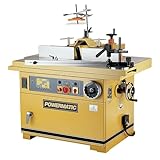 Powermatic TS29 7-1/2 HP Tilting Spindle Shaper Powermatic TS29 7-1/2 HP Tilting Spindle Shaper |
|
Check Latest Price |
Two numbers in that table decide more purchases than the horsepower column. The first is amperage: the 5 HP Powermatic draws 40 A on a 230V single-phase circuit while the 5 HP JET draws 17 A on the same voltage. The second is machine weight, which ranges from 201 lb to 1100 lb here and decides whether you can move it across a garage floor.
1. Powermatic PM2700 5-HP Spindle Shaper – The All-Rounder With Both Spindle Sizes
Powermatic 5-HP Spindle Shaper, 30″ x 40″ Table, 230V 1Ph (Model PM2700)
5 HP
230V single phase
40 A
30 x 40 inch table
3/4 and 1-1/4 inch spindles
Pros
- Digital spindle readout with .001 inch adjustment
- Both spindle sizes ship in the box
- Two reversible speeds at 7500 and 10000 RPM
- Integrated raise and lower casters move a 664 lb machine
- Five year manufacturer warranty
Cons
- 40 A draw needs a dedicated 230V circuit
- 664 lb footprint limits placement
- Some setup and quality complaints in the review tail
The Powermatic PM2700 is a 5 HP single-phase machine with a 30 by 40 inch cast iron table, and the reason it leads this group is not the motor. It is the box contents. Both a 3/4 inch and a 1-1/4 inch spindle assembly come with it, which means you are not paying a second purchase to move from light profiling to heavy moulding work the way you would on a machine that ships with one diameter.
Owner feedback is strongly positive on the setup side. Reviewers single out the digital readout for giving exact spindle height with .001 inch adjustment, and the micro-adjust control knobs for letting you bring the fence up to a set profile and take it back down without losing the setting. The fence sides adjust independently, which matters when you are matching an existing moulding on one side and cutting square on the other.
Two reversible spindle speeds, 7500 and 10000 RPM, cover the range most cutter work needs. Slower for the larger diameters, faster for the light finishing cuts. It is a narrower choice than four speeds, and if you run a lot of small insert cutters you will find yourself changing pulleys more often than you would on the JET below.
The physical reality of this machine is 664 pounds on a 40 by 37 inch footprint. The integrated casters that raise and lower are a genuine solution to a real problem, since the alternative is a forklift or four strong friends, but the machine still does not move casually across a floor. Plan the location before delivery day, not after.
What the electrical draw means for your shop
At 40 A on 230V single phase this machine wants a dedicated circuit sized for it. That is the single most common reason a 5 HP purchase stalls, and it is worth having an electrician look at your panel before you commit rather than after. Shop owners who have installed a subpanel for a machine of this class rarely regret it; owners who assume a 20 A outlet will carry it regret the trip to the hardware store.
Note also that the 5 HP Powermatic draws roughly two and a half times the current of the 5 HP JET later in this list. Same horsepower class, same voltage, very different panel conversation.
Where it will disappoint you
Read the rating distribution rather than the average alone. With 14 reviews the score is 4.0, which is the strongest figure here among machines with more than a handful of owner reports, but a meaningful share of two-star feedback sits underneath it. Complaints cluster around setup and assembly quality rather than the machine cutting badly once it is running, and the 40 A circuit requirement is the other recurring theme.
There is also no dust port listed in the fence on this machine, so plan your extraction differently from the JET. And the .001 inch readout is a real convenience, not a workflow changeover: it tells you where the spindle is, it does not set the fence for you.
2. JET JWS-35X5-1 5-HP Spindle Shaper – Four Speeds And A Dust Port In The Fence
JET 5-HP Spindle Shaper, 230V 1Ph (Model JWS-35X5-1)
5 HP
230V single phase
17 A
32-1/4 x 26-3/4 inch table
4 speeds
Pros
- Four reversible speeds from 4000 to 10000 RPM
- Extruded aluminum fence with T-slots
- Two feather board hold-downs included
- 4 inch dust port built into the fence
- Extra large chrome handwheel for spindle height
Cons
- Power plug is not supplied with the machine
- Rating spread is bimodal in a small review sample
- One owner found fence adjustment not to their liking
The JET JWS-35X5-1 is the more interesting machine to live with, even though its 3.6 average from eight reviews looks worse on paper. Four reversible spindle speeds at 4000, 6000, 8000 and 10000 RPM is a real working advantage over a two-speed machine, because you can match speed to cutter diameter instead of picking a single compromise and living with it.
The fence is where this machine separates itself. It is extruded aluminum with T-slots running along its length and a 4 inch dust port built into it, so the extraction hose attaches at the fence rather than at a machine port. For a shaper, that is the difference between capturing chips at the cut and chasing them across the floor afterwards.
The table is precision ground cast iron at 32-1/4 by 26-3/4 inches, and the chrome handwheel is noticeably larger than a standard one, which makes spindle height changes quicker. Two feather board hold-downs are included for pinching work on small stock, and a 1-1/4 inch spindle is in the box. The starting pin and miter assembly round out a fairly complete package.
At 475 pounds this is also a noticeably easier machine to place than the Powermatic above, and at 17 A it is far friendlier to a residential panel. Same 5 HP headline, very different installation.
Why four speeds change your day
Spindle speed is not a spec-sheet item. A large diameter head at 10000 RPM chatters and burns; the same head at 4000 RPM cuts. A small insert or a reversible head wants the top end. With four speeds you stop thinking about the gearbox and start matching the speed to the head, which is exactly the habit that keeps edges sharp and profiles clean.
The T-slotted fence is the other quiet win. Slots let you mount stops, hold-downs and auxiliary fence plates without a machinist’s tooling setup, which is how you cope with stock that is wider than the table or taller than the fence.
Where it will disappoint you
The review sample is small and oddly split: 64 percent five-star and 36 percent one-star, with nothing in between. That pattern usually means the machine is either very good or badly rejected at setup, not that it is mediocre. We would treat the 3.6 as a narrow signal rather than a verdict, and we would read the warranty terms closely.
JET warrants these for five years, but drops to two years when used for commercial or industrial purposes. If you intend to sell the work that comes out of the machine, that clause matters. The power plug is also not supplied, which is a small cost and an annoying surprise on delivery morning.
3. Shop Fox W1702 3 HP Shaper – The 120V Plug-In Option
SHOP FOX W1702 3 HP Shaper
3 HP
120V plug-in
353 lb
3 inch spindle travel
5-1/2 inch max cutter diameter
Pros
- Runs on a standard household circuit
- Deepest owner feedback base in this group at 27 reviews
- 3 inch spindle travel gives real height adjustment
- Heavy duty miter gauge included
- Adjustable fence set up for repeatability across profiles
Cons
- Review distribution is polarised with 20 percent one-star feedback
- 353 lb cast iron is hard to reposition alone
- Fixed 120V supply limits the heavier profile work
The Shop Fox W1702 is the machine for a garage with a normal outlet and no plan to run a line. It is listed at 120 volts with a 2581 watt draw, which is the kind of specification that ends a purchasing debate immediately. Everything else about it follows from that: this is a 3 HP machine designed to live in a home shop, not a production cabinet shop.
It also happens to have the largest owner feedback base in this group, 27 reviews, which makes it unusually useful to research. The distribution is the story. Forty percent five-star and 28 percent four-star against 20 percent one-star is a polarized set, which tells you some owners love it and a meaningful group had a bad experience. Anyone buying should read those one-star reviews before the box arrives, not after.
Physically it is a 353 lb machine measuring 34.25 by 30.5 by 34 inches, with a table height of 34-1/4 inches. That is real mass, and real mass is the reason the machine does not wander under a cutter. It also means you will want help moving it and a level floor for it.
Where the 3 HP class actually earns its keep
Three horsepower is the class most serious hobbyists land on, and it is where the single-pass habit starts. A 3 HP machine takes a full profile through hardwood in one pass without the hesitation you get from a router in a table. The 3 inch spindle travel on this model is generous, so you are not fighting the handwheel every time the cutter diameter changes.
The optional router bit adapter is an underrated feature. It accepts 1/4 inch and 1/2 inch shanks, which means for certain operations you are not hunting for a shaper head that does the job. Treat it as a supplement to the head library, not a replacement for it.
Where it will disappoint you
Only 40 percent of the ratings here are five-star. On a machine with this much feedback, that is the number to notice, and it points to a machine that some owners are very happy with and others are not. The most likely axis of disagreement is expectation rather than build quality, since a fixed 120V supply simply cannot deliver what a 230V machine delivers.
There is also no dust port in the fence on this model and the fence is a simpler single adjustment rather than the independent dual-sided setup on the Powermatic. If you are matching an existing moulding on one edge, that is a real limitation.
4. JET JWS-35X3-1 3-HP Spindle Shaper – Three HP Without The Five HP Circuit
JET 3-HP Spindle Shaper, 230V 1Ph (Model JWS-35X3-1)
3 HP
230V single phase
475 lb
4 reversible speeds
1-1/4 inch spindle included
Pros
- Identical core feature set to the higher horsepower JET
- Four reversible speeds from 4000 to 10000 RPM
- Precision ground cast iron table
- T-slotted aluminum fence with 4 inch dust port
- Lighter electrical load than a 5 HP single phase machine
Cons
- Only two reviews exist so reliability is unverified
- Power plug is not included
- 230V single phase still needs a dedicated circuit
The JWS-35X3-1 is the same platform as the 5 HP JET with a smaller motor, and for a lot of shops that is the correct answer. You keep the four reversible spindle speeds, the precision ground cast iron table, the T-slotted aluminum fence and the 4 inch dust port in the fence, and you give up some reserve for heavy work.
It is 3 HP on 230V single phase, which is a much lighter conversation with an electrician than the 5 HP Powermatic. It also still needs a dedicated circuit, so this is not a machine you plug into a general-purpose outlet. It is a machine you can power in a garage without pulling a new subpanel, which is a real distinction.
At 475 pounds and 30 by 40 by 41 inches, the placement math is identical to the 5 HP JET. A 1-1/4 inch spindle, feather boards, handwheel, miter assembly and cutter guard are included.
How to read a two-review rating
The 5.0 average here rests on two reviews, both five-star. That is directional, not meaningful, and anyone tempted to rank this machine above the JWS-35X5-1 on rating alone is reading noise. The honest way to evaluate it is to compare specification sheets with the better-reviewed 5 HP version, which shares the fence, table, guard and speed system.
That comparison is favourable. Nothing in the three horsepower specification takes away the dust port, the T-slots or the speed range. What you are trading is headroom on wide, deep profiles in hardwood, and the money to buy more heads later.
Where it will disappoint you
The warranty is the thing to read carefully. JET covers these for five years, but commercial or industrial use drops that to two years. If you plan to sell cabinet doors, the clock is already running when the machine arrives.
Two reviews also means you have no owner history for this specific model, and the power plug is not supplied. Buy a proper plug and a dedicated circuit before delivery, and read the manual for the pulley speed change sequence before you first need it at the cut.
5. JET JWS-20CS 1-1/2 HP Spindle Shaper – Runs On A Household Circuit
JET 1-1/2 HP Spindle Shaper, 115/230V 1Ph (Model JWS-20CS)
1-1/2 HP
115 or 230V
7.5 A at 115V
201 lb
1/2 and 3/4 inch spindles
Pros
- Lowest electrical barrier here at 7.5 A on 115V
- Lightest machine in the group at 201 lb
- 1/2 and 3/4 inch spindles plus router bit collets
- Independent fences with micro-adjustment
- Enclosed steel stand with removable motor cover
- Forward and reverse switch for either hand
Cons
- Single one-star review so satisfaction is unverified
- Two spindle speeds instead of four
- Least capable motor here for heavy or wide profiles
The JWS-20CS is the machine for a basement, a garage corner or a shop where the electrical panel is a fixed constraint. It draws 7.5 A on 115V, which is a standard household circuit, and it weighs 201 pounds, which is light enough to move without a forklift. Those two facts put it in a category none of the other five machines here can reach.
The tooling flexibility is better than the horsepower suggests. You get 1/2 inch and 3/4 inch spindle assemblies plus 1/4 inch and 1/2 inch router collets, so the machine covers small profiling work and light router tasks. The independent fences with micro-adjustment and zero-clearance capability are a genuine feature at this level, and the enclosed steel stand with a removable motor cover is more serviceable than an open frame.
There is a forward and reverse switch for left- and right-hand operation, two reversible spindle speeds, an extra-large handwheel for height changes, and a dust chute and miter gauge in the box.
What 1-1/2 HP is and is not for
This is enough power to learn profiles, run trim and small furniture parts, and cut rebates and grooves in moderate stock. It is not enough for a wide, deep profile through thick hardwood in one pass, and owners of small benchtop shapers routinely ask whether a 1.25 inch shoulder in solid wood is realistic. The answer depends on the stock, the cutter diameter and the feed rate, and the honest version is that you will be taking light passes.
That is a perfectly good way to learn. The people who regret a shaper purchase are rarely the ones who cut too much too fast on a small machine; they are the ones who bought small, were fine, and were still fine three years later.
Where it will disappoint you
There is exactly one review of this machine and it is a single one-star rating. That is not a satisfaction signal in either direction, and we are not going to pretend otherwise. Judge it on the specification sheet against the three horsepower models and be aware that you are buying without an owner history.
Two spindle speeds also limit you. Large diameter work will want the slower setting and small work the faster one, and there is no third option. And the 1/4 inch and 1/2 inch collets accept router bits, but a router bit in a shaper is a compromise, not a feature. It works for a limited range of operations. For general router work keep your router.
6. Powermatic TS29 7-1/2 HP Tilting Sliding Spindle Shaper – The Production Machine
Powermatic 7-1/2 HP Tilting/Sliding Spindle Shaper, 230/460V 3Ph (Model TS29)
7-1/2 HP
230/460V three phase
1100 lb
45 degree tilt
51-1/2 inch sliding table
Pros
- Tilting spindle and motor share one assembly through 45 degrees
- Three spindles included at 3/4 inch 1 inch and 1-1/4 inch
- Five spindle speeds forward and reverse with lighted indicator
- Sliding table travels 49-1/4 inches
- Two 5 inch dust ports
- Full coverage guard with workpiece hold-downs
Cons
- 1100 lb needs three phase service and a load rated floor
- Single review so long term reliability is unverified
- Full guard and hold-downs add setup time for simple work
The Powermatic TS29 is a different category of object from everything else in this guide. It weighs 1100 pounds, runs on 230/460V three phase, and costs more than a used car. What you are buying is a production machine with a tilting spindle and a sliding table, and the question is never whether it is the best shaper, only whether your volume justifies it.
The tilting spindle and motor share a single assembly that handles 45 degrees. The practical value of that, as owners on The Garage Journal thread point out, is not the marketing language about forward versus rearward tilt. It is that you can match an angle already in the workpiece, or tilt the head to prove a knife set, without reordering cutters.
The table is the other story. A 51-1/2 by 33-1/2 inch cast iron top slides a full 49-1/4 inches, and the owner who reviewed this machine specifically noted how little side-to-side play the slide has. Large diameter table inserts accommodate different cutter sizes, and there is room at the rear for a stock feeder.
What three phase actually means for you
Three phase is not a bigger version of single phase. It is a different supply that most residential shops do not have and that many commercial shops take for granted. If your property is single phase only, this machine is not available to you without a supply change, and the cost of that change belongs in your budget before the machine does.
Five spindle speeds in forward and reverse with a lighted indicator is a level of control that changes production work, because you can run the same head at the right speed for the material without a manual changeover. Dual digital readout fence positioning with micrometer adjustments gives you repeatability that a manual fence cannot.
Where it will disappoint you
Two 5 inch dust ports, one behind the fence and one low at the base, is a proper extraction setup, and you will need a collector that handles that volume. The full coverage guard and workpiece hold-downs are excellent for production and pure friction for a one-off profile, so budget setup time honestly.
There is a single review here, and while it is unusually detailed, one owner is not a reliability record. The floor needs to be rated for the load. If any of that sounds like a problem rather than a normal Tuesday, the 5 HP machines earlier in this guide will serve the same shop without the three phase conversation.
Wood Shaper Buying Guide: The Specs That Decide The Purchase
Most buying guides start with horsepower. It is the least useful of the numbers, because the machine you can power is the machine you can own. Work through these in order instead.
1. Electrical service. Sort the panel before the machine. A 115V machine at 7.5 A is a different purchase from a 230V single-phase machine at 40 A, which is a different purchase again from 230/460V three phase. The middle option, single-phase 230V, covers everything a small shop needs, and it is where most of this guide lives.
2. Spindle size. The 3/4 inch spindle is the hobbyist and light cabinet shop standard. The 1-1/4 inch spindle is what you want for heavy profiles, large diameter heads and anything structural. Machines that ship with both, like the Powermatic PM2700, save you a purchase and a tooling decision later. Changing spindles is a real task involving the draw bar and nut, so owning both sizes removes that friction from your workflow.
3. Spindle speed range. Two speeds is workable. Four reversible speeds is meaningfully better, because you match the speed to the cutter diameter and the material. The 4000 to 10000 RPM range on the JET machines covers fine finishing work and heavy profiles on the same head.
4. Fence adjustment. Look for independent left-side and right-side adjustment, and micro-adjust knobs. Independent sides matter when you are matching an existing profile on one edge while cutting a square edge on the other. Micro-adjust matters every single time you change a fence position.
5. Table mass and size. Cast iron absorbs vibration. A 353 lb machine and a 1100 lb machine are both heavy for the same reason: the weight is the specification. Under 300 lb, and the 1-1/2 HP JET is the only machine here, you are in benchtop territory and should be honest about what that means for finish.
6. Dust extraction. A 4 inch port in the fence, as on the JET models, captures chips where they are created. A machine with no fence port means a hose clamped elsewhere and chips migrating across the shop. Shop safety and extraction gear is where most owners discover this was underspecified.
7. Spindle height readout. A digital readout is a genuine convenience on a machine with a large handwheel. It tells you where the spindle is. It does not set the fence, and it is not a substitute for one.
8. Warranty terms. Read the commercial use clause. A five year residential warranty that drops to two years for commercial or industrial use will not cover a cabinet shop, and that is exactly the shop a shaper is bought for.
Cutter Heads And Knives: The Starter Set Nobody Budgets For
Here is the sentence the forums keep repeating and no commercial guide prints: the shaper is the cheap part, the tooling is what costs in. Buyers budget for the machine and are blindsided by the second purchase. Plan for it.
The starter list that experienced owners converge on covers four jobs and costs less than you expect if you buy heads rather than assembling knives yourself:
Rebate block for flush, rabbets and fitting cabinet backs and drawer bottoms
Adjustable groover for dados and grooves, the workhorse head of the category
Corrugated or 40 mm euro block for matching traditional moulding and for door and drawer work
Pattern or copy head with a bearing guide, for duplicating an existing moulding profile
Buy heads with a constant cutting circle where you can. A head whose knives all reach the same minor diameter lets you stack two cutters and still run at the same depth, which is how a cope and stick cut gets done in one setup instead of two. This is the single biggest workflow difference between a cheap head library and a proper one.
A few more practical notes from owners with years of tenure. If your machine accepts insert cutters, the boring head and the match-relief cutter cover a surprising amount of work with very little tooling spend. And if you can only afford one feeder purchase in your life, make it a good variable speed one.
Can Your Shop Actually Run It? Electrical Requirements By HP Class
This is the section to read twice, because it is the one that stops purchases. Sort your shop into one of these three groups.
Standard household circuit. The 1-1/2 HP JET JWS-20CS runs at 115V and 7.5 A. Nothing to install, nothing to discuss with anyone. This is the only genuinely friction-free option in the guide.
Dedicated 230V single-phase circuit. This is the working class of this category. The 3 HP and 5 HP JET models and the Shop Fox W1702 sit here, and so does the 5 HP Powermatic. The amperage varies enormously, so check the specific figure rather than the horsepower: the 5 HP JET draws 17 A while the 5 HP Powermatic draws 40 A. A 20 A circuit serves one of those comfortably and the other not at all.
Three-phase service. The Powermatic TS29 runs on 230/460V three phase. This is a commercial supply, and a residential shop that does not already have one is looking at a supply change before a machine purchase. Reverse that order in your planning.
One more consideration for the mid-range machines. Even a 20 A dedicated circuit is a change, not a formality, in many older shops. Run the cable, fit the breaker correctly, and have the work inspected if your jurisdiction requires it. It is the least expensive part of the whole project.
Used Wood Shapers: What To Inspect Before You Buy
Used shaper buying is where experienced owners are most cautionary, and the reasons are documented rather than theoretical. A long-running discussion on WoodWeb about one big machine versus several dedicated ones ends with the practical consensus that a used machine is a real option only if you know the specific failure modes to look for.
Start with the bearings. Spindle bearings on these machines take a known pattern of part numbers, and a machine that has been cutting hard wood for a decade is the one most likely to need them. Turn the handwheel slowly and listen. Any roughness or a change in sound as the spindle passes through its rotation is a replacement, not a negotiation.
Then the electrics. On a machine with a digital readout, a controller module that behaves oddly is an expensive repair and a known complaint among owners of high-end European machines. Ask whether the readout holds a set height, then check it again after the machine warms up. A readout that drifts is a module problem.
Look at the spindle cover hinge and the fence lock knob threads next. Owners report both failing on expensive machines, a snapped cover hinge and rounded lock knob threads that then need custom replacements. A cover that flexes or a lock knob that spins without tightening is a clear walk-away.
On imported machines, check that replacement parts actually exist. Owners of Delta and Felder imports report that sourcing a compatible router spindle for some of these is close to impossible, and a machine whose spindle is unobtainable is not a cheap machine, it is a museum piece. Test every fence position and every spindle change before you commit, and assume you will replace the knives regardless.
The honest summary of the used conversation on these forums is that a used heavy machine in good electrical condition is a genuinely good buy, and a used machine with unknown electrics is a repair project wearing a machine’s price tag. You can read more of our bench-level tool coverage in our guide to faux wood blinds, which is the project most people profile on a shaper first.
Frequently Asked Questions
What is a wood shaper called?
A wood shaper is a stationary machine with a vertical powered spindle carrying an interchangeable cutter head, used to cut profiles, mouldings and joint components. In the UK and Europe it is called a spindle moulder, in France a Toupie, and in Germany a Tischfrase. All four names describe the same machine.
What is the difference between a wood shaper and a router table?
A shaper has interchangeable cutter heads with multiple knife edges and cuts horizontally as you push stock across the table. A router table runs one router bit at a time and cuts vertically into the workpiece. A shaper is better for cabinet door cope-and-stick, raised panels and mouldings; a router table is better for flat joinery, dados and pocket work.
What do you use a wood shaper for in woodworking?
Cutter heads on a shaper are used for cabinet door cope-and-stick joints, raised panel doors and drawer fronts, crown moulding and skirting, architectural millwork, tongue and groove, rebates, dados and grooves, picture frame trim, and window and stair components. The fence is the reference for all of it, which is why fence adjustment is the most important feature after the motor.
Do I need a wood shaper if I already own a router?
If your work is mostly flat joinery, cutting circles, dados and pocket work, a good router table will serve you for years at a fraction of the cost. If you make cabinet doors, raised panels, trim or anything with a moulding profile, a shaper removes the fence re-setting and bit swapping that dominates router production work, and takes a full profile in a single pass through hardwood.
What cutter heads does a new wood shaper need?
The starter set most experienced owners converge on is four heads: a rebate block for rabbets and fitting backs, an adjustable groover for dados and grooves, a corrugated or 40 mm euro block for matching traditional moulding and door work, and a bearing-guided pattern head for copying an existing profile. Buy heads with a constant cutting circle so you can stack cutters at the same depth.
The Verdict: Which Wood Shaper We’d Buy
Our pick among the best wood shapers in this guide is the Powermatic PM2700. Five horsepower, a 30 by 40 inch cast iron table, two reversible speeds, independently adjustable fence sides, and both a 3/4 inch and a 1-1/4 inch spindle in the box. It is the machine that removes the second purchase most people end up making anyway. Plan the dedicated circuit before you order it.
Buy the JET JWS-35X5-1 instead if the dust port in the fence and the four-speed range matter more to you than having both spindle sizes included, and if your panel is happier with 17 A than 40 A. That is a genuinely close second and a better machine in two specific respects.
Buy the Shop Fox W1702 if the outlet is what it is and you are not going to run a line. Buy the JWS-20CS if 7.5 A on a household circuit and a 201 lb machine are the only realistic options, and accept that you are learning on it. Save the 3 HP JET for shops that want four speeds and a fence dust port without the five horsepower circuit.
And buy the Powermatic TS29 only when you already have three-phase service, a floor rated for 1100 pounds and enough volume to keep it busy. If you are still deciding whether a shaper is right for your work, start with a solid bench toolset and a plan for where the dust goes, then come back to this page when you know what you are making.
Whatever you choose, budget the tooling before the machine. The heads are what cost in, and a machine sitting idle because you have not bought a groover is the most common ending to this purchase.