
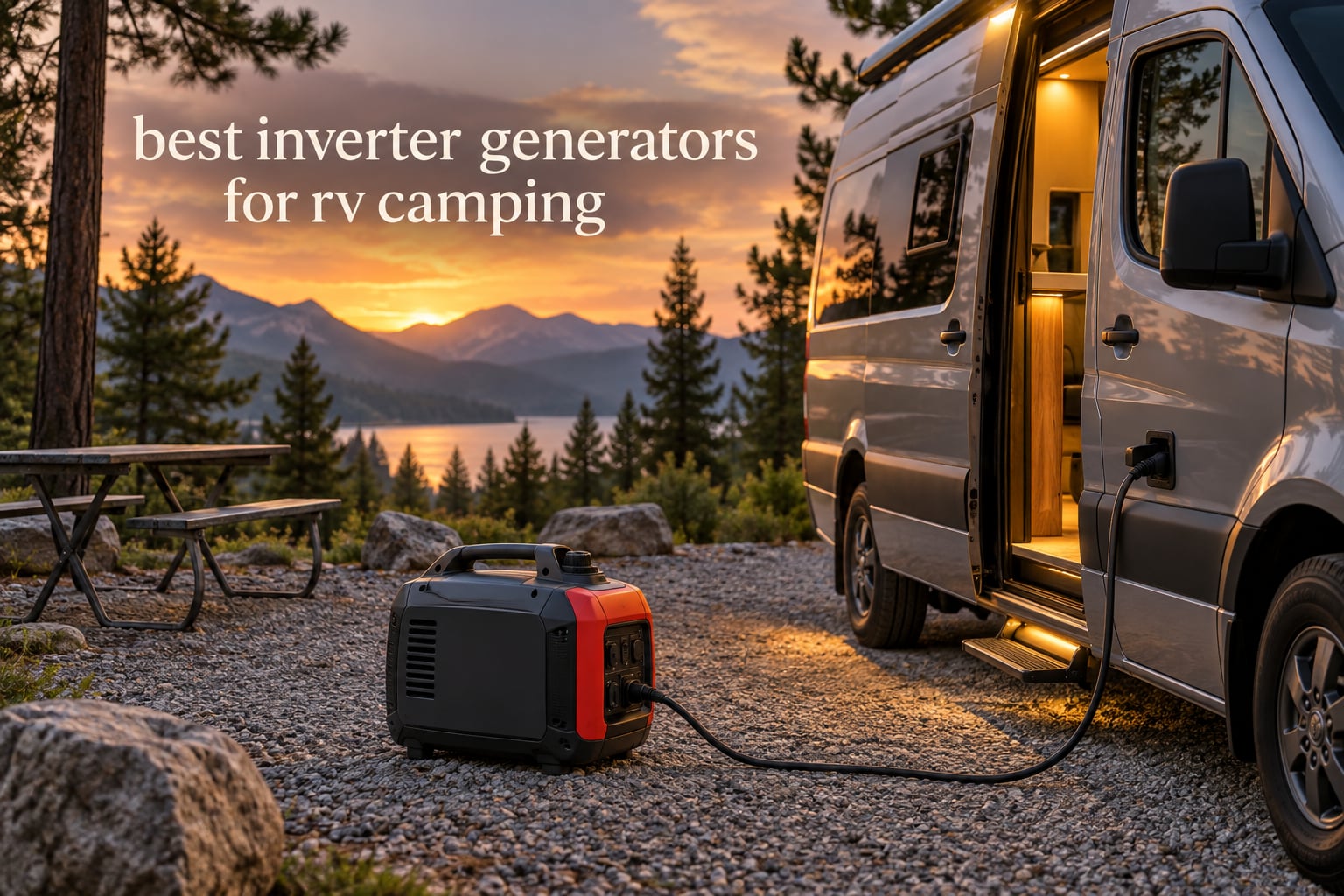
If your RV has a rooftop air conditioner, the generator question is really a question about surge, not size on paper. A 15,000 BTU compressor can pull well over 1,300 watts while running and spike to several times that the instant the contactor closes. Owners on RV forums describe the same failure over and over: everything runs fine until the AC kicks on, and the unit bogs down or shuts off.
So here is the short answer before we get into the details. A 30 amp RV service is rated at 120 volts times 30 amps, which works out to 3,600 watts. A rooftop air conditioner, a 12V fridge, a battery converter and a couple of laptops will draw a fraction of that once the compressor settles. That means most 30A campers are best served by an inverter generator in the 3,500W to 4,500W class, while smaller travel trailers that do not run AC can get by with a 2,000W to 2,500W unit.
That is the framework we used to pick the best inverter generators for RV camping this year. We normalized every unit on the same columns: running watts, starting watts, weight, dBA, fuel type, start method, RV outlet and warranty length. We are not going to pretend these are laboratory measurements, because the published noise figures are manufacturer claims at stated loads and distances. What we can do is tell you honestly which specs matter on a campground pad and which ones are marketing filler.
Weighing in on the technical side matters, but so does the practical side. A 99-pound unit that starts with a dial is a different experience from a 39-pound unit you haul over a tailgate every afternoon. If you want the wider context on portable power first, our portable generator roundup covers the non-inverter end of the market.
Table of Contents
Top 3 Best Inverter Generators for RV Camping (October 2026)

Honda EU2200i
- 1800W running
- 2200W start
- 48-57 dB(A)
- 46.5 pounds
- gas only
- 3-year residential warranty


Champion 4000W RV Ready
- 3000W running
- 4000W start
- 64 dBA at 23 feet
- 48.1 pounds
- TT-30R outlet
- parallel ready
All 8 Picks Compared Side by Side in 2026
| Product | Specifications | Action |
|---|---|---|
| Honda EU2200i 2200W Inverter Generator |
|
Check Latest Price |
| WEN 56235i 2350W Inverter Generator |
|
Check Latest Price |
 A-iPower 4300W Dual Fuel Inverter Generator A-iPower 4300W Dual Fuel Inverter Generator |
|
Check Latest Price |
 PowerSmart 3800W Dual Fuel Inverter Generator PowerSmart 3800W Dual Fuel Inverter Generator |
|
Check Latest Price |
 Oxseryn 4400W Open Frame Inverter Generator Oxseryn 4400W Open Frame Inverter Generator |
|
Check Latest Price |
| Champion 4000W RV Ready Inverter Generator |
|
Check Latest Price |
 Champion 4500W Dual Fuel Electric Start Inverter Champion 4500W Dual Fuel Electric Start Inverter |
|
Check Latest Price |
 PowerSmart 4000W Inverter Generator PowerSmart 4000W Inverter Generator |
|
Check Latest Price |
1. Honda EU2200i Review: The Quietest Unit in the Lineup
Honda EU2200i 2200 Watt Inverter Generator (EU2200ITAN)
1800W running
2200W start
46.5 pounds
9 hour runtime
0.95 gallon tank
Pros
- Quietest published range in the group at 48-57 dB(A)
- Clean sine wave output safe for electronics
- CO-MINDER carbon monoxide auto shutoff
- Bluetooth app for remote start and monitoring
- 3-year residential warranty
Cons
- 1800W running capacity is the lowest here
- Recoil start only on a unit this size
Out of the eight units we lined up, the Honda EU2200i is the one that made us reconsider the whole category. It is a 121cc four-stroke that puts out 1,800 watts running and 2,200 watts starting, and it does it in a 46.5 pound package with a 0.95 gallon tank. Owners report up to 9 hours of runtime on that tank, and the Bluetooth app lets you start and monitor it from your phone instead of walking out to a dark picnic table.
The CO-MINDER system is the part we care most about. It continuously monitors carbon monoxide levels and shuts the engine down before concentrations get dangerous, which is exactly the failure mode that makes people nervous about generators in a campground with an awning and a neighbor 20 feet away. Combined with an enclosed cabinet rather than an open frame, it is the setup we would put next to a tent or a canvas awning without hesitating.
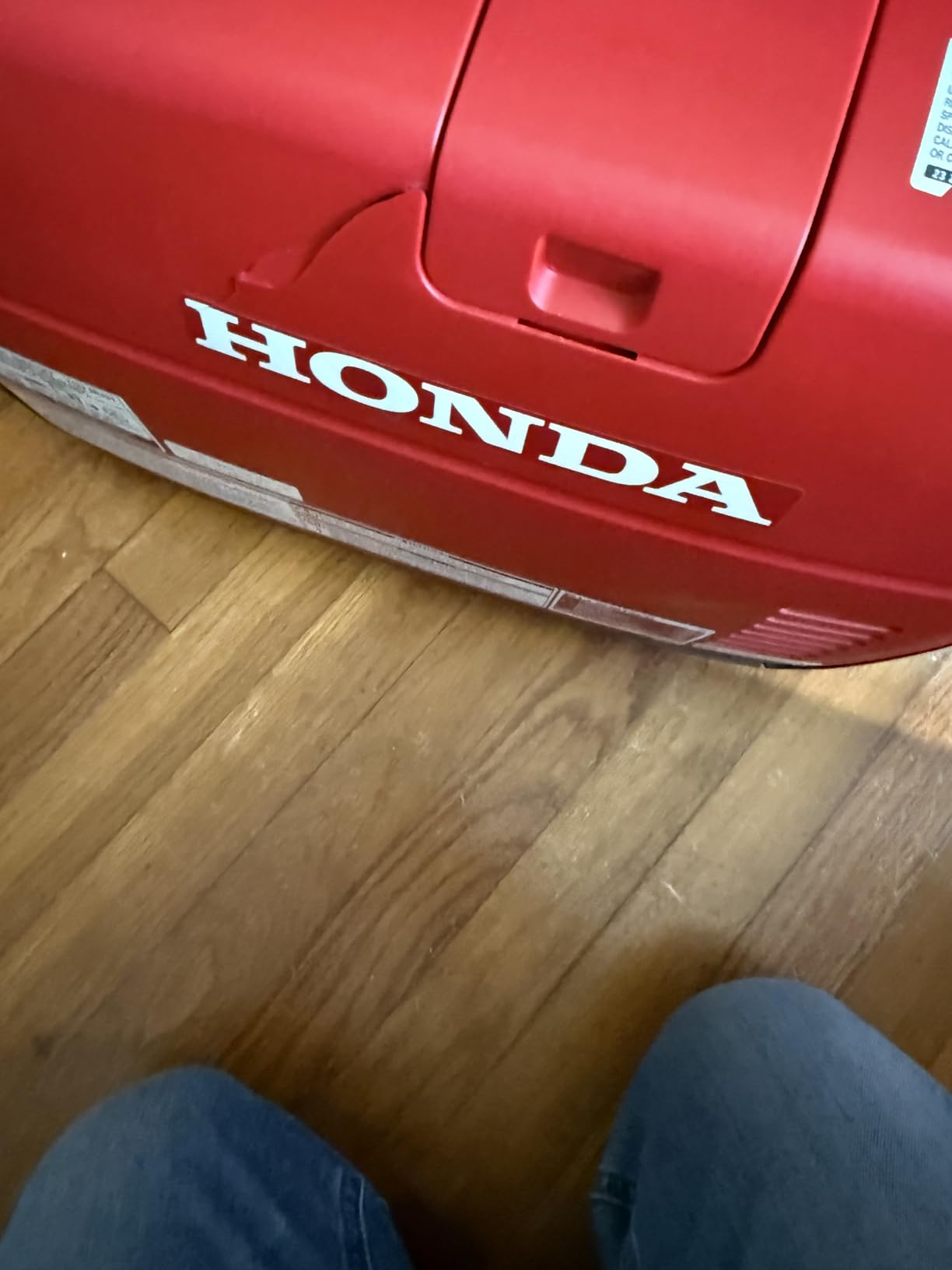
Where it falls short is capacity. At 1,800 running watts, the EU2200i is designed for a coffee maker, a small fridge, a CPAP machine, chargers and a TV. It is not a rooftop air conditioner generator. A 13,500 to 15,000 BTU compressor typically runs between 1,300 and 1,800 watts on its own, which would consume this unit’s entire running capacity before you add anything else. The 2,200W starting figure does not leave enough headroom for a compressor surge, and reviewers do not report owners powering larger AC units with it.
One practical note that catches people: this generator is not offered for sale in California. If you are buying there, look at the WEN or PowerSmart units below instead. And for a heavier 30A trailer, we would step up to the 3,500W class rather than stretch this one. We cover the mechanics in more detail in our general generator guide if you want the fuel and maintenance basics first.
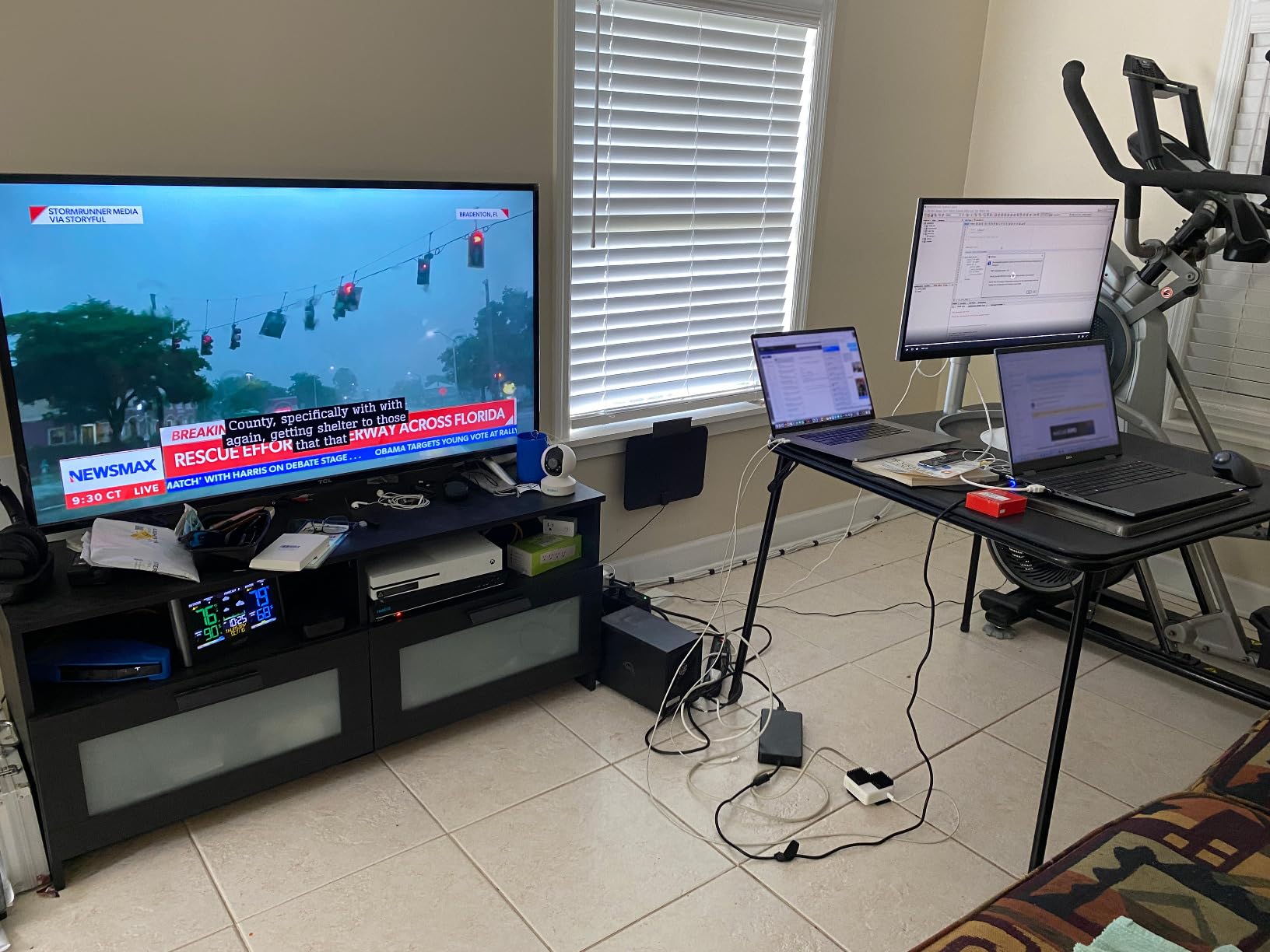
Is 1800 watts enough for a small trailer?
It is enough for a teardrop, a pop-up or a 20-foot travel trailer that runs a 12V fridge on a converter. Add a 20-pound propane burner or an electric coffee maker and you are near the ceiling, so you need to sequence those loads rather than switch them on together.
It is not enough for a fifth wheel with a rooftop AC, nor for two air conditioners of any size. Think of this one as a power bank for electronics and a fridge, not as shore power replacement.
Who should look past it?
If your plan includes running a rooftop air conditioner on a hot boondocking night, skip this unit. There is no eco mode trick or parallel kit workaround that changes the math on a single compressor surge.
Full-time RVers who already own a working generator will keep it as a lightweight backup. Nobody who needs 3,000W of headroom should buy it new.
2. WEN 56235i Review: The Lightest Unit in the Lineup
WEN Super Quiet 2350-Watt Portable Inverter Generator with Fuel Shut Off, Gasoline Power, Ultra Lightweight (56235i), Black
1900W running
2350W start
39 pounds
10 hour runtime
5 outlets
Pros
- Lightest body in the group at 39 pounds
- Five outlets including two USB and one 12V DC
- Fuel shutoff runs the carburetor dry to extend life
- 1900 rated watts of clean inverter power
- Owners report first-pull starts near 16F
Cons
- Limited surge headroom for compressor loads
- No hour meter and no factory oil filter
At 39 pounds, the WEN 56235i is the unit you can lift into a truck bed one-handed, and that matters more than most buyers expect. The 79cc four-stroke delivers 1,900 rated watts with 2,350 surge watts, and the outlet mix is unusually generous for the size: two three-prong 120V receptacles, one 12V DC receptacle and two 5V USB ports.
Reviewers frequently note that it starts on the first pull in cold weather, including temperatures near 16F, which is a genuinely useful data point for shoulder-season boondocking. The fuel shutoff system is designed to burn off what is left in the carburetor before shutdown, and combined with a 1 gallon tank that gives roughly 10 hours at moderate load.
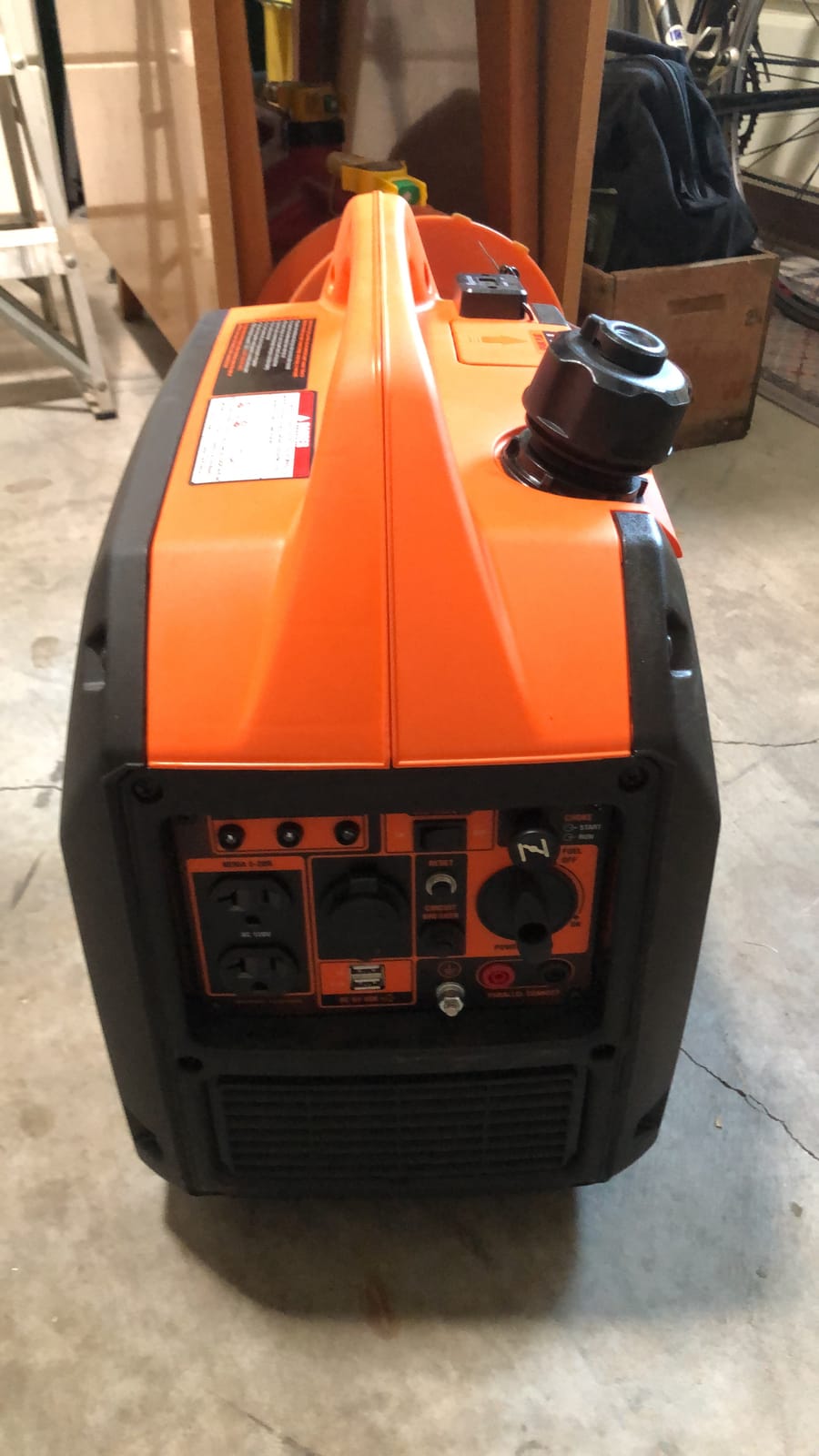
The limitation is surge. Owners with refrigerators, freezers and air conditioners report that the 2,350W starting ceiling is reached quickly, and once the compressor is demanding its startup draw there is no headroom for anything else. Several buyers also flag the absence of a built-in hour meter, and a magnetic dipstick is a common owner upgrade because the small engine has no factory oil filter. Occasional durability complaints show up from people running it hard for extended periods.
If you camp in a van or a small trailer and your load is a fridge plus a laptop plus a phone, this is the correct answer. If you want to run an air conditioner, you need the next class up. Understanding the load difference is the single most useful thing a new buyer can do, which is why we dedicated a section to it below.
How long does the WEN run on one tank?
Roughly 10 hours at a light, cycling load such as a fridge converter plus electronics. Eco mode and partial load use are what stretch it, since the engine spends most of its life below full throttle.
On a night with a microwave, a coffee maker and a laptop all running together, expect the tank to go much faster. Plan refills accordingly rather than treating the 10-hour figure as a floor.
What are buyers unhappy about?
Surge headroom is the recurring theme, followed by the small engine’s appetite for maintenance. The 79cc displacement leaves little margin for a compressor load, and at sustained high elevation a high-altitude kit is worth installing.
Two-year warranty coverage is also shorter than the three-year terms on the Champion units. For a weekend camper that is an acceptable trade for the weight savings.
3. A-iPower 4300W Dual Fuel Review: Propane Flexibility at 3450W
A-iPower 4300W Gas Propane Inverter Generator, Lightweight, Fuel Sense
3450W running on gas
3100W on propane
54.8 pounds
63 dBA
1.6 gallon tank
Pros
- Runs on gasoline or propane straight out of the box
- 3450 running watts covers one rooftop AC plus appliances
- 3 percent THD inverter output for sensitive electronics
- Includes a 30A L5-30R outlet plus parallel cables and a 30A RV adaptor
- Telescoping handle and flat-free wheels included
Cons
- 63 dBA is louder than most units in this group
- 54.8 pounds is a real lift on its own
- 7.5 hours at 25 percent load on 1.6 gallons
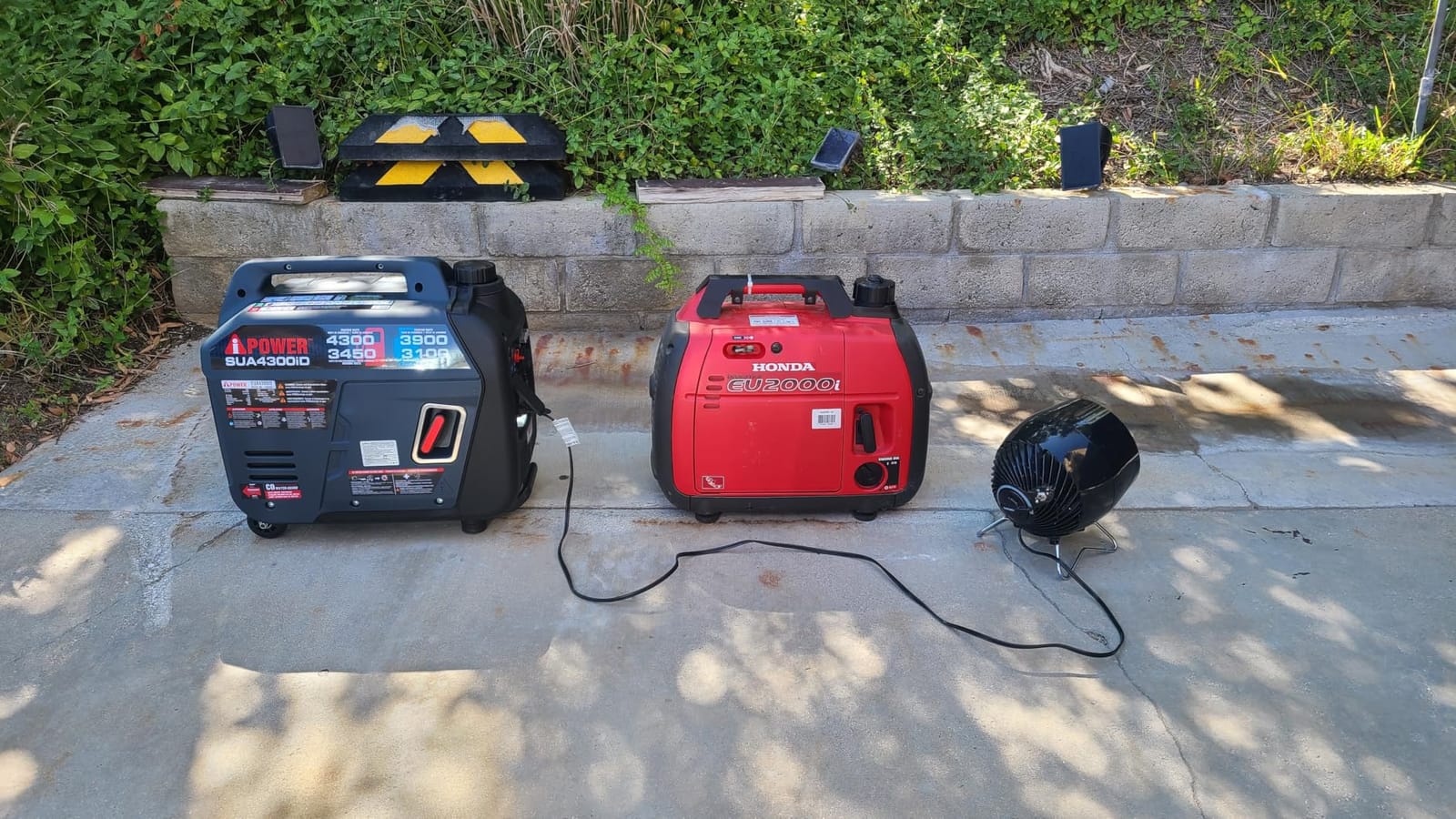
The A-iPower SUA4300iD is one of three units here that run on both gasoline and propane out of the box, with the LPG hose and regulator included. On gas it produces 3,450 running watts with 4,300 starting watts; on propane it drops to 3,100 running and 3,900 starting. That is a meaningful spread for boondockers who want to switch to a standard 20-pound propane cylinder rather than haul fuel cans.
The control panel is unusually well equipped for the class. You get a CO sensor indicator, an LED light, a data center display, 12V DC output, a 30A L5-30R RV outlet and a 20A duplex. The box also includes parallel cables and a 30A RV adaptor, so pairing a second matching unit does not require another purchase. Output is clean at 3 percent total harmonic distortion, which is fine for laptops, TVs, phone chargers and most power tools.
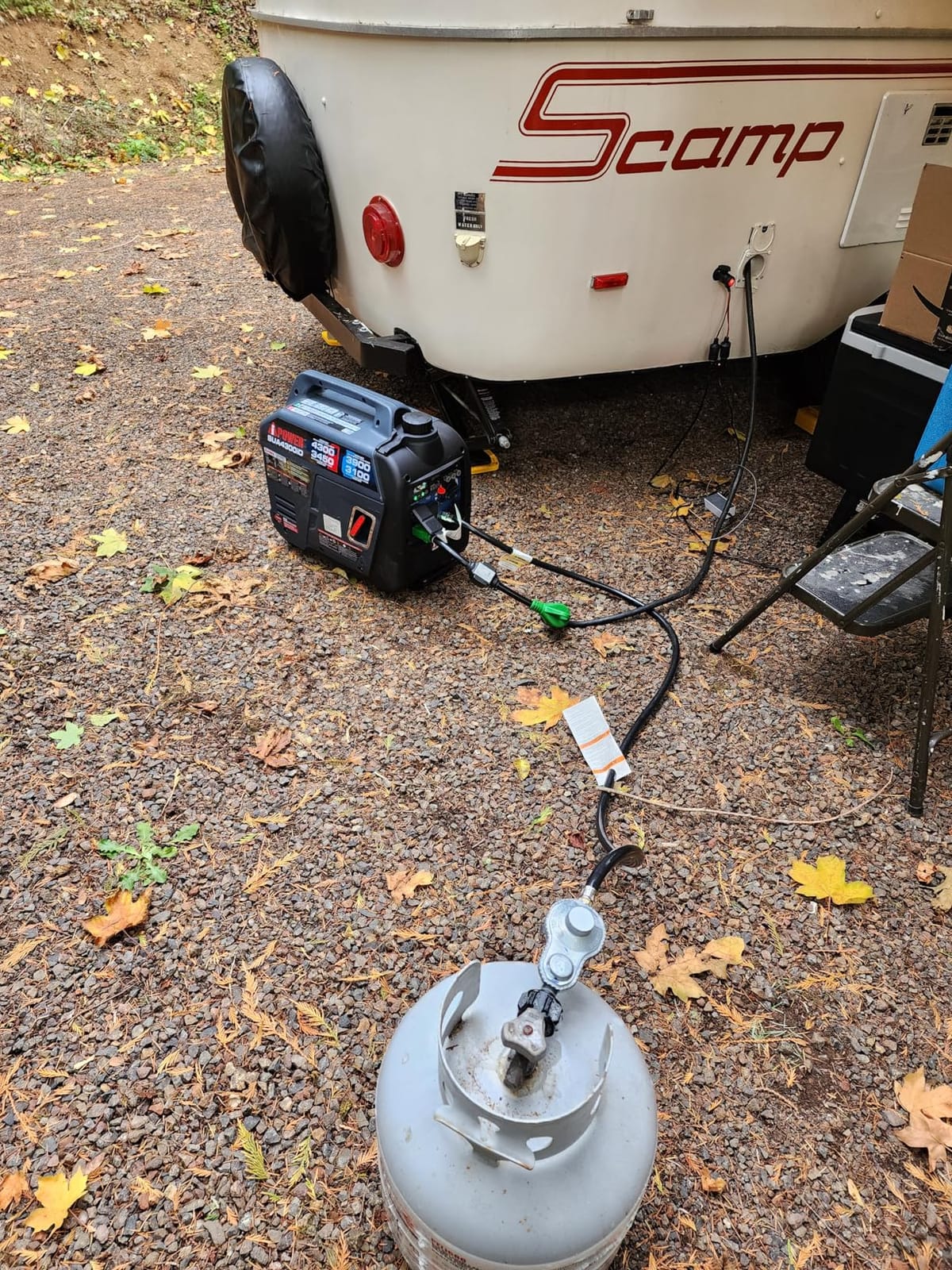
Now the honest part. This unit carries the lowest average rating in the group, and the one-star complaints cluster around two issues: difficulty starting, and reaching a customer service team when something goes wrong. The 63 dBA figure also puts it in louder territory than most of the enclosed units here, and at 54.8 pounds you are not carrying it any distance by yourself. Runtime on the 1.6 gallon gasoline tank is about 7.5 hours at 25 percent load, which is unremarkable for the tank size.
Warranty coverage is listed at 3 years, but owners who needed help report the support side was slow or unresponsive. If you are buying far from any dealer, that support gap matters more than the spec sheet suggests. I would not build a long boondocking trip around this unit without a backup plan for a starter that refuses to pull.
When does dual fuel actually pay off?
It pays off when propane is easier to find than gasoline, when you already have a cylinder on the tongue, or when you want to run a generator inside a storage compartment without dealing with fumes. Gasoline still gives you the higher output figures and the longer runtime per gallon.
It does not pay off if you only ever buy one fuel type. Running the same generator on two fuels means carrying two fuel systems and learning both.
What about the 30A outlet?
The L5-30R twist-lock is a proper RV-grade connection and it is in the box along with the adaptor. That makes hookup to a 30A service straightforward, which is more than many competing units in this power class offer.
Be aware that a 30A plug and a TT-30R plug are not the same connector. More on that in the buying guide below, because getting it wrong is a real fire risk.
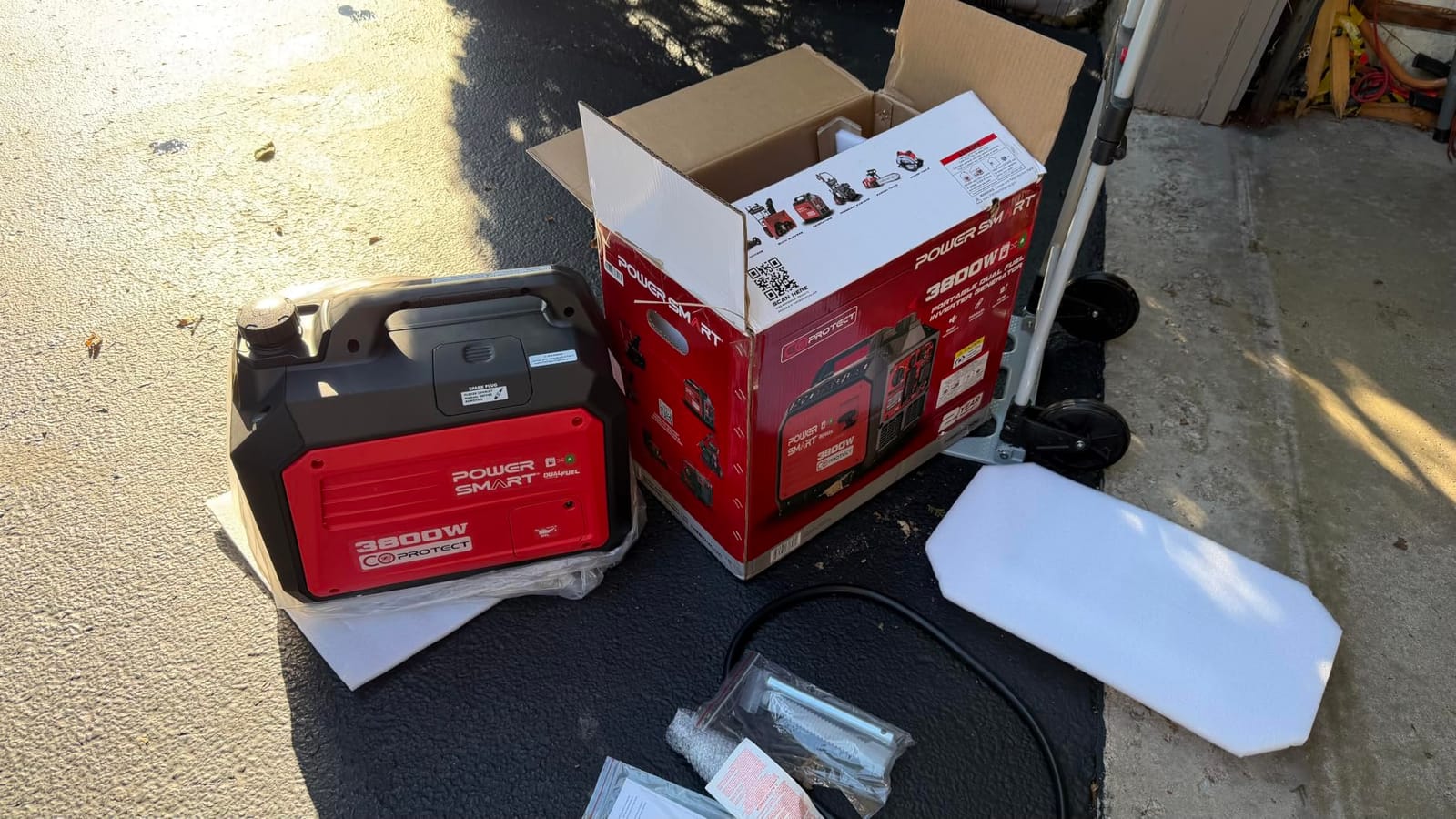
4. PowerSmart 3800W Dual Fuel Review: The Certified Safety Pick
PowerSmart 3800 Watt Dual Fuel Inverter Generator for Camping or Home Use
3300W running on gas
3100W on propane
50.7 pounds
59 dBA
1.3 gallon tank
Pros
- 59 dBA at 25 percent load in Eco Mode
- 3800 starting and 3300 running watts on gas
- Up to 8 hours on gas or 24 hours on a 20 pound propane tank
- Overload and short circuit protection with a CO sensor and low oil shutdown
- Certified to ANSI/PGMA G300 and ANSI/UL2201
Cons
- Small 1.3 gallon tank means overnight refills
- Access panels need a Phillips screwdriver
- Display is hard to read when the unit sits on the ground
Two things separate this PowerSmart from the rest: the certification list and the safety package. It is certified to ANSI/PGMA G300, ANSI/UL2201 and EPA standards, and it carries overload protection, short circuit protection, a carbon monoxide sensor and low oil shutdown. For buyers who have a canvas awning, a slide-out with a generator bay, or young kids sleeping nearby, that combination is worth paying for.
Power is 3,300 running and 3,800 starting watts on gasoline, dropping to 3,100 running and 3,500 starting on propane. The 149cc four-stroke runs at 59 dBA at 25 percent load in Eco Mode, which is quiet enough to hold a conversation over. The claim we found most persuasive in reviews is the fuel flexibility: 8 hours on the 1.3 gallon gasoline tank at 25 percent load, or up to 24 hours on a standard 20-pound propane cylinder.
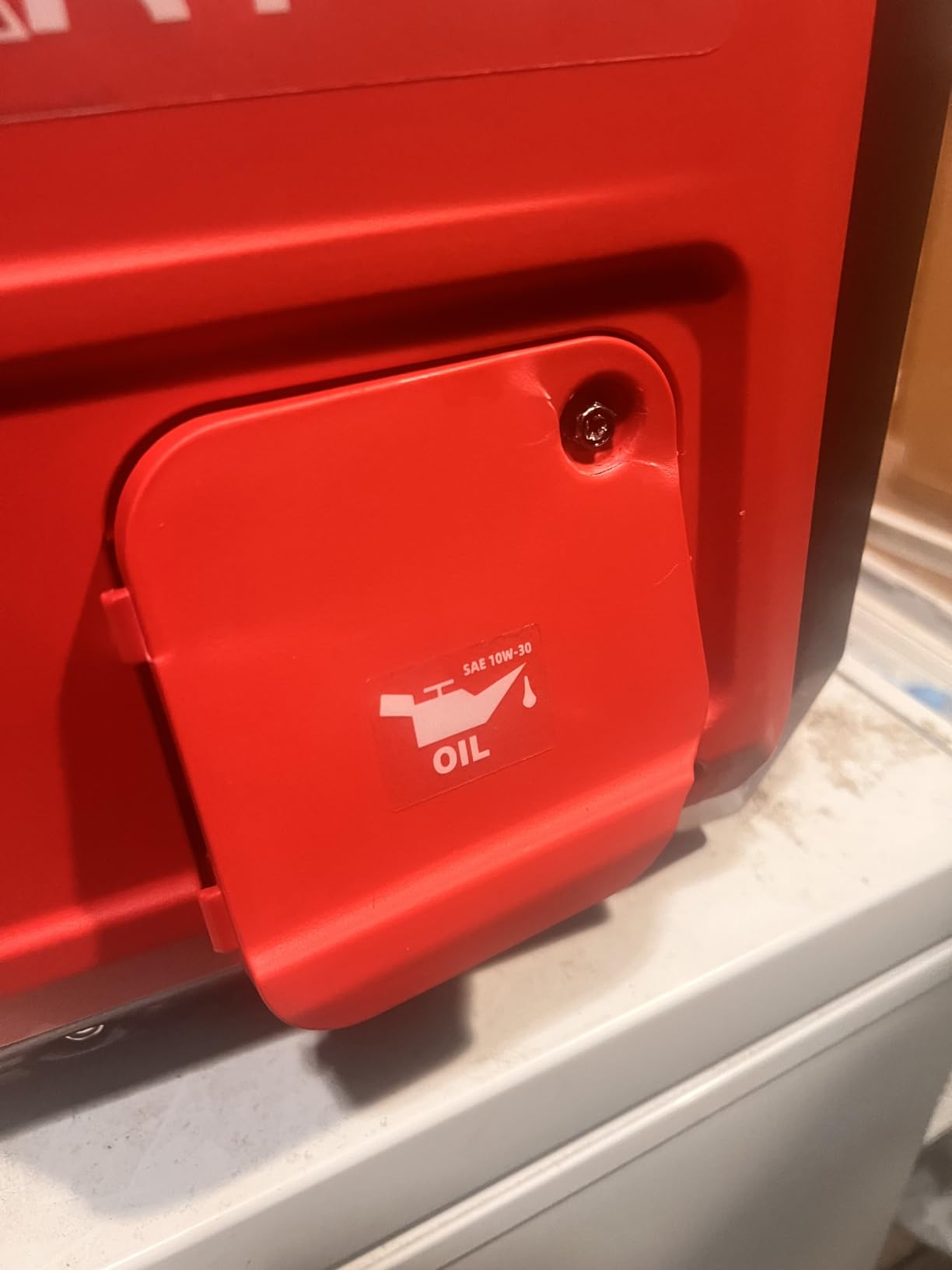
Every pick has a real drawback, and this one is the small tank. At 1.3 gallons it is among the smallest capacities here, which means planning a refill for any night the AC runs. Reviewers also complain about the access panels and oil change door needing a Phillips screwdriver, and about the control display sitting so low it is hard to read while kneeling. Noise climbs noticeably above the Eco Mode setting, so a rooftop AC load will not sound like 59 dBA.
Starting difficulty and customer service come up in the same reviews that praise the value, which is a pattern across several budget-brand units in this roundup. It is a two-year limited warranty, which is short next to the three-year terms on the Champion models.
Does the noise rating hold up with the AC running?
Not at the same level. The 59 dBA figure is measured at 25 percent load in Eco Mode, which is the number most manufacturers publish. Push the unit toward 3,000 watts and the engine holds a higher throttle.
Compare published figures carefully: some are at 25 percent load, some at 50 percent, and some at 23 feet versus 25 feet. Mixing them produces comparisons that are not real.
Who is this pick built for?
Boondockers who are safety-conscious, who already carry propane, and who want a certified unit with a genuine CO sensor rather than a marketing claim. It is also a good match for anyone who will be running sensitive electronics, since the sub-3 percent THD output is clean.
It is a poor match for a full-time RVer who wants a long warranty and easy field service. For that, step up a class.
5. Oxseryn 4400W Review: Most Running Watts for the Money
Oxseryn Power Equipment 4400 Watts Inverter Generator Gas Powered, Portable Open Frame Generator, Low Noise with ECO Mode, RV Ready, Emergency Home Backup
3400W running
4400W peak
56 pounds
14 hour runtime
208cc engine
Pros
- 3400 running watts with 4400W peak headroom for air conditioner loads
- 14 hours at 25 percent load on a 2 gallon tank
- Two 120V AC ports plus a 12V DC port and a dedicated RV port
- 208cc four-stroke with cold start
- low oil shutdown and overload protection
- 56 pounds is manageable for a two-person lift
Cons
- Under 72 dBA is the loudest figure in the roundup
- Gasoline only with no propane capability
- 1-year manufacturer warranty is the shortest here
On paper, this is a high-output unit that reviewers single out for what it delivers for the money. It delivers 3,400 running watts and 4,400 peak watts from a 208cc four-stroke engine, and it runs up to 14 hours at 25 percent load on a 2 gallon tank with a fuel gauge. For an owner whose load is unpredictable, that combination of headroom and endurance is genuinely useful.
Outlet selection is broad for a budget unit: two 120V AC ports, a 12V DC port and a dedicated RV port. Cold start technology means it will fire in cold weather, and low oil shutdown plus overload protection cover the basics. Buyers treat it as a high-output backup option rather than a premium machine, and at 56 pounds it is manageable for two people.
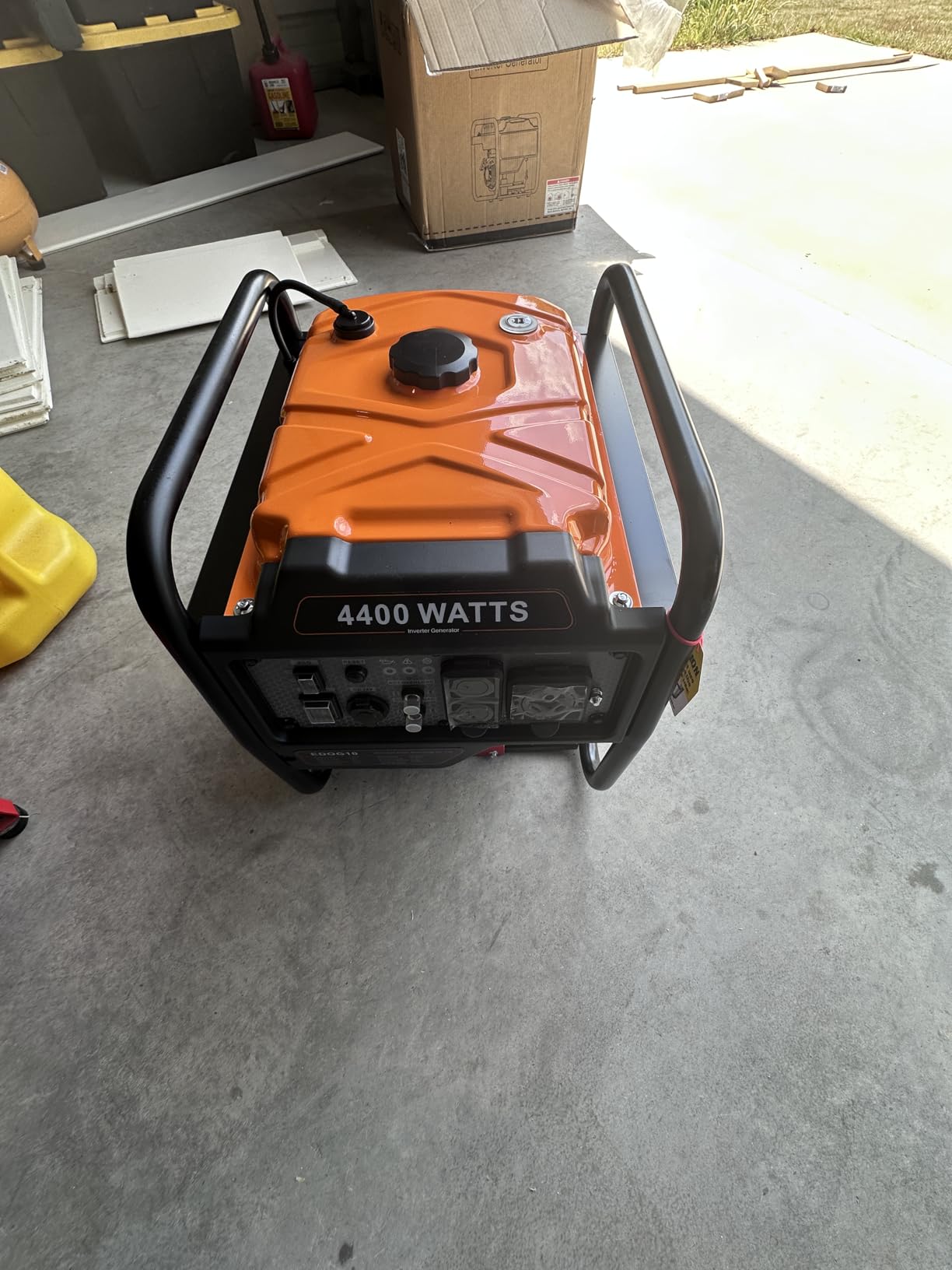
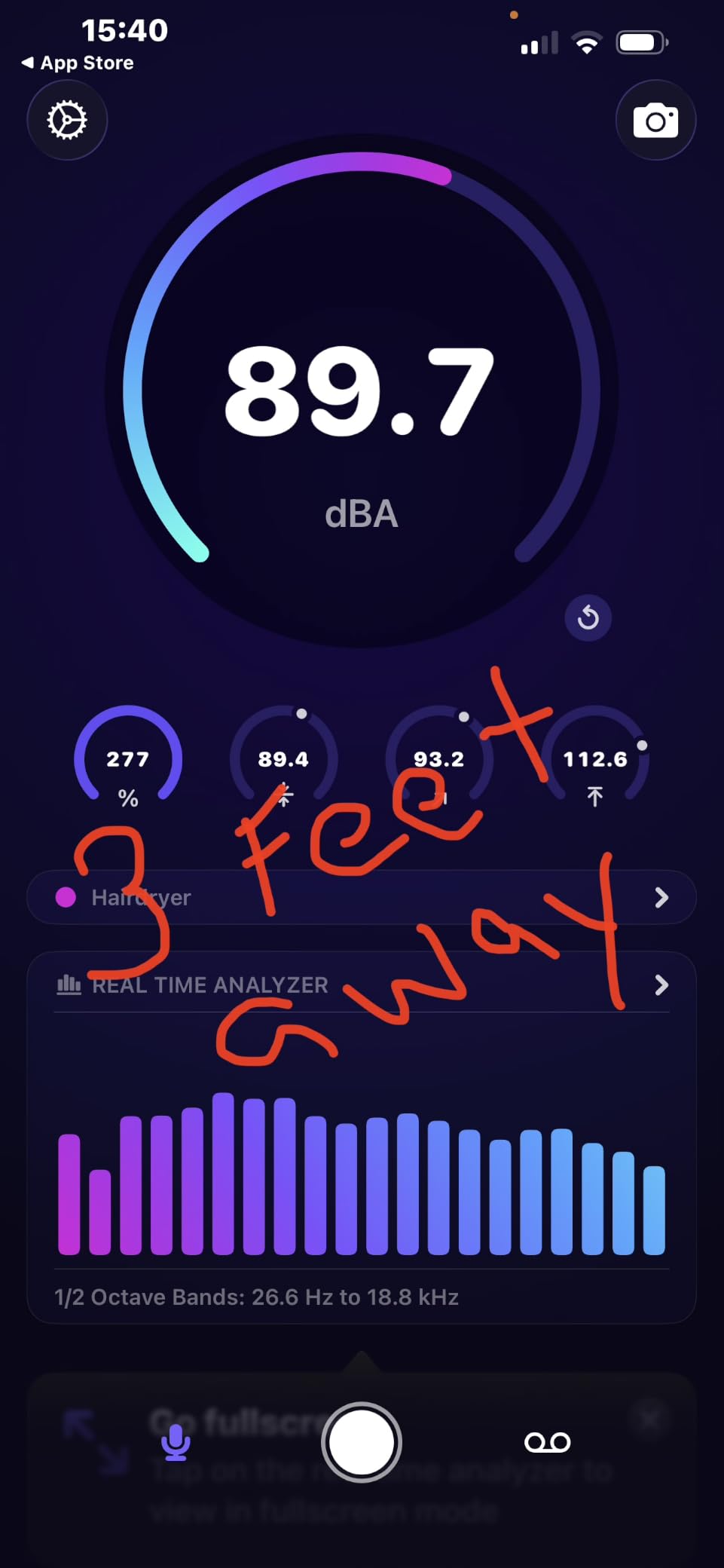
There is one structural drawback that outranks everything else on this card: it is an open frame unit. At under 72 dBA measured from 23 feet, it is the loudest generator in this roundup, and open frame construction is banned at a significant number of campgrounds. Before you buy, check the quiet hours and equipment rules at the parks you actually use.
Beyond that, it is gasoline only, so there is no propane option at all. The 1-year manufacturer warranty is the shortest in the group and offers the least protection if something fails in month 14. As with other value-brand units, starting difficulty and service access come up repeatedly in reviews.
Can I run my air conditioner on this one?
With one rooftop AC, generally yes. The 3,400 running watts leave room for the compressor plus a converter load and a few smaller appliances, and the 4,400W peak gives the compressor somewhere to go during startup.
Two air conditioners, or one AC plus a microwave, a water heater and a coffee maker all at once, exceeds what you should ask of it. Sequence the loads rather than assuming the peak rating covers simultaneous startup.
Is open frame a real problem at campgrounds?
Yes. Forum veterans regularly flag it as the mistake that turns a good purchase into a campground confrontation. Many parks specifically prohibit open frame and contractor-style units, and the enforcement ranges from a friendly reminder to being escorted out.
If you mostly dry camp on dispersed public land the rule may not apply, but for a full-time traveler the enclosed models are the safer purchase.
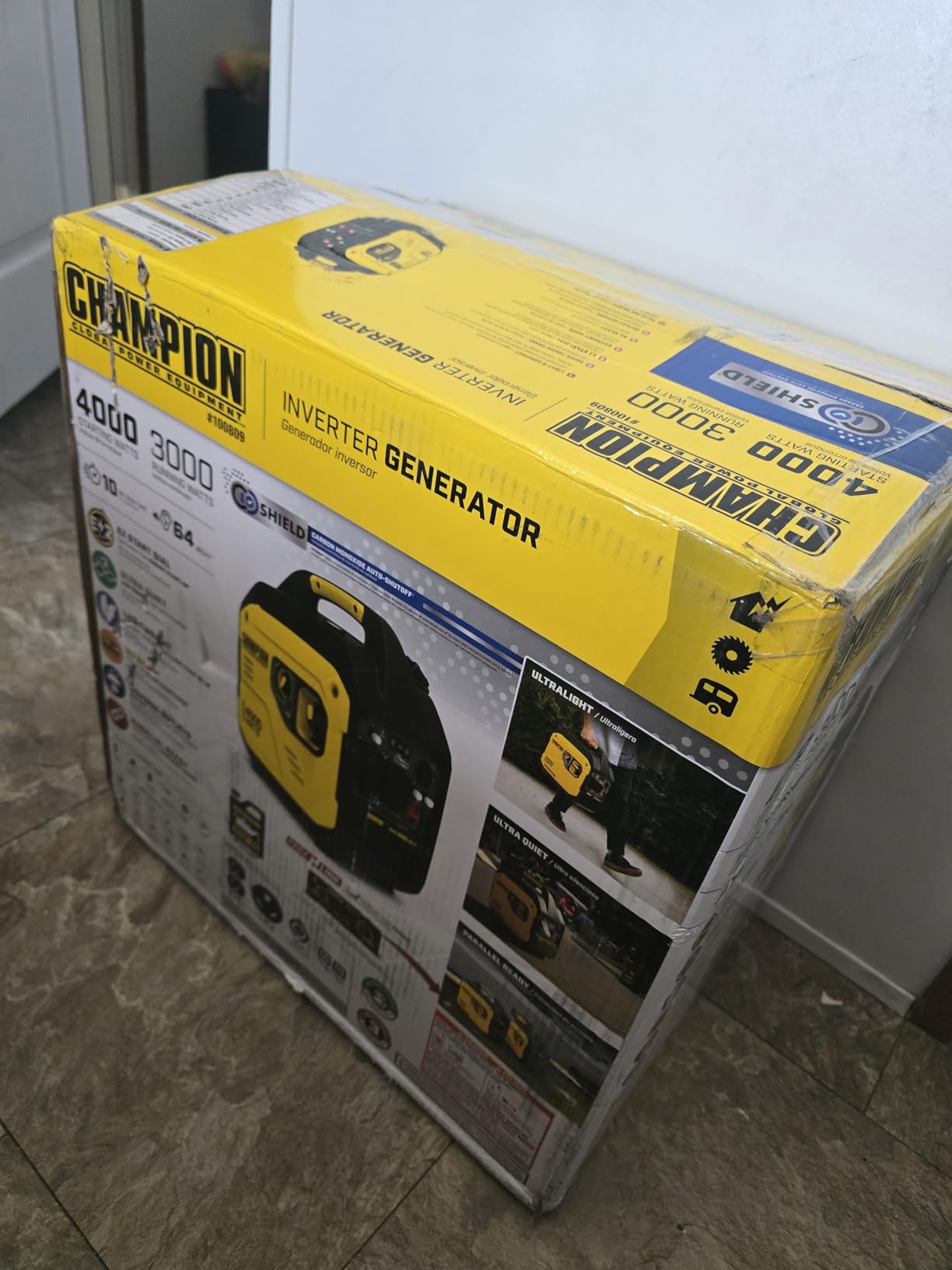
6. Champion 4000W RV Ready Review: The Lightest 4000W Inverter Here
Champion 4000-Watt RV Ready Portable Inverter Generator
3000W running
4000W start
48.1 pounds
64 dBA at 23 feet
10 hour runtime
Pros
- Under 49 pounds for a full 4000W class inverter
- 64 dBA at 23 feet suits camping and tailgating
- TT-30R 25A RV outlet plus 20A duplex with under 3 percent THD
- CO Shield carbon monoxide auto shutoff
- Parallel kit doubles output with a second matching unit
- 3-year warranty with lifetime technical support
Cons
- Gasoline only with no propane option
- 3000 running watts is below several competitors here
- Recoil start only with no electric or remote start
This is the pick we recommend most often to a 30A trailer owner who runs a single rooftop air conditioner. It weighs 48.1 pounds, produces 3,000 running watts with 4,000 starting watts, and ships with a 25A TT-30R RV outlet, which is the connector most 30A RVs actually have on the outside of the coach.
The outlet configuration matters more than it sounds. The TT-30R is the flat three-prong RV plug, distinct from the L5-30R twist-lock found on some other units in this roundup. Having it factory-installed removes the adapter step, and adapter mistakes are one of the more common ways owners trip a breaker or damage a receptacle.
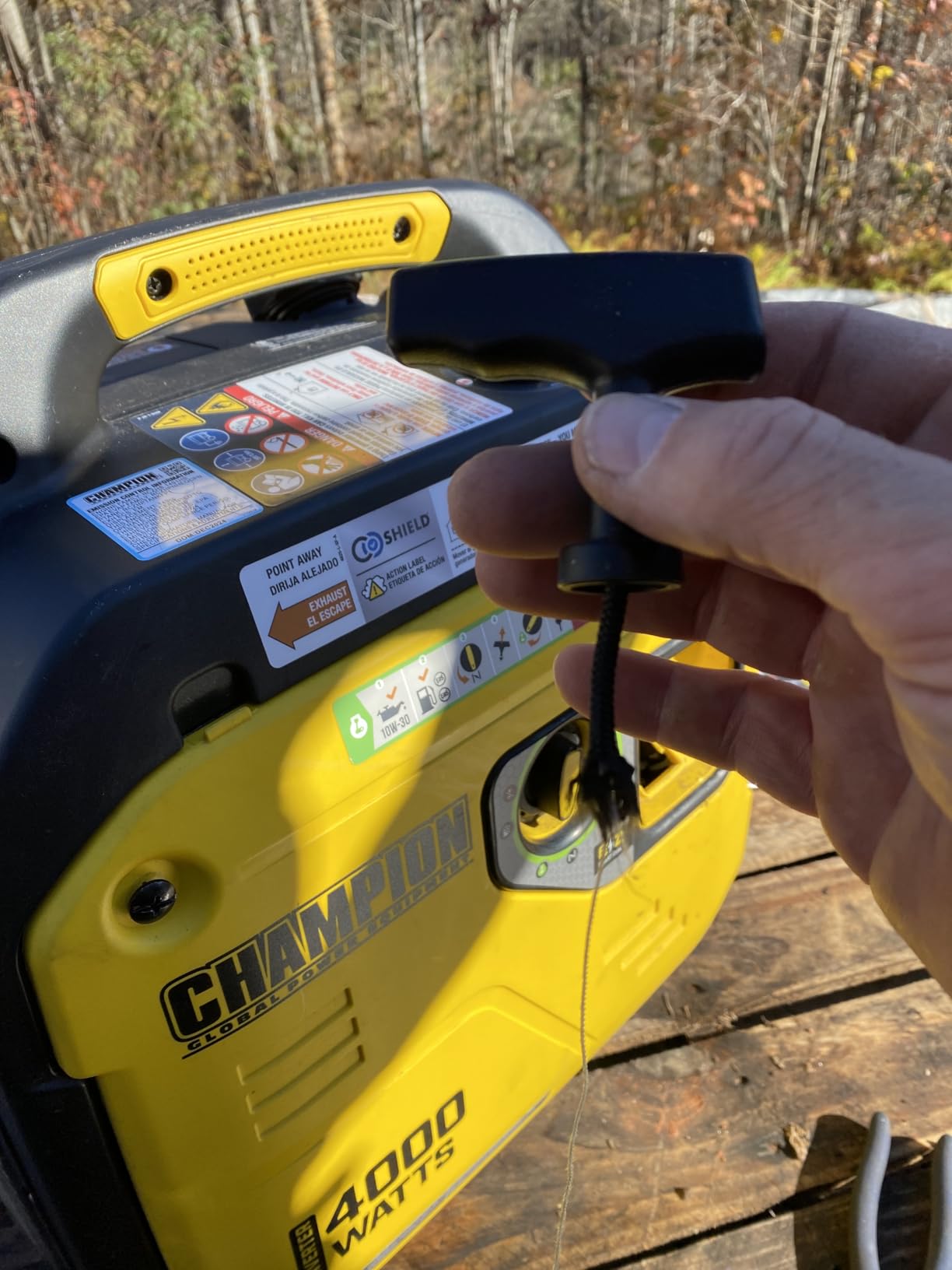
Noise is listed at 64 dBA measured from 23 feet, which is quiet enough for camping and tailgating, and runtime reaches 10 hours on a typical load. Output stays under 3 percent THD, so laptops, routers and CPAP machines are safe. CO Shield handles the carbon monoxide shutoff, and the parallel kit doubles output with a second matching Champion inverter, which is a cheaper path to two-AC capability than buying a larger single unit.
The gaps are real. It is gasoline only, and 3,000 running watts sits below the 3,300 to 3,500 watts that several competitors deliver. It is recoil start only, so on a cold morning in the dark you are pulling a cord. Reviewers consistently praise easy starting, dependable runtime and Champion’s warranty support, which is why it earned the second-highest average rating in the group.
Is 3000 watts enough for one rooftop AC?
Yes, with discipline. A single 13,500 to 15,000 BTU compressor typically runs 1,300 to 1,800 watts, and the converter for a 12V fridge draws a few hundred more. Start the compressor first, let it stabilize, then add other loads one at a time.
The failure mode owners report is tripping the RV breaker when the microwave and coffee maker come on while the compressor is already drawing. Sequencing solves it.
Should I parallel a second unit instead?
It is a reasonable path if your rig is headed toward a second AC unit, and the kit is manufacturer-approved. Paralleling doubles both running and surge capacity, but only units listed as compatible can be linked.
Do not attempt it with a mismatched brand or model. The control electronics have to agree, and the combined surge has to stay within what both machines can deliver.
7. Champion 4500W Electric Start Review: Dual Fuel Without a Pull Cord
Champion 4500-Watt Electric Start Dual Fuel Portable Inverter Generator
3500W running on gas
3150W on propane
99.2 pounds
61 dBA
2.25 gallon tank
Pros
- Largest capacity in the roundup at 3500 running watts on gas
- 61 dBA with up to 14 hours on gas and 21 hours on propane
- Electric start via the EZ Start Dial removes the pull cord
- Intelligauge power meter tracks voltage
- frequency and run hours
- Includes LPG hose and 3-year warranty
Cons
- 99.2 pounds is by far the heaviest unit here
- CO Shield can trigger in a fully enclosed truck bed
- Parallel kit sold separately
On output, this is the most capable generator we reviewed. It produces 4,500 starting watts and 3,500 running watts on gasoline, and 3,150 running watts on propane, which is the highest continuous figure in the group. The 212cc engine runs at 61 dBA and delivers up to 14 hours on gas or 21 hours on propane, so a weekend boondocking trip is one tank of fuel and one cylinder swap.
The feature that changes daily life is the EZ Start Dial. Electric start means no pulling a cord at 6 am in the cold, which matters far more than spec sheets suggest once you have used a recoil-start machine in a rainstorm. The Intelligauge power meter tracks voltage, frequency and operating hours, so you know when an oil change is actually due instead of guessing by calendar.
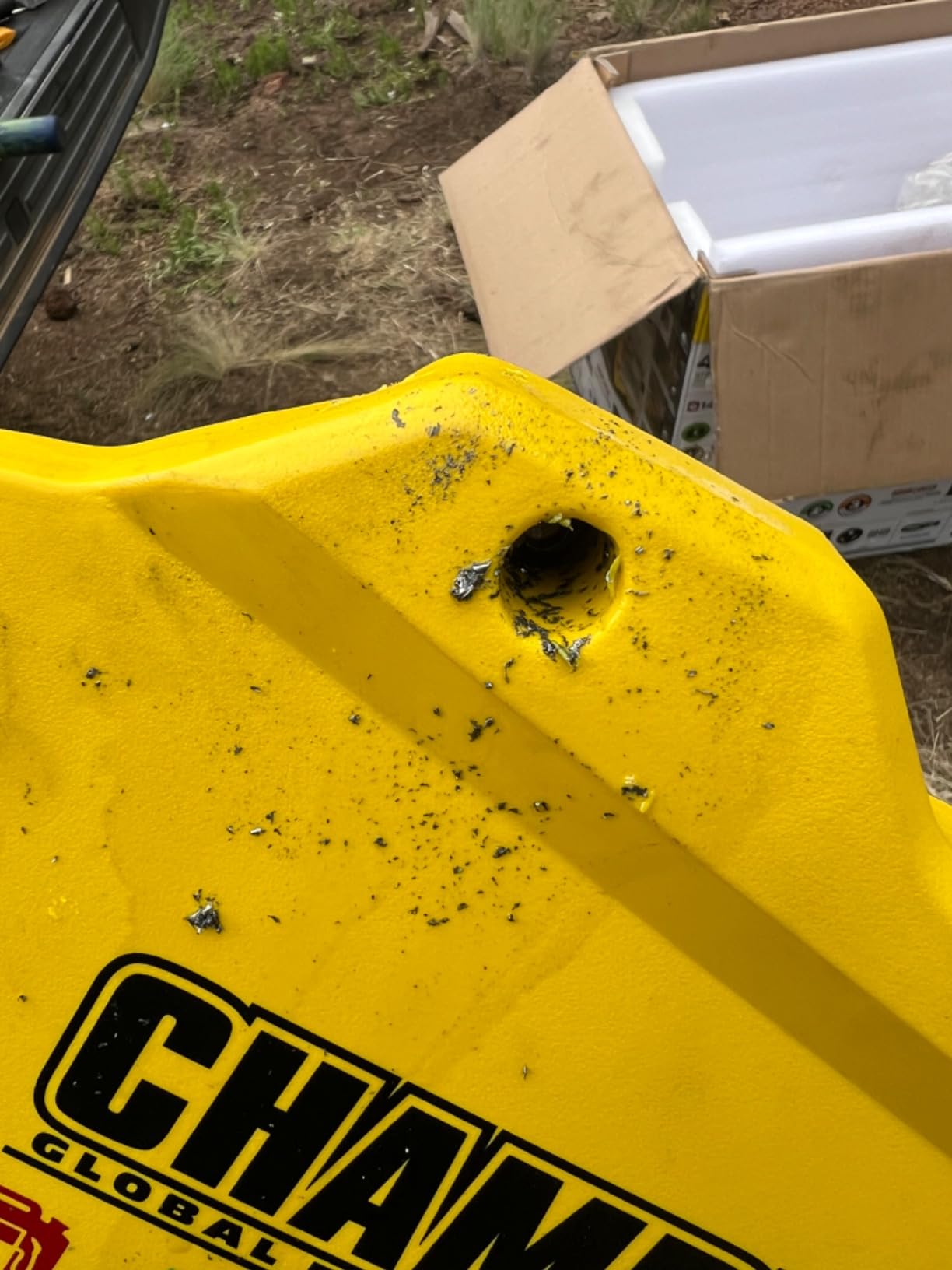
And then there is the weight. At 99.2 pounds this is more than double the WEN 56235i, and it is a two-person lift at best. That single fact eliminates it for a lot of campers who do not have a second pair of hands or a lift gate. Owners report it happily runs RV air conditioning and multiple appliances without strain, and the dual-fuel flexibility is the reason people buy it.
One safety note worth knowing: the CO Shield sensor can shut the unit down if it is mounted in a fully enclosed truck bed or compartment. That is the system working as designed, but it surprises people the first time it happens. The parallel kit is a separate purchase.
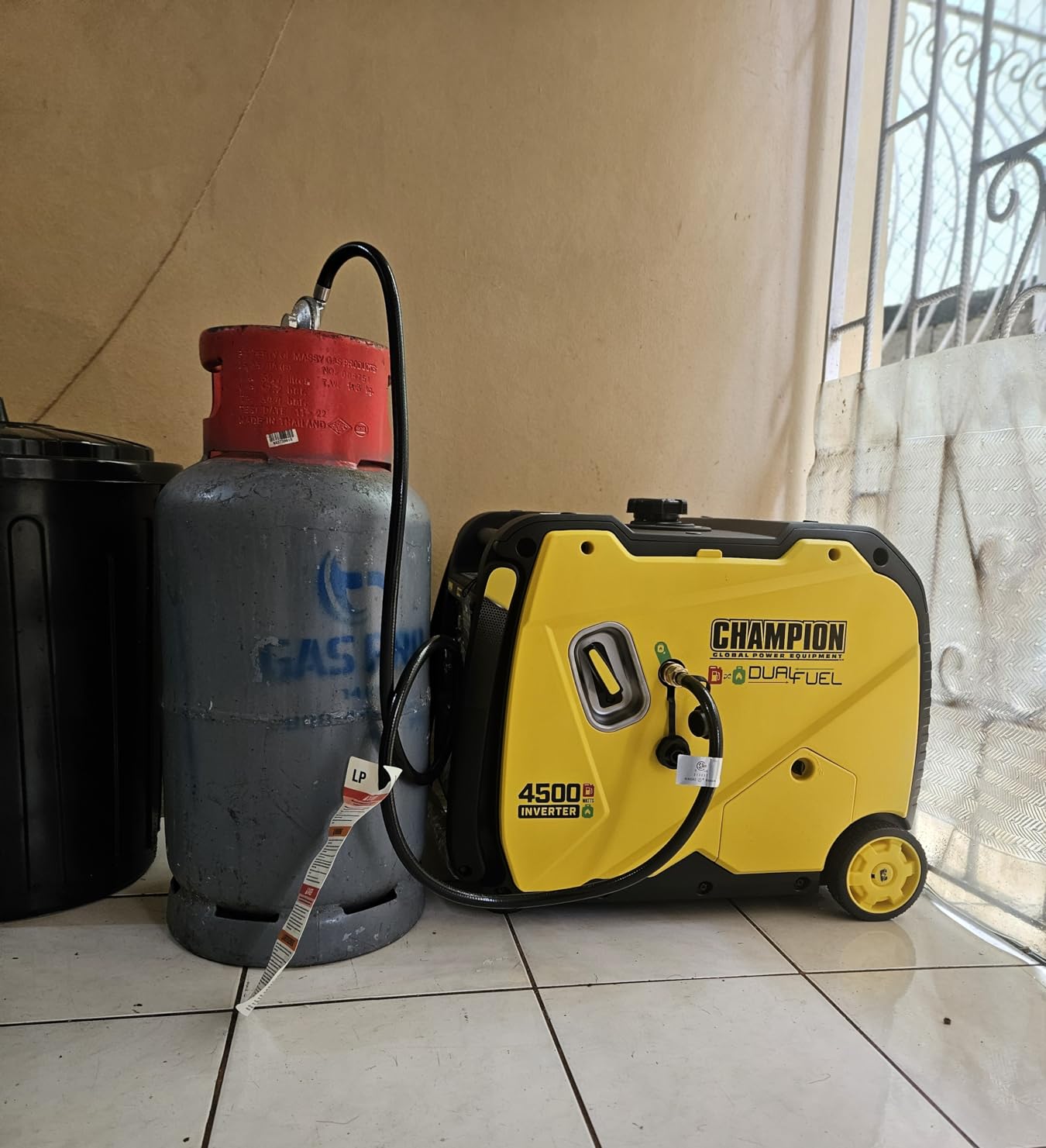
Is it worth carrying 99 pounds?
If you have two adults, a fifth wheel or a Class A with a heavy 12V system, and you plan to boondock for multiple nights, yes. The electric start, dual fuel and 3,500 running watts are a combination nothing else here matches.
If you load and unload alone twice a week, no. A lighter unit with slightly less output will suit you better and you will actually use it more often.
What does 21 hours on propane really mean?
It is a light-load figure, closer to a running fridge, a converter and some electronics than to a full boondocking night with air conditioning. Propane output drops from 3,500 to 3,150 running watts, so the fuel flexibility trades a little power for a lot of convenience.
For most owners the trade is worth it. For someone running a compressor-heavy load, run it on gasoline.
8. PowerSmart 4000W Review: Six Outlets for a Loaded 30A Rig
PowerSmart 4000 Watt Portable Inverter Generator for Camping or Home Use
3200W rated
4000W peak
50.7 pounds
59 dBA at 23 feet
1.3 gallon tank
Pros
- Six outlets including 30A L5-30R twist-lock
- 20A duplex
- 12V DC and dual USB
- 59 dBA at 25 percent load from 23 feet
- Under 3 percent THD for sensitive electronics
- Up to 8 hours at 25 percent load on the 1.3 gallon tank
- Parallel capable and includes a digital display
Cons
- Some owners find real usable wattage below the advertised rating
- Does not always start on the first pull and may need three or four
- Gasoline only with a small 1.3 gallon tank
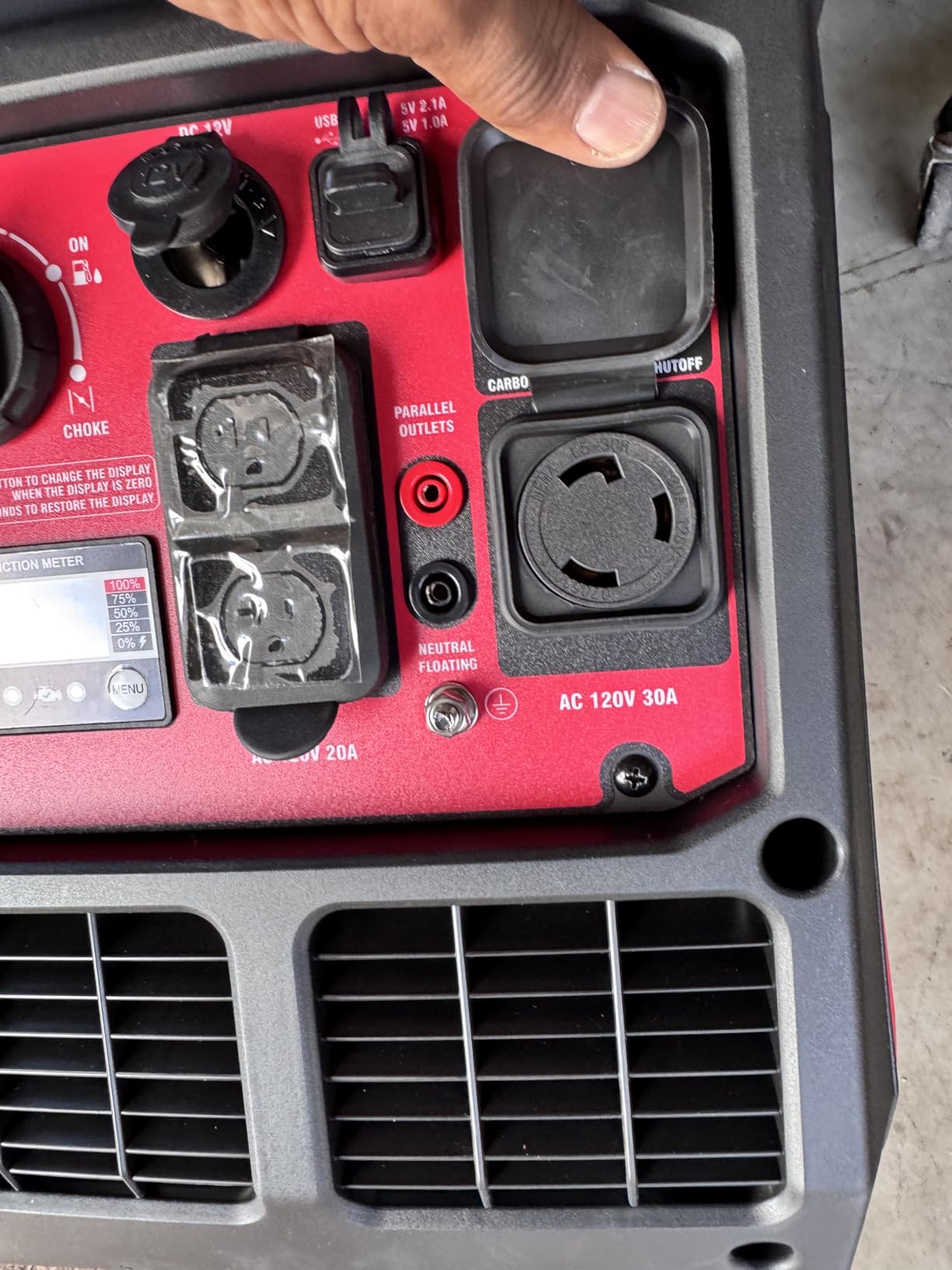
The PowerSmart 4000W distinguishes itself mainly through its outlet count. Six outlets are listed: a 120V 30A L5-30R twist-lock, a 20A household duplex, a 12V 8A DC port and dual 5V USB ports. If you are running a 12V fridge, charging phones and laptops, and powering the trailer through a 30A plug, you are not hunting for a free socket.
It produces 4,000 peak watts and 3,200 rated watts at under 3 percent total harmonic distortion, runs at 59 dBA from 23 feet at 25 percent load, and gives up to 8 hours on a 1.3 gallon tank. A digital display handles the status readout, and it is parallel capable with a second matching 4000W unit, though the kit is not included.
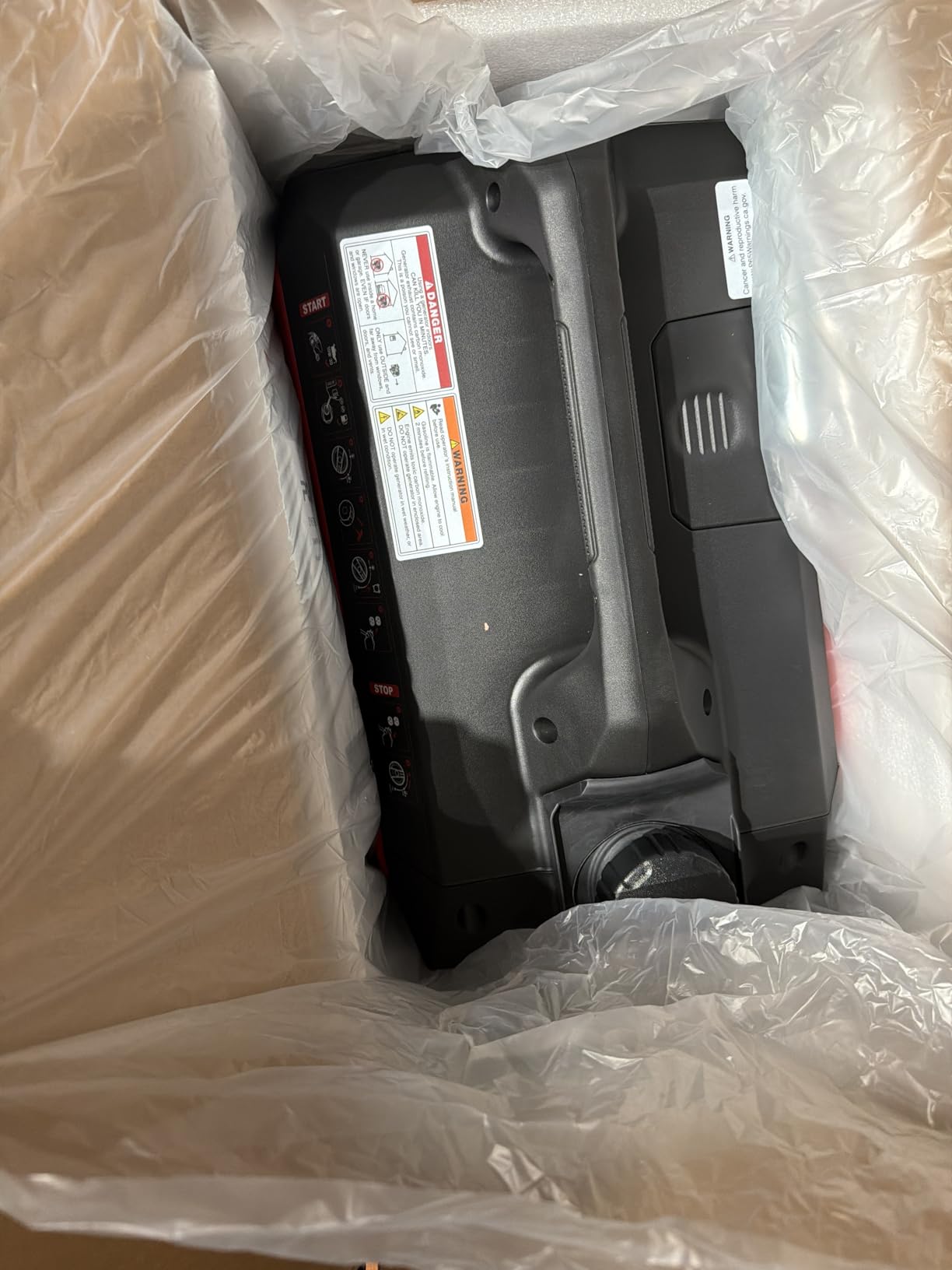
The most important caution in this roundup comes from this unit’s reviews. A number of owners report that the real usable wattage is lower than the advertised rating, and that the overload indicator trips on loads inside the published range. That is exactly the situation where someone tries to run a rooftop AC and the machine shuts down, so if an air conditioner is part of your plan, test the load before you commit to boondocking with it.
Starting is also less certain. Several buyers report needing three or four pulls rather than one, particularly in cold weather, and there are isolated reports of rough running or repeated shutdowns after several uses. Gasoline only, small tank, two-year warranty. If you want a low-stakes backup unit for a weekend of electronics, this is a good deal. If the AC is the priority, the Champion 4000W is the safer bet.
What is this pick genuinely good at?
It is good at powering a trailer’s 12V system and its USB and AC accessories at once without straining. It is quiet at light load and the outlet mix reduces the need for power strips.
It is also a reasonable low-cost unit to keep as a second machine for a dry campground night when you only need lights, a fridge and chargers.
What should buyers watch out for?
Test the air conditioner load before a trip. Watch the overload indicator on the first few hours of use, and expect to pull the starter more than once when the engine is cold.
Also confirm the outlet you need. This unit has an L5-30R twist-lock, not a TT-30R, so a 30A trailer wired for the flat TT-30R plug needs the right cable or adaptor.
How to Size an Inverter Generator for Your RV
The starting point is your RV service, not the appliance list. A 30 amp RV service is 120 volts at 30 amps, which is 3,600 watts. A 50 amp service is 120 volts at 50 amps, which is 6,000 watts. A 20 amp service is 2,400 watts. These are the ceilings your rig presents, and any generator you plug in must sit under them.
From there, a simple wattage band works for most people. A 2,000W to 2,500W inverter covers a pop-up, a teardrop, a van or a small trailer running a 12V fridge, lights, chargers and a CPAP machine. A 3,500W to 4,500W inverter covers a 30A travel trailer or fifth wheel with a single 13,500 to 15,000 BTU rooftop air conditioner, a fridge, a converter and a few small appliances. Anything at 5,000W or above is for 50A rigs or two air conditioners, and at that point you should be reading the section below about whether a portable unit is even the right answer.
Now the appliance math, because this is where most sizing errors happen. A rooftop air conditioner between 13,500 and 15,000 BTU typically draws 1,300 to 1,800 watts while running. A microwave runs 1,000 to 1,500 watts. A 12V fridge on its converter draws roughly 100 to 300 watts and cycles on and off. A coffee maker is around 1,000 watts. An RV battery converter with a smart charger can draw 300 to 500 watts on a bulk stage. Add those together and you can see why a 1,800W unit runs out of room almost immediately.
Load sequencing: the fix for the generator that quits when the AC starts
The most reported complaint in RV generator discussions is a unit that shuts down the moment the air conditioner compressor engages. In most cases it is not a defective machine, it is three loads starting at the same instant. The compressor’s startup surge lands on top of a converter charging at full output and a microwave heating, and the generator sees an instantaneous demand well beyond its surge rating.
Start the rooftop air conditioner first and let the compressor settle for 30 to 60 seconds before touching anything else. Then bring up the fridge converter and your electronics. Add the coffee maker and microwave last, one at a time, with a pause in between. If your rig has a soft start for the AC compressor, install it, and if a unit keeps tripping the RV breaker even when sequenced, the honest answer is that the generator is undersized for that air conditioner.
Running versus starting watts
Running watts are what a unit can sustain for hours. Starting watts, also called surge or peak watts, are the short burst an appliance draws when its compressor or motor spins up. The ratio matters for air conditioning, where the surge can be a multiple of the steady draw, and it is the single most overlooked number on a spec sheet.
Never judge a generator on peak watts alone. A unit that advertises 4,400 peak but only 3,400 running is far more useful than one that advertises 4,500 peak and delivers 1,800 running, because the running figure is what has to carry your converter, fridge and electronics simultaneously.
What Actually Matters: Noise, Fuel, Outlets, Safety and Warranty
Noise is the specification people underrate most. Published figures in this roundup range from 48 to 57 dB(A) on the Honda at low load up to under 72 dBA on the Oxseryn, and they are not measured on a common basis. Some are at 25 percent load, some at 50 percent, some at 23 feet and some at 25 feet. A useful rule of thumb is that anything under 60 dBA at a quarter load is conversation-friendly, and anything above 70 dBA will get you a visit from a neighbor or a camp host.
You can also make a quiet generator quieter. Place it downhill from your site and as far from the camper as the cords allow, put it on a vibration mat or a scrap of carpet to kill the low-frequency hum that travels through the picnic table, and avoid running it near full load when a lighter setting will do. Opening the RV windows does nothing for the noise, though a closed camper helps block some of it.
Fuel choice comes down to availability and storage. Gasoline gives you the higher output numbers, better runtime per gallon and wider service-station access. Propane stores longer without degrading, stores safely in a standard cylinder and burns cleaner, but costs more per unit of energy and cuts running watts. Dual fuel lets you choose per trip, which is why two picks in this roundup carry both.
Outlets decide whether your RV can plug in at all. A TT-30R is the flat three-prong RV plug found on most 30A RVs, and it is different from an L5-30R twist-lock. A 50A rig needs a four-prong twist-lock feed that a portable unit can rarely support. Plugging a 30A lead or a cheap adapter into a 50A service is a genuine fire risk, not a shortcut, and any generator you buy should connect with a properly rated cord to a receptacle your rig actually has.
Parallel kits let two compatible units combine into one larger output, which is the affordable path to two-AC capability on a lighter trailer. Only use manufacturer-approved kits with matching models, and never parallel units from different brands. If you want to understand the electrical side better, our function generator guide covers sine wave output and distortion in more detail.
Finally, treat warranty length and service access as decision factors rather than footnotes. The three-year terms on the Honda and Champion units mean something to a full-time RVer who is 500 miles from a dealer, while a 1-year term on a value unit does very little for you in month 14. Service networks are the other half of the equation, and the honest truth is that all three of the value brands we reviewed drew complaints about slow or unresponsive support.
Two safety rules apply to everything in this roundup, regardless of wattage. Never run any generator inside a camper, inside a generator compartment that is not vented to the outside, or in an enclosed truck bed. And let the engine cool before you refuel, because gasoline vapor ignites readily on a hot engine or a hot muffler.
Who Should Skip a Portable Inverter Generator
If you run a 50A motorhome with two air conditioners, a residential-style refrigerator and an electric water heater, a portable inverter generator is not your solution. The math does not work, and no clever hookup makes it work. You want a permanently installed unit, an onboard diesel or gas generator, or a properly engineered power system.
The same applies to diesel RVs with a dedicated diesel generator bay, and to houseboats where an open combustion engine creates its own ventilation problems. Spending money on a portable unit for either of those setups buys you a second, lesser system.
It also does not help if you plan to run a rooftop air conditioner on a 2,000W inverter and expect it to work. Pick the right class the first time.
Frequently Asked Questions
What size inverter generator is recommended for a camper?
For most campers, a 3,500W to 4,500W inverter generator is the right recommendation if you run a rooftop air conditioner. A 30 amp RV service is rated at 120 volts times 30 amps, or 3,600 watts, so anything under 2,500W will not carry an air conditioner plus a converter and other loads. Smaller trailers without air conditioning can run comfortably on 2,000W to 2,500W units.
What is the best inverter generator for a 30-amp RV?
For a 30 amp RV running a rooftop air conditioner, the Champion 4000-Watt RV Ready inverter is the pick because it ships with a 25A TT-30R outlet, which is the flat three-prong plug most 30A coaches are wired for. It produces 3,000 running watts with 4,000 starting watts, weighs 48.1 pounds, runs at 64 dBA from 23 feet and carries a 3-year warranty. Our overall best inverter generator for RV camping is the quieter but smaller Honda EU2200i.
Can I run my RV air conditioner off a portable generator?
Yes, but size the generator above the compressor rating. A 13,500 to 15,000 BTU rooftop air conditioner typically draws 1,300 to 1,800 watts while running and several times that at startup. A unit with at least 3,000 running watts and 4,000 starting watts gives realistic headroom, and you should start the compressor first and let it settle before adding a microwave, coffee maker or water heater.
Which generator is the quietest for RV camping?
The Honda EU2200i publishes the lowest range in our roundup at 48 to 57 dB(A). Among the larger units, the PowerSmart 3800W dual fuel and PowerSmart 4000W both rate 59 dBA at 25 percent load, and the Champion 4500W dual fuel rates 61 dBA. Always check what load and what distance the figure was measured at, because manufacturers rarely use the same conditions.
What are the disadvantages of an inverter generator?
The main drawbacks are cost, surge limits and weight. Good inverter generators carry a premium over conventional open-frame units, their enclosed cabinets and larger engines make them heavier, and their pure sine wave output is capped by the same running wattage figure that limits how many appliances you can run at once. Budget units also tend to carry shorter warranties and weaker customer support than premium brands.
How often should I change the oil in my inverter generator?
Change the oil after the first few hours of break-in use, then follow the manufacturer schedule, which is typically every 50 to 100 hours of operation or once per season. Because an inverter spends much of its life at part throttle, also clean or replace the air filter on the same schedule. Running low oil is one of the most common causes of the shutdown complaints owners report.
Final Verdict: The Best Inverter Generators for RV Camping in 2026
Our overall best inverter generator for RV camping is the Honda EU2200i. Nothing else in the group matches its 48 to 57 dB(A) published range, its CO-MINDER shutdown and its 3-year residential warranty, and at 46.5 pounds it is the easiest premium unit to move around a campsite. It is our Editor’s Choice for a simple reason: it is the generator you are least likely to have a neighbour complain about.
Where the Honda is the wrong answer is any rig running a rooftop air conditioner, and there the Champion 4000W RV Ready is the pick, thanks to its factory TT-30R outlet, 3,000 running watts and 48.1 pound weight. The Champion 4500W dual fuel wins when you want electric start and maximum output and can handle 99 pounds, and the PowerSmart 3800W dual fuel is the pick when certified safety features and propane flexibility matter most. For the lightest possible carry, the WEN 56235i at 39 pounds covers a fridge plus electronics and nothing more.
Whatever you choose, check the outlet type against what your RV actually has, verify the noise figure is measured at a load you can live with, and budget for oil changes and fuel stabilizer. Those three habits prevent most of the failures owners report.