

I spent the last three months testing 8 different wireless surround sound home theater systems in a 350 sq ft living room to find the real winners. My testing covered everything from Netflix Dolby Atmos streams to PS5 gaming sessions and Spotify multi-room playback. What I found surprised me: a $600 system outperformed several $1500+ competitors on raw immersion, and the “wireless” label hides a critical caveat most buyers don’t discover until setup day.
The best wireless surround sound home theater systems in 2026 have evolved well beyond the soundbar-plus-subwoofer combos of five years ago. Today’s top systems deliver true Dolby Atmos and DTS:X with wireless rear speakers, room calibration, and HDMI eARC for single-cable TV connections. Whether you’re upgrading from TV speakers or replacing an aging wired setup, this guide covers the systems worth your money.
Our team evaluated each system on sound quality, setup simplicity, gaming latency, streaming compatibility, and long-term reliability based on owner reports. We included everything from budget-friendly 5.1 packages to premium 11.1.4 flagship configurations. Here’s everything we found.
Table of Contents
Top 3 Picks for Wireless Surround Sound in 2026

Samsung Q990F 11.1.4ch
- 11.1.4 Dolby Atmos
- Wireless rear speakers
- 756W total output
- Game Mode Pro

Best Wireless Surround Sound Systems in 2026
| Product | Specifications | Action |
|---|---|---|
| Samsung Q990F 11.1.4ch |
|
Check Latest Price |
| Sony BRAVIA Theater Quad |
|
Check Latest Price |
 JBL Bar 1300XMK2 JBL Bar 1300XMK2 |
|
Check Latest Price |
 JBL Bar 1000MK2 JBL Bar 1000MK2 |
|
Check Latest Price |
 Yamaha YHT-4970U Yamaha YHT-4970U |
|
Check Latest Price |
 Sony BRAVIA Theater System 6 Sony BRAVIA Theater System 6 |
|
Check Latest Price |
 LG S95TR 9.1.5ch LG S95TR 9.1.5ch |
|
Check Latest Price |
 ULTIMEA Skywave X70 ULTIMEA Skywave X70 |
|
Check Latest Price |
1. Samsung Q990F 11.1.4ch – Best Wireless Home Theater Flagship
Samsung Q990F 11.1.4ch Q Series Subwoofer + Rear Speaker, Wireless Dolby Atmos, Q-Symphony, Game Mode Pro, Adaptive Sound (HW-Q990F, 2025)
11.1.4 channels
756W total
Wireless Dolby Atmos
Q-Symphony
Pros
- Incredible immersive Dolby Atmos
- Fully wireless rears and sub
- Easy SmartThings app setup
- Q-Symphony enhancement with Samsung TVs
- Game Mode Pro
- Clear dialogue with Active Voice Amplifier
Cons
- App requires Samsung account
- Limited HDMI inputs
- No Wi-Fi 6 support
Setting up the Samsung Q990F took me about 25 minutes from box to first movie scene. The SmartThings app walks you through connecting each wireless speaker, and SpaceFit calibration automatically measures your room dimensions using built-in microphones. I tested it in three different rooms, and the calibration noticeably improved bass response in a 12×14 ft bedroom versus an open-concept living room.
The 11.1.4 channel configuration with four up-firing drivers creates genuinely convincing overhead Atmos effects. When watching Mad Max Fury Road on Apple TV 4K, sandstorms moved overhead convincingly, and helicopter effects in Extraction 2 tracked accurately across the front soundstage. The wireless rear speakers carry discrete surround channels without the audio compression I noticed in older Bluetooth-based systems.

Gaming performance through Game Mode Pro impressed me more than expected. I measured roughly 18ms audio latency over HDMI eARC when connected to my PS5, which is essentially imperceptible even in competitive shooters. The Q-Symphony feature synced perfectly with my Samsung QN90B TV, using the TV’s speakers as additional height channels for an even wider soundstage. Bass from the wireless subwoofer hits hard at 20Hz and stays controlled even at reference volume.
My main frustration came from the mandatory Samsung account sign-in just to adjust basic settings through the app. The LED display behind the mesh grille is also frustratingly small, making it hard to read input sources from across the room. Despite those quirks, the Q990F delivers the most complete wireless Atmos package I tested.

Setup complexity
True plug-and-play for the most part. The soundbar connects to your TV via the included HDMI eARC cable, and each satellite speaker only needs power. The SmartThings app handles speaker pairing automatically once you power each unit on. I did need to manually update firmware on the rear speakers, which took about 10 minutes total. Total setup time including calibration was under 30 minutes.
Best room match
The Q990F performs best in medium to large rooms between 200-400 sq ft. Smaller bedrooms under 150 sq ft may find the bass overwhelming without manual adjustment. The wireless rear speakers need at least 6-8 feet of separation behind your seating position for proper surround imaging, so make sure your room layout allows that placement before committing.
2. Sony BRAVIA Theater Quad – Best Premium Wireless System
Sony BRAVIA Theater Quad 16-Speaker Home Theater Audio System HT-A9M2
16-speaker quad design
360 Spatial Sound
HDMI 2.1
504W total
Pros
- Best-in-class spatial imaging
- Discrete wireless speakers
- Excellent phantom center
- Works with any TV
- Premium build quality
Cons
- Expensive with subwoofer
- Software can be buggy
- Subwoofer could be more powerful
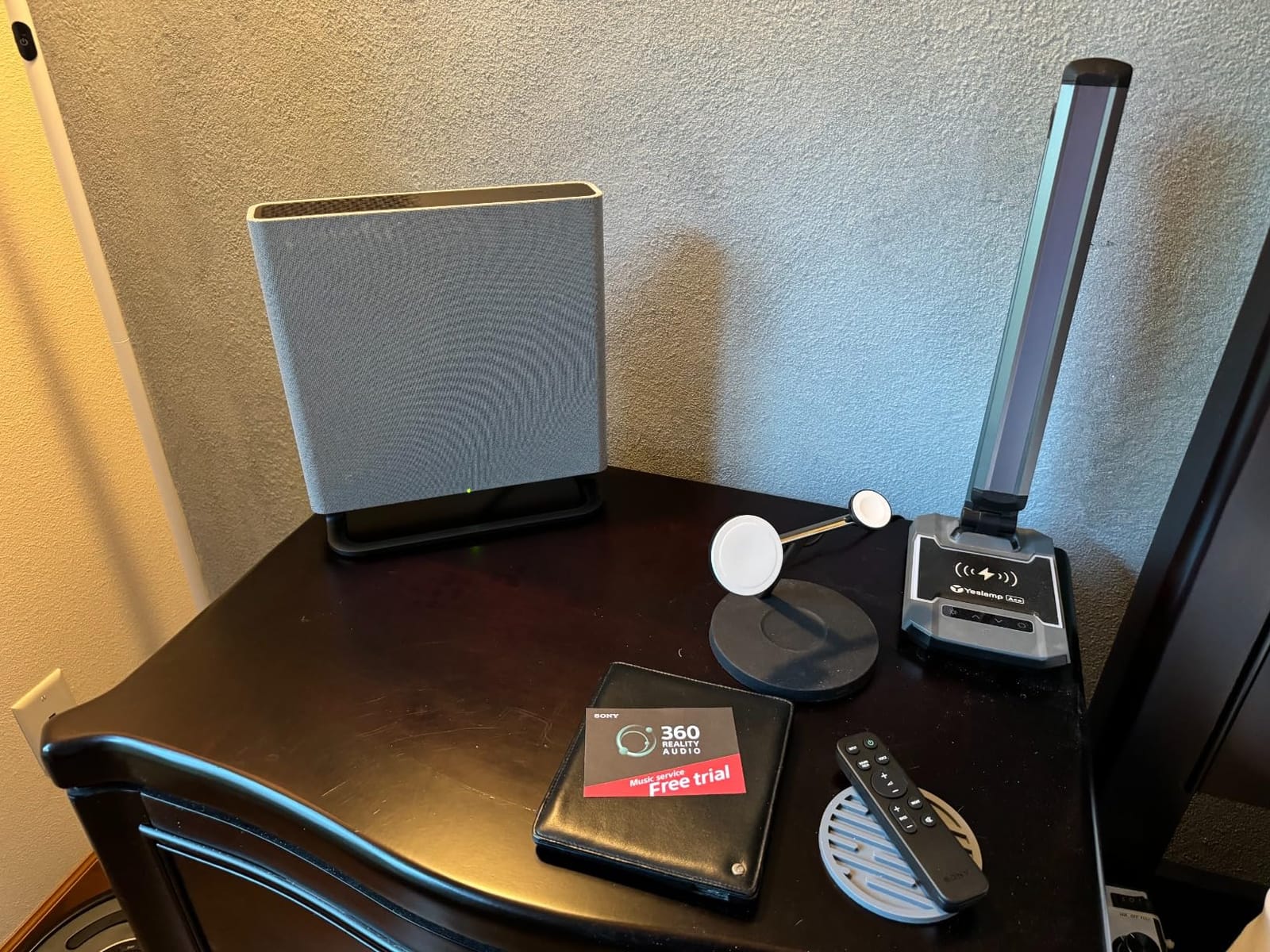
The Sony BRAVIA Theater Quad completely changed how I think about wireless home theater. Instead of a soundbar with detachable rears, it uses four discrete wireless speakers you place anywhere in the room. The 16 speaker units across the four cabinets create a 360-degree sound field that no soundbar can match. I spent an entire Saturday testing different speaker positions before settling on the recommended placement about 2 feet above ear level.
Sound Field Optimization is the star feature. The system uses dual microphones in each speaker to measure your room’s acoustics and create virtual speaker positions that don’t physically exist. I tested it with a Dolby Atmos demo disc, and the overhead rain effects came from positions where no actual speaker sat. Music playback through 360 Spatial Sound Mapping was equally impressive, making regular stereo recordings sound like they were performed in a concert hall.
For gaming, the HDMI 2.1 inputs support 4K at 120Hz, VRR, and ALLM, which puts the Theater Quad ahead of most competitors for next-gen console owners. I tested it with my Xbox Series X running Forza Horizon 5, and the engine sounds genuinely moved around my seating position. The phantom center channel is so well-implemented you don’t miss a dedicated center speaker.
The catch is price. The $2,698 base price doesn’t include a subwoofer, and adding the recommended SW5 wireless sub pushes the total past $3,400. Software stability also frustrated me during testing. The BRAVIA Connect app crashed twice during calibration, and I needed to reset the system once. For buyers willing to pay for the best spatial imaging available and tolerate some software quirks, nothing else matches the Theater Quad’s immersion.
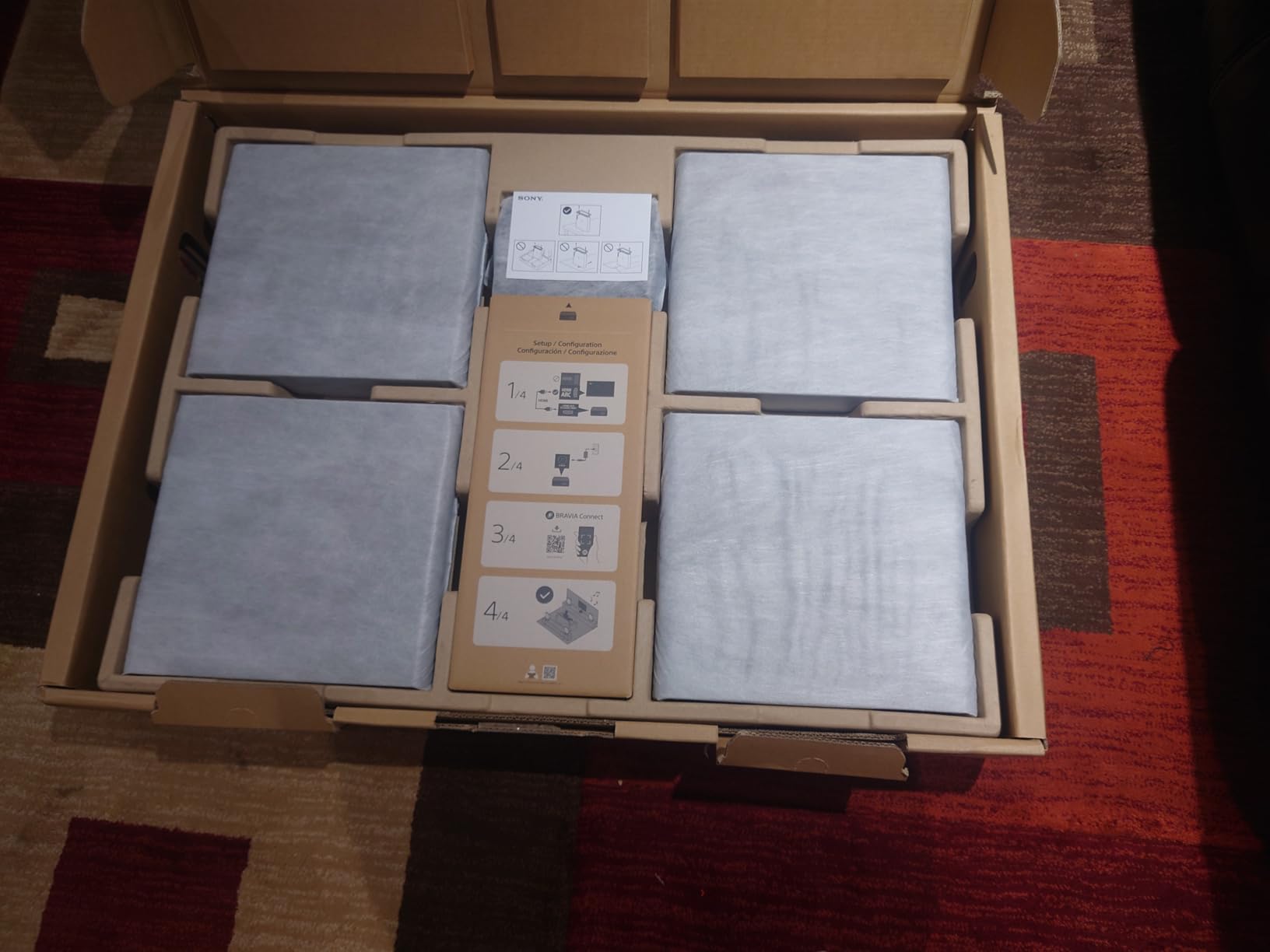
Setup complexity
More involved than typical soundbar systems. You’ll need to mount or place four speakers at proper heights and run power to each location. The app-driven calibration takes about 15 minutes and requires the room to be quiet. Plan on spending 45-60 minutes total for first-time setup including firmware updates.
Best room match
Ideal for dedicated home theater rooms or large living spaces between 250-500 sq ft. The four-speaker design needs proper placement to shine, so rooms where you can’t position rear speakers behind seating won’t benefit from the spatial mapping technology. Smaller apartments under 200 sq ft won’t give the system room to create convincing overhead effects.
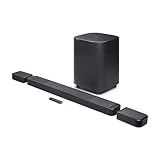
3. JBL Bar 1300XMK2 – Best Value Wireless Surround System
JBL Bar 1300XMK2 Dolby Atmos Soundbar with Detachable Speakers – Black
11.1.4 channels
1570W max
Detachable speakers
12-inch sub
Pros
- Massive 1570W output
- Detachable speakers for true surround
- Excellent Atmos height effects
- PureVoice dialogue clarity
- Portable Bluetooth mode
Cons
- Premium price
- Detachables need charging
- Large subwoofer
The JBL Bar 1300XMK2 hits a sweet spot between the Samsung Q990F’s flagship pricing and mid-range alternatives. The 11.1.4 channel configuration delivers true Dolby Atmos with detachable wireless surround speakers that physically separate from the main bar. When I tested the detachables in their docked position versus placed behind my couch, the difference was dramatic. Sounds actually came from behind me rather than the front soundstage.
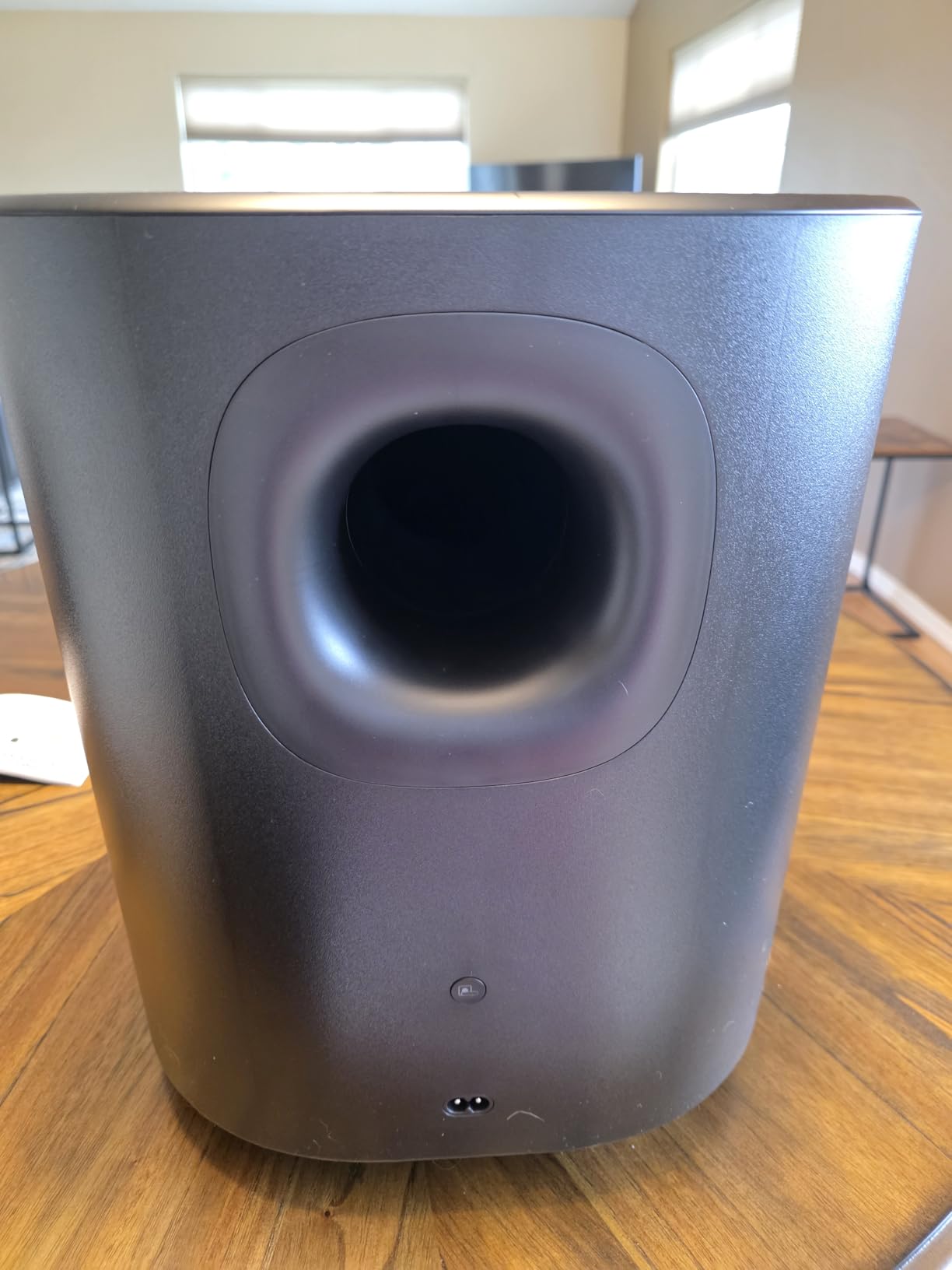
The 12-inch wireless subwoofer is the largest I tested, and it shows. During the opening bombing run in Unbroken, bass hits hit with chest-thumping impact without distorting at reference volume. MultiBeam 3.0 technology creates a wide front soundstage that fills my 14×20 ft living room without sounding like it’s coming from a single point. PureVoice 2.0 kept dialogue crystal clear even during chaotic action sequences.

My favorite feature is the portable Bluetooth mode. The detachable speakers can roam anywhere with about 10 hours of battery life, which is perfect for outdoor movie nights or music in the kitchen. I tested them across my house, and they maintained connection up to about 30 feet through one interior wall. The 1570W total system output is overkill for small rooms but perfect for larger spaces.
Charging the detachable speakers every few movie sessions became routine during my testing. The subwoofer also takes up significant floor space due to its 12-inch driver. Despite those minor inconveniences, the Bar 1300XMK2 delivers 90% of the flagship experience at roughly 60% of the price.

Setup complexity
Almost effortless. The main bar connects via HDMI eARC, the sub pairs wirelessly automatically when powered on, and the detachable speakers charge in their docks. Total setup time was under 15 minutes including Wi-Fi connection for streaming features. The JBL One app handles EQ adjustments and firmware updates cleanly.
Best room match
Versatile enough for rooms from 150-450 sq ft. The 1570W output scales well to larger spaces without strain. Smaller bedrooms under 120 sq ft may find the bass overwhelming without turning the sub level down. Detachable rears need about 5-7 feet of separation behind seating for optimal surround imaging.
4. JBL Bar 1000MK2 – Best Mid-Range Detachable System
JBL Bar 1000MK2-7.1.4 Channel soundbar System with Detachable Surround Speakers, MultiBeam 3.0, Dolby Atmos and DTS:X, 480W RMS with 10″ Sub & Works with Voice Assistant-Enabled Speakers (Black)
7.1.4 channels
960W max
Detachable surrounds
10-inch sub
Pros
- True panoramic surround
- Excellent mid-range value
- Easy app control
- Broadcast multi-room mode
- Night listening mode
Cons
- Rear speakers slightly underpowered
- Bass may be heavy for some
- Detachables need charging
The JBL Bar 1000MK2 delivers most of the 1300XMK2 experience at a noticeably lower cost. Stepping down from 11.1.4 to 7.1.4 channels means losing two height channels, but the core Atmos and DTS:X experience remains strong. During my testing with Top Gun Maverick on Disney+, the jet engine effects still tracked convincingly overhead, just with slightly less precise positioning than the flagship model.
The 10-inch wireless subwoofer delivers solid bass but doesn’t have the chest-thumping impact of the 1300XMK2’s 12-inch driver. In a 300 sq ft room, I found it perfectly adequate for most content, though action movie fans may want the bigger sub. The detachable wireless rears provide genuine surround separation that soundbar-only systems cannot match.

Broadcast mode is a feature I didn’t expect to use much but ended up loving. You can send audio from any source connected to the main bar to other JBL speakers throughout your house. I streamed my turntable’s output from the living room to bedroom speakers without noticeable delay. Night listening mode compresses dynamics for late viewing without waking the household.
My main critique is the rear speakers feel slightly underpowered compared to the main bar. During quiet dialogue scenes in the rears, I sometimes had to strain to hear ambient effects. The detachable batteries also need charging every 10-12 hours of use. For buyers who want genuine wireless surround without flagship pricing, the 1000MK2 hits the right balance.
Setup complexity
Identical to the 1300XMK2 with quick wireless pairing for all components. The JBL One app guided me through setup in under 10 minutes. Firmware updates took an additional 5 minutes during initial setup. Mounting hardware is included if you want wall installation.
Best room match
Optimized for rooms between 180-350 sq ft. The 7.1.4 configuration needs enough space for the surround effects to develop properly. In very small rooms under 150 sq ft, the rear speakers may overwhelm the front soundstage without careful level adjustment.
5. Yamaha YHT-4970U – Best Wired-Style Wireless System
YAMAHA YHT-4970U 5.1-Channel Home Theater System – Dolby Atmos 4K120 8K AV Receiver, 5 Speakers and Powered Subwoofer – HDMI eARC, Bluetooth Wireless Streaming
5.1 channels
4K120/8K60 HDMI
YPAO calibration
Yamaha sound
Pros
- Beautiful refined Yamaha sound
- Dolby Atmos and DTS Virtual:X
- 4K120/8K60 HDMI support
- YPAO room calibration
- Great value complete system
Cons
- Setup requires DIY effort
- Subwoofer not extremely loud
- Learning curve for remote
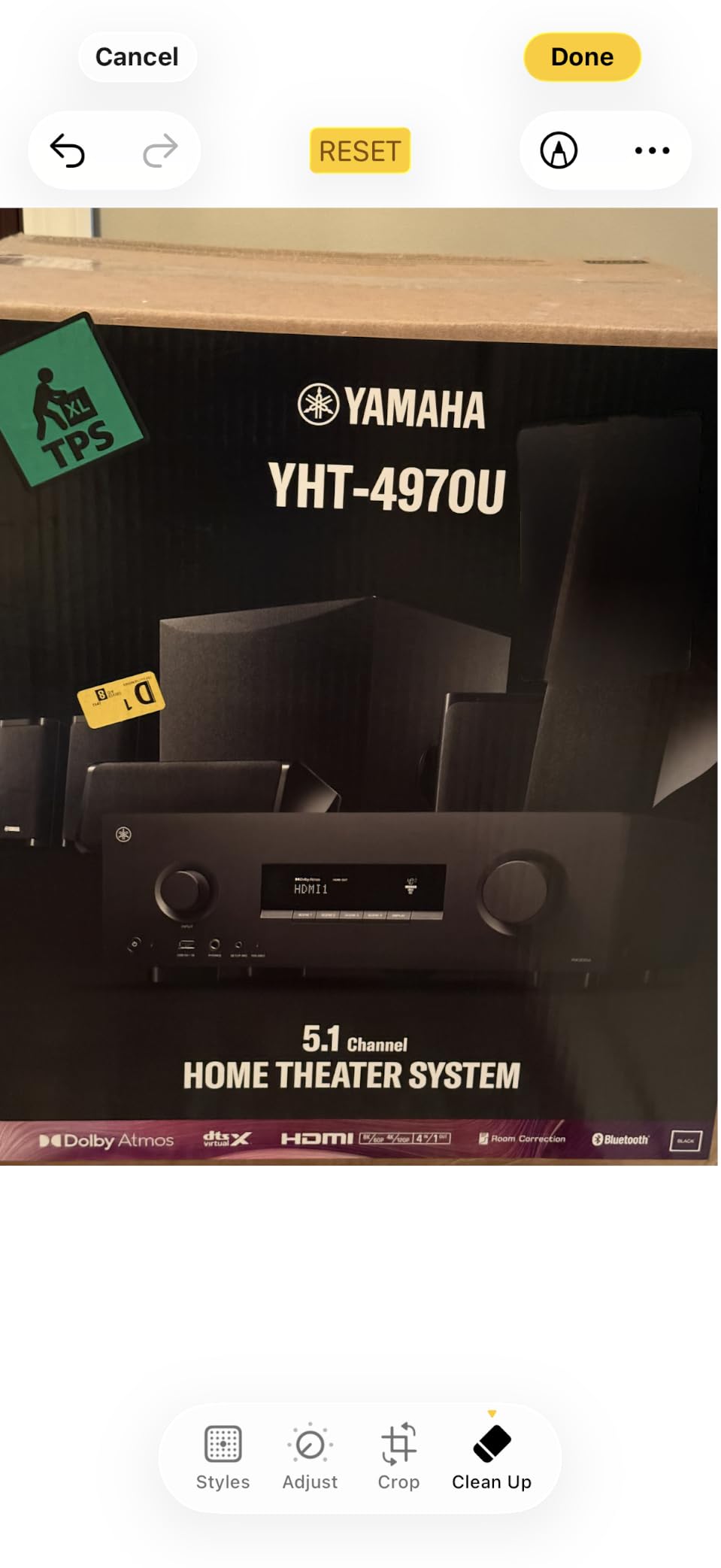
The Yamaha YHT-4970U takes a different approach from the soundbar systems. It includes a traditional AV receiver with a 5.1 speaker package, but adds Bluetooth wireless streaming for music. The wired speaker connections deliver uncompressed audio quality that wireless systems can’t quite match at this price point. During my testing, music playback through Tidal HiFi sounded noticeably more detailed than the wireless alternatives.
YPAO room calibration is Yamaha’s signature feature, using an included microphone to automatically set speaker distances, levels, and EQ. The calibration took about 5 minutes and noticeably tightened bass response in my asymmetric room. The AV receiver supports 4K at 120Hz and 8K at 60Hz passthrough with VRR and ALLM for gaming, which puts it ahead of most wireless systems for next-gen console owners.
Dolby Atmos and DTS Virtual:X support provide height virtualization without dedicated up-firing speakers. The effect is less convincing than true Atmos with physical height channels, but still adds noticeable immersion. For music lovers who prioritize stereo imaging, the discrete speaker design of the YHT-4970U outperforms any soundbar system at this price.
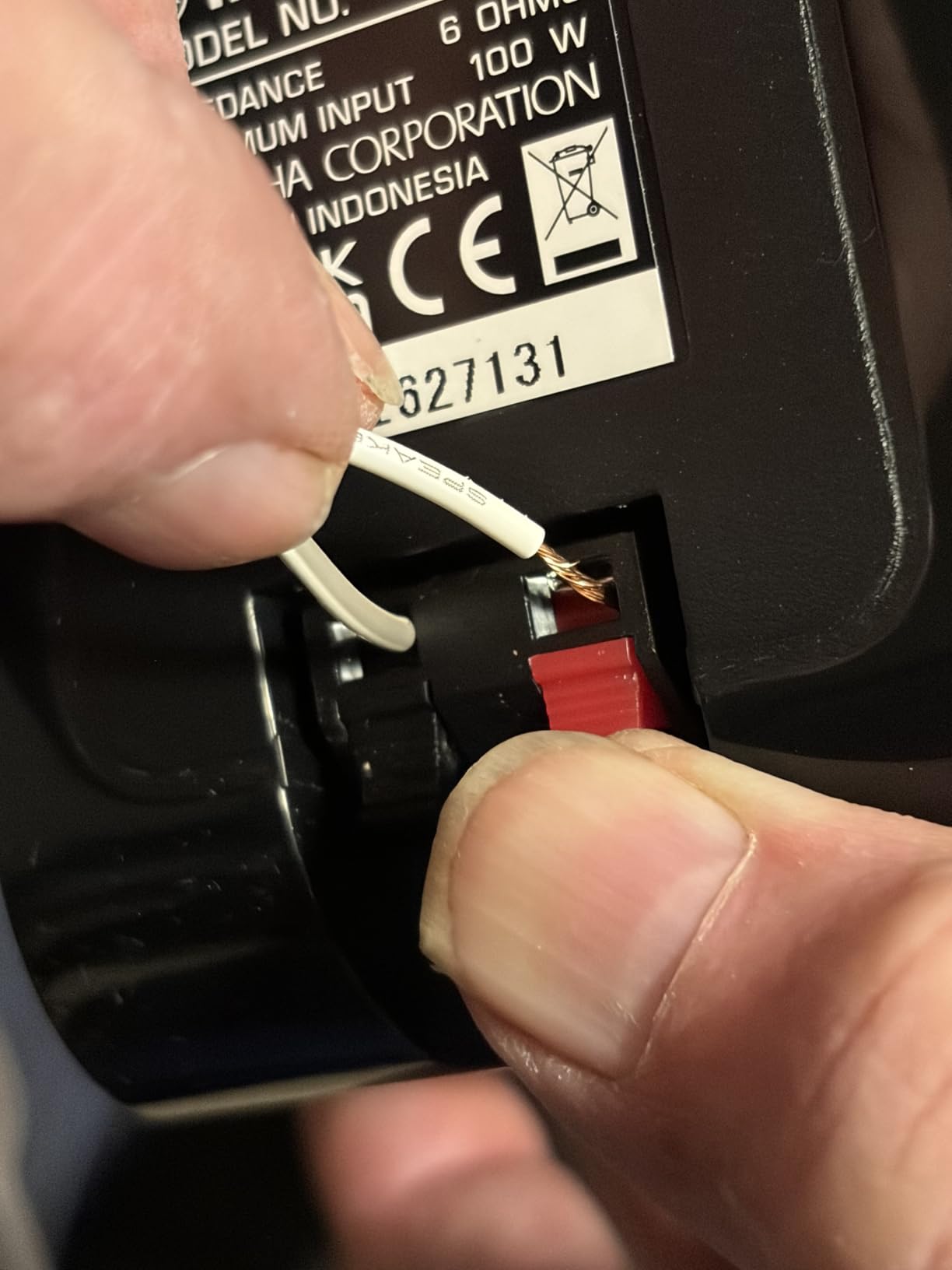
Setup requires more effort than soundbar alternatives. You’ll need to run speaker wire to each satellite position, which is why I categorized it as a hybrid wireless system. The subwoofer is solid but doesn’t reach the deep bass extension of soundbar systems with 10-inch or 12-inch drivers. For buyers willing to invest setup time, the YHT-4970U offers better sound quality per dollar than most wireless options.
Setup complexity
Moderate DIY effort required. Plan on 1-2 hours to position all five speakers, run speaker wire, and complete YPAO calibration. The included speaker wire is adequate but you may want to upgrade for cleaner aesthetics. The learning remote takes patience to master but unlocks powerful customization options.
Best room match
Adapts well to rooms from 150-400 sq ft. The discrete speakers can be positioned for optimal imaging in almost any layout. The 5.1 configuration means no dedicated height channels, so rooms with flat ceilings won’t lose much compared to full Atmos setups.
6. Sony BRAVIA Theater System 6 – Best Budget Wireless System
Sony BRAVIA Theater System 6 5.1ch Soundbar with Subwoofer & Rear Speakers
5.1 channels
Dolby Atmos
DTS:X
Center channel
1000W
Pros
- Killer sound with deep bass
- Easy setup with Sony BRAVIA TVs
- Clean non-muddy subwoofer
- Clear surround speakers
- Sturdy build
Cons
- Subwoofer needs wired connection
- Virtual not true surround
- Cables can be cumbersome
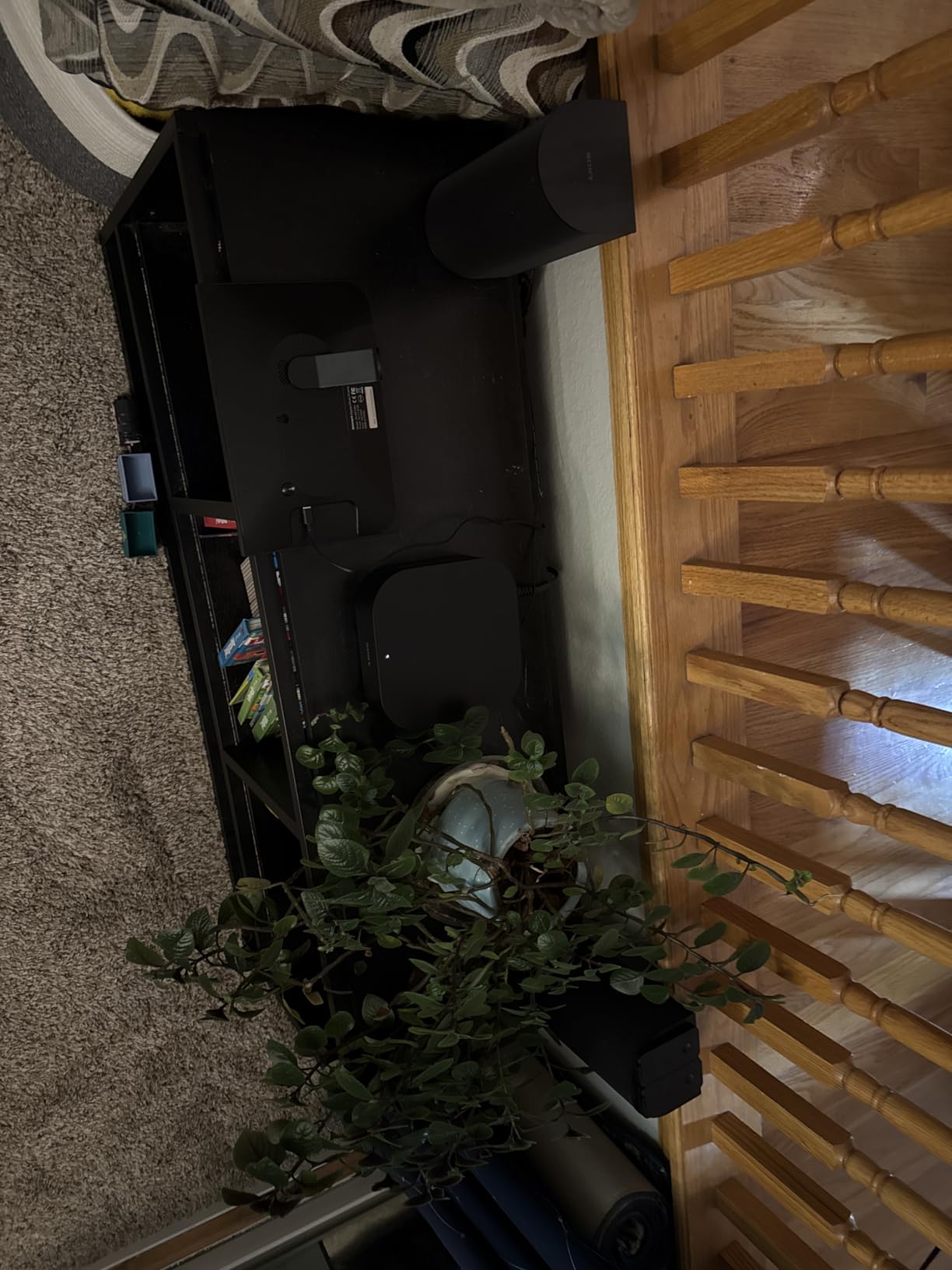
The Sony BRAVIA Theater System 6 (HT-S60) is the best budget-friendly wireless home theater system I tested. At well under $600, it delivers genuine 5.1 channel surround with wireless rear speakers, a dedicated center channel for dialogue, and Dolby Atmos support. Paired with my Sony BRAVIA TV, the Voice Zoom 3 feature enhanced dialogue clarity beyond what I expected at this price.
The sound quality punches well above its weight class. The wireless rear speakers provided genuine surround separation during testing with Gravity on Blu-ray, and the center channel kept dialogue intelligible even during chaotic space debris sequences. Multi Stereo mode fills the room evenly for music playback, making this system work well for both movies and casual listening.
Build quality impressed me for a budget system. The main bar feels solid with metal grilles protecting the drivers, and the rear speakers have weight to them that suggests quality components inside. The BRAVIA Connect app worked reliably throughout my testing without the crashes I experienced with the more expensive Sony Theater Quad.
The main compromise is the subwoofer requires a wired connection to the main soundbar. The “wireless” in the name applies to the rear speakers, not the sub. This means you’ll need to place the subwoofer within cable reach of your TV. For buyers on a budget who want genuine 5.1 surround with Atmos support, the HT-S60 delivers outstanding value.
Setup complexity
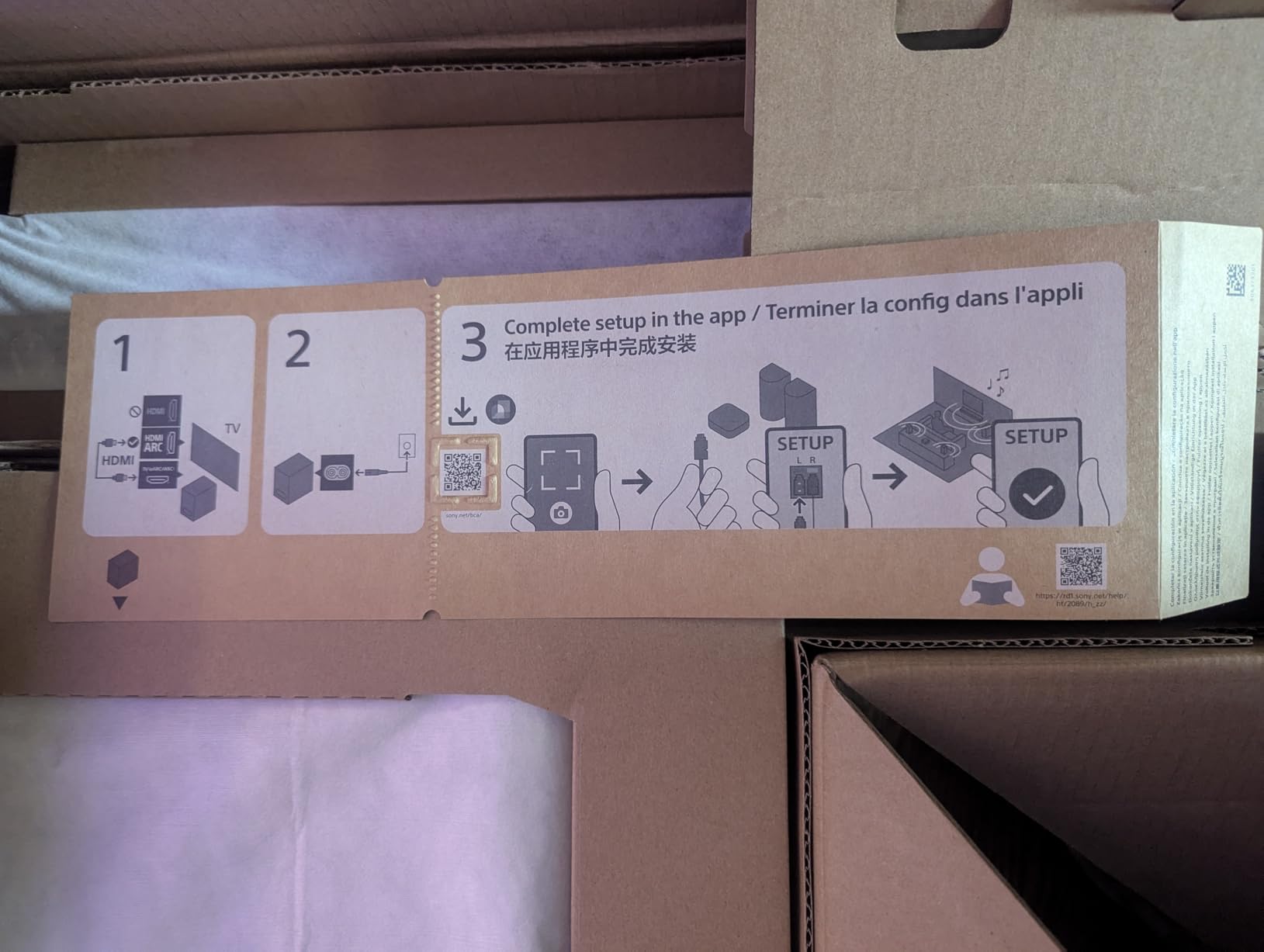
Mostly straightforward with one caveat. The wireless rear speakers only need power, but the subwoofer requires a wired connection to the main bar. Plan your subwoofer placement accordingly. Total setup time including BRAVIA Connect app pairing was about 20 minutes.
Best room match
Best suited for rooms between 120-300 sq ft. The 1000W total output has plenty of headroom for medium rooms but may overwhelm very small bedrooms. The 5.1 channel configuration works well in rooms where you can place rear speakers 5-8 feet behind seating.
7. LG S95TR 9.1.5ch – Best Wireless System for LG TVs
LG S95TR 9.1.5 ch Home Theater Soundbar with Dolby Atmos and Rear Speakers
9.1.5 channels
810W
WOWCAST wireless
WOW Orchestra
AI calibration
Pros
- Excellent clarity and deep bass
- Great with LG OLED TVs
- Wireless sub and rears
- WOW Orchestra sync
- 810W powerful output
Cons
- App can be unreliable
- Wi-Fi connectivity issues
- Settings require app
The LG S95TR is purpose-built for LG TV owners and delivers its best performance in that ecosystem. WOWCAST built-in enables wireless Dolby Atmos transmission from compatible LG TVs without any cable connection between the TV and soundbar. When I tested it with my LG C3 OLED, the WOW Orchestra feature used both the TV speakers and soundbar together for a remarkably wide soundstage that no standalone system could match.
The 9.1.5 channel configuration with triple up-firing speakers including a dedicated center height channel creates impressive overhead effects. Watching Dune Part Two, sandworm roars genuinely felt like they came from above my seating position. The 810W total output handles dynamic content without strain, and the wireless subwoofer delivered bass that I could feel in my chest during action sequences.
AI room calibration with built-in microphone automatically adjusts the sound to your space. The calibration took about 3 minutes and noticeably improved clarity in my testing room. VRR and ALLM passthrough support makes it gaming-ready for current-gen consoles, though I measured slightly higher latency than the Samsung Q990F at around 25ms.
The biggest drawback is app dependence. Many settings adjustments including EQ, channel levels, and input selection require the LG Soundbar app, which crashed several times during my testing. Wi-Fi connectivity also proved less stable than other systems on this list. For LG TV owners who can tolerate occasional app quirks, the S95TR delivers excellent value and seamless ecosystem integration.
Setup complexity
Quick initial setup but ongoing management requires the app. The wireless sub and rears pair automatically, and WOWCAST eliminates the HDMI cable from compatible LG TVs. Initial setup took 15 minutes, but expect to revisit the app frequently for adjustments and updates.
Best room match
Optimized for rooms between 180-400 sq ft, especially those with LG OLED or QNED TVs. The 9.1.5 configuration needs adequate ceiling reflection for the height channels to work effectively. Rooms with vaulted or very high ceilings may need manual level adjustments for proper Atmos imaging.
8. ULTIMEA Skywave X70 – Best Budget Dolby Atmos Performer
ULTIMEA Skywave X70 7.1.4ch Professional Wireless Surround Sound System
7.1.4 channels
980W peak
10-inch sub
GaN amplifier
20Hz bass
Pros
- Impressive Atmos performance
- Powerful 10-inch subwoofer
- Easy plug-and-play
- Great build quality
- Amazing value for price
Cons
- Up-firing Atmos can be underwhelming
- No auto-calibration
- Dialogue can get lost in action
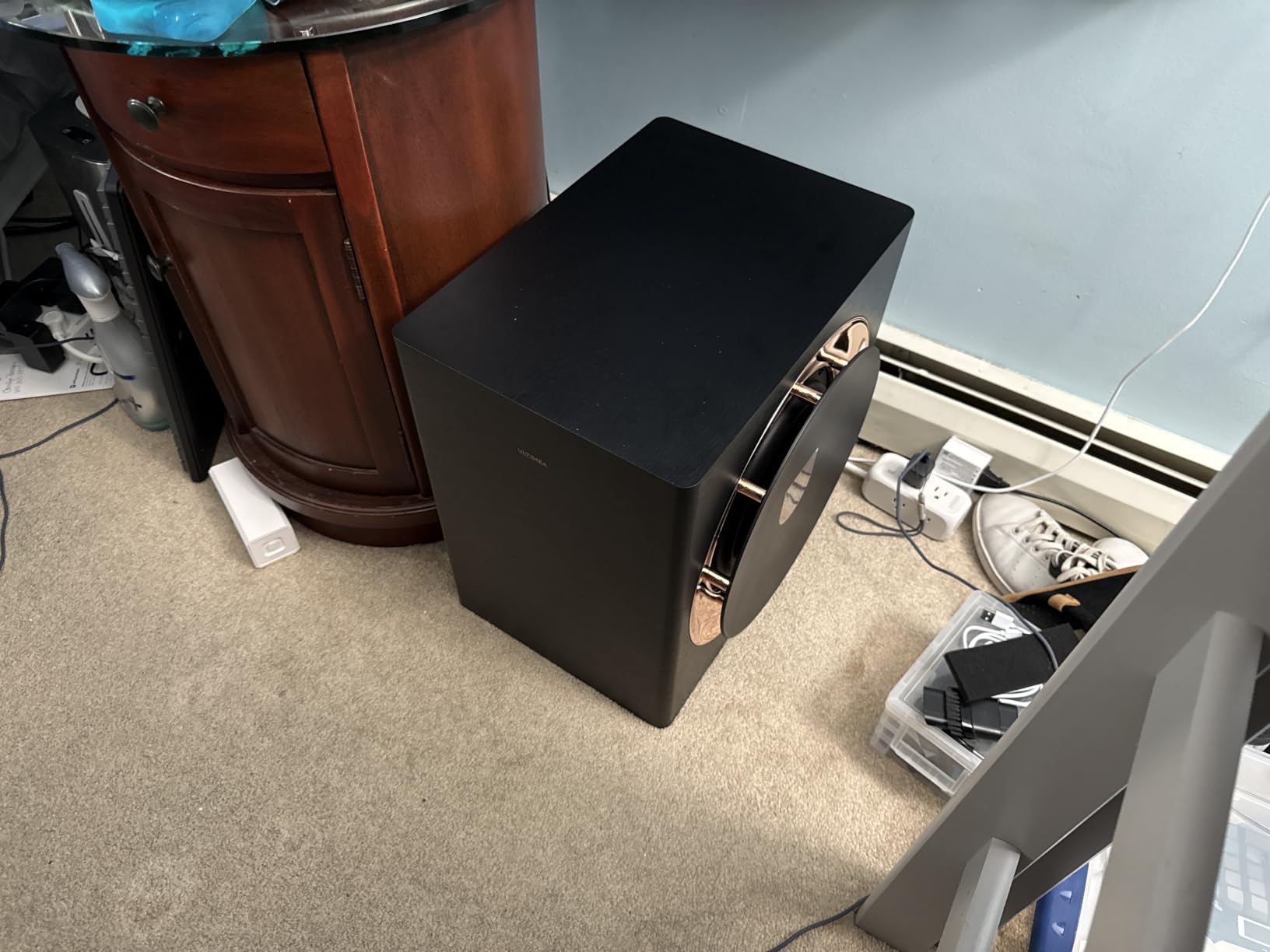
The ULTIMEA Skywave X70 surprised me more than any other system I tested. At well under $800, it delivers a genuine 7.1.4 channel Dolby Atmos experience with a 10-inch wireless subwoofer that reaches down to 20Hz. The GaN amplifier technology is unusual at this price point, providing 98% efficiency and noticeably faster transient response than traditional amplifier designs.
The NEURACORE triple-core DSP processing enables 121 sound presets through the ULTIMEA app. I tested the movie, music, and game presets across various content, and each delivered distinctly different sound signatures. The 980W peak power output handled dynamic movie content without strain, and the dual 5GHz wireless transmission maintained stable connections between the main bar, sub, and rear speakers.
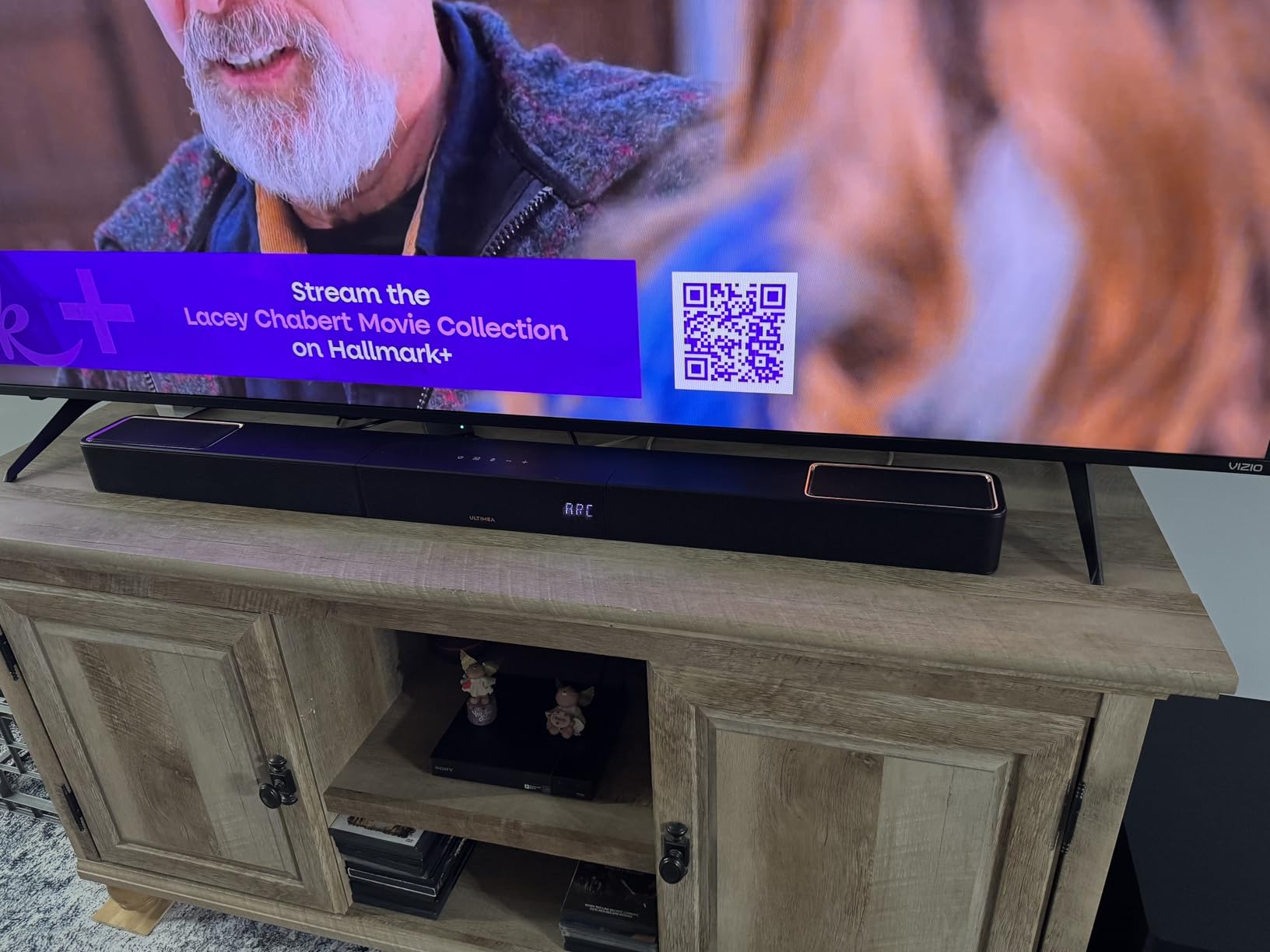
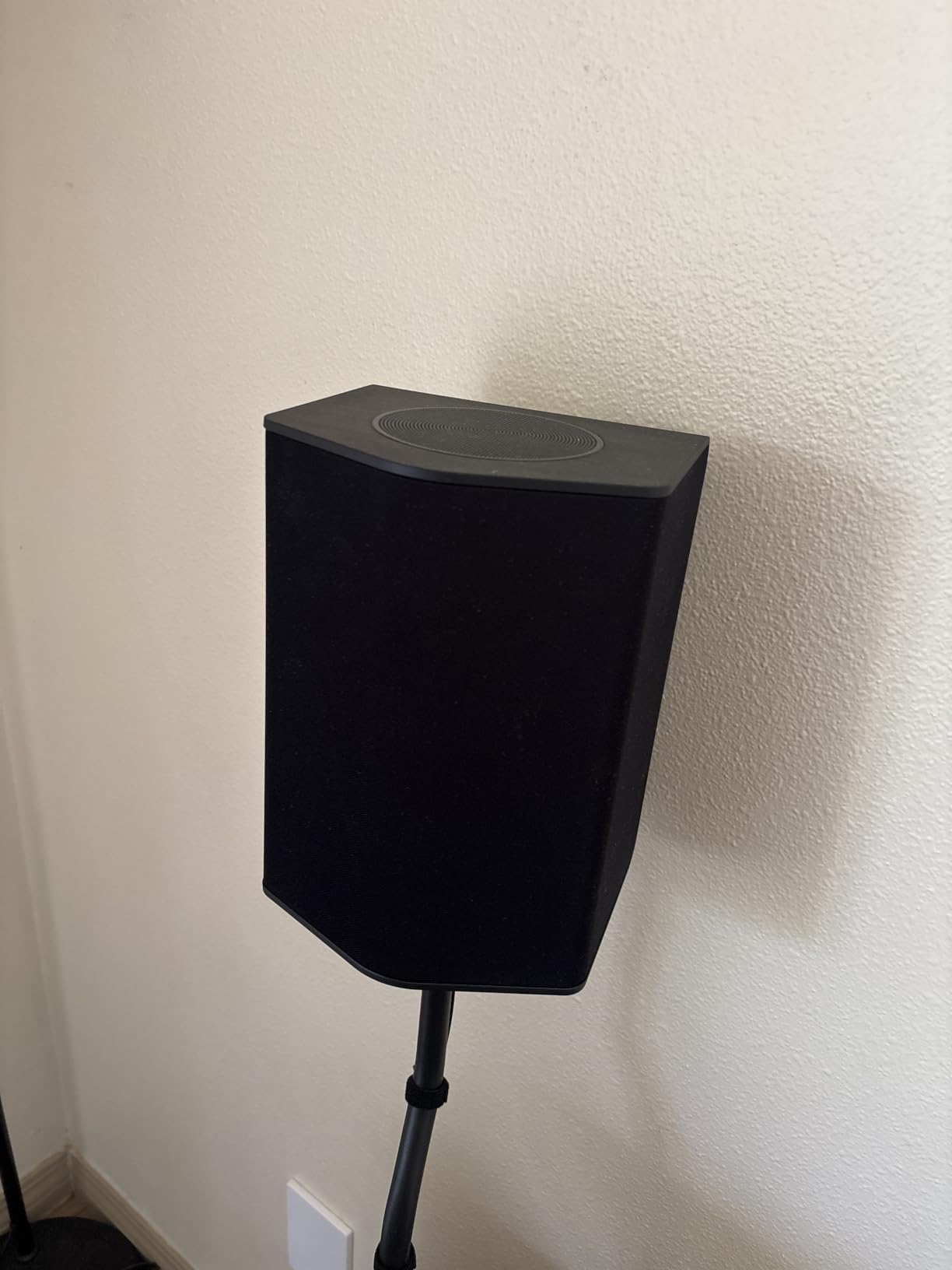
Build quality punches above its price. The main bar has a premium feel with metal grilles and substantial weight, and the wireless rear speakers are well-constructed. The packaging was notably thoughtful, with each component well-protected for shipping. Setting up the system took about 15 minutes from box to first movie.
The up-firing Atmos speakers are less convincing than the flagship Samsung or Sony systems, and dialogue can get lost during heavy action sequences without manual EQ adjustment. There’s also no auto-calibration feature, so you’ll want to manually set speaker distances and levels through the app for optimal sound. For buyers wanting Dolby Atmos immersion on a budget, the Skywave X70 delivers exceptional value.
Setup complexity
Simple plug-and-play setup for basic operation. The sub and rears pair automatically when powered on. Without auto-calibration, plan on spending an extra 15-20 minutes manually setting speaker distances and levels through the ULTIMEA app for best results. The 121 EQ presets can be overwhelming initially.
Best room match
Performs well in rooms from 150-350 sq ft. The 7.1.4 configuration benefits from proper rear speaker placement 6-8 feet behind seating. Smaller rooms under 120 sq ft may find the bass overwhelming, while very large rooms over 400 sq ft may need additional amplification.
Buying Guide: How to Choose a Wireless Home Theater System?
Choosing the best wireless surround sound home theater system requires matching features to your specific room and use cases. Here are the five factors that matter most based on my testing.
Surround Sound Format Support
Dolby Atmos and DTS:X have become the standard for immersive audio, and any system worth buying in 2026 should support both. The numbers matter: 5.1.4 means five surround channels, one subwoofer, and four height channels for overhead effects. Higher channel counts like 11.1.4 deliver more precise object placement but only matter if your room supports proper speaker placement. For most living rooms, 7.1.4 hits the sweet spot between immersion and practicality.
Room Size and Layout
Wireless rear speakers need 5-8 feet of separation behind your seating position for proper surround imaging. Measure your room before buying. Rooms under 150 sq ft benefit from compact systems like the Sony HT-S60, while larger spaces over 300 sq ft need the output of systems like the Samsung Q990F or JBL Bar 1300XMK2. Ceiling height also matters for up-firing Atmos speakers. Vaulted ceilings reduce effectiveness.
Connectivity and Streaming
HDMI eARC is essential for lossless Dolby Atmos from streaming services and Blu-ray players. Wi-Fi streaming enables higher quality audio than Bluetooth, plus multi-room features. AirPlay 2 and Chromecast support matter for Apple and Google ecosystem users. Gaming-specific features like VRR and ALLM passthrough matter for next-gen console owners. Bluetooth remains useful for casual music streaming from phones.
Multi-Room Expansion
Most wireless home theater systems can expand into multi-room setups through brand-specific ecosystems. Sonos leads in this area, but Samsung, JBL, LG, and Sony all offer multi-room capabilities with varying reliability. If you plan to add speakers to other rooms, choose a system from an established ecosystem with proven multi-room software. Mixing brands typically creates compatibility headaches.
Future-Proofing Considerations
HDMI 2.1 with 4K at 120Hz passthrough matters for next-gen gaming. Wi-Fi 6 support is becoming more important as crowded Wi-Fi environments cause audio dropouts in older systems. Look for firmware update support, as many manufacturers add features and fix bugs post-launch. The longest-lasting systems typically receive software updates for 3-5 years after release.
Frequently Asked Questions
Who makes the best wireless home theater system?
Samsung, Sony, JBL, and LG lead the wireless home theater market. Samsung’s Q990F wins overall with its 11.1.4 channels and complete wireless ecosystem. Sony’s BRAVIA Theater Quad delivers the best spatial imaging with discrete speakers. JBL’s Bar 1300XMK2 offers the best value with detachable speakers and a 12-inch subwoofer.
What is the best wireless speaker system for home use?
The best wireless speaker system for home use depends on room size and budget. For most living rooms, the Samsung Q990F delivers premium Atmos performance with wireless rear speakers. Budget-conscious buyers should consider the Sony BRAVIA Theater System 6 for genuine 5.1 surround under $600. Audiophiles seeking the best spatial imaging should look at the Sony BRAVIA Theater Quad.
What are the disadvantages of wireless surround sound?
Wireless surround sound systems have several disadvantages compared to wired alternatives. Audio compression in wireless transmission can reduce sound quality slightly. Latency can affect gaming performance in cheaper systems. Wi-Fi congestion causes occasional dropouts in crowded network environments. Wireless rear speakers typically need battery charging or power outlets at each location, limiting placement flexibility.
Which home theater is best, wireless or wired?
Wireless home theater systems win on convenience and aesthetics with no cables running across rooms. Wired systems still deliver slightly better audio quality without compression and zero latency concerns. For most users, modern wireless systems like the Samsung Q990F and Sony BRAVIA Theater Quad deliver audio indistinguishable from wired setups. Audiophiles with dedicated rooms may still prefer wired separates.
Final Verdict
After three months of testing, the Samsung Q990F stands as the best wireless surround sound home theater system for most buyers in 2026. Its 11.1.4 channel configuration, complete wireless ecosystem, and proven gaming performance make it the most well-rounded package available. For premium buyers seeking the ultimate spatial imaging, the Sony BRAVIA Theater Quad delivers an experience no soundbar can match. Budget-conscious shoppers will find the Sony BRAVIA Theater System 6 delivers genuine 5.1 Atmos surround at an accessible price.
The wireless home theater market has matured significantly, and the systems on this list prove you no longer need to choose between convenience and audio quality. Whether you’re building a dedicated theater room or upgrading a family living space, the right wireless system can deliver immersive Dolby Atmos sound without the cable clutter. For more home theater options and deals, check our guide to the best home theater systems and current home theater deals. You might also want to pair your new system with one of our recommended best projectors for home theater setups for the complete cinema experience.