
The best wide angle lenses do more than fit more scenery into a frame. A focal length shorter than 35mm captures a broader field of view, so it is useful for landscapes, architecture, interiors, travel, night skies, video, and any creative scene where the camera cannot move farther back.
I start with compatibility rather than a star rating. A strong lens in the wrong mount is not a useful lens, and a very wide fisheye creates a completely different result from a 35mm prime; the products here cover Canon RF, Canon EF-S and EF, Sony FE and E, Nikon DSLR, and Micro Four Thirds options.
This guide compares the 12 supplied listings by their stated focal length, aperture, autofocus or manual-focus status, stabilization where listed, and camera fit. Community discussions also make the practical priorities clear: travelers care about size, hybrid shooters care about dependable focus and focus breathing, and ultra-wide users need to check filter and accessory compatibility before committing.
Table of Contents
Top 3 picks answer the most common Canon wide-angle needs in 2026


The Canon RF35mm F1.8 IS Macro STM is the broadest all-round choice in this set for an EOS R photographer who wants a 35mm view, a bright F1.8 aperture, Optical IS, and close focusing. It is not an ultra-wide lens, so it makes more sense for environmental portraits, street scenes, and travel storytelling than for a room where every extra degree matters.
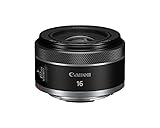
Canon EF-S DSLR owners who need a true ultra-wide zoom should look first at the EF-S 10-18mm f/4.5-5.6 IS STM. Canon RF users who want the widest stated fixed focal length among the mainstream autofocus primes here should consider the RF16mm F2.8 STM, while checking whether 16mm fits their preferred perspective.
Best wide angle lenses in 2026 cover several mounts and creative looks
| Product | Specifications | Action |
|---|---|---|
| Canon RF35mm F1.8 IS Macro STM |
|
View Lens Details |
| Canon EF-S 10-18mm f/4.5-5.6 IS STM |
|
View Lens Details |
 Canon RF16mm F2.8 STM Canon RF16mm F2.8 STM |
|
View Lens Details |
 Canon EF-S 10-22mm f/3.5-4.5 USM Canon EF-S 10-22mm f/3.5-4.5 USM |
|
View Lens Details |
 Canon RF14-35mm F4 L IS USM Canon RF14-35mm F4 L IS USM |
|
View Lens Details |
 VILTROX 14mm F4.0 FE VILTROX 14mm F4.0 FE |
|
View Lens Details |
 YONGNUO YN35mm F2N YONGNUO YN35mm F2N |
|
View Lens Details |
 Meike 25mm F1.8 M43 Meike 25mm F1.8 M43 |
|
View Lens Details |
 Altura Photo 8mm F3.0 Fisheye Altura Photo 8mm F3.0 Fisheye |
|
View Lens Details |
 7Artisans 4mm F2.8 Fisheye 7Artisans 4mm F2.8 Fisheye |
|
View Lens Details |
 7artisans 7.5mm F3.5 Fisheye 7artisans 7.5mm F3.5 Fisheye |
|
View Lens Details |
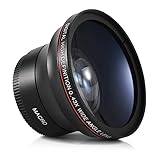 Lightdow 58mm 0.43x Attachment Lightdow 58mm 0.43x Attachment |
|
View Lens Details |
Ratings are useful context rather than a substitute for mount, focal length, and shooting style. The list ranges from conventional 35mm primes and flexible 10-18mm or 14-35mm zooms to deliberate fisheye tools, so comparing only the number beside each listing would hide the choice that matters most.
1. Canon RF35mm F1.8 IS Macro STM is the flexible EOS R starting point
Canon RF35mm F1.8 is Macro STM Lens, Black, Compatible with EOS R Series Mirrorless Cameras
RF mount
35mm F1.8
Optical IS
0.17m min focus
Pros
- F1.8 aperture
- Optical IS
- 0.17m minimum focus
- STM autofocus
Cons
- Canon RF only
- Fixed 35mm view
The RF35mm F1.8 IS Macro STM has the highest listed rating in this group at 4.8 from 1.4k+ reviews, and its specification mix explains why it belongs near the top. Canon states RF compatibility, a 35mm F1.8 fixed focal length, Optical IS, STM autofocus, a 52mm filter thread, and a 0.17m minimum focus distance.
I would treat this as a wide standard rather than an ultra-wide lens. That distinction matters: 35mm gives a broad everyday view with less exaggerated perspective than 16mm, which can be more comfortable for travel details, environmental portraits, street scenes, and a creative workspace.
EOS R photographers get a close-focusing 35mm option
The stated 0.17m minimum focus is unusually important if you want one lens to move between a room-wide scene and a small object in that room. It gives visual artists and product shooters a way to frame context without immediately changing lenses.
Optical IS is also listed, which is relevant when handheld shooting calls for steadier framing. The listing names STM autofocus rather than a manual-only design, so this is the more approachable option for photographers who need autofocus on a compatible EOS R-series body.
Ultra-wide specialists need a shorter focal length instead
A 35mm fixed view cannot replace a 10mm, 14mm, or 16mm lens for cramped interiors, big architecture, or an expansive foreground-heavy landscape. If the aim is to exaggerate depth by placing an object close to the front of the frame, the RF16mm or RF14-35mm in this guide is a closer match.
The lens is also restricted to the Canon RF system. Confirm your camera is an EOS R-series mirrorless body and decide whether a prime fits your workflow before choosing it over a zoom.
2. Canon EF-S 10-18mm F4.5-5.6 IS STM gives APS-C DSLRs a true ultra-wide zoom
Canon EF-S 10-18mm f/4.5-5.6 is STM Lens, Lens Only
EF-S mount
10-18mm zoom
Optical IS
STM autofocus
Pros
- 10-18mm range
- Optical IS
- STM autofocus
- EF-S fit
Cons
- Variable F4.5-5.6 aperture
- EF-S cameras only
The Canon EF-S 10-18mm f/4.5-5.6 IS STM is the clearest ultra-wide zoom choice here for an EF-S Canon DSLR. Its listed 4.7 rating comes from 2.6k+ reviews, the largest review sample in this product set, and its 10-18mm range is dramatically wider than the 35mm primes.
That range is the practical attraction. At the 10mm end, a photographer can include more of a compact room, a tall building, or a foreground-to-sky landscape; at 18mm, the framing becomes less extreme without swapping lenses.
Canon APS-C DSLR users get flexible framing from 10mm to 18mm
EF-S compatibility is the first requirement, so this is for Canon EOS digital SLR users with the matching EF-S format rather than Canon RF mirrorless owners. STM autofocus and Optical IS are both listed, pairing a variable focal length with autofocus and stabilization features that can help during handheld work.
I like a zoom for a first ultra-wide because composition changes rapidly at short focal lengths. A few steps forward or backward can alter the relationship between foreground and background, while zooming lets you refine the edges without losing the camera position you chose.
Low-light specialists need to accept the variable aperture
The F4.5-5.6 aperture changes across the zoom range, so it is not the listed choice for someone seeking an F1.8 or F2.8 fixed aperture. A tripod, deliberate support, or brighter conditions may matter more for night work than with a brighter prime.
Ultra-wide zooms also reward edge checks. Keep important vertical lines away from the frame edge where possible, level the camera for architecture when you want straighter-looking walls, and read the front-thread details before buying filters.
3. Canon RF16mm F2.8 STM is the compact fixed ultra-wide for EOS R cameras
Canon RF16mm F2.8 STM Lens, Ultra Wide-Angle, Fixed Focal Length Prime Lens, Compatible with EOS R Series Mirrorless Cameras, Black
RF mount
16mm F2.8
Fixed focal length
STM autofocus
Pros
- 16mm ultra-wide view
- F2.8 aperture
- STM autofocus
- RF compatibility
Cons
- Fixed focal length
- Canon RF only
Canon’s RF16mm F2.8 STM puts a fixed 16mm F2.8 option on the EOS R platform. It holds a 4.7 listed rating from 1k+ reviews and presents a much wider field of view than the RF35mm, making it the more direct tool for interiors, architecture, handheld creator work, and foreground-led landscape photography.
Sixteen millimeters changes how a scene feels. Objects close to the lens can appear much larger relative to the background, so I would use that trait on purpose by finding a strong foreground line, texture, or subject instead of pointing it at an empty expanse.
RF shooters get a wide F2.8 prime with autofocus
The product is described as an ultra-wide fixed focal length prime for Canon EOS R-series mirrorless cameras and specifies STM autofocus. That is a simple proposition for an RF owner who already knows that 16mm is the perspective they need.
The F2.8 designation is the listed aperture advantage over the EF-S 10-18mm’s F4.5-5.6 range. It does not make every night scene easy, but it gives a photographer a wider aperture designation to consider for dim spaces and star-focused work.
Zoom-first photographers need framing flexibility instead
The same fixed 16mm view that makes this lens direct can feel limiting when a subject cannot be approached or when an interior needs several angles. In those situations, the RF14-35mm F4 L IS USM offers a stated range instead of a single composition.
Very wide framing also makes camera angle more visible. Keep the camera level for architecture if converging lines are not part of the artistic intent, and leave a little room around edge subjects while learning the perspective.
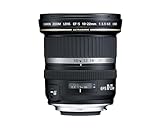
4. Canon EF-S 10-22mm F3.5-4.5 USM extends the Canon DSLR ultra-wide range
Canon EF-S 10-22mm f/3.5-4.5 USM SLR Lens for EOS Digital SLRs
EF-S mount
10-22mm zoom
F3.5-4.5
USM
Pros
- 10-22mm zoom
- USM autofocus
- Wider 22mm end
- EF-S compatibility
Cons
- Variable aperture
- Canon EF-S only
The Canon EF-S 10-22mm f/3.5-4.5 USM is another Canon APS-C DSLR-specific wide angle zoom, but its listed range reaches 22mm rather than 18mm. Its 4.7 rating is based on 781 reviews, and the USM label in the product name makes autofocus type a key comparison point with the STM-based 10-18mm.
For a photographer who wants an ultra-wide end and a slightly less extreme 22mm end in one lens, that extra range is a useful compositional choice. It can reduce how often you change to another lens while walking through a city, trail, or exhibition space.
EF-S photographers get more reach without leaving ultra-wide territory
The 10-22mm range is suited to a person who frames landscapes, architecture, or interiors at several levels of exaggeration. At the shortest end, foreground placement becomes dominant; at 22mm, a scene can look more restrained while still holding a broad view.
The product title identifies USM, and that is meaningful for shoppers comparing autofocus-labelled Canon options. Match the lens mount to an EF-S Canon digital SLR first, because focal-range benefits do not overcome a mount mismatch.
Stabilization seekers should compare the listing details carefully
Unlike the Canon EF-S 10-18mm title, this listing does not state Optical IS. That does not tell us how a particular shooting session will turn out, but it does make stabilization a direct feature to compare if handheld video or slower-shutter work is important.
The F3.5-4.5 designation is variable, not a constant F2.8. Photographers building a low-light kit should consider the focal length they need, available support, and whether a brighter fixed prime would be the more sensible companion.
5. Canon RF14-35mm F4 L IS USM is the widest listed Canon RF zoom
Canon RF14-35mm F4 L is USM Lens, Wide-Angle Zoom Lens, Compatible with EOS R Series Mirrorless Cameras, Black
RF mount
14-35mm F4
L series
IS USM
Pros
- 14-35mm range
- Image stabilization
- USM autofocus
- RF compatibility
Cons
- Constant F4 aperture
- Canon RF only
The Canon RF14-35mm F4 L IS USM is the broadest conventional Canon RF zoom in this lineup by its stated 14-35mm range. It combines that range with F4, image stabilization, and USM in the title, giving an EOS R photographer a different solution from the compact fixed RF16mm.
At 14mm, the lens reaches farther into ultra-wide territory; at 35mm, it arrives at a familiar wide-standard view. That span is appealing for a travel day or location shoot where switching between 16mm and 35mm-style framing would interrupt the work.
Canon RF users get one zoom for expansive and restrained frames
A 14-35mm wide angle zoom is about pace as much as coverage. I would choose it when a scene changes quickly, such as moving from a large exterior to an interior detail, because the zoom lets the composition evolve without a lens change.
Image stabilization is specified in the product name, while USM identifies the autofocus system named by the listing. Those stated features place it in the conversation for handheld photography and autofocus-based shooting, but the camera body and shooting method still shape results.
F1.8 or F2.8 users need to weigh aperture against range
This lens is marked F4, so it is not the listed aperture choice for a photographer seeking the RF35mm F1.8 or RF16mm F2.8 designation. The trade is clear from the names: this Canon offers a 14-35mm zoom range while those two RF options are fixed focal lengths.
Before adding a filter system, check the lens’s current front and rear filter guidance. Filter compatibility is a recurring ultra-wide pain point, especially for landscape photographers who use graduated or neutral-density filters.
6. VILTROX 14mm F4.0 FE is the listed full-frame Sony ultra-wide autofocus prime
VILTROX 14mm F4.0 FE Prime Lens, Full Frame Auto Focus Lens for Sony
Sony FE
14mm F4
Full frame
Autofocus
Pros
- 14mm focal length
- Full-frame FE fit
- Autofocus
- Sony mirrorless support
Cons
- F4 aperture
- 28 listed reviews
The VILTROX 14mm F4.0 FE is the supplied Sony-oriented option for a photographer using compatible Sony mirrorless cameras. Its title calls it a full-frame 14mm wide-angle autofocus lens and lists a7, a7 II, a7 III, a7R-series, a7S-series, and a9 models among its compatibility examples.
A 14mm fixed focal length is an intentional creative look. It can make a small foreground subject feel dominant and hold a huge backdrop behind it, which is useful for dramatic landscape frames, interiors, and video where the viewer needs context around a presenter.
Sony full-frame photographers get a stated 14mm autofocus option
The FE designation and explicit Sony mirrorless compatibility are the headline facts here. Rather than guessing from a brand name, I would compare the camera in hand with the listing’s compatibility range and confirm any body-specific needs before ordering.
The 4.5 rating is based on 28 listed reviews, a much smaller sample than several Canon choices above. That does not make the lens unsuitable; it means the focal length, mount fit, autofocus requirement, and stated F4 aperture deserve extra weight in the decision.
Low-light and zoom users need a different feature balance
F4 is the aperture stated in the product title, so this is not an F2.8 astrophotography-style option based on the supplied information. Someone working mostly in dark interiors should decide whether a brighter aperture matters more than the 14mm view.
It is a prime, not a zoom. A Sony photographer who often alternates from ultra-wide to moderately wide framing may prefer to plan a second lens rather than expecting one 14mm prime to cover every scene.
7. YONGNUO YN35mm F2N is the autofocus wide-standard option for Nikon DSLRs
YONGNUO YN35mm F2N Lens, 1:2 AF MF Wide-Angle Fixed Prime Auto Focus Lens for Nikon DSLR Cameras
Nikon DSLR
35mm F2
Autofocus
1:2 AF MF
Pros
- F2 aperture
- Autofocus and manual focus
- 35mm prime
- Nikon DSLR fit
Cons
- Fixed 35mm view
- Not a Nikon Z lens
The YONGNUO YN35mm F2N is a 35mm F2 fixed prime identified for Nikon DSLR cameras. The supplied title also says 1:2 AF MF, indicating autofocus and manual-focus modes, and the product has a 4.4 rating from 849 reviews.
Like the Canon RF35mm, this is best understood as a wide-standard option rather than an ultra-wide lens. It fits photographers who want a wider-than-normal perspective for everyday stories, environmental subjects, and travel images without the pronounced stretch of an 8mm or 14mm lens.
Nikon DSLR users get a simple 35mm F2 autofocus prime
Mount type comes before every other feature here: this listing is for Nikon DSLR cameras. It is not described as a Nikon Z mirrorless lens, so Nikon Z shoppers should not assume compatibility simply because both systems carry the Nikon name.
The F2 designation gives it a brighter stated aperture than the VILTROX 14mm F4.0 FE or Canon RF14-35mm F4. The 35mm focal length remains the defining limitation and benefit, offering a less exaggerated perspective for a general-purpose creative lens.
Interior and architecture shooters need a shorter view
A 35mm prime does not substitute for an ultra-wide zoom when a photographer cannot step back in a narrow room or wants to capture a sweeping building. Nikon DSLR users needing that result should seek a lens with a clearly stated shorter focal length and matching mount.
The listing’s AF and MF wording is useful for shooters who value a manual override option, but autofocus reliability still needs to be assessed with the specific camera body and shooting scenario. Hybrid shooters especially should test focus behavior before a paid assignment.
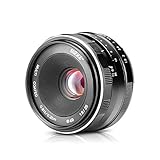
8. Meike 25mm F1.8 gives Micro Four Thirds users a manual-focus bright prime
Meike 25mm F1.8 Wide Angle MF Lens for Panasonic Olympus M43 Mount Cameras
Micro Four Thirds
25mm F1.8
Manual focus
Prime
Pros
- F1.8 aperture
- Manual focus control
- M43 compatibility
- 25mm prime
Cons
- No autofocus
- Fixed focal length
The Meike 25mm F1.8 is a manual-focus prime for Panasonic Lumix and Olympus Micro Four Thirds mount mirrorless cameras, with GH4, GH5, and GH6 models named in the listing. It carries a 4.4 rating across 282 reviews and is clearly a different proposition from the autofocus Canon and Sony primes.
Manual focus is not a defect; it is a workflow choice. I would consider it for deliberate still-life work, controlled video framing, or a photographer who enjoys setting focus themselves, while recognizing that fast movement and casual handoff shooting are harder without autofocus.
Micro Four Thirds users get a stated F1.8 manual-focus prime
The product’s M43 mount compatibility is the reason to consider it, not its focal length in isolation. Sensor format changes the field of view a given focal length produces, so it is better to think in terms of the camera system and the scene you need to frame.
The F1.8 aperture is a major listed feature for a compact-system shooter working in available light. A fixed 25mm perspective also promotes a consistent visual approach, which can be helpful when building a cohesive photo series or video sequence.
Fast-moving subjects need autofocus instead
This listing explicitly says manual focus, so it is not the fit for a photographer whose main need is tracking spontaneous action with autofocus. The Canon RF and EF-S autofocus options in this guide show how much the intended use should drive a lens choice.
Manual focus can be especially useful for video when a fixed focus point is planned, but focus breathing and lens behavior while racking focus are not detailed in the supplied listing. Video creators should check those practical behaviors with their camera before relying on it for critical work.
9. Altura Photo 8mm F3.0 Fisheye creates a deliberate curved ultra-wide look
Altura Photo 8mm f/3.0 Fisheye Wide Angle Lens for Canon EOS, EF Mount
Canon EF
8mm F3
Aspherical fisheye
DSLR fit
Pros
- 8mm fisheye view
- F3 aperture
- Aspherical design
- Canon EF compatibility
Cons
- Fisheye distortion
- Special-effect perspective
The Altura Photo 8mm f/3.0 is an aspherical fisheye, not a conventional rectilinear wide-angle lens. It is listed for Canon EF-mount DSLR cameras including the 90D, 80D, 77D, Rebel T8i, T7, T7i, T6i, T6s, T6, T100, SL2, and SL3, with a 4.3 rating from 592 reviews.
That fisheye label tells you what the image language will be: strong curvature and an extremely broad view. I would reach for it when the distortion is part of the idea, such as action, stylized interiors, skate or music imagery, immersive creative work, or an intentionally playful video shot.
Canon EF DSLR creators get an 8mm special-effect perspective
The 8mm focal length is far beyond the look of a 16mm or 35mm prime. It can put an enormous amount of scene into the frame, yet straight architectural lines near the edges will not behave like they do with a conventional wide-angle design.
The listed F3 aperture and aspherical fisheye design give the product its identity. Because it is a purpose-built effect, reviewing your intended output is more useful than comparing it only against a conventional lens rating.
Natural-looking architecture needs a rectilinear lens instead
A fisheye can be the wrong answer for a real-estate image or design record where walls and verticals need a restrained appearance. In that situation, a 10-18mm, 10-22mm, 14mm, or 14-35mm conventional wide-angle option is usually the better starting category.
Compatibility is Canon EF based, with specific EOS DSLR examples named in the listing. Confirm the exact body and understand that an artistic fisheye is normally an addition to a kit, not the single wide-angle lens for every task.
10. 7Artisans 4mm F2.8 Fisheye delivers the most extreme listed Sony E view
7Artisans 4mm F2.8 Fisheye Ultra Wide Angle Lens Manual Focus Prime Lens Compatible for Sony E Mount Mirrorless Camera A6300 A6400 A6500 NEX-3 NEX-3N NEX-5T NEX-5R A7 A7II A7RIII
Sony E
4mm F2.8
Manual focus
Fisheye
Pros
- 4mm ultra-wide view
- F2.8 aperture
- Manual focus
- Sony E compatibility
Cons
- Extreme fisheye distortion
- Manual focus only
The 7Artisans 4mm F2.8 is the most extreme focal length in this selection, described as a manual-focus fisheye ultra-wide lens for Sony E mount mirrorless cameras. The product title names A6300, A6400, A6500, several NEX bodies, and several A7-series bodies among its compatibility references; the listing has a 4.3 rating from 90 reviews.
Four millimeters is a creative commitment rather than a general replacement for a 14mm or 16mm lens. It is for images where the viewer should feel immersed in a large, curved field of view, and it rewards very careful placement of hands, feet, lights, and other objects near the frame edge.
Sony E creators get an intentionally extreme manual fisheye
The F2.8 designation is paired with manual focus in the supplied name. For a controlled scene, manual focus can be part of the creative process; for quick spontaneous work, it requires more attention than an autofocus lens.
A lens this wide can show elements you did not mean to include, including support gear or the photographer’s own shadow. I would pause at each corner of the frame and check the entire image before assuming the central subject tells the whole story.
Conventional wide-angle buyers need less distortion and more flexibility
This is a fisheye, so prominent barrel-like curvature is the point. A buyer looking for a broad but more natural architecture, landscape, or room view should choose one of the conventional zooms or primes rather than expecting correction to make every fisheye frame look rectilinear.
The listing names Sony E mount compatibility, but body-specific fit should still be verified. Its smaller review count also makes it sensible to prioritize compatibility, desired effect, and manual-focus comfort over rating comparisons alone.
11. 7artisans 7.5mm F3.5 Fisheye gives Canon EF APS-C users a 205-degree option
7artisans MF 7.5mm F3.5 APS-C 205° Ultra Wide-Angle Manual Fisheye Lens, Compatible with Canon EF DSLR Lens for 80D 200D Black
Canon EF
7.5mm F3.5
APS-C
205 degree fisheye
Pros
- 205 degree coverage
- APS-C designation
- 7.5mm fisheye
- Manual focus
Cons
- Fisheye perspective
- Manual focus only
The 7artisans MF 7.5mm F3.5 is a manual fisheye listed for Canon EF DSLR cameras, with APS-C and 205-degree ultra-wide coverage named directly in the product title. Its 4.3 rating is based on 48 reviews, so it is a niche selection where the specified effect and camera format should lead the decision.
The stated 205-degree coverage signals an image that is meant to be immersive and highly stylized. It can work for experimental architecture, action, interactive-space imagery, and video transitions, but it is far removed from a conventional 10-22mm zoom.
Canon EF APS-C users get a stated 205-degree fisheye view
The APS-C identification and Canon EF compatibility are the decisive facts for the intended buyer. I would verify the camera body first, then decide whether an extreme fisheye is a planned part of the creative direction rather than an impulse addition.
Seven-and-a-half millimeters also makes subject distance critical. A few inches of movement can change the apparent size of a foreground object sharply, which can be exciting for a graphic composition but awkward for an unplanned group shot.
Documentary work needs a more neutral perspective instead
A 205-degree fisheye is not the straightforward choice for images that must preserve ordinary-looking geometry. Product documentation, many interior listings, and restrained architectural images are better served by a conventional wide-angle lens with a less aggressive field of view.
Manual focus is explicit in the title, so photographers should be comfortable setting focus without autofocus assistance. For video, test how the chosen aperture, focus movement, and edge curvature suit the intended sequence before a one-time event.
12. Lightdow 58mm 0.43x Attachment adds a wide and macro effect to compatible Canon EOS setups
Lightdow 58MM 0.43x High-Definition Wide Angle + Macro Lens Attachment for Canon EOS Cameras – Enhance Your Photography Creativity (φ58mm)
58mm thread
0.43x wide
Macro attachment
Canon EOS
Pros
- 0.43x wide conversion
- Macro attachment
- 58mm fit
- Canon EOS use
Cons
- Requires 58mm thread
- Attachment not a standalone lens
The Lightdow 58mm 0.43x high-definition wide-angle plus macro attachment is different from every other item here because it attaches to a compatible 58mm lens thread rather than replacing the camera lens. The listing identifies Canon EOS cameras, 58mm fit, a 0.43x wide conversion, and a macro component; it has a 4.1 rating from 349 reviews.
An attachment can be appealing when you want to experiment with a wider view or macro option on an existing compatible lens. Its usefulness depends completely on the host lens’s 58mm thread and the camera-lens combination, so I would never buy it based on the camera brand alone.
Compatible 58mm setups get a two-purpose attachment concept
The wide plus macro description is the unusual part of this listing. It offers two creative directions from an accessory: broaden the frame through the 0.43x conversion or move into close-up macro-style work, provided the base setup fits the stated thread requirement.
Check the lens barrel for the filter-thread mark before ordering. A 58mm attachment requires that exact fit as listed, and an adapter or unrelated camera mount is not the same thing as direct compatibility.
Image-quality control needs a dedicated lens instead
This is an attachment rather than a standalone wide-angle lens with its own camera mount and focal length. Photographers who need a purpose-built autofocus zoom, stabilization, or a known fixed aperture should choose a dedicated lens from the appropriate system section instead.
The 4.1 listed rating is lower than the dedicated lenses above, but it answers a different need. Treat it as a compatibility-specific accessory for experimentation, not as a substitute for a 10mm, 14mm, or 16mm native wide-angle lens.
The right wide-angle lens starts with mount, field of view, and shooting pace
Choose the camera system first. Canon RF lenses fit the EOS R-series group named in their listings, Canon EF-S options are for the matching Canon DSLR format, the VILTROX is identified for Sony FE mirrorless use, the YONGNUO is for Nikon DSLRs, the Meike is for Micro Four Thirds, and the specialty fisheyes list their own Canon EF or Sony E compatibility.
That mount-first rule prevents the most expensive mistake: buying a strong focal length that does not physically or electronically suit the camera. It also stops a common search mistake, where an owner of a mirrorless body sees a familiar brand and overlooks the separate RF, EF-S, FE, E, and Micro Four Thirds designations.
Shorter focal lengths show more scene and exaggerate depth more strongly
Focal length is the clearest creative choice. A 35mm prime is broad for everyday storytelling, 25mm on a Micro Four Thirds system should be considered within that format, 14mm to 16mm is explicitly ultra-wide in the supplied listings, 10mm reaches into dramatic APS-C framing, and 4mm to 8mm fisheyes make curvature part of the image.
For landscape photography, put a meaningful rock, path, flower, or texture close to the camera at very short focal lengths. Without foreground interest, an ultra-wide composition can turn a magnificent view into a distant strip of scenery.
Aperture choices answer whether light or zoom range matters more
F1.8 and F2 primes in this list include the Canon RF35mm, Canon RF16mm, YONGNUO 35mm, and Meike 25mm. A wider aperture designation can be appealing for dim scenes and subject separation, while the lens remains fixed at one focal length.
The F4 Canon RF14-35mm and VILTROX 14mm trade that wider stated aperture for other characteristics, while Canon’s EF-S zooms use variable F4.5-5.6 or F3.5-4.5 ranges. There is no universal winner: a photographer who needs one flexible travel lens may favor the zoom range, while a night or indoor shooter may prefer a bright prime.
Zooms suit changing locations while primes suit a chosen perspective
A zoom such as 10-18mm, 10-22mm, or 14-35mm gives framing options without a lens swap. This is useful for travel, architecture, or a location with changing distances, and it lets you adjust composition without moving the camera from a carefully selected viewpoint.
A prime such as 16mm, 25mm, 35mm, or 14mm makes you work with one perspective. That limitation can be creatively freeing, but it becomes a frustration if you often need both an ultra-wide room view and a much tighter composition in the same session.
Video buyers need to check focus behavior, stabilization, and framing before filming
For video and vlogging, look beyond the view angle. STM or USM autofocus is listed on several Canon options, the VILTROX calls out autofocus, and the manual-focus Meike and 7Artisans lenses need a different operating approach.
Focus breathing is not specified in the supplied product data, so do not assume it will be invisible during a focus pull. Make a short test clip with the intended camera body, check autofocus transitions, listen for handling noise, and watch the frame edges while moving the camera.
Fisheyes work when visible distortion is the creative goal
The Altura 8mm, 7Artisans 4mm, and 7artisans 7.5mm are named as fisheyes. Their appeal is a very broad, curved view for expressive work, not a neutral rendering of straight lines.
For real estate, restrained architecture, and documentation, select a conventional wide-angle lens first. For an action clip, immersive art installation, or intentionally graphic still image, a fisheye can become the most memorable tool in the bag.
The Holy Trinity begins with a wide zoom but depends on the camera system
The Holy Trinity of camera lenses usually means three zooms covering wide, standard, and telephoto ranges, often with similar bright apertures. The exact three lenses differ by mount, but the wide-angle member handles broad scenes, interiors, and environmental framing.
This list does not present a full three-lens set for one system. It helps identify what the wide position might look like: a 14-35mm RF zoom for compatible Canon RF users, or a 10-18mm and 10-22mm ultra-wide zoom for compatible Canon EF-S DSLR users.
Frequently asked questions give the short answers about wide-angle lenses
What are the best brands for wide-angle lenses?
Canon is the most represented brand in this comparison, with RF, EF-S and EF options. Sony users have the listed VILTROX FE option, Nikon DSLR users have the YONGNUO 35mm option, Micro Four Thirds users have the Meike 25mm option, and 7Artisans supplies specialty fisheyes. The best brand is the one with a lens that fits your exact mount and intended field of view.
What is the best lens for wide-angle?
The best choice depends on your camera mount and whether you need an ultra-wide or a wide-standard view. In this list, the Canon RF35mm F1.8 IS Macro STM has the highest supplied rating and combines RF fit, F1.8, Optical IS and close focusing, while the Canon RF16mm F2.8 STM and RF14-35mm F4 L IS USM are more direct RF options for an ultra-wide view.
What is the Holy Trinity of camera lenses?
The Holy Trinity usually means a three-zoom kit covering wide, standard and telephoto focal lengths, often with similar bright apertures. The wide-angle zoom handles broad scenes, landscapes, interiors and environmental portraits. The exact trio depends on the mount, so select the wide zoom only after confirming camera compatibility.
What are wide-angle lenses good for?
Wide-angle lenses are good for landscapes, architecture, interiors, real estate, travel, astrophotography, vlogging and video because they capture a broader field of view. Shorter focal lengths also emphasize depth, which helps when a foreground subject is part of the composition. Fisheye lenses add an intentionally curved, expressive version of that wide view.
The best wide angle lenses match the camera mount before every other feature
The Canon RF35mm F1.8 IS Macro STM is the most broadly specified all-round pick in this list, while the Canon EF-S 10-18mm and RF16mm are stronger starting points when a true ultra-wide Canon view is the goal. Select from these best wide angle lenses in 2026 by confirming the mount, choosing the focal length that matches your composition, and deciding whether a zoom, bright prime, manual lens, or fisheye suits the work.