
The best macro lenses make small subjects look intentional rather than merely close. A real macro lens reaches 1:1 magnification, meaning a subject is projected life-size on the camera sensor; that is what lets a beetle wing, a painted miniature, a flower stamen, or the texture of handmade paper fill the frame with useful detail.
I would begin with your camera mount, then decide how much magnification and subject distance your work calls for. Nikon Z photographers have two strong 1:1 choices here, Canon RF users can choose between a 1.4x specialist and a lighter 0.5x hybrid, Sony E users have both a 90mm 1:1 option and a 2x-5x manual specialist, and Fujifilm X users get a compact 1:1 option.
For macro photography, focal length changes the shooting experience. A 90mm, 100mm, or 105mm lens gives you more room around a small subject, while a 30mm or 50mm lens works naturally when you can control the scene on a desk and want to show context around an object.
Our selection is based only on the verified product specifications and review data supplied for these seven lenses. I have not treated a manufacturer claim as a controlled side-by-side test, so the recommendations below focus on stated magnification, mount fit, stabilization, focus system, build details, and the practical jobs those facts support.
Table of Contents
The top 3 picks answer the Nikon, Canon, and Sony E question fast in 2026
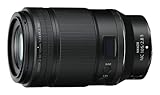
The Nikon NIKKOR Z MC 105mm f/2.8 VR S is my overall choice for Nikon Z because it combines 1:1 reproduction, a 105mm working perspective, 4.5-stop VR, and weather-sealed S-Line construction. Canon RF photographers who want more than life-size reproduction should start with the RF100mm F2.8 L Macro IS USM, while Sony E users who want a conventional 1:1 macro lens should look at Tamron’s 90mm VXD.
These picks are not interchangeable across mounts. The quickest way to narrow the field is to select the lens made for your camera system, then choose the longer or shorter focal length that matches live subjects, studio work, or extreme detail.

The best macro lenses in 2026 cover four mirrorless camera systems
This overview separates true 1:1 macro lenses from Canon’s 0.5x portrait-and-close-up option and AstrHori’s unusual 2x-5x lens. It is a short route to the core facts before the detailed reviews.
| Product | Specifications | Action |
|---|---|---|
| Nikon Z MC 105mm f/2.8 VR S |
|
Check Availability |
| Canon RF100mm F2.8 L Macro |
|
Check Availability |
 Canon RF 85mm F2 Macro IS STM Canon RF 85mm F2 Macro IS STM |
|
Check Availability |
 Tamron 90mm F/2.8 Di III VXD Tamron 90mm F/2.8 Di III VXD |
|
Check Availability |
 Fujifilm XF30mmF2.8 R LM WR Fujifilm XF30mmF2.8 R LM WR |
|
Check Availability |
 Nikon Z MC 50mm f/2.8 Nikon Z MC 50mm f/2.8 |
|
Check Availability |
 AstrHori 25mm F2.8 Ultra Macro AstrHori 25mm F2.8 Ultra Macro |
|
Check Availability |
1. Nikon NIKKOR Z MC 105mm f/2.8 VR S is the complete Nikon Z macro choice
Nikon NIKKOR Z MC 105mm f/2.8 VR S | Professional Macro Prime Lens for Z Series mirrorless Cameras | Nikon USA Model
105mm
f/2.8
1:1
4.5-stop VR
Pros
- 1:1 life-size magnification
- S-Line optics
- 4.5-stop VR
- Weather sealed
- 62mm filter
Cons
- 1.4-pound weight
- 9-blade diaphragm
The Nikon NIKKOR Z MC 105mm f/2.8 VR S is the clearest choice in this group for a Nikon Z photographer who wants one dedicated macro photography lens without giving up a useful portrait focal length. Its supplied data pairs life-size 1:1 magnification with a 105mm focal length, and Nikon specifically describes that reach as comfortable for filling the frame with small insects and nature subjects.
I would choose it for field detail work, botanical studies, artwork textures, and portraits where changing lenses would interrupt the session. The f/2.8 maximum aperture and nine-blade diaphragm also give it a clear non-macro role when a tight perspective and blurred background suit the image.
Nikon lists 4.5-stop vibration reduction, optical stabilization, and a 0.29m minimum focus distance. At close range, stabilization helps with camera movement, but it does not stop a leaf, insect, or object from moving, so a stable support and controlled light still matter.
The S-Line optical design is described as targeting sharpness, contrast, clarity, and very low distortion or aberrations. Its fluorine coating and sealing around moving parts make this a more credible outdoor option than a lens intended only for a dry tabletop setting, though the 1.4-pound weight is worth accepting only if the 105mm reach suits your work.
Its 105mm focal length suits insects and detail work that need space
The longer focal length is the practical reason to select this Nikon over the 50mm option below. It gives a more comfortable shooting position around small nature subjects and leaves more room to place a light without crowding the front of the lens.
That same perspective is useful when documenting physical art, jewelry, or product surfaces from a little farther back. It is less convenient when your preferred setup is a small desk and you need to show a broad scene around the object.
Its stabilization and build suit photographers who work away from a desk
VR is a meaningful feature for handheld close-up framing and for non-macro portrait use. It should be treated as help with camera shake, not as a replacement for good technique when depth of field is thin.
Nikon lists weather sealing and a fluorine coating, so this lens makes sense for photographers who may move between indoor creative work and outdoor flowers or insects. Its verified 4.8 rating from 422 reviews is also the strongest review-data signal among the Nikon choices in this list.
2. Canon RF100mm F2.8 L Macro IS USM is Canon RF’s 1.4x creative specialist
Canon RF100mm F2.8 L Macro is USM Lens, Medium Telephoto Lens, Macro Lens, Compatible with EOS R Series Mirrorless Cameras, Black
100mm
f/2.8
1.4x
5-stop IS
Pros
- 1.4x magnification
- 5-stop IS
- Hybrid IS
- SA Control Ring
- Weather resistant
Cons
- 730g weight
- 67mm filter
The Canon RF100mm F2.8 L Macro IS USM answers a specific Canon RF need: it goes beyond life-size with up to 1.4x magnification. That extra reproduction ratio makes it the standout choice here for an EOS R photographer who wants small details to occupy more of the sensor without moving to a fully manual extreme-macro design.
Canon lists a 100mm fixed focal length, bright f/2.8 aperture, 5-stop optical image stabilization, and Hybrid IS that compensates for angular and shift camera shake during macro shooting. I would put this lens at the top of a Canon RF shortlist for close product studies, flower details, and portrait work where macro capability is not an occasional extra.
The special feature is the Spherical Aberration Control ring, which Canon says adjusts the character and shape of foreground and background bokeh. That is a creative control rather than a substitute for precise focus, but it gives image-makers an unusual way to change the look of an out-of-focus background in-camera.
At 730g, this is not the small lens to pack merely in case a close-up appears. The supplied product data does describe it as weather resistant, and its 4.8 rating across 366 reviews is strong, so the size makes sense for a photographer who expects macro and medium-telephoto work to be a regular part of the kit.
Its 1.4x magnification suits Canon RF users who need more than life-size
A 1:1 lens records the subject life-size on the sensor; this Canon extends that to 1.4x. That is the relevant advantage if a close-up project needs a smaller crop area filled by a tiny object, insect feature, or material texture.
The 100mm perspective also keeps this lens in the familiar range for a telephoto macro workflow. It is a more versatile starting point for living subjects than a very short ultra-macro lens, where the front element must be much closer to the scene.
Its SA Control Ring suits photographers who want bokeh as a creative variable
The SA Control Ring is the main reason this Canon is not just another stabilized 100mm macro lens. It gives the photographer a stated way to adjust bokeh character, which can be useful when product shots or flower photographs need a particular background rendering.
Use it for visual interpretation rather than technical reproduction. For archival artwork, copy work, or focus-stacked detail files, accurate focus, careful lighting, and a suitable aperture remain the higher priorities.
3. Canon RF 85mm F2 Macro IS STM is the Canon RF portrait-first close-up lens
Pros
- Bright f/2 aperture
- 0.5x close focus
- 5-stop Hybrid IS
- Control Ring
- 500g body
Cons
- 0.5x is not true macro
- Not water resistant
The Canon RF 85mm F2 Macro IS STM is different from the dedicated 1:1 lenses in this guide because its stated maximum magnification is 0.5x. That means it is not the right pick if life-size macro is a firm requirement, but it is a credible close-up lens for Canon RF photographers who also want an 85mm f/2 portrait prime.
I would choose it for food, small product scenes, handmade objects, head-and-shoulders portraits, and detail shots where showing some surrounding context is part of the composition. The 0.35m minimum focusing distance lets it get close, while the 85mm focal length remains flattering and familiar for portrait-oriented work.
Canon lists optical stabilization with up to five stops of shake correction plus Hybrid IS for angular and shift shake during macro shooting. The 500g weight makes it substantially easier to carry than Canon’s 100mm L Macro, though stabilization does not change the 0.5x ceiling.
The lens also has STM autofocus, a control ring for direct setting changes, a 67mm filter thread, and a Super Spectra coating. It is not water resistant according to the listing, so I would reserve it for controlled shooting or take reasonable care in dusty and wet surroundings.
Its 0.5x reproduction suits close-up storytelling rather than life-size detail
The distinction is simple: choose the RF100mm L or another 1:1 option when you need a subject rendered life-size on the sensor. Choose this 85mm when half-life-size is enough and a single lens must also serve portrait sessions.
That makes it particularly sensible for makers who photograph their finished work as well as details of the surface. A broader contextual close-up can be more useful than extreme magnification for a portfolio page or social post.
Its f/2 aperture suits photographers who also need an 85mm portrait lens
The f/2 maximum aperture is the product’s main crossover advantage. It can create a shallower depth of field for portraits and gives another reason to keep the lens mounted after the close-up work is finished.
For dedicated insect photography or a scientific record of tiny details, the 0.5x limit is the decision point against it. For a Canon RF photographer wanting one compact medium-telephoto lens with close-focus ability, the supplied 4.7 rating from 710 reviews is a useful confidence signal.
4. Tamron 90mm F/2.8 Di III VXD is the full-macro Sony E autofocus option
Pros
- 1:1 magnification
- VXD autofocus
- 12-blade aperture
- Moisture resistant
- 6-year warranty
Cons
- No image stabilization
- 45-review sample
The Tamron 90mm F/2.8 Di III VXD is the conventional macro option in this set for Sony E and Sony FE cameras. It offers true 1:1 reproduction, a 90mm focal length, a stated 0.23m minimum focus distance, and VXD autofocus described as high-speed and high-precision with subject tracking performance.
I would place it ahead of a shorter lens for Sony photographers who split their time between insects, flowers, isolated product details, and portraits. The 90mm view gives the useful stand-off distance people often want for small live subjects, while the f/2.8 aperture keeps it in the standard macro-prime range.
Tamron describes the optical design as having high image reproduction and outstanding flat-field performance. Flat-field behavior matters most when a flat object such as a print, drawing, package label, stamp, or artwork surface needs even detail from center to edge rather than a deliberately dimensional look.
There is no image stabilization in the supplied data, so body stabilization, a tripod, flash, or another stable support becomes more important for low-light and close-range work. Its moisture-resistant construction, BBAR-G2 coating, fluorine coating, 12-blade aperture, and six-year manufacturer warranty give it a feature set built for photographers who expect frequent use.
Its flat-field design suits artwork reproduction and product surfaces
For a flat creative object, corner detail matters as much as the center. Tamron explicitly calls out flat-field performance, making this the Sony E choice I would investigate first for copy-style work and close product photography.
That does not mean it is limited to flat scenes. The 12-blade aperture is also a stated advantage for photographers who want a smoother background look around a three-dimensional flower, crafted object, or portrait.
Its missing stabilization suits supported setups or stabilized Sony bodies
The lack of lens stabilization is the fact to weigh before choosing this Tamron over a stabilized alternative. At macro distances, even small camera movements alter framing and focus, so support and lighting are practical parts of the lens decision.
If your Sony body supplies stabilization, that may support handheld work, but it does not change the lens specification itself. Its 4.7 rating comes from 45 reviews, which is a smaller sample than the leading Nikon and Canon entries, so I would treat the stated features as the more useful comparison point.
5. Fujifilm XF30mmF2.8 R LM WR is the light Fujifilm X tabletop macro lens
Fujifilm Fujinon XF30mmF2.8 R LM WR Macro Lens
30mm
f/2.8
1:1
195g
Pros
- 1:1 magnification
- 195g weight
- Weather sealed
- 11 aperture blades
- 10cm minimum focus
Cons
- Very close working position
- Focus details conflict in listing
The Fujifilm XF30mmF2.8 R LM WR brings true 1:1 macro capability to Fujifilm X cameras in a 195g lens. Its stated 35mm-equivalent focal length is 46mm, so this is a natural choice for a portable setup that treats close-up work as part of everyday visual note-taking rather than a separate telephoto discipline.
I would use this focal length for designed tabletop scenes, small objects, sketchbook details, food, and environmental close-ups where the frame benefits from showing a little of the setting. The minimum focusing distance is just 10cm from the sensor, which gets you very close but also means the front of the lens and your lighting may be close to the subject.
Fujifilm lists 11 elements in nine groups with three aspherical and two ED elements, plus 11 rounded aperture blades. It also lists weather sealing at nine locations and resistance to moisture, dust, and temperatures down to -10C, useful details for photographers who do not want their compact kit restricted to indoor work.
One supplied listing field labels the focus type as manual, while the technical description states a linear-motor inner-focus system with 0.02-second AF speed. Because those entries conflict, I would confirm the focus-mode operation with the seller or Fujifilm documentation before treating autofocus behavior as a deciding factor.
Its short focal length suits controlled scenes with context around the subject
A 30mm macro lens asks the photographer to work close to the scene, which is ideal when the object will stay still and you can reposition lights or reflectors. It also makes it easier to include the workspace, surface, or surrounding materials in a close-up composition.
It is not the first option I would select for skittish insects. A 90mm to 105mm lens gives more physical room and is less likely to shade a small subject with the lens itself.
Its 195g weight suits Fujifilm X photographers who want a small 1:1 kit
At 195g, this is the lightest specified lens in the main 1:1 group. That makes it appealing for a compact X-series kit where carrying a dedicated macro lens must not turn a short walk or studio day into a heavy load.
The focus-detail conflict is the one item I would settle before ordering. Everything else in the verified data supports a compact 1:1 macro choice with weather sealing, 11 rounded blades, and a 4.6 rating from 49 reviews.
6. Nikon NIKKOR Z MC 50mm f/2.8 is the compact Nikon Z 1:1 alternative
Nikon NIKKOR Z MC 50mm f/2.8 | Compact Macro Prime Lens for Z Series mirrorless Cameras | Nikon USA Model
50mm
f/2.8
1:1
260g
Pros
- 1:1 magnification
- 260g weight
- 0.16m minimum focus
- 46mm filter
- 9 diaphragm blades
Cons
- Very short working distance
- No manual override ring
The Nikon NIKKOR Z MC 50mm f/2.8 is the sensible Nikon Z alternative when compact size and a more general 50mm angle matter more than the 105mm model’s reach. It still reaches life-size 1:1 magnification, has an f/2.8 maximum aperture, and weighs about 260g according to the supplied technical details.
I would choose it for controlled tabletop macro shooting, craft documentation, home-studio product details, and travel where packing the larger 105mm lens would change the kit too much. The 50mm focal length also gives a 47-degree angle of view, which can make it easier to build a close-up image that retains a sense of place.
The lens has a 0.16m minimum focus distance, a 46mm filter size, nine diaphragm blades, a front-focusing mechanism, and a fluorine coating. Its optical image stabilization and auto/manual focus are listed in the technical details, while the front-focusing construction is described as a way to keep its size and weight down.
The tradeoff is working distance: to reach 1:1 with a 50mm macro lens, you will be physically close to the subject. That is no problem for a watch face, a drawing detail, or an arranged object, but it can complicate lighting and make live insect photography harder than it would be with the 105mm option.
Its 50mm view suits tabletop creatives who need both detail and context
The short focal length is a strength when your macro work happens at a desk. You can frame a close object while still showing tools, paper, packaging, or other contextual elements without stepping far back.
The compact body supports this use well. A 46mm filter thread and approximately 260g weight make it easier to reserve room in a smaller bag for lighting, cards, or a compact support.
Its close working position suits still subjects more than cautious wildlife
The 0.16m focus distance tells you this is a close-working design. That proximity can cast a shadow or leave little room for a flash diffuser, so plan the lighting before placing the subject.
The product data also says there is no focus ring for manual-focus override. Photographers who expect to switch focus behavior quickly during careful macro shooting should factor that control preference into their decision.
7. AstrHori 25mm F2.8 Ultra Macro is the Sony E 2x-5x specialist
AstrHori 25mm F2.8 2X-5X Ultra Macro Lens Full Frame Manual Focus Compatible with Sony E Mount mirrorless Cameras A7,A9,NEX-3,NEX-5,NEX-7,etc.
25mm
f/2.8
2x-5x
manual focus
Pros
- 2x-5x magnification
- 37.5-45mm working distance
- ED elements
- Full-frame Sony E
- More depth at magnification
Cons
- Manual operation
- No stabilization
- Not water resistant
The AstrHori 25mm F2.8 Ultra Macro is not a general-purpose macro lens; it is a specialist tool for full-frame Sony E photographers who specifically need 2x to 5x magnification. That range moves beyond life-size into extreme close-up work, making it the lens here for revealing structures that a standard 1:1 macro lens records at a smaller scale.
I would reserve it for controlled creative projects such as pigment texture, miniature construction, tiny mechanical parts, jewelry details, plant structures, and prepared natural subjects. The supplied data states a 37.5mm to 45mm working distance, which it describes as leaving room for easier lighting despite the high reproduction ratios.
This AstrHori uses manual focus through a magnification ring and has no focus ring, no image stabilization, and no weather resistance. That is a very different workflow from autofocus 90mm to 105mm macro lenses: subjects need to stay still, the camera position needs care, and a support is usually more practical than trying to chase a moving subject.
The optical system has 10 elements in seven groups, including two high-refractive-index and two ED elements, with an eight-blade f/2.8 aperture. AstrHori also states that it gives larger depth of field than similar macro lenses at the same magnification and can reduce the need for focus stacking, but high-magnification depth of field is still narrow enough that stacking may remain useful for some subjects.
Its 2x-5x range suits deliberate ultra-macro projects rather than everyday close-ups
At 2x to 5x, slight changes in camera position make a large difference in framing and focus. This is the right tool when the goal is an abstract study of a tiny area, not a fast way to photograph an entire flower or a person.
It is also the one product in this roundup that directly addresses the creative extreme-macro gap in many buying guides. Sony E photographers interested in fine visual textures have a distinct option here, provided they accept manual operation.
Its manual workflow suits stationary subjects and planned lighting
Manual operation is not a small footnote at 5x magnification; it shapes the entire session. Start with a still subject, build the light, set the magnification, and move the camera or subject in tiny increments to find the focus plane.
The 4.0 rating from 84 reviews is lower than the other products, and the supplied review breakdown includes both enthusiastic and dissatisfied responses. That fits the specialist nature of the lens: select it for its verified 2x-5x capability, not as an all-purpose replacement for an autofocus 1:1 macro prime.
Choose a macro lens by mount, magnification, working distance, and workflow
Start with compatibility because a lens mount decides the whole shortlist. The Nikon 105mm and 50mm fit Nikon Z cameras; the two Canon options fit Canon RF; Tamron and AstrHori fit Sony E, with AstrHori specified for full-frame use; and Fujifilm’s 30mm fits Fujifilm X cameras.
Then decide whether 1:1 is actually needed. True 1:1 magnification is the standard for life-size macro photography, and the Nikon 105mm, Tamron 90mm, Fujifilm 30mm, and Nikon 50mm meet it; Canon’s RF100mm reaches 1.4x, while AstrHori moves from 2x to 5x.
Choose 0.5x, 1:1, 1.4x, or 2x-5x by the size of the detail you need
A 0.5x lens such as Canon’s 85mm is best described as a close-up and portrait hybrid. It works well when the whole object or a broader detail matters, but it will not give the life-size capture a dedicated macro lens provides.
Choose 1:1 for the widest range of flowers, products, craft details, and natural textures. Choose 1.4x or 2x-5x only when the composition truly calls for a smaller area of the subject to dominate the frame, because higher magnification makes framing, light, and focus more demanding.
Choose 90mm to 105mm for space around small live subjects
Longer macro focal lengths do not magically make a lens sharper, but they change where you can stand. The Nikon 105mm, Canon 100mm, and Tamron 90mm are better suited to insects and delicate outdoor subjects because they allow a more comfortable shooting position than a 30mm or 50mm design.
That space also makes it easier to avoid blocking the light with your camera and lens. It matters in product photography too, where a diffuser, reflector, or flash needs room between the camera and subject.
Choose 30mm to 50mm for tabletop art, food, and small workspaces
Shorter macro lenses put you close to the subject. The Fujifilm 30mm and Nikon 50mm are practical when the work is stationary and you can move the object, camera, or lights freely around a desk.
They are also useful when the image needs a wider feeling and some environmental context. For a maker documenting a process, a short macro focal length can show the detail of a tool or surface without losing every clue about the workspace.
Choose stabilization and autofocus based on the way you shoot, not on a feature checklist
Stabilization helps when the camera moves, and the Nikon 105mm, Canon 100mm, Canon 85mm, Fujifilm 30mm, and Nikon 50mm list optical stabilization in their supplied specifications. Canon’s two lenses also list Hybrid IS for angular and shift camera shake during macro shooting.
Autofocus can be helpful when the subject or photographer moves, but at high magnification the focus plane is thin enough that manual placement and a stable setup are often sensible. The AstrHori’s manual magnification-ring operation makes this especially clear: select it only if deliberate manual work sounds like part of the appeal.
Choose lighting and aperture with depth of field in mind
Macro depth of field is shallow, which means a wide f/2 or f/2.8 setting can isolate a tiny plane of the subject. That can be beautiful for a flower or a creative detail, but it may leave too little of a flat object sharp for documentation.
For copy-style shots, use controlled light and a support so you can select the aperture and focus method the subject requires. The AstrHori can reduce the need for focus stacking according to its supplied data, but stacking remains a reasonable technique when one frame cannot hold enough of the subject in focus.
These common macro lens questions have short, practical answers
What is the best macro lens for beginners?
The best starting lens is the one made for your camera mount that matches your subject. For Nikon Z tabletop work, the compact NIKKOR Z MC 50mm f/2.8 gives 1:1 magnification; for Canon RF photographers who also want portraits, the RF 85mm F2 Macro IS STM offers 0.5x close focus. Beginners who need life-size detail should prioritize a true 1:1 lens and practice with stationary subjects first.
Which macro lens offers the sharpest results?
The supplied data does not contain controlled cross-lens sharpness testing, so no single winner can be named honestly. Nikon describes the Z MC 105mm S-Line optics as delivering sharpness, contrast, and low aberrations, while Tamron specifically claims outstanding flat-field performance for its 90mm. Choose based on mount and subject, then test focus accuracy, lighting, and aperture in your own setup.
What macro lens do professionals recommend for Canon, Nikon, and Sony?
For Nikon Z, the NIKKOR Z MC 105mm f/2.8 VR S combines 1:1 reproduction, 105mm reach, VR, and weather sealing. For Canon RF, the RF100mm F2.8 L Macro IS USM offers 1.4x magnification, Hybrid IS, and an SA Control Ring. For Sony E, Tamron’s 90mm F/2.8 Di III VXD offers 1:1 reproduction, VXD autofocus, and stated flat-field performance.
How do I choose between 90mm, 100mm, and 105mm macro lenses?
Choose a 90mm, 100mm, or 105mm macro lens when you need more physical room around insects, flowers, or lighting equipment. The difference among those focal lengths is smaller than the difference between a 50mm and a 100mm macro lens, so mount, stabilization, magnification, focus system, and build features should settle the choice. Choose a shorter lens instead when controlled tabletop work and wider context matter more than subject distance.
The best macro lens is the one that matches your camera and subject distance
The best macro lenses in 2026 are not one universal pick. Nikon Z photographers who need reach should choose the NIKKOR Z MC 105mm f/2.8 VR S, Canon RF specialists should consider the RF100mm F2.8 L Macro IS USM, and Sony E photographers can choose Tamron’s 90mm for regular 1:1 work or AstrHori’s 25mm only for planned 2x-5x images.
For controlled creative work, the Fujifilm 30mm and Nikon 50mm show why a small 1:1 lens can be more useful than a longer lens. Pick your mount first, choose the magnification you actually need, and let working distance decide whether the scene belongs in the field or on your desk.