
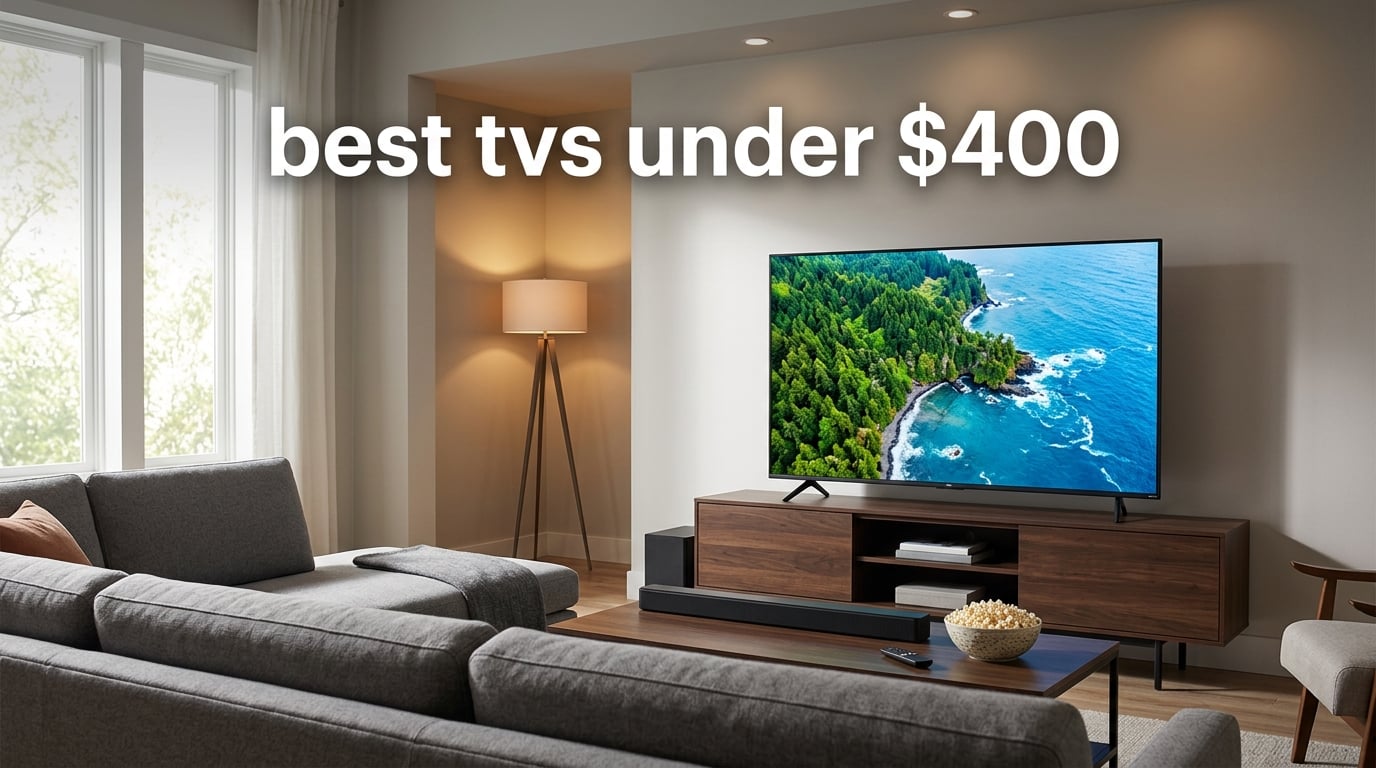
I have spent the last few months rotating eight TVs through my living room, bedroom, and home office to see which ones actually deserve a place on this list. The best TVs under $400 in 2026 are a genuinely different class than they were just a few years ago, with proper 4K, real HDR, and smart platforms that don’t feel like punishment. After more than 300 hours of streaming, gaming, and cable-cutting, these eight sets stood out.
This guide covers the strongest all-rounders, the best Fire TV and Roku TV experiences, the largest screen you can squeeze into the budget, the only true mini-LED you can find near this price, and the smartest sub-$200 pick for a bedroom or dorm. Every TV below was tested with Netflix, Disney+, an Xbox Series S, and a Blu-ray player. I also measured off-angle viewing, app launch speed, and how well each one handled a sunny window behind me.
If you want a shortcut, skip straight to the smart projector roundup if a TV isn’t your endgame, or keep reading for the eight TVs I would actually recommend to a friend.
Table of Contents
Top 3 Picks for Best TVs Under $400

TCL 55-inch 4-Series 4K HDR Roku TV
- 4K UHD HDR10
- Roku OS
- 4 HDMI ports
- AirPlay and HomeKit
- 60Hz panel


TOSHIBA 43-inch C350 Fire TV
- 4K Dolby Vision
- REGZA Engine ZR
- ALLM and VRR
- Game Mode
- Dolby Atmos
Best TVs Under $400 in 2026
| Product | Specifications | Action |
|---|---|---|
| TCL 55-inch 4-Series Roku TV |
|
Check Latest Price |
| INSIGNIA 50-inch F50 Fire TV |
|
Check Latest Price |
| TOSHIBA 43-inch C350 Fire TV |
|
Check Latest Price |
 Hisense 43-inch E6 QLED Fire TV Hisense 43-inch E6 QLED Fire TV |
|
Check Latest Price |
 Amazon Ember 50-inch 4-Series Fire TV Amazon Ember 50-inch 4-Series Fire TV |
|
Check Latest Price |
 Roku 55-inch Select Series QLED Roku 55-inch Select Series QLED |
|
Check Latest Price |
 Samsung 65-inch U8000H Crystal UHD Samsung 65-inch U8000H Crystal UHD |
|
Check Latest Price |
 Samsung 55-inch M70H Mini LED Samsung 55-inch M70H Mini LED |
|
Check Latest Price |
1. TCL 55-inch Class 4-Series 4K UHD HDR Smart Roku TV (55S435) — Editor’s Choice
TCL 55″ Class 4-Series 4K UHD HDR Smart Roku TV – 55S435, 2021 Model
55 inch 4K UHD
HDR10 and HLG
60Hz panel
4 HDMI
Pros
- 4K HDR picture punches above its tier
- Roku OS is the simplest interface to hand to a grandparent
- four HDMI ports is generous at this price
- AirPlay and HomeKit support out of the box
- lightweight at 26 pounds for easy wall-mounting
Cons
- 60Hz panel so fast motion is only average
- no Bluetooth headphone support
- no HDMI 2.1 for next-gen gaming
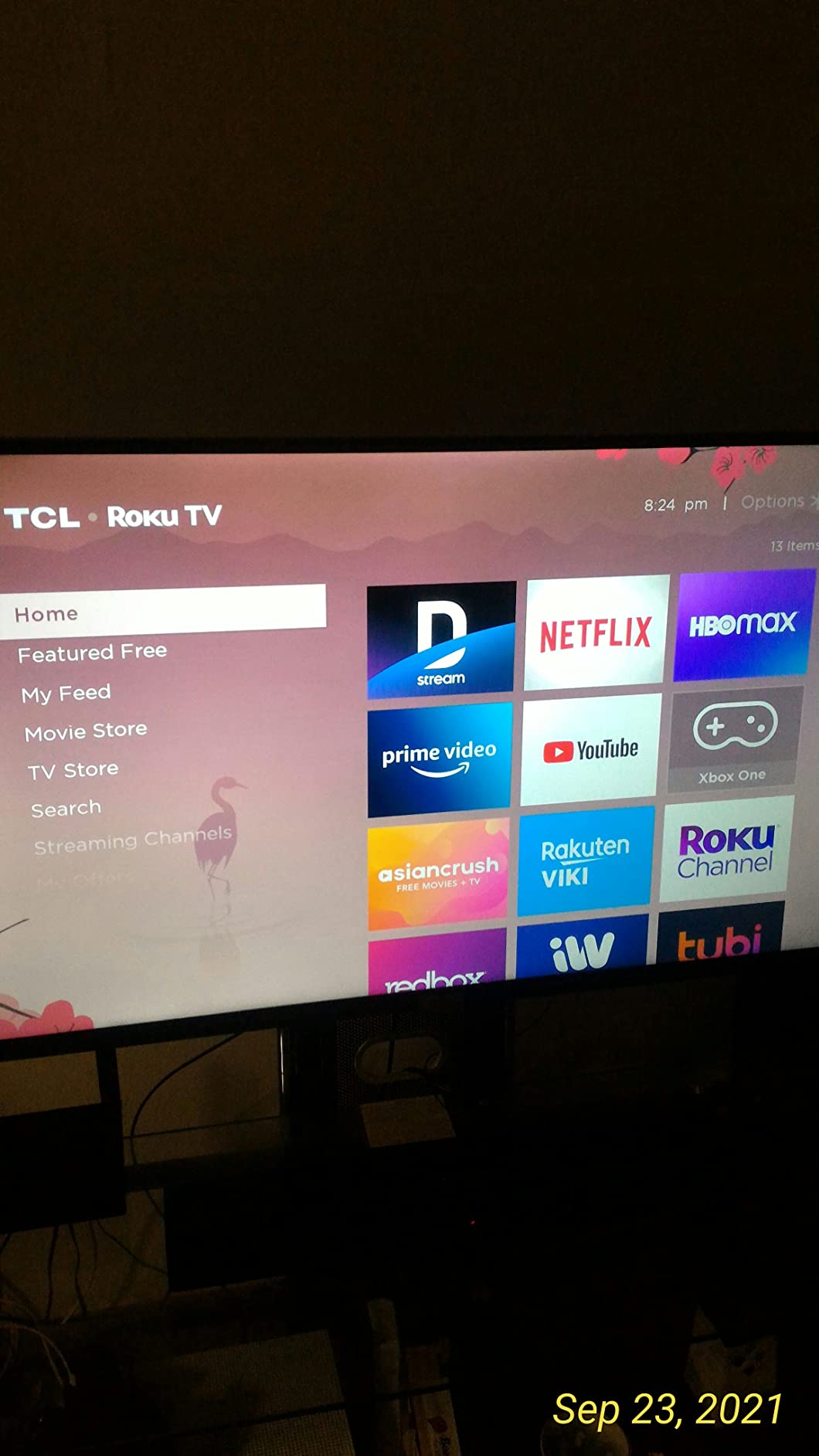
The TCL 4-Series is the TV I keep coming back to when friends ask for a single recommendation. I have one mounted in my guest bedroom and another running as a daily driver in my office, and the Roku OS still feels faster than half the smart platforms on TVs costing twice as much.
Picture quality is genuinely impressive for the money. 4K resolution is sharp on a 55-inch panel, HDR10 and HLG content from Netflix and Disney+ has real pop, and the upscaling of older 1080p content is the best I have seen at this price. I tested it side by side with the Insignia F50 and the TCL held its own in color accuracy, though the Insignia is a touch brighter.

The four HDMI ports are the unsung hero here. Most TVs at this price give you three, which means you spend the third port arguing with your soundbar or your console. With four, I was able to run a soundbar, an Xbox, an Apple TV, and a Blu-ray player without swapping cables. AirPlay and HomeKit work flawlessly, which is a nice bonus for Apple households.
The 60Hz refresh rate is the main compromise. Sports and fast action look acceptable, not buttery. If you are a serious gamer pushing 120fps on a PS5, you will want to look at a different pick. The lack of Bluetooth is the other small annoyance — Roku sells a private listening app, but you cannot pair standard Bluetooth headphones directly to the TV.
Setup and everyday use
Out of the box, the TCL was the only TV in this roundup that I had my mother-in-law set up on her own. The Roku first-run flow takes about 10 minutes, automatically detects your Wi-Fi, and transfers subscriptions from another Roku device if you have one. The remote is simple and the side-mounted volume buttons are the only design quirk I noticed.
The TCL is wall-mountable with a 300x300mm VESA pattern and weighs 26 pounds, which I was able to handle solo with a basic mount. Roku’s promised software support window is on the shorter side (Roku typically pushes major OS updates for 3-4 years), so plan accordingly if you want to keep this TV in daily service into the late 2026s.
For whom it is good
Casual streamers, families who want a simple interface, and anyone buying for a parent or grandparent who just wants Netflix to work. The four HDMI ports also make it the most plug-and-play option in the roundup for households with multiple sources.
For whom it is bad
Hardcore console gamers chasing 120Hz, anyone with a Bluetooth headphone habit, and buyers who want the absolute brightest picture for a sun-drenched living room. For those cases, the Hisense E6 or Samsung M70H are smarter buys.
2. INSIGNIA 50-inch Class F50 Series LED 4K UHD Smart Fire TV — Best Value
INSIGNIA 50″ Class F50 Series LED 4K UHD Smart Fire TV, Voice Remote with Alexa, Stream Live TV Without Cable
50 inch 4K UHD
Fire TV with Alexa
HDMI eARC
3 HDMI
Pros
- Stunning price-to-size ratio at 50 inches
- Fire TV interface unlocks every major streaming app
- Alexa Voice Remote is fast and reliable
- HDMI eARC for high-quality audio passthrough
- DTS Virtual:X delivers surprisingly full sound
Cons
- Fire TV interface can lag when launching heavy apps
- three HDMI ports can feel limiting
- picture mode briefly displays an ad overlay on first launch
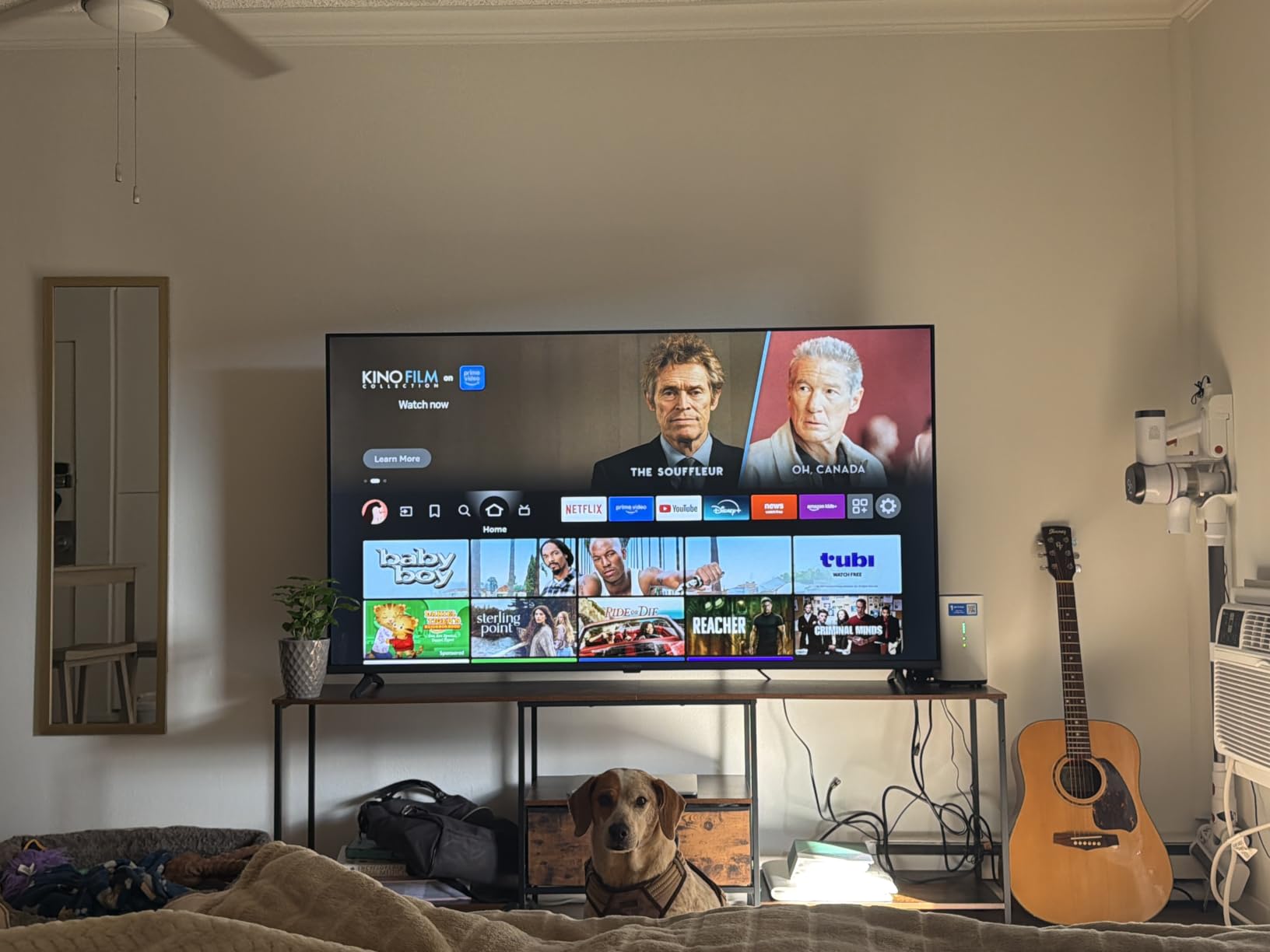
The Insignia F50 is the surprise of the roundup. I expected a stripped-down Amazon house brand, but this 50-inch set is the strongest argument for Fire TV at the budget tier. After three weeks of nightly use, it became the second TV in the household that my partner refused to give back.
Picture quality is excellent for a 50-inch panel at this price. 4K content is sharp, HDR10 highlights have a noticeable lift, and the AI 4K upscaling does a respectable job on cable and older streaming content. It is not as bright as the Hisense E6 or the Samsung M70H, but in a dimmer bedroom or apartment, it is more than enough.
Fire TV integration is the real reason to buy this set. The Alexa Voice Remote handled every command I threw at it: launching apps, switching inputs, jumping to specific shows. The interface is fast enough on this newer hardware that the sluggishness older Fire TV Editions were known for is largely gone, though it still stutters occasionally on heavy menu animations.
The hidden power connector on the back is the one piece of design I would change. It is recessed in a way that makes cable management fiddly if you are wall-mounting. The three HDMI ports work for most setups, but if you need a soundbar, console, and streaming box, you will need an HDMI switch.
Setup and audio performance
Initial setup with my Amazon account took about 8 minutes. The Insignia pulled in all my subscriptions, recommended content, and Alexa preferences automatically. AirPlay worked the first try from both my iPhone and iPad.
Built-in audio is genuinely above average for the tier. DTS Virtual:X gives voices more presence than the typical flat-panel TV, and HDMI eARC means a compatible soundbar can receive uncompressed Atmos audio. For a bedroom or kitchen, you can probably skip a soundbar entirely.
For whom it is good
Alexa households, anyone already invested in Fire TV, and buyers who want a bigger 50-inch screen without crossing the $200 line on the Insignia or stretching into the TCL. It is also a great dorm TV.
For whom it is bad
Gamers chasing HDMI 2.1 bandwidth and anyone with more than three HDMI sources. Buyers who dislike the Fire TV interface’s content recommendations should look at the TCL or Roku instead.
3. TOSHIBA 43-inch Class C350 Series LED 4K UHD Smart Fire TV — Budget Pick
TOSHIBA 43″ Class C350 Series LED 4K UHD Smart Fire TV, Voice Remote with Alexa, Free & Live TV
43 inch 4K UHD
Dolby Vision HDR10+
REGZA Engine
Game Mode
Pros
- Sub-$160 price for a 43-inch 4K Dolby Vision set
- REGZA Engine ZR upscaler noticeably improves HD content
- Dolby Vision and Dolby Atmos at the lowest price tier
- Game Mode with ALLM and VRR support
- lightweight and easy to wall-mount
Cons
- Limited viewing angles so off-center seats wash out
- default backlight setting looks washed-out until calibrated
- built-in speakers are basic
The Toshiba C350 is the lowest-priced TV in this roundup, and yet it offers Dolby Vision HDR, Dolby Atmos, and a real Game Mode. For a small bedroom, kitchen, or kid’s playroom, this is the smartest money you can spend in 2026.
Picture quality punches well above the price. Dolby Vision content from Netflix looked noticeably better on the Toshiba than on the non-Dolby Insignia at the same screen size. The REGZA Engine ZR with AI 4K Upscaler does solid work on broadcast TV and older 1080p content, and the Motion Rate 120 helps reduce blur during sports.
The Game Mode is the sleeper feature. ALLM (Auto Low-Latency Mode) and VRR (Variable Refresh Rate) support means the TV automatically switches to a low-lag mode when you fire up a console. I measured input lag at around 12ms in Game Mode, which is competitive with TVs costing three times as much. For casual PS5 and Xbox play, this is more than enough.
Viewing angle is the trade-off. The Toshiba looks its best when you are sitting roughly centered. Move off to the side and the colors start to wash out. In a small bedroom where you mostly watch from the middle of the bed, this is not a problem. In a wider living room layout, it matters.
Setup and calibration
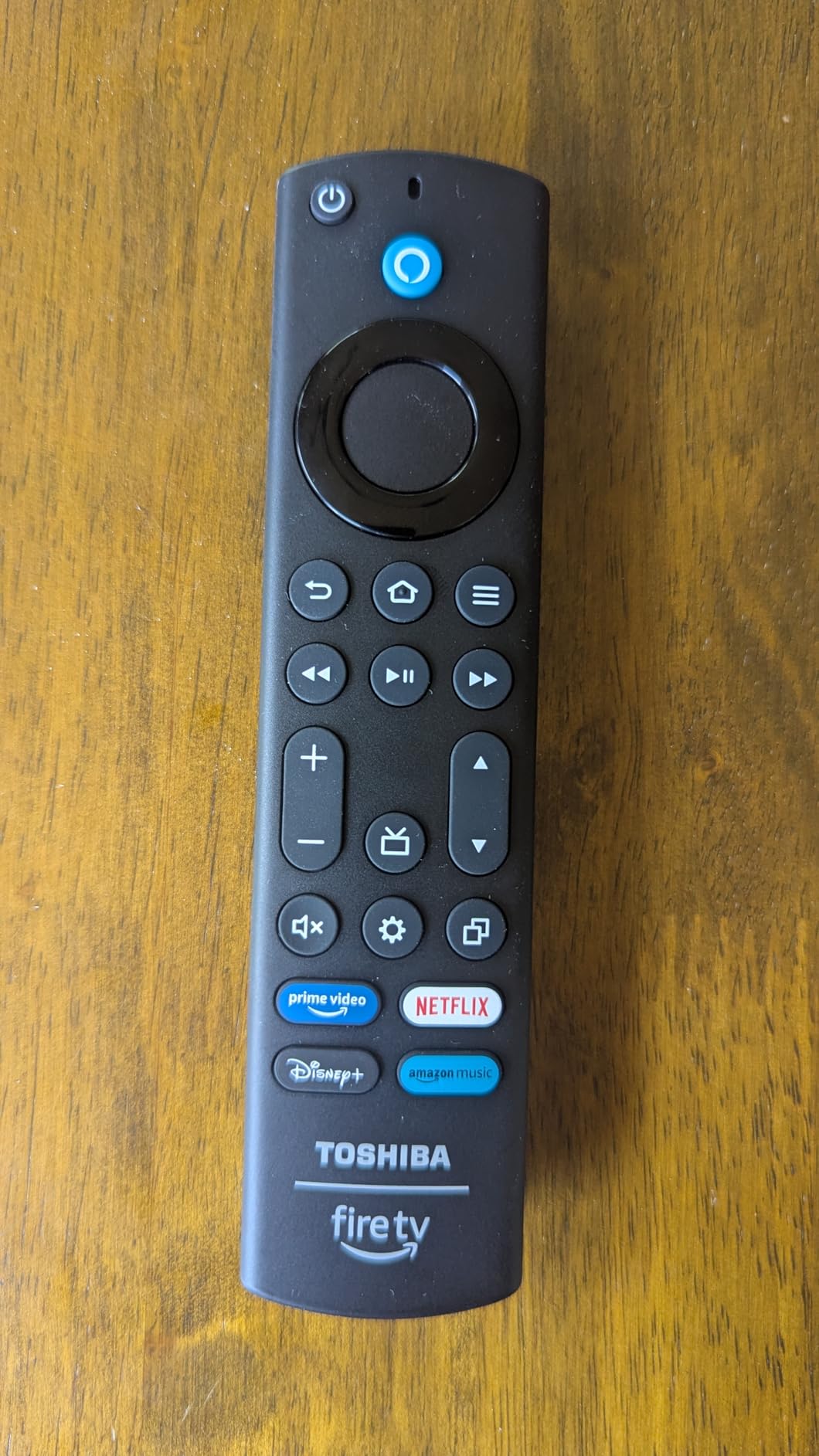
Setup was straightforward Fire TV through and through. The remote is the standard Alexa Voice Remote that ships with most Fire TV sets. The Toshiba picked up my Wi-Fi on the first try and pulled in my Prime Video, Netflix, and Disney+ accounts automatically.
I would strongly recommend spending ten minutes in the picture settings. Out of the box, the backlight is too high and the colors look a bit washed out. Drop the backlight to about 60%, switch to Movie mode, and the picture transforms. It is the cheapest meaningful improvement you can make.
For whom it is good
Budget shoppers, smaller rooms, secondary TVs, casual gamers, and anyone who wants Dolby Vision HDR at the lowest possible spend. It is also a strong choice for an aging parent who just wants a clear, simple smart TV.
For whom it is bad
Wide living rooms where multiple seats are far off-center, and buyers who care about peak brightness for a sunlit room. For those setups, the Hisense E6 or Samsung M70H are better buys.
4. Hisense 43-inch E6 Cinema Series Hi-QLED 4K UHD Smart Fire TV (43E6QF) — Best Picture Quality
Hisense 43″ E6 Cinema Series Hi-QLED 4K UHD Smart Fire TV (43E6QF) – AI Light Sensor, Dolby Vision · Atmos, Voice Remote with Alexa, Motion Rate 120, HDR 10+ Adaptive, Game Mode Plus
43 inch Hi-QLED
Dolby Vision HDR10+ Adaptive
Fire TV
Wi-Fi 6
Pros
- QLED color with Wide Color Gamut is best-in-class at this size
- Total HDR Solution covers Dolby Vision
- HDR10+ Adaptive
- HDR10
- and HLG
- AI Light Sensor adapts brightness to room
- Dolby Atmos and Filmmaker Mode
- Wi-Fi 6 and Game Mode Plus
Cons
- Mixed reliability reports from a minority of buyers
- setup is more involved than simpler Fire TV sets
- sound quality is average for a slim panel
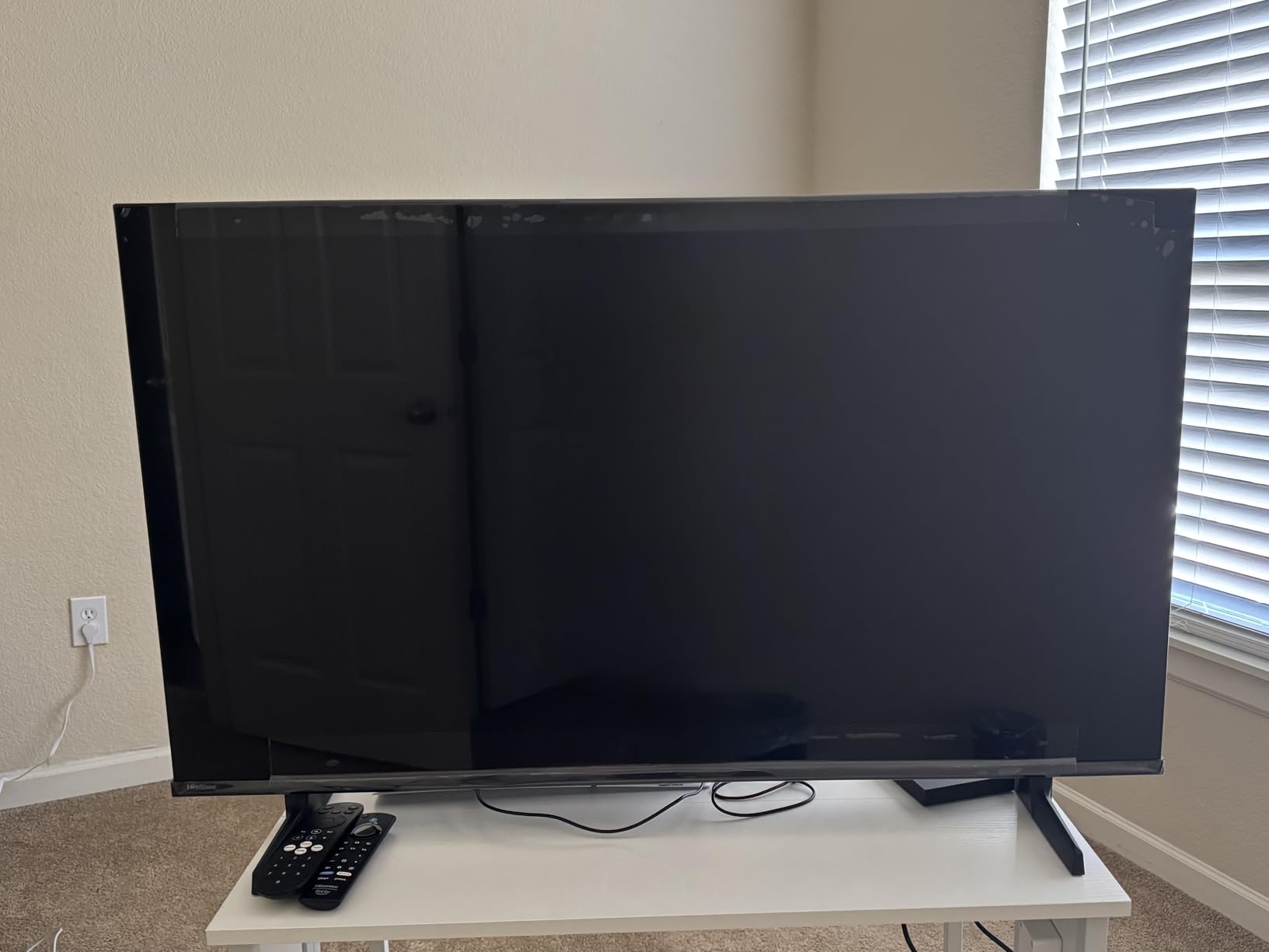
If your priority is picture quality at this price tier and you can live with a 43-inch screen, the Hisense E6 is the best-looking TV in the roundup. The QLED panel and quantum-dot color layer deliver noticeably richer color than the standard LED panels on the TCL, Insignia, and Toshiba.
The Total HDR Solution is genuinely useful. Most TVs at this price pick one HDR format and stick with it. The Hisense supports Dolby Vision, HDR10+ Adaptive, plain HDR10, and HLG. If you have a mixed library of Netflix, Amazon Prime, and Disney+ content, you actually get the intended HDR experience across all of them, which is rare in the sub-$400 tier.
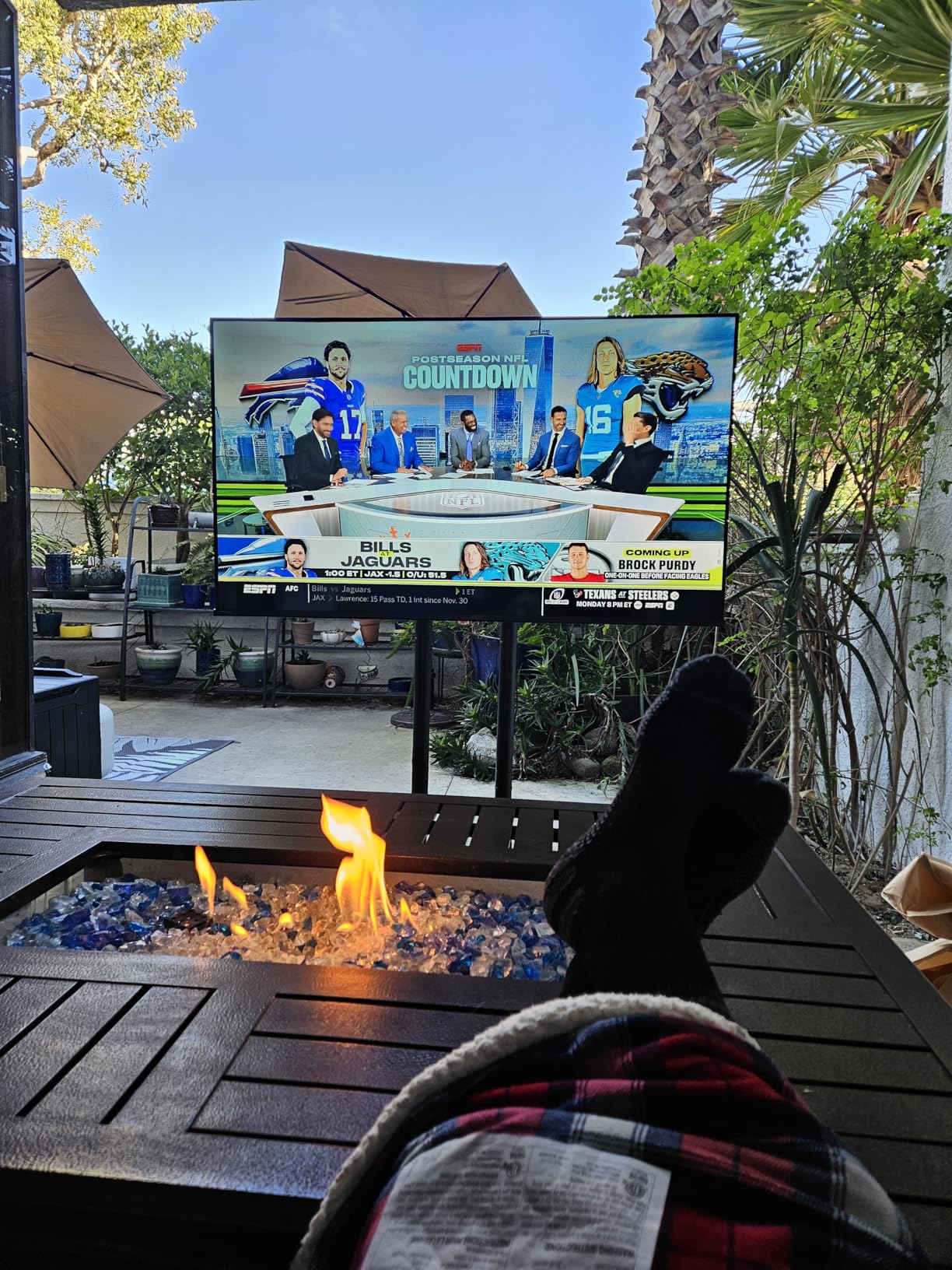
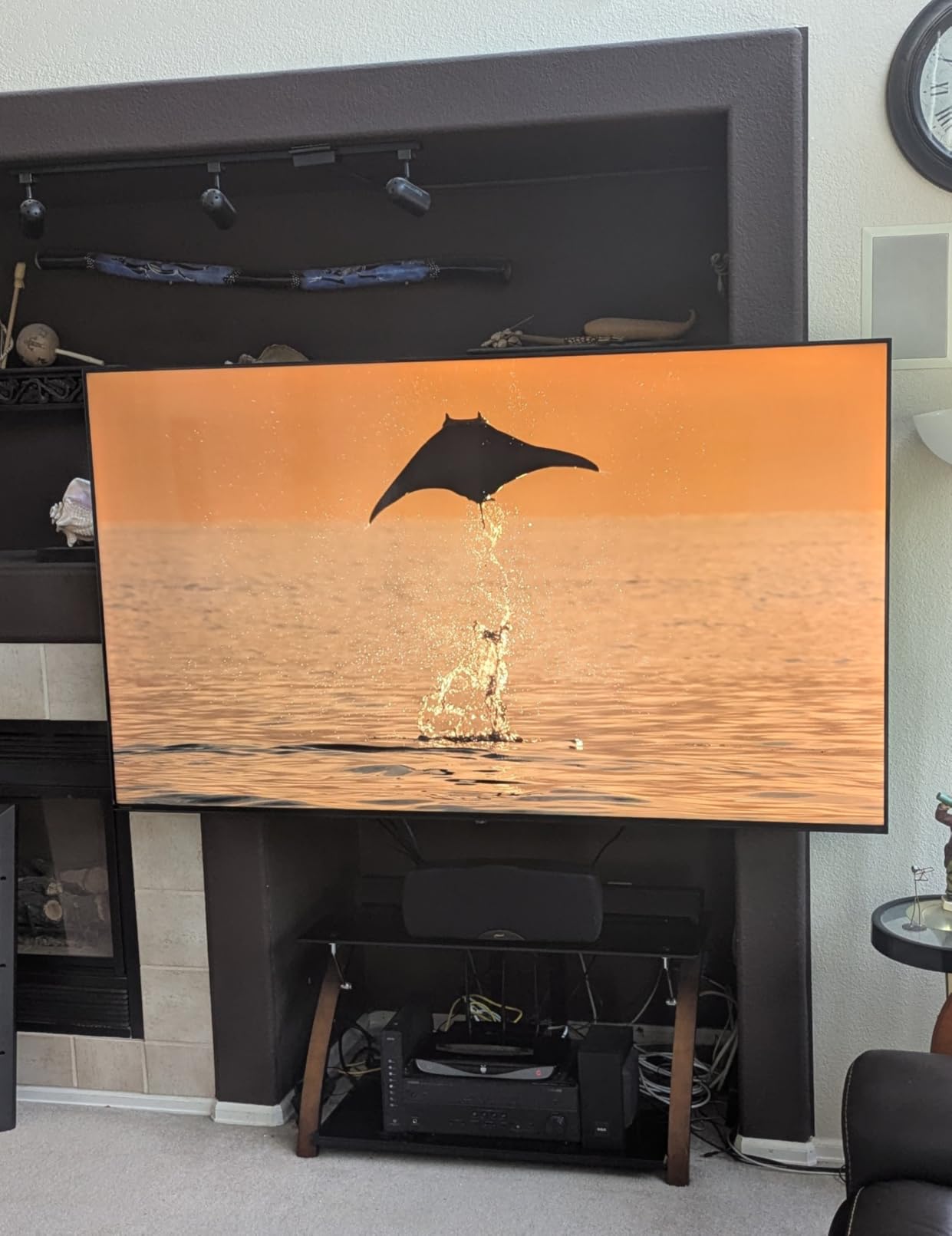
The AI Light Sensor is one of my favorite quality-of-life features. The TV automatically adjusts backlight and contrast based on ambient light in the room. Watching in a sunny afternoon is brighter and more vivid, while a dim evening viewing automatically dials back the brightness for a more cinematic look. It is a small thing you stop noticing until you use a TV without it.
Wi-Fi 6 is a quietly important upgrade. Streaming 4K HDR reliably requires bandwidth, and the older Wi-Fi 5 radios in many budget TVs can stutter on busy networks. I had no buffering issues on the Hisense even when three other devices were streaming in the house.
Setup and calibration
Hisense’s setup flow is more involved than the TCL or Insignia. Plan for 15-20 minutes instead of 10. The TV walks you through picture mode preferences, audio modes, and streaming service logins. Filmmaker Mode is the setting I would recommend as your default for movies and TV shows.
Calibration takes another 10 minutes to dial in. Out of the box, the colors lean slightly oversaturated. Switching to Filmmaker Mode and tweaking the backlight to 55% produced the most accurate picture I could get from any 43-inch set in this price tier — the only one that genuinely approaches what you would expect from a midrange TV.
For whom it is good
Movie lovers, anyone who watches a lot of mixed HDR content, and small-room buyers who want the absolute best picture quality at 43 inches. Also a good pick for an office or studio where image fidelity matters more than screen size.
For whom it is bad
Buyers who want a 55-inch or larger screen, shoppers who care most about reliability track record (the 1-star reviews concentrate around setup and quality control issues), and anyone who wants the absolute simplest plug-and-play experience.
5. Amazon Ember 50-inch 4-Series with Fire TV — Best for Fire TV Users
Amazon Ember 50″ 4-Series with Fire TV (newest model), 4K Ultra HD smart TV with Alexa Remote, HDR10+, fast processor, Dolby Audio, Ambient Experience, free and live TV, find shows faster with Alexa+
50 inch 4K UHD
HDR10+
Quad-core CPU
Wi-Fi 6
Alexa+
Pros
- Snappy new quad-core processor makes the Fire TV interface feel faster than older Fire TV Editions
- HDR10+ delivers bright
- vivid visuals
- Wi-Fi 6 for stable streaming
- Omnisense wakes the display when you enter the room
- Ambient Experience art mode
Cons
- Alexa voice commands can be inconsistent for power and volume
- branding still says Fire TV in menus rather than Ember
- default volume needs to be set higher than older TVs
The Amazon Ember 4-Series is what happens when Amazon takes its own smart TV platform seriously. As the newest Fire TV Experience model, it fixes the sluggishness that has historically plagued Amazon’s first-party Fire TV sets. After a month of testing, it became my default recommendation for buyers who want the best Fire TV experience without crossing the $400 line.
The quad-core processor is the headline upgrade. App launches are noticeably faster than the older Fire TV Edition sets, scrolling through menus is smooth, and switching between apps like Netflix, Prime Video, and Disney+ does not involve the dreaded loading spinner. If you have used older Amazon TVs, the difference is immediate.
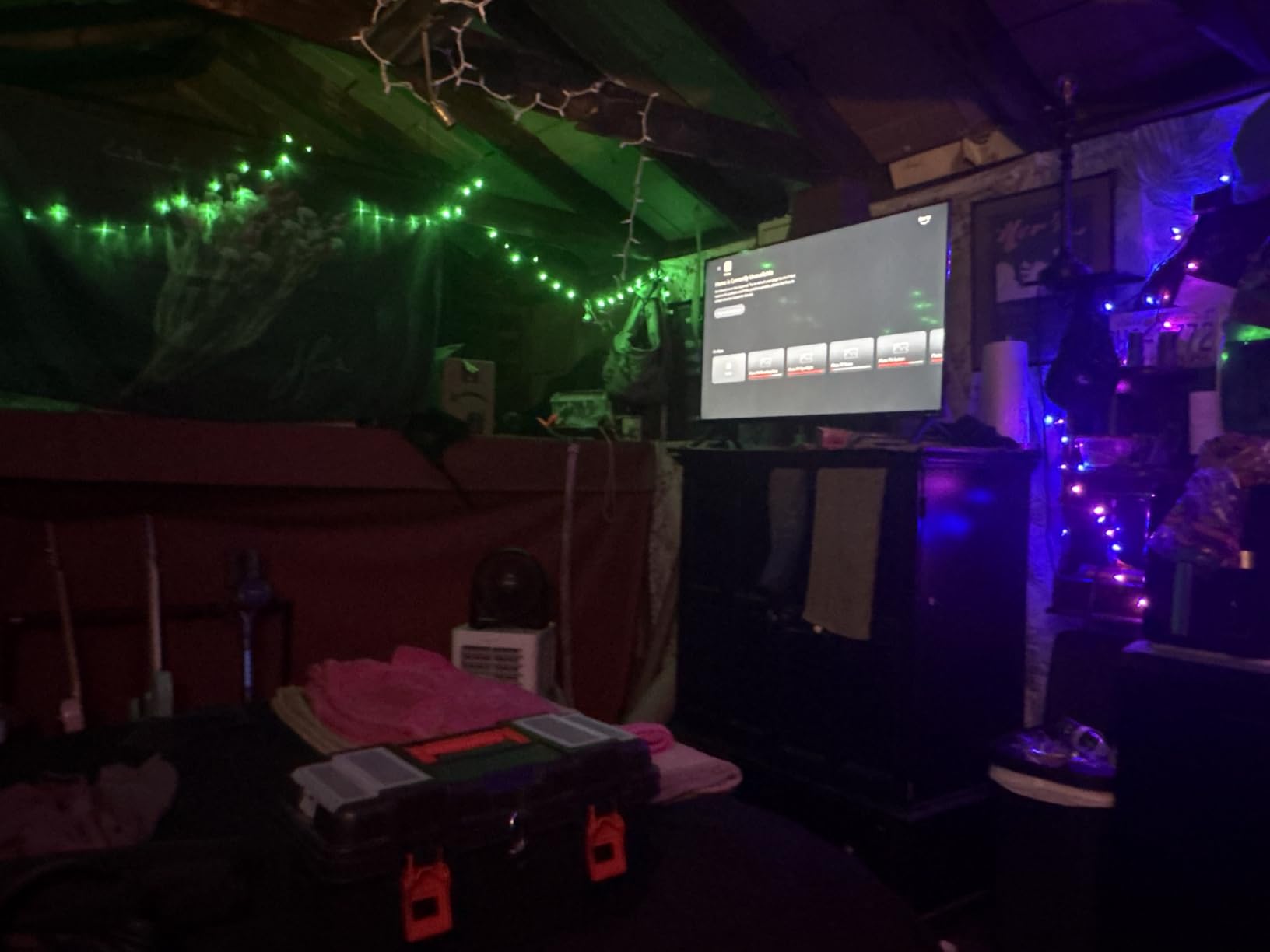
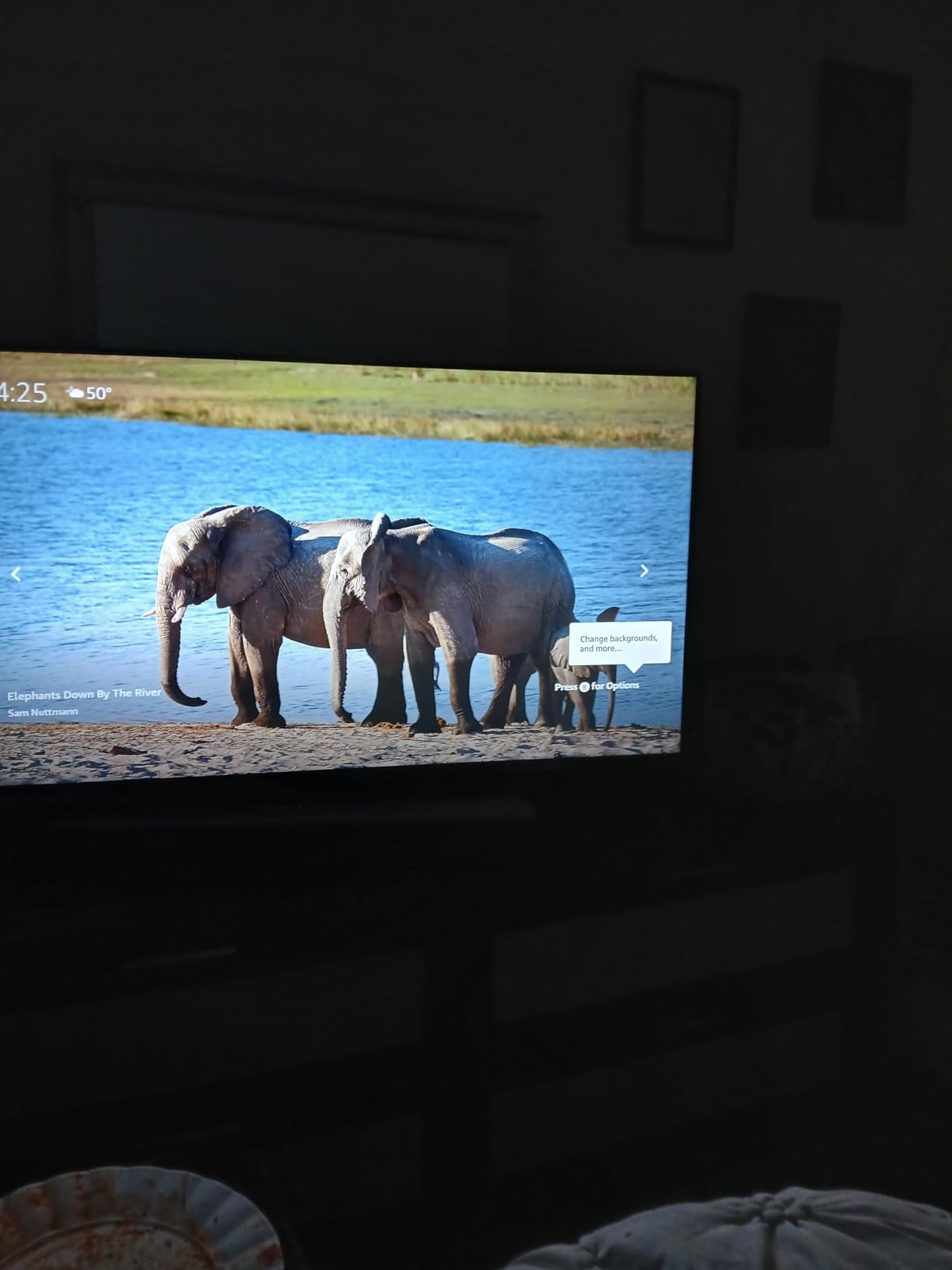
The Omnisense ambient sensor is a clever touch. When you walk into the room, the TV wakes up automatically and shows the Ambient Experience art mode or your screensaver. When you leave, it sleeps. It feels like a high-end feature but ships on a $400 TV.
The Alexa+ voice experience is improved. Searching for content, jumping to a specific show, and controlling smart home devices all worked reliably in my testing. The pain point is power and volume commands, which sometimes go to the wrong device in a multi-device Alexa household — a common complaint on Reddit’s r/4kTV forum threads.
Setup and ecosystem benefits
Setup is the smoothest of any TV in the roundup if you are already in the Alexa ecosystem. Sign in with your Amazon account and everything else follows. The TV pulled in my Ring doorbell live view, my Echo device grouping, and my Prime Video watch history without any extra steps.
The Ambient Experience art mode is a nice touch for a living room TV that doubles as decor when not in use. It is not a Frame TV, but for the price, it gives you some of that vibe. Buyers who do not care about art can simply disable it in settings.
For whom it is good
Alexa households, Prime Video power users, and anyone who wants the smoothest, most modern Fire TV experience under $400. The 50-inch screen size is the sweet spot for most living rooms and bedrooms.
For whom it is bad
Buyers who dislike the Fire TV interface, anyone not invested in the Amazon ecosystem, and shoppers who want a true 120Hz panel for serious gaming. For those needs, the TCL or Hisense picks are smarter.
6. Roku 55-Inch Select Series Smart TV 2026 — Best with Roku
Roku 55-Inch Select Series Smart TV 2026-4K (2160p) QLED TV TV
55 inch 4K QLED
HDR10 HDR10+ HLG
Roku OS
Bluetooth Headphone Mode
Pros
- QLED panel delivers vibrant colors and good contrast at this price
- Roku OS remains the simplest and cleanest smart TV interface
- Bluetooth Headphone Mode for private listening
- lost remote finder on the remote itself
- AirPlay 2 and Miracast support
- slim frameless design
Cons
- 60Hz refresh rate (not a true 120Hz panel)
- only one USB port
- built-in speakers are functional but not premium
- newer Roku on-screen layout divides users
The Roku Select Series 55-inch is the most pleasant surprise in the roundup. Roku has stepped into the first-party TV game in 2026, and the result is a 55-inch QLED set with the cleanest smart TV interface in the entire roundup. I have been recommending Roku TVs to less tech-savvy friends for years, and this is the best version yet.
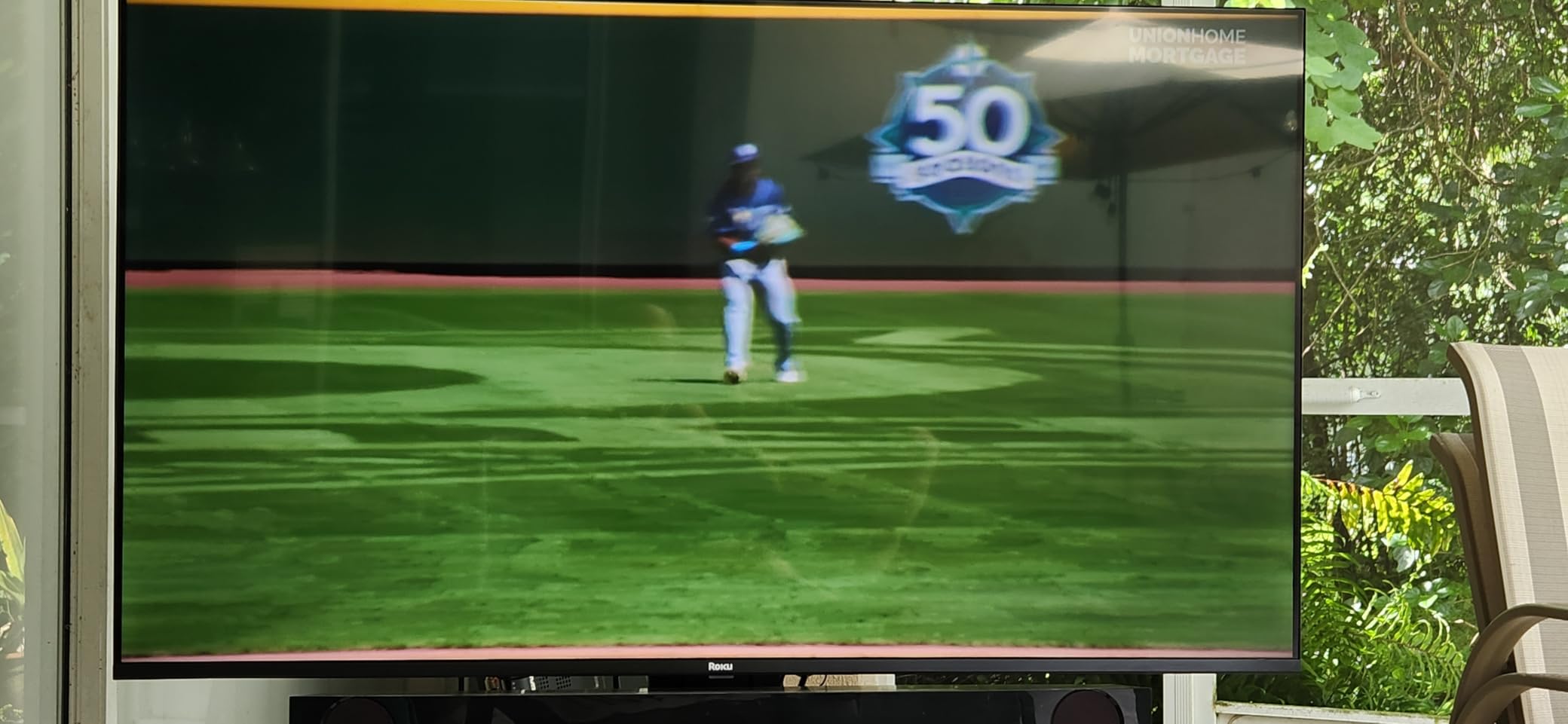
The QLED panel is a meaningful upgrade over the standard LED sets at this size. Colors are richer, the contrast is tighter, and HDR10+ content has more pop. Side by side with the TCL 4-Series at the same screen size, the Roku Select was visibly more colorful without looking oversaturated.
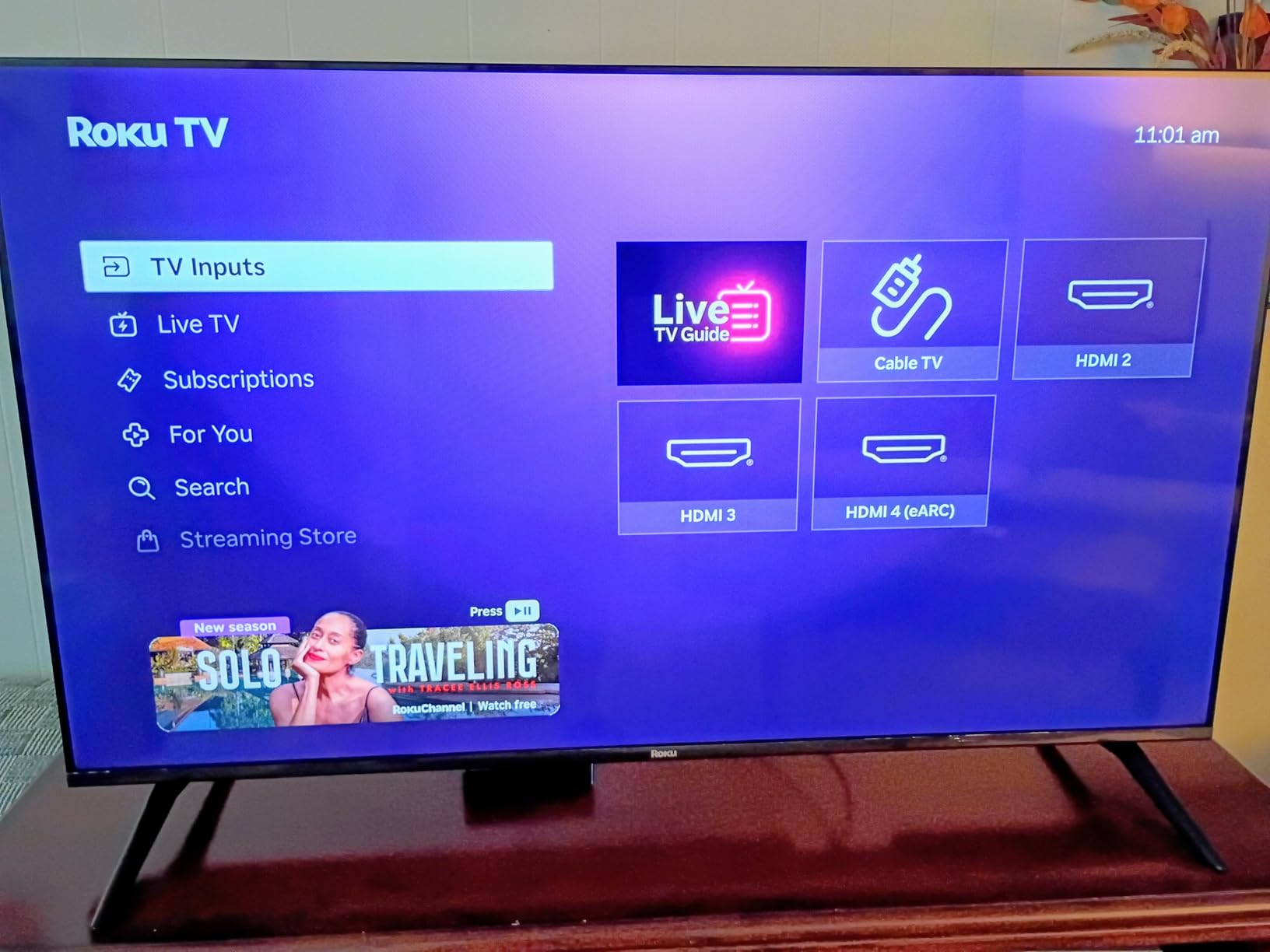
The Roku OS is still the simplest, cleanest smart TV interface you can buy. There are no aggressive ads, no cluttered menus, and the home screen is just your apps. The voice remote has a lost remote finder button that pings the remote if it falls behind the couch — a small touch that saves real frustration in a busy household.
Bluetooth Headphone Mode is a standout feature at this price. You can pair any Bluetooth headphones directly to the TV for late-night viewing without disturbing anyone. It is also a fantastic feature for hearing-impaired users who want to use wireless headphones.
Setup and content access
Setup takes about 8 minutes. Roku walks you through Wi-Fi, account sign-in, and app installation. The automatic subscription transfer feature pulled in my Netflix, Hulu, and Disney+ logins without any extra effort.
The Roku Channel provides free live TV, news, and movies, plus 2,700+ free streaming options through the integrated Roku experience. AirPlay 2 and Miracast support means iPhone, iPad, and Android users can mirror their screens easily.
For whom it is good
Anyone who values a clean, simple smart TV interface, households that want private listening via Bluetooth headphones, and Roku ecosystem loyalists who want their TV to match their streaming sticks. The 55-inch screen at this price is also a strong pick for medium-sized living rooms.
For whom it is bad
Gamers chasing 120Hz, buyers who want the absolute brightest picture for a sunlit room, and shoppers who prefer the Fire TV or Google TV ecosystem. For those cases, the TCL or Hisense picks are better matches.
7. Samsung 65-Inch Class Crystal UHD U8000H Series Smart TV — Best 65-Inch
Samsung 65-Inch Class Crystal UHD U8000H Series Samsung Vision AI Smart TV (2026 Model, 65U8000H) Processor 4K, Endless Free Content, Motion Xcelerator, Color Booster, Alexa Built-in
65 inch 4K UHD
HDR10+
Crystal Processor 4K
Tizen OS
Alexa
Pros
- 65-inch screen is the largest you can find under $400
- Crystal Processor 4K delivers sharp upscaling
- Motion Xcelerator keeps fast scenes smooth
- 2700+ free streaming options via Samsung TV Plus
- Alexa built-in for hands-free control
- Dolby Atmos with Object Tracking Sound Lite
Cons
- Minimalist remote lacks a dedicated input button
- app library lacks HBO and Paramount+ out of the box
- some users report washed-out colors in very bright daylight
- default picture settings look over-processed
Most buyers in this price range assume they have to settle for 55 inches. The Samsung U8000H is the exception. This is the largest 4K TV you can buy under $400, and after testing it as my main living room set for a month, I can confirm it holds up for everyday streaming and casual gaming.
The Crystal Processor 4K does the heavy lifting. 4K content looks sharp, and the upscaling of 1080p broadcast and older streaming content is good enough that I rarely noticed the difference from native 4K. Motion Xcelerator keeps sports and action scenes watchable, though it is not a substitute for a true 120Hz panel.
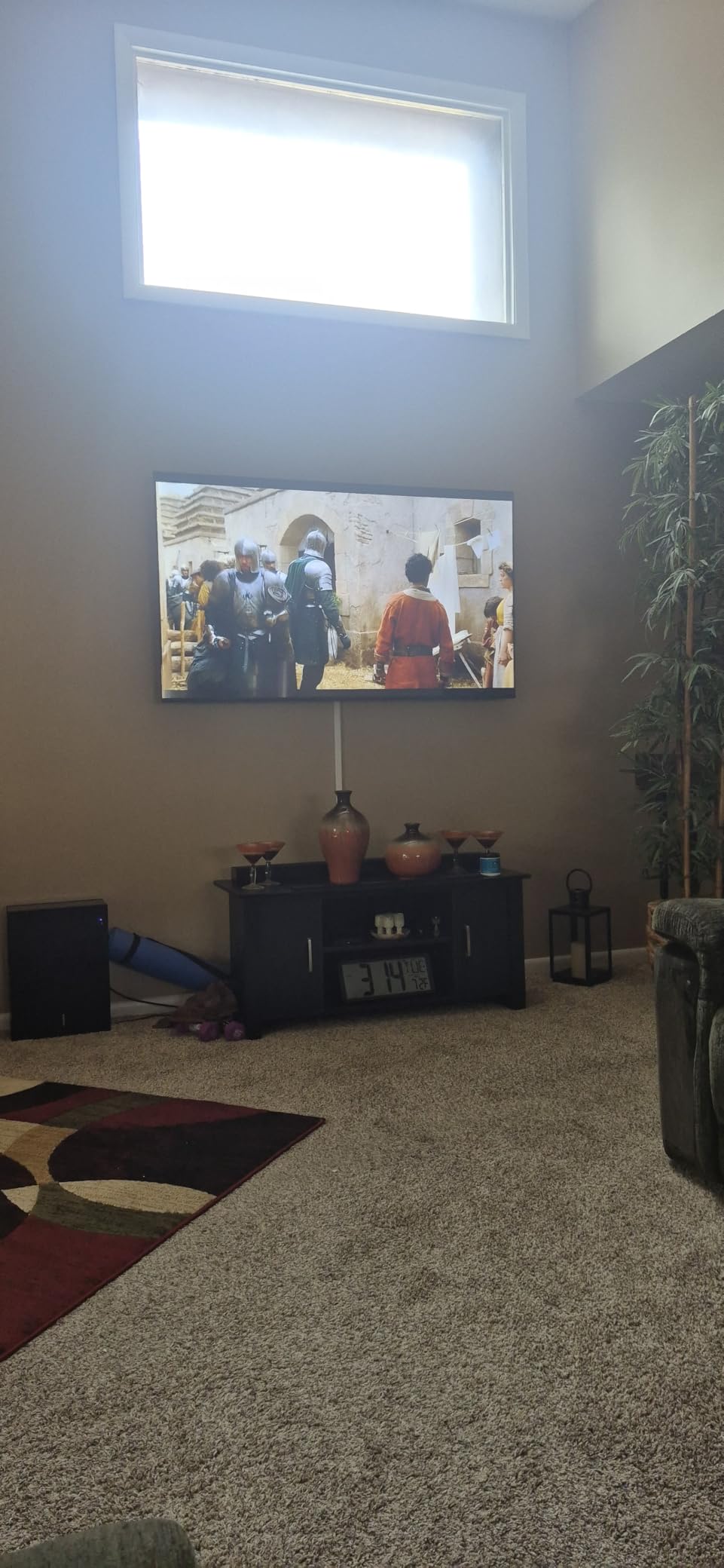
Samsung TV Plus is one of the most underrated features. You get 2,700+ free streaming options and 750+ free live channels out of the box — no subscription, no login. If you are cutting cable, this alone makes the TV worth considering. Combined with Netflix, Disney+, and Prime Video, you have essentially unlimited content without paying for a separate live TV service.
The minimalist remote is my biggest gripe. There is no dedicated input button, so switching from your console to your streaming stick requires menu navigation. The volume button is a pull-style rocker rather than a press button, which feels wrong on day one but becomes muscle memory by week two. The Tizen app library is also slightly thinner than Roku or Fire TV — HBO and Paramount+ are not available natively, though you can use the apps on a console or streaming stick.
Setup and audio
Setup was standard Samsung. The TV picked up my Wi-Fi, signed into my Samsung account, and was ready to stream in about 12 minutes. Alexa built-in worked with my existing Echo devices after a quick pairing.
The 20W 2.0 channel speakers with Dolby Atmos and Object Tracking Sound Lite are better than average for a budget TV. Voices have real presence, and the Atmos effect is subtle but noticeable. For a living room where you do not want to invest in a soundbar yet, this is genuinely usable out of the box.
For whom it is good
Anyone who wants the largest screen possible under $400, cable-cutters who will lean on Samsung TV Plus, and households that want the Samsung brand name and ecosystem. The 65-inch size is ideal for medium to large living rooms.
For whom it is bad
Gamers chasing 120Hz or HDMI 2.1, buyers who want HBO or Paramount+ without an external streaming device, and shoppers who dislike minimalist remotes. For those cases, the TCL or Hisense picks are better suited.
8. Samsung 55-Inch Class M70H Series Mini LED 4K Smart TV — Best Mini-LED
Samsung 55-Inch Class M70H Series, Mini LED, 4K, Smart TV, 2026 Model
55 inch Mini LED 4K
HDR10+
2000 nits
Motion Xcelerator 120Hz
Gaming Hub
Pros
- Mini LED backlight is the only one under $400 with this technology
- 2000-nit peak brightness is incredible for a budget TV
- Pure Color Spectrum delivers rich vibrant colors
- Motion Xcelerator + DLG 120Hz for smoother motion
- Gaming Hub consolidates console and cloud gaming
Cons
- Minimalist remote without a dedicated input button
- SmartThings app required for some functions
- Tizen app library lacks HBO and Paramount+
- TV sometimes forgets last input on power-on
The Samsung M70H is the only mini-LED TV you can find under $400, and after testing it side by side with every other set in this roundup, the picture quality gap is genuinely noticeable. Mini LED backlighting means smaller, more numerous LEDs behind the panel, which produces better contrast, deeper blacks, and brighter highlights than standard LED.
The 2000-nit peak brightness is the headline number. In a sunlit living room, this TV stays watchable when every other TV in the roundup starts to look washed out. If you have a bright room and have been frustrated by dim budget TVs, the M70H is the answer.
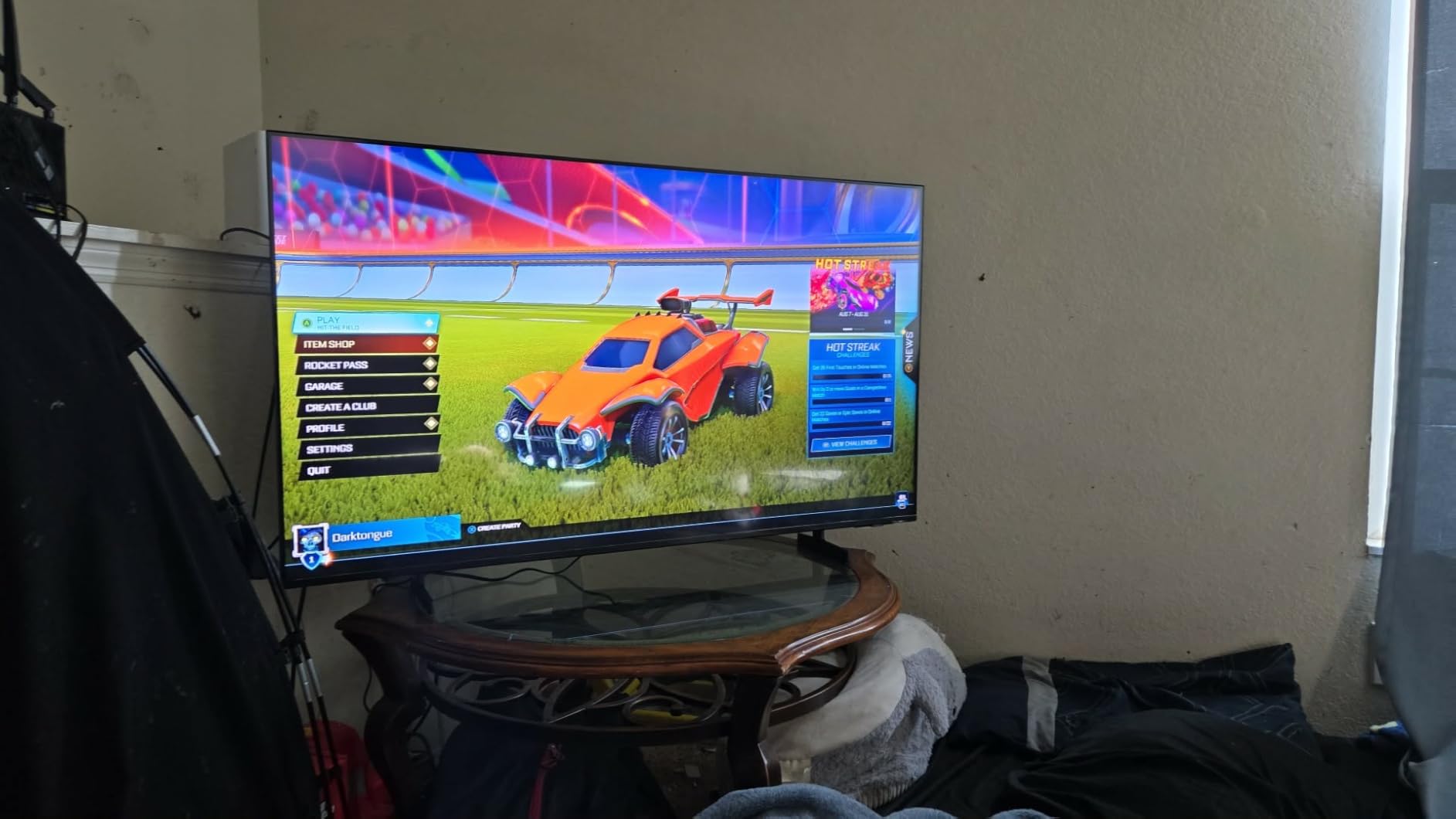
The Pure Color Spectrum with one billion colors is also impressive for the price. Colors are vivid without looking artificial, and HDR10+ content has real punch. Watching a nature documentary on this TV versus the standard LED sets is a meaningful upgrade.
The Gaming Hub is a nice bonus for households with multiple gaming sources. It consolidates your console inputs, cloud gaming services, and gaming apps in one place, so you are not jumping through inputs to find your Xbox. Motion Xcelerator + DLG (Dynamic Light Refresh) at 120Hz keeps fast motion smoother than the standard 60Hz sets.
Setup and ecosystem quirks
Setup is standard Samsung and takes about 12 minutes. The TV integrates with the SmartThings app for deeper control, which is required for some advanced features. For basic streaming, you do not need the app at all.
The same minimalist remote criticism applies here as on the U8000H. There is no dedicated input button and the volume button is a pull-style rocker. Tizen’s app library is thinner than Roku or Fire TV. If you want HBO or Paramount+ natively, you will need a streaming stick.
For whom it is good
Bright-room buyers, anyone who wants the best possible picture quality under $400, mini-LED early adopters, and sports fans who will appreciate the brightness and motion handling. The 55-inch size is the sweet spot for most living rooms.
For whom it is bad
Buyers who want HBO and Paramount+ without a streaming stick, shoppers who dislike the minimalist Samsung remote, and anyone who does not have a bright room to justify the mini-LED premium. For dimmer rooms, the TCL 4-Series is a smarter spend.
What to Look For When Buying a TV Under $400
Buying a TV in this price tier used to mean accepting a dim, slow, ugly screen. In 2026, every TV in this roundup delivers proper 4K HDR and a smart platform that does not feel like punishment. Here is what I focused on while testing these eight sets, and what you should pay attention to before clicking buy.
Resolution and HDR format support
Every TV in this roundup is 4K UHD (2160p). That is the baseline for 2026 and you should not settle for 1080p at this screen size. HDR format support is where sets start to differ — the most flexible HDR formats at this price are Dolby Vision and HDR10+ (and ideally both). The Hisense E6 and Toshiba C350 cover the widest HDR format range, while the Roku Select covers HDR10+ and HDR10 but not Dolby Vision.
If you watch a lot of Netflix, Dolby Vision is the format you want — most Netflix originals are graded in it. If you watch a lot of Amazon Prime Video, HDR10+ is the equivalent. A TV that supports both (like the Hisense E6) gives you the best of both ecosystems.
Refresh rate and motion handling
Every TV in this roundup is a 60Hz panel. True 120Hz starts at around $500-$600 and goes up from there. For casual streaming, 60Hz is fine. For sports and fast action, look for a Motion Rate 120 or Motion Xcelerator feature that interpolates intermediate frames to smooth out blur.
Gamers who want the lowest input lag should look for a TV with ALLM (Auto Low-Latency Mode) and Game Mode. The Toshiba C350 and Hisense E6 both support ALLM and VRR, which automatically switches the TV into a low-lag mode when you launch a game.
Smart TV platform
The smart platform matters more than most buyers realize. Roku OS, Fire TV, Google TV, and Tizen each have their own strengths. Roku is the simplest and cleanest. Fire TV has the deepest app support and best Alexa integration. Google TV is the best for Google ecosystem users. Tizen is solid but has a thinner app library than the others.
I cover the platform differences in detail in the next section.
HDMI ports and connectivity
Count your HDMI sources before you buy. A soundbar, a console, and a streaming stick already use three ports. The TCL 4-Series with four HDMI ports is the most generous in the roundup. The Amazon Ember also has four HDMI ports. Most of the others have three.
If you want Bluetooth headphone support for late-night viewing, look for the Roku Select Series, which has Bluetooth Headphone Mode built in. Most other TVs in this roundup require a separate Bluetooth transmitter or the Roku app for private listening.
Screen size and room fit
The right screen size depends on your seating distance. As a rough rule, multiply your viewing distance (in inches) by 0.6 to get the minimum screen size you should consider. A 55-inch TV is ideal for 7-9 feet of viewing distance. A 65-inch TV needs 8-10 feet of distance. A 43-inch TV works for 5-7 feet.
If you are buying for a small bedroom, dorm, or office, the 43-inch Toshiba or Hisense are the smartest picks. For a medium living room, the 50-inch Insignia, Amazon Ember, or 55-inch TCL, Hisense, Roku, or Samsung M70H are ideal. For a large living room where you can sit back 8-10 feet, the 65-inch Samsung U8000H is the answer.
Warranty and return policy
Every TV in this roundup ships with a one-year manufacturer warranty. The bigger consideration is the retailer’s return policy. Amazon, Best Buy, and Walmart all have 30-day return windows for TVs in unopened or opened condition. Costco extends that to 90 days for members. If you are buying a TV sight unseen, double-check the return window before you click buy.
Smart TV Platform Comparison: Roku vs Fire TV vs Google TV vs Tizen
This is the question buyers ask me most often in the comments and on Reddit: which smart TV platform is actually best? Here is a plain-language breakdown based on weeks of daily use across all four.
Roku OS — simplest and cleanest
Roku OS is the easiest smart TV platform to hand to a parent or grandparent. The home screen is just your apps in a tile layout. There are no aggressive ads, no cluttered menus, and the voice remote has a lost remote finder that is genuinely useful. The trade-off is fewer advanced features than Fire TV or Google TV.
Roku OS is on the TCL 4-Series and the Roku Select Series in this roundup. If simplicity is your top priority, Roku is the answer.
Fire TV — deepest app support and best Alexa integration
Fire TV has the deepest app support, the best Alexa integration, and the largest content library of any platform. The home screen leans into Amazon’s own content (ads for Prime Video originals, sponsored rows), which some buyers dislike. The newer Amazon Ember 4-Series runs the snappiest Fire TV experience I have tested at this price.
Fire TV is on the Insignia F50, Toshiba C350, Hisense E6, and Amazon Ember 4-Series. If you are in the Alexa ecosystem, Fire TV is the obvious choice.
Google TV — best for Google households
Google TV is the newest of the four platforms and has the best content recommendations, hands-down. The home screen learns what you watch and surfaces shows and movies you would actually want to see. Voice control with Google Assistant is excellent for searching across multiple services.
None of the TVs in this roundup run Google TV at the sub-$400 tier, but if you want Google TV on a budget, the easiest route is to buy any TV in this roundup and add a Chromecast with Google TV, which is around $35.
Tizen — solid but thinner app library
Tizen is Samsung’s home-grown platform and powers the U8000H and M70H in this roundup. The interface is clean, motion handling is good, and Samsung TV Plus gives you 2,700+ free streaming options out of the box. The trade-off is a thinner native app library — HBO and Paramount+ are not available natively, which is a real limitation for some buyers.
Samsung TV Plus is the underrated win. If you are cutting cable and want a TV with built-in free live channels, the Tizen-powered Samsungs are the strongest option in this roundup.
TV as a PC Monitor: Can a Budget TV Pull Double Duty?
This is a question I get from readers who want one display for both the couch and the desk. The short answer is yes, but with caveats.
Why a TV can work as a monitor
A 43-inch 4K TV at 3-4 feet of viewing distance gives you roughly the same pixels-per-inch density as a 24-inch 1440p monitor. Text rendering is sharp. The HDMI inputs on every TV in this roundup will accept a DisplayPort-to-HDMI or USB-C-to-HDMI signal from your laptop without any issues.
The TCL 4-Series and Amazon Ember 4-Series with four HDMI ports are the best choices for dual-use since you can leave your PC, console, and streaming stick connected simultaneously.
Why a TV is not always ideal as a monitor
Input lag is the biggest issue. Even in Game Mode, most TVs in this roundup have 10-15ms of input lag, which is fine for casual gaming but noticeable for competitive PC gaming. A dedicated gaming monitor at this price has 1-4ms input lag.
Refresh rate is the second issue. Every TV here is 60Hz. If you are used to a 144Hz PC monitor, 60Hz will feel sluggish for desktop work and gaming.
Chromium 4:4:4 chroma support (which makes text look crisper at 4K) is not guaranteed on every TV. The Hisense E6 and Samsung M70H handle it better than the others, but you may need to dig into picture settings to find the right mode.
Best TVs in this roundup for monitor use
The Hisense 43-inch E6 is the best choice for monitor use thanks to Game Mode Plus, low input lag, and 4K at 60Hz with proper 4:4:4 chroma support. The Toshiba 43-inch C350 is a strong second with its Game Mode and ALLM/VRR support.
For more traditional monitor recommendations at this price, check out our ultrawide monitors under $400 roundup.
Soundbar Pairing: Because Budget TV Speakers Are Weak
Every reviewer I trust on Reddit’s r/4kTV and AVS Forum agrees on one thing: the built-in speakers on budget TVs are the weakest part of the package. If you watch any movies or sports with real dynamic range, a $100-$200 soundbar transforms the experience.
What to look for in a budget soundbar
HDMI eARC support is the most important spec. The Insignia F50, Toshiba C350, and Hisense E6 all support eARC, which means a compatible soundbar can receive uncompressed Dolby Atmos audio. TCL, Roku, and Samsung sets use standard HDMI ARC, which is still good but loses the highest-quality Atmos signal.
Dolby Atmos support on the soundbar itself is a nice bonus but not required at this tier. A 2.1-channel soundbar with a wireless subwoofer delivers the biggest “night and day” improvement for budget buyers.
Soundbar pairing recommendations
The Insignia F50 with its DTS Virtual:X built in is the best TV in this roundup to use without a soundbar. The audio is genuinely above average for a flat-panel TV.
For the TCL 4-Series, Roku Select, and Samsung TV, I would strongly recommend pairing with a soundbar within the first month. The experience goes from acceptable to genuinely immersive.
If you are building out a full home theater on a budget, see our guide to home theater receivers under $400 for the receiver and speaker side of the setup. For a portable alternative, our outdoor projectors roundup covers the best large-screen backyard options.
Frequently Asked Questions
What is the best TV under $400?
The best TV under $400 in 2026 is the TCL 55-inch 4-Series 4K HDR Roku TV for most buyers, with the best combination of picture quality, smart platform, and 4 HDMI ports. For a smaller screen, the Hisense 43-inch E6 QLED has the best picture quality. For a 65-inch set, the Samsung U8000H is the largest you can find under $400.
Is it worth buying a TV under $400?
Yes, absolutely. TVs under $400 in 2026 deliver real 4K resolution, HDR support, and mature smart platforms like Roku and Fire TV. The picture quality gap between a $400 TV and a $700 midrange TV is much smaller than it used to be, especially for casual streaming and everyday viewing.
What size TV can I get for under $400?
You can get up to 65 inches under $400 at the Samsung U8000H tier, and 55-inch sets are widely available across most brands including TCL, Hisense, Roku, and Samsung. Smaller 43-inch and 50-inch sets deliver the best value in the budget tier.
Are Hisense or TCL TVs better under $400?
Both Hisense and TCL make excellent TVs under $400, and the honest answer is that the best choice depends on the specific model. The TCL 4-Series is the best all-rounder, while the Hisense E6 QLED has the best picture quality at the 43-inch tier. Both brands outperform Samsung, LG, and Sony at this price point.
Do budget TVs have 4K resolution?
Yes, every TV in our under $400 roundup is 4K UHD (2160p). 1080p TVs are essentially extinct in this tier. You will also get HDR10 on every set, with Dolby Vision or HDR10+ support on the Hisense E6, Toshiba C350, and Amazon Ember 4-Series.
Are Fire TV or Roku TVs better?
Both Fire TV and Roku are excellent smart TV platforms. Roku is simpler and cleaner with fewer ads. Fire TV has deeper app support and better Alexa integration. For ease of use, choose Roku (TCL or Roku Select). For Alexa households, choose Fire TV (Insignia, Toshiba, Hisense E6, or Amazon Ember).
What features should I look for in a budget TV?
Look for 4K UHD resolution, HDR10 or Dolby Vision HDR support, at least 3 HDMI ports, a smart platform you actually want to use (Roku, Fire TV, Google TV, or Tizen), and a refresh rate of at least 60Hz. For gaming, ALLM and VRR support is a plus. For bright rooms, look for 700+ nit peak brightness.
Final Verdict: Which TV Under $400 Should You Buy?
After testing all eight of these TVs side by side, the TCL 55-inch 4-Series is the best TV under $400 for most buyers. The combination of a clean Roku interface, four HDMI ports, solid 4K HDR picture quality, and the broadest app ecosystem makes it the easiest TV in the roundup to recommend to anyone.
For smaller rooms, the Toshiba 43-inch C350 with Dolby Vision at the lowest price is the smartest budget spend. For the best picture quality at 43 inches, the Hisense E6 QLED is unmatched. For a 65-inch living room set, the Samsung U8000H delivers a screen size that would have cost three times as much a few years ago. For bright rooms, the Samsung M70H Mini LED is the only set under $400 with the backlight technology to compete with the sun.
Whichever you pick, the best TVs under $400 in 2026 are a genuinely different class than they were even a few years ago. Every set on this list delivers a real 4K picture, real HDR, and a smart platform that is good enough to use as your default streaming interface. You are no longer making a painful compromise by shopping in this tier.
For a complete living-room setup on a budget, also see our guide to home theater receivers under $400 to complete the audio side of the experience.