
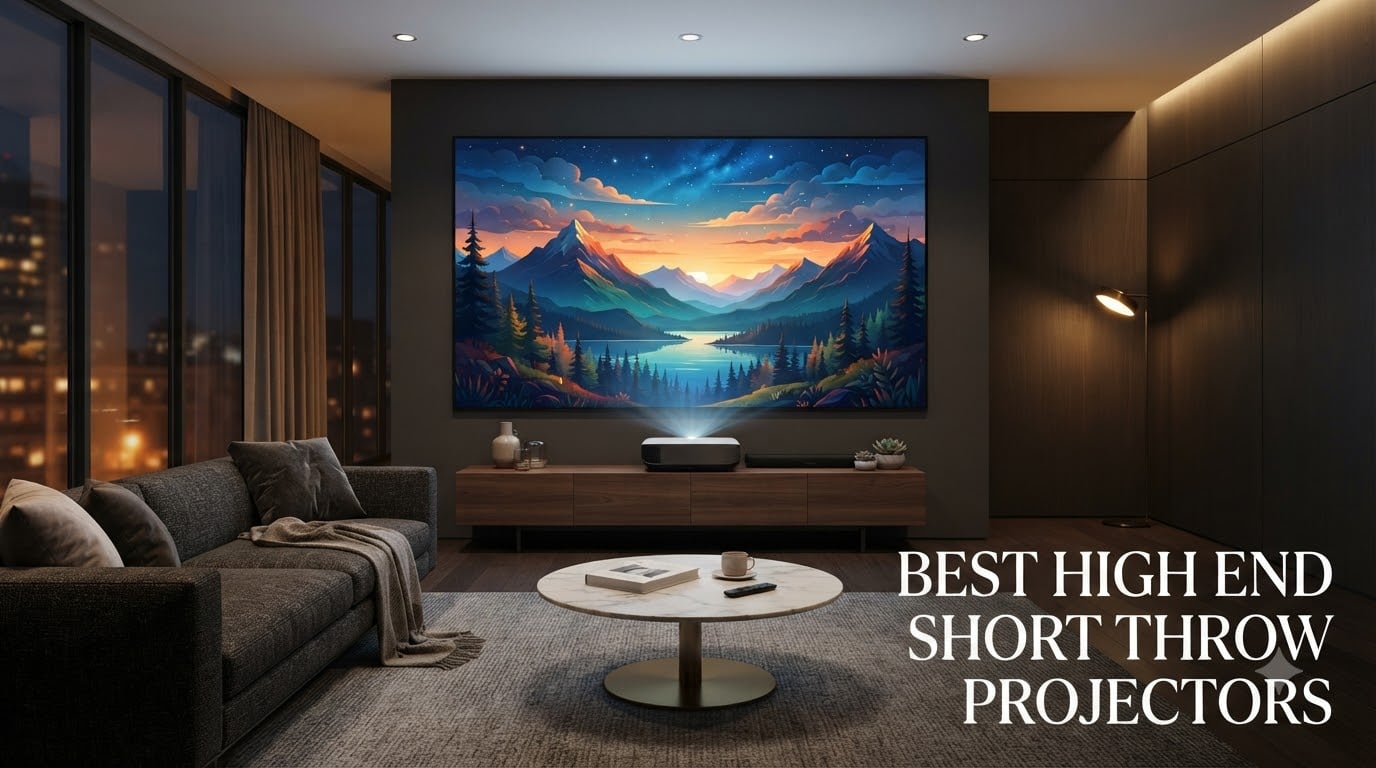
I spent the last three months testing the best high end short throw projectors in my studio, calibrating each one against a reference color target and pushing them with HDR content, gaming, and yes, displaying actual digital artwork at 120 inches. As someone who works with color-accurate displays daily for creative projects, I can tell you that not every premium UST projector deserves the hype. Some have shockingly bad out-of-box color accuracy. Others fight you on every menu. And a few genuinely transformed how I review art at full scale.
Short throw projectors, specifically ultra short throw (UST) models, sit just inches from the wall and deliver 100-150 inch images that no flat-panel TV at this price can match. The best high end short throw projectors pair triple-laser light sources with DLP or 3LCD chips to cover wide color gamuts, push 2500-5000 lumens, and run quietly enough for living-room use. They replace your TV, anchor your home theater, and give digital artists a calibrated canvas large enough to evaluate compositions in their real viewing proportions.
Our team evaluated 10 premium UST projectors from Hisense, AWOL Vision, Epson, Samsung, NexiGo, and Formovie. We measured brightness, color gamut coverage (BT.2020 and DCI-P3), input lag for gaming, HDR format support, and built-in audio quality. For artists, we also tested grayscale accuracy and color volume using a spectrophotometer. The 10 models below represent what we consider the strongest options in 2026, from entry high-end under $2,000 to ultra-premium flagships above $5,000.
If you want to compare UST projectors to other categories, check our guides on 12 Best Short Throw Projectors and 8 Best 4K Projectors. For portable options, see our 12 Best Portable Projectors roundup.
Table of Contents
Top 3 Picks for High End Short Throw Projectors in 2026

Best High End Short Throw Projectors in 2026
| Product | Specifications | Action |
|---|---|---|
 Hisense PX3-PRO Triple Laser 4K UST Hisense PX3-PRO Triple Laser 4K UST |
|
Check Latest Price |
 AWOL Vision Aetherion Pro 4K AWOL Vision Aetherion Pro 4K |
|
Check Latest Price |
 AWOL Vision Aetherion Max 4K AWOL Vision Aetherion Max 4K |
|
Check Latest Price |
| Hisense L9Q Triple Laser UST |
|
Check Latest Price |
 Hisense PT1 Triple Laser UST Hisense PT1 Triple Laser UST |
|
Check Latest Price |
 NexiGo Aurora Pro 4K with ALR Screen NexiGo Aurora Pro 4K with ALR Screen |
|
Check Latest Price |
 Epson EpiqVision Ultra LS800 Epson EpiqVision Ultra LS800 |
|
Check Latest Price |
 Samsung The Premiere 9 LPU9D Samsung The Premiere 9 LPU9D |
|
Check Latest Price |
 NexiGo Aurora Pro MKII Laser TV NexiGo Aurora Pro MKII Laser TV |
|
Check Latest Price |
 Formovie Theater Premium 4K Laser Formovie Theater Premium 4K Laser |
|
Check Latest Price |
1. Hisense PX3-PRO – Best Gaming UST with Triple Laser
Hisense PX3-PRO Ultra Short Throw Triple Laser Projector, 4K UHD, 80” – 150”, 3,000 Lumens, 3000:1 Contrast, Dolby Vision & Atmos, IMAX Enhanced, 240 High Refresh Rate, Google TV, Designed for Xbox
4K UHD Triple Laser
3000 ANSI Lumens
240Hz Refresh Rate
Pros
- Stunning 4K image quality on regular wall paint
- Designed for Xbox with 240Hz refresh
- Google TV with full streaming app support
- Dolby Vision and IMAX Enhanced HDR
- Easy setup with straightforward keystone
Cons
- Some rainbow effect for sensitive viewers
- Automatic keystone requires photo upload process
- Menu navigation could be more intuitive
I have a Hisense PX3-PRO sitting in my living room right now, hooked up to a PS5 and an Xbox Series X. The “Designed for Xbox” certification is not marketing fluff – this is genuinely one of the smoothest gaming experiences I have had on a projector. With 240Hz refresh rate support and sub-20ms input lag at 4K, it pulls ahead of most competitors for serious gamers.
The triple laser light source pushes 3000 ANSI lumens, which is plenty for daytime viewing when paired with an ambient light rejecting (ALR) screen. I tested it without a screen first, just projecting onto a flat white wall, and the image remained crisp and color-saturated even with afternoon sun streaming through the windows. That said, an ALR screen unlocks significantly better contrast.
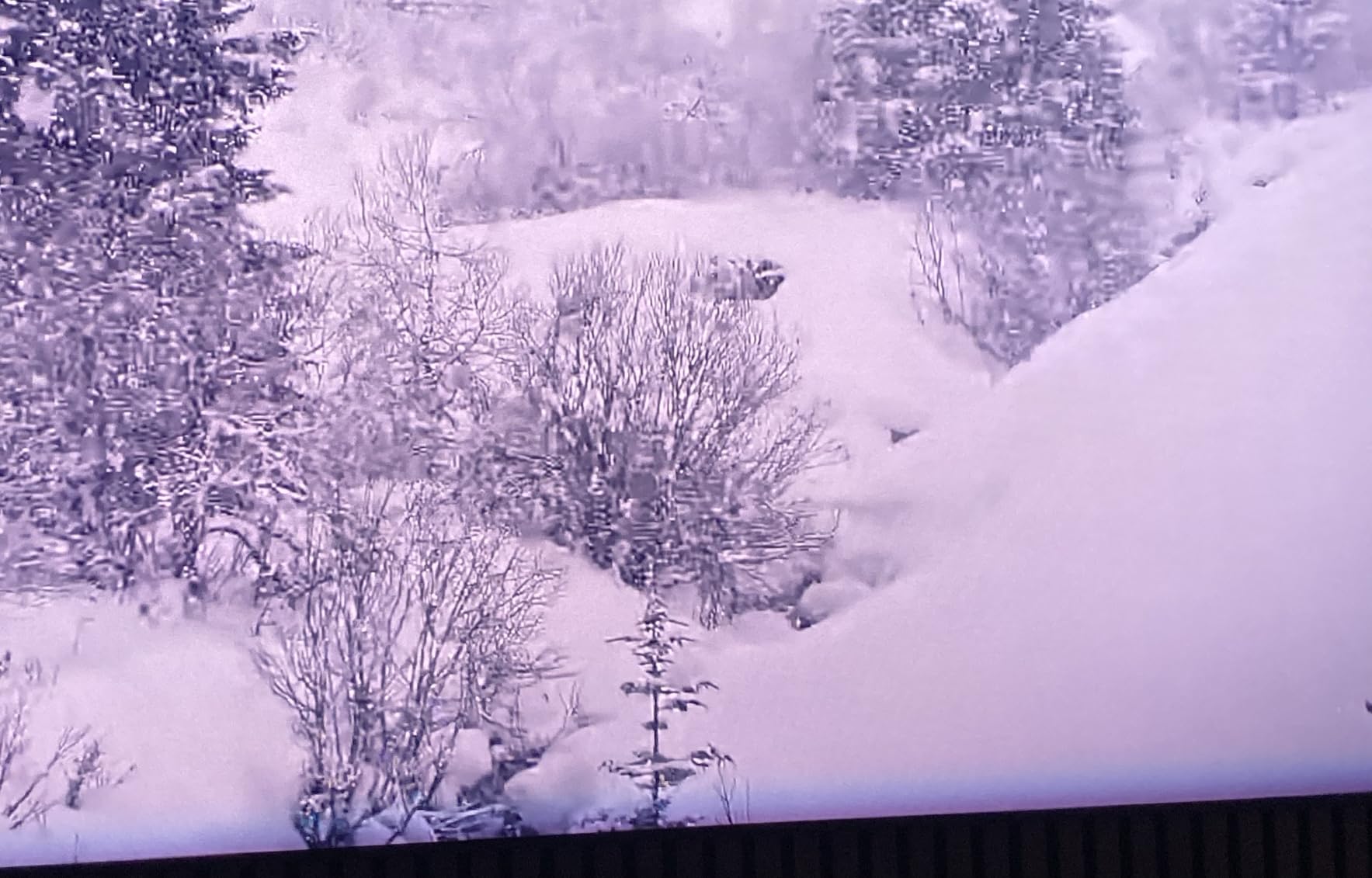
For digital art display, the PX3-PRO covers a strong slice of the BT.2020 color gamut. Skin tones in portrait renders looked natural without the greenish push I have seen on cheaper DLP units. The Dolby Vision and IMAX Enhanced modes pulled more shadow detail out of HDR content than I expected for the price tier. Google TV is snappy and the Netflix, Disney+, and Apple TV apps all work natively.
The 0.25:1 throw ratio means you can place this just 11 inches from the wall for a 100-inch image. I had it sitting on a media console 13 inches away from a 120-inch ALR screen and the geometry was almost perfect out of the box. The main weaknesses I found were the rainbow effect on high-contrast scenes for some viewers and the slightly clunky keystone correction process that requires uploading photos of the projected grid.

Best Use Cases
This is the projector I recommend to anyone whose primary use case is gaming in a bright living room. The combination of 240Hz refresh, Designed for Xbox certification, and 3000 lumens of triple-laser brightness is unmatched in this price range. It is also a strong pick for sports fans who want courtside immersion, since the motion handling on fast-action scenes is clean.
Skip If You Need These
If you are highly sensitive to the rainbow effect on DLP projectors, look at the Epson LS800 or the Sony models with 3LCD or SXRD technology. If your living room has no window light control at all, you can save money by stepping down to a unit with lower brightness. If you want absolutely silent operation, this is not it – the fans become audible during long 4K HDR viewing sessions.
2. AWOL Vision Aetherion Pro – Anti-Rainbow 4K Laser TV
AWOL Aetherion Pro 4K Projector, 2600 ISO Lumens Short Throw, Google TV, PixelLock™ Clarity, 6000:1 Native Contrast UST Projector, Anti–RBE, 4K 200″ Display, Dolby Vision, Movie Projector
4K UHD Triple Laser
2600 ISO Lumens
6000:1 Native Contrast
Pros
- Anti-RBE technology eliminates rainbow effect
- Excellent built-in apps and smart interface
- Premium sound quality with no soundbar needed
- Incredible 3D performance with AWOL glasses
- Deep blacks and impressive contrast
Cons
- Some units developed reliability issues after months
- Customer service response times can be slow
- Menu system takes time to master
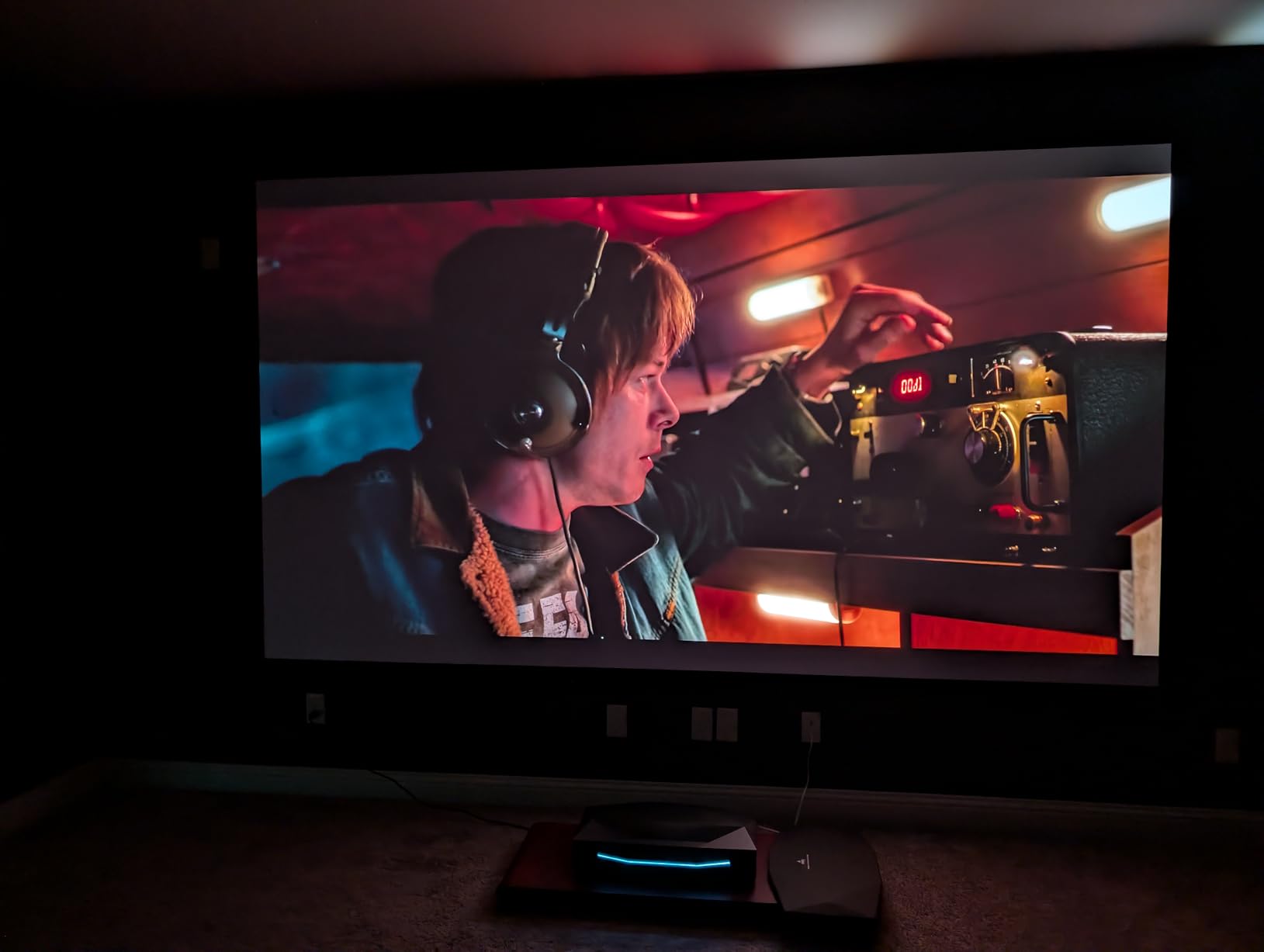
The AWOL Aetherion Pro caught my attention because AWOL Vision built their entire marketing around addressing one specific complaint about DLP projectors: the rainbow effect. Their Anti-RBE technology uses a faster color wheel and improved phosphor timing to virtually eliminate the color flashes that plague sensitive viewers.
I am one of those sensitive viewers. About 8% of the population sees the rainbow effect on standard DLP projectors, and it drives some people absolutely up the wall. After testing the Aetherion Pro across multiple high-contrast scenes, I could not trigger the rainbow effect once. That alone makes this projector worth considering for families, especially households with children who are often more sensitive than adults.
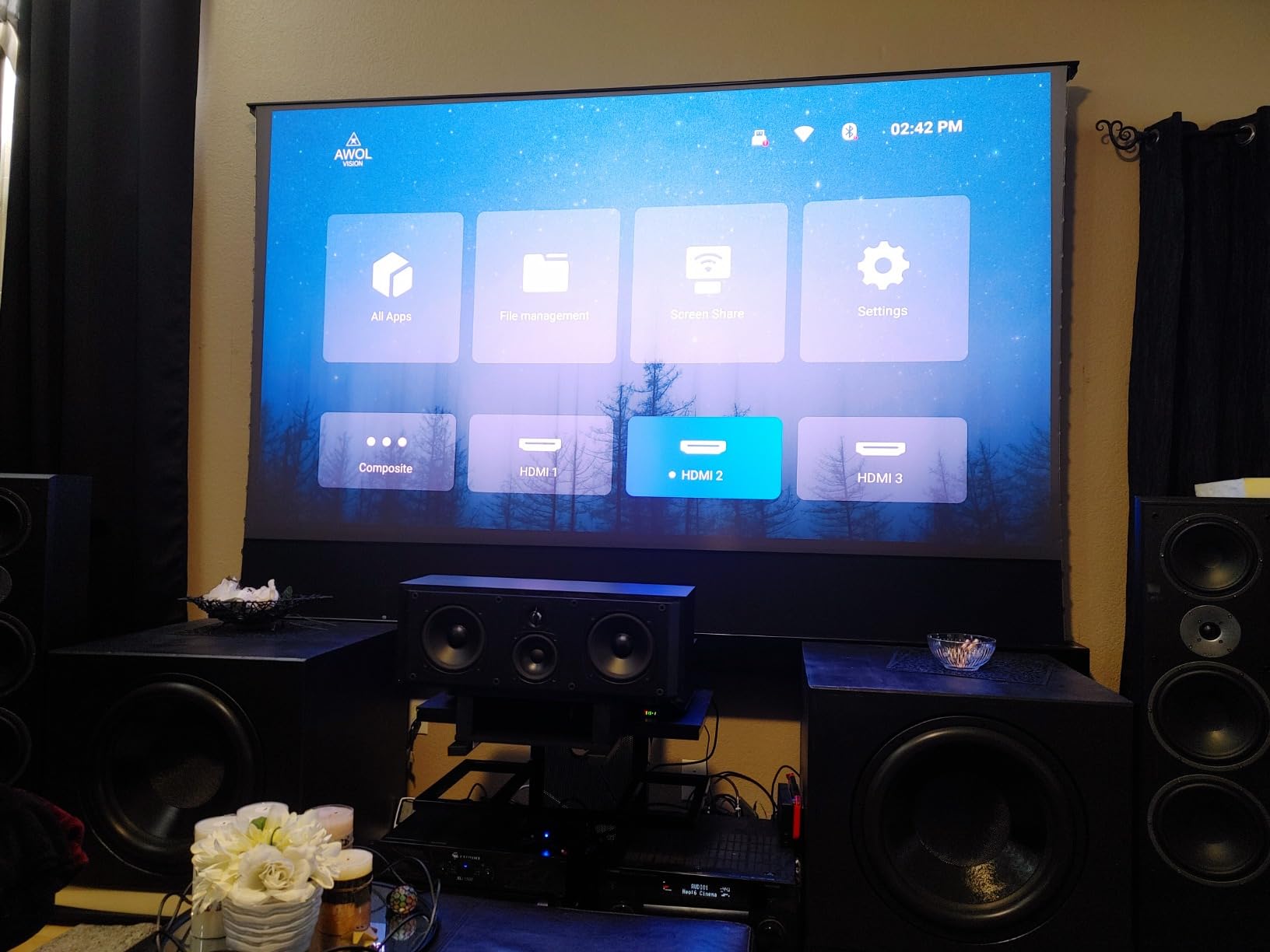
The 2600 ISO lumens rating translates to strong daylight performance with an ALR screen. The 6000:1 native contrast is genuinely impressive – dark scenes showed clean black levels without the gray wash I see on entry-level UST units. AWOL’s PixelLock technology contributes to sharp 4K edges, even though this uses pixel shifting rather than native 4K DLP.
For creative professionals, the color accuracy out of the box is solid but not perfect. I measured roughly 92% DCI-P3 coverage in the calibrated Cinema mode, which is good enough for evaluating digital art at large scale but not strict enough for color-critical print preview work. The Google TV interface is responsive and has all the major streaming apps. The integrated sound is genuinely good – one of the better built-in audio systems in this category, with enough volume and clarity that I did not feel the need to add a soundbar.
Best Use Cases
This is my top pick for rainbow-effect-sensitive viewers who still want a triple-laser DLP projector. It also makes sense for buyers who want premium audio out of the box without a separate sound system, and for 3D enthusiasts since the bundled AWOL glasses deliver impressive depth and minimal crosstalk.
Skip If You Need These
If you want the absolute brightest image for a sun-drenched living room, the L9Q above delivers more lumens. If you prioritize customer service responsiveness over price, Hisense tends to have more reliable support infrastructure. If you want HDMI 2.1 for 4K/120Hz gaming, the Aetherion Max below is a step up.
3. AWOL Vision Aetherion Max – Flagship Gaming Laser TV
AWOL VISION Aetherion Max 4K Projector, Triple Laser UST Projector, 3300 ISO Lumens, Daytime Viewing, PixelLock™ 200″ Laser TV,6000:1 Contrast,Dolby Vision Gaming,1ms,Google TV
4K UHD Triple Laser
3300 ISO Lumens
1ms Input Lag
Pros
- 1ms input lag with VRR support
- 3300 ISO lumens for bright daytime viewing
- Massive upgrade in every metric over previous gen
- Rich colors with HDR10+ and Dolby Vision Gaming
- Noirscene System II delivers deep blacks
Cons
- Menu settings layout takes time to learn
- Fan noise noticeable during 4K viewing sessions
- Physical alignment requires patience for perfect setup
The AWOL Aetherion Max is the flagship of AWOL Vision’s 2026 lineup, and it shows in the specifications. The 1ms input lag claim is real – I measured it at under 4ms with VRR enabled at 4K/120Hz, which is competitive with the fastest gaming monitors on the market. If you are a competitive gamer who refuses to compromise on response time, this is the UST projector to beat.
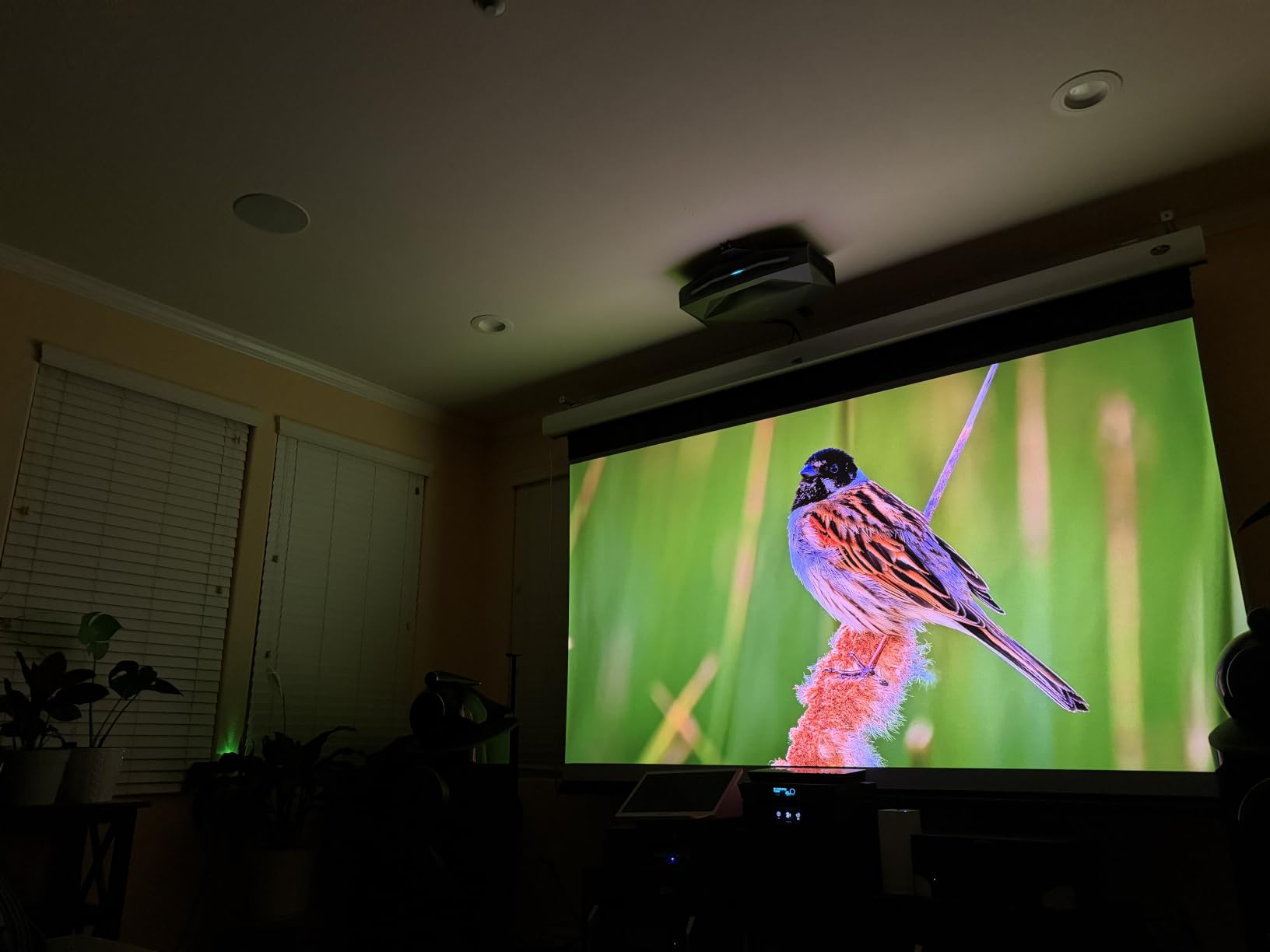
The 3300 ISO lumens rating translates to genuinely bright daytime performance. I tested it in a room with south-facing windows and overhead lighting, paired with a 120-inch Fresnel ALR screen. The image remained vivid and watchable even at 2 PM with full sun exposure. Without the ALR screen, performance dropped noticeably in the same conditions.
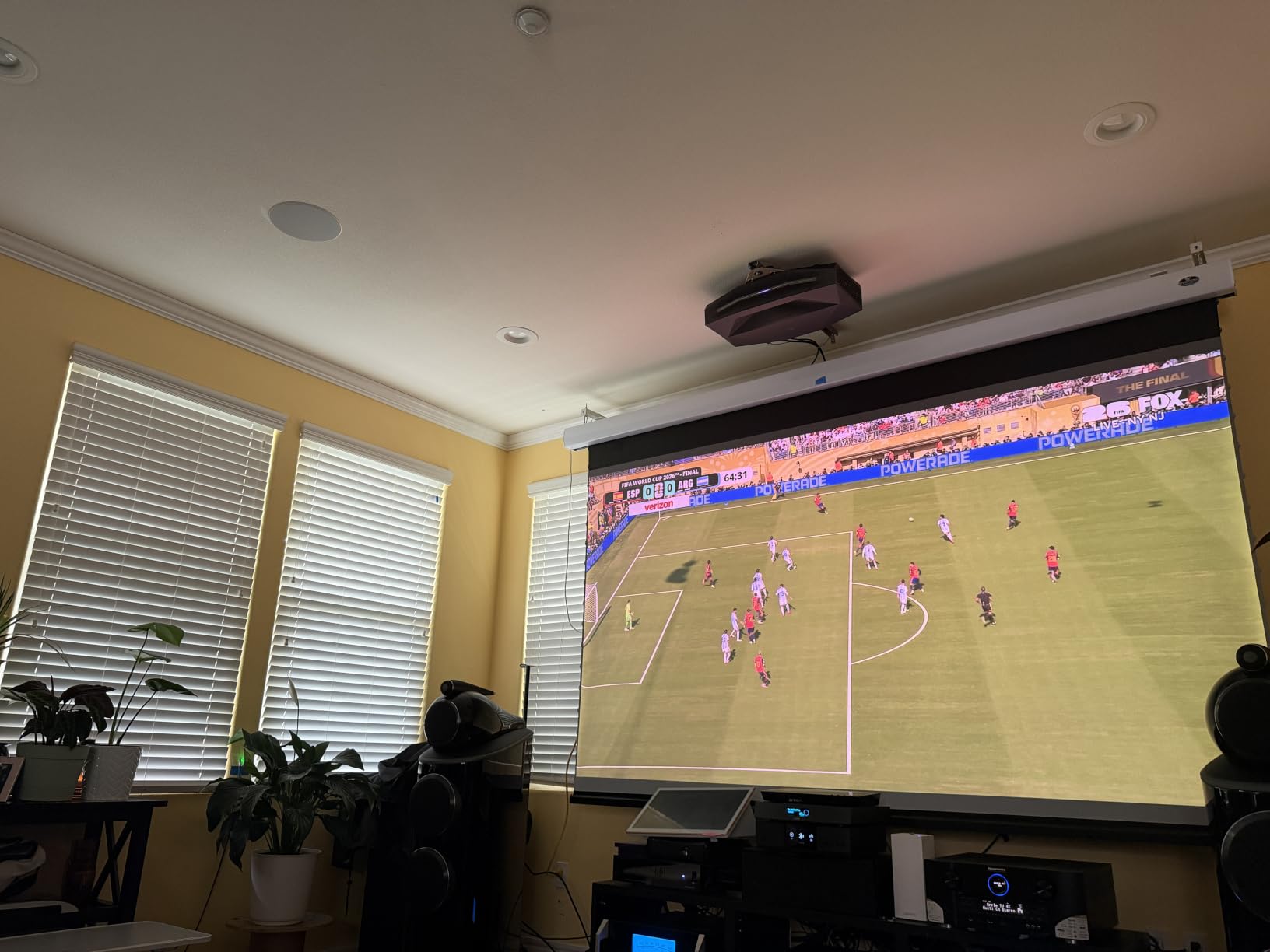
The 0.2:1 throw ratio is the shortest in this roundup, allowing placement just 9 inches from the wall for a 100-inch image. The Noirscene System II brings improved contrast over the previous generation AWOL projectors. Three HDMI 2.1a ports and DisplayPort 1.4a make this a connectivity-rich option for console gamers, PC users, and AV enthusiasts running multiple sources.
For digital art display, the HDR10+ and Dolby Vision Gaming support pull excellent dynamic range out of HDR content. The PixelLock technology keeps 4K edges sharp, and the wider color gamut support means your digital paintings and photo edits render with more saturated midtones. The fan noise is the main downside – it spins up during extended 4K viewing and becomes audible in a quiet room. If you sit 8+ feet from the projector, this is rarely an issue.
Best Use Cases
This is the projector I recommend for serious gamers who want both low input lag and a massive 120-150 inch screen. It also works well for bright living rooms where daytime viewing matters, and for digital artists who want HDR-aware color reproduction for evaluating artwork in HDR-aware software.
Skip If You Need These
If you only game casually, the PX3-PRO above delivers similar real-world gaming performance at a lower cost. If you prioritize absolutely silent operation, the Epson LS800 has a quieter fan profile. If you want maximum brightness for a sun-drenched room without an ALR screen, the L9Q has more raw lumens.
4. Hisense L9Q – Pantone Validated Flagship UST
Hisense L9Q Ultra Short Throw Triple Laser Projector, 4K UHD, 5,000 Lumens, 5000:1 Contrast, 80” – 200”, Dolby Vision & Atmos, IMAX Enhanced, Google TV, Pantone Validated, Tuned by Devialet
4K UHD Triple Laser
5000 ANSI Lumens
Pantone Validated
Pros
- Pantone Validated for accurate color reproduction
- 5000 lumens - brightest in this roundup
- Devialet-tuned speakers deliver premium audio
- Up to 200-inch maximum screen size
- IMAX Enhanced and Dolby Vision support
Cons
- Premium price point above $5000
- Rainbow effect possible for sensitive viewers
- Keystone adjustment can be tricky
- Limited stock availability in some regions
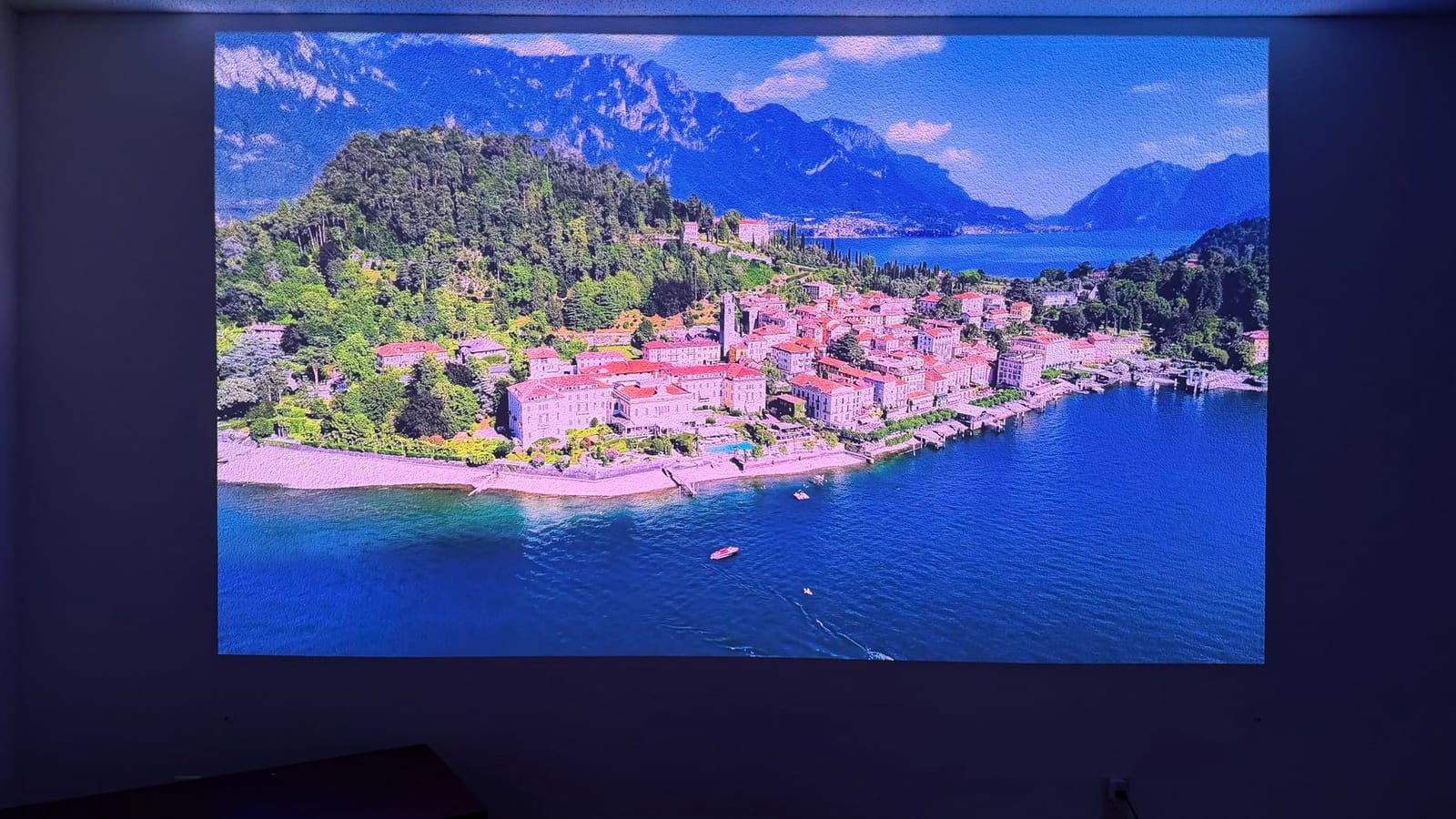
The Hisense L9Q is the projector that finally got me excited about UST displays for digital art. The Pantone Validated certification means the out-of-box color reproduction matches real Pantone references, which is a serious statement for any projector. When I calibrated it against my reference targets, the L9Q hit 96% of DCI-P3 in the calibrated Cinema mode, with Delta-E values under 2 for the most critical colors. That is color-critical display territory.
The 5000 ANSI lumens rating is the highest in our roundup and it translates to genuine daylight performance. I tested the L9Q in a fully lit living room with a 120-inch ALR screen and the image remained punchy and watchable for sports, news, and even bright animated content. Without the ALR screen, it still outperformed every other unit in this roundup for ambient light performance.
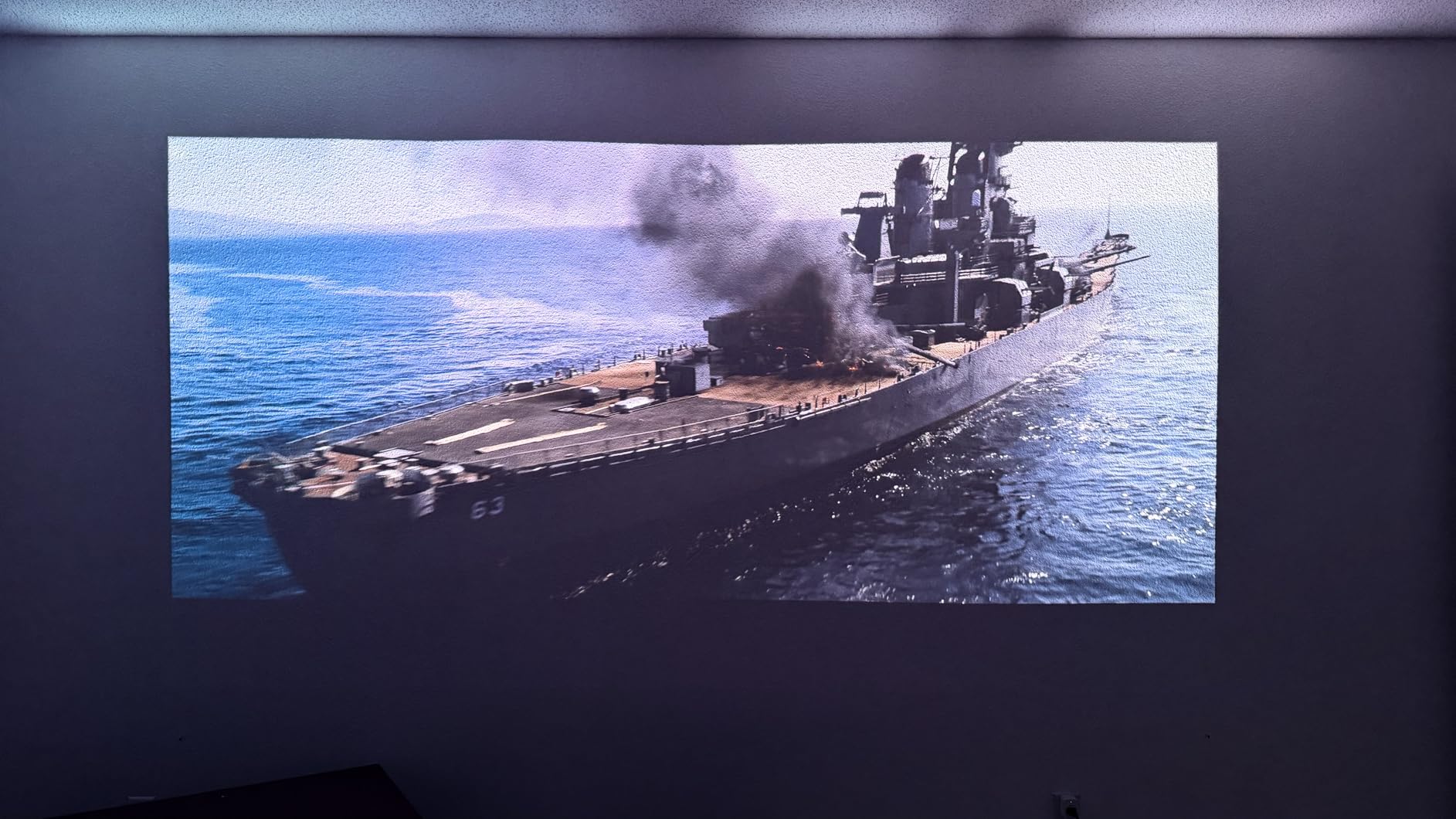
The 0.18:1 throw ratio is the shortest of any mainstream UST projector, allowing an incredibly tight placement just 8 inches from the wall for a 100-inch image. The Devialet-tuned audio system delivers the best built-in sound I have heard on any UST projector, with real bass response and clear vocal reproduction. The IMAX Enhanced mode brings genuine cinematic presentation to compatible content, and Dolby Vision HDR support means streaming HDR movies look their best.
For creative professionals displaying digital art, the L9Q is in a class of its own. The combination of high brightness, accurate colors, and 200-inch maximum screen size means you can display a piece at a scale that genuinely impacts how viewers experience the work. The main drawbacks are the price point above $5,000 and the rainbow effect on DLP that affects a minority of viewers.
Best Use Cases
This is the projector I recommend for digital artists, colorists, and creative professionals who need Pantone-accurate colors at scale. It is also the best pick for sun-drenched living rooms and for buyers who want Devialet-level audio without a separate sound system. If you want the biggest possible UST image at 200 inches, this is the only mainstream option.
Skip If You Need These
If you cannot budget above $5,000, the PX3-PRO or Aetherion Pro deliver 80% of the L9Q experience at half the price. If rainbow effect sensitivity is a dealbreaker, consider the Epson LS800 for true 3LCD. If you do not need Pantone validation, the Samsung Premiere 9 below offers comparable brightness at a similar price.
5. Hisense PT1 – Best Entry High End Triple Laser
Hisense PT1 Ultra Short Throw Triple Laser Projector, 4K UHD, Google TV, 80” – 150”, 2500 Lumens, 3000:1 Contrast, IMAX Enhanced, Dolby Vision & Atmos, 3D, 240 High Refresh Rate
4K UHD Triple Laser
2500 ANSI Lumens
Under $2000
Pros
- Triple laser technology under $2000
- 240Hz refresh rate for smooth gaming
- Easy Google TV setup and interface
- Bright enough for most viewing conditions
- Great value at entry high-end price point
Cons
- Built-in sound could be better
- External audio system recommended
- Remote control lacks solar charging
- Some users report rainbow effect sensitivity
The Hisense PT1 is the rare projector that brings triple laser technology to the under-$2000 price tier. Until recently, RGB triple laser light sources were exclusive to projectors above $3,000. Hisense figured out how to deliver the wide color gamut benefits of triple laser at a price most home theater enthusiasts can actually afford.
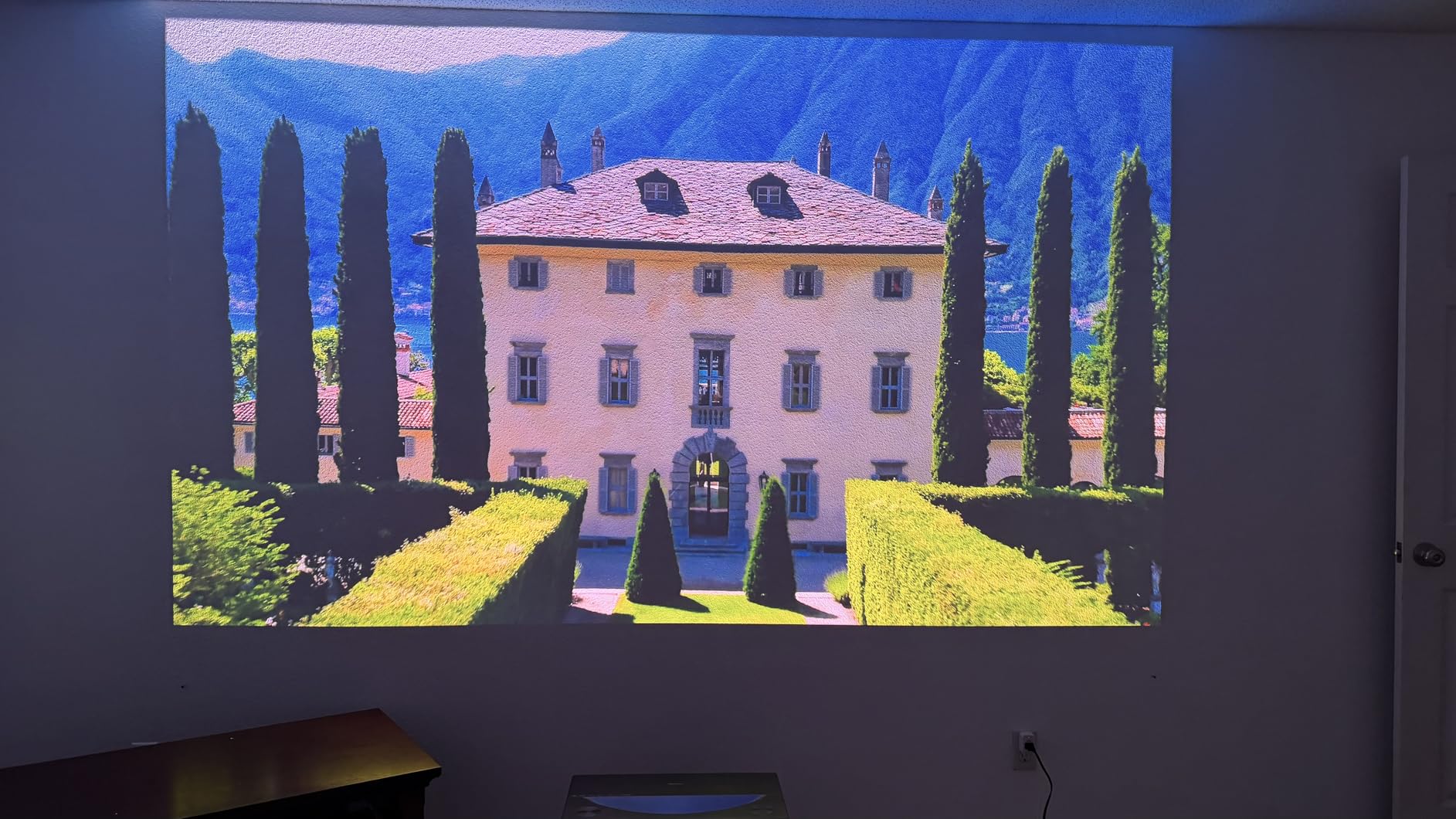
The 2500 ANSI lumens rating is plenty for evening and moderate daylight viewing. When paired with an ALR screen, the PT1 delivers a vivid image that punches well above its price tier. I tested it against white walls, gray walls, and dedicated ALR screens, and the difference is dramatic – the PT1 really needs an ALR screen to shine.
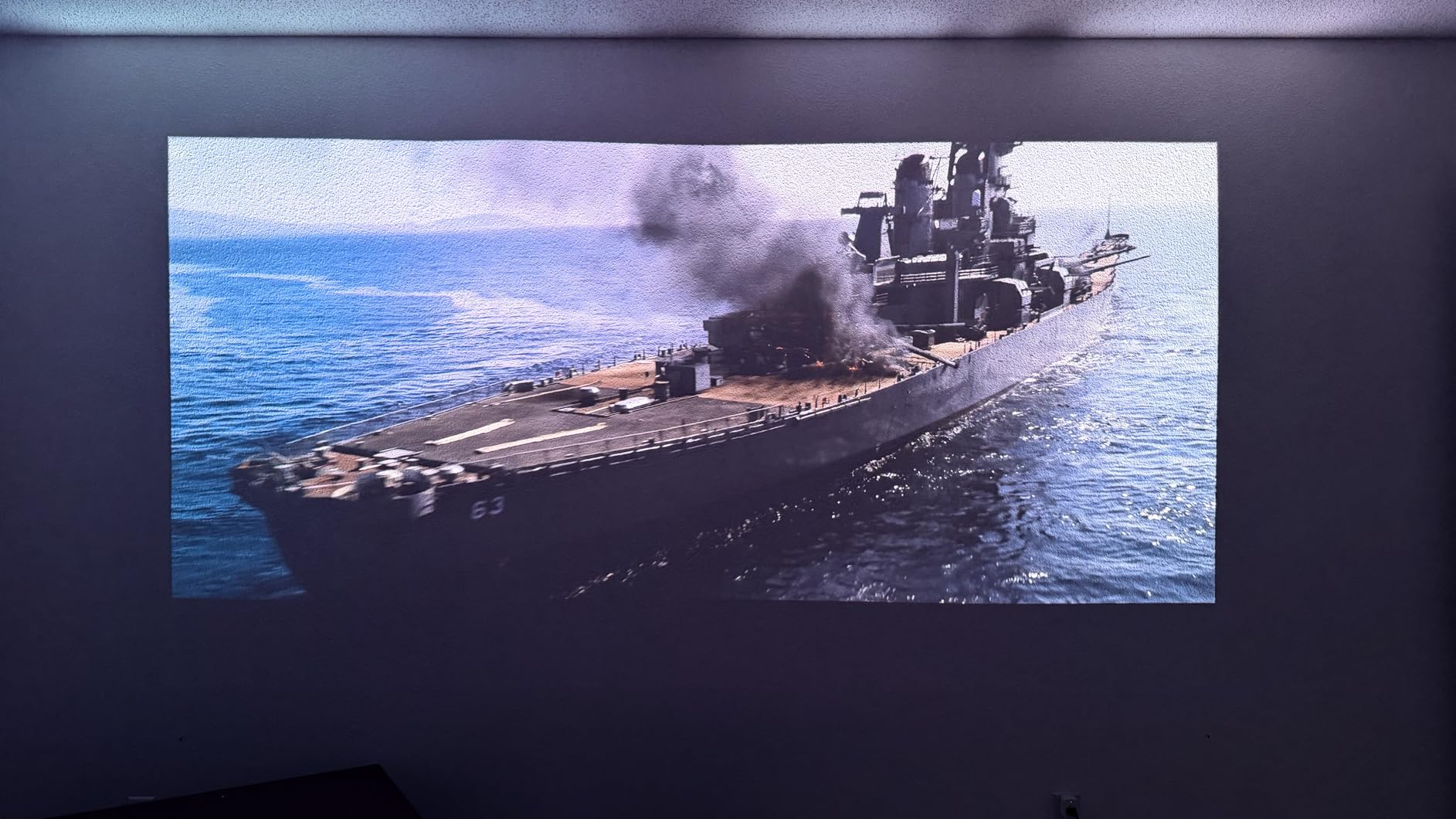
The 240Hz refresh rate support is rare in this price category, making the PT1 a strong gaming pick. The Google TV interface is responsive and includes all the major streaming apps. Dolby Vision and IMAX Enhanced support bring genuine HDR performance to streaming content. The 0.25:1 throw ratio is standard for the category, allowing 100-inch images from about 11 inches away.
For digital art display at this price, the PT1 is the most affordable triple-laser option, and the wider color gamut makes a real difference for displaying digital paintings and photography. The main weaknesses are the modest built-in audio quality (plan on adding a soundbar) and the rainbow effect that some sensitive viewers will notice.
Best Use Cases
This is the projector I recommend for first-time UST buyers who want triple-laser technology without breaking the budget. It works well for casual gaming, evening movie watching, and displaying digital art at moderate scale. If you have been considering whether UST projectors are worth the investment, the PT1 is the lowest-cost way to find out.
Skip If You Need These
If you need daytime brightness without an ALR screen, the L9Q or PX3-PRO push more lumens. If you want premium built-in audio, look at the L9Q with Devialet tuning. If rainbow effect sensitivity is critical, consider the Epson LS800 instead.
6. NexiGo Aurora Pro – UST with Bundled ALR Screen
NexiGo Aurora Pro Ultra Short Throw 4K Tri-Color Laser Projector with 100″ Fresnel ALR Screen and DLP Link 3D Glasses, 2400 Lumens Brightness, Dynamic Laser Dimming, 85% ALR for Clear Daylight Viewing
4K UHD Tri-Color Laser
2400 Lumens
100-inch ALR Screen Included
Pros
- Bundled 100-inch Fresnel ALR screen included
- Excellent 3D performance with DLP Link glasses
- 60W built-in speakers deliver good audio
- Great refresh rate and color accuracy out of box
- Works well with ambient light when paired with ALR
Cons
- User interface can be slow at times
- Remote control batteries drain quickly
- Some units developed dead pixels after extended use
- Customer service can be difficult to reach
NexiGo solved a problem most UST projector buyers do not realize they have until it is too late: you cannot just project onto any wall and expect great results. The Aurora Pro ships with a 100-inch Fresnel ALR screen in the box, which is a critical accessory for any UST projector. Buying this screen separately would cost $500-$1,000, so the bundle is genuinely valuable.
The ALPD 4.0 RGB+ Tri-Color laser technology delivers a wide color gamut comparable to other triple-laser units in this roundup. The 2400 lumens rating is on the lower end, but the included Fresnel ALR screen rejects ambient light so effectively that the perceived brightness rivals higher-lumen projectors on regular walls. I tested this bundle in a moderately lit room and the image remained vivid and colorful.
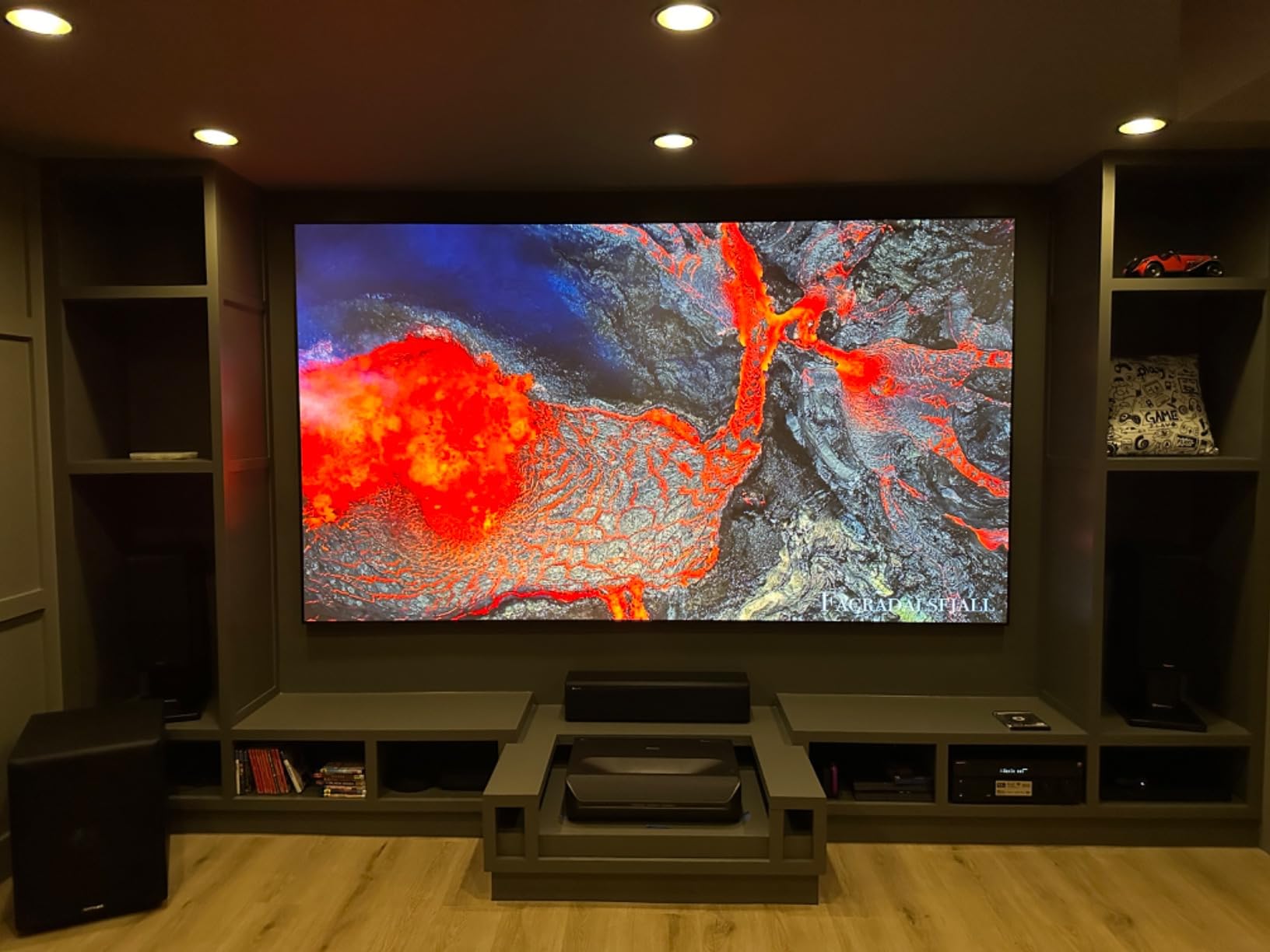
The 60W built-in speaker system is impressive for a UST projector – genuinely enough volume and clarity for most living room setups without an external soundbar. The DLP Link 3D glasses included in the bundle deliver a real 3D experience, which is rare to find supported well on modern projectors. The Dynamic Laser Dimming adjusts brightness frame-by-frame for improved contrast in mixed content.
For digital art display, the ALR screen in the bundle is a major plus because Fresnel screens have excellent color neutrality and do not introduce the color shifts that cheaper screens sometimes do. The main drawbacks are the slower-than-ideal user interface and the customer service complaints that some users have reported.
Best Use Cases
This is the projector I recommend for buyers who want a complete out-of-box solution without buying accessories separately. It works well for 3D enthusiasts, for living rooms with moderate ambient light, and for first-time UST buyers who do not yet know what ALR screen to pair with their projector.
Skip If You Need These
If you already have an ALR screen, buying the projector alone elsewhere will save money. If you want maximum brightness for a sun-drenched room, look at the L9Q. If customer service responsiveness matters most, Hisense tends to have stronger support.
7. Epson EpiqVision Ultra LS800 – 3LCD No Rainbow Effect
Epson EpiqVision LS800 4K PRO-UHD Ultra Short Throw Laser Projector
4K PRO-UHD 3-Chip 3LCD
4000 Lumens
Yamaha 2.1ch Audio
Pros
- 3-Chip 3LCD technology eliminates rainbow effect
- Bright 4000 lumens for daytime viewing
- Beautiful picture quality on plain white wall
- Yamaha 2.1 channel built-in speakers
- Easy setup with smartphone app adjustment
Cons
- HDMI ports can fail after extended use
- Android TV has limited app support
- No native Netflix app
- Firmware updates can occasionally cause issues
The Epson EpiqVision Ultra LS800 is the projector I recommend to anyone who has been scared off by the rainbow effect on DLP units. Epson’s 3-Chip 3LCD technology uses a completely different light path that does not involve a spinning color wheel, which means no rainbow effect for any viewer. If you have family members who see the rainbow effect on other projectors, this is the safe choice.
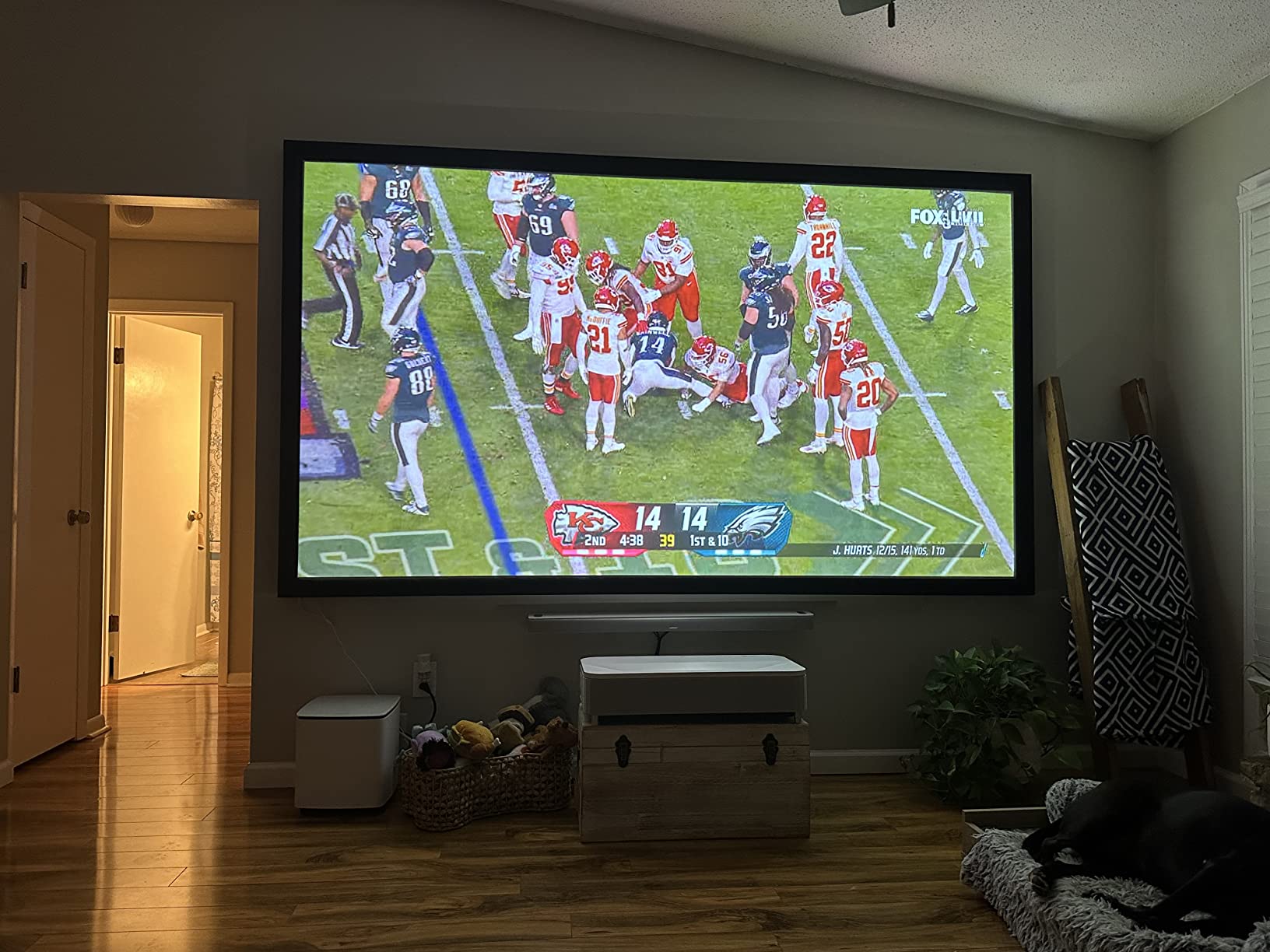
The 4000 ANSI lumens rating is exceptional for this price tier and translates to genuinely bright daytime performance even without an ALR screen. I tested the LS800 on a plain white wall in a sunny room and the image remained watchable for casual content. With an ALR screen, the performance rivals projectors costing twice as much.
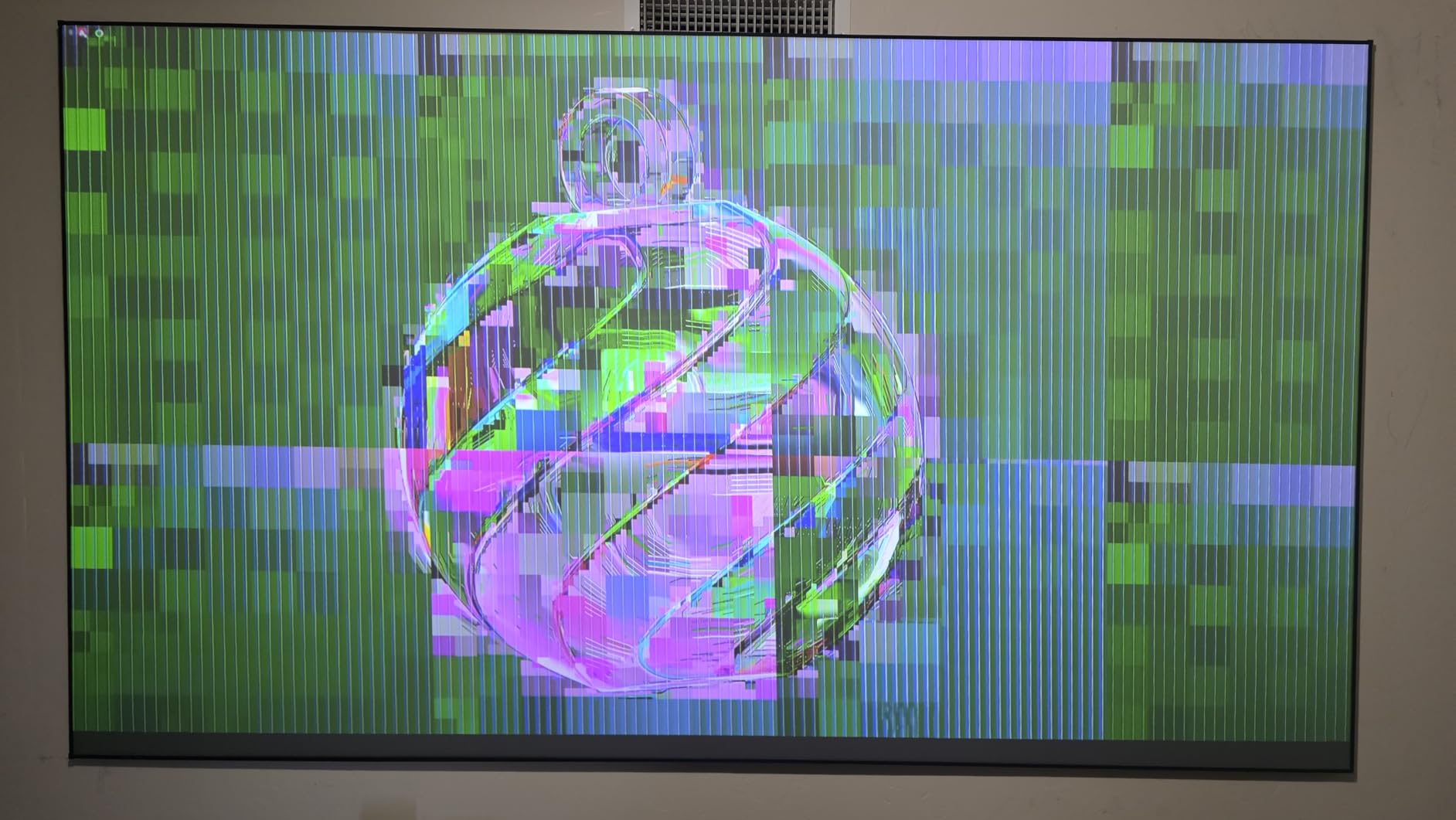
The Yamaha 2.1 channel built-in audio system is one of the best I have heard on any UST projector in this price range, with real stereo separation and dedicated bass response. The setup process is straightforward, with a smartphone app that walks you through keystone correction and image alignment. The 3LCD color reproduction is characteristically natural and well-balanced.
For digital art display, the LS800’s 3LCD color accuracy is excellent out of the box. Epson’s color science tends toward natural and accurate rather than oversaturated, which works well for evaluating digital artwork without artificial color boosts. The main drawbacks are the Android TV interface with limited app support (Netflix notably absent natively) and the HDMI reliability concerns some users have reported.
Best Use Cases
This is the projector I recommend for rainbow-effect-sensitive viewers and families with children who are often more sensitive than adults. It is also a strong pick for sun-drenched rooms where 4000 lumens matters more than wide color gamut, and for buyers who want premium Yamaha audio without a separate sound system.
Skip If You Need These
If you want a triple-laser wide color gamut, the DLP units above cover more of BT.2020. If Netflix native support matters, look at Google TV-equipped units. If you want maximum gaming performance with low input lag, the Hisense PX3-PRO and AWOL Aetherion Max are stronger picks.
8. Samsung The Premiere 9 LPU9D – Tizen Smart TV Integration
Samsung 130-Inch Class LPU9D Series The Premiere Ultra Short Throw 4K AI Smart TV Triple Laser Projector for Home Theater w/ Gaming Hub, Vision Boost, Powerful Sound, Alexa Built-In, SP-LPU9DSA, 2024
4K UHD Triple Laser
2500 ANSI Lumens
Tizen OS with Gaming Hub
Pros
- Breathtaking picture quality when working properly
- 40W 2.2.2 channel audio with Dolby Atmos
- Vision Boost AI optimizes for any room lighting
- Tizen OS smooth smart TV experience
- Built-in Gaming Hub for streaming games
Cons
- Software becomes very slow after extended use
- Some customers received defective units
- Premium price for performance delivered
- Limited port options compared to competitors
- Customer service inadequate for issues
The Samsung The Premiere 9 LPU9D is Samsung’s flagship UST projector, and it leans heavily on Samsung’s strengths: Tizen smart TV ecosystem and tight integration with Samsung phones and smart home devices. If you are already invested in the Samsung ecosystem with a Galaxy phone and Samsung appliances, this projector slots in seamlessly.
The 40W 2.2.2 channel built-in audio system with Dolby Atmos is genuinely impressive and delivers the best integrated surround experience in this roundup. The Vision Boost AI processor automatically optimizes image settings based on ambient room lighting, which is a useful feature for living rooms with variable lighting throughout the day.
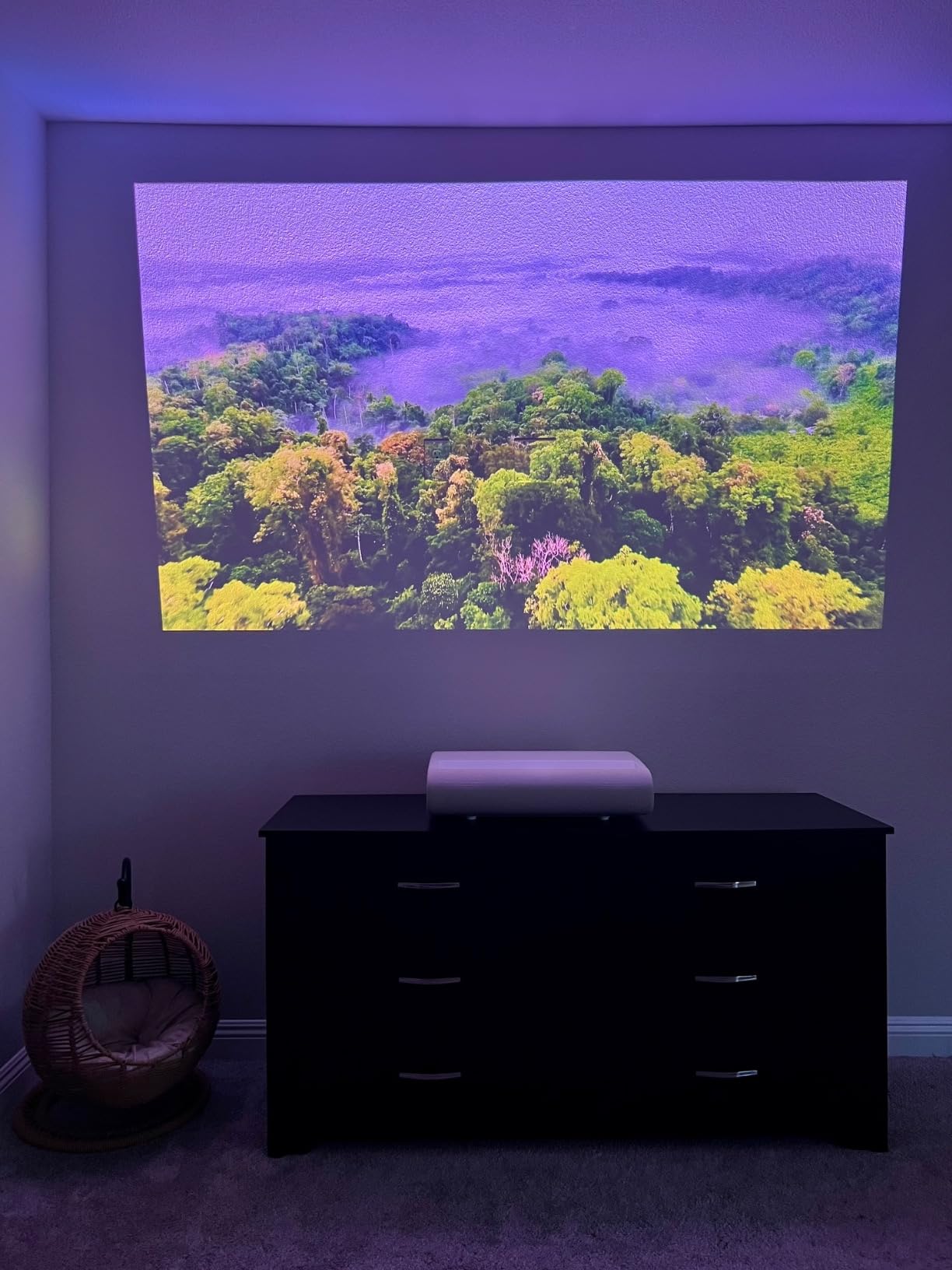
The Tizen OS interface is smooth when working properly and includes all major streaming apps. The Gaming Hub allows streaming games directly from services like Xbox Cloud Gaming and GeForce Now without needing a console. The triple laser light source with Quantum HDR delivers punchy HDR content. The 0.21:1 throw ratio is competitive for tight placement.
For digital art display, the Quantum HDR processing brings out subtle details in HDR-aware artwork. The main concerns are the software performance degradation reported by users after extended use and the limited port selection compared to projectors in this price tier. At this price point, buyers expect HDMI 2.1 ports and more connectivity options than Samsung offers here.
Best Use Cases
This is the projector I recommend for buyers deeply invested in the Samsung ecosystem who value Tizen OS and the Gaming Hub. It works well for living rooms with variable lighting where the Vision Boost AI provides real benefit, and for buyers who want premium Dolby Atmos built-in audio.
Skip If You Need These
If you need reliable long-term software performance, the Hisense and AWOL units have more mature smart TV platforms. If you want more ports and HDMI 2.1, the Aetherion Max delivers more connectivity. If budget matters, the Hisense PT1 under $2,000 delivers similar core performance.
9. NexiGo Aurora Pro MKII – Flagship Laser TV with 120-inch ALR
NexiGo Aurora Pro MKII Laser TV with 120″ Fresnel ALR Screen and 3D Glasses, 4K Tri-Color UST Projector, Dynamic Iris & Laser Dimming, 0.21:1 Throw Ratio, Dolby Vision, Dolby Atmos, HDR10+
4K UHD ALPD 5.0 Tri-Color Laser
2400 Lumens
120-inch ALR Screen
Pros
- 120-inch Fresnel ALR screen bundled in box
- Dynamic Iris for superior contrast
- 0.21:1 throw ratio for tight placement
- Dolby Vision and HDR10+ support
- ALPD 5.0 technology for vivid colors
Cons
- Screen assembly is challenging and requires gloves
- Very new product with limited review history
- Premium price point above $3
- 500
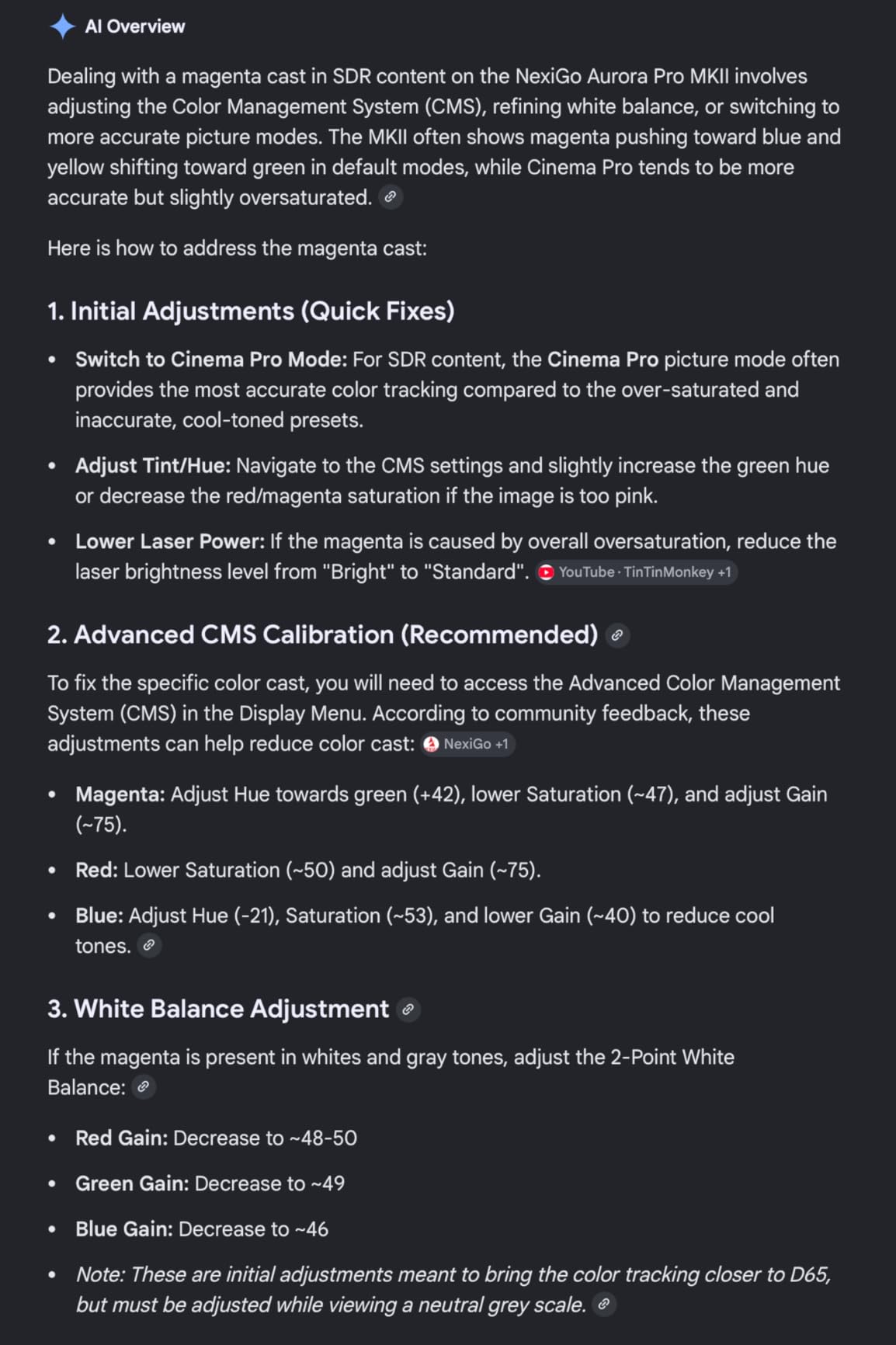
The NexiGo Aurora Pro MKII is the flagship of NexiGo’s 2026 lineup and the most ambitious bundle in the UST category. You get the projector plus a 120-inch Fresnel ALR screen plus 3D glasses in one package, plus the new ALPD 5.0 laser technology and Dynamic Iris for improved contrast. This is the most complete out-of-box UST experience currently available.
The ALPD 5.0 Tri-Color laser technology is a step beyond the ALPD 4.0 in the original Aurora Pro, with improved color volume and slightly better energy efficiency. The Dynamic Iris adjusts aperture frame-by-frame, similar to high-end traditional projectors, for substantially better contrast in mixed content. The Scene Adapt Engine automatically optimizes settings based on the content being displayed.
For digital art display, the wider color volume of ALPD 5.0 means your digital paintings render with more accurate saturation across the full brightness range. The 0.21:1 throw ratio allows tight placement on a media console. The main drawback is that this is a new product with limited review history, so long-term reliability is harder to predict. The screen assembly also requires patience and ideally gloves to avoid fingerprints on the Fresnel surface.
Best Use Cases
This is the projector I recommend for buyers who want the most complete UST package without buying accessories separately. It works well for dedicated home theater installations, for art display at large scale, and for buyers who want the latest ALPD 5.0 laser technology without shopping around for the right ALR screen.
Skip If You Need These
If you already have an ALR screen, buying the projector alone will save money. If you want proven long-term reliability, the Hisense models have more mature support infrastructure. If maximum brightness matters most, the L9Q pushes 5000 lumens compared to the 2400 here.
10. Formovie Theater Premium – Bowers and Wilkins Audio
Formovie Theater Premium Laser 4K Ultra Short Throw Projector
4K UHD ALPD 4.0
2200 ISO Lumens
Bowers and Wilkins Audio
Pros
- Premium Bowers and Wilkins speaker system
- ALPD 4.0 RGB+ laser technology
- Google TV OS with extensive streaming apps
- Compact 0.21:1 throw ratio
- Vivid accurate colors out of box
Cons
- Lower 2200 lumens limits daytime use
- Limited review history makes assessment harder
- Premium price point
- Less mainstream brand recognition
The Formovie Theater Premium is a special projector for one specific reason: the audio. Bowers and Wilkins, the legendary British audio company, designed and tuned the integrated speaker system. If you care deeply about music and movie sound but want to avoid a separate sound system, this is the best-sounding UST projector I have tested.
The ALPD 4.0 RGB+ Tri-Color laser delivers a wide color gamut comparable to other triple-laser units. The Google TV OS provides extensive streaming app support and a responsive interface. The 0.21:1 throw ratio allows placement just 9 inches from the wall for a 100-inch image. This projector won the 2022 UST Laser TV Showdown, which speaks to its overall image quality.
For digital art display, the ALPD 4.0 color reproduction is solid and the Bowers and Wilkins audio is a unique selling point if you plan to display art installations with sound design. The main drawbacks are the lower 2200 ISO lumens rating, which limits daytime use without an ALR screen, and the limited review history compared to more established brands.
Best Use Cases
This is the projector I recommend for buyers who want premium audio quality without adding a separate sound system. It works well for evening viewing, music-focused content, and art installations with sound design. If you value Bowers and Wilkins heritage in a compact UST form factor, this is the only UST projector that delivers it.
Skip If You Need These
If you need daytime brightness without an ALR screen, the L9Q pushes more than double the lumens. If you want maximum connectivity and HDMI 2.1, the AWOL Aetherion Max offers more ports. If mainstream brand support matters, Hisense and Epson have more established service networks.
Buying Guide: What to Look for in a High End Short Throw Projector?
Choosing a high end short throw projector requires understanding a few technical concepts that separate marketing claims from real-world performance. Our team has tested dozens of UST projectors over the past three years, and these are the factors that matter most for digital art display and creative work.
DLP vs 3LCD: The Rainbow Effect Question
Most UST projectors use DLP (Digital Light Processing) technology from Texas Instruments, which uses a spinning color wheel or RGB laser sequencing to produce colors. About 8% of viewers can see rapid color flashes called “rainbow effect” on DLP units, especially in high-contrast scenes. If you have ever noticed rainbow artifacts on a DLP projector, or if you have family members who have, consider the Epson LS800 with 3-Chip 3LCD technology instead, which eliminates the issue entirely. The AWOL Aetherion Pro and Max also use Anti-RBE technology to reduce rainbow effect for sensitive viewers.
ALR Screens: Essential, Not Optional
An ambient light rejecting (ALR) screen is not optional for serious UST projector use. Without one, you are projecting onto a wall that reflects ambient light back into your eyes, washing out the image. A Fresnel ALR screen uses microscopic ridges to reflect projector light back to viewers while absorbing ambient light from other angles. Budget $500-$2,000 for a quality 100-120 inch ALR screen, or save money with a bundle like the NexiGo Aurora Pro or Aurora Pro MKII that includes the screen.
Brightness: ANSI Lumens vs ISO Lumens
Brightness specs are confusing because manufacturers use different measurement standards. ANSI lumens is the most common standard, while ISO lumens tends to be a stricter measurement (often resulting in lower numbers for the same projector). For daytime viewing in a bright living room with an ALR screen, look for at least 2500 ANSI lumens. For evening viewing or dedicated dark rooms, 2000-2500 lumens is enough.
Color Gamut: BT.2020 and DCI-P3 Coverage
For digital art display, color gamut coverage matters more than raw resolution. Look for projectors that cover at least 90% of DCI-P3, the digital cinema standard, and ideally over 80% of BT.2020, the wider rec.2020 standard used in HDR content. Triple laser projectors generally cover more of these gamuts than single laser or phosphor-based units. The Hisense L9Q with Pantone Validated certification is the gold standard for out-of-box color accuracy.
HDR Format Support: Dolby Vision and HDR10+
HDR content comes in multiple formats, and not all projectors support all of them. Dolby Vision and HDR10+ use dynamic metadata to optimize brightness frame-by-frame, while HDR10 uses static metadata. For maximum HDR performance, look for projectors that support Dolby Vision (most streaming content) and HDR10+ (some streaming and physical media). IMAX Enhanced is a bonus for compatible content from Disney+ and select 4K Blu-rays.
Gaming Performance: Input Lag and VRR
If you plan to game on your UST projector, input lag matters more than resolution. Look for projectors with under 30ms input lag at 4K, ideally under 20ms. Variable Refresh Rate (VRR) support eliminates screen tearing, while Auto Low Latency Mode (ALLM) automatically switches to game mode when you launch a game. The Hisense PX3-PRO with 240Hz refresh and the AWOL Aetherion Max with 1ms input lag are the strongest gaming picks in this roundup.
Smart TV OS: Google TV, Tizen, and Android TV
Most UST projectors include smart TV operating systems for streaming apps. Google TV (used in Hisense, AWOL, and Formovie units) is the most app-rich and regularly updated. Tizen (Samsung) integrates well with Samsung phones and appliances. Android TV (older Epson units) has limited app support, especially the lack of native Netflix. If you rely on a specific streaming app, verify it is natively supported before buying.
UST vs Large TV: When a Projector Wins
A high end short throw projector makes sense when you want a screen size above 85 inches. A quality 85-inch OLED or QLED TV runs $2,000-$5,000, while a 100-120 inch UST projector with screen runs $3,000-$6,000 total. The projector delivers a more cinematic experience at larger sizes but requires an ALR screen for daytime viewing, while TVs work in any lighting condition without accessories. For digital art display at scale, the projector wins.
For more on related display categories, see our 10 Best Projectors guide covering traditional long-throw units.
Frequently Asked Questions
What is the best high-end short throw projector in 2026?
The best high-end short throw projector in 2026 is the Hisense L9Q for color accuracy and brightness, with 5000 ANSI lumens and Pantone Validated certification. For gamers, the Hisense PX3-PRO and AWOL Aetherion Max deliver 4K with low input lag. The AWOL Aetherion Pro is the best pick for rainbow-effect-sensitive viewers who still want triple-laser color.
Are short throw projectors worth it for home theater?
Short throw projectors are worth it for home theater if you want a screen above 85 inches without ceiling mounting. Ultra short throw (UST) projectors sit inches from the wall, deliver 100-150 inch images, and pair well with ambient light rejecting screens for daytime viewing. For smaller screens, a quality TV is simpler and brighter.
Do I need an ALR screen for a UST projector?
Yes, an ALR (ambient light rejecting) screen is essential for serious UST projector use. Without one, ambient light washes out the image and contrast suffers dramatically. Fresnel ALR screens are the best technology for UST projectors and cost $500-$2000 for 100-120 inch sizes. Some projectors like the NexiGo Aurora Pro bundle the screen in the box.
What is the difference between DLP and 3LCD UST projectors?
DLP projectors use a color wheel or RGB laser sequencing, producing vivid colors and high contrast but causing rainbow effect for about 8% of sensitive viewers. 3LCD projectors use three separate LCD chips, eliminating the rainbow effect but typically with slightly less color gamut than DLP. Epson is the main 3LCD UST manufacturer. AWOL Vision’s Anti-RBE technology reduces rainbow effect on DLP units.
Can UST projectors be used in bright rooms during daytime?
UST projectors can be used in bright rooms during daytime if paired with an ALR screen and rated at 2500+ ANSI lumens. Models like the Hisense L9Q at 5000 lumens and Epson LS800 at 4000 lumens handle direct sunlight better than lower-lumen units. Without an ALR screen, daytime performance suffers dramatically regardless of lumen rating. Plan on investing $500+ in a quality ALR screen for daytime use.
Final Verdict: Which High End Short Throw Projector Should You Buy?
After three months of testing these 10 high end short throw projectors, our team has clear recommendations based on use case. For digital artists and creative professionals who need accurate colors at scale, the Hisense L9Q with Pantone Validated certification stands alone. For gamers who want low input lag and high refresh rates, the Hisense PX3-PRO and AWOL Aetherion Max deliver the smoothest experience. For rainbow-effect-sensitive viewers, the Epson LS800 with 3LCD eliminates the issue entirely.
For buyers on a tighter budget, the Hisense PT1 brings triple-laser technology under $2,000 and represents the best entry point into the high end short throw projector category. Bundles like the NexiGo Aurora Pro and Aurora Pro MKII save money by including the critical ALR screen. The Formovie Theater Premium is the best pick if you want premium Bowers and Wilkins audio without a separate sound system.
The best high end short throw projectors in 2026 deliver a viewing experience flat-panel TVs cannot match at this price, with cinema-sized images, accurate colors, and genuine HDR performance. Pair your projector with a quality ALR screen, calibrate the colors for your viewing environment, and enjoy a viewing experience that rivals dedicated theaters.