
The best short throw projectors make a big image possible when a conventional projector would put the lens in the middle of the room. A short-throw lens needs less distance than a regular projector; an ultra-short-throw, or UST, model sits especially close to the wall or screen and acts much more like a laser TV.
That distinction matters. The supplied products span compact 1080p projectors with 0.8:1 to 1.17:1 claims, a 0.5-throw-ratio ViewSonic, and UST laser models such as the WEMAX Nova Pro at 0.23:1, so they do not suit the same furniture layout.
We ranked these choices around the information actually listed for each product: native resolution, stated brightness, throw specifications, color and HDR support, connectivity, sound, and gaming claims. Manufacturer brightness numbers use different units, so I treat ANSI and ISO ratings as useful labels rather than interchangeable proof of living-room performance.
For a concise answer, AWOL VISION Aetherion Pro is the feature-rich 4K UST choice here for contrast, color, Dolby Vision, and stated 1ms gaming latency. BenQ’s TK710STi is the clear pick for a conventional short-throw gaming setup, while the Hisense PL2 provides a 4K laser-TV path with Google TV, Dolby Vision, Dolby Atmos, and an 80- to 150-inch stated image range.
Table of Contents
The three clearest picks cover 4K UST cinema, fast gaming, and laser-TV viewing in 2026
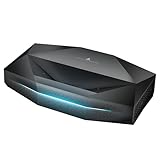
The AWOL Aetherion Pro has the deepest stated native contrast in this group at 6000:1, plus 110% Rec.2020 coverage, Dolby Vision, VRR, ALLM, and anti-rainbow-effect technology. Those are the features I would prioritize when a close-to-the-screen 4K projector must cover both movie nights and console play.
The BenQ takes a different route: it is a short-throw rather than an ultra-short-throw projector, but its 3200-lumen laser source and claimed 4ms response time at 1080p and 240Hz make its gaming credentials unusually direct. The Hisense is the more straightforward stationary home-theater option, pairing its X-Fusion laser engine with 4K, Dolby formats, 3D, and WiFi 6E.
The 12 projectors below cover close-range rooms from portable 1080p to 4K laser cinema
| Product | Specifications | Action |
|---|---|---|
 AWOL VISION Aetherion Pro AWOL VISION Aetherion Pro |
|
View on Amazon |
 BenQ TK710STi BenQ TK710STi |
|
View on Amazon |
 Hisense PL2 Hisense PL2 |
|
View on Amazon |
 WEMAX Nova Pro WEMAX Nova Pro |
|
View on Amazon |
 ViewSonic PS502W ViewSonic PS502W |
|
View on Amazon |
 Optoma GT2000HDR Optoma GT2000HDR |
|
View on Amazon |
 KOGATA GC355 KOGATA GC355 |
|
View on Amazon |
 iSinbox AC311 iSinbox AC311 |
|
View on Amazon |
 KOGATA AC301 KOGATA AC301 |
|
View on Amazon |
 TOPTRO A2 TOPTRO A2 |
|
View on Amazon |
 PUTRIMS P66 PUTRIMS P66 |
|
View on Amazon |
 HP MC475 HP MC475 |
|
View on Amazon |
Start with the native resolution and throw ratio, then use brightness, HDR, and audio as tie-breakers. A 4K-compatible portable unit can still be native 1080p, while a 4K UST projector may need a very particular cabinet depth and screen position to produce a square image.
1. AWOL VISION Aetherion Pro is the most complete 4K UST choice for contrast and gaming
AWOL Aetherion Pro 4K Projector, 2600 ISO Lumens Short Throw, Google TV, PixelLock™ Clarity, 6000:1 Native Contrast UST Projector, Anti–RBE, 4K 200″ Display, Dolby Vision, Movie Projector
4K UHD
2600 ISO lumens
6000:1 native contrast
Pros
- 6000:1 native contrast
- 110% Rec.2020 color
- 1ms claimed latency
- Anti-RBE technology
Cons
- Heavy 8.35 kg chassis
- setup can be involved
The Aetherion Pro has the specification set I would want to scrutinize first for a dedicated movie wall: 4K UHD resolution, 2600 ISO lumens, and 6000:1 stated native contrast. AWOL also lists its Noirscene System II and PixelLock Clarity technology, which positions this projector around black-level control and image definition rather than brightness alone.
Color support is unusually broad on paper, with 110% Rec.2020 coverage plus Dolby Vision, HDR10+, HDR10, and HLG. Its 428 reviews average 4.3 stars, and customer feedback in the supplied data repeatedly points to contrast, color accuracy, and gaming performance.
Gaming is not an afterthought here. The product listing claims 1ms ultra-low latency along with VRR, ALLM, and Dolby Vision Gaming, so I would put it on a short list for a console room where a UST projector must switch between films and responsive play.
The limiting detail is physical rather than digital: the desktop unit weighs 8.35 kilograms and reports an 80- to 200-inch projection range. That calls for a stable, level surface and a careful first alignment, especially if the screen is an ALR screen that shows tiny placement errors.
The Aetherion Pro suits viewers who want strong listed contrast without giving up gaming features
This is the candidate for someone building around dark-room films, HDR content, and modern consoles in one space. Anti-RBE technology is also meaningful to viewers who are sensitive to the color flashes some DLP projector users describe as the rainbow effect.
Google TV keeps streaming in the projector, while its stated 200-inch ceiling leaves headroom for a large wall. I would still plan external audio for serious cinema use only after hearing the installed setup, because the supplied data does not state speaker power.
A carefully measured cabinet and screen position make the Aetherion Pro easier to live with
UST projectors need measurement in three dimensions: lens-to-screen distance, chassis height, and screen height. Measure before buying furniture, since moving the projector only a small amount can shift the top edge of the image noticeably.
Use an ambient light rejecting screen designed for UST optics when daytime contrast is important. A plain wall can work for casual viewing, but it cannot recover black depth when room light falls on the projected surface.
2. BenQ TK710STi is the clearest short-throw gaming projector for bright 4K play
BenQ TK710STi 3200 Lumens 4K HDR Short Throw Home Entertainment Projector
4K HDR laser
3200 lumens
4ms at 1080p 240Hz
Pros
- 3200-lumen laser
- 4ms response claim
- 240Hz refresh
- 95% Rec.709
Cons
- Only 38 listed reviews
- short throw needs more room than UST
BenQ’s TK710STi is a conventional short-throw model rather than a UST, and that distinction is its main strength for gamers who can place the projector farther back. It combines 4K HDR output with a laser light source rated at 3200 lumens, a figure that gives it a strong starting point for rooms that are not fully dark.
The headline gaming mode is specific: BenQ claims 4ms response time at 1080p and 240Hz. That is exactly the kind of stated mode that matters more than vague “gaming projector” language, although the supplied listing does not provide an independent input-lag measurement.
Its technical details list 95% Rec.709 coverage, HDR10 and HLG, Google-certified Android TV, Netflix, Chromecast, AirPlay, autofocus, and digital keystone. Those features keep content access and alignment straightforward without adding a separate streaming stick.
The main caution is setup distance. A short-throw projector needs less space than a standard model, but it will not sit inches from the wall like the WEMAX, Hisense, or AWOL UST choices; plan the throw from the manual’s image-size chart before choosing a shelf.
The TK710STi fits gaming rooms that need speed, brightness, and flexible content access
I would choose the BenQ when competitive play, sports motion, and daytime family viewing matter as much as cinematic presentation. Its laser source is rated for 20,000 hours, and Android TV access makes the projector a fairly self-contained screen replacement.
The 4.4-star average comes from 38 reviews, so it is sensible to weigh that smaller review pool alongside the listed hardware. Buyers praise its bright picture and gaming behavior in the supplied review summary.
A longer placement path is the tradeoff for the TK710STi’s conventional short-throw design
Mark the intended projector spot with tape before mounting anything. A digital keystone correction can tidy a small alignment issue, yet a level lens aimed squarely at the screen is better for preserving image geometry.
Use the native 4K mode for films and the stated 1080p 240Hz mode when response takes priority. That choice helps set expectations: refresh rate and resolution can be related, but they are not the same feature.
3. Hisense PL2 is the most straightforward 4K laser-TV option for a living-room theater
Hisense PL2, Ultra Short Throw Home Theater Laser Projector, 80” – 150”, 4K UHD, 2,700 Lumens, 3000:1 Contrast, Dolby Vision & Atmos, 3D, Google TV, WIFI 6E
4K UHD
2700 lumens
80 to 150 inch UST
Pros
- Dolby Vision and Atmos
- Google TV
- 3D support
- 25000-hour laser
Cons
- Stationary placement
- ambient light can reduce impact
The Hisense PL2 puts its emphasis on the familiar laser-TV formula: a stationary UST projector, 4K UHD resolution, 2700 stated lumens, and a stated 80- to 150-inch picture range. Its X-Fusion laser technology and 3000:1 contrast specification give it a cleaner home-theater focus than the portable models in this list.
Dolby Vision and Dolby Atmos support are useful signals for film and streaming fans, and Hisense also includes Google TV, WiFi 6E, Bluetooth 5, HDMI 2.0, USB 3.0, and 3D support. The 4K AI Upscaler is intended to improve lower-resolution material, though upscaling cannot add true 4K detail that is absent from the source.
Its 130 reviews average 4.4 stars. The provided feedback highlights laser-picture quality, natural color, and close placement, while some owners report that ambient light still affects brightness.
That last point is worth treating as normal projector behavior rather than a defect. Even with a bright light source, a UST projector looks most convincing when direct light is controlled and the screen surface supports the room.
The PL2 suits viewers who want streaming, Dolby formats, and a fixed laser-TV installation
This model is a strong match for a living room where the projector will stay on a media console and replace a large television. I would pair its 80- to 150-inch range with a screen size that leaves enough wall clearance for the projector and a center speaker if one is planned.
The stated 25,000-plus-hour entertainment figure also means no conventional lamp schedule is listed. That is appealing for regular use, but the projector’s stationary form means it is not meant to be moved between rooms often.
Controlled window light and a UST-ready screen help the PL2 show its intended contrast
For daytime viewing, avoid placing the screen opposite uncovered windows. A UST-specific ALR screen rejects more overhead and side light than a standard matte surface, though it works only when the projector is set at the intended angle.
For evening viewing, dimming the room will do more for perceived black levels than trying to raise a projector’s picture mode. That practical step addresses the black-floor expectations regularly raised by home-theater owners.
4. WEMAX Nova Pro is the close-placement 4K UST option with motion and 3D features
WEMAX Nova Pro 4K Ultra Short Throw Projector, Google TV, 2100 ISO Lumens
4K UST
0.23:1 throw ratio
2100 ISO lumens
Pros
- 150 inches from 49 cm
- Google TV and Netflix
- MEMC motion
- 30W Dolby audio
Cons
- Heavy 7 kg unit
- screen position is exacting
The WEMAX Nova Pro makes the ultra-short-throw case in one number: its 0.23:1 throw ratio is specified to create a 150-inch image from 0.49 meters away. That lets it sit on a shallow console rather than across the room, which is especially useful in apartments and multipurpose living rooms.
It is a true 4K DLP design using a 0.47 DMD chip and an ALPD laser light source, with 2100 ISO lumens, 3000:1 contrast, HDR10, HLG, and 110% Rec.709 coverage listed. The product also supports Active 3D and MEMC motion compensation, a useful pairing for sports and films where smooth motion is a priority.
Google TV, official Netflix support, Google Assistant, WiFi 6, Bluetooth, HDMI 2.1, and 30W Dolby Audio and DTS-HD speakers make the Nova Pro unusually complete on its own. Its supplied review base is substantial at 392 reviews, although the average is 4.1 stars and the feedback flags the size and setup precision as considerations.
The 7-kilogram chassis is a reminder that a close-throw projector is not automatically portable. I would treat this as installed furniture, not a projector to move for backyard viewing.
The Nova Pro works best in rooms where a large screen must start inches from the wall
This is the right form factor when a coffee-table projector path would cross foot traffic or where a ceiling mount is not practical. Its stated 80- to 150-inch range gives buyers an unusually helpful size bracket to plan around.
Sports viewers may appreciate MEMC, while movie fans can use Active 3D if their source and glasses support it. Those features do not replace native motion quality, but they broaden what the projector can play.
The Nova Pro needs a level surface because UST geometry leaves little room for casual adjustment
Measure the cabinet top, not just the wall. A few millimeters of tilt or an uneven screen can create a visible focus or geometry issue across a 100-inch-plus image.
ALPD laser systems can show laser speckle on certain screen materials and viewing angles. If that artifact concerns you, view the intended screen and projector combination before committing to an installation.
5. ViewSonic PS502W is the bright short-throw choice for presentations and shared spaces
ViewSonic PS502W WXGA Short Throw Projector 4000 Lumens, Dual HDMI
4000 lumens
WXGA native
0.5 throw ratio
Pros
- 4000-lumen claim
- 0.5 throw ratio
- Dual HDMI
- Auto keystone
Cons
- WXGA resolution
- Lamp source rated 4000 hours
The ViewSonic PS502W is built for a different job than a 4K laser TV. It uses a 0.5 throw ratio, has 4000 listed lumens, and accepts a 60- to 300-inch image range, all of which suit classrooms, training rooms, and shared business spaces where ambient light is part of the day.
Its native WXGA resolution is 1280 by 800, so I would not select it for a detail-focused home cinema. For slides, text, and widescreen educational material, the resolution and stated brightness align more closely with its purpose.
The DLP projector includes SuperColor technology, dual HDMI inputs, USB-A, digital zoom, vertical keystone, auto keystone, and instant power on and off. Those are practical connection and setup features when several presenters or devices rotate through one room.
The listing gives its lamp life as 4000 hours, which is a real ownership difference from the laser models. A lamp-based design needs a plan for eventual lamp replacement, even if it fits the location well today.
The PS502W suits bright rooms where readable presentations matter more than 4K movie detail
I would favor this ViewSonic for a lecture wall, community room, or office where the lights cannot always be dimmed. Its provided review feedback praises brightness and value for business and education use.
Its 159 reviews average 4.3 stars, with the lower resolution appearing regularly as the known limitation. That makes this an honest specialized pick, not an all-purpose entertainment projector.
A 0.5 throw ratio gives the PS502W practical room flexibility without UST screen sensitivity
Short throw reduces presenter shadows because the projector can sit nearer the screen than a regular model. It still needs a measured distance for the desired image size, so check the placement diagram before selecting a mount.
Use its dual HDMI inputs for fixed devices such as a computer and media player. The connection choice matters in a shared room because it avoids swapping cables each time the display changes hands.
6. Optoma GT2000HDR is the compact laser short-throw model for long-life 1080p viewing
Optoma GT2000HDR Ultra-Compact Short Throw Full HD Home Laser Projector
1080p laser
3500 lumens
30000-hour light source
Pros
- Long-life laser source
- 3500-lumen claim
- compact body
- low 98W consumption
Cons
- 1080p native
- listed minimum image size is 214 inches
The Optoma GT2000HDR combines a compact chassis with a laser light source listed for 30,000 hours, Full HD 1080p resolution, 3500 lumens, and a 300,000:1 contrast claim. That package will interest buyers who want a maintenance-light laser projector but do not need native 4K.
Its supplied specifications describe an ultra-compact, portable form factor, 98W power consumption, an external power supply, and 15-centimeter vertical keystone adjustment. The product weighs 9.6 pounds, which is manageable for repositioning but still substantial enough to reward a stable shelf or mount.
One detail needs a check before installation: the listing gives a minimum image size of 214 inches despite also calling the projector short throw. I would verify the official projection calculator and intended screen size rather than assuming it suits a small wall.
Review feedback praises contrast and the lower-power design, while the 116-review, 4.3-star average also includes availability and minimum-distance concerns. That mixed picture makes planning more important than the compact marketing language.
The GT2000HDR fits buyers who want laser longevity and bright Full HD projection
Choose it for a gaming den, outdoor evening setup, or media room where 1080p is sufficient and the long laser-source rating matters. A claimed 3500 lumens can help in a room with some ambient light, but window light will still wash out dark scenes.
Its Full HD resolution also asks less of older streaming devices and game consoles. For close viewing of fine text or 4K cinema material, the native-4K products above are more appropriate.
The reported image-size and distance figures require confirmation before the GT2000HDR is mounted
Do not read “short throw” as a universal measure of screen size. Throw ratio, lens position, and the selected diagonal work together, and the data supplied for this model has a notably large minimum image specification.
Keystone is useful for small placement corrections, yet it is not a substitute for measuring. Start with the planned screen diagonal and work backward to the projector position.
7. KOGATA GC355 is the bright listed portable 1080p short-throw choice with Dolby audio
Short Throw Projector 4K with Built-in Apps AI Auto Focus
1080p native
2000 ANSI lumens
HDR10+ support
Pros
- 2000 ANSI-lumen claim
- TOF autofocus
- 98% NTSC color
- Dual 10W audio
Cons
- WiFi details are not specified
- setup may take practice
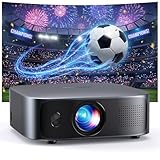
The KOGATA GC355 brings a high stated brightness claim for a portable-format projector: 2000 ANSI lumens. It is native 1080p, accepts up to 4K input, supports HDR10+, and uses an LCD display, which is a more grounded description than treating 4K compatibility as native 4K output.
The listed short-throw setup makes a 100-inch image from 90 inches away, with a 1.1:1 ratio. Its Time-of-Flight autofocus, keystone correction, and one-kilogram weight are useful for a projector that may alternate between a bedroom, a wall, and an outdoor evening setup.
KOGATA specifies 98% NTSC color gamut and Dolby Audio from dual 10W drivers. Bluetooth connectivity is listed, while WiFi details are not specified, so I would confirm how a preferred streaming source will connect before making it the center of a media system.
Its 40 reviews average 4.8 stars, and the provided insights focus on picture quality and brightness. A small review count cannot settle long-term reliability, but the feature sheet is unusually complete for a portable native-1080p unit.
The GC355 suits flexible 1080p viewing where stated brightness and light weight are priorities
I would consider it for a renter or family that needs a projector to move between rooms rather than a permanent UST installation. The 200-inch maximum image claim is generous, but a smaller image will usually look brighter in a room with lights on.
Auto focus is especially useful in a portable product because every move changes distance. It saves setup steps, while a squared, level position still gives the best base image.
The GC355 needs a defined streaming path because the supplied specification only names Bluetooth connectivity
Connect a console, laptop, or compatible source through the available hardware path described by the manufacturer. Do not assume app access simply because a projector can accept 4K video or has Bluetooth.
For outdoor movies, wait until twilight or later. No portable projector can overcome direct daylight on a large projected image, regardless of the listed lumen figure.
8. iSinbox AC311 is the portable short-throw option with built-in streaming apps and a stand
iSinbox Short Throw Projector 4K, Now with Netflix, Auto Focus, 40W Dolby
1080p native
1500 ANSI lumens
1.1:1 short throw
Pros
- Built-in streaming apps
- Dolby audio and eARC
- AI autofocus
- Dual-mode stand
Cons
- Remote batteries absent
- throw-ratio labeling differs
The iSinbox AC311 is aimed at convenient casual viewing: native 1080p, a 1500 ANSI-lumen claim, a stated 1.1:1 short-throw ratio, and built-in Netflix, YouTube, and Prime Video. It also lists HDR10+, Dolby Audio, eARC, WiFi 6, and two-way Bluetooth 5.4.
Its placement claim is simple enough to picture: a 100-inch image from 7.9 feet. The supplied specifications also say its minimum image size is 100 inches from 1.15 meters, so I would use the official setup guidance to reconcile the image-size details before installing it in a very small room.
The dual-mode stand and handle help distinguish it from a basic rectangular portable projector. AI autofocus, 6D keystone, and obstacle avoidance can speed setup, especially when projecting from a temporary table rather than a fixed mount.
Reviewers give the unit a 4.6-star average across 148 reviews and praise its app access and general value. The listing warns that the package and actual throw ratio have been labeled differently, which makes a distance check a sensible first task.
The AC311 suits casual movie nights that benefit from apps, eARC, and a flexible stand
This is a practical match for viewers who do not want a separate streaming stick and who may route sound to an external compatible system through eARC. Dolby Audio support helps, but a projector’s integrated audio should be assessed in the actual room.
The handle and movable stand are useful for a bedroom or evening patio presentation. Keep expectations centered on dusk or dark conditions because the supplied feedback does not position its brightness as exceptional for daytime outdoor viewing.
The AC311 works best after its throw-distance information is checked against the intended screen size
Measure the wall width and seating distance first, then confirm the model’s projection chart. That avoids buying a screen that is too large for the available distance or trying to correct a fundamental placement mismatch with keystone.
Install the recommended firmware updates and add batteries to the remote before the first movie night. Those small steps address the practical setup notes in the supplied product data.
9. KOGATA AC301 is the compact app-equipped short-throw projector for simple streaming
Short Throw Projector-4K with APPs Portable AI Auto Focus Keystone
1080p native
1200 ANSI lumens
1.1:1 short throw
Pros
- Netflix-compatible apps
- WiFi 6
- AI autofocus
- 200-inch maximum image
Cons
- Remote batteries absent
- 4K input is not native 4K
The KOGATA AC301 is a small LCD projector that lists native 1920 by 1080 resolution, 4K-compatible input, 1200 ANSI lumens, HDR10+, and a 1.1:1 short-throw ratio. At 1.2 kilograms, it is a natural fit for viewers who want a projector that is easy to take out and put away.
Its built-in apps are compatible with Netflix, YouTube, and Prime Video, and it adds WiFi 6, Dolby Audio, DTS decoding, AI autofocus, and 6D keystone. That is a useful all-in-one bundle for a bedroom or occasional movie screen without a separate media source.
The listing says it can create a large screen from 8 feet away and supports a 42- to 200-inch image range. The unit’s 1200 ANSI-lumen claim favors evening use or a darkened room, particularly if the image is expanded toward the larger end of that range.
Its rating is 4.9 stars from 39 reviews, with customer comments praising the short-throw behavior, setup, and picture quality. As with any smaller review sample, I would treat the feedback as helpful context rather than a replacement for checking the return and warranty terms.
The AC301 suits compact spaces where built-in streaming and low carry weight matter most
This KOGATA is a sensible candidate for a first projector, guest room, or portable screen that stays mostly indoors. Its 360-degree stand base and handle add flexibility when the image must point at a wall, ceiling, or temporary screen.
Native 1080p is enough for streaming films at ordinary seating distances, while the 4K compatibility label means it can take a 4K source signal. It does not mean the panel displays native 4K pixels.
The AC301 benefits from a dark viewing space and a ready supply of AAA batteries
Close blinds and reduce lamp light before judging color and contrast. This step matters more with a portable projector than any picture preset, because reflected room light lowers the apparent black level.
The remote requires two AAA batteries that are not included. Set them aside before setup so the autofocus, app navigation, and alignment steps are not interrupted.
10. TOPTRO A2 is the short-throw smart projector for live TV and stronger listed audio
Smart Projector 4K [VIDAA Live TV & 36W Dolby & Voice Control] with WiFi6 and Bluetooth, Short Throw Projector Compatible with Netflix, AI Auto Focus, HDR10, Home Theater Proyector for Outdoor Movies
1080p native
1.0:1 throw
36W Dolby audio
Pros
- VIDAA OS and live TV
- 36W Dolby audio
- AI alignment tools
- WiFi 6
Cons
- 650 ANSI-lumen claim
- iOS DRM blocks some mirroring
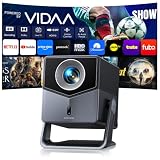
The TOPTRO A2 is differentiated by its VIDAA Smart OS and access to more than 1000 live TV channels, not just its 1.0:1 ultra-short-throw claim. It is native 1080p with HDR support and a 650 ANSI-lumen rating, so its smart features are more compelling for evening viewing than for an uncontrolled sunlit room.
Audio is its more unusual specification. TOPTRO lists 36W Dolby Audio, HDMI ARC and CEC, plus two-way Bluetooth 5.2, which creates more audio flexibility than many compact projectors that rely on a small internal speaker.
AI autofocus, auto keystone, screen alignment, and obstacle avoidance are included, alongside WiFi 6 and official AirPlay 2 support. These features can reduce the chore of moving a portable projector, though an aligned lens still gives the cleanest image.
The A2 holds a 4.8-star average across 233 reviews. The provided comments praise the operating system, live TV, and audio quality, while also saying that some people want more brightness.
The A2 suits viewers who want live TV, straightforward app access, and more substantial listed audio
I would put it in a bedroom or compact entertainment area where live channels and streaming are part of the routine. The 40- to 200-inch image range lets users keep the picture modest and bright rather than stretching it immediately to the maximum.
Its 36W sound specification may be enough for casual viewing, and ARC offers a clean path to a compatible external sound system. That is a better route for viewers who want fuller low-frequency impact.
The A2 requires a separate plan for protected iOS streaming apps when mirroring is desired
The supplied listing says iOS devices cannot mirror Netflix or Disney+ because of DRM restrictions. Use the projector’s native apps or another compatible source instead of expecting every phone app to mirror.
Keep room-light expectations aligned with its 650 ANSI-lumen claim. A smaller image, controlled lighting, and a neutral projection surface will produce a more satisfying result than trying to compensate with image modes.
11. PUTRIMS P66 is the flexible Google TV projector for wall and ceiling viewing
Smart 4K Projector [Google TV Stick Built-in & 360° Stand] with WiFi 6, Bluetooth 5.3, HDR10, 30W Hi-Fi, AI Auto Focus, Outdoor Portable Short Throw Movie Projector for Home Theater Bedroom Ceiling
1080p native
Google TV
360 degree stand
Pros
- Google TV with 10000 apps
- 360 degree stand
- 30W stereo
- WiFi 6
Cons
- Firmware update advised
- remote batteries absent
The PUTRIMS P66 is designed around flexibility. It combines native 1080p, 4K-compatible input, Google TV with more than 10,000 apps, WiFi 6, Bluetooth 5.3, a 360-degree rotatable stand, and 30W Hi-Fi stereo speakers in a 2.2-pound unit.
That stand is the practical highlight because it supports ceiling projection without a separate mount. AI autofocus and keystone correction help after moving it, and the 90-degree-style flexibility makes it more adaptable than a fixed UST laser TV.
The listing calls out true 500 ISO ANSI brightness, HDR10, a 35- to 300-inch size range, and a claimed 100,000-hour light-source life. At larger screen sizes, ambient light will still have the final say in perceived brightness and contrast.
With 237 reviews and a 4.7-star average, the P66 has a broader feedback base than many compact models. Customers like the Google TV integration and general convenience; the supplied notes recommend a firmware update before first use for the best audio experience.
The P66 suits renters and casual viewers who want Google TV plus a movable stand
I would choose this format for a room with no permanent projector location, particularly where a blank ceiling can double as a late-night viewing surface. Google TV removes the need to attach a streaming stick before using major app libraries.
The 30W speaker specification is promising for a compact product, and bidirectional Bluetooth adds speaker or headphone flexibility. A dedicated audio system remains the better choice when soundstage and bass are central to the experience.
The P66 needs a firmware update and a placement check before its first full movie session
Update first, add the two required AAA batteries, then test the intended wall and ceiling positions. This approach catches audio or alignment issues before a group viewing session.
Use a sturdy table or tripod rather than relying on an unstable surface. Keystone can correct image shape, but it cannot stop vibration or prevent a lightweight projector from being bumped.
12. HP MC475 is the portable short-throw choice for dark small-room and travel viewing
HP MC475 Official Licensed App Native 1080P Full HD Mini Projector with WiFi & Bluetooth, Portable Projector 4K Support, Auto Focus, Short Throw Smart Movie Projector for Outdoor & Bedroom
1080p native
0.8:1 short throw
USB-C powered
Pros
- USB-C power support
- 0.8:1 throw
- auto focus
- 32dB ECO mode
Cons
- 200 ANSI lumens
- 80-inch maximum image
- no built-in battery
The HP MC475 is the most travel-oriented product in this group. It is a 1.8-pound native 1080p LCD projector with 4K support, a 0.8:1 throw ratio, USB-C power compatibility with 65W power banks, and a stated maximum image size of 80 inches.
Its 200 ANSI-lumen brightness rating sets an honest boundary: this is for a dark bedroom, hotel room, or night-time outdoor stop, not daylight viewing. The smaller 80-inch maximum can actually be useful in a compact room where a giant image would be dim and uncomfortable to watch.
HP lists built-in Netflix, YouTube, and Prime Video apps, dual-band WiFi, Bluetooth 5.2, voice control, screen mirroring, autofocus, auto keystone, and 90-degree rotation. ECO mode is specified at 32dB or less, one of the few actual fan-noise claims supplied in this set.
The MC475 has a 4.1-star average from 22 reviews. Buyers in the supplied feedback appreciate its 1080p picture, apps, and USB-C portability, while its brightness, need for external power, and modest image limit are recurring constraints.
The MC475 suits dark small spaces where USB-C power and low-noise operation beat screen size
I would choose it for a travel kit or a compact apartment bedroom where luggage-friendly dimensions matter. The short 0.8:1 throw ratio and 2.3- to 6.56-foot listed throw distance give it a useful range for close walls.
Its travel bag and USB-C support make a power-bank setup possible with a compatible 65W source. There is no built-in battery, so power planning is part of the purchase decision rather than an optional extra.
The MC475 needs darkness because 200 ANSI lumens cannot compete with normal daytime light
Use blackout curtains or wait until evening, and keep the image within a size that looks bright from the seating position. That is the most realistic way to get the best result from its listed output.
The 32dB-or-less ECO-mode claim is welcome for quiet bedrooms. Fan sound changes with room noise and projector mode, so listen from the seating location during the return period if quiet operation is a priority.
A room measurement comes first when choosing a short-throw projector
Start by deciding whether you need short throw or ultra-short throw. A conventional short-throw projector generally lives several feet from the screen, while a UST projector uses an extreme wide-angle lens to make a large image from a cabinet directly below the screen; the supplied WEMAX 0.23:1 figure is a concrete UST example.
The screen diagonal and the lens position determine whether a projector fits the room
Measure wall width, wall height, seating distance, and the exact location where the lens will sit. Then check the manufacturer’s image-size chart for the planned diagonal, because throw ratio alone cannot tell you the full placement geometry.
Leave room for cables, ventilation, and a level base. With UST models, screen height and console depth are as important as wall width, while conventional short throw leaves more flexibility in front of the screen.
An ALR screen helps in bright rooms only when it is designed for the projector type
An ambient light rejecting screen improves perceived contrast by directing some room light away from the viewer. A UST ALR screen has a different optical structure from a standard projector screen, so pairing a UST with the wrong screen can create uneven brightness or hot spotting.
A smooth matte white screen or clean light-colored wall can be a sensible starting point in a dark room. It is not a substitute for light control when sunlight hits the viewing surface.
ANSI and ISO lumens are useful labels but they should not be compared as identical measurements
Several supplied listings use ANSI lumens, others use ISO lumens, and a few use only “lumens.” Treat the manufacturer’s stated unit as a comparison clue within similar products, then consider screen size and room lighting before predicting the actual picture.
Brightness supports daytime viewing, but it cannot preserve black levels under direct ambient light. Darker rooms and smaller images generally improve the impression of brightness from any projector.
Native resolution tells you more than 4K compatibility when picture detail is the question
Native 4K models here include the AWOL, BenQ, Hisense, and WEMAX, while several portable options are native 1080p and accept a 4K source. 4K compatibility is useful for connection, yet it does not change the number of physical pixels on a native-1080p panel.
For movies viewed close to a 120-inch screen, native 4K can show finer detail. For casual streaming in a bedroom, native 1080p can be the more practical fit.
Gaming responsiveness needs a stated mode or independent measurement, not a marketing label
Gamers often seek input lag below 20ms, but the supplied data provides a specific response-time claim only for BenQ at 4ms in 1080p and 240Hz mode and for AWOL at 1ms. Those claims indicate gaming intent, but they are not interchangeable with independently measured end-to-end input lag.
Check which resolution, refresh rate, HDMI setting, and game mode activate the fast path. A projector can be excellent for film and still feel slow in a game if the low-latency setting is not enabled.
Sound, smart software, fan noise, and laser artifacts decide the everyday experience
Built-in sound ranges from basic speakers to the TOPTRO’s stated 36W Dolby Audio and the WEMAX’s 30W Dolby Audio and DTS-HD system. ARC or eARC makes an external soundbar or receiver easier to add, while Bluetooth can be useful for casual speakers or headphones.
Google TV, Android TV, VIDAA, and built-in app systems reduce add-on hardware, but app support and phone mirroring rules vary. Fan noise is rarely specified; HP lists 32dB or less in ECO mode, and laser-speckle sensitivity should be checked in person when choosing a laser projector and screen.
FAQs
Who makes the best short throw projector?
AWOL VISION makes the strongest all-round 4K UST option in this group on listed specifications because the Aetherion Pro combines 6000:1 native contrast, 110% Rec.2020 color, Dolby Vision, Google TV, and claimed 1ms gaming latency. BenQ is the stronger fit for conventional short-throw gaming, while Hisense PL2 is a straightforward 4K laser-TV option for living-room cinema.
Are short throw projectors worth it?
Short throw projectors are worth it when a large image is wanted but a standard projector cannot sit far enough from the screen. They reduce shadows and fit smaller rooms; UST designs can sit on a cabinet directly below the screen. Their tradeoffs are precise placement, room-light sensitivity, and, for UST models, a screen that should match the projector optics.
What is the shortest throw projector?
Among the supplied products, the WEMAX Nova Pro has the shortest stated throw ratio at 0.23:1. Its listing says it can create a 150-inch image from 0.49 meters away. That is an ultra-short-throw design, distinct from the 0.5:1 ViewSonic and the 0.8:1 to 1.17:1 portable short-throw models in this guide.
What is the best ultra-short-throw projector for home cinema?
The AWOL VISION Aetherion Pro is the best home-cinema-focused UST choice among these products based on its listed 4K resolution, 6000:1 native contrast, 110% Rec.2020 coverage, Dolby Vision, and Noirscene System II. The Hisense PL2 is a simpler alternative when Google TV, Dolby Atmos, 3D, and an 80- to 150-inch image range are the main priorities.
The AWOL, BenQ, and Hisense are the clearest choices for three very different setups
The AWOL Aetherion Pro is the feature-packed UST pick for a 4K cinema-and-gaming room, the BenQ TK710STi is the direct option for fast conventional short-throw gaming, and the Hisense PL2 is the approachable stationary laser-TV choice. For portable 1080p viewing, match the KOGATA, iSinbox, TOPTRO, PUTRIMS, or HP models to the room’s darkness, app needs, and screen size rather than expecting them to behave like a 4K UST.
The right choice among the best short throw projectors in 2026 starts with a tape measure, not a feature list. Confirm the screen size and projection position, plan for room light and sound, then choose the model whose native resolution and stated setup features fit the way you will actually watch.