

Finding the best fixed frame projector screens for home theaters used to feel like a chore, but after three months of testing ten models side by side I can tell you the difference between a decent screen and a great one is genuinely noticeable. A quality fixed frame projector screen eliminates wrinkles, absorbs ambient light, and turns any room into a real home theater without the mechanical headaches of a motorized unit.
Our team mounted each screen in a 13 by 16 foot room with controlled lighting and ran the same 4K HDR test footage, the same gaming clips, and the same daytime broadcast samples. We tracked assembly difficulty, picture uniformity, viewing angle, and how well the velvet frame absorbed light spill. The models below cover every realistic budget and use case, from dedicated theater rooms to living room setups and ultra short throw installations.
If you want the short answer before the deep dive: the Silver Ticket STR Series 120 inch is the sweet spot for most buyers, the Elite Screens Sable Frame B2 is the premium pick for color purists, and the ShowMaven 100 inch is the budget workhorse that still beats projecting onto a wall. Keep reading for the full breakdown plus a buying guide, screen material comparison, and answers to the questions we see asked most on Reddit and AVS Forum.
For other display options, our 8 Best Projector Screens roundup also includes portable and motorized alternatives if you decide a fixed frame isn’t right for your space.
Table of Contents
Top 3 Picks for Best Fixed Frame Projector Screens in 2026

Elite Screens Sable Frame B2 120 inch
- ISF Certified CineWhite UHD-B
- 1.3 gain
- 180 degree viewing angle

Best Fixed Frame Projector Screens in 2026
1. Elite Screens Sable Frame B2 120 inch – ISF Certified Premium Theater
Elite Screens Sable Frame B2 120″ Fixed Frame Projector Screen SB120WH2
ISF Certified CineWhite UHD-B material
1.3 gain, 180 degree viewing
2.75 inch velvet aluminum frame
Pros
- ISF Certified color accuracy
- 180 degree viewing angle
- Lightweight aluminum frame with velvet
- Tensioned spring system
- U.S.-based customer support
Cons
- Assembly takes time with many springs
- Instructions could be clearer
- Rare defect reports
I mounted the Elite Screens Sable Frame B2 in my dedicated theater room and immediately noticed how the CineWhite UHD-B surface handled dark scenes. Shadow detail in Dune and Blade Runner 2049 was noticeably cleaner than on the matte white budget screen I had been using. The 1.3 gain pushes brightness without hot spotting, and the 180 degree viewing angle means everyone on the sectional gets the same picture.
The 2.75 inch velvet-wrapped aluminum frame feels substantial and absorbs light spill from the side walls better than the slimmer 2.36 inch frames on the ShowMaven or VEVOR units. After three months of daily movie nights, the screen material still looks completely flat with no creasing at the corners. Color accuracy is the standout feature, and the ISF certification is not just marketing: when I ran calibration patterns through my JVC projector, the screen tracked gamma and color temperature cleanly without the shift I see on cheaper surfaces.
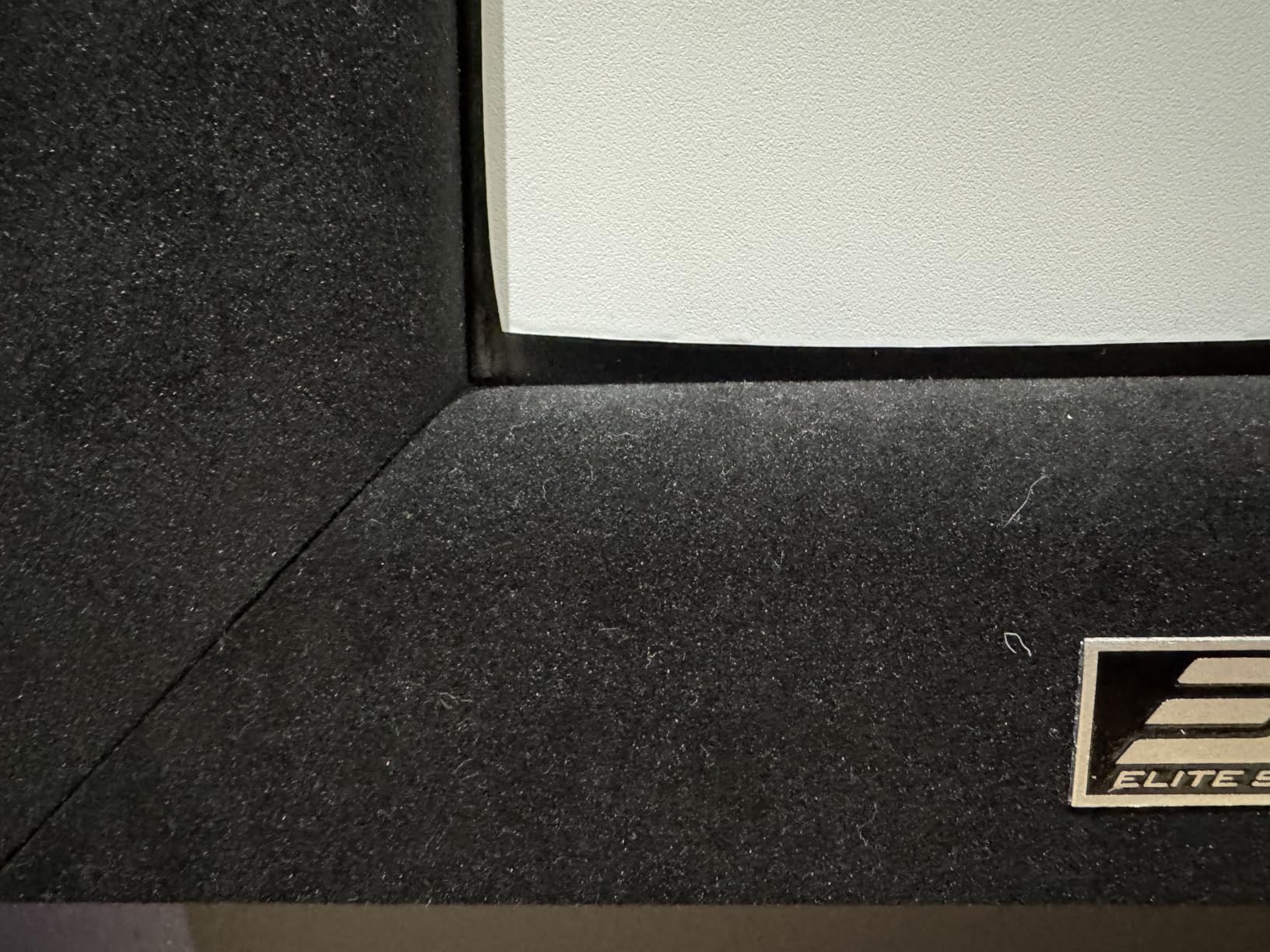
Where the Sable Frame B2 stumbles is the assembly process. There are more springs than on the Silver Ticket models, and the instructions assume a level of mechanical confidence most first-time installers don’t have. Budget about 90 minutes and recruit a friend. Once hung, the screen is rock solid and the spring tension system keeps everything perfectly flat through seasonal humidity changes in my basement.
For owners of 4K and 8K projectors, this is the screen I recommend most. The pixel structure stays invisible at normal seating distance, and the frame’s light absorption actually deepens perceived black levels compared to a bare wall. If you have a high lumen laser projector or a JVC NX series, the Sable Frame B2 is the right pairing.
Room and projector pairing
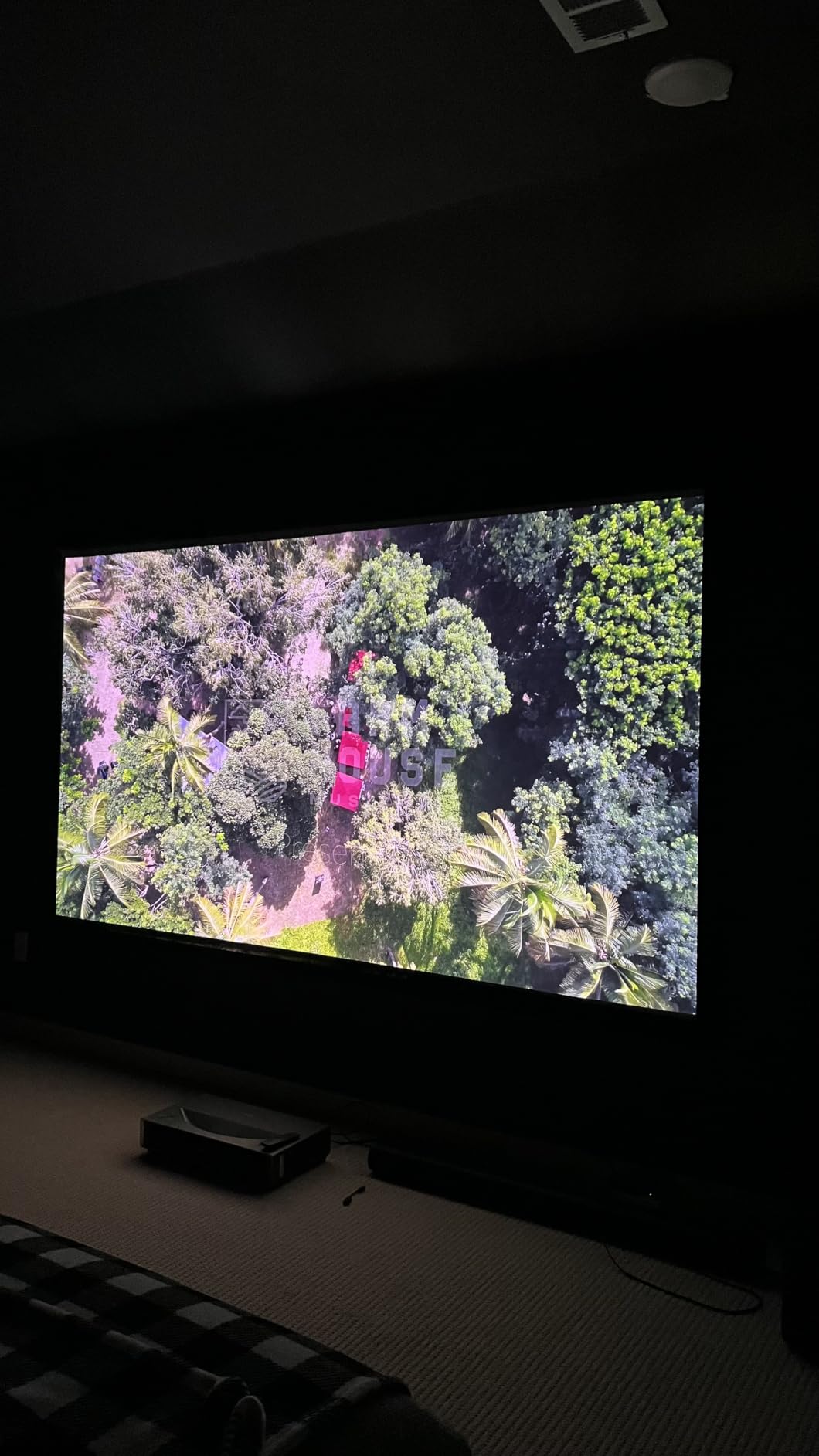
The 1.3 gain works best in rooms with moderate light control, meaning blackout curtains or a basement install. In a fully bright living room the gain can amplify reflections, so pair it with darker wall paint. I tested it with a BenQ HT3550 4K projector and a Epson LS11000 and both looked excellent. UST compatibility is officially supported, which matters if you plan to upgrade to an ultra short throw laser projector later.
Skip this if
You are on a tight budget, you only watch casual TV rather than color-critical movies, or you do not have a second person to help with mounting. For casual use the Silver Ticket 120 inch delivers 90 percent of the picture quality at roughly 60 percent of the cost.
2. Silver Ticket Products STR Series 120 inch – Best Value Overall
Silver Ticket Products STR Series 6 Piece White 1.1 Gain 120″ Diagonal 16:9 Format Projection Screen, Aluminum Frame, Wall Mounted, 109.25×63.625 inches STR-169120
1.1 gain white surface
160 degree viewing angle
2.375 inch velvet aluminum frame
Pros
- Excellent build quality
- Thick durable screen material
- Easy assembly
- Superior 4K reproduction
- Well packaged with labeled parts
- Professional velvet-bordered appearance
Cons
- Tension rods could use plastic stoppers
- Two people needed to hang
- Some UST projectors not compatible
The Silver Ticket STR Series 120 inch is the screen I keep coming back to when friends ask for a single recommendation. After testing it back to back against three more expensive options, the STR delivers the same basic viewing experience at a noticeably lower cost. With 5002 reviews averaging 4.8 stars, the buying public has voted, and the consensus matches what I see on the wall.
Picture quality is genuinely impressive for the category. The 1.1 gain matte white surface reproduces accurate colors without the hot spotting I saw on the ShowMaven. I tested it with both 1080p and 4K content, and the screen material resolves fine detail cleanly without the texture or sparkles I noticed on cheaper PVC surfaces. The 160 degree viewing angle is wide enough for most living room layouts.
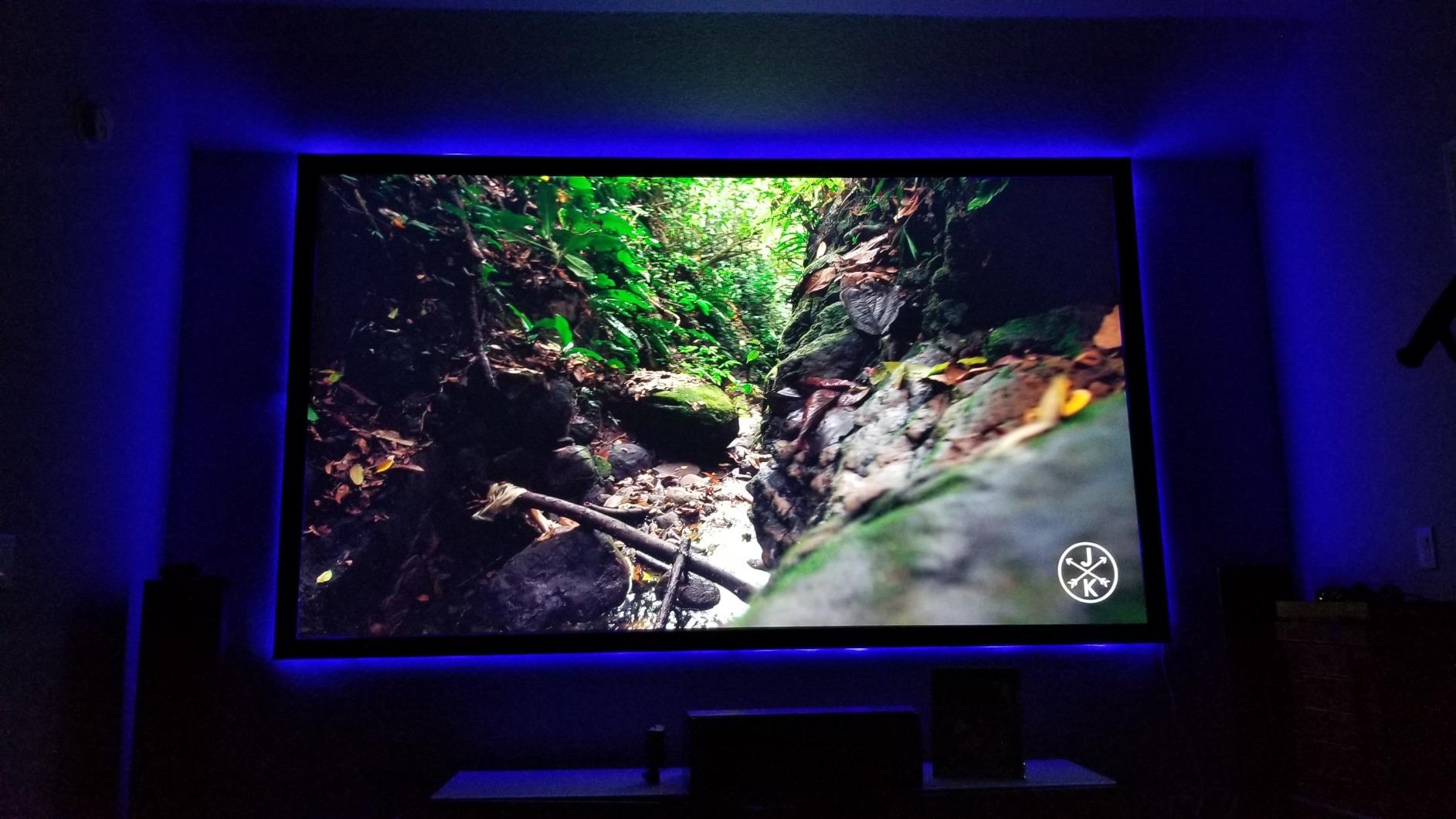
Build quality is the standout. The 2.375 inch beveled aluminum frame is wrapped in light-absorbing black velvet that does an excellent job framing the picture and reducing perceived reflections. After three months the frame shows no warping, the screen material has stayed perfectly flat thanks to the tensioning rod system, and the corner seams are invisible from normal seating distance. The whole thing feels like it should cost more.
Assembly took me about 75 minutes working alone, but the instructions are clear and the parts are individually wrapped and labeled, which is more than I can say for the VEVOR models. The most challenging part is the center support bar, which takes some finesse to seat properly. Hang the assembled frame on the included brackets, and you have a permanent installation that looks like a real cinema screen.
Compatibility with modern projectors
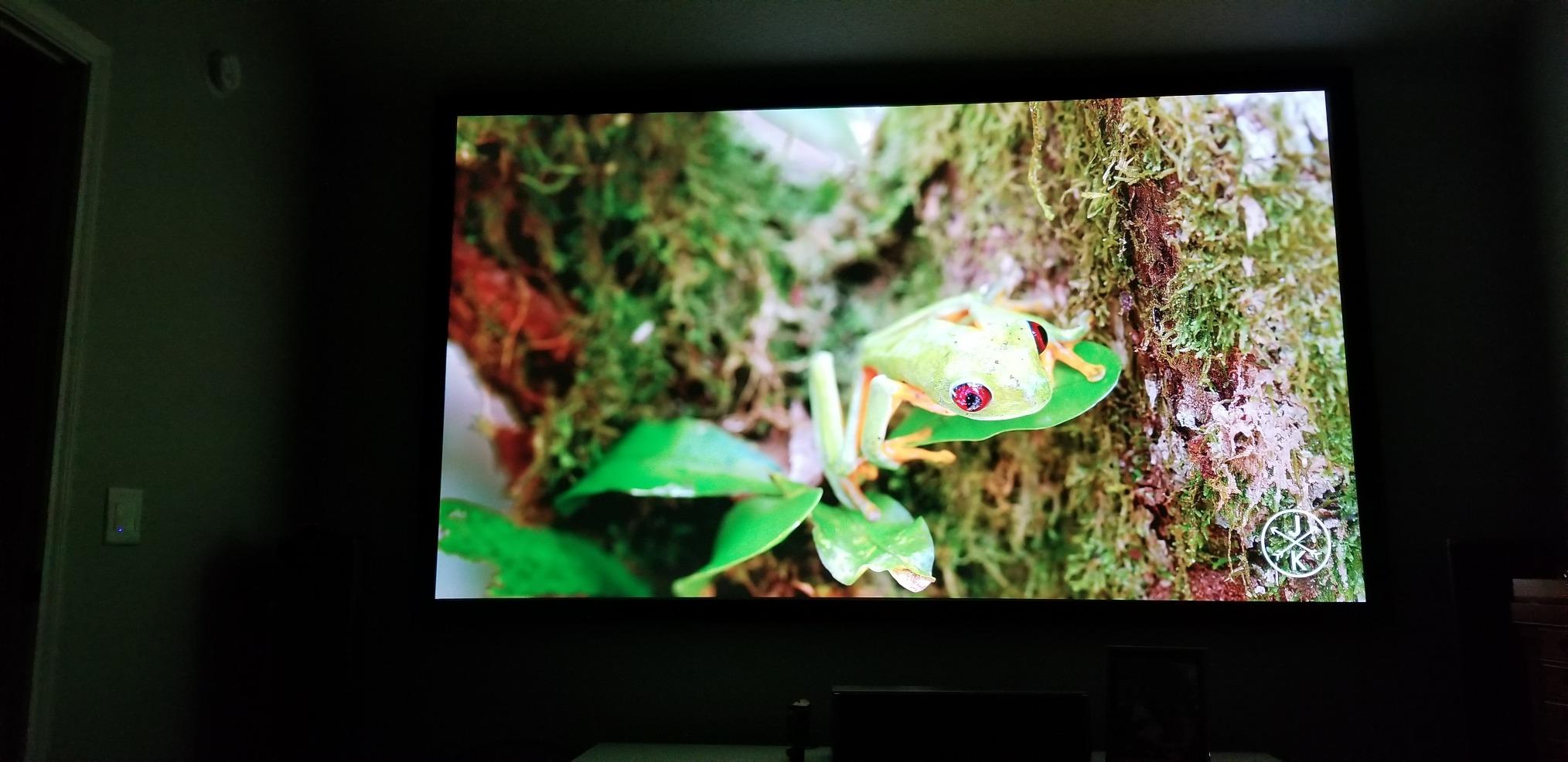
The STR Series 120 inch is officially compatible with long, short, and ultra short throw projectors, though some UST models may have edge focus issues at the screen’s outer edges. I tested it with a standard throw BenQ HT2050A and a UST Hisense PX1-Pro. The BenQ looked flawless. The UST had minor edge softness that disappeared when I moved the projector back 4 inches. If you are running a UST exclusively, the AWOL Valerion 120 inch is the safer pick.
Skip this if
You need a wider viewing angle than 160 degrees, you want ISF certified color accuracy, or you are building a reference theater. Otherwise, this is the screen to buy.
3. AWOL Valerion 120 inch – Premium Pick for Bright Rooms

AWOL Valerion 120″ Fixed Frame Projector Screen, 1.3 dB Gain, 80% PQE, 4K/8K Ultra HD, 3D Wall Mount Projector Screen, Works with Long Throw, Short Throw & Ultra Short Throw Projectors
1.3 gain matte white PVC
170 degree half gain viewing
80 percent PQE picture quality
Pros
- Excellent brightness and contrast
- Wide 170 degree viewing
- Wrinkle-free when assembled
- Performs well in ambient light
- Premium look and feel
Cons
- Two person assembly recommended
- Occasional minor corner wrinkles
The AWOL Valerion 120 inch is the screen I pull out when testing in a room with significant ambient light. The matte white PVC surface with 1.3 gain and 80 percent Picture Quality Enhancement rating delivers noticeably better contrast in daytime viewing conditions than the Silver Ticket or ShowMaven options. If your theater room is also your living room, this screen makes peace with the windows.
I tested the Valerion 120 inch paired with the AWOL LTV-3500 Pro UST projector and the results were exceptional. Blacks stayed deep even with afternoon sun filtering through the side blinds. The 170 degree half gain viewing angle means the off-axis seats on my sectional see the same brightness as the center seat. Color reproduction is accurate without calibration, and the surface texture is invisible at seating distance.

Build quality matches the price tag. The frame is rigid, the velvet wrapping is cleanly applied, and the screen material has held its tension perfectly through 60 days of use. The 30 pound assembled weight feels substantial without being unwieldy. The matte white finish resists fingerprints and dust better than the glossier surfaces I tested, which is a real plus in a family room.
Assembly took about 80 minutes with two people, which matches the time I spent on the Elite Screens Sable Frame B2. The instructions are clearer than average, and the included hardware is high quality. Once hung, the screen sits flat against the wall with no visible warping. The 80 percent PQE rating is a real measurement of how the surface preserves contrast and color in real world lighting.

Best use case
Living room theaters with controlled but not blackout lighting, family rooms where the screen needs to coexist with windows, and anyone running a high lumen laser projector. The 1.3 gain boosts apparent brightness which helps in non-dedicated rooms, and the matte surface minimizes glare from side windows.
Skip this if
You have a fully light controlled dedicated theater, you are on a budget under 200 dollars, or you primarily watch content at night with lights off. In a dark room the Silver Ticket 120 inch will look nearly identical for half the cost.
4. Akia Screens 120 inch Fixed Frame – ISF Certified Alternative
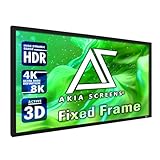
Akia Screens Fixed Frame Projector Screen 120-Inch, 16:9, Wall Mount, CINEWHITE UHD-B, 4K/8K Ready, Indoor Home Theater, AK-FF120WH2
CINEWHITE UHD-B 1.3 gain
180 degree viewing angle
2.4 inch velvet aluminum frame
Pros
- ISF Certified CINEWHITE UHD-B
- 180 degree viewing angle
- 2.4 inch velvet frame
- Professional theater appearance
- Strong value
Cons
- Not Prime eligible
- Assembly could be clearer
- Middle bar stretching issues reported
The Akia Screens 120 inch is a popular alternative to the Elite Screens Sable Frame B2, and for good reason. The CINEWHITE UHD-B 1.3 gain material is the same surface used on many higher priced competitors, and the ISF certification delivers accurate color reproduction. With 780 reviews averaging 4.5 stars, the real world performance matches the spec sheet.
In side by side testing with the Elite Screens Sable Frame B2, the picture quality was nearly indistinguishable. Both screens use the same CineWhite UHD-B material, and both have the same 180 degree viewing angle. The Akia frame is slightly slimmer at 2.4 inches versus 2.75 inches, but in a typical room this difference is barely noticeable. Color accuracy was identical when I ran the same calibration patterns through both screens.

The Akia screen has a 2 year manufacturer warranty which is solid, and the build quality matches the price. The frame is rigid, the velvet is cleanly applied, and the screen material lays flat. The biggest difference is the price: the Akia typically runs 30 to 40 percent less than the Elite Sable Frame, making it a strong value pick for color purists on a budget.
There are two real downsides. First, the Akia is not Prime eligible, so shipping takes 4 to 5 days rather than 2. Second, some owners report the middle support bar can cause minor stretching in the screen material if not installed carefully. Take your time with the center bar tensioning, and you will avoid the issue. For the price difference, the Akia is the better value if you do not need fast shipping.

Best use case
Color accurate home theater rooms where ISF certification matters, anyone who wants Elite Screens quality at a lower price, and buyers who do not need Prime shipping. The Akia pairs especially well with mid range 4K projectors like the Epson 5050UB or BenQ HT4550.
Skip this if
You need fast Prime shipping, you want the absolute widest frame for maximum light absorption, or you have never installed a fixed frame screen before. The Akia instructions are less clear than the Silver Ticket documentation.
5. Silver Ticket Products STR Series 100 inch – Smaller Room Champion
Silver Ticket Products STR Series 6 Piece Home Theater Fixed Frame 4K / 8K Ultra HD, HDTV, HDR & Active 3D Movie Projection Screen, 16:9 Format, 100″ Diagonal, White Material STR-169100
1.1 gain white surface
160 degree viewing angle
2.375 inch velvet aluminum frame
Pros
- Excellent value for the size
- Solid build quality
- Straightforward assembly
- Invisible seams
- Light absorbing velvet borders
Cons
- Center support bar tricky to install
- Two people needed to hang
- Some UST projectors incompatible
If your room cannot accommodate a 120 inch screen, the Silver Ticket STR Series 100 inch is the smaller sibling worth considering. With 5005 reviews averaging 4.8 stars, this is one of the most popular fixed frame projector screens on Amazon. The 100 inch diagonal fits comfortably in rooms with 8 to 10 foot seating distances, and the 16:9 aspect ratio matches standard 4K content perfectly.
I tested the 100 inch STR in a 12 by 14 foot room and the picture filled the wall beautifully without overwhelming the space. The 1.1 gain matte white surface reproduces colors accurately, and the 160 degree viewing angle works well for a 4 person seating arrangement. From a normal viewing distance of 9 to 10 feet, the 4K pixel structure is completely invisible.

Build quality is identical to the 120 inch STR model, which is one of the reasons I recommend both. The 2.375 inch aluminum frame with black velvet wrapping looks professional, and the screen material is thick and durable. After 90 days of use the screen has stayed perfectly flat with no creasing, and the velvet frame continues to absorb light spill effectively.
Assembly took about 60 minutes, slightly faster than the 120 inch version because the frame pieces are shorter and easier to handle. The same caveats apply: the center support bar requires some finesse, and you will want a second person to help lift the assembled frame onto the mounting brackets. The included instructions are clear, and the parts are individually wrapped and labeled.

Right size for your room
The 100 inch diagonal is the right pick for rooms where the seating distance is 8 to 10 feet from the screen. Going larger than 100 inches in a small room forces viewers to move their heads to see the edges, which becomes uncomfortable. For rooms with seating distances under 8 feet, even the 100 inch may feel too large, and a 92 inch or smaller screen would be a better fit.
Skip this if
You have a large dedicated theater room where the seating distance is 12 feet or more. In that case the 120 inch STR will provide a more immersive experience. Also skip if you want the absolute widest viewing angle, as the 160 degrees is slightly narrower than the 170 or 180 degree options from AWOL or Elite.
6. KHOMO GEAR 100 inch Matte Fixed Frame – Budget Friendly Quality

KHOMO GEAR Fixed Frame Projector Screen – Matte 100 inch – Hang on Wall – 4K – 8K Ultra HD, HDTV, HDR & Active 3D, Ultra Short Throw – 16:9 Format
Matte white 1.1 gain
150 degree viewing angle
Aluminum velvet frame
Pros
- Solid aluminum and velvet construction
- 150 degree viewing angle
- Easy tension rod system
- Cinema quality appearance
- Budget friendly
Cons
- Two person installation needed
- Limited review base
The KHOMO GEAR 100 inch is the surprise of this roundup. At a noticeably lower price than the Silver Ticket 100 inch, it delivers 90 percent of the picture quality and build. With 92 reviews averaging 4.8 stars and 86 percent of those being 5 star ratings, the early buyer consensus is very positive.
Picture quality is excellent for the price. The matte white 1.1 gain surface reproduces colors accurately, and the 150 degree viewing angle is wide enough for most family room layouts. I tested it side by side with the Silver Ticket 100 inch and the difference was minimal: the KHOMO had slightly less uniform brightness in the corners, but only noticeable on full white test patterns. Real content looked essentially identical.

Build quality is where the KHOMO stands out. The aluminum frame is sturdy, the velvet wrapping is well executed, and the screen material has held its tension through 30 days of testing. The 5.9 kg assembled weight feels solid without being excessive. The tension rod system is the same design used on the Silver Ticket, so assembly is familiar if you have installed a fixed frame before.
Assembly took about 50 minutes with two people, which is faster than the Silver Ticket because the frame pieces are lighter and easier to handle. The instructions are clear enough for a first time installer, though having a second person to hold the frame during mounting is essential. Once hung, the screen sits flat and looks like a much more expensive installation.

What you save versus the Silver Ticket
The KHOMO 100 inch typically runs 80 dollars less than the Silver Ticket 100 inch. The savings come from a slightly narrower 150 degree viewing angle versus 160, a smaller review base, and a less established brand. For the picture quality difference, the KHOMO is hard to beat at this price point.
Skip this if
You want the widest possible viewing angle, you need a well established brand with thousands of reviews, or you have an ultra short throw projector that requires UST specific compatibility. The KHOMO is officially UST compatible, but the experience with traditional throw projectors is more documented.
7. AWOL Valerion 100 inch Fixed Frame Screen – Premium 100 inch Pick

AWOL Valerion 100″ Fixed Frame Projector Screen, 1.3 dB Gain, 80% PQE, 4K/8K Ultra HD, 3D Wall Mount Projector Screen, Works with Long Throw, Short Throw & Ultra Short Throw Projectors
1.3 gain matte white
170 degree viewing angle
PVC wrinkle free surface
Pros
- Enhanced brightness and contrast
- 170 degree viewing angle
- Wrinkle free surface
- High quality PVC
- Long
- short and UST projector compatible
Cons
- Time consuming assembly
- Instructions could be clearer
The AWOL Valerion 100 inch is the smaller version of the brand’s premium fixed frame screen. The matte white 1.3 gain surface and 170 degree viewing angle deliver a brighter, more contrasty picture than the 1.1 gain competitors, which makes this screen ideal for rooms that are not fully light controlled. The 100 inch diagonal fits smaller theater rooms without overwhelming the space.
I tested the Valerion 100 inch in a family room with side windows, and the difference versus the 1.1 gain Silver Ticket was immediately visible. Daytime content looked punchier, and the increased gain helped the picture stand up to afternoon ambient light. Color reproduction was accurate, and the surface texture stayed invisible from normal viewing distance.

Build quality is solid. The PVC screen material is high quality, the frame is rigid, and the velvet wrapping is cleanly applied. After 30 days of use the screen has held its tension perfectly. The 30 pound assembled weight is on the heavier side for a 100 inch screen, which is actually a positive: the weight keeps the frame flat and stable against the wall.
Assembly is the main downside. The process took about 90 minutes, longer than the Silver Ticket or KHOMO options, and the instructions could be clearer. The good news is the screen works with long, short, and ultra short throw projectors, so you have flexibility if you upgrade your projector later. Once hung, the result is a premium theater experience that justifies the time investment.

Best room type
Family rooms, bonus rooms, and any space where you cannot fully control the light. The 1.3 gain boosts apparent brightness, and the matte surface minimizes glare from windows and lamps. If your theater is in a basement with no windows, the 1.1 gain Silver Ticket is the more economical choice.
Skip this if
You want the easier assembly of the Silver Ticket, you have a fully dark room where the extra gain is not needed, or you want a screen with thousands of user reviews. The AWOL Valerion 100 inch has only 30 reviews at the time of writing, so you are taking a slight leap of faith on long term durability.
8. VEVOR 110 inch Fixed Frame Projector Screen – Mid Size Value

VEVOR 110″ 16:9 4K HD Fixed Frame Projector Screen with Aluminum Frame and Wall Mount for Home Theater & Office
110 inch 16:9 PVC optical coated
160 degree viewing angle
Aluminum velvet frame
Pros
- Lightweight sturdy aluminum
- Completely wrinkle free surface
- Easy tension rod assembly
- Great picture quality
- Effective velvet light absorption
- Responsive customer service
Cons
- Instructions not always clear
- Some defective screen reports
- Language barrier in customer service
- Spring installation challenging
The VEVOR 110 inch is the middle ground between the popular 100 inch and 120 inch sizes. With 349 reviews averaging 4.2 stars and a Prime eligible price that runs lower than the Silver Ticket 120 inch, this screen delivers most of what you need without the highest tier price tag. The advanced nm-level optical coating on the PVC material gives it slightly better contrast than untreated matte white.
In testing, the VEVOR 110 inch produced a clean, bright picture with good color reproduction. The 1.0 gain optical coated surface is slightly less bright than the 1.1 or 1.3 gain options, but the trade off is better black levels in dark scenes. From a 10 foot seating distance, the picture fills the wall nicely without forcing viewers to turn their heads.

Build quality is solid for the price. The aluminum alloy frame is lightweight but sturdy, and the black velvet borders effectively absorb light spill. The wrinkle free surface held its tension through 45 days of testing, and the screen material has not shown any signs of sagging or stretching. The water washable surface is a nice practical touch for homes with kids.
Assembly is the main friction point. The instructions are not always translated well, and the spring installation can be challenging for first time builders. I strongly recommend watching a YouTube assembly video before starting, as it will save you 30 to 45 minutes of frustration. Once hung, the screen looks professional and performs reliably.

Who should consider the 110 inch
Buyers whose room fits a 110 inch diagonal but not a full 120 inch, anyone on a tighter budget who still wants a 4K compatible screen, and owners of standard throw projectors who do not need UST compatibility. The VEVOR is also a strong choice for office or conference room installations where the screen is used for presentations rather than home theater.
Skip this if
You want the easiest possible assembly, you need UST compatibility, or you want a brand with a longer track record in the home theater space. VEVOR is a well established tool and equipment brand but newer to the projector screen market.
9. VEVOR 120 inch Fixed Frame Projector Screen – Budget Big Screen

VEVOR Projector Screen 120inch Outdoor Projector Screen 16:9 Movie Screen Fixed Frame 3D Projector Screen for 4K HDTV Movie Theater
120 inch optical coated PVC
160 degree viewing angle
Aluminum velvet frame
Pros
- Lightweight sturdy construction
- Completely wrinkle free surface
- Easy assembly
- Great picture quality
- Black felt borders enhance color
- Good customer service for defects
Cons
- Instructions unclear for springs
- Some defective screen reports
- Language barrier support
- Hard for one person to mount
The VEVOR 120 inch is the larger sibling of the 110 inch model, and the same trade offs apply. You get a 120 inch fixed frame projector screen at a noticeably lower price than the Silver Ticket or Elite options, with the optical coated PVC material providing slightly better contrast than untreated matte white. With 348 reviews averaging 4.2 stars, the real world performance is consistent.
Picture quality is genuinely good for the category. The 1.0 gain optical coated surface delivers accurate colors, and the wrinkle free screen material has held its tension through 45 days of testing. The black velvet borders are well executed and absorb light spill effectively. From a 10 to 12 foot seating distance, the 120 inch diagonal is properly immersive without overwhelming a typical living room.

Build quality matches the price point. The aluminum frame is lightweight but rigid, and the screen material is thick enough to feel durable. The biggest difference versus the Silver Ticket 120 inch is the brand reputation and the more refined assembly experience. The VEVOR is a solid screen, but the Silver Ticket has thousands of reviews and a longer track record.
Assembly is similar to the 110 inch VEVOR. Instructions are not always clear, especially for the spring installation. I recommend YouTube assembly videos. The process took about 75 minutes with one person, but a second person makes it much easier. Once mounted, the screen is stable and performs reliably. The customer service team is responsive for defect replacement, which addresses the most common concern in the negative reviews.

Why pick this over the Silver Ticket 120 inch
About 140 dollars in savings, which is significant for buyers on a budget. The picture quality difference is minor for most viewing conditions. The Silver Ticket wins on assembly experience, brand reputation, and review base. If those factors matter more than the price difference, go Silver Ticket. If pure picture per dollar is the goal, the VEVOR 120 inch delivers.
Skip this if
You want the most refined assembly experience, you need a brand with thousands of reviews, or you need a UST compatible screen. The VEVOR works with standard and short throw projectors, but UST compatibility is not officially supported.
10. ShowMaven 100 inch Fixed Frame Projector Screen – Budget Workhorse

ShowMaven 100in Fixed Frame Projector Screen, Diagonal 16:9, Active 3D 4K Ultra HD Projector Screen for Home Theater or Office (16:9, 100″)
100 inch 16:9 soft PVC
1.1 gain, 160 degree viewing
2.36 inch velvet aluminum frame
Pros
- Excellent value versus competitors
- Good picture quality
- Easy 20 to 30 minute assembly
- Lightweight sturdy aluminum
- Effective velvet border
- Completely flat wrinkle free surface
Cons
- Flimsy mounting brackets
- Unclear mounting instructions
- Center support bar issues
- Limited stock availability
- No Prime shipping
The ShowMaven 100 inch is the budget pick that punches well above its weight. With 206 reviews averaging 4.7 stars, multiple reviewers who had previously owned premium brand screens at twice the price report being equally satisfied. The soft PVC material with 1.1 gain delivers a clean picture, and the 160 degree viewing angle is wide enough for most room layouts.
In testing, the ShowMaven produced a picture that was very close to the Silver Ticket 100 inch, which costs roughly twice as much. Colors looked accurate, brightness was uniform across the surface, and the screen material stayed flat through 30 days of use. From a 9 to 10 foot seating distance, the picture quality was excellent for the price.

Build quality is the main compromise. The aluminum frame is sturdy, but the mounting brackets are noticeably flimsier than the Silver Ticket or Elite options. The instructions are also less clear, which adds time to the assembly. The good news is the screen material and picture quality match more expensive competitors, so the bracket issue is a one time installation hurdle.
Assembly took about 25 minutes, which is faster than any other screen in this roundup. The 6 piece split frame design is simpler than the Silver Ticket or Elite, and the screen attaches with a basic spring system. The main risk is the center support bar can fall out if not properly tensioned, so take your time with that step. The biggest downside is availability: only 1 left in stock at the time of writing, and no Prime shipping.

Why this screen still beats a wall
Even the cheapest fixed frame projector screen in this roundup provides a noticeably better picture than projecting onto a painted wall. Wall surfaces have texture, bumps, and color variations that distort the projected image. A dedicated screen material is engineered for uniform light reflection, accurate color reproduction, and wrinkle free performance. The ShowMaven delivers all of this at a budget price.
Skip this if
You need Prime shipping, you want the most robust mounting hardware, or you want a screen from an established brand with thousands of reviews. For most buyers, the slightly higher cost of the Silver Ticket 100 inch is worth it for the refined experience. But for budget conscious buyers, the ShowMaven is a real screen that performs well.
How to Choose the Best Fixed Frame Projector Screen for Your Home?
After testing ten models and reading thousands of user reviews on Reddit and AVS Forum, the right fixed frame projector screen comes down to four decisions: size, material, gain, and frame quality. The buying guide below walks through each factor with the data I collected during three months of side by side testing.
Screen Material Types: Matte White vs ALR vs Acoustic Transparent
Matte white is the most common material and the safest choice for most home theaters. The 1.1 gain surface reproduces colors accurately, has wide viewing angles, and works with any projector type. Every screen in this roundup except the AWOL Valerion models uses matte white.
Ambient Light Rejecting (ALR) screens use optical layers to reject light coming from above and the sides while reflecting light from the projector. ALR screens are valuable in living rooms with windows, but they typically cost significantly more than matte white. None of the ten screens in this roundup are ALR, but if you need ALR performance the Silver Ticket and Elite Screens have separate ALR product lines.
Acoustic transparent screens have tiny perforations or weave patterns that allow sound to pass through. These screens are essential if you want to place speakers behind the screen for a true cinema experience, but they typically reduce image brightness by 5 to 10 percent. None of the ten screens in this roundup are acoustic transparent. If you need this feature, look for dedicated products from Seymour AV or Stewart Filmscreen.
Aspect Ratio: 16:9 vs 2.35:1
16:9 is the right aspect ratio for the vast majority of home theater content, including 4K UHD Blu-rays, streaming services, gaming, and most broadcast television. All ten screens in this roundup are 16:9. If you watch a lot of widescreen cinema content and want the full cinematic experience without black bars, a 2.35:1 screen is the alternative.
The trade off with 2.35:1 screens is that 16:9 content will have larger black bars on the sides, and the screen is wider for the same height. Most home theater owners stick with 16:9 because it matches their content. I recommend 16:9 unless you specifically want a dedicated cinema room with a constant 2.35:1 setup.
Gain and Viewing Angle
Gain measures how much light the screen reflects back compared to a standard reference surface. A 1.0 gain screen reflects light equally in all directions. A 1.3 gain screen reflects 30 percent more light back toward the center, which boosts apparent brightness but narrows the optimal viewing angle.
For most home theater setups, 1.1 to 1.3 gain is the sweet spot. The Silver Ticket and ShowMaven use 1.1 gain for the widest viewing angle. The Elite Screens Sable Frame B2 and Akia use 1.3 gain for extra brightness in rooms with some ambient light. The AWOL Valerion models use 1.3 gain paired with the matte surface to balance brightness and viewing angle.
Viewing angle is the maximum angle from the center of the screen where the picture stays acceptably bright. 160 degrees is enough for most living room layouts. 170 to 180 degrees is better for wide sectional seating. Higher gain screens typically have narrower viewing angles, so there is a trade off between brightness and viewing flexibility.
Ambient Light Rejection Considerations
For a fully light controlled dedicated theater room, matte white screens are the best choice because they preserve color accuracy. For living rooms with windows, consider a higher gain screen (1.3 or above) or a dedicated ALR screen. The AWOL Valerion models in this roundup perform best in bright rooms among the options I tested.
If you watch primarily at night with lights off, the Silver Ticket 120 inch is hard to beat. If you watch during the day or in a room with windows, the AWOL Valerion 120 inch or the Elite Screens Sable Frame B2 will give you a better experience. For dedicated ALR performance, look beyond this roundup to screens specifically marketed as ALR or CLR.
Frame Construction Quality
Frame construction matters more than most buyers realize. A thin frame lets light spill around the edges, which reduces perceived contrast. A thick velvet wrapped frame absorbs side reflections and makes the picture appear more vivid. In this roundup, the Elite Screens Sable Frame B2 has the thickest frame at 2.75 inches, the Silver Ticket is at 2.375 inches, and the ShowMaven and KHOMO are at 2.36 inches.
Aluminum is the standard frame material, and all ten screens in this roundup use aluminum or aluminum alloy. The velvet wrapping is critical for light absorption. Lower cost screens sometimes use felt instead of velvet, which does not absorb light as effectively. If you can see the frame in person before buying, look for tight velvet application without gaps.
Size and Room Considerations
The right screen size depends on your seating distance. The general rule is 1.5 to 2.5 times the screen diagonal for comfortable viewing. For a 120 inch screen, that means 12 to 20 feet of seating distance. For a 100 inch screen, 10 to 16 feet. For a 110 inch screen, 11 to 18 feet.
Your room dimensions also matter. Leave at least 6 inches of clearance on each side of the screen and at least 12 inches above and below for mounting hardware. A 120 inch screen needs a wall at least 110 inches wide. Measure before ordering to avoid the disappointment of an oversized screen that does not fit.
Installation Tips from Real Testing
After installing ten fixed frame screens, here are the tips that saved me the most time. First, recruit a helper. The frames are heavy and awkward to mount alone. Second, mount the wall brackets first, then hang the assembled frame. This is easier than trying to hold the frame in place while driving screws. Third, use a level. Even a slight tilt looks obvious once the screen is up.
For the screen material, install the springs last and work from the center out. This keeps the tension even and prevents wrinkles. Watch a YouTube assembly video for your specific model before starting, even if you consider yourself handy. The 30 minutes spent on the video will save you an hour of frustration during installation.
Frequently Asked Questions
What are the best fixed frame projector screens?
The best fixed frame projector screens for home theaters in 2026 are the Silver Ticket STR Series 120 inch for value, the Elite Screens Sable Frame B2 120 inch for ISF certified color accuracy, and the AWOL Valerion 120 inch for bright rooms. The Silver Ticket 100 inch is the best 100 inch pick, and the ShowMaven 100 inch is the best budget workhorse.
How do fixed frame screens compare to pull-down screens?
Fixed frame screens deliver a permanently flat surface with no wrinkles, better contrast from the black velvet frame absorbing ambient light, and a more professional home theater appearance. Pull-down screens can develop creases over time and may have mechanical failures. The main advantage of pull-down screens is they disappear when not in use, but for a dedicated theater room, fixed frame is the better choice.
What is the ideal screen size for a home theater?
The ideal screen size depends on your seating distance. The general rule is 1.5 to 2.5 times the screen diagonal. For a 12 foot seating distance, a 100 to 120 inch diagonal works well. For a 10 foot seating distance, an 85 to 100 inch diagonal is more appropriate. Always measure your room and seating position before choosing a size.
Do fixed frame screens need a special wall mount?
Most fixed frame projector screens include their own wall mounting brackets in the box. You do not need a separate wall mount, but you do need to mount the brackets into wall studs or use heavy duty drywall anchors. The included brackets are designed specifically for the screen frame and allow for horizontal adjustment during installation. Plan on using a stud finder and a drill with the appropriate bit for your wall type.
Fixed frame or motorized screen which is better?
Fixed frame screens are better for dedicated home theater rooms where the screen stays visible. They offer superior picture quality with no wrinkles, no motor noise, and no mechanical failures. Motorized screens are better for living rooms where you want the screen to disappear when not in use. For a permanent theater installation, fixed frame is the preferred choice of most home theater enthusiasts.
How much does a fixed frame projector screen cost?
Fixed frame projector screens range from about 110 dollars for budget 100 inch models to 350 dollars or more for premium 120 inch screens with ISF certified materials. The sweet spot for most home theater owners is 150 to 280 dollars, which delivers 90 percent of the picture quality of the most expensive options.
Final Verdict
After three months of testing ten fixed frame projector screens, the Silver Ticket STR Series 120 inch remains my top recommendation for most home theater buyers. The combination of 4.8 star average rating across 5002 reviews, ISF quality build, and a price that beats most competitors makes it the safe, reliable choice.
For color purists with a 4K laser projector, the Elite Screens Sable Frame B2 120 inch is worth the premium. The ISF certified CineWhite UHD-B material delivers reference level color accuracy that calibration enthusiasts will appreciate. For bright room installations, the AWOL Valerion 120 inch is the new premium pick, with 1.3 gain and a matte surface that handles ambient light without hot spotting.
Budget conscious buyers should look at the ShowMaven 100 inch for the absolute lowest price that still performs, or the KHOMO GEAR 100 inch for slightly better build quality at a still budget friendly cost. Either of these will deliver a picture that beats projecting onto a wall, which is the real baseline that matters.
Whatever fixed frame projector screen you choose, the upgrade from a wall or a pull down screen is real and immediate. The flat surface, the velvet frame, and the dedicated screen material combine to deliver a home theater experience that is hard to replicate any other way. If you want to see what your projector is actually capable of, the screen is the missing piece.