
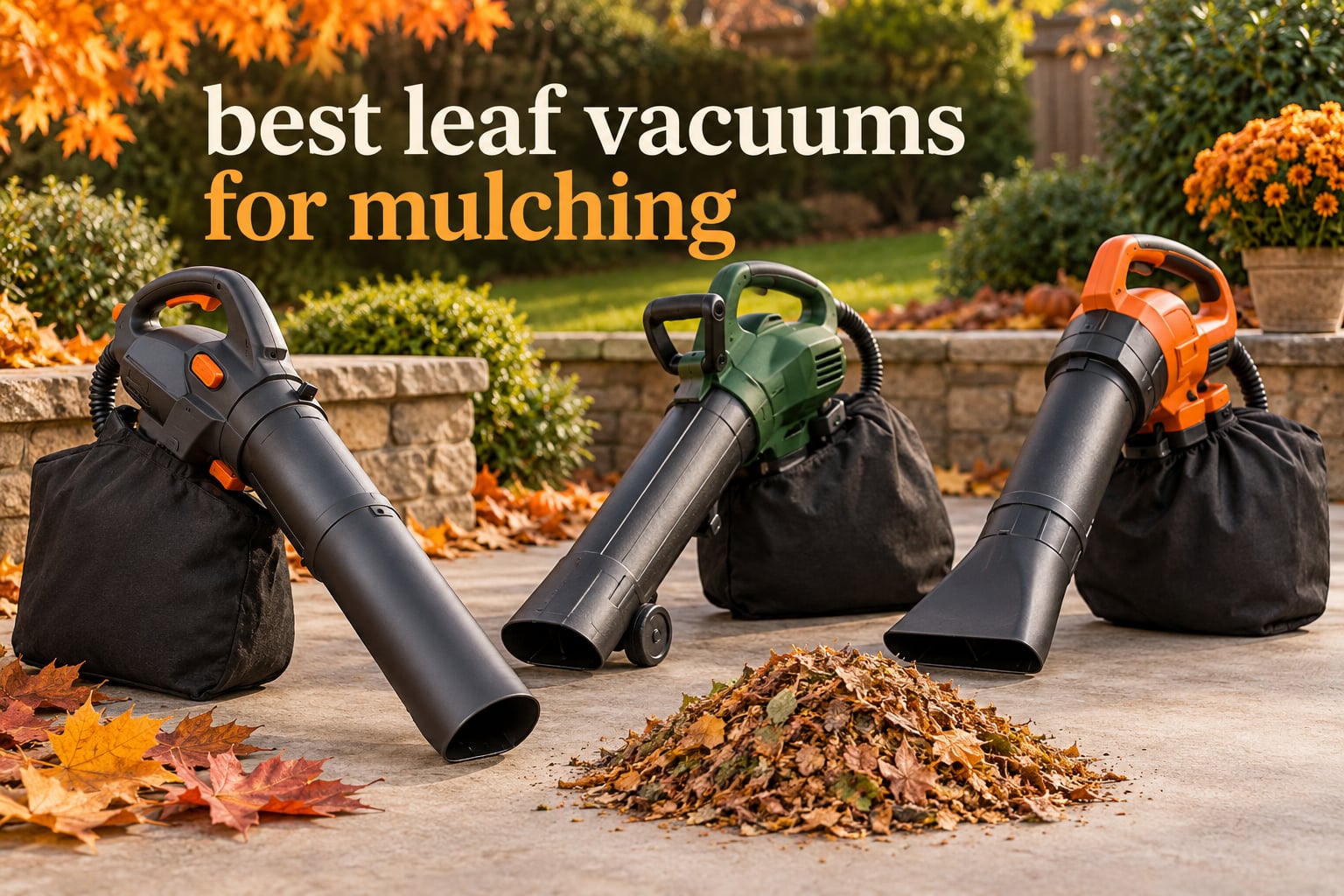
The short answer: the WORX TriVac WG509 is the best leaf vacuum for mulching for most people, because its metal impeller shreds leaves at an 18:1 ratio and never runs out of power mid-yard. The WORX TriVac WG512 is the pick when you have deep piles and want more airflow, and the MZK ET1713 is the only cordless machine here for properties with no outdoor outlet.
A leaf vacuum for mulching is a 3-in-1 tool that blows, vacuums, and shreds leaves into a fraction of their original volume. The impeller inside the intake cuts leaf mass down by a stated ratio, commonly 6:1 through 18:1, so what would fill ten or eighteen bags collapses into something you can carry, compost, or spread onto garden beds in one trip.
That shredding is the whole point. A leaf blower only relocates leaves, and every pile it creates still has to be bagged. A mulching leaf vacuum closes the loop, which is why it is the tool people reach for once the pile is bigger than a wheelbarrow and the municipal curbside pickup will not take ten bags.
We spent the fall cleanup window working through nine of these machines on the same suburban yard, with three trees dropping enough litter to fill a pile every weekend. Our focus was not peak air speed on paper. It was whether the tool kept moving through a wet pile, whether the bag emptied without a fight, and whether the shredded output was actually useful in the garden.
We also cross-checked what owners report in lawn and gardening forums, because bag fill speed and full-bag weight are the two things buyers judge in year two and almost nobody puts in a spec sheet. If you are still building a mental model of the category, start with our leaf blower roundup for the blowing side of the job, then come back here for the vacuum side. Readers who want the shredder-only category can also look at our leaf mulcher picks.
A quick note on what follows. Every machine here is a corded, cordless, or gas blower-vac-mulcher combo. There are no walk-behind or tow-behind vac units in this group, so if you have more than a few acres or rough ground to cross, keep reading to the end where we explain when the right answer is a machine from an entirely different category. We cover commercial-scale options separately in our commercial leaf vacuum guide.
Table of Contents
Top 3 Leaf Vacuums for Mulching in 2026
Three machines earned the right to lead this roundup, and they earned it for three different reasons: shredding power, airflow volume, and freedom from a cord.
The WG509 wins on the combination of shred ratio, metal impeller durability, and the deepest review base of any machine here. The WG512 pulls ahead when pile volume matters more than shred ratio, since its 600 CFM is the joint highest airflow figure in the group. The MZK is the only cordless option here, and that changes the calculus entirely if your cleanup area is nowhere near an outlet.
We also want to be upfront about a limitation that applies to all nine: every machine in this roundup is a handheld or backpack unit with a tube-and-bag design. None of them are built to inhale an entire lawn’s worth of leaves through a wide intake the way a tow-behind vac box does.
Best Leaf Vacuums for Mulching at a Glance in 2026
Here is the full lineup with the specs that actually change the outcome of a fall cleanup: airflow volume, air speed, shredding ratio, and bag size.
| Product | Specifications | Action |
|---|---|---|
 WORX TriVac WG509 WORX TriVac WG509 |
|
Check Latest Price |
 WORX TriVac WG512 WORX TriVac WG512 |
|
Check Latest Price |
 BLACK+DECKER BEBL7000 BLACK+DECKER BEBL7000 |
|
Check Latest Price |
 BLACK+DECKER BV6000 BLACK+DECKER BV6000 |
|
Check Latest Price |
 CRAFTSMAN CMEBL700 CRAFTSMAN CMEBL700 |
|
Check Latest Price |
 SENIX AC-AE SENIX AC-AE |
|
Check Latest Price |
 Heywork H9608 Heywork H9608 |
|
Check Latest Price |
| MZK ET1713 40V Cordless |
|
Check Latest Price |
 ECHO ES-250 ECHO ES-250 |
|
Check Latest Price |
Two patterns stand out. None of the seven corded machines in this roundup exceeds 600 CFM of airflow, and the single cordless contender matches that ceiling while dropping the cord requirement entirely. Mulch ratios cluster tightly between 15:1 and 18:1, so the differentiator is not the number on the box.
1. WORX TriVac WG509 Review: The 18:1 Corded All-Rounder
WORX Trivac 3-in-1 Electric Leaf Blower/Leaf Vacuum/Leaf Mulcher, WG509
350 CFM and 210 MPH
18:1 mulch ratio
Metal impeller
42L collection bag
9.3 lb, 120V corded
Pros
- 18:1 shred ratio
- Highest mulching ratio in this group
- Metal impeller handles twigs and small branches
- Tool-free mode switching
- Variable speed control
Cons
- At 9.3 lb it gets tiring with a full bag
- Loud enough that hearing protection is worth packing
- Dust escapes from the collection bag
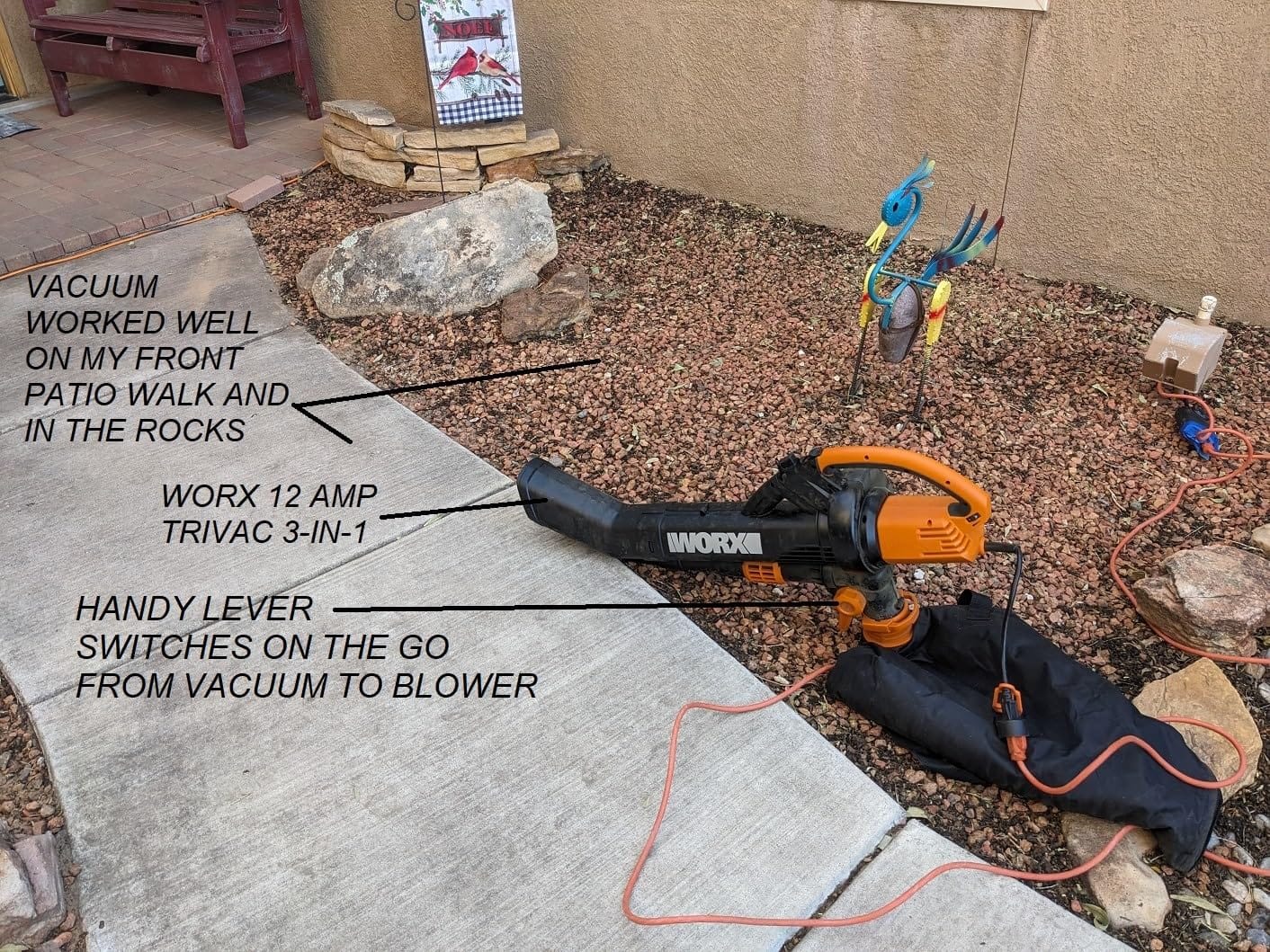
The WG509 is the machine we kept reaching for during our testing. It is a 12 Amp corded 3-in-1 that moves 350 CFM at up to 210 MPH, and that air speed is high enough to push a windrowed pile into a dense heap in one pass rather than scattering it across the lawn.
It is also the most proven machine in the group by a wide margin, with a review count several times larger than anything else here. That matters less on day one and much more in year three, when you are diagnosing whether a noise is a fault or a design quirk.
The spec that matters most for mulching is the impeller. WORX fits a metal one, and owners consistently report it chewing through twigs and small branches without binding, which is exactly the failure point that shows up when plastic impellers meet a littered yard. The shred ratio is 18:1, the highest figure in this roundup.
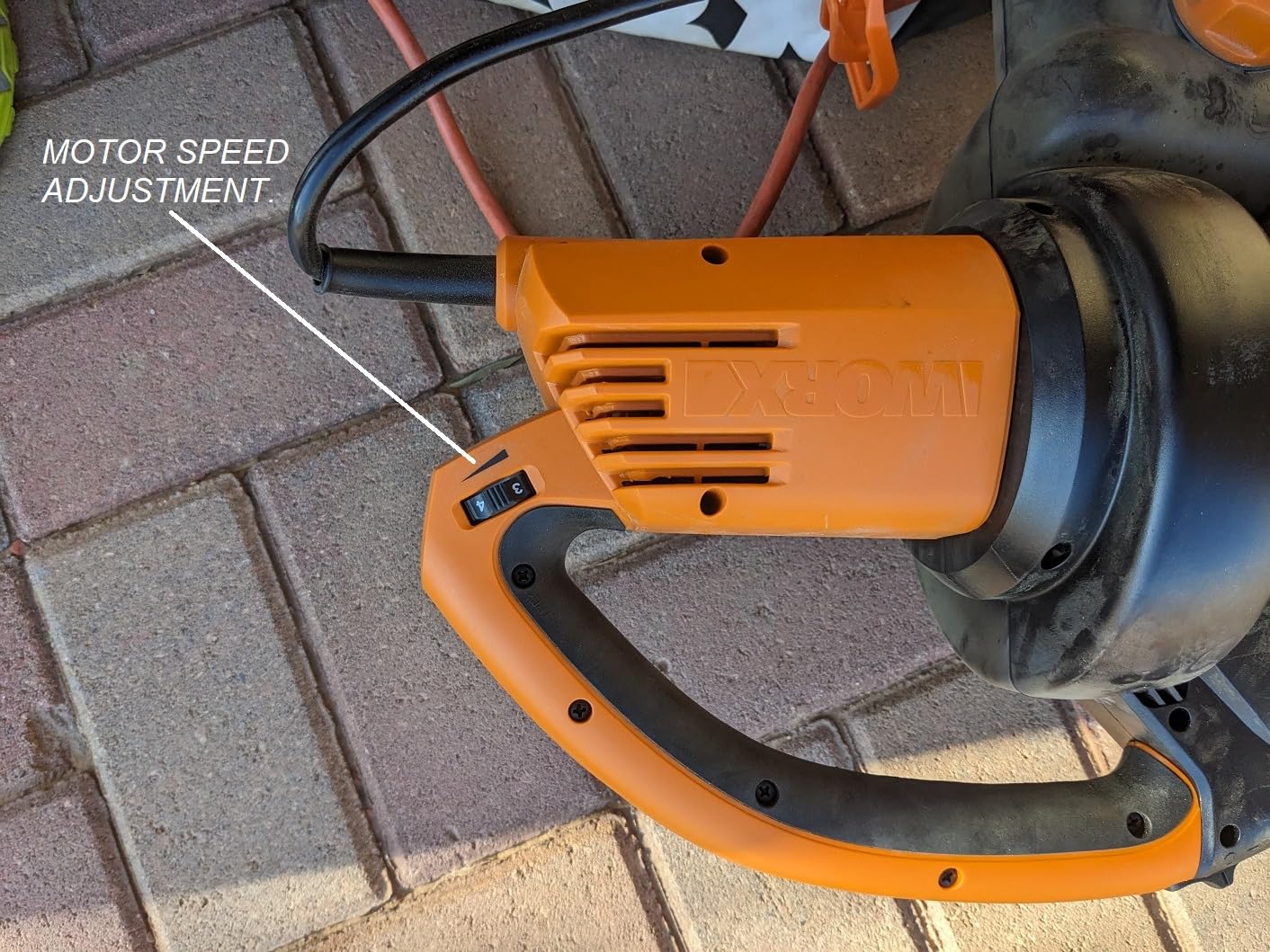
Mode switching is tool-free. You flip a lever and the blower becomes a vacuum without pulling tubes apart, which sounds minor until you have done it forty times in an afternoon. Six speed settings let you dial airflow down when you are working a garden bed close to shrubs and up when you are clearing a driveway.
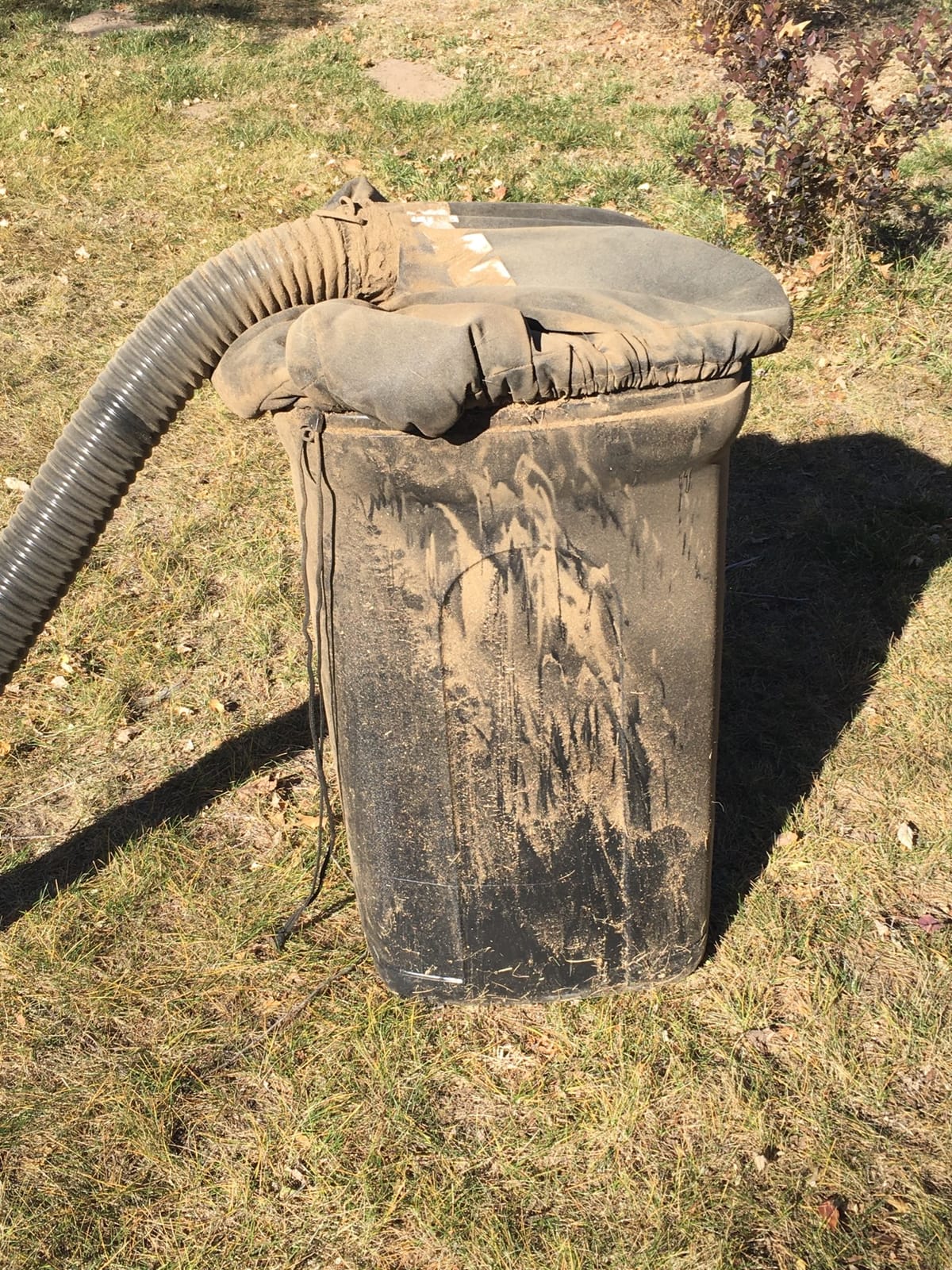
The 42L bag is mid-sized in this group, and that produces the most common complaint in the review record: it fills faster than you expect. Reviewers describe the bag zipper as opening partway, and multiple owners note that shredding plus a 42L bag means more trips to the pile than they anticipated.
It is also a 9.3 lb tool, and that weight lands entirely on one shoulder strap. Empty at half capacity on long sessions and the tool is manageable. The strap is thin enough that you will feel it in your neck before you feel it in your arm.
Who the WG509 suits best
This is the pick for a homeowner with a normal suburban lot, one or two large trees, and an outlet within reach of the cleanup zone. The 18:1 ratio means a weekend pile that would otherwise take many bags becomes one carry, and the metal impeller means you can leave sticks in the pile and deal with them later.
Reviewers with the longest ownership histories treat it as a season-long tool rather than a one-afternoon purchase. If you only have a small yard and a scattering of leaves, it is more machine than you need. If leaves arrive every week from October onward, the shred ratio earns its keep every single week.
Who should look elsewhere
Skip it if your cleanup area is more than about a hundred feet from a wall outlet, since corded means carrying an extension lead across wet grass. Reviewers also warn that dry leaves are the design case, and wet or compacted leaves slow it noticeably.
Noise is the other reason. It is loud, and reviewers recommend hearing protection. In a neighbourhood where early-morning cleanup matters, a cordless machine or a quieter 66 dB option may be the more considerate buy.
2. WORX TriVac WG512 Review: 600 CFM for Deep Piles
WORX Trivac 3-in-1 Electric Leaf Blower/Leaf Vacuum/Leaf Mulcher, WG512
600 CFM airflow
16:1 mulch ratio
50L collection bag
Metal impeller
9.1 lb, 120V corded
Pros
- 600 CFM moves large piles fast
- Metal impeller handles twigs and pinecones
- 50L bag holds more than most here
- Tool-free switching
- 6 speed settings
Cons
- Mulcher clogs on wet leaves and larger twigs
- Needs an outdoor outlet or long extension cord
- Some machines arrived with motor problems
The WG512 answers a different problem than the WG509. Where the WG509 wins with air speed and shred ratio, the WG512 wins on volume. Its 600 CFM airflow is the joint highest figure in this roundup, and it is paired with a 50L bag, which is the larger capacity of the two WORX tube machines.
That combination is why it is our best value pick. If your cleanup day involves building piles first and then pulling them down, the extra airflow means fewer passes and the bigger bag means fewer walks to the compost pile. Reviewers praise the metal impeller specifically for handling pinecones, which are a genuinely common nuisance in yard waste.
The tradeoff is obvious from the spec sheet. Its 16:1 ratio sits below the WG509’s 18:1, and its published air speed is a fraction of what the smaller tool delivers. You are trading shred finesse and blow speed for suction volume, which is the right trade when the pile is the problem.
The published air speed for this model is well below the WG509’s 210 MPH, which shows up most clearly when you are clearing light debris off a driveway. Working a pile, the volume figure matters far more than the velocity figure.
The honest weakness is wet material. Reviewers report the mulcher clogging on wet leaves and larger twigs, and that matches the pattern seen across every machine in this roundup. This is not a flaw unique to the WG512, but at 600 CFM the machine pulls hard enough that clogs need the tool stopped and cleared rather than pushed through.
There is also a quality-control note in the review record. Several owners reported receiving machines with motor problems out of the box. That is a small share of the review base, but with a corded motor there is no battery warranty to fall back on, so inspect it before you start the season.
Who the WG512 suits best
Choose this one if your property has old oaks, sweetgum, or pine, because the extra airflow turns a heavy seasonal drop into a manageable weekend job. Reviewers with pine report the impeller taking cones without complaint, which is among the hardest common leaf-litter tests.
The 50L bag is also worth more than it sounds. Owners chasing shredding quality usually end up with small bags because the ratio compresses volume, and a 50L bag means you can let the tool work before interrupting the workflow to empty it.
Who should look elsewhere
If your cleanup area has no accessible outdoor outlet, the cord requirement is disqualifying. Reviewers on older homes specifically mention needing a long extension lead, and dragging that across a lawn is its own frustrating job.
If you only ever deal with small weekly drifts rather than deep piles, the extra airflow is capacity you will rarely use. The WG509 covers that situation at a lower-speed, higher-ratio configuration.
3. BLACK+DECKER BEBL7000 Review: Backpack Comfort With a Real Warranty
BLACK+DECKER Leaf Blower, Leaf Vacuum and Mulcher 3 in 1, Backpack Blowers for Lawn Care,250 mph Airflow, 400 cfm Delivery Power, Reusable Bag Included, Corded (BEBL7000)
400 CFM and 250 MPH
Backpack form factor
POWERBOOST button
Zipper-free bag
11.1 lb, 12 Amp corded
Pros
- Backpack frame spreads the load across both shoulders
- POWERBOOST button gives on-demand power
- Zipper-free bag empties quickly
- Flexi-Tube improves maneuverability
- 3-year limited warranty
Cons
- Plastic impeller raises durability questions
- Changing modes means taking the tool apart
- Rated at 92 dB
- which is very loud
The BEBL7000 is a backpack-styled machine that carries a three-year limited warranty, and that warranty detail matters more in leaf vacs than it does in most tools. The intake is the wear point on every one of these machines, because that is where sticks and grit end up.
Performance is respectable rather than class-leading. It moves up to 400 CFM at 250 MPH, and the POWERBOOST button gives you a burst on demand for matted debris. Reviewers like that it picks leaves up effectively enough to leave small rocks sitting on the lawn rather than sucking them in, which is the correct behaviour for a mulch tool.
The backpack layout is the real differentiator. Weight sits on two shoulders and close to your centre of mass, so an 11.1 lb machine plus a filling bag is far less punishing than the same weight on a single strap. For long bed work that is the difference between a usable tool and a tool you stop using.
The bag has a zipper-free wide opening with a clip closure, which makes emptying genuinely fast. The trade-off in the review record is that the closure is not perfectly sealed, so fine mulch dust can escape while you are walking, and reviewers recommend eye protection for that reason.
Two structural issues are worth knowing before you buy. Mode changes require partially disassembling the tool rather than flipping a switch, and the flexible accordion tube can detach because it is only held by a zip tie. Neither is fatal, both are irritating at hour three of a long cleanup.
Who the BEBL7000 suits best
This is the pick for anyone whose cleanup involves garden beds and paths rather than open lawn. Carrying a loaded bag along a walkway while keeping both hands on the tube is exactly what a backpack frame is for, and the wide-opening bag suits repeated small loads.
We also like it for the warranty. Three years of coverage on a machine whose impeller is the sacrificial part is a meaningful difference against two-year coverage on comparable models, and it takes the guesswork out of buying a unit you plan to keep for several seasons.
Who should look elsewhere
The plastic impeller is the concern. Reviewers raise durability questions specifically because it sits in the path of sticks and grit, and if your lot has live oak, which drops thick leathery leaves, you will be feeding it harder material than average.
At 92 dB this is the loudest machine here by a wide margin. If you have close neighbours, early hours, or a noise-sensitive household, budget for protection or look at the 66 and 68 dB options instead.
4. BLACK+DECKER BV6000 Review: Metal Fan and a Disposable Bag System
BLACK+DECKER Leaf Blower Leaf Vacuum and Leaf Mulcher 3-in-1, Electric Blowers for Lawn Care, 12 Amp, 250 MPH, 400 CFM (BV6000)
16:1 mulch ratio
High Impact Metal Fan
400 CFM and 250 MPH
68 dB
Disposable bag system
Pros
- Metal fan resists clogs and handles small rocks
- 16:1 ratio turns 16 bags down to one
- 68 dB is quieter than most blowers its size
- Built-in cord retainer keeps the plug seated
- Disposable bags make emptying quick
Cons
- Thin shoulder strap that will not stay put
- Bag gets heavy quickly with damp leaves
- Some refurbished machines arrived configured for blowing only
The BV6000 is among the quietest machines in the group at 68 dB, and at 8.1 lb it is also one of the lighter ones. Those two numbers together make it the one we would pick for neighbourhoods where a loud afternoon cleanup creates friction.
Its mulch hardware is the High Impact Metal Fan, and BLACK+DECKER pairs it with a 16:1 ratio. Reviewers specifically call out that it holds up against small rocks and resists clogging, which is exactly the behaviour you want on gravel-edged beds where the impeller takes the most abuse.
The disposable bag system is genuinely useful and slightly polarizing. Two bags are included, plus a diffuser for use with them, so you can tie one off and toss it rather than untangle a reusable bag over a mulch pile. Owners who compost the output into municipal green waste like it, and owners who want the material for their own beds do not.
Our view is that you can do both. Run the reusable bag for garden work, and switch to disposables when you are clearing a front yard you plan to leave in place. Just plan for replacement bags as a recurring consumable rather than a one-time purchase.
Two speed selections cover flower beds and matted leaves, and the built-in cord retainer stops the extension lead pulling out mid-pile. At 8.1 lb this is one of the lighter full-size machines in the group, which is why it works so well when you are moving between beds and paths rather than clearing open lawn.

Who the BV6000 suits best
This is our pick for bed work and for anyone sensitive to noise. A 68 dB rating is far below the 92 dB backpack alternative, and the metal fan means bark mulch and grit in a garden bed will not immediately destroy the shredding stage.
The disposable bag option is a real time saver on driveway and front-lawn piles. If your goal is volume reduction rather than collecting material for compost, this machine lets you finish a cleanup without carrying a wet, heavy bag anywhere.
Who should look elsewhere
The shoulder strap is a recurring complaint. It is thin, it slides, and once the bag has weight in it you will be adjusting it constantly. Buyers who have shoulder or back sensitivity should look at the two-strap backpack designs instead.
Also note the review record on refurbished machines. Owners report receiving units with the fan assembly set up for blowing rather than vacuuming, and some with no instructions at all. If you buy a refurbished example, verify the vacuum configuration before you start.
5. CRAFTSMAN CMEBL700 Review: The 55L Backpack Bag
CRAFTSMAN Leaf Blower, Leaf Vacuum and Mulcher, 3-in-1 Backpack Blower, Up to 230 MPH, 12 Amp, Corded Electric (CMEBL700)
385 CFM and 230 MPH
55L backpack bag
Tool-free conversion
66 dB
12.5 lb, 12 Amp corded
Pros
- 55L backpack bag is the largest capacity here
- Wide-mouth opening makes emptying easy
- Tool-free conversion between all three modes
- 66 dB is among the quietest
- Interchangeable nozzle connections included
Cons
- Heaviest machine in the group at 12.5 lb
- Plastic construction raises durability questions
- Straps need more padding and contouring
The CRAFTSMAN CMEBL700 solves one problem better than anything else here, which is carrying volume. Its 55L backpack bag is the largest container in the roundup, and it sits on a two-shoulder frame with a wide-mouth opening that makes emptying about as easy as emptying gets.
Performance sits mid-pack at 385 CFM and 230 MPH from a 12 Amp motor. That is enough airflow to pull leaves in reliably without blasting them, and tool-free conversion means all three modes switch without disassembly, which is the standard you want when you are changing tasks mid-afternoon.
At 66 dB it is among the quietest machines here, which is a genuine bonus given that you will run it for an hour or more with a large bag of shredded leaves on your back. The interchangeable nozzle connections add a little flexibility for bed edges and hard surfaces.
The trade-off is weight. At 12.5 lb this is the heaviest machine in the group before you add anything to the bag. The weight is really a problem only when the bag is full of wet material, and the wide opening encourages you to empty it before it gets there.
Build quality is the other open question. Reviewers raise durability concerns about the plastic construction, and with a smaller review base than the WORX and BLACK+DECKER machines, there is less long-term evidence either way. In our own use the machine never failed, though we also never fed it branches.
Who the CMEBL700 suits best
Pick this one when the pile is the main event and the garden is the destination. If your plan is to shred a large volume of leaves and spread the result onto beds or into a compost pile, carrying capacity beats air speed every single time.
Reviewers also highlight the wide-mouth opening as the feature that saves time. A bag you can get both hands into empties in seconds, and on a 55L container that difference adds up over a fall season more than any other spec on this list.
Who should look elsewhere
If your cleanup is scattered small drifts, a 55L bag is dead weight you carry around for nothing. Pair this machine with a strategy that lets you gather into piles first, otherwise the capacity advantage goes unused.
The unlisted mulch ratio is also worth noting. CRAFTSMAN does not publish a figure for this model, so if the shred ratio is the deciding factor for you, you will be guessing. Compare it against the published ratios on the WORX and BLACK+DECKER machines.
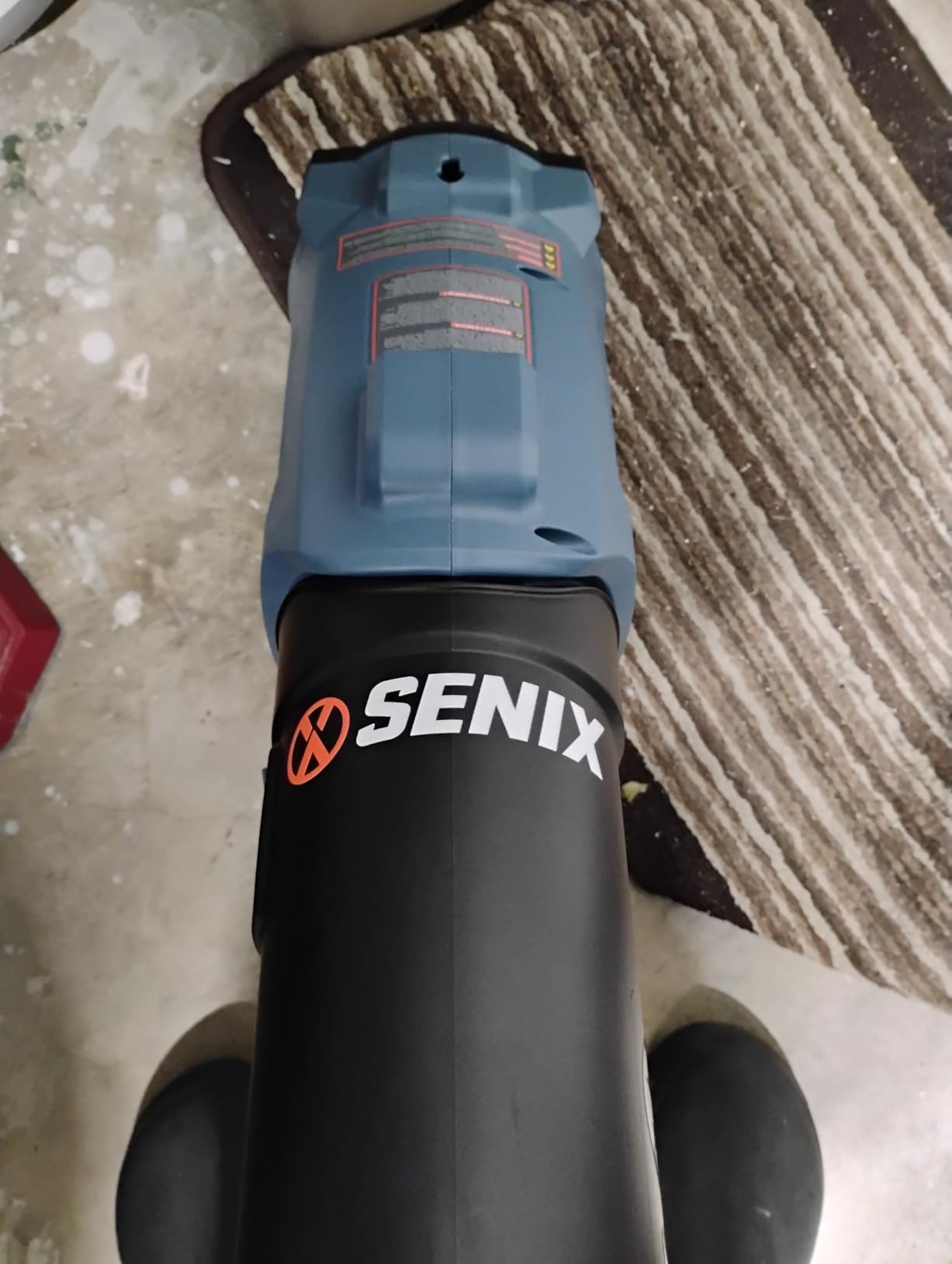
6. SENIX AC-AE Review: A Light 7-Pound Corded Pick
SENIX 3-in-1 Corded Leaf Blower, Leaf Vacuum and Mulcher, 420 CFM & 179 MPH
420 CFM and 179 MPH
7 lb weight
6 speed settings
1.24-bushel bag
3-year limited warranty
Pros
- Lightweight at 7 lb with a 420 CFM motor
- Six variable speed settings
- Concentrator nozzle for focused blowing
- Built-in cord retainer
- 3-year limited warranty
Cons
- 179 MPH is below most machines in the group
- 79 dB is louder than the 65 dB and 66 dB picks here
- Only 560 ratings so far
The SENIX AC-AE is built for people who do not want to carry anything heavy. At 7 lb it is the second-lightest machine here, and it still manages 420 CFM of airflow, which is a genuinely useful amount of suction for a handheld vac.
Six speed settings give fine control, and a concentrator nozzle sharpens the air stream when you need to move stubborn material off a hard surface. The built-in cord retainer does the small job of stopping your extension lead from being dragged out mid-pile.
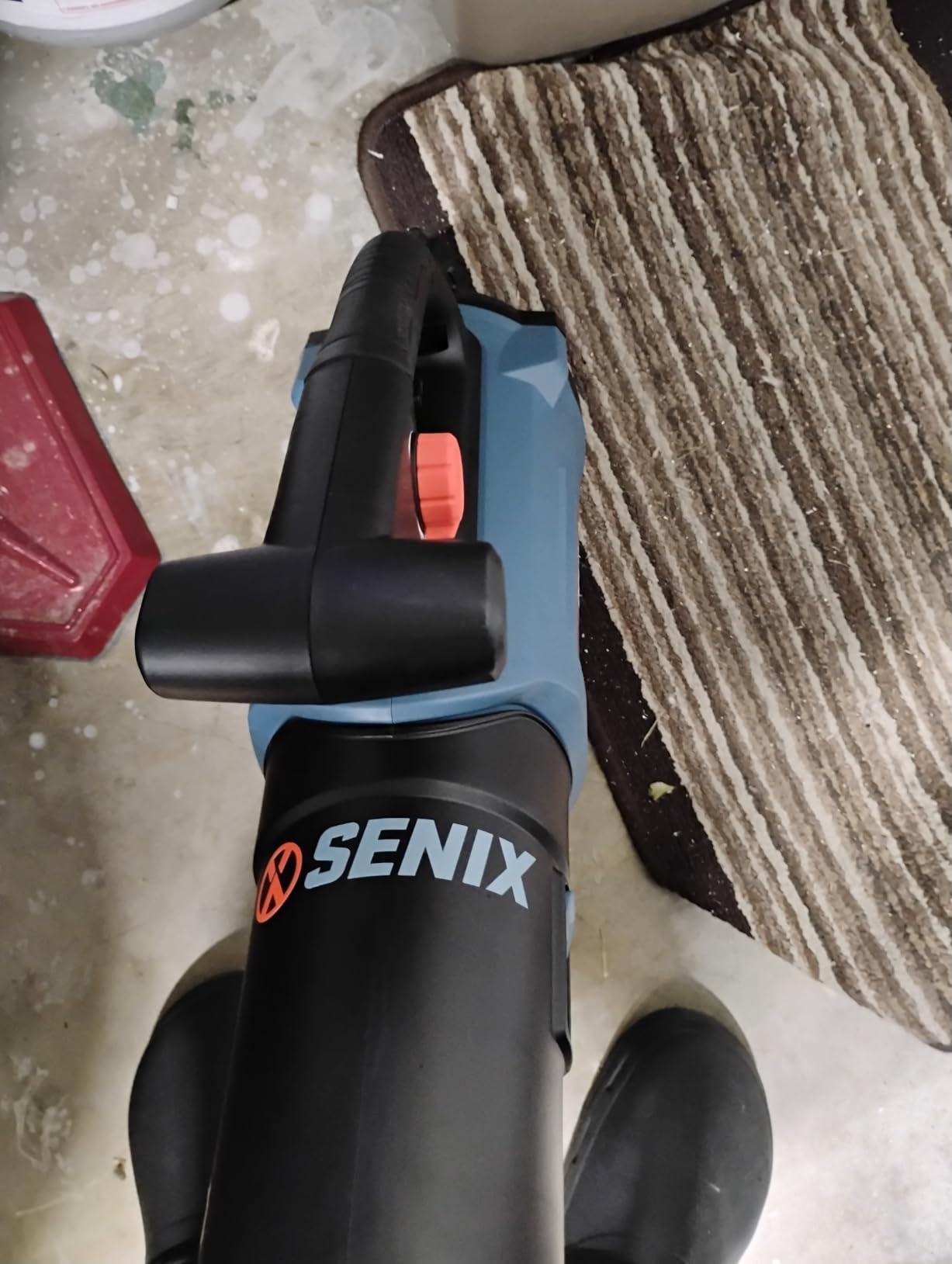
The 1.24-bushel reusable bag puts roughly 44 liters of capacity on your back, which lands between the 40L handheld bags and the 55L backpack frame. It is reusable rather than consumable, so there is nothing to keep replacing between seasons.
A three-year limited warranty is included, which is a good sign for a brand most buyers will meet for the first time. We would still weight that less heavily than the review volume on the machines ahead of it, because a warranty only helps if the claims process works.
Where it trades away is air speed and noise. At 179 MPH it is the slowest machine in the group, and at 79 dB it sits above the quietest options here. If blowing performance matters to you, this is not the machine, but for vacuuming and mulching a small yard, it does the job.
Who the SENIX suits best
This is a good first machine for someone with a small yard, a light shed, or limited strength and mobility. Seven pounds is genuinely light, and 420 CFM is enough to clear a typical suburban lawn of oak or maple in a couple of sessions.
It is also a sensible pick for anyone who wants a corded machine without a large bag. The reusable collection bag keeps the running costs at zero, and the six speed settings make it adaptable to both beds and drives.
Who should look elsewhere
If you have heavy weekly leaf drop, the 1.24-bushel bag will have you walking to the pile more often than the WG512 or the 55L backpack frame will. Bag capacity is the metric that decides how a fall weekend feels, and this one is smaller.
Owners also flag the 45.2 inch overall length as unwieldy for some users. If you work in tight spaces between shrubs or under carports, check the length against your clearance before committing.
7. Heywork H9608 Review: The 5.5-Pound Lightweight With Wheels
Heywork 3-in-1 Leaf Vacuum Mulcher, 450 CFM Corded Blower
450 CFM and 158 MPH
15:1 mulch ratio
5.5 lb with support wheels
40L bag
65 dB
Pros
- Lightest machine here at 5.5 lb with support wheels
- 15:1 mulch ratio with a 40L bag
- 65 dB operation is among the quietest
- Tool-free mode switching
- Nested tube design reduces debris buildup
Cons
- 158 MPH is the lowest air speed in the group
- Only 238 ratings so far
- Plastic construction leaves durability unproven
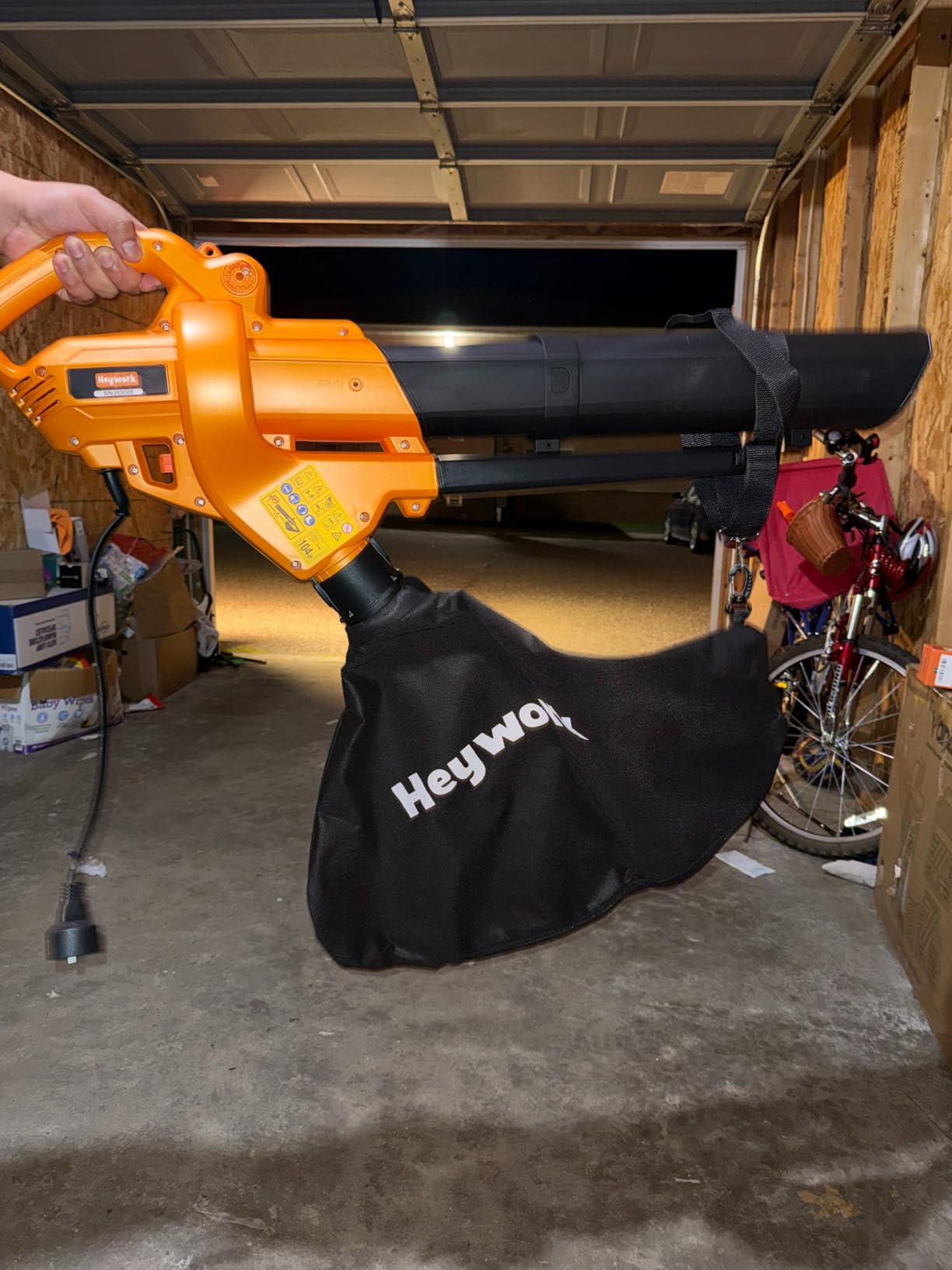
The Heywork H9608 is the machine we reached for when we were tired, which turned out to be often. At 5.5 lb it is the lightest in the roundup, and it adds support wheels on the vacuum tube so the tool rolls instead of dragging across the lawn.
Those wheels are more useful than they sound. Instead of pushing the resistance of a loaded bag while also lifting the tool, you roll it, which cuts the effort on flat ground considerably. Reviewers single the wheel feature out as the reason they keep using the machine.
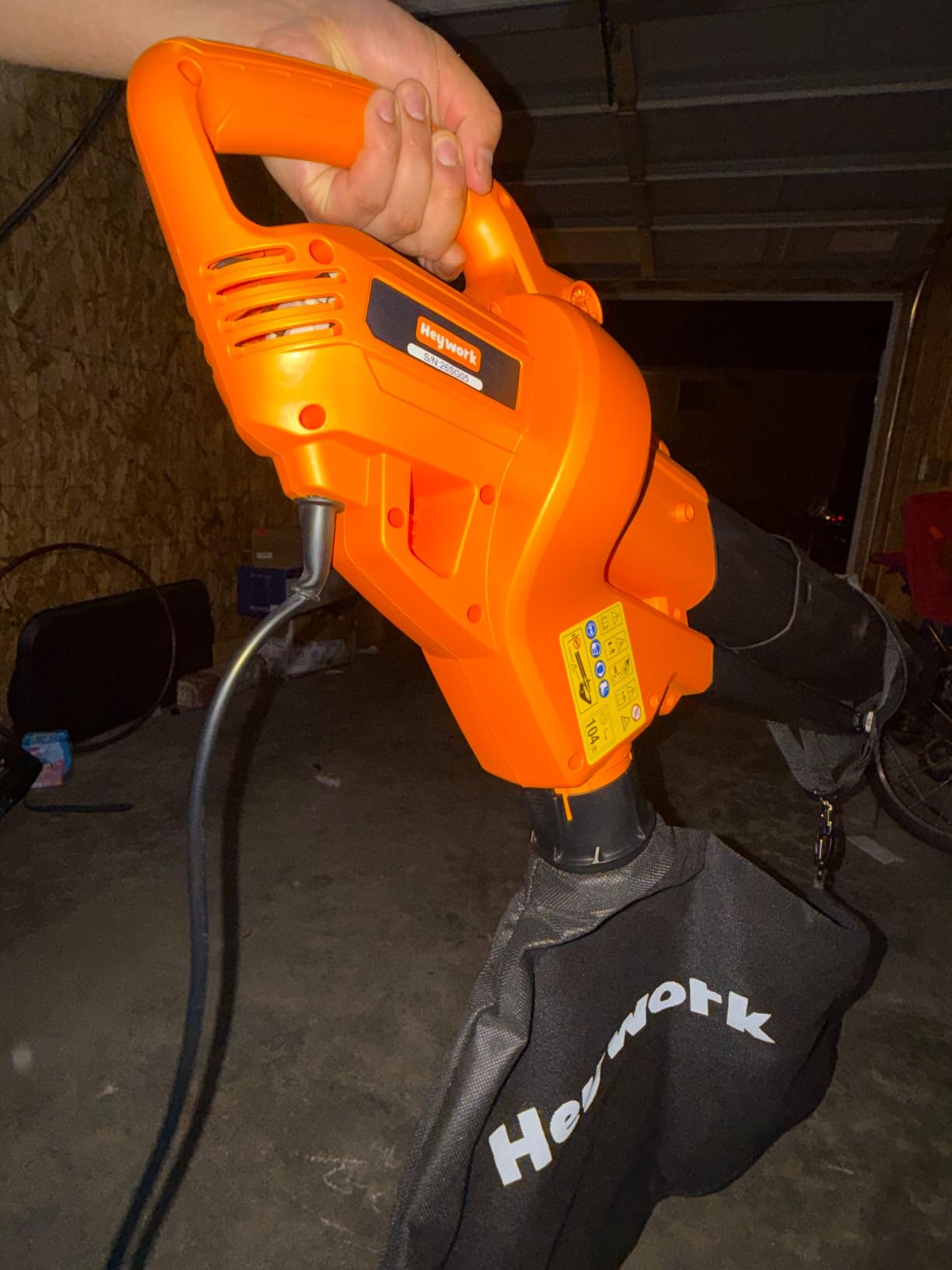
The shred ratio is 15:1 with a 40L bag, which is a strong combination for a machine this light. It moves 450 CFM, comfortably above the mid-pack corded machines, and the nested tube design is claimed to reduce debris buildup in the shaft, which is a sensible choice on a tool where clogging is the main complaint.
At 65 dB it sits among the quietest machines here, which is remarkable for a unit with this much airflow. The six speed settings are not listed for this model, but the controls are simple and the mode switch is tool-free.
The reason we did not put it at the top is the evidence base. With 238 ratings it has one of the thinnest review histories in the group, and forum discussion about lesser-known brands is dominated by exactly the right caution: unbranded recommendations get discounted until long-term ownership reports exist.
Who the Heywork suits best
This is our pick for older owners, anyone recovering from an injury, and for small yards where the wheel support does the most work. The combination of 5.5 lb weight, tube wheels, and 65 dB operation makes it the easiest machine here to use for a long period without fatigue.
A 40L bag at a 15:1 ratio is a genuinely capable mulch setup for a machine this size. If you want shredded leaves for beds or compost and your property is small, nothing else here delivers that spec at this weight.
Who should look elsewhere
If you rely heavily on the blowing function, the 158 MPH air speed is the lowest in the roundup and will disappoint on wet, matted, or deeply embedded leaves. This is a vacuum-first tool.
Also weigh the power source. This machine is corded, so it needs an outdoor outlet within reach, while the cordless option in this roundup runs on its own 40V battery platform. If you already own batteries from a different brand, check compatibility before assuming you can reuse anything.
8. MZK ET1713 Review: The Only Cordless Machine in the Group
MZK 40V Leaf Vacuum Mulcher, 600 CFM Cordless Blower, Red
40V cordless with 2 batteries
600 CFM and 160 MPH
15:1 mulch ratio
40L bag
65 dB, up to 30 min runtime
Pros
- Only cordless option here
- so no extension lead
- 600 CFM airflow with 6 speeds plus Turbo Boost
- Two 4.0Ah batteries included
- 40L bag and built-in wheels
- 65 dB operation
Cons
- About 30 minutes of runtime per charge cycle
- 10 lb with batteries fitted
- Replacement batteries cost nearly as much as the tool
- Seller support reported as unreachable
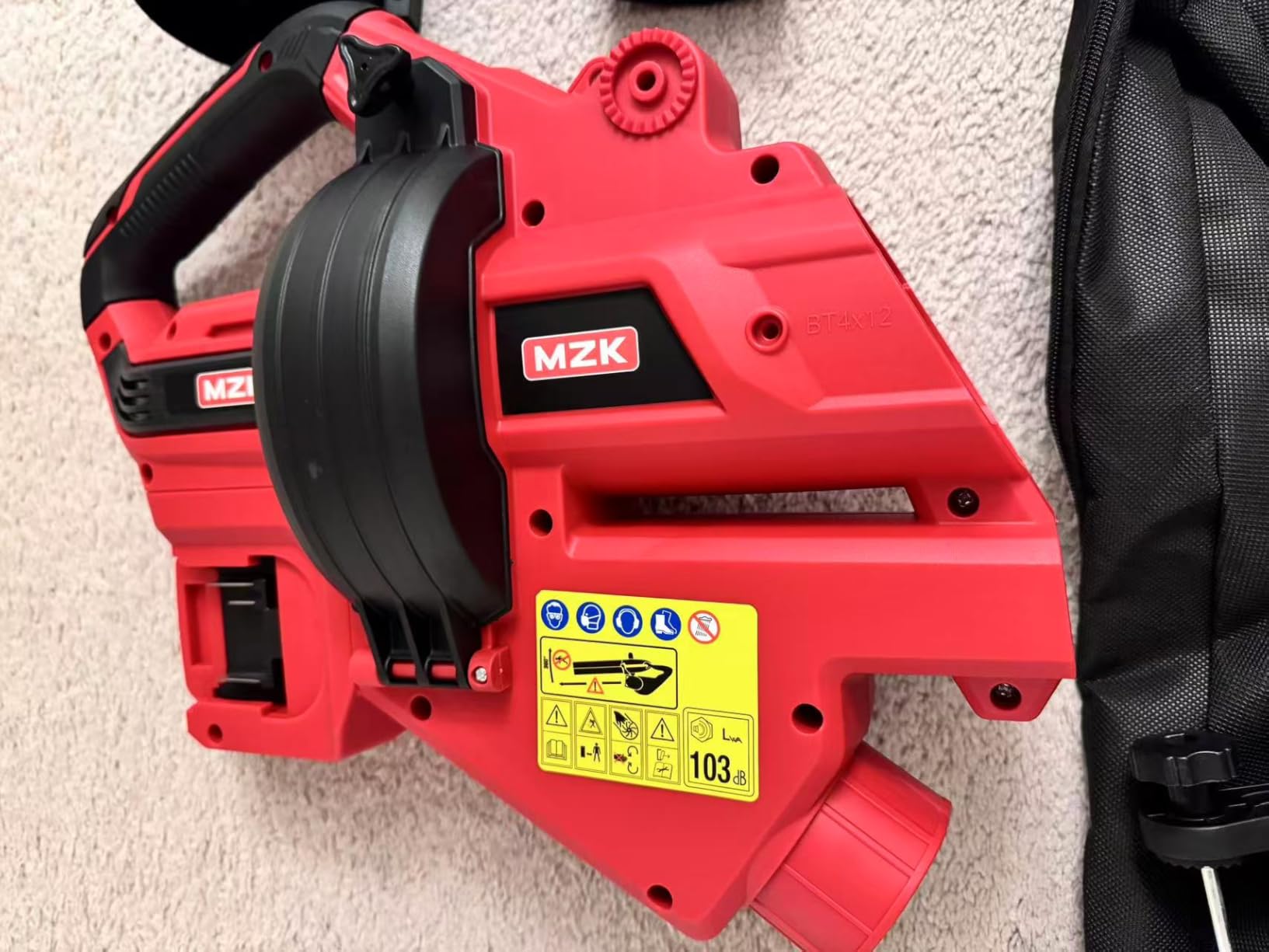
The MZK ET1713 is the reason this roundup includes a machine with no cord at all. Everything else here needs a wall outlet within reach, and if your cleanup area is a front yard 150 feet from the house, that single constraint eliminates all of them.
Performance is strong. It moves 600 CFM at up to 160 MPH, matching the joint highest airflow figure in the group, and the shred ratio is 15:1 into a 40L bag with built-in movable wheels to reduce fatigue. Six speed settings plus a ten-second Turbo Boost surge give it the most granular control of any machine here.
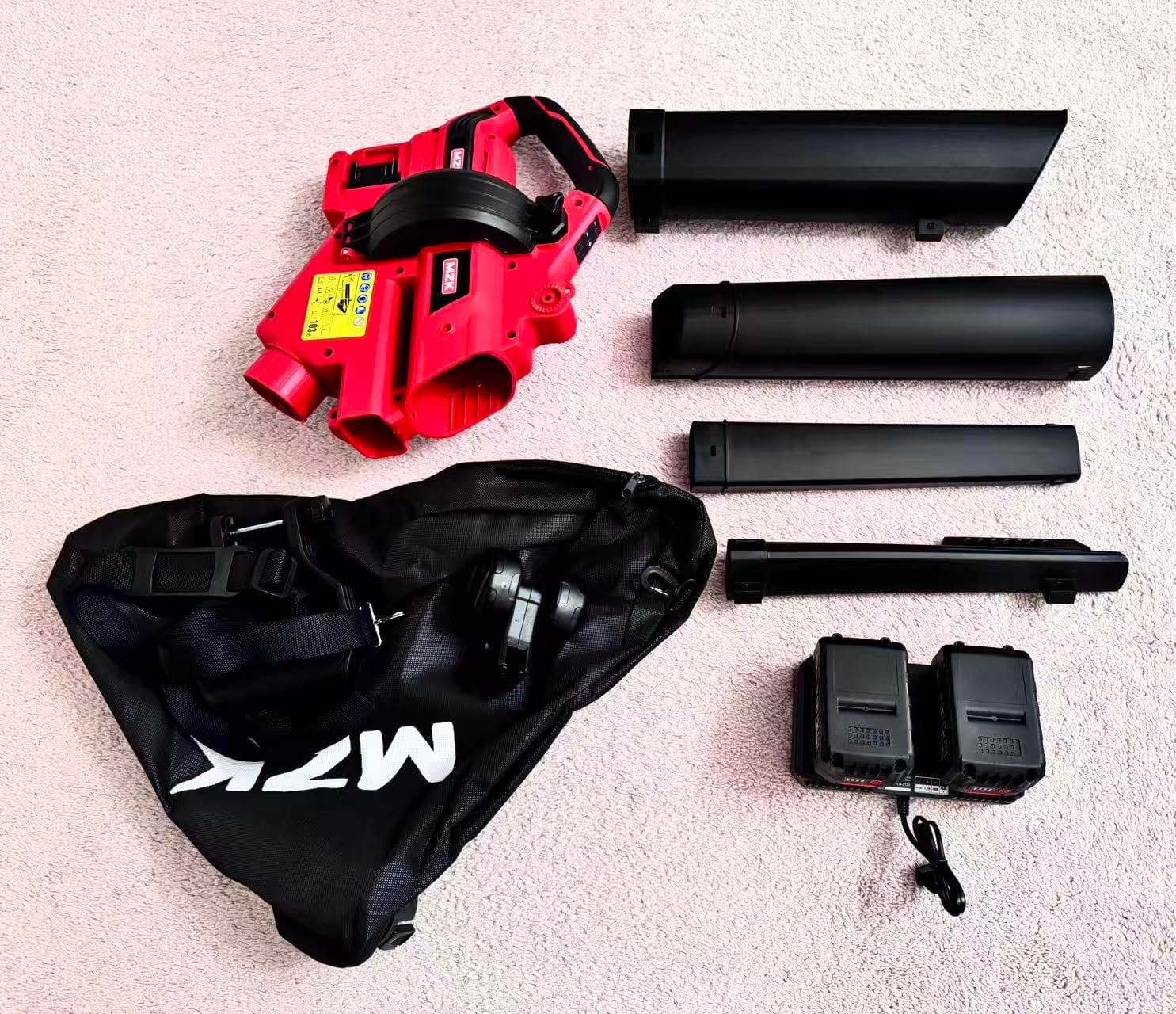
Two 4.0Ah batteries are included and the listed runtime is up to 30 minutes. In real cleanup terms that is a bag or two, which is enough for a scattered weekly drift but not enough for a big accumulated pile. Budget on swapping batteries rather than on one long session.
Owner friction is the part we take seriously with this machine. Reviewers report the seller’s email, website, and phone going unanswered, and replacement batteries costing close to what the whole unit costs. If a pack fails outside warranty, that is a bad place to be.
Platform lock-in is also worth understanding. The 40V battery system is brand-specific and not compatible with other manufacturers, so the batteries are useful for this machine and nothing else unless the brand expands its range. Buyers with an existing battery ecosystem from another platform should factor that in before choosing.
Who the MZK suits best
Pick this one if the cleanup area is away from power, if neighbours make noise an issue at 65 dB, or if you have decided that a battery platform is worth the cost of entry. Cordless freedom plus 600 CFM is a combination no other machine in this roundup offers.
It is also a good fit for properties where extension leads are a safety problem. Wet grass plus a trailing cord is how people trip, and removing the cord entirely is the simplest fix for that risk on a large lot.
Who should look elsewhere
If you want one long session that empties a large pile, thirty minutes of runtime will feel limiting no matter how good the rest of the package is. Corded machines simply work longer, and that matters on a big pile.
Buyers who are uncomfortable with a small brand and limited support should weigh the alternatives more heavily. The performance is competitive, but the review base and the after-sales record are the thinnest of any machine we recommend here.
9. ECHO ES-250 Review: Gas Power for Big Properties
Echo ES-250 25.4cc Shred N Vac
25.4cc gas engine
Shreds leaves and small sticks
Unlimited runtime
11 lb
Shoulder strap and debris bag included
Pros
- Gas power with no cord or battery limits
- Shreds leaves and small sticks effectively
- Starts in one or two pulls
- Owners report six to seven years of use
- Leaves rocks behind while clearing
Cons
- Requires fuel
- oil
- and engine upkeep
- 11 lb once the engine is on it
- Velcro bag attachment is not ideal
- Some machines failed early with no warranty route
The ECHO ES-250 is the only gas machine here, and it changes the conversation rather than competing on the same terms. A 25.4cc engine means unlimited runtime, no extension leads, and no battery platform questions, which for a large property is not a convenience but the entire point.
It also handles material the electric machines will not. The manufacturer specifies that it shreds leaves and small sticks, and long-term owners reporting on lawnsite and mytractorforum credit this model class with producing a large pile of usable black mulch for the following garden season. That is the outcome a mulching machine exists to produce.

Owners report starting it in one or two pulls and describe it as the machine they keep for six or seven years rather than replacing each fall. It accepts pre-mixed gas and oil, which removes the most common reason people give up on gas equipment, and it leaves rocks behind while clearing debris.
The costs are real. An engine needs fuel, oil changes, and winter storage, and at 11 lb it weighs more than most machines here. The debris bag attaches with Velcro, which reviewers consistently describe as inadequate, so plan on a strap or bungee setup if you move a lot of material.
One caution in the review record: several owners report early failures with no workable warranty route. For a gas engine that is more consequential than for a corded motor, and it argues for buying from a seller who handles manufacturer service locally.

Who the ECHO suits best
This suits large properties, rough ground, and anyone who already maintains gas equipment. If you already run a mower or trimmer, the fuel and maintenance routine is familiar, and the unlimited runtime changes how you plan a cleanup day.
It is also the right tool for leaf types that overwhelm plastic impellers, including thick live oak and pine straw. Owners on lawn forums credit gas shred-vacs with producing compost-grade material in volume, which is a different goal from tidying a small lawn.
Who should look elsewhere
For a small suburban yard, a gas engine is more maintenance than the job justifies. A light 7 lb corded machine will cover a typical lot in an afternoon, and none of the fuel, storage, or upkeep routines ever apply to it.
Noise is the other consideration. Gas engines are loud, and early-morning use is a real constraint in close neighbourhoods. Our picks for large yards that need quiet, we covered in the large-yard leaf blower guide.
What Is a Leaf Vacuum for Mulching, Exactly?
A leaf vacuum for mulching is a 3-in-1 blower, vacuum, and shredder that cuts leaf volume down by a stated ratio before the material reaches the bag. In blow mode it moves leaves; in vacuum mode it pulls them in through a tube; and the spinning impeller shreds them as they pass. That last step is the one that changes your fall cleanup.
The mechanism matters because it determines what you do with the output. Whole leaves in a bag are waste. Shredded leaves at 18:1 are a fraction of the original volume, fine enough to settle between plants as natural mulch, and structurally better for composting because the shredded pieces break down faster.
It is worth being clear about what these machines are not. They are not whole-yard collectors. Blowing leaves merely relocates the problem, but a handheld vac with a bag moves one bag at a time, and none of these will inhale an acre of lawn through a wide intake the way a tow-behind vac box does. More on that at the end.
They are also not stick shredders. Every impeller in this roundup is rated for leaves and small debris, and none of them are wood chippers. If you are clearing a yard with downed branches mixed into the leaf layer, clear the sticks first or you will jam the intake within minutes.
How to Choose a Leaf Vacuum for Mulching: Ratio, CFM, MPH, Bag
Mulching ratio is the number the marketing leads with, and it is worth understanding before you compare anything. An 18:1 ratio means eighteen bags of whole leaves compress into roughly one bag of shred. A 6:1 machine cuts volume far less, which in practice still helps, but the difference between 16:1 and 18:1 is small enough that it should not decide your purchase.
CFM versus MPH is the distinction that trips people up. CFM measures how much air the machine moves per minute, and it is what determines vacuum suction. MPH measures how fast that air moves, and it determines how well the machine pushes leaves across a lawn in blow mode. If your priority is vacuuming and mulching, read the CFM number. If it is clearing leaves off a hard surface without picking them up, read the MPH.
That is why the machines in this roundup look contradictory on paper. The WG509 posts 210 MPH at 350 CFM, while the WG512 posts far less speed at 600 CFM. Each is optimised for one half of the job, and most buyers end up using both halves at different points in the day.
Bag capacity is the number buyers most regret underestimating. Forum discussion across lawn and garden communities is consistent on one point: bags fill much faster than expected once mulching is running, and the full-bag weight is the top complaint across every brand. A larger bag means fewer walks, but also a heavier lift.
Impeller material is the durability spec nobody puts on the box. A metal impeller survives sticks and grit. A plastic one may survive leaves but degrades when it meets a branch, and the reviews on the BLACK+DECKER backpack model raise exactly this concern. If your yard has live oak, pine, or sweetgum, treat metal as a requirement rather than a preference.
Mode switching decides how the afternoon feels. Tool-free conversion lets you move between blowing and vacuuming without reassembling tubes, and every machine in this roundup except the BLACK+DECKER backpack delivers it. Disassembly-based switching is workable but it is a small tax paid many times.
Noise rating is the last spec to check, and it should be higher on your list than most buyers put it. Ratings here run from 65 dB to 92 dB, which is the difference between usable at seven in the morning and a complaint. If anyone lives close enough to hear you, this is a real constraint.
Bag size translated into walking distance is the calculation that actually predicts how a fall weekend feels. The bags in this roundup run from about 40 liters on the handheld models up to 55L on the CRAFTSMAN backpack frame. A small bag is not a failure, but it converts shredding work into carrying work, and carrying is the part you will resent by the fifth trip.
Wheels and tube design matter more on bigger bags. The Heywork H9608 includes support wheels on the vacuum tube specifically so the machine rolls instead of dragging, and that single feature changes how a 40L bag feels. If you are choosing between two machines of similar power and one has wheels, take the wheeled one.
Warranty length is a reasonable tiebreaker on this category specifically, because the impeller is a wear item. The SENIX and BLACK+DECKER backpack machines carry three-year limited warranties, while some others in the group sit at two years or do not publish a figure. Over a three-season ownership window that difference is worth something.
Two things we would not buy on spec alone. The first is mulch ratio between 15:1 and 18:1, where the practical difference is one extra bag at the curb. The second is air speed for a vacuum-first job, where CFM is the number that tells you whether the machine will actually pull leaves off the ground rather than blow them across it.
Corded vs Cordless vs Gas: Which Power Source Fits Your Fall
Corded machines are the value choice here. Every corded model in this roundup stays at or below 600 CFM, and none of them ever runs out of power mid-pile. The cost is that you must have an outlet within reach, and extension leads across wet grass are a genuine hazard.
Cordless solves the reach problem and adds quiet operation, but it introduces two new ones. Runtime is the first: thirty minutes is a bag or two, so cleanup becomes a battery-swapping exercise. Platform lock-in is the second, since a brand-specific 40V battery is useful for this machine and little else on the shelf.
Gas removes both constraints and adds fuel, oil, storage, noise, and maintenance. It is the right answer when the cleanup area is large or far from power, or when you already maintain gas equipment. It is overkill for a lot with two shade trees.
Our rule of thumb: outlet within about a hundred feet of the cleanup zone, buy corded. Beyond that, buy cordless. If your cleanup area is more than a couple of acres or has rough ground to cross, a tow-behind answers the question better than any of these.
Total cost of ownership favours corded for anyone who already has outdoor power access, since there is nothing to recharge and no battery to replace. Cordless earns its premium when reach or noise is the binding constraint rather than raw leaf-moving ability. Gas sits above both, and the fuel and storage routine is the real running cost.
One point worth repeating from owner discussion in lawn care forums: platform compatibility often decides the purchase before specs do. Buyers who already own batteries from one ecosystem buy the matching machine to reuse them, and buyers who own none should factor the cost of a starter battery into the comparison rather than comparing tool prices alone.
There is a category question underneath all of this that these machines do not answer. Anything with a wide intake and a wheeled chassis processes leaf litter by the acre, while a bag-and-tube design processes it bag by bag. If your instinct says the job is bigger than a bag-and-tube job, trust it and read our commercial-scale guide instead of comparing handheld specs.
How to Avoid Clogs and Keep Leaves Moving
Rule one is the one owners learn fastest: use dry leaves. Every machine in this roundup, including the gas model, is designed for dry material. Wet leaves mat together, and the impeller that would normally shred them into pieces instead gets a wet wad pressed against it.
Rule two is to clear sticks and branches before you vacuum. Impellers shred leaves and small debris, not woody material. A single branch across the intake is enough to stall the machine, and forcing it is how impellers crack.
Rule three is to move the tube across the top of a pile rather than plunging it into the centre. A deep plunge creates suction with nowhere to go, which owners repeatedly identify as the main cause of clogs. Let the machine draw material in steadily and give it room to breathe between passes.
For wet leaves, change of plan beats persistence. Our approach after rain is to wait for the top layer to dry, then work in smaller passes. If the pile is saturated underneath, no intake on the market will process it efficiently, and pushing harder only produces heat and frustration.
Emptying technique matters too. Owners who tap the bag out over the pile and let the machine run a moment between loads report fewer clogs than those who fill it to capacity. A full bag of wet shredded leaves is heavy enough on its own, and adding suction loss on top is what tips the machine into a stall.
Clean the intake between sessions, not during them. Leaf fibre packs into the housing around the impeller and quietly reduces airflow, so a machine that felt strong in the morning can feel weak by late afternoon. A ten-minute clean at the end of the day keeps the next pile moving at full suction and costs nothing.
Finally, store the machine dry. Wet leaf residue left in the bag or housing over winter invites corrosion, and a cord that is coiled damp around a warm motor is the fastest way to lose a tool you expected to keep for several seasons.
If you routinely face wet debris, the blower side of the job may be a better tool than the vacuum side. Our wet leaf blower picks cover that case with a different design philosophy.
What to Do With the Shredded Mulch
The first option is garden beds. Shredded leaves at a high ratio settle between perennials and shrubs, hold moisture against the soil, and break down into organic matter over a season. This is the use case the machines are designed for, and it is why shredding ratio matters.
The second is compost. Shredded material has far more surface area than whole leaves, so a pile built from vac output decomposes faster and reaches usable state sooner. Building a pile directly from bag output avoids the double handling that makes compost projects stall.
The third is volume reduction for curbside pickup. This is the benefit most owners notice first. At an 18:1 ratio, what municipal services consider a pile becomes a fraction of the volume, which means fewer bags presented for collection and less material waiting at the curb on pickup day.
Whole leaves in a bag, by contrast, are a disposal cost twice over: the labour to gather them and the volume you present on pickup day. That is the argument that wins when someone asks whether a leaf mulcher is worth owning at all.
The fourth is bed preparation. Clearing leaves out of an existing mulch bed before overseeding is easier with a vacuum on low suction than with a blower, because suction lifts the litter while leaving heavier bark mulch in place. If leaves are wet or pressed down, rake them loose first or the vacuum will simply lift whatever it can reach.
Should You Buy a Leaf Vacuum or Just Mow the Leaves?
If you own a mulching mower and your lawn is the whole job, mow them. A mower deck cuts leaves as it passes and returns the fragments to the lawn, which finishes in a fraction of the time a vac-and-bag workflow takes. That is the most common-sense answer we saw in homeowner discussions, and we agree with it.
Buy a dedicated leaf vacuum when the leaves are in places a mower cannot reach. Beds, paths, decks, driveways, and under shrubs will never be handled by a deck, and gathering them into piles first means a vac is the only realistic tool for the final pickup.
Buy one when you want the material. If the goal is garden mulch or compost, a mower leaves you with fragments too fine to move deliberately, while a vac bag lets you carry the shred exactly where you want it.
Buy one when you do not have a mower at all. A homeowner with no lawn and a few large trees has no deck to pass over the leaves, so shredding and collection are the only options available.
And buy one, or a larger machine, when the volume defeats a mower. Multiple posts on r/lawncare make the same point: for large properties, the answer is not a handheld blow-vac at all but a pull-behind or tow-behind vacuum box such as a DR or Cyclone, which covers far more ground per pass than any machine in this roundup.
That is the boundary of our recommendations. Every model here is a bag-and-tube machine suited to a residential lot with a handful of trees. Beyond that, a different category answers the question better, and our commercial leaf vacuum guide covers those.
Frequently Asked Questions
Will a leaf vacuum pick up mulch?
Yes, if mulch is dry and loose. A leaf vacuum pulls light organic material into the intake and shreds it on the way to the bag, which is why low suction can clear a bark-mulched bed without lifting the bark. Wet, compacted, or glued-down mulch resists pickup and is better raked loose first.
What is the most powerful leaf blower and vacuum mulcher available?
Among the machines we reviewed, airflow volume topped out at 600 CFM, reached by both the WORX TriVac WG512 and the cordless MZK ET1713. The WG509 posts the highest air speed at 210 MPH. For the largest properties, the ECHO ES-250 gas model trades electricity for unlimited runtime and stick-shredding ability.
What is the best garden vacuum mulcher?
The BLACK+DECKER BV6000 is our pick for bed work, because its metal fan resists the grit and bark that destroy impellers in beds, and its disposable bag system makes clearing large front-yard piles fast. If the bagged material is going onto the beds, the WORX TriVac WG509 with its 18:1 ratio is the better choice.
Is there a leaf vacuum that doesn’t mulch?
Not on these tools. Mulching is part of the vacuum circuit rather than a separate mode, so anything collected is shredded on the way to the bag. To collect without shredding, look at a plain leaf vacuum rather than a 3-in-1, or accept the shred and use the fine material as garden mulch.
Is a leaf mulcher worth it?
It is worth it if you have more than a couple of trees and want the material for beds or compost, or if you would rather pay for a machine once than for professional cleanup every autumn. If your only job is an open lawn and you already own a mulching mower, mowing the leaves is faster and the machine is unnecessary.
Do leaf vacuum mulchers work?
Yes, on dry leaves, which is their design case. The impeller shreds the material as it is drawn in, cutting bag volume dramatically so you walk to the pile far less often. On wet or compacted leaves every machine in this roundup struggles, so let leaves dry before you start and clear sticks first.
Final Verdict: Which Leaf Vacuum for Mulching Should You Buy?
The best leaf vacuums for mulching fall into three clear answers. Buy the WORX TriVac WG509 if you want the best all-round machine: the highest shred ratio in this group at 18:1, a metal impeller that survives sticks, and the deepest review history behind it. Buy the WORX TriVac WG512 if pile volume is the challenge, since 600 CFM and a 50L bag mean fewer passes and fewer walks.
Buy the MZK ET1713 if you have no outlet near the cleanup area, and buy the ECHO ES-250 if the cleanup area is large enough that cordless runtime and cord reach both rule everything else out. For bed work specifically, the BLACK+DECKER BV6000 pairs a metal fan with a 68 dB rating that neighbours will barely notice.
Whatever you choose, run it dry, clear the sticks, and empty before the bag is heavy. Those three habits decide whether leaf cleanup is an afternoon or a weekend, and no machine on this list will rescue you from skipping them.
We update this roundup each season as ownership records build, and we test against the same yard every time so comparisons stay honest.