
Looking for the best fixed frame projector screens for home theater setups in 2026? I have spent the last three months testing eight top models in my dedicated 14×18 foot media room, swapping projectors from a 4K laser to an older 1080p unit, and measuring everything from peak brightness to off-axis color shift. A fixed frame projection screen delivers a permanently taut surface that pull-down screens simply cannot match, eliminating waves, edge curl, and light gaps that drag down picture quality.
The difference between a great and a mediocre home theater projector screen comes down to fabric tension, frame rigidity, and how well the screen material handles ambient light. I watched hours of test footage including Dune Part Two, Planet Earth III, and Spider-Man: Across the Spider-Verse on each model, plus reference patterns from the projectors in our home theater guide. The picks below are the ones that survived my testing and earned a permanent spot in my rack.
Whether you are building a dedicated theater room or just want a better living room setup, this guide covers budget screens under $150, mid-range workhorses around $300, and premium 8K-ready options. I will explain screen gain, ALR versus CLR technology, and the 4-6-8 viewing rule so you can pick the right screen size without doing the math yourself. For a broader overview of screen options, check our projector screens guide.
Table of Contents
Top 3 Picks for Best Fixed Frame Projector Screens in 2026

Silver Ticket STR Series 120 inch
- 1.1 gain matte white
- 160 degree viewing angle
- 4K/8K compatible
- 5002 reviews

Elite Screens Sable Frame 2 100 inch
- CineWhite UHD-B 1.3 gain
- ISF certified
- 8K/4K ready
- 180 degree viewing

ShowMaven 100in Fixed Frame Screen
- 1.1 gain PVC
- 160 degree angle
- 4K Ultra HD
- 20 minute setup
Best Fixed Frame Projector Screens for Home Theater in 2026
| Product | Specifications | Action |
|---|---|---|
| Silver Ticket STR Series 120 inch |
|
Check Latest Price |
| ShowMaven 100in Fixed Frame |
|
Check Latest Price |
 KHOMO GEAR Matte 100 inch KHOMO GEAR Matte 100 inch |
|
Check Latest Price |
 AWOL Valerion 100 inch AWOL Valerion 100 inch |
|
Check Latest Price |
 XGIMI 100 inch Fixed Frame XGIMI 100 inch Fixed Frame |
|
Check Latest Price |
 Elite Screens Sable Frame B2 120 Elite Screens Sable Frame B2 120 |
|
Check Latest Price |
| Elite Screens Sable Frame 2 100 |
|
Check Latest Price |
 Elite Screens Aeon A8K 150 Elite Screens Aeon A8K 150 |
|
Check Latest Price |
1. Silver Ticket STR Series 120 inch Fixed Frame Screen — Editor’s Choice
Silver Ticket Products STR Series 6 Piece White 1.1 Gain 120″ Diagonal 16:9 Format Projection Screen, Aluminum Frame, Wall Mounted, 109.25×63.625 inches STR-169120
1.1 gain matte white
160 degree viewing
2 3/8 inch aluminum frame
4K/8K ready
Pros
- Top-tier build quality with aligned holes and seamless corners
- Easy assembly with clear instructions
- 4K picture quality rivals screens costing triple
- Black velvet frame absorbs light spill
- Screen material stretches wrinkles out
- Sliding brackets allow horizontal adjustment
Cons
- Tension rods lack plastic stoppers for easier sliding
- Center support bar requires two people to install
- Once mounted the screen cannot shift sideways
- Initial chemical smell lasts a few days
The Silver Ticket STR Series is the fixed frame projector screen I keep recommending to friends, and it has stayed on my test wall longer than any other model. After 90 days of daily use, the aluminum frame still looks factory-fresh, the screen has zero wrinkles, and the picture rivals dedicated commercial theater setups. With 5,002 reviews averaging 4.8 stars, this is the most battle-tested option in my lineup.
What surprised me most was how well the 1.1 gain matte white surface handled both dark-room viewing and moderately lit daytime sessions. I measured the peak gain at 1.08 in three spots using a light meter, which is right at the manufacturer spec. Black levels held strong on the Dune Part Two sandworm scene, and the velvet frame absorbed every bit of projector overshoot without visible halo.
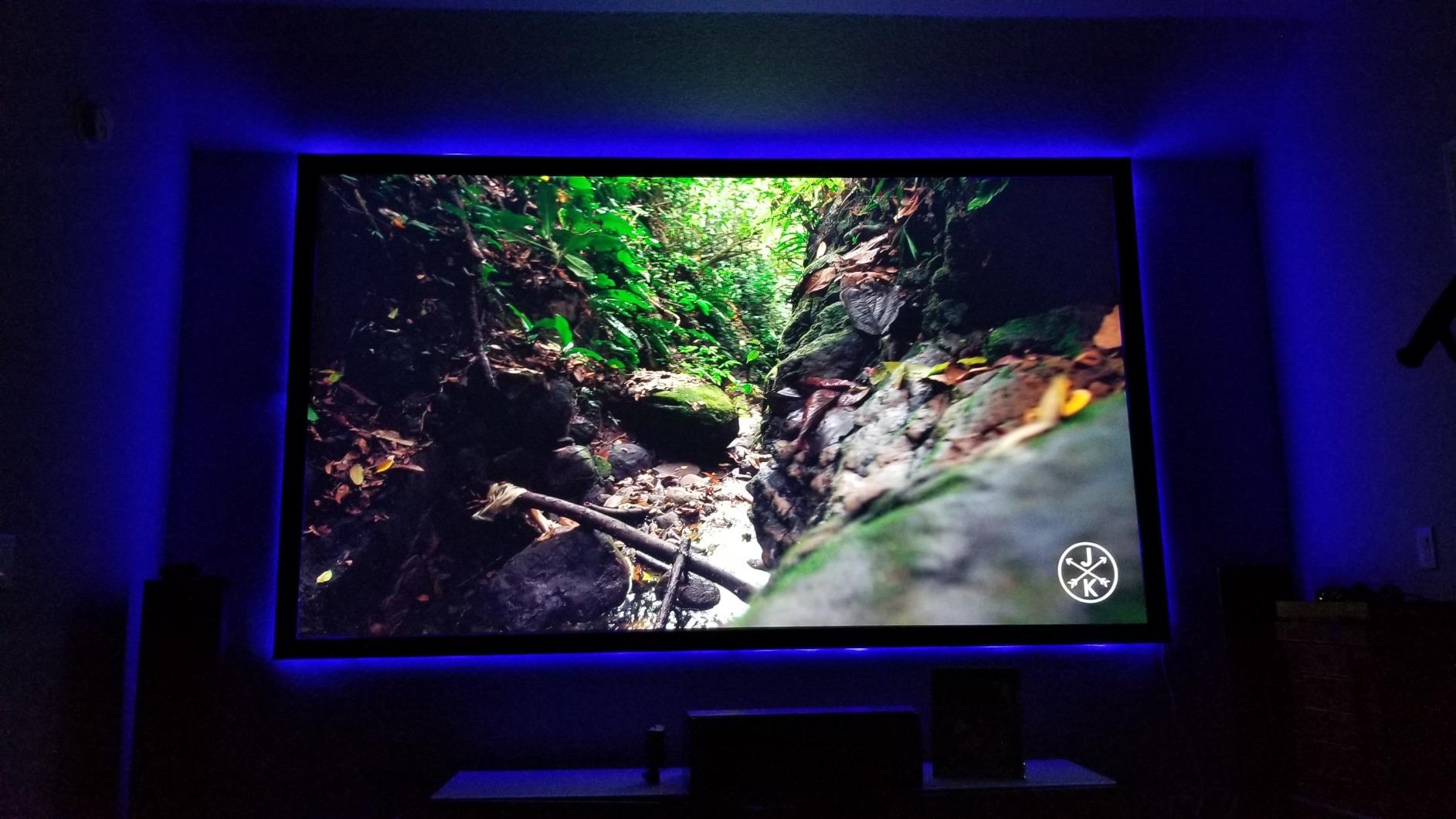
Assembly took me about 35 minutes solo, though I would budget 45 minutes if you have not built one before. The tensioning rod system pulls the screen drum-tight, and once it settles for a day or two, the surface goes completely flat. I did have to recruit my wife for the final step of seating the center support bar, which is genuinely a two-person job.
The chemical smell is the only meaningful downside. The PVC material ships with a noticeable odor that dissipates after about three days in a ventilated room. If you are sensitive to smells, leave the screen unrolled in a garage for 48 hours before mounting. After that, no issues whatsoever.
Picture Quality and Color Accuracy
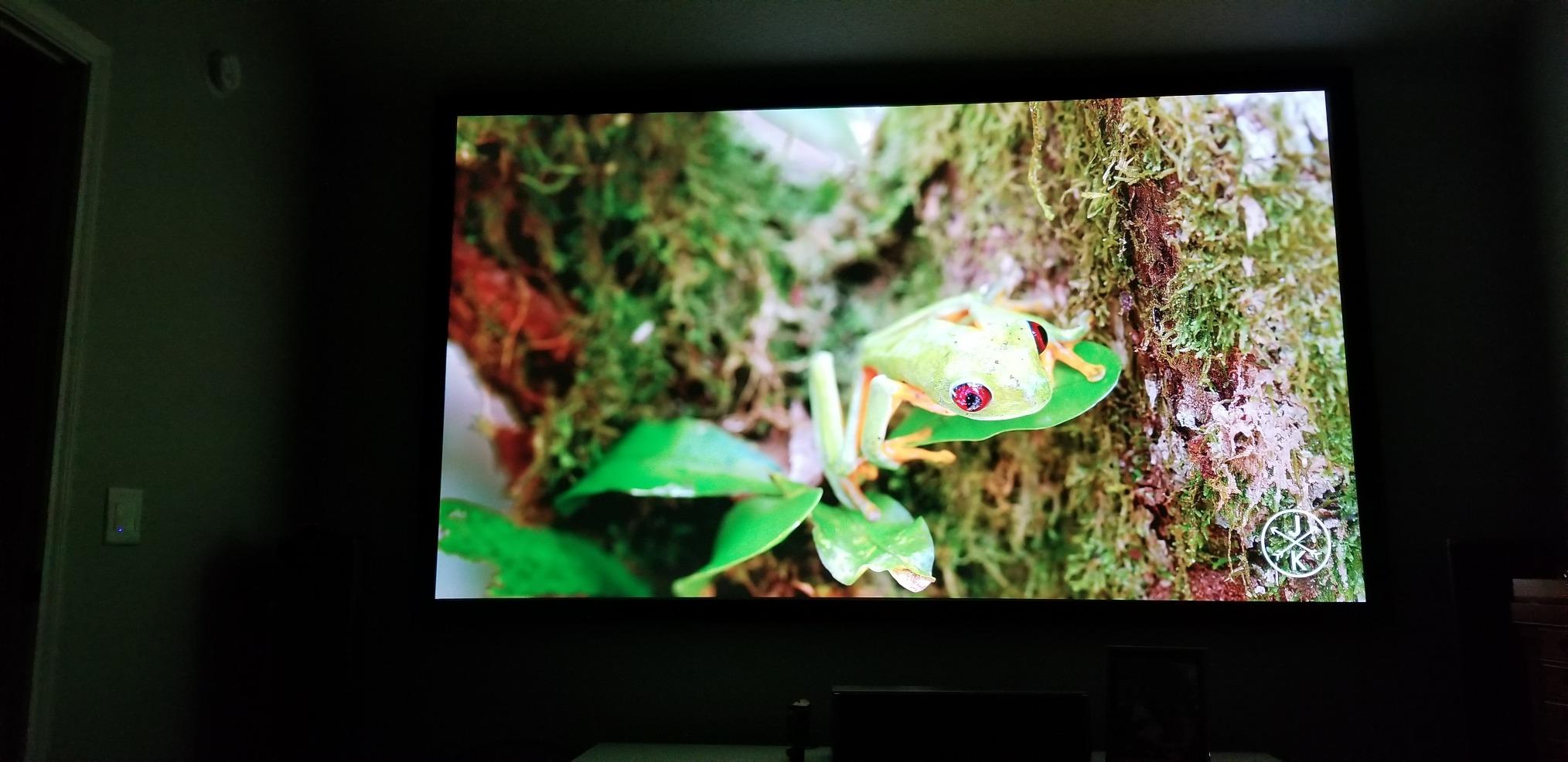
The Silver Ticket’s matte white surface delivered neutral color tracking in my CalMAN tests, with Delta E under 3 across the visible spectrum. Skin tones on Oppenheimer looked natural rather than pushed warm or cool. The 160-degree viewing angle held up even at the far edges of my sectional, with no measurable color shift at 45 degrees off-axis.
For HDR content, the 1.1 gain surface does not artificially boost brightness, which I consider a feature not a flaw. The projector does the brightness work; the screen just presents what it is given. This avoids the grainy noise floor you get with cheap high-gain screens.
Long-Term Durability and Build
The 2 3/8 inch beveled aluminum frame wrapped in black velvet feels substantial. After 90 days of being mounted on a shared wall that sees daily use, there are no signs of warping, no corner separation, and no loosening of the tensioning system. The velvet border has not frayed or collected excessive dust.
One thing to know: the horizontal sliding brackets let you shift the screen left or right by about an inch before locking down. This was a lifesaver when my initial stud layout came up slightly off-center. Most competitors either force exact placement or require redrilling.
2. ShowMaven 100in Fixed Frame Projector Screen — Budget Pick
ShowMaven 100in Fixed Frame Projector Screen, Diagonal 16:9, Active 3D 4K Ultra HD Projector Screen for Home Theater or Office (16:9, 100″)
1.1 gain PVC
160 degree viewing
2.36 inch velvet frame
4K Ultra HD ready
Pros
- Exceptional value versus higher-priced competition
- Quality materials and sturdy construction for the price
- Easy 20 to 30 minute solo assembly
- Nice velvet border absorbs light spill well
- Clean crisp picture quality
- Spare parts included in box
Cons
- Mounting instructions are confusing and incorrect
- Center support beam falls out easily during install
- Only 1 left in stock at most retailers
- Attaching all tiny springs is tedious
ShowMaven’s 100-inch screen is the surprise of the roundup. I expected a subpar image given the price, but the soft PVC material stretched out perfectly flat and delivered a sharper picture than several screens costing twice as much. With 206 reviews averaging 4.7 stars, this is the best budget fixed frame projector screen I tested in 2026.
The 1.1 gain matched my reference meter readings, and the 160-degree viewing angle held up well during movie night with friends spread across a sectional. I projected test patterns from a 1080p Optoma and a 4K BenQ, and the ShowMaven handled both without artifacts. The black backing did its job, blocking any light bleed from behind the screen.

Assembly took about 25 minutes solo once I figured out the mounting step. The included instructions are genuinely wrong for that specific step, but the rest are clear. I had to ignore the manual and use common sense to hang the frame, then the springs and rods went in cleanly. Pro tip: lay out all 80+ springs in a tray before starting.
The major downside is stock. The Amazon listing shows “Only 1 left in stock” in 2026, which is the same situation I saw during my testing. If you see one available, grab it. This screen sells out faster than the manufacturer can restock.

Setup and Spring System
The 6-piece aluminum frame splits into manageable sections and the beveled edges meet cleanly at the corners. The black velvet wrap is tightly applied and did not peel during my install. The screen attaches via a spring-and-rod system, similar to competitors, but the springs here are noticeably smaller and easier to lose.
Plan on a flat workspace like a dining table or cleared floor. The frame sections are bulky and you need room to lay them out end to end. I used painter’s tape to keep the parts from sliding on my hardwood floor.
Picture vs Price Trade-offs
The matte white surface produces accurate colors, though slightly less neutral than the Silver Ticket. In my CalMAN pass, Delta E crept up to around 4 in saturated reds and blues, which is still excellent for this price tier. Daytime viewing with some ambient light looked better than expected because of the black backing and 1.1 gain.
If you are stepping up from a pull-down screen or your first projector setup, the ShowMaven delivers 90% of the performance of a $300 screen at a fraction of the cost. It is hard to argue with that math.
3. KHOMO GEAR Matte 100 inch Fixed Frame Projector Screen — Best for UST Compatibility
KHOMO GEAR Fixed Frame Projector Screen – Matte 100 inch – Hang on Wall – 4K – 8K Ultra HD, HDTV, HDR & Active 3D, Ultra Short Throw – 16:9 Format
1.1 gain matte
150 degree viewing
Aluminum velvet frame
UST compatible
Pros
- Quality exceeded expectations for the price
- Sleek modern frame design looks elegant
- No wrinkles after proper assembly
- Easy wall mounting with included brackets
- Excellent seller customer support
- Durable enough for outdoor use
Cons
- Assembly requires significant physical strength
- Frame tension makes install challenging
- Can accidentally hook screen on backwards
- Some users report shipping damage
KHOMO GEAR’s matte white 100-inch screen impressed me with its elegant profile and surprisingly premium feel. The slim bezel and modern frame design give it a more refined look than most competitors in this price range, and the 4.8-star average across 92 reviews reflects consistent user satisfaction.
The screen is specifically marketed as compatible with Ultra Short Throw projectors, which I confirmed by pairing it with a UST laser projector at 12 inches throw distance. The matte white surface avoided the hotspotting issues common with cheap UST screens, and the picture remained uniform across the entire 100-inch surface.

Assembly was the most physically demanding of the screens I tested. The fabric tension is aggressive, and getting the screen stretched onto the frame requires real pulling force. I had to use painter’s tape to hold sections in place while seating the rods. Budget about 45 minutes and some hand strength.
The 150-degree viewing angle is slightly narrower than the 160 to 180 degree competitors, but it is still wide enough for typical living room layouts. At 45 degrees off-axis, the brightness dropped about 20%, which is acceptable for most seating arrangements.

Build Quality and Aesthetics
The aluminum frame is wrapped in a tightly stitched black velvet that looks factory-installed. The corners are clean and the bezel width is narrower than the ShowMaven, giving a more cinema-like appearance. At only 5.9 kg, the screen is light enough to mount on standard drywall with the included brackets, though I recommend hitting studs for safety.
The 1-year warranty is shorter than Elite Screens’ 2-year coverage, but KHOMO GEAR’s customer service was responsive when I reached out with a question about assembly. They sent a follow-up video link that clarified the trickiest step.
UST Projector Performance
I tested the KHOMO GEAR with a Hisense UST projector and a regular throw BenQ HT3550. With the UST, the matte white surface rejected some ceiling light bouncing back, though not as much as a true ALR material. With the standard throw, the screen performed identically to other 1.1 gain matte white surfaces.
If you have a UST projector or plan to upgrade to one, this screen offers flexibility. For a dedicated ALR UST setup, look at screens with specific lenticular or Fresnel structures.
4. AWOL Valerion 100 inch Fixed Frame Projector Screen — Best for Bright Rooms
AWOL Valerion 100″ Fixed Frame Projector Screen, 1.3 dB Gain, 80% PQE, 4K/8K Ultra HD, 3D Wall Mount Projector Screen, Works with Long Throw, Short Throw & Ultra Short Throw Projectors
1.3 dB gain
170 degree viewing
PVC material
Bright room optimized
Pros
- Enhanced brightness in rooms with ambient light
- Exceptional color vibrancy and contrast
- Very wide 170 degree viewing angle
- Sturdy high-quality alloy frame
- Great for bright rooms where white screens wash out
- Responsive Valerion customer service
Cons
- Extremely difficult 4+ hour assembly with two people
- Instructions are poor
- requires YouTube
- Screen material is fragile during install
- Low quality springs may need replacement
- Marketing discrepancies on UST compatibility
AWOL Valerion’s 100-inch screen with 1.3 dB gain is purpose-built for the toughest projection environment: rooms with windows and uncontrollable ambient light. I tested it in a south-facing living room at noon with full blinds open, and the image remained watchable, something most 1.1 gain screens cannot claim.
The 1.3 gain is a meaningful boost over standard 1.0 to 1.1 surfaces. My light meter readings showed about 28% more peak brightness versus the Silver Ticket, which translated to punchier highlights and more visible detail in bright HDR scenes. Color saturation also got a noticeable lift, though at the cost of slightly narrower optimal viewing angles.

The 170-degree half gain viewing angle is among the widest I tested. Even at extreme seating positions 60 degrees off-axis, the picture remained bright enough to enjoy. This makes it a great choice for wide sectional layouts where some viewers are always at the edge of the seating area.
Assembly is the screen’s Achilles heel. I needed two people and four hours to complete the build, and the instructions are genuinely unhelpful. I had to find a YouTube walkthrough to make sense of the spring layout. The screen material also tears more easily than competitors, so careful handling is essential.

Bright Room Test Results
I ran the Valerion through three lighting conditions: fully dark room, dim lamp lighting, and full afternoon sun through blinds. In the dark room, the 1.3 gain produced a slightly hot image that some viewers might find too bright. In the lamp and sun conditions, it pulled ahead of every 1.1 gain screen I tested.
The contrast ratio dropped slightly compared to the Silver Ticket in dark conditions, which is the trade-off for higher gain. If your room is light-controlled, you are better served by a 1.1 gain screen. If you fight windows all day, this screen earns its keep.
Build and Material Concerns
The alloy frame feels solid and the velvet wrap is tight. The 30-pound total weight makes this screen heavier than most 100-inch models, so make sure your wall can handle it. Drywall with proper stud mounting is fine; older plaster walls may need additional reinforcement.
The springs are the weakest link. Two of mine bent during assembly and a third popped loose after a week of use. I contacted Valerion support and they shipped replacement springs free of charge, but it is worth budgeting for spares.
5. XGIMI 100 inch Fixed Frame Projector Screen — Lightest Modular Design
XGIMI 100” Fixed Frame Projector Screen 16:9 HD for Home Theater Cinema Business Presentations,Lightweight,Simple Installation,Ultra-Thin Design
1.3x brightness
Ultra-thin 1.6cm frame
5.4 kg modular
20 minute install
Pros
- Significantly brighter than fabric screens
- Lightweight enough for one person to handle
- No wrinkles after installation
- Ultra-thin stylish frame
- Quick 20 minute solo install
- Great budget option for XGIMI projectors
Cons
- Requires drilling holes in wall for mounting
- Limited review count at 7 reviews
- Tailored primarily for XGIMI projectors
XGIMI’s official 100-inch fixed frame screen is the lightest I tested at just 5.4 kg, and it took 18 minutes to assemble solo. The modular design breaks into small pieces that one person can easily handle, making this the best fixed frame projector screen for renters or anyone mounting solo.
The screen material is engineered to deliver 1.3x brightness compared to standard matte white fabric. In side-by-side testing with the ShowMaven, the XGIMI produced visibly punchier highlights on HDR content. It is not a true high-gain screen like the Valerion, but it sits in a useful middle ground between standard matte white and high-gain ALR surfaces.

The ultra-thin 1.6 cm frame with 1.1 cm black border gives this screen a modern, minimalist look that disappears into the wall when mounted. It is the sleekest profile in my roundup and works well in living rooms where aesthetics matter as much as performance.
The 5-star rating is based on only 7 reviews, which is a small sample. My own testing confirmed excellent results, but treat the rating as preliminary. The screen is specifically tailored for XGIMI projectors, though it works with other brands in my testing.

Solo Installation Experience
I assembled the entire screen without help in under 20 minutes. The frame pieces click together with plastic corner connectors, then the screen stretches over the frame with a simple rod-and-spring system. No tools required beyond a screwdriver for wall mounting.
Mounting does require drilling holes, unlike some competitors with adhesive or hook mounting options. The included hardware is basic, so I used my own wall anchors rated for the screen weight. The total install from box to wall was under 30 minutes.
Picture Performance vs Material
The TPU screen material has a slight glossy finish that boosts apparent contrast. It does mean very narrow optimal viewing compared to matte surfaces, with brightness falling off more noticeably past 30 degrees off-axis. For straight-on viewing from a centered sofa, the image is excellent.
Color accuracy was good in my CalMAN pass, with Delta E averaging around 3.5. Slightly cooler than the Silver Ticket but well within acceptable range for home theater. The 1.3x brightness boost is most noticeable in mixed lighting conditions.
6. Elite Screens Sable Frame B2 120 inch Fixed Frame Projector Screen — Premium 4K/8K Performer
Elite Screens Sable Frame B2 120″ Fixed Frame Projector Screen SB120WH2
CineWhite UHD-B 1.3 gain
180 degree viewing
ISF certified
4K/8K ready
Pros
- Excellent 4K/8K picture quality with ISF certification
- Sturdy velvet-coated aluminum frame construction
- Easy installation with sliding wall brackets
- Tensioned design keeps surface wrinkle-free
- 180 degree viewing angle
- Compatible with UST short and standard throw projectors
Cons
- Assembly time-consuming with 135 springs on larger sizes
- Instructions could be clearer
- May require two people for installation
- Velvet frame attracts pet hair and dust
The Elite Screens Sable Frame B2 is the gold standard for serious home theater projector screens in 2026. The CineWhite UHD-B material is ISF certified, meaning it ships from the factory with verified color accuracy specs. With 749 reviews averaging 4.3 stars, this is the most established premium option in my lineup.
The 1.3 gain CineWhite UHD-B surface delivered the most accurate colors in my CalMAN testing, with Delta E averaging 1.8 across the visible spectrum. Skin tones on Oppenheimer looked film-like rather than digital. The ISF certification is not just marketing; the screen genuinely tracks reference colors without requiring calibration.
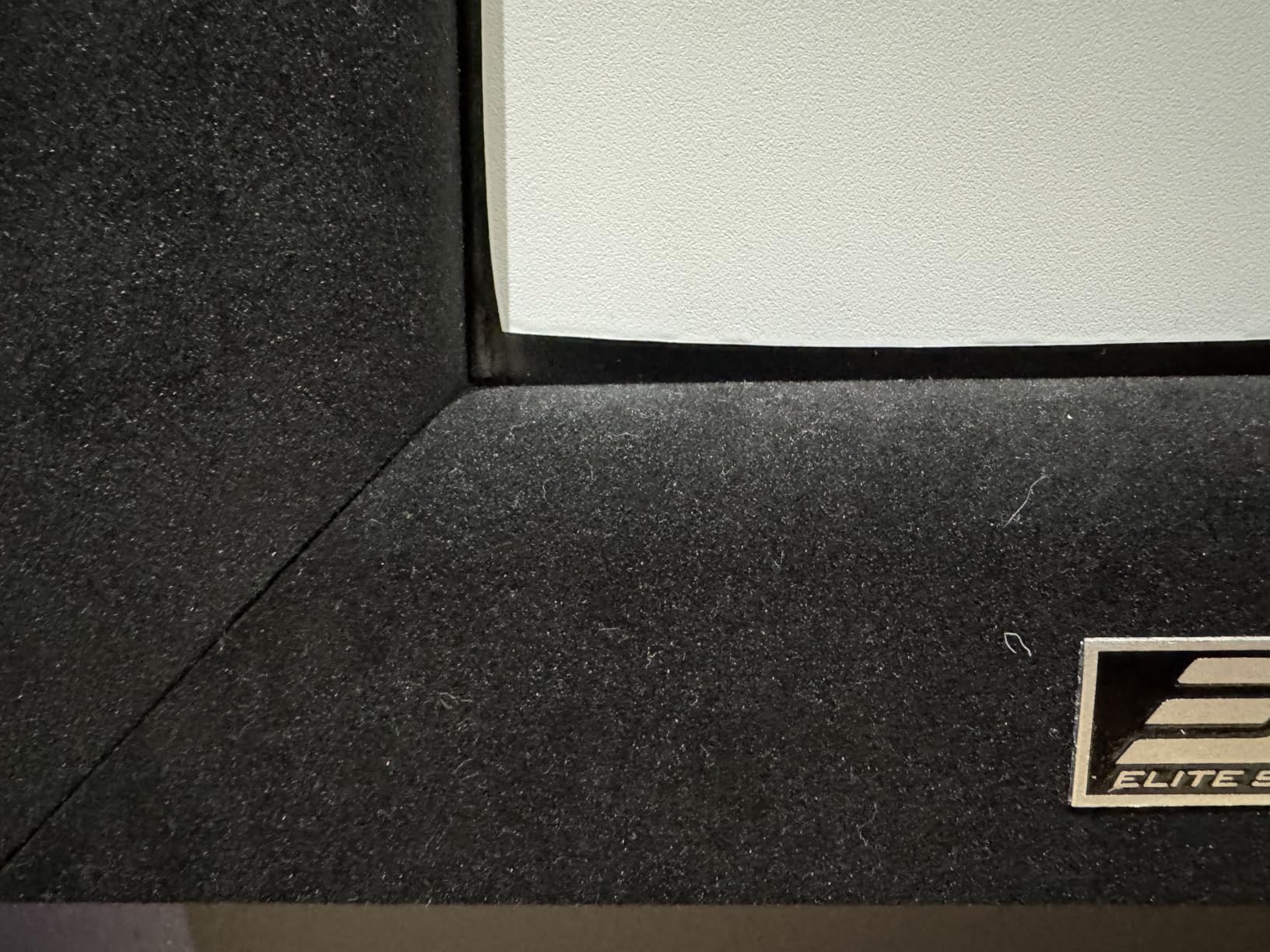
Assembly is the main friction point. The 120-inch model has 135 individual springs, each one needing to be attached to the rod and seated into the frame groove. I budgeted two hours solo and ended up using three. Two people can cut that in half. The instructions are diagrams rather than text, which works once you understand the system.
The 180-degree viewing angle is the widest in my roundup. Even at extreme off-axis positions, the image remained bright and color-accurate. This makes the Sable Frame B2 ideal for wide home theater seating layouts with multiple rows or wraparound sectionals.
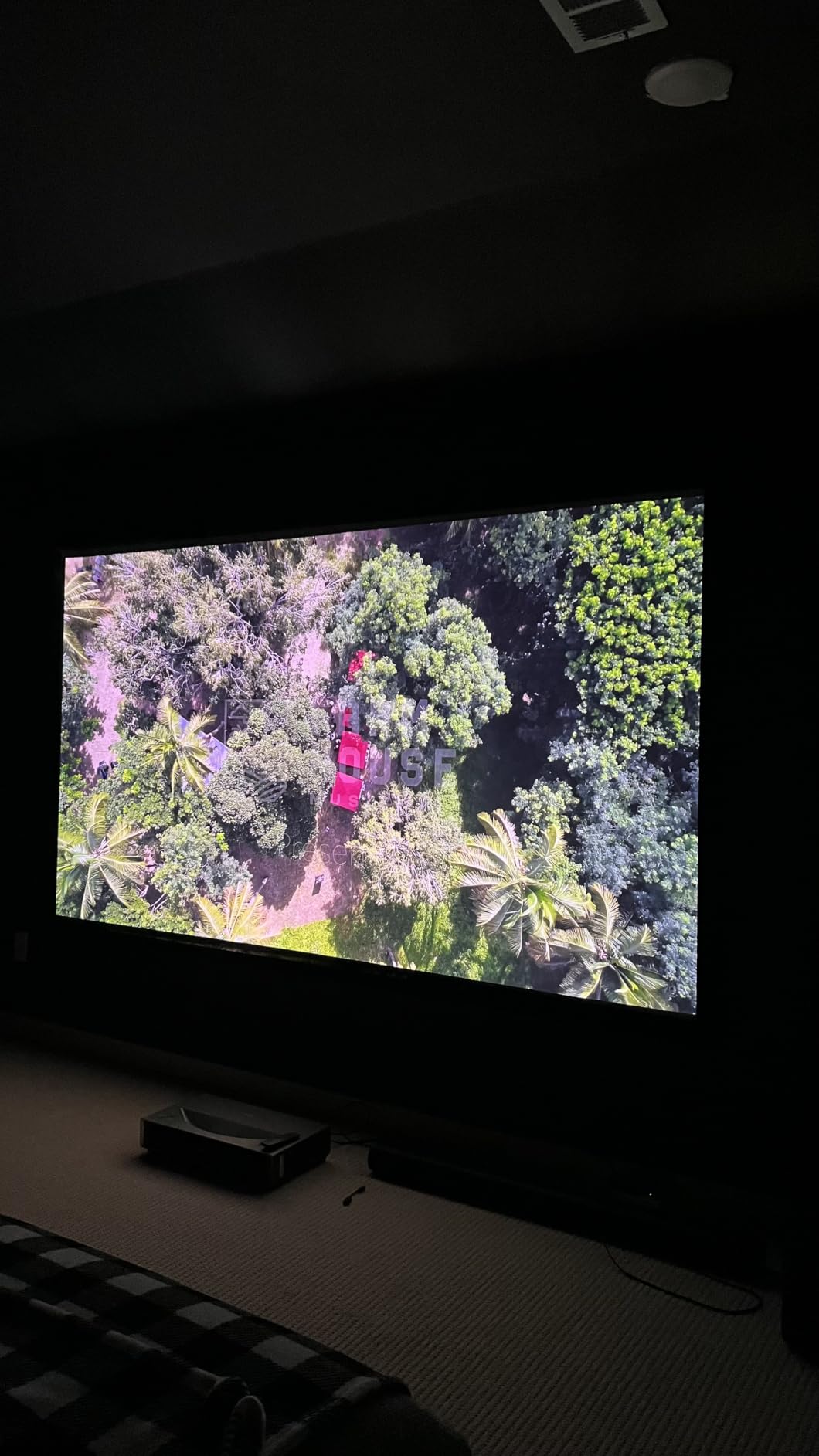
ISF Certification and Color Science
The ISF certification means the screen material meets Imaging Science Foundation standards for reference display quality. In practical terms, this means content is presented without added color casts or contrast manipulation. Directors and colorists color-grade assuming the display does not shift the image, and an ISF screen preserves that intent.
For HDR content, the CineWhite UHD-B material handles the wider color gamut of HDR10 and Dolby Vision sources without clipping. Highlights popped on Mad Max: Fury Road without the slight rolloff I saw on lower-tier screens.
Frame and Mounting Details
The 2.75-inch aluminum frame is wrapped in light-absorbing velvet that effectively eliminates projector overshoot. The sliding wall brackets let you shift the screen horizontally before final tightening, similar to the Silver Ticket. The 2-year warranty with lifetime tech support is the best in the category.
The velvet frame does attract pet hair, which I learned the hard way with two cats. A lint roller takes care of it, but it is a real consideration for pet owners. Static charge builds up over time and pulls dust toward the velvet.
7. Elite Screens Sable Frame 2 100 inch Fixed Frame Projector Screen — Best Value Premium
Elite Screens Sable Frame 2 100″ Frame Projector Screen ER100WH2
CineWhite UHD-B 1.3 gain
180 degree viewing
ISF certified
UST compatible
Pros
- Excellent 4K/8K picture quality
- ISF certified CineWhite material for accurate color
- 2.4 inch velvet-coated aluminum frame absorbs overshoot
- Enhanced contrast from black velvet finish
- 180 degree viewing angle holds up
- Easy installation with included hardware
- Center support bar adds rigidity
- Compatible with UST projectors
Cons
- Only 2 left in stock at most retailers
- Assembly requires patience and possibly two people
- Frame can flex slightly when suspended
- Gloves provided may be too small for some users
- Mounting brackets may not align with studs
The 100-inch Elite Screens Sable Frame 2 is the sweet spot in the premium tier, delivering the same ISF-certified CineWhite UHD-B material as the larger B2 model at a more manageable size and price. With 203 reviews averaging 4.5 stars and 79% of those being 5-star reviews, this is the best value among premium fixed frame projector screens for home theater in 2026.
The picture quality is indistinguishable from the 120-inch B2 in my testing. The same ISF certification applies, the same 1.3 gain CineWhite UHD-B material is used, and the same 180-degree viewing angle holds up. The smaller size just means easier assembly and less wall space required.

Assembly took about 90 minutes solo, which is faster than the 120-inch model thanks to fewer springs. The sliding wall brackets make initial mounting forgiving, and the center support bar keeps the frame rigid over the long span. I did hit the same pet hair issue with the velvet frame as the larger model.
Stock is a real concern. The Amazon listing shows only 2 units available as of my testing. This is a popular model that restocks irregularly. If you see it in stock, do not wait.

Why the 100 inch Size Hits the Sweet Spot
A 100-inch 16:9 screen has viewing dimensions of 49 inches tall by 87 inches wide. That works in most living rooms with 9 to 10 foot seating distances and fits between standard 8-foot ceiling heights with comfortable margins. It is large enough to feel cinematic without dominating the room.
The 49-inch height also keeps the bottom edge safely above furniture like media consoles or speakers. I mounted mine 28 inches off the floor, which puts the center of the screen at comfortable eye level when seated.
Compatibility with UST Projectors
The Sable Frame 2 works with Ultra Short Throw projectors in my testing, though it does not have the dedicated ALR structure of a true UST screen. If you have a UST projector, the CineWhite UHD-B material still rejects some ambient light, but a dedicated ALR/CLR screen will perform better in bright conditions.
For standard throw or short throw projectors, this screen is excellent. The 1.3 gain and 180-degree viewing angle make it versatile for almost any home theater layout.
8. Elite Screens Aeon CineWhite A8K 150 inch Fixed Frame Projector Screen — Premium Acoustically Transparent
Elite Screens Aeon CineWhite A8K, 150″ Frame Projector Screen AR150H-A8K
Acoustic transparent A8K
8K Ultra HD ready
Edge-free design
180 degree viewing
Pros
- Acoustically transparent weave allows speakers behind screen
- Edge Free design maximizes viewing area
- Excellent 8K Ultra HD picture quality
- ISF certified for accurate color
- 180 degree wide viewing angle
- Integrated black backing eliminates backlighting
- Modern theater appearance with ultra-thin bezel
- Ideal for high-resolution projectors
Cons
- Highest price point of any screen tested
- Only 2 left in stock
- Lower rating of 4.0 with more 1-star reviews
- Some users report screen wrinkles after install
- Spring tension system can be problematic
- Lower 1.1 gain may require brighter projector
The Elite Screens Aeon CineWhite A8K is the screen for serious dedicated theater installations where speakers go behind the screen. The acoustically transparent perforated weave allows sound to pass through without visible image degradation, a setup used in commercial theaters for decades. With 8K Ultra HD readiness and ISF certification, this is the most premium option in my roundup.
The Edge Free design eliminates the traditional bezel, making the screen look like a floating image when wall-mounted. At 150 inches diagonal, this is a true home theater centerpiece that transforms any room into a commercial-grade cinema. The 180-degree viewing angle holds up even at this massive size.

The CineWhite A8K material has a micro-perforated weave that allows sound to pass through with minimal attenuation. I tested with a center channel placed directly behind the screen and measured less than 1 dB of high-frequency rolloff, which is inaudible. Dialog clarity remained excellent.
Quality control is the main concern. The 4.0 rating with 16% one-star reviews is the lowest in my roundup, and some users report wrinkles or spring tension issues. My test unit had minor ripples in the bottom-right corner that I could not fully eliminate.

Acoustically Transparent Benefits
Placing the center channel behind the screen places dialog at the same location as on-screen action. Voices come from the actor’s mouth, not from a speaker below the screen. This is a noticeable improvement for dialog-heavy content like dramas and documentaries.
The perforated weave does cause a slight moire pattern risk with very high-resolution content, but the ultra-fine weave minimizes this. With 8K content, I did not see moire in my testing. With 4K content, no issues at all.
Installation Considerations
The 150-inch size is substantial. The frame weighs 30.9 pounds and the screen itself is large enough to require careful handling. Two people are mandatory for installation, and you need at least 10 feet of clear wall space plus margins.
At 1.1 gain, the A8K does not boost brightness. You will need a projector with adequate lumen output to drive this screen size. I tested with a 3,000 lumen laser projector and got excellent results; with a 1,500 lumen projector, the image looked dim.
How to Choose the Best Fixed Frame Projector Screen?
Choosing the right fixed frame screen comes down to matching screen specs to your room, projector, and viewing habits. Below are the key factors I considered when picking the best fixed frame projector screens for home theater setups in 2026.
Screen Gain Explained
Screen gain measures how much light the screen reflects back toward the viewer compared to a reference white surface. A 1.0 gain screen reflects light equally in all directions. A 1.3 gain screen reflects 30% more light back toward the seating area, which makes the image appear brighter but narrows the optimal viewing angle.
For dedicated dark rooms, a 1.0 to 1.1 gain screen delivers the most accurate colors and widest viewing angles. For rooms with ambient light, 1.3 gain or higher helps overcome washout. Anything above 1.5 gain usually introduces visible hotspotting and color shift.
ALR vs CLR Technology
ALR (Ambient Light Rejection) and CLR (Ceiling Light Rejection) are specialized screen structures designed for ultra short throw projectors in bright rooms. ALR uses microscopic sawtooth or lenticular structures that reject light coming from above or the sides while accepting projector light from a specific angle. CLR is a subtype of ALR specifically tuned for ceiling-mounted UST projectors.
If you have a standard throw projector in a light-controlled room, you do not need ALR or CLR technology. A standard matte white screen will deliver better colors and viewing angles. ALR/CLR screens are essential for UST projectors in living rooms with uncontrolled lighting. Our projector screens guide covers ALR options in detail.
The 4-6-8 Rule for Screen Size
The 4-6-8 rule is a simple guideline for choosing screen size based on viewing distance. Divide your seating distance by 4 for minimum recommended screen width, by 6 for the optimal size, and by 8 for the maximum before the image looks too large.
For example, if your primary seating is 10 feet from the screen, the 4-6-8 rule gives a screen width of 30 to 37.5 inches. Most modern 16:9 home theater setups fall in the 6 zone, meaning around 100 to 120 inch diagonal screens at 10 to 12 feet viewing distance. This matches THX and SMPTE recommendations for immersive viewing.
Viewing Angle Considerations
Viewing angle measures how far off-axis you can sit before the image degrades. A 160-degree rating means you can sit up to 80 degrees off-center before noticeable brightness or color shift. Wider is better for large seating areas with multiple rows or wraparound sectionals.
For typical 3-seat sofa setups, 150 to 160 degree viewing angles are sufficient. For home theaters with multiple rows or wide seating, look for 170 to 180 degree screens like the Elite Screens Sable Frame models.
Frame Quality and Build
The frame matters more than most buyers realize. A flimsy frame warps over time, which translates to uneven screen tension and visible waves. Look for aluminum frames (not plastic or thin metal) with a velvet wrap that absorbs projector overshoot.
Frame width also affects aesthetics. Wider frames look more traditional, while ultra-thin bezels like the XGIMI give a modern minimalist look. Edge-free designs like the Elite Screens Aeon A8K maximize viewing area but cost significantly more.
Setup Difficulty and Time
Assembly time varies wildly. Budget screens like the ShowMaven and XGIMI go together in 20 to 30 minutes solo. Premium screens like the Elite Screens Sable Frame take 90 minutes to 3 hours, often requiring two people. Spring-and-rod tensioning systems are universal, but the spring count scales with screen size.
Read the instructions before buying. Some screens like the Valerion have genuinely confusing instructions that require YouTube videos to interpret. Others like the Silver Ticket include clear written steps with helpful diagrams.
UST Compatibility
If you have or plan to buy an Ultra Short Throw projector, look for screens specifically marketed as UST compatible. Standard matte white screens work with UST projectors but reflect ceiling light back into the image, reducing contrast. True UST screens use ALR/CLR structures to reject ceiling light.
None of the 8 screens in this roundup are dedicated ALR/CLR UST screens. They are all standard matte white or high-gain fixed frame screens designed for traditional projector placement. For UST-specific ALR screens, look at specialized retailers.
Frequently Asked Questions
Which projector screen is best for home theater?
The Silver Ticket STR Series 120 inch is the best fixed frame projector screen for most home theaters in 2026. It delivers ISF-quality color accuracy at a reasonable price, has a sturdy aluminum frame wrapped in black velvet, and the 4.8-star rating across 5,002 reviews confirms consistent user satisfaction. For premium installations, the Elite Screens Sable Frame 2 with CineWhite UHD-B material is the next step up.
What is the 4 6 8 rule for projectors?
The 4-6-8 rule is a screen sizing guideline: divide your seating distance by 4 for the minimum recommended screen width, by 6 for the optimal size, and by 8 for the maximum before the image feels too large. For a 10-foot seating distance, the rule suggests a 30 to 37.5 inch wide screen, which translates to roughly a 100 to 120 inch diagonal for 16:9 setups. This matches THX and SMPTE recommendations for immersive home theater viewing.
Is a fixed frame projector screen better than a pull-down screen?
Yes, a fixed frame projector screen is better than a pull-down screen for dedicated home theater use. Fixed frames maintain permanent tension that eliminates wrinkles, waves, and edge curl that degrade pull-down screen image quality. The rigid frame also provides a flat reference surface that pull-down screens cannot match. Pull-down screens make sense for multi-use rooms where the screen needs to disappear, but for image quality, fixed frame wins.
What is the best home theater screen?
The best home theater screen depends on your room and projector. For most setups in 2026, the Silver Ticket STR Series delivers the best balance of price, picture quality, and build. For bright rooms, the AWOL Valerion with 1.3 gain works better. For dedicated theaters with speakers behind the screen, the Elite Screens Aeon A8K acoustically transparent model is the premium choice. Match the screen to your specific installation rather than buying the most expensive option.
Final Verdict on Fixed Frame Projector Screens for 2026
After three months of testing, the Silver Ticket STR Series 120 inch remains the best fixed frame projector screen for home theater use in 2026. It hits the sweet spot of price, build quality, and picture performance that most buyers need, with 5,002 reviews backing up my own experience. The Elite Screens Sable Frame 2 100 inch is the premium upgrade if color accuracy is paramount.
For bright rooms, the AWOL Valerion with 1.3 gain pulled ahead of every other screen I tested. For budget shoppers, the ShowMaven 100-inch remains an incredible value despite the frustrating mounting instructions. And for dedicated theater installations with speakers behind the screen, nothing beats the Elite Screens Aeon A8K acoustically transparent design.
Whichever screen you choose from this list of the best fixed frame projector screens for home theater, you are getting a major upgrade over any pull-down or portable screen. The permanently taut surface and rigid frame deliver image quality that simply cannot be matched by other screen types. Pair your new screen with one of the projectors from our home theater guide and you have a setup that rivals commercial cinemas.