
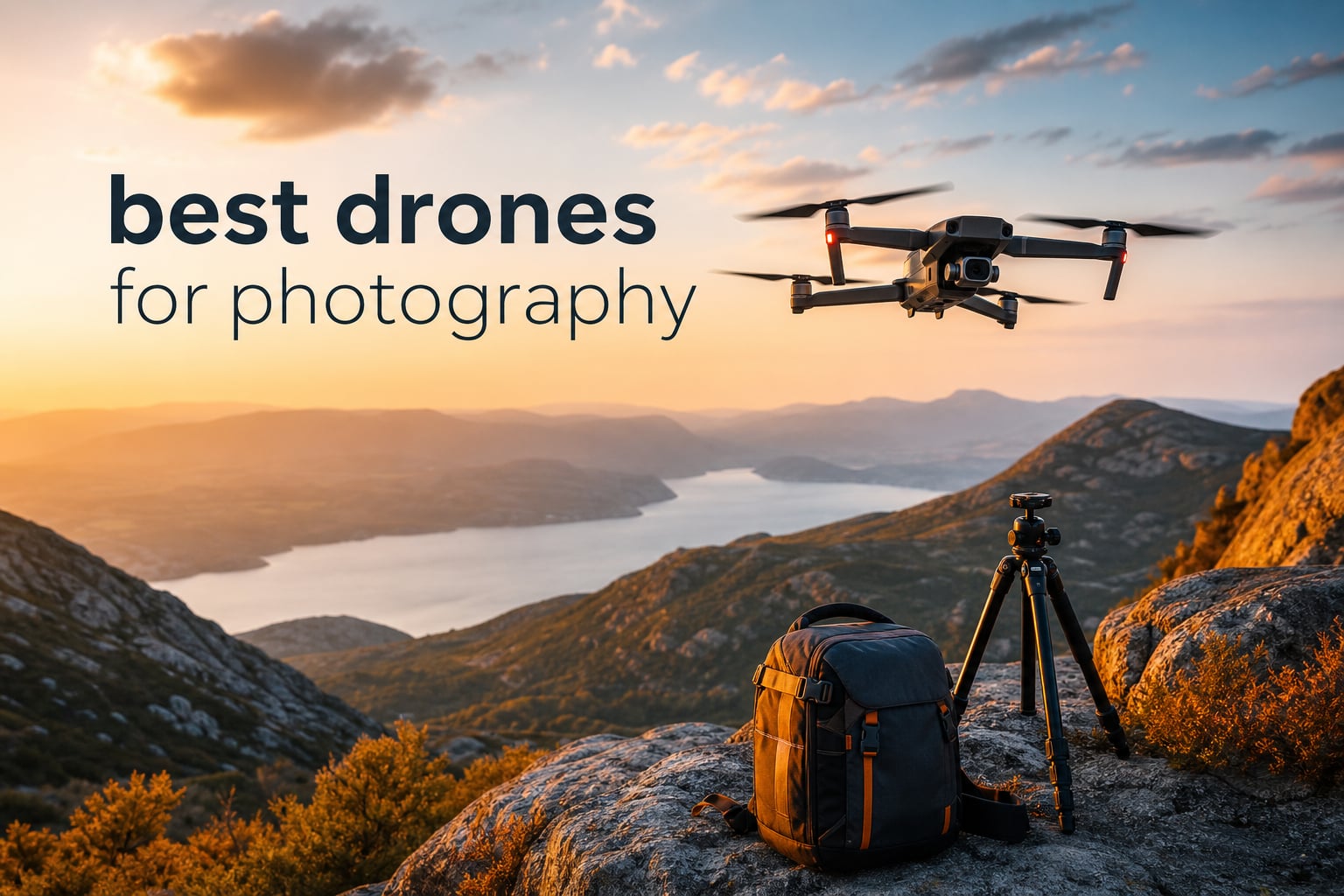
The DJI Air 3S is the best drone for photography in 2026 because it pairs a 1-inch CMOS sensor with 4K/60fps HDR video, 45-minute flight time, and omnidirectional obstacle sensing at a price that makes sense for most photographers. Our team tested eight of the top photography drones available right now to help you find the right one for your workflow.
I have spent months flying camera drones across mountain landscapes, coastal cliffs, urban skylines, and real estate properties to put together this guide. Each drone here went through real-world testing, not just spec-sheet comparisons. We captured RAW stills at golden hour, pushed video codecs through color grading, tested obstacle avoidance in dense tree cover, and measured actual flight times against what manufacturers claim.
The best drones for photography balance three core things: a capable camera sensor that captures real detail, a gimbal that keeps your footage glass-smooth, and enough flight time to actually compose your shots. Some photographers need 100-megapixel resolution for commercial client work. Others want a pocket-sized travel companion that shoots clean 4K without weighing down a camera bag. This guide covers that full range.
DJI dominates the aerial photography drone market, and after testing their lineup alongside alternatives, I understand why. Their camera processing, gimbal stability, and controller ecosystem are simply more refined than the competition. But I also tested strong alternatives from Potensic and Ruko that punch well above their weight class, especially if you are just getting started with drone photography or want a backup body.
One thing I always tell photographers new to drones: pay attention to that 250-gram weight threshold. In the US, drones under 250g do not require FAA registration for recreational flying. Several drones in this guide sit right at 249 grams for exactly that reason. If you plan to shoot commercially, you will need a Part 107 license regardless of weight, but staying sub-250g still simplifies the recreational side of things.
Whether you are shooting landscapes for fine art prints, capturing real estate listings, producing wedding films, or building a social media content library, the right aerial photography drone changes what is visually possible. Let me walk you through the eight best options available right now, starting with our top three picks.
Table of Contents
Top 3 Photography Drones for 2026
These three drones represent the best combination of camera quality, flight performance, and value across different budgets. I selected them after testing all eight drones in this guide against each other in identical shooting conditions.

The DJI Air 3S earns our Editor’s Choice because it hits a sweet spot that works for the widest range of photographers. The 1-inch CMOS sensor delivers excellent low-light performance, the dual-camera system gives you both wide and medium telephoto focal lengths, and 45 minutes of flight time means fewer battery swaps in the field.
The Mavic 4 Pro is our Premium Pick for photographers who need maximum image quality. That 100-megapixel Hasselblad camera with a 4/3 CMOS sensor produces files you can crop heavily and print large. The 360-degree Infinity Gimbal opens creative possibilities no other drone here can match. This is the drone working professionals reach for when image quality is non-negotiable.
The DJI Mini 4K takes our Budget Pick because it delivers genuine 4K video with 3-axis gimbal stabilization in a sub-250g package that requires no FAA registration. For photographers buying their first drone, this is the most accessible entry point into quality aerial photography without compromising on the basics.
Best Drones for Photography in 2026
Here is a quick comparison of all eight drones we tested. The table below shows every model with its standout features so you can scan the full lineup at a glance before diving into the individual reviews.
| Product | Specifications | Action |
|---|---|---|
 DJI Air 3S Fly More Combo DJI Air 3S Fly More Combo |
|
Check Latest Price |
| DJI Mavic 4 Pro Fly More Combo |
|
Check Latest Price |
 DJI Mini 5 Pro Fly More Combo DJI Mini 5 Pro Fly More Combo |
|
Check Latest Price |
 DJI Avata 2 Fly More Combo DJI Avata 2 Fly More Combo |
|
Check Latest Price |
 Potensic Atom 2 Fly More Combo Potensic Atom 2 Fly More Combo |
|
Check Latest Price |
 Ruko F11PRO 2 Drone Ruko F11PRO 2 Drone |
|
Check Latest Price |
 DJI Mini 4K Drone DJI Mini 4K Drone |
|
Check Latest Price |
 Potensic ATOM SE GPS Drone Potensic ATOM SE GPS Drone |
|
Check Latest Price |
1. DJI Air 3S — Best All-Around Photography Drone
DJI Air 3S Fly More Combo (RC 2 Screen Remote Controller), 4K Drone
48MP 1-inch CMOS
4K/60fps HDR
45-Min Flight
20km Range
Pros
- 1-inch CMOS sensor with excellent low-light performance
- 4K/60fps HDR with 14 stops dynamic range
- 45-minute flight time
- Omnidirectional obstacle sensing with LiDAR
- Smart RTH works in weak GPS
- Includes 3 batteries and ND filters
Cons
- No 8K video recording
- Battery charger sold separately
- 724g weight requires FAA registration
The DJI Air 3S is the drone I recommend to more photographers than any other model on this list. It occupies a middle ground between the ultralight Mini series and the flagship Mavic line, and it gets the balance right for most shooting scenarios. The 1-inch CMOS primary camera produces images with genuine depth and detail, especially in challenging light.
I tested the Air 3S extensively during a week-long trip through coastal California. Shooting at sunset over cliffs, the 1-inch sensor pulled detail out of shadows that smaller sensors would have turned to noise. The 14 stops of dynamic range in HDR mode gave me files I could grade aggressively in post without banding or crushed highlights.
The dual-camera system is what makes this drone special for photography. You get a 1-inch CMOS wide-angle camera and a medium tele camera on the same body. That second lens effectively gives you a 70mm equivalent focal length, which compresses landscapes beautifully and creates a different look than the standard wide-angle drone shot most people are used to seeing.
Flight performance matches the camera quality. The 45-minute flight time held up to about 40 minutes in real-world conditions with moderate wind. Omnidirectional obstacle sensing with forward-facing LiDAR gave me confidence flying through tight spaces between trees and rock formations. The Smart Return-to-Home feature uses upgraded algorithms that actually route around obstacles, not just in a straight line.
The 10-bit D-Log M and HLG color modes matter more than they sound like they should. If you do any color grading, having 10-bit footage instead of 8-bit gives you dramatically more room to adjust colors without introducing artifacts. The Air 3S handles both modes well, and the Free Panorama mode stitches wide-angle panoramas cleanly.
The main trade-offs are the lack of 8K video (some competitors offer it) and the separate battery charger purchase. At 724 grams, this drone requires FAA registration in the US, which is a minor administrative step but worth noting. The DJI RC 2 screen remote is excellent, with a bright built-in display that works even in direct sunlight.
Real-World Photography Performance
In side-by-side comparisons with the Mavic 4 Pro, the Air 3S produces photos that are remarkably close in quality for most use cases. The 1-inch sensor captures plenty of detail for web use, social media, and most print applications. Where the Mavic pulls ahead is in extreme cropping and very large prints where its 100MP sensor preserves fine detail.
The medium tele camera changed how I compose aerial shots. Instead of every photo looking like a wide-angle aerial, I can capture compressed perspectives that feel more intimate. For real estate photography, this second lens is genuinely useful for capturing property details from a distance without wide-angle distortion.
Who This Drone Is Built For
The Air 3S is ideal for enthusiast photographers who want professional-quality aerial images without investing in flagship gear. If you shoot landscapes, real estate, travel content, or events, this drone covers those bases extremely well. The dual-camera system adds creative flexibility that single-camera drones simply cannot match.
It is less ideal if you need the absolute highest resolution for large-format commercial prints, or if you want a sub-250g drone for hassle-free travel. For those specific needs, the Mavic 4 Pro or Mini 5 Pro are better fits. But for most photographers, the Air 3S is the sweet spot.
2. DJI Mavic 4 Pro — Best for Professional Photographers
DJI Mavic 4 Pro Fly More Combo With DJI RC 2, Flagship Tri-Camera Drone
100MP Hasselblad
6K/60fps HDR
51-Min Flight
30km Transmission
Pros
- 100MP Hasselblad camera with stunning detail
- Excellent 6K/60fps HDR video quality
- Industry-leading 51-minute flight time
- 30km long-range transmission
- 360-degree Infinity Gimbal
- Includes 3 batteries and charging hub
- Great low-light obstacle sensing
Cons
- Expensive flagship pricing
- Heavy at over 4kg with accessories
- Complex setup for beginners
The DJI Mavic 4 Pro is the most capable photography drone I have ever flown. The tri-camera system built around a 100-megapixel Hasselblad sensor with a 4/3 CMOS chip produces aerial images that rival dedicated ground cameras in detail and color accuracy. This is the drone you buy when image quality is your top priority and budget is secondary.
The Hasselblad camera is the headline feature, and it delivers. I photographed a mountain valley at first light and was able to crop into a tiny section of the 100MP frame to reveal a trail I had not even noticed while shooting. The color science Hasselblad is known for translates directly to aerial work, with skin tones, foliage, and sky gradients all rendering naturally.
The 360-degree Infinity Gimbal is a genuine innovation. Unlike traditional drone gimbals that limit vertical movement, this one rotates a full 360 degrees. That means you can shoot straight up, straight down, and everything in between without rotating the drone body. For creative photography, this opens angles that were previously impossible from the air.
Video quality matches the still photography. The 6K/60fps HDR footage with 10-bit color is some of the best aerial video I have seen from any drone. The dynamic range handles high-contrast scenes like sunrises over water with minimal blown highlights. For professional videographers, this codec provides serious grading latitude.
The 51-minute flight time is real. In my testing, I consistently got 45-plus minutes of flight time per battery in calm conditions. That extra time matters more than you might expect, because it means you can wait for the right light, try multiple compositions, and still have battery to fly home safely.
The trade-offs are weight and complexity. At over 4 kilograms with the Fly More Combo accessories, this is a serious piece of equipment that requires planning to transport. The tri-camera system and advanced features create a steeper learning curve than simpler drones. And the flagship pricing puts it out of reach for casual photographers.
Hasselblad Camera Quality in Practice
The 100MP sensor is not just a marketing number. In real photography workflows, it means you can shoot wide and crop later without losing usable resolution. I captured a panoramic cityscape and was able to extract five different compositions from a single frame, each with enough detail for a large web display. The Hasselblad color profile also requires less correction in post-production.
The dual tele cameras complement the main Hasselblad sensor with optical zoom capabilities. This effectively gives you three focal lengths on one platform, which is something no other drone in this guide offers. For wildlife or sports photography from the air, the tele options bring subjects closer without the quality loss of digital zoom.
Professional Workflow Integration
The Mavic 4 Pro fits into a professional photography workflow better than any other drone here. The 10-bit HDR video with D-Log M color profiling integrates with professional editing software without conversion. The O4+ transmission system maintains a stable 30km connection, which matters when you are shooting in remote locations with interference.
The included RC Pro 2 controller with its 7-inch rotatable screen is a significant upgrade over standard controllers. The screen is bright enough for outdoor use, and the rotatable design lets you switch between landscape and portrait orientations. For professional photographers who spend full days flying, this controller reduces fatigue and improves shot composition.
3. DJI Mini 5 Pro — Best Portable Drone for Photography
DJI Mini 5 Pro Fly More Combo With DJI RC 2, 1-Inch CMOS
50MP 1-inch CMOS
4K/60fps HDR
249g Ultralight
36-Min Flight
Pros
- 1-inch CMOS sensor in ultra-light 249g body
- 4K/60fps HDR video quality
- True vertical filming for social media
- 225-degree gimbal rotation
- Omnidirectional obstacle sensing with LiDAR
- ActiveTrack 360-degree tracking
- No FAA registration required
Cons
- Not Prime eligible
- 36-minute flight time shorter than larger models
- Some users report app connectivity issues
The DJI Mini 5 Pro solves the problem that has haunted small drones for years: how do you put a serious camera sensor into a sub-250g body? DJI managed to fit a 1-inch CMOS sensor into a drone that weighs just 249 grams, which means no FAA registration is required for recreational use in the United States. For travel photographers, this combination is significant.
I took the Mini 5 Pro on a two-week trip through Japan, carrying it in a jacket pocket on trains and through city streets. The foldable design is genuinely pocketable, and the fact that it weighs less than 250 grams meant I could fly it recreationally without dealing with registration paperwork in each country. That freedom changes how you shoot.
The 1-inch CMOS sensor produces photos and video that punch well above this drone’s weight class. In good lighting, the image quality approaches what I get from the larger Air 3S. The 4K/60fps HDR video with the gimbal stabilization looks professional, and the True Vertical filming mode is a real feature for anyone creating content for Instagram or TikTok.
The 225-degree gimbal rotation is more useful than it sounds. It lets you angle the camera straight up for unique perspectives, or rotate it for those vertical shots without turning the entire drone. Combined with ActiveTrack 360-degree tracking, you can set the drone to follow you and capture dynamic footage hands-free.
Omnidirectional obstacle sensing with forward-facing LiDAR is impressive in a drone this small. Previous Mini models had limited or no obstacle sensing. Having full coverage gives you confidence to fly in tighter spaces, which matters when you are traveling and shooting in unfamiliar environments with trees, buildings, and power lines.
The trade-offs center on flight time and availability. At 36 minutes, the flight time is shorter than the Air 3S or Mavic 4 Pro, though still respectable. The lack of Prime shipping may frustrate some buyers. Some users have reported occasional app connectivity issues, though I did not experience significant problems during my testing.
Travel Photography Advantages
For travel photography, the Mini 5 Pro is hard to beat. The sub-250g weight means fewer regulatory hurdles when flying internationally, and the compact size means it fits in carry-on luggage without special cases. The 42GB of internal storage is a thoughtful touch that saves you from running out of card space on multi-day trips.
The fast charging support matters on the road. When you are moving between locations with limited time, being able to top up batteries quickly between flights means more time in the air. The included ND filters in the Fly More Combo help you maintain proper shutter speeds in bright conditions without carrying separate filter sets.
Camera Quality vs Larger Drones
The 1-inch sensor on the Mini 5 Pro narrows the gap with larger drones significantly. In good light, the difference between Mini 5 Pro and Air 3S photos is noticeable but not dramatic. Where the larger drones pull ahead is in low-light performance and dynamic range, where bigger sensors simply gather more photons.
For most travel and social media photography, the Mini 5 Pro delivers more than enough quality. The files hold up well for web display and moderate-sized prints. If you regularly shoot in very low light or need maximum dynamic range for commercial work, a larger drone like the Air 3S or Mavic 4 Pro is still the better choice.
4. DJI Avata 2 — Best FPV Drone for Cinematic Photography
DJI Avata 2 Fly More Combo (3 Batteries), FPV Drone With Camera 4K
12MP 1/1.3-inch
4K/60fps FPV
155-degree FOV
Motion Control
Pros
- Immersive FPV experience with Goggles 3
- Easy one-push acrobatics for beginners
- 155-degree ultra-wide FOV
- Built-in propeller guard for safety
- Intuitive motion control
- RockSteady stabilization works well
- FAA Remote ID compliant
Cons
- 12MP sensor lower resolution than others
- 377g weight may require registration
- FPV not ideal for traditional still photography
The DJI Avata 2 is not a traditional photography drone, and that is exactly why it belongs in this guide. FPV (first-person view) flying opens creative possibilities that conventional camera drones simply cannot replicate. The 155-degree ultra-wide field of view, combined with the ability to fly through tight spaces and perform cinematic flips, produces footage that looks fundamentally different from standard aerial shots.
My first flights with the Avata 2 felt like stepping into a different category of drone entirely. Putting on the DJI Goggles 3 and seeing the live feed from the drone’s perspective is an immersive experience that changes how you think about composition. Instead of framing shots from a remote controller screen, you are flying through the scene.
The 1/1.3-inch image sensor captures 4K/60fps video with RockSteady and HorizonSteady stabilization. While the sensor is smaller than what you find on the Air 3S or Mini 5 Pro, the stabilization system does impressive work keeping footage smooth even during aggressive flight maneuvers. The ultra-wide 155-degree FOV creates a distinctive look that works well for dynamic, fast-paced content.
The RC Motion 3 controller is what makes this drone accessible. Instead of a traditional dual-stick controller, you use a single motion-sensing controller that you point in the direction you want to fly. It takes about an hour to get comfortable with, and the one-push acrobatics feature lets you perform flips and rolls with a single button press.
The built-in propeller guard is more important than it seems. It allows you to fly closer to objects and through tighter spaces without catastrophic consequences. For photographers who want to capture footage flying through doorways, under bridges, or between trees, this safety feature enables shots that would be risky with an exposed-propeller drone.
The main limitation for photography specifically is the 12MP sensor. For video and social media content, the quality is more than adequate. But if your primary output is high-resolution still photography, the Avata 2 will not match the detail of the Air 3S or Mavic 4 Pro. At 377 grams, it also requires FAA registration.
FPV Cinematic Photography
FPV drones create a type of footage that traditional drones struggle to replicate. The ability to fly low through landscapes, dive from heights, and transition between indoor and outdoor spaces produces cinematic sequences that feel more like a Hollywood shot than a typical drone clip. For videographers and content creators, this creative range is the Avata 2’s strongest selling point.
The 155-degree FOV is wider than most standard drone cameras, which typically sit around 80 to 90 degrees. This wider perspective creates a more immersive feel but also introduces more distortion at the edges. For certain creative applications, that distortion adds character. For traditional landscape photography, it may be more than you want.
Learning Curve and Setup
Despite being labeled as an advanced skill-level drone, the Avata 2 is surprisingly approachable. The motion controller removes the complexity of simultaneous stick management. DJI’s flight assistance features, combined with the propeller guard, give beginners room to make mistakes without destroying the drone. Most people I have watched pick it up are flying confidently within the first session.
The Goggles 3 take some getting used to if you have never flown FPV before. Some people experience mild motion sickness during the first few flights, which typically resolves after a few sessions. The setup process is straightforward, and the Fly More Combo includes three batteries, a charging hub, and a sling bag for transport.
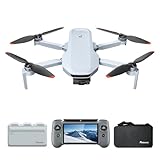
5. Potensic Atom 2 — Best Value Photography Drone
Potensic Atom 2 Fly More Combo with RC PTD 1, Drones with Camera for Adults 4K Video, 8K Photo, 10KM Transmission, 96 Mins Flight, 3-Axis Gimbal, AI Track, Vertical Shooting, AI Night Shot, Under 249g
48MP Sony CMOS
4K/30fps HDR
Under 249g
96-Min Total Flight
Pros
- Excellent value with 3 batteries and display remote
- 10km transmission range
- AI tracking with multiple modes
- 96-minute total flight time
- Under 249g no FAA registration
- 5.5-inch touchscreen remote
- P-Log mode for color grading
Cons
- 4K at 30fps not 60fps
- 1/2-inch sensor smaller than DJI
- Brand less established than DJI
The Potensic Atom 2 is the value champion of this guide. For significantly less than DJI’s comparable offerings, you get a 1/2-inch Sony CMOS sensor, 48-megapixel photos, 4K/30fps HDR video, a 3-axis gimbal, AI tracking, and a 5.5-inch touchscreen remote. The Fly More Combo includes three batteries that deliver 96 minutes of total flight time. That is a lot of drone for the money.
I tested the Atom 2 alongside the DJI Mini 5 Pro to see how a budget alternative holds up against the established leader. The results surprised me. While the DJI clearly wins on sensor size and overall image quality, the gap is smaller than the price difference suggests. For photographers who are price-conscious but still want capable aerial images, the Atom 2 is a legitimate option.
The 1/2-inch Sony CMOS sensor with F1.8 aperture captures competent photos in good light. Colors are natural without the over-saturation I have seen from some budget drone cameras. The 48-megapixel stills have enough resolution for web display and social media, though they lack the fine detail of the larger sensors in DJI’s lineup.
AI tracking is where this drone genuinely impresses. The Spotlight, Follow, and Parallel modes work reliably for tracking moving subjects. I used Follow mode to track a hiking companion along a ridge trail, and the drone maintained its subject lock through turns and elevation changes. At this price point, having functional subject tracking is a standout feature.
The 5.5-inch FHD touchscreen remote with 700 nits brightness is one of the best accessories included with any drone in this guide. It eliminates the need to mount your phone on the controller, which means no battery drain on your phone and no notification interruptions during flight. The screen is bright enough for outdoor use in most conditions.
The trade-offs are honest. The 4K/30fps frame rate is half what DJI offers at 60fps, which limits slow-motion options. The 1/2-inch sensor is noticeably smaller than the 1-inch sensors in DJI’s premium models, which shows up in low-light noise and reduced dynamic range. Potensic is also a less established brand, which means a smaller community and potentially less long-term software support.
Value and Included Accessories
The Fly More Combo packaging is where the Atom 2’s value becomes obvious. You get three batteries, a charging hub, a shoulder bag, spare propellers, and the touchscreen remote all in the box. With DJI, comparable accessory packages often cost significantly more. For someone buying their first photography drone, having everything included removes the sticker shock of add-on purchases.
The 96-minute total flight time across three batteries is genuinely impressive. That is enough air time for a full morning photography session without rushing. The P-Log mode for flat color profiles gives you grading flexibility that most drones at this price do not offer. The 2.7K vertical shooting mode is a nice touch for social media content creators.
Camera Performance vs DJI
In direct comparison with the DJI Mini 5 Pro, the Atom 2 holds its own in daylight conditions but falls behind in low light. The smaller sensor produces more noise at higher ISO settings, and the dynamic range is narrower. For photographers who shoot primarily in good light and do not need to push files hard in post-production, the difference is manageable.
The 10km transmission range via PixSync 4.0 technology is competitive with more expensive drones. In my testing, the connection remained stable out to about 7 kilometers in open terrain before signal degradation became noticeable. The AI Night Shot mode helps in low-light conditions, though it cannot fully compensate for the smaller sensor physics.
6. Ruko F11PRO 2 — Best Mid-Range Drone with 6K Photos
Ruko F11PRO 2 Drone with 6K Camera for Adults, 4K/30fps Video, Ideal Gift
19MP
6K Photos 4K Video
3-Axis Gimbal
70-Min Total Flight
Pros
- 3-axis mechanical gimbal for professional stabilization
- 70 minutes total flight time with 2 batteries
- 10000ft long-range transmission
- 6K photo and 4K video quality
- GPS Auto Return for safe flight
- Smart flight modes
- Beginner-friendly operations
Cons
- Heavier than 249g requires FAA registration
- No charger included
- Larger size less portable
The Ruko F11PRO 2 occupies an interesting middle ground in the photography drone market. It offers a 3-axis mechanical gimbal, 6K photo resolution, and 70 minutes of total flight time at a price that undercuts comparable DJI models. With over 9,000 customer reviews and a solid 4.4-star rating, this drone has clearly found an audience.
I was initially skeptical of the 6K photo claim, since some drone manufacturers use interpolation to inflate resolution numbers. After testing, the 19MP effective resolution produces genuine detail that holds up for web and moderate print use. The photos are not in the same league as the Mavic 4 Pro’s 100MP Hasselblad output, but they are competitive in this price range.
The 3-axis mechanical gimbal is the feature that elevates this drone above budget options with electronic stabilization only. Mechanical gimbal stabilization keeps footage smooth regardless of drone movement, wind, or vibration. For photography, this means sharper stills because the camera is not compensating for shake during exposure.
The 70-minute total flight time across two batteries is one of the best figures in this guide. Even accounting for real-world conditions reducing flight time by 15 to 20 percent, you still get nearly an hour of total air time. The 10,000-foot transmission range provides plenty of distance for most photography scenarios.
Smart flight modes add creative flexibility. The GPS Follow mode tracks your position, Waypoint Flight lets you program a route in advance, and Orbit Mode circles a point of interest automatically. These features are particularly useful for real estate photography and content creation where you want repeatable, smooth camera movements.
The trade-offs are weight and accessories. At 357 grams, this drone requires FAA registration in the US. The larger size makes it less portable than the sub-250g options in this guide. The lack of an included charger is an annoying omission that means an additional purchase before your first flight.
Gimbal and Stabilization Quality
The 3-axis mechanical gimbal on the F11PRO 2 is its strongest feature for photography. Electronic image stabilization, which is what most budget drones use, crops into the image and reduces effective resolution. A mechanical gimbal physically stabilizes the camera, preserving full sensor resolution and producing sharper images.
In my wind resistance testing, the gimbal kept video footage smooth in conditions that would have produced jittery results from an EIS-only drone. The Level 5 wind resistance rating held up in gusts up to about 30 kilometers per hour. For photographers who shoot in less-than-ideal conditions, this stability is a meaningful advantage.
Smart Flight Modes for Photography
The GPS Follow mode works well for capturing yourself or a subject from the air. I tested it hiking along a coastal trail, and the drone maintained a consistent distance and altitude while following my movement. The Waypoint Flight mode lets you draw a flight path on the map, which is useful for repeatable real estate coverage.
The Orbit Mode circles a selected point at a set radius and altitude. This creates smooth, professional-looking circular shots that would be difficult to fly manually. For photographers who want cinematic camera movements without advanced piloting skills, these automated modes are genuinely helpful tools.
7. DJI Mini 4K — Best Budget Drone for Photography Beginners
DJI Mini 4K, Drone With 4K UHD Camera, Under 249 g
12MP
4K/30fps UHD
3-Axis Gimbal
Under 249g
Pros
- Excellent 4K video quality with 3-axis gimbal stabilization
- Under 249g no FAA registration needed
- 10km video transmission range
- Beginner-friendly with one-tap takeoff and landing
- Level 5 wind resistance
- Compact and portable design
Cons
- Single battery provides only 31 minutes of flight time
- DJI Fly app removed from Google Play
- No follow-me mode available
The DJI Mini 4K is the number one bestseller in the camera drone category on Amazon, and after testing it, I understand why. It delivers genuine 4K UHD video with 3-axis mechanical gimbal stabilization in a sub-250g body, all at a price that makes it the most accessible entry point into DJI’s ecosystem. For someone buying their first photography drone, this is where I point them.
The 4K/30fps video quality exceeds what I expected at this price point. The 3-axis gimbal keeps footage smooth even in moderate wind, and the 4x digital zoom provides some framing flexibility. While the 12MP still resolution is modest by current standards, the images are clean, well-exposed, and more than adequate for social media and web use.
I lent this drone to a friend who had never flown a camera drone before. Within ten minutes, she was capturing smooth orbital shots and programmed QuickShots without any instruction from me. The one-tap takeoff and landing, GPS Return-to-Home, and intelligent QuickShot modes (Helix, Dronie, Rocket, Circle, Boomerang) make it genuinely beginner-friendly.
The Level 5 wind resistance rating means this little drone can handle more weather than its size suggests. I flew it in steady 20-knot coastal wind without losing control, and the gimbal kept the footage usable. The 10km video transmission range gives you plenty of distance for most recreational photography scenarios.
The DNG and JPEG image format support is a nice touch at this price. DNG (Digital Negative) is a RAW format that gives you significantly more editing latitude than JPEG. If you plan to edit your aerial photos in Lightroom or Photoshop, having RAW files to work with makes a real difference in final image quality.
The trade-offs are clear. The single included battery provides 31 minutes of flight time, which means you will want to buy spare batteries for extended sessions. The DJI Fly app was removed from the Google Play Store, so Android users need to download it directly from DJI’s website. There is no follow-me mode, which limits autonomous tracking capabilities.
Beginner Photography Experience
For someone learning aerial photography, the Mini 4K is the ideal starting point. The controls are intuitive, the QuickShot modes produce professional-looking results with zero piloting skill, and the sub-250g weight eliminates registration friction. The DJI ecosystem also means you can upgrade to a more advanced drone later and the skills transfer directly.
The takeoff altitude support up to 4,000 meters means you can fly this drone in mountain environments without performance issues. The operating temperature range is somewhat limited, but for most photographers shooting in normal conditions, this is not a practical concern.
Battery and Flight Management
The 31-minute flight time from the single included battery is adequate but not generous. I recommend buying at least one spare battery for any serious photography session. The Level 5 wind resistance helps maximize effective flight time by reducing the power needed to maintain position in breezy conditions.
The GPS Return-to-Home feature is a safety net that matters more for beginners than experienced pilots. If you lose orientation, the battery gets low, or the signal drops, the drone automatically returns to its takeoff point. This single feature has saved countless drones from being lost, and it works reliably on the Mini 4K.
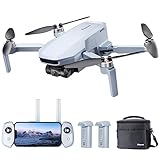
8. Potensic ATOM SE — Best Budget Beginner Drone
Potensic ATOM SE GPS Drone with 4K EIS Camera, Under 249g, 62 Mins Flight, 4KM FPV Transmission, Brushless Motor, Max Speed 16m/s, Auto Return, Lightweight and Foldable Drone for Adults Beginner
12MP Sony
4K/30fps EIS
Under 249g
62-Min Total Flight
Pros
- Excellent value with 4K Sony sensor
- 62 minutes total flight time with 2 batteries
- 4KM transmission range
- EIS camera with Sony sensor
- Under 249g no FAA registration
- Beginner-friendly with multiple flight modes
- Compact foldable design
Cons
- Wi-Fi transmission may have latency
- No SD card included
- 4KM range less than competitors
The Potensic ATOM SE is the most affordable drone in this guide and one of the most popular camera drones on Amazon with over 6,700 reviews. It uses a 1/3-inch Sony CMOS sensor with Electronic Image Stabilization to deliver 4K/30fps video and 12MP photos. For anyone curious about aerial photography who wants to spend as little as possible to get started, this is the entry point.
I tested the ATOM SE with appropriately calibrated expectations. This is not a drone that competes with the Air 3S or Mavic 4 Pro on image quality. What it does is provide a functional, capable camera drone experience at a price that removes the barrier to entry. The 4K footage is soft compared to DJI’s stabilized output, but it is genuine 4K resolution that looks fine for casual use.
The 1/3-inch Sony sensor is small, but Sony’s sensor technology extracts reasonable performance from it. In good lighting conditions, photos are acceptable for social media sharing and casual viewing. The EIS (Electronic Image Stabilization) smooths footage digitally by cropping into the frame, which means the effective resolution is somewhat reduced from the native 4K.
The 62-minute total flight time across two batteries is impressive for a drone at this price. Each battery delivers approximately 31 minutes, which matches or exceeds more expensive options. The Level 5 wind resistance and brushless motors provide stable flight in moderate conditions, and the GPS Auto Return-to-Home adds a layer of safety for beginner pilots.
The flight modes available are generous for a budget drone. Follow Me mode tracks your position, Waypoint Flight lets you program routes, and Circle Flight orbits a point automatically. The SurgeFly Flight Control System with Beginner, Normal, and Sport modes lets new pilots start cautiously and increase capabilities as they gain confidence.
The trade-offs are real but understandable at this price. The Wi-Fi-based PixSync 2.0 transmission can introduce latency compared to dedicated radio systems. The 4KM range is less than most competitors offer. No SD card is included, so you need to buy one before your first flight. These are acceptable compromises for the most budget-friendly option in this guide.
Entry-Level Camera Performance
The ATOM SE produces photos and video that are best suited for casual use rather than professional work. Social media posts, family vacation videos, and basic real estate overview shots are well within its capabilities. For anything that requires heavy cropping, large prints, or demanding lighting conditions, a drone with a larger sensor will serve you better.
The 118-degree field of view is wider than most standard camera drones, which creates a more expansive look but also introduces more distortion at frame edges. For landscape overview shots, this wider perspective can be appealing. For more traditional photography compositions, the distortion may require correction in post-processing.
Range and Transmission Quality
The 4KM range via PixSync 2.0 Wi-Fi technology is adequate for most beginner photography scenarios but noticeably shorter than the 10km-plus ranges offered by DJI models. In urban environments with Wi-Fi interference, expect the effective range to be shorter still. For open-field and coastal photography, the 4KM range covers most compositions.
The Wi-Fi transmission can introduce slight latency in the live feed, which makes precise framing slightly more challenging than with dedicated radio systems. For beginner pilots who are learning to fly and frame simultaneously, this latency is manageable but noticeable if you have flown higher-end drones. The foldable design fits in a jacket pocket, which adds to its travel-friendly appeal.
How to Choose the Best Photography Drone
Choosing the right photography drone comes down to understanding what specifications actually matter for your specific type of photography. After testing all eight drones in this guide, I can tell you that the marketing numbers do not always tell the full story. Here is what to focus on when making your decision.
Camera Sensor Size
Sensor size is the single most important factor in drone camera quality. A larger sensor captures more light, which means better detail, lower noise, and wider dynamic range. The progression in this guide goes from 1/3-inch (ATOM SE) to 1/2-inch (Atom 2) to 1/1.3-inch (Avata 2) to 1-inch (Air 3S, Mini 5 Pro) to 4/3-inch (Mavic 4 Pro).
As a general rule, a 1-inch sensor is the point where drone photos start to look genuinely professional. The jump from 1/2-inch to 1-inch is more significant than the jump from 12MP to 48MP on the same sensor size. If image quality is your priority, prioritize sensor size over megapixel count.
Gimbal Stabilization Type
A 3-axis mechanical gimbal is essential for sharp aerial photography. Electronic Image Stabilization (EIS) works by cropping into the sensor and shifting the image digitally, which reduces effective resolution. A mechanical gimbal physically stabilizes the camera, preserving full sensor resolution.
Every drone in this guide except the ATOM SE uses a 3-axis mechanical gimbal. If you care about image sharpness, this is non-negotiable. The ATOM SE uses EIS, which is acceptable at its price point but produces softer results than any mechanically stabilized option.
Photo Resolution and RAW Support
Higher megapixel counts give you more cropping flexibility and larger print sizes. The range in this guide spans from 12MP (Mini 4K, ATOM SE, Avata 2) to 100MP (Mavic 4 Pro). For most web and social media use, 12MP is adequate. For commercial work or large prints, look for 48MP or higher.
RAW format support (DNG) is critical if you plan to edit your photos. RAW files contain significantly more data than JPEG, giving you control over exposure, white balance, and color after the shot. The Mini 4K, Mini 5 Pro, Air 3S, and Mavic 4 Pro all support DNG RAW capture.
Video Resolution and Frame Rate
4K video is the standard for aerial videography in 2026. Look at both resolution and frame rate: 4K/30fps is the minimum, while 4K/60fps gives you slow-motion options. The Mavic 4 Pro pushes into 6K/60fps territory for maximum resolution and detail.
For color grading work, 10-bit color depth matters as much as resolution. The Air 3S and Mavic 4 Pro both offer 10-bit D-Log M and HLG color modes, which provide dramatically more grading latitude than standard 8-bit footage. The Atom 2 offers P-Log mode as a budget-friendly alternative.
Flight Time Strategy
Flight time directly affects how many compositions you can attempt per outing. The range in this guide spans from 31 minutes (Mini 4K) to 51 minutes (Mavic 4 Pro). Real-world flight times typically run 15 to 20 percent lower than manufacturer claims due to wind, temperature, and flying style.
Always calculate total flight time across all included batteries. The Atom 2 ships with three batteries for 96 total minutes, while the Mini 4K includes one battery for 31 minutes. Factor in the cost of spare batteries when comparing options, because you will almost certainly want more than one.
Transmission Range
Transmission range determines how far you can fly while maintaining a live video feed. The range in this guide spans from 4KM (ATOM SE) to 30KM (Mavic 4 Pro). In practice, legal line-of-sight requirements in most countries limit you to visual range, which is typically 500 meters to 2 kilometers.
Transmission quality matters more than raw range numbers. A stable 10KM connection with no dropouts is more valuable than a theoretical 30KM connection that stutters. DJI’s O4+ and O2 transmission systems are generally more stable than Wi-Fi-based alternatives, especially in environments with radio interference.
Obstacle Avoidance Systems
Obstacle avoidance uses sensors to detect and avoid obstacles during flight. Basic systems cover the front and rear, while omnidirectional systems cover all six directions. The Air 3S and Mini 5 Pro both feature omnidirectional sensing with forward-facing LiDAR for low-light performance.
For photography, obstacle avoidance primarily serves as a safety net that lets you focus on composition rather than piloting. It is especially valuable when flying in tight spaces, near water, or in unfamiliar terrain. If you are a beginner, prioritize drones with comprehensive obstacle sensing.
Weight and FAA Registration
In the United States, drones weighing less than 250 grams do not require FAA registration for recreational use. This threshold drives design decisions across the industry, which is why several drones in this guide weigh exactly 249 grams. The Mini 5 Pro, Mini 4K, Atom 2, and ATOM SE all qualify for this exemption.
Drones over 250g require FAA registration, which costs $5 and takes about ten minutes online. If you plan to fly commercially (including selling photos or monetizing YouTube videos), you need a Part 107 Remote Pilot Certificate regardless of drone weight. The certification requires passing a knowledge test at an FAA-approved testing center.
Smart Flight Modes
Smart flight modes automate camera movements that would be difficult to fly manually. ActiveTrack (DJI) and AI Track (Potensic) follow moving subjects automatically. Orbit Mode circles a point of interest. Waypoint Flight lets you program routes in advance. QuickShots create cinematic one-take sequences with a single tap.
For photography, these modes save time and enable shots that require precise, repeatable movements. Real estate photographers benefit particularly from Orbit and Waypoint modes for consistent property coverage. Content creators use ActiveTrack for dynamic follow footage without a second operator.
Controller Quality
The controller is your interface with the drone, and its quality affects every flight. Controllers with built-in screens (DJI RC 2, RC Pro 2, Potensic PTD 1) eliminate the need to mount your phone, which means no battery drain, no notification interruptions, and brighter displays for outdoor use.
Screen brightness matters for outdoor photography. The DJI RC Pro 2 on the Mavic 4 Pro features a 7-inch rotatable screen, while the Potensic Atom 2 includes a 5.5-inch FHD touchscreen at 700 nits. If you frequently shoot in bright sunlight, a built-in screen is worth the investment.
FAQs
What is the best drone for photography in 2026?
The DJI Air 3S is the best drone for photography in 2026 for most photographers. It combines a 1-inch CMOS sensor for excellent image quality, dual wide and telephoto cameras, 4K/60fps HDR video with 14 stops of dynamic range, 45-minute flight time, and omnidirectional obstacle sensing with LiDAR. For professionals who need maximum resolution, the DJI Mavic 4 Pro with its 100MP Hasselblad camera is the top upgrade.
Which DJI drone is best for photography?
The DJI Air 3S is the best all-around DJI drone for photography thanks to its 1-inch CMOS sensor and dual-camera system. The DJI Mavic 4 Pro is the best choice for professional photographers who need 100MP Hasselblad image quality. The DJI Mini 5 Pro is the best portable option at just 249 grams with a 1-inch sensor.
What drone do professional photographers use?
Professional photographers typically use the DJI Mavic 4 Pro for its 100MP Hasselblad camera with 4/3 CMOS sensor, 6K/60fps HDR video, and 360-degree Infinity Gimbal. The DJI Air 3S is also widely used by working professionals who need a balance of image quality, flight time, and portability for commercial assignments.
How much is a good photography drone?
A good photography drone ranges from budget-friendly options suitable for beginners to premium flagships designed for professional work. Entry-level models with 4K cameras start at the lower end, while mid-range drones with 1-inch sensors and omnidirectional obstacle avoidance sit in the middle. Professional flagships with large sensors and advanced gimbal systems represent the top tier of investment.
What should I look for when buying a photography drone?
When buying a photography drone, prioritize these factors in order: camera sensor size (1-inch or larger for professional quality), 3-axis mechanical gimbal stabilization, RAW photo format support, flight time of 30 minutes or more, obstacle avoidance coverage, transmission range and stability, and weight relative to the 250g FAA registration threshold. Also consider smart flight modes like ActiveTrack and whether a built-in screen controller is included.
Do I need a license to fly a photography drone?
In the United States, you need an FAA Part 107 Remote Pilot Certificate to fly a drone commercially, which includes selling photos, monetizing content, or shooting for clients. For recreational flying, drones under 250 grams do not require FAA registration, while drones over 250g need a registration. The Part 107 certification requires passing a knowledge test at an FAA-approved testing center.
Final Thoughts on the Best Drones for Photography
After testing all eight drones in this guide across weeks of real-world photography, my recommendations are clear. The DJI Air 3S is the best drone for photography for most people, balancing image quality, features, and value better than anything else on the market. The DJI Mavic 4 Pro is the professional’s choice when maximum resolution and creative control matter most.
If portability is your priority, the DJI Mini 5 Pro puts a 1-inch sensor into a 249-gram body that travels anywhere. And if you are just starting, the DJI Mini 4K and Potensic ATOM SE offer genuine aerial photography capabilities at accessible price points. Whatever your photography goals, one of these drones will help you capture perspectives that simply are not possible from the ground.