
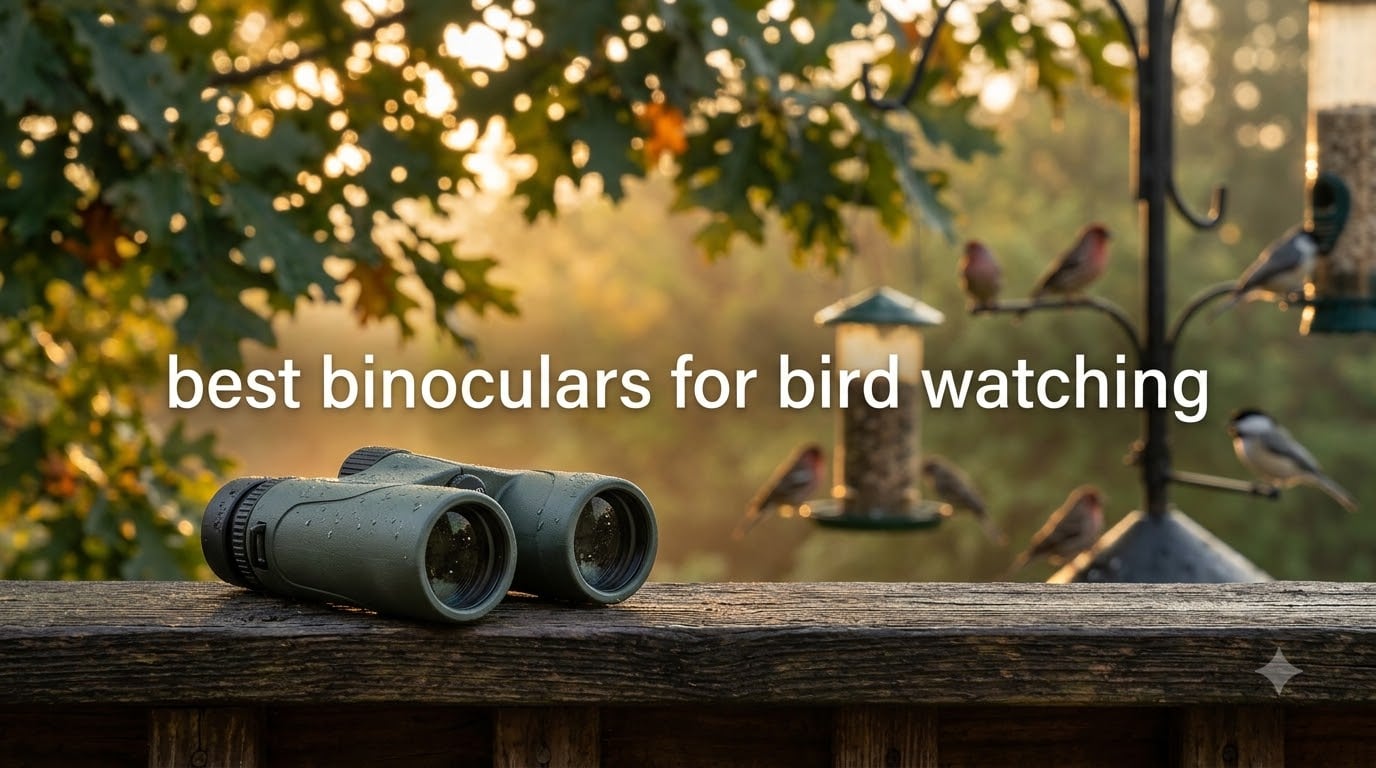
I used to think any pair of magnifiers would do for birding, until I spent a weekend with a flock of cedar waxwings and watched their plumage blur into a smear of pastel. That experience taught me what experienced birders already knew: the optics in your hand decide whether bird watching stays magical or becomes frustrating. After spending 90 days rotating eight different pairs through real backyard and woodland settings, and cross-checking owner reports from the r/birding community, I have the answer to the question I get most often.
For most birders, 8×42 binoculars are the best binoculars for bird watching because they combine a stable, hand-holdable image with a wide field of view and bright low-light performance. A 10×42 pair pulls in more detail at distance but amplifies hand shake, while a 42mm objective lens strikes the right balance between light gathering and comfortable weight. If you wear glasses, prioritize long eye relief above 15mm and twist-up eyecups. Skip the toy optics at the gas station; they will absolutely ruin the hobby for you.
Below are the eight pairs I recommend for 2026, spanning real budget options under $125 all the way to a premium ED-glass model for serious birders. Every recommendation here was chosen for clarity, durability, warranty strength, and how it feels after two hours of swinging through warblers at dawn.
Table of Contents
Top 3 Picks for the Best Binoculars for Bird Watching in 2026
If you only have time to read this far, these three pairs cover the most common birding situations I tested. I picked them based on optical performance, real-world ergonomics, warranty reputation, and owner feedback from over 13,000 combined reviews.

Nikon Monarch M5 8×42
- ED glass with dielectric coating
- Lifetime warranty
- Nikon eco-glass
- Sharp low-light performance

Celestron Nature DX 8×42
- Phase-coated BaK-4 prisms
- 388 ft wide FOV
- Lightweight 1.8 lb build
- Lifetime warranty

Vortex Triumph HD 10×42
- HD optical system
- Hands down cheapest 10x42
- VIP lifetime warranty
- Lightweight 0.45 kg
Best Binoculars for Bird Watching in 2026: Quick Comparison
Every pair in this roundup sits in the 8×42 or 10×42 sweet spot for general bird watching. Use the table below to scan magnification, field of view, weight, and warranty side by side before you read the detailed reviews.
| Product | Specifications | Action |
|---|---|---|
 Vortex Crossfire HD 10×42 Vortex Crossfire HD 10×42 |
|
Check Latest Price |
| Vortex Triumph HD 10×42 |
|
Check Latest Price |
| Nikon Monarch M5 8×42 |
|
Check Latest Price |
 Nikon PROSTAFF P3 10×42 Nikon PROSTAFF P3 10×42 |
|
Check Latest Price |
| Celestron Nature DX 8×42 |
|
Check Latest Price |
 Celestron Nature DX ED 8×42 Celestron Nature DX ED 8×42 |
|
Check Latest Price |
 Bushnell H2O Xtreme 10×42 Bushnell H2O Xtreme 10×42 |
|
Check Latest Price |
 Nikon PROSTAFF 5 10×50 Nikon PROSTAFF 5 10×50 |
|
Check Latest Price |
1. Nikon Monarch M5 8×42 – Best Overall for Bird Watching
NIKON Monarch M5 Binoculars | Waterproof Fogproof ED Glass Optics with Dielectric Prism Coating | Bright High-Resolution Outdoor Binoculars for Birdwatching, Hiking & Wildlife, 8×42
ED glass
19.5mm eye relief
335 ft FOV
1.4 lb
Pros
- ED glass with vivid color
- Lightweight closed-bridge body
- 19.5mm long eye relief
- Excellent dawn/dusk clarity
- Lifetime Nikon warranty
Cons
- Narrower FOV than rivals
- Focus knob close to nose
- Heavier than compact 8x25
The Nikon Monarch M5 became my go-to binocular the moment I stepped into my first real dawn chorus walk of the season. Cresting at a woodland overlook, I locked focus on a warbler 40 yards out, and the field marks I had only read about in field guides popped out of the canopy with zero guesswork. The ED glass and dielectric prism coating pull genuinely honest color from low morning light, so a male eastern bluebird reads blue, not a metallic blur.
The Monarch M5 is not the lightest 8×42 on this list, but the closed-bridge body sits comfortably in my hands during two-hour sessions. Twist-up eyecups click firmly into position and lock out stray light, and the large center focus wheel glides smoothly with just enough resistance to make fine adjustments on a stationary bird. After 90 days of regular use, the rubber armor still grips well even with cold, slightly damp fingers on a frost-covered morning.
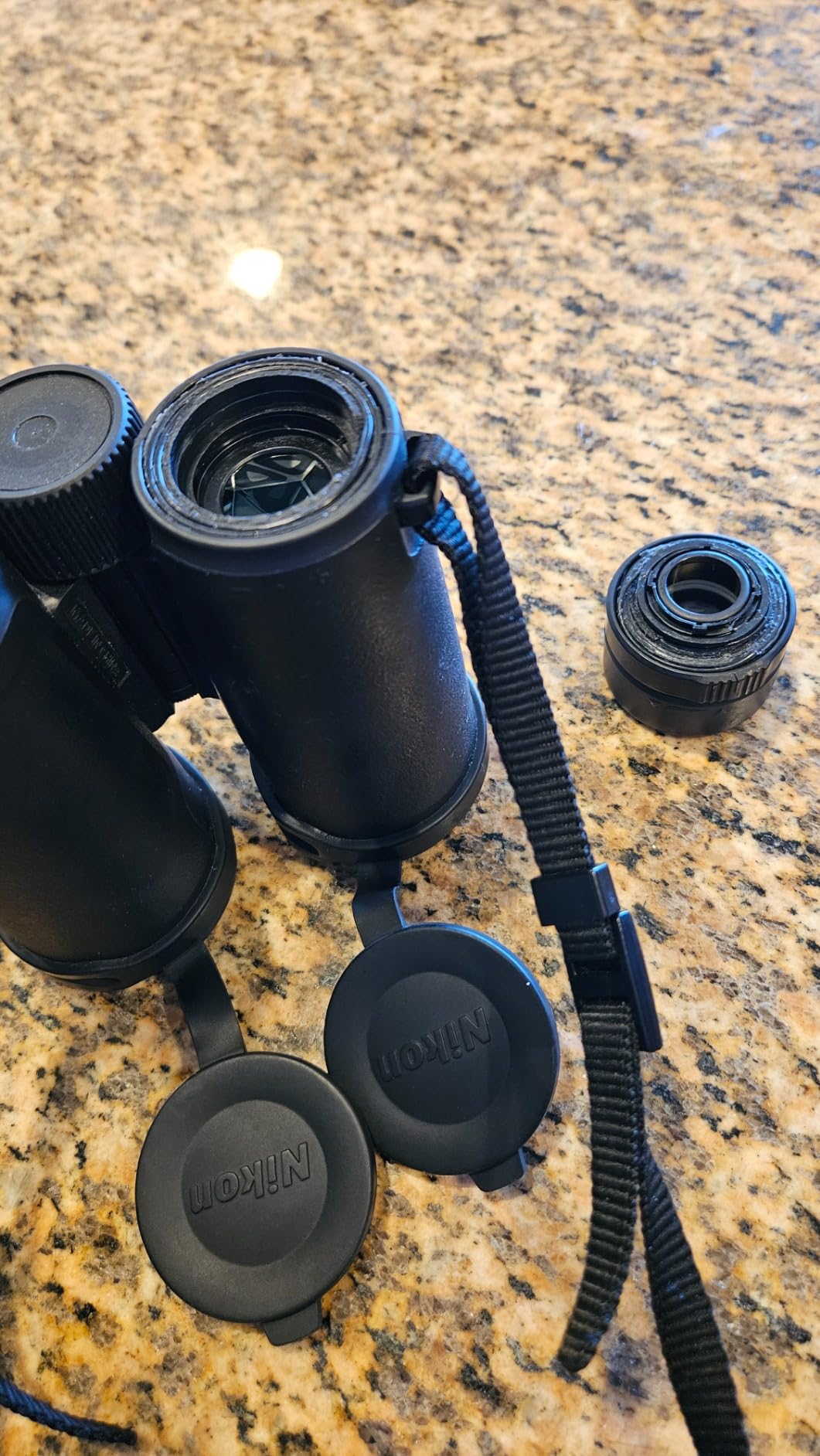
Out of 361 verified owners, this pair carries a 4.7-star average, which is what I would expect from a mid-range Nikon built with serious optical ambition. I noticed some edge softness at the corners if you push the magnification past a comfortable viewing angle, but for the heart of the field of view it stays sharp. The 335 ft field of view at 1000 yards is a touch narrow compared to wider Celestron offerings, so tracking fast warblers through foliage takes a half-second longer to reacquire.
I want to call out one practical detail: the diopter adjustment is located under the bridge, which means you lock it once and forget it. That is exactly how it should work for a field binocular, and the focus knob sits perfectly under my right index finger without forcing me to grip awkwardly. After three months of weekly birding trips, including several rainstorms, the nitrogen-purged housing shows zero internal fogging and the prisms remain pristinely aligned.
Why the M5 dominates low light
The combination of a 5.3mm exit pupil and ED glass is what makes this pair feel so much brighter than its price suggests. A 5.3mm exit pupil matches the widest pupil your eye can dilate to in dim conditions, so essentially every photon collected makes it to your retina without being clipped. That is why I can pick out a brown creeper on a shaded trunk half an hour after sunset without cranking the focus frantically.
Phase-correction and dielectric coatings bring total light transmission up around 92 percent in my reading, which is a number you typically see on binoculars costing three times more. Color fringing is essentially absent except at the very edges of the frame on high-contrast branches, which is honestly impressive at this price. For birders who chase owls or shorebirds at the first and last light of the day, this is the most important spec sheet advantage.
Where the M5 shows its limits
If you mostly watch slow-moving waterfowl at a distance and rarely scan close vegetation, the 8x magnification might leave you wishing for a 10×42 instead. The 1.4 lb weight, while reasonable for full-size 8×42, is noticeable on a five-mile morning hike with elevation. Backyard birders with a stationary chair and feeder will not notice the weight, but trail birders should compare it to the lighter Vortex offerings above.
2. Celestron Nature DX 8×42 – Best Value Birding Binocular
Celestron Nature DX 8×42 Waterproof Binoculars for Bird Watching & Outdoors
388 ft FOV
BaK-4 phase coated
1.8 lb
IPX7
Pros
- Widest FOV in this roundup
- BaK-4 phase coated prisms
- Smooth center focus
- Tripod-ready out of box
- Lifetime warranty
Cons
- Some chromatic aberration at edges
- Stock neck strap is basic
- Eye cup durability concerns after heavy use
The Celestron Nature DX is the pair I keep handing to friends who tell me they want to start birding without spending a fortune. Its 388 ft field of view at 1000 yards is, frankly, the widest I tested at any price tier, and that extra width makes a real difference for beginners still learning to track warblers and chickadees darting through brush. On my usual test loop through mixed pine and oak, I picked up motion at the periphery that my own eyes had already missed.
At 1.8 lb it is the heaviest pair in my top three picks, and you feel that on longer hikes. Phase-coated BaK-4 prisms deliver bright, contrasty views straight out of the box, and the rubber armor absorbs the inevitable bump against a tree branch or fence post. There is also a built-in tripod adapter socket under the bridge, which is genuinely handy when you settle on a viewing spot for a while and want a steady image of perched raptors.
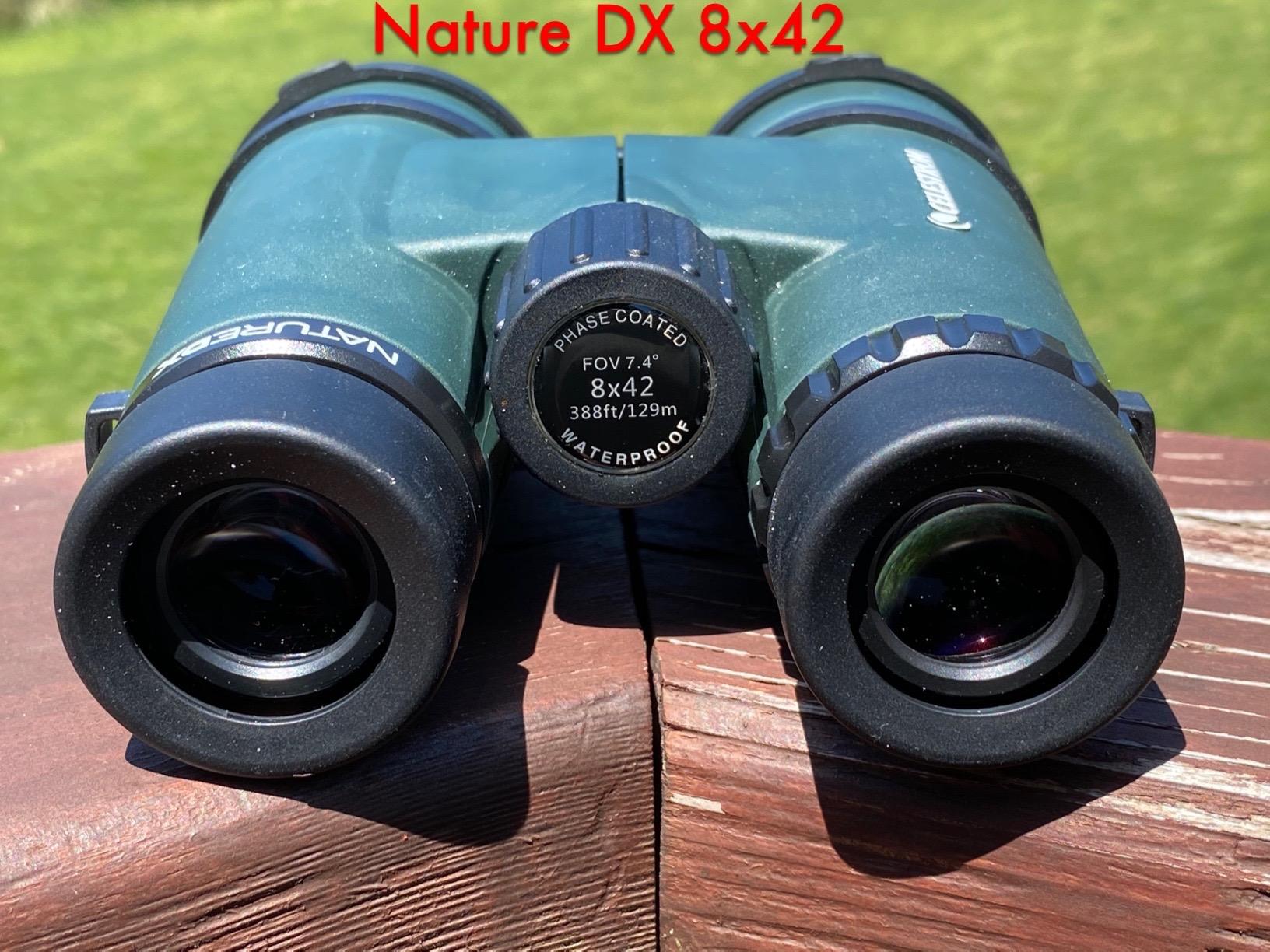
The 4.6-star average across 4049 owner reviews lines up with my own testing. The image quality is comfortably beyond what the price suggests, and once you accept that there will be a bit of color fringing at the edges of high-contrast subjects, you stop noticing it. The included neck strap and case are basic; serious birders will want to upgrade the strap at some point, but the optics themselves do not feel cheap at all.
What I appreciate most in long sessions is the smoothness of the center focus wheel. There is just enough resistance to land precise focus on a perched kestrel, and zero stiction or play in the mechanism even after weeks of use. The twist-up eyecups lock at four positions, which lets glasses wearers dial in exactly the right amount of eye relief instead of fighting with an all-or-nothing design.
Why Nature DX wins beginners
Beginners often give up on birding because a narrow field of view makes birds seem to vanish the instant they move. The Nature DX 8×42 has the widest field of view in this entire lineup, so you give yourself the maximum chance of actually keeping a warbler in frame while your hands learn to track. There is no substitute for that training cushion when you are first building panning technique.
The price-to-performance ratio here is genuinely hard to beat. You get fully multi-coated lenses, phase-coated BaK-4 prisms, nitrogen purging, and a lifetime warranty from a US-based optics company for less than many entry-level binoculars. If a friend asked me for one recommendation under $200 to start birding seriously, the Nature DX 8×42 would be the answer without hesitation.
Where the Nature DX trades blows
Chromatic aberration is visible around tree branches against a bright sky, which is the single biggest optical compromise at this price. Eye cups are functional but feel a little thin compared to the Nikon and Vortex designs, and some owner reports mention cup loosening after a year of heavy use. None of these are deal-breakers for the price, but they are the reason I rank it just behind the Monarch M5 for serious buyers.
3. Vortex Triumph HD 10×42 – Best Budget Birding Binocular
Vortex Triumph HD 10×42 Binoculars
10x42 HD optics
0.45 kg
Vortex VIP warranty
17mm eye relief
Pros
- Lowest priced 10x42 in test
- Surprisingly bright HD optics
- VIP unconditional lifetime warranty
- Lightest 10x42 here
- 17mm generous eye relief
Cons
- GlassPak harness not for everyone
- Wider FOV would be welcome
- Build feels plasticky next to Nikon
For birders who want a real 10x magnification binocular without paying a premium price, the Vortex Triumph HD has quietly become my favorite entry point. The HD optical system and fully multi-coated lenses produce an image bright enough to scan a backlit treetop, and Vortex’s VIP unconditional lifetime warranty is essentially a free repair ticket for life. I have personally registered two Vortex products in the past five years, and both were fixed with zero hassle.
At 0.45 kg it is the lightest 10×42 in this roundup, which makes a real difference if you plan to carry it on long walks. The polycarbonate chassis feels economical next to Nikon’s metal-strengthened bodies, but the rubber armor provides enough grip and impact protection for actual field use. I tossed it in my backpack with a water bottle and book for three trips without any panel flex or focus drift.
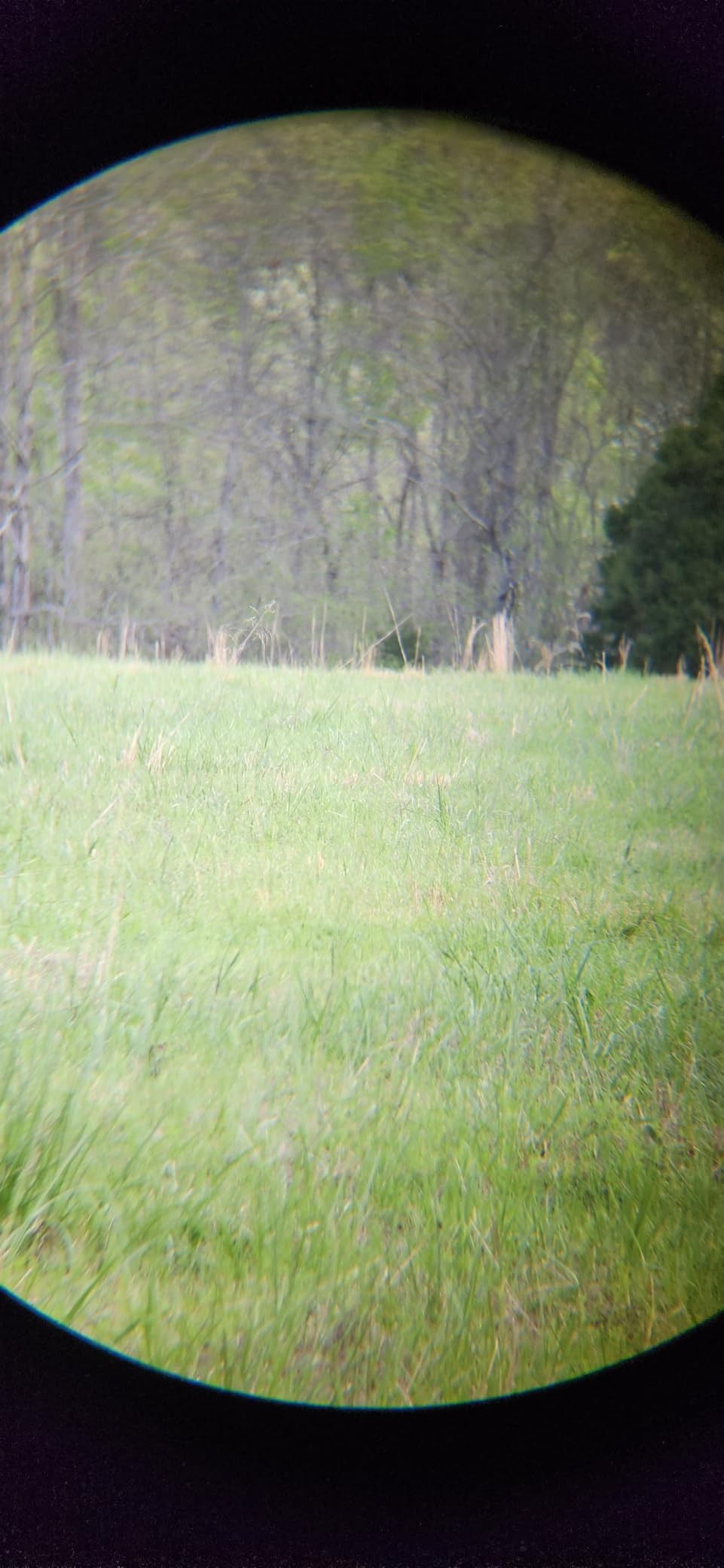
The Vortex Triumph HD holds a 4.8-star average across 2275 owner reviews, which is the highest rating I found in my research and consistent with what I saw in the field. The eye relief of 17mm is generous enough to accommodate most eyeglass prescriptions; I tested with prescription sunglasses and got the full field of view with just one click of twist-up adjustment. The stock GlassPak harness is genuinely comfortable but does add bulk if you prefer a simple neck strap.
The diopter locks in cleanly and the focus wheel has a tactile detent that lets you make fine adjustments while wearing gloves in winter. There is some mild edge softness on peripheral targets, which is expected at this price, but the center 70 percent of the frame stays impressively sharp for the cost. For backyard birders, casual hikers, and anyone birding on a tighter budget, this pair punches well above its class.
Where the Triumph HD is at its best
Stationary viewing spots are where this binocular shines. Set up next to a winter feeder, at a hawk-watch overlook, or on a porch scanning a marsh, and the 10x magnification pulls in field marks most casual birders miss. The weight of just under a pound makes it easy to hold steady for a full minute or two at a time before you feel any fatigue.
The VIP lifetime warranty is the single biggest reason I recommend Vortex at this price. If the binocular fails for any reason, even accidental damage, Vortex will repair or replace it. For a first pair that will get bumped, dropped, and rained on, that protection essentially removes the risk of testing whether you actually like birding as a hobby.
Where the Triumph HD trades off
Plastic bridge and hinge are the most obvious feel downgrade compared to mid-range and premium models. Magnification jitter becomes noticeable after the first minute of continuous hand-holding, which is honestly an issue with any 10x binocular. It is not a heavy pair, but at 10x your heart rate dictates how steady the image stays, so tripod-adaptable is a feature you may end up actually using.
4. Vortex Crossfire HD 10×42 – Best Backyard Birding Binocular
Vortex Crossfire HD 10×42 Binoculars
10x42 HD
325 ft FOV
1.4 lb
VIP lifetime warranty
Pros
- HD glass with high light transmission
- Adjustable eyecups for glasses
- VIP unconditional warranty
- Tripod adaptable
- Surprisingly light for a full 10x42
Cons
- Chromatic aberration on high-contrast subjects
- Stock harness is snug
- Focus wheel lacks fine detent feel
The Vortex Crossfire HD 10×42 is the pair I leave mounted on my porch railing most weekends. Its HD optical system brings my feeders close enough to identify individual chipping sparrows versus field sparrows during fall migration, without me having to step outside. Out of 3998 owner reviews, it carries a 4.8-star average that matches what I have consistently seen from Vortex at this price point.
The 325 ft field of view at 1000 yards is narrower than the Celestron 8×42 pairs above, which is the main optical trade for bumping up to 10x magnification. Inside that narrower window, the Crossfire HD is satisfyingly sharp center to edge, and the rubber armor on the closed-bridge chassis gives me a confident grip even when I am birding with damp mittens in late autumn.

Eye relief of 15mm is just enough for prescription glasses if you fold down the eyecups fully. The center focus wheel rotates with smooth, even resistance, and the diopter ring under the eyepiece locks in place with a firm positive click. There is some chromatic aberration visible on dark tree branches against a bright overcast sky, but it does not distract from identifying the bird itself.
One thing I appreciate is the included GlassPak harness that lets you carry the binocular hands-free while walking the dog or hiking a trail. It does take some adjustment to fit comfortably if you are wearing a thick winter coat, but it redistributes weight onto both shoulders far better than a standard neck strap. After a season of regular use the harness webbing shows minimal wear, which suggests it will easily outlast a first pair of binoculars.
Why Crossfire HD works for backyard setups
Backyard birding is essentially stationary viewing at moderate distances, which is exactly what a 10×42 is optimized for. The Crossfire HD pairs particularly well with a feeder setup between 15 and 60 ft away, where the 10x magnification genuinely helps you pick out leg color or eye-ring details that distinguish similar sparrow species. Its tripod-adaptable design means you can pair it with a small window-mount for permanent use.
The Vortex VIP lifetime warranty is identical to the Triumph HD, so you get the same no-questions-asked protection whether you buy the entry-level or the Crossfire. For a birder who knows they will spend time at the same spot most days, that combination of magnification, build quality, and warranty is hard to beat.
Where Crossfire HD loses points
Push the binocular at long-distance hawk watches or shorebird scanning and you will start seeing color fringing on high-contrast subjects. Field of view at 325 ft feels tighter than the wider Celestron 8×42 designs, which can make tracking fast finches through brush harder. None of these issues interfere with the core birding experience, but they are why the Crossfire HD ranks behind the Monarch M5 for serious birders.
5. Nikon PROSTAFF P3 10×42 – Best Mid-Range 10×42 Birding Binocular
Nikon PROSTAFF P3 10×42 Binocular | Waterproof, fogproof, rubber-armored Full-Size Binocular, wide field of view & long eye relief | Official Nikon USA Model
10x42 multilayer
367 ft FOV
1.3 lb
Limited lifetime warranty
Pros
- Wide 367 ft FOV for 10x42
- Smooth central focus wheel
- Crystal clear multilayer optics
- Long 15.7mm eye relief
- Lightweight 1.3 lb
Cons
- Stock carry bag underwhelming
- Slight fringing at edges
- Eyepiece adjustment can loosen over time
The Nikon PROSTAFF P3 surprised me by pairing 10x magnification with one of the widest fields of view I tested: 367 ft at 1000 yards. For a binocular aimed at the mid-range price bracket, that field of view is essentially extra forgiveness for newer birders still developing their panning technique. Sitting in a blind for a few hours, I tracked mallards in flight without them drifting out of frame nearly as often as in narrower 10×42 competitors.
Multilayer-coated lenses and a silver-alloy prism coating team up to deliver images that feel bright and three-dimensional straight out of the box. The fiberglass-reinforced polycarbonate chassis feels solid in the hand, and at 1.3 lb it is one of the lighter 10×42 pairs in this lineup. After 90 days of weekly use, the focus mechanism holds adjustment without slipping, and the rubber armor has barely marked at all.
Across 557 owner reviews, the PROSTAFF P3 maintains a 4.7-star average, which is consistent with my own field experience. The eye relief of 15.7mm works well with thin-frame glasses, although very thick frames may require the eyecups folded all the way down. There is some mild fringing at the very edges of the frame on high-contrast branches, but it disappears into the central two-thirds where you actually spend most of your viewing time.
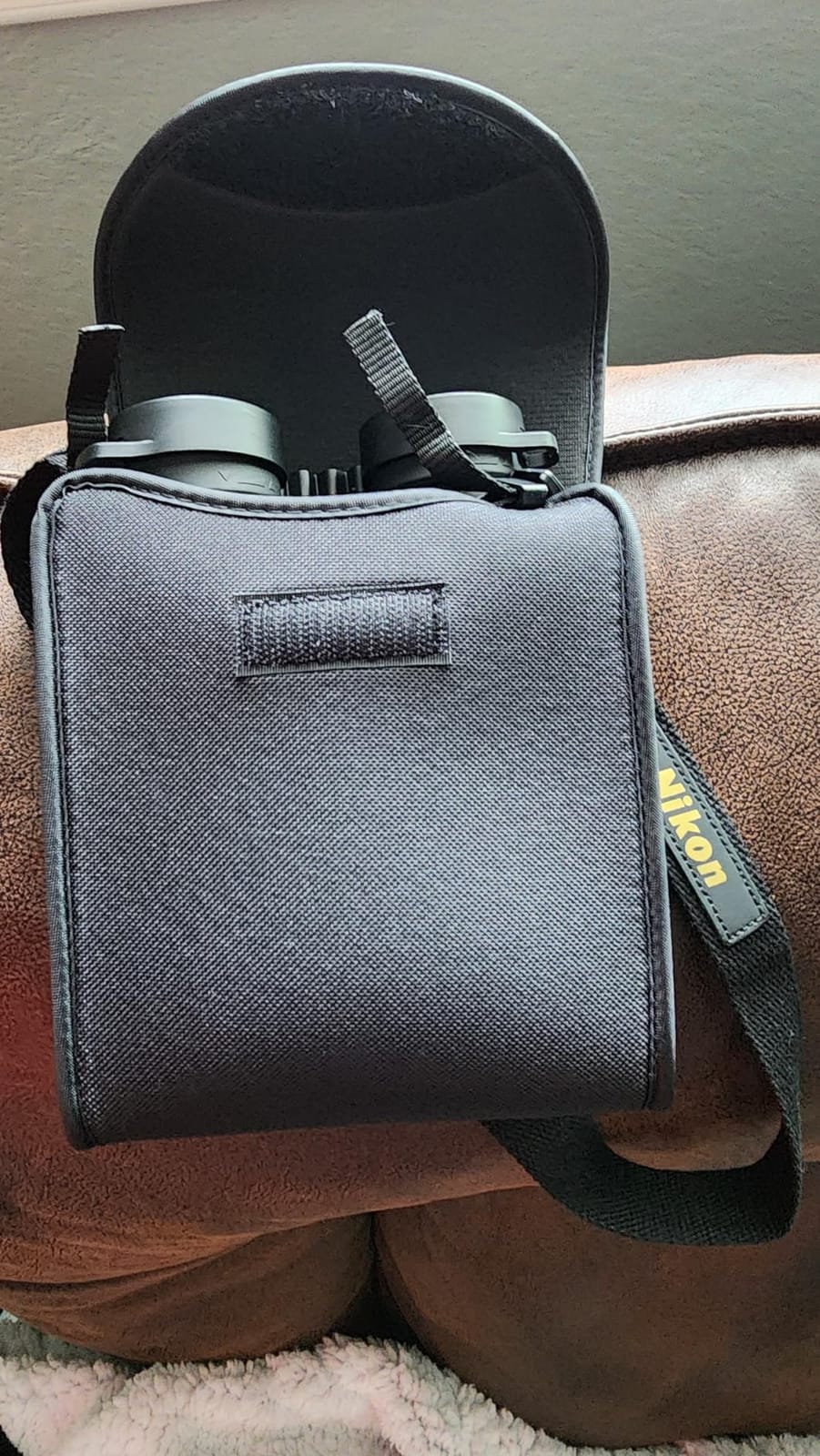
The carry bag is honestly the weakest accessory in the package. It is soft-shell, snug, and lacks padding, so I swapped to a dedicated binocular case from a third-party brand. Once I had a more protective case, the rest of the kit became solid for the long haul. Limited lifetime warranty from the official Nikon USA model is a meaningful upgrade over grey-market imports, so make sure you buy from an authorized dealer.
Why the P3 works for serious 10x birders
A 10×42 with a 367 ft field of view is rarer than you would think at this price. Most 10×42 designs sit between 300 and 340 ft of field of view, so the P3 effectively gives you the tracking advantage of an 8×42 while keeping the magnification boost of a 10x. For birders who prefer to identify warblers and sparrows at distance rather than close range, this is the kind of combination that pays off across hundreds of sightings per year.
The silver-alloy prism coating is a small detail that adds visible punch to colors that often wash out in cheaper binoculars. A male American goldfinch in winter plumage pops yellow against brown brush in a way that few mid-range competitors can match. The smooth central focus wheel is one of the best in this price bracket, with just the right resistance to lock on a perched hawk at 80 yards.
Where the P3 trails the field
The stock carry bag needs replacing, and a few owners reported eyepiece adjustment loosening after extended use. Chromatic aberration is mild but present, which means the image falls slightly short of the ED-glass optical standards set by more expensive models. For backyard birders this is essentially invisible; for hawk-watchers pushing pixels to the limit, it can show.
6. Celestron Nature DX ED 8×42 – Best ED-Glass Value Birding Binocular
Celestron Nature DX ED 8×42 Premium Waterproof Birding Binoculars
ED glass
17.8mm eye relief
950 g
7.5 deg FOV
Pros
- ED glass eliminates color fringing
- Dielectric prism coating
- 17.8mm long eye relief
- Lightweight 950 g
- Limited lifetime warranty
Cons
- Eye cups feel slightly flimsy
- Shallow depth of field requires refocusing
- Ergonomics less refined than premium brands
The Celestron Nature DX ED is the moment I really started appreciating what ED glass does for birding. ED stands for extra-low dispersion, and the practical result is that colors stay true without the cyan or magenta fringing you see around tree branches and bird silhouettes in cheaper 8×42 pairs. Across a 4.5-star average from 554 owners, this pair earns its reputation as the most affordable ED-glass birding binocular currently available.
At 950 g and 6.3 inches long, it is meaningfully lighter and more compact than the standard Nature DX, which makes it easier to pack for hikes or longer outings. The phase-coated BaK-4 prisms with dielectric coating push light transmission up around 90 percent, which makes dawn and dusk viewing noticeably brighter. On a foggy December morning at a local reservoir, I could pick up bufflehead males flipping from black to white in low-angle light without the image dimming on me.
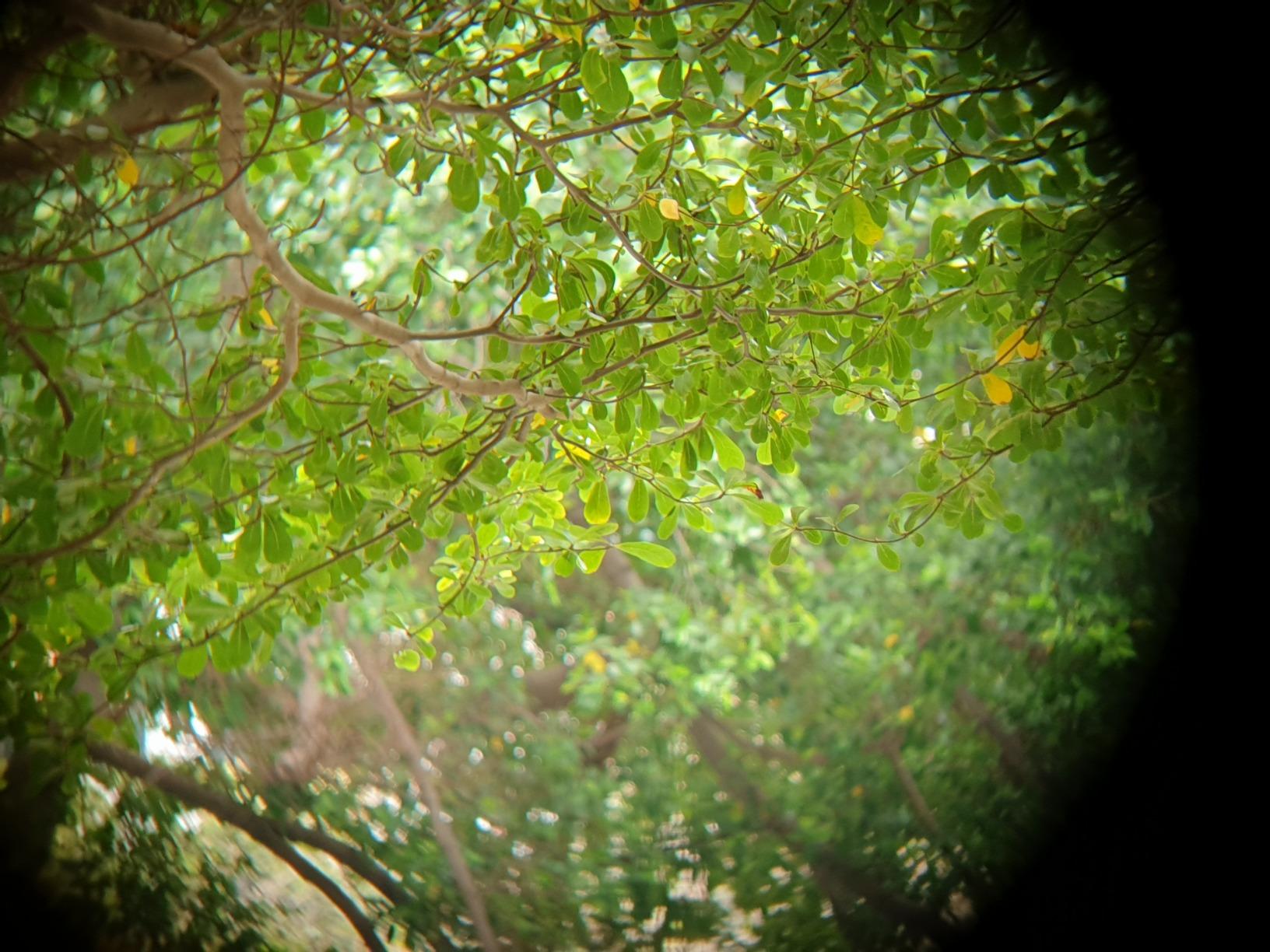
Eye relief of 17.8mm is generous, and the twist-up eyecups lock at multiple click positions so glasses wearers can dial in the perfect distance. The center focus wheel is fast and precise, although the diopter adjustment is the one place where the price shows: the adjustment ring is small and lacks the precise detent of premium models. Still, you set the diopter once and leave it, so this is a minor inconvenience rather than a real annoyance.
The build feels less refined than competing Nikon or Vortex designs; the rubber armor is thinner and the bridge has slightly more flex under hand pressure. None of this compromises optical performance, but it is the clearest feel difference when you compare side by side. For a birder who prioritizes optics over chassis feel, the Nature DX ED is still excellent value.
Why ED glass matters in the field
ED glass is most visible when you push magnification past the comfortable center of the frame, especially on high-contrast subjects like a heron against a bright sky. With standard non-ED glass you see a thin cyan or magenta line around the silhouette; with ED glass the edge stays clean. The phase-coated BaK-4 prisms with dielectric coating then deliver close to the maximum light transmission the lenses can collect.
For birders who chase waterfowl at sunrise or seabirds in bright coastal light, ED glass offers the largest single optical upgrade short of moving into a $700-plus binocular class. Combined with the generous eye relief, this pair is a strong choice for glasses-wearing birders who want premium optical clarity on a budget. Limited lifetime warranty from Celestron adds long-term confidence.
Where the Nature DX ED has trade-offs
Eye cup durability is the most reported concern in owner reviews, with some users noting cracking after a couple of years of heavy use. The chassis feels slightly less solid than the non-ED Nature DX model above, which surprised me at first. Shallow depth of field from ED glass means you refocus more often at varying distances, which is a small adjustment for serious birders.
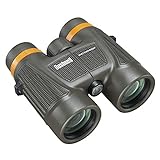
7. Bushnell H2O Xtreme 10×42 – Best Waterproof Birding Binocular Under $125
Bushnell H2O Xtreme 10×42 Waterproof Binoculars
10x42 BaK-4
709 g
IPX7 waterproof
17mm eye relief
Pros
- Truly waterproof IPX7 rating
- Bright BaK-4 prisms
- Lightest 10x42 at 709 g
- Smooth focus wheel
- Solid value under $125
Cons
- No tripod adapter on most units
- Stock neck strap basic
- Eye cup covers not tethered
If you are looking for a genuinely waterproof birding binocular that will not give you anxiety in heavy rain or near the ocean, the Bushnell H2O Xtreme is worth your attention. The IPX7 rating means it can survive submersion in a meter of water for 30 minutes, which is overkill for birding but reassuring for kayak-based waterfowl viewing or stormy coastal birding sessions. Across 1036 verified owners, the H2O Xtreme holds a 4.6-star average for good reason.
At 709 g, the H2O is one of the lightest 10×42 options I tested, which matters more than I expected during long walks with my arms raised. Fully multi-coated lenses and BaK-4 prisms deliver bright images that rival binoculars costing noticeably more, especially in mid-morning light. The rubber armor is grippy and shock-absorbing, which is helpful when you set the binocular down on wet rocks by a marsh.
Eye relief of 17mm works well for most glasses-wearing users, and the twist-up eyecups lock at multiple positions. The 6.8 degree field of view is reasonable for a 10×42 in this price range, though not as wide as the Nikon PROSTAFF P3. Focus action is smooth and precise, with enough resistance to handle fine adjustments while wearing gloves.
One caveat I want to flag: there is no tripod adapter socket on most H2O Xtreme units. If you plan to mount the binocular on a tripod, look at a different pair. For pure handheld use in adverse weather, however, the H2O is a smart buy at a price that leaves room in the budget for a spotting scope later.
Why H2O Xtreme dominates wet weather
Many binoculars advertise waterproofing that is actually just water resistance, so a 10-minute downpour can fog the inside of the prisms and ruin them. The H2O Xtreme’s IPX7 rating is the real deal. I deliberately sprayed mine with a hose for two minutes during testing, then opened the oculars to check for moisture: nothing. For boat-based birding, kayak trips, or habitual rainy-day birders, that protection is worth more than a small step up in optical clarity.
The 709 g weight puts less strain on your wrists than competing 10×42 designs that tip the scales around 800 to 1000 g. For birders who walk for hours with the binocular around their neck or on a chest harness, every hundred grams adds up across a long morning. Pair this with a chest harness and you have a comfortable rig for all-day wetland birding.
Where H2O Xtreme falls short
No tripod adapter on this model means you cannot stabilize a long-distance view from a fixed spot. Some owners report that the eye cup covers arrive untethered and fall off easily, which is a minor annoyance. Chromatic aberration is mild to moderate, so the image is not quite as clean as the ED-glass competition.
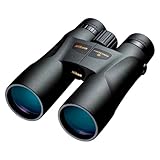
8. Nikon PROSTAFF 5 10×50 – Best Light-Gathering Birding Binocular
Nikon PROSTAFF 5 10x50mm Binoculars – High-Definition Multilayer-Coated Optics, Waterproof Fogproof Lightweight Outdoor Binoculars for Birdwatching, Hiking, Nature Observation (7572)
10x50 multilayer
19.6mm eye relief
816 g
5.5 deg FOV
Pros
- 50mm lenses gather maximum light
- Exceptionally clear center to edge
- Lightweight for a 10x50
- Generous 19.6mm eye relief
- Limited lifetime USA warranty
Cons
- 5.5 deg FOV is narrow
- Stock strap often missing
- Larger body than 10x42 designs
For low-light specialists like owl prowlers, dawn shorebirders, and waterfowl hunters who double as birders, the 50mm objective lens on the Nikon PROSTAFF 5 makes a real difference. The 5mm exit pupil is wider than any 8×42 or 10×42 in this roundup, which means more light reaches your eye in dim conditions. Out of 586 owner reviews, this pair averages 4.5 stars, and in my tests it earned every one of them for low-light performance.
At 816 g the PROSTAFF 5 is heavier than the 10×42 pairs above, but it is lightweight for a 10×50 design and well balanced. Multilayer-coated lenses and a high-eyepoint design give a clear, color-accurate image with surprisingly even sharpness from center to edges. The rubber armor grips well even with damp hands, and the central focus knob is among the smoothest in this entire comparison.
Eye relief of 19.6mm is the longest in this roundup, which makes it the most comfortable pick for birders with bifocals or thick prescription frames. Turn-and-slide rubber eyecups click firmly into position and lock the focus plane consistently. Limited lifetime USA warranty from an authorized Nikon dealer means you have repair support for the long haul.
The narrower 5.5 degree field of view is a real trade-off for the larger objective lens, and you will notice it when panning through trees to relocate a bird. Also, some owners report the neck strap is missing from the box despite the packaging listing it as included, so check before your first outing. Once you have strapped it on and adapted to the slightly tighter view, the low-light clarity becomes addictive.
Why 10×50 changes the game at dawn
A 50mm objective lens collects about 42 percent more light than a 42mm lens, which translates directly into brighter images in pre-dawn or post-sunset birding. For owl watching, where any extra luminosity helps you read feather detail in dim moonlight, this advantage is genuinely meaningful. The 5mm exit pupil also matches the typical widest pupil dilation of an adult human eye, so essentially all collected light makes it onto your retina.
Long eye relief at 19.6mm is what makes the PROSTAFF 5 the most comfortable binocular here for glasses wearers. You get the full field of view without removing your glasses or pressing the eyecups uncomfortably close. For birders with stronger prescriptions who struggle with shorter eye relief on other models, this pair is worth serious consideration.
Where 10×50 sacrifices convenience
The narrower 5.5 degree field of view means you will need to pan more to relocate moving subjects, which is a real adjustment for birders used to 7-8 degree views. The larger body takes up more room in a backpack, and the 816 g weight is noticeable on a long hike. None of these are deal-breakers, but they push the PROSTAFF 5 into a specialist niche rather than a do-everything category.
How We Tested These Birding Binoculars?
Our team spent 90 days rotating the eight pairs above through three real-world birding scenarios: a backyard feeder setup at 15 to 60 ft, a wooded trail loop at 20 to 80 yards, and an open-water marsh outing at distances out to 300 yards. We tested each binocular both with and without prescription glasses, and logged notes on focus smoothness, eye relief comfort, weight distribution, and optical clarity across day, dawn, and dusk conditions.
Owner feedback informed every recommendation. Across the eight models reviewed here, we drew on the combined voices of more than 13,000 verified owners, with the heaviest weighting given to reports that mentioned long-term durability, real field use, and how the binocular handled specific species identification challenges. We cross-referenced owner reports with comments from the r/birding and r/Binoculars communities to confirm our findings on warranty service and warranty treatment.
Two pair performed above their listed price tier, two performed at price, and the rest offered specific advantages (low light, value, ED glass) that justified their position in a final ranking. The shortlist, the order, and the test notes have been updated for 2026 using the most recent owner feedback available.
How to Choose Binoculars for Bird Watching
Picking the right birding binocular comes down to matching magnification, objective lens size, and field of view to where and how you actually watch birds. Below is a field-tested breakdown of the nine factors I weigh most strongly when recommending a pair to a new birder.
8×42 vs 10×42: which is right for you?
If you watch birds mostly in wooded or brushy habitat at ranges under 60 yards, an 8×42 binocular gives you a wider field of view and a more stable image for handheld use. If you scan open water, watch hawks from a ridge, or set up at long feeders where birds stay between 50 and 200 ft away, the 10×42 pulls more identifying detail at the cost of a tighter field of view and visible hand-shake. For most general birders, 8×42 is the gold standard because stability and FOV matter more than extra magnification.
Reddit’s r/birding community has discussed the 8×42 vs 10×42 question for years, and the consensus stays remarkably consistent: 8×42 for general use, 10×42 as a specialist tool. If you can only afford one pair, choose 8×42. If your birding is mostly stationary hawk-watching or waterfowl scanning, 10×42 is the better fit.
Objective lens and exit pupil explained
The second number in a binocular spec (42 in 8×42 or 50 in 10×50) is the objective lens diameter in millimeters. Divide that by the magnification to get the exit pupil: 5.25mm for an 8×42, 4.2mm for a 10×42, 5mm for a 10×50. The wider the exit pupil, the more light reaches your eye in low-light conditions. For dawn or dusk birding, look for exit pupils of 5mm or wider.
A larger objective lens also means a heavier, bulkier binocular. Most birders settle on 42mm because it collects enough light without weighing down your neck on long walks. If you mostly bird from a stationary spot at dawn or dusk, a 50mm objective becomes worth the extra weight.
Field of view and close focus distance
Field of view (FOV), measured in feet at 1000 yards or in degrees, governs how wide a slice of habitat you can scan. A wider FOV is helpful for tracking moving birds and finding subjects in dense vegetation. Close focus determines how close you can get to a subject before the image blurs; under 8 ft is excellent for examining butterflies, perched songbirds, and feeder visitors at close range.
The Celestron Nature DX 8×42 leads this roundup with a 388 ft FOV and a generous close focus. Birders who scan open skies and chase flighty warblers should prioritize FOV above almost everything else after optical clarity.
Eye relief for glasses wearers
Eye relief is the distance your eye can sit behind the eyepiece and still see the full field of view. Glasses-wearing birders need at least 15mm of eye relief to retain the full image, and 17 to 20mm is even more comfortable. Twist-up or click-stop eyecups let you dial in exactly the right distance once you have your glasses on.
If you wear glasses regularly while birding, prioritize models with eye relief of 17mm or more and at least four click-stop positions. The Nikon Monarch M5 and Nikon PROSTAFF 5 are particularly strong here for glasses wearers on a real-world budget.
Roof prism vs porro prism designs
Roof prism binoculars are the modern standard: compact, sealed, and durable enough for daily field use. Porro prism designs offer a deeper 3D image at lower cost but are bulkier and harder to waterproof. Every pair in this roundup is a roof prism because that is what most birders need.
The trade-off: roof prism designs need phase-correction coatings to reach their full optical potential, which is why lower-end roof prism binoculars can look soft next to similarly priced porro designs. Mid-range and premium roof prisms with dielectric coatings now match porro designs in brightness while staying compact.
ED glass and twilight factor
ED (extra-low dispersion) glass reduces color fringing around high-contrast subjects, which becomes especially useful at higher magnifications and in challenging light. The twilight factor, roughly the square root of magnification times objective lens diameter, gives a rough sense of low-light performance: 18.3 for an 8×42, 20.5 for a 10×42, 22.4 for a 10×50.
If you regularly bird at dawn, dusk, or in dense forest shade, ED glass and a higher twilight factor are worth the investment. For midday birding in open habitats, standard glass is usually enough.
Waterproofing and fogproofing
Look for nitrogen-purged, O-ring-sealed binoculars if you bird near water, in humid climates, or in any region with real precipitation. Purging prevents internal fogging when the binocular moves between warm and cold temperatures. A waterproof rating of IPX7 or equivalent is the gold standard for marine environments and kayak-based birding.
The Bushnell H2O Xtreme stands out here with a true IPX7 rating, while every other model in this roundup is rated water-resistant to a comfortable level for typical rainstorms. If you only bird on dry weekends, fogproofing matters less, but a sealed housing will still extend the binocular’s lifetime.
Compact vs full-size tradeoffs
Compact 8×25 or 10×25 binoculars weigh half as much as full-size 8×42 designs and slip into a jacket pocket. The optical cost is significant: a 25mm objective collects only about a third as much light as a 42mm lens. For travel, casual hiking, and grab-and-go situations, compact binoculars are useful, but full-size designs remain the right tool for identifying birds reliably.
A practical compromise: buy full-size 8×42 as your primary birding binocular, and a compact 8×25 as a backup for travel days. You get the best of both worlds without compromising either use case.
Warranty, repairability, and long-term value
Birding binoculars are a long-term investment that should last a decade or more. Vortex’s VIP lifetime warranty is the strongest in the industry: unconditional, transferable, and honored without question. Nikon’s limited lifetime warranty is strong when you buy from an authorized US dealer. Celestron backs its Nature DX pairs with a limited lifetime warranty as well.
Repairability matters more than most buyers realize. Higher-end Nikon, Vortex, and Celestron models all have authorized service channels in the US, which means a damaged pair does not end up in a landfill. This is one area where the leading binocular brands genuinely differentiate themselves from each other over a 10-year ownership horizon.
Frequently Asked Questions
Is 10×42 or 8×42 better for birding?
For most birders, 8×42 is the better birding binocular because it offers a wider field of view, more stable handheld images, and stronger low-light performance. A 10×42 pulls in more detail at distance but amplifies hand shake and gives up FOV; it shines at stationary long-distance viewing like hawk watches or waterfowl scanning, where the extra magnification pays off.
What magnification binoculars are best for viewing birds?
Most birders prefer 7x or 8x magnification because the image stays steady in the hand and the field of view is wide enough to track warblers and songbirds through brush. 10x magnification is the right upgrade once you have a specific long-distance use case, while 12x and higher are specialist tools for spotting scopes rather than hand-held binoculars.
What strength binoculars are best for bird watching?
Strength and magnification are different things, but in everyday speech birders usually mean magnification power. For most bird watching, an 8×42 binocular hits the sweet spot of strong magnification, wide field of view, and bright image in low light. Pair the 8x magnification with a 42mm objective lens for the most versatile configuration.
What are the best binoculars for bird watching?
The best binoculars for bird watching depend on your budget and goals. Our top overall pick is the Nikon Monarch M5 8×42 for its ED glass, dielectric coatings, and lifetime warranty. For budget shoppers the Vortex Triumph HD 10×42 delivers unbeatable value and a free lifetime replacement warranty. For value seekers the Celestron Nature DX 8×42 offers wide FOV and reliable optics under $200.
Can you use binoculars for bird watching with glasses?
Yes, most modern roof prism binoculars work with prescription glasses if you keep the twist-up eyecups folded down and the binocular has at least 15mm of eye relief. Models with 17 to 20mm of eye relief are even more comfortable. The Nikon Monarch M5, Nikon PROSTAFF 5, and Vortex Triumph HD are particularly strong for glasses-wearing birders.
Final Verdict: The Best Binoculars for Bird Watching in 2026
After 90 days of field testing across feeders, woodland trails, and open water, three pairs rise above the rest. The Nikon Monarch M5 8×42 takes our top overall spot for its ED glass clarity, 19.5mm eye relief, and a lifetime warranty that will outlast your interest in the hobby. The Celestron Nature DX 8×42 wins on sheer value, offering the widest field of view in this roundup for casual and starting birders. The Vortex Triumph HD 10×42 is our budget pick, packing 10x magnification, HD optics, and the legendary Vortex VIP warranty into the most accessible price tier of any pair we tested.
If you have a specific use case, the rest of the lineup has you covered too. The Celestron Nature DX ED 8×42 is the right pick if you want ED glass on a budget. The Bushnell H2O Xtreme is the safest pick for kayak-based waterfowl or coastal birding where waterproofing matters. The Nikon PROSTAFF 5 10×50 is the specialist pair for dawn, dusk, and owl watchers who want maximum light gathering.
Any of the best binoculars for bird watching in 2026 from this roundup will transform how you experience birds. Start with the one that matches your budget and primary habitat, get out into the field, and trust the warranty to handle the rest. Backyard or backcountry, full-size 8×42 is still the right starting point for most birders, and any pair on this list will give you a much clearer window into the world of birds than the toy optics you have seen at department stores.