
A fire can start while you sleep and reach flashover in under three minutes, and you will not smell carbon monoxide because it is odorless and colorless. That is the whole reason the best smoke and carbon monoxide alarms for bedrooms are a separate buying decision from the rest of the house. A detector that works perfectly in a hallway can be badly placed, badly powered, or badly behaved in a room where someone sleeps eight hours a night with a closed door.
We spent weeks going through hardwired and battery options, sealed-battery and replaceable-battery designs, photoelectric and ionization sensors, and every combination of the two we could justify recommending. Ten alarms made the final list. Every one of them detects both smoke and carbon monoxide, every one carries UL 217 or UL 2034 certification or both, and every one has enough owner feedback behind it to judge how it behaves in real homes rather than in a spec sheet.
What we kept coming back to is that bedrooms punish lazy installs. A ionization unit sitting near a bathroom door will sound off after every shower. A sealed-battery unit that chirps once a month at 3am trains people to ignore it, and an ignored alarm is the same as no alarm at all. If you want a broader look at the technology first, our guides to smoke detectors and carbon monoxide detectors cover the fundamentals in more depth.
The short version: the First Alert BRK SC9120FF is the one we would put in our own bedroom today, and it is the only pick here with both the highest rating and the largest owner base in the group. Read on for the reasoning behind every pick, the placement rules that decide whether any of them work properly, and the false-alarm triggers worth knowing before you drill any holes.
Table of Contents
Top 3 Smoke and Carbon Monoxide Alarms for Bedrooms
These three cover the most common bedroom situations. The first is the strongest all-round choice, the second is the pick for anyone who wants spoken alerts, and the third is the pick for bedrooms near a kitchen or bathroom.

First Alert BRK SC9120FF
- Hardwired with 9V battery backup
- 85 dB siren with indicator lights
- Ionization smoke plus electrochemical CO
- Interconnectable with BRK units
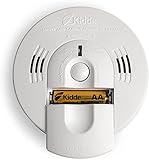
Kidde Hardwired Voice Combo
- Spoken fire and CO alerts
- Hardwired 120VAC with 2-AA backup
- Links up to 24 Kidde devices
- Test-Hush silences for 9 minutes

X-Sense SC07
- 10-year sealed lithium battery
- Photoelectric smoke plus electrochemical CO
- LCD shows CO level and battery
- UL 217 and UL 2034 certified
Best Smoke and Carbon Monoxide Alarms for Bedrooms in 2026
All ten alarms below detect smoke and carbon monoxide in a single housing. The differences that matter in a bedroom are the sensor type, the power source, and whether the alarm talks back to you.
| Product | Specifications | Action |
|---|---|---|
| First Alert BRK SC9120FF Hardwired Combo |
|
Check Latest Price |
| Kidde Hardwired Voice Combo |
|
Check Latest Price |
| X-Sense SC07 Combo |
|
Check Latest Price |
 X-Sense XP0H-WN 3-Pack X-Sense XP0H-WN 3-Pack |
|
Check Latest Price |
 First Alert SC7010BV Talking Alarm First Alert SC7010BV Talking Alarm |
|
Check Latest Price |
 Kidde KN-COPE-IC Voice Combo Kidde KN-COPE-IC Voice Combo |
|
Check Latest Price |
 X-Sense SC01 Combo X-Sense SC01 Combo |
|
Check Latest Price |
 Kidde 30CUA10-V Hardwired Combo Kidde 30CUA10-V Hardwired Combo |
|
Check Latest Price |
 SITERLINK GS886A 5-Pack SITERLINK GS886A 5-Pack |
|
Check Latest Price |
 HEIMAN HM-636THS Combo HEIMAN HM-636THS Combo |
|
Check Latest Price |
1. First Alert BRK SC9120FF: Best Overall Combination Alarm for Bedrooms
FIRST ALERT BRK SC9120FF Hardwired Smoke and Carbon Monoxide (CO) Detector with Battery Backup, 1 pack , White
Hardwired
Ionization smoke plus electrochemical CO
9V backup
85 dB siren
Pros
- Hardwired with 9V backup for outage protection
- Highest rating in this group at 4.7 stars
- Interconnects with compatible BRK and First Alert alarms
- 10-year limited warranty
- Tamper-resistant locking bracket
Cons
- Ionization sensing trips easily on cooking fumes and steam
- No digital readout of carbon monoxide levels
- No voice alerts naming the hazard
- Backup cell still needs periodic replacement
This is the alarm we would install in our own bedroom without hesitating. It runs on hardwired 120V power with a 9-volt backup, so it keeps sensing during an outage, and it uses an ionization smoke sensor paired with an electrochemical carbon monoxide sensor. The 85 decibel siren is the standard wake-up volume for residential alarms, and the indicator lights on the face tell you whether the unit is responding to smoke or to gas.
What convinced us was the feedback volume. More than 20,000 ratings averaging 4.7 stars is the largest owner base of any alarm in this guide, and that matters because it means the failure modes are well documented rather than hidden. Reviewers consistently describe simple installation, clear indicator lights, and an alarm loud enough to hear through a closed bedroom door.
The trade-offs are real and worth stating plainly. Ionization sensors respond faster to open flame but are more reactive to cooking fumes and bathroom steam, so placement matters more here than with a photoelectric unit. There is no digital carbon monoxide readout, so you get a warning rather than a number, and there are no voice alerts, so a sleepy household will hear a siren without knowing which hazard triggered it.
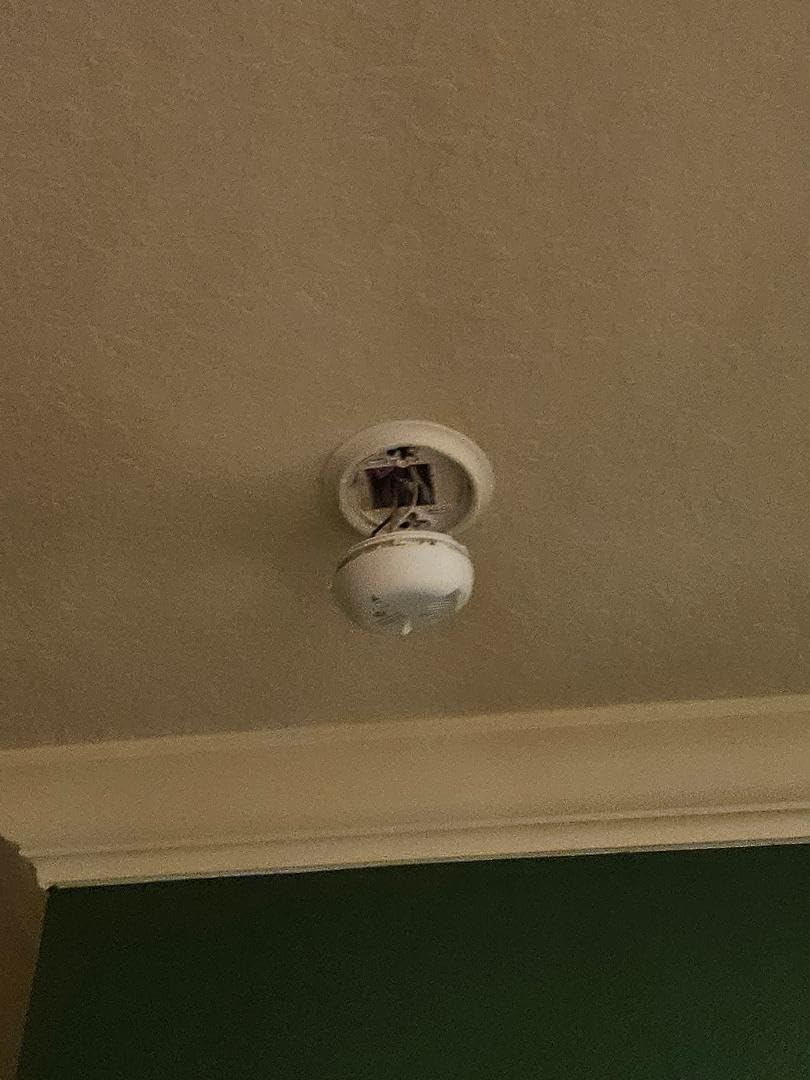
Because it is hardwired, it is the right choice if you are replacing an existing wired alarm or building out a bedroom in a home that already has a wired network. Tamper-resistant locking brackets stop curious children from pulling it off the wall, and the universal mounting bracket makes retrofitting into an existing box straightforward.
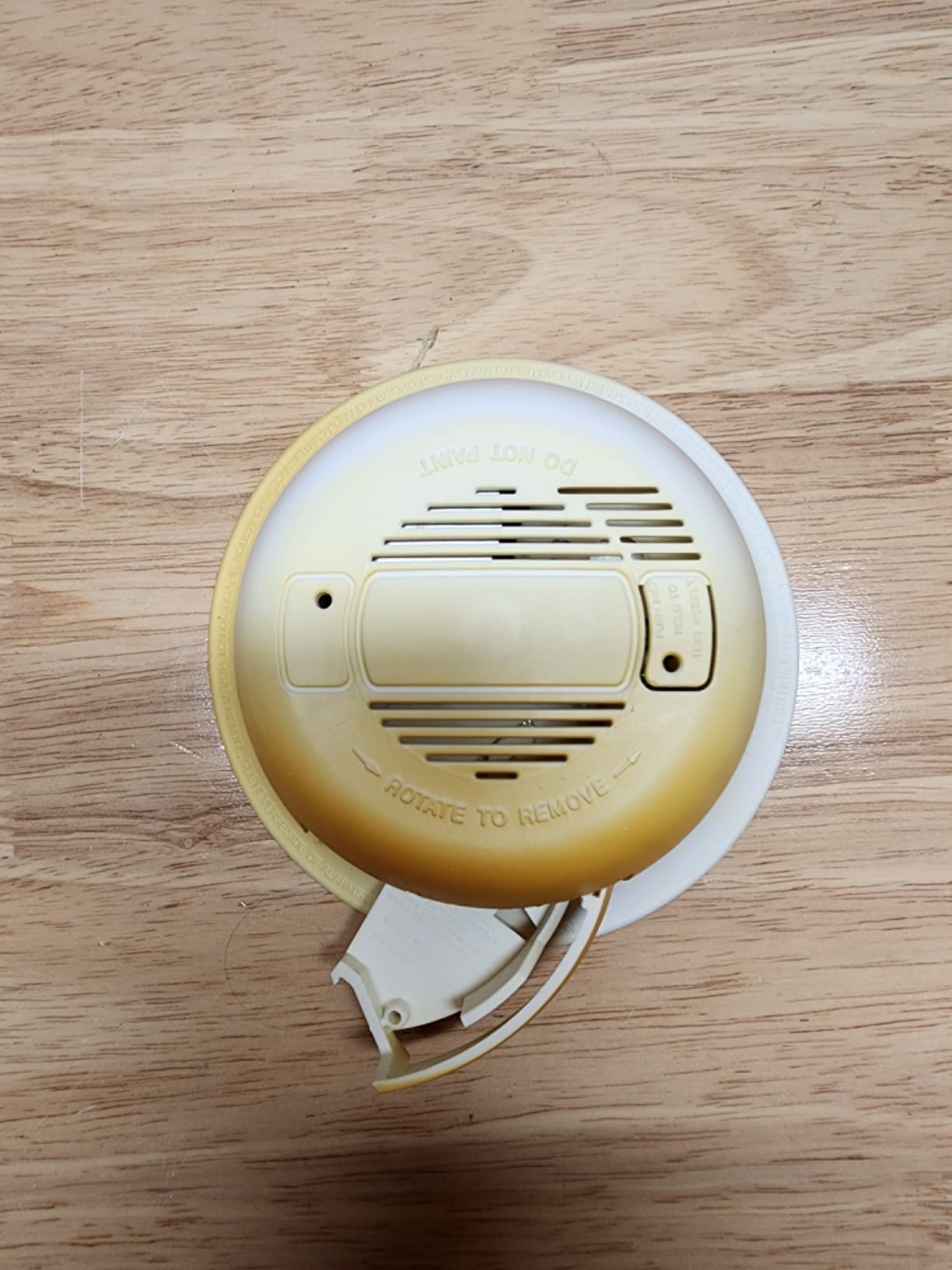
What you should check before buying
Confirm your bedroom already has a wired smoke alarm location with a live interconnect wire. If it does not, this unit is the wrong starting point and you would be paying an electrician to run a circuit for a device that does the same job as a sealed-battery model.
Then think about the room rather than the product. If the bedroom shares a wall or an air path with a kitchen, an ionization sensor is the wrong technology and you would be better served by a photoelectric unit from later in this list.
Where it falls short
It cannot tell you the carbon monoxide level, only that carbon monoxide is present. For a household that wants to check a reading at 2am before deciding whether to wake children, that missing number is a genuine gap.
It also cannot name the room or the hazard out loud. Voice alerts cost more to engineer, and this is the trade-off First Alert made to keep the unit in the mainstream price band.
2. Kidde Hardwired Voice Combo: Best for Spoken Hazard Alerts
Kidde Hardwired Smoke & Carbon Monoxide Detector, Battery Backup, Interconnectable, LED Warning Light Indicators
Voice alerts
Hardwired 120VAC
2-AA backup
Interconnects with 24 Kidde devices
Pros
- Speaks the hazard type out loud
- Hardwired with 2-AA backup
- Interconnects up to 24 Kidde devices
- Test-Hush quiets nuisance alarms for 9 minutes
- 10-year limited warranty
Cons
- Ionization sensing triggers on cooking and steam
- Backup uses replaceable AA cells
- Needs electrical work to install
- Older connector design on later production runs
The pitch here is simple and it works. Instead of a bare siren, this unit announces Fire! Fire! or Warning! Carbon Monoxide! so the person waking up at 3am knows immediately whether there is fire or a gas problem. In a bedroom, that distinction is worth more than a slightly better sensor specification.
Power comes from 120V AC hardwired with a 2-AA battery backup, and the unit can join a network of up to 24 Kidde devices, 18 of which can act as initiating alarms. That gives you a whole-home system where a detection anywhere sounds everywhere, including in bedrooms with the door shut.
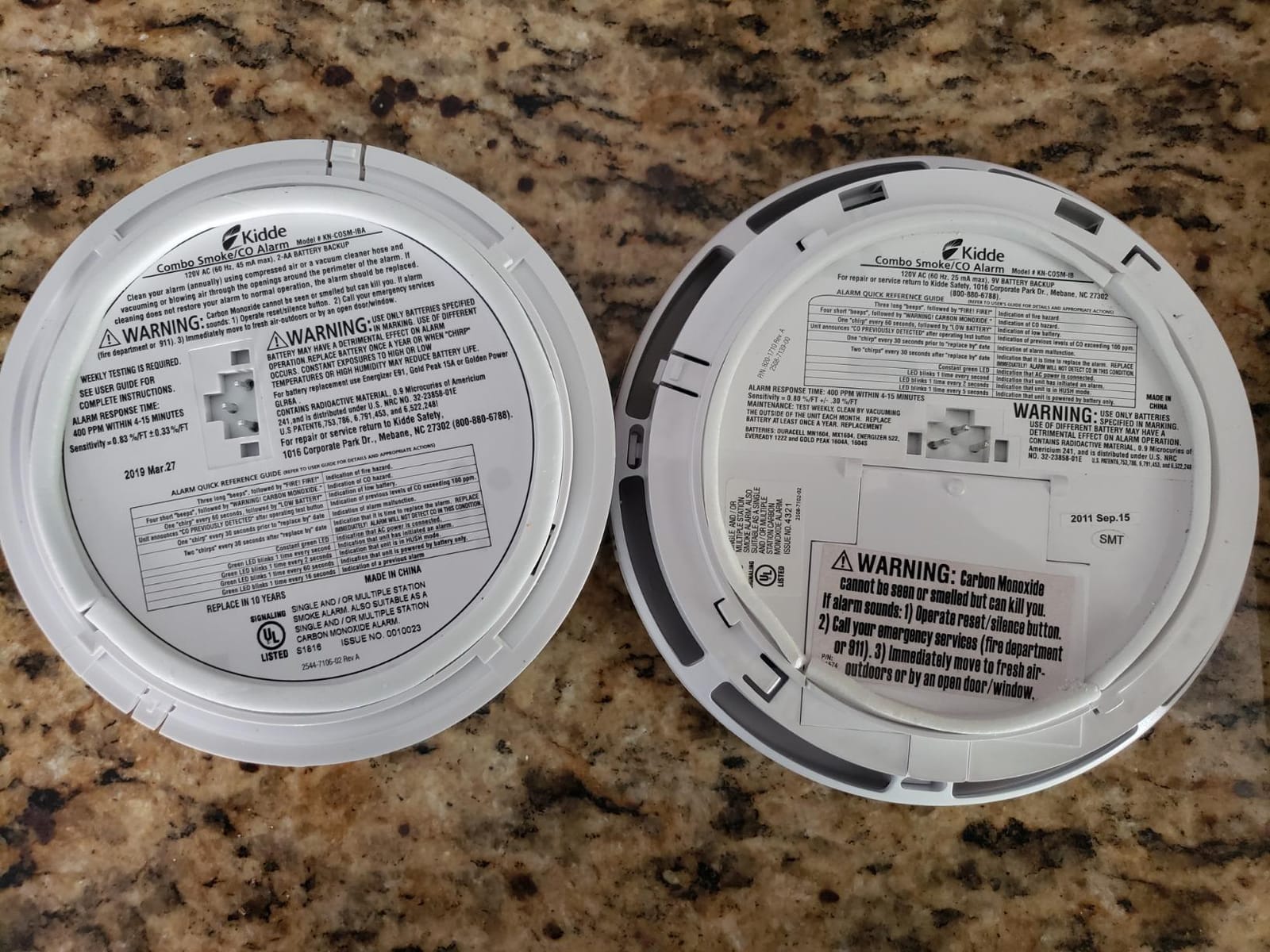
The Test-Hush feature silences the unit for roughly nine minutes, which is genuinely useful when a cooking event down the hall sends a false signal. Owners also note that the AA batteries are easy to reach, a small thing that matters once a year for the life of the alarm.
Two caveats. This is ionization-based, so it carries the same cooking and steam sensitivity as the First Alert above, and it is the second unit here where replacing an existing Kidde alarm can run into connector differences introduced on newer production runs. Budget for an adapter or a quick visit from an electrician if your existing base does not match.
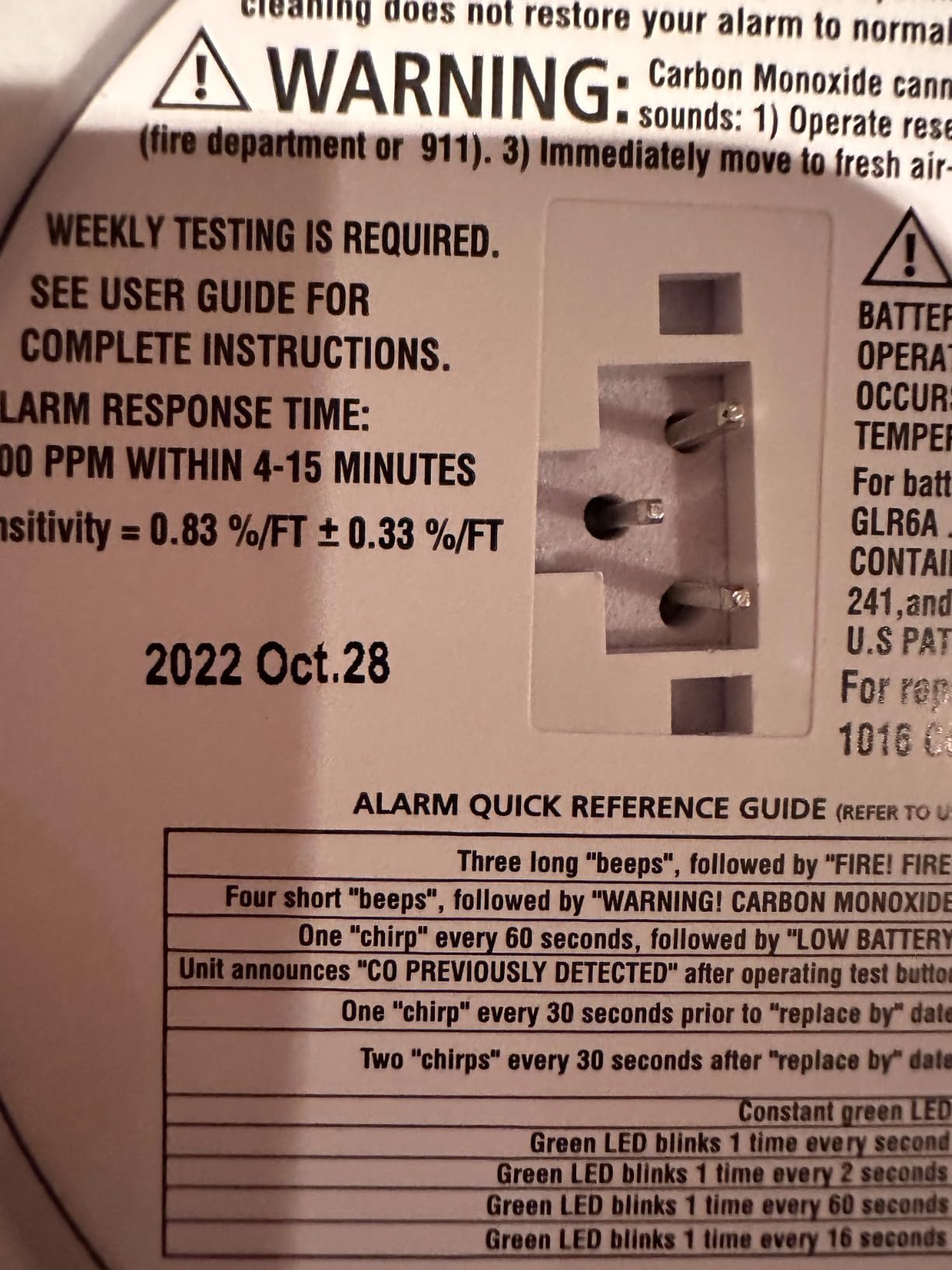
What you should check before buying
Check which connector your existing Kidde alarms use. If you are adding this to a mixed-vintage system, verify compatibility before ordering, because the connector style has changed between generations and that is the most common install surprise owners report.
If you rent rather than own, hardwired units are almost always the landlord’s call. A battery model you can mount yourself is the practical option, and you will find those covered further down.
Where it falls short
Two AA cells are a replaceable battery rather than a sealed decade-long cell, so there is a small annual chore built into ownership that the sealed-battery models remove entirely.
The voice announcements are hazard-specific but not location-specific. It tells you carbon monoxide, but not which room it was detected in.
3. X-Sense SC07: Best Value for False-Alarm-Prone Bedrooms
X-Sense Smoke Detector Carbon Monoxide Detector Combo, SC07, 1-Pack
10-year sealed lithium battery
Photoelectric smoke sensor
LCD CO readout
UL 217 and UL 2034
Pros
- Ten-year sealed battery removes battery swaps
- Photoelectric sensing cuts cooking false alarms
- LCD shows CO level and battery status
- No rewiring or electrician needed
- Mounting bracket covers old screw holes
Cons
- Standalone only with no interconnection or Wi-Fi
- Display shows CO reading only on demand and does not backlight
- No peak level memory
- Stands off the wall more than slimmer models
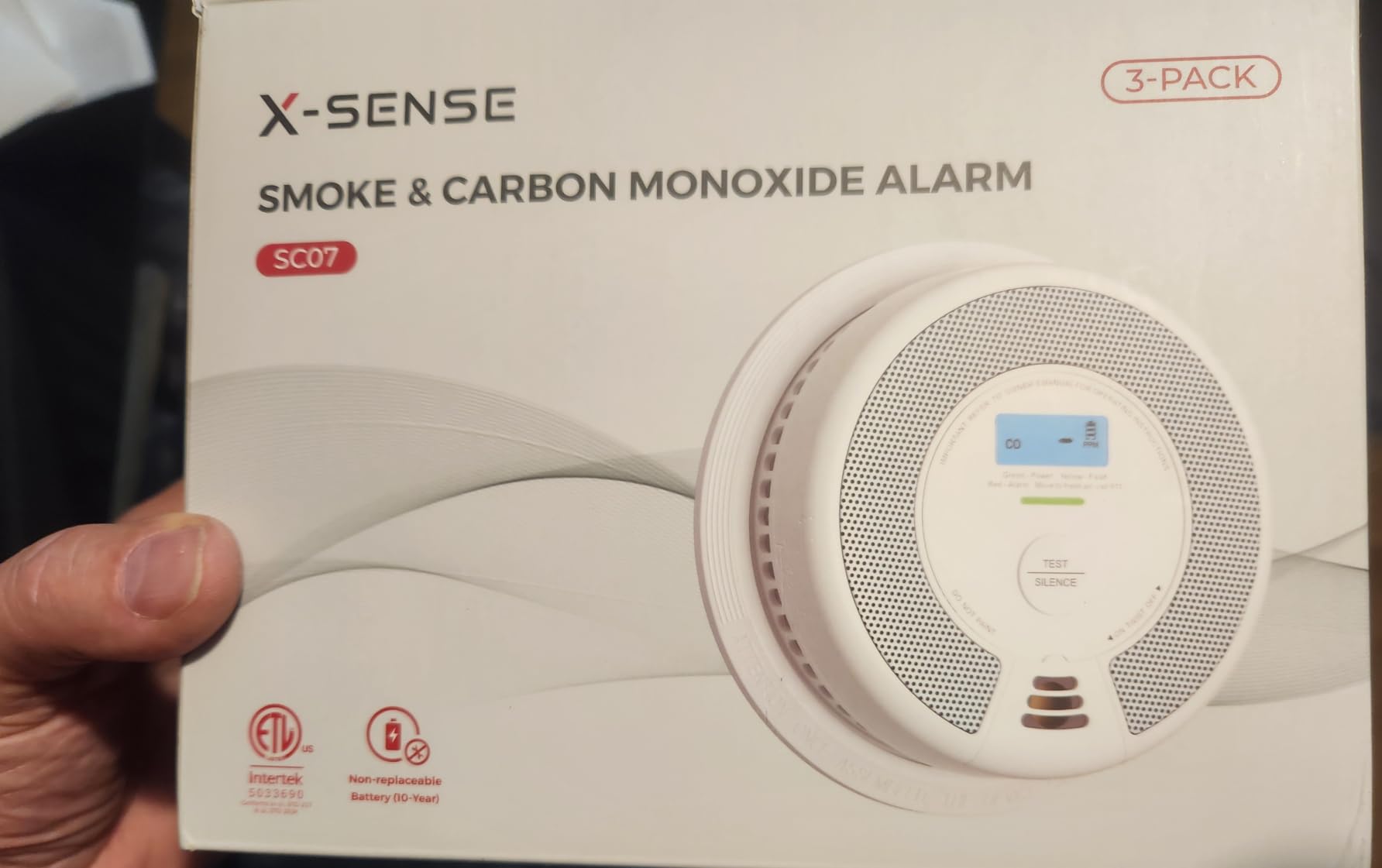
For a bedroom that sits near a kitchen, an ensuite, or a shared bathroom wall, sensor technology matters more than anything else on this list. The SC07 uses a photoelectric smoke sensor, which responds to the larger particles produced by slow-smoldering fires and is far less reactive to shower steam and cooking aerosol than an ionization chamber.
The other big bedroom advantage is silence. A sealed lithium cell rated for ten years means no low-battery chirp at 3am, no ladder, and no annual reminder. For a room where a nuisance sound wakes a light sleeper every few months, that alone justifies the choice.
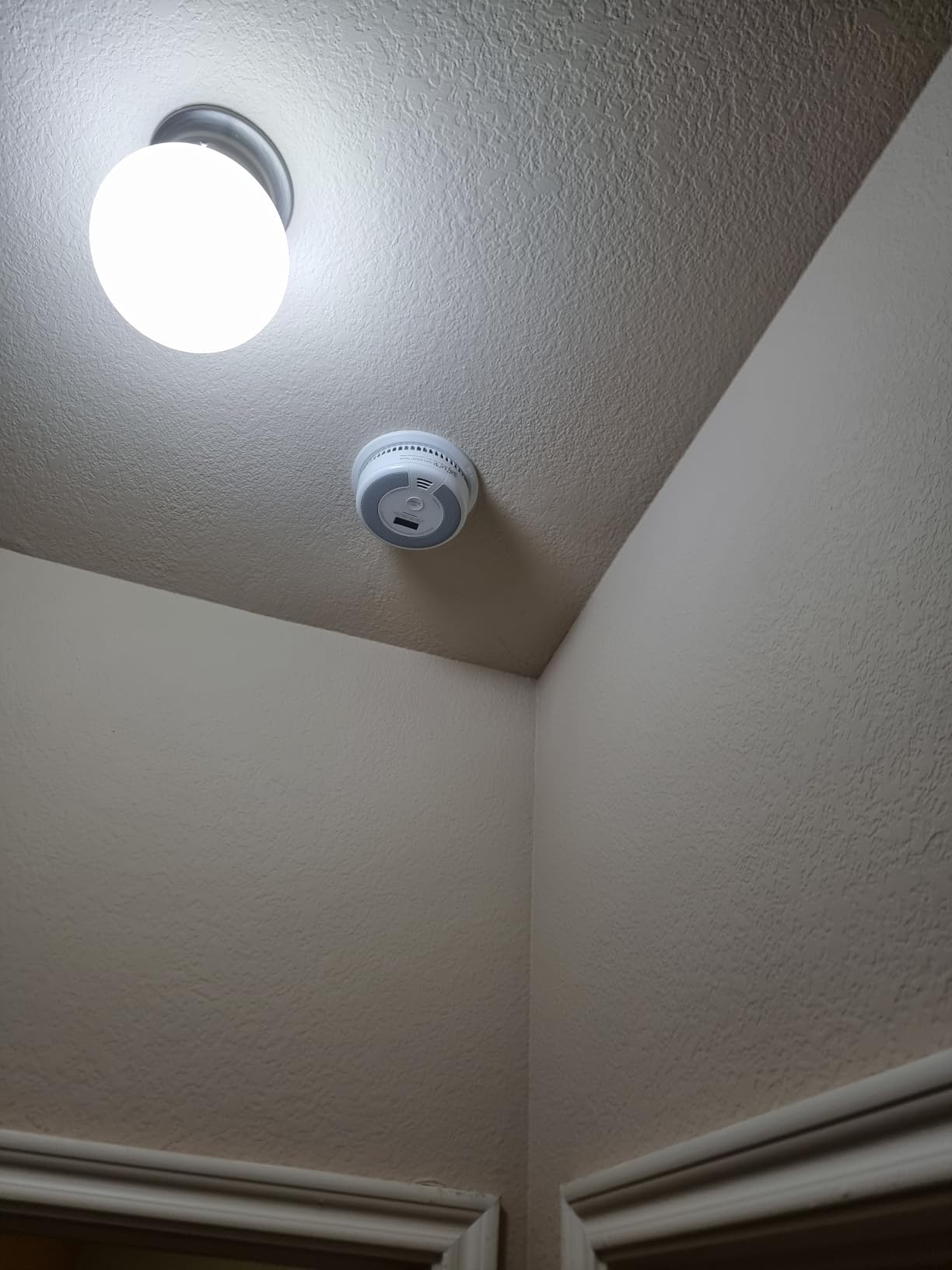
The LCD gives you a carbon monoxide readout, battery level, and working status, and the unit is independently tested to UL 217 and UL 2034. The included 5.7-inch bracket is oversized in a helpful way, covering the screw holes and ceiling marks left by whatever alarm was there before.
Be clear about what it is not. The SC07 is a standalone device with no wireless interconnection, no Wi-Fi, and no base station pairing, so if you want an alarm in the bedroom to sound when something triggers in the hallway, this will not do it. It also only shows a CO reading when you press the test button, and it will not display readings below 30 ppm or remember the highest level it saw.
What you should check before buying
Check whether anyone in your home is hard of hearing. Without a voice feature or a connected hub, this relies purely on the 85 decibel siren, which is not enough for a sleeping person with hearing loss.
Check the ceiling space too. At 2 inches deep it protrudes more than slim units, so on a low ceiling you will see it from the bed.
Where it falls short
No interconnection is the big one. Owners running multi-room systems have to pair a different model, and mixing unrelated brands usually means they will not talk to each other.
The display is demand-only and unlit. If you want to glance at a reading in a dark room at night, you will be pressing buttons in the dark.
4. X-Sense XP0H-WN 3-Pack: Best for Wireless Multi-Room Setups
X-Sense Wireless Combination Smoke and CO Detector, XP0H-WN, 3-Pack
RF wireless interconnection
Three per pack
10-year sealed battery each
Photoelectric plus CO
Pros
- Every paired alarm sounds when one detects
- Ten-year sealed battery in each alarm
- Three alarms cover multiple bedrooms in one order
- Oversized bracket hides previous screw holes
- ETL listed to UL 217 and UL 2034
Cons
- No Wi-Fi and no base station pairing
- Interconnection is X-Sense specific
- Battery only and cannot be hardwired
- Occasional unexplained single chirps reported
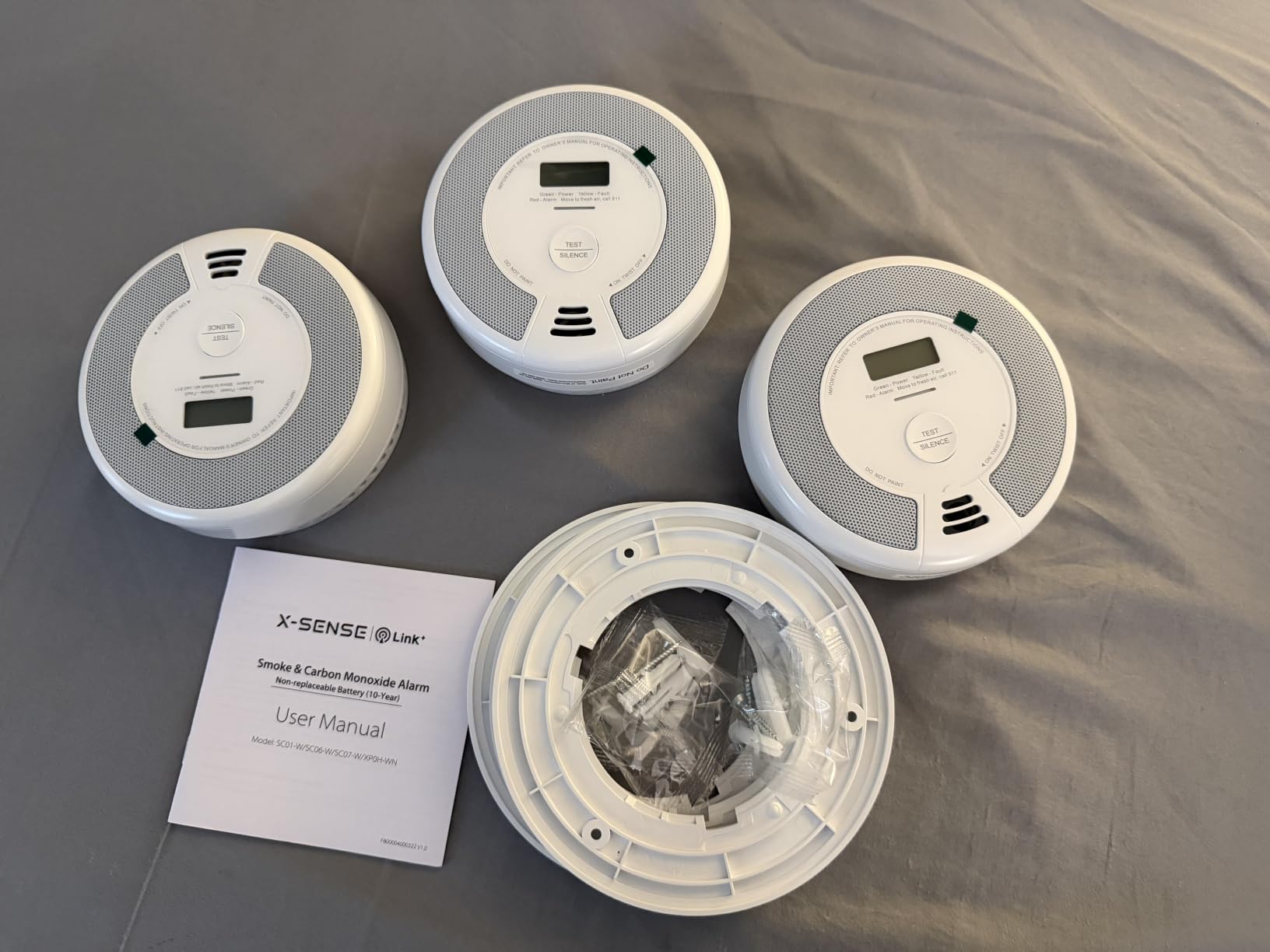
This is the pack to buy when you want a bedroom alarm to react to a fire that started somewhere else in the house. Pairing is by radio frequency, so when any one of these three alarms detects smoke or carbon monoxide, all three sound at once. No wiring, no hub, no app.
Each alarm in the pack carries the same 10-year sealed lithium battery and the same 2-in-1 sensing as the single unit, combining a photoelectric smoke sensor with an electrochemical CO sensor. Three alarms in one order is the practical way to cover a main bedroom, a children’s room, and a guest room without three separate orders.
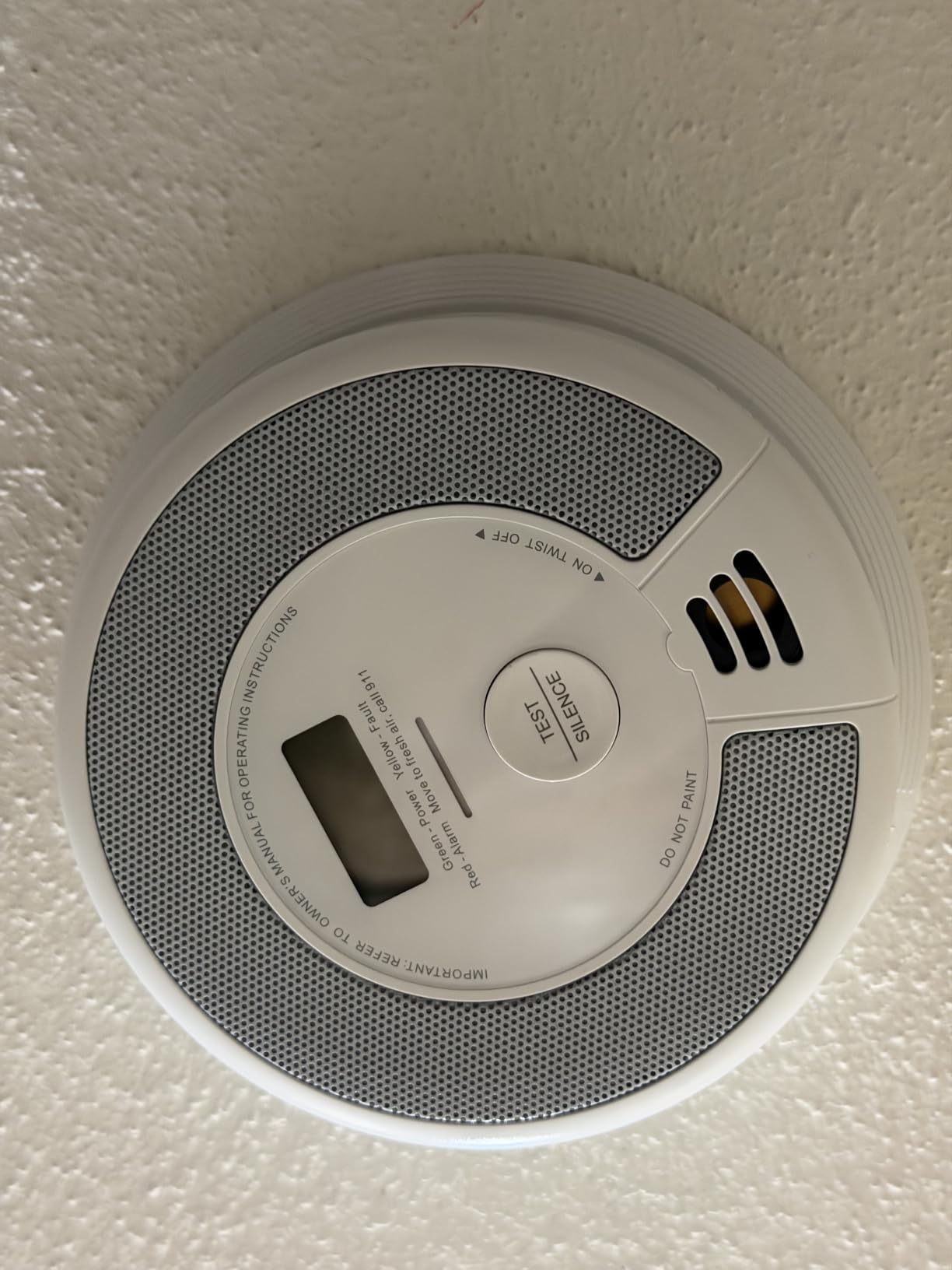
Reviewers like the pairing simplicity and the fact that the same oversized 5.7-inch bracket hides old screw holes, which makes a refresh project look finished rather than patched. The ETL listing to UL 217 and UL 2034 is a genuine credential to check for in any bedroom alarm.
The limitation is ecosystem. There is no Wi-Fi and no base station support, so you get linked alarms but no phone notifications and no remote silencing. The radio protocol is also specific to this brand, so these cannot be woven into a mixed system alongside other manufacturers.
What you should check before buying
Count your sleeping spaces before you commit to a three-pack. If you only have one bedroom that genuinely needs a combination alarm, a single unit is the cleaner purchase and you will avoid two devices you never install.
Check your existing alarms. If the rest of the house runs on a different brand’s interconnect, these will sit outside that network and you need to plan for that when you decide where coverage belongs.
Where it falls short
Being battery only means you are relying on the sealed cell for a decade with no hardwired option as a fallback. That is fine in most homes and less fine in a rental where wiring is expected.
Some owners report an occasional isolated chirp with no fault indicator or display code. With no app to check a log, that is an annoyance you have to diagnose by hand.
5. First Alert SC7010BV: Best for Hearing-Impaired Sleepers
FIRST ALERT Battery Powered BRK SC7010BV Hardwired Talking Photoelectric Smoke and Carbon Monoxide (CO) Detector , White
Voice and location alerts
11 programmable locations
Photoelectric smoke sensor
End-of-life chirp
Pros
- Announces hazard type and room
- Up to 11 pre-programmed home locations
- Photoelectric sensor reduces false alarms
- End-of-life chirp signals replacement time
- Interconnects with BRK and First Alert alarms
Cons
- Among the costlier hardwired options
- Needs hardwiring and voice programming
- Body sits further from the ceiling than slimmer models
- Programming the locations is fiddly for first-time owners
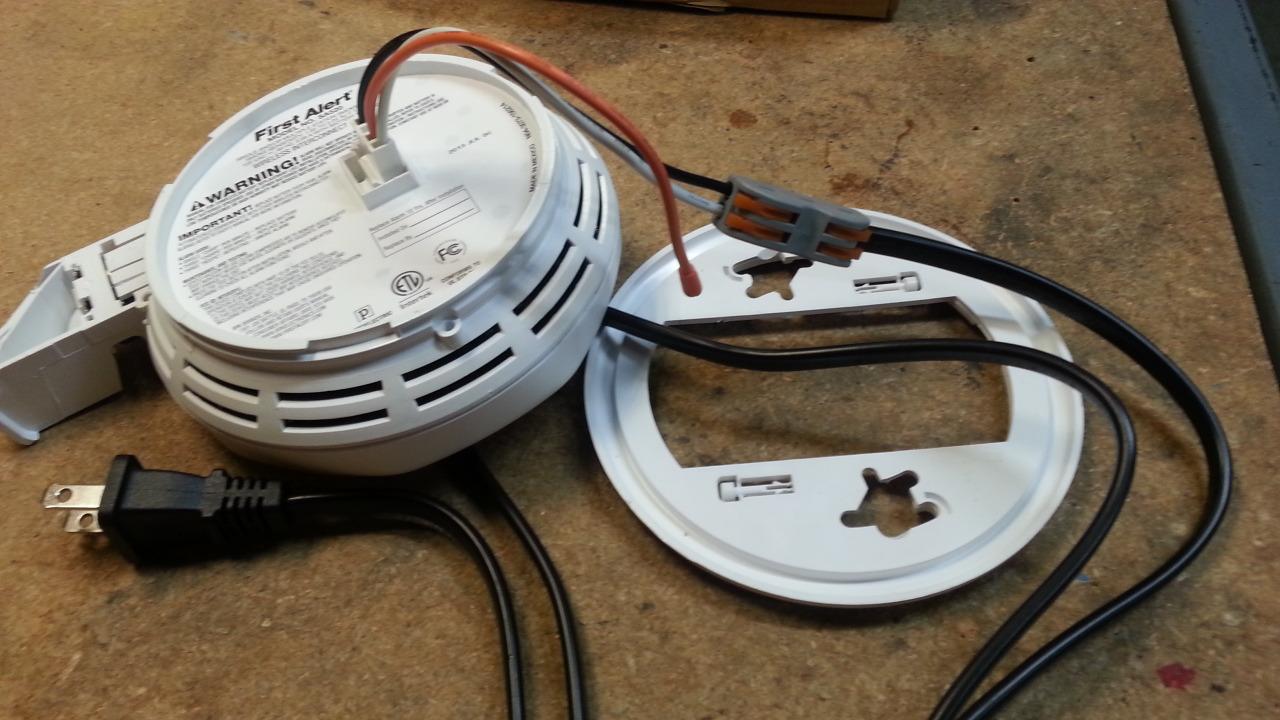
This is the only alarm in the group that tells you where the danger is. It is programmable for up to 11 pre-programmed locations through the home, so a light sleeper who is not sure whether they are hearing smoke or carbon monoxide, and not sure which room it came from, gets a plain answer instead of a guess.
The smoke sensing here is photoelectric, optimized for the larger particles produced by smoldering fires, which owners credit with fewer nuisance alarms. CO detection uses electrochemical sensing, and the unit interconnects with other compatible BRK or First Alert detectors so a warning in one room reaches every bedroom.
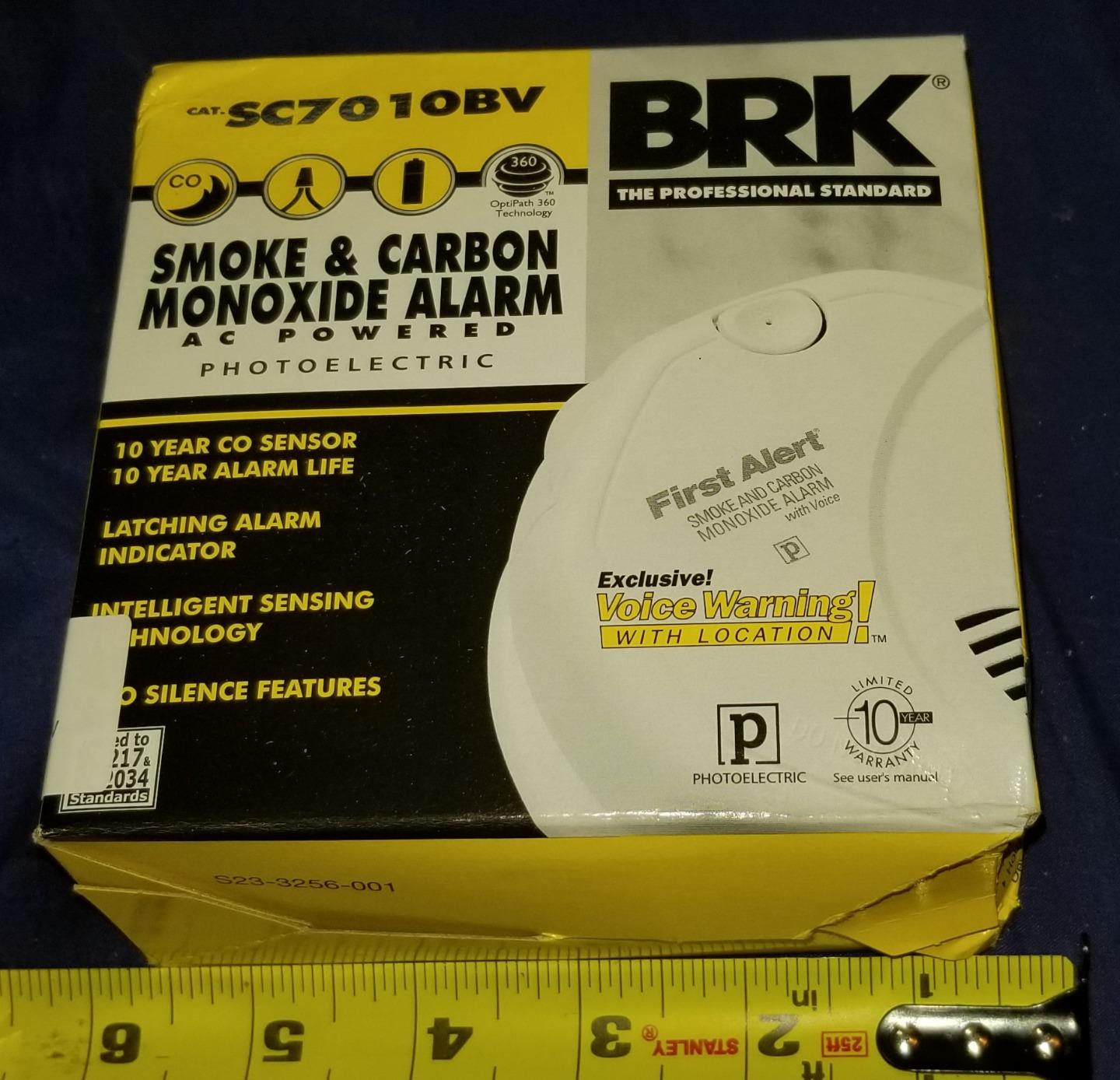
The end-of-life signal chirp is the feature most people never notice until they need it. Instead of a unit quietly degrading past its useful life, this one tells you when replacement is due. It carries a 10-year limited warranty to match.
Voice alarms are a real step up for hard-of-hearing sleepers because a spoken warning can wake someone who a siren alone would not, and combined with a standard strobe accessory or a bed shaker it becomes a much stronger wake-up path than sound.
What you should check before buying
Check that you have somewhere to run hardwired power and an interconnect signal. This is not a retrofit-friendly battery swap, and adding a circuit to an existing bedroom is the expensive part of the project.
Plan the programming step. Sitting on the floor with a ladder, mapping rooms to voice locations, is fiddly work, and it is easier to do before you move in than after.
Where it falls short
It sits at the top of the cost range for hardwired combination units, and that money buys voice features rather than better sensing.
At nearly 2.4 inches deep it stands further off the ceiling than slim models, which is visible from bed level in a low room.
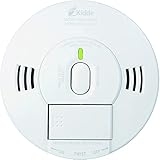
6. Kidde KN-COPE-IC: Best for Drop-In Kidde Replacements
Kidde Smoke & Carbon Monoxide Detector, Hardwired Interconnect, Combination Smoke & CO Alarm with Battery Backup, Voice Alerts
Voice alerts
Hardwired 120VAC with 9V backup
Front battery door
Photoelectric sensor
Pros
- Front-mounted battery door for fast changes
- Voice alerts distinguish fire from carbon monoxide
- Photoelectric sensing reduces nuisance alarms
- Often drops into an existing Kidde base
- Links up to 24 Kidde devices
Cons
- Warranty length varies by production run
- Connector style changes complicate like-for-like swaps
- Hardwired install needs basic electrical work
- No app or smart home integration
If your existing bedroom alarms are older Kidde models, this is often the least disruptive upgrade. Owners frequently report the unit dropping straight into an existing Kidde base and reusing the existing wiring harness, which turns a whole-house refresh into an afternoon rather than a project.
It pairs a photoelectric smoke sensor with an electrochemical CO sensor, produces an 85 decibell horn, and announces Fire! Fire! or Warning! Carbon Monoxide! so the waking sleeper knows which hazard they are dealing with. It will interconnect with up to 24 Kidde devices, including heat alarms, which covers most whole-home layouts.
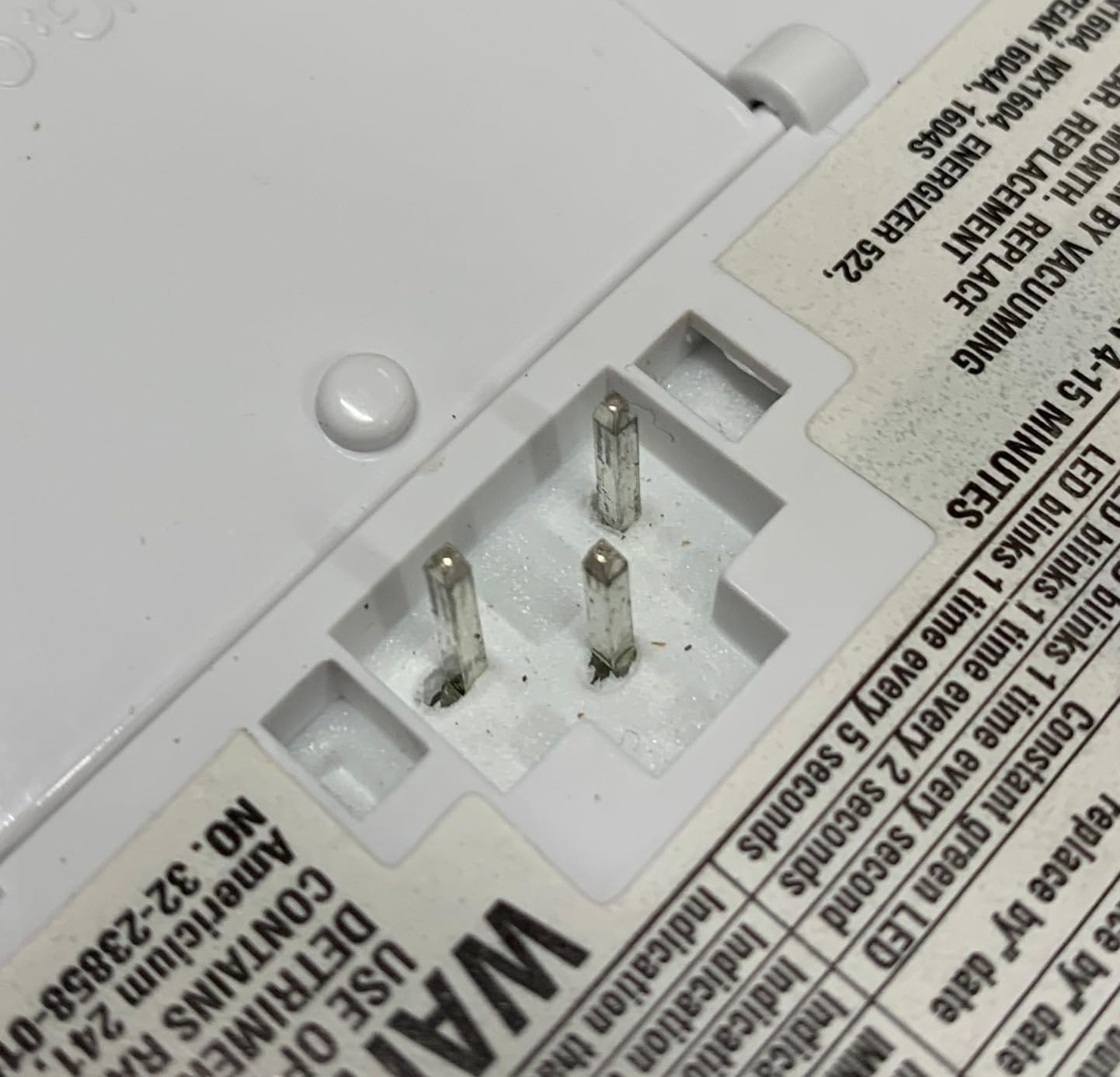
The front-mounted battery door is a small design decision that owners single out repeatedly. You swap the 9V backup without taking the alarm off the ceiling or the wall, which matters when the unit is a 6-foot reach over a bed.
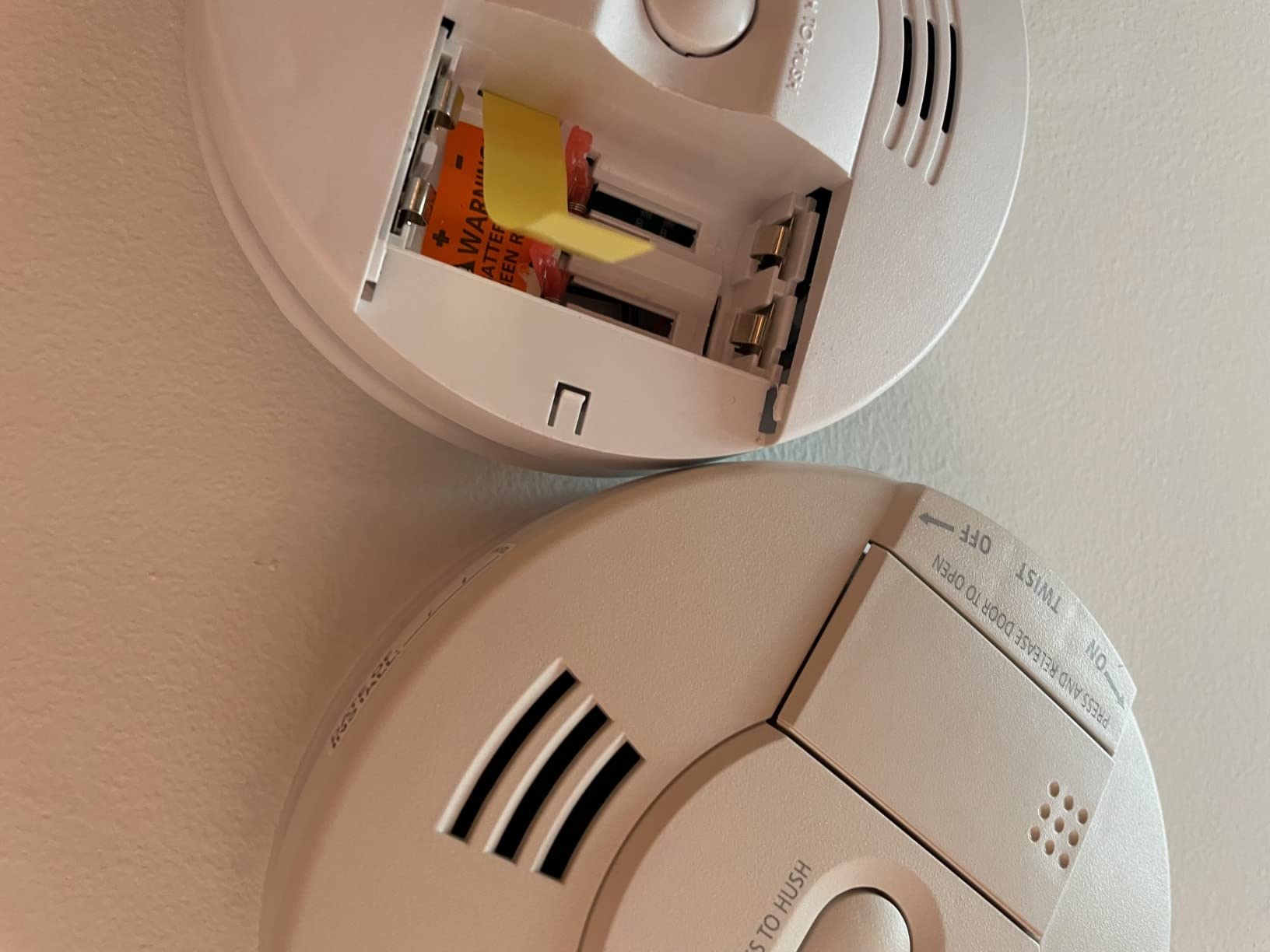
Two things to watch. Warranty listings differ between production runs, with some listings showing seven years and others ten, so check the specific unit you receive. And while drop-in replacement is common, Kidde has changed connector styles over time, so an older base may need an adapter or a short visit from an electrician.
What you should check before buying
Look at your current alarm. Note the model number on the back or the side and compare it against the connector diagram for this unit before ordering, since that mismatch is the main reason owners get stuck mid-install.
If you are mixing brands across the house, map your interconnect network first. This unit links with Kidde devices, and a mixed-brand house will leave parts of the network silent.
Where it falls short
No wireless, app, or smart home integration of any kind. Everything here is a closed local system.
It still relies on a replaceable 9V cell rather than a sealed decade-long battery, so the maintenance chore is permanent even though the front door makes it easier.
7. X-Sense SC01: Best for Renters and First Apartments
X-Sense Smoke Detector and Carbon Monoxide Detector, SC01, 1-Pack
10-year sealed battery
Photoelectric plus CO
LCD CO readout
ETL listed
Pros
- No wiring and no outlet needed
- Ten-year sealed battery
- Photoelectric sensor reduces cooking false alarms
- Large LCD shows real-time CO and battery status
- ETL listed to UL 217 and UL 2034
Cons
- No interconnection or app connectivity
- Display is hard to read from an angled ceiling
- No voice alerts
- Sealed cell cannot be replaced at end of life
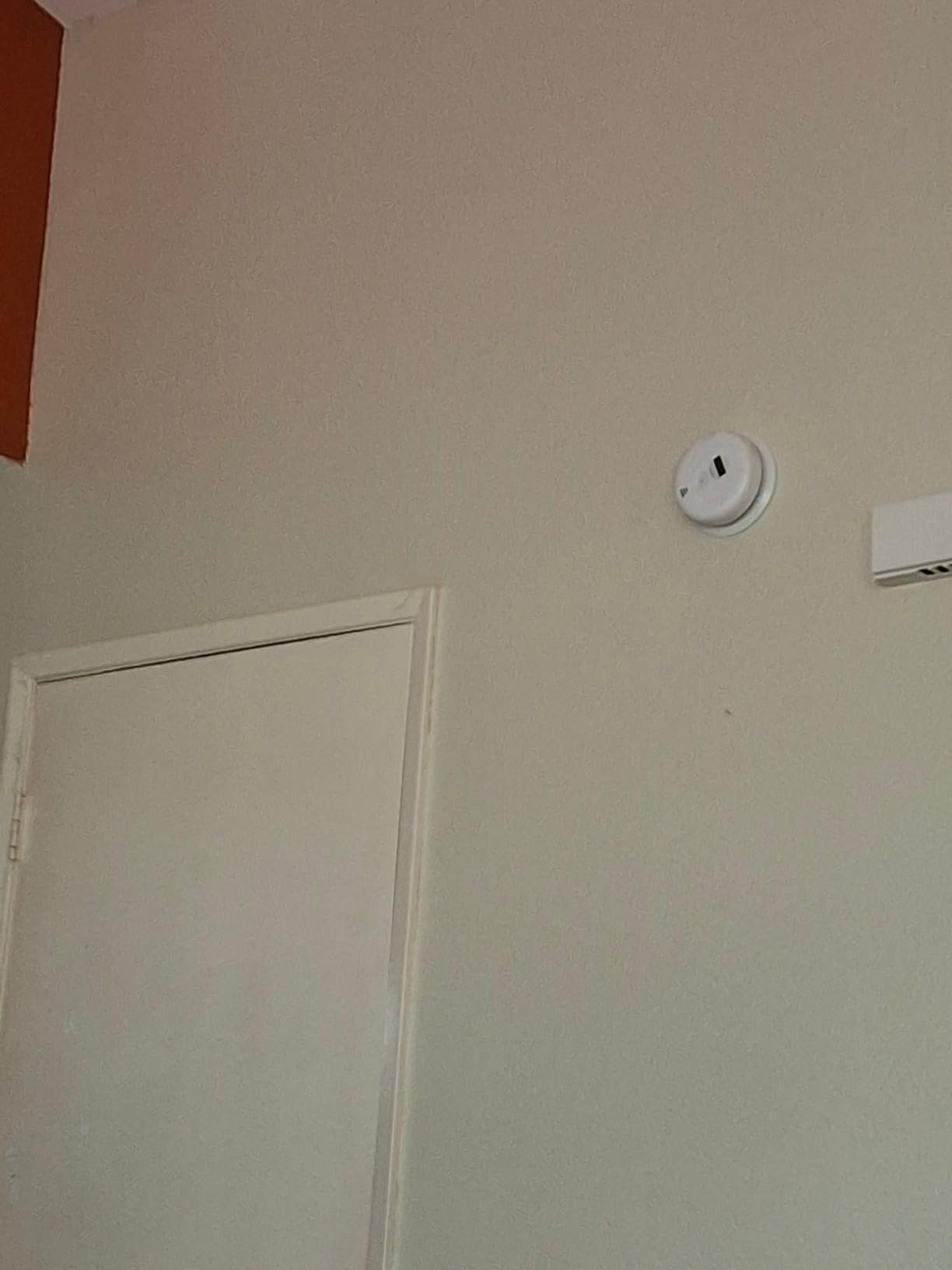
This is the simplest path to a compliant bedroom alarm if you cannot or will not run wire. It mounts on a wall or ceiling with the included bracket, screws, and anchor plugs, and the 10-year sealed lithium battery removes both the wiring question and the annual battery question in one move.
Like the SC07, it uses photoelectric smoke sensing alongside an electrochemical CO sensor, which makes it a sensible pick for bedrooms near a kitchen or bathroom. The large LCD reports real-time carbon monoxide levels, battery level, and working status, which is more information than most hardwired units in this guide will give you.
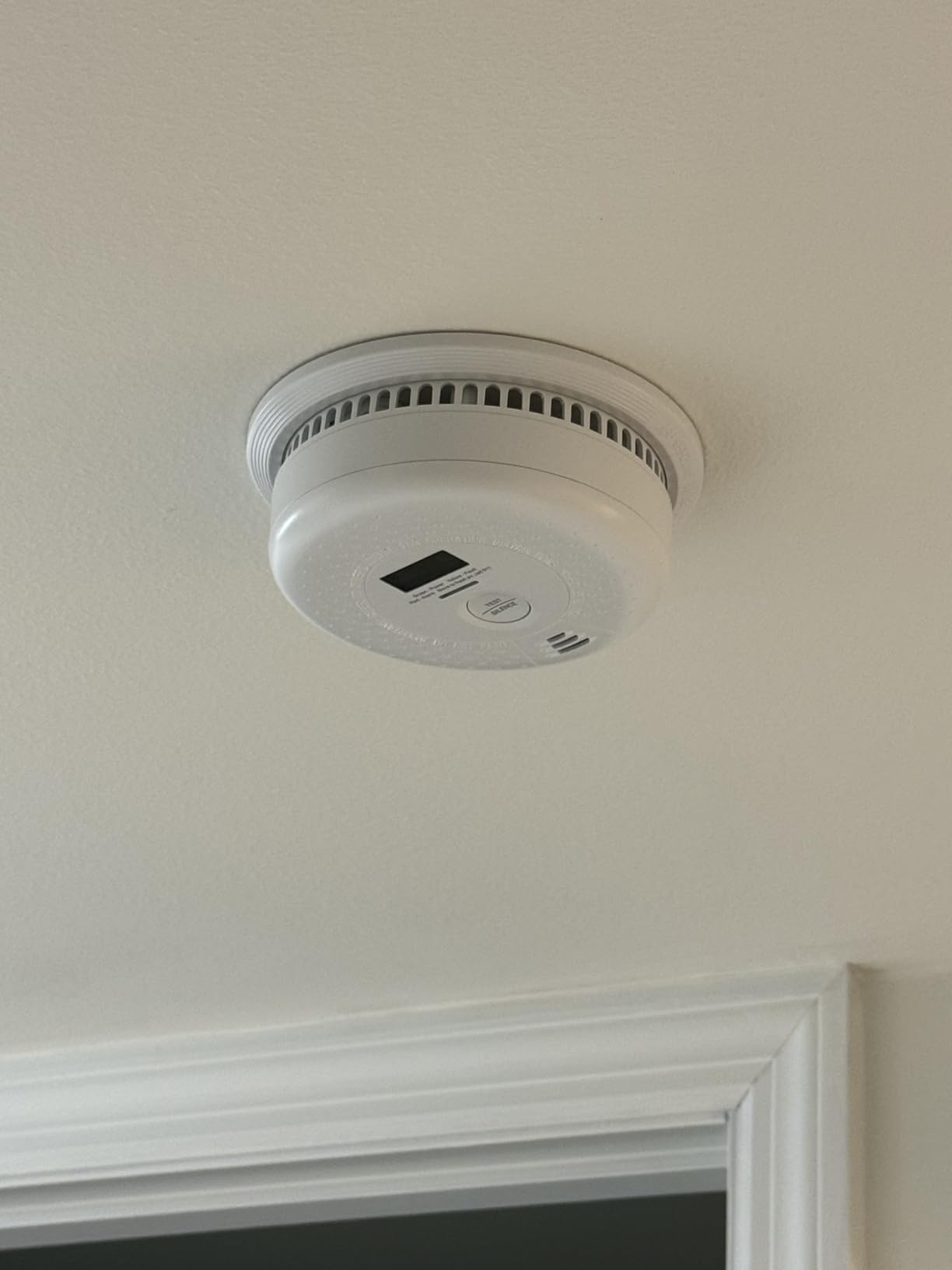
It is ETL listed to UL 217 and UL 2034, the two standards worth checking on any bedroom alarm, and reviewers describe it as compact and unobtrusive enough to disappear on a ceiling. At 16 ounces it is one of the heavier units here, but that is a function of the sealed cell rather than poor design.
Its limits match the other standalone models. No wireless interconnection, no app, and no voice alerts, so a hard-of-hearing sleeper gets nothing beyond the siren. The LCD is also difficult to read from an angled or vaulted ceiling position, which matters if you mount it above a bed.
What you should check before buying
Check your local rules. Many jurisdictions require hardwired alarms in new construction and often expect them in rentals, so a sealed-battery unit can satisfy a personal standard without satisfying an inspection.
Ask your landlord before replacing a hardwired alarm with a battery unit. It is usually not allowed, and doing it anyway can create a deposit issue at move-out.
Where it falls short
The sealed battery is not replaceable, so when the unit reaches end of life you replace the whole device. Budget for that in year ten rather than assuming it runs indefinitely.
Standalone operation means it will not sound when a hazard is detected elsewhere in the home. That is the single biggest functional difference between this and the hardwired picks.
8. Kidde 30CUA10-V: Best for Newer Three-Wire Interconnect Systems
Kidde Smoke and Carbon Monoxide Detector, Hardwired with 10-Year Battery Backup, Voice Alerts, LED, 85 dB, 30CUA10-V, 1 Pack
10-year built-in battery backup
Hardwired 120VAC
Voice alerts
UL 217 10th Edition tested
Pros
- Ten-year built-in backup removes battery changes
- Voice alerts separate fire from carbon monoxide
- Tested to UL 217 10th and UL 2034 5th Editions
- Sensing engineered for faster smoke detection
- 85 dB alarm with red LED
Cons
- Needs a third wire for interconnection
- Lower 4.2 star average among these picks
- Some reports of false alarms and an early failure
- Mounting screw pattern rotated from older brackets
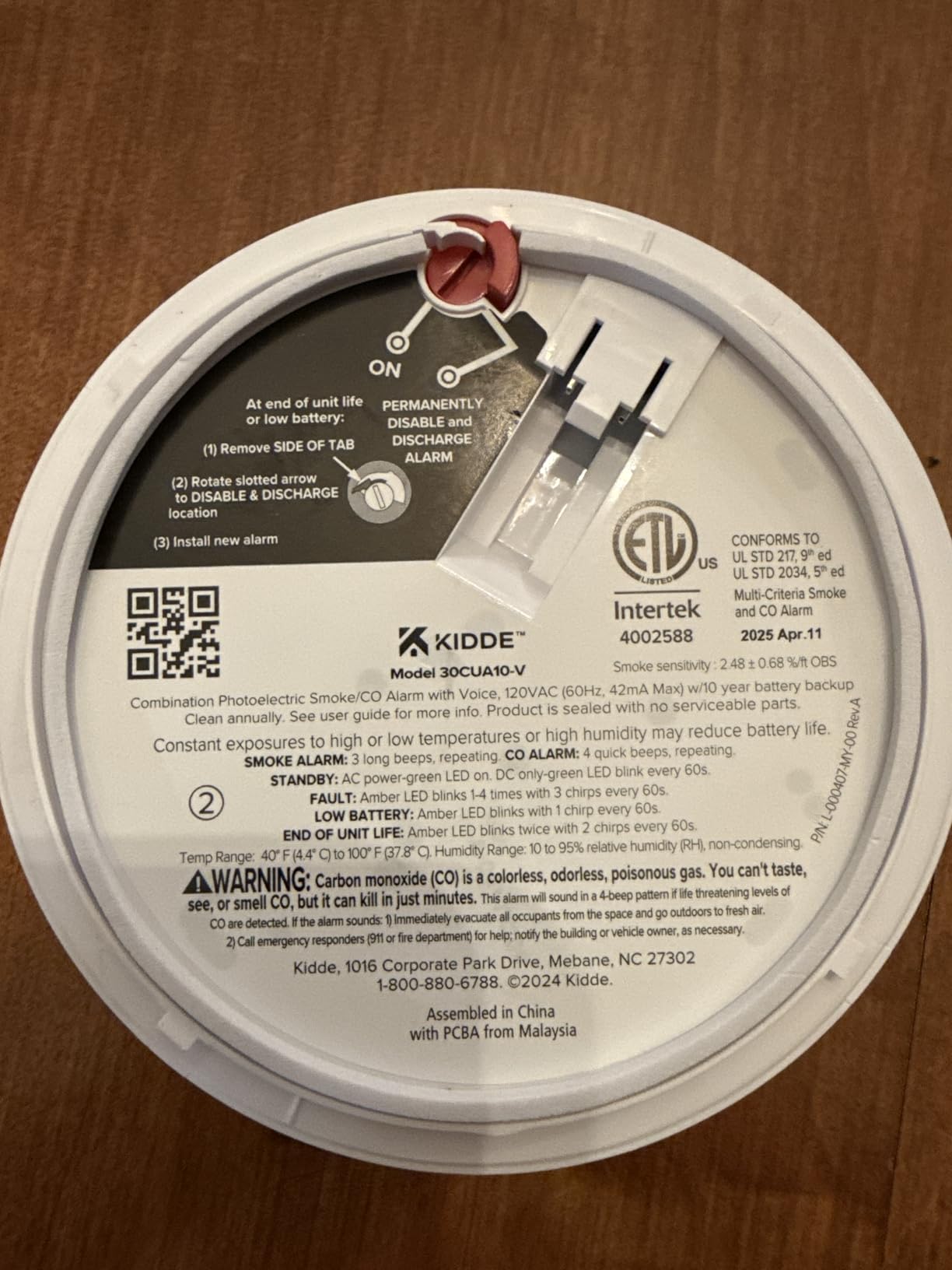
This one stands out for the power design. It runs on 120V AC hardwired and carries a 10-year built-in battery backup, so you get hardwired reliability and a decade of battery life in the same housing without replacing AA cells every spring.
It is also tested to the current editions of the relevant standards, UL 217 10th Edition and UL 2034 5th Edition, and the manufacturer claims sensing engineered for faster smoke detection that also reduces cooking and steam false alarms. Voice alerts announce Fire or Warning, Carbon Monoxide so the sleeper gets a specific answer.
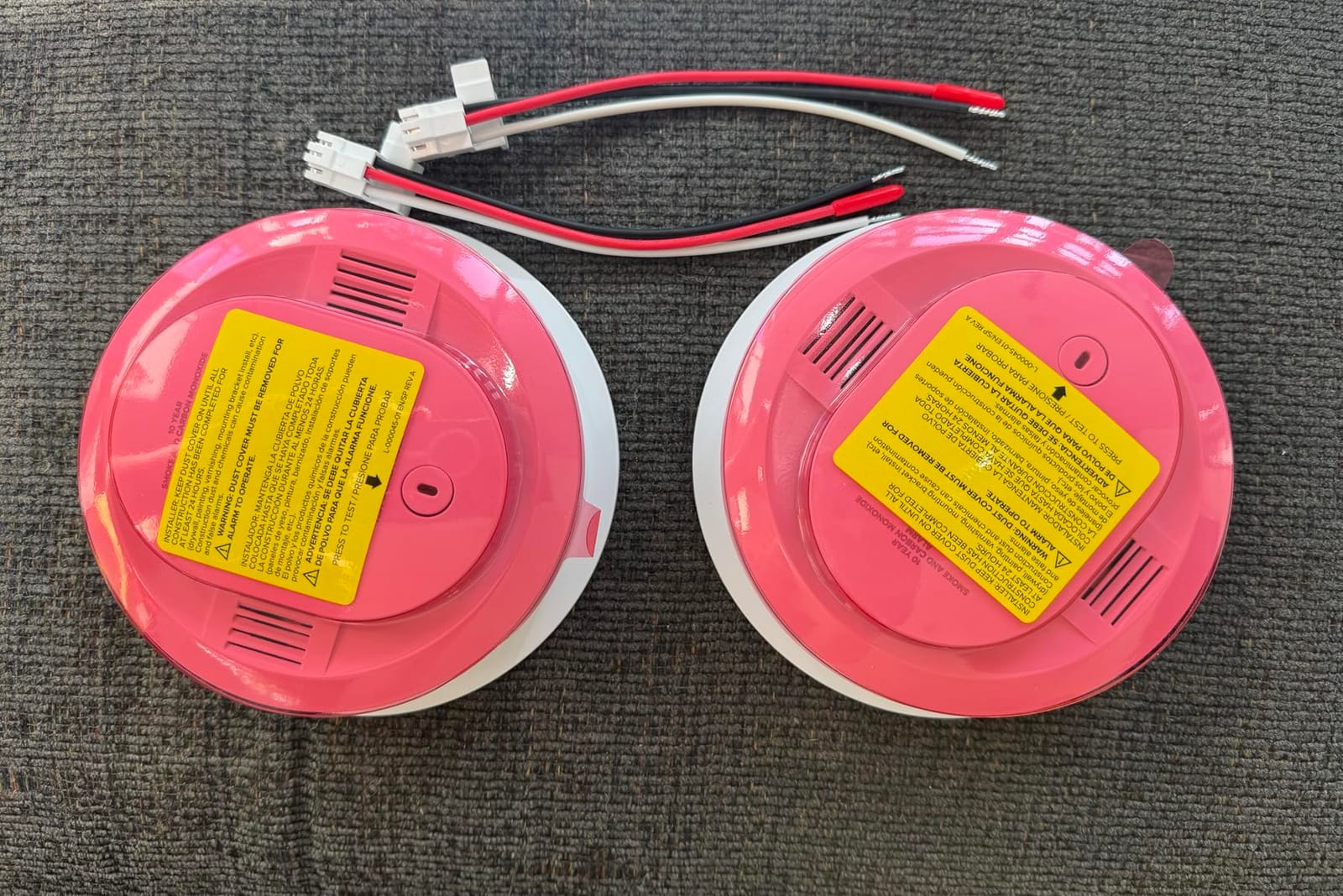
It interconnects with other Kidde alarms so that one detection sounds the whole network, and it fits many existing Kidde mounting brackets with optional adapters for older connectors.
We are including it with a clear caveat. Its 4.2 star average is the second lowest in this group, and owner feedback includes reports of repeated false alarms and a unit that failed after only a few months. It also requires a three-wire connection, meaning two wires for AC power and a third for the interconnect signal, which older homes without an interconnect wire simply do not have.
What you should check before buying
Open the existing alarm location and count the wires. If you only see two, this unit cannot join the interconnect network and you should look at the wireless or battery options instead.
Check your ceiling bracket pattern. The screw pattern here is rotated 90 degrees from many older Kidde brackets, so a replacement may not land where the old unit sat.
Where it falls short
It has the lowest average rating of the well-reviewed units here, and the reviews that drag it down concern reliability rather than features. That is a different risk profile from the sealed-battery models.
No app and no smart home integration, and installation instructions are minimal enough that inexperienced DIYers report it taking longer than expected.
9. SITERLINK GS886A 5-Pack: Best for Large Hardwired Homes
SITERLINK Hardwired Smoke and Carbon Monoxide Detector with Battery
AC hardwired
2-AA battery backup
Interconnects up to 18
10-hour one-touch mute
Pros
- Five alarms cover a large floor plan
- Links up to 18 devices across the home
- Voice alerts cover low voltage and malfunction states
- Ten-hour mute handles temporary nuisance conditions
- AA backup batteries included
Cons
- Highest cost per alarm in this group
- Large 6.1-inch body dominates a bedroom ceiling
- Claimed cooking immunity disputed by owners
- One report of repeated bedroom alarming
This pack exists for a specific job: covering a lot of bedrooms across a large hardwired house. Five AC hardwired combination alarms in one order, each with 2-AA battery backup, interconnecting up to 18 devices so that one detection sounds everywhere in the home.
The voice alerts are unusually thorough. Alongside Fire and Warning, Carbon Monoxide, the unit announces low voltage, malfunction, test, and end-of-life conditions, which turns a silent failure into something you hear about. The one-touch mute holds for ten hours, longer than the several-minute silence on competing units.
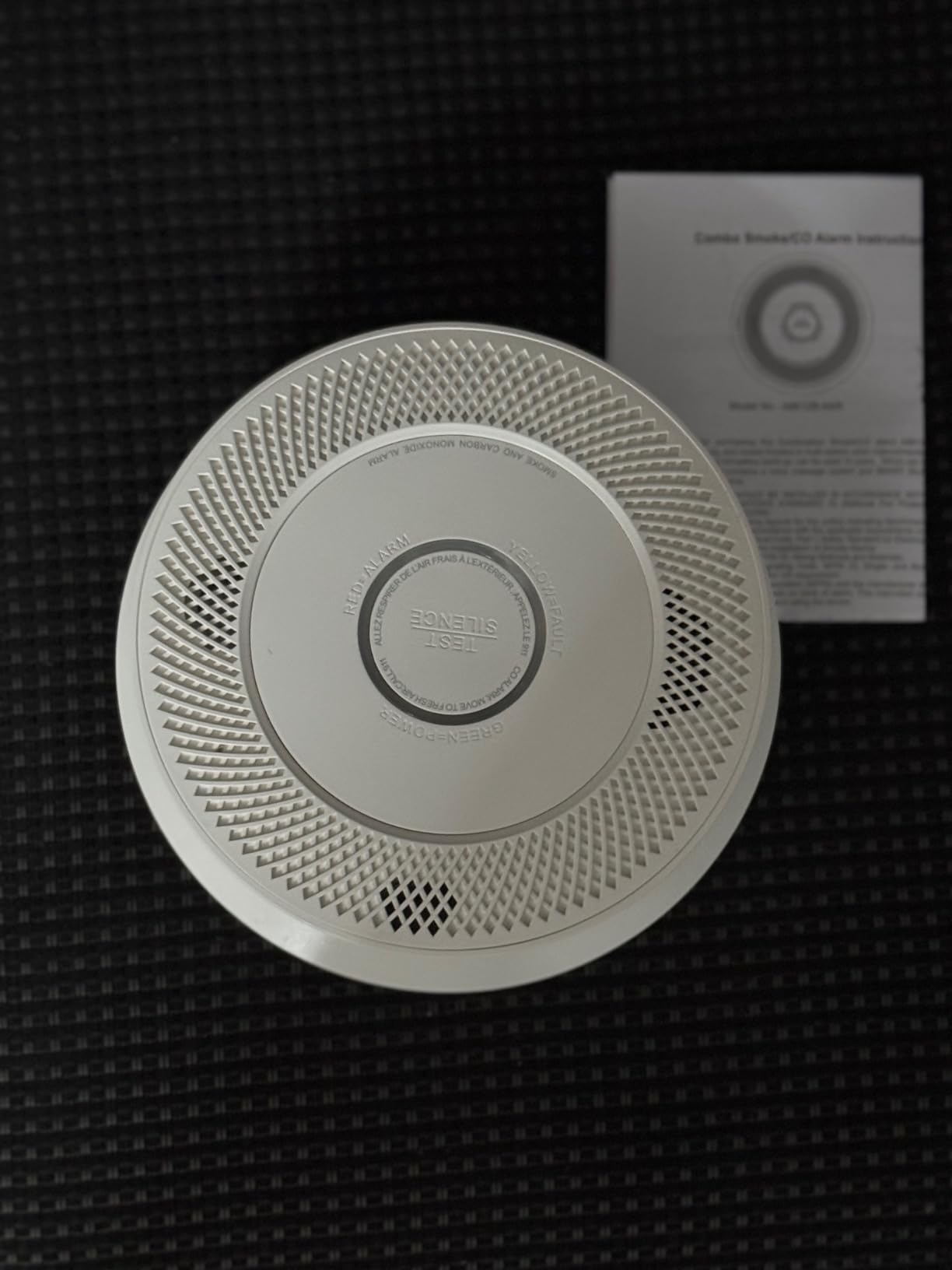
Sensing is a photoelectric smoke sensor working alongside an electrochemical CO sensor, both operating independently, in a 6.1-inch diameter body with a fire-retardant ABS housing.
Be cautious with the marketing claim, though. Owners report that the ability to distinguish cooking from fire does not hold up in practice, with alarms going off from air fryer and stovetop cooking, and one review described a bedroom unit alarming repeatedly with no smoke present. It also carries the highest cost per alarm here and the lowest review volume of the hardwired options.
What you should check before buying
Count your wired alarm locations first. Five alarms is a substantial order, and a smaller home with two or three bedrooms may only need two of them.
Consider the body size. At 6.1 inches across and 1.7 inches deep, this is the bulkiest alarm in the guide and it is visible from bed level on a low ceiling.
Where it falls short
The cooking-immunity claim does not survive contact with real kitchens, which is exactly the scenario this kind of product tends to be sold into.
No app, no phone alerts, and no smart home integration at all, despite being the costliest alarm per unit here.
10. HEIMAN HM-636THS: Best for Low-Profile Ceiling Mounts
Heiman Smoke Detector Carbon Monoxide Detector Combo 10-Year Sealed Battery
Dual-beam photoelectric
10-year sealed battery
85 dB siren
20-second alarm memory
Pros
- Slim 4.91-inch body suits low ceilings
- Ten-year sealed battery with no wiring or outlets
- UL 217 10th and UL 2034 5th certified
- 20-second alarm memory keeps the LED flashing after an event
- 10-year limited warranty
Cons
- Bright LED pulses roughly every 54 seconds
- One report of end-of-life chirp at 11 months
- Small mounting bracket leaves larger old holes exposed
- Instructions are ambiguous about activation
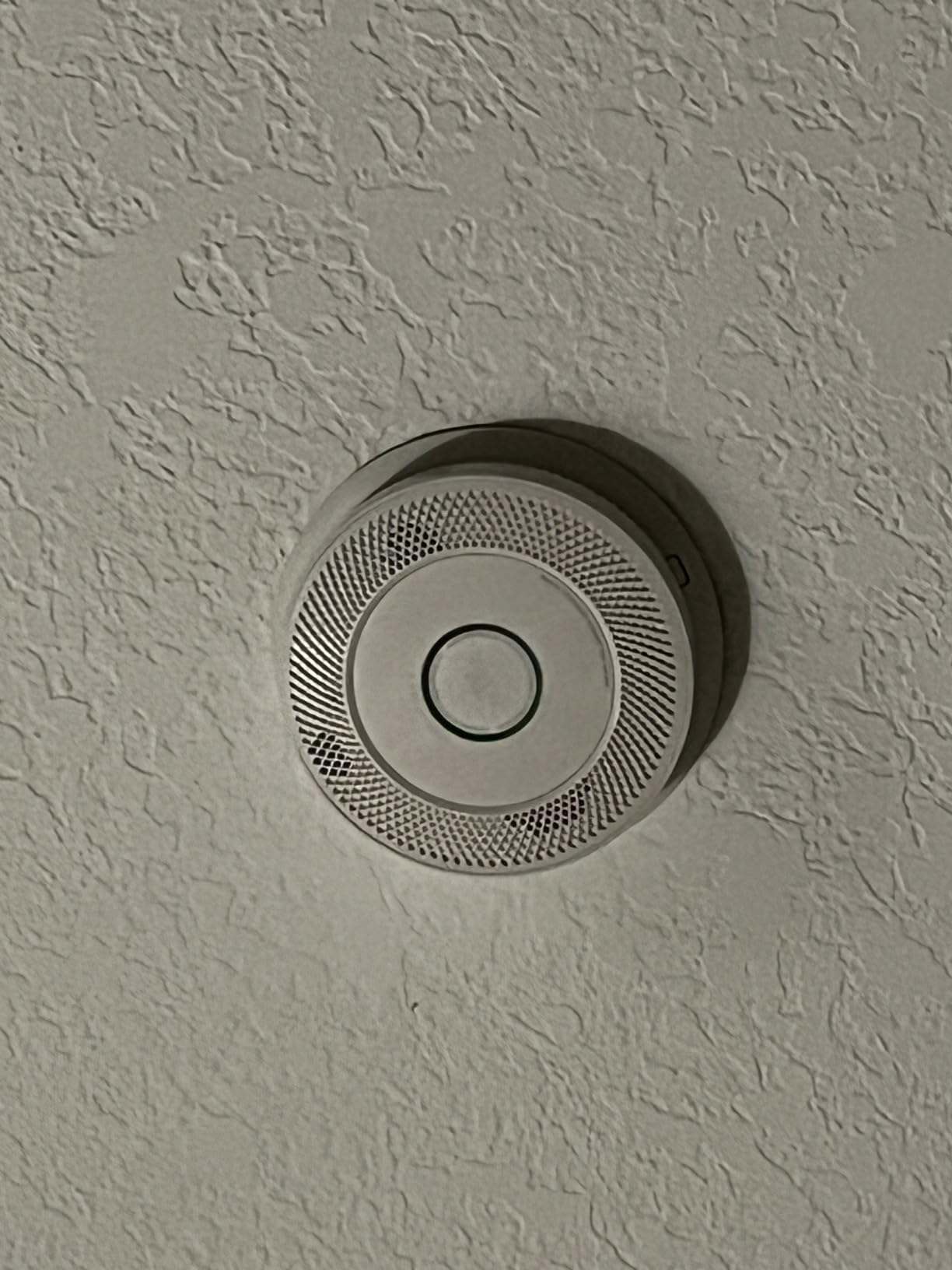
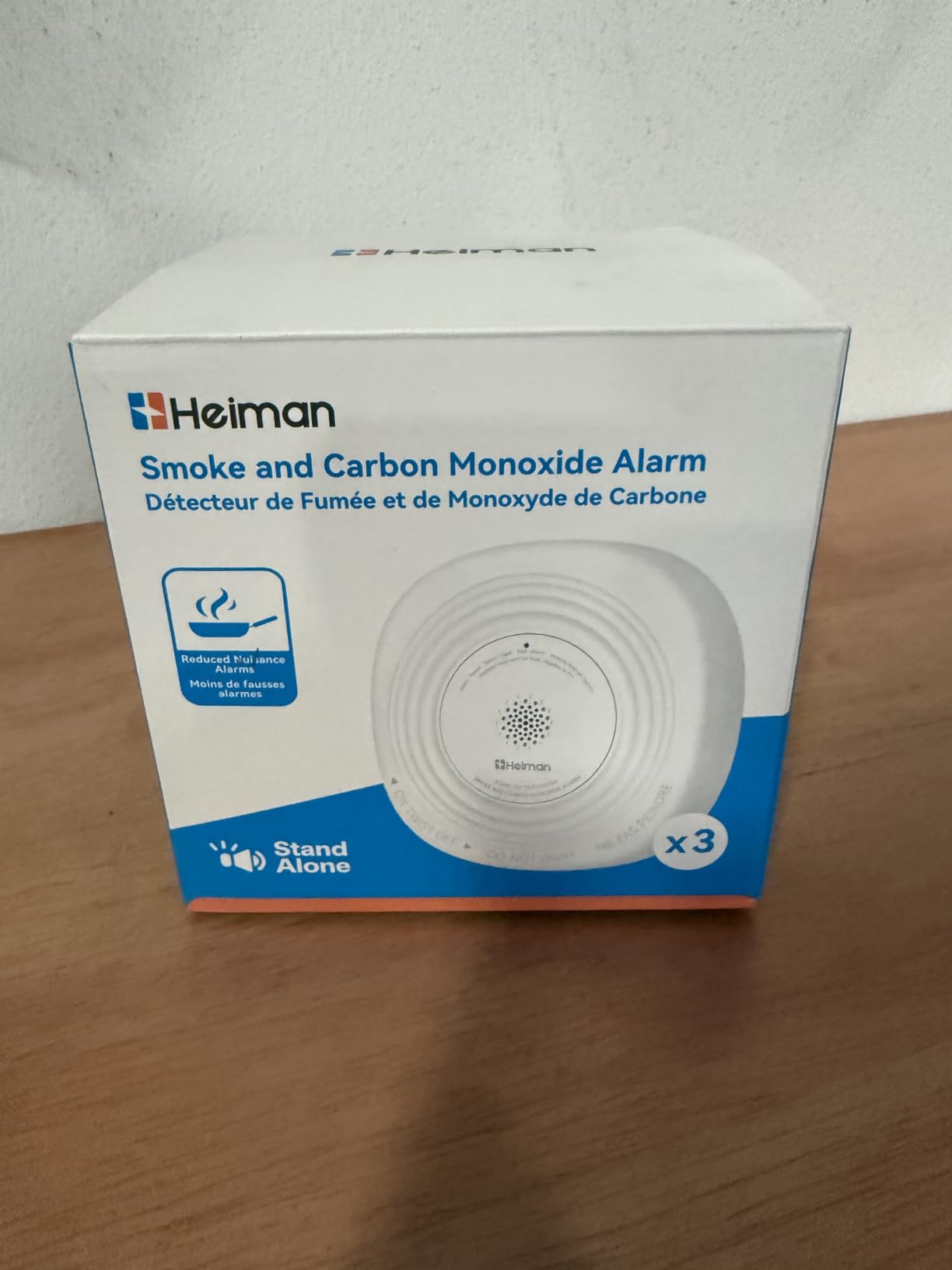
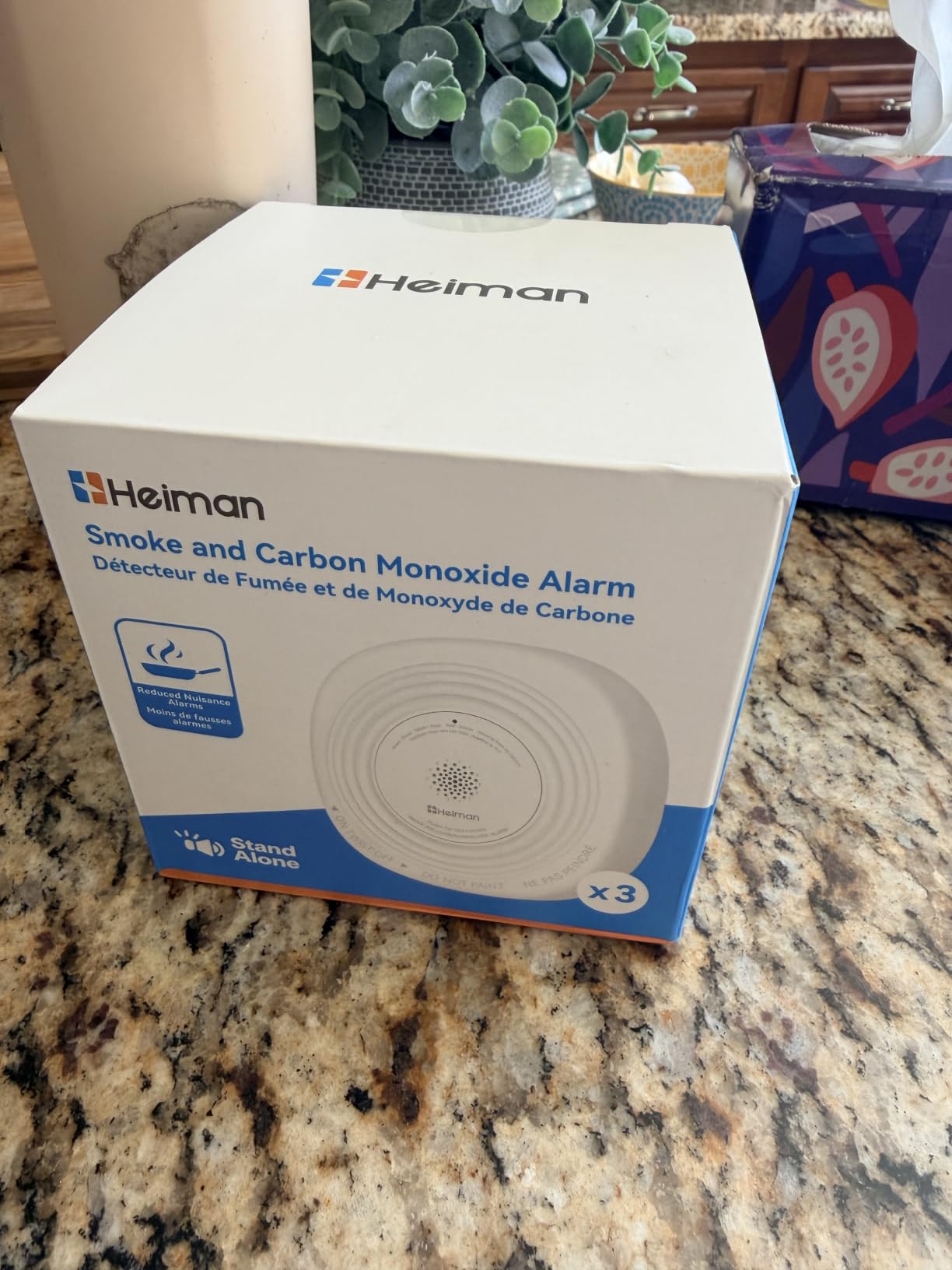
The case for this unit is its footprint. At 4.91 inches across and 1.46 inches deep it is the shallowest alarm we reviewed, which makes it the one to pick for a vaulted ceiling, a low ceiling, or a room where the alarm is visible from the bed.
It combines a dual-beam photoelectric smoke sensor with an electrochemical CO sensor, runs on a 10-year sealed lithium battery, and carries current certification to UL 217 10th Edition and UL 2034 5th Edition with CSFM approval. The alarm memory feature flashes the red LED every 20 seconds after a detection, so a passing event does not vanish silently.
One buyer reported that the dual-beam sensor produced no false alarms at all despite active cooking smoke nearby, which is the behaviour most people want from a bedroom alarm near a kitchen.
The concern with this one is the indicator light. A reviewer found the bright LED pulsing roughly every 54 seconds distracting enough to be headache-inducing in a bedroom, which is a real problem in the one room where you will be looking at it in the dark for eight hours. One review also reported the end-of-life beep pattern starting at eleven months, and with a sealed cell there is no way to recover from an early end-of-life signal other than replacing the unit.
What you should check before buying
Check the review count against the certification. It is certified to current UL editions, which is a genuine plus, but it has a far smaller owner base than the units above it, so long-run reliability data is thinner.
Check whether the LED pulse would bother you. In a nursery or a room where someone is sensitive to light, a periodic flash is worth avoiding.
Where it falls short
No voice alerts and no interconnection, so this is a standalone alarm only. There is no way to link it to the rest of the house.
The included bracket is small, so if you are covering older or wider-spread screw holes you will need a separate plate to make the install look finished.
How to Choose a Smoke and Carbon Monoxide Alarm for a Bedroom
Choose photoelectric sensing over ionization for most bedrooms
Ionization alarms react faster to open flame but are more easily triggered by fine particles from cooking and steam, which is why they produce more nuisance alarms in rooms near a kitchen or bathroom. Photoelectric alarms respond to the larger particles from slow-smoldering fires and tolerate everyday household smoke far better. For a bedroom where a false alarm means a light sleeper wakes up at 2am to check an empty room, photoelectric is the safer default.
Some units combine both sensing types, which covers both fire styles but does not eliminate false alarms. Every product reviewed here pairs an electrochemical CO sensor with its smoke sensing, so carbon monoxide coverage is constant across the list.
Decide between sealed battery, hardwired, and replaceable backup
A 10-year sealed lithium battery is the least demanding option. You mount it and stop thinking about it for a decade, and no late-night low-battery chirp ever wakes anyone. Hardwired units with 120V power plus a backup cell are the most reliable during outages, and most local codes expect them in new construction, but they need a circuit and a qualified installer.
Hardwired units with replaceable backup cells sit in between. They keep sensing through a power cut, and the backup only has to last you from one annual change to the next. The face-mounted battery door on the Kidde KN-COPE-IC is the version of this that we would actually enjoy owning.
Decide whether you need interconnection
An interconnected system sounds every alarm when any one detects, so a fire in the kitchen reaches a bedroom with the door shut. Hardwired First Alert and Kidde models interconnect within their own brand networks. Wireless models like the X-Sense XP0H-WN link to each other without wiring but stay within their own protocol and offer no phone notifications.
If you plan to add smart home alerts or professional monitoring later, you are shopping outside this list entirely. Our guide to smart smoke detectors covers that category and the app-based options.
Check the certification markings
UL 217 covers smoke alarms and UL 2034 covers carbon monoxide alarms. A combination alarm should carry both, and you should see the UL or ETL mark on the housing rather than only a marketing claim on a listing page. Several units here are tested to the current 10th Edition of UL 217 and 5th Edition of UL 2034, which is worth preferring in new builds.
Bedroom Placement and False Alarm Prevention
Where a bedroom alarm belongs
Smoke alarms go on the ceiling because smoke rises, or on the wall near the ceiling if the ceiling is not practical. Keep them away from the centre of the ceiling where dead air can collect, and away from air supply registers, ceiling fans, and doorways where air moves quickly past the sensor.
Carbon monoxide detectors need more thought. Place them where the gas will reach them, which means away from very high ceilings, away from vents, and away from behind doors where air stagnates. Never place one directly above or beside a fuel-burning appliance, and never in a garage or other enclosed space attached to the house.
How many alarms you actually need
Inside each sleeping room, on every level, plus one outside each sleeping area. That is the standard arrangement most codes describe, and it is why a bedroom is never covered by the alarm in the hallway alone.
For carbon monoxide specifically, a useful rule is one alarm near the main sleeping area, additional alarms if bedrooms are spread across multiple levels or far apart in the floor plan, and a working unit on every level where a fuel-burning appliance runs. Our carbon monoxide detector guide covers the chemistry in more detail.
What causes bedroom false alarms
Bathroom steam and shower humidity, cooking aerosol drifting down a hallway, dust from renovation, and aerosol products near the sensor are the usual triggers. Dust particles are an especially common cause in a room that has just had furniture moved or carpet cleaned.
Fixes are mostly positional. Give the bathroom doorway real clearance, keep ionization units out of kitchens and their adjacent hallways, and keep the alarm away from air movement. Avoid leaving a shower running in a small en suite with the door open all night, because the humidity has nowhere to go.
How often bedrooms get tested and replaced
Press the test button on every alarm once a month and after any holiday visit, especially in a rental where nobody was there to hear a low-battery chirp. Replace smoke alarms roughly ten years from the date printed on the back, and treat any end-of-life chirp or end-of-life message as an immediate replacement signal rather than a reminder.
Replace backup batteries on the schedule the unit specifies. Sealed-battery models sidestep this entirely, which is precisely why they suit bedrooms where a 3am chirp is most disruptive.
Frequently Asked Questions
What type of smoke alarm is most effective for bedrooms?
A photoelectric smoke alarm is the most effective choice for most bedrooms. It reacts to the larger particles produced by slow-smoldering fires and is far less likely to trigger from cooking fumes or bathroom steam than an ionization alarm. In bedrooms near a kitchen or bathroom, that difference decides how often the alarm sounds when there is no danger.
What is the best combination smoke alarm and carbon monoxide detector?
For most bedrooms the best all-round combination alarm is the First Alert BRK SC9120FF, a hardwired unit with 9V battery backup, an ionization smoke sensor, an electrochemical CO sensor, and an 85 decibel siren, rated 4.7 stars across more than 20,000 reviews. If you want spoken hazard alerts, the Kidde hardwired voice combo is the stronger pick.
Should you have carbon monoxide alarms in bedrooms?
Yes. Bedrooms are where people sleep for eight hours with limited awareness of what is happening, and carbon monoxide is odorless and colorless, so a bedroom alarm is often the last warning a person gets. Most codes expect carbon monoxide protection near sleeping areas, and a fuel-burning appliance anywhere in the home can send gas to a bedroom through the air handler.
Are combination smoke and carbon monoxide detectors a good idea?
Yes, for bedrooms they are usually the simplest correct choice. One housing covers both hazards, one mounting hole, one battery to maintain, and one alarm that sounds for either threat. The main downside is that you lose the ability to place the smoke sensor high and the carbon monoxide sensor low in the same room, so a careful installer may still run separate units in unusual layouts.
Where not to install a carbon monoxide detector?
Do not install one directly above or beside a fuel-burning appliance, in a garage or enclosed space attached to the home, near a ventilation opening, in a dead-air space at the top of a vaulted ceiling, or behind a closed door where air does not circulate. Keep it away from ceiling fans and air registers that would sweep gas away from the sensor before it reaches it.
What causes carbon monoxide in a home?
Carbon monoxide comes from any fuel-burning appliance that is not burning cleanly or is running in a poorly ventilated space. Common sources include gas water heaters, gas furnaces, gas ranges and ovens, wood-burning fireplaces and stoves, and gasoline-powered equipment. Faulty flues, blocked chimneys, and backdrafting are frequent causes, which is why alarms belong near sleeping areas rather than only beside the appliance.
How many carbon monoxide detectors are needed in a home?
At minimum, one alarm near the main sleeping area of the home. Add more if bedrooms sit on different levels or are far apart, and add one on any level where a fuel-burning appliance runs. For smoke alarms the standard arrangement is one in every bedroom, on every level, plus one outside each sleeping area.
Should smoke detectors be placed high or low?
High, because smoke rises. Install smoke alarms on the ceiling, or on the wall no more than a foot below the ceiling, and avoid the very centre of a sloped ceiling where dead air can collect. Carbon monoxide is a different measurement entirely, since it mixes with air rather than rising, so carbon monoxide alarms sit at standing height instead.
Final Verdict
For most households the best smoke and carbon monoxide alarms for bedrooms come down to one decision: do you have wiring, and does your room sit near a kitchen or bathroom. With wiring and a conventional room, the First Alert BRK SC9120FF is the pick, backed by the highest rating and the largest owner base in this guide. Near cooking areas or an ensuite, the photoelectric X-Sense SC07 removes most false alarms and the decade-long sealed battery removes most maintenance.
For households where spoken warnings matter, the Kidde hardwired voice combo and the First Alert SC7010BV both add hazard-specific announcements, and the SC7010BV goes further by naming the room. Wherever you land, install every unit on the ceiling or high on the wall, keep it clear of the bathroom door, test it monthly, and treat any end-of-life signal as a replacement date rather than a suggestion.