
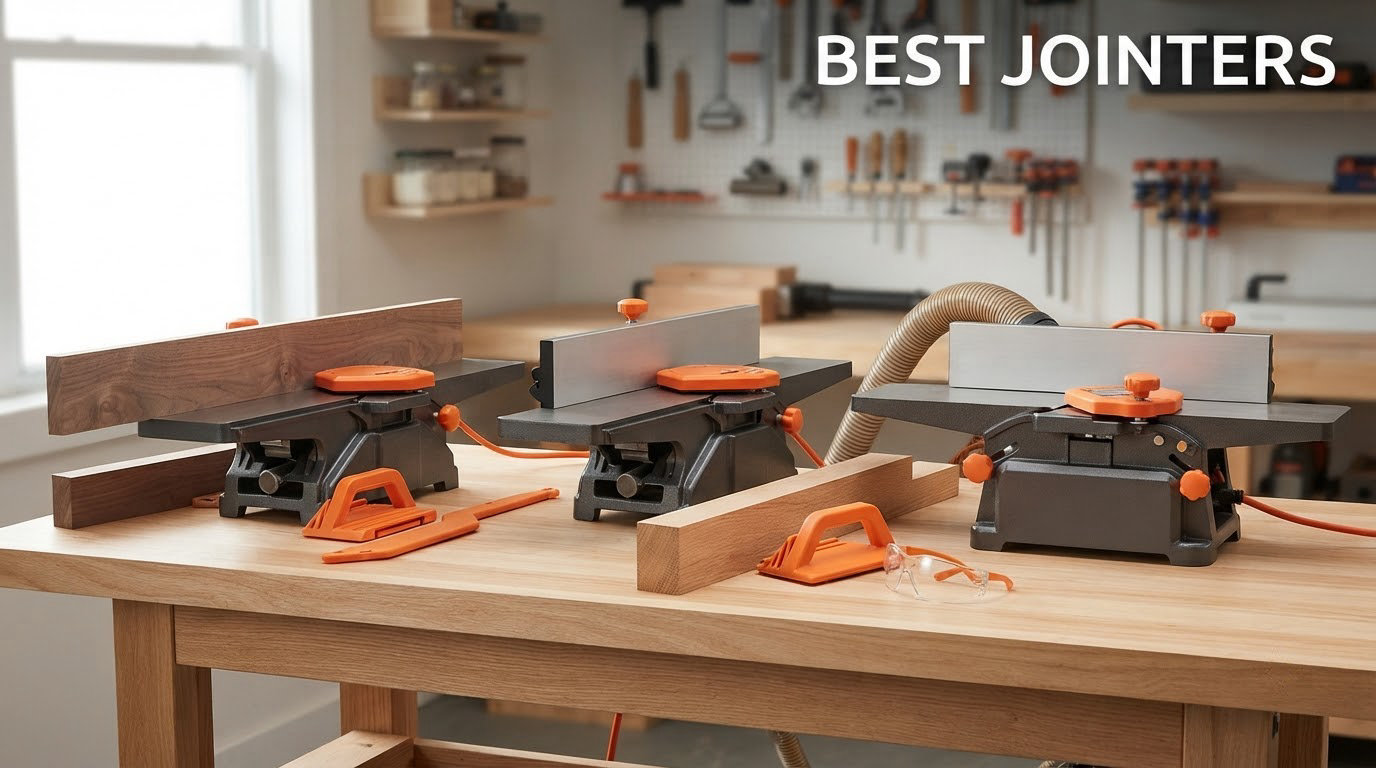
The best jointers split into two clear classes. Benchtop models run 6 or 8 inches wide, weigh under 90 pounds, and suit a garage shop. Floor-standing machines carry 6- to 8-inch cutterheads on 56- to 66-inch cast iron beds and handle full-length rough lumber. If your boards stay under 6 feet, a benchtop machine is enough. If you buy 8-foot rough lumber, you need a long-bed floor model.
Is it worth buying one? If you work with rough-sawn or warped lumber, yes. A jointer flattens one face and squares one edge in a single setup, which no hand plane or thickness planer can do. Skip it only if you buy every board pre-milled to final thickness.
We compared 10 jointers across cutting width, bed length, cutterhead type, motor output, dust port size and verified owner feedback. Below you will find our honest verdict on each one, including the flaw we found on every machine. Every spec quoted comes from the manufacturer listing or aggregated owner reviews, and each rating and review count is reproduced exactly as buyers left it.
Table of Contents
Top 3 Best Jointers for Most Woodworking Shops

WEN JT630H 6-Inch Spiral Jointer
- 12-blade HSS spiral head
- 30 x 6 inch table
- 10 amp
- 0 to 1/8 inch per pass

Wahuda 50180CC-WHD 8-Inch Jointer
- 16 four-sided carbide cutters
- Expandable cast iron tables
- 120V at 12000 RPM
- Fence tilts to 135 degrees

CRAFTSMAN CMEW020 Benchtop Jointer
- Variable 6000 to 11000 RPM
- Two-knife cutterhead
- Center-mounted 4-1/4 inch fence
- 10 amp
The 10 Best Jointers at a Glance in 2026
| Product | Specifications | Action |
|---|---|---|
| WEN JT630H 6-Inch Spiral Benchtop Jointer |
|
Check Latest Price |
| CRAFTSMAN CMEW020 Benchtop Jointer |
|
Check Latest Price |
| Wahuda 50180CC-WHD 8-Inch Spiral Jointer |
|
Check Latest Price |
 WEN JT833H 8-Inch Spiral Benchtop Jointer WEN JT833H 8-Inch Spiral Benchtop Jointer |
|
Check Latest Price |
| WEN JT3062 6-Inch Two-Blade Benchtop Jointer |
|
Check Latest Price |
 JET JJ-6CSDX 6-Inch Long Bed Jointer JET JJ-6CSDX 6-Inch Long Bed Jointer |
|
Check Latest Price |
 Powermatic 54HH 6-Inch Helical Jointer Powermatic 54HH 6-Inch Helical Jointer |
|
Check Latest Price |
 Cutech 40180HI 8-Inch Spiral Benchtop Jointer Cutech 40180HI 8-Inch Spiral Benchtop Jointer |
|
Check Latest Price |
 Cutech 40160HB 6-Inch Spiral Benchtop Jointer Cutech 40160HB 6-Inch Spiral Benchtop Jointer |
|
Check Latest Price |
 JET JJ-6HHDX 6-Inch Helical Long Bed Jointer JET JJ-6HHDX 6-Inch Helical Long Bed Jointer |
|
Check Latest Price |
1. WEN JT630H 6-Inch Spiral Benchtop Jointer – Best Overall
WEN JT630H 10-Amp 6-Inch Spiral Benchtop Jointer
6 inch cutting width
12-blade HSS spiral head
30 x 6 inch table
10 amp, 0 to 1/8 inch per pass
Pros
- 12 staggered spiral cutters leave a clean surface in hard maple and purpleheart
- Tables arrived nearly level and did not flex
- 36.8 pounds so it stores on a shelf
- Quiet helical cut
- Push blocks included
Cons
- Fence needs deliberate squaring and can drift after locking
- Mounting plate sits slightly off the table line
- Aluminum tables burnish rather than cast iron
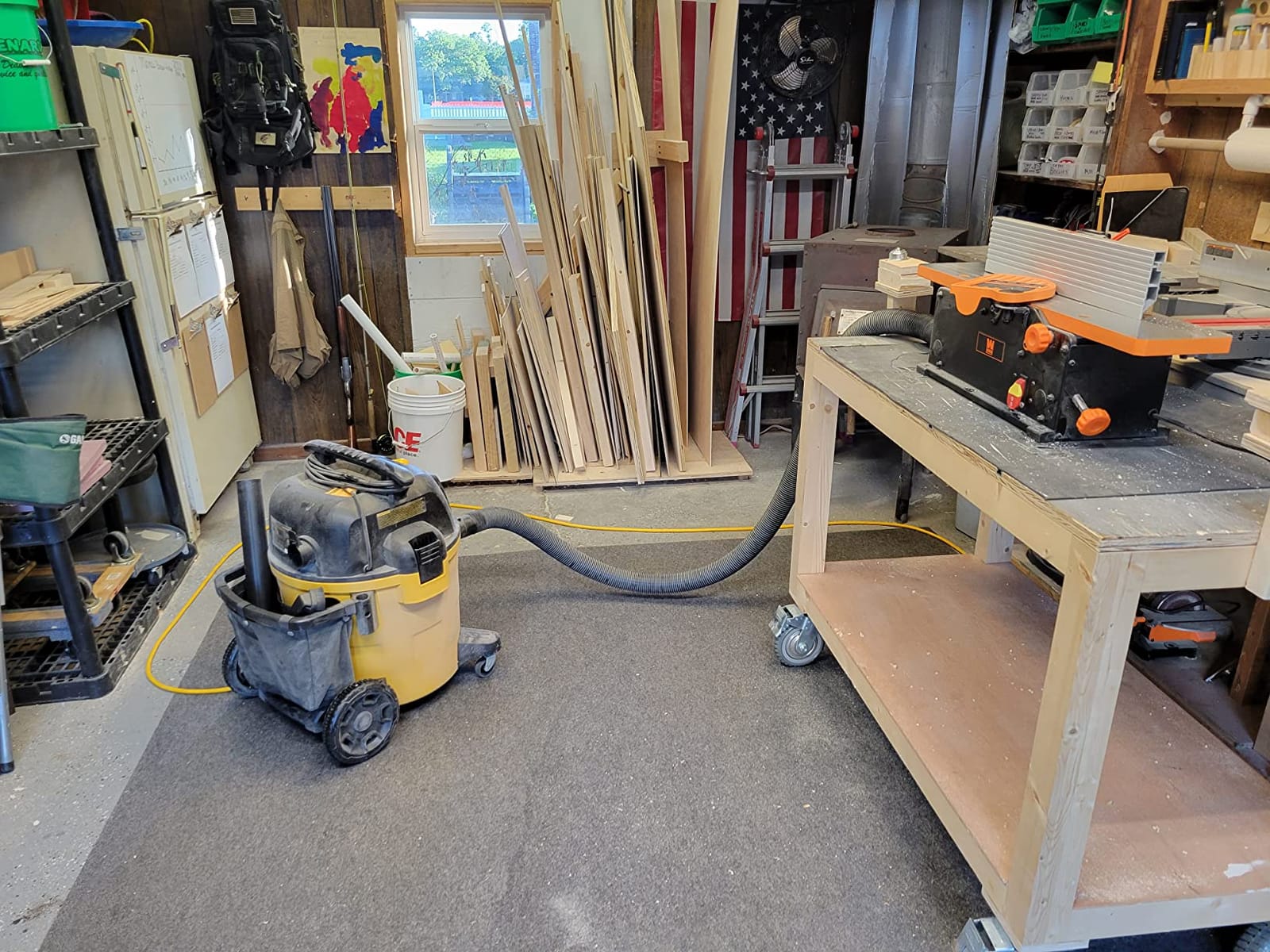
- 2-1/2 inch dust port needs an adapter
This is the jointer we kept coming back to across the whole set. It carries 1066 owner reviews at a 4.6 average, the largest review pool of any machine here, and the cut quality holds up on the hardwoods that punish cheaper heads. Twelve staggered HSS blades in a spiral arrangement shear the fiber rather than chopping it, which is why owners report tear-out-free faces in hard maple and purpleheart.
Weighing 36.8 pounds, it is the easiest machine in this group to move, and the 30-by-6-inch table is genuinely flat. Owners report the tables arriving nearly level with no flex under load, so the two-hour setup people budget is mostly fence work rather than shimming.
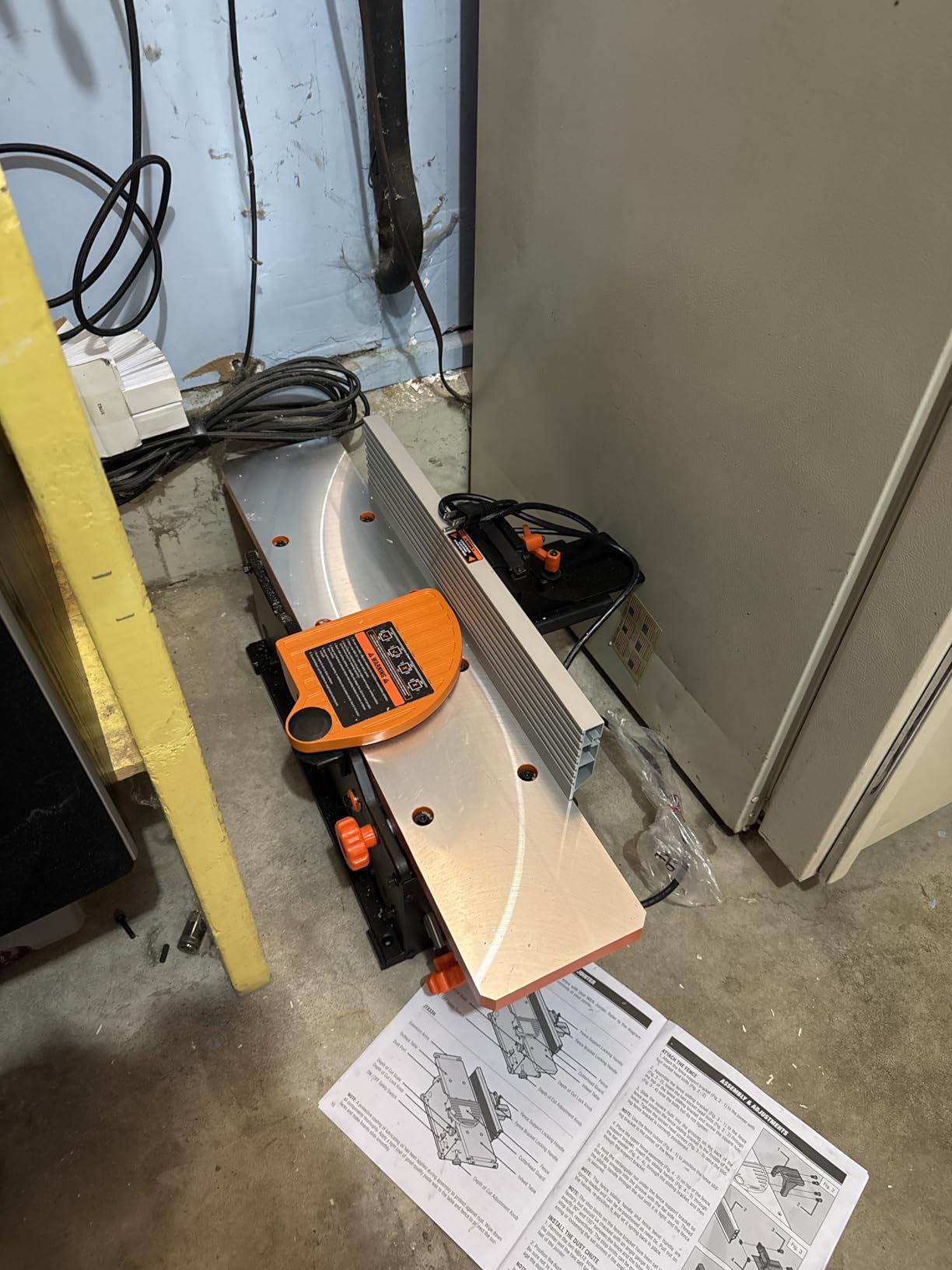
The most repeated thing owners say is about the fence. It takes real effort to square, and several owners report it drifting out of square after it is locked down. The mounting plate is also described as sitting slightly misaligned along the table out of the box, which is a five-minute fix with a machinist square but not something the machine does for you.
Second on the caution list is table material. The listing describes cast iron, but owners consistently report machined aluminum, which marks and burnishes with use rather than staying true the way a cast bed does. The 2-1/2 inch dust port also needs an adapter for a lot of shop vacuum hoses, and hooking up extraction is not optional with this head because chips fly.
Best suited to a small shop that wants a clean cut without a heavy machine
Pick this if your work is furniture parts, cutting boards, small batches of hardwood and boards up to about 3 to 4 feet long. The spiral head means no knife setting and no sharpening schedule, and the machine stores out of the way when you are not using it. It is also the safest first jointer here to learn fence squaring on, because the bed is short enough that mistakes are easy to see.
The fence and the aluminum table are the trade-offs to accept
Do not buy it expecting cast iron bed stability or a 6-foot-plus bed. If you routinely joint 8-foot rough boards, the extra passes across a 30-inch table will cost you time and the fence drift will show up on a long glue-up edge. Budget an afternoon for setup and a machinist square before the first real cut.
2. CRAFTSMAN CMEW020 Benchtop Jointer – Best Variable-Speed Starter
CRAFTSMAN Benchtop Jointer, Up to 22,000 cuts per Minute, 10 Amp, Corded (CMEW020)
4-1/4 inch cutting width
Variable 6000 to 11000 RPM
Two-knife cutterhead
10 amp, 120 volts
Pros
- Variable speed handles softwood and hardwood cleanly
- Build feels solid for the entry tier
- Dust collection works with a shop vac
- Light enough to move between jobs
- Center fence supports the cut well
Cons
- Fence needs a machinist square to dial in
- Aluminum tables scratch easily with rough lumber
- Blade guard can contact the knives under pressure
- A few motor failures after years of use
The variable speed motor is the reason this one is worth a look. Owners use the 6000 to 11000 RPM range to dial the machine to softwood or hardwood rather than forcing one speed on everything, and 673 reviews at 4.4 suggest it does its basic job consistently. It flattens cupped and rough-sawn material effectively for a machine this compact.
Assembly is quick and the whole unit is light enough to carry around a shop, which matters if you are not dedicating a permanent corner. Dust collection reportedly performs well with a standard shop vac or a cyclone, so chips are not the constant cleanup chore they can be on other benchtop machines.
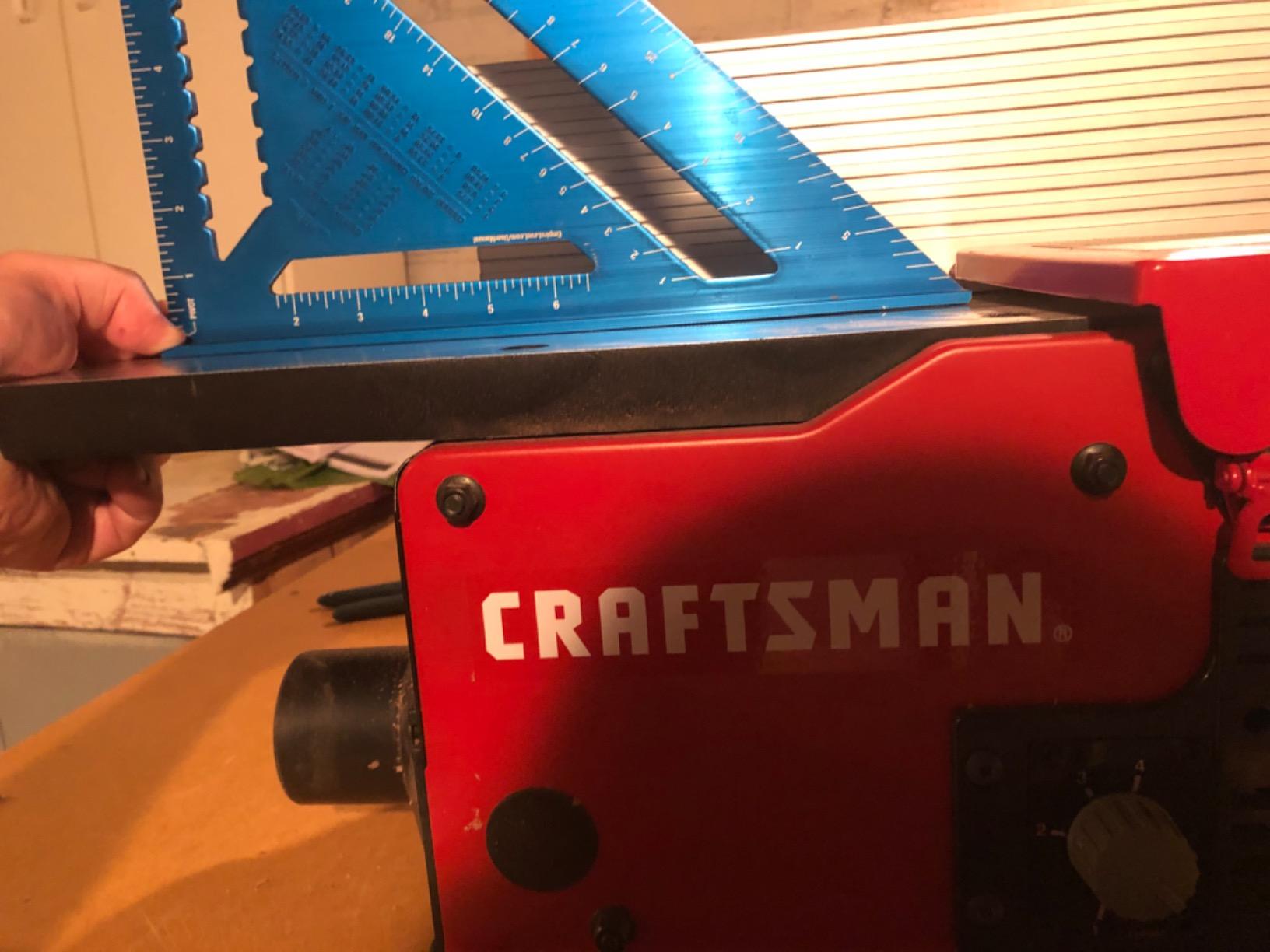
Two-knife cutterhead with jackscrew leveling is a deliberate cost saving, and it is the feature that most limits this machine. Unlike a spiral head, you change and set knives rather than index and rotate them. That is more maintenance, but it is a repairable system with familiar straight-knife geometry.
The honest drawback is bed length. Owners cap practical material at roughly 4 to 5 feet, the aluminum tables scratch easily, and the blade guard can contact the knives under light downward pressure. A small minority of owners report a motor that stopped turning after extended use, though several of those were resolved through warranty replacement.
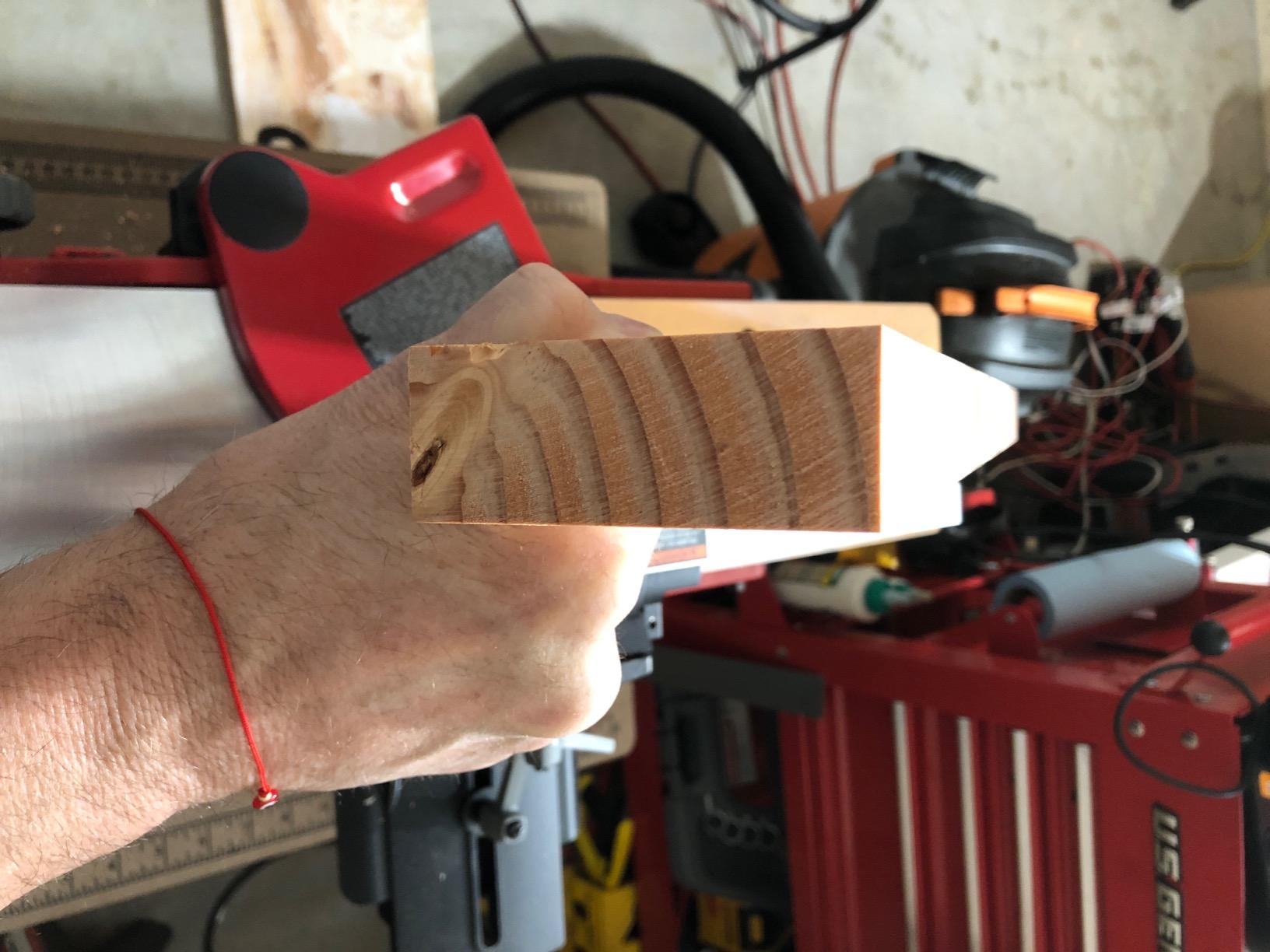
Best suited to a beginner who wants to learn at an approachable price point
Choose this if you are surfacing dimensional lumber, plywood offcuts and shop lumber, and you want one control to learn before moving to a bigger machine. The center-mounted fence gives solid support through the cut, and the variable speed covers pine through to maple without changing setups.
The 4-1/4 inch cutting width rules out wide boards and long material
This is the narrowest machine in the set. It cannot edge a 6-inch board in one pass and cannot handle full-length lumber, so if you build cabinets or work with hardwood slabs it will feel cramped immediately. Expect to square the fence with a machinist square before every serious session.
3. Wahuda 50180CC-WHD 8-Inch Spiral Jointer – Best Cast Iron Benchtop
Wahuda Tools Jointer – 8-inch Benchtop Wood Jointer, Spiral Cutterhead Portable Jointer, Cast Iron Tables w/Pull Out Extensions, 4-Sided Carbide Tips & 10amp Motor, Woodworking Tools (50180CC-WHD)
8 inch cutting width
16 four-sided carbide cutters
Expandable cast iron tables
120V motor at fixed 12000 RPM
Pros
- Cast iron tables that extend for longer material
- 16 carbide cutters cut quietly with no snipe
- Handles hard maple walnut and cherry once dialled
- Markedly quieter than two-blade machines
- Fast support that resolves defects
Cons
- Tables often arrive out of coplanar and need hours of work
- Feed table does not reliably hold square
- Plastic fence handles strip when overtightened
- Short bed limits material to roughly 40 inches
- Cast iron needs keeping clean and dry
Cast iron tables on a benchtop machine are unusual, and that is the reason to look here. Combined with 16 four-sided carbide cutters in a spiral head, it gives you the two things benchtop buyers usually give up: a surface that stays flat under load and inserts you can index in seconds rather than knives you have to set. Owners report a markedly quieter cut than the two-blade machines they compared it against.
Once dialled in, it cuts hard maple, walnut and cherry to a good standard of flatness. The 120V motor runs at a fixed 12000 RPM, and the fence tilts from 90 to 135 degrees for bevel work. Customer service is repeatedly described as fast, with replacement machines or parts sent for defects.
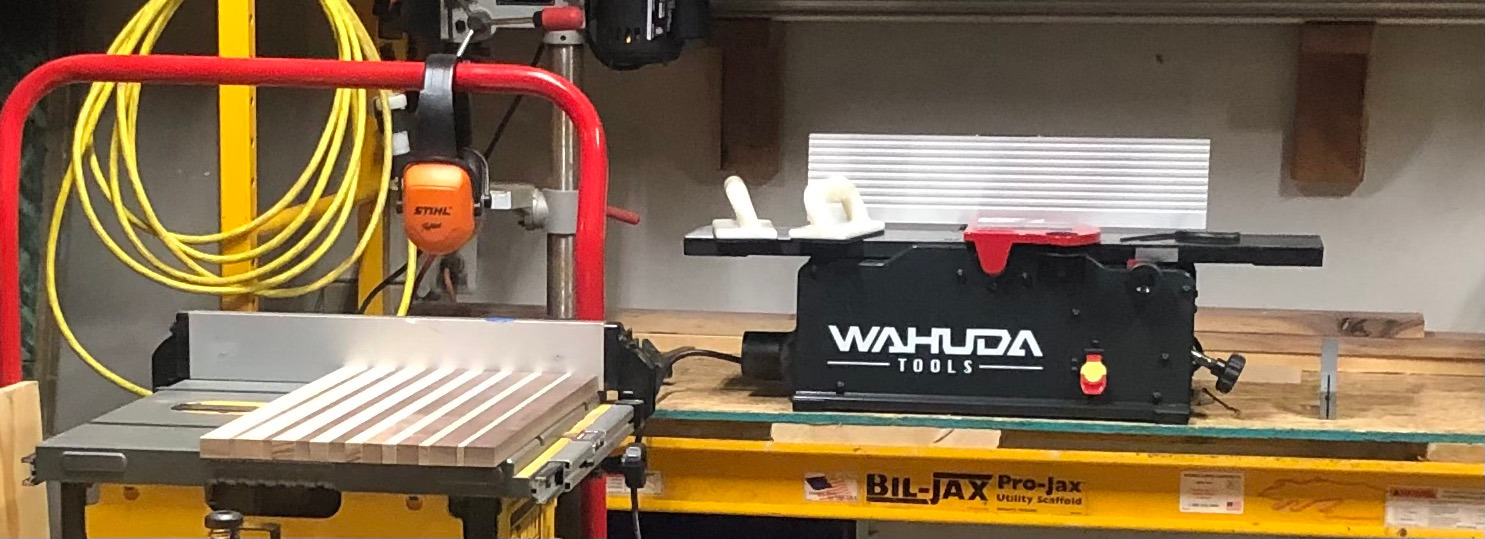
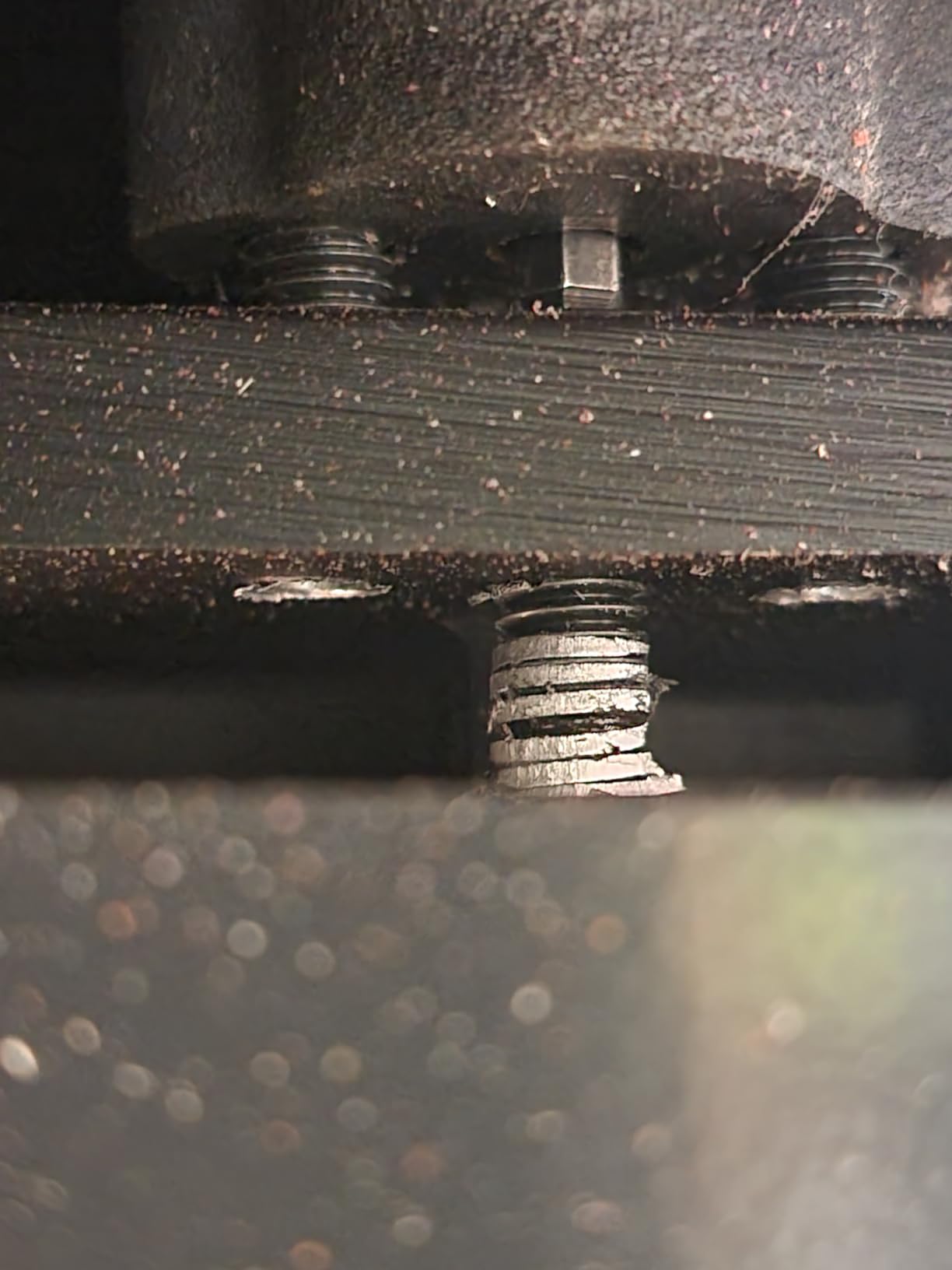
The setup is the whole story with this machine. Owner sentiment splits sharply: buyers who budget several hours to level the tables report excellent and accurate jointing, while anyone expecting plug-and-play is disappointed. The infeed and outfeed tables often arrive out of coplanar, and the adjustment set screws interact so that fixing one loosens another.
Two more named flaws: the feed table does not reliably stay square, so check it before every use, and the plastic fence adjustment handles strip if you overtighten them. Cast iron also corrodes, so wipe the tables and keep them dry rather than leaving chips to sit overnight.
Best suited to a woodworker who will invest a weekend in setup
This suits anyone who wants 8-inch capacity and a true cast iron surface without a permanent floor machine. The 8-inch width handles a full face of standard boards, the carbide inserts are cheap to keep sharp by rotating them, and the same head covers 6, 8 and 10-inch configurations if you outgrow it. If you can tolerate a tune-up day, the cut quality afterwards justifies it.
Budget real time for table alignment before trusting the first pass
The 8-inch capacity is genuine but the bed is not long, with useful results tapering off past roughly 40 inches. If your work is full-length boards, keep looking up this list. Buy a straightedge and a feeler gauge before you start, because the coplanar adjustment is iterative rather than a single fix.
4. WEN JT833H 8-Inch Spiral Benchtop Jointer – Best Extendable 8-Inch
WEN JT833H 10-Amp 8-Inch Spiral Benchtop Jointer with Extendable Table
8 inch cutting width
16-blade HSS spiral head
33 x 8 inch table to 51 inches
2-1/2 and 4 inch dust ports
Pros
- 16-blade spiral head gives a fine consistent finish
- Support arms extend to 51 inches for longer material
- Dual 2-1/2 and 4 inch dust port options
- Backed by an established budget-tool brand
Cons
- 442 reviews leaves a thinner long-term record than the 6-inch model
- Benchtop capacity trails any floor-standing 8-inch jointer
- Fence and depth adjustments still need careful setup
The extendable table is what separates this from a typical 8-inch benchtop. The base table is 33 by 8 inches, and support arms extend out to 51 inches, which is more working length than almost any machine of this size. That makes it usable on boards that would fall off the end of a standard benchtop model.
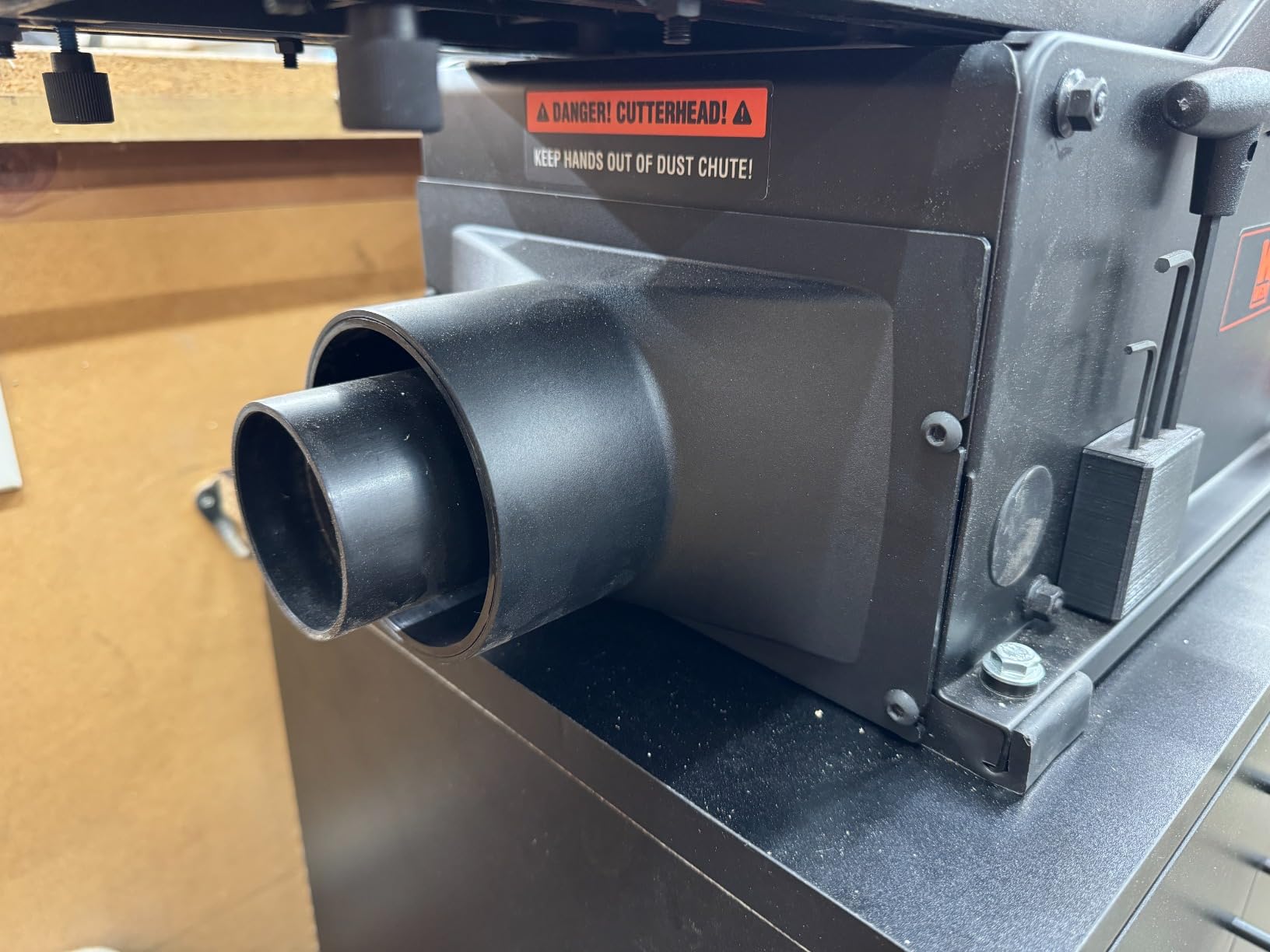
The cutterhead carries 16 staggered HSS blades, one more than the 6-inch sibling, and owners report clean tear-out-free cuts with adequate power for common hardwoods and softwoods. Two dust port sizes, 2-1/2 and 4 inch, mean you can hook up either a shop vac or a larger collector without an adapter.
Depth of cut runs from 0 to 1/8 inch per pass and the fence bevels to 45 degrees, which is standard for the class. The included onboard depth-of-cut scale and two push blocks save you from measuring twice per pass.
The limitation is the evidence, not the machine. With 442 reviews, the long-term durability record is thinner than the 6-inch WEN, and the fence and depth adjustments still need careful setup out of the box. Benchtop capacity also caps it against any floor-standing 8-inch jointer on heavy work.
Best suited to a garage shop that handles wider boards than a 6-inch machine allows
Pick this if 6 inches of width stops you from surfacing a face in one pass, and you want more usable length than a 30-inch table gives you. The dual dust ports are a practical win, since a 4-inch hose to a collector is much easier to seal than a 2-1/2 inch adapter stack. The spiral head keeps the maintenance simple.
Fewer owner reviews mean less long-term proof than the 6-inch model
There is no named mechanical defect that owners single out, which is unusual, but the smaller review pool means you are trusting the design more than a decade of feedback. It still cannot compete on bed length with a 56- or 66-inch floor jointer, so full-length lumber is still a two-pass job.
5. WEN JT3062 6-Inch Two-Blade Benchtop Jointer – Best for First-Time Buyers
WEN JT3062 10-Amp 6-Inch 2-Blade Benchtop Jointer, Black
6 inch cutting width
22000 cuts per minute
30 x 6-3/16 inch table
Two-year warranty
Pros
- Arrives very level with only minor tuning
- Cuts hard and soft wood without bogging the motor
- Sliding fence lets you use different blade sections
- Low hum rather than a loud whine
- Simple assembly with clear instructions
Cons
- Plastic adjustment knobs feel inexpensive
- Two-blade head leaves more tear-out than a spiral
- Useful sweet spot is material to about 4 to 5 feet
- No onboard tool storage
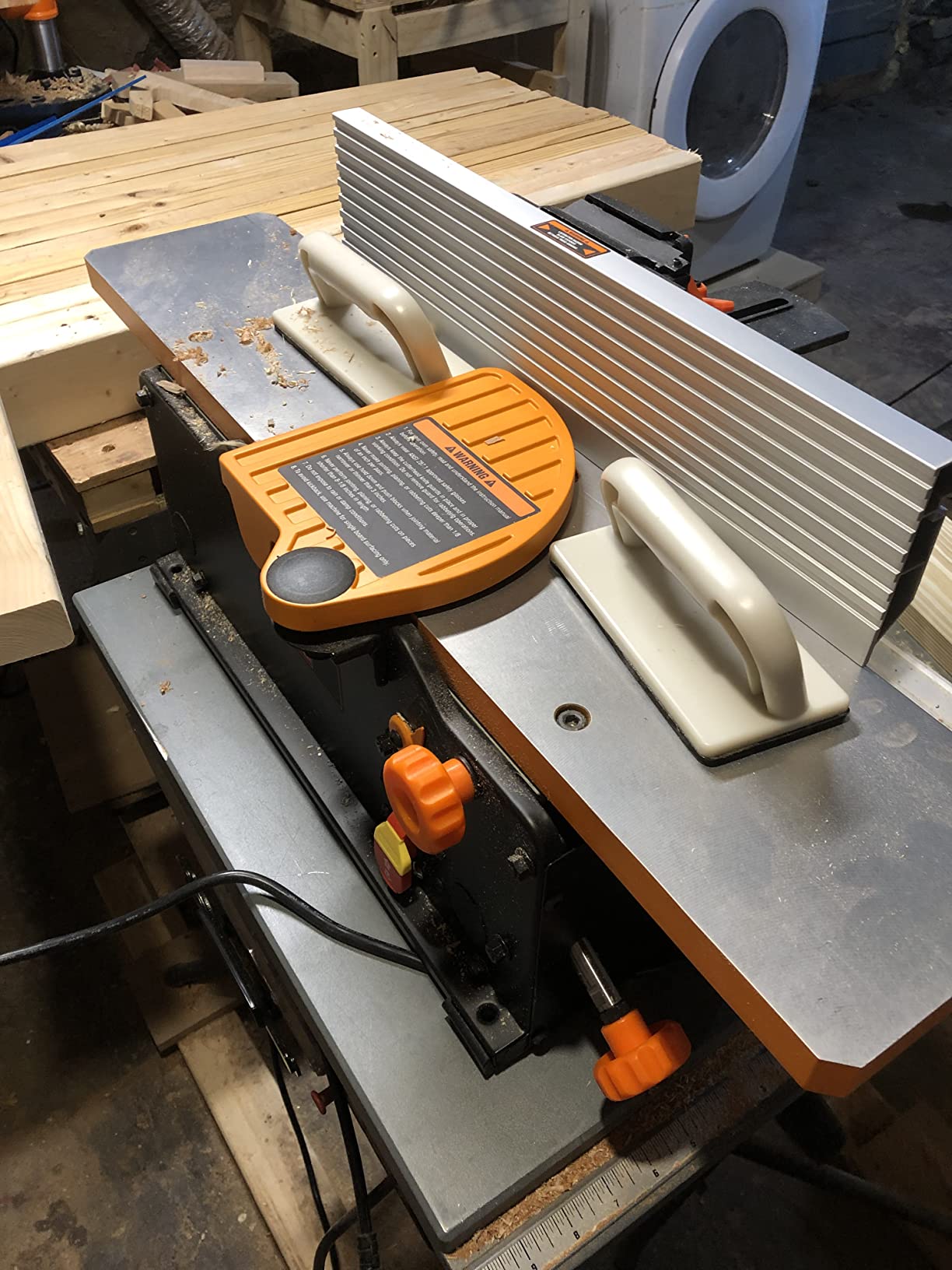
This is the machine we would put in front of anyone learning to joint for the first time. It arrived very level in owner reports, needs only minor tuning, assembles quickly with clear instructions, and cuts hardwood without bogging the motor. Its 4.7 average across 220 reviews is the highest here among machines with a few hundred reviews behind them, which is a meaningful long-term record rather than a handful of early impressions.
The 10-amp motor delivers up to 22000 cuts per minute and takes 0 to 1/8 inch per pass. The sliding fence lets you move to a different section of the blade, which extends the time you get before a resharpening. Owners describe the sound as a low hum rather than a whine, which matters in a shared-wall shop.
The straight two-knife cutterhead is the core trade-off against the helical models in this list. It needs blade changes rather than index-and-rotate, and it leaves more tear-out potential on figured wood. In exchange you get a simpler machine with fewer adjustment points, which is genuinely easier to learn on.
The plastic adjustment knobs are a deliberate cost saving and owners acknowledge them as such. The practical ceiling is material length: about 4 to 5 feet is the sweet spot and 6 feet is about the limit. There is no onboard tool storage, so keep a mental note of where the push blocks go.
Best suited to a first machine purchase in a small home shop
Choose this if you are buying your first jointer, you work with short boards, and you would rather learn fence squaring on a machine that arrives close to level. Two years of warranty coverage is included, the depth-of-cut scale is onboard, and the sliding fence makes blade maintenance less painful than it sounds.
Straight knives mean more tear-out and more sharpening cycles
If you work in figured maple, silky oak or any wood where a spiral head normally shines, this is not the machine. A straight-knife head also has two edges to set instead of inserts to rotate. For stock longer than about 5 feet, move up to one of the long-bed models below.
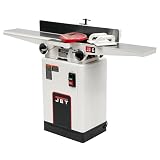
6. JET JJ-6CSDX 6-Inch Long Bed Jointer – Best Long-Bed 6-Inch
JET 6-Inch Long Bed Jointer, Straight Knife Cutterhead, 1 HP, 115/230V 1Ph (JJ-6CSDX)
6.13 inch cutting width
56 inch cast iron bed
Three-knife auto-set system
1 HP, 13 amps, 115/230V
Pros
- Cast iron bed fence and stand stay true
- Outfeed table arrived aligned with the head
- Factory 90 degree stop accurate out of the box
- Handles curly maple with no tear-out
- Built-in 1/2 inch rabbeting ledge
Cons
- High vibration on some machines as the motor slows
- Coarse-thread stop bolts shift when set
- Straight knives need sharpening and setting
- Transit damage to the steel stand
- 237 pounds needs two people to place
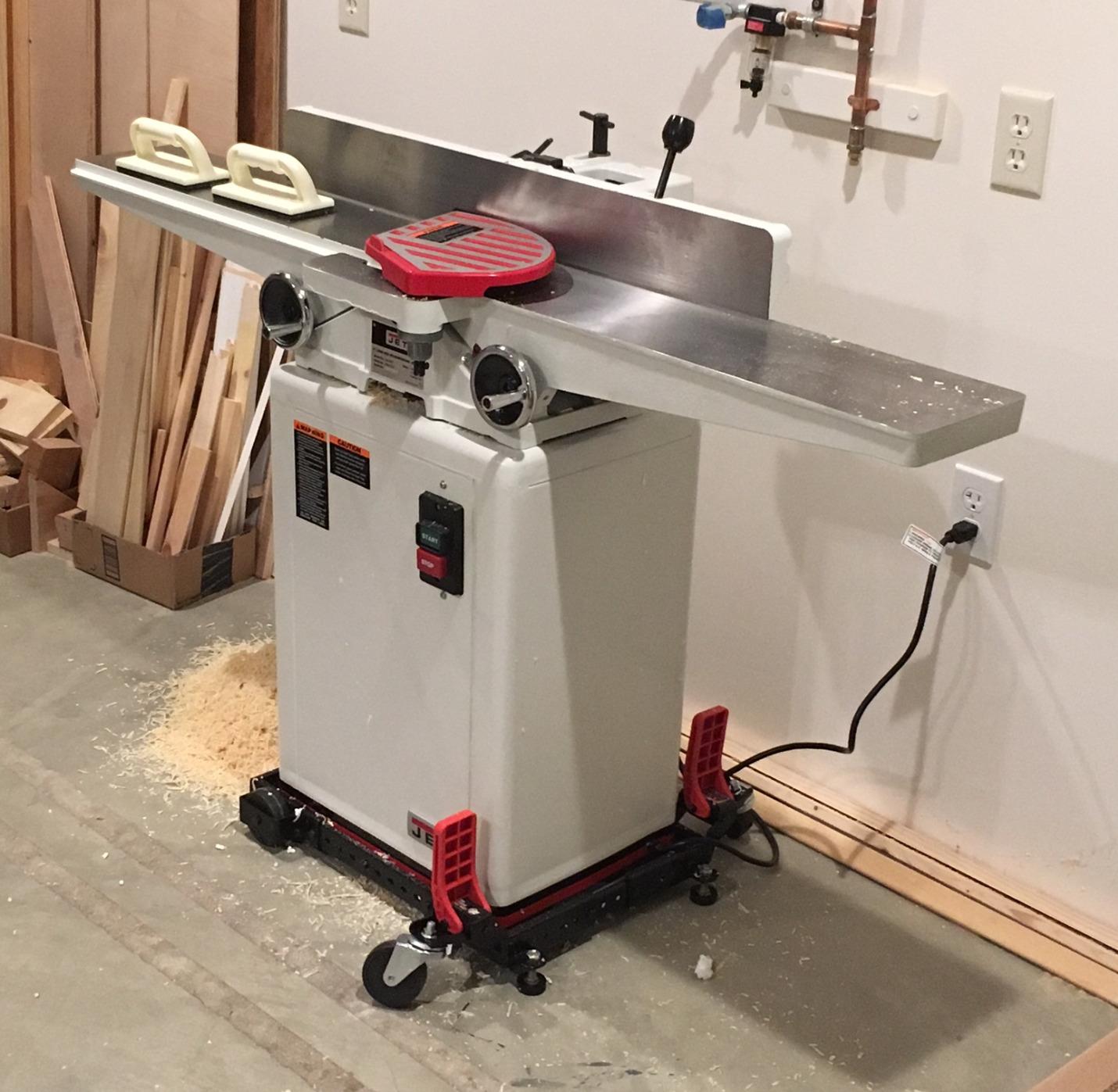
This is where the article changes character. You get a cast iron bed, fence and one-piece steel stand, a 56-inch total table length, and a 1 HP motor at 13 amps that handles tough jointing. Owners upgrading from a benchtop report that the machine stays true under real work and cuts curly maple without tear-out.
Two details make it more useful than a plain 6-inch jointer. The auto-set three-knife high-speed steel system changes knives faster than hand-set systems, and the built-in 1/2-inch rabbeting ledge adds a second operation without buying another tool. The outfeed table arrived aligned with the cutterhead on the units owners report, and the factory 90-degree stop was accurate out of the box.
The honest flaws are specific. Vibration is a real issue on some machines, particularly as the motor slows, and several owners felt compelled to bolt the machine to the floor. The 45 and 90 degree positive stop bolts use coarse threads and shift when you set them, so recheck squareness more often than the manual suggests.
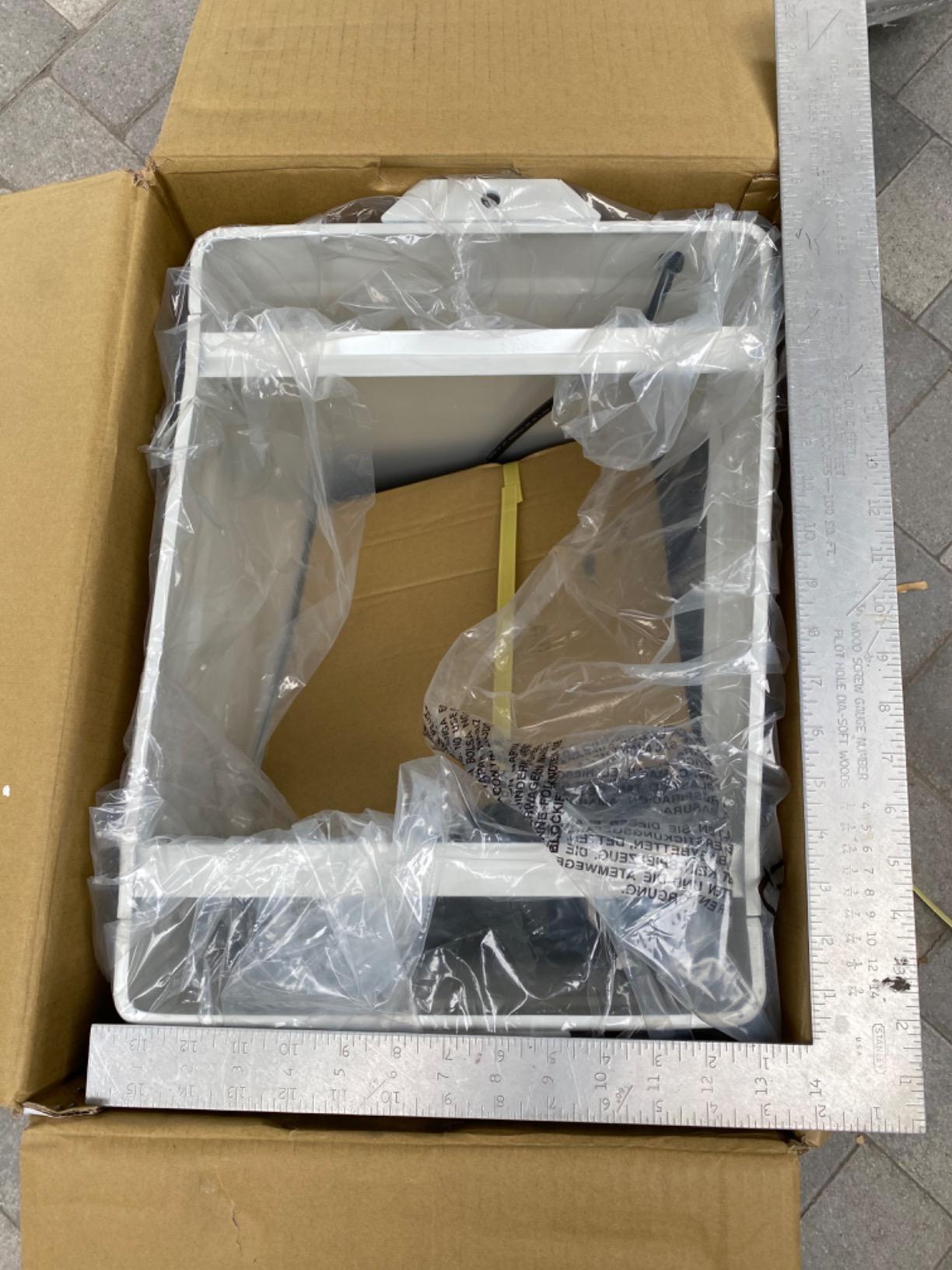
You also accept the cost of a straight knife cutterhead, which means sharpening and setting knives rather than rotating inserts. Delivery damage to the steel stand happens often enough that buyers report replacements, the manual is dated and thin on the table alignment procedure, and at 237 pounds the head assembly needs two people or a hoist to set onto the stand.
Best suited to a shop that wants full-length capacity on a real cast iron bed
Pick this if you are done with benchtop compromises and want a 56-inch bed that holds long material in one pass. The rabbeting ledge, the auto-set knife change and the cast iron stand make it a genuine shop machine rather than a temporary solution. Several owners note the price has risen substantially since the earliest reviews were written, which is worth weighing against the alternatives here.
Budget for two people, floor bolting and constant stop-bolt checks
The setup is the hard part. At 237 pounds, plan the placement before delivery, and expect vibration you may need to anchor. The coarse-thread fence stops and the dated manual mean you should verify squareness yourself rather than trusting the factory setting, and a straight knife adds a sharpening routine that spiral-head machines do not have.
7. Powermatic 54HH 6-Inch Helical Jointer – Best for 8-Foot Boards
Powermatic 6-Inch Jointer, Helical Cutterhead, 1 HP, 115/230V 1Ph (Model 54HH)
6 inch cutting width
40 four-sided carbide inserts
66 inch adjustable tables
1 HP single phase, 115/230V
Pros
- Helical head indexes easily and needs no knife setting
- Very quiet for a jointer
- Tables coplanar and level from the factory
- 66 inch bed takes 8-foot boards in one pass
- Cuts rough walnut and reclaimed oak easily
Cons
- Around 330 pounds so setup needs a hoist or two people
- Helical head can leave faint scallop marks
- Fence is not perfectly flat and is tricky to set
- Effective cutting width is a little under 6 inches
- Assembly takes about an hour
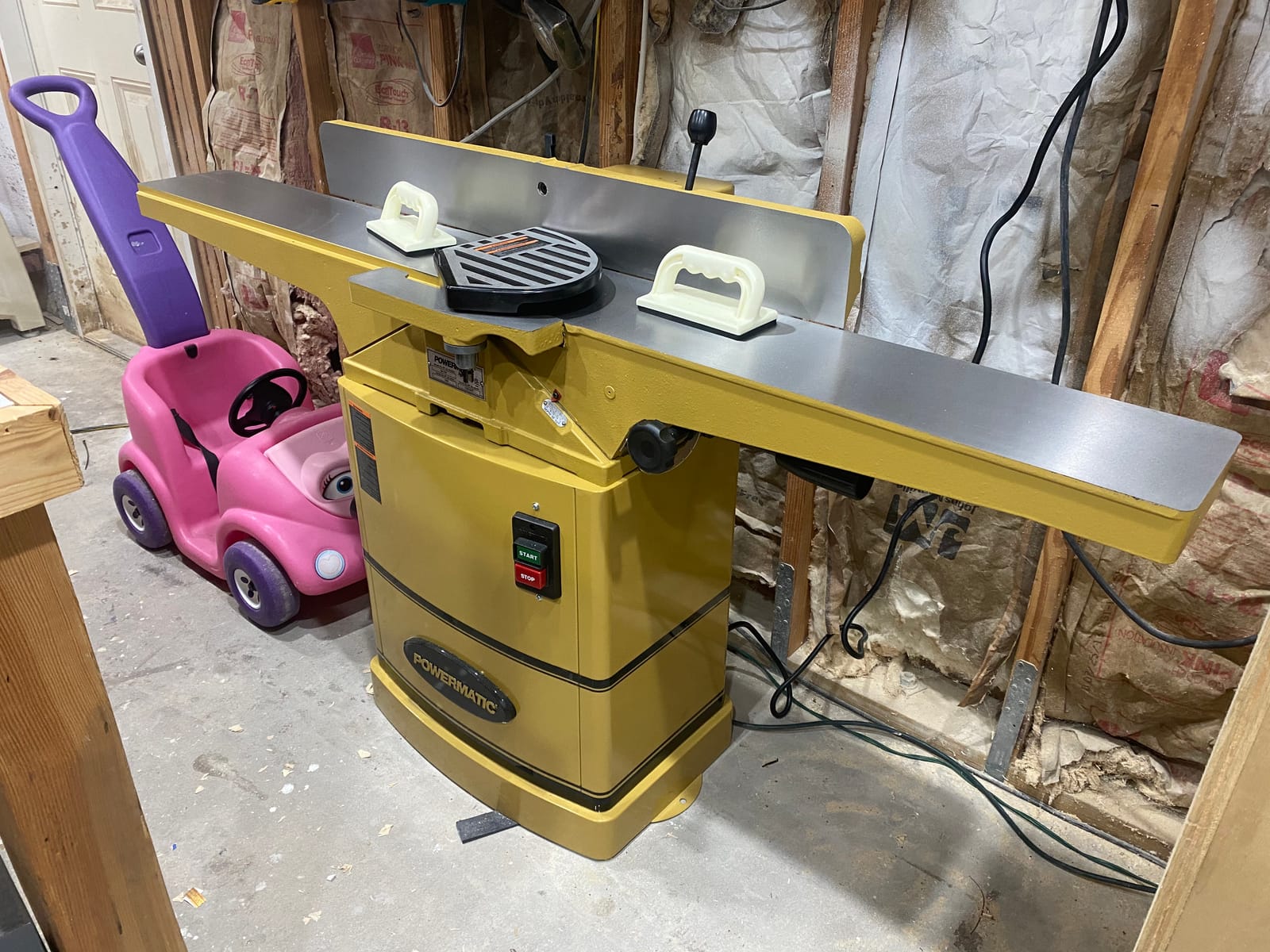
The 66-inch table is the headline number here, and it is the only machine in this roundup that owners explicitly say handles 8-foot boards in one pass. The 38-inch two-way tilting fence has positive stops, fence controls are center-mounted, and a fine adjustment lever on the infeed table makes light passes repeatable.
The cutterhead is helical with 40 four-sided carbide inserts, which means you rotate an insert to a fresh edge instead of removing and setting knives. Owners describe it as very quiet, with factory coplanar and level tables on most examples, and it cuts rough walnut and reclaimed oak without bogging down.
At a 4.8 average from 80 reviews, this carries the strongest rating of the heavier machines. Forum experience with Powermatic runs long, with owners reporting machines still in service after more than two decades, which is the kind of durability track record that matters when a tool weighs as much as a small refrigerator.
The negatives are physical. Owners put the weight near 330 pounds, so assembly needs an engine hoist or two people and takes about an hour. The helical head can leave very faint scallop marks on edges that want a light sanding pass, the fence is not perfectly flat and is tricky to set so it neither drags nor teeters, and the effective cutting width is a little under the nominal 6 inches.
Best suited to a woodworker who processes full-length rough lumber
This is the pick for anyone buying 8-foot boards and wanting to flatten and edge them without splitting the job into two passes. Forty four-sided inserts means low maintenance compared with a straight-knife machine, and the quiet running is a real advantage in a home shop attached to a living space. A lockable push button switch is a small but sensible safety detail.
The weight and the fence are the two things to plan around
Measure your doorway and your floor space before ordering, because roughly 330 pounds is a two-person job. Do not skip squaring the fence with a straightedge on a flat surface, and expect a light sand pass on edges if you are going for a glass-smooth glue-up surface.
8. Cutech 40180HI 8-Inch Spiral Benchtop Jointer – Best Factory-Aligned 8-Inch
Cutech 40180HI 8-Inch Spiral Cutterhead Benchtop Jointer with Cast Iron Tables, 16 TC Inserts, Extra Long 24″ Aluminum Fence, Additional 7-3/8″ Fence Brackets, and a 10-amp Motor
8 inch cutting width
Six rows of tungsten carbide inserts
Cast iron tables
1200 watt, 120V motor
Pros
- Tables coplanar out of the box on multiple examples
- Spiral head indexes a damaged insert in seconds
- Fence brackets make a true 90 degrees easy
- 82.8 pounds keeps the machine from walking
- Spiral head draws low amps
Cons
- Very loud under no load on a 12000 RPM motor
- Fence alignment mechanism is crude for the class
- Polystyrene packaging is easily damaged in transit
- Aluminum fence can feel flimsy despite the brackets
Factory coplanar cast iron tables are genuinely rare on a benchtop machine, and multiple owners of this one report arriving with no leveling needed. That single point removes the setup tax that eats into most machines in this class. The spiral cutterhead carries six rows of staggered tungsten carbide inserts, and a damaged insert is fixed in seconds by loosening one screw and rotating it.
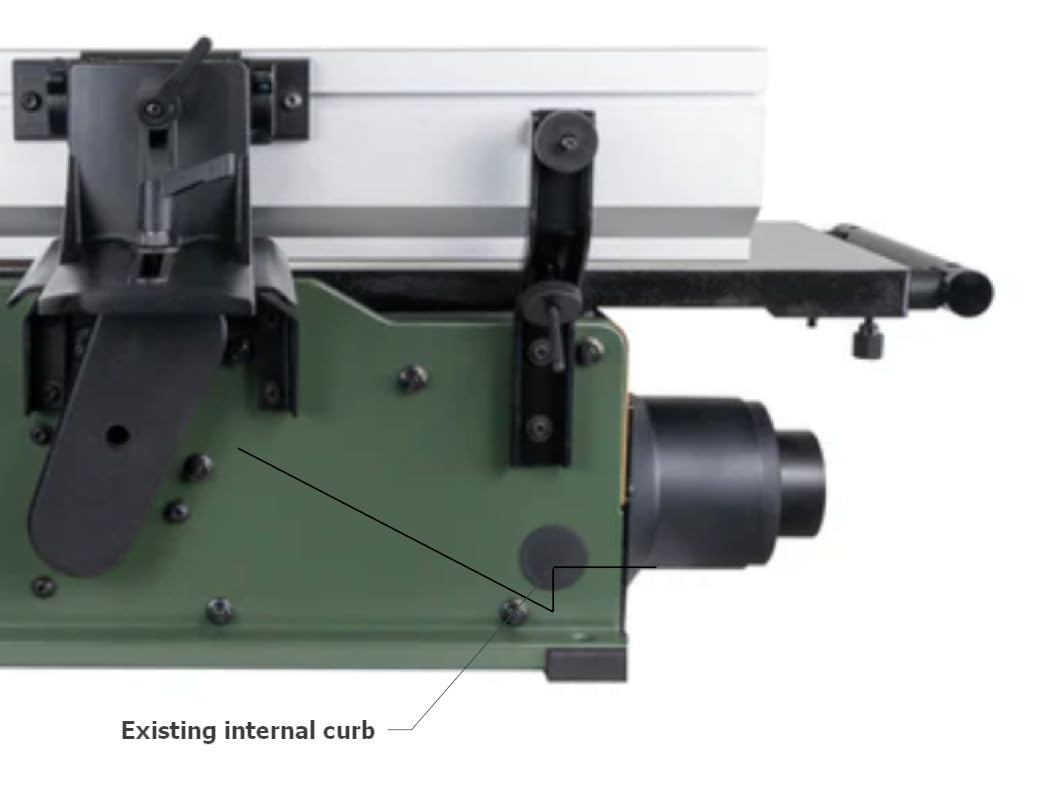
At 82.8 pounds it is heavy enough that it does not walk during a cut, which matters more than it sounds on a universal motor. The patented fence enhancement brackets stabilise both ends of the 24-inch aluminum fence and make dialling in a true 90 degrees straightforward, and the elevation control guide post keeps the tables parallel as they translate for depth of cut.
It is also the strongest demand signal in this set, holding the number one sales position in Power Jointers, which tells you a lot of people are buying it and living with it. The two-sided inserts have a non-cutting edge designed to keep the insert from skewing while cutting, which is a real improvement on cheaper spiral heads.
Now the flaws. The 12000 RPM universal motor is very loud under no load, and owners say hearing protection is mandatory. The fence alignment mechanism is relatively crude for the class, the aluminum fence itself can feel flimsy despite the support brackets, and the polystyrene packaging is easily damaged in transit, so inspect the machine the moment it arrives.
Best suited to a buyer who refuses to spend a weekend aligning tables
Choose this if you want 8-inch capacity, a cast iron surface and a spiral carbide head without the setup fight. The quick-index inserts and the fence brackets address the two biggest sources of buyer frustration in this class, and the 24-inch fence is long enough to feel stable on wider material. A detailed reviewer also notes that some reputational problems attributed to this brand came from a former US distributor rather than the current arrangement.
The universal motor noise is the compromise you accept
It is loud spinning free and you will want ear protection from the first cut. The bed is a benchtop bench length, so it does not solve long material, and the fence hardware is the first thing to inspect if cuts come out out of square.
9. Cutech 40160HB 6-Inch Spiral Benchtop Jointer – Best Scratch-Resistant Tables
Cutech 40160HB 6-Inch Spiral Cutterhead Benchtop Jointer with teflon-Coated Aluminum Tables, 12 TC Inserts, 19-5/8” Aluminum Fence, and a 10-amp Motor (Rifle Green, 6 inch)
6 inch cutting width
Six rows of two-sided spiral inserts
6H Teflon-coated tables
44.2 pounds
Pros
- Teflon-coated tables resist the scratching bare aluminum gets
- Two-sided spiral inserts cut smoothly at low amp draw
- Depth-of-cut pointer makes passes repeatable
- 44.2 pounds still feels stable
- Quick stops at 90 and 135 degrees
Cons
- Only 59 reviews
- the smallest owner pool here
- Teflon coating is a surface treatment on aluminum
- Not a cast iron bed
- Benchtop length caps usable material
The teflon-coated 6H table surface is the reason this model exists separately from the rest of the 6-inch benchtop field. Owners specifically note that the tables resist the scratching that plagues bare aluminum competitors, which matters more than it sounds if you routinely joint rough-sawn stock with bark edges and saw marks.
Underneath, the spiral cutterhead uses six rows of staggered two-sided inserts with a non-cutting edge to prevent skewing while cutting, and the finish is smooth at low amp draw. The clear depth-of-cut pointer and pointer scale make repeated passes accurate and repeatable, which is the kind of small feature that saves setup time every session.
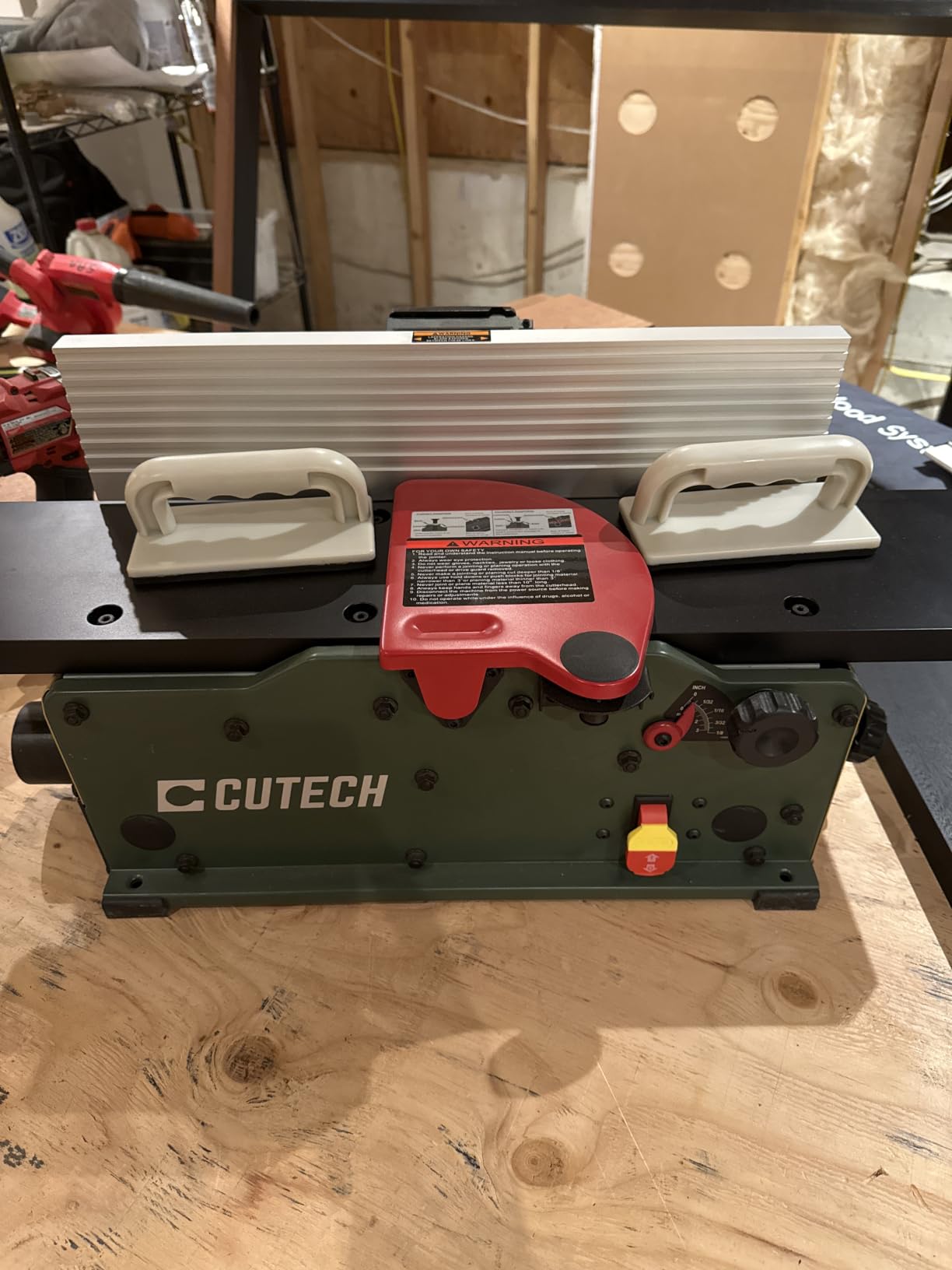
At 44.2 pounds it is light enough to lift while still weighing enough to stay put during a pass, and the 19-5/8-inch fence has quick stops at 90 and 135 degrees. The rating distribution here has 83 percent five-star with no one-star reviews at all.
The limitation is the sample size. With 59 reviews it has the smallest owner pool here, so long-term reliability data is thinner than for the WEN or CRAFTSMAN machines. The teflon coating is a surface treatment on aluminum rather than cast iron, and benchtop length caps how much material you can realistically handle.
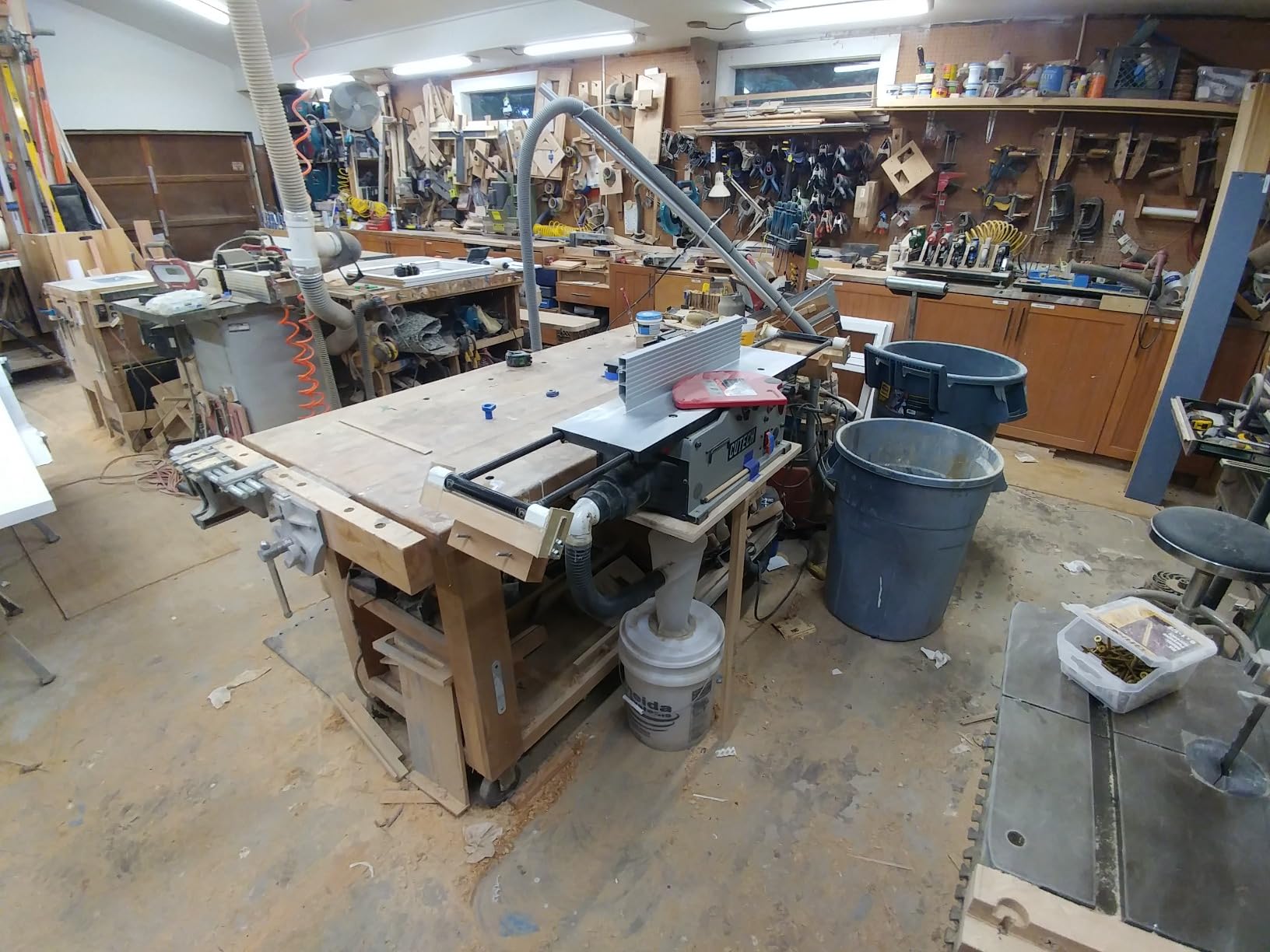
Best suited to a hobbyist who jointed rough lumber and scratched their tables
This fits small-shop builders who want a spiral head, a table that resists marking and a machine light enough to move. The repeatable depth-of-cut pointer and the quick fence stops reduce the setup burden that makes people abandon jointers, and the 6-inch width covers standard dimensional lumber comfortably.
The smallest review pool means the least long-term evidence
Nothing mechanically wrong is reported, but you are buying on a short track record. The tables are aluminum with a coating, not cast iron, so long-term flatness is unproven against a 56-inch cast bed. If you need 8 inches of width, step up to the 8-inch spiral machine instead.
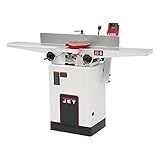
10. JET JJ-6HHDX 6-Inch Helical Long Bed Jointer – Best for Quiet Shops
JET 6-Inch Long Bed Jointer, Helical Cutterhead, 1 HP, 115/230V 1Ph (JJ-6HHDX)
6 inch cutting width
27 four-sided carbide inserts
56 inch cast iron bed
4 inch dust port
Pros
- Helical head cuts quietly and leaves glass-smooth faces
- Tables fence and bed arrived coplanar
- Quiet enough that neighbours do not notice it running
- Handles 3-inch wider-than-head rough pine without stalling
- 4 inch dust port captures roughly 95 percent of debris
- Front-mounted table adjustment handwheels
Cons
- Fence adjusting bolt is coarse-threaded with no lock
- Some vibration on startup and at speed
- Rabbet ledge limits material wider than the head to one pass
- 237 pounds needs two people to set onto the stand
- V-belt tensioning is the fussiest part of assembly
Owners upgrading from straight-knife machines describe this as a decisive step up. The 27 four-sided indexable carbide inserts cut quietly and leave glass-smooth faces, and panels glue up with joints that are nearly invisible. Several buyers found the tables dead coplanar from the factory with no adjustment needed, which is exactly the complaint that dogs most budget machines.
The built-in dust chute with a 4-inch port captures roughly 95 percent of the debris according to owners, and that is the difference between a clean shop and the half-hour cleanup that jointers are notorious for. Front-mounted table adjustment handwheels let you make corrections quickly without reaching behind the machine.
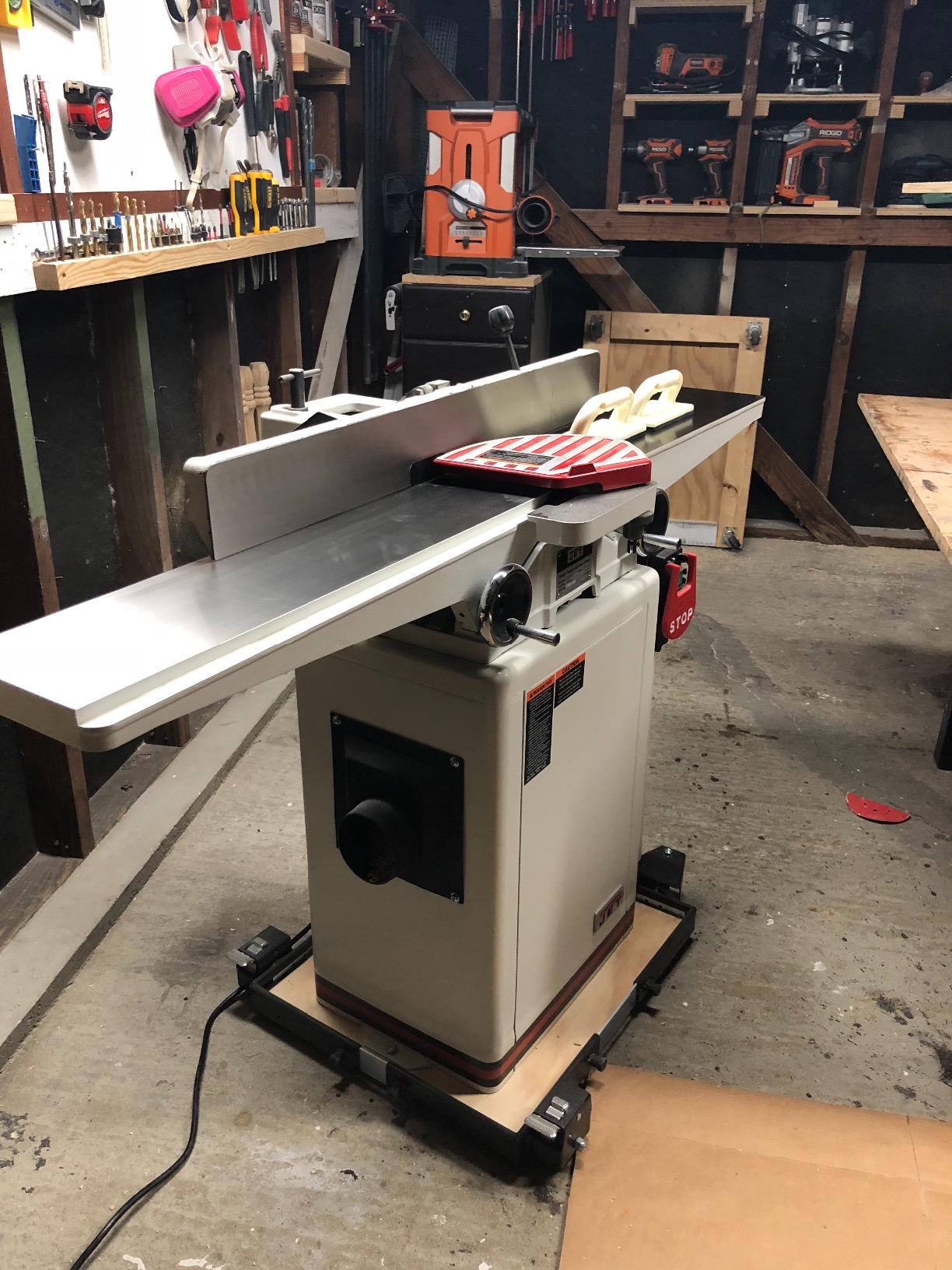
It handles tough material, including 3 inches of rough pine wider than the head itself without stalling, and cuts white oak without complaint. Industrial push-button controls are center-mounted, and the two-way tilting fence has positive stops at 45 and 90 degrees.
The honest flaw is the fence adjusting bolt, which is coarse-threaded with no knob or lock. It takes careful wrenching to set but then holds rock steady, so most owners simply check squareness before each use. There is also some vibration on startup and at speed on certain examples, the rabbeting ledge means only one pass is possible on material wider than the cutterhead, and at 237 pounds the bed assembly needs a lift or two people. V-belt installation and tensioning is the fussiest part of assembly.
Best suited to a shop where noise and dust are the real complaints
Pick this if you share a wall with the rest of your house or work in a small space. The helical head, the 4-inch dust port and the factory-coplanar tables address the three loudest problems in this class at once, and a 56-inch bed takes longer material in one pass than any benchtop machine here. Owners report the quietness as genuinely noticeable rather than marginally better.
Fence setup is manual and the machine is far too heavy to move casually
Set the fence with a straightedge before your first glue-up and recheck it periodically, because the bolt has no lock. Plan the delivery around a second person, and keep the rabbeting ledge in mind if you joint material wider than 6 inches, since the ledge will foul the second pass.
How We Chose the 10 Best Jointers
Every roundup on this query claims hands-on expertise and shows no evidence of it. We prefer to be explicit about method. Each pick was evaluated on published manufacturer specifications plus aggregated verified owner review data, and every rating and review count you see here is reproduced exactly as buyers recorded it. Where owners consistently report a specific flaw, we name it rather than smoothing it over.
Five criteria decided the ranking. Cutting width and bed length came first, because they dictate what material you can physically work. Cutterhead type decided second, since spiral and helical heads remove the sharpening cycle entirely. Motor output and electrical requirements came third, followed by dust port size. Warranty and parts support broke the remaining ties.
One note on badges. Our editor’s choice goes to the machine with the strongest combination of owner rating and review volume, which is why the WEN JT630H leads despite heavier machines rating marginally higher. A high rating from 59 buyers tells you less than a 4.6 from 1066, and we weight the evidence accordingly.
How to Choose: Benchtop vs Floor-Standing Jointers
Match cutting width and bed length to the lumber you actually buy
This is the biggest real-world buying mistake, and it is why forums keep circling it. Cutting width tells you how wide a face you can flatten in one pass. Bed length tells you how long a board you can support. A 6-inch benchtop with a 30-inch table cannot handle an 8-foot board without a two-stage pass, and the second pass is where a fence that drifts out of square ruins your edge.
For boards up to 6 feet, a 6-inch machine with a 30 to 34 inch table works. For 8-foot stock, look for 51 inches of table or more, which is where the extendable benchtop designs and the 56-inch floor models earn their place. For 10- and 12-foot lumber, you are looking at the 66-inch class, not a benchtop at all.
Benchtop models are good enough for most home shops
The first thing to know is that benchtop jointers are absolutely any good, provided you give them a bench rated for the weight. The heaviest benchtop machine here is 82.8 pounds, which most benches can hold if the top is well supported. What you give up is bed length and long-term bed flatness, because cast iron holds its precision for decades and machined aluminum does not.
Floor-standing models are not a quality upgrade in the way the marketing implies. They are a capacity upgrade. Buy one when you handle long rough lumber regularly, not because a benchtop machine is somehow cheap.
Choose a spiral or helical head unless you want to sharpen knives
Straight knives are cheaper to buy and cheaper to replace, but they need periodic sharpening and setting, and they leave more tear-out on figured wood. Spiral and helical cutterheads use four-sided carbide inserts you rotate to a fresh edge in seconds, cut quieter, draw less current and hold a far better finish. The long-term ownership cost runs in their favour, since sharpening services add up faster than a set of rotating inserts.
One honest limitation on helical heads: they can leave very faint scallop marks on an edge, and a light sanding pass takes them out. Owners of the machines in this roundup treat that as a fair trade for the quieter cut and the better finish.
Check the circuit before you commit to a heavy machine
The benchtop models here run on 120V at 10 amps, which a standard 15-amp household circuit will carry. The floor-standing 1 HP machines list 115/230V single phase at 13 amps, so they can run on 120V but want a dedicated circuit rather than a shared one with a saw or dust collector on the same outlet. If your shop has only 120V, a benchtop spiral machine is the lower-friction path.
Which should you buy first, a jointer or a planer?
Buy the planer first for most beginners. Rough lumber has to be thicknessed before it can be flattened, and a jointer run on cupped, twisted, out-of-plane stock will follow that twist rather than correct it. Once material is dimensioned and flat, the jointer does the one thing nothing else can do, square an edge against a fence, just before your glue-ups. A hand plane first is also a legitimate path, since learning to read grain and establish a reference face transfers directly to the machine.
And no, you cannot use a jointer as a planer substitute for thicknessing. A jointer takes one face at a time and cannot hold a consistent thickness across a board.
How to Align Jointer Tables and Set Your First Cut
Table misalignment is the most repeated complaint about budget jointers, and it is also the easiest thing to fix. Work through these five steps before your first real cut on any machine in this roundup.
1. Unplug the machine and let the cutterhead stop completely. Place a machinist square on the in-feed table with one leg against the outfeed table edge, then check the gap along the length of the jointer. Any gap you can slide a feeler gauge into is misalignment.
2. Loosen the table lock and use the front handwheels or rear jackscrews to close the gap evenly. Work from the cutterhead outward in small increments. Turning one adjustment can shift the other on some benchtop machines, so recheck the whole length after every change rather than assuming one fix holds.
3. With the tables coplanar, set the depth of cut to zero and then dial in your first pass. Start thin, around 1/16 inch, and only increase once you have confirmed the cut is clean. The onboard depth-of-cut scales on the WEN and Cutech machines make this repeatable.
4. Square the fence against a known reference. Sit a straightedge on the outfeed table, set the fence to 90 degrees, and check with a square. Mark the position once it is right so you can re-dial it quickly, because the fence stops on several of these machines will drift.
5. Hook up dust collection before the first pass, not after. Chip control is far easier on a machine that has never been run loose, and it keeps the fence and fence guides clear of debris that changes your reference. A 4-inch port seals to a collector far better than a 2-1/2 inch adapter stack.
Frequently Asked Questions
Are benchtop jointers any good?
Yes, for most home shops. The benchtop models in this roundup use the same spiral or helical cutterhead technology as the floor machines, so the cut quality is comparable. What you give up is bed length and cast iron bed stability, which is why they are a poor match for full-length rough lumber but a good match for boards up to about 6 feet.
Do I need a 6-inch or 8-inch jointer?
It depends on the widest board you routinely joint. A 6-inch machine covers standard dimensional lumber and most furniture parts. Go to 8 inches if you joint 2x8s flat, work with cabinet parts or wider stock, because you will otherwise have to flip and re-pass the board. Bed length matters more than width for long material.
Which should I buy first, a jointer or a planer?
A planer, in most cases. Rough-sawn lumber has to be thicknessed before it can be flattened, and a jointer run on twisted, out-of-plane stock will follow that twist instead of correcting it. Buy the jointer second, to square edges before glue-ups. A hand plane is also a reasonable first step for learning grain direction.
Can you use a jointer to plane wood?
Only in the sense of flattening a single face. A jointer removes material from one face at a time and cannot hold a consistent thickness across a board, so it cannot replace a planer for thicknessing. Its unique job is squaring an edge against the fence, which is the operation every other machine leaves to you.
Is it worth it to buy a jointer?
If you work with rough-sawn or warped lumber, yes. No hand tool or machine can flatten a face and square an edge in the same setup, so a jointer is what makes downstream planing, joinery and glue-ups accurate rather than approximate. Skip it only if you buy all your material already milled to final thickness.
The Verdict on the Best Jointers in 2026
The best jointers for most people buying in 2026 split by capacity, not by prestige. The WEN JT630H is our editor’s choice because 1066 owners at a 4.6 average confirm that a 12-blade spiral head on a light, level benchtop table delivers a genuinely clean cut without a heavy machine. The Wahuda 50180CC-WHD is the value pick if you want cast iron tables and 8-inch capacity and are willing to spend a weekend levelling them. The Cutech 40180HI is the one to buy if you refuse to align tables at all.
Move up to the JET and Powermatic floor models when your lumber dictates it. The 66-inch Powermatic 54HH is the only machine here that owners say takes 8-foot boards in one pass, and the JET JJ-6HHDX pairs a 56-inch cast iron bed with a 4-inch dust port for shops where noise and cleanup are the real problem.
Whichever one you choose, align the tables, square the fence, hook up dust collection and take a light first pass. Get the current listings and owner feedback for each model before you commit.