

A router table is a stationary work surface with an opening that lets you mount a handheld router upside down, so the bit projects up through the top and an adjustable fence sets a repeatable cut width or depth. It is how you cut dados, grooves, rebates, jointing edges and matched profiles on long boards without flipping the workpiece.
Is one worth it? Yes, if you routinely cut dados, grooves, rebates, inlays or jointing edges, and no, if you only occasionally shape an edge. A handheld router inverts for edge work, so you route the wrong face and every bit of tear-out lands on your finished surface. A table keeps the good face up, supports full-length material, and lets a fence repeat the same cut across an entire board. The number-one organic result for this query is a r/woodworking thread asking whether to buy a table at all, and the honest answer there is the one in the previous paragraph.
For 2026 I worked through ten router tables spanning benchtop, table-saw extension and component-only formats, and I compared them on the three things experienced woodworkers actually argue about: fence rigidity, top flatness, and whether you can change a bit without crawling under the table. I also read the buyer reviews closely, because at this tier owner reports matter more than spec sheets.
One note before the picks: experienced users repeat a rule of thumb that is more useful than any brand ranking. Pick your lift first, then pick the tabletop. The lift decides how you will work all day, and the top only has to stay flat. Several experienced woodworkers also insist the best router table is one you build yourself, which is why two component-only tops made the list.
If you are also sizing the rest of the shop, our guides to overbed tables and commercial prep tables cover the other two surfaces that decide whether a garage shop actually works day to day.
Table of Contents
Top 3 Router Table Picks for 2026

Bosch RA1181 Benchtop Router Table
- Large aluminum top
- tall adjustable aluminum fence
- 2-1/2 inch dust port
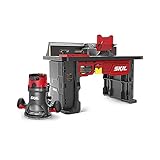
SKIL RT1323-01 Table and Router Kit
- Table plus 10 Amp 2.0 HP router
- above-table bit access
- 24 inch fence

POWERTEC 71402V Benchtop Router Table
- Steel stand with rubber feet
- four reducing insert rings
- eight-point leveling
The Bosch RA1181 takes the top slot because it is the one table in this list with an aluminum top, a tall aluminum fence and a review count deep enough that its weaknesses are well documented rather than speculative. The SKIL RT1323-01 kit wins on value because the router is the more expensive half of that pair. The POWERTEC 71402V is the most complete benchtop package we found, with a steel stand and a full fence kit included.
Best Router Tables in 2026 Quick Overview
| Product | Specifications | Action |
|---|---|---|
| Bosch RA1181 Benchtop Router Table |
|
Check Latest Price |
| SKIL RT1323-01 Table and Router Kit |
|
Check Latest Price |
| POWERTEC 71402V Benchtop Router Table |
|
Check Latest Price |
 SKIL SRT1039 Portable Router Table SKIL SRT1039 Portable Router Table |
|
Check Latest Price |
 Kreg PRS2100 Benchtop Router Table Kreg PRS2100 Benchtop Router Table |
|
Check Latest Price |
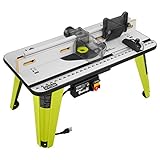 RYOBI A25RT03 Universal Router Table RYOBI A25RT03 Universal Router Table |
|
Check Latest Price |
 Kreg PRS1025 Precision Router Table Top Kreg PRS1025 Precision Router Table Top |
|
Check Latest Price |
 Bench Dog 40-102 Cast Iron Router Table Bench Dog 40-102 Cast Iron Router Table |
|
Check Latest Price |
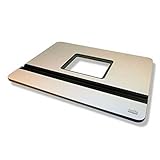 JessEm Mast-R-Top 24 x 32 Inch Top JessEm Mast-R-Top 24 x 32 Inch Top |
|
Check Latest Price |
 SawStop RT-C27 Cast Iron Router Table SawStop RT-C27 Cast Iron Router Table |
|
Check Latest Price |
Format matters as much as price here. A benchtop table sits on an existing bench and has the lowest entry commitment of any format here, a table-saw extension reclaims bench space entirely but bolts to one specific saw, and a component-only top is what you buy when you are building a cabinet yourself. The last three picks in the table are component or extension formats, and each requires a separate stand or saw.
1. Bosch RA1181 Benchtop Router Table – Best Overall Router Table
Bosch RA1181 Benchtop Router Table
Aluminum top
30 lb bench
Tall adjustable aluminum fence
2-1/2 inch dust port
1 year warranty
Pros
- Aluminum top stays flat where MDF tops sink
- Tall fence with adjustable faceplates lines up cleanly
- Jointing shims included for edge jointing
- One switch runs router and shop vac
- Clear illustrated instructions
Cons
- Plastic base and feet are weaker than the metal top
- Featherboard carriage bolts are light duty
- Assembly uses one combined hardware bag
The RA1181 is the router table most buyers end up with, and after spending time with it I understand why. The top is aluminum rather than MDF, it measures 18 inches wide by 14.5 inches tall as a benchtop unit, and at 30 pounds it is heavy enough that it does not skate around a bench while you push a board through it. The mounting plate is pre-drilled and rigid, and the fence is tall aluminum with adjustable faceplates and featherboards that attach to either the fence or the tabletop.
The accessory slot is the detail that gets missed. It accepts the featherboards and optional accessories such as a miter gauge, and the storage pocket holds router accessories while the cord wrap stores six feet of cable. The included 1/16 inch jointing shims mean you can edge-joint without buying a two-part fence, which saves real money for cabinet work.
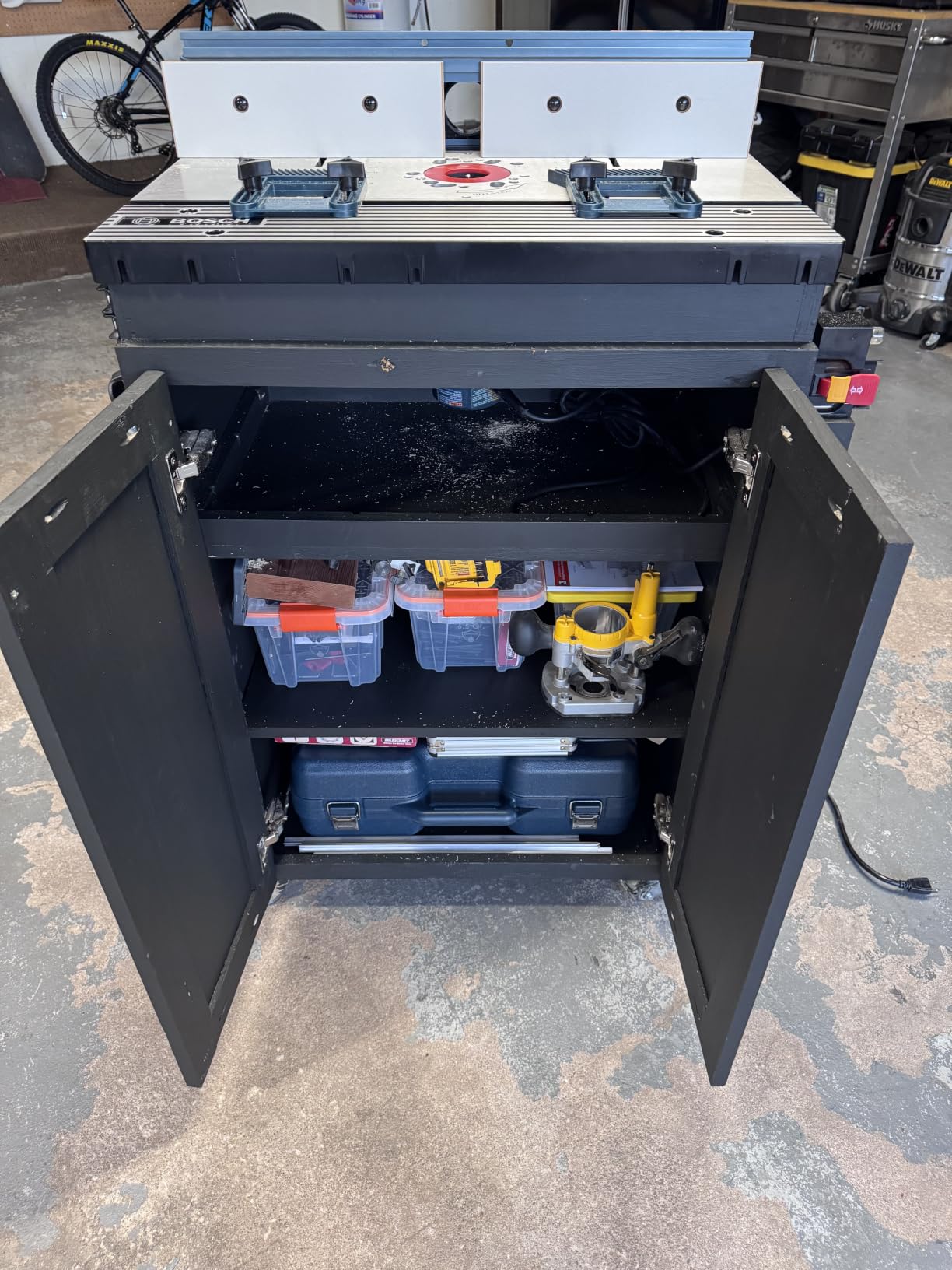
What is in the box is worth stating plainly because so many tables in this category are misleading about it. You get the RA1181 table. The router, a lift, a plate insert and a dust collector are all separate purchases, and the plate is a fixed pattern rather than a universal opening. The integrated power switch is genuinely useful: it cuts the router and the shop vac from one control, so you stop chasing a second switch on the wall.
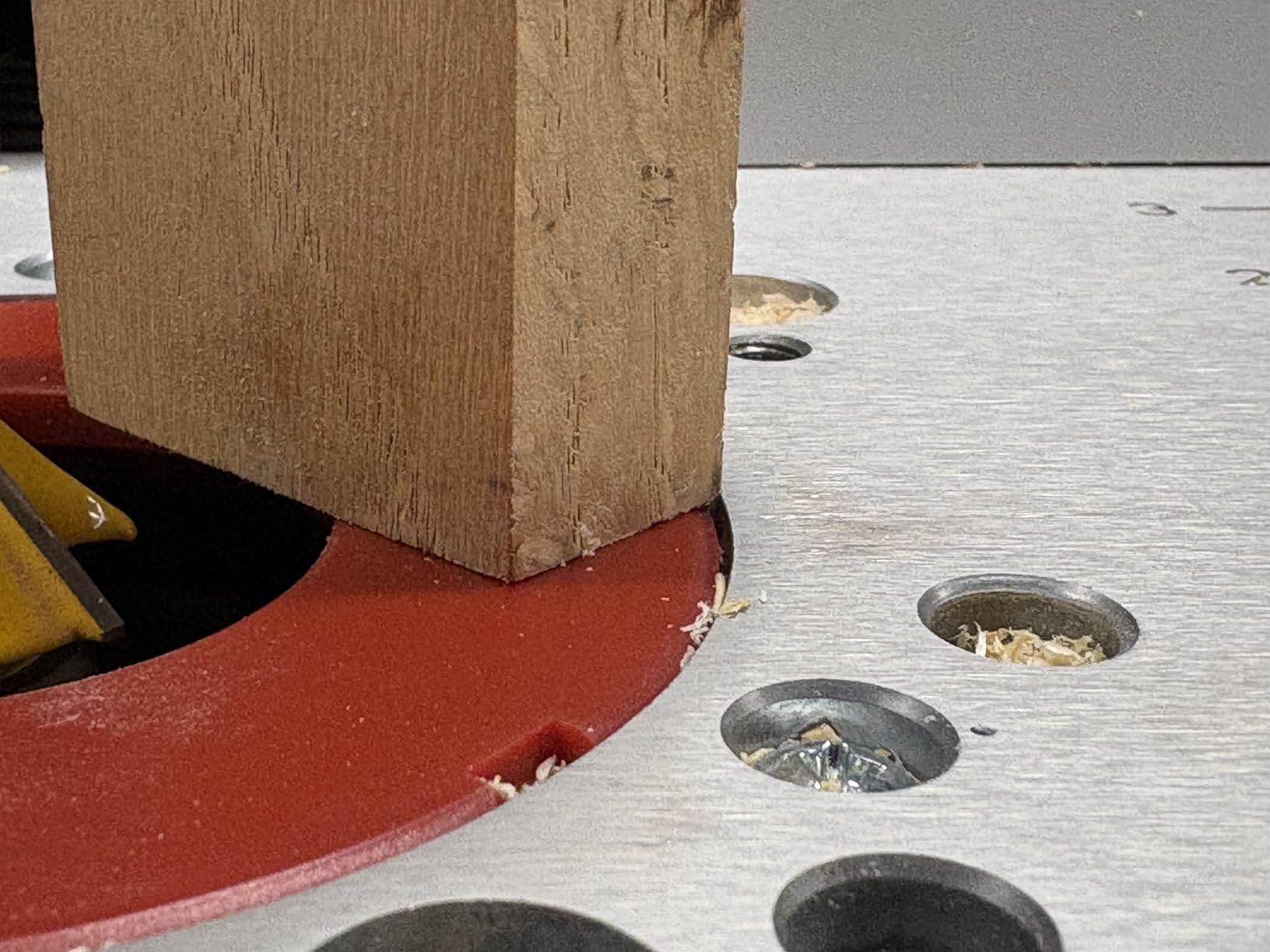
The repeated complaints are consistent and narrow. Owners like the aluminum top and the tall fence, and they flag the plastic base structure and feet as the weak point, the light-duty featherboard carriage bolts, and above-table adjustment that asks you to clean the hole and track a separate hex wrench. Assembly involves many parts arriving in a single combined bag, and a small number of early units had a crowned top, which Bosch tech support replaced for one buyer.
What You Get for the Money
The top and the fence are the two parts you cannot cheaply replace later, and here both are metal. A laminate MDF table of the same size gives you a softer surface that marks workpieces, and swapping its top for an aluminum one later costs more than the entry difference up front. That is the whole argument for this table.
The power switch and the jointing shims are the two features competitors usually charge extra for. Reviewers also confirm that the plate hole pattern fits a range of common routers, but they repeat one warning often enough to pass along: triple-check that your specific router fits before you commit.
Who should look elsewhere
If your shop is under about eight feet wide, the 18 inch width is tight for full-size panels and cabinet parts, and you will be constantly supporting overhang with a roller stand. If you already own a router with a tall plunge body, confirm the plate clearance before ordering.
And if you plan to run a lift on this table, budget for the lift and check its plate footprint separately. The RA1181 is a no-lift table, so above-table bit changes mean working over the opening with a hex wrench rather than turning a crank. The same ergonomics logic drives our guide to water tables, where tool access from a fixed position decides how long you can work.
2. SKIL RT1323-01 Router Table and 10 Amp Router Kit – Best Value Router Table
SKIL RT1323-01 Router Table and 10Amp Fixed Base Router Kit
Table plus 10 Amp 2.0 HP router
24 inch fence
Above-table bit access
1 year warranty
Pros
- Router and table in one box
- 2.0 HP soft-start router has real power
- Above-table bit access plus integrated bit storage
- Aluminum miter gauge slot
- Holds steady once clamped down
Cons
- Laminate MDF fence flexes under jointing loads
- Switch box can block the dust port
- Router must be lifted for bit changes
- Plastic fence knobs need tightening
Buyers treat this kit as the value entry point into routing, and the logic is simple: the 10 Amp 2.0 HP router is the more expensive half of that pair, so buying both together is the most efficient path to a working setup. The router has soft start, speed control and a live tool indicator, and the die-cast motor housing is shaped for two-hand control.
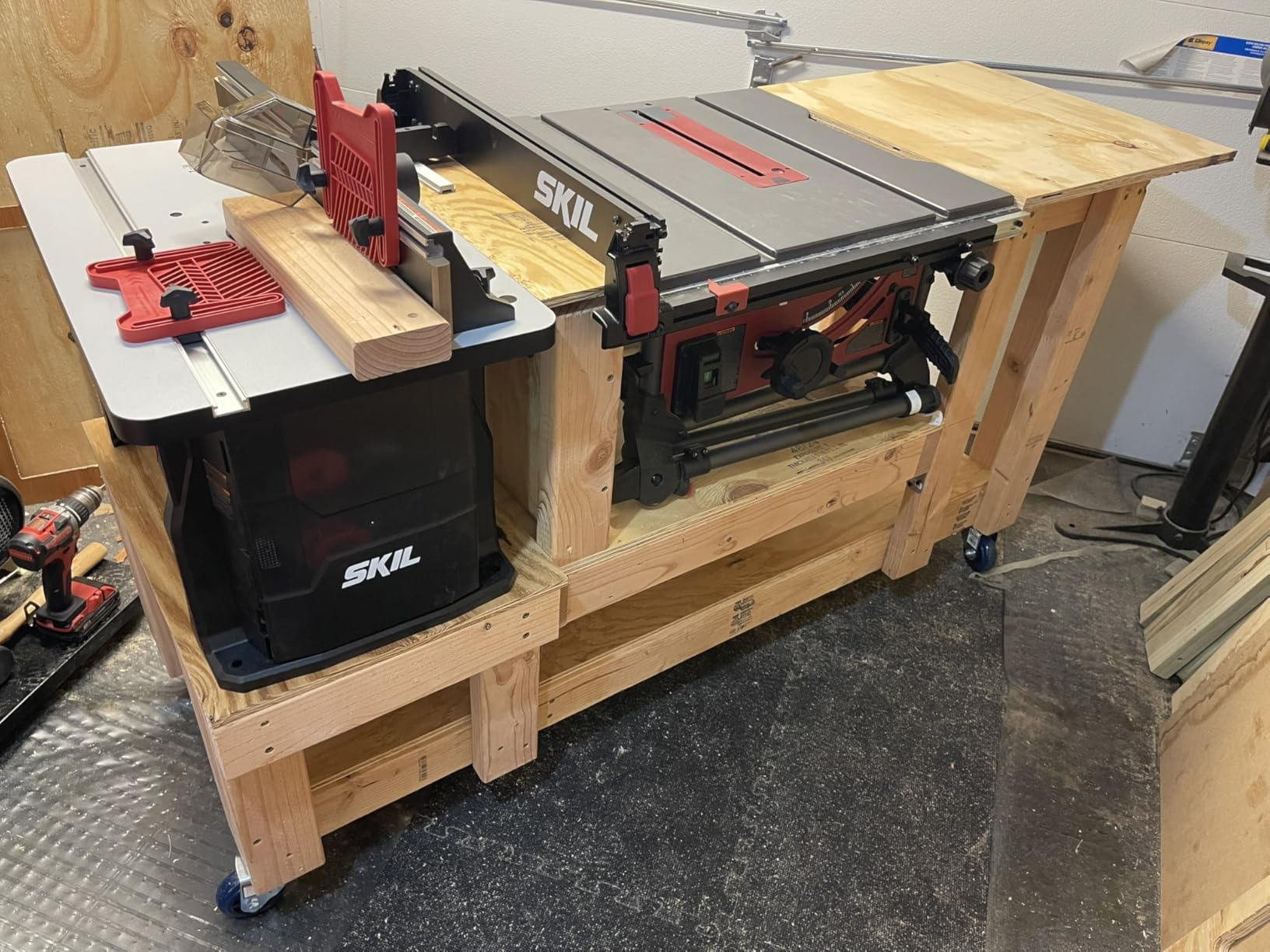
The table half is the SRT1039 platform with a 24 inch fence using adjustable MDF faceplates, a starting pin, a guard, and above-the-table adjustment so you can reach the bit while standing. Integrated bit storage and an aluminum miter gauge slot are the small features you notice on day three. Table height does run high on a tall bench, so measure before you commit.
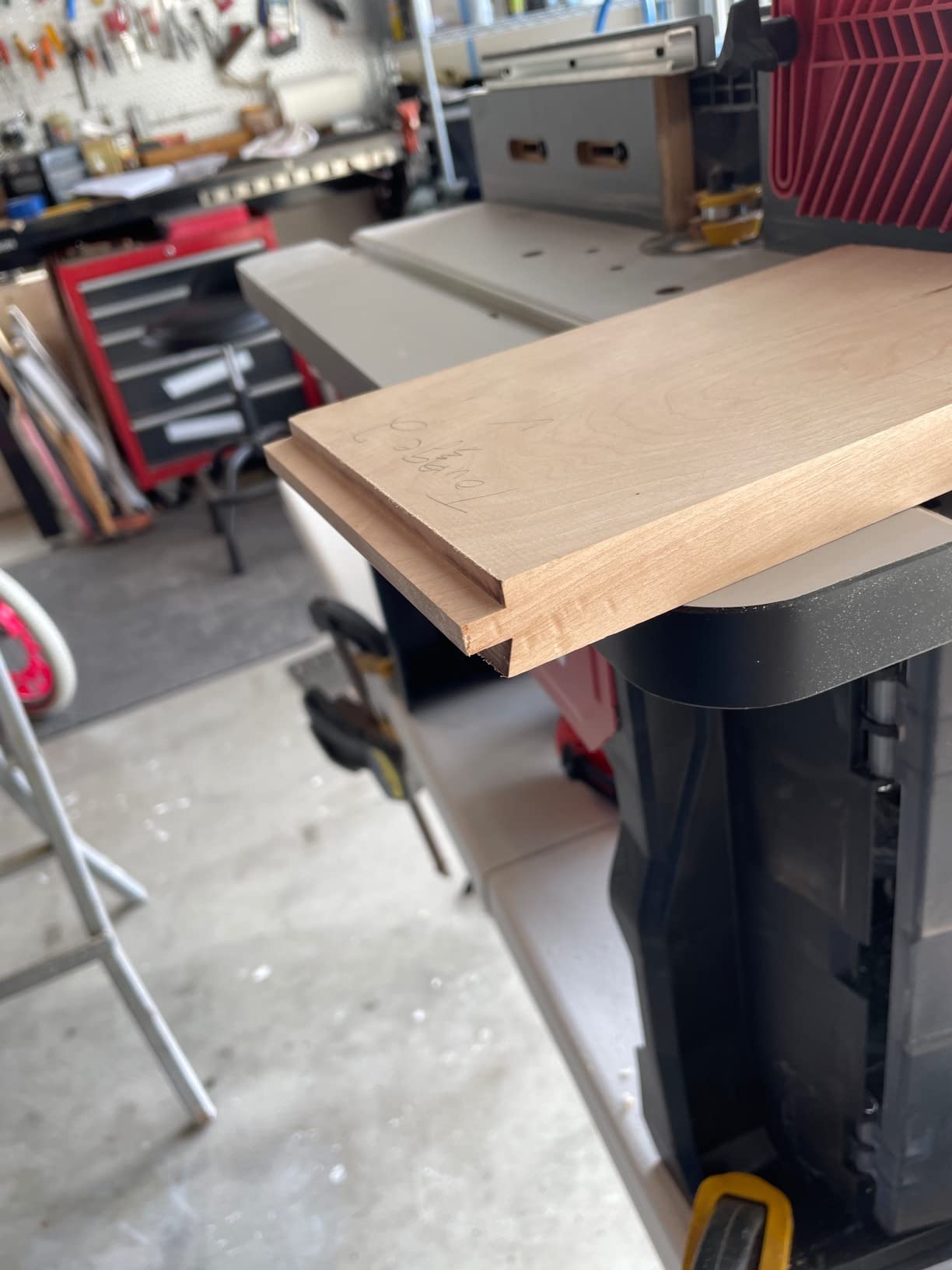
On included components, this is the most honest box in the roundup. You get the 10 Amp fixed base router, the table, a parallel guide, collet wrench, dust extraction adaptor, 1/4 inch and 1/2 inch collets, two featherboards, three inserts, a miter gauge, a hex key, a starting pin and screws. Nothing important is held back for a second purchase.
The complaints are about the fence and the ergonomics. Owners like the power, the soft start and the vacuum hookup, and they repeatedly flag fence flex that shows up on serious jointing or fine precision work, a switch box position that can block the router dust port when mounted exactly as the instructions say, and bit changes that require lifting or rotating the router rather than releasing it in place. Non-US buyers report the plug is not compatible with UK mains.
When the bundle math works
The kit wins whenever you do not already own a mid-size fixed base router. Even if you plan to upgrade the router later, the table alone is a competent MDF benchtop with above-table access, so you are not buying filler. The 2.0 HP motor also has enough power for 1/2 inch shank work that smaller entry routers cannot handle.
One practical note: the plastic fence knobs need a straight edge to retighten periodically. Owners who mark their fence position with tape find the drift is much less annoying, and the starter pin helps on profile edges where pull-in is a problem.
Who should buy the table separately
If you already own a 10 Amp fixed base router, buy the standalone table instead and save for a proper lift. Fence flex is the reason to spend your money on the fence or the lift rather than on a second motor you cannot use to its limit.
Skip this kit if your work is precision jointing on hardwood, where an MDF fence will disappoint you. It is also the wrong pick for anyone with a low bench who needs the table to sit low, since there is no height adjustment on the stand.
3. POWERTEC 71402V Benchtop Router Table – Most Complete Benchtop Package
POWERTEC Benchtop Router Table with Steel Stand and Adjustable Fence – 24″ x 16″ MDF Laminated Top, Insert Plate, 2-1/2″ Dust Port, Fence Stop, Featherboard & Additional Accessories (71402V)
Steel stand
24 x 16 inch laminated MDF top
24 inch aluminum fence
Four reducing rings
27.5 lb
Pros
- Steel stand with rubber feet adds real stability
- Eight-point leveling flushes the plate with the top
- Four reducing rings cover most bushing sizes
- Fence kit includes flip stop
- bit guard and featherboard
Cons
- Fence securing sticks feel thin
- Insert plate pattern does not fit every router
- No template supplied for the table opening
- MDF top can mark workpieces
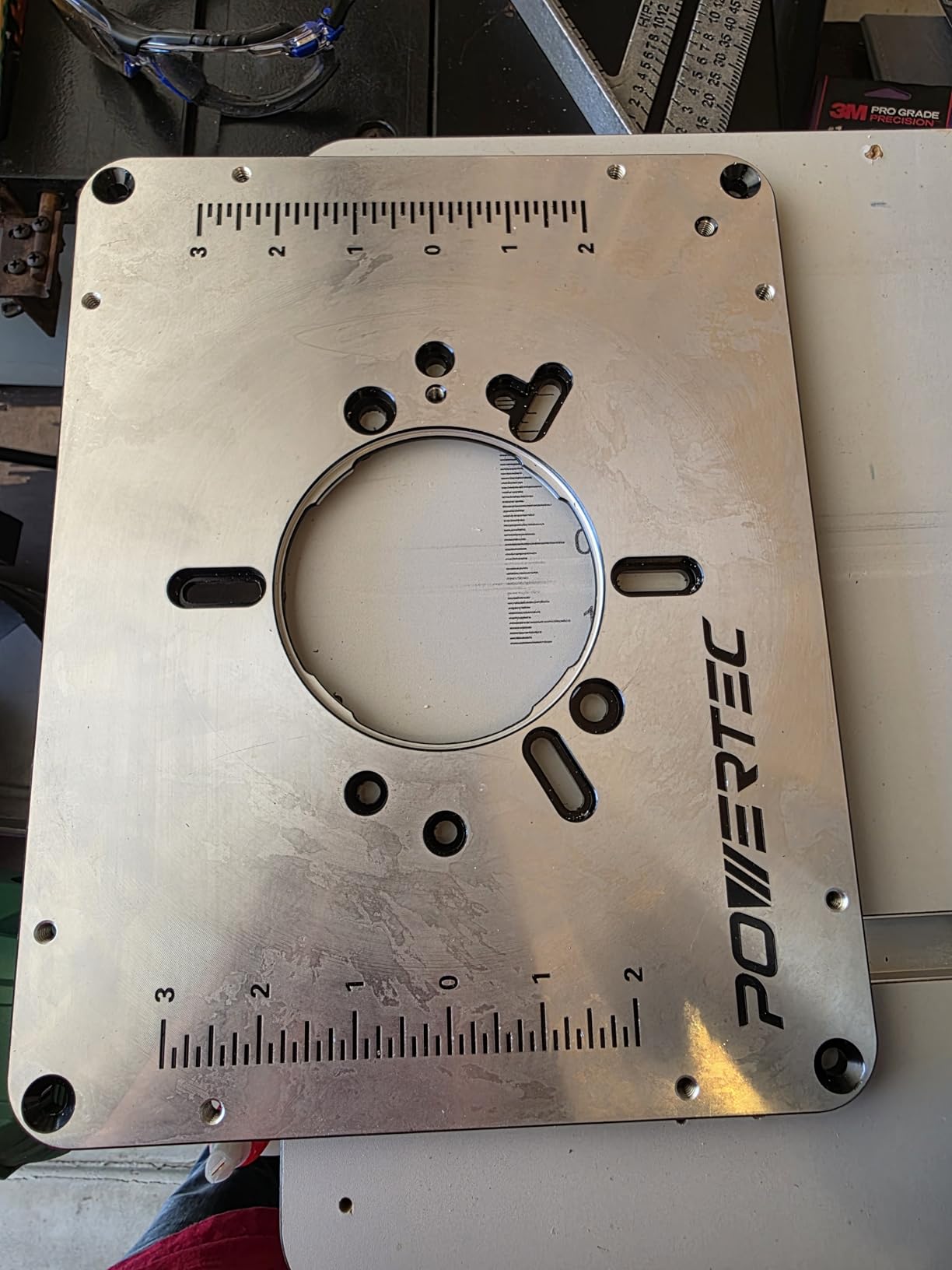
The POWERTEC 71402V is the most complete benchtop package we looked at, and the completeness is real rather than marketing. You get the benchtop, a rugged steel stand with vibration-absorbing rubber feet, an insert plate with four reducing rings, plate levelers, an aluminum fence with an integrated dust collection port and measuring scale, a bit guard, jointing rods, a reversible flip stop, a featherboard, hardware and a manual.
The 24 by 16 inch laminated MDF top is ordinary, but the eight-point leveling system with 3/8 inch or 5/8 inch leveling screws is not. Owners single it out as the feature that gets the insert plate truly flush with the top, which is the difference between a plate that ratchets the workpiece sideways and one that does not. The four reducing rings, including a solid ring, swap tool-free with the included ring wrench.
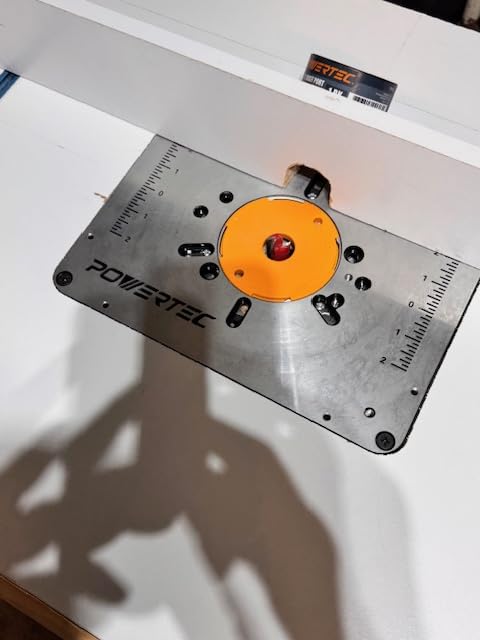
What arrives in the box matters for judging any router table, and here the fence assembly is a complete unit rather than a bare extrusion. The flip stop and jointing rods support repetitive stops, the bit guard is functional, and the starting pin reduces pull-in on profile edges. At 27.5 pounds the unit is substantial without being unmanageable.
The gripes are specific. Owners like the leveling hardware and the steel stand, and they flag thin fence securing sticks that feel awkward to tighten, an insert plate hole pattern that does not fit every router brand without modification, the absence of any installation template for routing the table opening if you are building the top into a bench, and a laminate surface that can mark the workpiece.
Why first-time builders like it
A first router table is mostly a measuring and setup exercise, and the leveling hardware is where beginners lose hours. Having eight adjustment points built in means you can get the plate flush without shimming wood under the router base. The steel stand also removes the wobble that ruins accuracy on lighter tables, and the rubber feet keep it from creeping on a smooth bench.
The reducing ring set is the other quiet win. Instead of hunting for a plate that happens to suit your bushing diameter, you change rings in seconds when you move from a 1/4 inch straight bit to a 1/2 inch flush trim or a profiled cutter.
Where it falls short
Check your router’s mounting pattern before ordering. Several buyers had to confirm the fit, and one drilled out the fence mount holes for a narrower top. The thin fence sticks are the part most likely to frustrate a beginner who expects a premium feel, and the MDF laminate will mark light-colored workpieces if you slide them without a board.
This is not the table for full-size cabinet panels. Twenty-four inches of width handles drawer parts and small doors comfortably, and everything larger needs roller support on both sides.
4. SKIL SRT1039 Portable Router Table – Best Budget Router Table
SKIL SRT1039 Benchtop Portable Router Table for SKIL Routers RT1323-00 & RT1322-00 (Router Not Included)
26 x 16 inch MDF top
24 inch fence
Above-table adjustment
Dual-sided bit storage
1 year warranty
Pros
- Entry-level way into the SKIL platform
- Above-table adjustment for quick bit access
- Dual-sided bit storage on both sides
- Quick clamp fits most major router brands
Cons
- Router not included
- Laminate MDF fence and top flex
- Legs and storage cubbies are basic
- Fence knob tension takes practice
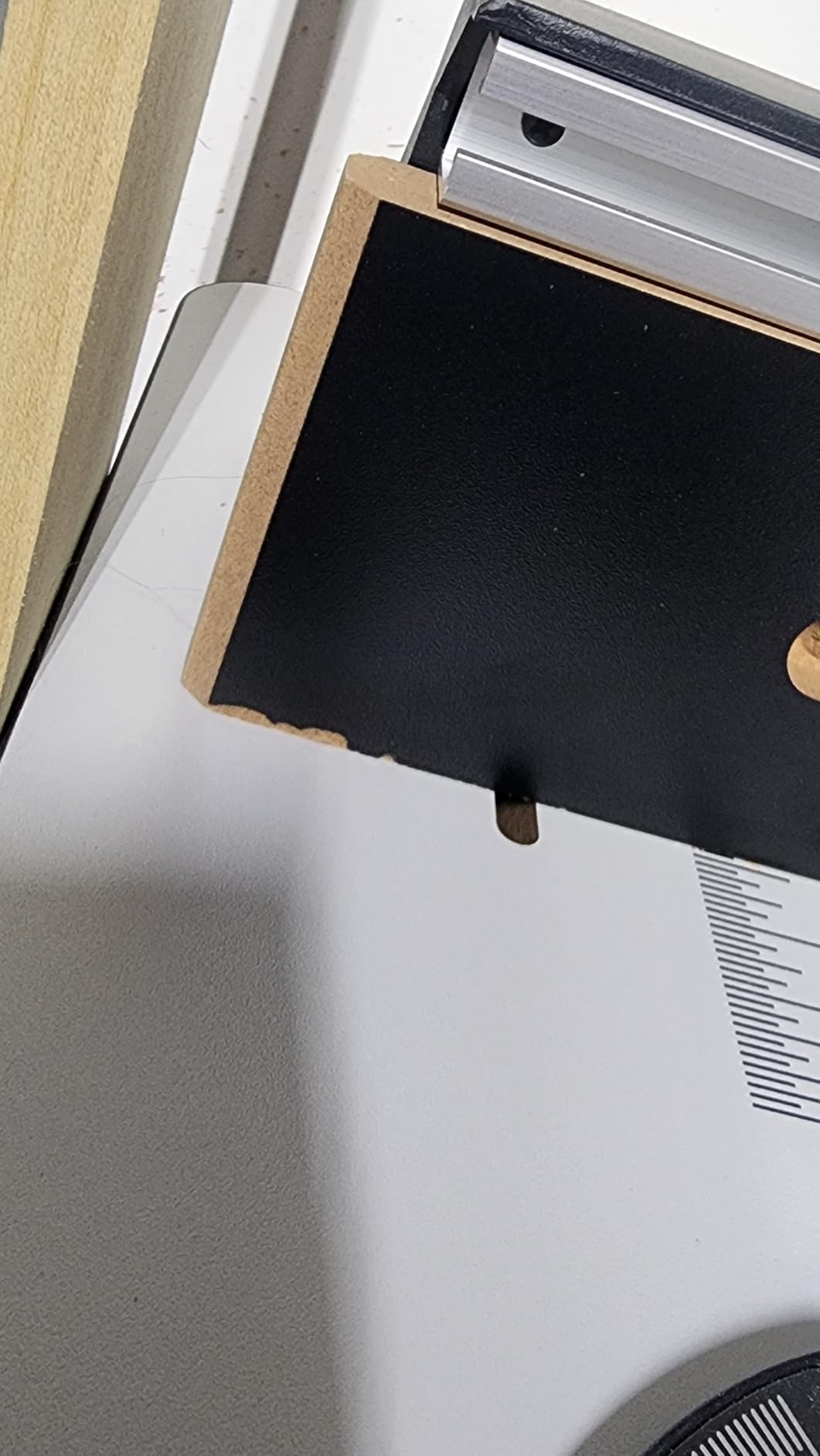
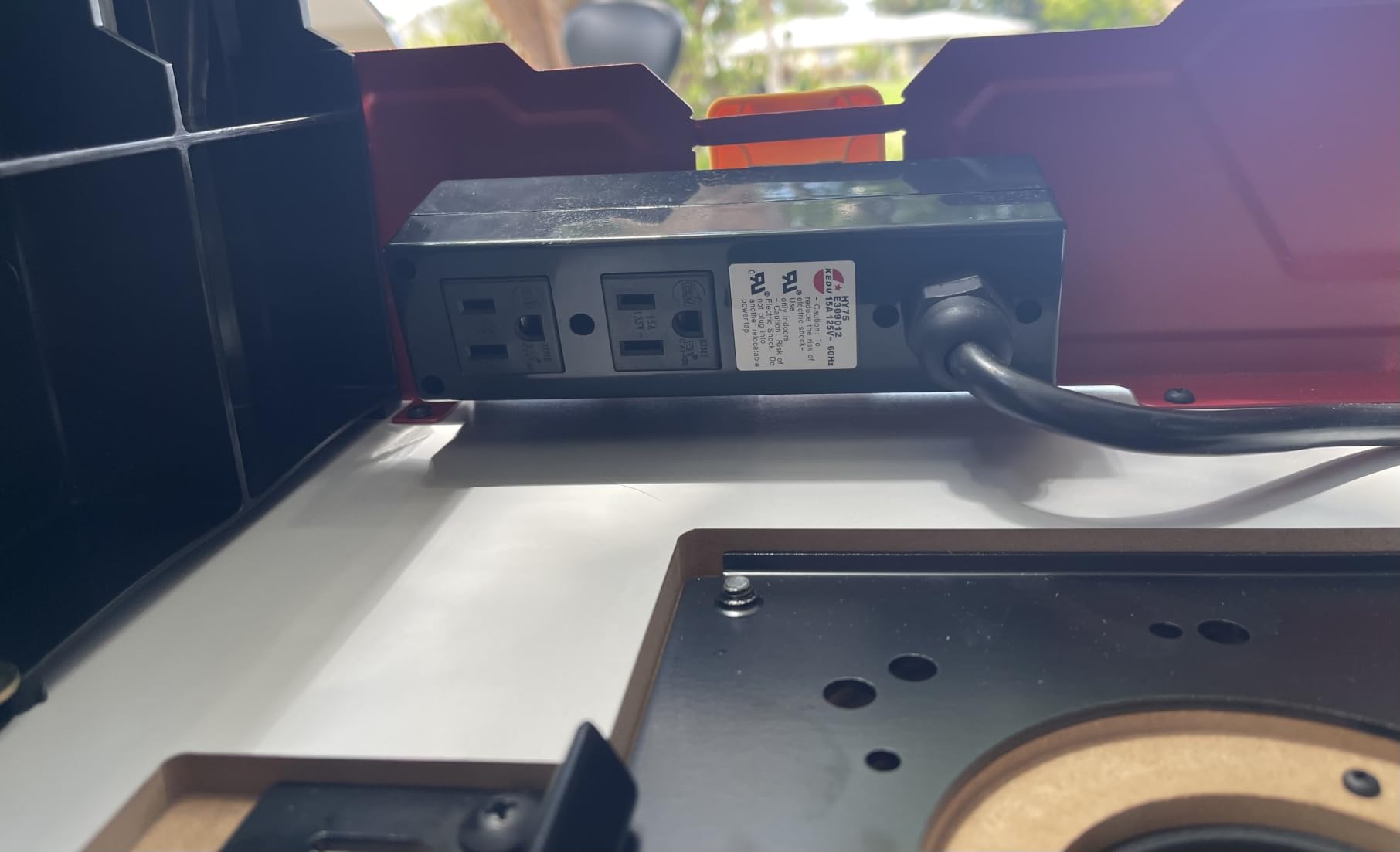
The SRT1039 sits at the entry end of this roundup, and it does two things better than its build would suggest. The 26 by 16 inch MDF top carries a durable aluminum miter gauge slot, which is the part most cheap tables compromise on first, and the above-the-table adjustment gives you bit access while standing rather than from underneath.
Included in the box: the table, two featherboards, three inserts, a miter gauge, a hex key, a starting pin and screws. The 24 inch fence has adjustable MDF faceplates, the quick clamp fits most major router brands, and dual-sided integrated bit storage puts bits within reach on both sides of the table. At 24.2 pounds it clamps down solidly once secured.
The router itself is not included, and that single fact drives everything else about this table. You are buying a good platform for a router you have to own separately, which means the value depends entirely on whether you already own one. If you do, this is the value pick. If you do not, the SKIL kit in position two gets you a working setup in one box.
Owners praise the above-table adjustment and the bit storage as the standout features, and they report that steady clamping stabilizes the table despite the plastic legs. The recurring cautions are the laminate-covered MDF fence and top flexing under precision jointing loads, basic legs and storage cubbies that collect dust, and fence knob tension that takes practice to dial in.
Best for a tight, shared bench
Twenty-six inches of top width is wider than most benchtop surfaces in this roundup, and that is worth more than it sounds when you are routing drawer sides. The miter gauge slot in aluminum gives you angled work without buying a separate miter gauge setup, and the starting pin keeps the workpiece from grabbing on a profile cut.
For a small workshop or a garage bench that doubles as a general work surface, the above-table adjustment is the feature that keeps people from reselling cheap tables. Reaching the bit from above instead of flipping the whole workpiece over is the single biggest quality-of-life change on a table at this end of the range.
Who should pass
Skip it if your work is flush-trimming solid hardwood to a visible edge, because an MDF fence faceplate will deflect under side load. Also pass if you have never used a router at all. The fence knob tension and the basic legs mean the learning curve is steeper than it is on a table with a stiffer fence and a stand.
And check the clamp diameter against your router body before ordering. The quick clamp covers most major brands, but it is not universal across compact routers.
5. Kreg PRS2100 Benchtop Router Table – Best for Precision Joinery
Kreg Bench Top Router Table, Woodworking Router Table, PRS2100, Bench Top
30 x 19.25 inch footprint
Aluminum fence with jointing rods
Micro-dot skin top
Level-Loc insert plate
Pros
- Steel and aluminum frame is stiffer than cheaper benchtops
- Jointing rods handle edge jointing without a jointer
- Plate levelers hold the insert flush
- Slides in and out of a bench for small shops
Cons
- Assembly is fiddly with cam-lock fence parts
- Plastic cam-lock inserts loosen and flex
- No switch or featherboards in the base package
- Fence can sit out of square after tightening
The PRS2100 is the precision answer in this list, and the reasoning is simple: the fence is aluminum with sliding faces and locking levers, and the frame is steel and aluminum rather than plastic. The benchtop footprint is 30 inches wide by 19.25 inches deep at a 16 inch table height, so it clears a standard bench while giving you real surface area for cabinet work.
Two features separate it from the budget tier. The jointing rods behind the fence let you edge-joint boards without buying a jointer, which for many shops pays for the table on its own. The plate leveling system gets the Level-Loc insert flush and stays accurate, and the edge-banded low-friction micro-dot skin top reduces vibration and noise from a heavy router.
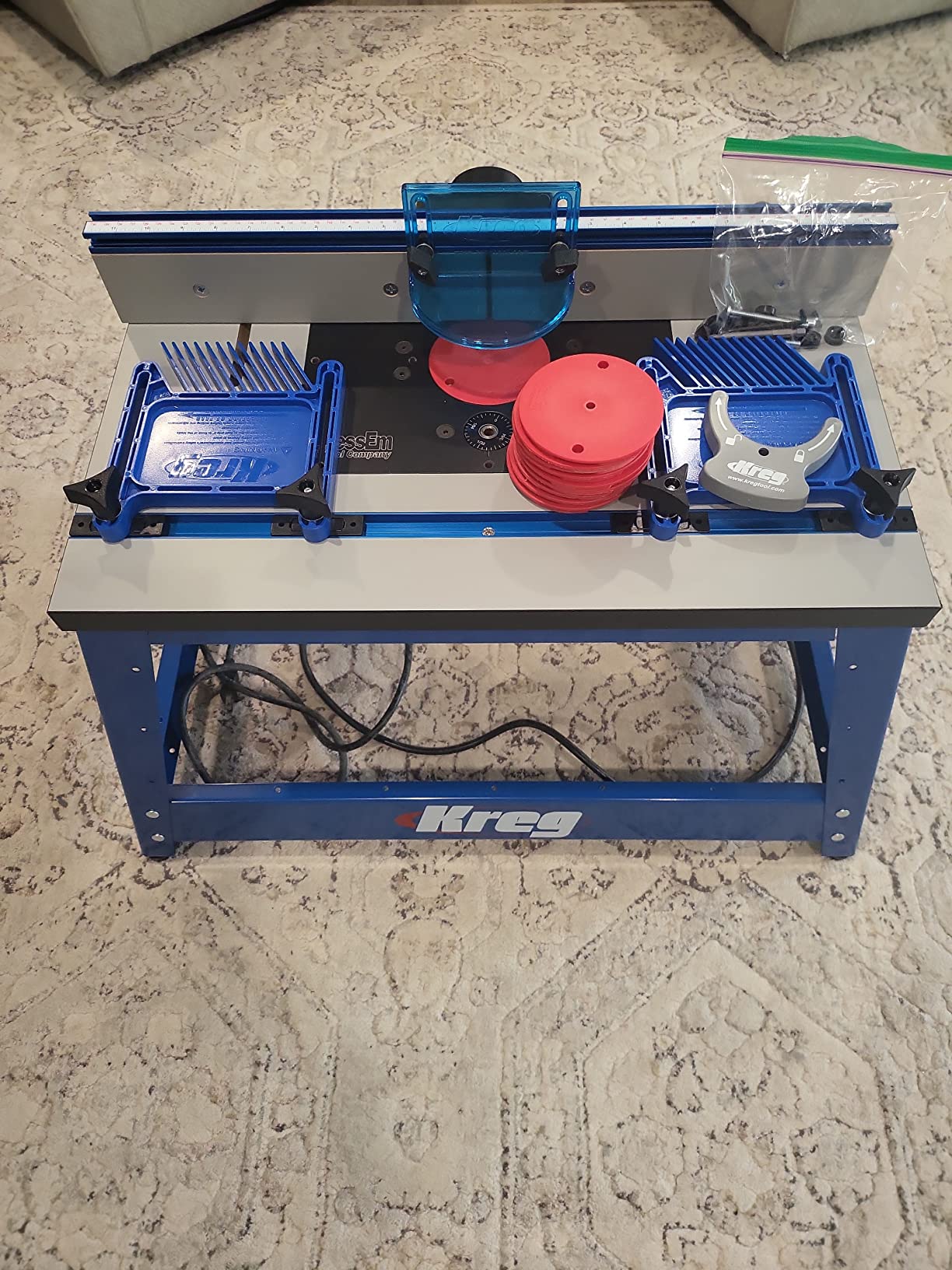
Long-term owners report that the PRS2100 stays in service for a decade or more and outperforms comparably priced benchtops on stiffness and precision, and the sliding surface design means it moves in and out of a bench when you need the space. At 12 kilograms it is portable enough to relocate between machines, which matters in a one-car garage shop.
Assembly is the weak point and nearly every reviewer says so. The cam-lock fence assembly is fiddly, the plastic cam-lock inserts in the fence hold-down loosen and flex, the base package includes no on-off switch and no featherboards, and the fence can sit out of square after tightening. Parts bags are not labeled, and a few buyers found screws protruding through the top. Several owners upgraded the plastic cam-lock parts with machine screws and report the issue disappears.
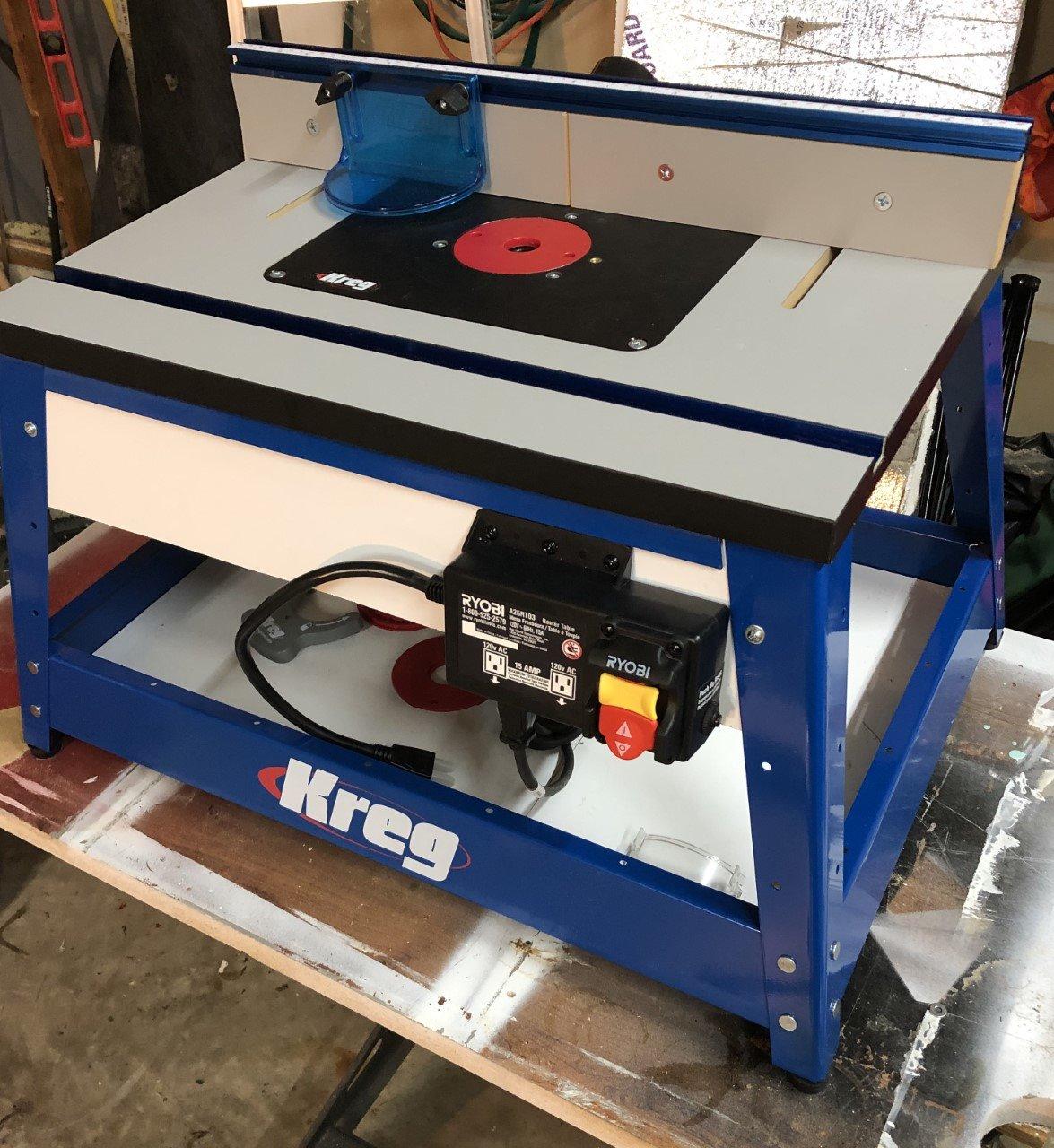
Why the jointing rods matter
For anyone who has wanted a jointer and used a planer instead, the jointing rods turn the fence into a reference edge. Set the workpiece against the rods and the fence, and the fence stays parallel as you push. It is not a substitute for a true jointer, and one user in the forum notes a router table setup will not give you truly parallel faces, so temper your expectations on edge jointing hardwood.
What it does give you is a repeatable reference for rabbets, dados and edge work on the same machine, without a second motor in the shop. Thirty inches of width also handles door panels and cabinet sides without overhang.
Before you buy, plan the extras
Budget for a switch and a pair of featherboards. They are not in the box, and their absence is the most common upgrade owners make. Read assembly reviews before you start, because the cam-lock fence is the part that decides whether your fence ends up square.
This is also the right pick if your plan is to build a rolling base under it later, since the sliding design was made for that. It is the wrong pick for a first-ever router, since the assembly will test you before the routing does.
6. RYOBI A25RT03 Universal Router Table – Best for Compact Shops
RYOBI Universal Router Table A25RT03
Metal construction
28 lb
Adjustable fence with featherboard
Miter gauge slot
Dual-outlet switch
Pros
- Metal construction feels solid under load
- Fence
- featherboard
- miter gauge and guard in one unit
- Fits older corded Ryobi routers well
- Straightforward assembly for a first table
Cons
- Universal fit is limited and the throat plate opening is restrictive
- The two fence halves do not align perfectly
- Slide guide slot is wider than 3/4 inch
- Fence locks down at the center only
The A25RT03 is built around one idea: a metal table with the accessories already attached, without reaching the build cost of a Kreg or POWERTEC benchtop. The fence, featherboard, miter gauge and functional bit guard are all in the unit, and a dual-outlet power switch on a cord handles two tools from one wall outlet. At 28 pounds it feels solid during routing rather than tinny.
Buyers rate it as a capable, sturdy entry-level table, and the metal construction is the reason. For a shop where square footage is tight, a metal benchtop unit with a fence already assembled is a lot of function in a small footprint. The featherboard and miter gauge slots in the top expand what you can do without buying separate jigs.
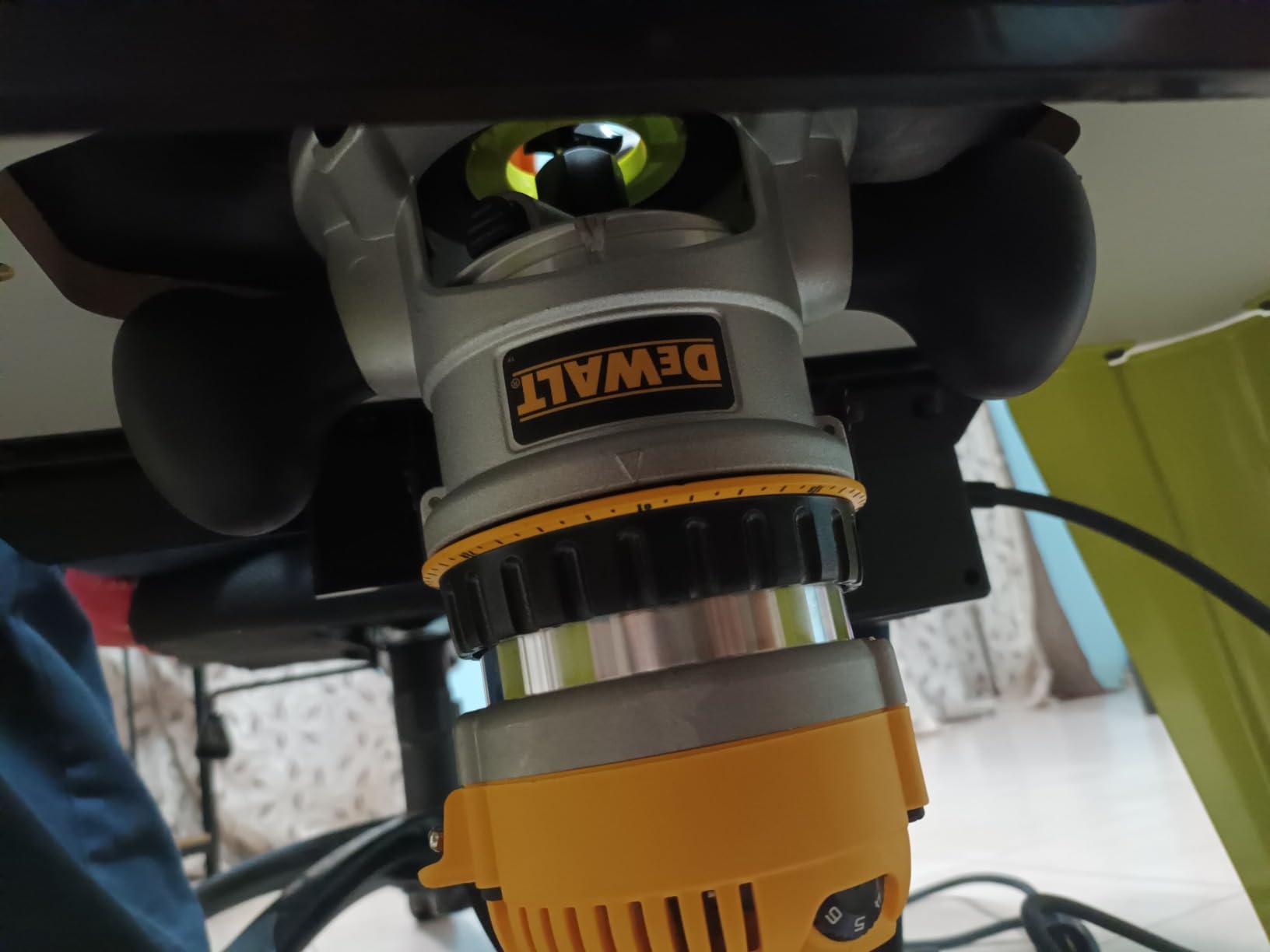
The dominant theme in the reviews is fit, and it is worth reading carefully before you order. Universal in this context means sized for corded fixed-base routers, not universal across every brand or format. The throat plate opening does not suit some router brands or the compact one-handle format, and the slide guide slot is slightly wider than a standard 3/4 inch, so featherboards designed for a table saw will not fit.
Several users had to modify the opening or buy a different router after discovering their model was not compatible. The two fence halves also do not align perfectly, and because the fence locks down at the center only, the near half can pivot under side pressure. The switch cord is also short, and owners who have older corded Ryobi routers report the fit is exact.
Check the throat plate before anything else
Get the dimensions of your router plate opening and compare them to the table opening before buying. This is the single decision that determines whether the A25RT03 works for you, and it takes two minutes. If your router is a compact palm router or a plunge model with a tall body, keep looking.
If it does fit, the included accessory set means you can start cutting the same afternoon. Fence, featherboard, miter gauge and guard are the four things most beginners end up buying separately within a month, and here they are on the table from day one.
Limits worth knowing
The center-only fence lock-down is the flaw that matters for accuracy work. Side load on a jointing operation can pivot the near half, and a fence that moves under pressure produces a tapered cut. For rabbets and dados on sheet goods it is fine; for edge jointing hardwood, choose a table with a full-width fence lock.
The over-wide slide slot is easy to work around with standard 3/4 inch accessories. The non-standard throat plate is not, which is why the fit check comes first.
7. Kreg PRS1025 Precision Router Table Top – Best Component for Building Your Own Table
Kreg Precision Router Table Top, Woodworking Router Table Top, PRS1025
MDF top with steel struts
3/8 inch insert plate
Four plate levelers
Miter gauge and T-slot track
Pros
- MDF with steel struts absorbs vibration from heavy routers
- Four precision levelers hold the plate flush
- Combination miter gauge and T-slot track
- Three Level-Loc reducing rings included
Cons
- Top only
- a stand or bench is required
- MDF is heavy and sensitive to moisture
- Insert plate thickness limits some lift combinations
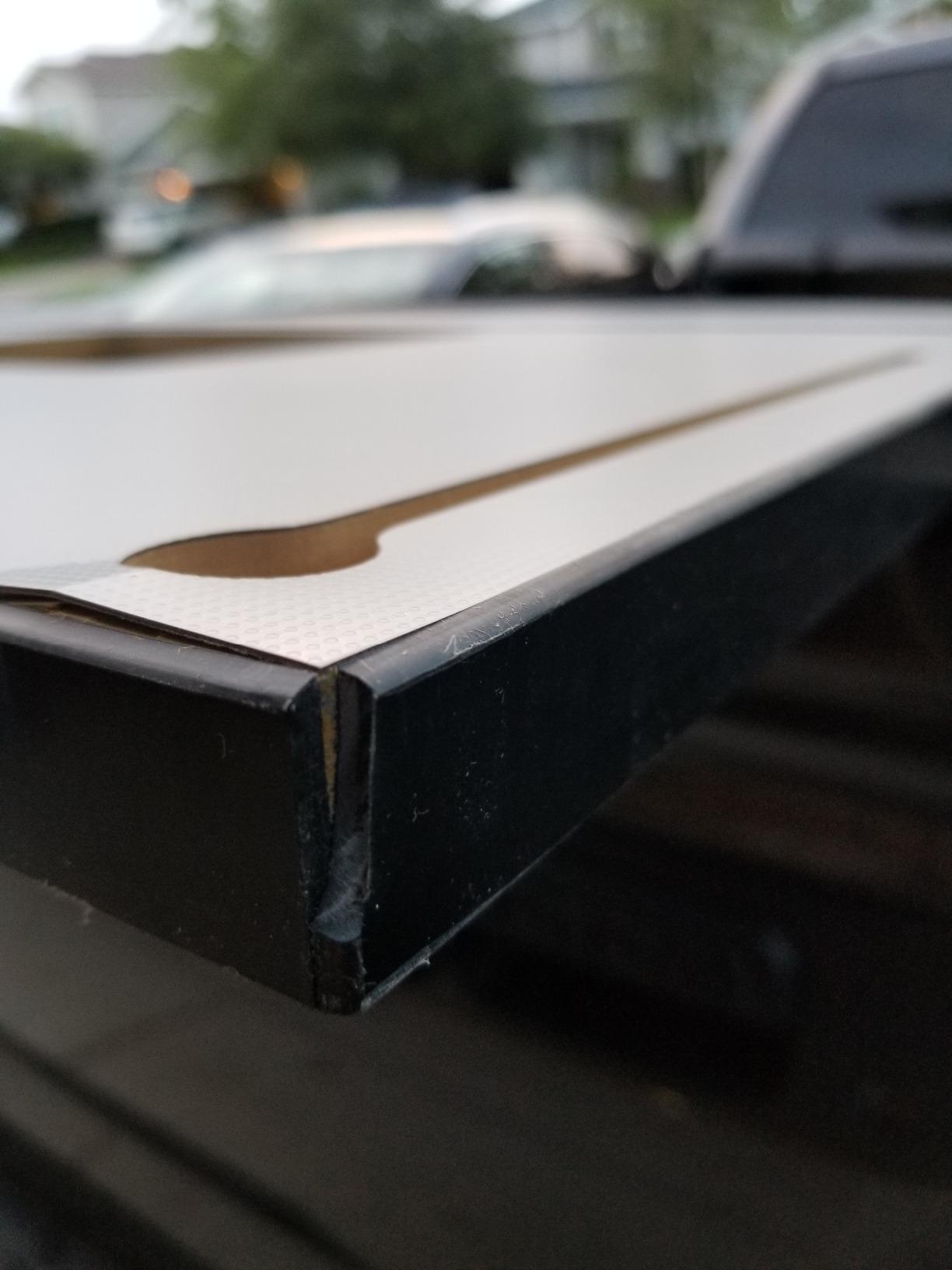
The PRS1025 is a tabletop, not a table, and experienced woodworkers who build their own router tables buy exactly this. The top is MDF with steel reinforcing struts underneath, chosen because MDF absorbs vibration from a heavy router instead of ringing, and the low-friction Easy-Slide laminate surface helps the workpiece move smoothly. At 26.8 pounds it is a serious component.
The 3/8 inch insert plate comes with four precision insert-plate levelers, which is the part that matters most if you are building. Levelers keep the plate and the top flush, and flush means the workpiece does not catch a lip as it crosses the opening. You also get a combination miter gauge and T-slot track, three Level-Loc reducing rings in 1 inch, 1-13/16 inch and 2-5/8 inch sizes, a ring wrench and a brass starting pin.
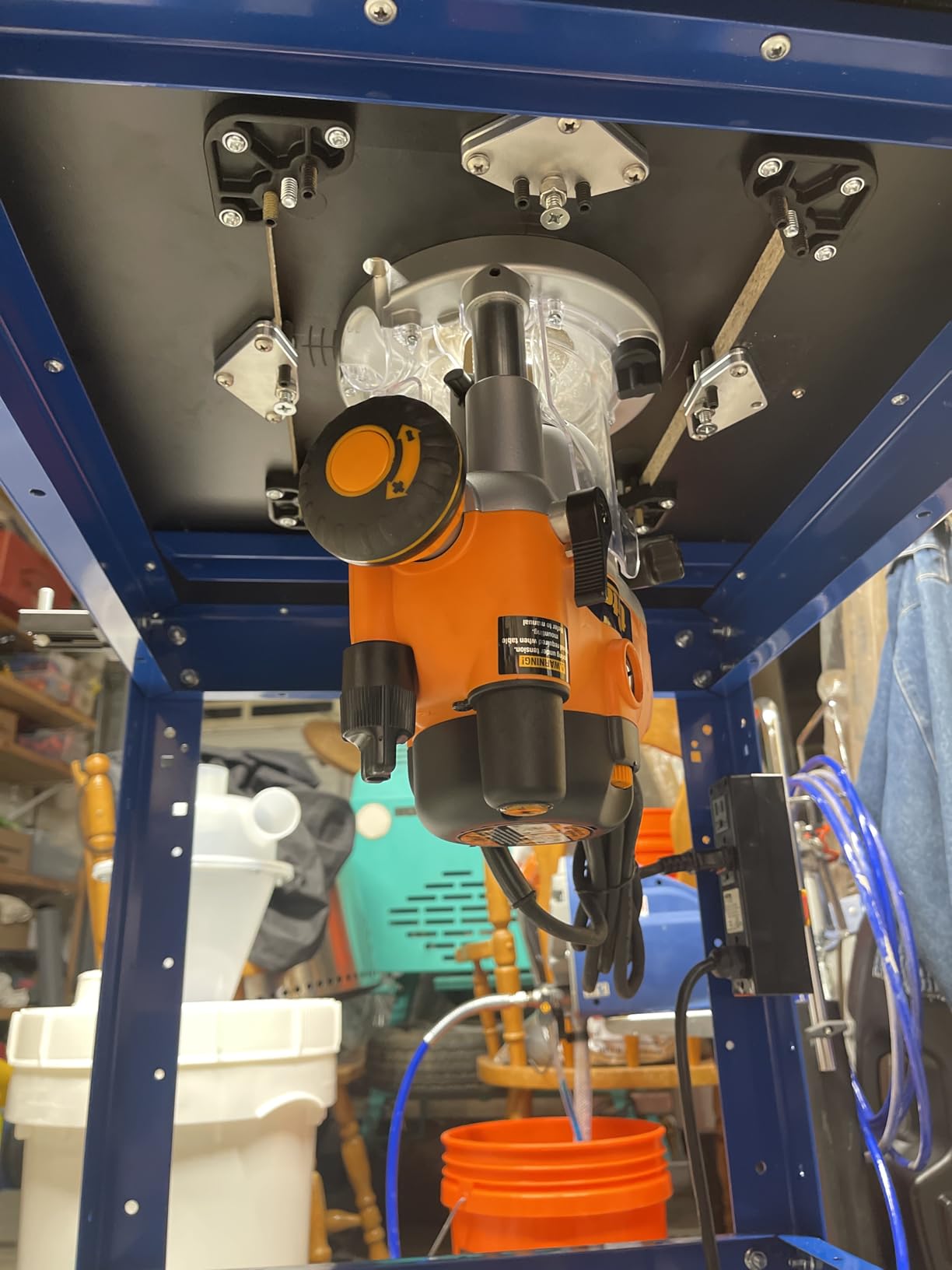
Buyers treat it as an upgrade or a build-it-yourself component, and they value the vibration damping and the accuracy of the plate levelers. It pairs naturally with the Kreg PRS2100 stand or with a custom bench, and the steel struts under the top are the reason it stays flat under a lift where a plain MDF slab would not.
The tradeoffs are structural. This is a top only, so a stand or bench is required, and MDF is heavier and more sensitive to moisture than metal, which matters in an unheated garage. The 3/8 inch plate thickness also limits some heavier router and lift combinations, so check your lift plate thickness before committing to a lift system.
When building your own table makes sense
The forum consensus on this topic is that the best router table is often the one you build, because it can be sized to your exact shop and your exact work. This top is the component that decision lands on. You choose the stand height, the base cabinet, the storage underneath, and whether the whole thing gets casters.
For a cabinet shop building drawer components, a custom base sized to your machine envelope is worth the extra weekend. The T-slot track also lets you mount featherboards and jigs directly rather than relying on a top-mounted fence alone.
Why not just buy a complete table
If your shop is small and your work is simple, this is over-engineering. You get a quality top and then still have to solve height, rigidity, a fence and dust collection yourself, and a poorly built cabinet will undo everything the levelers give you.
Also consider whether a cast iron or phenolic top suits your room better. This MDF top is the right choice for vibration damping and a warm shop, but phenolic will not move with humidity, and cast iron will outlast both.
8. Bench Dog 40-102 Cast Iron Router Table – Best Cast Iron Table-Saw Extension
Rockler Router Table w/ 28” ProFence and Plate, Cast Iron Top (40-120)
Cast iron top
60 lb
28 inch ProFence
Ten-point plate leveling
Limited lifetime warranty
Pros
- Cast iron top is nearly vibration-free on a cast iron saw
- Replaces a table saw wing instead of taking bench space
- 28 inch ProFence locks solidly and captures most chips
- Ten alignment points dial the plate dead level
- Limited lifetime warranty
Cons
- Router mounting plate sold separately and must be matched
- Very heavy to mount solo
- Rail holes may need drilling on some saws
- Some castings arrive out of flat
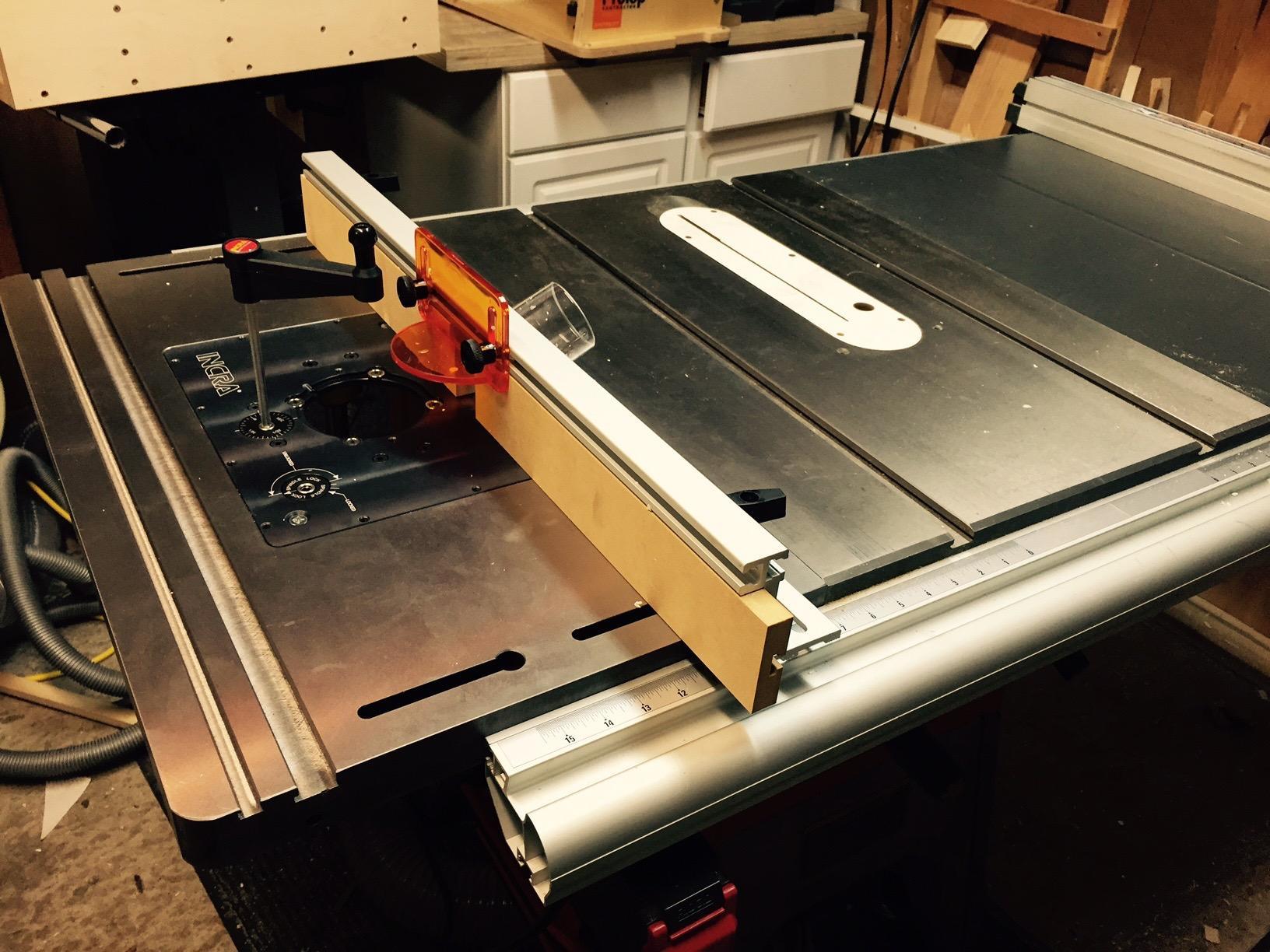
This is a shop-space play rather than a value play. The cast iron top mounts in place of a table saw extension wing, so instead of losing bench space to a router table you get routing capacity directly on the saw. At 60 pounds and 18 by 29 by 4 inches, it is the heaviest standalone unit in this roundup, and cast iron barely moves under a cutting load.
Owners with small shops love reclaiming the bench space and report near-zero vibration once mounted on a cast iron saw. The 28 inch ProFence locks solidly and collects roughly 90 percent of chips according to owners, dual fence slots let you work from either side of the table, and a third miter slot lets the table saw handle crosscut sleds. Ten router plate leveling adjustment points let you dial the plate dead level.
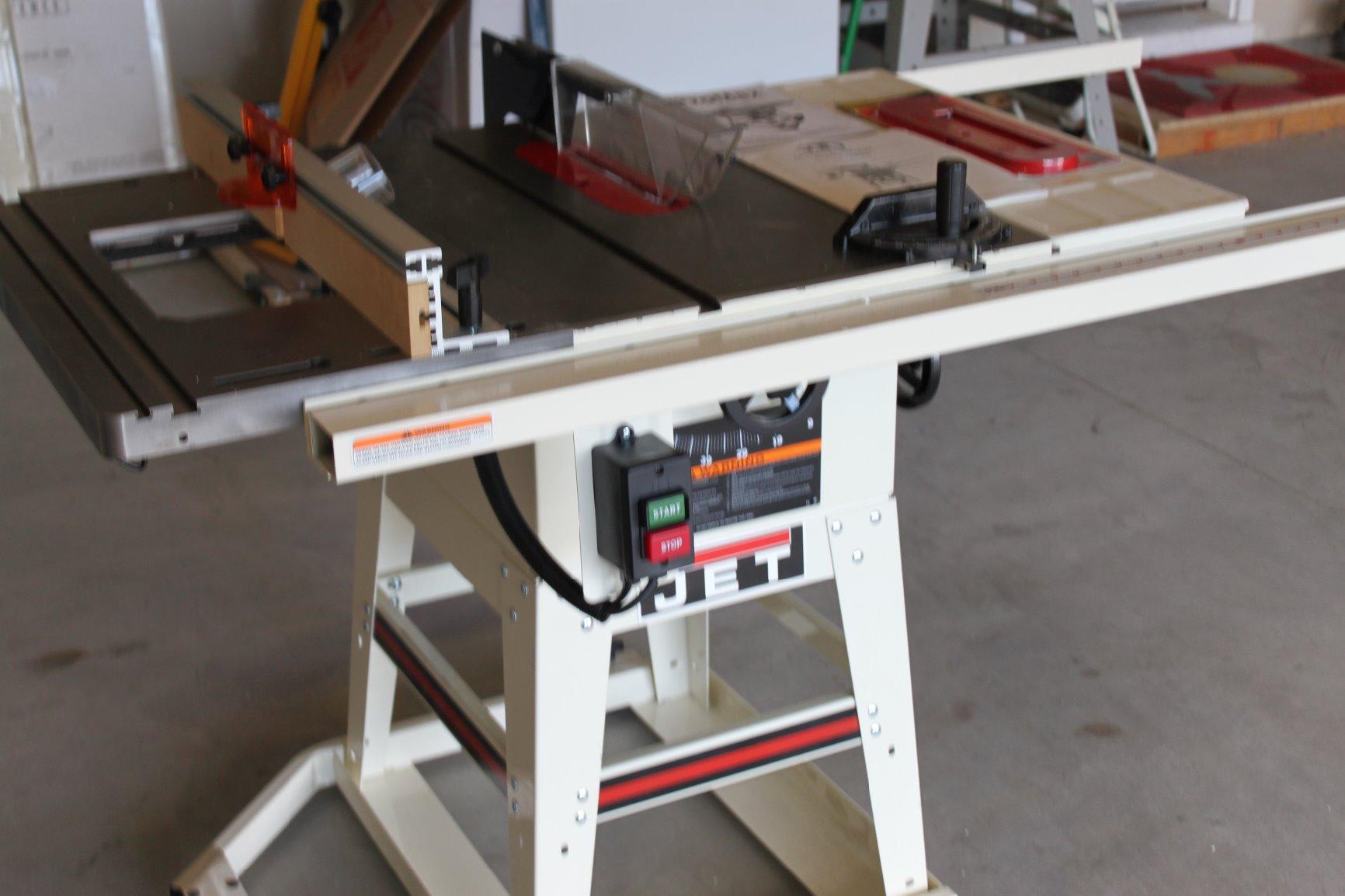
What is not included is the router mounting plate, which must be ordered separately to match your router. That is a critical purchasing detail, not a footnote. The two other recurring issues are drilling out mismatched rail holes if your saw is not a Bench Dog, and a small number of buyers receiving castings that were measurably out of flat and went through replacements. Mounting it solo is difficult, so plan a second set of hands.
Owners also note the included fence and its tape measure are adequate but upgradable. Installation beside a saw whose trunnion tilts toward that side is tight around the center bolt, so check clearance before you commit to the position.
When replacing the saw wing is the right move
If your bench space is the constraint, this is the answer. A benchtop table gives you routing at the cost of a permanent chunk of bench, while a wing-mount table costs you only the mounting hardware. The cast iron top also inherits the saw’s existing dust collection, which is often the most collected dust in the shop.
Ten leveling points matter more here than on a benchtop table, because a wing-mounted surface sits slightly below the saw top and any mismatch shows up as a step your workpiece catches on. Owners who spend time dialing the plate level report the results are worth it.
Where it will frustrate you
Sixty pounds at bench height is genuinely heavy, and installing it alone is a two-person job. If your saw rails are not a matching system you will be drilling and tapping your own holes, and the router plate is a separate purchase that must match your machine. Add a limited lifetime warranty to the equation and the long-term value is strong, but the entry commitment is the highest of any table here.
It is also not a portable option. This is a permanent installation, not something you move between machines.
9. JessEm Mast-R-Top 24 x 32 Inch Phenolic Top – Flattest Top for a Lift
JessEm Mast-R-Top 24″ x 32″ Phenolic Router Table Top, JessEm# 03006
3/4 inch phenolic top
24 x 32 inch surface
26.2 lb
Rabbeted router opening
Pre-drilled underside
Pros
- Phenolic top will not warp
- sag
- swell or corrode
- Owners verify flatness with a straightedge
- Generous 24 x 32 inch surface
- Rabbeted opening accepts most plates and lifts
- Pre-drilled underside for JessEm fences and stand
Cons
- Component only
- stand
- lift
- fence and router are separate purchases
- Fence alignment guides are not precut
- Bottom holes are unthreaded and need hand tapping
- Limited underside mounting holes
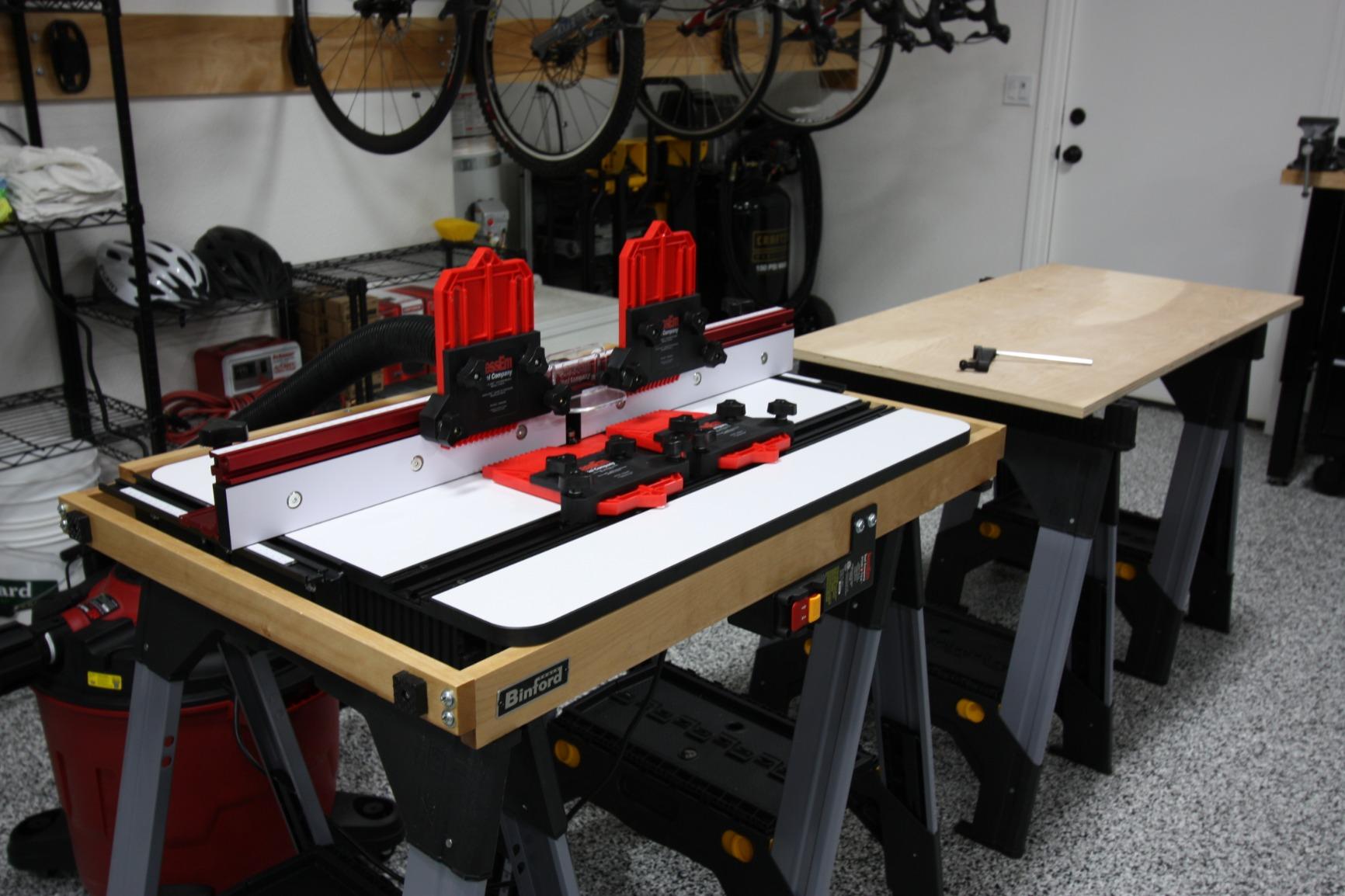
The Mast-R-Top is the top to buy if you plan to run a router lift, and the reason is flatness under load. The material is 3/4 inch phenolic, which will not warp, sag, swell or corrode, and owners with a Bridge City straightedge report the surface verified flat and staying flat weeks later with a lift installed. The review summary notes deviation better than .004 inch under lift load, which is the metric that actually matters for repeatability.
The working surface is 24 inches front to back by 32 inches wide with a centered router opening, and the rabbeted 9-1/4 by 11-3/4 inch opening supports most standard router plates and lifts. An extruded aluminum track carries a 1/4 inch T-slot and a standard 3/4 inch miter slot, and the underside is pre-drilled for JessEm router table fences and the steel stand. At 26.2 pounds it is manageable for one person.
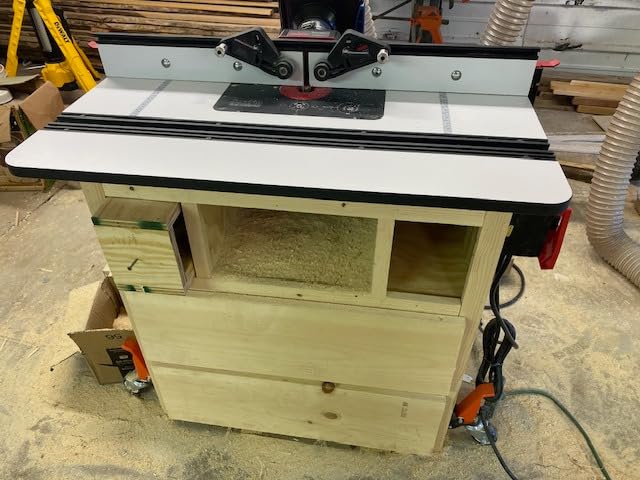
Be clear that this is a component. The stand, lift, fence and gauge are all separate purchases, and owners name total system cost as the main complaint. The rabbeted opening is the feature that makes it lift-friendly, since a lift mounted into a flat MDF opening can sit proud and rock, while a rabbet locates it positively.
Two assembly details catch people. The guide slots for fence alignment are not precut, so you must verify fence squareness yourself, and the bottom holes are not threaded, meaning mounting requires hand tapping. There are also limited underside mounting holes, which makes custom cabinet builds harder. Most buyers pair it with JessEm accessories, though shop-built fences also work.
Why phenolic wins under a lift
A router lift concentrates more force into the plate area than a hand-held setup does, and a top that deflects there changes your cut depth mid-pass. Phenolic is a dense, stable resin that resists moisture and creep, which matters in an unheated shop where MDF will swell over a season and aluminum can ring. The rabbeted opening is what makes the lift locate correctly every time.
This is the top we would pair with a lift if we were building a system from scratch, and the flatness reports from owners with precision straightedges are the strongest evidence in this entire roundup.
Who should skip it
Skip it if you want a working table this week. You are buying a slab that needs a stand, a fence, a lift and a router before it routes anything, and the unthreaded holes mean you will be at a bench with a tap before you cut wood. The total system cost is the highest entry commitment in the list even though the component itself is mid-priced.
Also skip it if you are not committed to building a cabinet around it. The limited underside hole pattern is fine for JessEm accessories and frustrating for custom layouts.
10. SawStop RT-C27 Cast Iron Router Table – Best for SawStop Owners
SawStop RT-C27 27″ x 16″ Cast Iron Table For RT
27 x 16 inch cast iron top
52 lb
Ground to .0118 inch
11-3/4 by 9-1/4 inch opening
In-line saw mount
Pros
- Well-machined casting with tight slots and openings
- One owner measured it better than .005 inch mounted
- 27 inch width is among the largest available
- JessEm Master II lift drops straight in
- Integrates with SawStop fences
- lifts and dust collection
Cons
- Mounting hardware not included
- Hole patterns do not match non-SawStop saws
- Edge meeting the saw not always milled square
- Support legs may be needed on longer saw configurations
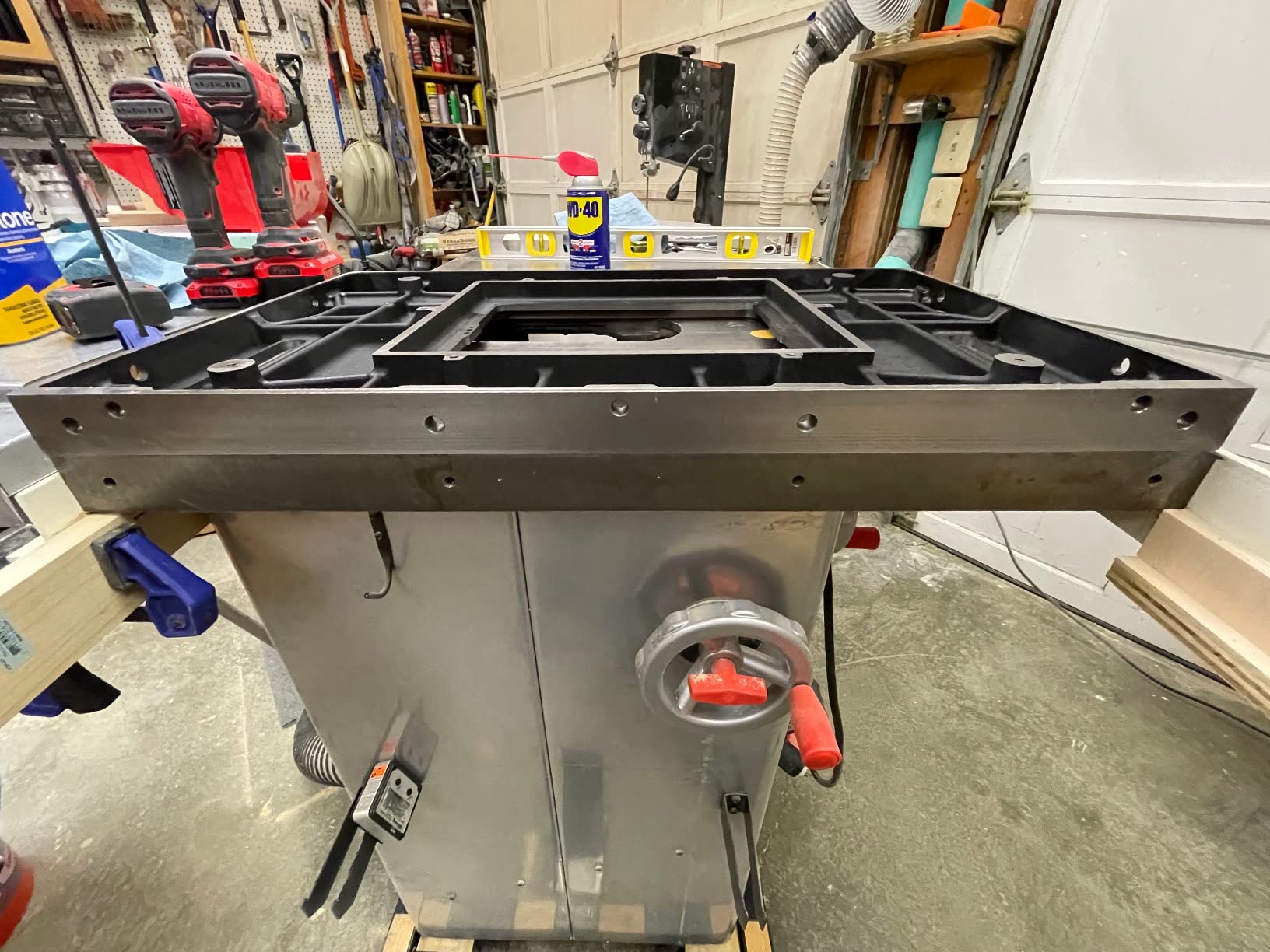
The RT-C27 is a 27 by 16 inch cast iron router table that installs in line with the saw top, which is the same space-saving logic as the wing-mount cast iron option but with a much larger surface. At 52 pounds and precision ground to .0118 inch, this is a well-machined casting, and owners call it the flattest of the cast iron extensions they have owned. One owner measured it better than .005 inch once mounted.
The router plate opening measures 11-3/4 by 9-1/4 inch, which is the same rabbeted geometry that fits standard plates, and a JessEm Master II lift drops straight in. The design integrates with the SawStop line of fences, lifts and dust collection add-ons, so if your saw is a SawStop the accessory ecosystem is already there. Support legs may be needed on longer saw configurations.
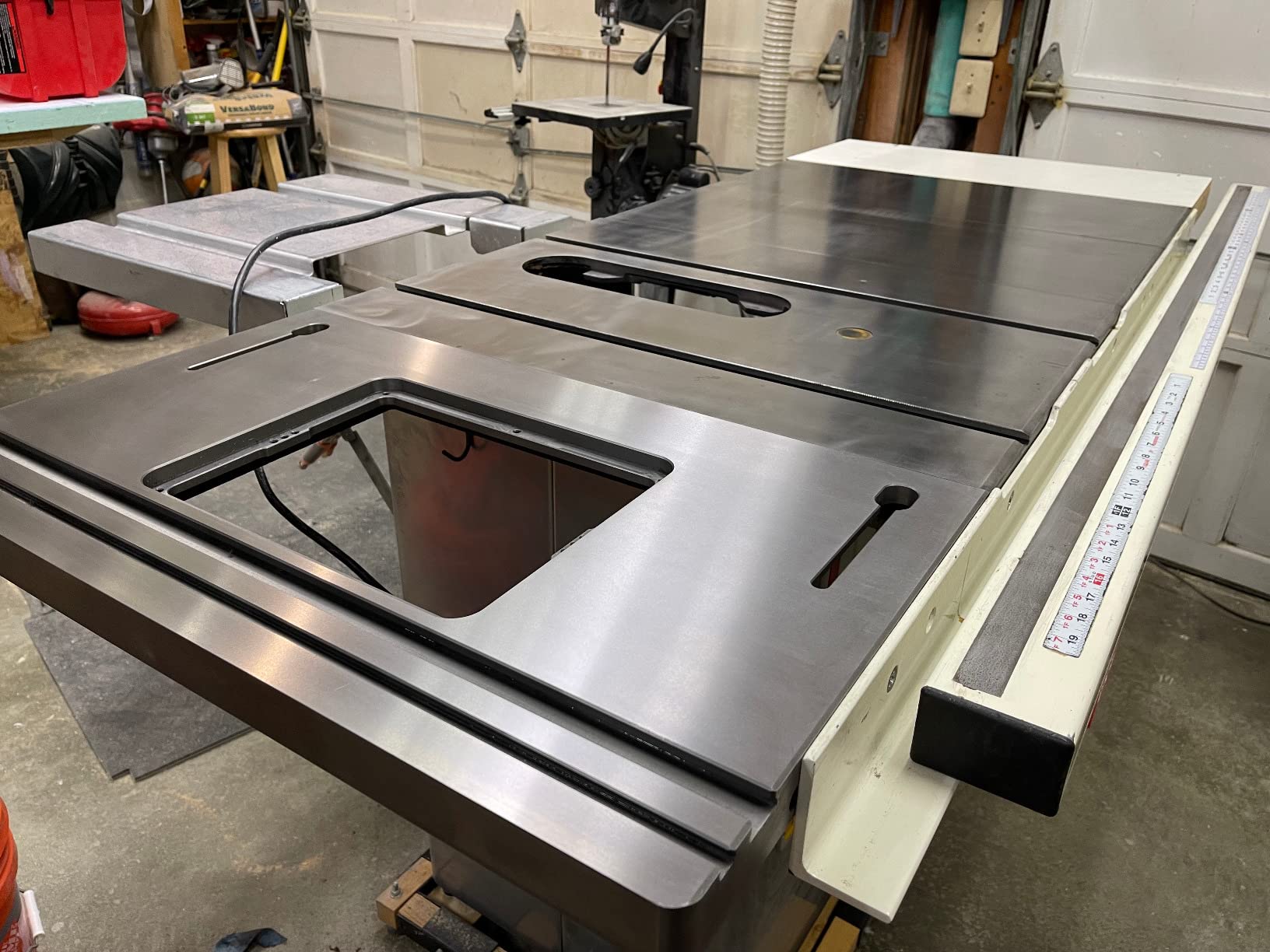
The practical notes are what to plan around. Mounting hardware is not included and must be sourced separately, and hole patterns do not match non-SawStop saws, so drilling and taping your own holes is usually required. Some castings had an edge that meets the saw not consistently milled square, and the hole spacing for a third-party dust cabinet may need enlarging.
Owners describe it as the best-machined and flattest of the cast iron router table extensions they have owned, and they like how cleanly it integrates with SawStop accessories. Twenty-seven inches of width is among the largest router table extensions available, so full-size cabinet panels and doors stay flat without roller support.
When the in-line format wins
The in-line installation maximizes shop space, and at 27 inches wide it does that while giving you more working area than most freestanding benchtop tables. If you route cabinet sides and full doors, the width is the argument. Long boards pass from the saw onto the table without a step, and the cast iron surface stays flat under a heavy router.
For SawStop owners the accessory story is what seals it. A fence, a lift and a dust box designed for this platform slot in without adapters, and the metric lift pocket takes a JessEm Master II directly.
Know what you are signing up for
You need the correct mounting hardware, and on a non-SawStop saw you are drilling and taping holes yourself. Inspect the edge that meets the saw when it arrives, since squareness there varies on a minority of castings. And at 52 pounds this is a two-person install.
If you do not already own a compatible saw, this is a poor first router table. It is a second machine for someone who has already routed seriously and wants saw-side capacity with cast iron stability.
How to Choose a Router Table in 2026
Use this order of decisions, because it is the order experienced woodworkers use and it saves money. Pick the lift first, then the tabletop, then the fence, then the accessories. A lift changes how you work all day; a top only has to stay flat. If you pick the table first and then find the lift you want will not fit, you are back to square one.
Choose the format before the features
A benchtop table sits on an existing bench, has the lowest entry commitment of any format here, and moves easily, but it permanently eats bench space. A table-saw extension wing reclaims that space entirely and bolts to one specific saw, at the cost of a heavier, permanent install and possible drilling. A cabinet-style or custom build fits your shop exactly and costs you a weekend. A mobile workstation on casters is for shops where the router table shares a room with something else. A component-only top is for people building a cabinet. Decide this first and the rest of the shortlist narrows on its own.
Decide on the lift before the top
Above-table bit change through a lift is the single biggest quality-of-life upgrade in this category. Without one, you either get under the table or flip the whole workpiece over, and that is the most common ergonomic complaint in forum threads. A micro-adjust lift lets you set depth from above the table with the workpiece in place. Woodpecker’s twin-lift-screw designs draw strong loyalty among enthusiasts precisely because binding is eliminated, and JessEm systems are treated as the professional-shop default when the budget is not the constraint.
Two cautions. Not every table plate is thick enough for a lift, and the Kreg PRS1025 at 3/8 inch is the specific case where heavier router and lift combinations are limited. And a lift does not come with most tables, so budget for it as part of the system rather than as an accessory. The rabbeted opening in the JessEm top is worth noting because it locates a lift positively instead of letting it sit proud.
Top material decides durability
Aluminum is flat, stiff, marks nothing and sheds chips. Cast iron is heavier, absorbs vibration better than anything else and lasts, but it is a two-person install and can arrive out of flat. Phenolic resin will not warp, sag, swell or corrode and holds flatness under a lift, which is why it appears in lift-equipped systems. MDF with a laminate surface damps vibration and is the budget default, but it flexes under side load and can mark light workpieces. Budget laminate tops are the ones to skip if you care about flatness, and wobbling legs without rubber-capped feet are the deal breaker forum readers mention most.
Fence quality outranks everything
The fence is consistently called the most important part of any router table, and it is where budget tables cut corners. An aluminum fence with sliding faces and locking levers holds a setting under side load. An MDF faceplate deflects, and you will chase a taper that is not the bit, the depth or the wood. Full-width fence lock-down matters more than a center-only clamp, because a center clamp lets one half pivot when you push a workpiece against it. If the fence lacks a micro adjuster, expect to re-square it after the first few cuts.
Bosch versus Kreg, head to head
This is the most-searched question in the category, so here is the direct verdict. Bosch wins on portability and ecosystem. The RA1181 has an aluminum top and a tall aluminum fence, weighs 30 pounds, stores six feet of cord, and runs the router and shop vac from one switch. It is the table you can carry to a garage sale of someone else first.
Kreg wins on fence precision and surface area. The PRS2100 gives you 30 by 19.25 inches of benchtop, an aluminum fence with sliding faces and locking levers, jointing rods for edge work, and a plate leveling system that stays accurate. Owners report these tables staying in service for a decade or more. The trade is a fiddlier cam-lock assembly and a bulkiker unit that stays on the bench.
If you want one answer: choose Bosch if the table will move or live on a rented bench, and Kreg if it will be bolted into the same spot and do repeat joinery every week.
Is the budget tier any good?
Yes, with a specific caveat. The budget class, which includes Harbor Freight, VEVOR, Powertec and SKIL options, is now a real category rather than a joke, and the honest answer is that fence rigidity and top flatness are where it gives way. A Harbor Freight or VEVOR table will get you cutting dados and grooves this weekend. It will not hold a jointing edge on hardwood, and the dust port on the cheapest units is often not a tight fit, so shavings leak back onto the workpiece.
Within this budget group, the POWERTEC 71402V is the stronger pick, because the steel stand, the eight-point leveling system and the complete fence kit solve the three problems that make budget tables wobble, flex and leak. The SKIL SRT1039 is the sensible entry if you already own a router, and the SKIL RT1323-01 kit is the best value overall because the router is included.
Check router compatibility before you pay
Universal is not universal. Bosch uses a non-standard bushing and collar system, so a table advertised as universal across brands may still need modification for a Bosch machine. Check three things: whether your router plate fits the table opening or the included plate, whether your bushing diameter matches one of the reducing rings, and whether your router body is short enough to clear under the top. Several owners across this roundup had to modify a plate hole pattern or change routers after ordering, so five minutes with a tape measure prevents that.
Size the top to the work, not the brand
Benchtop tables in the 23 to 27 inch width range handle drawer parts, small doors and shelves. Freestanding and extension formats in the 27 to 32 inch range handle full-size cabinet panels and long boards. Anything wider than 27 inches means you should plan for roller stands under long boards, because the workpiece will overhang the fence line and lose flatness. Depth matters too: at 16 inches of front-to-back depth you have room for a fence and a featherboard plus your hands. Check that the table height clears your bench before you commit, since several owners found the benchtop units sat high on a standard bench.
Frequently Asked Questions
Which router table is better, Bosch or Kreg?
Bosch wins on portability and ecosystem, Kreg wins on fence precision and surface area. The Bosch RA1181 has an aluminum top, a tall fence and an integrated power switch at 30 pounds. The Kreg PRS2100 offers 30 by 19.25 inches of benchtop, an aluminum fence with jointing rods and a plate leveling system. Choose Bosch if the table will move, Kreg if it stays put.
Are router tables worth it?
They are worth it if you routinely cut dados, grooves, rebates, inlays or jointing edges, because a fence repeats the same cut and long boards stay flat. They are not worth it if you only occasionally shape an edge, since a handheld router handles that fine. The real gain is keeping the good face up instead of flipping the workpiece.
Is the Harbor Freight router table any good?
It is a usable entry point, not a precision machine. Budget tables from Harbor Freight and VEVOR will cut dados and grooves reliably, but fence rigidity and top flatness give way, and the dust port is often not a tight fit so shavings land back on the workpiece. Among budget options the POWERTEC 71402V is the better buy thanks to its steel stand and leveling system.
What is the best size router table for woodworkers?
For drawer parts, shelves and small doors, a benchtop table between 23 and 27 inches wide is enough. For full-size cabinet panels and long boards, look at 27 to 32 inches, which is where extension and freestanding formats sit. Beyond 27 inches of width, add roller stands so long boards do not tip off the fence line.
Who makes the best router table?
It depends on format rather than brand alone. Bosch leads on portable all-metal benchtop design, Kreg on fence precision and surface area, JessEm on flatness under a router lift, and cast iron extensions from Bench Dog and SawStop on vibration control. Before anything else, check whether your router plate fits the table opening.
The Verdict on the Best Router Tables in 2026
The Bosch RA1181 is the best router table for most people in 2026, because an aluminum top and an aluminum fence are the two things you cannot replace cheaply later, and it is the only pick here with both plus more than 5000 owner reviews documenting its limits. Buy the SKIL RT1323-01 kit if you do not own a router yet, and the Kreg PRS2100 if the table is staying in one spot and doing repeat joinery.
Before you buy anything, measure your router plate against the table opening, decide whether you want a lift, and check that the bench height suits the table. Those three checks prevent almost every complaint in the reviews.