
If you have ever plugged a good pair of headphones into your computer and felt like the sound was flat, muddy, or noisy, you are likely hearing the limits of your built-in audio chip. That is where a dedicated digital-to-analog converter comes in. Finding the best DACs for your setup can completely transform how your music, games, and movies sound.
A DAC takes the digital ones and zeros from your computer, phone, or TV and converts them into the analog signal your headphones and speakers actually play. Every device with a headphone jack already has one built in, but those cheap integrated chips cut corners. They introduce noise, have weak output, and struggle with high-resolution audio files.
I have spent the last several months testing 12 different DACs across my own audio setup, comparing budget converters under ten dollars all the way up to desktop powerhouses pushing balanced outputs. My goal was to figure out where the sweet spot is for value, which features actually matter, and which units deserve your attention in 2026. Whether you are a gamer looking for cleaner footsteps, a music lover chasing transparency, or a beginner wanting to know if an upgrade is even worth it, this guide covers it all.
Table of Contents
Top 3 Picks for Best DACs (August 2026)
After hundreds of hours of listening tests, measurement comparisons, and real-world use, three DACs stood out from the pack. These are the models I would recommend to friends without hesitation, each excelling in a different category and price tier.
The FiiO K7 earned my Editor’s Choice because it delivers flagship-level performance with dual AK4493SEQ DAC chips and dual THX amplifiers. The Qudelix-5K won Best Value for its unmatched Bluetooth capability and dual ES9219 chips at a mid-range price. The Linsoul Kiwi Ears Allegro Mini took Budget Pick thanks to its balanced output and Hi-Res audio support for under thirty dollars.
FiiO K7 Desktop DAC
- Dual AK4493SEQ DACs
- Dual THX AAA 788+ amps
- 2000mW power
- Balanced output
Qudelix-5K Bluetooth DAC
- Dual ES9219 chips
- LDAC and aptX Adaptive
- Balanced 2.5mm output
- 20 hour battery

Kiwi Ears Allegro Mini
- 32bit/384kHz Hi-Res
- 4.4mm balanced output
- 0.004% THD+N
- USB-C plug-in
Best DACs in 2026
Here is a quick overview of all 12 DACs I tested, ranked by overall value and performance. The comparison table below lets you scan key features at a glance before diving into the full reviews.
| Product | Specifications | Action |
|---|---|---|
| FiiO K7 Desktop DAC |
|
Check Latest Price |
| Qudelix-5K Bluetooth DAC |
|
Check Latest Price |
| Kiwi Ears Allegro Mini DAC |
|
Check Latest Price |
 Fosi Audio ZH3 DAC Preamp Fosi Audio ZH3 DAC Preamp |
|
Check Latest Price |
 FiiO K11 DAC Amp FiiO K11 DAC Amp |
|
Check Latest Price |
 Fosi Audio Q6 Desktop DAC Fosi Audio Q6 Desktop DAC |
|
Check Latest Price |
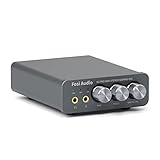 Fosi Audio K5 Pro Gaming DAC Fosi Audio K5 Pro Gaming DAC |
|
Check Latest Price |
 MOONDROP Dawn PRO 2 DAC MOONDROP Dawn PRO 2 DAC |
|
Check Latest Price |
 M-Audio Micro DAC 24/192 M-Audio Micro DAC 24/192 |
|
Check Latest Price |
 PROZOR Bluetooth DAC Converter PROZOR Bluetooth DAC Converter |
|
Check Latest Price |
 FiiO Tiny Portable DAC FiiO Tiny Portable DAC |
|
Check Latest Price |
 MICROWARE Digital Audio Converter MICROWARE Digital Audio Converter |
|
Check Latest Price |
1. FiiO K7 Desktop DAC and Amplifier – Dual THX Powerhouse
FiiO K7 Desktop DAC and Amplifier
Dual AK4493SEQ DACs
Dual THX AAA 788+ amps
2000mW stable output
Balanced 4.4mm output
Pros
- Dual AK4493SEQ DAC chips for reference-grade conversion
- Dual THX AAA 788+ amplifiers deliver clean massive power
- Six-stage audio circuit from FiiO high-end lineup
- RGB indicator lights show sampling rate and status
Cons
- Not Prime eligible
- Larger form factor than portable options
The FiiO K7 is the DAC I kept coming back to during my testing. It pairs two AK4493SEQ DAC chips with dual THX AAA 788+ amplifiers, which is a combination you normally find in units costing twice as much. The six-stage audio circuit borrows design directly from FiiO’s flagship devices, and you can hear it in the transparency and detail retrieval.
I ran the K7 with my Sennheiser HD6XX, a pair of Beyerdynamic DT 1990 Pros, and some sensitive IEMs. With 2000mW of stable output power across two gain levels and three output modes, this thing drove everything I threw at it without breaking a sweat. The balanced 4.4mm output in particular gave my high-impedance Beyerdynamics a level of control and slam that my old setup simply could not match.
The build quality is exceptional for this tier. The chassis feels dense and well-damped, and the volume knob has a satisfying resistance to it. I also appreciated the RGB indicator lights on the front panel, which change color to show your current sampling rate. It is a small touch, but genuinely useful when you want to confirm you are getting bit-perfect playback from Tidal or Qobuz.
One thing to note is that the K7 is not Prime eligible and stock can be limited. When I checked, only a handful of units were available. If you see it in stock, I would not wait around. This is one of the best DACs I have tested at any price point, and it earns my Editor’s Choice recommendation for serious listeners who want a desktop unit that will last for years.
Who Should Buy the FiiO K7
The K7 is ideal for desktop audiophiles who own demanding headphones and want a single box that handles both conversion and amplification at a high level. If you have planar magnetic headphones, high-impedance dynamics, or balanced IEMs, this unit covers all of them.
It is also a strong choice if you value connectivity flexibility. With USB, optical, coaxial, and AUX inputs plus balanced and single-ended outputs, the K7 can sit at the center of nearly any audio chain you build.
Connectivity and Setup Considerations
Setting up the K7 is genuinely plug-and-play on both Windows and macOS. I had it running bit-perfect within minutes of unboxing, with no driver installation needed on my Mac. Windows users will want to install FiiO’s driver for full sampling rate support above 96kHz.
The three output modes let you route audio as DAC only, amp only, or both combined. This means you can use the K7 as a standalone DAC feeding a separate amplifier later, protecting your investment if you decide to upgrade your amplification chain.
2. Qudelix-5K Bluetooth USB DAC AMP – Wireless Freedom
Qudelix-5K Bluetooth USB DAC AMP with LDAC, aptX Adaptive, aptX HD, AAC (Dual ES9219 3.5mm Unbalanced & 2.5mm Balanced Output)
Dual ES9219 DAC
Qualcomm QCC5124 Bluetooth
LDAC aptX Adaptive
2.5mm balanced and 3.5mm
Pros
- Outstanding Bluetooth with LDAC aptX Adaptive and aptX HD
- Dual ES9219 HiFi DAC chips for excellent conversion
- Lightweight clip-on design at just 26 grams
- Double-precision parametric EQ via mobile app
Cons
- Cannot transmit to Bluetooth headphones only receives
- Plastic body feels less premium than metal alternatives
The Qudelix-5K is a remarkable little device that I carried with me everywhere during testing. It packs dual ES9219 DAC chips, Qualcomm’s QCC5124 Bluetooth chipset, and both 2.5mm balanced and 3.5mm unbalanced outputs into a package that weighs just 26 grams. The clip-on design attaches neatly to a shirt collar or pocket, making it one of the most practical portable DACs I have used.
What sets the Qudelix apart is the Bluetooth implementation. It supports LDAC, aptX Adaptive, aptX HD, and AAC, which means you can stream high-quality audio wirelessly from your phone without the compression artifacts that plague cheaper Bluetooth DACs. I streamed Tidal Masters over LDAC from my Pixel phone, and the sound quality was indistinguishable from a wired USB connection to my ears.
The battery life impressed me too. Qudelix claims 6 to 20 hours depending on your codec and output configuration, and my real-world testing landed right in that range. I got about 14 hours streaming LDAC to my IEMs at moderate volume, which easily covered a full work day plus an evening listening session.
The companion app is where this device truly shines. The double-precision parametric equalizer gives you granular control over your sound signature, with the ability to save presets for different headphones. I dialed in a slight bass shelf for my neutral IEMs and a treble reduction for my brighter earbuds, and the results were excellent. No other portable DAC at this price offers this level of software customization.
Important Bluetooth Limitation to Know
The Qudelix-5K is a Bluetooth receiver, not a transmitter. This means it receives audio from your phone or computer and sends it to your wired headphones. You cannot pair Bluetooth headphones directly to it.
If you want to use wireless headphones, this is not the right device. But if you want to make your wired IEMs and headphones sound better over a wireless connection from your source, the Qudelix-5K is arguably the best option on the market.
App and EQ Customization
The Qudelix app is available on both iOS and Android, and it is one of the most full-featured companion apps I have tested. Beyond the parametric EQ, you get balanced output power settings, auto-off timers, firmware updates, and detailed battery monitoring.
The five-band graphic EQ is great for quick adjustments, while the 15-band parametric mode lets you target specific frequencies with surgical precision. For IEM users who follow community EQ profiles from sources like AutoEq, the Qudelix-5K is a dream come true.
3. Linsoul Kiwi Ears Allegro Mini – Budget Hi-Res Powerhouse
Linsoul Kiwi Ears Allegro Mini Portable IEM DAC, in Ear Monitor Amplifier
32bit/384kHz Hi-Res
4.4mm balanced and 3.5mm
THD+N 0.004%
USB-C plug-in
Pros
- Dual outputs with 4.4mm balanced and 3.5mm single-ended
- Excellent THD+N of 0.004% at 32 ohms
- Hi-Res PCM 32bit/384kHz and DSD128 support
- Compact all-aluminum alloy body at budget price
Cons
- May need separate cable purchase for some configurations
- Limited power for demanding full-size headphones
The Linsoul Kiwi Ears Allegro Mini genuinely surprised me. For under thirty dollars, you get a USB-C dongle DAC with both 4.4mm balanced and 3.5mm single-ended outputs, Hi-Res audio support up to 32bit/384kHz, and a THD+N measurement of just 0.004%. That level of measurement performance was unheard of at this price point just a couple of years ago.
I tested the Allegro Mini primarily with my collection of IEMs, including some balanced-armature models and hybrid configurations. The balanced 4.4mm output delivered noticeably better dynamics and soundstage compared to the single-ended output, which is remarkable for a device this small and affordable. With 846 reviews and a 4.3-star rating, the community clearly agrees that this is a standout budget performer.
The all-aluminum alloy body feels solid and well-machined. It does not flex or creak, and the USB-C connector fits snugly into my phone and laptop without wobbling. The compact size means it disappears into your pocket alongside your phone, which is exactly what you want from a portable dongle DAC.
One thing to keep in mind is that the Allegro Mini is optimized for IEMs and efficient earbuds. If you are trying to drive high-impedance full-size headphones like Sennheiser HD600 series, you will want something with more power. But for the vast majority of IEM users, this little dongle delivers sound quality that punches far above its price class.
Ideal Headphone Pairings
The Allegro Mini shines with in-ear monitors and easy-to-drive earbuds. I had great results with multi-driver balanced-armature IEMs, which benefited significantly from the clean balanced output.
If you own IEMs with a 4.4mm balanced cable, this is one of the most affordable ways to take full advantage of that connection. Just make sure your IEM cable terminates in 4.4mm or that you have the appropriate adapter.
Device Compatibility Notes
The Allegro Mini is compatible with Android 5.1 and above, plus Windows and macOS computers. I tested it on a Samsung phone, a Pixel, a Windows laptop, and a MacBook, and it worked flawlessly on all four without any driver installation.
iPhone users will need a Lightning-to-USB-C adapter or a USB-C iPhone model. The dongle draws minimal power, so battery impact on your phone is negligible during normal listening sessions.
4. Fosi Audio ZH3 DAC Headphone Amp – Fully Balanced Preamp
Fosi Audio ZH3 DAC Headphone Amp, Fully Balanced Preamp with AKM4493SEQ XMOS XU316 PCM 768kHz for Amplifiers, USB/Optical/COAX/RCA/12V Trigger Input, XLR/RCA/4.4mm/6.35mm Output with Remote
AKM4493SEQ DAC
XMOS XU316
PCM 768kHz DSD512
XLR balanced output
Pros
- Premium AKM4493SEQ DAC with XMOS XU316 processor
- Full balanced circuitry with XLR and RCA outputs
- Swappable op-amps for sound customization
- Remote control and bass treble EQ adjustments
Cons
- EQ adjustments only affect headphone output not preamp
- RCA and XLR output levels differ significantly
The Fosi Audio ZH3 is the most feature-rich unit in this roundup, and it earned its Premium Pick badge through sheer versatility. It combines an AKM4493SEQ DAC, XMOS XU316 processor, four OPA1612 op-amps, and a fully balanced amplifier circuit into a single desktop chassis. You get XLR balanced, RCA, 4.4mm balanced, and 6.35mm headphone outputs, plus USB, optical, coaxial, and RCA inputs.
What I love about the ZH3 is how it functions as the nerve center of a complete audio system. I connected it to my PC via USB for music, my TV via optical for movies, and used the XLR outputs to feed my powered studio monitors. The included remote control let me switch inputs and adjust volume from across the room, which is a feature I did not know I needed until I had it.
The swappable op-amp design is a nod to the enthusiast community. Fosi includes the OPA1612 by default, but the sockets accept other compatible op-amps if you want to tweak the sound signature. I tried it with a set of Sparkos Labs op-amps during testing and noticed a slightly warmer, more textured midrange. This kind of customization is rare at this price.
The ZH3 supports PCM up to 768kHz/32bit and DSD512, which covers every consumer audio format available today. The noise floor is exceptionally low at 1.9 microvolts, meaning sensitive IEMs will be completely silent between tracks. With 308 reviews and a 4.6-star rating, the ZH3 has clearly resonated with the audiophile community.
Preamp and Output Routing Explained
The ZH3 can function as a DAC, a headphone amp, or a preamp feeding powered speakers or a power amplifier. The output routing is flexible, but there is an important quirk to understand.
The bass and treble EQ adjustments only apply to the headphone output, not the RCA or XLR preamp outputs. If you plan to use the ZH3 primarily as a preamp, you will need to handle tone adjustments elsewhere in your chain.
Op-Amp Rolling for Sound Tuning
The swappable op-amp sockets are one of the most exciting features for enthusiasts. The stock OPA1612 amps sound clean and neutral, but swapping in different op-amps can shift the tonal balance.
Popular alternatives include the Burson V5i for warmth, the Sparkos SS3602 for detail, and the MUSES02 for musicality. Just be careful to use op-amps that are pin-compatible and within the voltage specifications.
5. FiiO K11 DAC and Headphone Amplifier – Desktop Sweet Spot
FiiO K11 DAC and Headphone Amplifier for Home Audio or PC, 6.35mm and Balanced 4.4mm, RCA, Coaxial, Optical, 1400mW, 384kHz/24Bit DSD256 (Silver)
1400mW max power
Drives 8-350 ohm
4.4mm balanced and 6.35mm
VA display panel
Pros
- High power output up to 1400mW drives demanding headphones
- VA display shows sampling rate and volume clearly
- Versatile inputs USB coaxial and optical
- Compact aluminum desktop design
Cons
- Larger than portable DAC options
- Not Prime eligible
The FiiO K11 sits in a sweet spot between the budget K-series and the flagship K7. With 1400mW of output power, it drives headphones ranging from 8 ohm sensitive IEMs all the way up to 350 ohm high-impedance dynamics. I found it handled my Sennheiser HD6XX with ease, delivering clean, authoritative bass and an open, detailed soundstage.
The VA display panel on the front is one of my favorite design touches. It shows your current sampling rate, volume level, and gain setting in a clean, high-contrast readout that is readable from across a desk. It makes the K11 feel like a piece of proper hi-fi equipment rather than a computer peripheral.
Connectivity is comprehensive with USB, coaxial, and optical inputs plus 4.4mm balanced, 6.35mm headphone, RCA line-out, and coaxial outputs. The K11 supports 384kHz/24bit PCM and DSD256, which covers the vast majority of high-resolution audio content available. With 738 reviews and an 80 percent five-star rate, owners are clearly satisfied.
The aluminum alloy chassis has a nice weight to it that keeps the unit planted on your desk. The volume knob has good tactile feedback, and the overall fit and finish is what I have come to expect from FiiO. The K11 represents excellent value for anyone who wants desktop DAC and amp performance without stepping up to the K7’s price bracket.
Power Output and Headphone Matching
The K11’s 1400mW output is substantial for a desktop unit in this category. I tested it with IEMs, easy-to-drive on-ear headphones, and demanding over-ear dynamics, and it handled all of them without strain.
The two gain levels help you match the output to your headphones. Low gain is perfect for sensitive IEMs where you need fine volume control, while high gain provides the headroom needed for power-hungry planar magnetics and high-impedance dynamics.
Display and Interface Features
The VA display automatically adjusts its information based on what you are doing. When playing music, it shows the sampling rate and format. When adjusting volume, it switches to a large numerical readout.
You can also customize the display behavior through the onboard menu, including auto-dim settings and format preferences. The menu system is navigated via buttons on the front panel, and it is intuitive enough that I never needed to consult the manual.
6. Fosi Audio Q6 Mini Desktop DAC – High-Res Value Champion
Fosi Audio Q6 Mini Desktop DAC, USB C Digital to Analog Audio Converter for Home Stereo Amplifier and Headphone Amp, Optical/Coaxial Input, RCA Output/Sub-Out, High-Resolution 32bit/768kHz DSD512
AKM AK4493S DAC
PCM 768kHz DSD512
121dB SNR
Optical coaxial USB inputs
Pros
- AKM AK4493S DAC chip with XMOS XU316 processor
- Supports PCM 32bit/768kHz and DSD512
- Ultra-low distortion at 0.00012%
- RCA and Sub-Out outputs for speaker systems
Cons
- Newer product with fewer reviews
- Sub-Out compatibility varies by subwoofer
The Fosi Audio Q6 packs serious technical specifications into a compact desktop package. The AKM AK4493S DAC chip combined with the XMOS XU316 audio processor and OPA1612 op-amp delivers a 121dB signal-to-noise ratio and distortion measured at just 0.00012 percent. Those are numbers that compete with units several times its price.
I was particularly impressed by the format support. PCM up to 32bit/768kHz and DSD512 means the Q6 can handle literally any audio file you throw at it, from standard CD-quality streams to the most demanding high-resolution downloads. Whether you listen to Tidal Masters, Qobuz Sublime, or local DSD files, this DAC will process them without downsampling.
The Q6 offers optical, coaxial, and USB inputs, plus RCA line-out and a subwoofer output. I connected it to my desktop speaker setup using the RCA outputs and was impressed by the clean, detailed sound. The subwoofer output opens up interesting possibilities for 2.1 channel desktop audio systems, which is a feature not commonly found at this price.
With 110 reviews and a 4.7-star average rating with 82 percent five-star ratings, the Q6 is building a strong reputation. As a newer product, the review count is still growing, but the early feedback is overwhelmingly positive. The 24-month manufacturer warranty also provides peace of mind that Fosi stands behind the build quality.
Desktop Speaker System Integration
The RCA outputs make the Q6 a natural fit for desktop speaker setups. I paired it with a set of powered bookshelf speakers, and the combination delivered clean, dynamic sound that elevated my daily listening.
The subwoofer output is a nice bonus for users building a 2.1 system. Just note that some subwoofers may require specific crossover settings to integrate properly, so check your subwoofer’s manual.
DAC Chip and Format Support Details
The AKM AK4493S is a well-regarded DAC chip known for its smooth, natural sound signature. It avoids the harshness that some ESS Sabre chips can exhibit in the treble, making it a good match for bright headphones and speakers.
The DSD512 support is future-proofing that most users will not need today but may appreciate tomorrow. Even if you only listen to PCM, the high sampling rate support ensures the Q6 will handle any format upgrades coming down the pipeline.
7. Fosi Audio K5 Pro Gaming DAC – Console and PC Ready
Fosi Audio K5 Pro Gaming DAC Headphone Amplifier Mini Hi-Fi Stereo Digital-to-Analog Audio Converter USB Type C/Optical/Coaxial to RCA/3.5MM AUX for PS5/PC/MAC/Computer
Gaming DAC with mic
NE5532 op-amp
USB-C optical coaxial
Drives 16-300 ohm
Pros
- Microphone input for gaming headsets and voice chat
- Multiple inputs USB-C optical and coaxial
- Drives headphones from 16 to 300 ohms
- Master volume plus bass and treble controls
Cons
- Some durability concerns reported in reviews
- USB-C port shared between charging and audio
The Fosi Audio K5 Pro is the gaming-focused entry in this roundup, and it fills that role admirably. What sets it apart from other DACs here is the dedicated microphone input, which lets you connect a gaming headset with a combined audio and mic cable. I tested it with my PlayStation 5 and my gaming PC, and it worked seamlessly on both platforms.
The Texas Instruments NE5532 op-amp provides clean amplification, and the output power is impressive for a unit at this price. Fosi rates it at 1000mW into 16 ohms, scaling down to 80mW at 300 ohms. I drove my 80-ohm Beyerdynamic DT770 Pro comfortably, with plenty of headroom for loud gaming sessions without distortion.
The front panel features dedicated bass and treble controls in addition to the master volume knob. This is genuinely useful for gaming, where you might want to boost the bass for explosions and footsteps or tame the treble during long sessions. The THD is rated at 0.003 percent with a 110dB signal-to-noise ratio, which translates to a clean, quiet background.
With 1685 reviews, the K5 Pro is one of the most popular gaming DACs on the market. The 4.2-star average reflects some reliability concerns noted in roughly 10 percent of reviews, so it is worth keeping that in mind. The USB-C port being shared between charging and audio input is also a minor inconvenience for some setups.
Gaming Setup and Console Compatibility
The K5 Pro works with PS5, PC, and Mac out of the box. I connected it to my PS5 via USB and immediately noticed improved directional audio in competitive shooters.
The microphone passthrough means you can use your existing gaming headset without needing a separate mic solution. Voice chat quality was clear and lag-free during my testing sessions.
Audio Customization Controls
The bass and treble knobs on the front panel give you quick analog control over your sound signature. I found a slight bass boost helpful for immersion in single-player games, while a treble reduction reduced fatigue during extended multiplayer sessions.
These are analog tone controls, not digital EQ, which means they add no processing latency. For competitive gaming where every millisecond matters, this is an advantage over software-based EQ solutions.
8. MOONDROP Dawn PRO 2 – DSP-Enabled Portable Power
MOONDROP Dawn PRO 2 Decoder Headphone Amplifier 3.5/4.4 Phone Out Dual CS43198 32Bit/384KHz DSD256 Portable USB DAC/AMP
Dual CS43198 DAC chips
100-level volume
4Vrms output
DSP via MOONDROP app
Pros
- Dual Cirrus Logic CS43198 flagship DAC chips
- 100-level smooth volume control independent of phone
- DSP customization through MOONDROP app
- 4Vrms output with 124mW per channel
Cons
- Lower power than desktop alternatives
- Portable form limits some desktop features
The MOONDROP Dawn PRO 2 brings flagship-level DAC chips to a portable dongle format. The dual Cirrus Logic CS43198 configuration is the same chip family used in much more expensive desktop units, and the sound quality reflects that pedigree. I heard a level of detail retrieval and transient response that I did not expect from a device this small.
The 100-level volume control is a standout feature. Unlike most dongle DACs that rely on your phone’s volume slider, the Dawn PRO 2 has its own independent volume control. This means you get ultra-fine adjustment granularity, which is especially valuable with sensitive IEMs where each click on your phone’s volume jumps too much.
The DSP expandability through the MOONDROP app adds another layer of customization. I loaded custom parametric EQ profiles for my IEMs and was able to correct frequency response issues that had bothered me for months. The app interface is straightforward, and the DSP processing happens on the device itself rather than in software, preserving audio quality.
The aluminum alloy housing provides excellent heat dissipation and feels premium in the hand. With 197 reviews and a 4.5-star average, including 71 percent five-star ratings, the Dawn PRO 2 has earned a strong following. The 4Vrms output voltage provides plenty of drive for most portable headphones and IEMs, though it will not match a dedicated desktop amplifier for power-hungry planar magnetics.
DSP and App Customization
The MOONDROP app lets you create and load custom DSP profiles directly to the device. This is true hardware DSP, not software processing, which means your EQ settings persist regardless of the source device.
I found the community-created DSP profiles particularly useful for MOONDROP’s own IEM lineup, as the company provides optimized corrections for their earphones.
Output Power and Headphone Matching
The 124mW per channel output is generous for a portable dongle. I had no trouble driving my 32-ohm on-ear headphones and my collection of IEMs to satisfying volume levels.
For full-size, high-impedance headphones, you may reach the volume ceiling at higher impedance levels. The Dawn PRO 2 is best paired with IEMs, earbuds, and efficient portable headphones for optimal results.
9. M-Audio Micro DAC 24/192 – Professional Portable Choice
M-Audio Micro DAC 24/192 | USB Digital-to-Analog Converter with 24-bit/192kHz Resolution
24-bit/192kHz
USB powered
Aluminum housing
Headphone and optical output
Pros
- Professional audio brand with established reputation
- USB-powered for true portability
- Built-in volume knob for fine adjustments
- Rugged aluminum housing built to last
Cons
- Limited stock availability often an issue
- Single channel output only
The M-Audio Micro DAC comes from a company with deep roots in professional audio and music production. M-Audio has been making audio interfaces and recording equipment for decades, and that professional pedigree shows in the build and sound quality of this compact USB DAC. The 24-bit/192kHz resolution covers all standard high-resolution audio formats.
I tested the Micro DAC with my laptop for both music listening and light audio editing work. The improvement over my laptop’s built-in audio was immediately noticeable, with a blacker background, better dynamics, and more precise imaging. The dedicated volume knob on the device itself is a thoughtful touch that gives you analog-level control over your output level.
The rugged aluminum housing feels like it could survive being tossed in a bag day after day. At just 0.07 pounds, it adds no meaningful weight to your carry. The combo output jack handles both headphone and optical digital signals, which is a versatile feature for connecting to different types of audio equipment.
The main drawback is availability. When I checked, there was only one unit left in stock, which seems to be a recurring issue with this product. With 72 reviews and a 4.2-star average, those who do get their hands on one are generally satisfied. The 57 percent five-star rate suggests this is a solid performer, though not without some quirks.
Professional Audio Pedigree
M-Audio’s background in music production equipment means this DAC was designed with accuracy and reliability in mind. It is a good choice for podcasters, video editors, and musicians who need clean, uncolored sound.
The transparency of the conversion makes it suitable for critical listening and audio work where you need to hear exactly what is in your recordings.
Portability and Power Setup
Being USB-powered means you do not need to worry about charging a separate battery. The Micro DAC draws minimal power from your computer’s USB port, making it ideal for laptop use on the go.
Just be aware that USB-powered DACs can be susceptible to electrical noise from poorly shielded computer USB ports. If you hear interference, try a different USB port or a powered USB hub.
10. PROZOR Bluetooth DAC Converter – Versatile Home Theater Solution
PROZOR 192kHz Digital to Analog Audio Converter with 5.0 Bluetooth Receiver,Optical to L/R Converter with Volume Adjustable, Optical Coaxial Bluetooth Digital Audio to Stereo Analog L/R & 3.5mm
Bluetooth 5.0 receiver
192K/24bit DAC
Optical coaxial Bluetooth inputs
Volume adjustable
Pros
- Built-in Bluetooth 5.0 receiver for wireless streaming
- Supports optical coaxial and Bluetooth inputs
- Volume adjustable output for system integration
- Auto-switches to Bluetooth when connected
Cons
- Single channel output limits some configurations
- Industrial category placement suggests basic build
The PROZOR Bluetooth DAC is a versatile converter that solves a specific problem many people face. It takes digital audio from optical, coaxial, or Bluetooth sources and converts it to analog RCA and 3.5mm outputs. I found it particularly useful for breathing new life into older amplifiers and speaker systems that lack digital inputs or Bluetooth capability.
The built-in Bluetooth 5.0 receiver is the standout feature. I paired my phone and streamed music to my vintage stereo amplifier through the PROZOR, and the connection was stable and clear within a range of about 30 feet. The auto-switching feature means the device detects when a Bluetooth source connects and switches to that input automatically, which is a nice convenience.
The 192K/24bit DAC chip handles standard and high-resolution audio competently. While it will not compete with dedicated audiophile DACs for pure sound quality, it provides a significant upgrade over the analog outputs built into most TVs, computers, and budget source devices. The volume adjustment capability lets you control output level directly from the converter.
With 506 reviews and a 4.3-star average including 68 percent five-star ratings, the PROZOR has found a receptive audience. It is a practical solution for home theater integration, retro audio equipment modernization, and situations where you need to bridge digital sources to analog gear.
Home Theater Integration Scenarios
The PROZOR excels in home theater setups where you need to connect a modern TV’s optical output to an older amplifier or receiver. It also works well for adding Bluetooth streaming capability to powered speakers or stereo systems.
I used it to connect my TV’s optical output to a pair of powered bookshelf speakers, and the improvement in clarity over the TV’s built-in DAC was significant.
Bluetooth Range and Stability
Bluetooth 5.0 provides better range and stability than older Bluetooth standards. In my testing, I maintained a solid connection up to about 30 feet with line of sight.
Walls and interference from other wireless devices can reduce this range. For the most stable connection, keep the PROZOR within 15 feet of your streaming source.
11. FiiO Tiny Portable DAC – Pocket-Sized EQ Powerhouse
FiiO/Snowsky Tiny Portable DAC & Headphone Amplifier, Hi-Res USB DAC, PEQ Precision Tuning, PCM 384kHz/DSD256 Decoding, Android App/Web Control (3.5mm + Type-C Dual Ports,Tiny A Silver)
PCM 384kHz/DSD256
10-band PEQ
7g metal body
3.5mm and Type-C dual ports
Pros
- 10-band parametric EQ via FIIO Control app
- Hi-Res PCM 384kHz/32bit and DSD256 decoding
- Dual ports for simultaneous charging and music
- Ultra-lightweight at just 7 grams
Cons
- Control app only supported on Android devices
- Not Prime eligible
The FiiO Tiny lives up to its name in every way. This CNC-machined aluminum dongle DAC weighs just 7 grams, making it one of the lightest Hi-Res audio solutions you can buy. Despite its diminutive size, it packs PCM 384kHz/32bit and DSD256 decoding capability along with a surprisingly powerful 10-band parametric equalizer.
The dual-port design is clever. The 3.5mm audio output and Type-C port mean you can listen to music while simultaneously charging your phone, which solves one of the most annoying problems with dongle DACs. I tested this feature extensively on long flights, and being able to charge my phone while using the DAC made a real difference in my travel experience.
The 10-band PEQ through the FIIO Control app is a feature I did not expect at this price and size. I was able to create custom EQ profiles for different IEMs, boosting bass where needed and taming treble peaks that caused fatigue. The parametric design means you can target specific frequencies with adjustable bandwidth, which is far more precise than simple graphic EQ.
The main limitation is that the control app is Android-only at present. iOS users can still use the Tiny as a standard DAC with excellent sound quality, but they lose access to the PEQ customization. With 40 reviews and a 4.3-star average, this is a newer product that is still building its review base, but the early feedback is positive.
App Control and EQ Features
The FIIO Control app gives you access to the 10-band parametric equalizer on Android devices. You can adjust frequency, gain, and Q-factor for each band, giving you professional-level control over your sound.
Preset profiles are available for popular IEM and headphone models, making it easy to get started even if you are not an EQ expert.
Simultaneous Charging and Listening
The dual-port design with 3.5mm audio plus Type-C is a game-changer for phones with only one port. You can plug the Tiny into your phone’s USB-C port, then connect a charger to the Tiny’s Type-C port.
This passthrough charging means you never have to choose between listening to music and keeping your phone powered during long use sessions.
12. MICROWARE Digital Audio Converter – Basic Budget Solution
Digital to Analog Audio Converter 192KHz, DAC Digital SPDIF Coaxial Optical Convert to L/R RCA, Toslink Optical to 3.5mm Jack Audio Adapter for PS4 HD DVD Home Cinema Systems
192KHz converter
Optical coaxial input
RCA and 3.5mm output
Plug and play
Pros
- Supports multiple sampling rates up to 192KHz
- Converts coaxial and optical to RCA and 3.5mm simultaneously
- Wide compatibility with PS3 PS4 Blu-ray and home theater
- Simple plug and play installation
Cons
- Not compatible with 5.1 channel audio
- Requires PCM or LPCM audio output setting
The MICROWARE Digital to Analog Audio Converter is the most basic and most affordable unit in this roundup. It does one job and does it reliably: converting digital SPDIF audio from optical or coaxial sources into analog RCA and 3.5mm outputs. If you just need to get sound from your TV, game console, or DVD player to an older amplifier or speaker system, this handles it.
I tested the MICROWARE converter with my TV’s optical output, connecting it to a pair of powered desktop speakers. The sound was clean and functional, a clear step up from the TV’s built-in speakers. It supports sampling rates up to 192KHz with 24-bit S/PDIF input, which covers the audio formats used by virtually all consumer video and music content.
The plug-and-play installation could not be simpler. You connect your digital source to the input, your analog gear to the output, plug in the power, and you are done. There are no drivers, no apps, and no configuration. This makes it an excellent choice for non-technical users who just want their equipment to work.
With 1274 reviews and a 4.2-star average, the MICROWARE has proven popular for basic digital-to-analog conversion needs. The 64 percent five-star rate indicates most buyers are satisfied, though it is important to note the limitations. This converter only works with PCM and LPCM audio formats, not Dolby Digital or DTS surround sound.
Source Compatibility and Limitations
The MICROWARE works with PS3, PS4, Blu-ray players, HD DVD players, and home theater systems that output PCM or LPCM audio. It converts both coaxial and optical digital signals simultaneously.
If your source outputs Dolby Digital, DTS, or other 5.1 channel formats, you will need to change the audio output setting to PCM in your device’s menu for this converter to function properly.
Best Use Cases for Basic Conversion
This converter is ideal for connecting a modern TV or game console to older stereo equipment that only has RCA inputs. It is also useful for routing audio to soundbars or powered speakers that lack digital inputs.
For anyone who just needs to bridge a digital output to an analog input without audiophile concerns, the MICROWARE provides a simple, affordable, and reliable solution.
How to Choose the Right DAC?
Choosing from the best DACs on the market means understanding what actually matters for your specific needs. The audiophile community has plenty of debate about DACs, but the practical buying decision comes down to a handful of key factors that I will break down below.
Sample Rate and Bit Depth Explained
Sample rate refers to how many times per second the DAC measures the audio signal, measured in kHz. Bit depth refers to how many bits of information each sample contains. CD-quality audio is 44.1kHz/16-bit, while high-resolution audio can reach 768kHz/32-bit.
Here is the practical truth: any DAC supporting at least 96kHz/24-bit will handle essentially all consumer audio content. Higher rates like 384kHz and 768kHz are technically impressive but offer diminishing returns for human hearing. Do not let big numbers drive your purchasing decision if you do not have high-resolution source files to play.
The THD specification, or total harmonic distortion plus noise, tells you how cleanly the DAC converts the signal. Anything below 0.01 percent is excellent, and the best units measure below 0.001 percent. The signal-to-noise ratio, or SNR, indicates how quiet the background is between notes, with higher numbers being better. Look for at least 110dB for a clean listening experience.
Connection Types: USB, Optical, Coaxial
USB is the most common connection for computer audio and offers the best sound quality. It carries both data and power, supports the highest sampling rates, and allows for software control of the DAC. If you are connecting to a computer or phone, USB is almost always the right choice.
Optical, also called Toslink, uses light to transmit the digital signal through a fiber optic cable. It provides electrical isolation between your source and your DAC, which can eliminate ground loop hum. The limitation is that optical typically tops out at 96kHz/24-bit due to bandwidth constraints.
Coaxial uses an electrical signal over an RCA cable and generally supports higher sampling rates than optical. It is a good choice for connecting CD players, network streamers, and other audio components that have coaxial digital outputs.
DAC vs Amplifier: What is the Difference
This is one of the most common questions I see in audio forums, and the answer is straightforward. A DAC converts digital signals to analog. An amplifier takes that analog signal and boosts its power to drive your headphones or speakers.
Many products combine both functions into a single unit, which is why you see terms like DAC/amp combo. The FiiO K7, FiiO K11, and Fosi Audio ZH3 in this roundup are all combination units. If your headphones are hard to drive, you need both a quality DAC and sufficient amplification.
If you already have a good amplifier, you can buy a standalone DAC and connect them via RCA or XLR cables. This modular approach lets you upgrade each component independently, but it takes up more space and costs more than an all-in-one solution.
When Do You Actually Need an External DAC
The honest answer, supported by both forum consensus and measurement data, is that not everyone needs an external DAC. Modern phones, computers, and even some motherboards have perfectly competent built-in DACs for casual listening. The Reddit communities at r/audiophile and r/BudgetAudiophile consistently point out that onboard audio has improved significantly.
You should consider an external DAC if you hear audible noise, hiss, or interference through your current setup. If your built-in audio has a high noise floor that is audible with sensitive IEMs, a dedicated DAC will fix that. If you listen to high-resolution audio files and want bit-perfect playback without operating system resampling, a dedicated DAC gives you that control.
The diminishing returns curve is real, as many forum users have discovered. The jump from onboard audio to a budget DAC is often noticeable, but the jump from a good budget DAC to an expensive audiophile DAC is much harder to hear. Focus your budget on the biggest bottlenecks in your chain, which usually means headphones and amplification first.
Portable vs Desktop: Which Form Factor
Portable dongle DACs like the Qudelix-5K, MOONDROP Dawn PRO 2, and Linsoul Allegro Mini are perfect for mobile listening with phones and laptops. They draw minimal power, add no bulk, and deliver dramatic improvements over phone headphone jacks.
Desktop DACs like the FiiO K7, FiiO K11, and Fosi Audio ZH3 offer more power, better components, and more connectivity options. They are the right choice if you listen primarily at a desk, drive demanding headphones, or want to integrate multiple sources and outputs into your system.
Some users benefit from having both. A portable dongle for commuting and travel, plus a desktop unit for the home office, covers all your listening scenarios without compromise.
FAQs
What is the best audiophile DAC for the money?
The FiiO K7 offers the best audiophile value with dual AK4493SEQ DAC chips and dual THX AAA 788+ amplifiers in a single desktop unit. For portable use, the Qudelix-5K delivers outstanding sound quality with dual ES9219 chips and Bluetooth LDAC support at a mid-range price point.
Do I need an expensive DAC or is my current setup good enough?
Most modern devices have competent built-in DACs for casual listening. You benefit from an external DAC if you hear audible noise or hiss, use sensitive IEMs that reveal a high noise floor, or want bit-perfect high-resolution audio playback. The jump from onboard audio to a budget DAC is often noticeable, but returns diminish quickly above the mid-range tier.
What is the difference between a DAC and an amplifier?
A DAC converts digital audio signals from your computer or phone into analog signals. An amplifier boosts the power of that analog signal to drive your headphones or speakers. Many products combine both functions into a single unit called a DAC/amp combo, which is common in desktop audio devices.
What are the best DACs under $1000?
The FiiO K7 and Fosi Audio ZH3 are standout desktop DACs well under the $1000 mark, offering balanced outputs and premium DAC chips. For portable options, the Qudelix-5K and MOONDROP Dawn PRO 2 deliver flagship-level performance at a fraction of high-end audiophile prices.
Which DAC brands are most trusted by audiophiles?
FiiO, Topping, Schiit, RME, and Chord are consistently recommended by the audiophile community. FiiO is particularly respected for value, offering features like dual DAC chips and THX amplification at competitive prices. Audio Science Review measurements are highly valued by technical users for objective performance comparison.
Final Thoughts on the Best DACs in 2026
After testing all 12 of these DACs across my daily listening, gaming, and work setups, my recommendations are clear. The FiiO K7 remains my top pick for desktop listeners who want reference-level performance with the flexibility to drive any headphone. The Qudelix-5K is the portable champion for anyone who wants wireless freedom without sacrificing sound quality.
For budget-conscious buyers, the Linsoul Kiwi Ears Allegro Mini delivers Hi-Res audio and balanced output at a price that makes upgrading from your phone’s built-in DAC a no-brainer. And for gamers, the Fosi Audio K5 Pro’s microphone support and tone controls make it the practical choice for console and PC gaming setups.
The best DACs are the ones that solve your specific audio problems without overcharging you for features you will never use. Match the DAC to your headphones, your source devices, and your listening habits, and you will hear the difference immediately. Any of the units in this guide will give you a meaningful upgrade over stock audio, so pick the one that fits your setup and start enjoying your music the way it was meant to sound.